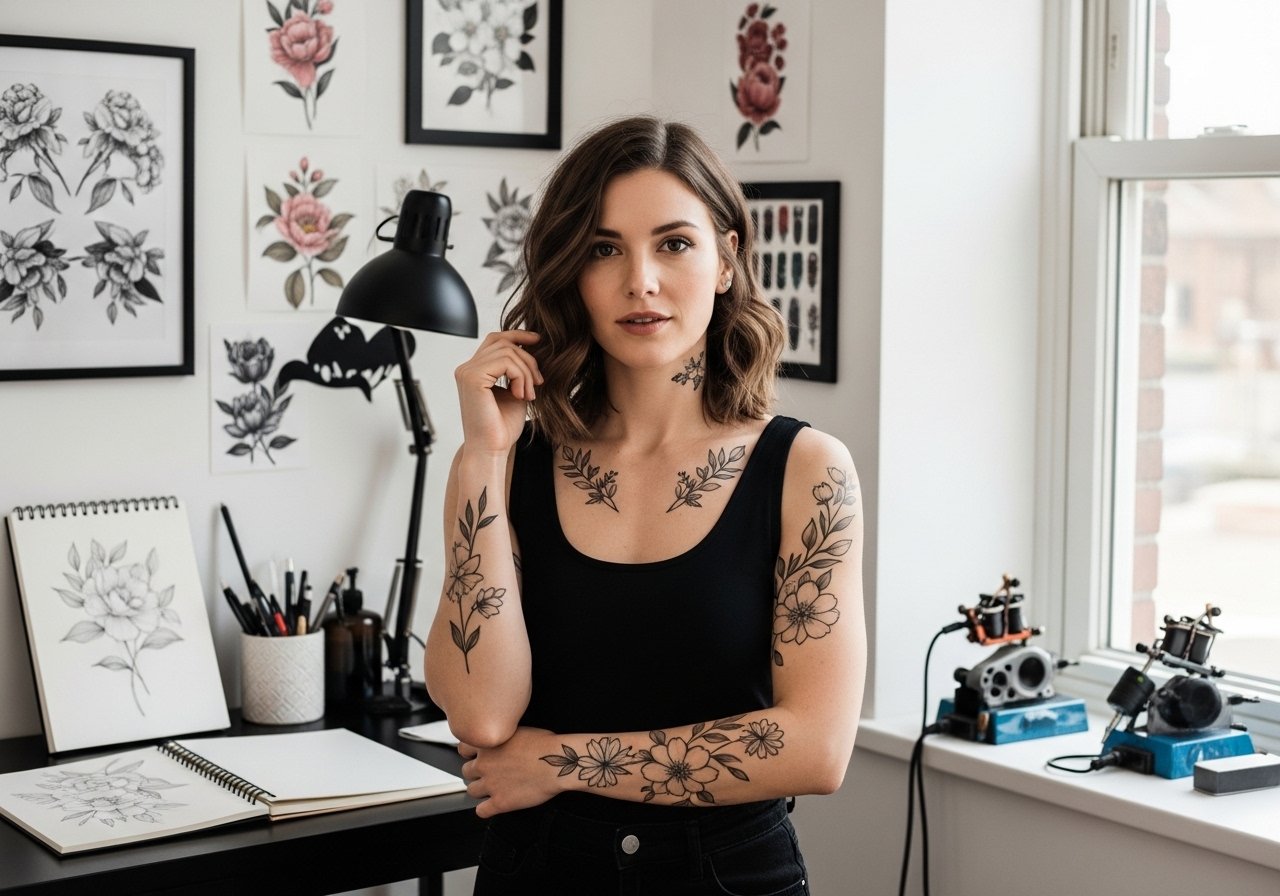
Fine line Om tattoos dominate saved boards right now, and the trend-versus-reality gap shows up fast in healed photos. Many pieces look flawless fresh and then soften into a pencil-thin smudge by year three. The difference usually tracks to placement choices, spacing in the design, and whether the artist uses single-needle technique. Read on for 27 mindful, feminine Om designs with practical notes on how they heal, what to ask your artist, and the outfits that make each placement sing.
1. Fine Line Om on the Wrist
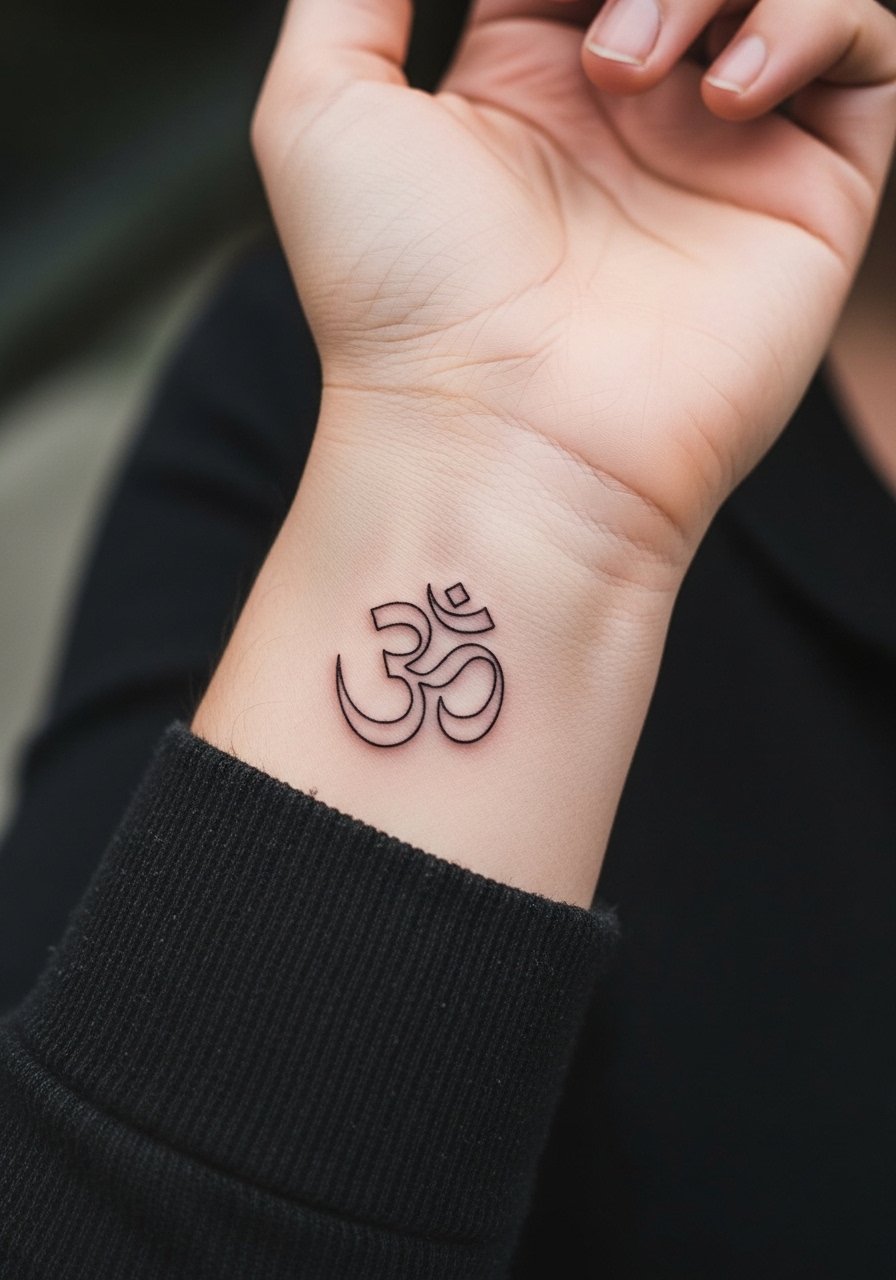
Wrist Om pieces read daily and are great for someone who wants a small, readable symbol. I usually recommend a single-needle but ask the artist to leave faint spacing inside dense curves so the mandrel points do not merge over time. The session is short, often under an hour, and the wrist feels sharp for the first 48 hours. A common mistake is going too tiny with extremely thin strokes. Expect touch-up conversation at year two to three for fine lines. For showing this off, pair it with a thin gold chain bracelet or a dainty bracelet stack. Wear a sleeveless tank for the session so the artist has clear access.
2. Micro-Realism Om with Floral Accents on the Inner Forearm
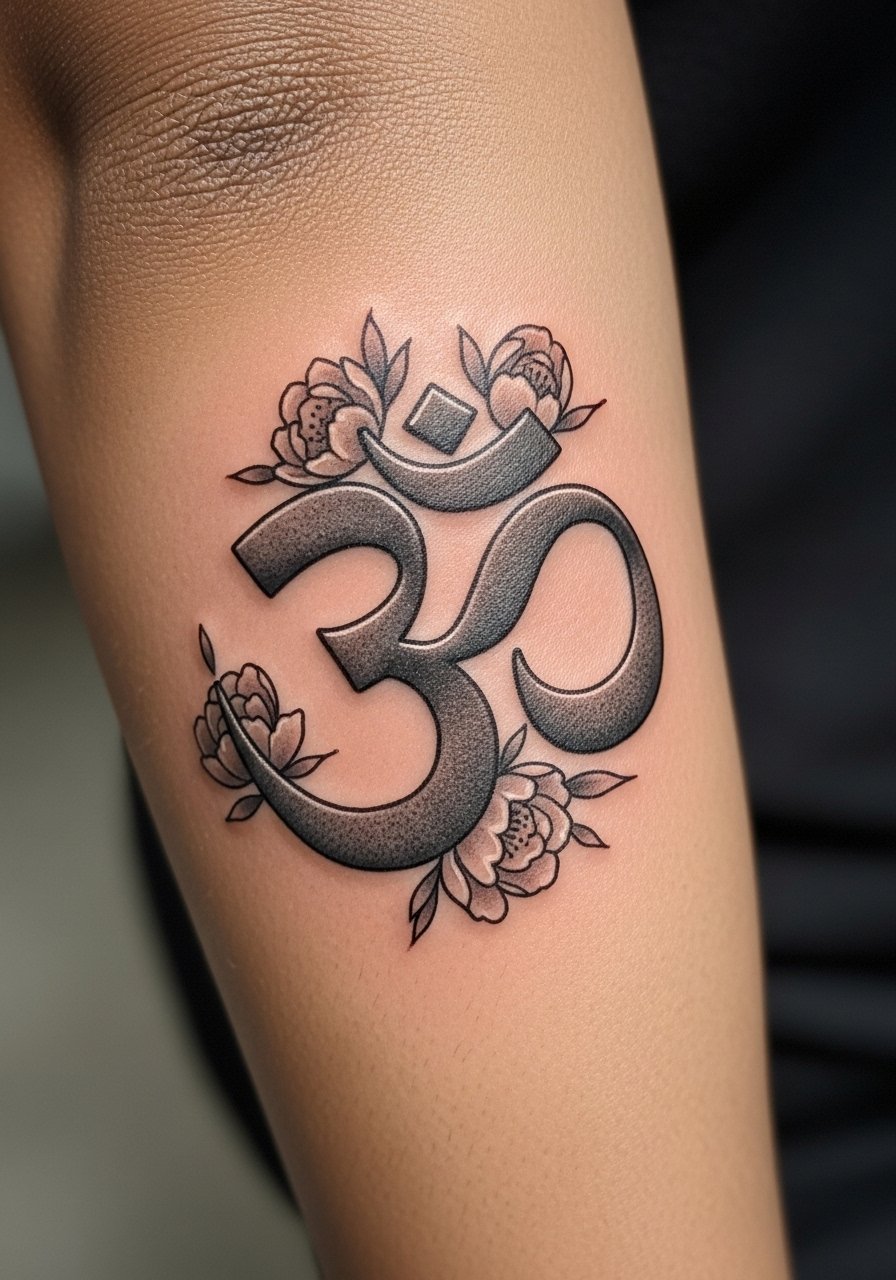
This is for someone who wants meditative detail without heavy blackwork. Tell your artist you want soft gradation and reference photos showing the exact size you want. The inner forearm takes shading well, and a two-inch composition gives room for stipple and micro shading to hold at year five. The common mistake is compressing too many petals into a tiny circle. Sessions run one to two hours and feel steady, not sharp like ankle work. Roll up a linen button down for the appointment so the sleeve stays out of the way. For showing off, rolled cuffs in cream or olive keep attention on the art.
3. Minimalist Om Mandala on the Collarbone
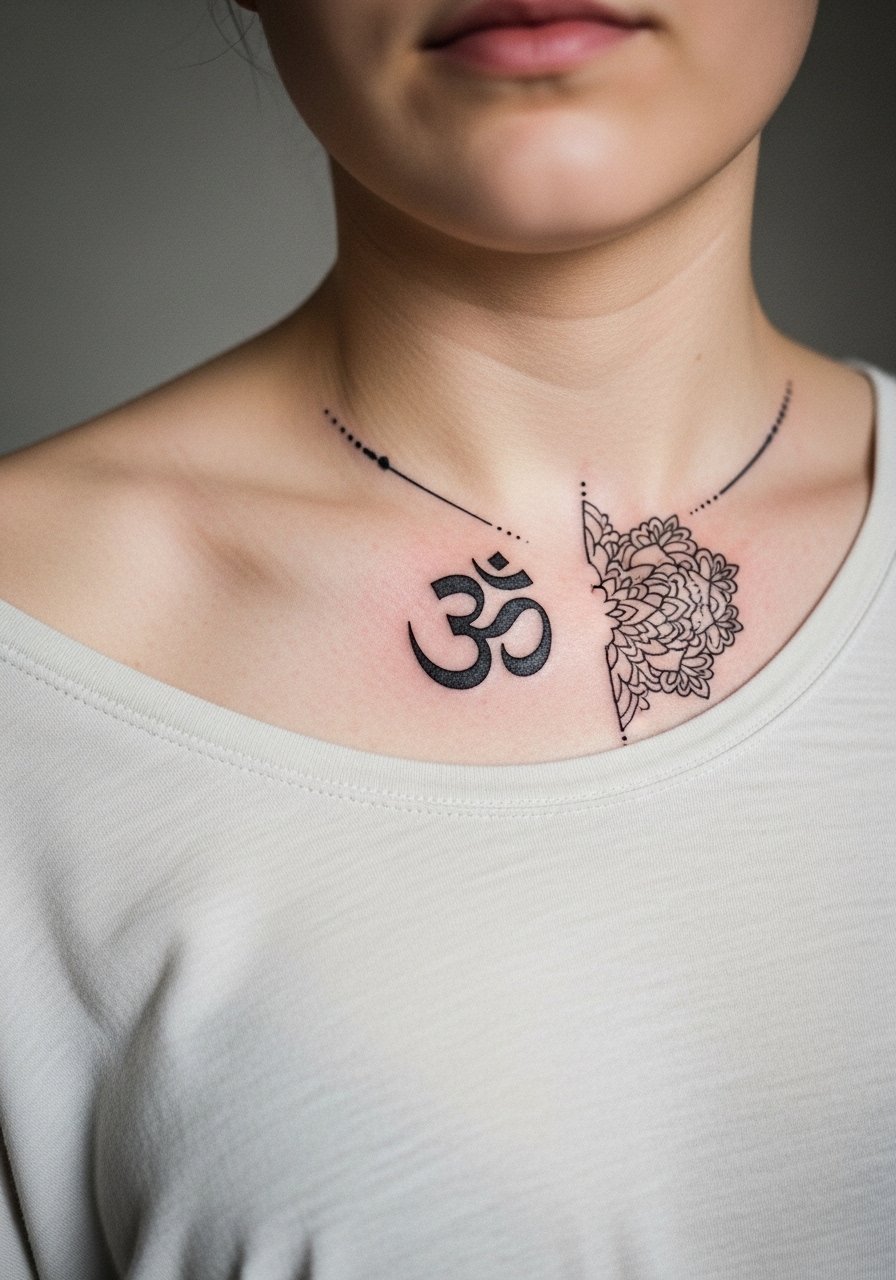
A collarbone mandala follows the bone and reads elegant with thin symmetric petals. Pain is moderate where the bone is close to the surface. The biggest consultation tip is to show how the design will sit with your neckline so the symmetry flatters the collar. Most artists will do this in a single session if the piece is small to medium. One camp argues delicate collarbone work needs thicker lines to age, the other camp insists careful single-needle spacing works fine. Name which side they stand on before booking. For wardrobe, pair with a strapless top or layered delicate necklaces so the mandala frames the throat.
4. Single-Needle Om Silhouette on the Ankle
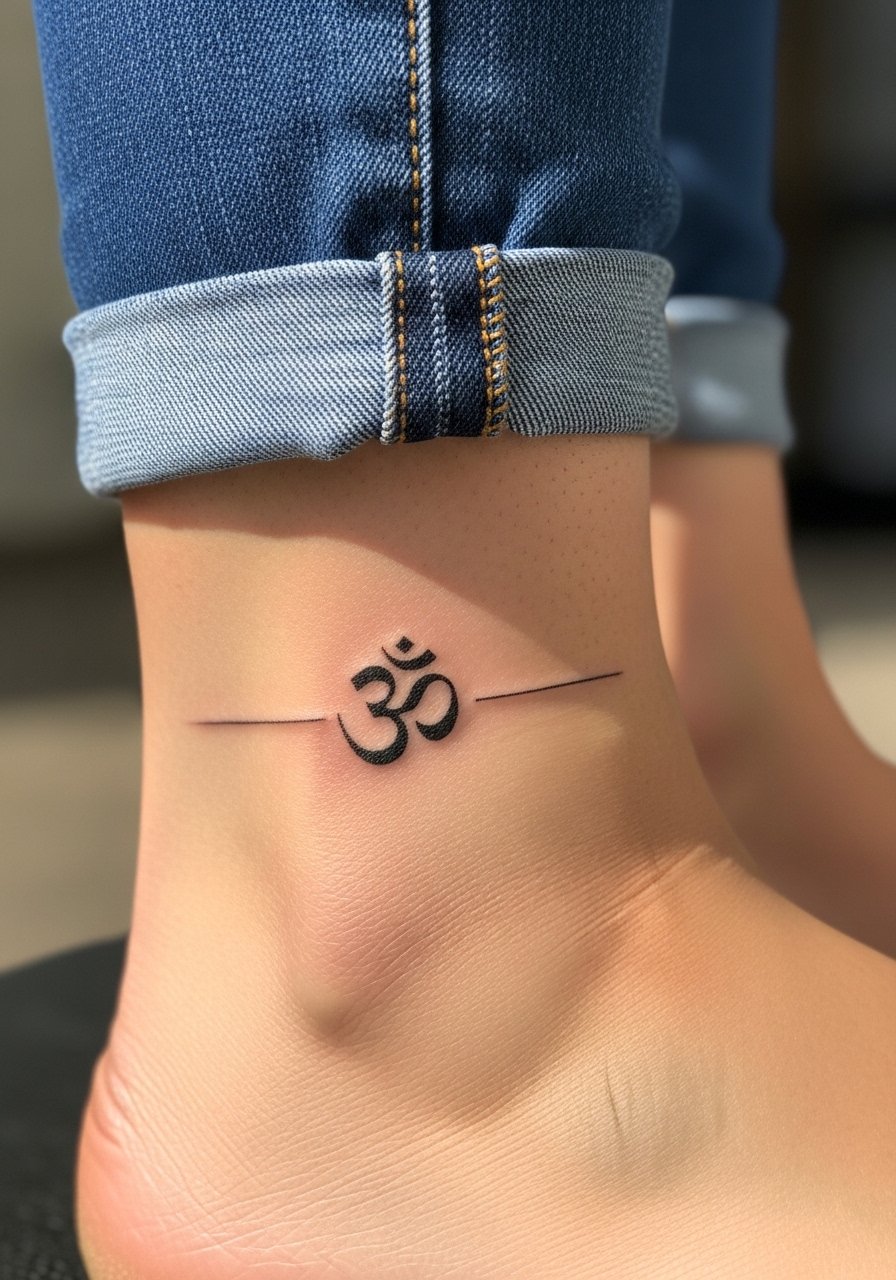
Ankle pieces are discreet and show well in warm weather. The ankle is a curved surface so ask the artist to map the curve with a stencil and stand up to check flow before starting. Expect a short session and a moderate sting from the area near bone. The usual error is placing the design too close to movement zones, which invites distortion. For summer wear, cuff wide-leg linen pants or go with strappy flat sandals to give the tattoo room to be seen without crowding. During the session wear loose joggers or shorts for easy access.
5. Botanical Om Integrated with Peonies on the Shoulder
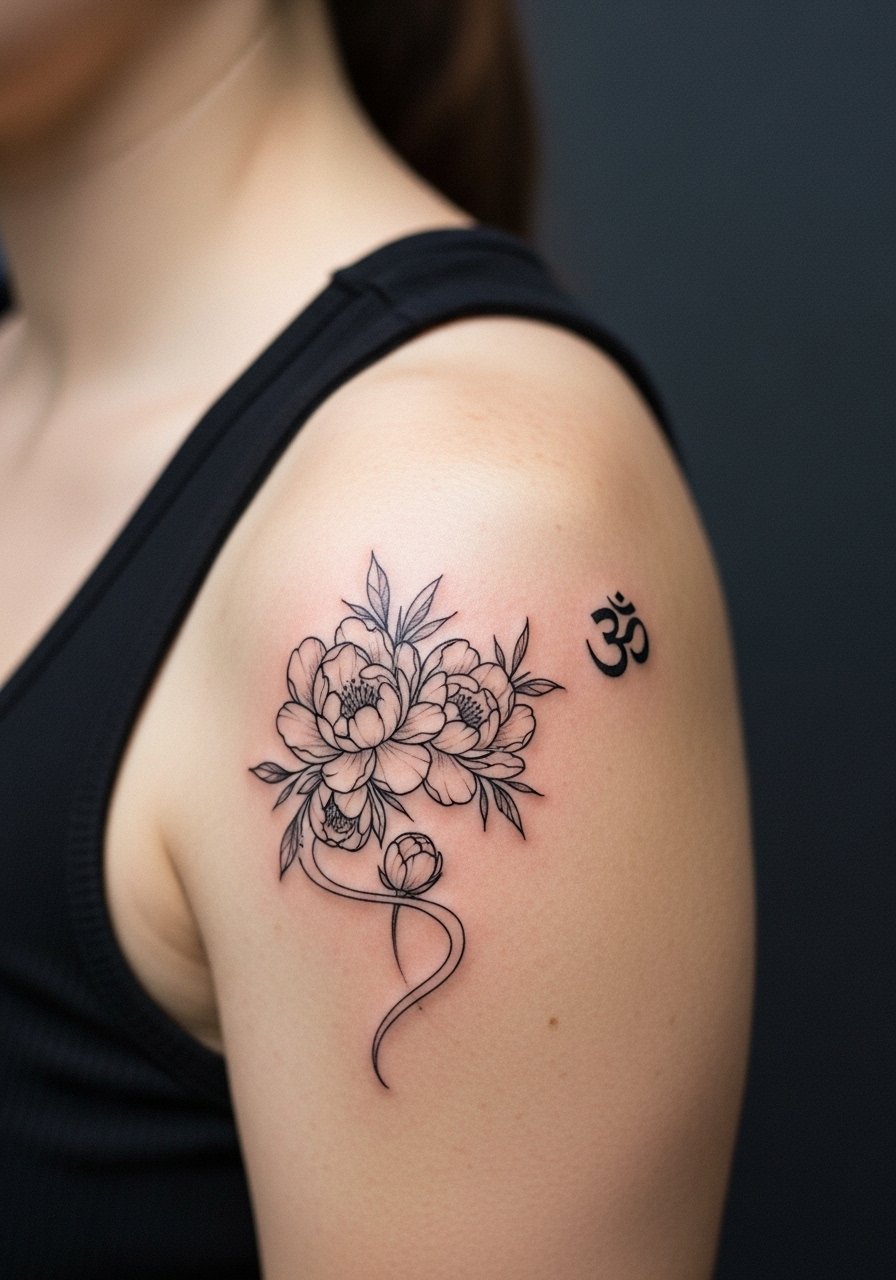
Shoulder Om botanicals make for a soft, feminine statement that follows the curve of the deltoid. I tell clients to keep the botanical elements airy so petals do not pack into a single shaded mass after healing. This placement tolerates two sessions for layered shading. The shoulder is forgiving for touch-ups and ages well if the saturation is balanced. For show-off outfits choose an off shoulder sweater or halter top. For the appointment pick a sleeveless top so the artist can rotate the arm without tugging fabric across the area.
6. Ornamental Om Chandelier Underbust
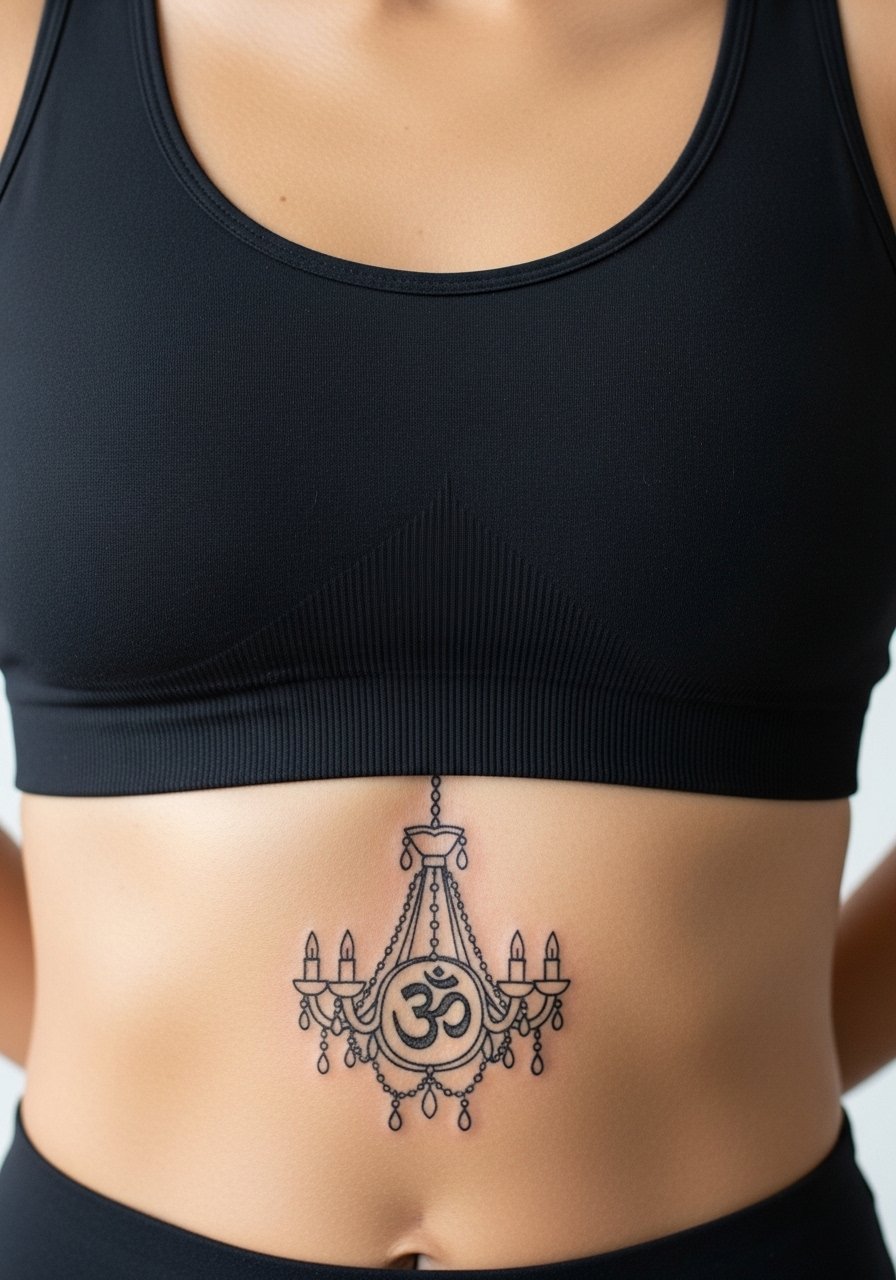
Underbust chandelier pieces are intimate and can accent body lines when composed symmetrically. Fair warning, this area is on the higher end for pain because of thin soft tissue. The debate is loud about pain and placement. One camp warns the sternum is especially painful for first-timers, the other says experienced clients tolerate it well and the result is worth the discomfort. If you go underbust, ask the artist about placement mapping so the chandelier conforms to cup shape. For styling consider low-cut bralettes or crop tops in neutral tones and wear a sports bra for the session.
Pack Smart
The shoulder and underbust pieces above need different prep than wrist and ankle work, and a few small items smooth out the session and the first week.
-
Stencil transfer paper kit. Lets you preview exactly where lines will sit on curved areas like the shoulder and underbust.
-
Topical numbing cream. Apply forty-five minutes before a sensitive sternum or rib session to reduce edge pain without altering the ink.
-
Thin protective film roll. Keeps ankle and finger pieces clean through the first week of rubbing from shoes and socks.
-
Fragrance-free body wash. Gentle cleansing helps fine line Om work heal without irritation from scented products.
-
Aquaphor healing ointment. A thin layer during the first few days locks in moisture and supports fine line retention.
7. Geometric Om on the Ribcage
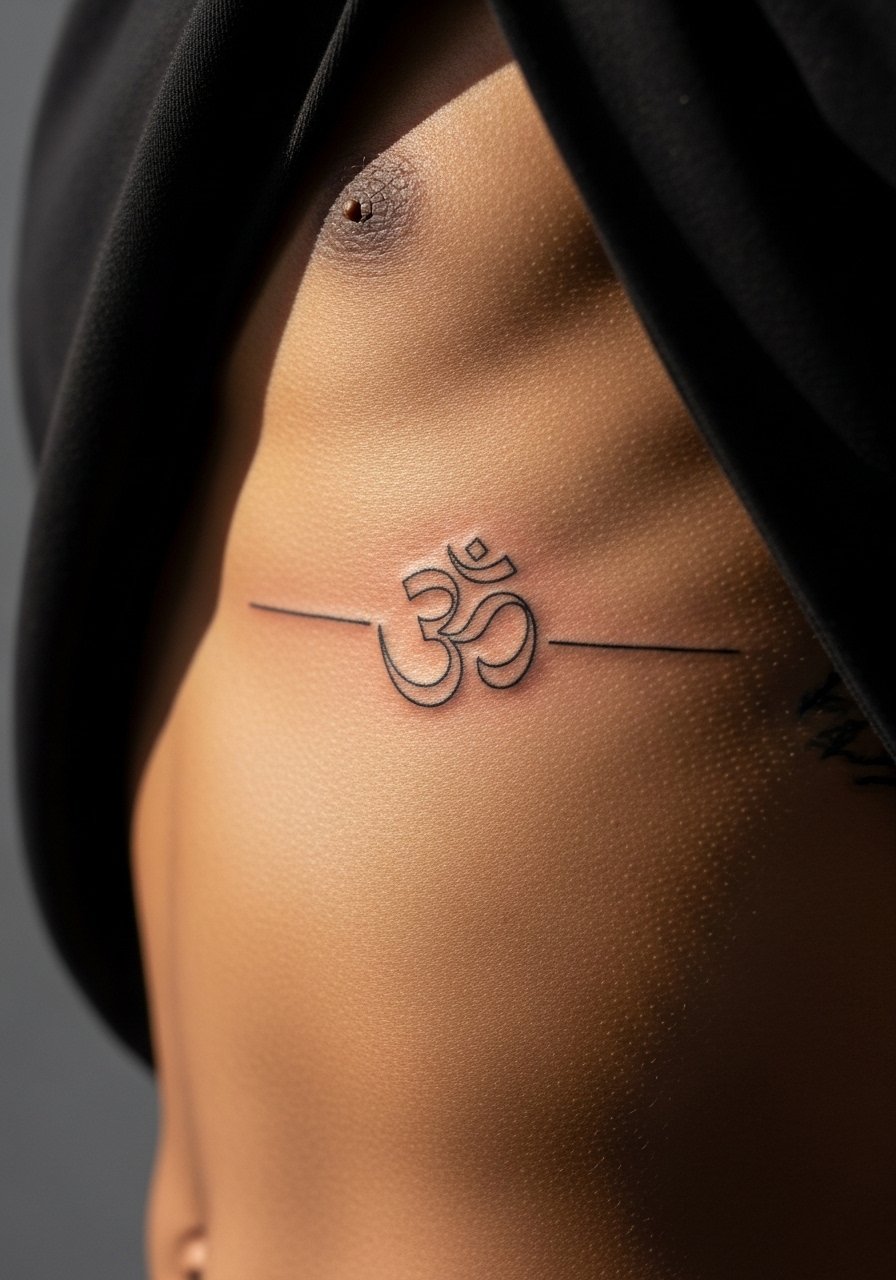
Fair warning, the ribcage is a high-pain spot, but it makes a dramatic, private placement for an Om. The main technical caution is going too small. Geometric mandalas need breathing room or dense segments will blur. Artists split into two camps on fine line ribs. One group says the skin stretch makes delicate lines lose definition quickly. The other says careful depth and spacing keep lines intact. Ask prospective artists where they land and inspect healed photos of similar ribs. Sessions can run one to two hours. For the appointment wear a cropped top you can lift without exposing more than the area being tattooed.
8. Fineline Om with Eucalyptus on the Thigh
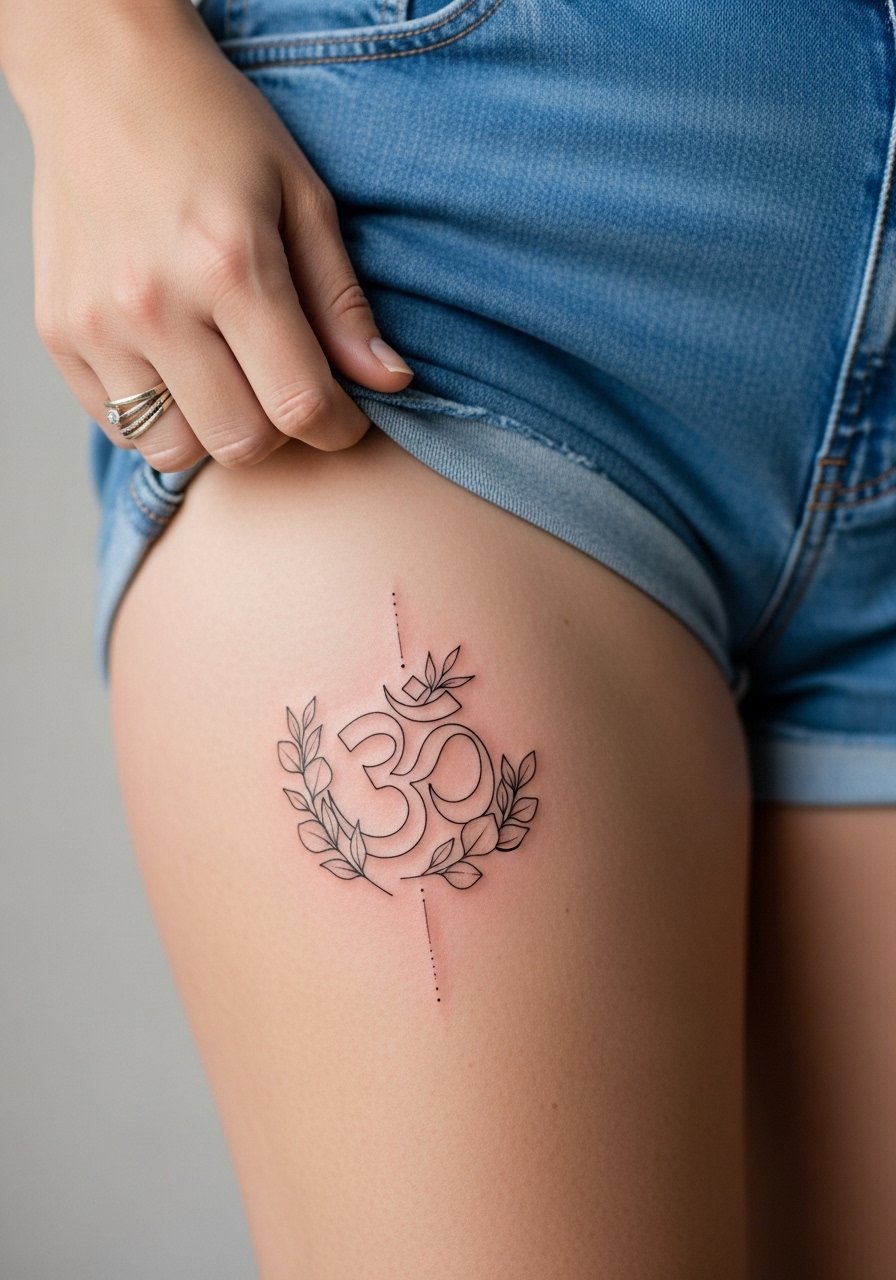
Thigh placements give breathing room for flowing botanical compositions and look great on longer vertical canvases. Tell your artist you want soft whip shading in the leaves, not heavy plug shading, so the eucalyptus reads as airy at six months and stays legible at five years. The common mistake is packing too many tiny leaves into one band. Two sessions are typical for larger thigh work. For showing off pair the piece with high waisted shorts or a slit skirt in olive. For the session choose loose shorts or a skirt so the artist can access the area comfortably.
9. Micro Om on the Finger
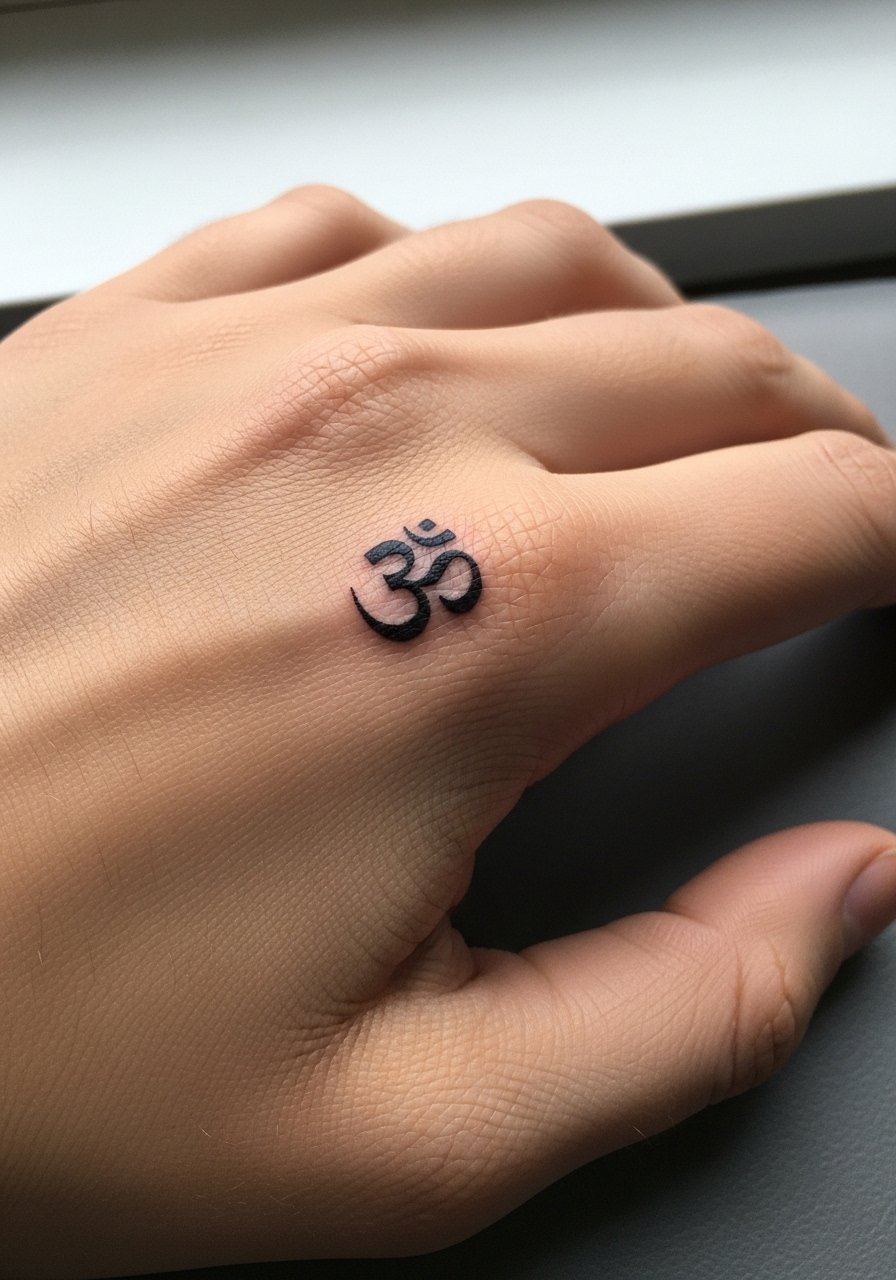
Finger Om tattoos are charming but high-maintenance. Expect faster fading because of constant washing and skin regeneration on the hands. I always tell clients that a touch-up at year one or two is likely. Keep the design simple and avoid dense fills. The session is quick but the pain is sharp for a short burst. Thin protective film helps in the first week, and the usual mistake is asking for micro shading that will not hold. Hand tattoos can affect some hiring situations, so consider career context before committing.
10. Black and Gray Om Mandala on the Upper Back
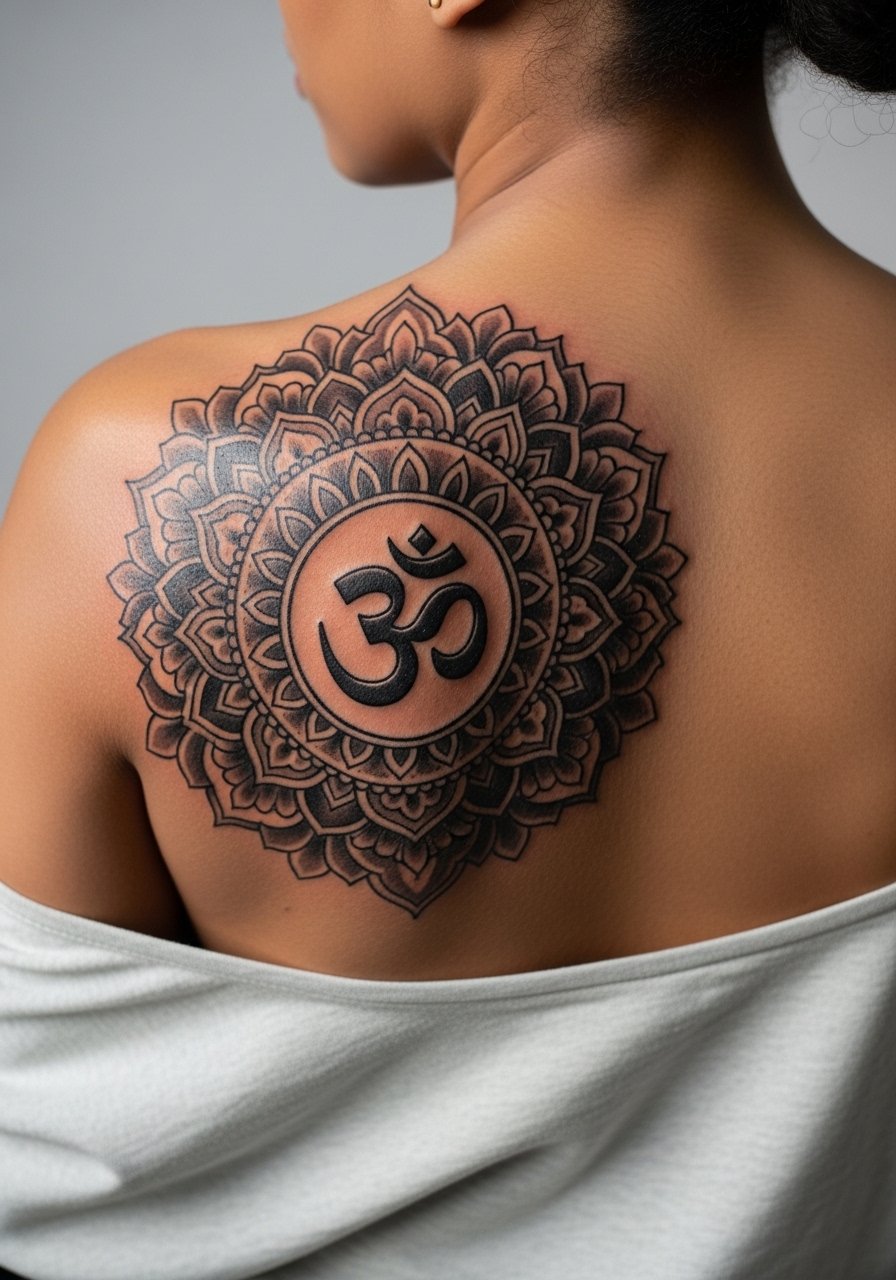
Upper back canvases let you expand the Om into richer mandala work without crowding. Tell your artist you want strong outer linework and softer inner stipple so the center stays readable over years. Sessions will be longer and staged across multiple appointments for large pieces. The common aging issue is overly tight inner petals collapsing into a shaded mass. For showing off, open-back dresses or halter tops frame the symmetry nicely. For the session, a loose button-down you can pull aside works well.
11. Delicate Om Script on the Side Neck
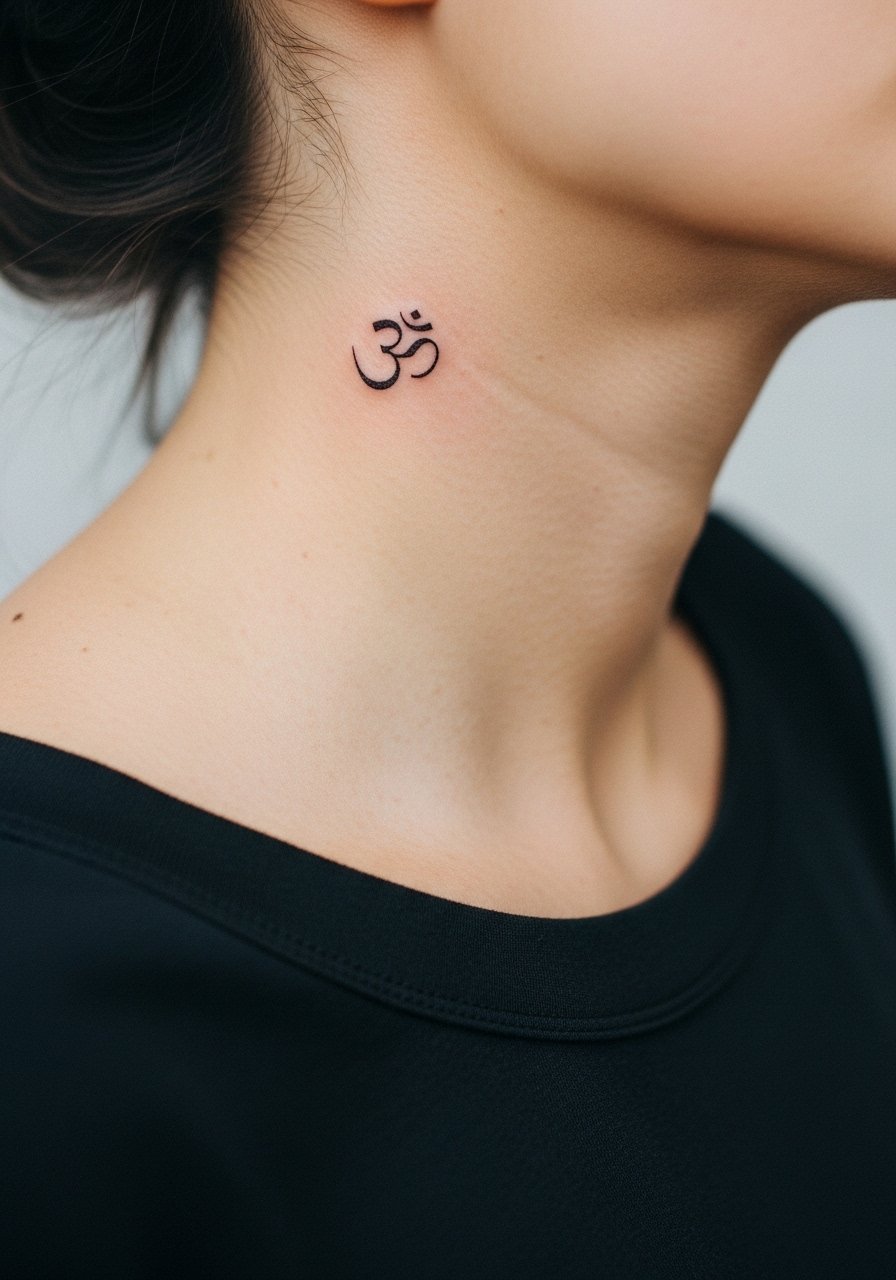
Neck placements are visible and feel a bit bolder than wrist or forearm work. Pain is moderate and the skin is thin, so request the artist use a gentle hand with consistent line weight. If you need workplace discretion, place the Om lower toward the collarbone rather than high on the throat. A mistake is asking for extremely hairline strokes that will disappear into blur in a couple of years. For styling, layer a dainty choker necklace that sits above the script to balance visibility. For the session wear a loose ponytail so the artist has clear access.
12. Symmetrical Om Floral on the Sternum
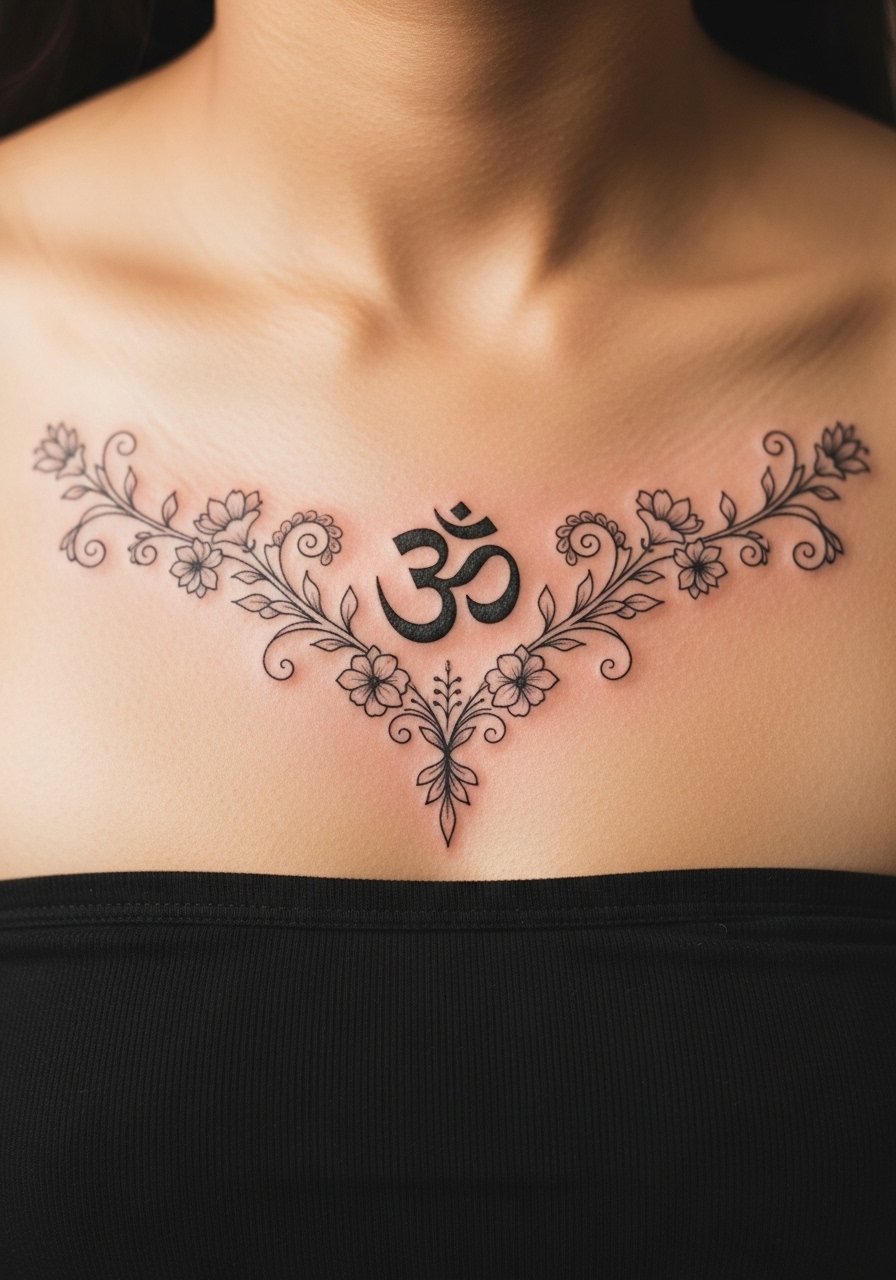
Sternum tattoos are about intimacy and symmetry. Pain levels are high because of thin tissue and proximity to bone. The practical step is to map the curve with the client sitting up and standing. A common mistake is starting the design too low or too high relative to bra lines. Expect two sessions for a four-inch curved composition. Some artists recommend thicker outlines to help longevity, others prefer careful single-needle spacing. Ask which approach they prefer. For showing off, low-cut bralettes or crop tops in neutrals emphasize the symmetry. Wear a sports bra or button-up to the session for access.
13. Tiny Om Behind the Ear, Below the Hairline
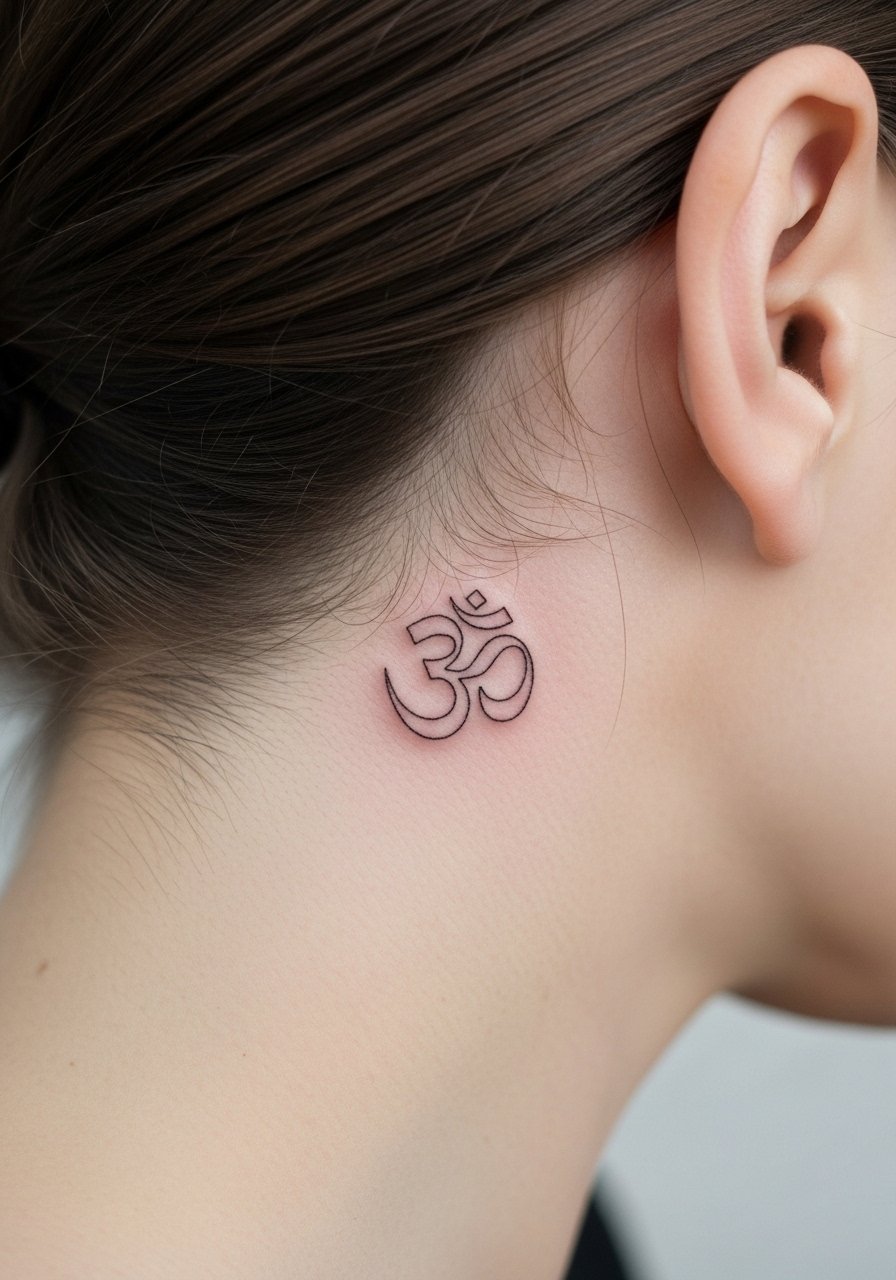
Behind-the-ear pieces are subtle and hit a quiet spot when hair is up. The session is quick and the sensation is a light, rapid tap. The key is to specify exact placement as the curvature there can move the symbol half a centimeter. Many clients miss that small shift and then regret it. This area needs a precise stencil and a calm hand. For sensitive placements like this, ask about their healed photos in similar spots. For appointments wear hair you can tie up or a wide-neck shirt to make access easy.
14. Om with Crescent Moon on the Spine
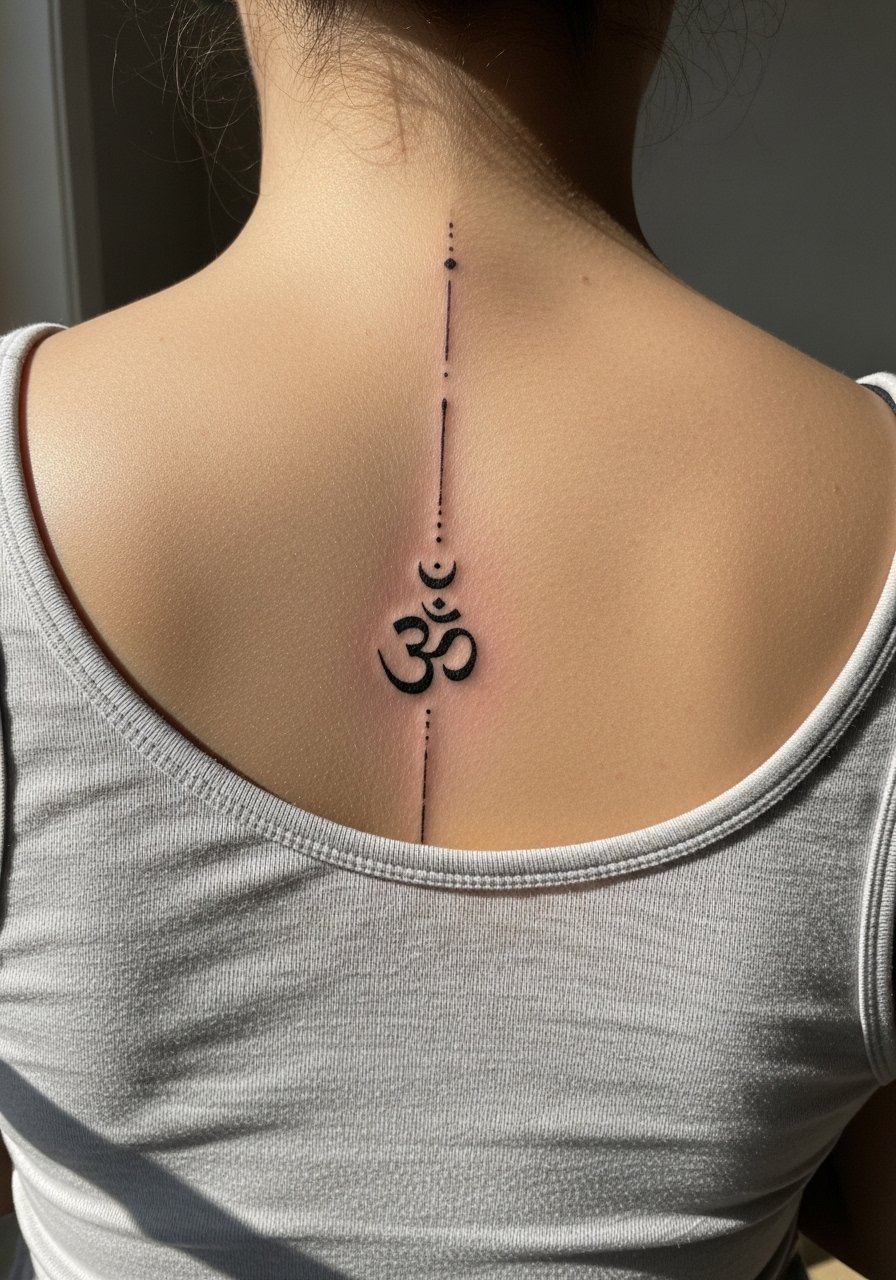
Spine placement creates a vertical meditative axis for an Om and moon motif. The spine can be tender, so sessions may require breaks. A design that leaves breathing room between geometric elements keeps detail from merging as the skin moves. Common mistakes include overloading the vertical column with tight ornamentation. For showing off, choose halter tops or open-back pieces that reveal a straight line of art. For the session wear a loose tank so the artist can seat you comfortably and access the upper spine.
15. Watercolor-Inspired Om on the Calf
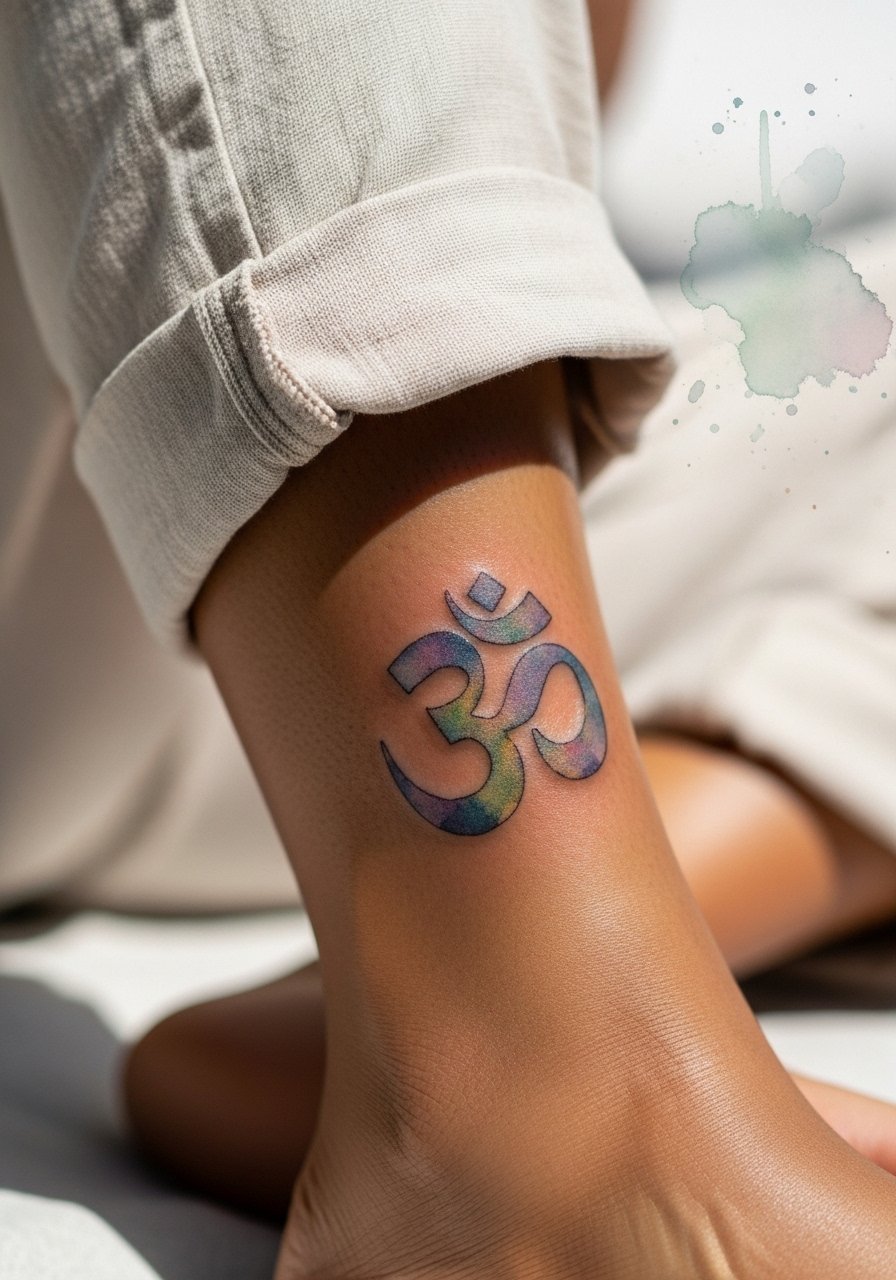
Watercolor treatments around an Om add softness and color movement, but they require a different touch than fine line. Tell your artist you want the Om itself in crisp black and the color as a soft background wash. The calf heals steadily and tolerates larger saturation. The mistake is blending color into the core Om where linework needs to remain sharp. For outings pair with cropped trousers or flowy skirts that show the lower leg. For the session wear loose drawstring linen pants that can roll up without pressure on the area.
16. Stipple-Shaded Om on the Upper Arm
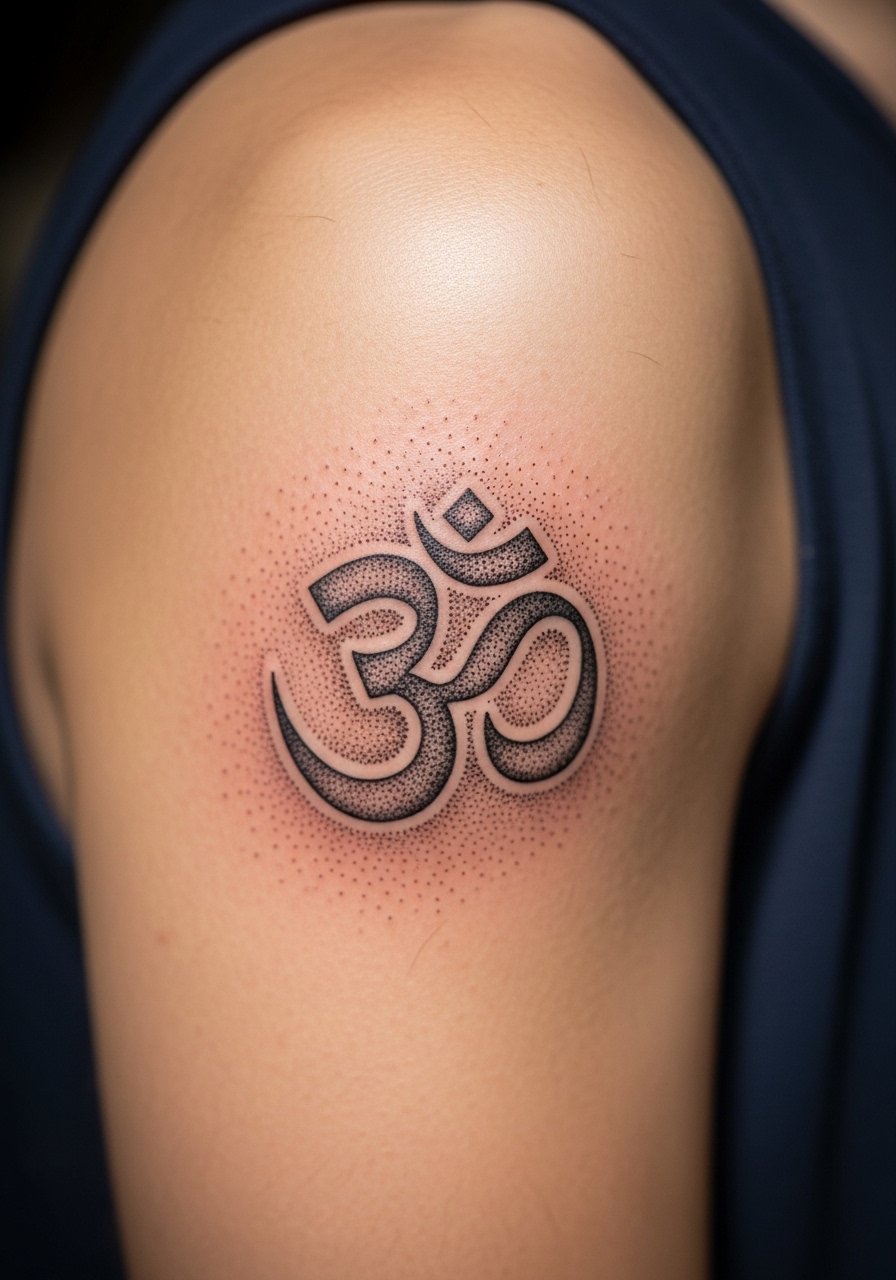
Dot-work or stipple shading makes a gentle, tactile field around the Om and scales beautifully on the upper arm. This technique spreads the tone without solid fills that age into heavy patches. In consultation, specify dot density and where you want negative space to remain. Sessions are steady and feel like rhythmic tapping. A common error is wanting too much tight dot density close to lines. For the appointment wear a sleeveless shirt so the artist can rotate the arm easily. For display, short-sleeve shirts or tanks frame the work well.
17. Tiny Om at the Base of the Neck
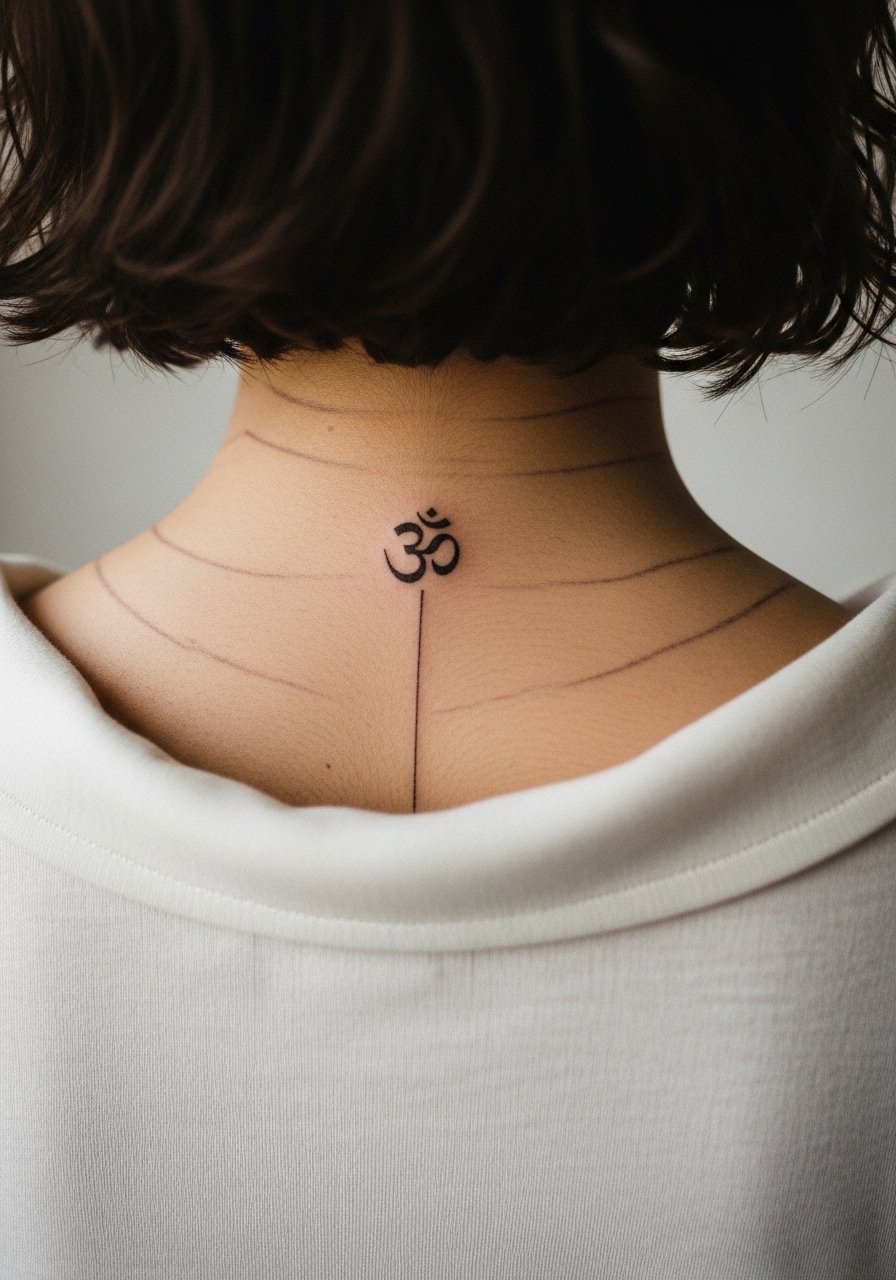
Placement at the base of the neck sits in a delicate zone between public and private visibility. It reads subtle under hair or loud with short styles. Ask the artist about line thickness because hairline strokes can vanish on some skin textures. The base of the neck can sting more than the collarbone. A realistic touch-up timeline is one to three years depending on sun exposure. For appointments wear a shirt with a wide neck so the collar can be adjusted without exposing more than the area being worked.
18. Ornamental Om with Lacework on the Hip
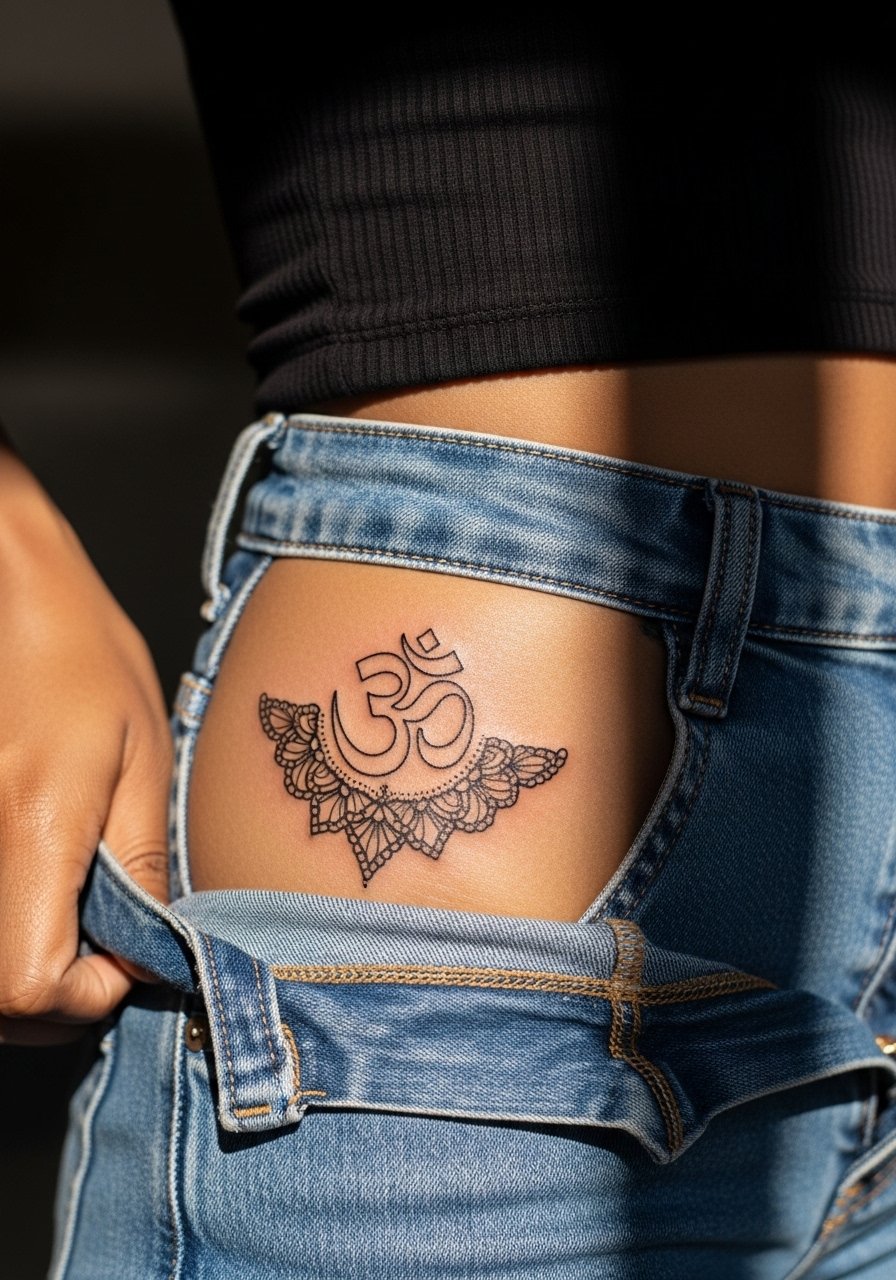
Hip pieces pair well with lingerie or swimwear because the curve allows lace-like filigree to drape naturally. The hip area can be tender where it meets the pelvis. In consultation, place a few test stencils so you can see how the lace will fall with movement. A frequent mistake is oversizing the lace into areas that rub under waistbands. For the session choose high-cut shorts or jeans you can lower just enough to expose the tattoo zone. For outfits, high-waisted bottoms let the pattern peek out intentionally.
19. Micro-Realism Om with Lotus on the Inner Bicep
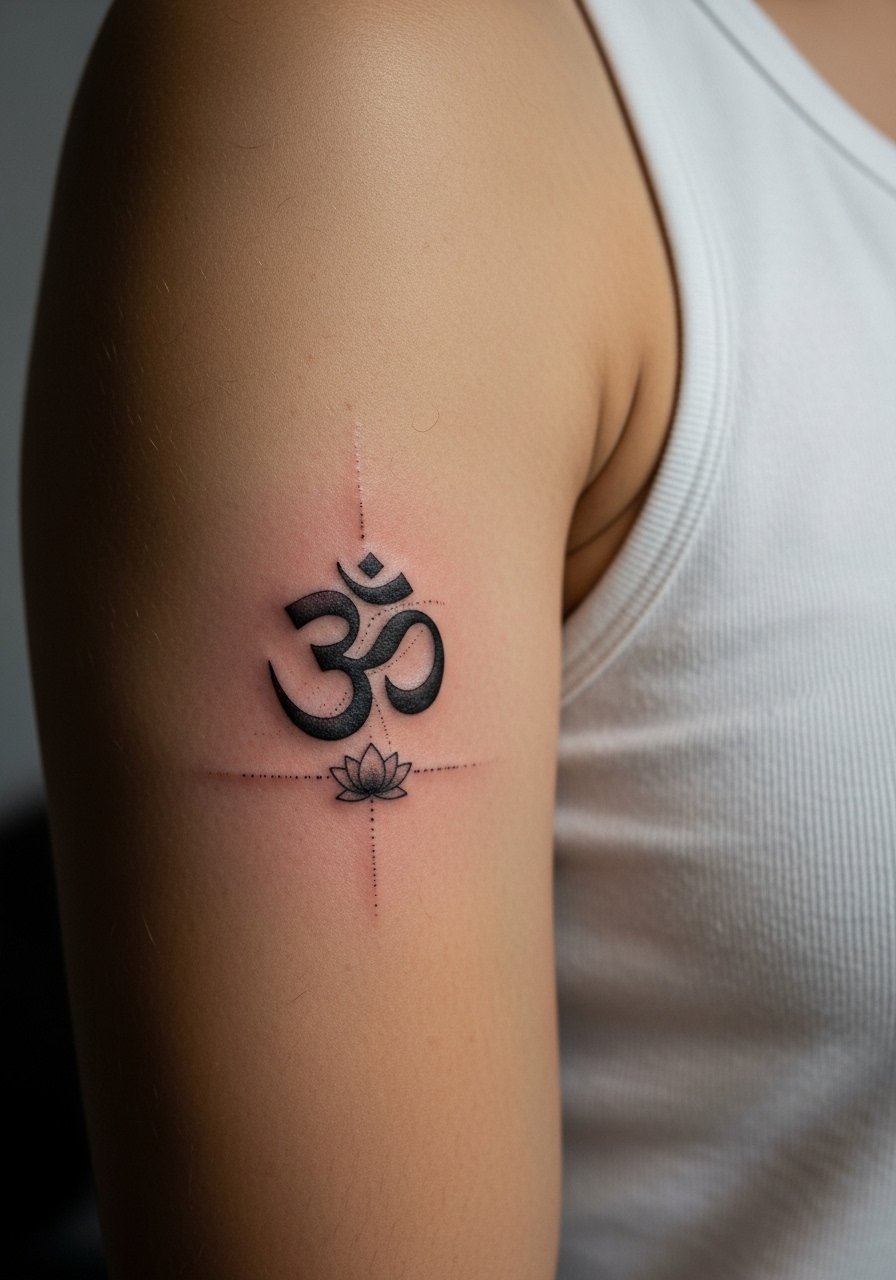
Inner bicep tattooing can hide easily and makes for a private talisman. The skin there takes shading well but movement affects detail, so keep the lotus simple. Expect a steady session with moderate discomfort when the arm is held in position. A common mistake is cramming micro elements too close to the crease. For the appointment wear a tank top that allows the arm to be raised without twisting fabric. Many people like the inner bicep for a design meant to be glanced at in motion rather than displayed constantly.
20. Om Constellation on the Foot Arch
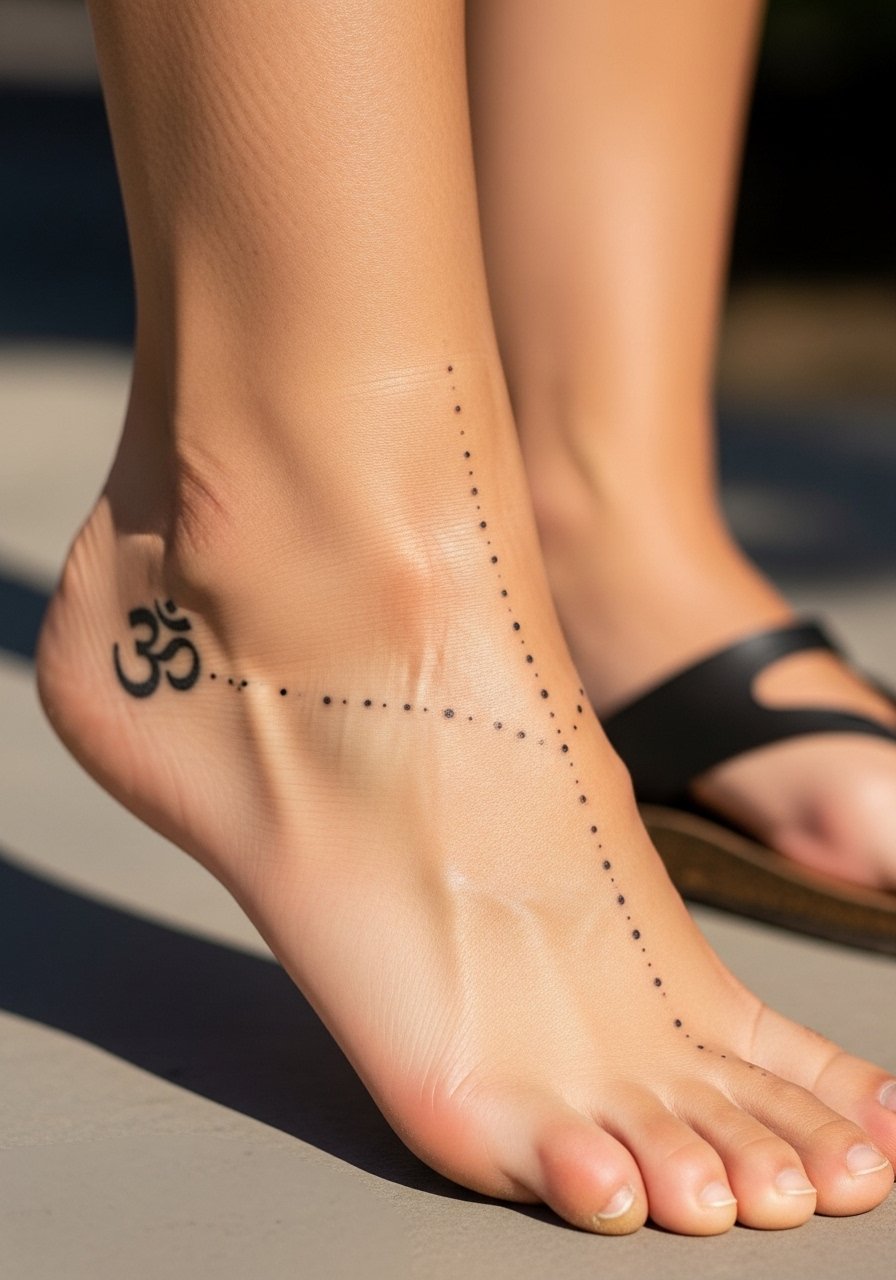
Foot arch work is delicate and fares poorly under heavy friction and shoes. If you choose this, keep the Om small and the constellation widely spaced. Healing can be fussy because shoes and socks touch the area. Expect lighter saturation and the need for touch-up at year one. For wear, sandals or cropped pants keep the area visible without constant rubbing. For the session go barefoot or slip into sandals to avoid friction after the bandage is removed.
21. Ornamental Om on the Sternum Flare for Bust Contour
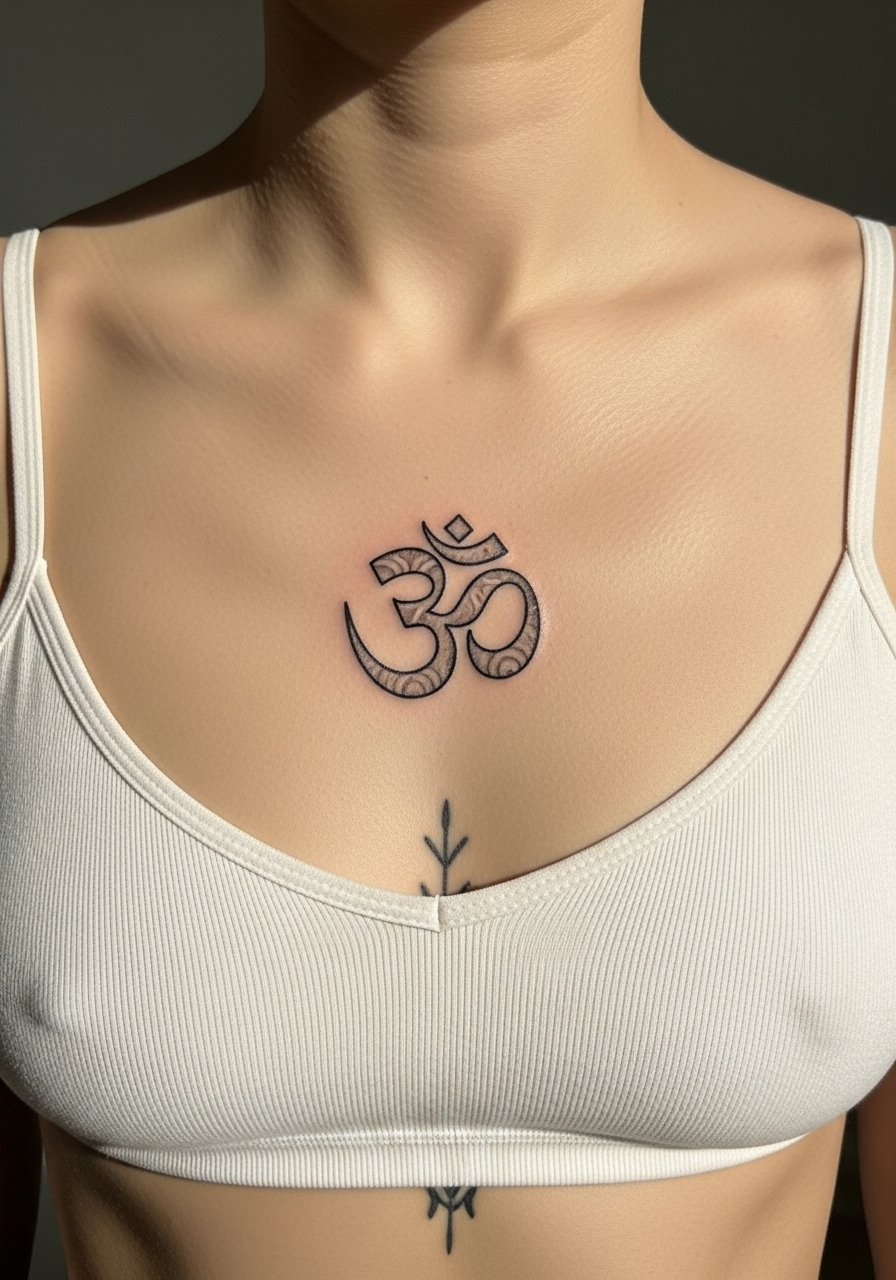
Sternum flare designs follow the bust shape and can emphasize symmetry in an elegant way. Pain is significant and sessions may be broken into shorter passes. The practical tip is to try the stencil with the bra you plan to wear to ensure the design sits where you want. Too often people place the lower edge too close to fabric and lose visibility. For showing off, low-cut bralettes and crop tops create the intended framing. For the session choose a front-button shirt or sports bra that opens easily.
22. Micro Om with Dots on the Collar of the Wrist
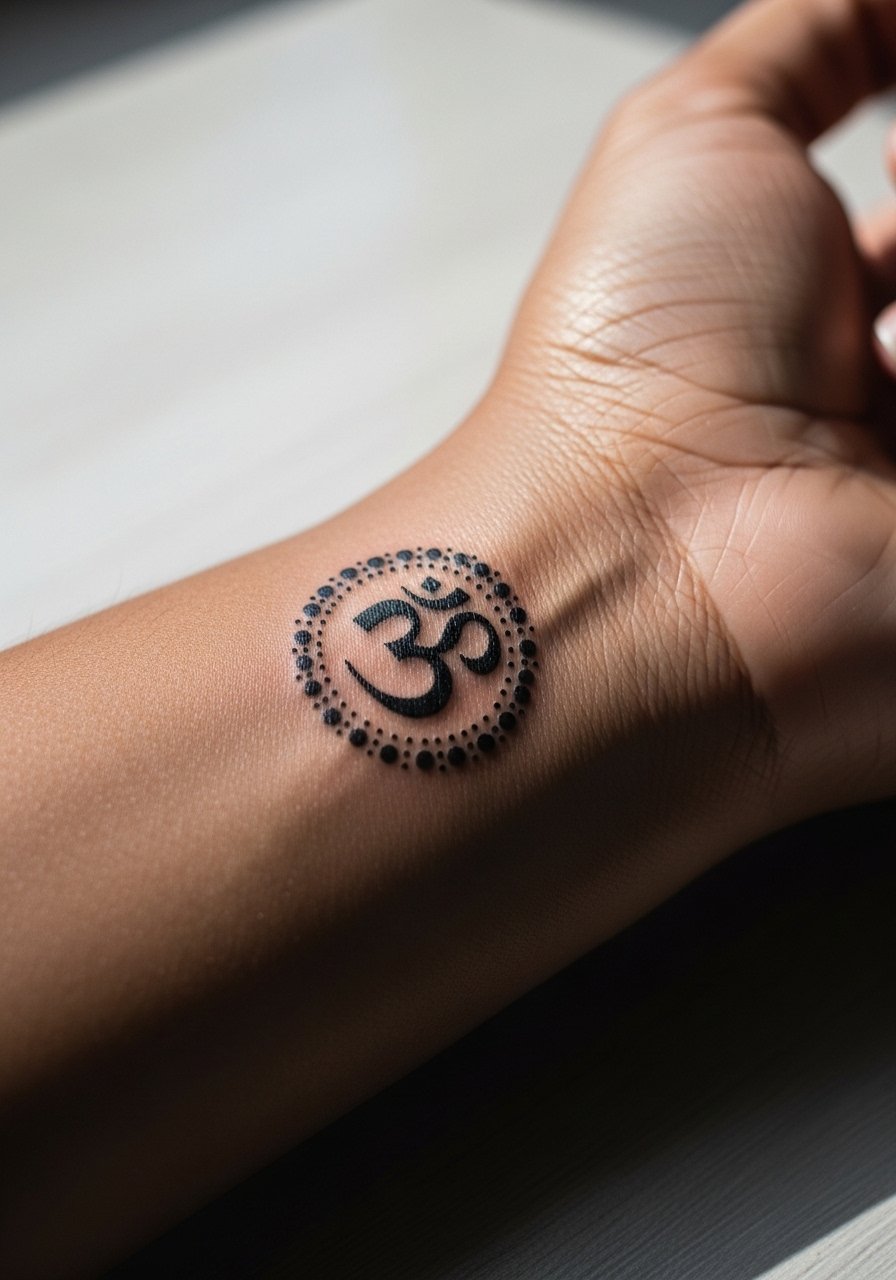
A micro Om with dot halo at the wrist collar gives a subtle decorative accent that pairs well with watches or bracelets. The wrist skin heals quickly but lines there need careful spacing. The common mistake is tight dot rings that merge into smudges over time. A touch-up at year two is not unusual. For wearing, a thin chain pendant or dainty bracelet stack complements this placement. For the session wear a loose short sleeve and remove jewelry from both hands to keep the area accessible.
23. Mandala Om on the Upper Thigh Wrap
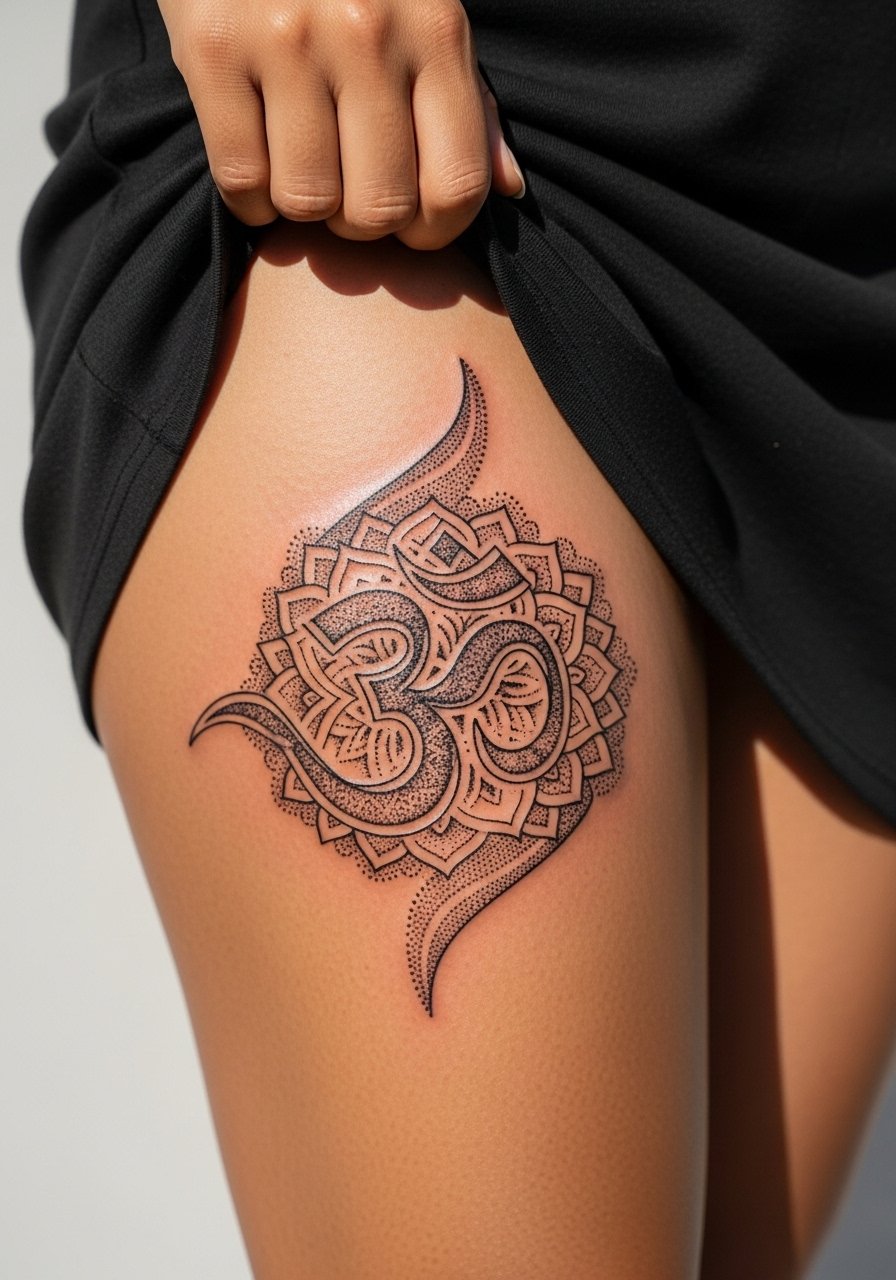
Upper thigh mandalas can be larger and more ornamental because friction is lower and skin is relatively stable. Ask your artist to plan negative space in the mandala so petals keep their shape as the piece ages. Sessions for a four-inch wrap usually take two appointments. A typical error is asking for tight inner details that lose clarity as the skin stretches. For showing off choose high-waisted shorts or skirts in neutral tones. For the session wear loose shorts you can pull aside without pressure on the area.
24. Minimal Om Above the Ankle with Tiny Chain Motif
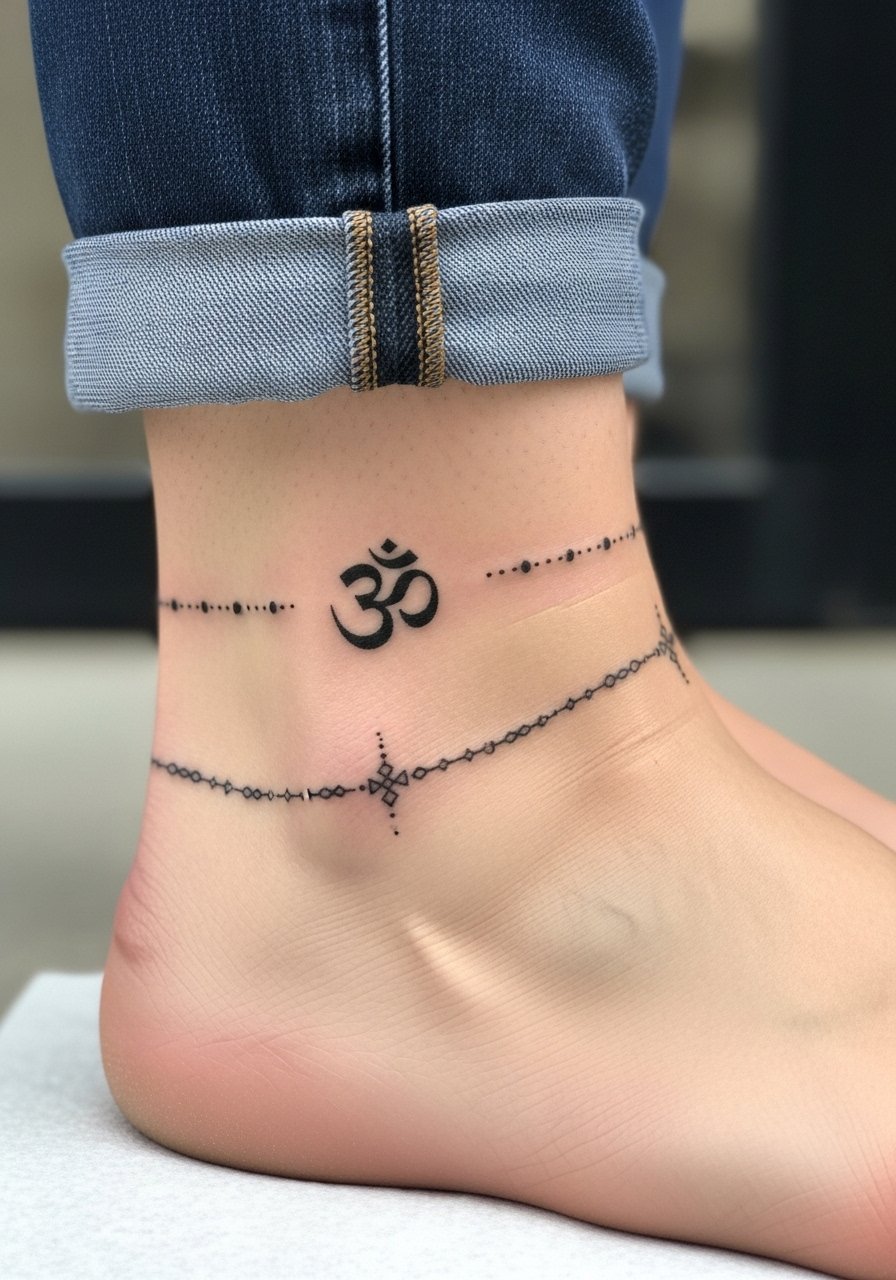
An Om placed just above the ankle with a small chain motif reads like jewelry. The ankle tolerates minimal work but be mindful of where shoe straps sit. The mistake is placing ornamentation where a shoe will rub. For display cuff wide-leg linen pants or wear strappy sandals so the chain motif appears intentional. For the appointment wear pants that cuff easily or a skirt so you can keep pressure off the area after the session.
25. Ombre Gray Om on the Lower Back
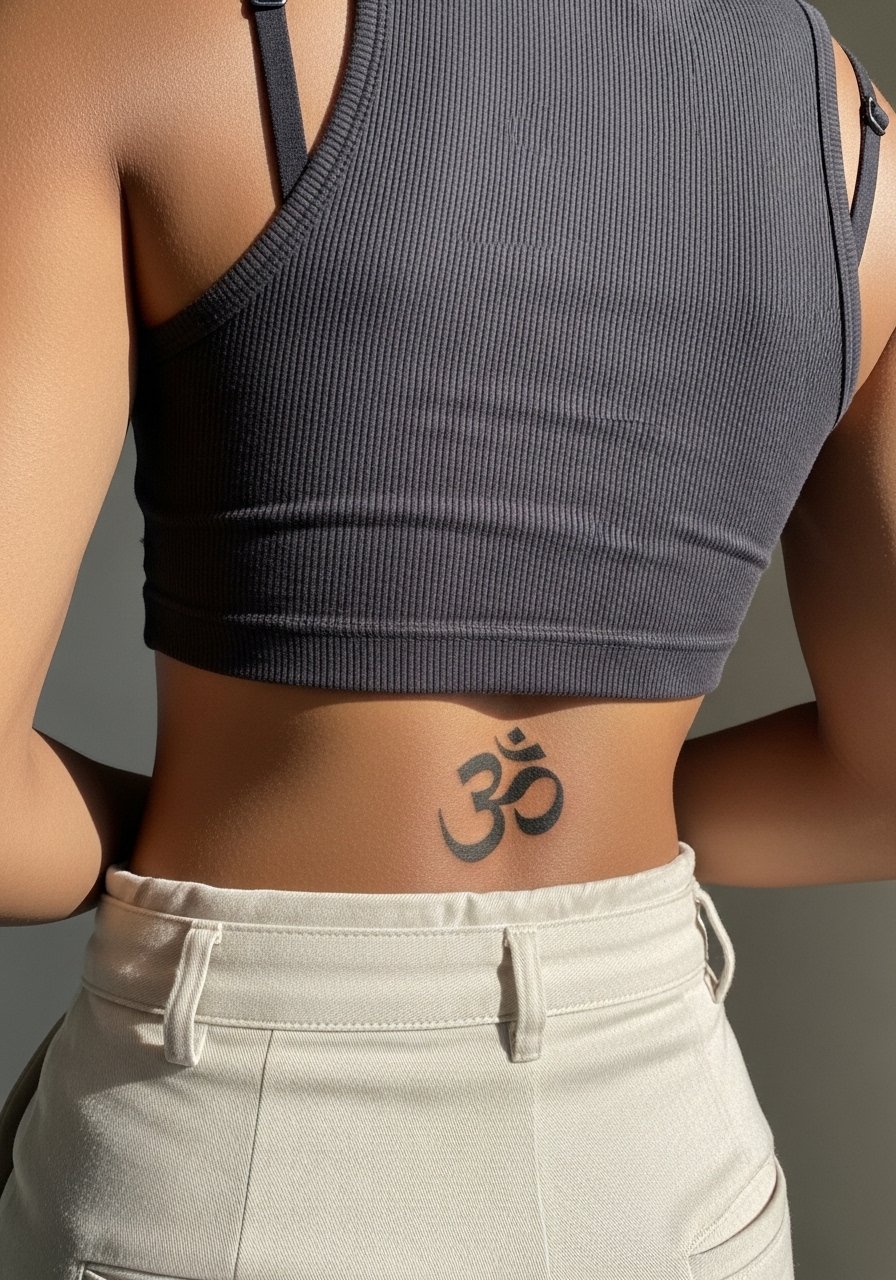
Lower back Om designs can be delicate or bold depending on the gradient you choose. Ask your artist about how the ombre will be applied so the transition reads soft at six months and not patchy later. The lower back is forgiving for touch-ups. Avoid placing tight ornamental bands that will sit under clothing waistlines. For showing off choose crop tops and low-rise waists to let the transition breathe. For the session wear a tank with high-waisted bottoms you can lower only slightly.
26. Crescent Wreath Om on the Inner Thigh
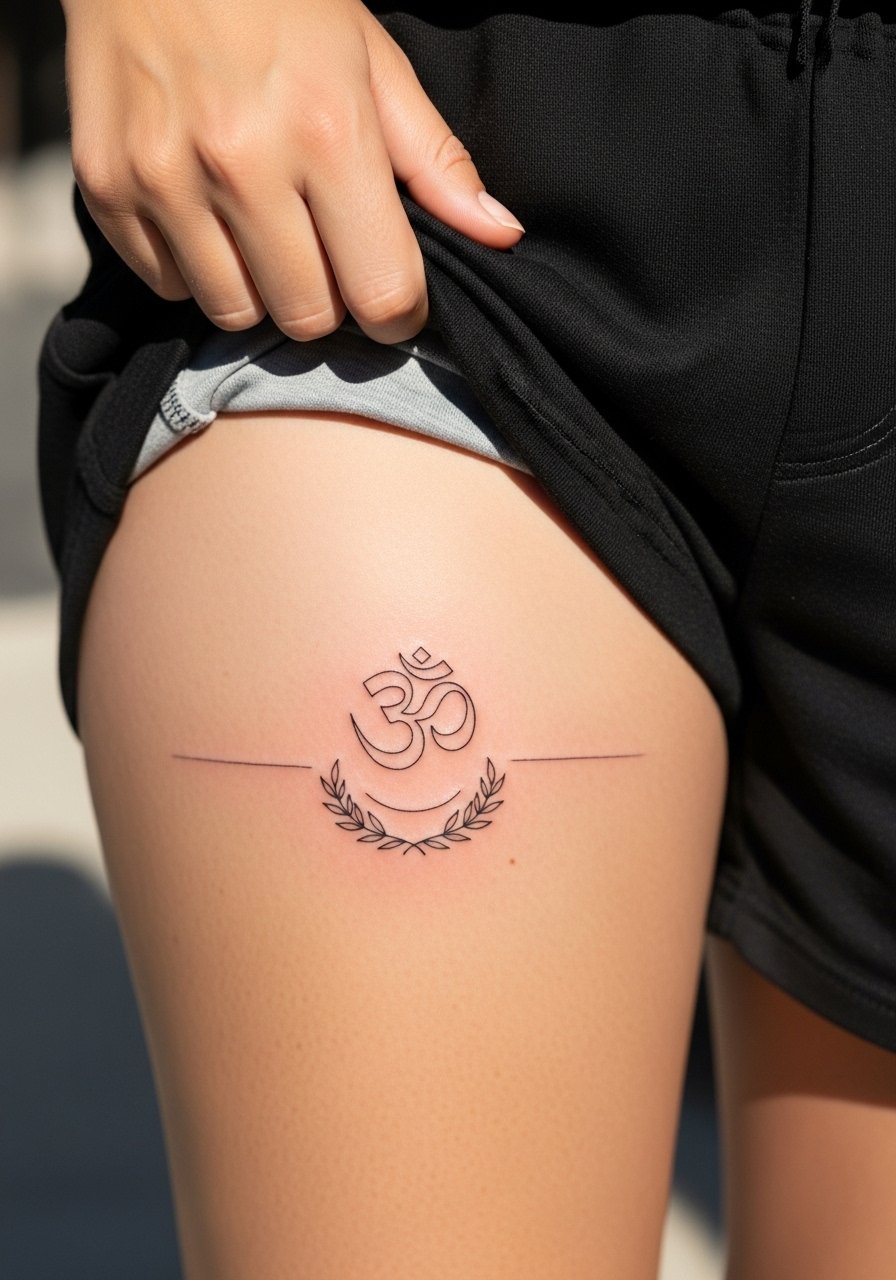
Inner thigh placements are private and sensual and need careful padding in the session because position and movement affect how the stencil sits. A common error is choosing a very dense wreath that loses negative space after healing. Two sessions are common for larger inner thigh work. For the appointment wear shorts that can be shifted easily and avoid tight bands that press on fresh ink. Many pick this spot for a piece that is shown selectively rather than daily.
27. Fine Line Om with Peony Sleeve Accent
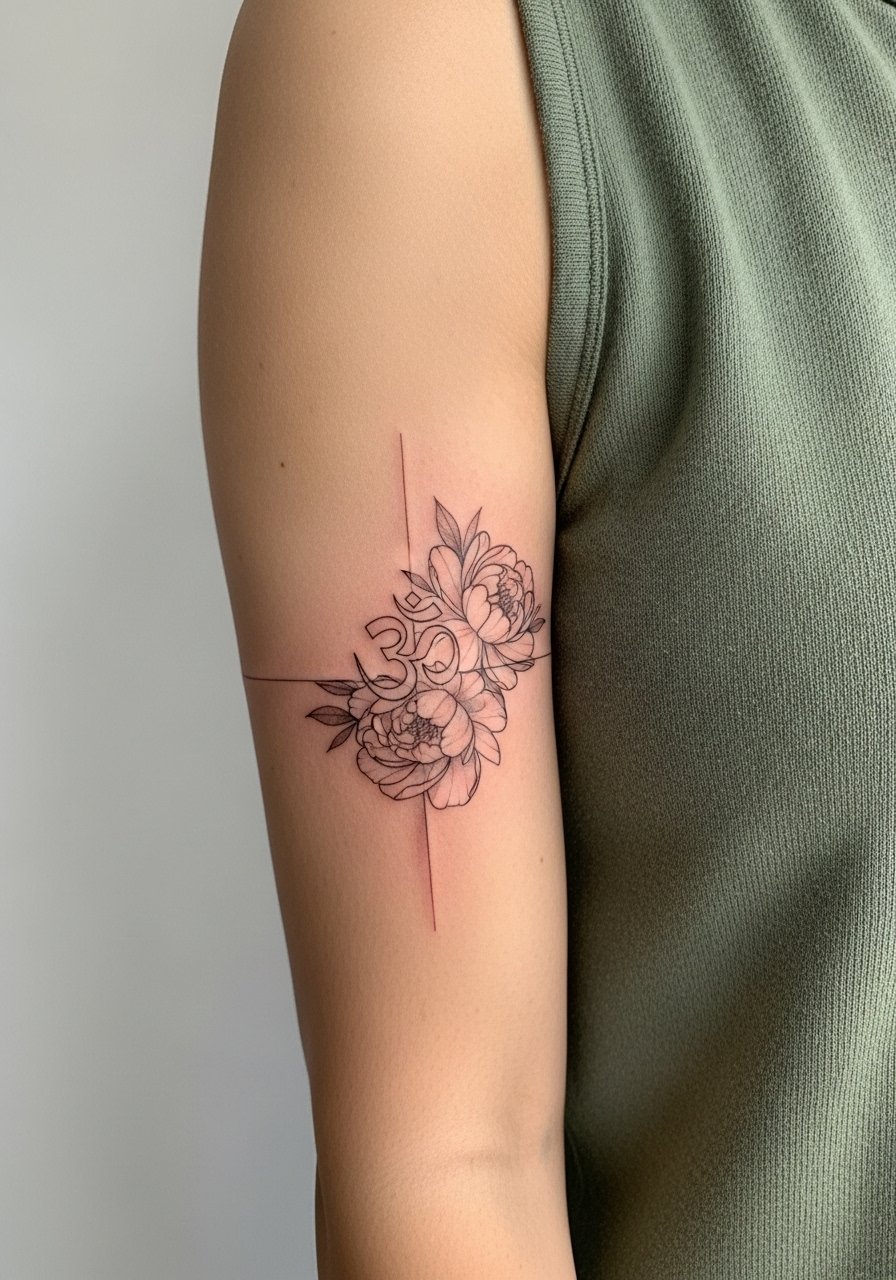
Partial sleeve Om pieces let you tie several motifs together into a coherent vertical story. The trick is to stage elements so the Om remains a focal point rather than being swallowed by florals. Ask the artist to map negative space around the symbol and to suggest how the sleeve will age at three and five years. Sessions are typically multiple and scheduled with breaks. For showing off wear a sleeveless top or structured halter that frames the outer arm. For the session choose a loose button-down so the sleeve can be rolled without rubbing the fresh ink.
Frequently Asked Questions
Q: Will fine line Om tattoos fade faster than bolder ones, and what should I expect for touch-ups?
A: Fine line work does tend to soften sooner than saturated blackwork because the needle channels are narrower and the ink sits closer to the skin surface. In my experience, plan for a possible touch-up between year one and year three for high-friction spots like fingers and wrists. Areas with less friction and sun exposure often hold longer.
Q: How painful is sternum or underbust Om work compared with ribcage designs?
A: Sternum and underbust sessions register as high on most pain scales because the tissue is thin and the bone proximity amplifies sensation. Ribcage work is similar. Some regular clients say they tolerate it better with breaks and topical numbing, while others find it very intense. Expect shorter passes and plan recovery time.
Q: Should I look for a single-needle specialist for a fine line Om, or will any experienced artist do?
A: Artists split into two camps on this. One group insists single-needle specialists produce the most stable fine line work. The other says many experienced artists can achieve the same result with careful spacing. My advice is to review healed portfolios for similar placements and ask where they land on single-needle versus conservative spacing.
Q: Which placements need special wardrobe planning for the session day?
A: Sensitive placements like shoulder, sternum, hip, and thigh benefit from session clothing that exposes only the tattoo zone. A loose tank, a sports bra, or a button-front top makes access simple. Planning what to wear keeps the session efficient and reduces friction after bandaging.
Q: Are finger and hand Om tattoos worth it if I want low maintenance?
A: If low maintenance is your priority, fingers and hands are not ideal. They require more touch-ups due to washing and UV exposure. If you accept periodic refreshes and a smaller, simpler mark, those placements can be meaningful. If you want a longer-lasting minimum, choose forearm, shoulder, or back placements instead.