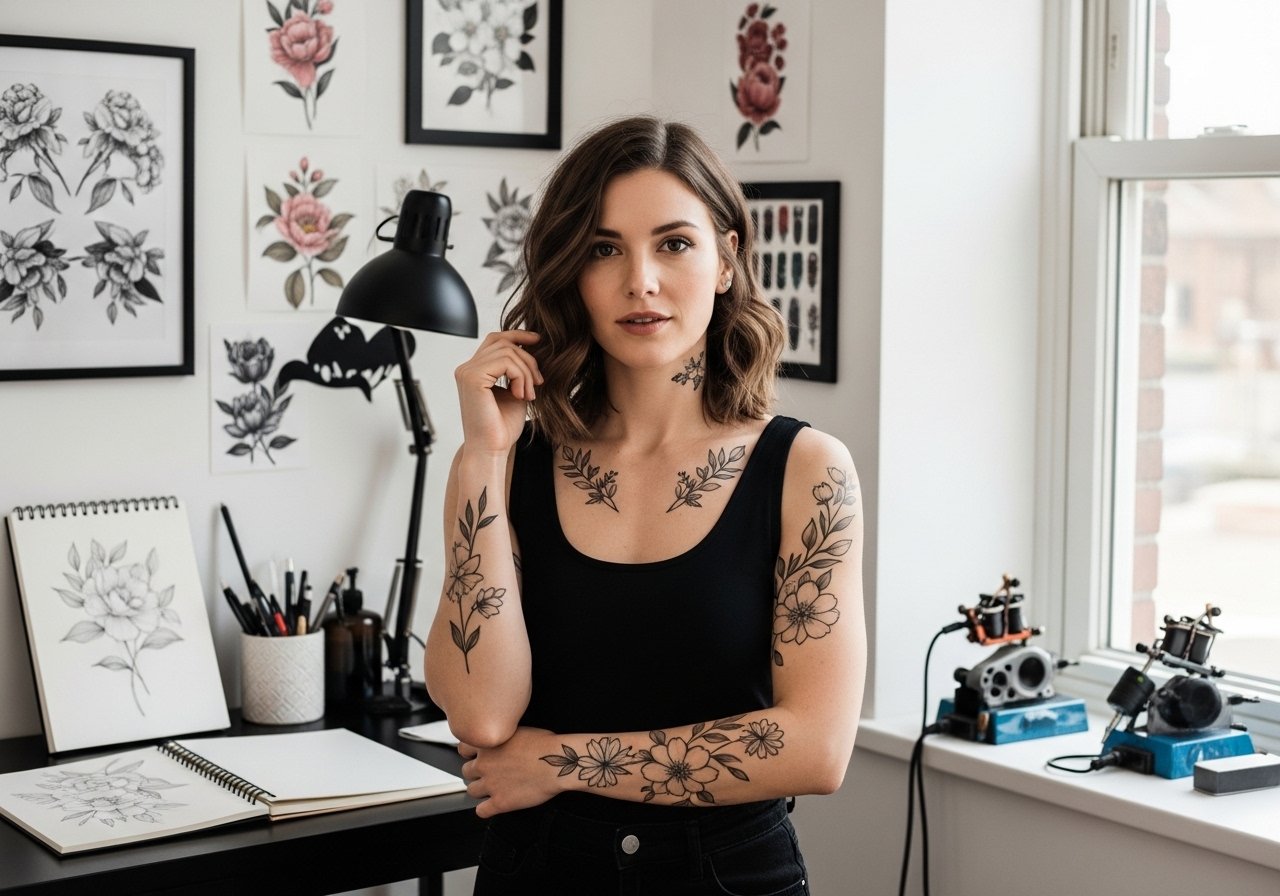
Fine line work is everywhere on Pinterest and Instagram, and that popularity hides a blunt truth. The pieces that still read sharp after a few years are usually planned for the spine, not improvised on it. Placement, line weight, and session prep matter more than the stencil you liked at 2 a.m. Read through the first idea and you will see the kinds of tweaks you should ask your artist for before the needle starts.
1. Fine Line Tree of Life Along the Spine
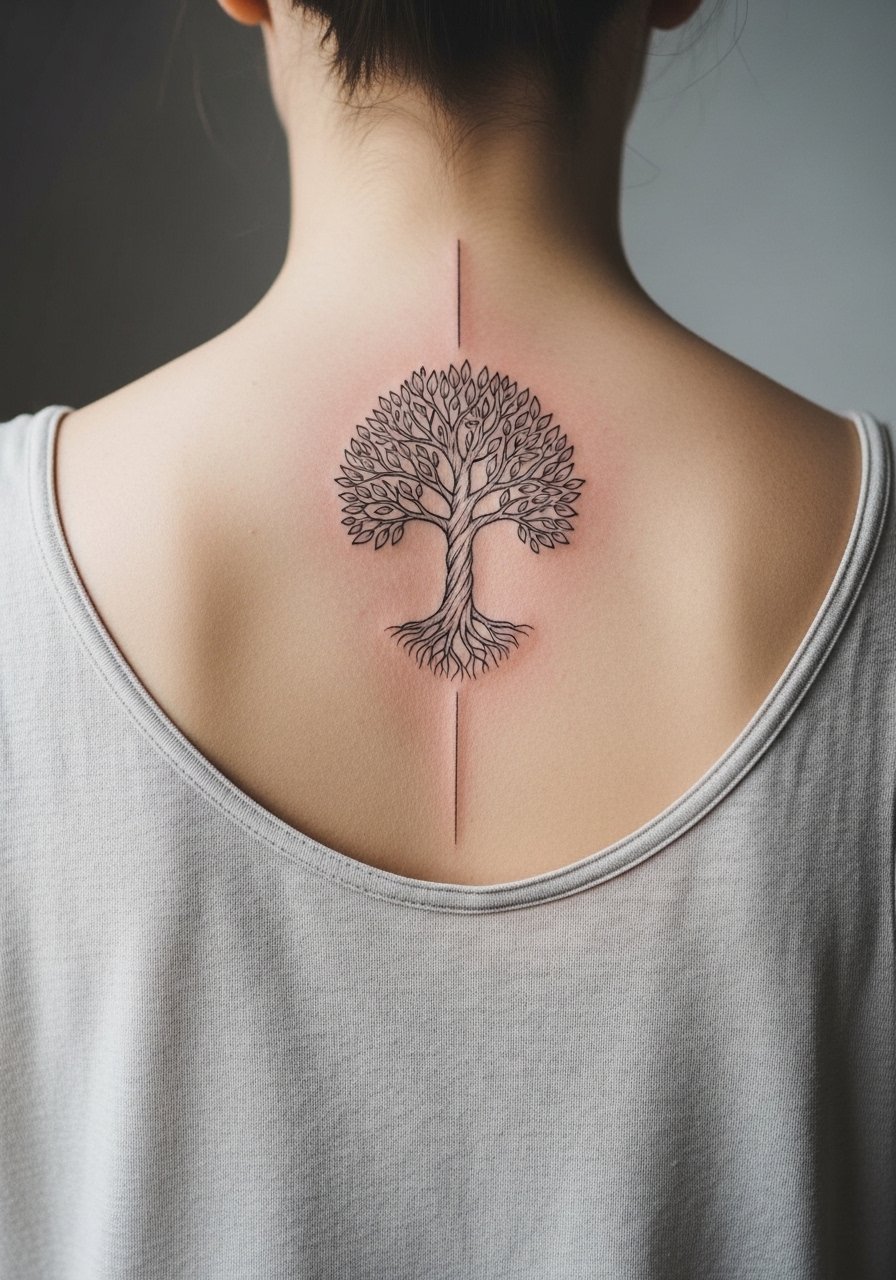
A vertical tree of life reads as growth without crowding the back. Expect sharper discomfort when the needle travels over vertebrae, and a typical single-session time of 60 to 90 minutes for a micro version. Tell your artist you want slightly thicker trunk lines and open branch spacing so the limbs do not merge as the ink settles. A common misstep is compressing intricate roots into too small a space, which ages into blur. For showing it off, a low back crop top women frames the symmetry and keeps the spine visible without overexposing the area. Plan a touch-up at around one year for fine line retention.
2. Orbit Line Planets Stacked Vertically
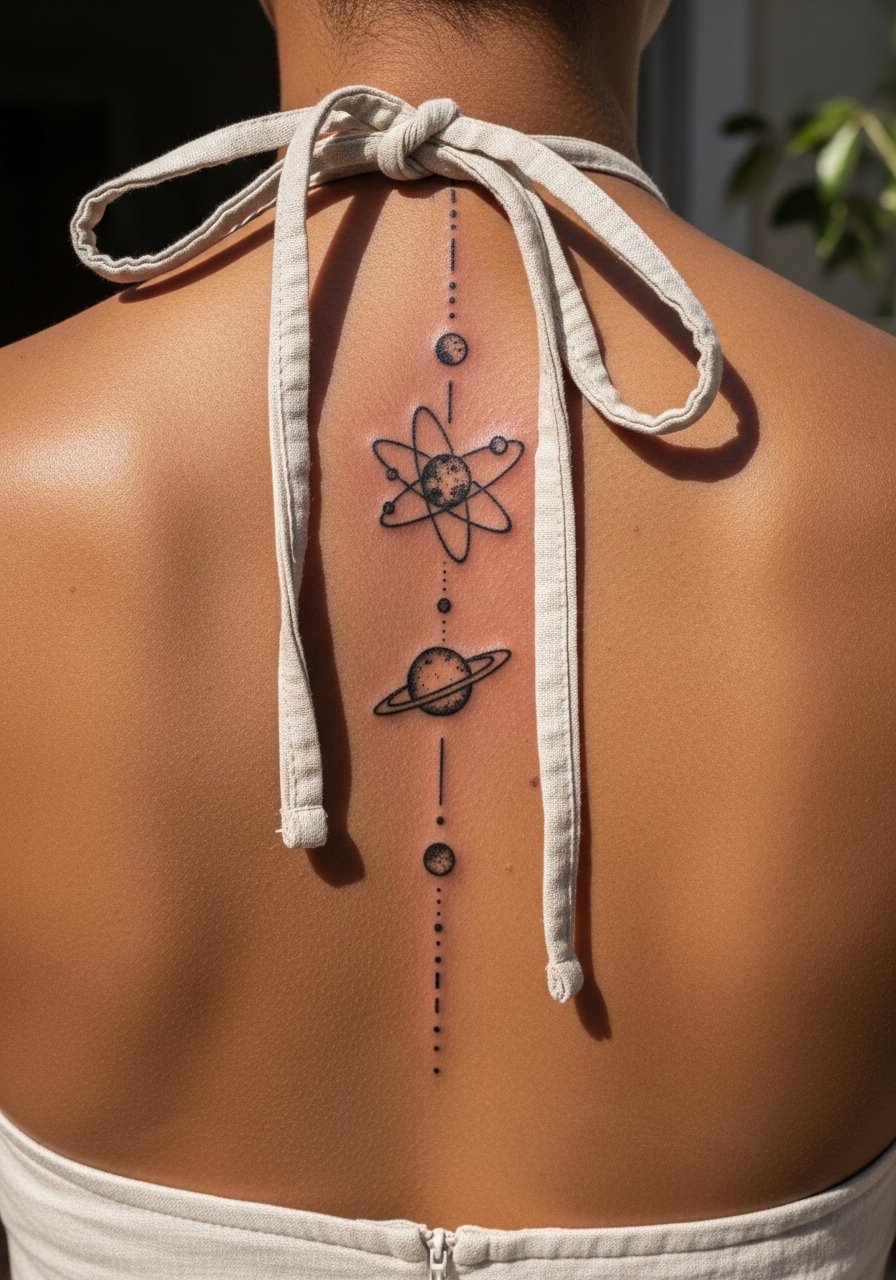
Orbit lines and tiny planets are graphic while staying small. Pain is moderate to high when the pattern overlaps bony spots, and a micro stack can fit into a single, 45 to 75 minute session. Ask your artist to space planetary nodes apart and to use crisp negative space so the design keeps clarity on the curve of the back. The aging risk is crowding the circles too close, which causes merging. Wear an halter neck linen top to show how the vertical rhythm plays with shoulder lines. If you want expandability later, leave room above or below the run.
3. Single-Needle Inspirational Script Down Vertebrae
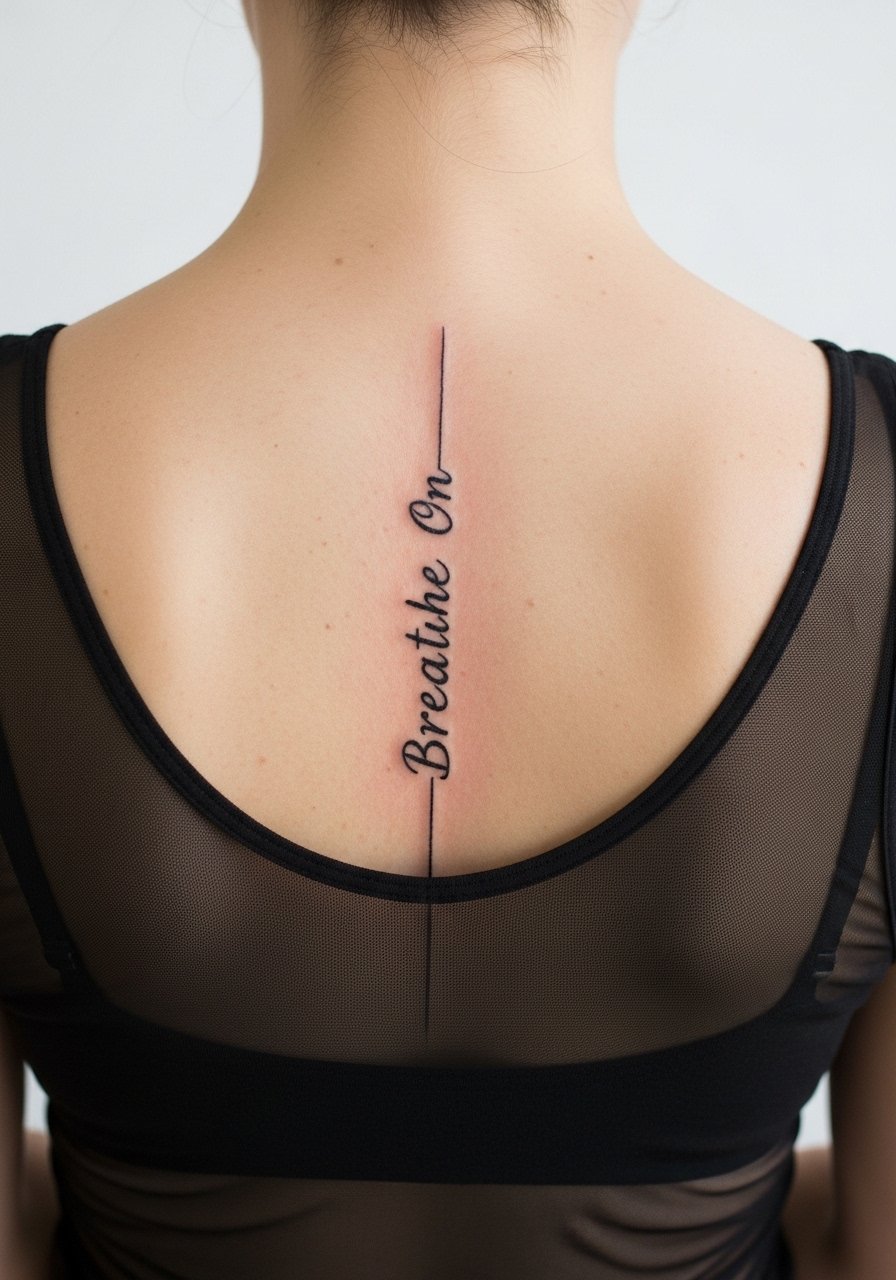
Script along the spine can feel intimate and discreet, but the bone makes lettering painful and prone to blowout if too thin. Most micro scripts fit in 30 to 60 minutes. When booking, bring the exact font sample and ask the artist to space letters vertically across vertebrae so each word breathes. The common error is choosing a calligraphic style that loses its counter space as it heals. Plan on slightly thicker strokes than your on-screen sample. Pair this line with a sheer black tank top for evenings when you want the line to peek through without shouting. Touch-ups at six to twelve months are normal for very fine scripts.
4. Minimalist Lotus at the Spine Base
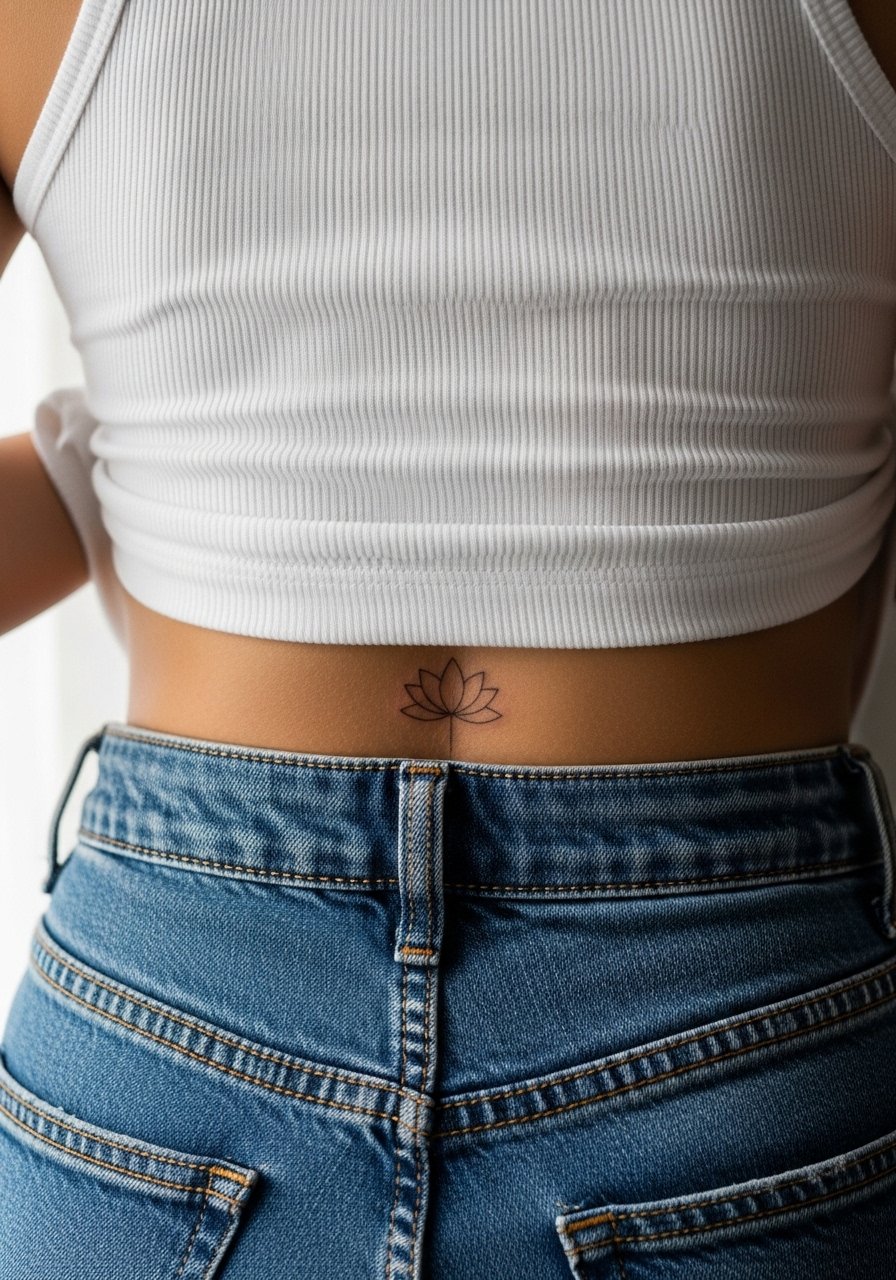
A small lotus at the base of the spine makes a neat anchor that leaves room for future additions. Expect moderate pain near the tailbone and a short, single session under an hour for a micro lotus. During consult say you want open petal spacing and a cleaner outer outline so the shape survives weight fluctuations better. The pitfall is compacting petal detail into a tiny shape, which blurs over time. For showing it off, a high waist crop top set or a backless lace dress elegantly frames the lower back without forcing you to go full reveal. Lower spine tattoos are the ones to consider if you plan to expand into roots or tree imagery later.
5. Lunar Phases Running the Full Spine
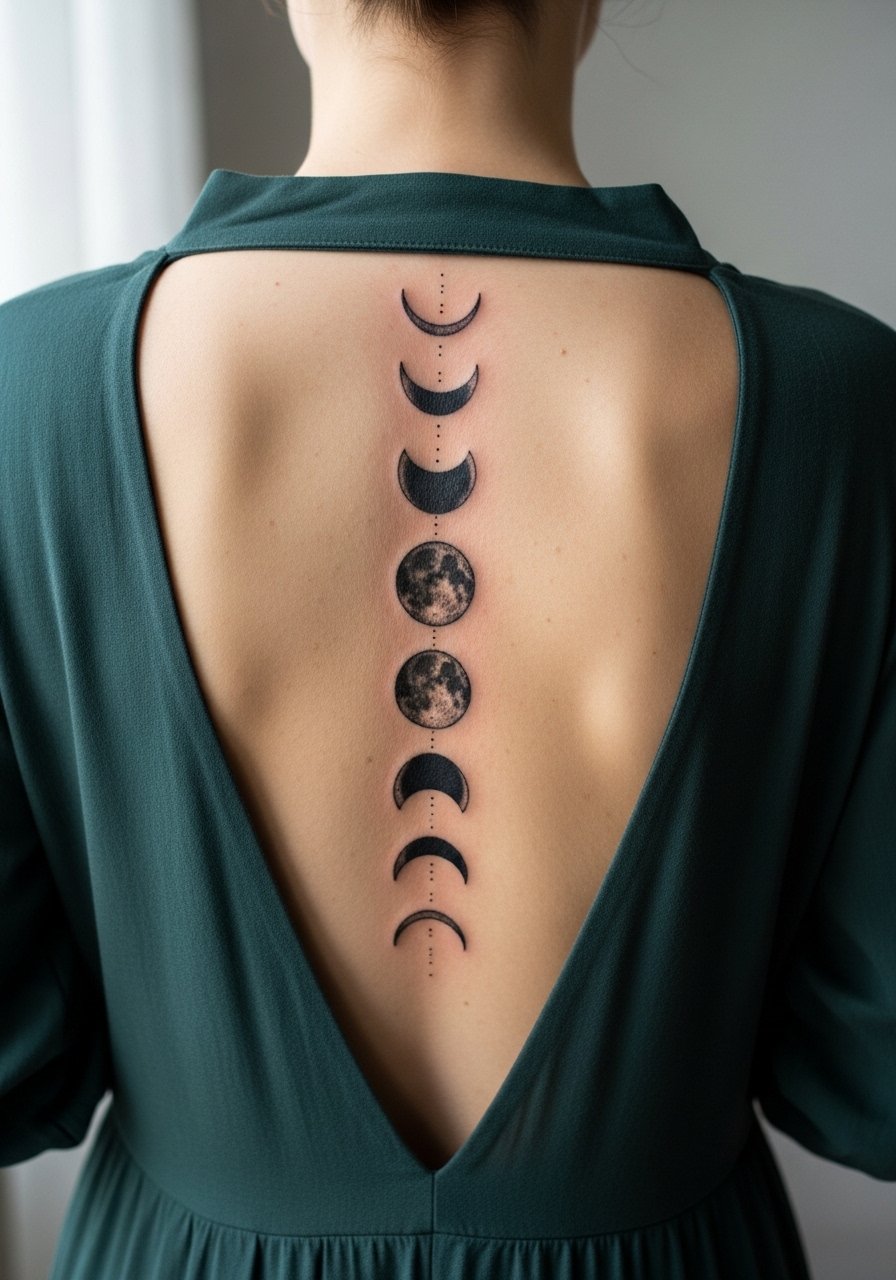
A vertical lunar cycle is a subtle timeline and works across the full spine if you want continuity. Pain varies by vertebra and session time depends on run length, commonly 60 to 120 minutes for a full micro cycle. During consultation state that you want consistent spacing and matched moon sizes, not a "sketchy" hand-drawn look that blurs. Artists disagree about fine line longevity on bone. One camp argues fine single-needle lines age gracefully with planned spacing. The other camp says denser small dots will merge within a couple of years. Ask about line weight and touch-up policies before booking. Pair the run with an open back maxi dress to let the vertical rhythm carry well in photos.
6. Geometric Mandala Centered on Mid-Spine
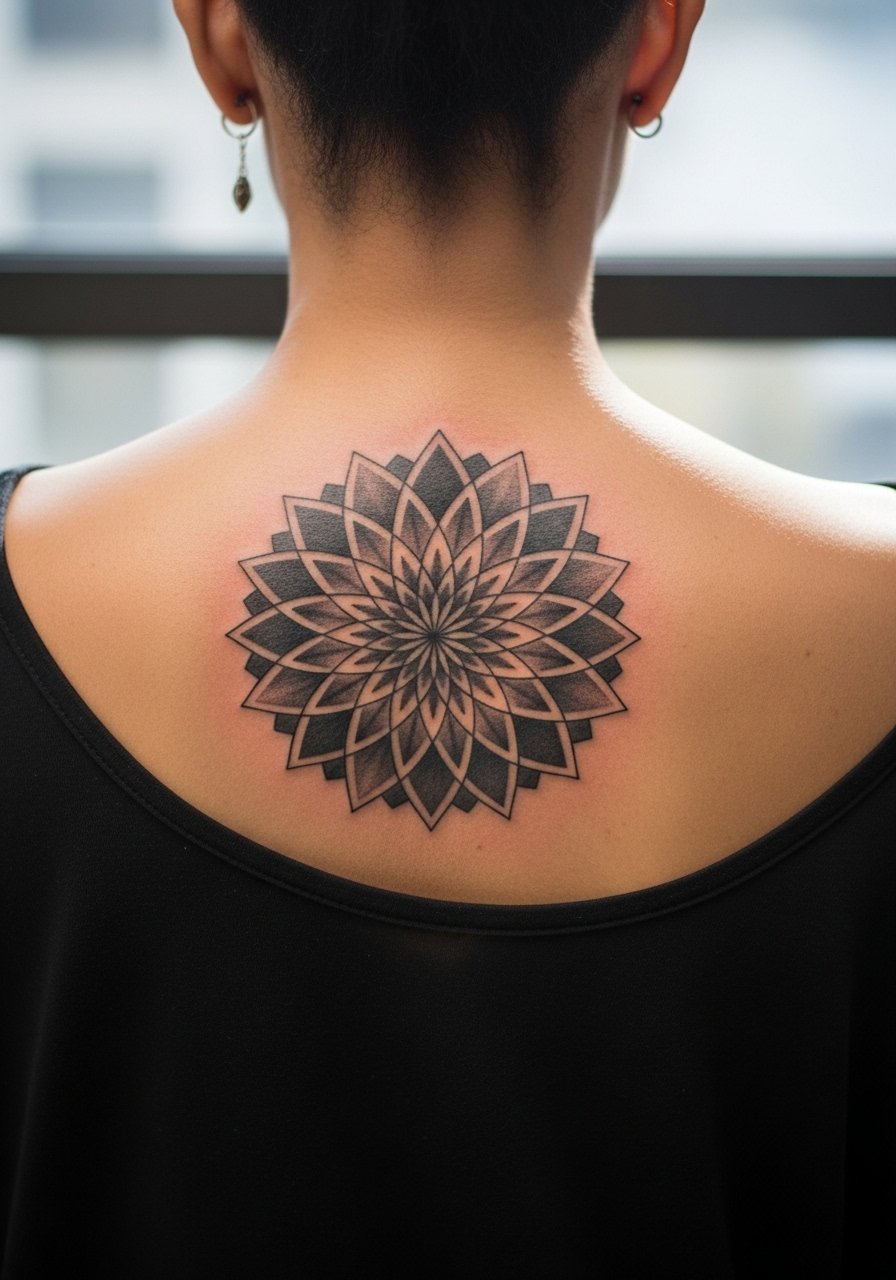
A mandala on the spine makes symmetry visible and can be scaled as a small micro so the session stays under two hours. The trick is enough spacing between spokes so stipple shading does not collapse into gray patches as it heals. Tell the artist you prefer radial balance and slight negative space between tiers. A common mistake is stacking too many concentric details into a tiny diameter, which loses definition after six months. For an evening look, a loose button-down shirt pulled aside frames the mandala without competing for attention. Expect a touch-up window at around one year on very detailed mandalas.
Studio Day Picks
Those first six spine designs share aftercare needs around friction and movement, so these five items smooth session day and the healing window for fine line and vertical work.
-
Tattoo Goo balm. A non-greasy balm many people prefer for the lower back because it moisturizes without feeling heavy on the area that rubs against clothing.
-
After Inked lotion. Thinner than thick ointments, it keeps long vertical pieces like moon runs and tree motifs from trapping sweat under the skin during humid days.
-
H2Ocean saline spray. Useful for easy, gentle cleansing on hard-to-see spine zones where bending to rinse is awkward.
-
Revive hydrating lotion. Low-shine hydration that helps fine line work on medium to dark skin tones retain contrast without looking glossy.
-
Hustle Butter pre and post. A popular go-to for initial moisturizing that many clients like because it spreads thin and does not feel overly greasy on the back.
7. Tall Pine Tree Aligned with Vertebrae
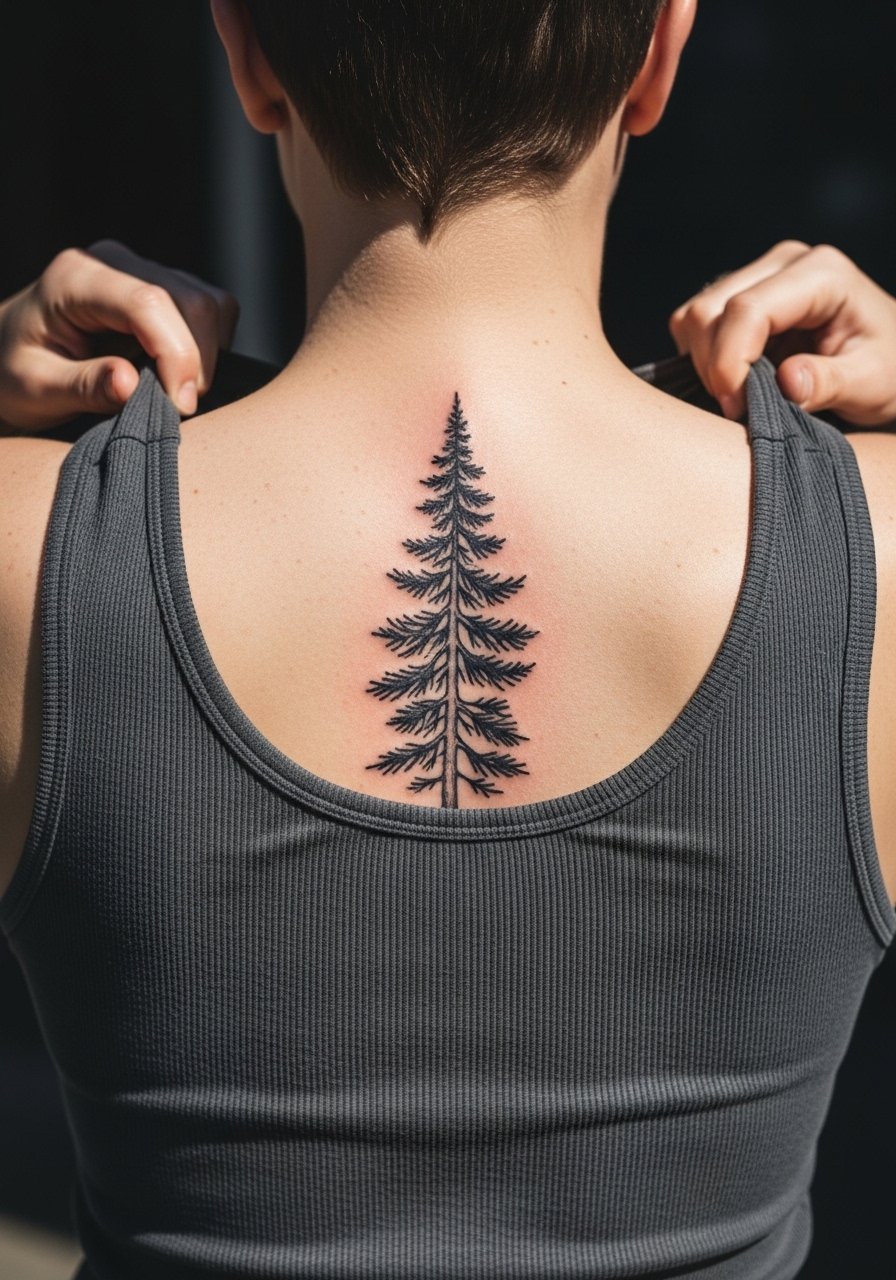
A pine tree plays well with the vertical anatomy and reads as steadiness. Pain spikes over shoulder blades and vertebrae but a slender micro version usually completes in one session under 90 minutes. Ask for a defined trunk and airy branch tips so the silhouette stays recognizable when photographed from a distance. People often request overly thin branchlets that disappear after healing. For casual wear, a sheer black tank top or a low back crop top women highlights verticality without much fuss. Roots that extend toward the waist make a good expansion plan if you want a grounded look later.
8. Ornamental Floral Cascade Down the Mid-Spine
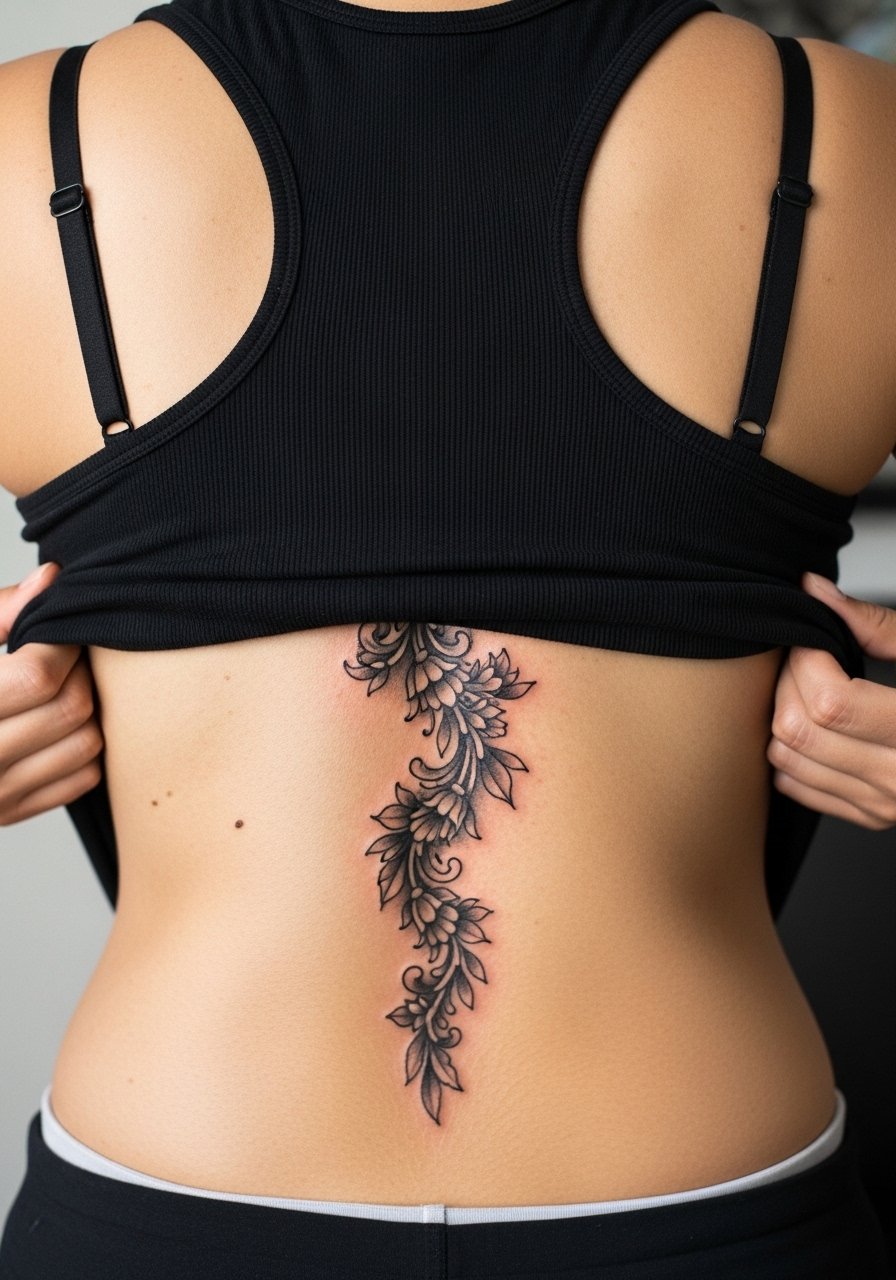
A cascading floral that follows the spine curve flatters the back and can incorporate subtle shading for depth. Pain is moderate where the flowers hit bone, and a detailed cascade will often take one to two sessions. During consult explain you want negative space between blossoms and a clean central spine line to keep the piece from drifting visually. A frequent mistake is overfilling the spaces, which leads to a heavy look over time. Pair with a racerback tank gray to draw attention to the vertical flow. If you plan on adding color later, leave room for saturation without overcrowding.
9. Micro-Realistic Lion Portrait, Vertical
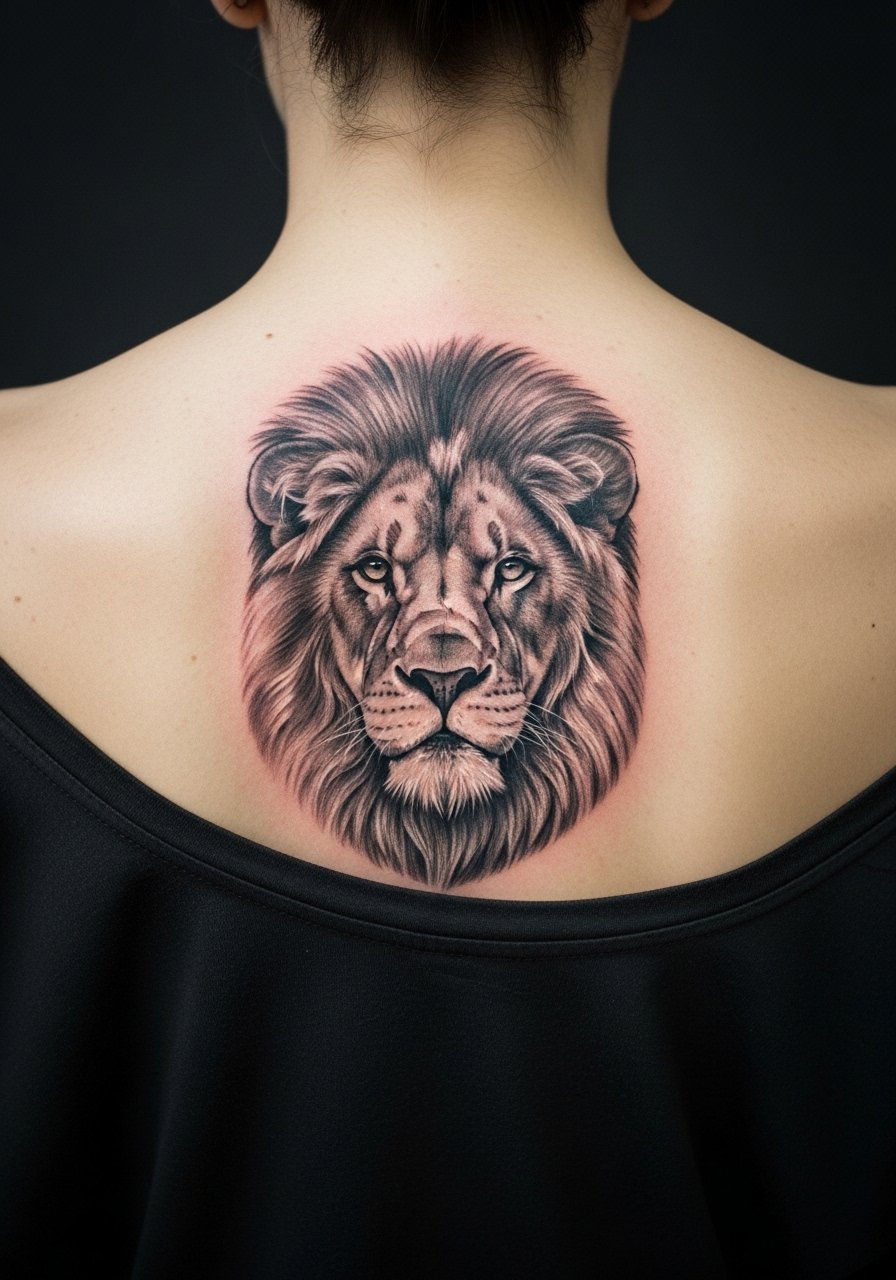
A vertical lion portrait on the spine reads as quiet strength and makes a striking micro-realism statement. Micro portraits are sensitive to blowout on bony areas and typically need two shorter sessions to preserve shading. Tell your artist you want contrast prioritized over hair-by-hair detail so the face retains presence at photo distance. A common error is compressing too much texture into a small block, which loses its facial read as healing progresses. For formal looks, a dainty pendant necklace can sit above the portrait and lead the eye down the midline. Expect touch-ups in shaded areas at the one-year mark.
10. Owl Portrait Focused on Mid-Spine
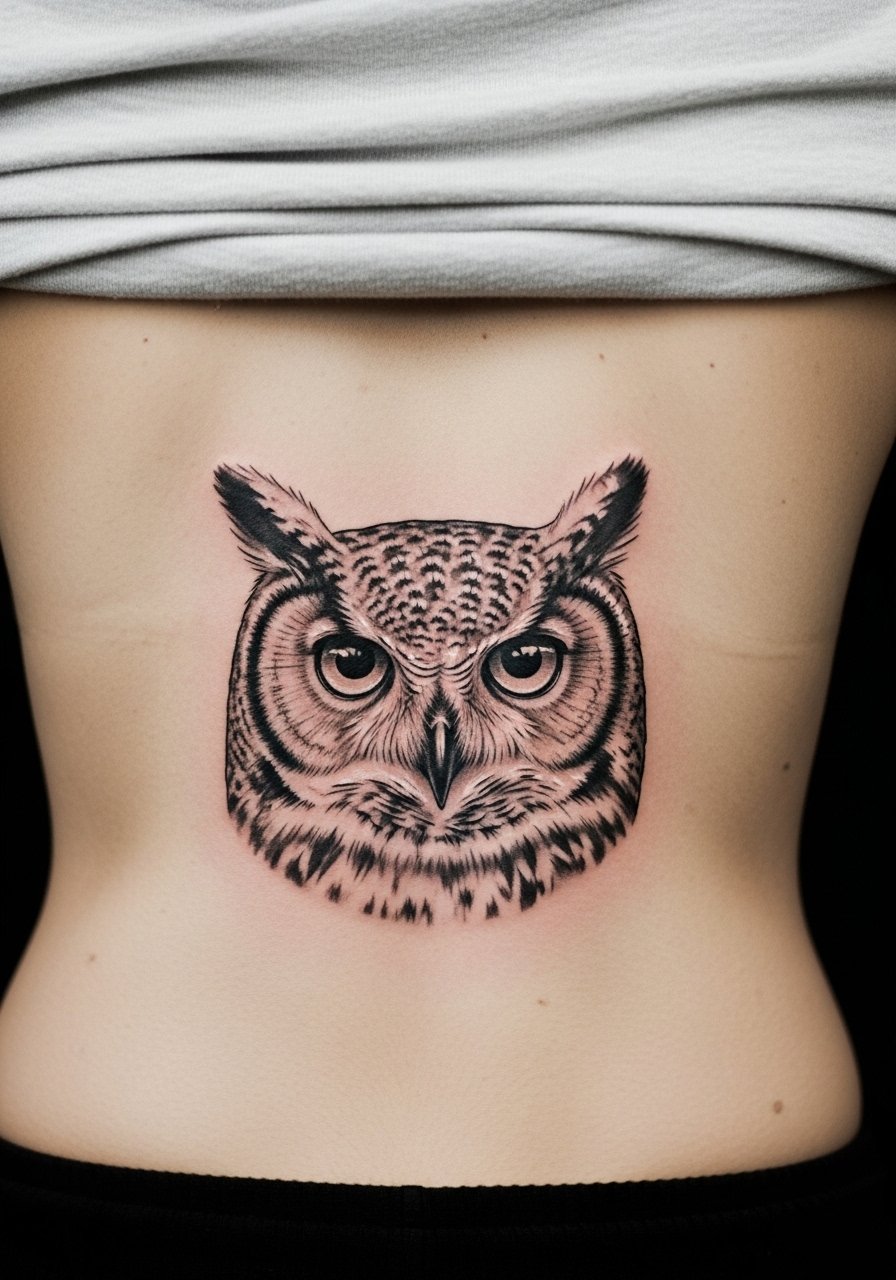
An owl perched on the spine brings vertical symmetry and detail that ages depending on saturation. Pain is similar to other mid-spine placements and a small portrait usually finishes in one to two sessions. During consultation request bold contrast around the eyes and beak while keeping feather textures looser to avoid muddiness later. People sometimes ask for ultra-fine dot fill that compacts into gray patches over time. For a casual reveal, layer a thin chain pendant necklace that draws attention to the neck and then down to the owl. Micro-realism portraits benefit from planned touch-ups in shaded regions.
11. Minimalist Name Script Spaced Vertebrae by Vertebrae
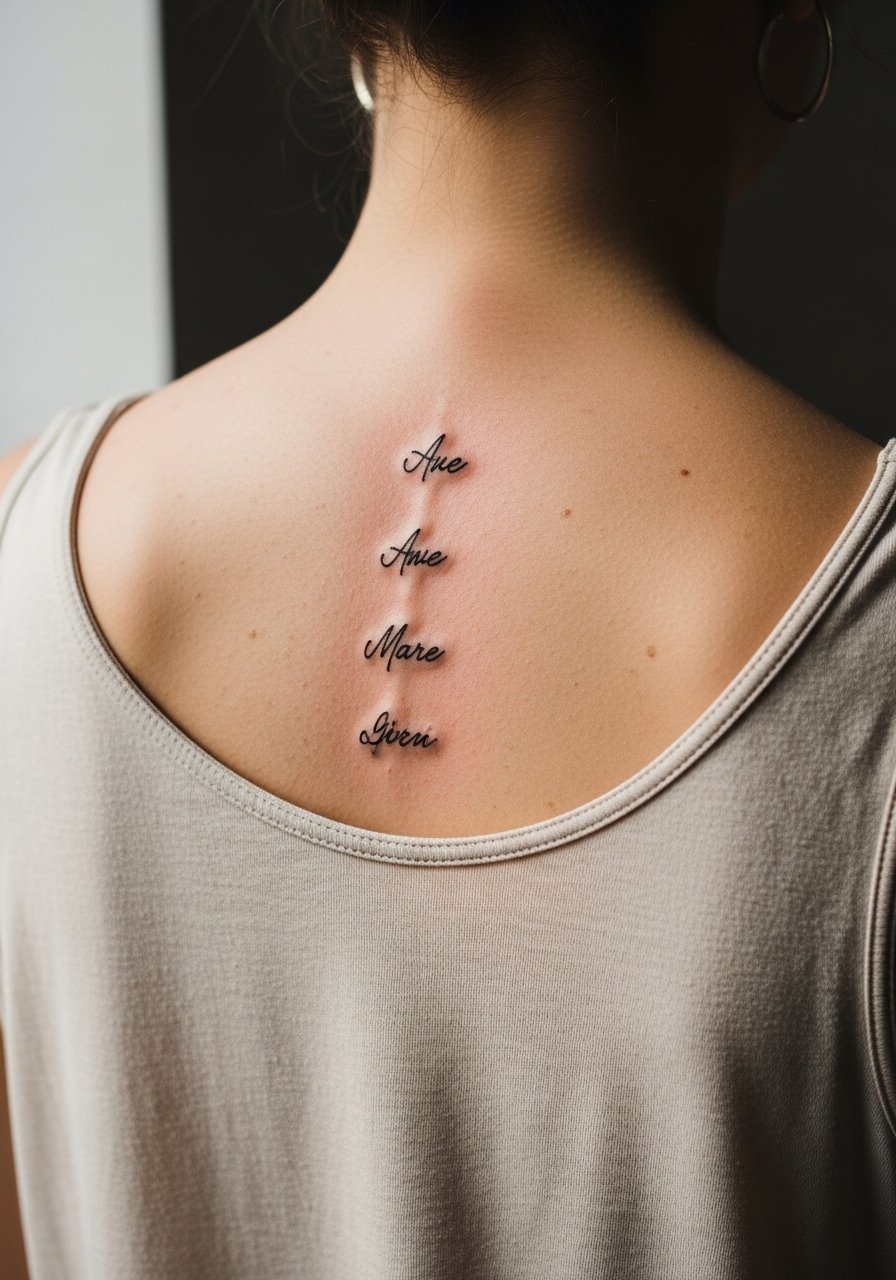
Names spaced letter by letter along the spine are elegant and expandable. The placement is painful over bone and usually fits in 30 to 60 minutes. Tell your artist you want consistent vertical spacing and slightly bolder downstrokes so the letters do not thin out with time. A frequent mistake is squishing letters together to fit a phrase, which makes them illegible later. For daytime looks, a low back crop top women highlights the letter progression. If you expect body changes, consider moving the start point up the spine to avoid stretching near the waistline.
12. Abstract Line Patterns That Mirror the Spine Curve
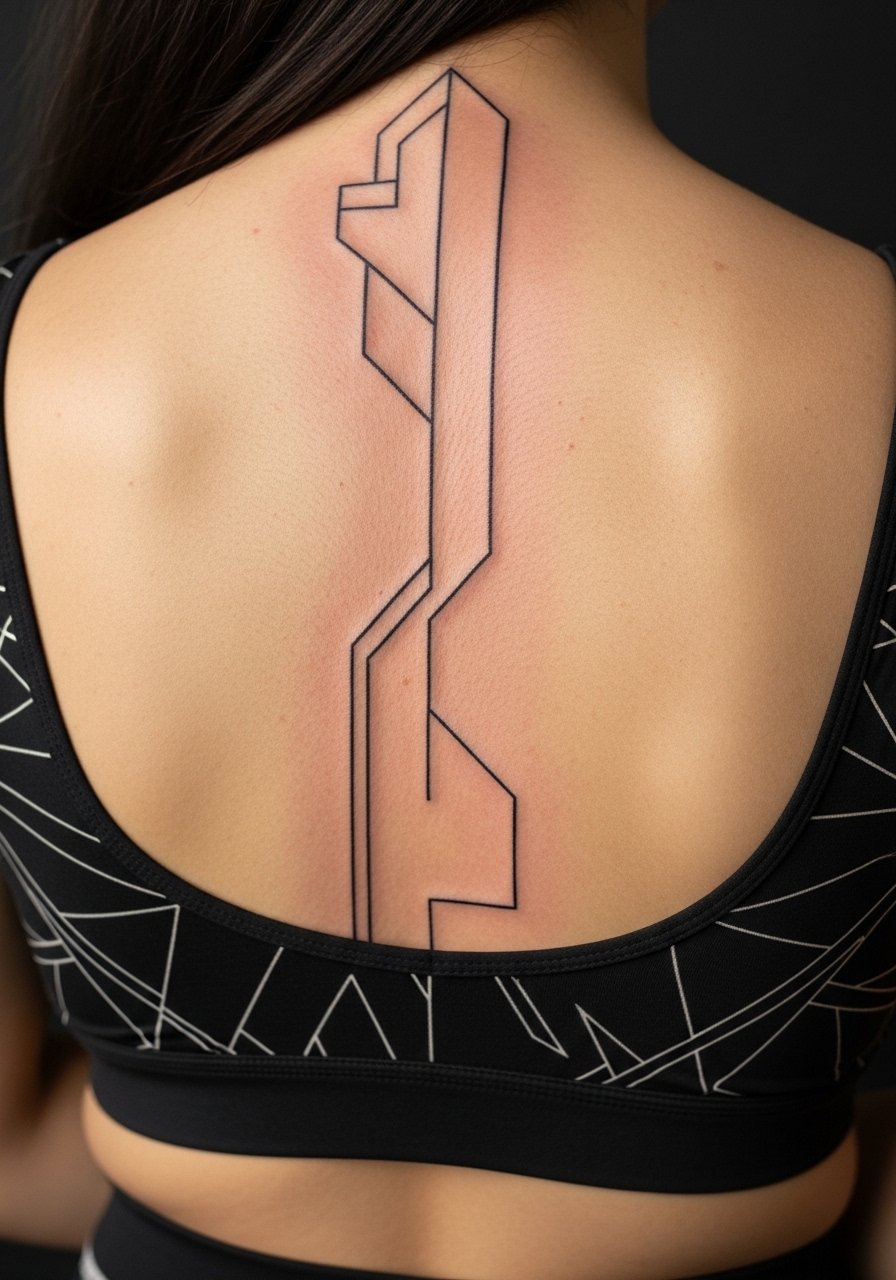
Abstract line patterns that echo the spine look modern and personalise the anatomy. Pain is variable where lines cross bone, and a micro geometric run often completes in a single, 60 to 90 minute session. In consult ask the artist to map the curves to your vertebrae landmarks so the pattern does not sit off-center as you move. The biggest mistake is compressing too many intersecting lines into tight areas, which reads as muddied shading over time. For everyday framing, a sports bra with a wide back band keeps the design visible and comfortable. Abstract runs age better when spacing is generous.
13. Tiny Pine Roots Extending Toward the Waist
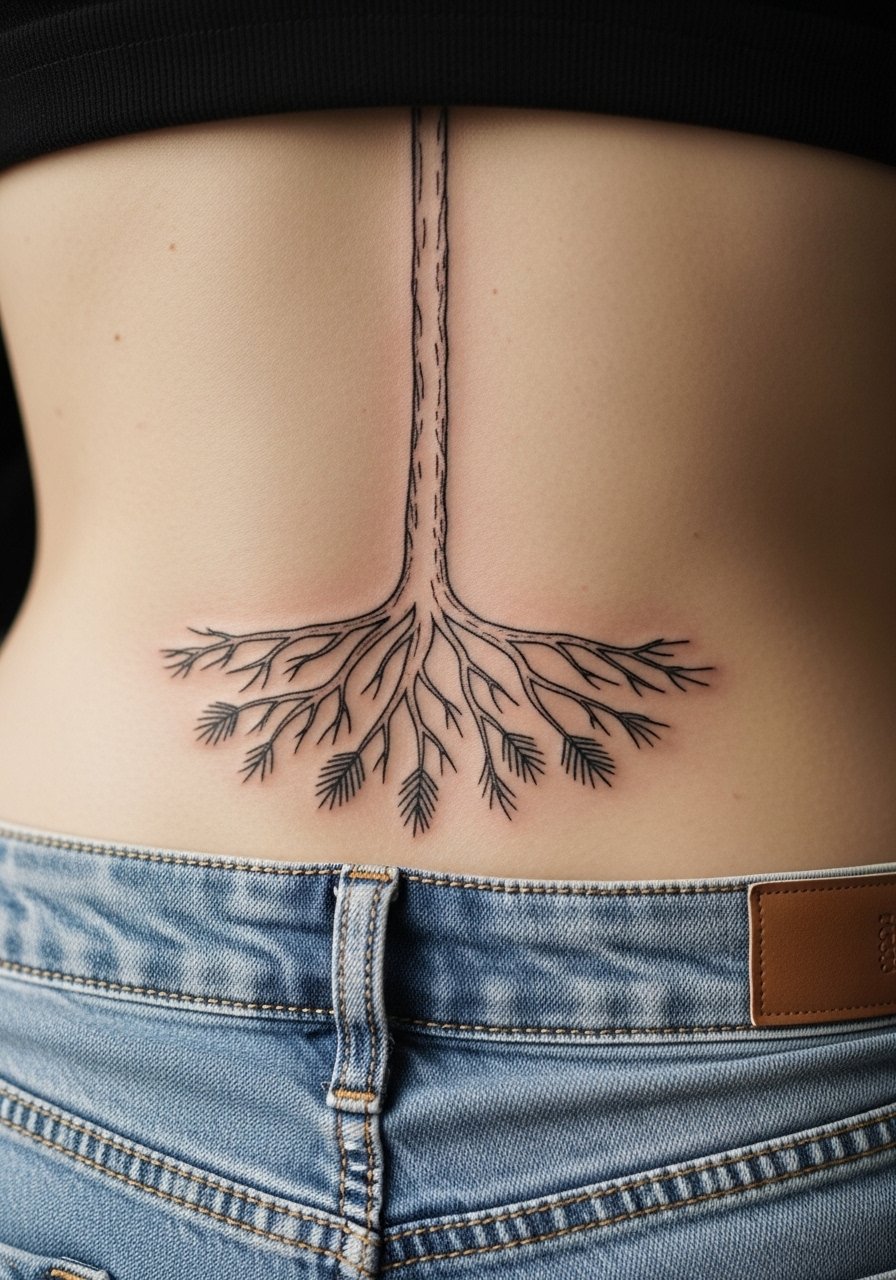
Roots down toward the waist anchor a tree motif and look great on curvier spines. Lower spine work can shift with weight changes so I advise starting slightly higher than you think. Expect a single session under 90 minutes for the micro roots. Tell your artist you want angular root spacing to avoid fill that stretches. A common regret is placing too low and seeing distortion after weight fluctuation. Pair with high waist crop top set for a summer reveal that keeps the waistline clean. If expansion is planned later, map where roots might meet future elements.
14. Small Geometric Spine Connector
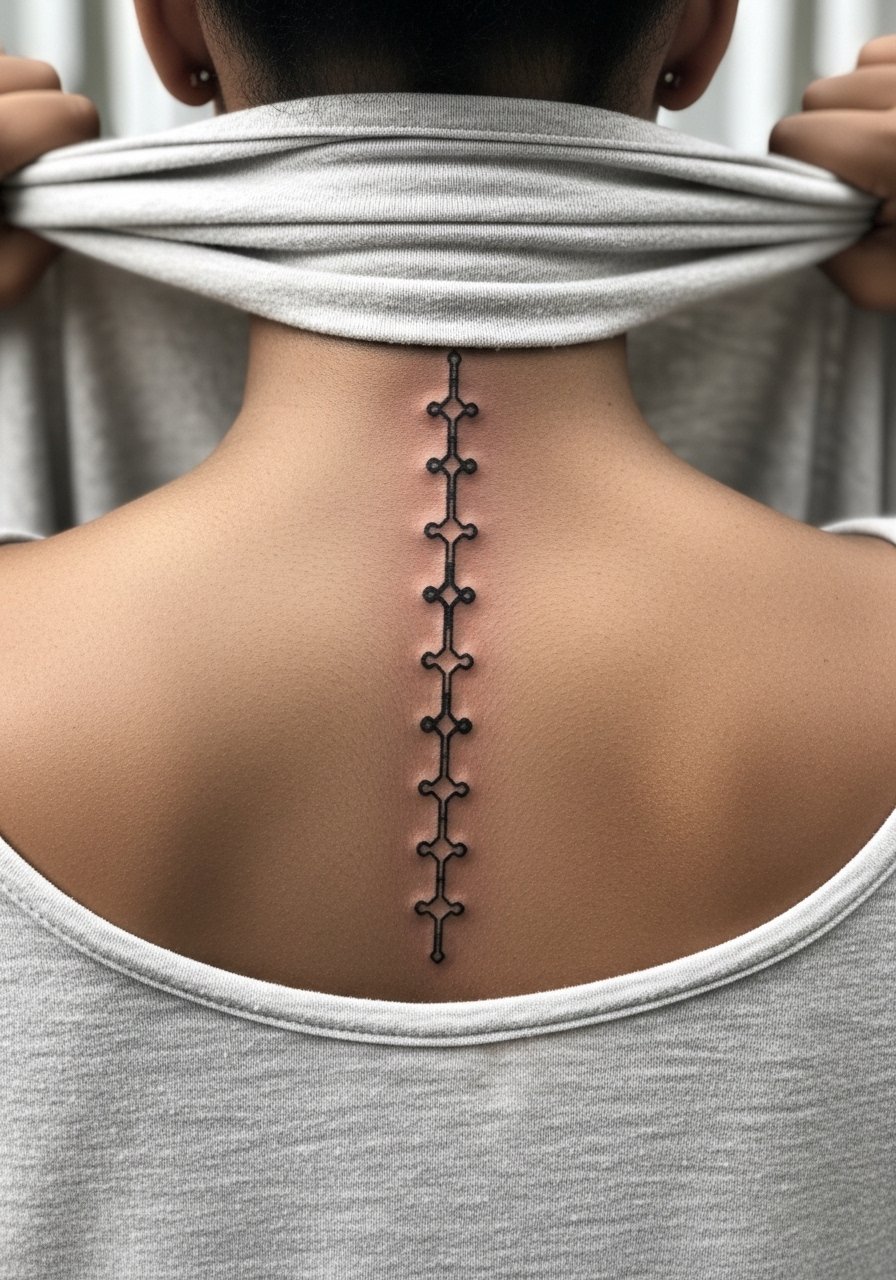
Connector geometry can tie multiple back pieces into a coherent column and works well when minimal. Pain is similar to other spine spots and micro columns usually take 45 to 90 minutes. In consult ask for defined negative space so the shapes do not merge, and request slightly increased line weight in the thicker segments. Artists debate fine line vs bold line longevity. One camp says thin geometry holds with spacing and touch-ups. The other camp insists bolder lines last cleaner on bone. Be explicit about which side your artist aligns with during booking. For nighttime outfits, an open back maxi dress shows the vertical connector without extra detail crowding the look.
15. Vertical Coordinate Tattoo Over the Spine
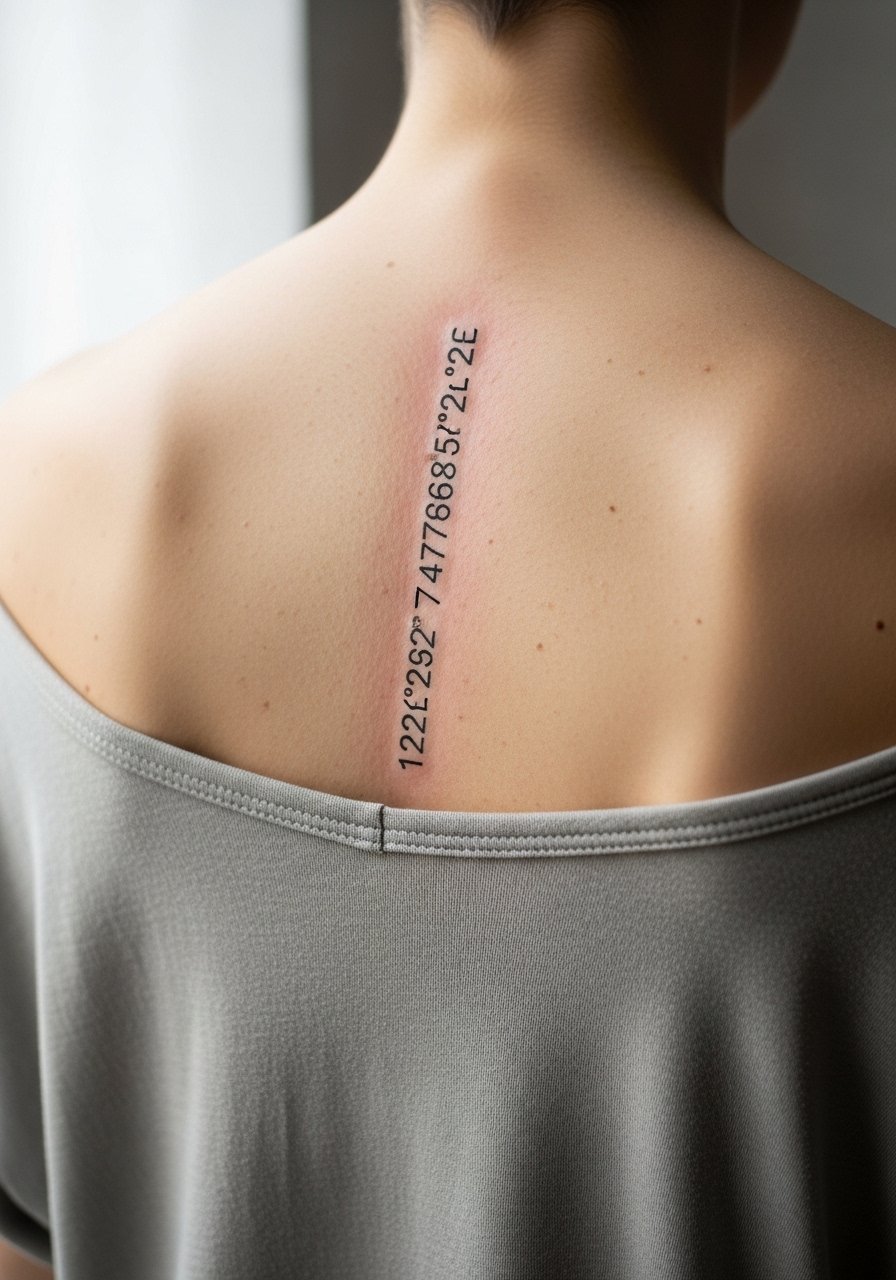
A coordinates tattoo down the spine is an architectural, compact piece. Text on the spine demands clear spacing because line compression is a real risk over vertebrae. Most coordinate runs finish in under an hour. State the exact text you want and ask for slightly heavier numerals so they keep legibility in photos. Common mistakes include using micro serif fonts that melt into a gray line as they age. For a casual reveal, layer a thin chain pendant necklace that lands just above the numbers. If you expect frequent sun exposure, remember that UV affects crispness.
16. Vertical Arrow Cluster Pointing Down the Spine
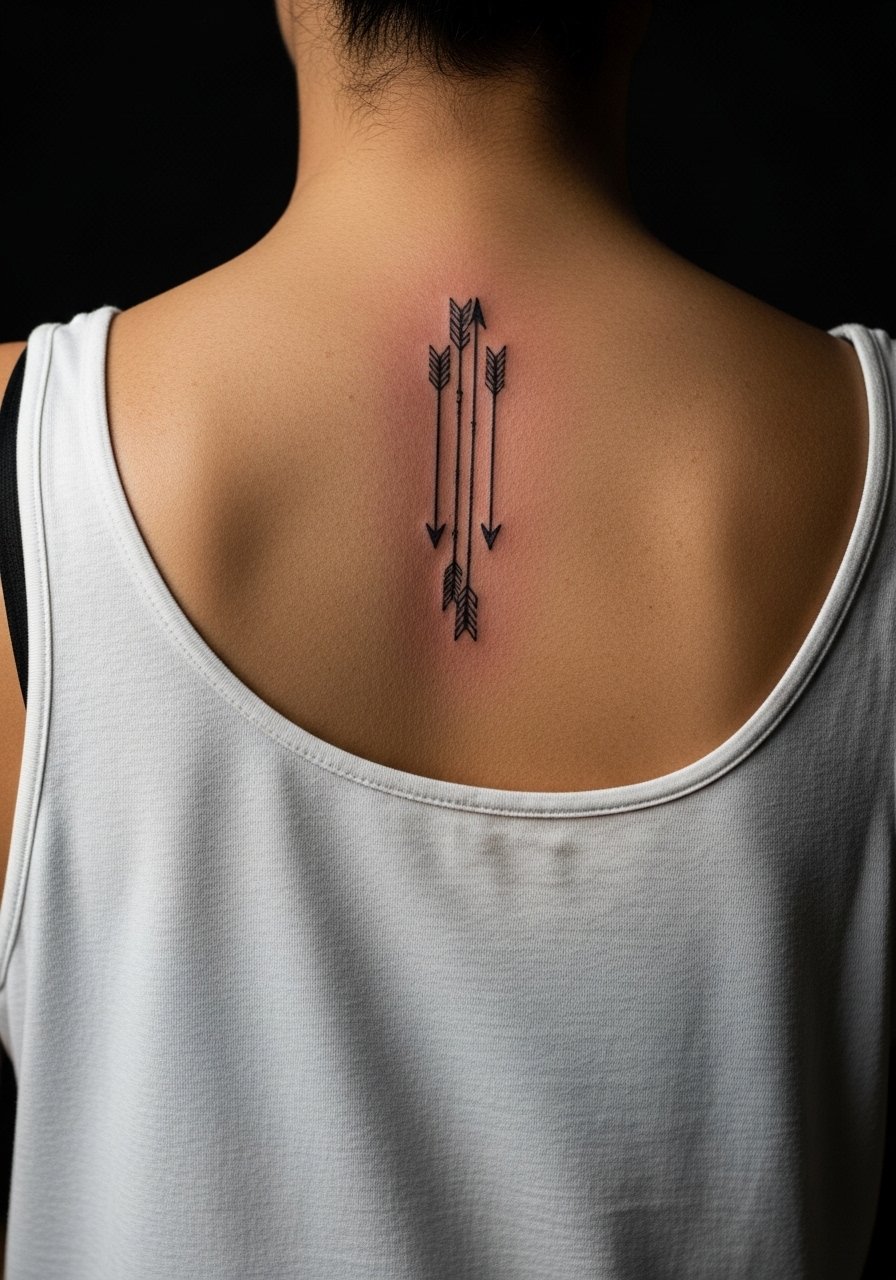
A column of small arrows reads directional and modern while remaining compact. Pain is higher over bony areas and a cluster like this typically wraps in 45 to 70 minutes. Tell the artist you want consistent arrowheads and steady spacing to prevent any single arrow from dominating the group as the ink settles. A typical error is tiny arrow shafts that lose definition. For daytime styling, a low back crop top women keeps the vertical motion visible. Arrow clusters age well if you avoid over-detailing the feather fletching.
17. Tiny Constellation Mapping Down the Spine
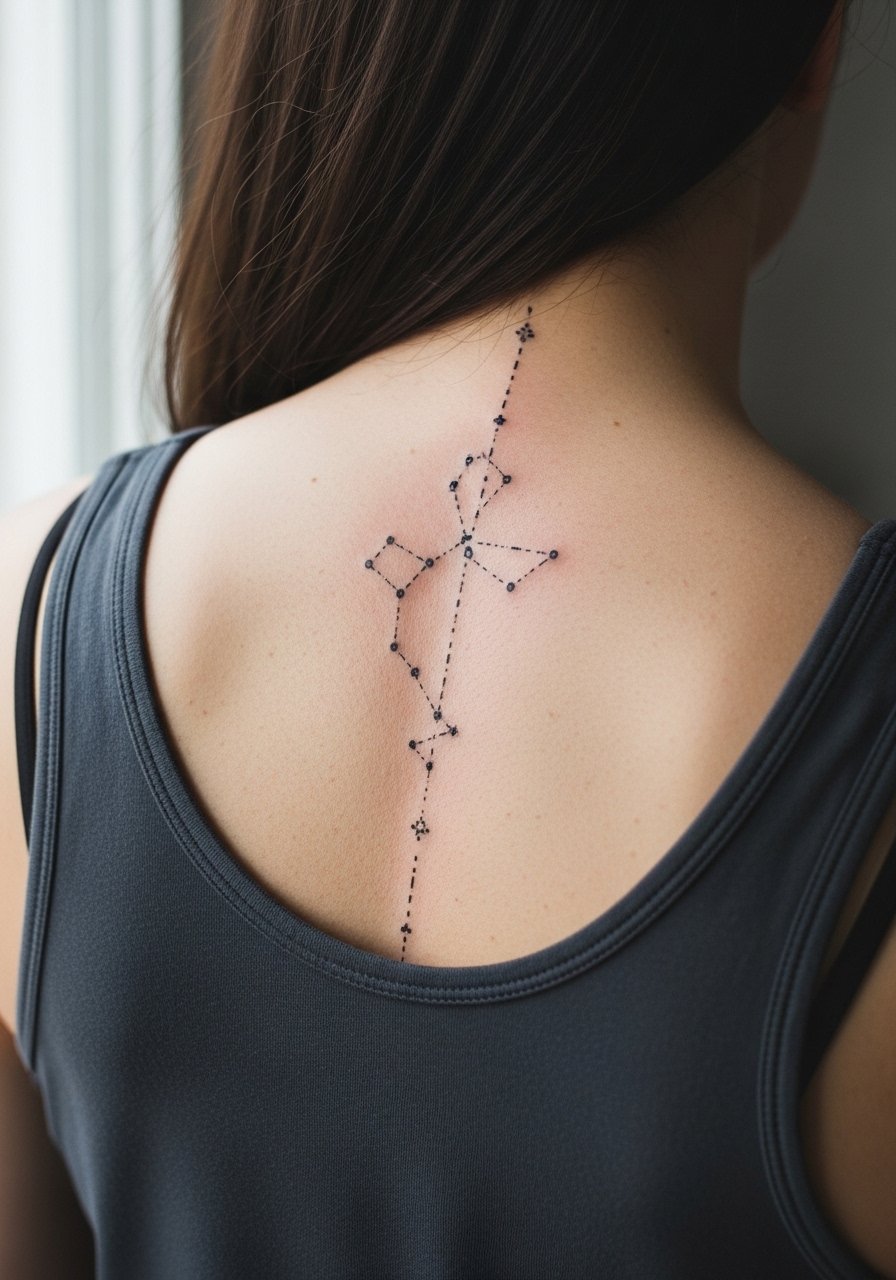
Constellation pieces use dot work and thin connectors to suggest pattern without heavy fill. Pain varies by vertebrae and a micro map will often finish in one session. Ask your artist to space dots generously and to make connectors slightly bolder than single-needle hairlines so they endure. A common trap is using identical dot sizes throughout, which reads flat after healing. For a casual reveal, try a racerback tank gray that allows the linework to breathe against fabric. Plan a touch-up in shaded connector areas as needed.
18. Petite Mandala with Root Extensions
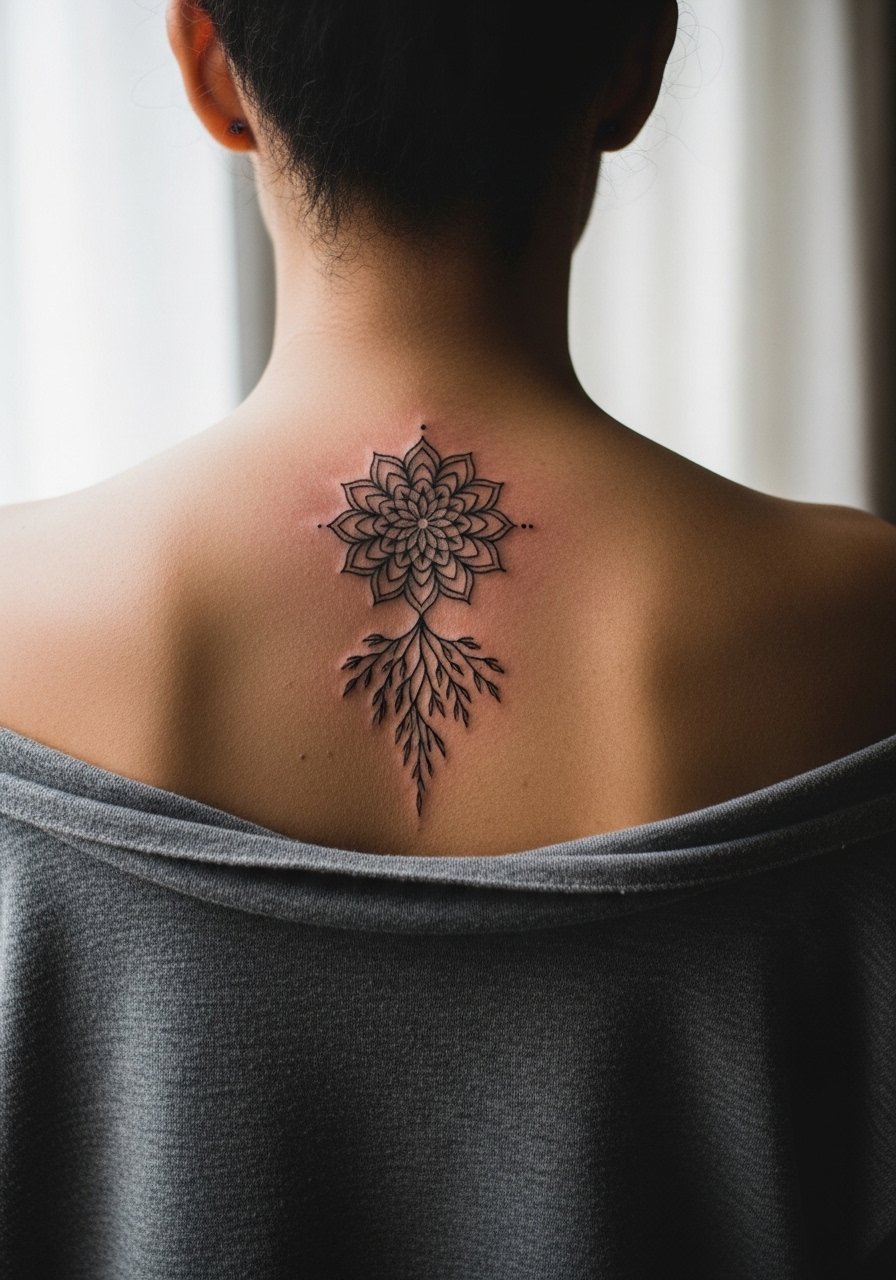
A small mandala with roots makes a compact focal point and an organic extension path for future work. Pain is moderate and this typically completes in under 90 minutes. Request larger gaps between concentric elements so stipple shading does not merge over time. The mistake is pushing too many radial tiers into a small circle, which loses articulation. For evenings, a loose button-down shirt pulled aside keeps the mandala visible while staying tasteful. Leave expansion lanes if you want to build a larger back piece later.
19. Micro Floral Ring Stacked Vertically
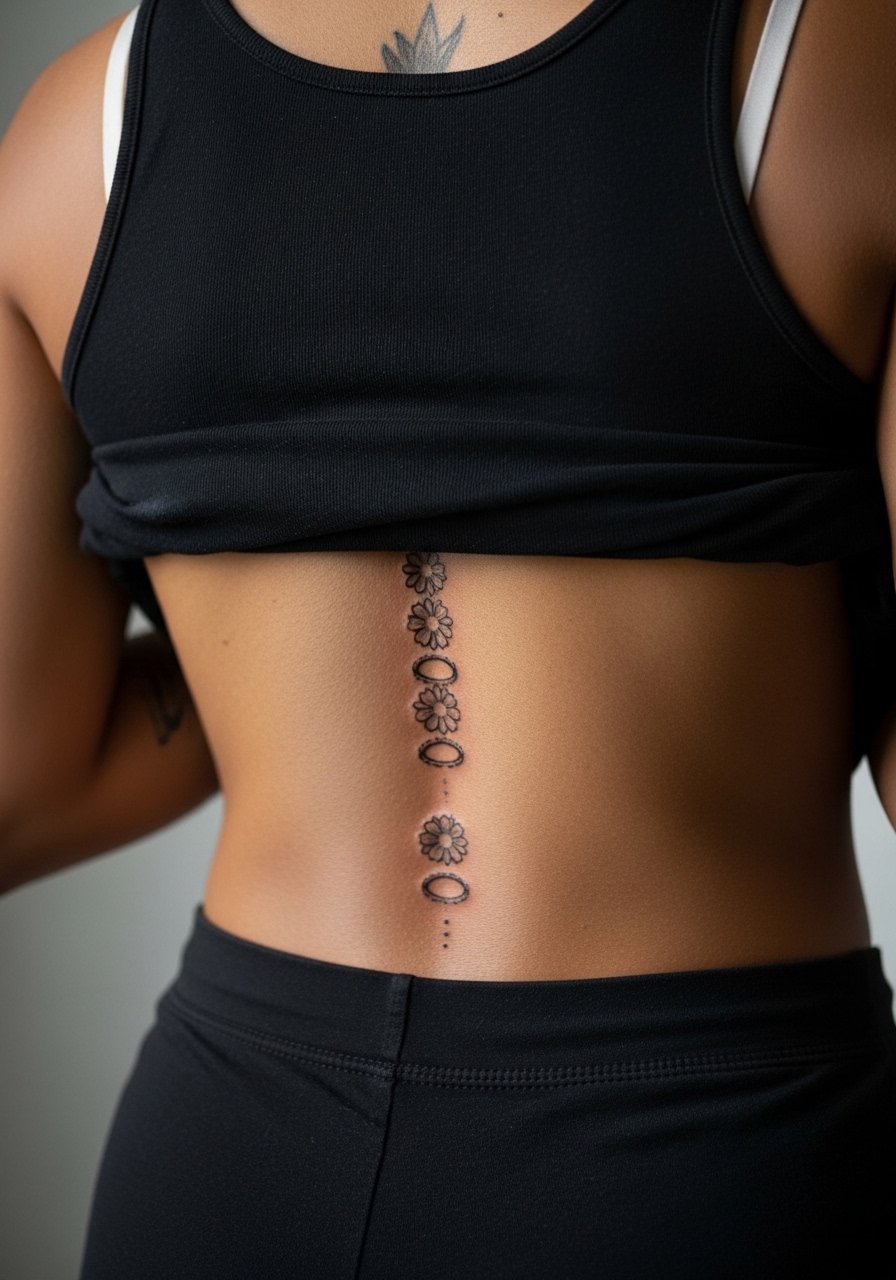
Stacked floral rings are a simple way to read continuity without a single long image. Pain fluctuates across the column and a stacked set often fits into one session. Tell your artist you want consistent ring spacing and slightly sturdier outer lines to keep the floral shapes distinct. A common error is using too many internal filigree lines that fade into gray patches. For a summer showcase, a backless lace dress or low-back crop will highlight the stacked rings. These pieces usually need lighter touch-ups if you prefer a very airy look.
20. Small Spine-Running Arrow and Dot Spine Accent
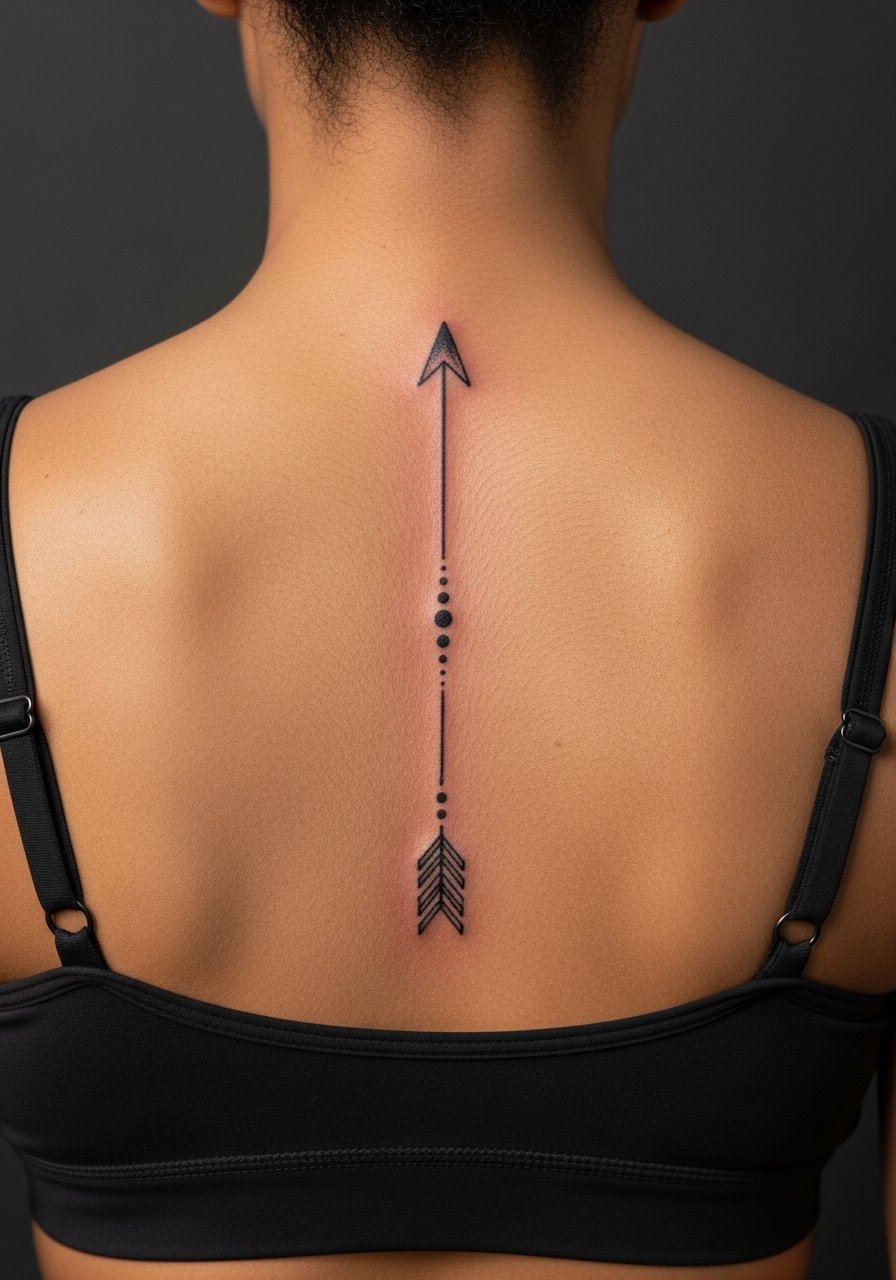
A combined arrow and dot accent is minimal and custom-fit to the spine curve. Expect spikes of pain as the needle crosses bone and plan a single short session for a micro accent. In consult ask for the dots to be slightly larger than micro pinpoints and for arrow lines to have modest thickness so the silhouette reads from a distance. The mistake is tiny dot sizes that fade into smudges over time. For athletic looks, a sports bra keeps the area visible and supported during early healing when bending is limited. These accents make tidy connectors between larger pieces if you expand later.
21. Micro Ornamental Spine Filigree at the Nape
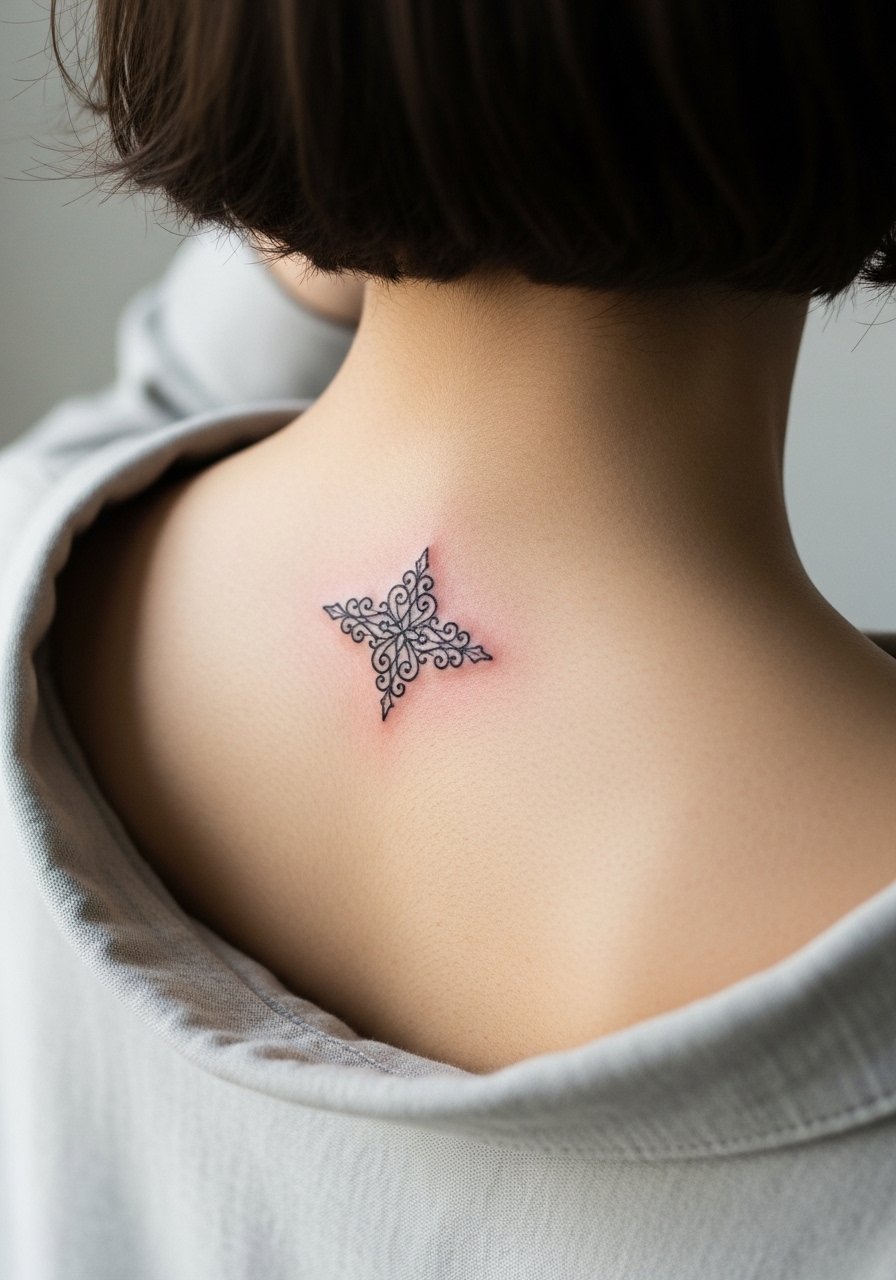
A filigree piece at the nape is subtle and works well under hair or with updos. Pain at the top of the spine is typically lower than midline vertebrae and the micro filigree completes in 30 to 60 minutes. Ask for more open negative space in the filigree so the shapes do not blend into gray as hair oils interact with the area. The common error is over-detailing the scrolls into tiny curls that lose definition. For night looks, a dainty pendant necklace sits just above the piece and complements the nape without pulling focus. This placement is discreet and expands well into a small upper-back cluster.
Frequently Asked Questions
Q: How bad does a spine tattoo hurt compared with other placements?
A: Pain varies by person and exact spot, but the spine is generally more sensitive where the needle runs over bone. Expect sharp moments near vertebrae and softer sensations over fleshy zones. Numbing creams exist, but test for reactions and talk to your artist first about whether they recommend it.
Q: Do fine line spine tattoos fade faster than bolder work?
A: In my experience fine line can fade faster, especially on bone. One camp of artists says careful spacing and slightly increased line weight keeps fine work readable for years. Another camp prefers bolder lines for long-term clarity. Ask your artist which approach they use and plan touch-ups at six to twelve months.
Q: Should I choose Saniderm or dry healing for a micro spine piece?
A: There is a clear split. Some professionals like Saniderm because it protects against clothing friction on the back. Others prefer dry healing for curved areas where trapped moisture can irritate. The choice depends on your skin type and the artist’s aftercare routine, so discuss both options before you leave the studio.
Q: How do I find artists who specialize in micro spine tattoos?
A: Look through hashtags like #spinetattoo and #microspinetattoo on Instagram, search the Tattoodo app for spine work, and scan Reddit threads for local recommendations. Guest spots at conventions are also an efficient way to find specialists without relying on one shop’s calendar.
Q: Will a lower spine tattoo stretch with weight gain or pregnancy?
A: Lower back placements can move with significant weight shifts. If you expect changes, consider starting the design a few centimeters higher above the waistline. Discuss long-term body plans during consult so the artist can map the work to a stable zone.
Q: What should I wear to the session for a spine tattoo and how do I show it off after it heals?
A: For the session wear a loose tank or a button-down you can slide aside so the artist has full access. After healing, open-back maxi dresses and low-back crop tops frame vertical designs well. For a quick night look, a dainty pendant lands above nape or mid-spine pieces and keeps attention on the vertical line.