
A fresh throat tattoo reads differently in a mirror than on a feed. The skin there moves when you swallow and twist, so artists often advise slightly larger line weights and breathing room around dense detail. Pain is real and visibility is permanent, so planning the size, style, and wardrobe that frames the piece makes the difference between a head-turning fit and a regret. Below are 27 modern throat tattoo ideas with consultation tips, aging notes, and how to wear them during the session and when you show them off.
1. Octopus Tentacles Wrapping the Front Throat
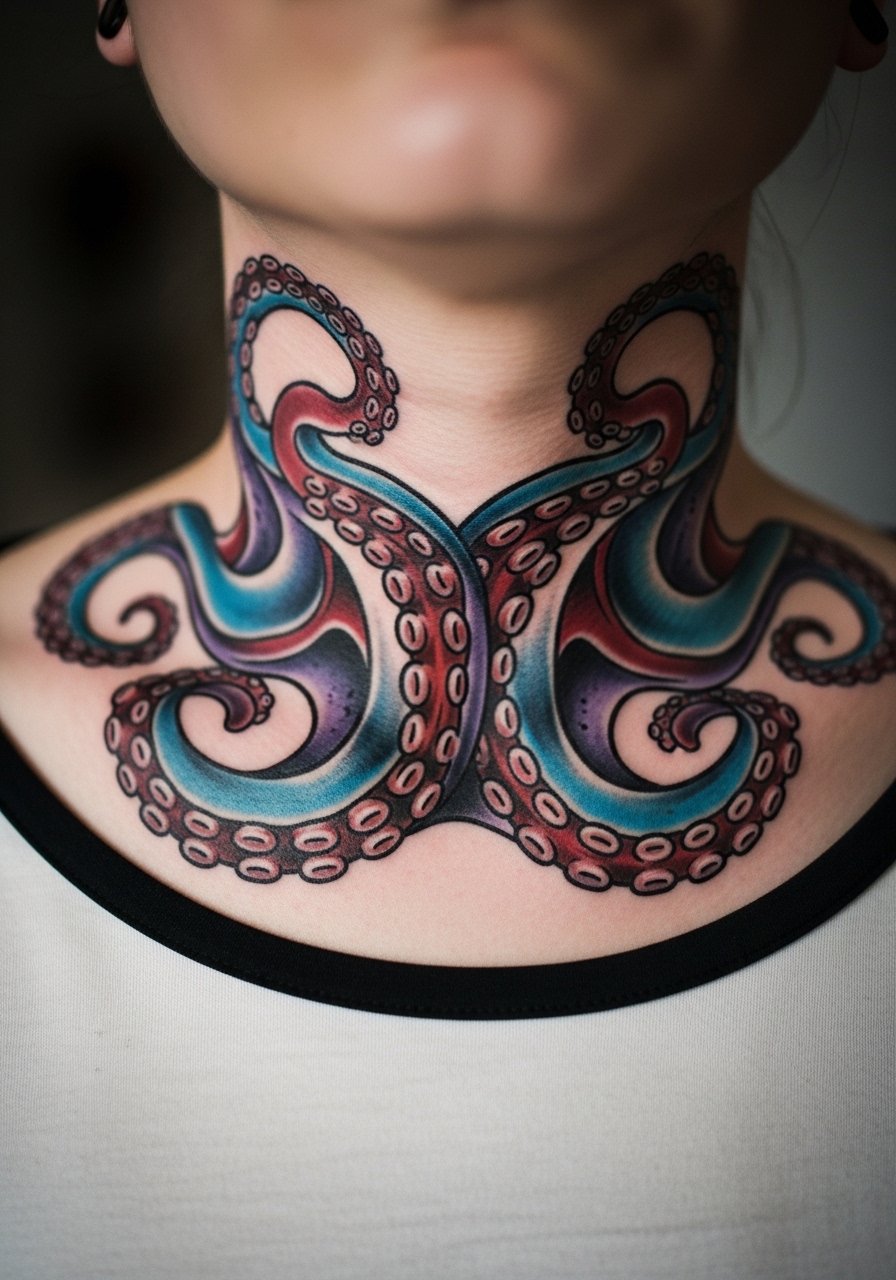
An octopus motif reads well on the throat because the tentacles can follow the contours and create motion. Tell your artist you want thicker outlines around the main tentacle and lighter stipple shading inside, so the piece keeps definition as it heals. Fair warning about pain level, most people rate front-throat work a 7 out of 10. The common mistake is packing too much micro detail into the center. That detail can blur by year two. For session day wear choose a mens open collar henley so the artist can access the front throat without fabric rubbing the stencil.
2. Shark Jaws Centered on the Throat
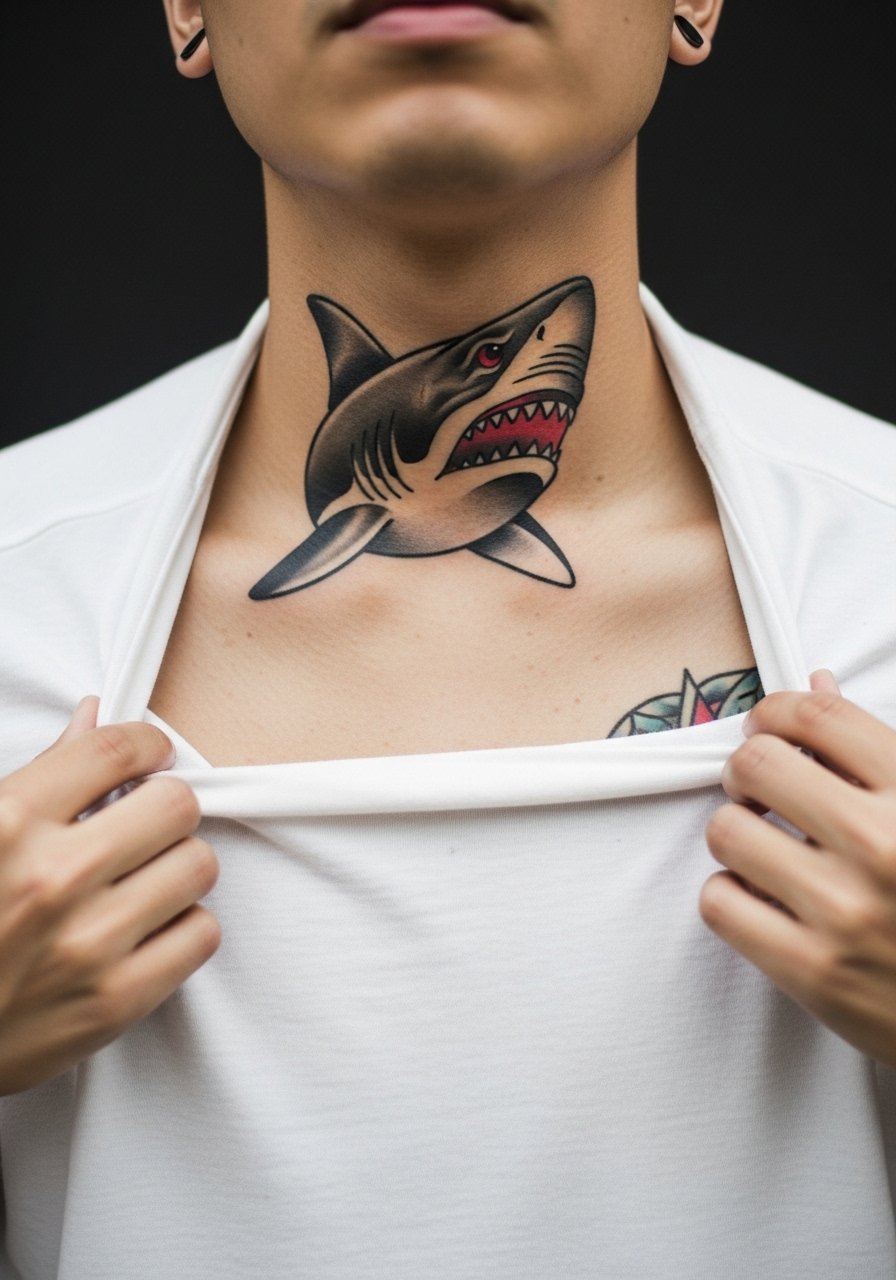
A shark jaw across the throat favors bold outlines and punchy color or strong black and gray. I recommend a single-session small to medium layout with heavy black outlines that protect against blowout. The mistake I see is asking for too many small teeth and shading inside each tooth. Over time that detail can soften into gray masses. Pain is sharp but brief when the artist works the centerline. For showing it off pick darker solids like a mens black button down with the top buttons undone so the jaw sits cleanly against the collar.
3. Symmetrical Geometric Triangles on Side Throat
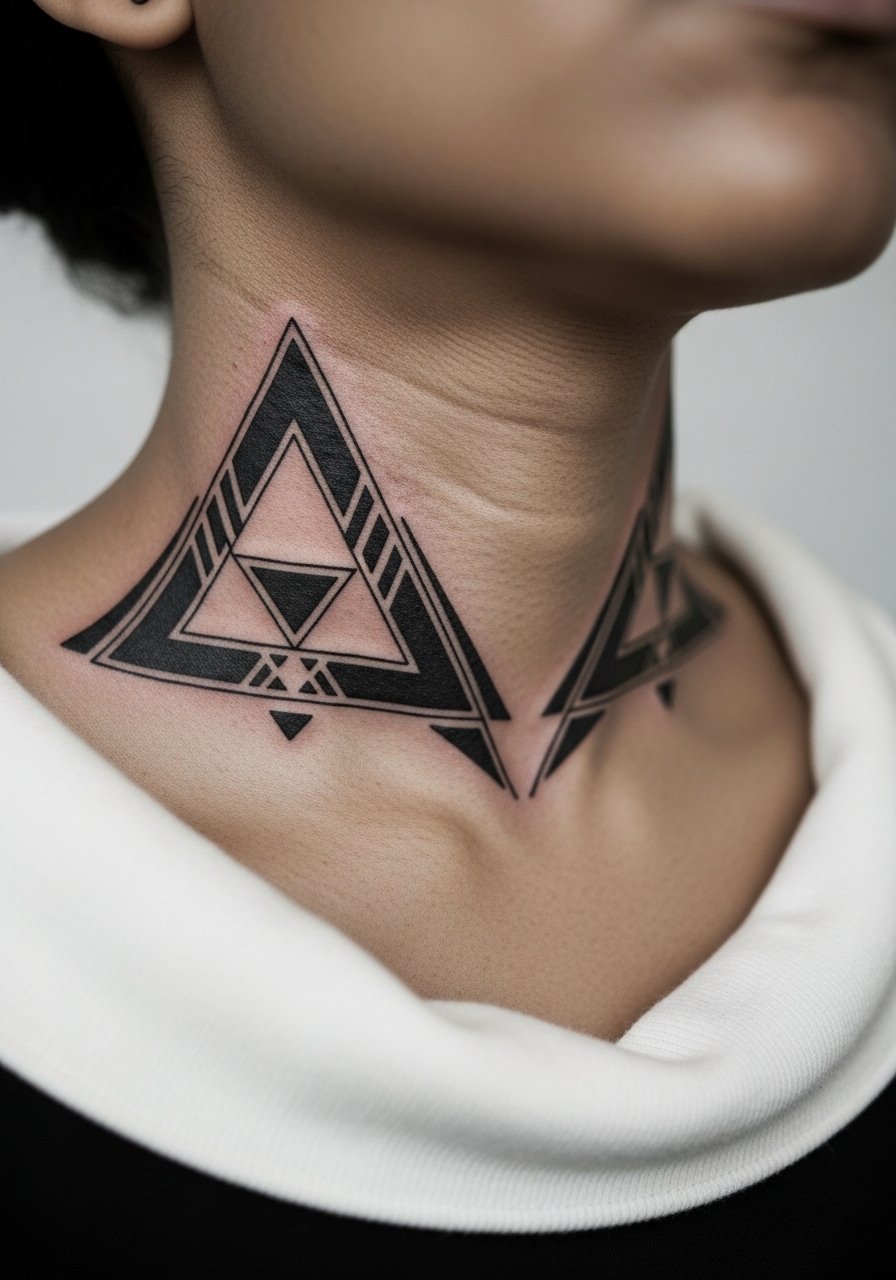
Symmetrical triangles on each side of the throat play into the neck anatomy and look precise when spaced properly. Tell your artist you want clear negative-space buffers between lines so the geometry does not merge as skin ages. The main mistake is going too small. Small, tight triangles blur into gray in three years. Side-throat placement hurts less than the front but the curves require disciplined linework. Pair this with a mens crewneck tee black for a clean frame when you want the geometry to read.
4. Mixed Geometric and Organic Ornament
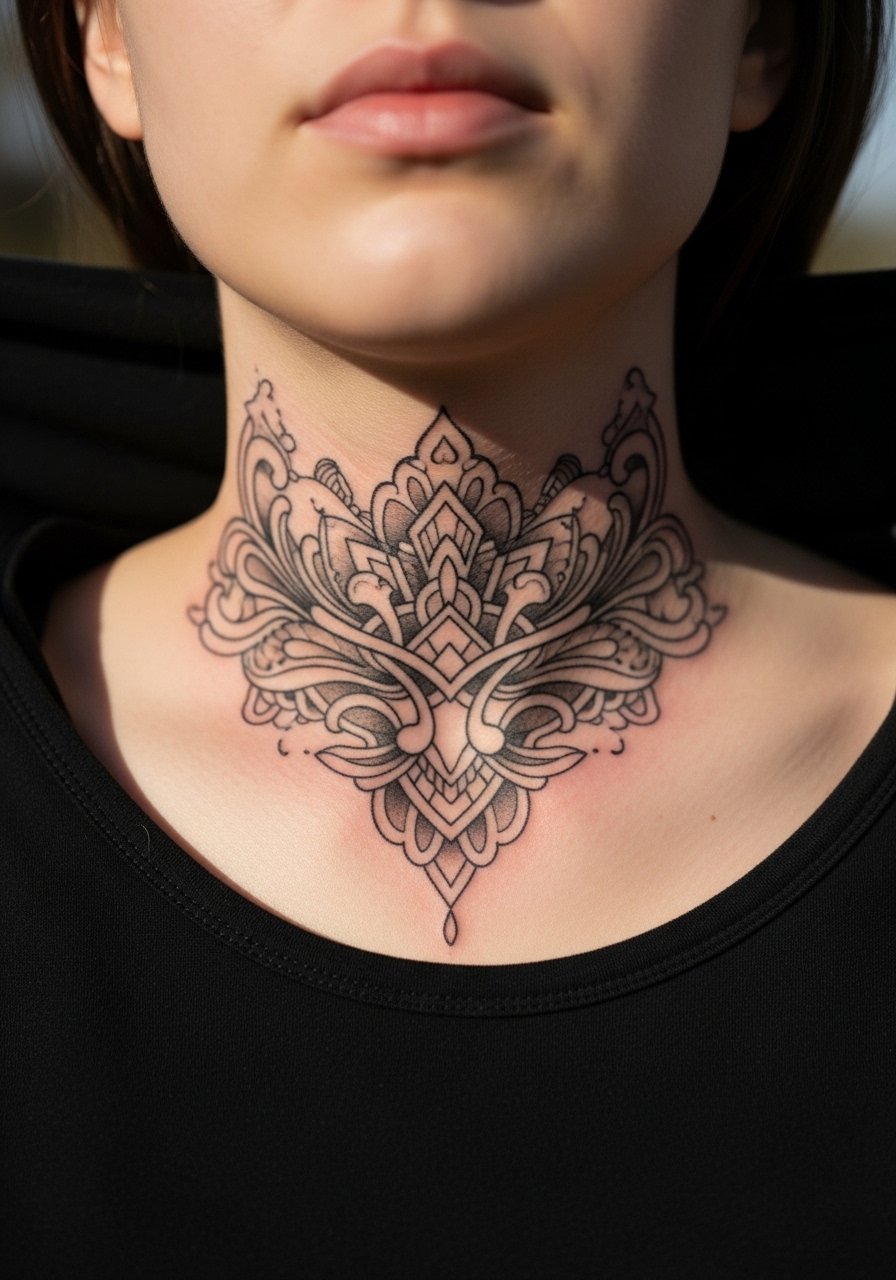
Mixing sharp geometrics with organic flourishes balances the throat's curve and gives a custom feel. During consultation request a strong central axis and ask the artist to scale the smallest motifs up slightly from your reference. One camp says tiny ornamental dots work fine on the neck, the other camp warns those dots often disappear. I suggest using stipple shading at medium density so the detail survives. For session comfort wear a loose v neck tee you can tug aside rather than a tight collar.
5. Neotraditional Color Gradient Centerpiece
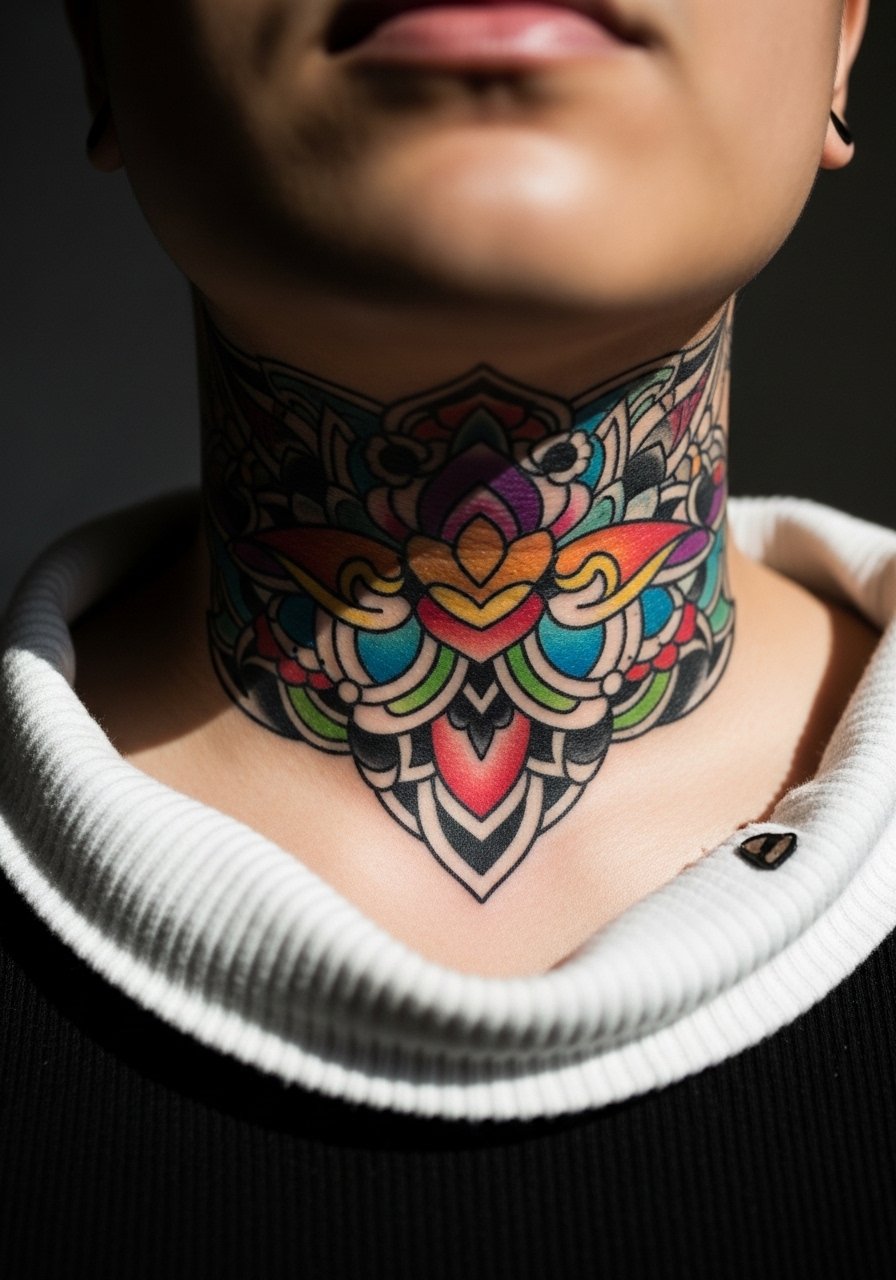
A neotraditional throat piece with saturated reds and blues plays to color saturation over time. Ask for richer pigment in areas that will face UV exposure, and plan for at least two sessions if you want full coverage. A common aging issue is color washing out where the skin stretches most, so book a touch-up at year two if you want long-term vibrancy. Expect a higher pain threshold at the center. To show it off, neutral layers work best so the inks pop, try a mens deep v hoodie left slightly unzipped for a casual reveal.
6. Traditional Bird With Wings Spanning Throat to Collarbone

A bird that reaches from throat to collarbones reads larger and frames the upper chest. Ask for heavier wing outlines near the collarbones so the piece keeps shape as it ages. The common mistake is making the wings too detailed close to the collarbone. Those feathers can lose definition where clothing rubs. Expect two sessions for a colored version. For show-off pairing try an open-collar mens open collar henley so the wings sit above a simple neckline.
Studio Day Picks
The front and side throat pieces above are often quick and visible, so a small kit makes the session and the first week easier.
-
Stencil transfer paper kit. Lets you preview the placement and line weight on the skin before the needle hits, which matters for symmetric throat work.
-
Topical numbing cream. Applied before the session it eases sharp sensitivity on the center throat and side neck without changing how the artist works.
-
Thin protective film roll. Keeps fresh throat pieces safe from friction with collars and phone straps during the first few days.
-
Fragrance free gentle body wash. Cleanses the area without irritating fresh ink, which helps fine line work heal cleanly.
-
Aquaphor healing ointment. Thin layers in the early days protect stitching lines and stop scab over-drying, useful for throat pieces that see a lot of movement.
7. Red and Black Contrast Motif on Side Throat
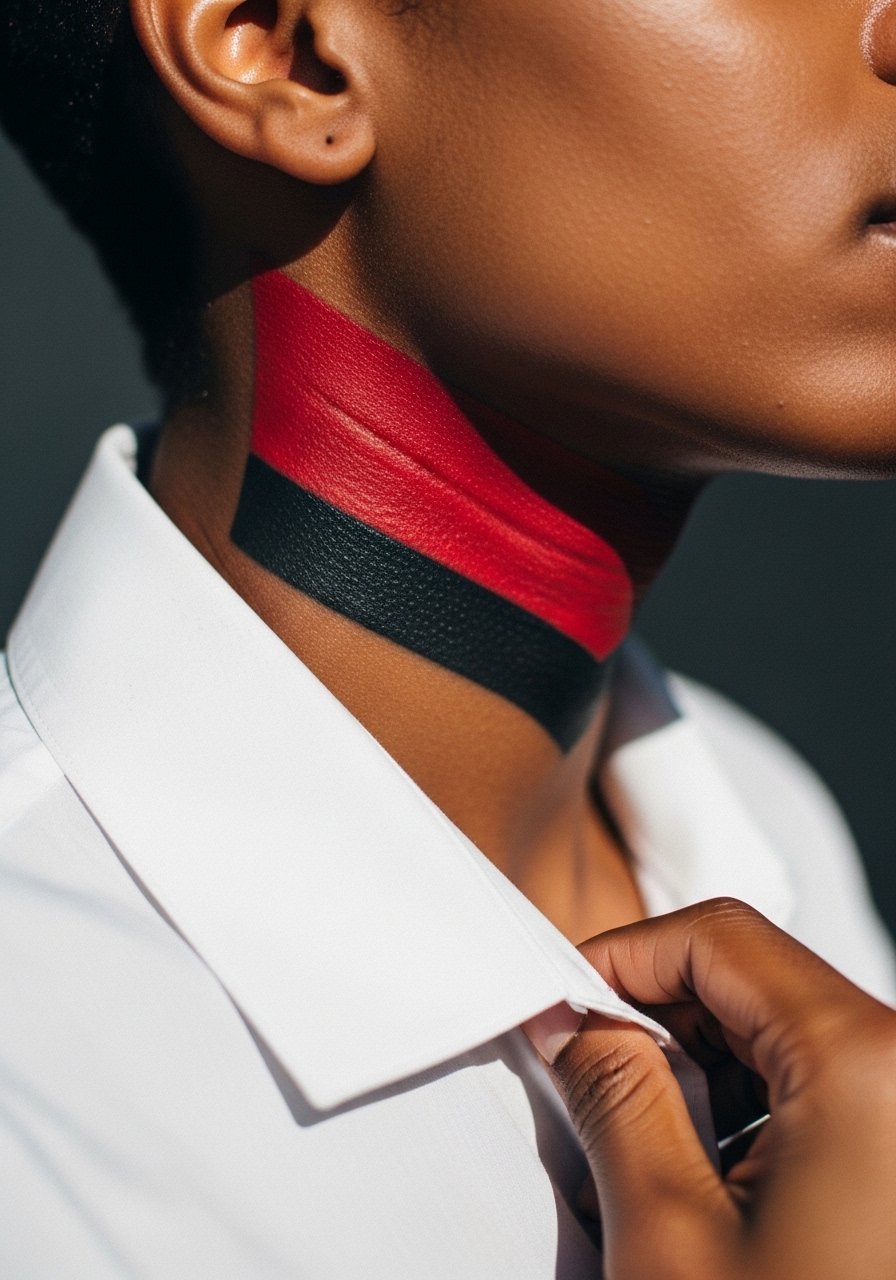
Red accents against blackwork read dramatic on the side throat when the artist balances saturation. Ask for samples of healed red on similar skin tones so you know how strong the color will stay. The main mistake is using a weak red that fades into pink. That leaves a muddy appearance after a year. Side throat feels less intense than the front. For a clean reveal wear a mens crewneck tee black, which frames the contrast without distraction.
8. Opaque Gray Blackout Across the Full Throat
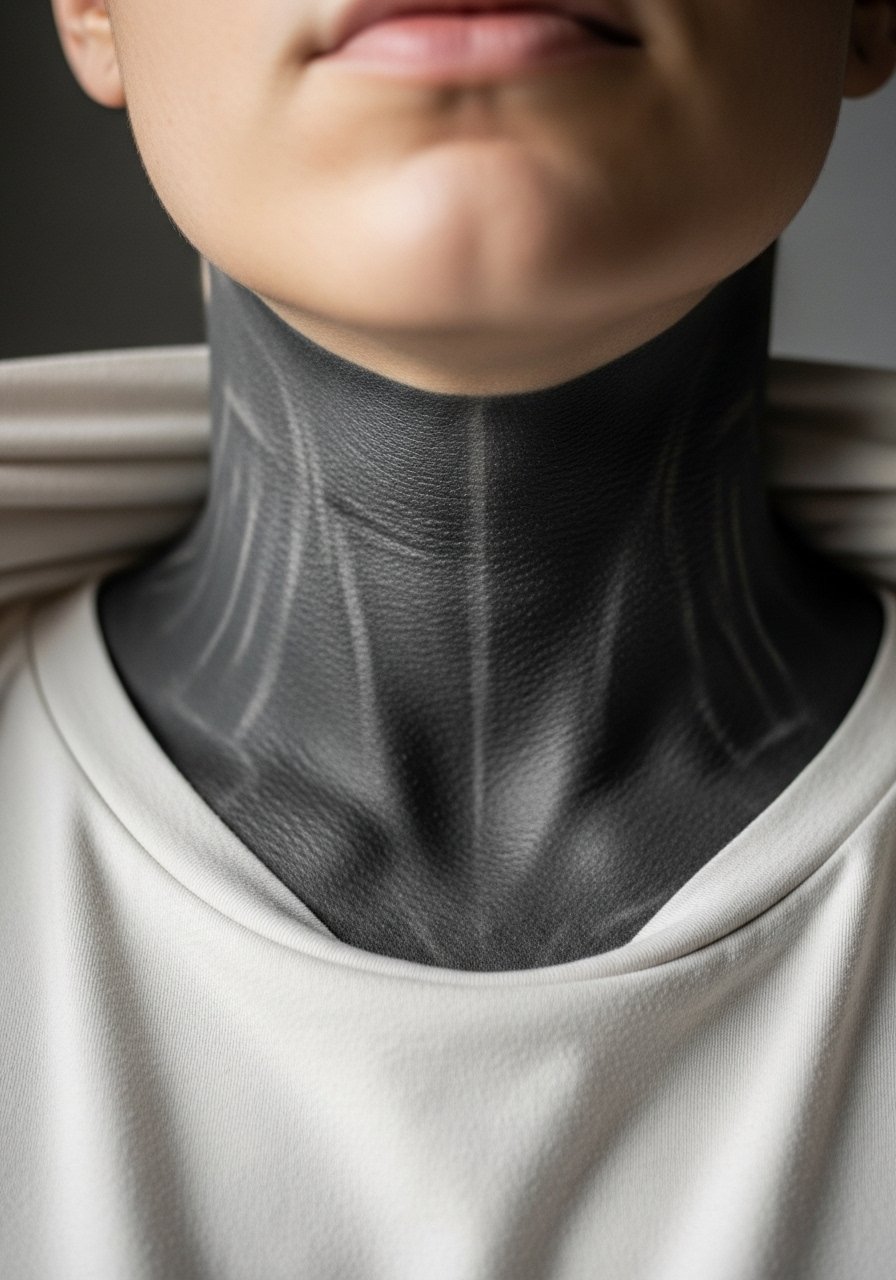
A blackout throat is a commitment and needs multiple sessions for even saturation. Discuss pacing with your artist and expect two to three sessions. One controversy here is whether white ink details over blackout hold up. One camp uses fine white highlights, the other warns white on black often fades into a gray bruise. If you like the layered look ask for a test patch. Blackout ages predictably into a uniform dark area but touch-ups may be needed where rubbing occurs. For session day wear a loose tank top so the artist can work all around the throat without fabric interference.
9. Skull, Heart, and Wing Composite Along Neck Contour
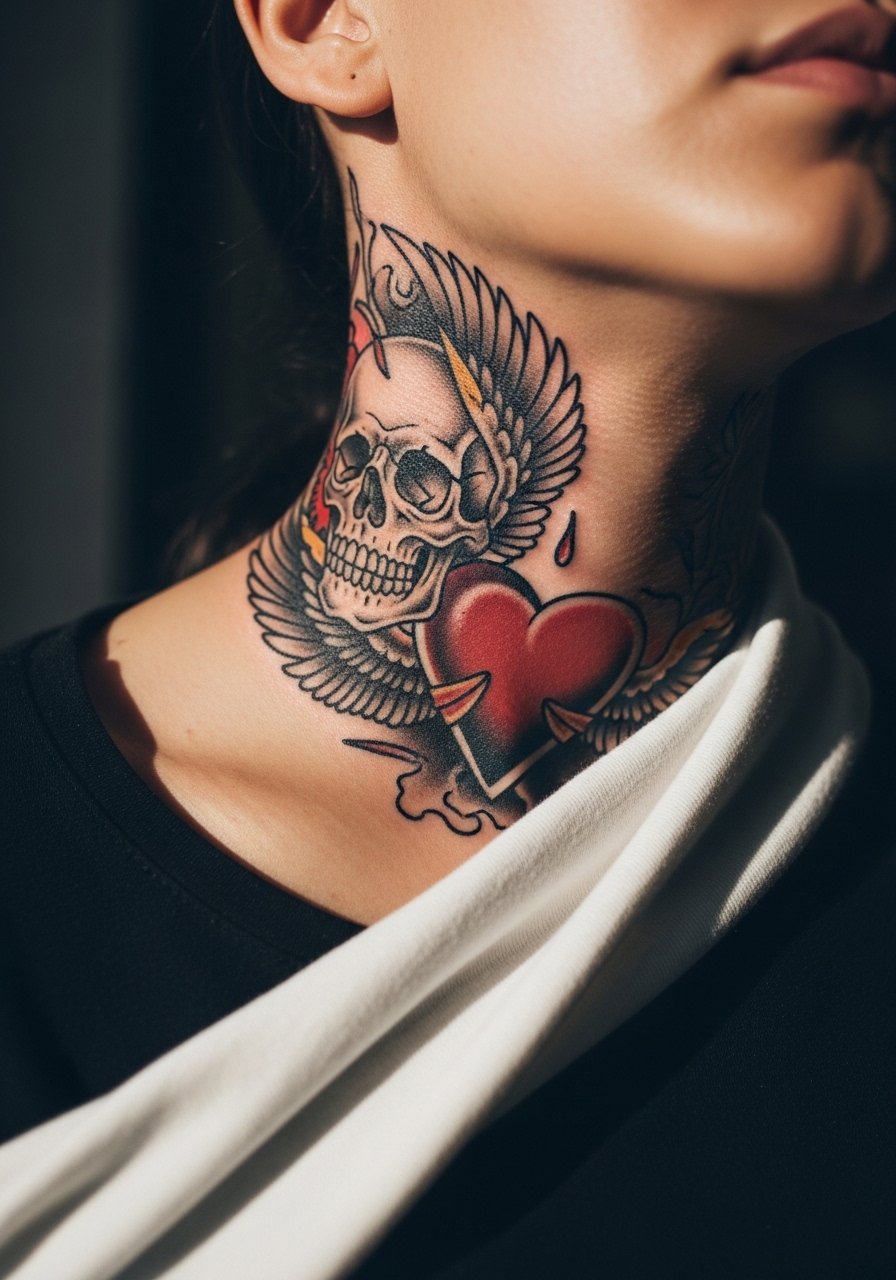
Composite motifs that follow the neck contour can wrap around and read dimensional. Ask the artist to map the highest-contrast elements to the most visible planes so nothing disappears when you turn your head. A common mistake is compressing too many symbols into a small area, which leads to blurring in the mid-term. These pieces often need one to two touch-ups within three years. For a staged reveal try a mens black button down left open to show the winged sections.
10. Geometric Negative-Space Front Throat
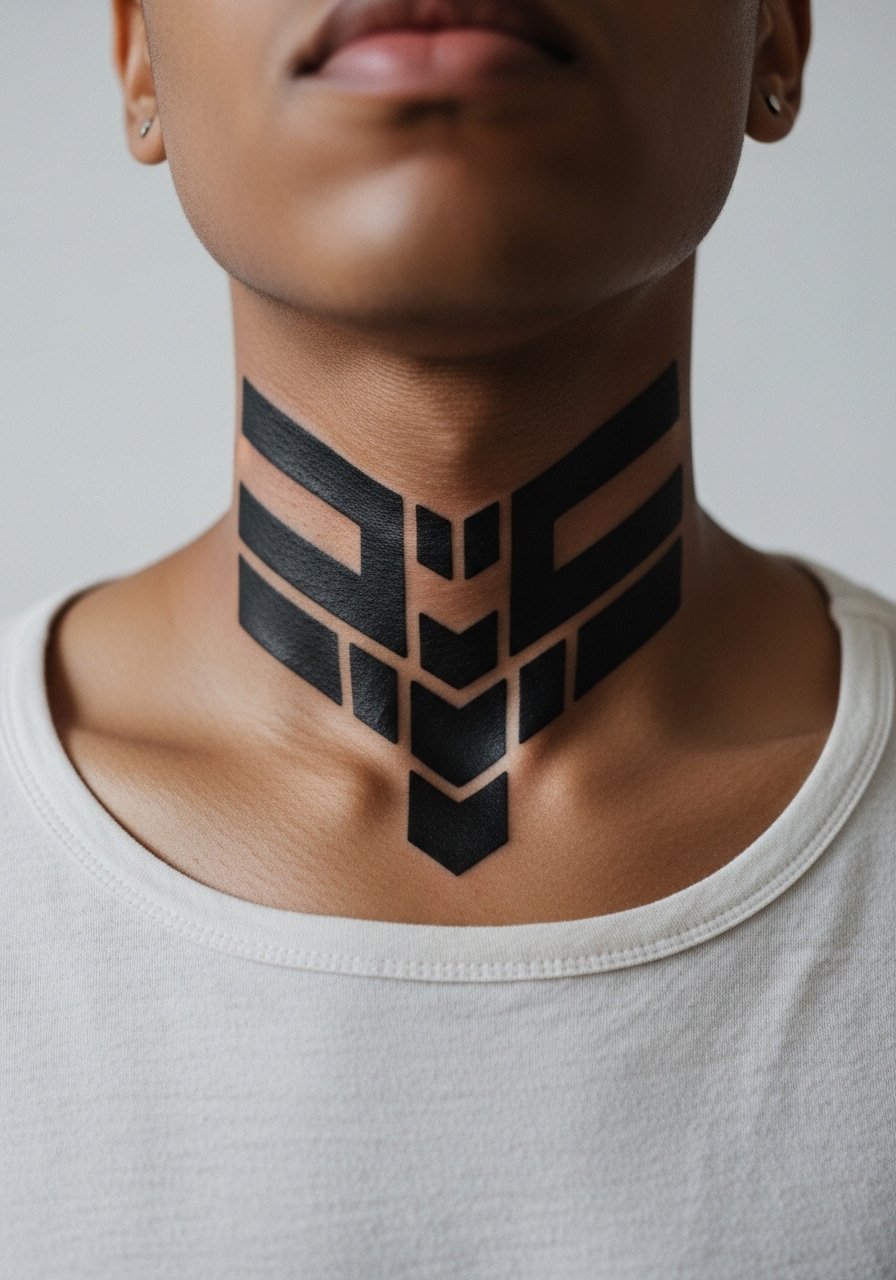
Geometric work that uses negative space looks crisp when lines have room to breathe. Tell your artist you want the key shapes enlarged slightly from the reference so the negative gaps remain visible at five years. The common poor choice is dense geometry packed too tight. That tends to merge into gray. Pain is high at the center so expect a focused session under two hours for a small design. For show-off pairing a simple collarless tee keeps attention on the negative zones.
11. Ornate Lotus or Cherry Blossom at the Back of the Throat
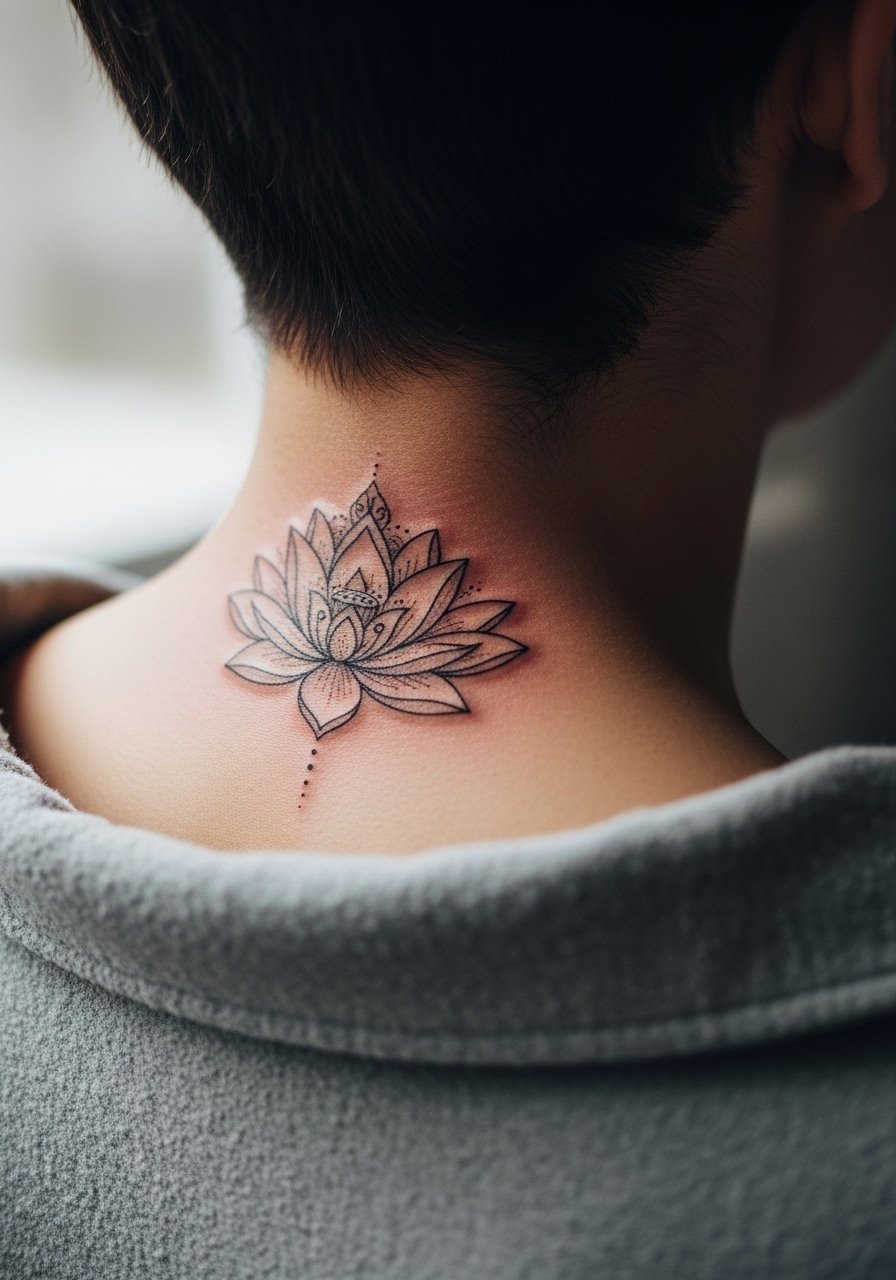
Fine-line ornamental pieces at the back of the throat need thoughtful spacing. If you want delicate petals ask the artist to use slight spacing and medium needle grouping so lines hold. One professional debate is whether fine line belongs at the back of the neck. One camp says the skin there softens details, the other says correct depth and spacing fix that. I recommend sizing up the smallest elements and preparing for a touch-up at year two. For the session tie hair back and wear an olive button up shirt you can slip off the shoulder for rear access.
12. Spider and Web Sprawling Across the Throat
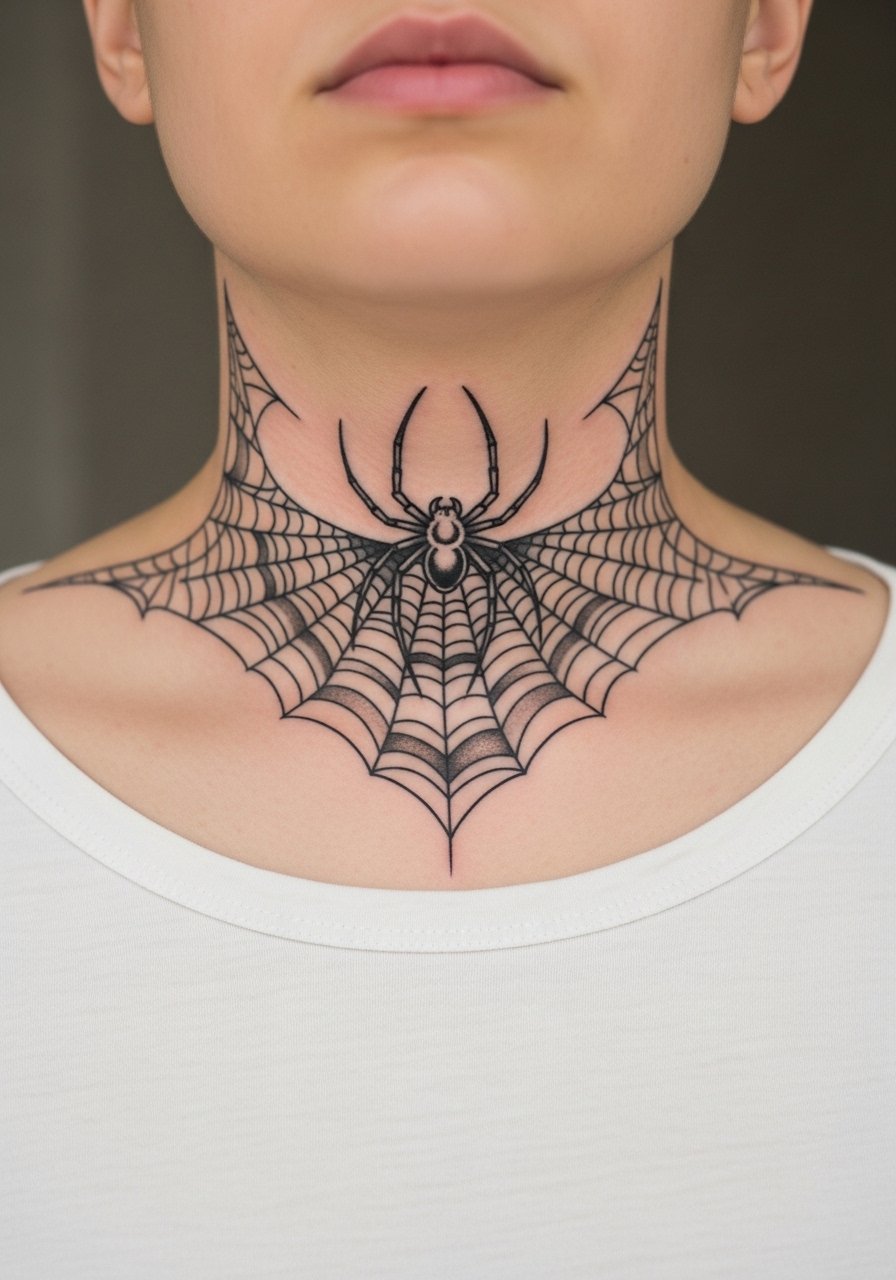
A spider and web performs well when the web lines are given negative space and the main spider has solid saturation. Tell your artist to avoid ultra-thin filament lines in the web near clothing edges. Those lines are prone to break up with wear. Blowout risk increases at thin intersections, so ask for slightly heavier line weight where threads cross. For session wear a loose v neck tee to keep fabric from rubbing the fresh web.
13. Bold Bird Head Centered on the Throat
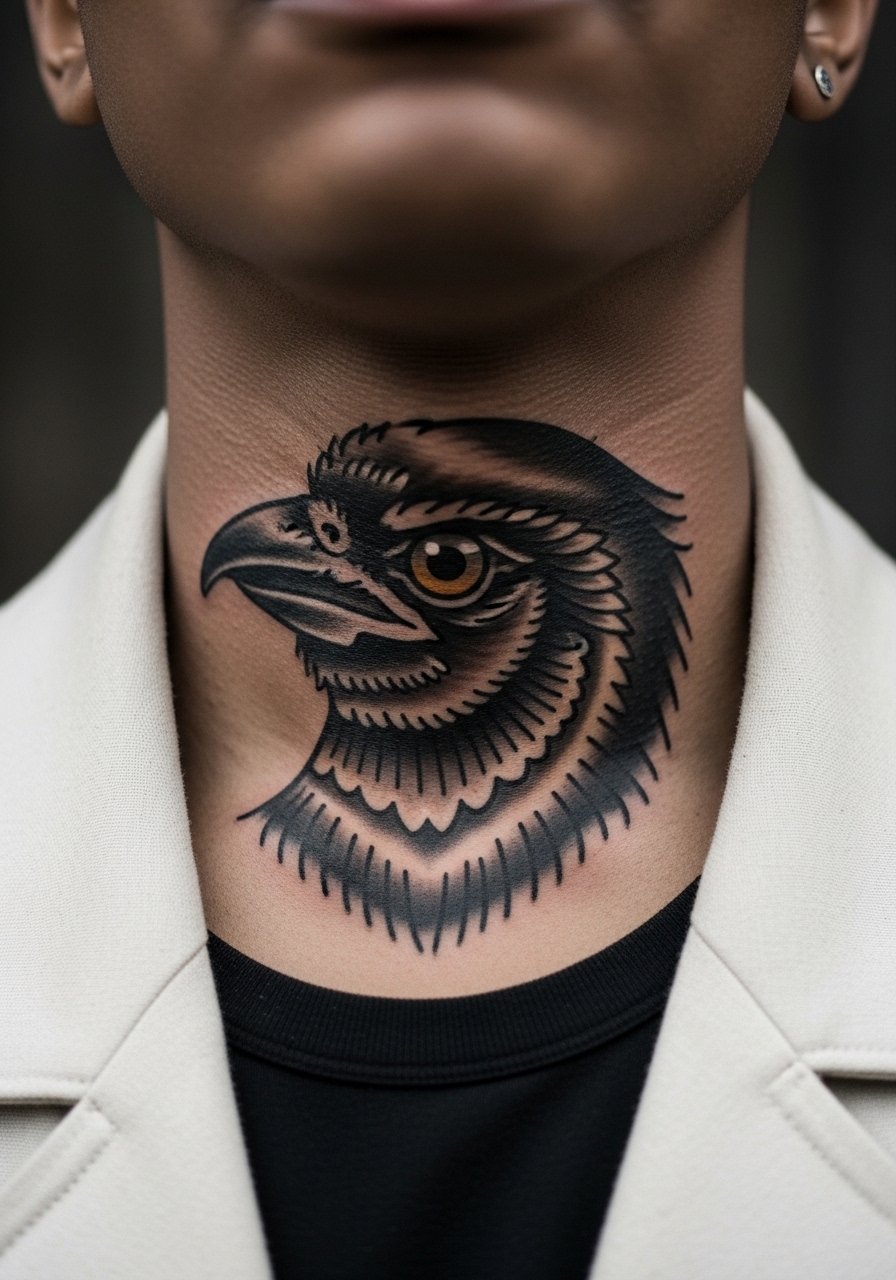
A single bold bird head uses heavy outlines to age well. Ask for defined silhouette work and fewer micro details around the beak. The frequent error is overcrowding the face with tiny feathers. Those soften into gray patches over time. Expect a single session for small to medium size. For showing it off, chain necklaces that sit below the jawline avoid rubbing the piece.
14. Script Word or Short Phrase Across the Throat
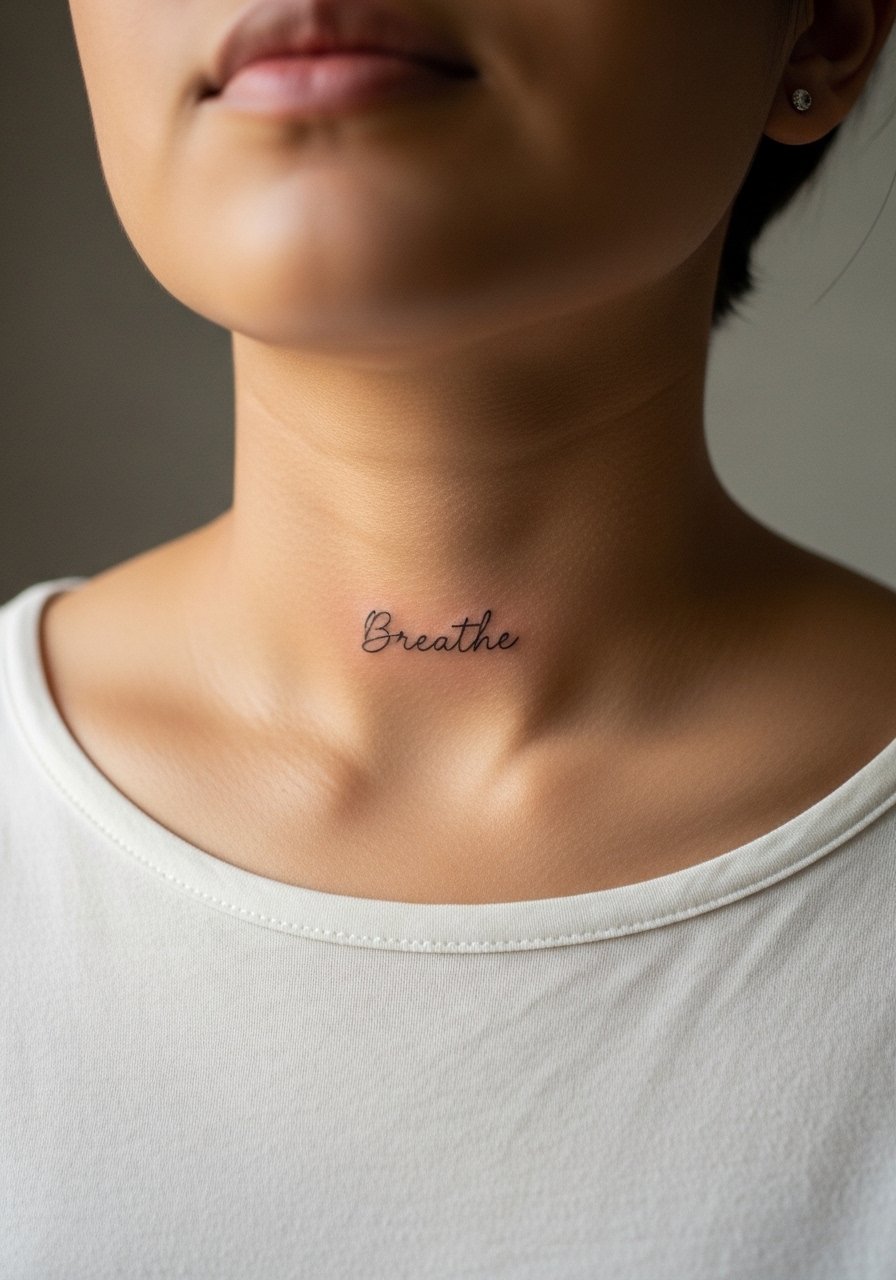
Text on the throat needs exact spacing and font testing. Provide the exact word and font sample during your consult and ask for stencil placement checks while upright. Lettering that is too thin tends to blur into a soft line as it heals. There is a stylistic split on throat lettering. One group favors thicker serif scripts, the other likes ultra-fine scripts. If you want longevity pick slightly heavier strokes and plan for touch-ups around year two. Session wear is a mens open collar henley you can open to avoid collar rub.
15. Minimalist Single-Line Contour
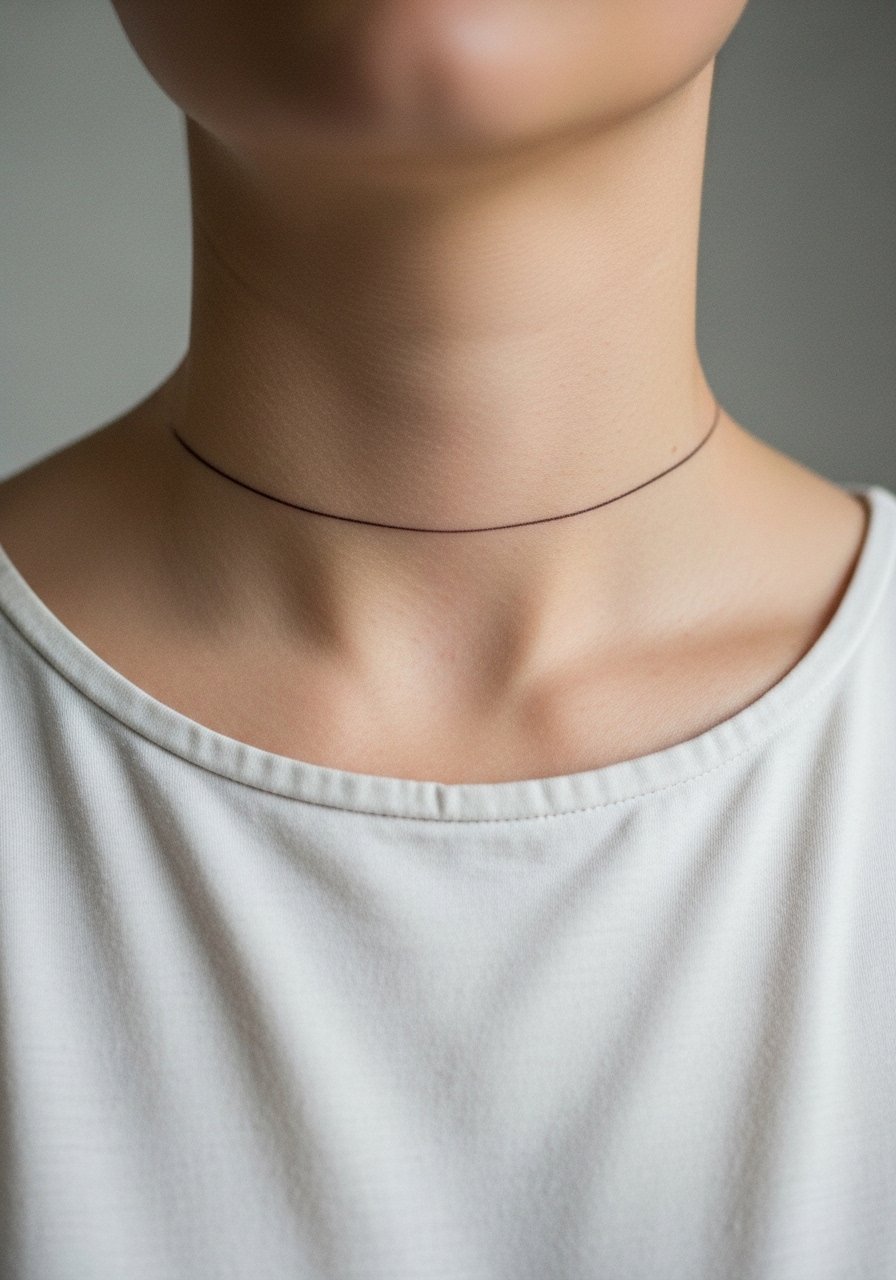
Minimal single-line work relies on confident strokes and a decision to avoid extra detail. The common mistake is trying to compress a complex shape into an ultra-thin line. That tends to look great initially but fades unevenly. Tell your artist you prefer slightly wider single-line weight so the contour remains distinct. Because the design is simple, touch-ups are quick. For the session, wear a loose tank top so the artist has clear access to the throat.
16. Blackwork Mandala Framing the Throat
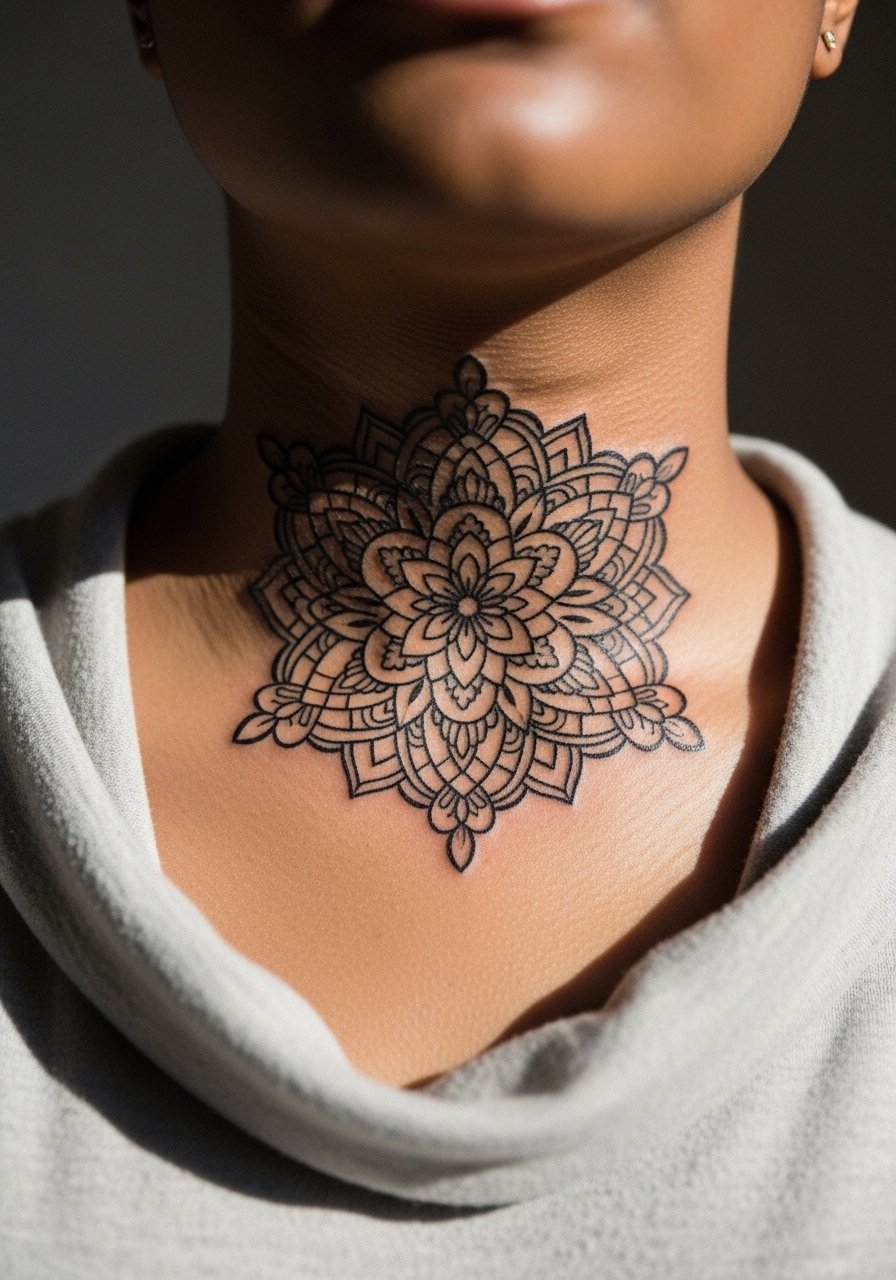
Mandala work on the throat needs breathing room between concentric lines. The most common error is compressing too many rings into a small surface. Over time those rings can merge. I advise spacing the pattern generously and using stipple shading to create depth rather than packed lines. This piece can be medium pain but heals consistently if the artist spaces lines well. For showing it off layer with a simple pendant rather than chunky necklaces that touch the piece.
17. Stylized Phoenix Rising From the Throat
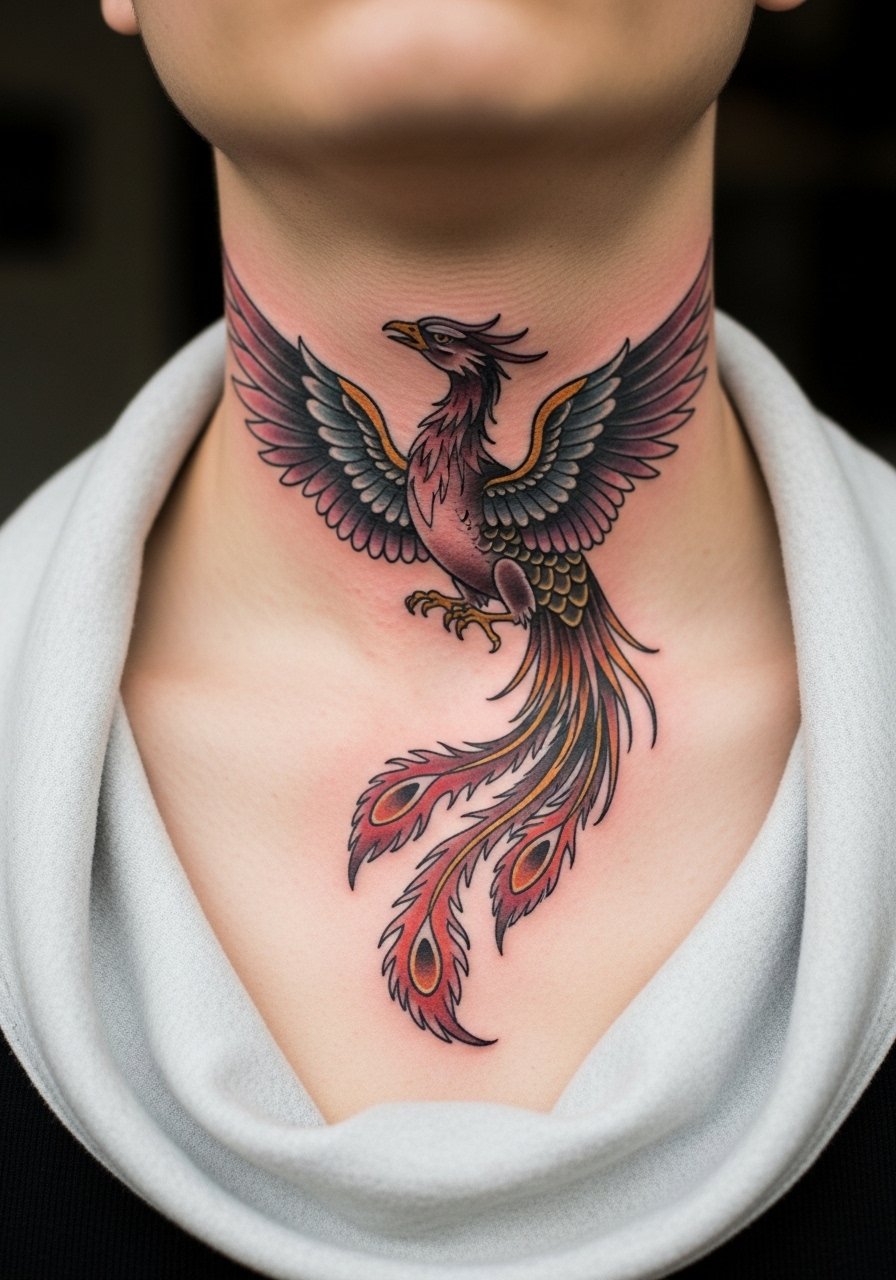
A phoenix with upward motion complements the neck anatomy. Ask the artist to keep the smallest flames and feathers slightly larger than reference so they do not disappear over time. A common mistake is packing feather texture too densely near the jaw. That detail can soften. For color pieces expect more than one session. To reveal the chest-high flight lines wear an open-collar shirt or mens deep v hoodie when it is cool.
18. Compact Voice Symbol for Communication Themes
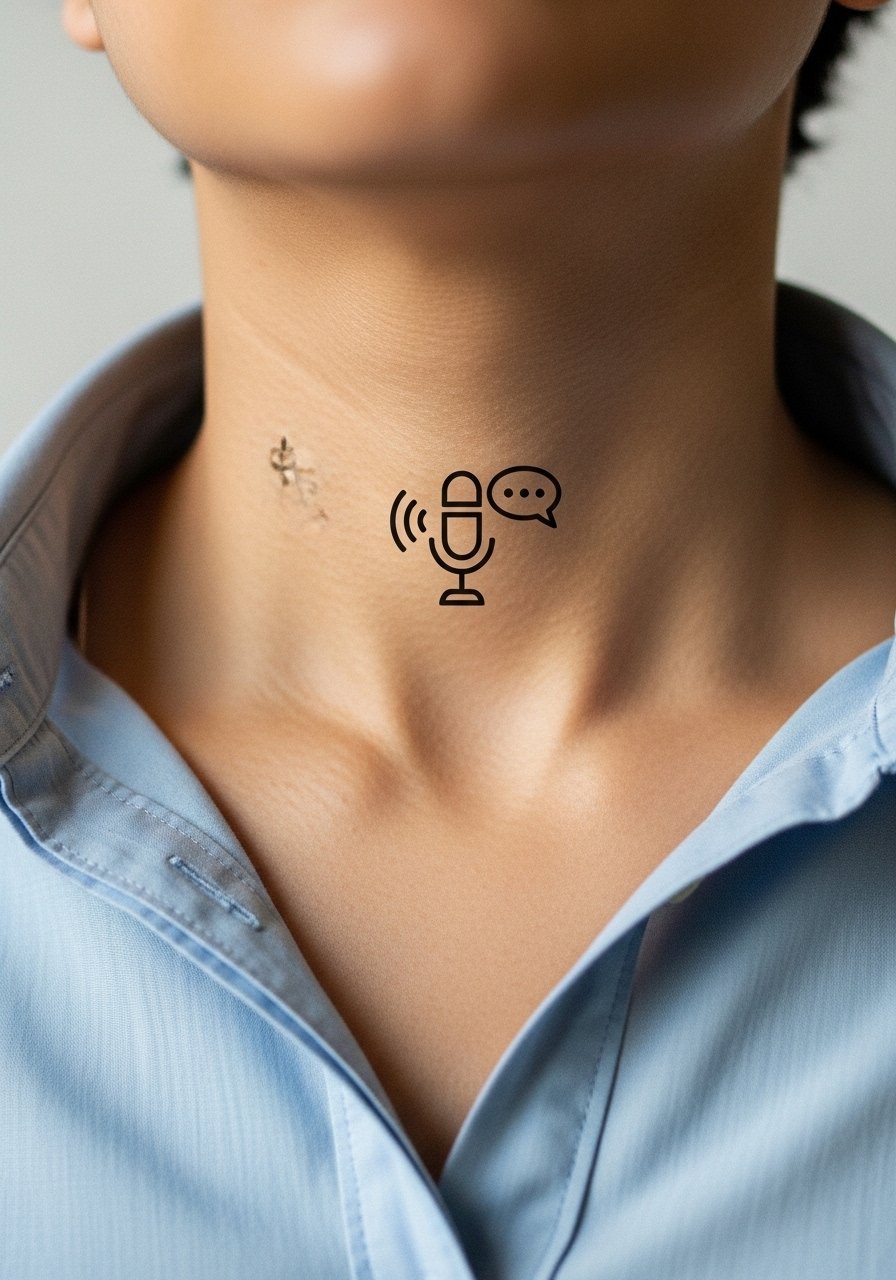
Compact throat symbols that reference voice or communication are intimate and visible. During consult describe the personal meaning and request a size that leaves ample margin from the Adam's apple. People often go too small with this idea and then the icon loses clarity. The session is short but expect tenderness when the needle crosses the frontline. For session comfort pick a loose v neck tee you can pull aside easily.
19. Chain or Collar Motif Circling the Throat
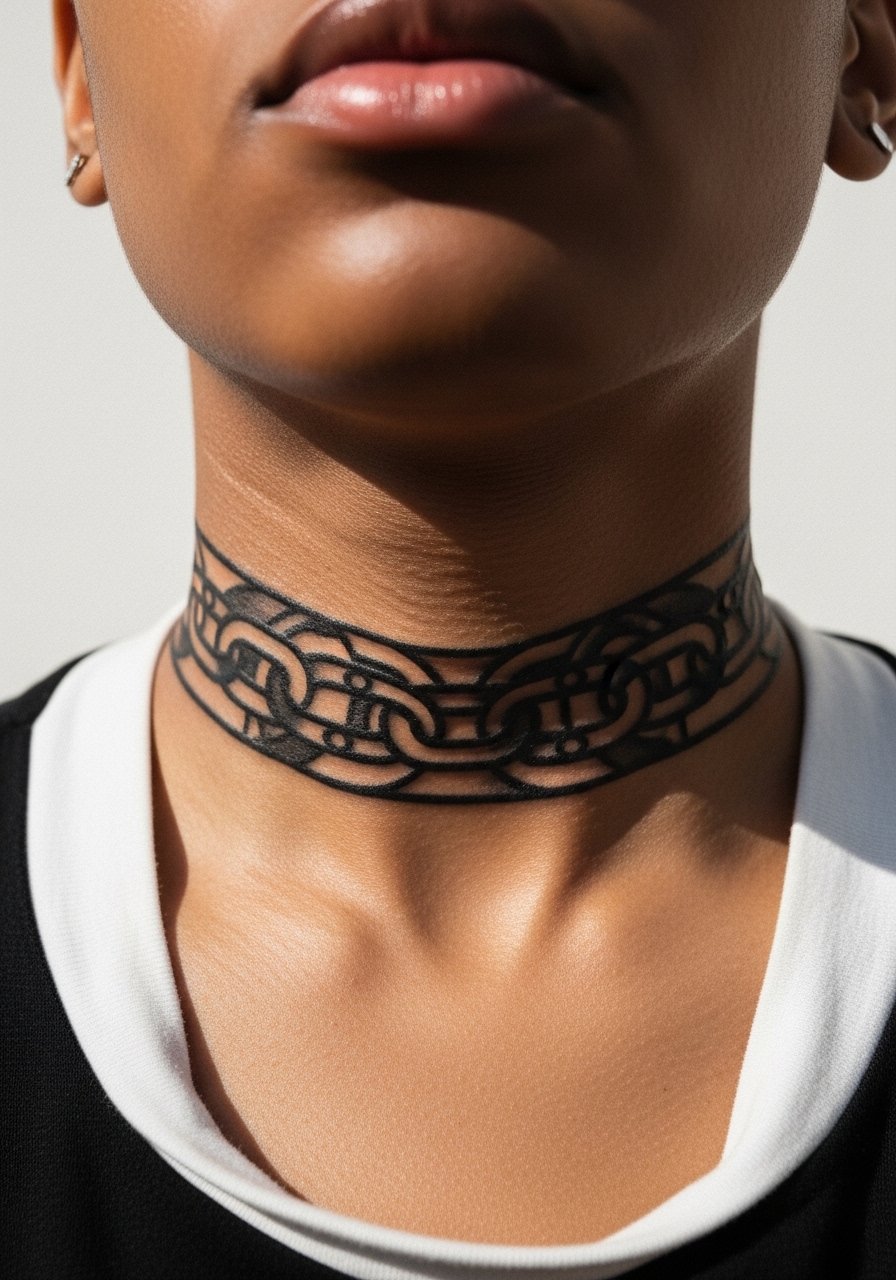
A collar or chain motif around the throat reads as a frame for the face. Tell your artist you want slightly thicker connecting links so the shape stays intact as skin moves. The common error is fine link detail that blurs into a gray band within a couple of years. For session wear a mens crewneck tee black that you can tug aside to expose the band without rubbing the fresh ink.
20. Blackout Base With White Ink Detailing
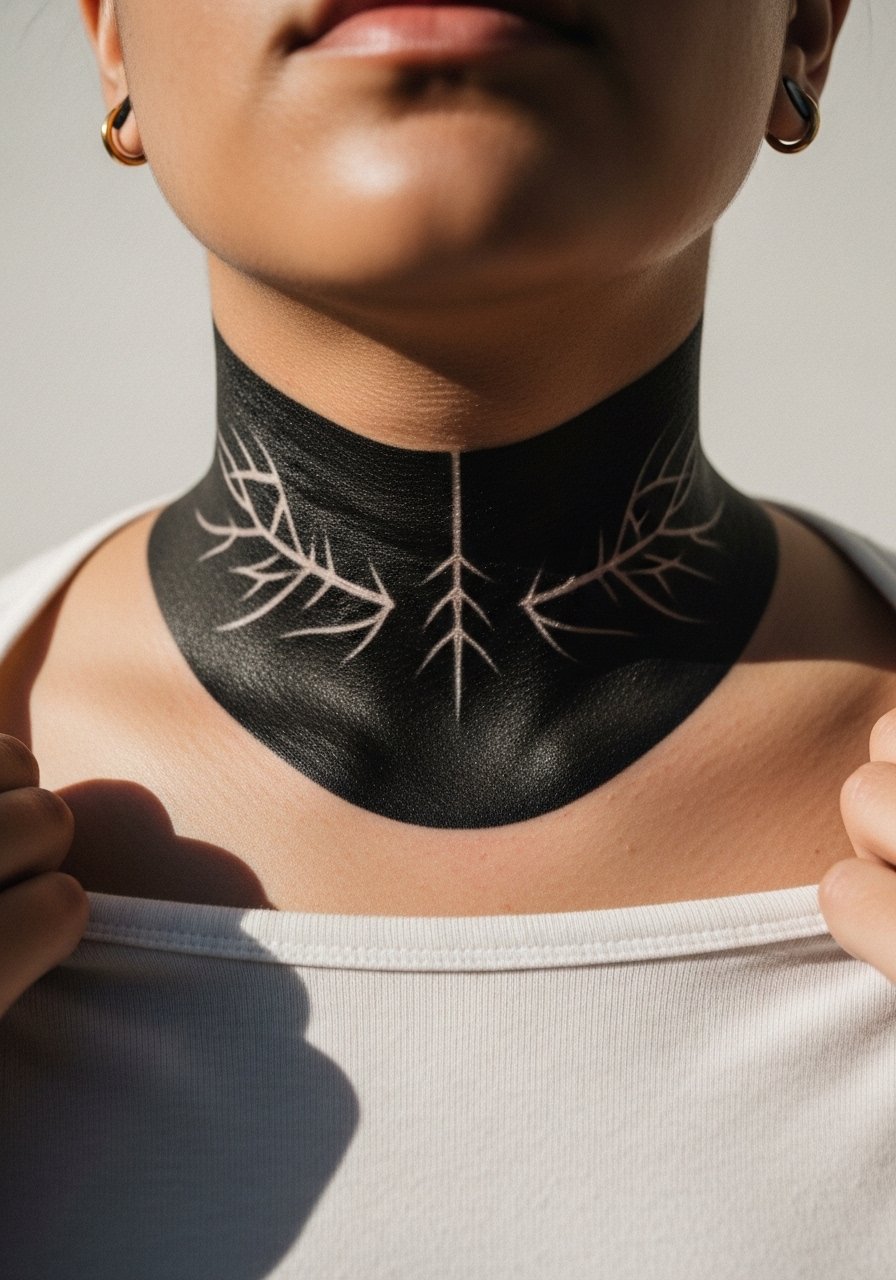
Using a blackout base with white ink details creates a layered effect but it sparks debate among artists. One camp says white over black reads crisp for months, the other camp says white tends to fade into a gray haze. If you want the look, ask for the white details to be shallow and plan on yearly touch-ups. Blackout is high commitment and may need two to three sessions. For session day wear a loose tank so the artist can access all planes without fabric pressure.
21. Heraldic Shield or Crest on the Throat
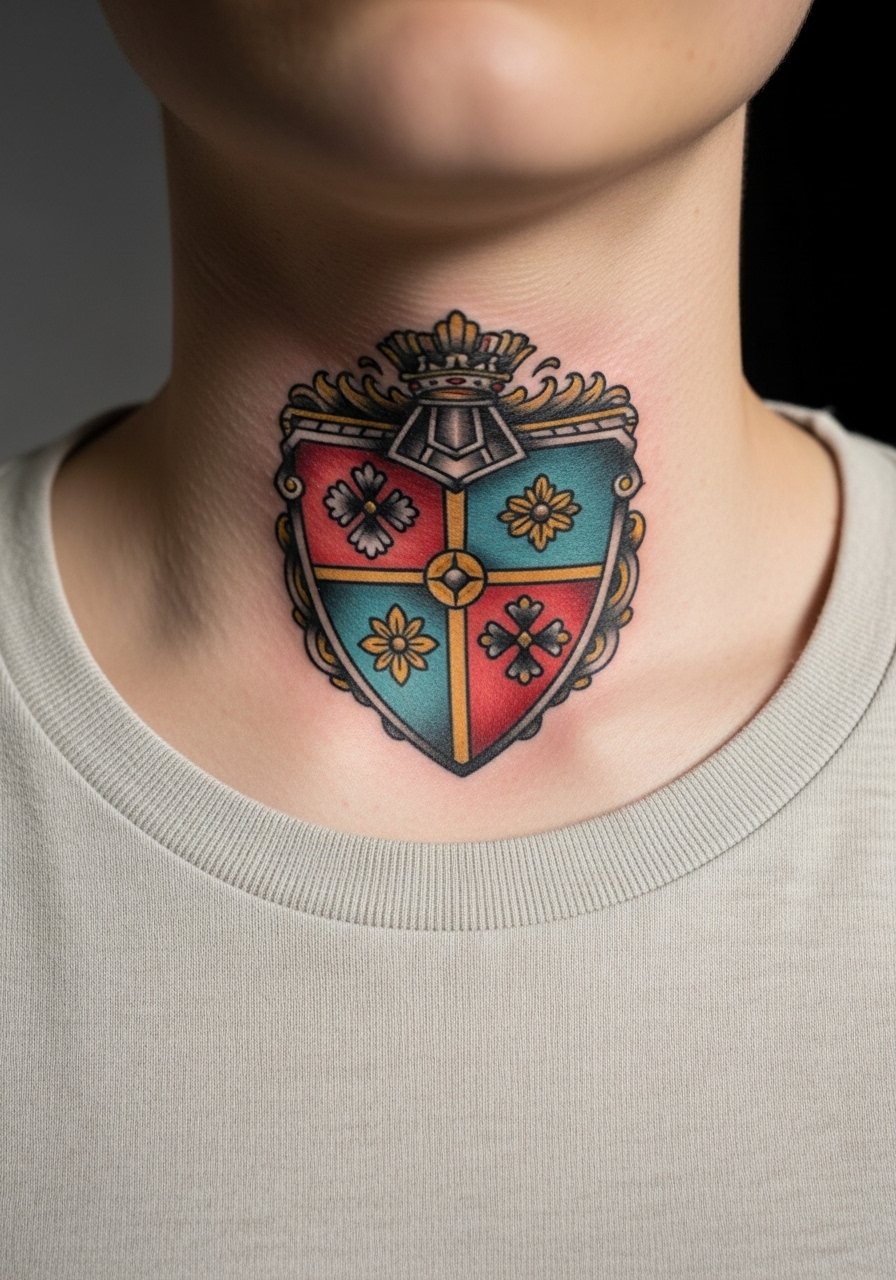
A crest or shield benefits from symmetrical lineweight and defined borders. During consultation provide references for the exact iconography you want and agree on border thickness. People sometimes ask for ornate interior detail at too small a scale. Those features tend to merge over time. Expect one to two sessions depending on color. For showing it off pair with a simple pendant or a clean open neckline.
22. Wave Motif Flowing Around the Throat
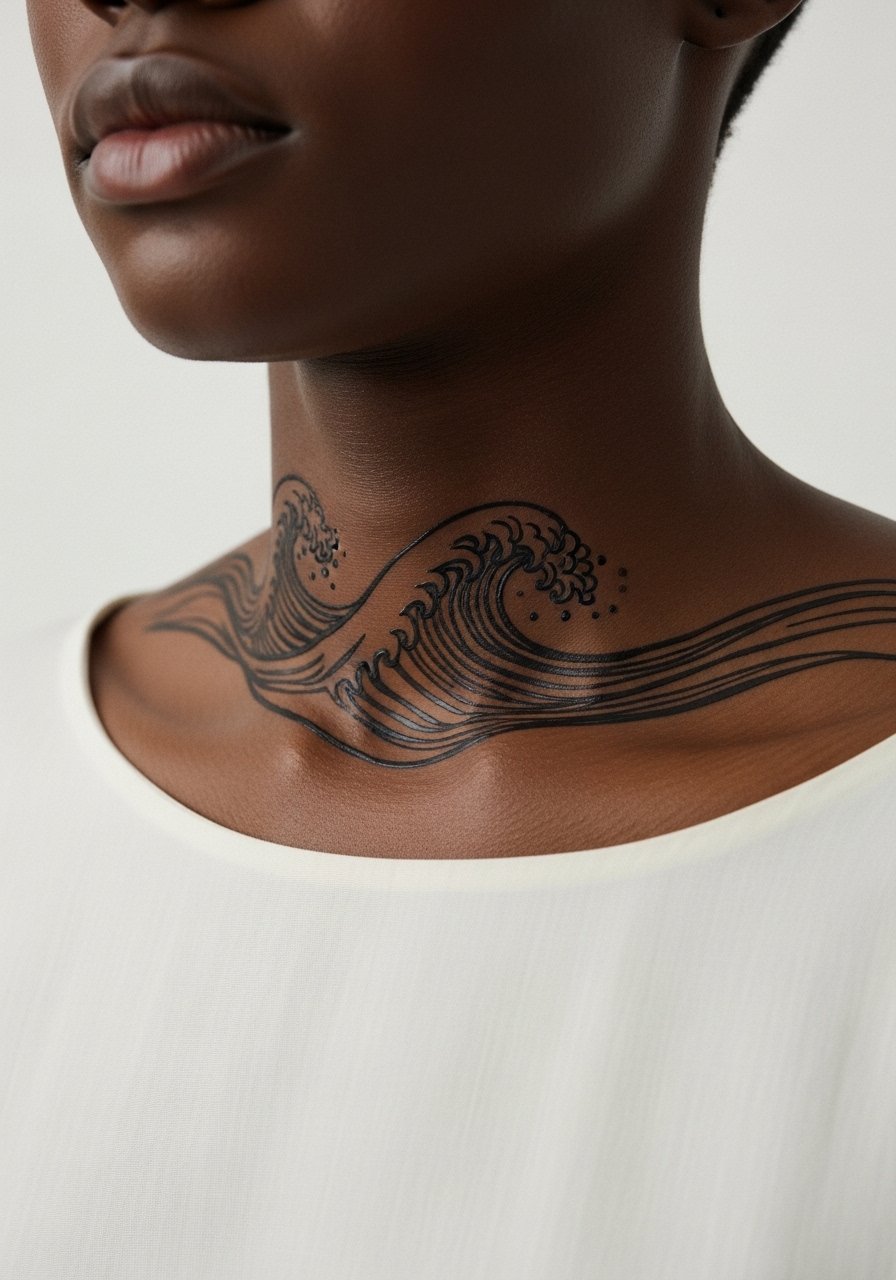
A wave that wraps the throat uses the neck's natural curves to sell movement. Ask for the main crest line to be bolder than secondary foam details so the motion reads at a distance. The error I see is adding too many tiny foam dots that clog the negative space. Those dots fade and change the rhythm of the piece. For comfort and reveal wear a mens open collar henley that frames the flow.
23. Micro-Realism Eye or All-Seeing Motif on Center Throat

Micro-realism on the throat is demanding because tiny shading needs space. Tell your artist you want a slightly larger eye than camera references so lashes and iris shading do not blur. The common mistake is compressing too much fine shading into a small area. Micro shading can soften unevenly with skin movement. Expect a focused session and a touch-up window at one to two years. For session wear avoid high collars and pick a loose tank top.
24. Celtic Knotwork Across the Side Throat
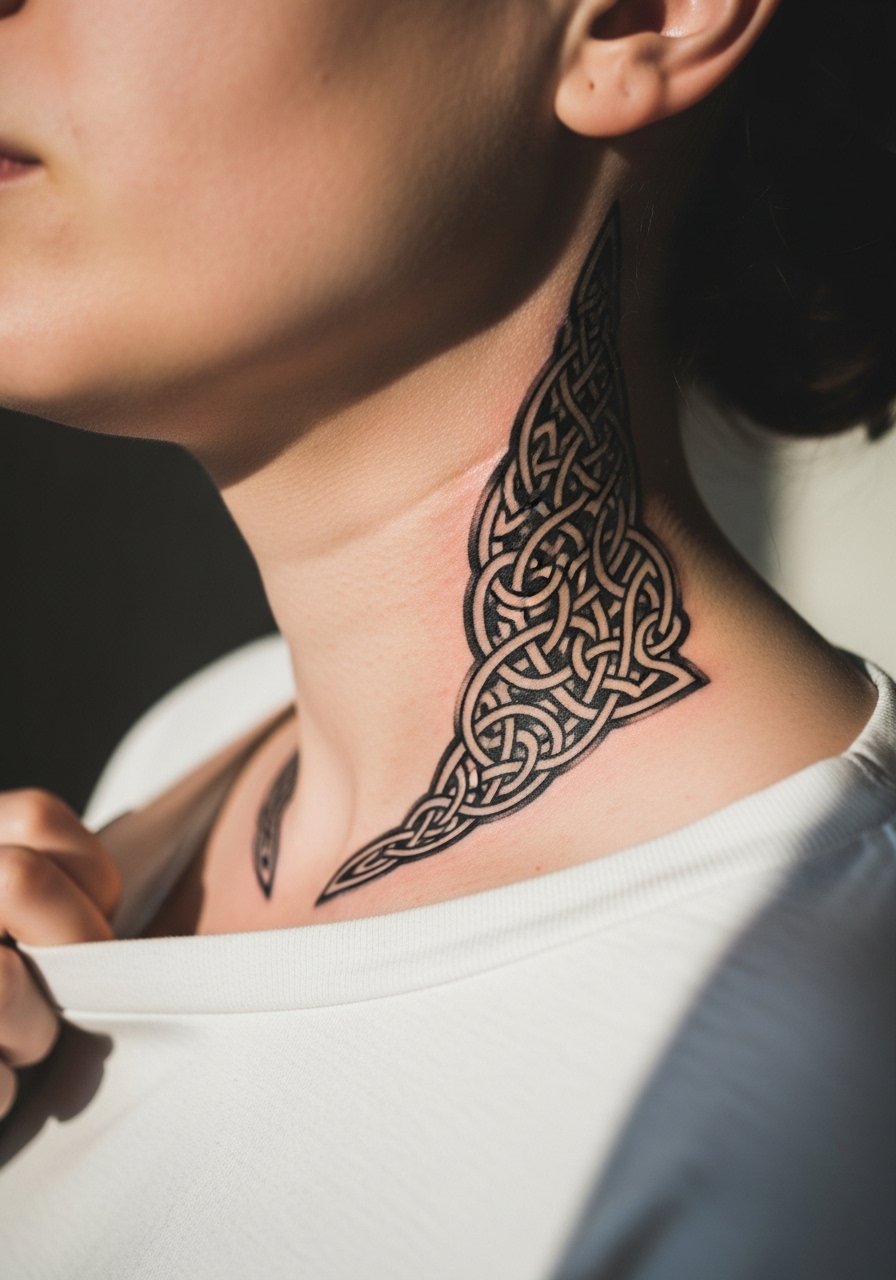
Knotwork requires consistent line thickness. Ask the artist for slightly wider pathways so the pattern does not merge into a braid-like blur. The mistake is overcomplicating interlocks on a small canvas. If you want a dense knot pick a slightly larger scale. Side throat tolerates knots well if the lines are bold enough. For session wear choose a mens crewneck tee black you can pull aside.
25. Botanical Vine That Climbs from Throat to Jawline
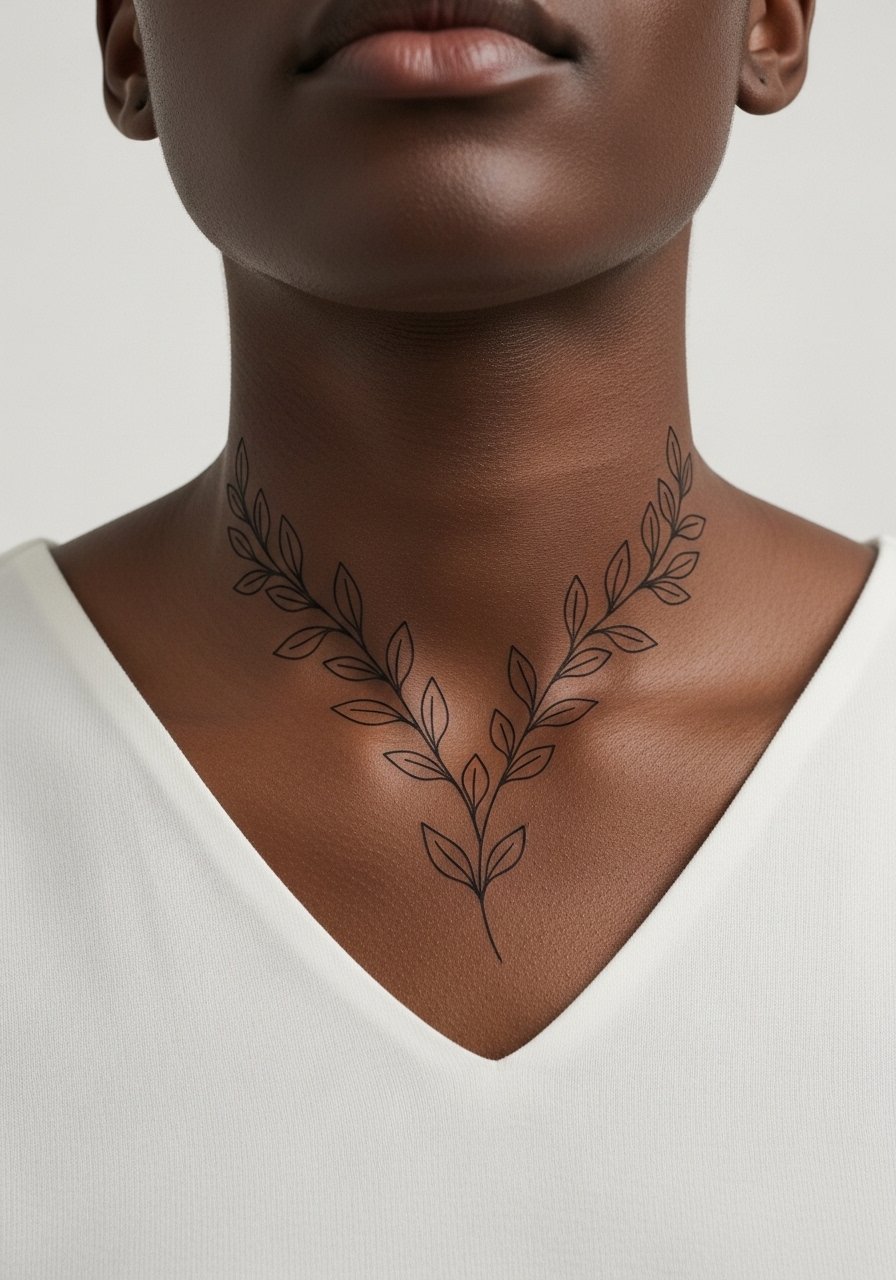
Botanical vines look organic across the throat when the leaves are scaled up slightly. Ask for leaf edges to be open rather than densely shaded so the silhouette stays crisp. Tiny veins inside leaves often disappear, which flattens the piece. Expect low to medium pain with multiple small needle passes. For session comfort wear a loose top and tie hair up if needed.
26. Anchor or Nautical Symbol Aligned with the Adam's Apple
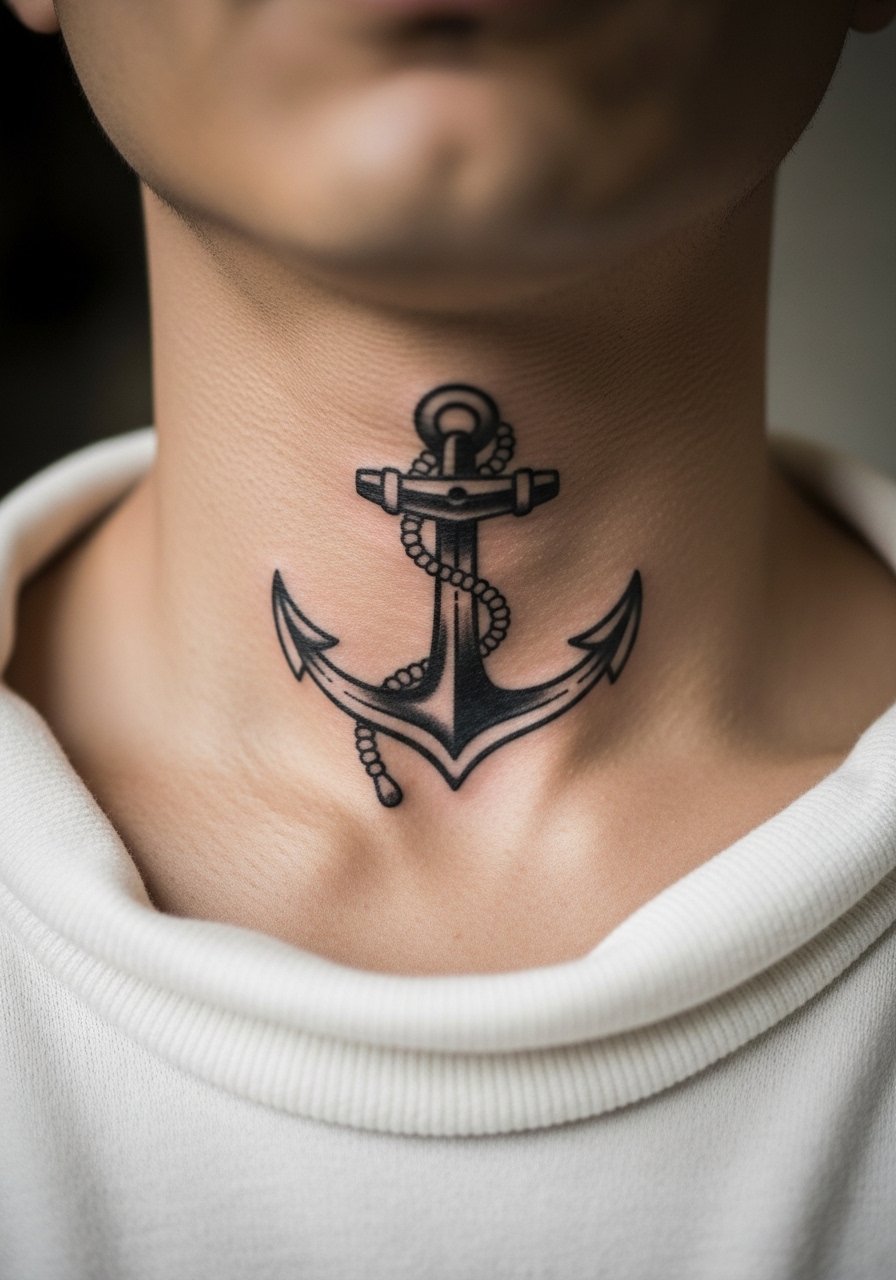
Anchors work as central throat motifs when the shank and flukes are bold. A frequent error is making the anchor too narrow which leads to warping as skin moves. Ask for broader bars and a simplified rope detail. Because the placement crosses the most mobile zone, expect sensitivity. For session and reveal, a mens open collar henley gives access while keeping the area neat.
27. Minimal Symbol Paired With Collarbone Extensions

A small central symbol with subtle collarbone extensions reads modern and wearable. Tell your artist you want the collarbone lines to stop short of clothing contact to avoid rubbing. A common mistake is extending the lines too far into the collarbone where shirts sit. That causes early edge wear. Expect a short session and a predictable healing curve. For showing it off wear an open-collar or v-neck top so the collarbone lines frame the neckline.
Frequently Asked Questions
Q: How much does a throat tattoo cost and how should I budget for it?
A: Prices vary by shop and region, but expect session counts rather than flat prices. Small front-throat pieces often fit in a single session, while full wraps or color work need multiple visits. Budget for a touch-up at one to three years if your design has fine detail.
Q: Will fine-line throat tattoos blur faster than blackwork on this placement?
A: From what I have seen, fine line blurs faster on the throat than solid blackwork because the skin moves and stretches. One camp says technique can prevent blur, the other warns that skin behavior limits longevity. If you choose fine line, ask for slightly thicker lineweight and space between elements so the piece survives longer.
Q: What should I wear to my throat tattoo session to make the appointment smoother?
A: Wear something with a wide neck or easy access like a loose v-neck tee or an open collar shirt. For front throat work a mens open collar henley or a loose tank makes access simple and prevents fabric pressure on the stencil.
Q: How visible are throat tattoos in professional settings, and should that influence my design?
A: Throat tattoos are highly visible and may still affect job opportunities in some fields. If that is a concern, consider a smaller symbol, placement toward the side or back of the neck, or a design you can partially conceal with higher collars when needed.
Q: How often will I need touch-ups on a colored neotraditional throat piece?
A: Color pieces typically need a touch-up within one to three years depending on sun exposure and friction from clothing. Plan for at least one revisit and discuss anticipated long-term maintenance with your artist before booking.