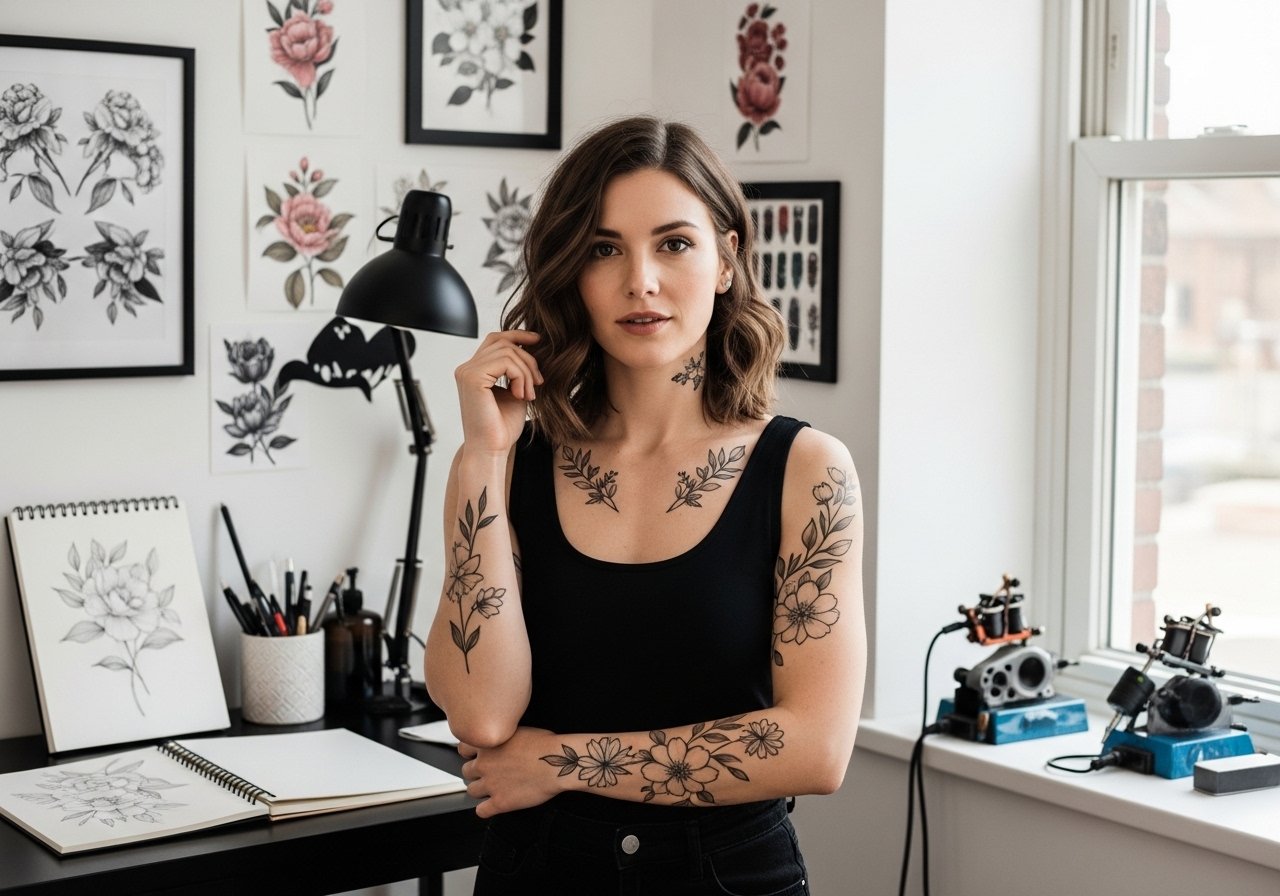
Fine line dragon trends look gorgeous on a saved board, but what often matters is how they move with your body and age over time. Trends like teal Haku manes or watercolor washes photograph beautifully when fresh. The practical question is how the curve will sit on your hip or whether a tiny wrist outline will need touch-ups sooner. Below are 21 abstract dragon ideas that balance what looks good now with what holds up later.
1. Fine Line Dragon Coiling with Peonies on the Collarbone
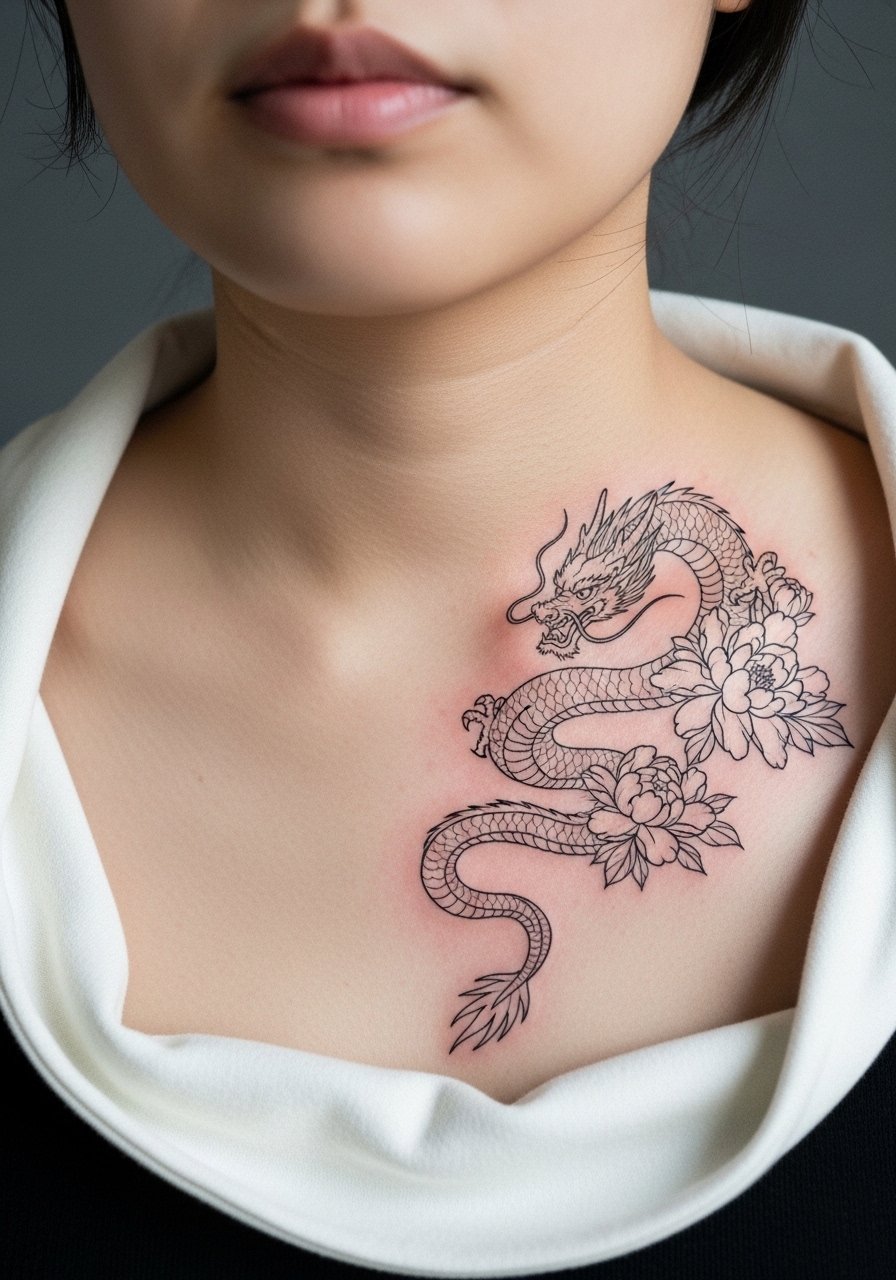
I've seen this pairing on people who want a delicate statement without heavy saturation. Tell your artist you want single-needle linework and small gaps between scales so the piece breathes as it heals. Fair warning, the collarbone area can feel sharp during the session, and touch-ups are more common where bone and thin skin meet. For showing it off, an off shoulder sweater pulls the neckline just enough without covering the tattoo. Ask for slightly heavier key lines near the peony center to prevent early fading in the most exposed spots.
2. Haku-Inspired Teal-Maned Dragon Winding from Thigh to Hip
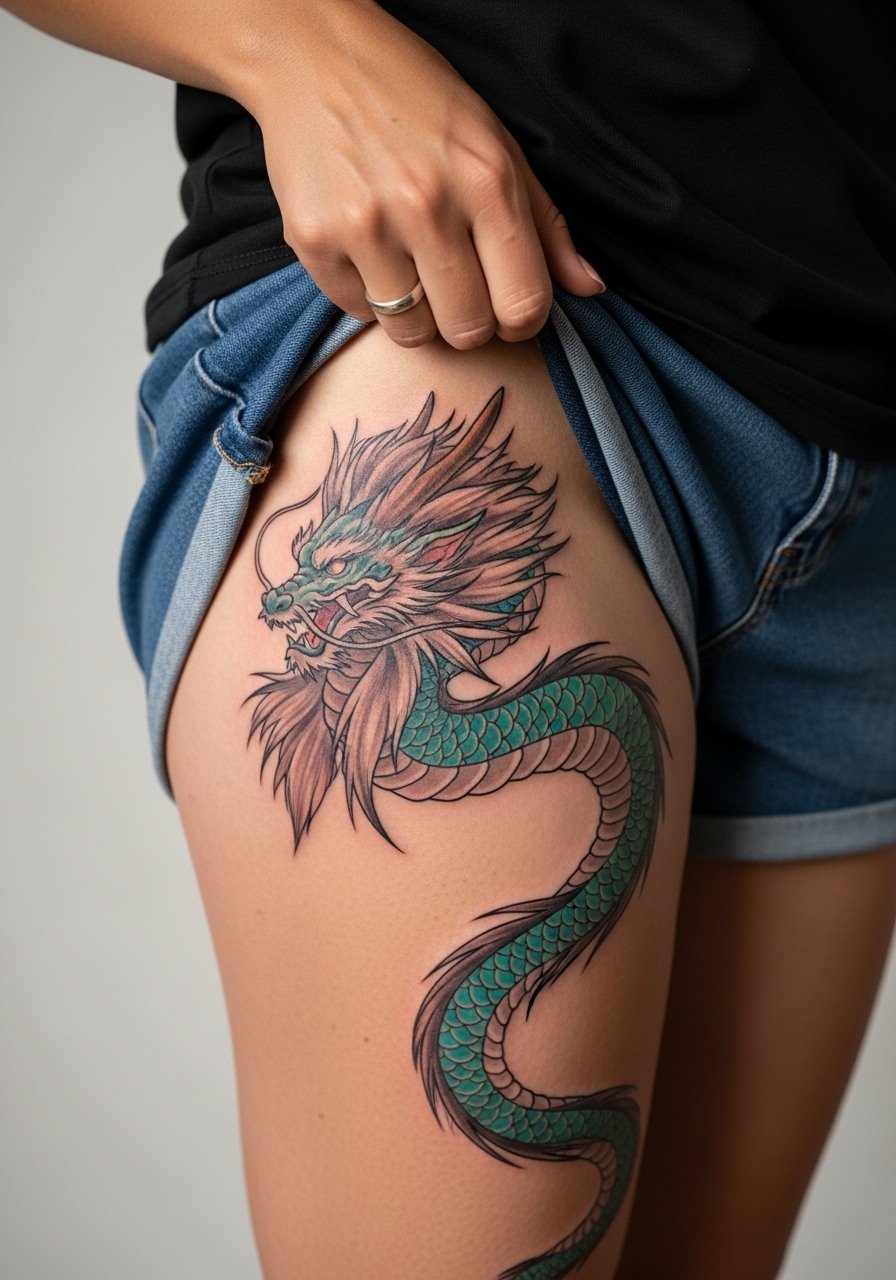
This one reads cinematic on curving hip lines. During consultation, show photos of the exact mane texture and ask for watercolor edges that stop short of the deepest shadows. Sessions feel longer because the area flexes with sitting and walking. Expect moderate pain and a two- to three-session build for saturation that holds. For outfits, a high waisted linen skirt women frames the S-curve when you stand, and for the session wear, choose loose drawstring bottoms so nothing rubs the fresh ink.
3. Serpentine S-Curve Dragon Along the Spine

Personal observation: the S-curve is one of the most flattering placements for elongated bodies. Tell your artist you want the head placed between the shoulder blades and the tail tucked toward the lower back so clothes can reveal or conceal it. The spine can be a higher-pain session, and saturation helps the blackwork age cleanly. Artists split on fine line on the spine. One camp says thin lines on that stretch-prone area blur faster. The other camp argues that with correct depth and spacing the work settles well. Ask your artist where they stand during booking. For evenings out, backless halter tops or low back dress women show the curve without tugging at the skin.
4. Minimalist Single-Line Dragon Behind the Ear
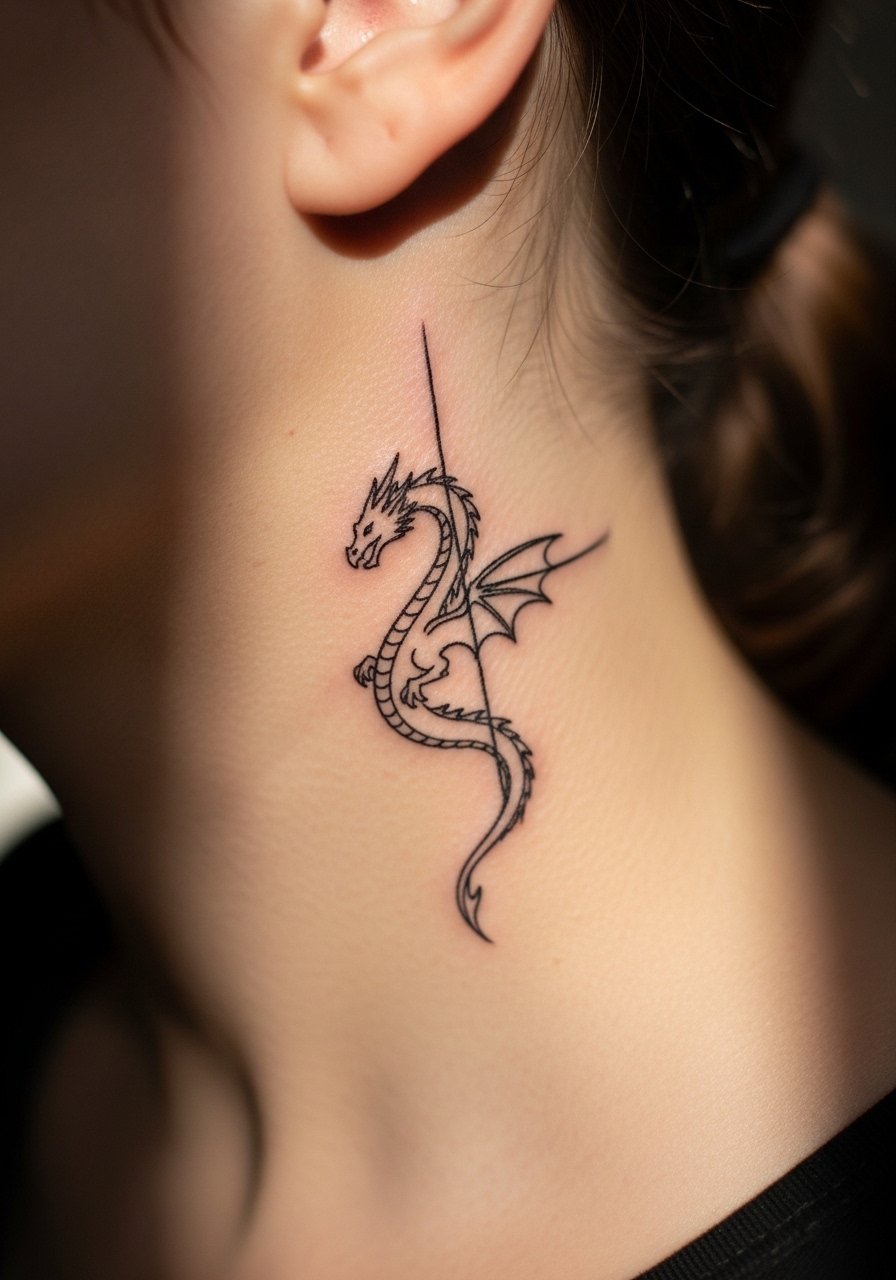
A tiny single-line outline reads like jewelry when placed here. In consultation, specify continuous single-needle flow and ask the artist to test the curve on skin with the stencil before inking. Session time is short but placement demands precision, and blowout risk is higher if the line is too tight. For showing it off, a delicate chain necklace that sits below the jawline draws the eye without overlapping the tattoo. Keep hair tied back for the appointment so the artist has clear access.
5. Neo-Traditional Dragon Entwined with Florals on the Ribcage
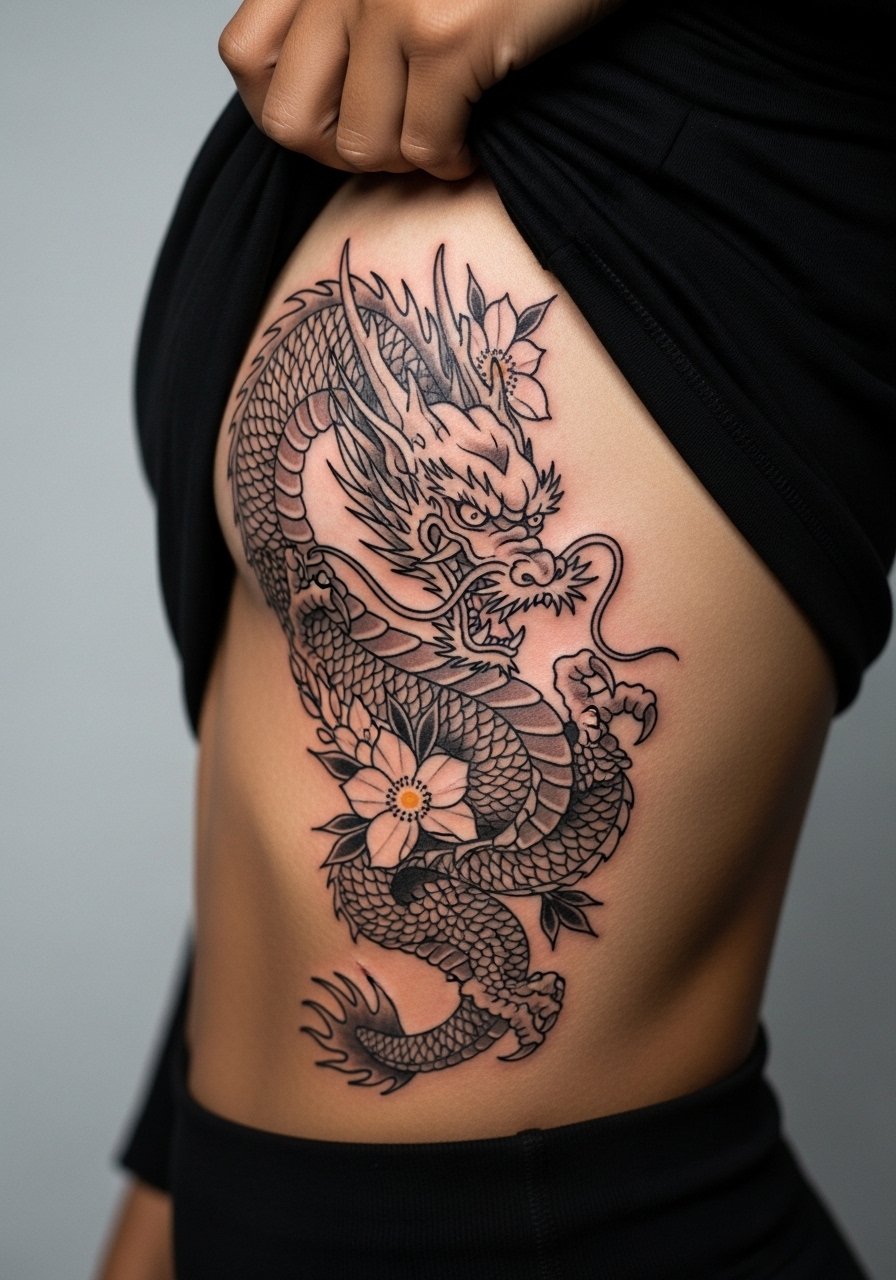
Fair warning: ribs are often rated a 7 or 8 for pain. The neo-traditional approach uses heavier outlines and bold color which can help saturation last longer on this spot. Artists split on whether fine line belongs on ribs. One group says thin work blurs there because of skin stretch. The other group says heavier line weight and deliberate spacing prevent early loss of detail. When you book, ask about their ribcage portfolio and how they handle breath and movement during sessions. For the appointment, wear a loose tank or sports bra so the artist can shift fabric without pressure.
6. Watercolor Abstract Dragon with Moon Motifs on the Shoulder Blade
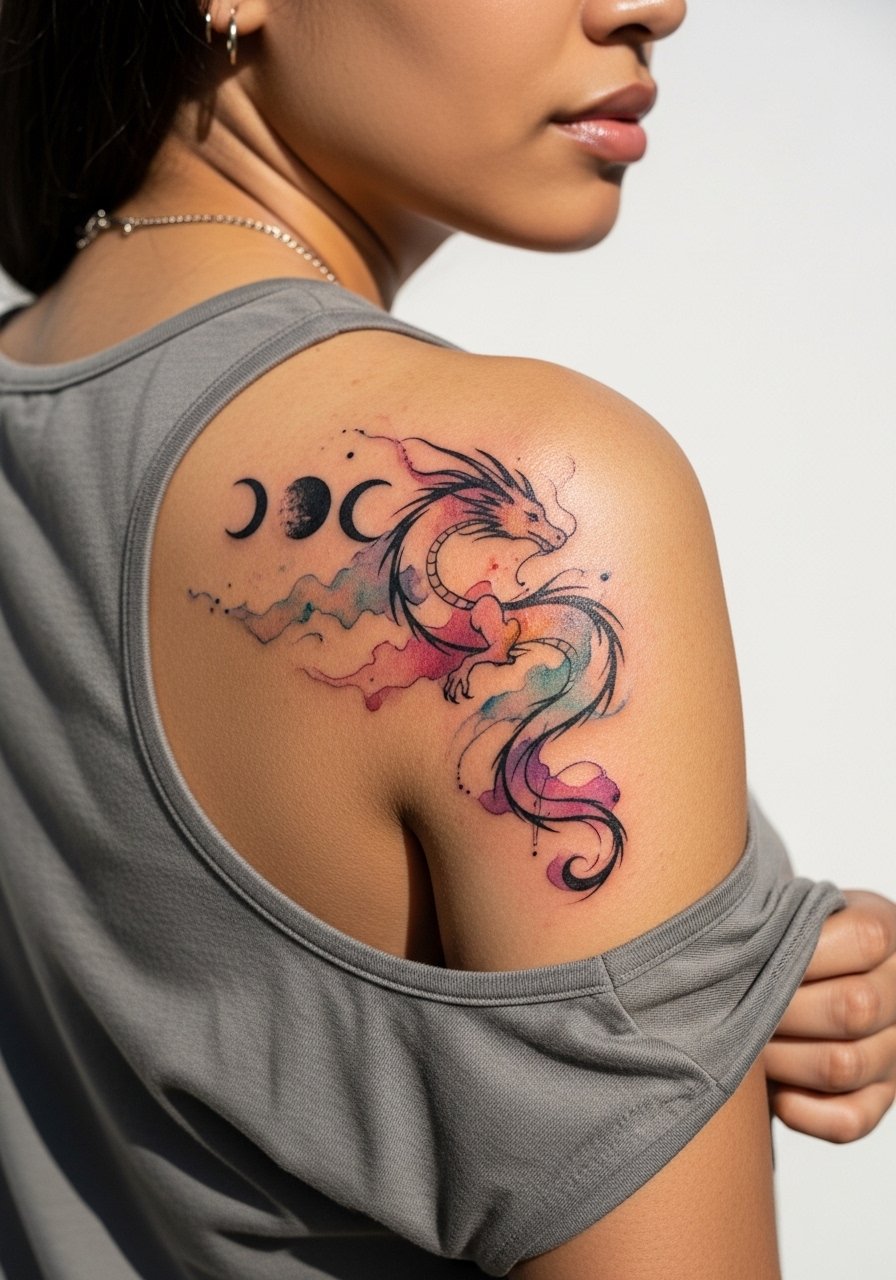
Most watercolor pieces on shoulders hold better than on hands because the skin moves less and has fewer friction zones. Ask your artist for a soft wash around the moon motif and denser saturation where you want the teal or indigo to last. Session time is typically one to two sittings depending on layering. For showing it off, a loose button-down shirt you can pull slightly off the shoulder frames the piece without rubbing it.
Studio Day Picks
These first six placement choices include ribs, collarbone, shoulder blade, and thigh, so a few session essentials make the chair time and the first week easier.
- Stencil transfer paper kit. Lets you preview exact placement and line flow on skin before the needle goes in, which is crucial for the collarbone and behind-the-ear drafts.
- Topical numbing cream. Applied per instructions it reduces edge pain for ribs and lower hip work and can keep you comfortable during longer sessions.
- Thin protective film roll. Useful for high-friction zones like thighs and lower back to protect fresh ink during the first days.
- Fragrance-free gentle body wash. Cleanses healing skin without scented irritants that can sting fine line work on collarbones and wrists.
- Aquaphor healing ointment. A thin layer on day one locks in moisture for delicate linework without clogging small needle channels.
7. Geometric Abstract Dragon Composition on the Forearm
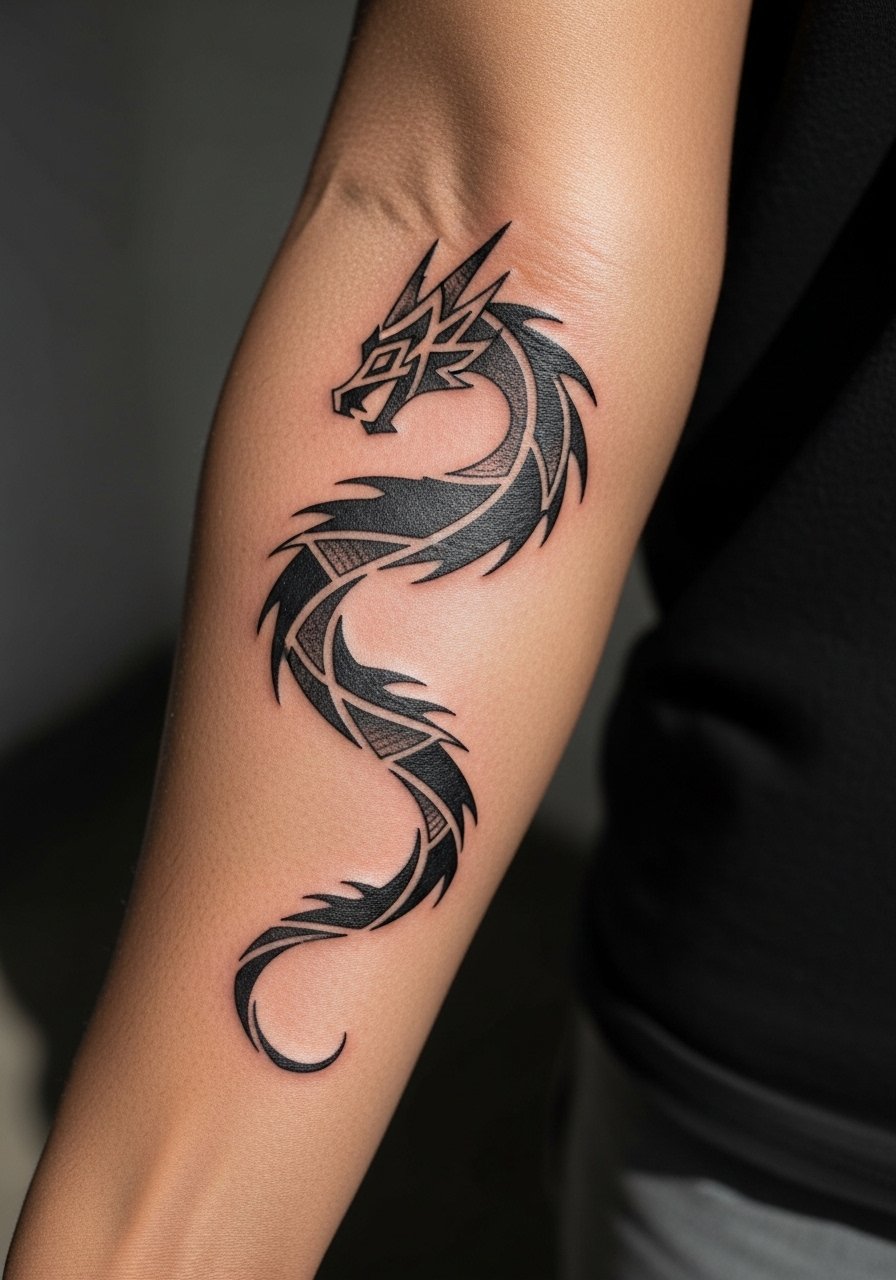
The forearm is forgiving for geometric abstractions because there is room for spacing and scale. Tell your artist you want negative space to form the dragon silhouette so the geometry reads from a distance. The common mistake is shrinking the geometry too small which leads to merging lines after a few years. Sessions are usually two sittings if you want deep saturation. For casual wear, rolled-sleeve button-ups in olive or cream complement the piece, and a linen button up shirt women is easy to roll when you need artist access.
8. Minimal Ankle Single-Needle Dragon
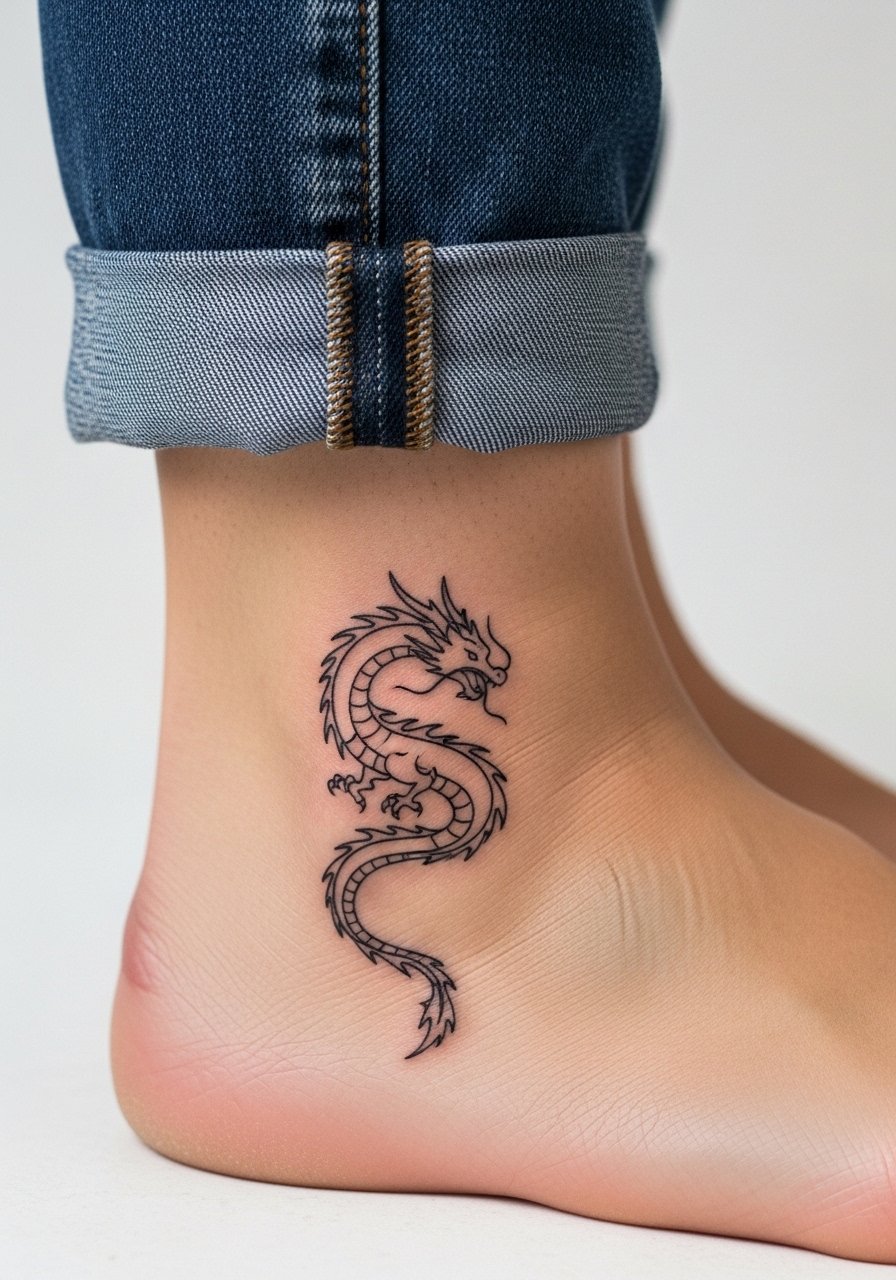
A tiny ankle dragon works for people who want subtlety. Expect low session time but higher wear from shoes and socks. The most common mistake is placing it where shoes rub each day. Tell the artist to avoid the narrow edge of the ankle bone and position the tail where footwear won't chafe. Healed at two years this style often needs a small touch-up. For the appointment, wear pants you can roll up easily so the artist can reach the area.
9. Dragon Entwined with Cherry Blossoms on the Inner Thigh
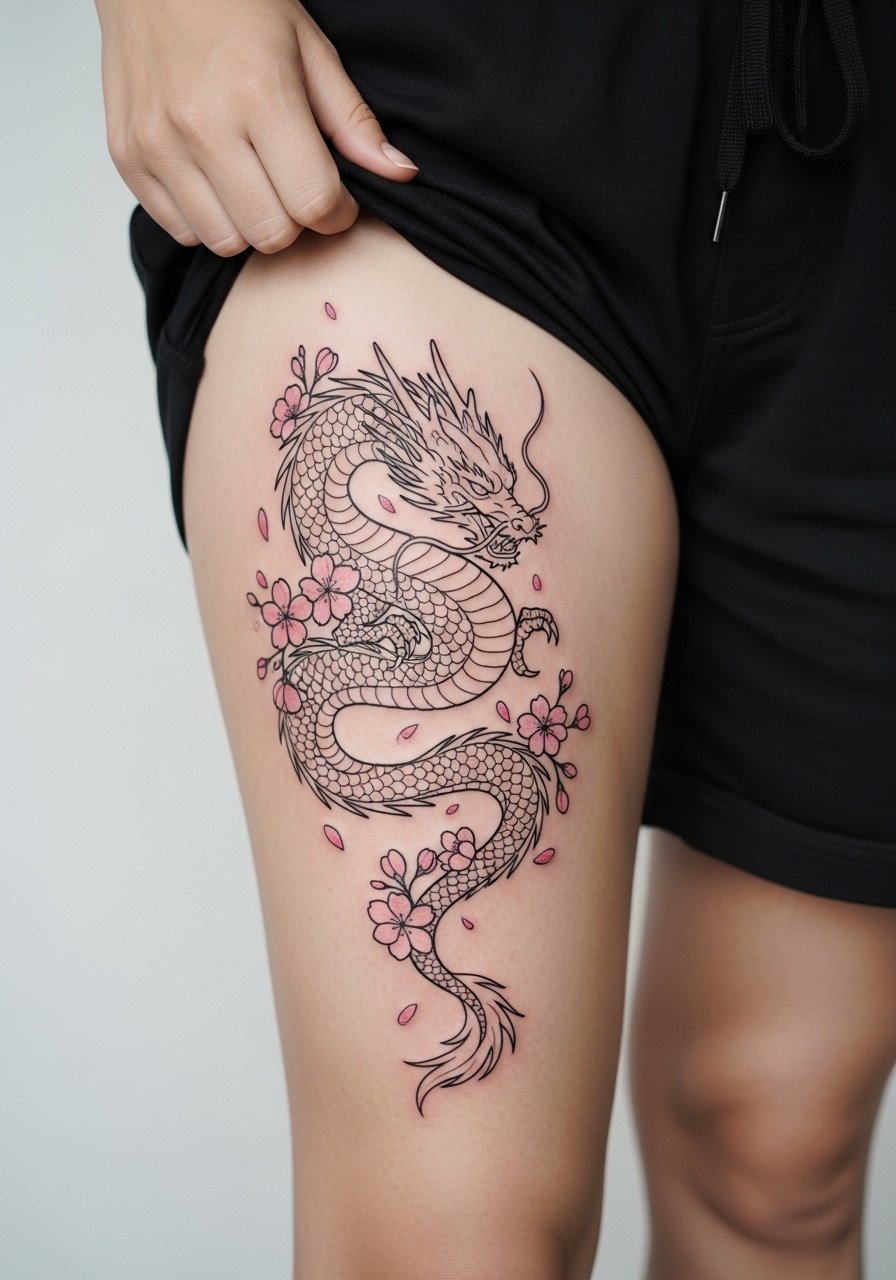
This elongated inner-thigh placement flatters curves but needs careful session planning. Mention to your artist that you want lighter stipple shading within the blossoms to keep the piece breathable. The inner thigh has higher friction from clothing and a greater risk of fading, so ask about touch-up timing. For modest show-off looks, high-waisted skirts work; try a flowy black silk skirt for evening reveals. Note: cherry blossoms carry cultural associations; consider subtle variations rather than a direct repeat of traditional motifs.
10. Cyberpunk Neon-Accented Dragon on the Calf
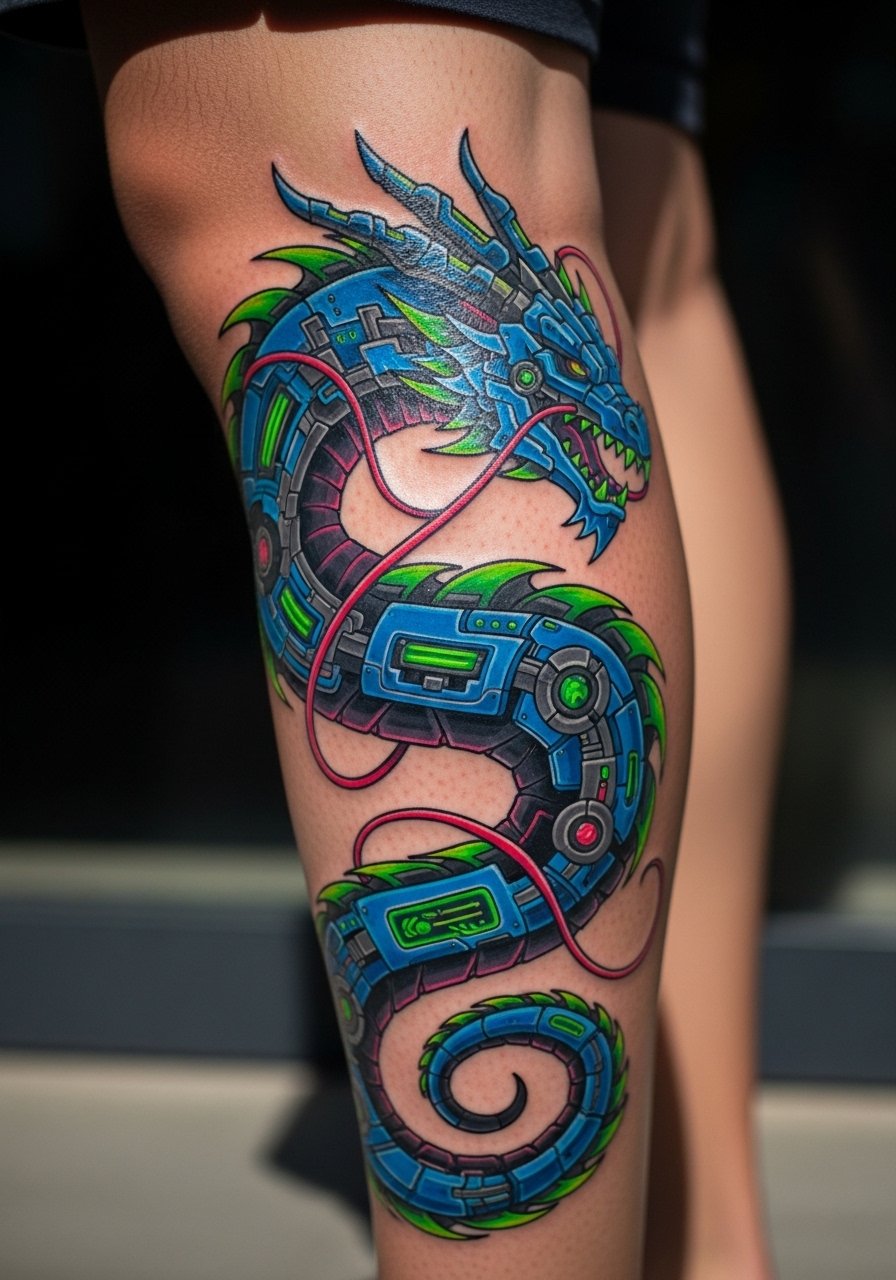
This style is best for people who like bold color and graphic shapes. Ask for a saturated underlayer and small neon accents so the color pops in photos without needing constant retouches. The calf tolerates heavy saturation well but may require a three-session build for layered neons. Expect moderate discomfort during longer fills. For casual outfits, ankle boots with cropped pants let the neon peek out without covering the design.
11. Micro-Realism Haku-Style Dragon with Teal Highlights on the Hip

A repeat of the Haku aesthetic but on the hip calls for softer transitions and feathered highlights. When you consult, bring references of mane texture close up and specify that teal sits more in the mane than in the scales. Hip sessions are medium pain with two to three sittings for layered color. For showing it off, a sheer thigh high stockings look can reveal glimpses in evening wear while protecting the area during the day.
12. Stipple-Shaded Circular Dragon Emblem on the Upper Arm
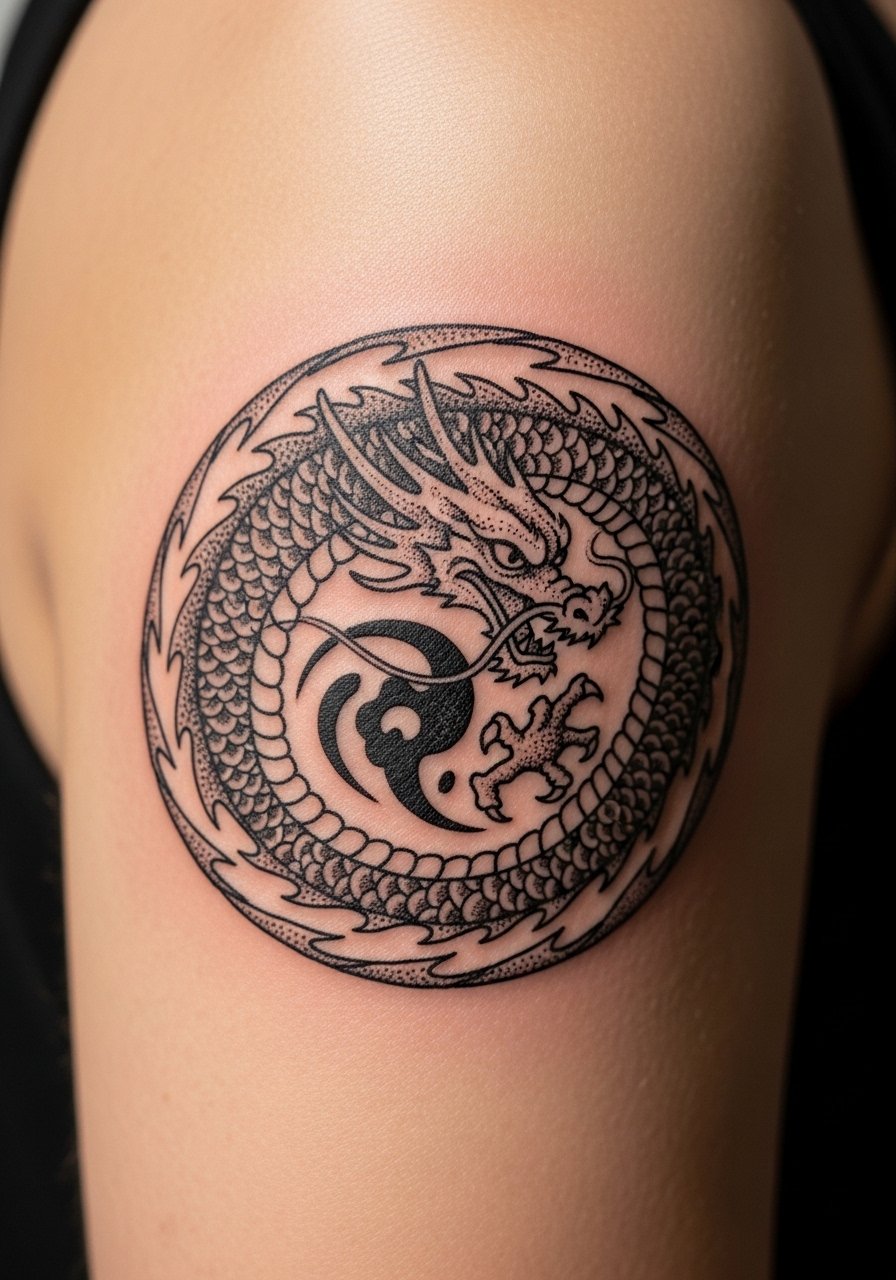
Stipple shading ages well when the artist spaces dots properly. Tell your artist you want denser stipple near the center and looser dots toward the edge to avoid muddying. Sessions are often multiple short passes to build contrast. The upper arm is comfortable for longer sittings and the emblem reads well under rolled sleeves. A common mistake is over-dense dot work which merges; request test patches if you are unsure.
13. Neo-Traditional Rib-to-Upper-Arm Wrap
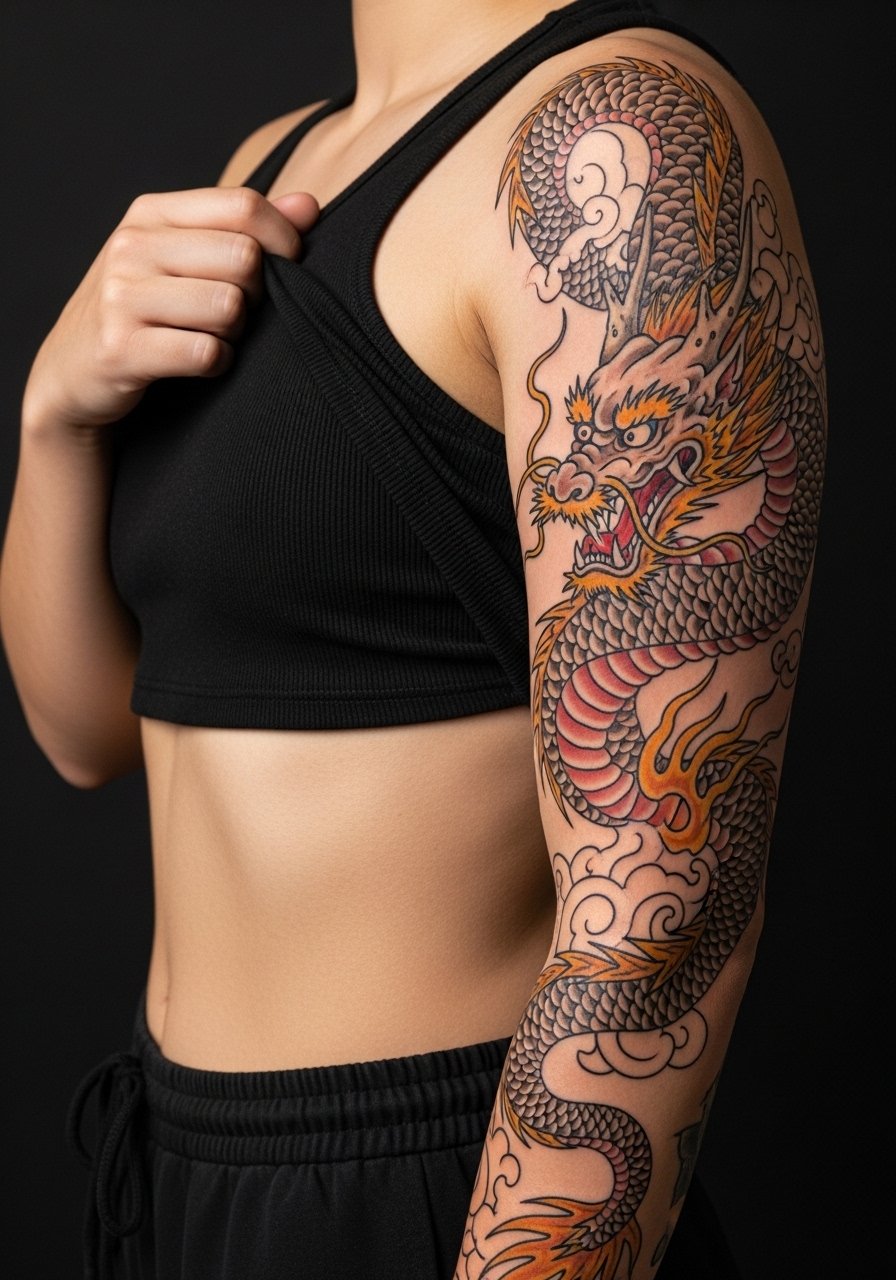
This wrap balances bold outlines with decorative fills that follow musculature. Since ribs are involved, mention breath control during the session and ask for session breaks timed with inhales and exhales. The common aging issue is under-saturated fills near the ribs. For session wear, a loose tank or sports bra works best. If you want to show the arm portion, a cropped tank pairs nicely without exposing the ribcage unless you choose to.
14. Abstract Geometric Dragon Cluster on the Forearm
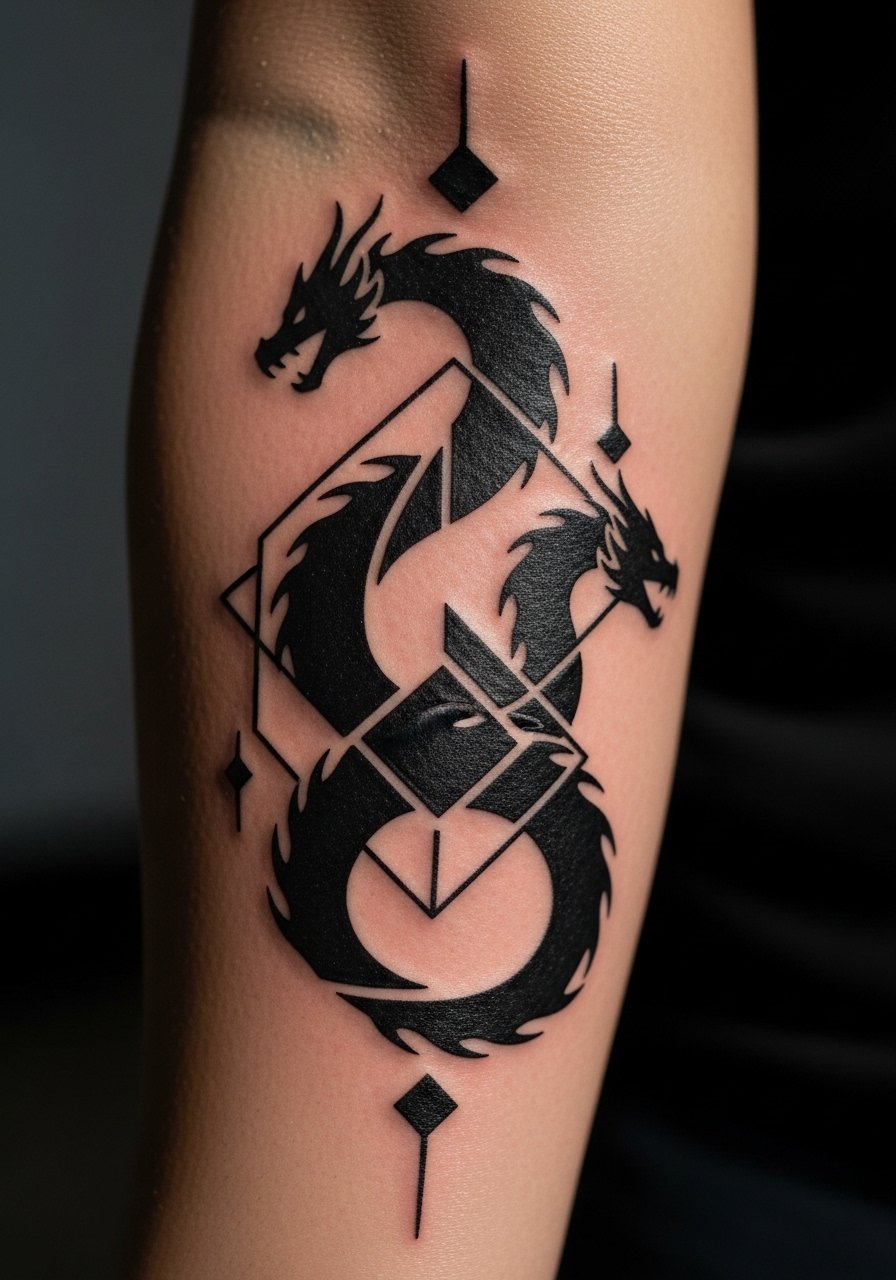
Geometric clusters benefit from space between elements. Say explicitly you want at least 2 mm between the densest lines so the geometry does not merge later. The inner forearm has moderate sun exposure so plan for sun protection to preserve saturation. Session time is typically two sittings for crisp edges. For wardrobe, rolled sleeves or short sleeves highlight the work without crowding it.
15. Dragon with Cherry Blossom Trail on the Side Torso
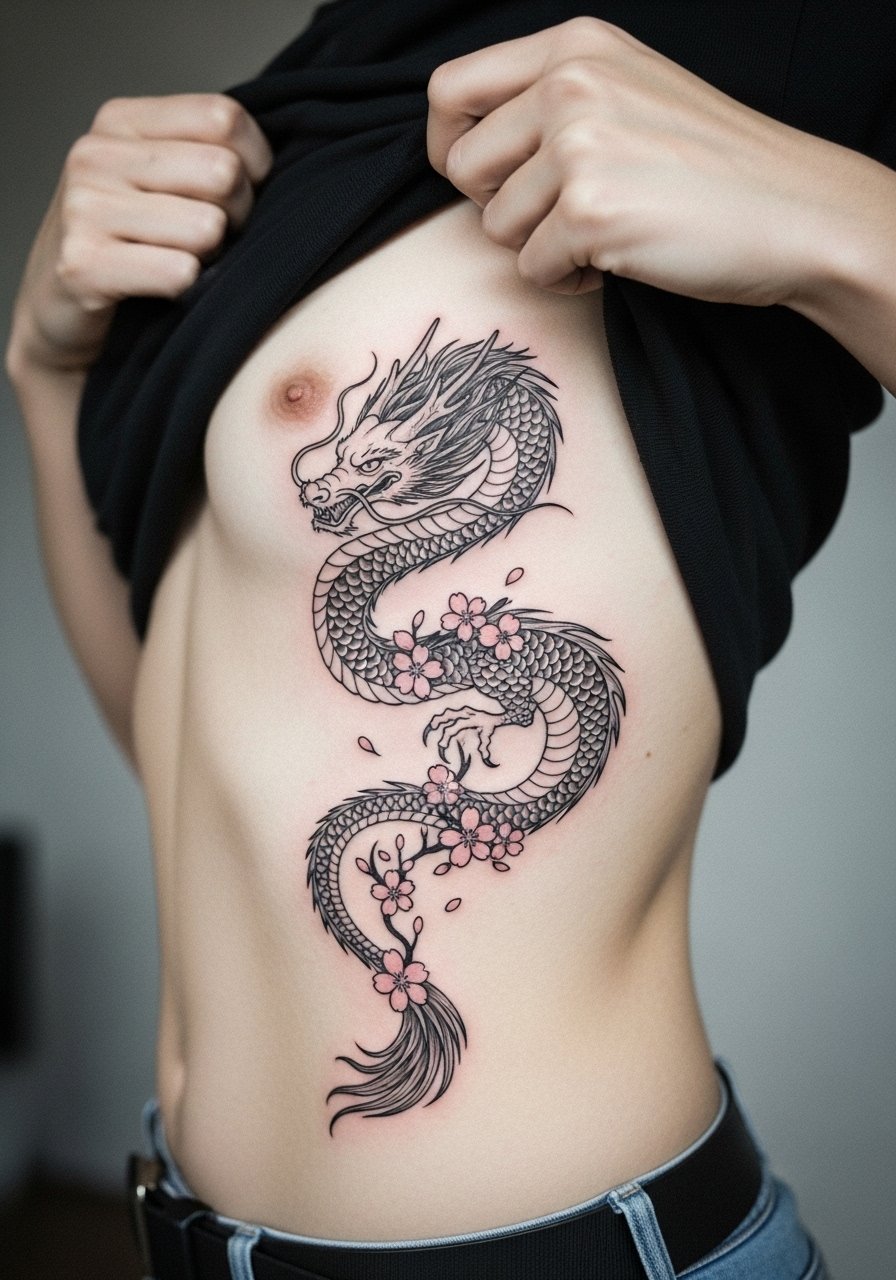
Side torso pieces move with breathing, so tell your artist you want the blossoms spaced to flow with expansion and contraction. The usual mistake is crowding the blossoms into one tight band which fades irregularly. For session wear, a front-button top or loose tank keeps access simple. Respect the motif origins; many people opt for stylistic reinterpretations of cherry blossoms rather than literal copies.
16. Minimalist Single-Line Wrist Dragon
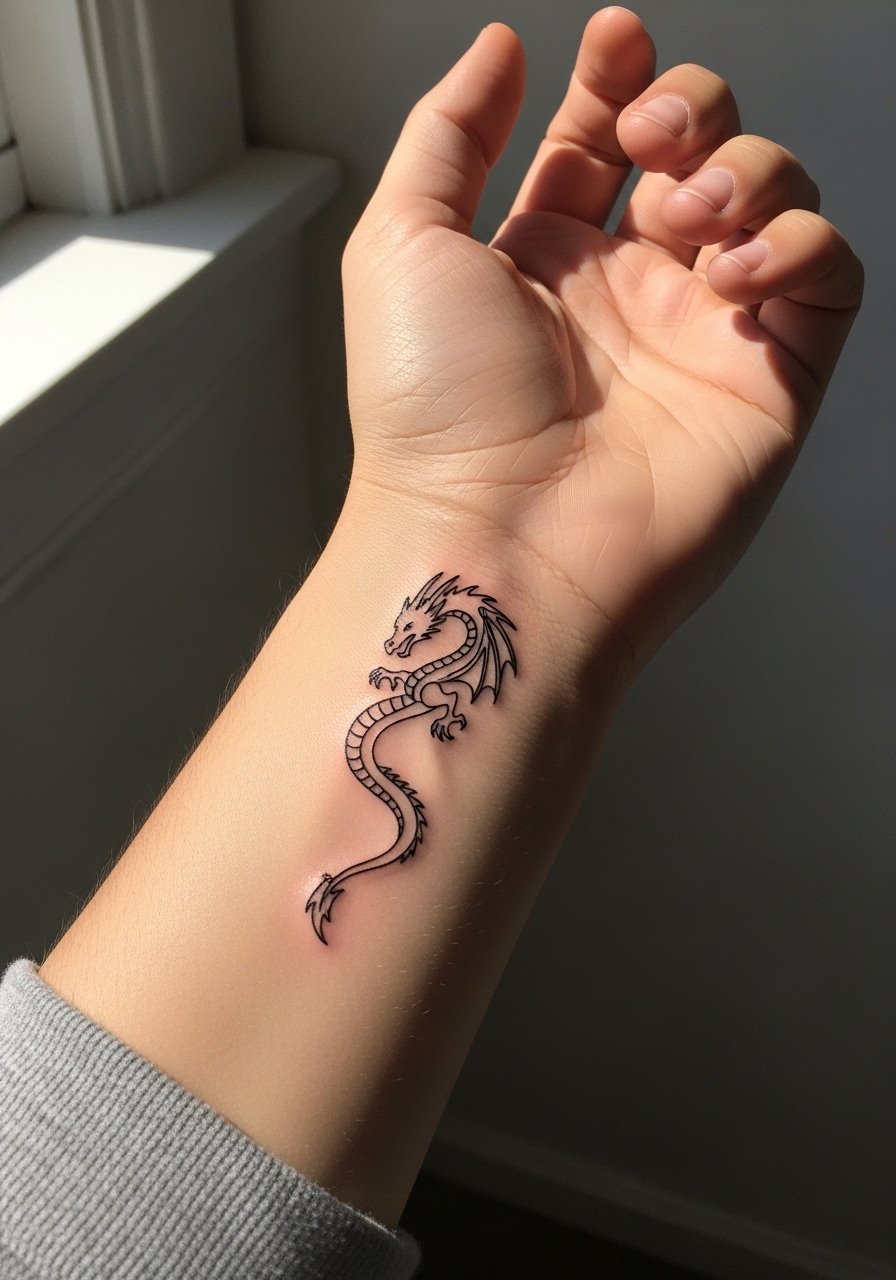
Wrist pieces have high visibility and friction from watches and bracelets. Ask the artist to place the dragon where watch straps won't rub daily. The common aging problem is the line thickening where rubbing and washing are most frequent. For the session wear, go sleeveless. A thin cuff on the opposite wrist pairs well once healed.
17. Fine Line Peony Dragon on the Outer Forearm
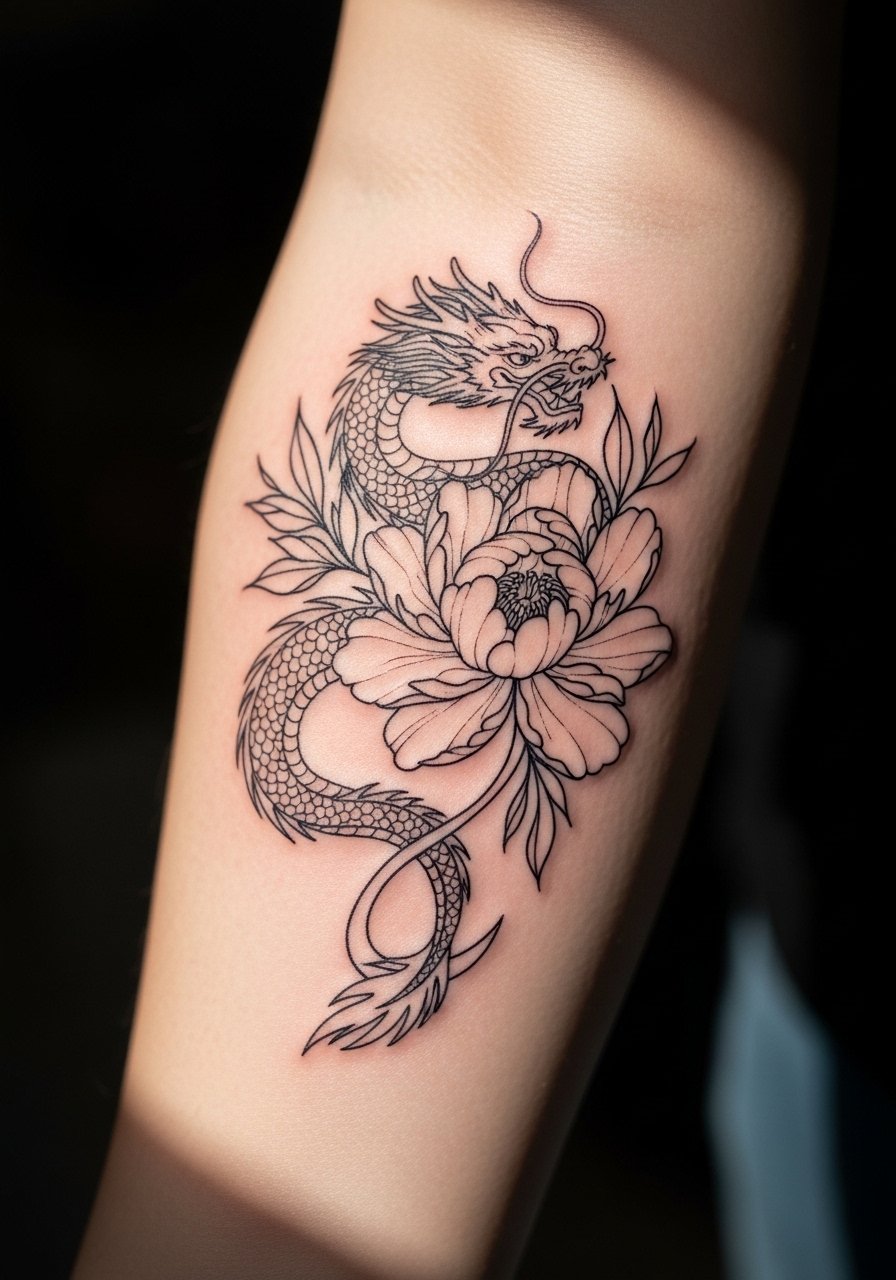
I've seen delicate peony integrations that still read clean at three years because the artist left intentional negative space. Tell your artist to use whip shading for the petals and slightly heavier outlines at key anchor points. Inner forearm pieces tend to need touch-ups at year two for the most delicate runs. Roll-up sleeves and a thin bangle stack gold on the opposite arm complement the look without covering it.
18. Micro-Realism Dragon Eye Motif Near the Collarbone
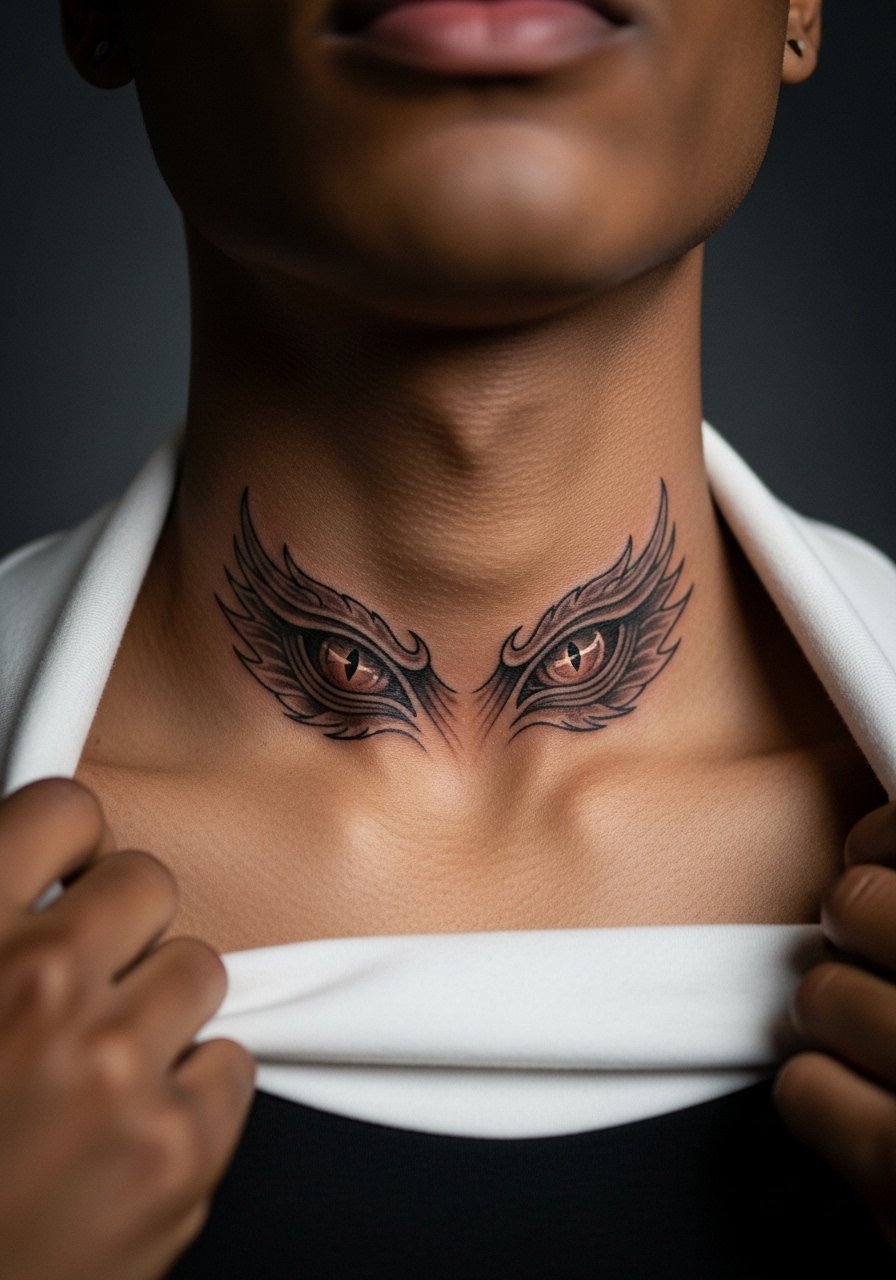
A single micro-realism eye reads as a focal point. For detail work like this, bring extreme close-ups of textures so the artist knows the level of realism you expect. Sessions are short but require steady hands and fine needles. The most frequent mistake is insisting on too small a scale which loses detail once healed. For show-off outfits, delicate chains that sit below the piece work better than chunky necklaces.
19. Serpentine Hip-to-Thigh S-Curve in Blackwork
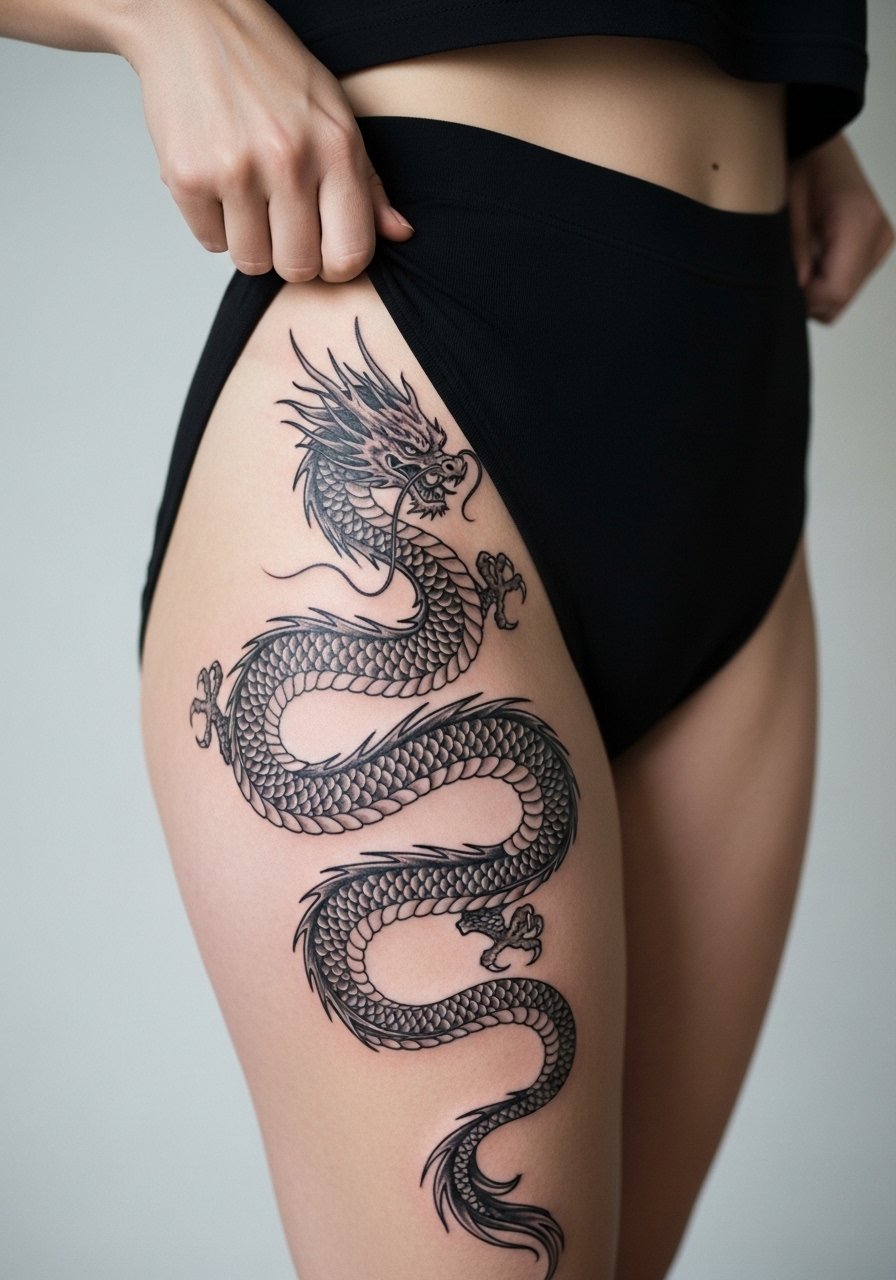
This S-curve placement flatters many body shapes and reads like a long scarf of ink. Request the tail anchor point to fall where high-waisted garments hit so it peeks when you want. The hip and thigh have different friction patterns, expect the thigh portion to heal with slightly more saturation loss. For sessions, choose loose bottoms you can shift and a loose drawstring linen pant for comfort on travel days.
20. Dot-Work Dragon Halo Around the Navel

Stipple halo work around the navel needs careful spacing to avoid merging dots over time. Tell your artist you want the densest dots at the crest and very loose dots near the outer ring. Stomach skin stretches with weight and pregnancy which can alter the pattern. This placement is sensitive to long-term body changes so discuss future plans if they apply.
21. Inner Bicep Micro-Realism Dragon with Subtle Color
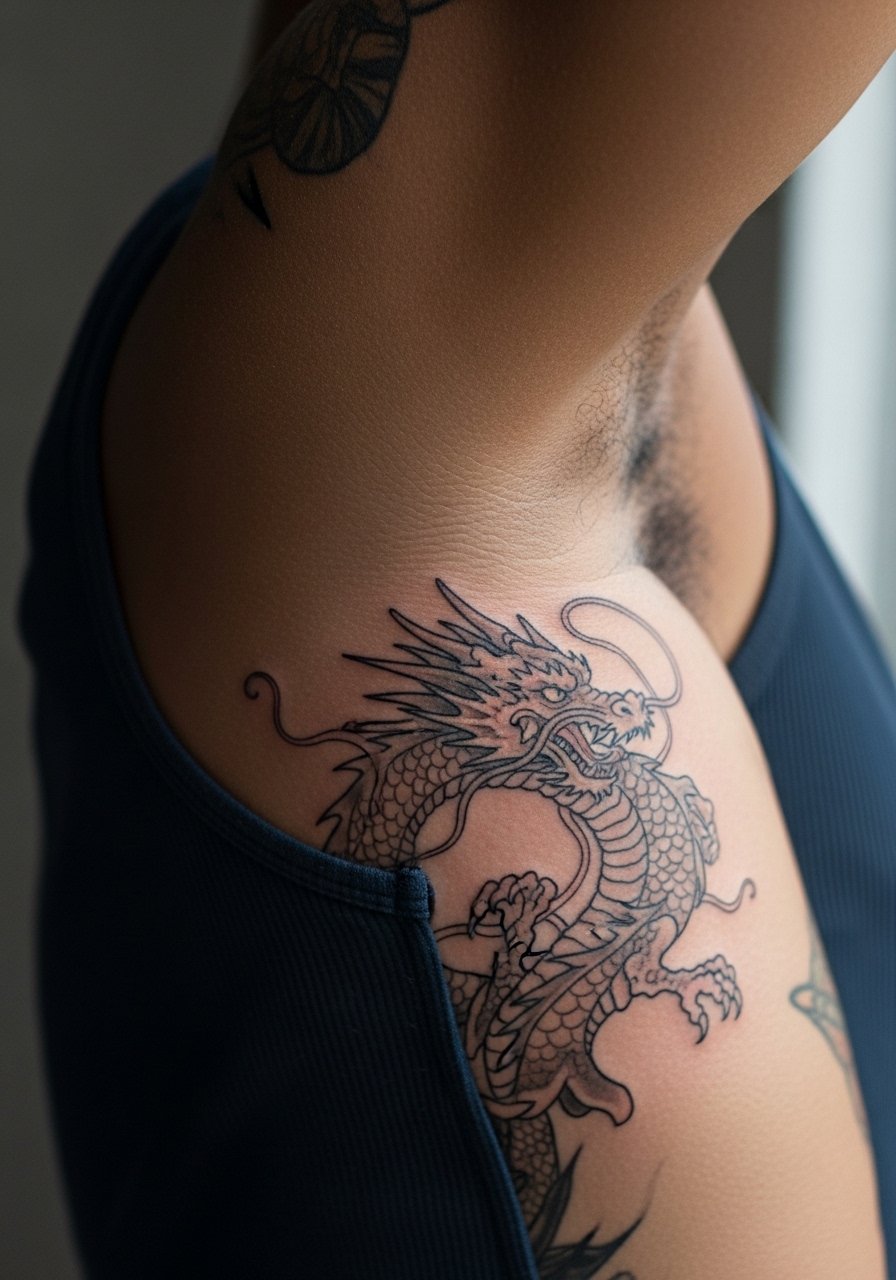
Fair warning: the inner bicep is higher on most pain scales and sensitive during the session. The benefit is that healed micro-realism can look like a hidden gem when your arm is at rest. Ask for slightly denser saturation in shadowed areas so color does not wash out after six months. For the session, wear a tank top to let the artist access the area easily.
Frequently Asked Questions
Q: How long before a fine line collarbone dragon needs a touch-up?
A: It depends on sun exposure and how close the linework sits to bone. In my experience, lighter single-needle collarbone pieces often benefit from a small touch-up between two and four years to restore the crispest edges.
Q: Will watercolor and neon accents fade faster than blackwork on hips and thighs?
A: Yes, color tones like watercolor washes and neon highlights generally lose vibrancy sooner than saturated black. Thick color layers and multiple sessions help, but plan for possible touch-ups at the two- to five-year mark depending on placement and sun exposure.
Q: Are ribcage dragons a bad idea if I want crisp fine lines?
A: Artists split on this. One group warns that fine line on ribs can blur due to skin stretch. The other group says properly spaced lines and deliberate depth can keep the work clean. Ask to see healed ribcage examples from the artist before booking.
Q: What should I wear to a thigh or hip session to make the appointment easier?
A: Wear loose drawstring bottoms or a skirt that allows the artist to expose only the area being worked on. I often suggest a flowy black silk skirt or loose shorts so you can sit comfortably without fabric rubbing the fresh ink.
Q: Do geometric dragon tattoos need more spacing than illustrative ones?
A: Yes. Geometric pieces rely on negative space to read clearly. If the geometry is too tight, lines can merge as the tattoo heals and ages. Ask for at least small breathing gaps between dense elements.
Q: How do I find artists who specialize in micro-realism or stipple work without naming names?
A: Use style-specific hashtags on social platforms like #AbstractDragonTattoo and #FineLineDragon and filter by location tags, or search tattoo directories that let you narrow by technique. Look at healed photos in portfolios for depth and spacing rather than just fresh images.