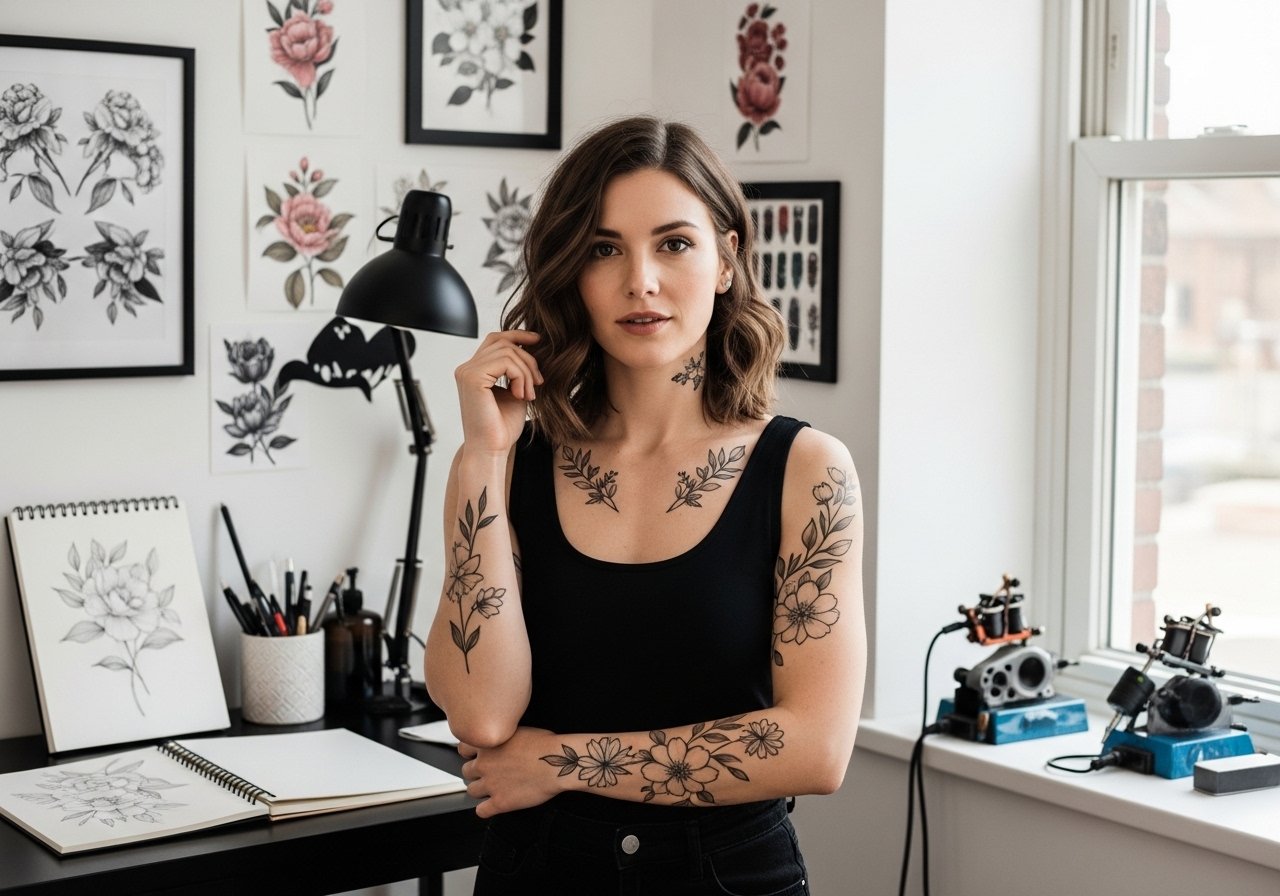
The tattoos that stay crisp for years are not always the ones that looked best the day they were fresh. I see three recurring complaints in consultations: blackwork that blurs on darker skin, guest-spot savings that vanish after rescheduling fees, and ribs that hurt more than people expect. This list skips vague slogans and gives specific blackwork family tattoo ideas, what to ask your artist, and simple wardrobe hacks to make sessions and show-offs less painful and more predictable.
1. Blackwork Family Tree Silhouette on the Forearm
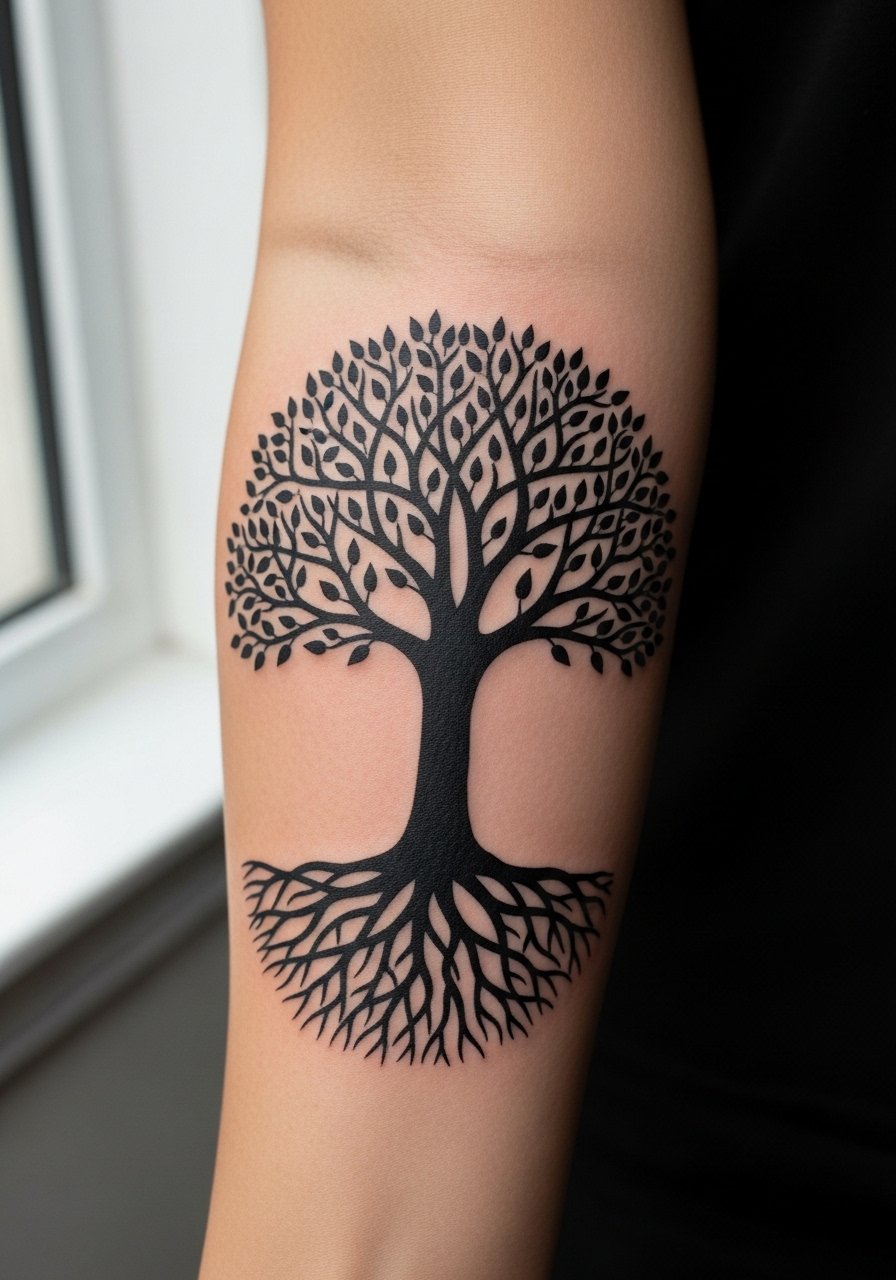
I’ve seen this design age well when sketched slightly larger than clients expect. Ask your artist to keep the trunk and main branches thick enough so the negative space leaves room for the roots to read at year three. Common mistake is going too small and tight with tiny branches. The forearm is forgiving for touch-ups and is a low-pain placement, so plan a single session under two hours for a 4-6 inch piece. For showing it off, roll up a henley sleeve or wear a short-sleeve leather jacket, both frame the tree without crowding the lines.
2. Gothic Couple Portrait on the Upper Arm

Fair warning: realistic portraits need room and multiple sessions to hold. Tell your artist you want heavier saturation in shadow areas rather than micro-detail in hair, because dense black holds better over time. Upper arm sessions are moderate on pain and easily covered between appointments. A typical session runs two to four hours for a 6-8 inch piece. Avoid asking for ultra-fine facial lines at small scale since those soften faster. For after-session comfort wear a loose tank so the area breathes and the artist can access the shoulder without tugging.
3. Mandala with Family Initials at the Collarbone
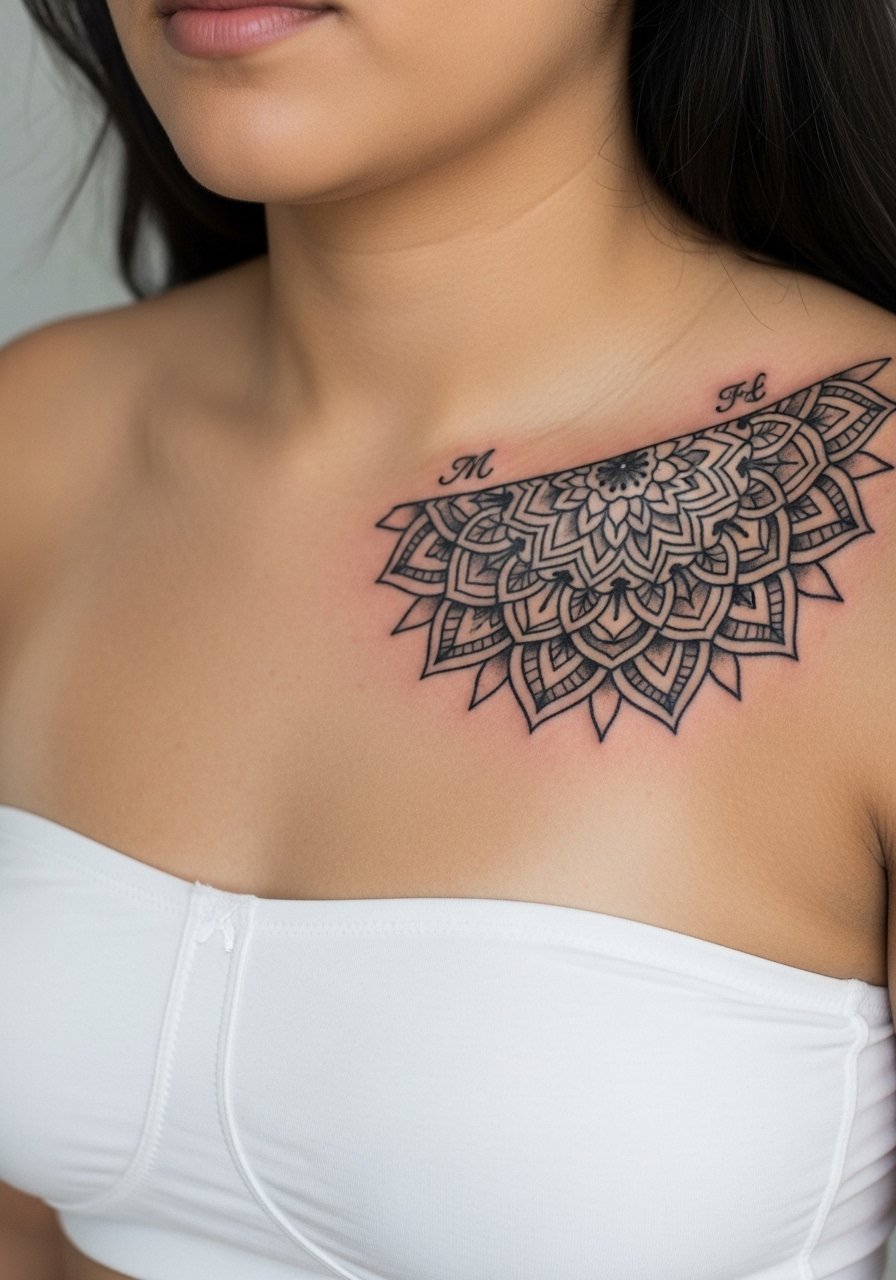
I've seen mandalas that look ornate on day one and then merge when placed too small. The collarbone suits a 3-5 inch mandala with clear spacing between petals. During consult, point out which initials you want subtle and where to set them in the negative space so they do not sit inside dense stippling. Collarbone pain is moderate, but the visual payoff is high for wardrobe-friendly reveal. For evening looks, pair it with a strapless bralette or a low V top so the pattern reads clean against skin.
4. Solid Black Family Crest on the Shoulder
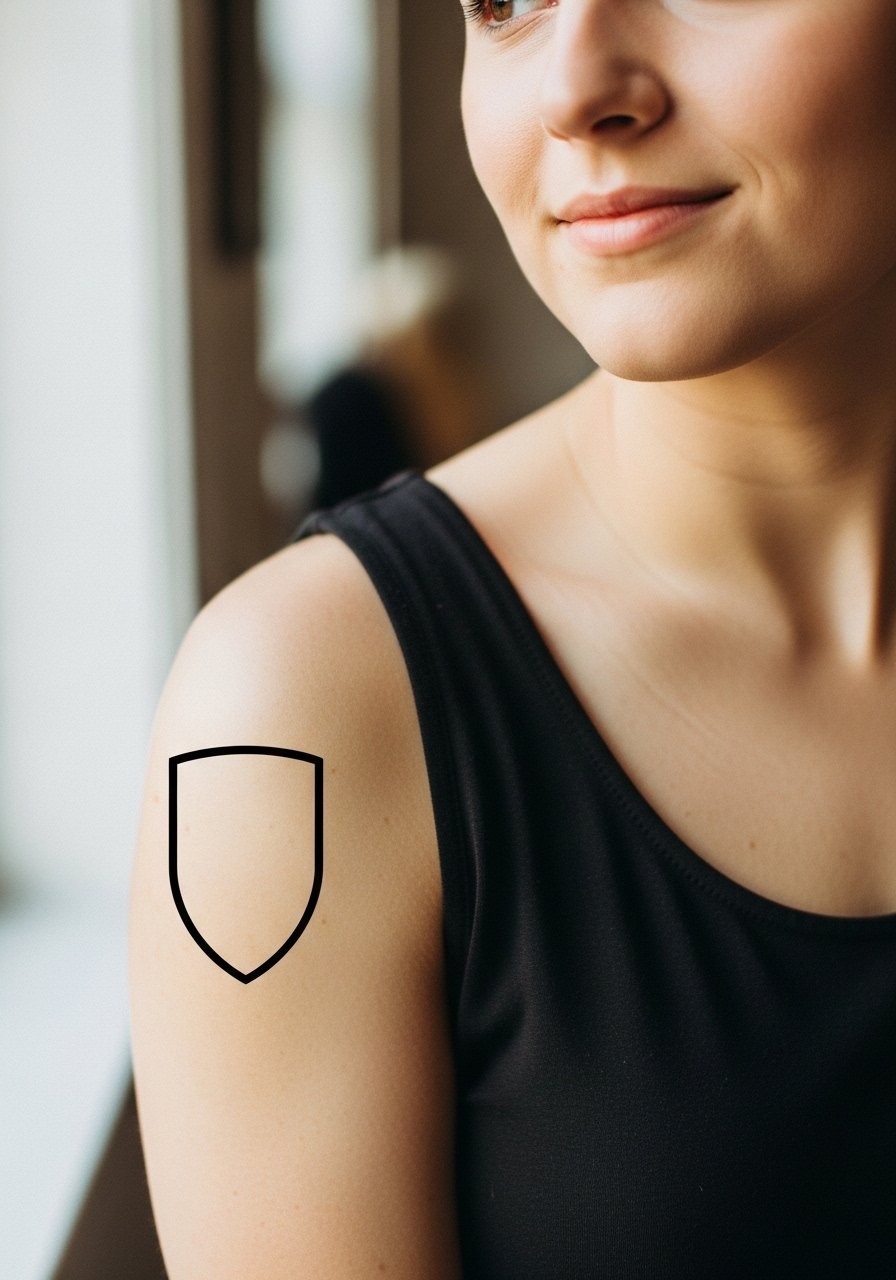
The shoulder is one of the best spots for dense fill and crisp edges because it moves less than the forearm. Ask for a simplified crest silhouette and avoid micro ornaments inside the shield that will blur. Sessions are usually two sittings for a 5-7 inch crest. The biggest mistake is over-detailing inside the crest at small scale. For showing it off, an off-shoulder blouse or muscle tank frames the shoulder plate without covering any edges.
5. Dotwork Family Portraits on the Calf
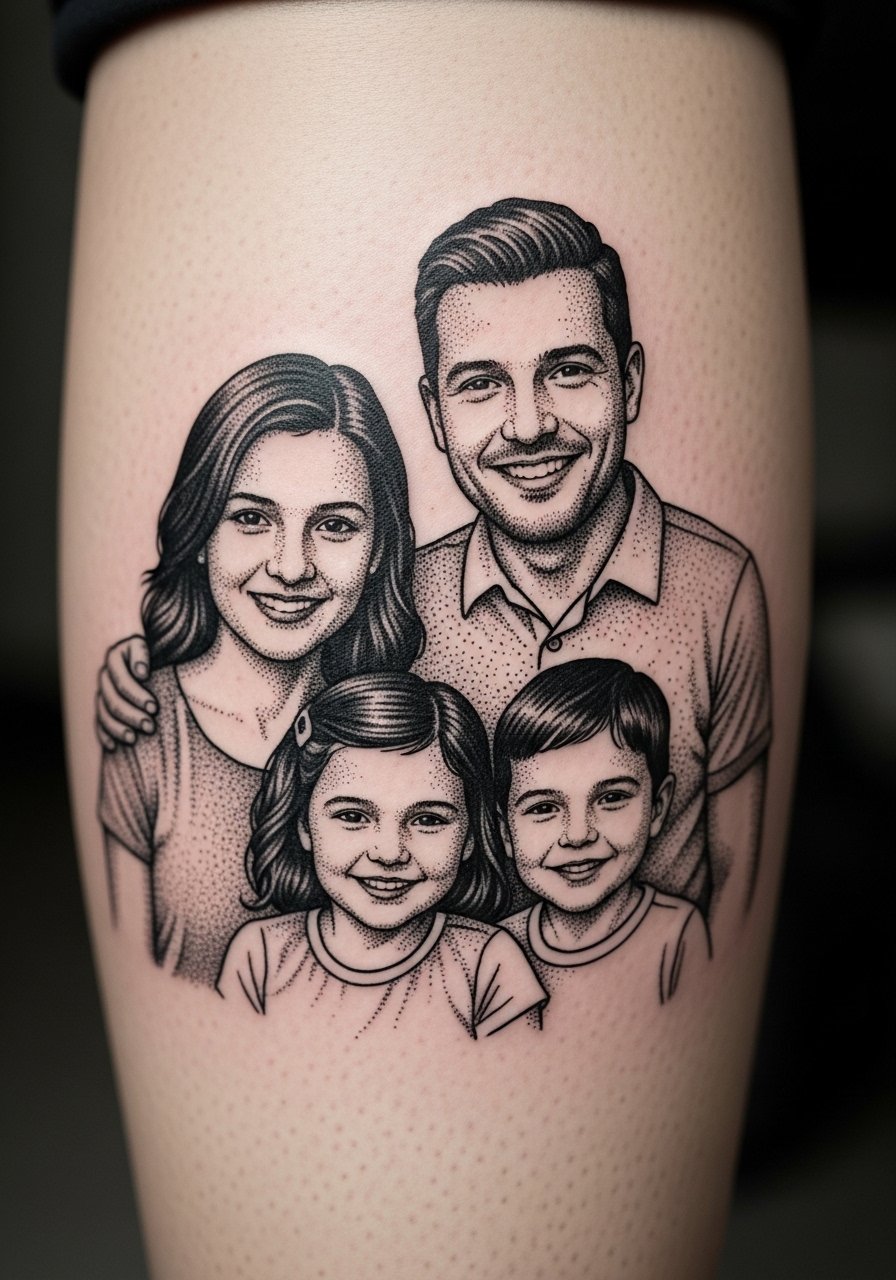
Dotwork portraits give a photo-like texture without heavy linework, but they need space. Most successful calf portraits are 8-10 inches so stippling can form depth. Tell your artist you prefer layered stipple rather than tiny line micro-details, which can get muddy. Calf pain is lower while seated, but expect three sessions for larger pieces. A common error is pushing for portrait size that is too small. For summer visibility, the design pairs with bootcut jeans rolled up or athletic shorts that keep attention on the shading.
6. Negative Space Holding-Hands Scene on the Ribcage
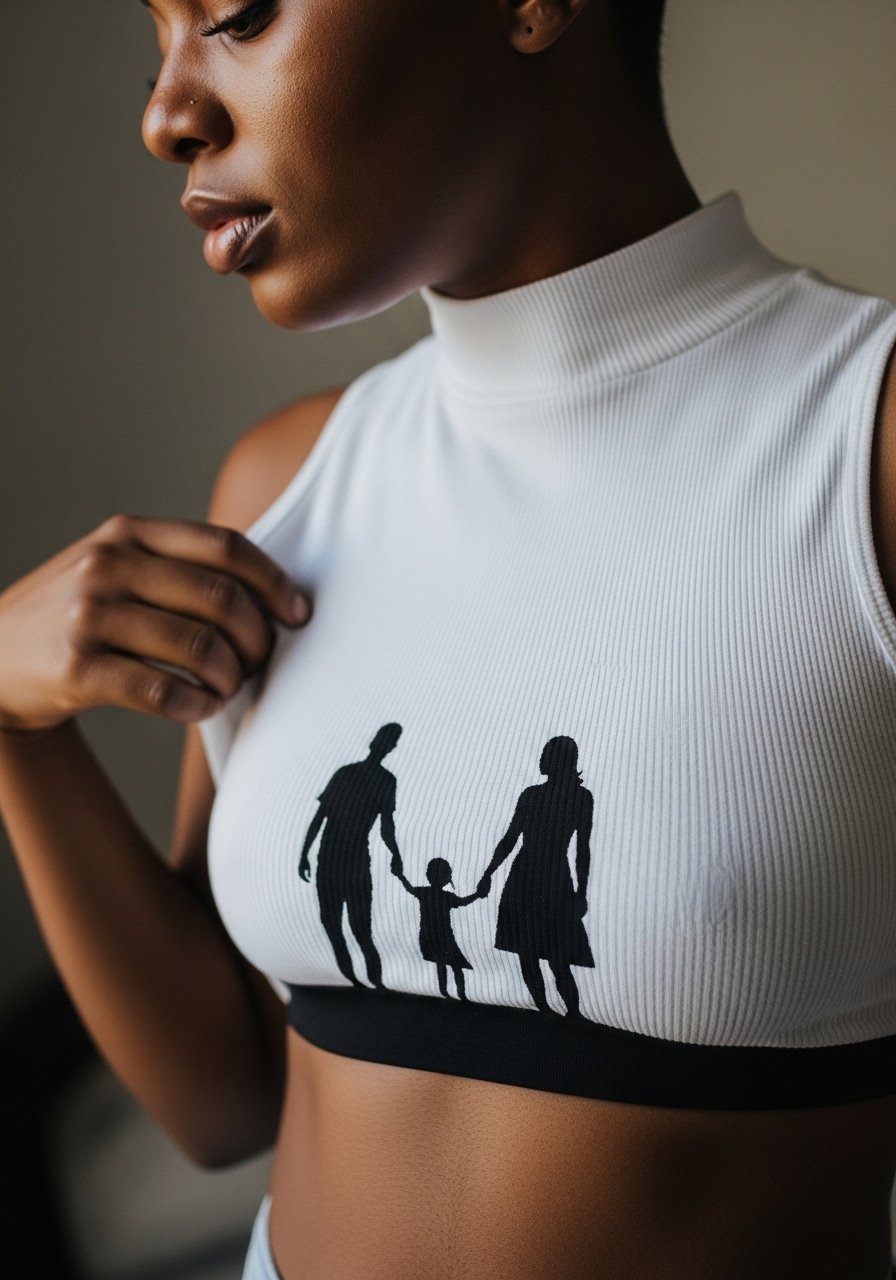
Fair warning: the ribcage is high on the pain scale and skin there reacts differently to fine linework. Artists split into two camps about fine lines on ribs. One camp says the skin stretches and blurs lines within two years. The other camp says proper depth and spacing let fine work settle fine. If you want negative space silhouettes, request slightly thicker outer edges and clear breathing room between figures so the shapes stay legible as the skin moves. Session time is short but intense, and wear a loose high crop tank for access and comfort.
Studio Day Picks
The pieces above mix forearm, calf, ribcage, collarbone, shoulder, and upper arm work, so these items help for both session comfort and keeping fresh saturation where it matters.
-
Tattoo Goo balm. Users prefer its matte finish for portrait shading on calf and upper arm work where shine can exaggerate scab texture.
-
Greenfinger Balm. Good for winter sessions and lower-body work like thighs that dry out quickly, it offers lighter hydration without heavy residue.
-
Manuka honey salve. Helpful when you're healing dense portrait shading and want extra antibacterial support without greasy buildup.
-
Black Lotus skin conditioner. Apply in the week before a session on darker skin tones to improve hydration and reduce blowout risk.
-
Hustle Butter Deluxe. A lighter alternative that many artists reach for during the second week to prevent shine on saturated blackwork.
7. Tribal Interlocked Symbols as a Thigh Band
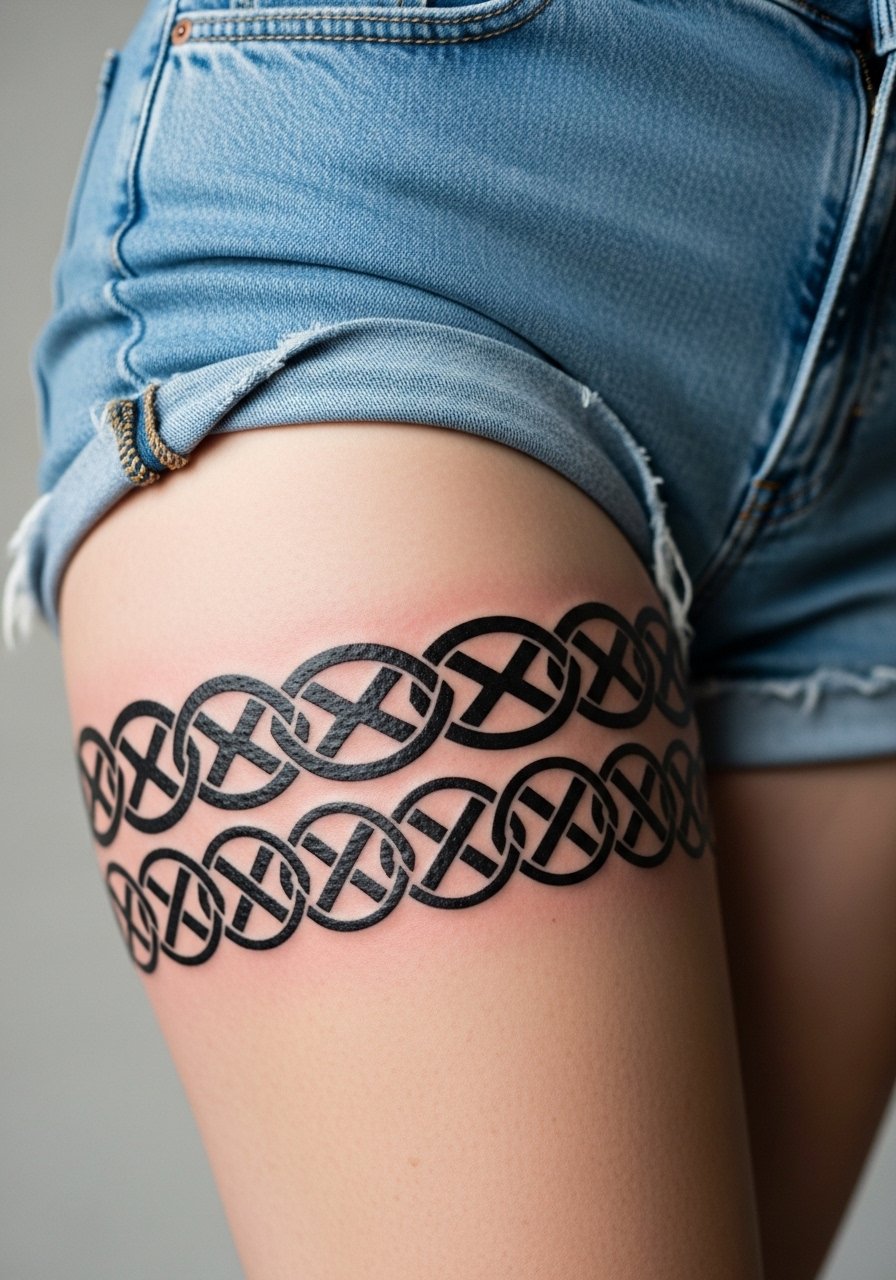
Thigh bands are forgiving for cultural patterns because the area expands and contracts less than the abdomen. If the design references cultural motifs, mention origin respect and ask for a variation rather than a direct replication. Thigh sessions are moderate pain and usually two sittings for a 6-9 inch band. For showing the pattern off wear high waist denim shorts or ripped jeans rolled up, both keep the band visible without crowding.
8. Family Pet Portrait on the Inner Bicep

Inner bicep pieces are intimate and heal with less abrasion than hands. For a pet portrait, ask the artist to emphasize silhouette and mid-tone saturation rather than micro-fur lines at small scale. The inner bicep is tender but short sessions help. Common mistake is trying to cram full facial detail into a 3-inch space. For the session, wear a sleeveless hoodie you can lift without moving your shoulder, so the artist gets clean access.
9. Constellation Map of Loved Ones across the Upper Back
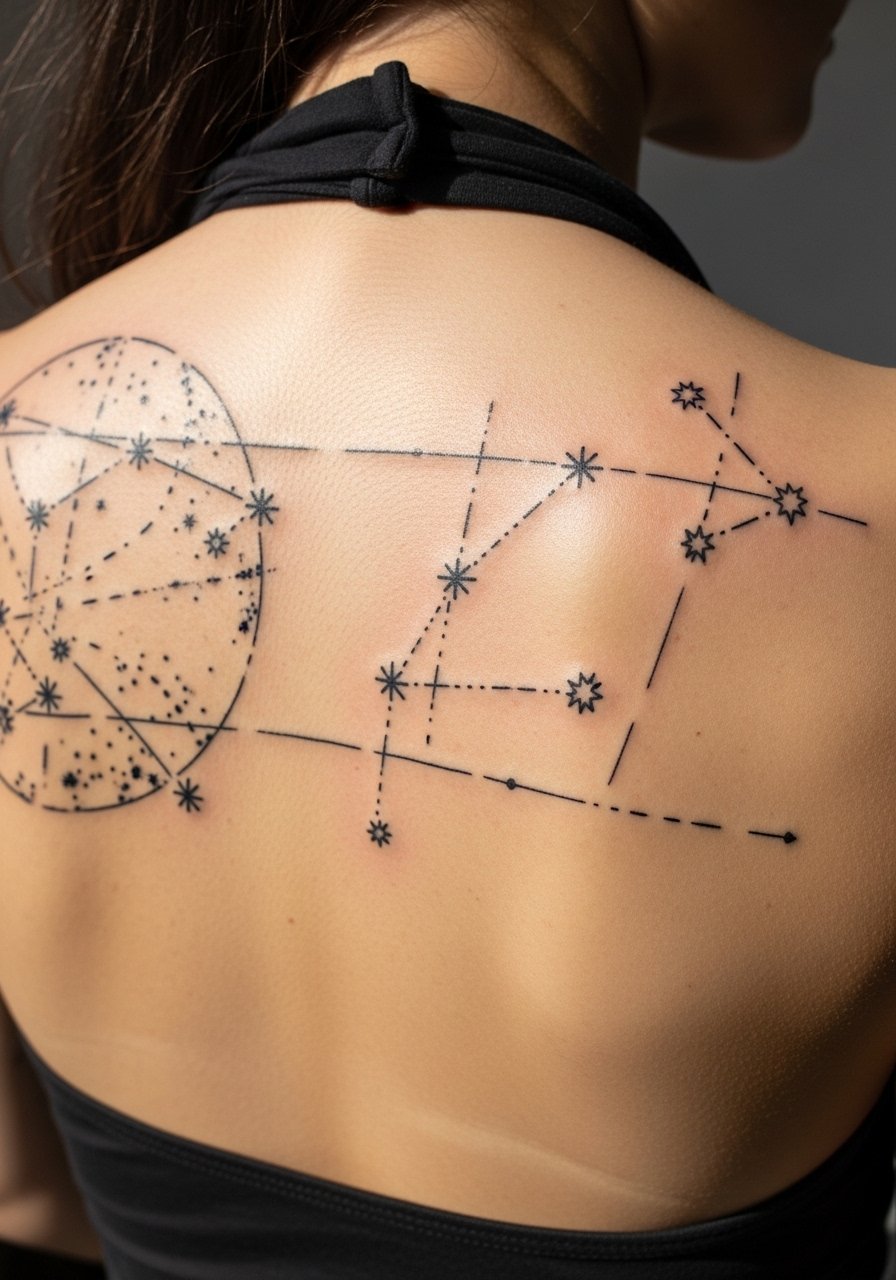
Back pieces let you spread a map of birthdate constellations and link them with dotted lines that age well. Ask for slightly larger star points and clear spacing so the dots do not merge over time. A two-session approach usually covers layout and then the dense dots. The back is low to moderate pain and easy to hide between sessions. For show-offs, pair with a backless halter top or racerback tank for clean reveals.
10. Thick Script Family Quote Around the Ankle

Ankle script needs heavier line weight than you might expect because the area gets a lot of friction from socks and shoes. Ask for a bold, simple type rather than thin calligraphy. Pain at the ankle can be sharp but quick for a 3-4 inch phrase. Avoid micro-letters that will blur into a band. For a casual look pair it with boots or jeans rolled up to show off the wrap without rubbing.
11. Hourglass with Family Faces on the Chest

Chest pieces read bold and symbolic, but the sternum region can be sensitive. If you want faces inside the hourglass, size them so they read at arm's length, not just in macro close-up. The chest often requires three sessions for shaded faces and heavy black sand. A common mistake is demanding photo-realism at postcard scale. For session comfort wear a loose button-down you can pull aside so the artist has steady access without rubbing fabric across fresh work.
12. Ornamental Lock and Key as a Forearm Square
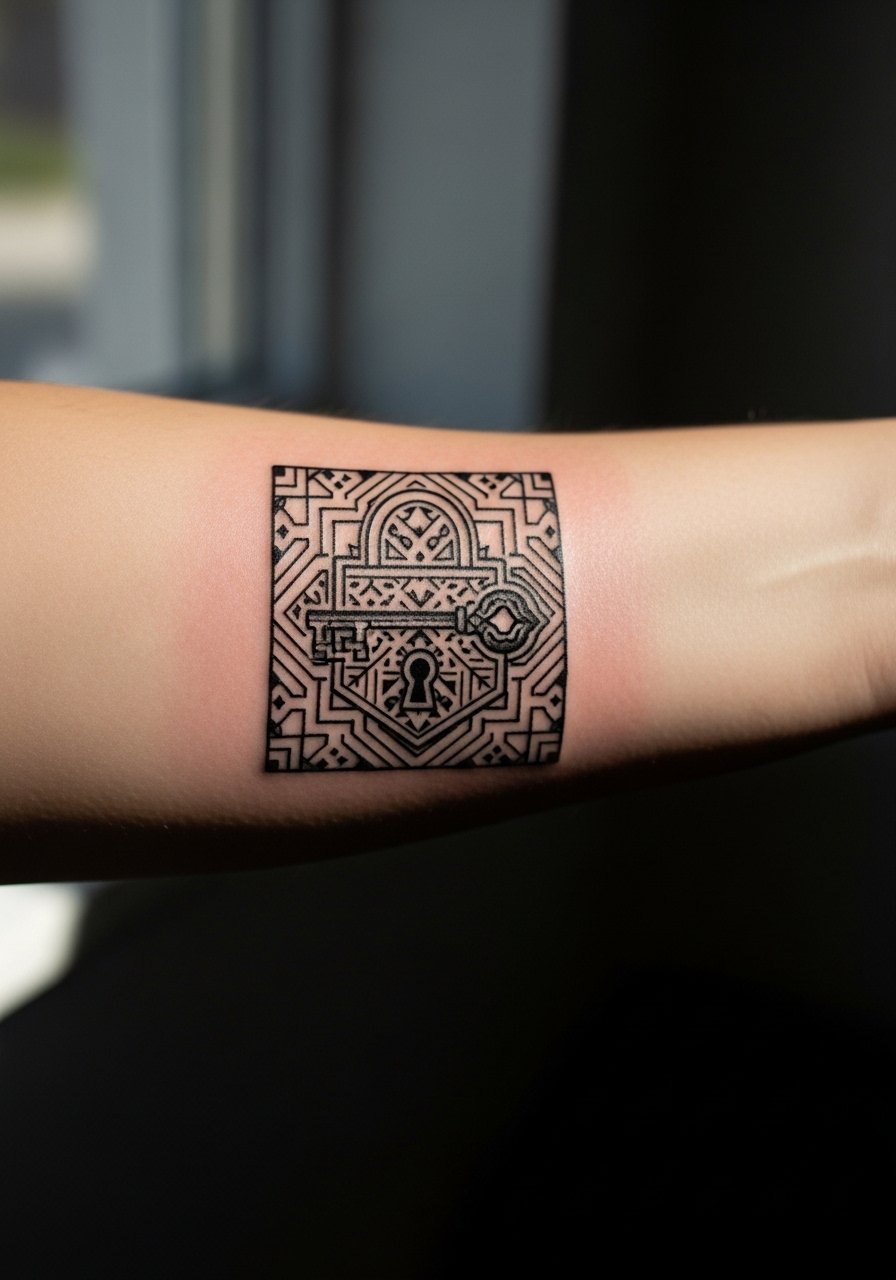
Forearm geometry benefits from crisp outer lines and simplified interior fills. During consult, specify where you want negative space so the key reads distinct from the lock. Forearm work is low to moderate pain and often completes in two sessions for this size. Mistake to avoid is overcomplicated inner filigree at small scale. For styling, this reads clean with a black cotton tee with sleeves rolled, which highlights the square without distraction.
13. Witchy Family Silhouettes Gathering on the Upper Thigh
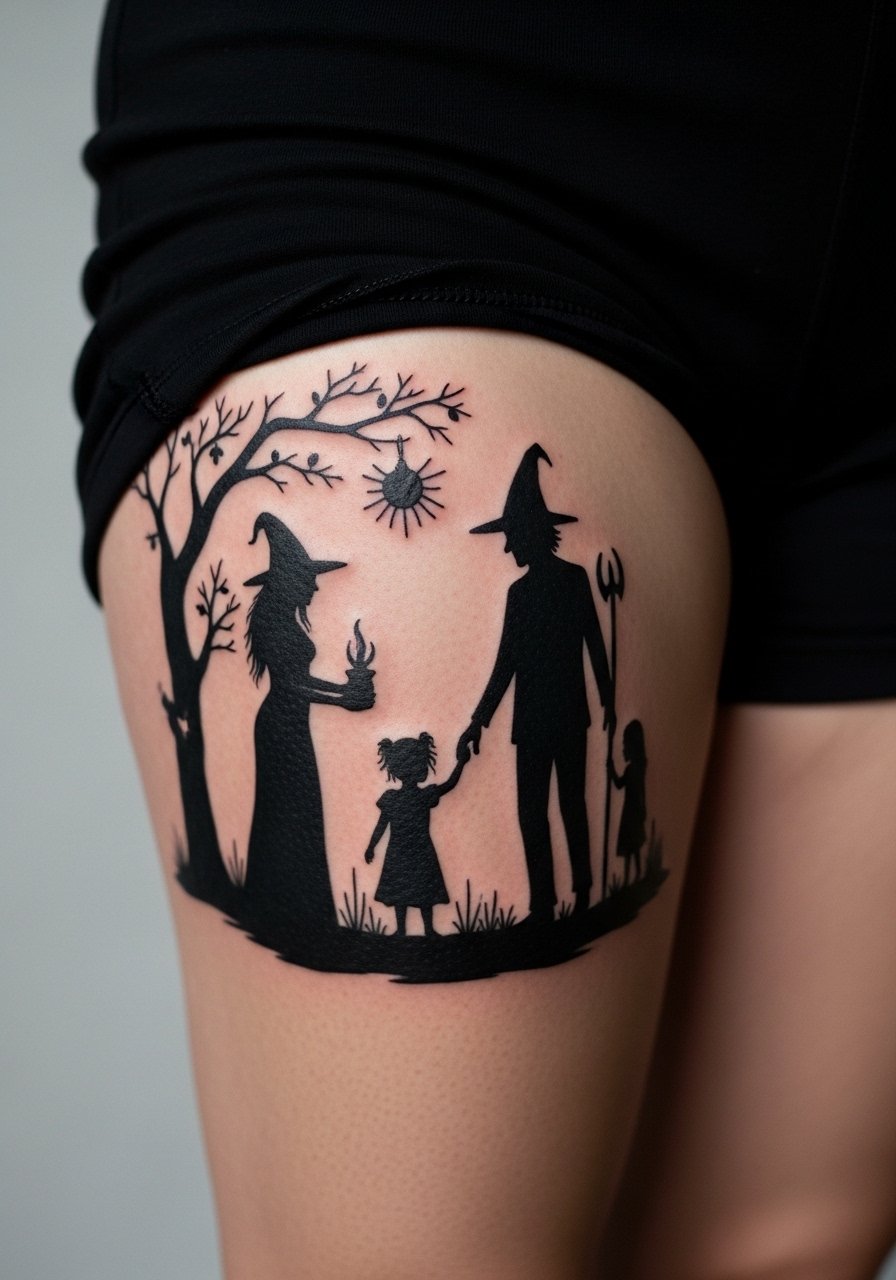
This playful motif spikes around Halloween but makes a strong, wearable piece year-round. Upper thigh placement gives you private display and large format for solid silhouettes, so scale it to 6-8 inches. Sessions are moderate and usually two sittings. Watch out for over-detailing inside silhouettes that reads messy later. For session wear choose loose gym shorts so the artist can adjust exposure without pressure on the area.
14. Dense Rooted Family Tree Running Down the Spine
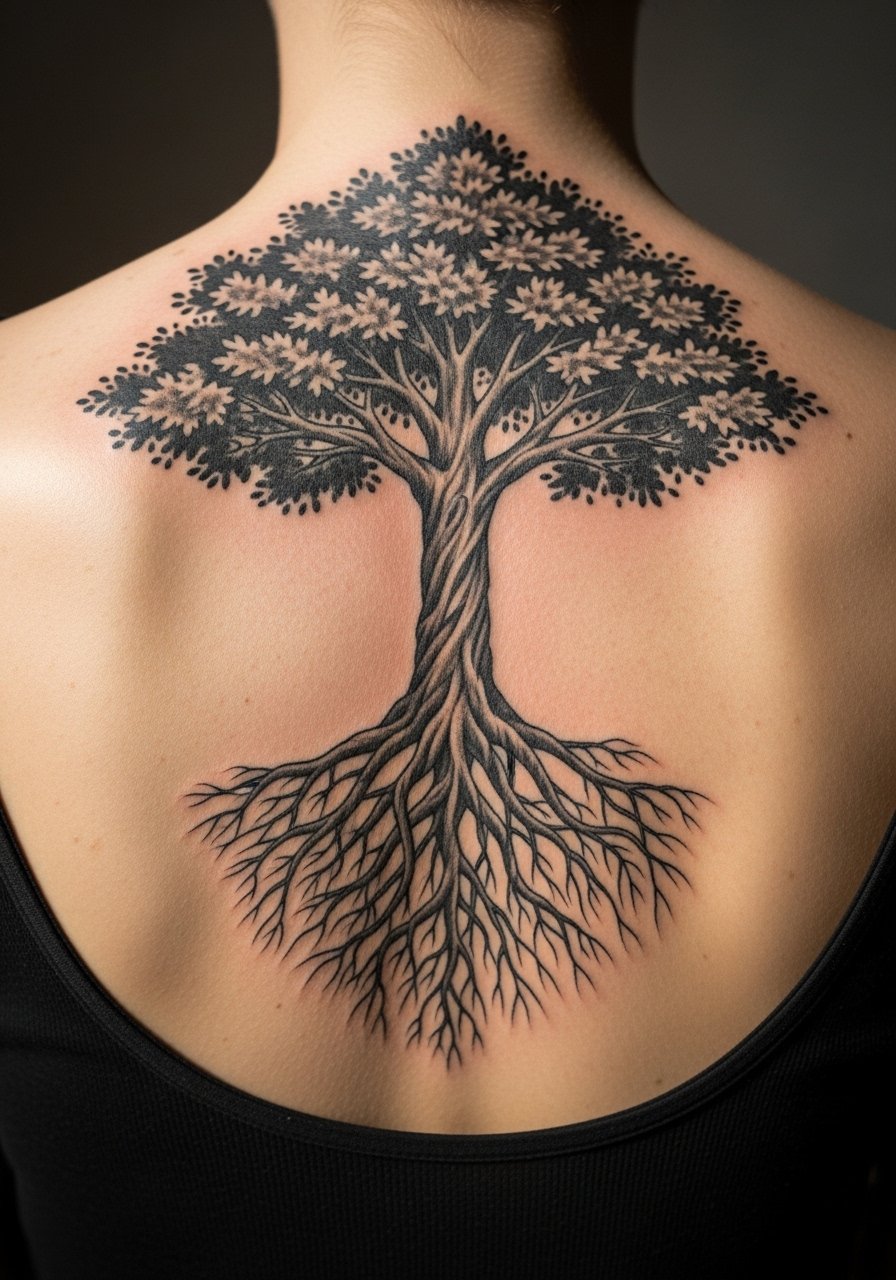
Spine pieces require planning for stretch and movement along the column. For a 10 inch rooted tree expect heavy shading and multiple sessions. Tell the artist you want strong central trunk saturation and lighter branches to avoid the "too dark blob" look in five years. Pain is higher on the spine but the result photographs well. For showing this off choose a backless halter or open-back dress so the vertical composition reads clean.
15. Stretch-Adaptive Inner Thigh Geometry for Body Changes
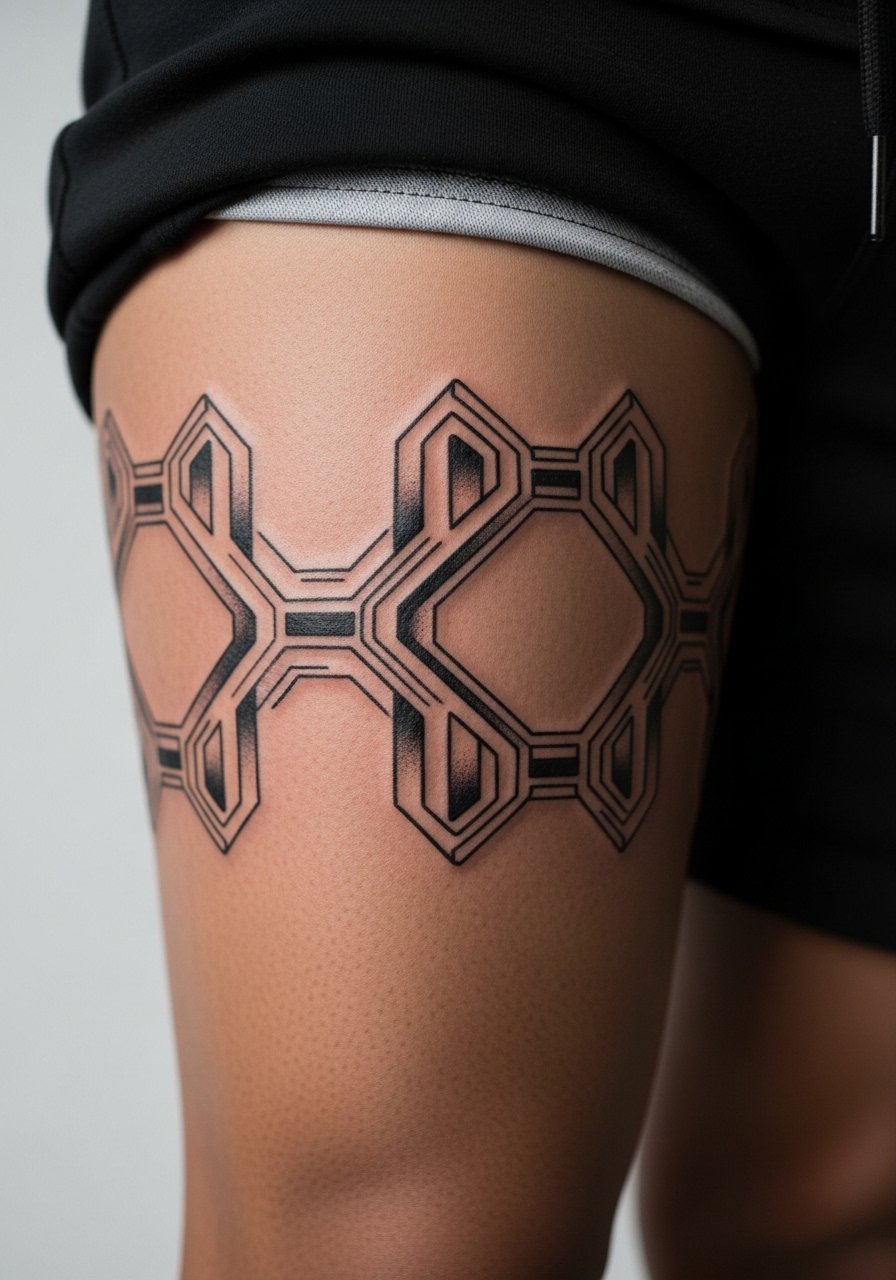
For placements that might expand or shrink with life events, ask for repeating modular geometry rather than a single tight motif. Inner thigh work tolerates scale changes; a banded pattern will maintain proportion better than a fixed picture. Expect two sessions and moderate discomfort. The common error is choosing a single portrait that will warp with weight fluctuations. For sessions wear loose drawstring shorts so the artist can access the area without constriction and you can move comfortably.
16. UV-Reactive Hidden Family Symbols
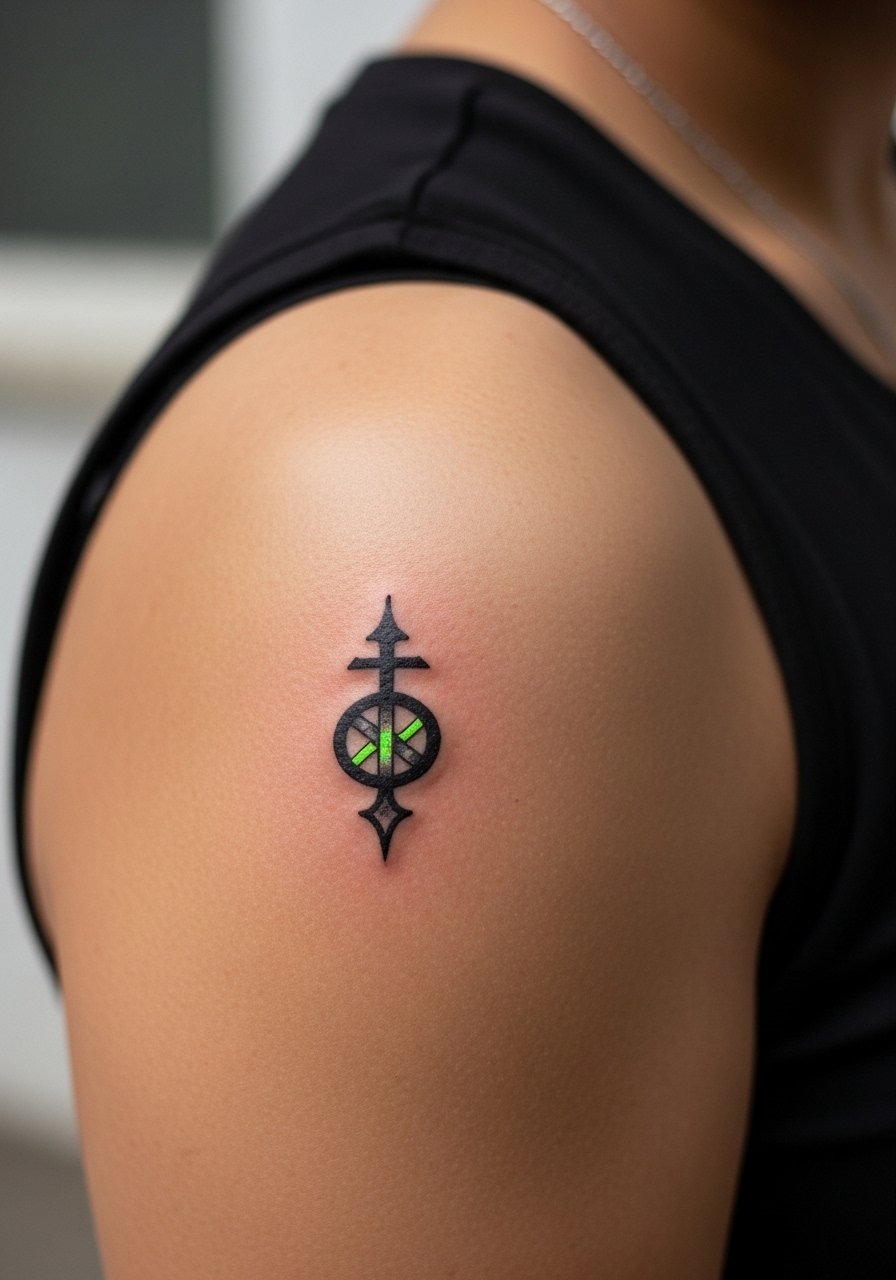
UV blackwork gives a hidden layer that only shows under blacklight, which is great for secret tributes. This is niche and requires an artist experienced with UV inks and how they behave alongside solid black saturation. Expect a staged session and a discussion about longevity and occasional touch-ups. The main caveat is the availability of UV ink expertise. For the session pick a sleeveless top so the artist can access the shoulder without tugging.
17. Layered Family Portraits Built Over Sessions
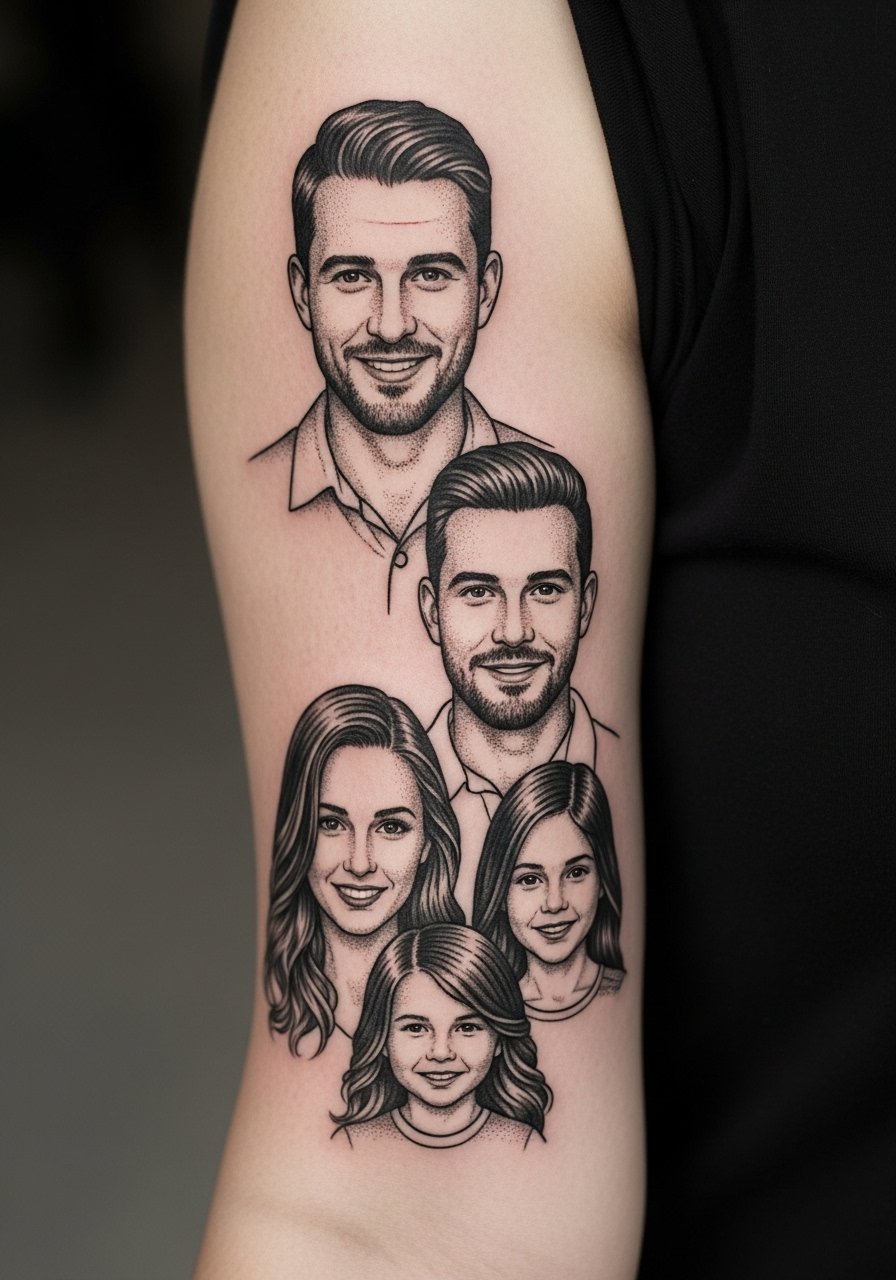
Layered portraits let you build contrast over several sessions, which can create a three-dimensional effect while controlling pain per visit. Tell the artist you prefer progressive density rather than everything in one heavy pass. This method reduces immediate trauma and allows you to see how healed work responds before committing to heavier saturation. Common mistake is skipping the staged plan and requesting full density on day one. Wear a button-down you can open so the artist can work across the bicep without pulling fabric.
18. Braille-Embedded Family Names for Tactile Tribute on the Forearm
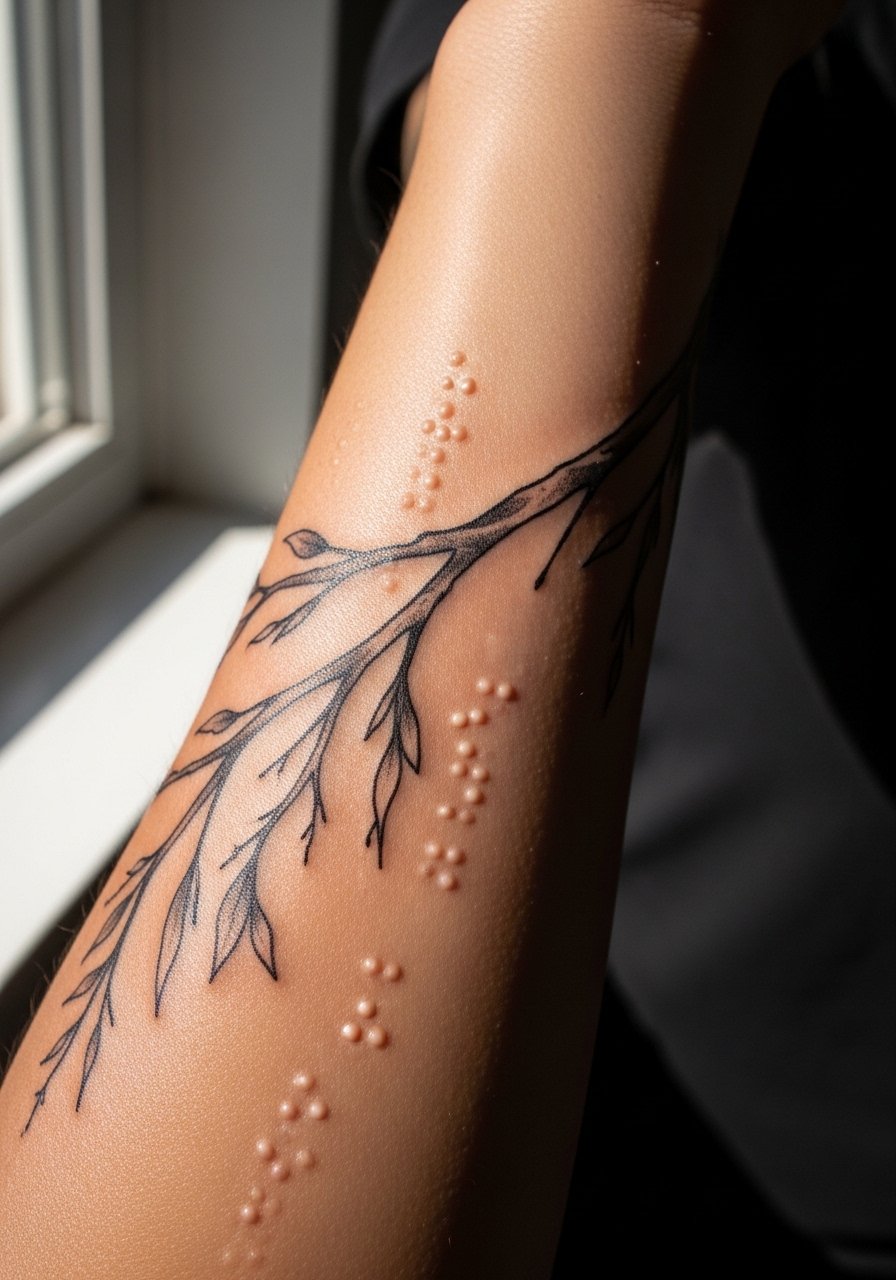
Embedding Braille into a flat blackwork motif is a thoughtful option for tactile reading by touch. Discuss spacing and dot depth with the artist so the Braille stays legible as the skin heals. The forearm gives easy access and low pain, but the dots must be large enough to endure touch. A common error is making the Braille too fine, which will smooth in time. For reveal pair it with rolled sleeves or a simple watch so the tactile strip remains accessible.
19. Reverse Blackwork Knuckle Initials with Intentional Wear
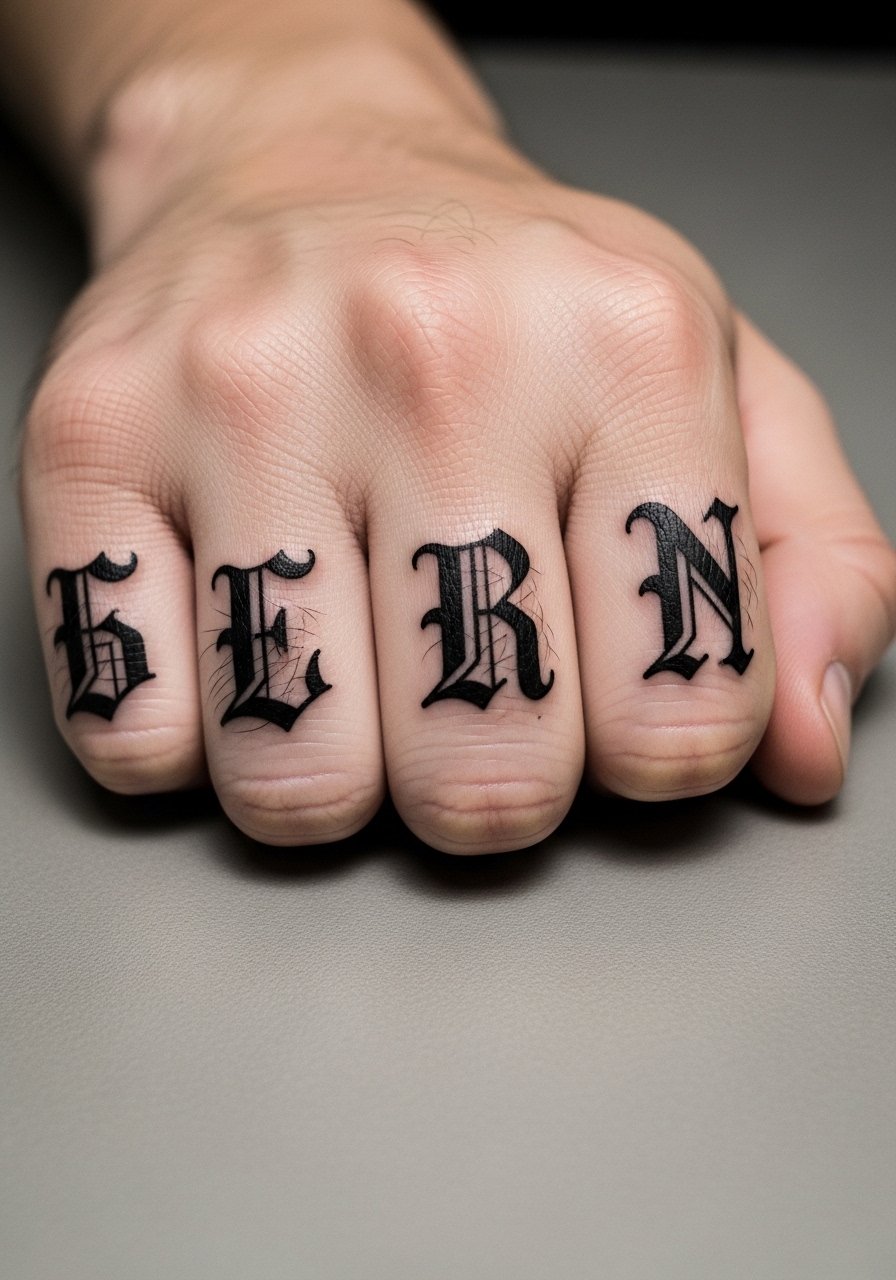
Knuckle work is high-contact and will change faster than arm or back pieces. Some people choose heavier fill intended to wear down into a lived-in relic look. If you want that effect, say so during consult and plan for small touch-ups. Expect quick but painful sessions, and consider how work may affect job situations. For session wear keep hands clean and avoid tight gloves immediately after to reduce friction while healing.
20. Patchwork Sleeve Built with Family Motifs Over Years

Building a sleeve piecemeal with patchwork elements is great for families who add motifs over time. Plan a shared visual language like repeating line weights or dotwork fills so later pieces integrate. Each new patch should be sized to avoid crowding older work. Expect many guest-spot sessions and remember guest artists can be an economical route. For the look, leather biker jackets or rolled sleeves show off the sleeve transitions in everyday outfits.
21. Memorial Dotwork Date Band on the Upper Arm
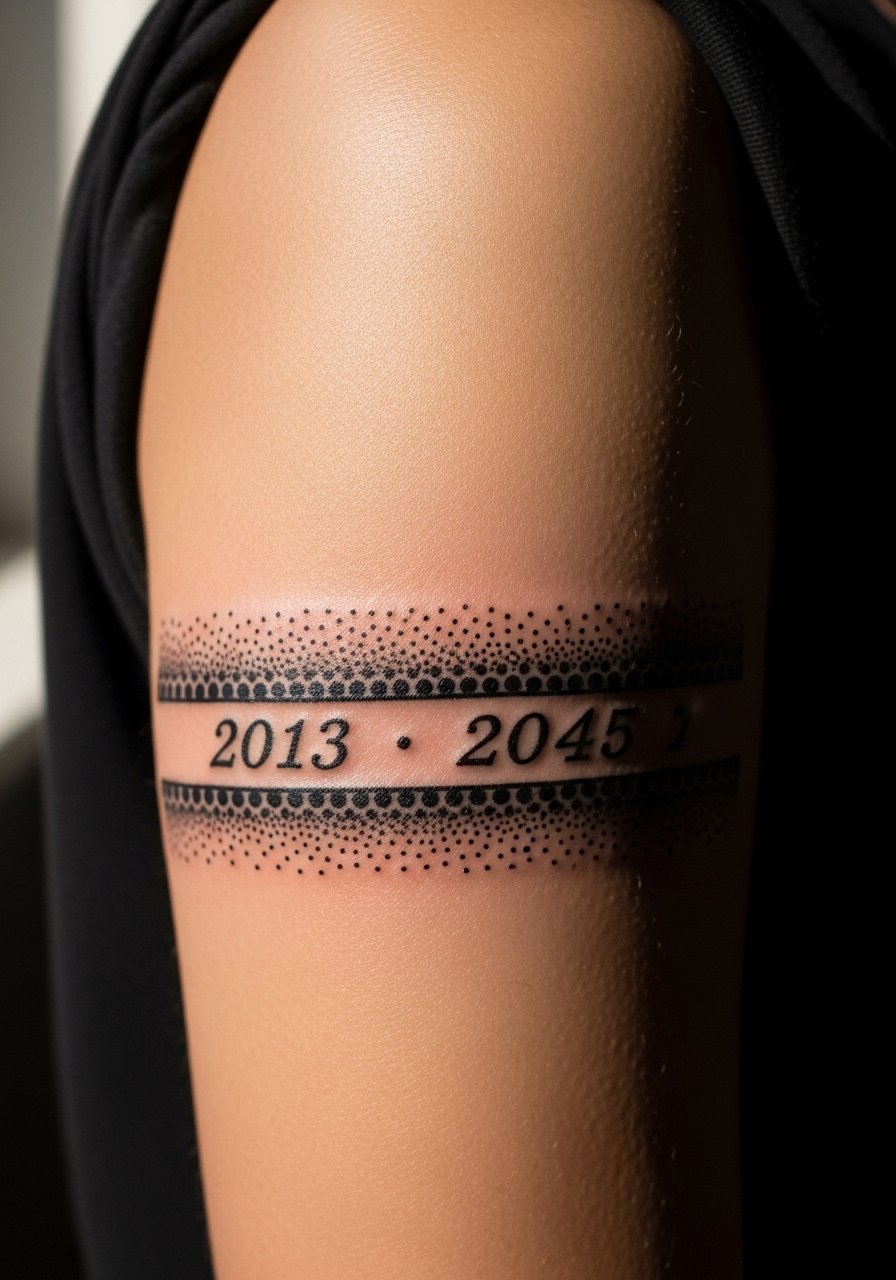
Dotwork date bands are subtle grief markers that read well when the dots are spaced and layered. Ask for Roman numerals or a simple year in clear negative space so it remains legible. Upper arm placement has lower friction and is touch-up friendly. A mistake is asking for tiny numerals; scale them to the width of the band. For showing off this piece, choose a muscle tank or short sleeve to keep the band visible without crowding.
22. Mini Heritage Crest Behind the Ear

Behind-the-ear mini crests are discreet and carry a private meaning. Remember the area is small so prioritize silhouette over inner ornamentation. Pain is low but the placement requires an artist comfortable working close to hairlines. Keep the design tiny and crisp to avoid merging. For sessions, ask the artist about aftercare that avoids hair products for the first few days, and expect the piece to read like a pinprick at a distance.
23. Interlaced Cultural Symbols on an Upper Arm Band
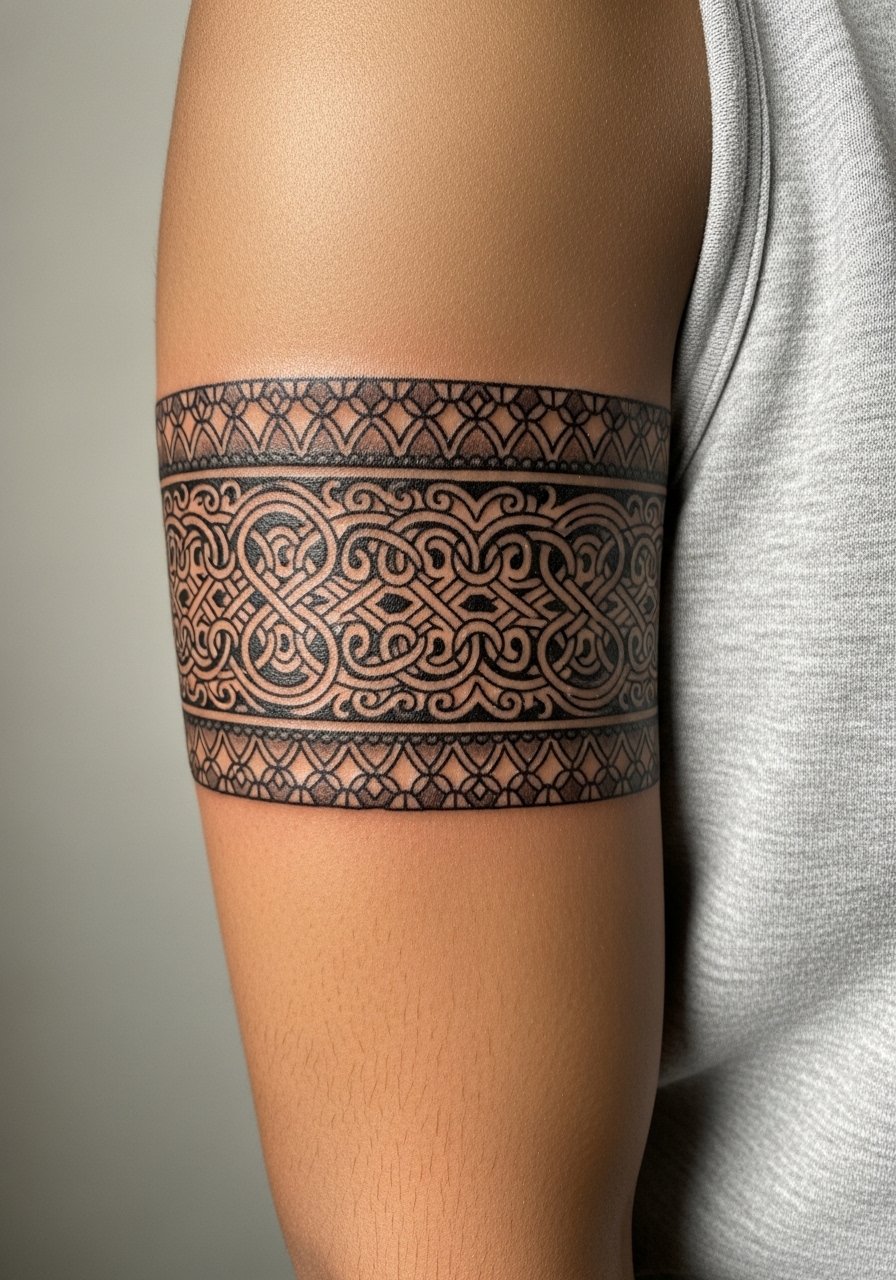
When mixing cultural symbols, be explicit about origins and your relationship to them so the artist can recommend respectful stylization. A band format keeps the imagery tight and readable. Upper arm bands are moderate pain and often finish in one or two sessions. A common error is copying sacred motifs without permission or context. For the look pair the band with a muscle tank or short-sleeve shirt so the interlaced pattern sits centered on the bicep.
24. Heirloom Shield on the Shoulder Blade
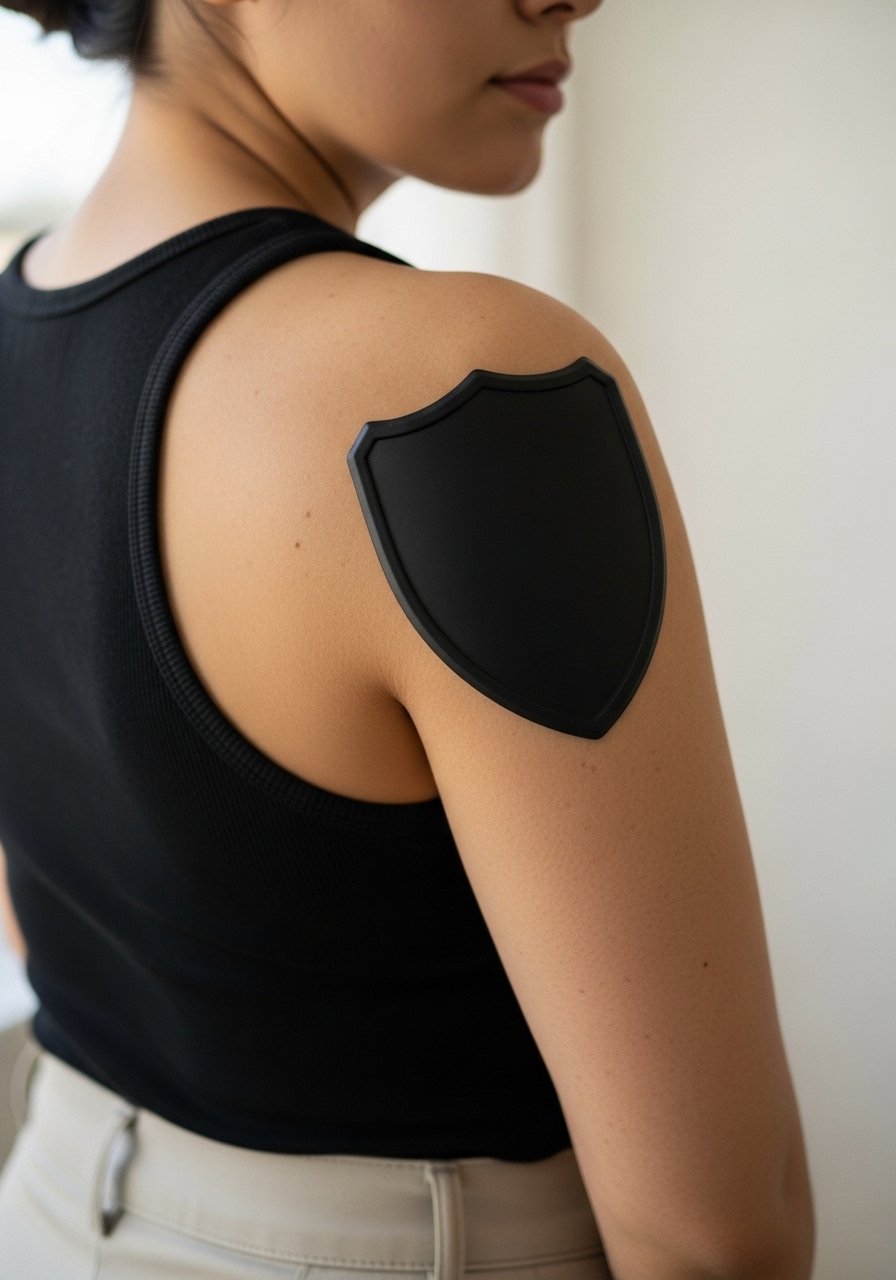
Shoulder blade shields photograph well and are less prone to stretch than chest pieces. Ask for a simplified silhouette and larger negative spaces to prevent internal blur. Sessions are moderate and usually two sittings for a 5-7 inch shield. The mistake is squeezing detailed heraldry into a small shield. For show-offs an off-shoulder top or low-back tee keeps focus on the shield without interference.
25. Tiny Family Constellation on the Ankle
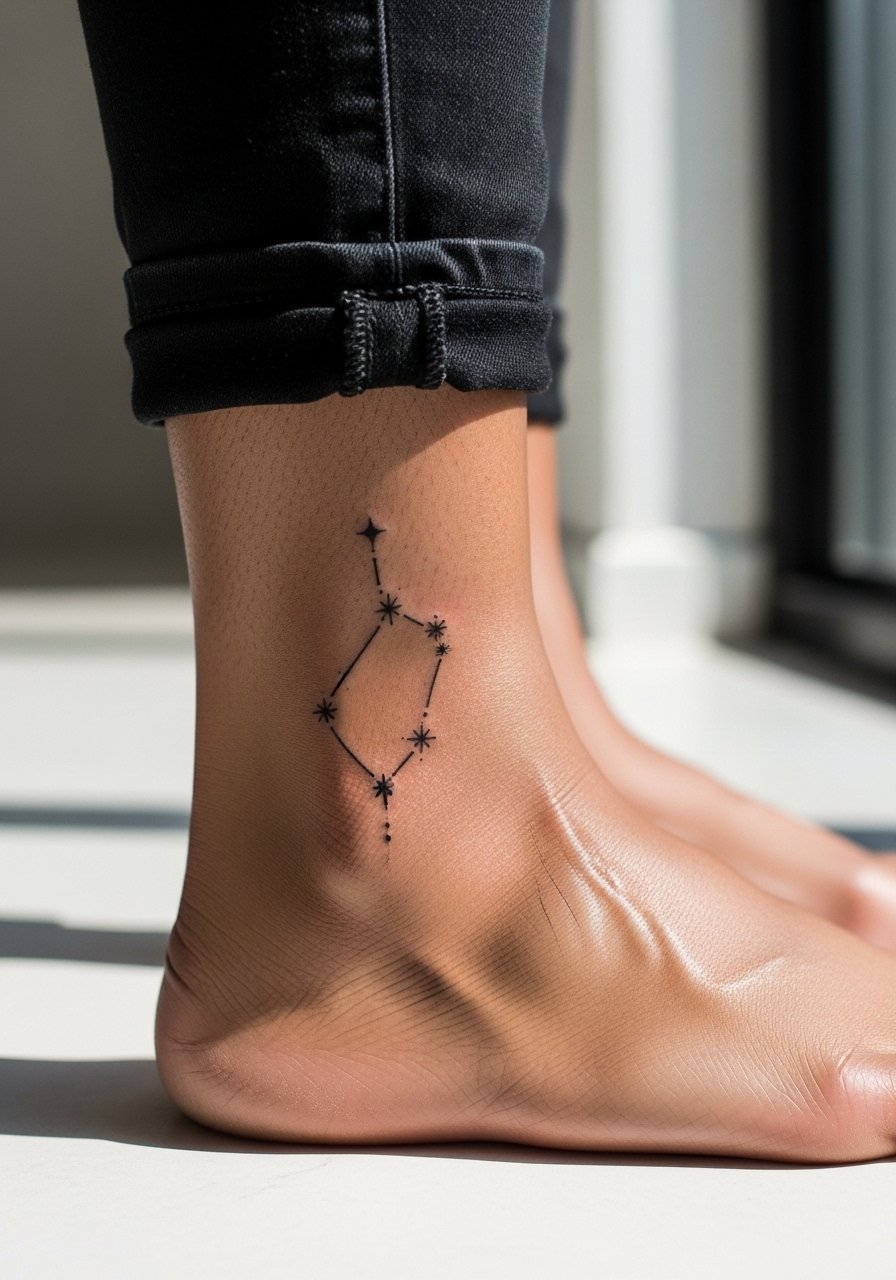
Ankle constellations are subtle and quick, but they face constant abrasion. Request slightly larger star dots and thicker connector dots so the pattern doesn't disappear under socks and shoes. Pain can be sharp but short for a small 2-3 inch motif. A common error is making connectors too thin. Style it with low-cut sneakers or sandals and keep jeans rolled up for casual reveals.
26. Sternum Negative Space Quote under a Bandeau
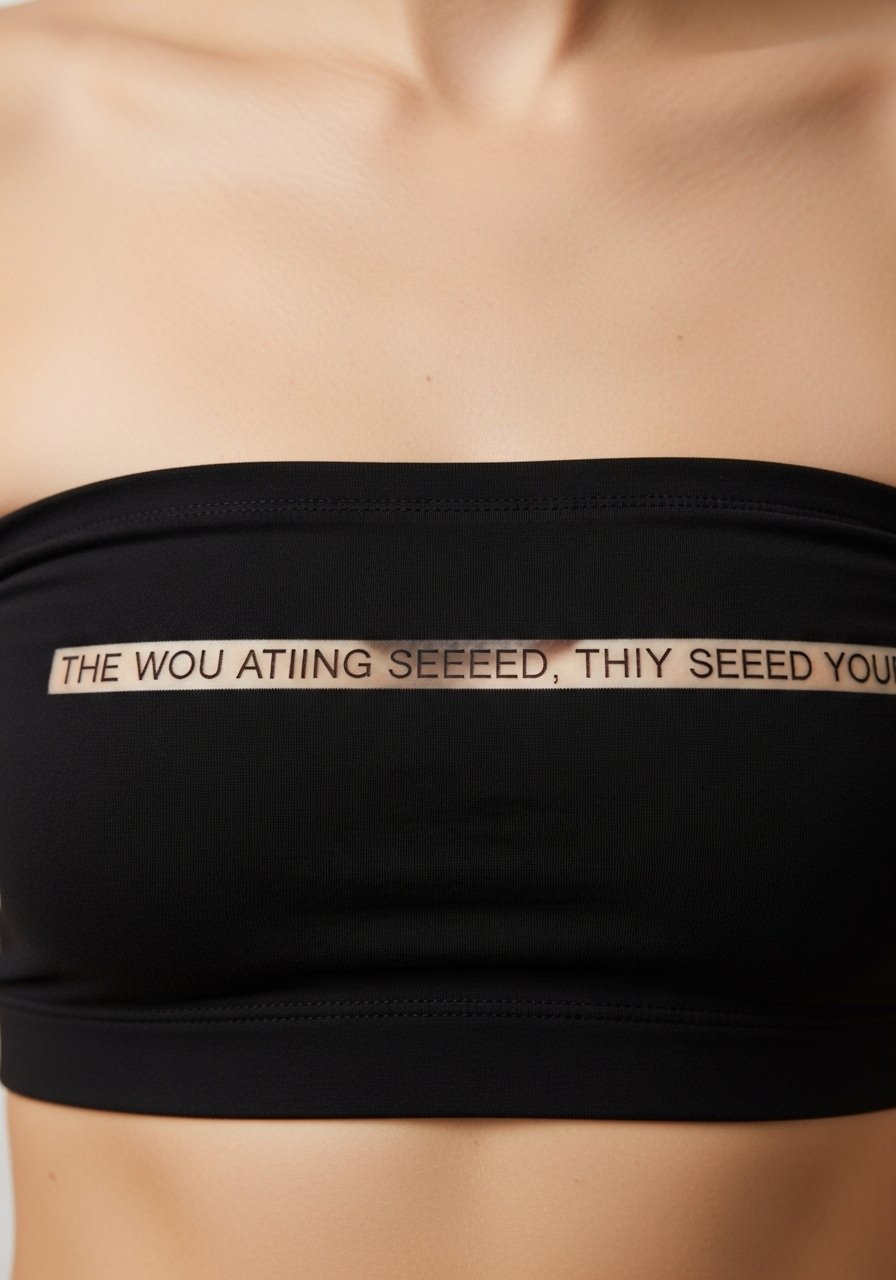
Sternum quotes are intimate and require careful sizing so the negative space reads amidst body movement. The sternum and underbust area can be painful, and healing needs gentle clothing choices. Ask for thicker outer borders around letters so the negative space remains crisp. Expect short but intense sessions and wear a fitted sports bra that can safely sit above or below the tattoo without rubbing.
27. Full Back Family Map with Starbursts
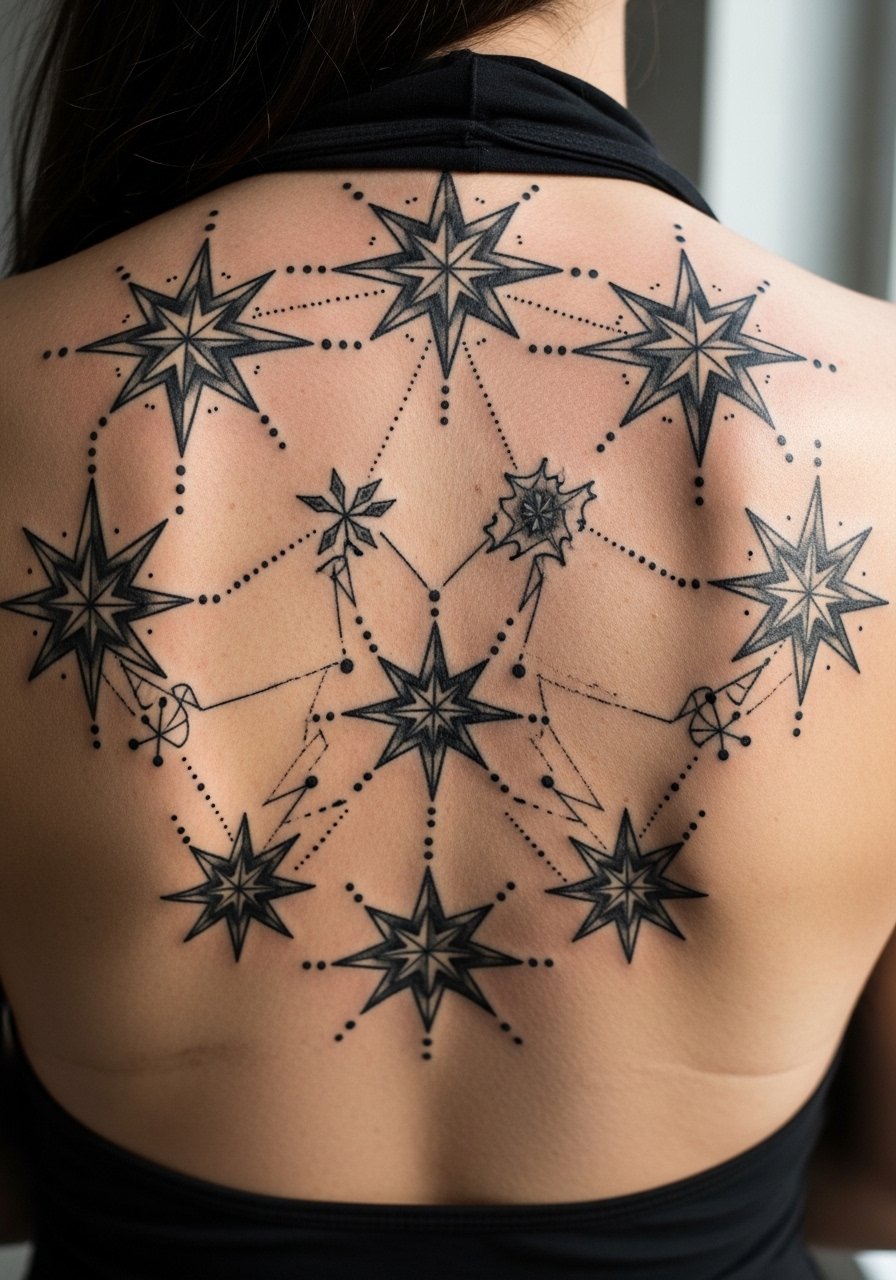
Full-back storytelling pieces let you combine family crests, constellations, and portraits into a coherent map. Plan in stages and pick a consistent line weight to avoid visual mismatch when new elements are added later. Back sessions are low to moderate pain but can take many sittings. The main mistake is mixing too many unrelated scales. For show-offs a backless halter or racerback tank dresses the piece for evening photos without covering key elements.
Frequently Asked Questions
Q: How do blackwork tattoos perform on darker skin tones and what should I ask my artist?
A: From what I’ve seen, blackwork can pop beautifully on darker skin if the artist uses higher contrast and slightly thicker linework. Ask for strong outer edges, test a temporary stencil if you want to preview contrast, and discuss hydration routines pre-session so the ink sits cleaner.
Q: I want a family portrait but the quotes I get are high. How can I save without sacrificing quality?
A: Look for reputable guest spots where artists travel for shorter stints, compare quotes from neighboring cities, and be flexible on timing. Guest artists often offer 20 to 30 percent savings compared with high-demand local bookings, but expect to pay travel deposits or deposits that protect both sides.
Q: An artist canceled my appointment twice. What protections should I use when booking?
A: Use booking platforms that enforce cancellation policies and avoid paying full fees before a consult. Ask about studio rescheduling rules and get a clear agreement on deposits so you have recourse if a guest spot falls through.
Q: Is Saniderm better than dry healing for dense blackwork?
A: Artists are split. One group prefers protective films like Saniderm for a cleaner first week and less mess. The other group argues dry healing reduces trapped moisture and lowers bubble-related issues. Try a short patch test if you’re unsure and follow the studio’s recommendation for your skin type.
Q: Will a ribcage blackwork quote fade faster than one on the forearm?
A: The ribcage moves and can challenge fine lines, while forearms usually retain saturation longer. Expect ribs to need touch-ups sooner, especially for very fine detail, so size up and plan a six-week check-in for touch-ups if edges soften.