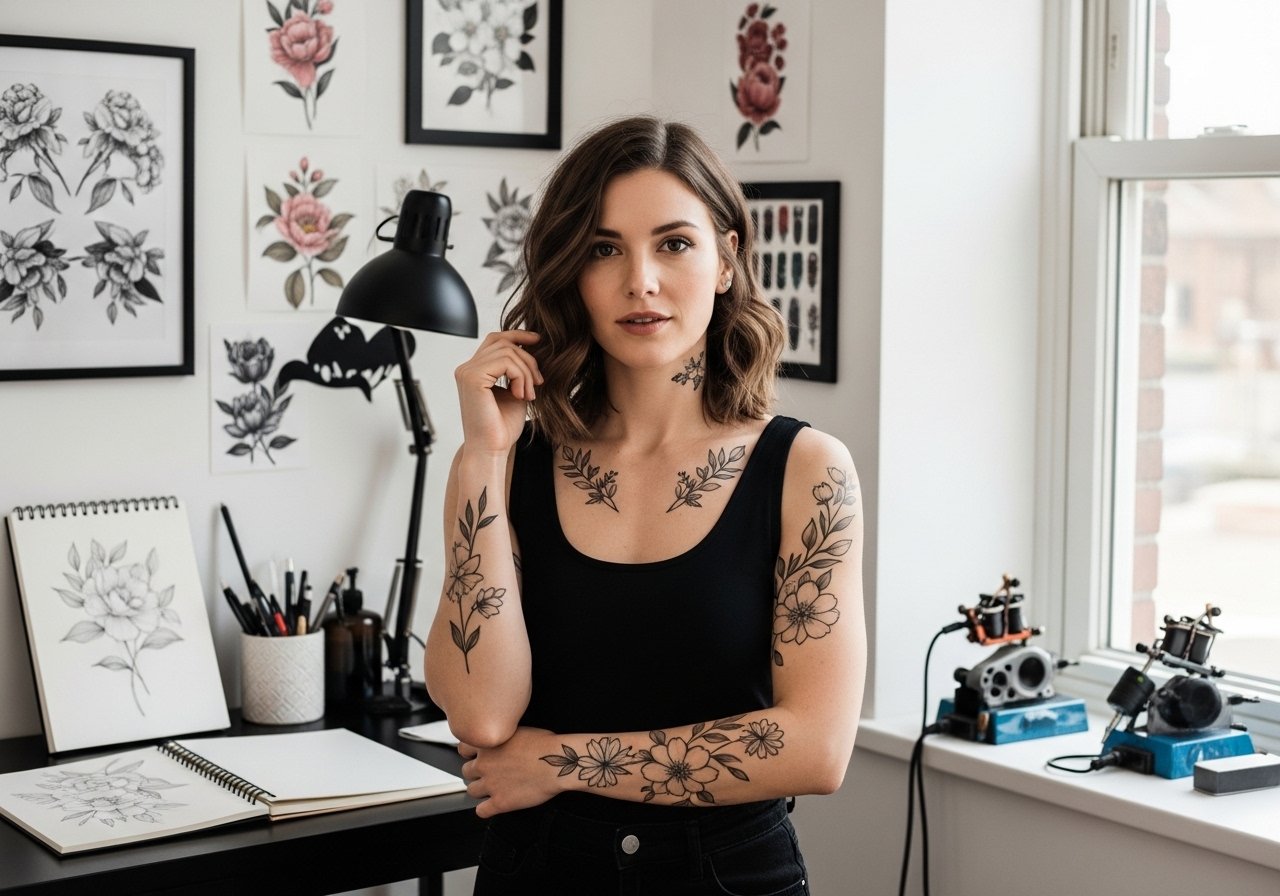
The pieces that still look sharp five years later are not the ones that got the most likes on day one. Hyper-detailed Hannya masks can read incredible when fresh and then soften into mush if placement, contrast, or skin tone are misjudged. Pick scale and contrast with longevity in mind and you get a Hannya that keeps its attitude. First up, a forearm approach that reliably holds.
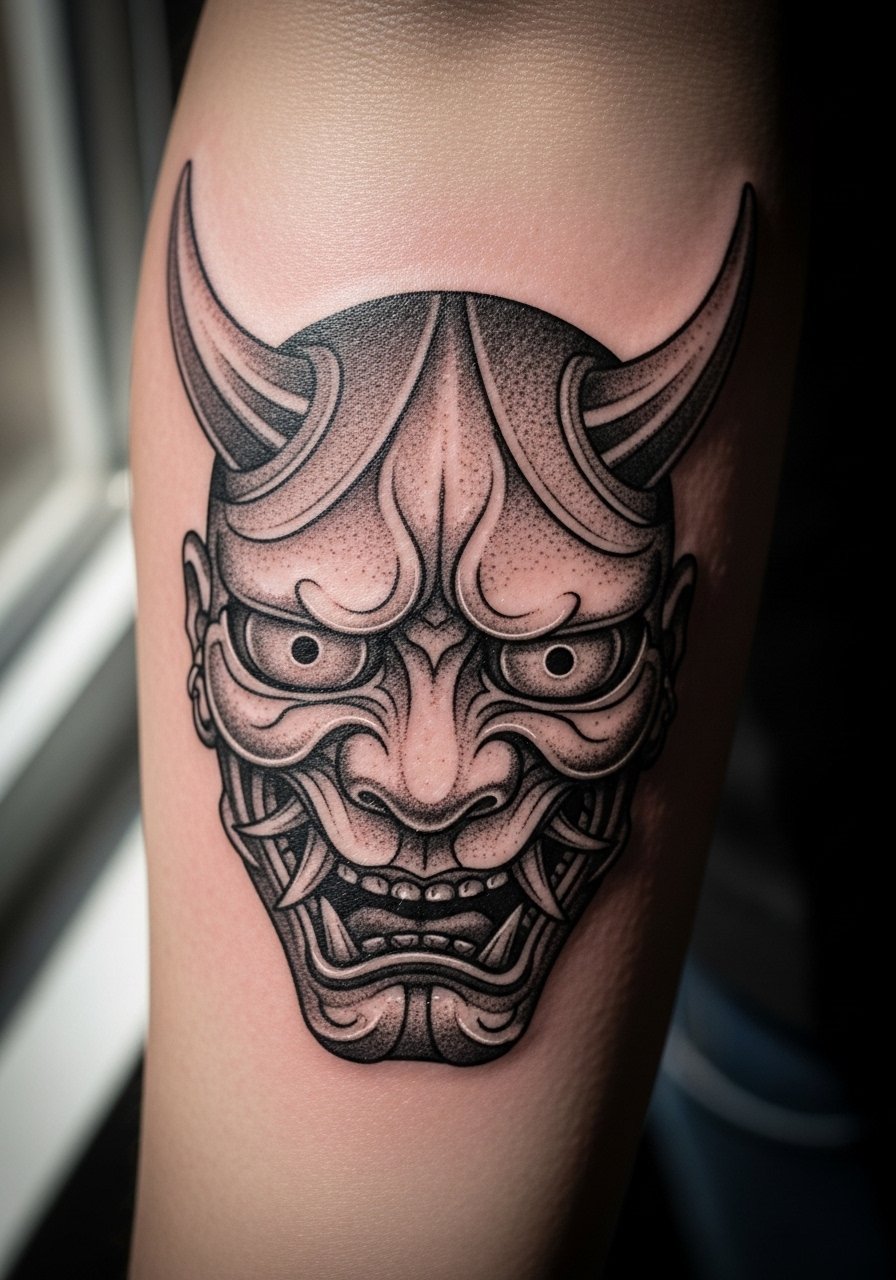
1. Realistic Hannya Forearm Micro-Realism
I've seen micro-realism Hannya forearms hold up better than expected when artists push contrast and avoid ultra-thin hairlines. Outer forearm placement is forgiving on weight fluctuation and daily movement, and the session usually runs two to four hours. Tell your artist you want deeper contrast in the shadows and fewer hairline strokes around the eyes so the mask keeps detail after a year. For showing it off, pair with a black fitted tee with rolled sleeves, and wear a loose tank on session day so the arm is fully accessible.
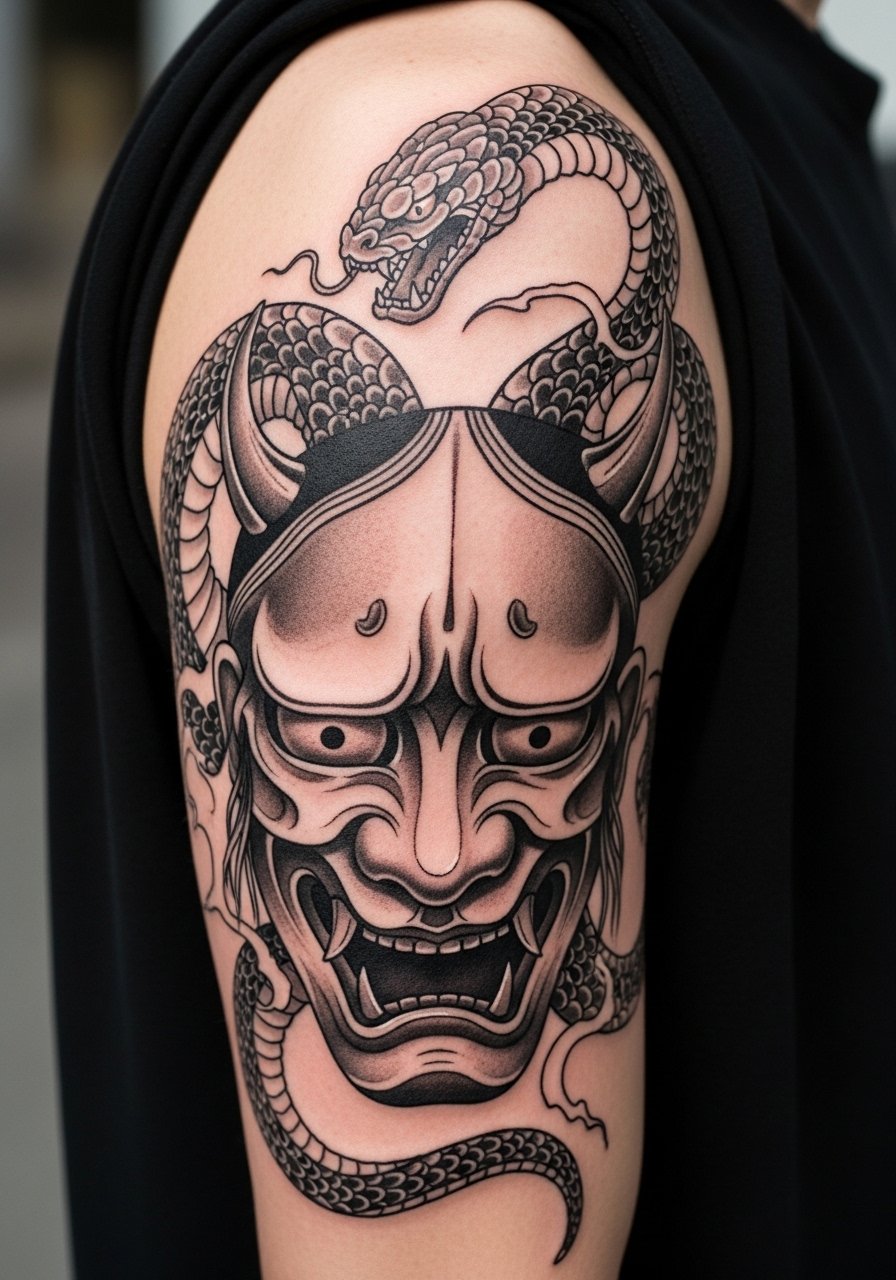
2. Black and Gray Hannya with Snake on Upper Arm
Upper arm neo-Japanese Hannya with a coiling snake benefits from motion. The snake ties negative space together and keeps the composition readable when the arm moves. Expect three sessions for a complex sleeve anchor and moderate discomfort in the inner bicep for some passes. A common mistake is asking for tiny scales everywhere which creates busy texture that blurs; instead ask for larger scale patterns with crisp outlines around the mask. Wear a white muscle tank to the appointment so the artist can work shoulder to tricep easily.
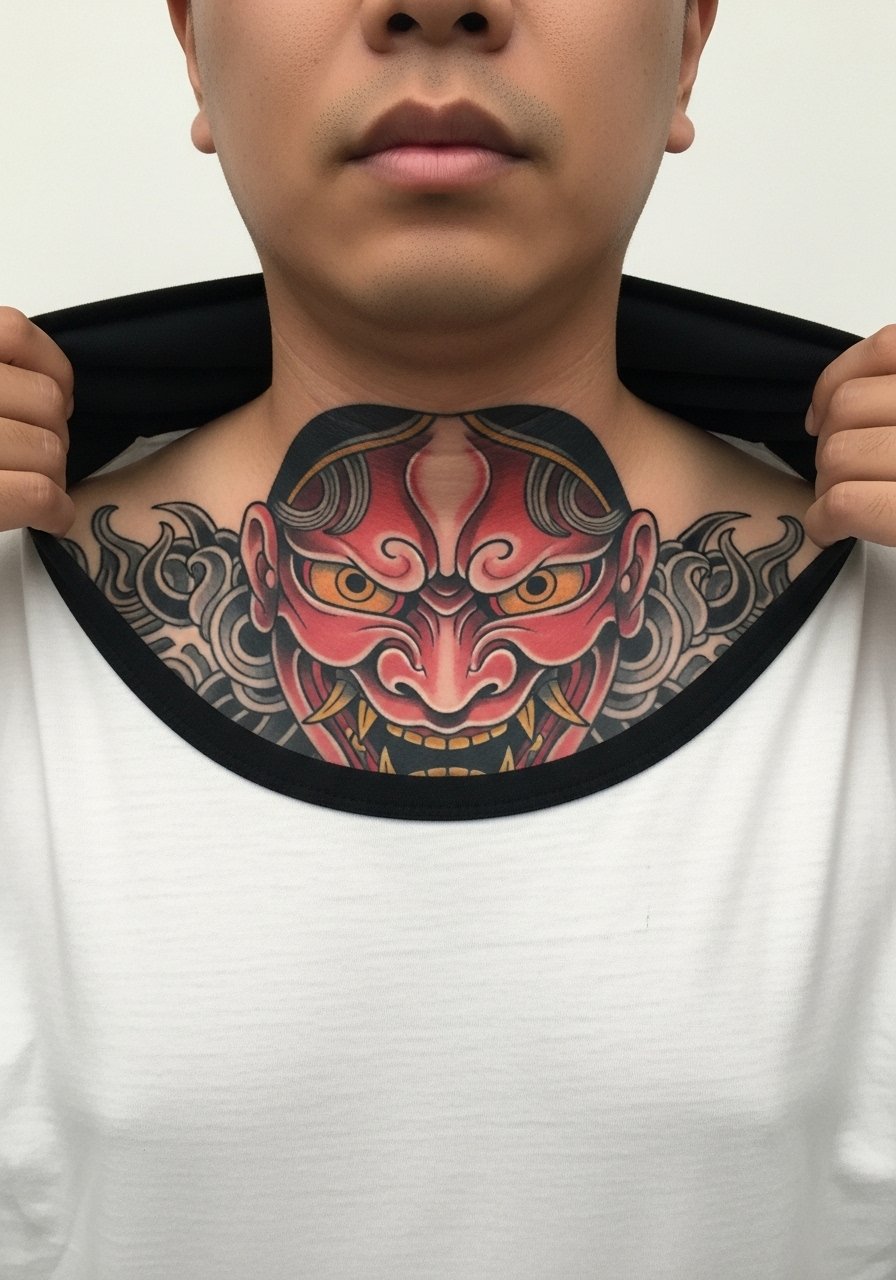
3. Full Color Traditional Hannya Chest Piece
Large color chest pieces let a Hannya breathe with gold horns and saturated red accents that stay striking under clothing. Chest work usually spans multiple sessions and has higher pain at the center, though the upper chest near the collarbone is more manageable. Color on chest needs strict sun avoidance during healing to prevent early fading. For show nights, a deep V or open collar highlights the upper chest. Bring a deep v button up for photos and wear a front-open shirt on session days for quick access.
4. Hyper-Realistic Hannya Half-Sleeve
The inner bicep to forearm half-sleeve is a realism playground where porcelain cracks and textured horns translate well into depth. Expect multiple long sessions and noticeable soreness on the inner arm. The biggest aging pitfall is overblending highlights into mid-tones which evaporates on medium and dark skin tones. Ask for punchy darks and crisp transitions during consultation to keep three-dimensionality. Session wear should be a sleeveless top you can easily slide down the arm. For evenings out, an olive bomber frames the forearm so the shading reads in motion.
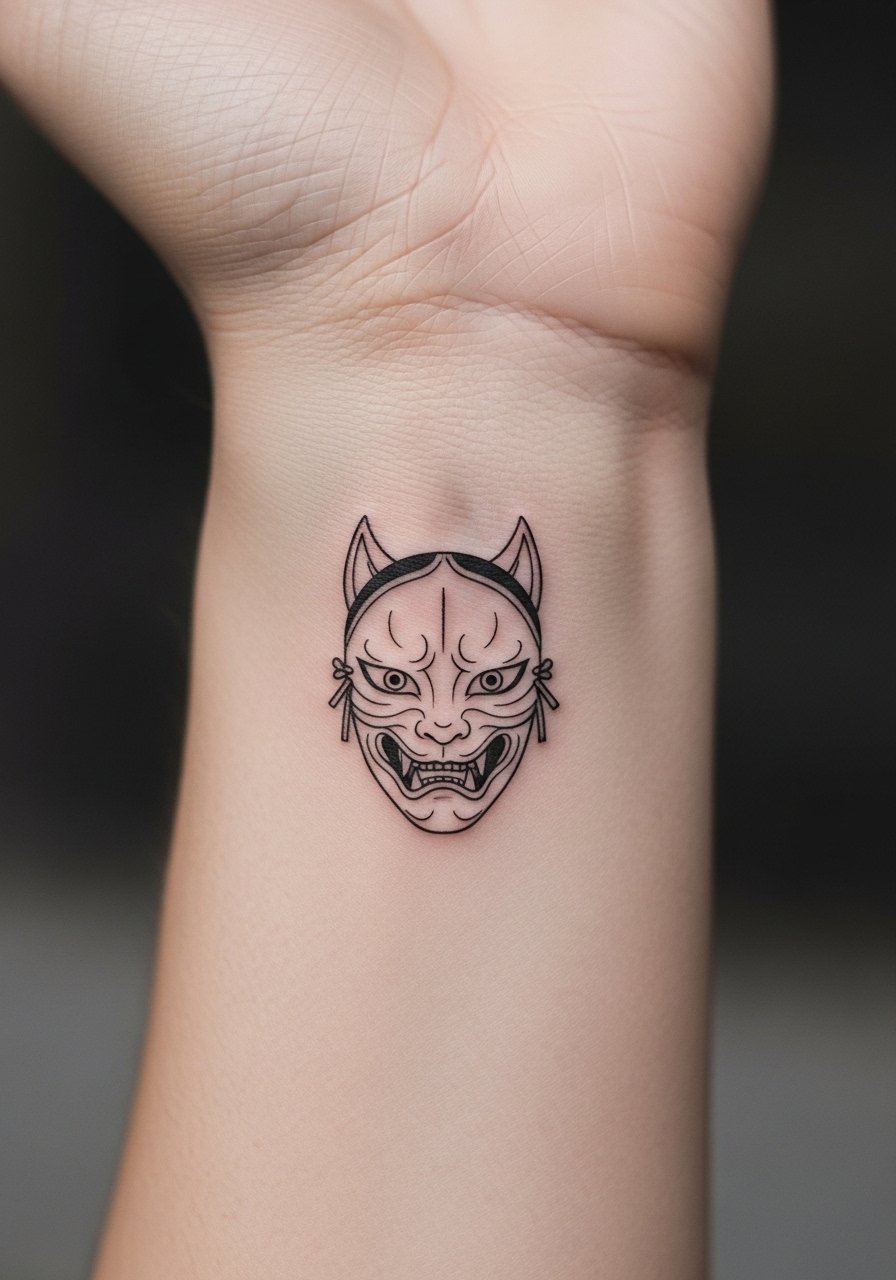
5. Minimalist Outline Hannya Wrist Tattoo
Fine line Hannya on the inner wrist is a discreet option for first-timers but it carries a real longevity trade-off. One camp says fine line suits small placements and looks delicate; the other camp warns that wrist skin and constant washing blur thin black lines by year two. Name both camps and ask your chosen artist which approach they favor. The session is short and the pain is sharp but brief. Pair the healed piece with stacked dainty bracelets and slip into a simple stud earrings aesthetic for balance.
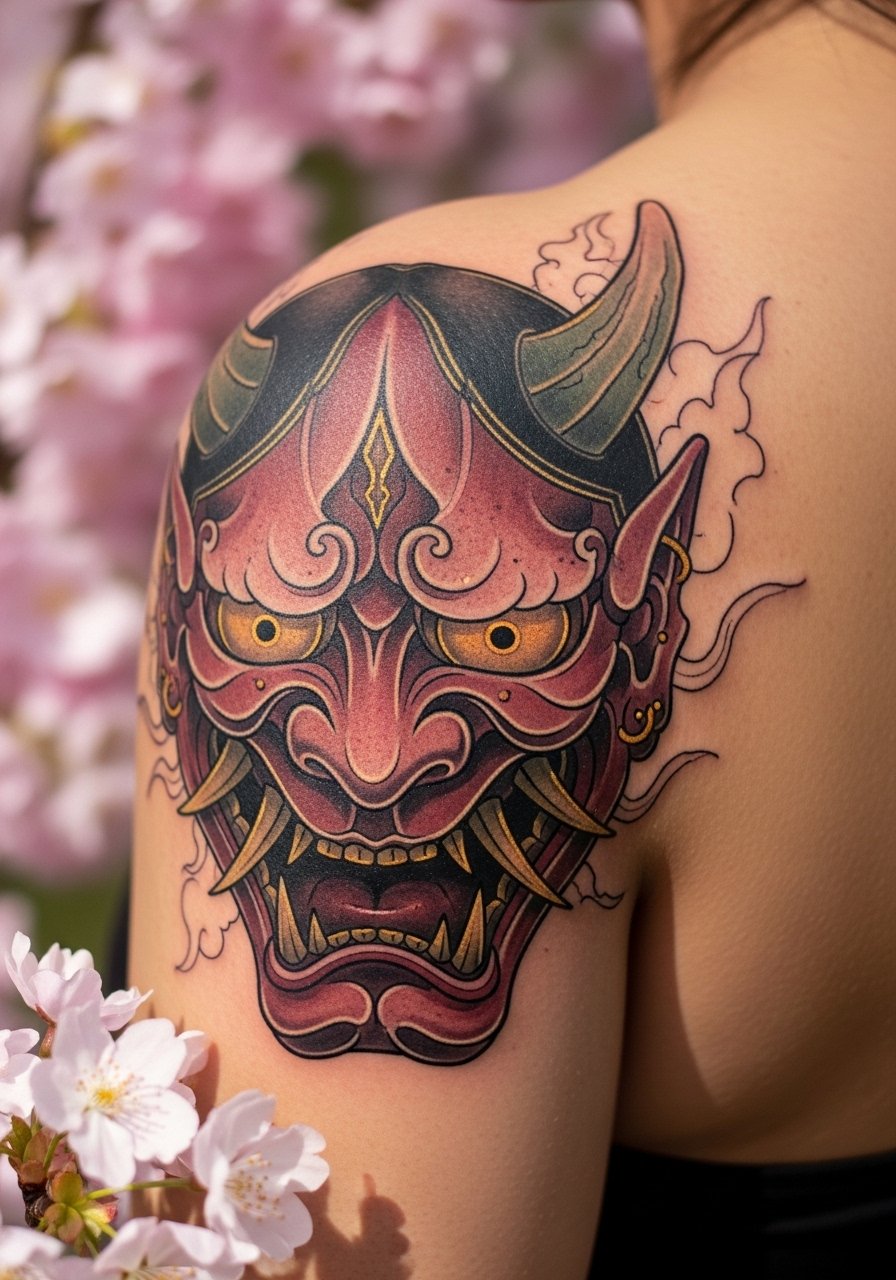
6. Neo-Japanese Hannya with Floral Shoulder Blade Backdrop
Shoulder blade Hannya with cherry blossoms softens the mask while keeping its narrative. The shoulder blade tolerates larger scale and color washes, and it is less likely to distort with weight changes than the thigh. A common mistake is crowding the blossoms too close to the mask which can muddy details after healing. For session comfort, wear a loose tank or robe that lets the artist work the upper back. For showing it off, try a cream strapless crop top so the composition sits cleanly against skin.
Studio Day Picks
The shoulder and wrist designs above need different prep than chest work, so a compact kit that handles access and aftercare basics keeps the session smooth.
-
Kinu Joy balm. A rice-powder based balm that users prefer for a non-greasy matte heal on detailed blackwork, which helps realism shadow stay defined.
-
Hada Labo lotion. Lightweight, no-shine hydration for post-healed skin that photographs well on darker tones without flattening contrast.
-
Sugarcube herbal salve. Breathable herbal option for dry winter heals on chest and back piece areas where thick ointments feel cakey.
-
Mumintzac spray antiseptic. Quick-dry spray useful after sweaty lower body sessions to avoid residue on color accents.
-
Second skin protective film. Stays on several days and reduces friction for forearm and calf pieces during humid months.
7. Photorealistic Hannya Thigh Cover-Up
Thigh cover-ups let realism erase older work with high-contrast shading that reads far more dramatic than the flash it replaces. Sessions are long and the thigh can be forgiving for dense black areas. A common regret is underestimating how weight loss or gain warps the piece. For durability, prefer a slightly larger layout with stress-tested contouring around the hip. For the appointment wear loose athletic shorts with an elastic waist so the leg lifts easily and the artist gets clean access. Pair healed thigh pieces with slim black joggers rolled to mid-thigh when you want a peek.

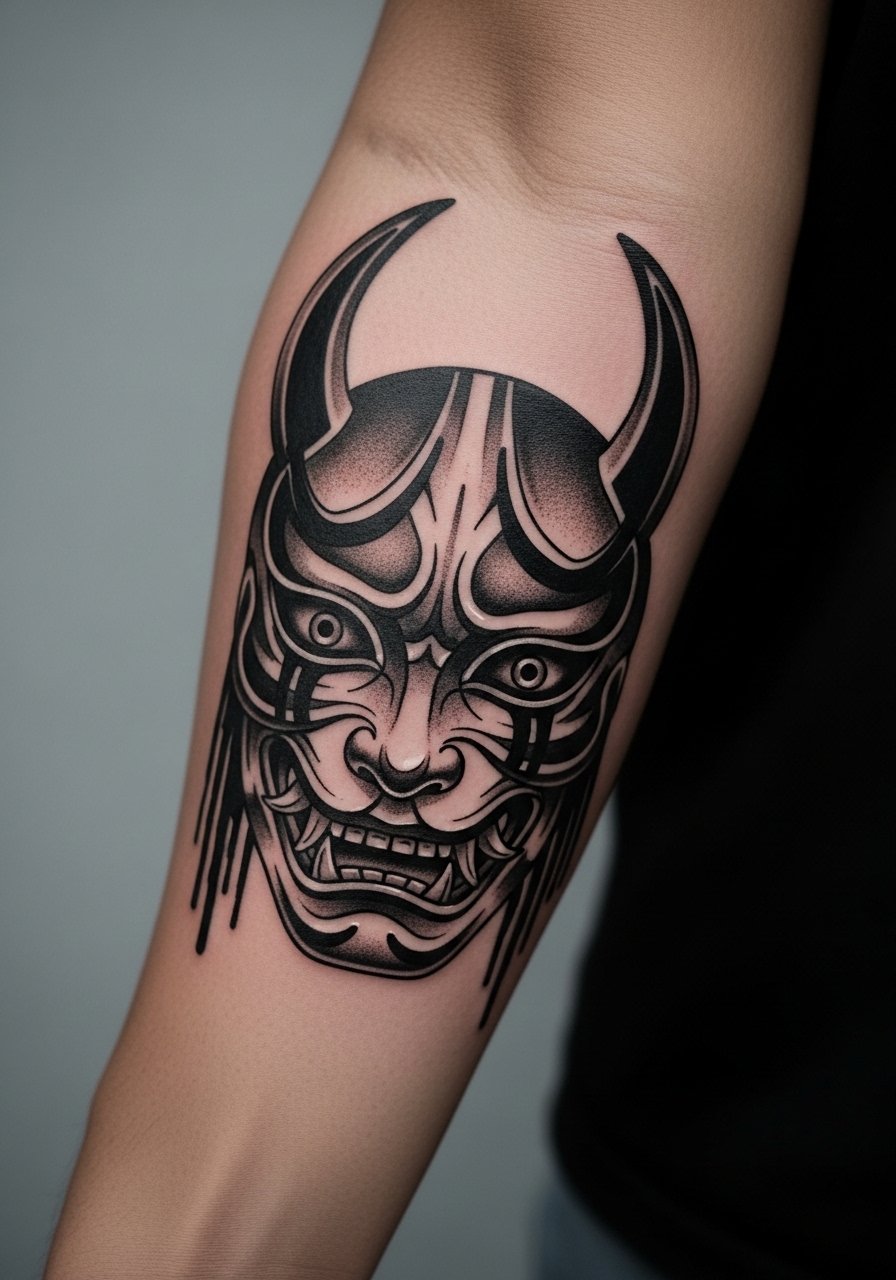
8. Ignorant Style Chunky Hannya Forearm
Ignorant style Hannya uses chunky naive lines to echo woodblock prints and it holds up because the lines are intentionally heavy. The outer forearm is a natural canvas for that bold look and the session is relatively fast. A mistake is asking for heavy fill without distinct negative space which can flatten the character. Ask for carved-out highlights and consistent line width to maintain readability. For session comfort wear a sleeveless or short-sleeve top. A simple rolled sleeve henley keeps attention on the forearm while out and about.
9. Watercolor Hannya Calf Wrap
Watercolor Hannya on the calf uses bleeding reds and soft blacks to create an ethereal tear-like effect that moves with the leg. Calf placements show well in shorts and are lower risk for distortion when weight changes. The downside is that watercolor fades faster in high-friction zones if not given strong anchor points in blackwork. Ask your artist to include dark anchor lines at the horns and eyes so the color washes age around a stable skeleton. For casual visibility, cuff bootcut jeans or wear crew athletic socks with shorts in summer.
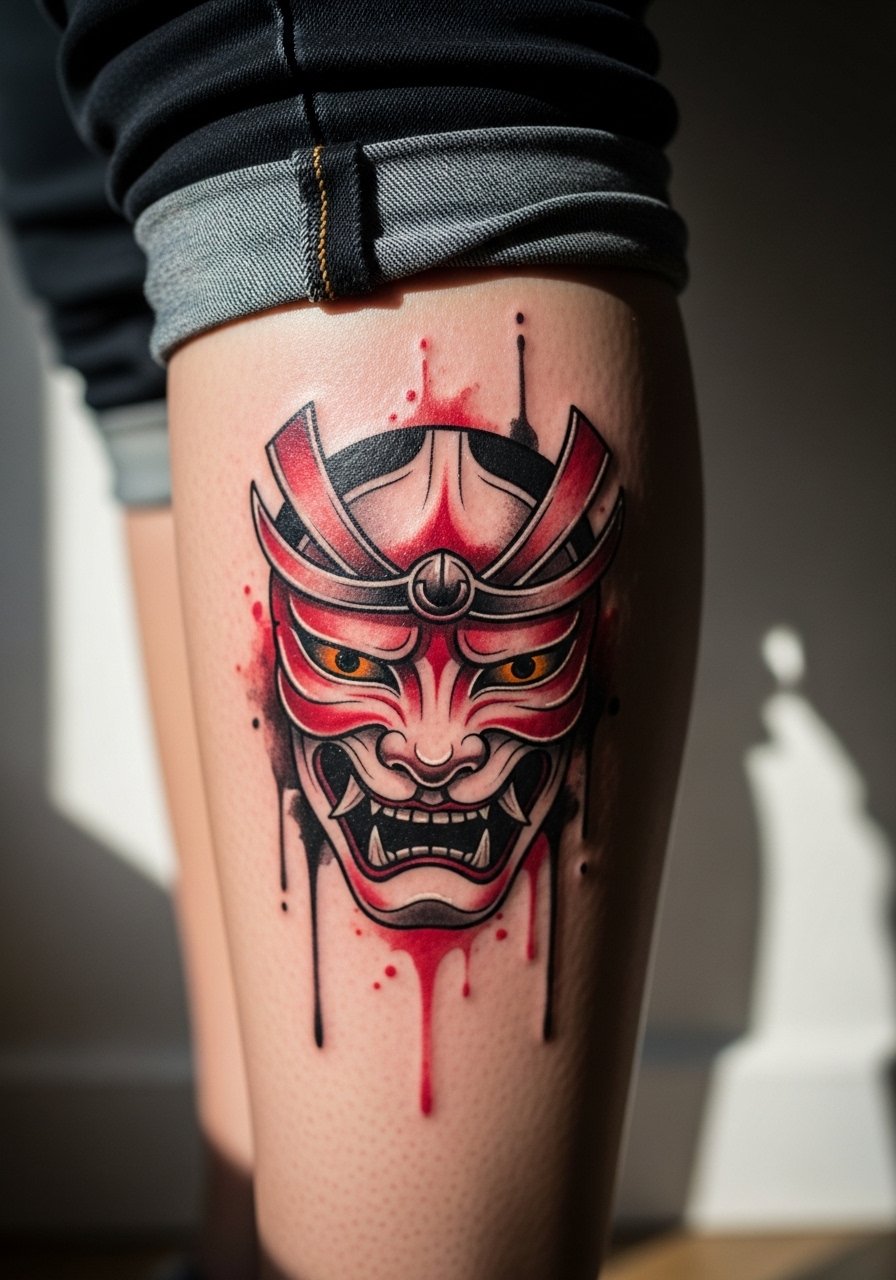
10. Ornamental Hannya Neck Piece
Side-neck ornamental Hannya reads intimate and demands precision. Pain is higher and visibility is constant, so placement decisions matter. Artists split on whether occlusive wraps improve realism heals on the neck; one camp swears by short-term protective film while the other prefers minimal occlusion to avoid trapped moisture. Name both camps to your artist and follow their plan for this sensitive spot. Wear a v-neck shirt or pull hair up for the session. For outfits, a matte silver choker frames the design without covering it.
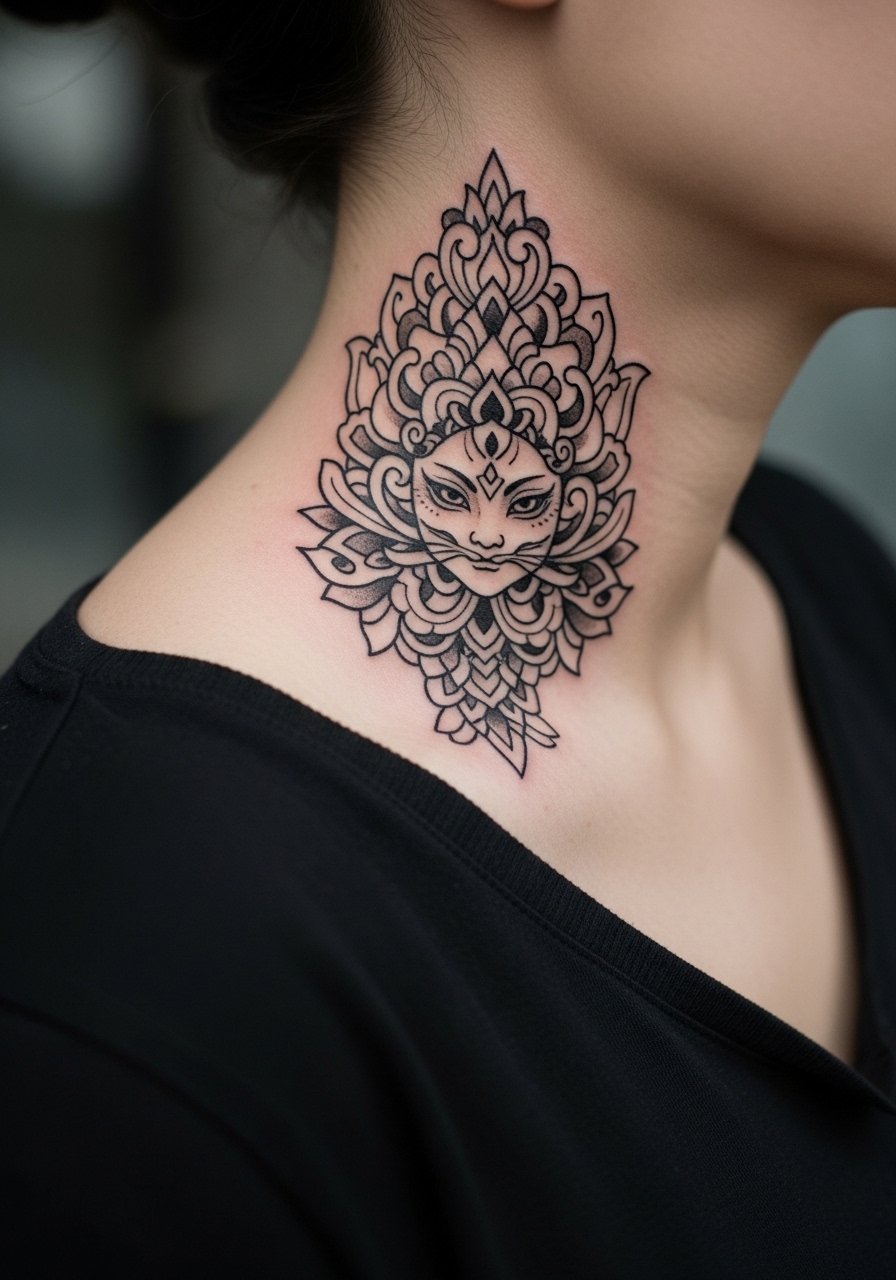
11. Patchwork Hannya Sleeve Starter
A modular Hannya on the tricep as a sleeve anchor gives collectors room to add Japanese motifs later without redoing the mask. Sessions are phased so the session length varies per pass. The common error is making the Hannya too small compared to planned future pieces which forces disproportionate expansions. Specify the future elements you imagine so the artist can size the mask appropriately and leave connective negative space. For the appointment a loose button-down shirt works well, and a white muscle tank pairs at show-off time.
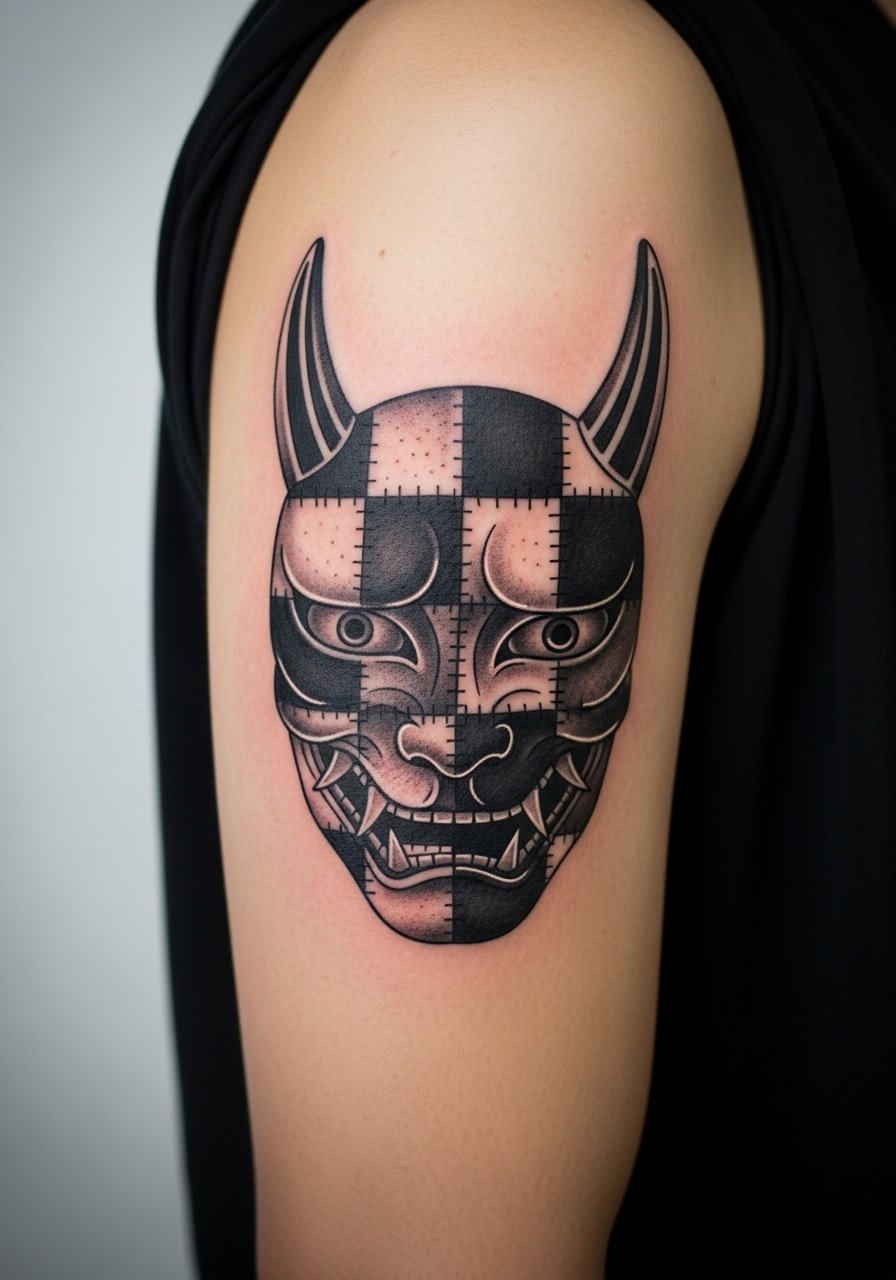
12. Micro-Realism Hannya Behind Ear
Tiny hyper-detailed Hannya behind the ear is a whisper of demonic folklore that fits office-safe lifestyles. The behind-ear zone requires a confident needle hand and can lose fine shading if the stencil contrast is low. Test the stencil on your skin tone ahead of time and ask for bolder anchor marks to preserve depth on dark skin. Session time is short and pain is sharp for a moment. Tie hair back for both the session and for showing it off, and consider a small stud or minimal earring on the opposite ear to balance the look.
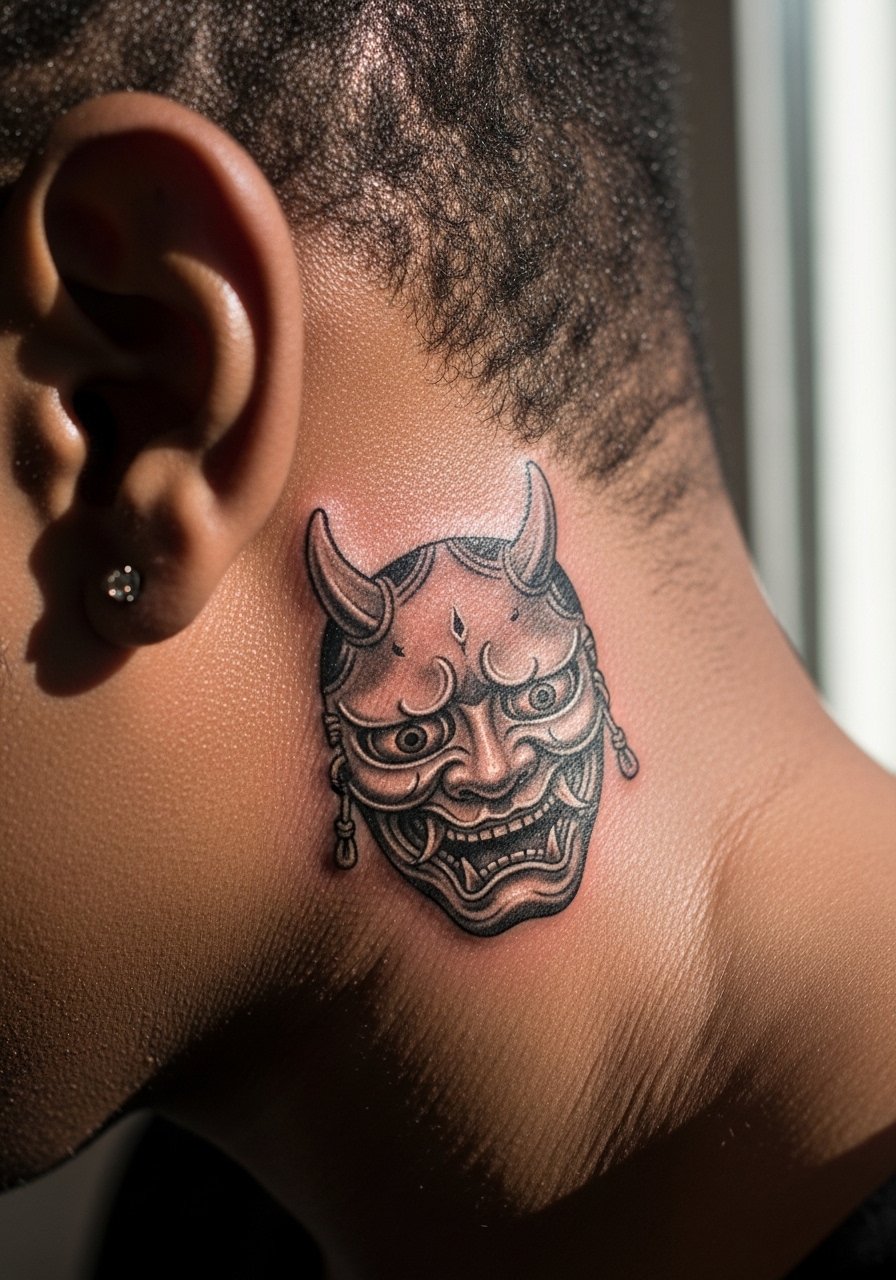
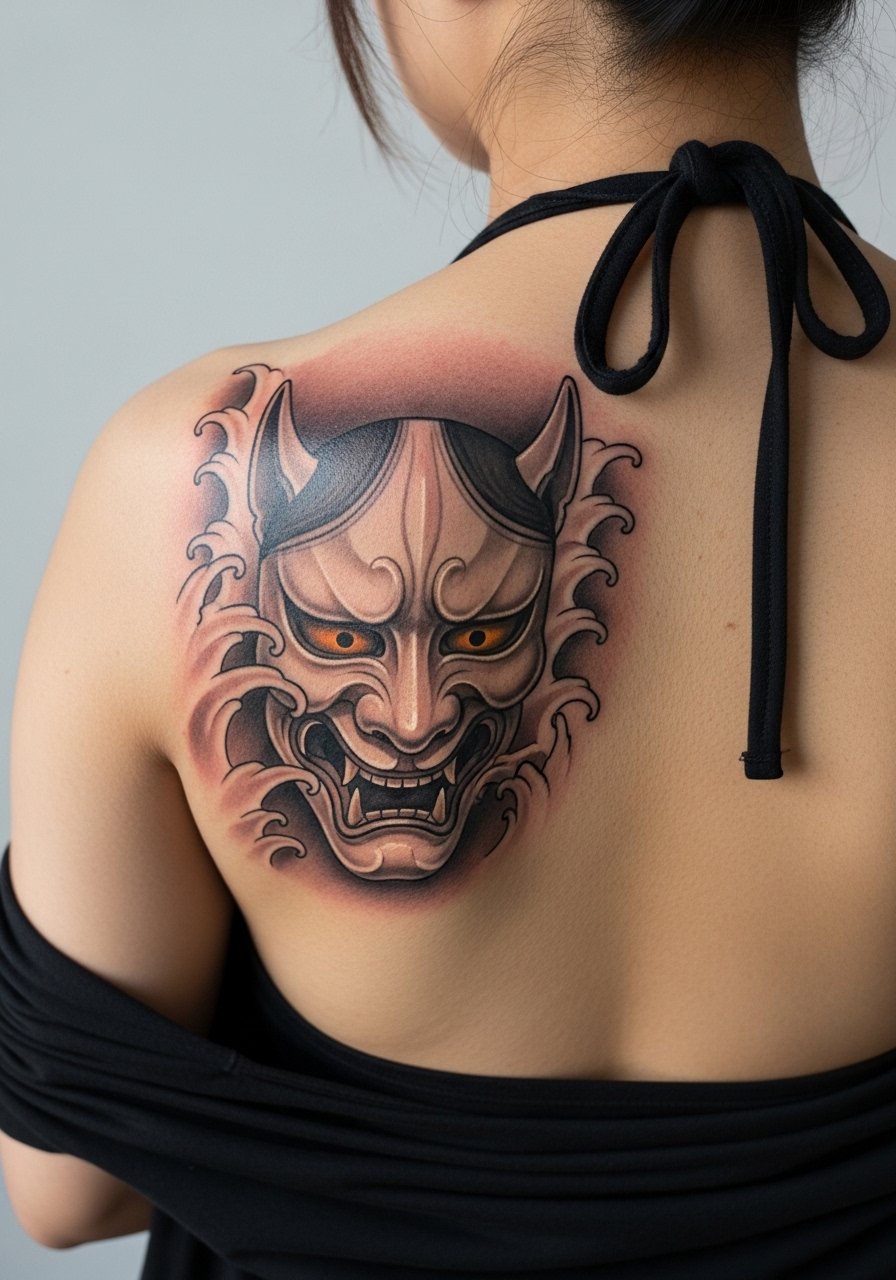
13. Half-Back Hannya with Wave Motif
A half-back Hannya that flows into traditional wave elements leverages the canvas for dramatic scale and motion. The back tolerates dense blackwork and large color fields that age gracefully if sun exposure is minimized. The pain is moderate in the fleshy middle and higher near the spine. Avoid overfilling the negative space around the horns which makes the mask lose shape as it heals. Bring a loose tank or robe for the session and show it off with a backless halter in cream or pale tones so the layout reads fully.
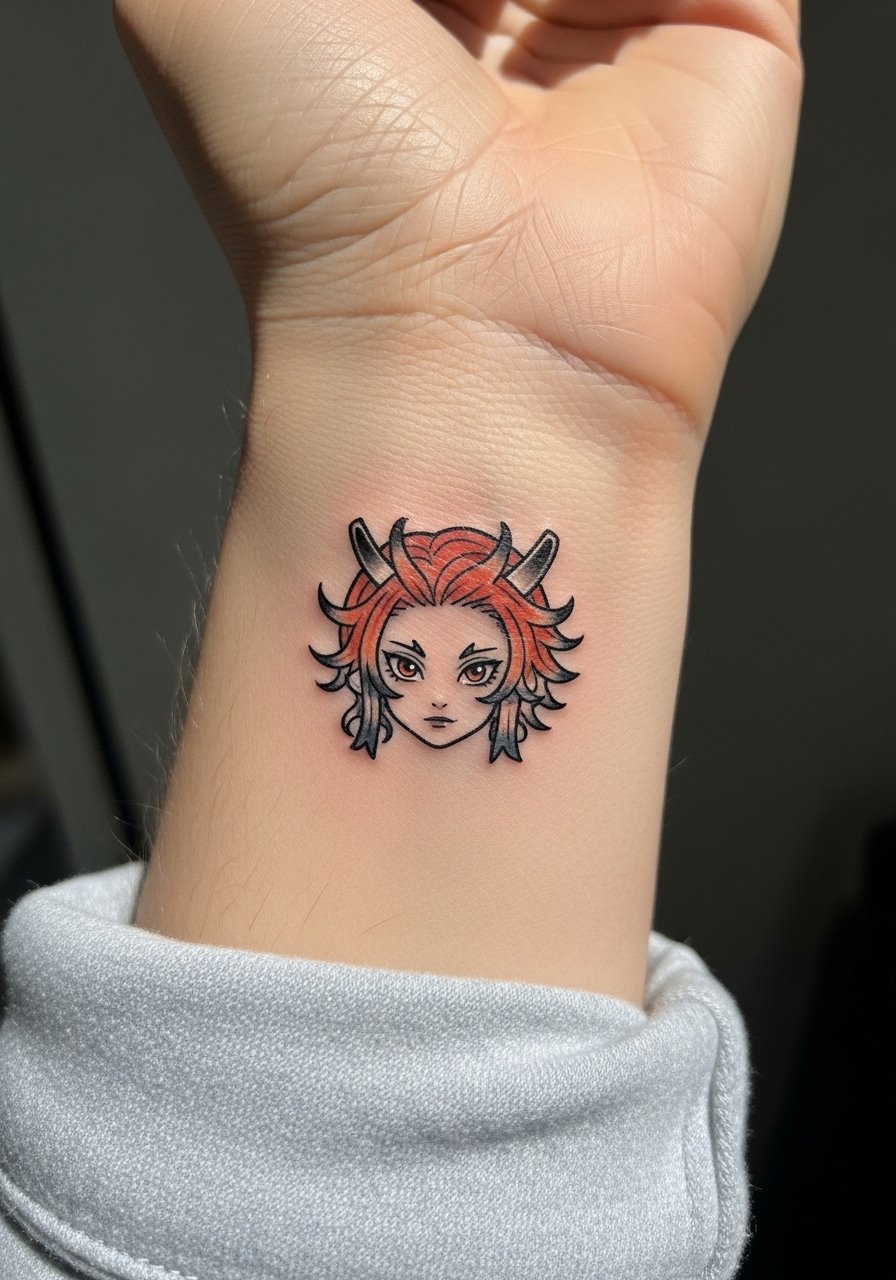
14. Small Hannya Inner Wrist Accent
An inner wrist Hannya as an accent piece demands strong black anchors and cautious linework. The wrist washes with water constantly and the skin moves a lot which is why many artists advise slightly thicker lines for micro work. Expect a short session and immediate visibility that can affect professional settings. Wear a loose cuffed button-down shirt on session day and style with a minimalist watch or thin chain bracelet for balanced attention.
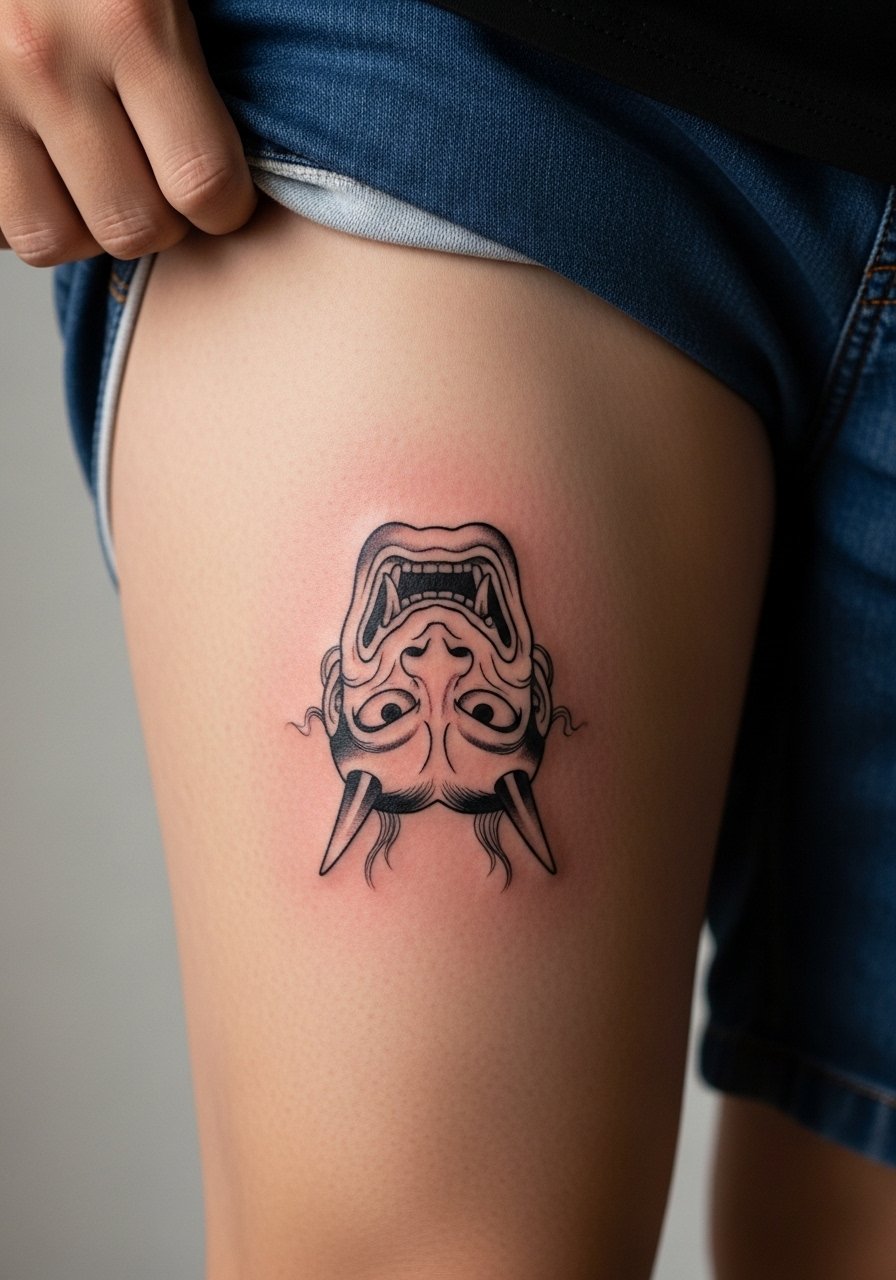
15. Thigh Inverted Hannya for "Calm After Rage"
The inverted Hannya places horns downward on the inner thigh as a subtle flip on tradition that some use to suggest calm after rage. Inner-thigh work can be intimate and requires careful artist selection. Expect longer sessions and the need for specific privacy measures and positioning. The risk is stretch with weight change so ask the artist to plan flows around flesh valleys to reduce distortion. Wear high-waisted shorts to the session and roll slim joggers when you want to reveal the piece casually.
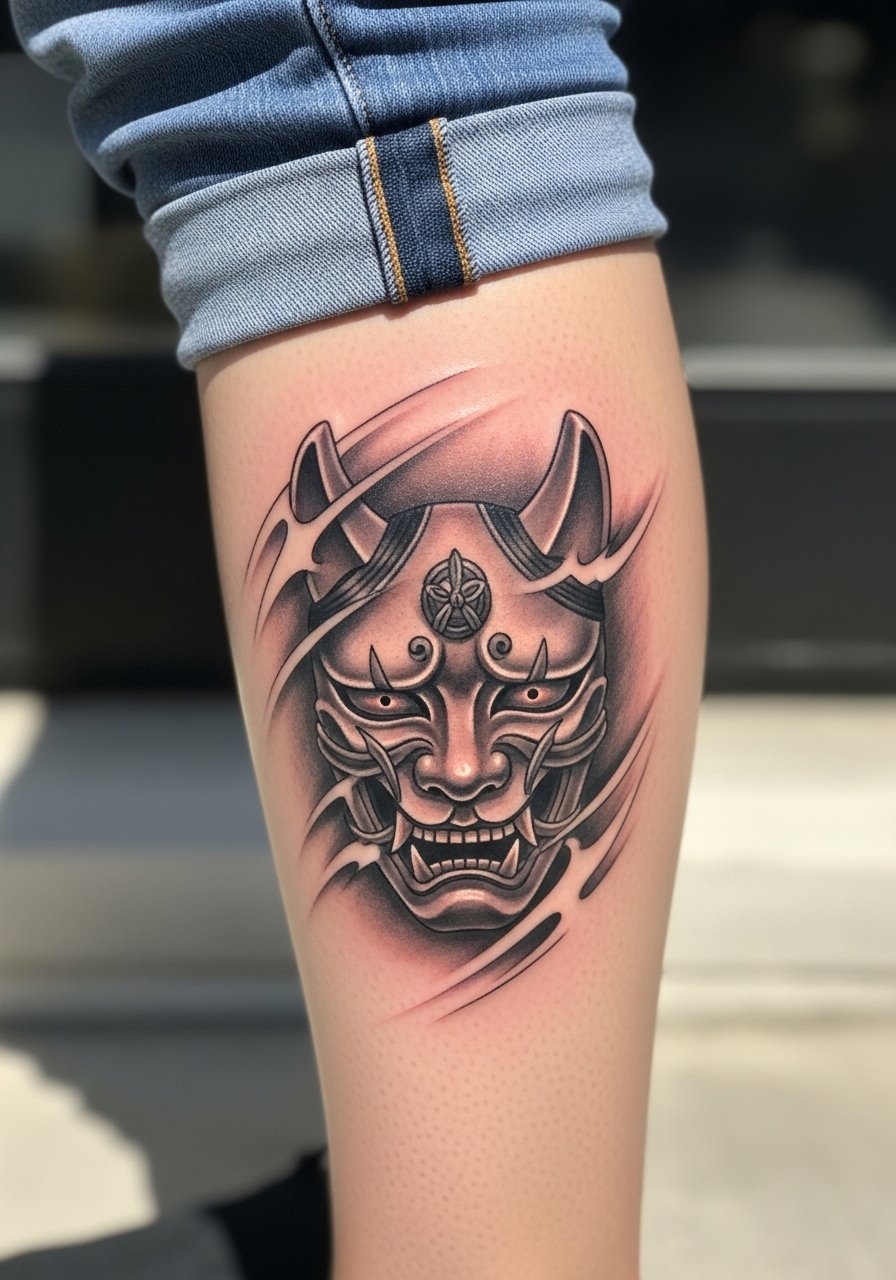
16. Calf Hannya with Motion Lines
Calf wraps let a Hannya read while walking, and motion lines help the mask feel alive in photos. Calf skin tolerates saturation and usually heals cleanly if socks are avoided during the first few days. The visual trick is to anchor the face with dense black so the motion washes do not wash out the eyes and teeth. For sessions, pull loose pants up or wear knee-length shorts. Cuffed bootcut jeans make the calf pop during cooler months.
17. Sternum Hannya with Subtle Color
Sternum Hannya work offers center-piece drama for those comfortable with visibility and higher pain. A fitted sports bra gives precise access while keeping exposure minimal during both session photos and healing images. Color near the sternum needs strict aftercare during sun exposure. Discuss how dense blacks will anchor the reds so the mask does not drift into a pink wash over time. Bring a front-open shirt for easy sessions and a low-cut top for controlled reveal.

18. Collarbone Hannya Accent Piece
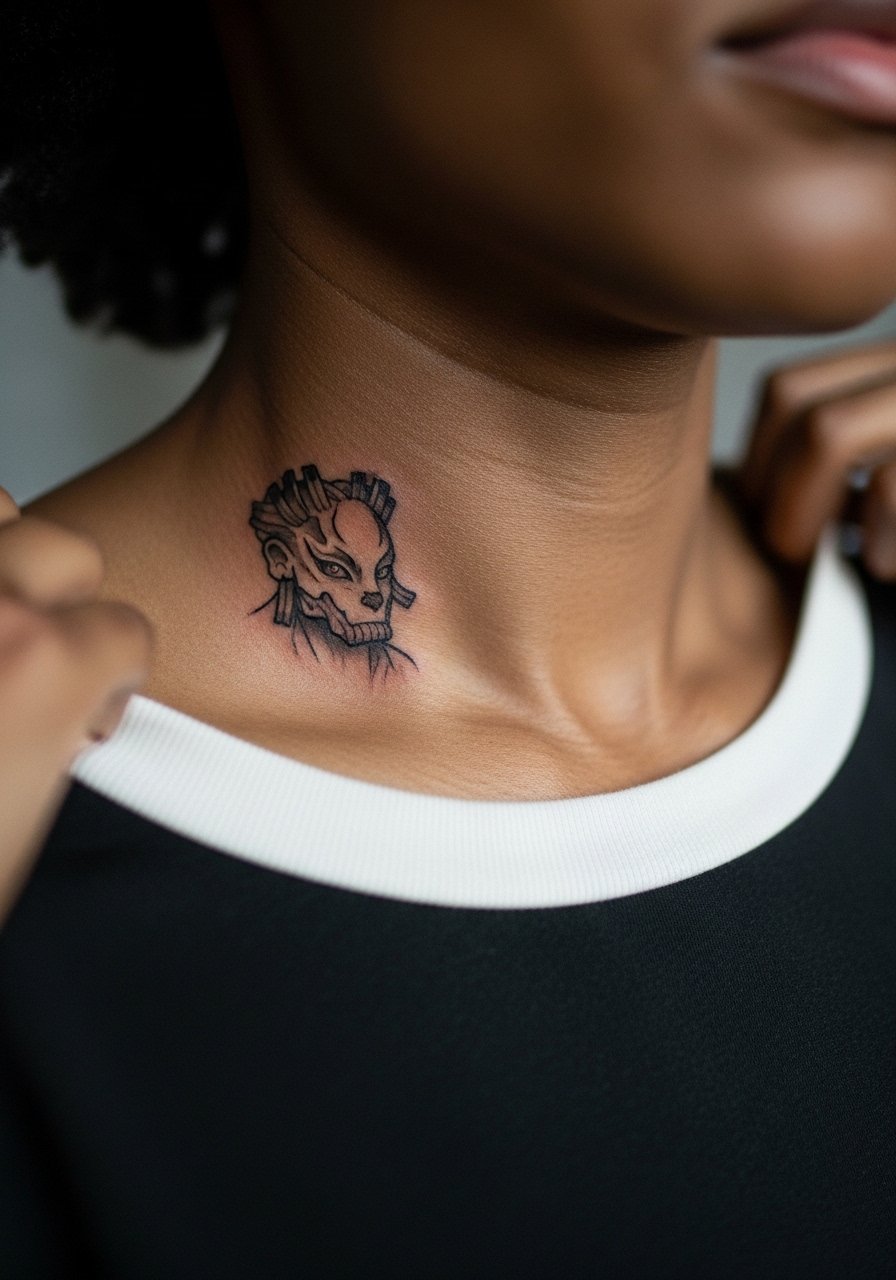
A small Hannya near the collarbone plays nicely with jewelry and neckline choices. Collarbone shading requires delicate needle work and it reads differently on lighter versus darker skin, so test the stencil first. The area is visible in many outfits and can be a conversation starter at formal events. Choose a thin chain pendant that sits above the piece, and wear open-collar shirts when showing it off for a clean frame.
19. Ribcage Micro-Realism Hannya
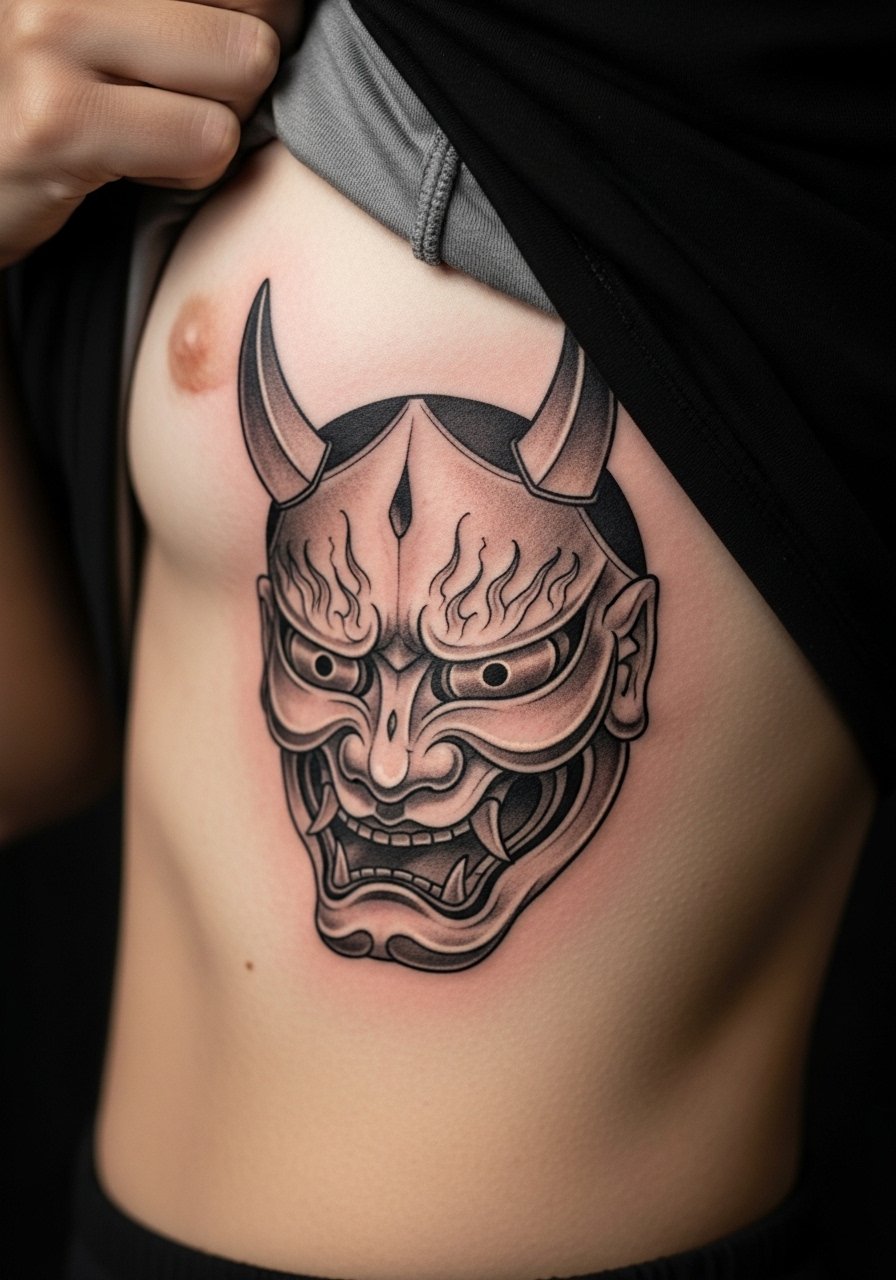
Ribcage Hannya is dramatic but harsh on longevity. Ribs stretch and compress with breathing and body shifts which is why some artists avoid ultra-fine hairlines there. One camp says fine line on the ribs blurs fast. The other camp argues that with deeper, measured needle depth and spacing fine line can last. Ask the artist their stance before booking. Pain is intense but brief between shading passes. For session wear bring a cropped athletic top that exposes only the side needed.
20. Ankle Hannya with Minimalist Roots
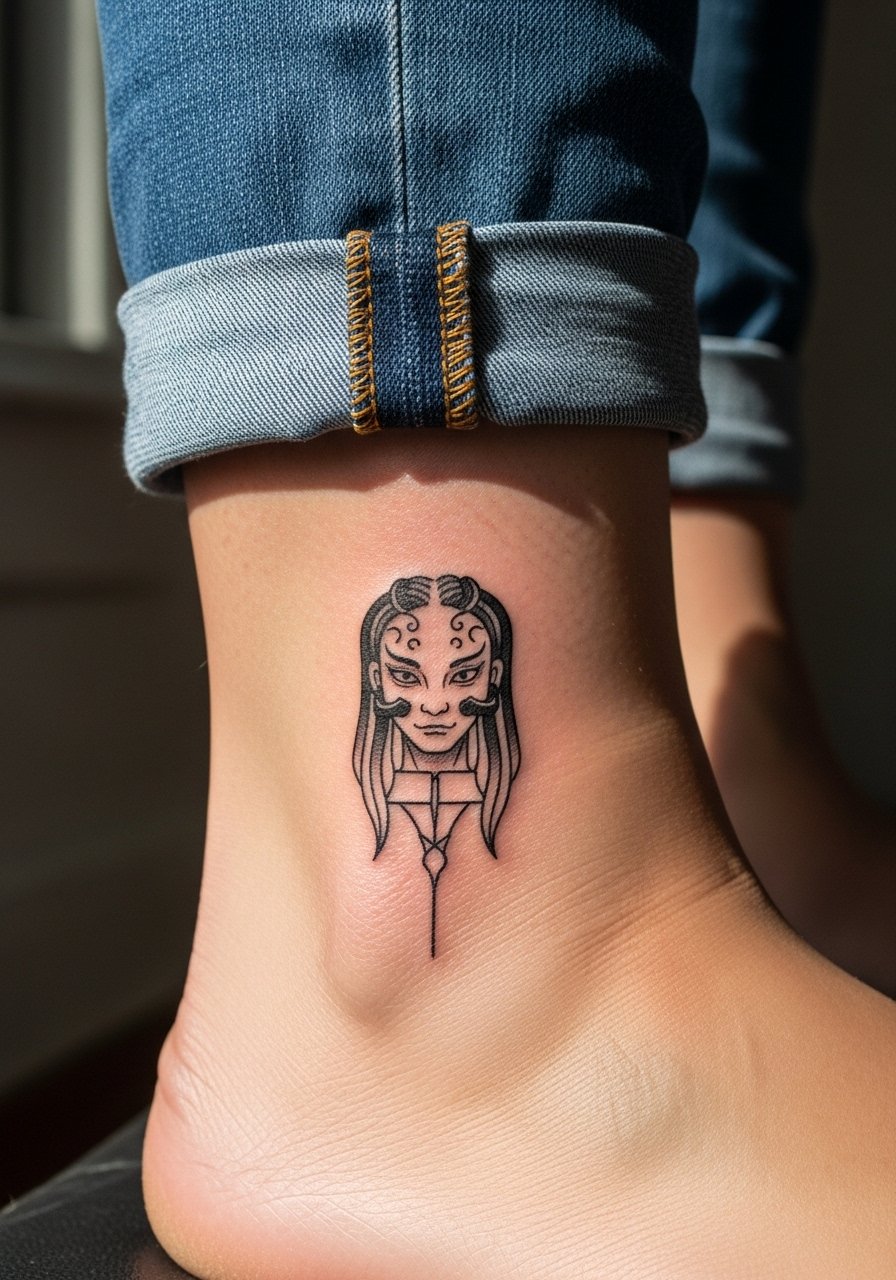
Ankle Hannya works as a small, mobile piece but it lives in a friction zone between socks and shoes. Anchor with darker elements near the horn and eyes to preserve definition as the rest fades. Sessions are short and the pain hits bone. For the appointment wear jeans rolled up or sandals. A minimalist ankle reveal pairs well with low-profile sandals or slim socks for photo days.
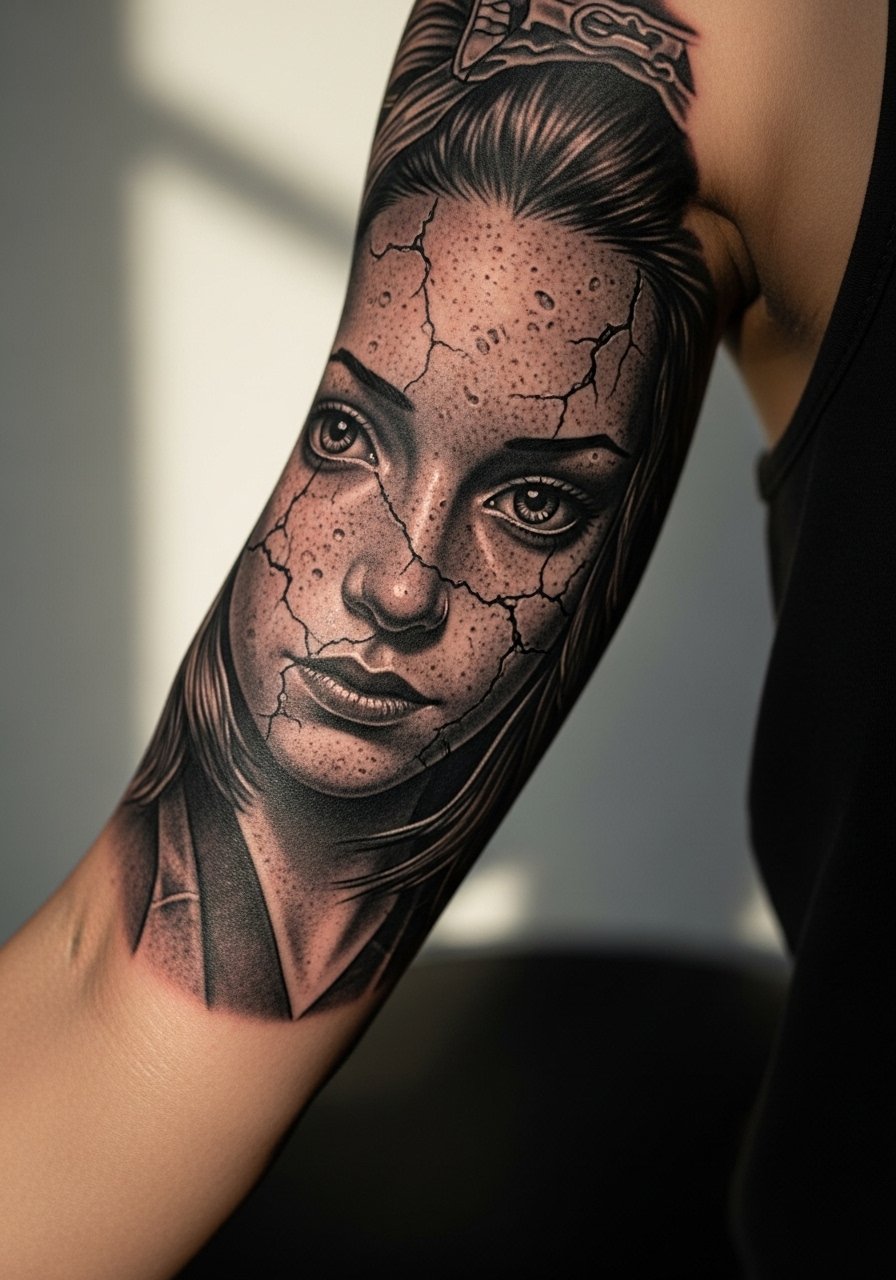
21. Inner Bicep Cracked Porcelain Hannya
The inner bicep can host cracked porcelain effects where realism simulates surface fissures and ancient ceramic texture. That texture can help realism survive long-term because the cracks read even as midtones soften. Sessions are medium-long and the inner bicep can be ticklish and sensitive. A key mistake is relying solely on micro shading for the cracks; request a mix of stipple shading and whip shading to hold. Wear a tank top on the day so the artist can raise and position the arm with ease.

22. Lower Back Hannya with Filigree Frame
Lower back Hannya framed with ornamental filigree can be tailored so only part peeks with low-rise garments. The lower back tolerates large black fields and decorative linework that resist early blurring. Keep in mind some workplaces still frown on visible lower back tattoos. For session wear a tank top with high-waisted bottoms pulled slightly low to reveal the lower back only. For casual looks, team the healed art with high-waisted jeans and a cropped top.

23. Upper Arm Sleeve Hannya with Floral Anchors
A full upper arm sleeve that leans realism for the mask and uses floral neo-Japanese anchors blends aggression with softness. The upper arm is one of the safest places for realism shading because the skin is stable and touch-ups are straightforward. One mistake is tiny filler flowers that compact over time, so plan larger floral elements that breathe around the Hannya. For the session wear an open flannel or sleeveless shirt and show it off with a solid white tank layered under an open shirt to let the composition peek through.

24. Hip Hannya Accent for Swim Season
Hip Hannya placed just above the high-cut swim line reads sensual and seasonal. Friction with waistbands can fade delicate shading faster, so protective placement and anchor lines are essential. For the session wear high-cut shorts or a swimsuit bottom to allow precise access and framing. For beach days pull on mid-rise swim trunks or slide slim black joggers to reveal the area without awkward pulls.
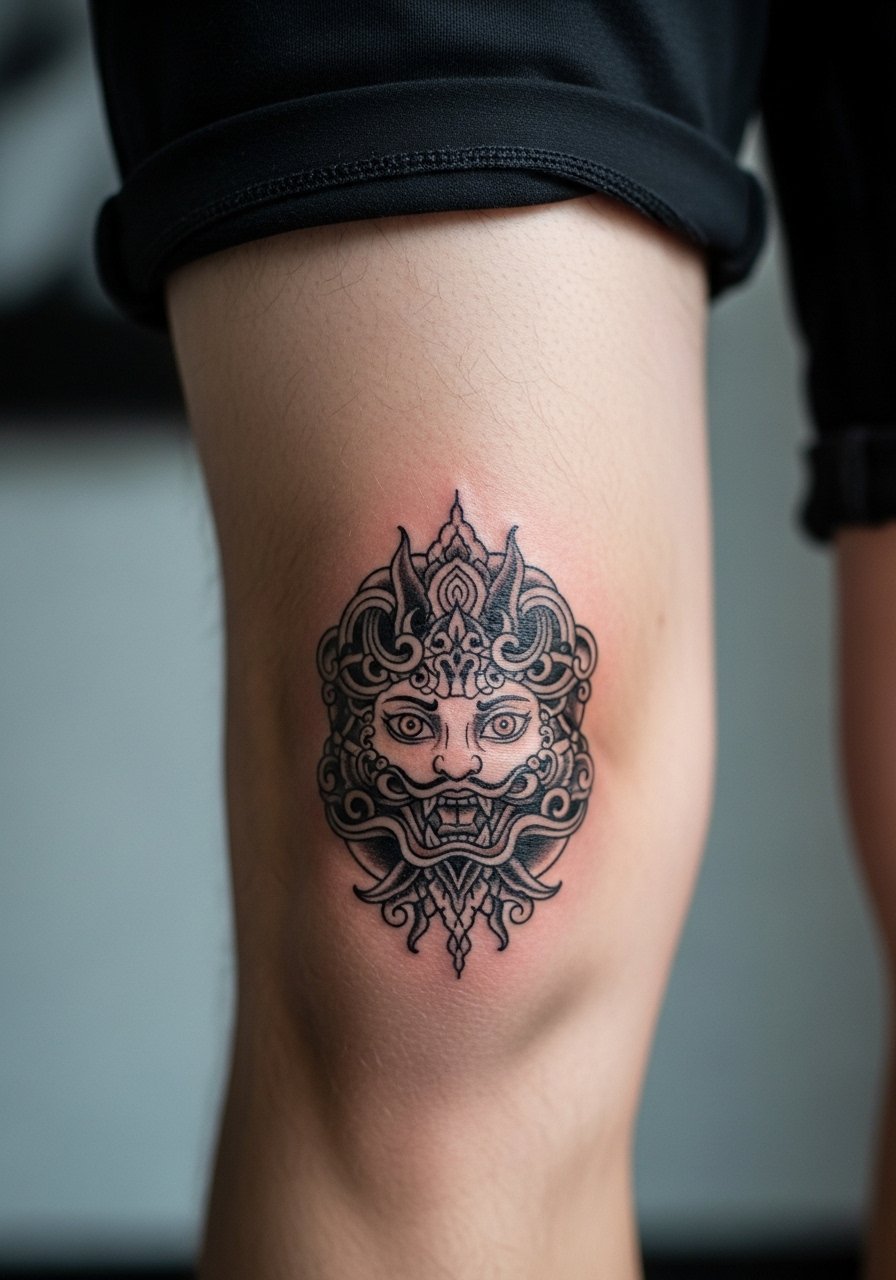
25. Behind-Knee Hannya Detail Patch
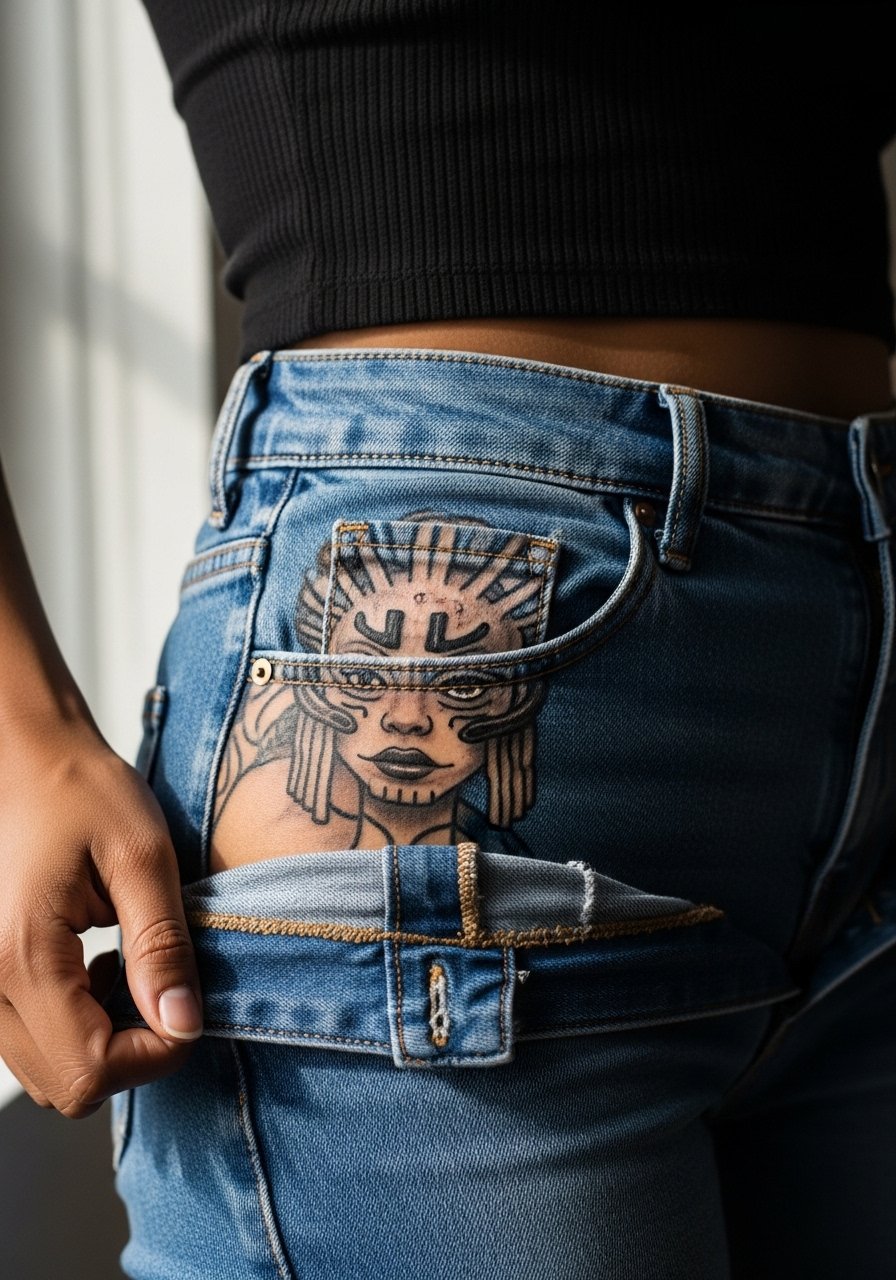
A behind-knee Hannya is unusual and it takes movement into account as the knee folds. The area wrinkles considerably so detail must be bold enough to read when sitting and standing. Sessions require flexible positioning and post-session movement adjustments. A common error is too many micro details that merge as skin folds. Wear shorts you can comfortably bend in for the appointment and plan for tight but simple reveals like athletic shorts.
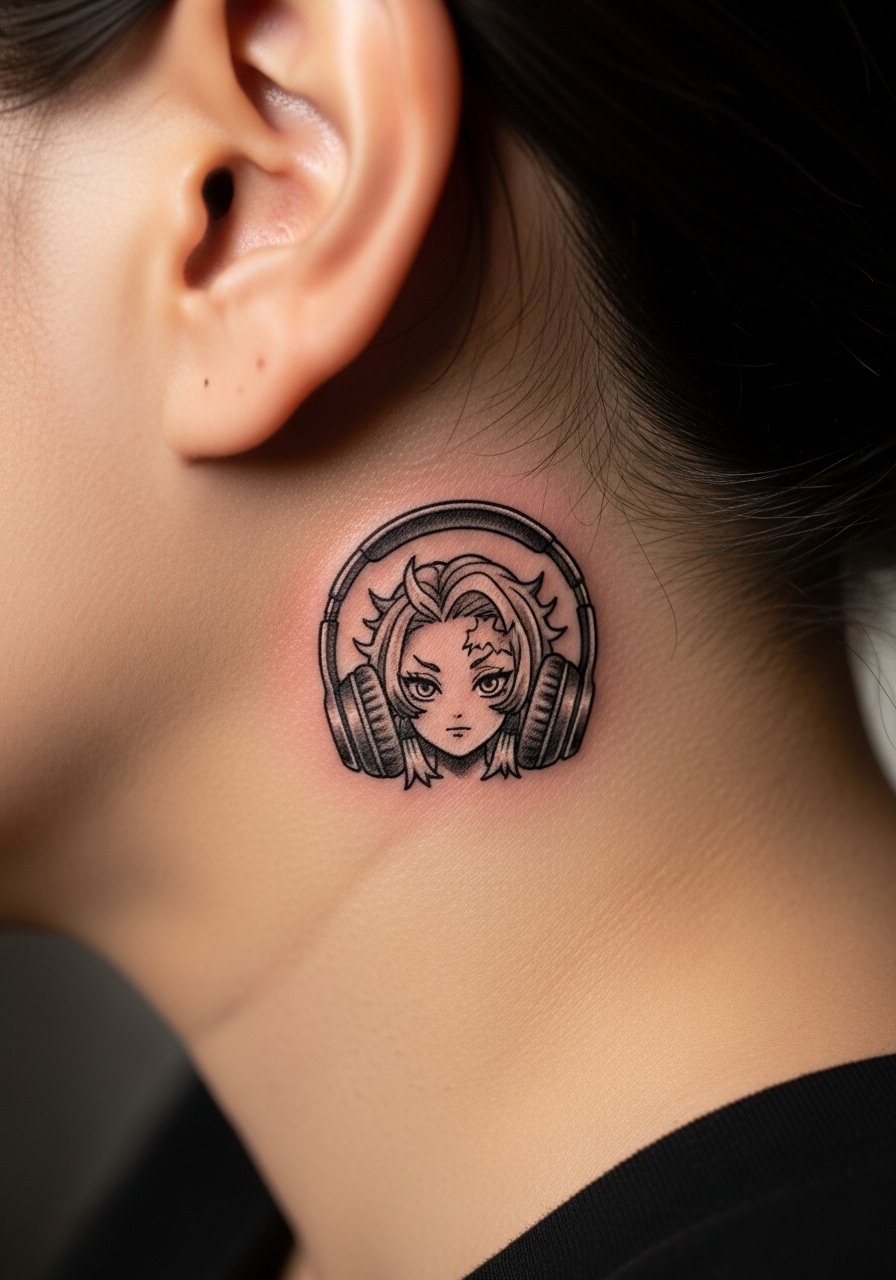
26. Tiny Ear-Edge Hannya for Headphone Nerds
A micro Hannya placed near the ear edge that interacts visually with headphone shapes is a playful, under-covered idea. The area needs bold anchors so the tiny art does not disappear in close-up photos. Session time is minimal but requires steady needle control. For showing it off tie hair back and consider minimal studs on the opposite ear. For session day, have hair ties handy and keep the ear area clear.
27. Micro Hannya Finger Topper
A small Hannya on the side or top of a finger is a bold micro choice that ages faster because of constant washing and friction. Expect a high touch-up probability and ask for a slightly thicker line weight than a picture suggests. The session is quick and the pain is sharp. For wearing it off, avoid stacking heavy rings that sit over the tattoo and pick thin bands if you want to show the artwork without rubbing it.

Frequently Asked Questions
Q: How much does a realistic Hannya tattoo cost across common placements?
A: Prices vary by size and realism. Expect small micro-realism wrist or ear pieces in the low range, forearm or upper arm realism in the mid range, and full chest or thigh realism in the higher range. The number of sessions drives cost more than one flat rate, so plan for two to four sessions on average for medium realism and more for large custom pieces.
Q: Will a black and gray Hannya look better long term than a full-color piece?
A: From what I have seen black and gray realism typically retains contrast longer, especially on active skin like forearms and calves. Color can pop brilliantly fresh but needs more strict sun avoidance for the first month and regular maintenance photos to check for early fading.
Q: What is the best placement for a first realistic Hannya if I worry about healing and lifestyle?
A: The outer forearm is the safest compromise. It is accessible for touch-ups, easier to keep clean during healing, and it handles moderate detail without extreme distortion from weight change. Wear a loose tank or short sleeve on session day so the artist can work without obstruction.
Q: Does skin tone affect how a realistic Hannya should be designed?
A: Yes. Darker skin often benefits from higher contrast anchor blacks and slightly bolder lines so the face reads clearly from a distance. Test a stencil on your skin tone and ask the artist to show healed examples on similar tones when possible. If you want, try a ring light photo setup to see how healed texture might translate online.
Q: How often should I expect touch-ups for micro-realism Hannya work?
A: Micro-realism can need touch-ups sooner than chunkier blackwork. Many people plan a touch-up around six to twelve months for fine pieces and every few years for larger black and gray realism. If you pick the forearm or upper arm for your first realistic Hannya you lower the odds of early touch-ups.
Q: Which clothing should I bring to my session for different placements?
A: Bring clothing that makes access easy for the specific placement. For chest and sternum bring a wide-neck shirt or sports bra you can adjust. For thighs bring loose athletic shorts with an elastic waist. For shoulders and back bring a loose button-down. If you want quick options, a plain loose button-down shirt can cover many needs and keep the session efficient.