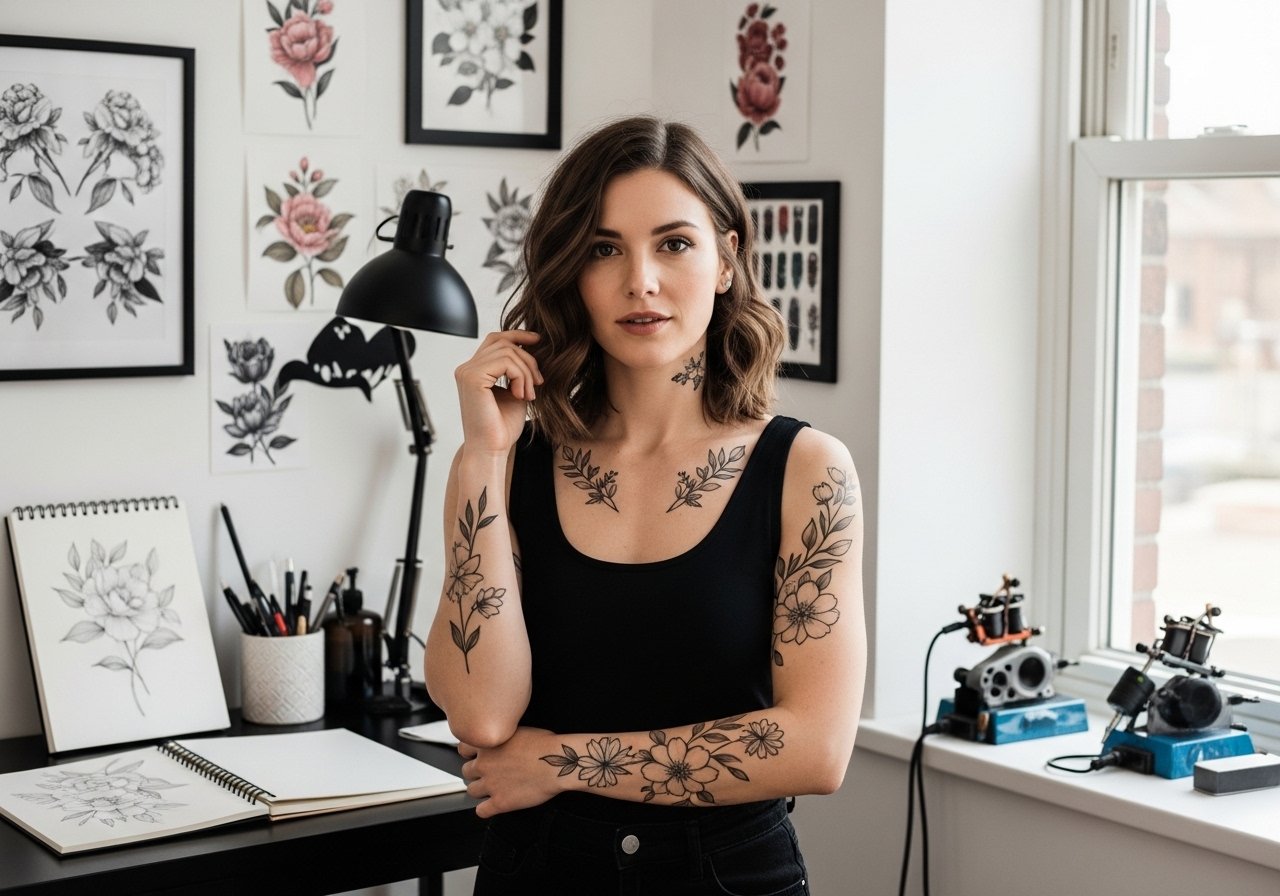
Trends and timelines rarely match up in tattoo land. Small blackwork butterflies are everywhere on feeds right now, but real issues keep cropping up in conversations: tiny pieces priced like hourly jobs, fine-line blackwork that blurs faster on certain skin tones, and first-timer nerves about rib or wrist pain. This list focuses on designs and placement choices that age better, plus what to wear to the session so the whole thing goes smoother.
1. Geometric Wing on the Inner Wrist
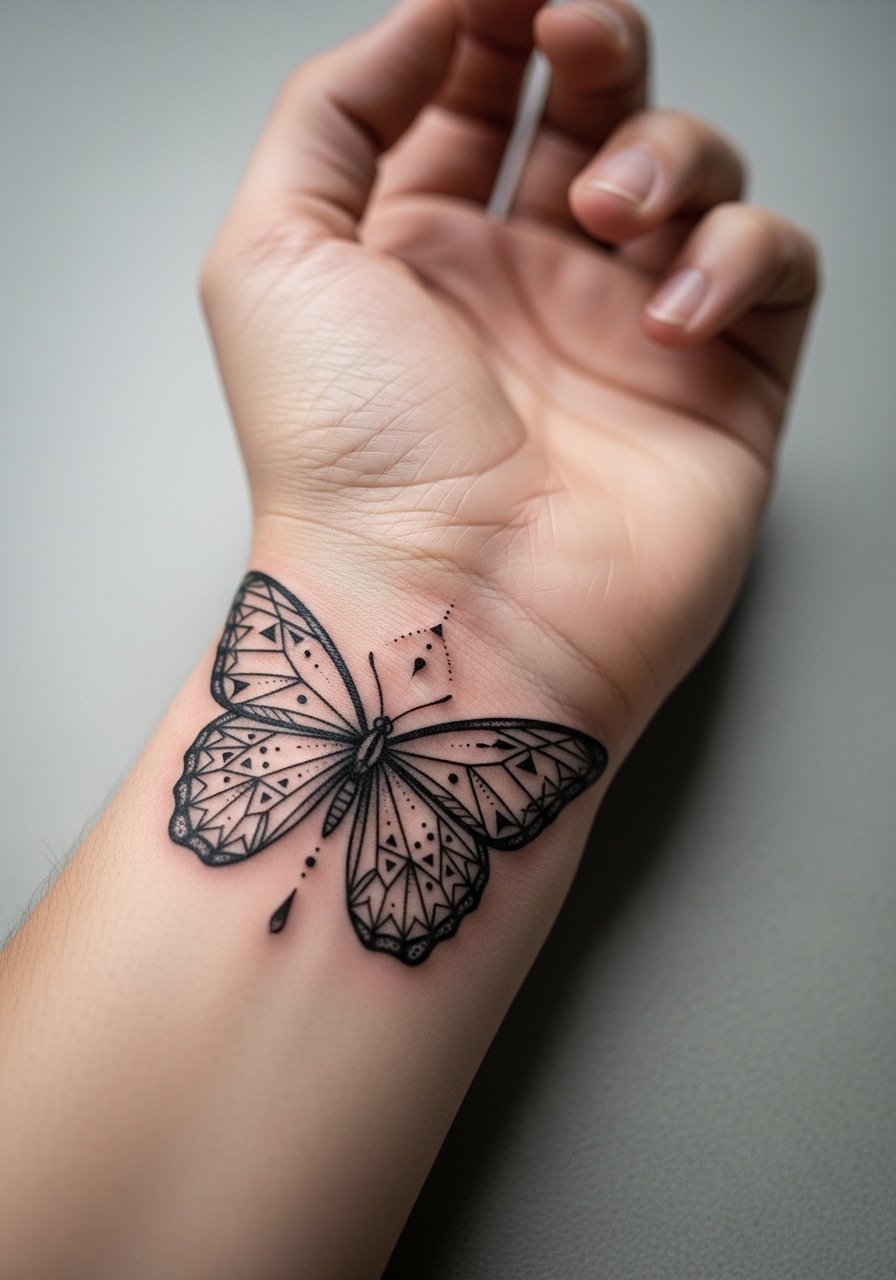
I've seen this one on more forearms than I can count, and it works when you give the geometry room. Ask your artist to scale the wing facets so each line has breathing space. A common mistake is requesting overly dense geometry at two inches or smaller, which leads to merge and touch-ups at year two. Expect the wrist to feel like a six on most pain charts, but sessions run short, often under an hour. For showing it off, pair with a sleeveless black tank so the wrist reads clean against minimal fabric. Blowout risk is moderate here, so slightly thicker linework helps longevity.
2. Negative-Space Shaded Inner Forearm Butterfly
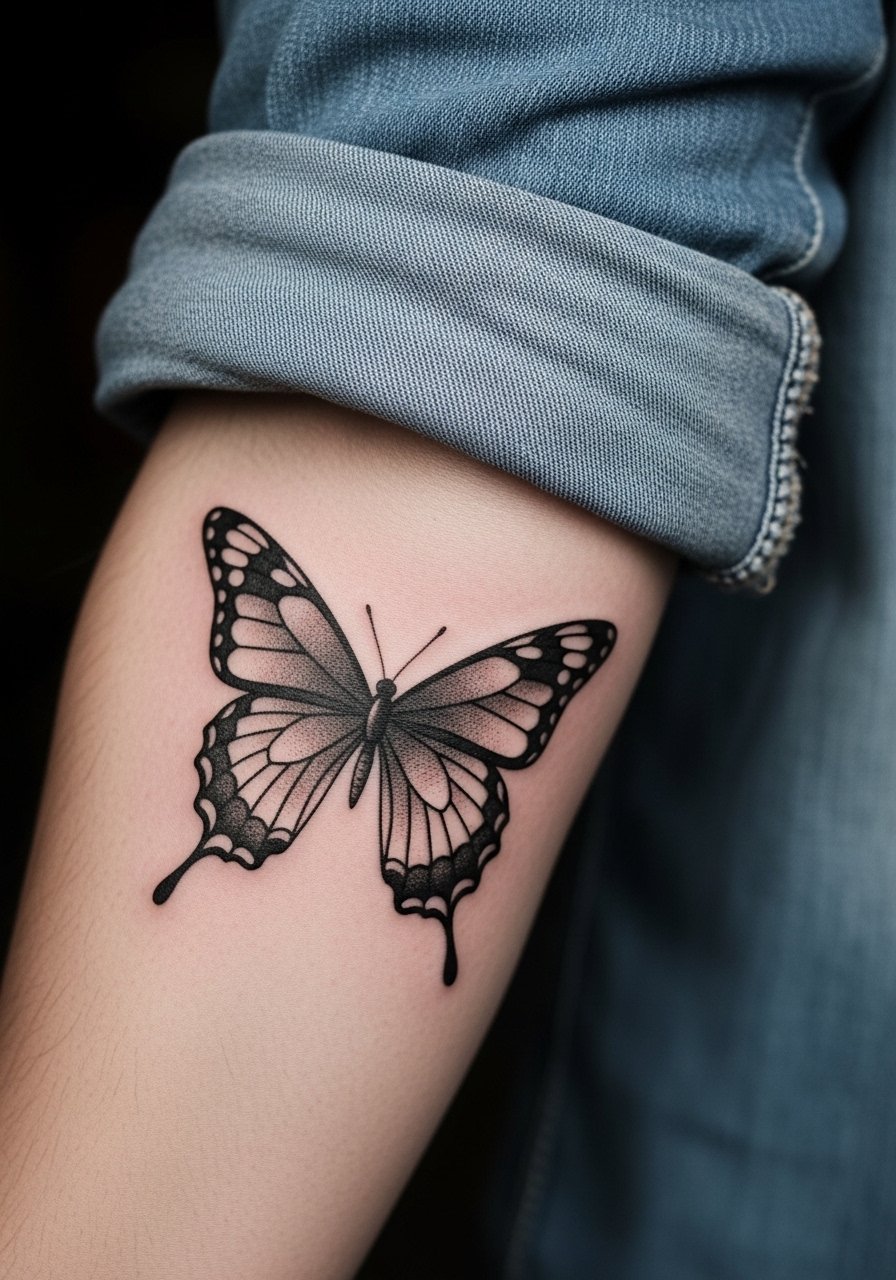
When you want contrast without heavy fill, negative space shading gives a minimalist vibe that ages with less fuss than tiny stippling. Tell your artist to mark the negative pockets clearly on the stencil so the space does not get inked over. The inner forearm heals predictably and shows stipple shading well at six months, then softens slightly by year three. A mistake is asking for near-skinline dots too close together, which compress into a gray patch over time. For session wear, roll up a rolled cuff denim shirt so the artist can work without tugging at fabric. Touch-ups are usually optional at year three if you want the crisp edges back.
3. Symmetrical Bold Line Collarbone Butterfly
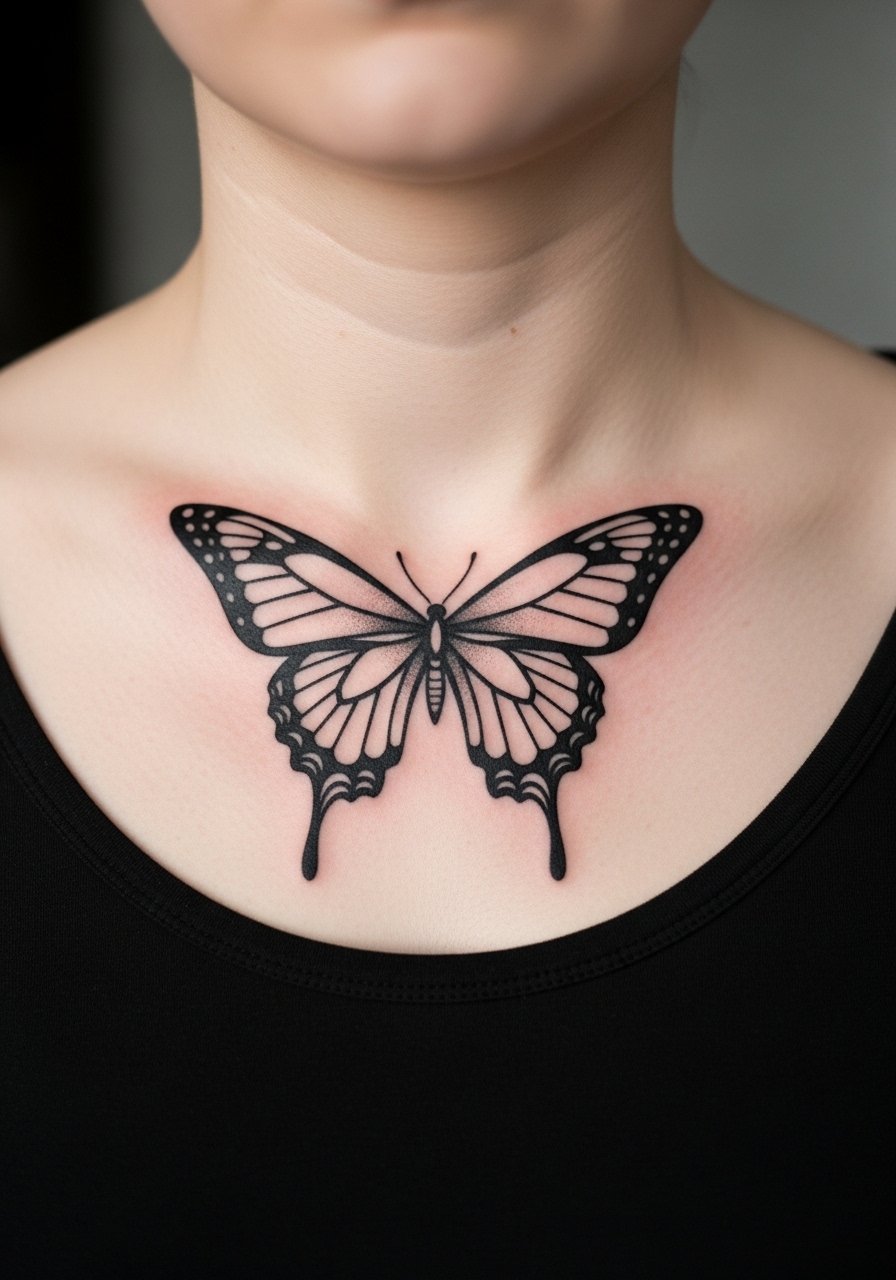
Fair warning, collarbone tattoos look larger on the body than on screen. Bold linework is a smart choice there because thicker line holds up against sun and friction from clothing. The collarbone area can sting but sessions rarely exceed ninety minutes for a small butterfly. The common error is asking for hairline detail right over bone, which will blur and need a touch-up sooner. For evenings out, off-shoulder tops frame this placement well. Try pairing with an off shoulder linen blouse when you want the wings visible without competing jewelry. Expect slight edge softening by year three if you spend time at the beach without sunscreen.
4. Micro Dot-Texture Behind the Ear Butterfly
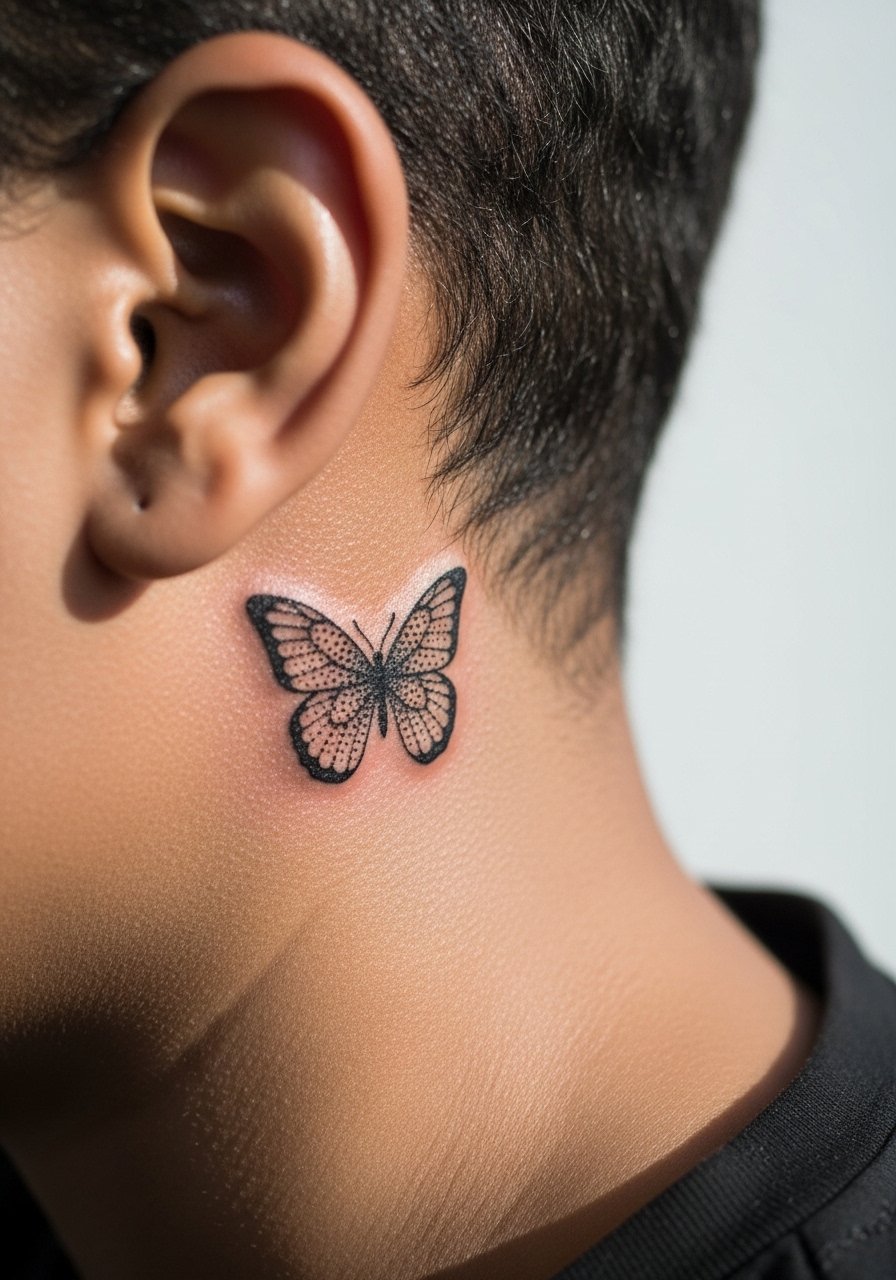
This is a favorite for people who want a private piece that peeks out with hair up. The session is short and low on bleeding, but the area is sensitive. Artists split on aftercare methods here, with some recommending protective film for the first 48 hours and others preferring dry heal to avoid trapped moisture. If you plan to hide it at work, this placement is ideal. The biggest mistake is asking for ultra-fine stippling at a tiny size behind the ear. Dots need space to remain distinct over time. Because the area is small, touch-ups at year two are not uncommon on darker skin tones where saturation can settle differently.
5. Ornamental Shoulder Blade Butterfly
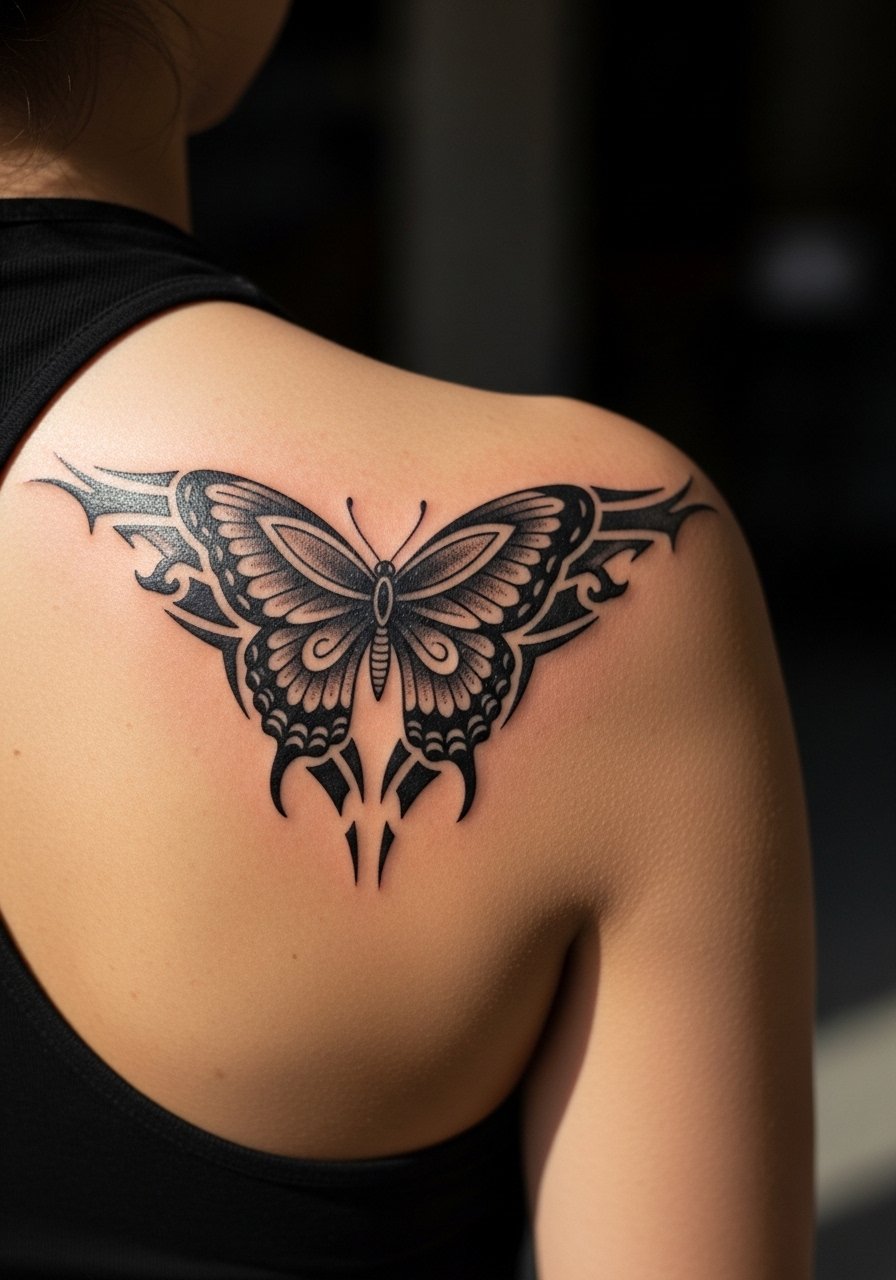
I've seen ornamental work on shoulder blades hold impressively well when artists use heavy saturation and clear negative shapes. This area tolerates larger fills, so a four-inch ornamental piece really reads. A common misstep is asking for thin filigree too close to the spine of the wing. Those fine curls blur first. Sessions can run longer here, often into two sittings if you want deep saturation. For showing it off, a backless tank top or halter works beautifully. Shoulder blade pieces fare well at year five if you avoid prolonged sun exposure during the first year.
6. Fine Silhouette Ankle Butterfly
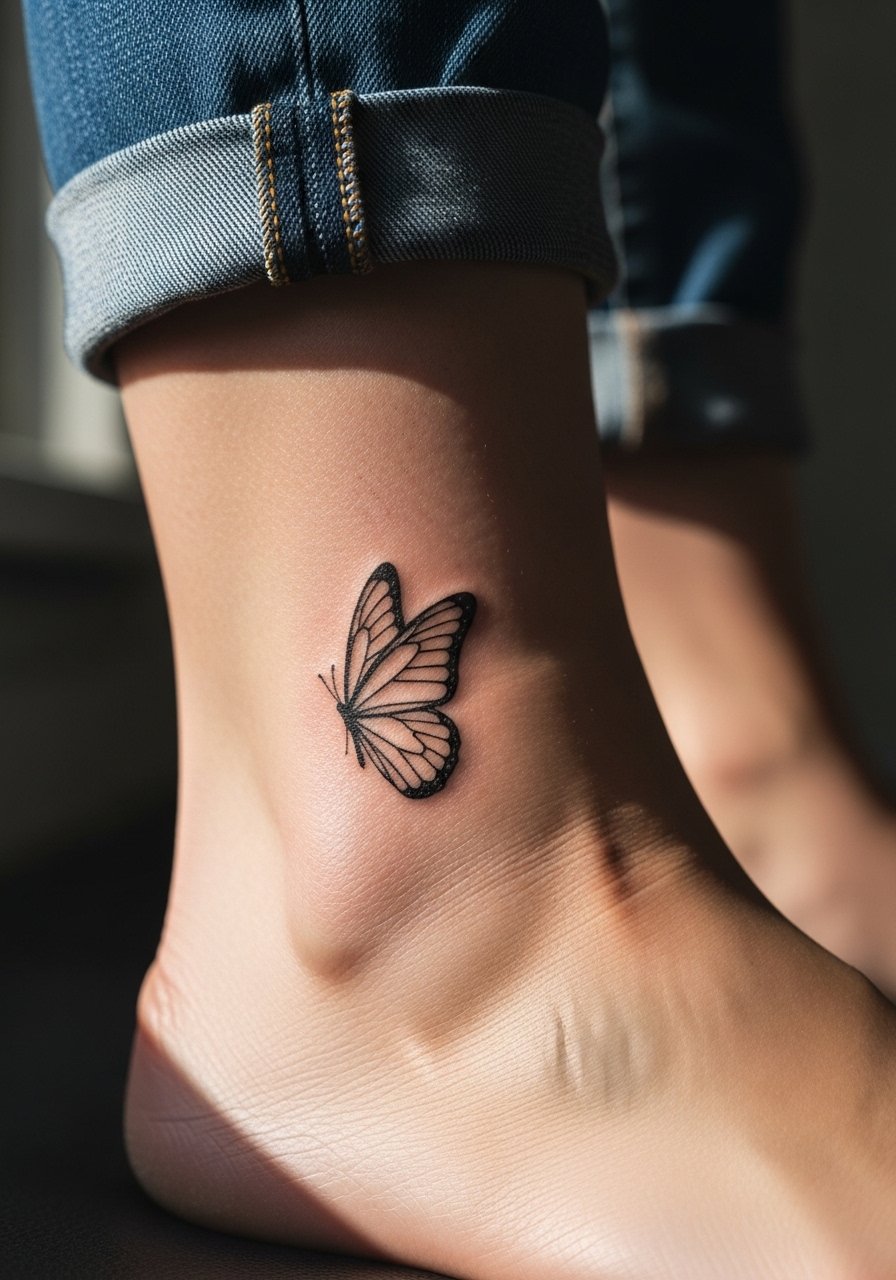
Ankle placements look delicate and discreet, but the skin there endures a lot of friction from socks and shoes. Fine silhouette pieces do best if the artist slightly increases line thickness to resist early blurring. The worst mistake is insisting on hairline outlines at one inch. That reads well fresh and then softens rapidly. The session is usually quick, and pain sits around a five for most people. Style it for summer with cropped jeans or a thin gold ankle chain to draw the eye without covering the linework. Plan for a possible touch-up at year two if you wear ankle straps or boots often.
Pack Smart
The wrist, ankle, collarbone, shoulder blade, and behind-ear pieces above all have different prep and healing needs, so a few targeted items smooth both the session and the first week.
- Tatt2Away non-greasy balm. Users report it feels lighter than thicker ointments during the first few days, which helps with dense black fills that can feel clogged otherwise.
- InkSafe dry-heal spray. Handy for stippled or neck pieces where sweat and movement can cause scabbing to lift.
- Rice bran oil balm. Recommended by some collectors for oily skin that dislikes thick petrolatum products during heavy black saturation heals.
- HealRite small patches. Lightweight patches that stick around ankles and wrists when friction is a concern.
- Breathable tattoo film roll. Useful if you prefer a temporary protective layer in humid months to prevent bubble lift on small pieces.
7. Asymmetrical Wing on the Outer Thigh
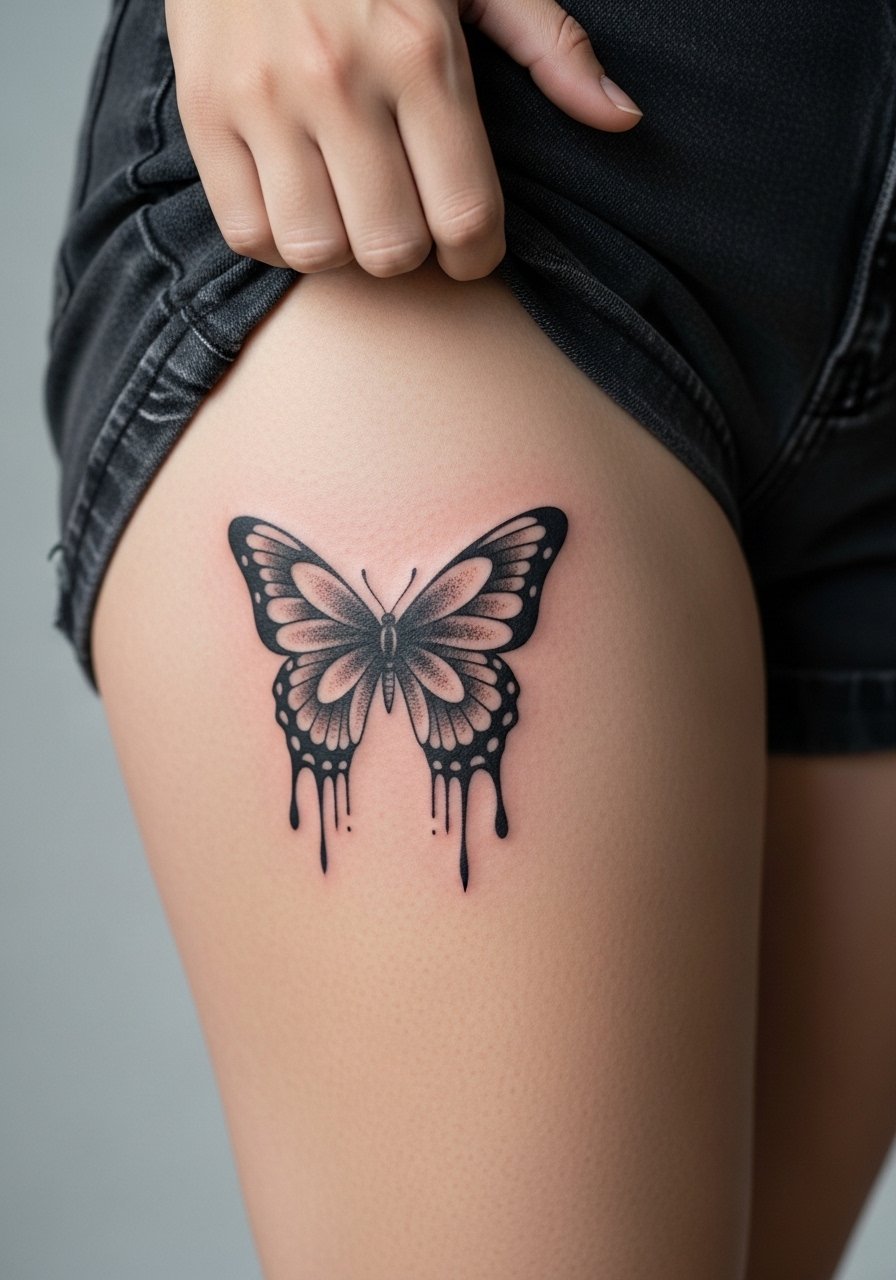
Outer thigh is forgiving for experiments with asymmetry. I recommend scaling one wing with heavier black density and the other with open linework so the imbalance reads intentional rather than a mistake. Consultation tip, bring references that show the exact density contrast you want and ask the artist to sketch how it sits with your leg curve. Sessions can be comfortable since you can shift and relax. A common error is asking for too much tiny detail on a curved plane which later stretches with weight change. For a tough aesthetic, pair this design with moto ankle boots or high-waisted shorts when you want to show it off.
8. Mandala Core Neck Butterfly
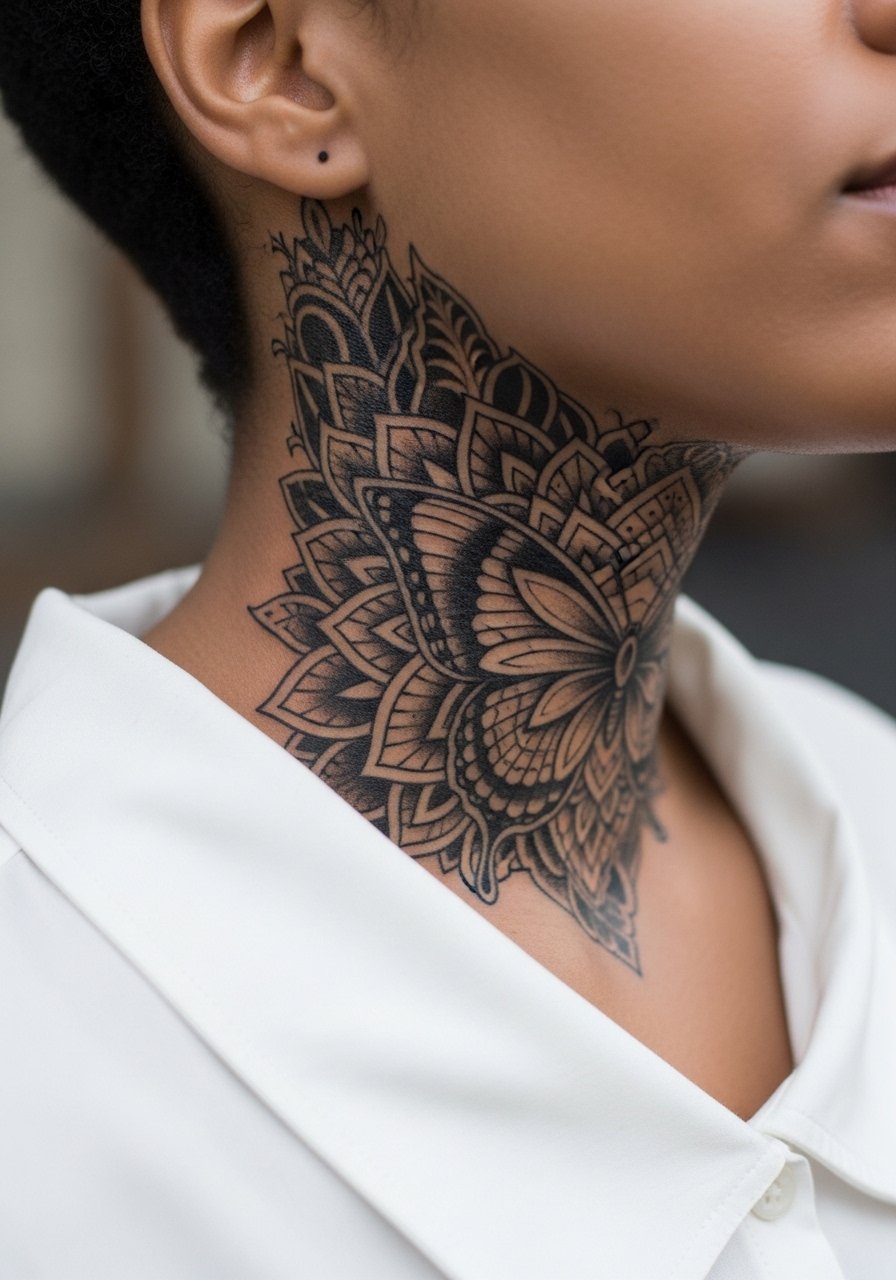
Neck pieces are micro in scale but bold in impact. The mandala core approach uses concentric black fills that read well even when small. Be explicit in your consultation about how close the mandala elements sit to the throat and whether you want the symmetry perfect or slightly organic. Neck skin can be finicky and may need touch-ups sooner because of movement and friction from collars. Also, consider career implications before booking since neck visibility remains an issue in some professions. For styling, a black choker necklace can tuck right above the piece when you want a framed reveal.
9. Stippled Ribcage Butterfly
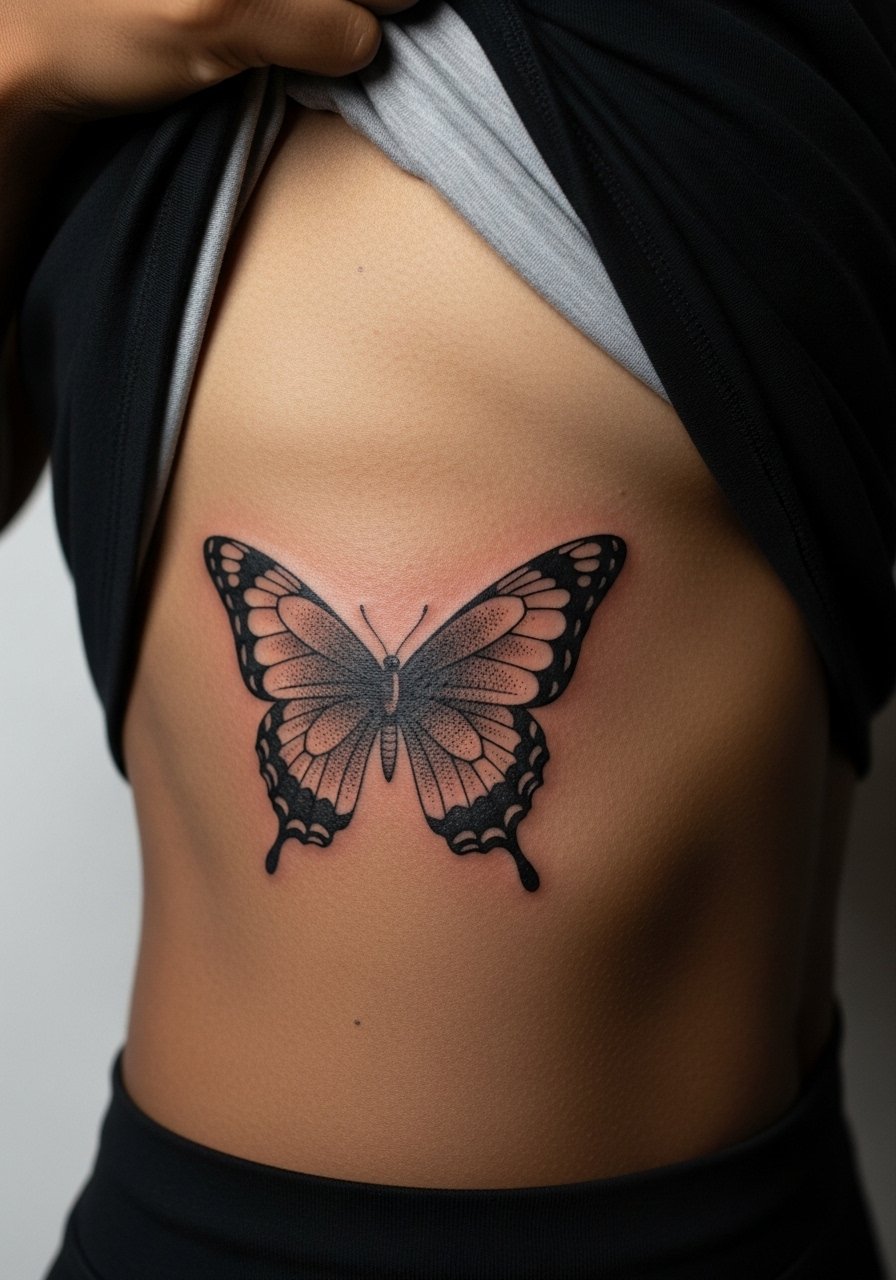
Fair warning, ribs are a higher pain zone. The payoff is texture that photographs well and contours to the body. Artists split on aftercare for ribs with heavy blackwork. One camp prefers a protective film for the first 48 hours to reduce friction. The other favors dry healing to avoid trapped moisture that can lift dense black. Tell your artist upfront about your aftercare preference and whether you sweat easily. A common mistake is requesting super-tight stippling too close to the sternum, which tends to blur first. Plan shorter sittings under two hours if you need breaks. Because of movement, touch-ups at year three are not unusual for dense stipple sections.
10. Vintage Curved Upper Arm Butterfly
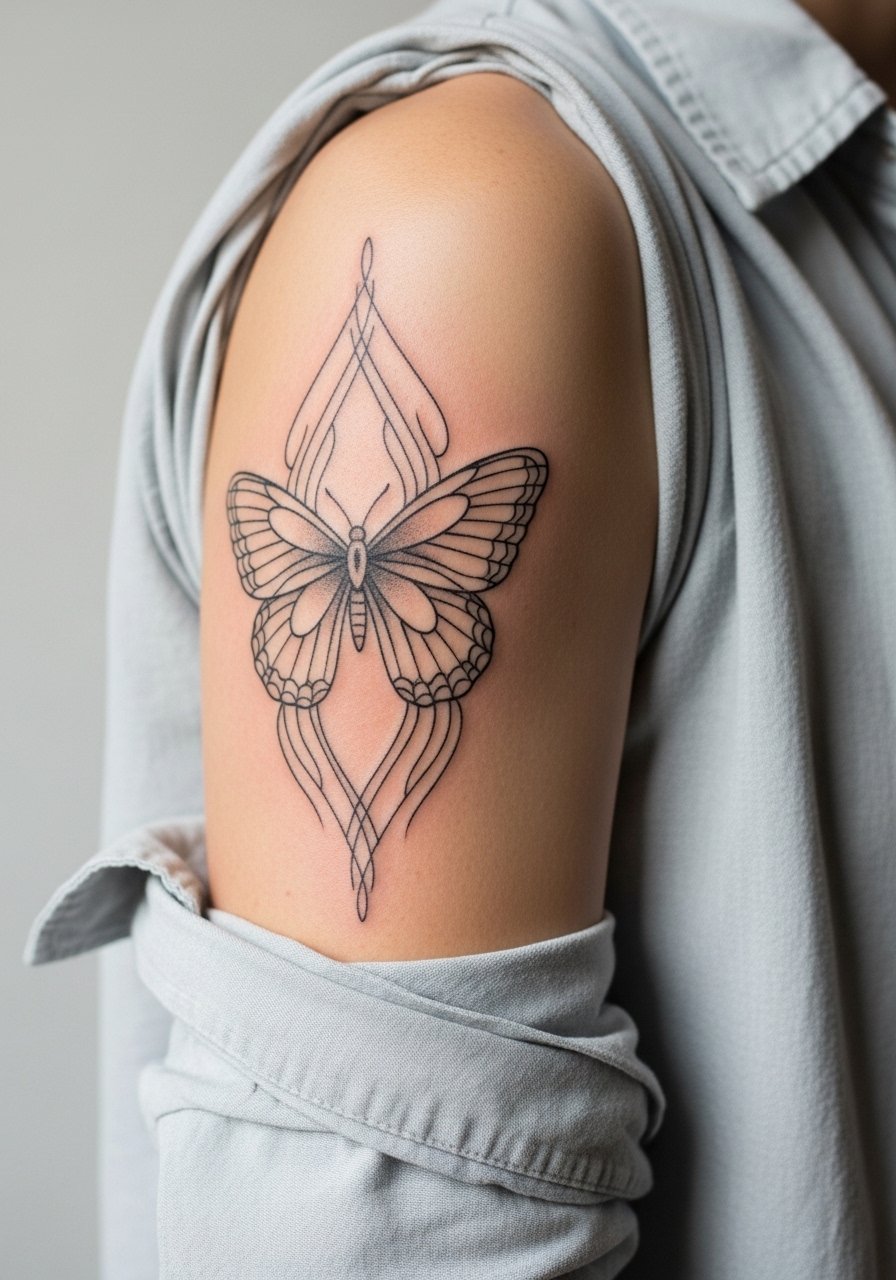
Upper arm pieces are forgiving and a solid place to try vintage curved lines that nod to neo-traditional aesthetics. The skin there handles saturation well, so artists can lean into slightly thicker lines and internal shading. A mistake is packing extraneous filigree into a small space, which creates aging problems later. Expect the session to feel like a three or four on the pain chart and to finish in a single sitting for small pieces. For session wear, pick a loose button-down shirt you can pull aside so the artist has full access. These pieces photograph cleanly at six months and remain readable at five years with minimal touch-ups.
11. Cluster of Three Forearm Butterflies
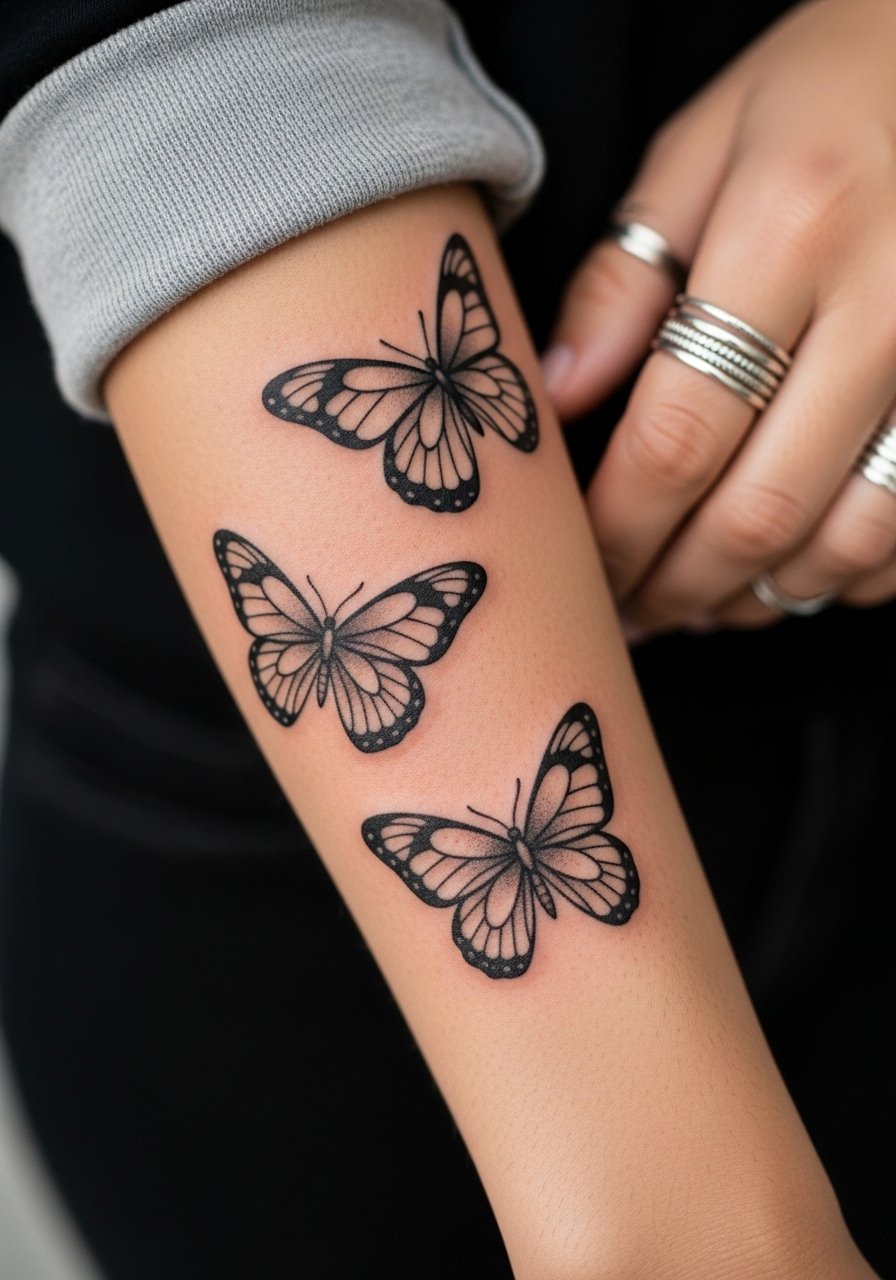
Storytelling with multiples works best when each small butterfly has its own spacing and scale variance. The biggest mistake is placing three identical one-inch butterflies in a straight line. Vary orientation and spacing so the cluster breathes. Forearm placements show detail well at six months but soften by year three if lines are too fine. Ask your artist to mark composition directly on your skin so you can adjust placement while standing. For a cohesive aesthetic, wear stacked matte rings or a matte black ring set to complement the blackwork without competing with the wings.
12. Fractured-Wing Calf Butterfly
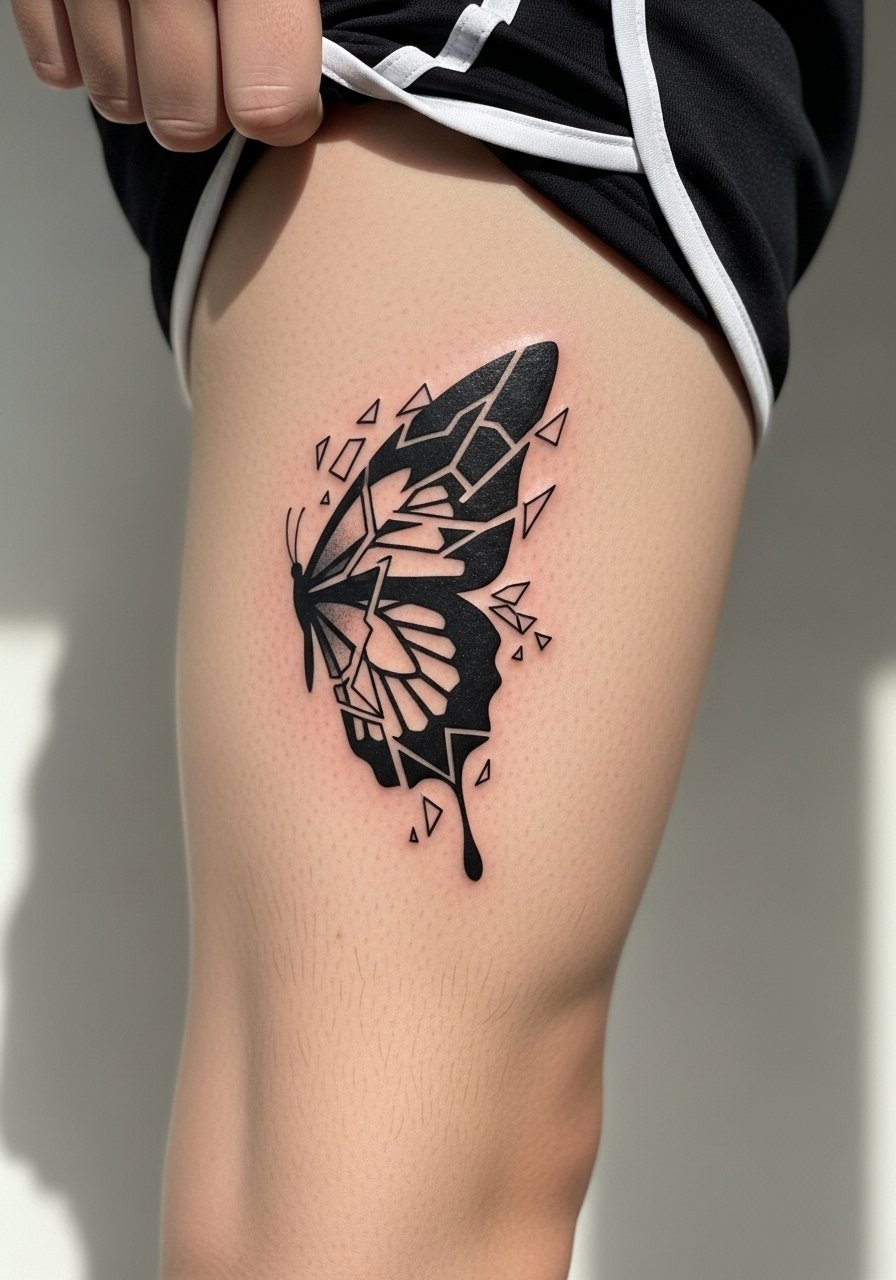
Calves take bold fills well and allow a larger fractured geometry that reads from a distance. The visual impact lead here is simple, the fractures create motion. A common error is compressing fractures into a tiny canvas which loses the broken effect. For sessions expect moderate pain and a one- to two-hour block depending on size. Calf tattoos pair well with rolled jeans or canvas sneakers low top in summer so the art sits visible above footwear. Dot work and heavy black patches age differently, so consider spacing for future touch-ups.
13. Birth-Flower Negative Space Butterfly
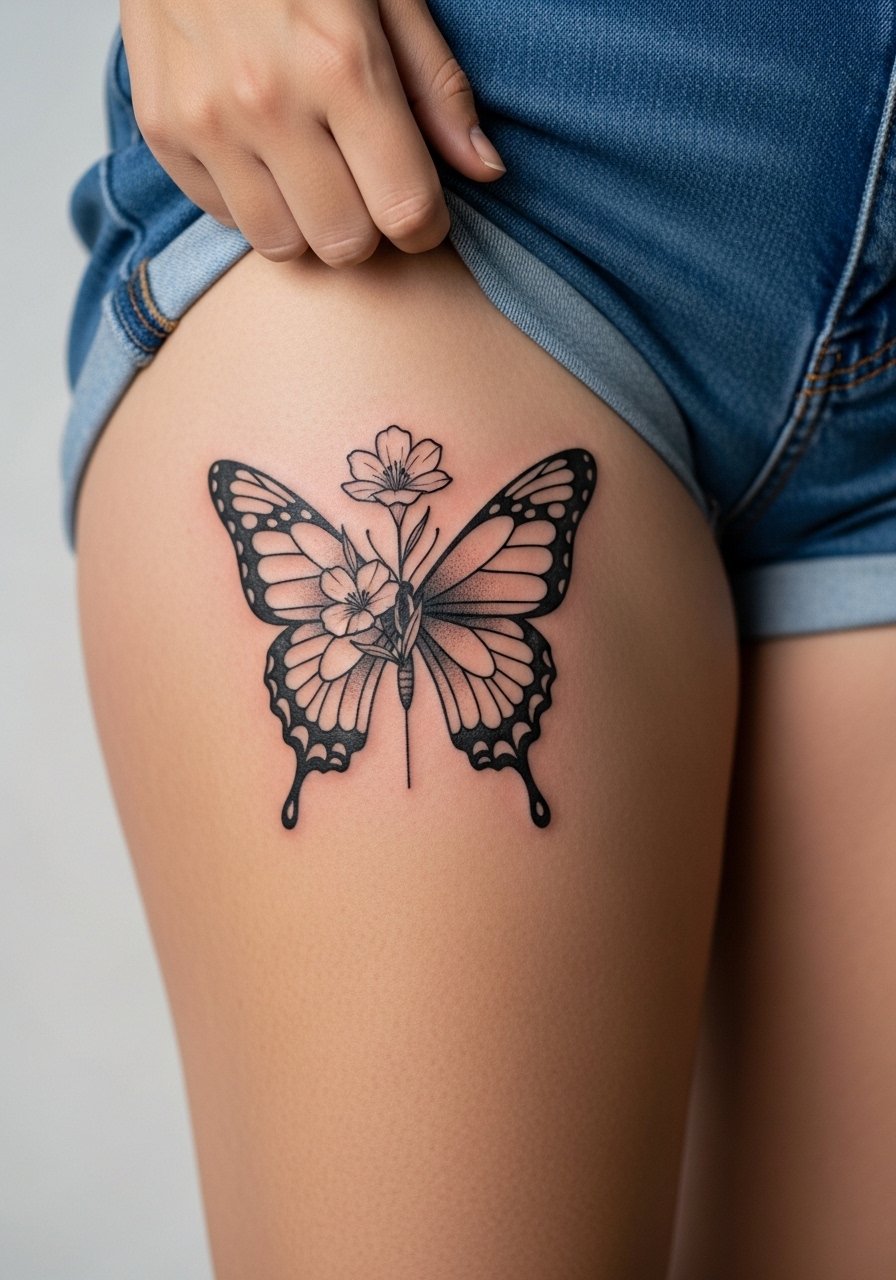
This hybrid idea mixes personal symbolism without color by carving a birth-flower silhouette inside a wing. When you bring references, ask your artist to simplify petals into negative shapes rather than tiny lines that blur. This design is forgiving on the thigh which holds detail well and ages slowly. A mistake is insisting on multiple tiny flowers inside the wing, which can read messy over time. Session wear should be loose shorts so the artist can expose the canvas without awkward tugging. For show-off outfits, high-waisted shorts or slit skirts work best when you want the piece visible.
14. Finger-Knuckle Ring Butterfly
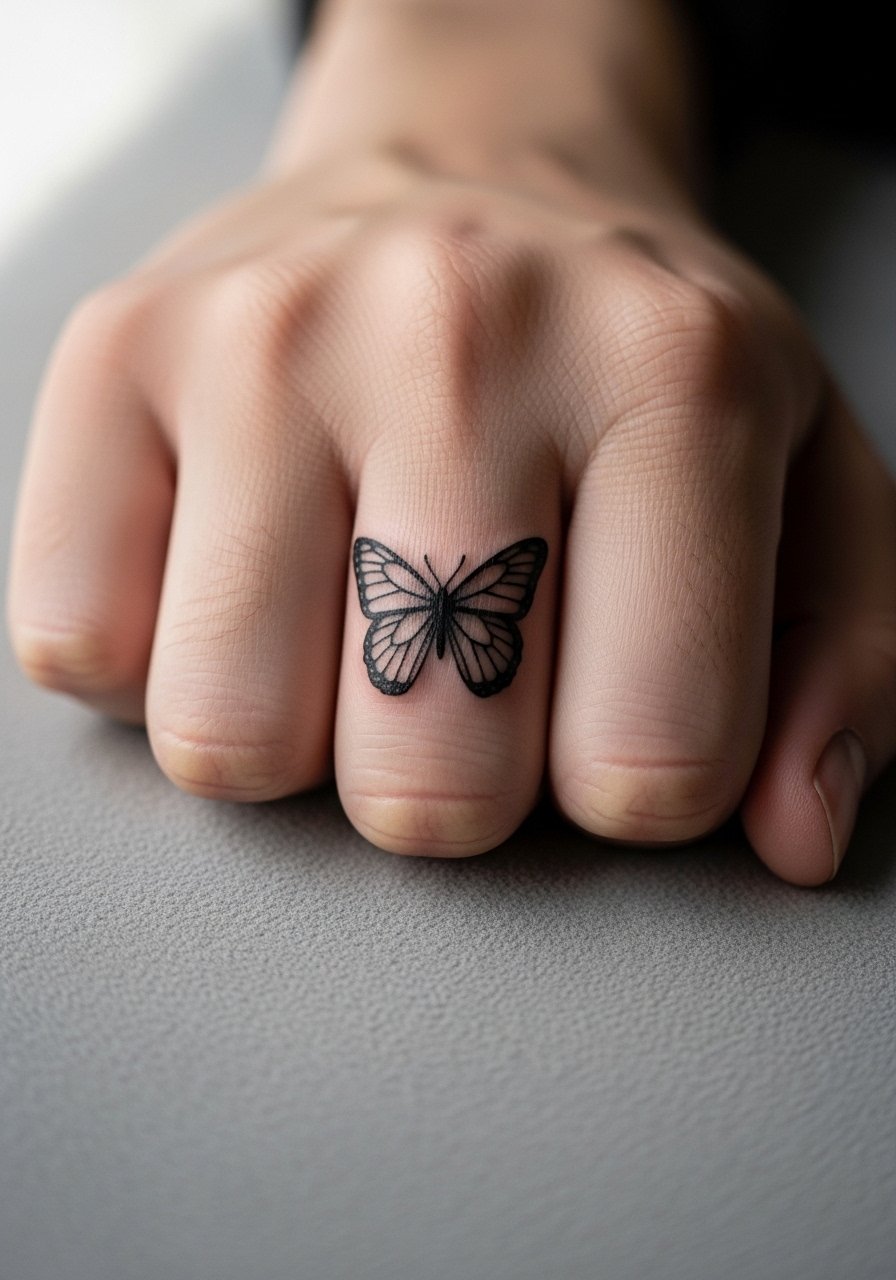
Finger and knuckle work are bold choices because the skin there shifts and blurs faster than other areas. The main mistake is treating knuckles like stable canvas and asking for detailed wings. Scale down to silhouettes or minimal dot accents and accept touch-ups as part of ownership. Sessions are short but the healing is fussy since hands wash a lot and rub surfaces. For lifestyle considerations, think about how often you type or carry bags. If you want a ring-like effect, ask the artist to align the wings across knuckles so they read as a continuous band when your hand is relaxed.
15. UV-Black Subtle Glow Butterfly
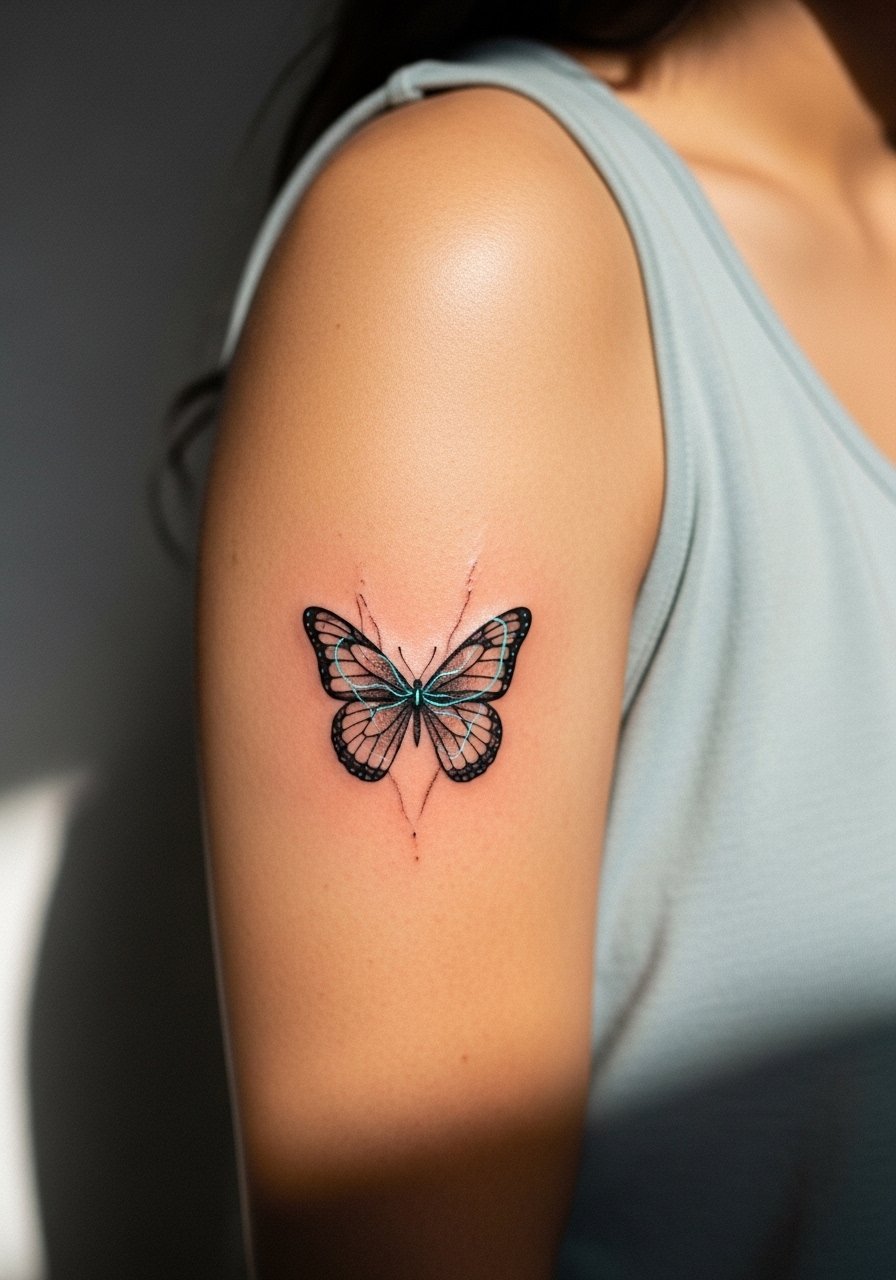
Using UV-reactive black can give a secret glow under black light while appearing as standard blackwork in daylight. This is experimental, so discuss pigment safety and long-term fade with your artist before booking. The controversy here is about novelty inks versus proven pigments. Some artists avoid UV entirely citing inconsistent saturation. If you try it, place the UV only as a highlight rather than the main fill. Sessions feel the same as other blackwork but you will likely need a touch-up earlier for the UV element. Keep in mind not all studios do this, so search hashtags and guest spots to find an experienced practitioner.
16. Curve-Scaled Calf Illusion Butterfly
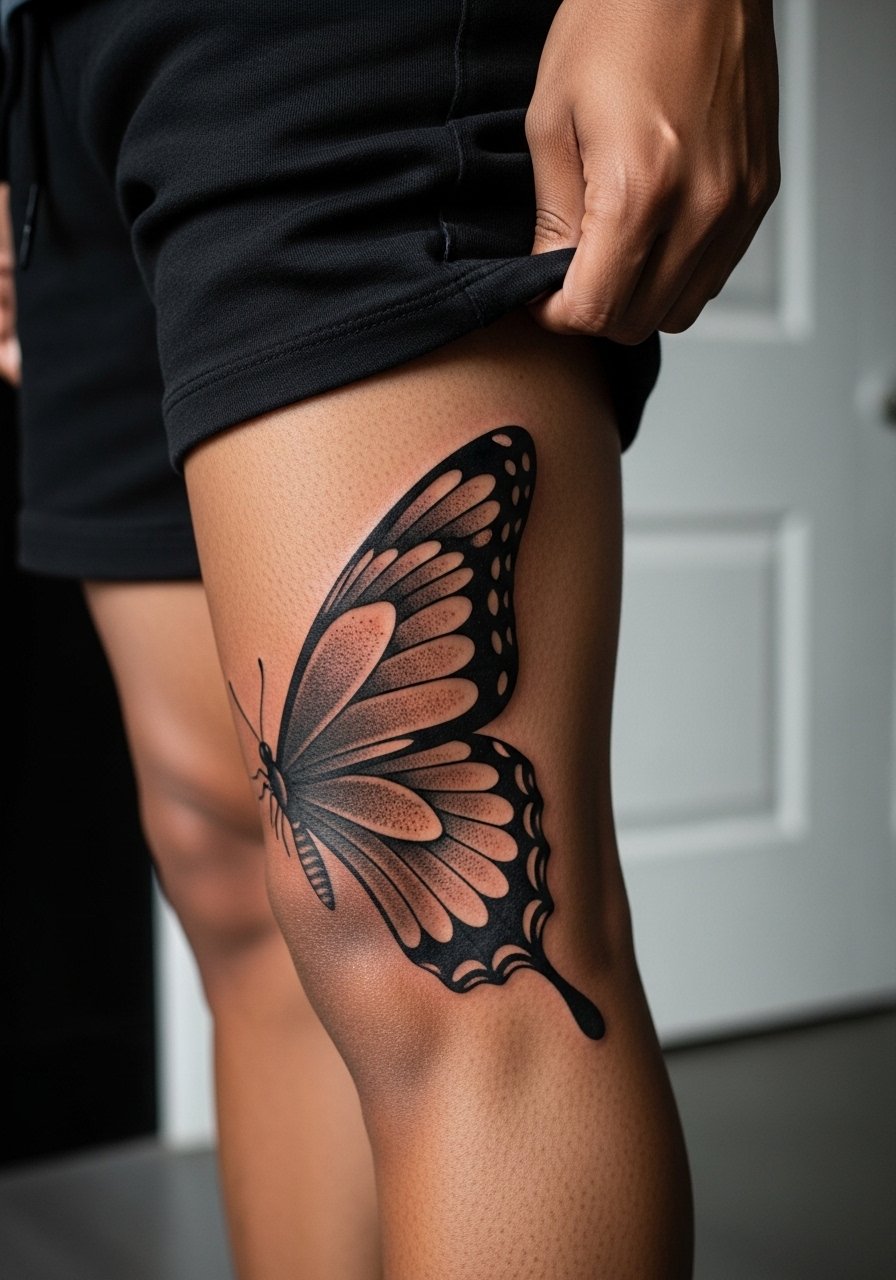
Scaling design to body curves is an under-used approach that creates a three-dimensional look without color. The consultation lead here is key. Ask the artist to sketch the stencil while you stand so the scales align with muscle flow. A mistake is placing a flat reference without considering how the calf bulges when walking. Sessions are comfortable and you can expect the piece to read strongly at six months. For a casual reveal, roll bootcut jeans at the hem or wear bootcut ankle jeans to show off placement with minimal effort.
17. Scar-Friendly Cover Butterfly
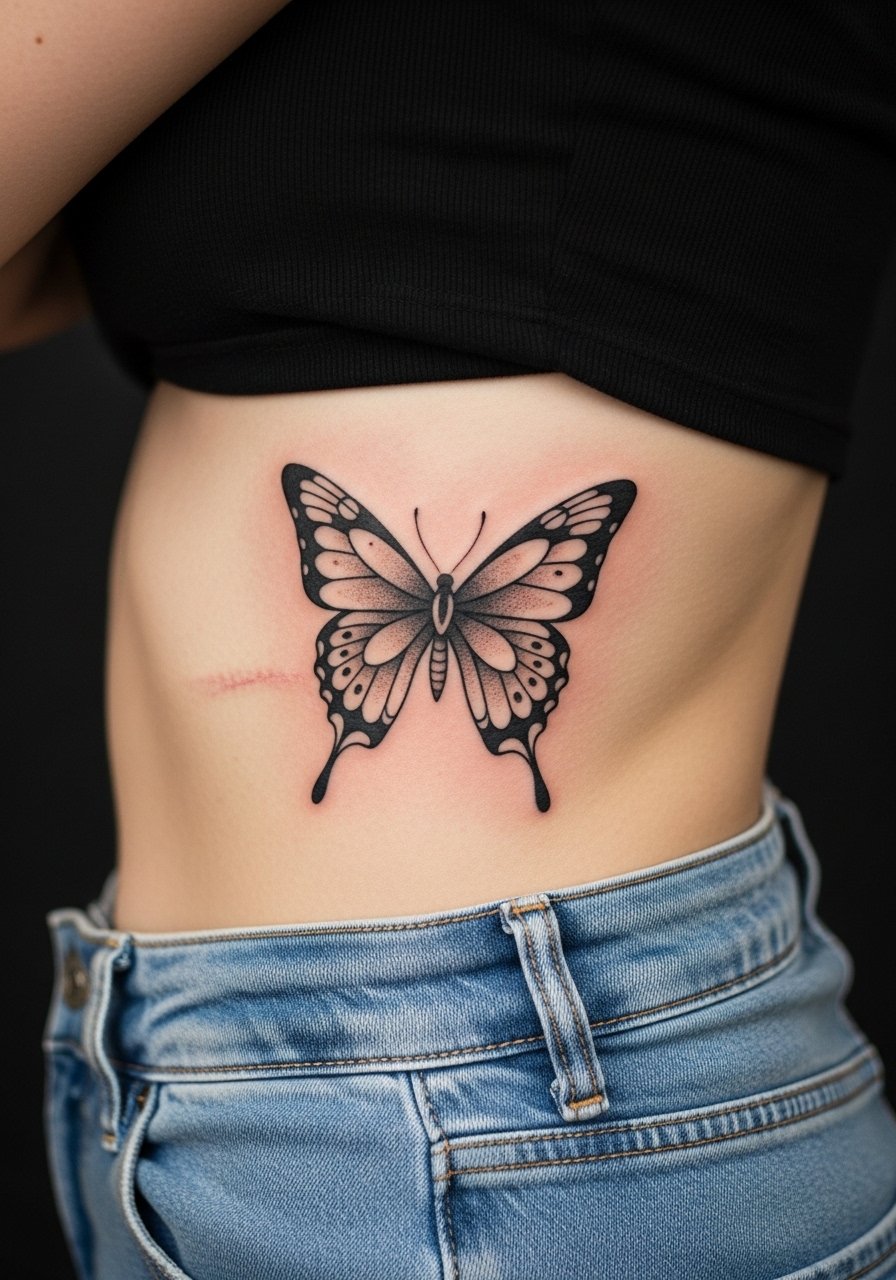
Using blackwork to integrate scars takes planning and realistic expectations. A good scenario is mapping the scar into the wing pattern so the texture becomes part of the design rather than trying to mask it entirely. Tell your artist about the scar age and any grafts so they can advise on saturation depth and healing. A mistake is assuming total coverage in one session. Depending on scar tissue, multiple passes and longer healing will be needed. Session sensations can vary over scar tissue, sometimes feeling more sensitive. Many people prefer a slightly larger design to allow for blending and future touch-ups.
18. Minimal Collarbone Micro Butterfly
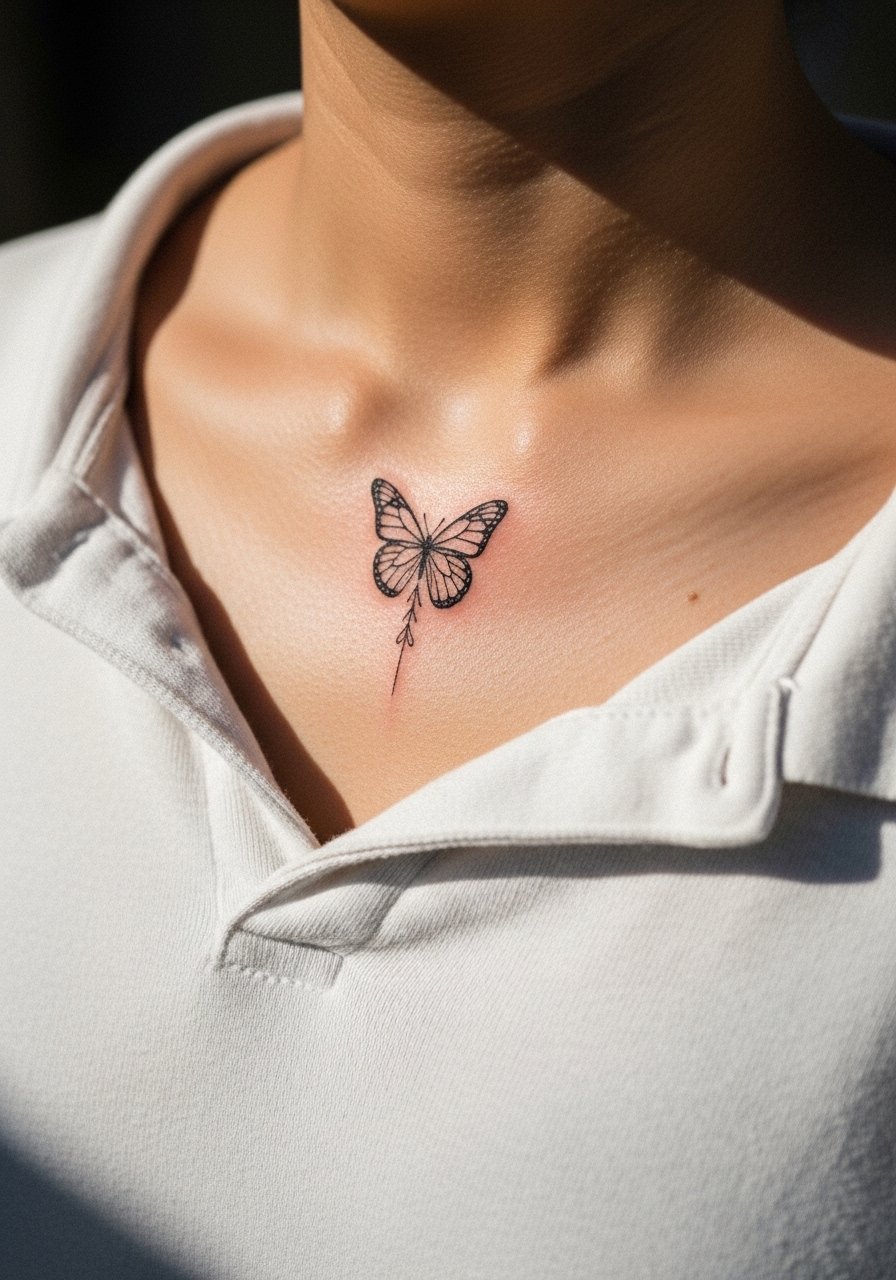
This minimalist take reads elegant when lines are crisp and not too thin for bone proximity. The aging lead says fine lines near the collarbone will soften faster than bold outlines. To combat that, ask the artist for slightly heavier contour lines while keeping internal detail light. Sessions are often twenty to forty minutes and pain is noticeable on bone but tolerable. For showing it off, a long pendant necklace can layer beneath without competing with the micro butterfly. Expect possible touch-ups at year two depending on sun exposure.
19. Dotwork Thigh Miniature Butterfly
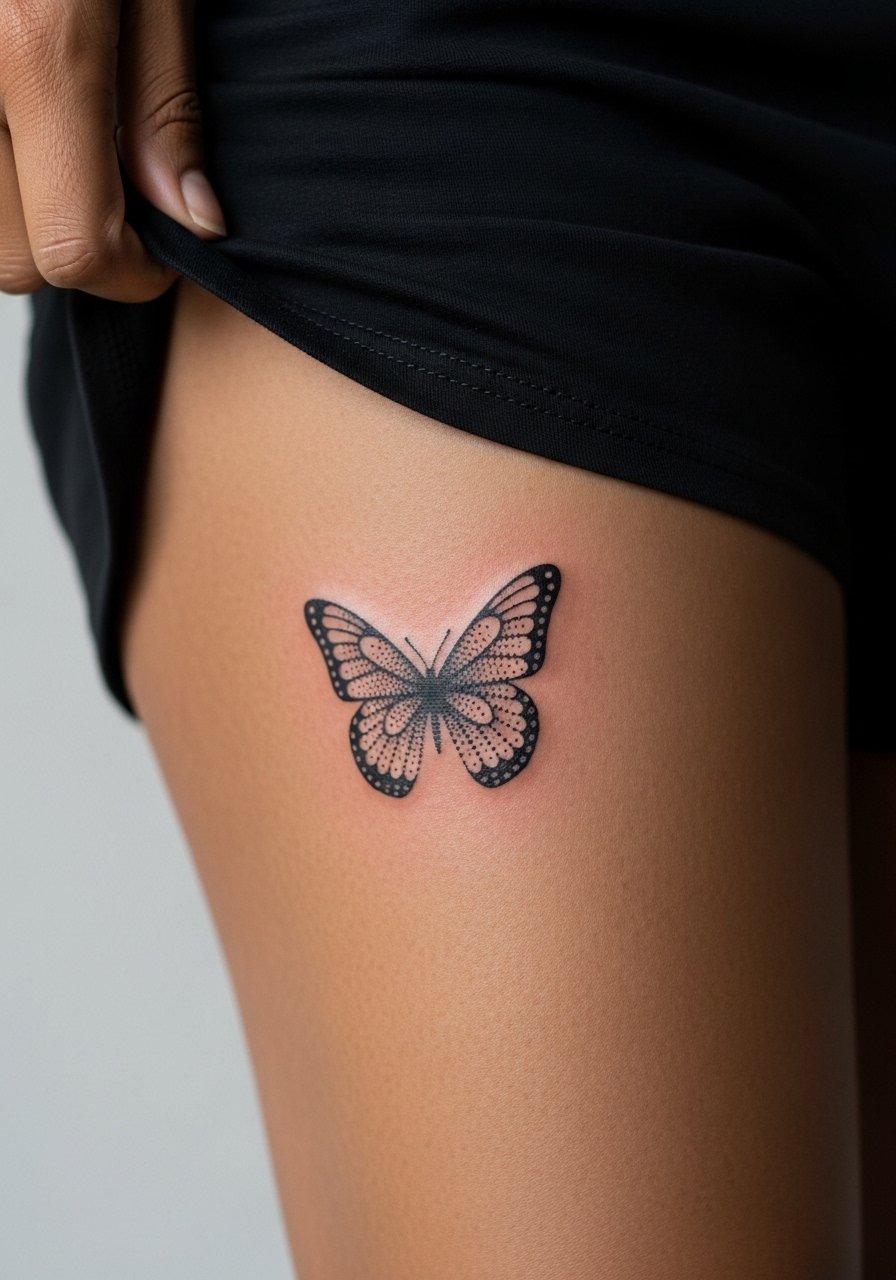
Thighs take dotwork beautifully because the canvas is stable and less exposed to daily friction. The visual impact comes from textured stippling that mimics wing scales without color. A common mistake is packing dots too densely at a small scale. Ask for a dot spacing plan and expect stipple to soften into tone over two years. For session wear, bring loose shorts so the artist can move without rubbing the area. If you later want expansion, the thigh allows room for complementary motifs.
20. Ornamental Hip Butterfly
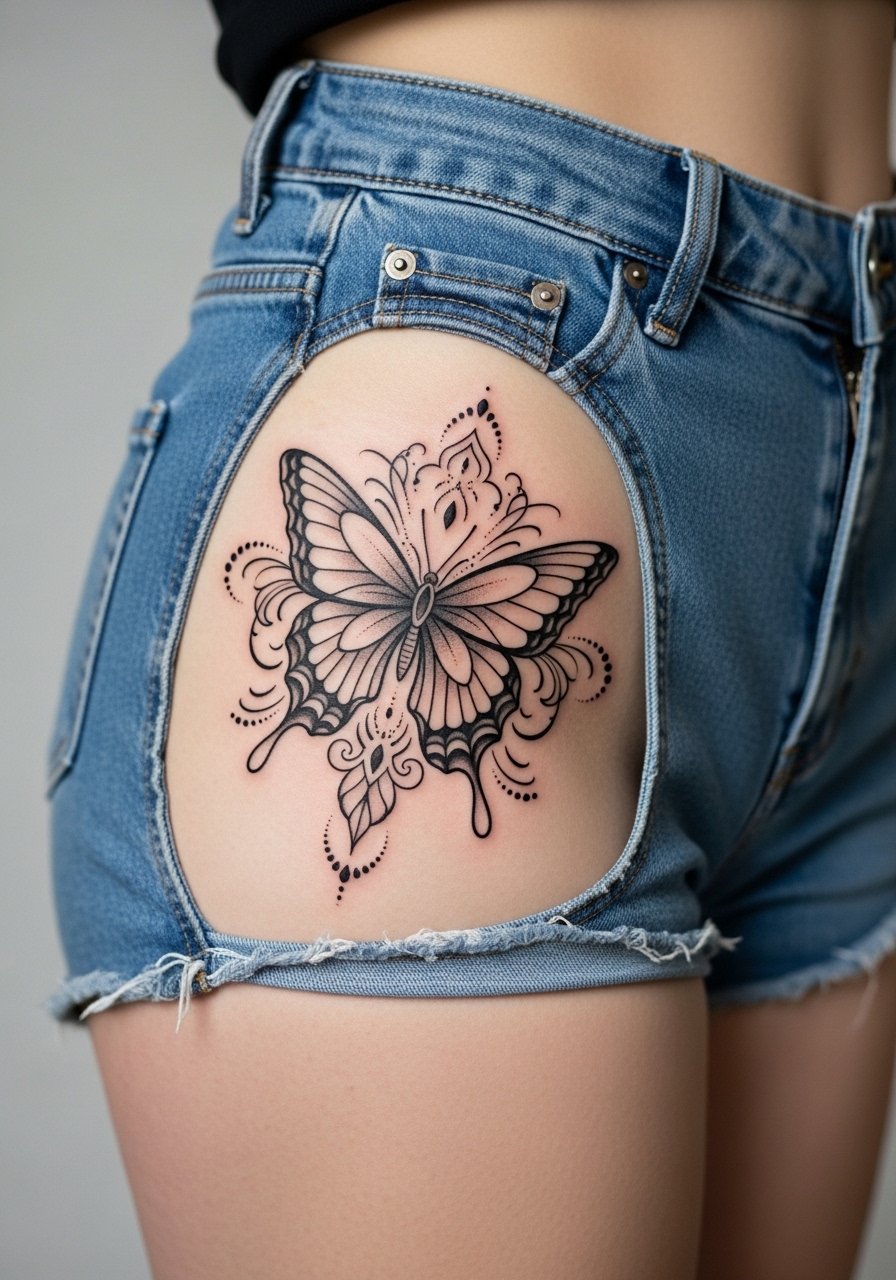
Hip placements read well with ornamental edges that curve into clothing lines. The consultation lead here is to match the wing curve to where your waistline falls so the design complements rather than competes with garments. A mistake is placing heavy black too close to the waistband which can cause premature fading from chafing. Sessions can be comfortable if you bring flexible bottoms. For a show-off look, select high-waisted pieces or high waist leather shorts so the tattoo peeks where intended. Plan for a touch-up window around year three if friction is constant.
21. Side Neck Micro Hideable Butterfly
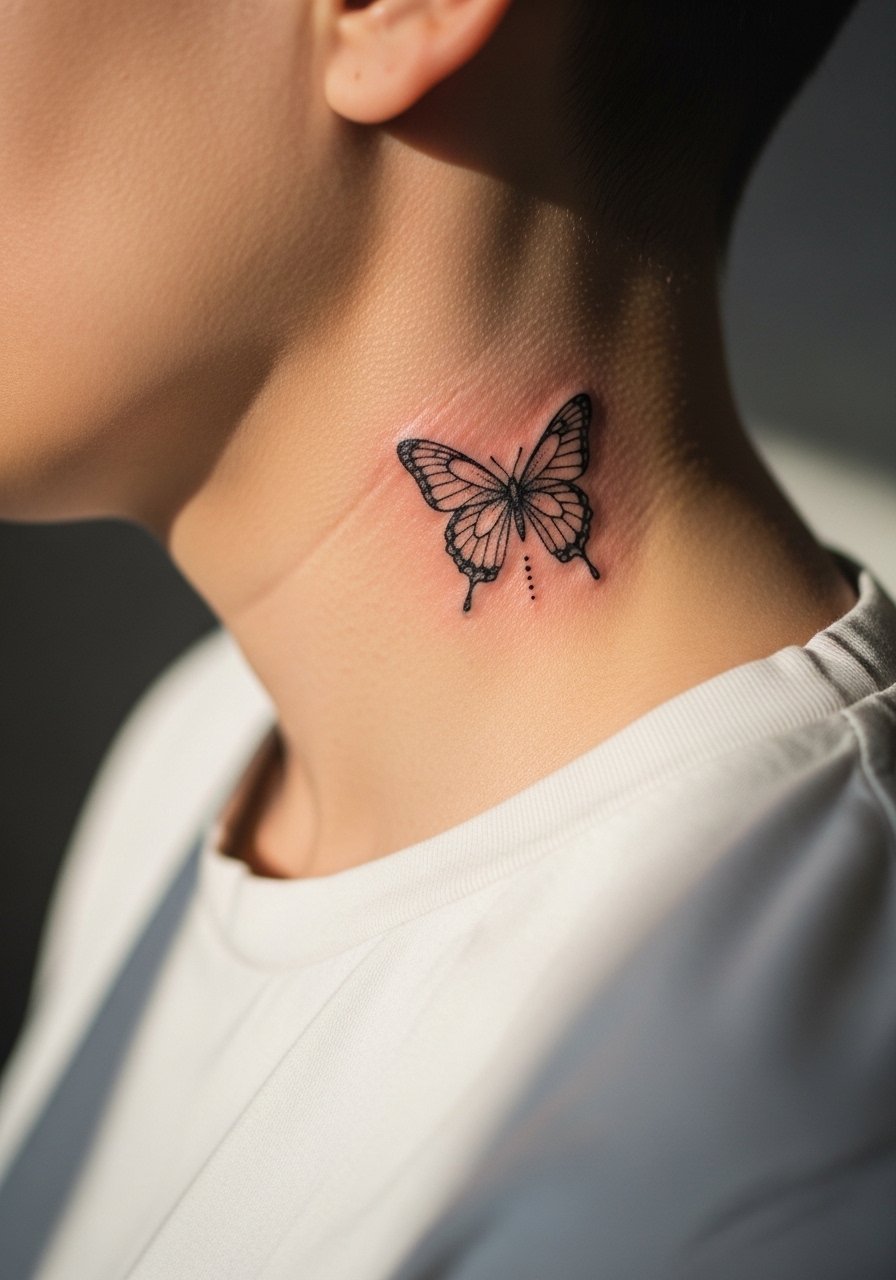
Decision pressure hits at the stencil stage with side-neck pieces because visibility is immediate once the shirt shifts. The pain is moderate and sessions are usually under an hour. Artists debate neck visibility; one camp says neck micro pieces are fine if you want to show them, the other warns employers may react. If you want hideability, place the piece slightly behind the hairline or keep it very small. A common mistake is asking for text or thin script next to a micro butterfly which will blur into illegibility. For session comfort, wear a wide-neck shirt you can adjust without full undressing.
Frequently Asked Questions
Q: Will a small blackwork butterfly fade faster on darker skin tones than on lighter skin tones?
A: From what I've seen, saturation behaves differently across skin tones. Heavier, well-saturated fills and slightly thicker linework help blackwork read longer on darker skin, while ultra-fine lines tend to soften more quickly. If you are concerned, test a temporary decal in the exact scale and check it over months, and ask your artist about touch-up plans.
Q: For a ribcage stippled butterfly, should I choose Saniderm or dry healing?
A: Artists are split on this one. The Saniderm camp argues it prevents picking and keeps the area clean. The dry-heal camp says ribs with dense blackwork form better scabs and retain saturation without trapped moisture. The safest route is to ask your artist for their preferred method and follow instructions consistently since switching mid-heal causes problems.
Q: How should I dress for a wrist or forearm blackwork session?
A: Wear easy-to-roll sleeves and avoid jewelry. A sleeveless black tank or a loose button-down you can pull aside makes the artist's life easier and reduces fabric rubbing on fresh work. Comfortable clothing helps you relax and keeps the session efficient.
Q: If my artist cancels or a guest spot falls through, how do I avoid losing deposits?
A: Platforms with cancellation policies can help. Booking through apps that hold funds or offer refundable deposits reduces the risk of being out money if an artist ghosts. Also, ask about studio cancellation policies before paying.
Q: Are UV-reactive black inks safe and worth it for a small butterfly?
A: UV black is experimental and not universally recommended. It can offer a hidden glow but tends to need earlier touch-ups and not every shop uses pigments they trust. If you're curious, have a detailed consult about pigment source and expected maintenance before committing.