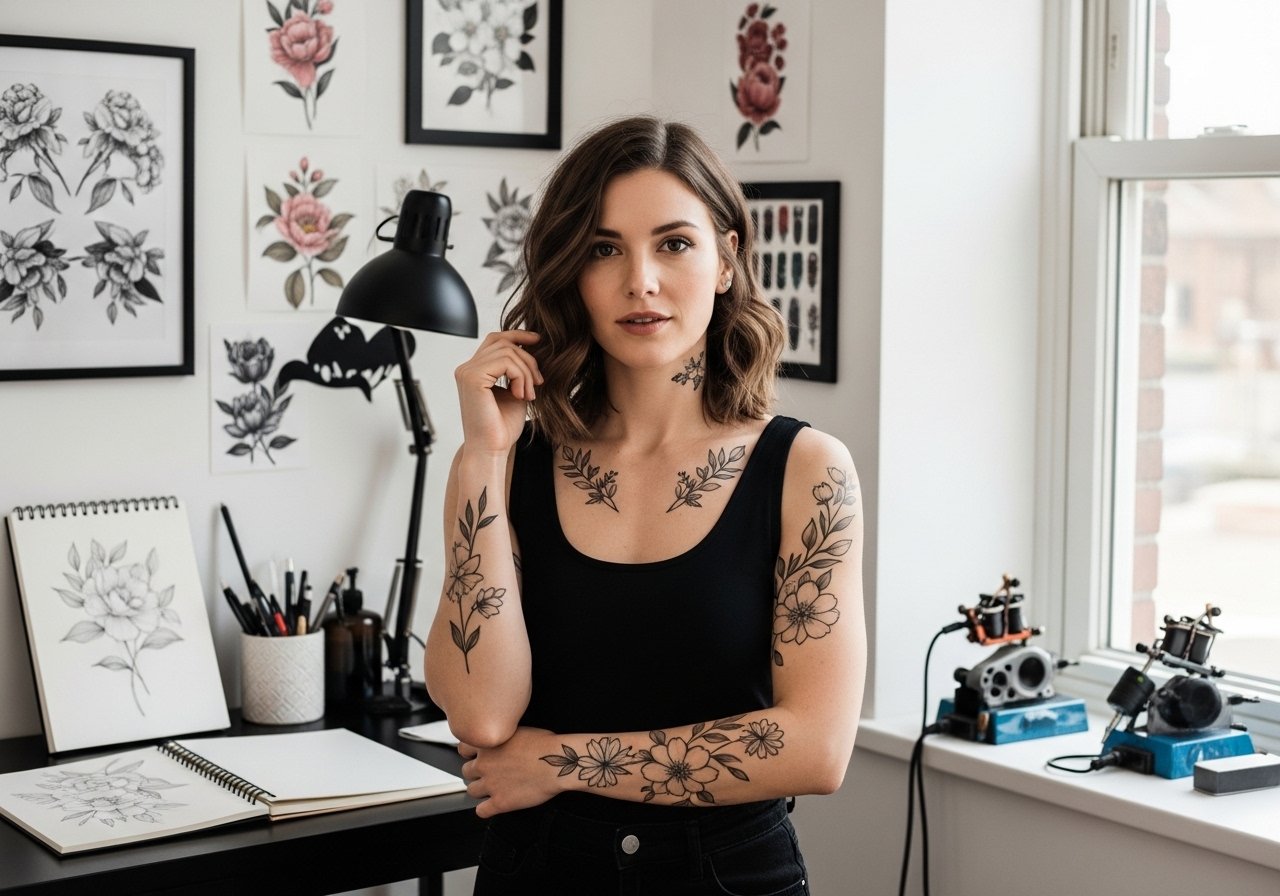
Fine line chest tattoos are everywhere on saved boards, and the reality is that what looks crisp on a screen does not always hold up on curved skin. Placement, spacing, and the way lines sit over ribs and collarbones determine whether a piece still reads in a few years. This list walks through 21 chest-focused directions that work for different body shapes and wardrobes, with practical consultation notes you can use in the chair.
1. Fine Line Sternum Sprig
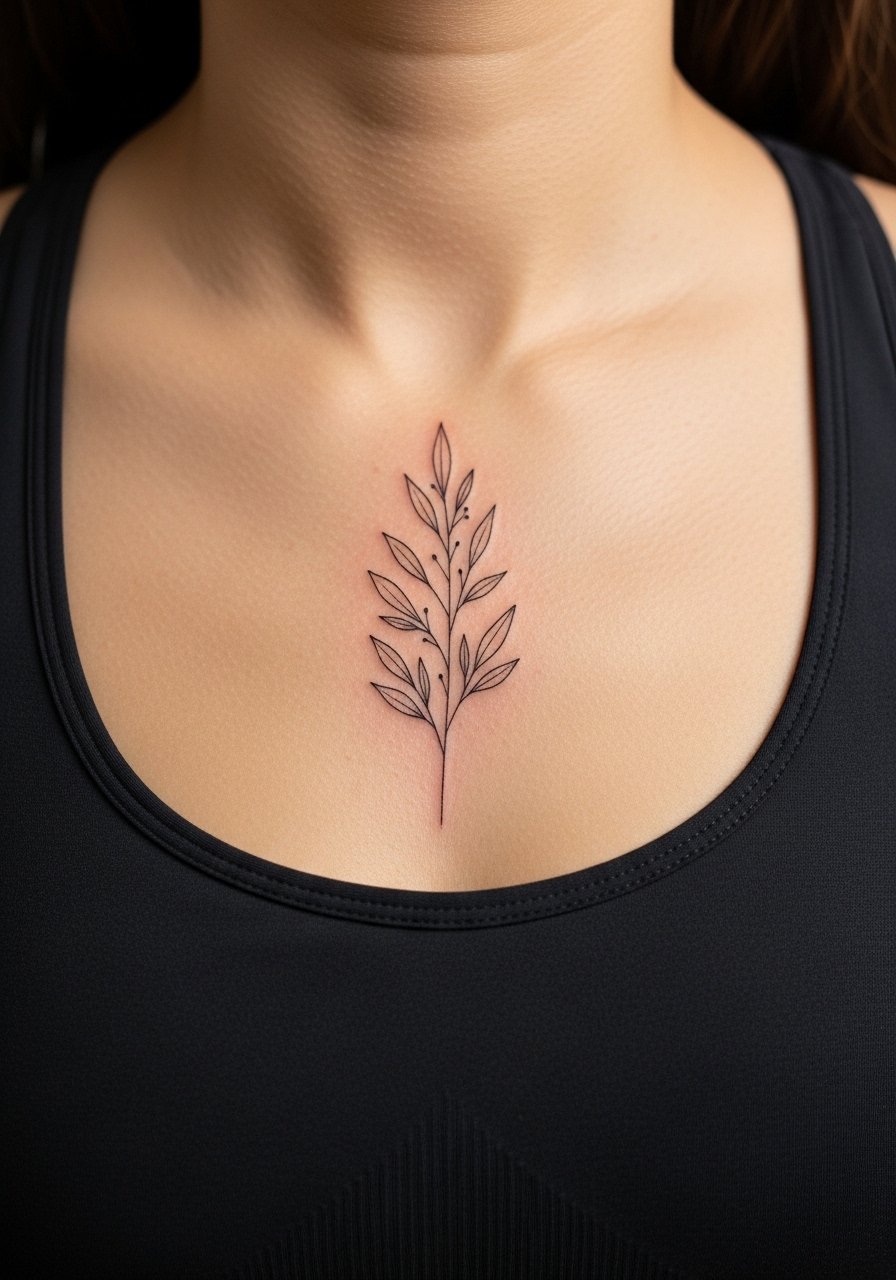
I recommend this for anyone wanting a delicate central piece that reads under both low and high necklines. Fair warning, the sternum can be sensitive, so expect a higher pain score and a single session that takes a couple of hours. Tell your artist you want slightly increased spacing between leaves so the dots and stems do not merge over time. The common mistake is asking for hairline stems with no breathing room. For the session wear, a fitted sports bra helps the artist access the area while keeping you covered. Touch-ups are common around year two for very thin stems.
2. Single Rose Over the Heart
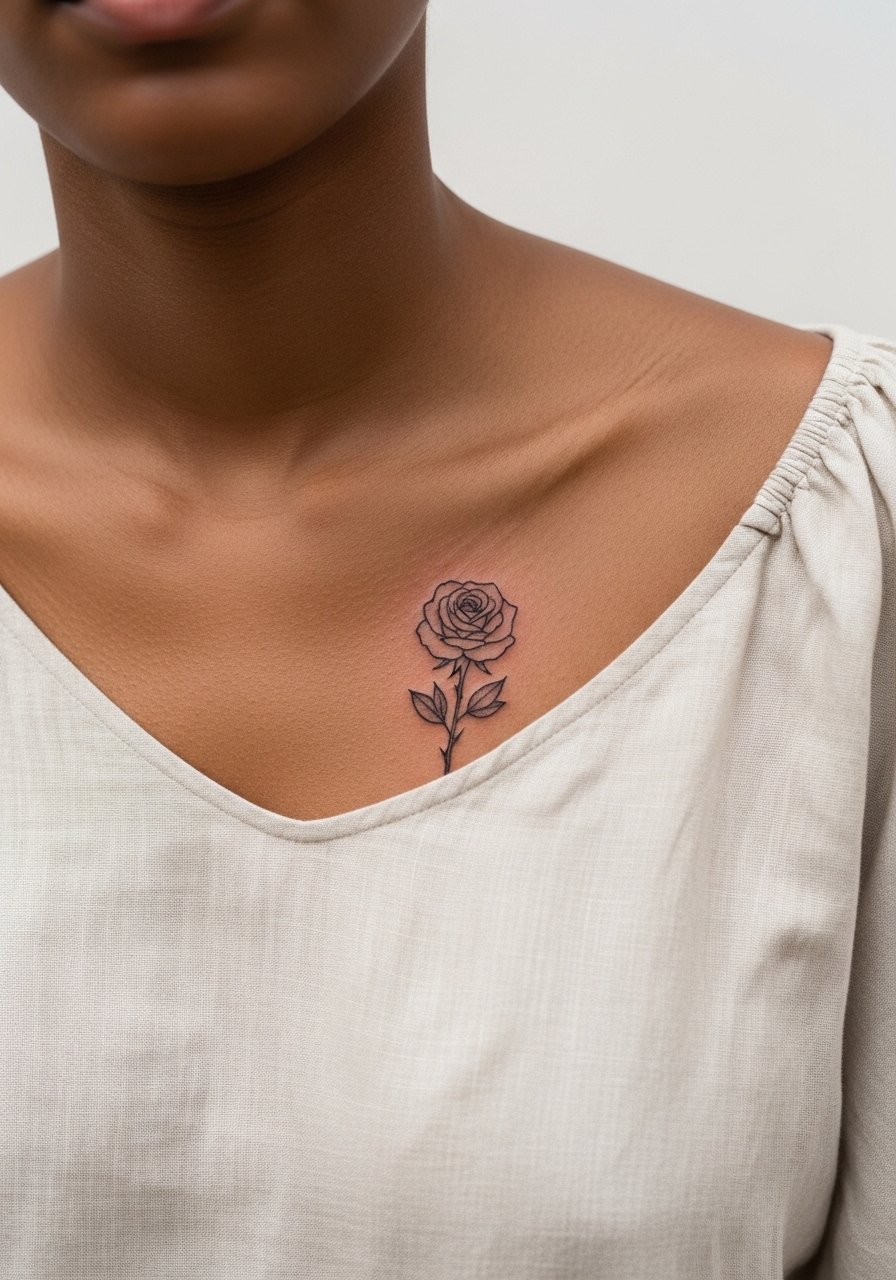
This design reads like jewelry when placed just over the heart. Pain is moderate and a session is usually under two hours for a small single-flower motif. Ask your artist for slightly bolder linework around the petals so the bloom holds contrast as saturation softens. A frequent mistake is making center details too small, which fades into a blur after a couple of years. Pair it with layered necklace looks for evenings, and try a thin chain pendant necklace that sits above the bloom to frame the area without covering the ink.
3. Symmetric Blackwork Chest Plate
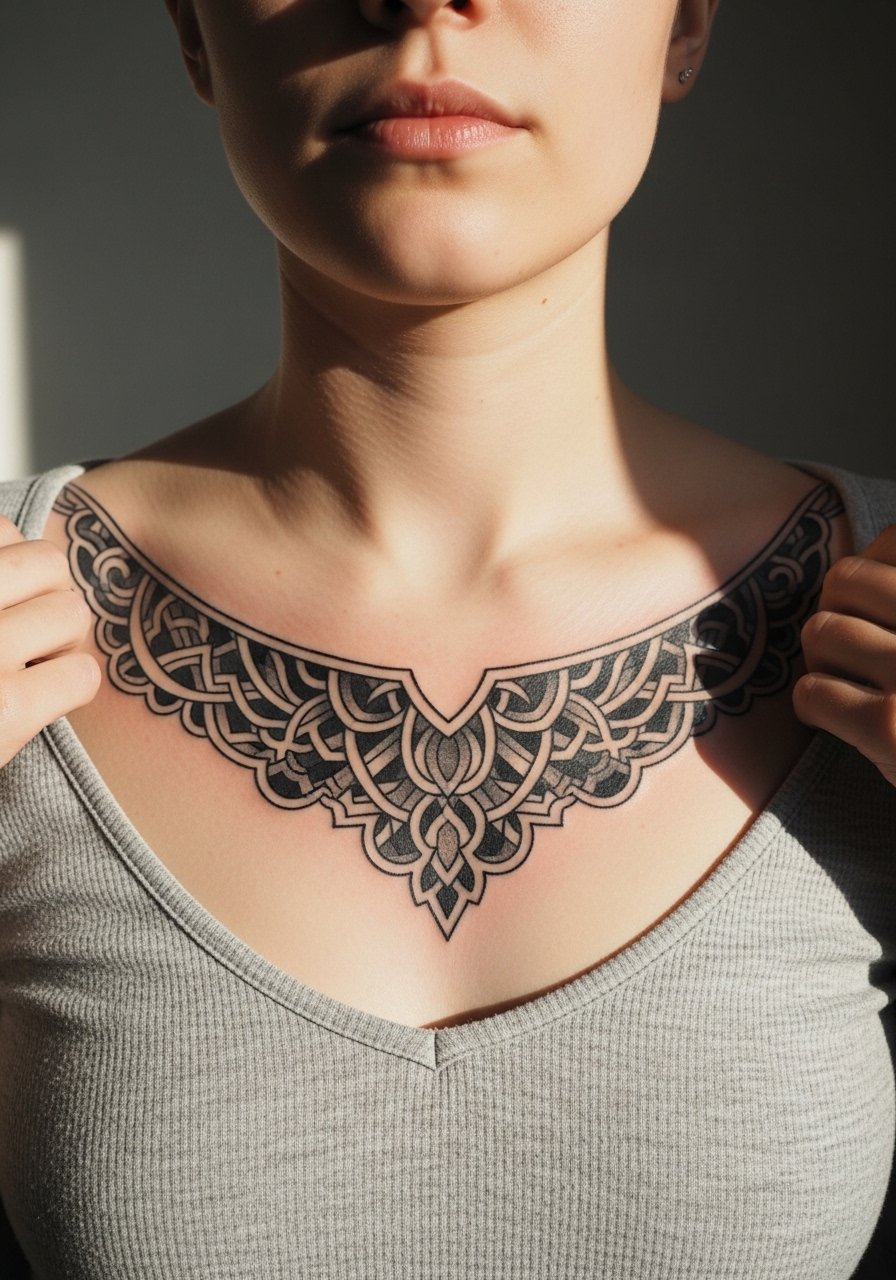
This one is for people who want a graphic statement rather than delicate detail. Expect longer session time and some soreness the next day. Ask for larger blocks of saturation instead of micro detail so the shapes age predictably. A common regret is requesting tiny flourishes inside solid areas, which tend to lose definition with time. For wardrobe, open-collar shirts or open-back midi dresses show the work without undermining the negative space.
4. Script Under the Collarbone
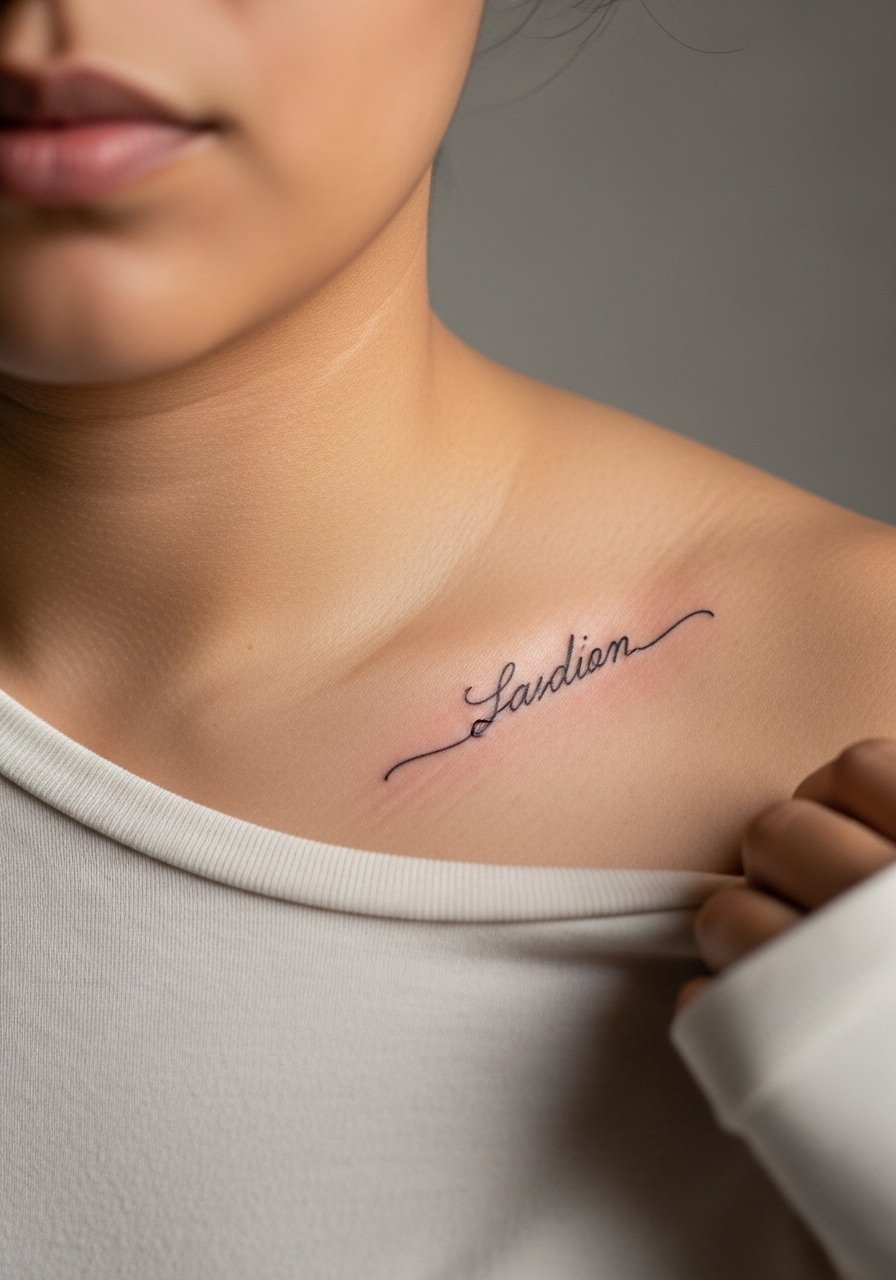
Fine script at the collarbone is subtle and easy to hide or show. The trick is size and spacing. Tell your artist the exact font weight you like and ask for a slightly larger x-height than you think you need so letters do not thicken as you heal. One debate in the community is whether micro script survives over time on busy skin. One camp says small script blurs quickly, the other camp says with proper depth it stays legible. Ask where your artist stands. For showing it off, a racerback tank or wide-neck top works well.
5. Micro-Realism Bird at Center
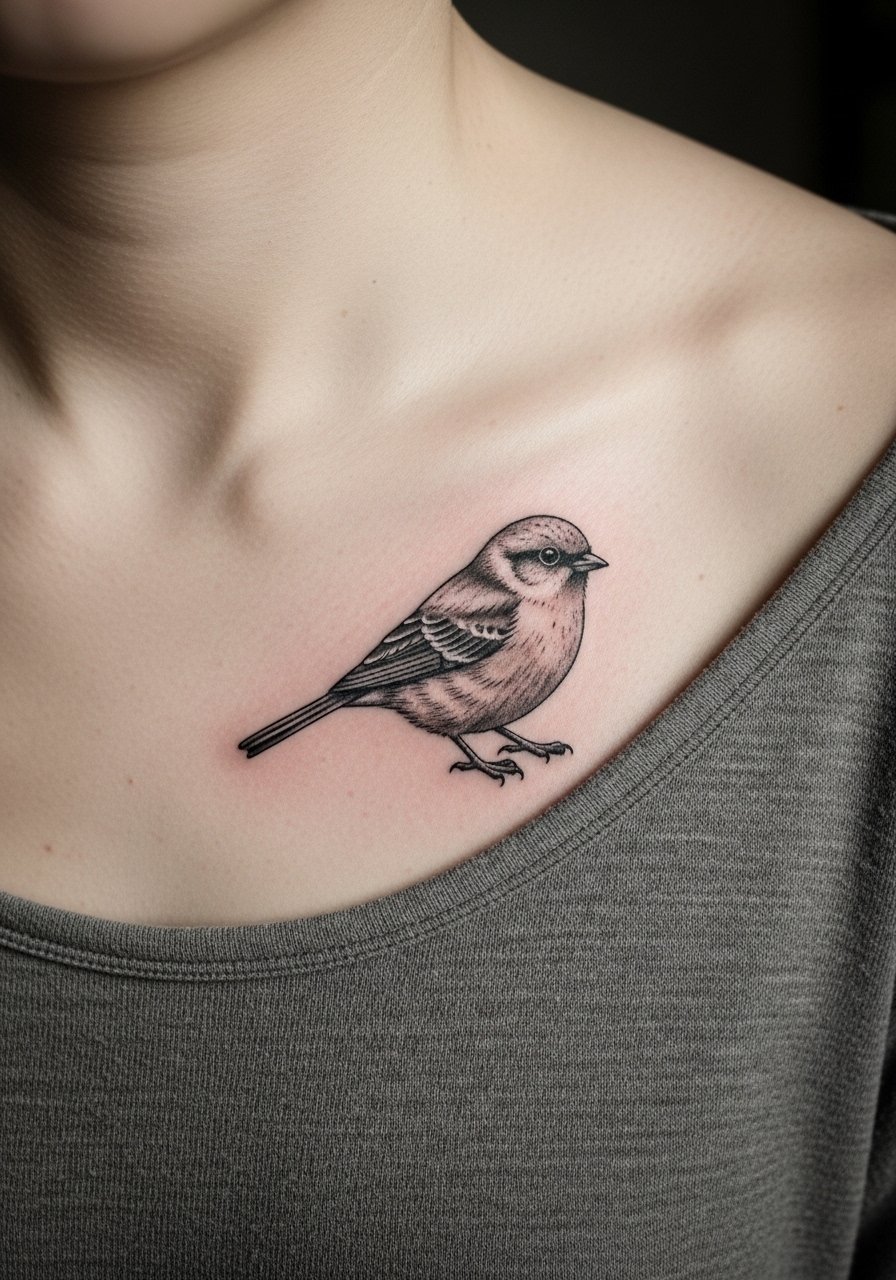
A tiny realistic bird can feel personal and anchored. Micro-realism needs crisp contrast from the start or it softens into a smudge after a couple of years. In consultation, ask for clear contrast edges and a slightly bolder beak outline. The mistake is requesting ultra-fine featherwork without considering touch-ups. Pain is moderate and session time often sits under two hours. For sessions, wear a loose button-down you can pull slightly aside so the artist can work without you exposing more than necessary.
6. Lace Filigree Below the Cleavage

This underbust filigree is sensual and frames low necklines nicely. The sternum area can pull and stretch more during movement. Tell your artist you want slightly heavier contour lines and more negative space in dense areas to avoid merging in two to three years. The main error is asking for overly intricate tiny loops that age into a blot. For session comfort, a strapless or bandeau top is best so the artist can access the full band cleanly. Expect a longer session and plan a touch-up around year three if you favor very fine loops.
Studio Day Picks
These upper-chest and sternum pieces above need different prep than a sleeve. A few targeted items smooth the session and the first week.
-
Thin breathable adhesive film roll. Useful for the underbust and sternum work above where fabric rubs during the first days, it reduces friction without sealing sweat in.
-
Topical numbing cream. Helpful for sensitive central chest sessions when pain might interrupt a longer sitting, apply per product instructions before arrival.
-
Fragrance-free gentle body wash. Cleans the chest during showers without irritating delicate linework or adding scent that can sting tender skin.
-
Thin hydrocolloid healing pads. These protect small central pieces from bra straps and clothing during the first 48 hours where friction is most likely.
-
Aquaphor healing ointment. A thin layer helps retain moisture on clean areas like collarbone scripts and tiny blooms without clogging the surface.
7. Mirrored Moth on Upper Chest

A mirrored moth reads like a statement necklace and works with symmetry across the clavicles. Session time is moderate to long depending on stipple shading. In consult, say you want stipple shading rather than dense black so the texture survives well. A common choice that ages poorly is heavy gray wash in tight areas. For daytime outfits, an open-collar shirt or a loose button-down shirt pulled aside highlights the symmetry without competing with neck jewelry.
8. Watercolor Wash Crossing the Chest
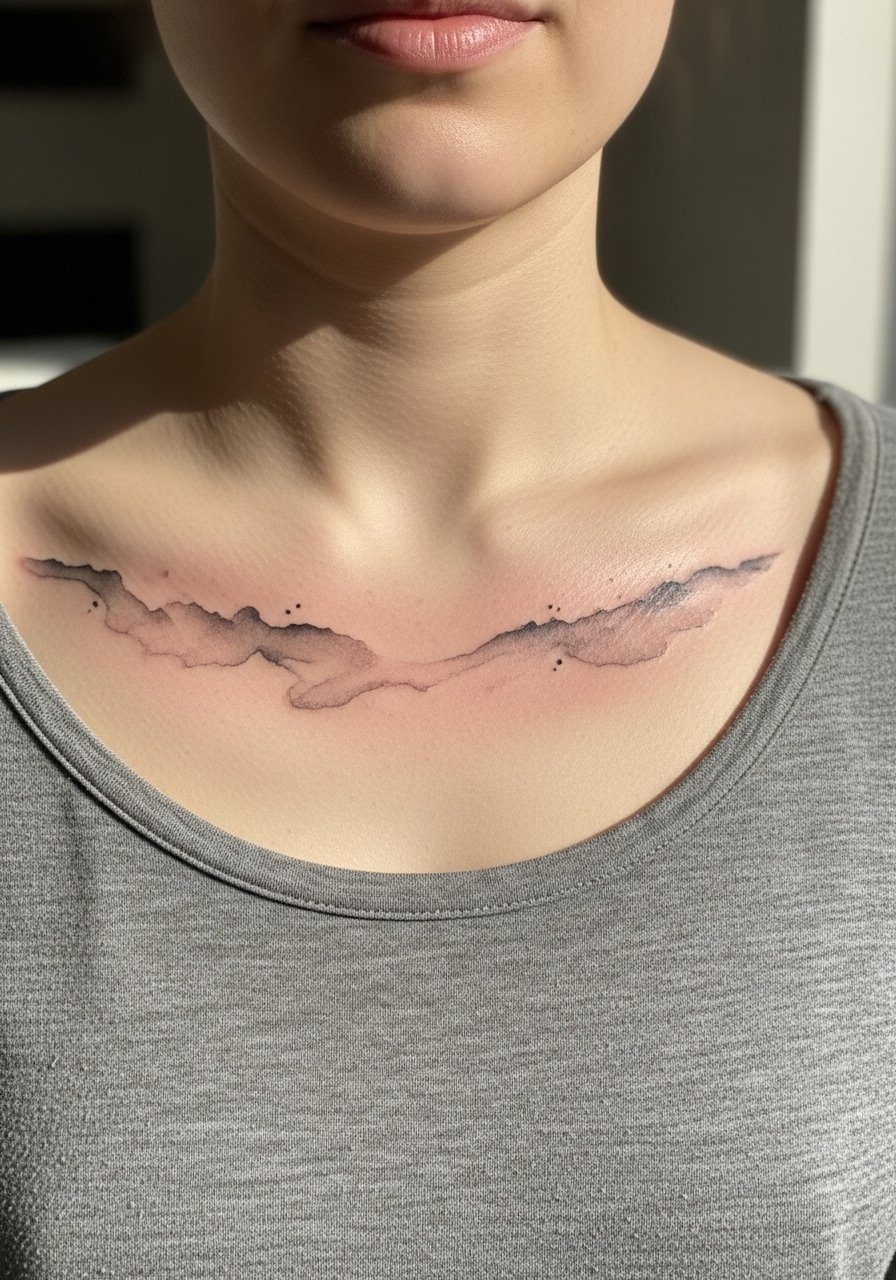
Watercolor on the chest looks painterly but it also fades faster than saturated black. For longer life, ask the artist to anchor watercolor with thin linework or soft stippling so colors have a frame. The mistake is asking for only diluted color with no contrast. Expect touch-ups earlier than with blackwork. Styling with neutral linen tops lets the hues show without clashing, and a loose drawstring linen pant for session comfort keeps you cool during longer color work.
9. Geometric Mandala at the Center
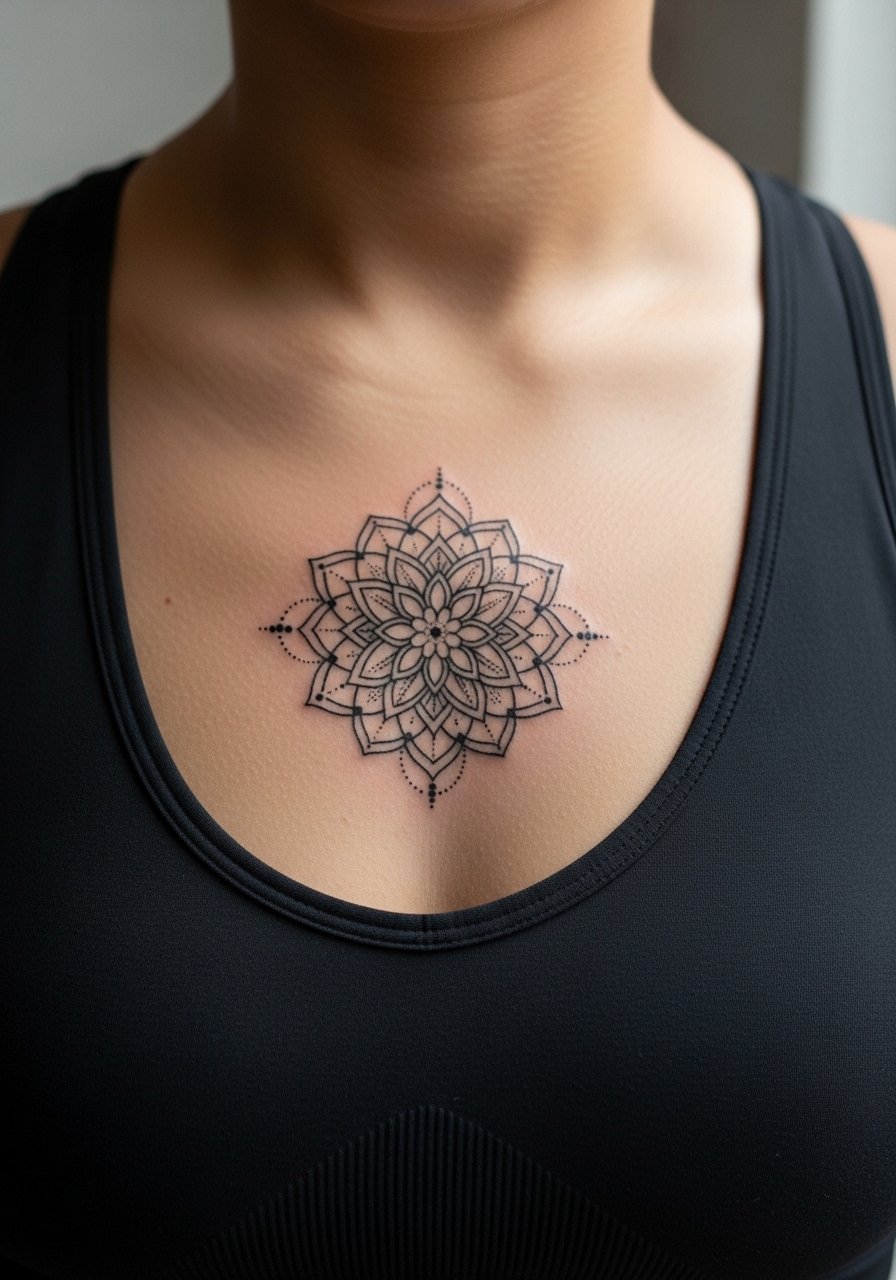
Mandala geometry is visually strong but very sensitive to placement and scale. The biggest mistake is scaling it too small on curved sternum territory. Ask for slightly larger spacing and heavier outer lines so the pattern remains discernible at two to five years. Pain tends to be on the higher side near sternum bones. If you're showing this at events, halter tops and open-back dresses frame the circular pattern beautifully.
10. Tiny Constellation Along the Collar
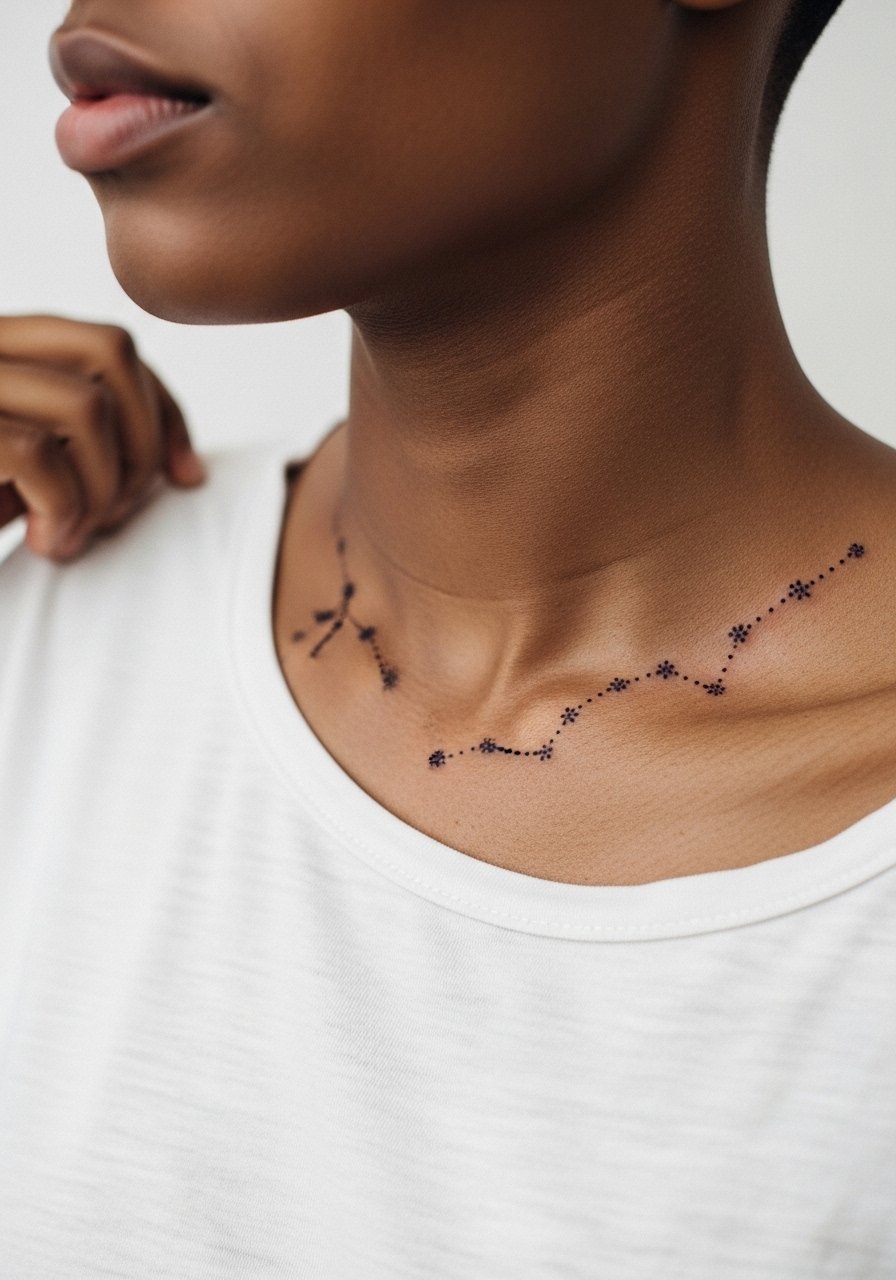
Small constellation dots read like scattered jewelry and are low commitment. Risk of blowout is low if the dots have modest spacing and slightly larger dot size than you might pick. During the consult, specify spacing in millimeters if possible to avoid clustering. The session is quick and the pain is low. Pair this with layered dainty chains for evenings or a thin chain pendant necklace to mirror the constellation dots.
11. Ornamental Chain Along the Collarbone

Chain necklaces inked as collarbone tattoos need consistent spacing and even weight. The error is asking for uneven links or inconsistent negative space, which shows immediately and ages poorly. Ask for a mockup that wraps with your bone structure so it does not drift into soft tissue. This placement is visible and can pair with simple jewelry so it looks intentional. For session comfort, a loose button-down you can slide aside is ideal.
12. Scripting That Follows the Bone Curve

Curved script over the bone needs spacing adapted to the arc so words do not bunch when you move. Tell the artist you want the curve drawn on your body and not applied flat in digital mockups. Common mistakes include copying a font that flattens on skin, which compresses letters. Expect minor touch-ups at year two for very thin strokes. For outfits, open-neck blouses highlight the curvature without covering the letters.
13. Underbust Crescent Moon
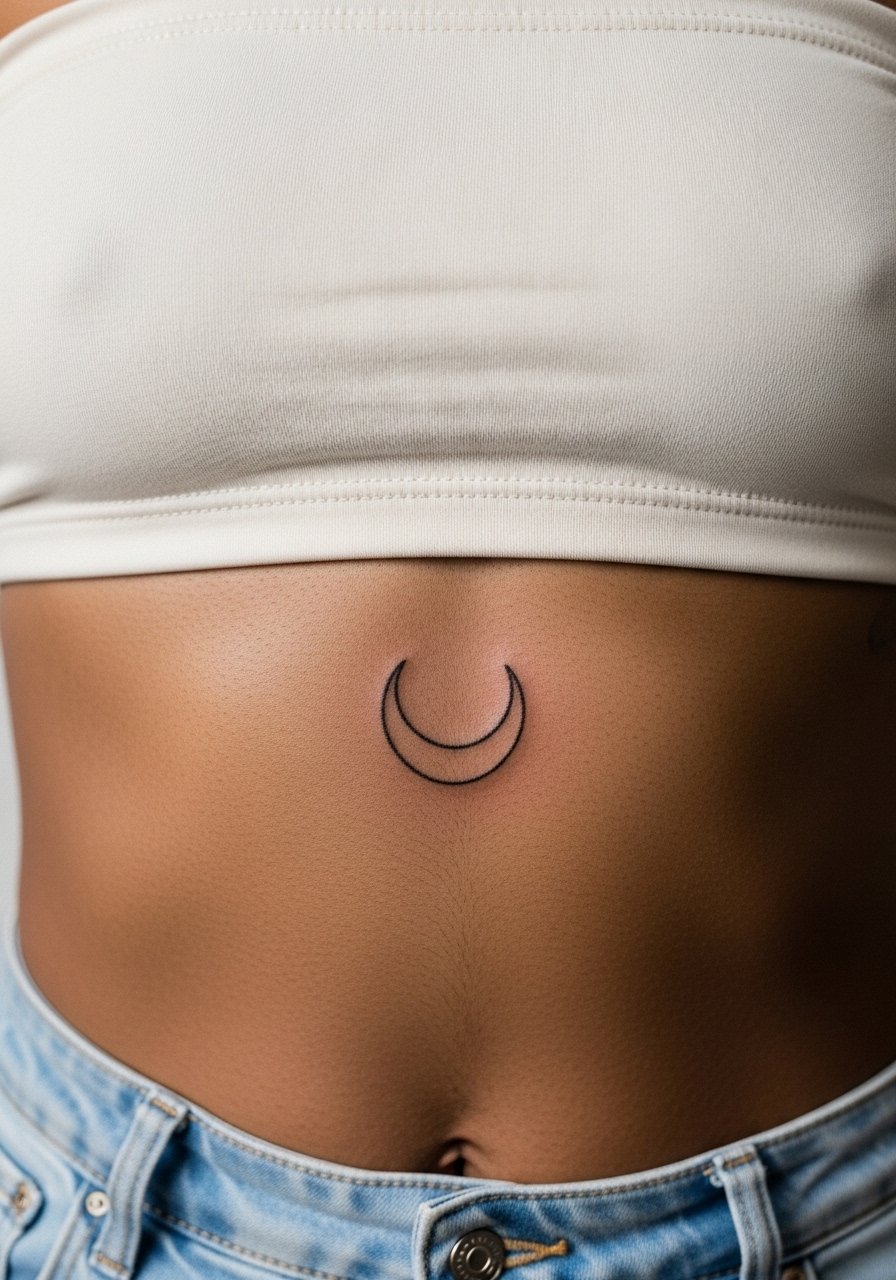
Underbust and underboob places need careful clothing planning during the first week. The skin there sees constant pressure from bras and bands. In consultation, ask for slightly thicker outer lines so fine crescents do not blur. The session feels tender where the skin is thin. For session wear, a strapless or bandeau top is best so the artist can work without clothing interference. Expect to avoid tight undergarments for at least 48 hours.
14. Ribcage Climbing Vines
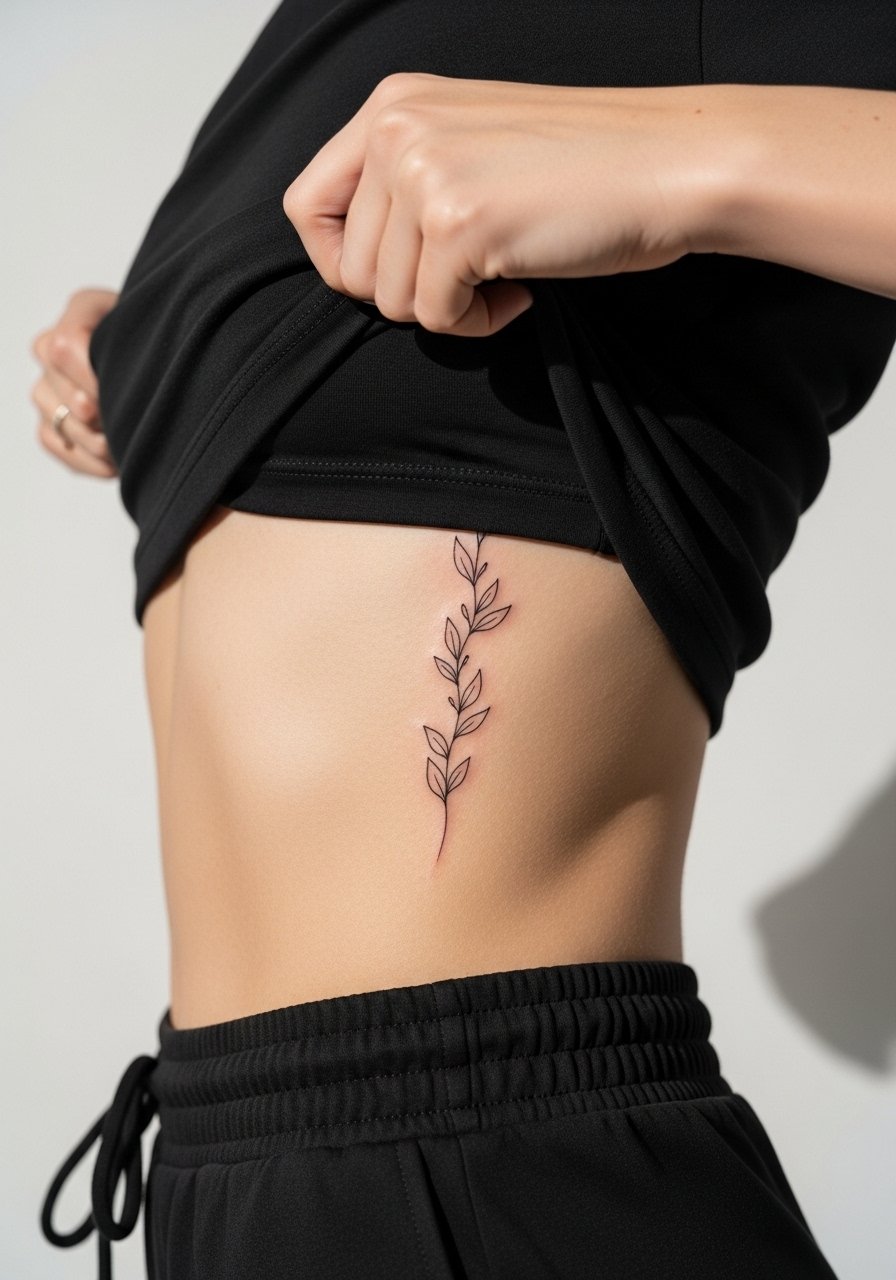
Ribcage placement is famously painful and controversial for fine line pieces. One camp says the skin stretches and blurs small lines within two years. The other camp counters that with proper needle depth and slightly thicker spacing, fine line can settle well on ribs. Ask your artist where they fall and show healed examples on similar skin tones. Sessions may require breaks and the touch-up timeline often lands around year two to three for very thin vines. For the appointment, wear loose shorts or a cropped top so access is easy.
15. Lace-Like Filigree Framing the Sternum
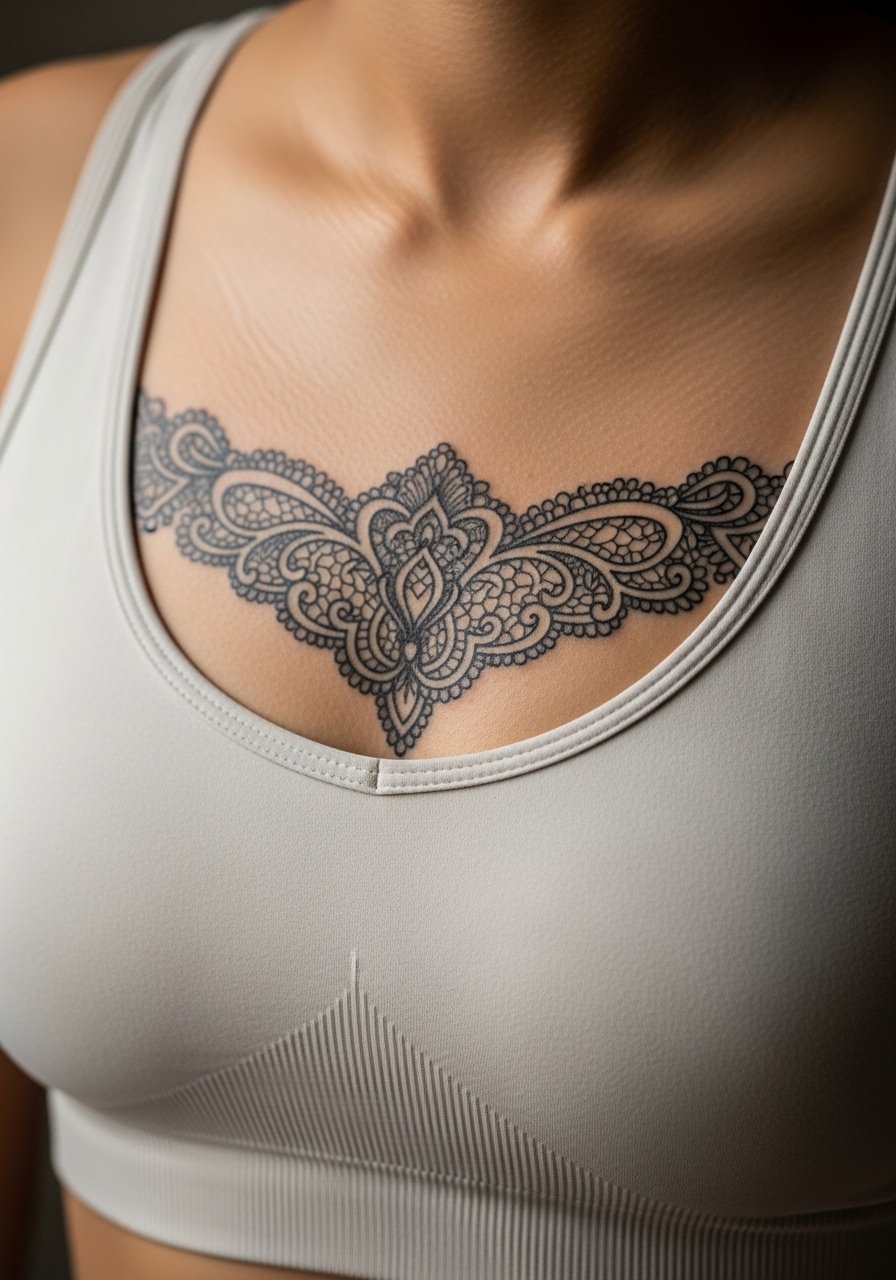
This decorative frame works well under low necklines and with vintage-inspired wardrobes. The mistake I see is asking for extreme micro-detail right at the sternum where movement and pressure cause early merging. Ask for larger motifs and clear negative space to keep the lace readable as it heals. Pain is moderate and sessions can run long. For showing it off, strapless dresses or open-collar blouses make the filigree feel like a built-in accessory.
16. Split Mandala on Each Side
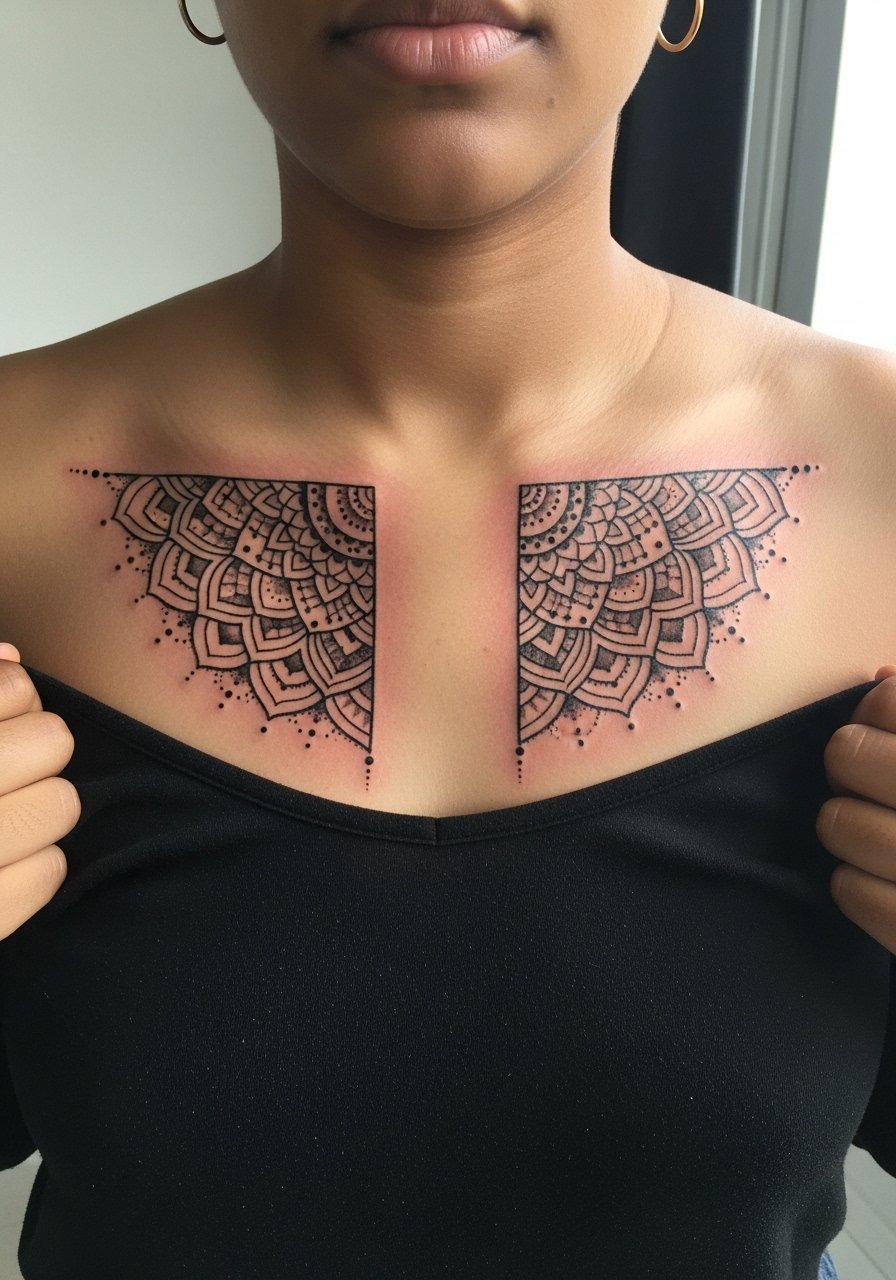
Split mandalas rely on precise symmetry to read as one piece when you stand straight. The most common mistake is offset anchors in the stencil. Ask your artist to mark the exact midline on your body during the consult. The sessions are typically longer and require patience for alignment checks. For wardrobe, a wide-neck top or low scoop neck highlights the mirrored design.
17. Minimalist Arrow Over the Sternum

A minimalist arrow is fast and can be powerful when centered. The key is line weight. Too thin and it fades into a soft blur. Ask for a slightly bolder shaft while keeping the arrowhead delicate. Pain is moderate and session time is short. This is a good starter central chest piece for someone who wants small and symbolic. For showing the piece, a simple wide-neck tee works well.
18. Botanical Wreath Across the Upper Chest
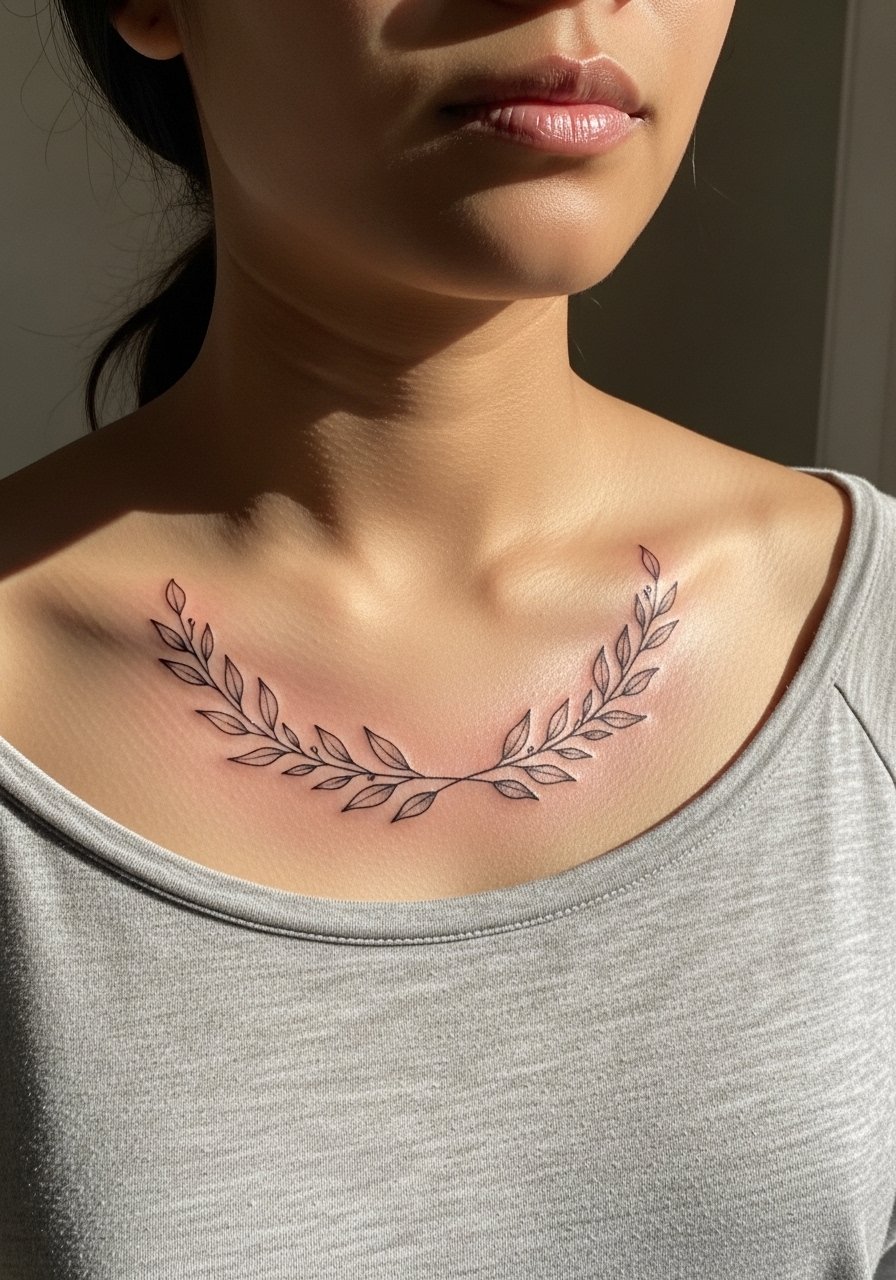
A wreath that spans the clavicles can read like a necklace and pairs well with layered jewelry. The biggest mistake is overloading the wreath with tiny details that lose clarity. Tell your artist you want defined outer lines and more open space within the wreath. Sessions may run medium length depending on coverage. For show-off outfits, open-collar shirts and simple pendants complement without crowding the composition.
19. Asymmetric Floral Cluster on the Upper Chest

Asymmetric clusters feel organic and modern, and they work well if you want one-sided emphasis. The common error is placing too many small blooms in a tight area which fades into a grey patch. Ask for varied scale and clear spacing. For session wear, a loose button-down you can slide aside is practical. This placement looks sharp with one-shoulder dresses or tops that reveal just that side.
20. Tiny Starburst Near the Collarbone

A tiny starburst is subtle and low commitment. Punches of negative space around it keep it readable longer. Common mistakes include asking for multiple tiny rays that close up with time. Session time is brief and pain is minimal. For showing it off, stack with dainty bracelets or a minimalist watch so the eye travels from wrist to clavicle elegantly.
21. Script Band Under the Clavicles
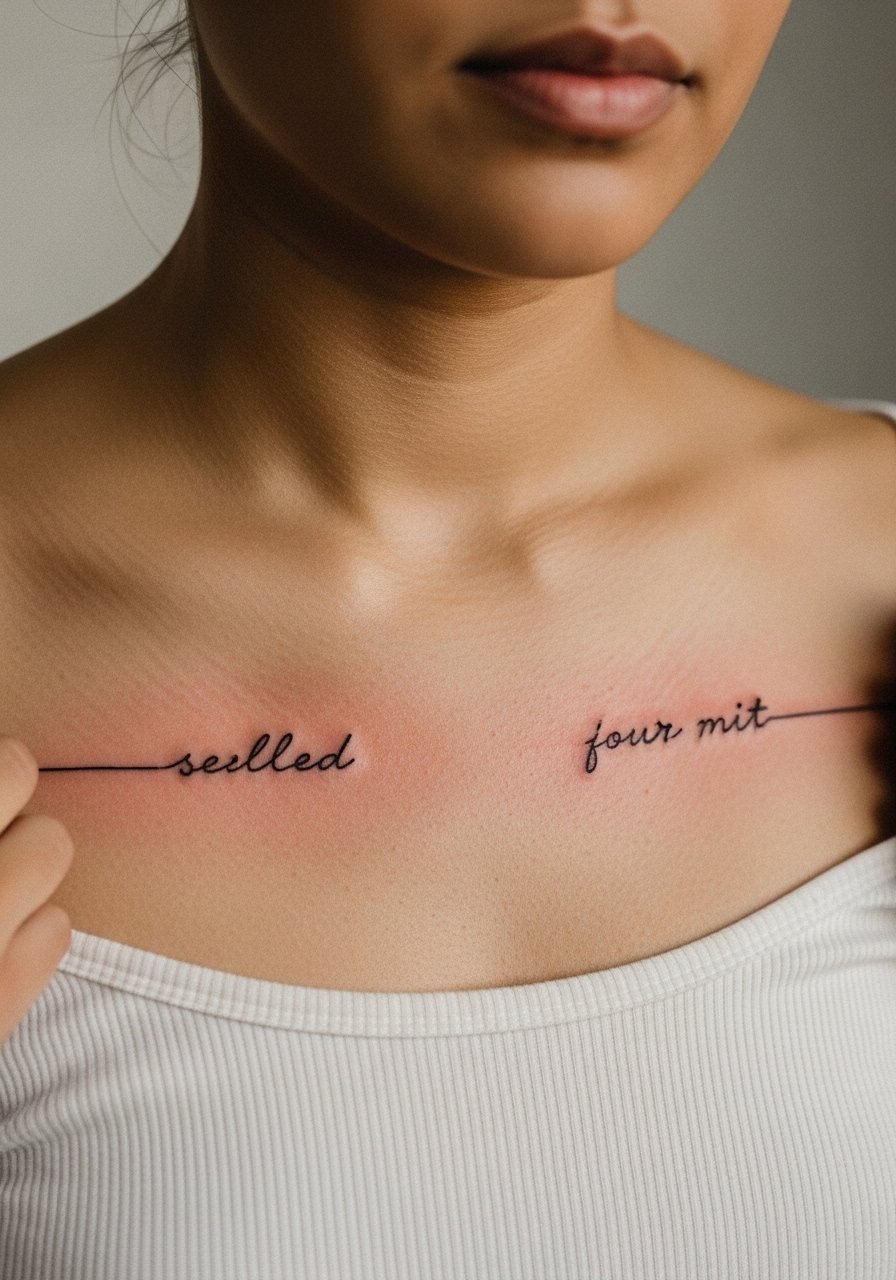
A script band ties both sides of the chest and reads like a single statement when centered. The risk is uneven letter width across the sternum junction. Ask your artist for a mockup on your body so spacing feels continuous with movement. Sessions can be medium length for a longer phrase. For outfit pairing, scoop necklines or open collars emphasize the band without making it feel too busy.
Frequently Asked Questions
Q: How does fine line on the sternum age compared with bold blackwork on the chest?
A: Fine line tends to soften faster on the sternum because the skin there moves and rubs against clothing. Bold blackwork holds contrast longer. If you want a long-lasting delicate look, ask for slightly thicker key lines and plan for a touch-up at two to three years from what I have seen.
Q: Will a watercolor chest tattoo fade faster if I sunbathe a lot?
A: Yes, color fades from UV exposure more quickly than black. From conversations with artists and my own observations, keeping the area covered or using SPF once healed helps, and you should expect more frequent color refreshes if you spend heavy time in the sun.
Q: Are tiny scripts near the collarbone harder to keep legible?
A: They can be if they are too small or placed over soft tissue. Ask the artist to increase x-height and spacing so letters do not compress. A short mockup applied to your skin during consult shows how it will move when you tilt your head.
Q: What should I wear to a sternum or underbust session for comfort and access?
A: A fitted sports bra or bandeau that you can remove or pull down slightly keeps you covered while giving the artist access. For side or ribcage work, loose shorts or a cropped top that lifts are best.
Q: How long should I expect a touch-up timeline for delicate chest linework?
A: Expect possible touch-ups around year two to three for very fine pieces, and less frequent for bolder outlines. How your skin holds saturation and how much sun exposure you give the area are the main variables.
Q: Can I show off a new chest piece without it looking like a fresh tattoo right away?
A: Yes. Choose clothing with a neckline that frames rather than covers the work, like a wide-neck top or open-collar shirt. A thin pendant or layered chains can draw attention away from any slight shine in the first week while keeping the focus on the design.