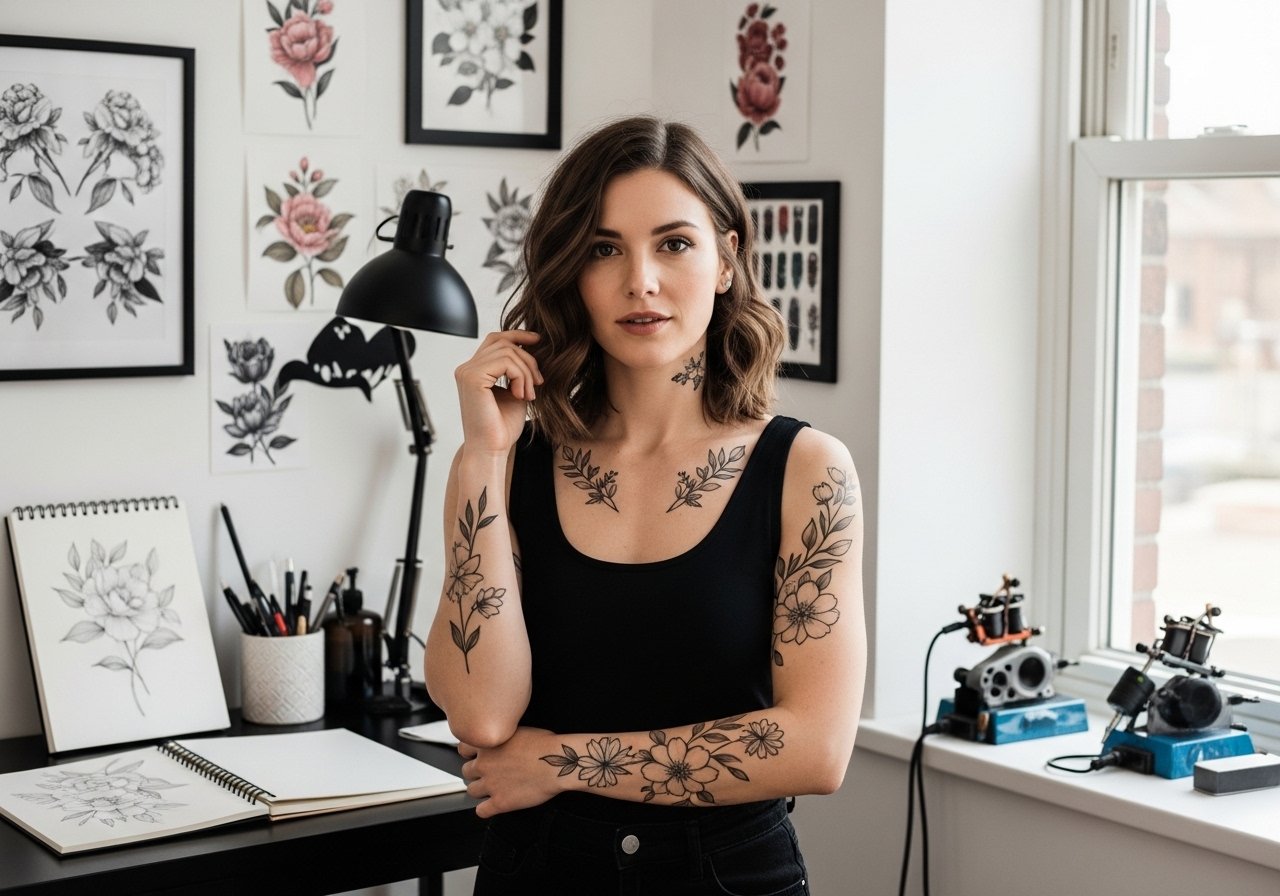
Sitting on the tattoo chair with the stencil taped to your outer thigh, you feel the buzz settle into a steady rhythm and the design finally read as a shape on skin. That moment, when the mandala becomes more than a photo, is when placement, spacing, and lineweight matter most. Below are thigh-focused mandala options that map pain, styling, and how each choice ages so you book the right session and leave with something that still reads well years from now.
1. Inner Thigh Micro Mandala with Dot Work
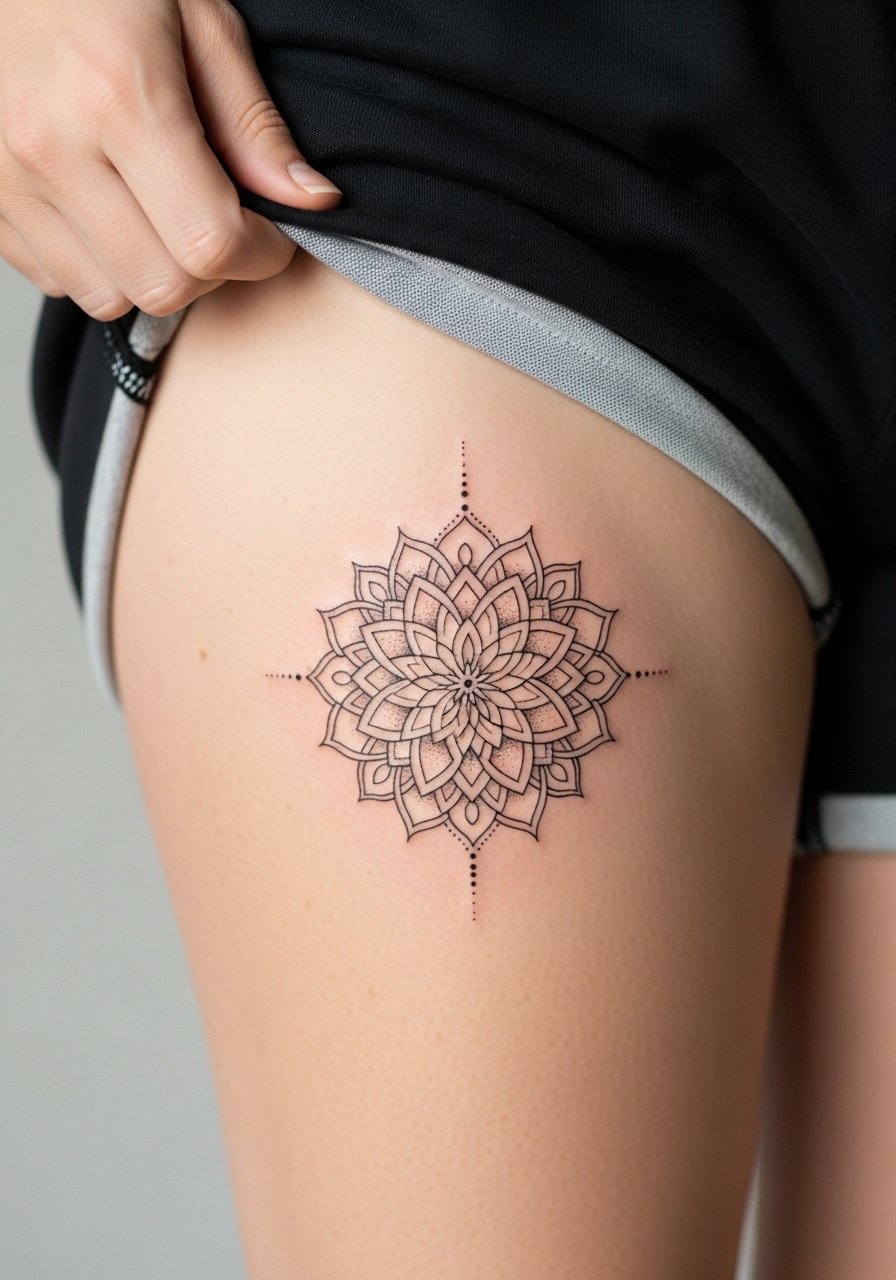
A small micro mandala on the inner thigh reads intimate and detailed, and the placement raises two quick flags. Pain is higher than outer thigh, often a 6 to 8 on common scales, so expect a session that is more about endurance than time. Ask your artist to leave breathing space between dense dots to avoid future merging. A common mistake is packing too many tiny orbiting rings which merge after a year. Plan for a touch-up around year two if your skin is prone to friction from tight clothing. For the session wear, bring loose shorts you can move without rubbing the area, like high waisted shorts, for easy access and comfort.
2. Outer Thigh Lace-Edge Mandala
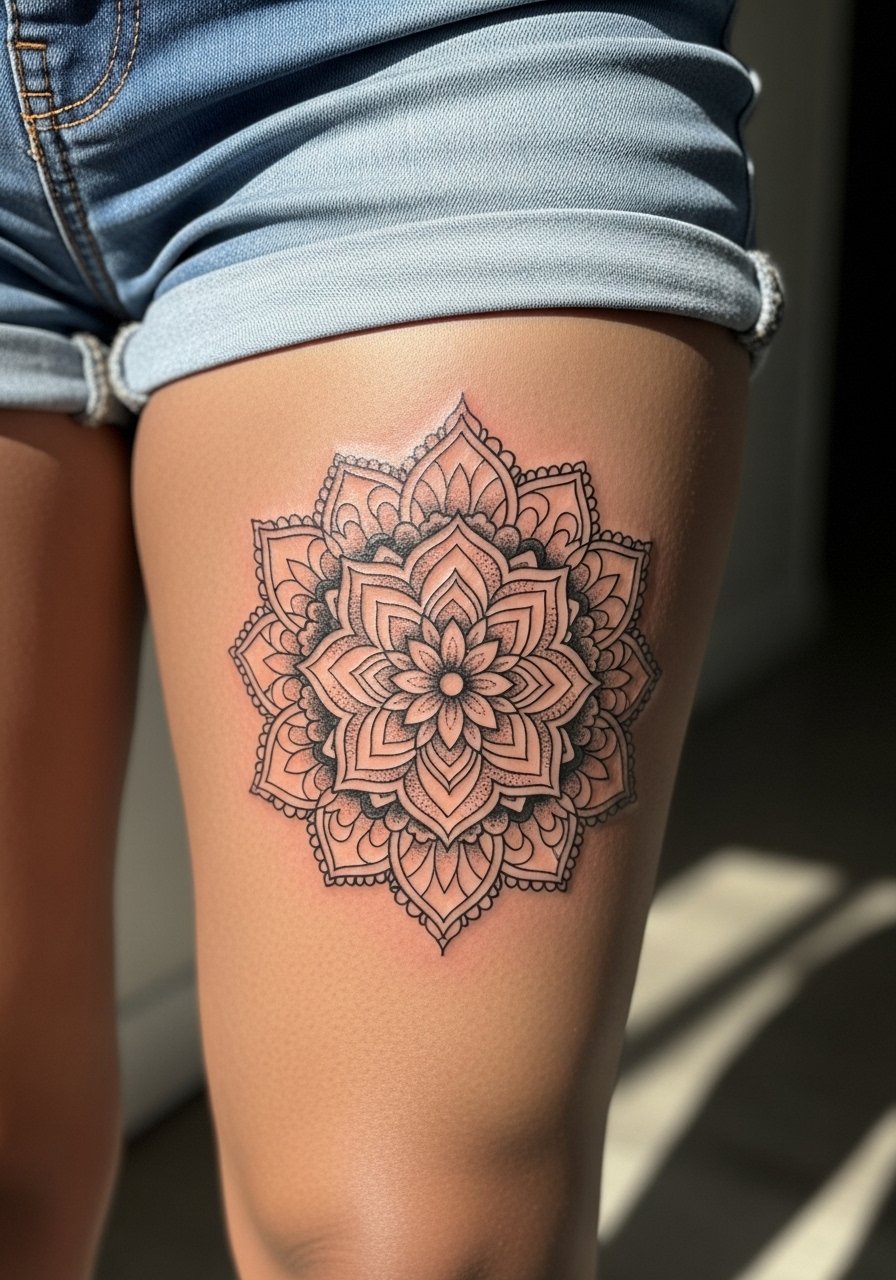
Outer thigh pieces sit on flesh that tolerates saturation well and feels easier during long sessions. Expect a 3 to 5 pain level, but sessions can run longer for larger lace edges. Tell your artist you want wider negative space around filigree so the lace reads after two to five years. A mistake is requesting ultra-fine lace without spacing, which causes softening with time. This placement pairs well with high-waisted denim or skirts when you want to show it, so consider packing a wrap skirt for after the session. Outer thigh heals with less friction but still benefits from a light touch-up at year three if you wear a lot of tight clothing.
3. Upper Thigh Sunburst Mandala with Saturated Black
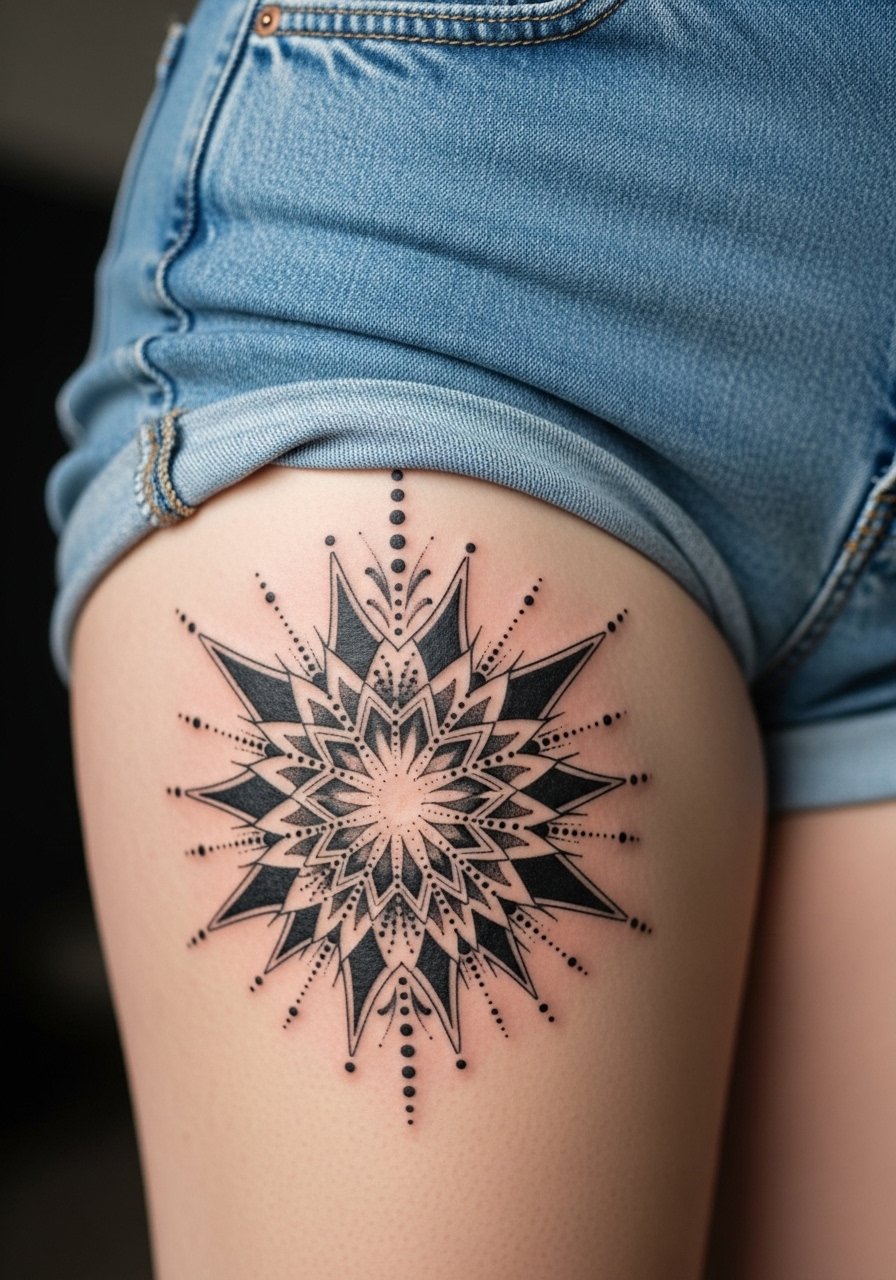
A sunburst mandala leans into bold linework and saturation, which often ages better than ultra-fine pieces. Pain is moderate, and session time depends on how much blackfill you want. Ask for solid outlines with a slightly heavier lineweight at the outer edges so the pattern keeps its shape as the skin shifts. The common error is overfilling tiny negative spaces that vanish in two to four years. Bold saturation helps longevity, but expect touch-ups around year four for edge crispness. This design shows nicely with a racerback tank if you wear it high on the leg.
4. Hip-Hugging Mandala Paisley Blend
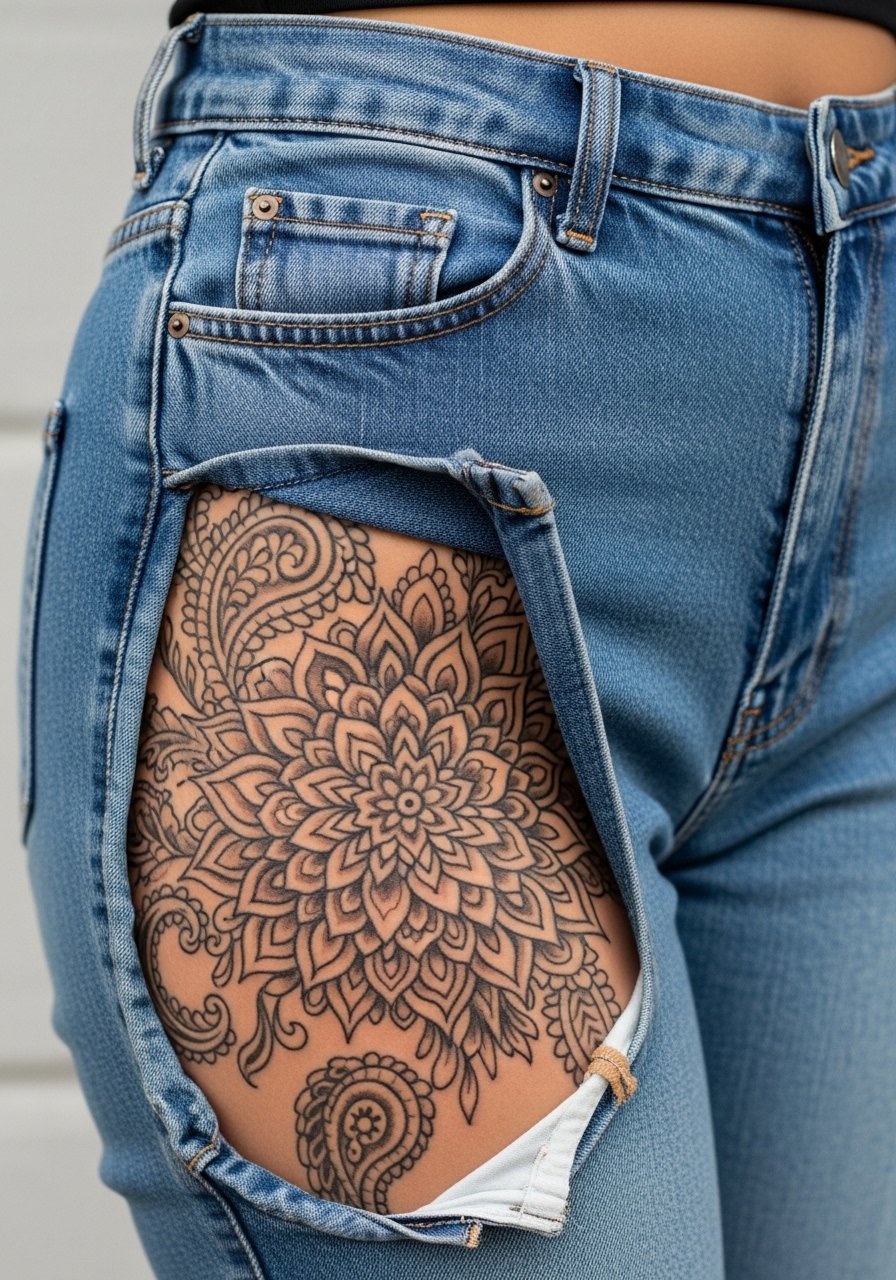
This hybrid merges mandala geometry with paisley curves that follow the hip line. It plays well with clothing that hits the waist, so tell your artist the placement should peak where your waistband sits. The session is comfortable for most, about a 4 out of 10 in pain, but the curvature of the hip means artists must adapt the stencil shape. One camp says traditional mandala motifs should be adapted from religious contexts; another camp argues small, respectful variations are acceptable. Name which side you fall on in your consultation. For showing it off, an open-back midi dress or low-rise jeans frames the curve.
5. Inner Thigh Vertical Mandala Spine
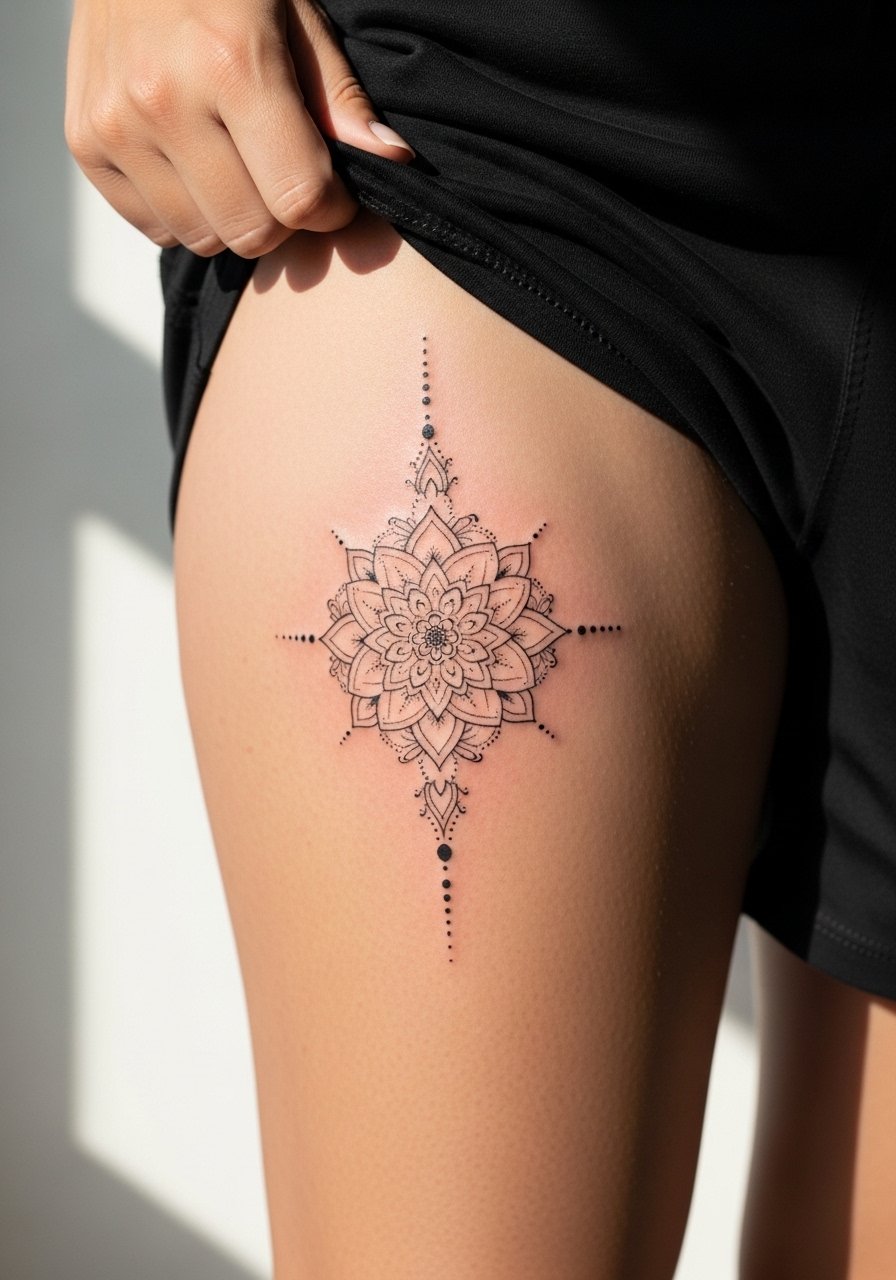
A vertical mandala that aligns with the inner thigh gives a different silhouette than a circular piece and concentrates on fine linework and stipple shading. Expect increased sensitivity and sessions broken into shorter sittings if you prefer. A mistake is letting the artist place concentric rings too close to the crease, where friction accelerates fading. Tell your artist to keep denser elements away from high-friction zones. At six months the dots sit clean if aftercare is followed. Expect touch-ups at year two to restore fine stippling. For the appointment, wear a loose drawstring linen pant you can roll up comfortably without squeezing the area.
6. Thigh Band Mandala That Wraps Laterally
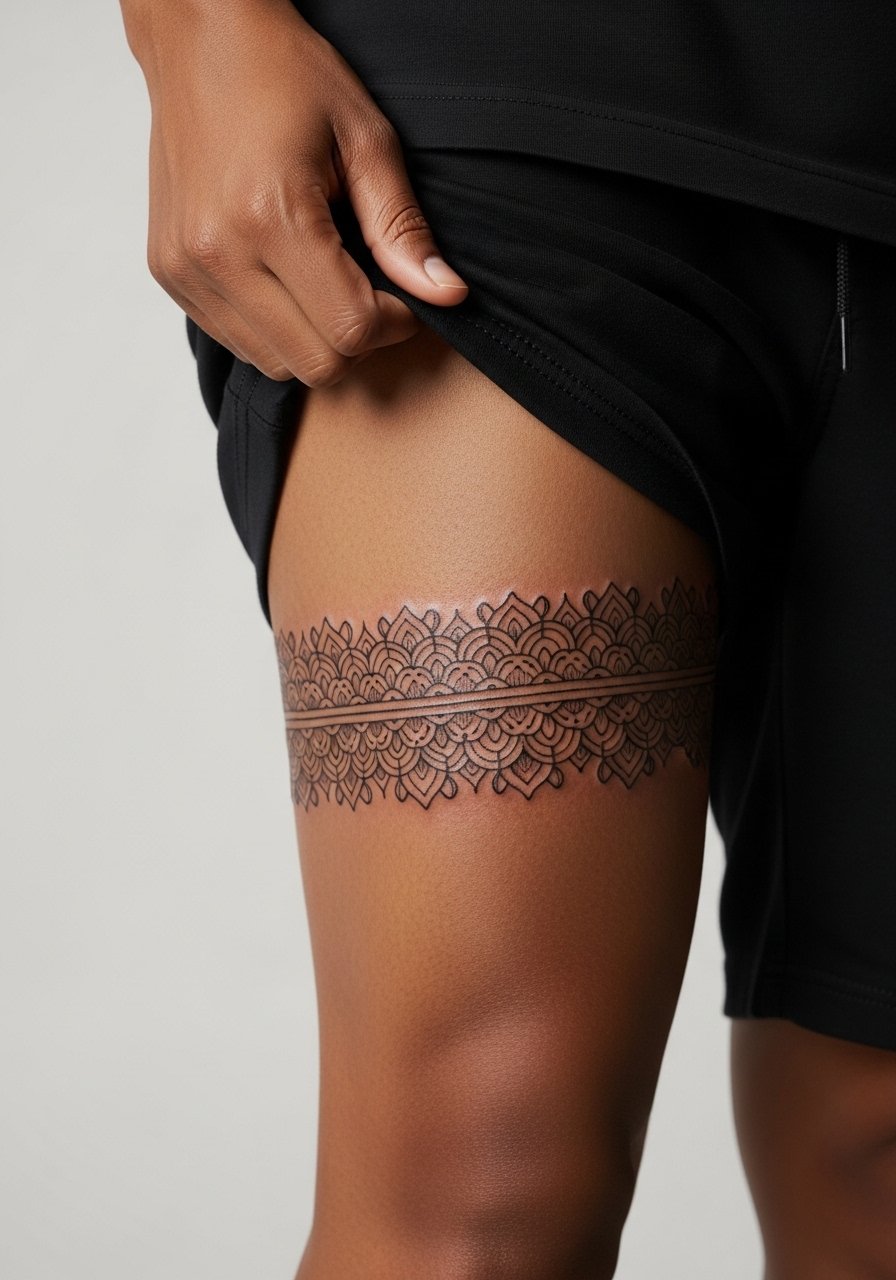
A band design is graphic and reads well from a distance. Pain is modest and band pieces often go quickly if the design is medium-sized. Tell your artist you want consistent spacing so the rings do not blur together over time. A common misstep is requesting too many tiny inner rings for a thin band. For longevity, plan for a lighter touch-up after three to five years depending on clothing friction. This placement looks clean with rolled shorts or a swimsuit bottom when you want to show it.
Studio Day Picks
These first six thigh layouts vary from intimate inner thigh work to bold upper-thigh blackwork, and a few small items smooth the session and early healing window.
-
Stencil transfer paper kit. Lets you see exactly how a mandala will curve over the thigh before the needle touches skin, which is helpful for asymmetric hips and bands.
-
Topical numbing cream. Applied as directed it reduces soreness during inner thigh sessions without affecting the artist's linework.
-
Thin protective film roll. Useful for keeping lower-thigh and band pieces clear of friction from shorts during the first three to five days.
-
Fragrance-free gentle body wash. Keeps healing mandalas clean without stripping natural oils that preserve fine dot work.
-
Aquaphor healing ointment. A thin layer in the first 48 hours helps keep the surface from drying out, especially on a larger upper-thigh saturation piece.
7. Floral-Integrated Mandala with Negative Space
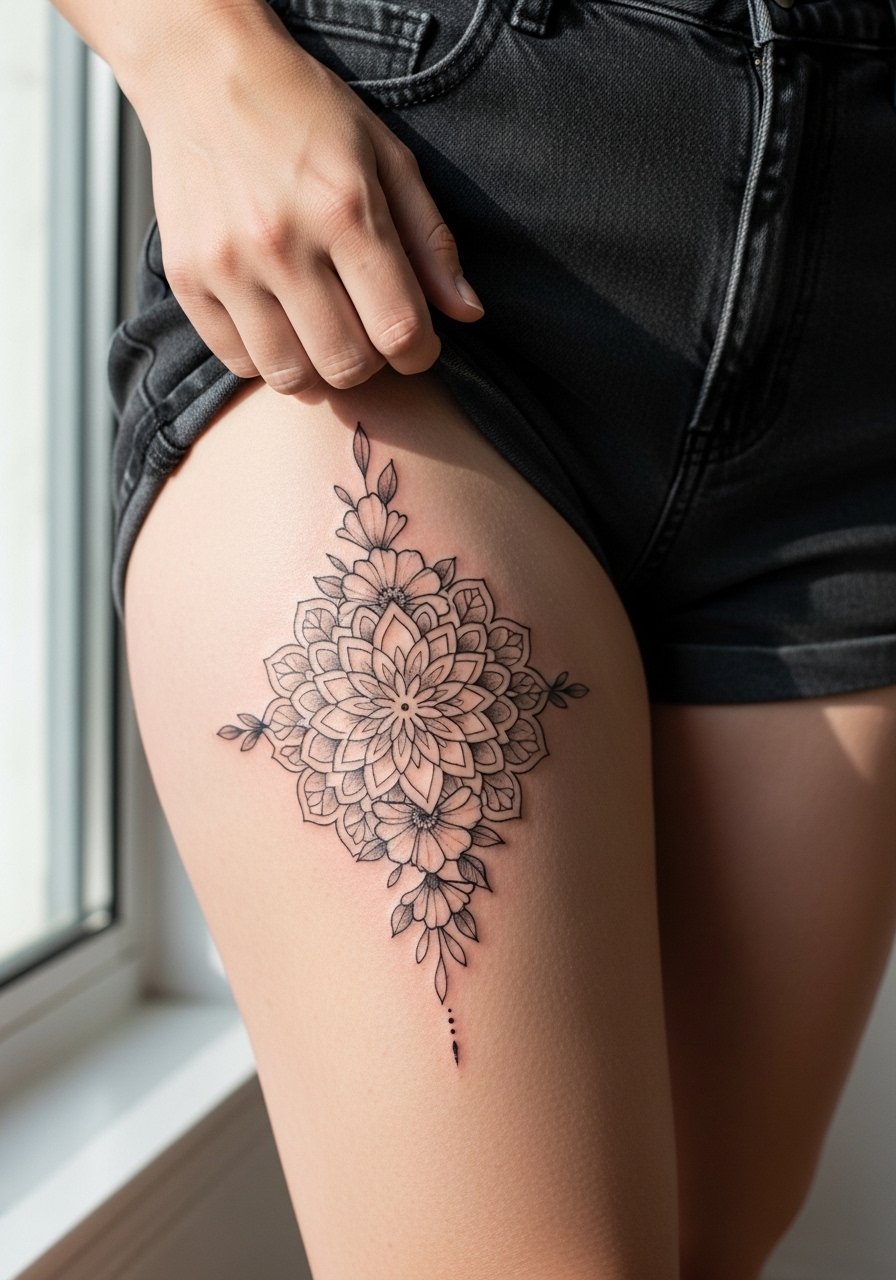
A mandala that uses negative space and botanical motifs softens geometric rigidity and fits the thigh's curving canvas. Pain is moderate and sessions can be broken into two if you want detailed petals. Tell the artist to map flowers so they avoid constant rubbing zones. The mistake is asking for tiny floral details without leaving breathing room; they blur faster than the mandala base. Healed at six months the negative space should look crisp if the lines had room. Pair with flowy skirts or a wrap skirt to show the curve and let the pattern peek out.
8. Radial Mandala with Graduated Dot Shading
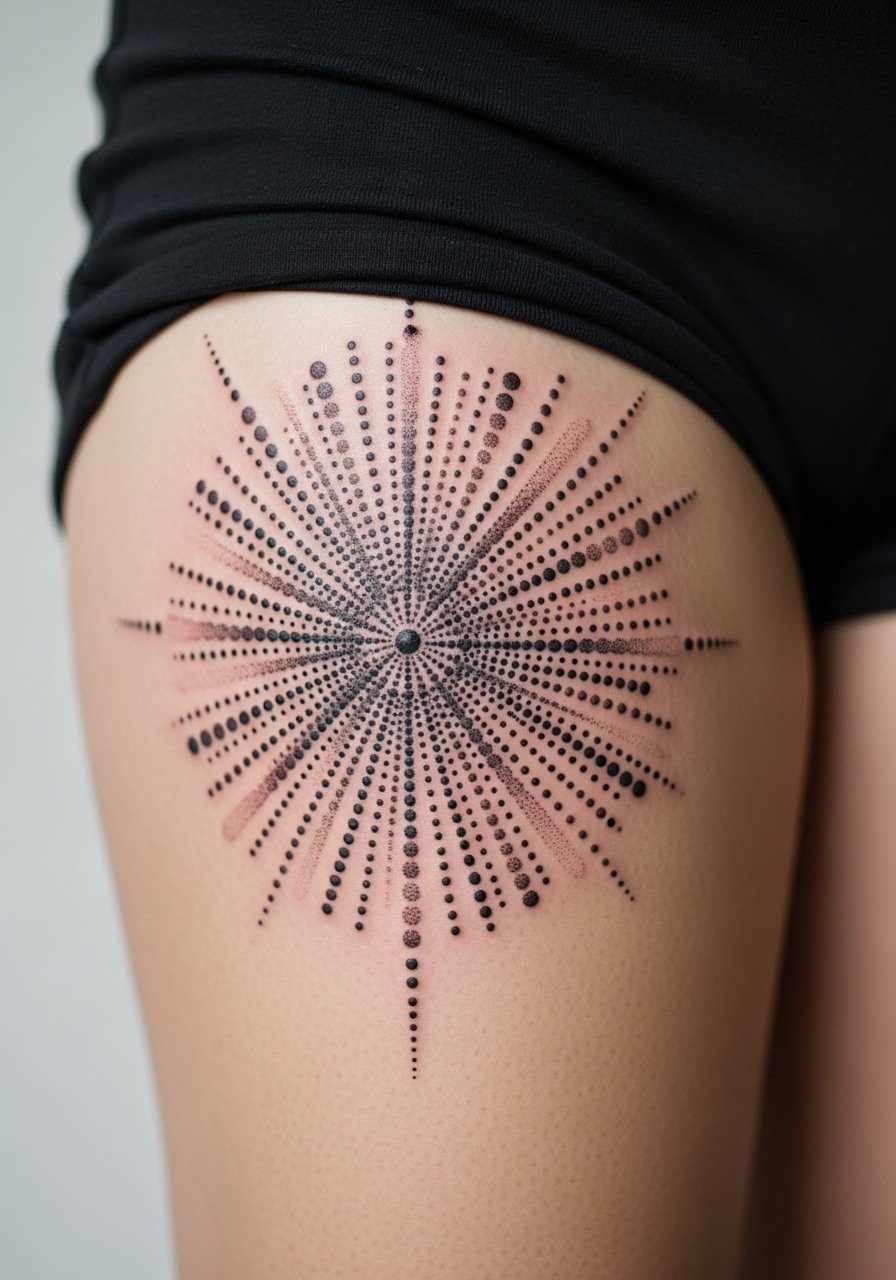
Dot shading gives a soft gradation that can read almost like texture without heavy black. On the thigh this ages reasonably well if dots are spaced for skin mobility. Warning: dots placed too close will merge into a gray patch after a few years. Ask for staged dot density that increases outward so the center stays defined. Session time is moderate. Expect a touch-up for center crispness at year three if you wear a lot of sun-exposed clothing. For showing off, a high cut swimsuit bottom frames the radial shape.
9. Geometric Mandala with Lace-Style Outlines
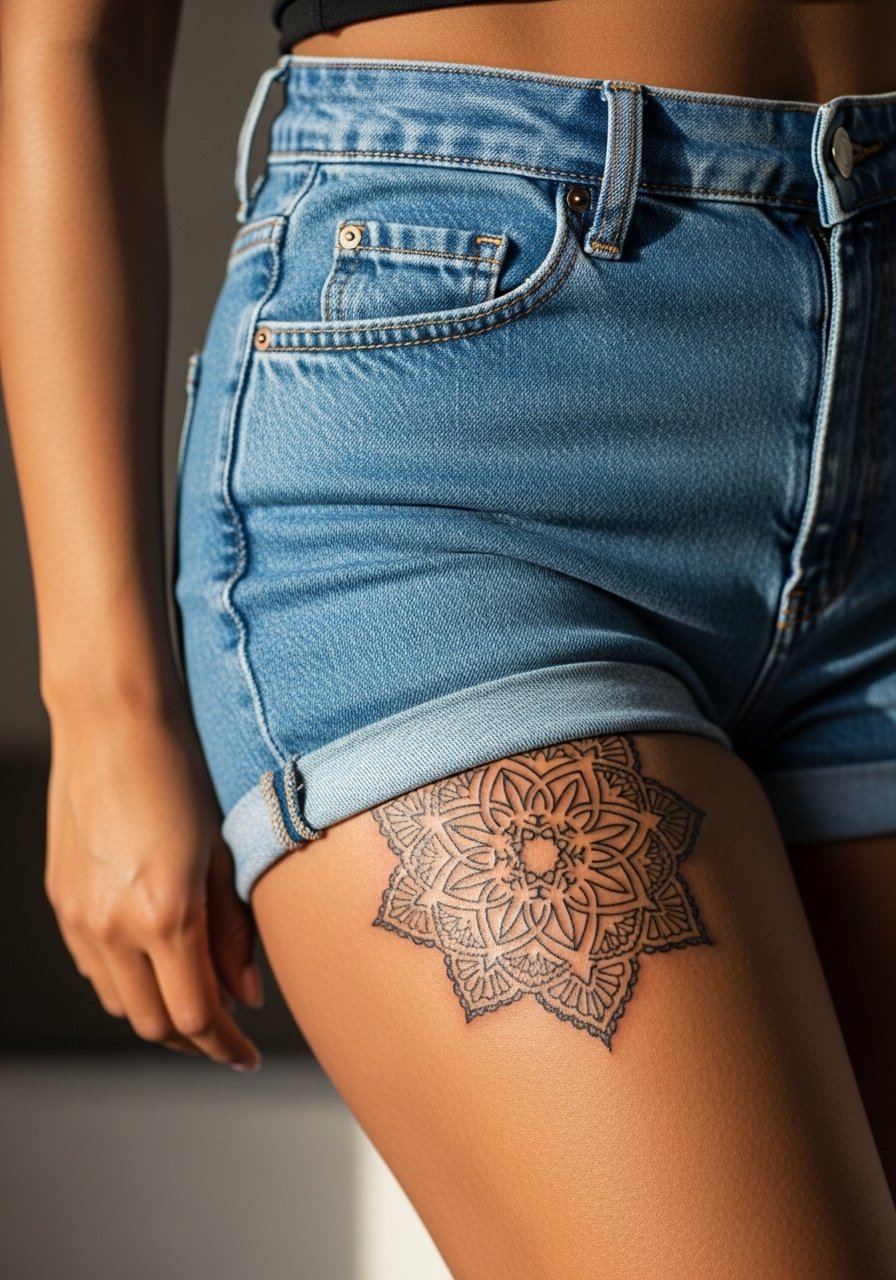
This one leans into precise linework and repeating polygons that need space to remain distinct. Pain is low to moderate and lines must be slightly bolder than micro work to resist softening. A common error is asking for needle-thin polygons packed densely, which causes merging. Tell the artist you prefer a slightly heavier outer line and spaced inner geometry. For longevity, expect a light touch-up around year three. Pair with high-waisted denim or open-back tops when the design sits at hip level.
10. Mandala Crescent Sitting at the Thigh Crease
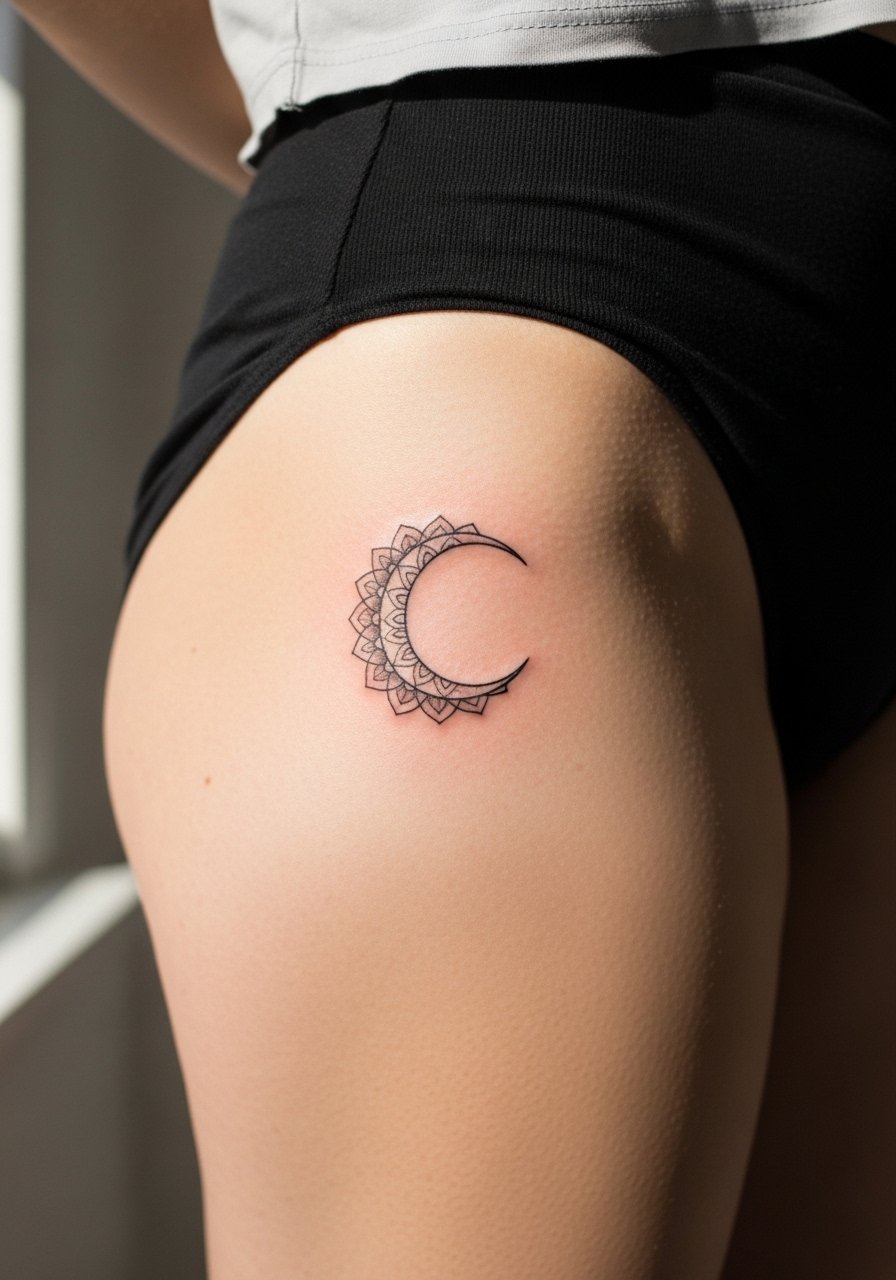
Placing a mandala along the thigh crease is visually striking but increases friction from clothing. Expect a higher fade rate if you wear tight waistbands. Tell your artist to avoid dense lower rings right at the crease. The session feels patchy because artists often adjust needle depth across the curve. Common mistake is underestimating how often the band rides over that spot. Plan a touch-up at year two to restore edge clarity. During the appointment, wear high-waisted bottoms you can lower without pulling on the skin, such as high waist leggings.
11. Mandala with Filigree Trail Down the Thigh
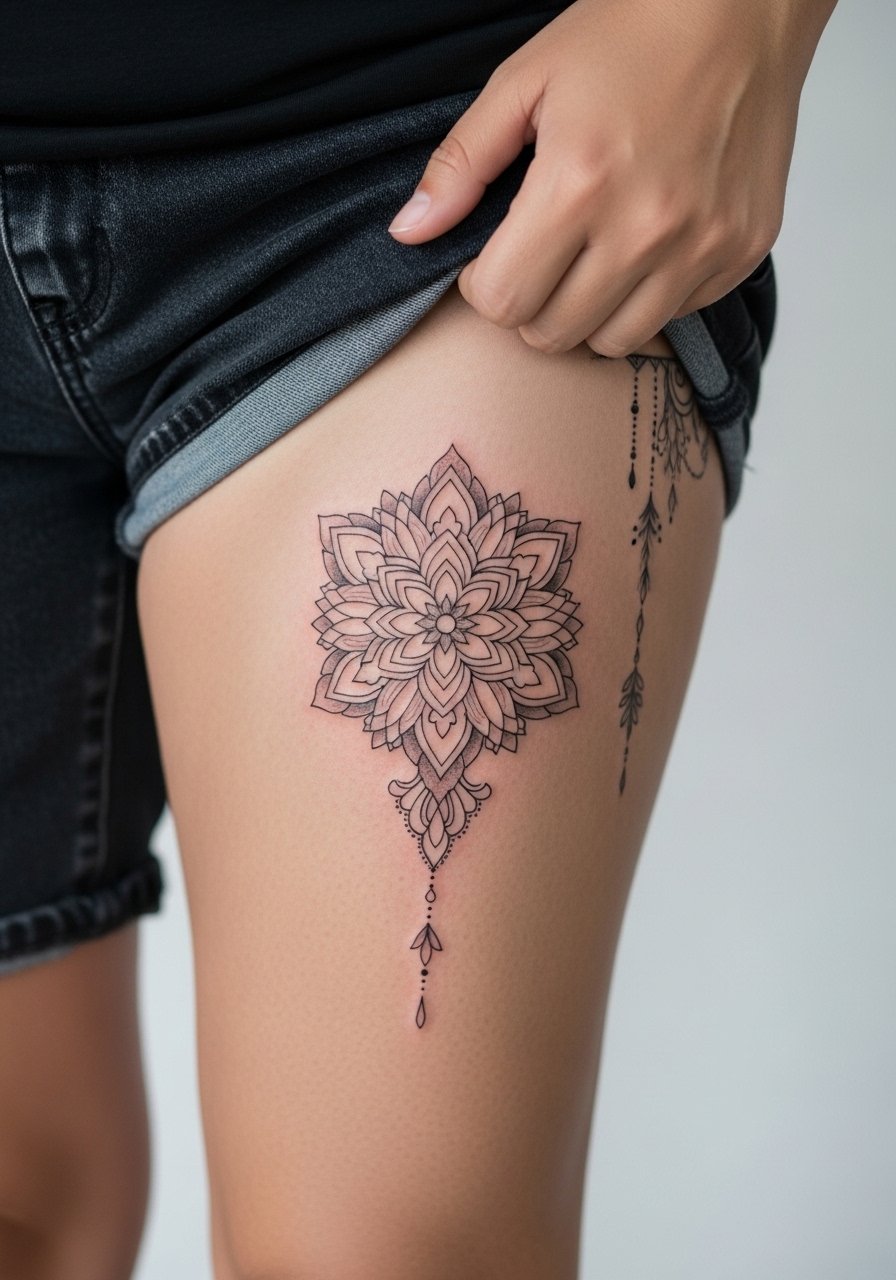
A trail effect extends a core mandala into a lengthier, decorative composition. Session time increases but pain stays moderate. Tell the artist where you want the trail to end so it interacts neatly with clothing lines. A mistake is letting the trail get too thin near the knee where skin texture changes and ink can spread. Over five years the trail may lose contrast if lines are too thin; ask for slightly bolder connecting strokes. For showing it off, pair with a midi skirt with a slit that reveals the path on movement.
12. Sacred Geometry Mandala with Cultural Note
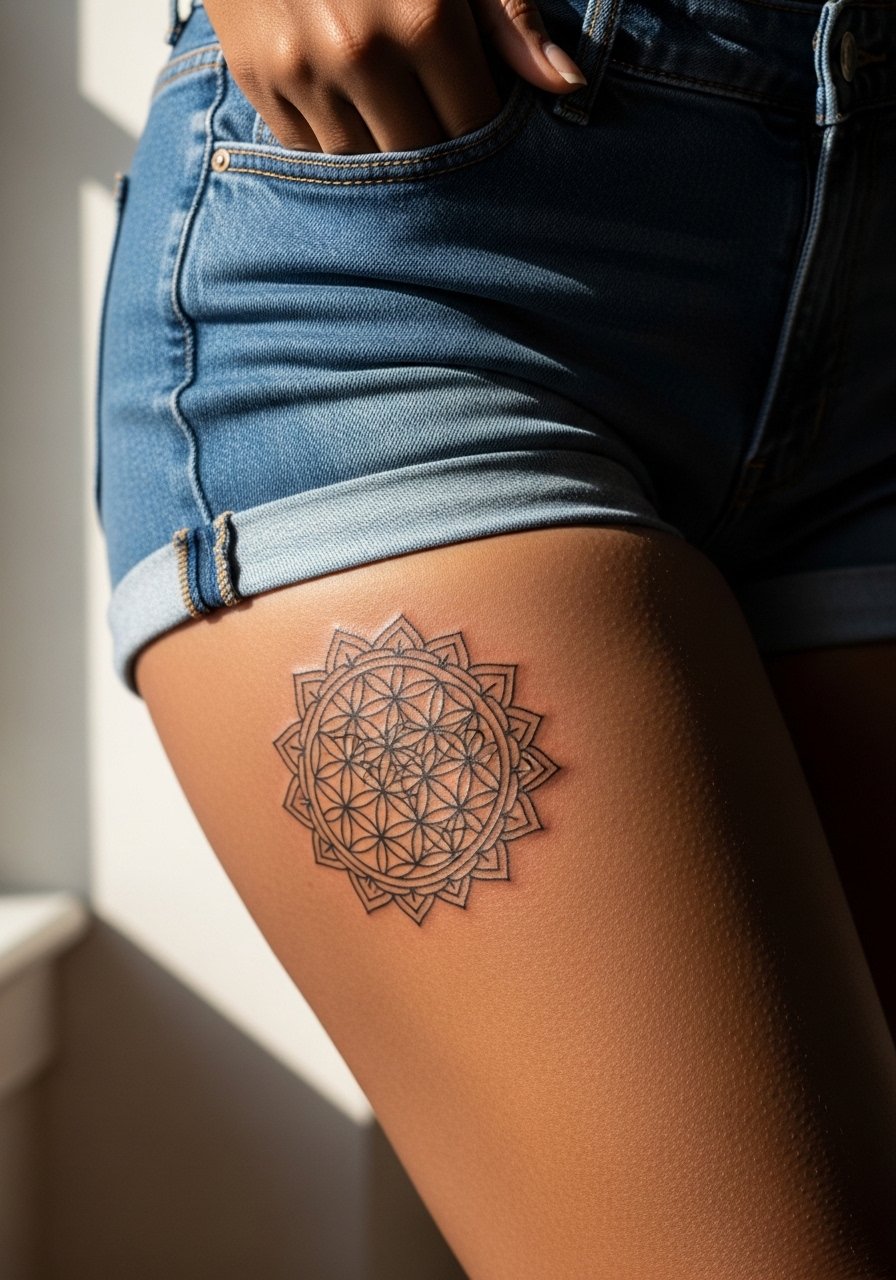
This version uses traditional sacred geometry found in some spiritual practices. Artists and clients split into two camps on direct use of religious symbols. One side says strict replication can feel like appropriation and should be avoided. The other side argues respectful adaptation can honor the aesthetic without copying sacred iconography. If you choose this route, mention that you want the motif adapted rather than copied. Ask for subtle adjustments and for the artist to explain their approach in consultation. For showing off, an open-back dress or high-cut shorts keep attention on the symmetry.
13. Half-Mandala That Peeks from Under Jeans
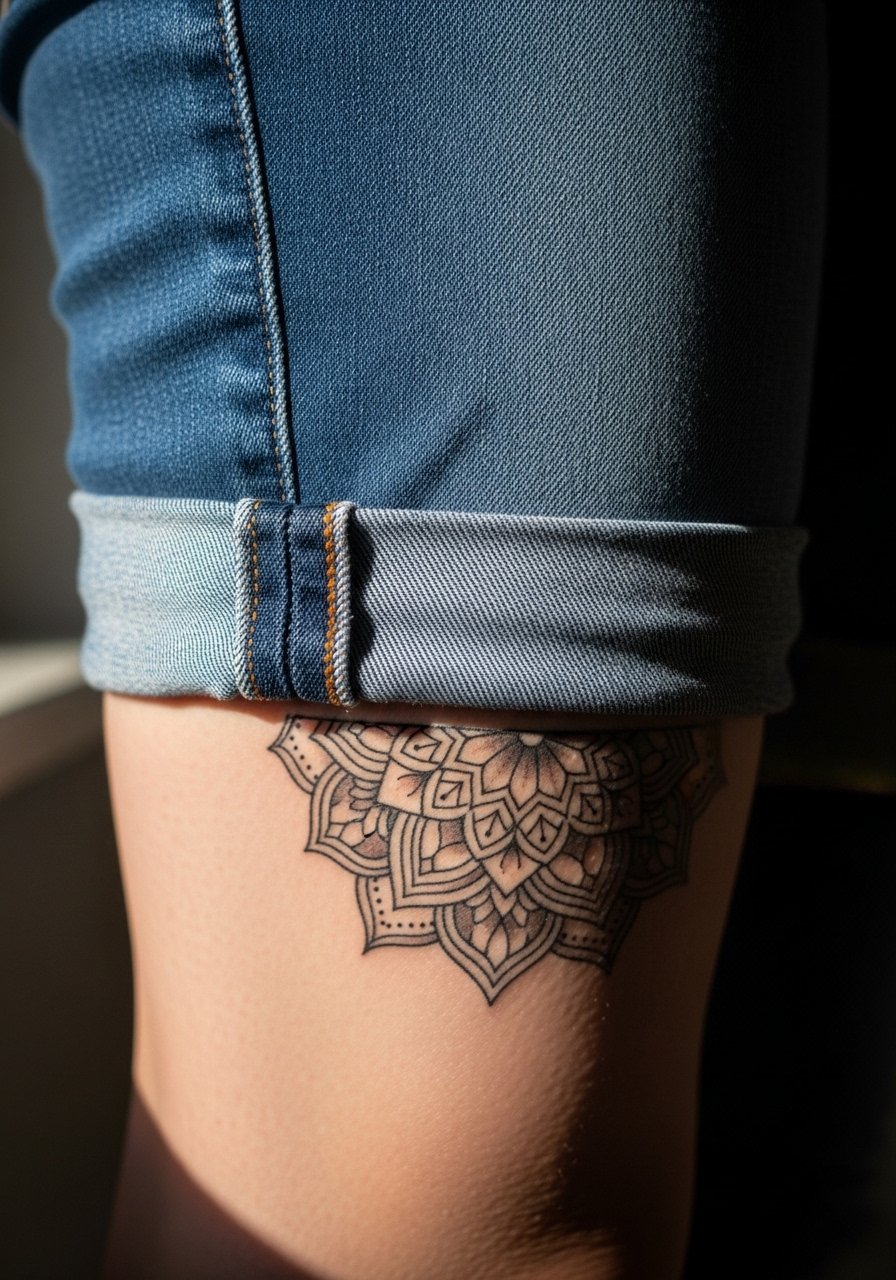
A half-mandala uses the thigh edge to create a design that is almost private until you choose to reveal it. Pain is low to moderate and session time is shorter. The design ages well because the outer edge can be bolder to prevent feathering. A mistake is making the cut edge too delicate. Ask your artist to emphasize the exposed arcs so they remain readable. At two years most of the shape holds if the bolder outerwork is present. For styling, rolled jeans or a cropped blazer with shorts keep it tasteful and visible.
14. Thick-Line Mandala for Bold Visual Weight
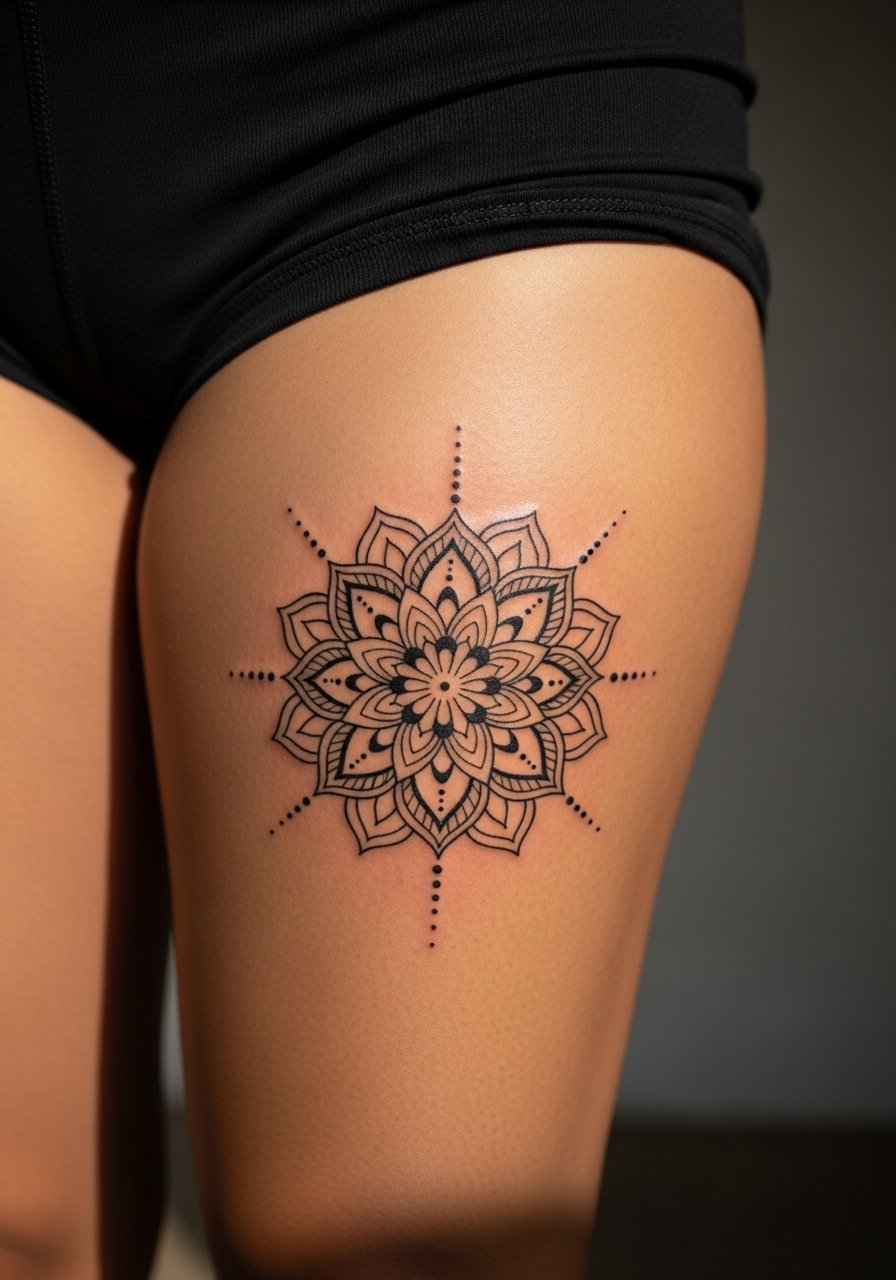
Choosing heavier linework trades micro detail for longevity. Bold outlines resist blowout and blur, which is why this approach is common on the thigh. Tell the artist you prefer heavier outer rings and simplified interior detail to keep the pattern readable at year five. A common mistake is asking for both heavy outlines and dense inner detailing that contradict longevity goals. Expect lower touch-up frequency, perhaps only at year four or later depending on sun exposure. For sessions, the sensation is steady and less fiddly than tiny dot work. Wear a loose tank and high-waisted shorts to the appointment for comfort.
15. Mandala with Color Wash Accent
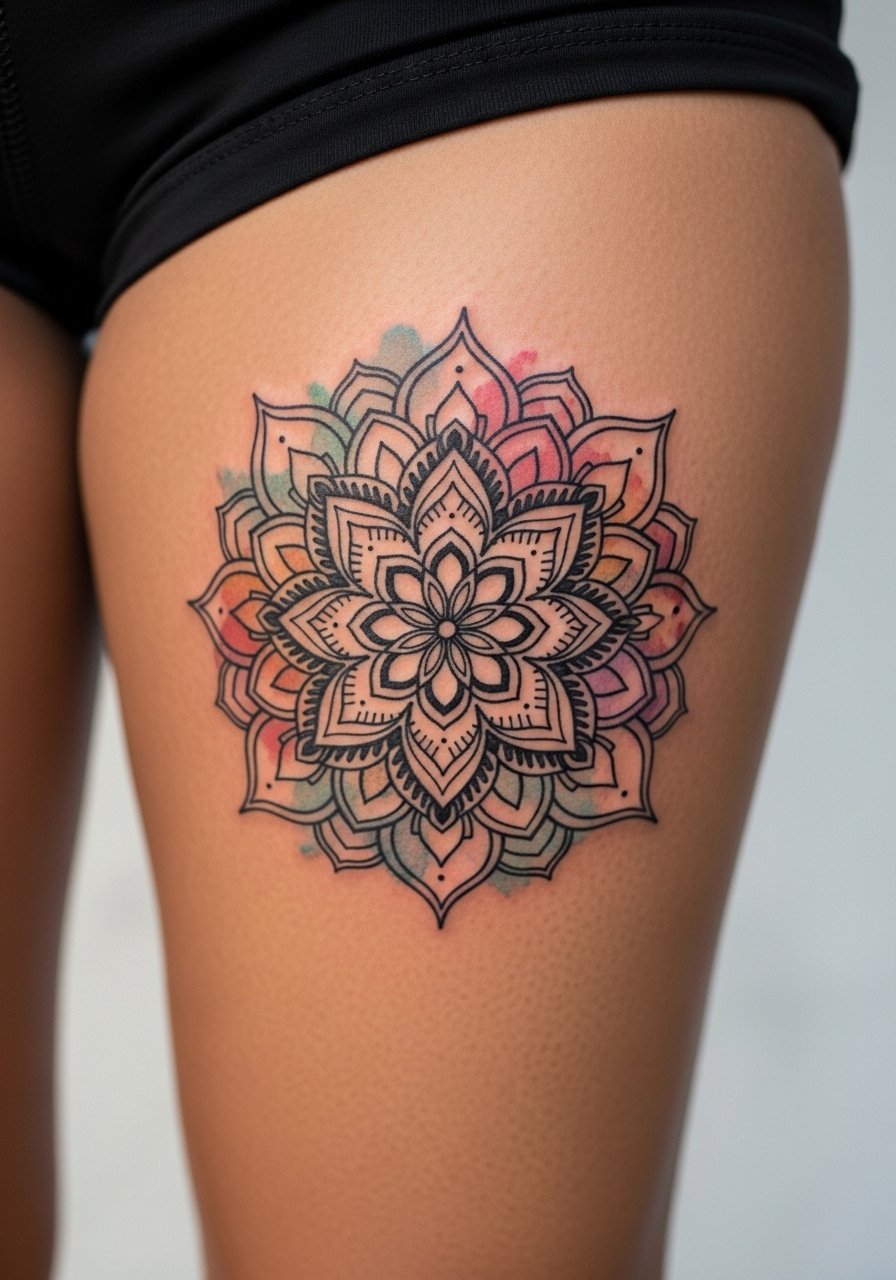
Color behind mandalas can add a soft halo but it introduces fading dynamics. Colors like muted sienna or indigo fade slower than neon hues. Tell your artist exactly which tones you want and indicate the areas that should remain line-only. The mistake is oversaturating with thin color layers that blur into the lines. At six months the color should still be vibrant if properly saturated. Expect touch-ups for hue top-ups around year three. For showing the wash, a chemisé or loose tee with a side slit lets the color peek without revealing too much.
16. Split Thigh Mandala Pair That Mirrors
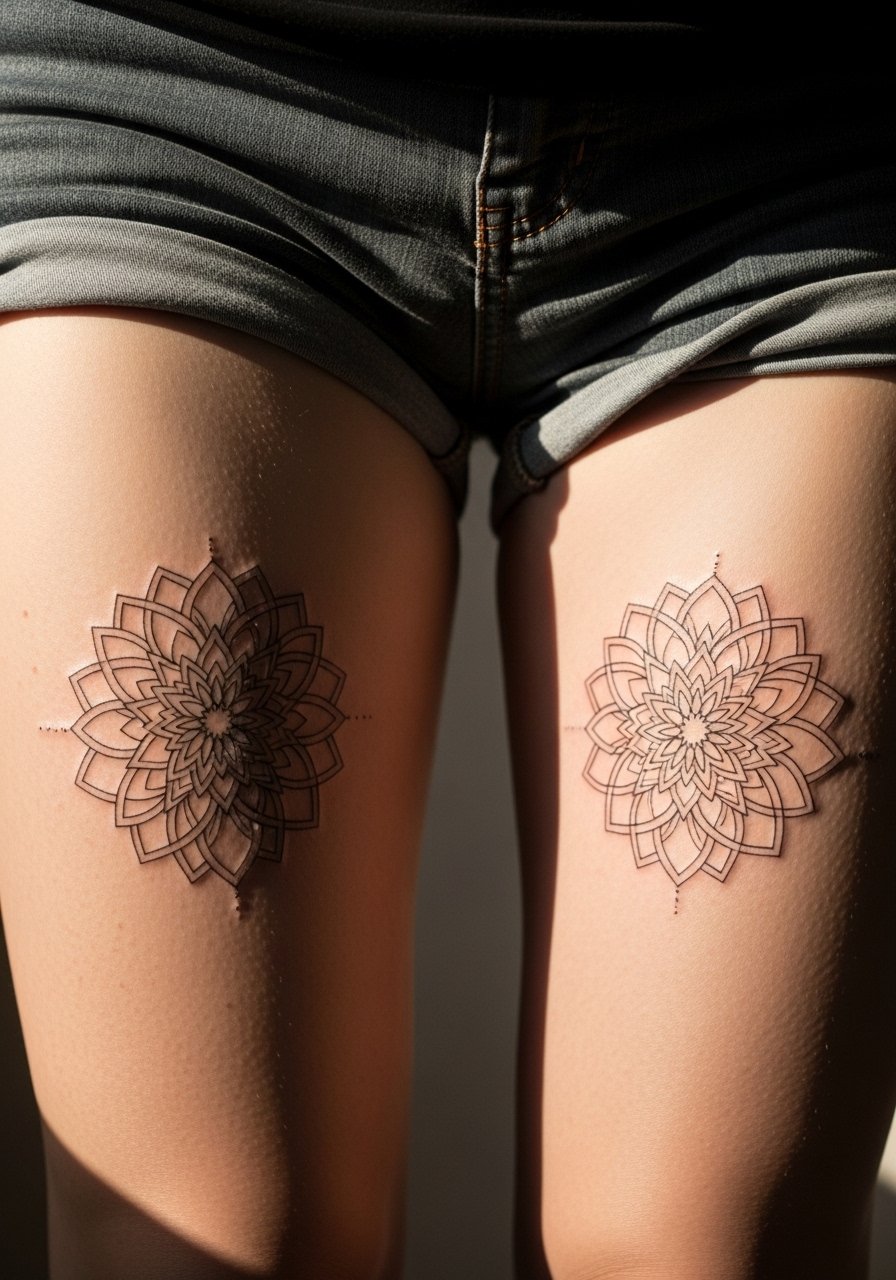
Mirrored pieces require careful stencil alignment so they read as a pair. Pain is higher on the inner thighs, and sessions might be split. Tell the artist you want identical negative space on both sides for a coherent mirror image. One common error is letting the second piece drift in scale. Ask for careful measuring. Healing differs slightly between legs depending on sleep position and clothing; track both and plan touch-ups independently if needed. For the session wear, loose shorts or a wrap skirt make access easier.
17. Mandala Flowing into a Floral Half-Sleeve
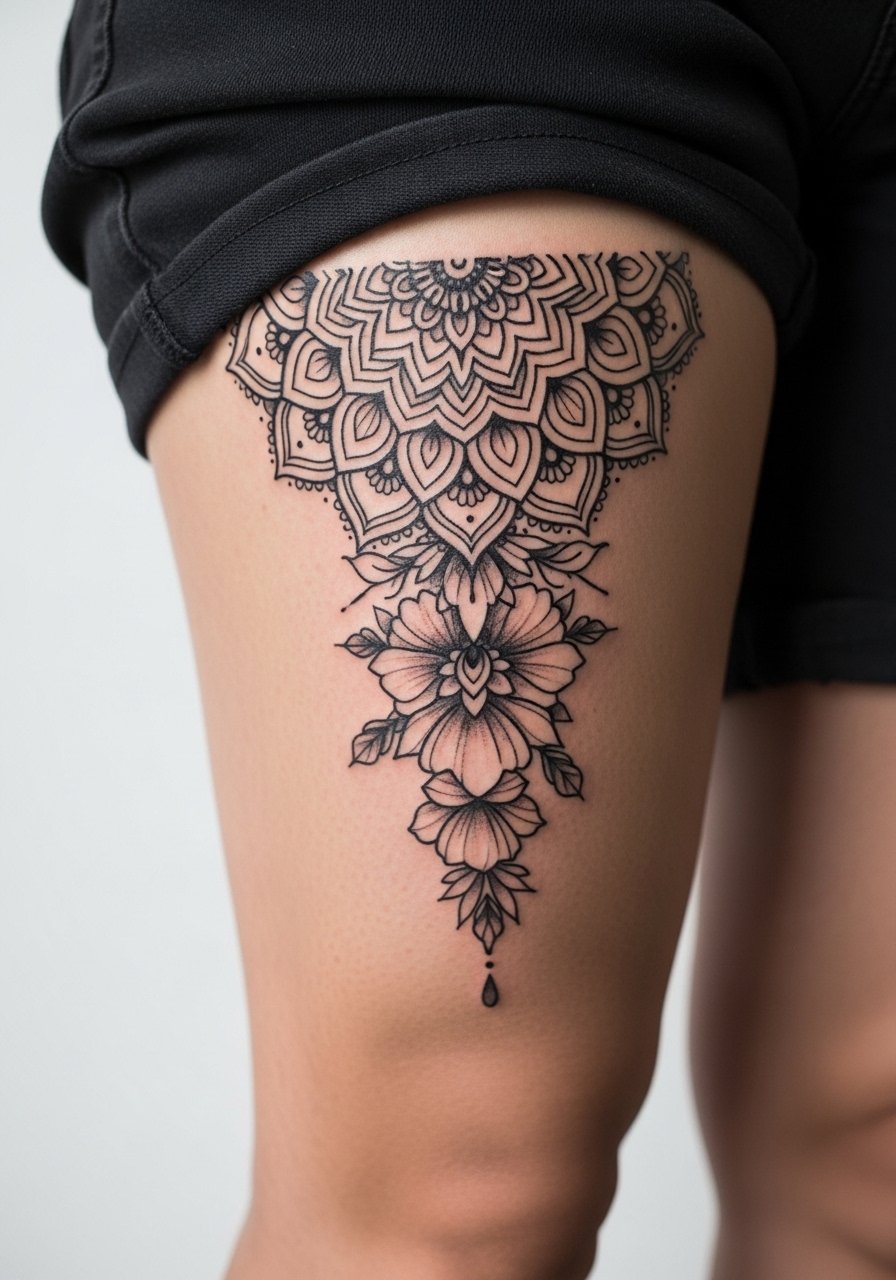
Extending a mandala into a partial thigh sleeve creates a cohesive piece that moves with the leg. Sessions are long and pain varies across topography. Tell your artist which element should read first at a distance, the mandala or the floral. An error is mixing too many small features that hide the mandala’s focal point. Over time, large floral masses can compete with geometric centers, so ask for hierarchy in the layout. For showing it off, a midi skirt with a slit shows the flow when you walk.
18. Minimal Dot Mandala for Subtle Texture
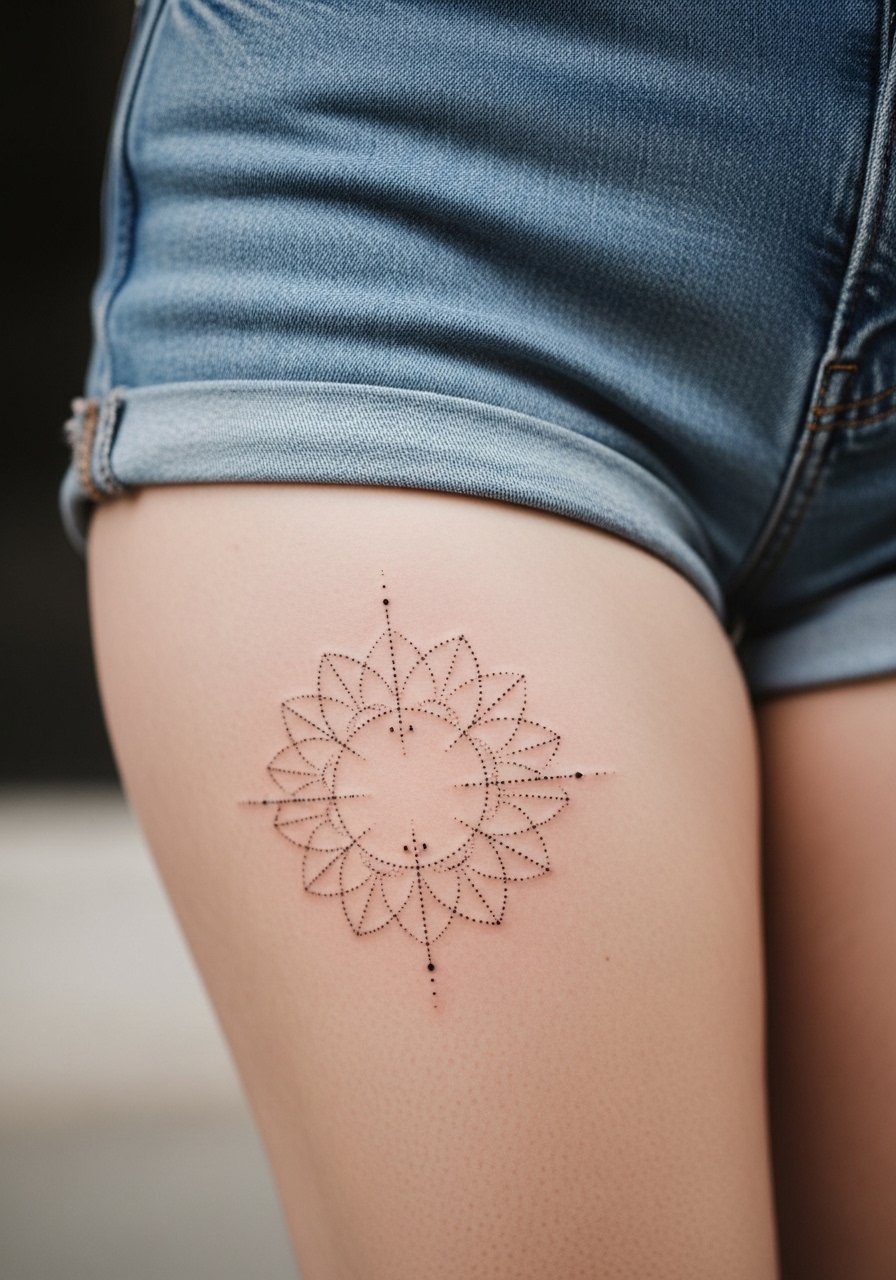
A minimal dot mandala reads quiet and textured and is ideal if you want subtlety. The trade-off is higher maintenance since tiny dots can soften. Session time is shorter but expect touch-ups sooner, around two to three years, if you wear abrasive fabrics. Ask your artist to leave extra space between dots and to avoid dense center packing. For sessions, the sensation is light but repetitive. Pair this subtle piece with neutral linen or a racerback tank when you want to keep attention low but present.
19. Mandala Collar That Travels Toward the Groin
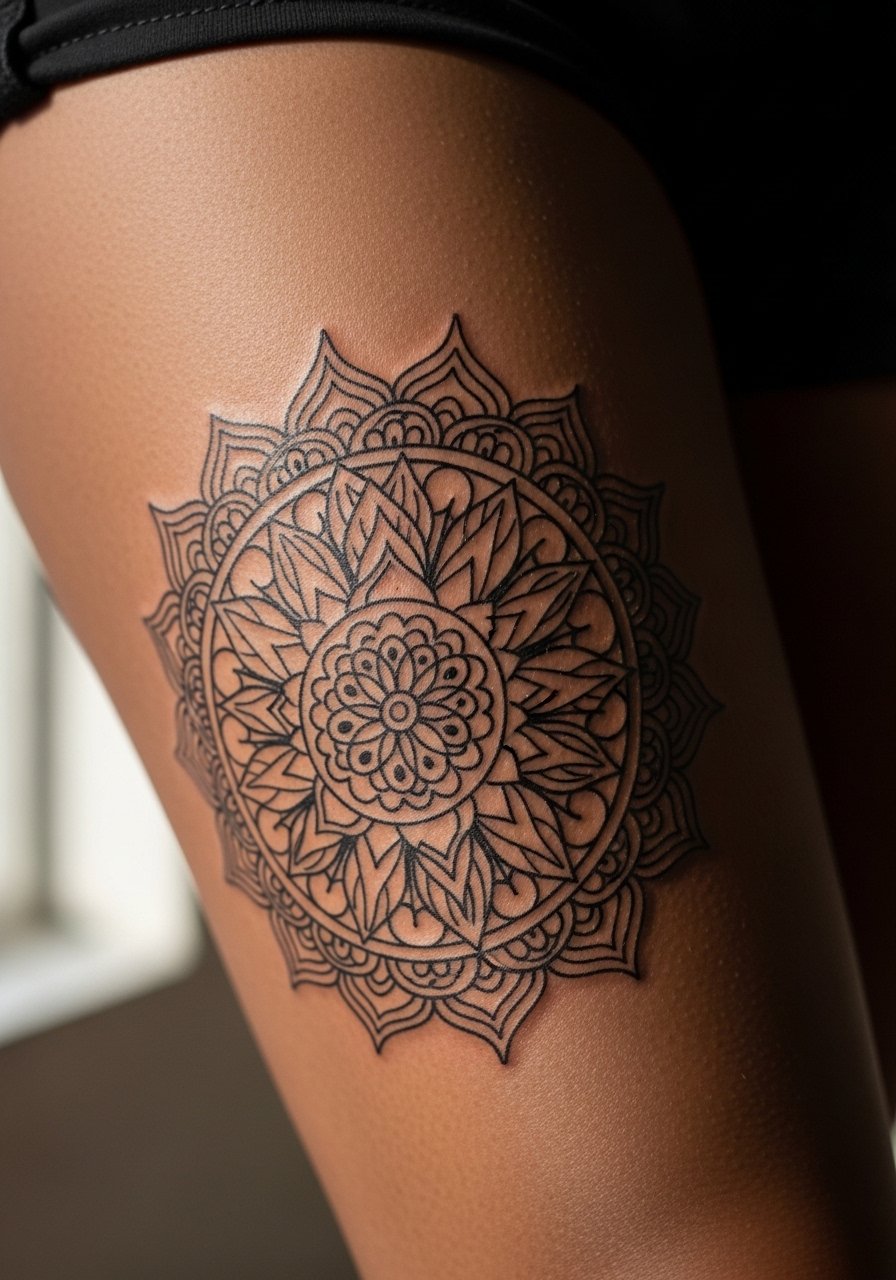
This placement approaches intimate territory, so expect higher sensitivity and careful conversation about comfort. Pain ranges higher in the inner groin area. The main mistake is letting dense detail sit too close to the groin crease where moisture and friction accelerate fading. Ask the artist to stage the density away from direct skin-on-skin contact. If you work in a conservative environment or have privacy concerns, factor that into the decision. For the session, bring a zip-up hoodie and loose bottoms, and mention to the artist when you need breaks.
20. Mandala with Metallic Ink Accents
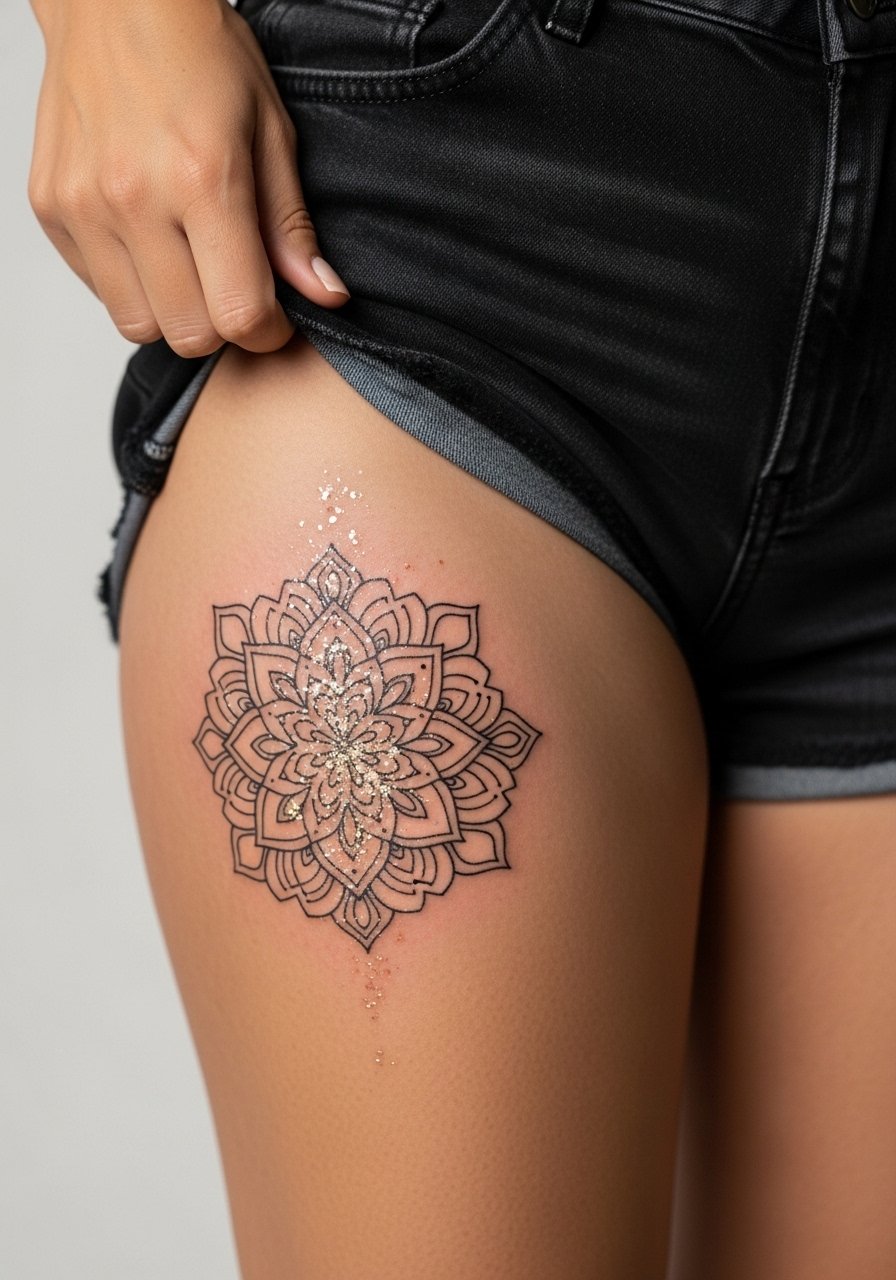
Metallic inks add a sheen but they can be finicky and change how ink ages. Not all artists use them regularly, so discuss pigment origin and long-term behavior during consultation. One common error is choosing metallic for large fill areas instead of sparing highlights. Small accents over the top lines tend to age better. Expect the metallic to shift in luster over time and plan selective touch-ups. For showing off iridescence, evening wear or swimsuits that catch light work best, such as a shimmery slip dress.
21. Layered Mandala with Overlapping Circles
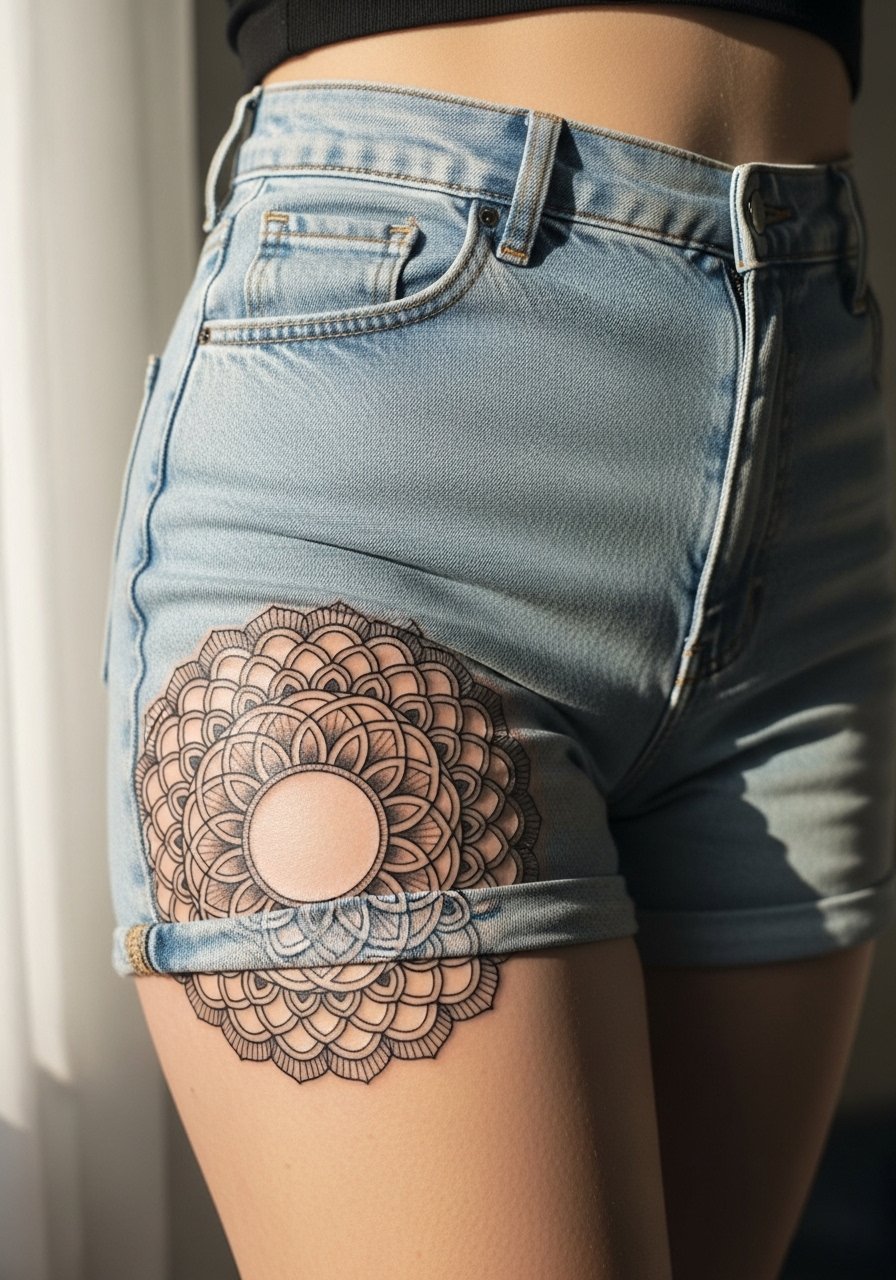
Overlapping patterns create depth without color. The key is spacing to avoid visual muddiness over time. Pain is moderate and sessions may focus on precise lining. A frequent mistake is overcomplicating overlaps at small scales. Ask the artist to step back and read the design at arm’s length while placing the stencil. Over five years the design holds if outer lines are slightly bolder. For showing it off, choose outfits that allow side exposure like high-slit skirts.
22. Mandala with Script Integration
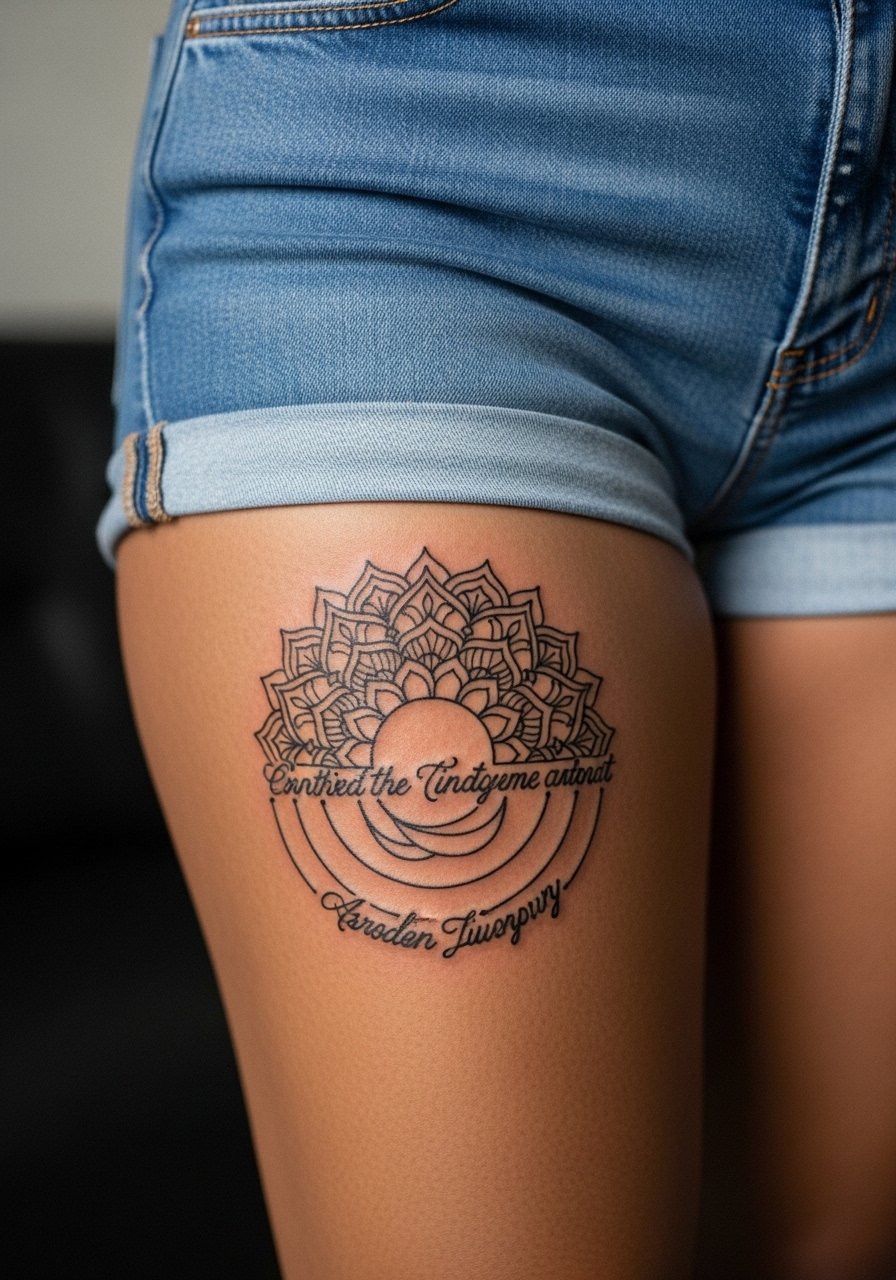
Text inside a mandala requires exact lettering decisions because generators can render gibberish at small sizes. If you want words, give the exact phrase and font reference. A typical mistake is squeezing long phrases into thin bands. Choose short words or initials and ask for slightly larger letterforms so they survive the first few years. Healing usually preserves script if spacing is adequate. For styling, a thin chain anklet or thigh harness can frame the lower ring without crowding the letters.
23. Negative Space Mandala with Skin Tones as Contrast
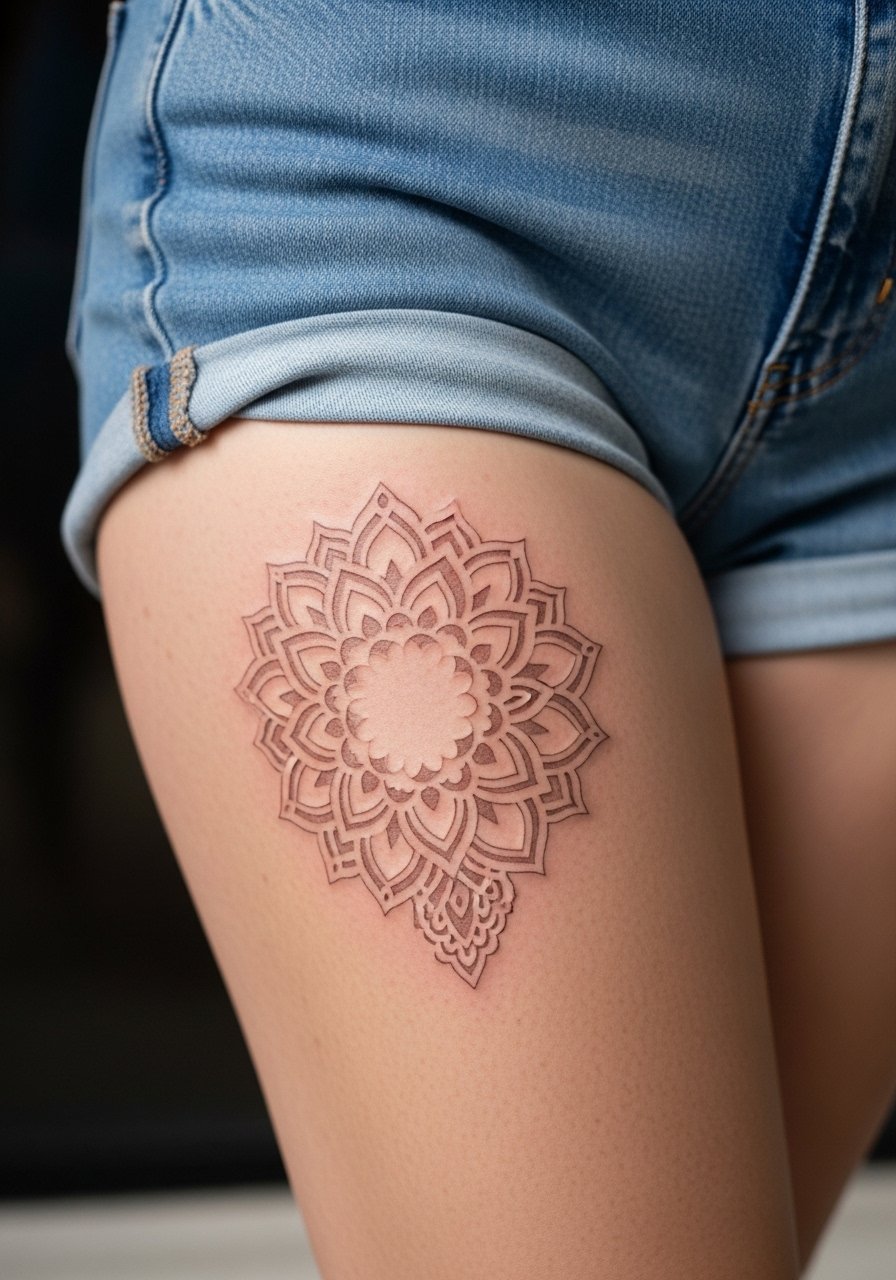
Relying on negative space uses the body’s own tone as part of the design. This plays beautifully on the thigh where curves can accentuate gaps. A mistake is underestimating how the contrast will change with tan lines. Tell your artist to test how the stencil reads on your skin tone under natural light. Negative space techniques age well if the surrounding lines are robust. For showing it off, neutral linen or a cream slip dress keeps focus on the cutouts.
24. Mandala Concentric Bands That Fade Out
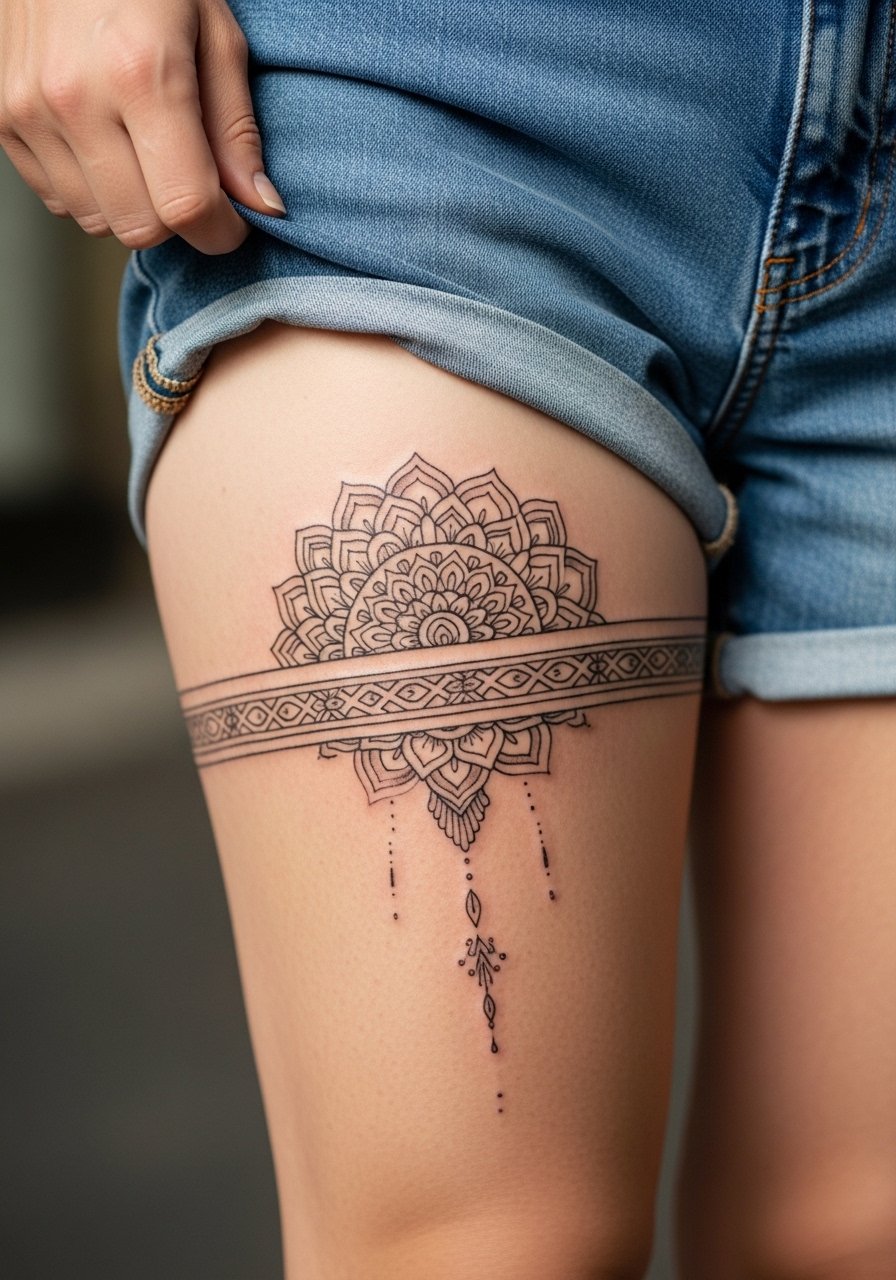
A design that fades outward reduces concentrated detail where skin texture changes near the knee. Sessions are comfortable and predictable. A common error is keeping high density too far down the leg where movement causes more blur. Tell your artist which bands should remain crisper and which can be porous. Expect touch-ups at year three if the outer rings face repeated friction. For showing off, mid-length skirts or slits expose the fade while keeping it elegant, try a midi skirt with slit.
25. Mandala with Beaded Chain Motif
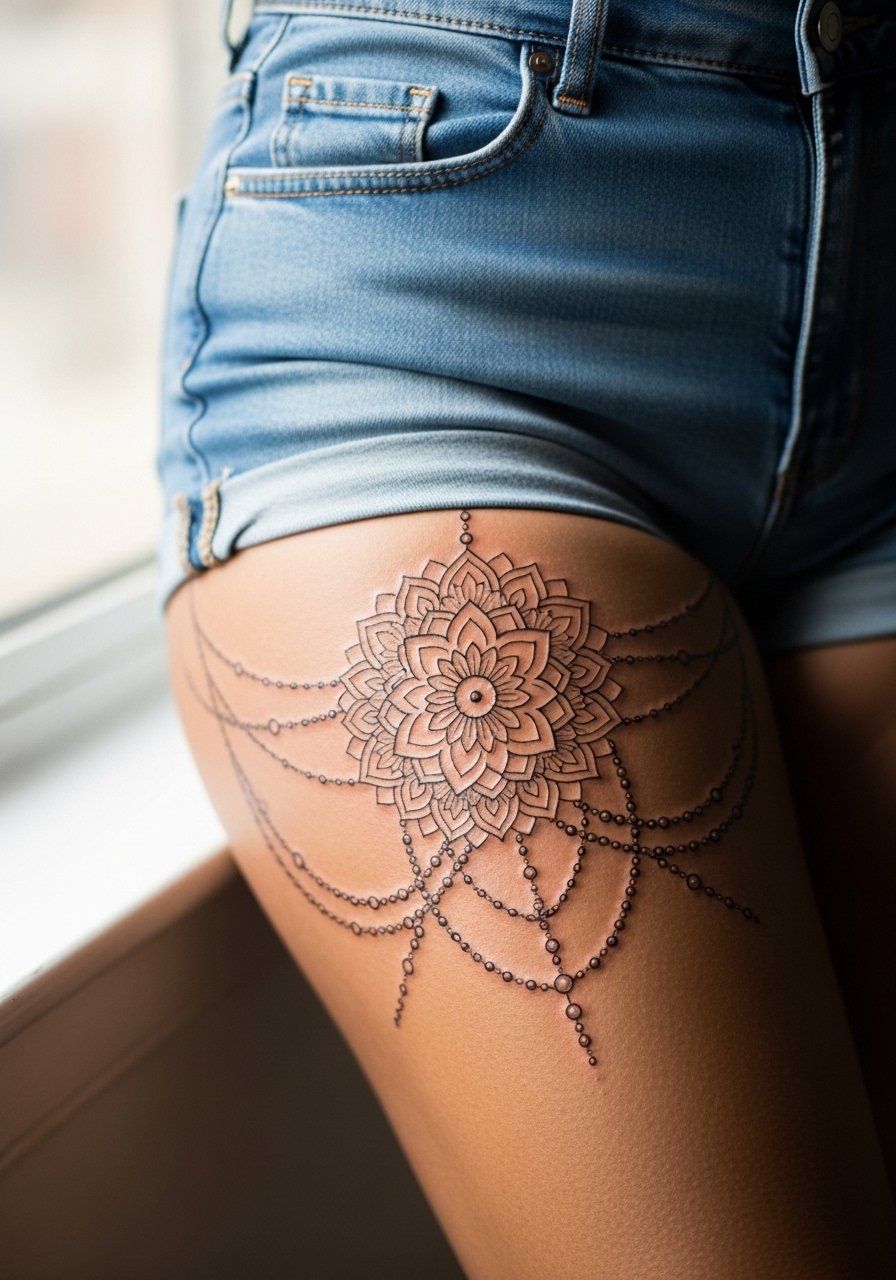
Incorporating beaded chain motifs adds rhythm and motion to the mandala. Ask for larger bead spacing to prevent merging; small tightly packed dots can become a blurred line over time. The session involves steady, repetitive dot work that some find meditative and others find itchy. For longevity, thicker bead outlines help. This pairs well with bohemian skirts and a beaded waist chain or belt when you want to frame the motif.
26. Layered Black and Gray Mandala with Soft Shading
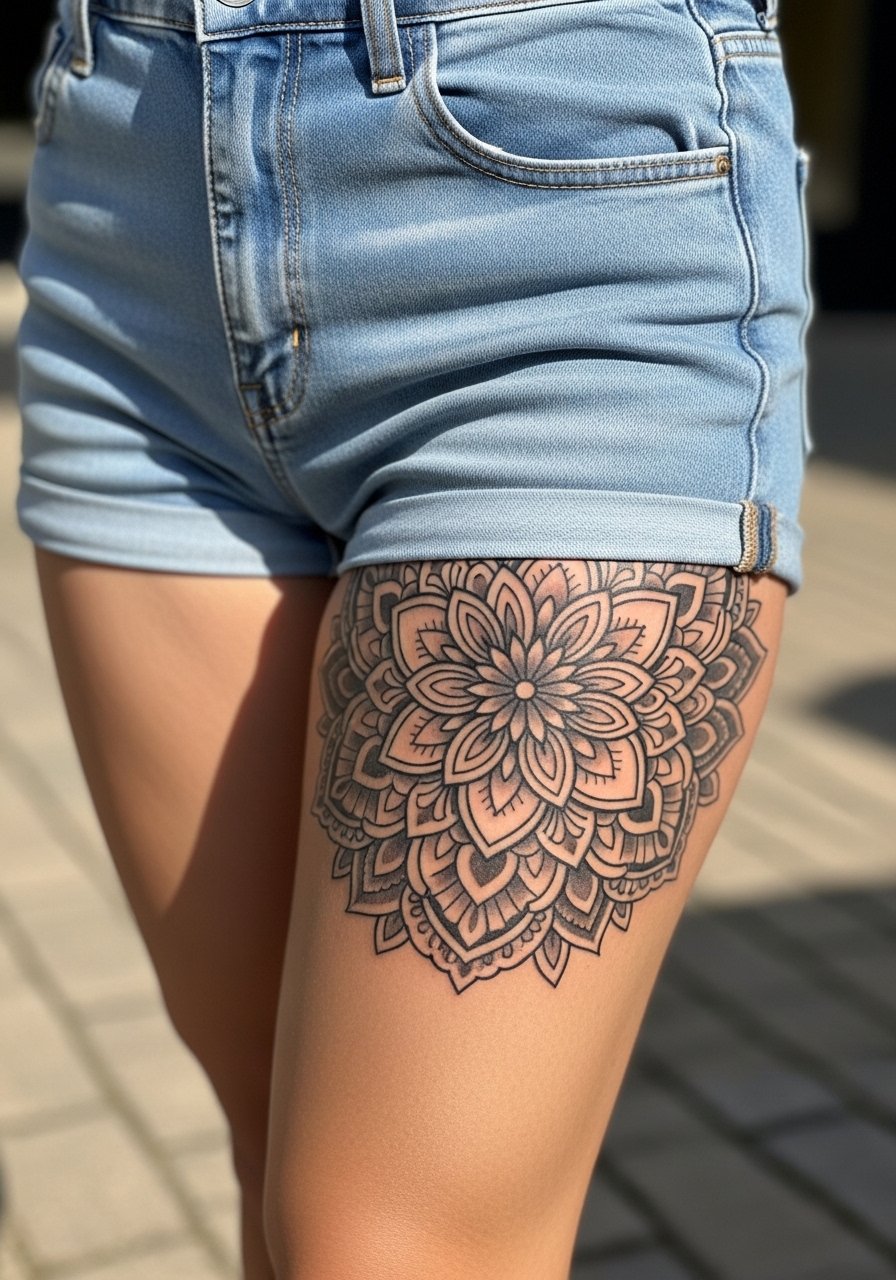
Black and gray shading gives depth without color variables and holds up well on the thigh. Tell your artist you want softer whip shading rather than heavy gray fills to keep movement in the piece. The mistake is filling large areas with thin gray that sinks into the skin’s texture. Sessions may be longer but touch-ups are less frequent if the shading is breathable. For showing it off with minimal fuss, neutral linen shorts or a cotton slip dress keeps attention on tonal interplay.
27. Asymmetrical Mandala That Tucks Under a Bikini Line
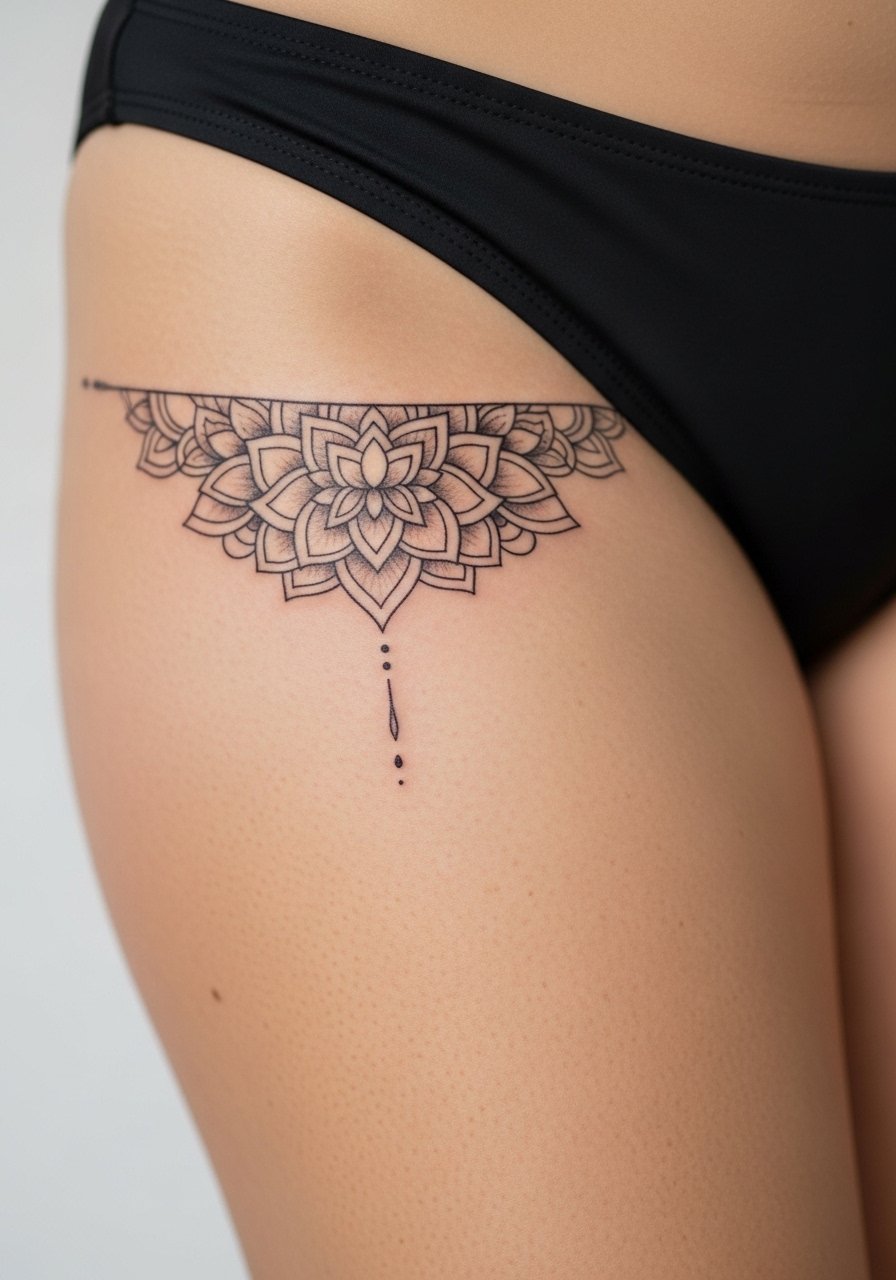
An asymmetrical piece designed to peek from a swimsuit requires careful placement relative to your bikini cut. Pain is moderate and sessions can be short for this size. A common mistake is placing the center too low so it becomes obscured by bottoms. Ask the artist to position the focal point where your swimwear typically sits so the piece interacts with your wardrobe as intended. For the appointment, bring a swimsuit or bottoms that the artist can work around comfortably.
Frequently Asked Questions
Q: Will a fine line mandala on the inner thigh blur faster than one on the outer thigh?
A: Yes, inner thigh mandalas face more friction and moisture, so they often lose crispness sooner than outer thigh pieces. Leaving more negative space and asking for slightly bolder outer rings helps, and plan for possible touch-ups around year two to three depending on lifestyle.
Q: Are mandalas culturally sensitive to tattoo on the thigh, and how do I navigate that?
A: Mandala patterns have roots in spiritual traditions. One camp argues direct replication of sacred symbols can feel appropriation. The other camp believes respectful adaptation honors the form. If this matters to you, tell the artist you prefer an adapted design and ask them how they approached respectful reference work during consultation.
Q: What should I wear to a thigh mandala session to make access easy?
A: Wear loose, adjustable bottoms you can shift without tugging the skin, like high waisted shorts or drawstring linen pants. That makes the artist’s job cleaner and keeps you comfortable during longer sittings.
Q: How often should I expect touch-ups for a saturated black mandala on the upper thigh?
A: Saturated black holds longer than fine lines, so touch-ups are commonly needed around year three to five depending on sun exposure and friction. If you regularly jog or wear tight clothing, plan on earlier refreshes for edge crispness.
Q: Can I get a mandala with color on my thigh if I have darker skin?
A: Yes, but choose muted, saturated tones and small placement accents rather than thin washes. Discuss pigment choice with your artist and ask to see healed work on similar skin tones so you know how color reads over time.
Q: If I want symmetry across both thighs, how do I make sure they match?
A: Request measured stencils and a mirrored layout in your consultation. Ask the artist to photograph both stencils in place before starting so you can confirm scale and alignment. Mirrored pieces may still heal slightly differently, so plan touch-ups independently for each side if needed.