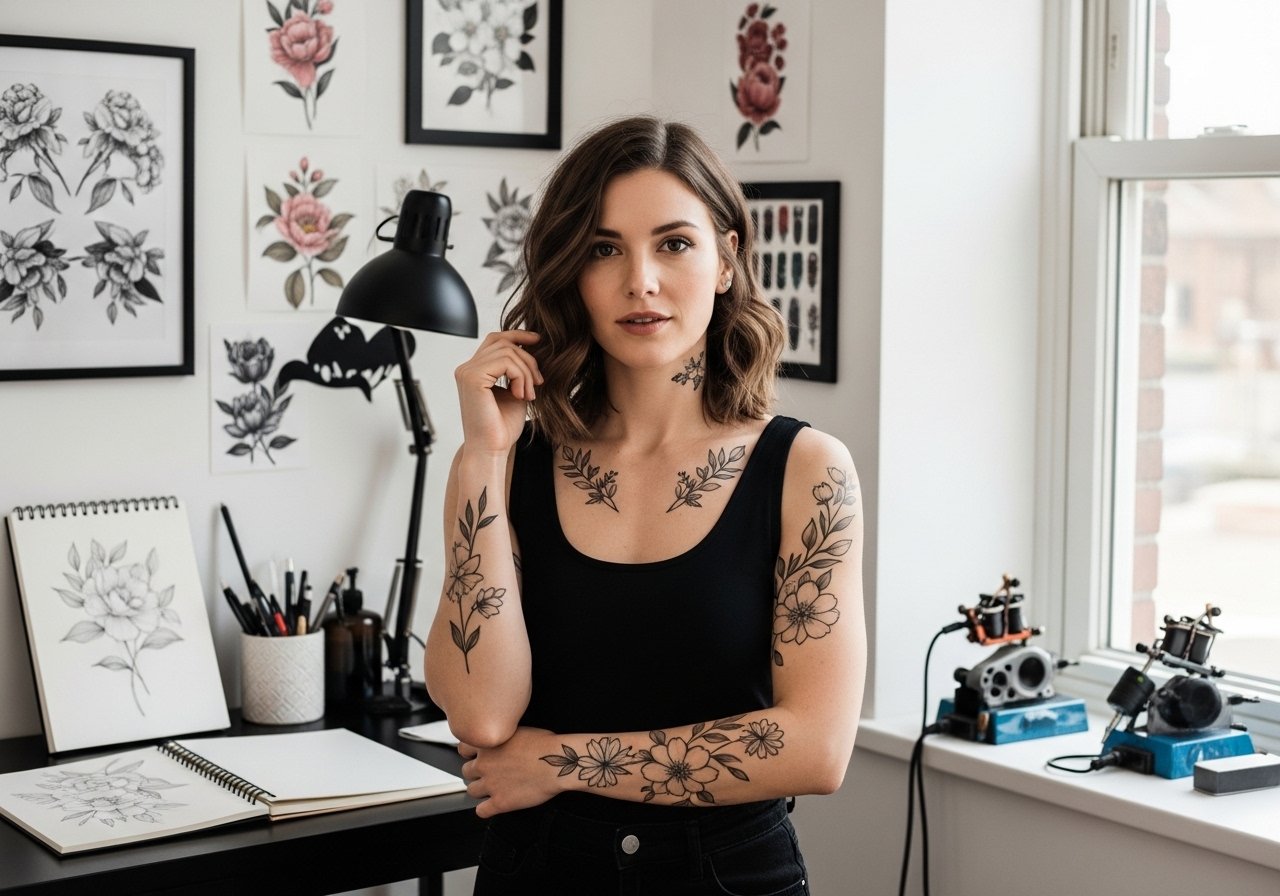
Fine line Om scripts are everywhere on saved boards right now, and the reality is they behave very differently on a rib than they do on an arm. Ribs hurt more than people expect, sweat and bra friction can wreck a fresh stencil, and body changes will warp tiny scripts. Read these 21 rib-friendly Om options and you will find ideas built around longevity, pain management, and wardrobe for the first week in the chair.
1. Fine Line Om Script Along the Side Ribs
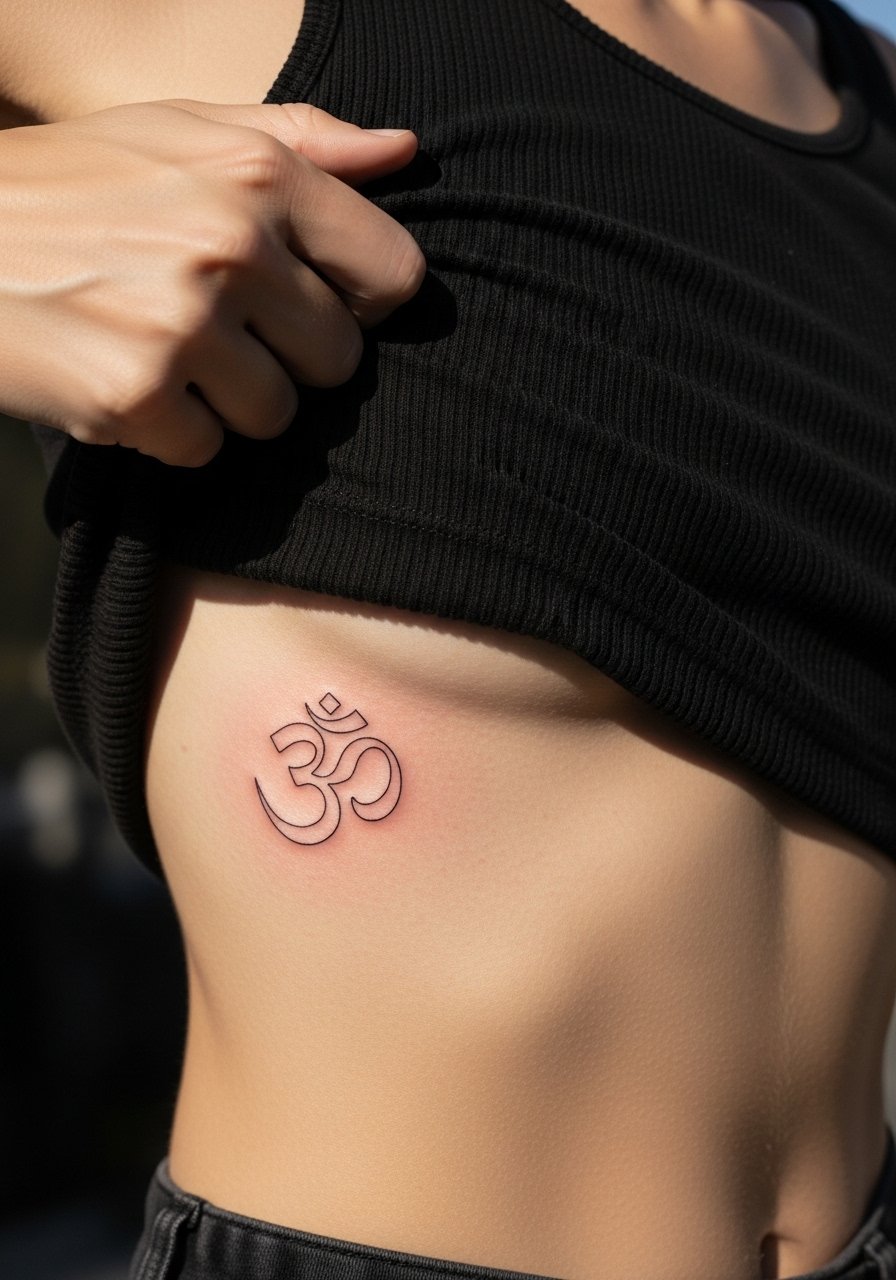
Fine line Om scripts hug the rib curve and look delicate when fresh. Fair warning, ribs score high on pain charts, but for a 3 to 5 inch single-needle script expect a single session under two hours and a result that reads intimate and discreet. Tell your artist you want slightly heavier primary strokes and airy spacing between joins so the script has room to settle. The common mistake is asking for razor-thin weight across the whole symbol, which often fades into a soft gray by year three. For the appointment wear a cropped tank top you can lift without pinching the ribs. Expect a touch-up at 2 to 4 years if you keep it tiny.
2. Ornamental Om Mandala Under the Bust
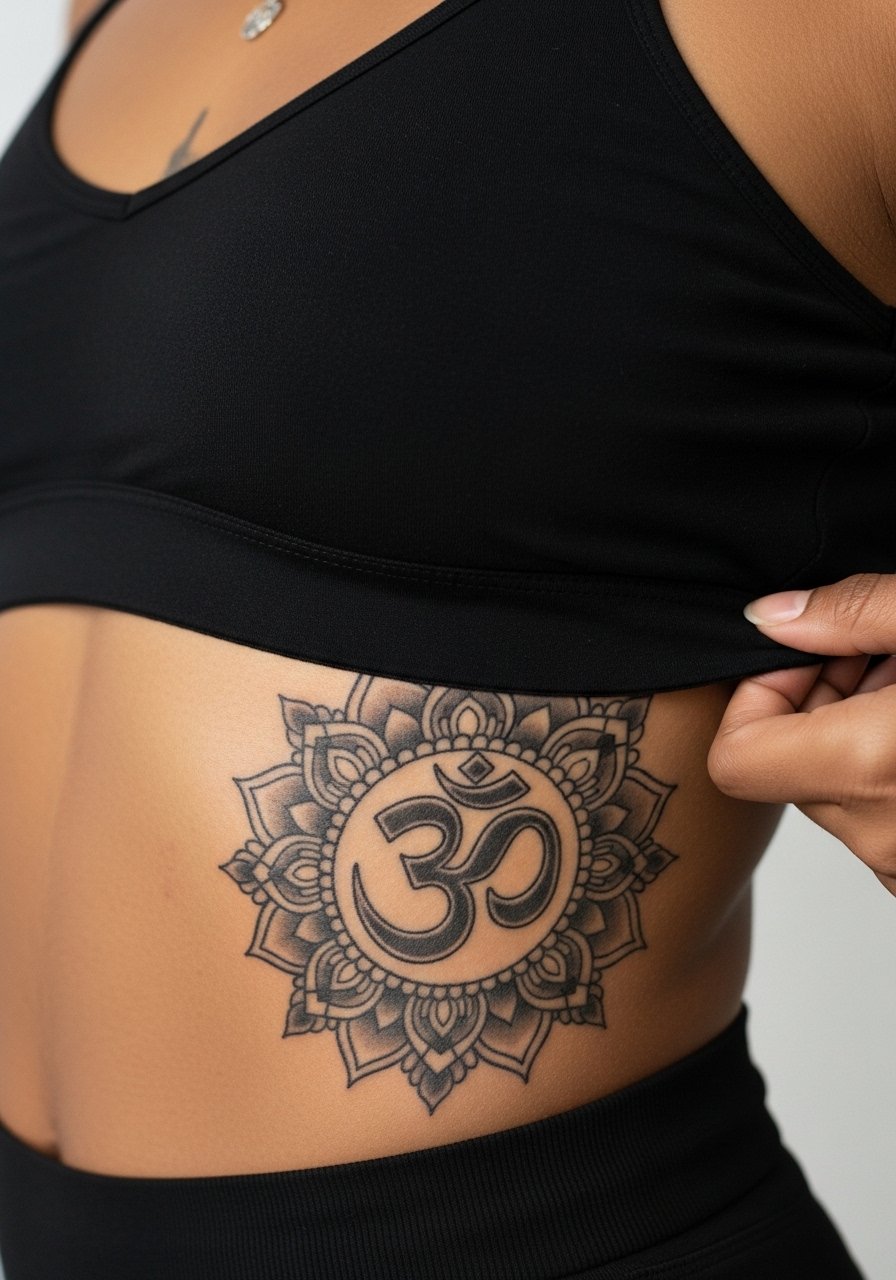
Ornamental mandalas use symmetry to hide on-rib movement, which makes them a great if you want coverage that tucks under clothing. These pieces often take multiple sessions for shading and stipple work, and the inner ribs can be extra sensitive during longer sittings. Artists and clients argue over protective films versus dry healing on ribs. One camp trusts adhesive films for cleaner initial healing and less rubbing, the other warns about trapped sweat and prefers open-air care, especially in summer. Name that debate in your consultation and ask how the artist handles sweaty heals. For show-off looks, pair this with high waist bikini sets or a black bralette for contrast when you want to reveal it briefly.
3. Minimalist Om with Lotus Outline on Lower Ribs
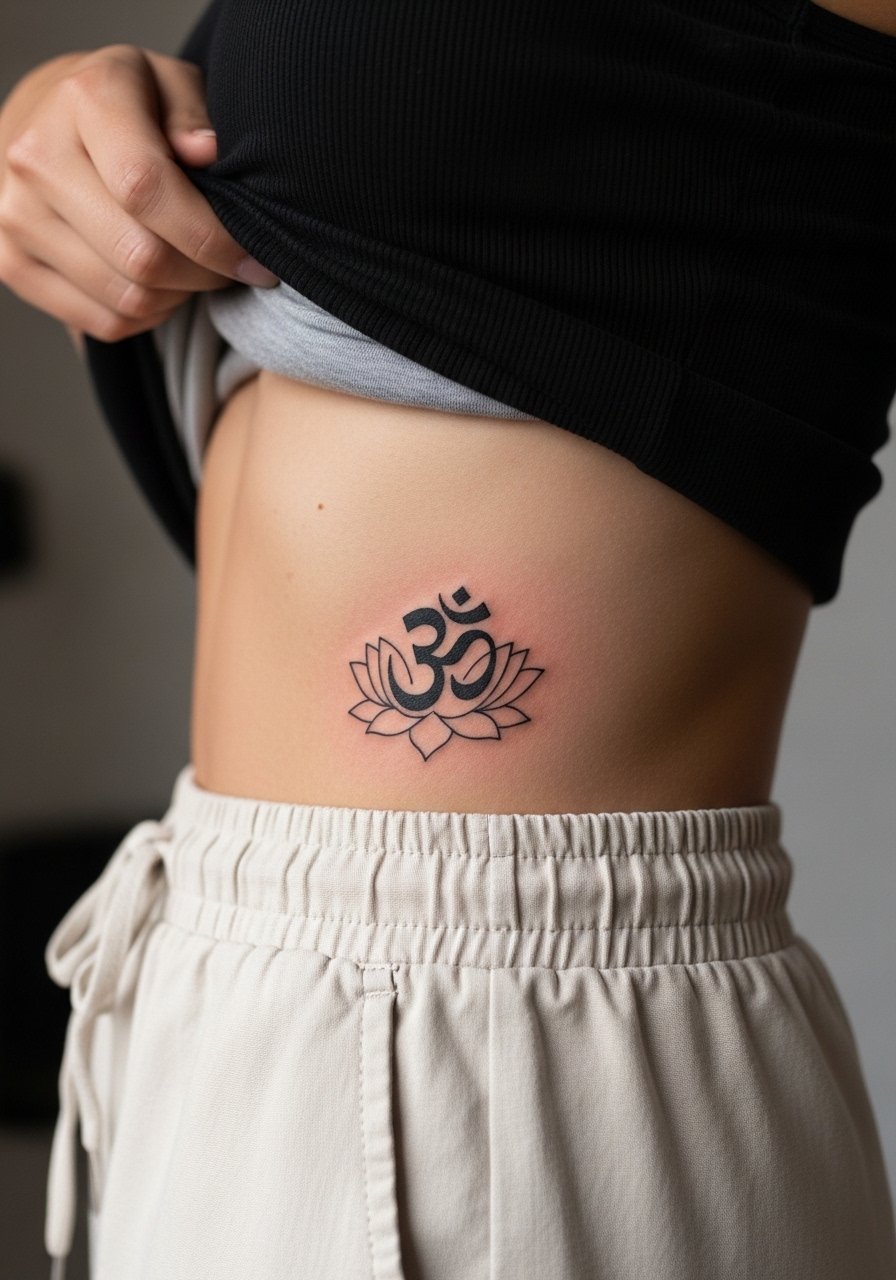
Minimalist lotus-paired Oms are ideal if you want the symbol small and unobtrusive. The lower ribs move a lot with breathing, so ask for a lotus that uses clean negative-space petals and a slightly deeper needle hit on anchor lines to resist early fade. A common error is placing a single-needle motif too close to the waistline where fabric rubs. For the session wear drawstring pants so the artist can access the area without your jeans pressing on the skin. Healed after six months, expect delicate softening; plan a touch-up around year two if you love ultra-fine lines.
4. Neo-Traditional Om with Wave Motif Wrapping the Side
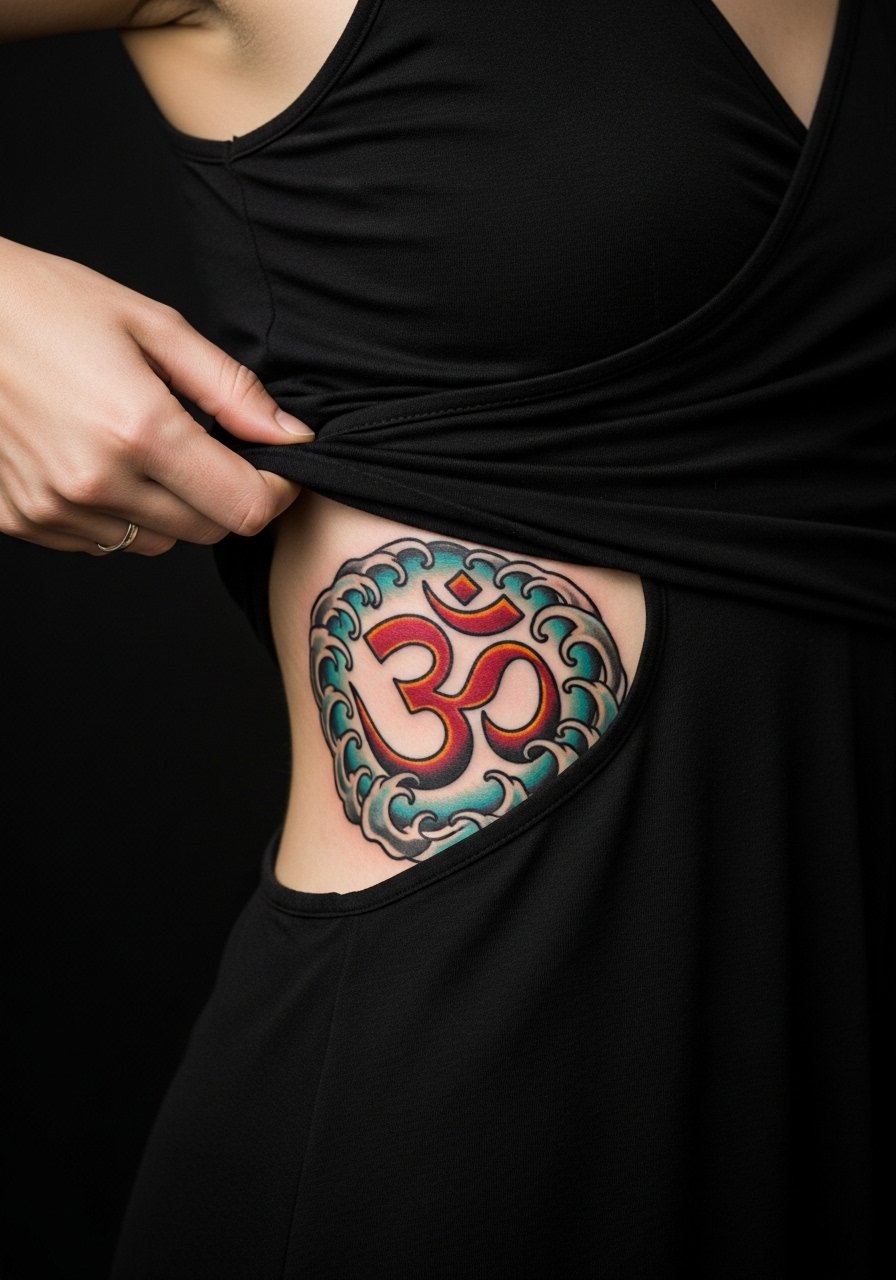
Neo-traditional approaches let you add movement that follows inhale and exhale, which makes wave accents a natural match for the rib. These sessions run longer and involve color saturation and solid linework, so plan multiple sittings. If you worry about lines stretching after body changes, ask for slightly bolder outlines around the Om so the motif maintains definition as the softer color fields age. For showing it off, an off-shoulder top in a neutral shade creates contrast with the color accents. Expect the black outlines to hold for many years while colored fills may need color-boost touch-ups at three to five years.
5. Geometric Om Cube Illusion on Upper Ribs
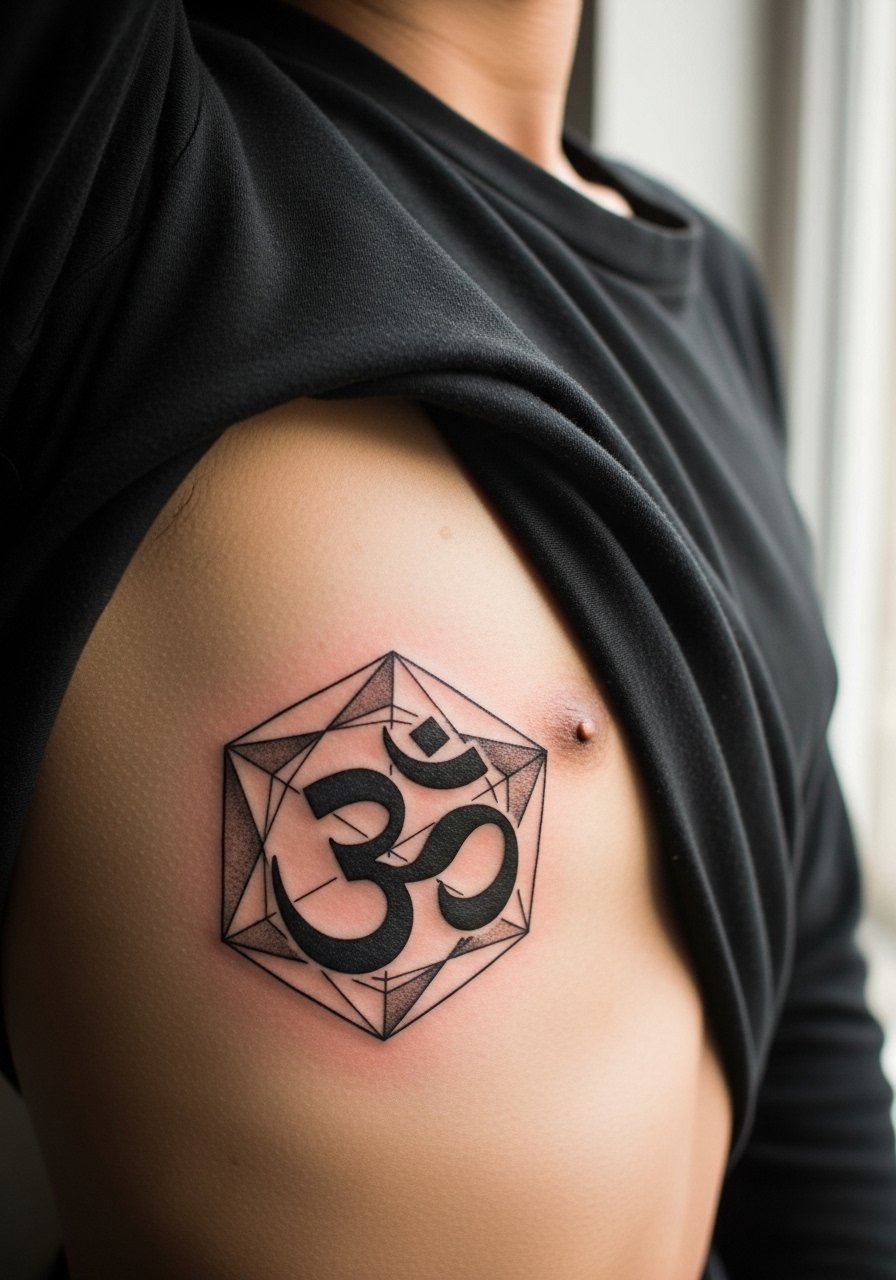
Geometric optical pieces use negative space and precise spacing to read three dimensional on the torso. The biggest mistake is making cells too small. On ribs you need room to breathe so the shapes do not fuse as they heal. During consultation ask the artist to stencil and bend the template with you so you can test how the cube looks when you breathe. Session time is commonly two sessions for crisp blackwork and shading. For an outfit that frames this, try an off-shoulder cream blouse or a high crew neck pulled aside during photos. Blowout risk drops with thicker anchor lines and well-spaced geometry.
6. Micro-Realism Om with Incense Smoke
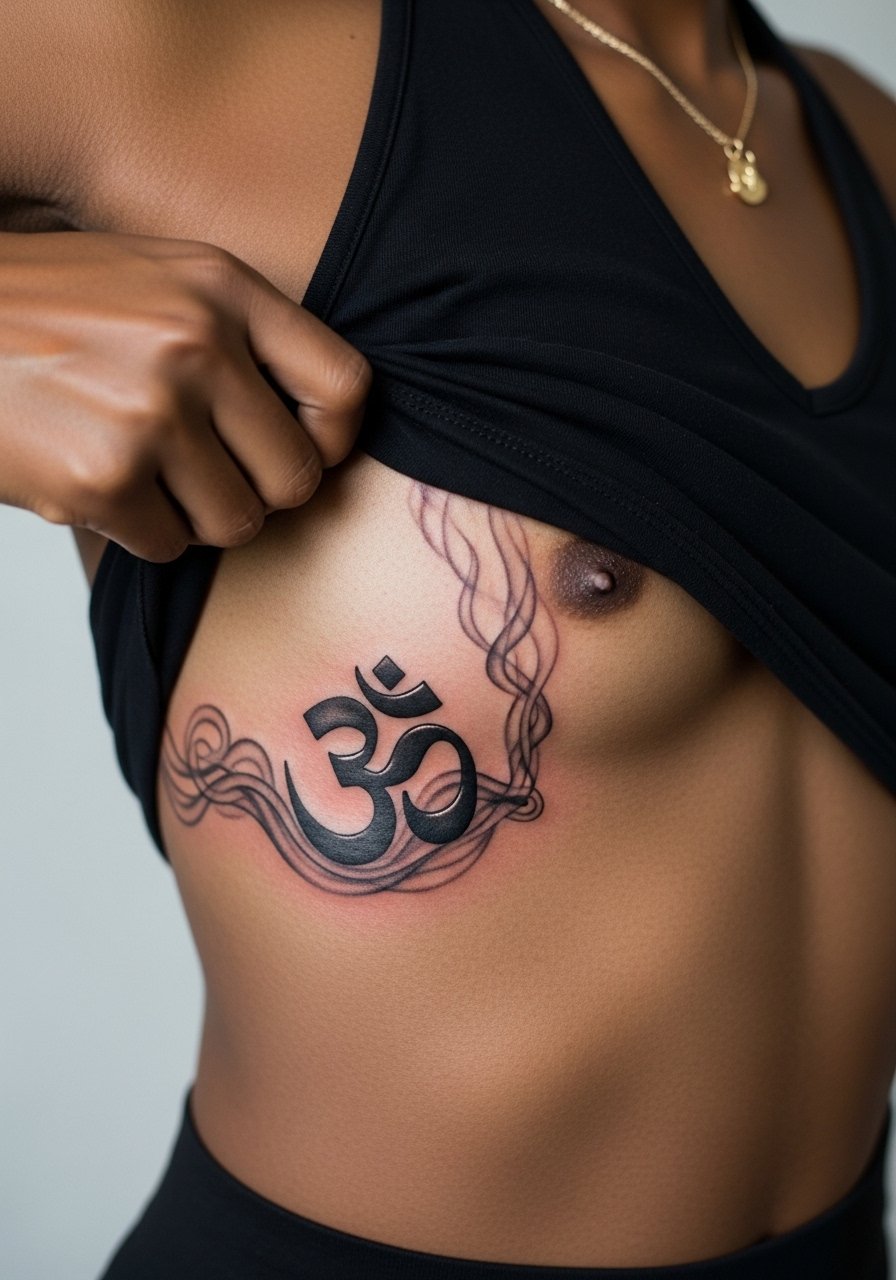
Micro-realism gives the Om a photograph-like depth that feels meditative and private on inner ribs. These pieces test both patience and skin tolerance because tiny tonal shifts need time and sometimes four to six sessions. A real mistake is expecting micro detail to behave like bold blackwork. Fine tonal realism can lose contrast on very dark skin unless the artist designs with strong separating highlights and negative space. Mention during your consult that you are happy to increase contrast to preserve legibility. For session comfort pick a halter top so the artist can fully access inner ribs. Touch-up expectations are realistic at year two for tonal refresh.
Chair Day Prep
The first six designs above ask for careful prep because they range from delicate scripts to multi-session realism, and a few materials can make the session and first week much easier.
-
CeraVe Healing Ointment. A thin, non-greasy option that many people use on sensitive rib skin after the initial film is removed, which helps showers without heavy residue.
-
Hada Labo lotion. Lightweight hydration without tackiness during humid months, handy for keeping the area from feeling tight without clogging pores.
-
Green Sheep balm. Thin consistency that prevents sticking to sheets while you sleep, useful for the first few nights after a rib session.
-
After Inked balm. Breathable formula that many report peels less aggressively than thicker balms during summer ribs.
-
Second Skin protective film. A thinner protective film that conforms to curves, reducing bubble risk on the ribs during the initial 24 to 48 hours.
7. Watercolor Om Blending into a Galaxy Panel
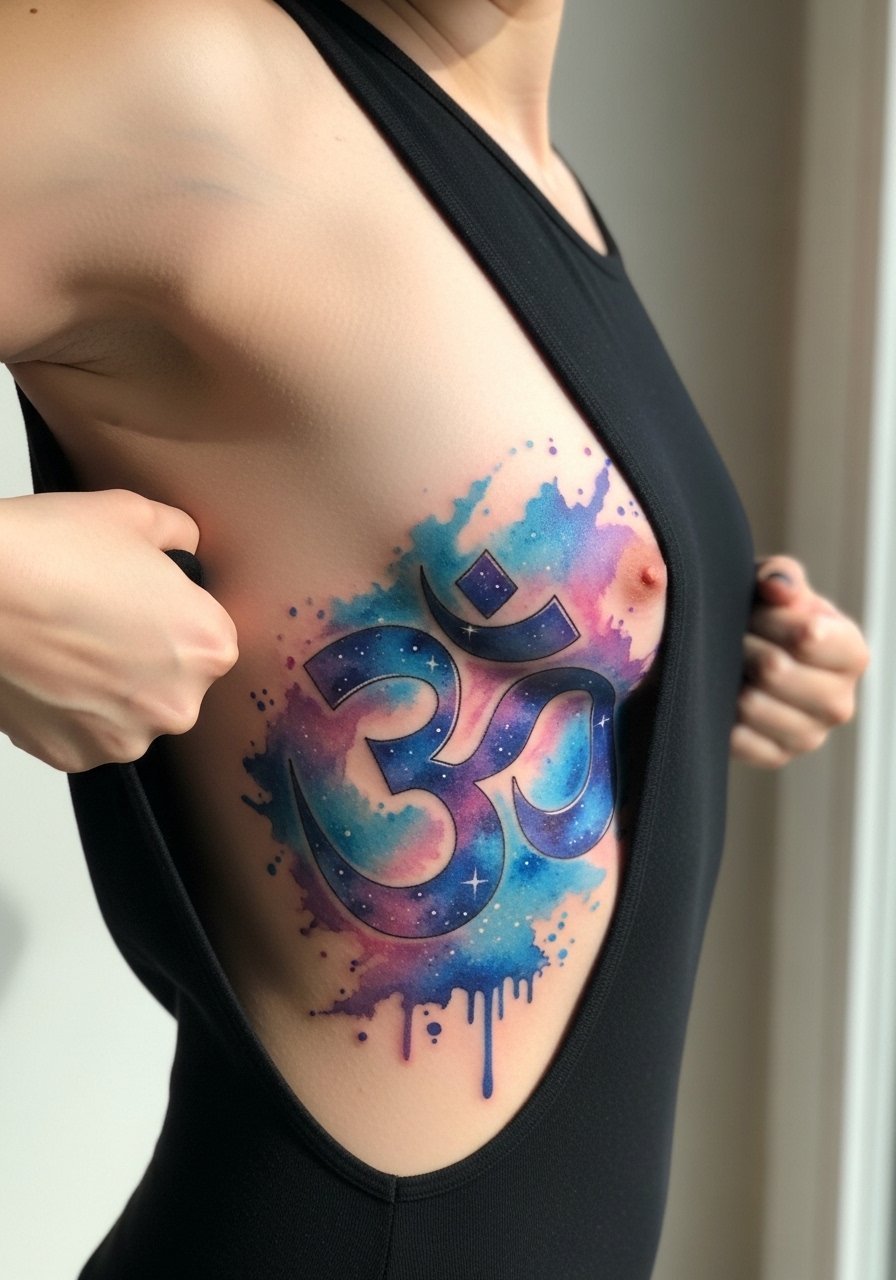
Watercolor ribs have an ethereal look that moves with the torso, yet they age differently on ribs because color fades faster with friction. If you like this mood ask the artist to anchor the Om with a modest black outline or thin stipple border so the central symbol retains contrast over time. Many shops now prefer blackwork anchors under watercolor for longer legibility. Plan two to three sessions and bring photos of the exact color palette you want. For evenings out, a sleeveless bodysuit frames the wash without hiding the flow. Expect color refreshing at year three to keep it lively.
8. Traditional Om Framed with Florals
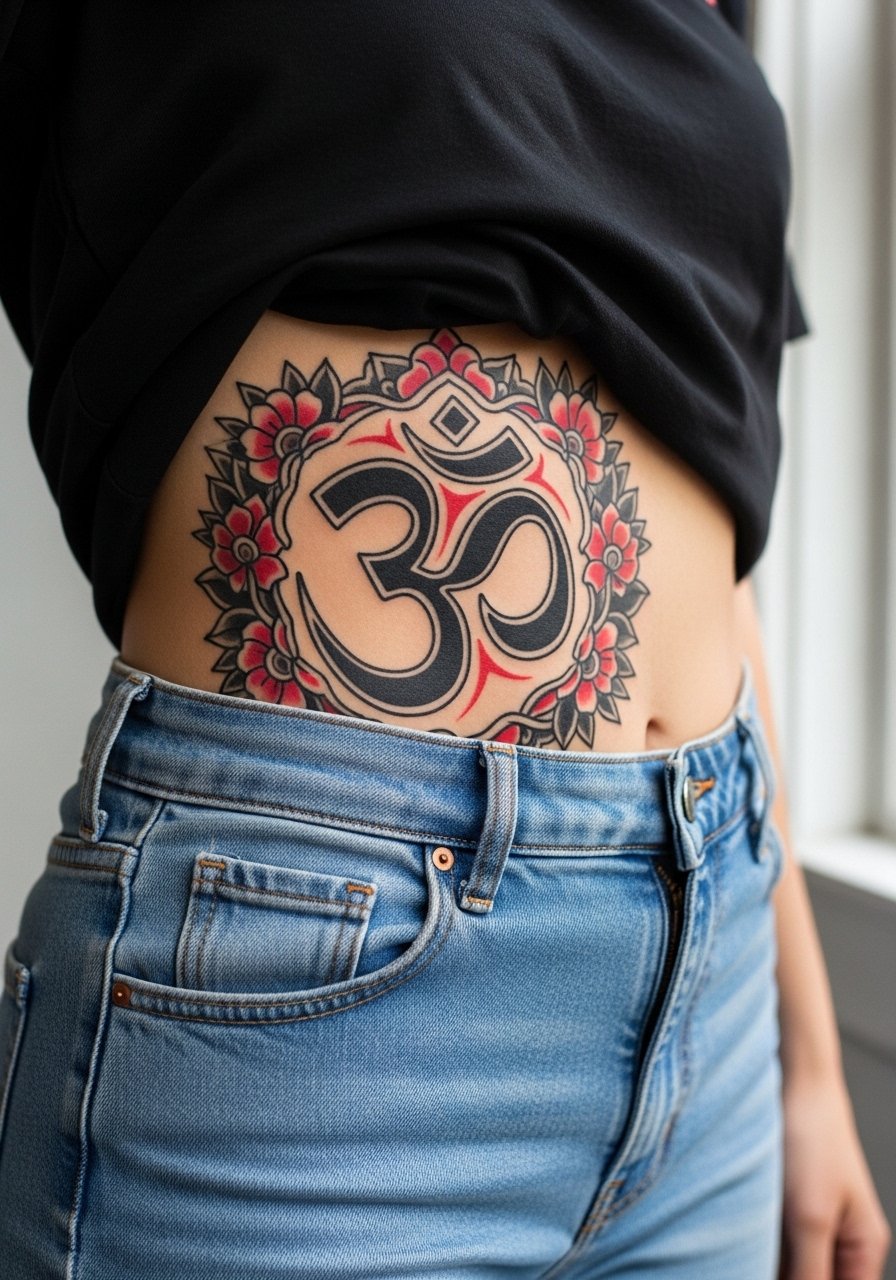
Traditional styling leans into high-contrast outlines that translate well on ribs and through weight changes. The common error is using thin outlines for a style that benefits from saturation. Tell your artist you want the outlines stout enough to age clean on a fluctuating torso. This approach is especially forgiving if you anticipate future weight shifts. For pairing, low-rise jeans and a cropped hoodie create that hip-rib peek without distortion. Expect the bold lines to keep definition for many years while small color highlights may need occasional touch-ups.
9. Ignorant Style Om Doodle on Curved Lower Rib
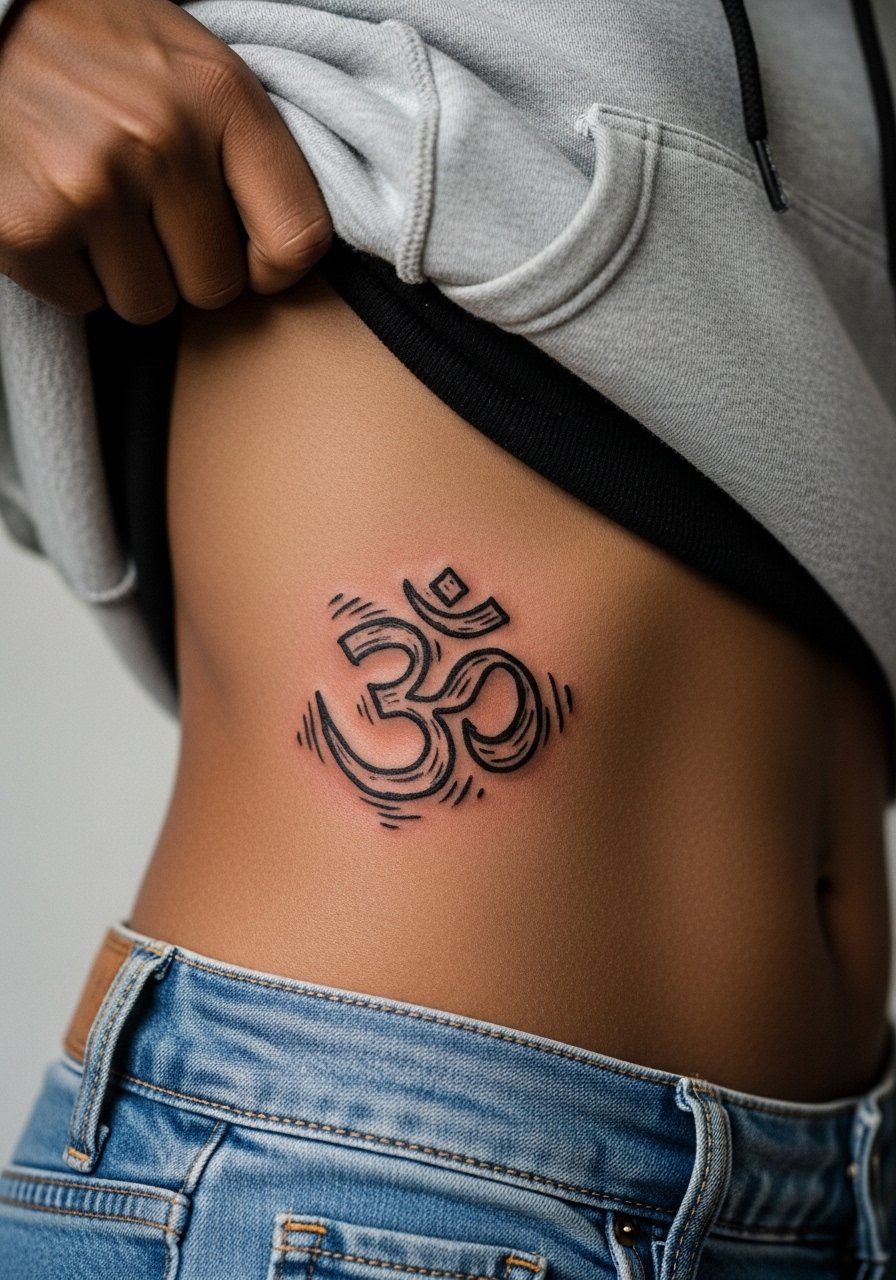
Ignorant style embraces imperfect strokes that read raw and immediate, which hides small heal discrepancies and blowout better than super-fine work. A common mistake is asking for tiny doodle marks that end up too delicate to hold, so scale this design to at least three to four inches. During consult mention you want organic strokes rather than symmetrical precision. For session wear, pull on a pair of low rise jeans so the artist can access the lower ribs without the waistband pressing on fresh ink. These look consistently lively as they age because they lean into texture.
10. Blackwork Om with Sacred Geometry Across the Full Side
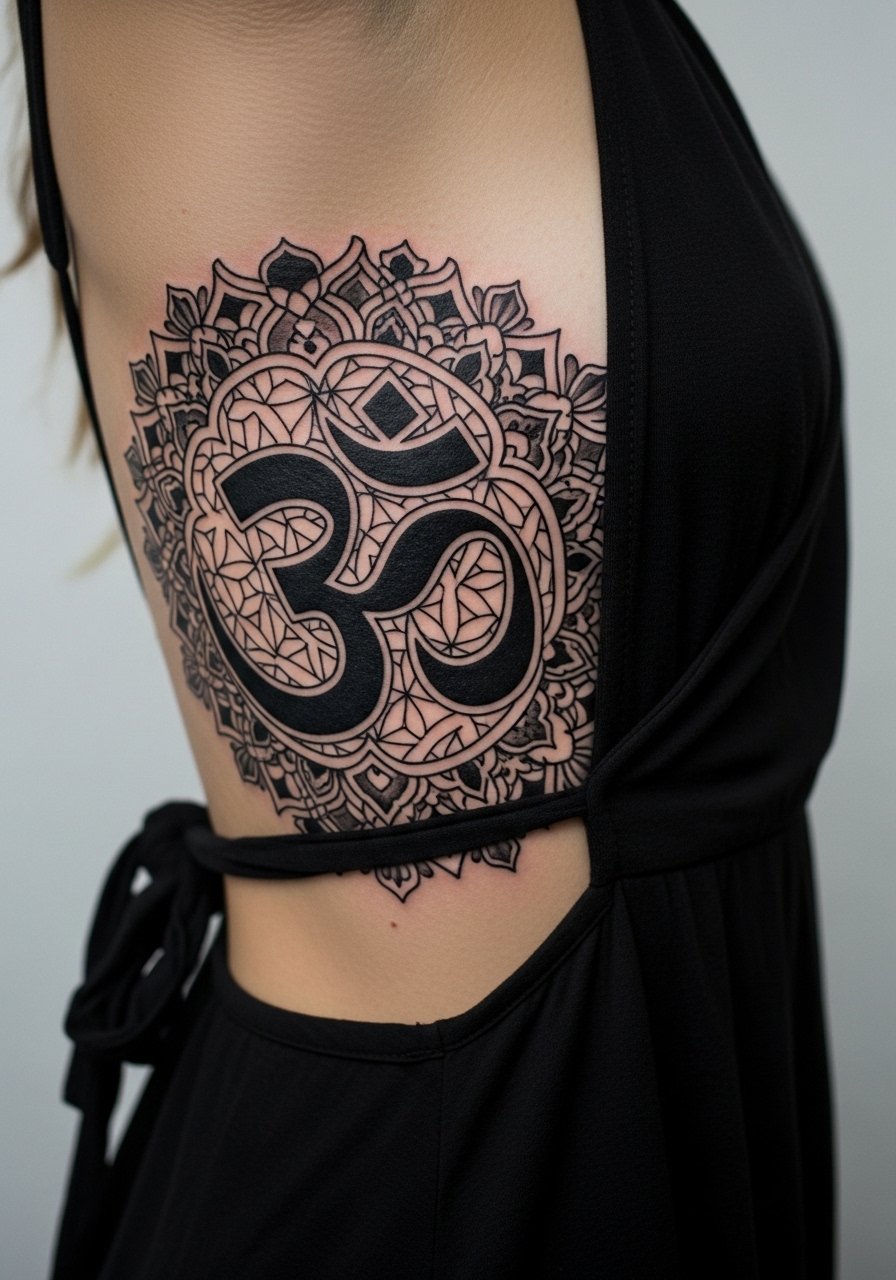
Full-side blackwork is dramatic and built to last because large saturated areas age into a bold silhouette. The trade-off is longer sessions and higher pain exposure, so split time into multiple bookings. Ask your artist to map negative space pockets to prevent future merging of dense fills. People sometimes underestimate how much clothing will contact a full-side piece during healing, so plan wardrobe carefully for the first week. A lightweight wrap dress works well for staged reveals and keeps fabric off the fresh skin. Touch-ups focus on edge crisping at two to six years depending on exposure.
11. Script Om Mantra in Cursive Under the Rib Arm
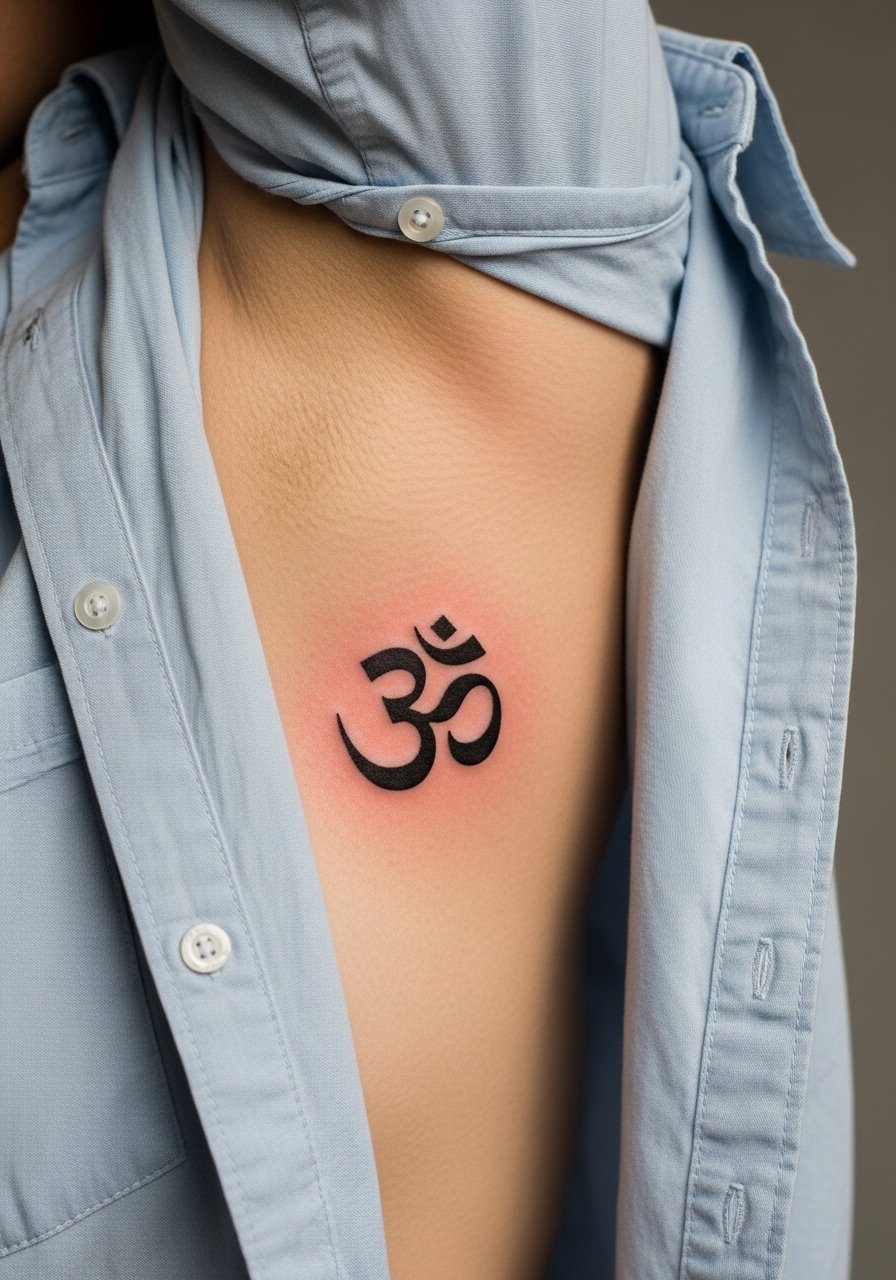
Cursive mantra scripts mirror the curve of the ribs and feel private when tucked under clothing. The main issue is readability over time. Ask for a slightly increased primary stroke on key characters and gentle spacing between letters so the script survives two to five years without blurring. For the session, a loose button-down shirt that you can shift aside keeps the area accessible without snagging the skin. Expect a single session for a 4 to 6 inch piece with a possible tiny touch-up at year two if you favor very thin strokes.
12. Dotwork Om with Mandala Border on Mid Ribs
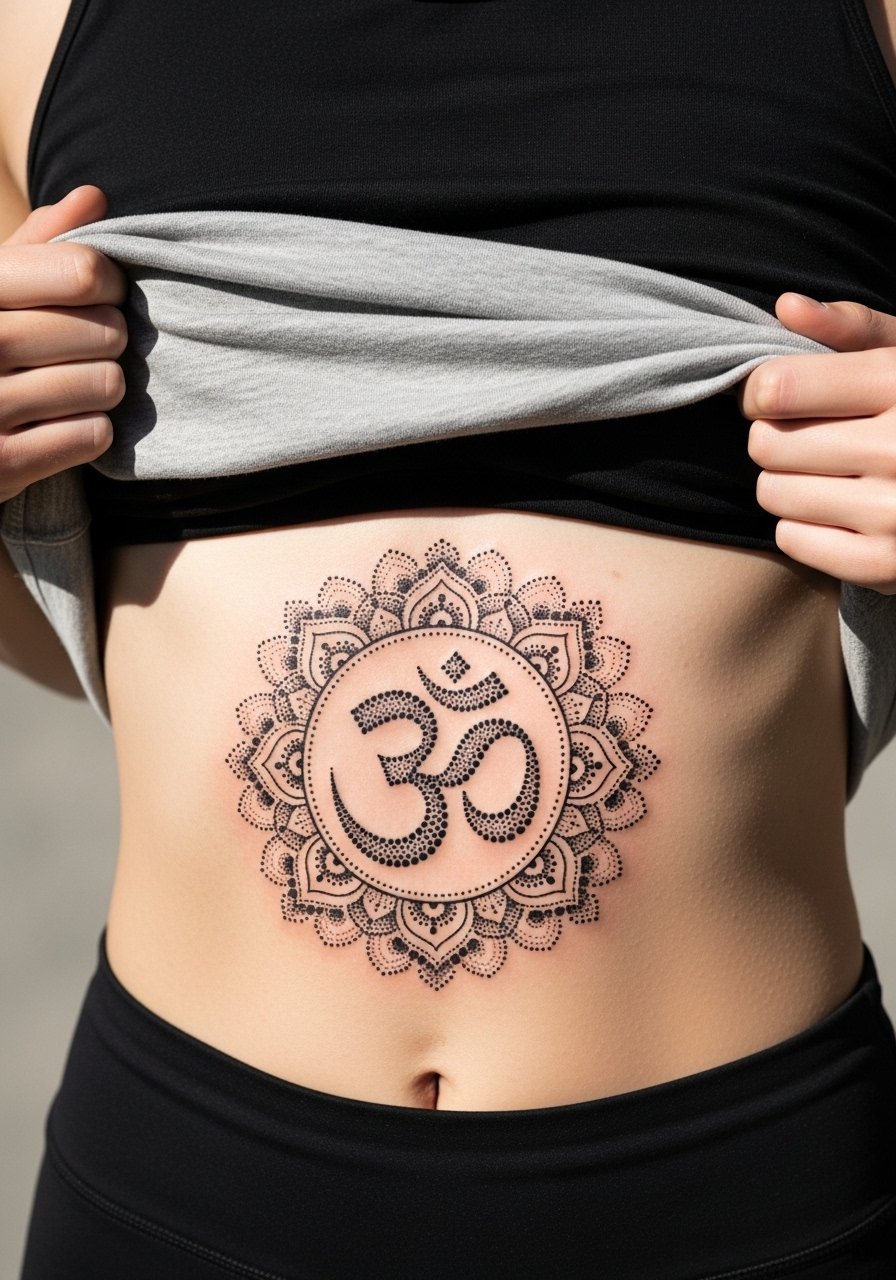
Dotwork relies on density and spacing to form gradients that look crisp when healed. The mistake is packing dots too tight in a small diameter, which causes merging as the skin settles. Ask your artist to plan a dot density map so the mandala keeps radial separation at six months and two years. These mandalas pair well with festival looks, but if you want discreetness keep it mid-rib and covered under standard undergarments. Session-wise expect multiple short sittings; dotwork can be forgiving but takes patience. If you have concerns about UV fading, consider placement slightly lower under clothing.
13. Curved Om Lines That Move With Your Breath
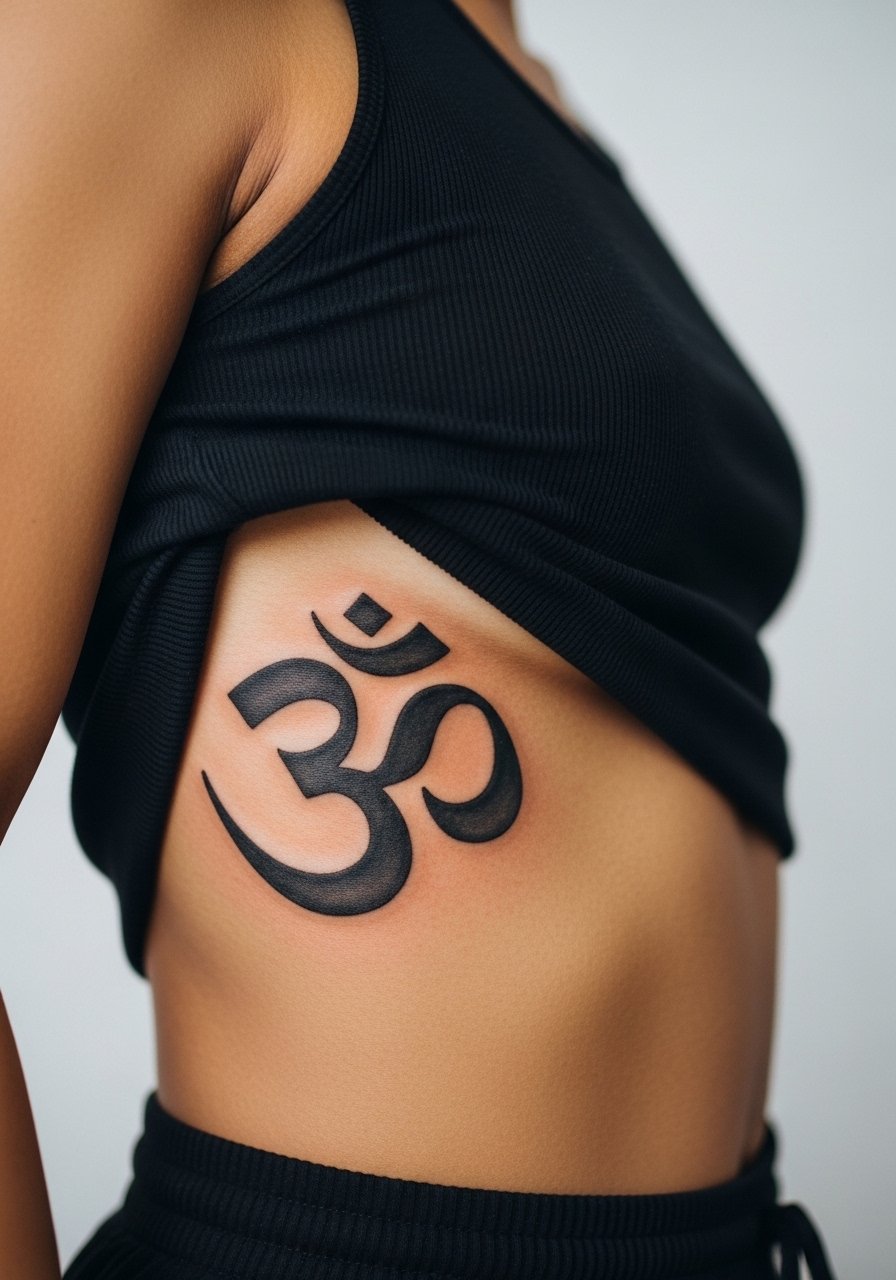
Designs that intentionally use the inhale-exhale curve create an optical illusion that reads differently at rest and at full breath. The planning step most people skip is testing the stencil on the body while breathing. Tell your artist you want to try the stencil in both positions and watch how the lines warp. Expect shorter lines rather than a single long sweep to minimize blowout risk in extreme movement zones. For showing off, a beige kimono cardigan gives a gentle frame and works well over neutral tanks. Longevity depends on spacing more than on needle finesse.
14. Geometric Mandala That Hides Under Clothing
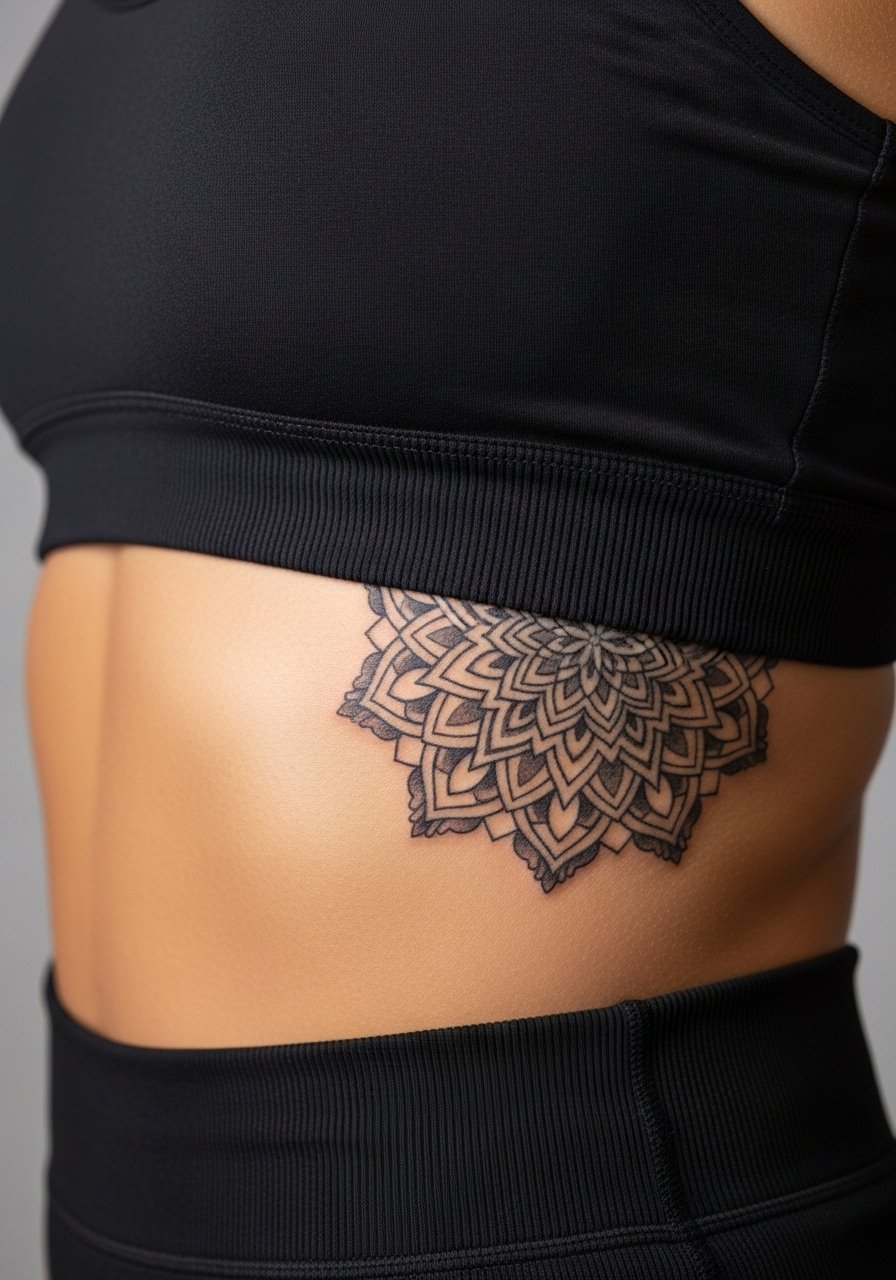
If you want something that hides for work but reveals at festivals, ornamental mandalas under the bust are practical. The most frequent error is oversizing the central motif so it bumps against fabric seams. During consult ask the artist to leave a margin for undergarment lines. This placement also tolerates heavier saturation, so if you anticipate future weight variation choose denser outer rings that will still read when softening occurs. Session time can be two to four visits for shading and symmetry checks. Keep the area dry and avoid tight bras for the first week to lower rubbing.
15. UV-Reactive Om for Nightlife and Ravers
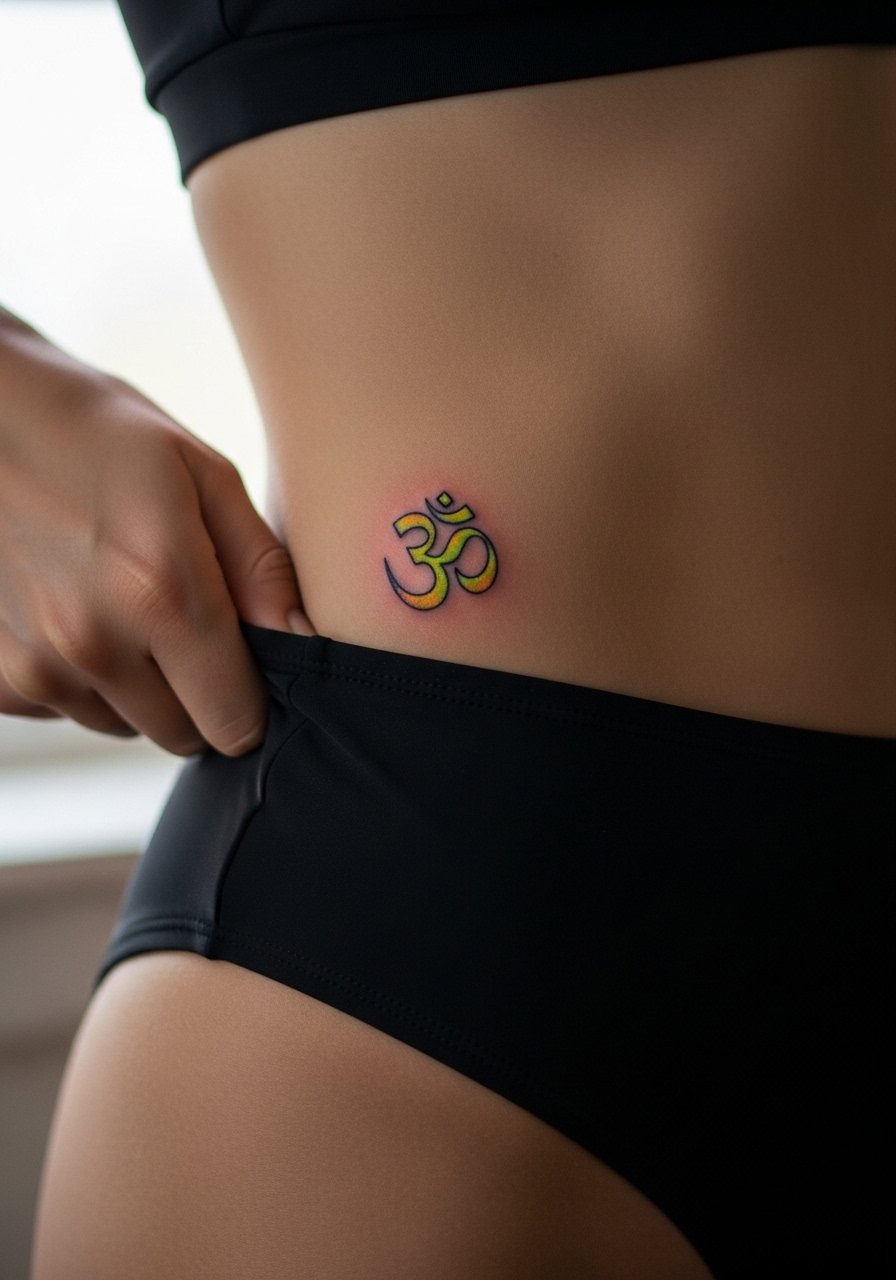
UV-reactive ink is niche and attracts people who like covert daytime tattoos that pop under blacklight. A key warning is that UV pigments can be less lightfast and may require more frequent touch-ups. When discussing this, ask the artist about long-term maintenance and whether they have healed photos under blacklight. For show-off pairing, high-waisted swim looks work best when you want it visible only at events. Session-wise the extra pigment layering can extend appointment time. If you work in an industry where visible glow could be problematic, consider a different placement.
16. Pair Om with Hidden Coordinates for a Memorial
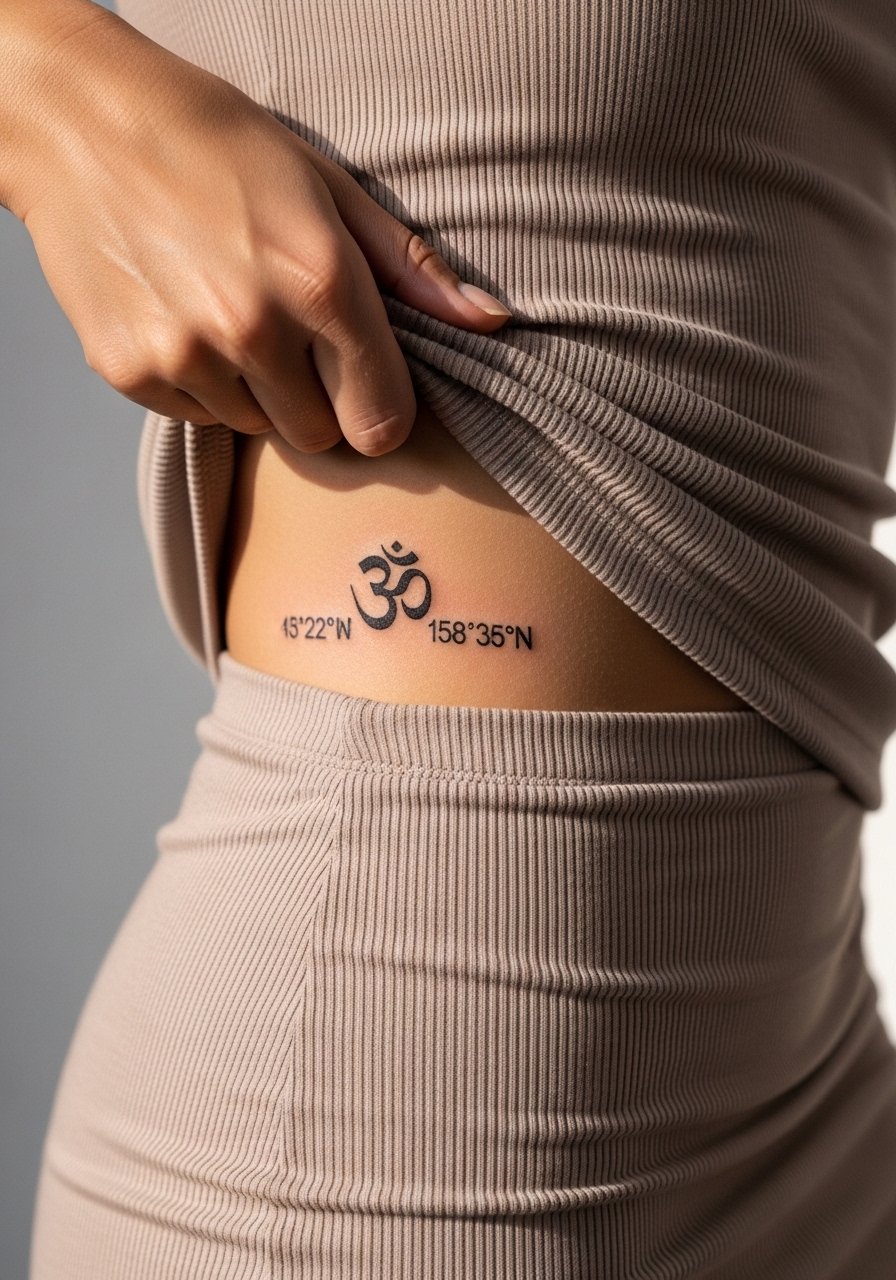
Combining an Om with coordinates creates a private nod without obvious symbolism. The design choice is subtle so the main pitfall is making coordinates too small to read after a year. Ask your artist to lay coordinates in a clean monospace or slightly heavier type and test legibility at a finger-width distance. For sessions wear a fitted neutral dress or similar so the artist can expose the area without tugging fabric. These elements age best with a little extra stroke weight on the numerals.
17. Om as Cover-Up Base for Faded Lower Rib Script
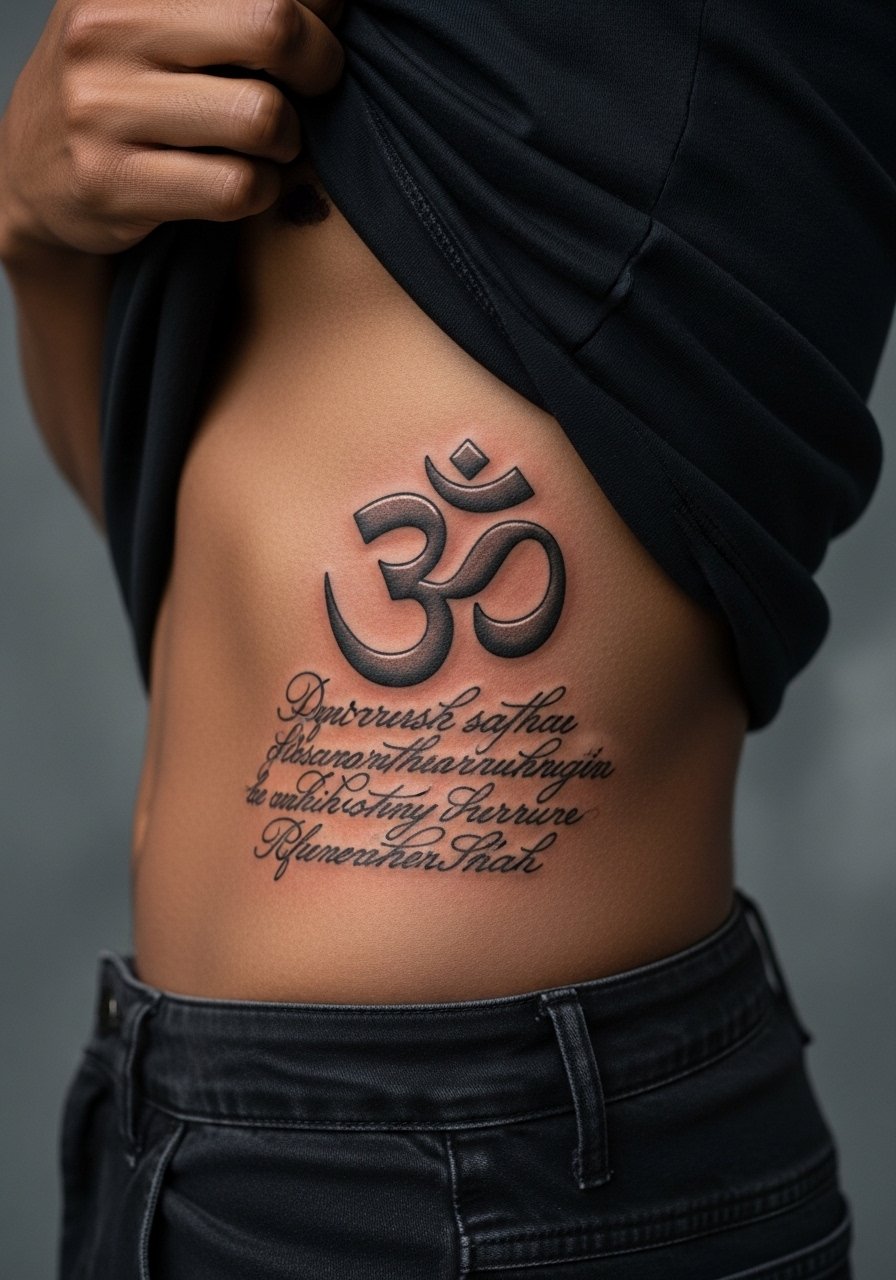
Cover-ups on ribs need a strategic base and the Om can provide that. The usual error is choosing a delicate Om to hide heavy, dark lettering. Instead select a design with solid black fields or ornamental framing that masks old ink. During consult bring clear photos of the faded script so the artist can plan coverage, not guess. Wear pants that can sit low for clean access, like low rise jeans. Expect longer sessions and a realistic plan for an initial cover-up plus a follow-up color or edge touch-up.
18. Neo-Traditional Om with Soft Florals for Lateral Balance
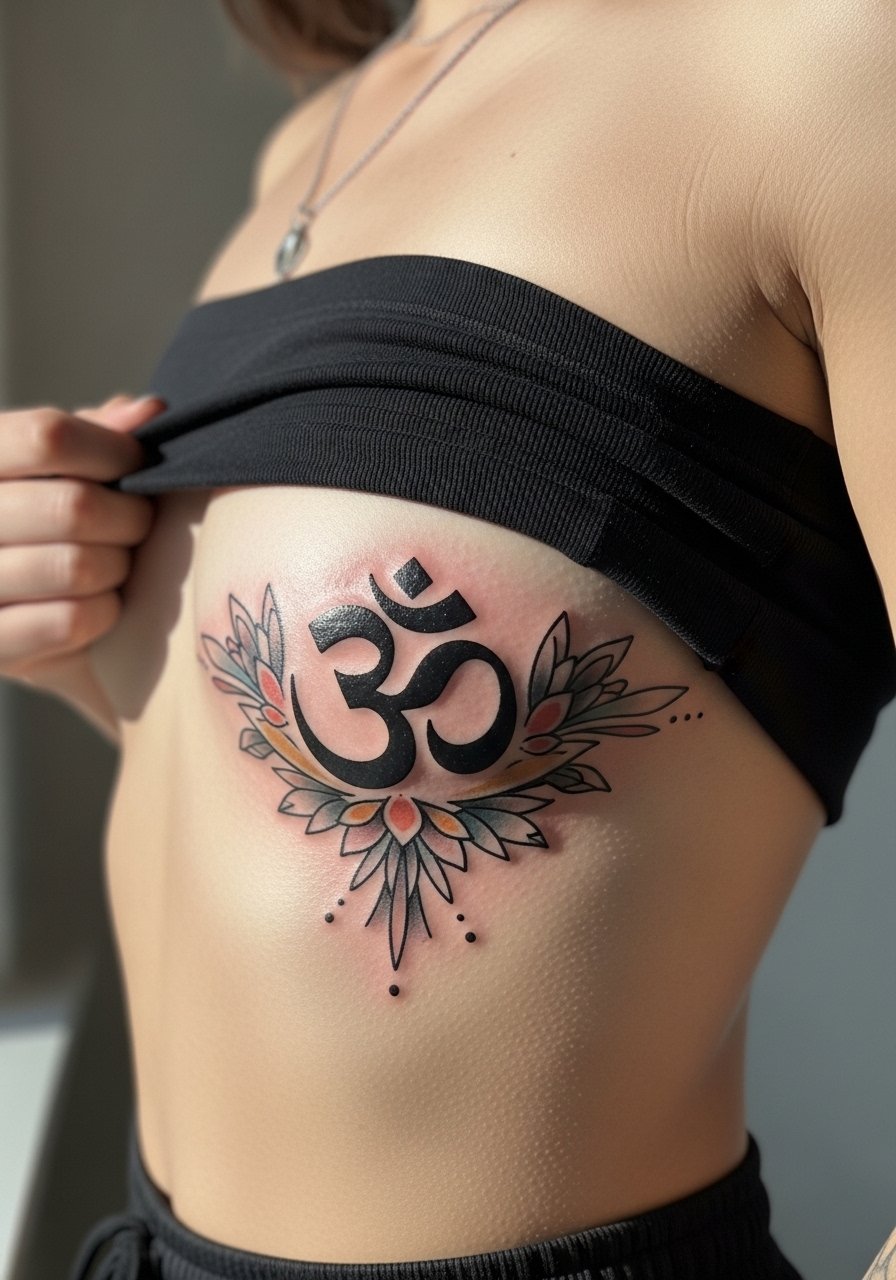
Soft florals around an Om soften the visual weight while preserving the primary symbol. The common misstep is using too many small petals close to the Om, which reads busy on curved skin. Ask for layered petals with deliberate negative space so the core symbol remains clear for years. For showing it off, off-shoulder or strapless tops work well when you want a summer reveal. Session times vary by color complexity, and touch-ups often concentrate on color saturation rather than linework.
19. Small Om on the Inner Rib with Faint Smoke Accent
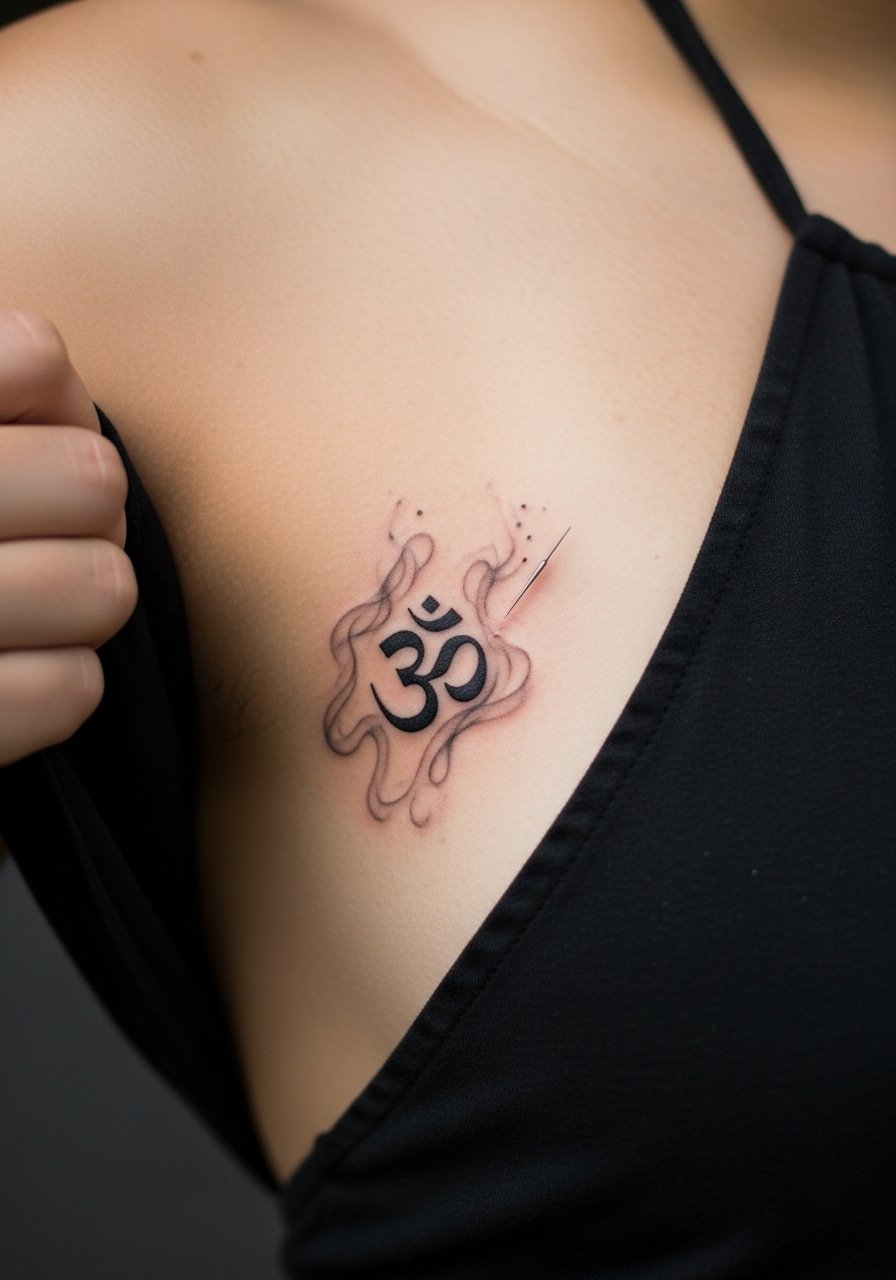
Small inner-rib placements are intimate and can be hidden by most clothing, but they do rub against bras and elastic bands. The recurring mistake is picking a size under two inches and expecting long-term readability. Ask for a tiny central Om but with the smoke drawn slightly broader so contrast survives two to five years. For session comfort a halter top gives the artist clear access while avoiding tight bands. Touch-ups often occur on the smoke gradient rather than the Om itself.
20. Black Outline Om with Floral Frame for Darker Skin Tones
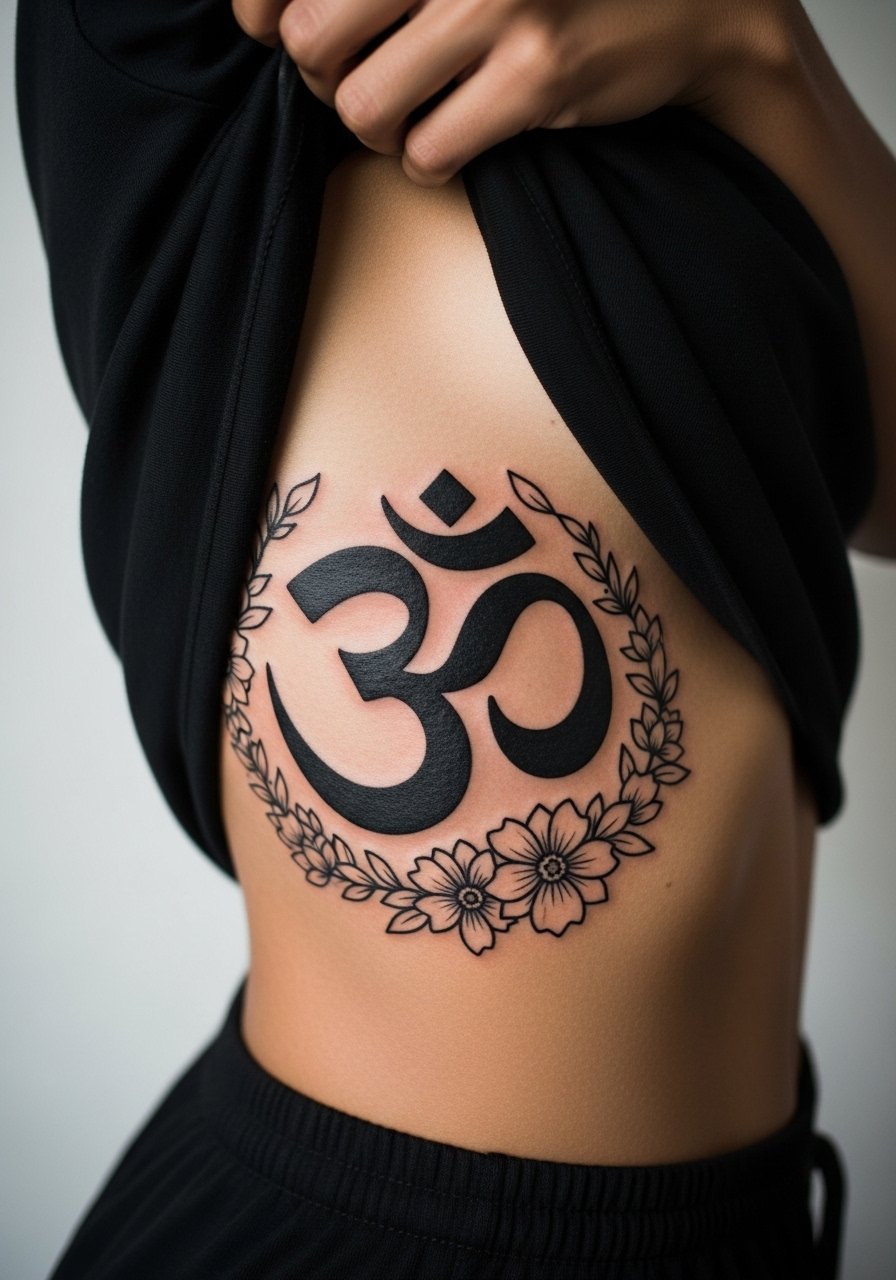
Clients with darker skin tones often find that bold black outlines and negative space preserve the Om's clarity best. The mistake is applying ultra-fine lines that vanish into melanin-rich skin over time. Ask for high-contrast separation and larger negative-space openings rather than finer filigree. This style is forgiving of friction and weight changes. For reveal styling an off-shoulder top or a thin choker balances the frame. Expect a single session for outlines and a second for any shaded fills.
21. Geometric Om Illusion Paired with a Side-Slit Dress
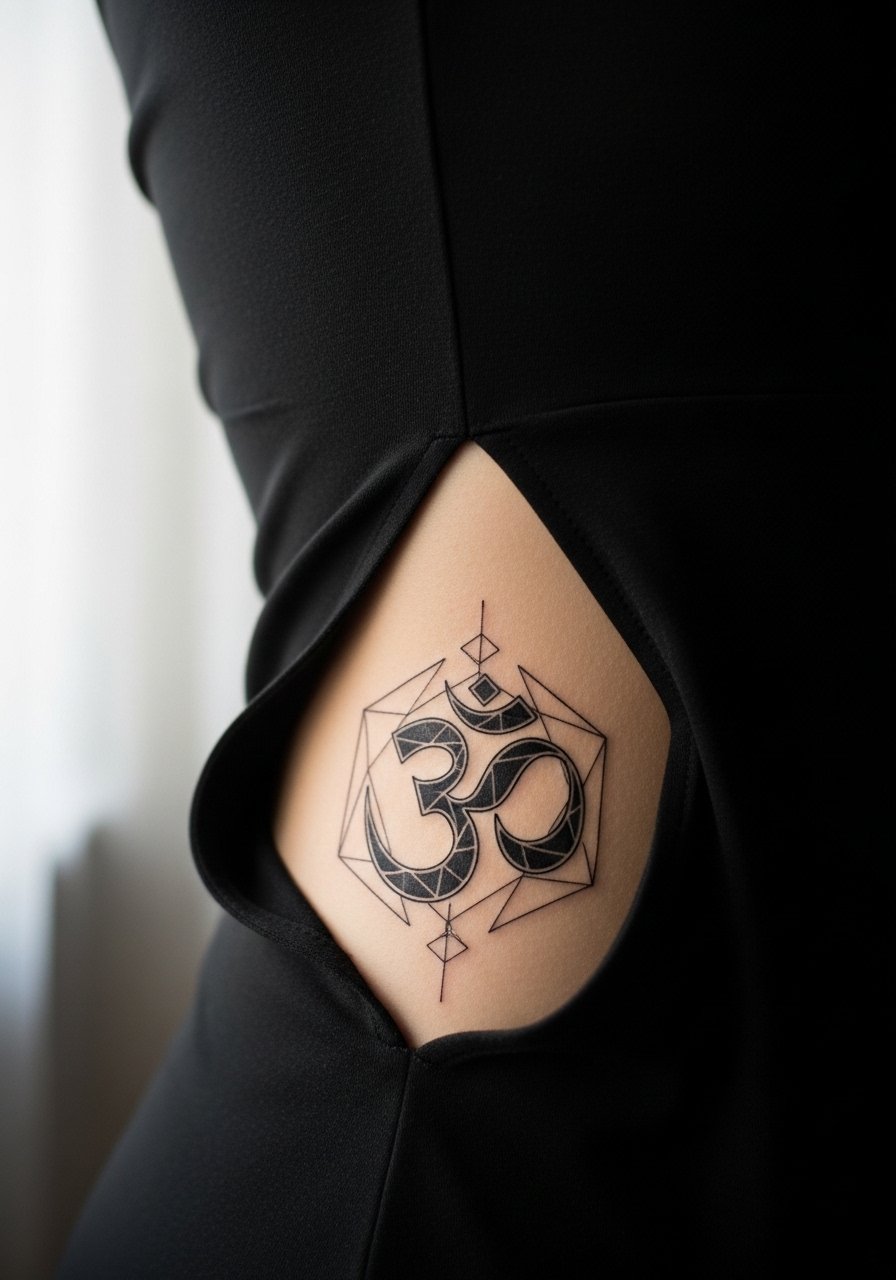
A geometric piece that reads as an optical trick pairs beautifully with slitted dresses because movement changes the perceived depth. The common error is packing the shapes too close near the slit, where fabric can rub during walking. Ask the artist to place a protective negative space buffer on the fabric-facing edge. For showing it off, a side-slit dress makes the illusion perform in motion. Touch-ups typically target outer edges that absorb the most sun and friction.
Frequently Asked Questions
Q: How much will a small Om on the ribs hurt and how can I make the session manageable?
A: Ribs rank high on most pain scales because there is thin soft tissue over bone. Book morning slots when skin feels less inflamed, take short breaks during long lines, and consider numbing for multi-hour color or realism sessions. Bring loose clothing that gives the artist access without pulling on the fresh area and hydrate well the day before.
Q: Fine line vs bold outline for an Om on darker skin, which holds up better?
A: Artists split into two camps on this. One camp says fine line can hold if the artist spaces strokes and uses slightly deeper hits. The other camp recommends bolder outlines for clear contrast. If you have melanated skin, lean toward higher contrast with intentional negative space and ask to see healed examples in similar skin tones.
Q: Do watercolor Oms need different session planning than blackwork Oms on the ribs?
A: Yes, watercolor pieces usually require fewer heavy outlines and more careful layering of pigment, which can mean longer color sessions but less aggressive needle saturation. Blackwork demands saturation and sometimes multiple passes. Discuss session length and aftercare expectations with the artist so scheduling and wardrobe for healing match the style.
Q: How do I find an artist who has proven rib work without asking for specific names?
A: Search hashtags like #OmTattoo and #RibTattoo on Instagram for style matches, use the Tattoodo app to filter by "ribs" and "blackwork," check Booksy for artists listing ribs, and read Reddit threads where peers recommend guest spots. When contacting a shop ask for portfolio shots specifically showing healed rib pieces before you book.
Q: Will a rib Om warp if I gain or lose a moderate amount of weight?
A: It depends on where you place the design. Designs placed above the natural waistline and those with bolder outlines tolerate moderate fluctuations better. Delicate single-needle scripts placed right at the hip are more likely to stretch or compress. If you anticipate body change, ask for a slightly larger scale and stronger anchors in the design.
Q: What should I wear on session day for an underbust Om mandala appointment?
A: Wear something that exposes the underbust without tight bands, like a black bralette or a loose crop top. That way the artist can work without fabric pressing into fresh ink and you avoid unnecessary rubbing during the first 48 hours.