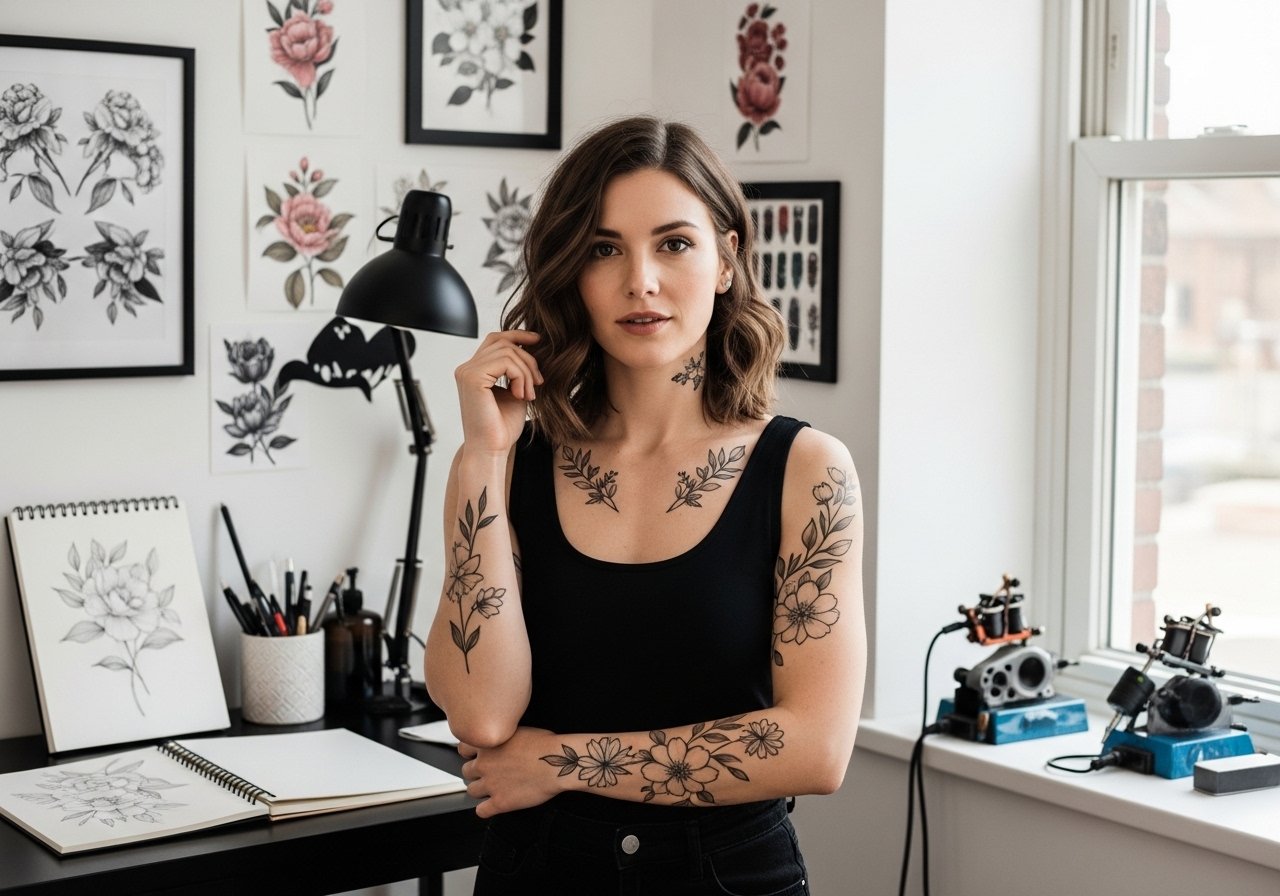
Fine line and heavy blackwork have been trading places in saved boards for a while, and the result is a curious mix of ornate motifs rendered in unforgiving black. Dark ornamental tattoo aesthetic lives in the space between dense black contrast and delicate geometry, and the right choice now is the one that still reads as intention after five years of sun, sleeves, and life. The list below starts with forearm-forward options you can show your artist today and moves into placements that need more planning.
1. Fine Line Botanical Band on Inner Forearm
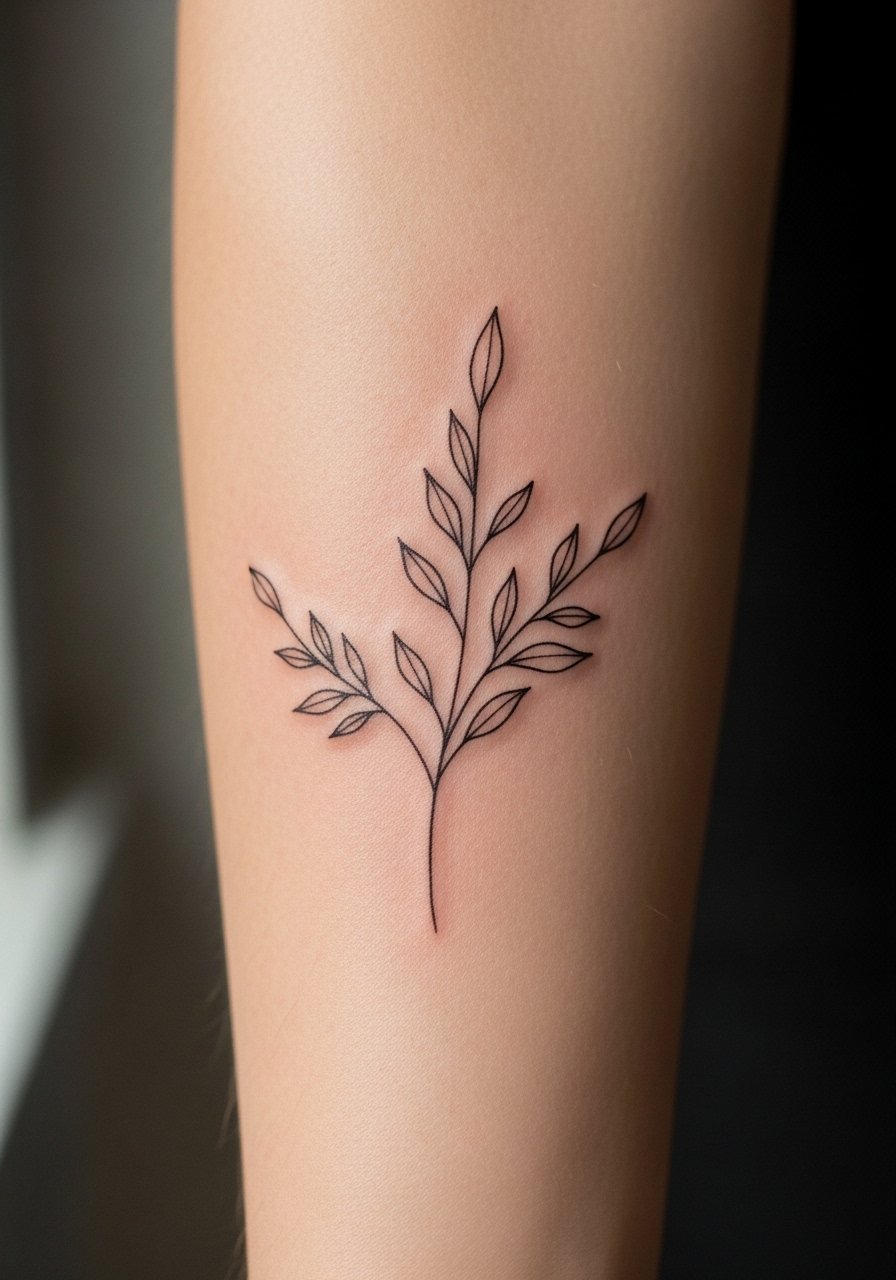
I've seen this piece hold up when the artist uses slightly heavier lineweight than the reference. Ask your artist for reinforced outlines around the central stem and stipple shading inside the leaves so the negative space breathes as the ink settles. Fair warning about blowout risk near the wrist crease. The inner forearm is forgiving, pain sits in the low to mid range, and most sessions finish in one to two hours depending on complexity. A common mistake is making the band too tight with packed detail, which merges after a few years. For showing it off, roll sleeve cuffs or try a loose button-down shirt with sleeves pushed to the elbow.
2. Ornamental Collarbone Filigree
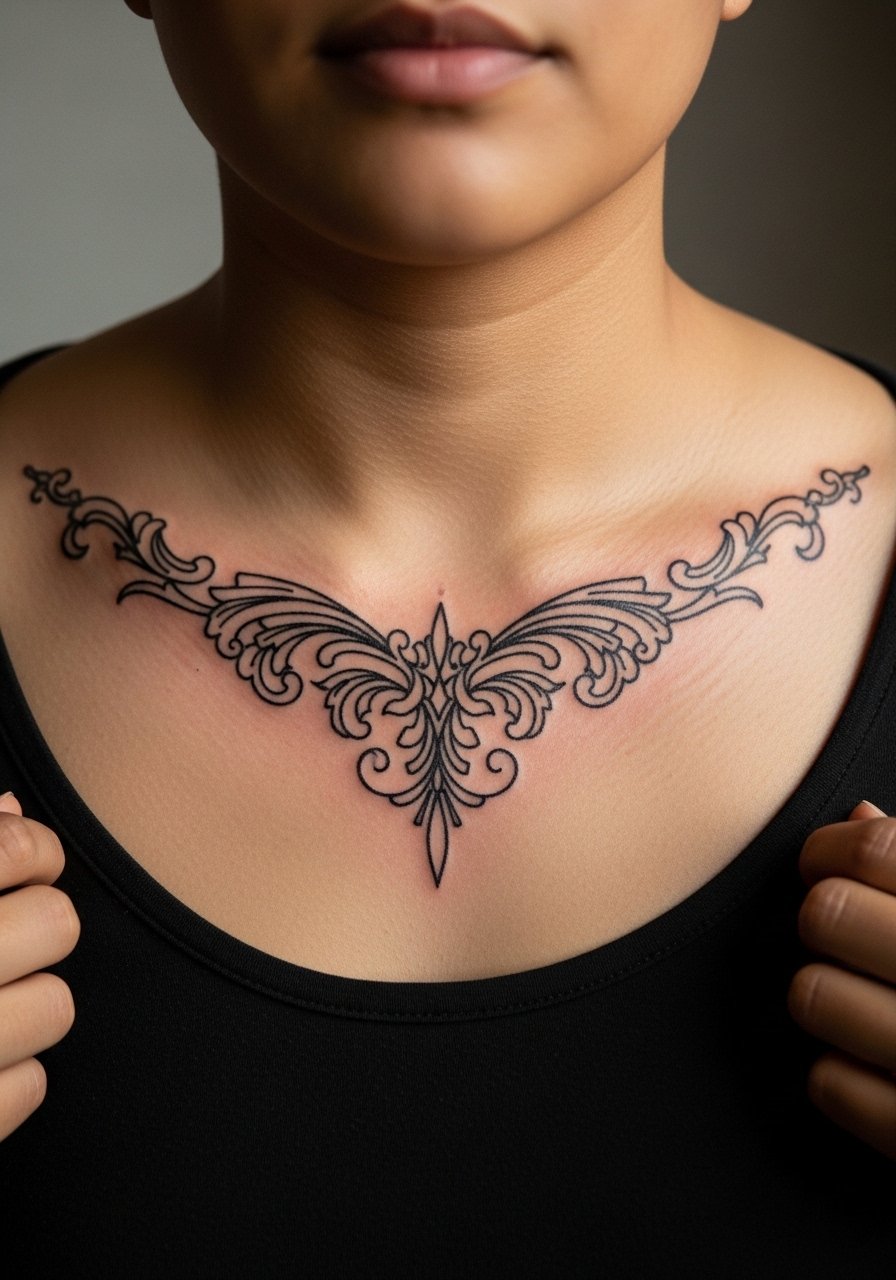
When you want something that reads like jewelry, keep the filigree horizontal and open. Tell your artist to plan for negative space that follows the collarbone curve instead of filling the whole area. Pain is mild on the collarbone edge but increases toward the sternum, and sessions usually run 1.5 to 3 hours for a medium piece. The frequent mistake is over-detailing small elements too close together. If you plan to wear open-neck tops, this placement pairs well with an open-back midi dress or a thin chain pendant that sits above the filigree.
3. Geometric Mandala on the Ribcage
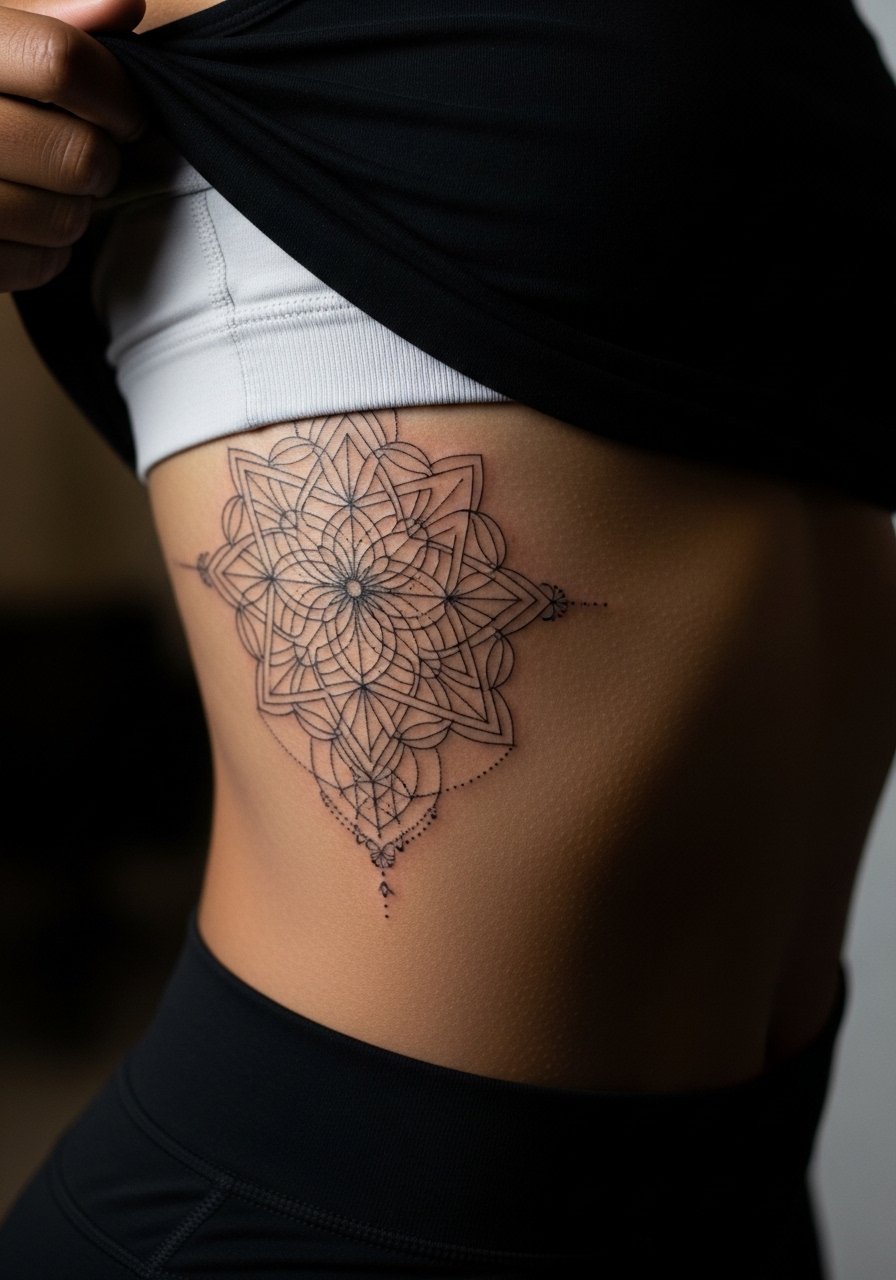
Artists are split on this one, and you should hear both sides. One group warns that fine line mandalas on ribs blur within two years due to skin movement. The other group says adequate spacing and deeper placement preserve crispness long term. If you prefer the secured approach, ask for heavier main rings with open inner geometry so dense centers do not smear. Expect higher pain on the ribs and a session that can stretch three to five hours with breaks. A common error is forcing a highly detailed center too small. Touch-ups at year two are realistic for intricate rib mandalas.
4. Lace Anklet in Blackwork
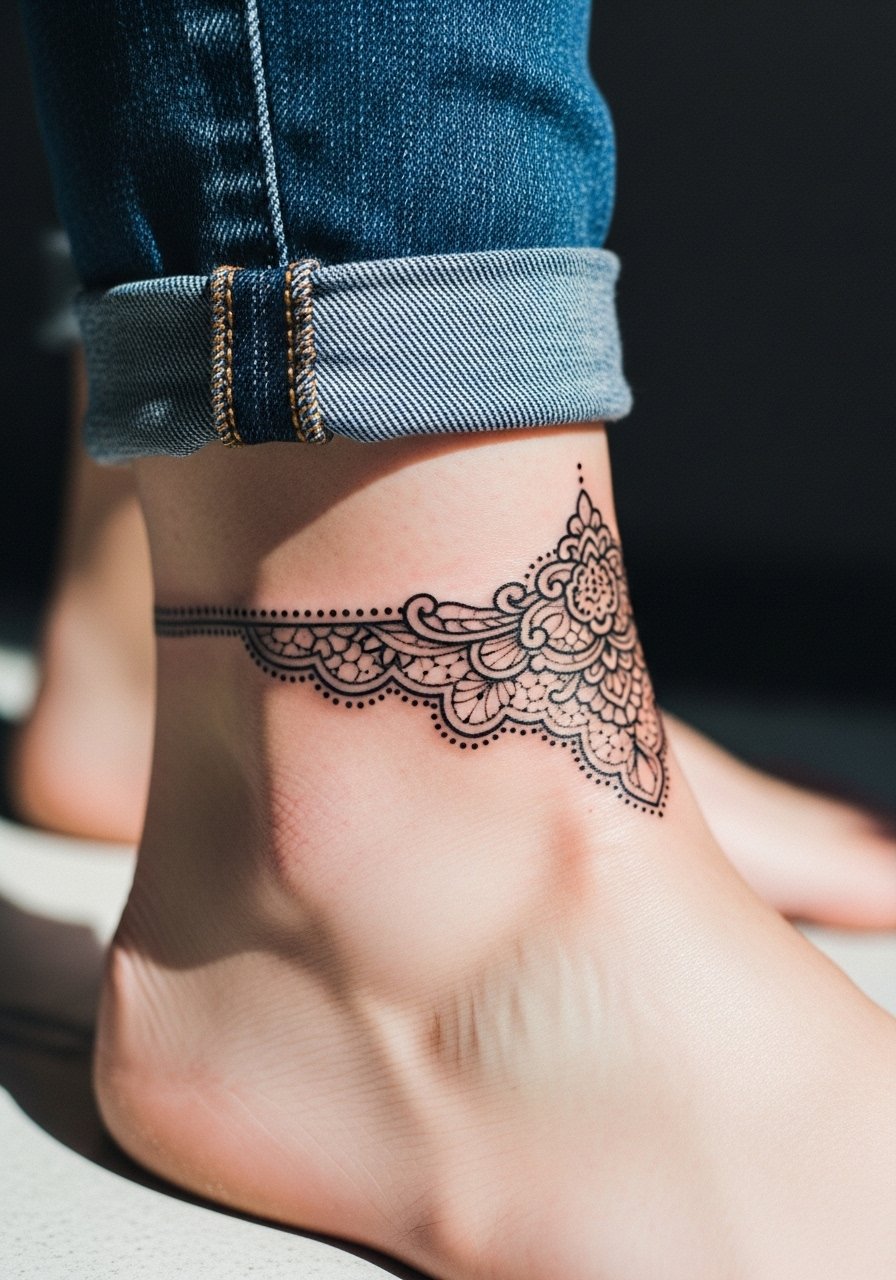
An ankle anklet reads delicate but lives in a high-friction zone from shoes and socks. I recommend slightly bolder outlines on the outer loops and open negative spaces on the interior so the pattern remains readable after months of wear. Pain is lower on the outer ankle and higher over the bone. The session is usually an hour to two. A common mistake is packing lace too tightly which fades to a gray blur. For show-off outfits try a pair of sandals or cropped trousers that reveal the anklet without covering it.
5. Micro Ornamental Finger Cluster
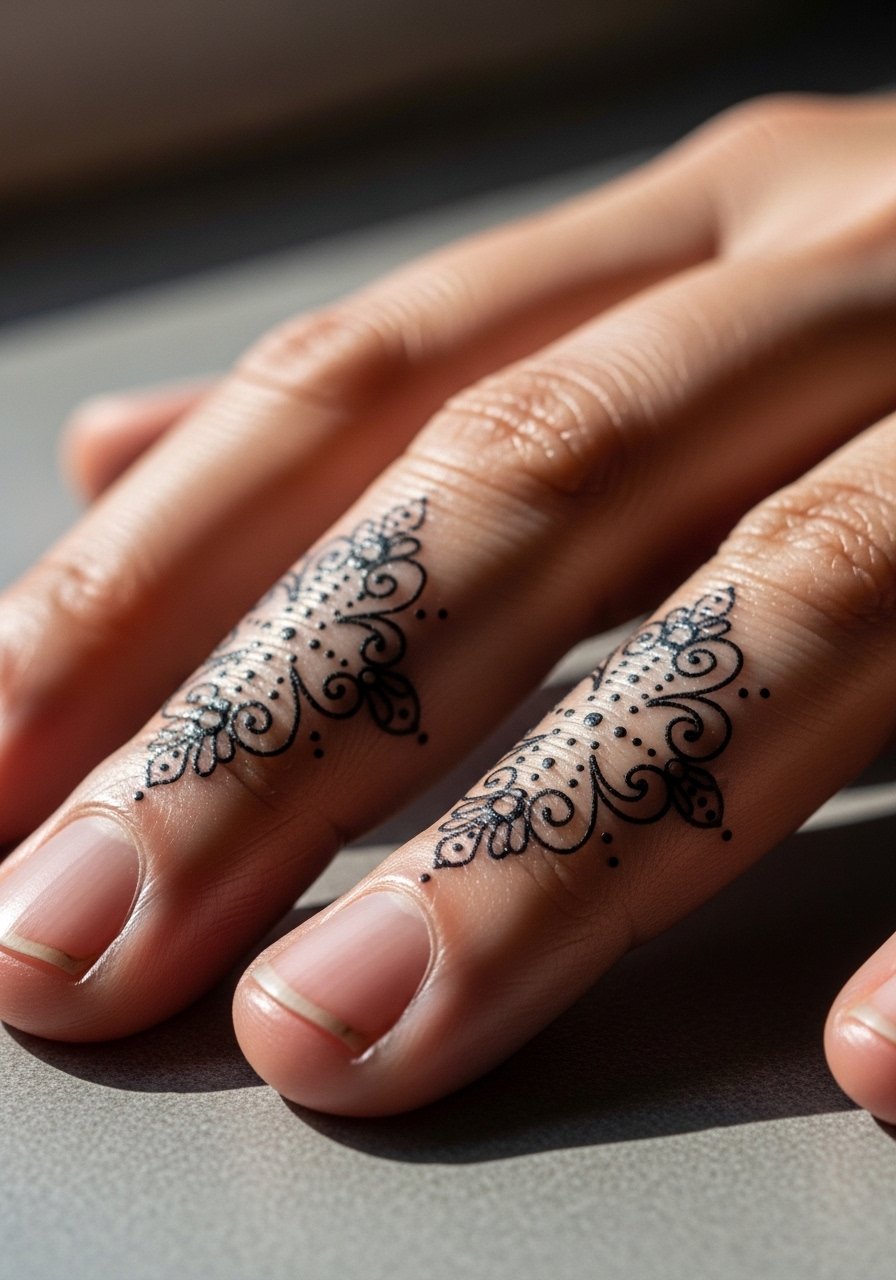
Finger work has a high touch-up rate because of skin thickness and constant washing. Keep ornamentals minimal and avoid tiny fill inside narrow bands. Tell your artist you want simple outlines with micro-dot accents only, not fully saturated interiors. Sessions are short, often under an hour per finger, but count on yearly touch-ups. The main mistake is requesting dense black fill on a tiny canvas. If you plan for jewelry complement, stack thin dainty rings or a thin chain ring set so the metal frames the tattoos without crowding the art.
6. Dark Ornamental Sternum Piece
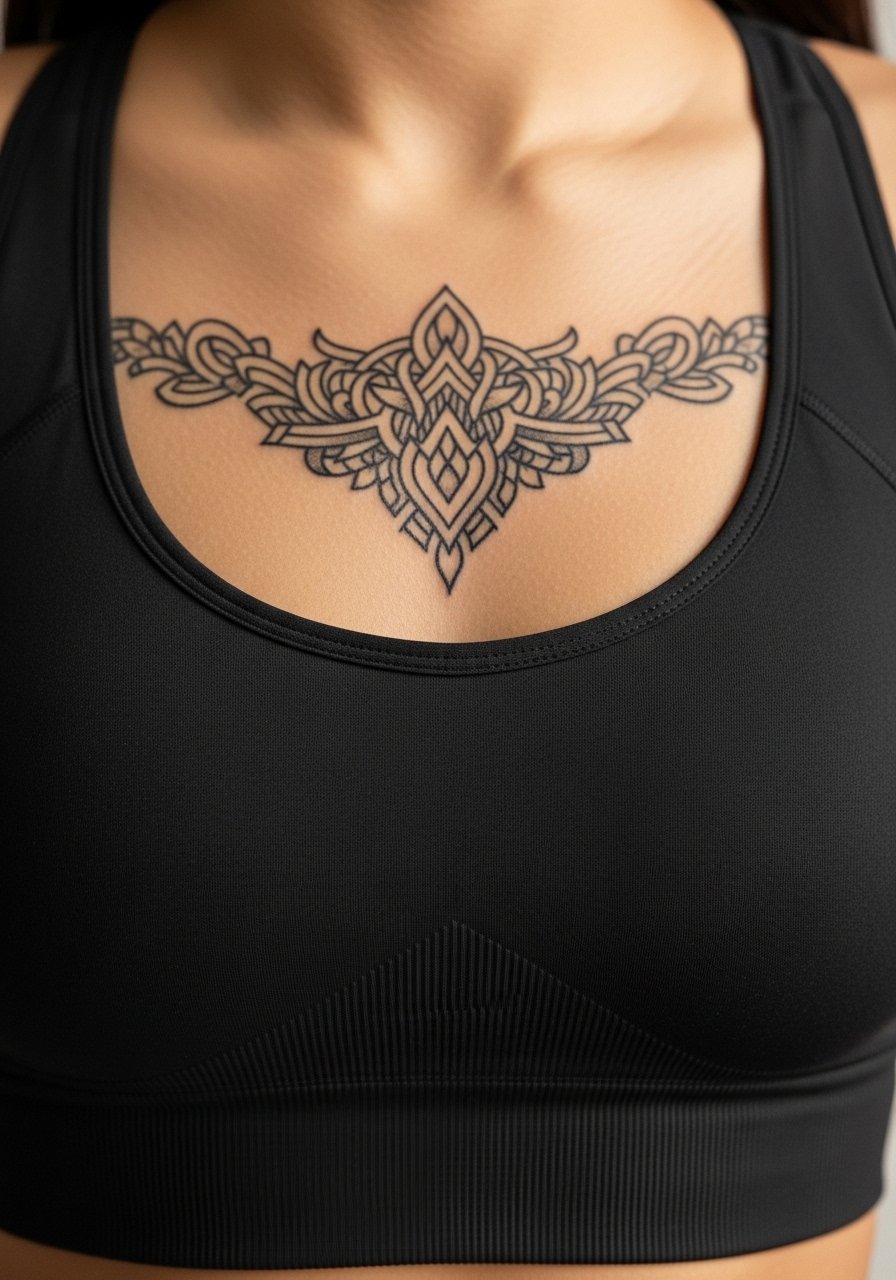
Sternum pieces read bold because the area stretches and moves with breathing. Ask for heavy anchor lines around the central motif and stipple shading radiating outward so the design retains shape as it heals. Sessions are uncomfortable in spots and may take two to four hours across multiple sittings for larger work. There is a debate among artists about how dense sternum shading should be. One position favors heavy saturation for longevity. The other favors lighter shading to reduce healing scabbing. Plan a touch-up at year three if you choose dense black. For session wear bring a comfortable zip-up top you can loosen, and expect modest swelling on day two.
Studio Day Picks
The small placements above need different prep than larger back or sleeve pieces, and the right items make the chair time and first-week healing smoother.
- Stencil transfer paper kit. Lets you preview line placement on skin, helpful for aligning bands and collarbone filigree from the first six ideas.
- Topical numbing cream. Applies before sit-down for sensitive ribcage and sternum sessions to reduce edge pain without altering linework.
- Thin protective film roll. Keeps finger and ankle tattoos clean during the first week where friction is constant.
- Fragrance-free gentle body wash. Cleans healing skin without stripping the tiny channels that fine line work depends on.
- Aquaphor healing ointment. Thin layer helps the initial barrier on small ornamental pieces without clogging.
7. Ornamental Upper Arm Cuff with Negative Space
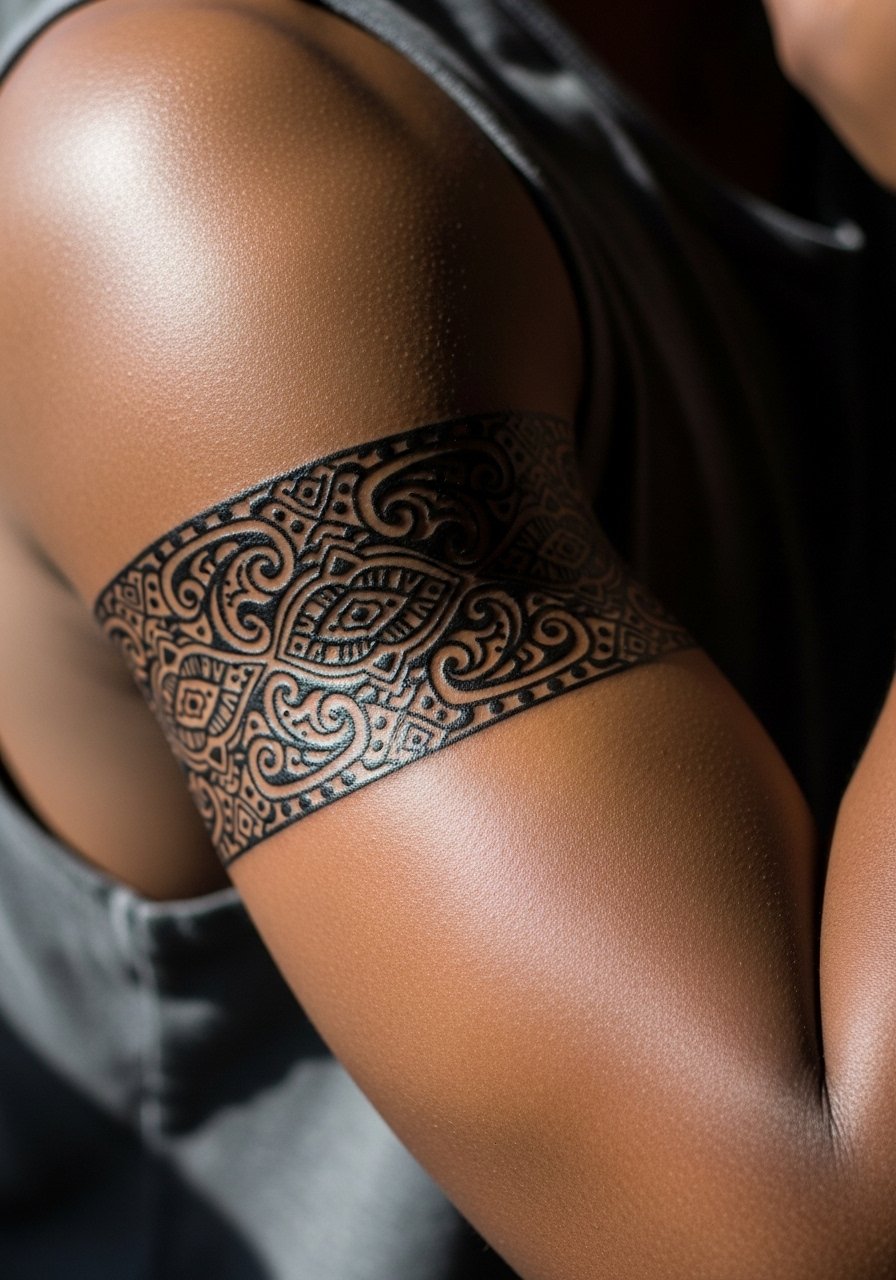
I've seen cuff pieces age best when artists use bold outer frames and leave the interior airy. Say you want negative space to read when the arm moves. Pain is moderate and sessions run one to three hours depending on wrap. A common error is filling the entire cuff with tight dot work that turns muddy in two years. For showing it off, wear a sleeveless linen top that keeps attention on the cuff without competing patterns.
8. Back-of-Neck Ornamental Motif
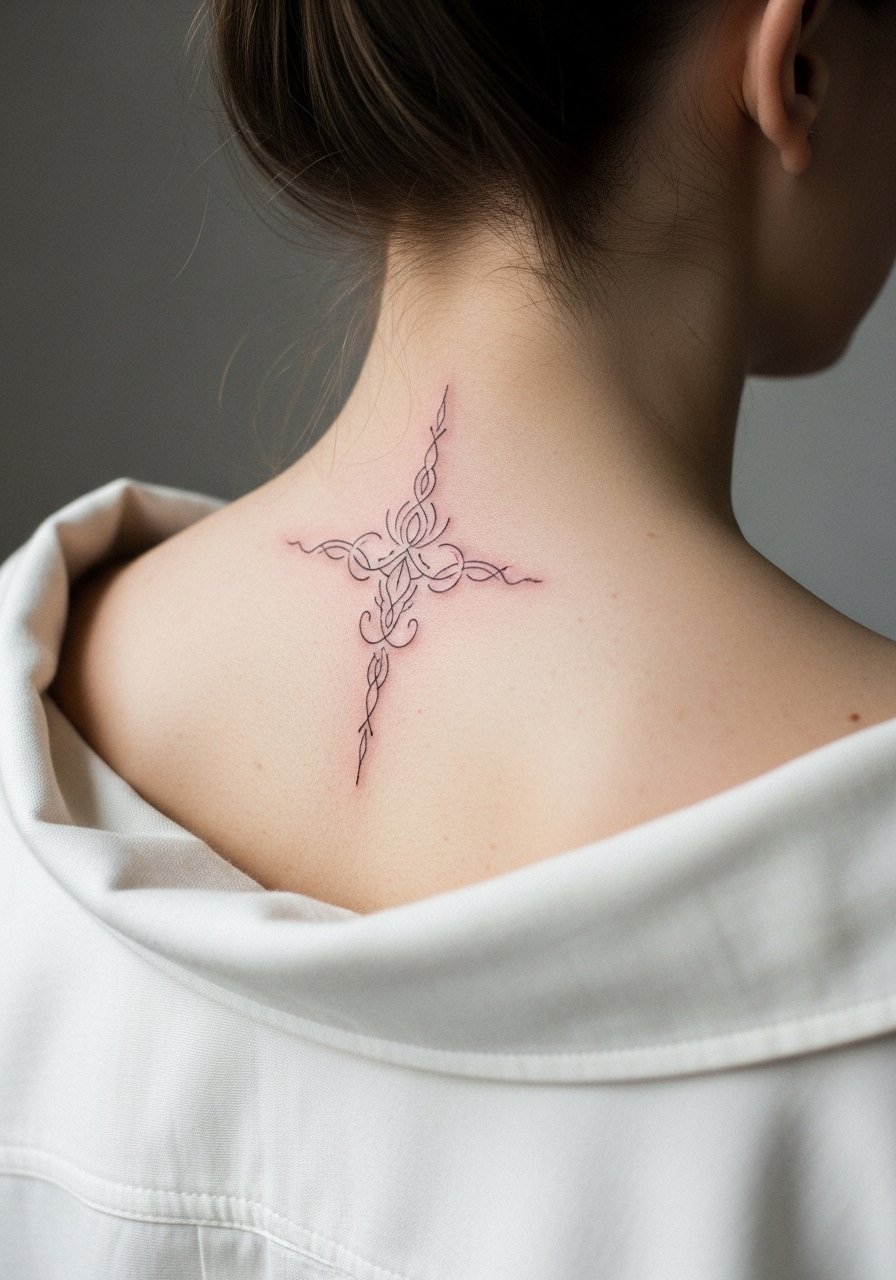
The back of the neck is a small, mobile zone. Ask for slightly thicker primary lines and minimal tiny texturing so the motif reads from a distance. Pain ranges from low to medium. Sessions are usually under two hours. The biggest mistake is insisting on ultra-fine detail that the scalp and hairline movement erase. If your workplace needs discretion, this placement can stay hidden under a collar. For styling, short hair or a low bun pairs with a delicate hair claw so the motif is visible when you want it to be.
9. Ornamental Calf Panel in Blackwork
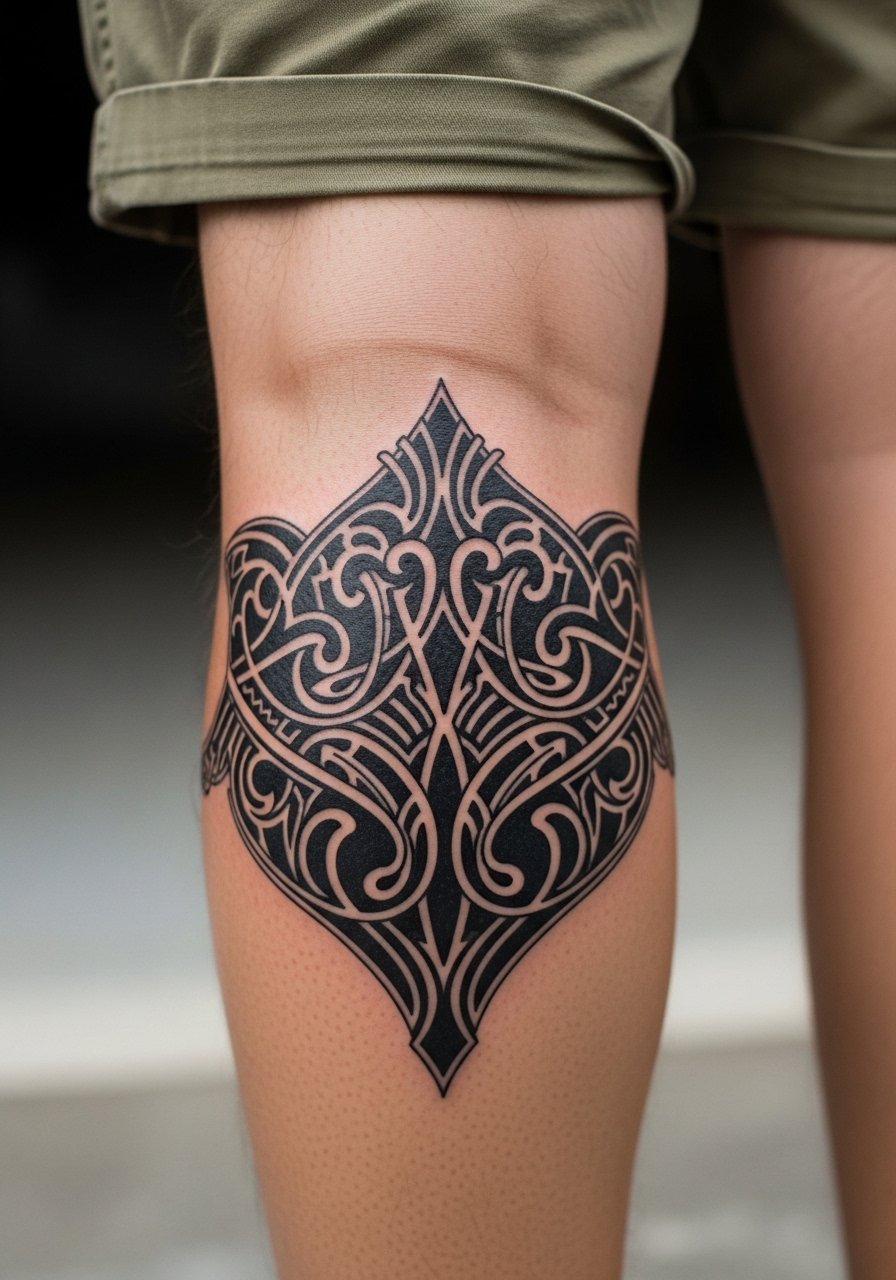
Calf panels hold saturation well because the skin there is stable and less exposed to friction from clothing. Tell your artist to use saturated fills in the main panels and stipple edges to soften transitions. Pain is moderate and sessions can be two to four hours for large panels. A typical mistake is making the panel too narrow which shortens visual impact when standing. For outfits, cropped denim or high-top sneakers frame the calf without hiding the work.
10. Spine Ornamental Column
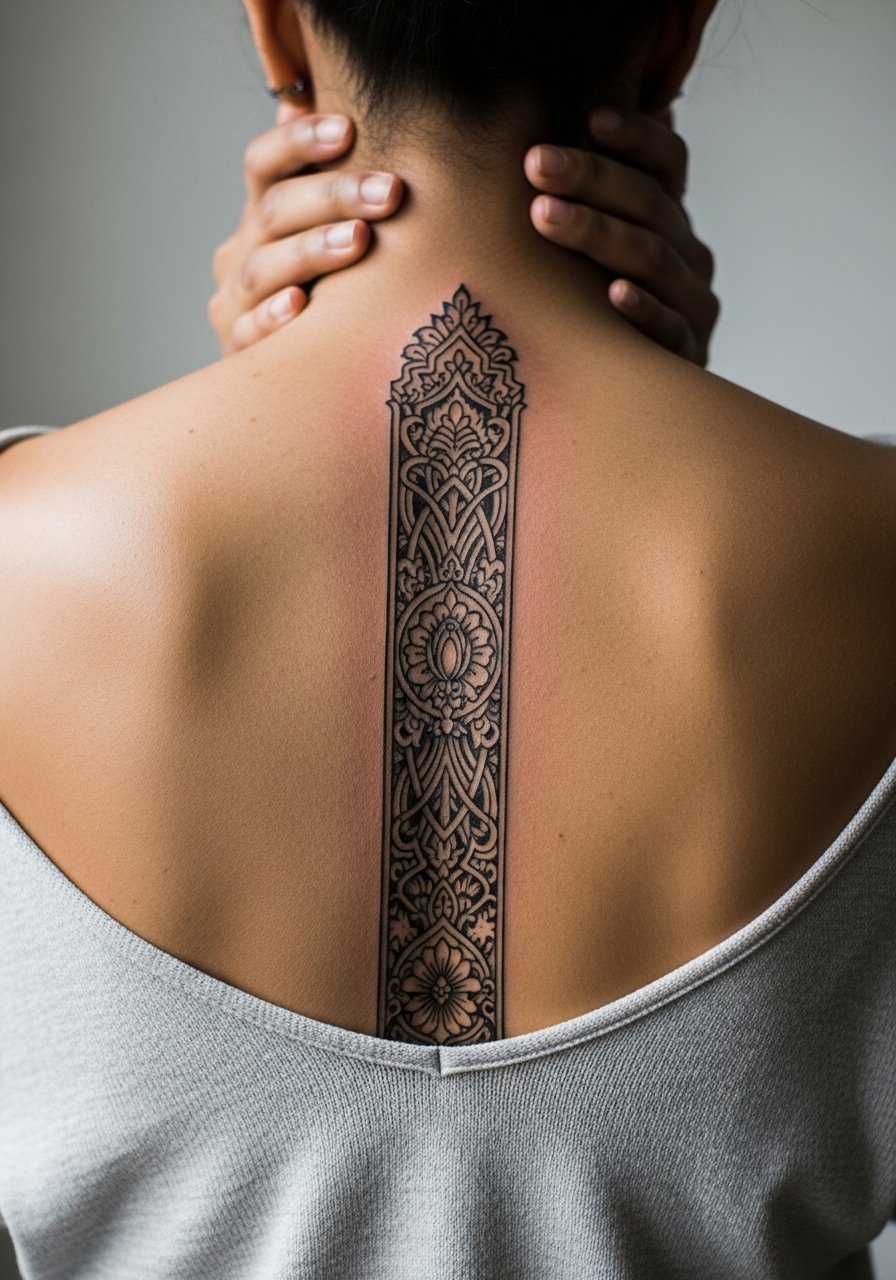
This placement reads architectural because of the vertical axis. Request spacing between repeating elements and a bold central spine line so the column keeps crispness over years. Pain along the spine is higher in spots, and sections may need two sittings because the area bruises for some people. A common error is compressing decorative rings too tightly. For evening wear choose an open-back dress that reveals the spine column without exposing the rest of the back.
11. Ornamental Ear-Adjacent Motif
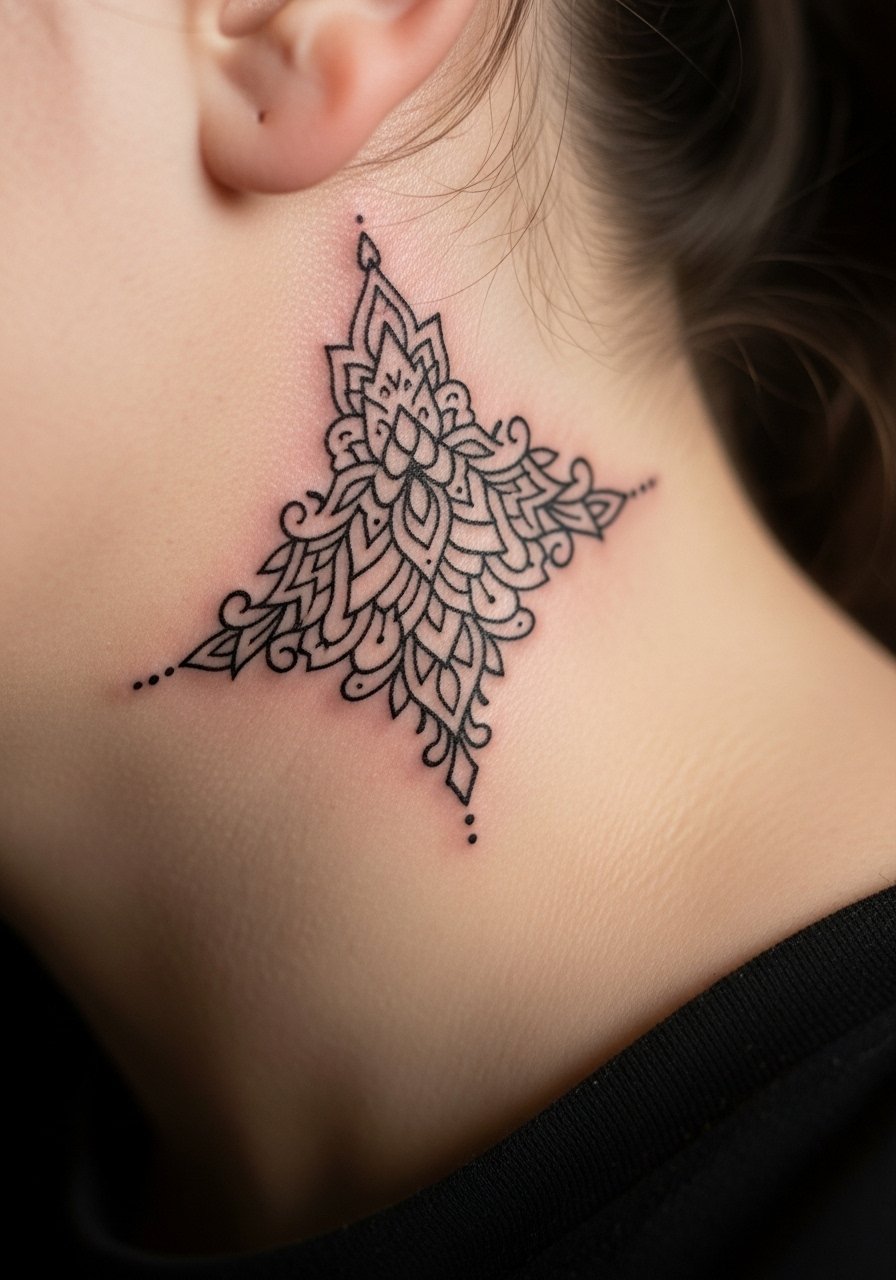
Keep the motif small and flowing with the hairline so the ornament looks like a hidden accent. Tell your artist to place the design on the skin below the hairline, not on the ear itself. Pain is low and sessions are short. The usual mistake is asking for heavy saturation that stands out against hair rather than complements it. This placement is subtle with pulled-back hair or a low ponytail. For session day, bring a light scarf to keep your hair away without tugging the area.
12. Ornamental Thigh Band
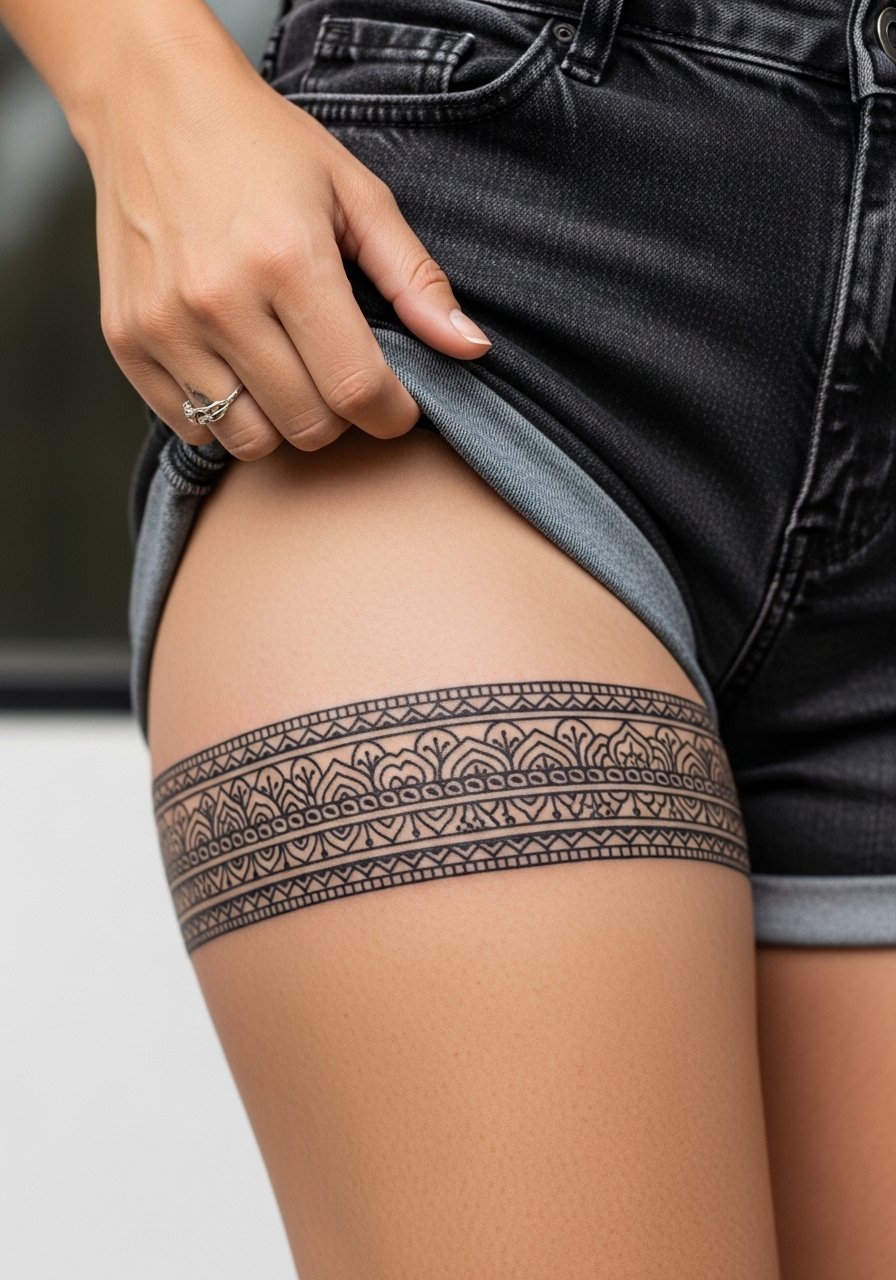
Thigh bands are great for larger ornamentals that still feel private. Ask for wider gaps between motifs so the pattern ages without merging. Pain is low to moderate and large bands can require two sessions. A common misstep is packing micro-detail into a narrow band. For the session wear, choose loose shorts or a wrap skirt so the artist can roll the leg up easily. For nights out a high-waisted skirt frames the band elegantly.
13. Ornamental Hand Palm Accent
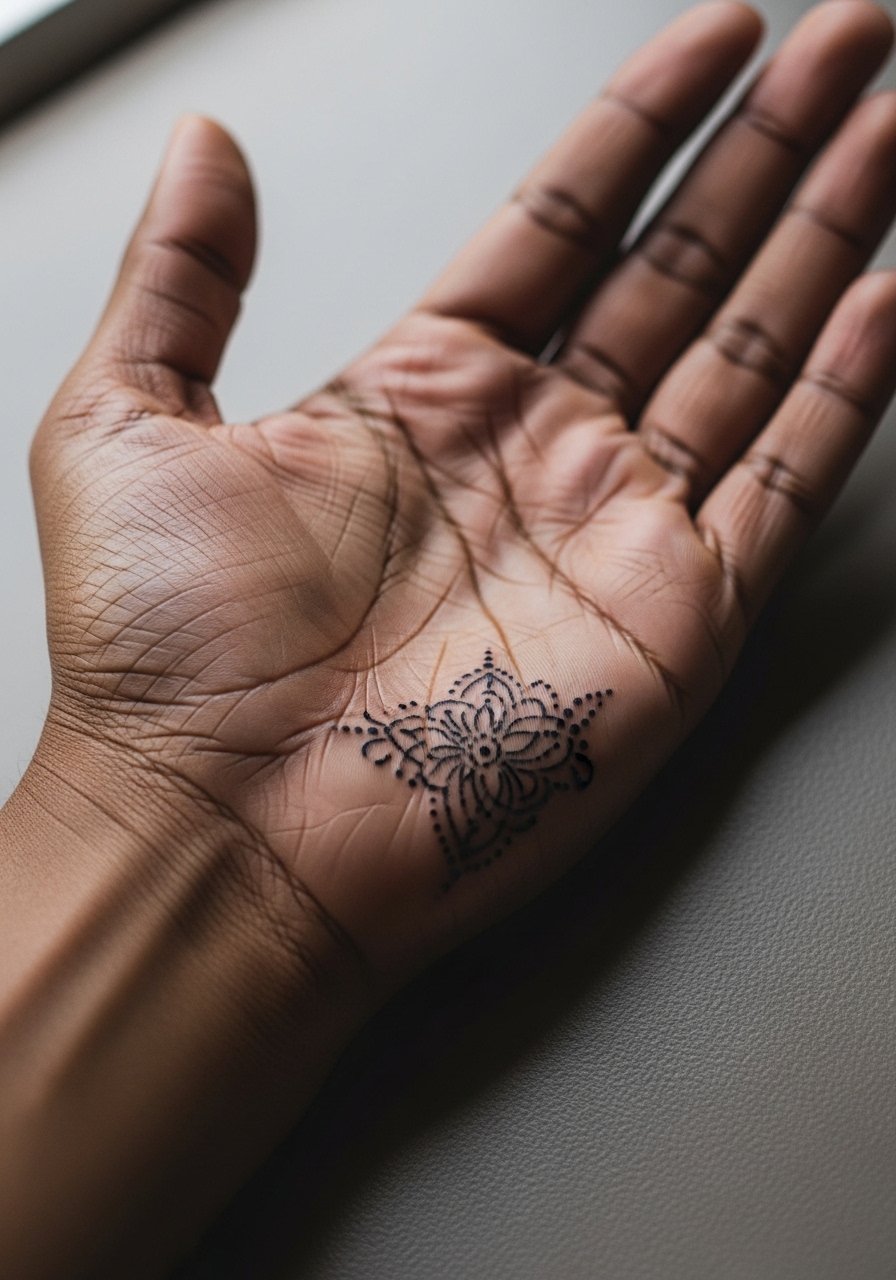
Palm and inner-hand work come with high fade and touch-up rates because the skin regenerates rapidly there. If you choose this, ask for heavy lines and accept maintenance. Pain can be higher due to nerve endings and sessions are brief but intense. Many people regret dense palm ink because it goes patchy quickly. If you still want the look, plan for annual touch-ups and limit the design to bold shapes with minimal interior detail.
14. Ornamental Shoulder Blade Motif
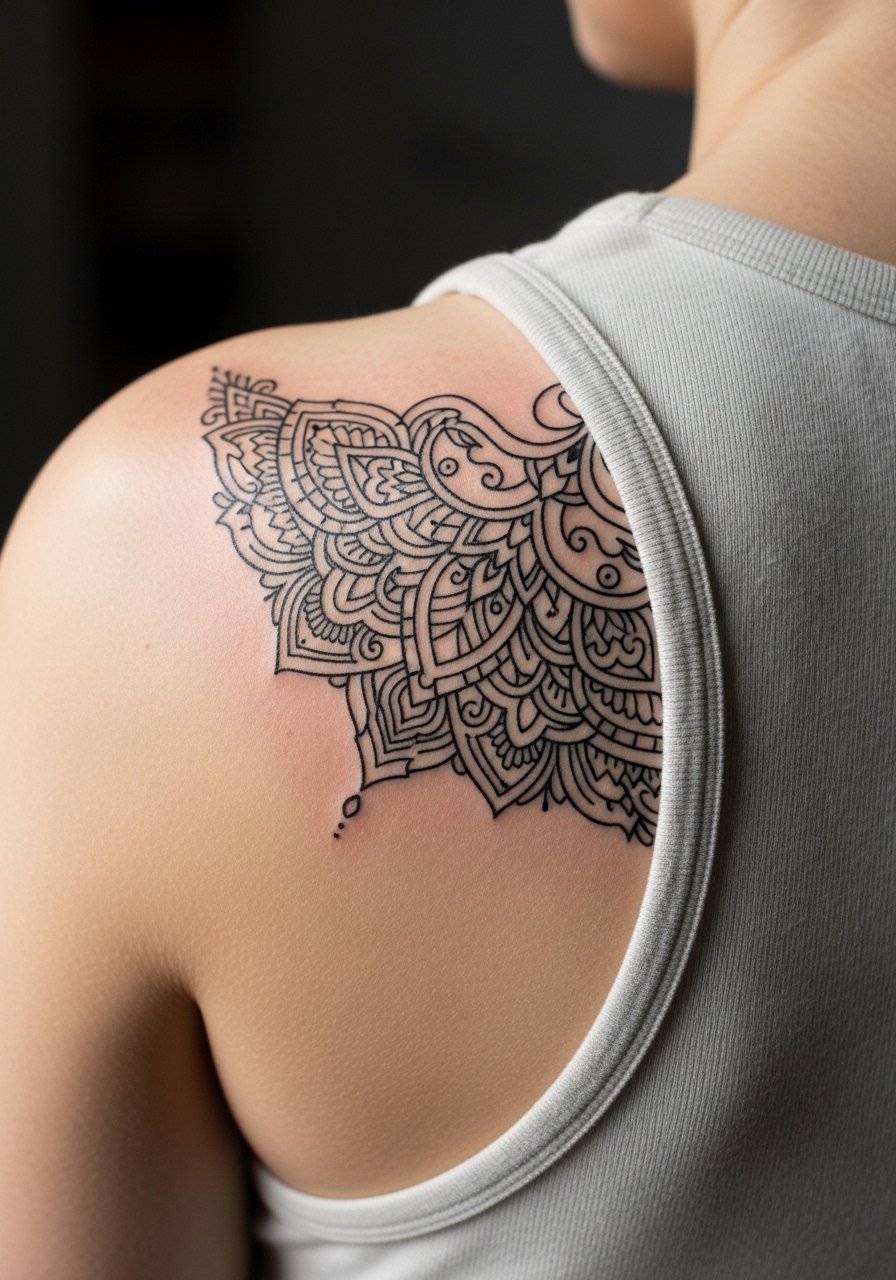
Shoulder blade tattoos age well because the area rarely suffers constant friction. Request anchoring lines near the spine and airy outer elements so the piece reads when you wear off-shoulder or sleeveless tops. Pain is moderate and sessions can be two to three hours. A common mistake is placing the main focal point too close to the spine where it looks compressed. Pair this with an off-shoulder sweater for evenings when you want to show the art.
15. Ornamental Hip Crescent
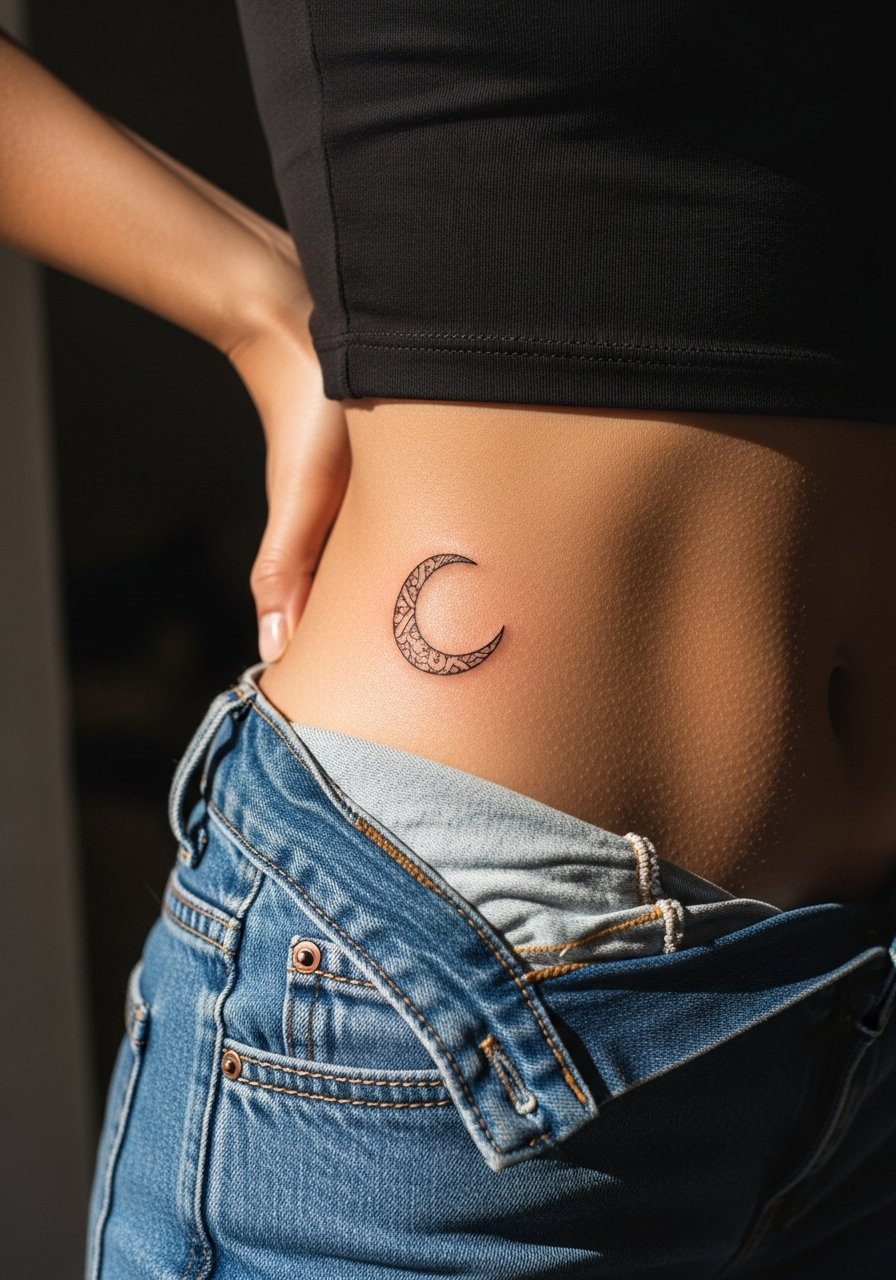
Hip placements are sensual and private. Ask for curved designs that sit with the pelvis shape, not against it. Pain is medium and sessions are usually under two hours for small crescents. A mistake is using too many tiny dots in a crescent that will blur. For session comfort wear high-waisted pants you can lower slightly and consider a bandeau top to keep the area covered while exposing only the tattoo zone.
16. Ornamental Sleeve Filler in Blackwork
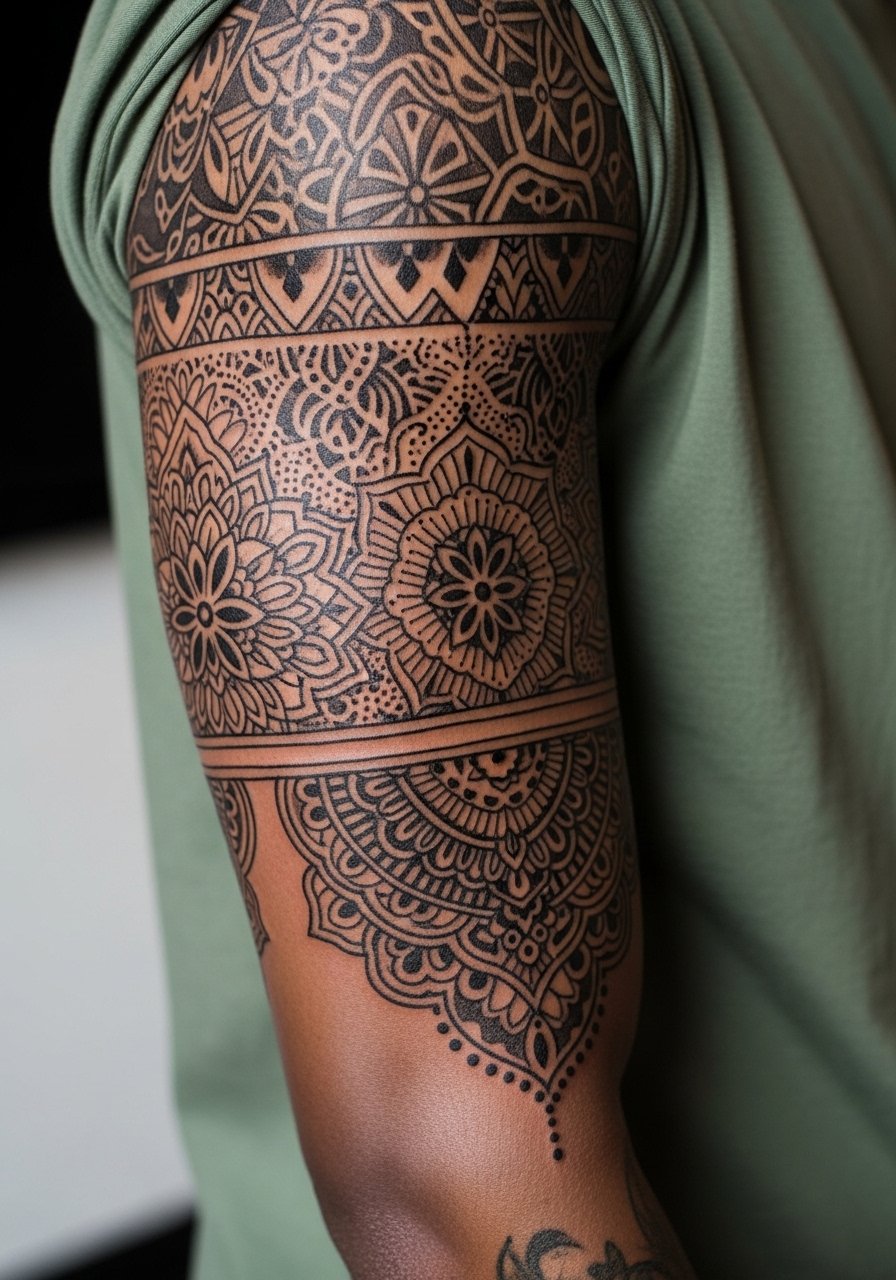
Sleeve filler is about rhythm and breathing room. Tell your artist you want repeating ornamental motifs that step down in scale toward the elbow. Pain varies across the arm and full fillers usually need multiple sessions across months. The common error is starting with too many tiny secondary elements that compete with focal motifs. For wardrobe, short sleeves rolled up reveal the flow; try a short-sleeve button shirt to frame the sleeve without covering it.
17. Ornamental Foot Band
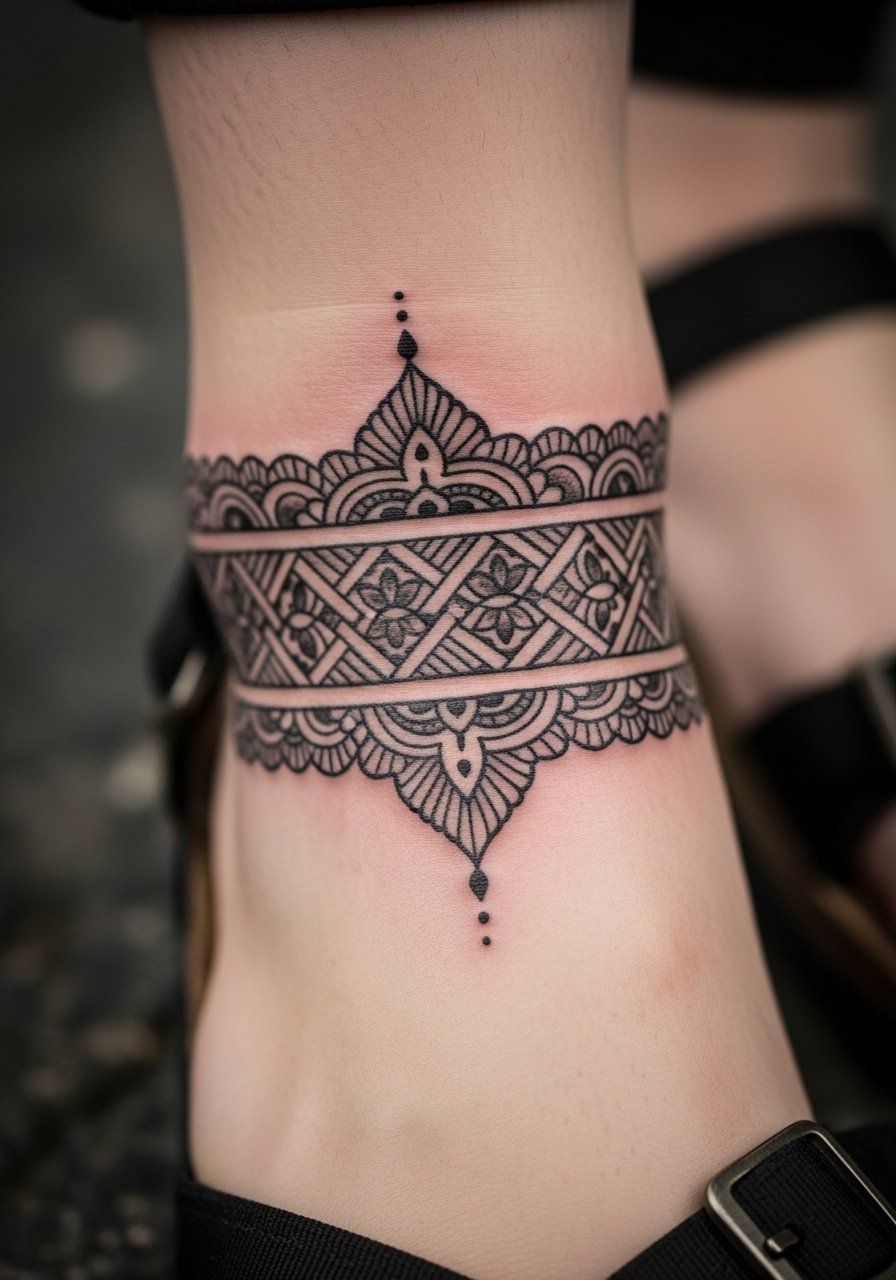
Foot tattoos fade faster because of shoe friction and ground contact. If you want longevity, choose bolder outer lines with open interior patterning. Pain is higher due to thin skin and sessions are short. The mistake is asking for tightly packed detail across many toes. For showing off after healing, sandals or cropped pants highlight the band nicely. Plan for touch-ups in the second year for heavy-wear areas.
18. Ornamental Ribcage Sash
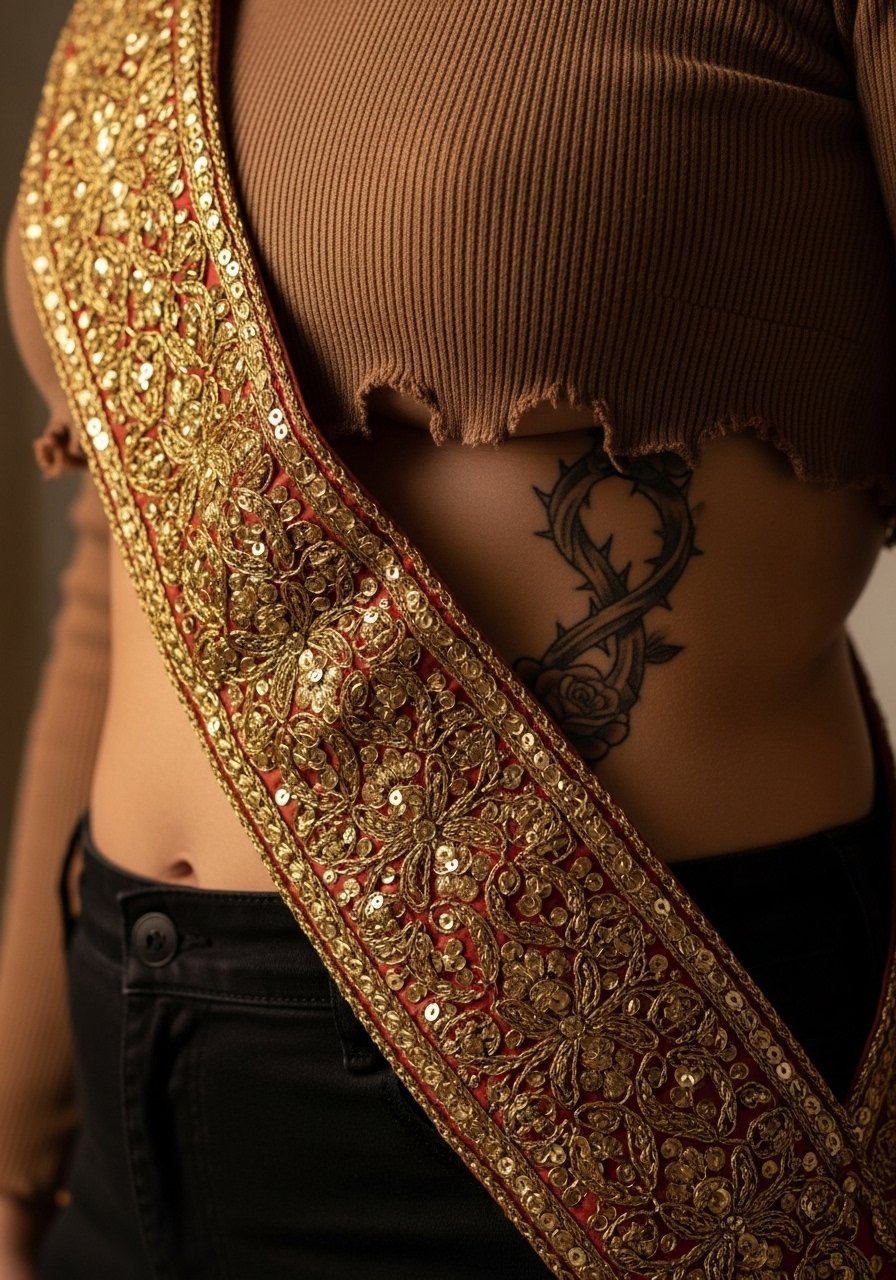
Sash pieces on the ribs need composition that moves with the torso. Ask for gradual scale changes along the sash so central motifs are larger and outer motifs breath. Pain is significant and sessions can be long. A frequent error is over-detailing small connectors which become indistinct with movement. For the appointment wear a loose cropped tee you can lift with minimal tugging. Expect to discuss touch-up timing because the area is prone to lightening during heavy sun exposure.
19. Ornamental Nape Script with Motifs
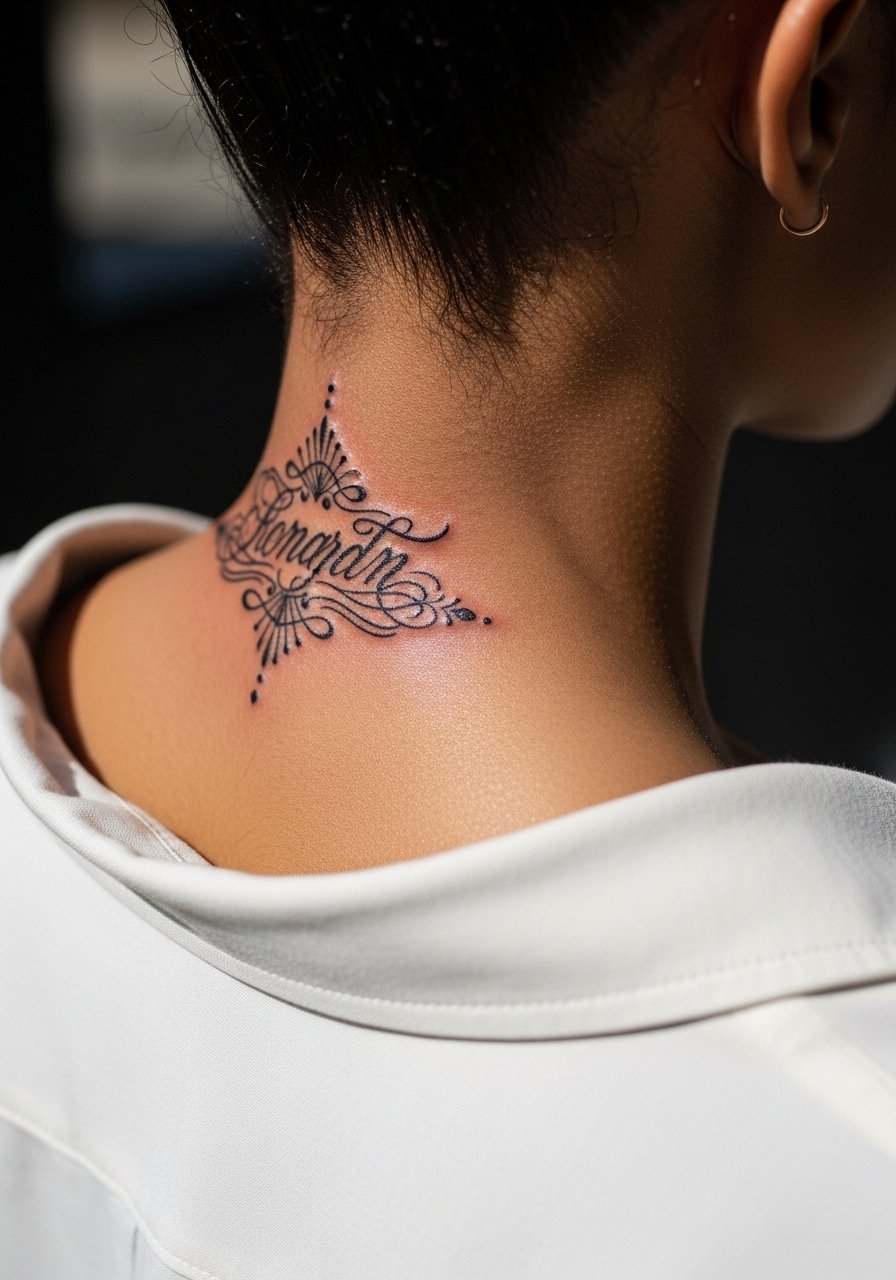
When a script anchors ornamental accents at the nape, specify exact lettering and ask the artist to place the script low enough to avoid hairline interference. Text must be provided exactly for the stencil. Pain is low and sessions are quick. The mistake is choosing a tiny, ornate script that becomes unreadable. For visibility, pair with low ponytails or a hair claw clip so the nape shows when you want it to.
20. Ornamental Thigh Panel with Floral Geometry
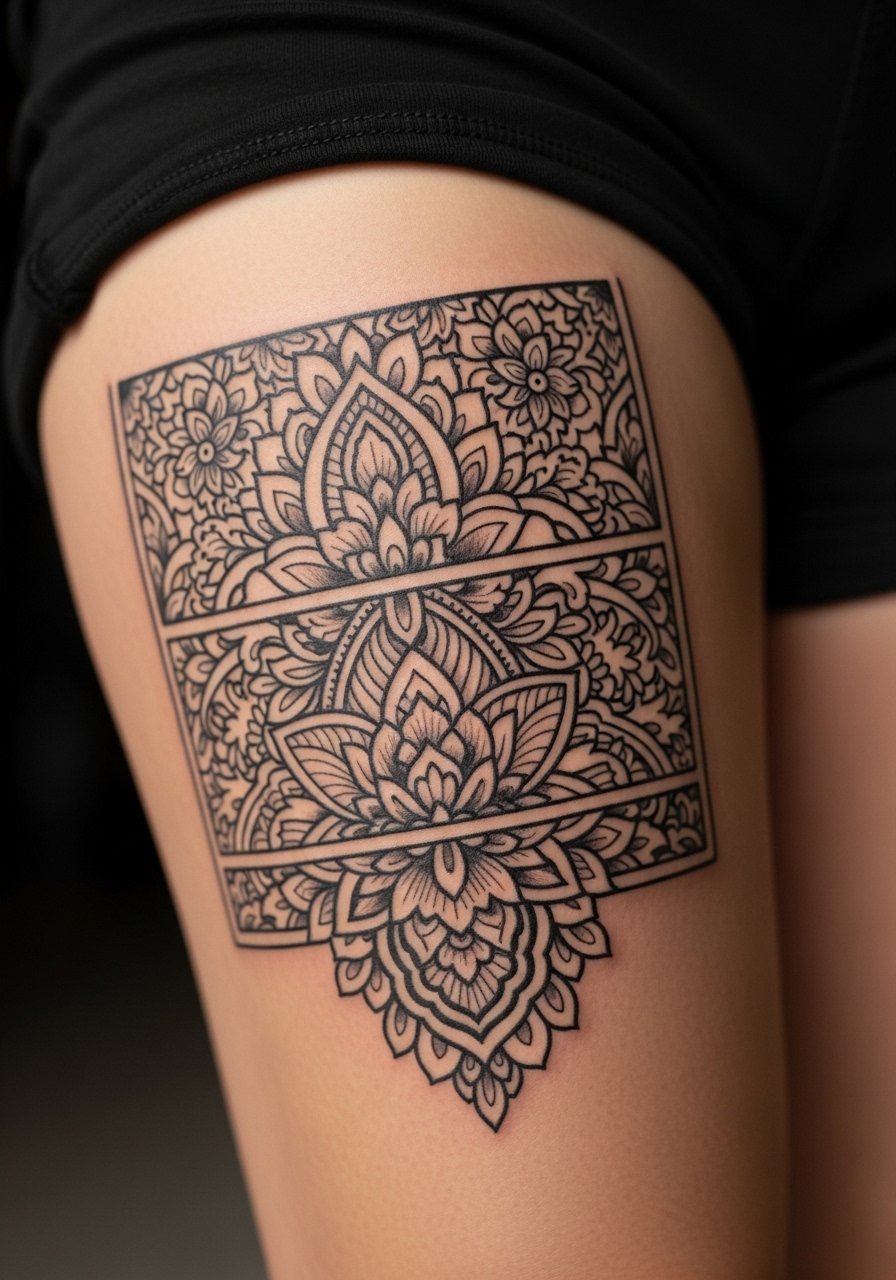
Thigh panels age well and provide a big canvas for ornamental mixes. Ask for alternating ringed geometry and floral modules so the eye moves through the piece. Pain is generally low and large panels take multiple sessions across weeks. A common misstep is cramming too many distinct motifs together which flattens the visual hierarchy. For show-off looks choose a wrap skirt or high-cut swimwear that frames the panel.
21. Ornamental Half-Sleeve Transition
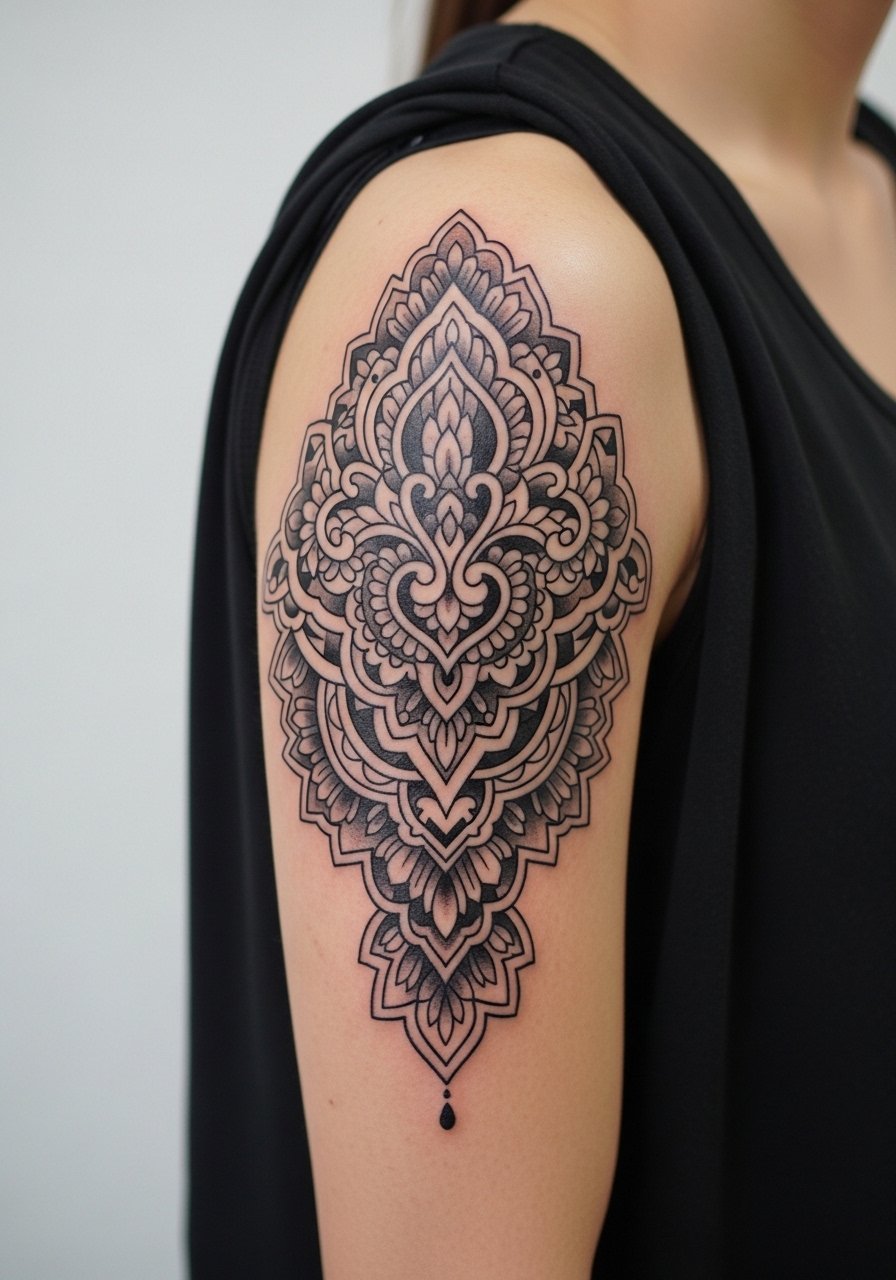
Transition pieces that link shoulder motifs to upper arm work best when artists plan bold anchor elements at the shoulder and light fillers toward the bicep. Tell them you want the largest shapes at the top and breathing room below to avoid visual crowding. Pain is moderate and sessions can be three to five hours over multiple visits. The mistake is starting both ends with equal weight which makes the piece look like two unrelated tattoos. For session comfort wear a loose tank top you can pull aside without tugging the area.
Frequently Asked Questions
Q: How long does dense black ornamental work typically need touch-ups?
A: It depends on placement, sun exposure, and skin type. Heavy blackwork on stable areas like the calf or shoulder often needs fewer touch-ups than hand or foot work. For intricate ornamental pieces on mobile skin expect a touch-up in two to three years.
Q: Will fine line ornamental pieces blur on ribs and sternum?
A: This is debated. Some artists say rib and sternum skin movement causes fine lines to merge over time. Others counter that careful spacing and slightly heavier main lines prevent that. Ask your artist where they fall and view healed photos from their portfolio before booking.
Q: What should I wear to the studio for an inner forearm or wrist piece?
A: Wear clothing that gives clear access without exposing more skin than necessary. For forearm and wrist pieces a loose button-down shirt you can roll up is ideal. Comfortable layers help for sitting through longer sessions.
Q: Are hand and finger ornamentals worth it given their maintenance?
A: They can be if you accept ongoing touch-ups. Hands and fingers regenerate faster and endure friction and washing. If low maintenance is a priority, choose more stable placements instead.
Q: How do I find an artist who respects ornamental traditions without copying cultural motifs poorly?
A: Search local shop directories, hashtag feeds, and convention lineups for portfolios that show respectful adaptations. Look for artists who discuss cultural context in their shop bios and who offer custom variations rather than direct replicas.
Q: Can I mix blackwork ornamentals with small color accents?
A: Yes, small color accents can add focus points, but discuss placement carefully. Color in dense black fields can lose saturation faster, so artists often recommend tiny color highlights rather than broad fills.