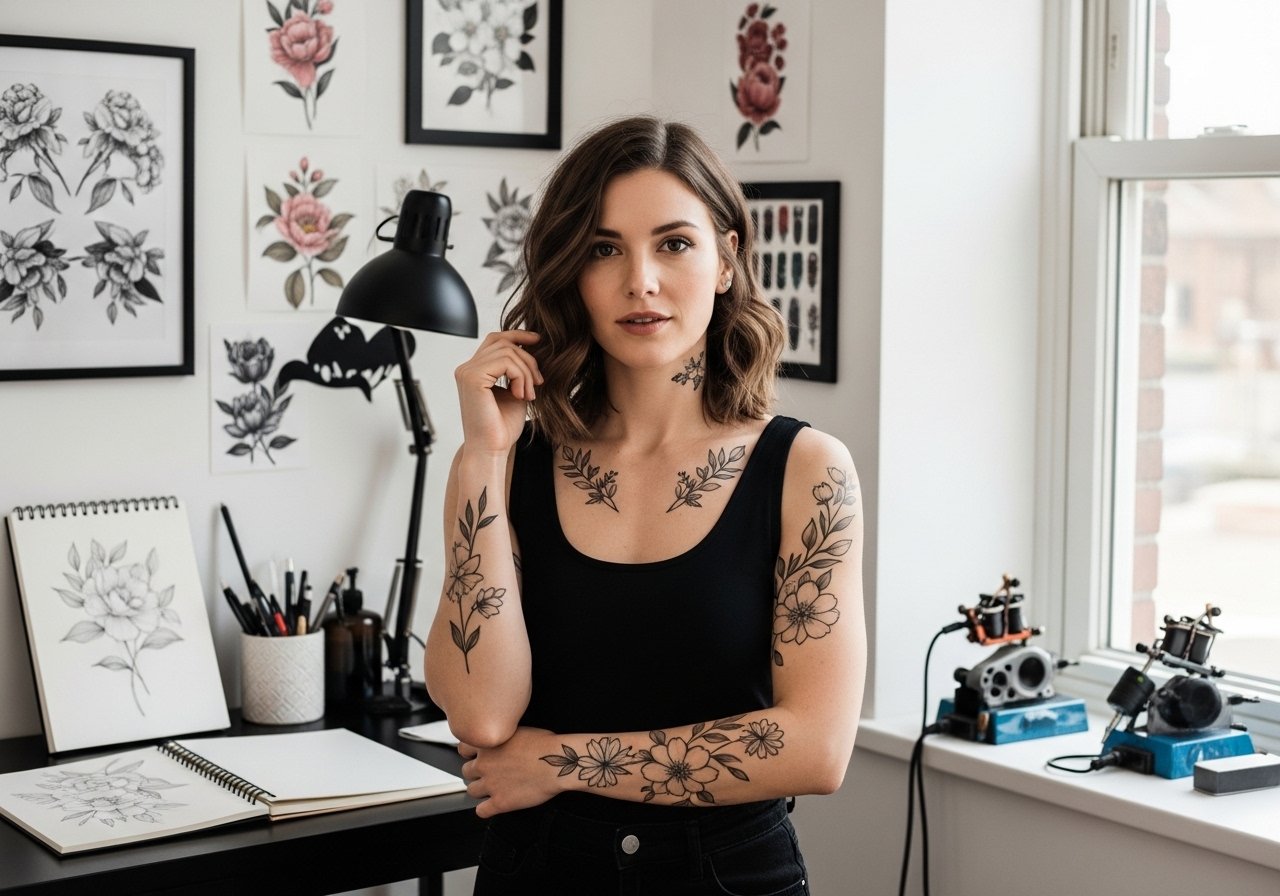
Fine line ankles are everywhere online right now, but the reality is messier than the feed suggests. Ankle placement can mean sharp pain on the bone, swollen feet that make shoes impossible for a week, and fine line work that fades faster than you expect on darker tones. Ahead are 17 ankle ideas that balance what looks good fresh with what actually holds up, plus what to ask your artist before the stencil goes down.
1. Fine line "Love You More" script on outer ankle
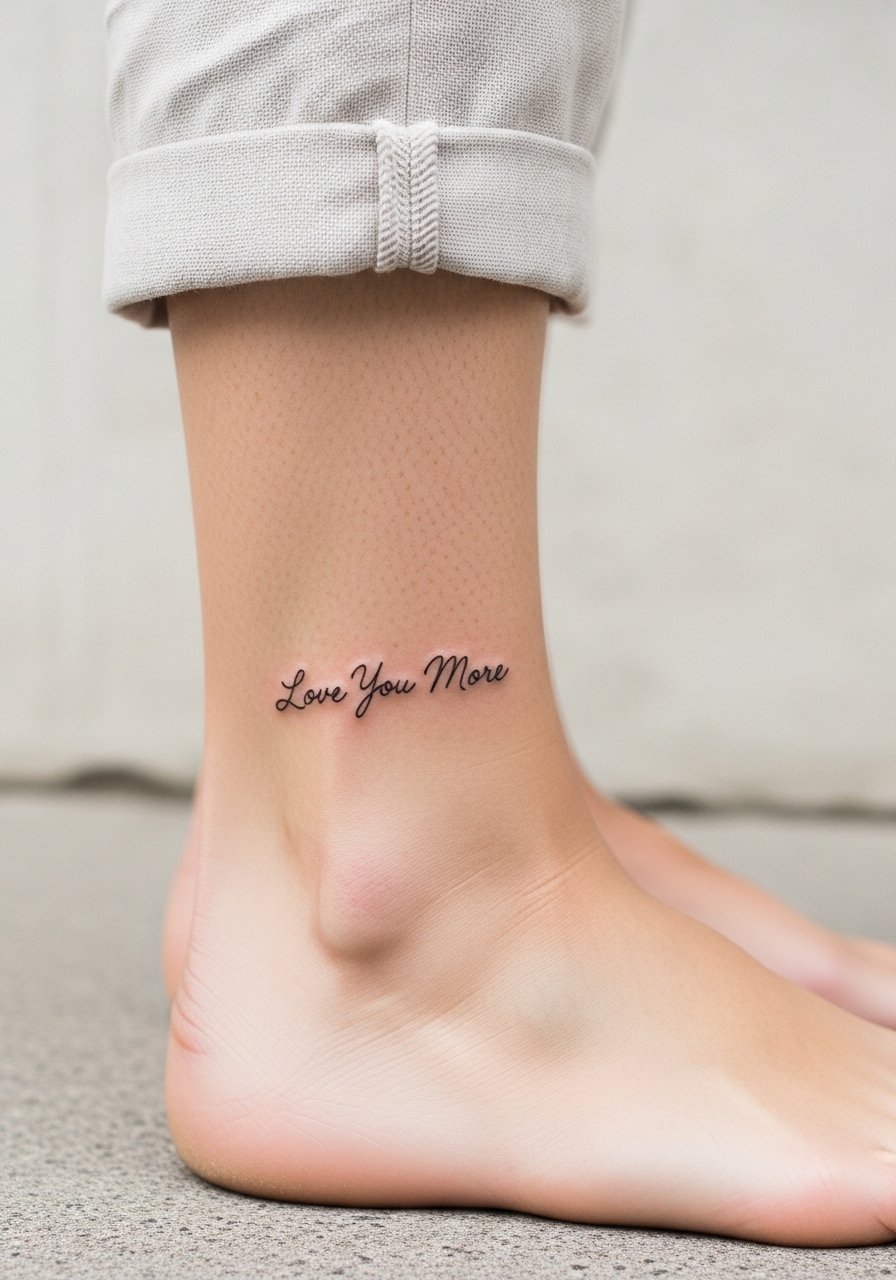
This is the classic brother and sister split phrase people ask about first. For ankles, ask your artist to use slightly heavier line weight than the lightest single-needle examples. That reduces early blur on runner legs and on darker tones. Artists split on aftercare for tiny script. One camp prefers protective film to limit friction, the other prefers air drying to avoid clogged channels. Mention which camp the artist follows before you book. Expect the first touch-up window around year one for fine line on the ankle bone. For the session wear, pull on cropped linen pants so the artist can access the outer ankle without tight seams pressing fresh ink.
2. Minimalist heart outlines with "More" and "Most" inner ankle
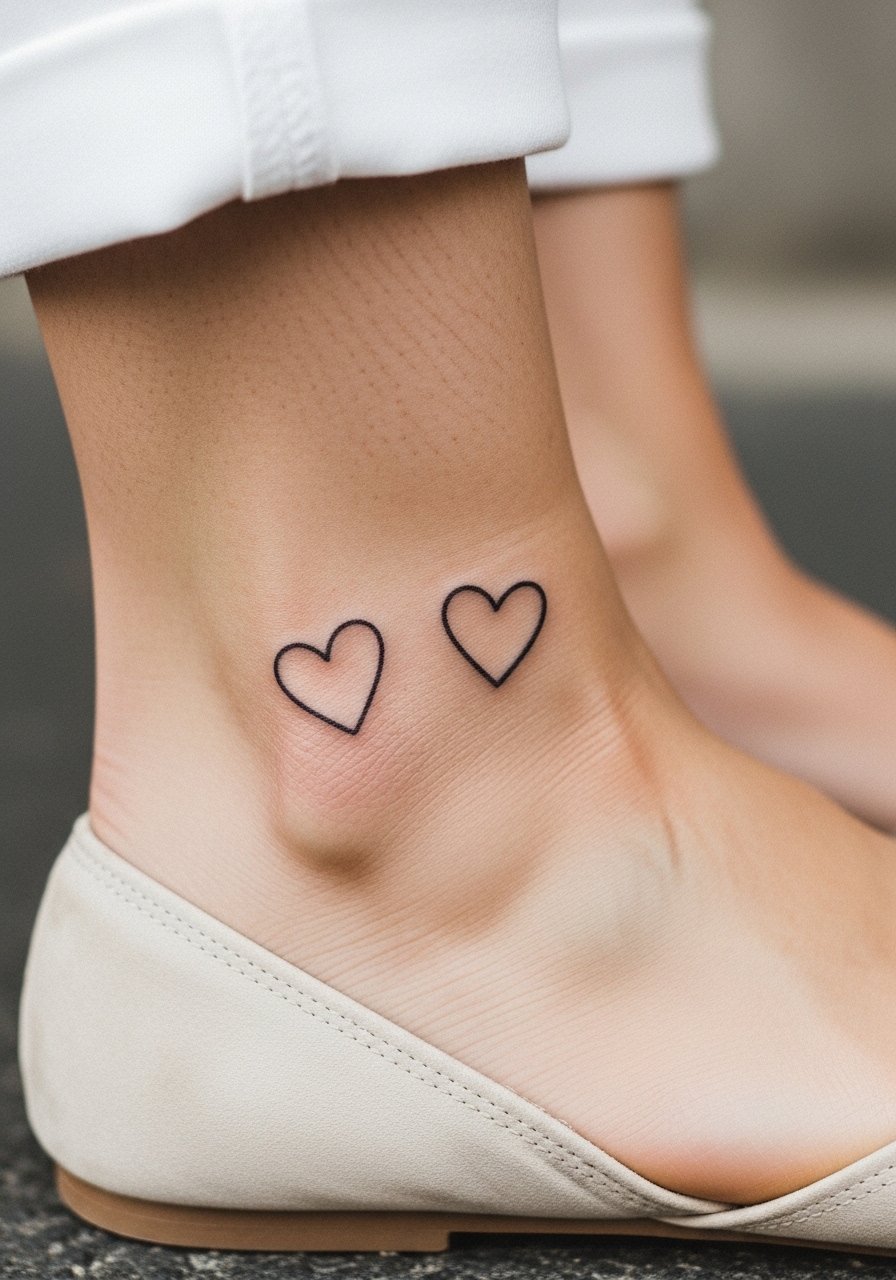
Tiny matching hearts with the words "More" and "Most" keep things discreet and wearable. Inner ankle is less exposed to shoe friction but still close to bone so expect a sharp sting during the session. Ask for 1 mm spacing between parallel lines to avoid merging as the piece settles. A common mistake is asking for hair-thin outlines that vanish fast. If you want the look but need longevity, request a slightly bolder outline and stipple shading for faint depth. In six months the hearts should read crisp. By year three the lines might soften but a small touch-up will bring them back without changing the design.
3. Split infinity symbol that wraps the ankle bone with "Brother" and "Sister" scripts

This design uses the curve of the ankle to its advantage. Ask your artist to map the wrap with you standing so the symbol sits where your shoe line won’t rub it. Expect a higher pain rating right on the ankle bone. There is debate about numbing for bony spots. One group says topical numbing eases the session without affecting the art. The other group warns it changes skin response during the procedure. Tell your artist your pain threshold and whether you want numbing discussed. For showing it off, sockless low-top sneakers or low top sneaker white pairs neatly with the wrap.
4. Dotwork "B&S" monogram with floral accents on the side ankle
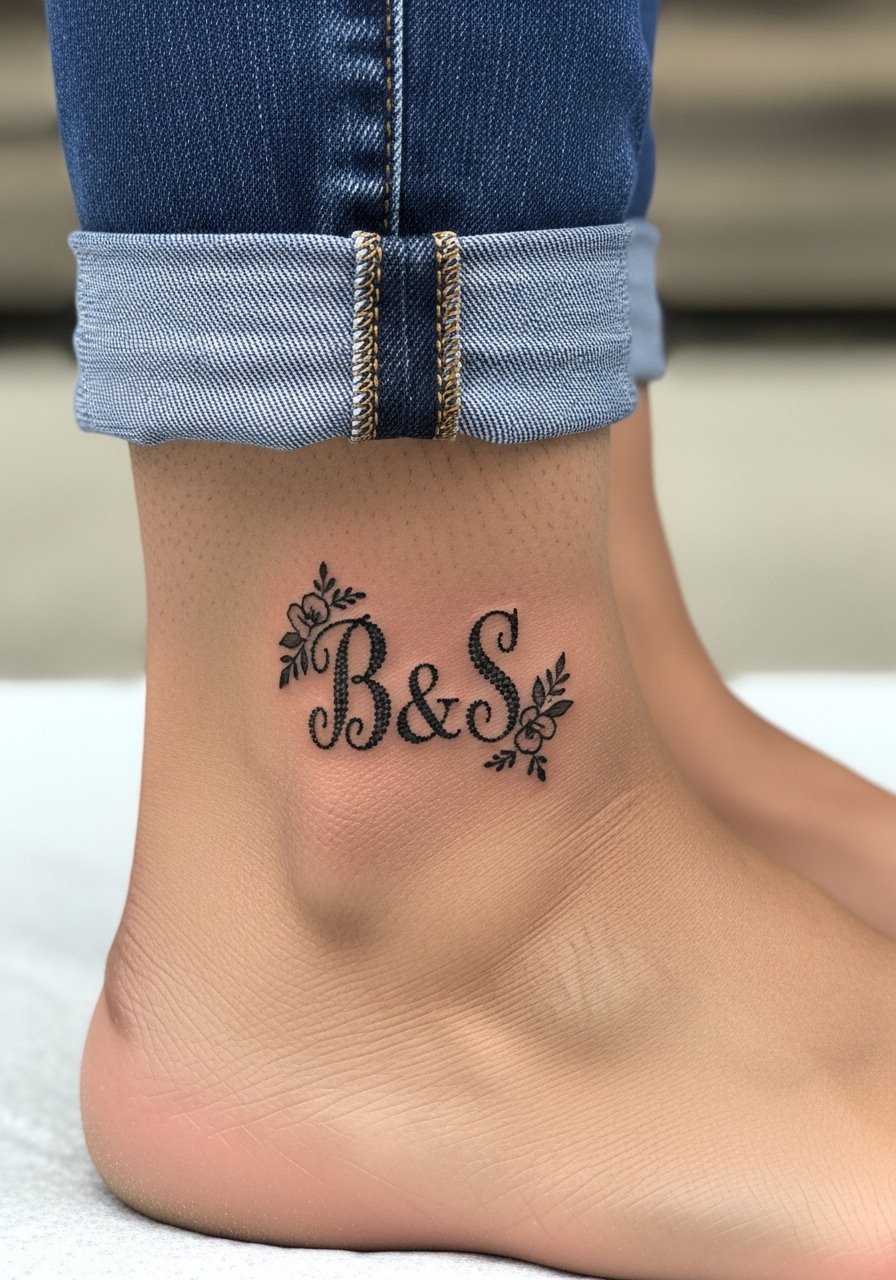
Dotwork holds up well when given space to breathe. For initials, ask the artist to show the monogram at actual size on tracing paper so you can confirm negative space. A frequent mistake is crowding the letters with heavy petals that merge after healing. Tell your artist you want loose dot spacing around the letters. Dotwork ages predictably if the dots are spaced and not jammed. Expect this style to blur less than ultra-thin script. The session itself is steady pressure rather than quick needle rattles, and most people find it tolerable for a single short appointment.
5. Micro-realism birthdate coordinates on top of the ankle
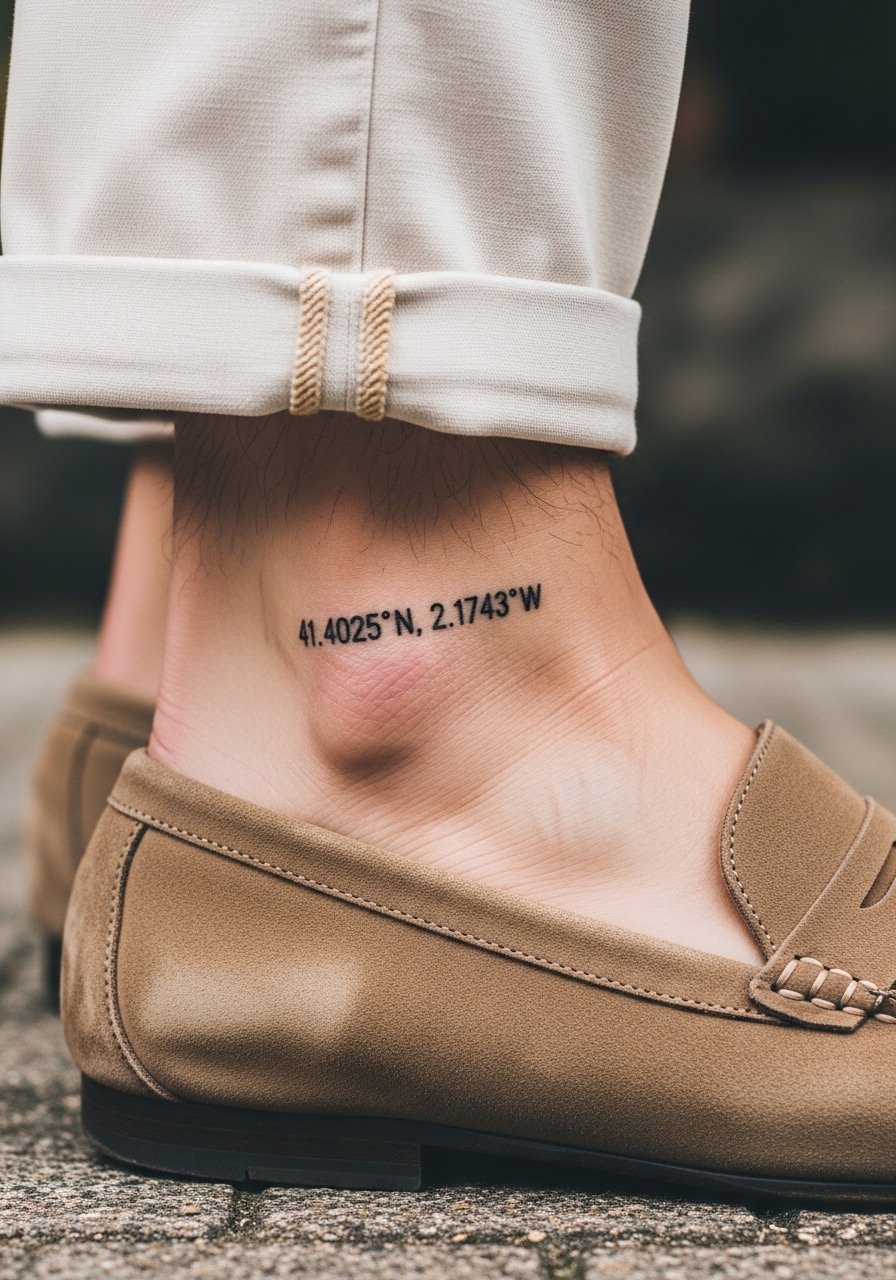
Coordinates are a personal approach that reads clean and modern. On the top of the ankle the canvas is flat but small. Ask your artist to stencil the exact numerals so the spacing and font are legible. Micro-realism here needs crisp needle control. A common mistake is choosing a font that is too condensed, which looks like a smudge at six months. For session day, wear shoes you can slip on easily so swelling does not force you into tight footwear. Sockless suede loafers or sockless loafer suede let you show the piece without rubbing it.
6. Watercolor heart halves in sibling colors on the rear ankle
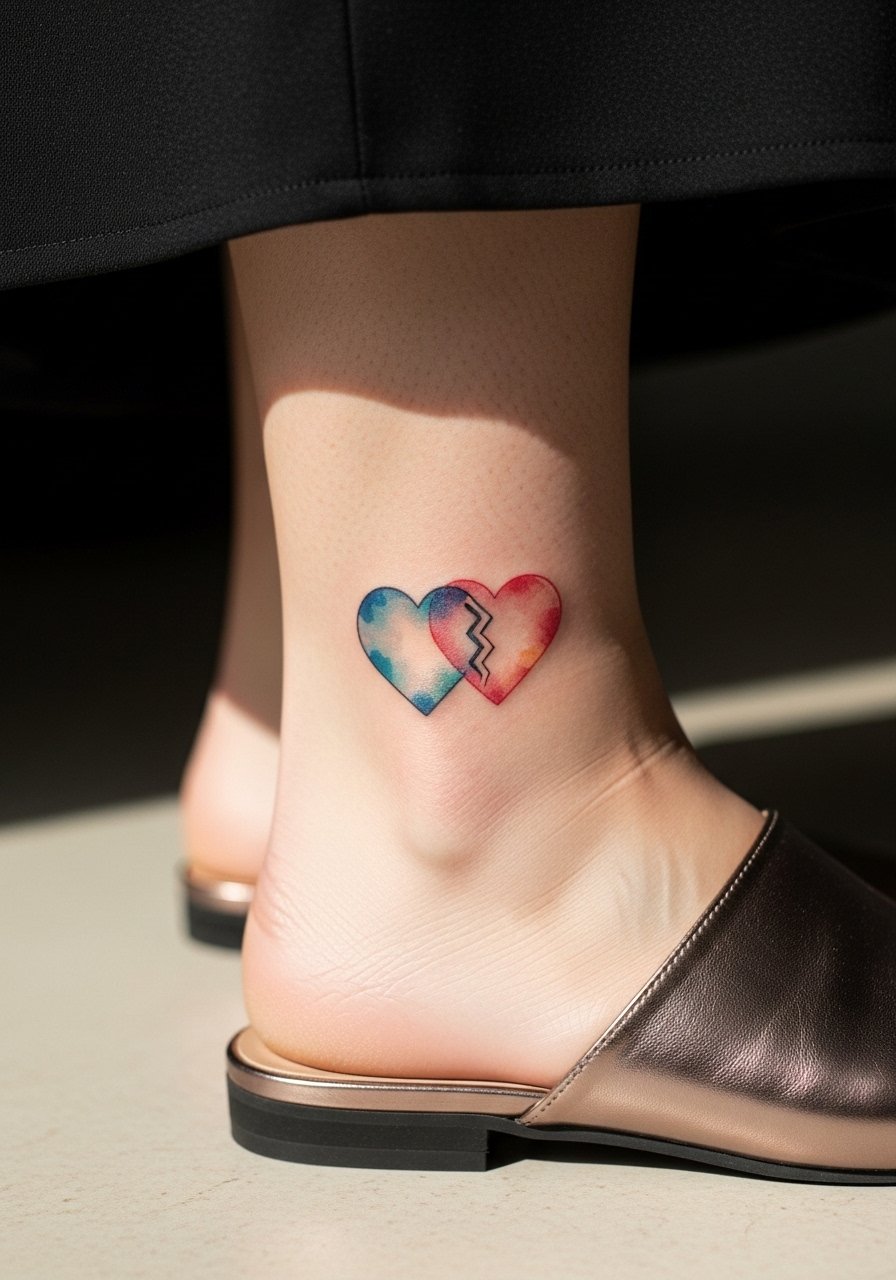
Watercolor gives a soft, artistic look but color on ankles faces friction and sun exposure that speeds fading. Artists split on whether watercolor belongs on the ankle for longevity. One side says watercolor will fade quickly there and prefers blackwork instead. The other side says careful layering and follow-up saturation can make it last. If you want color, request denser pigment near the edges and plan a possible touch-up at 12 to 18 months. For showing the color, pair with metallic mule heel evenings where the rear ankle peeks out.
Pack Smart
The ankle pieces above live in a friction zone, so a few targeted items smooth the session and the first week.
-
CeraVe Healing Ointment. Lightweight moisture for the swollen ankle that many people prefer over heavier balms during the first few days of healing from fine line work.
-
Green Sheep Tattoo Balm. Thin absorption makes it helpful for bony ankle spots where greasy products feel too occlusive while you are walking.
-
Tattoo Goo Repair Balm. A glycerin-based option that some people use on color work to keep pigments from drying out during the initial skin repair.
-
Frida Skin Balm. Recommended for darker skin tones by some users because it leaves less white cast and helps with even healing around color edges.
-
Hustle Butter. Thinner than standard ointments and often used for active ankle healing when sweat and rubbing are concerns.
7. Blackwork geometric arrow pointing to "Sis/Bro" wraparound

Blackwork is where ankles really shine because saturation ages predictably. For a wrap, have the artist plan where the arrow meets the shoe line so you do not get constant rubbing. A mistake is going too thin with black fills on a wrap. Ask for solid fill and crisp edges. The session feels faster when the needle is doing marching passes over a solid area. For a rugged look pair with chelsea boot leather men when showing off the contrast between boot and ink.
8. Neo-traditional cartoon hands holding a banner that reads "Forever"
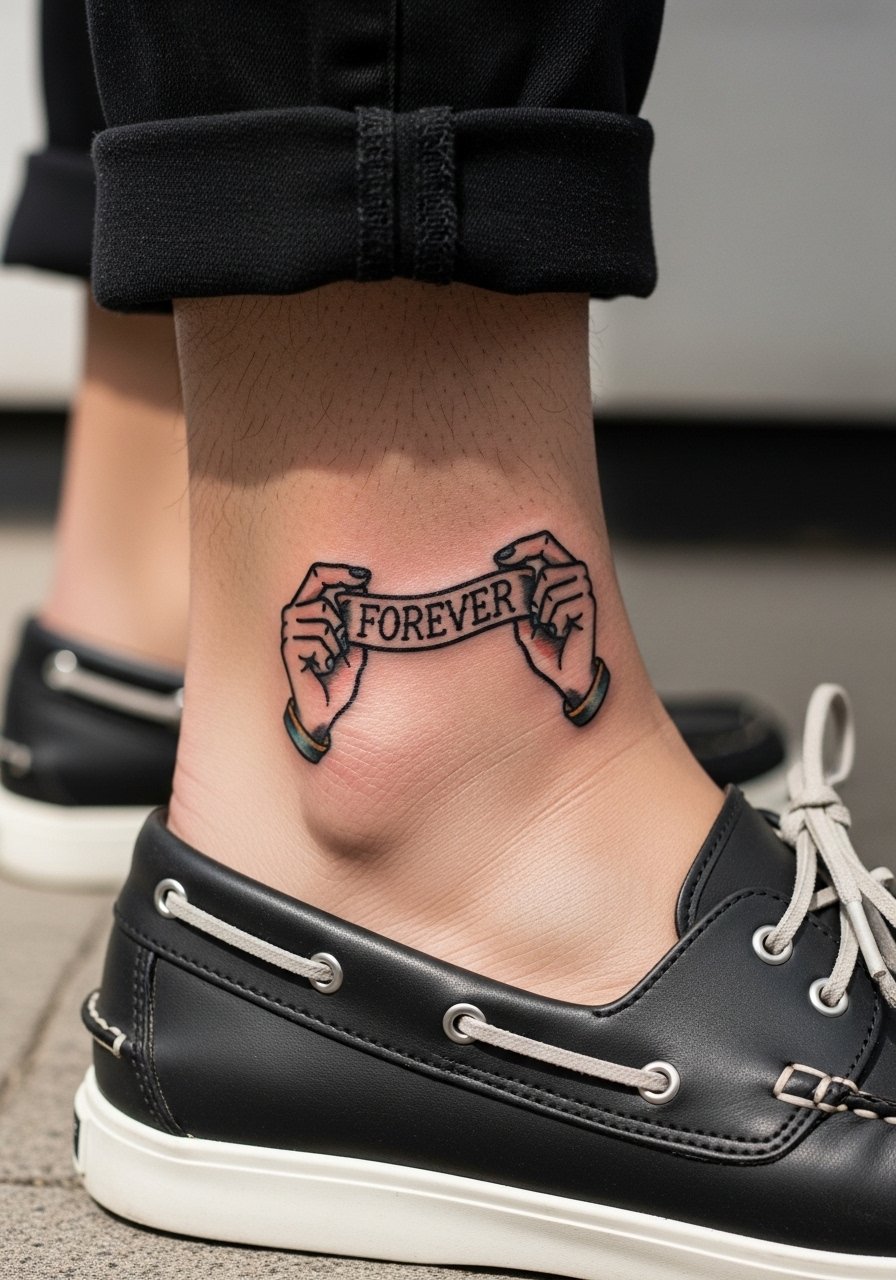
Neo-traditional gives personality with color and bold outlines. A common regret is overscaling the banner on a small ankle. Keep the width under three inches to avoid distortions when you sit or bend. Expect more session time than a tiny script because of color blocking and shading. Touch-ups for color intensity are common around year two for ankles. This style reads bright in the first year and softens into a vintage palette after repeated sun exposure.
9. Ornamental vine connecting initials along the Achilles tendon
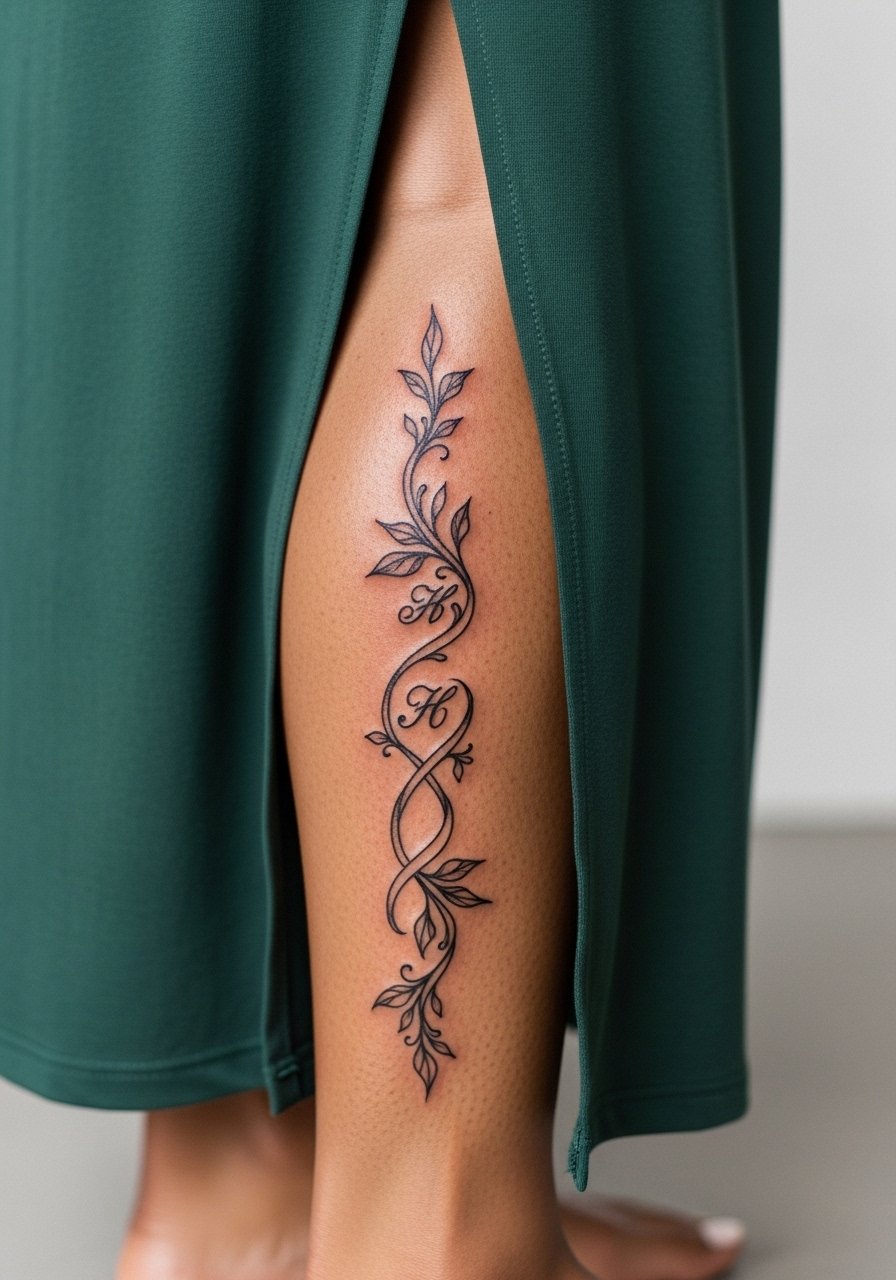
The Achilles tendon is a dynamic area that stretches with movement, so elongated designs work best. Tell your artist you want the vine to flow with muscle lines rather than across them. A usual mistake is wrapping dense ornamentation around a tendon that flexes and blurs. Expect a longer single-session appointment because the artist needs to follow the natural curve precisely. For showing the vertical elongation, pair with metallic mule heel or high slits that let the vine breathe.
10. Ignorant style block letters "Bro 4 Life" on the front ankle
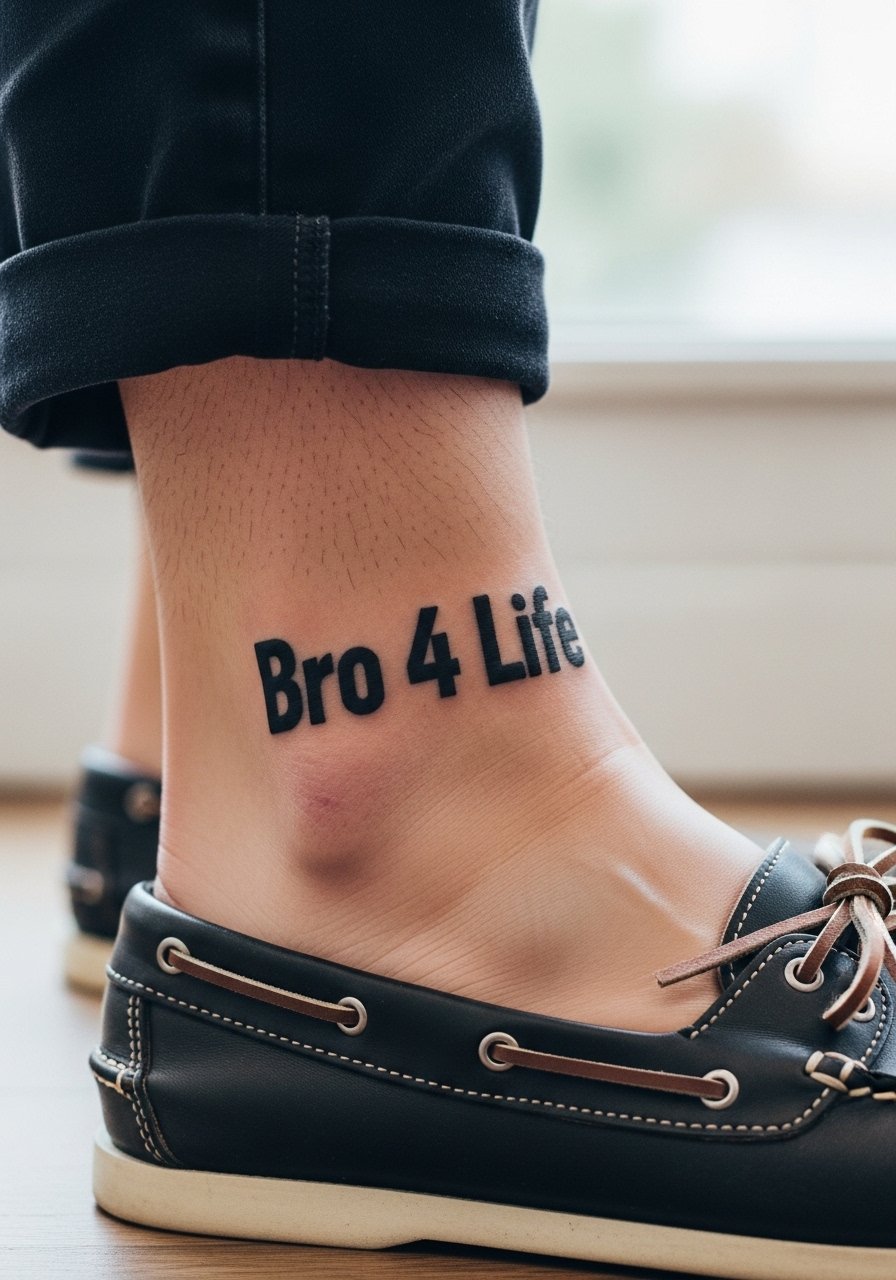
Raw block letters age well because the thick lines resist blur. The common mistake is choosing a font that looks juvenile when scaled up. Ask for proportion tests on tracing paper so the height and letter spacing sit naturally on the front ankle. Pain is moderate because the skin over the front ankle has less bone prominence than the medial ankle. Expect a one-session job with possible touch-up at year two if you want the black re-saturated.
11. Traditional anchor with "Sis/Bro" banner on the inner ankle
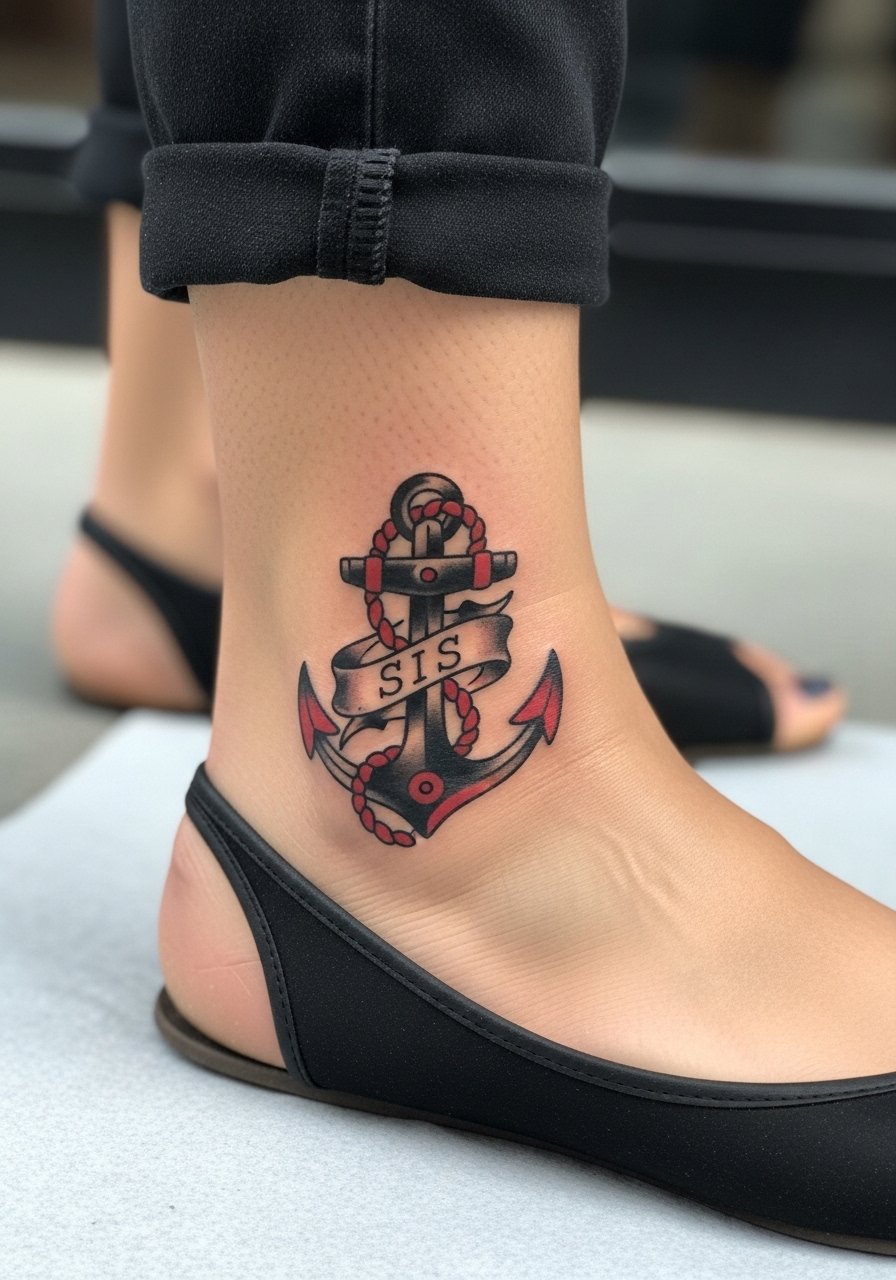
Traditional pieces are durable and contrast well with ankle skin. For inner ankle placement, ask for compact shading and solid outlines to avoid early softening. A common error is over-detailing the banner. Keep the banner simple so the name reads easily. For casual daytime wear, pair with strappy flat sandals that expose the inner ankle without rubbing the area.
12. Fine line constellation matching birth stars on the ankle mound
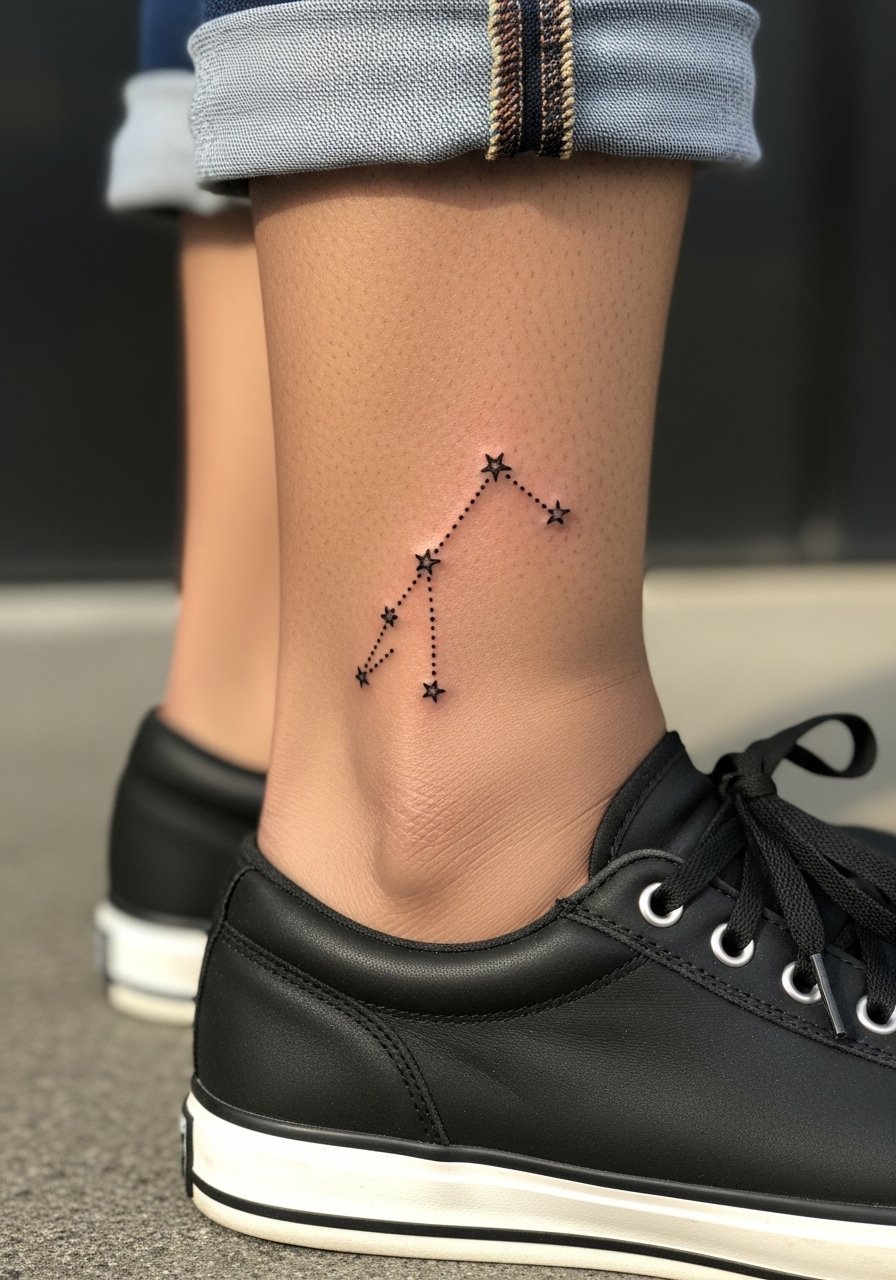
Celestial pieces are meaningful and visually light. Fine line constellations are trending but they face the same debate as other fine line work. One camp says fine line blurs quickly on ankles because of sun and friction. The other camp says careful depth and spacing let these pieces age well. Ask to see healed examples on similar skin tones. If you are active outdoors, request slightly bolder star dots and ask about a planned touch-up at year two. For session comfort, choose shorts that the artist can pull up without tight waistbands.
13. Temperature-sensitive ink joke split that changes with warmth

This is one of the under-covered playful options. Temperature-sensitive inks make a sibling inside joke during summer sessions when the hues shift slightly. The technology is niche and not all studios do it. If you pursue it, confirm pigment safety and that the artist has done healed patches. A common oversight is assuming reactive inks behave like stable tattoo pigments. Plan for more maintenance and possibly faster fade. For wearing it out, espadrille wedges are a summer-friendly pairing. Try espadrille wedge women if you want the ankle to peek out casually.
14. Negative-space ankle bracelet illusion that frames initials
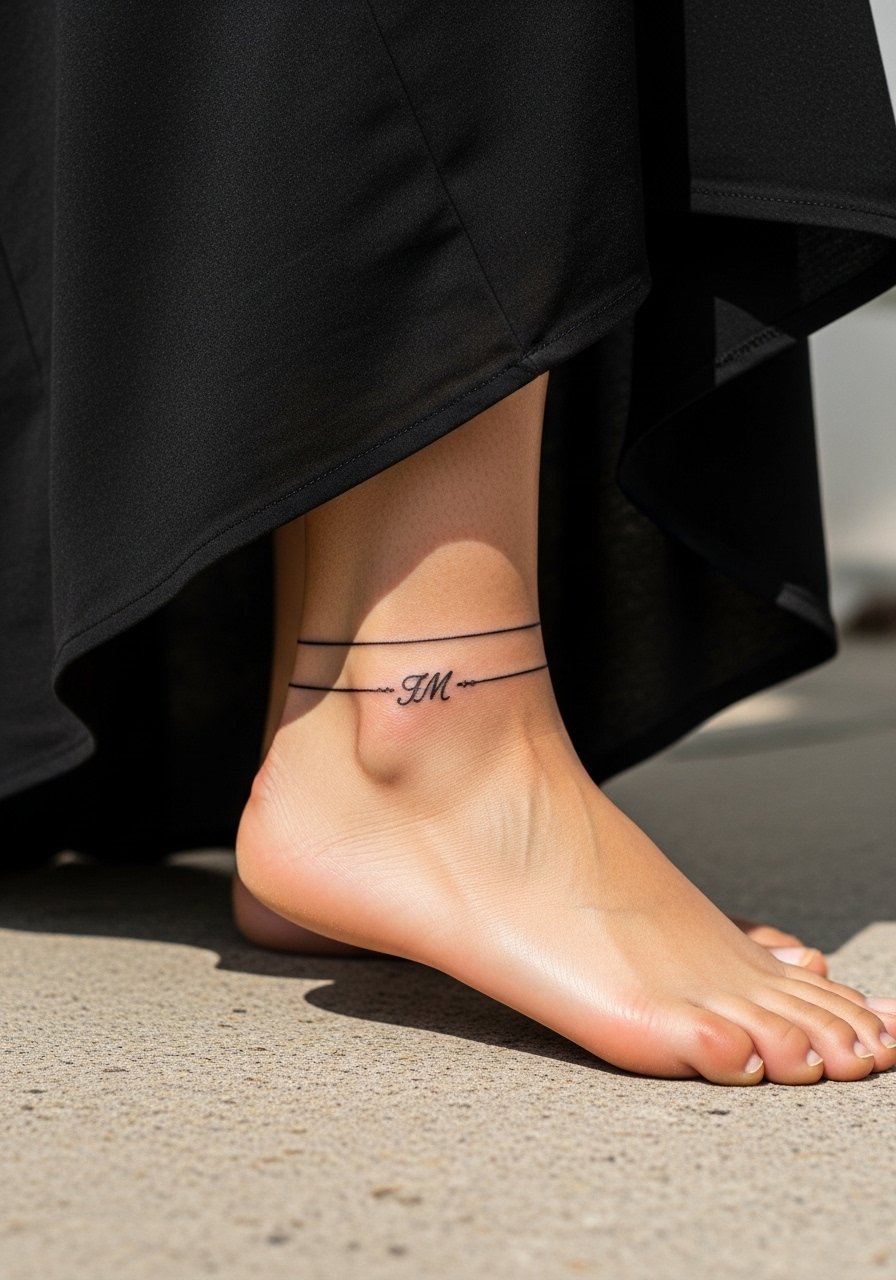
Negative-space tattoos mimic jewelry and keep the ankle design subtle. Ask your artist to mark where the illusion meets your actual jewelry line so it does not sit under straps. A frequent mistake is placing the band too low where it gets hidden by shoes. This style is low pain and low maintenance because the lines are usually thin and simple. It makes a nice alternative for workplaces where visible text could be an issue.
15. Micro-realism portrait of a childhood pet split between two ankles

Using a shared pet portrait is deeply personal while staying small. Micro-realism on ankles requires an artist experienced in tiny portraiture. Ask for healed photos of similar scale on ankles. The mistake to avoid is asking for too much facial detail in too small a space. Expect a two-session plan if both ankles are getting separate halves for symmetry. For session comfort and showing, cuffed jeans or sandals work well. A paired look is striking when both ankles are visible at the same time.
16. Compression sock-friendly small symbols for athletes who heal on the move

Athletes often need tailored healing plans. A lot of people heal ankle tattoos under compression socks to control swelling. Talk to your artist about timing for socked wear. The practical error is leaving tight compression on during the first 48 hours when the area needs light movement and elevation. Design-wise, choose symbols that work with a compression sleeve. For session wear, bring athleisure jogger slim pants you can roll up without tight seams.
17. Matching coordinates with anklet chain illusion and tiny charm

Pairing coordinates with an anklet illusion blends jewelry and ink. Ask your artist to place the charm where a real anklet would sit so the two read together visually. A common mistake is crowding the charm with text. Keep the coordinates compact and the charm simple. For showing off both, a thin anklet on the non-inked side and rolled pants work well. Consider a small touch-up at year two if you notice line softening from daily movement.
Frequently Asked Questions
Q: How much pain should I expect for an ankle tattoo and what's the best way to manage it?
A: Ankle pain often rates higher than thigh or forearm because the needle rides close to bone. Numbing cream works for many people and reduces sharpness during the session. Some artists avoid it because it can change skin response. Bring loose shoes and plan to elevate and ice the area afterwards for the first 48 hours.
Q: Will fine line scripts or tiny dots fade faster on darker skin tones?
A: Fine line can appear to blur faster on darker tones if the line weight is too thin. Ask for slightly heavier line work and request healed examples from the artist on a similar skin tone. Many artists recommend a test patch or a conservative touch-up plan at year one to preserve clarity.
Q: Should I use protective film or dry healing for an ankle tattoo?
A: There are two camps. One prefers protective film for active areas like ankles because it reduces picking and protects against socks. The other camp favors dry healing with short thin lotion applications to keep airflow. Talk to your artist about which approach they use and why, and follow their instructions for the healing window they expect.
Q: How do I plan footwear around a new ankle tattoo for the first week?
A: Go for loose slip-on shoes or sandals that do not press the tattoo. If you need closed shoes, bring a pair with a wide opening so you can slide your foot in without rubbing the fresh ink. For showing it off later, simple strappy flats or cuffed jeans work well with most ankle styles. Try strappy flat sandals for easy exposure.
Q: What should I ask during the consultation to avoid common ankle design mistakes?
A: Ask to see healed photos of the artist's ankle work on similar skin tones. Confirm line weight, exact placement with you standing, and a realistic touch-up timeline. Ask how they handle swelling and whether they book a single session or prefer splitting the work for symmetry. If you care about color longevity, ask about their experience with ankle color pieces and how often they schedule color refreshes.