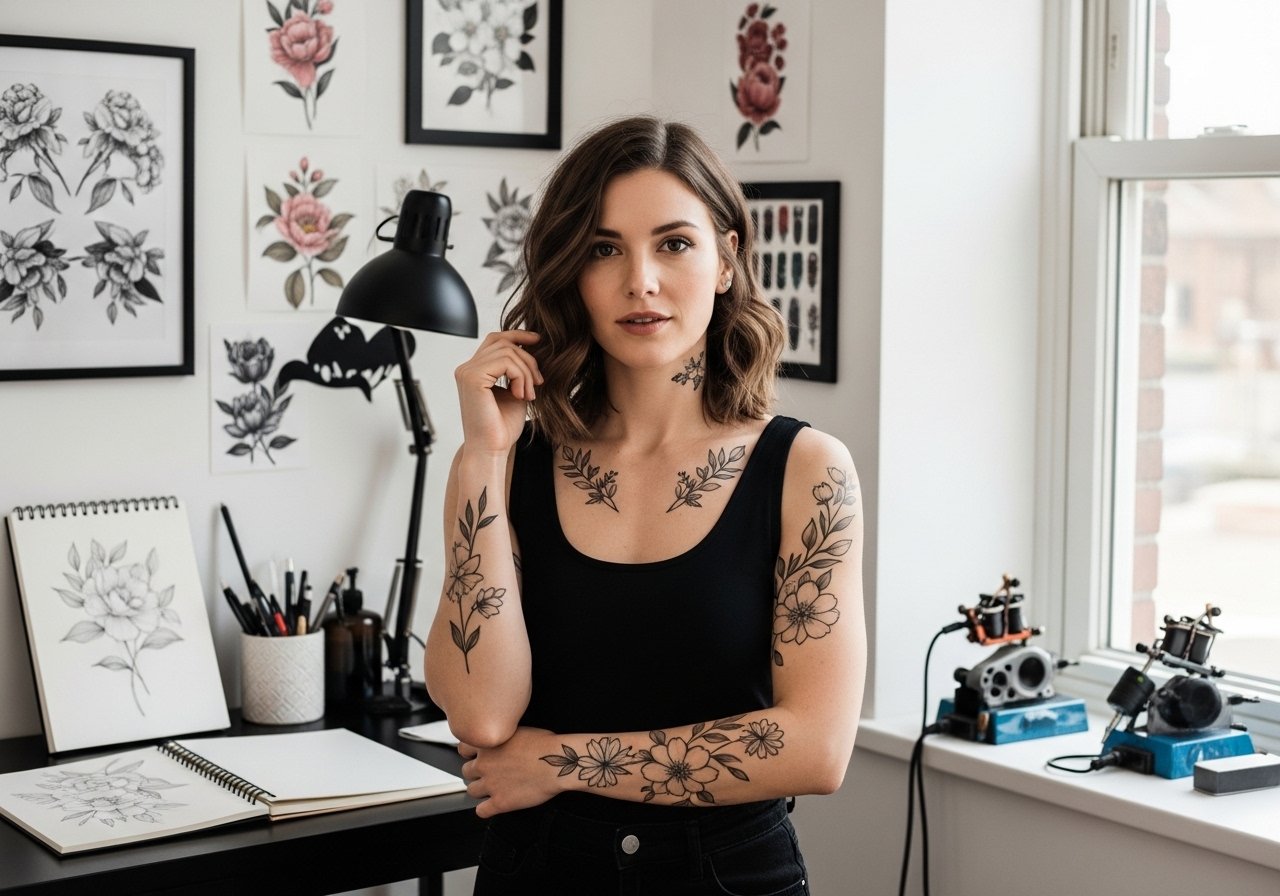
Fine line butterfly tattoos look amazing fresh, but the pieces that actually stay readable over years are the ones planned around placement, skin type, and realistic spacing. Trends push single-stroke, micro, and monarch vein detail right now, yet longevity comes down to small choices you make in the consult. Read these focused concepts and notes so you pick a butterfly that still reads clean after the first touch-up.
1. Fine Line Monarch Butterfly Outline, Wrist
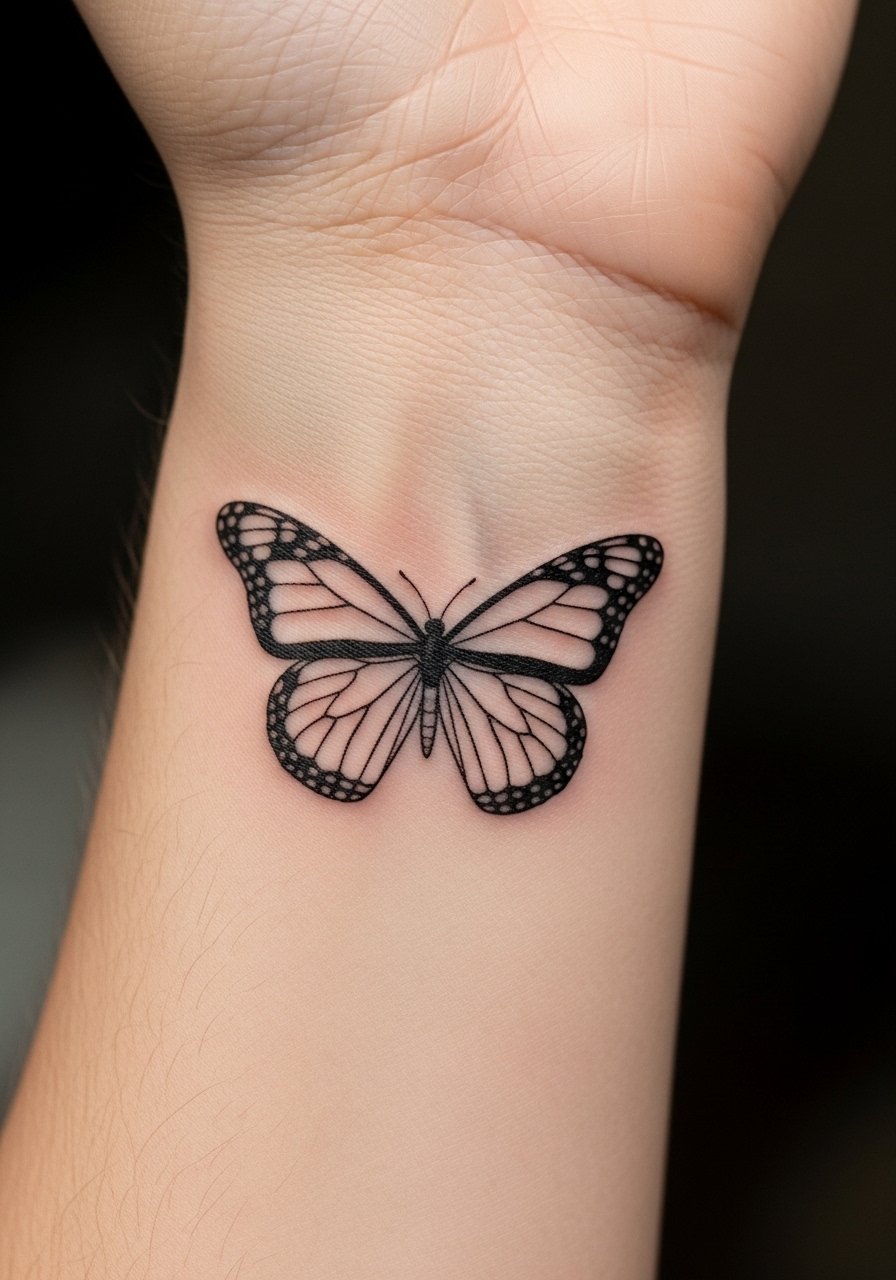
I see this choice in consultations all the time because the monarch is instantly recognizable even when reduced to thin linework. For the wrist, expect a quick session and moderate sensitivity. Tell your artist you want slightly heavier primary wing veins and small gaps between vein lines so they do not merge as the piece ages. A common mistake is asking for too many tiny vein details on a one-inch scale. That compresses the linework and invites blurring within a couple years. For showing it off, pair this with a thin chain bracelet on the opposite wrist to keep focus on the tattoo without crowding it, and wear a sleeveless top or rolled sleeves to give the artist full access during the appointment, for example thin gold chain bracelet.
2. Single Continuous Line Butterfly, Inner Forearm
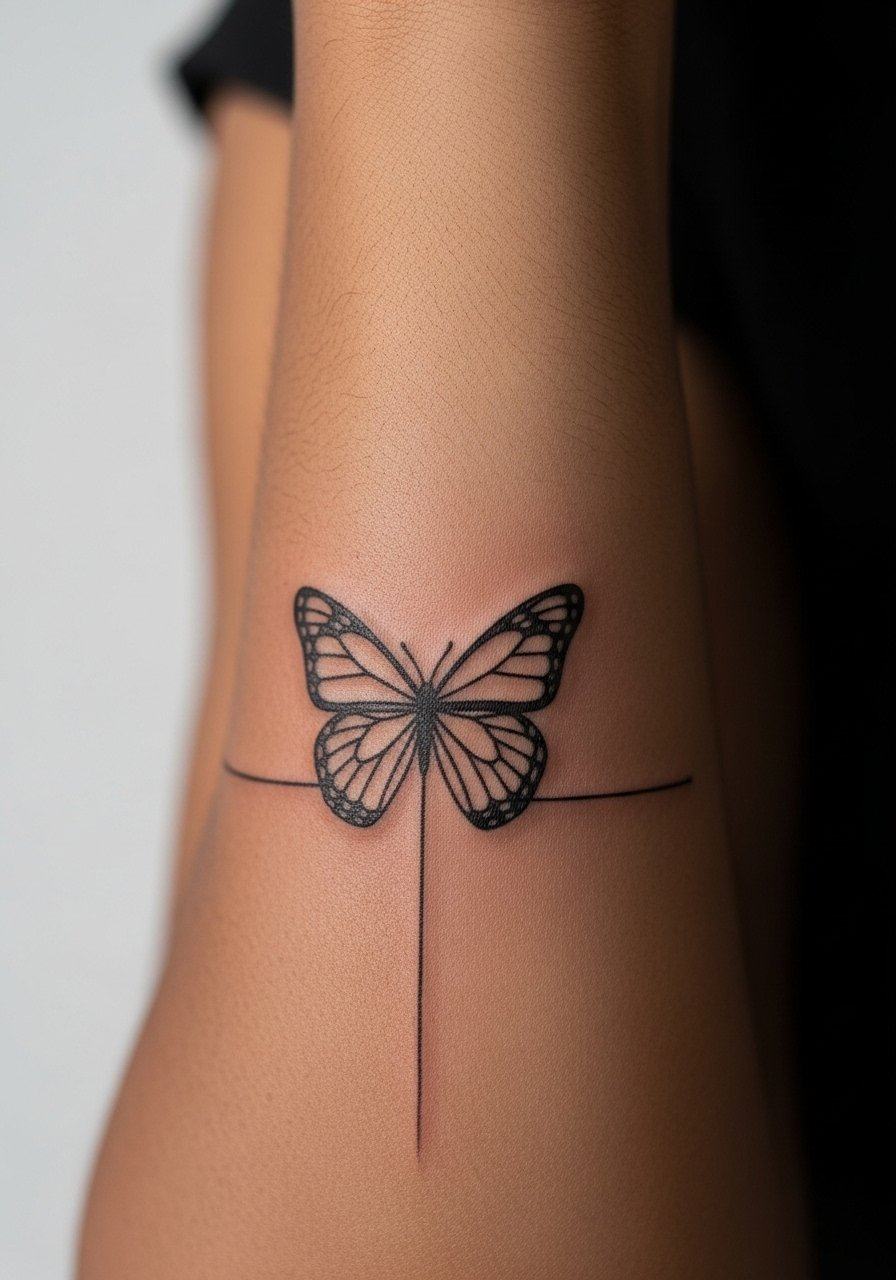
This one-stroke version reads modern in photos and sits naturally along the forearm grain. Expect a one-session job that feels moderate on pain because the inner forearm is soft but steady. When you book, bring references that show the exact single-stroke path you want so the artist can map the flow around veins and hair follicles. A frequent error is shrinking the design to fit a wrist scale; the single-stroke aesthetic loses flow when compressed. For everyday wear, a rolled short-sleeve linen shirt complements the continuous motion of the line without overpowering it. Try pairing with a linen short sleeve shirt on cooler days.
3. Butterfly with Fine Line Botanicals, Collarbone
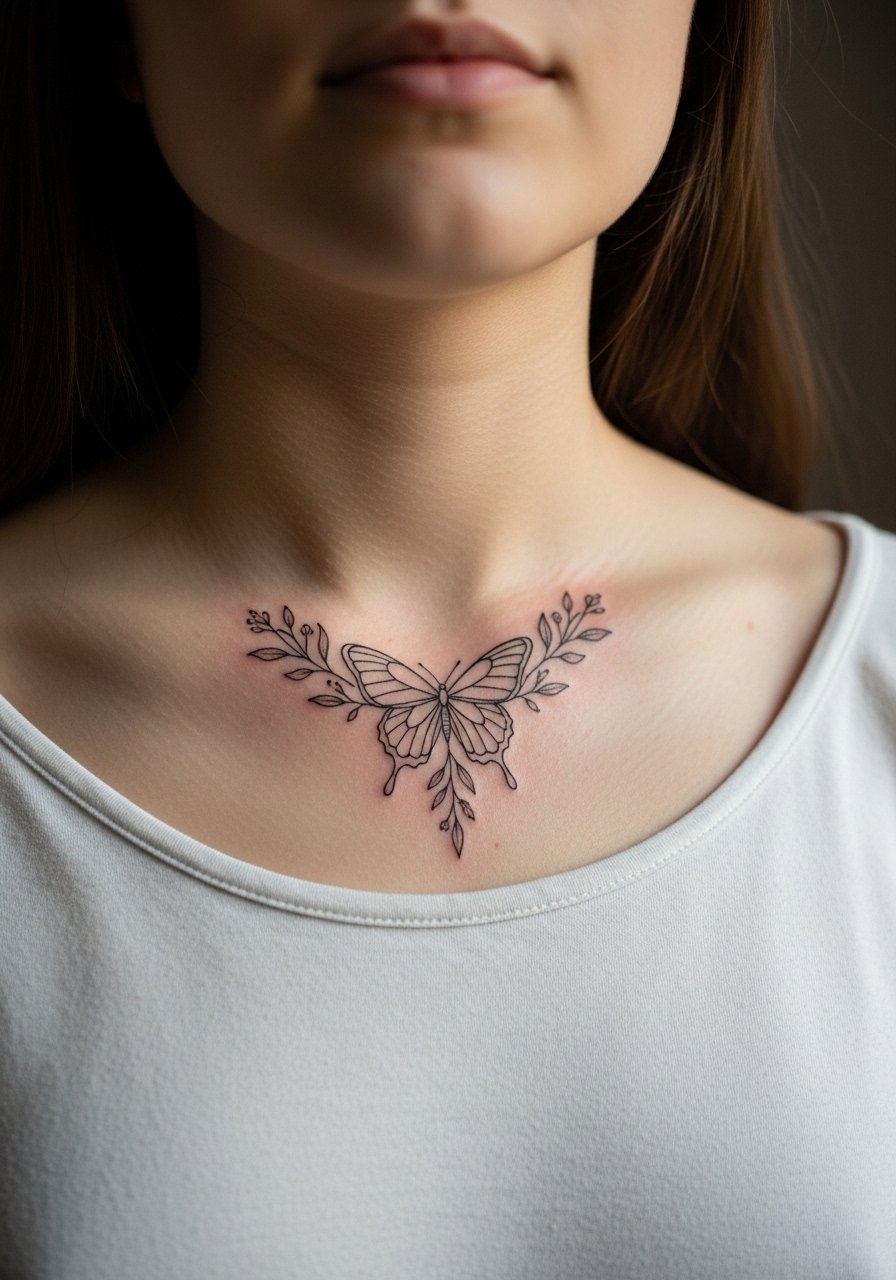
The collarbone is ideal for a butterfly that blends into vines and leaves because that horizontal plane lets the elements breathe. Sessions are short to moderate and the area can feel bony to the touch. Ask your artist to space the botanical stems so the lines do not touch the wing veins. A common aging problem is dense leaf clusters packed too close to wing edges. That tends to fill in at the same time the thin wing lines soften. For showing the piece, strapless or off-shoulder tops frame the collarbone nicely. Try an off shoulder blouse after the healing window to let the wings read uninterrupted.
4. Geometric Fine Line Butterfly, Upper Arm
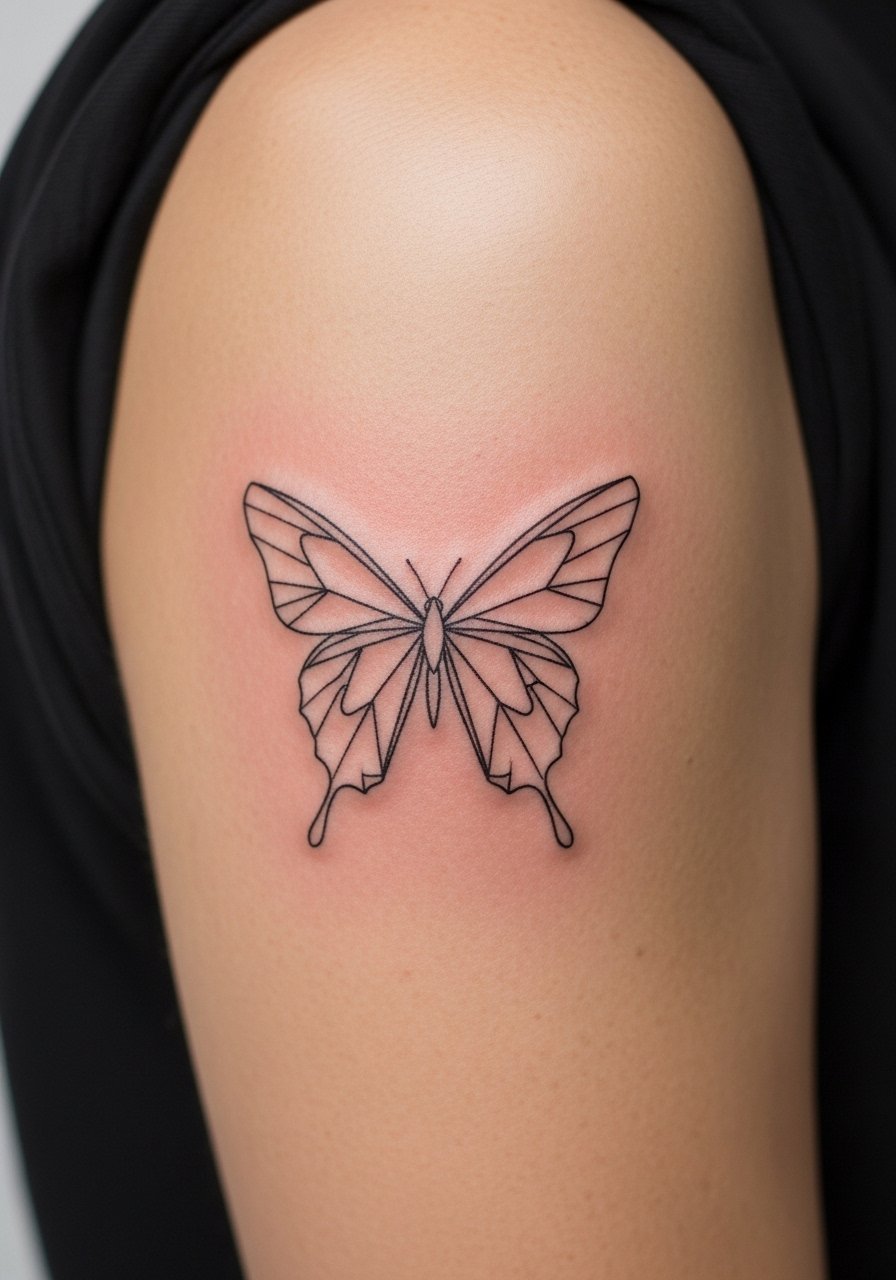
Geometric elements give the design structure and stand up well when sized correctly on the upper arm. That placement tolerates slightly denser linework because muscle and skin movement there is less extreme than on wrists. The biggest mistake is going too small. Tight geometry needs room or the intersecting lines become a blur. During consult, request slightly increased spacing between repeated triangles and clearer negative space inside the wings. This piece pairs well with sleeveless fitted tees or halter tops that keep attention on the shoulder line while you show it off. I like the look with a sleeveless linen top for summer wear.
5. Micro Fine Line Butterfly Cluster, Behind the Ear
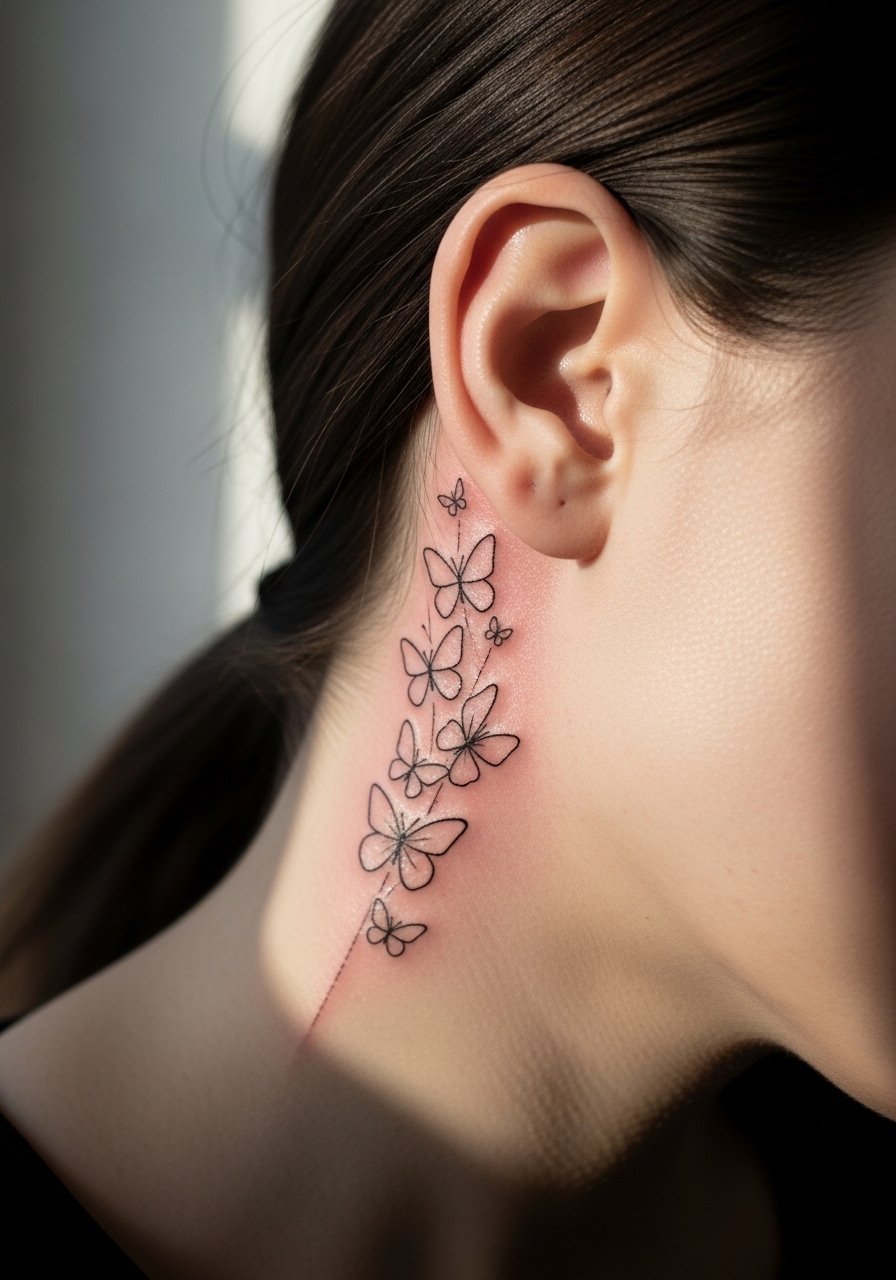
Tiny clusters behind the ear read playful and discreet. The area is sensitive to touch but the session is brief. Ask for single-needle lines and keep each butterfly under one inch. A frequent mistake is trying to add shading or gray wash into these micro pieces. That introduces density that ages faster than clean outline. Since this spot hides under hair at times, think about hair length and how often you want to reveal the cluster. No special styling link here because the placement is usually revealed unpredictably, but tell your artist during the consult exactly how much hair coverage you want after the session.
6. Species-Specific Monarch Wings, Ankle
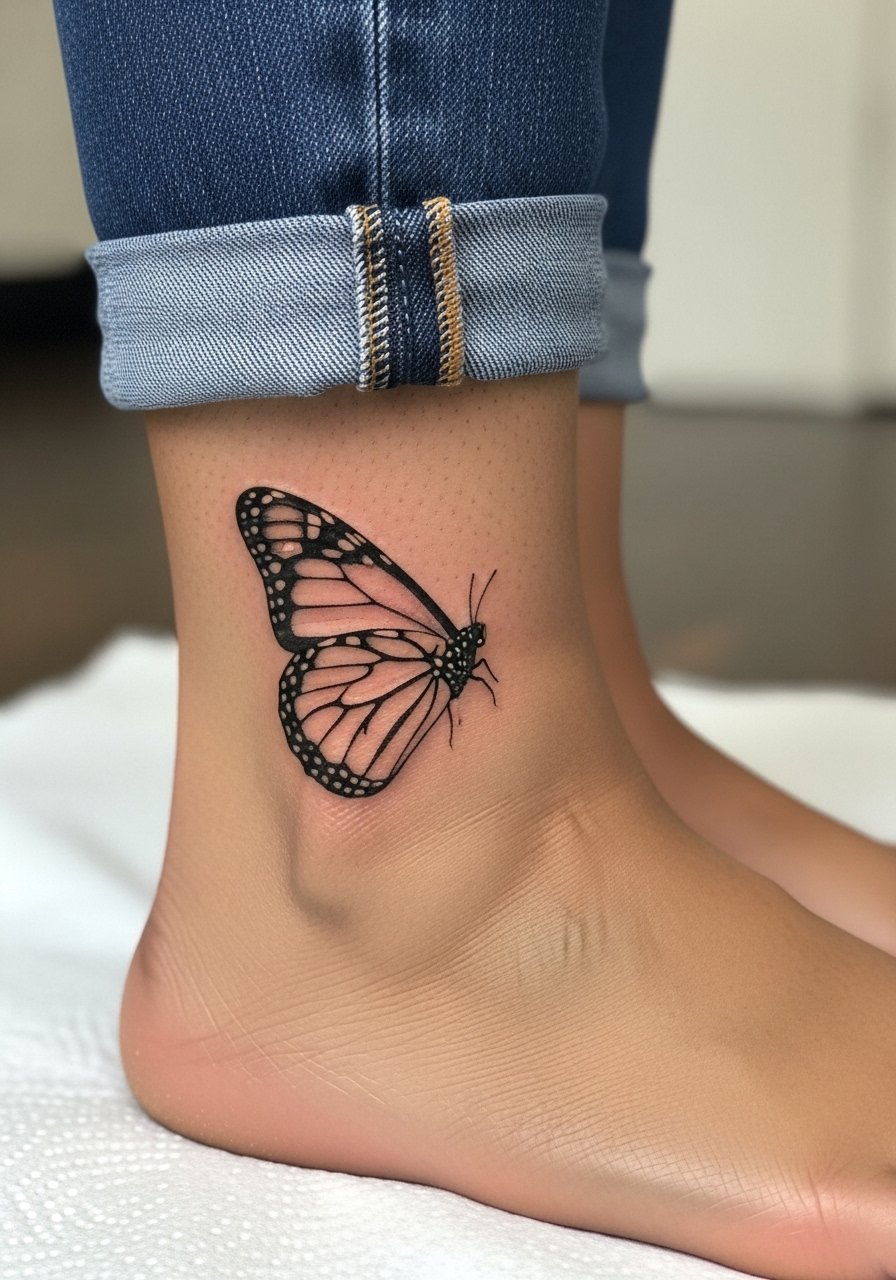
An ankle monarch scaled to two inches gives a natural vein pattern without overworking the skin. The downside is higher friction from socks and shoes during healing, so the session feels brief but the aftercare window is important. Ask for slightly bolder primary veins so the pattern reads after seasonal wear. One camp says fine line on ankles blurs quickly because of constant movement and friction. The other camp says careful depth and placement near the bone make it last. Ask your artist which approach they use. Show it off in summer by rolling linen trousers or wearing sandals and neutral espadrilles, for example cropped linen pants.
Pack Smart
The wrist and ankle pieces above need different prep than larger forearm work, so a few targeted items smooth out the session and the first week.
-
Stencil transfer paper kit. Lets you preview and reposition the linework before the needle starts, which matters for small monarch vein patterns and single-line designs.
-
Topical numbing cream. For sensitive ankle or rib sessions apply as directed before arrival to reduce flare from long sessions.
-
Thin protective film roll. Keeps micro finger and wrist tattoos clean during the first week of frequent hand washing and friction.
-
Fragrance free gentle body wash. Cleans the skin around fine line work without stripping oils that help line retention.
-
Aquaphor healing ointment. A thin layer for the initial 48 hours helps lock in moisture on tight single-needle channels without smothering the skin.
7. Fine Line Butterfly with Initials, Ribcage
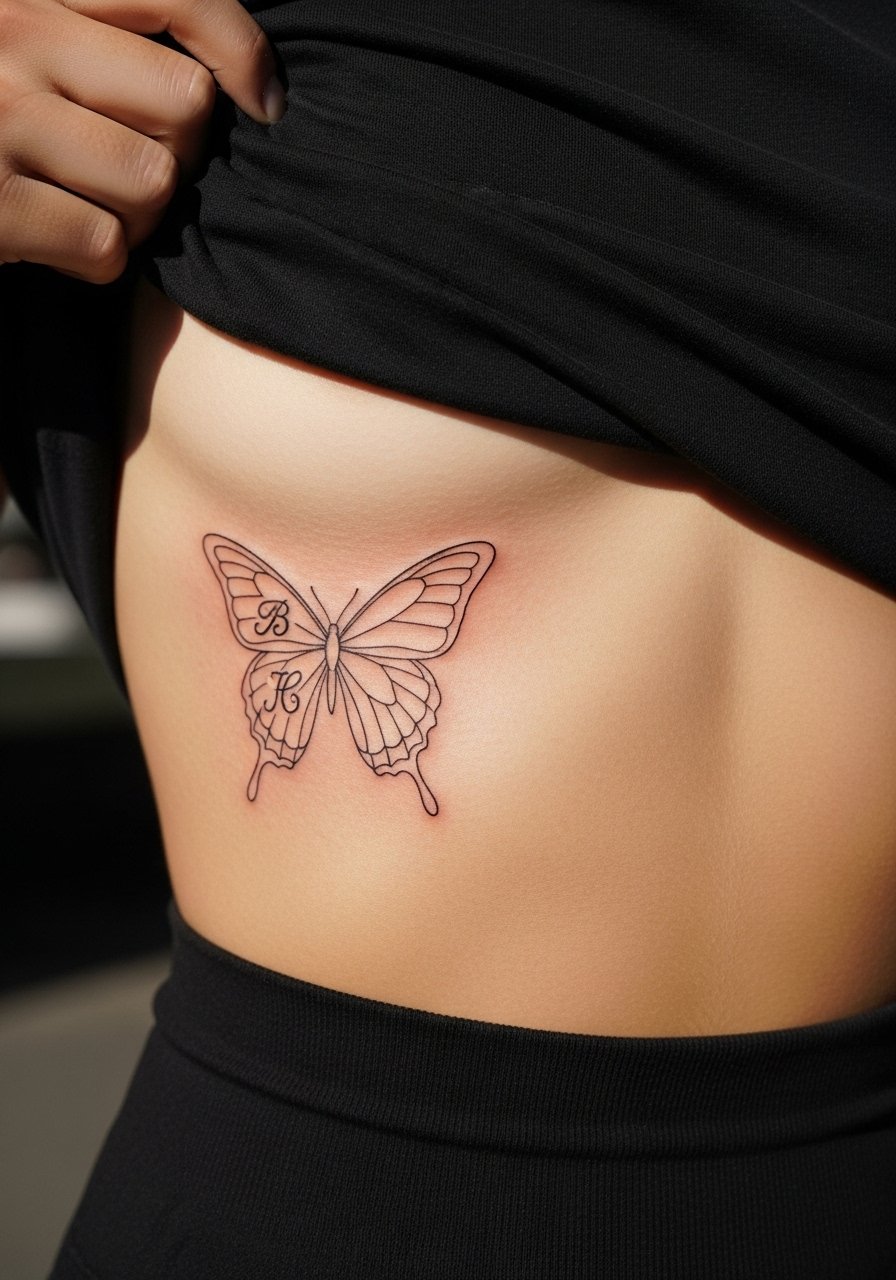
The ribcage is a choice for intimacy because you can place initials tucked into veins for a subtle personalization. Fair warning, the ribs are on the higher end of pain scales and the skin moves a lot with breathing. Artists split on whether fine line holds well on ribs. One camp says repeated skin stretch blurs thin lines within one to two years. The other camp argues that when the artist spaces the lines and paces the needle depth, the lines settle nicely. During the consult, ask which camp your artist belongs to and request space around initials so they do not sit on the crease lines. Avoid requesting dense script inside veins at small sizes because that is the most common aging problem.
8. Single-Needle Floating Butterfly, Inner Bicep
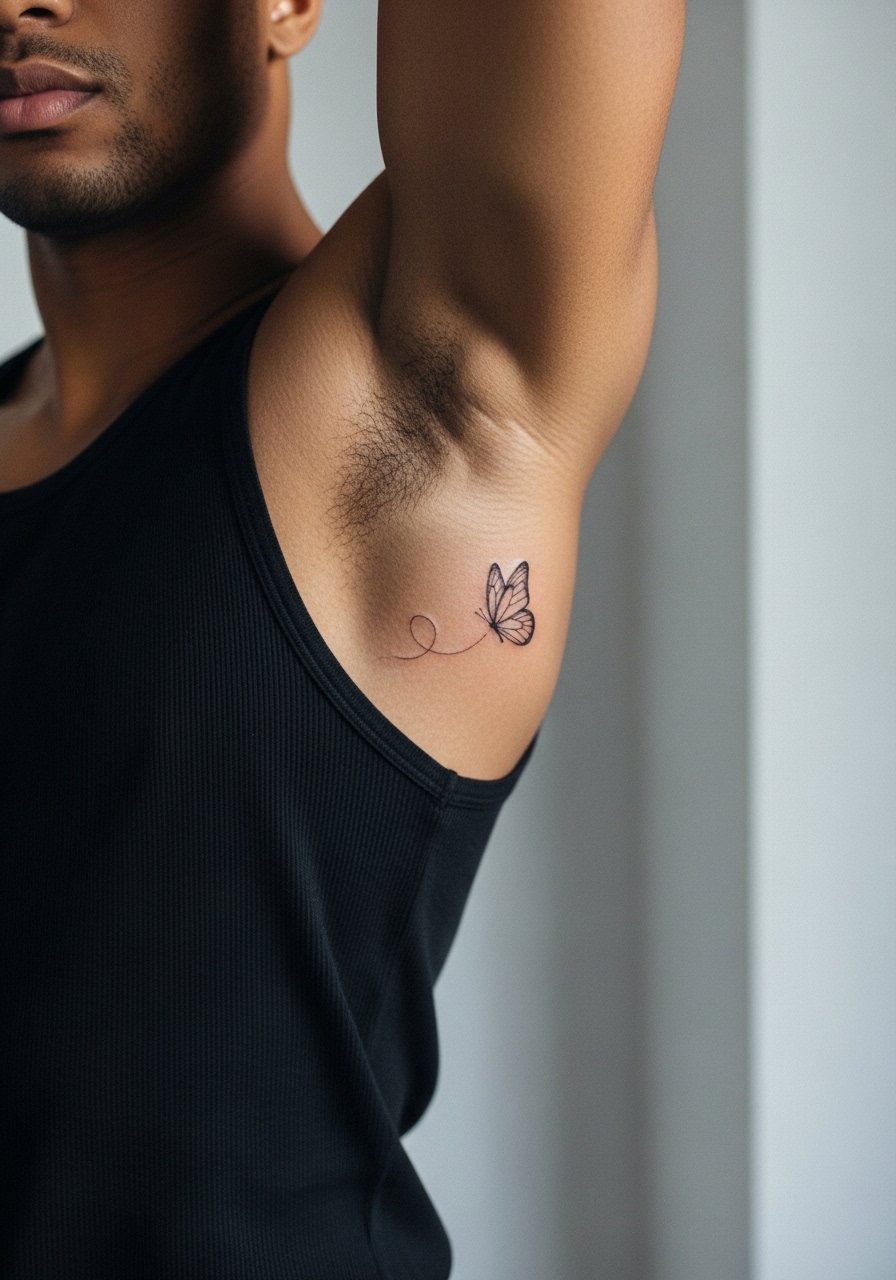
A floating single-needle piece on the inner bicep looks weightless when drawn with micro spacing. The inner bicep can be tender depending on muscle tension. Ask your artist for a light touch with slightly thicker anchor lines so the wings keep shape as they age. The usual mistake is insisting on razor-thin single lines across a three-inch span without thicker anchors. That approach can lose definition after a couple of years. For session comfort, wear a loose tank so the artist can access the area with minimal repositioning.
9. Fine Line Butterfly Silhouette, Hand
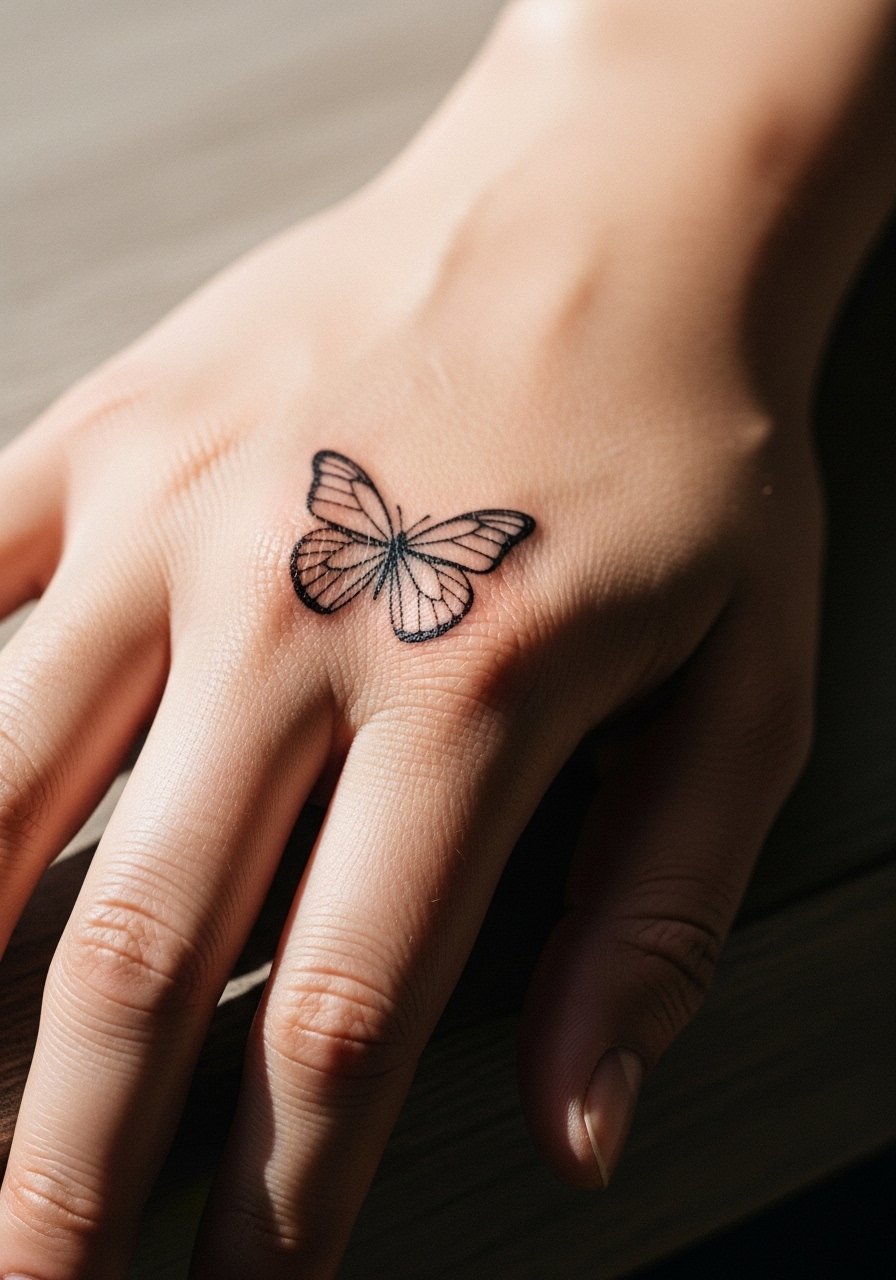
Hand pieces read very visible immediately but they also face the highest touch and wash frequency. Expect touch-ups sooner than other placements. A common mistake is packing too many interior details into a hand-scale butterfly silhouette. Keep the interior minimal and the outline slightly bolder so the shape survives daily abrasion. Be aware that hand tattoos still affect some workplaces, so consider career implications before committing. If you do this, plan on a touch-up timeline and talk to the artist about reinforcing the outline slightly.
10. Tiny Finger Butterfly Outline, Finger
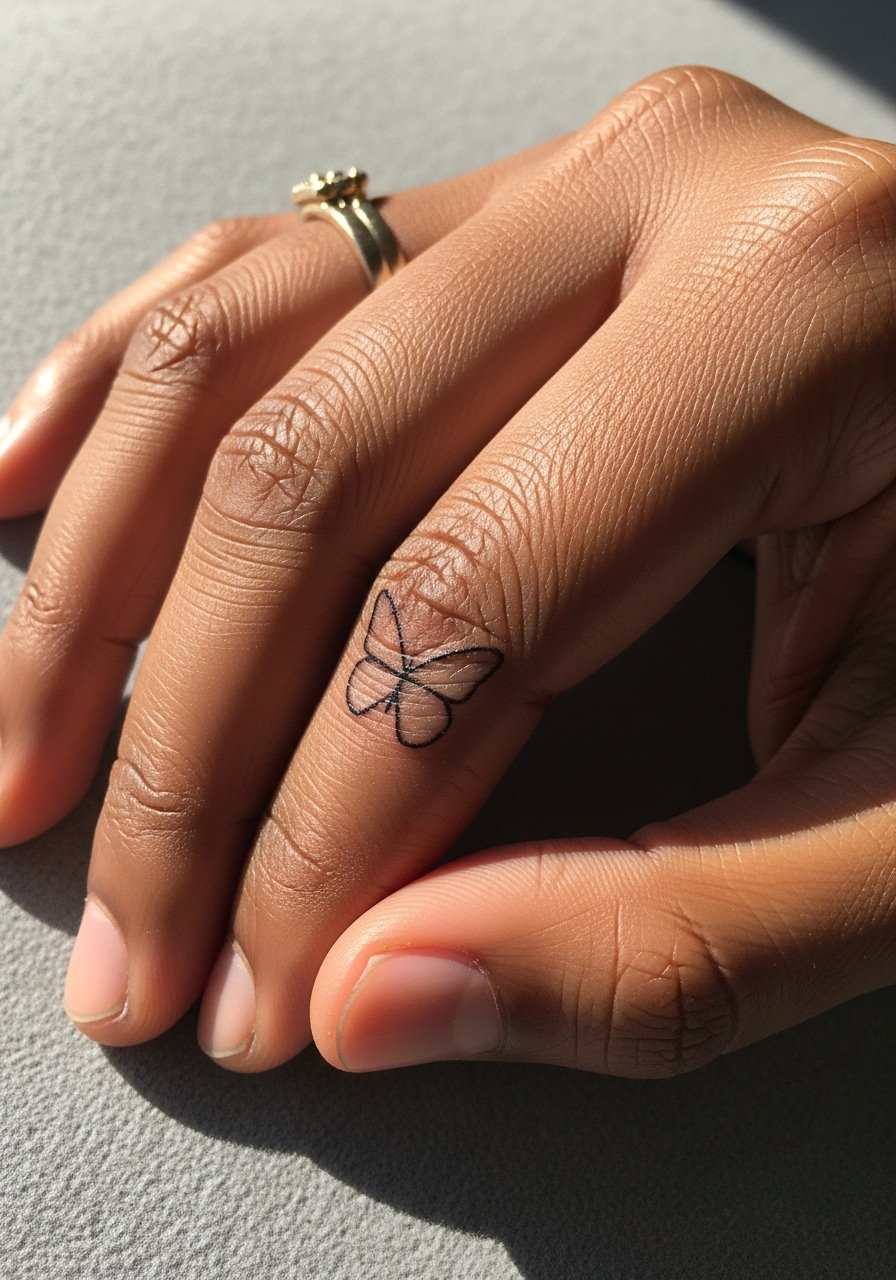
Finger tattoos are trendy for their constant visibility but they are also the most likely to soften from washing and use. The session is short and can be sharp on the fingertip bones. Tell the artist you want the outline inked with slightly heavier terminal lines and open interior space. Most faded finger pieces I see result from too many internal veins at micro scale. For showing it off, keep jewelry minimal. A single thin ring on a non-tattooed finger frames the piece without crowding it, for example thin gold ring simple.
11. Butterfly and Vine Entanglement, Forearm
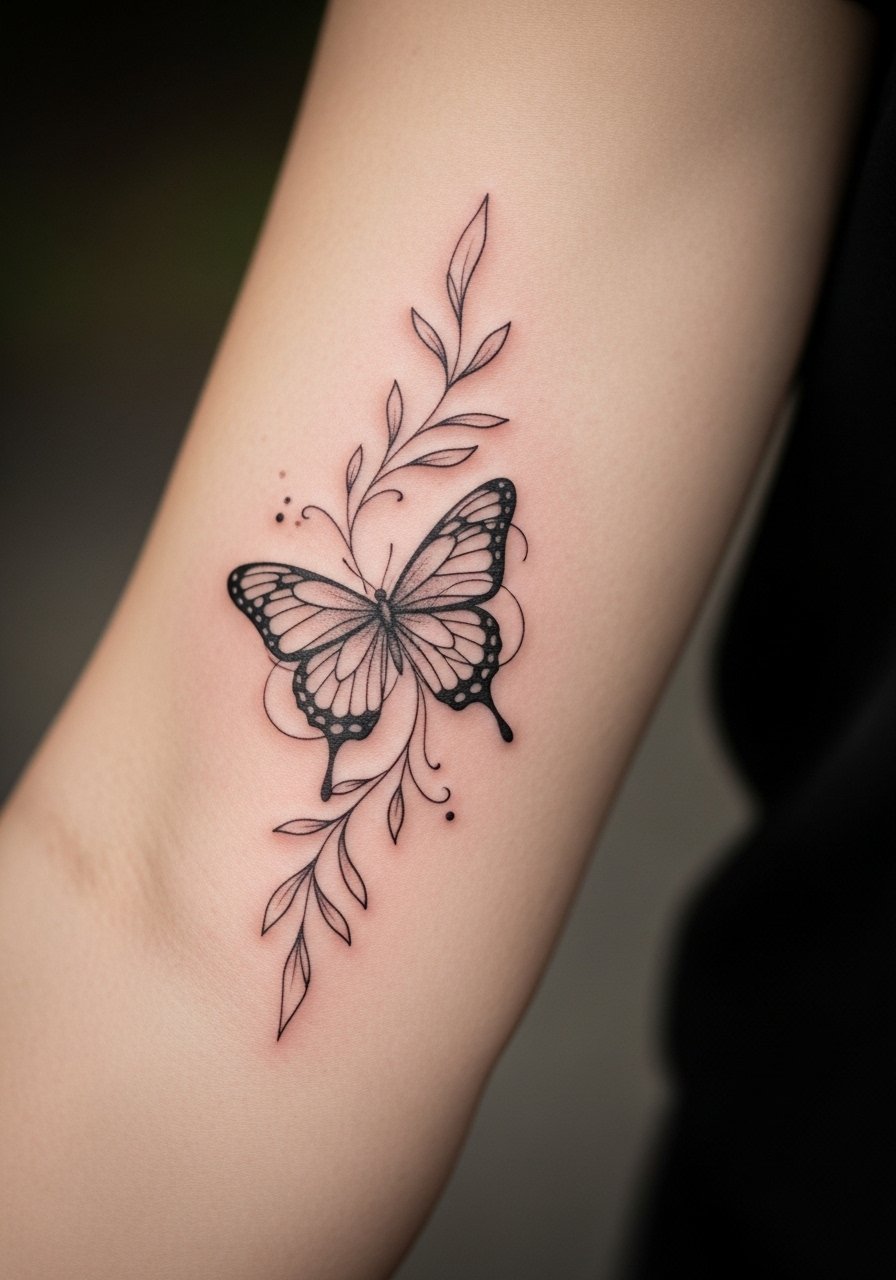
The forearm is forgiving of length and flow, so vine entanglement can solve negative space without overcrowding wing veins. Sessions are comfortable and proportions scale well here. A common mistake is forcing the vine to cross over key vein lines, which creates visual clutter as the work ages. Ask for vines to curve around the butterfly rather than through it, and request shallow spacing between vine elements to keep the central butterfly prominent. For wardrobe, rolled-up sleeves or an olive tank top let the forearm flow read cleanly; try a olive tank top women when you want to show it off.
12. Fine Line Butterfly Mandala Hybrid, Shoulder Blade
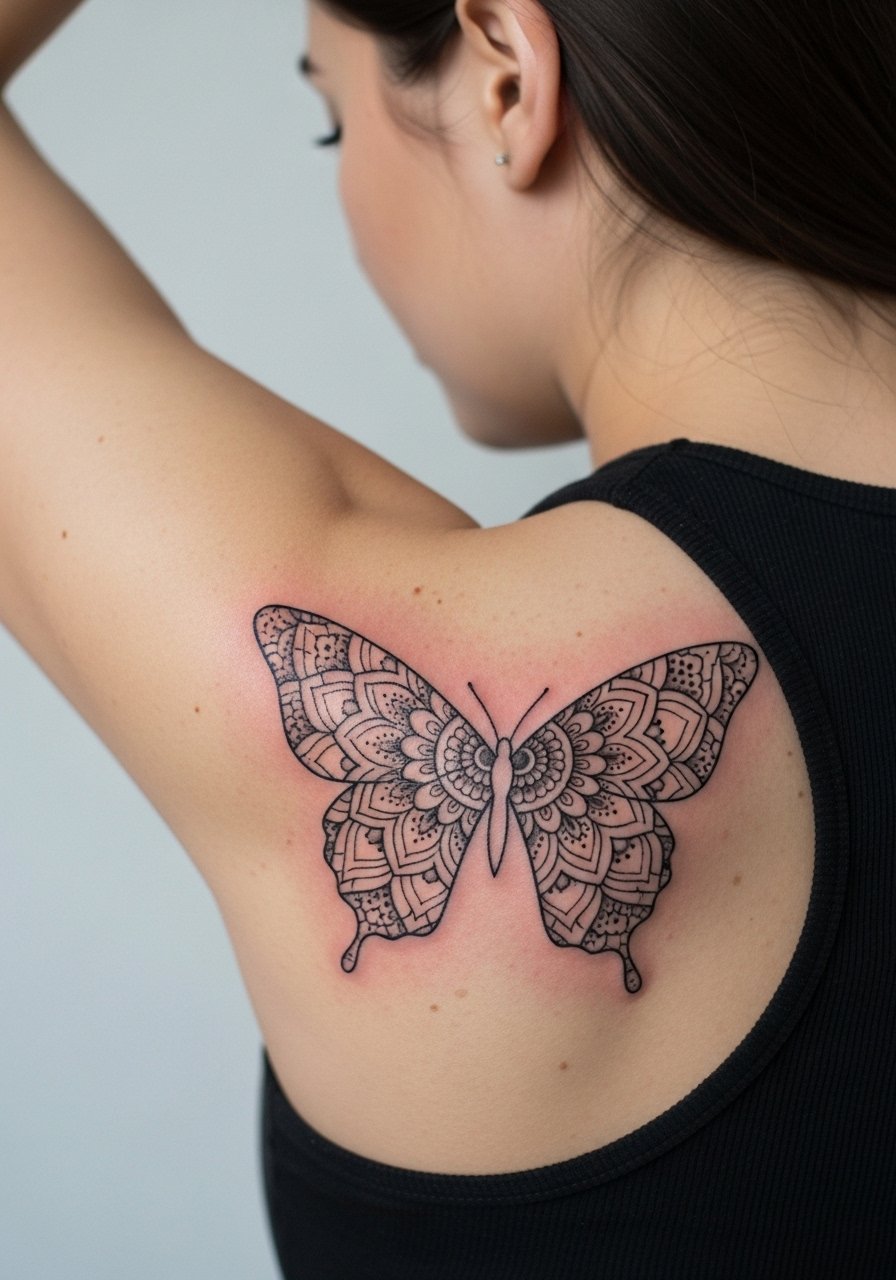
Combining mandala geometry with butterfly wings adds symmetry and meditative detail, and the shoulder blade has the space for a five-inch hybrid without crowding. Expect a longer session and possibly two sittings depending on dotwork density. Artists debate numbing cream for longer dotwork sessions. One side wants it because it keeps the client comfortable and still for precision. The other side thinks it dulls touch feedback and can change how the needle sits. When you book, ask the artist their preference and whether they recommend numbing for the dotwork portion. Wear a loose tank for the session so the artist can access the shoulder blade easily. For showing it, halter tops frame the symmetry without competing.
13. Personalized Wing Date Integration, Inner Wrist
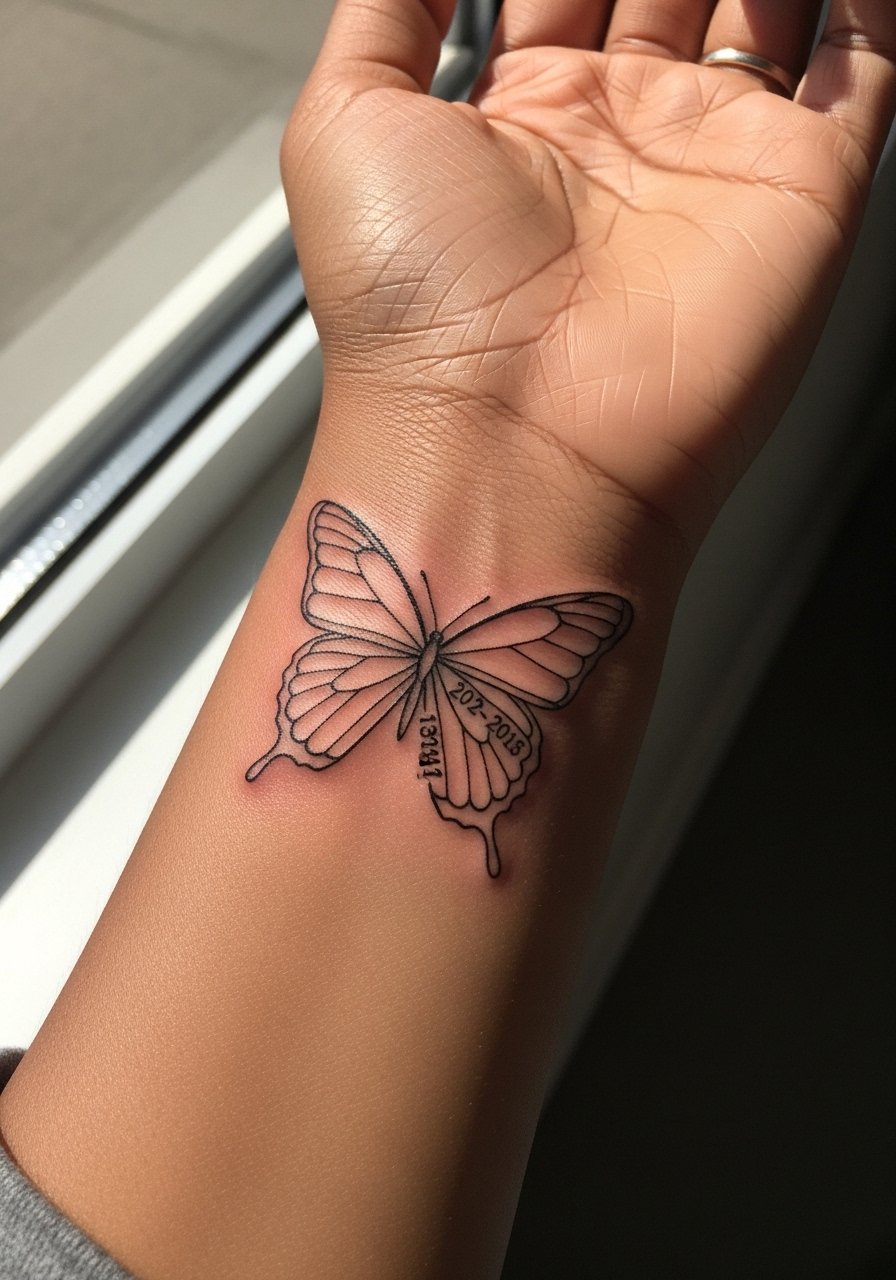
Embedding dates into wing veins is a subtle way to mark milestones without bold text. Inner wrist placement gives daily visibility and a compact canvas. Common errors include squeezing long dates or full words into tiny vein spaces. Opt for short numerals or Roman numerals and tell your artist exactly where you'd like the number to sit relative to the primary veins. Expect moderate pain and a short session. The inner wrist sees a lot of sun, so plan for sunscreen once fully healed to preserve contrast.
14. Micro Fine Line Cluster on Calf
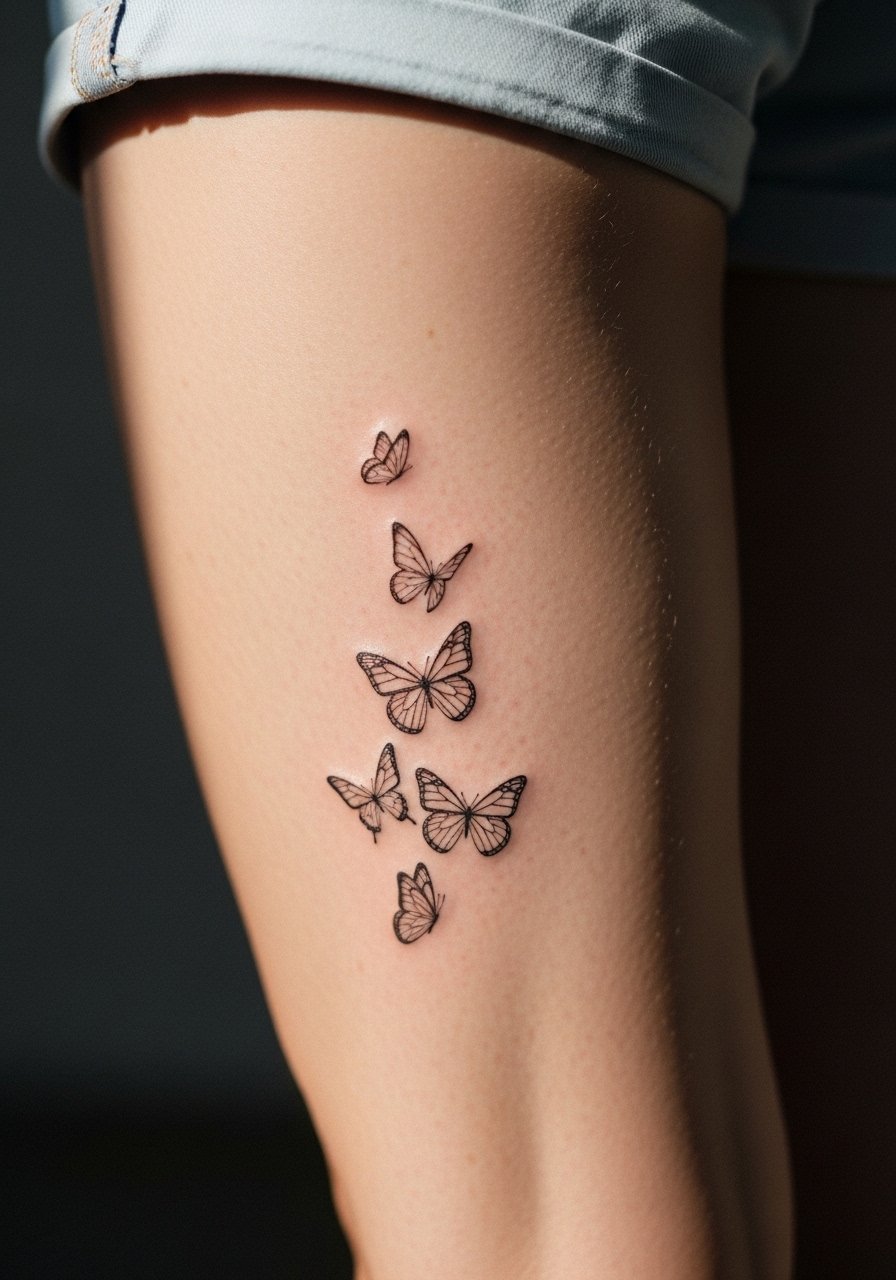
The calf is perfect for slightly larger micro clusters that still feel intimate. It tolerates repeated detail because the skin there is thicker. The session feels manageable and healing is less disrupted by clothing as long as you avoid tight socks. A common mistake is laying too many butterflies in a straight line without varying scale. Vary the sizes and pace them so the cluster reads like movement. No styling link here because show-off choices are simple shorts or skirts and depend on season.
15. Thigh Vine-Entwined Butterfly, Thigh
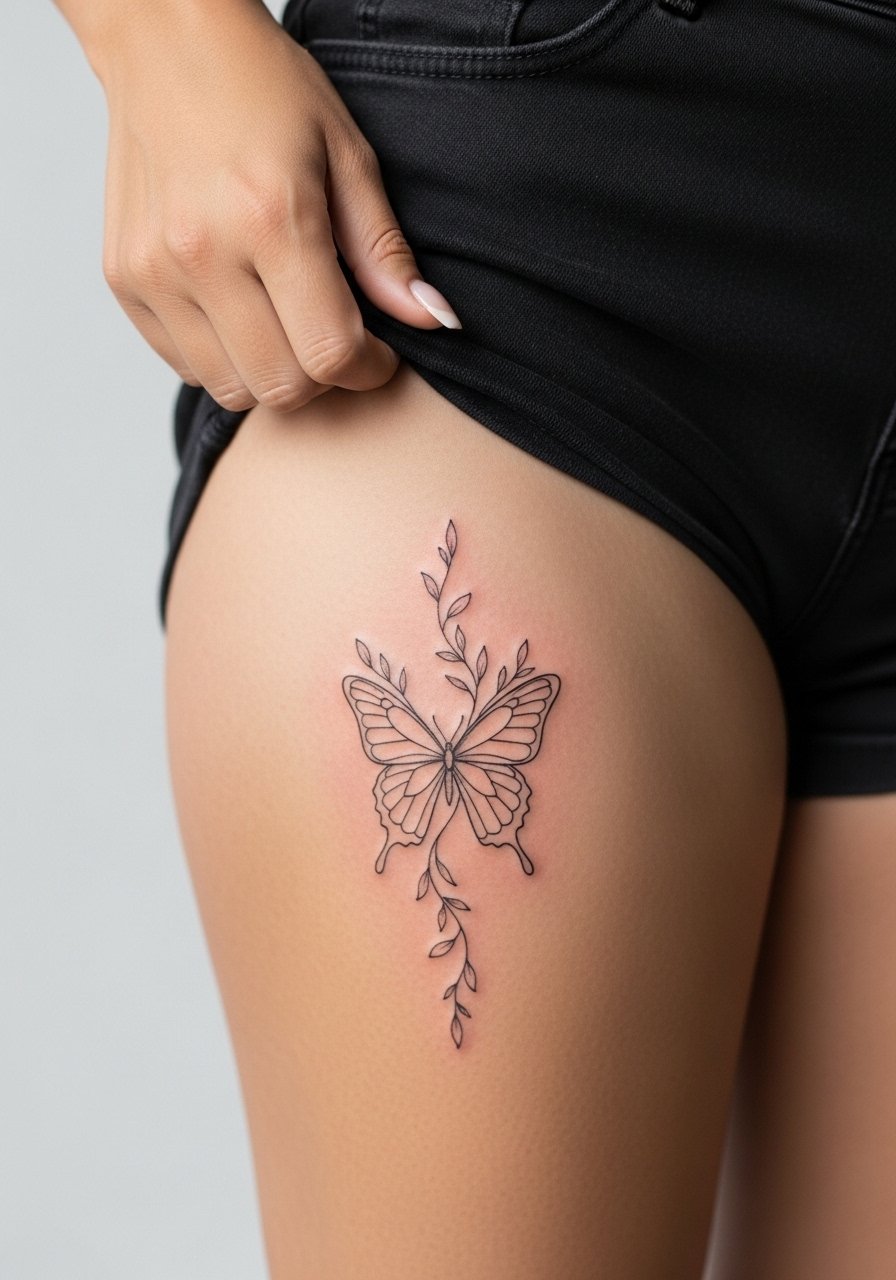
Upper thigh work is forgiving for larger ornamental pieces and adapts well to curves. Sessions can be longer but pain levels are often lower than ribs. Tell your artist to consider how movement from walking might influence line flow and to keep central winglines slightly sturdier. People often forget that weight fluctuations can change proportions here, so plan slightly more negative space around the design. For wardrobe, high-waisted shorts or slit skirts in neutral linen are flattering ways to reveal the piece with minimal distraction, for example high waisted linen shorts.
16. Mandala-Geometry Wing, Upper Back
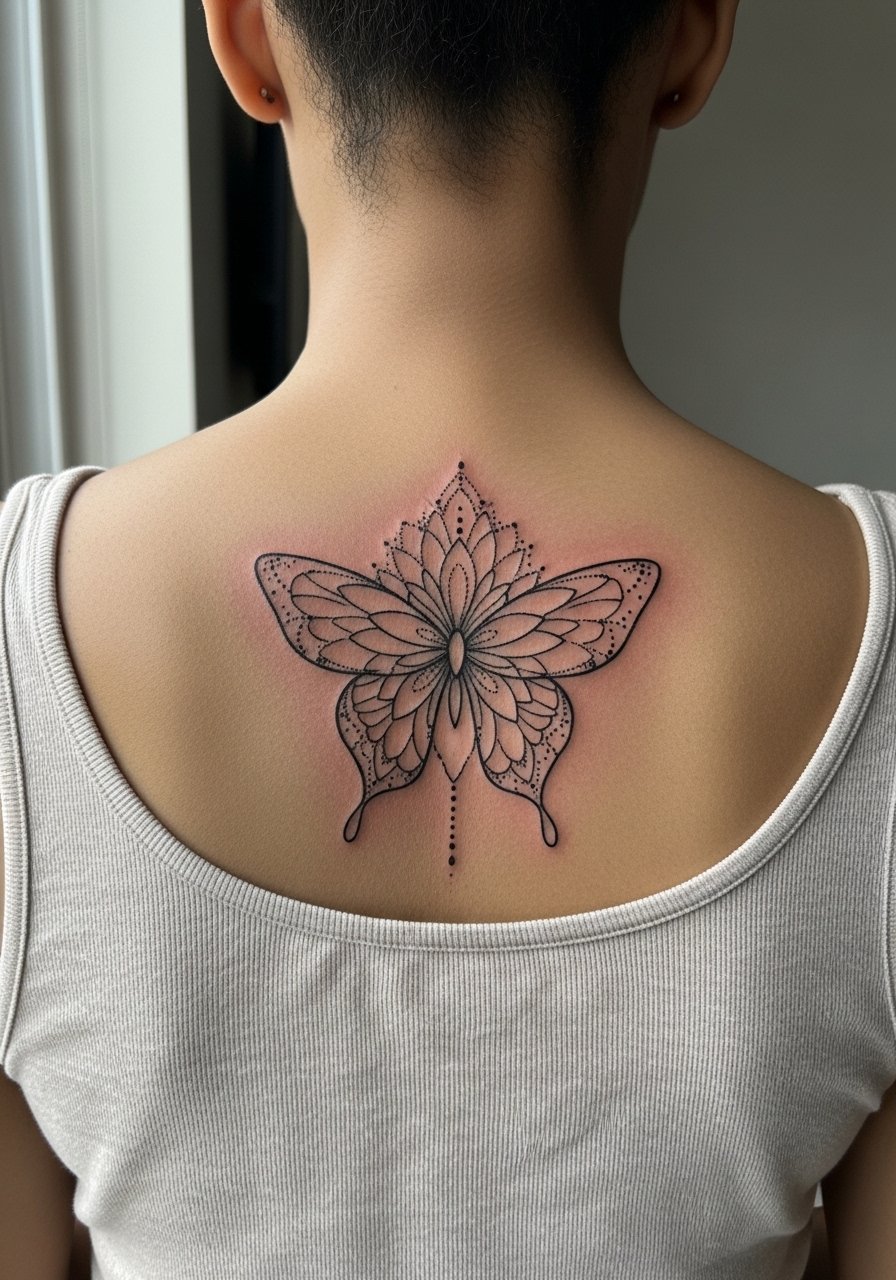
The upper back gives artists room to scale mandala-geometry wings without crowding, and it tends to age well because the area is sheltered from constant friction. Expect a multi-hour session and a possible second visit for dense dotwork. A common mistake is squishing too many mandala rings into the wing area. Ask the artist for clear spacing in the rings and larger negative areas to keep the geometry readable at five years. For session wear, a loose button-down you can pull aside is the easiest option.
17. Negative Space Butterfly, Neck Side
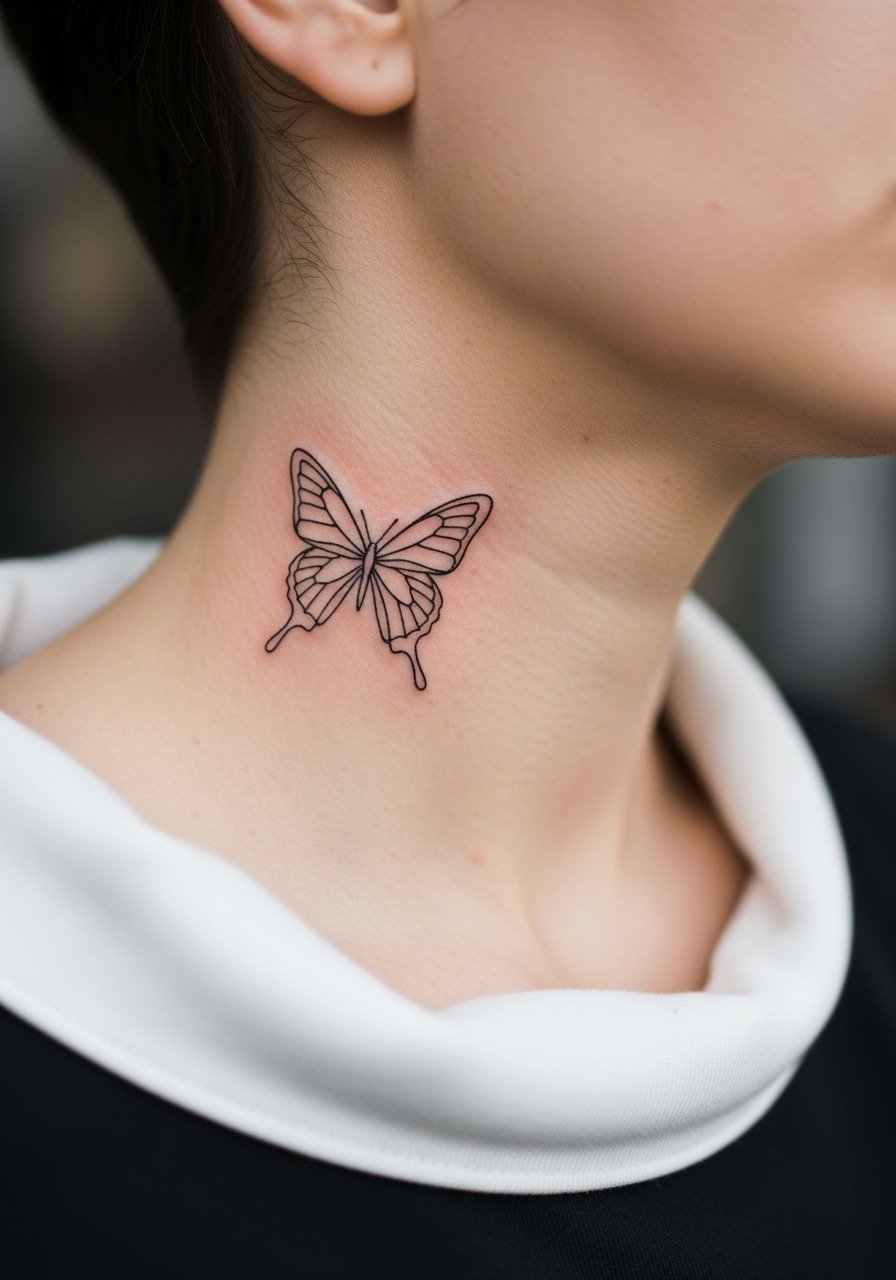
A silhouette made largely of negative space on the side neck is subtle when seen across a room but striking up close. The neck is visible and requires thoughtful placement because it can be affected by clothing collars and necklaces. Keep the negative areas broad and the surrounding linework slightly bolder to protect the shape as skin moves. This is a high-visibility placement, so consider career impacts and whether you want that daily exposure. During the consult, specify collar and necklace positions so the artist can place the piece where clothing will not rub against the outline.
Frequently Asked Questions
Q: How long do fine line butterfly tattoos typically hold up before needing a touch-up on high-friction areas like fingers and ankles?
A: It depends on placement and daily wear. In my experience, finger and ankle fine line pieces often need touch-ups around year two or three, while forearm and shoulder blade placements can go longer before a touch-up. Expect to discuss a realistic touch-up timeline with your artist during the consult.
Q: Are single-needle butterflies worth it over small multi-needle linework for longevity?
A: Single-needle gives a very clean look at the start but can be fragile on certain skin types. If longevity is the priority, ask for slightly reinforced anchor lines and spacing. Your artist can advise whether single-needle makes sense for your skin and chosen placement.
Q: Which small butterfly placements are best if I want visible work that ages more slowly?
A: Forearm, upper arm, and shoulder blade are good bets because they face less constant friction and sun exposure than hands and ankles. For wrists and inner forearms, plan on sunscreen once healed to preserve contrast. Wearing rolled sleeves or fitted sleeveless tops frames these placements well; try a loose button-down shirt on the day of the session for easy access.
Q: Do artists generally agree about using numbing cream for long fine line sessions?
A: No, artists split into two camps. One group supports numbing cream for comfort during long dotwork or dense sessions. The other group worries it alters tactile feedback and can subtly change needle depth. Ask your artist their stance and follow their prep instructions.
Q: How should I prepare clothing-wise for a collarbone or shoulder butterfly session?
A: Wear something that gives clear access and you can remove or pull aside without feeling exposed. For collarbone choose an off-shoulder or wide-neck top. For the shoulder blade pick a loose tank or button-down you can shift. Comfortable, easy-to-remove layers make the session smoother for you and the artist.