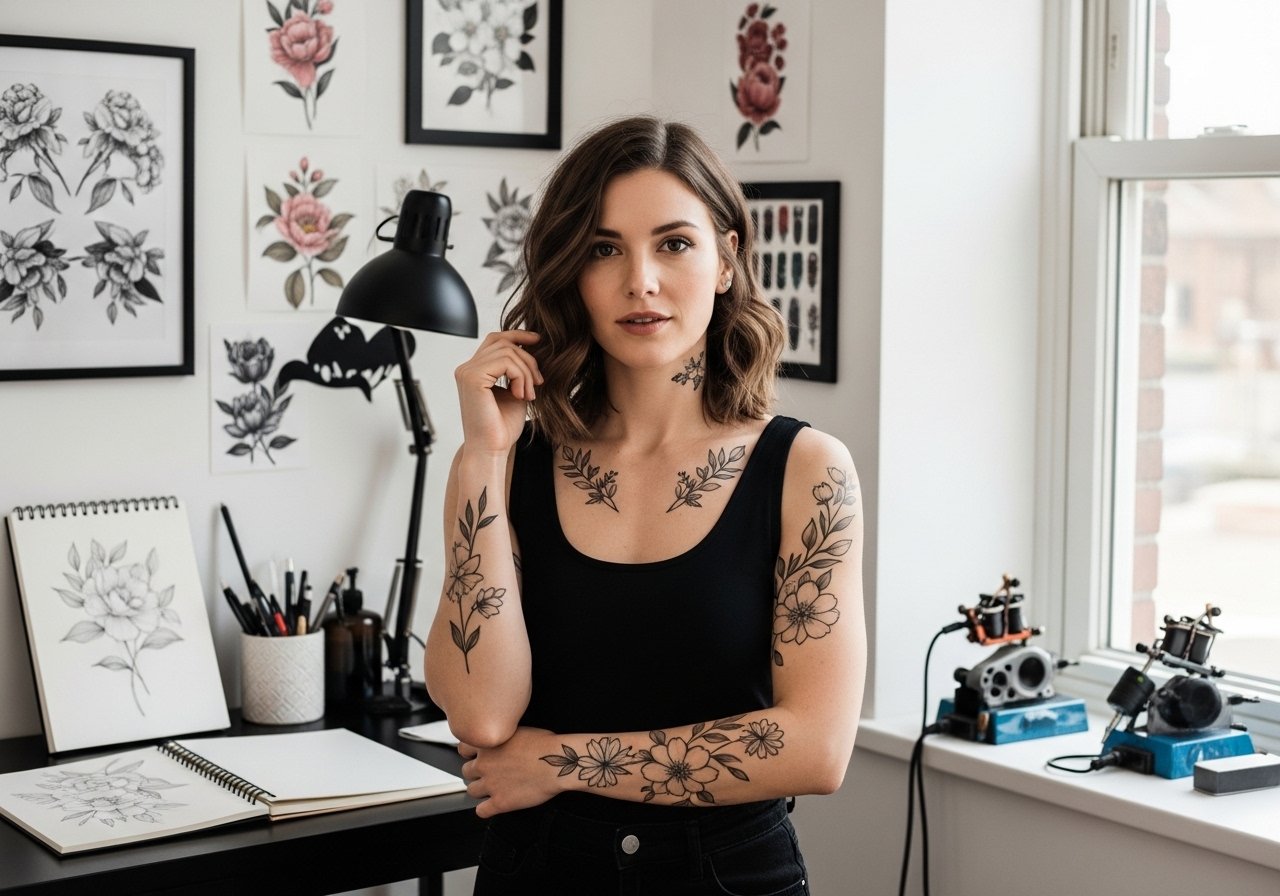
Fine line angel wings are everywhere on feeds, but what looks fragile and flawless in a photo can blur after one summer of sun and salt. I have seen tiny wrist sketches stretch with weight change, guests chase refunds after deposit ghosting, and watercolor pieces bleed into muddy color on high-motion zones. These 17 sketches prioritize line weight, placement, and real-world wear so the design you choose photographs now and still reads years from now.
1. Minimalist Single Wing on the Wrist
A minimal single wing on the outer wrist is a classic starter pick for first-timers who want a discreet guardian motif without committing to a large canvas. I recommend asking your artist to thicken the contour slightly over a 0.2mm single-needle outline so the line holds after sun and friction from sleeves. Expect a short session and mild tenderness while typing, and plan a touch-up at six to twelve months if it softens. The common mistake is requesting ultra-fine, pin-thin lines that vanish into a shadow. For showing it off, pair the wrist with a thin leather wrap bracelet opposite the tattoo and wear short sleeves on session day so the artist has unobstructed access.
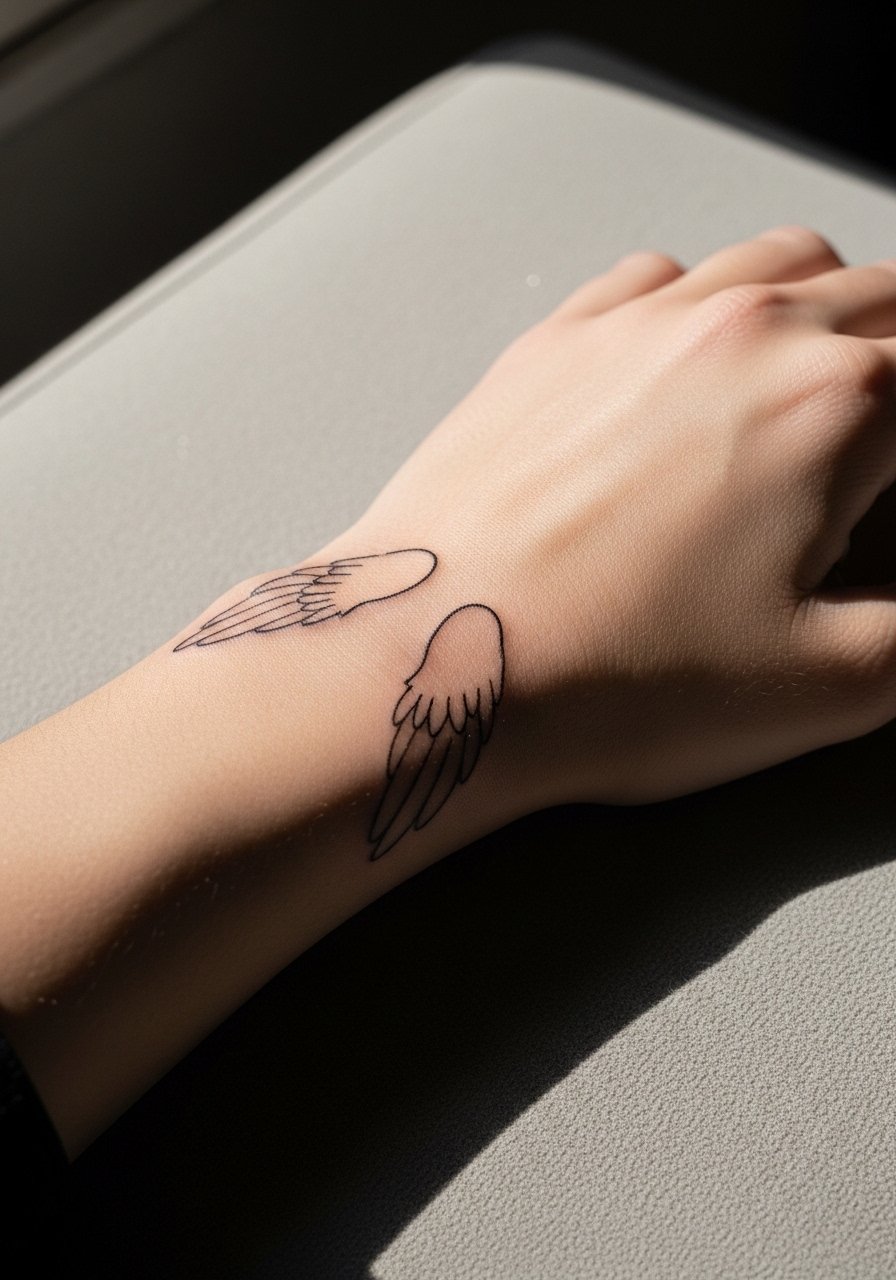
2. Fine Line Trailing Feathers on Inner Forearm
I've seen fine line trailing feathers on inner forearms take great photos and then require touch-ups sooner than owners expect. Ask your artist for gentle spacing between feather shafts and slightly heavier anchor lines so the feather detail does not merge at year two. This placement shows well with rolled cuffs and layered bracelets, so bring reference photos and tell the artist you want 3 to 5 inches for comfortable spacing. For outfits, a chambray rolled cuff shirt complements the forearm and a thin silver cuff bracelet balances attention without crowding the linework. Expect one to two sessions and light soreness when lifting the arm.
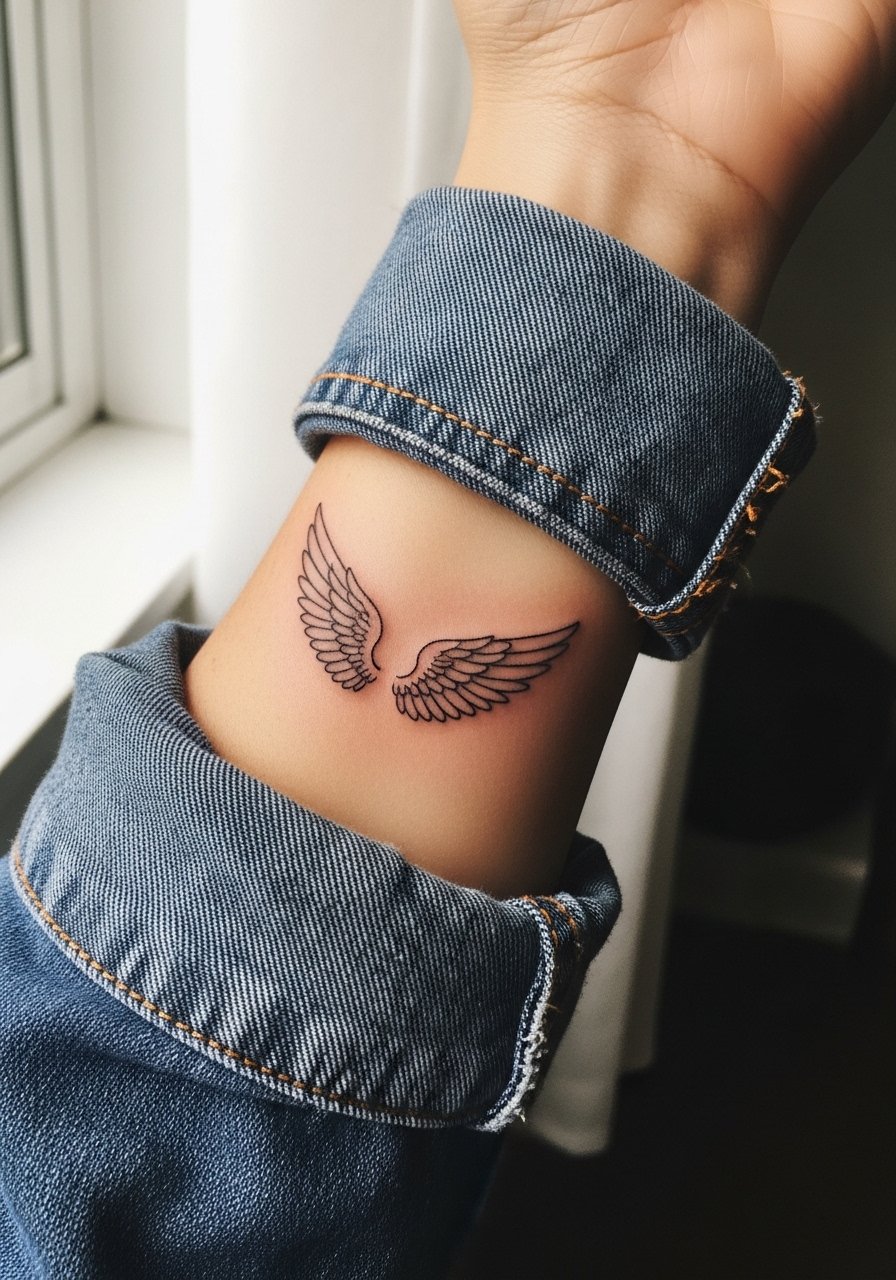
3. Blackwork Geometric Wings on the Shoulder Blade
Blackwork geometric wings read with instant contrast and tend to age well on medium to dark skin because saturation stays visible. The shoulder blade gives the artist room to use solid fills and geometry that do not rely on fragile hairlines. Tell your artist you want bold fills with negative-space feathers to avoid heavy stippling that can blur when the shoulders move. For showing off, an off shoulder sweater frames the upper back and a delicate chain necklace keeps the eye on the composition without competing. Two sessions are common for fills and edge cleanup.
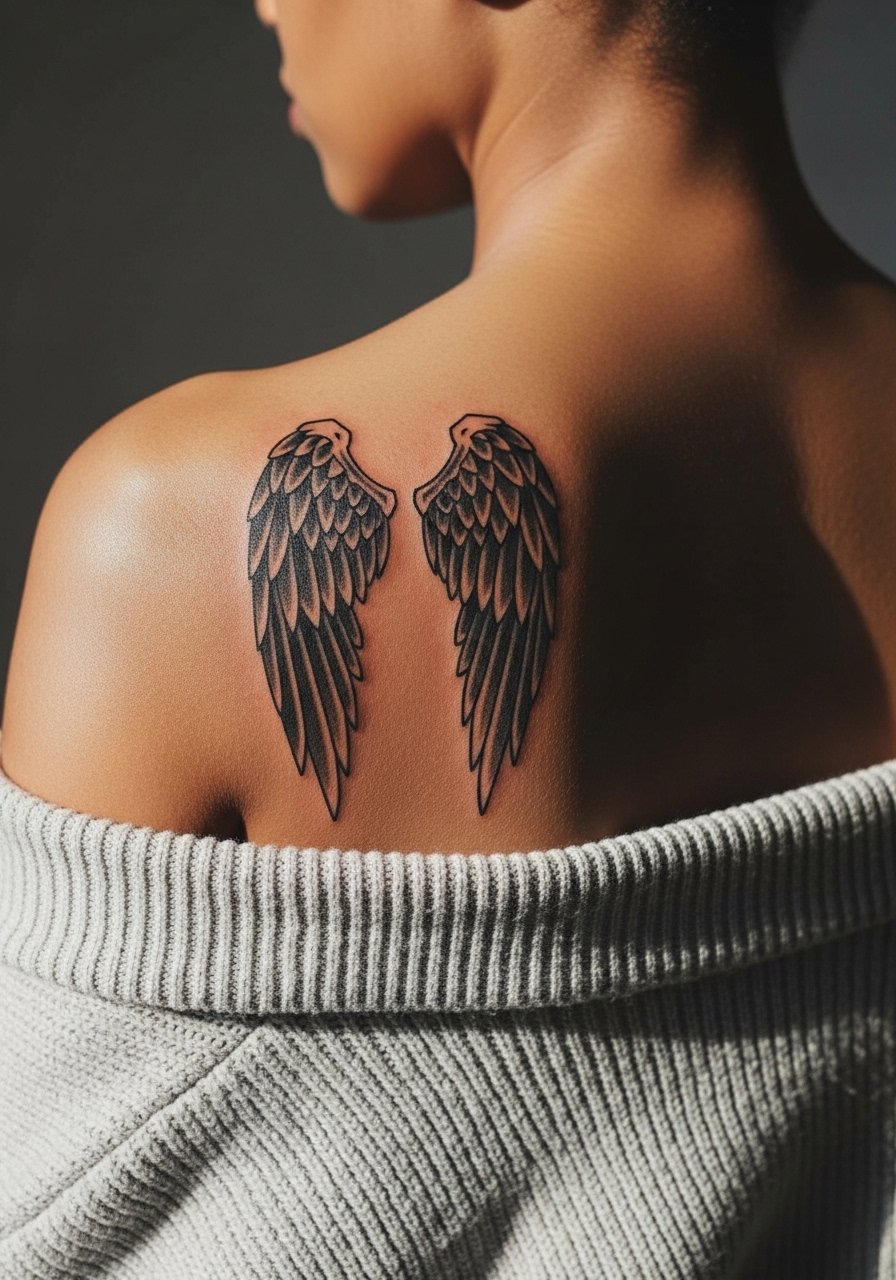
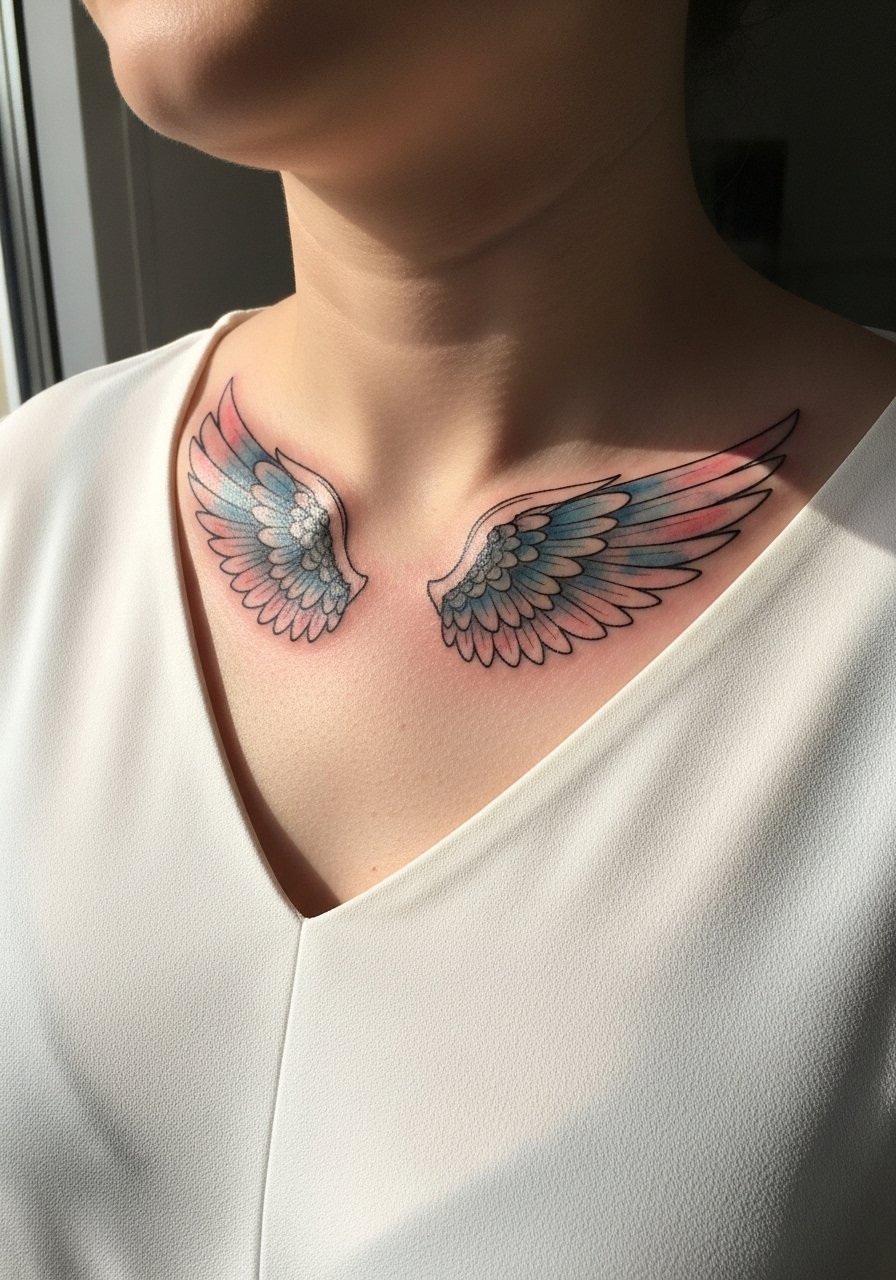
4. Watercolor Collarbone Wings in Pastels
Watercolor collarbone wings give a painterly, soft-edge look but they demand placement that avoids constant sun exposure. The collarbone shows color beautifully when framed by a V-neck top. Be explicit in consultation about using stabilized outlines beneath the washes so the composition holds as pigments fade. The trade-off is obvious, because some artists and clients accept more frequent color refreshes for the look. Wear a v neck silk blouse when showing it off and pick session clothing like a strapless bralette for tidy access. Expect two to three sessions and moderate soreness along the chest.
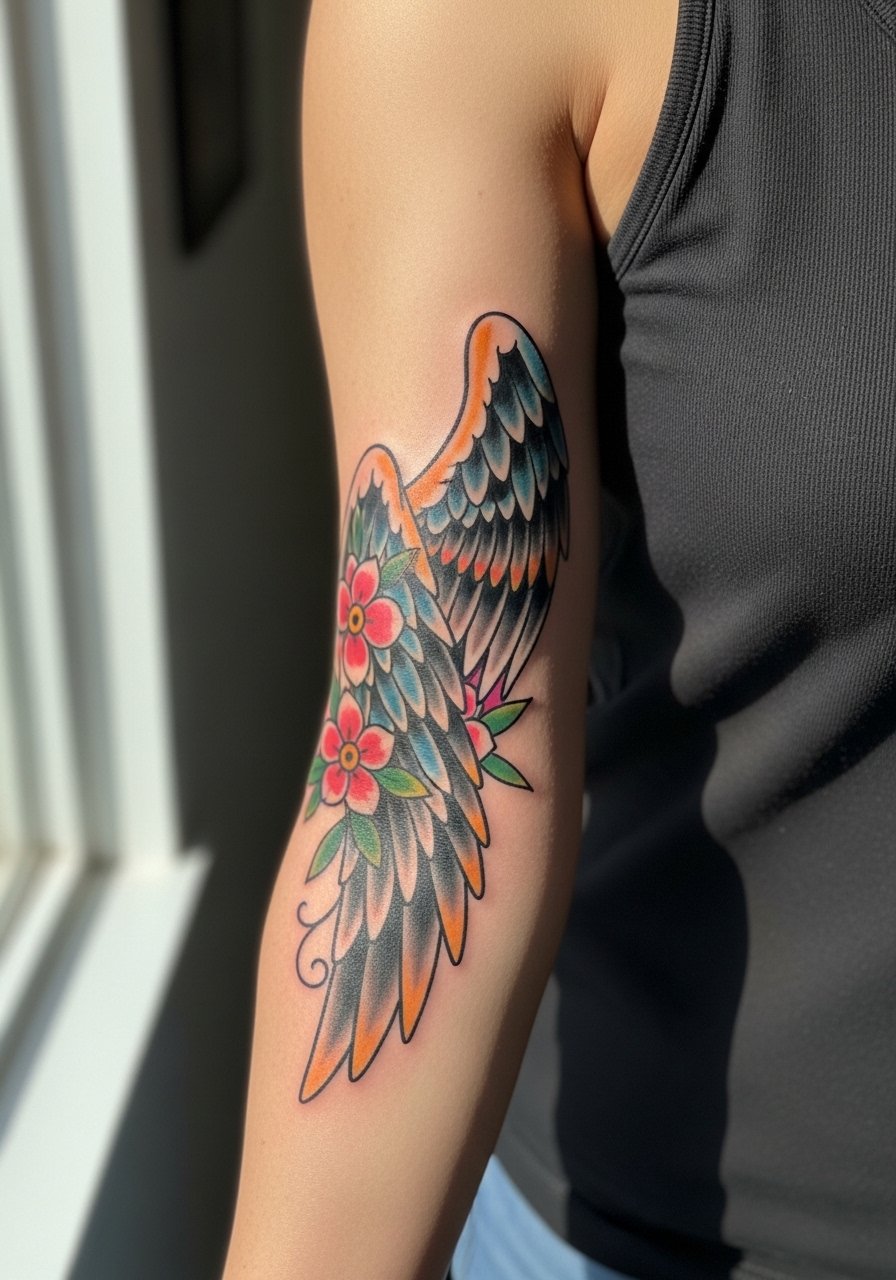
5. Neo-Traditional Wings with Floral Accents on Outer Forearm
Neo-traditional wings with floral accents pair illustrative linework and saturated color for a design that reads from a distance and holds detail up close. I recommend larger feather scales and bold outlines around flowers so the negative space remains clear as color softens. The mistake is crowding the forearm with tiny floral elements that age into muddied blocks. This one is great for collectors who rotate touch-ups and who want a design that interacts with sleeve tattoos over time. Bring a clear color direction to your consult and ask about session pacing to avoid tattoo fatigue during long runs. Healed, the saturation will soften but the bold outlines will maintain the silhouette.
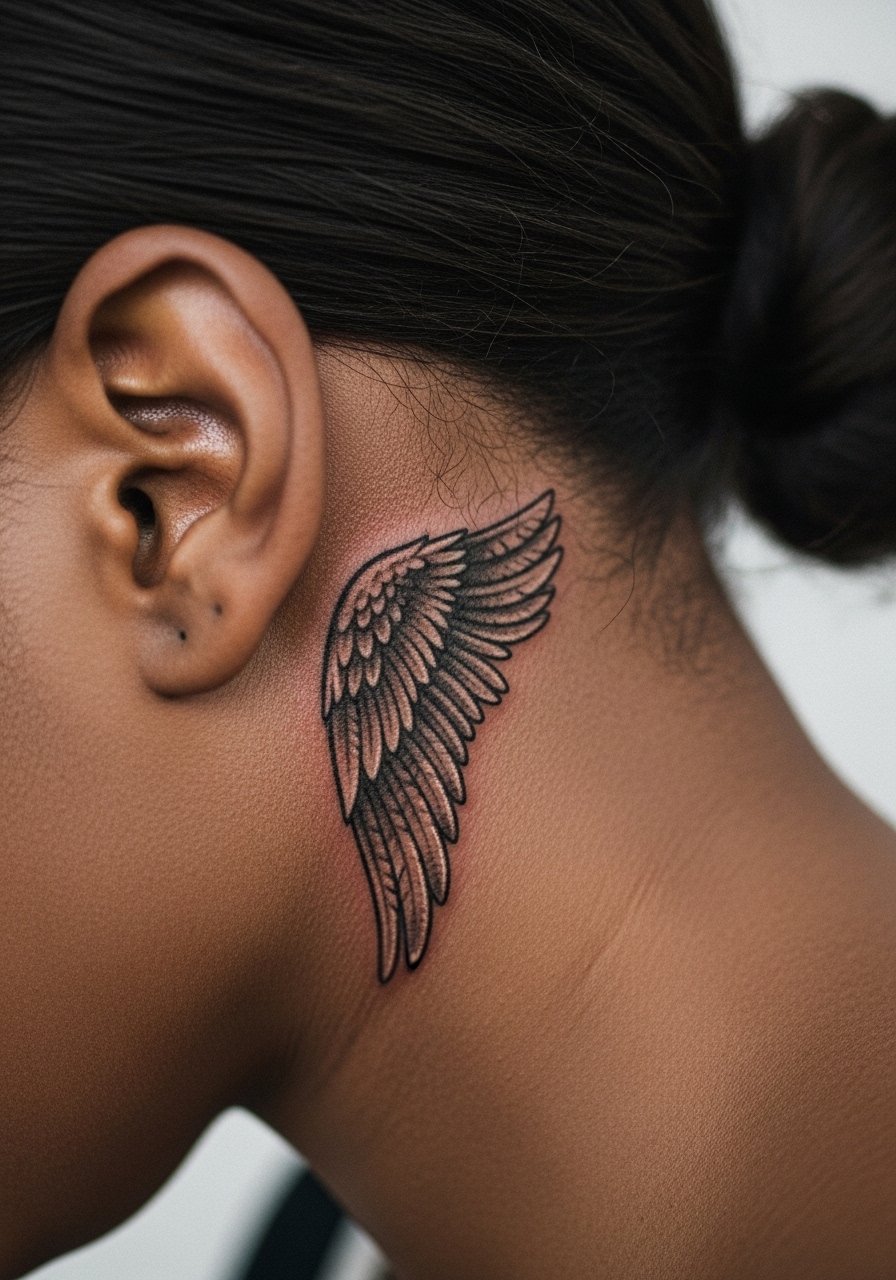
6. Micro-Realism Fallen Wing Behind the Ear
A behind-the-ear fallen wing sketch reads like a secret detail when placed on the skin below the hairline. This micro-realism route calls for subtle shading and very tight dot work, so find an artist experienced with tiny tonal transitions. Be aware that visibility is limited and that touch-ups are common because the area rubs against collars and hair. For safety, note that artists split on whether to use Saniderm on such small curved zones. One camp says the film prevents scabbing and preserves the tiny dots. The other camp worries that trapped moisture can soften ink. Expect a single short session with spot tenderness.
Heal Smart
The small pieces above, especially wrist, forearm, and behind-ear placements, heal differently than larger saturated work. A few smart items smooth the session and the first week so your wings keep their contour.
-
Badger Tattoo Balm. A thinner balm that keeps fine line work from getting overly greasy during the first days, which helps delicate feather detail stay visible.
-
InkSafe Second Skin. A flexible protective film that adheres well to curved zones like behind the ear and the shoulder blade, reducing friction and accidental rubs.
-
CeraVe Healing Ointment. A non-comedogenic option for oily skin types, useful when wrist and forearm pieces sit near frequent hand washing.
-
Tea Tree Salve for Tattoo Care. A gentle salve that soothes itch without heavy residue, helpful for small stacked finger pieces that scab quickly.
-
Aquaphor Healing Ointment. A thin layer for the initial healing window on fine line work, especially where friction is low and moisture control helps pigment retention.
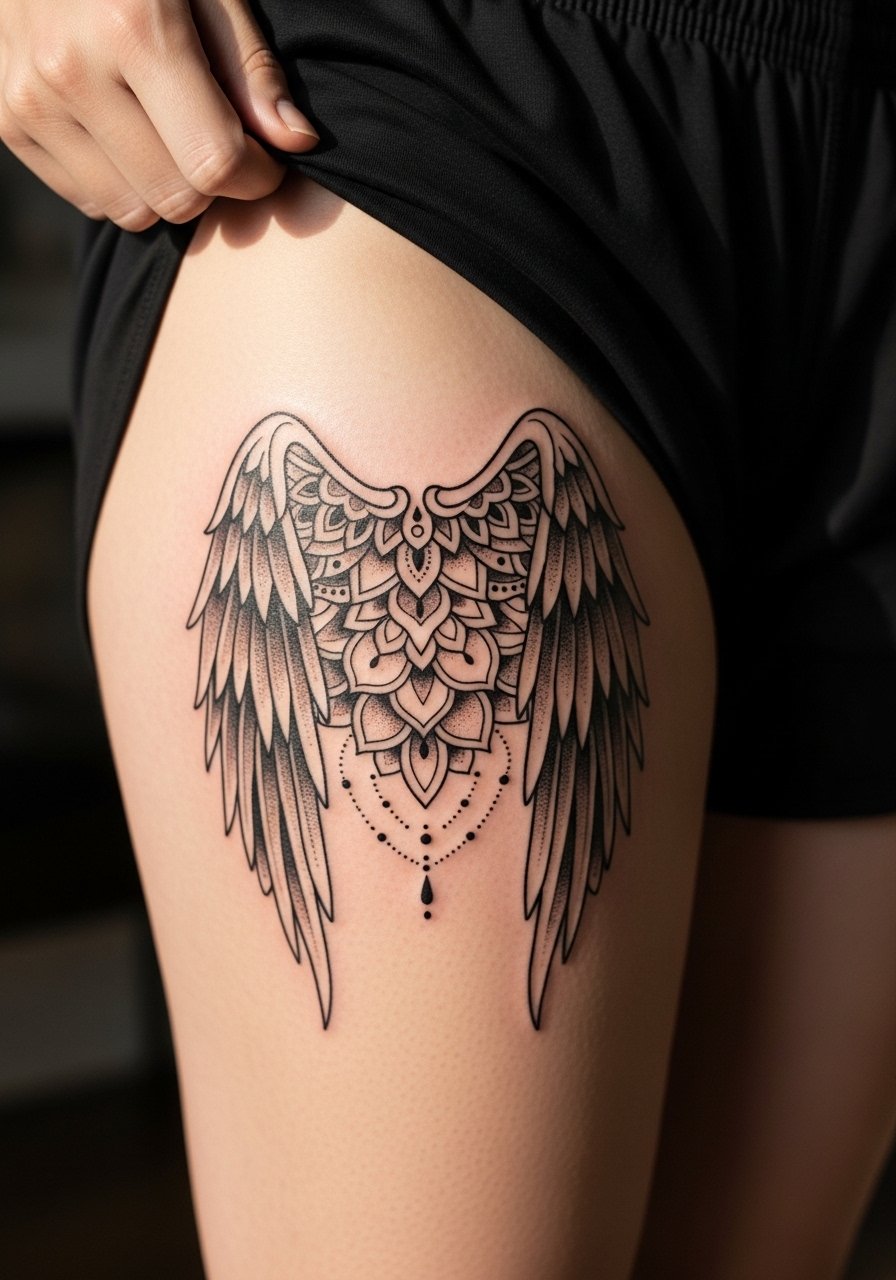
7. Ornamental Mandala Wings on the Outer Thigh
Ornamental mandala wings that curve over the outer thigh can act like wearable armor without screaming for attention. The thigh gives artists room for symmetry and repetitive dot work, so request clear spacing in mandala petals and steady stipple shading instead of micro hatching. Avoid packing dense mandala elements too small because movement and fabric will soften the details over time. For summertime show-off, pair the placement with high cut athletic shorts or a side-slit dress to reveal parts of the design. Session wear should be loose shorts so the artist can move freely and you stay comfortable during a longer appointment.
8. Traditional American Wings with Banner on the Chest
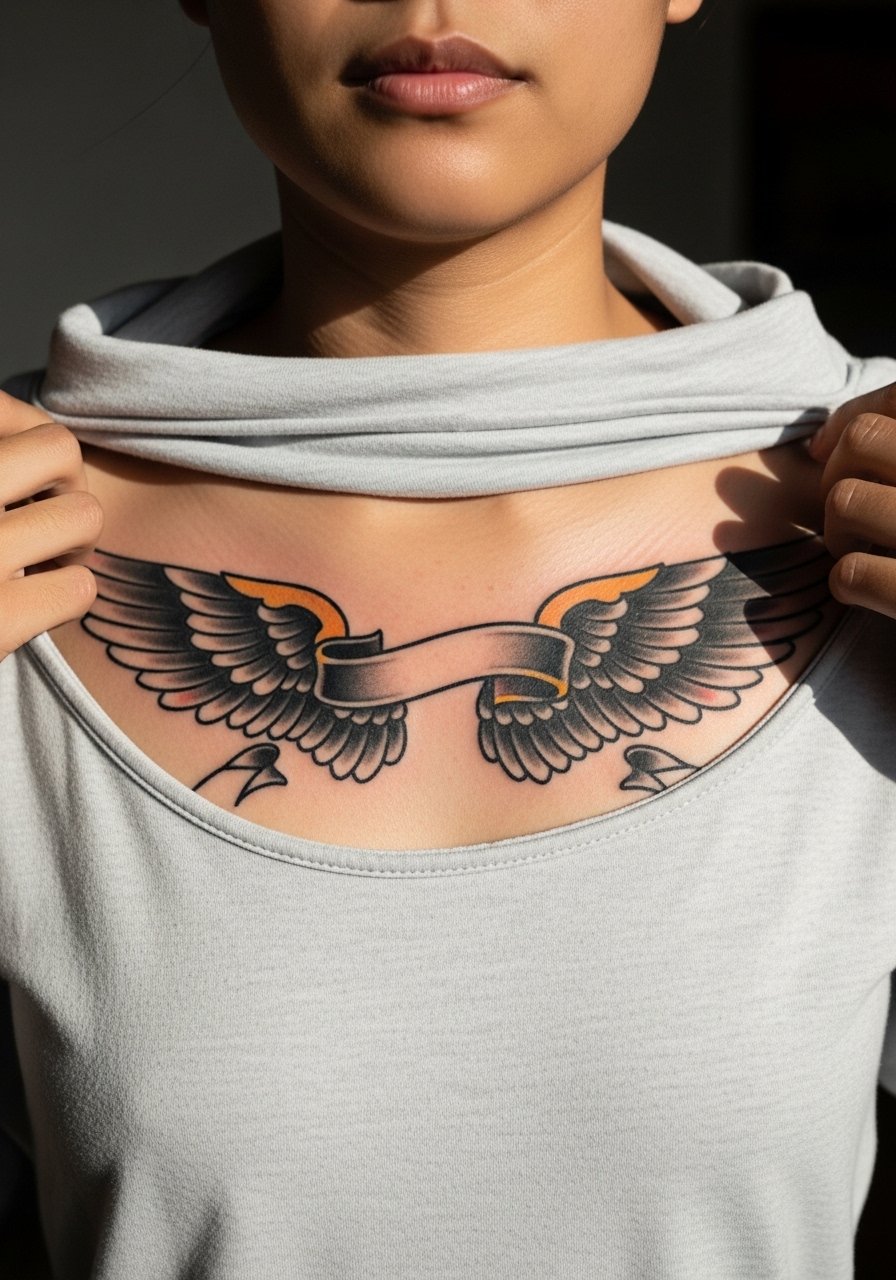
Traditional American wings with a banner sit well on the upper chest when you want bold iconography that keeps its shape as years pass. The thick outlines and saturated color typical of this style age into a confident silhouette rather than an indecipherable blur. Keep the banner text short and set in a size the artist recommends so letters do not merge with time. For the session, wear a wide-neck shirt that you can pull aside so the artist only exposes the immediate chest area. Expect two sessions for lining and color packing and noticeable soreness across the chest during healing.
9. Ignorant Style Fragmented Wings on the Ankle
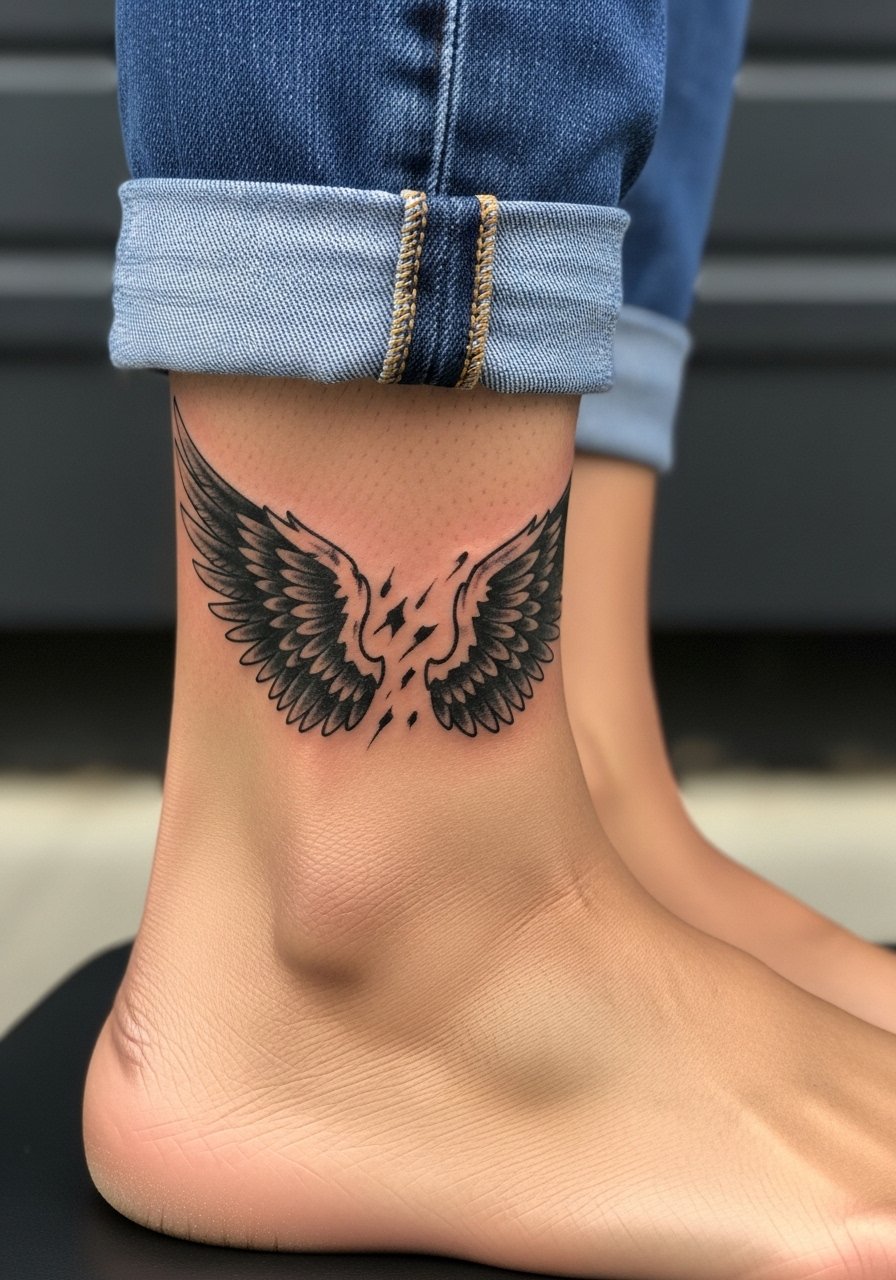
The ignorant style broken wing on the ankle carries raw energy and reads well on small areas where imperfection is part of the point. Expect single-session work with brisk lines and irregular fills. The ankle is a friction zone, so ask your artist about raised edges and avoid ultra-fine crosshatching that catches on socks and shoes. For showing it off in summer, cuff your jeans or wear strappy flat sandals so the area is visible without needing a full reveal. Keep in mind the shift from watercolor to blackwork on ankles is trending because black holds up better under constant wear.
10. Black and Gray Realism Pairing Across Shoulder to Back
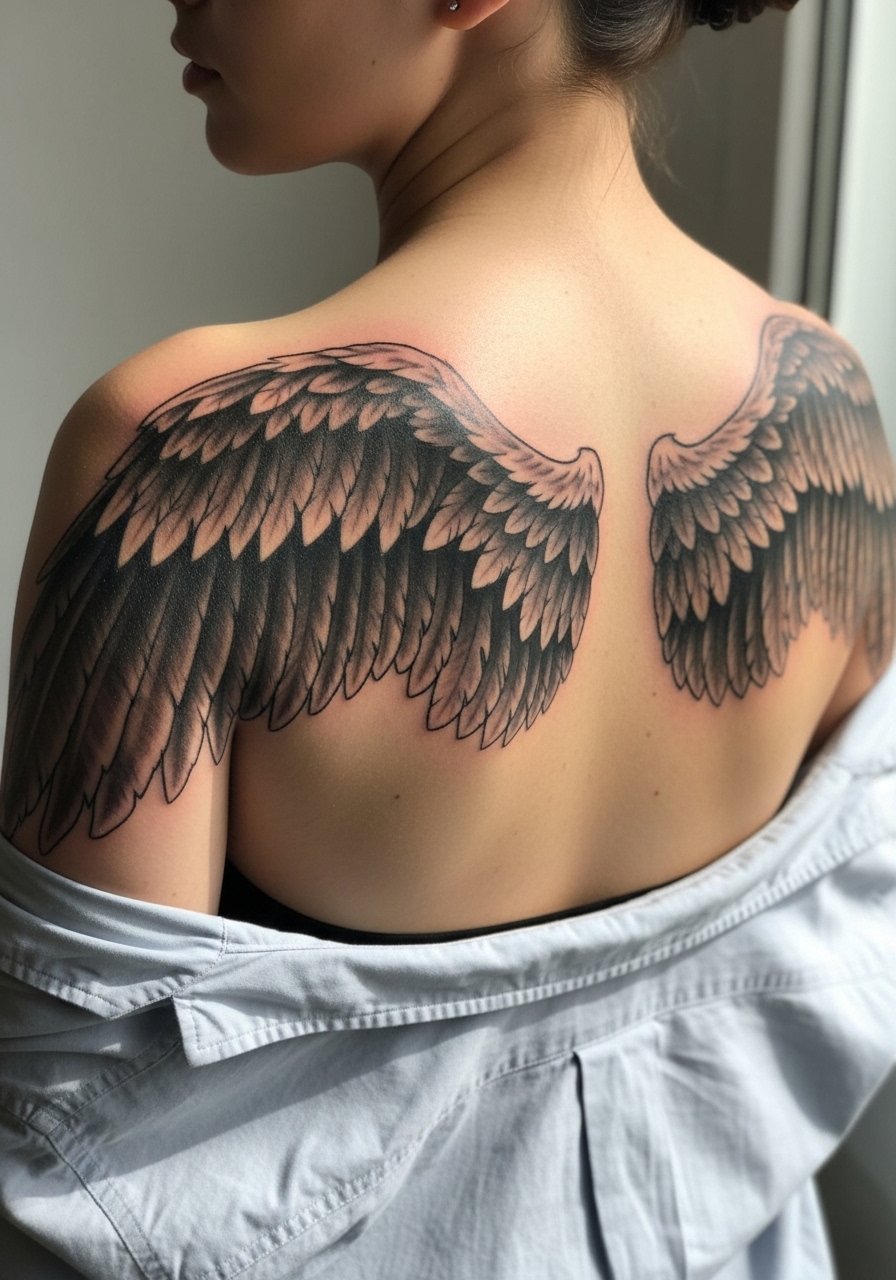
When you want a large, emotive piece, black and gray realism wings that span shoulder into the upper back deliver depth and a three-dimensional silhouette. The shading choices matter more than micro detail at this scale. Ask for strong anchors and gradual saturation rather than extreme micro-detail that can lose contrast when the skin stretches. Large realism pieces often take multiple long sessions, so plan for healing time between appointments. After two to three years you may need touch-ups in high-motion zones, but the form generally keeps its presence because of the heavy tonal work.
11. Mismatched Shoulder Pair for Asymmetrical Storytelling
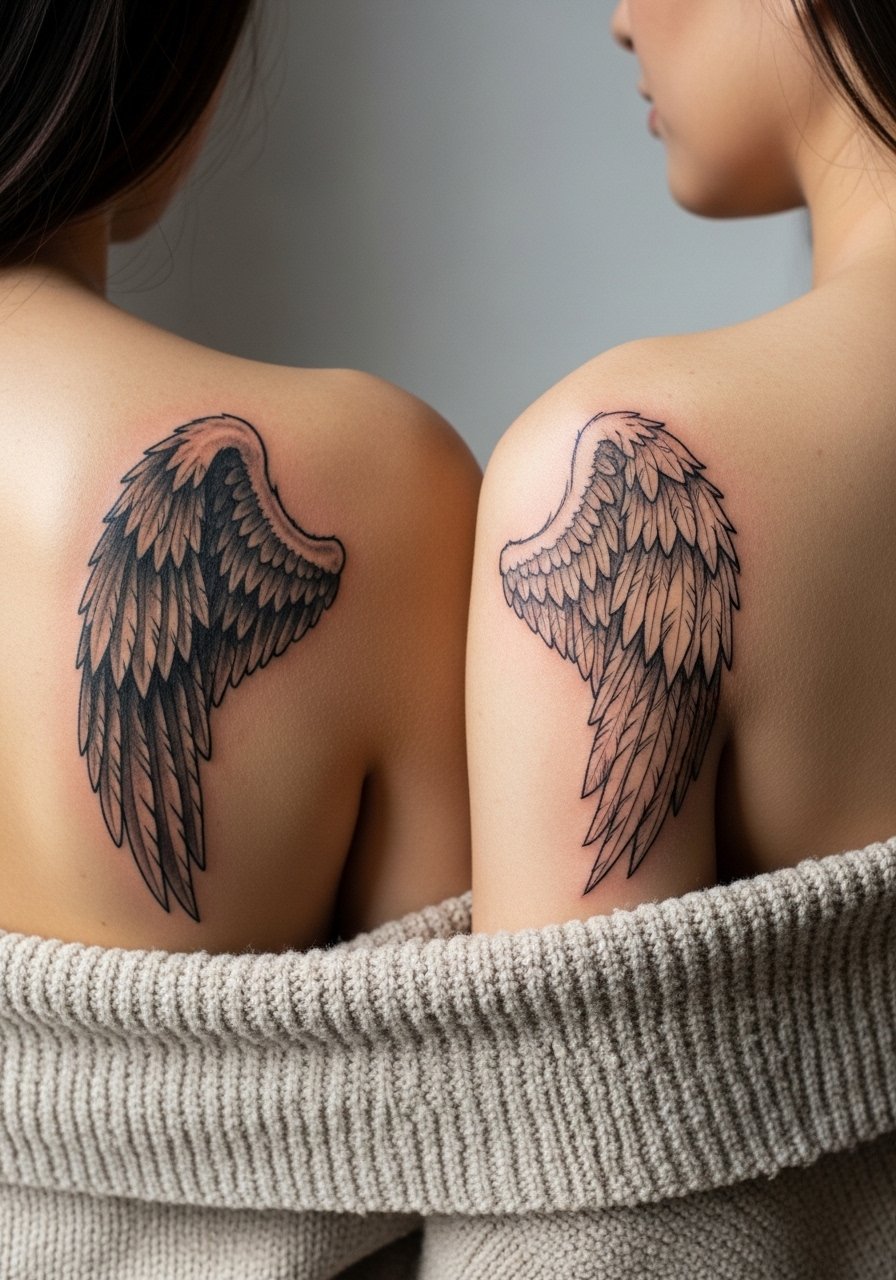
A mismatched wing on each shoulder creates a visual narrative by refusing mirror symmetry, which can be a powerful storytelling choice. One side can be sculpted, realistic work while the other is sketchy or ignorant style. During the consult, explain the balance you want so the artist can match scale and flow across two canvases. This approach may require staggered sessions to allow one shoulder to heal before starting the other. Pair either shoulder with an off shoulder sweater and a delicate chain necklace to reveal asymmetry without visual clutter.
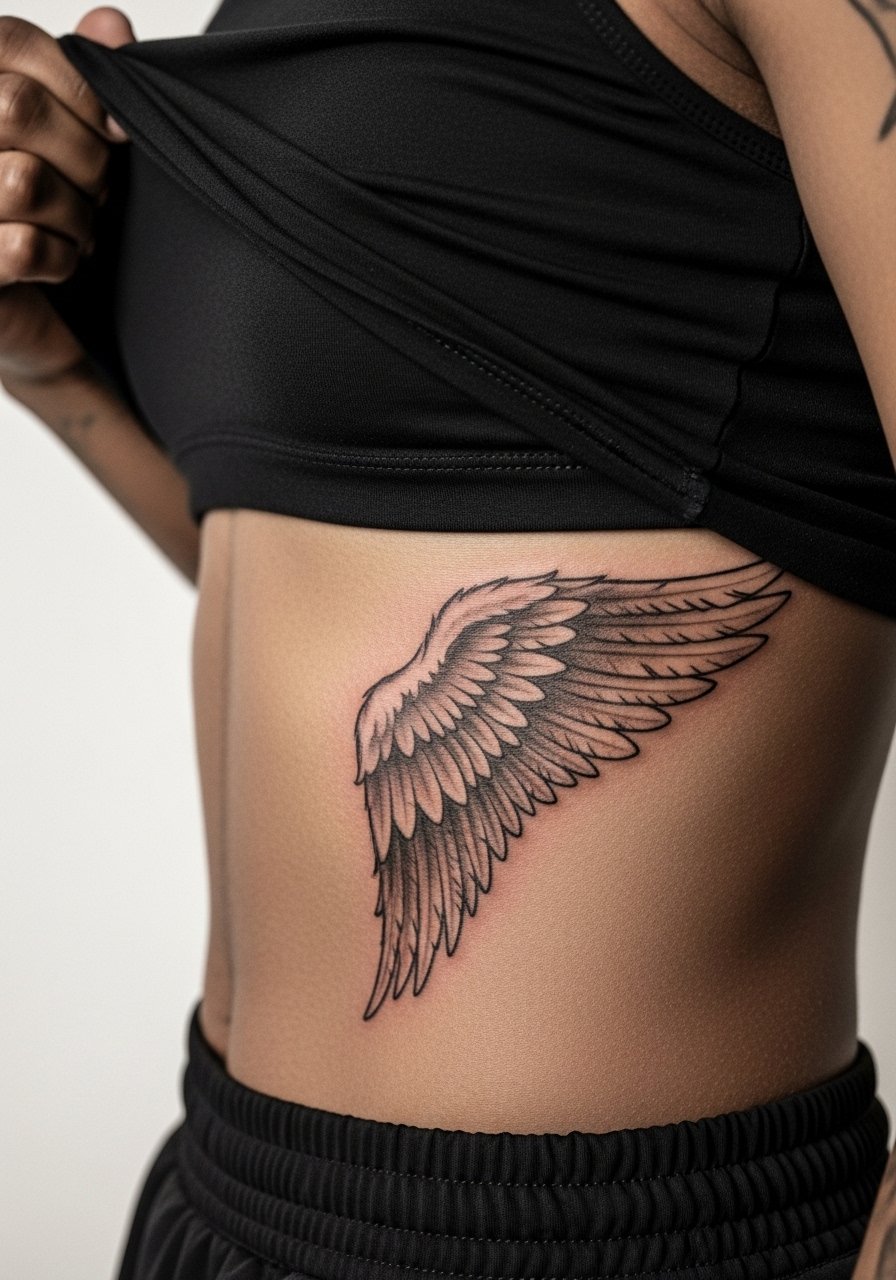
12. Sketch-Style Pencil Smudge Wings on the Ribcage
Ribcage placements reward bravery and read as intimate statements, but expect sharp pain and a slow session. The ribcage rates around 7 out of 10 on many pain scales, and that affects how long you can sit for fine sketch lines. The sketch-style approach with visible pencil smudges looks intentional long-term if the artist leaves breathing room between strokes. Artists disagree about fine line on ribs. One camp warns that the skin there stretches and blurs lines within two years. The other camp says proper depth and spacing help the style settle fine. Discuss touch-ups and possibly numbing options during booking. Wear a cropped top or sports bra so the artist gets clean access.
13. Tiny Guardian Knuckle Wings for Everyday Reminders
Knuckle or finger-tip wings are micro reminders you see all day, and they age very differently from forearm or back pieces. The high-motion, high-wash area will blur faster, so pick simple silhouettes and thicker strokes rather than tiny feather details. The common mistake is asking for letters or thin feather veins that vanish. Expect frequent touch-ups and deliberate acceptance of patina in the long run. If you need a session-ready outfit, remove rings and bring a small pouch for jewelry so the artist has clean access and your pieces do not snag.
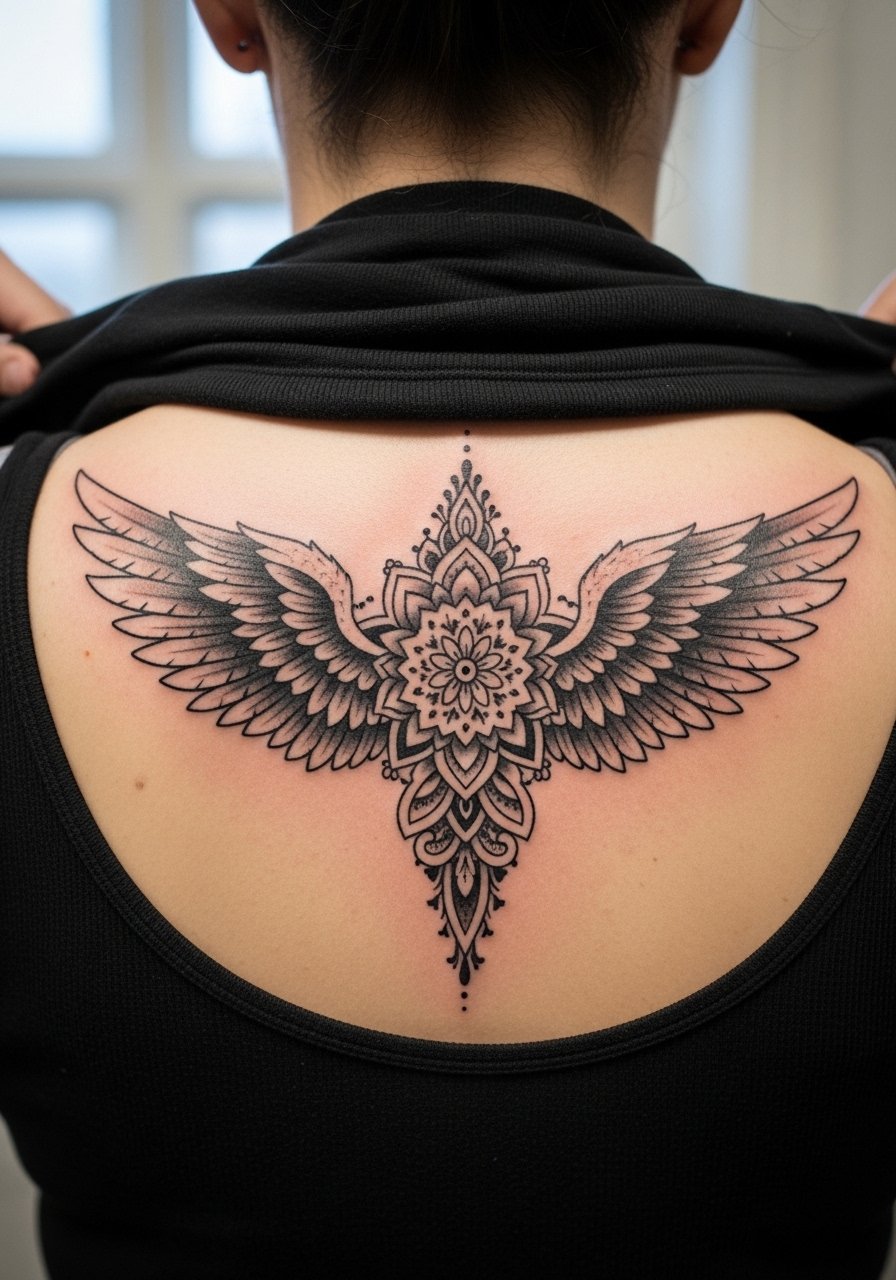
14. Ornamental Spine Wings with Mandala Center
A spine-centered ornamental wing design uses the vertical axis to create symmetry and flow with mandala elements. This is a high-commitment placement that works well when you want a piece to read as clothing-adjacent. Ask for breathing space in the mandala so dense dot work does not compact into a dark block as the skin moves. Sensitive placement rules apply, so show up in a tank top you can pull down slightly for the artist. For warm-weather reveal, a side slit maxi dress can let the back peek through while keeping most coverage, and it keeps the design tasteful on nights out.
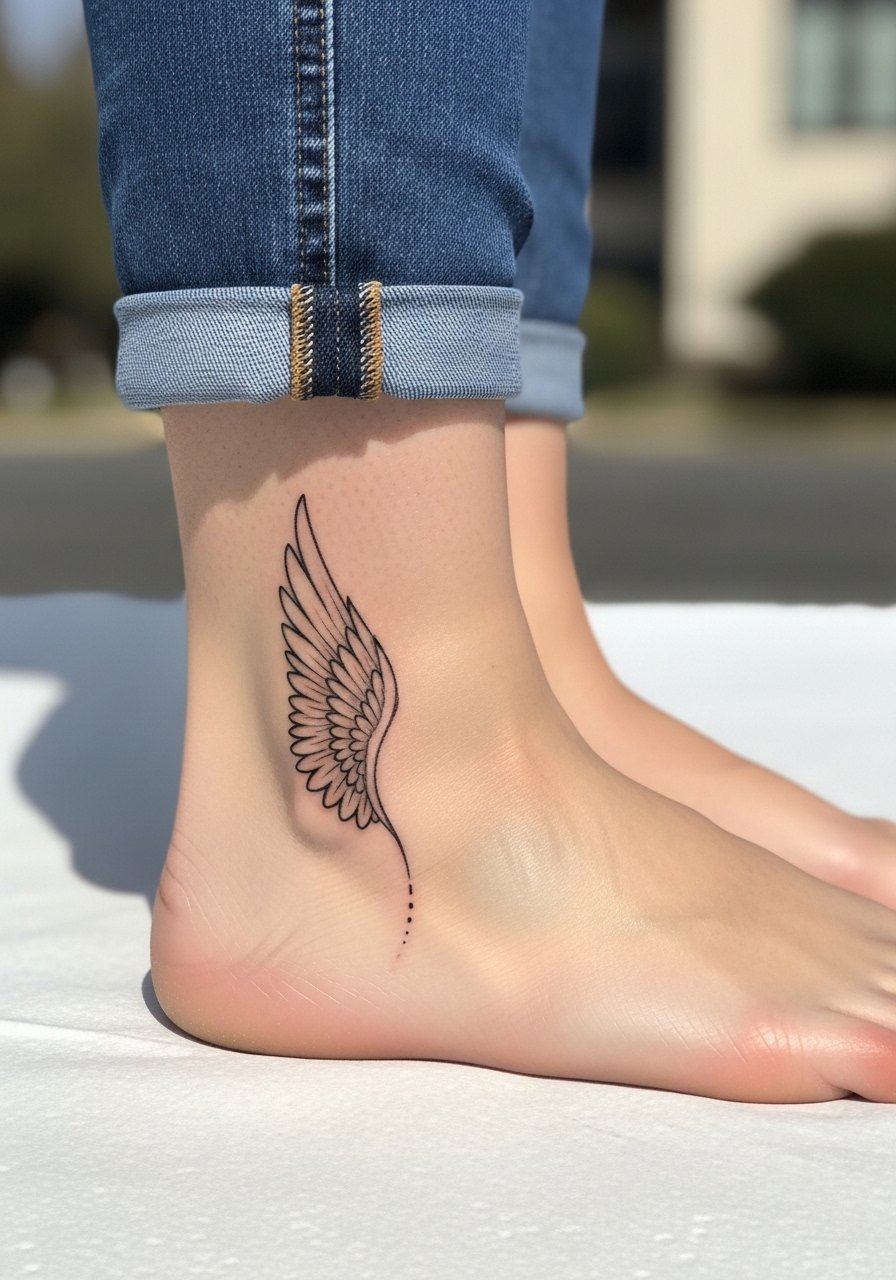
15. Fine Line Ankle Wings for Subtle Summer Shows
Ankle fine line wings are deceptively high maintenance because shoes and socks create friction on newly healed skin. If you want this look, request slightly beefier anchor lines and minimal internal crosshatching. The common error is asking for dense feather detail that will blur within a year. For summertime visibility, cuff straight-leg jeans or wear cuffed ankle jeans and strappy sandals. For the session, bring loose joggers you can roll up without constriction so the artist can work close to the bone comfortably.
16. Collarbone Script-Joined Wings with Watercolor Halo
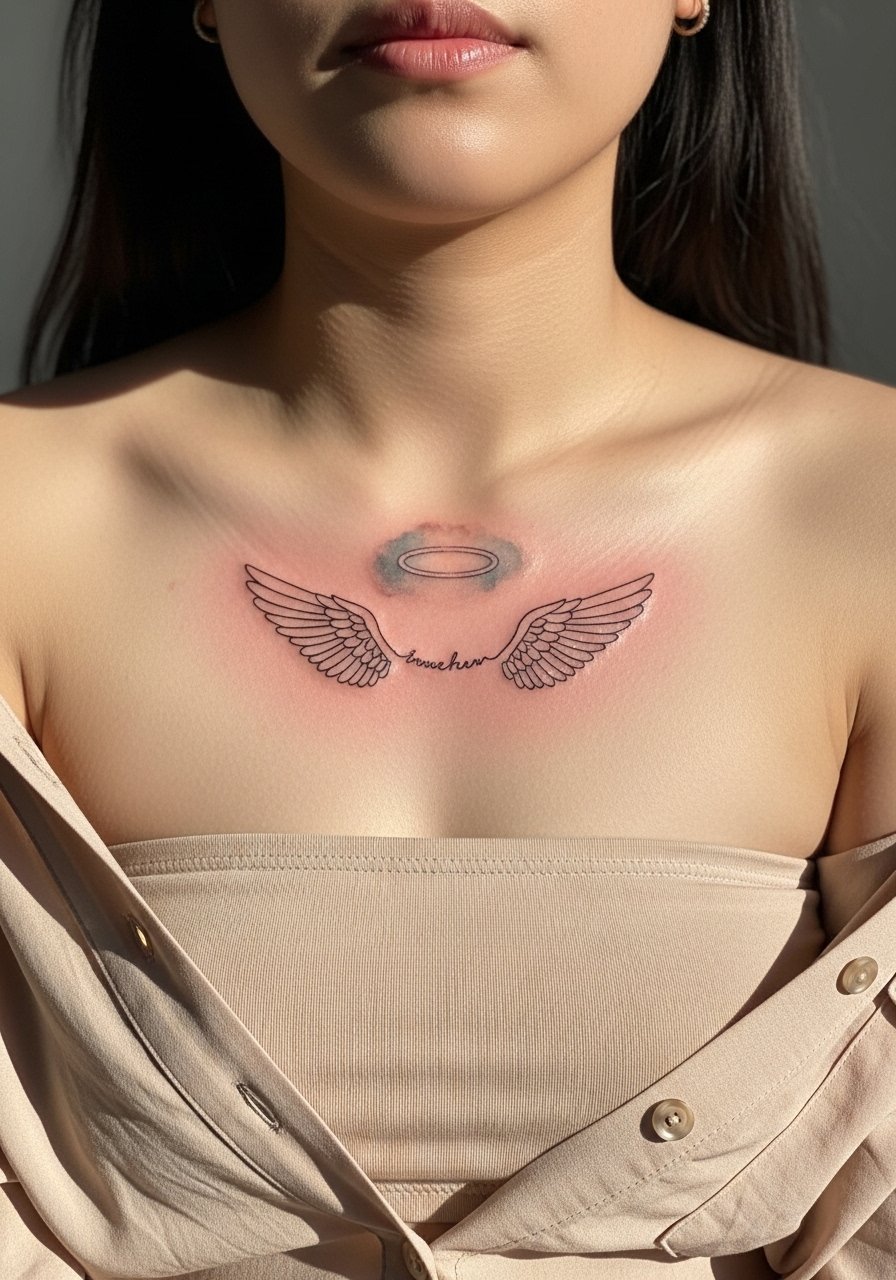
Pairing a small script or date between two collarbone wings with a watercolor halo gives a memorial feel without heavy imagery. The collarbone is visible and vulnerable to sun, so I tell people to consider placement slightly off-center to follow the clavicle line. Ask for a faint underlying outline so the watercolor retains form as it fades. For showing it off, a strapless bralette under an open blouse highlights the piece without overexposure. Expect light chest soreness and a mid-range session time.
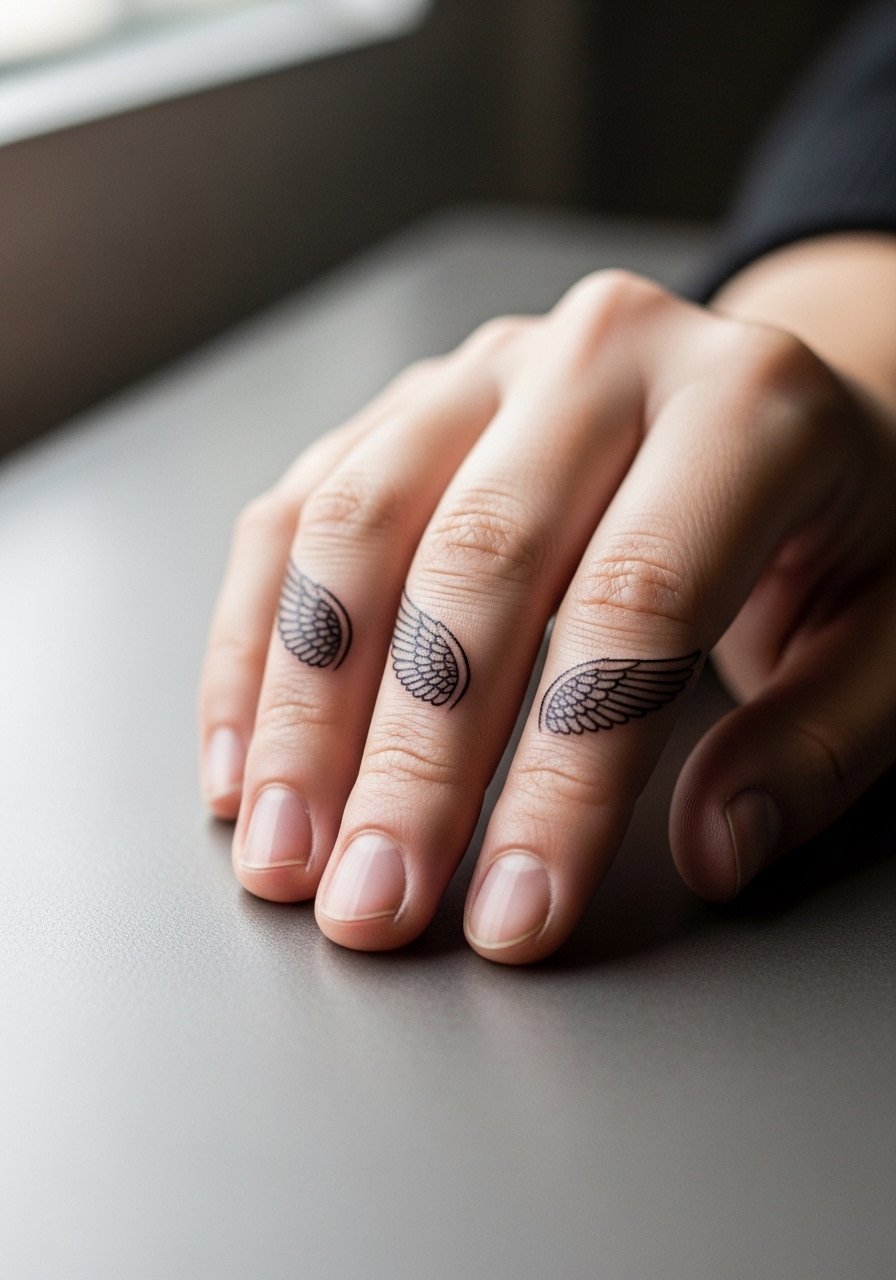
17. Micro Stacked Finger Wings for Collectors
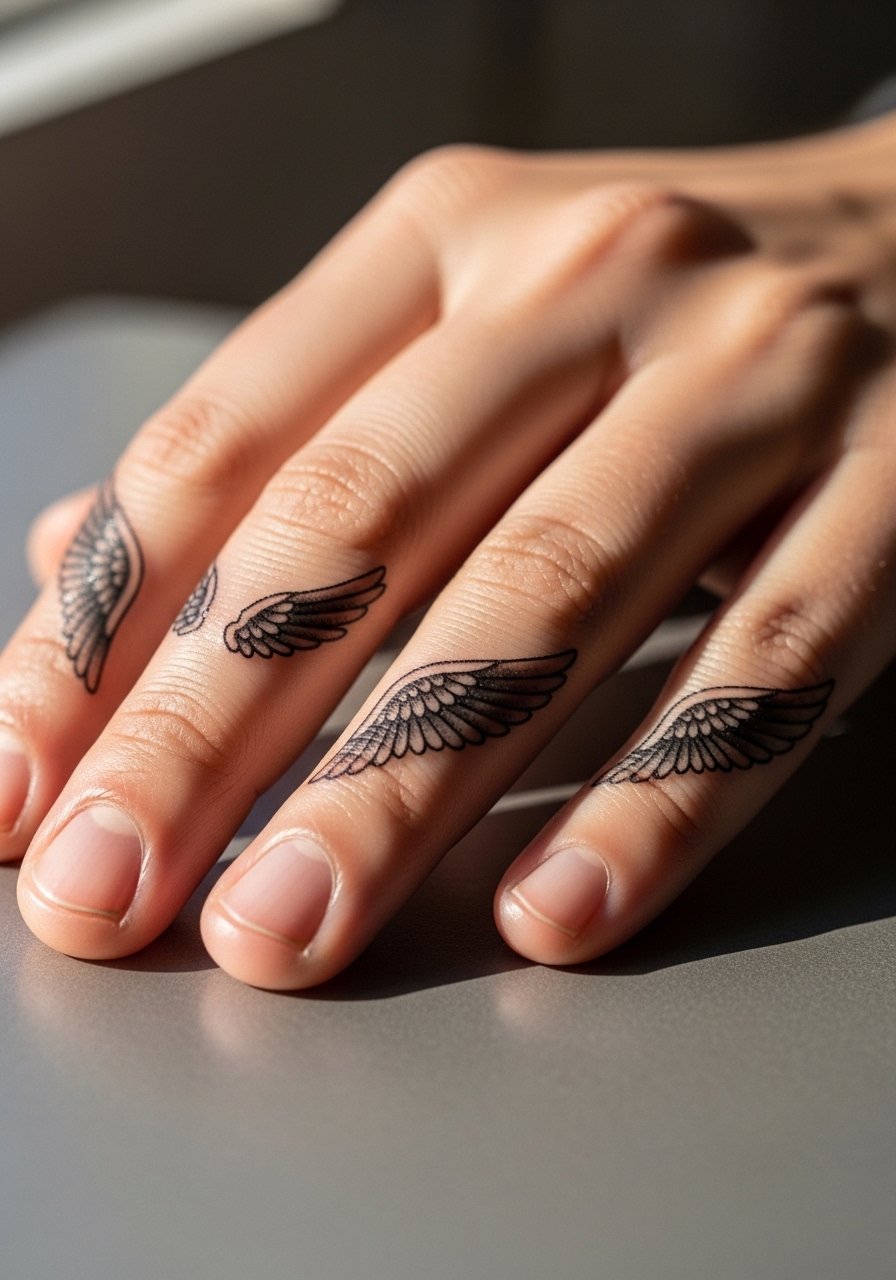
Micro stacks of tiny wings on each finger are a collector-friendly approach that reads like jewelry. These pieces require confident, even linework and realistic expectations about touch-ups. The biggest mistake is packing too much detail into fractions of an inch. Ask the artist to space each tiny wing and to avoid micro texturing that will become a blur. For session prep, remove all rings and keep hands clean. These pieces photograph best in golden hour light when lines pop against skin, and they embrace the ongoing maintenance collectors accept.
Frequently Asked Questions
Q: Do fine line forearm angel wings need touch-ups more than bold blackwork?
A: Fine line work often needs touch-ups sooner because thin lines and close feather veins can merge over time. From what I have seen, scheduling a touch-up in the 6 to 12 month window is common for forearm fine line pieces, while bold blackwork can go longer between sessions. Ask your artist about planned touch-ups during booking so it is part of the timeline.
Q: Are watercolor collarbone wings a bad idea if I want longevity?
A: Watercolor on the collarbone looks beautiful but fades faster than saturated blackwork, especially with sun exposure. If you love the watercolor look, request a subtle outline under the washes and commit to periodic color refreshes. Many people accept the trade-off because they value the painterly aesthetic more than absolute longevity.
Q: How can I avoid being ghosted after paying a deposit for a guest artist?
A: Use booking platforms with written policies like Booksy or the Tattoodo booking feature and ask for a clear cancellation window. Get appointment confirmations in writing, save screenshots, and check the artist's recent guest spots on TikTok or the #GuestSpotTattoo + your city search so you book someone actively traveling. Communication before the day reduces the chances of chasing refunds.
Q: How bad will a ribcage wing hurt and should I use numbing cream?
A: The ribcage is commonly reported as a 7 out of 10 for pain due to proximity to bone and thin skin. Artists are split on numbing creams. One camp says numbing can dull feedback and make placement harder. The other camp supports them for long sessions. Bring up numbing during your consult and ask where the artist stands so you both agree on a plan.
Q: Where can I find artists who specialize in these wing styles if my town is small?
A: Search hashtags like #AngelWingTattoo and #FineLineWings on Instagram and TikTok, and use filters on apps such as Tattoodo to find guest reels. Track #GuestSpotTattoo + your city in stories and check convention lineups where traveling artists often do guest spots. These pathways helped many people I know find specialties beyond the local shop.