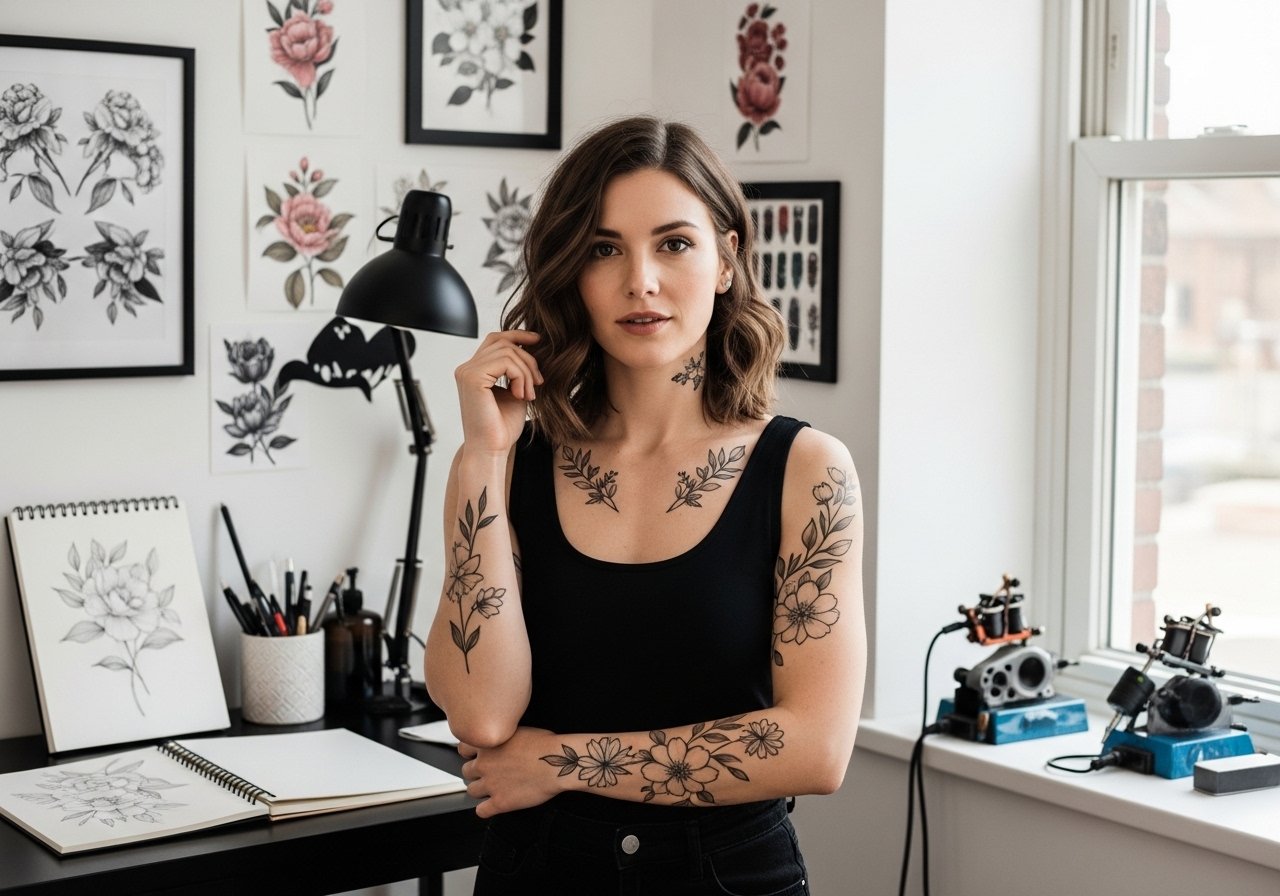
Fine line tattoos are everywhere on mood boards, and the November birthflower can read delicate or bold depending on the approach. Chrysanthemums work in tiny placements and in statement pieces, but the choices you make in spacing, line weight, and placement determine how long the detail holds up. Below are 21 specific chrysanthemum concepts, with consultation notes, aging expectations, and the wardrobe tips that help these pieces sing.
1. Fine Line Chrysanthemum on Inner Forearm
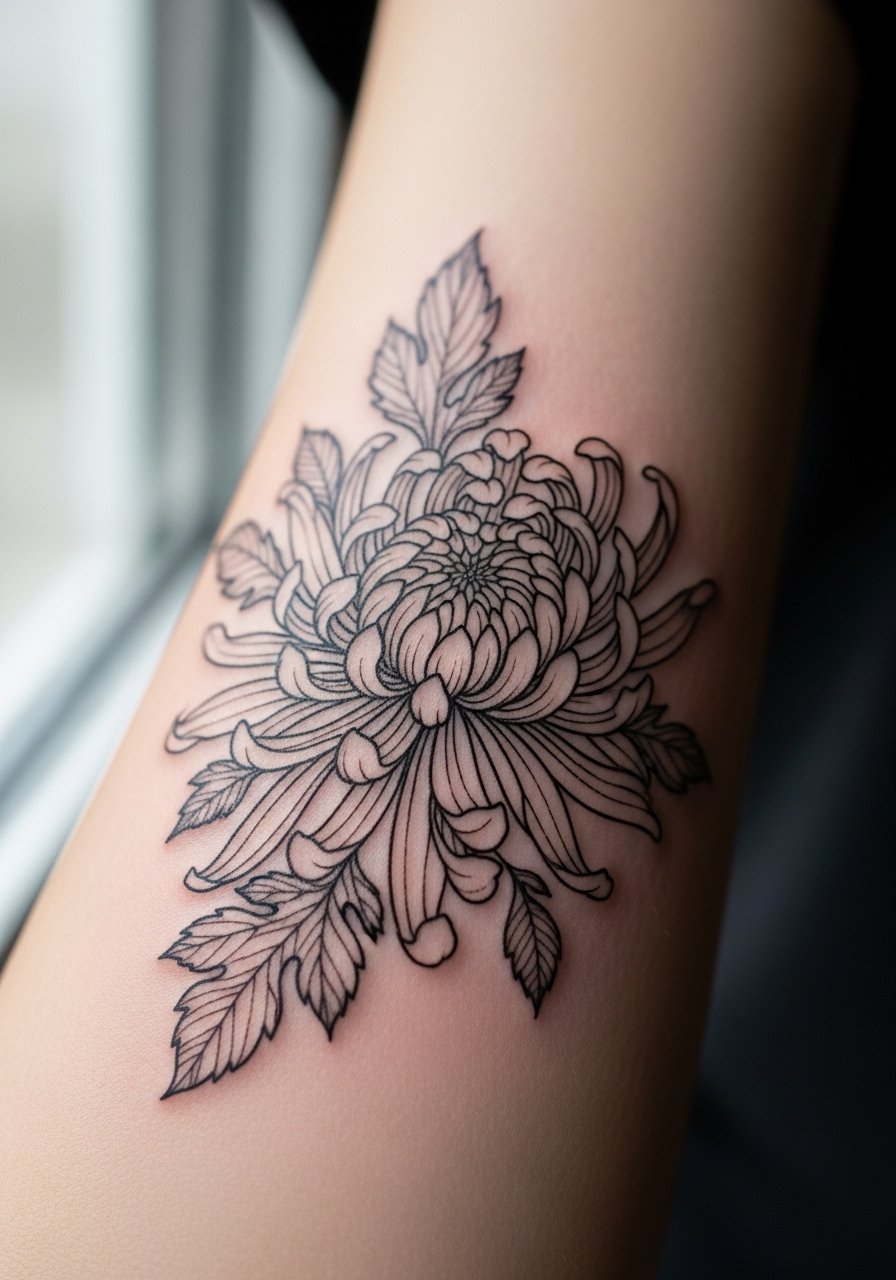
I recommend this when you want readable linework that ages predictably. Tell your artist you want slightly heavier primary outlines and feathered inner veins so the design has room to breathe as it settles. Fair warning, the inner forearm sees sun and stretching, so expect a softening of the thinnest strokes by year three and a possible light touch-up around year four. The session feels steady, a 3 to 4 on most pain scales, and usually takes 60 to 90 minutes depending on size. For showing it off, pair with a rolled linen shirt with the sleeves cuffed so the bloom sits against warm neutrals.
2. Watercolor Chrysanthemum with Drip on Upper Arm
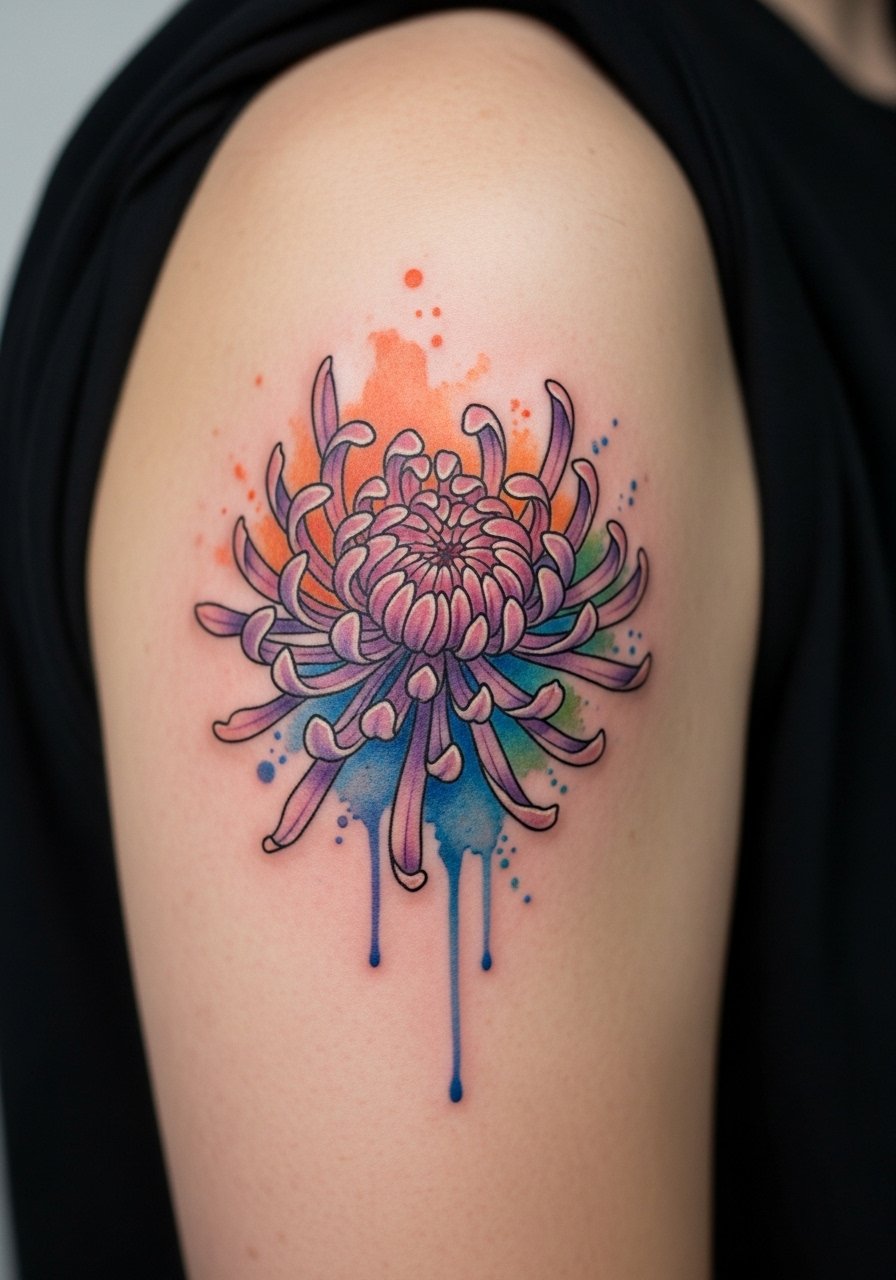
Watercolor brings motion to chrysanthemums but opinions split on longevity. One camp says watercolor fades unevenly and can look patchy after a few years. The other camp argues that careful layering of pigment and strategic outlines preserves the shape. If you like painterly color, ask for a fine anchor outline and for the artist to indicate expected touch-up timing during consult. Expect a sit of 90 to 150 minutes for a mid-sized piece. Style it with a racerback tank for summer nights so the color reads without distraction.
3. Micro-Realism Single Bloom on the Collarbone
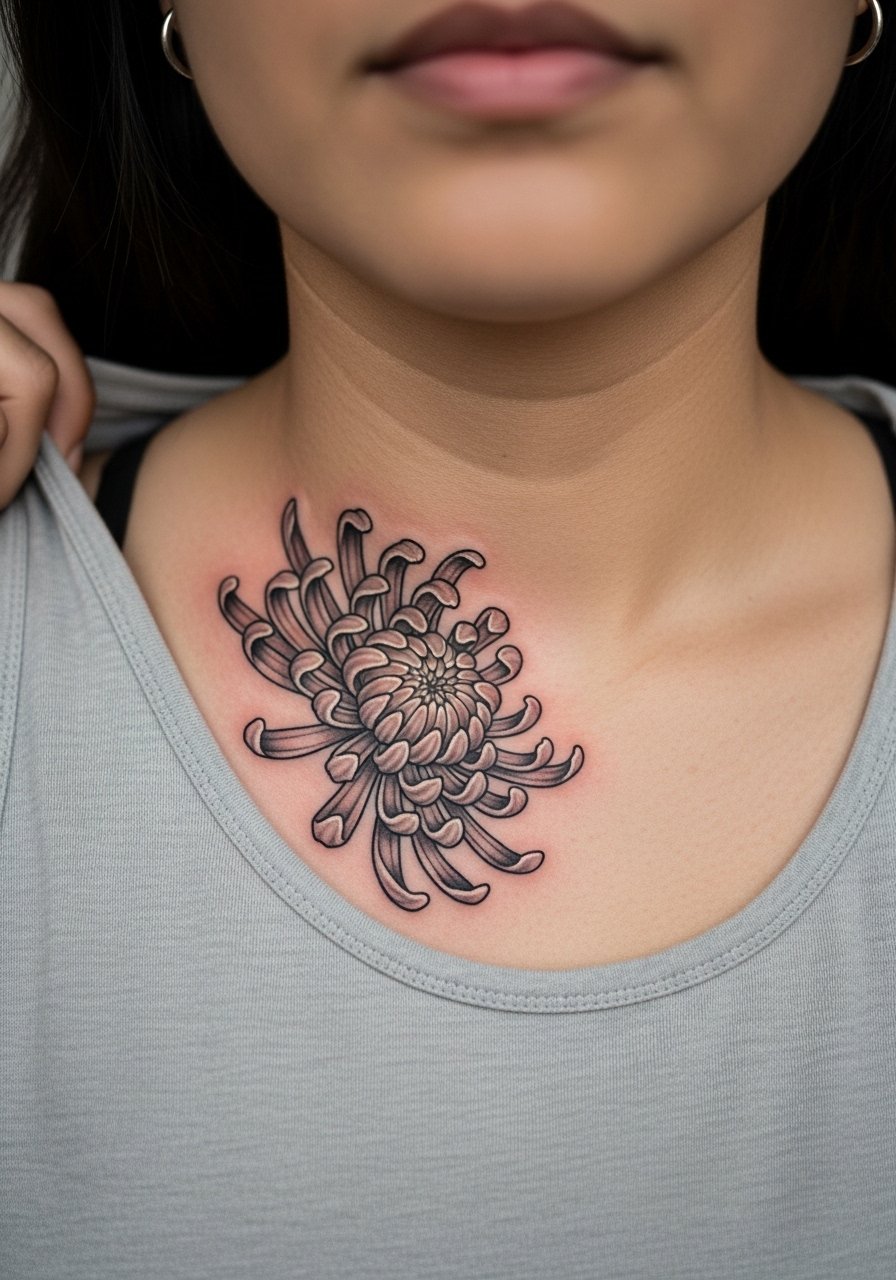
Collarbone tattoos are high impact and demand a steady stencil placement. In consultation, show the exact angle you prefer and ask the artist to mark the positioning while you move your arm so the bloom sits where clothing will frame it. Pain can be a 6 depending on your tolerance because the bone is close to the surface. Micro-realism looks crisp at six months, then softens by year three unless the artist spaces leaves with negative space. Wear a loose button-down shirt to the session so the artist has clear access and the fabric does not rub the fresh work afterward. Trust your artist about placement, and ask about touch-up timelines.
4. Traditional Chrysanthemum Accent for a Sleeve
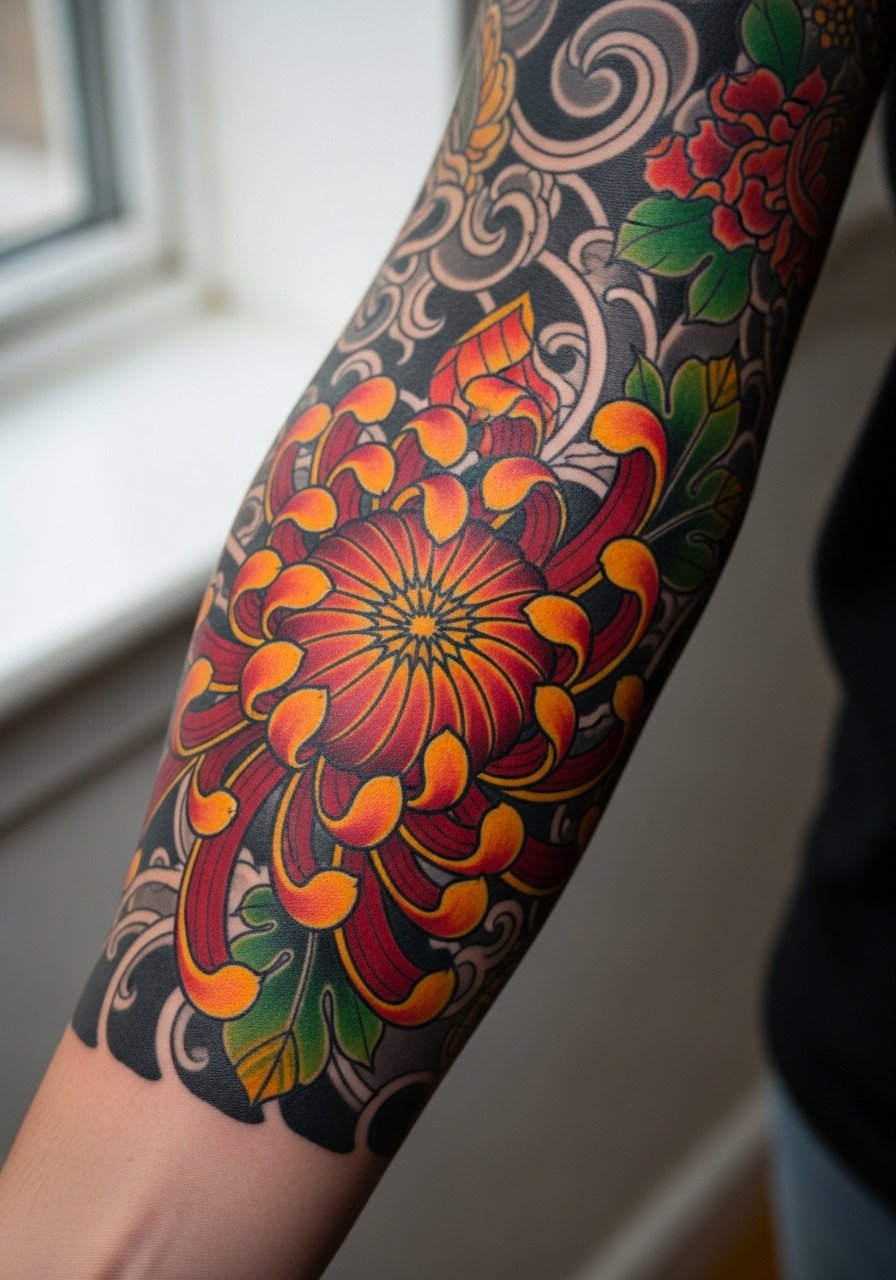
This is a reliable choice when you want longevity. Strong outlines and saturated fills age into a cohesive patch of color rather than losing definition. Say during the consult that you want the flower large enough to read at arm's length and that you prefer solid black outlines with layered saturation inside. A common mistake is making the petals too small next to heavy shading, which leads to muddiness over time. The session time depends on how much surrounding work you add, but small accent pieces finish in one long session. This placement tolerates touch-ups well and rarely blows out if the artist keeps needle depth consistent.
5. Minimalist Chrysanthemum Dot Work on the Side of a Finger
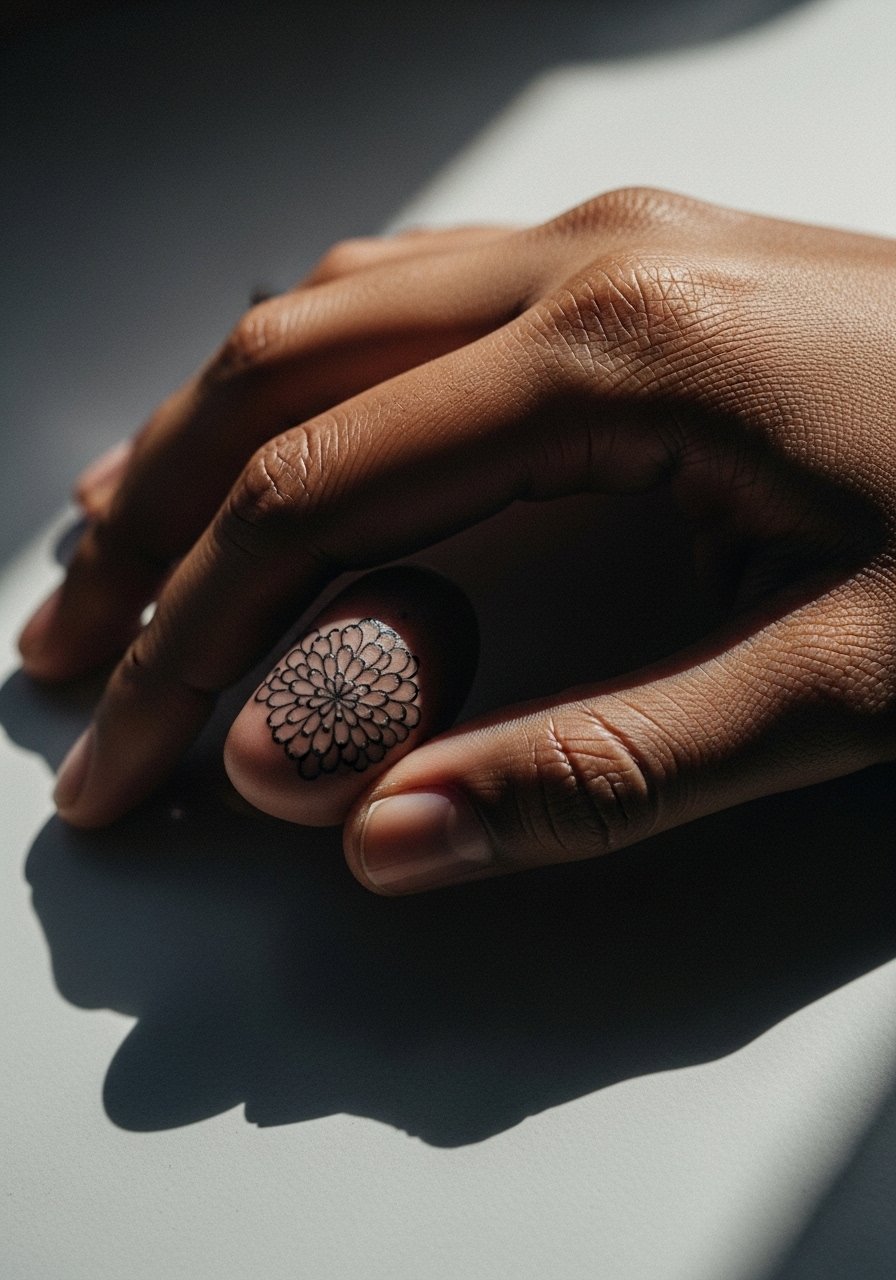
Finger pieces are intimate and high maintenance. The skin there sheds and receives friction constantly so expect faster fading. Ask your artist for a slightly bolder dot grid rather than ultra tiny stippling so the image remains legible after multiple washes. Sessions are short, often under 30 minutes, but you may need a touch-up at year one or two. For the appointment wear a short-sleeve shirt so the artist has unobstructed access. A real mistake is asking for ultra-fine detail at the joint where skin moves; give the design breathing room and keep the motif small and simple.
6. Blackwork Chrysanthemum on Upper Thigh
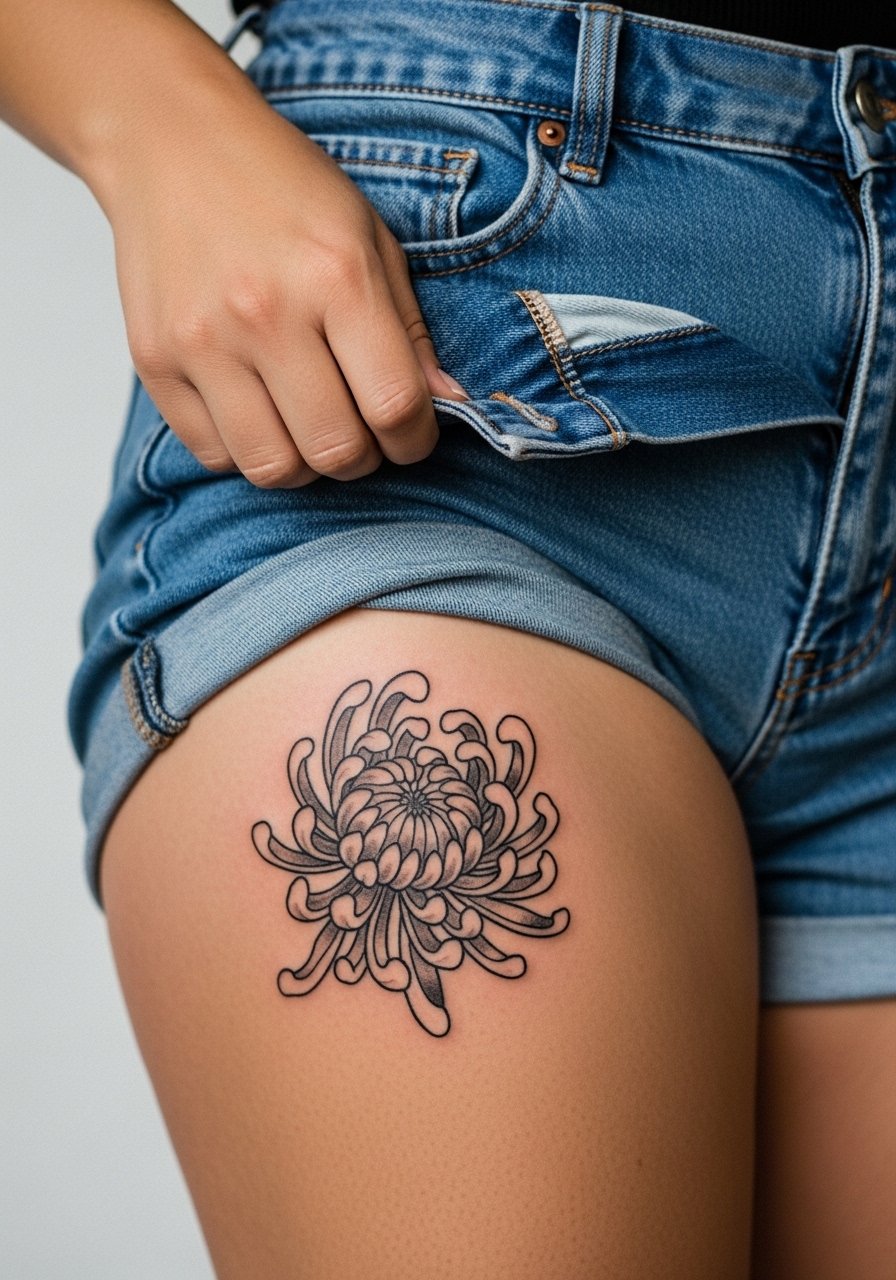
Thigh pieces tolerate heavy saturation and are forgiving as they age. The session usually ranges from 90 minutes to three hours depending on fill. If you want contrast, ask for dense black negative space around petals so the bloom pops against skin. The downside is friction from clothing in the first two weeks, so bring loose bottoms to the appointment. Expect moderate pain, a 4 to 6, and a touch-up window around year three is common if heavy black starts softening. This placement is forgiving for larger, more graphic chrysanthemum work.
Studio Day Picks
The wrist, finger, and forearm pieces above heal differently from larger thigh and collarbone work, so a few small items smooth the session and the first week.
- Stencil transfer paper kit. Lets you preview and reposition the linework on skin before the needle hits, which matters for the collarbone and inner forearm placements above.
- Topical numbing cream. Applied 30 to 45 minutes ahead, it can make wrist and finger sessions more manageable without affecting outline quality.
- Thin protective film roll. Keeps finger and ankle tattoos clean during the first week of friction from washing and shoes.
- Fragrance-free gentle body wash. Cleanses healing skin without the perfumes that irritate delicate linework on forearms and chest.
- Aquaphor healing ointment. Thin layers in the first few days help retain moisture for fine line work without clogging the channels needed for ink to settle.
7. Geometric Chrysanthemum Medallion on the Sternum
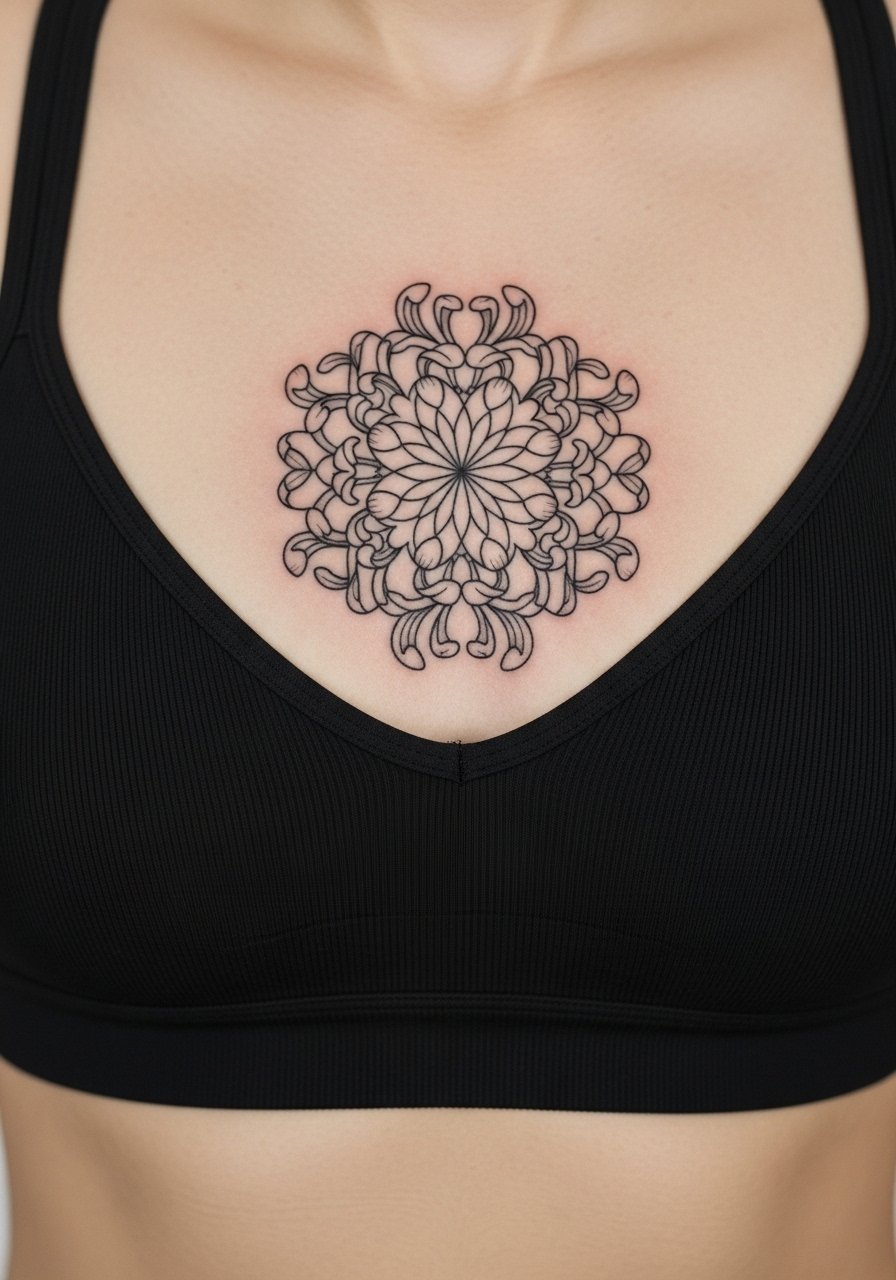
Sternum pieces are bold and sit near the center of gravity for outfits. This placement often requires a careful consultation about size and symmetry, so ask the artist to apply the stencil while you breathe in and out to see movement. Pain is higher, commonly a 7 to 8, but many people tolerate it for a design that frames necklines. For showing it off, open-back tops and bandeau dresses let the medallion read without needing heavy jewelry. Consider session wear like a front-zip top so you can get dressed afterward without stretching the area.
8. Tiny Chrysanthemum Behind the Ear
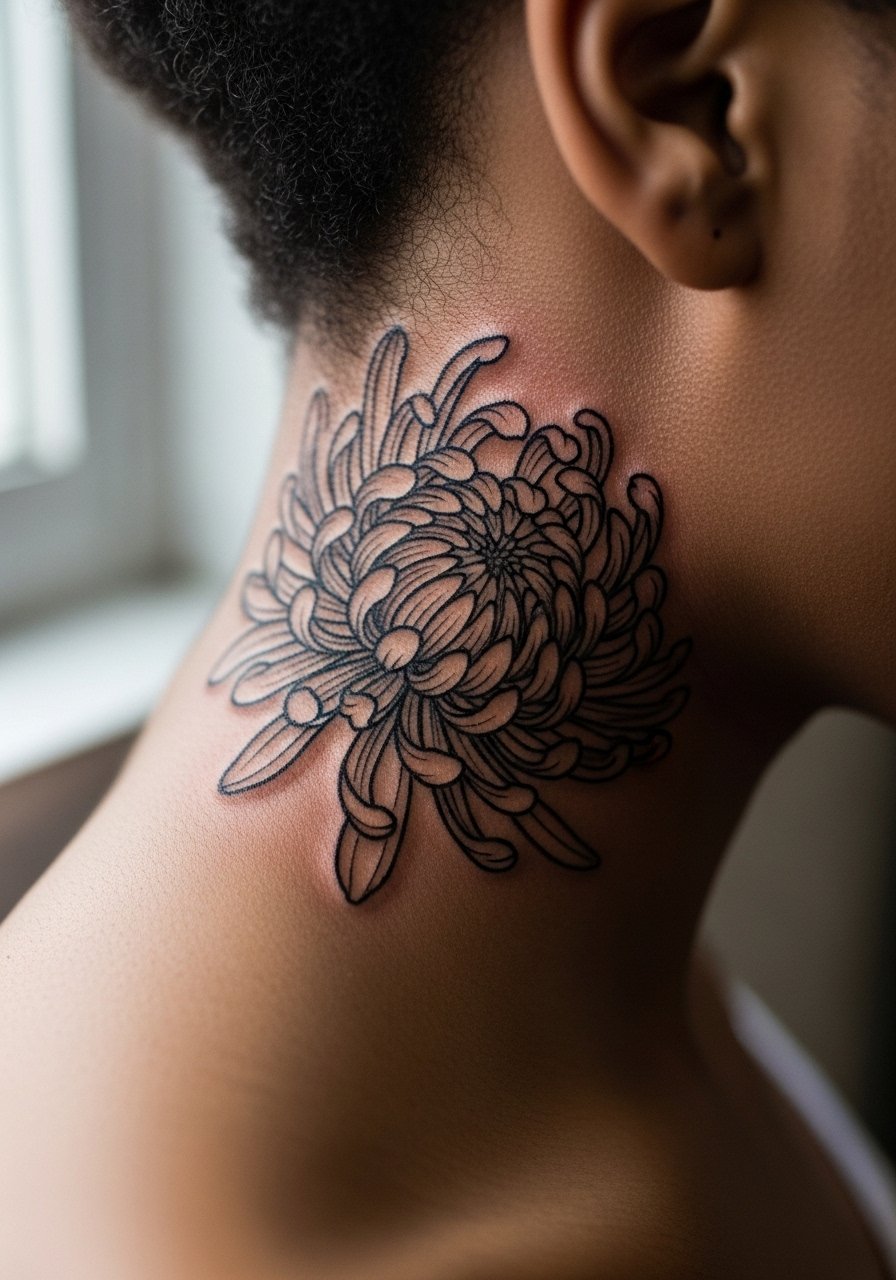
Behind-the-ear work is petite and discreet. The placement calls for simplified petal shapes because tiny details can blur quickly in that thin skin. Sessions are brief, often under 30 minutes, and pain varies depending on how close to cartilage the needle rides. A common mistake is asking for script plus petals in the same micro area. If you plan to hide or reveal it, style with hair pulled back for evenings and let it peek out casually during daywear.
9. Stipple-Shaded Chrysanthemum on the Calf
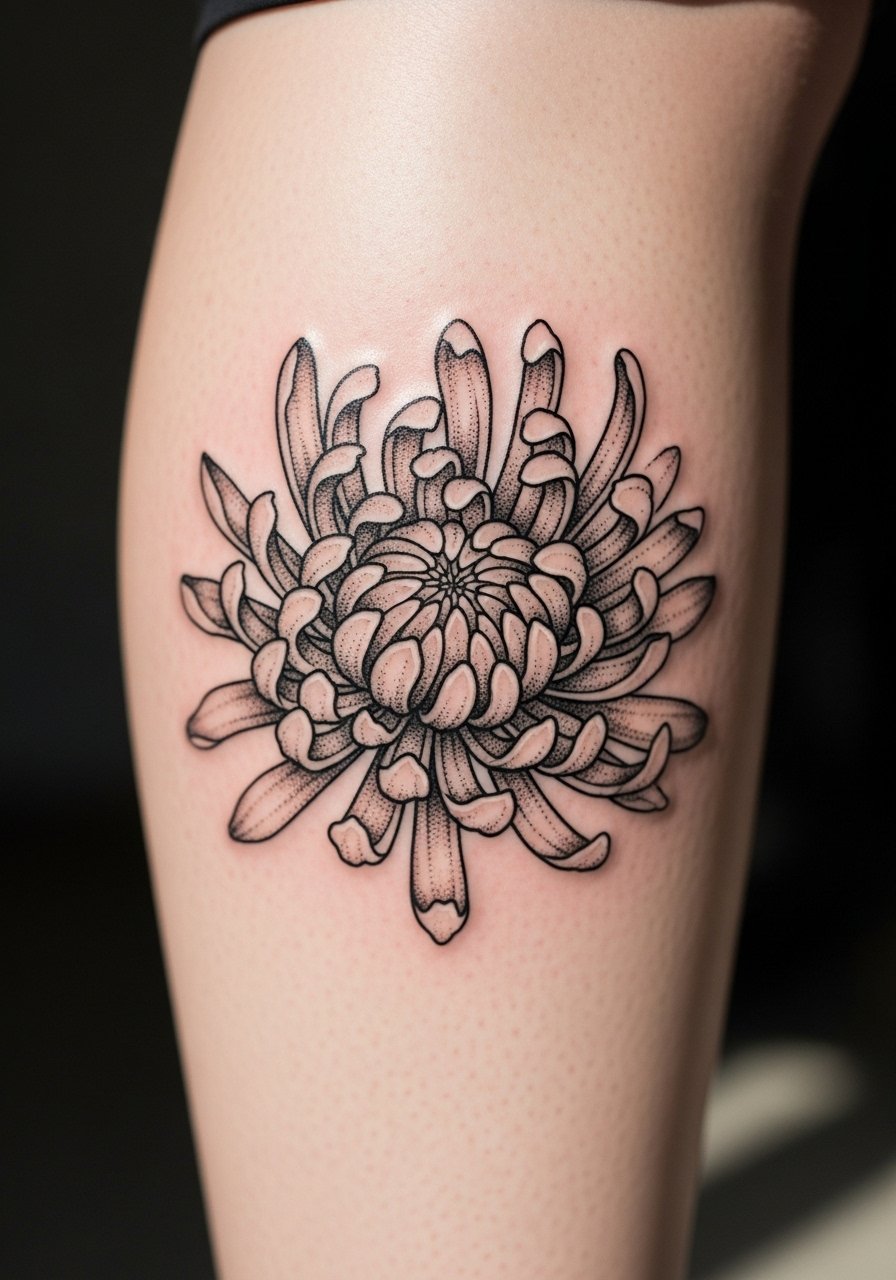
Dot work on the calf reads well from a distance and holds up because the skin there stretches less than the forearm. Tell your artist you want graduated stippling for petal depth and ask for negative space between groups to avoid crowding. Expect a one to two hour session for a mid-sized piece. For showing it off pair with rolled cuff jeans or sandals so the shading and texture are visible without competing prints. The calf is a low blowout risk and ages into a soft, textured look.
10. Single-Line Continuous Chrysanthemum Ankle Band
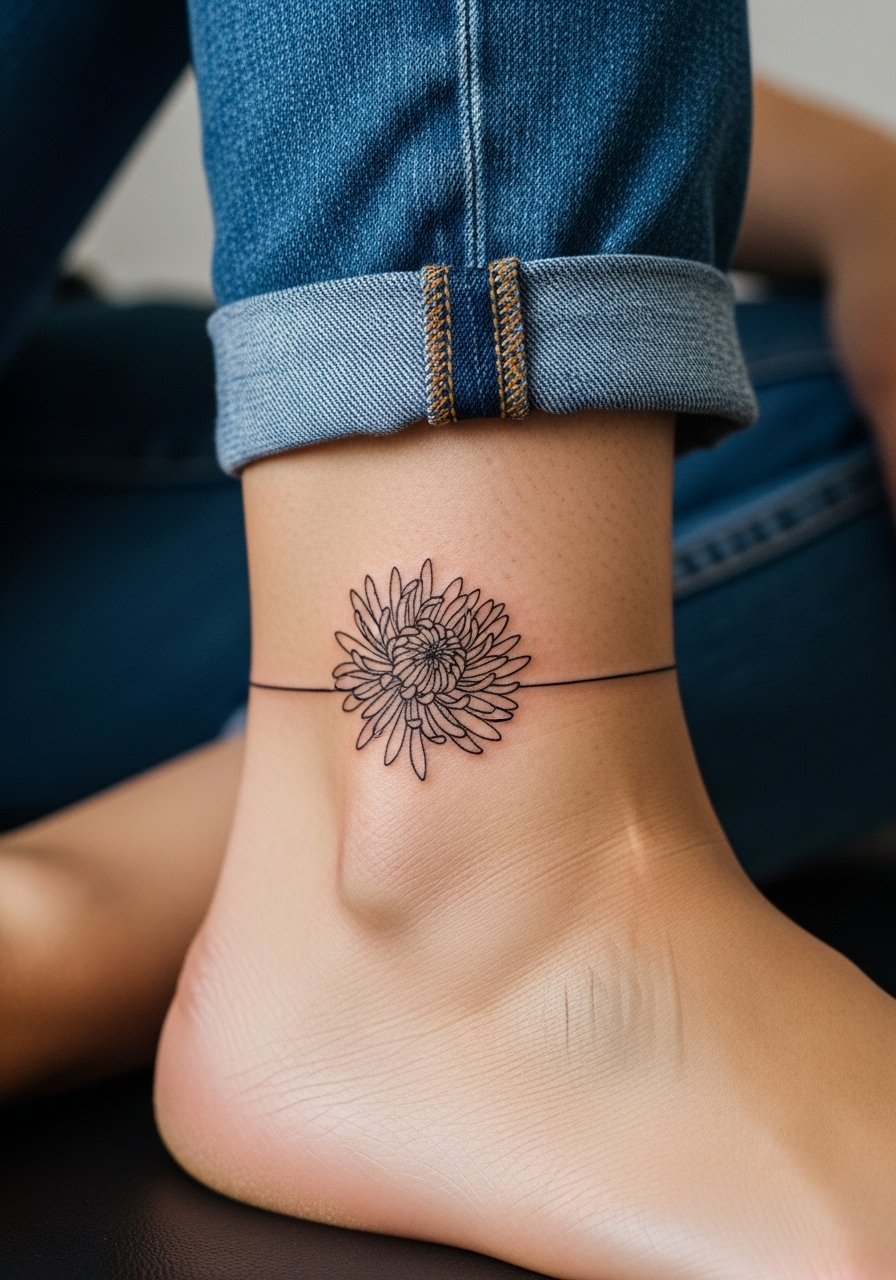
Ankle bands read like jewelry and wear like jewelry in daily life. Ask for a slightly thicker single-line stroke so the curve remains distinct through frequent movement and shoe friction. Sessions are short and usually under an hour. A common mistake is placing too many petals in a narrow band which causes merging over time. For the appointment and afterward, wear slip-on shoes to avoid rubbing during the first week and to let the linework rest.
11. Chrysanthemum and Script Memorial on the Ribcage
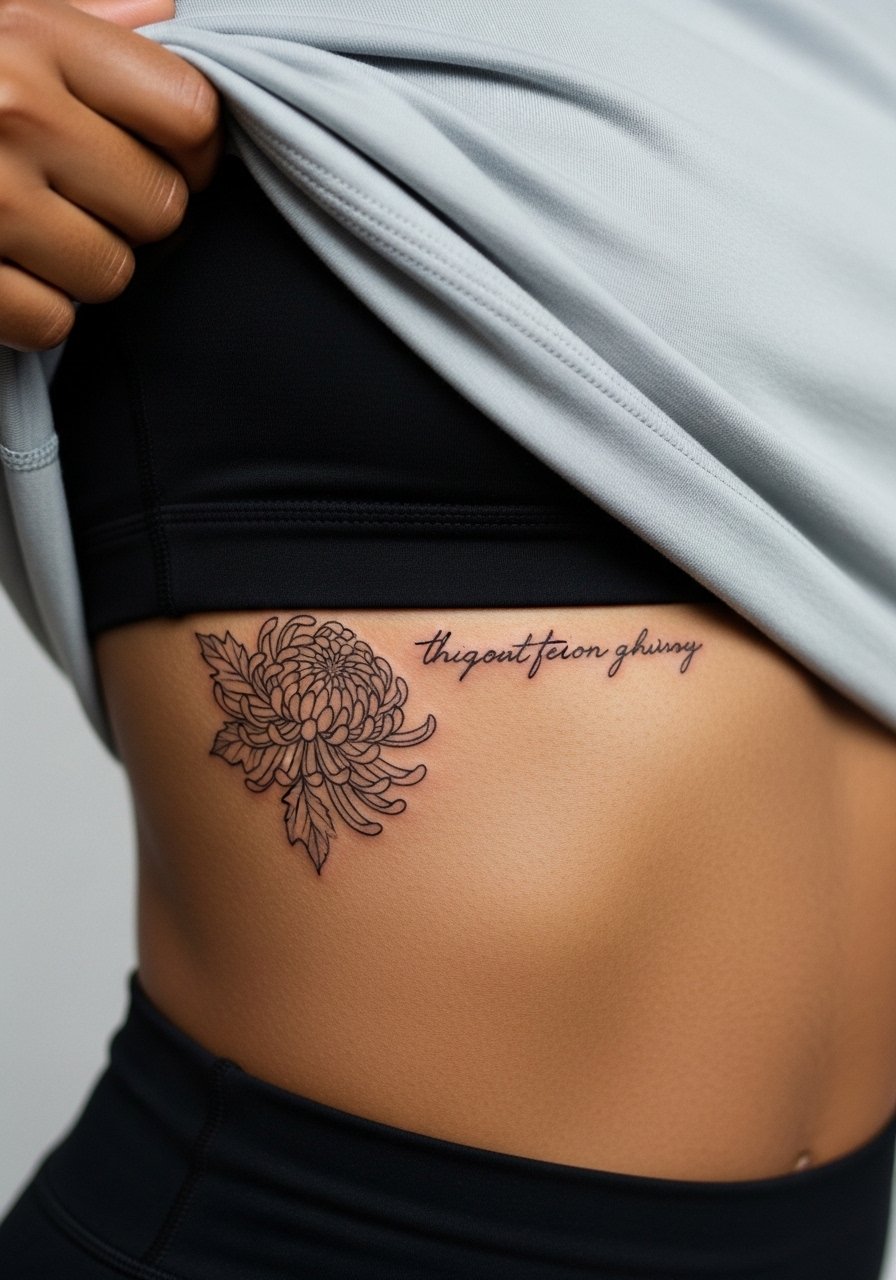
Ribcage pieces carry emotional weight and a reputational debate about fine line. One camp argues that fine line on ribs blurs within two years because of skin stretch and breathing motion. The other camp maintains that with slightly increased spacing and careful needle depth, fine line can settle beautifully there. Decide which side you prefer and ask your artist which techniques they use. Pain is high, commonly 8 to 9, and sessions can be long. For memorial pieces pair simpler script and allow negative space so both the flower and text stay legible after healing.
12. Abstract Brushstroke Chrysanthemum on the Shoulder Blade
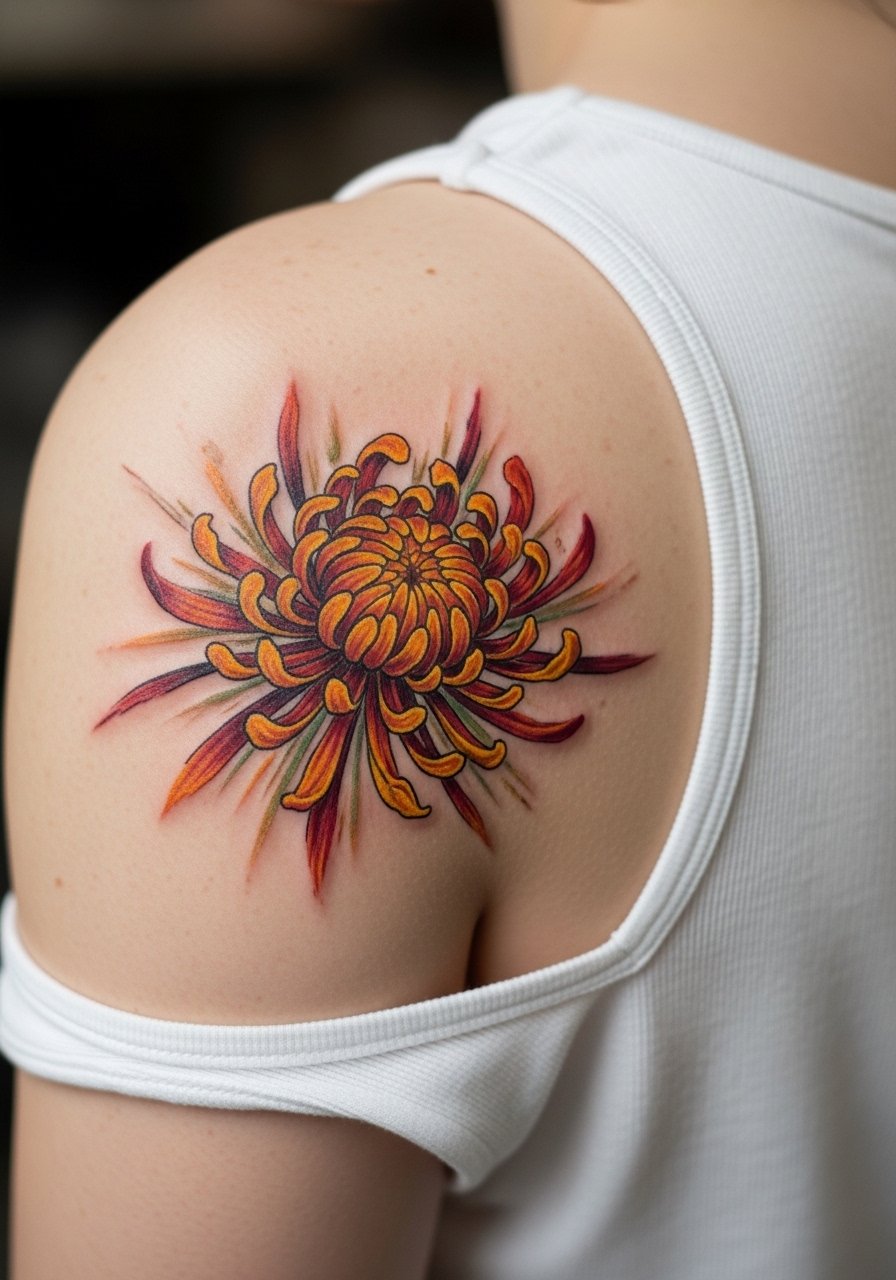
Shoulder blade work is forgiving and frames open-back clothing well. For an abstract brushstroke look, ask the artist for directional strokes that follow muscle lines so the piece moves with the body. Sessions are comfortable and often split into two if you add color. For evenings wear an open-back midi dress so the shoulder blade remains visible and the negative space around the bloom reads clearly. Avoid packing too many fine details into the brushstroke area or they will disappear into the movement of the skin.
13. Botanical Cluster Wrapped Around the Wrist
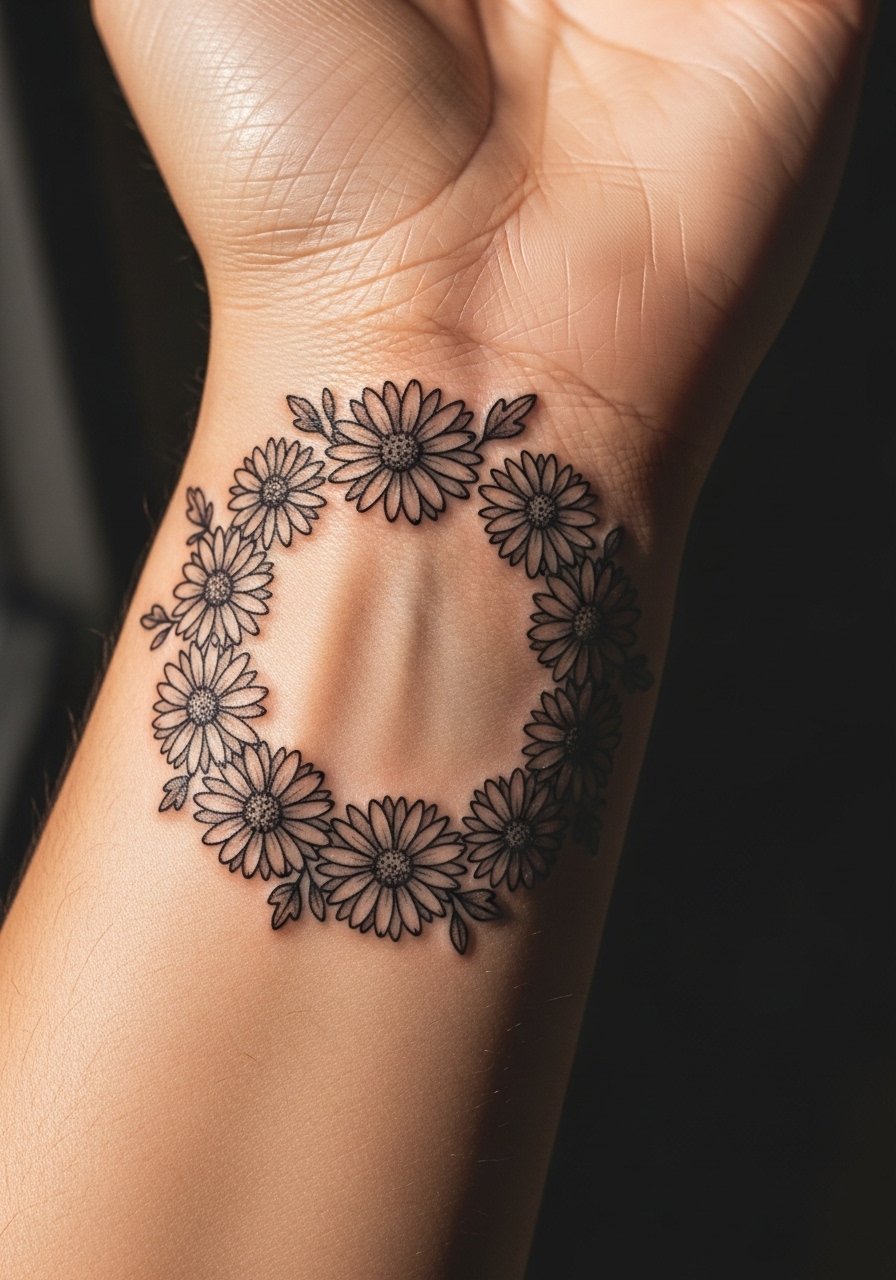
Wrist clusters work as a continuous flash band or as separate small blooms that read as a set. Request slightly heavier anchor lines for the outer petals and lighter inner veining so the design keeps its structure after daily washing. Blowout risk is moderate on thin wrists, so spacing matters. A common mistake is demanding ultra-fine nested details in a narrow circumference. For showing this off, stack with a thin chain bracelet which frames the blooms without crowding the linework. Expect touch-ups at two to four years for fine pieces.
14. Chrysanthemum Bouquet on the Upper Thigh
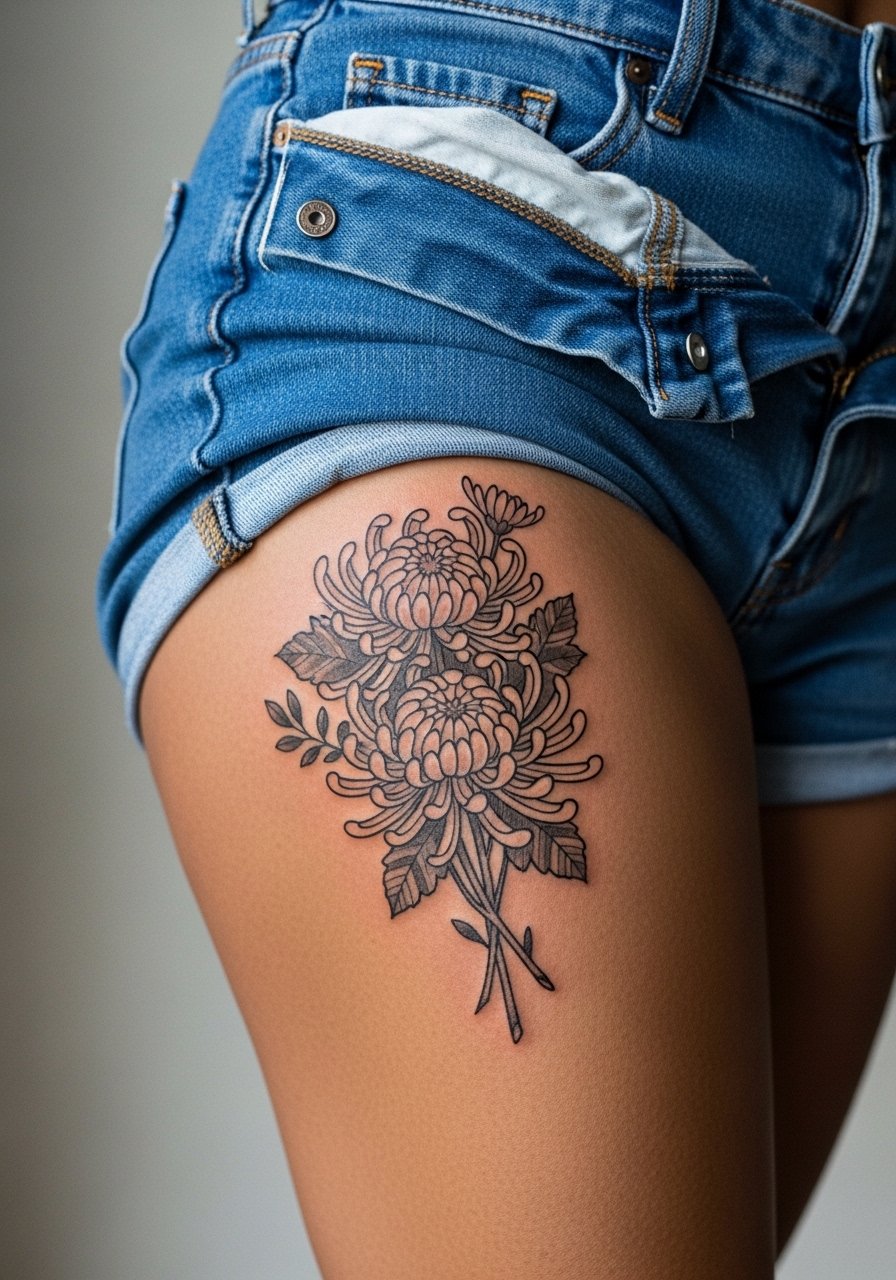
A bouquet on the thigh lets you play with scale and layering because the area handles larger, more detailed work. In consult, specify which elements you want bold and which you want to read as texture so the artist knows where to place saturation. Sessions can be long and you should wear loose shorts or a wrap skirt for comfort. For post-session wear choose loose drawstring linen pants to avoid rubbing during the first week. Thigh pieces are low blowout risk and usually age gracefully with occasional touch-ups.
15. Micro-Realism Chrysanthemum on the Side of the Hand
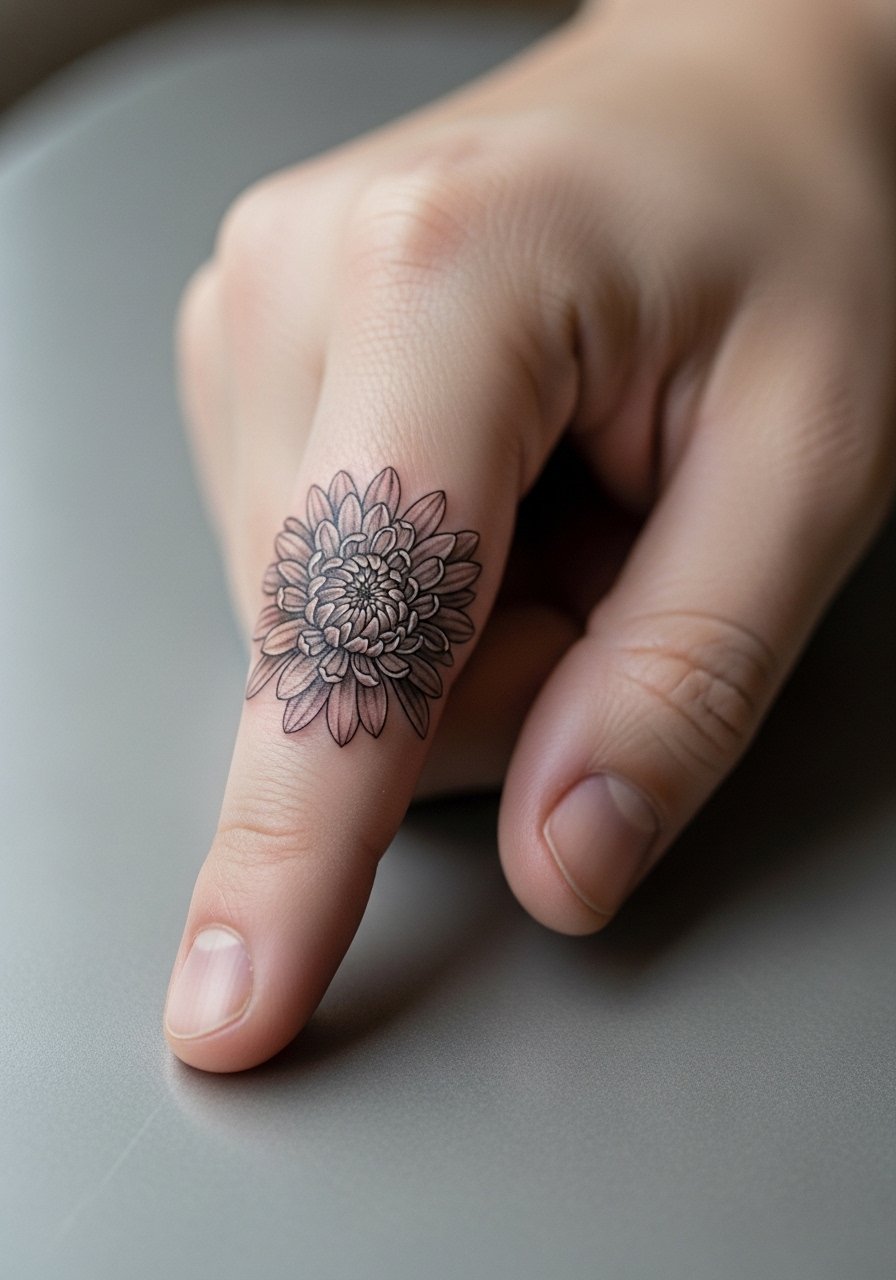
Hand tattoos remain a personal decision because of visibility and occupational considerations. Micro-realism on the hand needs simplified shadowing and slightly bolder petal edges because hands undergo heavy use and washing. Sessions are short but you will likely need touch-ups sooner than for arm pieces, often within a year. If your career could be affected, weigh placement options carefully. For the session wear a short-sleeve shirt so the artist can work with full access and minimal fabric interference.
16. Lower Back Chrysanthemum Sprig
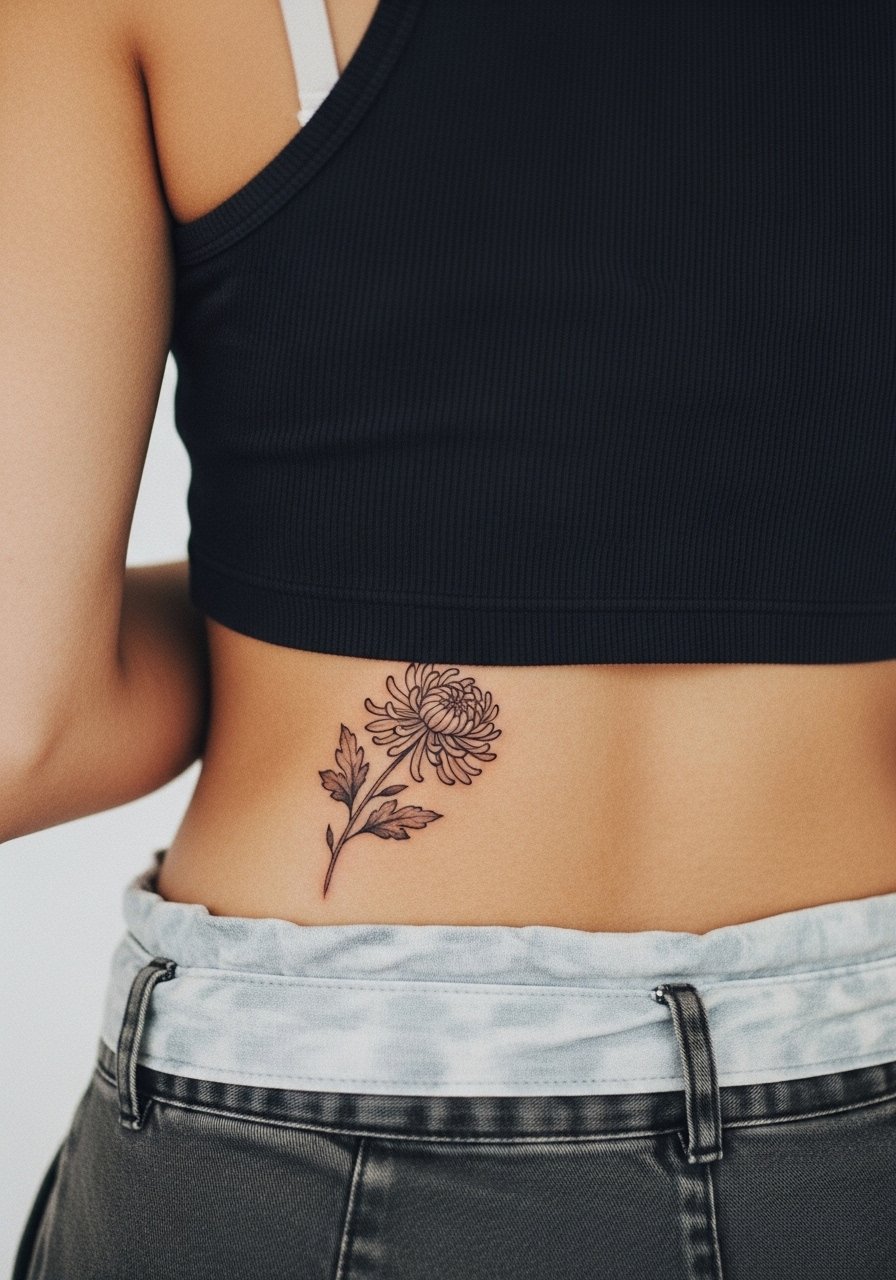
Lower back work sits in a stretch-tolerant area that handles both linework and moderate shading. Ask for petal spacing that follows the natural curve of your lower back to avoid a flattened look when you sit. Sessions vary but are often single sittings under two hours for small to medium sprigs. Keep in mind the area sees friction from waistbands so wear high-waisted, soft fabrics during the first week. Lower back tattoos usually age steadily when given initial protection from tight clothing.
17. Chrysanthemum Compass on the Outer Bicep
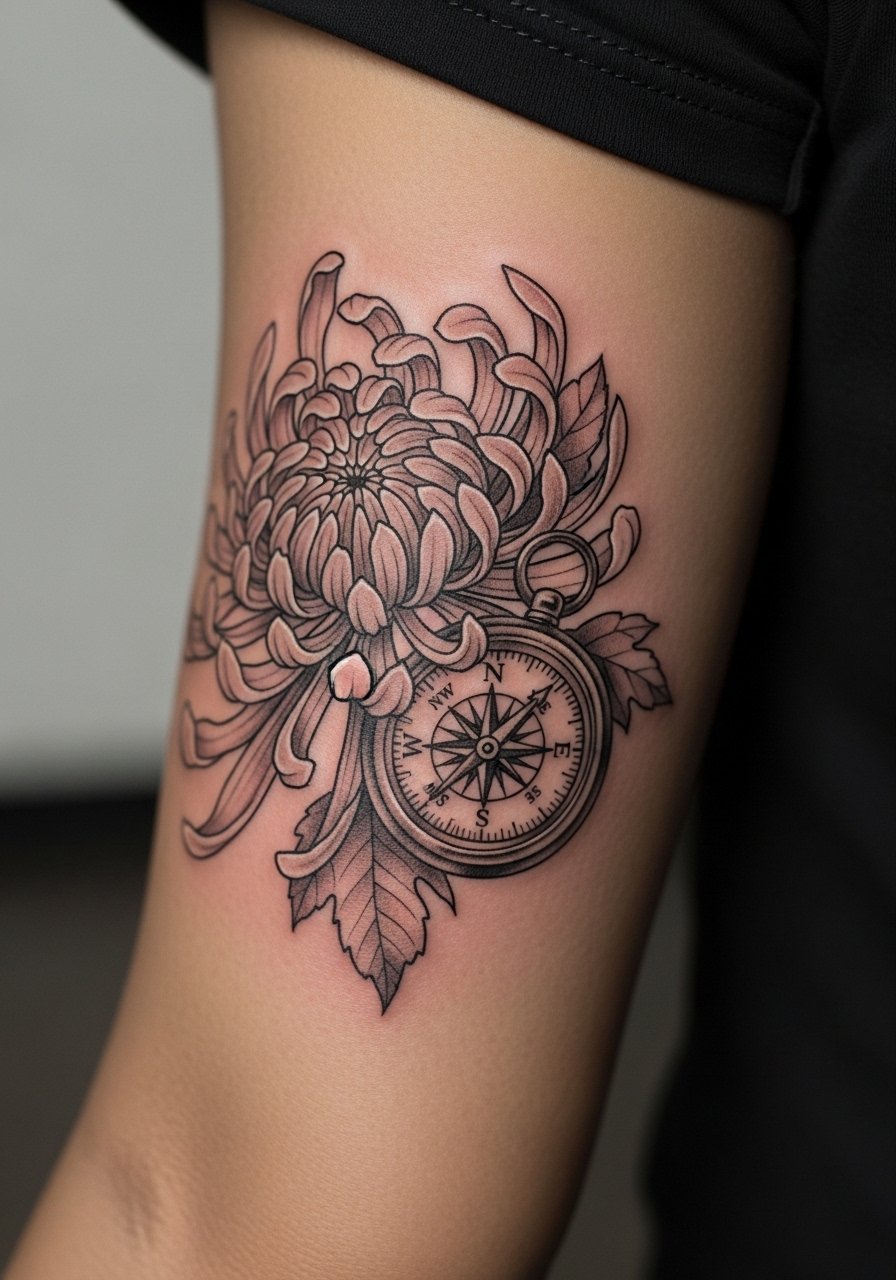
Combining a bloom with a compass gives a narrative edge and centers the piece visually on the arm. Tell your artist if the compass should be graphic or distressed so they scale the petals accordingly. Outer bicep is low pain and takes saturation well, so you can go slightly denser for contrast. For showing it off roll sleeve cuffs or choose short-sleeve linen shirts which let the motif be visible without competing prints. Sessions tend to be comfortable and touch-ups are typically optional unless heavy color is used.
18. Vertical Watercolor Chrysanthemum Strip Along the Inner Arm
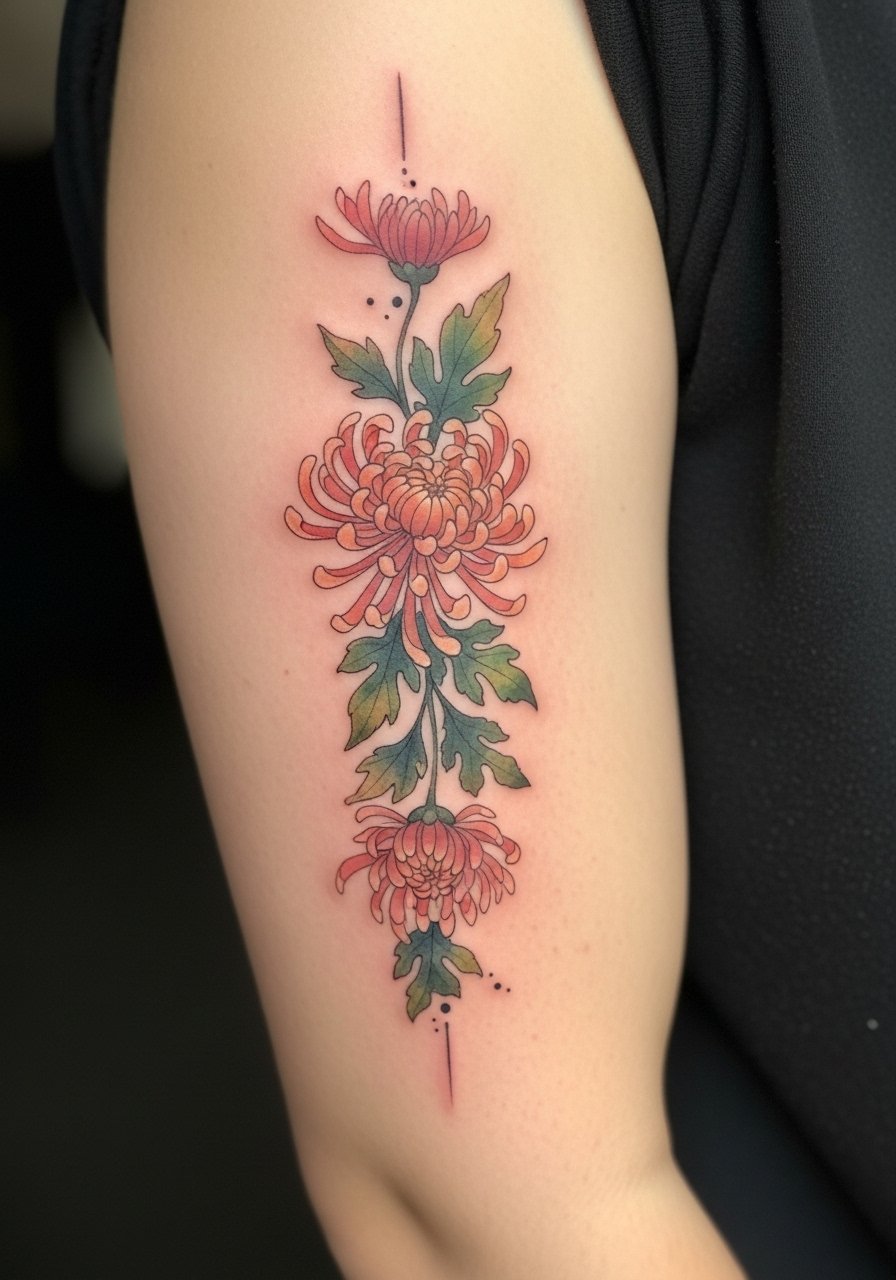
Vertical strips along the inner arm make for elegant composition but they sit on an area that stretches with movement. To help longevity ask the artist for a soft defining outline combined with layered washes rather than pure painterly bleeding. The controversy around watercolor durability applies here too, so get a clear touch-up plan. Sessions run one to three hours depending on length. For the appointment wear a loose tank top so the artist can access the inner arm easily without fabric pulling.
19. Micro Chrysanthemum Behind the Knee
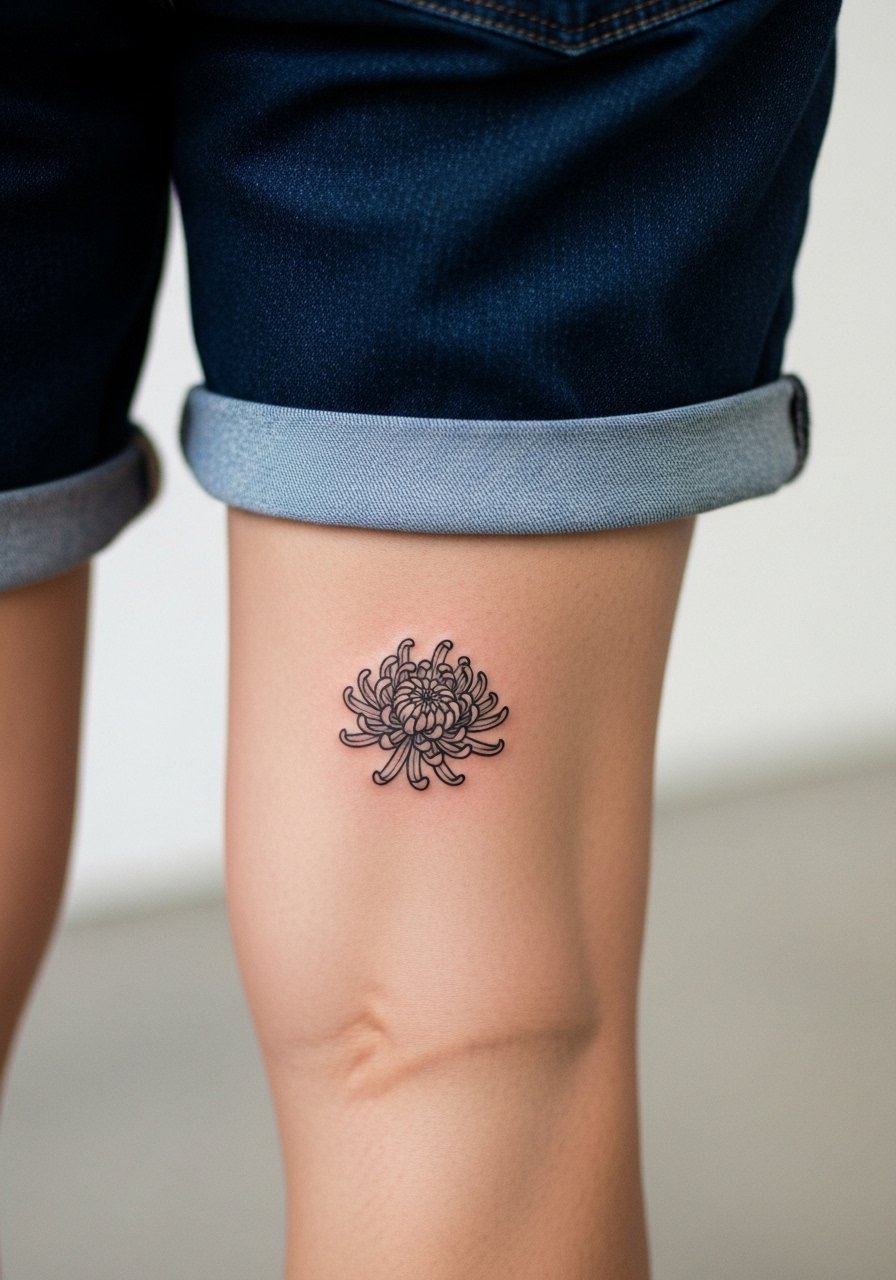
Behind the knee is a subtle and unexpected spot that moves a lot. The skin there is mobile so keep the design small and avoid tiny cross-hatching. Sessions are brief but the area can be tender when bending during the procedure. A common error is asking for dense shading in that fold which will shift and blur. For the session choose flexible clothing so you can sit comfortably and avoid tight bands around the knee afterward.
20. Chrysanthemum Mandala at the Nape
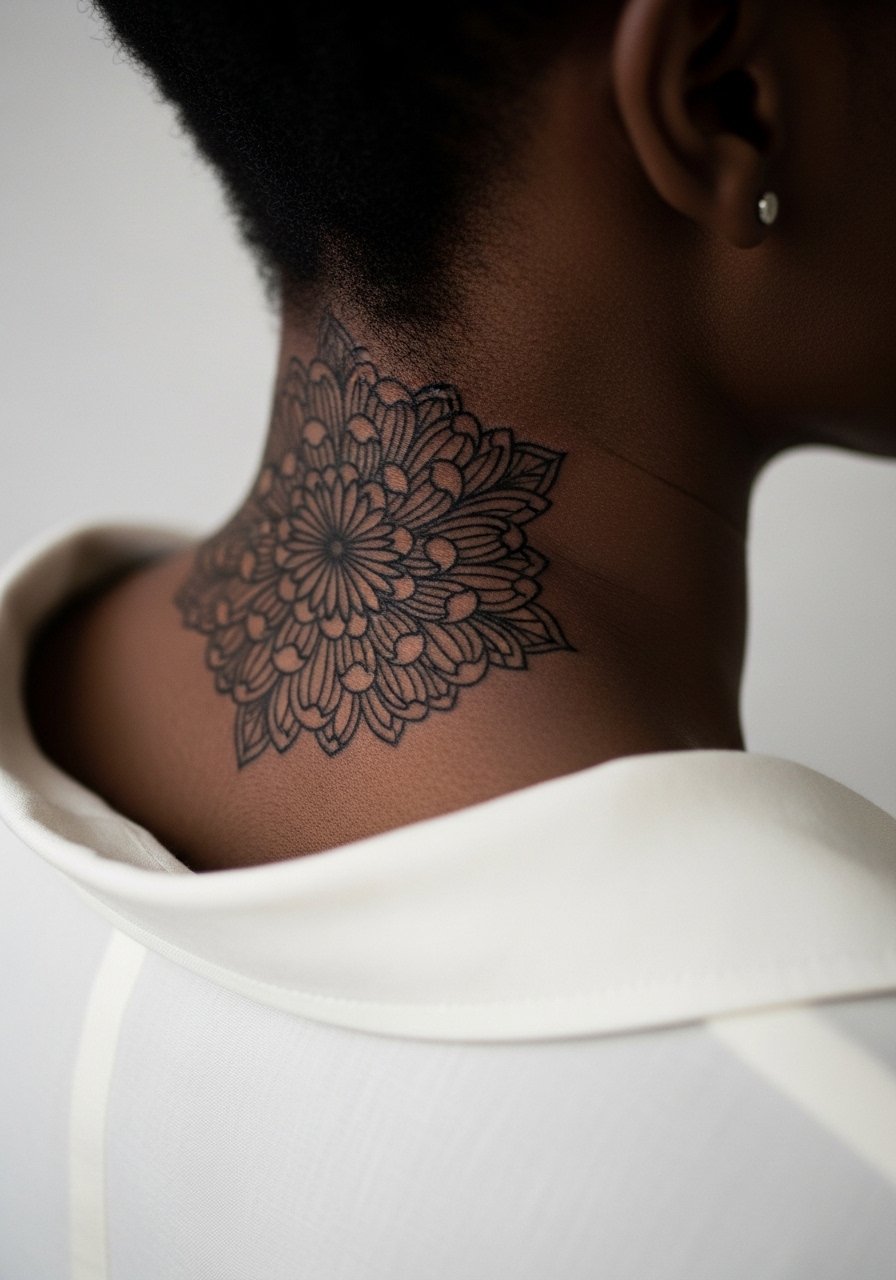
Nape pieces are discreet unless you wear your hair up, which is part of the appeal. Ask how the mandala will sit when your head tilts to ensure symmetry, and request stronger anchor lines so the geometry retains structure as the skin moves. Pain is moderate and sessions are usually under two hours. For showing it off choose hairstyles that lift hair for evening looks, and during the appointment wear a wide-neck top so the artist has clear access without pulling at hair.
21. Chrysanthemum Ring Around a Finger Joint
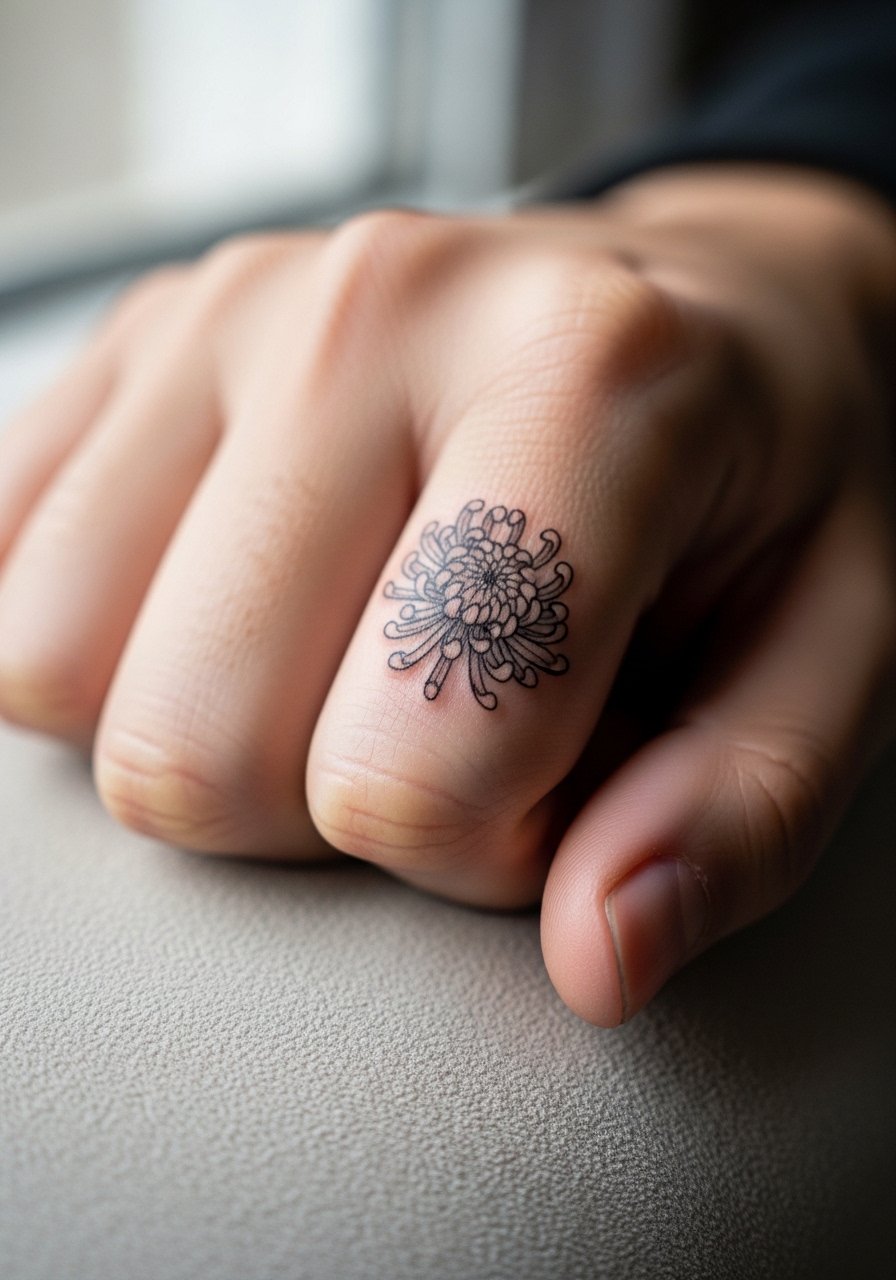
Finger joint rings read as subtle jewelry but they fade faster than any other placement. Ask for slightly thicker petal outlines and less interior detail so the motif survives repeated washing and movement. Sessions are quick but expect touch-ups at year one or earlier. A common mistake is requesting script and florals in the same narrow space. Keep the motif simple and plan for maintenance as part of the design's lifespan.
Frequently Asked Questions
Q: How long do fine line chrysanthemum tattoos last before needing a touch-up?
A: It depends on placement and sun exposure. Fine line on the forearm or collarbone may need a touch-up around year three to four, while denser blackwork on the thigh or shoulder can go much longer. Expect faster fading on hands, fingers, and wrists because of friction and washing.
Q: Are watercolor chrysanthemums a bad idea if I want longevity?
A: Watercolor pieces require compromise. The painterly effect looks immediate and soft, but it can dull unevenly. If you want the look with better longevity, ask for a subtle anchor outline and a touch-up plan at booking. That balances the aesthetic and the practical side.
Q: What should I wear to a sternum or ribcage session?
A: Wear clothing that gives the artist clear access and that you can get back into without stretching the area. A fitted sports bra or a front-zip top works well for chest and rib sessions. If you want options, a fitted sports bra is a good session choice.
Q: I'm worried about hand and finger tattoos affecting my job. What should I consider?
A: Think about visibility and industry norms. Hand work is very visible and sometimes still carries professional consequences. If you want a floral look with lower visibility, consider the inner forearm, wrist band, or ring-style finger designs you can cover when needed.
Q: How do I choose between a bouquet and a single bloom for my first chrysanthemum tattoo?
A: Consider scale and lifestyle. Single blooms are easier to place and touch up, and they suit visible spots like the collarbone or forearm. Bouquets take more time and space, and they suit the thigh, back, or sleeve areas. Discuss how each option will age with your artist.
Q: Are there techniques artists use to make chrysanthemums last longer on thin skin areas?
A: Yes. Artists often recommend slightly heavier anchor lines, conservative spacing between fine strokes, and less interior micro-detail on mobile zones. Ask what their touch-up policy is and how they plan to space linework so the piece remains legible over time.