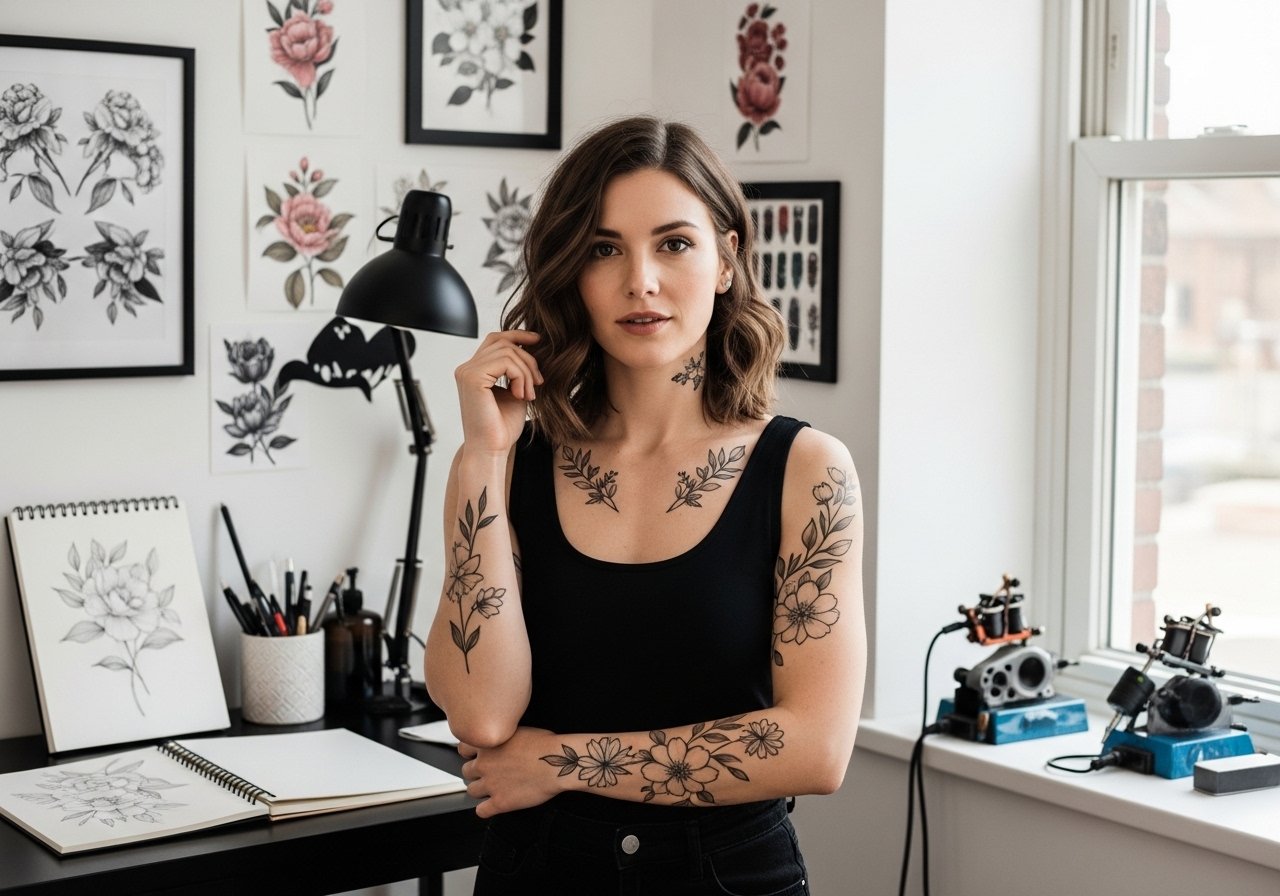
Fine line pieces are everywhere on saved boards, and the trend sometimes outpaces reality. Fine line Van Gogh motifs look incredible fresh, but placement and scale dictate whether the delicate whips and dots hold up. I favor designs that plan for aging from the stencil stage, and that approach is exactly what the first idea below delivers with forearm-friendly scale and clear consultation notes.
1. Starry Night Swirls in Fine Line on Inner Forearm
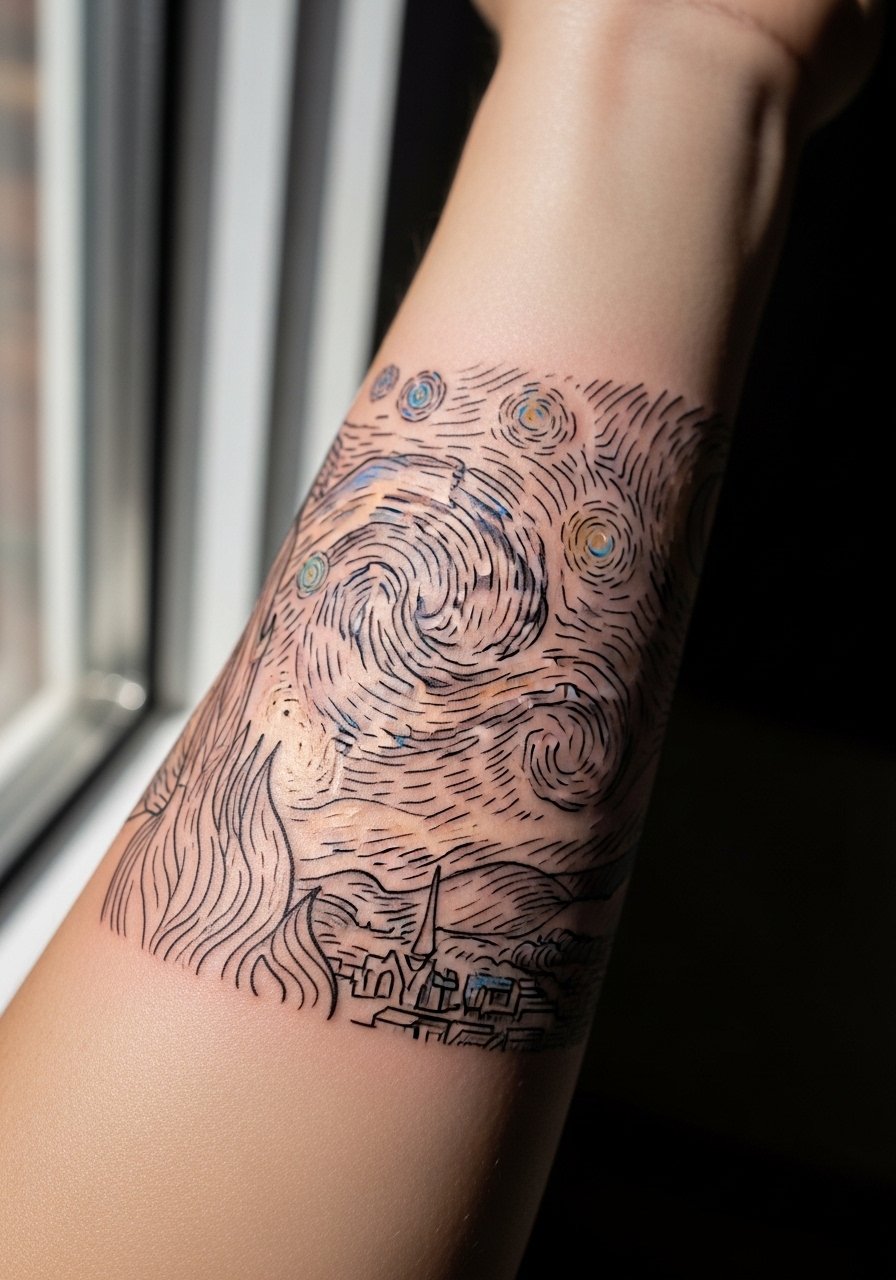
I recommend this for someone who wants Van Gogh energy without full color saturation. Tell your artist you want slightly heavier anchor lines around the main swirls so the motion reads after a few years. A common mistake is asking for ultra-fine single strands across the whole design, which often softens into an indistinct blur by year three. Expect one session under an hour for a 2-4 inch piece and a light touch-up in year two. For showing this off, roll the sleeve of a rolled cuff chambray shirt so the forearm reads like a framed sketch.
2. Monochrome Starry Night Line Drawing Around the Wrist
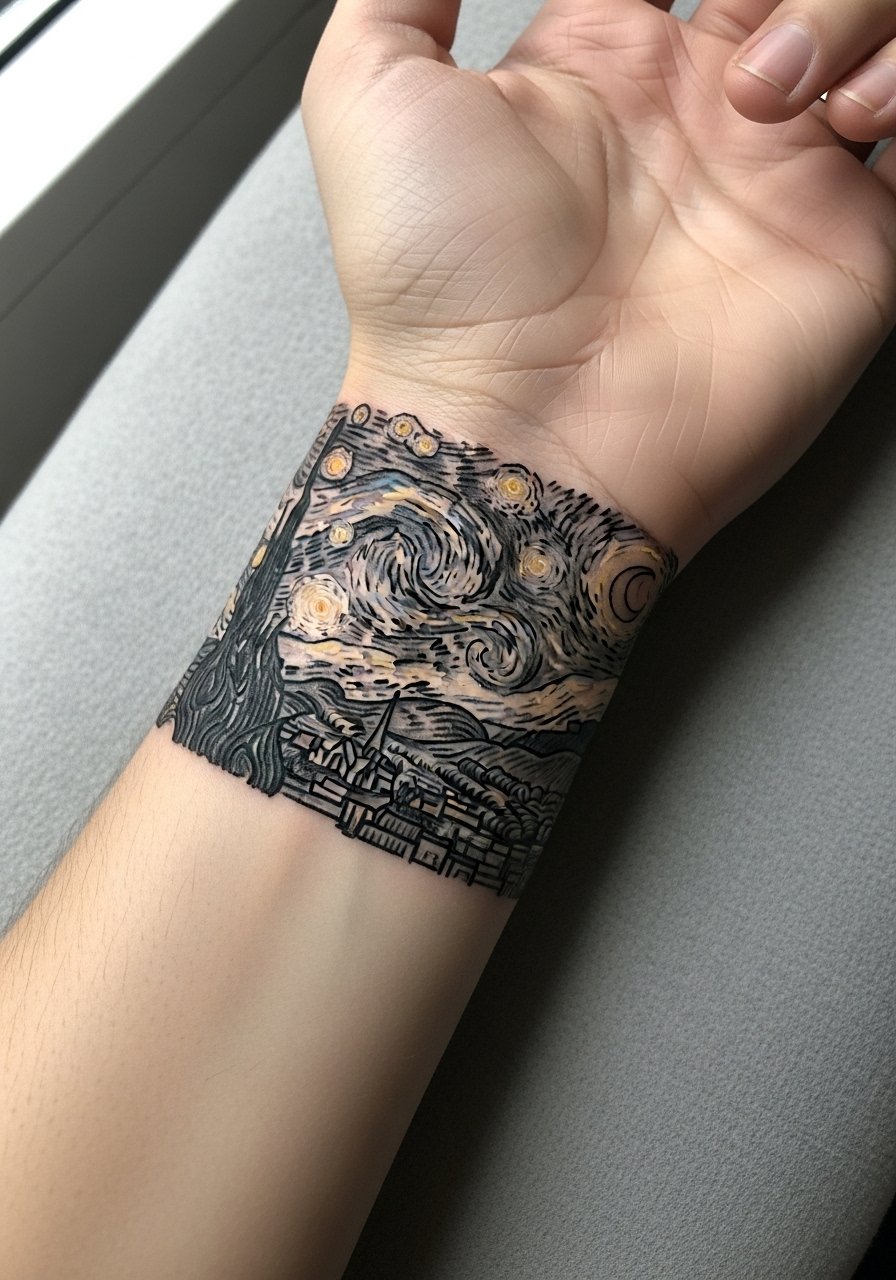
This minimalist band works if you want a wearable nod that stays discrete. Ask for clear spacing between the circling lines and avoid dense filling close to the bone, which tends to suffer blowout on thin skin. Most artists will do a single quick session under 45 minutes, though the wrist is prone to faster fading. Expect touch-ups sooner than for arm pieces. Keep the wrist visible without crowding with jewelry. Pair it with a single cuff bracelet on the opposite wrist during show-off moments and skip heavy bangles that rub the linework.
3. Colorful Starry Night Full Scene on the Thigh
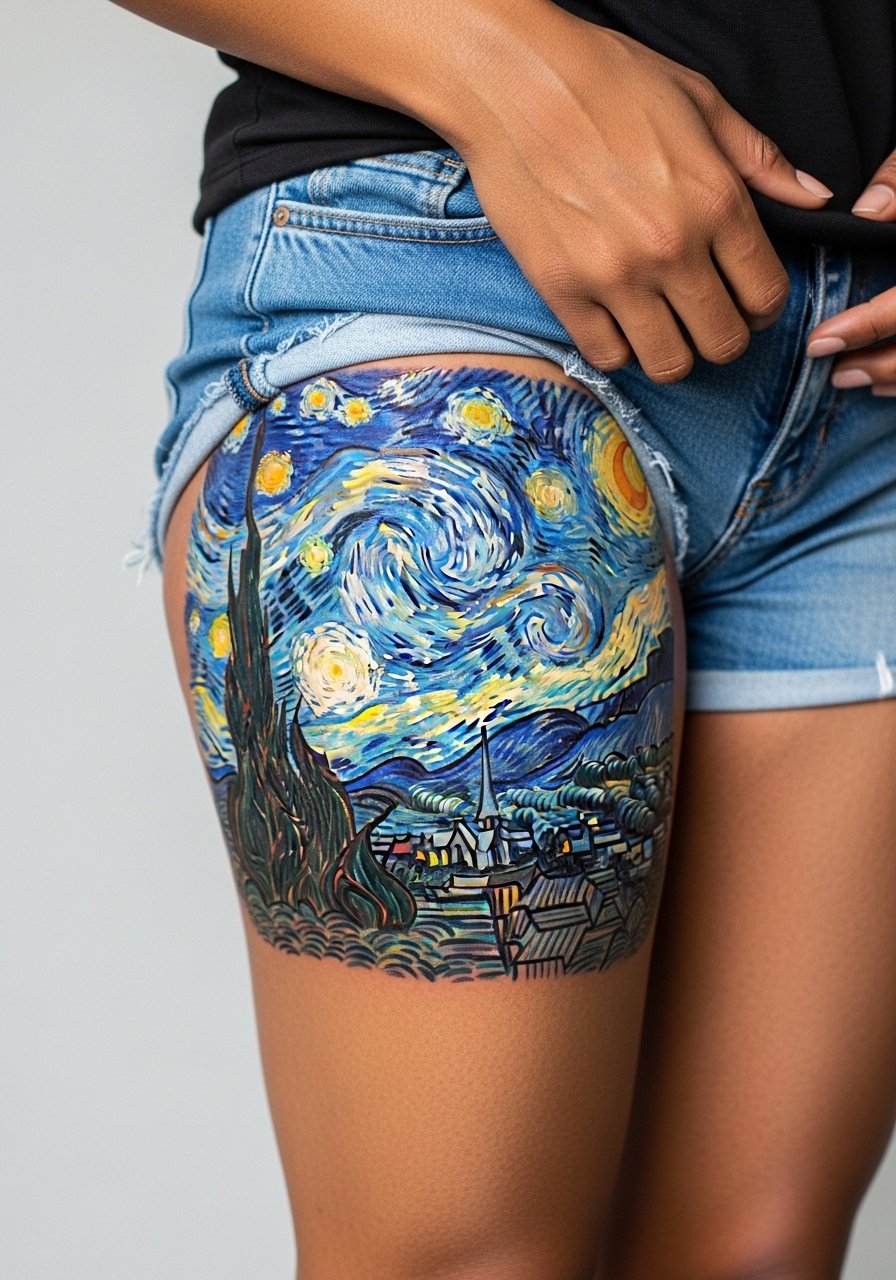
Color people split into two camps on pieces like this. One camp loves saturated color for emotional impact and says the payoff is worth maintenance. The other camp prefers black and gray for longevity and lower touch-up frequency. Both views have merit, so discuss pigment choices and expected touch-up cadence before booking. A thigh wrap at 5-8 inches will take multiple sessions and careful layering for depth. Thigh skin hides fading well, but vibrancy shifts in the first two years. For sessions and post-session outings, reach for high waisted shorts so the piece sits cleanly above the waistband and avoids pressure.
4. Sunflowers Bouquet in Watercolor on the Collarbone
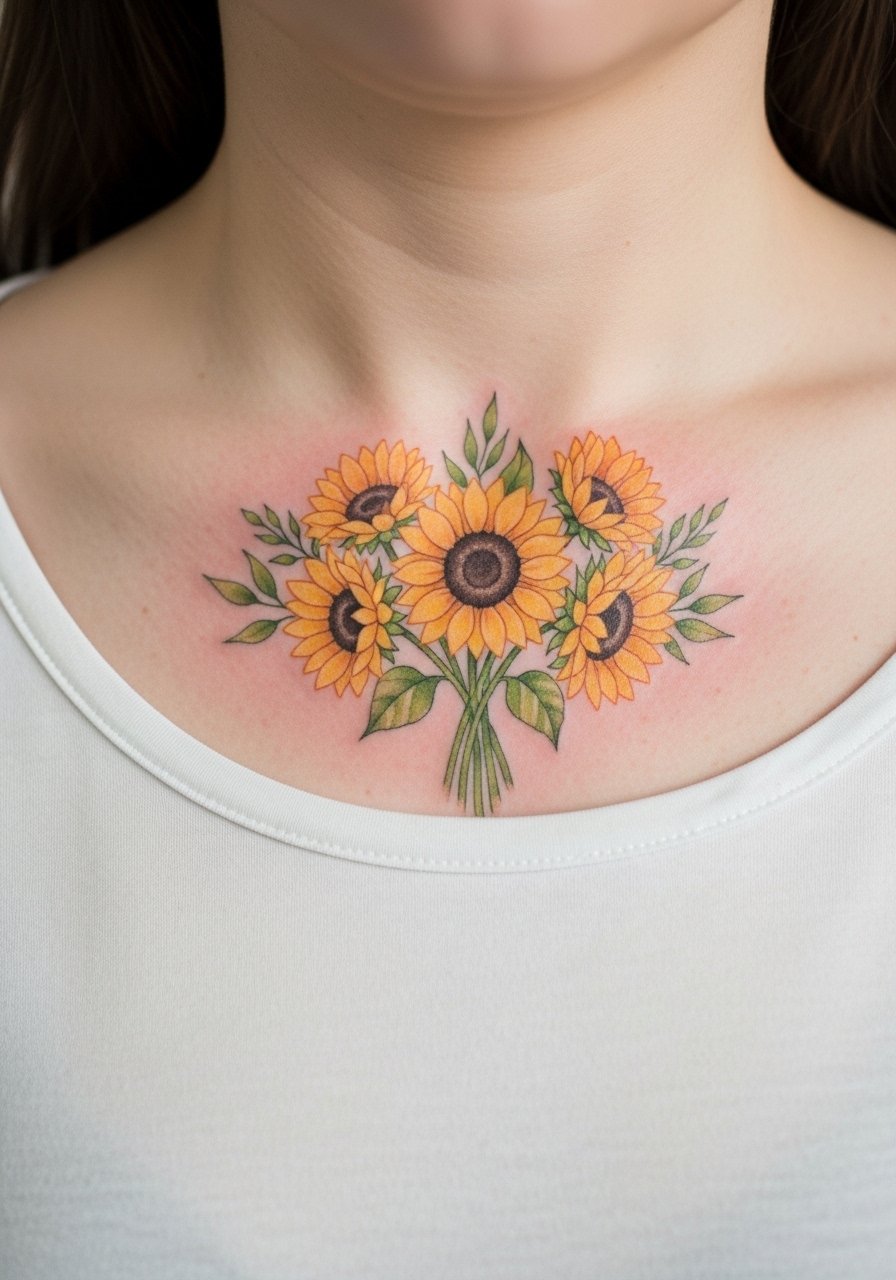
Collarbone watercolor reads delicate and airy, but it needs room to breathe. Tell your artist to avoid tiny color splatters right on the bone. Those spots migrate and look patchy after healing. This placement can sting more than an arm, but sessions are short. For showing the piece, lightweight tops work best. A simple v neck t-shirt keeps the collarbone visible without tugging the skin, and for the session wear a strapless or wide-neck top the artist can easily shift.
5. Black and Gray Starry Night Cypress on the Ribcage
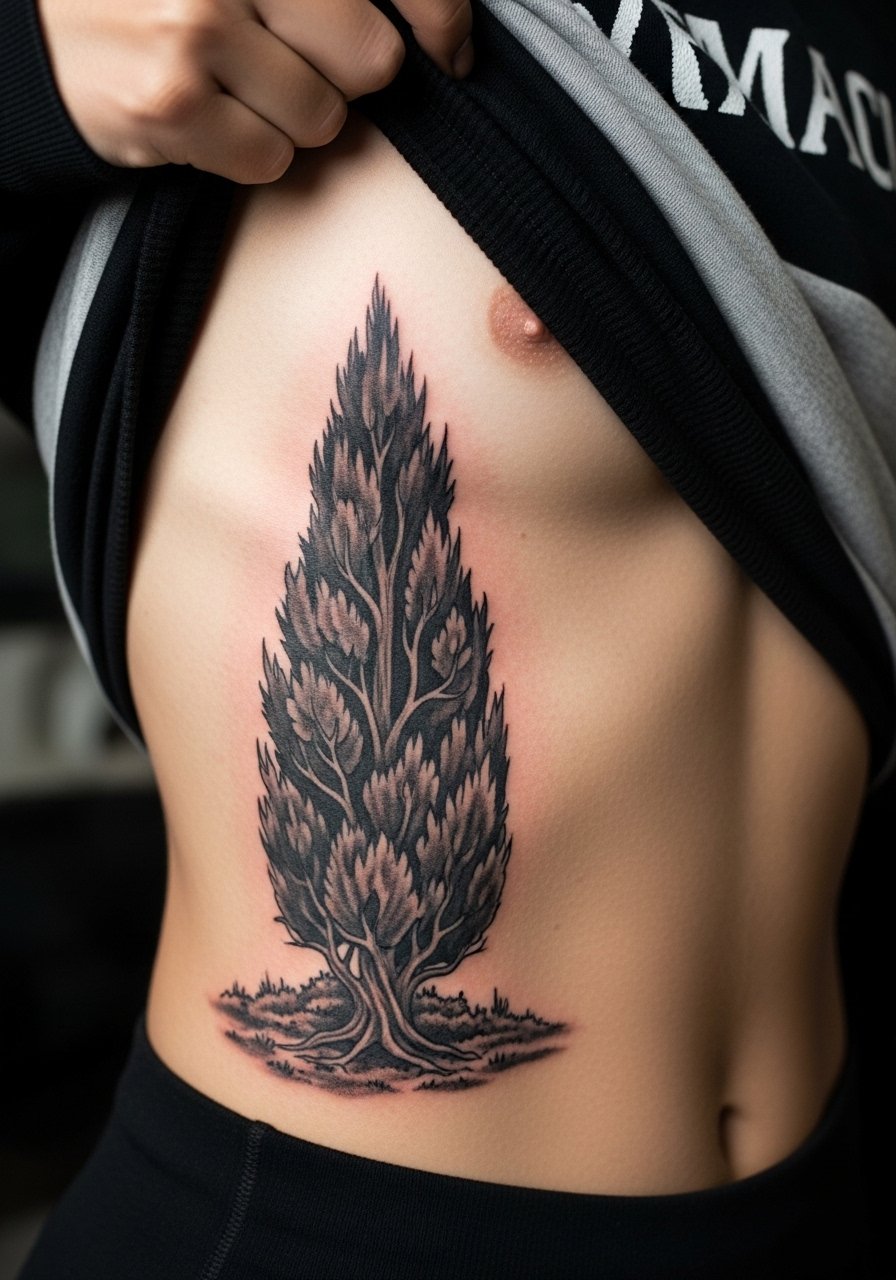
Fair warning, the ribcage is a higher pain zone, often a 7 out of 10 for most people. I recommend booking a longer appointment and planning breaks. For this textured black and gray study, ask for stipple shading to mimic oil strokes rather than dense soft shading that can pill into gray patches later. One big mistake is packing too much contrast into tight areas, which can age into muddy sections. Expect multiple sessions and a touch-up around year three for crisp edges. Because this is a sensitive area, wear a cropped top you can lift easily so the artist has clean access.
6. Minimalist Swirling Starry Night Sky on the Inner Wrist
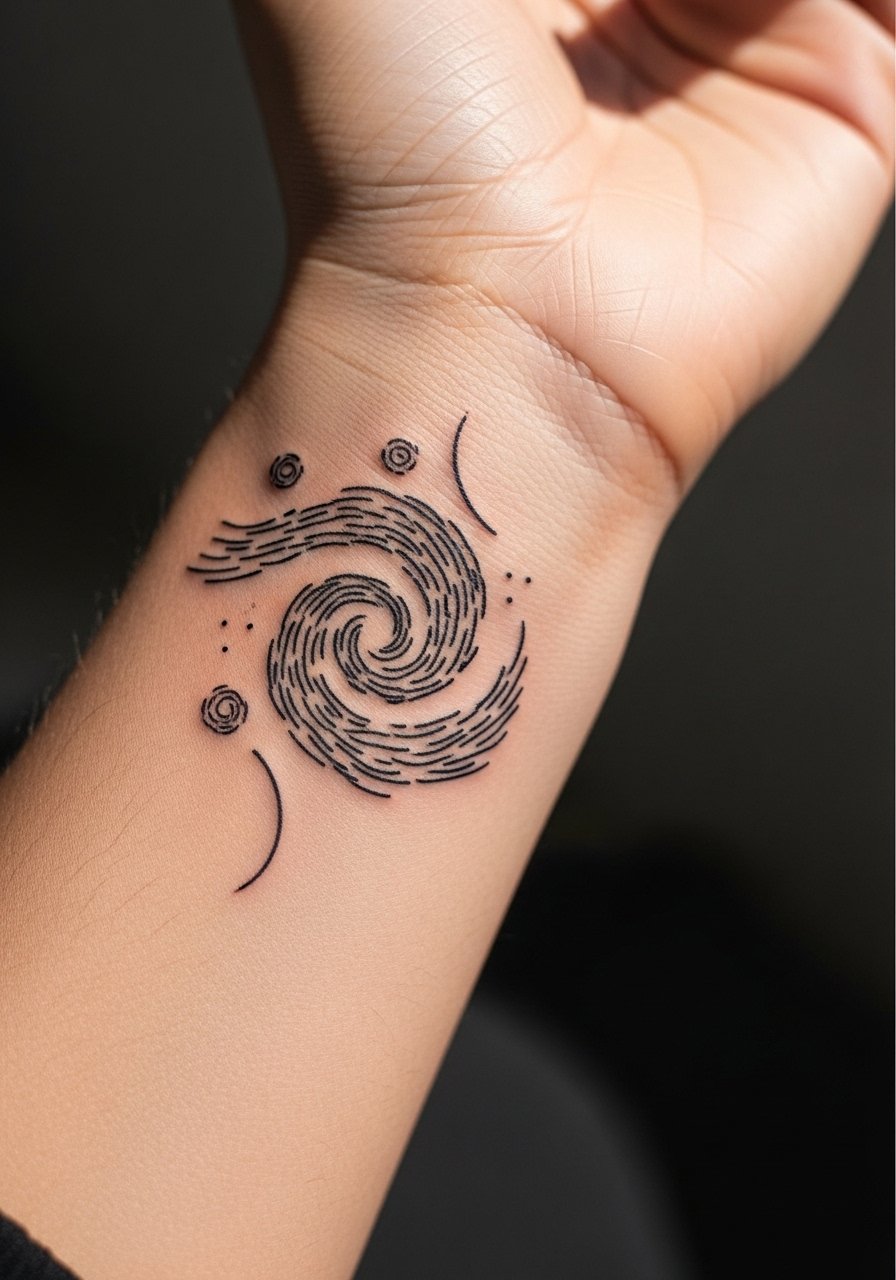
This tiny reference is perfect for a first Van Gogh sketch. The wrist is high-motion and fine line can fade quickly, so ask for modest line weight and slightly more spacing in dense areas to slow merging. A common mistake is requesting a 1 mm line across the whole design. That reads fragile in the first month and often softens by year two. Session time is short, but expect regular touch-ups. For the appointment wear a sleeveless tank top so the artist can work without sleeve interference and remove bracelets beforehand.
Studio Day Picks
The small wrist and forearm pieces above ask for different prep than larger thigh and collarbone work, so these five things smooth out the session and the first week.
-
Stencil transfer paper kit. Lets you preview the linework position on skin before the needle starts, especially helpful for narrow forearm and collarbone placements.
-
Topical numbing cream. Applied as directed about 45 minutes before eases wrist and rib sensitivity without obscuring the stencil.
-
Thin protective film roll. Useful for finger and wrist tattoos that face friction from typing and handwashing in the first week.
-
Fragrance free gentle body wash. Cleanses healing skin without irritating tight linework on small Van Gogh motifs.
-
Aquaphor healing ointment. Thin layers in the first days lock in moisture and help fine line areas heal without scabbing that distorts thin strokes.
7. Starry Night Village Silhouette as a Forearm Panel
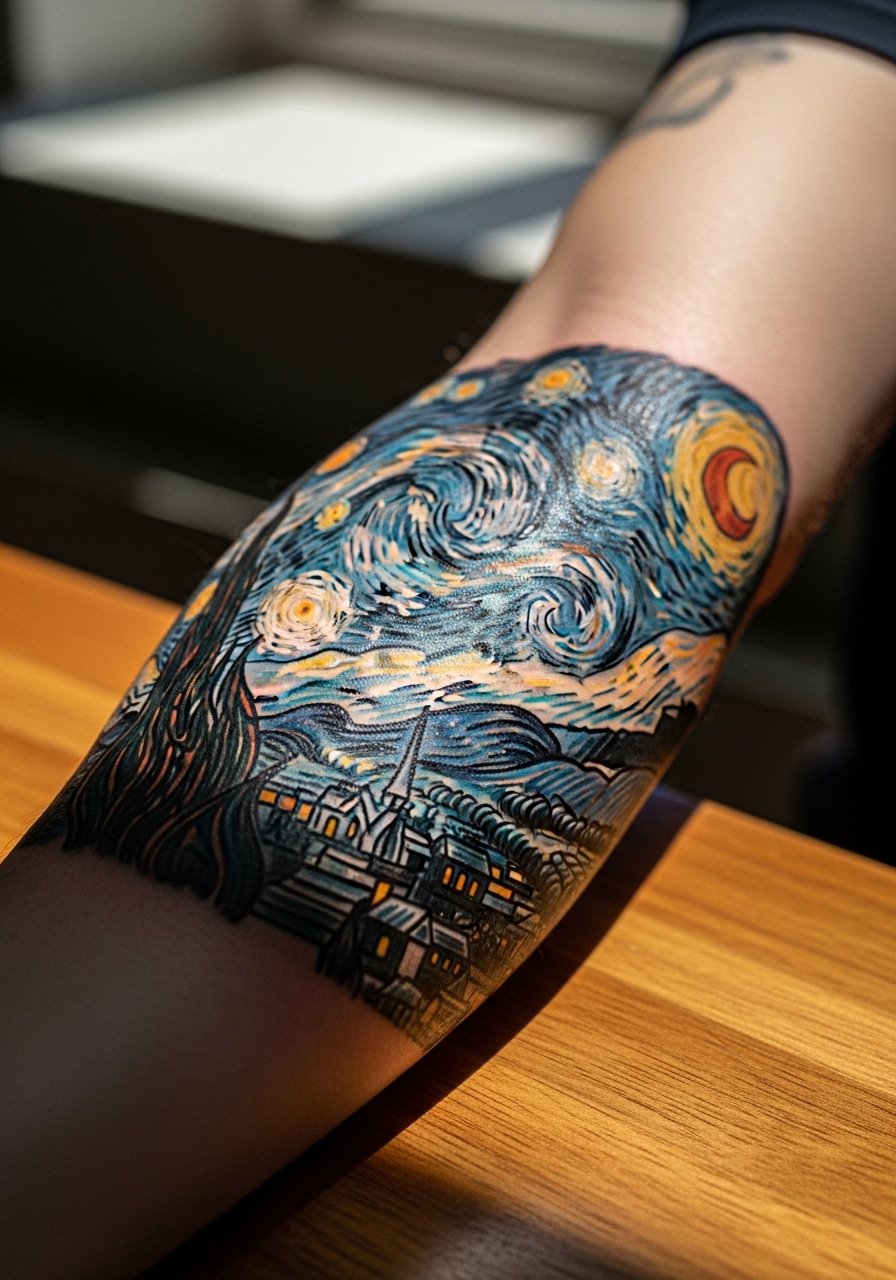
This design works as the starting panel for a sleeve if you want to expand later. Tell your artist you want clean negative space between the buildings and the swirls so the silhouette doesn't collapse into a block of color in five years. A frequent mistake is asking for too many fine architectural details at small scale, which lose definition over time. One session will establish the outline and a second adds limited color. Show-off pairing is a short sleeve button shirt. Roll the sleeves up and let the panel act like a cuff. For session day, a short sleeve button down men style shirt is easy to shift.
8. Micro Starry Night Swirl on the Finger
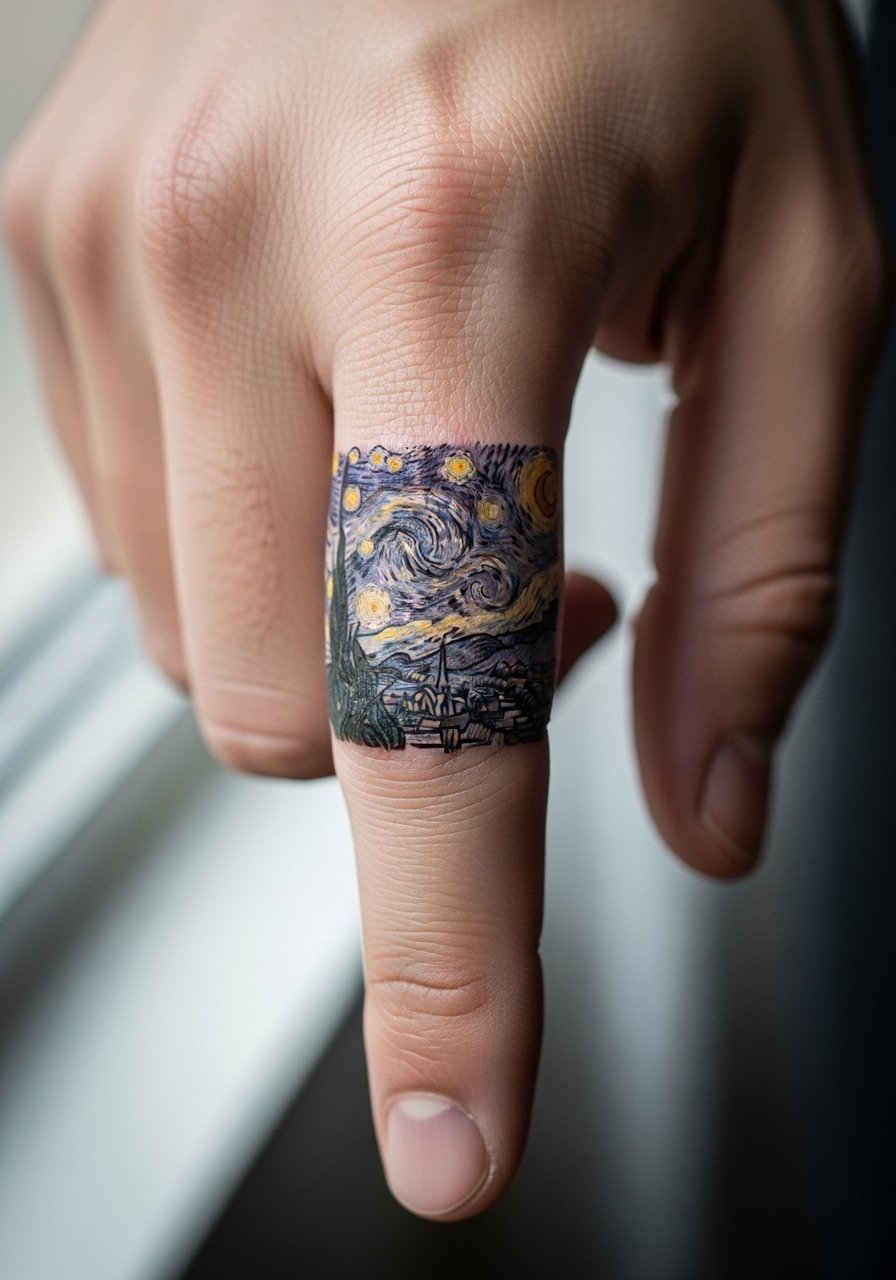
Finger pieces are discreet and tactile, but they face constant washing and friction. The biggest mistake is asking for dense detail on an inch of moving skin. For a micro swirl, request a bold single loop rather than many tight curls. Expect faster fading and plan for touch-ups as a routine. The session feels quick but the aftercare period demands vigilance. Hand tattoos can have career implications in some fields, so think about long-term visibility before booking.
9. Ornamental Sunflower Mandala Fusion on the Inner Bicep
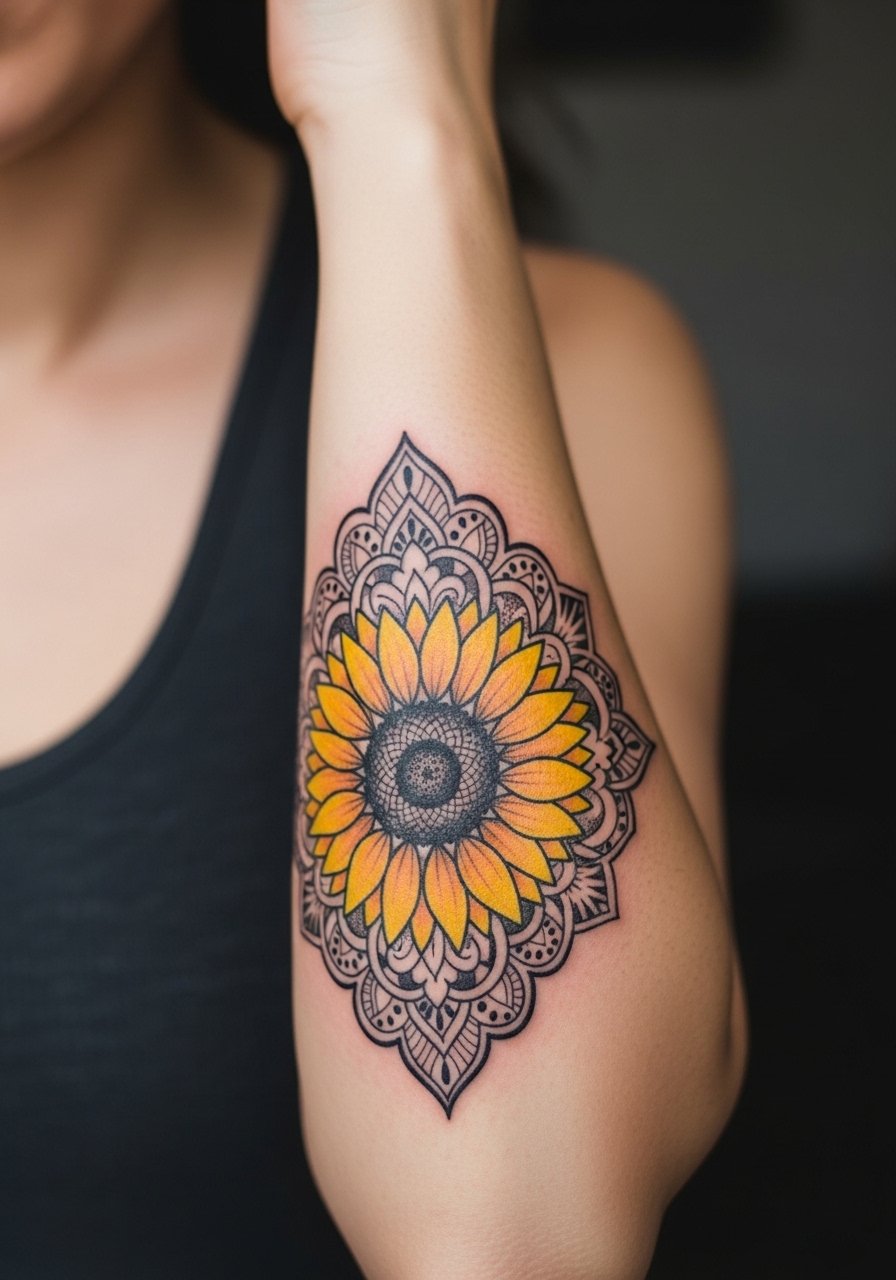
Inner bicep skin holds linework well when the design has breathing room. Ask for generous negative space and stipple shading to suggest texture without packing ink into tiny spots. A mistake I see is over-detailing the center of the mandala, which can become a muddy area after a couple of years. Sessions are comfortable if you schedule short breaks. For the appointment wear a sleeveless tank top so the artist can access the inner arm without tugging fabric.
10. Blackwork Swirling Night Sky with Cypress on the Shoulder Blade
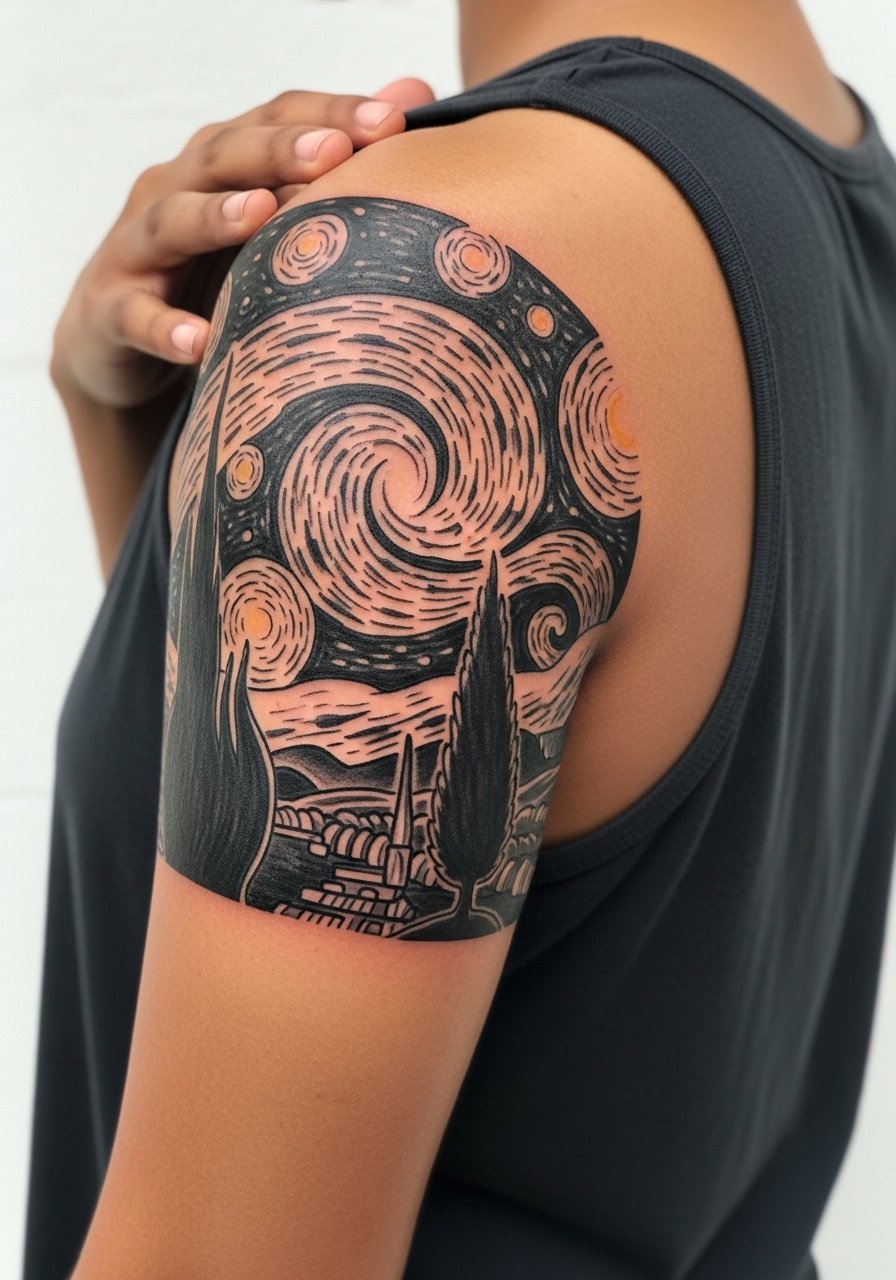
Bold blackwork handles high-contrast pieces beautifully and ages into a graphic silhouette. Tell the artist you want solid fills broken by narrow negative lines to keep texture. One common error is too many tiny negative dots in heavy black fields, which vanish into a mass over time. Shoulder blade pieces are forgiving for touch-ups and typically need less frequent maintenance than wrists. For sessions, a loose tank or button-down that can be shifted is ideal. Show it off with an off shoulder blouse for evenings out.
11. Fine Line Sunflower Outline with Dotwork on the Ankle
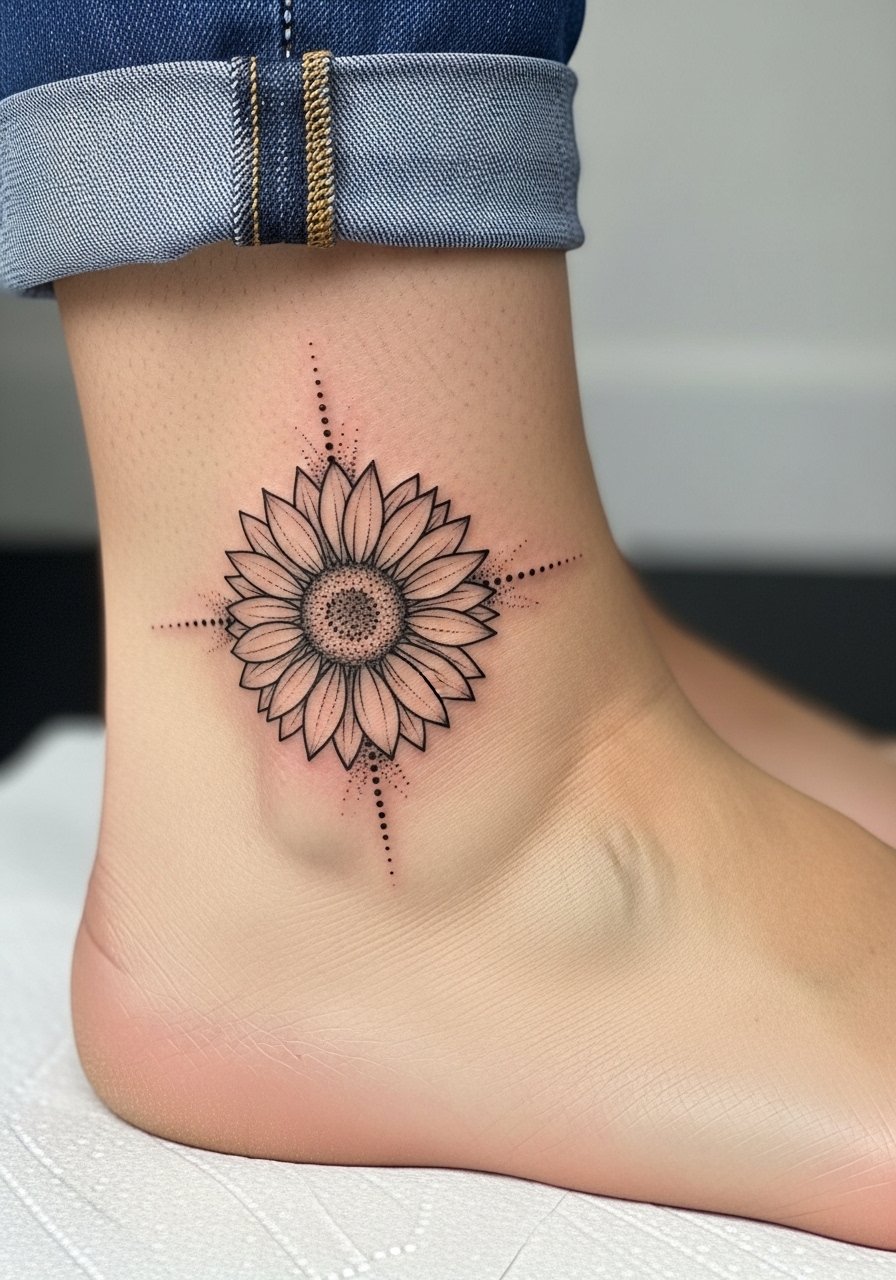
Ankle tattoos are seasonal show-offs. The skin around the ankle can be thin, so request slightly bolder linework near the bones to prevent early fading and blowout. A common mistake is packing too much dotwork next to thin lines, which causes merging. Expect one short session and touch-ups every few years if you want crisp stippling. For summer reveal, cuffed straight-leg jeans or midi skirts work well. Wear cuffed ankle jeans to frame the design without rubbing it.
12. Black and Gray Starry Night Cypress as a Back Panel
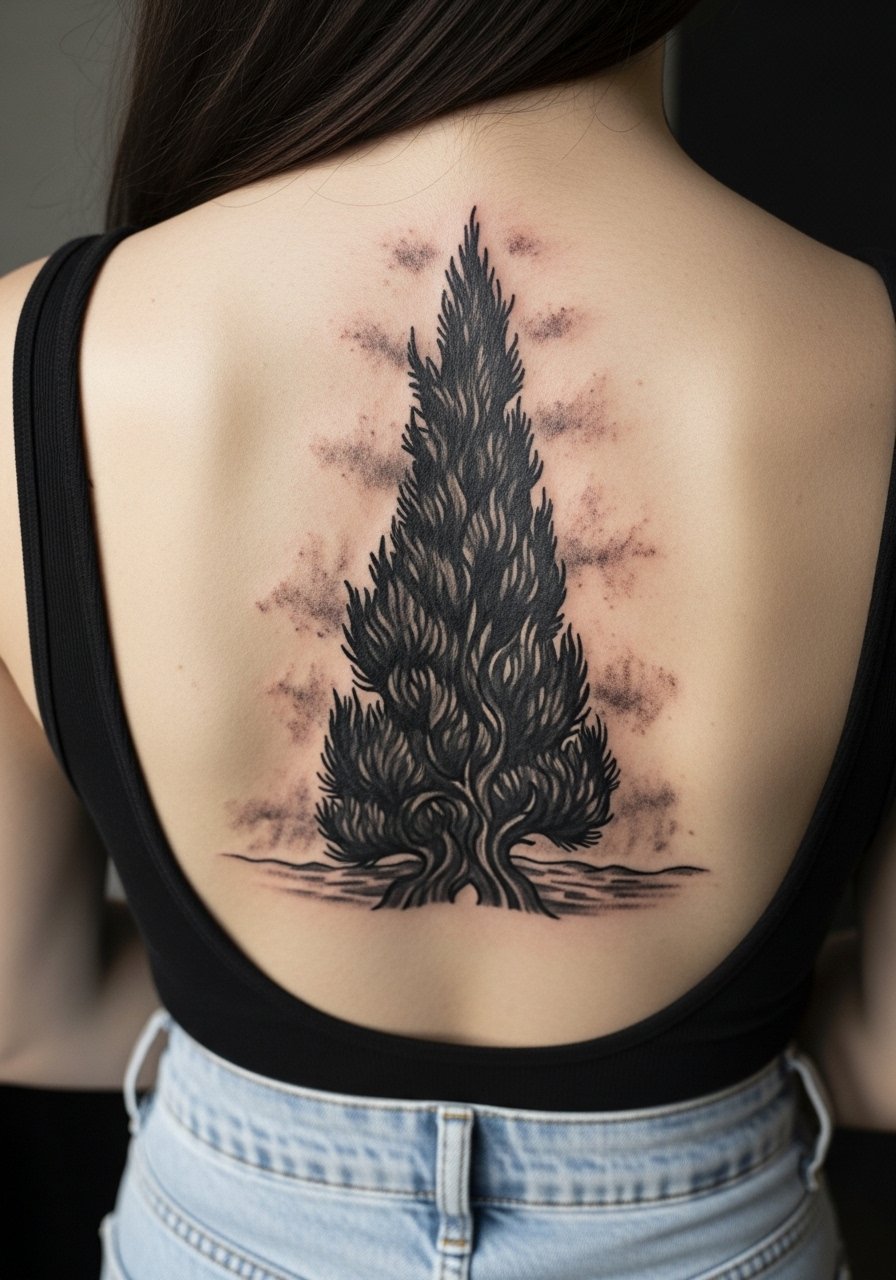
Large black and gray panels let you mimic brush texture with stipple and whip shading. Artists split over whether heavy shading or fine textural marks read better long term. One camp says dense shading holds up with less color shift. The other camp argues texture with more negative space prevents an overall muddy block. Both sides are right in different skin types, so ask your artist which approach suits your skin. Back pieces take multiple sessions and usually settle into a strong silhouette that only needs touch-ups for edge cleanup.
13. Café Terrace at Night Scene in Color on the Outer Thigh
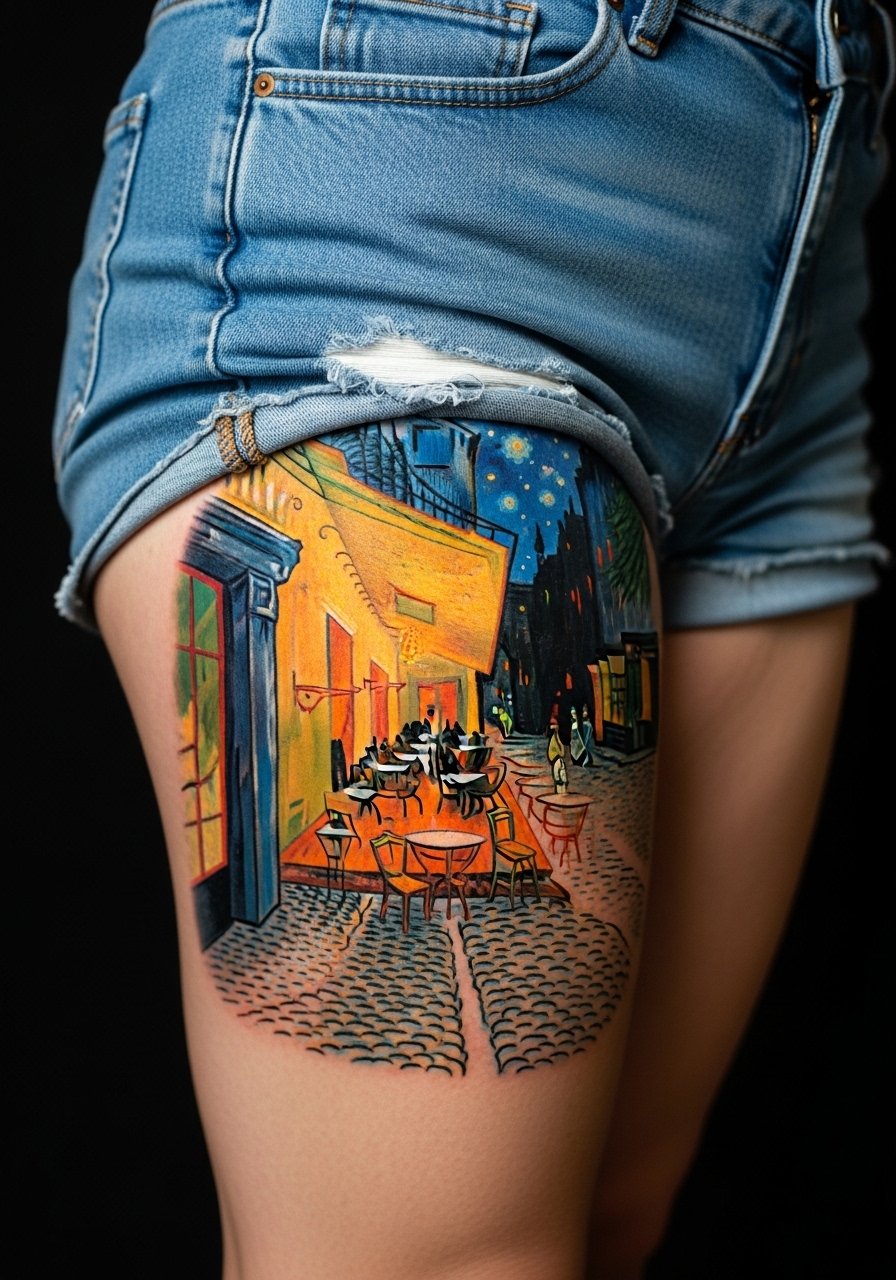
A complex scene needs clear focal hierarchy. Tell your artist which elements you want emphasized so small details don't compete. Thigh canvases are forgiving for large color pieces but require staged sessions and careful saturation to keep midtones alive. One real mistake is trying to cram an entire canvas painting into a single small panel. Expect layered sessions and a color refresh in a few years to keep the blues and oranges distinct. For showing off, high-waisted shorts or slit dresses let the piece breathe. I reach for high waisted shorts for the first reveal.
14. Sketchbook-Style Van Gogh Study on the Outer Forearm
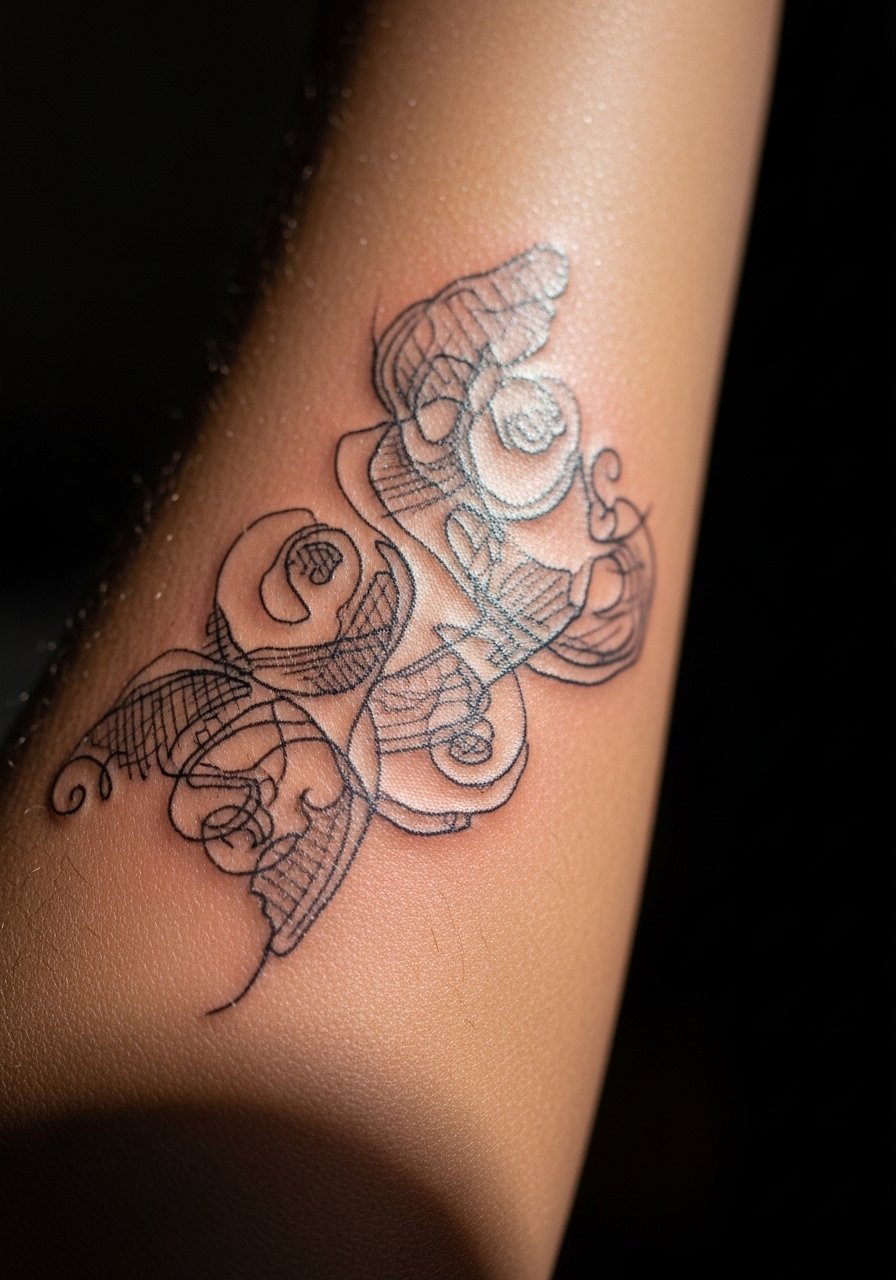
This is one of the under-used angles that leans into Van Gogh's drawing habits rather than painted reproductions. Ask your artist to translate pencil direction into varied line weight and stipple accents, not continuous single-weight lines that date quickly. A mistake is requesting exact brush marks in tiny scale; instead, embrace sketchy texture at readable scale. Forearm placement gives enough canvas for motion and usually needs only a small touch-up after a couple of years. Pair it with rolled sleeves and a casual button-up. A rolled cuff chambray shirt frames the study like a sketch on paper.
15. Patchwork Van Gogh Sleeve Built Over Sessions
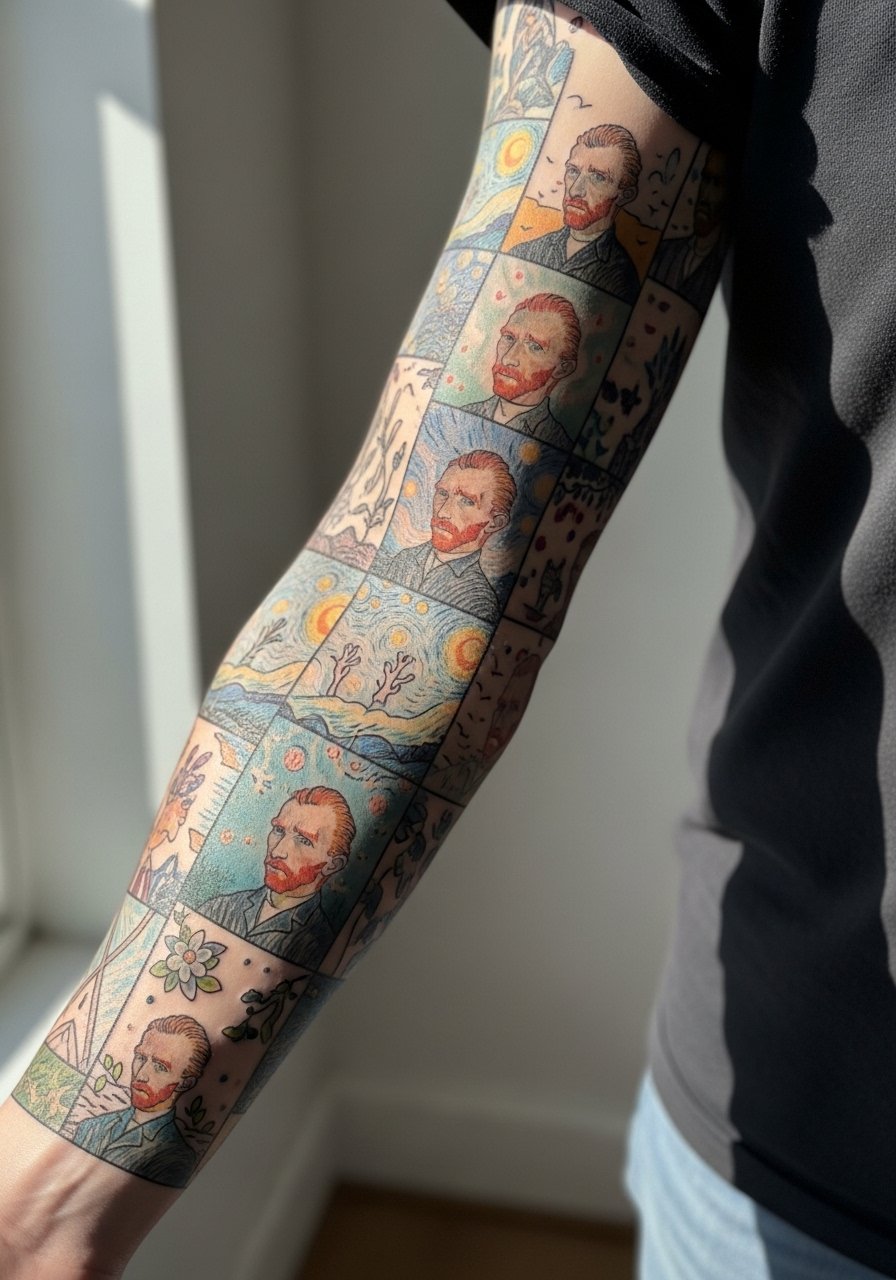
Building a sleeve over sessions is a practical path for collectors. Start with panels that read as standalones and plan connectors later so the piece ages predictably. During consultation, bring priorities and tell the artist which sections must be color and which should remain monochrome. A frequent error is adding too many tiny filler elements early on, making later cohesion hard. Expect several sessions spaced months apart. Short sleeves or rolled cuffs show the sleeve progression well. For session comfort, choose shirts you can shift easily like a short sleeve button down men.
16. Fusion: Starry Night with Personal Birth Flowers on the Collarbone
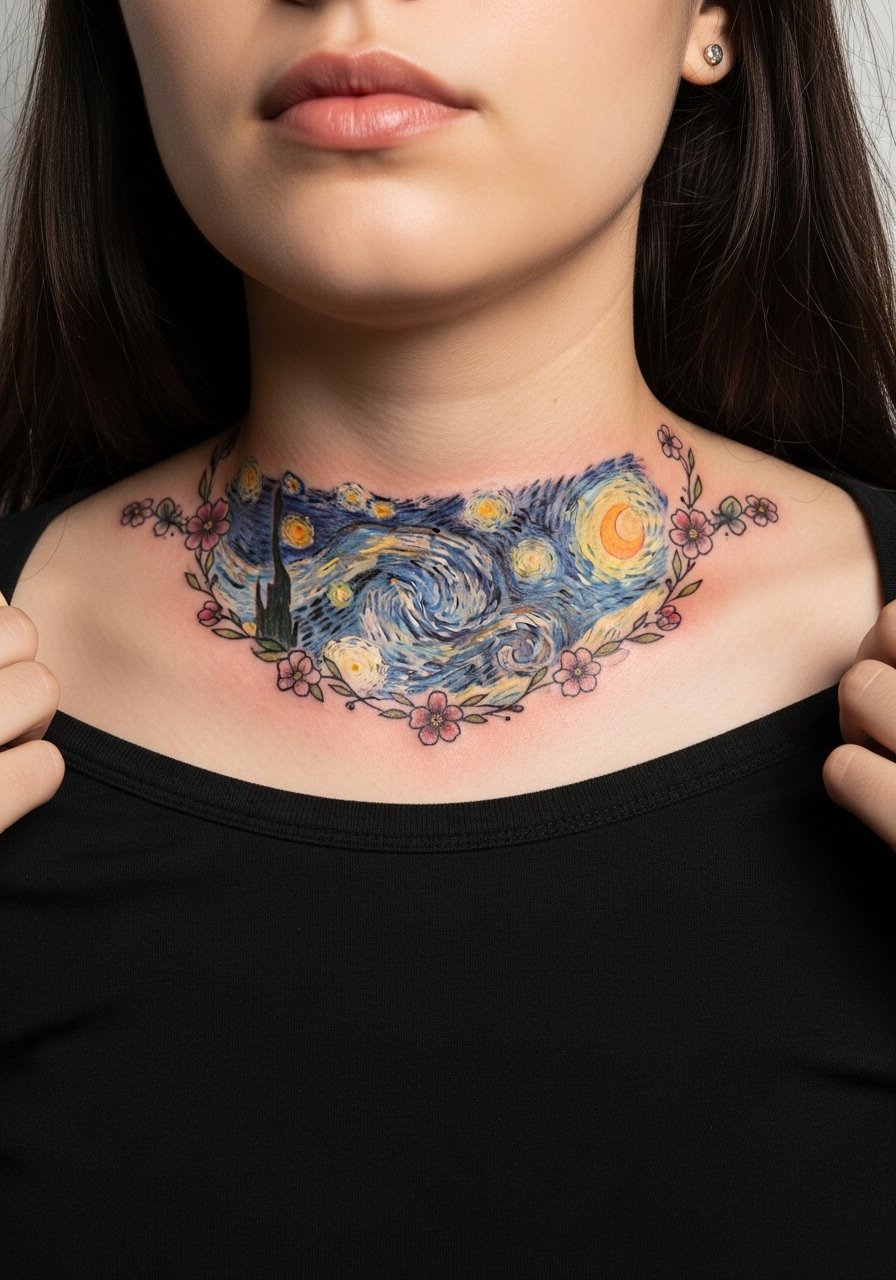
Combining personal botanicals with Van Gogh motifs keeps the reference intimate and bespoke. Tell your artist which flowers matter to you and where to tuck them into the swirls so the composition reads balanced from both sides. A mistake is letting floral detail overwhelm the motion; keep flowers simplified near the main swirls. Sessions for a collarbone fusion are short and manageable. For showing this off, choose soft pastel tops or a simple v neck t-shirt that sits below the piece.
17. Tiny Van Gogh Portrait Sketch Behind the Ear
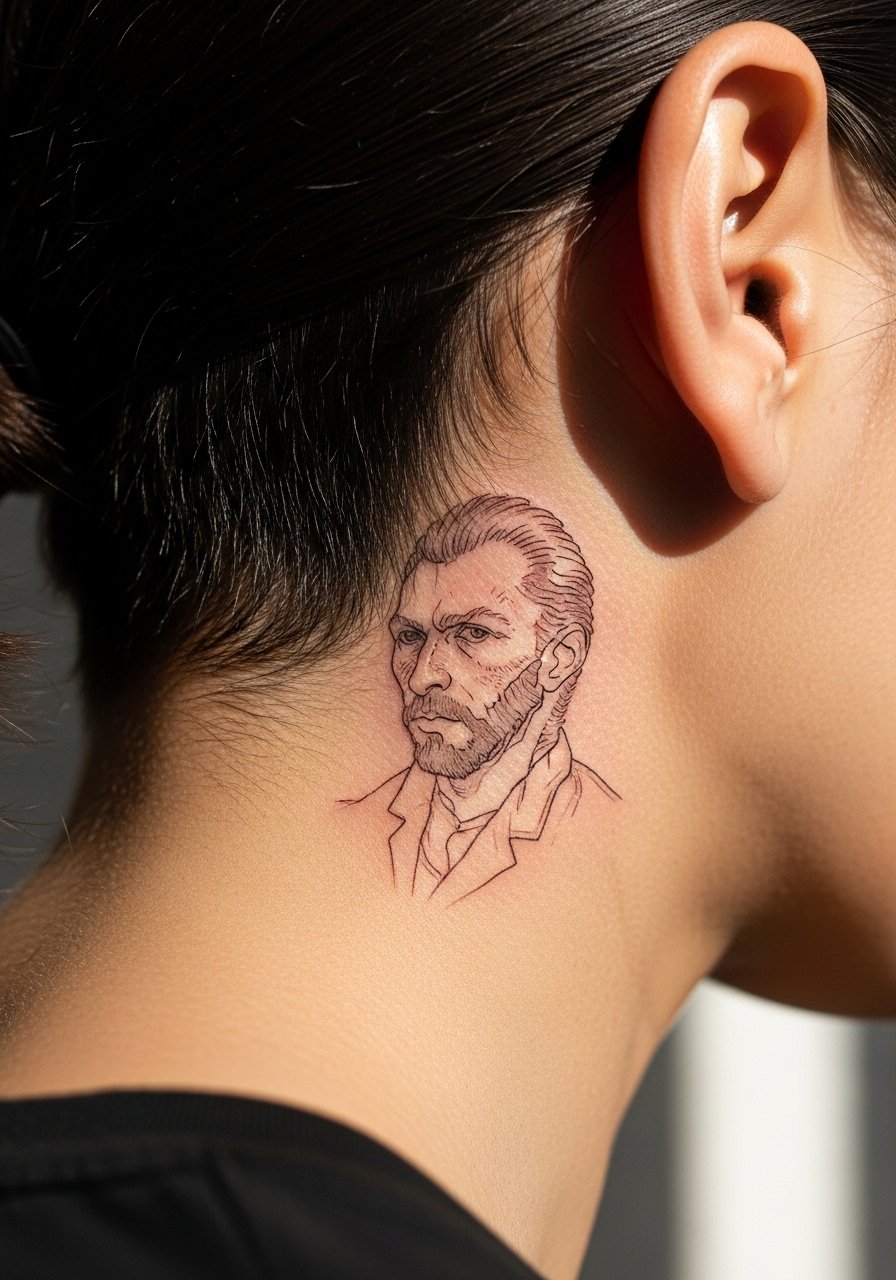
Behind-the-ear tattoos must be framed correctly. Ask for placement below the hairline on the neck so the design doesn't sit directly on the ear cartilage. The area heals uniquely because hair follicles can cause scabbing, so expect careful aftercare. Keep the design simple. A common error is cramming facial detail into such a small space. This session is quick, but consider how visible you want it in professional settings since neck-adjacent ink can be noticeable when hair is up.
18. Monochrome Starry Night Village Silhouette on the Calf
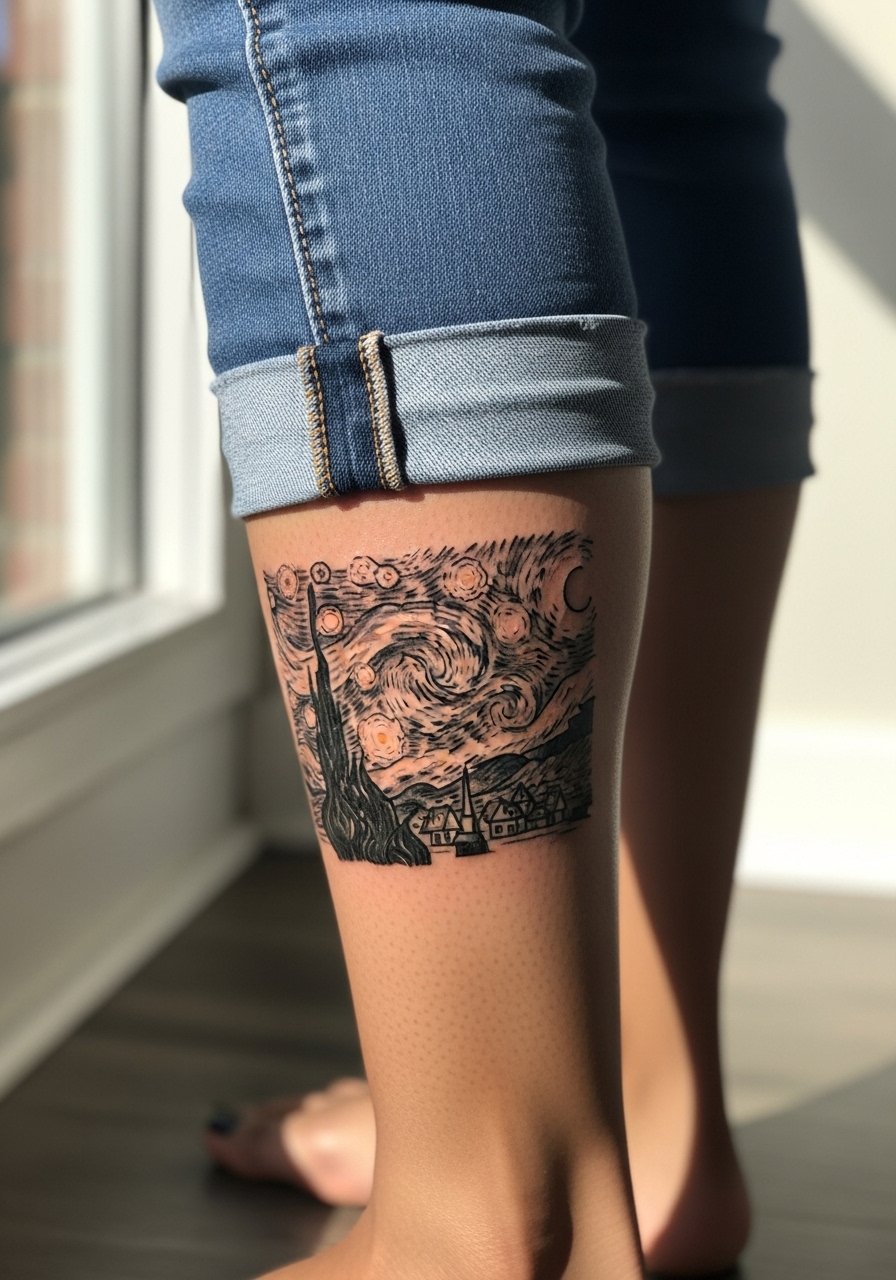
Calf placement is a great stage for mid-sized panels that age steadily. Ask for bold contours and moderate negative space in the roofs and hills to prevent softening into a dark mass. A mistake is over-detailing tiny windows that are unreadable after healing. Calf sessions are comfortable and tend to need fewer touch-ups than hands. For show-off outfits, rolled joggers or cropped pants complement the piece. Try pairing with rolled jogger pants so the silhouette reads cleanly.
19. Single Stem Sunflower Micro on a Finger
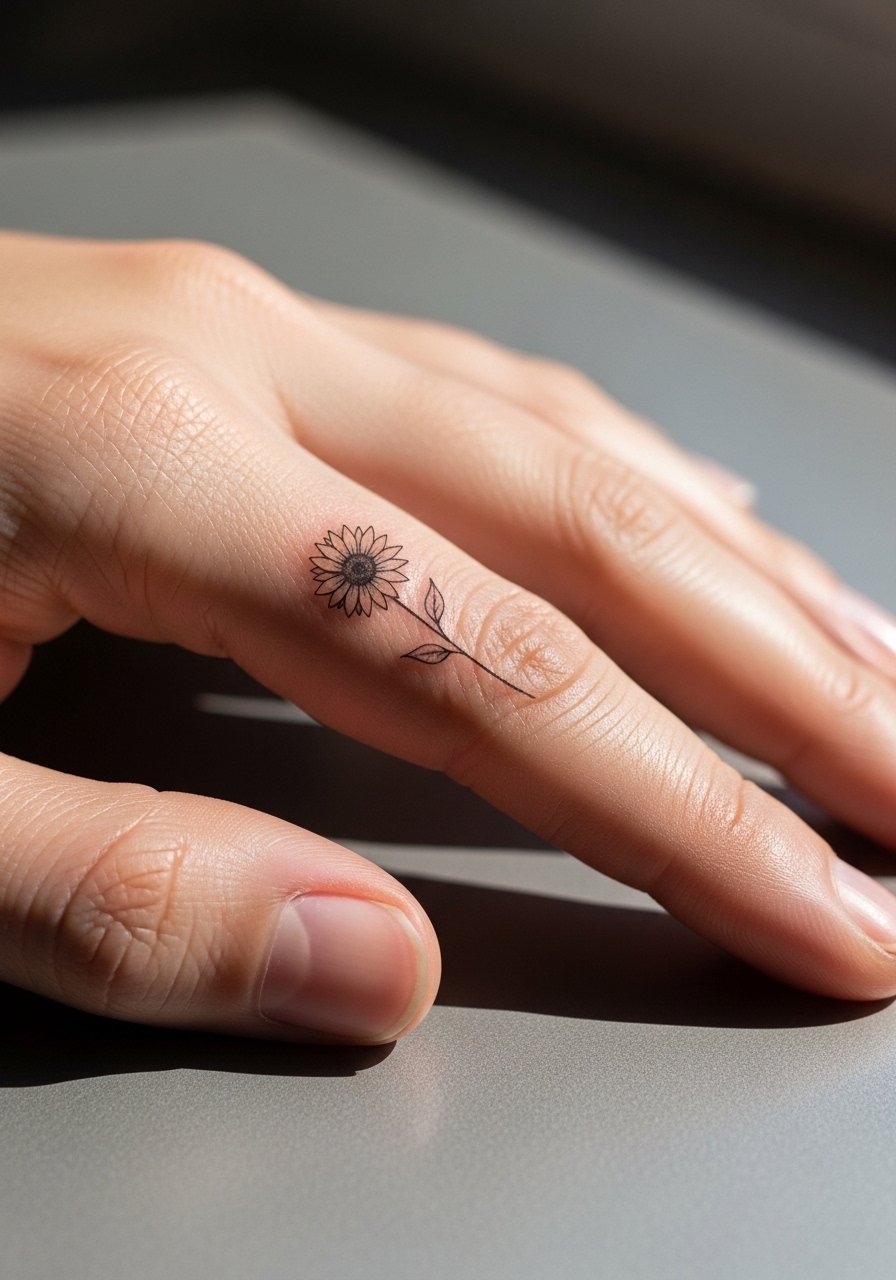
Micro floral stems are charming but live a rough life on fingers. Recommend slightly thicker stems and open petal shapes so lines stay legible. Common mistakes include tiny interior details that disappear after a few washes. Expect routine touch-ups if you want the micro to stay sharp. The session itself is brief, but daily care should avoid rubbing with rings until healed. If your work is hand-sensitive, think twice about long-term placement.
20. Stipple-Shaded Brushstroke Study on the Outer Forearm
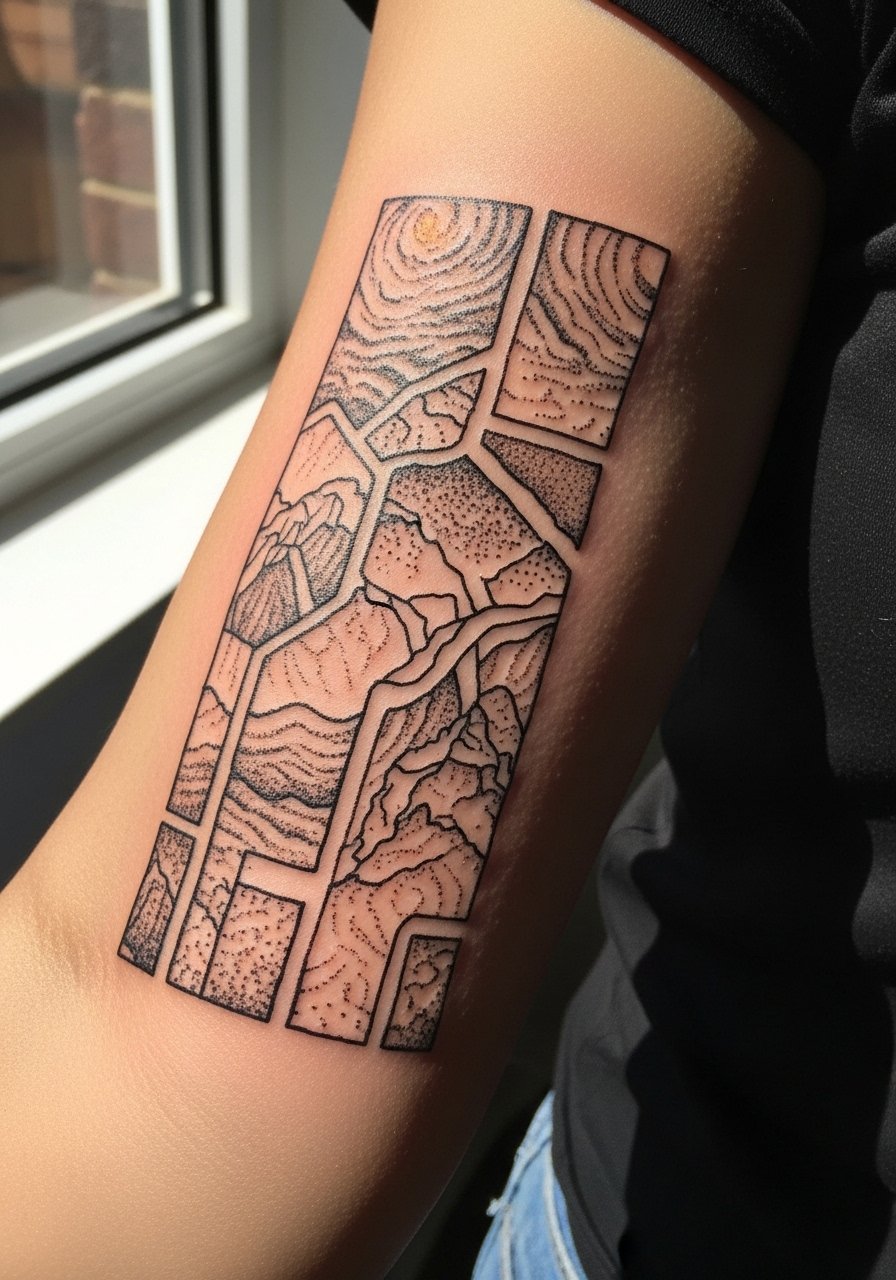
This study mimics brush texture through dot work and short hatch lines. Tell the artist you want varied stipple density, not a uniform grain, so the piece breathes. The biggest mistake is compressing stippling into tight bands, which can look flat after a few years. Forearm skin takes stipple well, and touch-ups are straightforward. For casual reveals, rolled sleeves and a thin bracelet work. Add a thin leather cuff bracelet to the opposite wrist so the forearm reads intentional and styled.
21. Full Blackwork Starry Night Sleeve Wrap
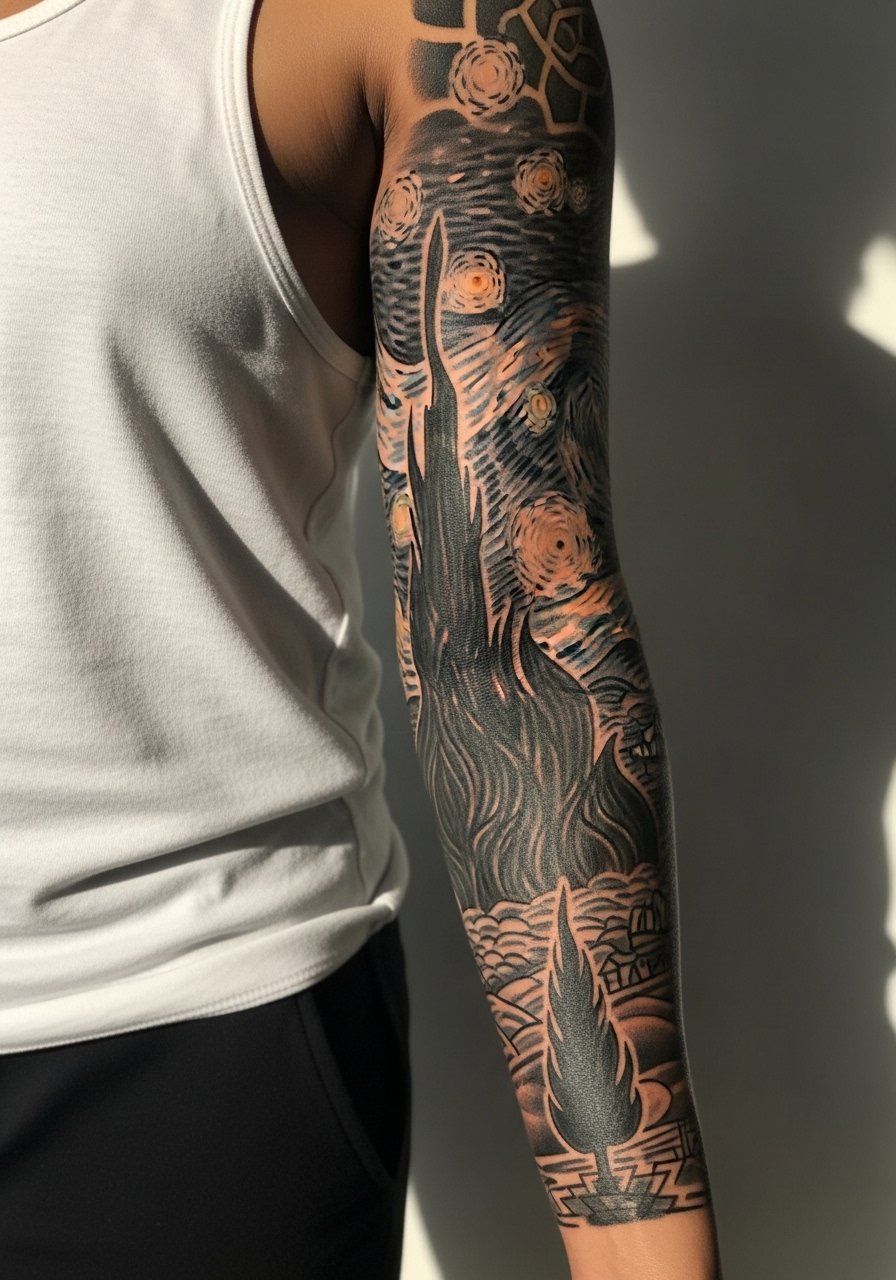
A full blackwork sleeve is statement-making and durable. Plan major negative areas so the stars and cypress survive time without merging. Ask the artist for intentional breathing room between dense blacks for future touch-up canvas. One common error is chasing hyper-detail in areas that will ultimately be filled. Sleeve work needs several large sessions and a realistic schedule. For wardrobe pairing, short sleeves or rolled cuffs keep the sleeve visible and let the high-contrast pieces read across the arm. For booking, have a clear session schedule and check where each node will sit on your arm.
Frequently Asked Questions
Q: Will fine line Van Gogh pieces blur faster than the colored versions?
A: From what I have seen, fine line works can soften faster because there is less saturation to anchor the composition. Colored pieces may lose brightness but often retain separation longer if the pigment sits well. The practical answer is placement and line weight matter more than style. For wrists and fingers ask for slightly heavier anchor lines and plan a touch-up at year two or three.
Q: Is it better to choose black and gray for longevity or color for emotional impact?
A: Both camps have good points. Black and gray tends to need fewer color refreshes and can read cleaner on certain skin tones. Color gives emotional range and matches Van Gogh's palettes more literally. Think about how often you want maintenance. If you prefer lower upkeep, tilt toward grayscale; if you want the painting feel, plan for periodic color boosts.
Q: How do I describe a sketchbook-style Van Gogh piece in consultation?
A: Bring examples that show pencil or pen direction rather than painted panels and say you want varied line weight and stipple where the pencil would have been denser. Ask for readable scale and mention you want the feel of a study, not a photorealistic copy. That gives the artist clear visual cues to translate.
Q: What should I wear to a ribcage or collarbone session?
A: For collarbone pick a wide-neck or strapless top that the artist can shift. For ribcage a cropped athletic top or loose tee you can lift works best. Comfortable, easy-to-shift clothing avoids fabric pressure on fresh ink and keeps the session efficient. A simple v neck t-shirt often covers both needs.
Q: How often do Van Gogh-inspired tattoos need touch-ups?
A: It depends on style and placement. Fine line wrist and finger pieces often need touch-ups every one to three years. Thigh and back color panels usually hold longer, with touch-ups every three to five years for saturation. Discuss realistic timelines with your artist and plan maintenance into your schedule.