
Fine line trends flood feeds, but on the throat the gap between a fresh photo and what lasts is wider than most people expect. The skin there moves, sweats, and catches collars, so design choices and wardrobe matter. Below are 21 throat tattoo designs for men with realistic notes on how they heal, what to ask your artist, and how to style the piece so it reads the way you want after six months and five years.
1. Lion Head on the Adam's Apple
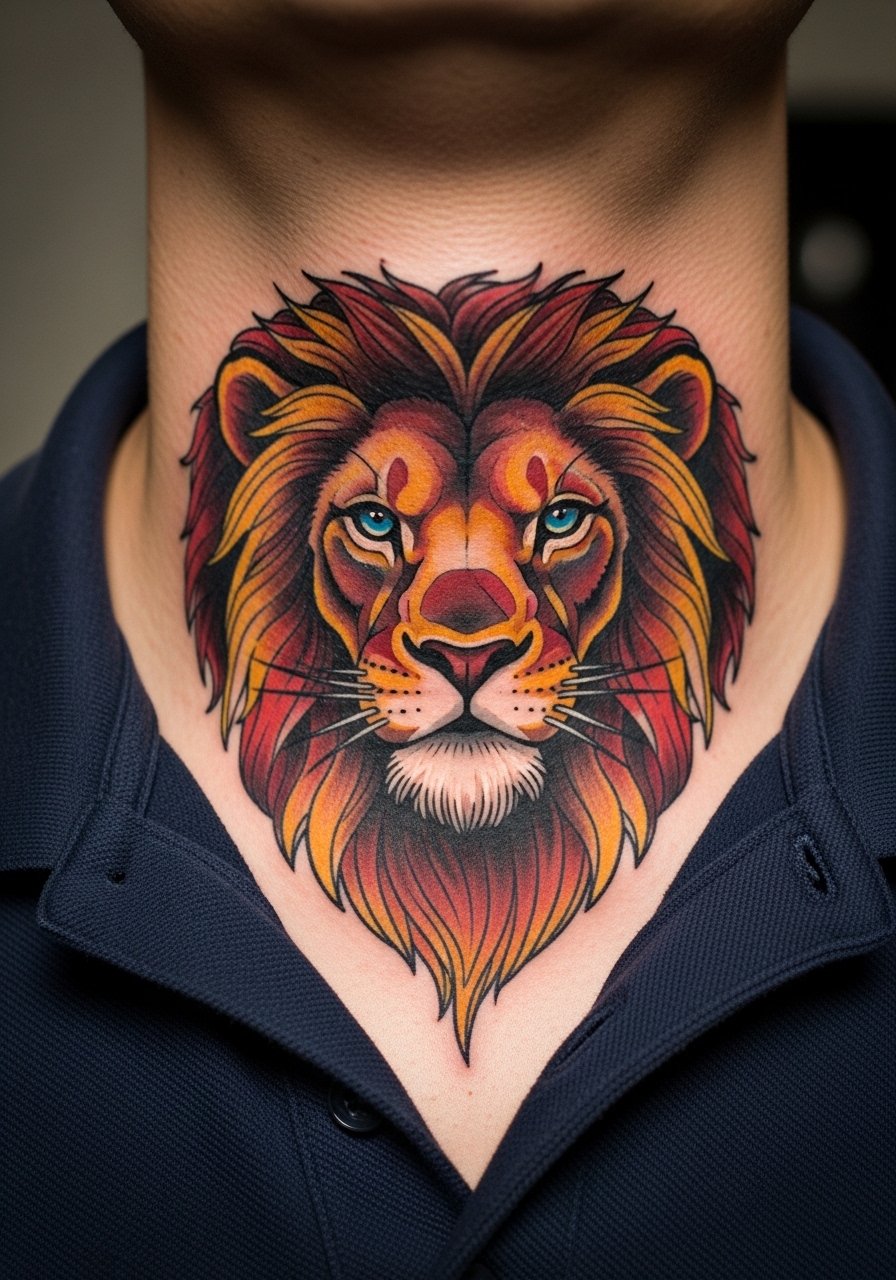
This one reads like a front-row centerpiece. I steer people toward a neo-traditional lion sized 4 inches tall so the mane flows with Adam's apple movement and the face does not warp as you swallow. Tell your artist you want heavier outlines and simplified shading around the apple so the key features stay readable after a year. Pain is sharp around the cartilage, expect short sessions and breaks. Common mistakes are trying for tiny facial detail that blurs into a dark spot. For showing it off, a mens polo shirt slim with the collar popped frames the center piece without covering it.
2. Blackwork Skull with Mandala Frame, Side Throat Wrap
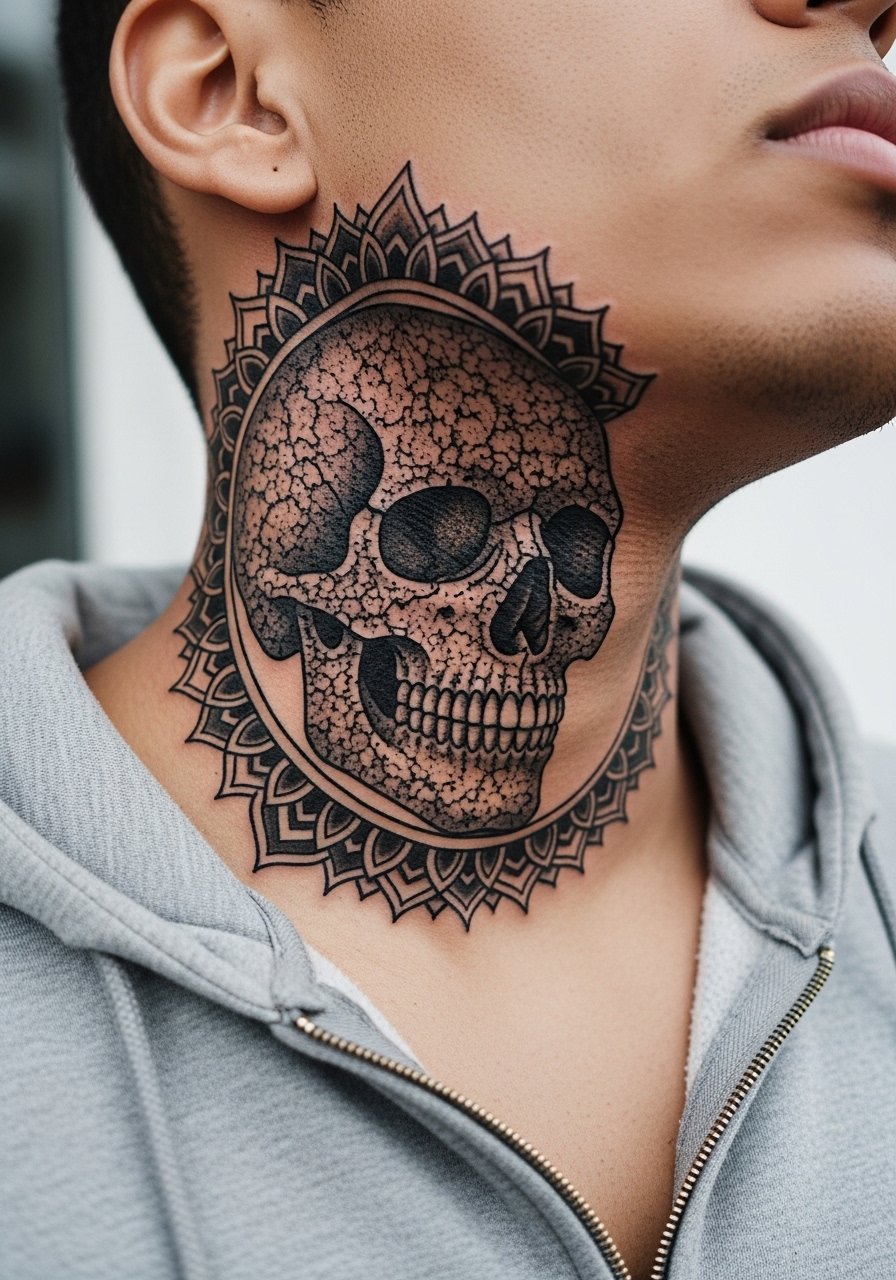
If you want coverage that hides previous ink or uneven skin, this is a reliable choice. Black saturation masks flaws and the mandala frame gives a clean border that ages into texture rather than blotch. Warning, wraparounds increase blowout risk where the skin curves near the jaw. Ask for slightly thicker linework at the edges and a session plan that banks enough saturation without overworking the thin skin. Sessions usually run two to three blocks. For casual reveals, a zip hoodie men pulled open focuses attention on the dense black without distracting color.
3. Realistic Eagle Portrait, Front Throat Oval
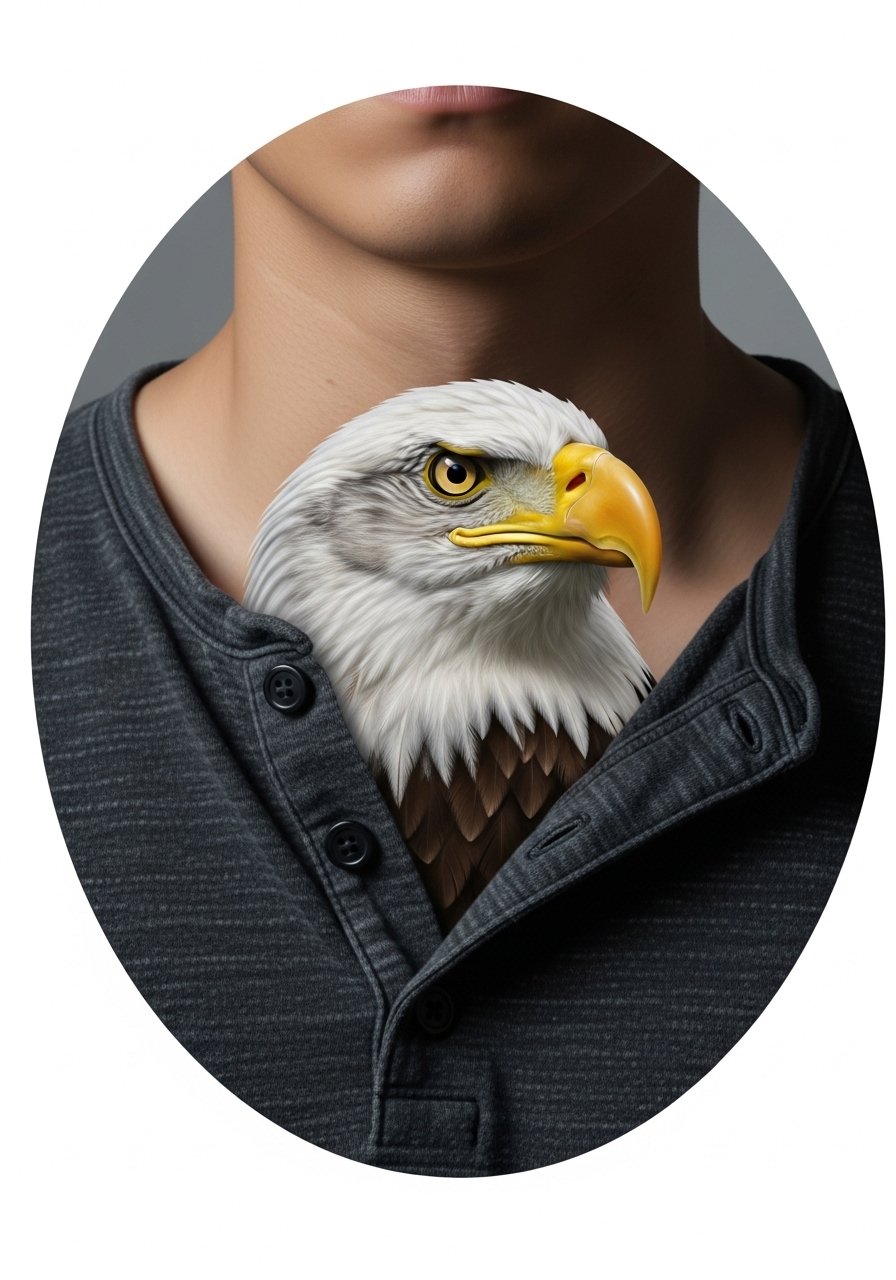
Micro-realism on the throat looks spectacular with a shaved neckline and contrast. I recommend planning for three to four sessions and asking your artist to map the oval to avoid the Adam's apple crease. The skin moves when you swallow and talk, so portrait artists will stage work in vertical passes rather than long cross-hatching. Younger healed examples hold detail for two years, then soften into tonal depth by year five. If you want a daily reveal, an open collar henley works great for framing the piece while keeping fabric off fresh ink.
4. Traditional Anchor with Rope, Side Neck
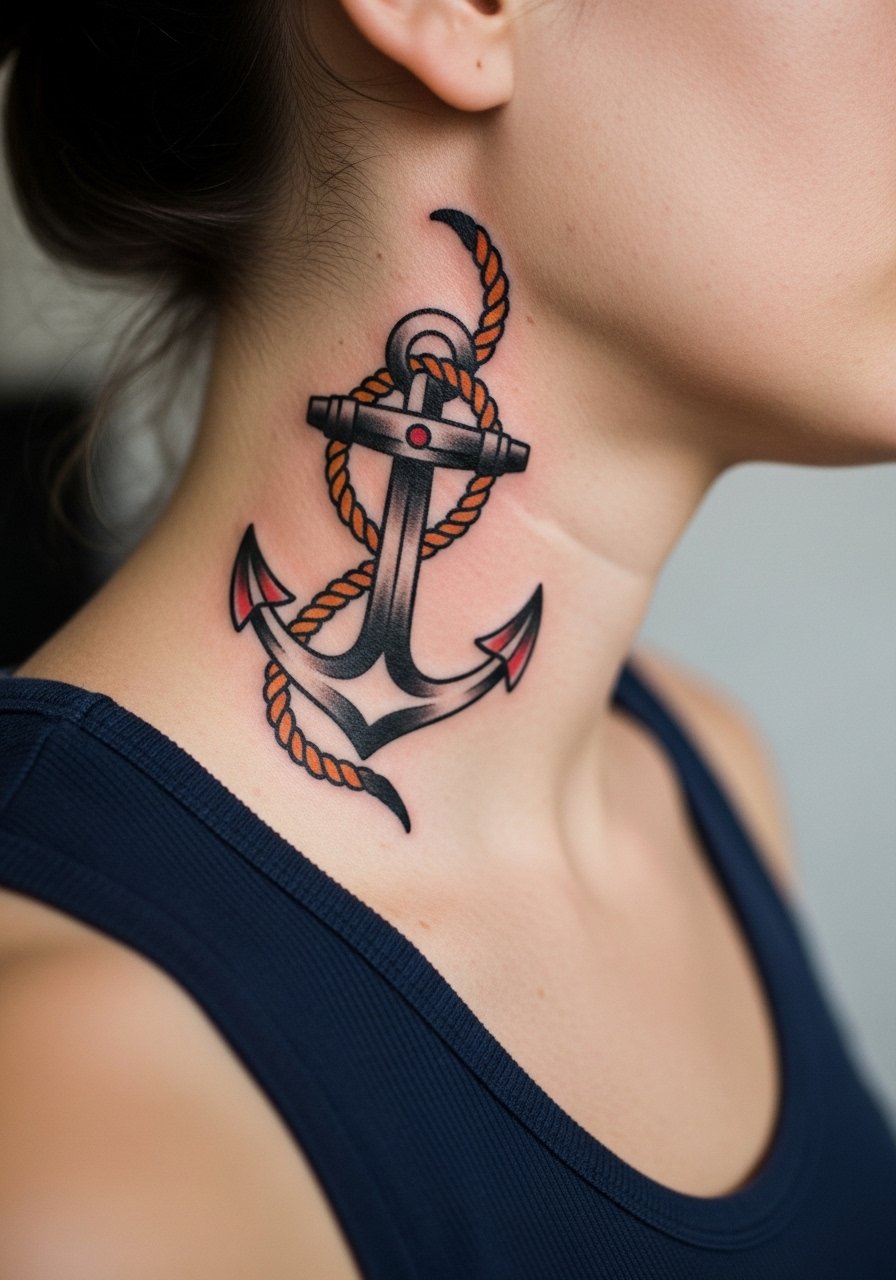
This classic is forgiving. Traditional saturation and bold linework age well on the side neck because the design uses thick contours that resist blowout. Pain is moderate since the muscle belly cushions the needle more than the front throat. The usual misstep is shrinking the anchor to bracelet size. Keep it at least three inches tall to let the rope detail read at year two. For casual coverage or reveal, a navy tank top keeps the neckline open and the piece visible when you want it to be.
5. Ornamental Cross with Thorns, Lower Throat to Collarbone
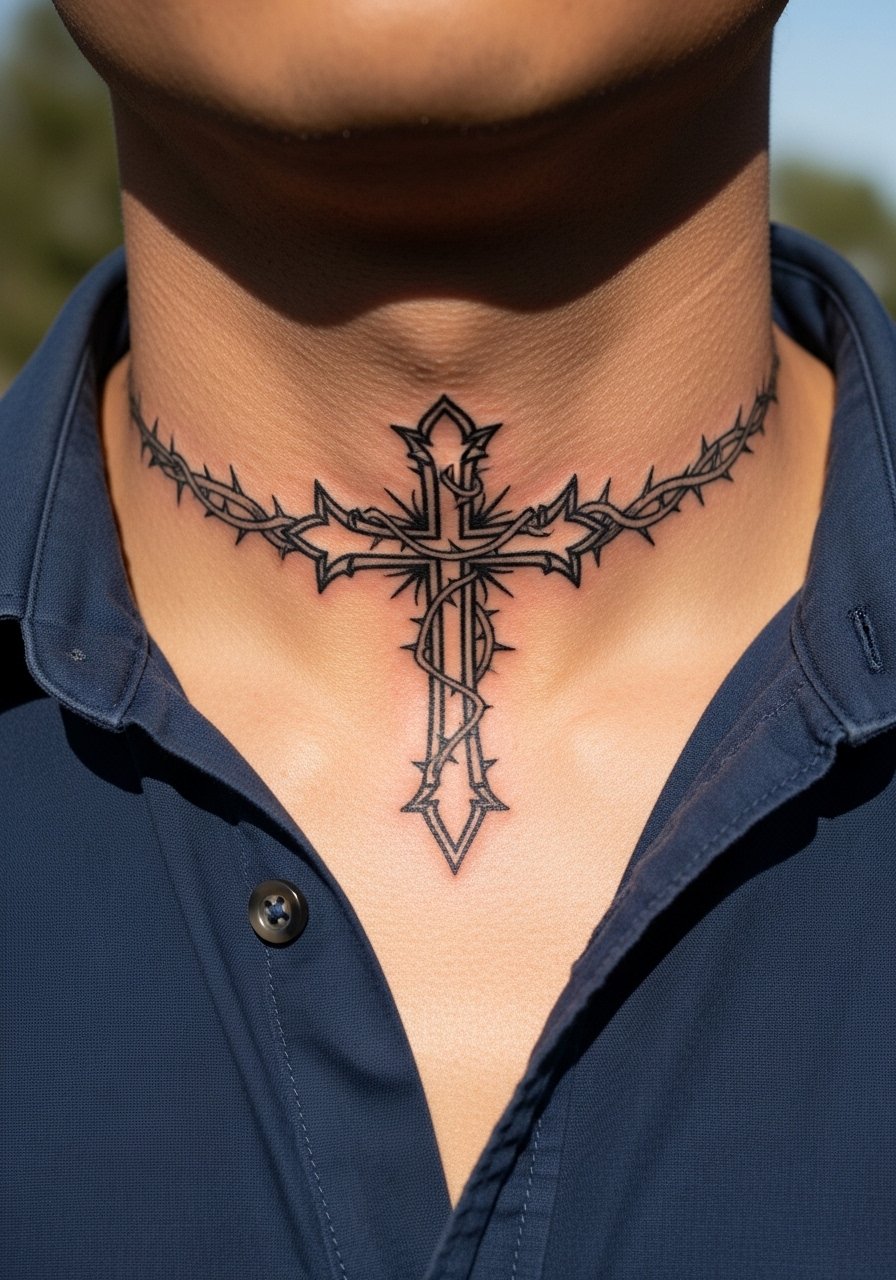
This placement frames the jugular elegantly but asks for proportion. I tell people to keep the cross small to medium and to ask the artist for tapered thorn lines so the collarbone curve does not break the pattern. Religious imagery carries cultural weight. If faith is central, discuss variations rather than copying specific sacred art. Expect moderate pain where bone meets cartilage and one touch-up at six to eight weeks is common. When dressing up, an open mens button down shirt layered over a white tee reveals the piece with classic contrast.
6. Geometric Wolf Silhouette, Side Triangle
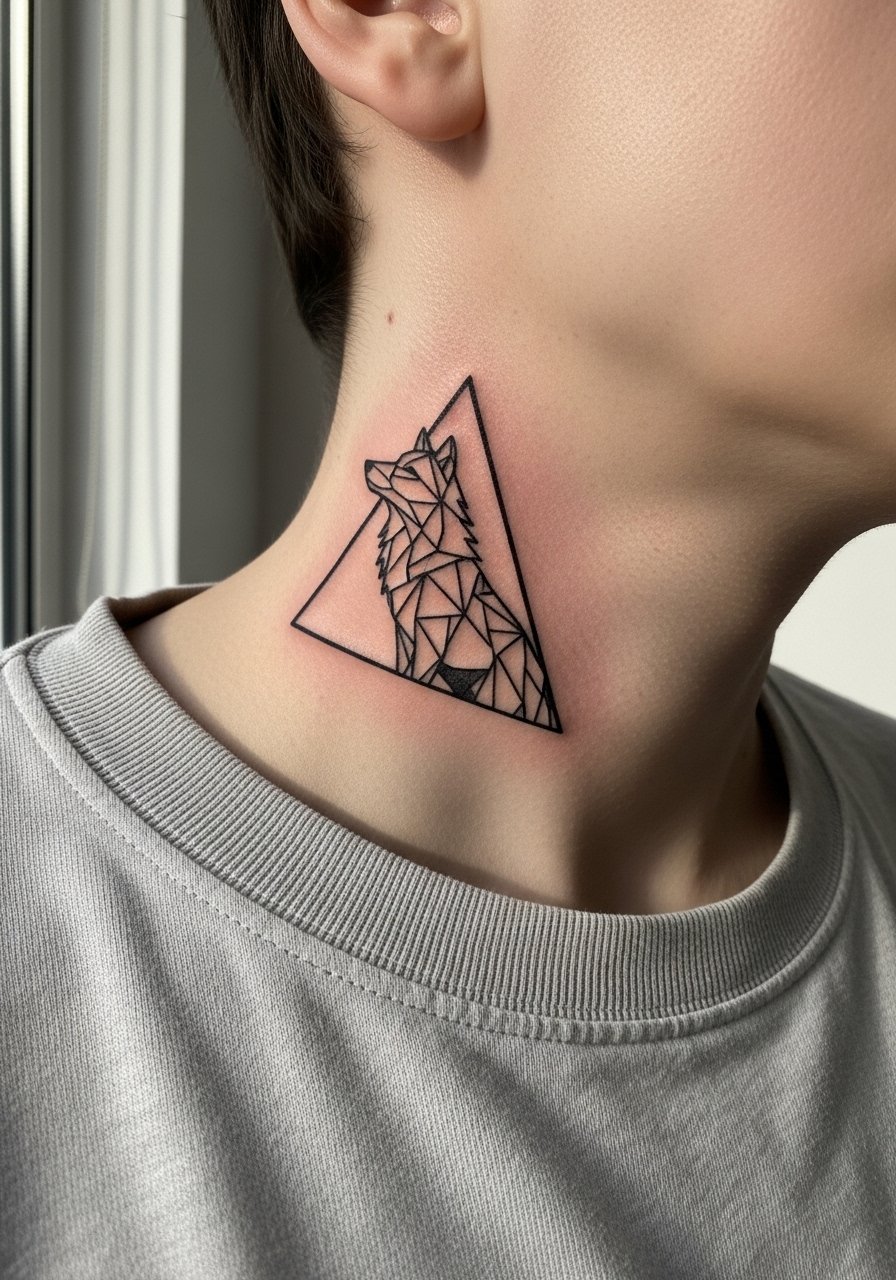
Minimalist geometric silhouettes keep maintenance low. A wolf silhouette in a triangle uses negative space so the outline reads clearly across skin tones. The main mistake is trying to over-detail the silhouette. Ask for crisp edge linework and avoid thin internal strokes that fade fast on the neck. This is a one-session piece for most artists if you want all-black fill. For casual layering, a classic crewneck tee pulled low keeps attention on the triangle without overexposure.
Pre-Session Essentials
These first six throat styles share two prep demands. Larger front pieces need different access than side wraps, and the right kit smooths the session and the first week.
-
H2Ocean piercing aftercare spray. Thin spray works well for throat areas that sweat and rub, so you can mist a scab zone without smothering it, which helps the collarbone and side-neck pieces above.
-
Ink-Ich Ban fast-absorbing cream. A lighter topical is handy for itchy spots on the Adam's apple and lower throat where thick balms tend to shine and attract friction.
-
Starsilk recovery cream. Breathable creams are useful if you live in humid conditions and are getting a full throat wrap, since they moisturize without heavy residue.
-
Badger tattoo balm. For dry winter weeks a less shiny balm eases peeling along the jawline and collarbone without looking greasy under shirts.
-
Aquaphor healing ointment. A thin initial layer helps newly saturated fine work settle, especially on delicate areas like the lower throat.
7. Flying Birds in Formation, Upper Throat to Jaw
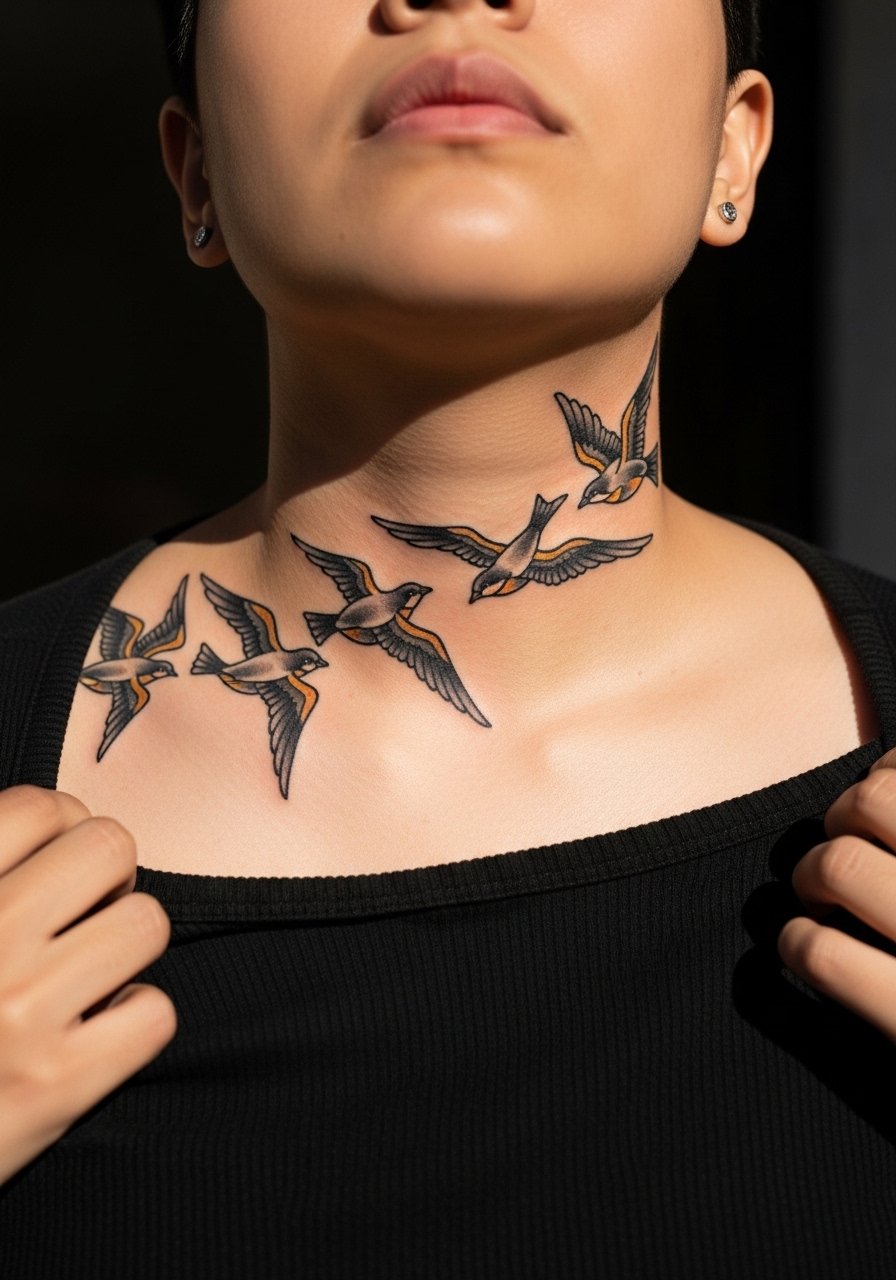
Small birds across the throat act like a dynamic filler that reads in motion. I recommend spacing each bird with breathing room so the wings do not merge as the skin settles. The common error is packing them too tight for a compact span. Expect quick sessions and modest pain near the jawline. At six months the shapes stay crisp if the artist used slightly bolder outlines. For a casual peek, tilt a wide-neck shirt to one side for a natural reveal without fabric rubbing the fresh work.
8. Abstract Triangles Full Throat Wrap

Wraps read as architectural armor when proportioned to the neck. Abstract triangles scale well to odd contours, and the heavy blackwork ages into a textured surface rather than patchy fade. The trade-off is two-session saturation and a higher chance of scab friction under collars. Ask for a mapping pass so the pattern follows skin movement. For nights out, a mens band collar shirt in earth tones complements the wrap without covering it.
9. Animal Skull with Flowers, Front Throat Circle
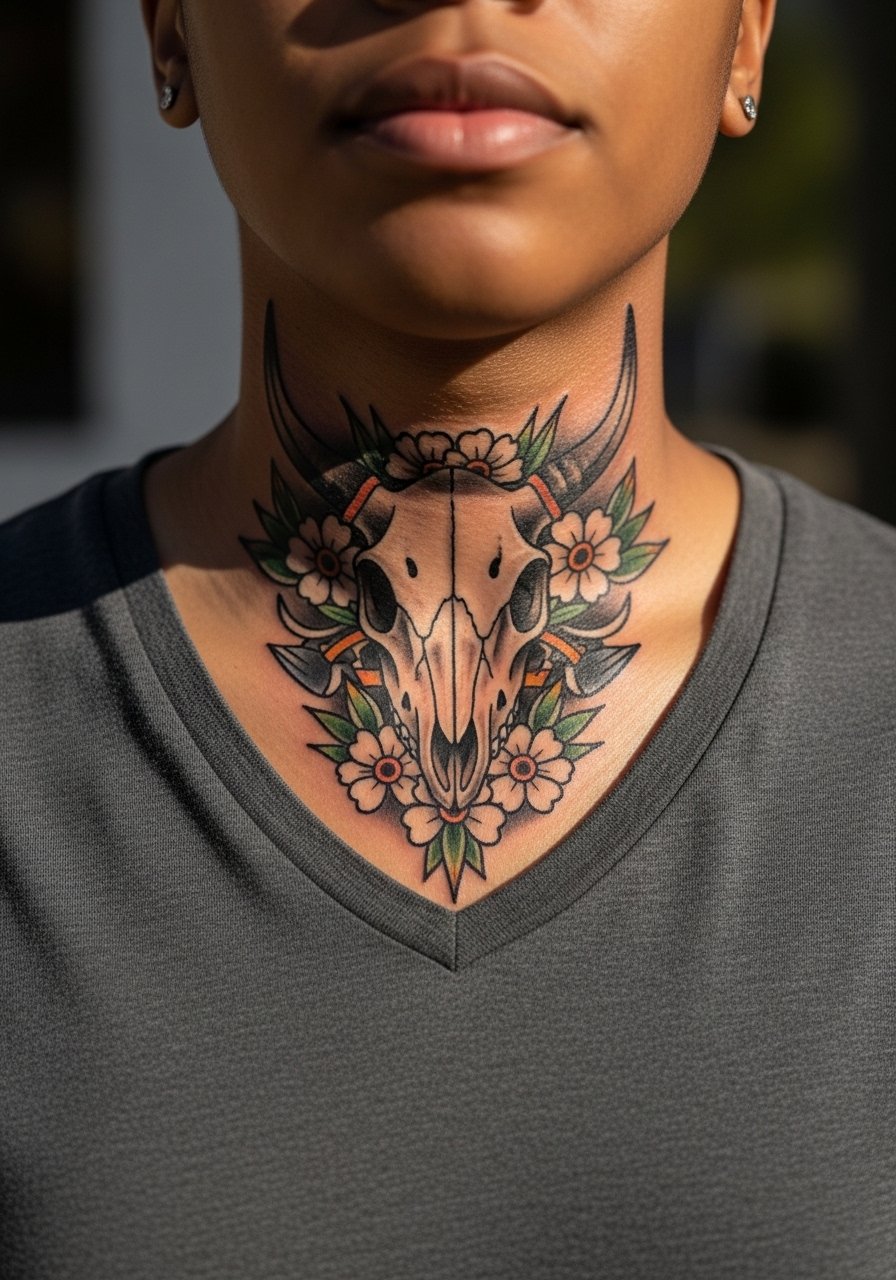
Combining morbidity and bloom works well on the throat when you balance black and color saturation. Floral accents give the skull breathing room and reduce the risk of tonal flattening. Tell your artist you want the darkest blacks in the skull and slightly muted color on the petals to account for sun exposure on the throat. Expect two sessions and a touch-up at six to eight weeks to refresh petal edges. A charcoal v neck tee pairs with the motif while keeping fabric away during the session.
10. Smiley Face Icon, Adam's Apple Mini
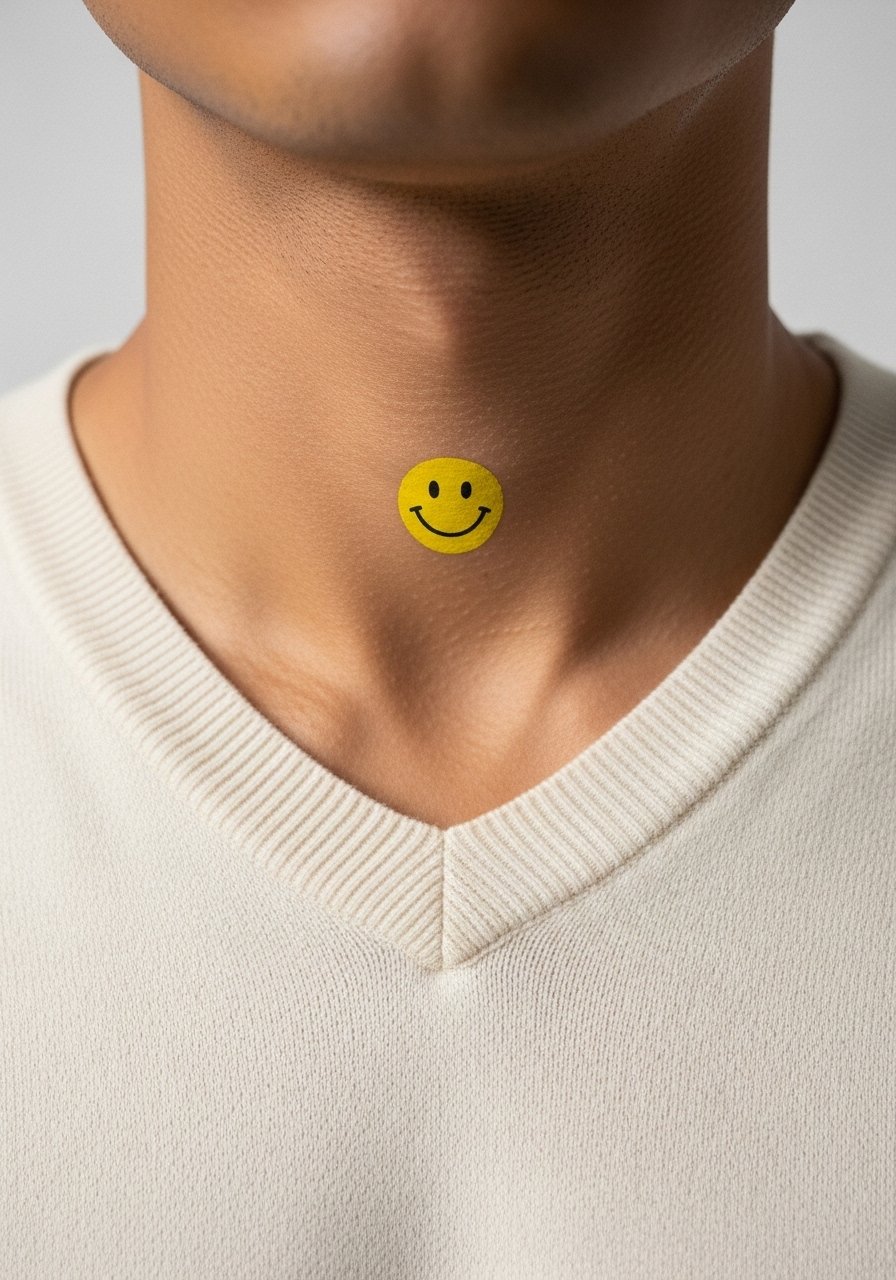
Small, ironic icons on the apple make for quick sessions and immediate reactions. Keep it at least two inches so the fill does not blur into a single yellow blob after a year. The biggest mistake is going too small. Pain is concentrated but short. This piece is playful and low commitment in session time. Style it with a v neck pullover that keeps the collar off the apple while still looking sharp.
11. Collage of Mixed Motifs with Filler, Full Neck
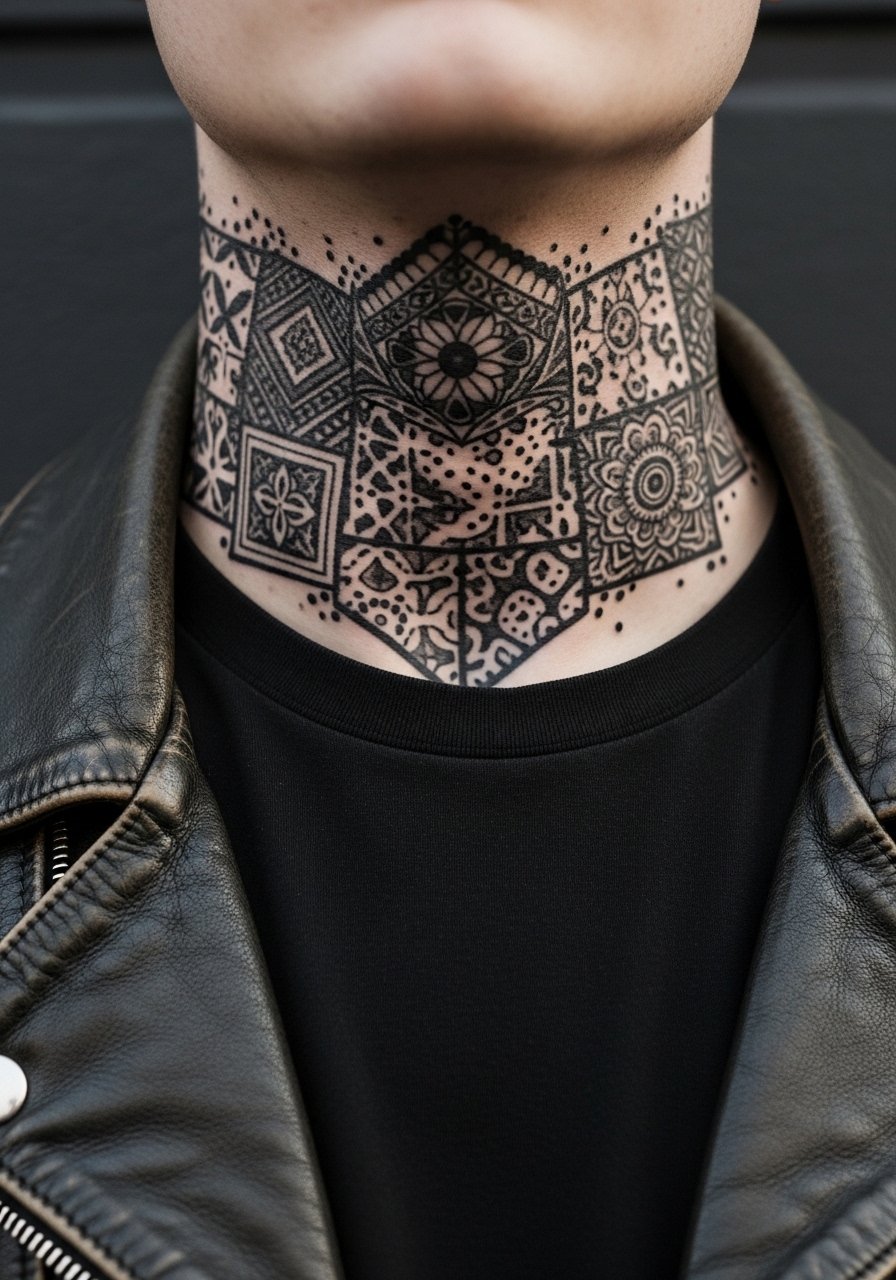
Collage work is the classic cover-up strategy or the way to build a cohesive neck across multiple sessions. Start with a central anchor motif and let your artist plan filler shapes that flow into jawline and collar. This approach demands multiple sessions and a clear touch-up timeline. People who try to cram unrelated flash into one session end up with patchy saturation. For a staged reveal, a vintage leather jacket left open frames the collage and plays well with layered shirts.
12. Script Quote under Jawline
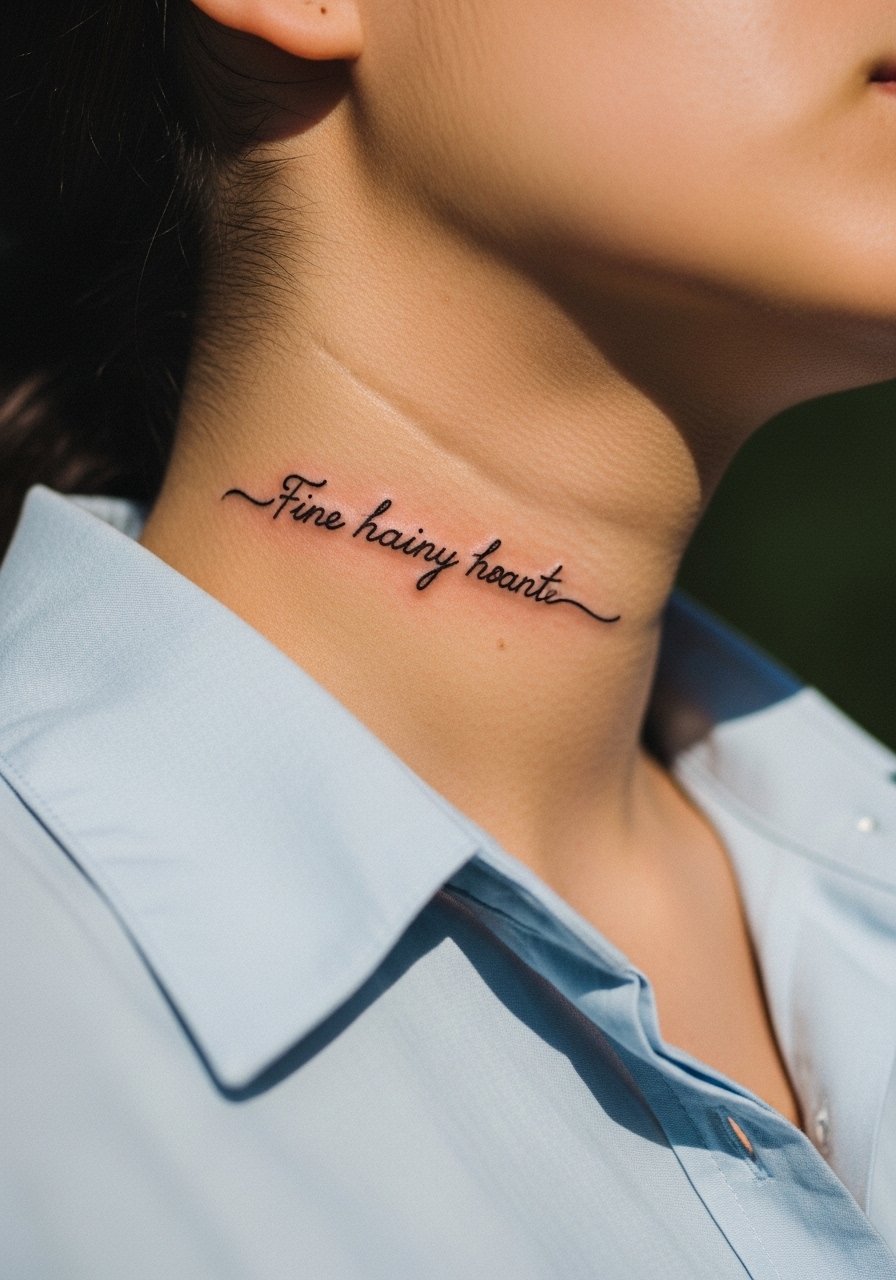
Script under the jaw is intimate and readable when sized correctly. The fine line camp often debates whether throat script will hold. One group says thin script blurs faster because the skin stretches and gets sun exposure. The other group insists a confident hand with proper depth and spacing keeps script legible for years. My recommendation is to size letters slightly larger than you think and to ask for steadier line weight rather than whisper-thin strokes. For appointments, wear a loose button-down shirt that you can pull aside for clear access.
13. Minimalist Dagger Outline, Central Vertical
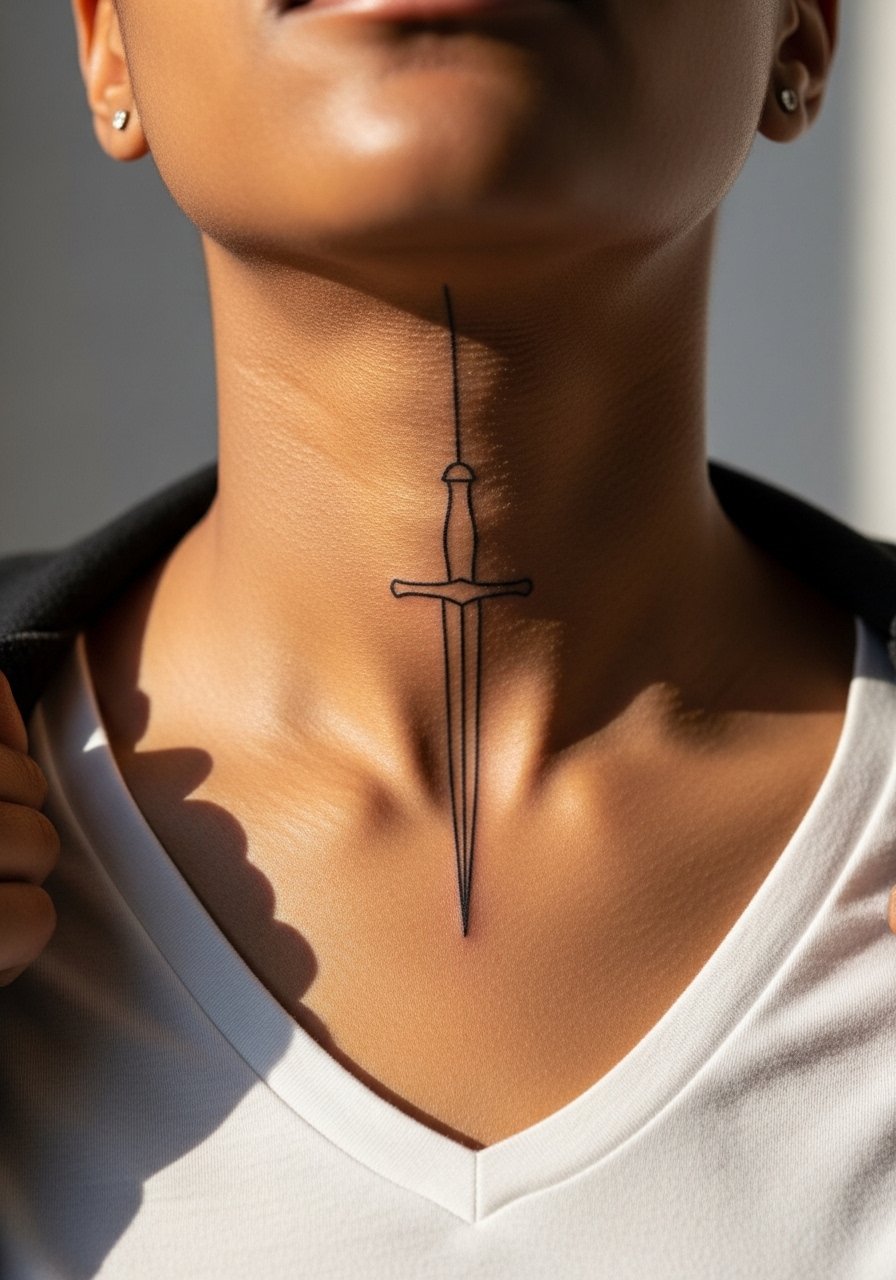
A single-line dagger is subtle but bold because of placement. I advise a slightly thicker contour line than you might choose for an arm piece so the silhouette keeps its edge on the moving throat skin. The pain is sharp but brief along the midline. A common error is adding tiny internal details that disappear at year two. Keep it graphic and simple. Style with a slim v neck shirt which gives the piece breathing room when you want it visible.
14. Tribal Flame Wraparound, Side to Front Flow
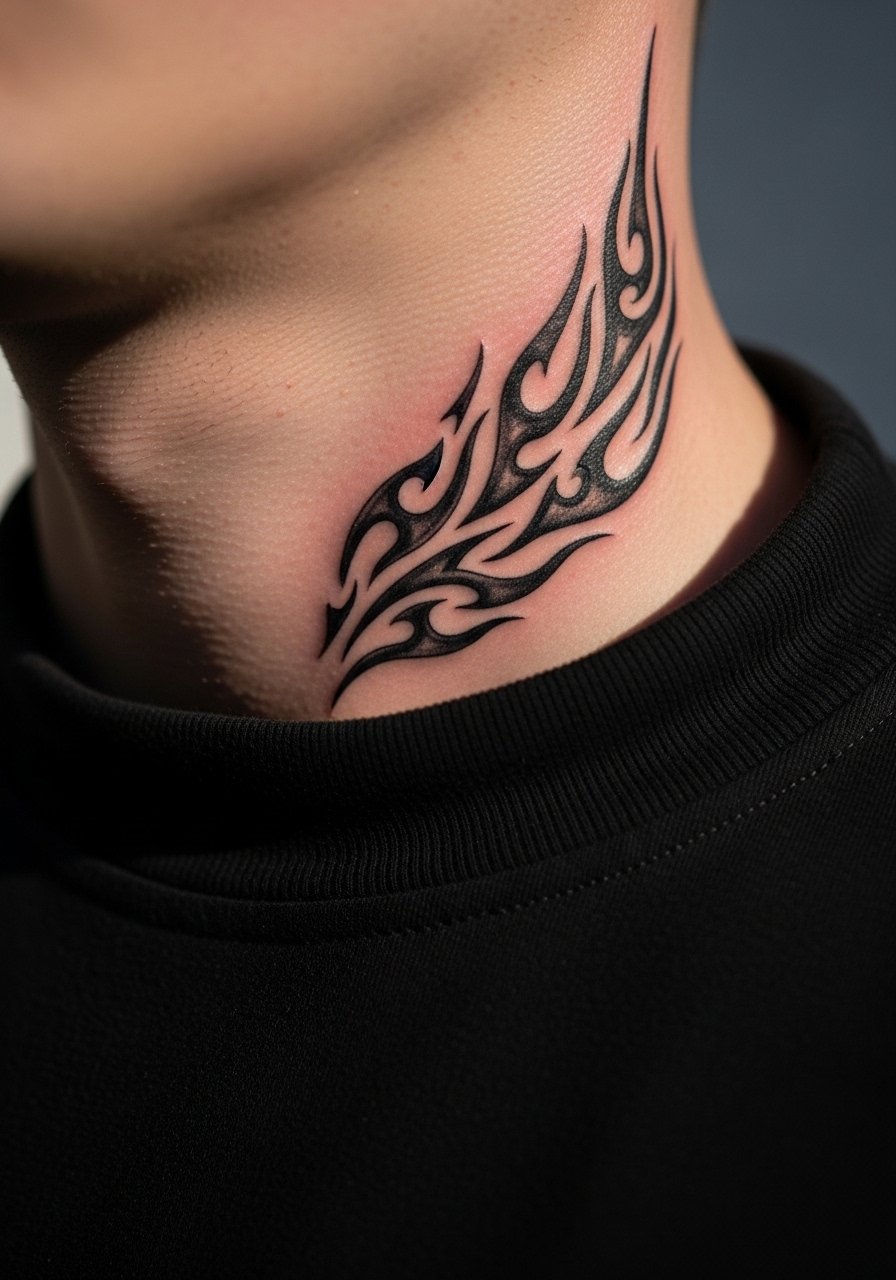
Tribal wraps use curve and motion to flatter athletic necks. For best longevity, ask your artist to stage the flames with negative space edges that follow muscle lines. The tricky part is keeping consistent saturation across the curve. If the artist overworks, the skin can scar and the texture will change. Expect two sessions and a cautious touch-up at the 8-week mark. A mock neck peeking below a jacket pairs nicely when you want to hint at the wrap without full exposure.
15. Geometric Mandala, Central Lower Throat

Mandala work needs breathing room on the throat. My rule is to scale mandalas larger on the neck than on the wrist so the radial spacing holds up. Ask for stipple shading and dot work rather than micro cross-hatching to reduce merging over time. The common mistake is trying to cram too many rings into a small diameter. Expect a multi-pass session to build even saturation and a touch-up to refine outer rings. For evenings out, a wide-neck shirt pulled aside frames the mandala without pinching fresh ink.
16. Turtleneck Camouflage Filler Pattern
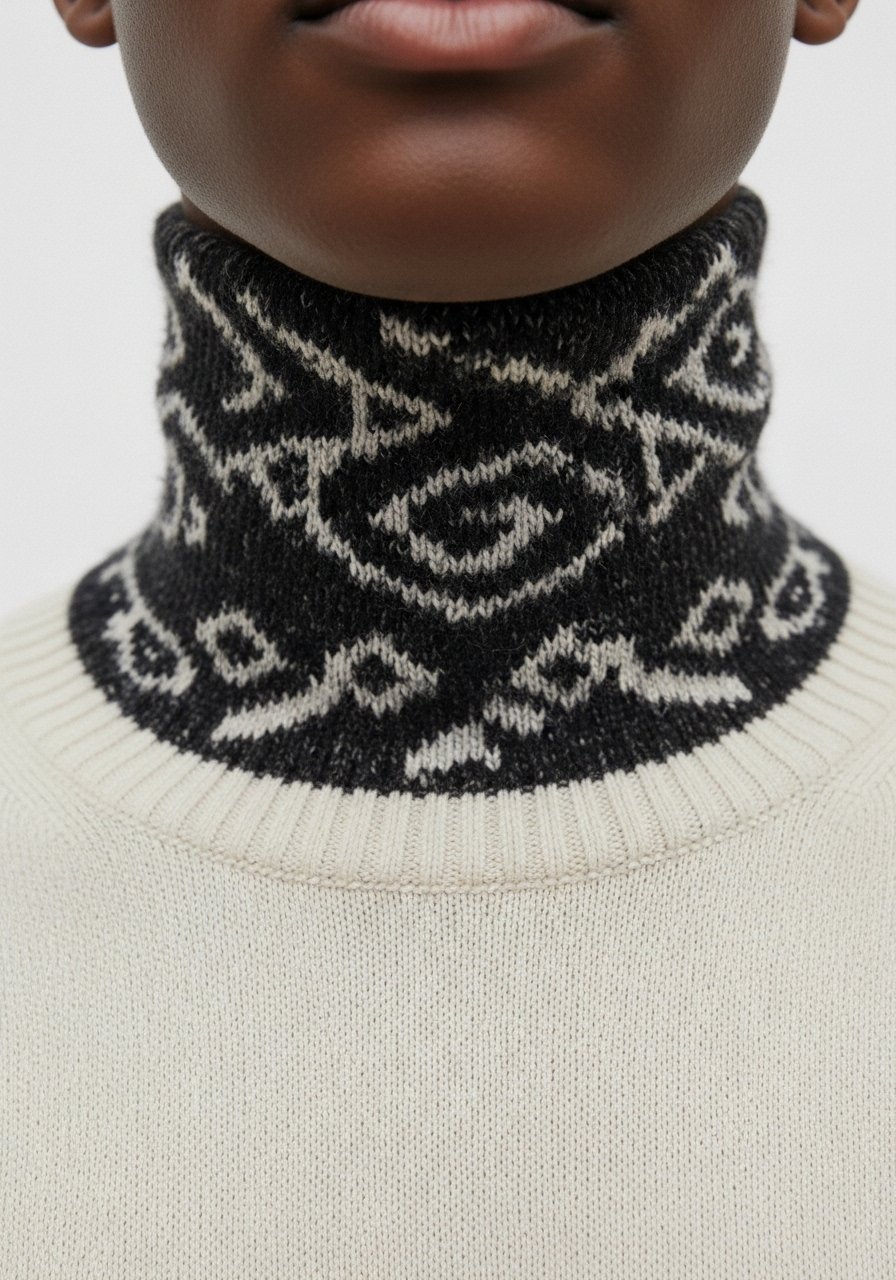
This is a smart angle for guys who need concealment in corporate settings. The pattern is drawn so the top edge tucks under a turtleneck or mock neck and becomes part of the collar visually. When done well it hides the tattoo until you choose to reveal it. The key consultation point is bringing photos of the exact collar shapes you wear. Session wear should avoid tight necklines for two weeks after. A high-collar sweater that can fold down during the session helps the artist map the camouflage edge.
17. Hybrid Blackwork-Script Phrase, Lower Throat Strip
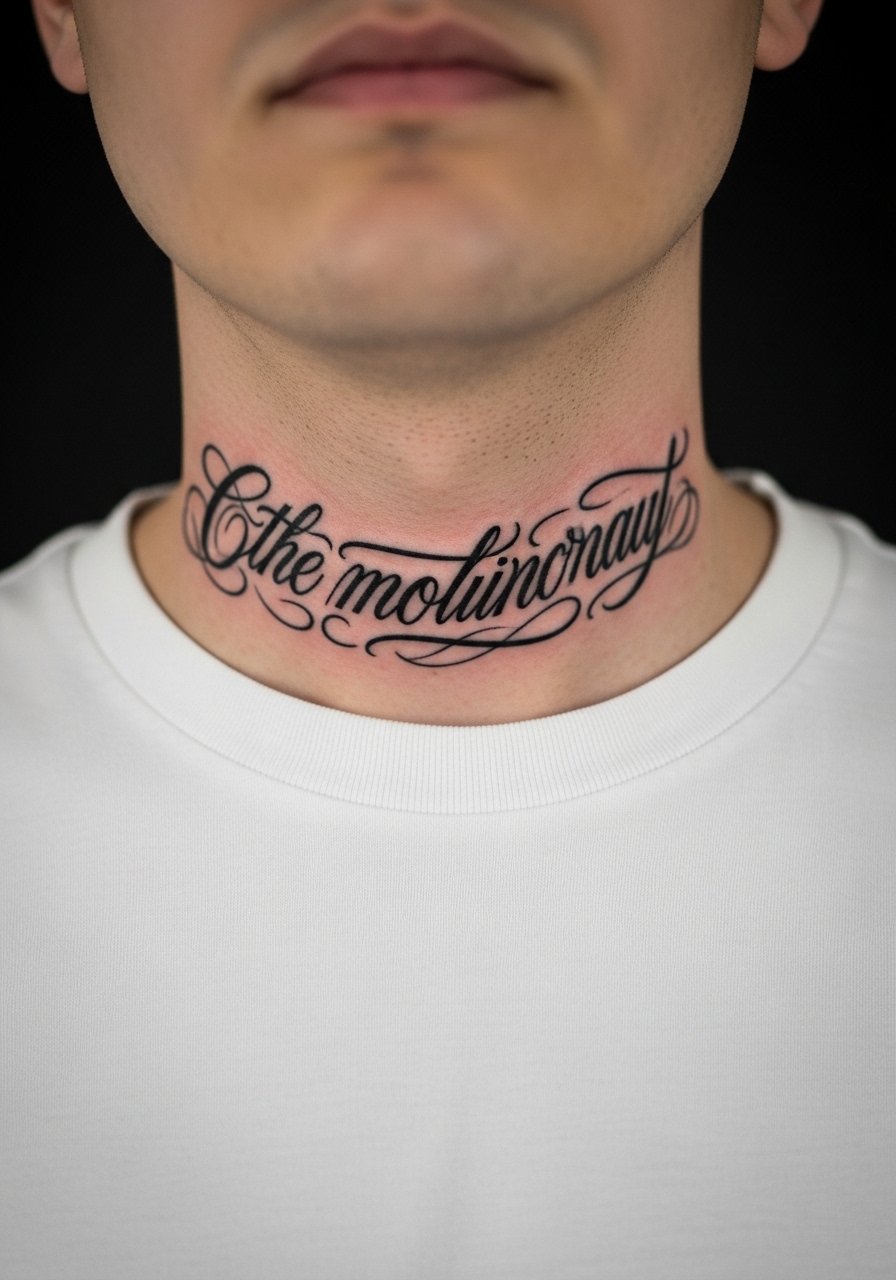
Pairing heavy black shapes with raised script helps keep words legible on oily or darker neck skin. If you have darker skin consider a high-contrast approach. Tell your artist you want the script isolated on a negative space bar on top of the blackwork so letters do not get lost as skin texture changes. The common mistake is soft script sitting directly on an uneven black field. For casual wear, a white crew tee layered under an open shirt showcases the phrase without competition.
18. Adam's Apple Micro Symbol Row
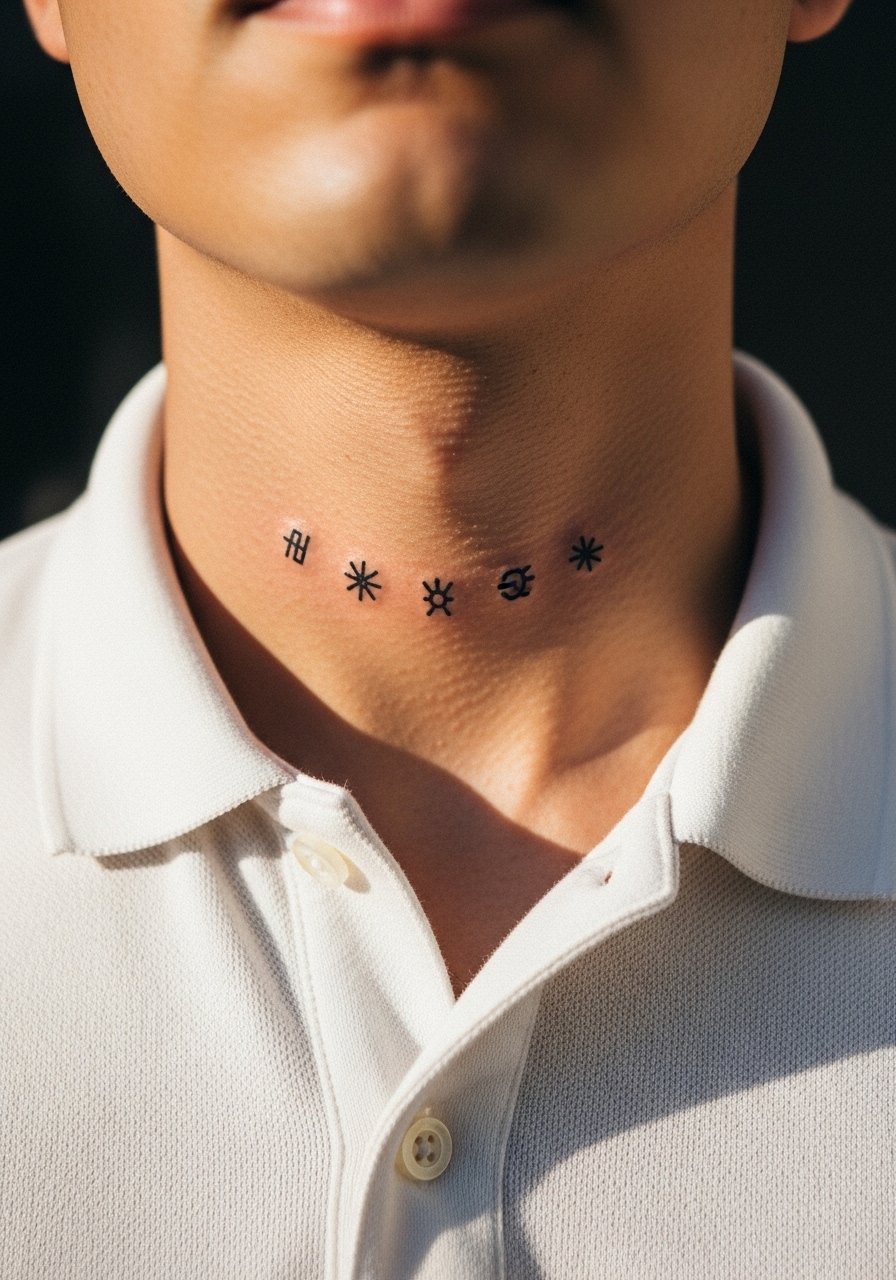
Tiny micro symbols can read cleanly when spaced around the apple rather than stacked. I suggest simple glyphs with solid fill and avoiding thin serifs. The swallowing motion will compress the ring slightly, so your artist should test the stencil while you simulate swallowing. Pain is sharp but session time is short. The main mistake is crowding symbols too close together. A polo with the placket open keeps the area accessible for both session and reveal.
19. Collarbone Wave Band, Lower Throat to Collarbone Sweep
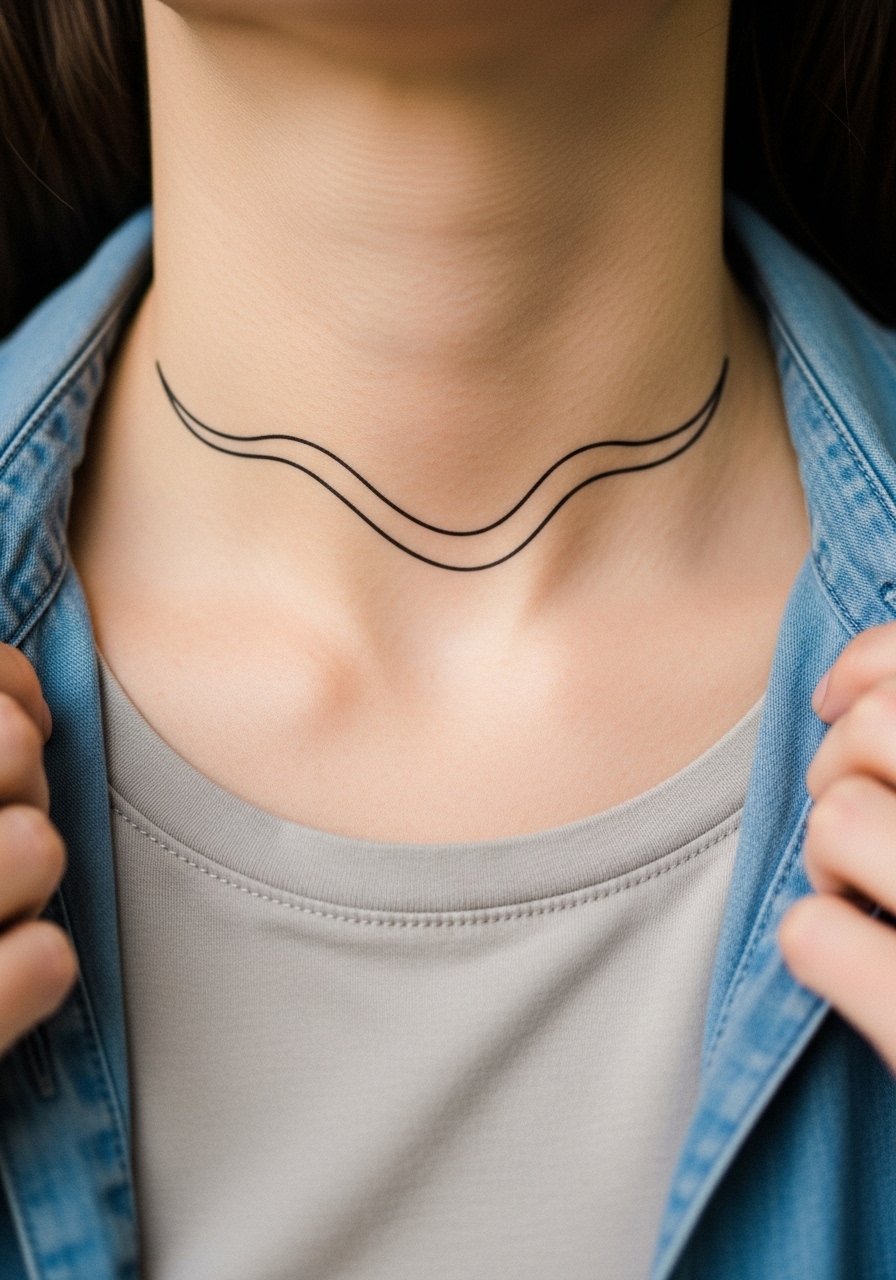
A horizontal wave band works as a subtle accent that follows anatomy. On the throat it needs a gentle curve to avoid looking like a straight line when you tilt your head. Ask for slightly wider linework where the skin flexes to prevent feathering. Expect moderate pain near the collarbone. The sizing trick is to view it in motion and ask the artist to stencil while you speak and tilt. Layering a thin tee under a button-down makes post-session wardrobe gentle on the area.
20. Guest-Spot Patchwork, Convention Collab Piece
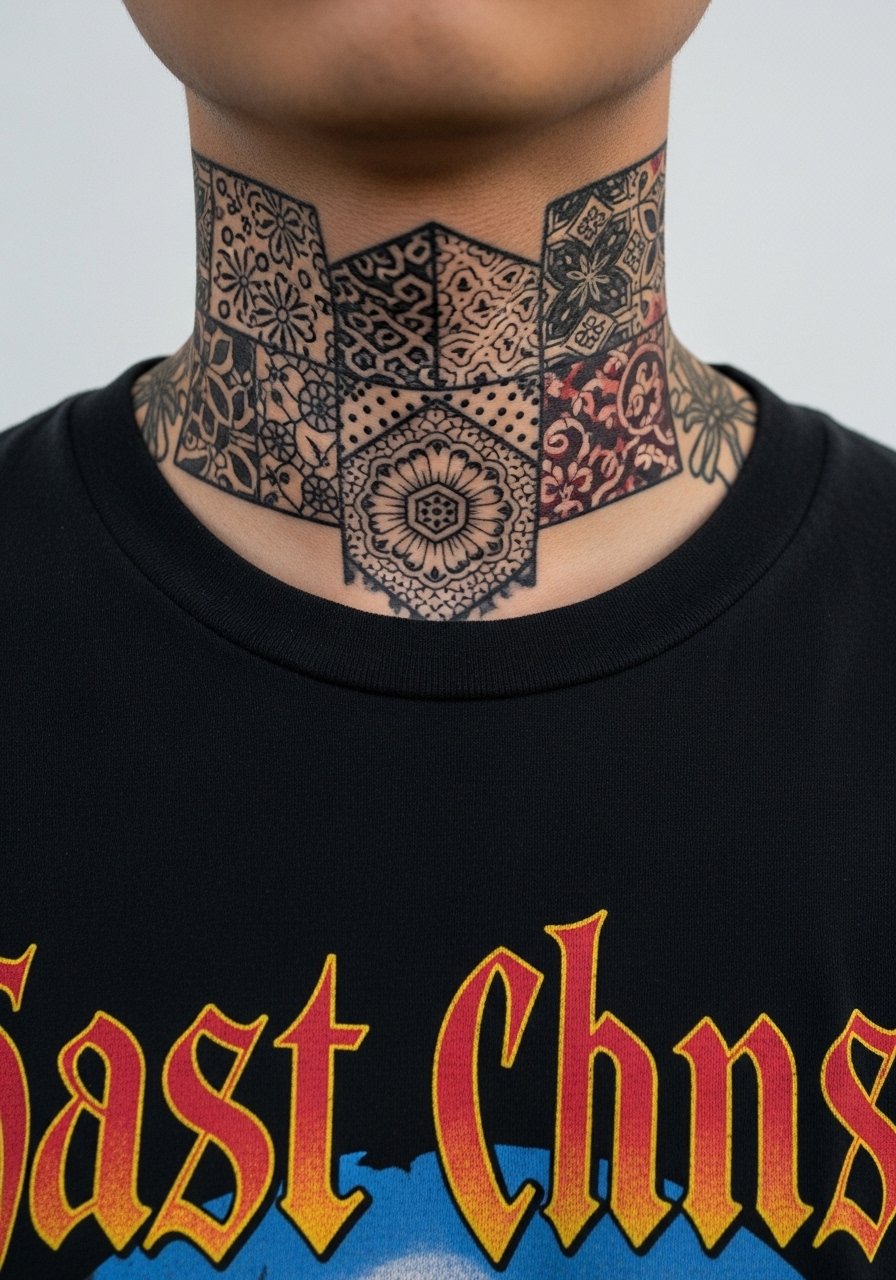
If you chase a guest artist for a unique neck patch, plan multiple sessions and a clear handoff brief. Guest spots can be a fast way to get a specialty style but they require portfolio checks and firm booking terms to avoid no-shows. My advice is to arrange a written schedule for the collab so touch-ups are manageable. This route can produce striking custom collage pieces that age into a textured ledger of different hands. For session wear, a loose band tee keeps fabric off fresh ink and looks at home in the reveal.
21. Beard-Line Fringe Pattern, Designed Around Facial Hair
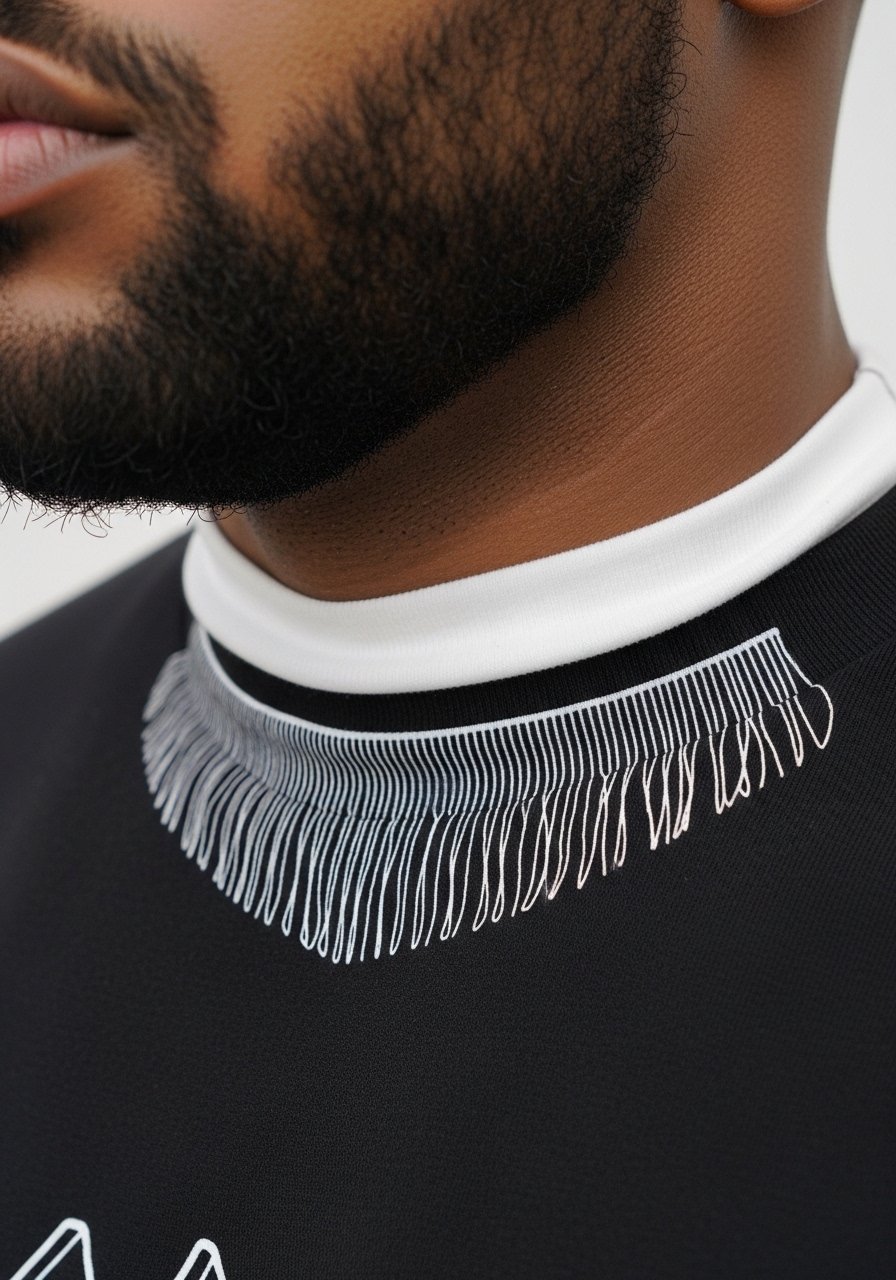
Bearded necks change how edge lines read. Design the fringe to sit just below the beard so hair growth frames the tattoo rather than covering key work. Pre-session shaving protocols matter here. Ask your artist for a trimmed stencil rehearsal with your beard slightly grown in to see real framing. People who try to hide lines under heavy hair end up with misaligned edges. This design is ideal for anyone who wants a neck piece integrated with grooming. For appointments, a crewneck shirt that you can pull down keeps the beard area accessible.
Frequently Asked Questions
Q: Will a throat tattoo hurt more than other placements and can I use numbing cream?
A: Throat pain is sharper on the midline and Adam's apple and more muted on side-neck muscle. Short sessions reduce fatigue and most artists will accept topical lidocaine applied before the session. Ask your artist about their comfort with numbing so you both agree on timing and any effects on linework.
Q: Can a throat tattoo ruin job prospects and are there placement choices to hide it?
A: Visible throat ink can affect some interviews. Side-throat placements and designs that tuck under collars are practical choices for people who need flexibility. Patterns designed to blend under turtlenecks or an upper-jawline script that stays hidden by a buttoned shirt offer concealment options.
Q: How do throat tattoos show up on darker skin and what design choices help visibility?
A: Darker skin often benefits from higher contrast and saturated blackwork rather than whisper-thin lines. Solid black silhouettes, negative space framing, and simplified shading help maintain legibility. If you are unsure, try a temporary stencil or henna test to preview contrast.
Q: Saniderm or dry healing for throat work, which camp should I follow?
A: The debate is split. One camp favors protective film like Saniderm to keep the throat clean and reduce movement irritation. The other camp warns that heavy film on a sweaty neck can trap bacteria and makes scabs soggy. Both approaches have valid points. I suggest asking your artist which method they use on throat clients and following their plan for the first week.
Q: How should I size a throat design to avoid distortion from weight change or Adam's apple motion?
A: Plan larger scale and more generous spacing than you would on an arm. For Adam's apple areas choose vertical compositions that follow the muscle and avoid tight micro detail. Mention any planned body changes to your artist so they can propose proportions that age more gracefully. For pre-session clothing pick a mens open collar henley you can wear to keep fabric off the area during touch-ups.