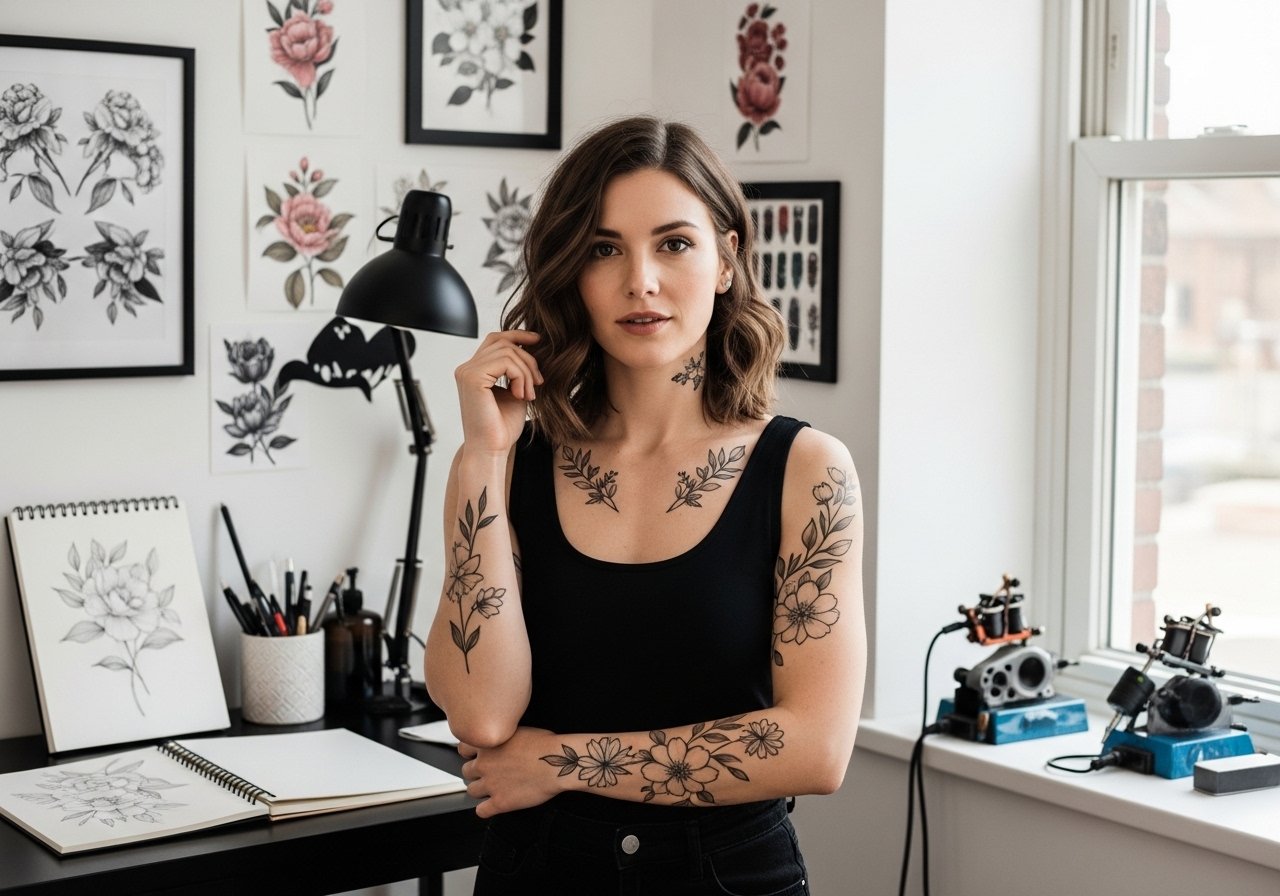
Fine line trends and viral lower lumbar looks are everywhere, but what actually lasts on that spot often surprises people. The lower back moves, rubs against waistbands, and sweats in summer. The right design, spacing, and session prep make the difference between a piece that still reads clean at five years and one that needs early touch-ups. Here are 17 drawn ideas to consider, plus practical notes on how each ages and what to tell your artist.
1. Ornamental Mandala Across the Lumbar
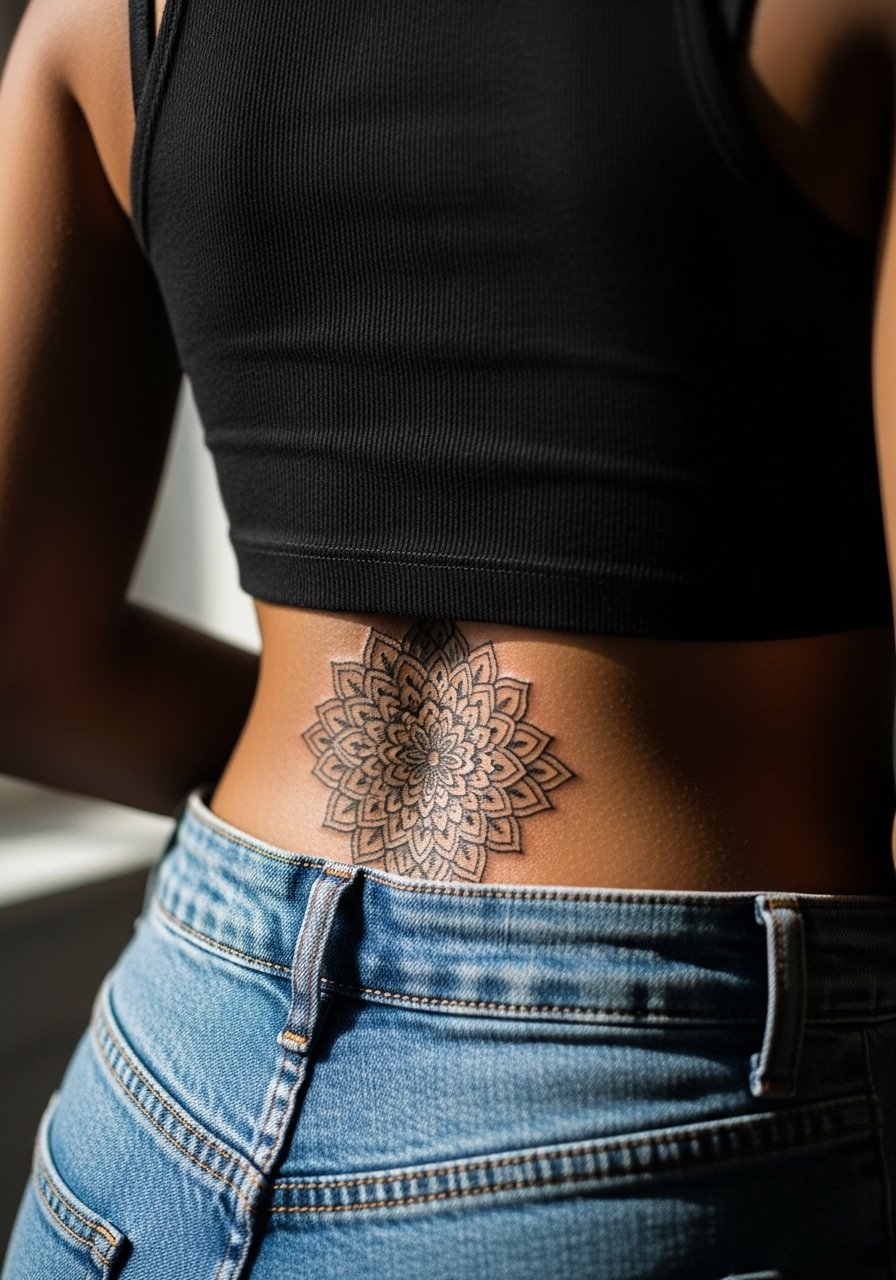
The ornamental mandala is a natural fit for the lumbar placement because its symmetry can frame the spine and the dimples of the lower back. Tell your artist you want the outer pattern opened up a touch so the linework has breathing room. A common mistake is packing too many concentric circles into a narrow width, which risks merging lines after two years. Pain on the lower back is usually moderate, and a full 4-8 inch piece often takes two sessions. For showing it off, low-rise jeans and a crop top will let the symmetry sit in frame without competing.
2. Symmetrical Floral Wings Above the Dimples
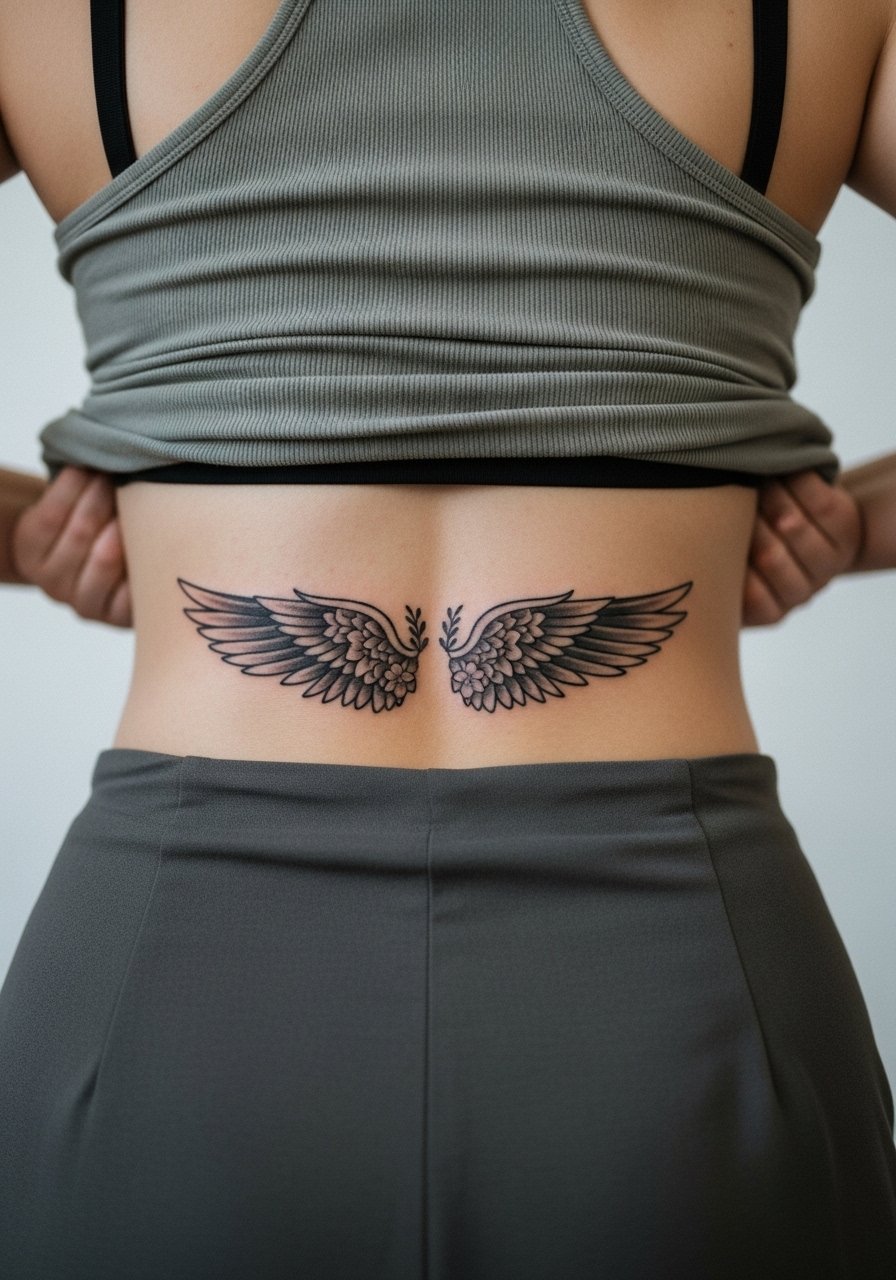
This neo-traditional floral wing layout sits naturally above the dimples and drapes with body movement. In consultation, specify that you want color fills with solid black outlines and modest negative space so petals do not fuse with motion. The usual flaw is asking for ultra-fine petal lines on an area that experiences friction from waistbands. Expect 2-3 sessions for a 6-10 inch span with medium soreness during and for a couple of days after. If you plan to wear swimwear, high-waisted bikini bottoms or a sheer sarong wrap frame the wings without hiding them.
3. Tribal Sunburst Centered on the Upper Lumbar
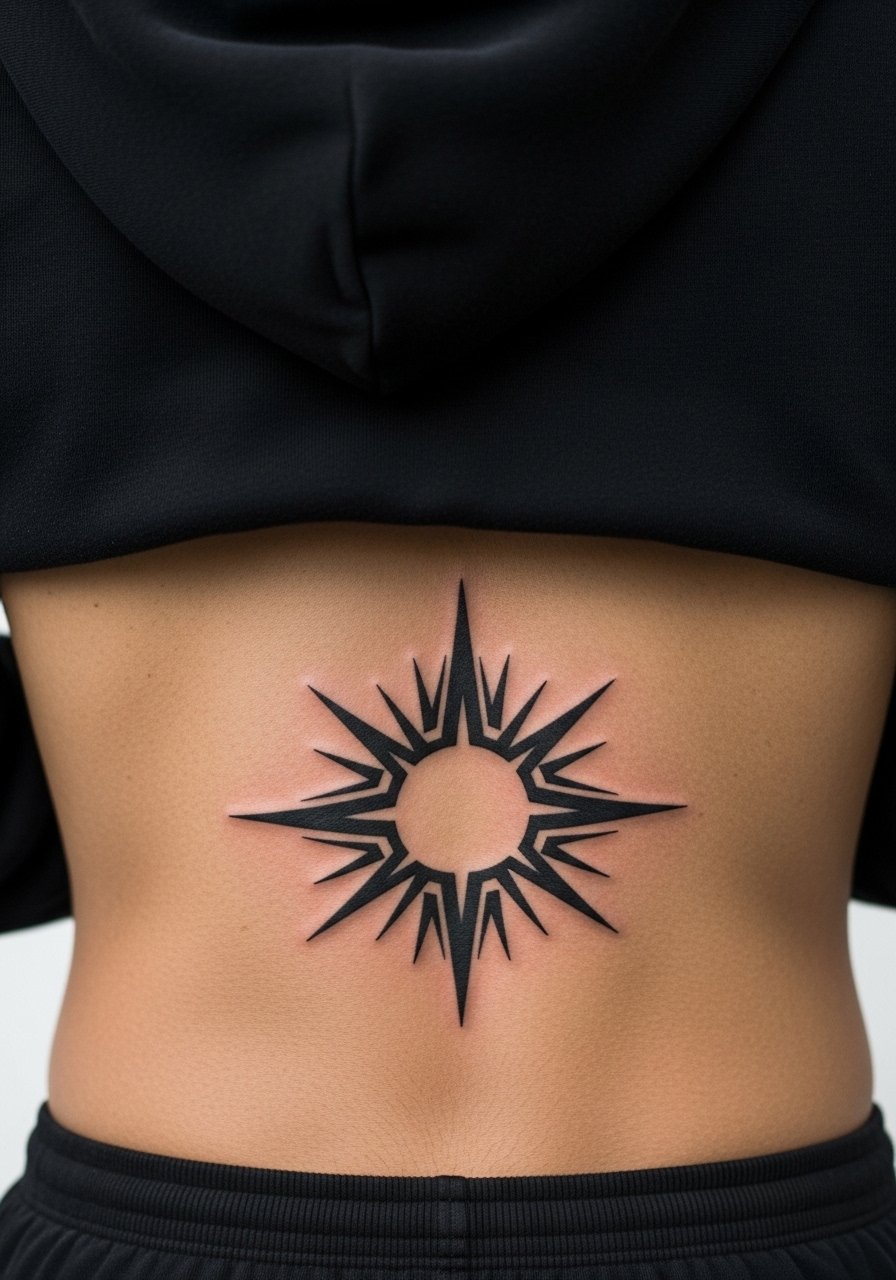
The tribal sunburst reads in solid black like architectural blackwork. Ask for thicker outer strokes and open negative spaces so the design survives friction from jeans. A common version that ages poorly is one with tiny spiky rays that look crisp fresh but merge after a couple of years. This piece usually fits a 5-7 inch diameter and can be done in a single long session. For nights out, pair the placement with a low-back dress that lets the sunburst peek without competing with busy prints.
4. Fine Line Butterfly Cluster at the Dimples
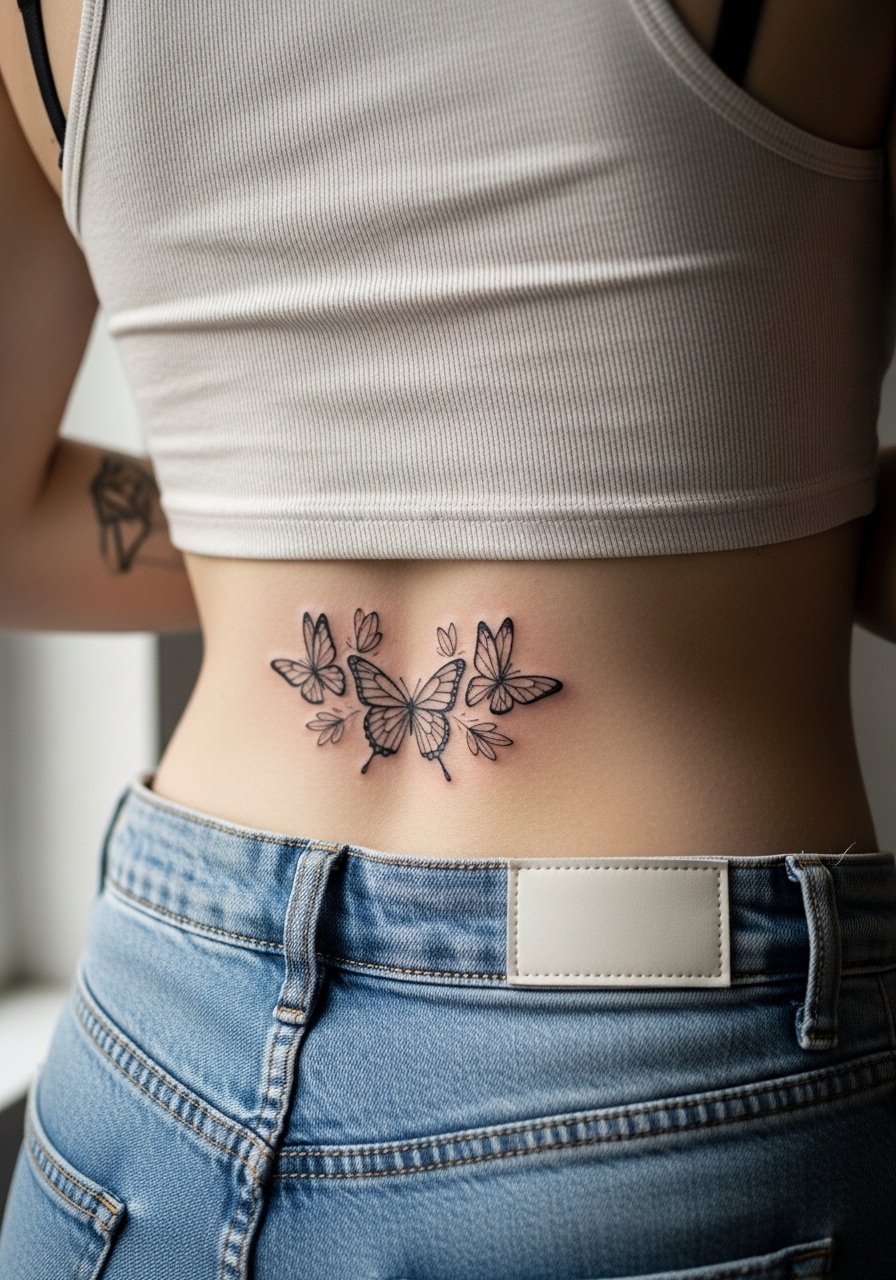
Fine line butterflies suit people who want minimalism, but this style is where the industry argument gets loud. One camp says fine line on curved, movable areas fades faster and can blur into soft gray within 18 to 36 months. The other camp claims that with correct needle depth and spacing the motif settles and keeps its charm much longer. My practical take is ask your artist for slightly heavier primary outlines and fine internal veining. The session is short and the pain is manageable. If you plan to let it ride visible, a high-rise bikini bottom will show the cluster without putting fabric right on the fresh ink.
5. Watercolor Lotus Bloom Flowing to the Hip
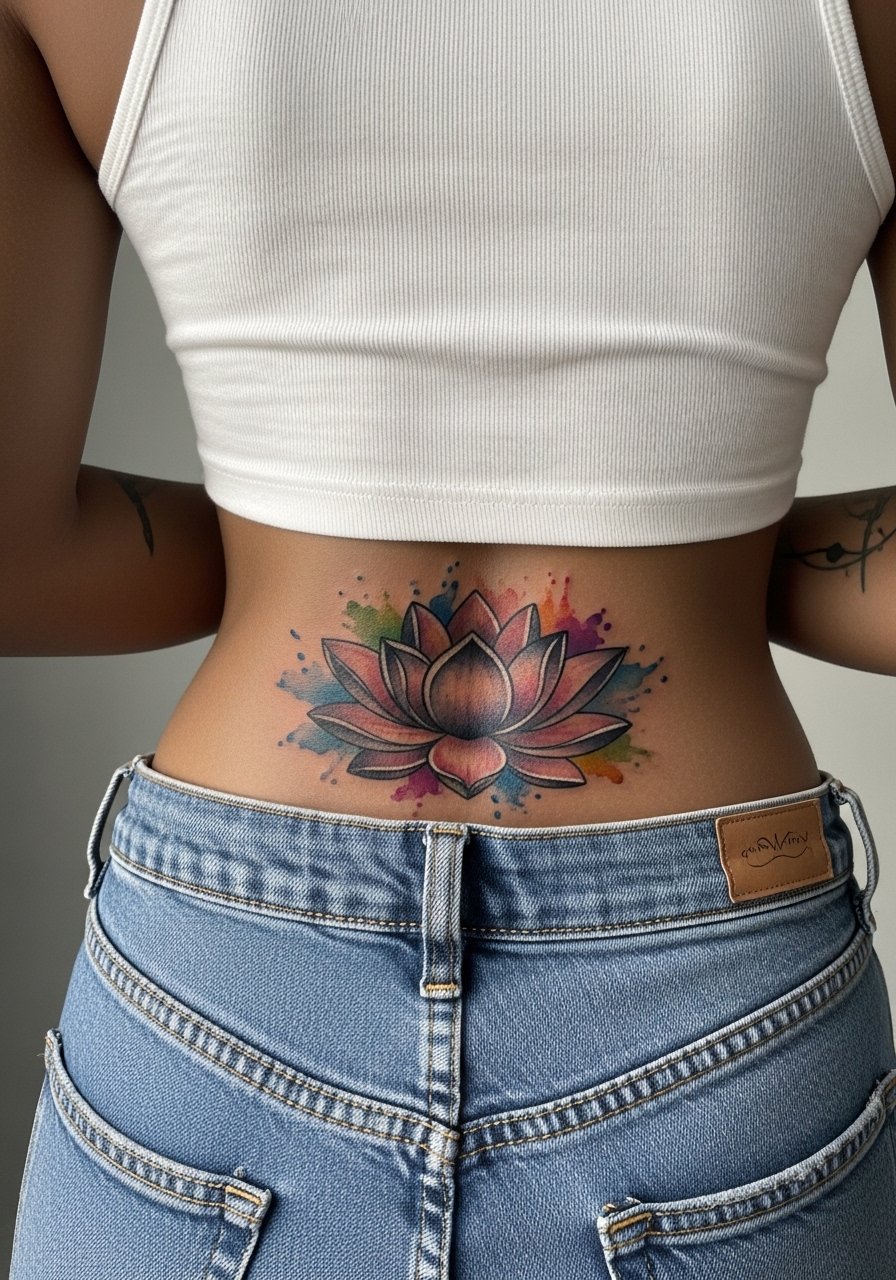
Watercolor looks ethereal on curved skin, but it is also where aftercare choices matter more than on flat limbs. Artists openly split on Saniderm versus dry healing for this area. One camp prefers breathable film for humid zones and says it speeds healing. The other warns that films trap lower back sweat and can cause irritation. For watercolor, ask for slightly stronger saturation at the edges so the washes survive the first year. Expect three sessions for a 6 inch span if color layering is involved. For showing the piece, side-slit skirts or hip-hugger leggings echo the flow and keep the design visible when you want to reveal it.
6. Blackwork Geometric Spine Frame
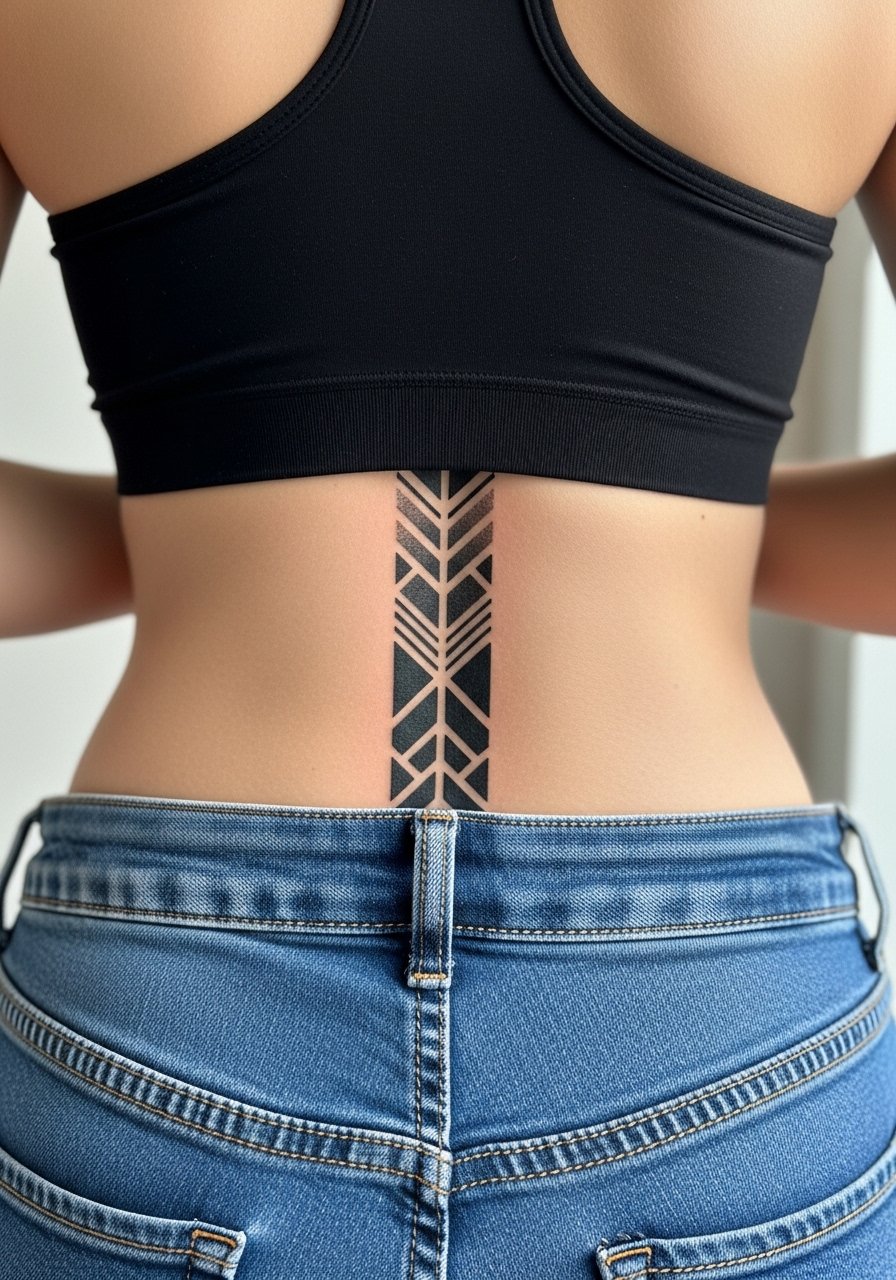
A vertical geometric frame along the spine elongates the torso and uses solid saturation to age well. When you consult, mention you want gaps between parallel lines and wider negative spaces so lines do not merge over time. This type of work can take multiple sessions if it extends 8-12 inches. It hurts more along the spine than the flanks, and clients often request topical numbing for longer stretches. To highlight the piece, a backless halter top creates clean exposure without rubbing the fresh linework.
Studio Day Picks
The lower lumbar pieces above range from small, quick sessions to multi-visit saturations, so a compact kit that handles friction and color healing keeps the first week smoother.
-
Tea tree salve tin. Users report it soothes itch on curved areas without leaving a heavy residue, which helps the lotus and peacock-feather pieces heal cleaner.
-
Manuka balm sticks. A non-greasy balm is handy for lower back spots that catch sweat, and the stick format avoids contaminating a jar during touch-ups between sessions.
-
Japanese rice bran oil serum. Fast-absorbing oils work well when you need hydration but do not want a film that traps moisture on the lumbar crease.
-
Hustle Butter tub. A thinner ointment recommended by some artists for the initial days, it reduces greasy buildup while still protecting saturated blackwork.
-
Thin protective film roll. A lightweight film helps guard delicate linework in the first 48 hours from clothing friction, useful for mandalas and fine line clusters.
7. Neo-Traditional Rose Vine Along the Hip Curve
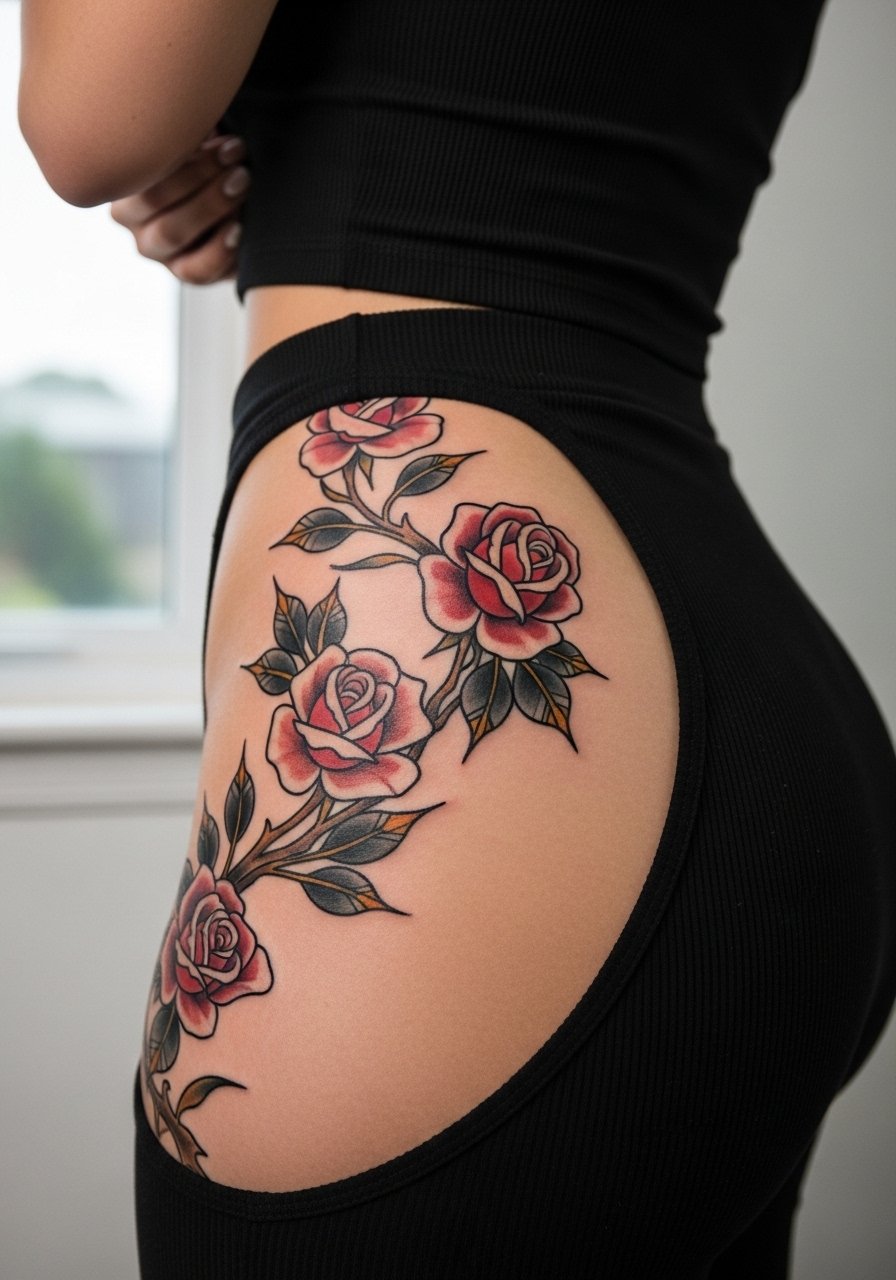
Neo-traditional rose vines follow natural curves and can be scaled to avoid distortion with body changes. Ask for the vine to include repeat motifs rather than a single large bloom so the pattern flexes with weight shifts. The usual mistake is asking for tight tiny shading on an area that will move; broader stipple shading and strong outlines age better. Sessions for a 4-6 inch repeat pattern usually run two to three sittings. For styling, a side slit maxi skirt or thin hip chain complements the vine while keeping the piece visible.
8. Minimalist Arrow Trio, Centered Vertical Stack
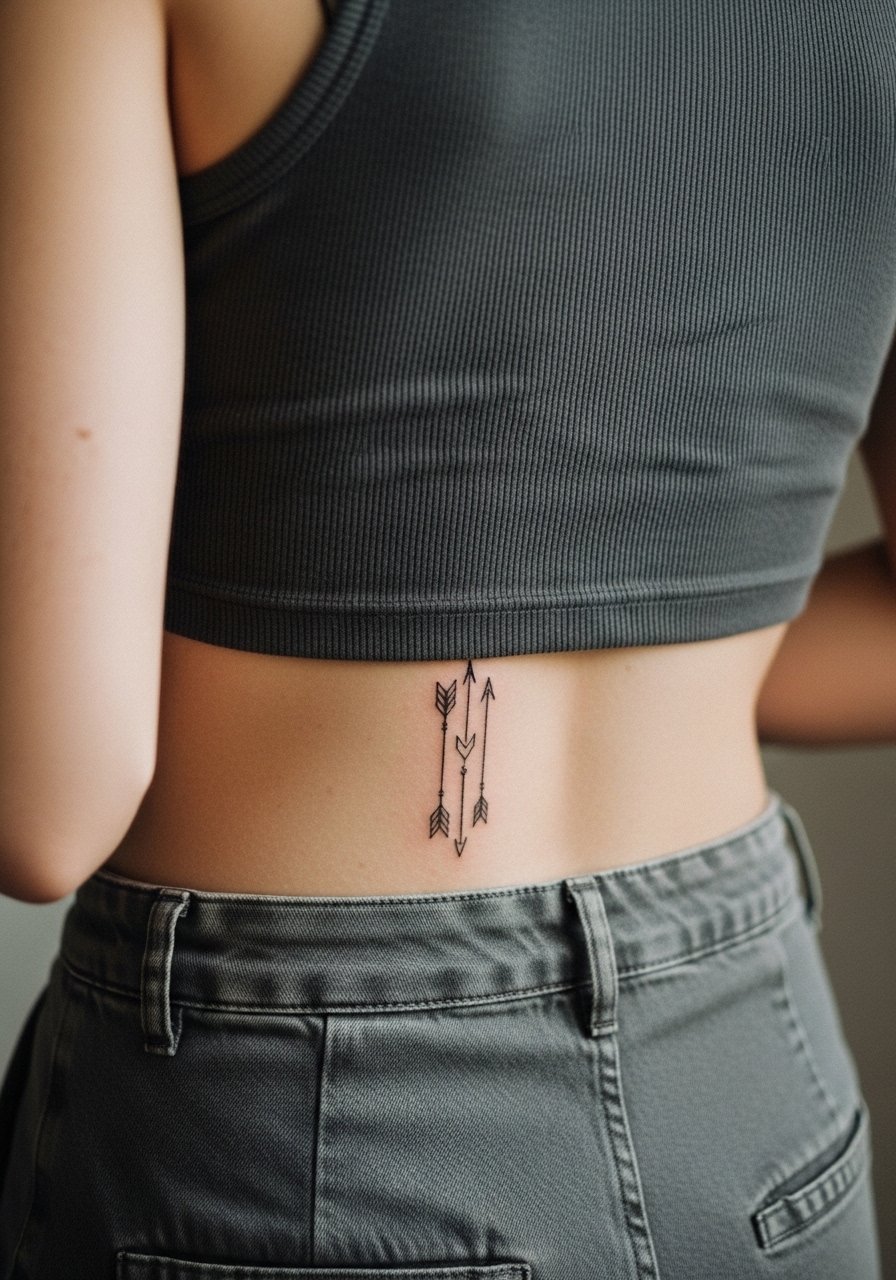
Small arrow stacks are discreet, quick, and empowering for people who want a subtle lumbar accent. In the consult, request slightly increased core outline thickness so the arrows remain readable after a couple of years. Because the design is small, a single session is common and healing is fast. Expect low pain and low blowout risk if the artist avoids overworking the soft tissue near the spine. For session comfort, wear elastic-free lounge shorts or a towel wrap so the artist can access the area easily.
9. Decorative Peacock Feathers Fanning Across the Lumbar
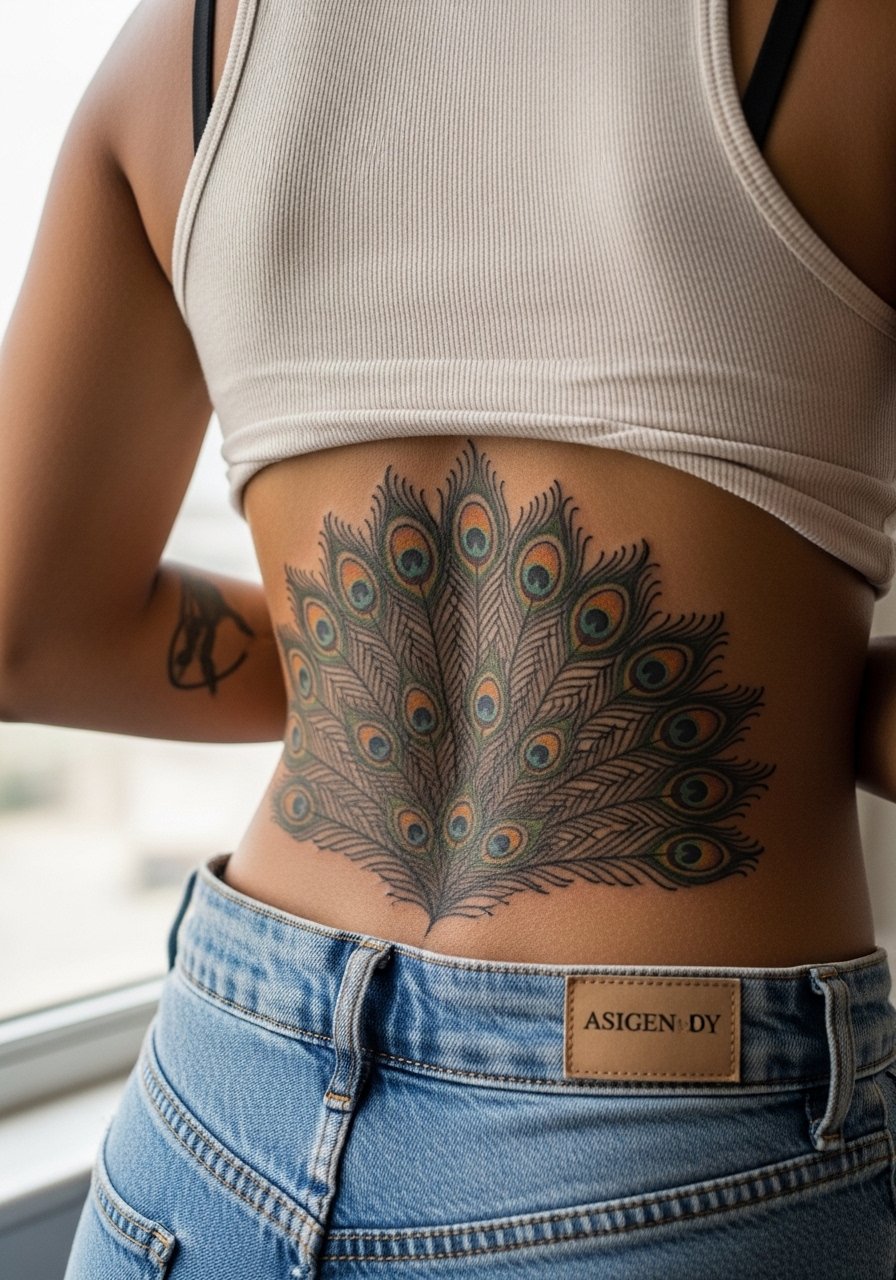
Peacock feather spreads make good use of the lower back as a canvas for gradient color and eye motifs. Ask your artist for color transitions with strong anchor points so the feathers keep their shape as the skin ages. The common error is tiny micro-detail at the feather tips that softens into blur after movement and washes. Expect two sessions for a seven inch height. For showing this exotic layout, low-rise jeans and subtle waist beads set the color off without hiding the fan.
10. Ignorant Style Heart with Drips in the Pocket Spot
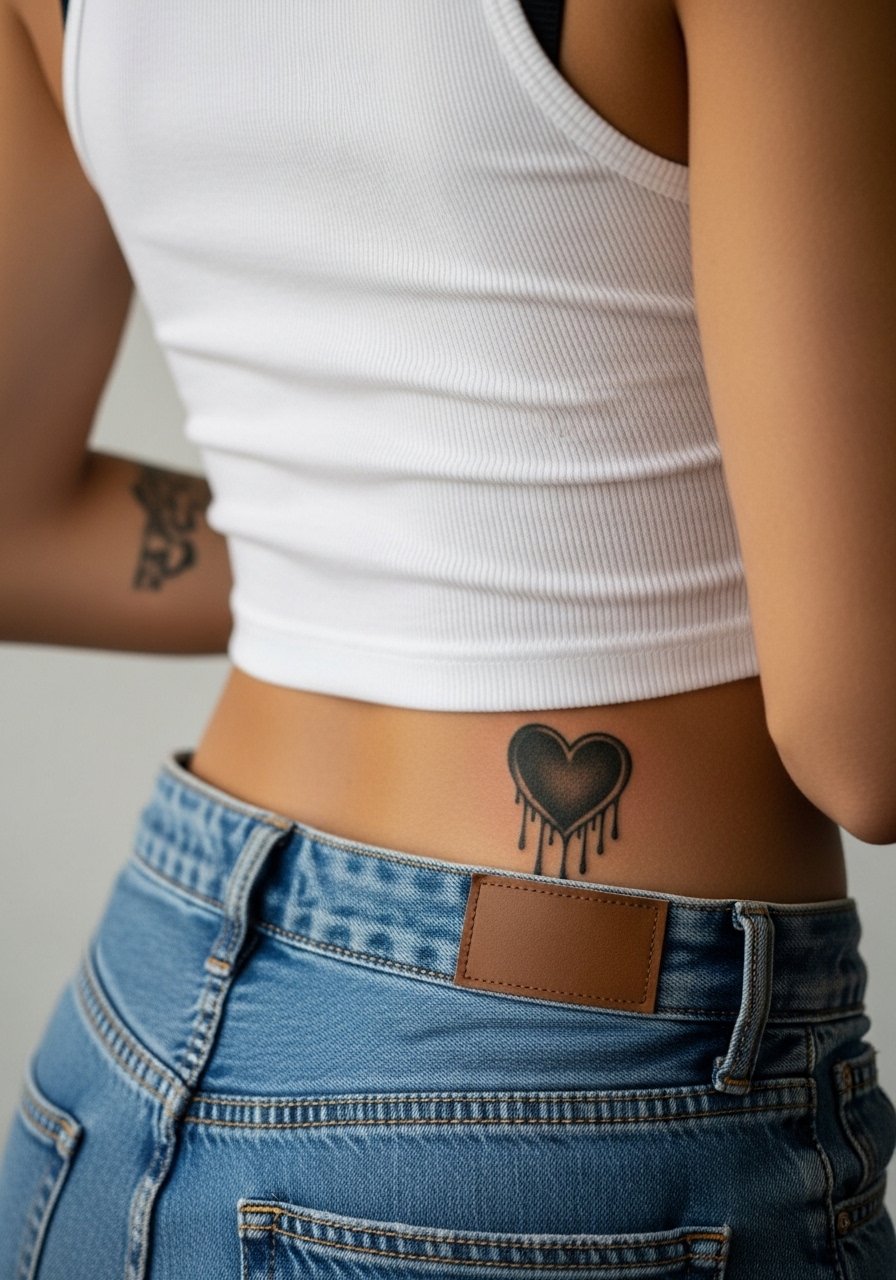
Ignorant style hearts read raw and slightly irreverent in an intimate lumbar pocket. Ask for bold single-pass outlines and controlled drip shapes rather than densely shaded drips that can blur. This sits in a low-visibility spot and usually needs 1-2 sessions. Expect moderate tenderness near the top of the buttock crease. Many people like how this shows when jeans slip, and cheeky shorts or a cheeky bikini bottom pair well for poolside reveals.
11. Symmetrical Dragonfly Wings Bridging the Lumbar
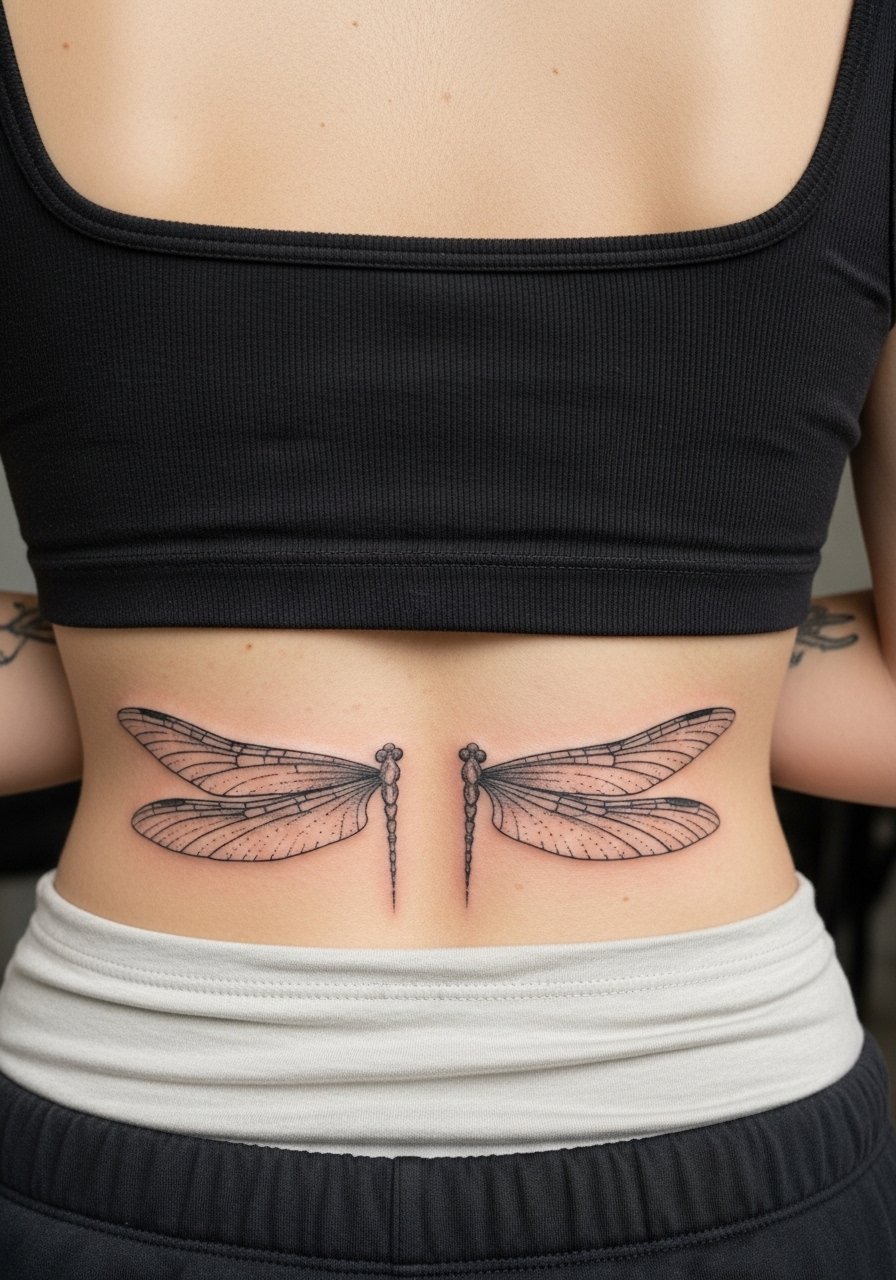
Dragonfly wings give a light, nature-inspired look and suit active lifestyles because their flow follows motion. Specify bilateral symmetry and ask the artist to mirror negative space so the wings retain shape after stretching. Common mistakes include overly intricate vein work that clogs with time. Two sessions usually cover the span and soft shading. The touch-up timeline for fine line details is often around year two to three.
12. Black and Gray Koi Arched Over the Buttock Curve
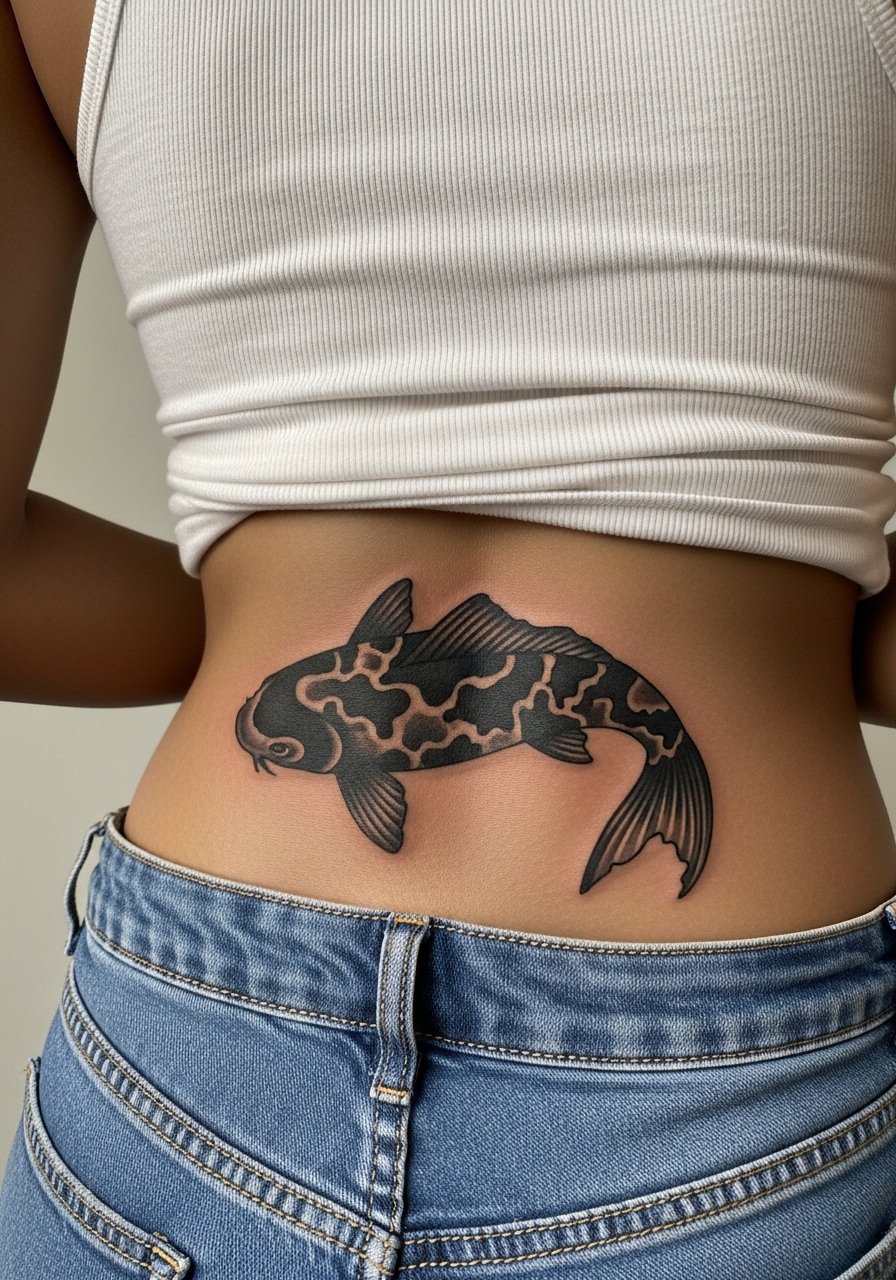
Koi silhouettes work with the lumbar curve to create movement. For darker skin tones, request heavier black saturation and clear contrast in shading so the koi reads in photos. The common aging issue is faint midtones that wash out on oily or highly pigmented skin, so a dense black outline helps. This piece usually takes multiple sessions for smooth gradient shading. For display, thong bikinis or cheeky shorts keep the arc visible and add contrast when worn.
13. Ornate Script Quote Banner Across the Lower Back
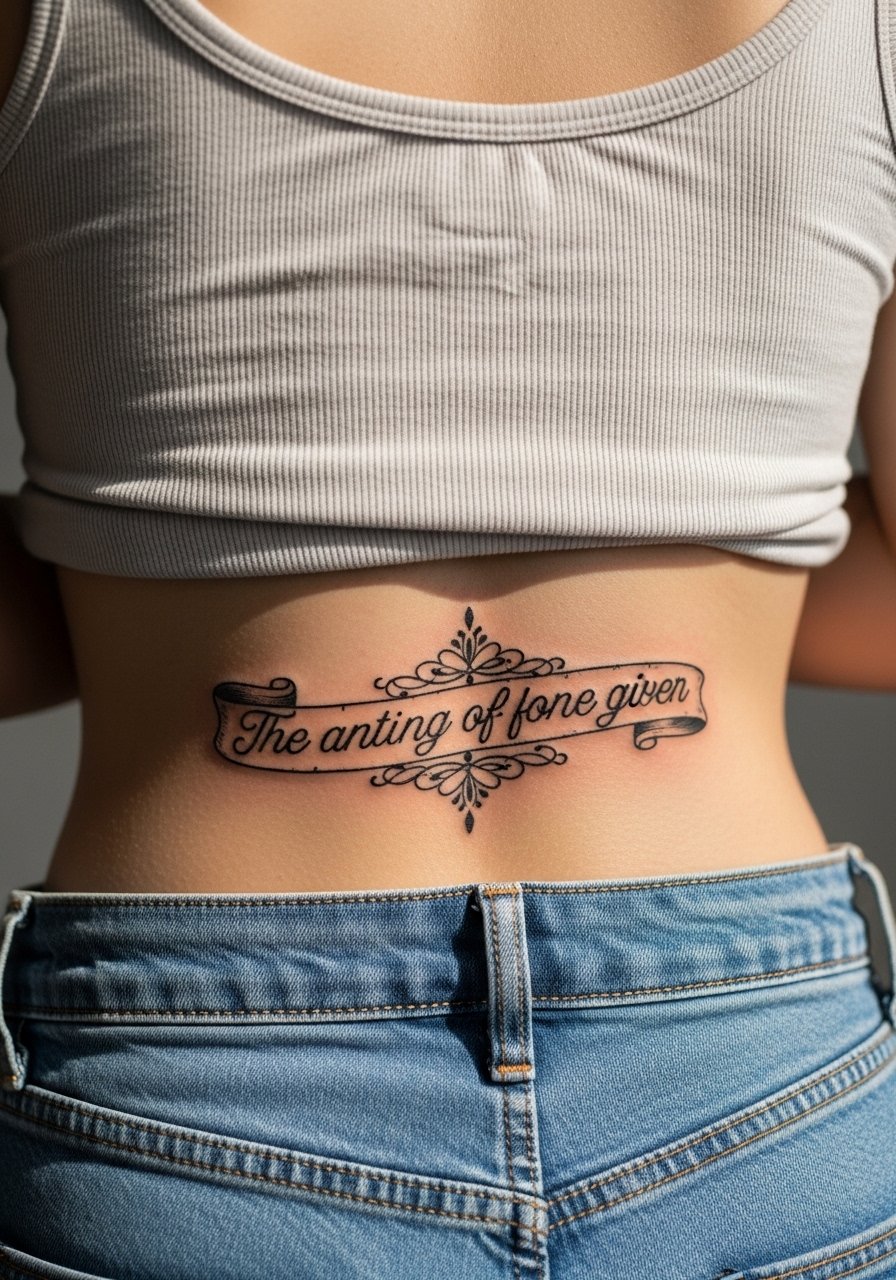
Script banners are classic for subtle mantras and memorials, but small letterforms on the lumbar can blur if spacing is tight. Ask for slightly larger letter height and a serif or script that scales well when reduced. A typical 5 inch banner can be done in one to two sessions. The main mistake is requesting tiny lettering that looks crisp fresh and illegible healed. A thin chain pendant or a gold waist chain belt sits just above a horizontal banner and frames the text without covering it.
14. Dimples of Venus Framing with Micro-Geometrics
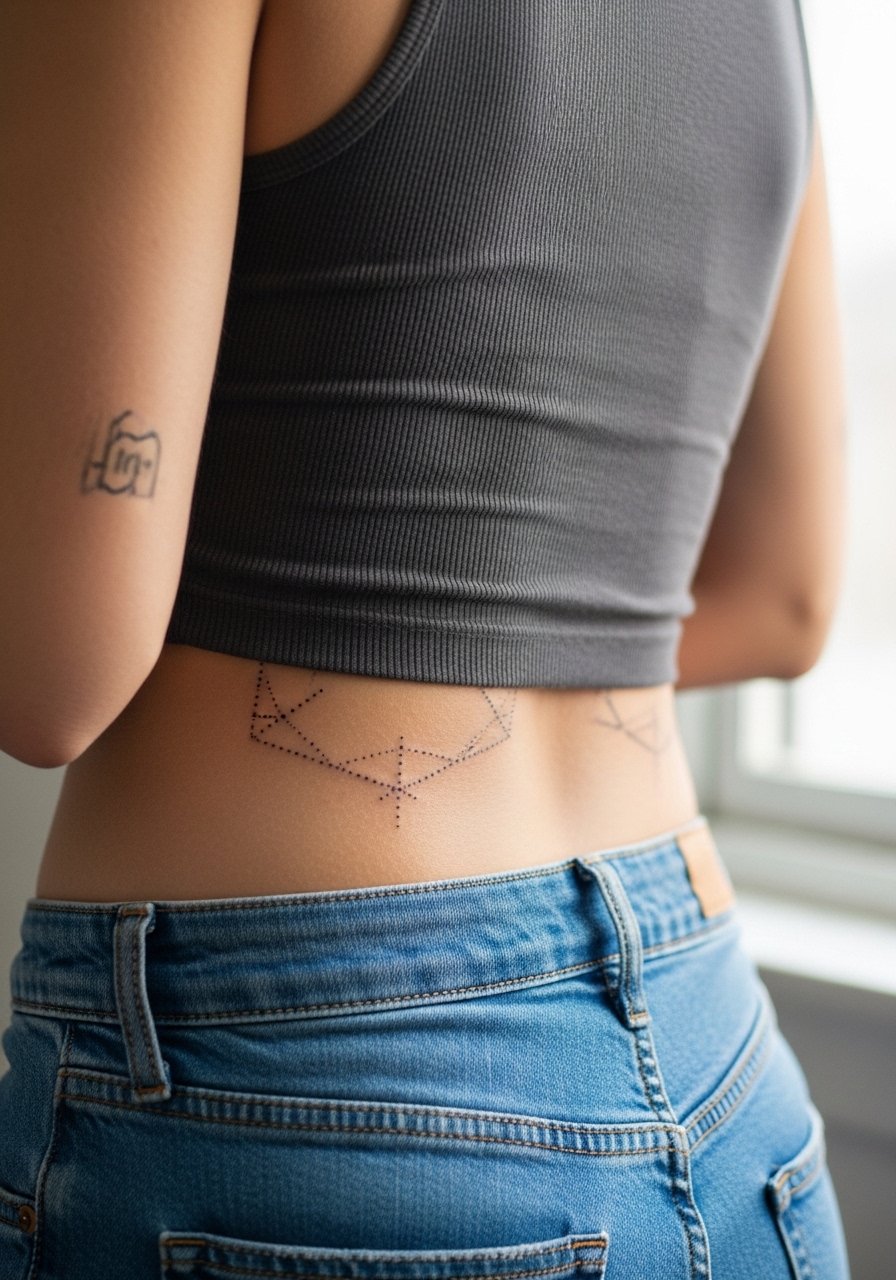
Framing the dimples with micro-geometry is a niche that emphasizes natural anatomy without large fills. Ask your artist to draft mockups showing how the pattern moves with a relaxed and flexed posture. The unique advantage is flexibility with body changes, but the risk is micro-detail that loses definition if scaled too small. This approach is great for someone who wants subtle contouring rather than a big statement. Touch-ups may be needed earlier than bold blackwork if you choose thin dot work.
15. Hybrid Tribal-Floral Built for Darker Skin
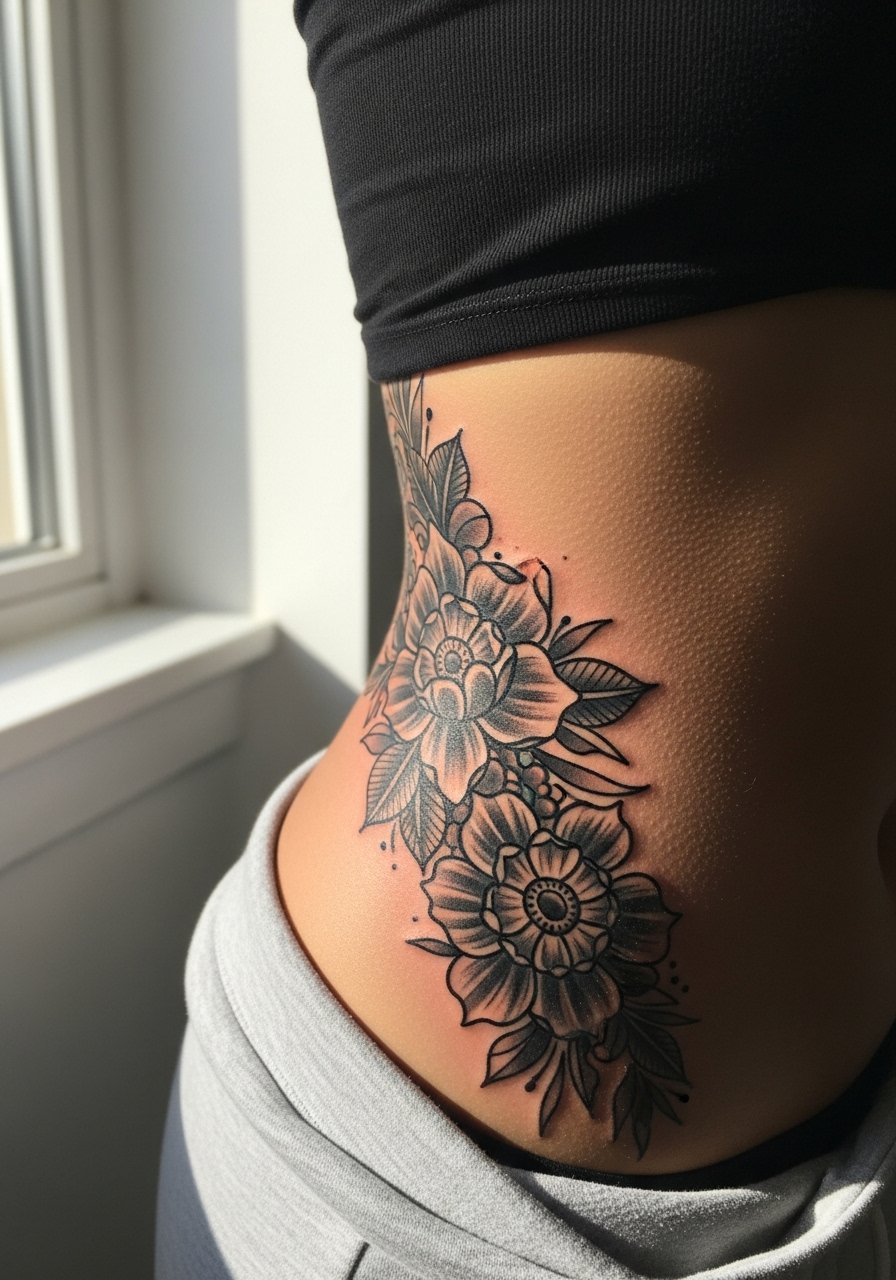
Combining tribal blackwork with floral fills can give high contrast results that photograph well on darker skin. The key is to request bold anchor lines in the tribal sections and keep color accents minimal so saturation survives. Many people with darker skin ask for healed portfolio examples, so insist on seeing those before booking. This hybrid choice reduces the fine-line fade risk and suits a multi-session plan. For session wear, removable side-tie shorts or a pareo wrap lets the artist adjust access quickly.
16. Dandelion Seed Dispersal Fading Upward
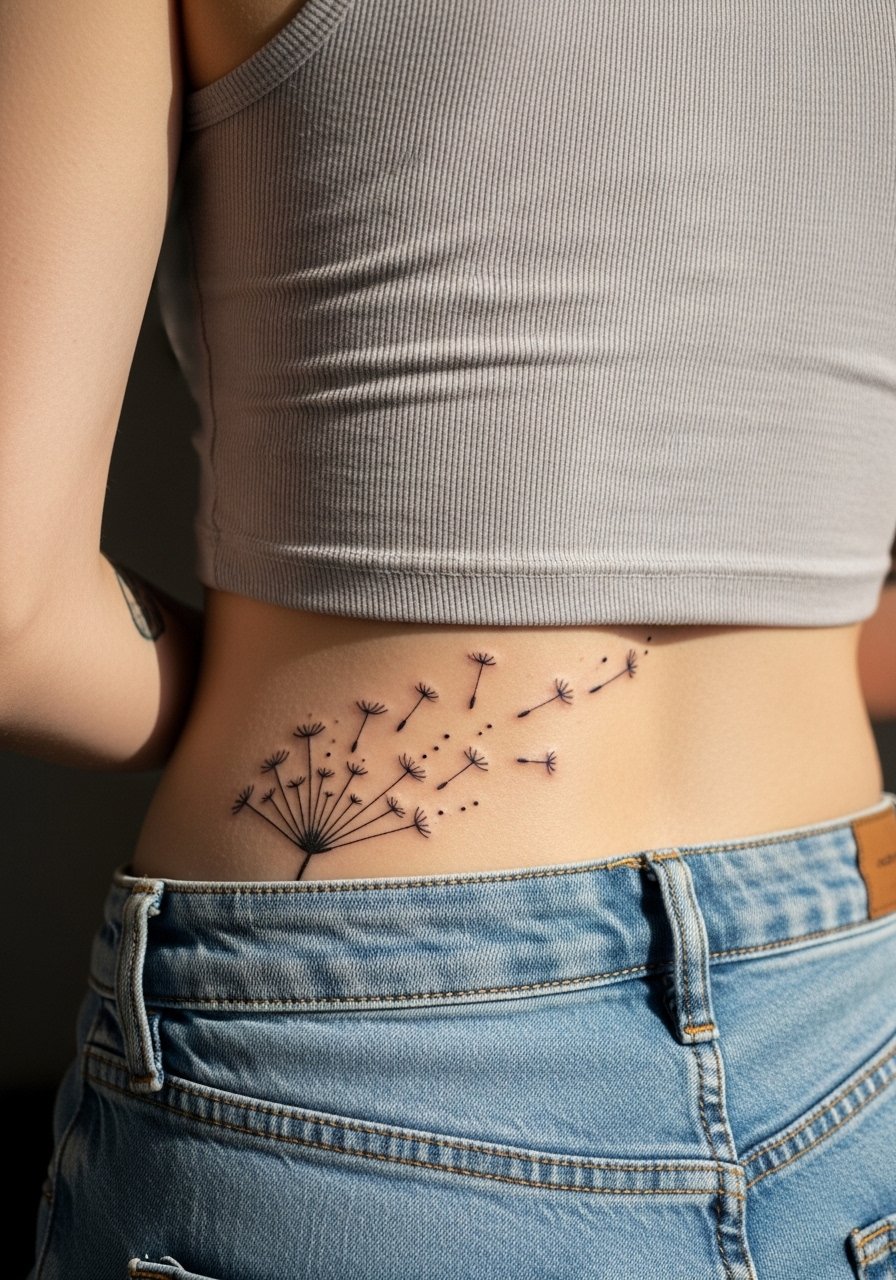
Dandelion seed motifs read whimsical without being overt, and they work well when drawn to account for stretching. Ask for the seeds to be spaced and for some to be slightly larger so the pattern does not completely disappear as the skin moves. The main mistake is making every seed identical and minuscule. This is a low-pain, one-session piece if kept small. For revealing it casually, rolled-up linen shirts or low-rise jeans let the seeds peek free.
17. Crescent Moon Trio Down the Spine
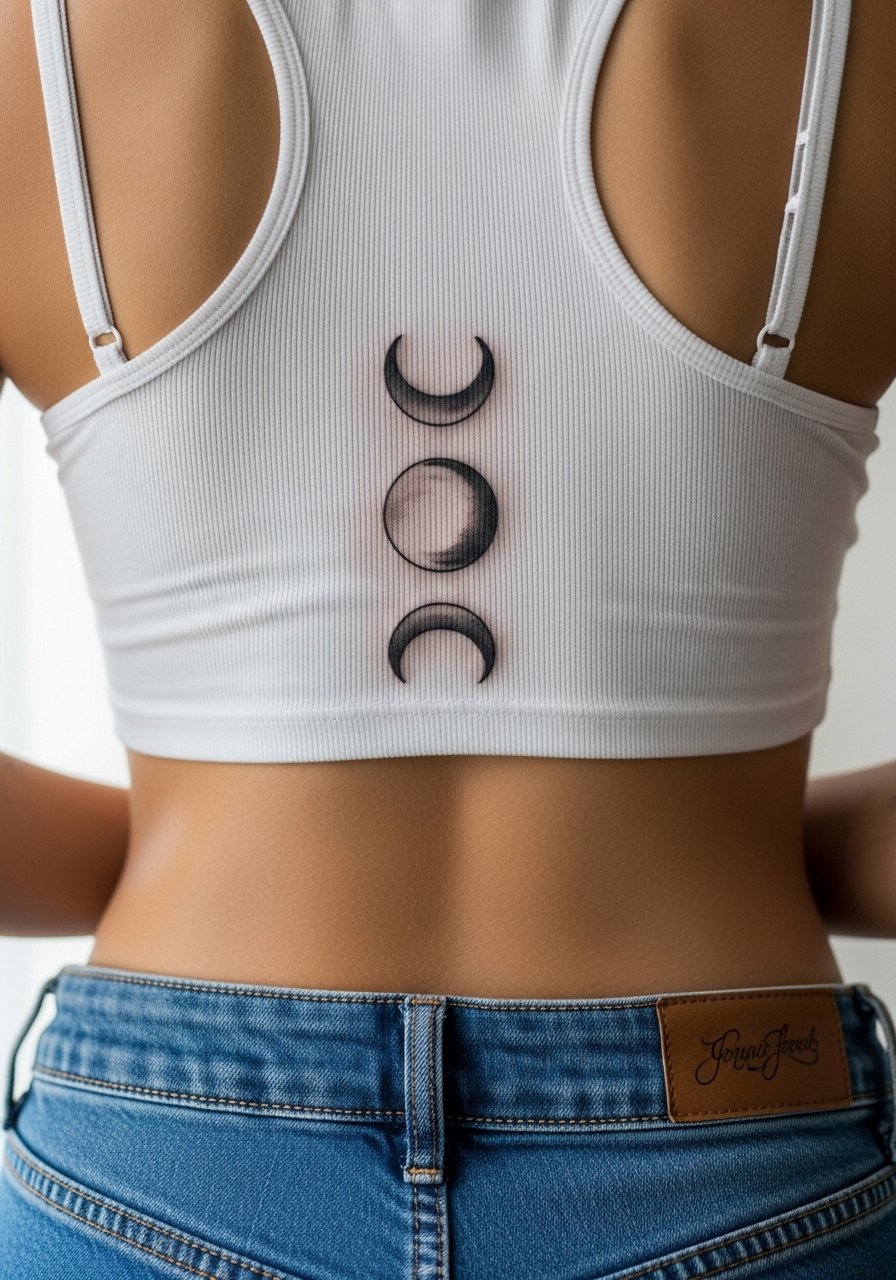
A vertical trio of crescents uses negative space to age gracefully and can be scaled depending on how visible you want it. Ask the artist to keep an even rhythm and to avoid tiny interior filigree that can fill in. This design usually takes a single session and the pain along the spine is a notch higher than lateral placement. For nights out a backless halter or racerback dress highlights the stacked moons without rubbing the area.
Frequently Asked Questions
Q: Will a lower back mandala stretch out after pregnancy or weight change?
A: It depends on placement and pattern density. Mandalas with open outer rings and repeat motifs tend to adapt better to mild stretching than tightly packed concentric designs. If pregnancy or weight fluctuation is likely, ask your artist to space elements and avoid tiny inner details that will merge when skin expands.
Q: Does watercolor on the lower back fade faster because of sweat and friction?
A: Watercolor can be more vulnerable in sweat-prone zones because softer washes rely on pigment sit rather than heavy saturation. Many artists recommend slightly stronger edge saturation for lumbar watercolor so the washes keep their shape through the first one to two years. Also consider scheduling color work for cooler months to reduce immediate sweat during healing.
Q: For fine line butterflies on the dimples, what should I ask my artist to avoid early blur?
A: Request modestly thicker primary outlines and ask for spacing between wings so veins are not jammed together. Ask to see healed photos from two years post-session for similar placements if possible. That will give you a clearer idea of how their fine line settles on lumbar skin.
Q: How should I dress for a lower back session to make the area easy to tattoo?
A: Bring loose, removable bottoms like drawstring linen pants or side-tie shorts that you can shift down slightly. A tank top or button-down that you can pull aside while remaining covered helps the artist work cleanly and keeps the rest of your skin free from ink.
Q: Is blackwork safer than fine line for darker skin on the lower back?
A: Bold blackwork usually photographs and heals more consistently on darker tones because strong contrast reads well. Fine line can vanish if the pigment sits too shallow or if the contrast is low. If you have darker skin, ask for healed portfolio images done by the artist on similar tones and prefer designs with anchor lines that will age into readable shapes.