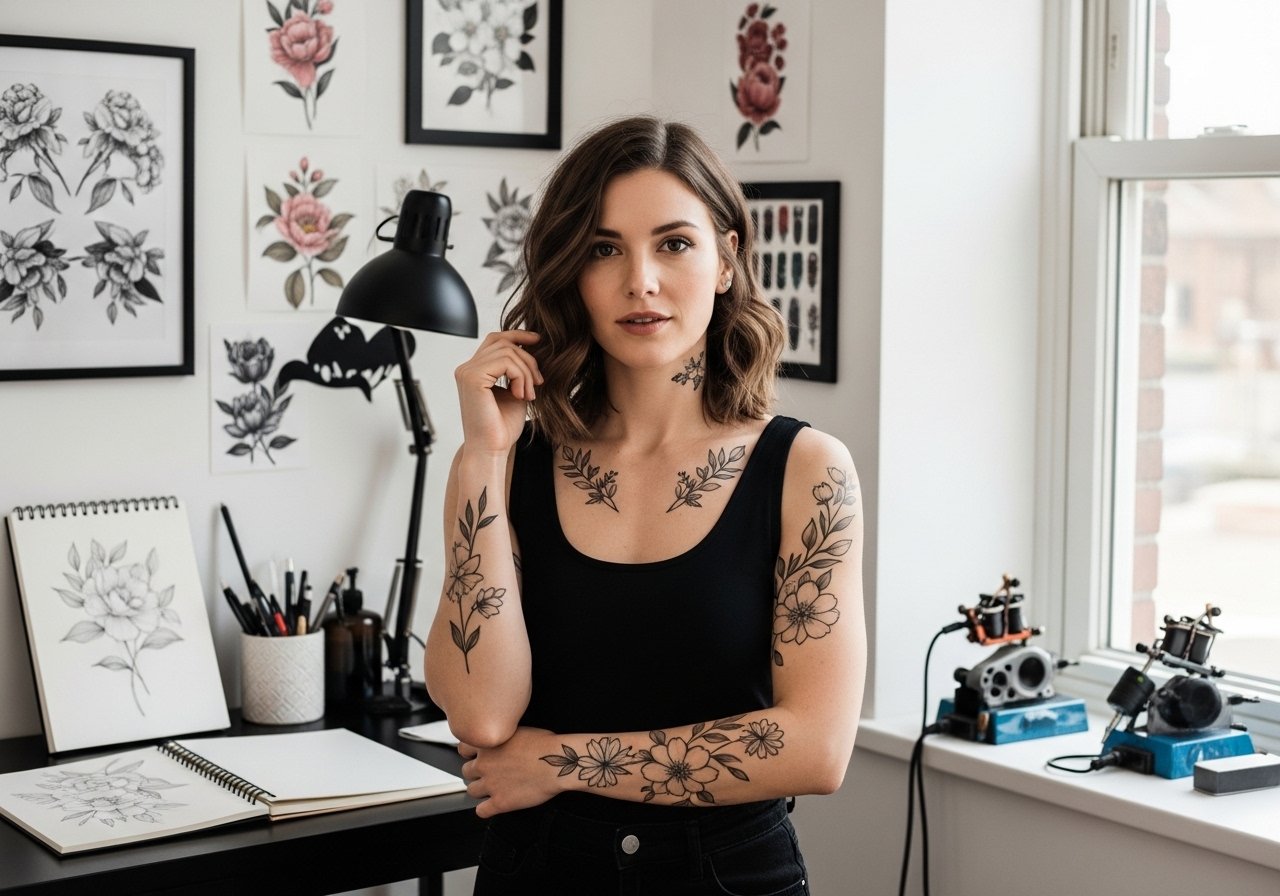
Fine line sweet pea work is everywhere on saved boards, but what looks pristine in a photo does not always read the same on real skin. The trend-versus-reality gap matters most with small floral work because placement, skin type, and spacing decide whether a motif stays readable. Read on for 17 concrete designs, how they age, and what to tell your artist in the consultation to avoid common regrets.
1. Fine line sweet pea bouquet on inner forearm
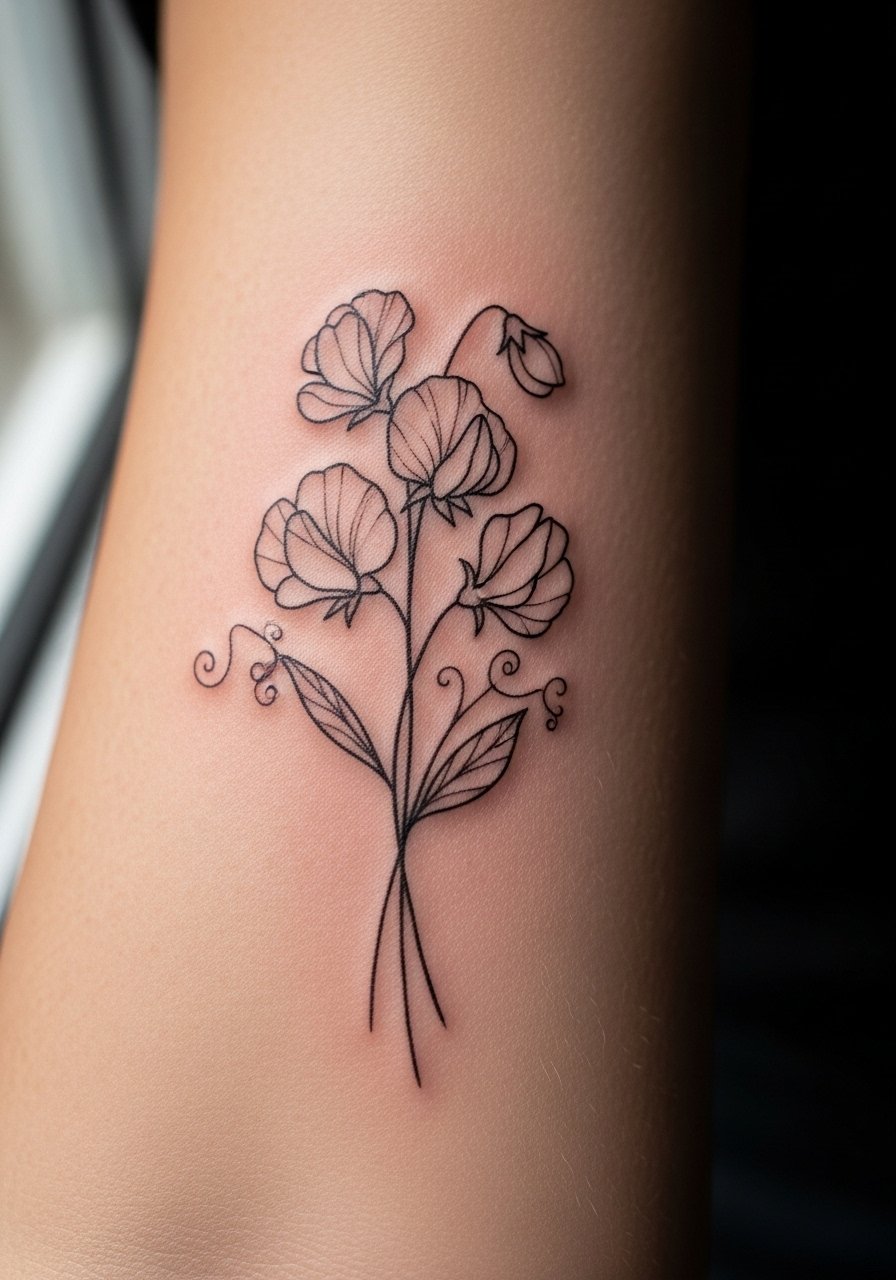
I recommend this when you want floral detail without a heavy color commitment. I've seen inner-forearm fine line pieces keep their charm when the artist uses open spacing and slightly stronger contour lines. Tell your artist you want a readable line weight that still looks airy, and ask where they place negative space so petals do not merge as they age. Pain on the inner forearm is usually a three to five out of ten, and a single session often does the job. Expect a touch-up at year one to two for very fine lines if you want the piece to stay crisp. Pairing idea: frame the forearm with a linen short sleeve blouse rolled cuff to show the work without competing prints.
2. Minimalist single sweet pea outline on the wrist
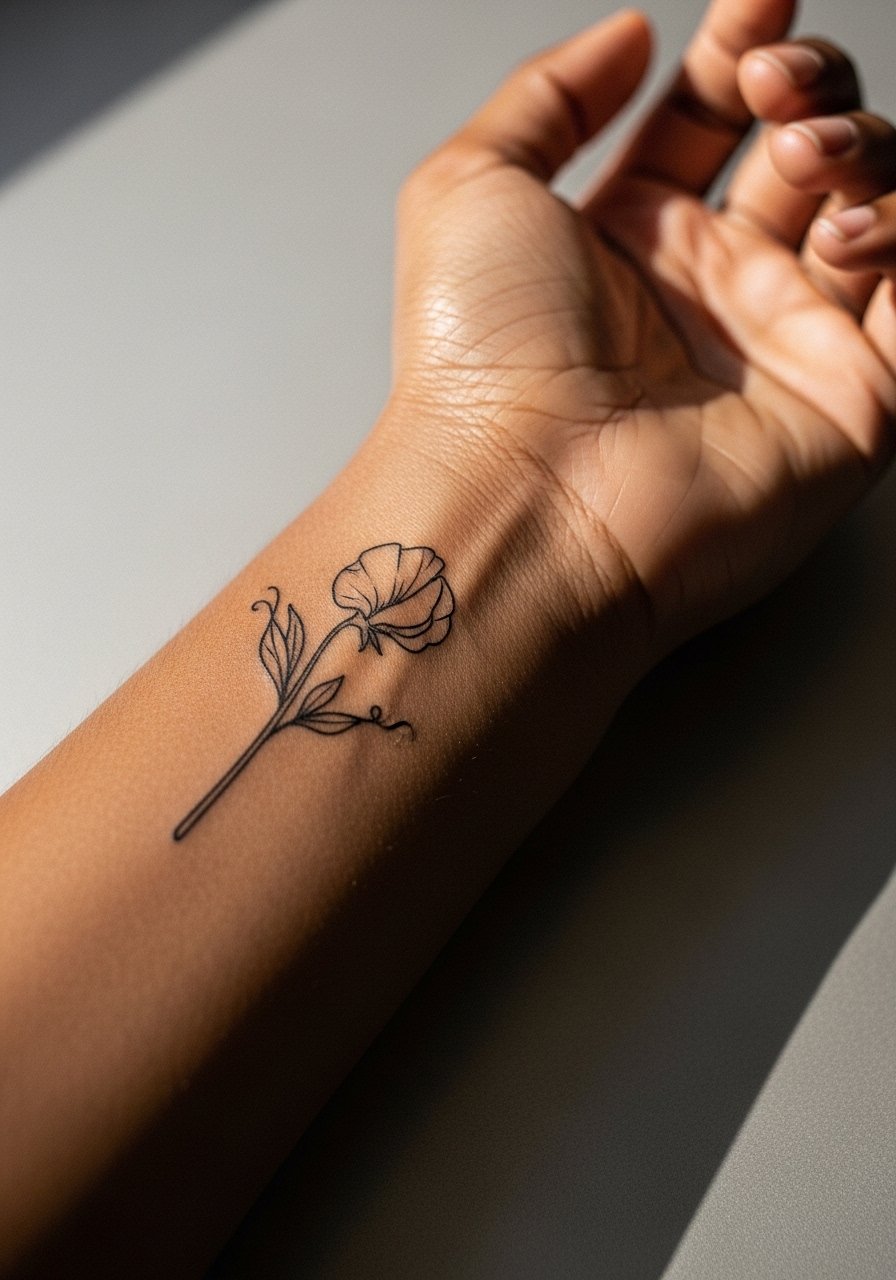
This small outline is an easy first tattoo but it carries specific risks. Fine single-needle lines on the wrist can fade into a soft blur faster than on the forearm. A common mistake is asking for needle-thin outlines without telling the artist you want slightly bolder contour for longevity. Expect moderate pain around a four out of ten. Session time is short, often under 45 minutes, but plan for a touch-up at 12 to 18 months. For showing it off, layer a thin silver cuff bracelet on the opposite wrist to keep attention balanced without crowding the tiny outline.
3. Single needle sweet pea vine on the ankle
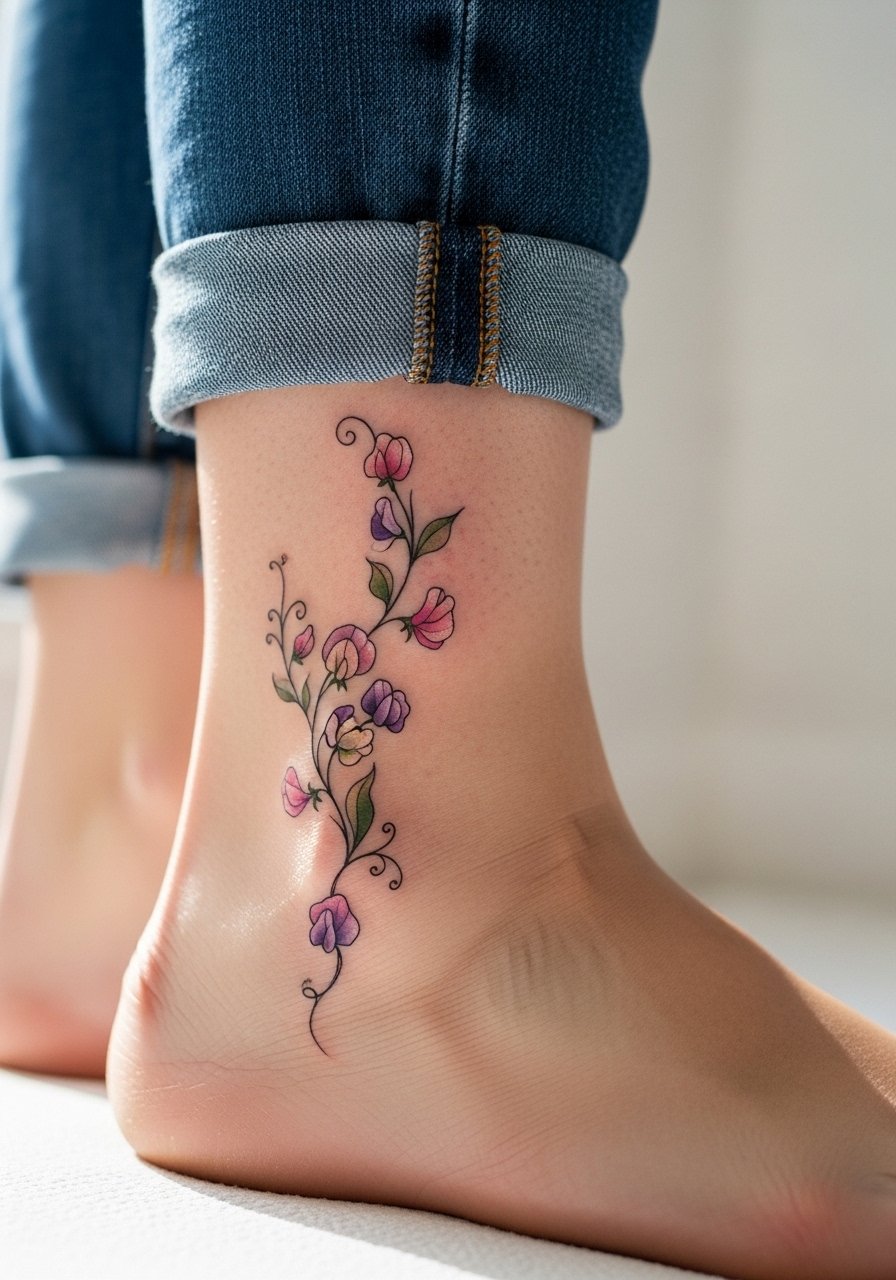
Fair warning, ankles are friction hotspots from shoes and socks. Single-needle vines look elegant when mapped to the bone line and kept slightly taller than they are wide. Tell the artist you want the stem to hug the ankle curve and ask about spacing to avoid line merging after swelling and regular movement. Pain is usually a five out of ten. Healing needs cautious footwear choices for the first week. If you want this to peek with summer shoes, plan sessions outside of heavy boot months. For nights out, a strappy heeled sandals look highlights the wrap without crowding the ankle.
4. Neo-traditional sweet pea with stems and leaves on the shoulder
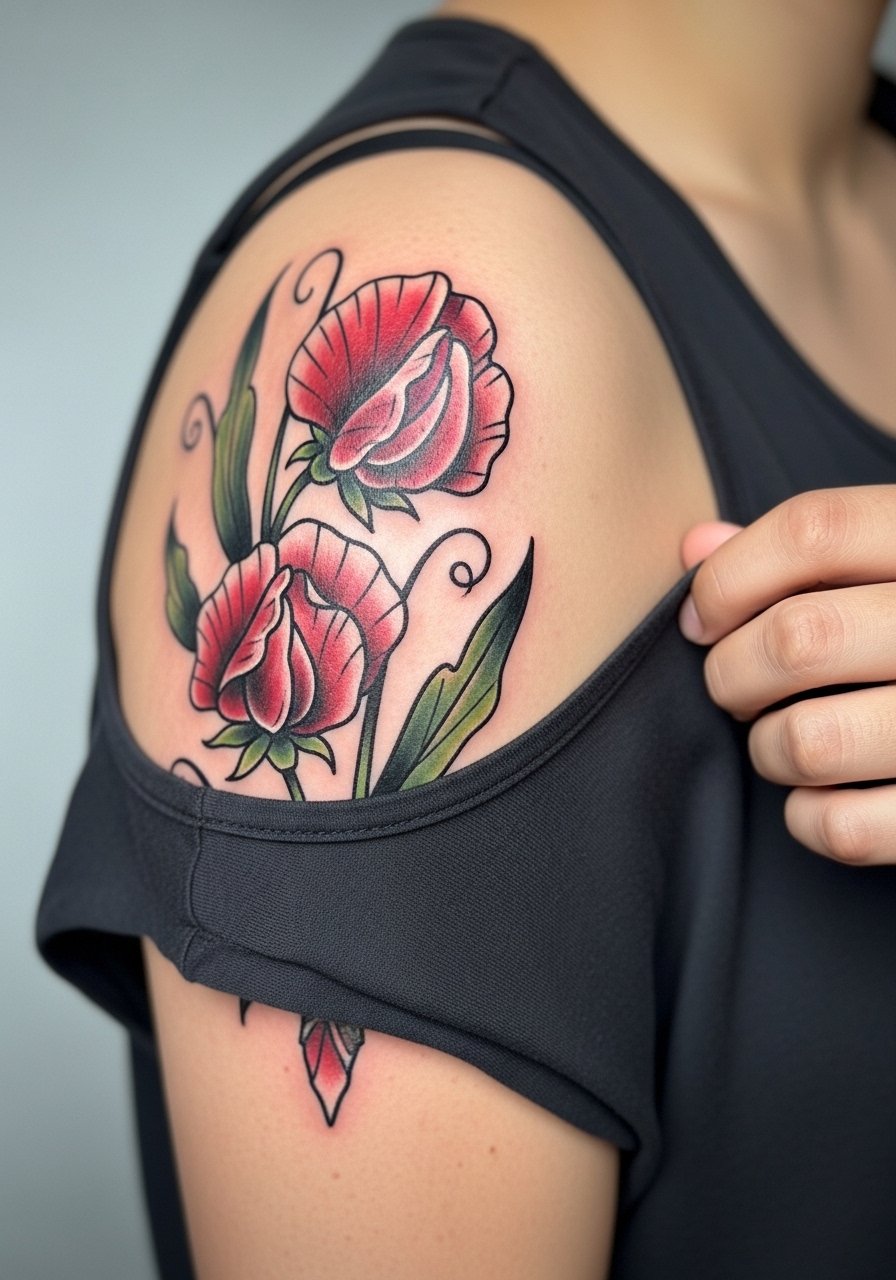
There is something about bold outlines and saturated saturation on the shoulder that keeps color readable for years. This style asks for 2 to 3 sessions, and you should discuss color placement so pinks and purples do not slump into the greens as the ink settles. A common error is asking for extreme tiny detail over a large color fill area. That invites blowout or muddy transitions. The shoulder is forgiving for touch-ups and a solid canvas for neo-traditional petals. For the session wear and show-off moments, a sleeveless linen dress or a tank top works well so the piece reads cleanly.
5. Watercolor sweet pea cluster near the collarbone

Watercolor gradients look painterly on the collarbone but they test patience in summer heat and heavy sun. Most watercolor petals used as collarbone pieces benefit from slightly more pigment saturation at the edges so the hues do not disappear. Tell your artist you want soft blends but ask for stronger rim pigment where the flower meets skin. Pain is lower on the collarbone than ribs, usually a three to five, but aftercare matters more because sun exposure is frequent. For wardrobe, an off shoulder sweater or a strapless bralette lets the watercolor read without fabric rubbing the area.
6. Black and gray realistic sweet pea sprig on the ribcage
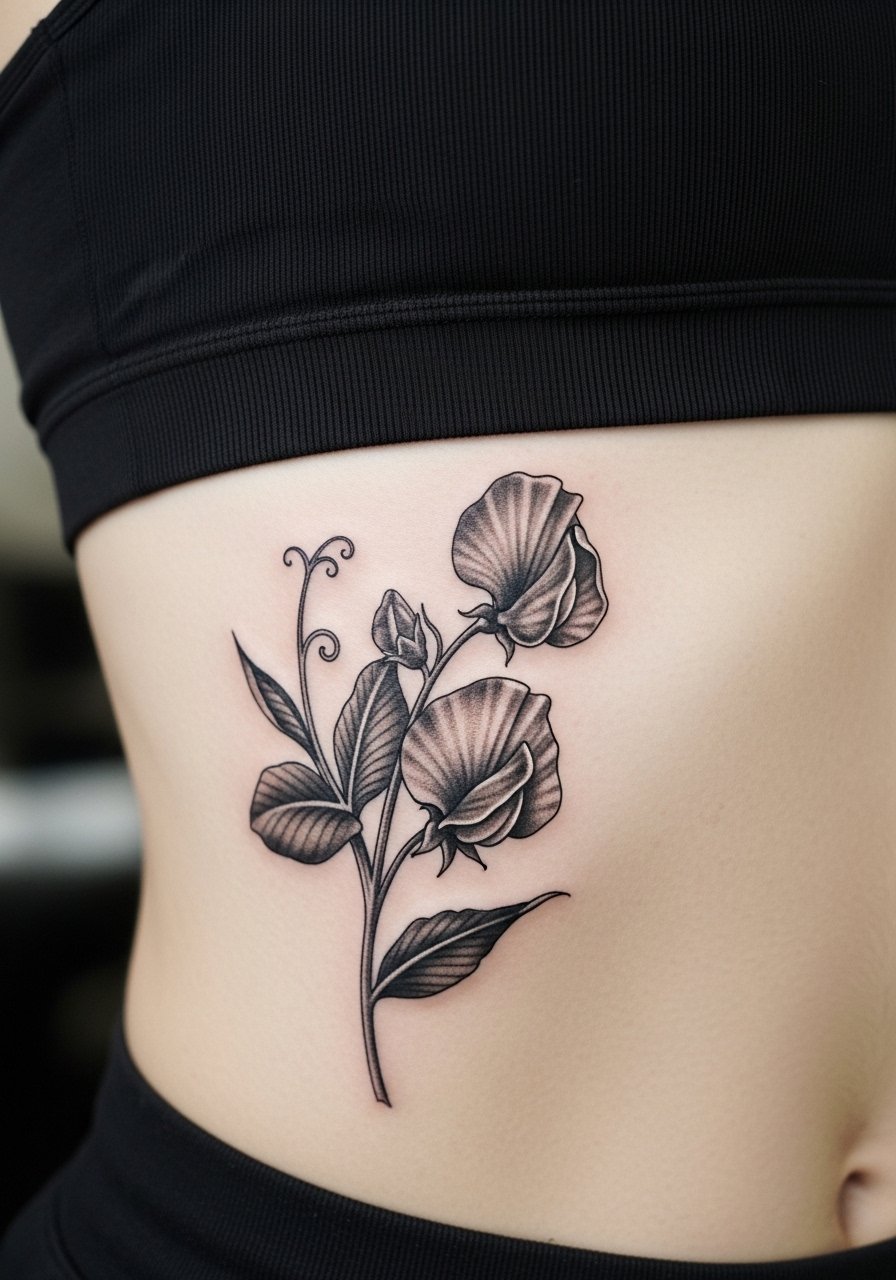
Fair warning, the ribcage is commonly listed as a seven or eight out of ten on pain scales. Many people still choose it for intimate, remembrance pieces. Artists split on aftercare and technique here. One camp favors keeping the area moist with protective film for faster healing. The other camp recommends dry healing to encourage neat scab formation and less ink loss. Name both approaches in your consult and ask which they use and why. Realistic shading needs an artist who specializes in micro-realism to avoid blotchy gray patches later. For the session, a cropped tank top that you can lift slightly is the easiest option.
Studio Day Picks
The collarbone, shoulder, and ribcage work above each ask for different prep, and a few specific items cut down on irritation and friction during the first week.
-
Frida Aftercare Spray. A light mist that users prefer for fine line work because it prevents heavy ointment buildup on narrow needle channels.
-
Tattoo Goo Balm. A dryer-feeling balm that can be helpful in dry climates and reduces surface shine on small linework.
-
Coo-Var Tattoo Balm. Noted for helping color retention in subtle petal areas when seasons are hot and skin is prone to sweat.
-
H2Ocean Aftercare Spray. Useful for lower-body work that sees lots of friction during walks, because a spray keeps the area cleaner without heavy rubbing.
-
Aquaphor Healing Ointment. Thin layers in the first two days can protect fine line pieces from drying into thick scabs that pull pigment.
7. Ornamental sweet pea with insect accents on the upper arm
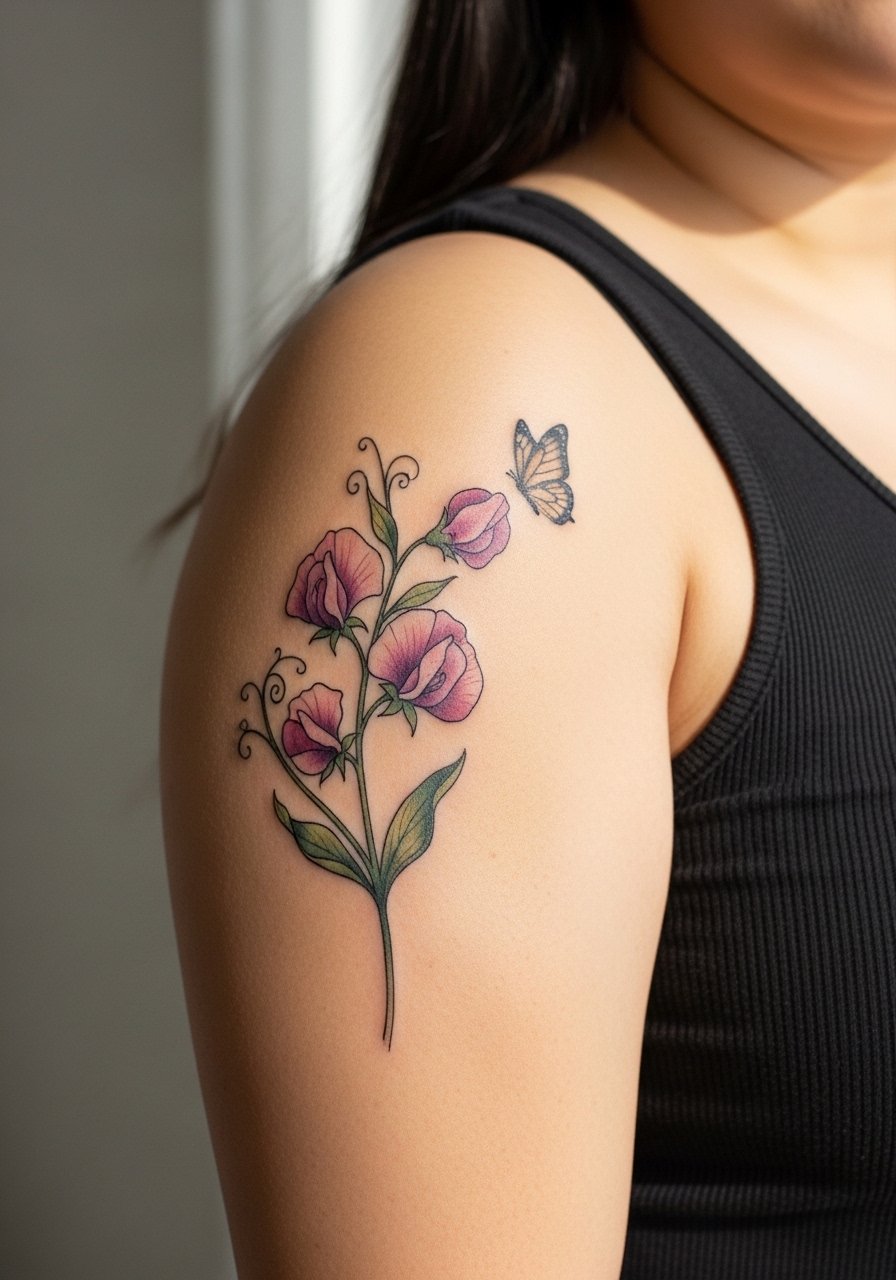
If you want movement, adding insects like bees or a tiny butterfly solves the static-bloom problem. I often advise bringing insect references that match the scale of the flowers so the additions read intentional instead of tacked on. The biggest mistake is asking for micro insects with the same line weight as big petals. Ask your artist for slightly heavier insect outlines so they keep detail as the piece settles. The upper arm takes color well and tends to need fewer touch-ups than wrist work. Wear a loose tank for the session and consider a sleeveless linen dress for showing the piece off.
8. Colorful sweet pea stem wraparound for the ankle
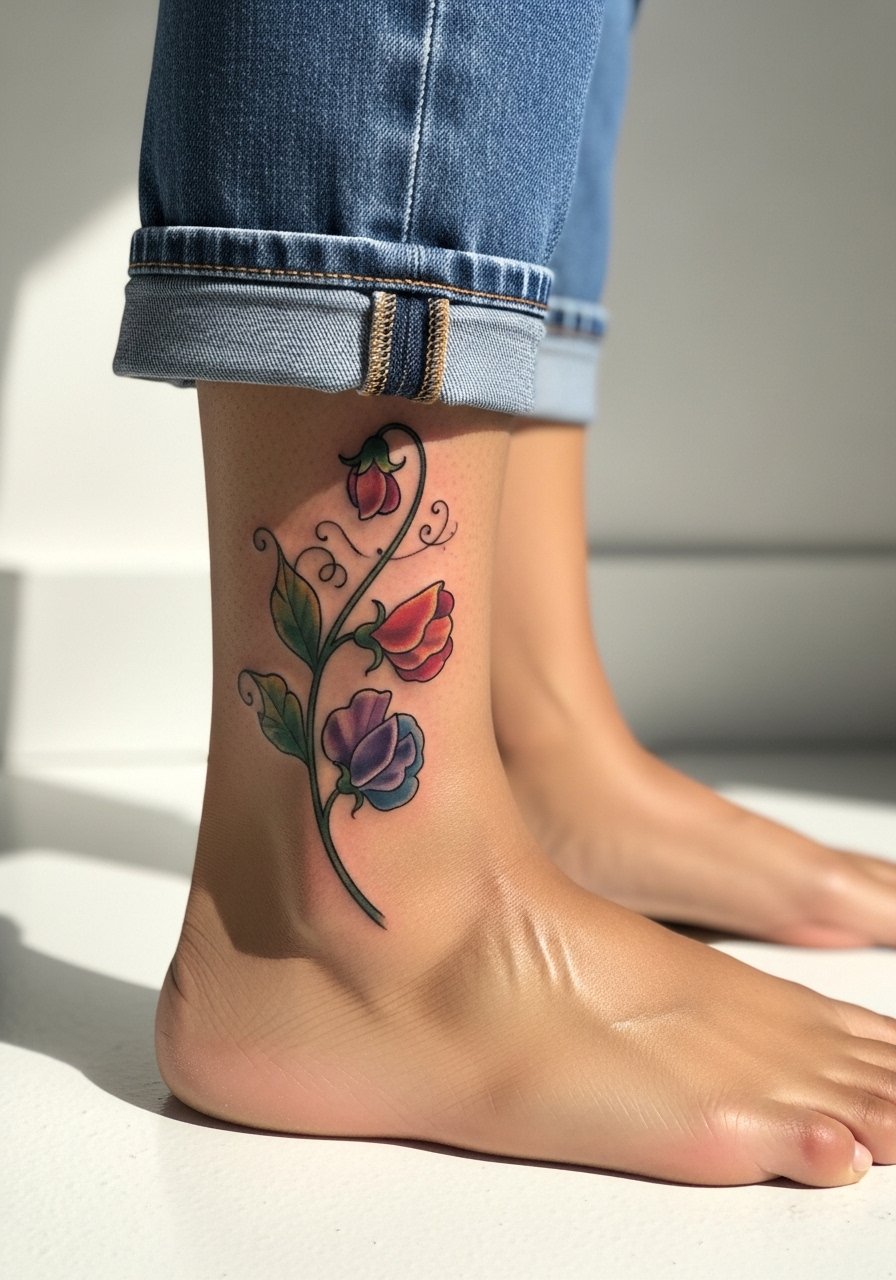
A wraparound stem that hugs the ankle reads very differently when it is mapped to shoe lines. Visual impact is strongest when the vine follows the bone rather than floating on soft tissue. Ask the artist to sketch the wrap while you wear the shoe you plan to use most often so the piece sits where you expect. Wraps tend to need touch-ups along high-friction points at year one. For everyday outfits, cropped jeans or sandals help the wrap peek out. A cropped straight jeans silhouette looks natural with a vine that hits just above the ankle.
9. Grayscale sweet pea with UV accents for darker skin tones
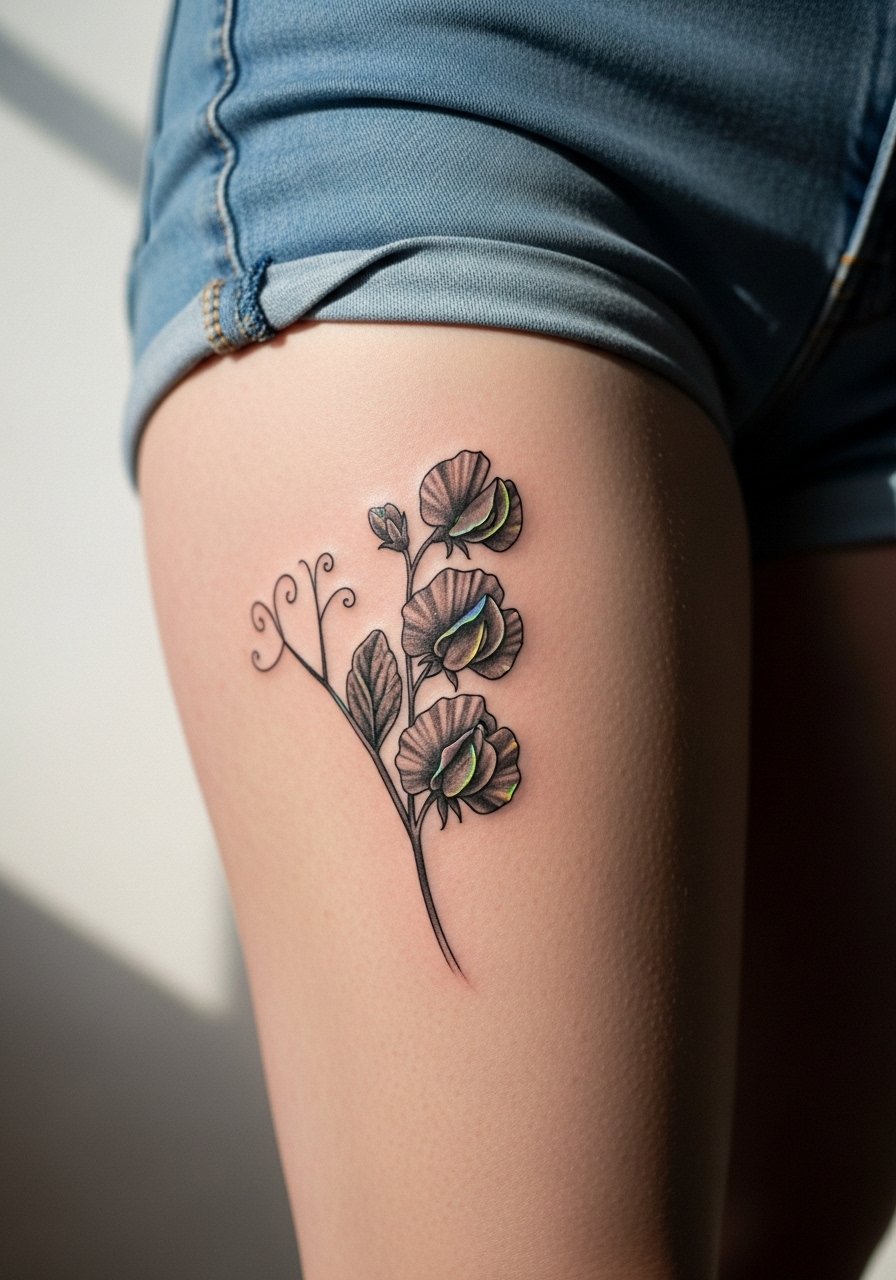
Many clients with darker skin tone ask how fine line work will photograph. I suggest leaning into contrast with richer grayscale saturation and a whisper of UV-fluorescent highlights if you want glow under black light. Ask the artist whether they use deeper gray fills and higher contrast which reads better than ultra-thin single lines on darker tones. The outer thigh is a forgiving canvas and often heals with clean edges, but UV elements can fade faster in sunlight so plan for a color refresh after a couple of years. Show-off pairing: high-waist shorts or a midi slit skirt lets the grayscale read without competing prints, try high waist denim shorts for casual season wear.
10. Hidden date or name woven into a vine on the wrist
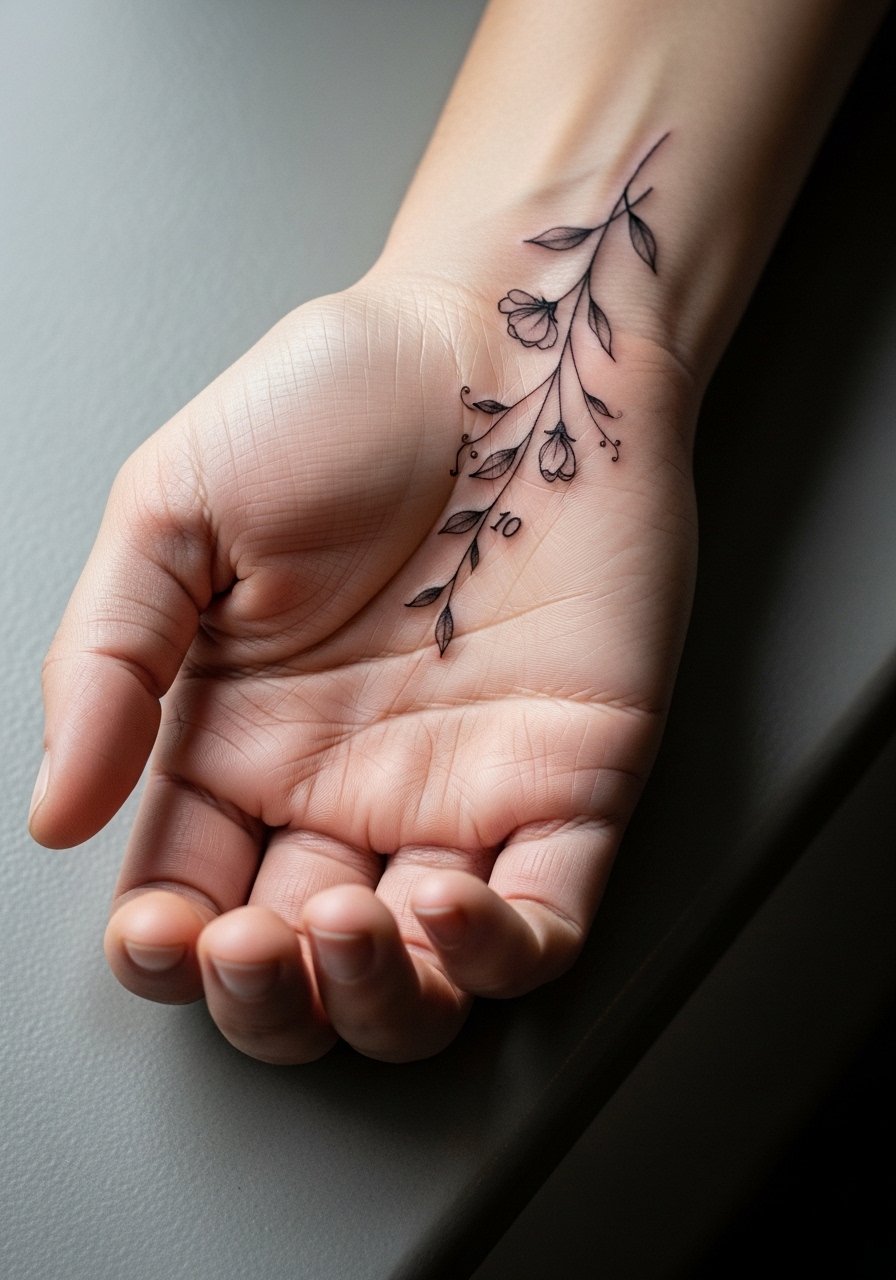
Personalization can be quiet and clever. Instead of a visible plaque, have numbers or initials formed by negative space along the vine. The common mistake is asking for text so tiny that the lines will blur. Tell the artist you want readable shapes at a two to three millimeter stem width so the letters survive a touch-up cycle. Wrist work needs light first-week protection from frequent washing. Pain is moderate and sessions are brief. This approach reads intimate and can carry a hidden meaning that only you notice.
11. Wraparound ankle vines designed to peek with heels
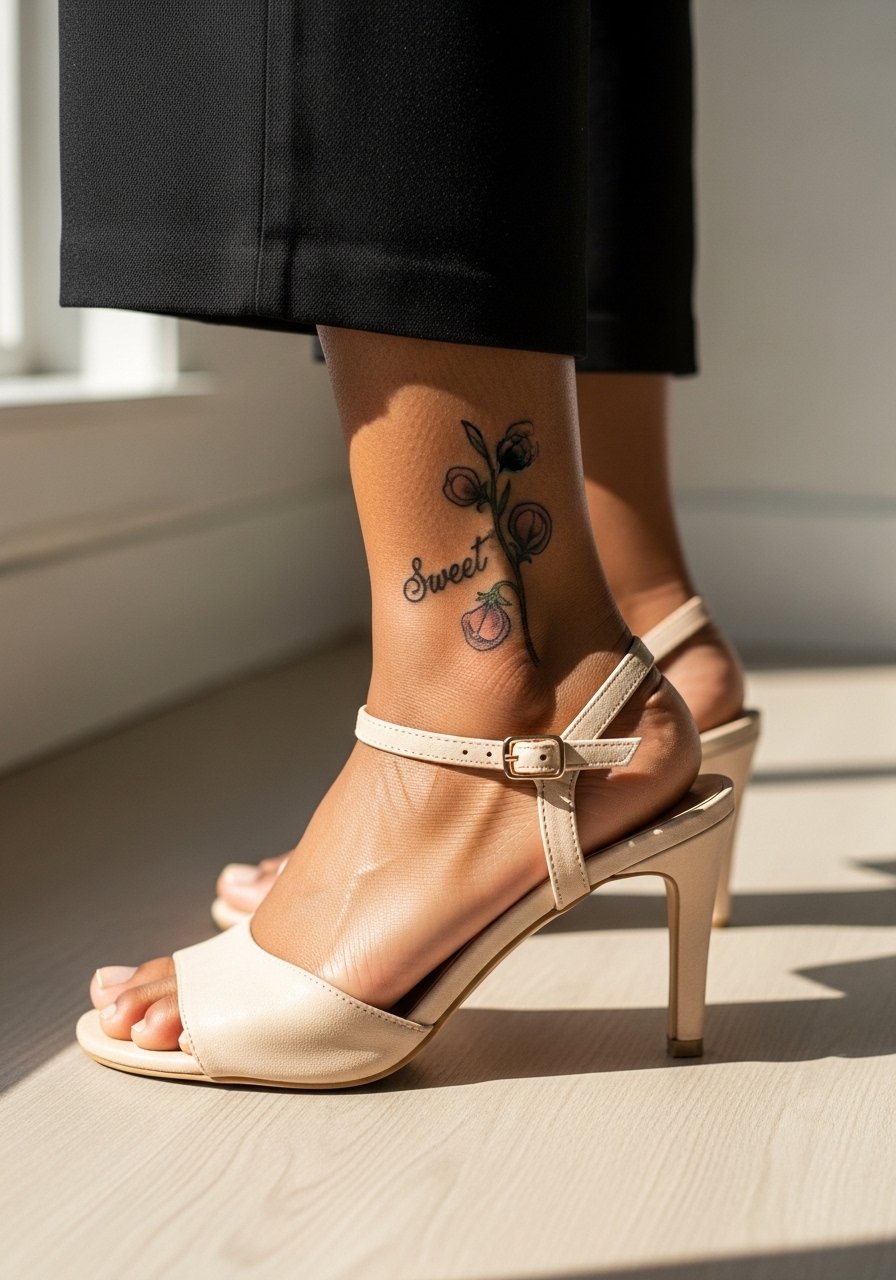
Styling first matters for wrap tattoos that are meant to be seasonal. I advise clients to bring the footwear they plan to wear most when the piece is finished so the artist places the focal bloom where your shoe strap will frame it. A mistake I see is mapping a wrap without testing it against footwear. The ankle area feels a four to six on pain scales and needs careful sock-free days for the first week. For that immediate reveal, a strappy heeled sandals look highlights the vine and keeps attention on the floral detail.
12. Micro sweet pea cluster for collectors on the hand edge
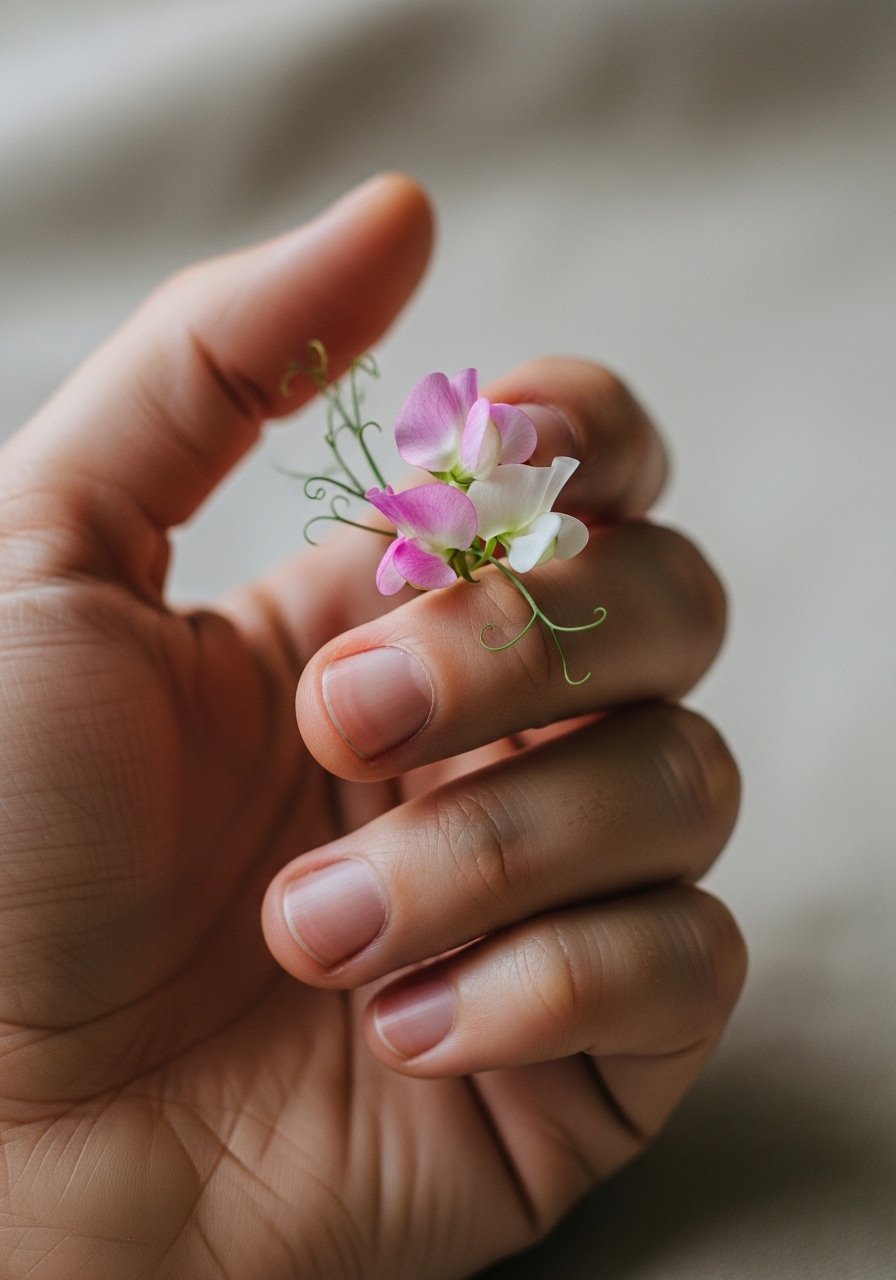
Hand tattoos require extra thought about career and wear. I mention this because hand pieces still affect opportunities in some fields and because the skin there makes fine lines fade faster. If you want micro clusters for a patchwork arm, plan to book touch-ups at year two. The common error is asking for very thin single-needle detail that the hand cannot keep because of frequent washing and sun exposure. Pain tends to be a five or higher. For session day, keep the area clean and avoid jewelry on the tattooed side so nothing rubs the fresh ink.
13. Ornamental garland across the shoulder blade
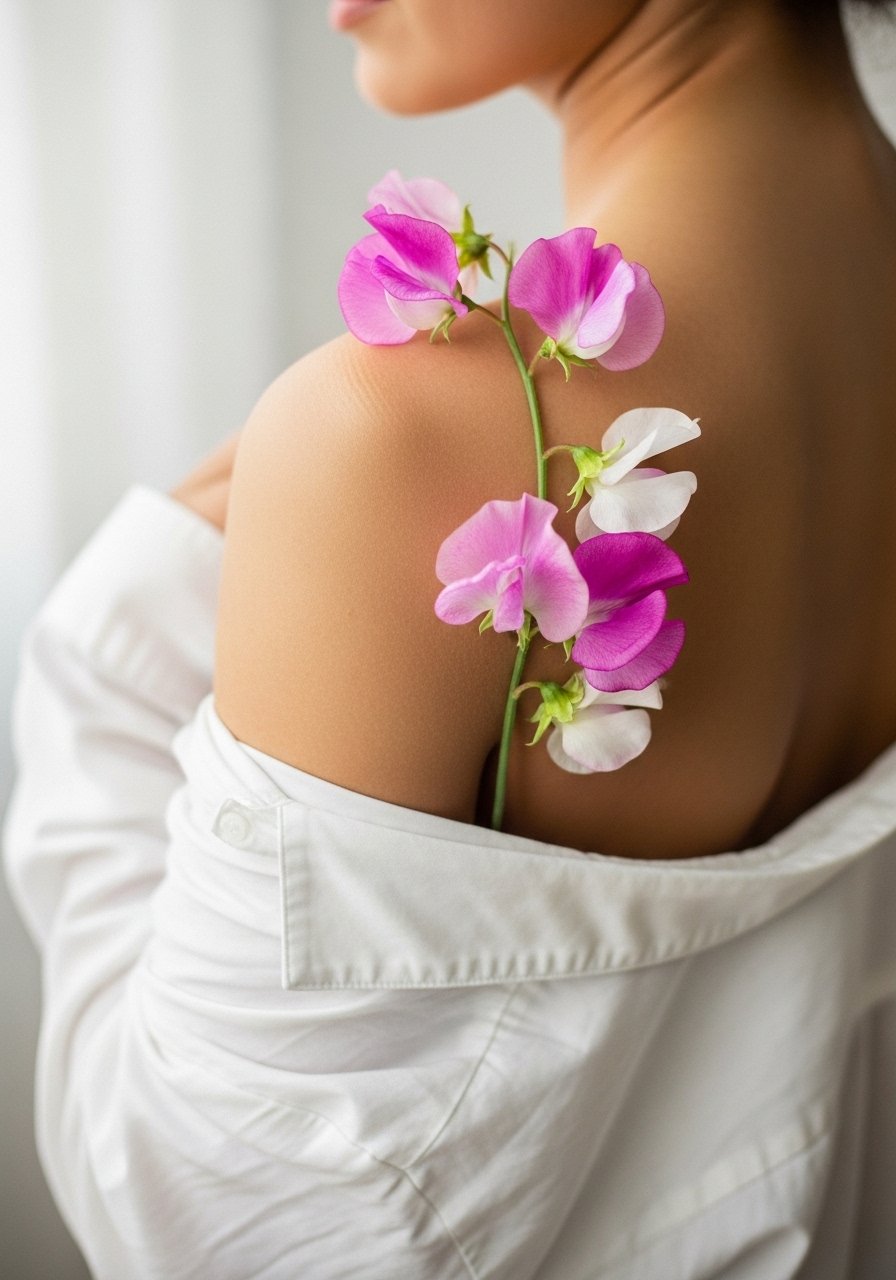
There is visual drama in a shoulder-blade garland that sits along the scapula line. Tell the artist whether you want the garland to follow muscle lines or to float across the skin. A common mistake is asking for too-dense ornamentation that loses clarity when the shoulder moves. This area usually heals well and can hold stipple shading and dot work with minimal blowout risk. For the session, wear a loose button down shirt you can pull aside for clean access, and expect a comfortable two-hour block for layout and shading.
14. Single stem with stipple shading on the inner bicep
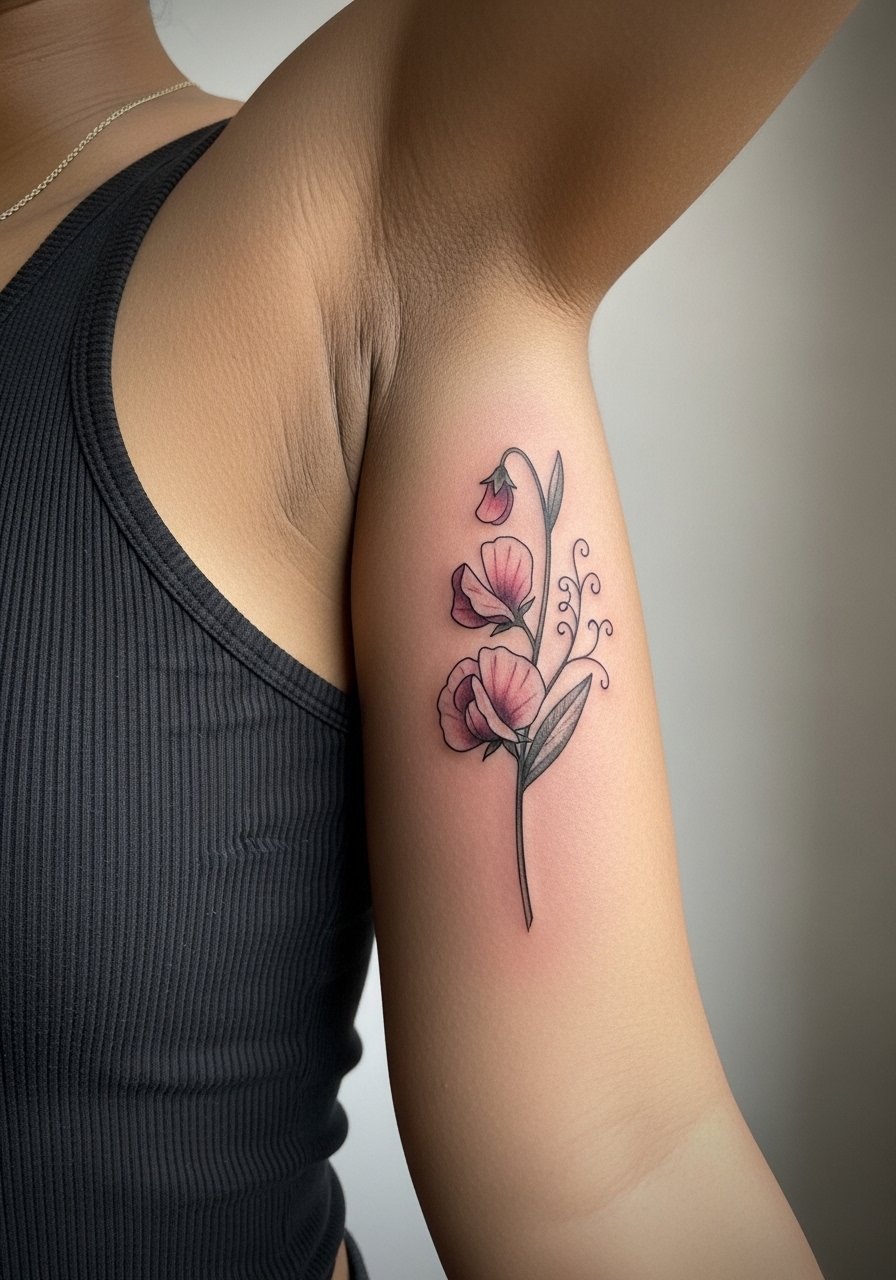
The inner bicep is a soft, often hidden canvas that develops a soft patina over time. Artists debate fine line work here. One issue is skin movement and friction from clothing producing subtle blur. I advise stipple shading rather than long continuous shading near the stem because dot work holds texture without heavy saturation that invites blowout. Pain is generally a five to six out of ten because the area is tender. For this placement, a clear conversation about needle depth and dot spacing will spare you an early touch-up.
15. Watercolor thigh cluster in pink and purple gradients
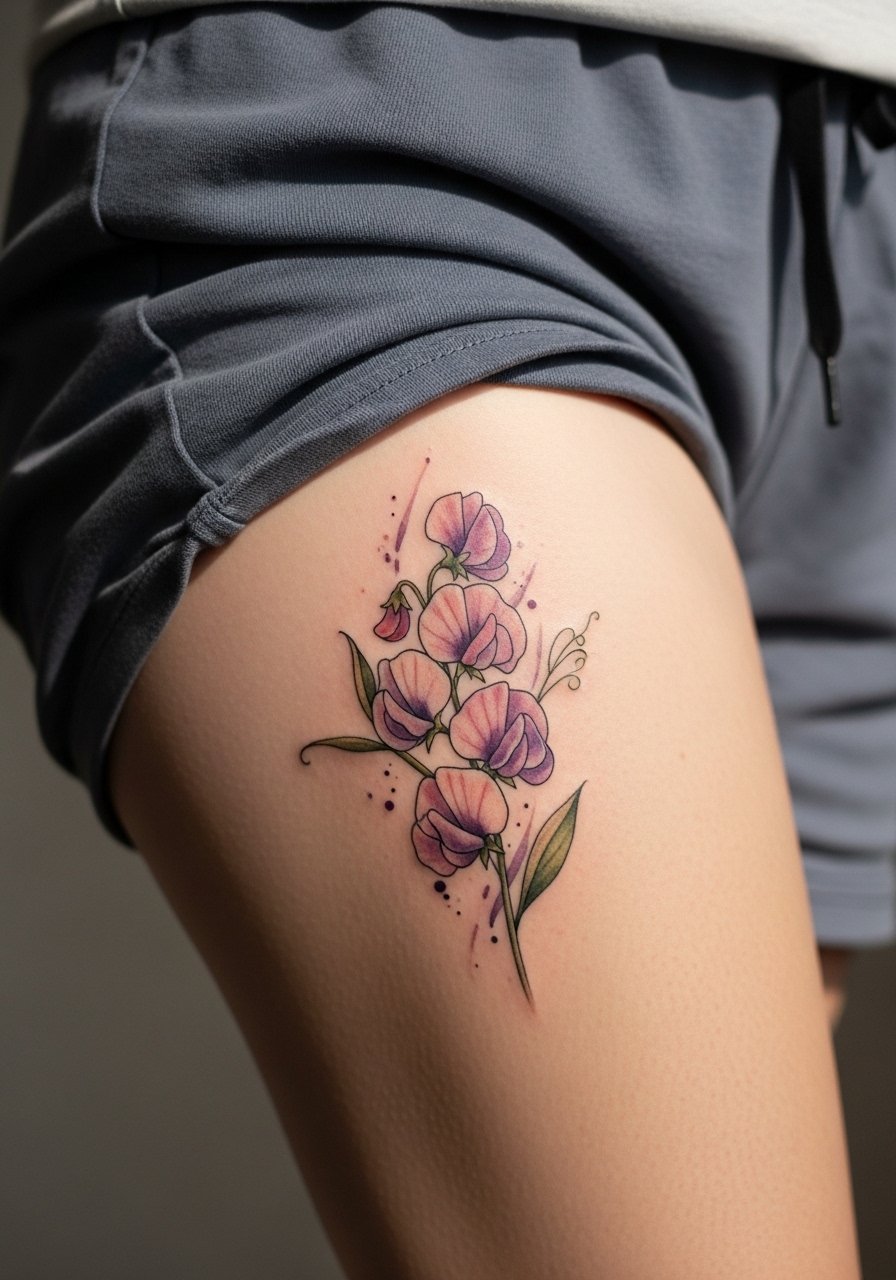
Outer-thigh watercolor fits those who want a big painterly look with less daily exposure to sun. The thighs heal well and hold color, but watercolor blends can bleed when sessions are done in summer heat without careful pigment management. Discuss pigment saturation at the edges so the piece does not look bruised as it heals. Thigh sessions are comfortable and can be longer blocks. For show-off outfits, pair this with high waist denim shorts or a midi skirt to let the color peek when you want it to.
16. Tiny sweet pea at the base of a finger
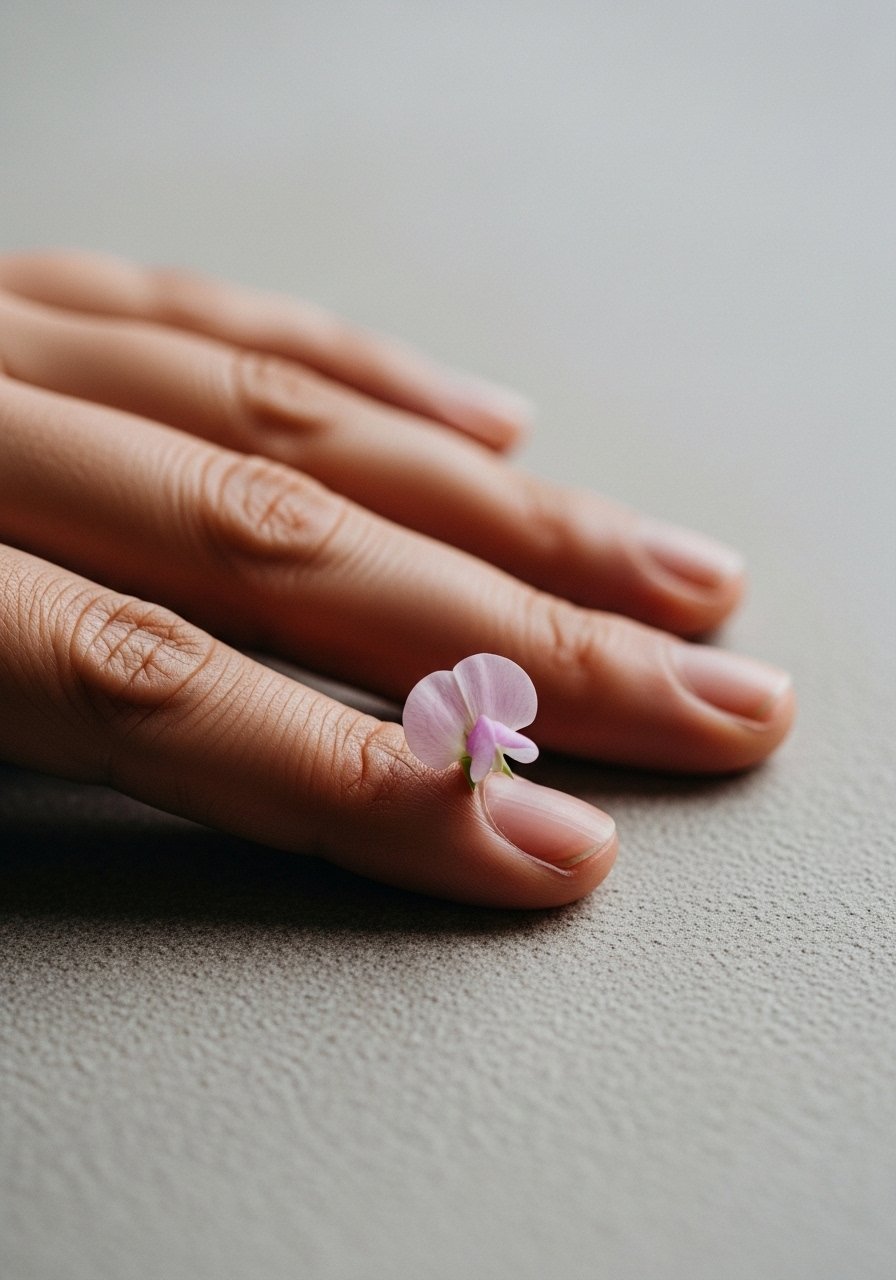
Finger bases are small canvases with high touch and washing exposure. The biggest mistake is assuming a perfectly thin outline will last without a planned touch-up. Expect higher fade and possible patchy loss after a year. Pain can spike at the bone and often rates a five to seven depending on placement. If you want durability, ask for slightly thicker contours and plan a touch-up at one year. Hand placements still carry social considerations, so think about career visibility before committing.
17. Tiny sweet pea behind the ear, low-profile nod
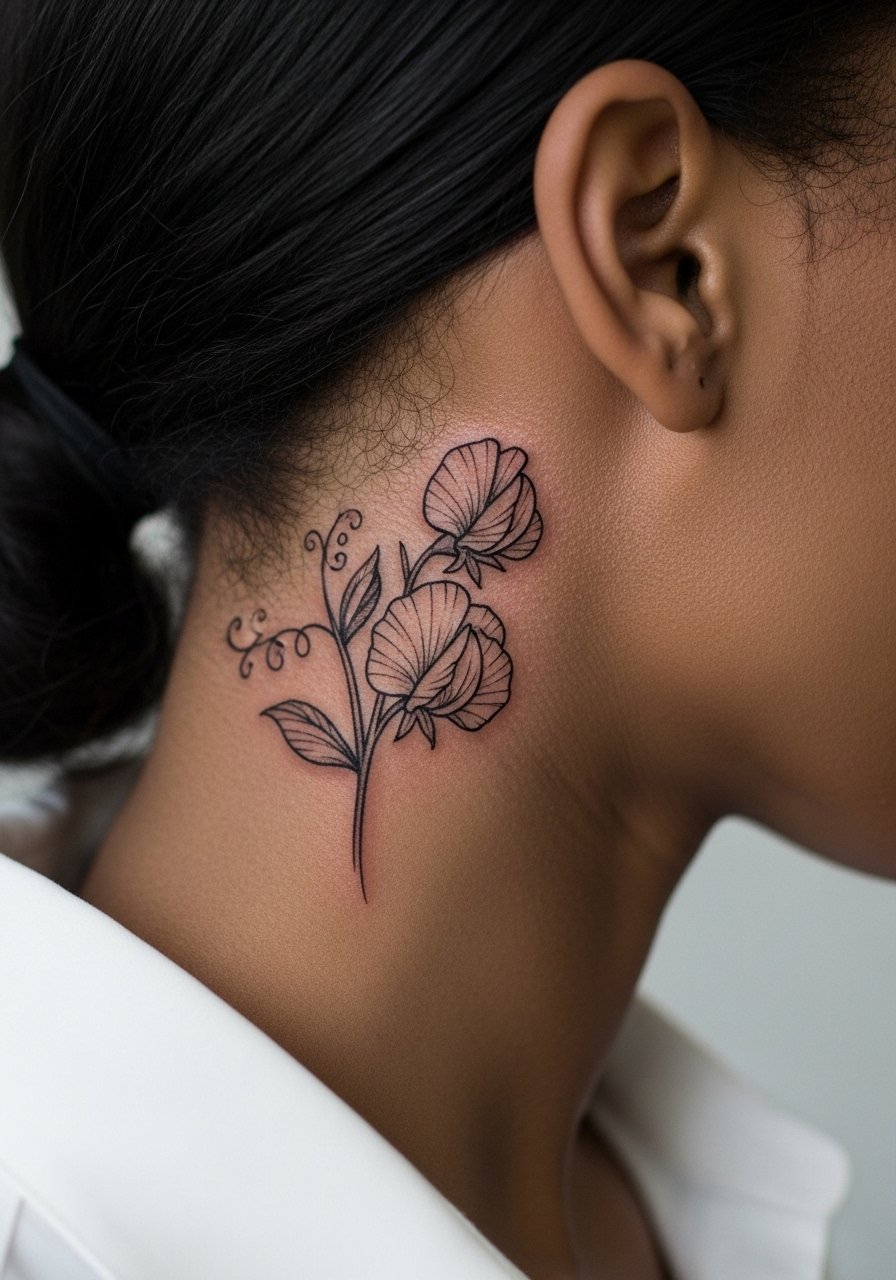
A behind-the-ear placement is a discreet nod that reads only when your hair is up. The safe way to request this is to ask the artist for a design that keeps negative space and avoids dense fills because the skin there is thin and detail can blur. Pain is usually lower but the area is delicate so experienced hands matter. Also note that behind-the-ear work is technically on the neck edge, so check on your artist's experience with tiny placements there. If you value subtlety, this is a quiet choice that reveals itself only in close moments.
Frequently Asked Questions
Q: Will fine line sweet pea tattoos on wrists blur faster than on forearms?
A: Yes, the skin on wrists endures more friction and washing which accelerates softening of ultra-fine lines. I usually recommend slightly stronger contour lines for wrist pieces and planning a touch-up at 12 to 18 months if you want the design to remain readable.
Q: Should I pick Saniderm or dry healing for a ribcage sweet pea sprig?
A: Artists are split. One group prefers transparent film like Saniderm to keep the area moist and reduce scab pick at the ribcage. The other group favors dry healing, saying it forms cleaner scabs and can prevent ink lift. Ask your artist which method they use and why, then follow their process for consistent results.
Q: How do I incorporate a hidden date into a vine without losing legibility?
A: Build the numbers into negative space rather than tiny script. Ask your artist to map the vine so each numeral gets slightly more stem width so the shapes do not merge as the piece ages. A well-planned negative-space tactic survives touch-ups better than microscopic lettering.
Q: What should I wear to a shoulder or collarbone session so the artist has easy access?
A: Bring a loose button-down or a wide-neck top you can pull aside. For collarbone work a strapless bralette or wide-neck shirt that reveals only the area makes positioning simpler and keeps the rest of your clothing clean.
Q: Are insect accents like butterflies or bees likely to blur over time?
A: Tiny insects can lose fine detail if they are done with single-needle hairlines and placed in high-movement zones. Ask for slightly bolder outlines or minimal color fills for the insect so the silhouette stays clear after the piece heals.