
Fine line trends look gorgeous on a feed. They also often need touch-ups sooner than people expect. Guest spots get canceled and waitlists balloon, which means planning matters. Color pieces on darker skin can lose contrast unless you plan for stronger outlines. Start here for design ideas that balance fresh-day impact with how the piece will actually read at year two, and for what to ask in the consultation that gets the result you want.
1. Realistic Whale Shark Portrait on the Forearm
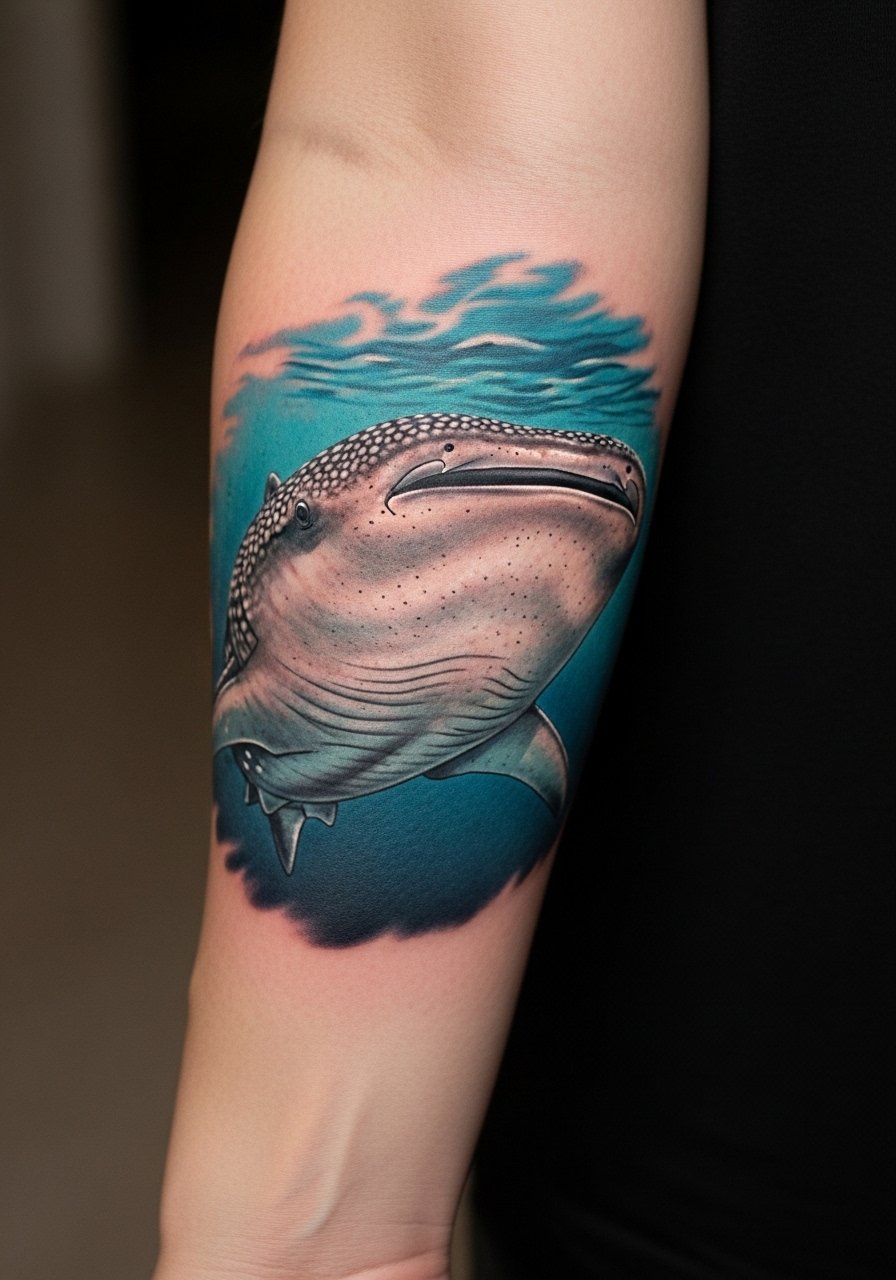
A forearm portrait shows off the shark's spotted texture and reads well from a distance. Expect a two-session sit for saturation and layered shading, and plan for a longer consult to map the pattern so it follows your arm's grain. Tell your artist you want 2mm+ linework around the spots so the pattern keeps contrast beyond year two. Forearms handle movement well and they avoid the stretch of thighs and stomach. For the appointment wear a rolled cuff chambray shirt or a loose short-sleeve so the artist has clear access while the cuff frames the piece when you roll it up.
2. Minimalist Whale Shark Outline on the Wrist
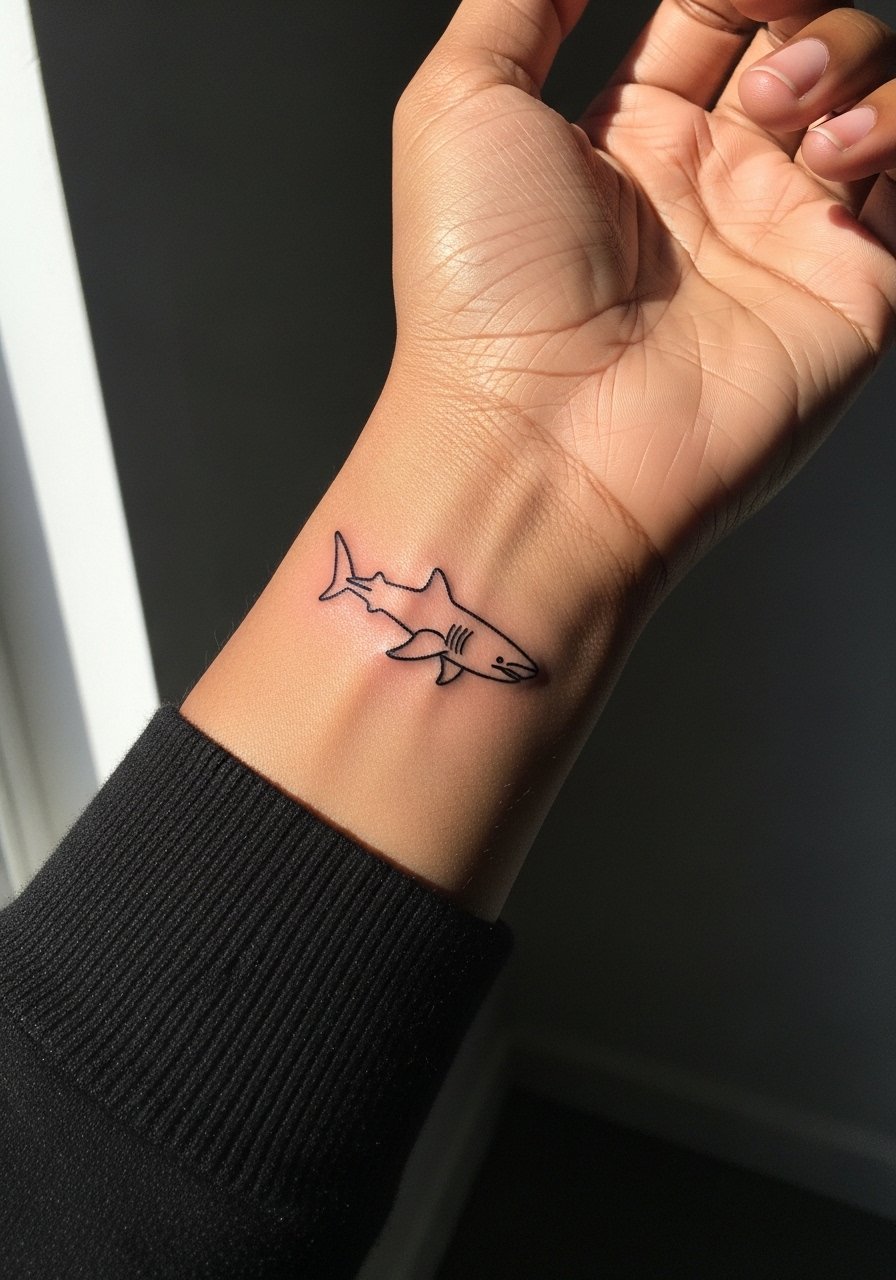
Wrist pieces age differently because of constant washing and friction. This minimalist outline is quick and elegant, and it is best kept over three inches if you want spacing between spots. Ask for a slightly heavier line weight than the thinnest needle so the outline does not blur into a gray wash after frequent use. Expect a short single session and a light pinch rather than a prolonged grind. For showing it off pair the tattoo with a thin silver cuff bracelet on the opposite wrist. Remove jewelry and wear a sleeveless tank to the appointment for easy access.
3. Watercolor Whale Shark Splash on the Shoulder
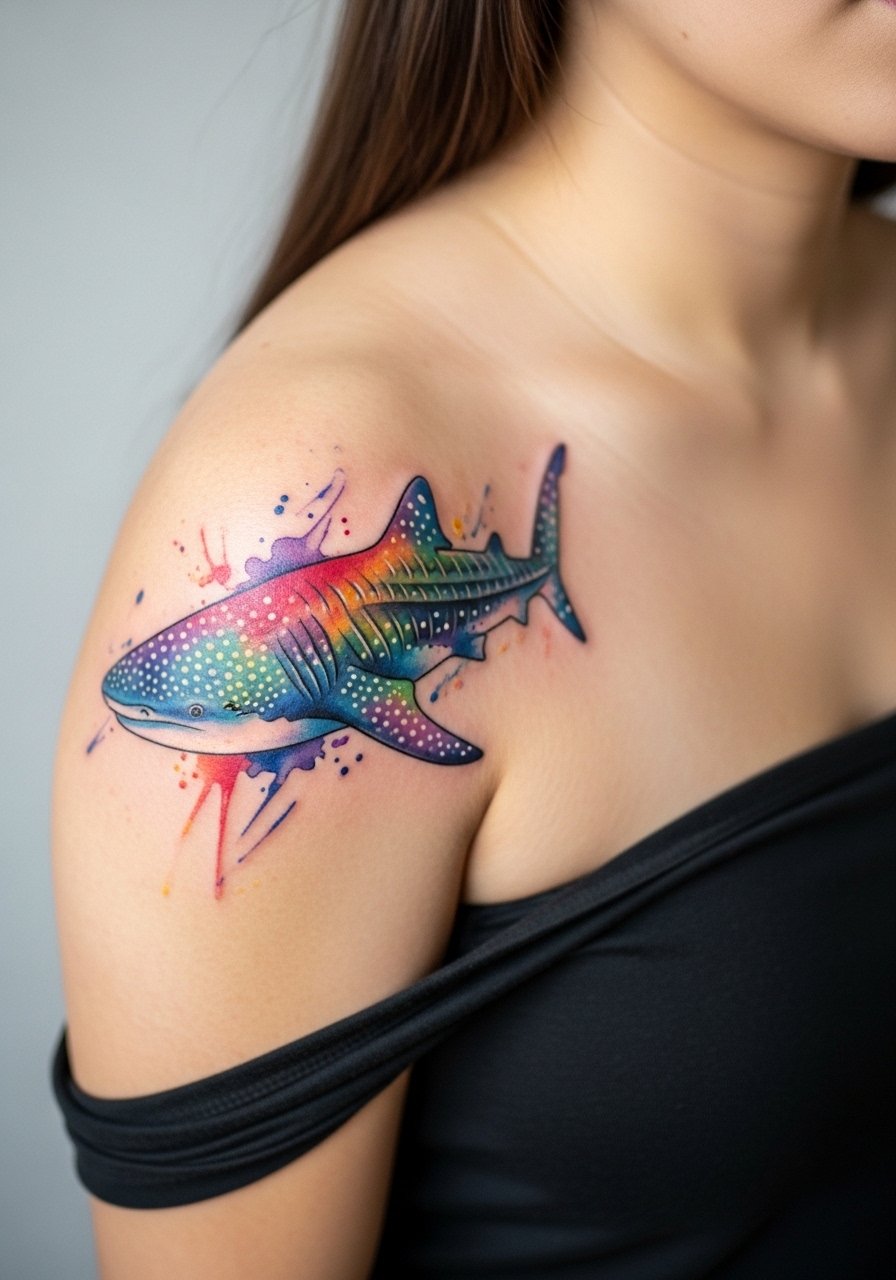
Watercolor blends read beautifully on the shoulder but they need crisp anchors if you want longevity. The common mistake is letting washes float without dark outlines, which fades into a bruise on active sun-exposed skin. Ask for saturated anchor points near the spots and a plan for touch-ups at year two. Sessions run two to three sittings and the shoulder tolerates longer times than ribs. For show-off styling go with an off shoulder linen top that drops low enough for the outer edge without covering the central splash. Wear a strapless tank or button-down to the session so the artist has clean access.
4. Whale Shark with Coral Reef Scene on the Thigh

Thigh canvases give you room for storytelling and color depth that stays visible as you move. Keep the main shark proportionate to your thigh so the pattern reads like a whole creature rather than a floating head. A common regret is placing overly intricate detail too close to the crease, which stretches if weight changes. Expect multi-session work and moderate pain in the upper thigh. For showing this off, try high waist Bermuda shorts or olive chino shorts that stop above the design. Wear loose athletic shorts to the appointment so you can roll the leg up without pressure.
5. Fine Line Whale Shark Silhouette on the Inner Arm

Fine line on inner arms looks delicate and collects well in a collection, but there is an honest split in opinion about its longevity. One camp argues inner-arm skin stretches and the lines blur within a couple years. The other camp says careful spacing and precise depth help fine line settle fine. When you consult, ask the artist where they fall and what line weight they recommend. The inner arm is a lower-pain placement compared with ribs. A real mistake is packing too many tiny spots into a narrow silhouette. Expect a touch-up at 12 to 24 months for light lines.
6. Blackwork Whale Shark Pattern Focus on the Calf
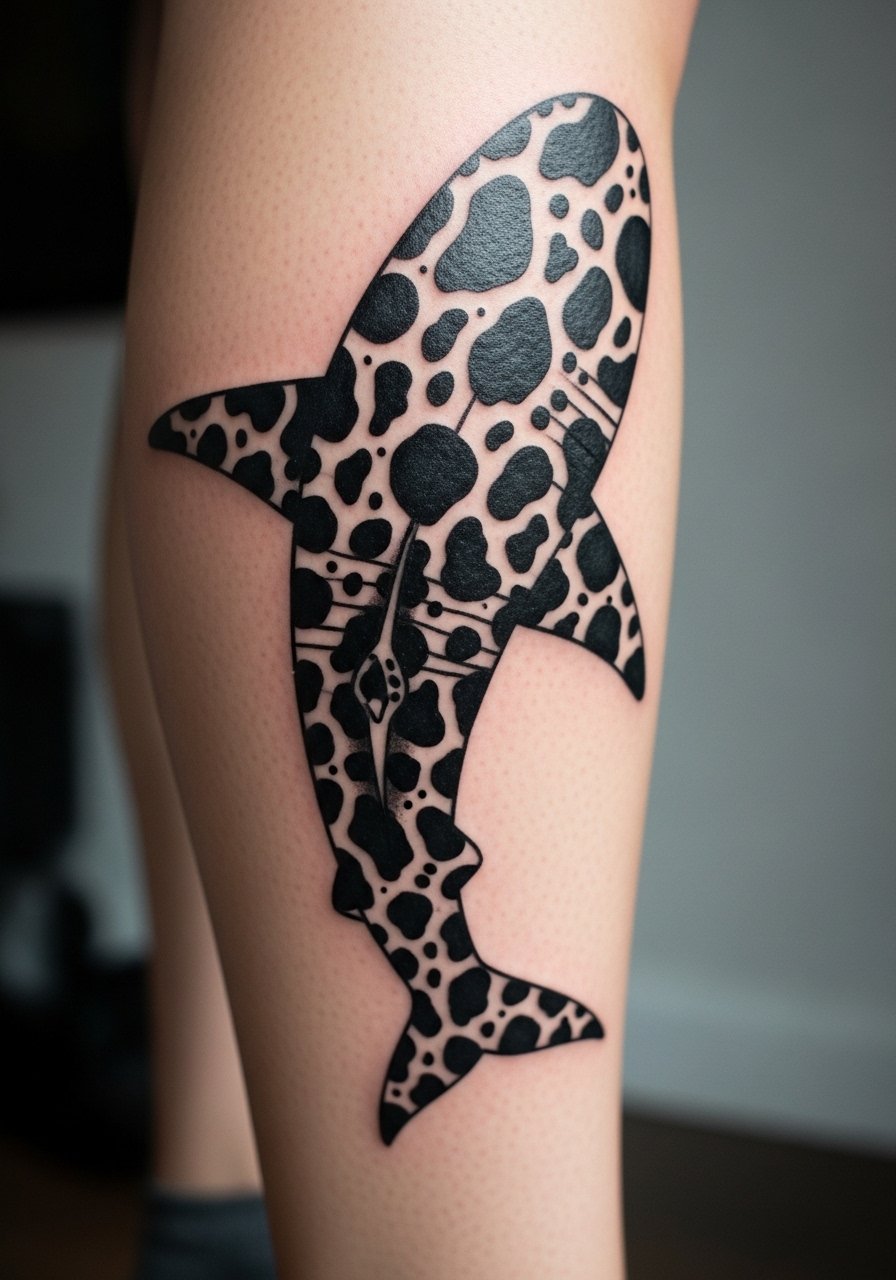
If you want contrast that holds, blackwork is the safest bet for active skin and summer exposure. The solid fills protect spot detail from fading and they age into readable silhouettes even when saturation softens. Calf placements tolerate bold density without blowout if the artist paces shading across sessions. Session times are moderate and the calf sits well for sitting positions in the chair. Pair the design with slim fit chinos men rolled up so the ink sits in frame while you move. Wear sweatpants to the appointment so you can pull the cuff down without tugging at the area.
Studio Day Picks
The first six ideas include a mix of fine line wrists, watercolor shoulders, and dense blackwork calves, so these picks focus on session access and healing quirks for small and medium placements.
- Tea tree balm. A light balm users report calming itching on watercolor pieces without leaving a greasy film, useful during the first itchy week after shoulder or thigh sessions.
- Ink Balm dupe. A thinner Hustle Butter alternative that spreads thinly for fine line pieces on inner arms and wrists where thick ointments can clog delicate channels.
- Japanese rice bran aftercare salve. Breathes better in humid conditions and can help watercolor saturation settle on the shoulder during summer heals.
- Shark Salve with seaweed extract. Users mention it helps color set on ocean-themed pieces and reduces flake time for thigh and forearm work.
- Framyderma protective film alternative. Thinner than standard film it lifts less on curved areas like calves and shoulders while keeping fresh color safe during the first day.
7. Geometric Whale Shark Abstract on the Ankle
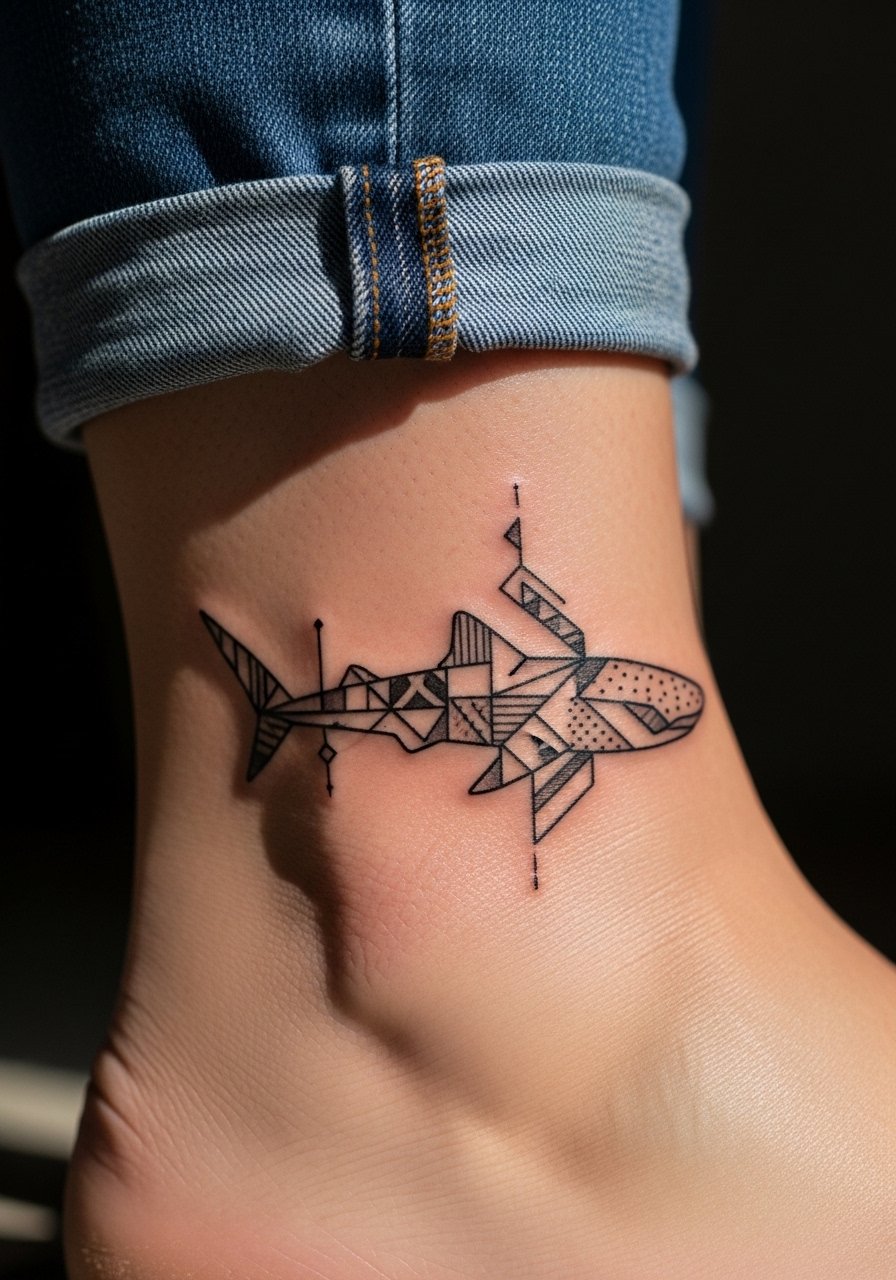
Ankle tattoos are high-visibility and high-friction. Geometric fills need breathing room so shapes do not merge from repeated rubbing against socks or shoes. Ask for heavier outlines around sharp geometry and slightly more spacing than you think you need. The ankle is a shallow placement with high blowout risk if the design is dense and tiny. Session time is usually short. For summer wear show the piece with cropped straight leg jeans or espadrilles that keep the ankle visible. Come to the appointment with no socks and loose pants you can roll.
8. Whale Shark with Waves Motif on the Outer Forearm

Wave motifs add motion and give the shark context while improving longevity with bold linework. Forearm locations take sun and abrasion, so the trick is solid outlines and mid-tone saturation under washes. A common mistake is blending waves too softly into spots, which loses legibility after heavy sun exposure. Expect two sessions and plan for yearly sun-block touch-ups for color. For showing it off roll sleeves and wear a navy button down short sleeve to let the piece sit in frame. Wear a loose short-sleeve tee to the session for straightforward access.
9. Tiny Whale Shark Icon Behind the Ear
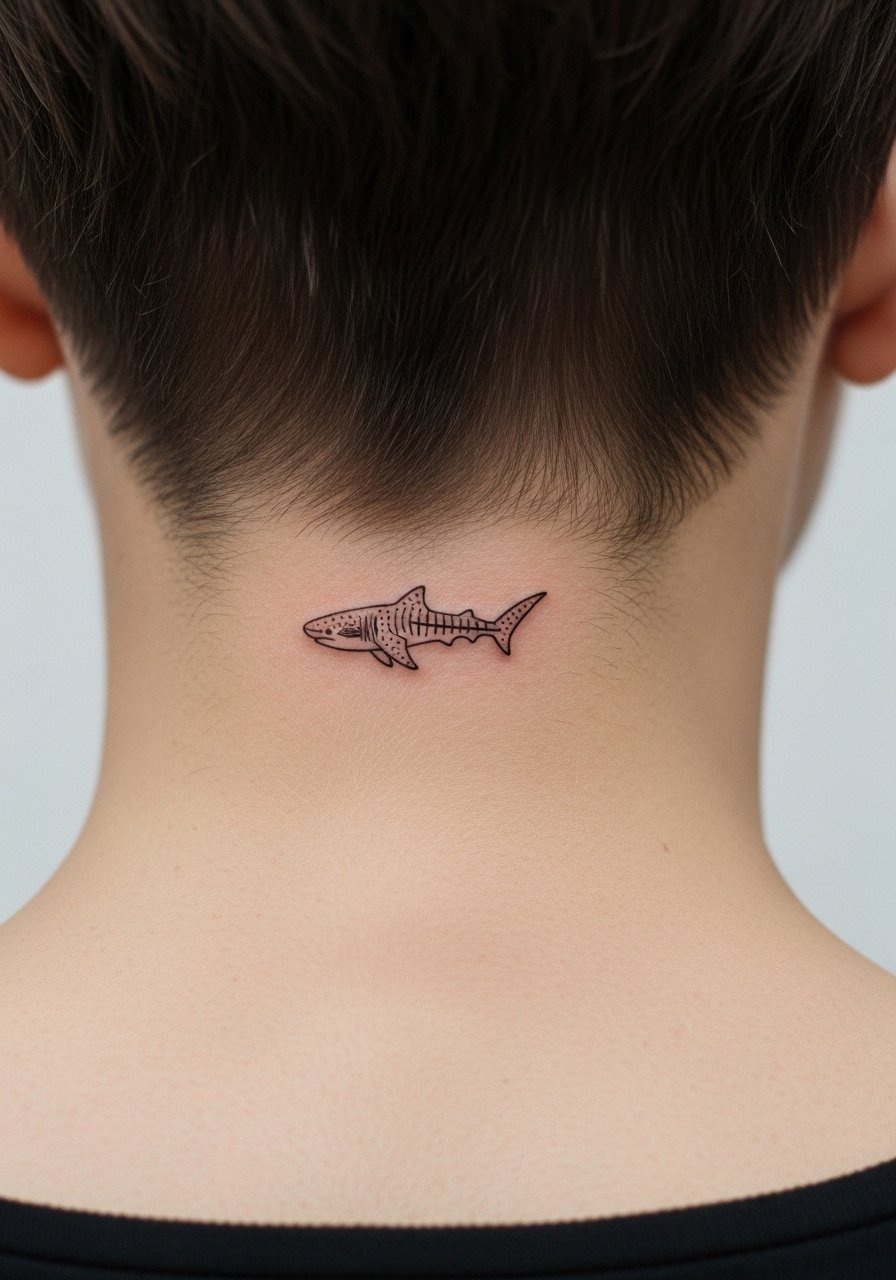
Behind-ear tattoos read intimate and playful. The area needs a controlled single pass since touch-ups are harder under hairline friction. Ask for a compact silhouette with a slightly bolder outer dot to protect the tiny spots. The appointment is quick and the pain is low to moderate. A mistake is trying to pack too much detail into a fingertip-sized icon. Because this is close to hair, expect color settling to be uneven and a possible touch-up in a year. This placement is discreet for work that frowns on visible arm art.
10. Neo-Traditional Whale Shark Portrait on the Back

The back gives space for a stylized portrait that mixes exaggerated patterns with saturated color. Neo-traditional edge works well when the shark is framed by bold florals or waves so the composition reads from a distance. A common error is crowding the design toward the spine where movement and weight shifts can distort complex elements. Sessions are multiple and longer. For the appointment wear a loose button-down you can pull aside or a tank so the artist can work the upper back comfortably. Ask about mapping to your shoulder blades so the shark appears to swim with your natural motion.
11. Ignorant Style Whale Shark Sketch on the Ribcage
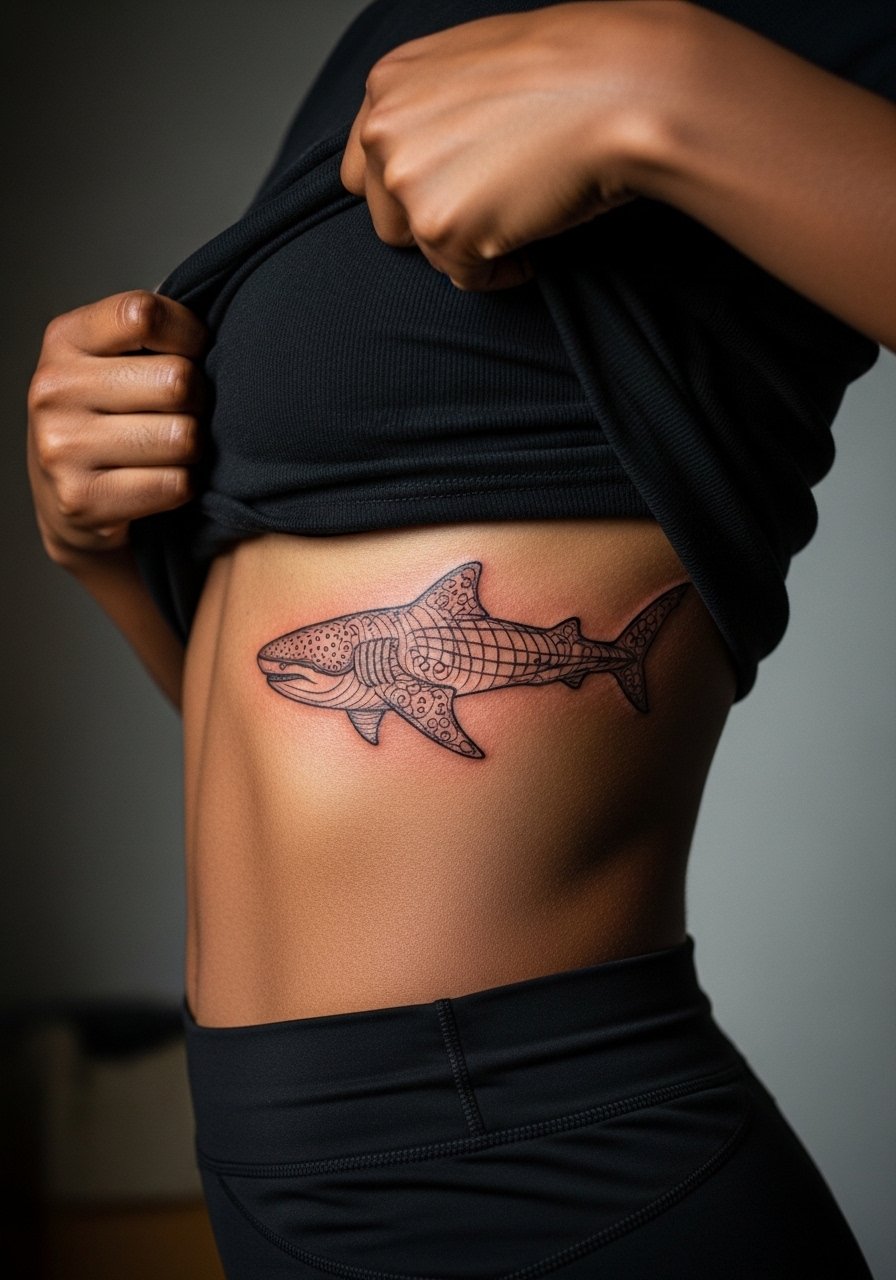
Ribcage sessions are higher on the pain chart, often a seven out of ten for many people. The ignorant style embraces rough marks and sketchy strokes, which can disguise small inconsistencies from movement during a painful session. Artists disagree on fine line use here, with some saying thin lines blur from breathing motion and others saying careful depth avoids that. If you want this look, ask for looser, rougher strokes rather than tiny detail near the bone. Wear a cropped top you can lift for access and prepare for a multi-session plan if you want layered darkness.
12. Watercolor Whale Shark with Schools of Fish on the Upper Arm
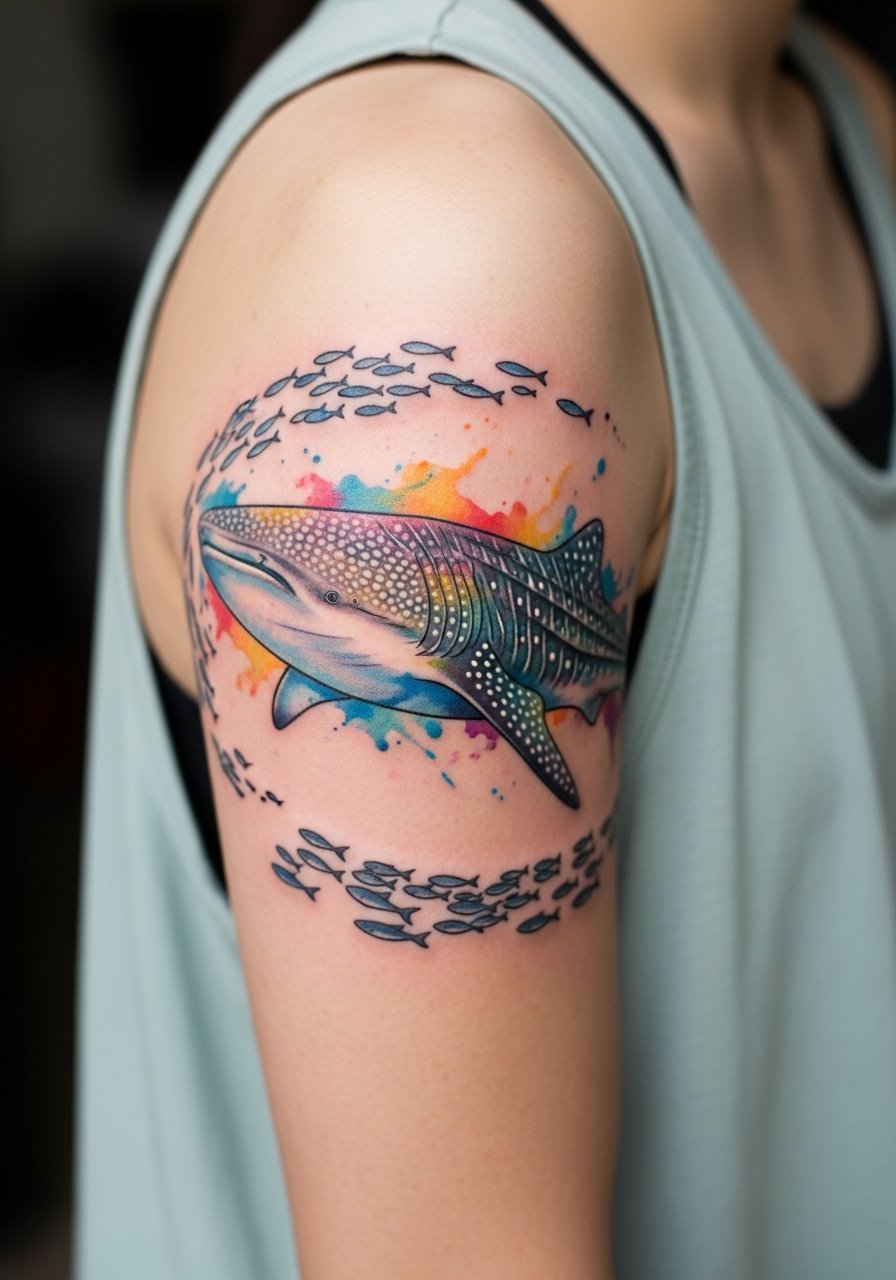
Sleeve starters like a watercolor school give you motion that grows into neighboring pieces. The upper arm is forgiving for washes, but watercolor without contrast can blur over time. Ask for small amounts of dark contrast near the shark's spots so the fish retain separation as color fades. Sessions run multiple shorter sittings to protect saturation. For showing this off, pick an off shoulder linen top or a loose tank. Wear a strapless bra or tank for the session so the artist can access the upper arm cleanly.
13. Bioluminescent Glow Whale Shark on the Collarbone
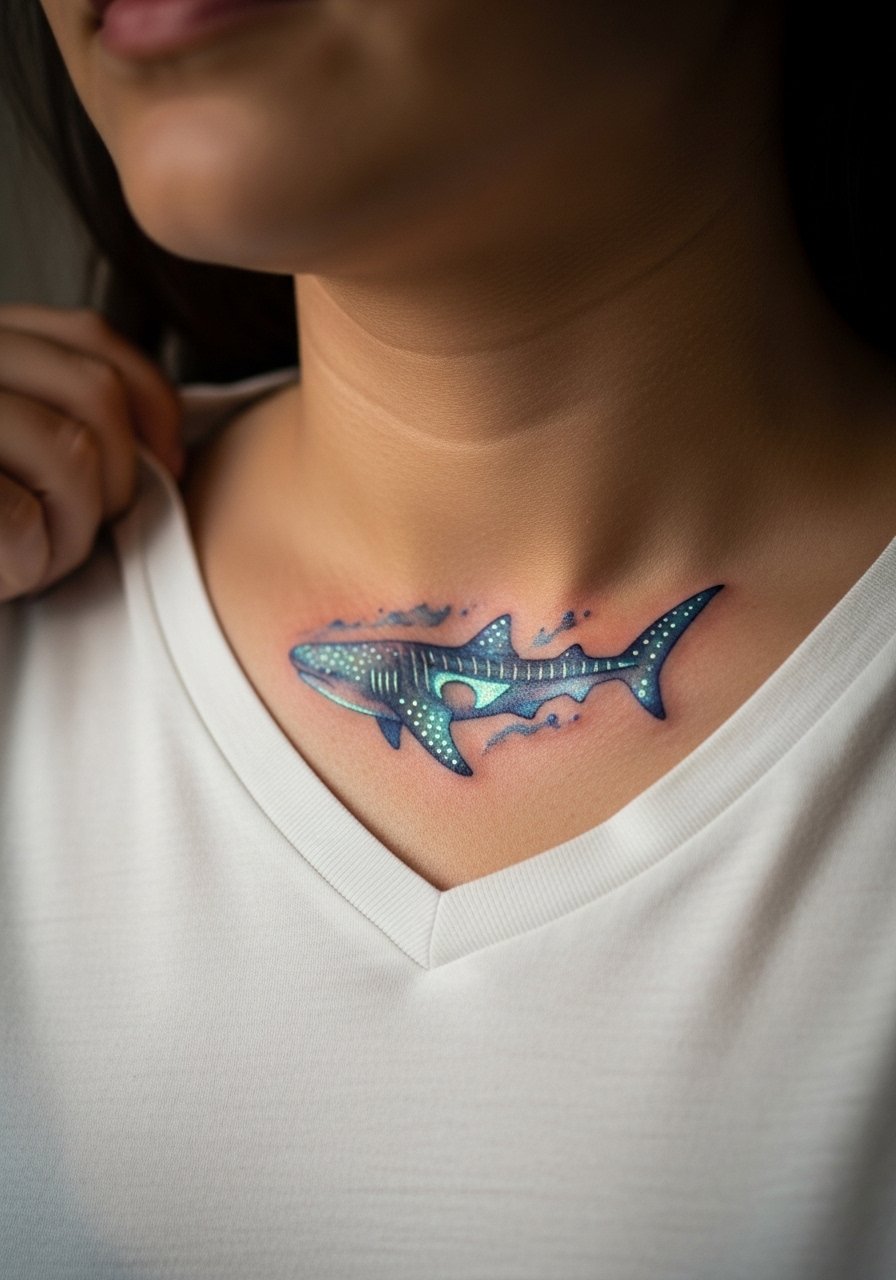
Collarbone tattoos can dance with shoulder movement and give a "swimming" illusion when the arm lifts. For colorful, subtle glow effects on medium to dark skin, ask your artist for stronger outlines and selective white highlights so contrast reads in photos and low light. The sternum and collarbone area heal with more scabbing risk, so expect careful patch testing for bright pigments. For everyday wear a v neck linen tee or cream wrap top keeps the tattoo visible without stressing the area. Arrive for the session in a strapless bra or loose top that provides access without rubbing the tattoo zone.
14. Scaled-to-Body Proportions Whale Shark Along the Side Torso
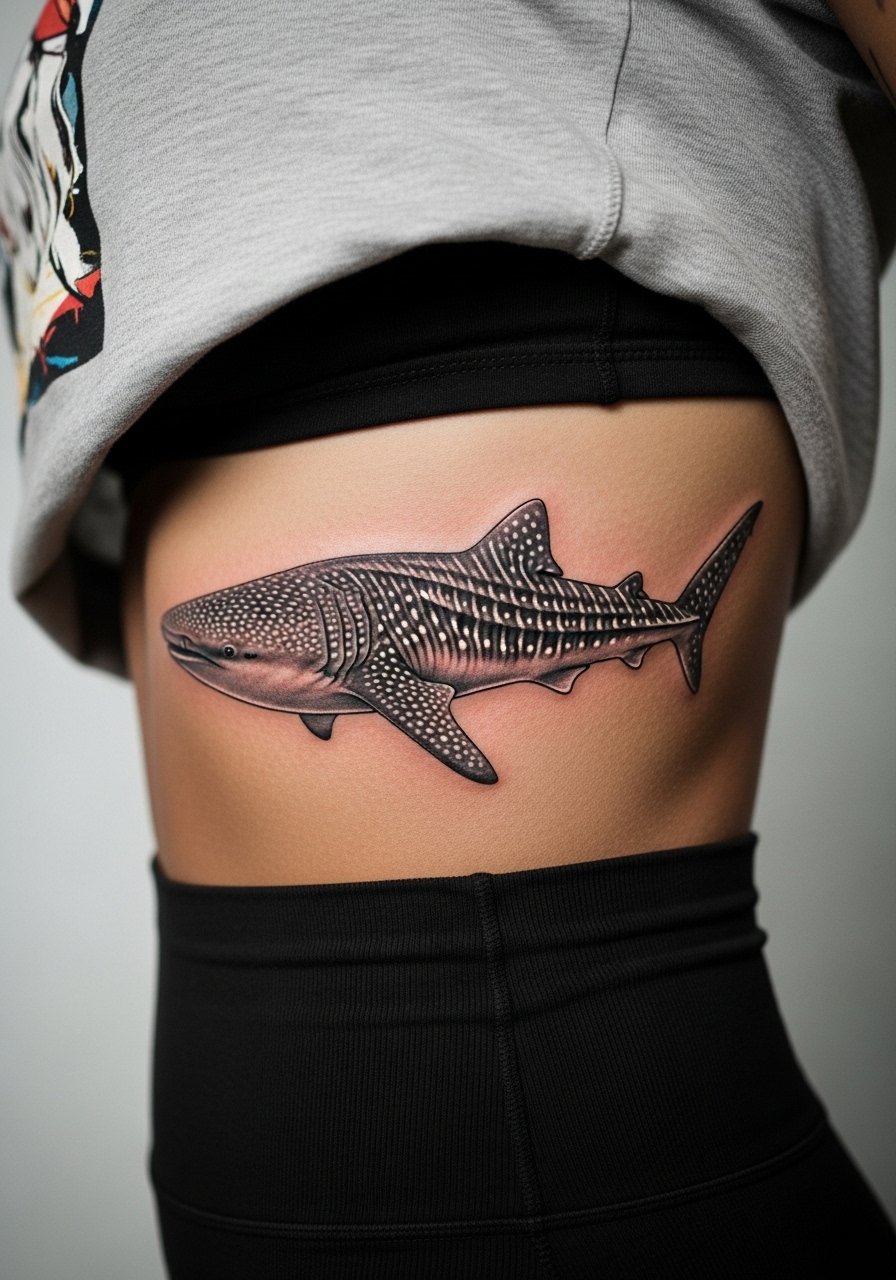
Sizing a whale shark to your body proportions makes the creature read like it belongs to you rather than looking pasted on. For a flank or side-torso piece, map the shark to length and curvature so spots follow the body's flow. The mistake is forcing one-to-one scale from a photo reference without adjusting for skin stretch. Side-torso work moves with breath and requires careful placement to avoid distortion with weight change. Wear a cropped tee and high-waisted bottoms to the session so the artist can expose only the working strip. Plan longer sittings for proportionate shading.
15. Hybrid Whale Shark with Birthdate Spots on the Calf
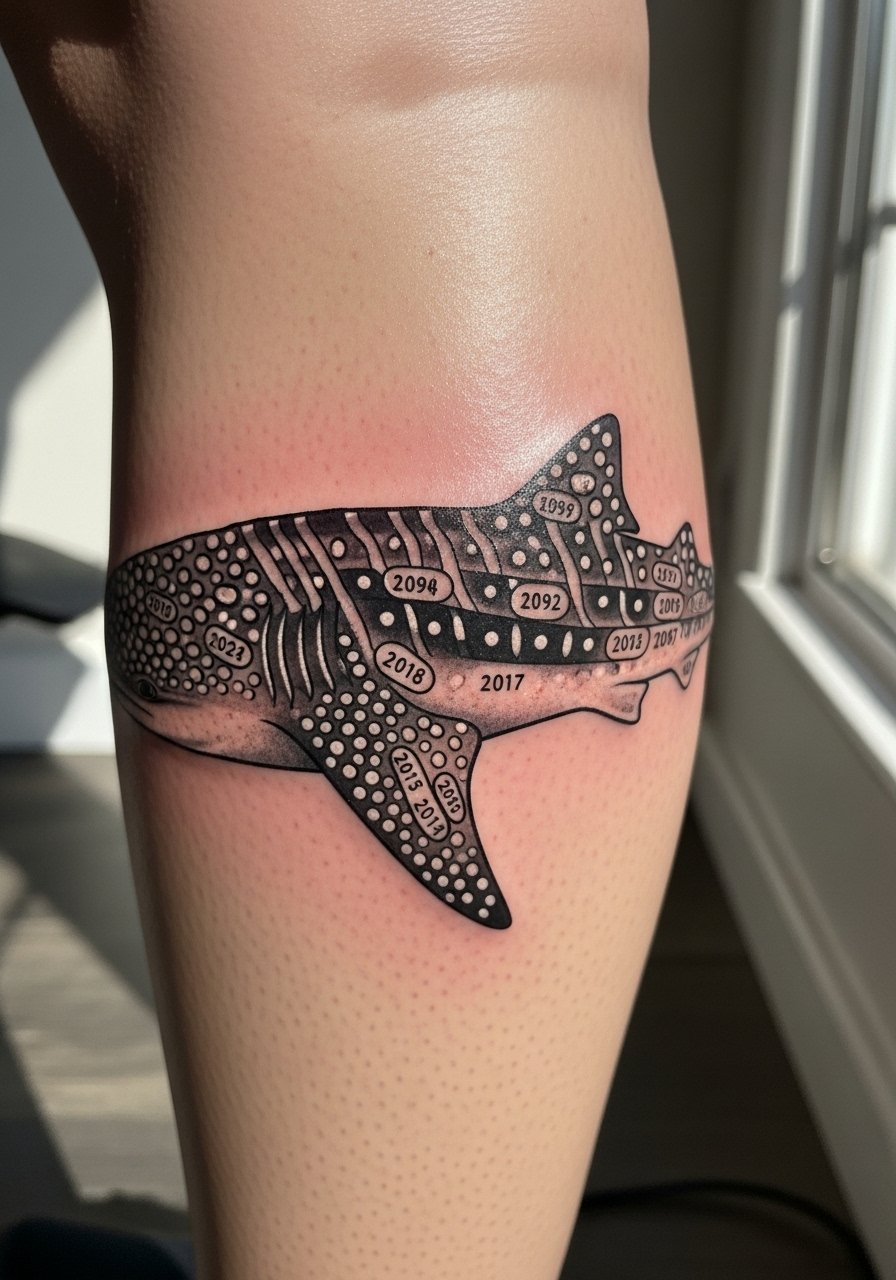
Embedding small personal numbers into spot patterns is a subtle way to personalize a design without literal script. On a calf the spots can include tiny numerals that read clearly if you keep them slightly bolder than micro dots. The real mistake is making the numerals too tiny or placing them where the skin creases. Calf work is lower pain and it ages well with bold contrast. For display wear rolled chinos or cuffed joggers to keep the tattoo visible when you walk. Come to the session in pants you can lower without tugging the skin.
16. Blacklight-Reactive Bioluminescent Whale Shark Accent on the Ankle
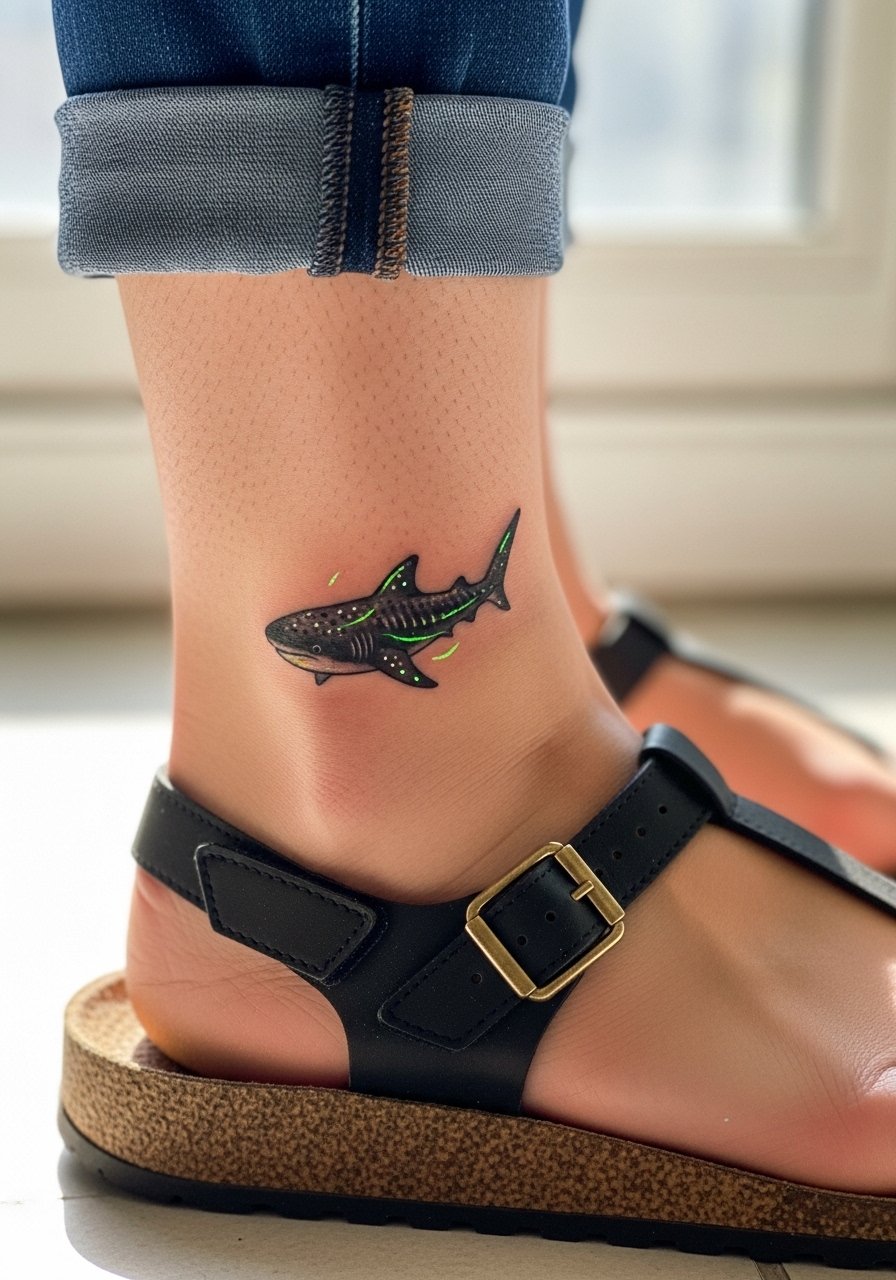
Blacklight-reactive ink is niche and fun, but it requires planning because glow pigments sit differently than standard color. For ankles, keep the reactive areas limited to highlights so ordinary photos still look natural while the UV effect stays reserved for special settings. Artists will usually test a patch and discuss longevity since glow inks fade differently. The ankle's friction zone can wear reactive detail faster, so ask about placement off the most rubbed points. For showing it off pick cropped pants or sandals. Wear loose rollable pants to the appointment so the artist can access the skin without stretching.
17. Micro-Realism Tiny Whale Shark Behind the Ear with Minimal Color

Micro-realism behind the ear is a committed tiny choice. The area is discreet and the work reads best with a couple of color dots and crisp black anchors rather than fully filled washes. Expect a quick session and a tender spot near the hairline. A typical error is asking for gradated shading too small to survive hairline friction. Because touch-ups behind the ear are more complex, plan for a minor refresh at one year. This placement is ideal if you want a peek-a-boo design that comes alive when you tuck hair or wear a short cut.
Frequently Asked Questions
Q: Will fine line whale shark tattoos on wrists fade faster than blackwork on calves?
A: Yes, fine line on wrists tends to lose crispness sooner because of constant washing and friction. Blackwork on calves holds contrast better over time. If you love fine line, plan slightly bolder outlines and a touch-up at year twelve to eighteen months.
Q: Do watercolor whale shark tattoos need different aftercare than traditional ones?
A: Watercolor pieces rely on softer washes and so benefit from steady hydration and sun protection during the first months. Avoid heavy ointments that trap moisture on large washes during scab formation. For the first shower stick to fragrance-free gentle cleansers and follow your studio's guidance.
Q: How should I hunt for a whale shark guest spot without getting ghosted?
A: Use hashtag searches and booking platforms with cancellation policies rather than DMs alone. Search #whalesharktattoo with location filters and set alerts on Tattoodo or Booksy. Have backup options lined up and be ready to move when a spot opens.
Q: Can darker skin still carry watercolor or realistic whale shark colors well?
A: Absolutely, but it needs stronger contrast planning. Ask for slightly bolder outlines and consider strategic white or lighter highlights to keep the spots readable in photos. A ring light for flat lighting helps capture the detail in images.
Q: What pain should I expect for a ribcage whale shark sketch versus a forearm portrait?
A: Ribcage sessions are generally higher on the pain scale and can be a seven out of ten for many people because of bone proximity. Forearm portraits are lower and more tolerable for longer sessions. Consider numbing for longer rib days and build the piece over multiple sittings if pain limits your time.