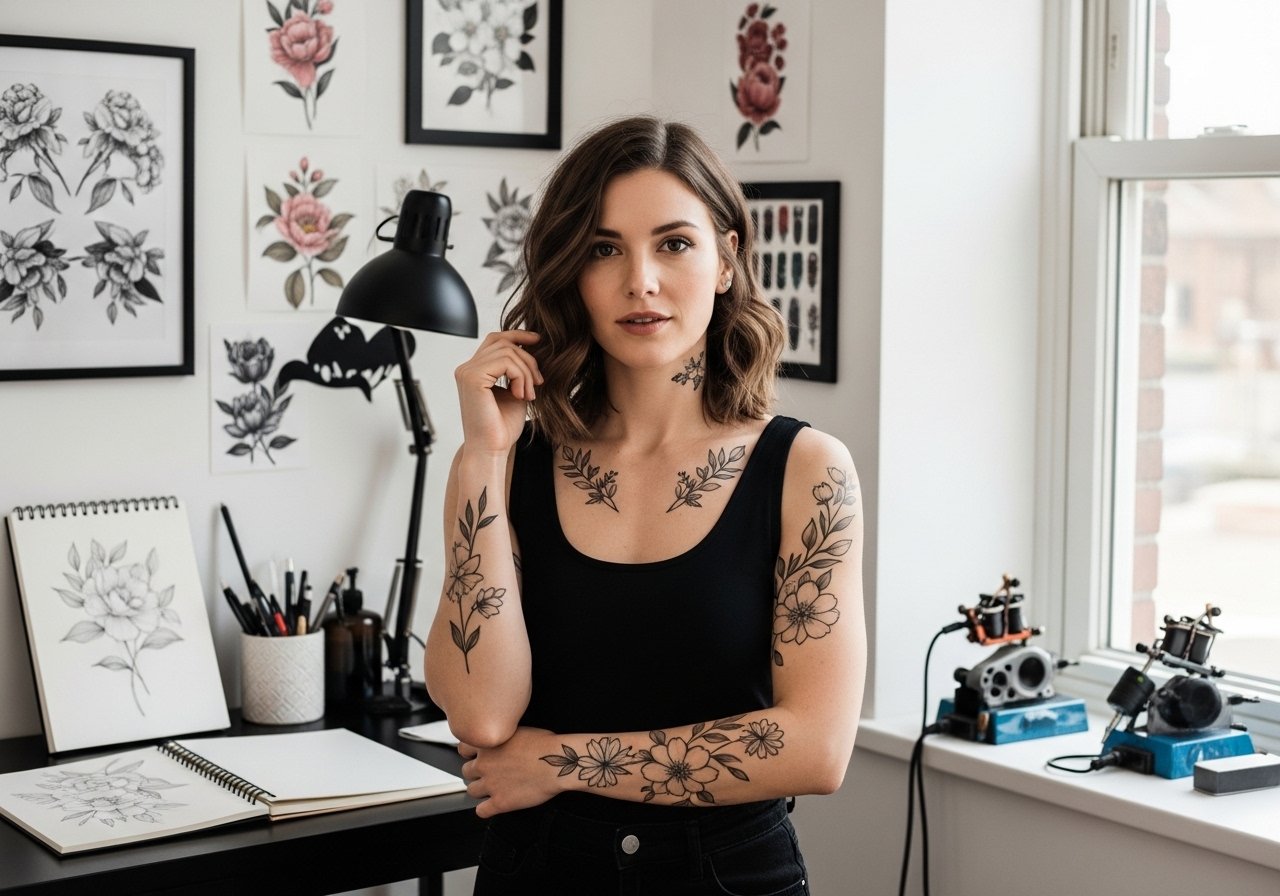
Fine line dove motifs look graceful on camera, but the tattoos that actually age well usually lean on contrast and negative space more than tiny detail. Trends push micro hairs and millimeter lines, and those choices can mean touch-ups sooner than expected. These 27 black and grey dove ideas focus on placements, consultation notes, and wardrobe tips that help the design read clean from day one to year five.
1. Fine Line Dove on Inner Forearm

I recommend this when you want a simple, readable dove that shows in short sleeves and ages predictably. Tell your artist you want slightly thicker primary contour lines and open negative spaces in the wing. That approach trades a little fresh-day delicacy for clearer linework at year two and beyond. Common mistakes are asking for ultra-fine cross-hatching across small feathers and placing the motif too near wrist creases, which raises blowout risk. Expect a one to two hour session with moderate forearm sensitivity. For showing it off, roll sleeves or wear a short-sleeve linen shirt in neutral tones to frame the forearm without overwhelming the linework.
2. Traditional Solid Dove on the Upper Arm
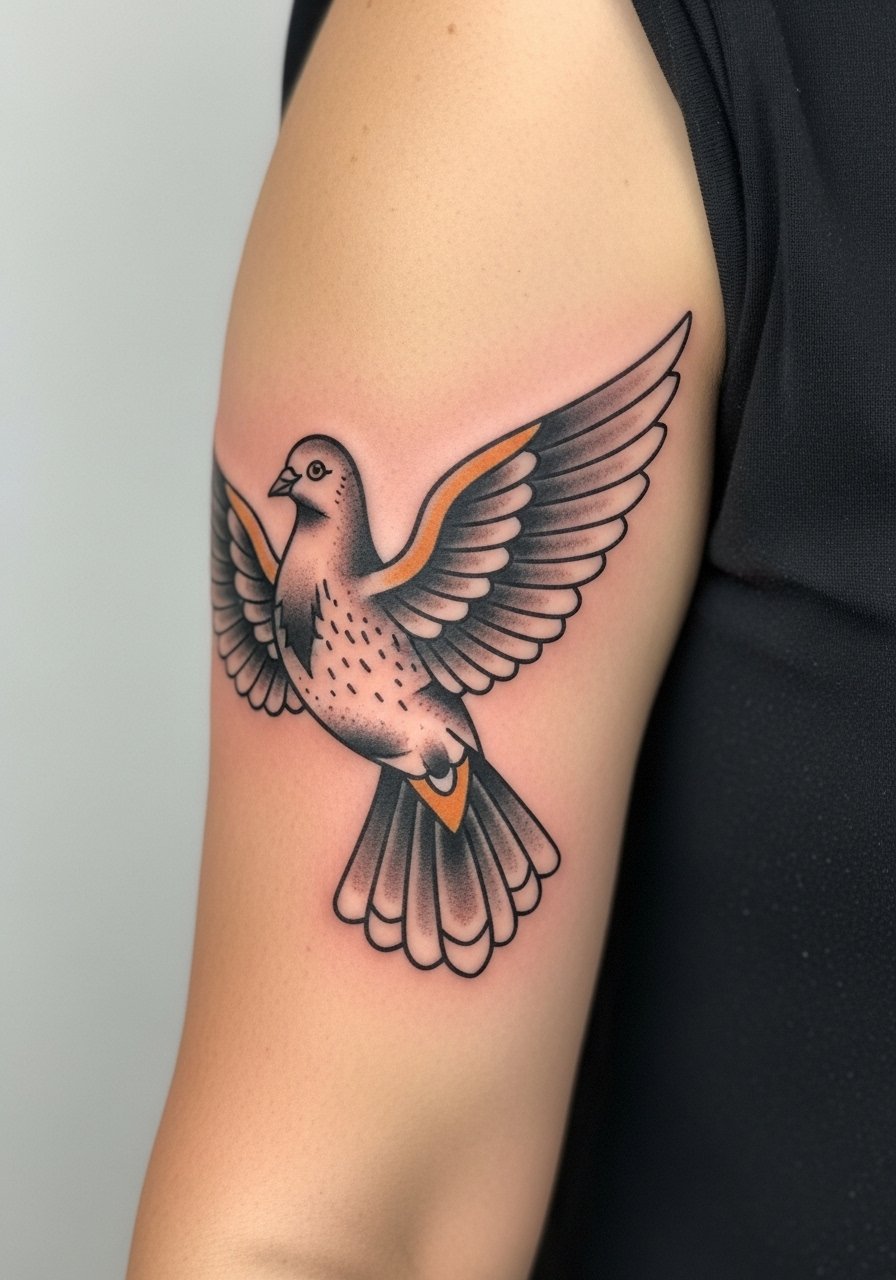
This version uses stronger outlines and saturated greys to make the dove hold its silhouette from across the room. It is a good call if you want low maintenance healing and fewer touch-ups at year three. In consultation, ask for stronger outline weight but reduced internal detail, and explain you want it to read from a distance. The upper arm session feels moderate on pain and usually finishes in one long appointment. A common aging mistake is crowding small script into the wing tips. That detail blurs first. For session comfort wear a loose tank top the artist can pull aside easily.
3. Micro-Realism Dove on the Chest

Chest pieces show differently when healed because the skin moves with breathing. For a chest dove, ask for slightly more contrast and modest halftone shading rather than tiny feather lines. The session has a middling pain curve, and touch-ups are common at year two if the artist leaned too fine. The controversy about micro-detail on chest is real. One camp says the torso's stretch robs detail within a few years. The other camp argues that with adequate spacing and proper depth, micro-realism lasts. Ask the artist which approach they favor. For the session pick a wide-neck shirt you can pull aside. That keeps access clean and your clothes intact.
4. Dove in a Dotwork Halo on the Back of Shoulder

Dotwork halos give a visual lift without relying on fragile micro-lines. This style is excellent if you want texture that softens over time into a pleasing grain. Tell your artist to anchor the dove with a firm contour and let the dotwork provide depth rather than tiny feather strokes. A common mistake is packing the halo too densely close to the outline, which merges by year three. Shoulder sessions are brief to moderate in discomfort and usually finish in one appointment. Wear a loose button-down shirt you can slide off one shoulder for the session.
5. Negative Space Dove on Ribcage

Negative space makes the dove readable while keeping needle work minimal, which helps the ribcage placement hold up. Rib sessions are on the higher end of the pain scale, and swelling can make early detail look softer than intended. Artists split on fine line ribs. One camp warns that constant breathing and stretch blur small lines within two years. The other camp says correct needle depth and spacing prevent that. For this reason discuss depth and spacing explicitly in the consultation. Common mistakes include placing ultra-fine feathers with no spacing. For the appointment wear a cropped top you can lift without fuss so the artist has clear access.
6. Dove Perched on a Compass on the Forearm

Combining a dove with a compass reads like a travel token while staying clean if you keep the compass lines bold. Ask your artist to simplify needlework in the compass points and prioritize negative space around the dove. This prevents crowding that leads to merging at year four. The forearm session is tolerable and often done in under two hours. People often over-design the compass with tiny ropes and text that age poorly. Wear a rolled-sleeve linen shirt when you want to show it off without competing colors.
Studio Day Picks
Those first six arm and chest ideas sometimes need different prep than lower body pieces. A few select items smooth the session and the first week of healing.
-
Stencil transfer paper kit. Lets you preview placement on skin, which is useful for inner forearm and compass compositions so nothing reads off-axis.
-
Topical numbing cream. Applied 30 to 45 minutes before can ease rib and sternum sensitivity without changing how the artist works.
-
Thin protective film roll. Great for finger and wrist pieces that face constant friction from washing and typing in the first days.
-
Fragrance-free body wash. Gentle cleansing helps fine line forearm and shoulder work stay intact while the skin forms the first protective layer.
-
Aquaphor healing ointment. Thin layers for the initial days lock moisture without clogging tiny channels in delicate dove feathers.
7. Tiny Dove on the Wrist

Wrists age differently because of constant movement and washing. For a tiny wrist dove, ask the artist for slightly heavier outer linework and avoid dense interior texture. That keeps the silhouette from softening by year two. Session pain is mild to moderate. A common mistake is placing the design over wrist creases or too close to the joint. Expect a touch-up sooner than on the forearm if you choose extra detail. For showing it off consider a minimalist watch or stacked thin bracelets. Try a thin chain bracelet that frames the wrist without rubbing the tattoo.
8. Dove with Olive Branch on the Calf

Calf pieces heal well because the skin there is thick and less exposed to sun. Ask for deeper saturation in shaded areas and simplified feather detail if you plan regular shorts-season wear. Sessions are comfortable to moderate and usually done in a single visit. A mistake is packing tiny veins of feathering into narrow spaces, which looks blotchy as it softens. For the appointment wear loose shorts or drawstring pants so the artist can roll the leg up without pressure.
9. Dove in a Geometric Frame on the Inner Bicep
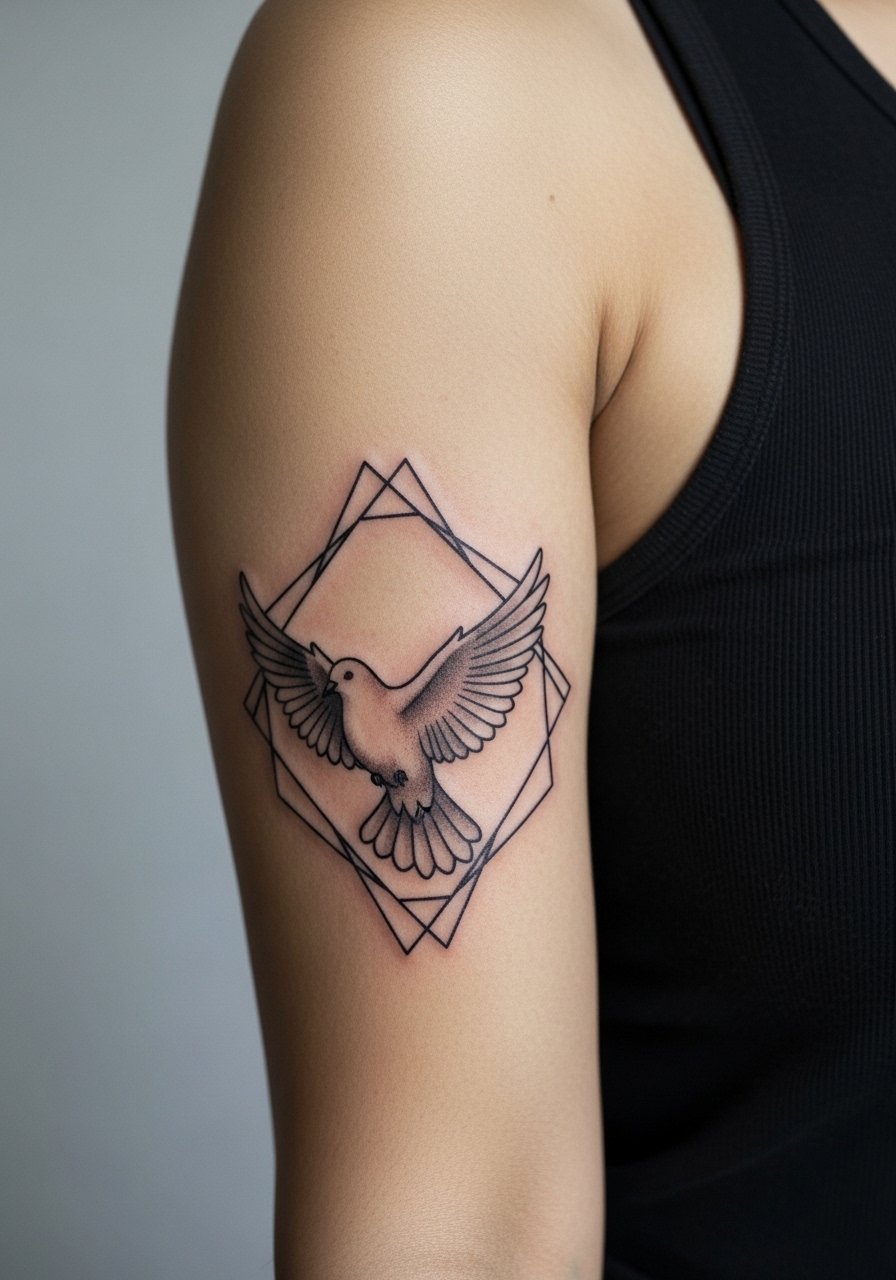
Inner bicep skin is softer and can blur lines if the design is too tight. For a geometric frame, ask the artist to open negative space between the dove and the frame edges. That stop-gap prevents the frame from bleeding into the motif over time. Sessions here are more sensitive because of thin tissue. People often request ultra-precise geometry that ages into unevenness. For the studio wear a loose tank top you can move without stretching the area.
10. Dove Silhouette on the Nape of the Neck
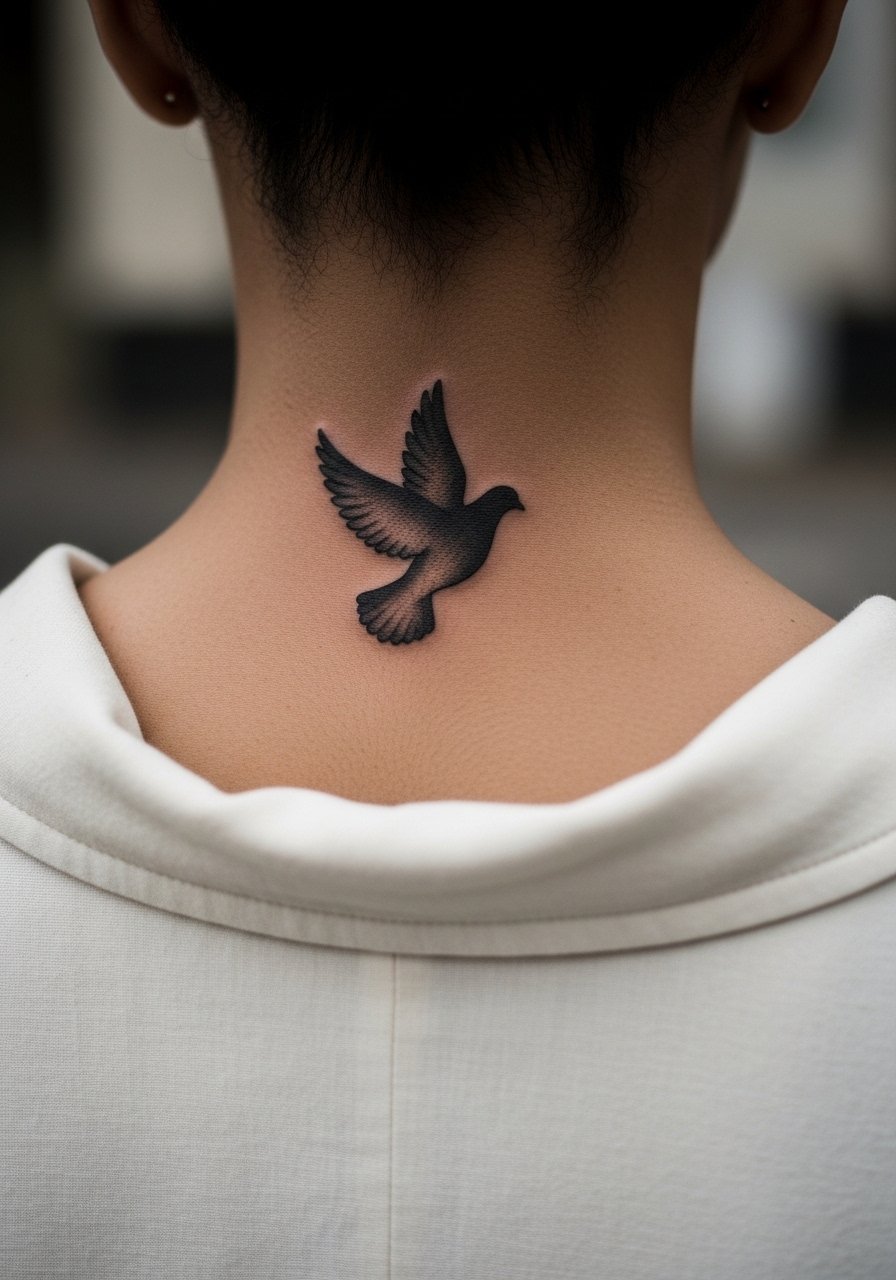
Nape tattoos can be discreet yet visible with short hair or open collars. The silhouette approach relies on a clean contour with minimal internal detail to age well. The session is mildly uncomfortable and quick. A mistake is trying to cram shading into a small nape motif. That softens into patchiness. If workplace visibility matters think placement through. For the appointment pick a wide-neck shirt so the collar can be adjusted without fuss.
11. Dove and Floral Sleeve Accent on the Outer Forearm

When building sleeve elements, the dove should act as a negative space anchor instead of a detail island. Tell your artist you want the dove to breathe visually and that the florals should sit lighter in value. That reduces overcrowding and blowout risk as the sleeve grows. Sessions vary by complexity and can span multiple visits. A common mistake is booking a tiny dove with heavy surrounding texture, which forces early touch-ups. Show off sleeves with rolled-up sleeves or a short-sleeve denim shirt that frames the arm.
12. Dove Overlaid on a Map Linework on the Ribcage

Maps add context but fine cartography near the ribcage ages fast. If you want map lines, ask the artist to simplify routes and emphasize the dove with stronger edges. The ribcage is a high-pain site and likely to bruise. Two camps exist on rib detail. One argues that breathing stretch ruins micro-maps within a few years. The other says simplified mapping with bold spacing holds up. Expect at least one touch-up window, and plan your session accordingly. For the appointment wear a cropped top or zip-up hoodie you can move aside without irritation.
13. Stippled Dove on the Lower Back
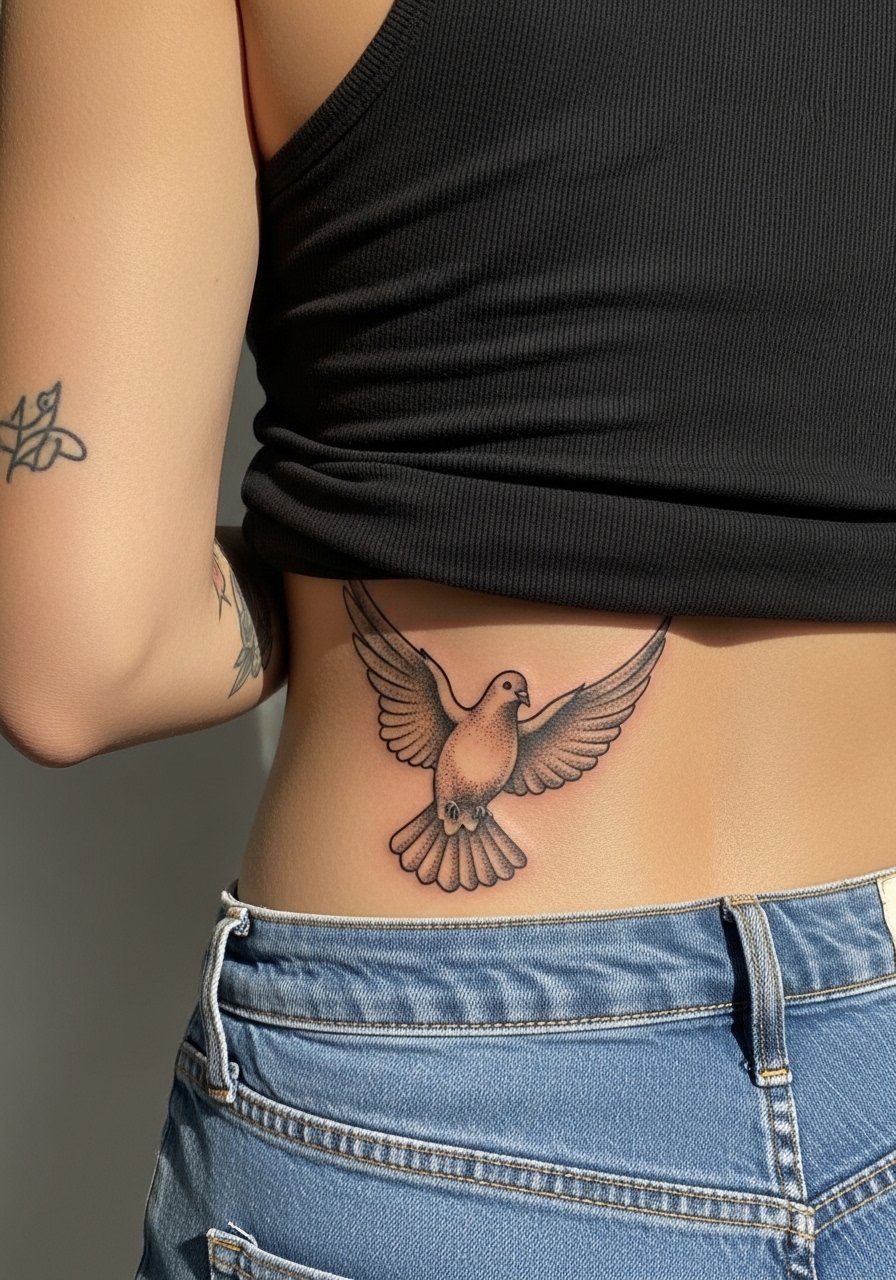
Lower back skin responds well to stipple shading because the texture integrates as it heals. For a stippled dove ask for broader dot gradients and minimal crisp feather edges. The session sits at moderate pain and often finishes in one sitting. A mistake is over-detailing the tail feathers, which age into a muddied area if not given spacing. Consider clothing that shows only a sliver of the lower back, like low-rise jeans and a cropped top, when you want to reveal the piece.
14. Dove with Script Accent on Collarbone

Collarbone tattoos are highly visible and respond well to slightly bolder linework because the area takes sun and movement. If you add script, keep the lettering size ample and the spacing open. Tiny script under the dove blurs first. Sessions are quick but can sting. A common error is placing delicate text between feathers. For showing it off choose a wide-neck sweater or a scoop tee that frames the collarbone.
15. Stylized Blackwork Dove on the Sternum

Sternum pieces handle bold blackwork well. If you prefer a stark silhouette, choose dense saturation with limited fine detail. Sternum sessions are intense and may require breaks. A mistake people make is asking for micro-shading across the center chest which tends to feather. Ask about touch-up timelines and plan for at least one revisit. For the appointment wear a strapless or fitted sports bra so the artist can access the sternum without shifting clothing.
16. Dove in Flight Across the Shoulder Blade

Shoulder blade placements age nicely because they are less sun-exposed and have stable skin. For a flying dove pick slightly more open feather spacing to avoid detail merging over time. Sessions are moderate and often comfortable. Avoid packing too many overlapping wings or elements that will compete as they soften. For the session wear a loose tank top you can shift without stretching the area.
17. Minimalist Dove Finger Tattoo

Finger tattoos face heavy wash friction and constant movement. Minimalist dove silhouettes can work if you accept faster fading and planned touch-ups. Ask your artist to use a bolder outline and avoid internal detail. Sessions are quick but the first week involves a lot of care. A common mistake is placing complex negative shapes across knuckles or joints. Plan for touch-ups at year one or two, and use protective measures during heavy-hand work.
18. Dove with Laurel Wreath on the Thigh
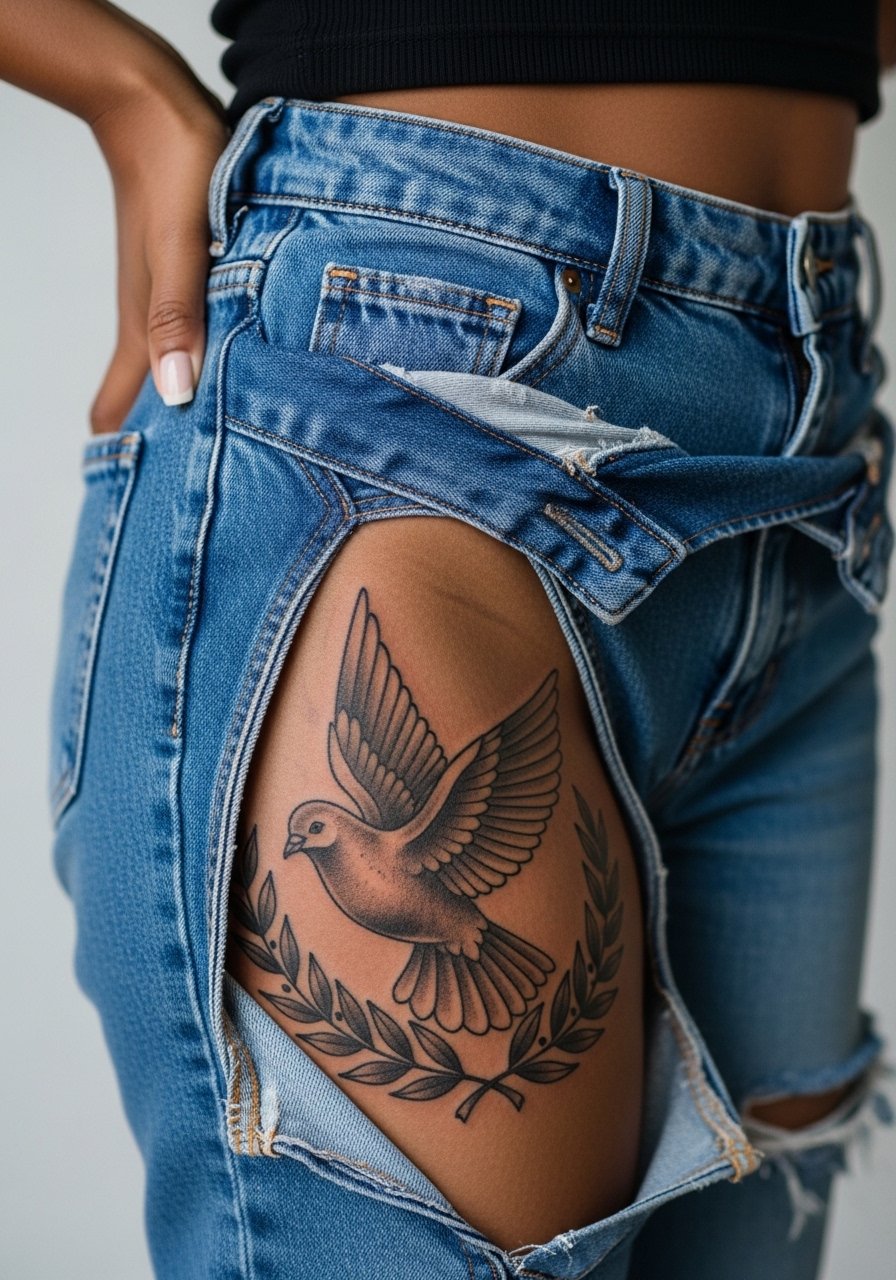
The thigh gives room for larger compositions and ages well when you keep internal detail balanced. Ask for medium-density shading in the wreath and a clear silhouette for the dove. Thigh sessions are moderately painful and can be long. A mistake is making the wreath overly dense, which flattens into a shaded mass over time. For the appointment wear high-waisted shorts or loose bottoms so the artist can expose the area without tight fabric rubbing the fresh tattoo.
19. Single-Line Continuous Dove on the Ankle
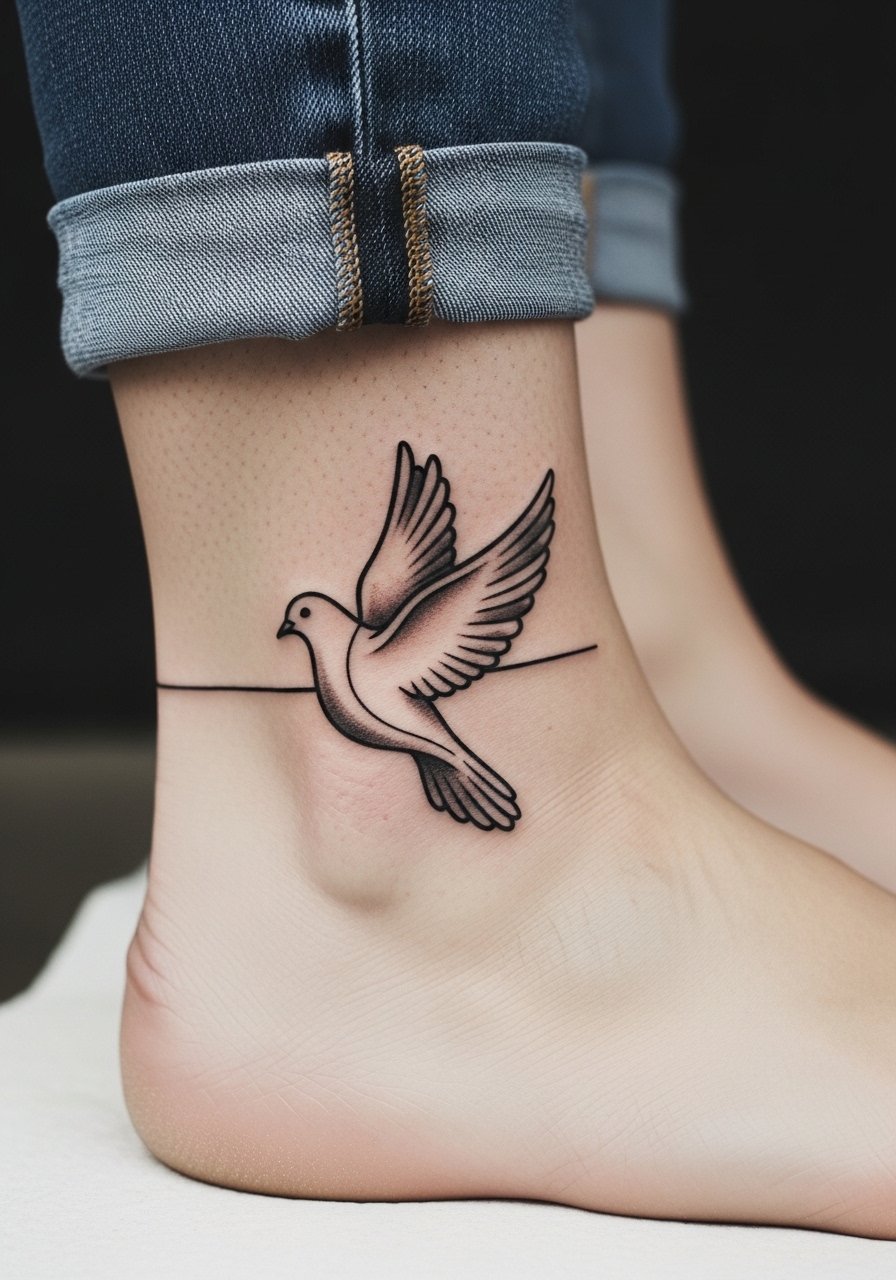
Single-line work looks modern but struggles with the ankle's thin skin and frequent rubbing from shoes. For longevity, ask for a slightly reinforced line thickness and avoid placing the main line under sock pressure zones. Sessions are brief but the first week needs attention to avoid scabbing from tight socks. A common error is pairing single-line work with heavy shading. Show it off in sandals or rolled jeans and wear shoes with room during the healing window.
20. Dove with Compass Rose on the Back
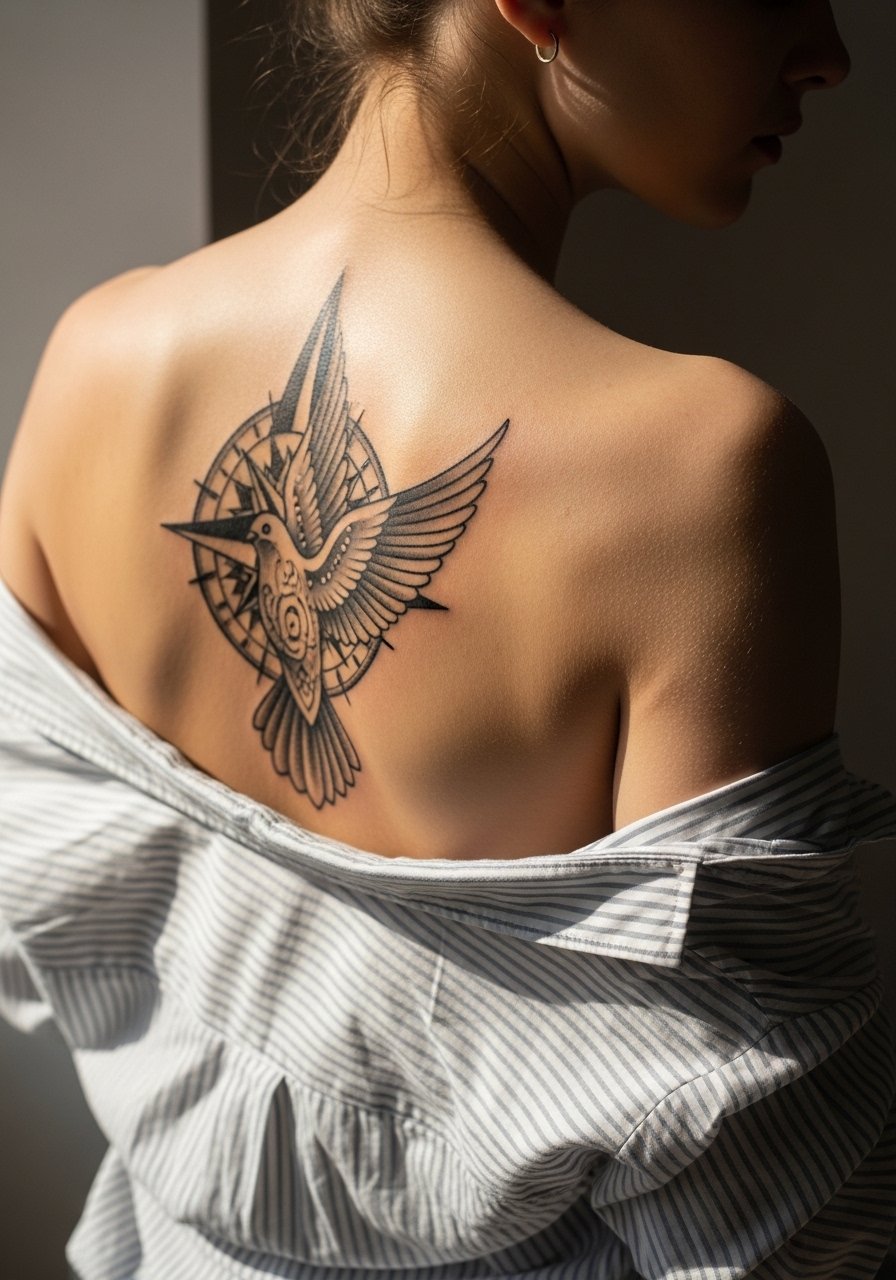
Upper back pieces age well due to thicker skin and lower sun exposure. Keep compass lines open and use the dove as a negative space center. Sessions are moderate and often require a single multi-hour block. Avoid overly tight geometrics that can sit too close to the dove. For the studio wear a button-down or top you can remove without pulling across the back.
21. Dove with Moon Phases on the Inner Wrist
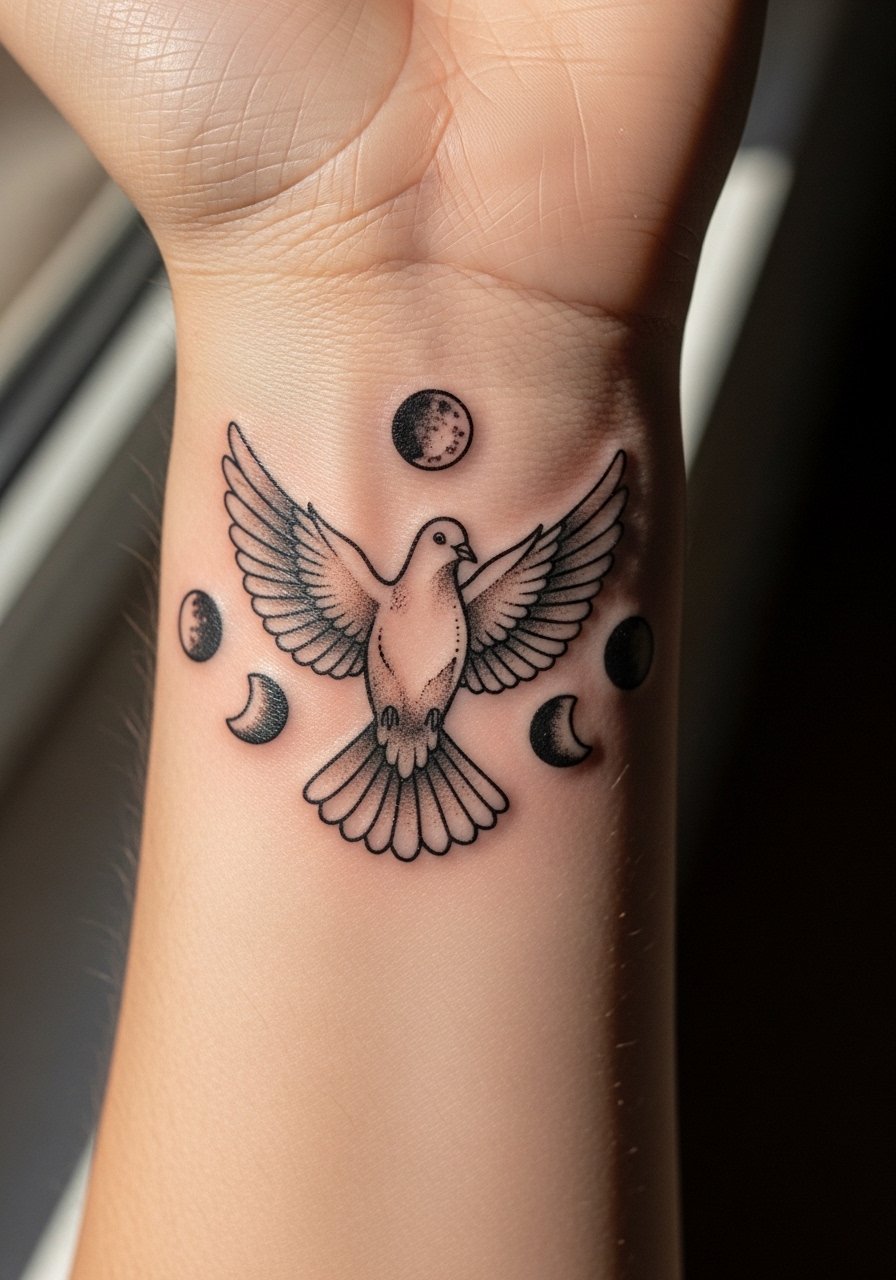
Inner wrist skin is thin and always visible. If you want moon phases, ask for larger moons with open interiors rather than tiny filled discs. That spacing prevents muddying by year two. The session is low to moderate in pain. People often request minute phases that lose clarity; scale up the elements slightly. For showing it off pair the wrist with a minimalist watch or a thin chain bracelet that does not rub the tattoo.
22. Dove in a Mandala Negative Space Pocket on the Shoulder
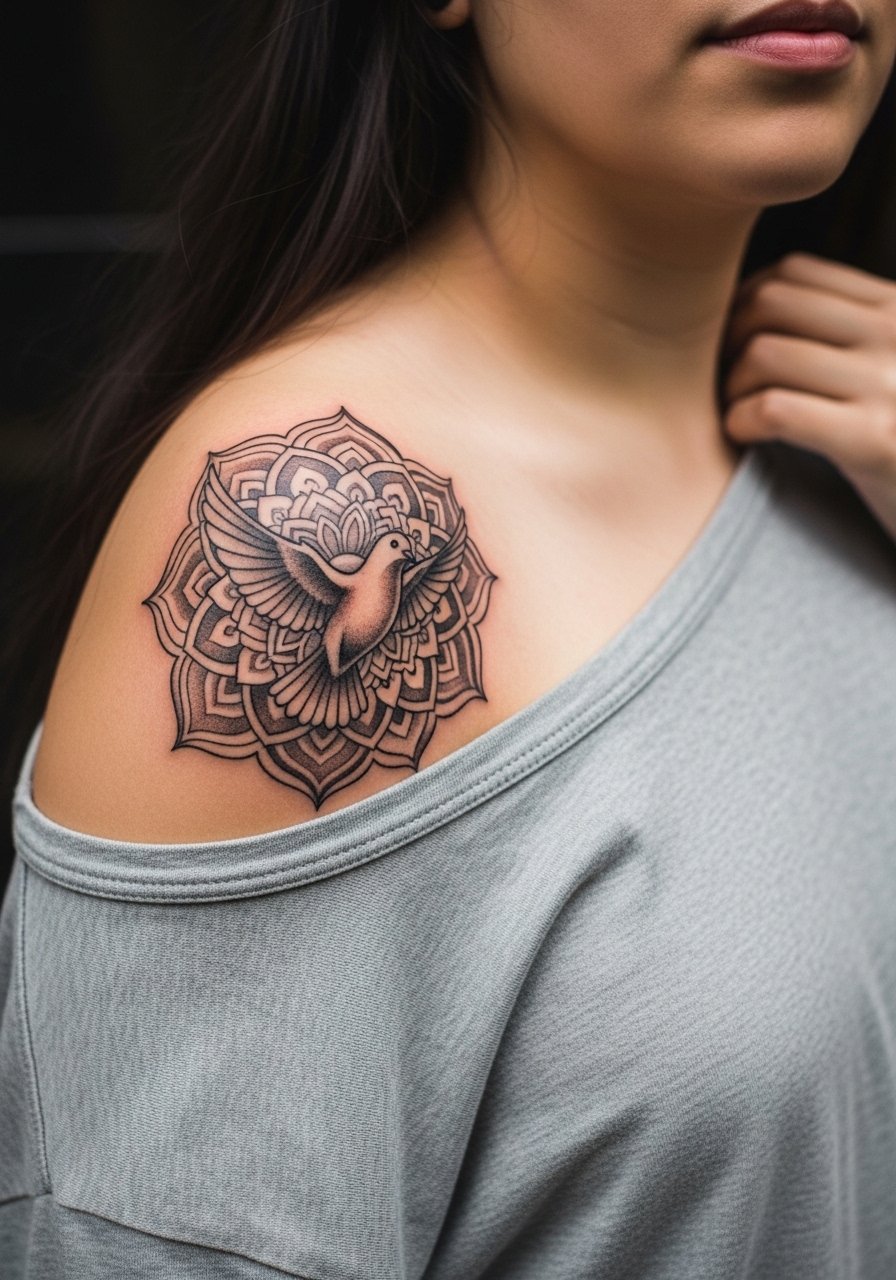
Mandala borders can overwhelm a dove if there is not enough negative space. Ask your artist to make the dove the visual quiet point, with the mandala stepping back in value. Shoulder skin holds the composition well. Overly dense mandalas are the main mistake. Wear a wide-neck shirt for the session to keep access clean and to preview how the piece sits under clothing.
23. Micro-Realism Dove with Soft Grey Wash on the Calf

Calf skin accepts grey wash nicely, but micro-feathering needs room. Ask for slightly larger feather shapes and a softer wash that reads as texture rather than precise lines. Sessions are comfortable and commonly finish in one appointment. A mistake is requesting tight micro-stippling that merges into blotches. For the session wear shorts or drawstring pants so the artist can expose the area without fabric pressure.
24. Dove and Anchor on the Wrist Band

Wrist bands combine motion and exposure, so solid contour and open interior strokes help longevity. Tell your artist you want the band slightly broader than a delicate chain so it survives daily friction. Sessions are short and the initial heal is active due to washing. A common mistake is using thin cross-hatching within the band. For show-off styling choose a thin watch with a leather strap that does not press on the ink during healing.
25. Dove with Laurel on the Collarbone and Shoulder Transition
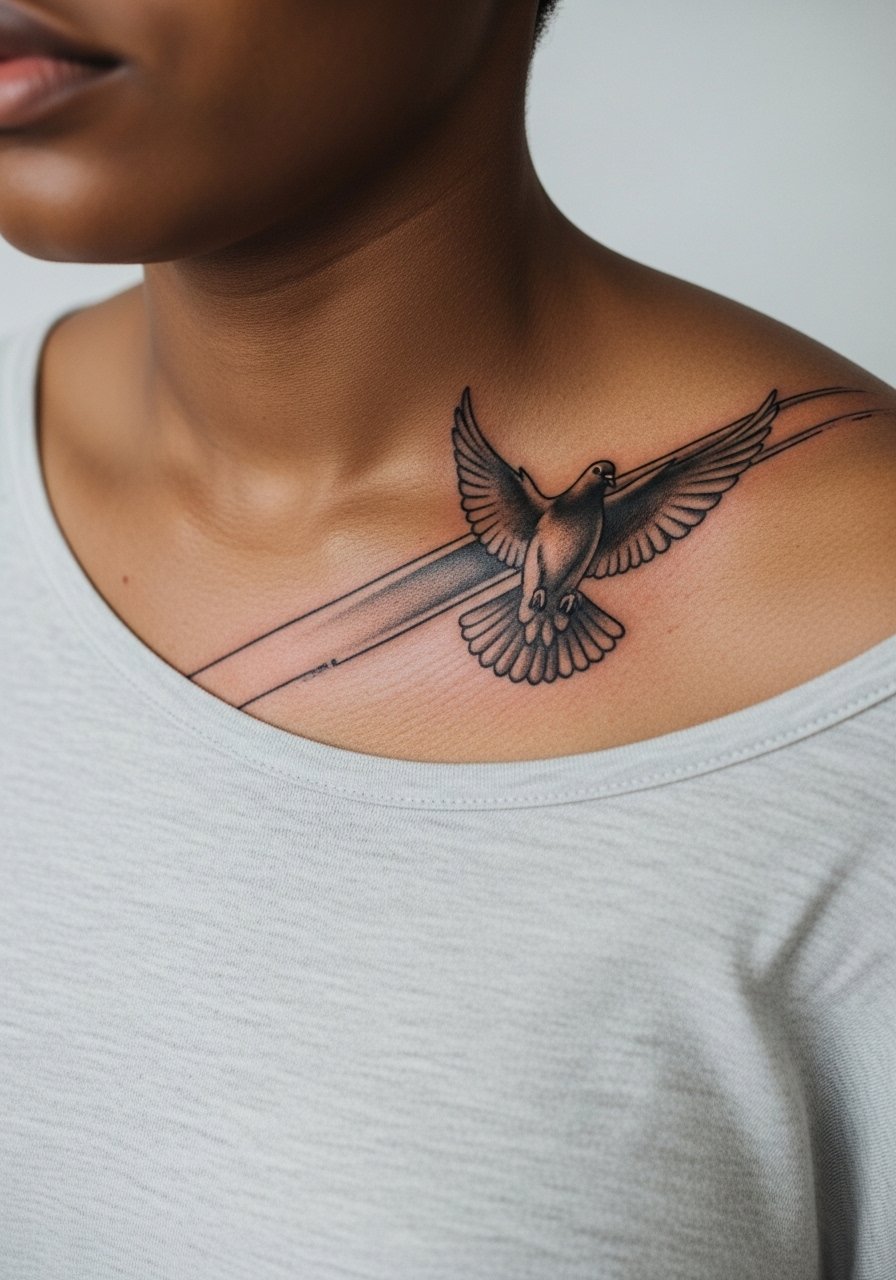
Transition pieces across collarbone and shoulder need an anchor point so the design does not appear disconnected. Ask for the dove to be slightly weightier where it meets the collarbone so it reads when worn with layered shirts. The area takes sun, so plan slight saturation increases in the darker tones. Sessions are short but sensitive. Avoid tiny leaf detail along the bone line. For outfits, a wide-neck tee frames the piece and keeps attention on the motif.
26. Dove Outline over Geometric Dotwork on the Hand Side

Hand placements wear quickly because of constant use and exposure. For a hand-side dove keep the interior minimal and focus on a resilient outline. Sessions sting but are short. People often request heavy interior fills that break down into patchy areas. Expect touch-ups frequently. During healing avoid tight gloves and choose gloves with room if you must wear them for work.
27. Dove in a Heraldic Shield on the Chest

Chest shields read strong when the shield edges are slightly bold and the dove interior is simplified. The chest moves with breathing, so ask for spacing between the shield border and the dove to reduce potential merging. Sessions are moderate in discomfort and often finish in a single appointment for this size. Avoid tiny textures in the shield corners that age into smudges. For the session wear a wide-neck shirt you can adjust without dragging fabric across the fresh ink.
Frequently Asked Questions
Q: Will fine line dove tattoos blur faster on the ribs and chest than on the forearm?
A: It depends on skin movement and how the artist spaces the lines. Ribs and chest stretch with breathing which places more stress on micro detail. If the artist uses slightly heavier primary lines and leaves negative space, the design will usually last longer than ultra-fine work there.
Q: How often should I expect touch-ups for a wrist or finger dove?
A: Fingers and wrists often need touch-ups sooner than larger, less exposed areas. From what I have seen, plan for a revisit within one to two years for small exposed placements if you want the crisp original look preserved.
Q: Are bold blackwork doves a safer long-term choice than micro-realism?
A: Bold blackwork trades day-one delicacy for long-term readability. Micro-realism is beautiful but relies on tiny details that can soften. If longevity is the priority pick stronger contours and simplified internal shading.
Q: What should I wear to a sternum or ribcage session to make the artist’s life easier?
A: Wear clothing you can lift or pull aside without touching the fresh area. A fitted sports bra for sternum or a cropped top for ribs works well. That keeps access clean and stops you from tugging at the healed area afterward.
Q: How do I find an artist who understands longevity for black and grey dove work?
A: Use local shop directories and community threads to narrow candidates, then look for healed work in portfolios. Search image tags and forum threads where people discuss touch-up timelines, and ask about healed photos from two to five years after the session.
Q: Does adding script or coordinates next to a dove change the aftercare or healing expectations?
A: Adding script increases the risk because tiny lettering often needs more space and touch-ups. The aftercare is the same, but expect those tiny marks to require earlier touch-ups to maintain legibility.