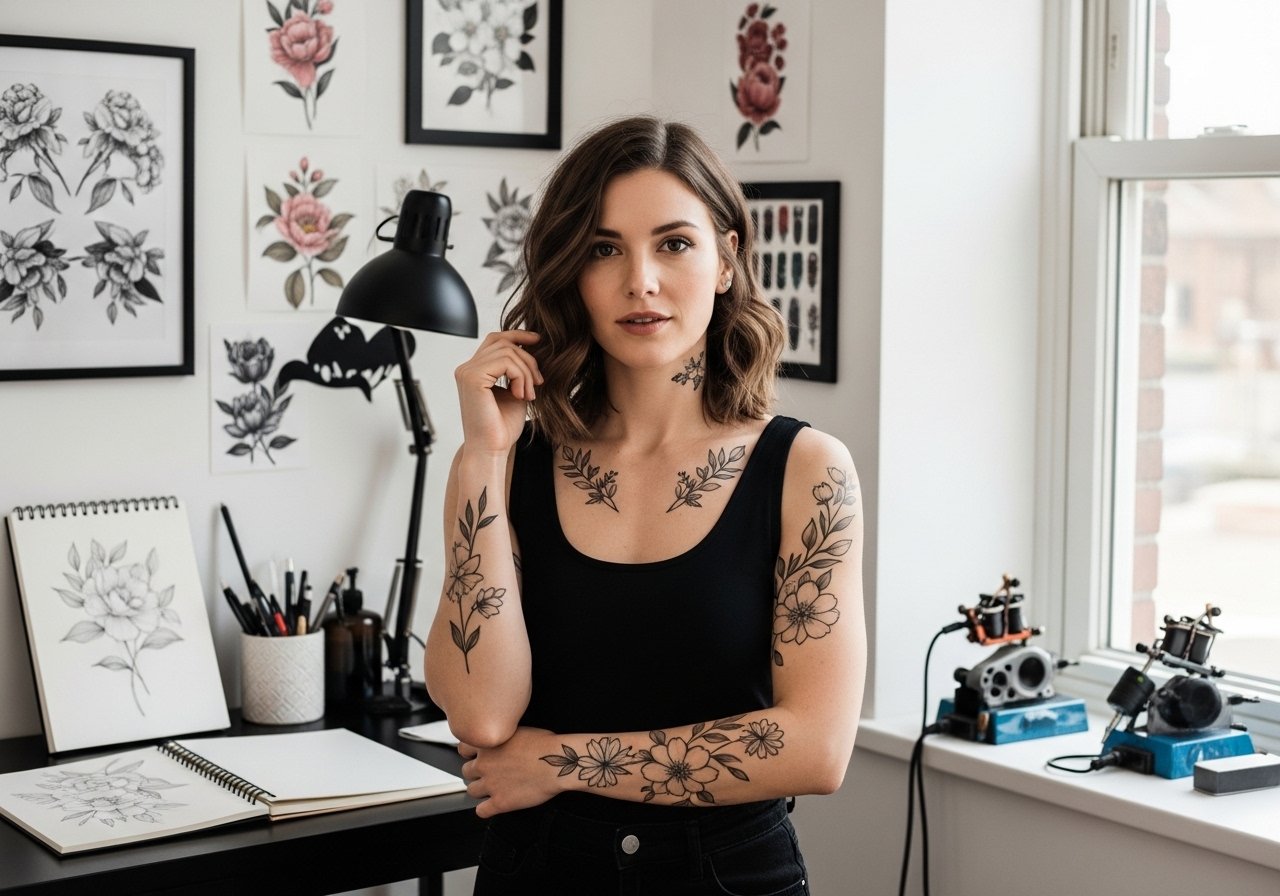
The tattoos that still read crisp after five or ten years are often the simplest in concept, not the busiest. Bold blackwork keeps its silhouette as skin shifts and sun does its work. If you want one continuous piece that reads from a distance and still looks intentional close up, scale up the shapes, prioritize saturation, and pick a placement that avoids heavy stretching. The first idea below shows how to frame a backpiece for longevity.
1. Full Back Statement Piece with Negative Space

This is the one-piece that reads across a room while still holding detail up close. I recommend telling your artist you want broad swaths of saturation with deliberate negative space instead of tiny internal details. Pain on the spine and lower back runs moderate to high, and sessions usually split into two or three visits of three to five hours each. A common mistake is packing too many tiny motifs into the field, which blurs over time. Expect noticeable softness at the edges by year two if you skip touch-ups, and a full touch-up at year five is normal for dense blackwork. For the session, wear a low-back tank you can pull down slightly and a loose pair of shorts so the artist can access the lower back cleanly.
2. Chest Panel Across the Upper Sternum

Fair warning, sternum and upper chest sessions come with short sharp bursts of pain and long stretches of pressure near the bone. This placement benefits from heavy, even saturation so the piece reads as a single shape rather than a series of lines. In consults say you want the black to read as a silhouette from a foot away, and ask the artist how they manage depth over bony areas. The biggest mistake is insisting on micro detail too close to the sternum. That detail often fills in as the skin moves and breathes. Healed at six months the block will look solid, and at two years expect a subtle softening in the densest zones. If you work in a conservative office, know this placement is visible with low necklines.
3. Ribcage Wrap Mandala in Solid Black

Most artists split on small mandalas on ribs. One camp says the skin there stretches and blurs intricate lines within two years. The other camp argues that if you scale up the gaps and use bold blocks between the details, it settles fine. If you want a rib wrap that lasts, ask for increased spacing between spokes and heavier outer rings so the pattern has breathing room. Pain is high on the ribs, and sessions are often shorter but intense. A common error is asking for a dense micro-mandala with tiny dot work. At six months it looks delicate. At two years it can coalesce into gray blobs. For comfort, bring a cropped athletic top you can lift without getting cold during breaks.
4. Single-Arm Bold Sleeve Panel

There is something about a dense black panel on the upper arm that makes a sleeve read cohesive even when other styles are mixed in. For a one-piece panel that can anchor future additions, ask for consistent line weight and a clear top-to-bottom flow, not a scatter of disconnected motifs. Pain here is moderate and sessions typically run two to four hours. A design that is too small or relies on thin connections will age poorly where the arm bends. I often tell clients to plan a five-year touch-up window for saturation top-ups. For the day of the session, wear a short-sleeve button shirt you can pull aside to expose the arm without tugging.
5. Thigh Plate in Block Blackwork

The outer thigh is forgiving because the skin moves less in day-to-day wear and the canvas is roomy. Tell your artist you want solid fills with a few negative-space crescents to create rhythm. Sessions can be longer with four to six hours comfortable for many people. A real mistake is compressing too many small motifs into a narrow strip. On the thigh, scale makes longevity. At two years most crisp edges remain readable unless you sit on rough fabric constantly. For the session wear high-waisted shorts so the artist can shift fabric without exposing more than the working area.
6. Rib-to-Hip Blackwork Panel

Contouring a panel from rib to hip uses the body curve to advantage. When you request this tell the artist how you move and whether you plan to gain or lose weight, because stretch affects small details. Sessions are often split to avoid long times on the ribs. A common aging issue is placing dense detail where the skin folds at the waist. That zone benefits from larger shapes and heavier fills. Expect touch-ups at three to five years for uniform saturation.
Pack Smart
These first six larger placements involve both bone and soft tissue, and a few small items make the session smoother and the first healing week less fussy.
-
Stencil transfer paper kit. Lets you and the artist test placement and scale on skin before needles touch down, especially useful for the chest and back panels above.
-
Topical numbing cream. Applied per the product directions about 45 minutes ahead, it can make sternum and rib sessions far easier to tolerate.
-
Thin protective film roll. Keeps hands, wrists, and ankle pieces cleaner during the first week of constant washing and friction.
-
Fragrance-free body wash. Gentle cleansing matters for dense blackwork because scrubbing can accelerate premature fading.
-
Aquaphor healing ointment. A thin first-layer ointment can reduce scabbing on heavily saturated zones while allowing the ink to settle.
7. Full Sleeve One-Piece in Bold Motifs

A sleeve that reads as a single one-piece needs repeating motifs and a consistent fill strategy. When you consult, point to photos that show the exact scale you like so the artist matches the saturation and negative space. Sessions vary, often split into four- to five-hour blocks. Mistakes happen when people request tiny ornamental fills that do not match the surrounding block work. Expect edges near the wrist to soften faster because of friction from clothing and washing. For showing the finished piece, rolled sleeves or a loose button-down frames the art without stealing attention.
8. Shoulder Blade Panel with Floral Blackwork

The shoulder blade gives a natural flat plane for a single panel. Pain is usually low to moderate, so longer single sessions are possible. Ask for clear edges and a design that reads when the arm is relaxed, not only when it is lifted. A frequent error is tacking on tiny trailing flourishes that become invisible when the piece settles. Expect minimal touch-up work if the piece is scaled well. The placement pairs with open-back tops for visibility but consider work dress codes if you need discretion.
9. Half-Sleeve Wrap with Bold Geometry

There is a visual impact to a geometric wrap that follows muscle contours. For longevity ask your artist to map the pattern so it does not sit directly over high-motion folds like the inner elbow. Pain around the inner arm can be higher. A common mistake is aligning the repeat pattern across joints without allowance for movement. At six months the wrap looks crisp, but by two years the inner elbow linework may require touch-up. Wear a short-sleeve shirt you can roll without pressure during the session.
10. Calf Panel in Solid Black Shapes

The calf is a practical canvas that tolerates heavy saturation and takes sunlight less directly than forearms. Tell the artist you want broad shapes and a clean negative space outline so the piece reads at distance. Sessions are usually comfortable and can be three to five hours. A typical misstep is putting too much micro shading inside a small panel. That detail can soften unevenly. If you run frequently, expect more fading on the outer edge from constant sun and friction.
11. Collarbone Band in Blackwork

A collarbone band reads elegantly when the negative space contrasts with thick fills. Pain near the bone is noticeable but brief. For this location tell your artist you want the outer edges bold so the piece keeps its shape even if the inner detailing softens. A common mistake is asking for tiny internal script or filigree right on the bone. That detail can disappear. Touch-up at year three is common if you want to maintain razor-sharp edges. Pairing with open-neck tops highlights the band without compromising the silhouette. Consider a thin chain pendant necklace that sits above the work rather than across it.
12. Full Front Torso Panel That Anchors a Wardrobe

A frontal torso panel can be a bold personal statement. The main consultation point is whether you want the piece to move with the curves and folds of the abdomen or to sit on flatter planes. Abdominal work can blur faster if weight fluctuates, so tell the artist about your fitness plans. Sessions often require several visits. The frequent mistake is treating the front torso like a flat canvas without accounting for stretch. If you wear high-rise bottoms, the art will be visible or covered depending on outfit choice. Expect a touch-up cycle in three to five years for consistent saturation.
13. Spine Column Blackwork Panel

A spine column benefits from symmetry and heavy anchors at intervals so gravity and tissue movement do not blur the central motif. When you sit with your artist, ask them how they handle needle depth along the spine to balance saturation without overworking the bone line. Pain can be high over vertebrae, with sessions usually split. A common mistake is trying to fit micro-detail along every vertebra. Those details often become indistinct. For visibility, backless dresses or low-back tops showcase the column. Bring a low-back tank for the session so the artist can access the area without exposure beyond the working plane.
14. Hip Crescent Blackwork Panel

Hip pieces travel with clothing and body shape, so plan the curve to sit where swimwear or jeans will not rub constantly. For session ease, wear high-cut shorts that the artist can shift. A typical error is placing the heaviest fill where waistbands sit, which causes extra friction during healing. Healed at six months the panel will be bold, and at two years friction zones may show thinner saturation. This area ages well if left relatively large and simple.
15. Inner Bicep One-Piece in Dense Black

Fair warning, the inner bicep is sensitive and sweats more during sessions. One camp of artists avoids heavy block fills here because of higher blowout risk. The other camp presses for deeper saturation with slower passes to lock the ink in. If you want dense black work on the inner arm, discuss blowout mitigation and touch-up plans explicitly. Sessions are often short to manage comfort. A common mistake is underestimating aftercare friction from clothing. For the appointment wear a tank top you can move without rubbing the fresh ink.
16. Single-Leg Tribal-Inspired Blackwork

Tribal-inspired blackwork plays to repetition and rhythm, and it ages well when the negative spaces are generous. Tell your artist you want rhythm across the limb so future elements can attach without crowding. Sessions are comfortable and can be long. The drawback is placing heavy ink where clothing seams or belts sit. Avoid that by previewing the fall of your jeans or skirts during the consult. Expect touch-ups where fabric rubs frequently.
17. Large Hand and Wrist Connector Panel

Hand tattoos split opinion in the community. One camp warns that hands are high wear zones and that even dense blackwork will fade quickly from constant washing and sun. The other camp points to well-placed, bold shapes that can hold surprisingly well with planned touch-ups. If you choose a hand-to-wrist connector, plan for a realistic touch-up schedule and accept faster fade. The skin texture causes more blowout risk, so keep the shapes simple and the negative space deliberate. Sessions are short but painful. For the session, keep your hand clean and free from lotions so the artist has ideal skin to work on.
18. Neck-Side Blackwork Accent

Neck work is visible and changes how people see you professionally in some settings, so consider that before booking. For a side-neck piece tell the artist you want a compact design with a bold edge to avoid blurring into the jawline. Pain is sharp for small sessions. A frequent mistake is choosing script or extremely fine detail on the neck, which softens faster than block shapes. If you have a career where visible neck ink is sensitive, plan placement lower or slightly behind the ear.
19. Large Thigh-to-Hip Wrap in Dense Black

A wrap that bridges hip and thigh benefits from motion-aware design. When you consult, stand and move so the artist can see how fabric and posture affect the area. Common mistakes include placing thin stems where pants will rub repeatedly. Expect less daily friction here than near the ankle, so saturation tends to last longer. Sessions can be long and are usually broken into two visits. For the session pick flexible bottoms like loose drawstring linen pants so you can shift fabric without constriction.
20. Lower Back Anchor Plate

Lower back pieces read as a horizon line across the body and hold up when the central anchors are bold. Avoid placing the densest fills right where waistbands sit to reduce friction during healing. Sessions are moderate in pain and often run two to four hours. A common mistake is compressing ornament into a narrow horizontal band. The work lasts best when it breathes vertically as well.
21. One-Piece Torso Wrap with Symmetrical Blocks

A symmetrical wrap across torso zones reads as a single architectural element when the blocks are bold and mirrored. During the consult explain your movement patterns and any plans for pregnancy or major weight changes that could affect the piece. The biggest mistake is insisting on mirror-perfect micro detail without room for skin migration. Sessions will be staged to let skin settle between passes. For showing this piece an open-back dress or a high-waisted skirt frames the symmetry nicely. Consider a fitted sports bra for the session so the area is accessible yet covered otherwise.
Frequently Asked Questions
Q: How does dense blackwork age compared with fine-line black tattoos on the same placement?
A: From what I have seen, dense blackwork tends to hold its silhouette longer because the heavy saturation reads even when edges soften. Fine-line black tattoos can look sharp for the first year but often need touch-ups by year two or three, especially on high friction spots like hands or fingers. If longevity matters, choose scale and saturation over micro detail.
Q: Can a ribcage mandala be scaled to avoid early blurring and still look intricate?
A: Yes. The trick is spacing, not tiny strokes. Ask your artist to increase spacing between spokes and to use stipple shading rather than packed tiny lines in the densest areas. That keeps the pattern readable at two and five years while preserving the mandala feel.
Q: What should I wear to a full-back session to make the artist's job easier and stay comfortable?
A: Wear a low-back tank or a button-down you can put on backwards so the artist can access the back without you being exposed to cold. Bring a loose layer to stay warm during breaks. A low-back tank is usually the simplest option.
Q: Are hand and finger blackwork tattoos worth it if they will fade faster?
A: They can be, if you accept the maintenance. Hands and fingers are high wear zones. If you want lasting contrast, keep the shapes simple and plan for touch-ups. Many people choose bold, graphic elements instead of tiny detail for this reason.
Q: How often should I realistically plan to touch up a large one-piece blackwork tattoo?
A: Expect a small touch-up within three years for heavy pieces and more substantial re-saturation around five to eight years depending on sun exposure and friction. Some zones like hands, ribs, and ankles often need attention sooner.