
Sitting in the chair with the stencil aligned to the jawline is when most people realize side-neck tattoos read larger in real life than they did on the phone. That sudden clarity changes questions on scale, line weight, and how visible you want the piece at work. These ideas focus on bold blackwork that reads clean over time and practical notes to bring into the consultation.
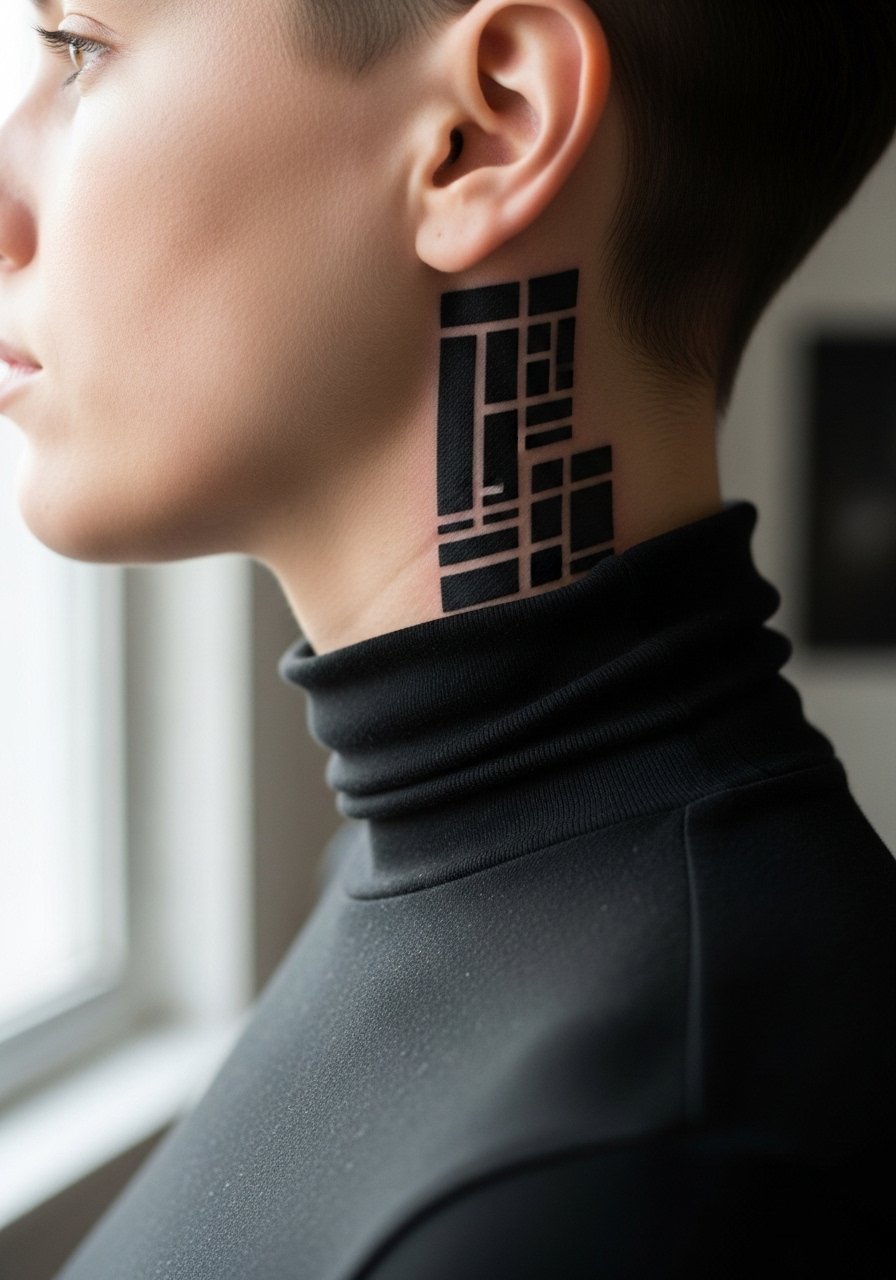
1. Barcode Stripe in Solid Black Along the Jawline
Sitting in the chair with the stencil on is the moment scale matters for a barcode stripe. For side-neck placement I advise a slightly taller bar width than you think, which keeps the pattern readable as the skin settles. Expect a sharp sting for the first ten minutes, then a steady grinding sensation as the needle works the shallow skin. Sessions are often under an hour for a single stripe, and touch-ups are common at year two for edge crispness. The biggest mistake is making the bars too thin. For showing this off, wear a wide-neck shirt you can pull to one side so the stripe sits clear against skin. Neck tattoos can affect some hiring decisions, so consider your daily visibility before committing.

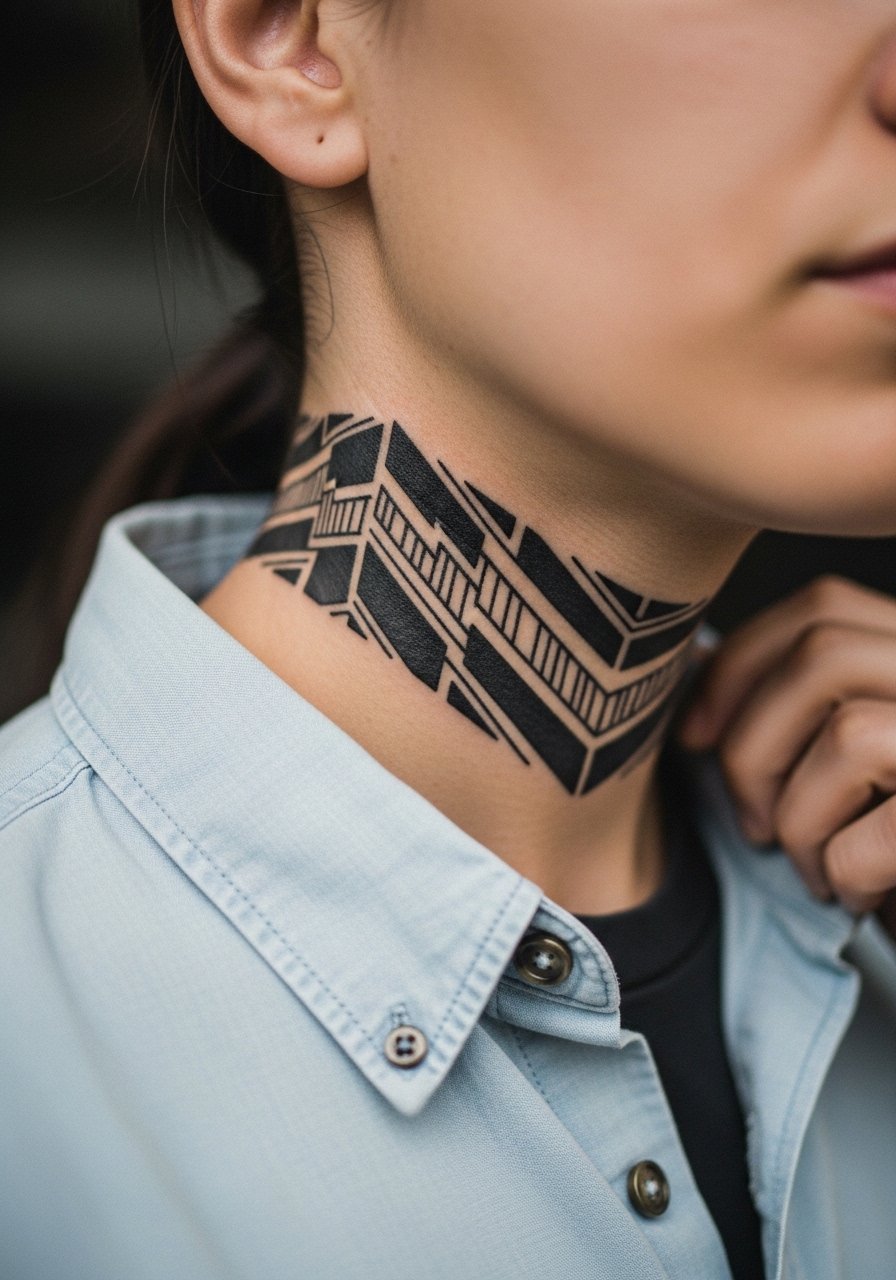
2. Thick Solid Chevron Panel that Wraps the Side Neck
I've seen chevron panels hold up better than thin script in this zone because the saturation resists early blur. This is a medium-pain placement with session times around 45 to 90 minutes depending on width. Tell your artist you want dense saturation and crisp negative-space edges so the pattern reads from a distance. A common error is over-detailing the chevrons, which creates soft edges after a couple of years. Expect heavier saturation to mellow slightly at six months, then remain stable for years. For professional contexts, keep the panel narrow and centered low on the neck so it can be hidden under a collar if needed.
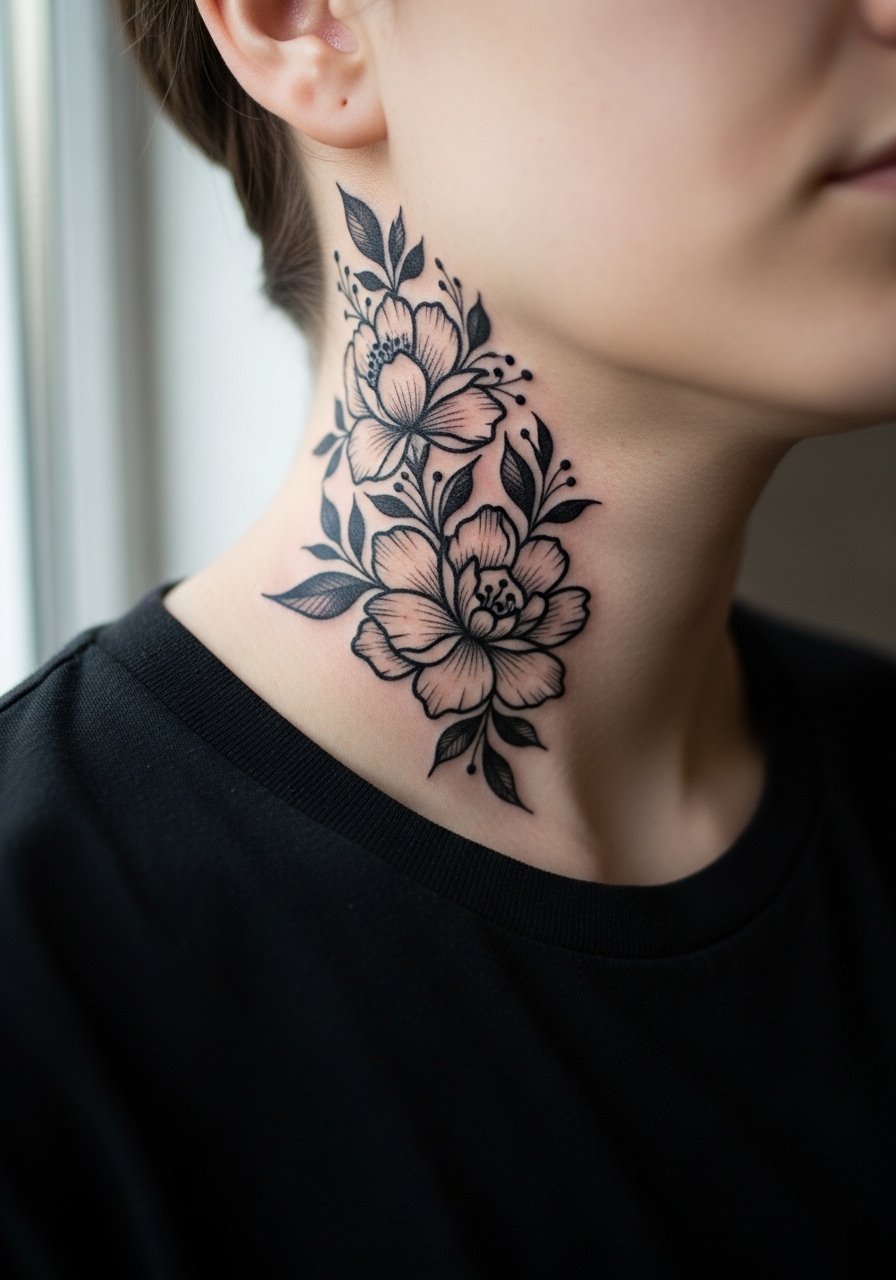
3. Negative-Space Floral Silhouette in Deep Black
Most negative-space approaches on the neck read cleaner when the black areas are bold rather than finely hatched. When you sit in consultation, ask the artist to block the darkest fields first and preserve skin as the highlight. The session feels like short bursts of vibration and brief rest when the stencil shifts. A common aging problem is trying to capture tiny bud details that merge into shade; scale the elements up to keep separation. For showing off this silhouette, pair it with a minimalist chain necklace that sits above rather than over the design. Neck work will draw attention in conservative workplaces, so plan placement accordingly.
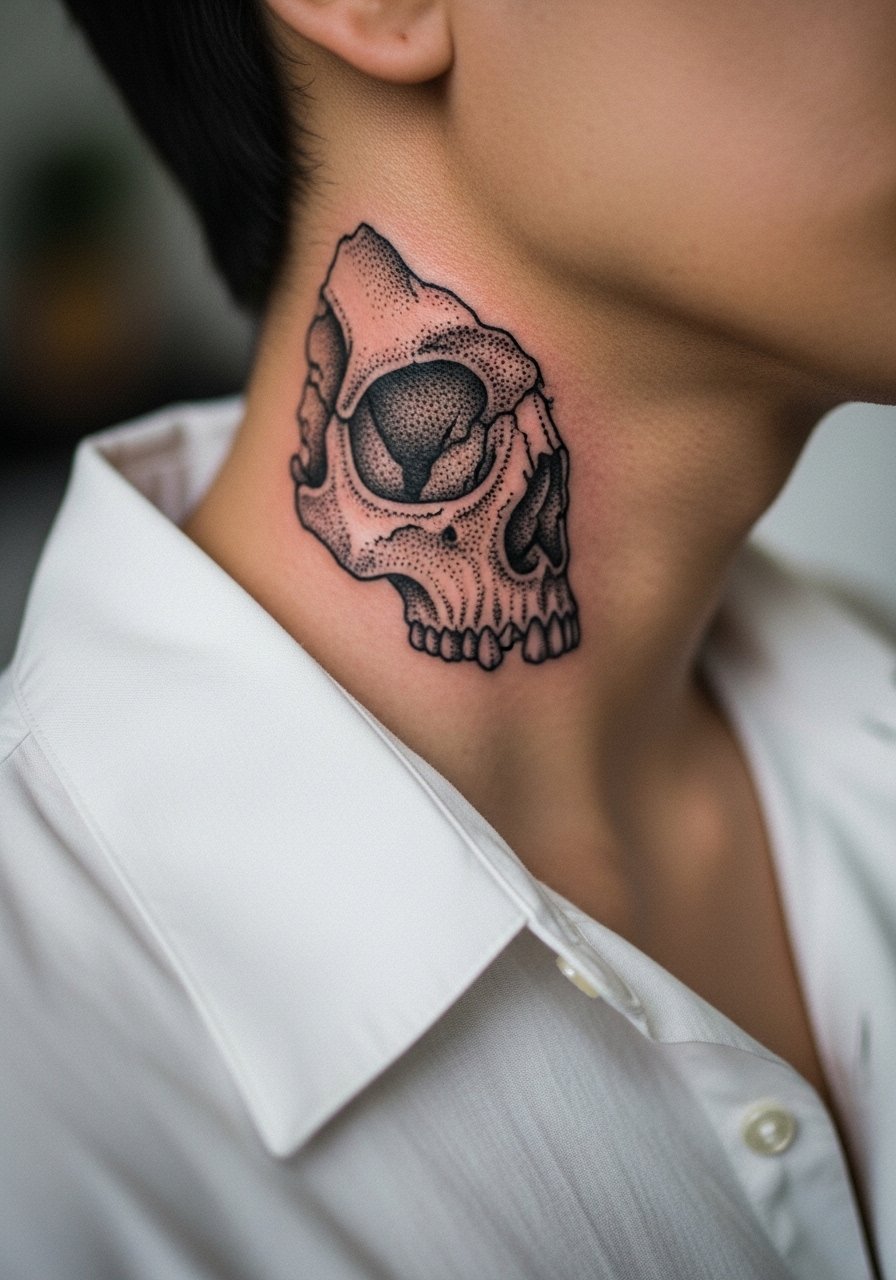
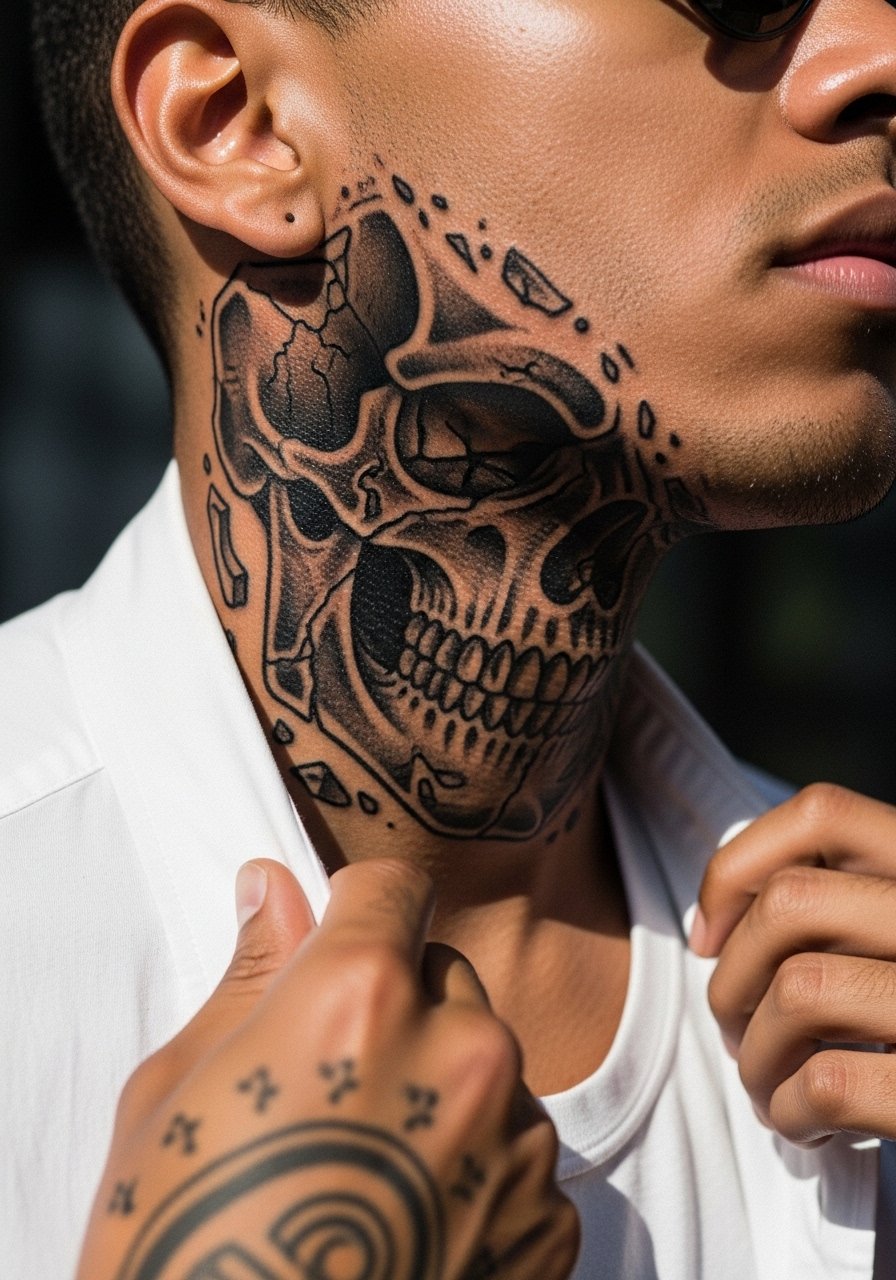
4. Stipple-Shaded Skull Fragment, Half on the Neck
Fair warning: stipple shading on the neck takes longer than solid fills because of the dot work density. Expect a session near two hours for a detailed fragment. Bring reference photos that show the exact dot density you like and describe how soft you want the fade into skin. The controversy around stipple here is obvious. One camp says dots can sit too superficially and blur fast. The other camp argues that correct needle depth and spacing keep the stipple readable. Ask the artist where they stand and look for healed photos in their portfolio. For the session, wear a loose button-down shirt you can pull aside for collar access. Neck pieces are high-visibility, so factor that into job-related choices.
5. Bold Script Band in Heavy Black Lettering Along the Side
When people pick script for the neck they often underestimate how much movement affects reading. The safest route is bold, blocky script that favors negative space inside letters. The pain is sharp near the windpipe and softer toward the hairline. During consultation tell the artist the exact font weight and show examples of healed lettering rather than fresh ink. The common mistake is choosing a thin cursive style that collapses after a year. Expect touch-up at year two for edge redefinition. Since this sits where ties and collars can rub, choose placement a few centimeters lower if your day job requires dress shirts.

6. Tribal-Inspired Solid Block Pattern with Negative Space
When you want a strong silhouette that still reads from a distance, a tribal-inspired blackwork block pattern is a solid choice. The session moves quickly when the artist blocks large shapes, but plan for multiple passes to lock in even saturation. A real mistake is copying sacred motifs without context. This design nods to traditional forms while keeping original composition and respectful variation. For showing it off casually, try a turtleneck pullover you can pull slightly down in photos so the pattern peeks through. Neck placements demand a conversation about cultural origin and respect before you commit.
Studio Day Picks
The heavy black fills and dot work above require different prep than thin script, and a few items smooth the session and the first week of wear.
-
Stencil transfer sheets. Lets you check placement on the neck so the barcode and script ideas above sit where you expect them.
-
Topical numbing cream. Applied as instructed before a neck session eases the sting near sensitive spots without changing how the artist lays linework.
-
Thin protective film roll. Good for early friction zones where collars or necklaces might rub the fresh ink.
-
Fragrance-free gentle body wash. Use during the first showers to keep the area clean without irritating dense black fills or stipple shading.
-
Aquaphor healing ointment. Thin layers in the initial days help locks in moisture on tight neck skin while avoiding clogged needle channels.
7. Geometric Mandala Strip Along the Sternocleidomastoid
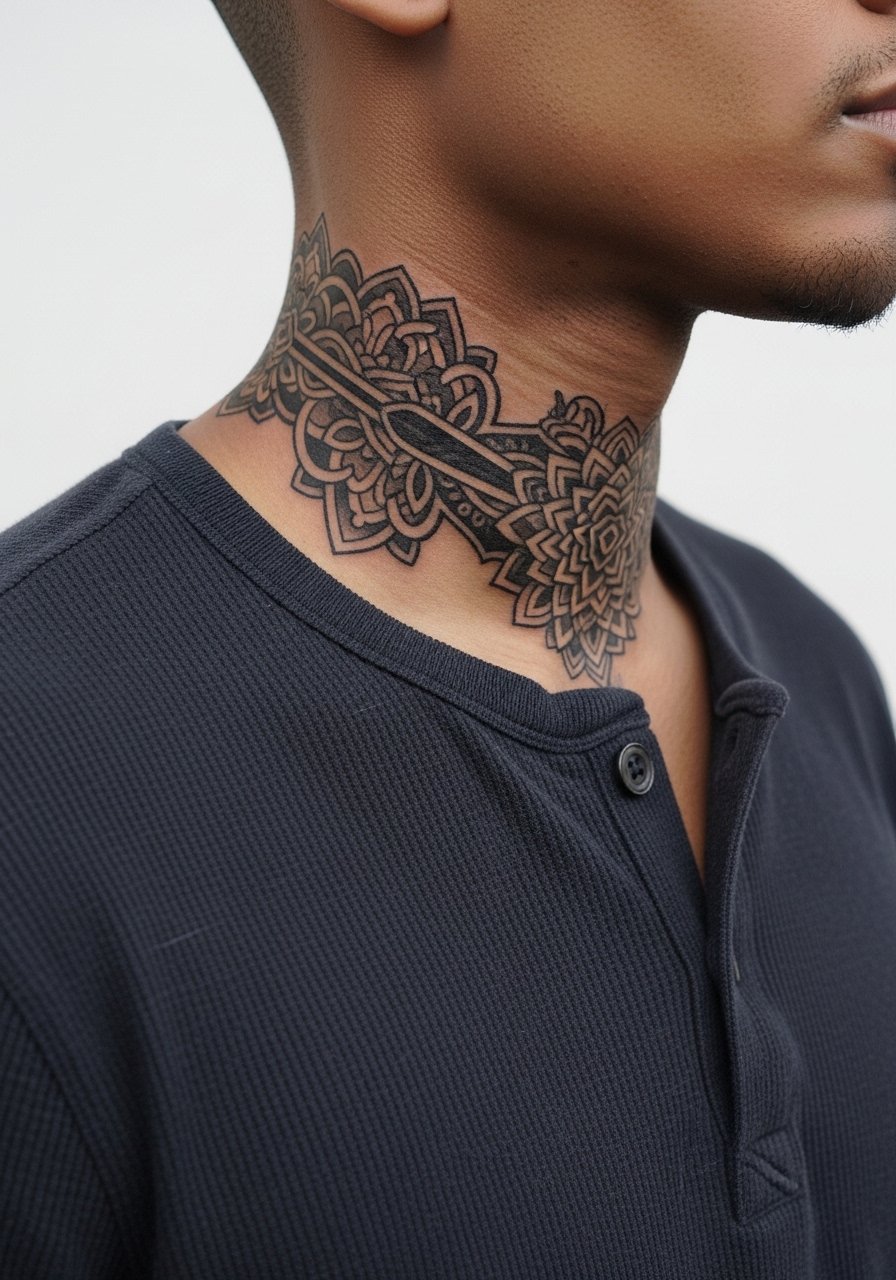
Visual impact lead: a slim mandala strip running down the sternocleidomastoid muscle reads graphic when executed as blackwork with negative space rings. The session often breaks into shorter passes to maintain consistent dot shading and crisp radial lines. A common error is compressing the mandala too small on the neck; give it vertical breathing room so petals do not merge. Expect a softening of detail at the two-year mark, with the main silhouette remaining readable longer. For showing it off in warm months, a short-sleeve Henley with a low neckline frames the strip without covering it. Neck visibility has social implications, so plan placement with daily routines in mind.
8. Solid Black Collar Fragment, Like a Mini Choker
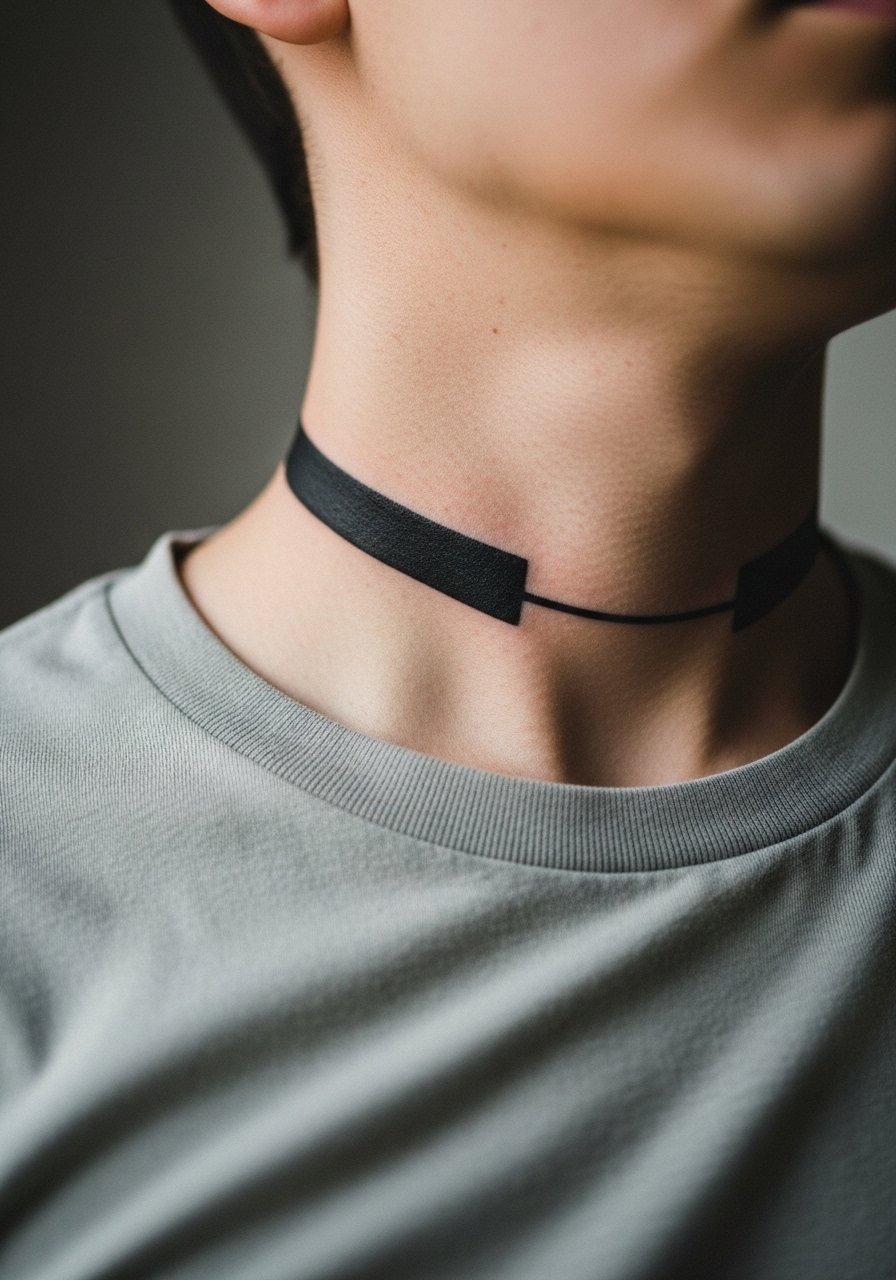
Most people choose a collar fragment because they want bold presence with minimal detail. The pain is moderate and session times are short because it is mostly blocking. Tell the artist you want an even matte saturation and crisp edges for the choker fragment. The failure mode is uneven fill that shows patchiness as it heals. For show-off looks, a crew neck tee with a slightly wider opening lets the fragment peek without full exposure. Keep in mind some companies still treat neck tattoos differently during hiring processes.
9. Single-Needle Micro Script Along the Jawline
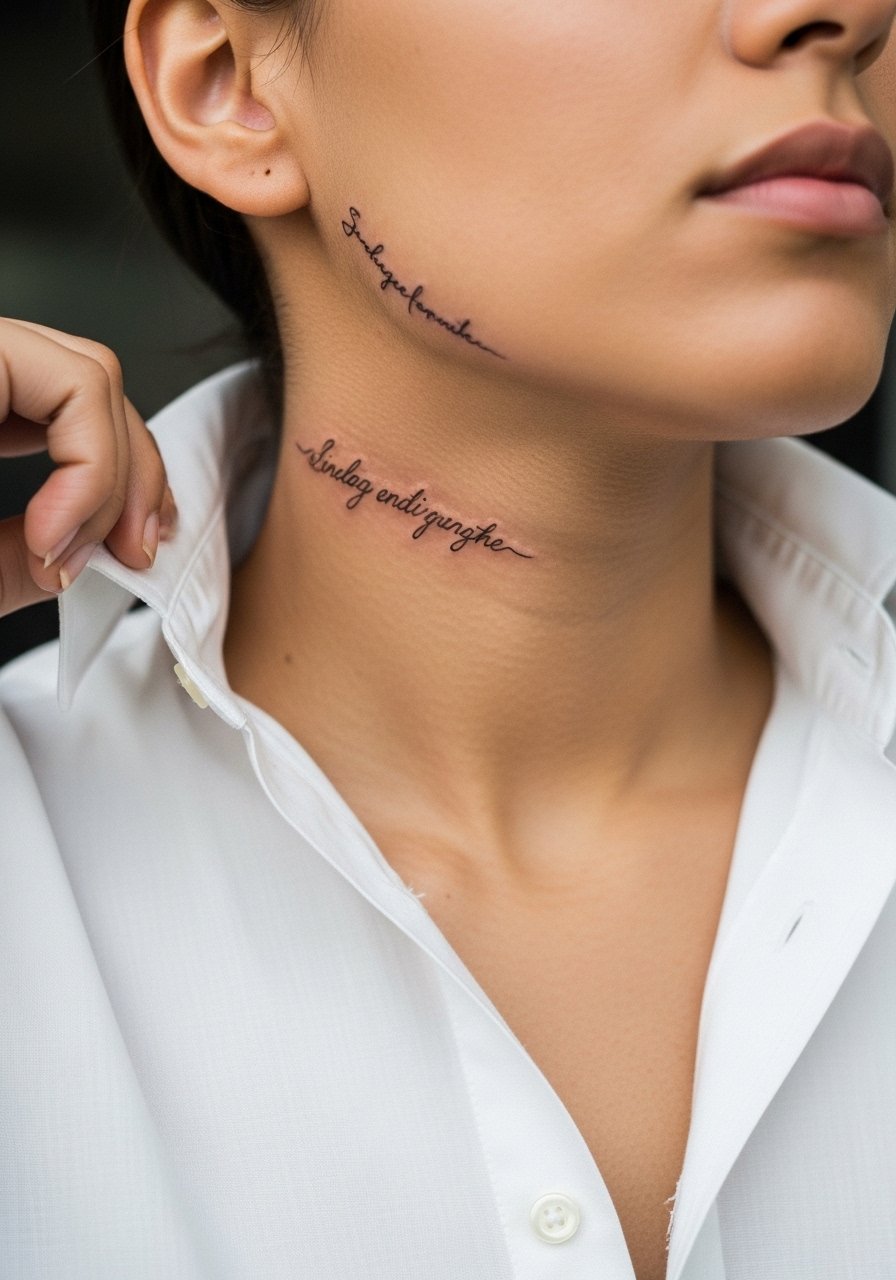
Personal observation lead: micro script on the neck is one of the quickest ways to regret scale choices if you pick letters too narrow. Single-needle text looks delicate fresh but fades fastest because the lines sit very fine. If you love this look, ask for slightly increased line weight and space between characters during consultation. Expect a touch-up around year two for clarity. For session-day ease, wear a loose button-down shirt you can shift aside without stretching the neck. Remember that very fine work requires an artist who has healed examples, so review portfolios carefully.
10. Abstract Brushstroke Blackwork That Follows Muscle Lines
Visual impact lead: brushstroke motifs that follow the natural flow of muscle create motion without relying on small details that blur. The session includes longer passes to achieve solid, painterly fills and may take ninety minutes for a multi-stroke composition. One mistake is trying to force symmetry on an organic stroke. Let the strokes breathe with deliberate imbalance. For evening wear, a minimalist blazer with a low collar that sits open frames the area for photos while keeping the tattoo visible. Side-neck designs age better when the artist prioritizes broad strokes over tiny texture.

11. Barbed Wire Band in Heavy Black with Negative Gaps
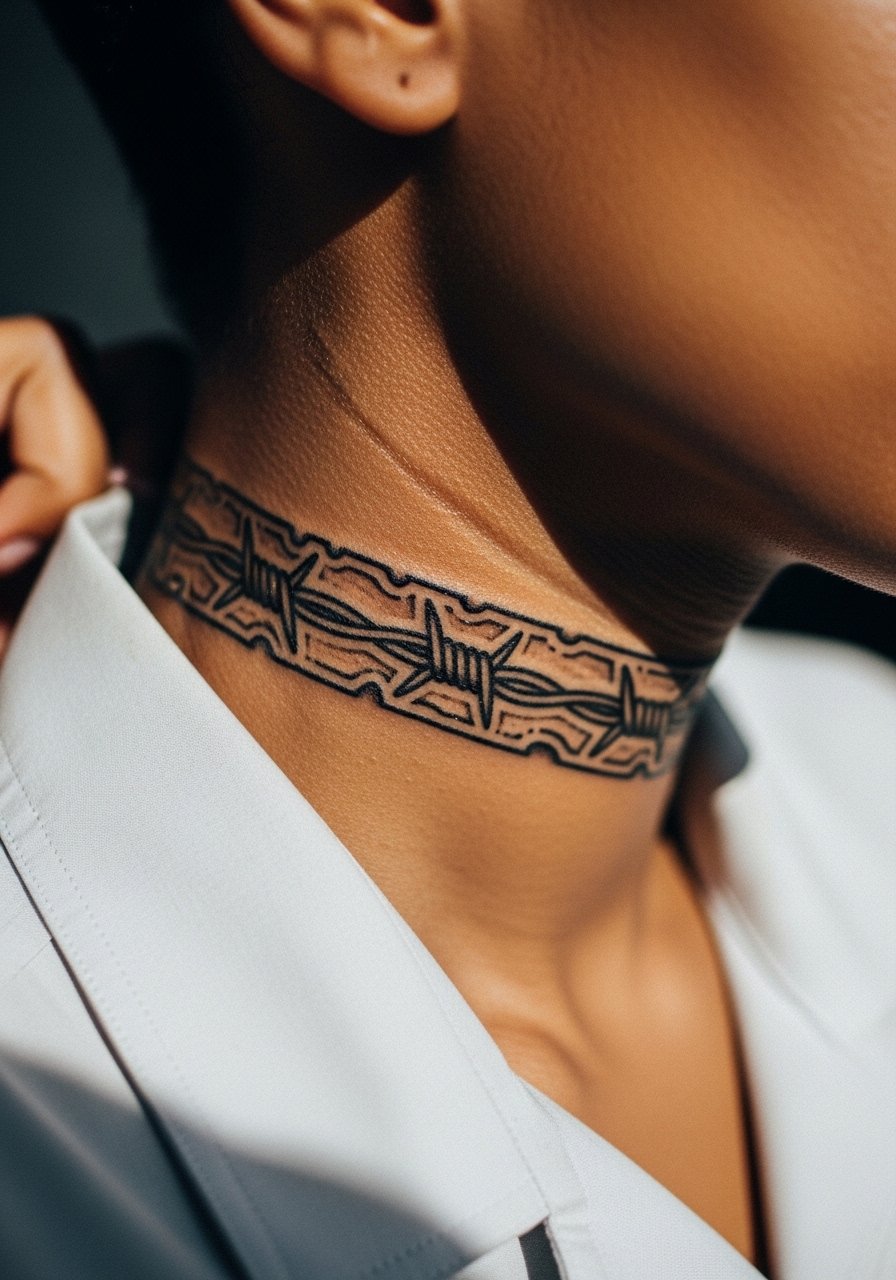
Mistake lead: the biggest error with barbed wire is spacing the points too tight, which creates a muddy line after healing. This design benefits from intentional negative space around the barbs so the small points remain distinct. Pain is brief but sharp where the points cross. Sessions are typically under an hour. Expect the negative gaps to soften slightly by year two, but the overall band will remain readable if scaled correctly. Neck pieces can be highly visible during job hunts, so place the band low enough to be concealed by a collar if that matters to you.
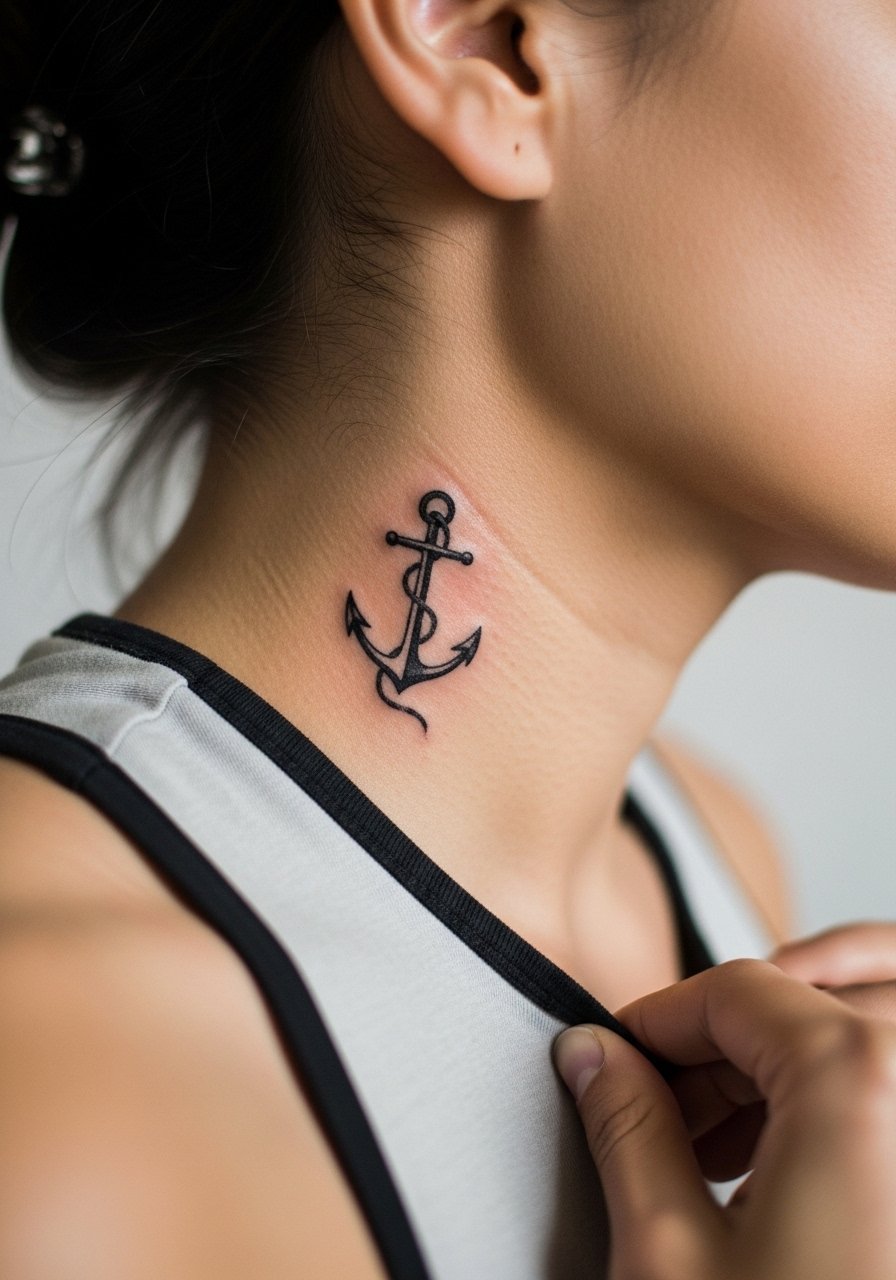
12. Minimalist Anchor or Nautical Glyph as a Side Neck Accent
Consultation lead: small glyphs like an anchor work as accents that punctuate the neck without committing to a wide band. Tell your artist exact size and desired boldness so the anchor holds up. The session is short but the risk is choosing a scale too small to last. At six months the anchor will look sharp; at three years expect slight softening. For casual show, a racerback tank or an open-collar tee frames the glyph without covering it. Neck tattoos are high-visibility statements, so think about the long-term message of any symbol.
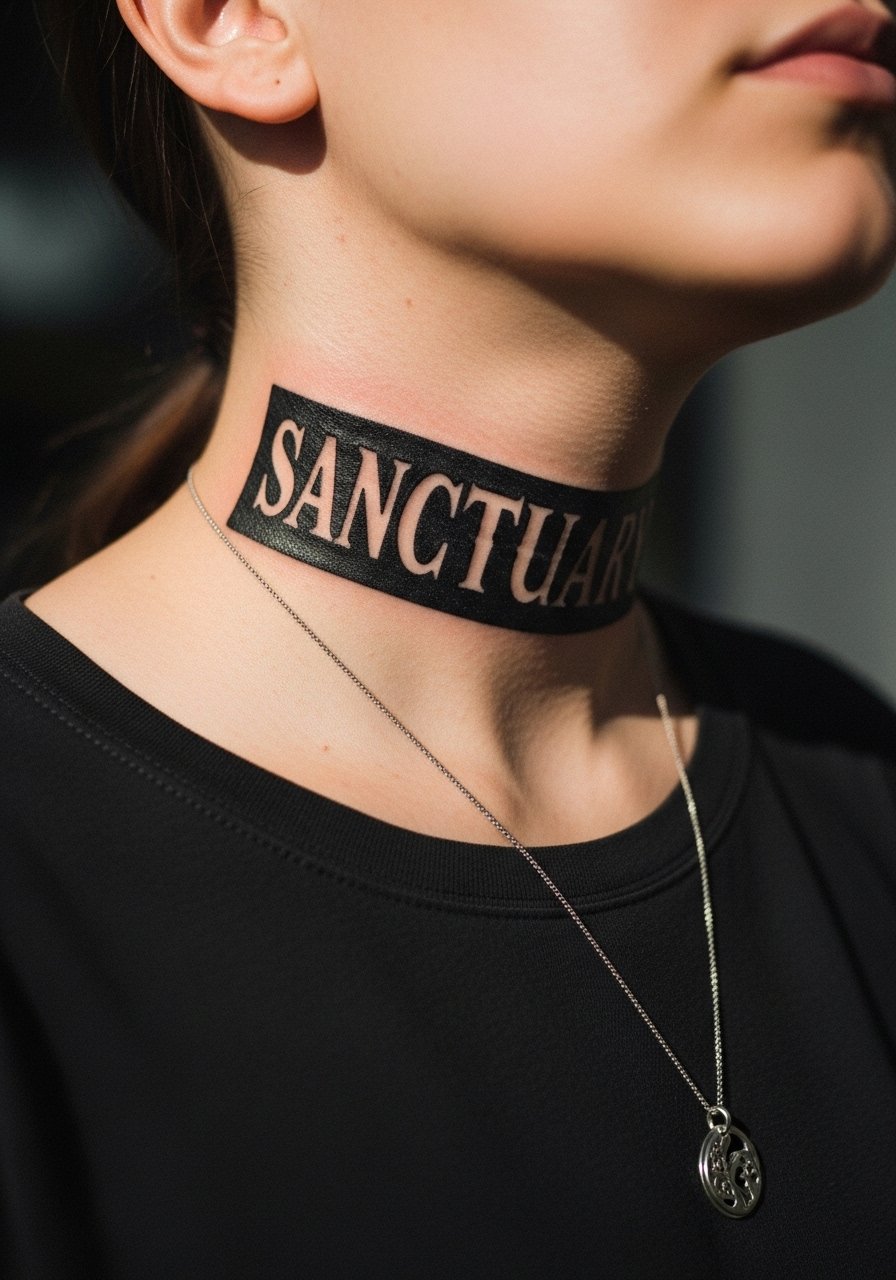
13. Heavy Black Panel with Cut-Out Lettering
Aging/healing lead: cut-out lettering holds best when the surrounding black is poured in solid and the letters are letterboxed rather than filigreed. The artist will need to plan deep, even saturation to prevent patchy healing across the panel. Sessions run long if the panel is wide. A common misstep is trying to nestle too many letters into a small area. For photos, layer a thin chain pendant above the negative lettering so the piece reads as intentional styling rather than an accident. Because cut-outs rely on high contrast, skin tone and placement are part of the planning conversation.
14. Compass Rose Fragment in Solid Black Near the Ear
Visual impact lead: a small compass fragment tucked up by the ear can be bold when inked in heavy black with clear points. The area is sensitive so expect short sharp moments of pain. The failure mode is trying to include too many tiny directional ticks that blur. Ask for simplified points and a strong center dot for longevity. For session comfort, wear a wide-neck shirt you can pull to one side. Keep in mind that neck work near the ear is very visible in profiles, so placement will influence first impressions in some settings.

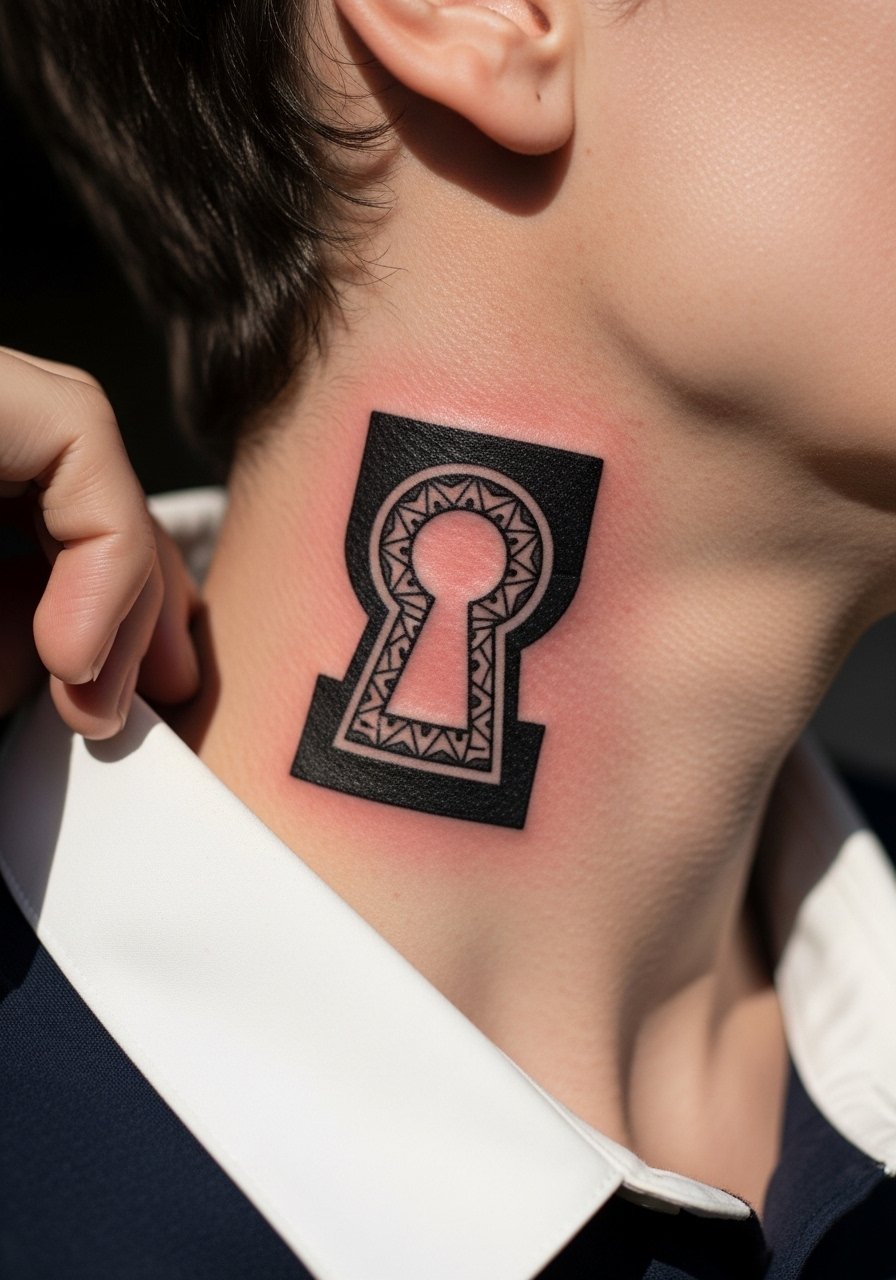
15. Thick Brushstroke Lettering That Wraps Behind the Ear
Mistake lead: wrapping lettering behind the ear and onto the side neck often fails when the letters are too thin. Opt for thick brushstroke lettering that reads as a bold mark when the skin shifts. Sessions are split to allow the artist to check flow across curves. Expect edge softening over a few years but the thick strokes remain visually strong. For photos and everyday wear, a loose crew neck tee that you can pull aside gives clean visibility without exposing other areas. Remember to discuss how visible you want the wrap when planning with the artist.
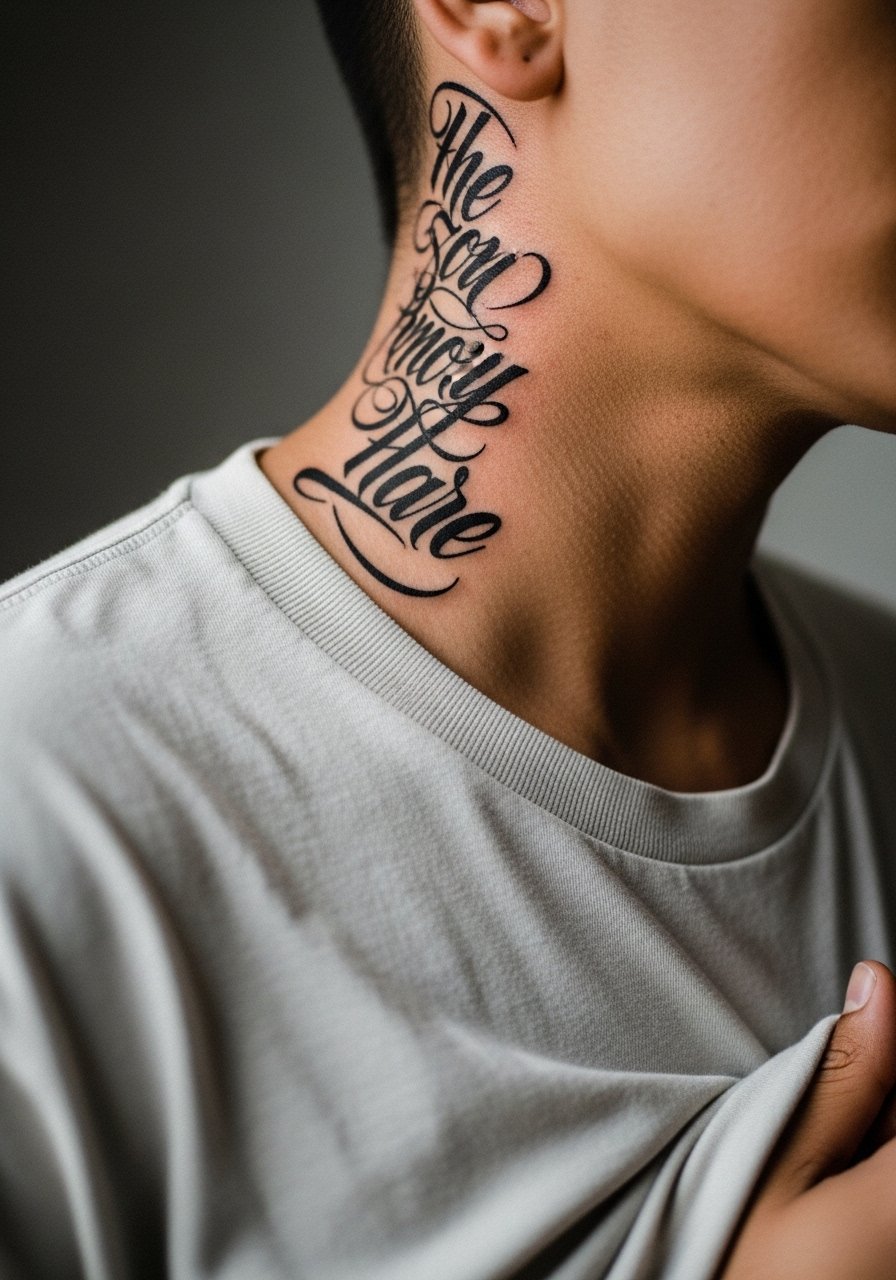
16. Negative-Space Geometric Keyhole with Solid Black Surround
Consultation lead: a keyhole motif that uses heavy black around a small negative void works well on the neck because it focuses the eye. The session takes time to fill the surround evenly but the result is strong. A usual mistake is creating a keyhole that is too small relative to its surround, which makes the negative space vanish. Expect a touch-up at one to three years to maintain crisp edges. Neck visibility is immediate with this one, so place the keyhole where a shirt collar might hide it if you need discretion.
17. Fragmented Abstract Skull in Block Black Along the Jaw
Controversy lead: small portrait fragments on the neck split opinions. One camp warns that portrait detail here softens too fast. The other camp points out that a high-contrast, blocky treatment preserves the image longer. For durability pick a stylized, high-contrast black block approach rather than tiny facial detail. The session will feel like repeated short passes and may finish under two hours. For nights out, wear an open-collar shirt that frames the jawline without covering the fragment. Neck tattoos are high-visibility decisions, so be ready for responses in public settings.
Frequently Asked Questions
Q: How long will a blackwork side neck tattoo stay crisp before needing a touch-up?
A: It depends on scale and line weight. Bold, solid black panels and large negative-space pieces commonly hold their silhouette for many years with occasional touch-ups at one to three years. Very fine single-needle text or tiny dots usually need touch-ups sooner, often around year two.
Q: Can I get a neck tattoo if I need to hide it for work sometimes?
A: Yes, but placement and scale matter. Place designs low on the side neck or keep strips narrow so a collared shirt can conceal them. Discuss hiding options in the consultation and plan clothing like a loose button-down that can cover the area if needed.
Q: Do blackwork neck tattoos hurt more than similar designs on the forearm?
A: Generally yes, the neck is more sensitive because the skin is thinner and closer to nerves. Forearm sessions tend to feel less intense and heal with fewer spikes. Expect sharper sensations and short recovery days after a neck session.
Q: Are there design types you should avoid on the neck entirely?
A: Avoid extremely fine, dense detail in very small areas. Tiny lettering, micro-portraiture, and closely packed dot fields can merge quickly on neck skin. If you love detail, scale it up or translate it into higher contrast blackwork.
Q: Where should I look to find artists who specialize in durable blackwork for side necks?
A: Search local studio directories and tag-based galleries on social platforms, and look for healed photos of similar placements. Community boards and city-based groups often list artists who post healed images, which is the best indicator of how their work settles on neck skin.