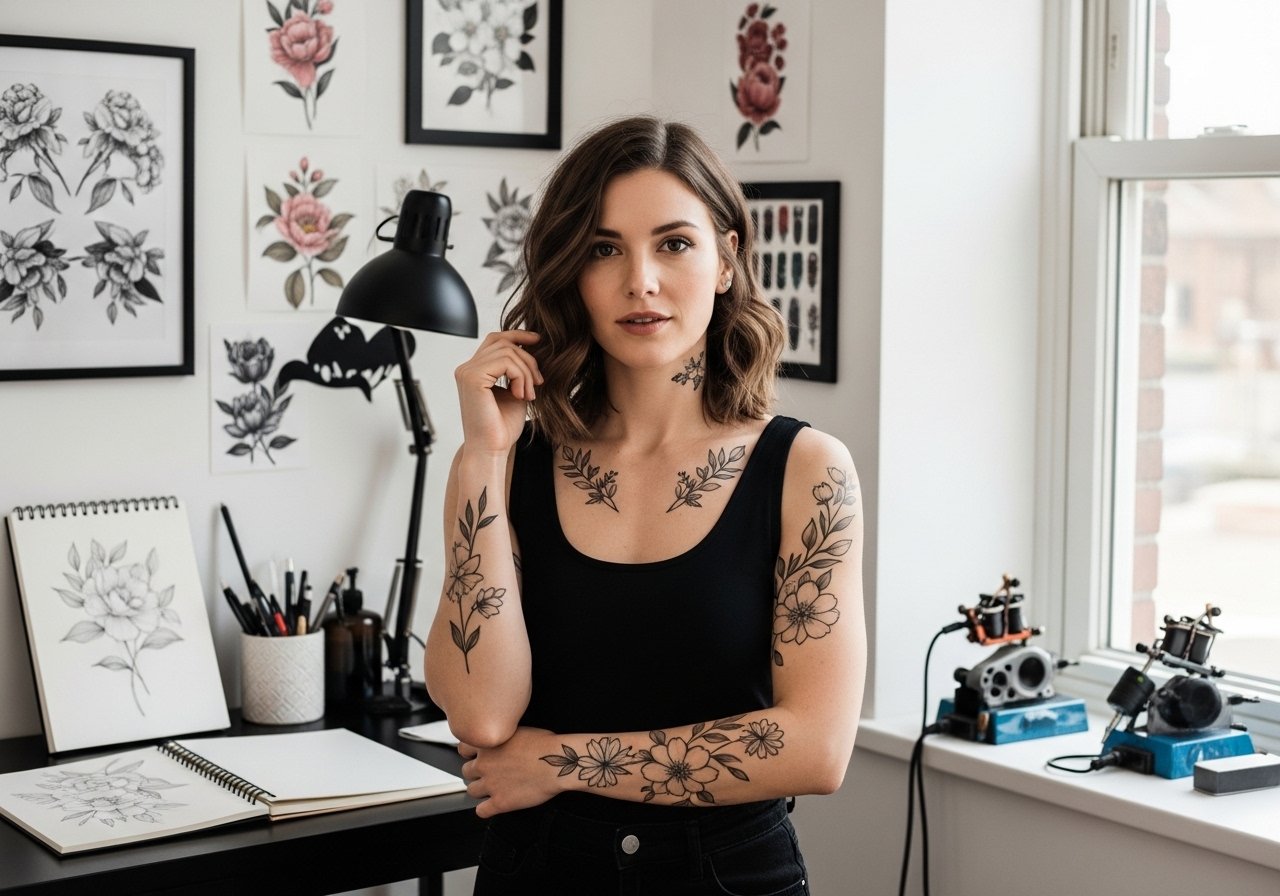
Fine line band trends still dominate saved boards, but what looks flawless on an iPhone mockup can blur faster than you expect. Placement, line weight, and skin tone matter more than the filter. These 27 cute band tattoo designs pair real-world longevity notes with styling tips and what to tell your artist at consultation so the piece still reads well after a few years.
1. Fine Line Floral Armband on Outer Forearm
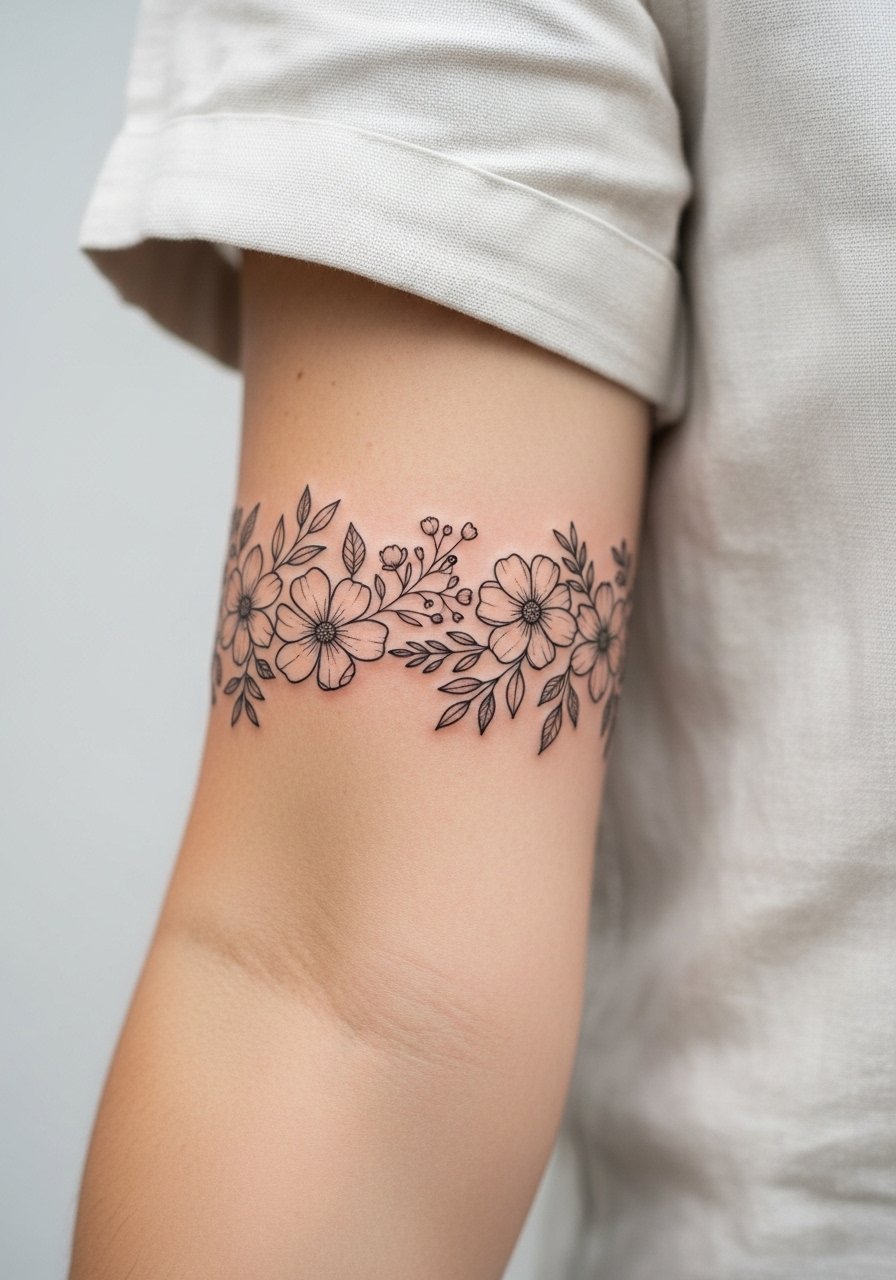
I recommend this when you want a feminine wrap that can expand later into a sleeve. Tell your artist you want slightly wider line weight and small open spaces between petals so the pattern breathes as it heals. The common mistake is asking for ultra-thin 0.2mm lines on a joint area and then needing a touch-up at year one. Expect moderate pain on the outer forearm and a single session for a 1-2 inch band. For showing it off, rolled cuff chambray shirts work well, and a thin silver bangle opposite the tattoo keeps attention balanced rolled cuff chambray shirt.
2. Geometric Blackwork Wrist Band

This is ideal for someone who wants minimal maintenance and high contrast. Ask for 0.8–1mm linework and solid saturation rather than tiny hairlines. The biggest mistake is going too small on the wrist, which causes line merging and blowout over time. Wrist work can be painful because of thin skin and constant rubbing, so plan for a short session and easy aftercare. Pair it with a thin leather bracelet on the opposite wrist for an everyday vibe thin leather bracelet.
3. Celtic Knot Full Forearm Wrap

Choose this if cultural roots and continuity are core to the design. Mention in consultation that you want clear negative space between knots so overlapping doesn't look muddy five years out. A common error is compressing the pattern to fit, which leads to crowded linework and difficult touch-ups. Forearm flesh gives good canvas and lower blowout risk than the wrist. This classic style often needs two sessions for wrap continuity. Note that this pattern has cultural origins, so many people opt for subtle custom changes rather than direct replicas.
4. Minimalist Dotwork Ankle Band
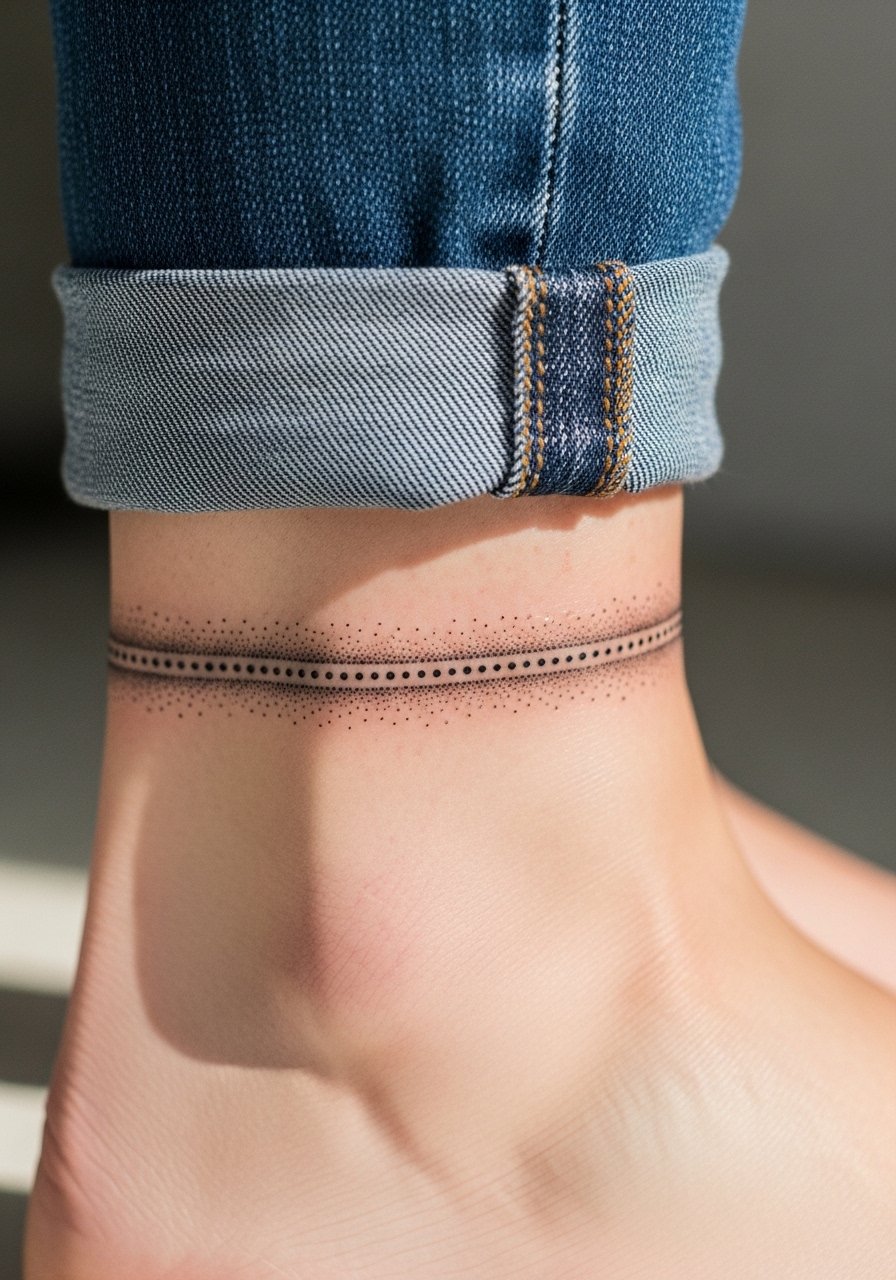
Dot work reads elegantly at small scale and holds better on ankles than script does. Tell your artist you want dot spacing that reads as a line from three feet away but still shows the stipple detail up close. The ankle is a low-fat area so pain is higher but blowout risk is lower than on fleshy areas. For summer showing, cuffed straight-leg jeans or strappy sandals frame this band neatly cuffed ankle jeans. Expect a single session and check healing closely in dry weather.
5. Ornamental Mandala Thigh Band
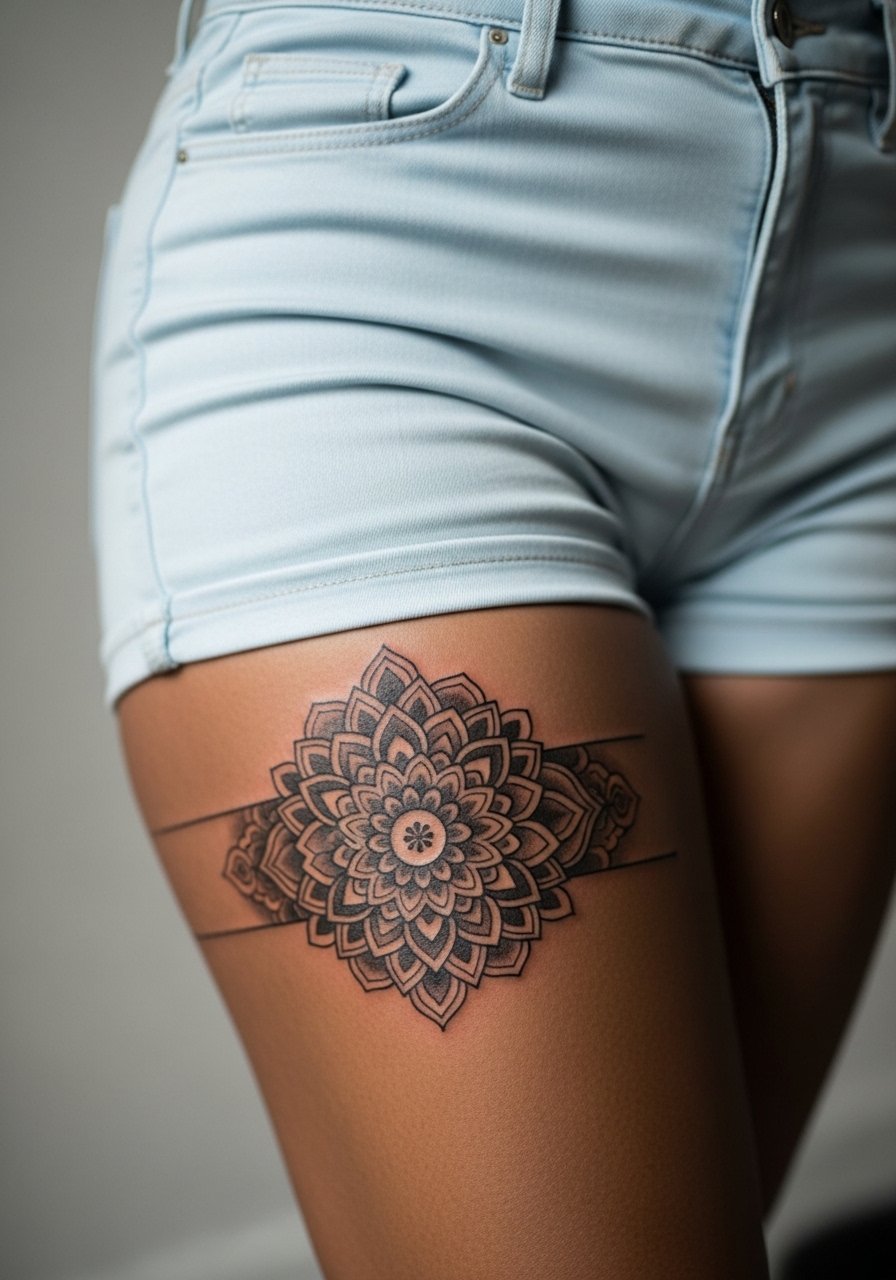
Mandala bands are great if you want something meditative and expandable into leg work. Ask for 2–3 inches width and symmetry lines left slightly open so stipple shading does the heavy lift. A common mistake is making the mandala too small for the thigh which leads to lost detail as the piece ages. Thigh skin tolerates longer sessions and usually needs one or two sessions. Show it off with high-low hem dresses or cropped joggers for bold visibility high low hem dress. Respect the design's spiritual origins by using subtle personal tweaks if you are borrowing cultural motifs.
6. Watercolor Ribbon Inner Bicep Band
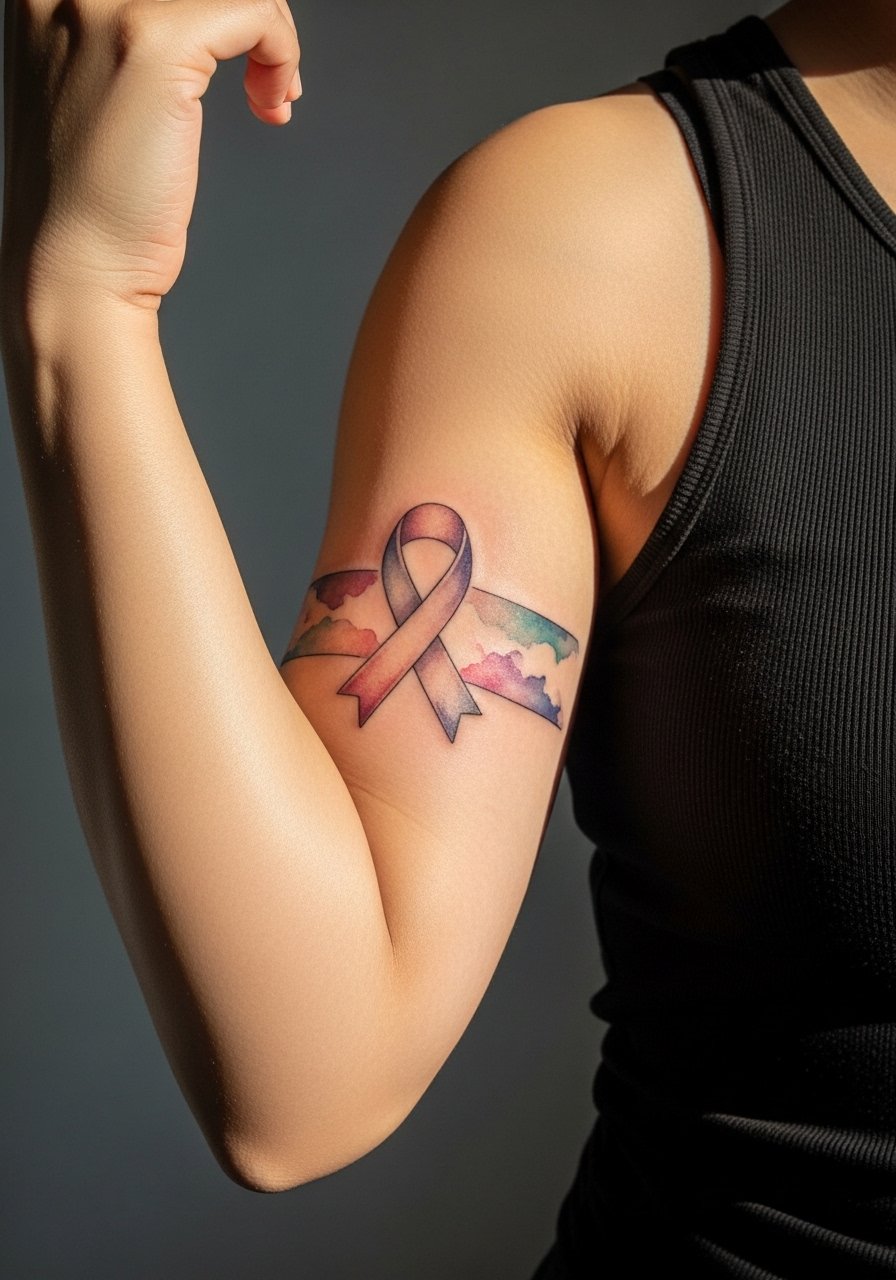
Watercolor bands give a playful, painterly look but they fade faster than saturated blackwork. If you want color longevity, ask for increased saturation near the edges and a subtle black outline to hold the pigment. Inner bicep sessions can be tender and require the arm to be stable, so wear a strapless or loose tank for easy access. For session wear, a loose tank top or button-down works best sleeveless tank. Expect a single session, but plan touch-ups for color refresh in two to three years.
Studio Day Picks
The wrist, ankle, and inner bicep pieces above demand different prep than larger forearm or thigh work, so these items smooth the session and the first week.
-
Lush Oat Tattoo Balm. Users say it keeps fine line bands moisturized without the greasy film that can hide detail, helpful for wrist and ankle work.
-
Ink-Ich Ban itch relief balm. A small tube for spot relief during the itchy healing window is handy for tight bands that rub.
-
Australian Tattoo Goo. Thinner texture works well in dry climates and avoids the white cast some balms leave on dark skin tones.
-
Green Sheep Balm vegan tattoo balm. Quick absorbency helps wrist bands where heavy ointment can smudge.
-
Saniderm tattoo bandage sheets. Protective film is useful for the first 24 to 96 hours on areas that snag easily, like the wrist and ankle.
7. Tribal-Inspired Thick Outer Forearm Band
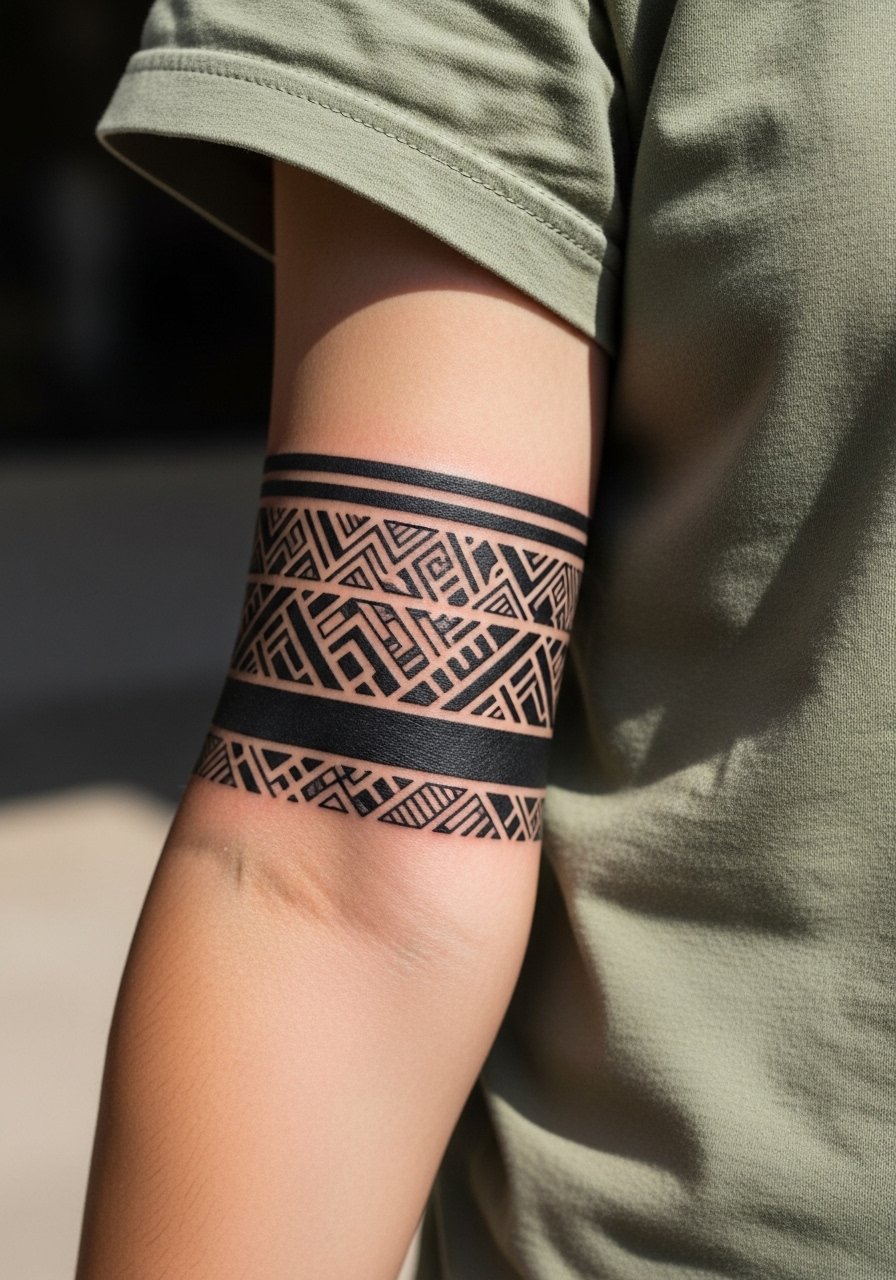
Pick this when you want a muscular, graphic look that reads across a room. Ask for 1.5 inch thickness and crisp negative space rather than filled texture so touch-ups are straightforward. The outer forearm handles heavy saturation well and usually heals with strong contrast. Avoid copying sacred tribal marks without altering motifs and context. Pair with a sleeveless muscle tank or an open-knit cardigan when showing it off sleeveless muscle tank. Sessions can run longer because of saturation needs and may be split into two appointments.
8. Heart Infinity Tiny Wrist Wrap
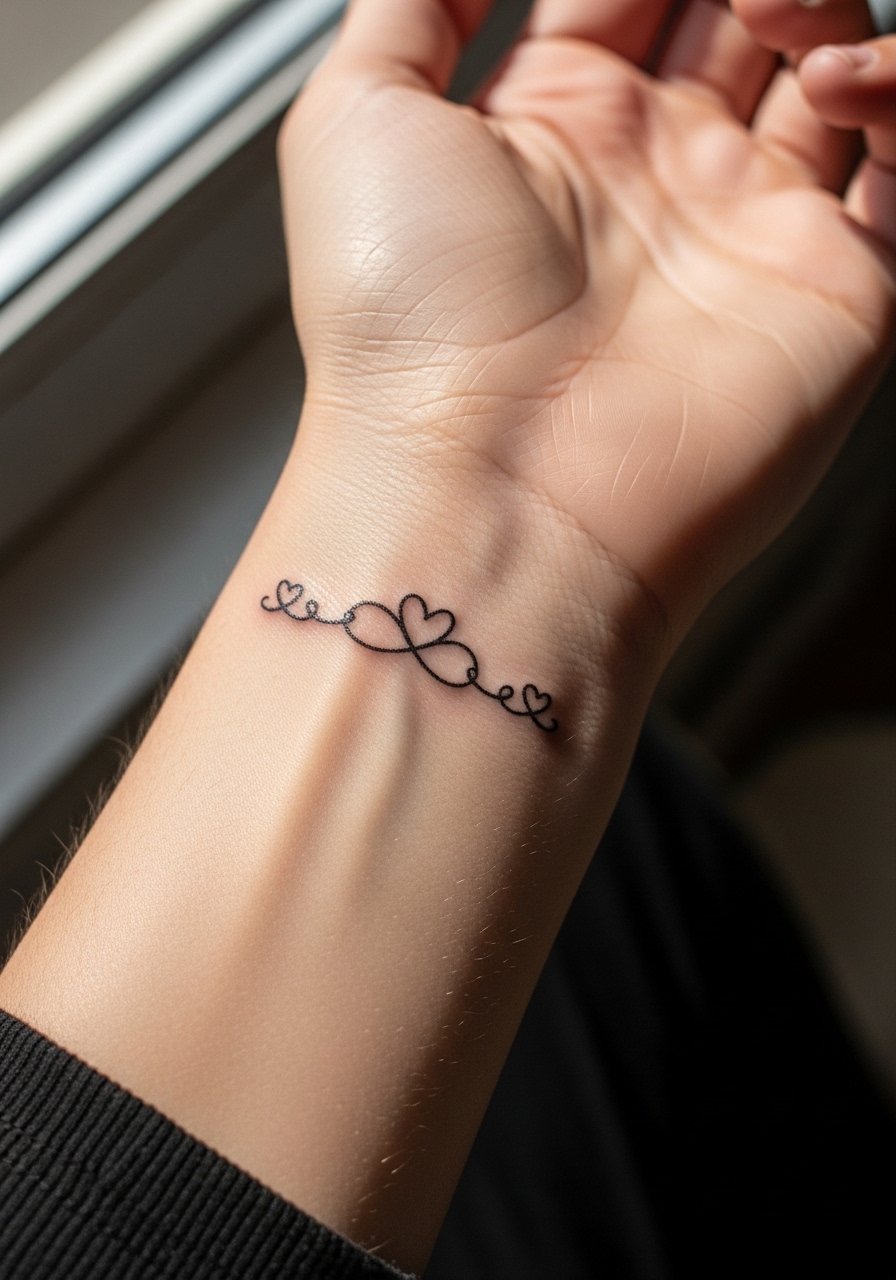
This compact design is a go-to for wrist placement when you want literal symbolism without a large commitment. Be explicit in consultation about scale and whether you want a tiny black outline to preserve contrast on darker skin. Wrist pieces suffer more from friction and sun exposure so plan for realistic touch-ups at year two. The sensation during the session is sharper on the wrist than on the forearm, so expect a brisk, intense ten to twenty minute session.
9. Feather Quill Collarbone Band
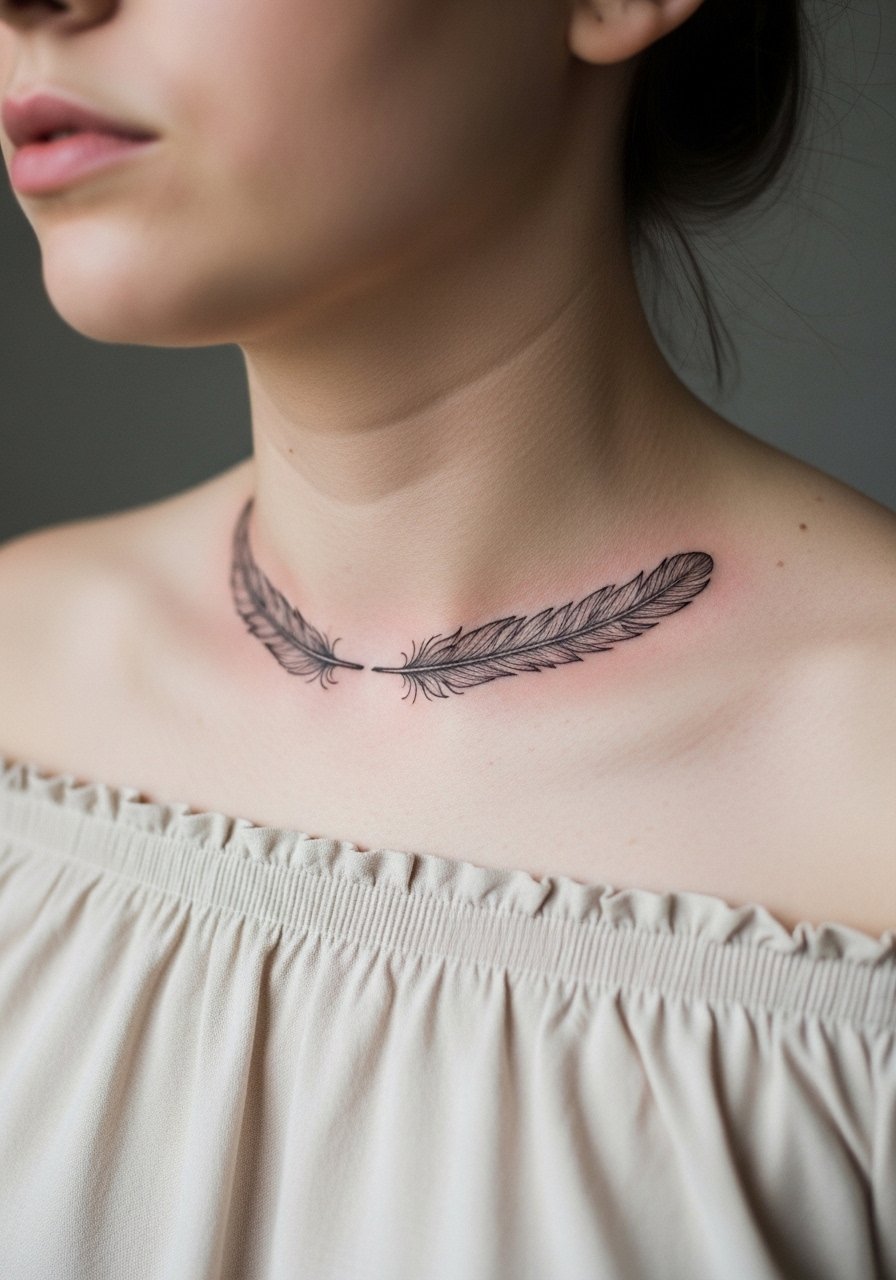
A quill band feels airy and elongates the shoulder line. Tell your artist you want a softened base with slight gray shading for depth so the feather does not vanish after a year. Collarbone work sits close to bone and stings more than soft tissue, so wear a strapless or wide-neck shirt for the session off shoulder blouse. The piece pairs well with delicate chain necklaces that sit above the line without overlapping.
10. Arrow Loop Ankle Band
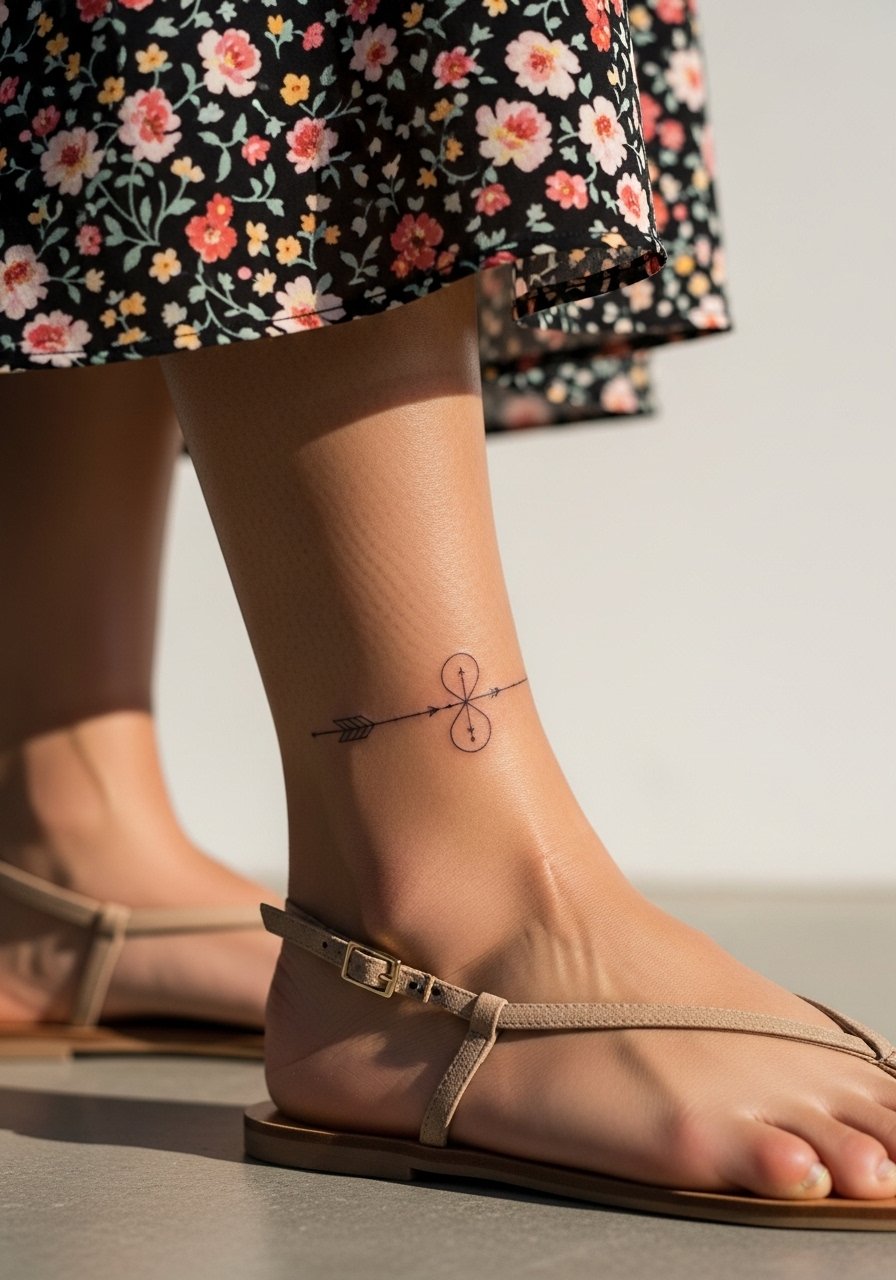
Arrows work well as directional reminders without being text. Request clear arrowheads and slightly thicker shafts so the tips do not blur. The ankle sees lots of friction from socks and shoes, so plan footwear that avoids rubbing during the first week. Cuffed jeans and strappy sandals are natural show-off pairings for warmer months strappy flat sandals. Expect a quick single session and monitor for scabbing where the band meets shoes.
11. Lace Choker-Style Neck Band

Choker-style bands mimic jewelry and sit close to the hairline and collar. Ask for open lace patterns and avoid tiny filigree that will clump on rehydration. Neck placement is sensitive and may need a cautious artist who understands shallow depth control. For wearing it out, off-shoulder blouses in cream or silk complement the lace without overshadowing it delicate chain necklace. Consider workplace visibility before committing.
12. Wave Oceanic Calf Band
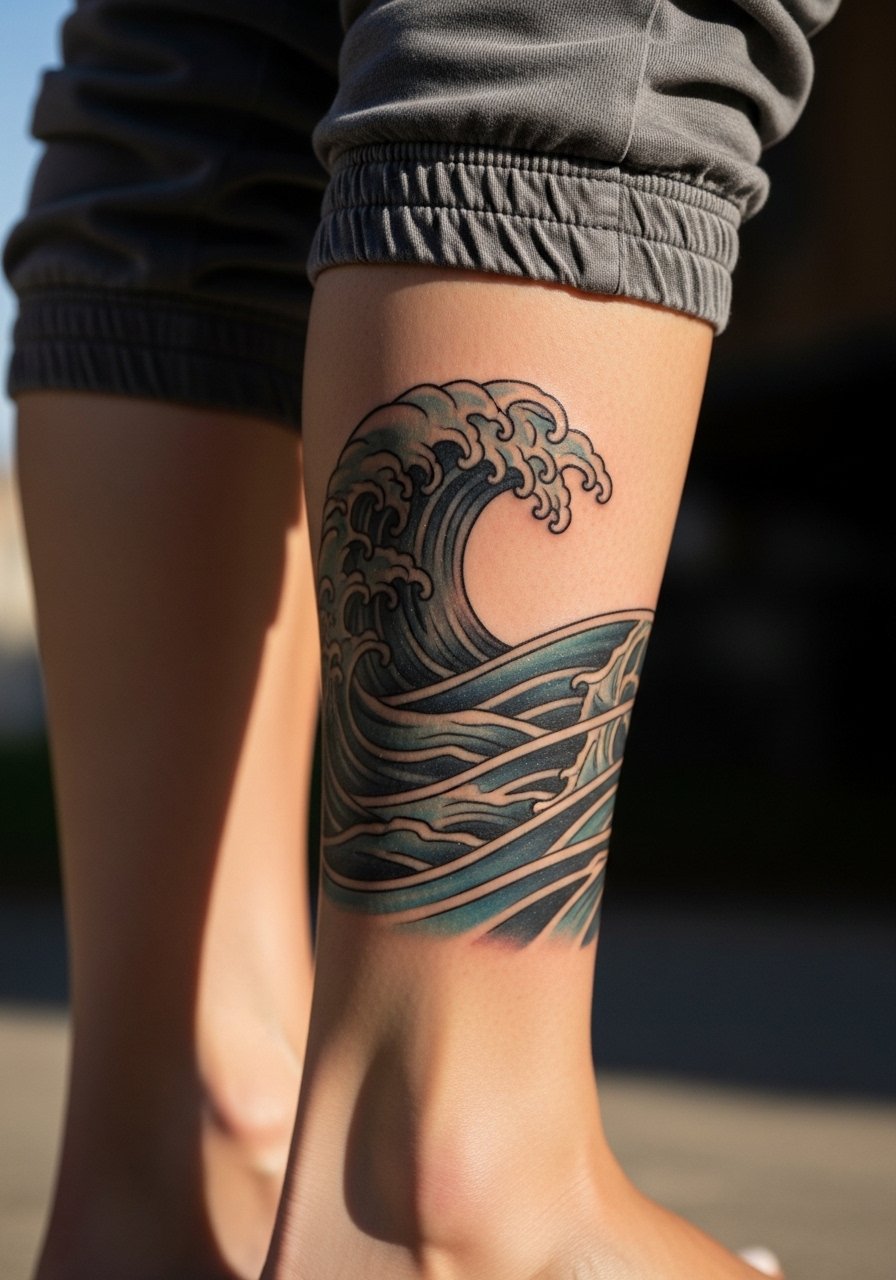
This design brings movement and suits the calf where curves read well. Request color anchors at the line edges so blues do not wash out in months of sun exposure. Calf sessions tolerate longer blocks and usually need two sessions for wrap continuity. For summer, pair with high-low hem dresses or cropped joggers that let the curve show cropped jogger pants. Watch for color fade and plan a touch-up for blue tones at the two to three year mark.
13. Micro-Realism Feather on Shoulder Blade
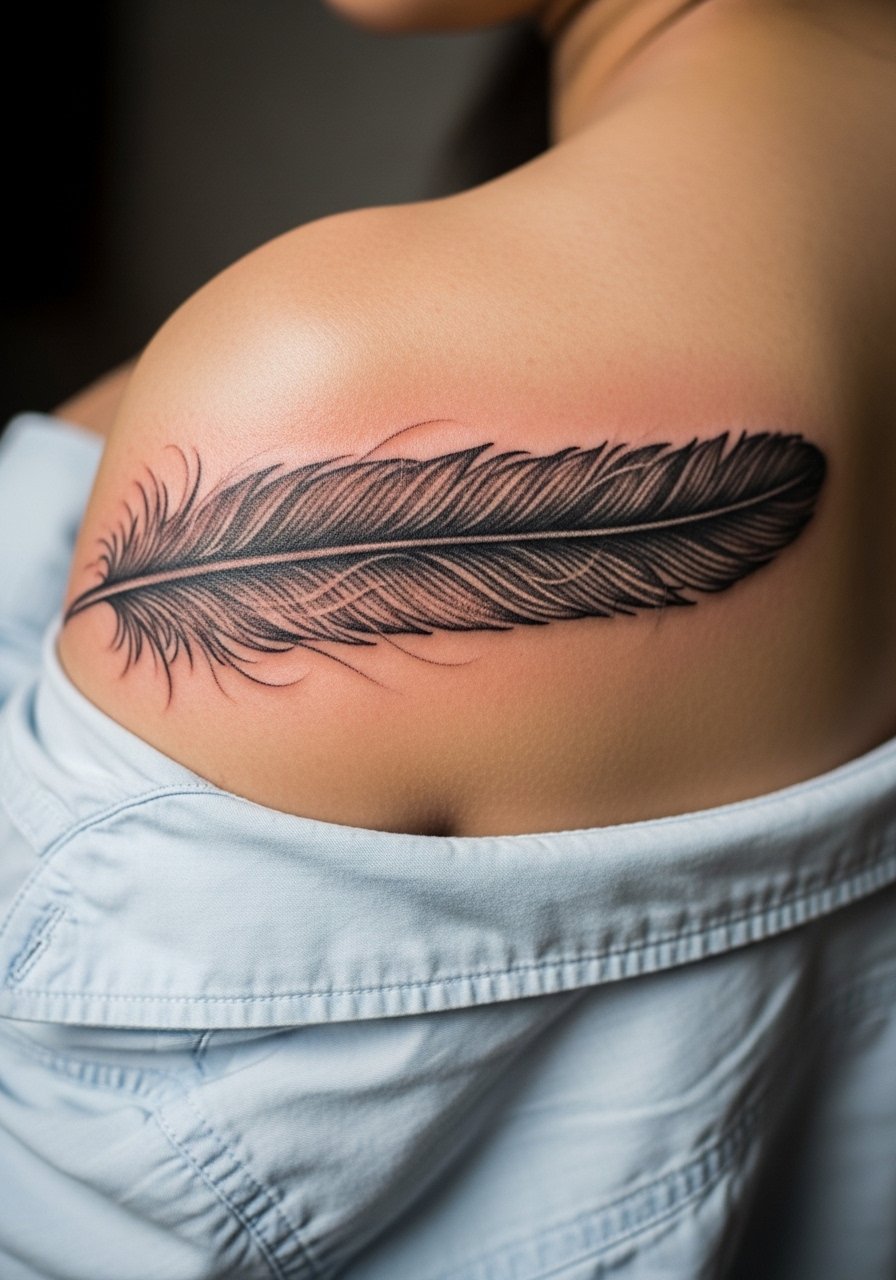
Micro-realism needs crisp stipple and micro-line control so the feather keeps texture as it heals. Ask the artist to map feather direction to your natural shoulder slope so the piece reads fluidly. Shoulder blade gives good real estate and lower blowout risk. For session wear, a button-down you can pull aside is ideal loose button-down shirt. This piece ages gracefully when placed on leaner areas of the back.
14. Thin Script Band Behind Wrist
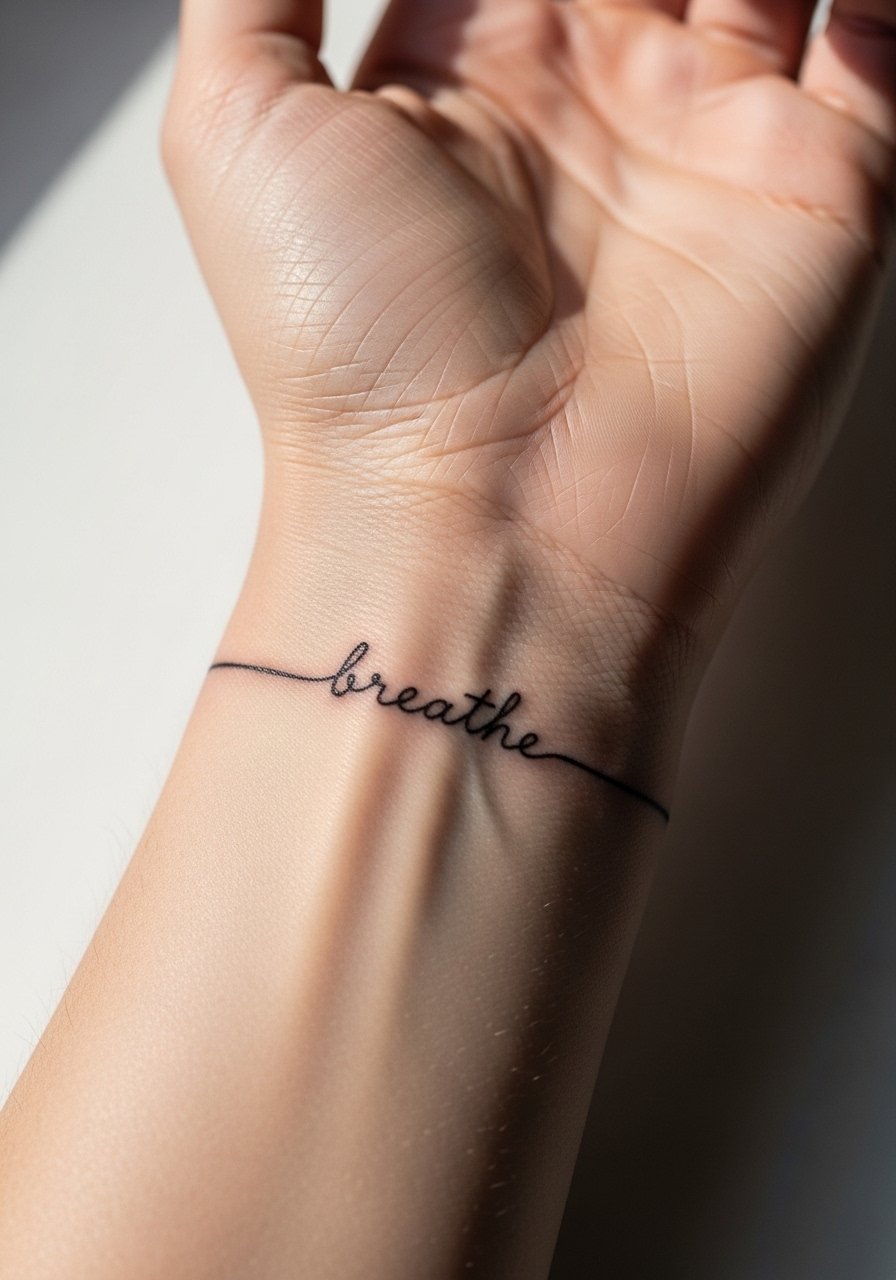
Script on the wrist looks intimate but fades faster because of constant washing. If you want legibility over time, ask for slightly bolder letter weight and spacing. Tiny script is frequently quoted as needing touch-ups by people who chose ultra-tiny fonts. The wrist area can sting and will rub against clothing, so expect frequent observation in the first month. Pair with minimalist cord wristbands opposite the tattoo minimal cord wristband.
15. Asymmetrical Band with One Thick Side

Asymmetrical bands create visual motion and avoid the static feel of uniform wraps. Tell the artist you want the thick side at the outer arm to catch light and the thin side toward the inner arm for subtlety. The common error is trying this at too-small a scale, which removes the contrast that makes the asymmetry readable. This design also works well as an expandable starter if you decide to build a sleeve later. Pair with rolled sleeves to show the thicker side on flex lightweight button up tank.
16. White Ink Subtle Band on Tanned Hip
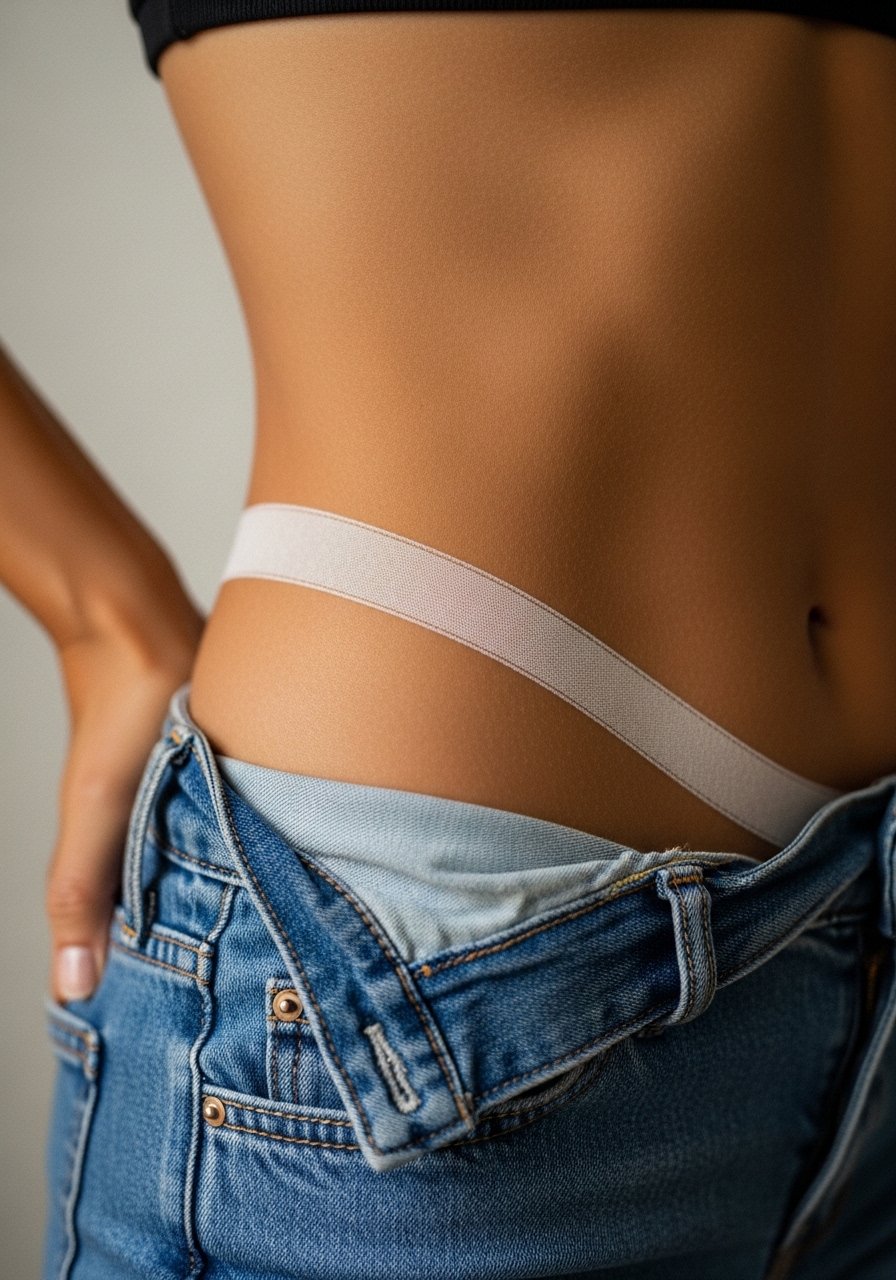
White ink bands read as a subtle glow on tanned skin, but healing varies widely and the color can yellow or fade. Ask for a blend with soft gray outlines so the piece remains visible in photos. Hip placements stretch with body fluctuation, so discuss body goals with the artist before committing. Wear high-cut shorts or a swim bottom when showing this area high waisted denim. Expect unpredictable long-term visibility and plan to revisit the design in a few years.
17. Birthstone Dot Band on Finger Row
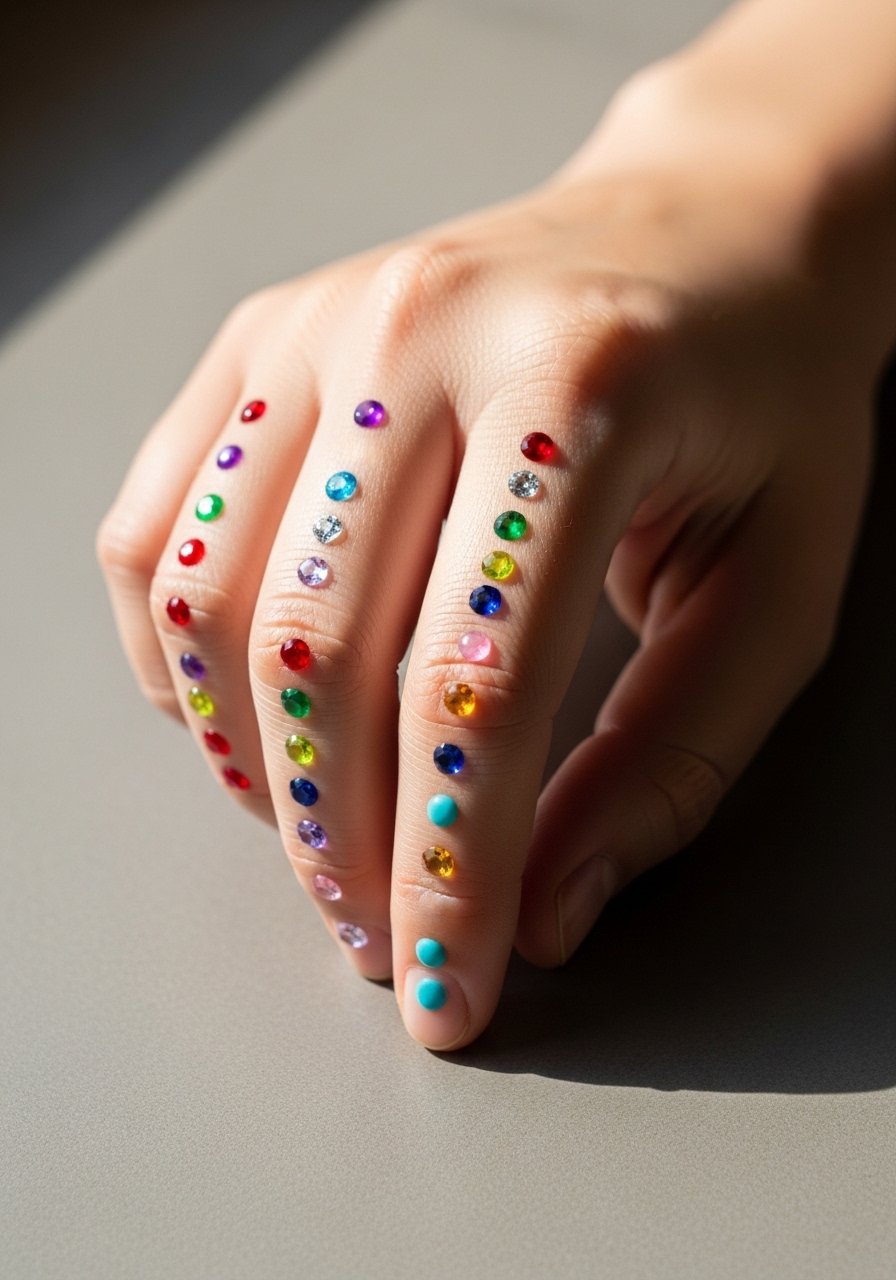
Using tiny colored dots to represent birthstones is rare and personal without saying words. Finger work needs thicker dot saturation to remain visible because fingers exfoliate more. The main mistake is placing them too small or shallow which leads to rapid loss. Finger tattoos often need touch-ups at year one and will fade faster than forearm work. Keep rings lightweight when healing and consider a thin chain necklace to echo the color palette thin chain pendant necklace.
18. Expandable Starter Band at Mid-Bicep
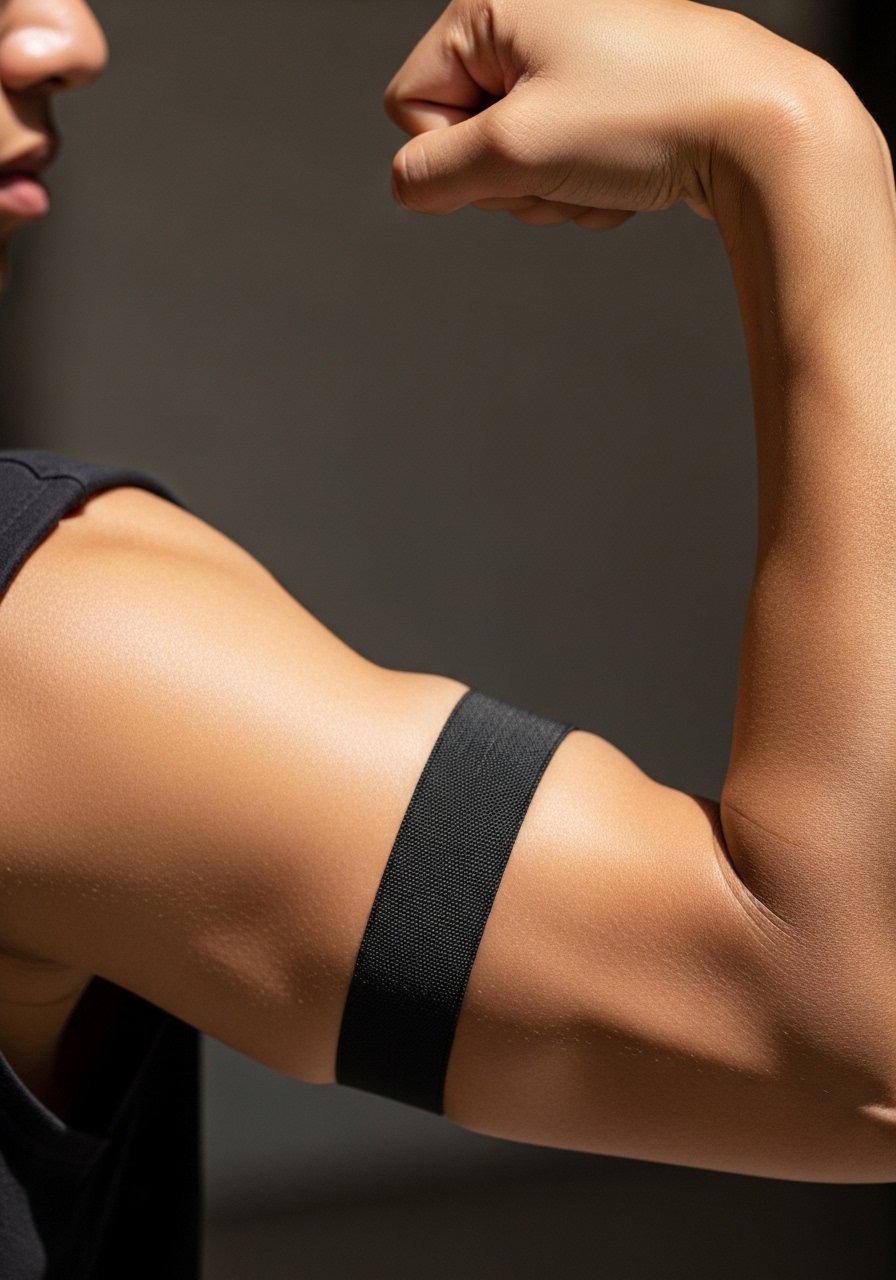
This is ideal if you want a small commitment that can grow into a sleeve later. Ask the artist to leave negative space and tie line anchors that can be matched in future sessions. Many clients treat these as test pieces and later weave them into larger compositions. Mid-bicep handles shifts in body weight better than the stomach or hip. For showing off, an open cardigan with sleeveless base layers keeps a peek of the band visible open knit cardigan. Plan for a neat touch-up after six months if you decide to build around it.
19. Asymmetric Wave Band for Calf
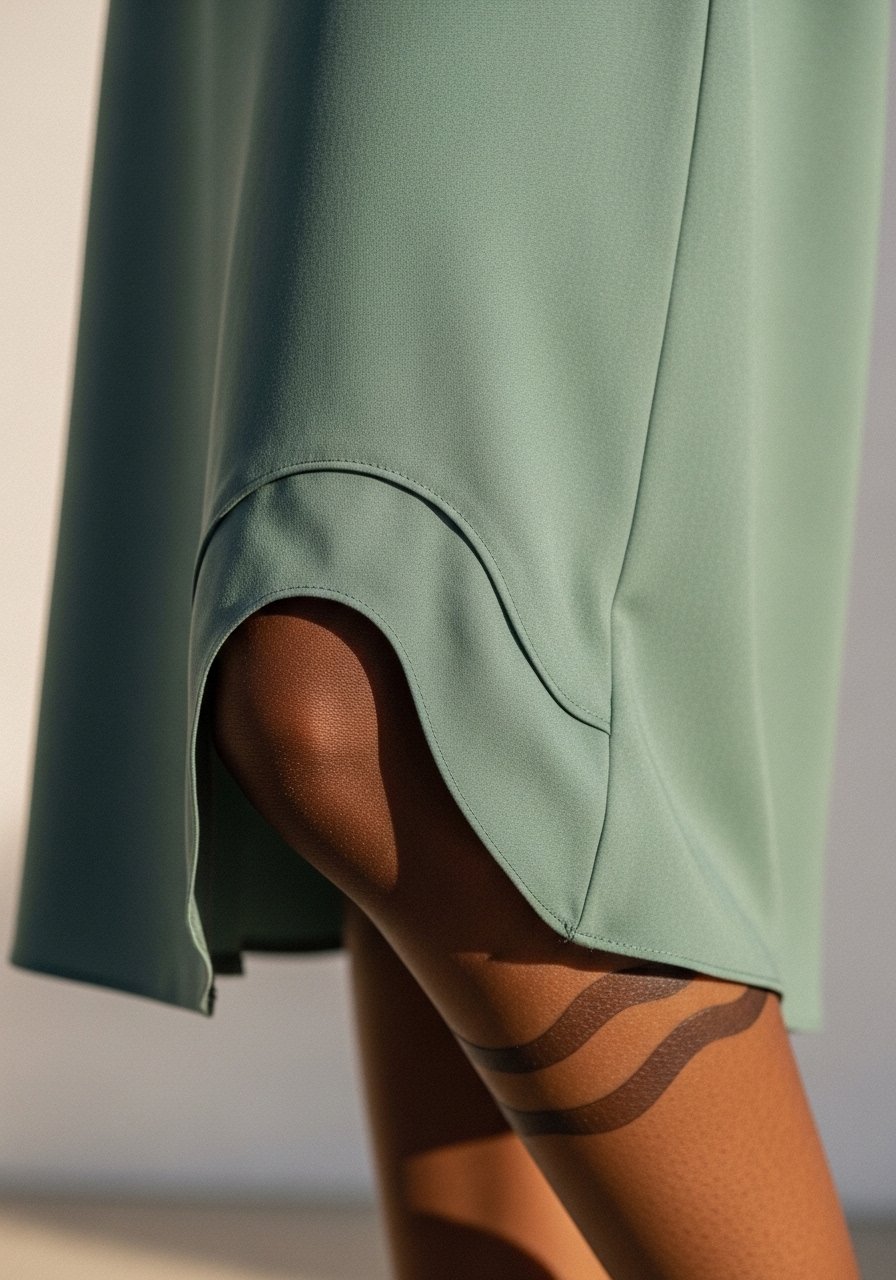
This design uses one dominant crest to guide the eye down the leg. Tell your artist you want the thick crest on the outer calf for movement and a thinner inner line for continuity. Calf skin takes saturation well and usually tolerates longer sessions. Pair with a midi skirt or cropped joggers to let the crest reveal itself on motion midi skirt flowy. Watch for sun exposure which weakens color on legs.
20. Tiny Chain-Link Wrist Band
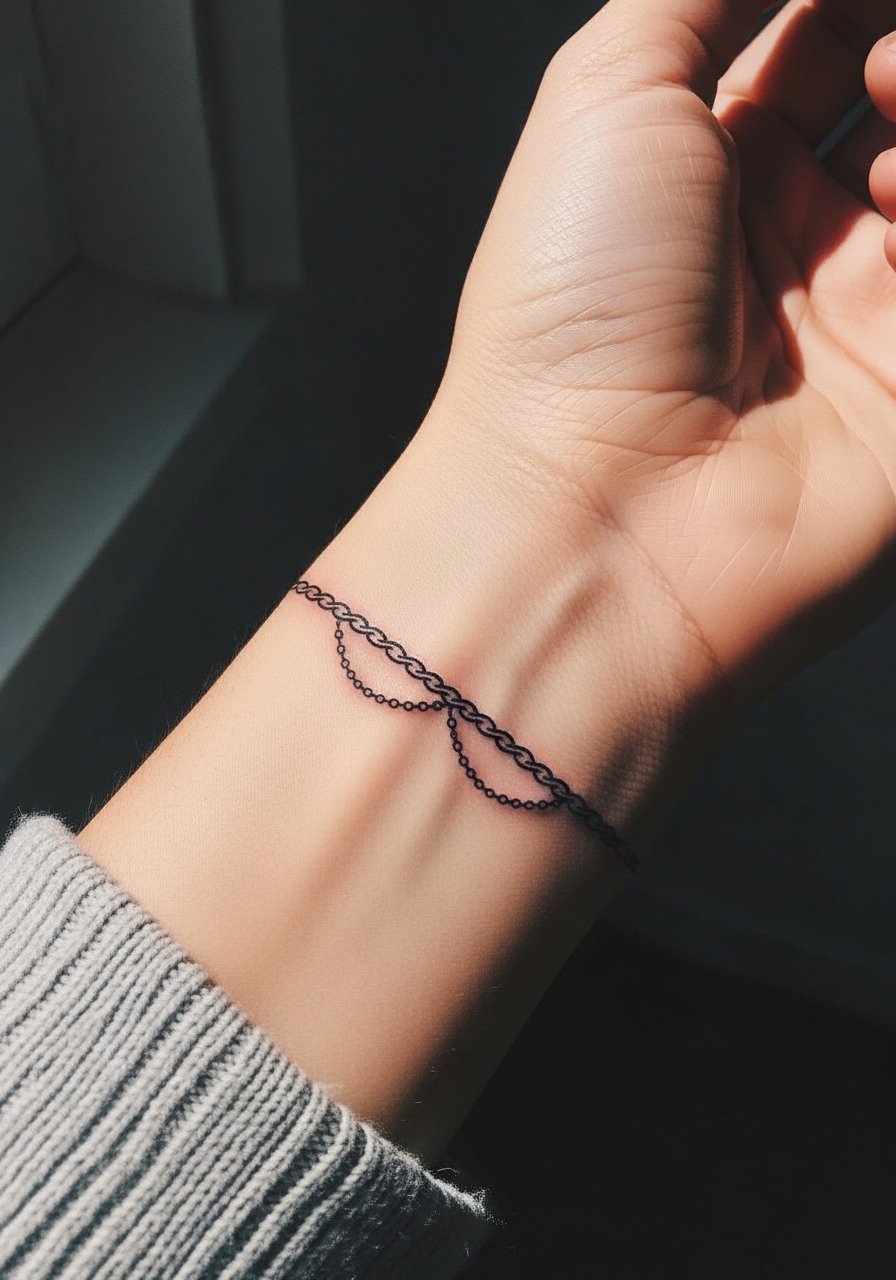
Chain-link bands mimic jewelry without the weight. Specify the width of each link and insist on slightly more space between links than you think you need. Too-tight links compress and merge into a blob when healed. Wrist friction and hand washing are the main threats, so plan to protect the area during the first week. Pair with a minimalist watch or a thin bracelet on the other wrist to balance the look minimalist watch. Expect a short session and check the edges for crispness during healing.
21. Stipple Ornamental Upper Arm Band
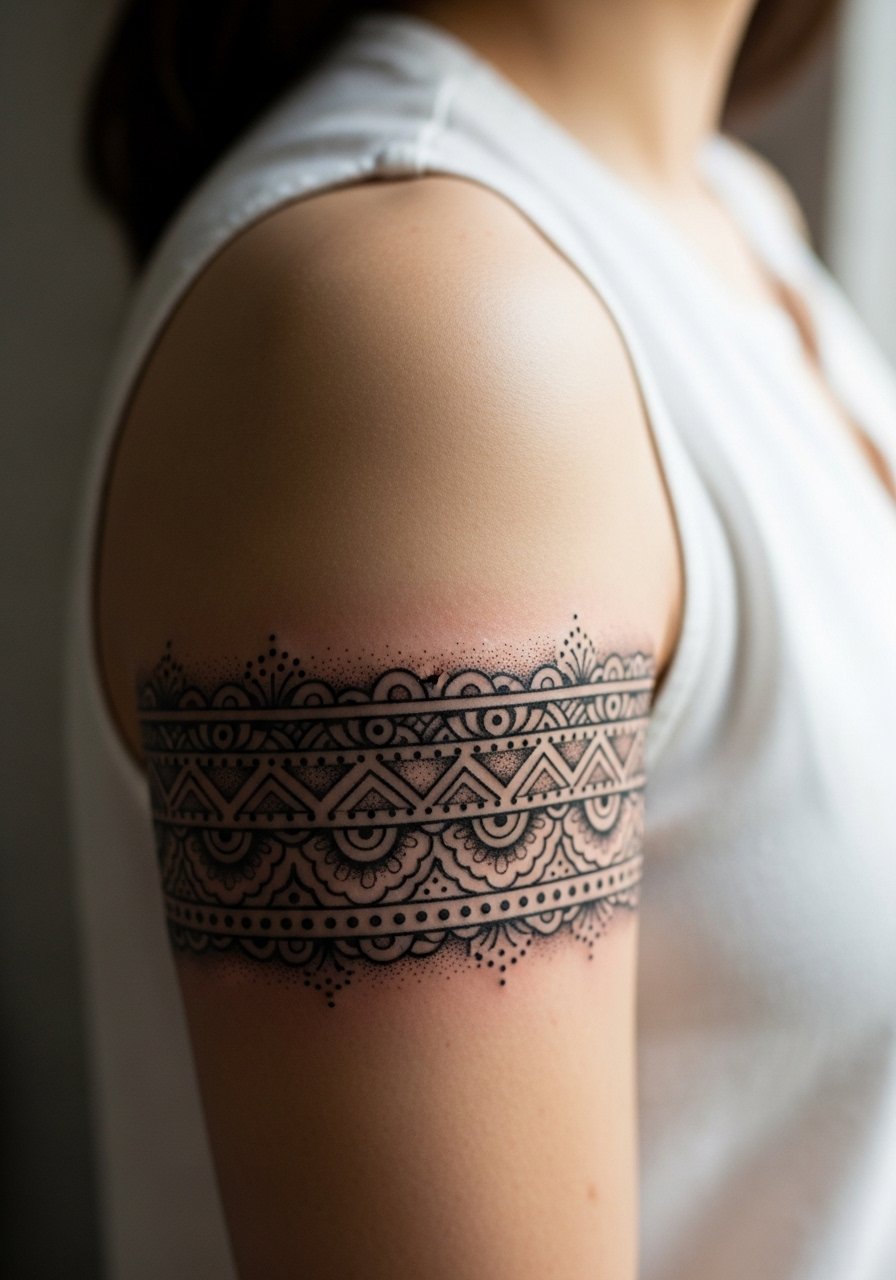
Stipple and dot work add texture without heavy saturation and they age with a soft patina. Ask for consistent dot density and a few larger dots to anchor the pattern so it does not wash out. Upper arm placement tends to be forgiving for fine details and is a good site for longer sessions. Pair with a sleeveless muscle tank or an open cardigan for a casual reveal open knit cardigan. Touch-ups for dot work are usually local and straightforward if needed later.
22. Knotless Ribbon Sternum Band

Sternum bands require a careful approach because of curvature and movement. Ask for a slight curvature in the ribbon to follow rib lines so the band does not warp when you breathe. There is a debate in forums about numbing creams for chest work. One camp says numbing helps first-timers, the other thinks it interferes with feeling which guides depth. Decide with your artist. Wear a fitted sports bra for the session so the artist has neat access sports bra fitted. Expect this to be a more tender session and to need careful aftercare.
23. Geometric Mandala Wrist Cuff
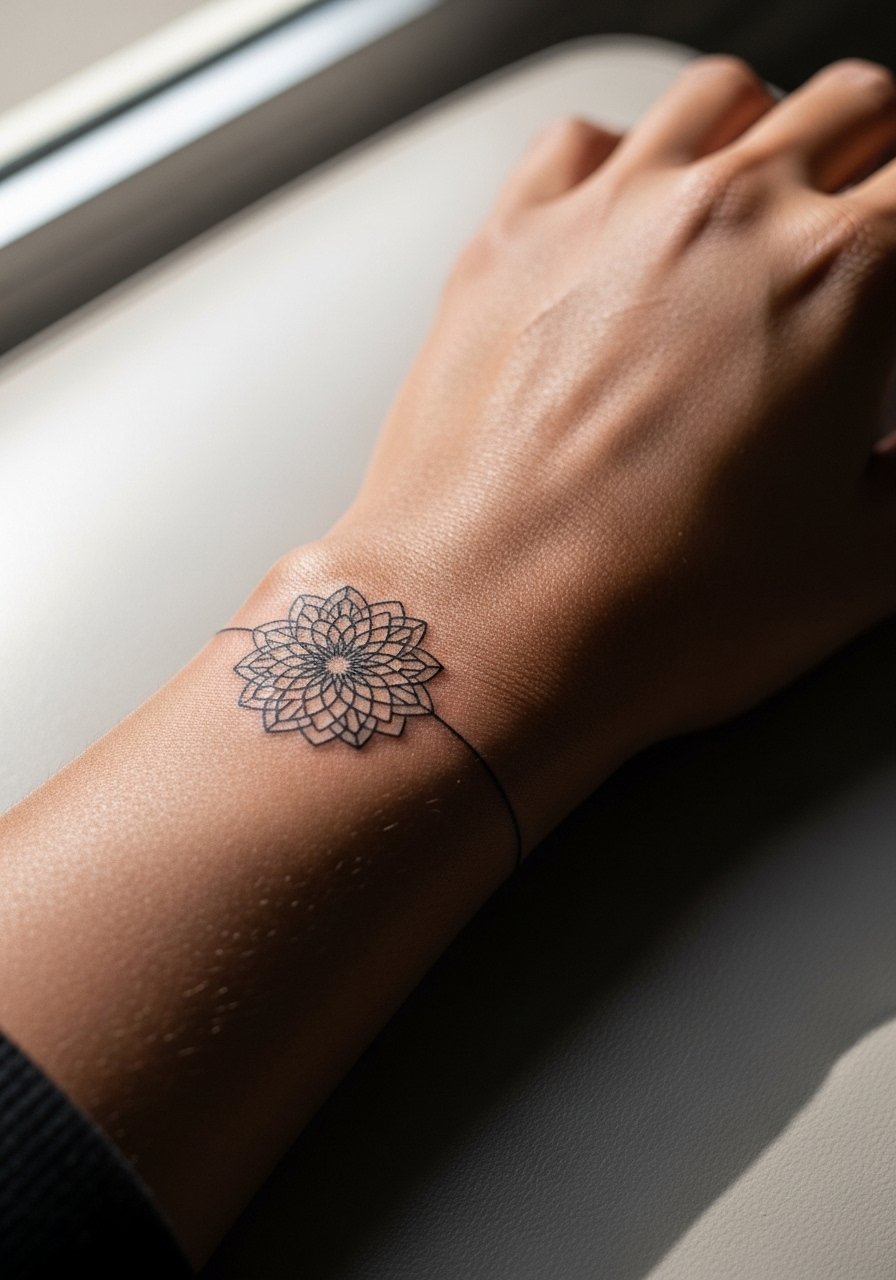
Mini mandalas on the wrist need breathing room. Ask for less density in the center and slightly thicker outer rings so the pattern keeps its shape as it ages. Wrist mandalas show well with stacked dainty bracelets opposite the ink thin silver bangle set. The wrist location demands realistic expectations about touch-up frequency for dense work.
24. Ribbon Memorial Ankle Band
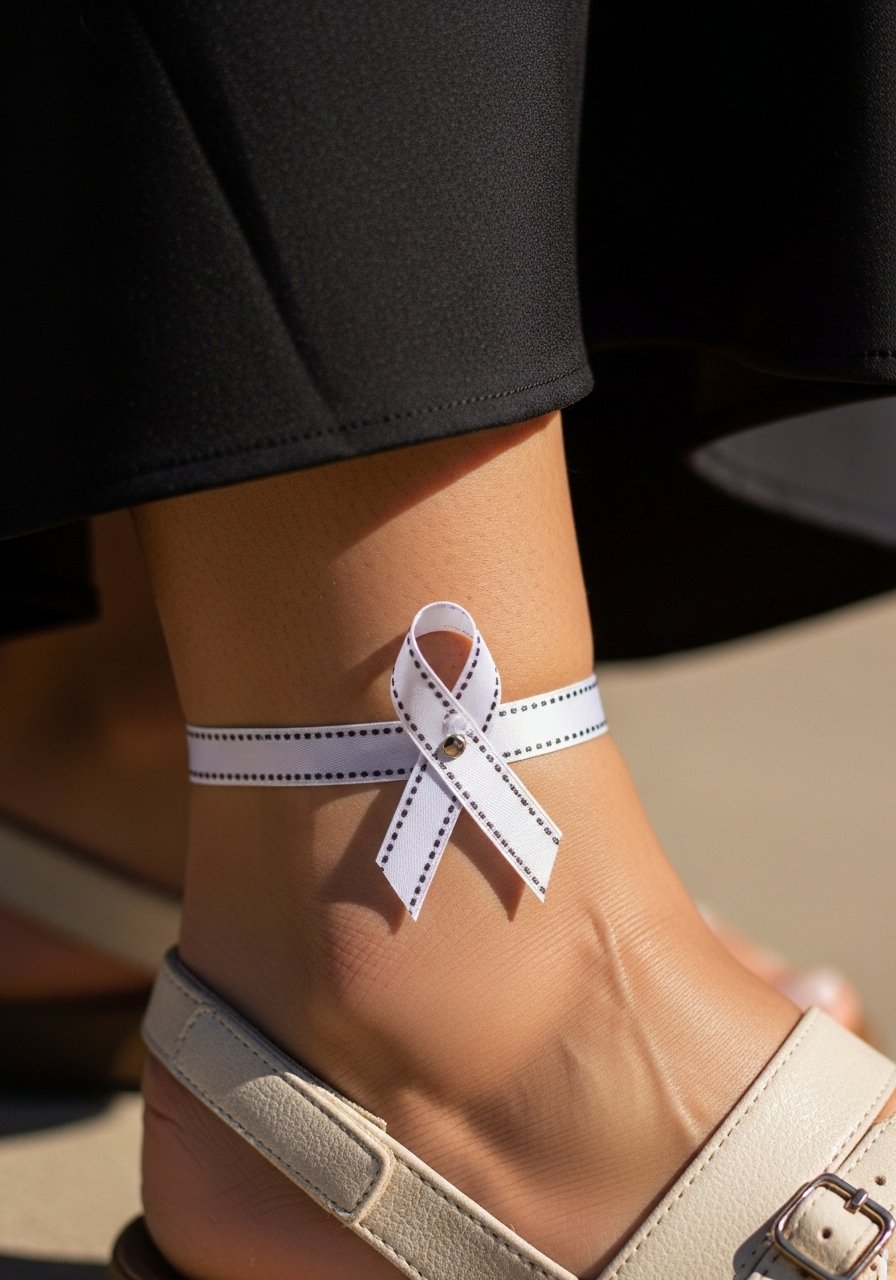
Memorial ribbons are compact and readable at ankle scale. Make clear in consultation whether you want color for the ribbon or a black outline with a dot accent. The ankle heals differently in summer heat and winter dryness, so watch how scabbing behaves in different seasons. Pair with strappy sandals to show it off strappy flat sandals. Expect minimal session time but frequent observation during showers.
25. Thin Blackwork Bicep Band for Dark Skin
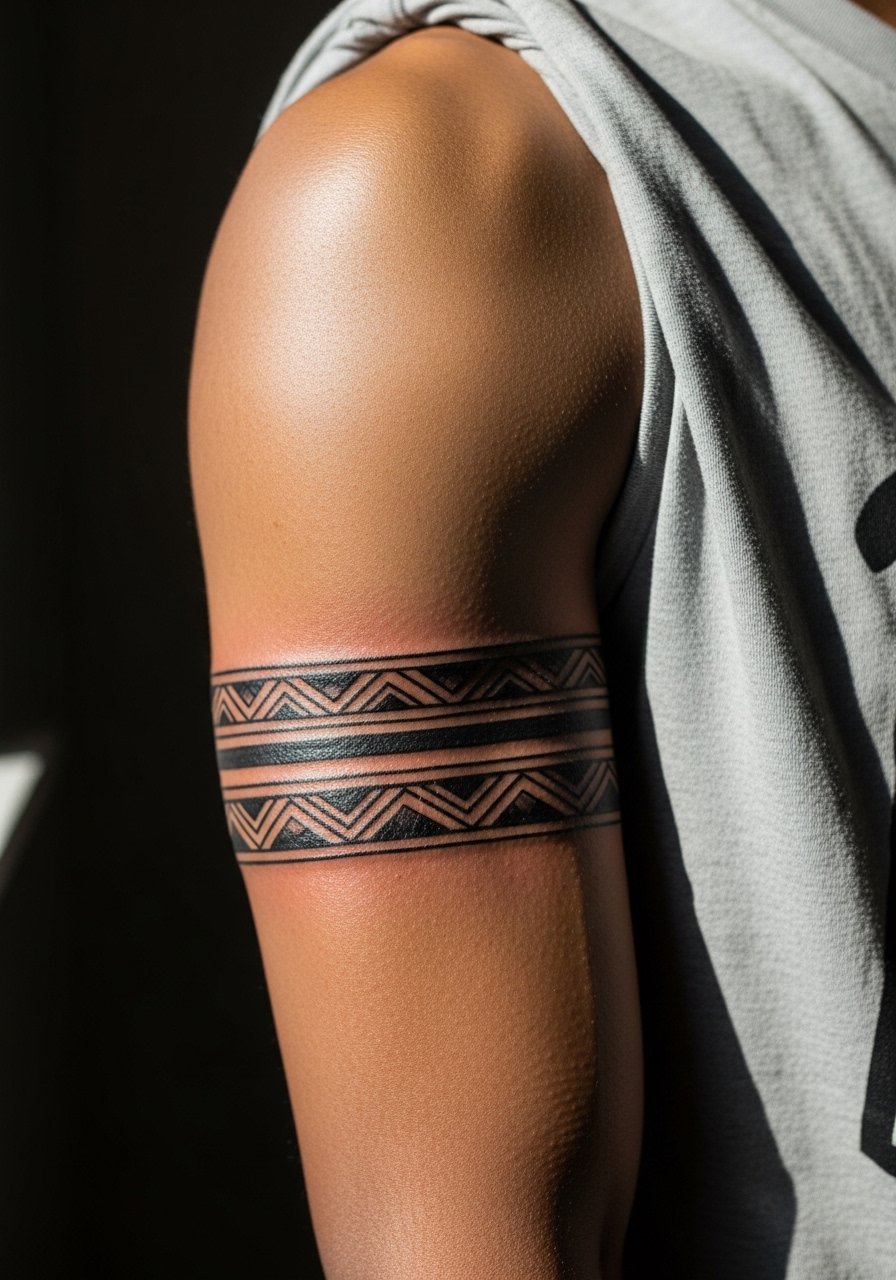
Blackwork often reads best on darker skin tones because saturation provides contrast. Ask your artist to test a small patch of saturation in consultation to see how dense black holds. A common problem is requesting fine hairlines that disappear on deeper skin tones. Biceps tolerate saturation and often only need a single touch-up. Pair with sleeveless tops and an open cardigan for staged reveals sleeveless muscle tank. Expect longer single sessions for full saturation.
26. Delicate Lace Upper Thigh Band
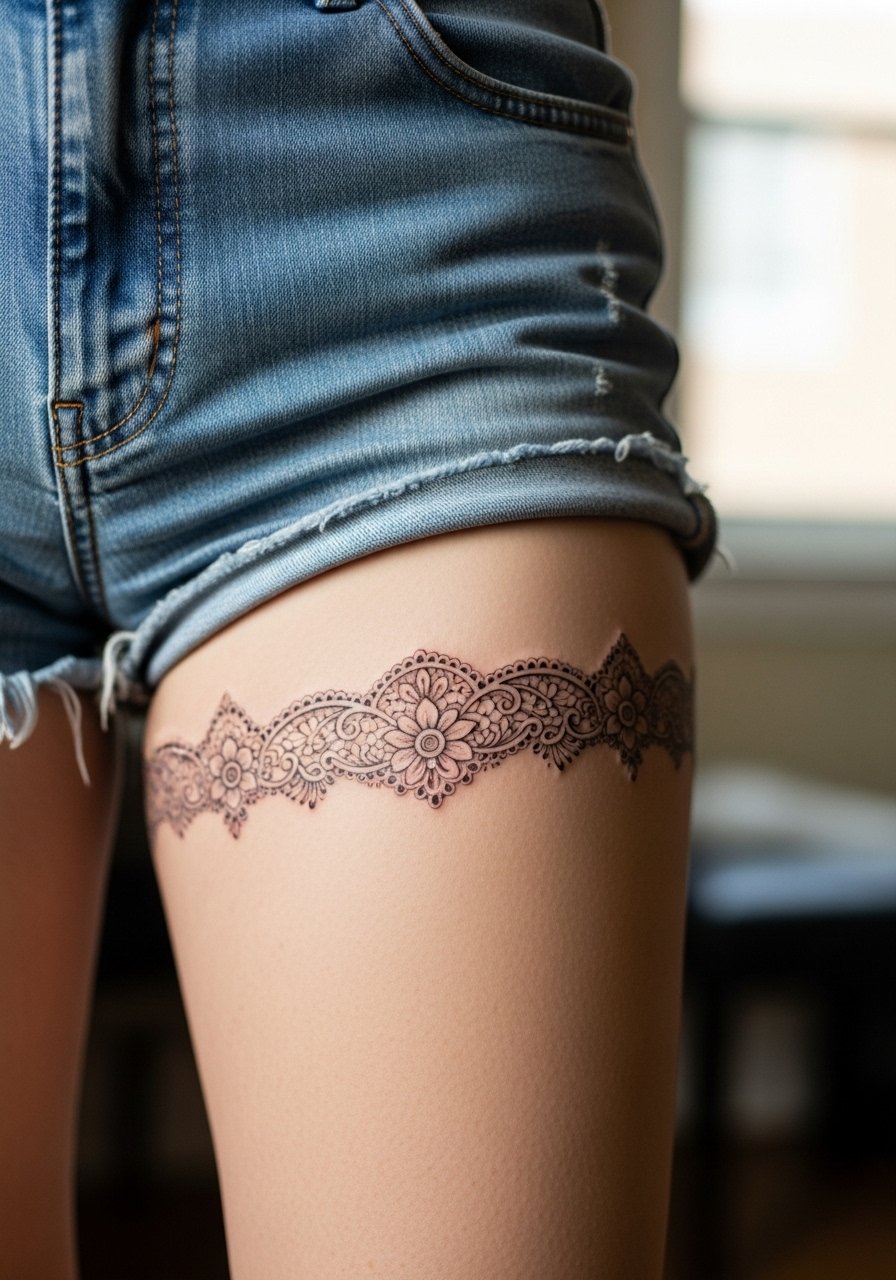
Thigh lace feels intimate and is easy to hide or display. Ask for spacing in the lace so the pattern will not smudge if you gain or lose a little weight. Upper thigh skin is forgiving and usually results in long-lasting lines for finely detailed work. Show it with high-waisted shorts or a swimsuit bottom high waisted shorts. Expect modest pain and one session for most lace designs.
27. Tiny Constellation Wrap for Ankle or Wrist

Constellation wraps give meaning without words and work well on ankles or wrists. Tell your artist you want slightly larger star dots and reinforced connecting lines so the pattern survives regular washing and sunlight. The main mistake is requesting ultra-fine connectors which can fade into near invisibility. For showing, cuffed straight-leg jeans or a midi skirt frame the tattoo cleanly cuffed ankle jeans. Expect a short session and plan for a small refresh after a year if you wear shoes that rub the area.
Frequently Asked Questions
Q: Will fine line armbands blur faster than blackwork bands?
A: In my experience fine line can blur sooner, especially on joints or high-friction spots. There are two camps. One says fine line is an intentional aesthetic and accepts refreshes every few years. The other recommends thicker line weight for longevity. Decide in consultation whether you prefer light fade or longer-lasting saturation.
Q: Can a band tattoo be expanded into a sleeve later without awkward seams?
A: Yes. Ask for negative space and anchor points during your first appointment so future pieces can tie in. I have seen mid-bicep starters incorporated cleanly into sleeves when the artist planned the flow ahead of time.
Q: How do blackwork bands show up on darker skin tones after a year?
A: From what I have seen, dense blackwork with solid saturation holds best on darker tones. Fine hairlines tend to disappear, so request thicker lines or more fill. A small test spot during consultation can give a clear idea of how the ink will read.
Q: Is Saniderm or dry healing better for band tattoos?
A: The community splits. One camp prefers Saniderm for sealed protection during the first days, the other prefers dry healing after an initial bandage to avoid trapped moisture. Ask your artist what they use and why, and follow their plan for the first 48 to 72 hours.
Q: What should I wear to a session for a collarbone or shoulder band?
A: Wear a wide-neck shirt or an off-shoulder blouse that you can pull slightly aside so the artist has clear access without full exposure. A thin chain pendant sits nicely above collarbone work when you are showing the tattoo later delicate chain necklace.
Q: Do watercolor bands require different aftercare than solid blackwork?
A: They do not require drastically different steps but color pieces often need more frequent sun protection once healed. Expect color to soften faster and plan for a color touch-up sooner than you would for saturated blackwork.