Bold cartoon tattoos often age better than the most intricate fan art, and that can surprise people who shop only by how a design looks fresh on an iPad. In my experience, Scooby Doo pieces with clear linework and strategic saturation keep their charm longer. Below are 27 cute Scooby Doo tattoo ideas that balance nostalgia, longevity, and placement so you get a design that still reads well after a few seasons. The first handful focuses on low-commitment spots and styles that photograph healed as well as they look new.
1. Fine Line Scooby Head with Goofy Grin on the Wrist
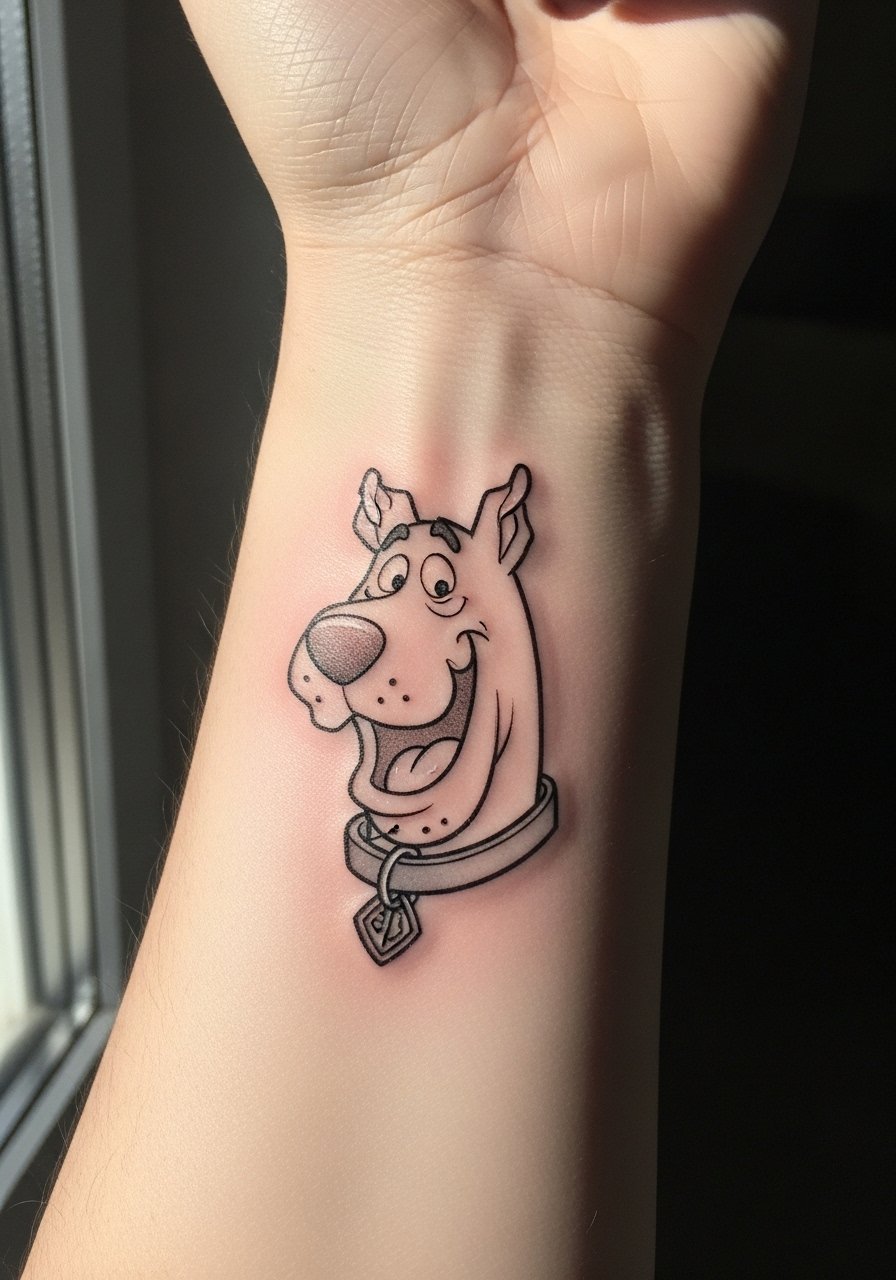
I've seen fine line cartoon heads work best on the wrist when artists give the design breathing room. Ask your artist to keep the muzzle slightly simplified and the eye shapes open so the tiny features do not merge as the years pass. Fair warning the wrist gets a lot of sunlight and friction from bracelets, so expect a touch-up by year two or three when saturation softens. For the session wear, pull on a sleeveless tank you can push up easily and bring a thin wrist wrap to protect fresh ink in transit.
2. Mystery Machine Outline on the Forearm
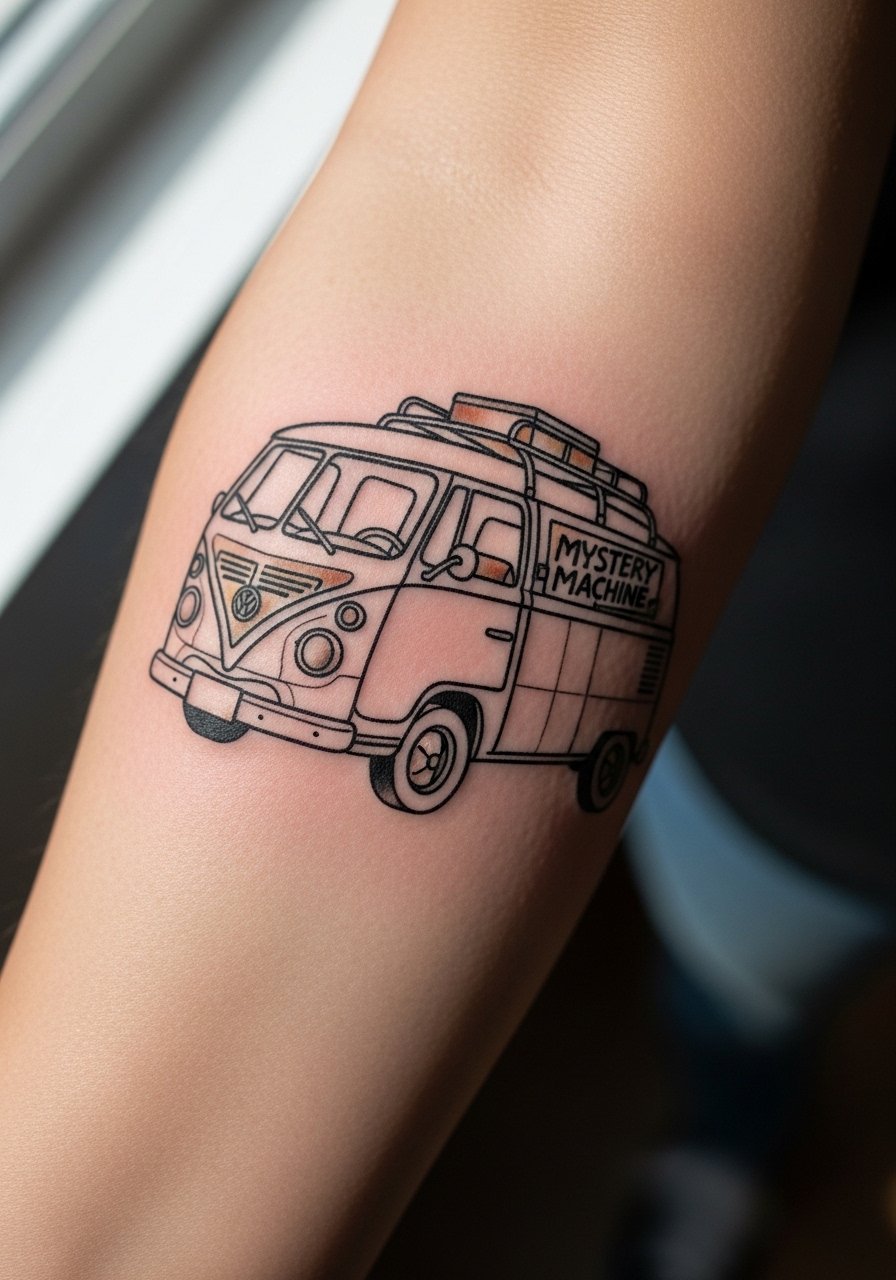
There is something about the Mystery Machine outline that reads iconic from across a room, and the forearm is the ideal stage. Tell your artist you want bold outer linework with slightly muted interior colors so saturation lasts without frequent touch-ups. The forearm is forgiving for color but avoid tiny details inside the van. For showing it off, rolled sleeves pair well so try a graphic tee short sleeve that you can roll to the elbow and a pair of canvas sneakers for the full retro vibe. Expect a one to two hour session for a three to five inch piece.
3. Cartoon Silhouette of Scooby Running from a Ghost on the Calf
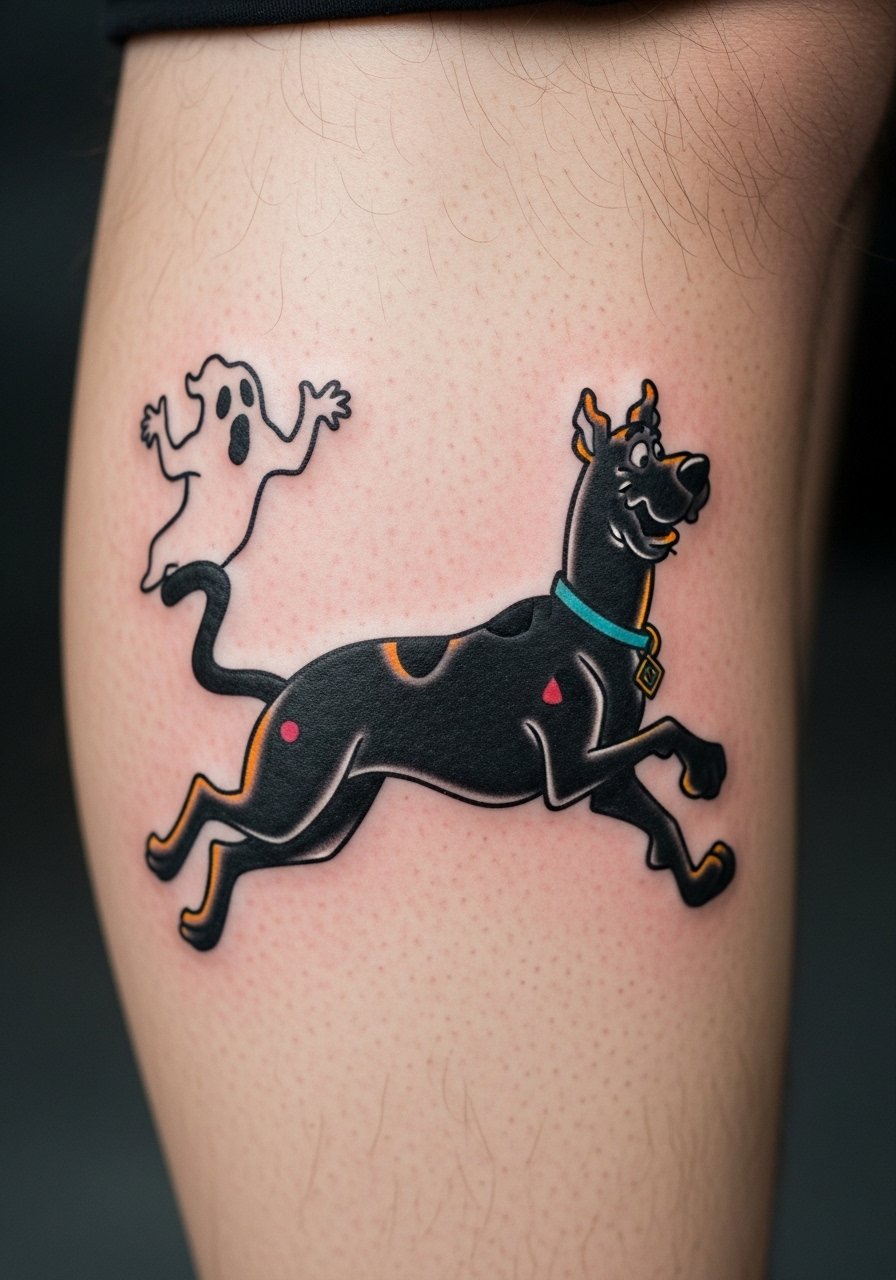
Calf placements tolerate bold black lines and medium sizes well, which makes a silhouette chase scene a durable choice. The biggest mistake is crowding the negative space with too many small ghosts. Ask for wide separations so the silhouette keeps its shape when the skin moves. Pain is moderate and session time is short for a medium design. For summer shorts or rolled joggers, this reads great, so consider pairing with slim joggers that you can roll at the ankle to show off the scene.
4. Watercolor Scooby Snacks Pile with Paw on Inner Bicep
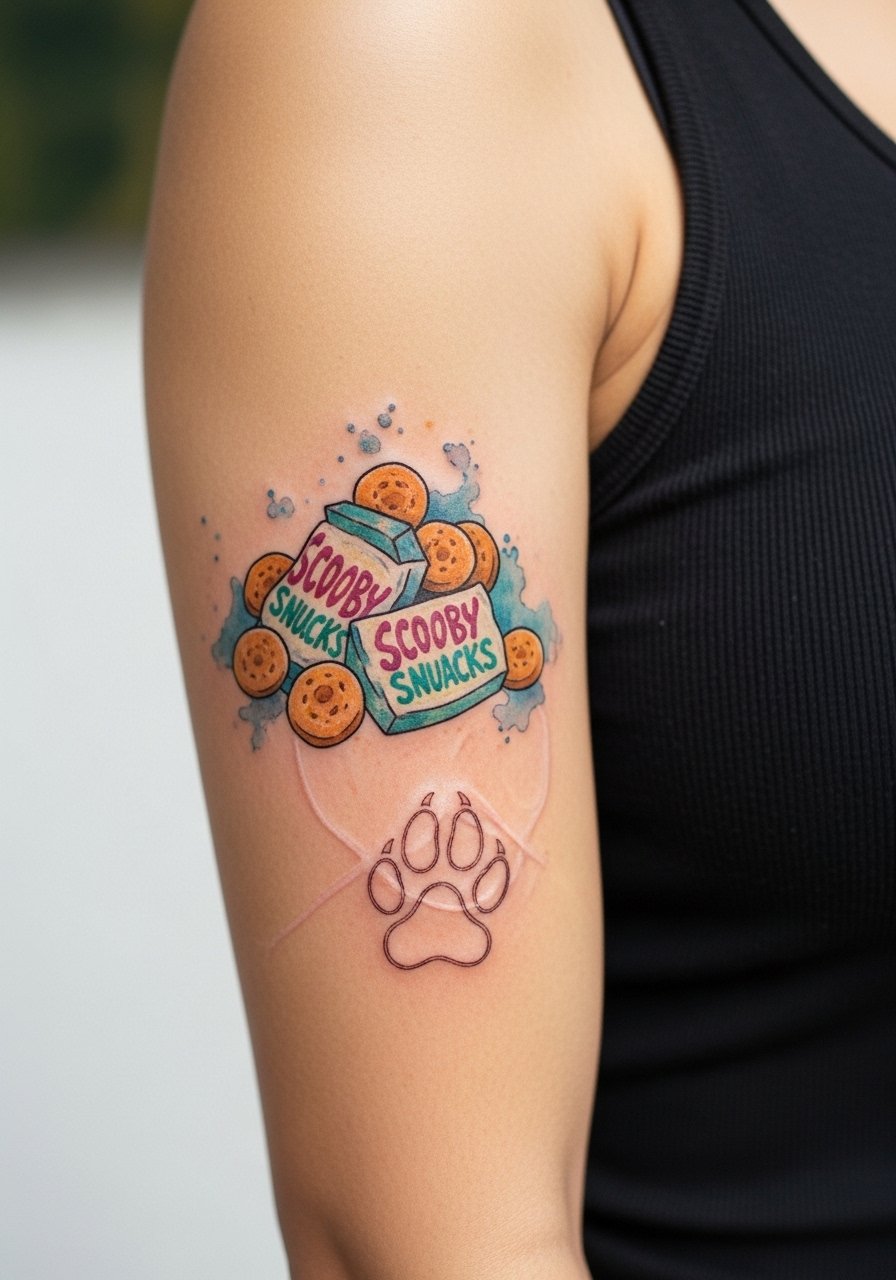
Watercolor works for playful symbolism, but it ages differently than bold color fills. The inner bicep hides a lot of sun exposure which helps color last, though the skin there can move during weight changes. Ask the artist to anchor the watercolor with thin linework outlines so the composition keeps its shape. Session feels tender when the arm is raised but manageable. For the appointment, wear a tank top that allows easy access to the inner arm and avoid tight straps that rub the fresh piece.
5. Minimalist Scooby Outline with "Zoinks!" at the Ankle
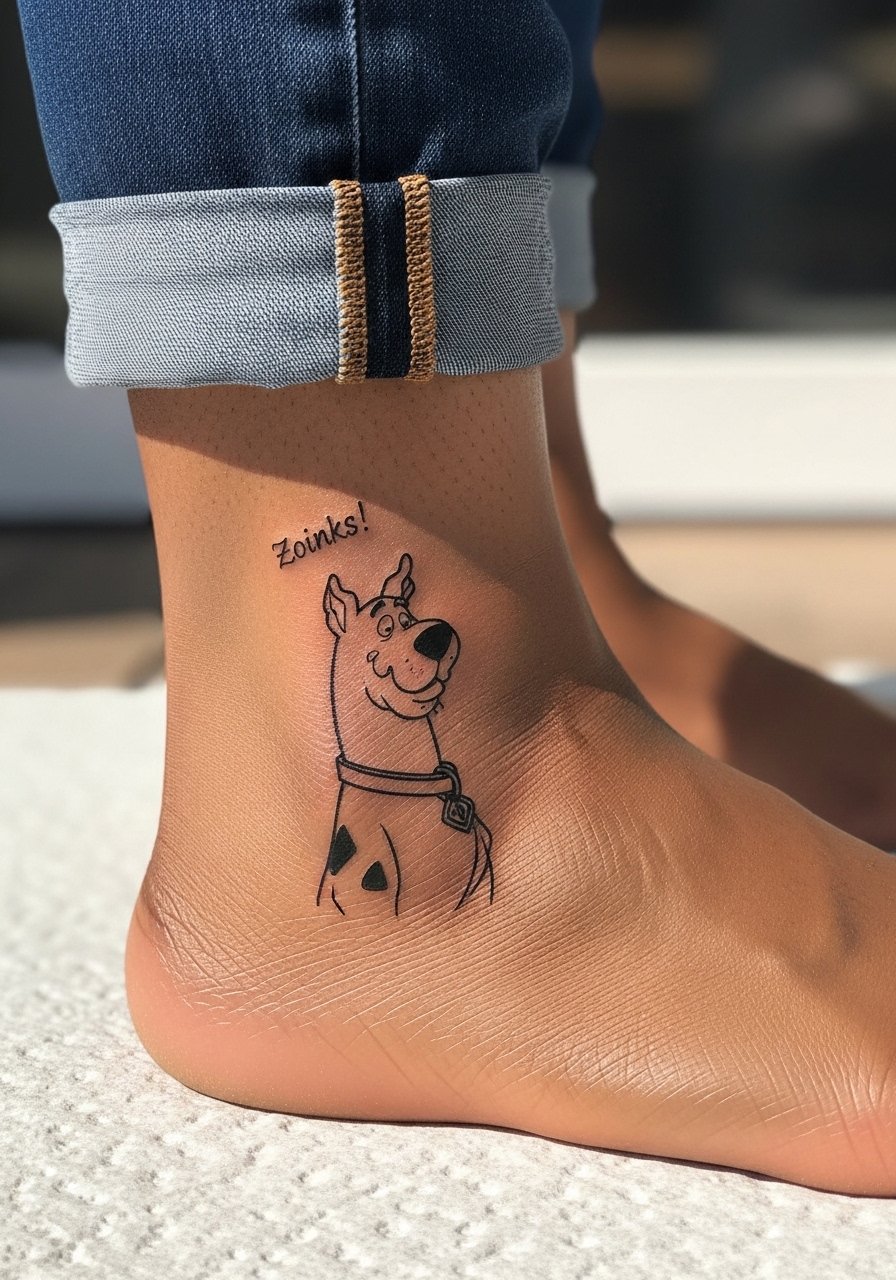
Ankle micro pieces are cute but live in a high-friction zone. Keep the outline simple and the text slightly larger than you think to prevent letters from fusing over time. A common mistake is requesting extremely thin lettering paired with micro art. Expect to revisit small ankle work for a touch-up once color has settled. For showing off in summer, low-cut boat shoes or sandals work best with the design and keep your fresh piece visible when healed.
6. Neo-Traditional Full Mystery Inc. Gang Portrait on the Upper Arm
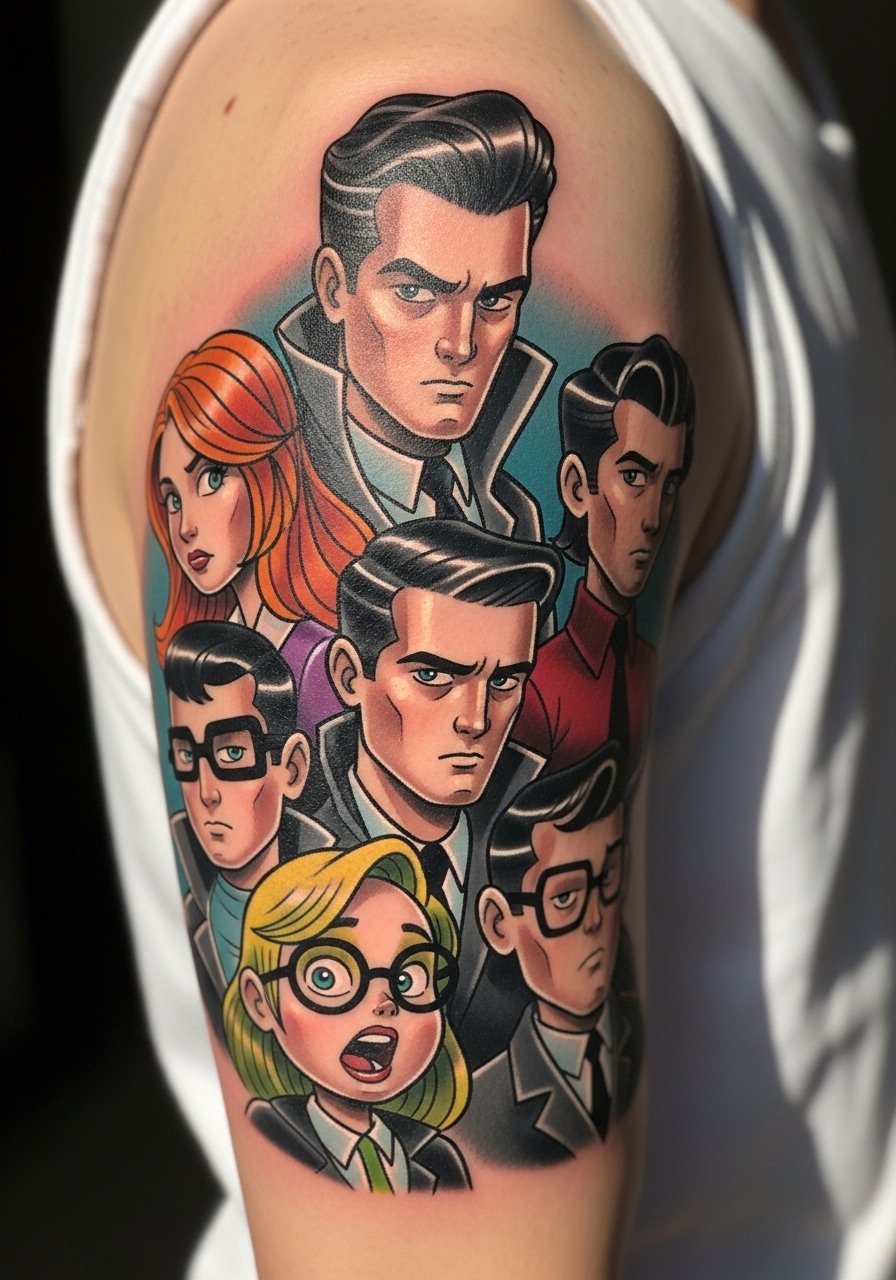
Group portraits are stunning but they demand space and planning. I always tell clients to reserve the upper arm for gang portraits because flesh there accepts saturated color well and ages favorably. A common aging issue is cramming too many facial details into a small area. In consultation, specify who should be the focal point and ask for simplified faces that still read at a distance. This will likely need two sessions for six to eight inch work and touch-ups after the initial year if you want the colors to pop.
Studio Day Picks
The wrist and ankle pieces above heal differently from larger arm and calf work, so pack a few items that smooth the session and the first week.
- Stencil transfer paper kit. Lets you preview line placement on skin which is helpful for tiny wrist and ankle designs above.
- Topical numbing cream. Applied before the session makes short sensitive spots like the ankle and inner bicep more manageable.
- Thin protective film roll. Useful for covering low-friction wrist pieces during the first day of activity.
- Fragrance-free body wash. Cleanses healing areas without irritation for small fine line and watercolor pieces.
- Aquaphor healing ointment. Thin layers help lock in moisture for delicate linework and color until the initial scab phase passes.
7. Blackwork Scooby in a Haunted House Scene on the Thigh
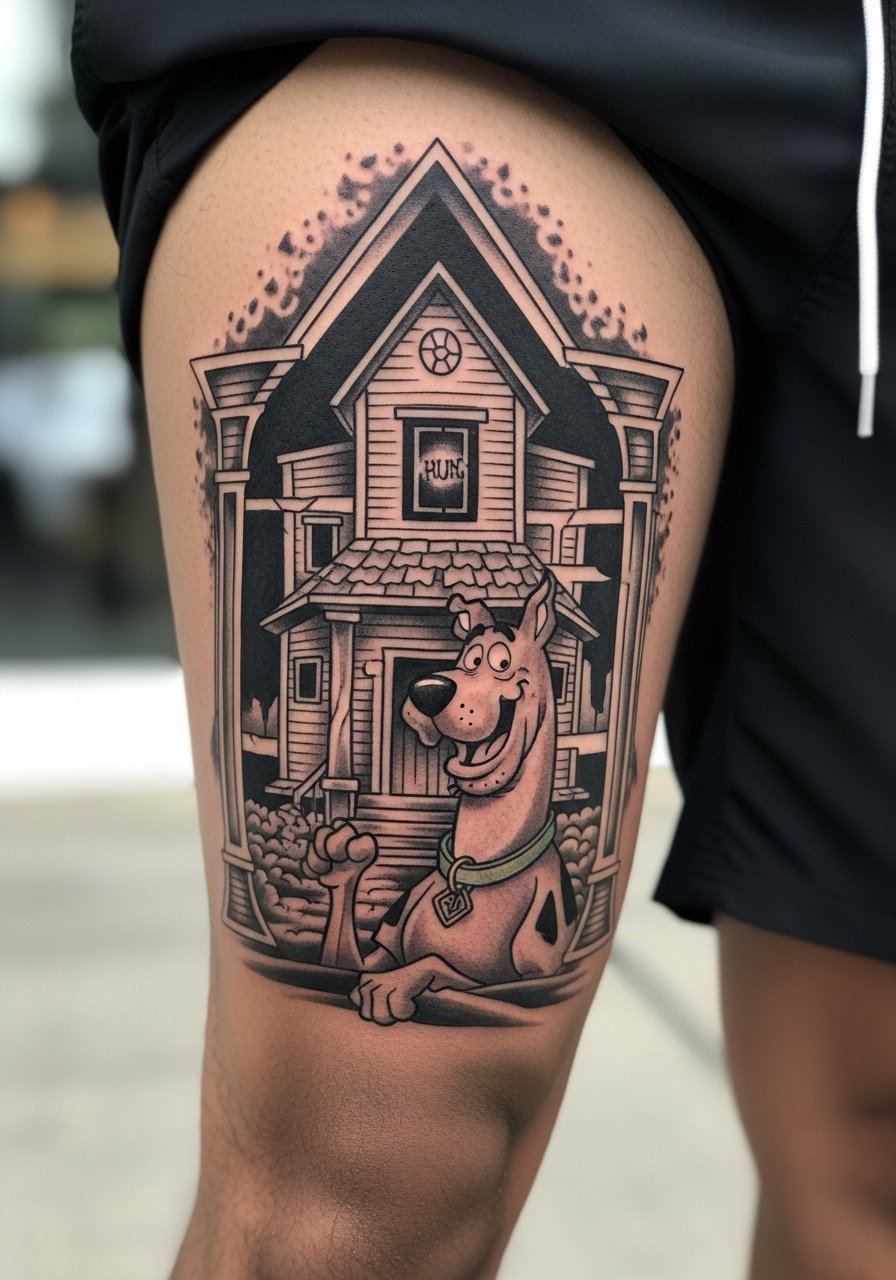
Thigh placements handle dense blackwork well and the area is low friction compared with ankles. For a haunted house scene, ask the artist to use contrasting negative space to keep Scooby from disappearing into the background. The worst mistake is filling every corner with tiny black details that merge over time. Pain is lower on the outer thigh, and sessions are comfortable if you wear loose basketball shorts for access. High-waisted shorts or a swimsuit make this easy to show off at the beach.
8. Micro-Realism Scooby Eyes with Snacks on the Collarbone
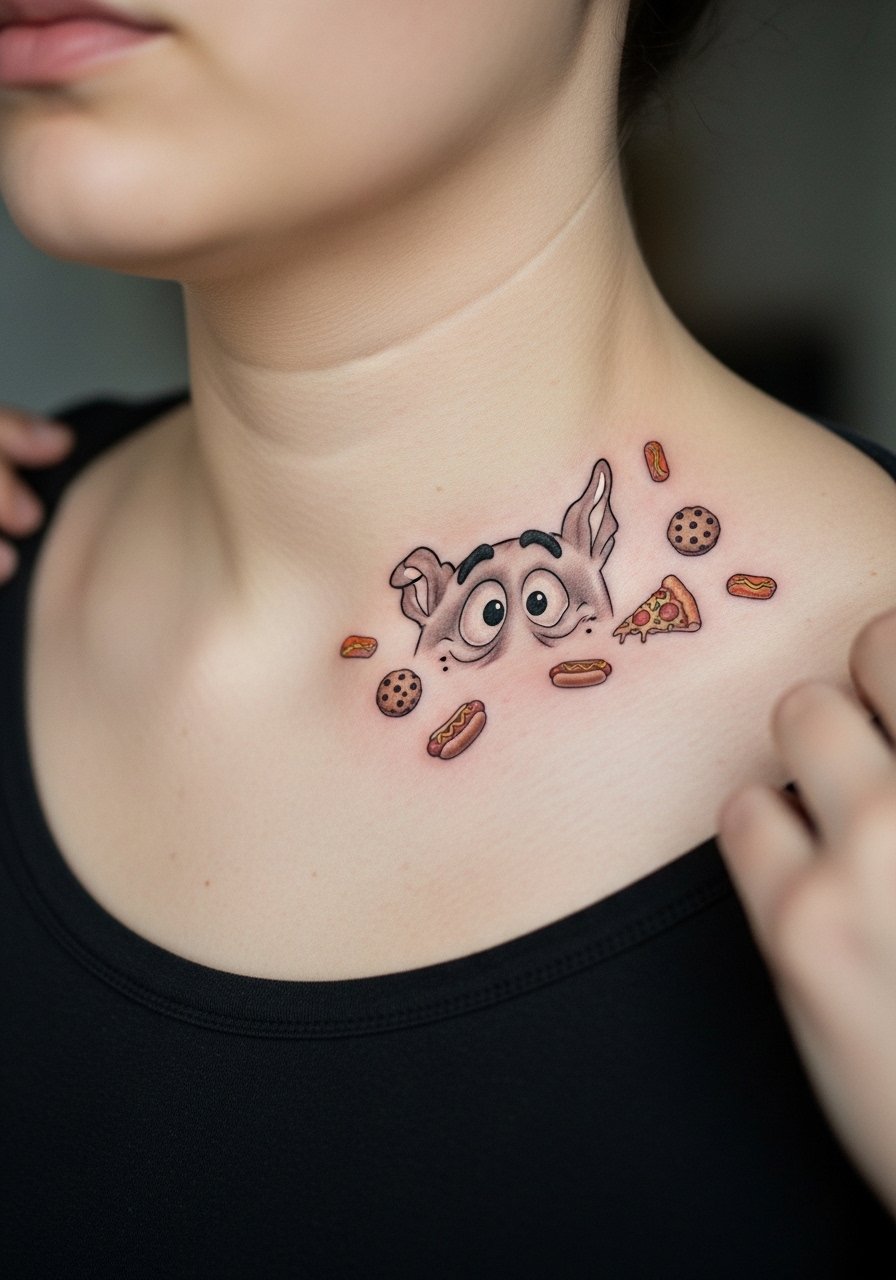
Micro-realism takes skill and the collarbone can be unforgiving for fine shading. Expect artists to ask about reference photos that show the exact eye shapes and snack placement. A common error is pushing for too much detail at a tiny scale. The collarbone sees some sun so cover it when possible to preserve subtle shading. For showing it off, a v-neck tee fitted or strapless top pairs well with the placement. The session is short but precise.
9. Traditional Scooby and Shaggy Duo Eating Snacks on the Shoulder
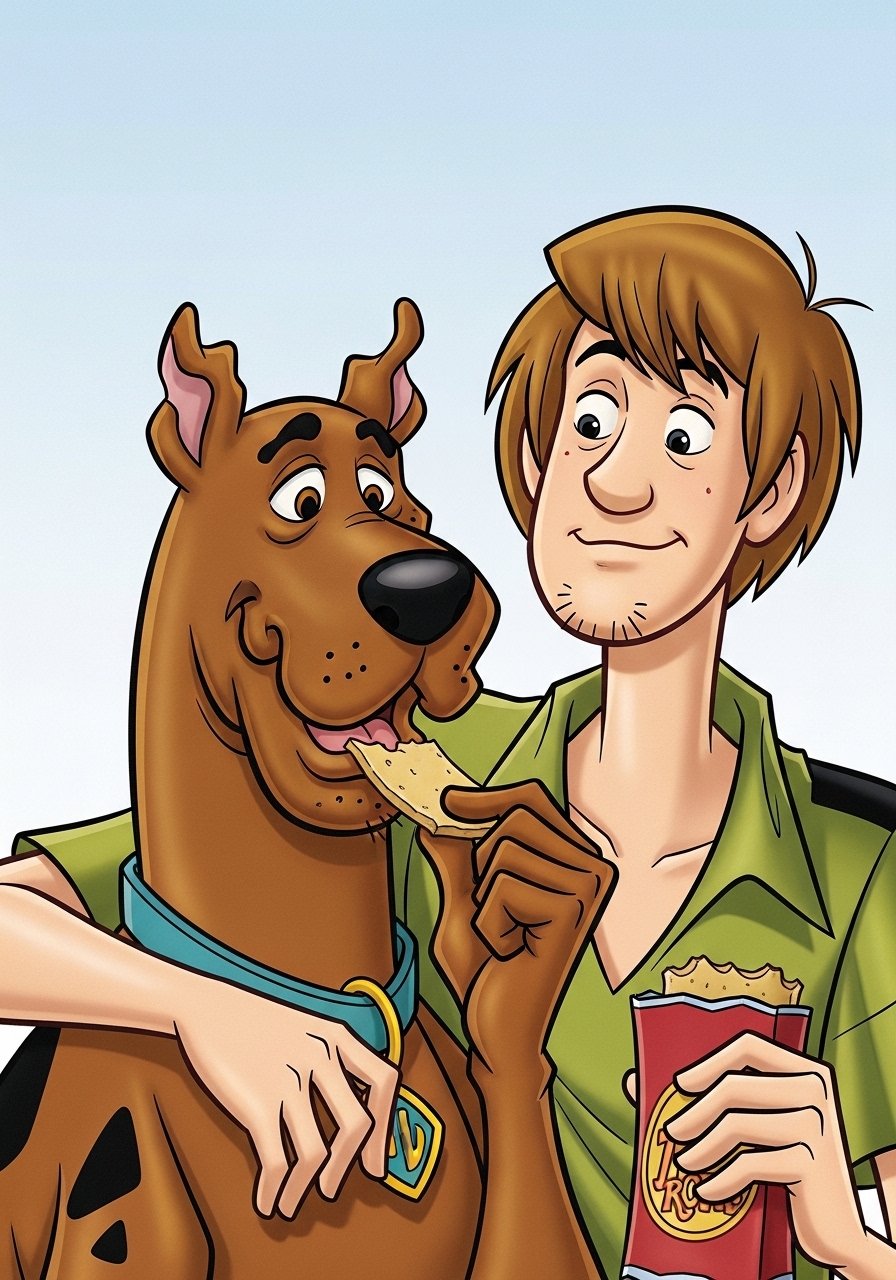
Shoulder portraits age nicely because they see less daily abrasion. For a Shaggy and Scooby duo, ask for clear facial silhouettes and saturated fills rather than tiny cross-hatching. The big mistake is crowding props around the figures. A one to two session plan usually does it for a four to six inch piece. Bring a loose button-down shirt you can pull aside in the chair so the artist has clean access without tugging on fabric.
10. Ornamental Scooby Paw Print Trail on the Ribcage
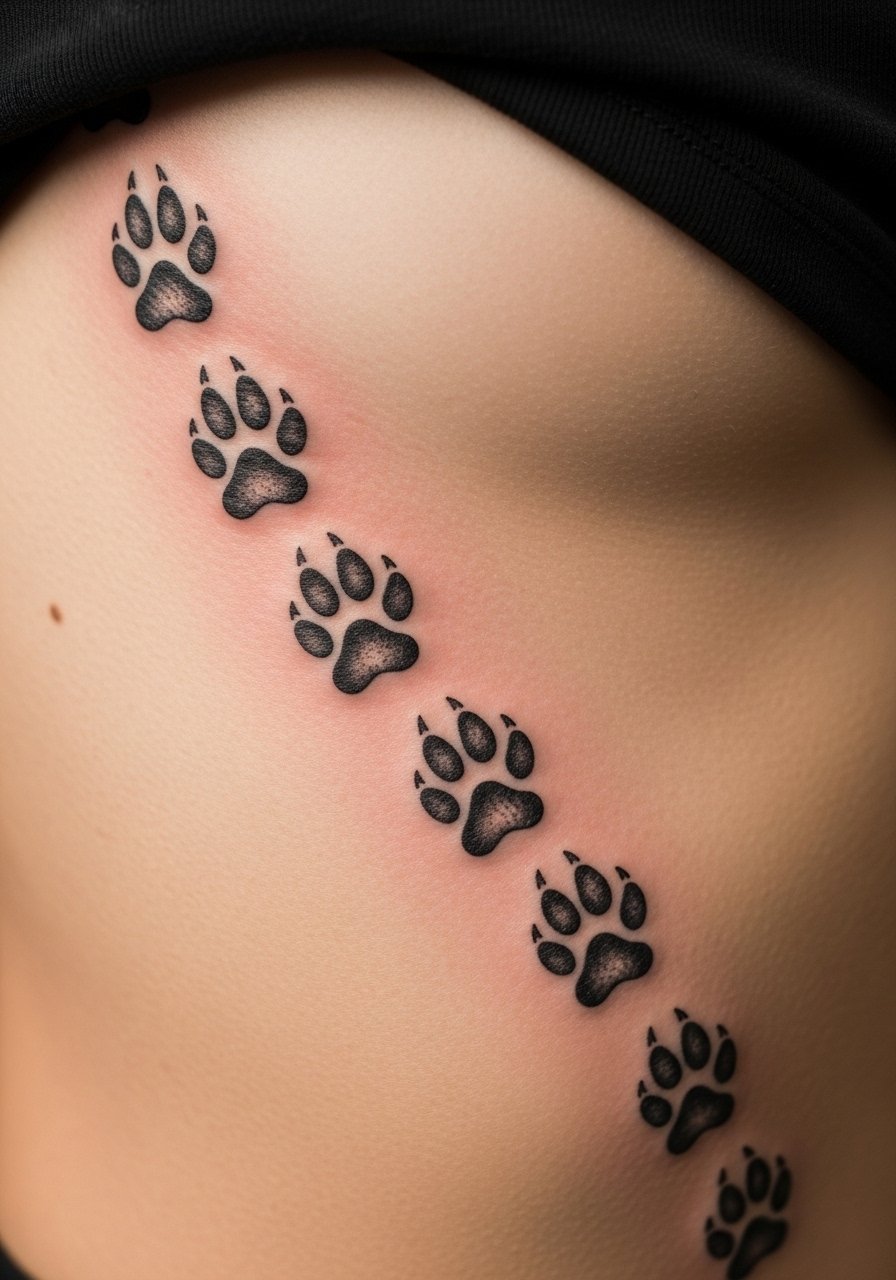
Fair warning the ribcage ranks high on most pain scales, but the result can be elegant and discreet. For a paw trail, space the prints so they can link into larger work later without crowding. A frequent regret is making each paw too detailed when simple shapes read better after healing. Rib pieces need touch-ups if you move through significant weight changes. The session requires a cropped top or shirt shifted for access and breaks between passes.
11. Ignorant Style Scooby Ghost Chase on the Outer Forearm
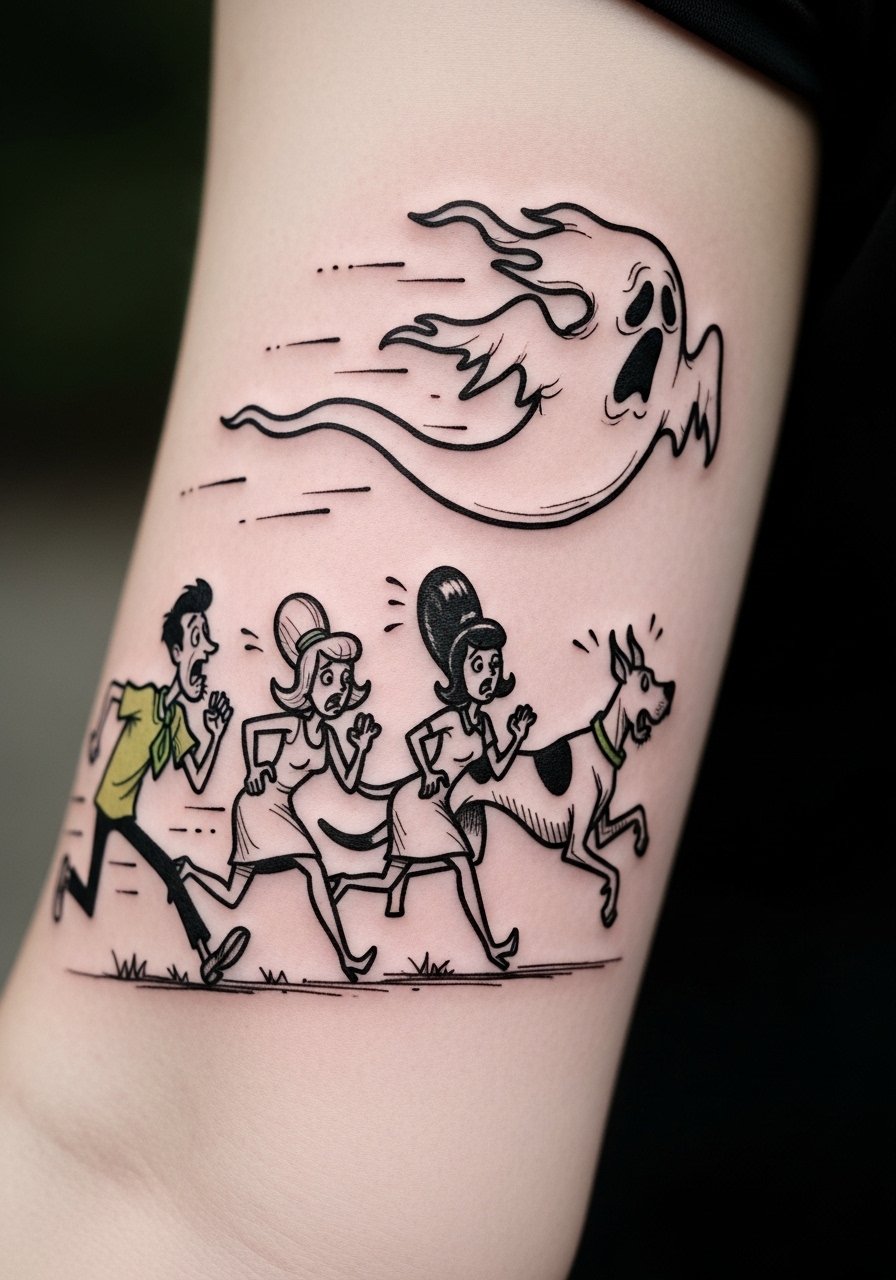
Ignorant style thrives on raw energy and uneven lines, but it still needs spacing to avoid future smudging. The outer forearm is forgiving but avoid asking for excessively tiny sketch marks that lose personality when they blur. Tell the artist you want deliberate jitter rather than accidental noise. For session wear and showing it off, roll up a short-sleeve graphic tee and keep wristbands minimal so the forearm art gets seen.
12. Fine Line Velma with Magnifying Glass on the Inner Thigh
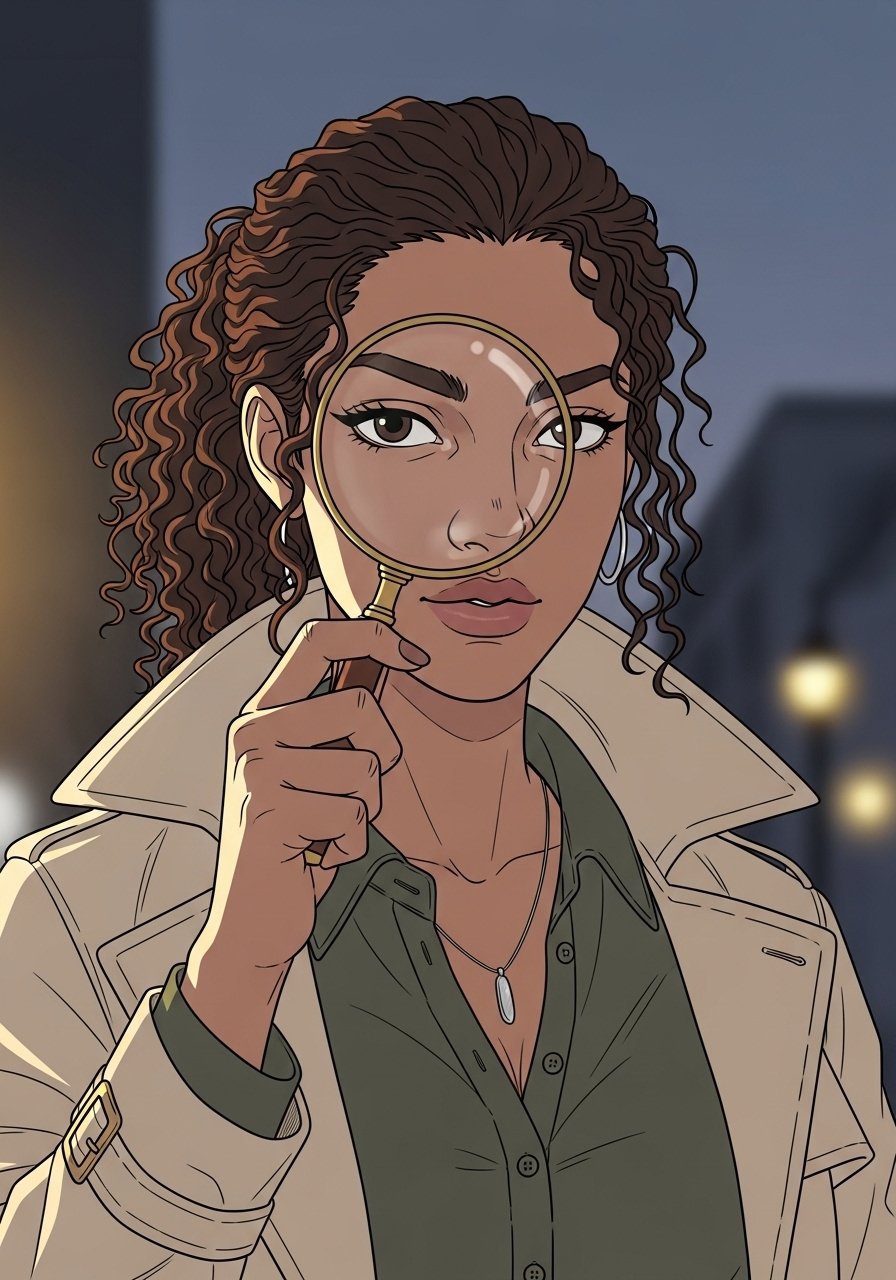
The inner thigh is intimate and can be tender during the session, but it hides well and retains fine details with less sun exposure. Artists sometimes differ on whether fine line survives here. One camp argues that inner thigh skin holds subtle lines perfectly with correct depth. The other camp warns that the area moves enough to blur tiny details. Ask your artist which side they fall on and request slightly bolder outlines if you prefer longevity. Wear loose shorts for the appointment and expect moderate session discomfort.
13. Mystery Machine Rear View Badge on the Calf
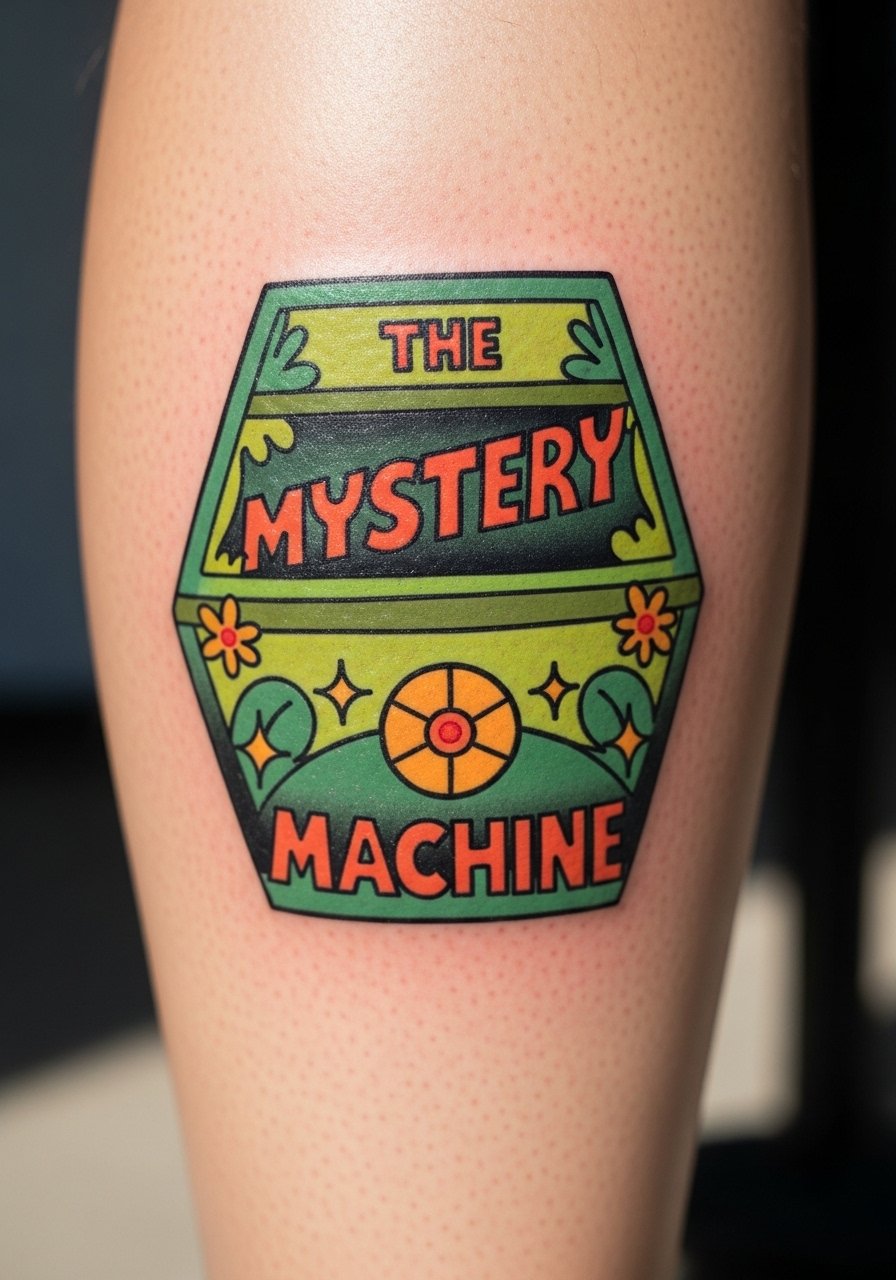
A vehicle badge or emblem works well as a standalone symbol and the calf gives it enough room. Keep the badge simple and avoid tiny text that will soften. A common mistake is asking for heavy gradients inside a small badge. Calf work is easy to show with chino shorts or rolled joggers. Try pairing with chino shorts rolled hem to frame the piece during warmer months.
14. Scooby Collar Tag with Initials on the Back of the Neck
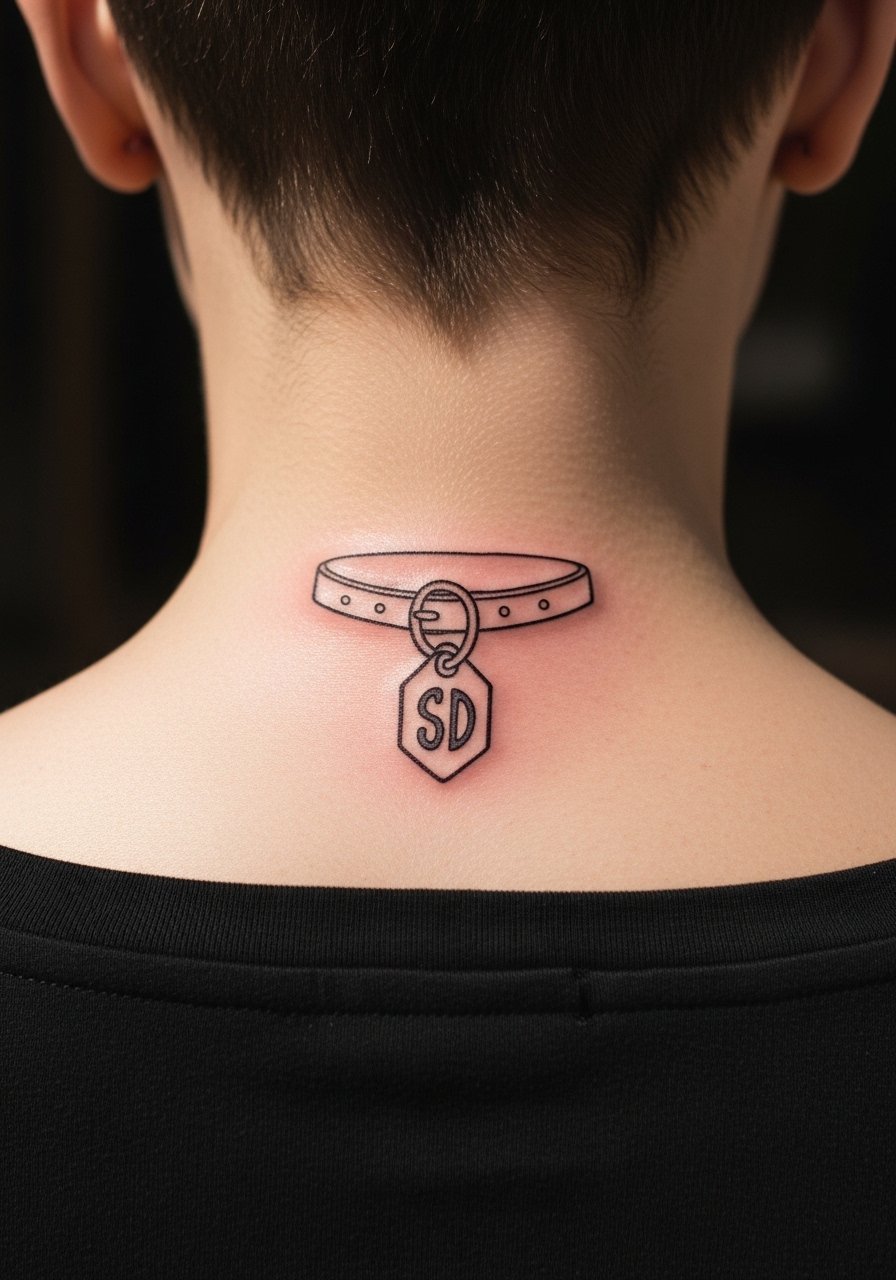
Neck pieces are visible and need careful consideration for career and daily life. Keep the tag compact and the initials bold enough to avoid blurring. The worst mistake is trying to cram ornate script into a coin-sized tag. For the session, wear a wide-neck shirt you can lower slightly so only the area is exposed. Expect the skin to need a touch-up earlier than arm work because of constant movement and friction from collars.
15. Scooby Paw with Floral Accents Behind the Ear
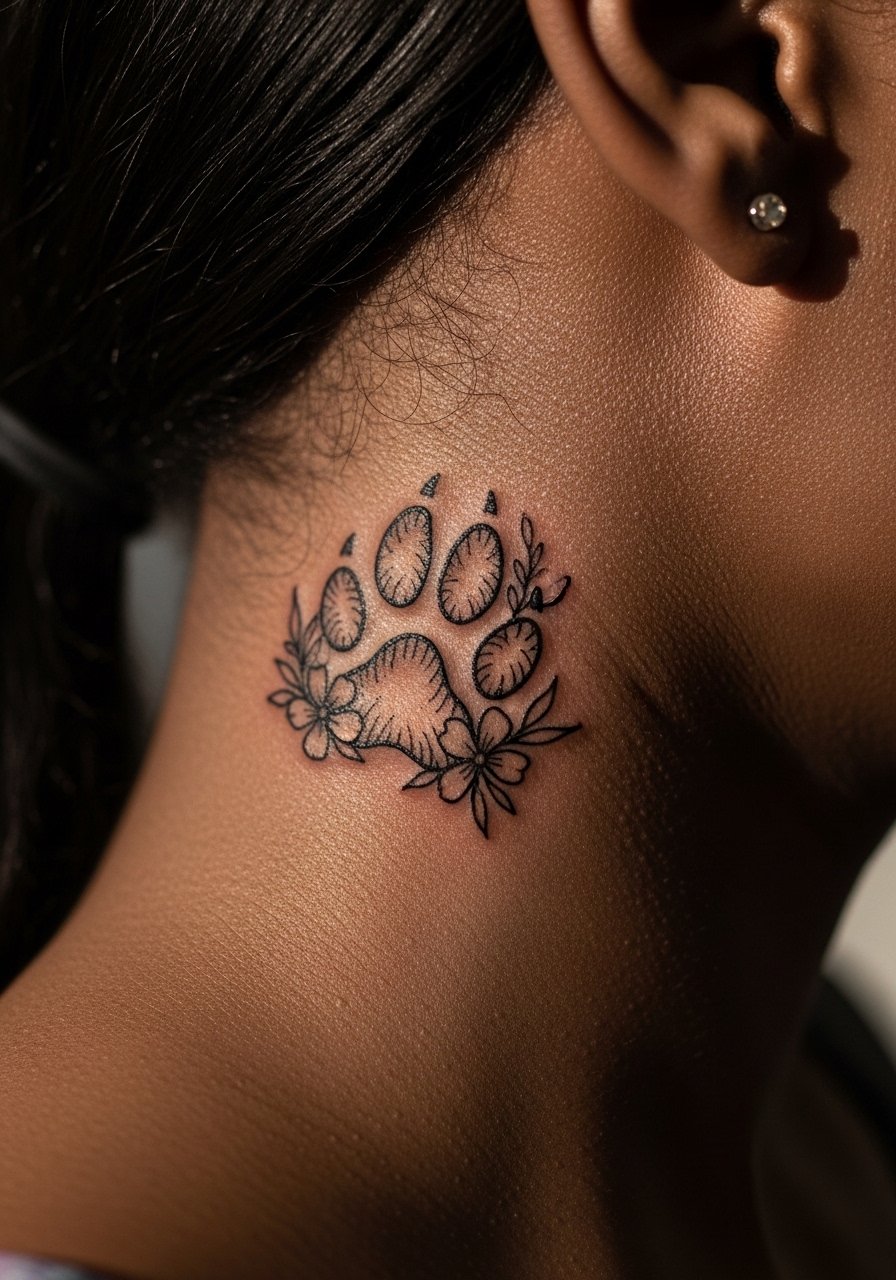
Behind-the-ear placements are tiny and discreet so scale the paw for longevity. Artists often suggest minimal shading and clear outlines because the area is hard to tattoo consistently. A common mistake is demanding heavy color there which can look patchy. This spot is more about subtlety than detail. Keep hair style in mind for showing it off and note that you will need a specialist comfortable with tight curved areas.
16. Retro TV Frame with Scooby Face on the Forearm
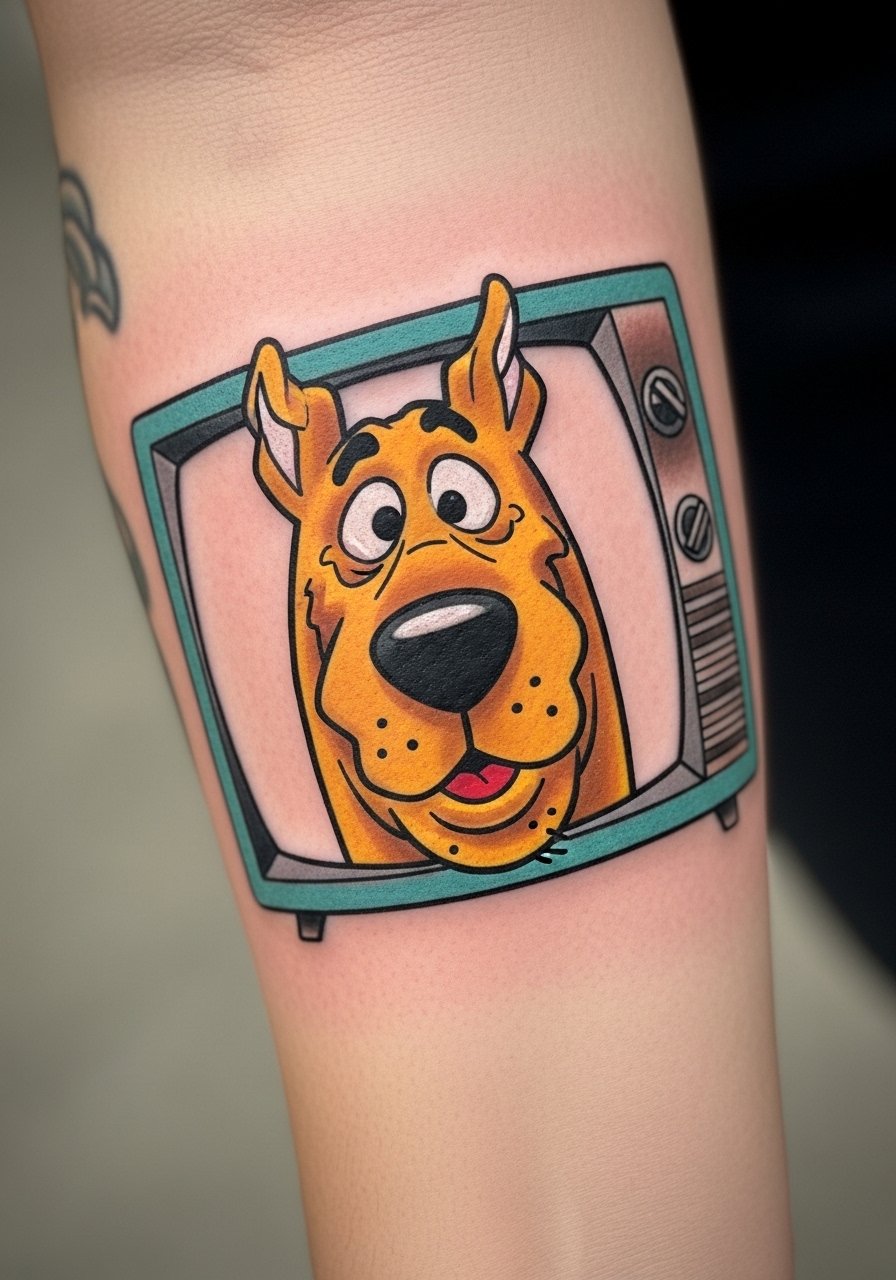
Pop-art frames read loudly and the forearm is perfect for a bold rectangle composition. Ask for solid color panels and thick outlines so the TV border reads from a distance. The common issue is trying for gradients inside tiny panels which can muddle. For session wear and showing the piece off, roll a short-sleeve button-up to the elbow and choose neutral sneakers to keep the forearm focal.
17. Micro Scooby Sleeping Curled on the Wrist

Micro sleeping poses are adorable but require a confident hand. The wrist sees a lot of motion so make the outline slightly thicker than you imagine. The common mistake is insisting on ultra-fine details that vanish. Touch-ups are common for tiny wrist pieces at year two. For the session, wear a sleeveless tank that lets the artist access the wrist without fabric interference.
18. Scooby Snacks Jar Watercolor on the Inner Bicep
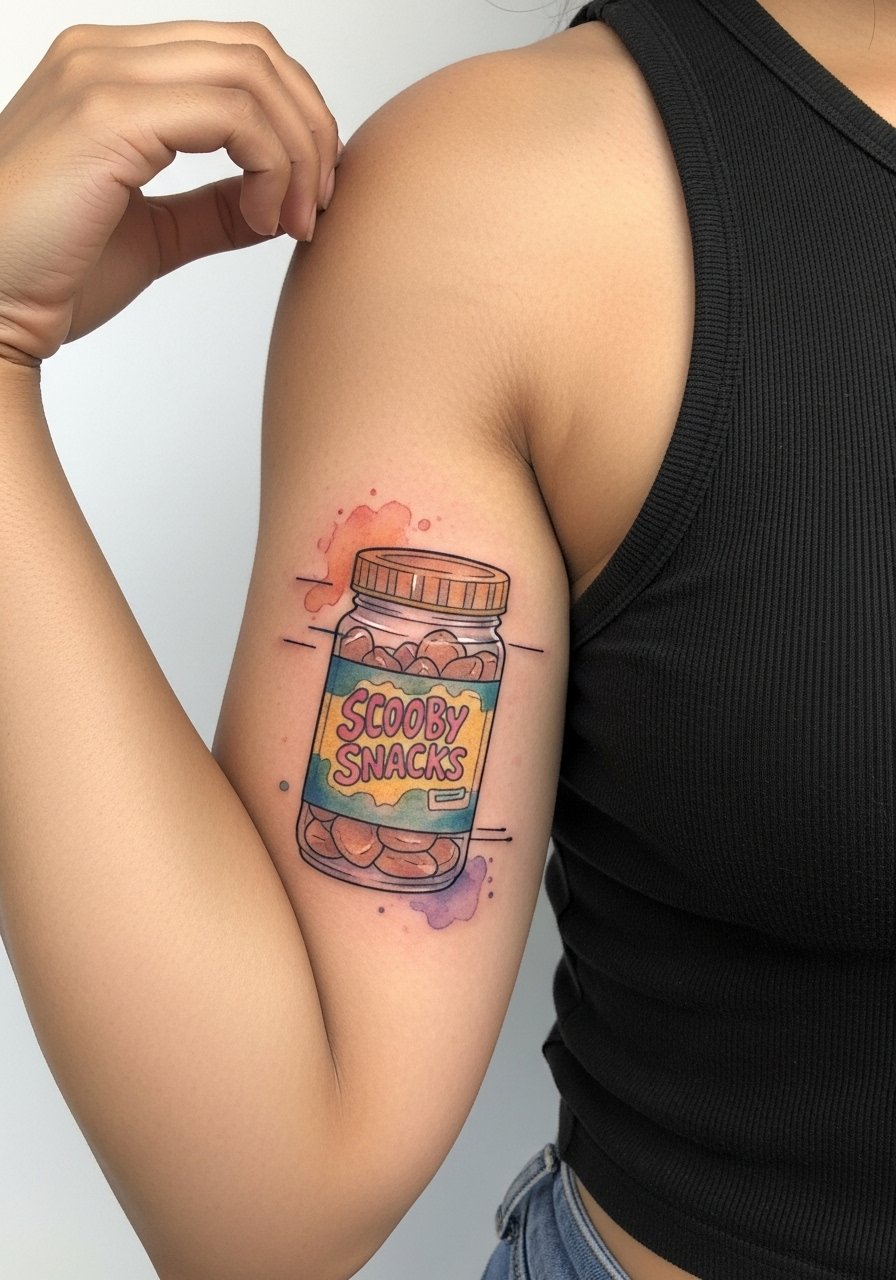
A jar composition reads well on the inner bicep where it is shielded from direct sun. The trick is to balance loose watercolor fills with a thin anchor line to prevent the colors from spreading visually over time. Artists sometimes overblend watercolor which looks nice initially but can soften into a bruise-like wash. For the appointment wear a tank top and plan short breaks. The inner bicep lends itself to one to two sessions depending on size.
19. Scooby and Shaggy Minimalist Silhouette on the Ribcage
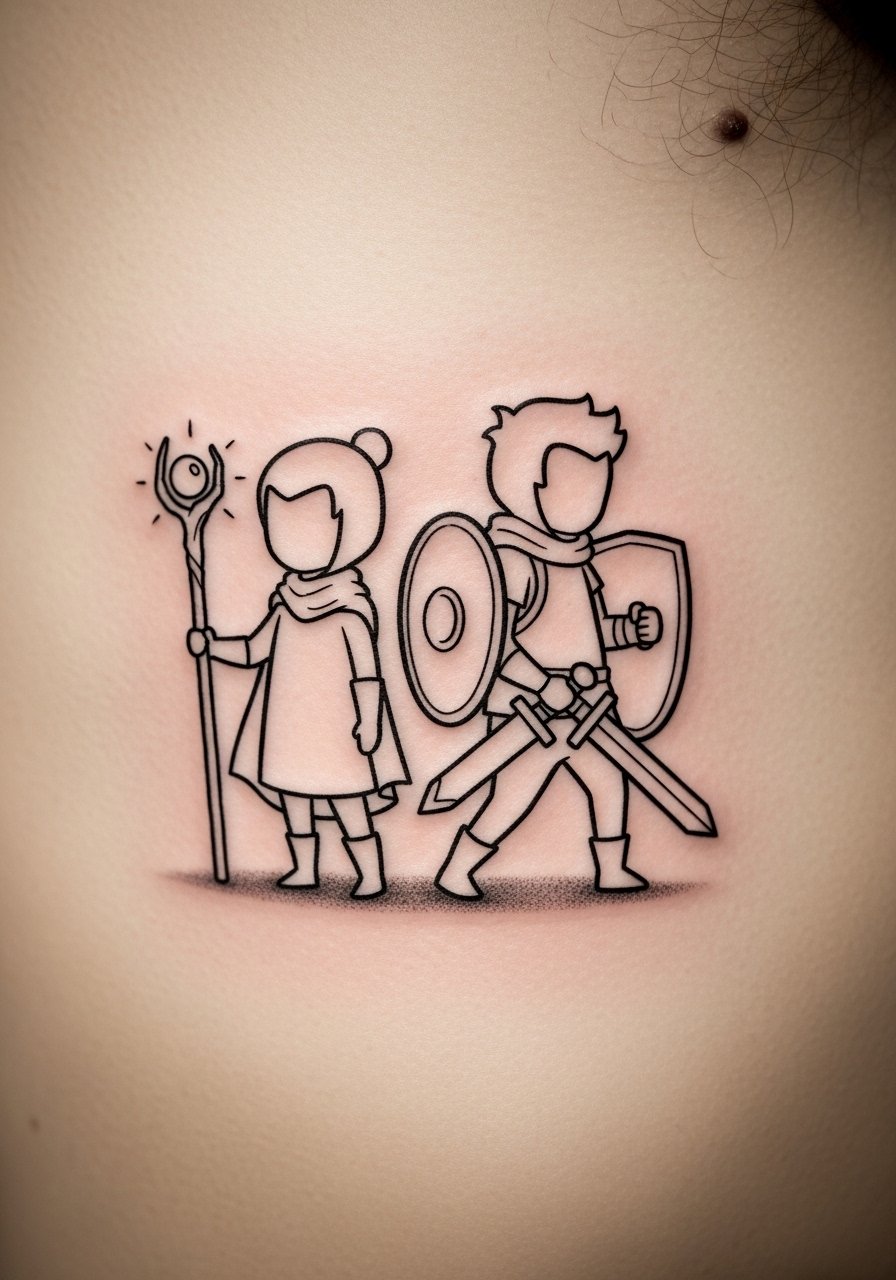
Ribcage pieces are known for pain but excellent concealment. Minimal silhouettes keep the design readable without fighting the skin's movement. The controversy about fine line on ribs applies here. One camp says ribs blur fast and recommend bolder work. The other camp maintains that proper needle depth and spacing let fine line settle well. Ask your artist how their ribcage work ages and consider slightly thicker contours if longevity is the priority.
20. Scooby in Detective Hat with Magnifier on the Shoulder Blade
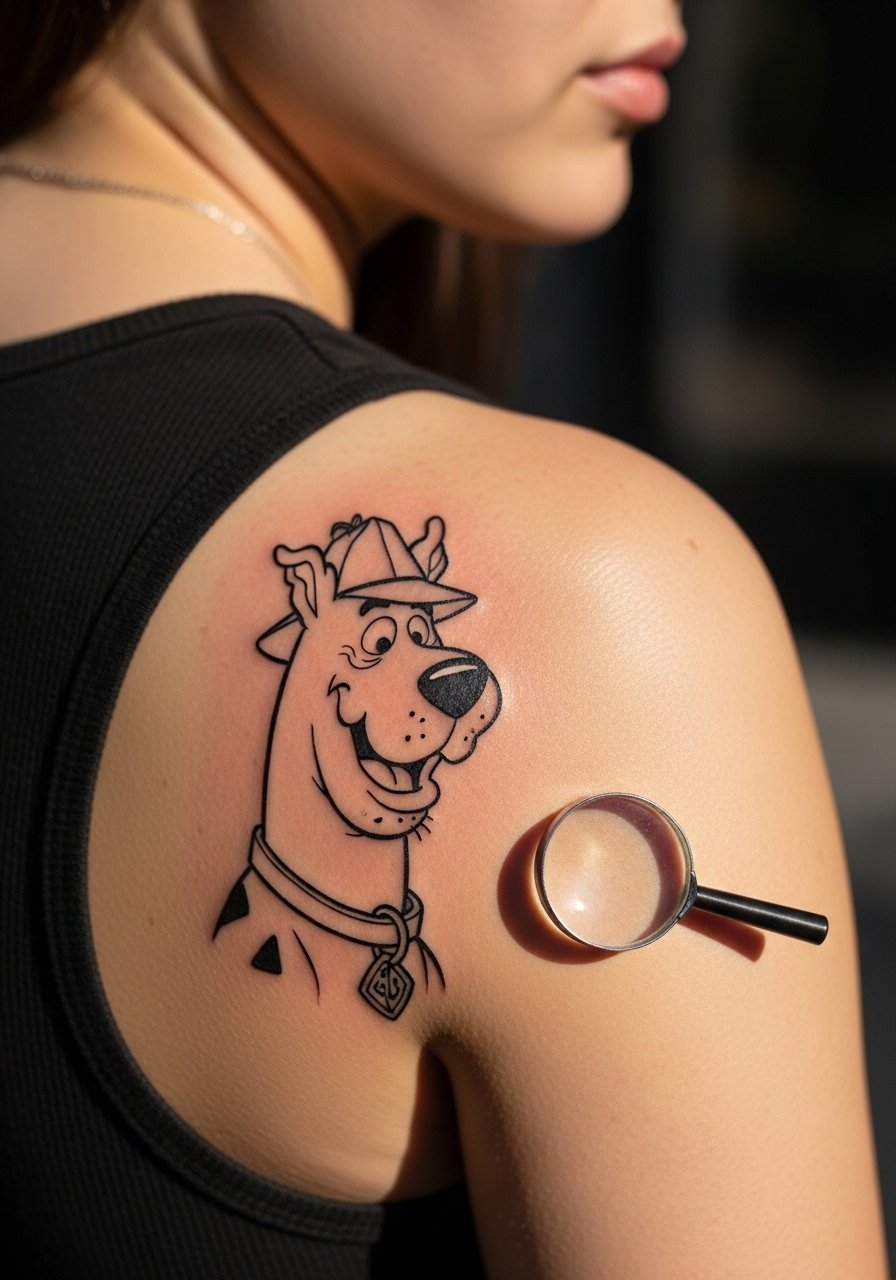
Shoulder blade placements stay protected and accept detail reasonably well. For a hat and magnifier motif, request clear silhouette separation and straightforward shading. A common mistake is tiny lenses that read as gray blobs after healing. Bring a loose tank or button-down you can move for access and plan for a one session piece if kept compact. The area is low pain and high reward for a playful character shot.
21. Mystery Machine as Standalone Vehicle on the Side Calf
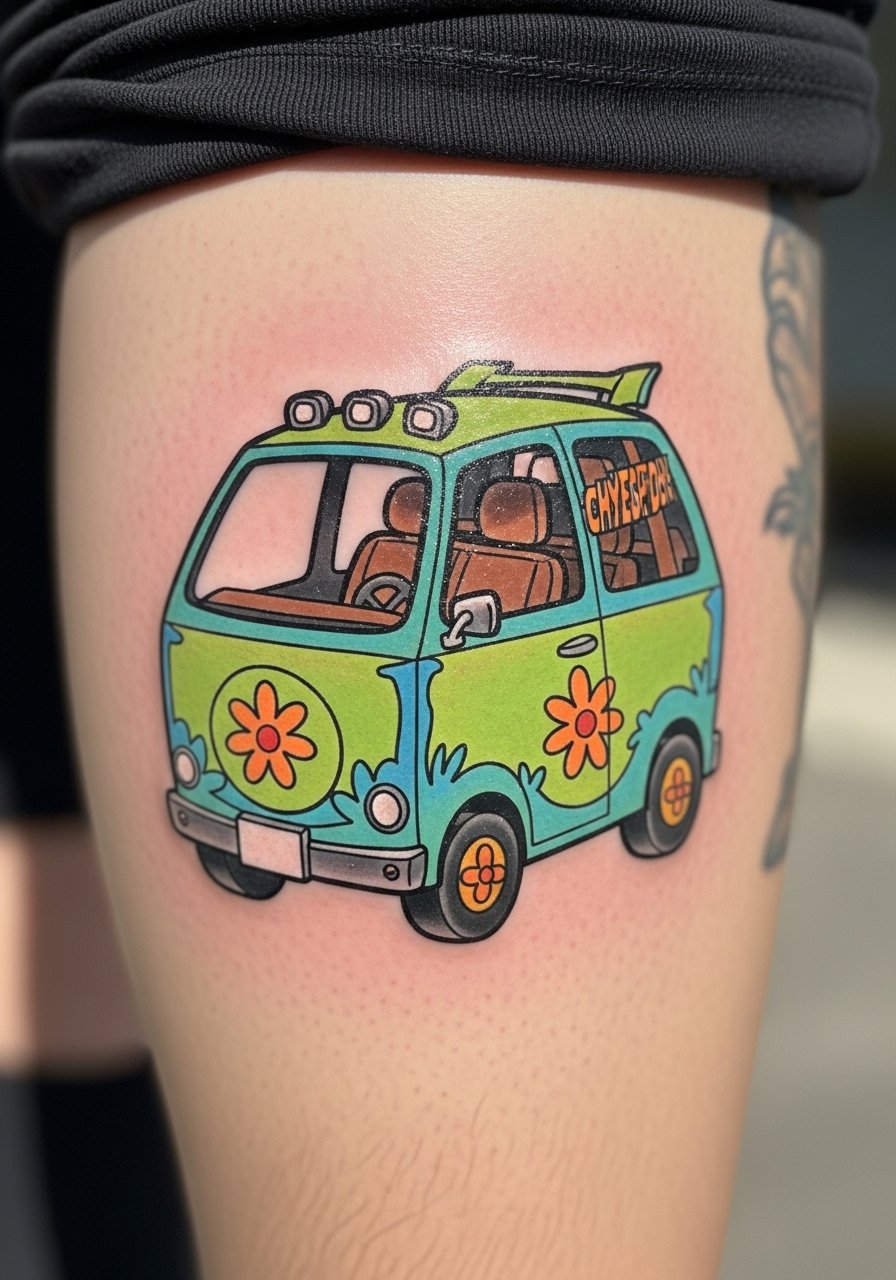
A full vehicle on the calf reads like an emblem and makes a strong standalone symbol for fans who want travel vibes without characters. Tell your artist to simplify chrome and tiny license plate details. The calf tolerates saturation well so colors last better than limbs that see more friction. For showing it off, slim-fit joggers rolled at the ankle pair nicely and keep the machine visible.
22. Scooby Silhouette with "Ruh-Roh" Script on the Ankle
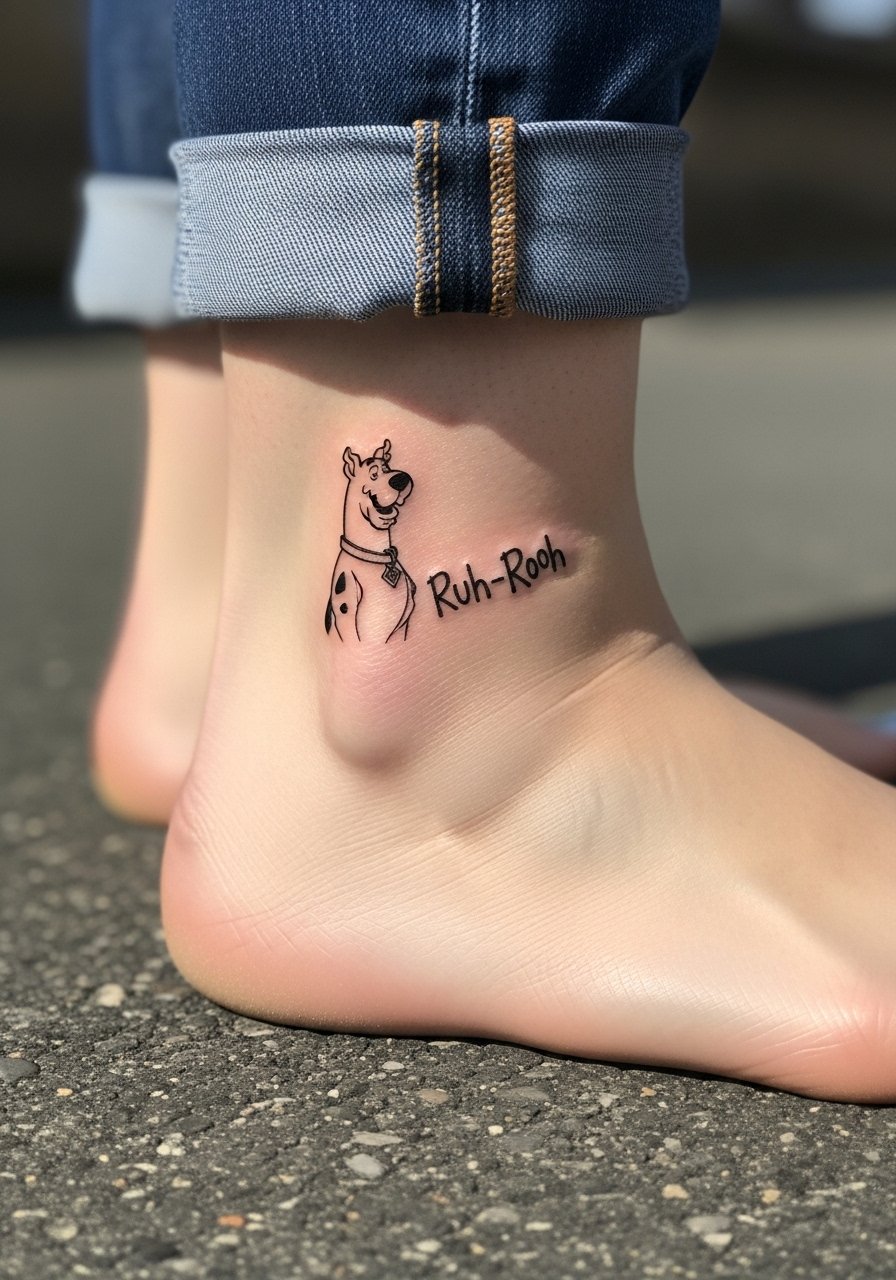
Ankle script needs slightly larger lettering to prevent merging, and the silhouette should stay simple. The mistake is combining micro script with a tiny figure. For session comfort, wear cropped pants and bring a slip-on shoe for easy removal. Low-cut ankle socks and boat shoes are perfect for showing this off once healed.
23. Scooby Paw Trail Turning into Map Icons on a Wrist Wrap
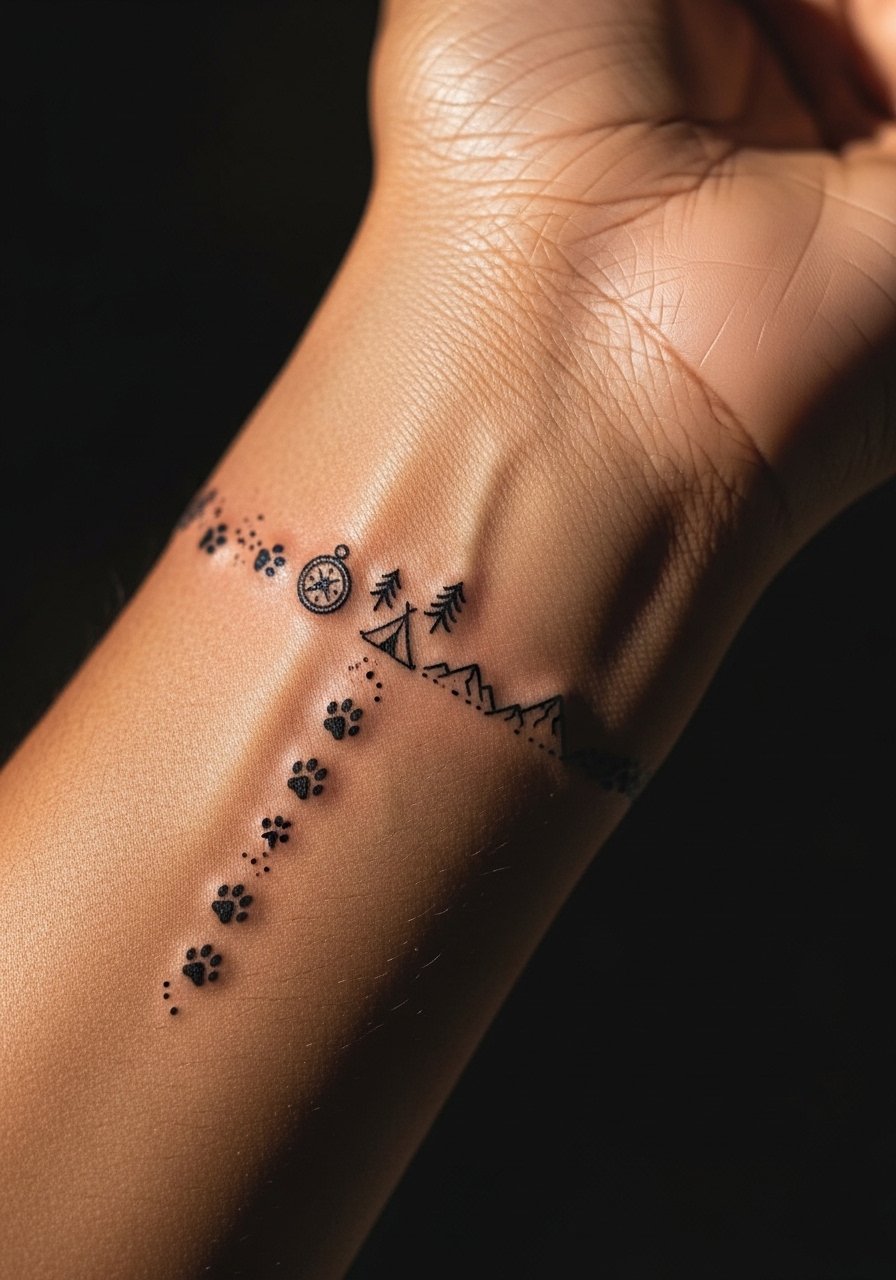
A wrist wrap composed of paw prints and map icons is playful and fits well into a small band. Keep each icon simple so the pattern does not blur into a smudge. A common session mistake is trying for too many icons in a single wrap. For the appointment wear a loose sleeve so the artist can work without fabric tugging. A minimalist leather bracelet on the opposite wrist complements the wrap after healing.
24. Daphne-Era Flower Accent Beside Scooby on the Collarbone
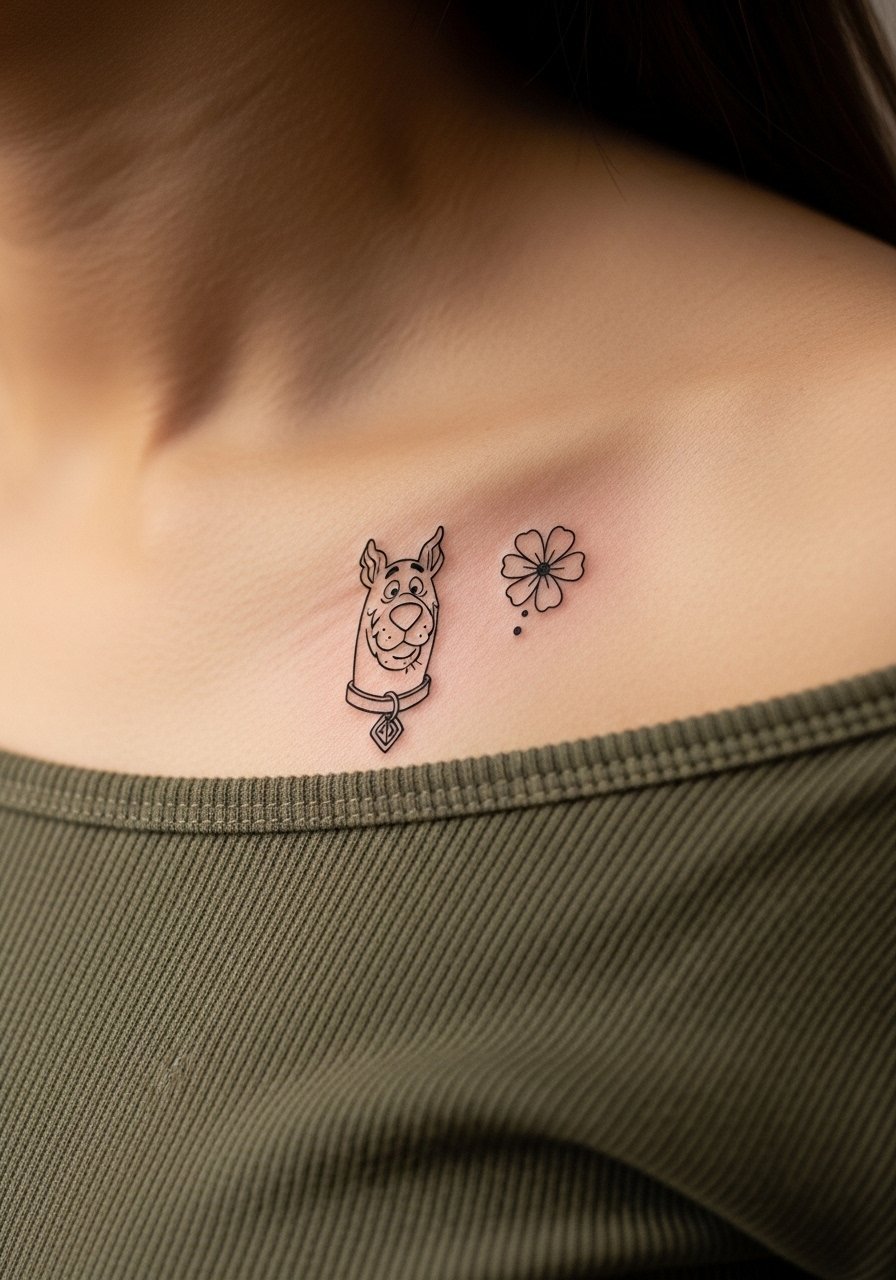
Combining a teammate accent with Scooby on the collarbone can create a subtle nod to the group dynamic. Keep the flower size balanced so both elements are readable. The collarbone experiences moderate sun exposure so cover it when possible to protect delicate shading. For showing the piece off, a layered chain necklace sits above the work and frames it without crowding the lines.
25. Micro-Realism Scooby Nose with Tiny Snacks on the Finger
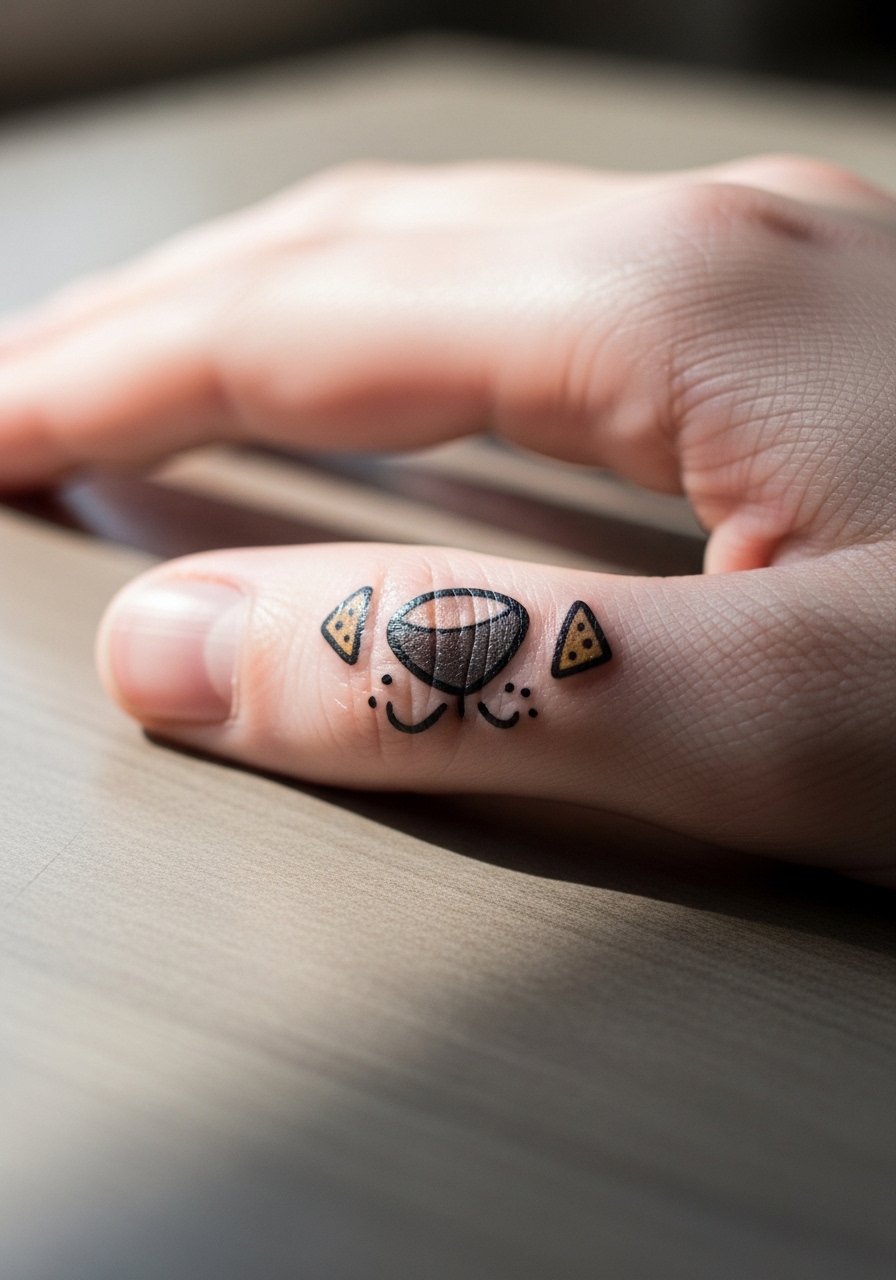
Finger tattoos face heavy friction from washing and typing so micro-realism here will demand touch-ups. The common mistake is underestimating how quickly finger ink fades. If you want a nose detail, ask for slightly bolder contrast and accept that the finger will need refreshing by year two. The session is quick but phrasing a realistic timeline with your artist helps set expectations for maintenance.
26. Mystery Map of the Haunted House with Tiny Scooby on the Calf
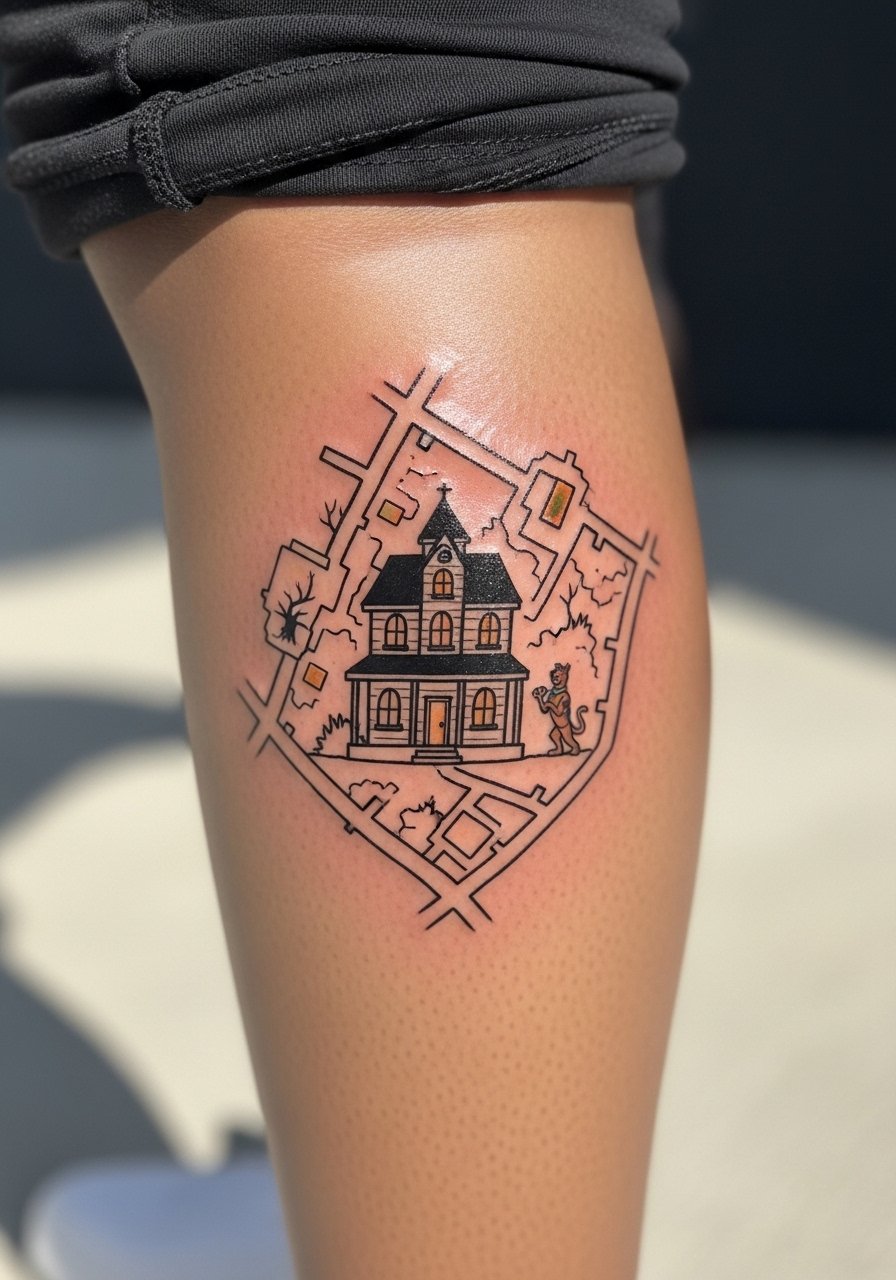
A map-style illustration reads best when kept schematic and uncluttered. The calf has room for it and the dash of color anchors the tiny Scooby. One mistake is adding too many small symbols that vanish after a year. Ask for simple icons and slightly thicker contour lines. For showing it off choose shorts or rolled joggers and avoid heavy fabrics that rub the area while it heals.
27. Minimalist Scooby Collarbone Script with Tiny Paw Accent
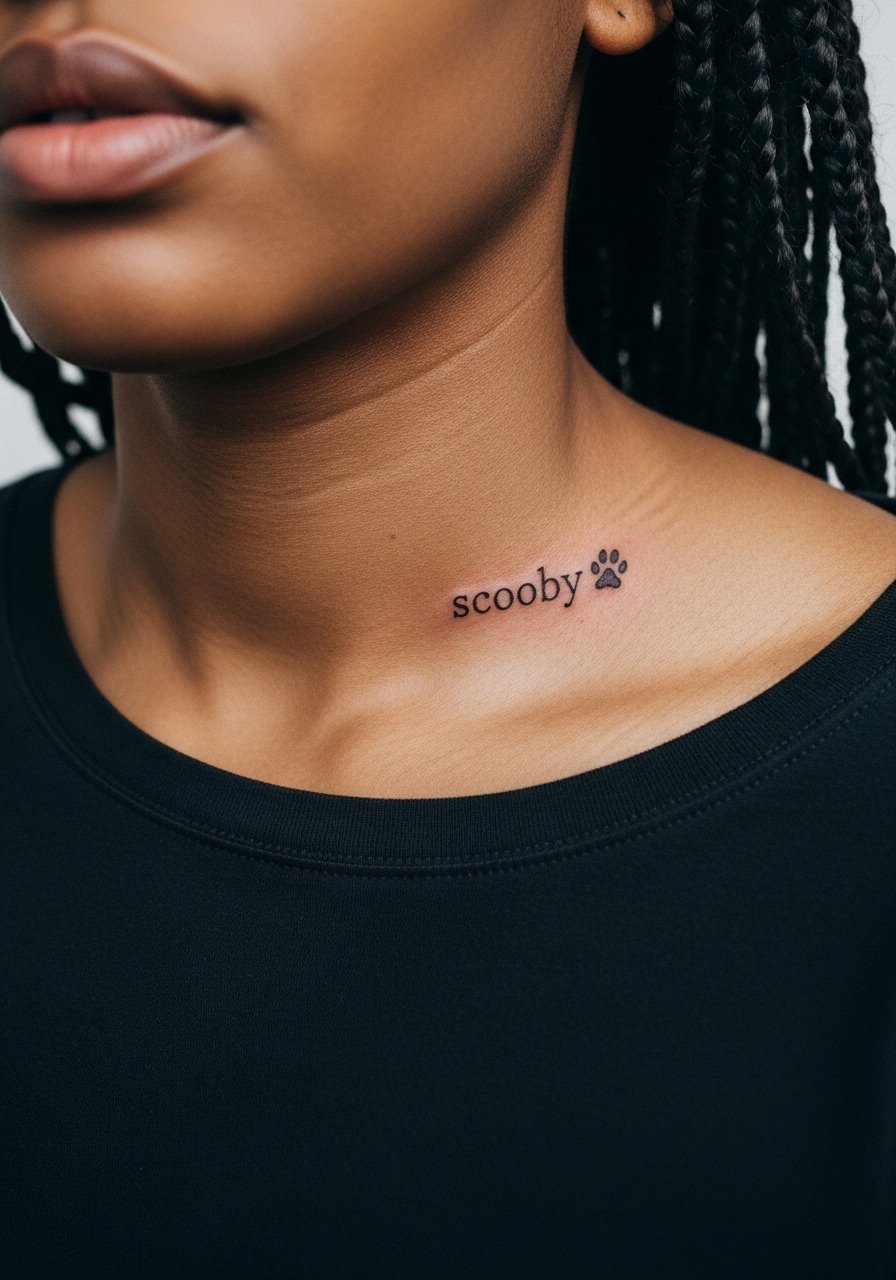
Collarbone script is delicate and public. Keep the script open and avoid ultra-tight cursive to prevent blurring. The paw accent gives a focal point that holds when the letters soften. A frequent hiring concern around neck and chest placements matters for some people so think through visibility before committing. For the session wear a wide-neck shirt and plan short intervals so you stay comfortable during the pass.
Frequently Asked Questions
Q: Will a fine line Scooby tattoo blur faster than a neo-traditional one?
A: From what I have seen, fine line pieces tend to soften sooner than bold neo-traditional work. One group of artists recommends fine line for its subtlety and accepts touch-ups later. Another group favors thicker outlines and heavier saturation for longevity. If you want the fine line look but longer wear, ask your artist to slightly increase line weight and discuss a realistic touch-up timeline.
Q: How should I dress for a shoulder or upper arm Scooby session?
A: Wear something loose you can pull aside like a loose button-down shirt or a racerback tank. Layering lets you stay warm between passes and gives the artist clean access without tugging fabric across fresh ink.
Q: Do watercolor Scooby Snacks fade faster than blackwork?
A: Watercolor styles often mellow into softer washes over time, especially on exposed limbs. Blackwork holds contrast longer. If you want watercolor, plan on sun protection and possible color refreshes. Anchoring watercolor with thin lines helps composition keep its shape.
Q: Are ankle and finger Scooby tattoos worth it for first-timers?
A: They are compact and sweet but require maintenance. Fingers and ankles face more friction so expect earlier touch-ups. If you prefer lower upkeep, consider slightly larger or bolder versions on the forearm or calf.
Q: How do I find an artist who understands cartoon shading for darker skin tones?
A: Use hashtags like #ScoobyDooTattoo and #CartoonTattoo on Instagram and ask for healed photos on similar skin tones. Search tattoo directories for specialists in cartoon realism and check community threads for portfolios that show healed work across skin tones.