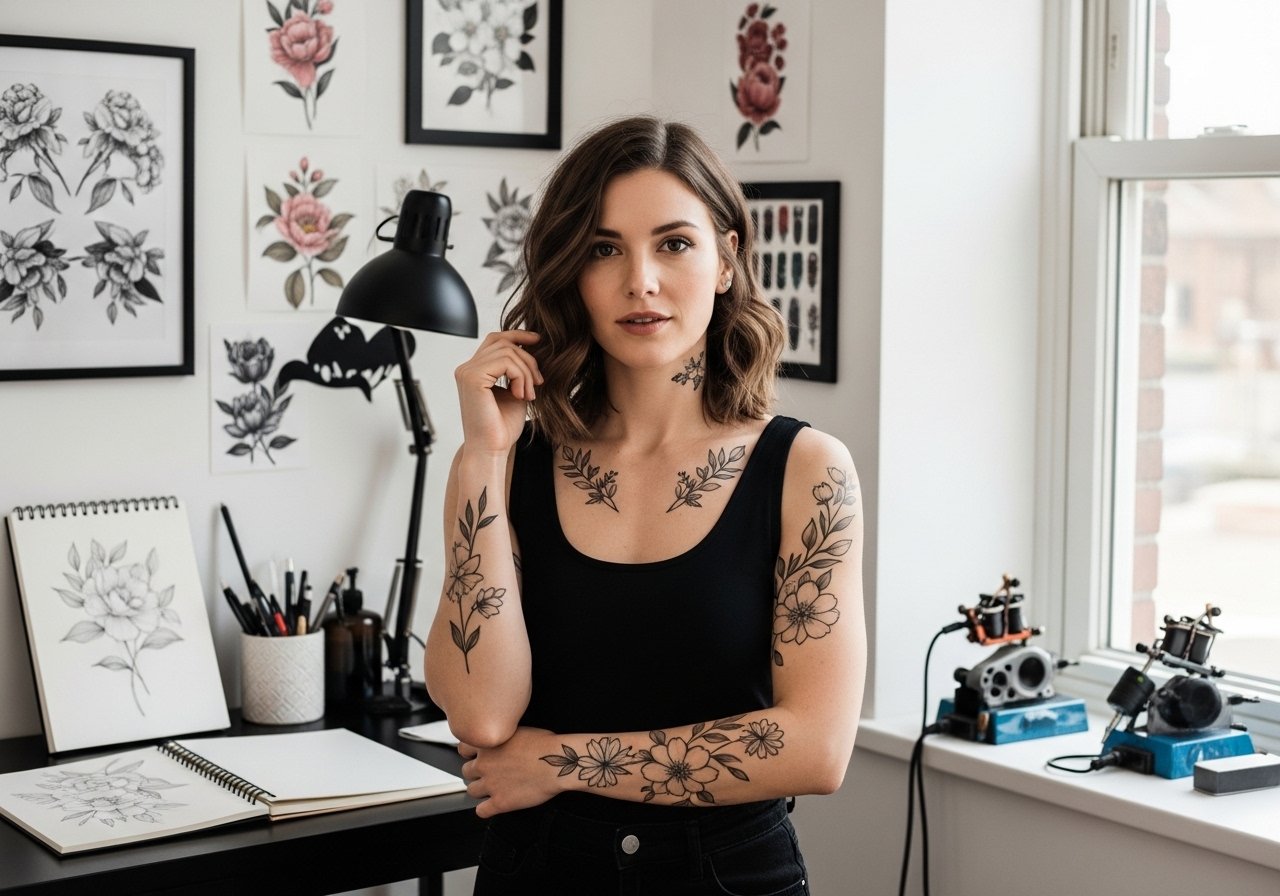
Fine line work rules trends and reality at once. The aesthetic looks almost weightless against a low back curve, but longevity depends on placement, spacing, and daily friction from waistbands. If you want something small that still reads clean at year three, think about spacing and where clothing will rub. Below are 21 focused ideas for dainty low back tattoos and how to choose, wear, and live with them.
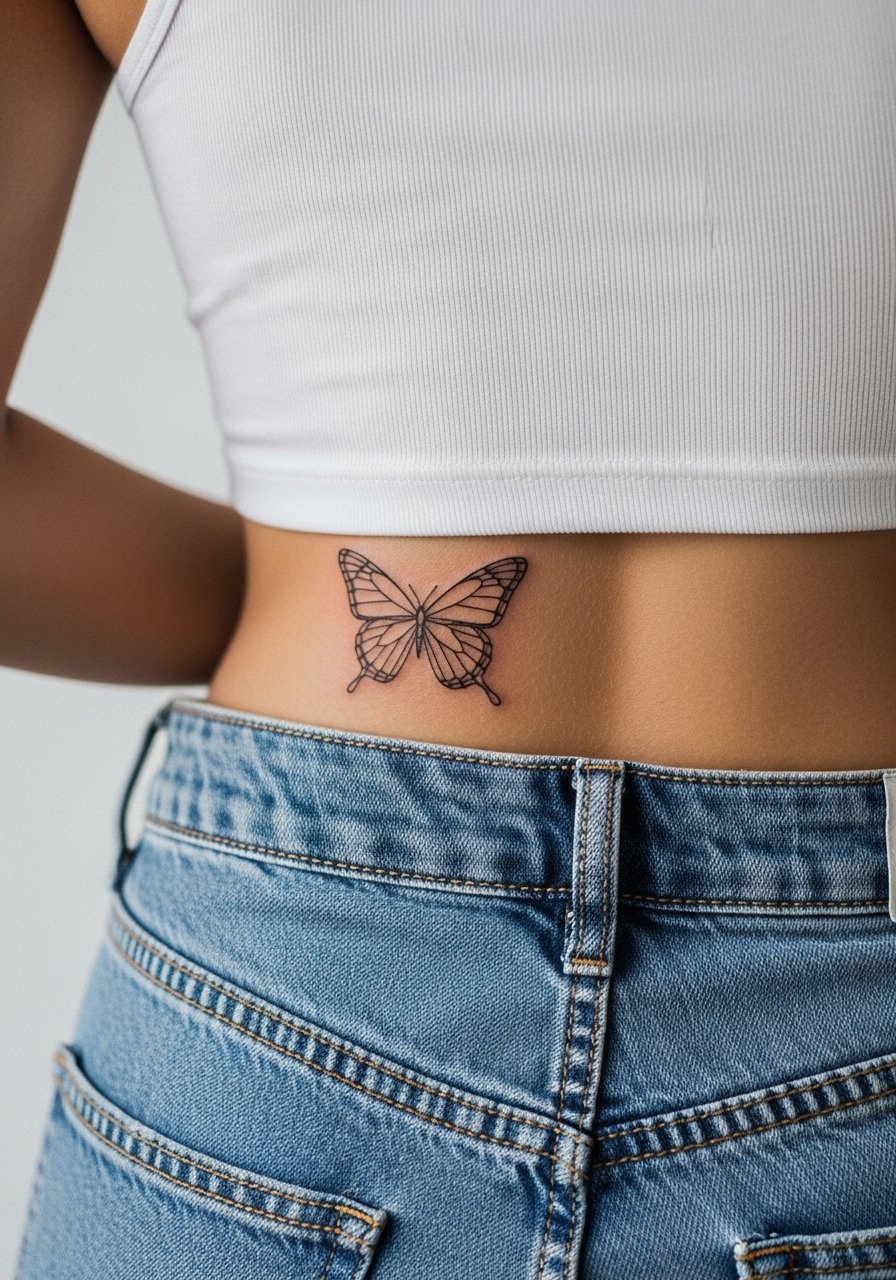
1. Fine Line Butterfly Wings Above the Waistband
I've seen this winged motif peek out of low-rise jeans and still read delicate after two touch-ups. Ask your artist for upper low back placement that sits just above the waistband and for a 2 to 3 inch wingspan so the filigree has room to breathe. Common mistakes include cramming too many veins into the wings, which leads to merging as the ink heals. Expect mild discomfort as the needle crosses the bony top of the pelvis, but most sessions finish in under an hour. For showing it off, a low rise jeans women look frames the wings without covering them. Touch-ups are normal around year two for ultra-fine linework.
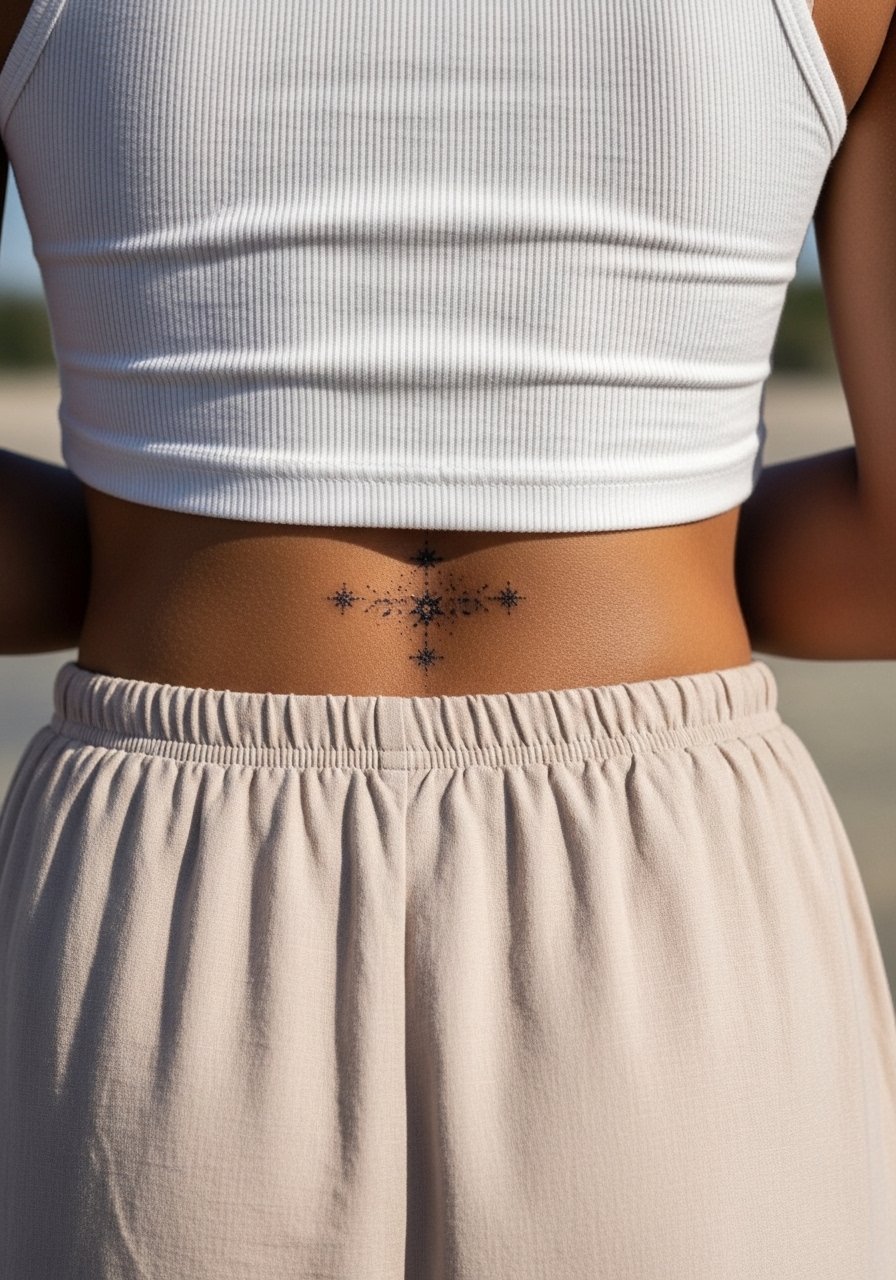
2. Minimalist Celestial Stars Centered on the Spine
When you want subtle sparkle that reads personal, a centered constellation works well for navigation motifs. Tell your artist you want tiny, evenly spaced dots and stars aligned to your spine so the band reads symmetrical when you stand. The biggest error is packing the stars too tightly, which leads to spotting and loss of negative space at year two. The session is quick and the pain is usually mild, but the exact placement affects how visible it becomes above high-waisted skirts. For appointment comfort, wear a flowy maxi skirt you can pull slightly low and a loose top. Expect a touch-up window around year three for dot work that carries weight.
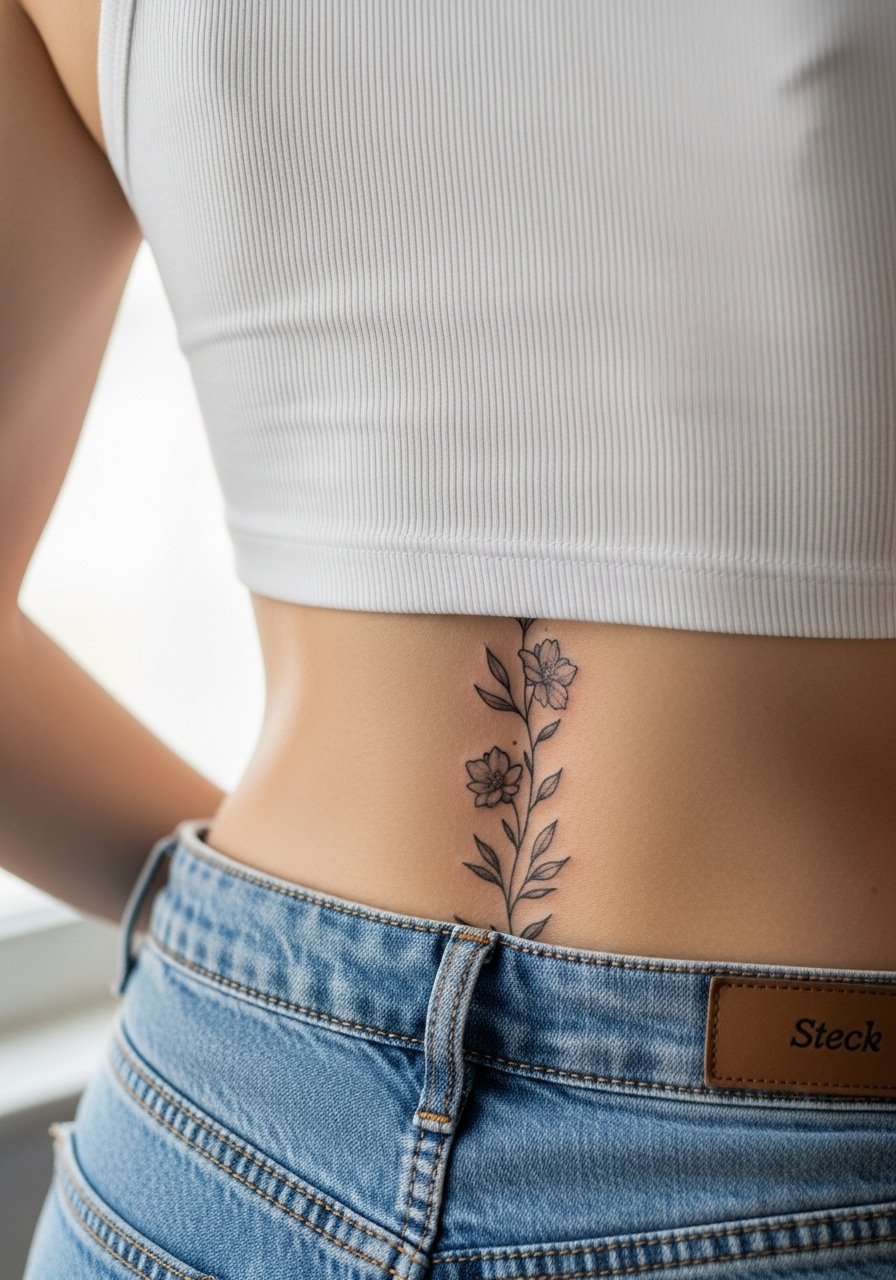
3. Dainty Floral Vine That Follows Spine Curvature
The vine that traces the spine reads as movement when designed to follow natural curves rather than as a straight line. During consultation ask for 4 to 6 inches of spacing between blooms and for soft gray wash to suggest depth without heavy saturation. A common mistake is adding dense shading close to the spine, which can blur over time. At six months the stems look crisp, and at two to five years thin stems may need a light touch-up. Session feel is modestly tender along the spine. If you plan to reveal it, a backless mini dress pairs well for evening looks and draws attention upward.
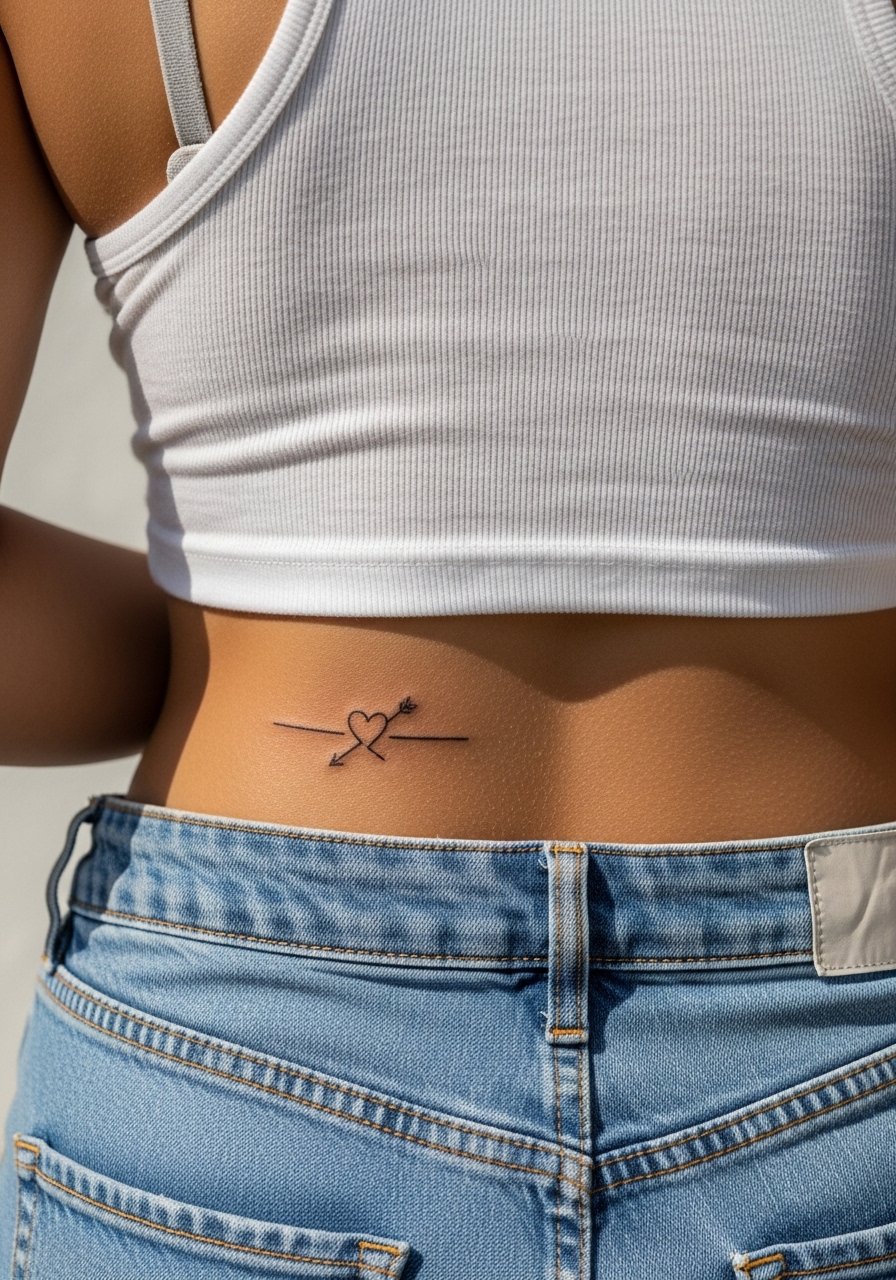
4. Tiny Heart Outline with Arrow, Offset Low Back
When someone wants playful nods to older trends without heavy commitment, a small heart with a thin arrow offset toward the hip is classic. Ask for a 2 inch outline and for the arrow to be light with open spacing in the shaft to prevent lines merging. A frequent mistake is insisting on hairline thickness, which often fades and looks patchy by year two. The session is brief and pain is low near soft tissue. For casual reveals use a thong bikini set or a sarong for beach days. Plan on a touch-up if you want the outline to hold sharp edges beyond three years.
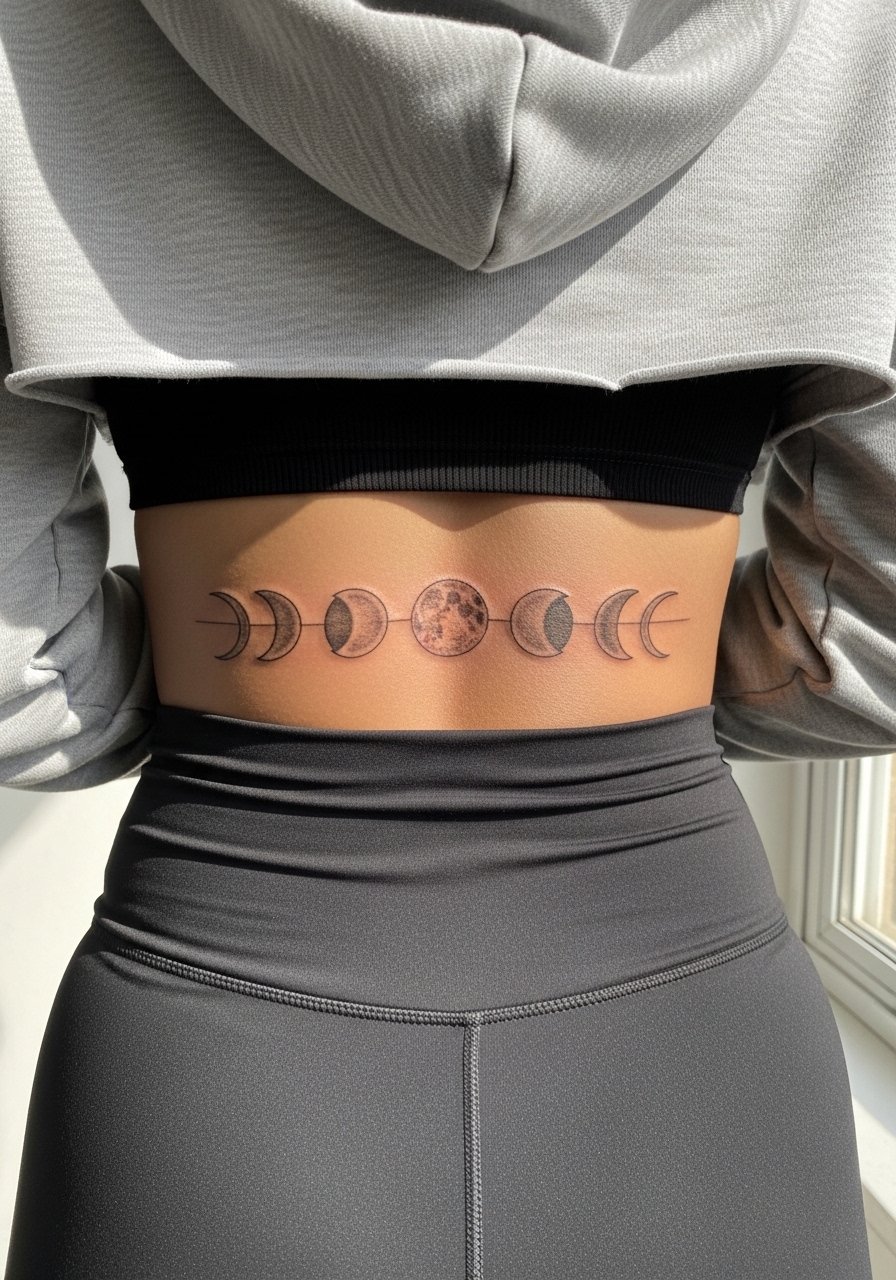
5. Delicate Moon Phases as a Horizontal Band
There is an elegant simplicity to a small moon phase band across the low back, and the trick is balancing diameter with spacing. Request a 3 to 5 inch horizontal band and subtle crescent shading rather than saturated fill. If the phases are packed too close they can wash together with time. At six months the moons hold crisp edges, at two years thin crescents may need micro touch-ups. Sessions feel steady along the lower back band and take about 45 minutes. For seasonal peeks try a cropped hoodie women with high-waist pants so the band shows when you lift the top slightly.
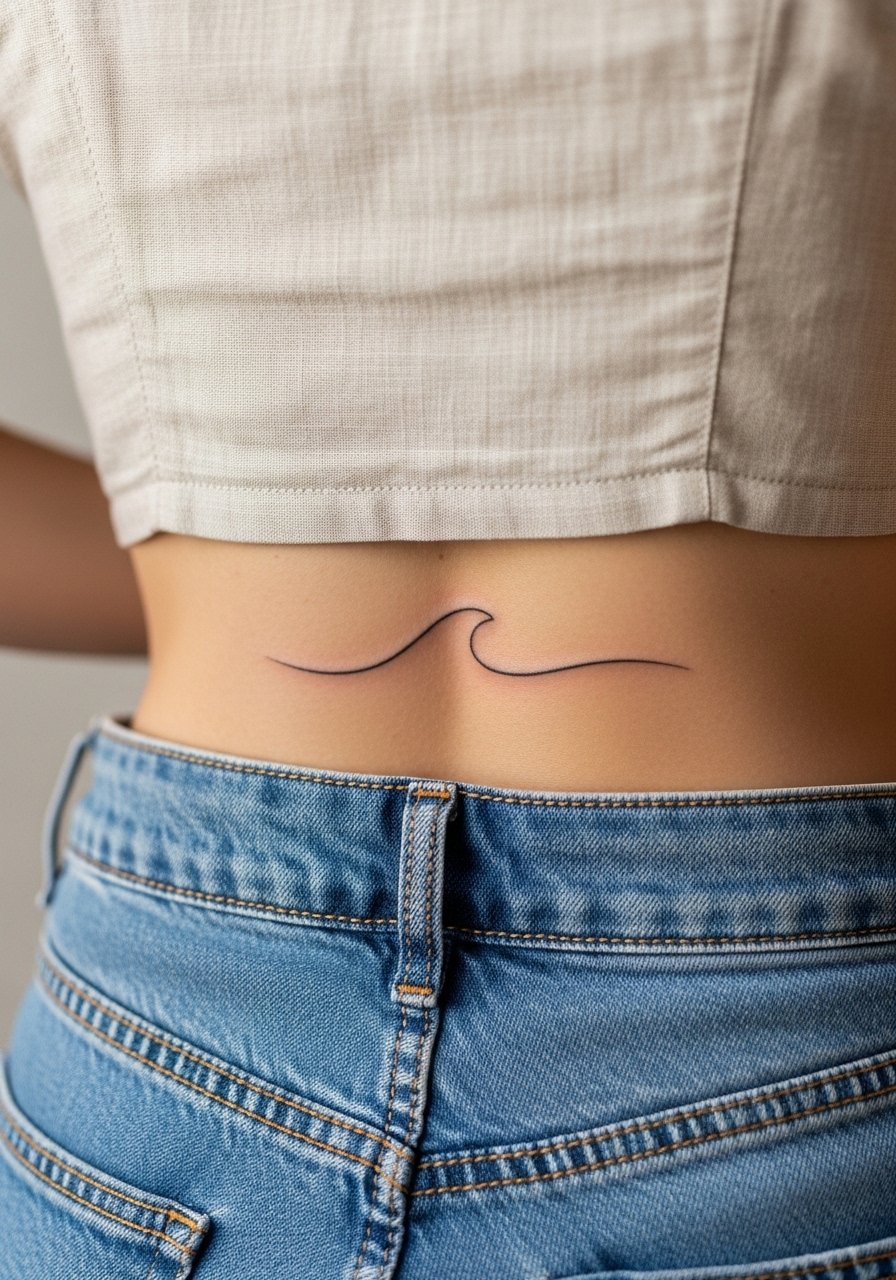
6. Single Line Wave Curve Nestled in the Dimple
Fair warning, placing a single curve right in the lower back dimple reads organic but requires precise centering. Ask for a 3 inch smooth curve and a single pass linework approach so the wave stays clean. A real mistake is asking for extra tiny curls that create unnecessary needle passes and more trauma to the skin. The session is short and discomfort is low in the dimple area. For showing it off, low-rise jeans or a linen crop top keeps attention on the curve. Expect touch-ups much earlier if you wear tight waistbands that rub the area regularly.
Studio Day Picks
The lower back designs above vary in exposure and friction, so a few items smooth out the session and the first week.
- Stencil transfer paper kit. Lets you preview the exact placement and symmetry for centered spine pieces and bands before the needle touches skin.
- Topical numbing cream. Applied per manufacturer directions reduces the sting during dense vine or band sessions without affecting linework in most cases.
- Thin protective film roll. Useful for shielding the tailbone cluster or low back band from waistband friction during the first 48 hours.
- Fragrance-free body wash. Gentle cleansing helps preserve fine line edges when you shower in the initial healing window.
- Aquaphor healing ointment. A thin layer in the first few days keeps delicate linework hydrated and reduces scab cracking risk.
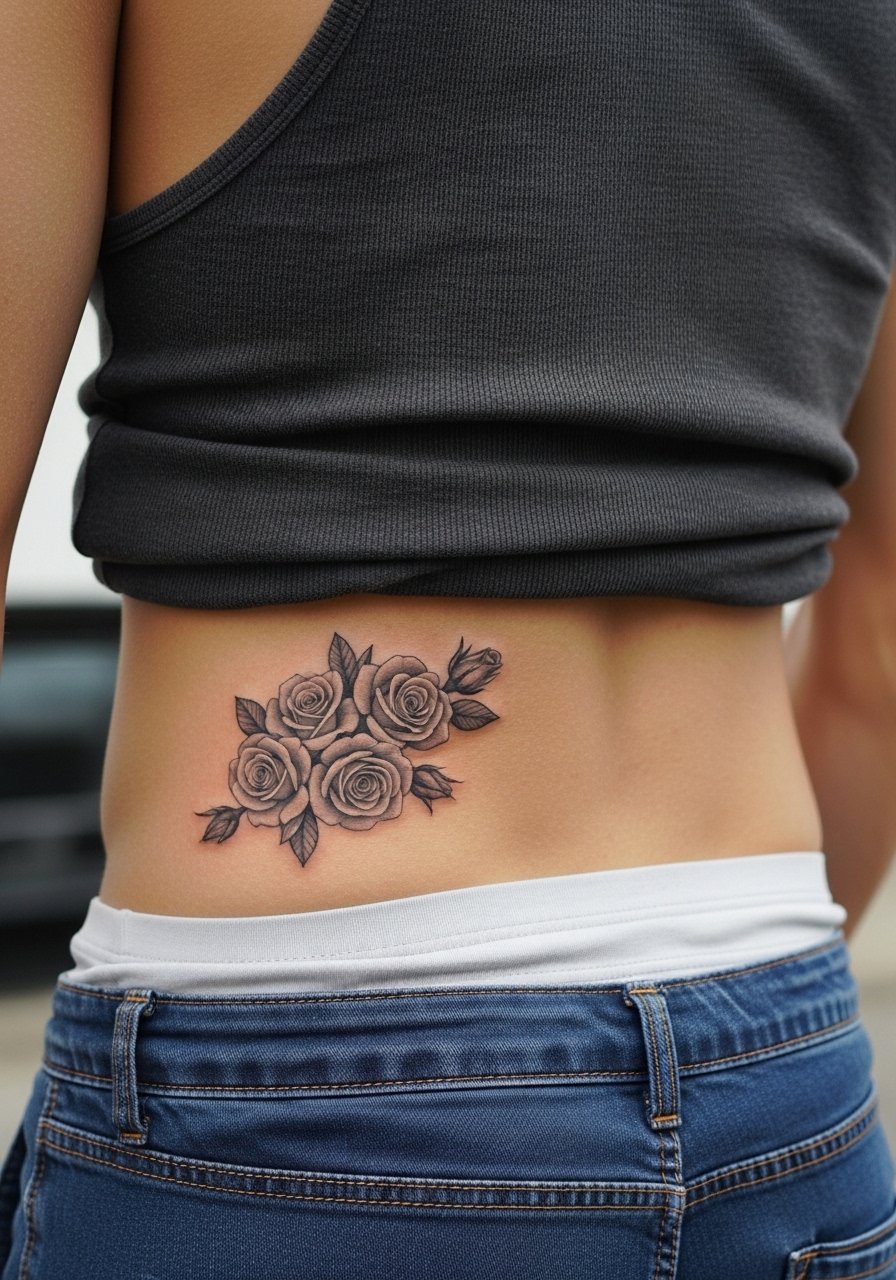
7. Micro Rose Bud Cluster at the Tailbone
Artists often recommend a 2 inch clustered rose bud at the tailbone because it sits cleanly in the dimple and can be hidden easily. During the consult say you want soft gray highlights rather than saturated petals so it ages with less contrast. The mistake is asking for dense petal fill that loses definition as skin settles. Session-wise the tailbone can be tender but brief. There is a debate among artists about low back micro-realism. One camp insists micro realism needs larger surface area to hold detail. The other camp says with precise spacing micro detail can last. Ask where your chosen artist stands before booking.
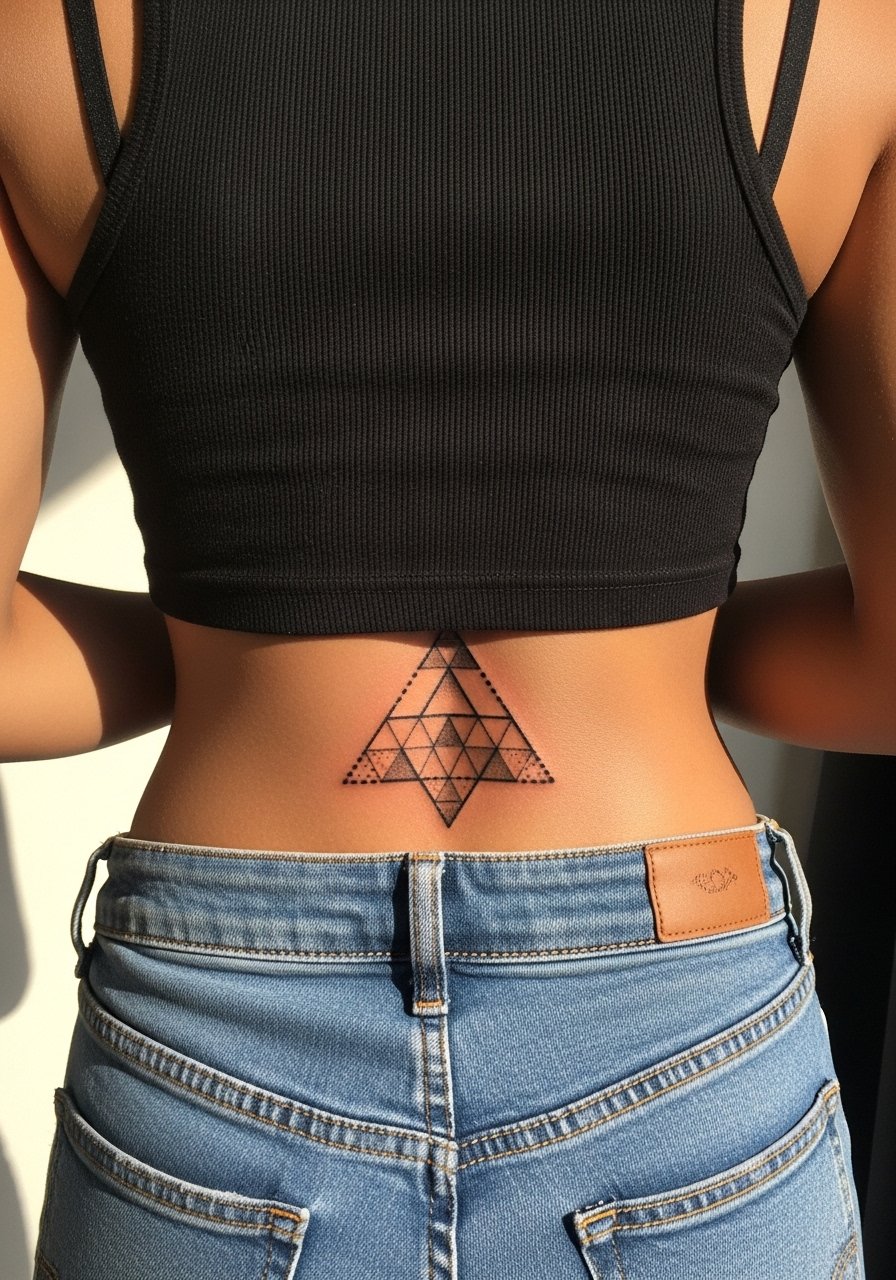
8. Geometric Triangle with Dotwork Framing the Spine
This modern symmetry reads architectural when the triangle is sized around four inches and the dotwork gets gradually denser toward the base. Tell your artist to leave breathing room between dots so stipple shading does not merge in a few years. The usual mistake is overfilling the dot matrix, which creates unintended gray blocks. Sessions take longer because dot work is methodical, and clients report a rhythmic tapping sensation more than sharp pain. For evening wear try a backless mini dress to let the geometric frame be the focal point. Budget on a light touch-up at year three for dense dot transitions.
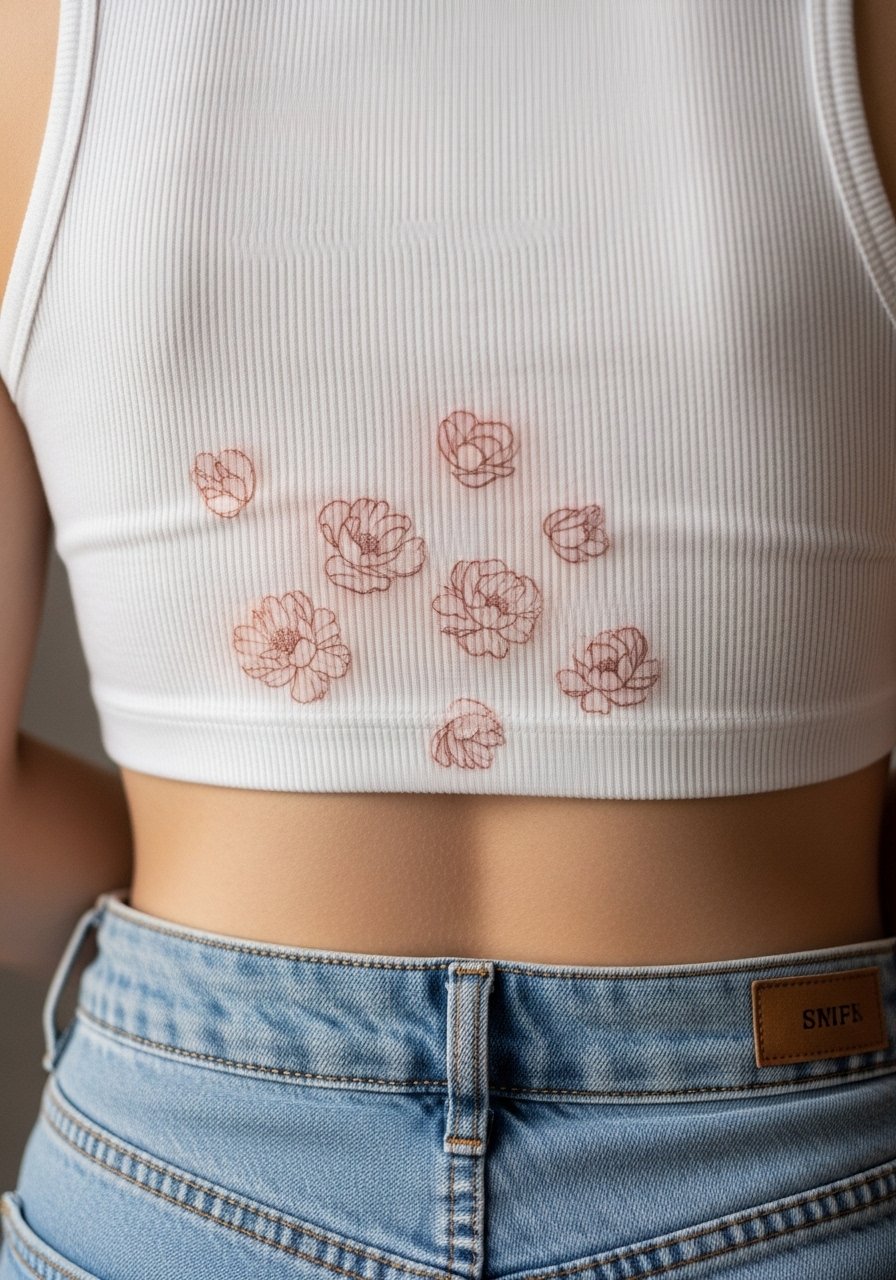
9. Fine Line Peony Petal Scatter, Upper Low Back
I've noticed peony petal scatters read luxurious when spaced across a 5 inch spread rather than grouped tightly into one bloom. Ask for soft linework edges and light gray stipple to suggest petal depth. The common error is requesting dense petal overlap that ages into indistinct smudges. Visually the scatter lifts the waistline when paired with certain clothes. Session time is moderate and there is mild tenderness. If you want discreet reveal options, choose high-waisted bottoms and crop tops. Expect a small touch-up where the petals intersect after two to three years.
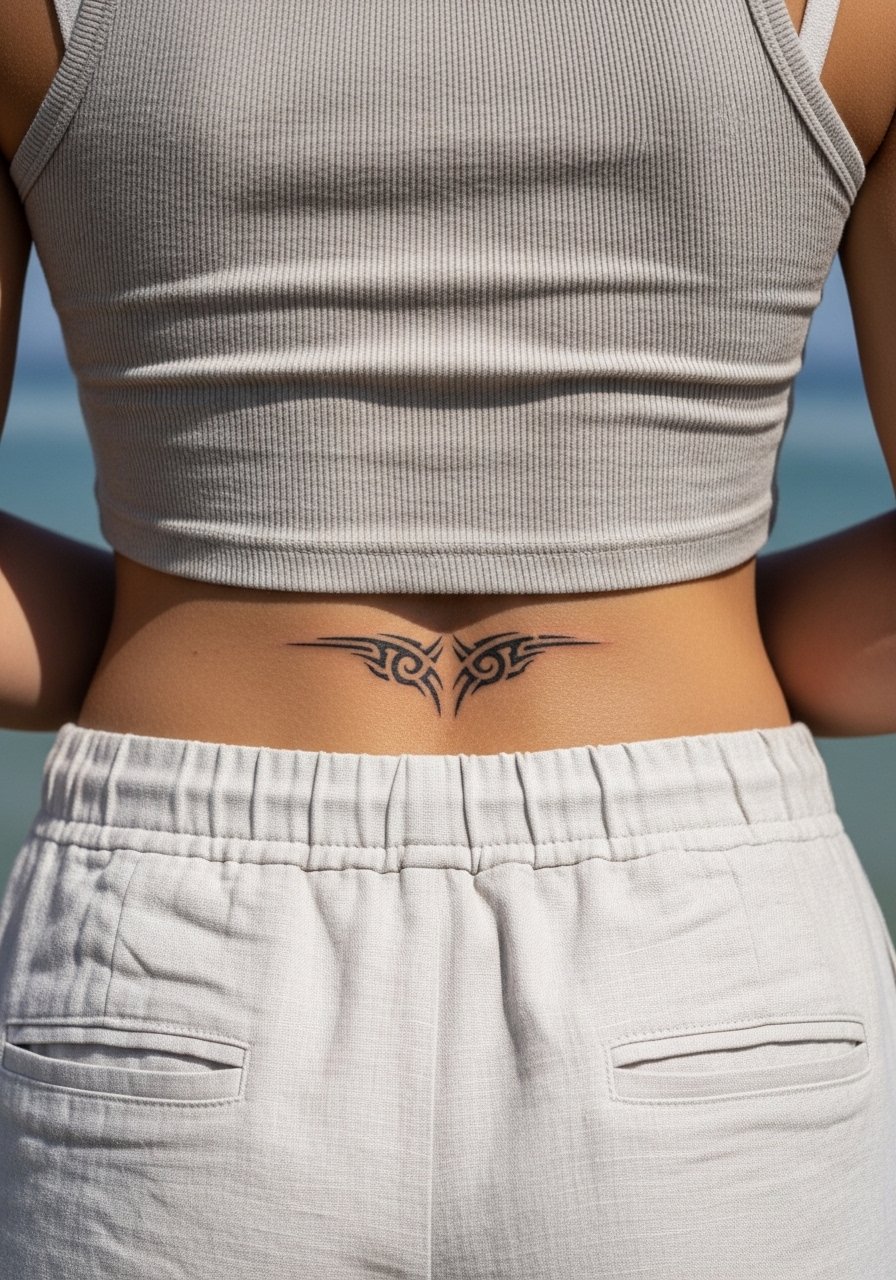
10. Delicate Tribal Motif Outline, Thinned for Today
When people ask for a tribal revival, I point to thinned outlines and intentional negative space rather than thick saturation. During consultation specify which traditional elements you are reinterpreting and ask for simplified motifs that avoid heavy filling. A frequent mistake is copying a dense tribal flash, which reads dated and tends to blow out on low back curves. Pain and session time vary by size. For session ease wear a loose drawstring linen pant so the artist can access the low back without waist pressure. Consider cultural origin respectfully and avoid direct replicas of sacred patterns.
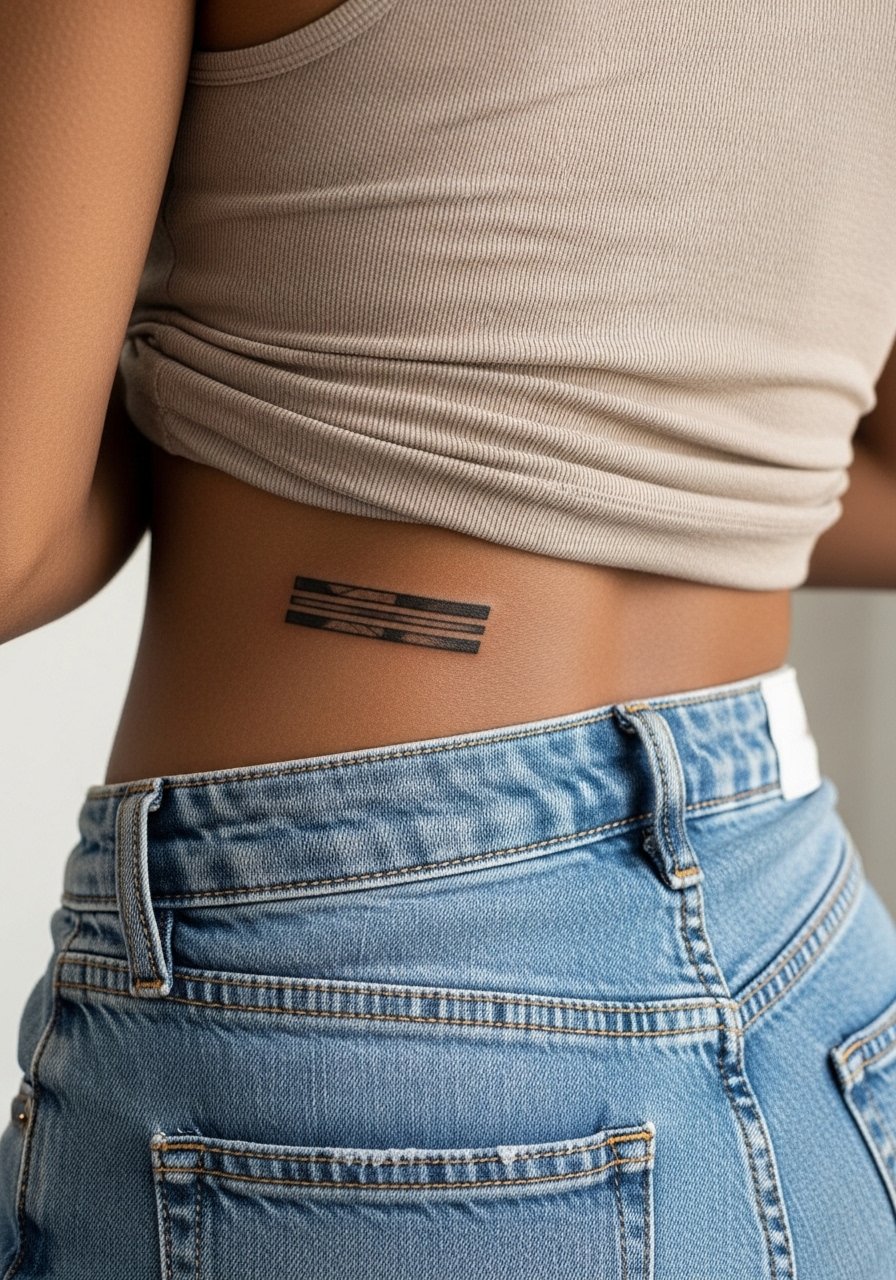
11. Micro Geometric Band That Reads Like Jewelry
The wrist has jewelry, and a thin geometric band on the low back can do the same visually when placed just above the belt line. The biggest mistake is making the band too tight around the curve. Ask for a slightly arched layout so it sits flat when you move. This piece heals predictably but thin bands show wear faster in friction zones. Sessions are brief and discomfort is low. For showing the piece consider crop tops and low-rise bottoms. Touch-ups every three to five years keep the band looking crisp if you wear tight clothing regularly.
12. Minimal Script Word Along the Curve
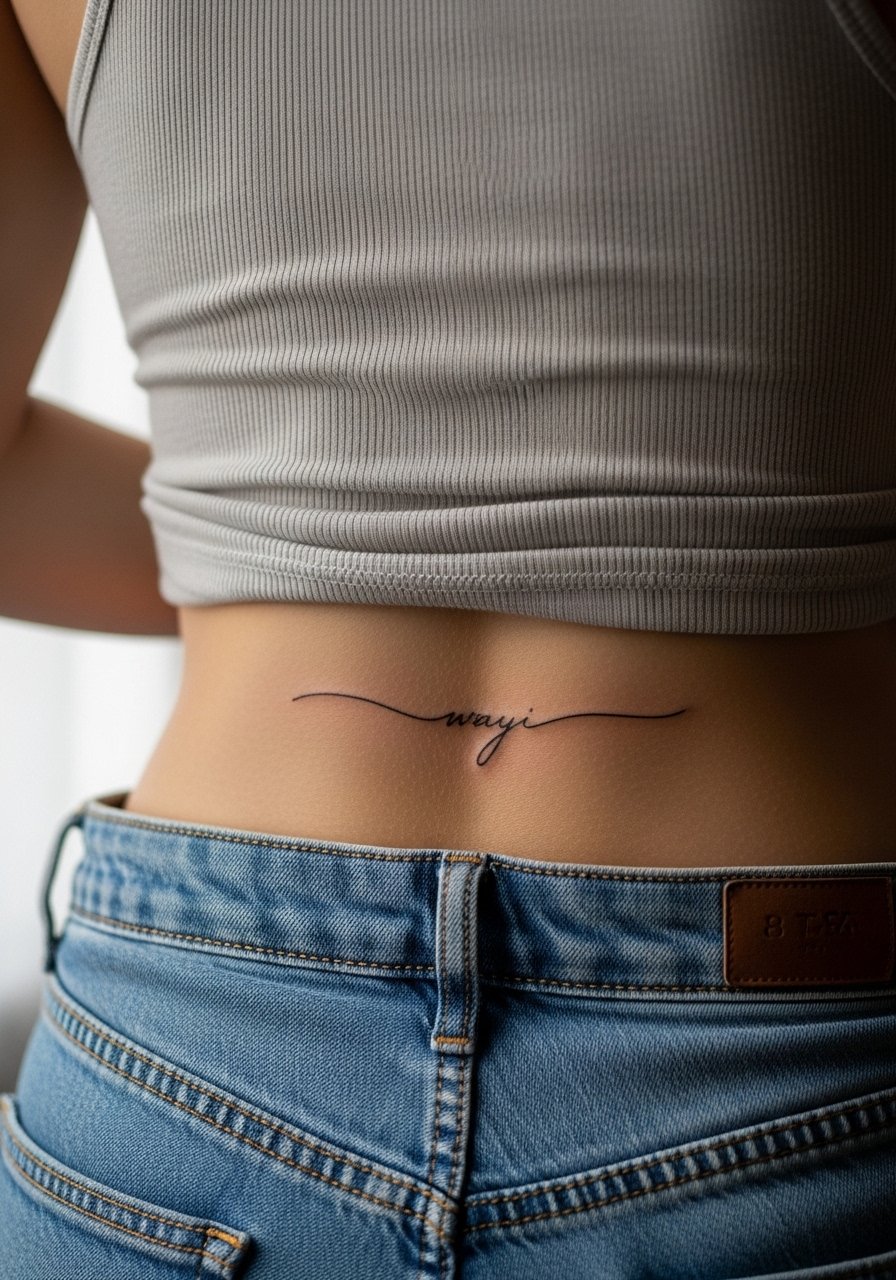
When text hugs the lower back curve, spacing and font weight make all the difference. Bring exact wording and a font sample that shows letter spacing at actual size, and ask the artist to stencil it on so you can move to check legibility. A common mistake is choosing a very thin script that fades into a smudge over time. Sessions feel quick and are mildly tender. For an evening reveal, a sheer lace bralette layers well with low-rise pants and keeps the focus off the font. Plan a touch-up for any letters that lose tail clarity after a couple of years.
13. Tiny Constellation Cluster, Asymmetric Placement
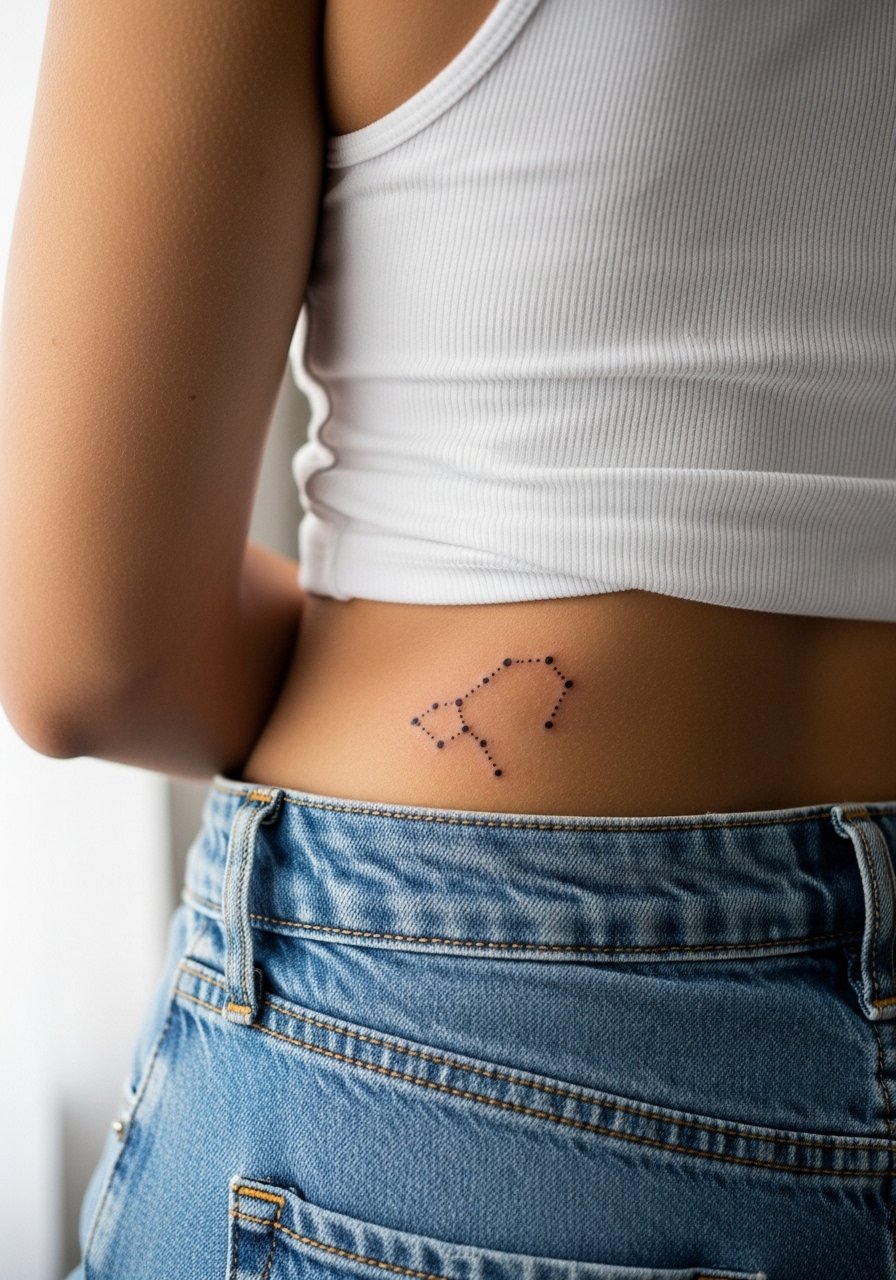
There is a different energy when constellations sit offset from the spine toward one hip, and the asymmetry keeps it feeling personal. Ask your artist to map stars so the layout references a true constellation or a cluster you choose, with 1 to 3 anchor stars larger than the rest. The common error is random dot placement that looks scattershot on photos. Sessions are fast and the pain is minimal. This placement is great for peeking with swimwear or low-rise jeans. Expect touch-ups to maintain contrast if you get frequent sun exposure on the lower back.
14. Micro Mandala Petal at the Center Tailbone
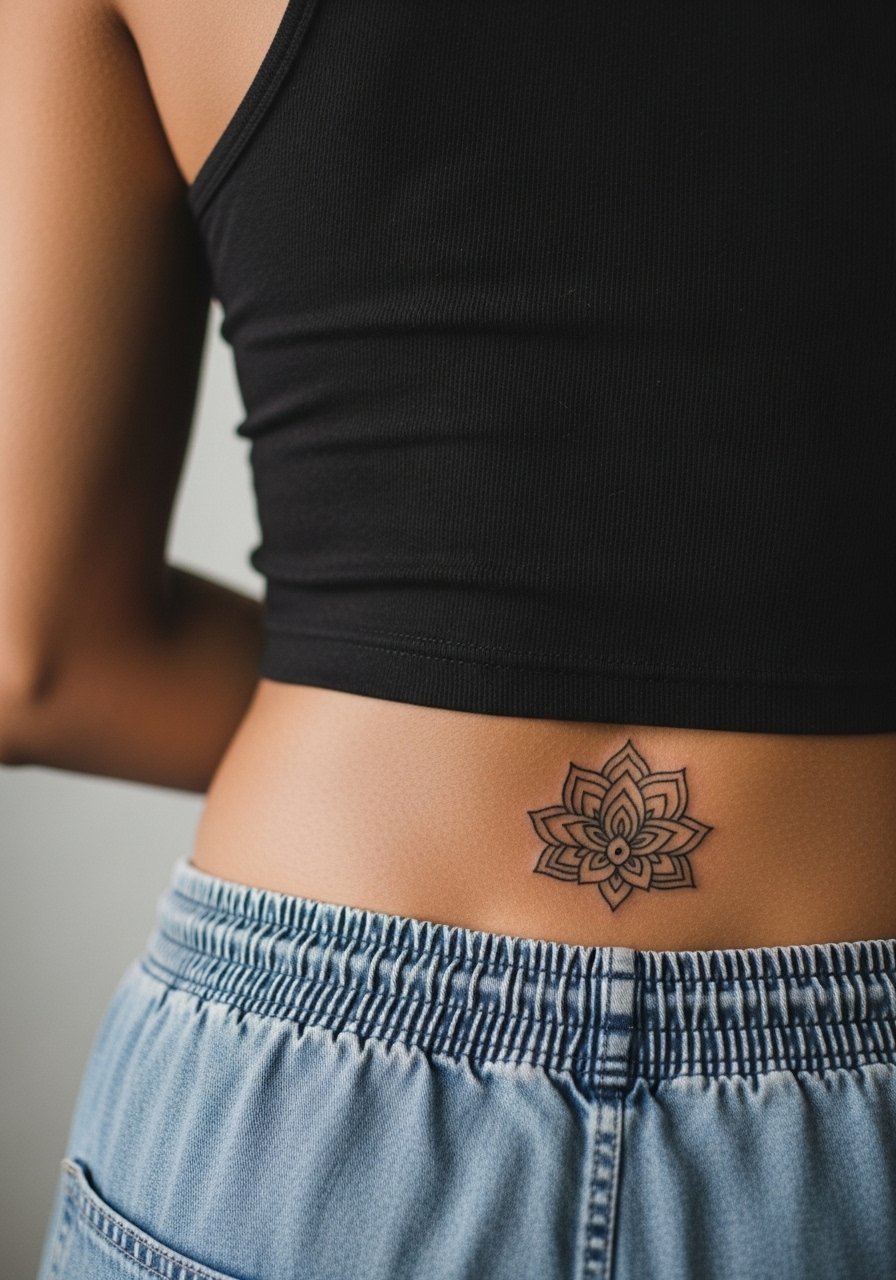
A small mandala centered at the tailbone can look crisp for years if scaled properly and spaced with open negative areas. The mistake is packing too many concentric lines into two inches. Ask for simplified mandala geometry with larger petal forms and stipple gaps for longevity. The tailbone area is tender during the session and you will want to schedule in the knowledge that sitting right after can be uncomfortable. For post-session comfort choose elastic waist shorts that avoid pressure on the area. Mandalas borrow from cultural traditions, so consider subtle variations rather than exact replicas.
15. Tiny Anchor or Nautical Symbol Near the Hip
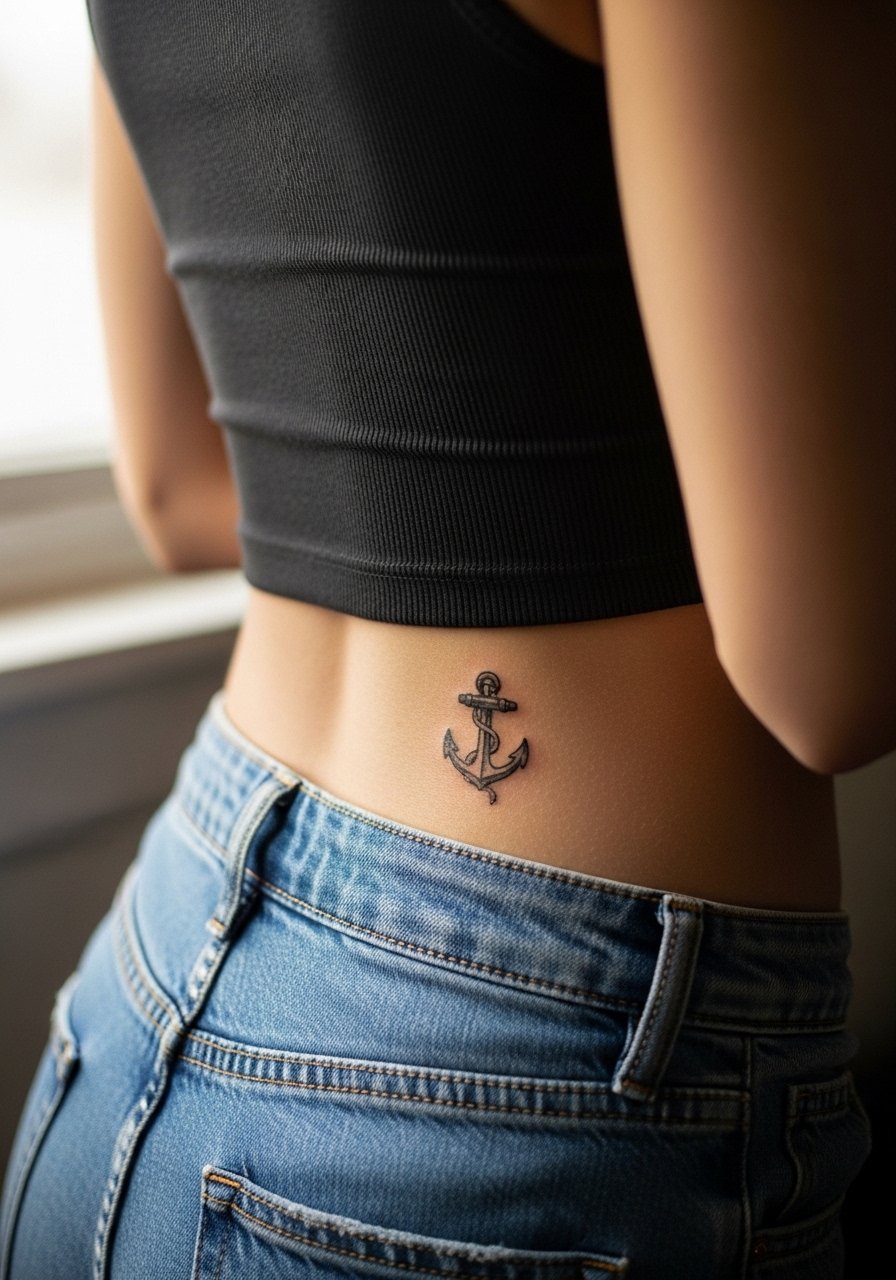
I've noticed nautical motifs age well when the lines are kept bold enough to survive friction from swimwear. Ask for slightly stronger line weight than purely hairline so the anchor maintains silhouette over time. A mistake is asking for micro hairline anchors if you intend to surf or wear low-cut trunks often. Sessions are quick and sensitivity is low near the hip. This placement pairs cleanly with a thong bikini set or sarong when you want it visible. Plan on periodic touch-ups if your lifestyle includes a lot of ocean time.
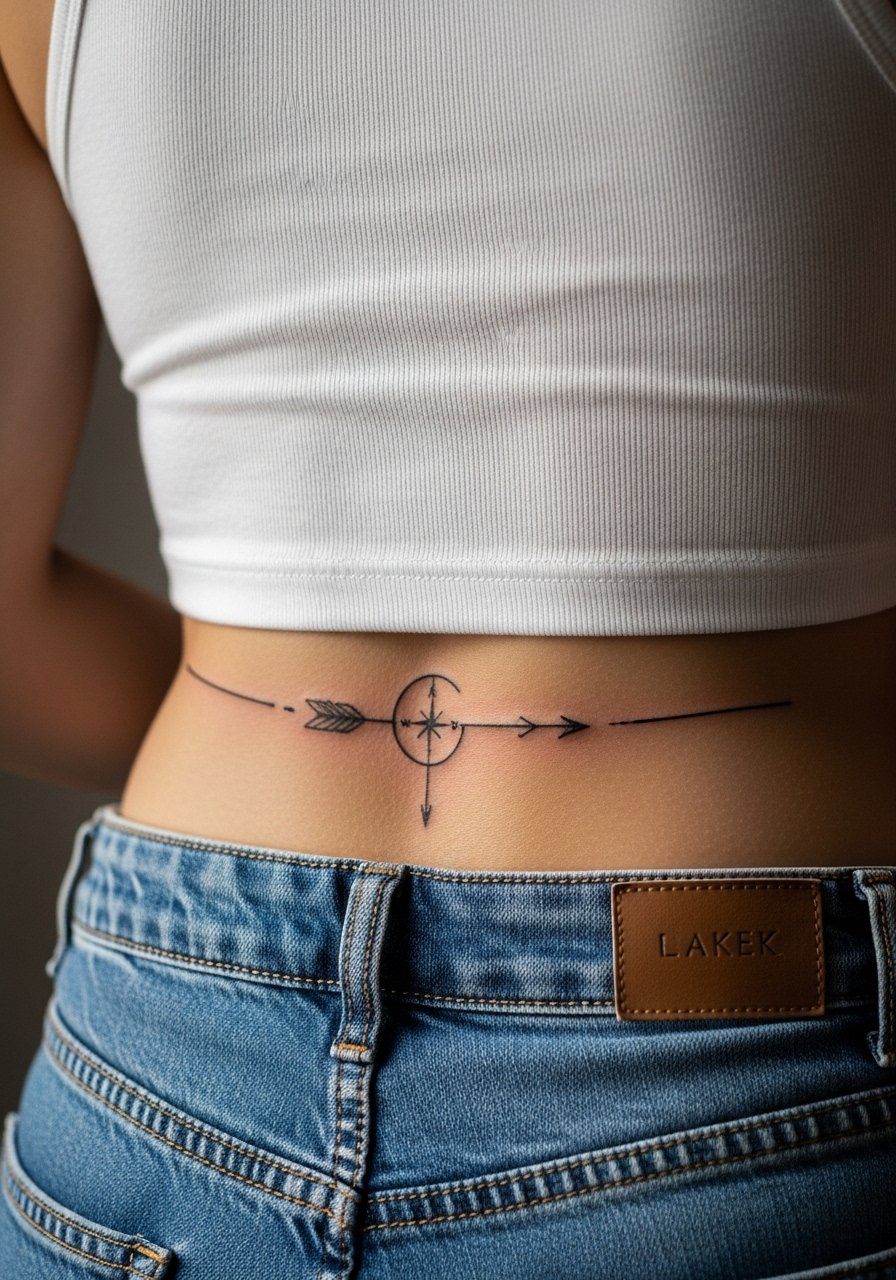
16. Curved Arrow or Minimalist Compass Band
When the idea is subtle directionality, a curved arrow or tiny compass band can act like jewelry along the lower back. In consultation specify the overall arc and ask for open spacing in the compass points to avoid merging. The usual mistake is over-detailing the compass within a very small diameter. Sessions take under an hour and the pain is low. For styling, a backless mini dress or surf cover-up works for reveal. Expect refinement touch-ups if the compass involves many tiny ticks and dots.
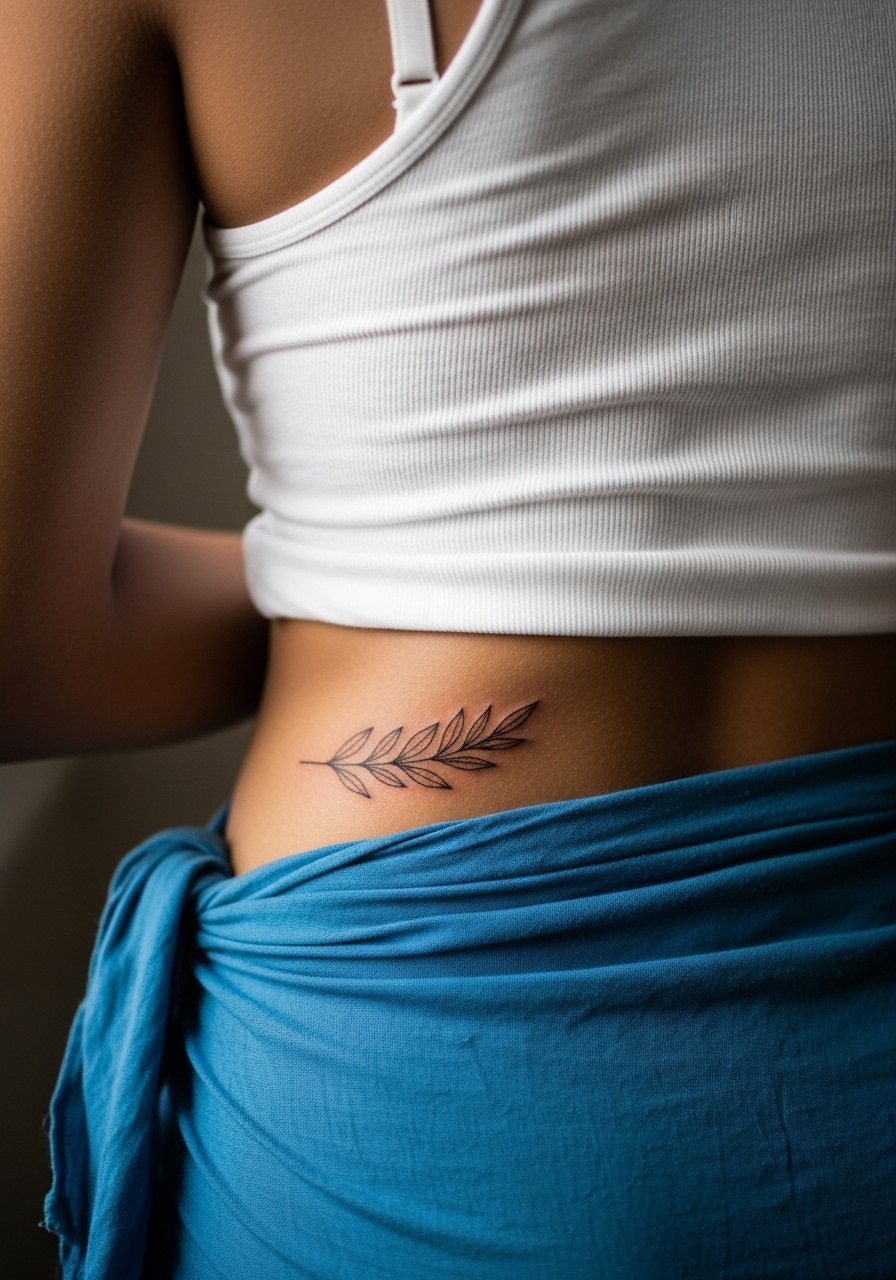
17. Micro Leaf Sprig Trailing Toward the Hip
Personal observation: sprigs read most natural when angled with the body rather than perpendicular. Ask for a gentle taper in stem thickness and for leaves spaced so each retains contrast. A common mistake is a straight, rigid stem that fights the curve of the spine. The session feel is gentle and quick. For beach days, a cotton sarong wrap keeps attention off the area until you want to show it. Expect basic touch-ups in areas that get rubbed by waistbands often.
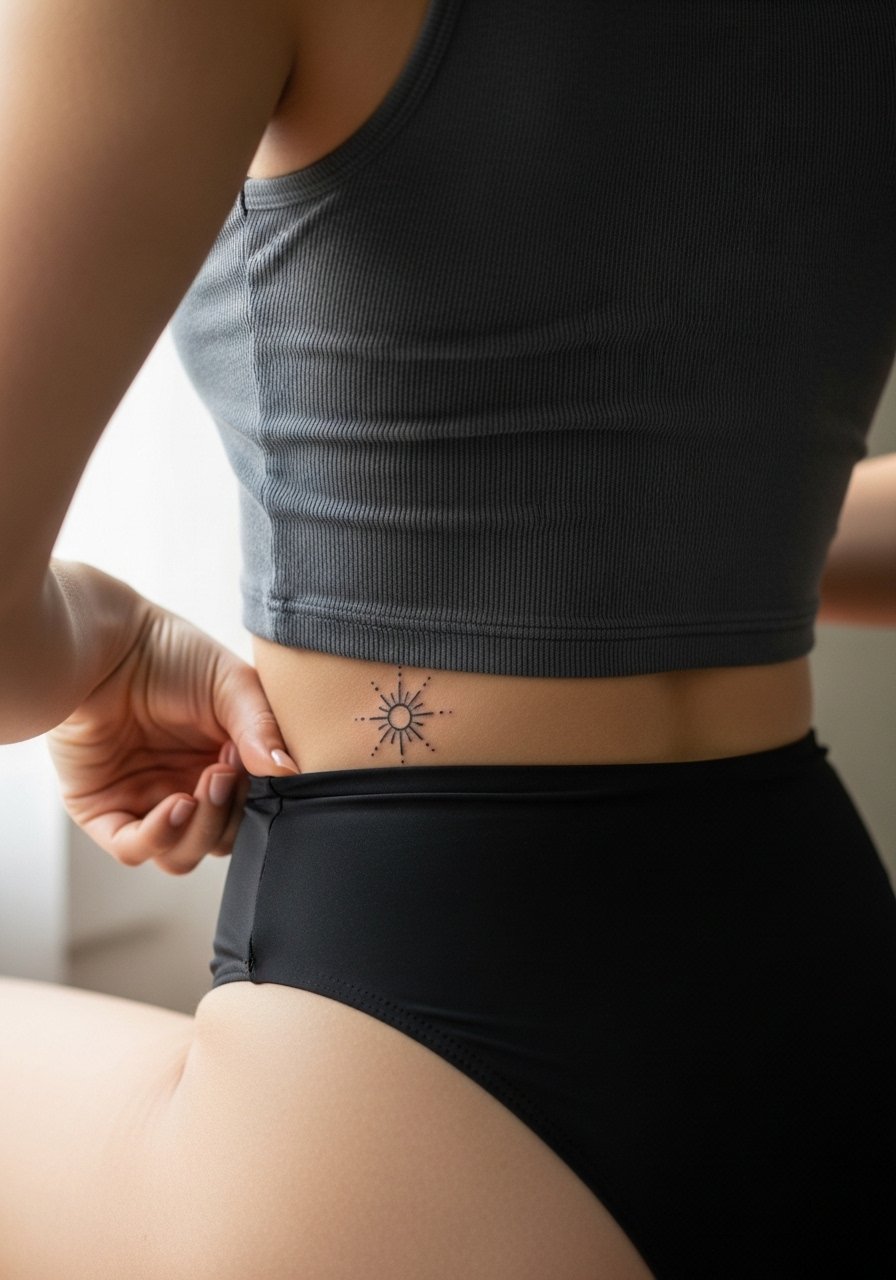
18. Tiny Starburst or Sun Glyph Over the Tail Groove
Consultation matters here. I tell people to bring a size reference because sun glyphs can look too dense when small. Ask for a thin outline with open interior rays to avoid rapid fill-in. Sessions are brief and the area is moderately sensitive. This placement pairs well with high-waisted bikinis and a high waist bikini bottom because the glyph sits between fabric lines. Expect a small refresh if the rays begin to soften after a couple of years.
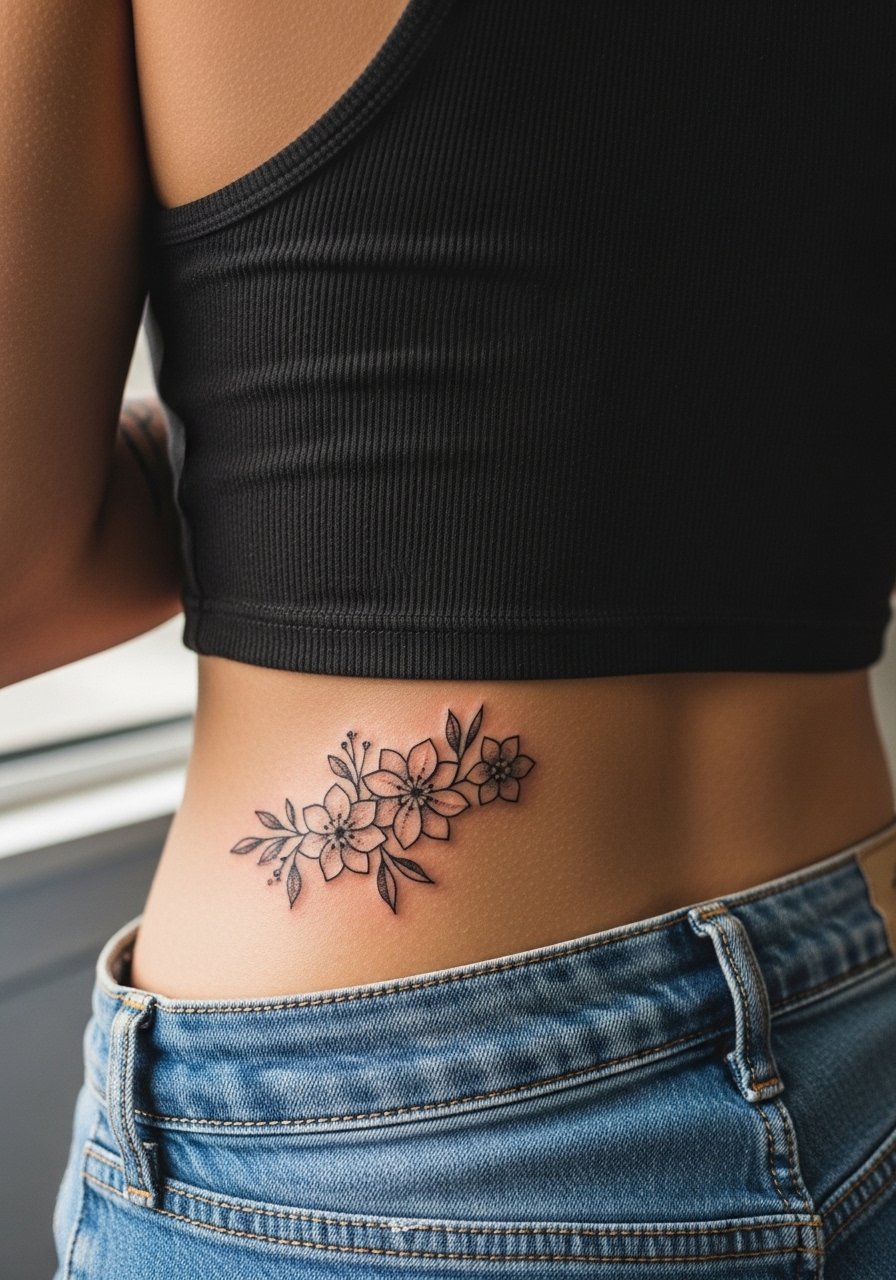
19. Micro Geometric Flower Cluster Off-Center
The visual trick of an off-center geometric flower is that it reads balanced when negative space is respected. The biggest error is asking for too many petals which create visual muddiness as the skin ages. During consultation specify the number of petal layers and ask for stipple gaps between layers. Sessions are quick and discomfort is low. For shows the cluster pairs with crop tops and high-waisted pants. Plan a touch-up if you notice petals losing crisp edges over several years.
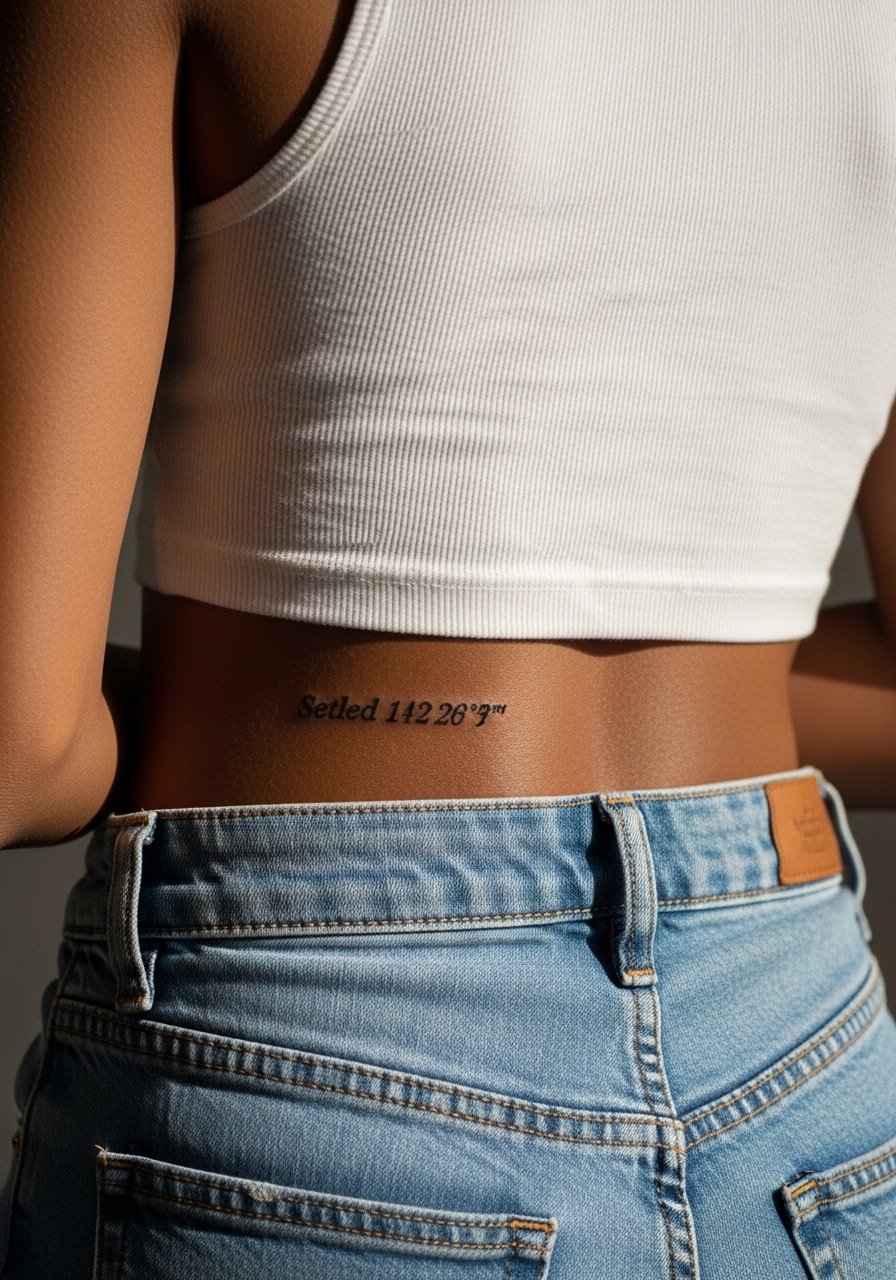
20. Tiny Script Coordinates Along the Waistline
Clients often ask for coordinates to mark a meaningful place, and the rules are exact. Provide the precise numbers and ask the artist to render them in a mono-space or thin serif so the digits remain legible. The mistake is choosing ornate script for numbers which blurs with time. The session is brief with low pain. Keep in mind that the area sees a lot of movement and rubbing from waistbands. For occasional reveal, pair with low-rise jeans. Touch-ups for line clarity are common after two to four years depending on exposure.
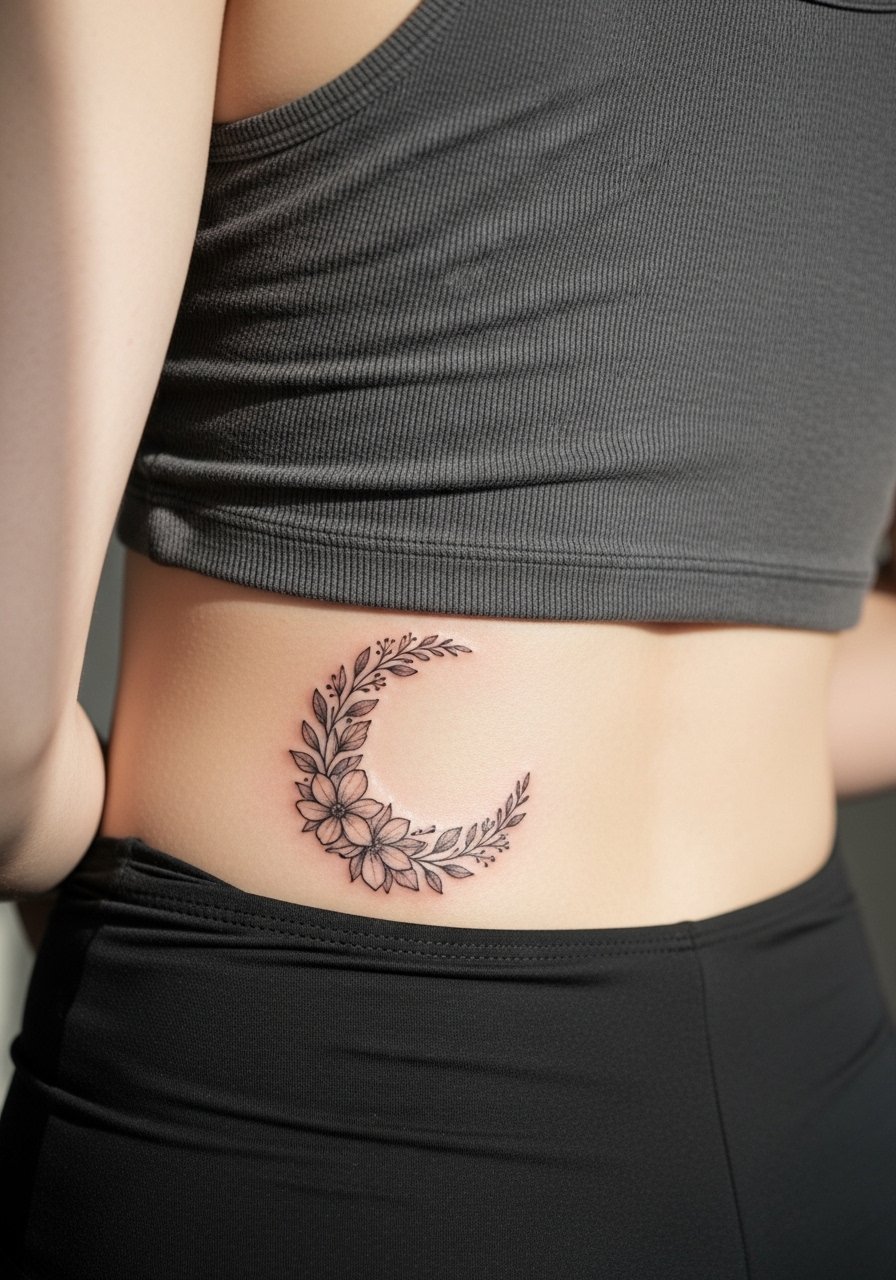
21. Micro Botanical Crescent Cluster at the Hip Socket
This final placement is a favorite for hidden-yet-peekable aesthetics. When placed just at the hip socket it blends with natural curves, so ask for a 2 to 3 inch cluster and light gray infill for depth. A mistake is pushing too many tiny leaves into a cramped space which makes the cluster age into a gray patch. Sessions are short and have mild sensitivity. For wear, a thong bikini set or a high cut swim bottom highlights the placement without overexposure. Expect a small touch-up in the first three years to maintain leaf edge definition.
Frequently Asked Questions
Q: Will fine line low back tattoos blur faster than thicker work, and what can I ask for to prevent that?
A: Fine line can blur quicker because there is less pigment to absorb skin stretching and friction. Ask your artist for slightly increased spacing between parallel lines, moderate line weight rather than hairline only, and to avoid unnecessary layering in small areas. Planning for a touch-up at year two to three is a practical expectation based on how thin linework wears over time.
Q: How should I dress for a low back session so the artist has clean access and I stay comfortable?
A: Wear a tank top you can pull up or a button-down you can slide aside, plus high-waisted bottoms you can drop slightly without fuss. For lower body sessions, loose drawstring pants or a flowy maxi skirt make positioning easier and reduce pressure on the area afterwards.
Q: Does sun exposure matter for small low back tattoos, and how can I protect them when they are healed?
A: UV exposure fades ink over time. While the low back is not always sun-exposed, it will get sun during swim seasons and beachwear. Use sunscreen on the healed tattoo when exposed. If you prefer fashion-forward evenings, a backless mini dress or high-waist coverage options let you control when the tattoo is shown and when it is protected.
Q: Are there controversial spots for fine line on the lower back that artists disagree about?
A: Yes. Some artists say very fine work on parts of the lower back that flex and rub will lose definition faster. Another group argues that with proper spacing and slight line weight adjustment, fine line holds fine. The practical route is to ask artists how they set spacing and what touch-up timelines they recommend for that exact placement.
Q: How often should I expect touch-ups for dainty low back tattoos?
A: Expect at least one light touch-up within two to four years for most ultra-fine designs, especially in friction zones. Heavier black outlines and shapes with more saturation tend to go longer between touch-ups. Your lifestyle factors like sun exposure and regular rubbing from waistbands will alter the cadence.
Q: Are tailbone and low back tattoos safe if I have sensitive skin or keloid tendencies?
A: If you have keloid history or sensitive skin, mention it in your consultation. An experienced artist will suggest conservative line weight, minimal trauma placements, or alternative designs. Some clients choose a test spot first or postpone work until they confirm healing response with a smaller flash.
Q: Can these low back designs be expanded later into larger pieces if I change my mind?
A: Yes, many of these micro designs make good anchors for future expansion. When booking, mention that you might want a larger piece later so the artist can place the motif with future growth in mind. A slight preference for open negative space around the design makes blending into a larger composition easier.