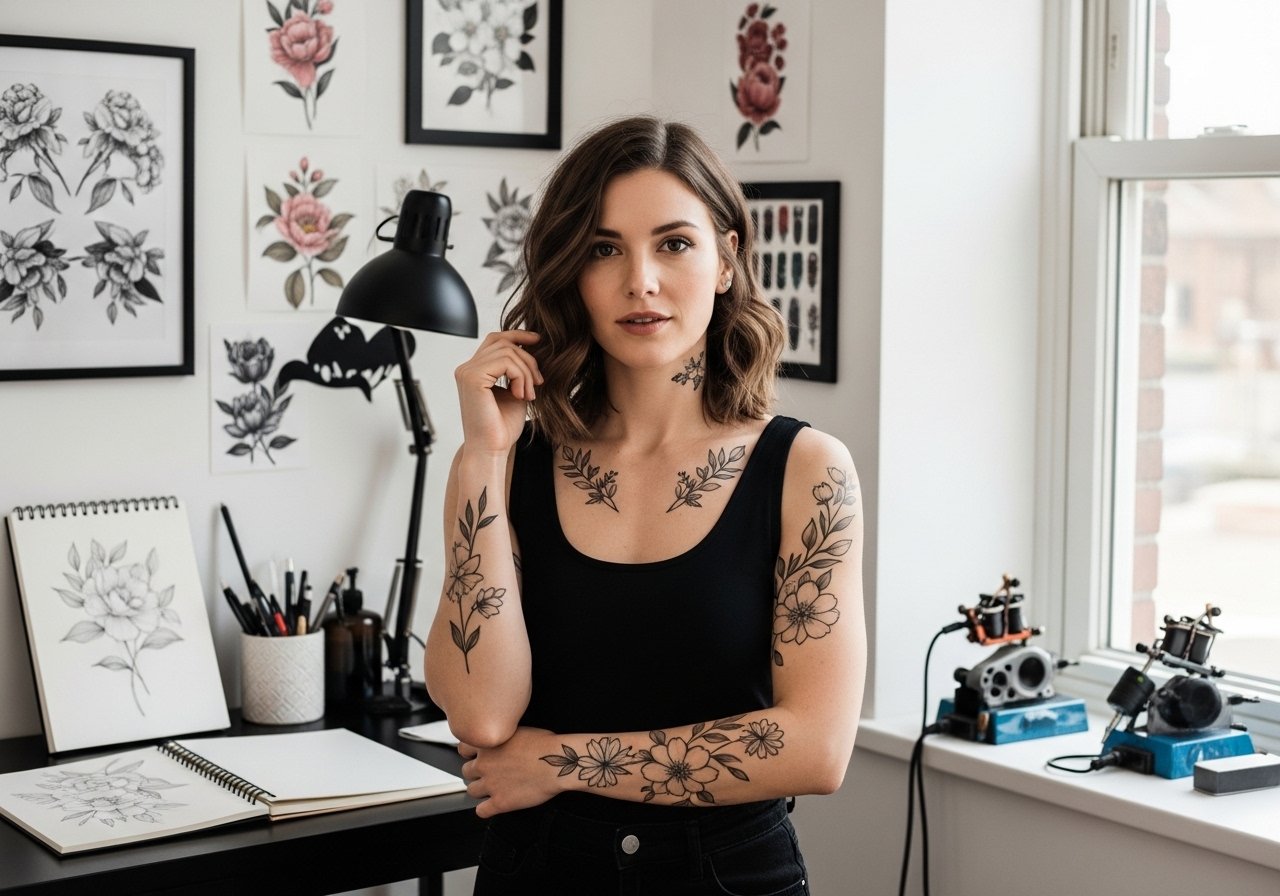
Fine line cat memorial work is everywhere on saved boards, and the gap between what trends and what lasts is wider than most expect. I see people pick single-needle silhouettes because they look fragile and honest in photos, then come back two years later for touch-ups. If you want designs that hold their feeling over time, these 21 ideas balance personality, placement, and practical choices so the piece still reads healed.
1. Single Paw Print with Initials on the Wrist
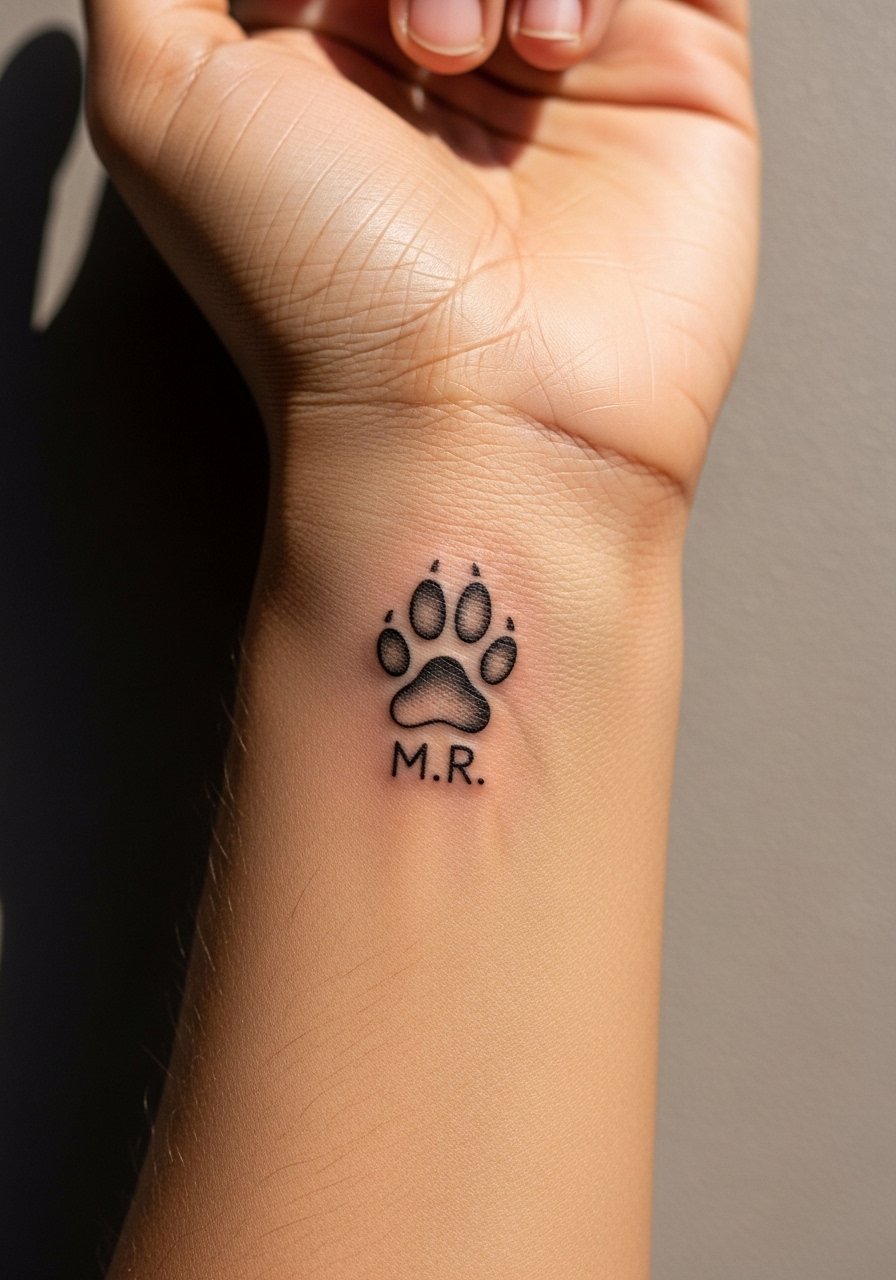
I recommend this when you want a small, readable marker with clear typography. Fair warning, the wrist sees friction from watches and bracelets so ask for slightly bolder linework than a micro needle would use. In consultation, bring the exact initials and request a healed mockup at full size. A common mistake is asking for ultra-thin strokes that fade into a grey smudge after two years. Expect a short session and low pain level. For showing it off, try a thin chain bracelet on the opposite wrist so the print remains the eye-catcher during everyday wear.
2. Curled-Up Cat Silhouette on the Inner Forearm
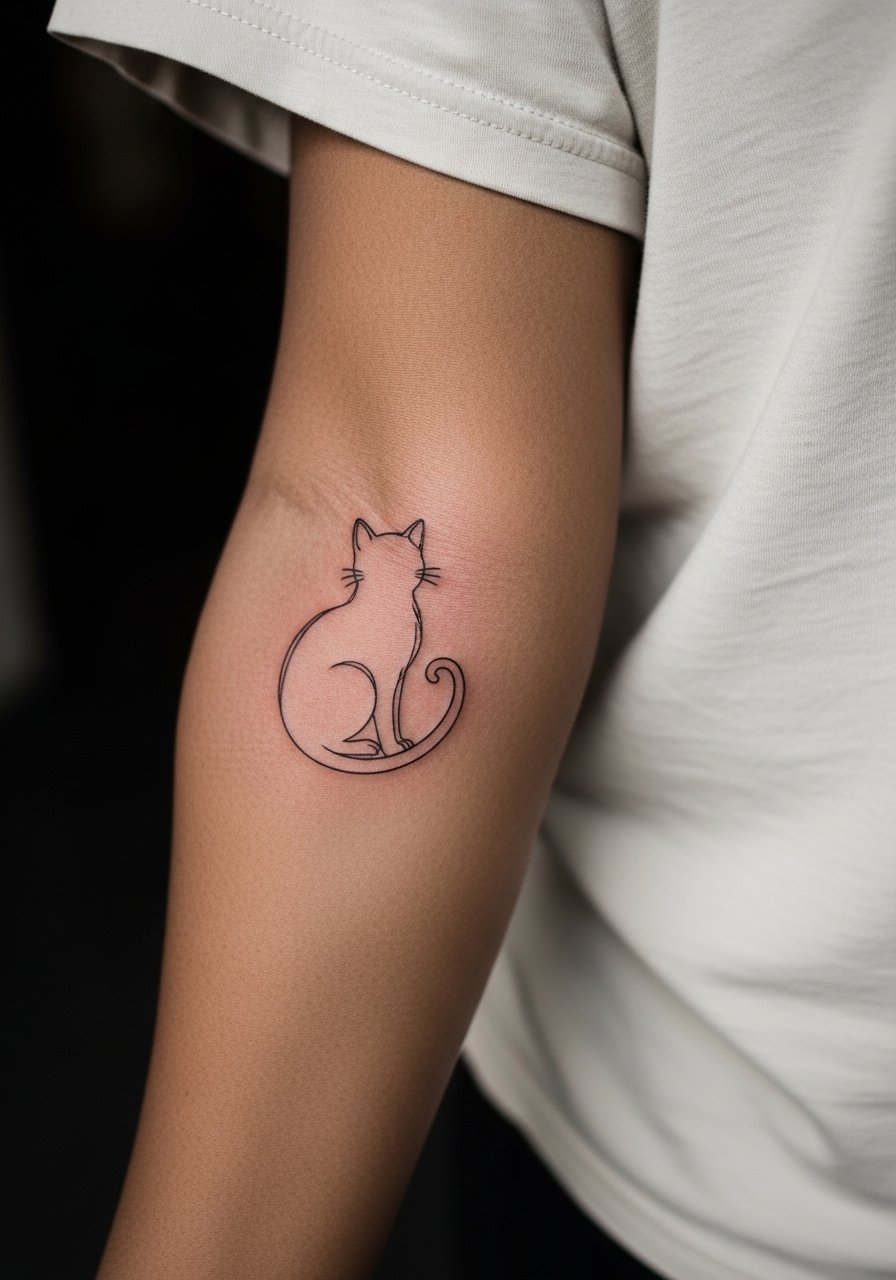
Most artists will tell you this shape ages well because it relies on clean contour rather than tiny detail. When you sit down for a consultation, point to the exact curve you want and ask for consistent lineweight across the body of the silhouette. The inner forearm is forgiving for fine line, but weight matters. A common version that ages poorly uses extra-fine, filigree lines that blur into each other. Plan for one session, mild to moderate pain, and a touch-up at year two if you have very active sun exposure. Roll up a cream linen shirt for your session so the artist has clean access.
3. Paw Print Trail with Dates along the Ankle
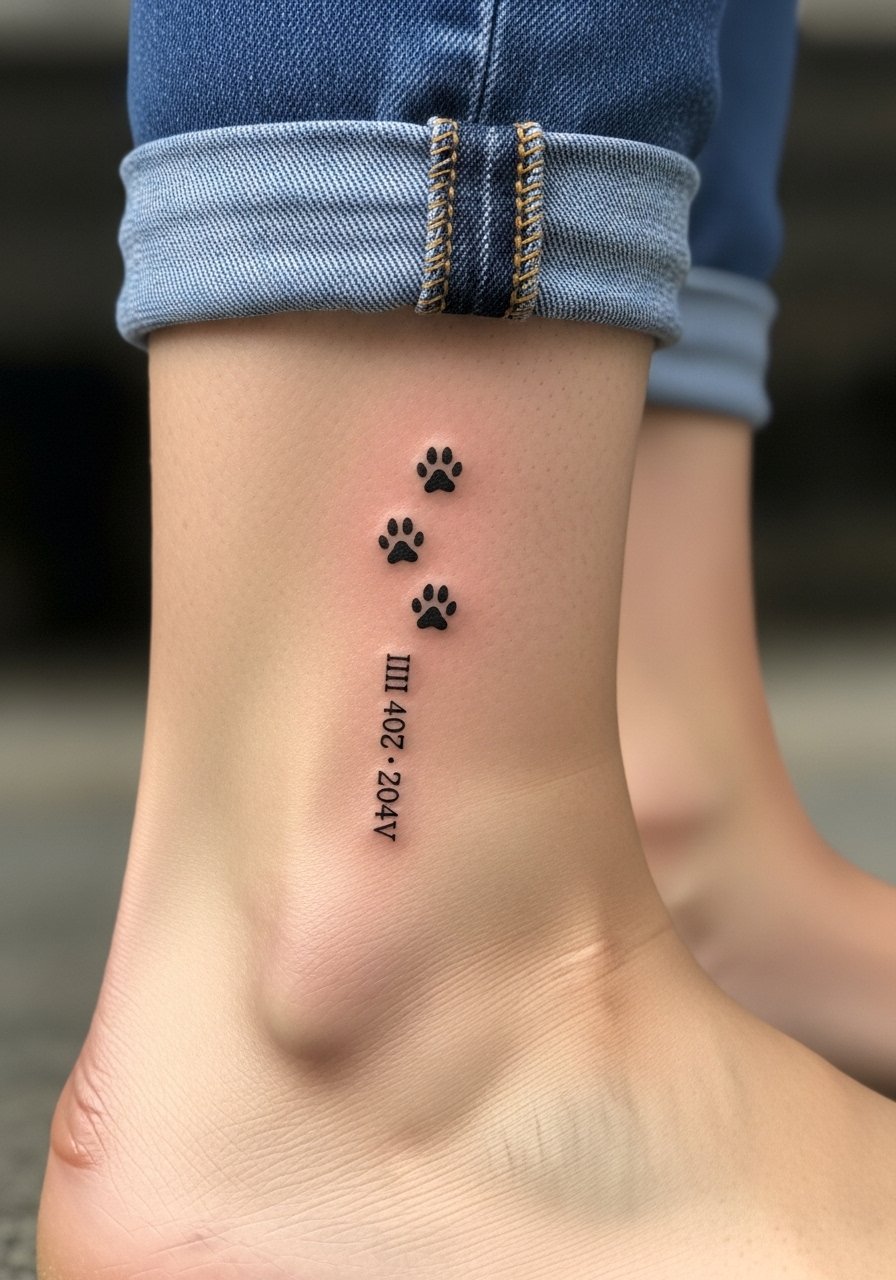
This layout works well for multi-cat stories where each print marks a lifespan. The ankle is a high-friction spot so choose bolder fills for the pads rather than single-needle outlines. Tell your artist you want small geometric fills inside each pad to keep contrast on darker skin tones. Common mistakes include spacing prints too tightly which causes merging after healing. Session time is short but expect slightly more sensitivity near bone. For summer visibility, pair with strappy sandal women styles that show the trail without crowding it.
4. Handwritten Name Script Tucked Behind the Ear
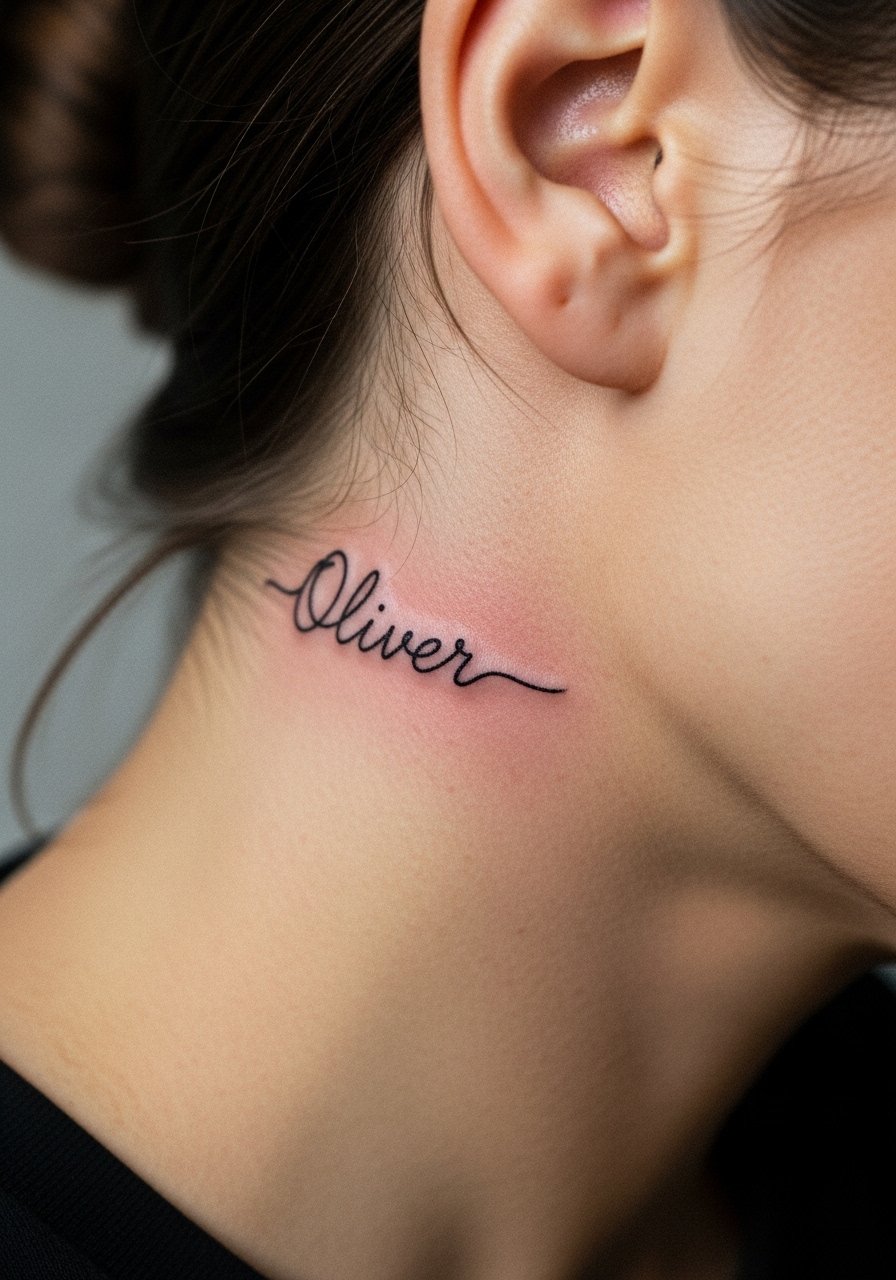
A behind-ear script reads personal and discreet. Because the area is tiny, bring the actual handwriting sample you want replicated and ask the artist to scale it at life size before the stencil is applied. Pain is low but placement needs steady positioning. The main mistake is scaling the script too small which turns letters into blobs when healed. Expect a micro session and minimal aftercare. For session comfort, tie your hair back and wear an open neck top so the artist can access the area cleanly.
5. Collarbone Cat Profile with Favorite Toy (Micro-Realism)
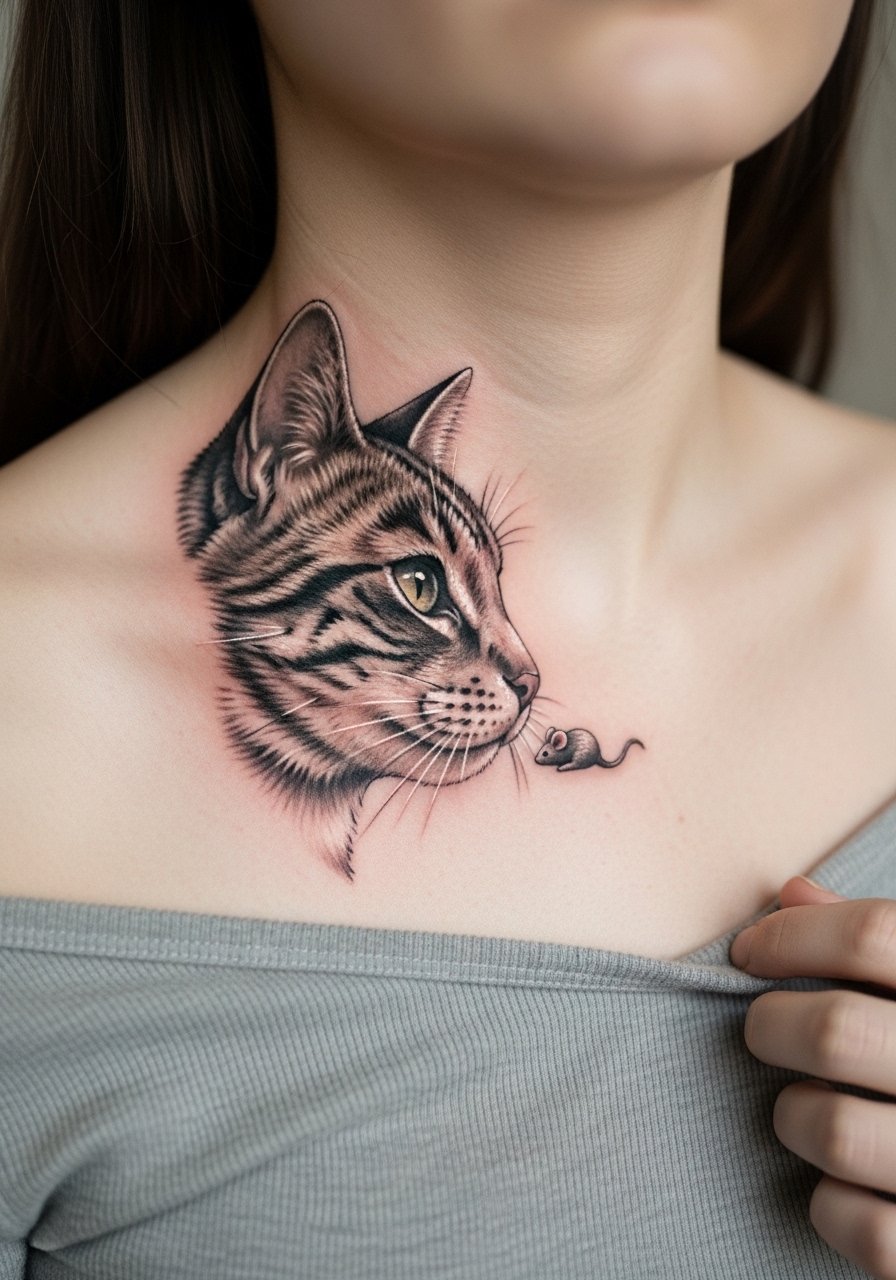
This is for people who want the cat's character in a small portrait. Micro-realism asks for careful reference photos. During consultation, show a bright close-up of the face and the toy so the artist can map facial landmarks. Expect two shorter sessions for shading and touch-ups if you want crisp whisker detail. The collarbone can be bony so anticipate a sharper sensation during tattooing. Pair this with an off shoulder top for framing the piece when healed. Remember that black and gray portraits hold contrast better over time than washed watercolor in this position.
6. Continuous-Line Ear and Tail on the Wrist
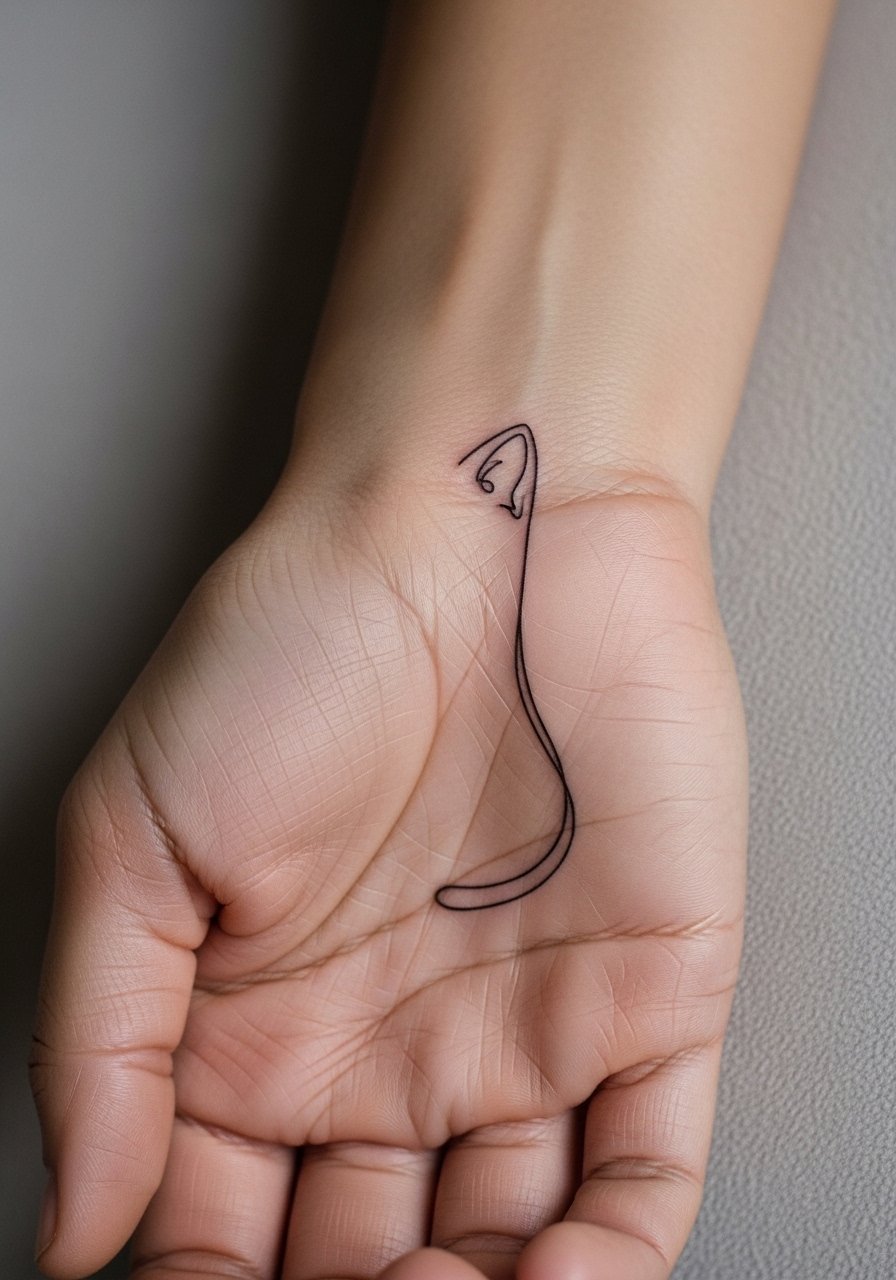
This minimalist continuous-line idea is elegant and quick. In consults I hear two common goals. One group wants the thinnest possible line. The other wants the single-line look with slightly thicker depth so it lasts. Artists split on whether the absolute single-needle route is worth it on the wrist. Name the longevity you want and ask for a slightly bolder single-needle suggestion if you plan to touch-up less often. Sessions are brief and pain is low. Show it off with a dainty bracelet stack on the opposite wrist for balance.
Studio Day Picks
The small wrist and collarbone pieces above need different prep than larger portrait work, so a few studio-day items make sessions smoother.
-
Stencil transfer paper kit. Lets you preview the placement size on skin, which is crucial for tiny handwriting and single-paw layouts in ideas 1 and 4.
-
Topical numbing cream. Applied as directed before arrival eases the sharpness on bony collarbones and ankles without changing linework.
-
Thin protective film roll. Useful for joints like the wrist and ankle where movement and water exposure are constant during the first week.
-
Fragrance-free body wash. Keeps healing ink clean without irritating fine line work or micro-portrait shading.
-
Aquaphor healing ointment. A thin layer in the first 48 hours helps preserve saturation on micro-realism and bold pad fills alike.
7. Watercolor Paw Print with Wings on the Shoulder
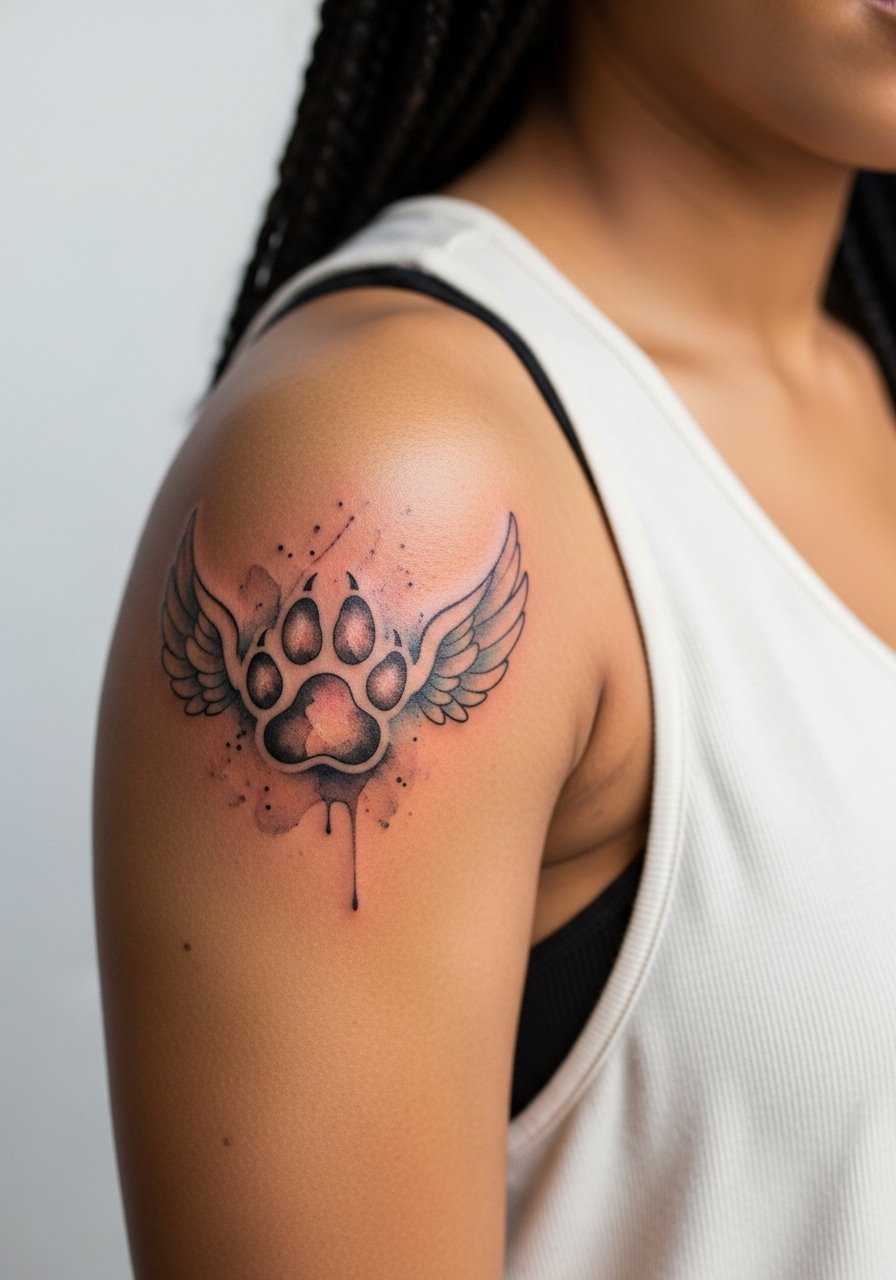
Watercolor palettes add joy but demand maintenance. The shoulder is a forgiving canvas for color, but pigments do fade faster than black and gray. Some artists argue vivid watercolor remains joyful and worth periodic refresh; others prefer black and gray for memorial restraint. Name the camp you prefer in the consult so the artist can advise on pigment choices and layering. The session can be 1 to 2 appointments depending on saturation. For session wear, pull on a loose tank top so the shoulder is fully accessible.
8. Sitting Cat Silhouette with Flowers on the Ribcage
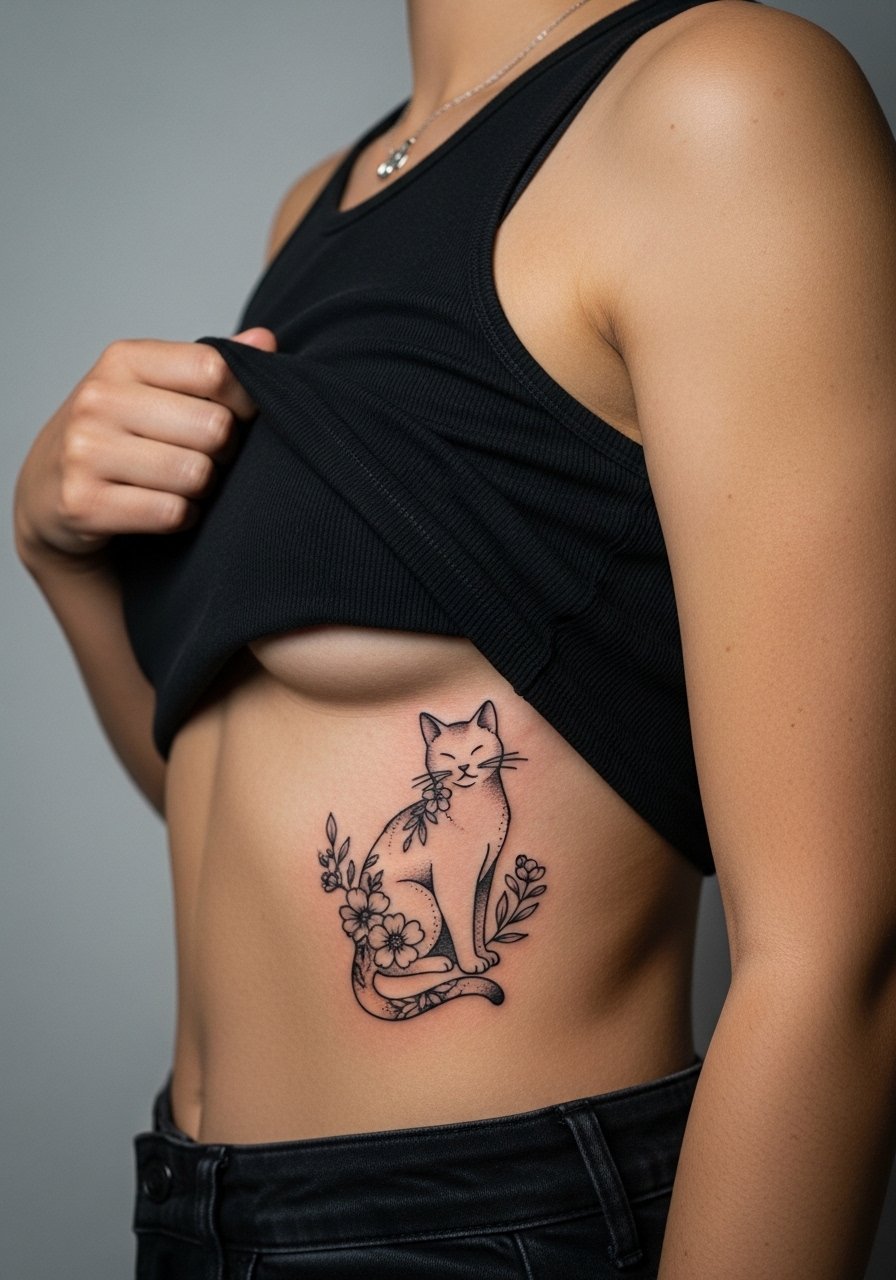
Fair warning, the ribcage is a high-pain area. Still, the silhouette reads clearly because it relies on negative space. Artists disagree about fine line on ribs. One group says stretching and movement blur the lines quickly. The other says proper depth and spacing keeps linework readable. Ask where the artist stands and request a larger scale if you want long-term crispness. Sessions may require breaks and a two-stage touch-up. For seasonal reveal, a crop top or high-waisted bikini pairs well with this placement.
9. Loaf-Position Cat Outline on the Inner Thigh
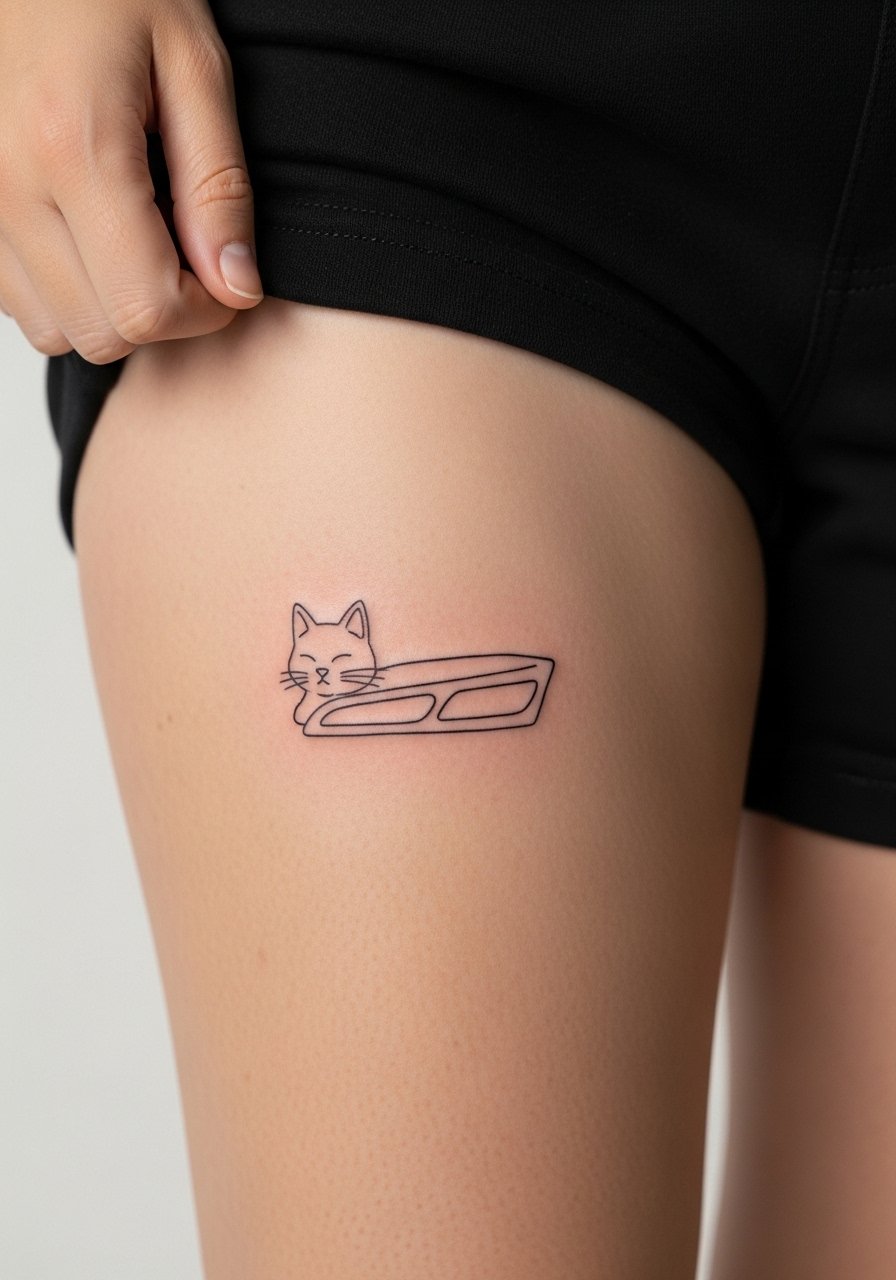
Inner thigh work is intimate and often low on friction once healed. The loaf pose captures personality with minimal detail. Bring photos showing how your cat loafed, then tell the artist where the crease lines fall on your thigh. A mistake is asking for too many tiny facial details in this small space. Pain varies but is moderate because of nerve density. Wear loose shorts for the session so the artist can shift fabric without discomfort. Expect one session and a touch-up if weight changes significantly later.
10. Name and Paw with Stretching Pose on the Calf
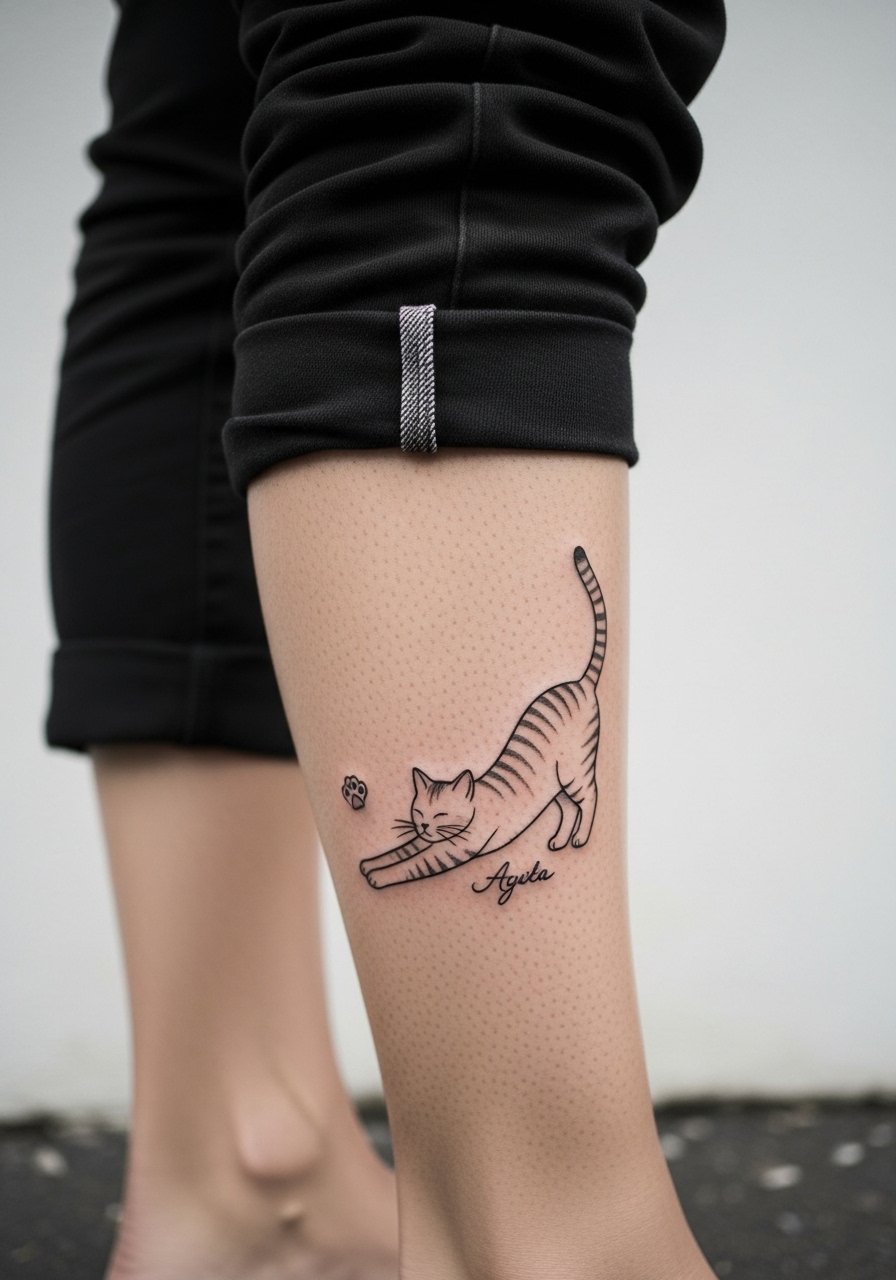
Calf placements are sturdy and age predictably. The stretching pose communicates movement and makes the name feel integrated rather than pasted on. During the consult, decide on the script size relative to the leg's length and ask for leg-length mockups. A common error is crowding the design into a narrow vertical strip, which compresses the pose. Sessions are low to moderate on pain, and touch-ups are uncommon unless you want darker contrast. For showing off, rolled joggers or high waist shorts reveal the full curve of the calf.
11. Angel Wings Around a Cat Silhouette on the Upper Arm
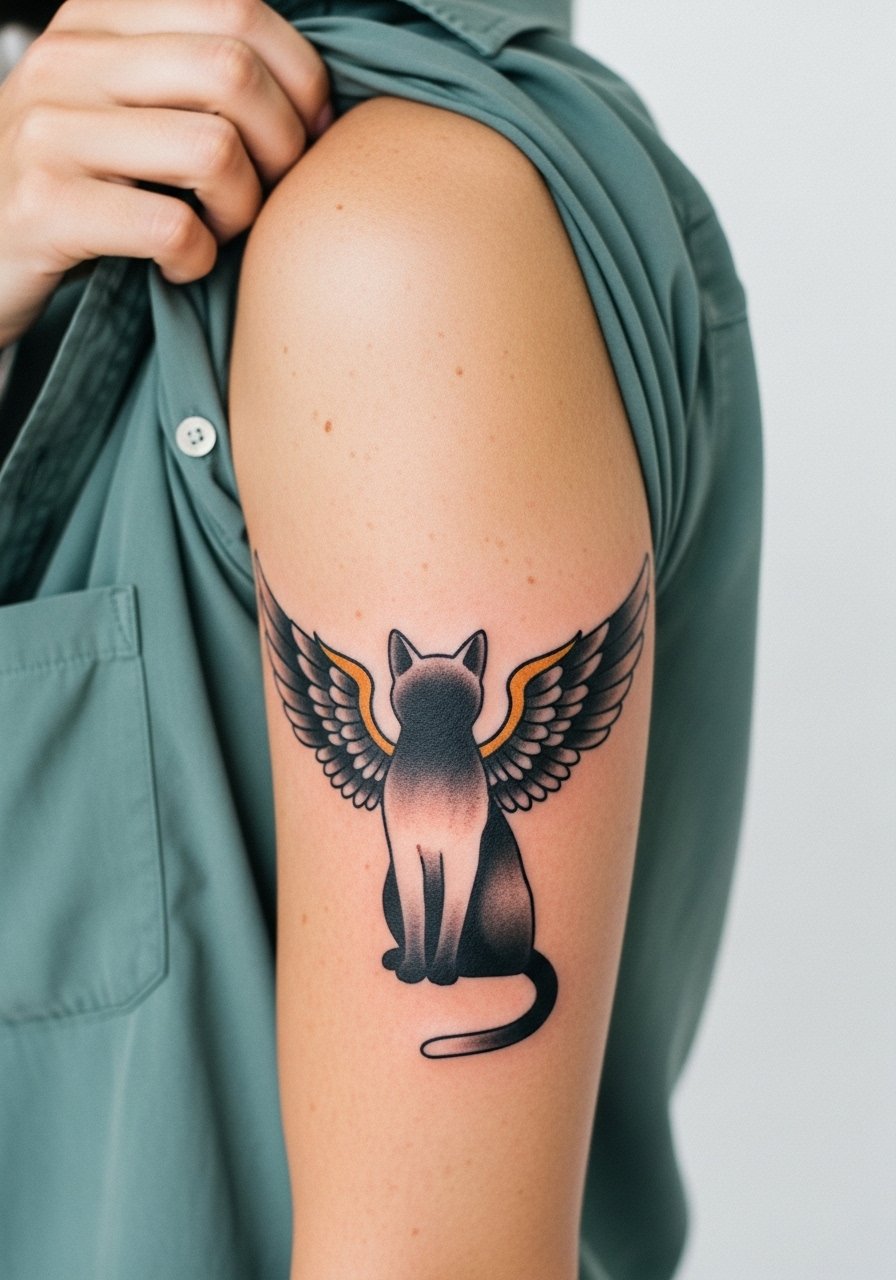
This composition reads as symbolic without being literal. Neo-traditional wings often use color accents which can need refresh over time. Name both camps in the consult if color longevity is a concern. One side insists on saturated color for emotional impact. The other suggests black and gray for lower maintenance. The upper arm tolerates both well and is lower on pain. Plan for two sessions if you want color fills and touches. For session comfort, wear a loose button-down shirt you can pull aside.
12. Minimal Tail Curl with Initials on the Neck
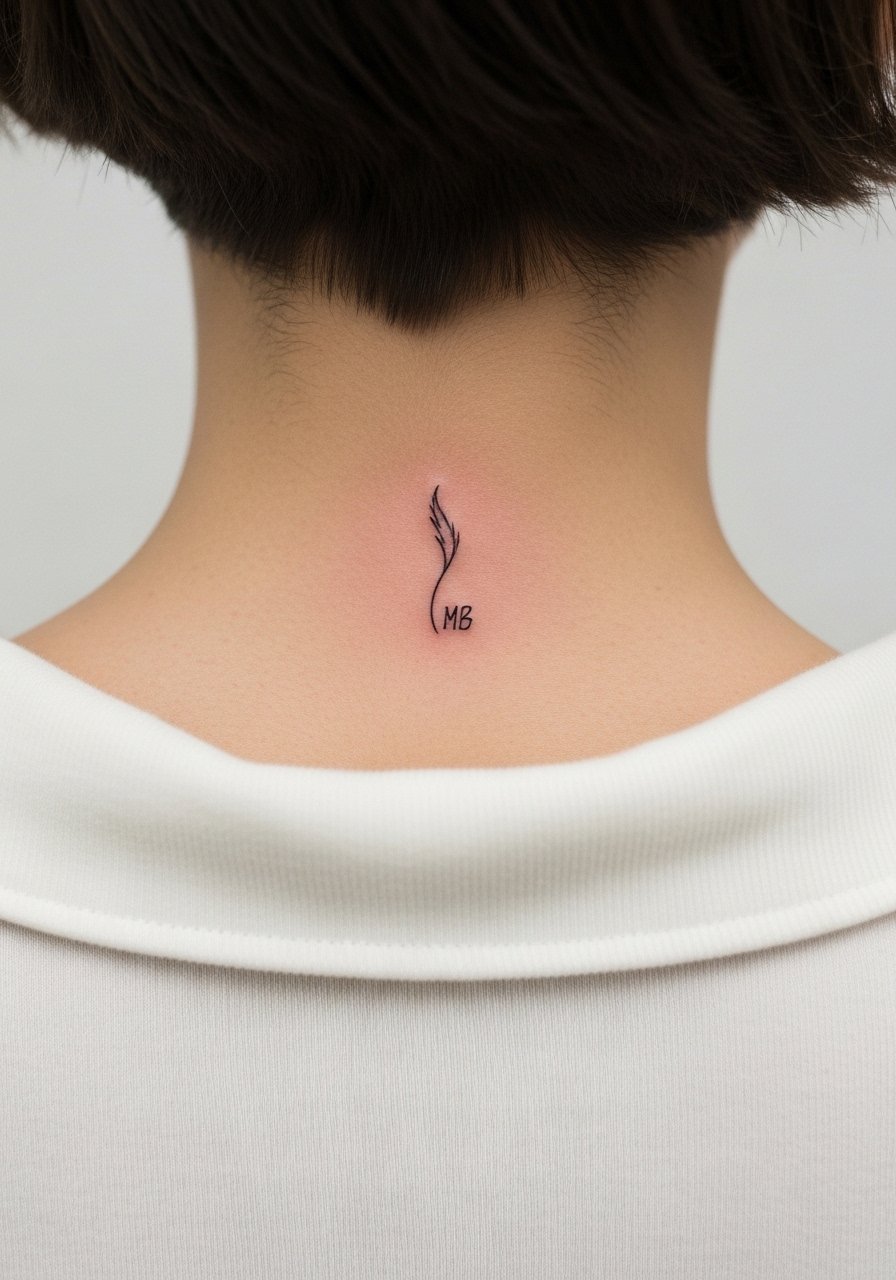
Neck placement is discreet but visible when your hair is up. Keep the curl simple and tell the artist you want the initials at life size so letters stay legible. Neck skin moves and stretches, so a common mistake is cramming script too small. Pain can be moderate. A session is brief and touch-ups may be requested if you have significant sun exposure. Style it with a small stud earring set and a half-up hairstyle to frame the piece.
13. Tiny Paw on a Finger with Dot Work Accent
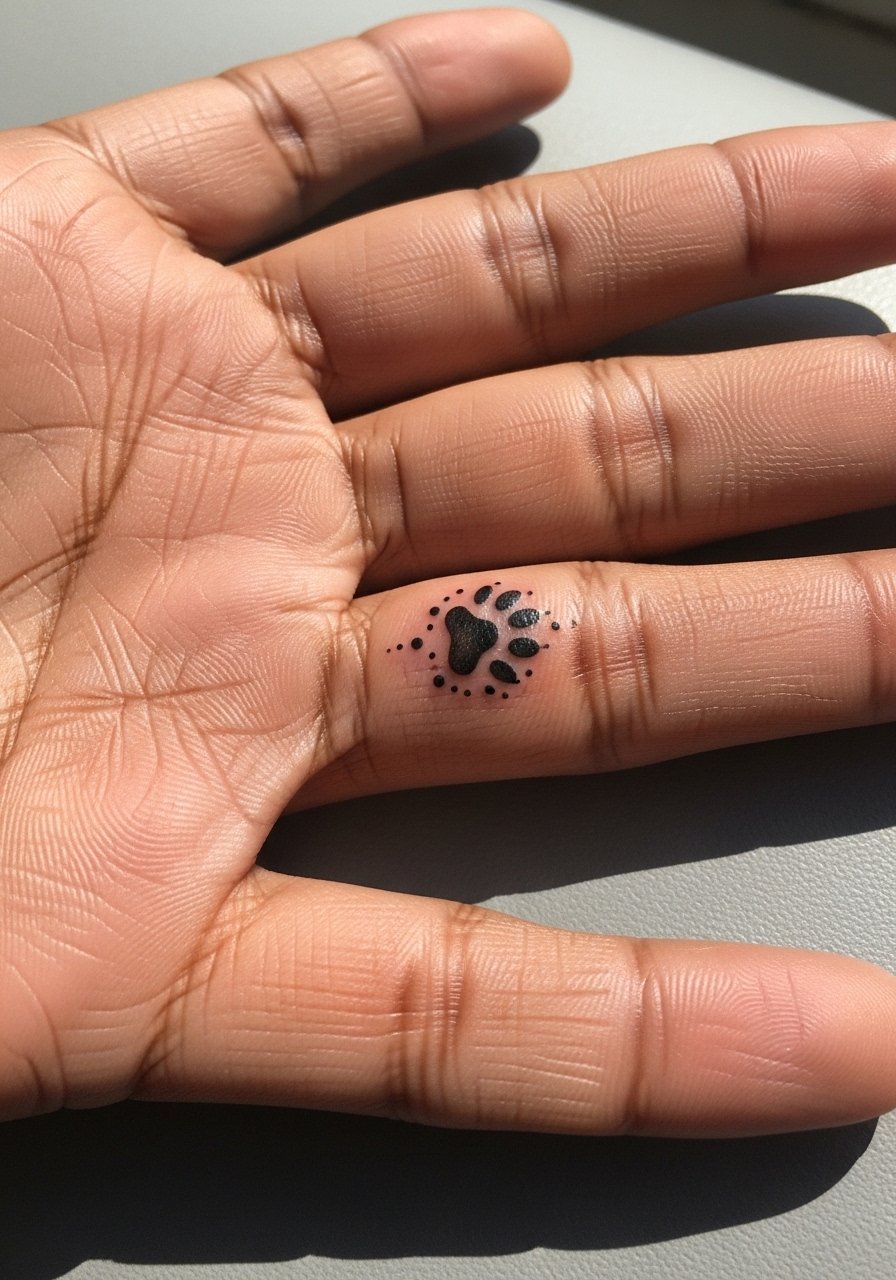
Finger tattoos are notorious for faster fading because of constant washing and friction. If you want a finger paw, ask for small solid fills in place of hairline outlines and expect annual touch-ups. The session is quick but may sting more than wrist work. A mistake is asking for hair-fine details that disappear within months. For protection early, minimize soaking and be ready for more frequent refreshes than other placements. For wearing during the session, keep your hand resting on the provided pad and avoid knuckle tension.
14. Vintage Toy Portrait on the Sternum
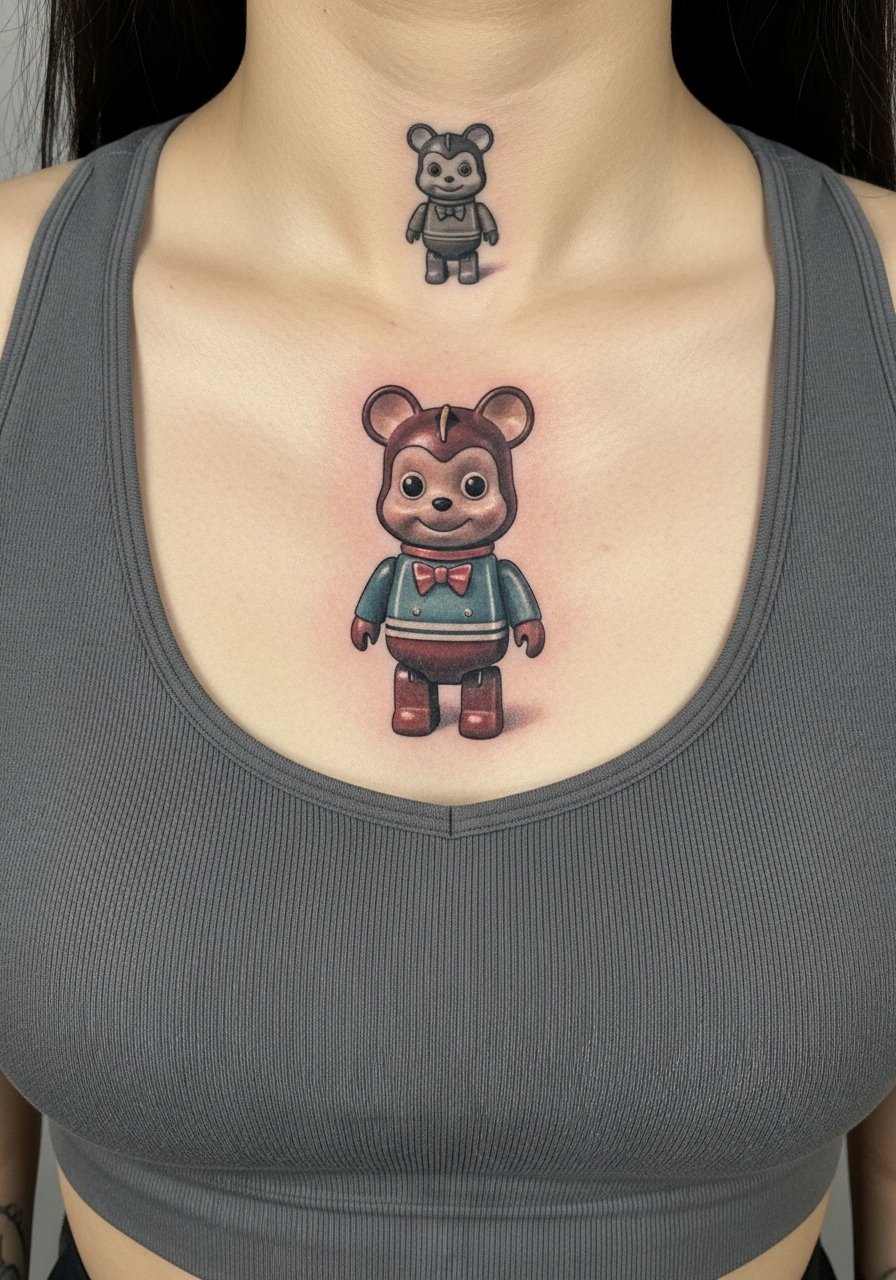
Sternum pieces can feel deeply personal and the area takes shading well when managed correctly. Because of the sensitivity, expect a higher pain rating. Bring a clear photo of the toy and discuss scale carefully. Many artists recommend slightly larger sizes here so shading reads after healing. Sessions often split into two shorter appointments for comfort. Wear a fitted sports bra to the session for easy access. Ask about needle depth so stipple shading keeps soft edges without oversaturation.
15. Negative-Space Moon with Cat Silhouette on the Lower Back
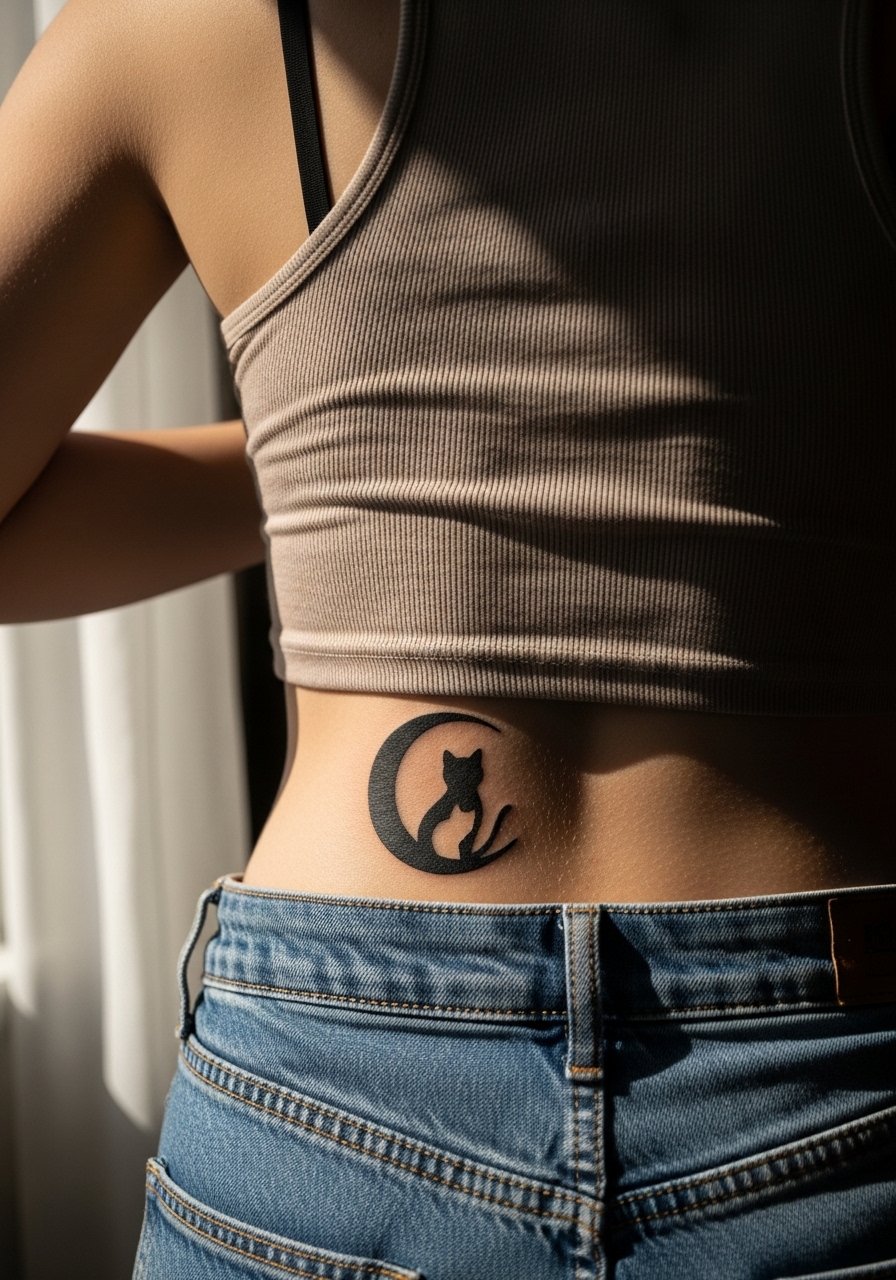
Lower back work gives you room for striking negative-space compositions. The negative moon keeps contrast without heavy color. Discuss curvature with the artist so the crescent follows your spine naturally. Mistakes include centering the moon off the natural contours which makes it look lopsided when you move. Pain level is low to moderate and sessions are generally single-visit. For reveal styling, low-rise jeans or an open-back dress frames the art.
16. Constellation of Tiny Paw Prints Along the Spine
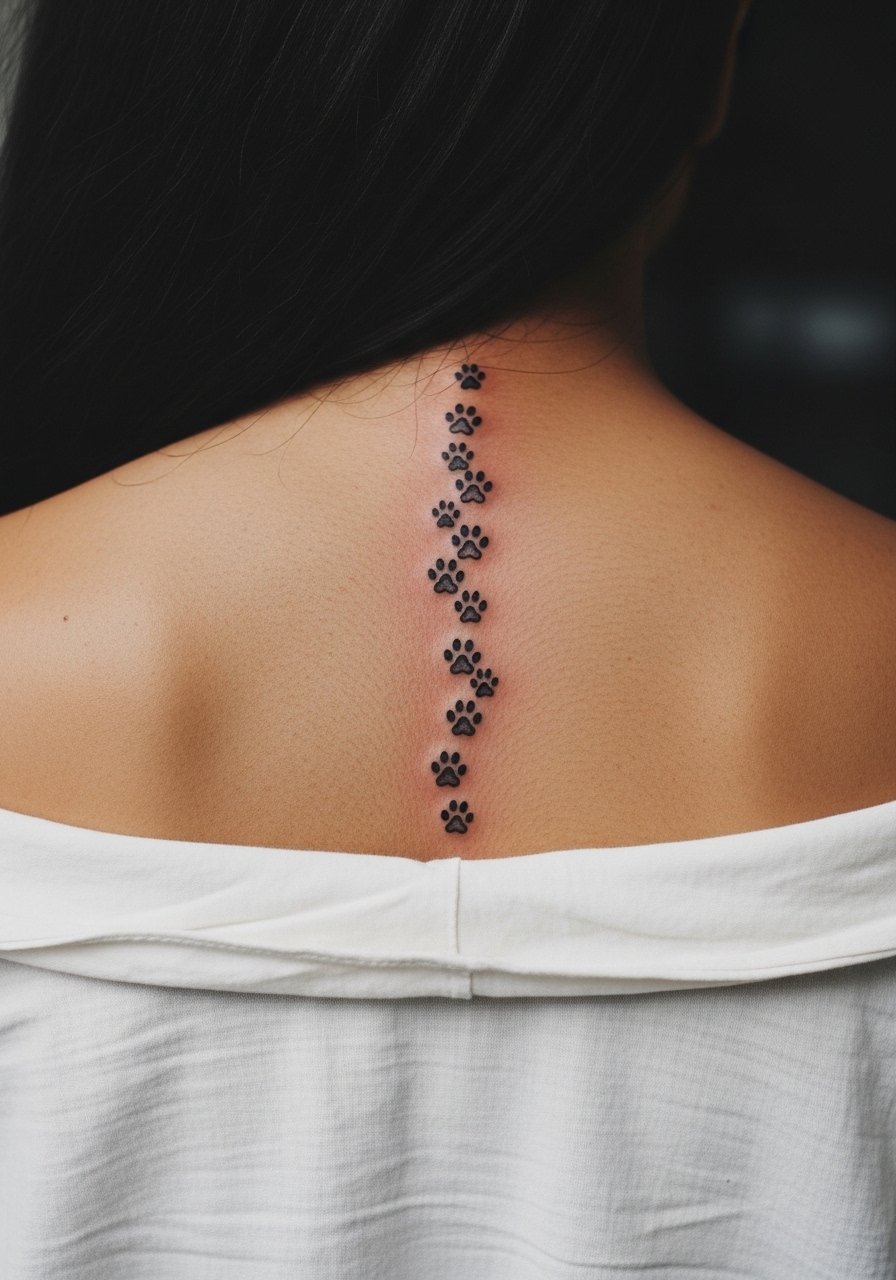
Spinal placements benefit from symmetry and consistent spacing. Linework here should avoid hairline detail in dense clusters. One common error is placing the footprints too close so they blur together after healing. Sessions require you to sit or lie still for longer stretches and sensitivity varies. Discuss how the spacing will look when you bend. For showing it off, a v neck blouse that dips low in back gives glimpses without full exposure.
17. Geometric Frame Portrait on the Thigh
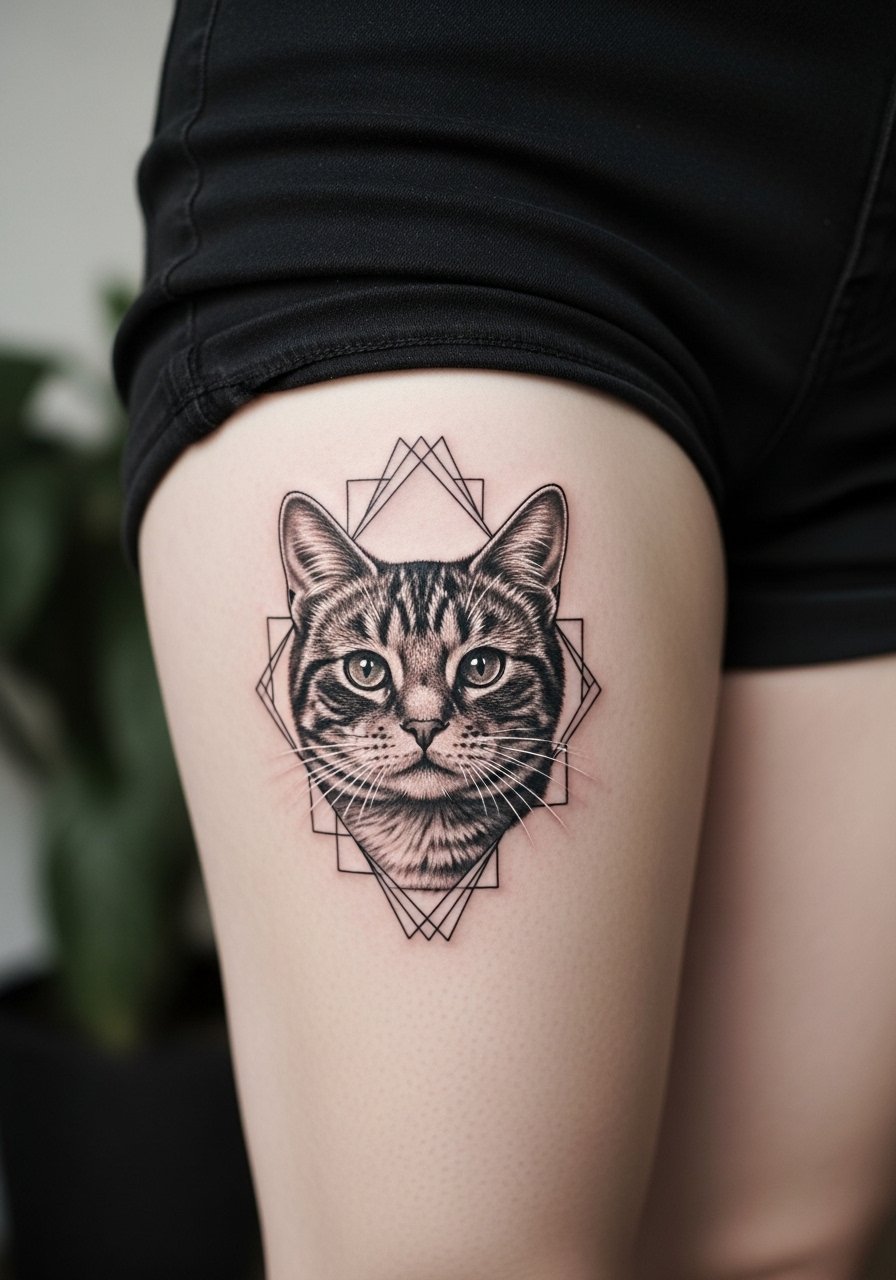
Thigh canvases allow for detailed portraits and geometric structure. If you want crisp separation between portrait shading and frame lines, ask for line spacing that gives the tattoo breathing room. A mistake is cramming dense stipple shading close to thin frame lines which creates visual muddiness later. Sessions are comfortable for most people and can be long. Wear removable shorts for ease during the appointment. Touch-ups are uncommon unless you want higher contrast down the line.
18. Paw and Moon Phase Stack on the Ankle Side
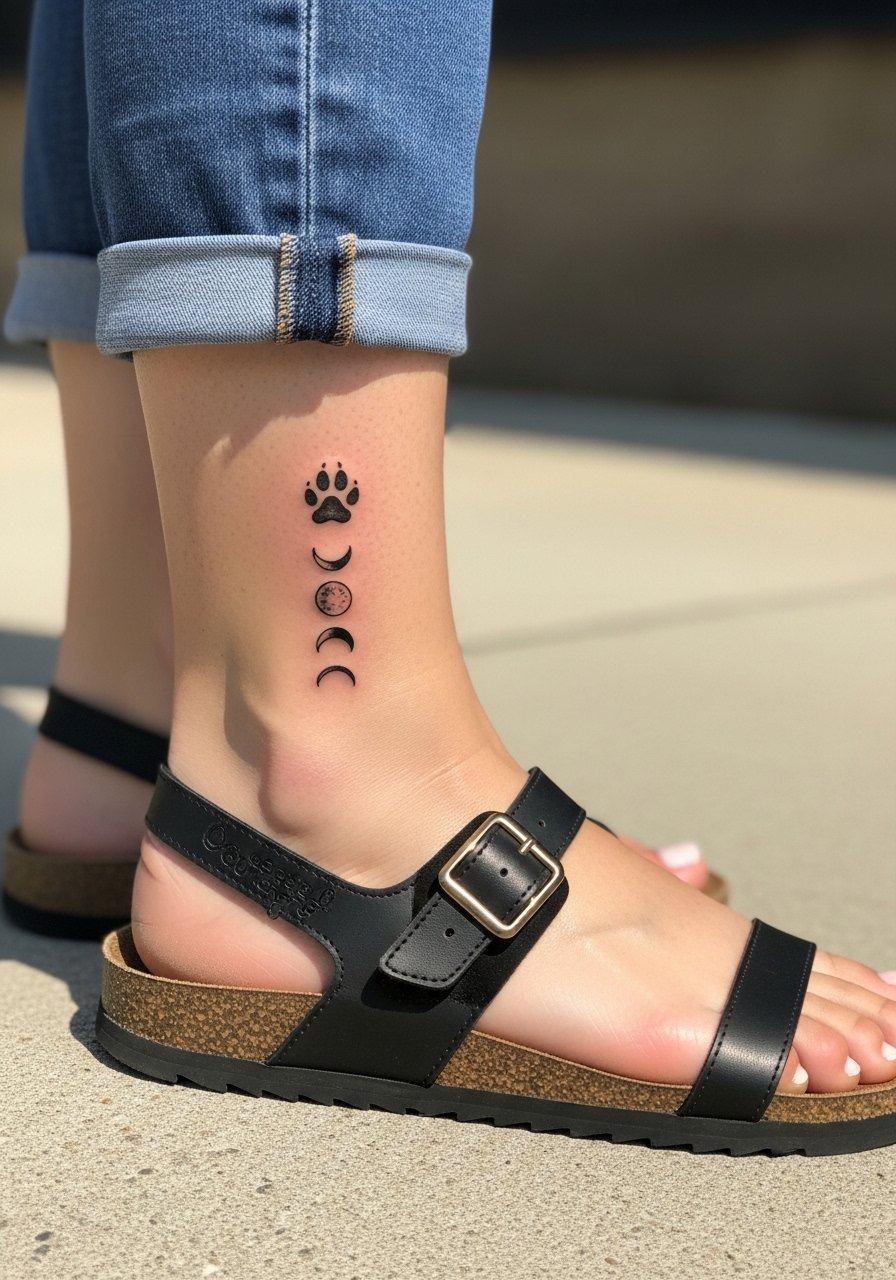
Combining paw and moon phases creates narrative without heavy detail. For the ankle, use bolder solid fills for the paw pads and simple filled glyphs for phases to maintain contrast. The mistake is drawing thin crescents that melt into skin texture with time. Session is brief and sensitivity is moderate near bone. For footwear that complements the art, try ankle strap heels or sandals that do not rub the tattoo.
19. Stipple-Shaded Sitting Cat Inside a Floral Ring on the Ribcage
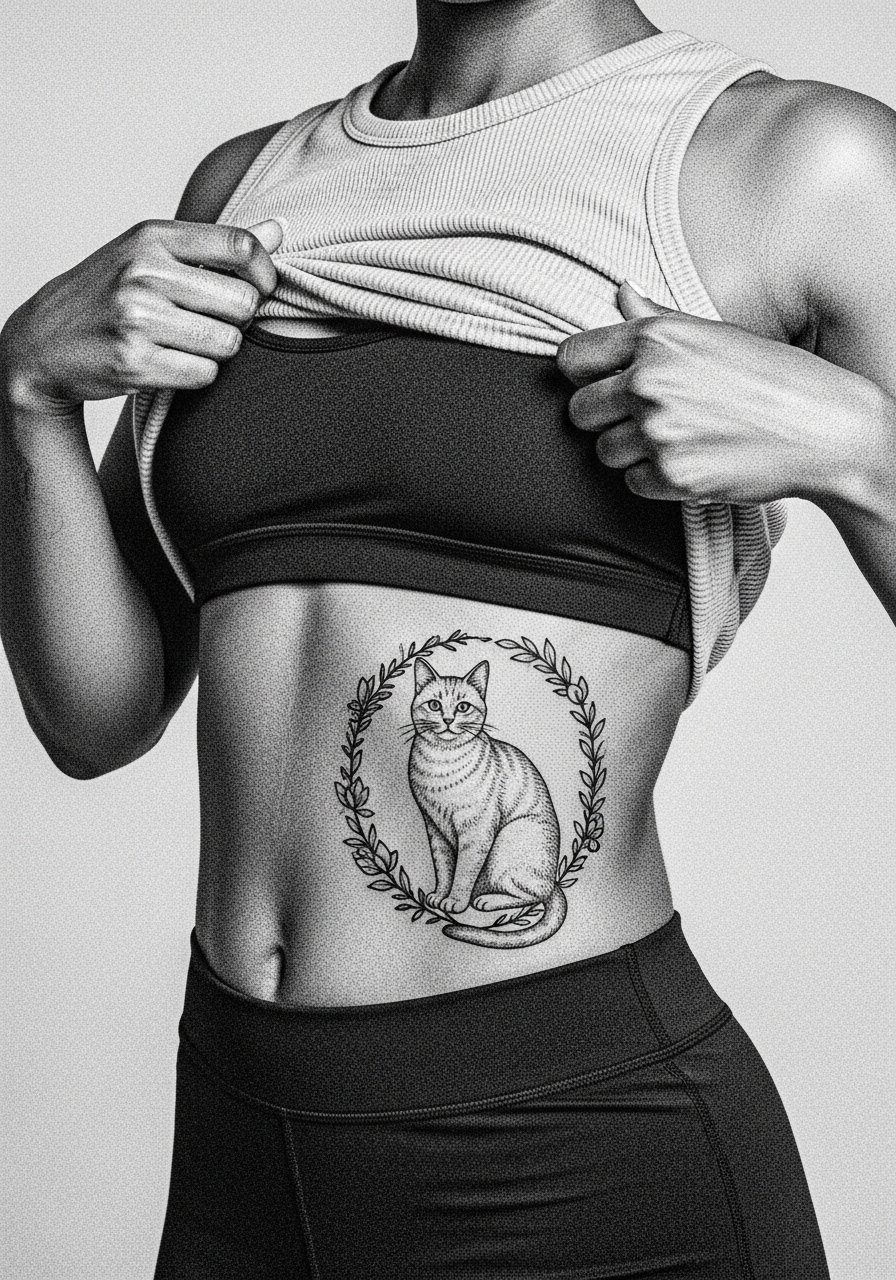
Stipple shading gives texture without harsh saturation and suits the curve of the ribs when scaled properly. This area is painful and artists split on fine line use here. One camp warns about movement blurring, the other trusts spacing and depth. Ask the artist whether they prefer to scale up the piece for stippling. Sessions will likely be longer and may need breaks. For session wear, a cropped athletic top that can be shifted safely is best.
20. Tiny Whisker Line at the Jawline
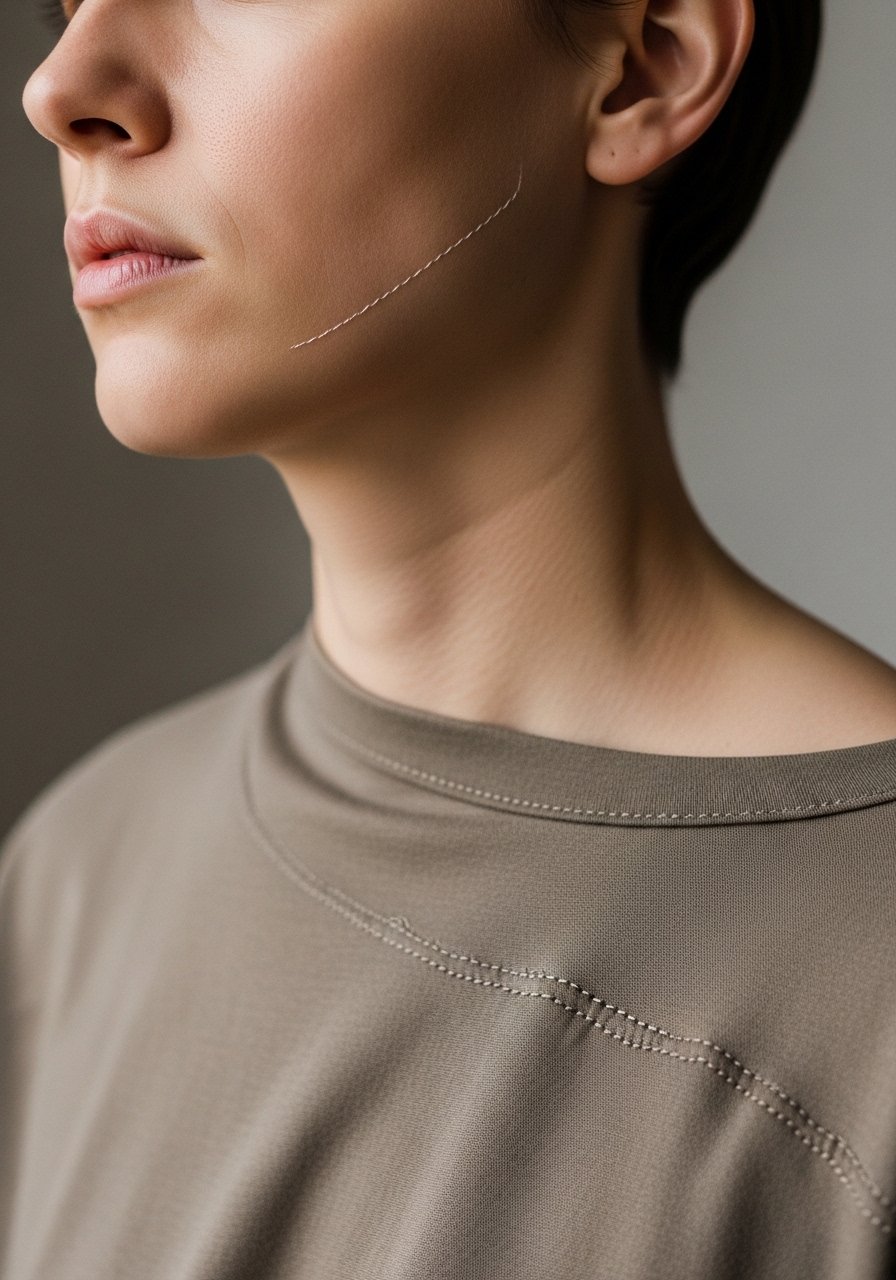
A single whisker line is an ultra-discrete option for people wanting a small nod that shows when hair is pulled back. Because the face and jaw area are highly visible, discuss long-term visibility for workplace considerations. Scale matters here. Too thin and the mark will vanish, too thick and it looks out of place. Pain is mild to moderate. Wear a wide-neck shirt and have your hair tied up so the artist has clear access.
21. Geometric Cat Silhouette with Dot Work on the Upper Chest
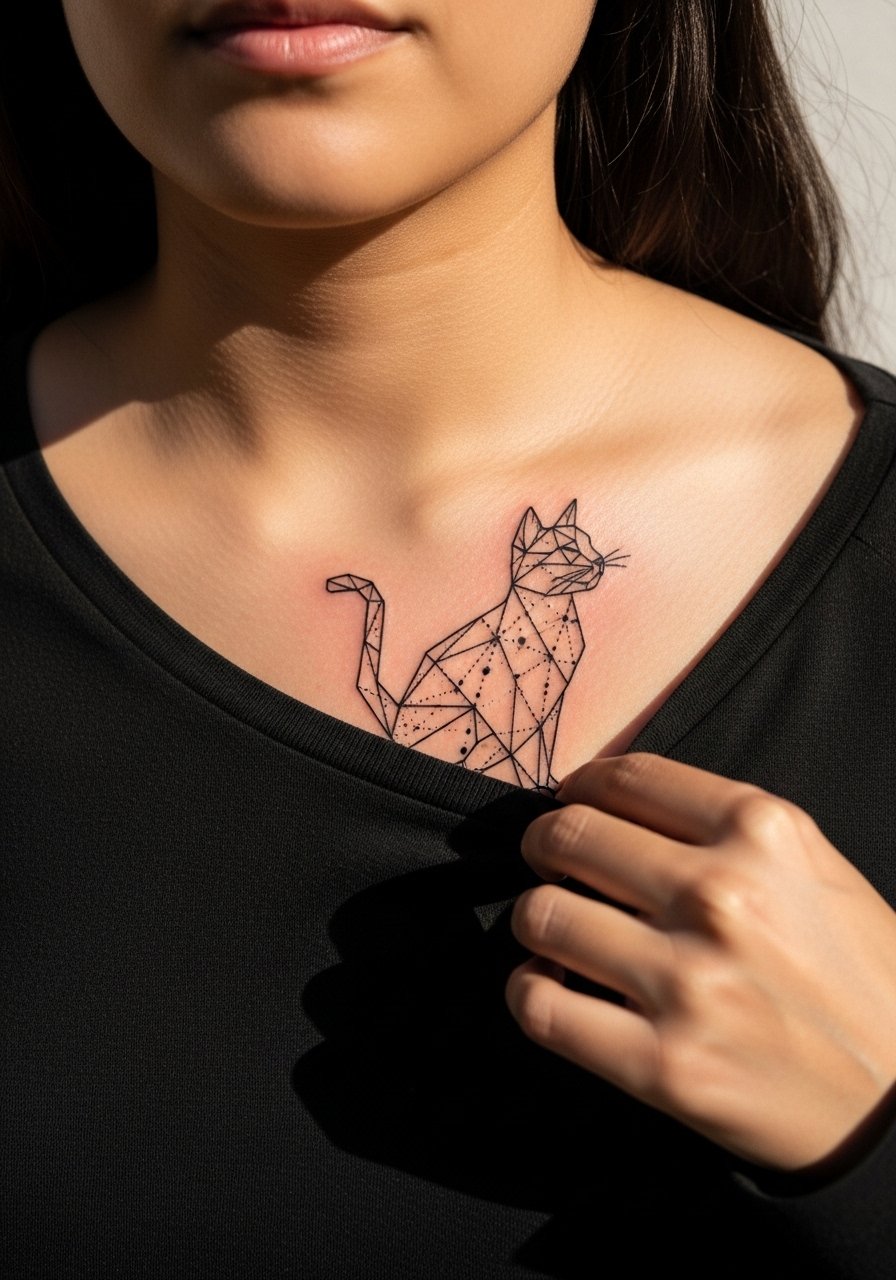
Upper chest placements sit between show and conceal. The geometric frame helps maintain shape across body changes and draws the eye to structure rather than fine facial detail. Ask for a healed mockup to check how the geometry follows chest contours. A typical mistake is making the geometry too tight to the silhouette which causes visual crowding. Sessions can be two short sittings if you want dense dot work. For reveal, pair with a delicate necklace chain that sits just above the design.
Frequently Asked Questions
Q: Will fine line cat tattoos fade faster than bolder outlines and what can I expect long term?
A: From what I've seen, single-needle fine line pieces are more prone to softening, especially on high-friction areas like the wrist and ankle. Many owners trade initial fragility for the aesthetic and plan touch-ups around year two to three. If longevity matters more than a whisper-thin look, ask the artist to increase lineweight slightly during the consult.
Q: How do pricing minimums and session booking affect small memorial designs?
A: Shops often have minimums because of setup time and sanitation. If a studio enforces a higher minimum, consider booking a guest spot at an artist's flash night or combining two small ideas into one session. Another option is to look for walk-in-friendly shops or apprentice artists who have lower hourly rates.
Q: My skin tone makes small black marks look faint in photos. What should I ask for?
A: Mention your skin tone in the consultation and request bolder fills or geometric negatives inside the paw pads to maintain contrast. Some artists will offer healed photo mocks on similar skin tones so you can judge visibility before committing.
Q: Are watercolor memorial pieces harder to maintain than black and gray for memorial tattoos?
A: Artists and clients disagree. Color lovers say watercolor adds life and mood. Others prefer black and gray because it keeps contrast longer. If you choose watercolor, expect to plan for a refresh at year three or four depending on sun exposure and placement.
Q: What should I wear to a ribcage or sternum session to make the appointment easier?
A: Wear a fitted sports bra or a cropped top you can lift slightly so only the targeted area is exposed. That keeps you comfortable and makes it easier for the artist to work without full removal of clothing.
Q: How often will I need touch-ups for finger or ankle paw prints?
A: Finger and ankle tattoos see more wear. From experience, expect touch-ups every 12 to 24 months for finger work and every 2 to 4 years for ankle prints, depending on daily abrasion and sun exposure.
Q: Where can I find healed examples and artist portfolios without naming specific artists?
A: Search tags like #CatMemorialTattoo, #FineLineCat, or #PetMemorialInk on image platforms. Use apps with filters for memorial or micro-realism work, and check forum threads for healed shots, not just fresh photos.