The tattoos that still read clean at year ten are often the ones that looked less flashy fresh. People come in worrying about fine line blur, how a wrist piece will age under washing, and whether a chest job will be painful enough to regret. This list walks through 17 dove tattoo ideas, with where they work best, what to ask your artist, and what to wear to the session so the result actually lasts.
1. Realistic Dove in Flight with Olive Branch on the Forearm
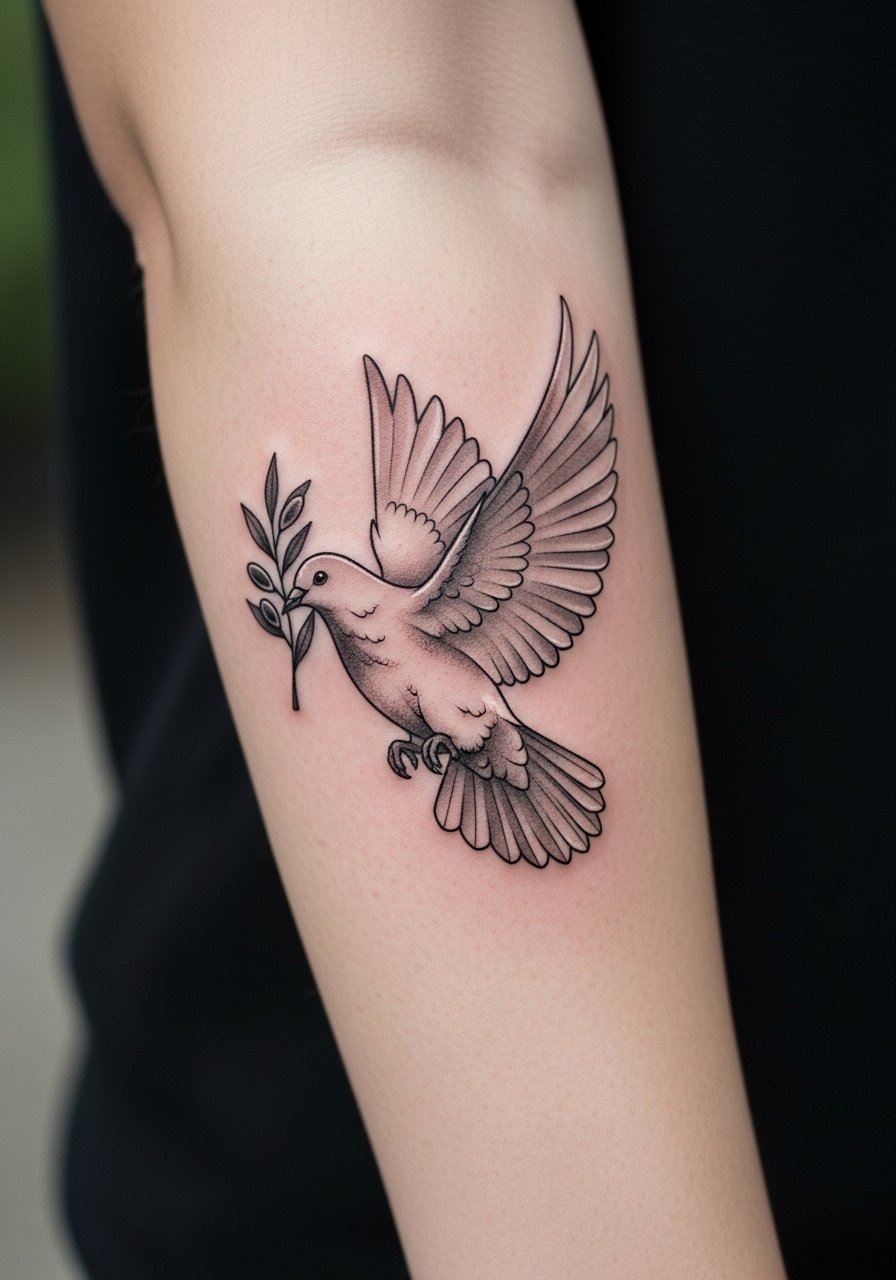
I recommend this micro-realism forearm piece when you want a visible design that still reads clean at a distance. Tell your artist you want medium linework depth and feather-by-feather shading so the wing feathers hold their separation as the skin ages. Fair warning, forearms see sun and friction from sleeves, so expect light softening at year three and a possible touch-up at year five. Session time is usually one to two hours depending on size, and pain is moderate. For showing it off, roll up a rolled sleeve henley in navy or charcoal and wear a leather cuff bracelet on the opposite arm during photos.
2. Neo-Traditional Dove with Geometric Wings on the Upper Arm
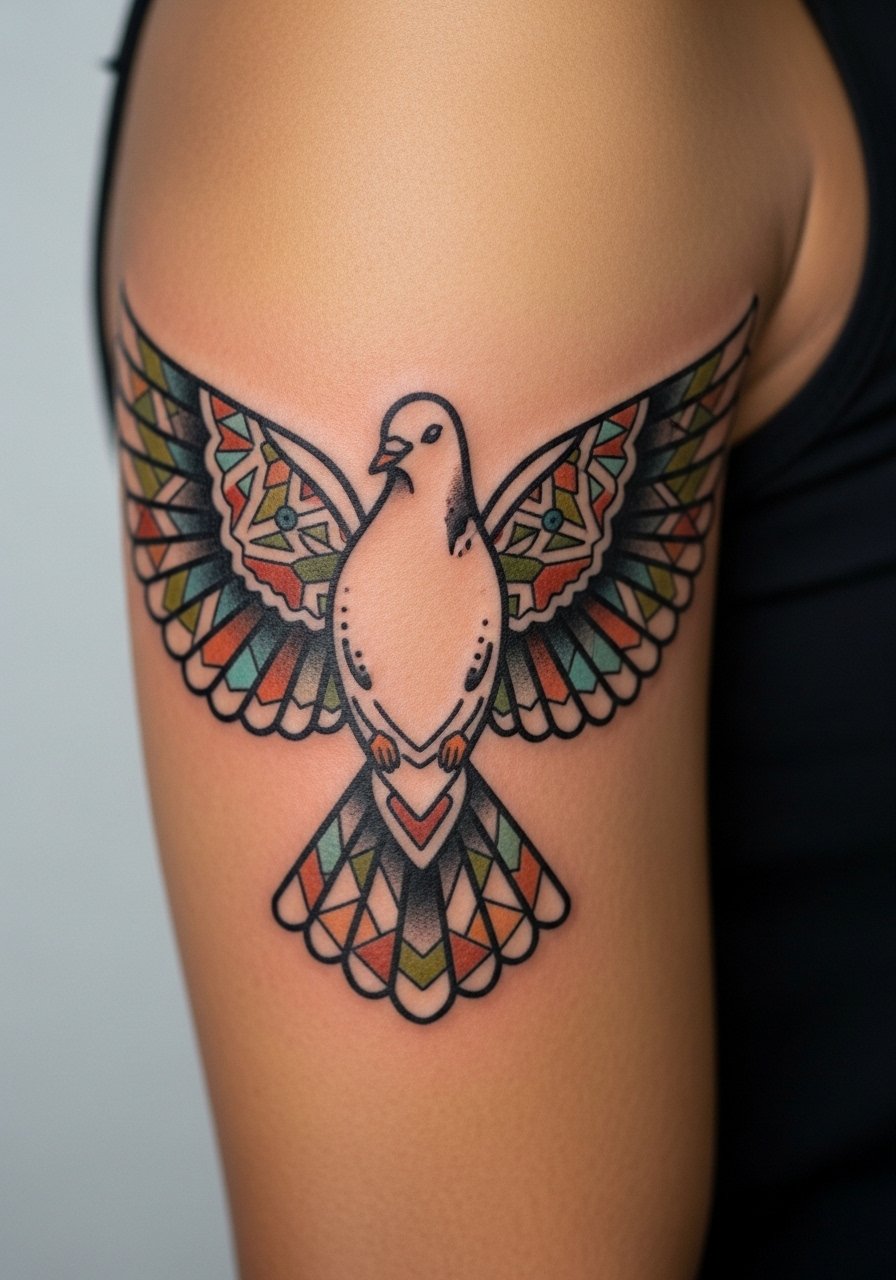
This version works best on the upper arm where size and saturation can shine. Ask for a 4 to 6 inch composition and specify you want color accents held to pockets rather than full washes so the dark outlines age into a confident silhouette. The upper arm accepts saturation well, so touch-ups are less frequent than on wrists. Expect two sessions for a detailed geometric wing. A common mistake is asking for tiny geometry that gets lost as the skin settles. For everyday styling, a fitted polo shirt with rolled sleeves frames the colors and keeps the piece visible without overexposing it.
3. Fine Line Dove Silhouette on the Wrist
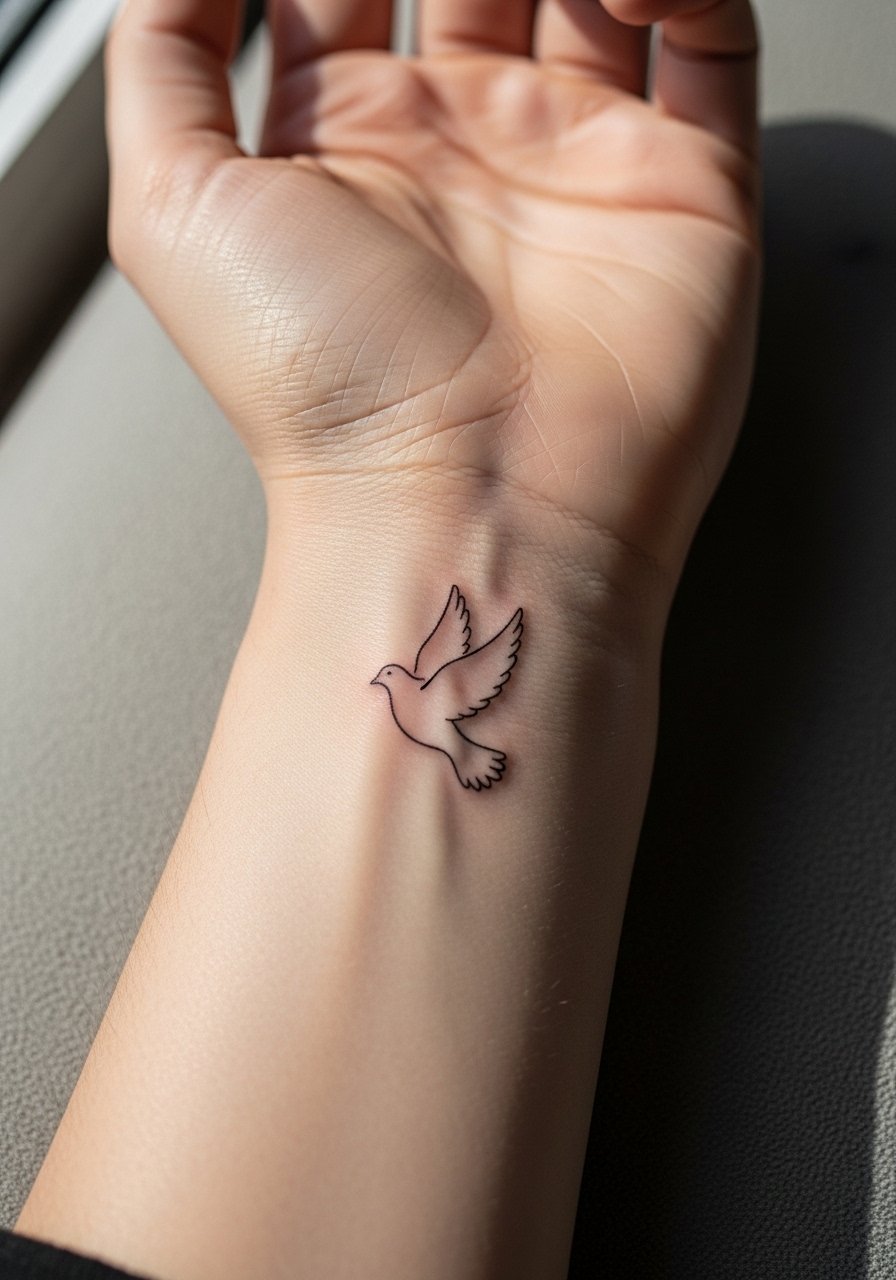
Wrist fine line is a classic first-timer pick because it heals quickly and hides easily under long sleeves. In practice the biggest risk is the linework blurring from constant washing and friction. Ask your artist for slightly stronger line weight than a fashion sketch, and expect a single short session. Pain on the wrist is higher than the forearm but manageable. People often ask for hairline strokes that vanish after a year, so avoid asking for ultra-fine single hairlines. Pair this with a thin leather cord or a thin leather bracelet on the opposite wrist when you want to keep attention on the silhouette.
4. Blackwork Tribal Dove with Arrow Through the Chest
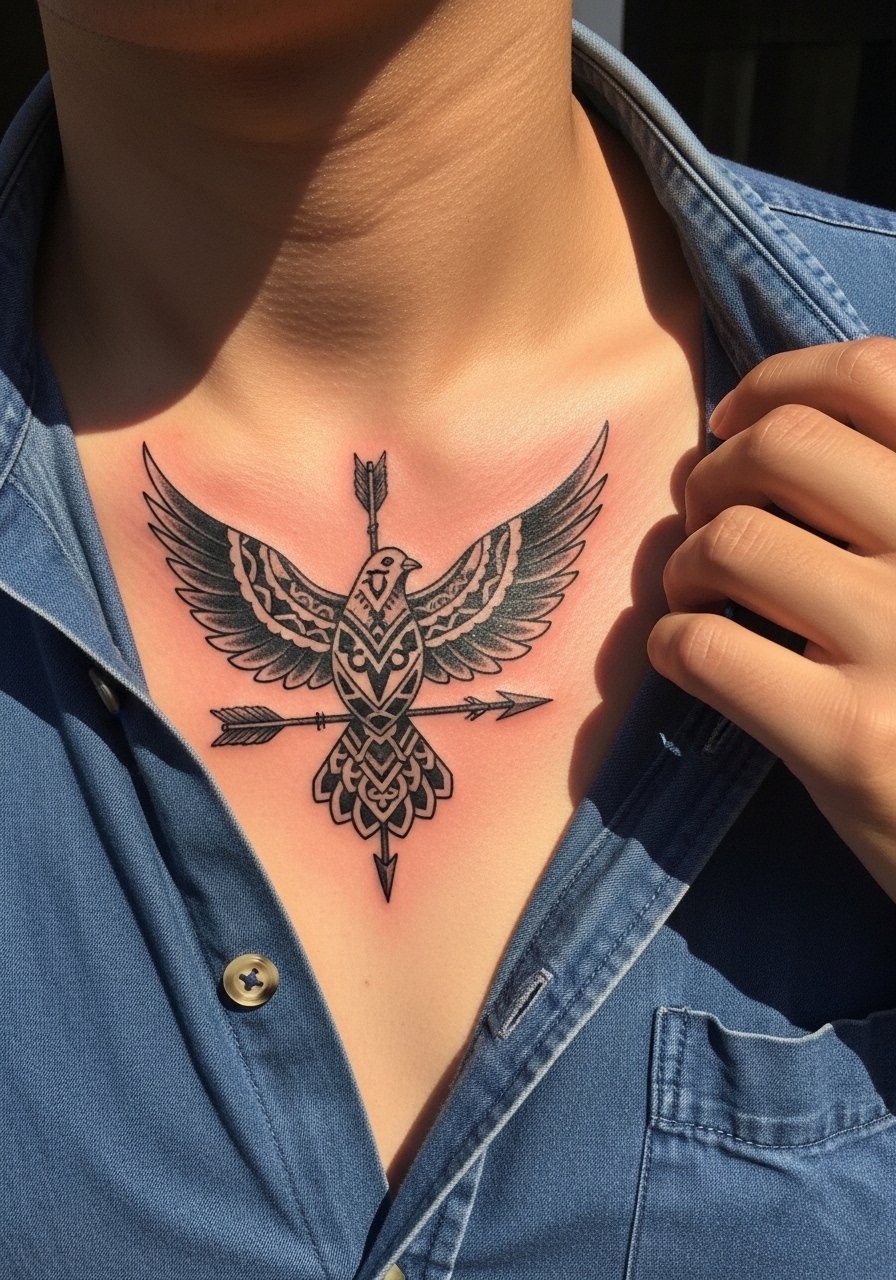
Chest pieces like this read bold because they live under clothing that can be opened to reveal them. Fair warning, chest sessions are longer and more physically demanding. Expect two to three sessions for solid fills and allow for higher initial soreness. The biggest mistake is asking for solid black fills that are layered too shallow, which can cause early patchiness. For show-off outfits, an open button-down shirt over a plain tee keeps the chest work subtle but visible when you want it to be.
5. Traditional American Dove with Banner on the Shoulder
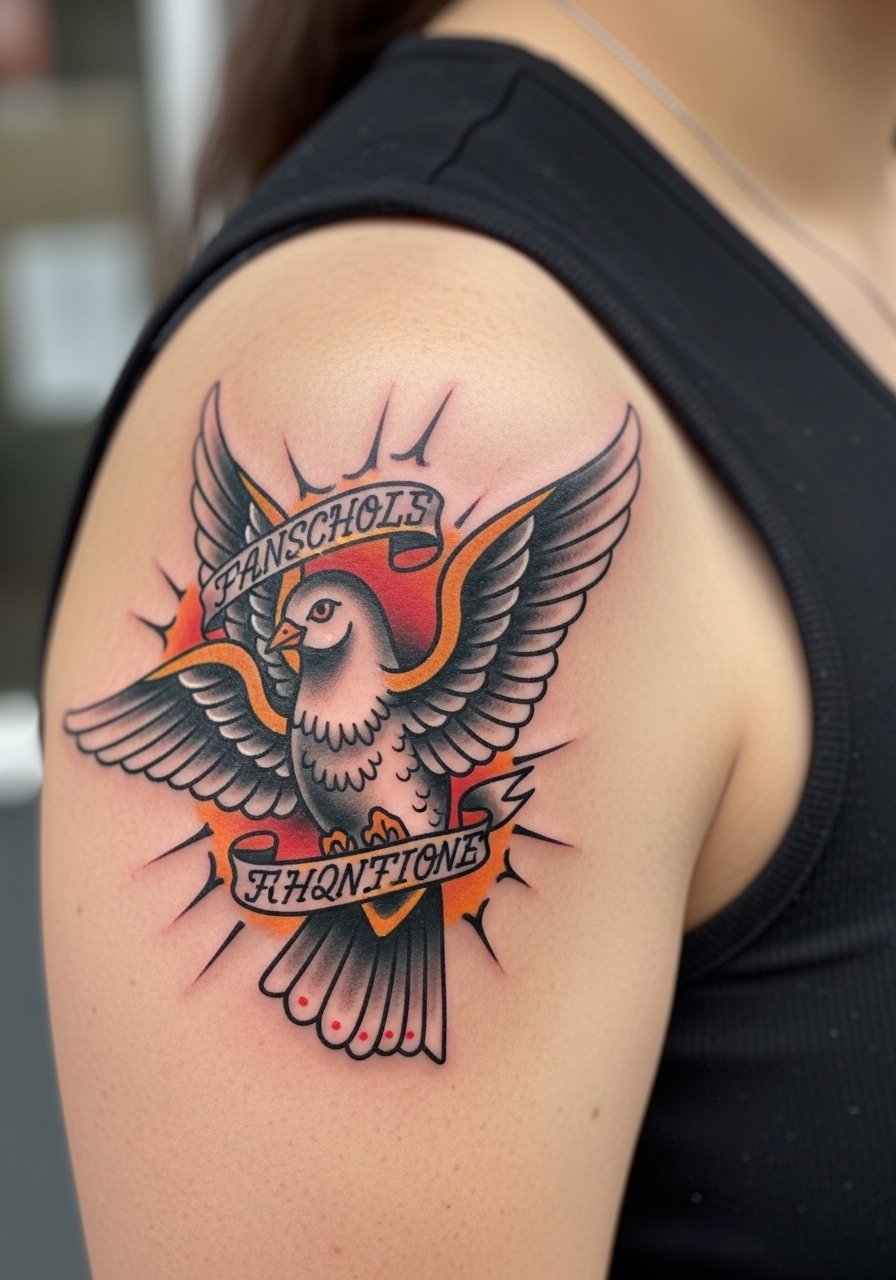
Shoulder placement is forgiving for saturation and ages into a strong silhouette. For men who like retro sailor aesthetics, request a banner with a single short word and ask the artist to keep letters larger than they appear on phone photos. Shoulders handle color well so touch-ups are less frequent than on hands. Session time is typically one to two hours. For showing this off, pair the piece with a v neck tee in white or black to frame the ink without stealing focus.
6. Minimalist Single Line Dove on the Inner Bicep
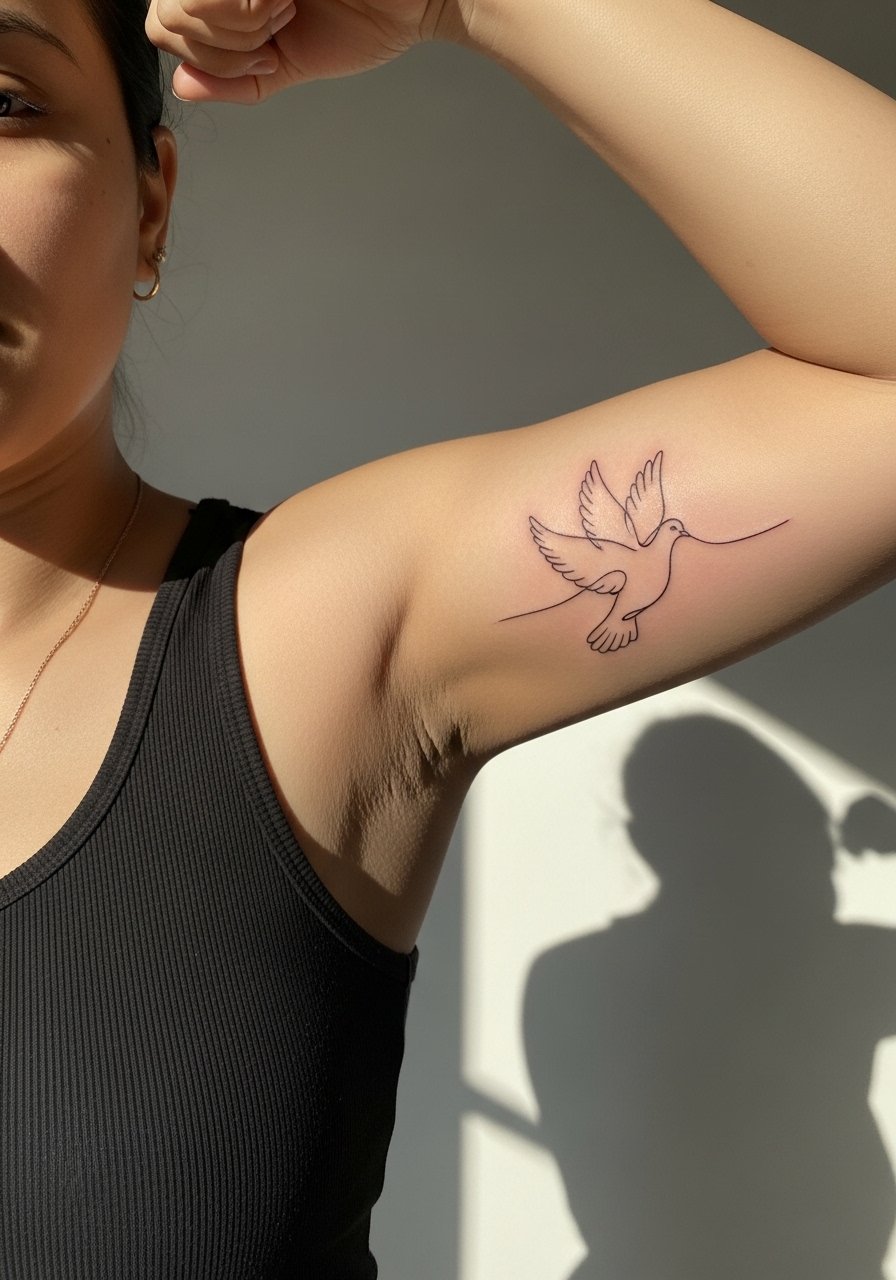
Inner bicep is a comfortable spot for a low-commitment minimalist dove, and the skin there is forgiving so linework can hold if given space. I usually warn clients that the inner bicep sees movement, so tiny loops and cramped flourishes are a risk for early softening. Ask for slightly more spacing in the wings and a single clean continuous pass for the line. The session is short and pain is moderate. Wear a loose tank top to your appointment so the artist can have full access to the inner arm.
7. Watercolor Dove with Soft Blue Gradients on the Calf
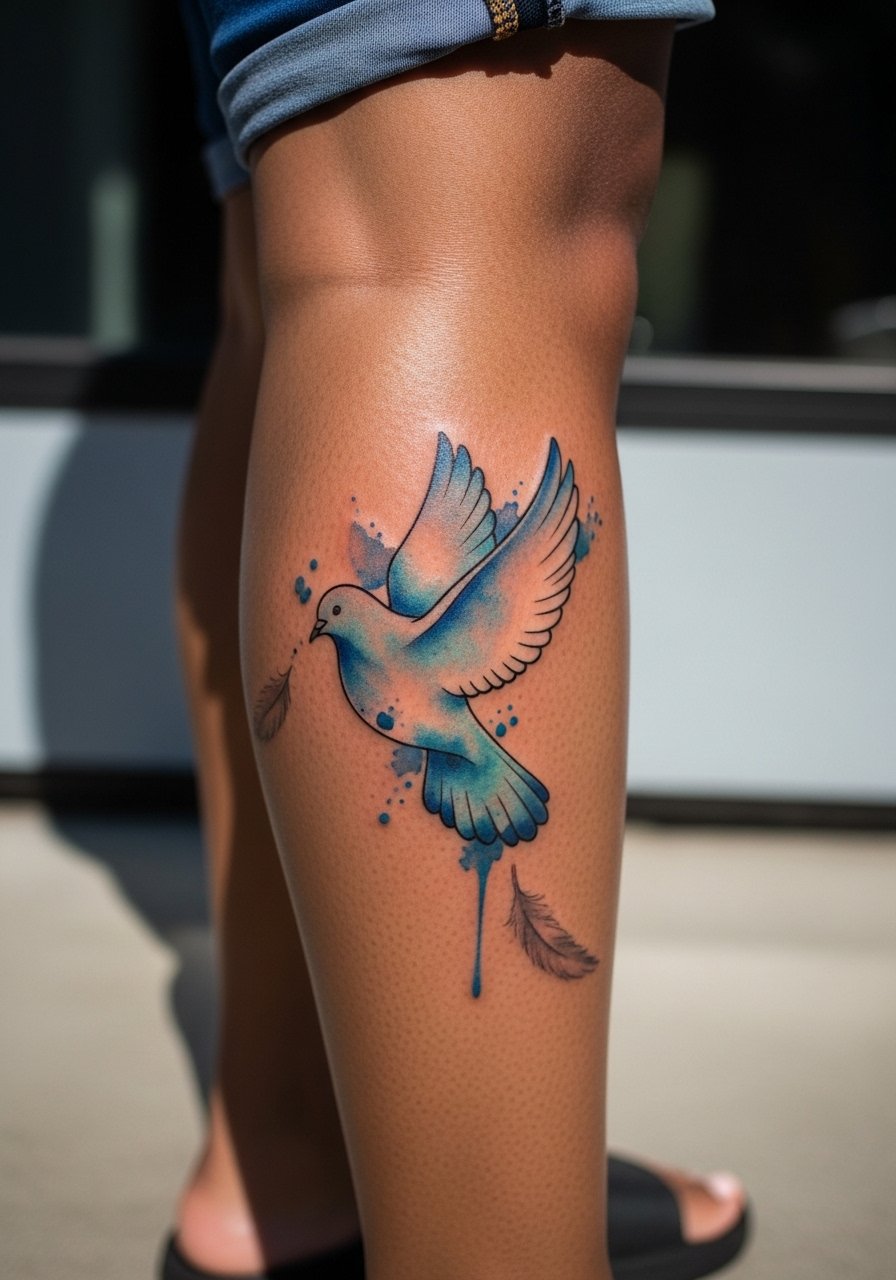
Calf pieces let watercolor breathe because the surface handles color transitions well. Tell your artist you want soft washes rather than saturated blobs so the colors age into a pleasant wash instead of patchy rings. A common mistake is asking for ultra-faint washes on thicker skin which can vanish. Sessions usually take two sittings for layering. For summer photos, roll up slim joggers or cuff chinos. A pair of slim joggers rolled at the ankle keeps the gradient visible without overdoing it.
8. Ornamental Dove Mandala Centered on the Upper Back
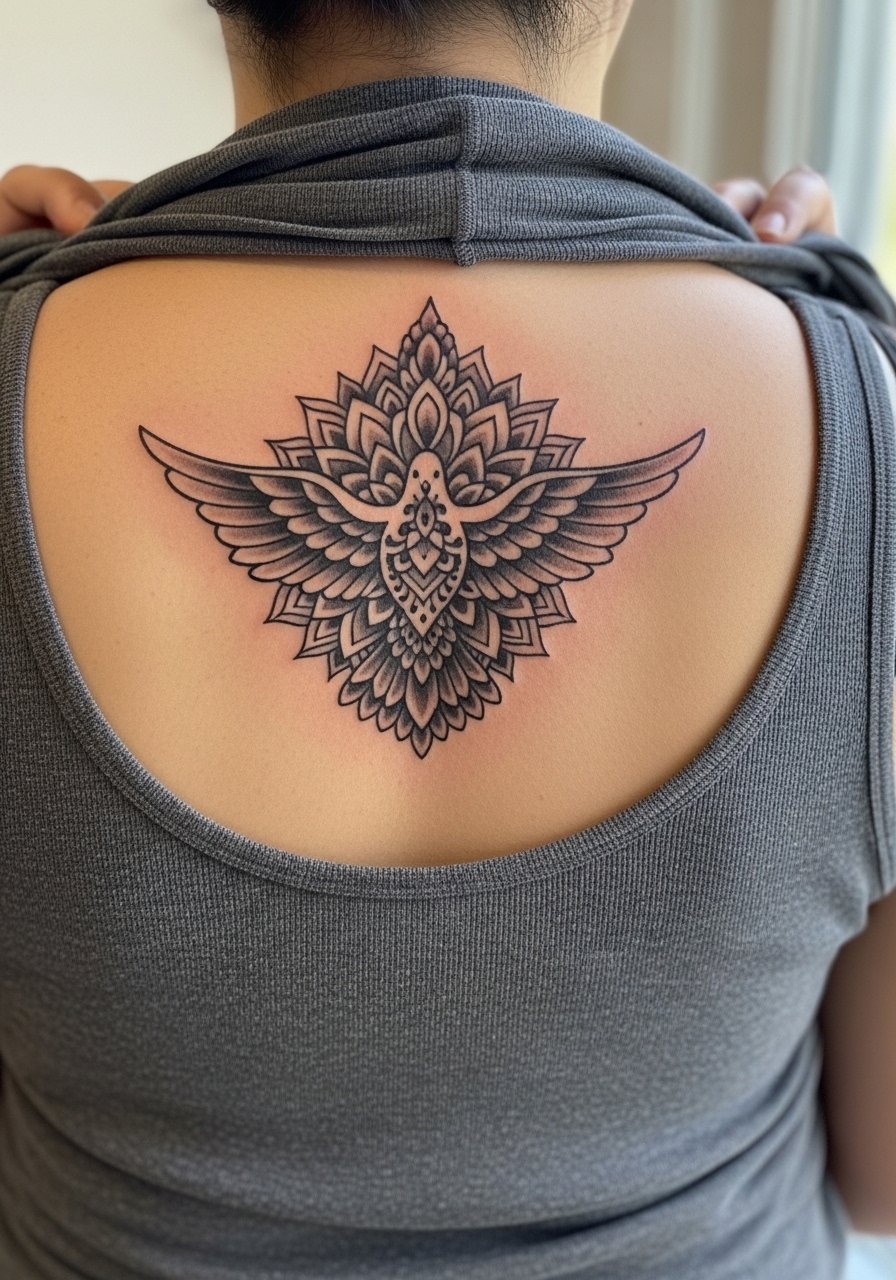
Large back pieces let you include mandala geometry without crowding. If you practice yoga or meditate, this composition pairs with symmetry in your wardrobe and posture. The risk is asking for too-dense patterning at small scale, which can blur over years. Expect multiple sessions and plan spacing so the densest areas have breathing room. For session comfort, bring a loose button-up you can pull aside rather than removing a shirt.
9. Ignorant Style Blocky Dove Outline on the Thigh
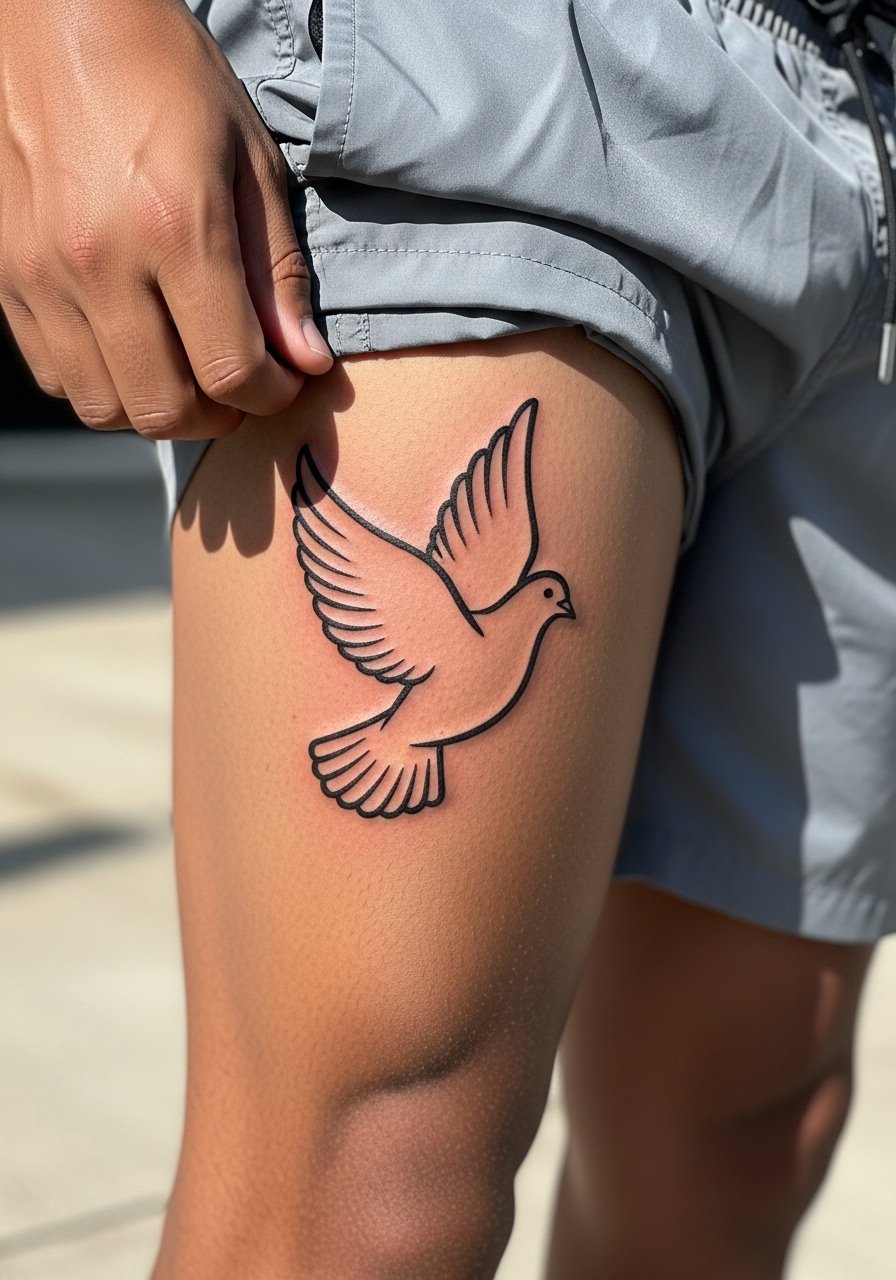
Thigh pieces are practical for larger playful looks like ignorant style blocky outlines. This style reads bold and uncomplicated when kept at 3 inches or larger. The main session factor is comfort. Long sits are easy on the thigh but plan for breaks. For showing the work in summer, tailored swim trunks or athletic shorts pair naturally. A tailored swim trunk complements bold blackwork without competing visually.
10. Black and Gray Photorealistic Dove Pair on the Ribcage
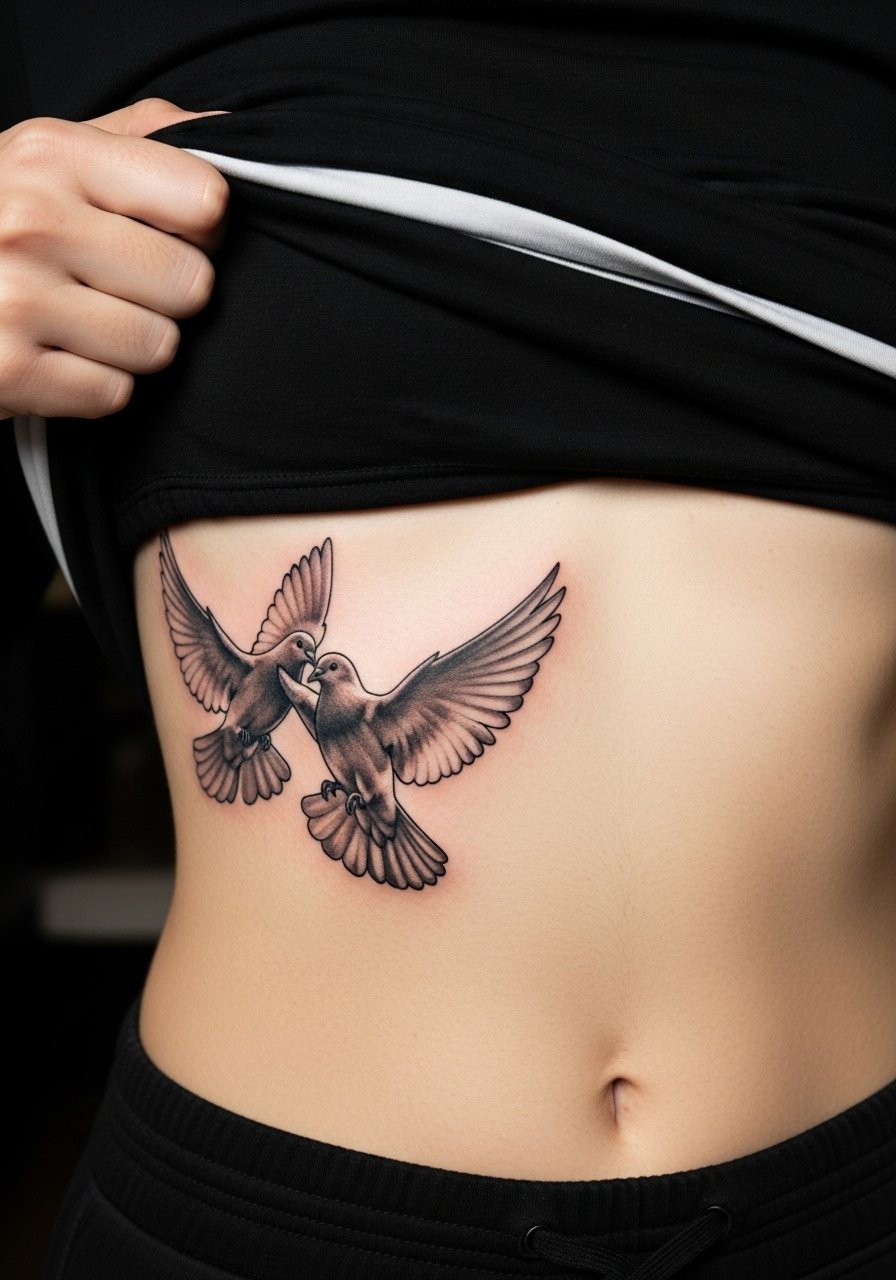
Ribcage photorealism carries emotional weight and can look incredible when placed right. Fair warning, ribs rank high on pain scales and sessions are long. Photoreal shading requires deep, consistent saturation and multiple passes, so plan three to four sessions for larger pieces. A common mistake is trying to compress too much detail into a small ribcage area. For those worried about fine line durability here, note that artists split into two camps. One camp says fine line on ribs blurs quickly due to skin stretch and breathing, and the other camp says careful needle depth and spacing let fine line settle fine. Ask your artist where they stand and review healed ribcage work in their portfolio before you book.
11. Dove Integrated with a Watch Motif on the Wrist
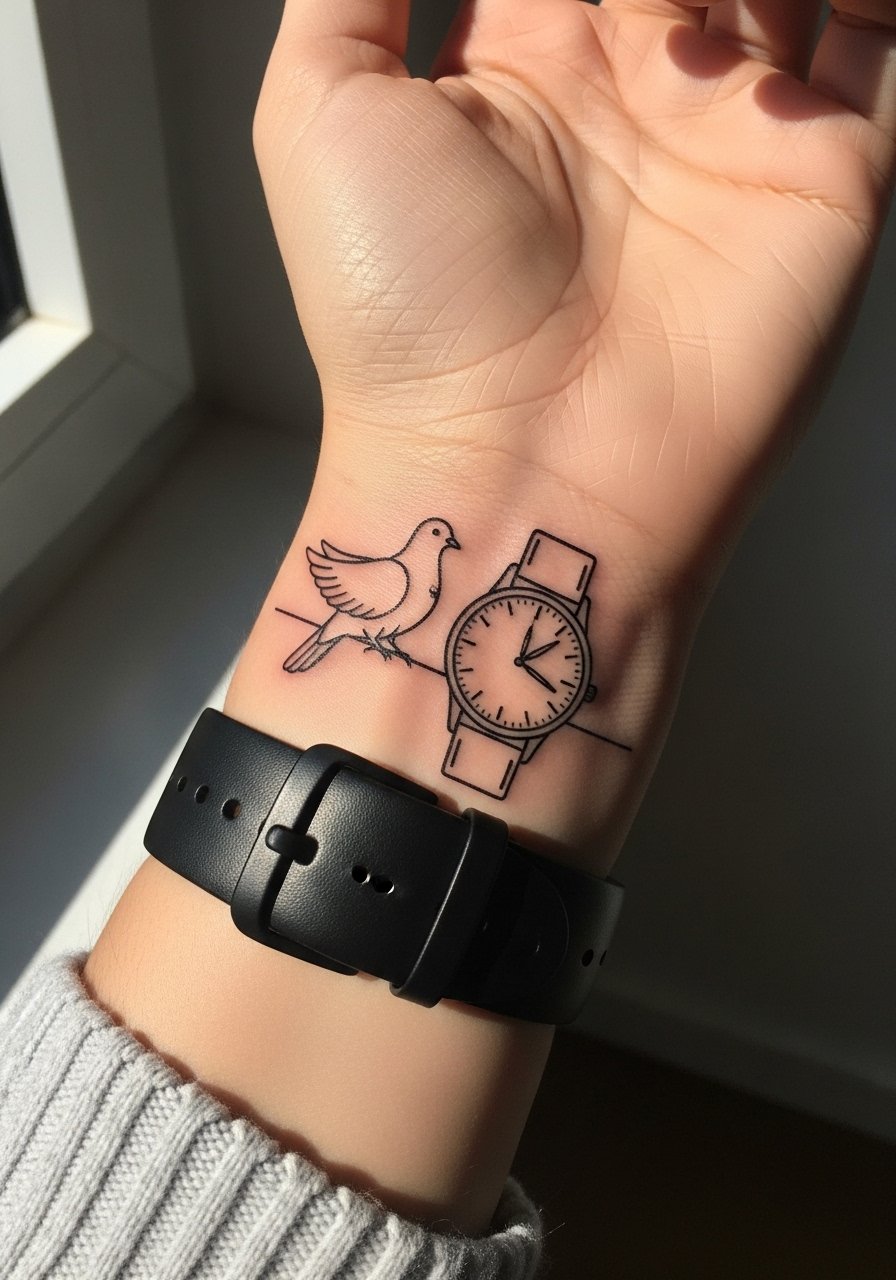
This is one of those creative pairings I see in stock vectors that reads like a statement about time and calm. For a wrist watch motif, keep the watch graphic small and simple so it does not overwhelm the dove silhouette. Ask for slightly heavier linework on the watch so the two elements read separately as the skin ages. Session time is short, but the wrist heals under a lot of motion and hand washing. For low-key styling, use a thin leather bracelet or a minimalist cord on the opposite wrist instead of a heavy metal watch to avoid crowding the area during daily wear.
12. Negative Space Dove on the Knuckles
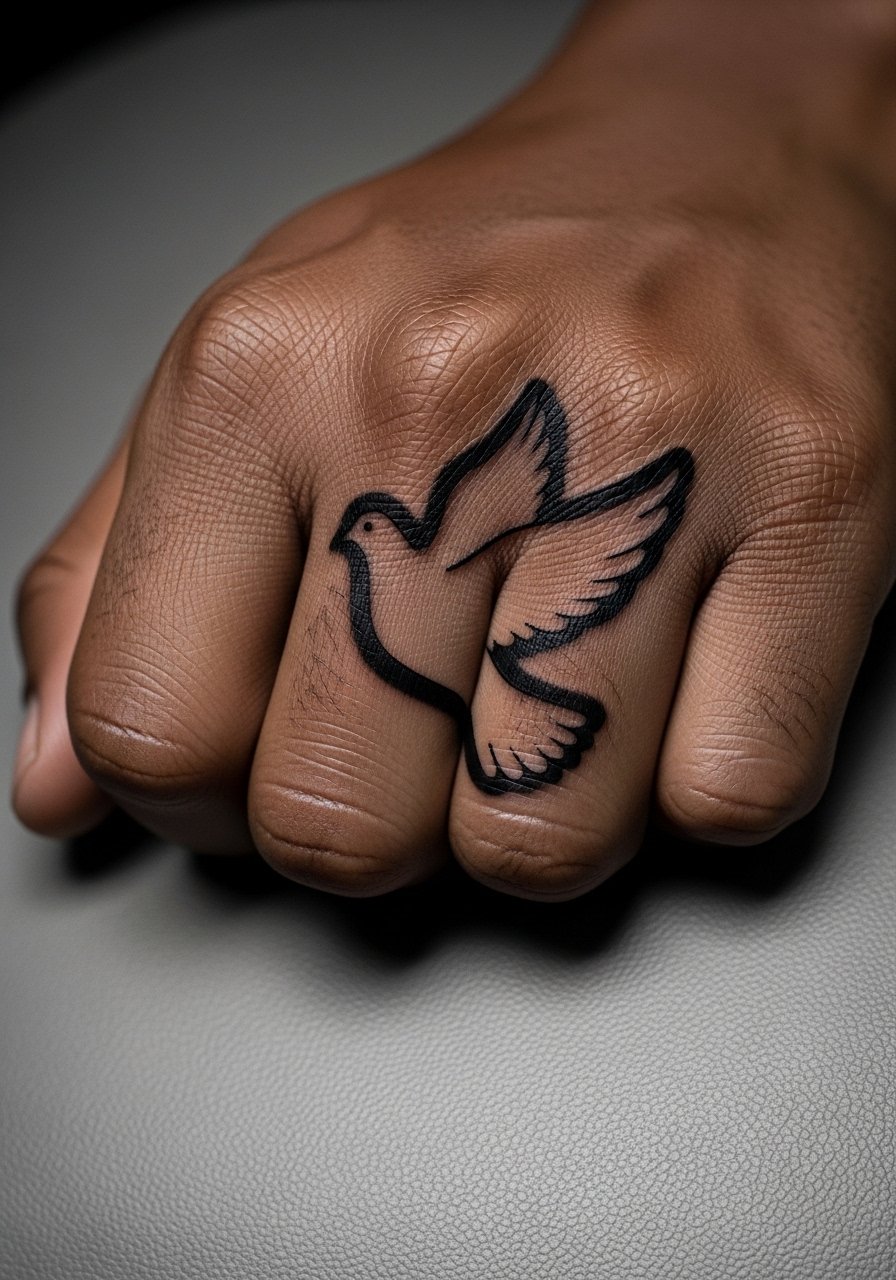
Knuckle work reads raw and visible from day one, so plan for social and job considerations before booking. Negative space designs age differently because they rely on surrounding ink contrast rather than thin outlines. The main risk is blowout where black fill can spread and reduce the negative silhouette. Ask for clean block fills with slightly rounded edges and a plan for touch-ups at year one. Hand tattoos often need more frequent touch-ups than arm or chest work.
13. Crosshatch Textured Dove for Darker Skin on the Outer Bicep
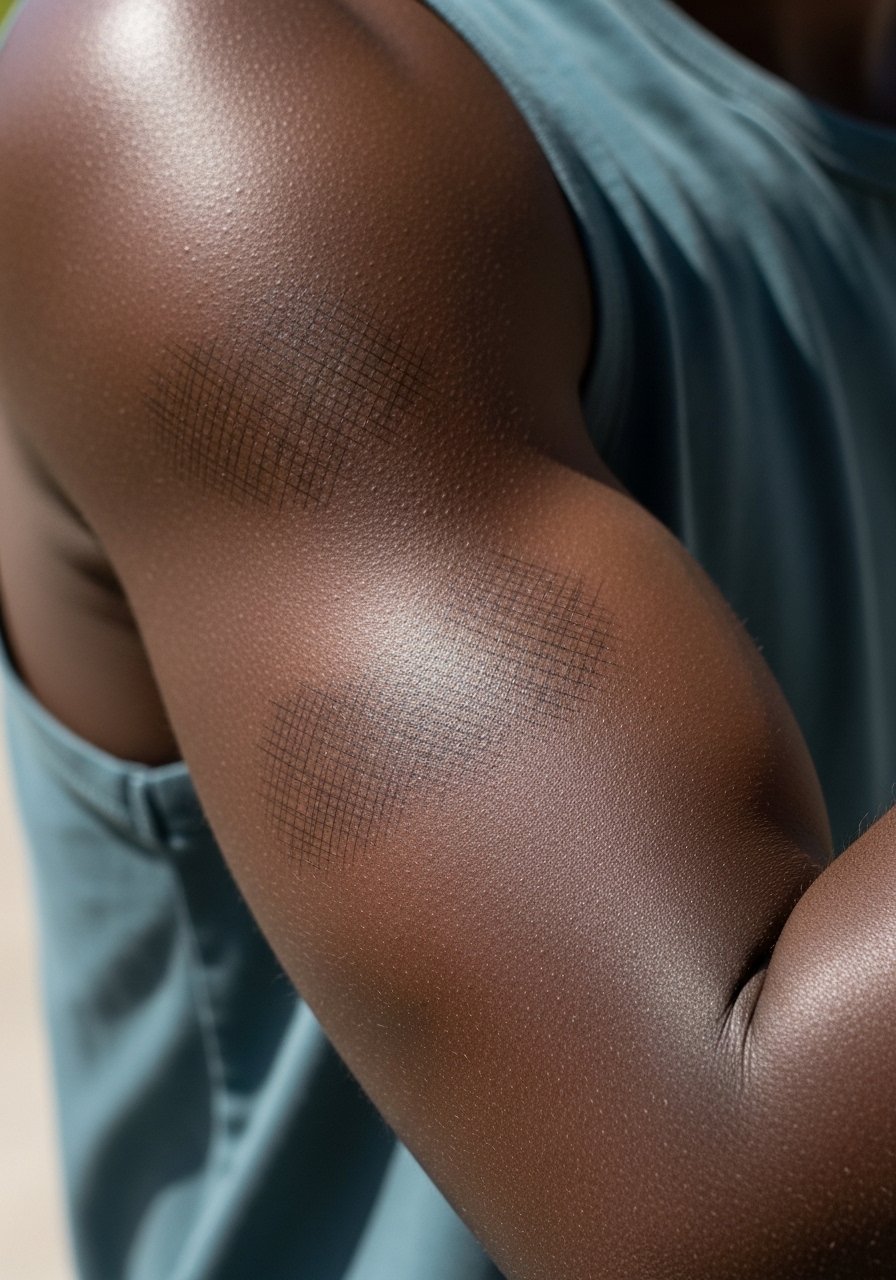
From what I've gathered, darker skin tones benefit from texture-driven shading like crosshatch and stipple rather than tiny gray washes. Specify crosshatch direction and point size in consultation so the pattern reads as texture and not muddiness. Outer biceps take saturation well and this approach reduces the risk of patchy fades. For casual show-off, a sleeveless muscle tee keeps the area on display while remaining wearable. Wear a sleeveless muscle tee to your session for comfort and access.
14. Tiny Minimal Dove on the Ankle
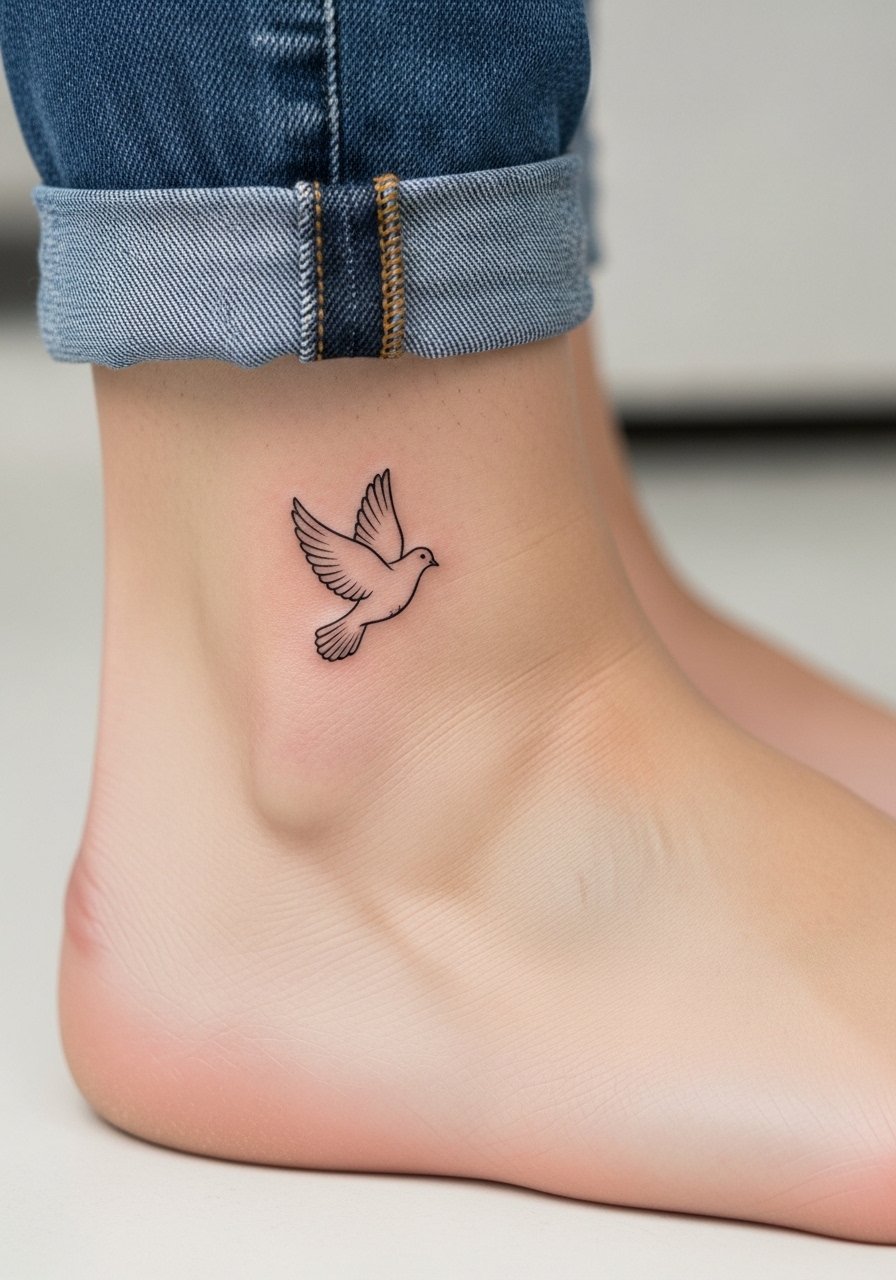
Ankle tattoos are discreet and easy to hide with socks or shoes. The downside is frequent friction from footwear, which can cause early softening on very thin lines. Ask for compact spacing and slightly stronger line weight so the form endures through socks and sneakers. Session time is brief and pain is localized. For the session wear, roll your pants or wear shorts so the artist can access the area without fabric tugging.
15. Fine Line Dove on the Ribcage, and Why Artists Debate It
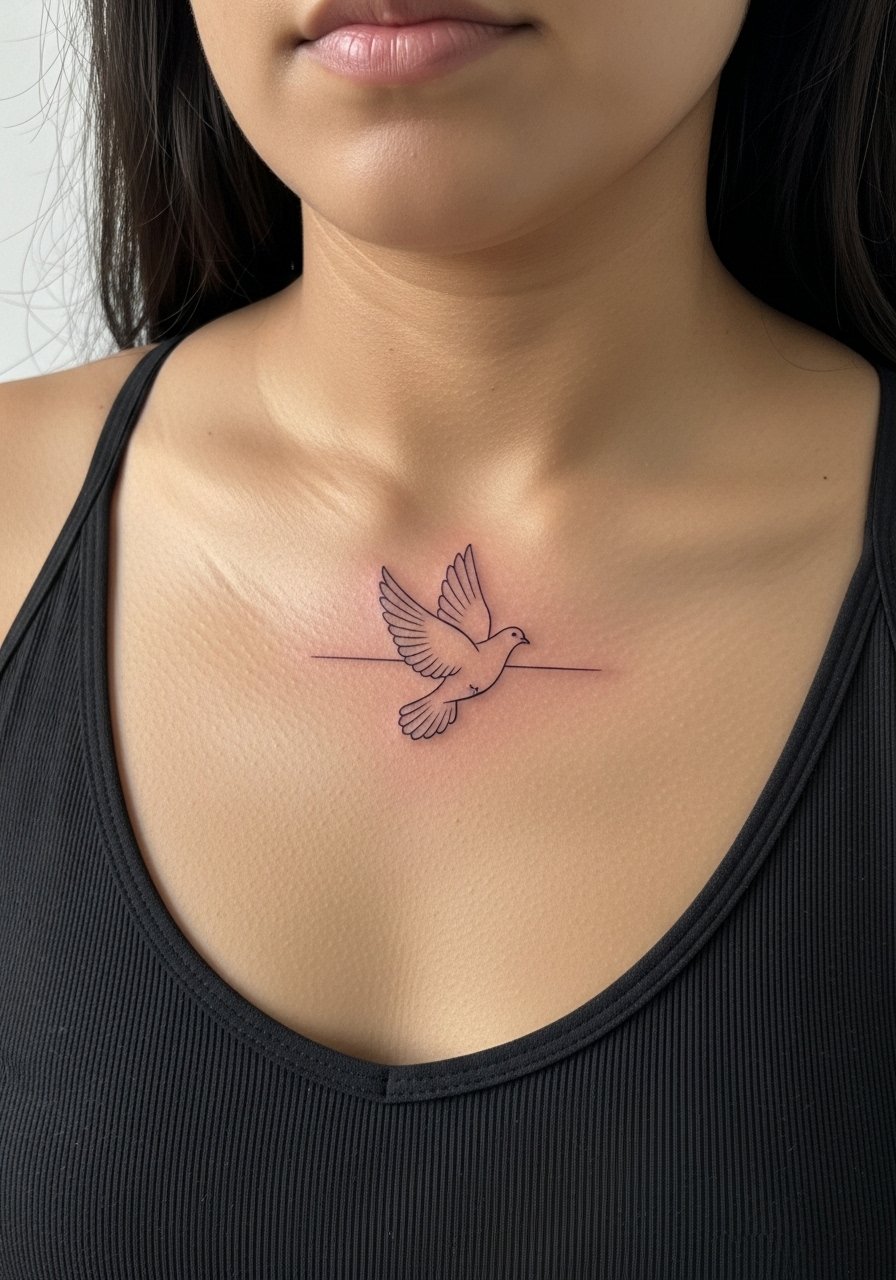
This is the place to call out a real split in opinion. Fine line on the ribs splits artists into two camps. One camp argues the skin stretch and breathing motion cause lines to blur within two years. The other camp says with precise needle depth, spacing, and a slightly heavier initial line weight, fine line can settle and hold. My take is to ask to see healed ribcage examples from your artist and accept that a touch-up at year two is common. Expect higher pain and plan for a relaxed session schedule.
16. Flying Dove Near the Collarbone with Whip Shading
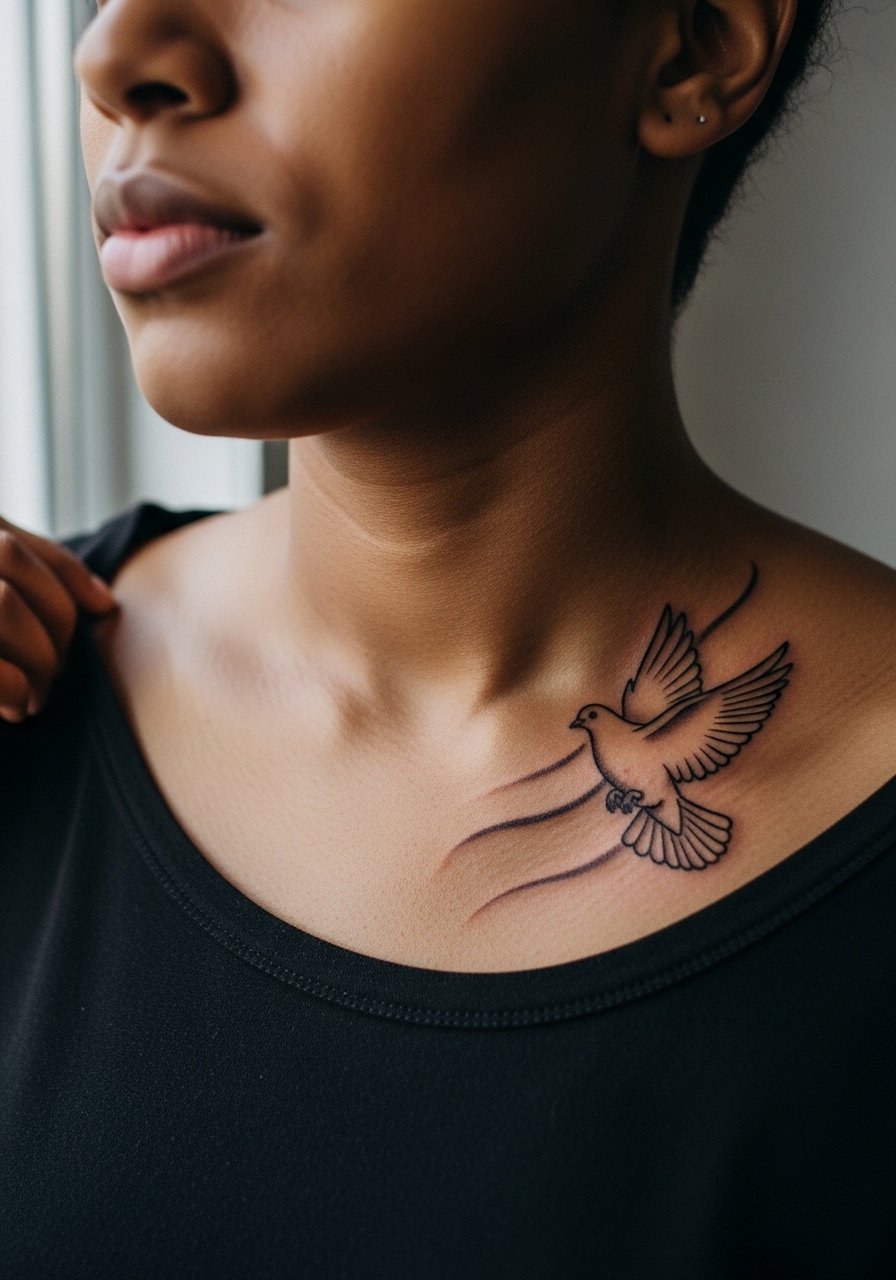
Collarbone placements look dynamic in motion and photos because the bone gives a natural frame. Whip shading pairs well here to suggest feather movement without dense fill. Ask for shallow whip strokes that fade into negative space, and avoid asking for heavy dense shading close to the bone. The area can be tender, and sessions are short. For session access and later photos, wear a wide-neck shirt you can pull slightly aside.
17. Paired Doves Over the Heart, Simple and Heavy with Meaning
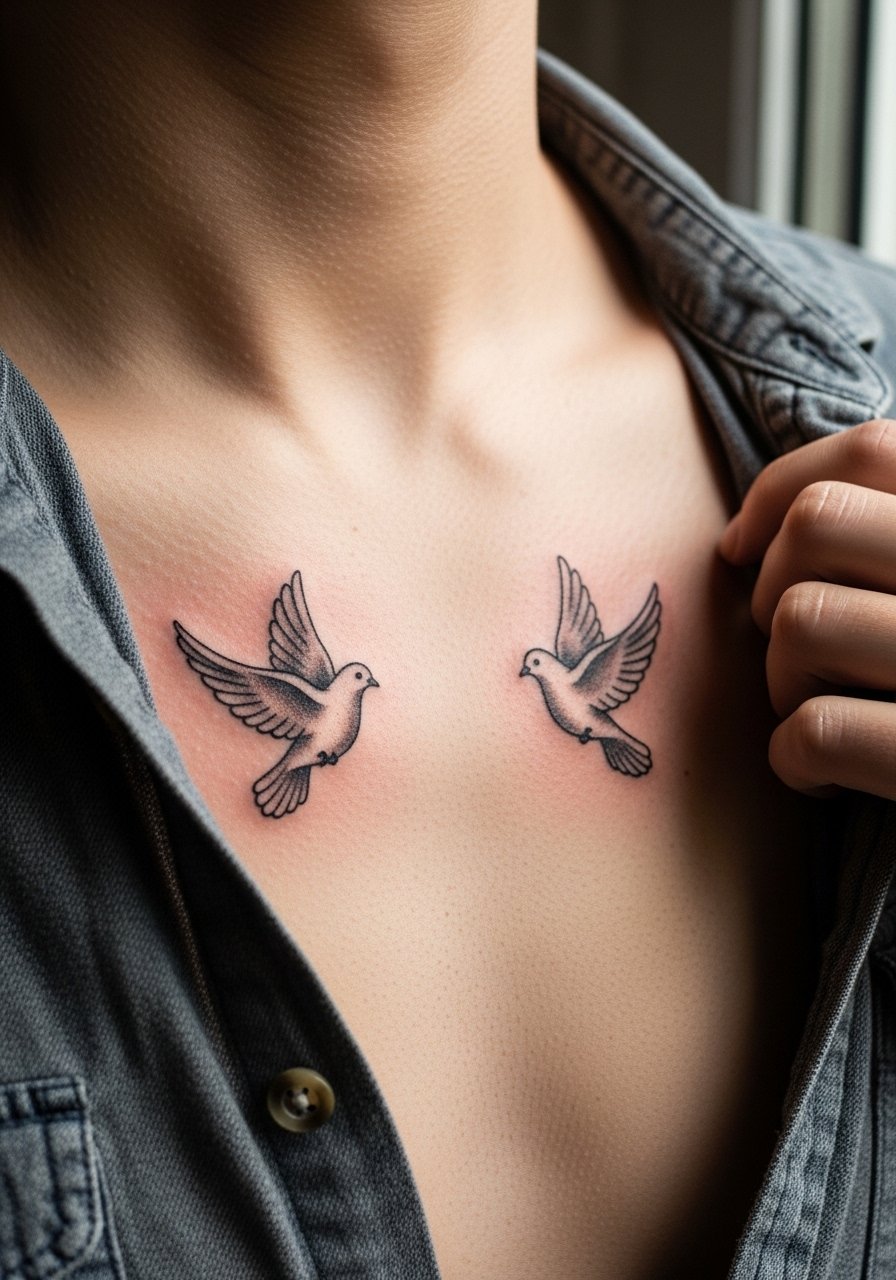
A pair over the heart reads personal and intentional, and chest placements let you scale mild realism to a more symbolic composition. Discuss exact placement with your artist while standing because the way fabric sits changes how the piece will look in shirts. Pain here is moderate to high and sessions can be staged to let tissue settle. Expect natural softening and plan a touch-up at year three if you want crisp feather detail to remain.
Studio Day Picks
These items help smooth out the first week and the kinds of sessions in the first six ideas above.
- Stencil transfer paper kit. Great for previewing line placement on tricky curves like the forearm and collarbone before the needle hits skin.
- Topical numbing cream. Useful for wrist and ribcage sessions when you want to take the edge off soreness for the first pass.
- Thin protective film roll. Keeps small areas like knuckles and wrists shielded from friction during the first two days of healing.
- Fragrance-free gentle body wash. Cleanses healing areas like forearms and calves without stripping delicate ink channels, which matters for fine line pieces.
- Aquaphor healing ointment. A thin layer in the initial days helps maintain moisture for fine line and micro-realism work without clogging pores.
Frequently Asked Questions
Q: How much does a realistic dove tattoo on the forearm usually cost?
A: For micro-realism forearm pieces expect a range roughly between 150 to 400 depending on size and studio. Larger realistic work or pieces requiring multiple sessions will push toward the higher end of that range. Price also depends on the artist's experience and your city.
Q: Will fine line work on the ribs blur quickly or hold up?
A: Artists are split on this. Some say the ribs move and the skin stretches, which can cause faster softening. Others say proper depth and spacing let fine line settle. My advice is to review healed ribcage examples from an artist and accept a likely touch-up around year two for crisp lines.
Q: Do watercolor dove tattoos need different session planning than black and gray ones?
A: Yes. Watercolor pieces often require layering and space to allow colors to blend smoothly, so expect two sessions and a slower build. Black and gray realism usually focuses on saturation and can need deeper passes. Both styles benefit from patience rather than compressing everything into one long session.
Q: How should I dress for a chest or shoulder session to make access easy?
A: Wear a loose open button-down for chest work or a tank top for shoulders so the artist can expose the area without you removing clothing fully. This keeps you warmer and more comfortable during longer sits and reduces fabric rubbing during the session.
Q: What are the main touch-up timelines for the styles in this article?
A: Expect fine line wrist work to often need a touch-up around year one to three. Micro-realism forearm pieces can hold longer with sun protection, with a common touch-up at year three to five. Blackwork chest and neo-traditional shoulders usually need fewer touch-ups because saturation ages more predictably.
Q: Where can I find local references and healed examples before booking?
A: Use style-specific hashtags like #dovetattoo and #finelinedove on social platforms, search studio location tags for "dove tattoo [city]", or browse tattoo directories to filter by dove styles. Seeing healed examples in person or in studio portfolios is the best indicator of how a style will age.