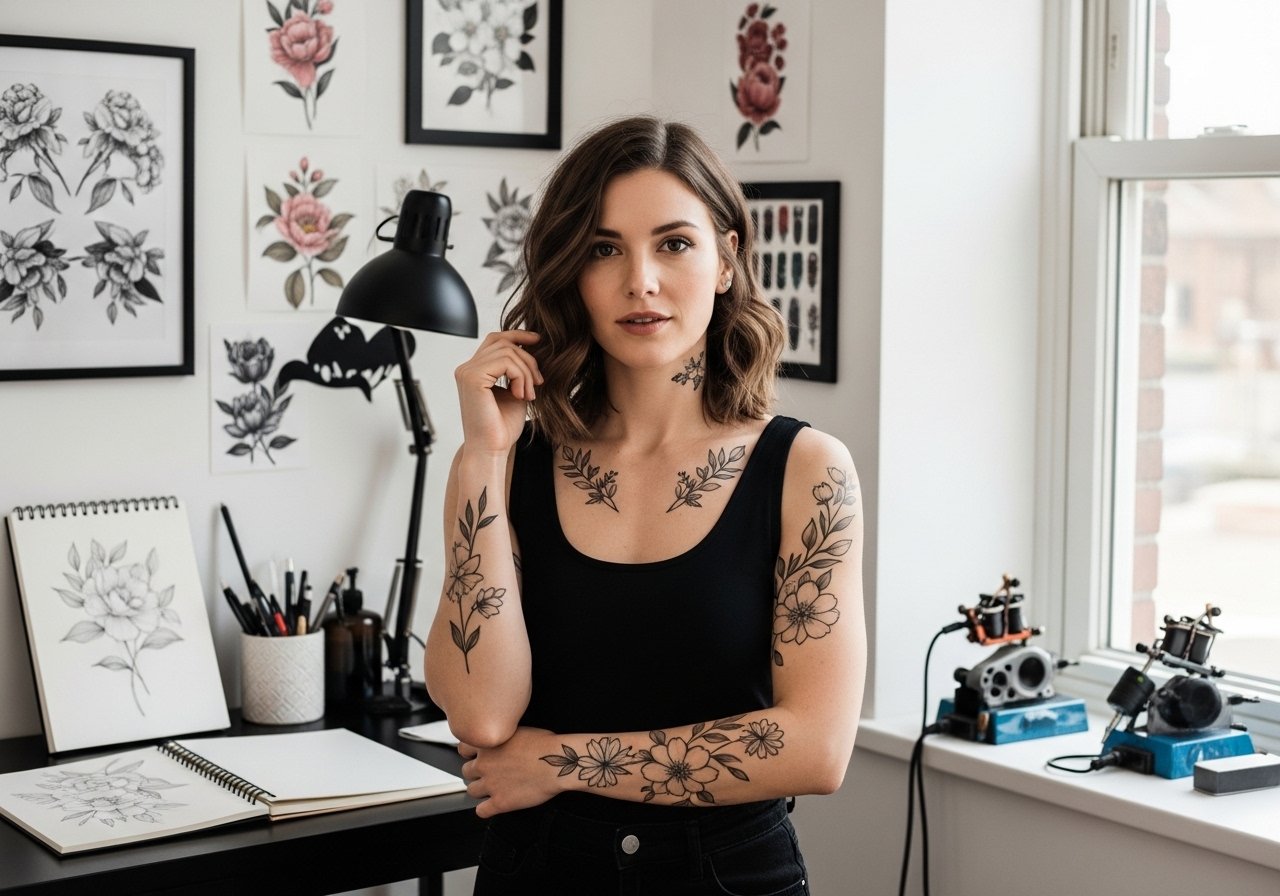
Fine line dragon linework can read delicate and personal without losing character as it heals. The trick is not to chase microscopic detail, but to space strokes, pick placements that move less, and plan for a realistic touch-up window. Below are 27 concept ideas that balance aesthetics with how they age, what the session feels like, and wardrobe choices that put your new dragon on display without compromising the artwork.
1. Petite Fine-Line Dragon on Inner Forearm

I recommend this when you want a discreet dragon that follows the arm's natural curve. Pain is mild to moderate and most sessions run 45 to 75 minutes. Tell your artist you want slightly thicker anchor lines with airy internal detail so the brightest points do not vanish by year three. Common mistake is asking for ultra-micro scales that blur fast. Expect a touch-up at around year three depending on sun exposure. For showing it off, roll sleeves or cuff a loose button-down shirt so the arm reads as intentional styling rather than a hidden piece.
2. Sleeve-Edge Dragon with Stipple Shading

This edge piece works if you want a sleeve vibe without a full commit. It feels like a one to two hour session for a few anchor passes and stippling. Ask for gradual stipple shading toward the sleeve so dense areas do not merge into blotches over time. The main mistake is packing stipple too tightly. Blowout risk is higher near the inner arm, so keep larger open spaces there. Wear a sleeveless linen top to frame the edge and let the stipple texture play with soft fabrics.
3. Blackwork Dragon Across the Shoulder Blade
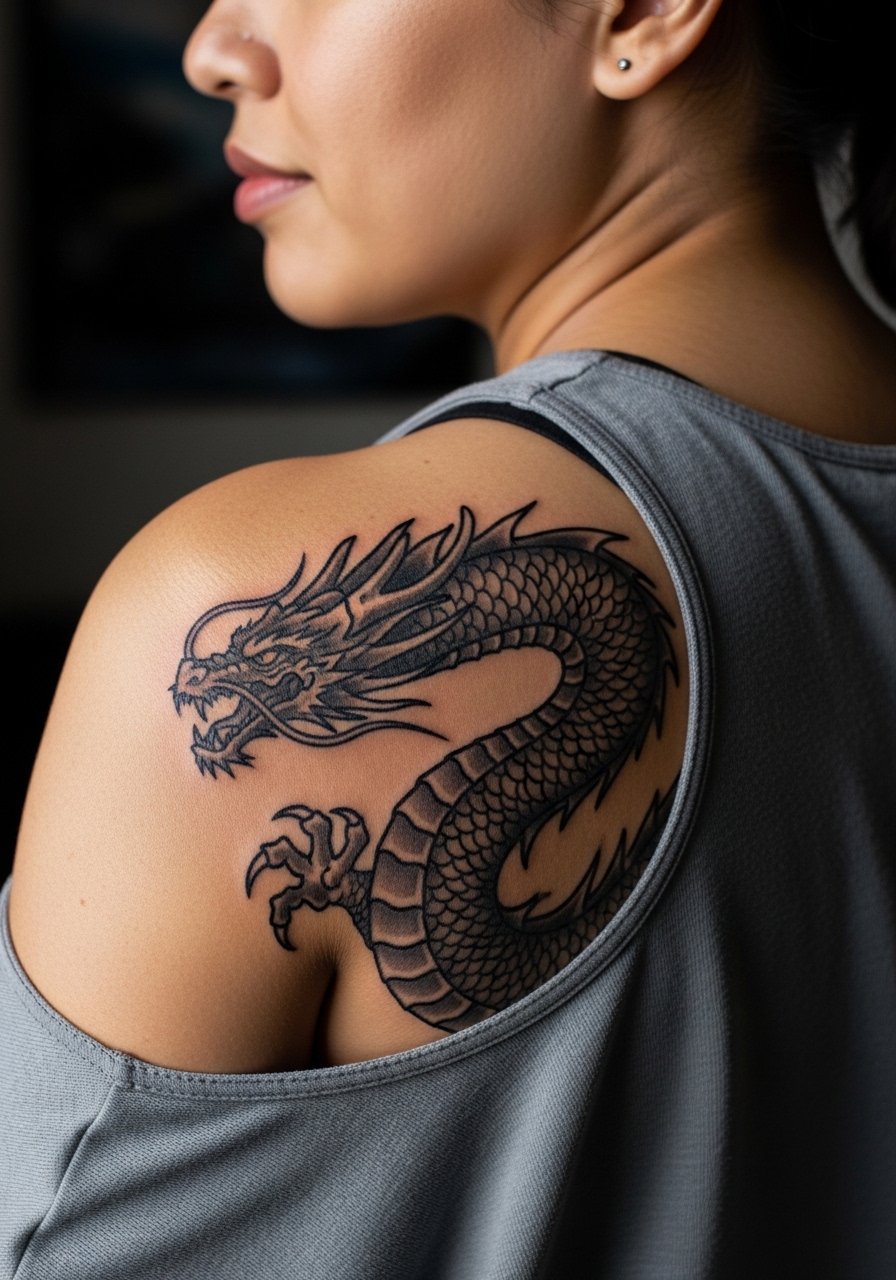
Bold blackwork reads from afar and ages predictably well. Expect a two- to three-hour session for linework and solid fills. Tell your artist you prefer heavy outlines with smooth saturation so the form stays readable at year five. A common error is too-small details in solid fills. The session itself feels like steady buzzing with occasional press when the artist packs color. For session access, wear a tank top you can pull aside to avoid shifting clothing during long passes.
4. Watercolor Dragon Along the Ribcage
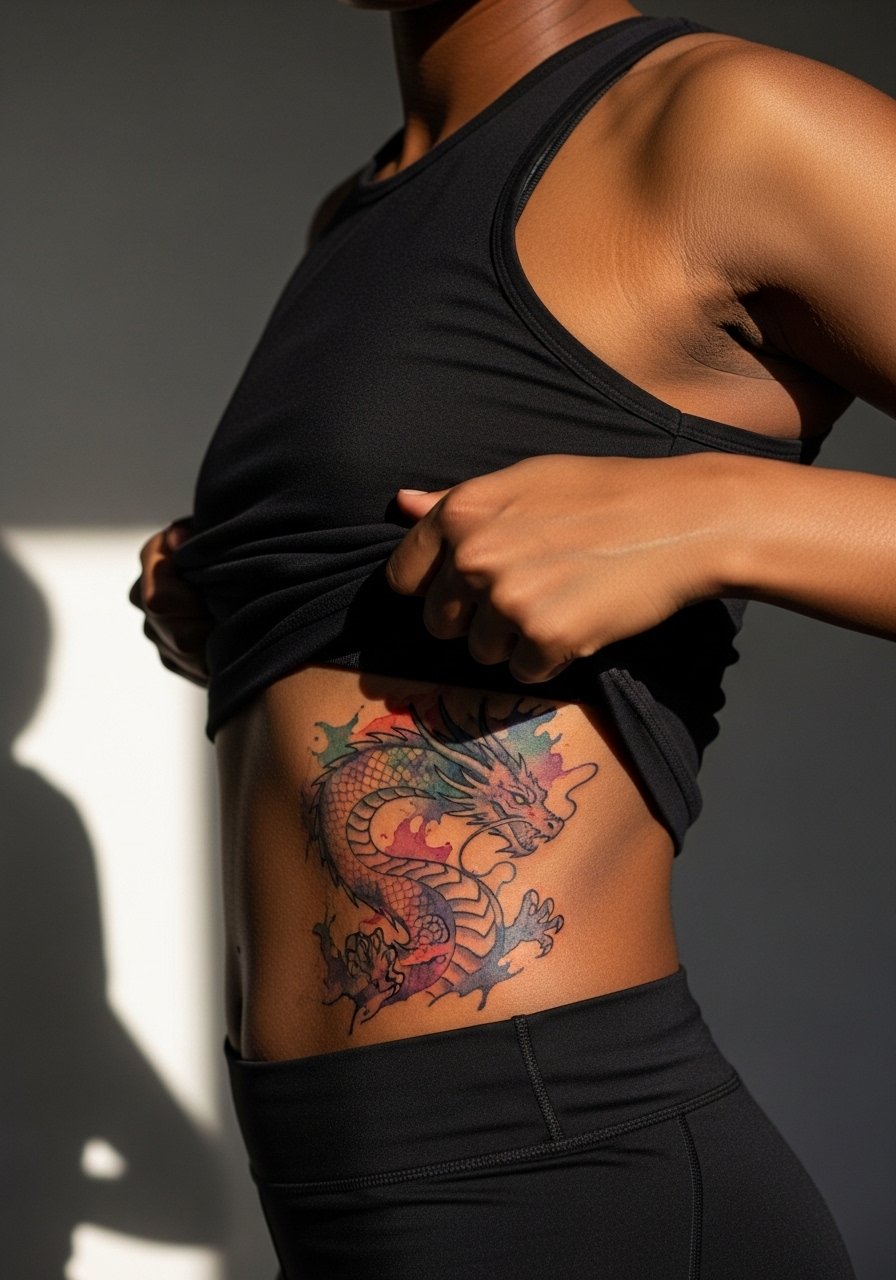
Ribcage placement is high on the pain scale but dramatic in photos. Watercolor there looks painterly when healed but loses vibrancy faster in thin skin. Artists split into two camps on fine detail on ribs. One camp says the skin stretch blurs delicate lines within two years. The other camp says proper depth and spacing lets it settle fine. If you choose ribs, ask for slightly bolder transitions and expect touch-ups at year three. For the session, bring a zip-front hoodie to stay warm during breaks and to allow easy access.
5. Ornamental Collarbone Dragon with Negative Space

Collarbones show well under delicate clothes and need careful spacing so small elements do not blur into the bone shadow. Pain is moderate and sessions are often 60 to 90 minutes. Tell your artist you want negative space around the jawline of the dragon so the piece breathes with movement. The usual mistake is oversaturating near the bone, which can feel heavy. Pair it with an open-front blouse for evenings, or a thin chain that sits above the design.
6. Micro-Realism Dragon Eye on the Ankle
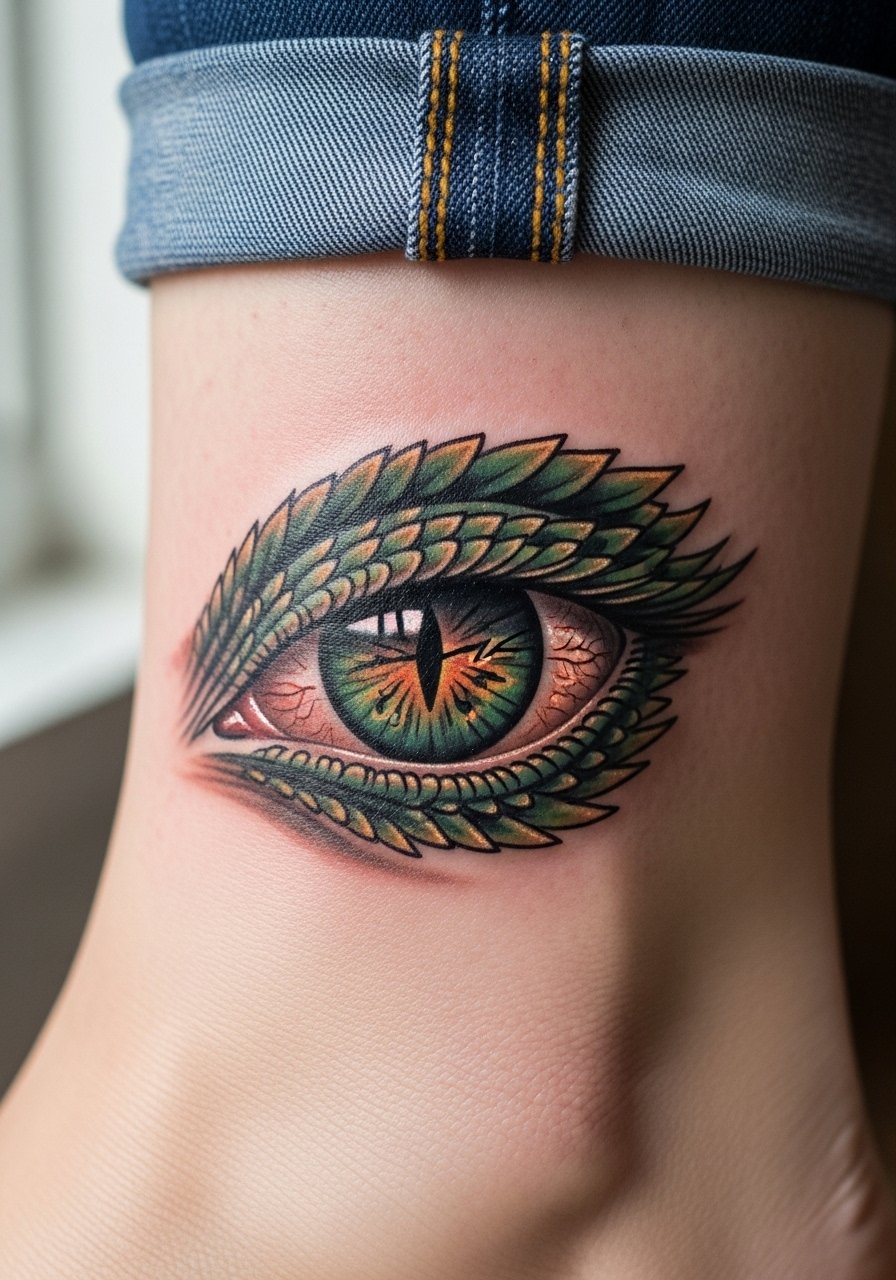
Tiny micro-realism like a single dragon eye can be striking but risky. The ankle faces friction from shoes and socks, so expect faster fading. Sessions are short, around 30 to 45 minutes, and touch-ups at year two are common. Ask for slightly bolder outer lines to protect the tiny detail. During the first week wear socks that are low-cut to avoid rubbing. For showing it off, a pair of sandals or mules works well and keeps friction low.
Studio Day Picks
The first six ideas focus on small forearm, collarbone, shoulder, ribcage, and ankle placements, so a few essentials smooth the session and the initial healing window.
-
Stencil transfer paper kit. Lets you preview the dragon's curve on skin before the needle starts, which is especially helpful for collarbone and forearm placement.
-
Topical numbing cream. Applied as directed about 45 minutes before helps with ribcage and ankle sensitivity during longer passes.
-
Thin protective film roll. Keeps ankle and wrist work clean during the first week when friction from shoes and cuffs is highest.
-
Fragrance-free body wash. Gentle cleansing for delicate linework on the forearm and shoulder areas without stripping ink.
-
Aquaphor healing ointment. Thin applications in the first few days lock in moisture for fine detail without suffocating the channels.
7. Neo-Traditional Dragon on the Thigh

Thighs tolerate saturation well and are forgiving on detail. Sessions range from one to three hours depending on size. Ask for bold outlines with layered color so the scales retain separate planes after healing. Common error is putting very fine detail into heavy color zones. For the session wear high-waisted shorts that you can shift slightly to give the artist space while staying comfortable. This placement suits people who prefer a private statement they can reveal selectively.
8. Minimalist Line Dragon Behind the Ear

Behind-the-ear pieces are small and intimate. The area heals quickly but is tricky for precise detail. Sessions are short, under 30 minutes, but the tiny scale means any blur becomes obvious. Tell your artist to simplify scales into curved strokes. A frequent mistake is asking for script-level tiny detail. Because of proximity to hair and sweat, plan for a touch-up at year two. This placement requires extra care when styling hair so the tattoo remains visible without irritation.
9. Scripted Dragon Quote Across the Sternum
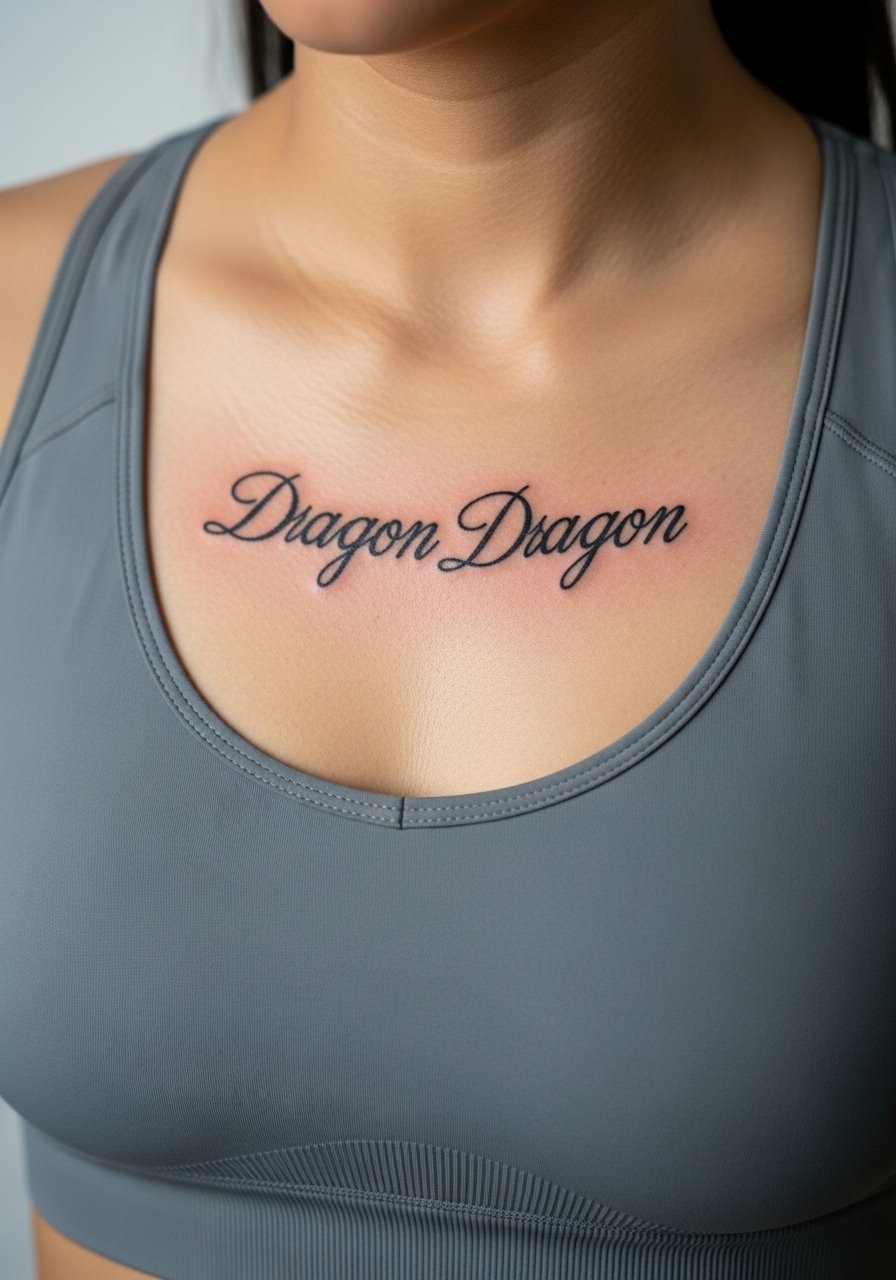
Sternum tattoos read bold but the skin shifts with breathing. Expect moderate to high pain and a session time of 60 to 120 minutes for clean script plus dragon accents. Ask for slightly larger lettering with open counters so the words do not close up as the area heals. A common mistake is requesting tight cursive that blends into a dark patch. For the appointment wear a fitted sports bra you can remove or pull down without fuss.
10. Geometric Dragon Spine Piece
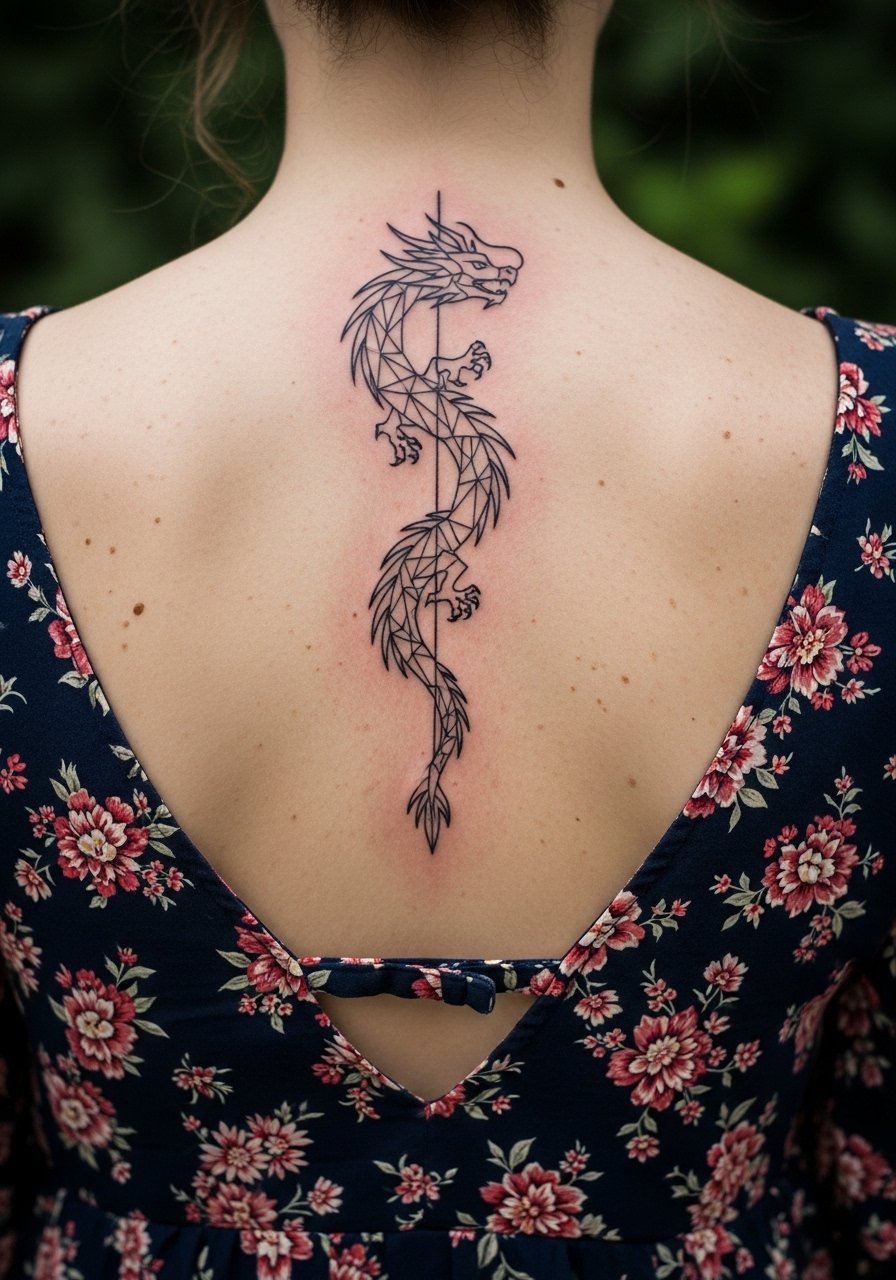
Spine work accentuates posture and movement but needs balance between line density and spacing. Pain varies by spot and session time depends on length. Tell the artist to keep geometry scalable so dense nodes do not merge over years. Mistakes happen when symmetry is forced without accounting for the body's natural curve. For showing it off, an open-back dress frames the design and keeps lines visible without crowding.
11. Small Dragon and Flower on the Wrist
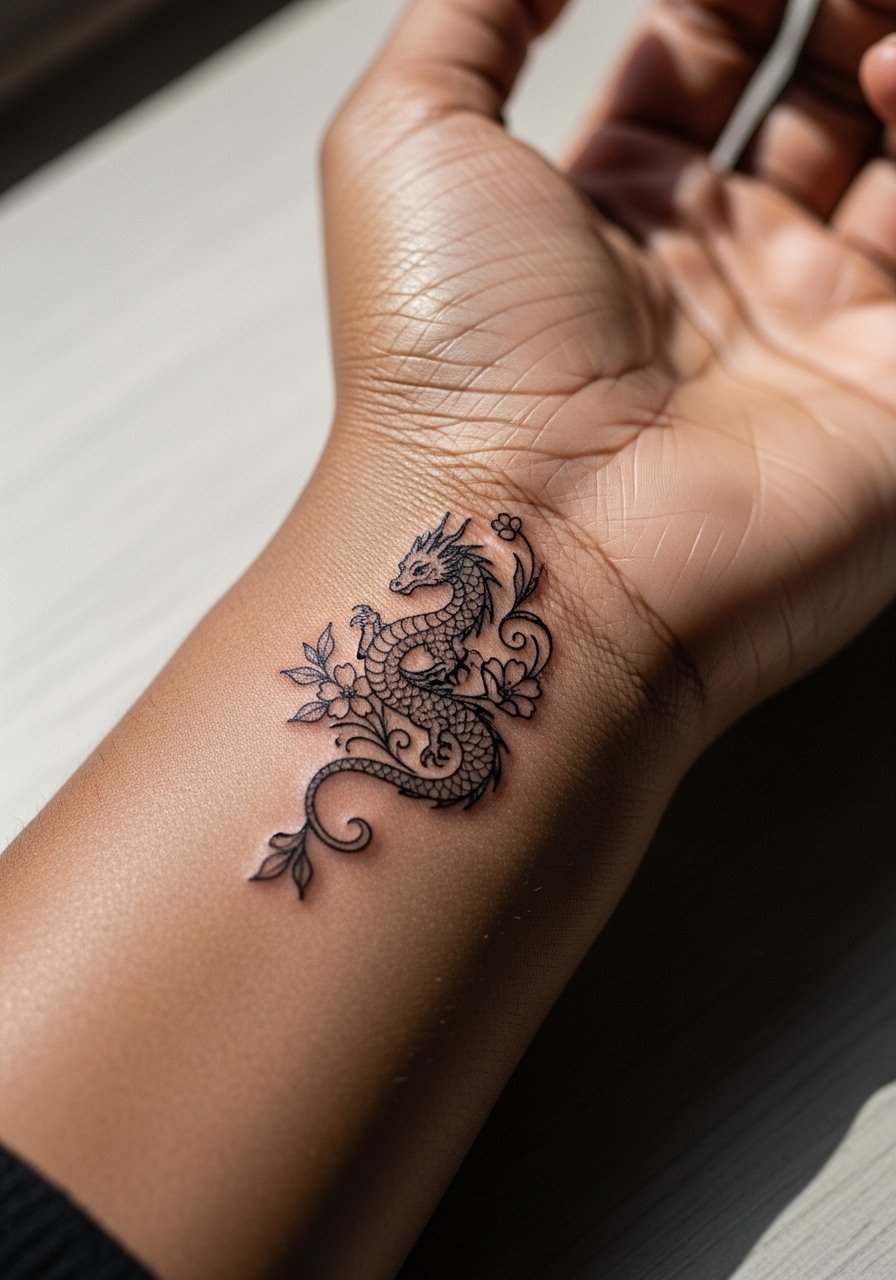
Wrist tattoos are visible and vulnerable to constant movement and washing. Sessions are short, but expect touch-ups earlier, often around year two. Ask for a slightly bolder wrist outline and less micro detail within the dragon so the flower and tail remain readable. The frequent mistake is overloading the tiny canvas. For daily wear, a thin chain bracelet complements without covering the art.
12. Celestial Dragon Along the Side Rib
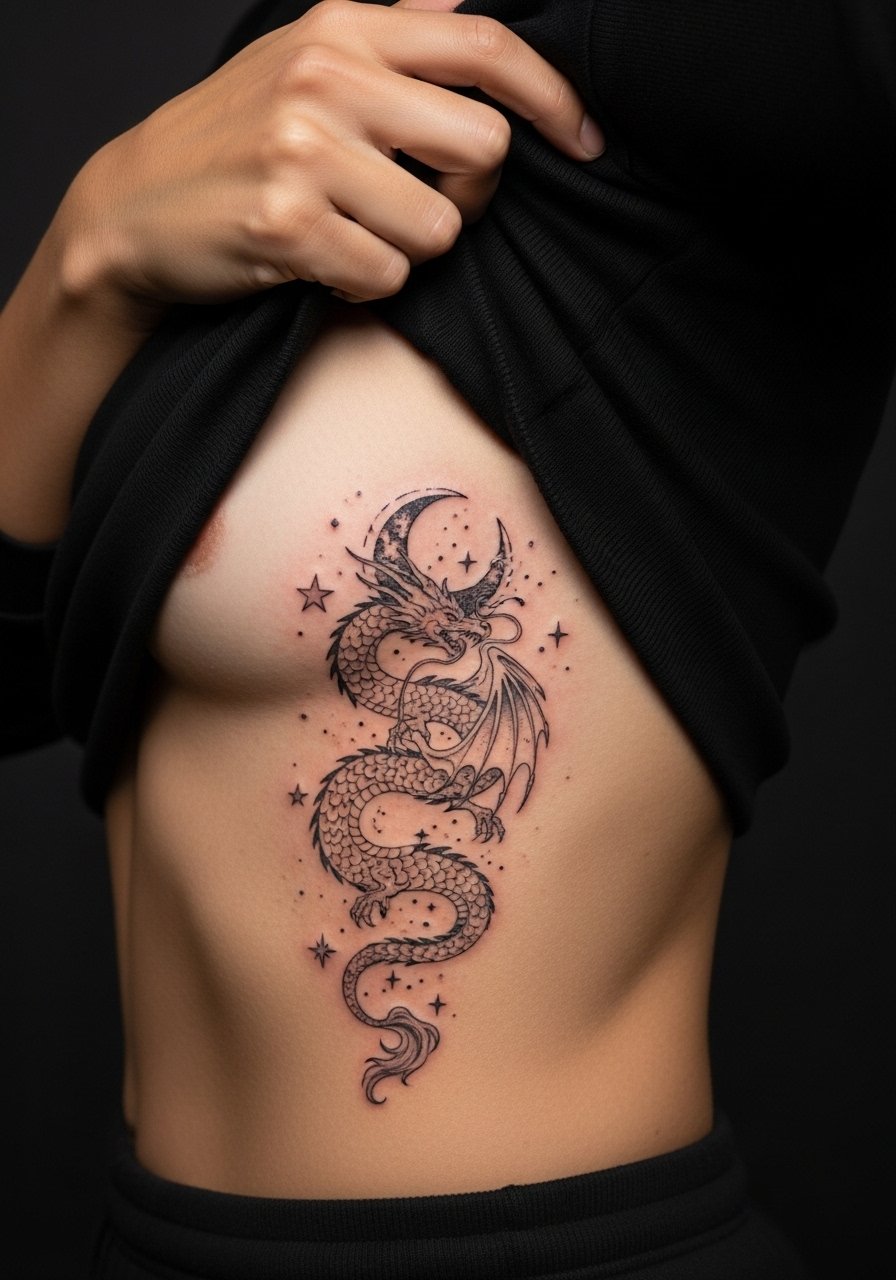
Side rib work combines curvature with negative space. Pain is high and sessions need breaks. Artists are split on doing extremely fine lines there. One camp warns of rapid blurring from stretch. The other says bold anchors and spaced detail can last. My advice is to size up the stars and use open spacing. For the session bring layers, like a zip-front hoodie you can open during work and button up between passes.
13. Tiny Dragon on a Finger Joint
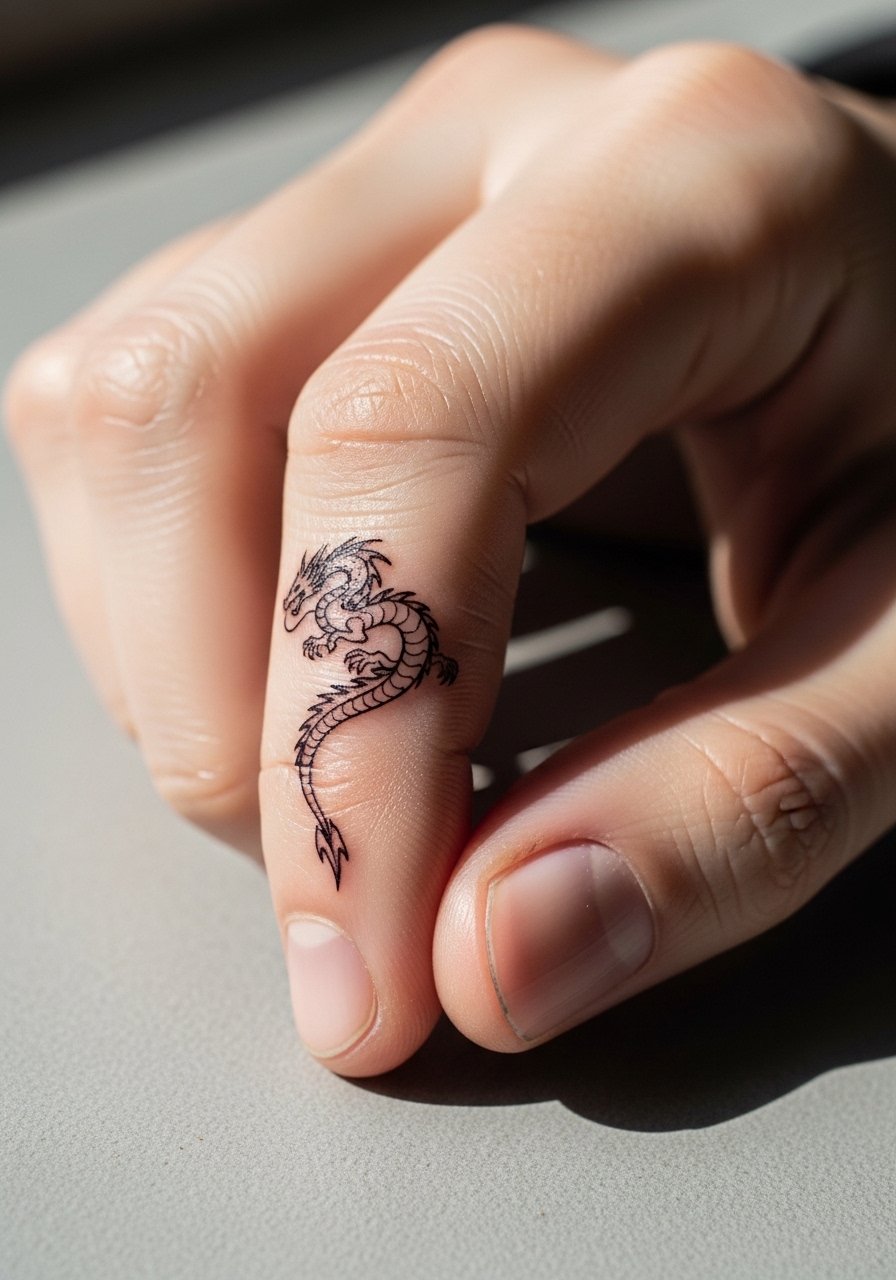
Finger tattoos have high wear from washing and friction. Sessions are brief but demand frequent touch-ups. Ask for clean anchors and minimal internal detail. A common mistake is expecting the same longevity as forearm work. If you need it to last longer, place the design on the side of the finger rather than the top joint. For showing off, a set of simple stacking rings frames the dragon without obscuring it.
14. Watercolor Dragon Thigh Panel

The outer thigh is forgiving for color blends and larger painterly pieces. Sessions vary but often run multiple hours with breaks. Ask your artist to anchor watercolor washes with subtle linework so the dragon keeps shape as pigments soften. A mistake is asking for tiny gradients within tight elements. For the appointment wear loose drawstring shorts you can adjust without pressure on the area.
15. Dragon Wrap Around the Calf

Calf pieces hold saturation well and age predictably. Sessions of one to two hours let the artist build form and shadow. Ask for flow that reads from both sides so the wrap looks coherent when viewed at different angles. The common error is abrupt terminations that distort when muscles flex. For showing the piece, a pair of rolled jeans and ankle boots presents the curve without crowding.
16. Single-Needle Scripted Dragon Tail on the Rib
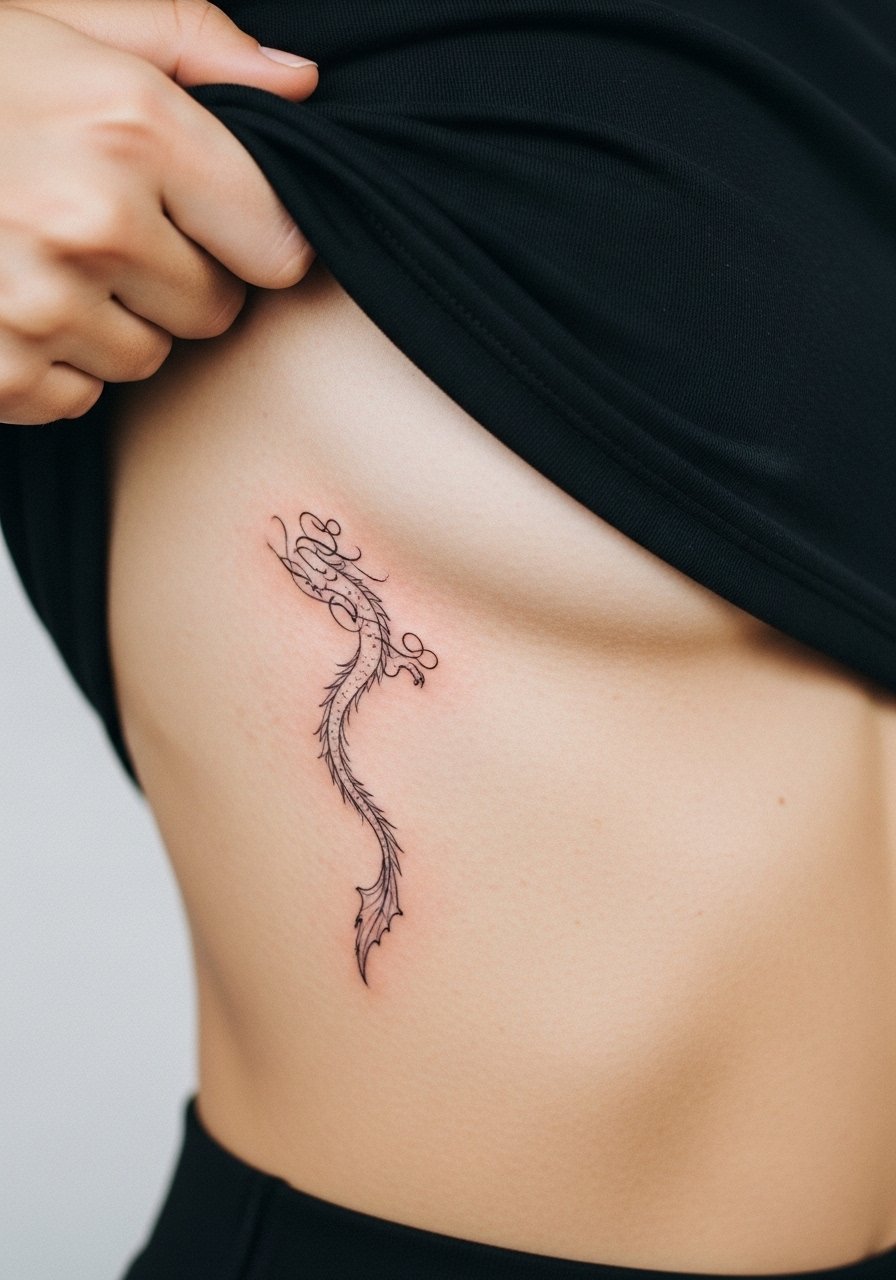
Single-needle work reads delicate but risks fading faster on thinner skin. Sessions are precise and can be longer for steady handwork. The mistake is choosing single-needle for an area that stretches frequently. If you love the look, size up slightly and plan for a touch-up in two to three years. During the session wear a loose tank top you can shift for access without pulling on the skin.
17. Dragon Scale Blackwork Sleeve Accent
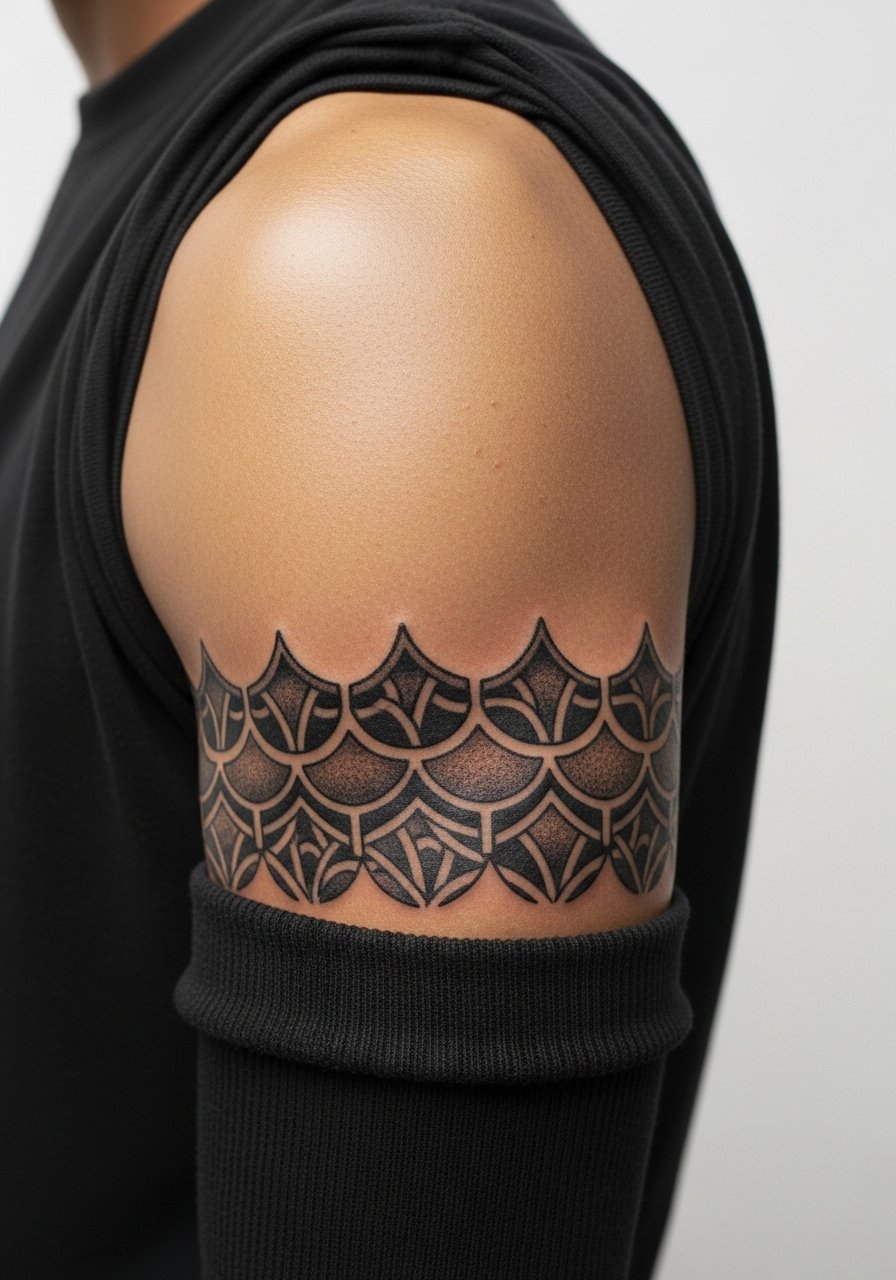
Using repetitive scale shapes in blackwork can create bold texture that ages well. Sessions are longer and may require multiple sittings to maintain consistent saturation. Tell the artist you want scale edges softened in places to avoid a rigid, blocky look over time. A common mistake is over-detailing individual scales. For the session wear a loose button-down shirt you can pull aside so the artist has clear access.
18. Tiny Dragon on the Side of the Neck
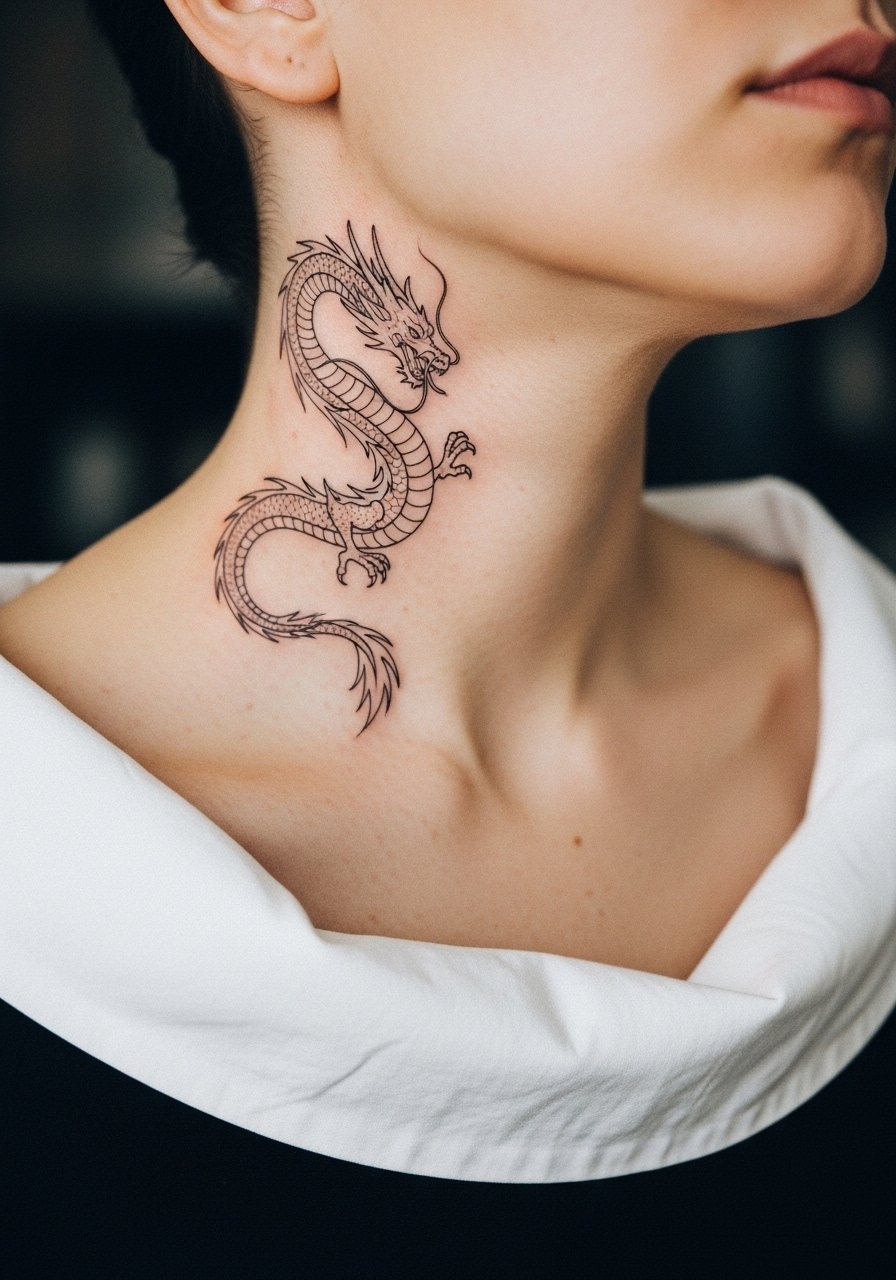
Neck work is visible and can impact professional settings. Expect higher sensitivity and shorter but more frequent sessions. Ask for simplified elements and ask your artist about fade timelines. The frequent mistake is asking for dense detail in a high-motion spot. Consider placement slightly lower on the collarbone if discretion is a concern. For session access wear a wide-neck shirt you can adjust easily.
19. Dragon Mandala on the Upper Arm
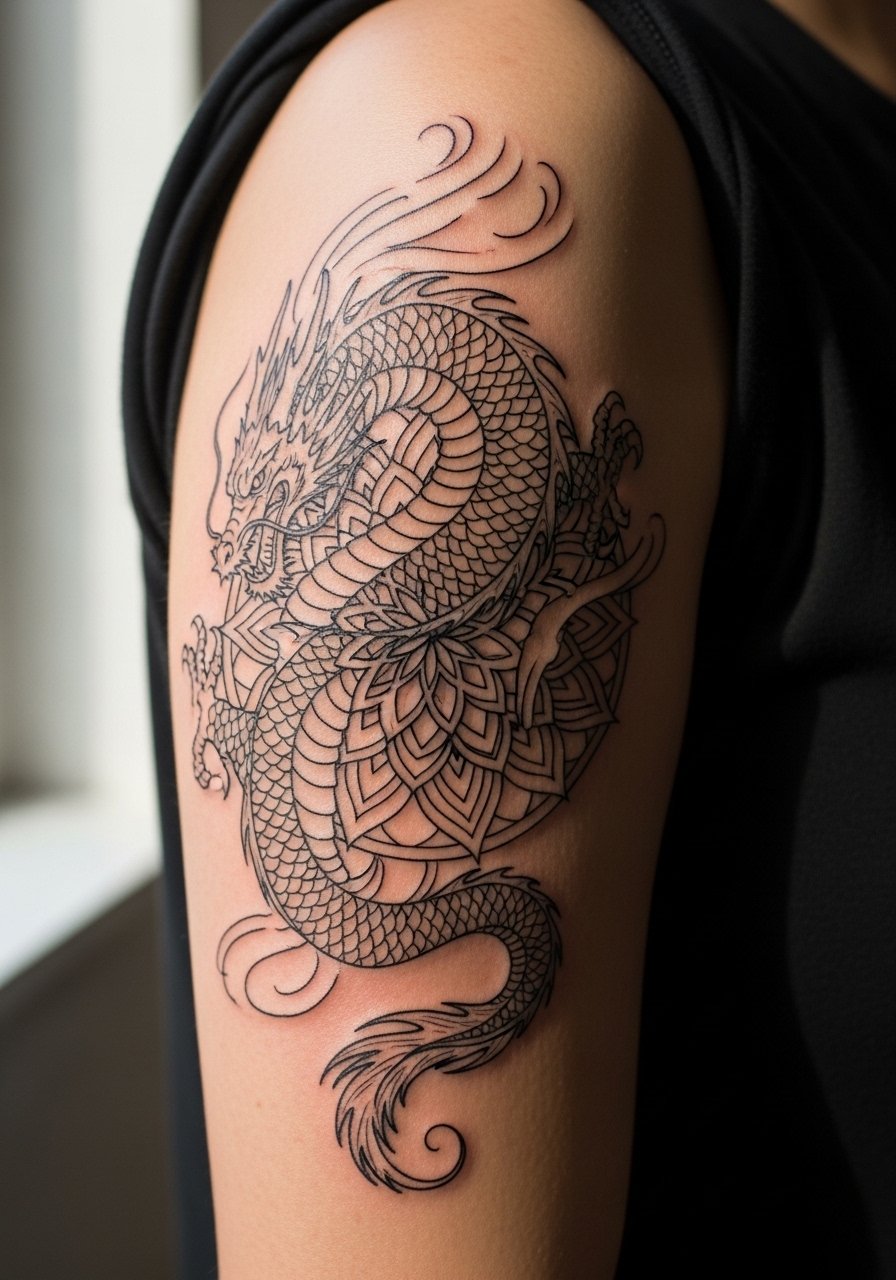
Combining mandala geometry with dragon forms balances bold anchors and decorative detail. Sessions are moderate length and require careful mapping for symmetry. Ask for breathing room in dense areas so stipple shading does not become a single dark mass over time. The common mistake is packing too many tiny repeating elements. Wear a short-sleeve tee you can roll up for the appointment so the artist can reach the outer arm without tugging.
20. Abstract Line Dragon Across the Lower Back
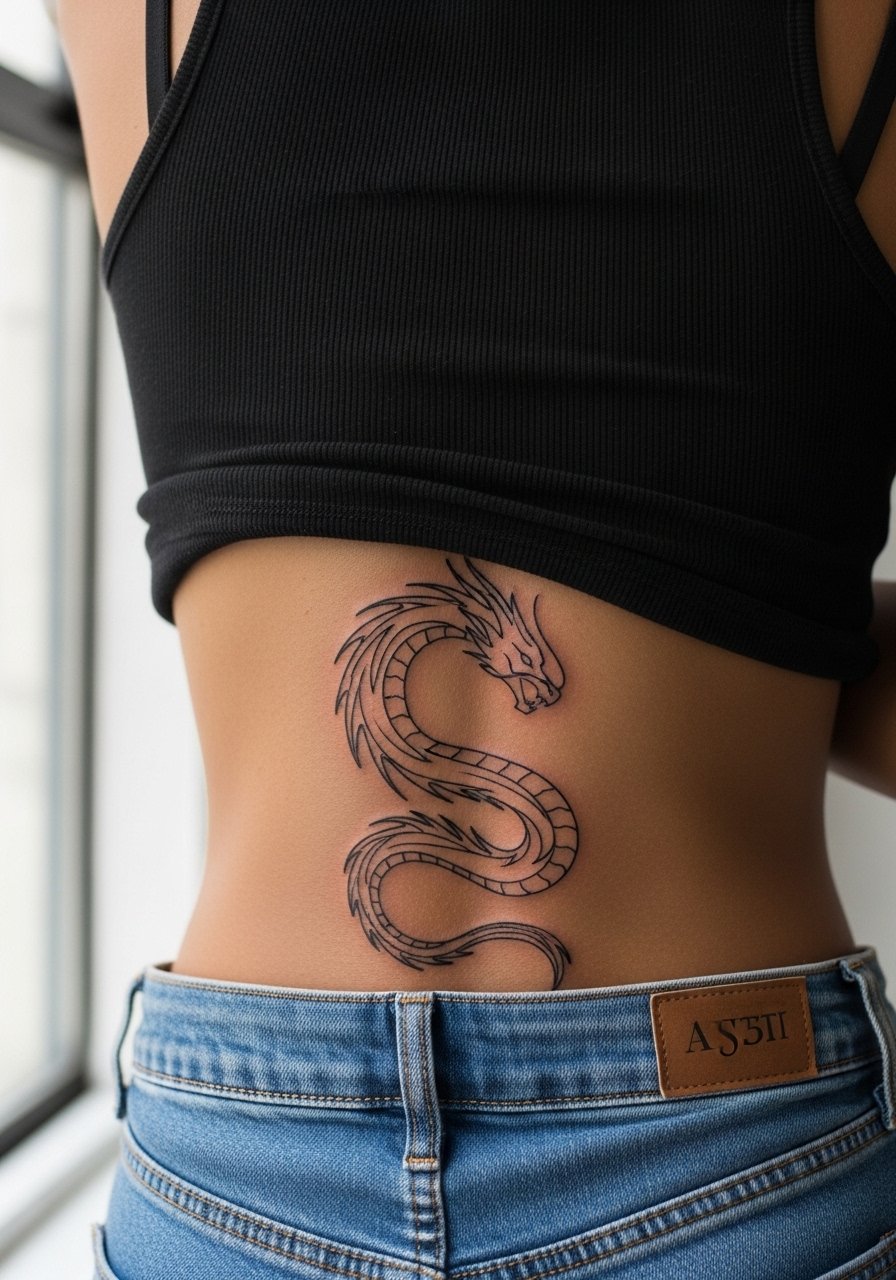
Lower back pieces allow horizontal stretches and natural framing under clothing. Sessions can be long if the design spans the width. Ask for anchors near the hip bones so movement does not distort the central motif. A frequent error is placing too many tiny internal motifs that blur with sitting and stretching. For comfort during the session wear a tank top and high-waisted jeans you can lower slightly only on one side as needed.
21. Delicate Dragon on the Inner Bicep
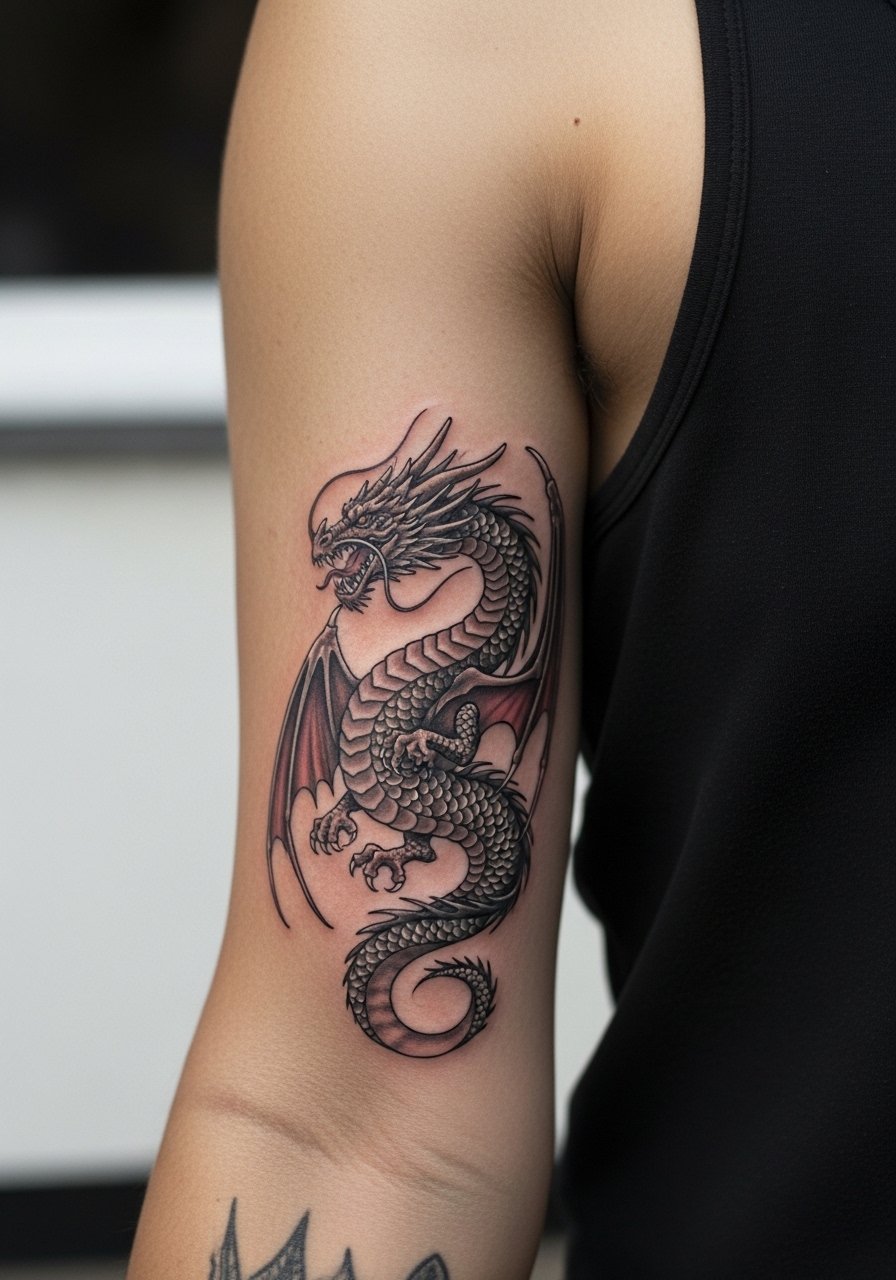
Inner biceps can be soft and forgiving, but they flex with movement and sweating. Sessions are moderate and the area tolerates slightly more detail than wrists. Ask the artist to avoid ultra-thin single-needle strokes across the center. Mistakes include placing too much dense shading where the arm creases. For session comfort bring a loose tank top that gives access and prevents fabric from rubbing the fresh work.
22. Dragon Head on the Hand Back

Hand tattoos are high-maintenance and may show career consequences in some industries. Be clear on that trade-off before committing. Sessions are quick but touch-ups are frequent. Ask the artist to keep edges slightly bolder and avoid dense internal shading that will smear faster under constant use. A common mistake is thinking a hand tattoo will age like upper arm work. If visible hands are a concern, consider a placement slightly higher on the wrist.
23. Dragon Orbiting a Nape Star
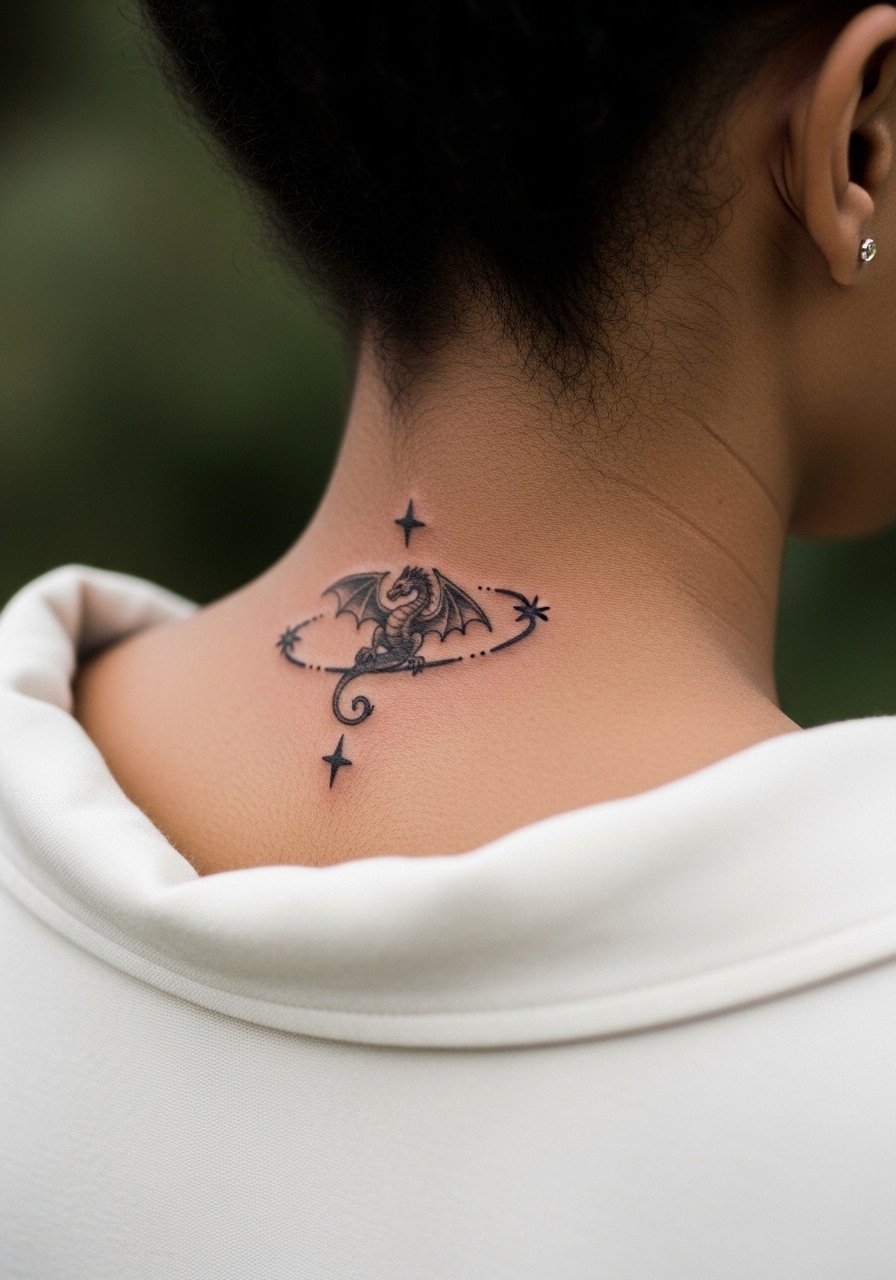
Nape work is discreet beneath hair and visible with certain styles. Sessions are short and healing is straightforward, but check workplace visibility policies. Tell your artist you want simplified shapes to avoid a muddy look if hair rubs the area. A mistake is asking for tiny cross-hatching that loses contrast. For the appointment consider a hairstyle you can tie up, and for showing off try a low bun accessory to reveal the piece.
24. Dragon with Floral Filigree on the Hip
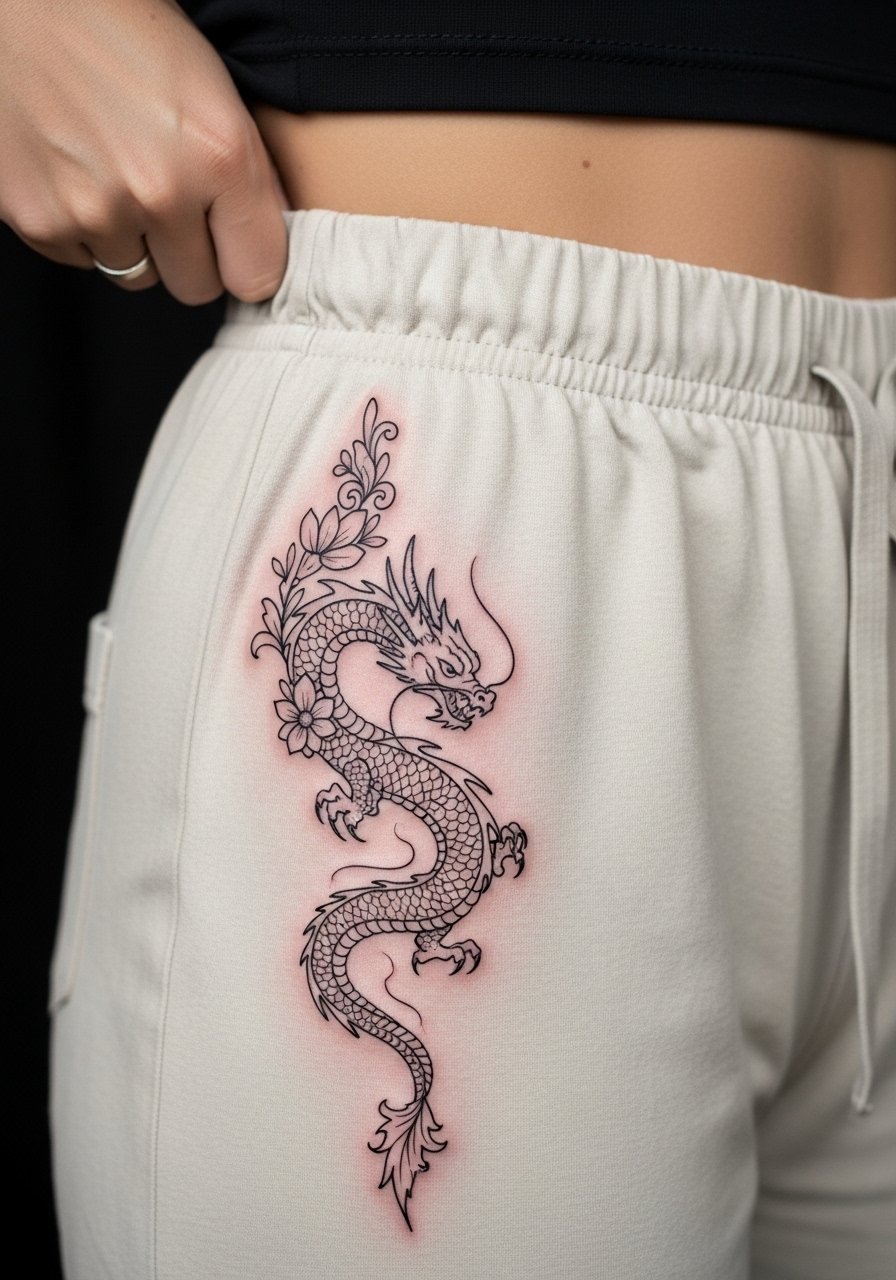
Hip tattoos age well under clothing and respond nicely to organic motion. Sessions vary depending on size and often need a couple of hours. Ask for clear separations between filigree and the dragon so the two do not merge with movement. A typical mistake is asking for too many thin curls. For the session wear high-waisted bottoms that you can shift without tugging at the skin.
25. Stylized Asian-Inspired Dragon Along the Side Thigh
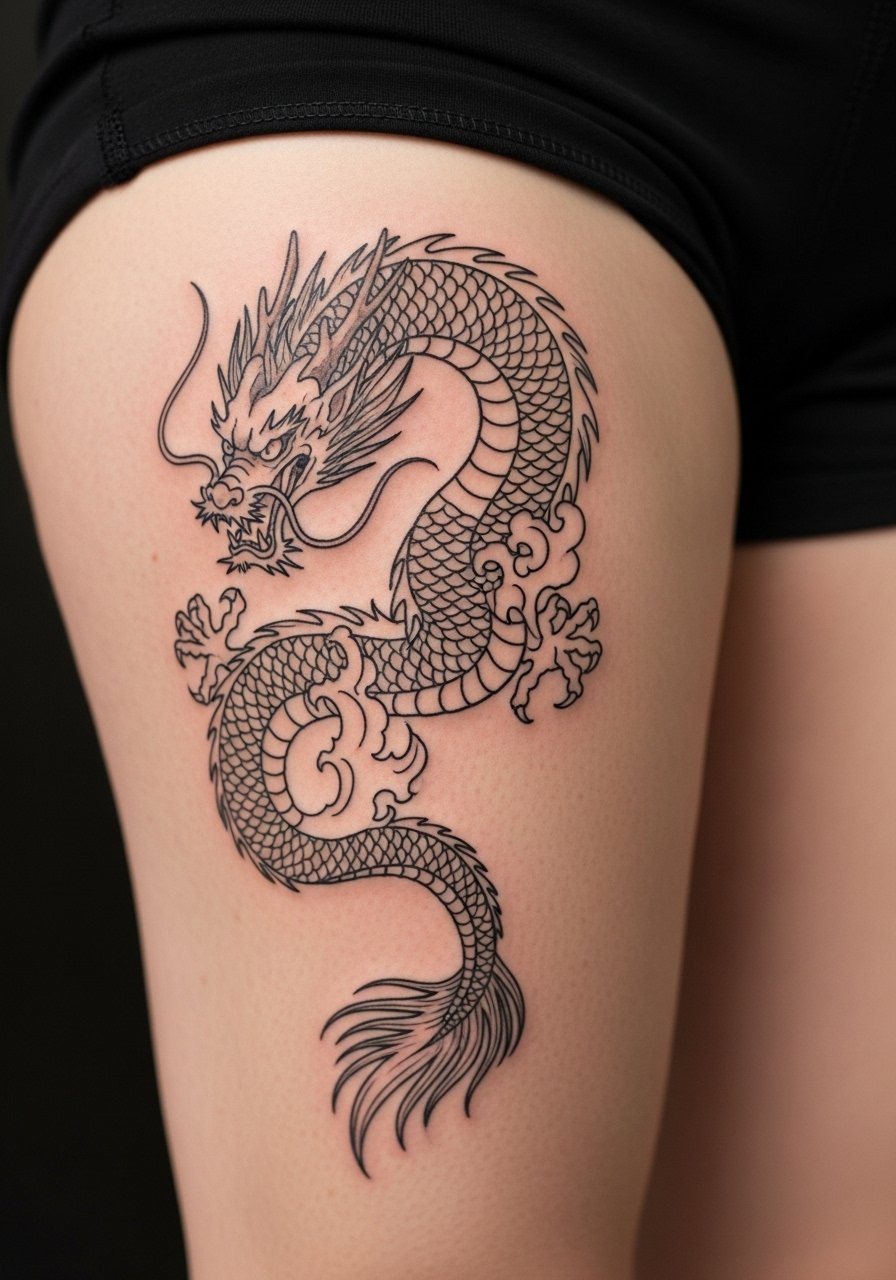
When drawing on cultural motifs, respect origins by discussing adaptations with your artist rather than direct copying. Thighs accept elongated compositions and vibrant color. Sessions can be long and may require two sittings for saturation. Ask for purposeful spacing between scales and floral elements to maintain readability. The common error is crowding motifs together. For showing it off, a pair of wrap skirts or high-slit dresses showcases the flow without compressing the art.
26. Geometric Negative-Space Dragon on the Forearm
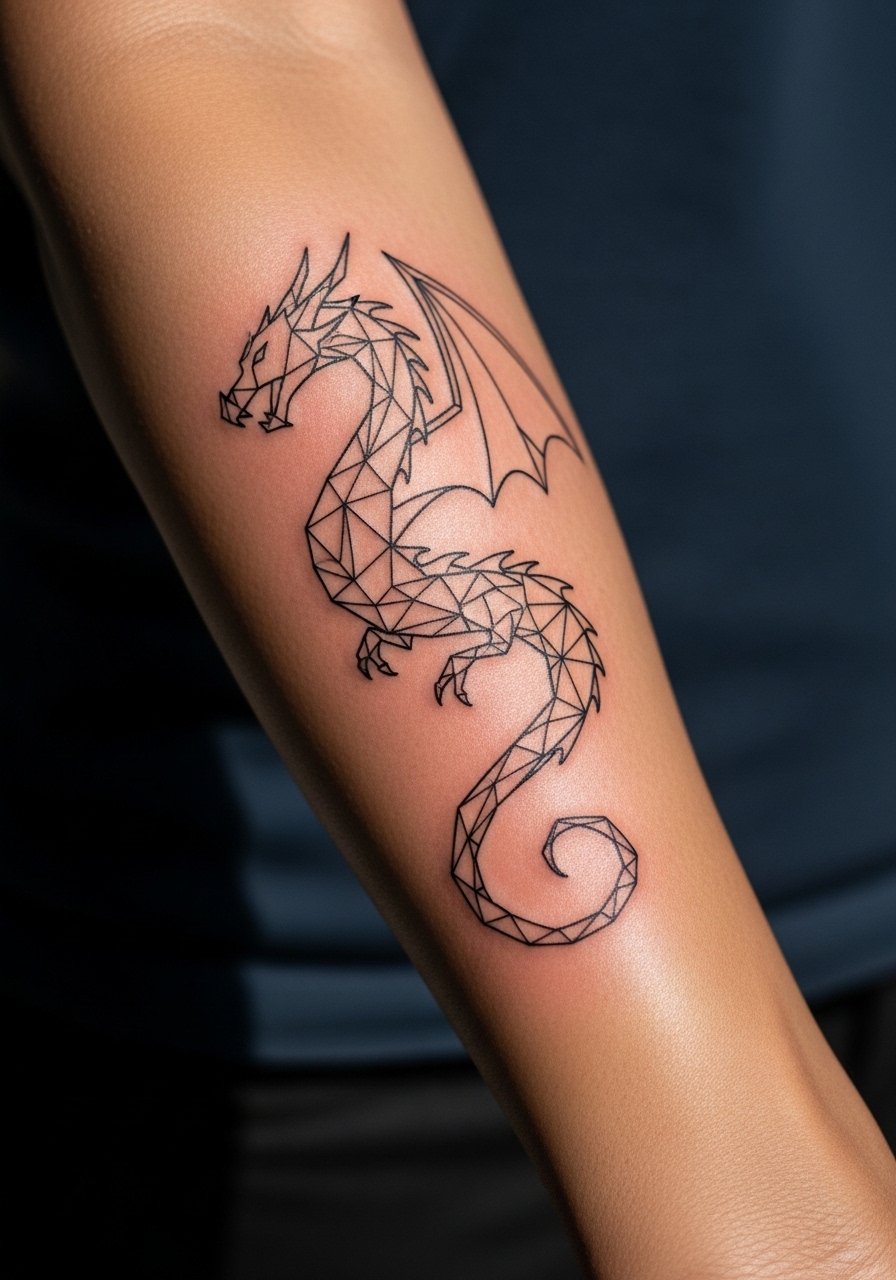
Negative-space dragons use the skin as the fill and need precise linework to read clearly. Sessions are often 60 to 90 minutes for clean anchors. Ask your artist to map placements on your arm so the negative spaces fall where tension lines are minimal. The biggest mistake is leaving too-narrow gaps that close as the piece heals. For showing off, roll sleeves or wear a racerback tank that frames the forearm.
27. Fine Line Dragon Scale Necklace on the Upper Chest
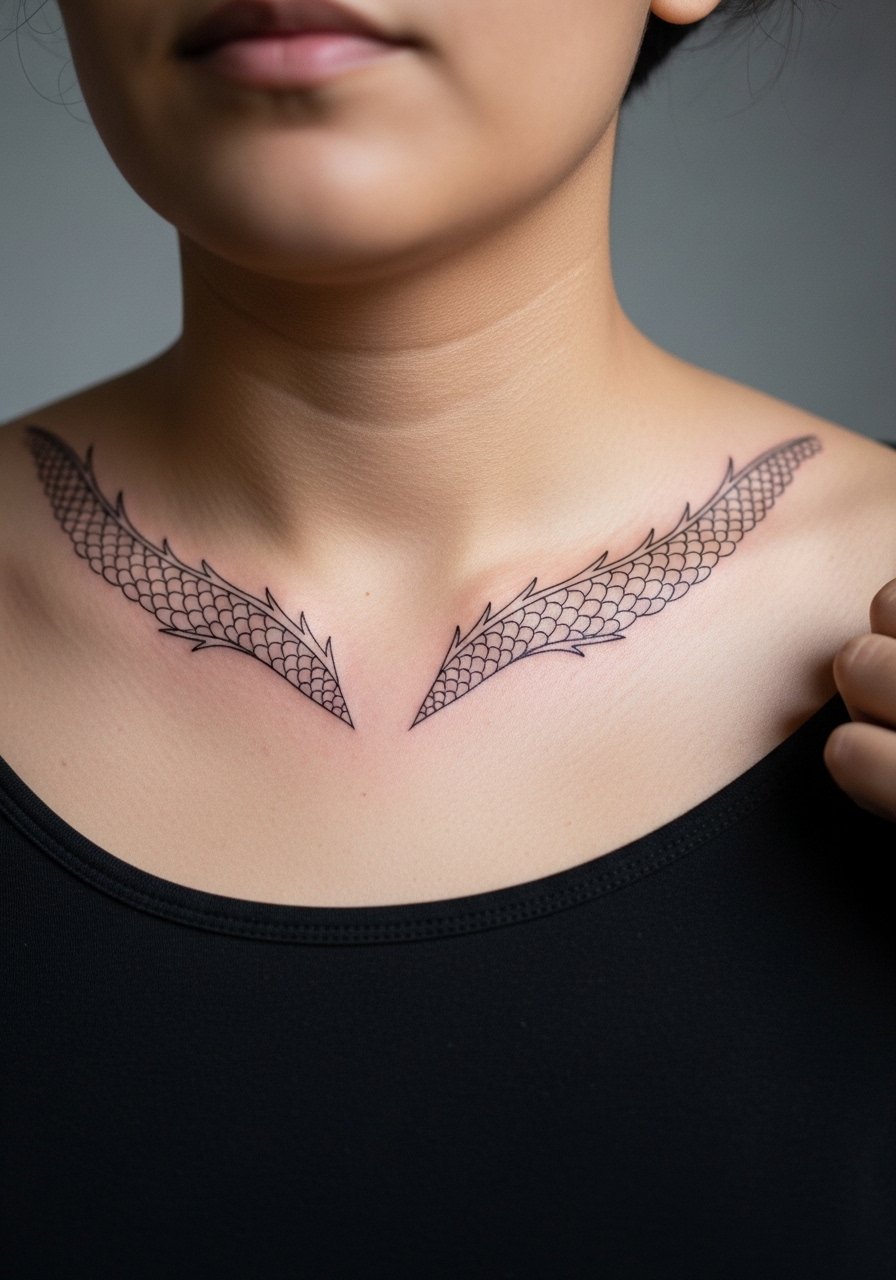
Upper chest pieces sit close to jewelry and clothing lines. Sessions are moderate and require careful mapping to avoid the sternum crease and clavicle shadows. Ask for slightly bolder scale edges where necklaces might sit so metal does not create immediate wear. A frequent mistake is placing the entire piece too close to the clavicle, creating discomfort with straps. For showing the design pair it with a thin chain pendant necklace that sits above without overlapping the ink.
Frequently Asked Questions
Q: Will a fine line dragon on the ribcage blur faster than one on the forearm?
A: It often does because ribcage skin is thinner and stretches with breath. Two camps exist on this. One says fine line on ribs blurs within two years. The other says careful depth and spacing let it settle fine. My suggestion is to size up slightly and plan for a touch-up at year two or three.
Q: How should I prepare clothing-wise for a sternum or upper chest dragon session?
A: Wear a fitted sports bra or wide-neck top you can remove or pull aside so the artist can work without tugging. Layers are useful for warmth between passes. Bring a zip-front hoodie or loose button-down to stay comfortable during breaks.
Q: Are hand and finger dragon tattoos worth it given the touch-up frequency?
A: They are worth it if you accept higher maintenance. Fingers and hands fade faster because of washing and friction. If longevity matters more than visibility, choose placements like the inner forearm or calf instead.
Q: How much does placement affect the touch-up timeline for watercolor versus blackwork dragons?
A: Blackwork usually lasts longer across placements because saturation holds. Watercolor fades faster, especially on high-friction spots like ankles and hands. Expect watercolor touch-ups sooner, sometimes within two to three years on exposed areas.
Q: Where should I look to find an artist who can handle micro-realism dragons without named recommendations?
A: Search local shop portfolios, check convention guest lists, scan hashtag searches for your city, and read community forums for recent session photos. View healed photos and ask to see work on your skin tone range during consultation.