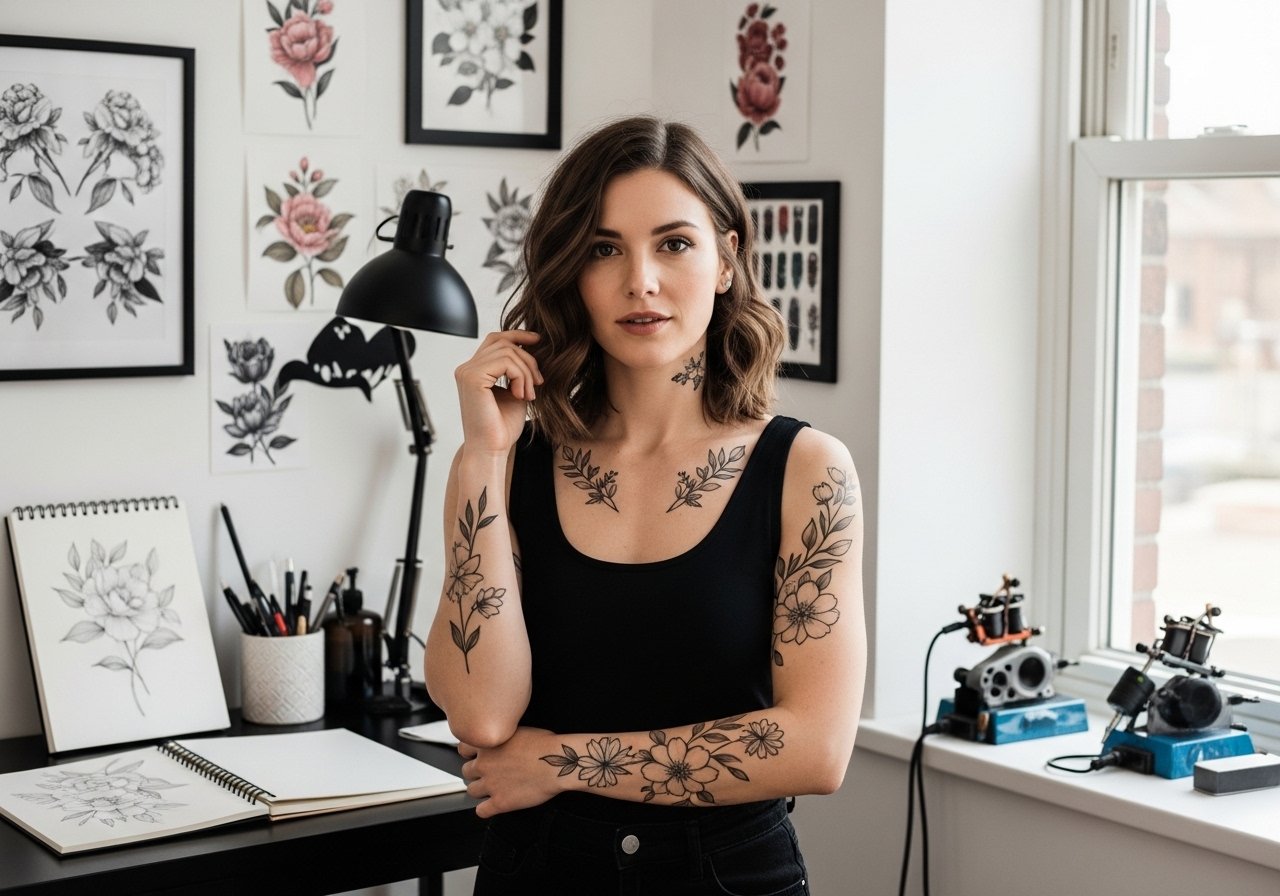
Fine line butterfly tattoos look incredible in photos, but the real test is how they age and how the session actually feels. Expect three common frustrations: thin lines ghosting on deeper skin tones, surprise cash for touch-ups when a tiny piece needs re-inking, and last-minute artist cancellations that push your appointment. Read the ideas below to pick a design that fits your body, wardrobe, and long-term plans.
1. Single-line continuous butterfly outline on the wrist

I recommend this when you want something modern and low-fuss that still reads from a short distance. The session is usually quick, expect a short single-needle pass and mild scratchy sensation on the wrist. A common mistake is asking for the line too thin; ask your artist for a slightly bolder single-line so the silhouette keeps shape after one year. For showing it off, pair the piece with a dainty cuff bracelet on the opposite wrist to avoid visual clutter. Expect a touch-up window at 6 to 12 months if you want razor-crisp edges.
2. Monarch-inspired fine line wings on the collarbone
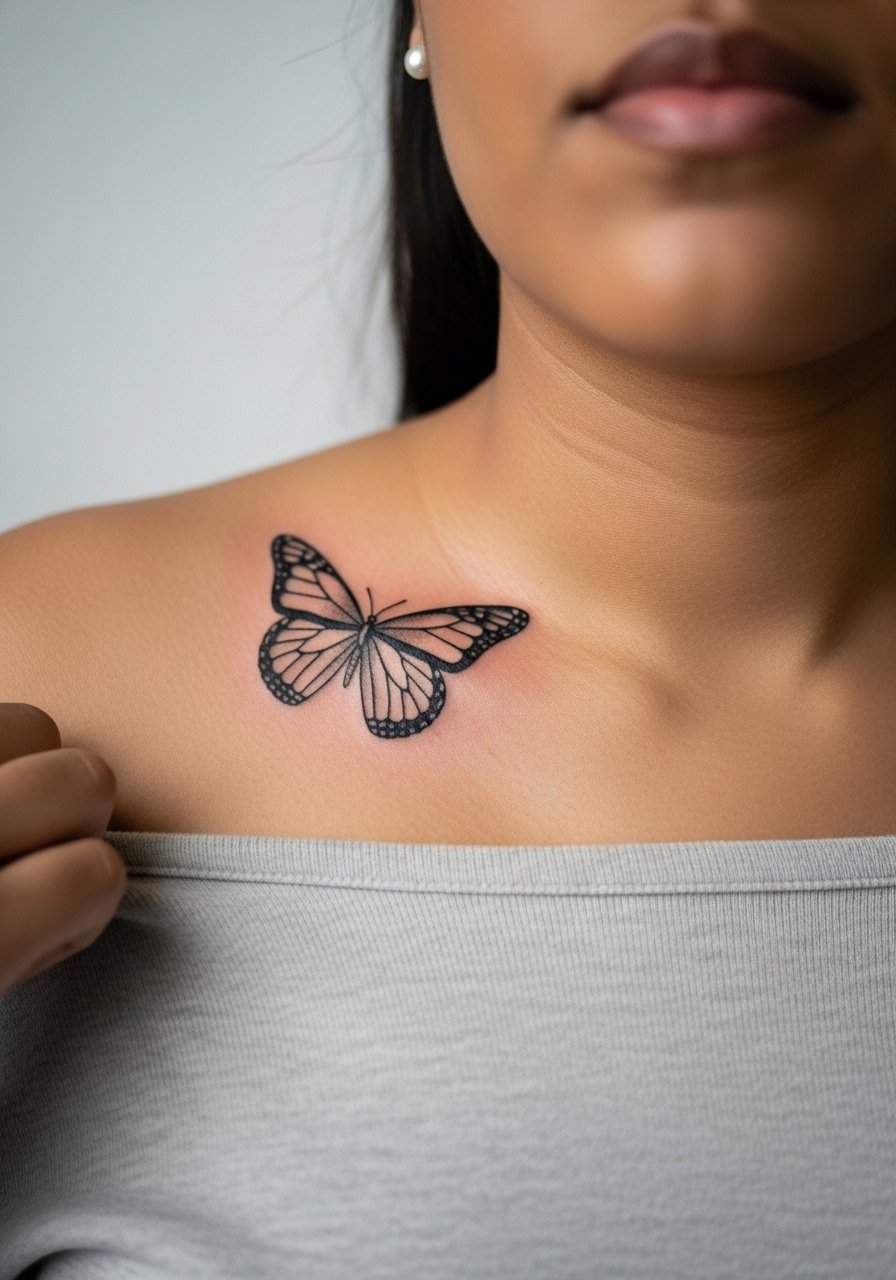
I've seen monarch-style wings hold up better when sized for the collarbone because the skin stays relatively stable. Tell your artist you want slightly more spacing between veins and wing dots so dense detail does not merge over time. The collarbone can be a great place for a 2 to 3 inch piece, and the session feels like light scratching with short breaks. For nights out, pair this with an off shoulder top that reveals the ink without competing necklaces. If you want a memorial element, ask to tuck a small date into the wing margin rather than overlaying it across veins.
3. Botanical butterfly sleevelet on the shoulder
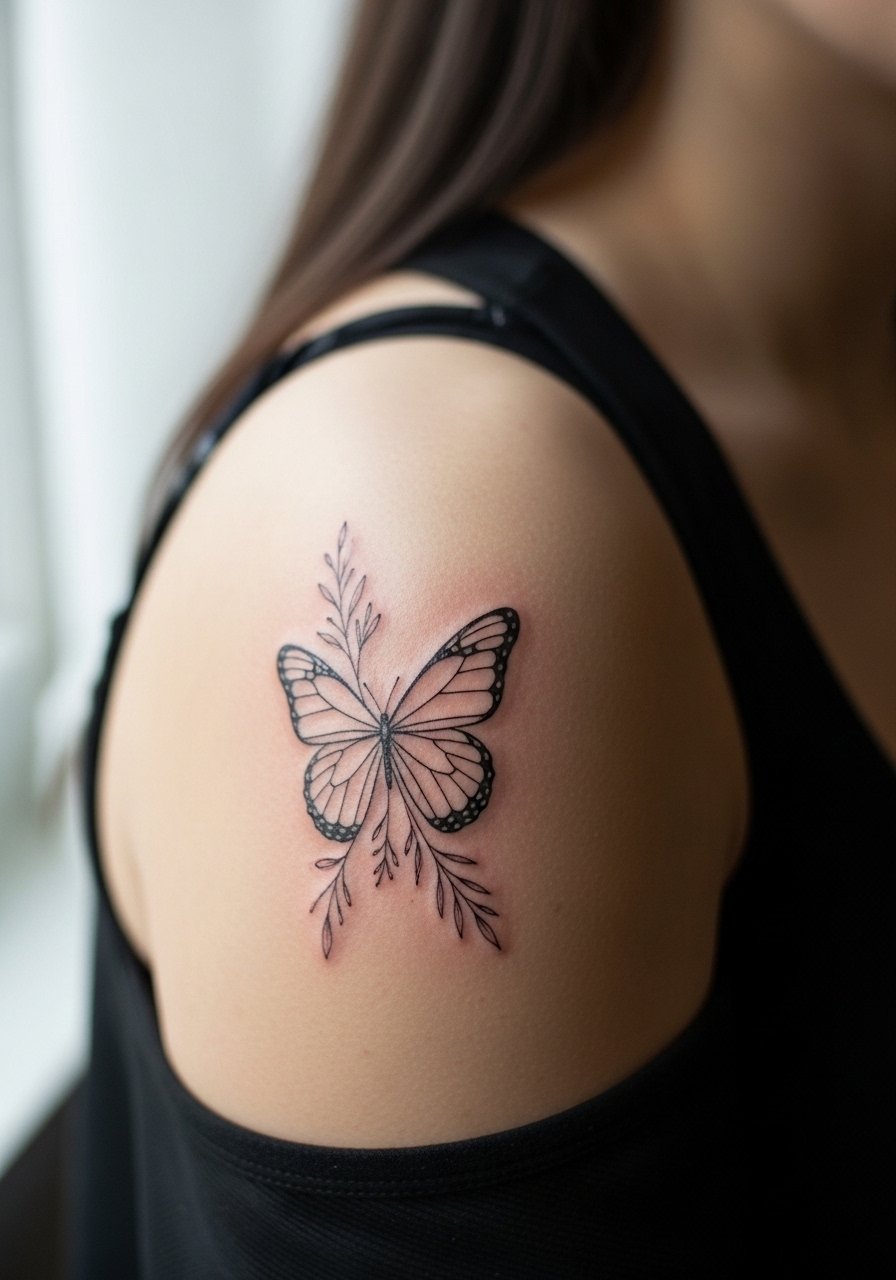
This illustrative approach combines wing lines with tiny stems and leaves so the design reads layered instead of fragile. In consultation, point to where you want each botanical to rest so movement of the shoulder does not distort focal points. Shoulder skin is forgiving during weight changes, so this placement ages steadier than the wrist. Wear a sleeveless linen tank to show the piece and make the session easier for the artist. Plan for two shorter sessions if you want intricate leaf stippling and a touch-up at six months for micro-shading.
4. Geometric butterfly with mandala accents on the upper arm
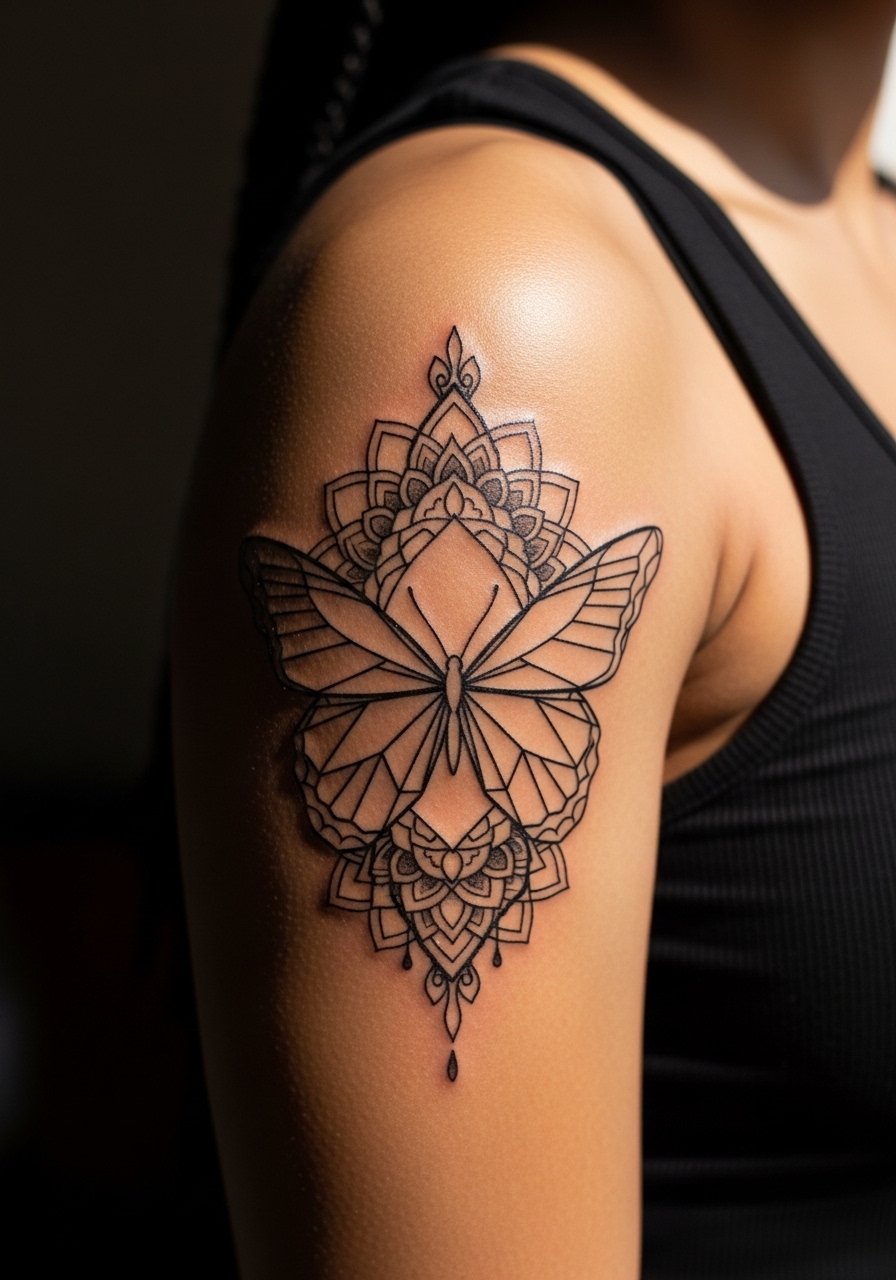
Geometric structure gives fine line butterflies an architectural edge that reads bold from a distance. The biggest mistake is shrinking the mandala elements too small, which causes loss of separation as the tattoo settles. Ask your artist for larger negative spaces inside the mandala, and request stipple shading to keep texture without heavy saturation. For showing this off, an olive linen tank keeps the look festival-ready. Upper arm sessions are low to moderate on the pain scale and usually finish in one to one-and-a-half hours.
5. Personalized butterfly with initials behind the ear
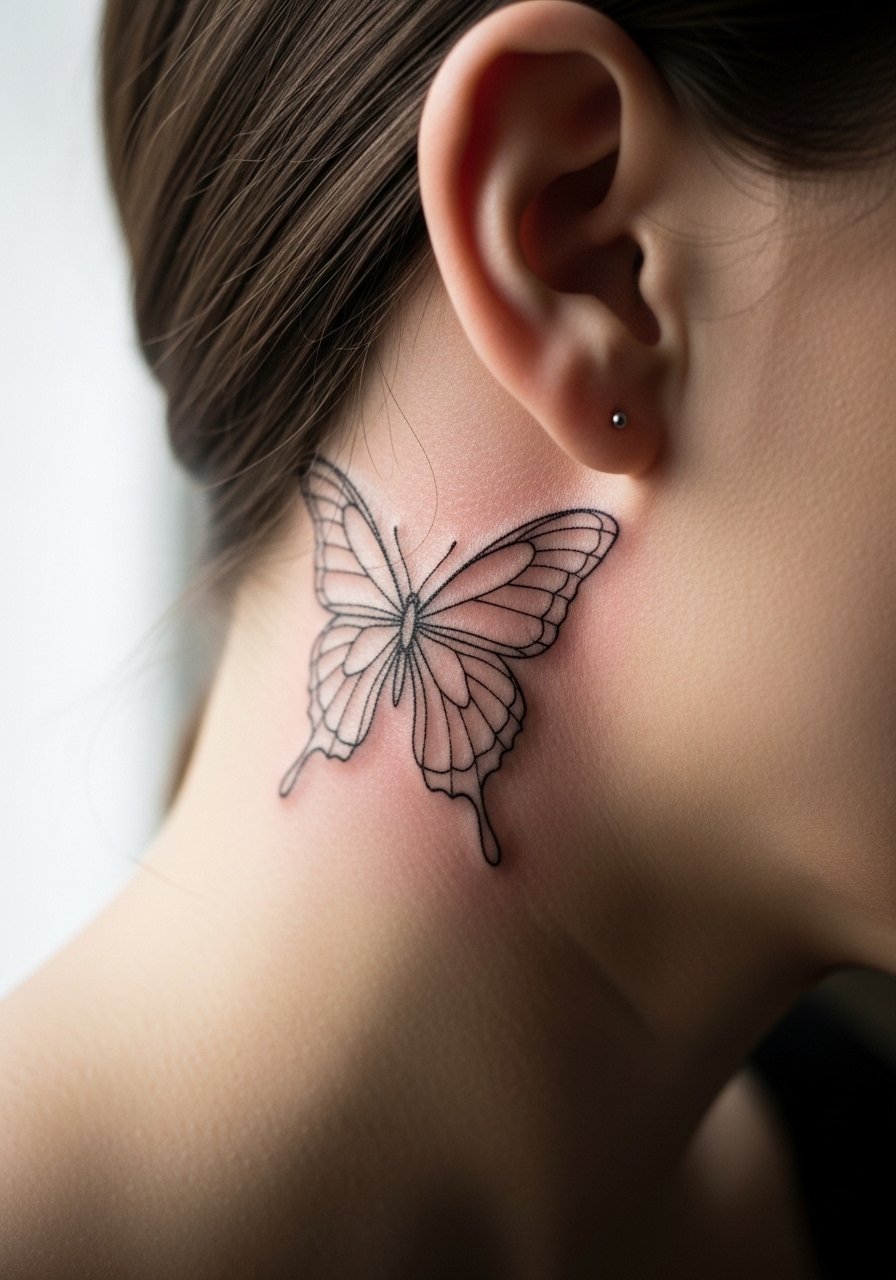
Behind-ear micro pieces are tiny but memorable, and they demand precise transfer work. Tell the artist exactly which initials and font you want, because lettering at this scale can blur if ink is pushed too deep. A common error is embedding the initials into dense wing detail, which makes them illegible after healing. For session comfort, wear hair up and a thin chain pendant necklace that sits away from the area. Expect a touch-up window at three to six months for crisp lettering.
6. Fine line butterfly with subtle micro-shading on the thigh

Thigh pieces tolerate micro-shading well because the skin area is stable and rarely sees abrasion from daily clothes. The session can be uncomfortable if you lie awkwardly, so bring a loose pair of shorts to adjust during breaks. Artists split on whether fine line fades faster than bold work. One camp says thin lines need yearly touch-ups because saturation is low. The other camp argues careful depth and spacing make fine line settle fine. My call is to plan a touch-up at six to twelve months when using micro-shading on fleshy areas, and ask for slightly stronger initial contrast if you have medium or darker tones.
Pre-Session Essentials
The wrist, behind-ear, and shoulder pieces above each have different prep needs, so a few targeted items make session day smoother.
- Tea tree balm for tattoo healing. Lightweight anti-itch properties help small fine line areas on humid heals without heavy greasiness that can hide linework.
- Non-sticky aftercare spray. Mists are useful for collarbone and thigh work when you want gentle cleansing without white residue.
- Rice-based moisturizing cream. Absorbs quickly on small pieces, which users with darker tones report keeps contrast better during the first week.
- Single-needle ink conditioner. Used pre-session by some artists to prep dry skin, it can marginally improve line retention for single-needle work.
- Hustle Butter Deluxe. A thinner balm for days three to seven that breathes better than heavy ointments, which helps fine line detail stay clear.
7. Edgy asymmetric butterfly on the side of the neck

Neck placements read bold even when the linework is thin, because the location draws attention. The trade-off is visibility in professional settings and a higher chance of needing touch-ups due to daily friction from collars. When you book, ask the artist about their experience with neck placement specifically and show examples of healed neck pieces. For session wear, have your hair up and a shirt you can pull aside. Pain is moderate, and one real mistake is asking for mirrored symmetry when you have natural neck contours that will shift the focal point. Expect touch-ups at one year if you want mirror-perfect lines.
8. Dotwork fine line wings on the forearm

Dotwork brings texture without heavy fill, and the forearm provides a stable canvas that helps stipple age predictably. Ask for reference healed photos so the artist spaces dots for long-term separation. Dot density is where most people go wrong, too tight and the texture fills in over time. For showing off, roll up a sleeve to reveal the piece and wear a rolled cuff linen blouse to keep attention on the forearm. Sessions are generally two short passes with light discomfort and a reliable touch-up window at six months if dots need redefinition.
9. Minimalist outline butterfly cluster along the collarbone

Clustered micro butterflies create negative space impact without heavy detail, and collarbone spacing helps them read like motion. The common error is cramming too many micro butterflies into a small run, which causes them to visually merge as lines soften. Tell your artist you want clear gaps and to place the largest element near the bone for structure. For evenings out, pair the cluster with a layered delicate necklace that stops above the ink. Little clusters heal quickly, and a single touch-up is often enough at the six month mark.
10. Watercolor-edged fine line butterfly on the shoulder blade

This hybrid keeps crisp linework and adds washes of pastel that fade at different rates across skin tones. The trend is moving toward pure black for longevity, but watercolor edges remain popular for their fresh look. Be explicit with your artist about how bold you want the watercolor saturation, because heavy color near thin lines can blur visually as pigments migrate. For casual wear, a racerback tank shows the shoulder blade without rubbing the area. Sessions usually need two passes for color layering and a touch-up around six to nine months if the pigments soften.
11. Ignorant-style sketch butterfly on the inner bicep
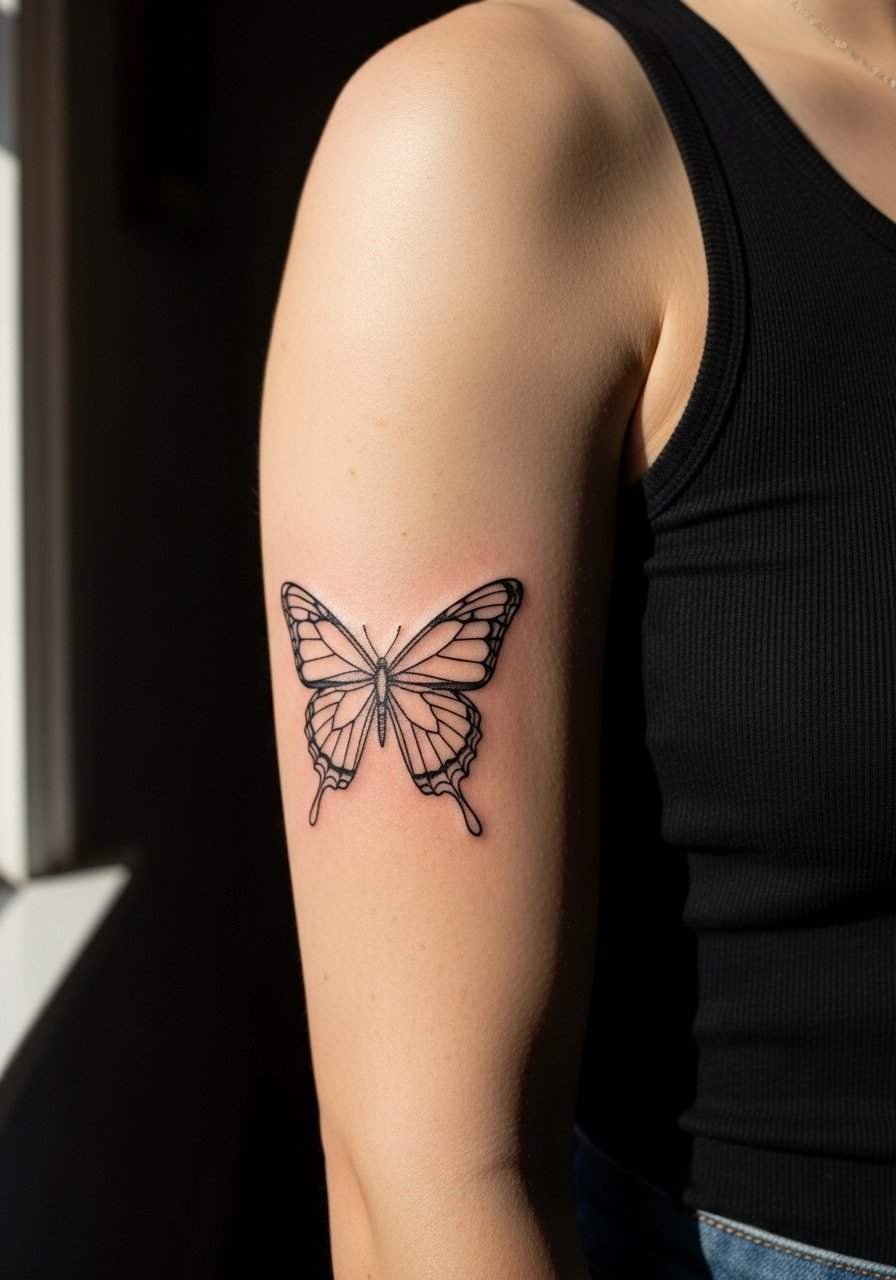
The ignorant aesthetic trades polish for energy, and inner biceps let that raw edge look intimate. Expect the session to tickle and sting depending on how high you place it, but most clients handle shorter single-needle sketching well. A frequent mistake is asking for perfect replication of a sketch photo, which removes the hand-drawn irregularities that make the style work. This placement can be hidden during workdays and shown off on casual nights. Touch-ups are idiosyncratic, so plan a check at three to six months to see if lines need reinforcement.
12. Ornamental butterfly frame down the spine or ribcage

Ornamental frames add weight to a butterfly and make the composition read like jewelry. The ribcage is a high-movement area, and there is debate about fine line on ribs. One camp says thin lines blur quickly because the skin stretches with breathing. The other camp argues careful depth and spacing prevent early merging. Ask your artist where they stand and request spaced detailing and less dense filigree near the sternum to avoid early softening. Pain on the ribs is higher, so plan for longer breaks and two sessions. Because this touches a controversy, get clear touch-up expectations before you book.
13. Micro fine line butterfly silhouette behind the finger knuckle

Finger and knuckle placements are high-friction zones and require realistic expectations. The session is fast but feels sharp, and many small pieces need yearly touch-ups. A common error is sizing the design too small. Even a half inch silhouette benefits from bold single strokes rather than whisper-thin hairlines. For summer visibility, this cluster pairs with a minimalist leather cuff on the opposite wrist to keep the hand looking intentional without crowding the finger work. Budget for re-inking as part of the ownership plan.
14. Inverted upside-down butterfly for a rebellious edge
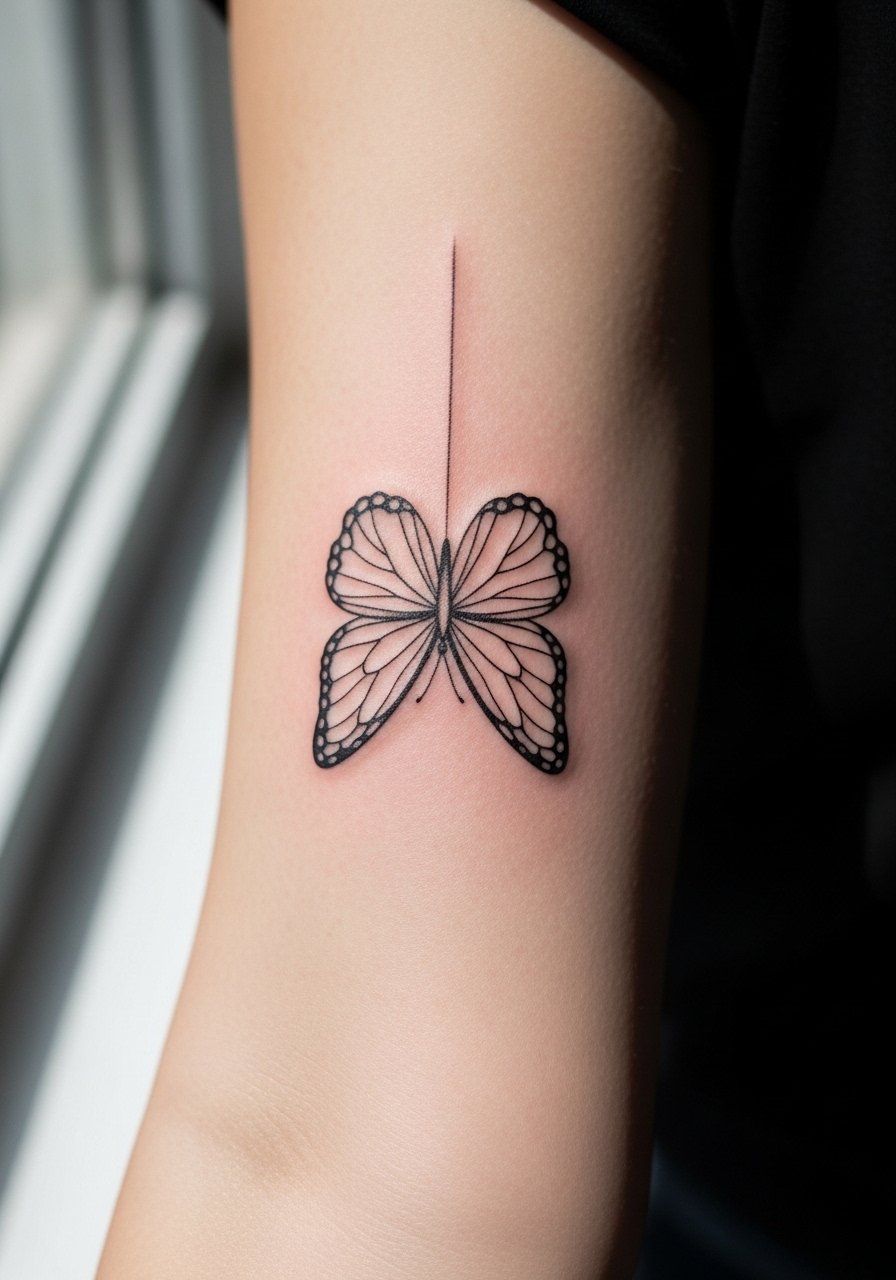
Turning the butterfly upside down is a small twist that reads rebellious without adding bulk. The forearm placement keeps the lines stable and visible in everyday moves. During consultation, ask the artist for mockups on your actual arm so you can confirm the upside-down composition reads the way you expect when your arm is relaxed. The session is low to moderate in pain and usually wraps in one pass. People sometimes regret the novelty, so plan for expansion into blackwork if you want to evolve the piece later.
15. Negative-space butterfly cut from solid black panels

Negative-space designs flip expectations by using skin as the highlight against saturated black. On pale skin this creates a dramatic contrast that ages differently than thin-lined work. The technique trades subtle linework for solid fill, which tends to hold up well but requires an artist confident in clean edges. Sessions can be intense because black fills need even saturation. Avoid requesting tiny negative shapes inside a black block, they can lose definition. For session wear, use loose shorts and plan for a solid fill touch-up at one year if any patchiness appears.
16. Pulse-point inner wrist butterfly to “feel alive”

People pick pulse-point placements to keep a piece emotionally present, and the inner wrist is ideal for that. The trade-off is constant exposure to washing and sunlight, which accelerates fading. Plan gentle sun protection and a realistic touch-up timeline, usually within a year for fine single-needle work. For the session, wear a sleeveless tank so the artist can position your wrist easily. The main mistake is making the piece too small; give the butterfly a little breathing room and it will read longer.
17. Hybrid butterfly with ignorant scribbles for a distressed edge

This hybrid merges crisp wings with hand-drawn scribbles to produce a textured, distressed finish. Calf placement handles this mixed technique well because it allows room for both detail and scribble. When you consult, ask the artist how they will balance the two styles so the scribbles do not overwhelm the wing silhouette. Sessions are moderate and may require a short second pass to clarify edges. The look ages into an intentional roughness, which is the point, so avoid asking for a "cleaned up" version if you want that grit.
18. Festival-ready geometric mandala butterfly on the back

Large back pieces let geometric and mandala elements breathe so lines separate as they settle. The main mistake is compressing too much detail into a small patch, which causes smudging as the ink ages. For festival styling, a loose button-down shirt you can wear open at the back shows the piece without rubbing it. Expect one long session or two shorter sessions and a touch-up pass for dense mandala work.
19. Memorial butterfly with integrated date on the inner forearm
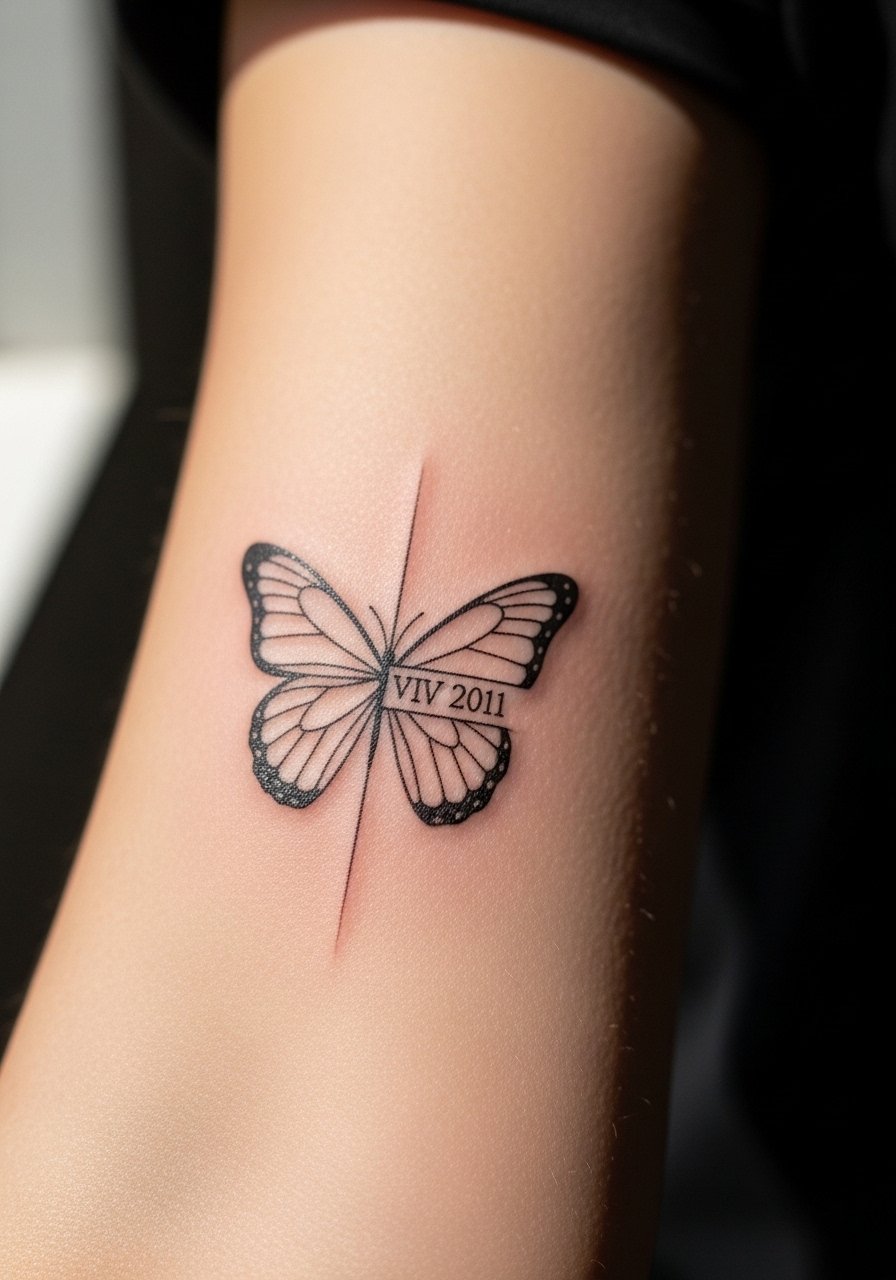
Tucking a date into wing veins makes a discreet memorial without overt script. Specify exact numerals and a precise spot in your consultation, because lettering at that scale can blur if the lines are too thin. Many people want the date to sit within the wing border rather than across the body of the wing, which preserves the wing pattern. For daily wear, a thin silver chain bracelet opposite the piece highlights the forearm without overshadowing the ink. Plan a check-in at six months to confirm legibility.
20. Thick-line adaptation for darker skin tones on the forearm
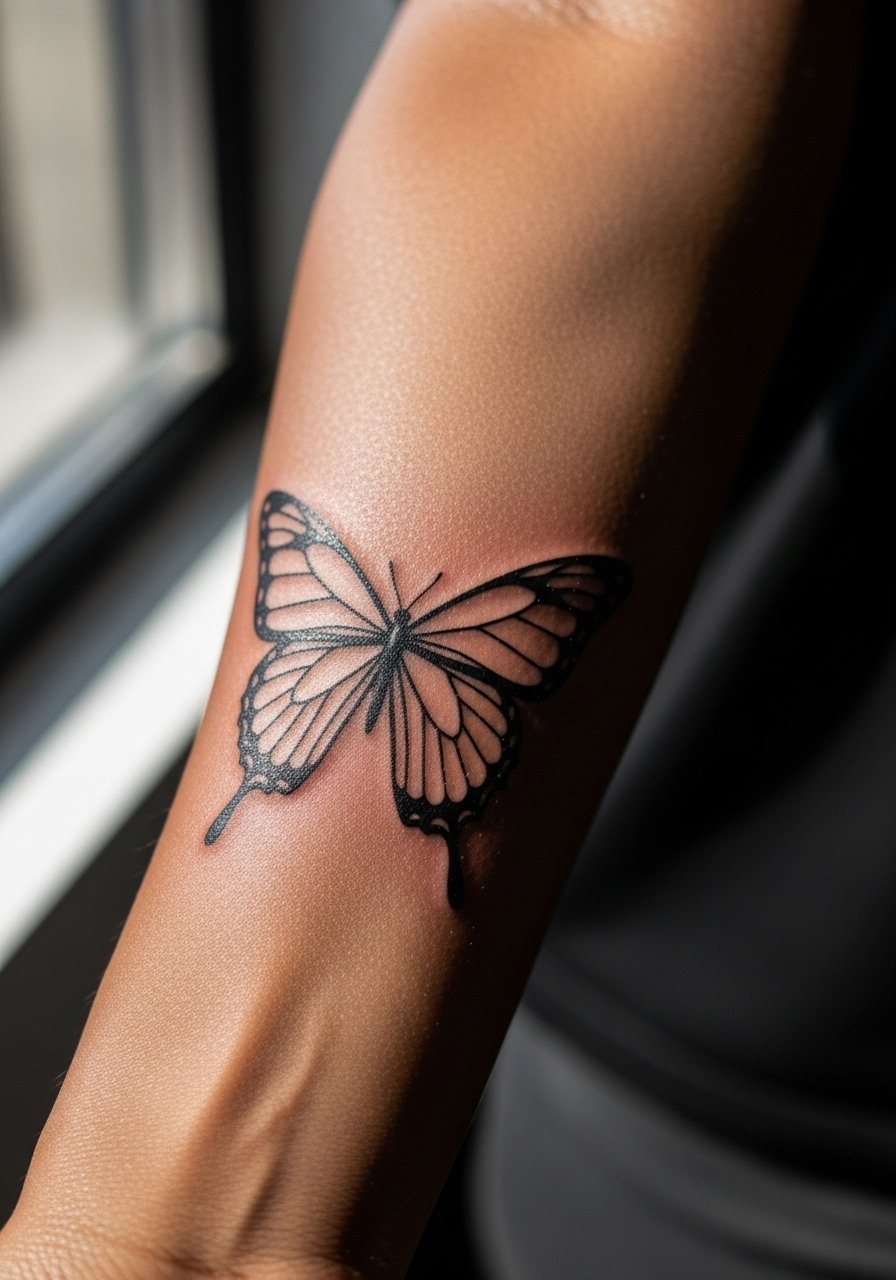
I've noticed that slightly thicker line weight helps butterflies pop on melanated skin, and many artists now adapt needle choice for contrast. Be explicit in consultation about your skin tone and ask to see healed examples from the artist on similar tones. There is debate about fine line fading faster, and for darker skin some prefer thicker lines to avoid early ghosting. The session feels the same as a thin-line piece, but ask for clear touch-up terms. A good real-world practice is a scheduled touch-up at three to six months for pieces on higher-friction areas like the forearm.
21. Micro butterfly finger cluster for summer visibility
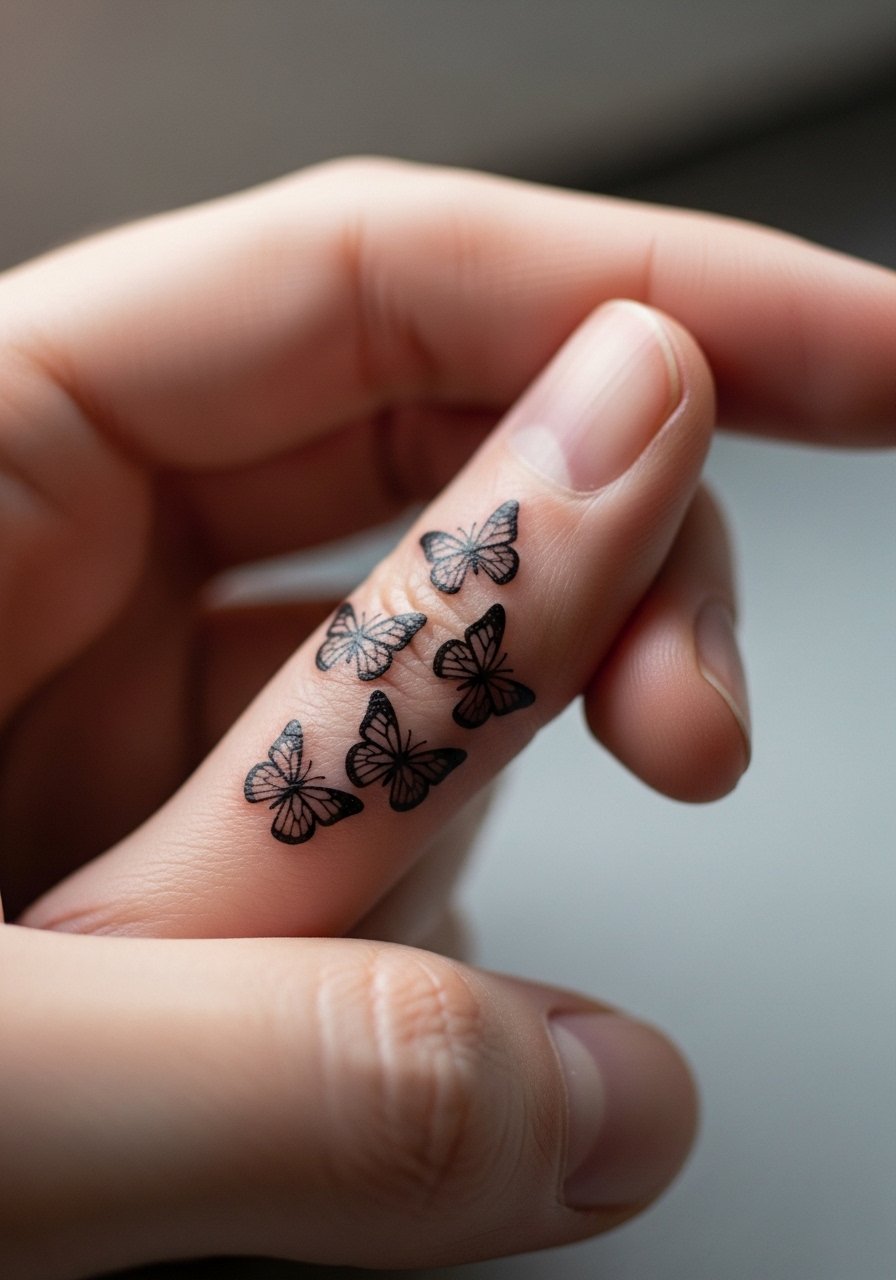
Finger clusters are summer staples because they show in sandals and short sleeves, but they also demand ownership of touch-ups. Expect a sharp but short session and plan for re-inking, often every six to twelve months. The usual mistake is placing clusters across knuckles where motion blurs details fast. Instead, cluster on the side of the fingers or the outer phalanx. For a casual summer look, pair with a strappy ankle sandal and cropped jeans if you want the tattoos to frame your outfit. Budget touch-ups into the plan.
Frequently Asked Questions
Q: Do fine line butterfly tattoos fade faster on dark skin than on light skin?
A: From what I've seen, fine line pieces can appear to fade faster on deeper tones if the initial contrast is low. Two camps argue about this. One side recommends thicker single-needle lines or slightly bolder outlines for longevity. The other side says impeccable aftercare and placement are enough. A practical approach is to ask for healed examples on similar skin tones and plan a touch-up at three to six months.
Q: How do I reduce the chance of a tiny wrist or finger butterfly needing early touch-ups?
A: Size and line weight matter more than placement alone. Ask your artist to space details and use a slightly stronger single-needle stroke for small placements. Avoid getting tiny, dense elements on high-friction zones. Also schedule a quick six-month check so touch-ups are routine rather than crisis-driven.
Q: If an artist cancels twice, should I tip less or skip the appointment?
A: Tipping etiquette varies, but most people still tip around twenty percent in the U.S. If an artist cancels repeatedly without a clear reason, feel free to communicate your concerns and request a different booking or a partial refund. Use booking platforms that show cancellation policies and keep a short list of alternative artists to avoid being stuck.
Q: Is Saniderm better than dry healing for fine line pieces?
A: Artists are split on this. Some praise Saniderm for scab-free results, especially on wrists and fingers. Others worry it traps moisture and affects ultra-fine details. My advice is to ask the artist how they handle fine line aftercare and to follow their protocol for the first week, then adjust based on how your skin reacts.
Q: What should I wear to a collarbone or ribcage session to make it easier for the artist?
A: Wear clothing that provides easy access without exposing more than needed. For collarbone work, a wide-neck shirt or a strapless sports bra works well. For ribcage, a cropped top you can lift slightly is best. If you want options on Amazon for session day, a strappy cotton blouse is a reliable pick.