
Fine line marigolds are trending online, but what holds up on a wrist is not always the same choice for a thigh. Too many people discover that yellows fade fast in sun, that a small wrist piece needs touch-ups, or that deposits get ghosted by busy shops. Read on for 21 marigold ideas that solve those problems, show alternatives for darker skin tones, and give exact things to ask your artist at the consultation.
1. Fine line single marigold outline on the wrist
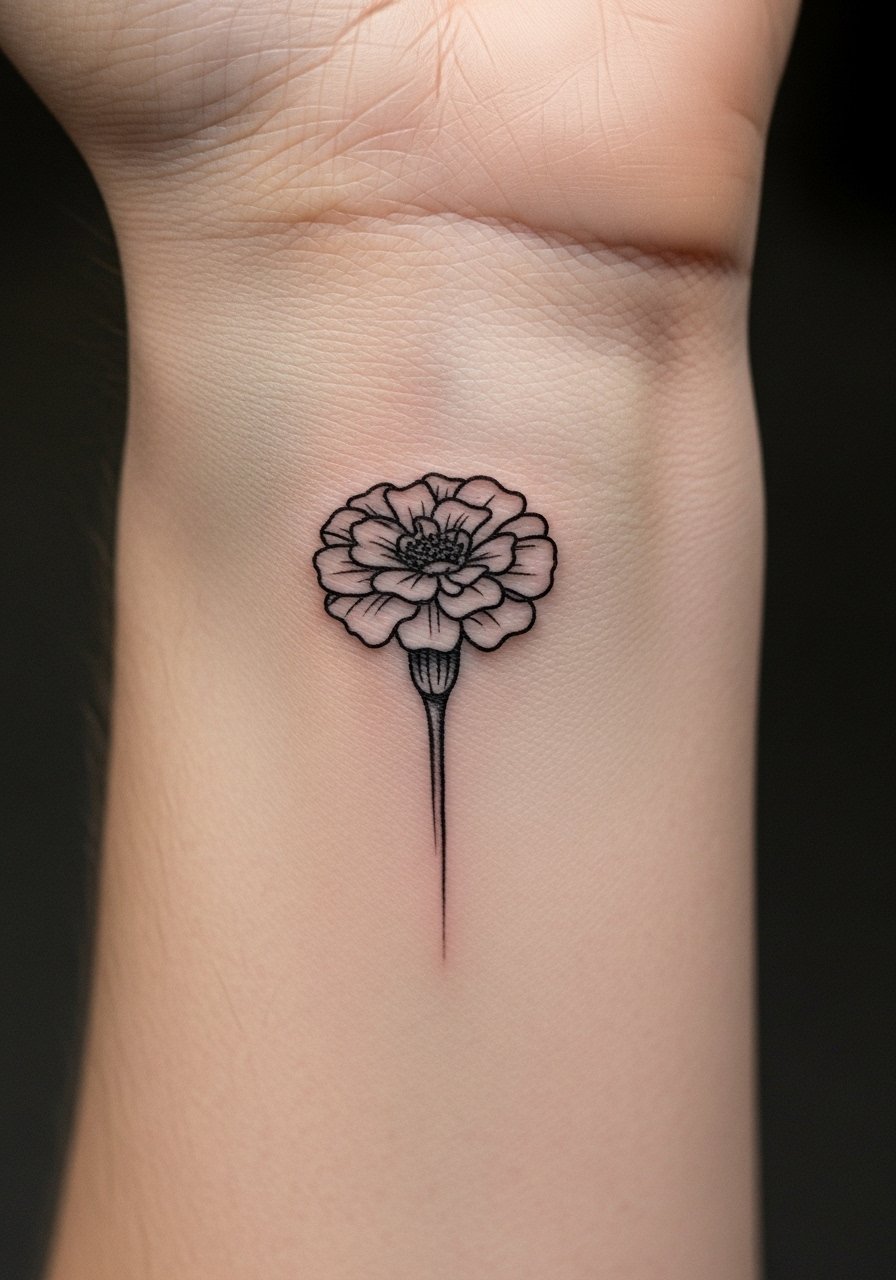
I recommend this when you want a subtle piece that reads delicate without shouting. Fair warning, wrist skin gets a lot of sun and friction so the thin single-needle look will likely need a touch-up at year two or three. In consultation, ask your artist for a slightly bolder line weight than your reference so the linework still reads crisp after a year. A common mistake is asking for an ultra-tiny single bloom with dense petals, which is where lines merge. Session time is short, usually under an hour, and pain is low to moderate. For showing it off, pair with a dainty silver chain bracelet on the opposite wrist and wear a chiffon blouse with cuff rolling to keep attention on the linework.
2. Minimalist marigold bud with stem on the inner forearm
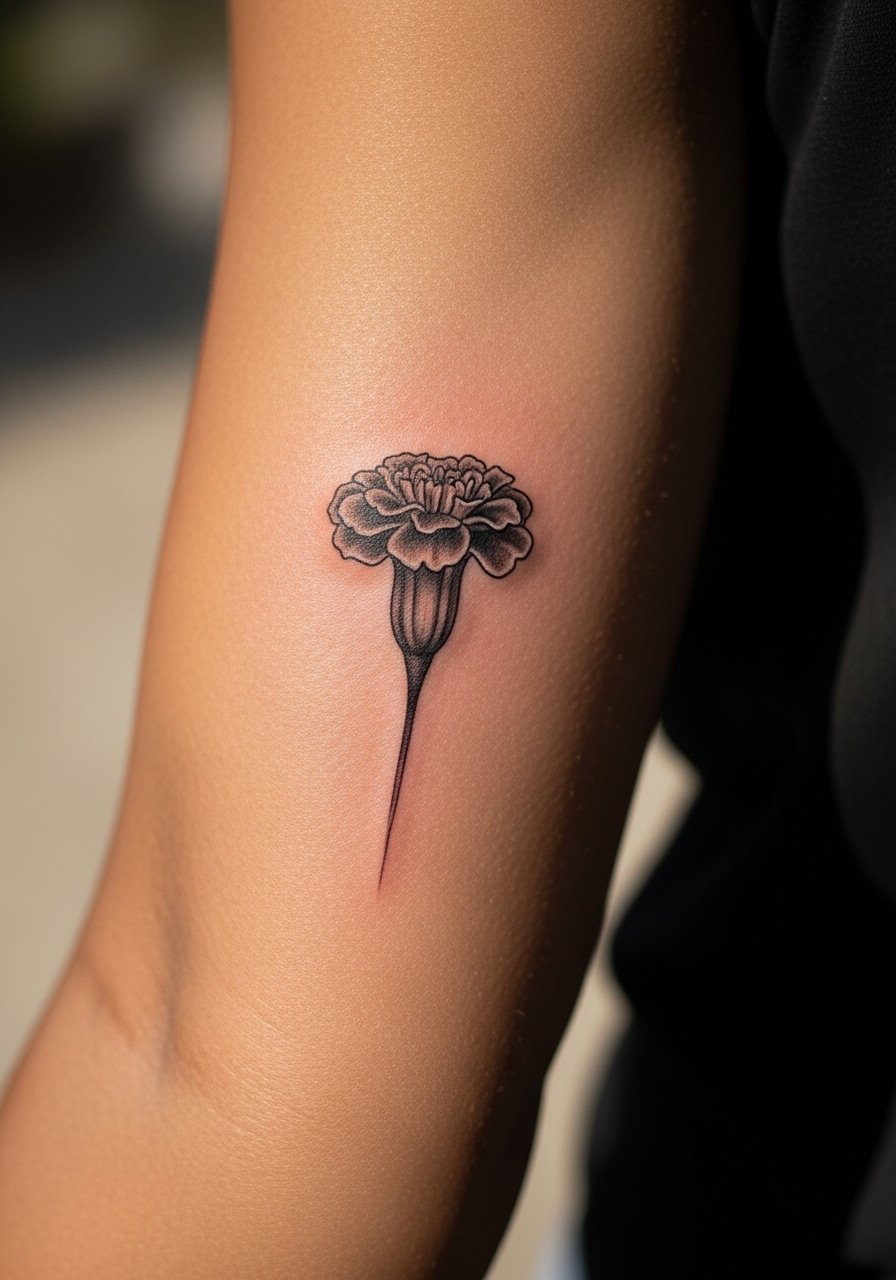
This is a great first tattoo option because it travels well as you gain confidence. The inner forearm is one of the easier places to heal and it tolerates thin shading, but fine line artists still warn that very skinny stems can fade into a ghost. Tell your artist you want clean negative space between petals and a hairline stem that is no smaller than standard single-needle. Expect about a one-hour session and low to moderate pain. A mistake people make is placing the bud too close to the wrist crease where movement blurs edges. For session comfort, wear a linen button down you can roll up, and for showing it off, a thin leather cuff on the opposite arm frames the piece.
3. Watercolor marigold splash on the shoulder
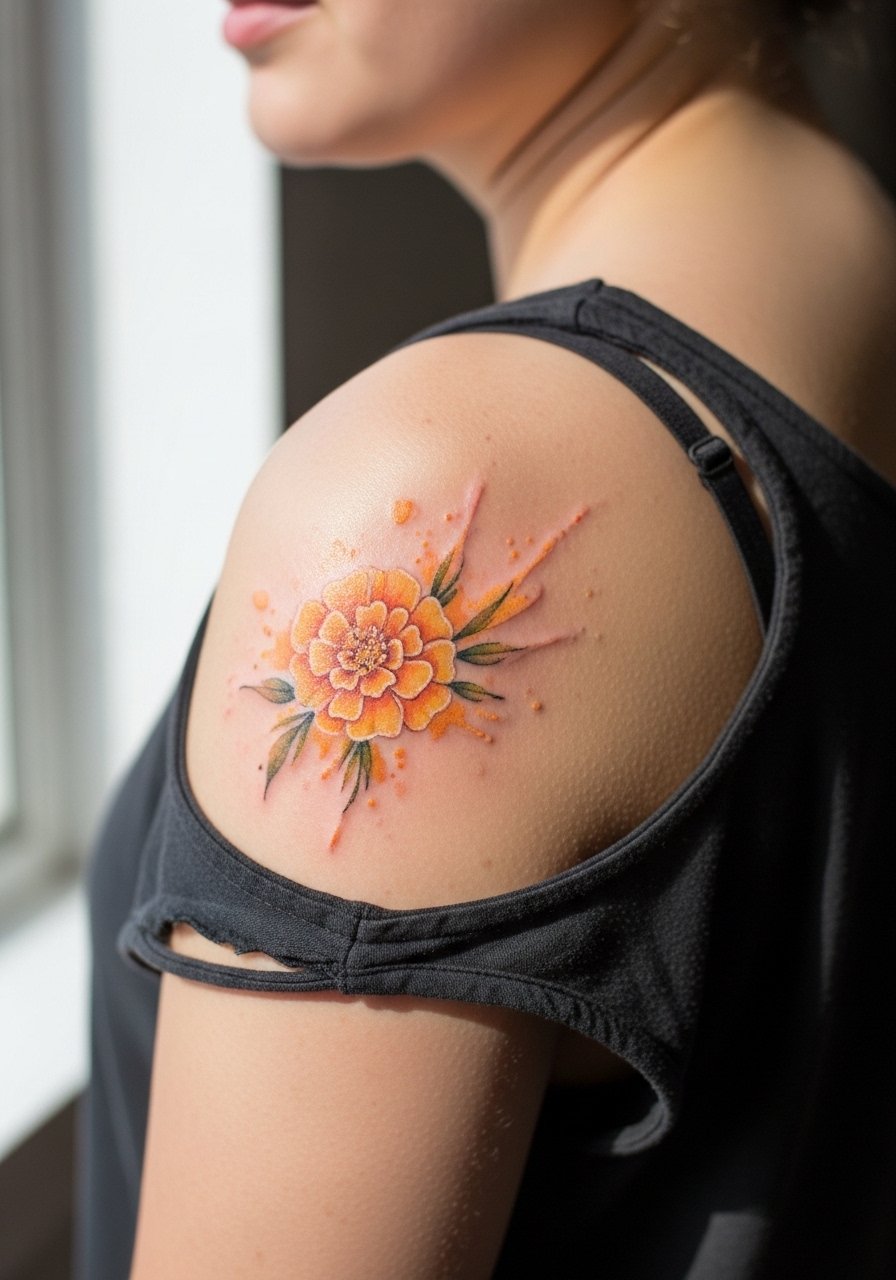
Watercolor gives the most painterly result, but the trade-off is color longevity. Yellows and oranges are the first to lighten from sun. If you love the look, ask the artist to combine soft watercolor fills with slightly darker color anchors in the petal bases so the bloom keeps depth as it fades. Shoulder blade sessions are comfortable and usually done in two shorter passes. The common regret is full watercolor at large scale that fades into pastel blotches after weight changes or sun exposure. For outfits, slip into a sleeveless crop top to show off the shoulder and bring a pair of medium hoops for balance during summer looks.
4. Neo-traditional marigold with geometric border at the collarbone
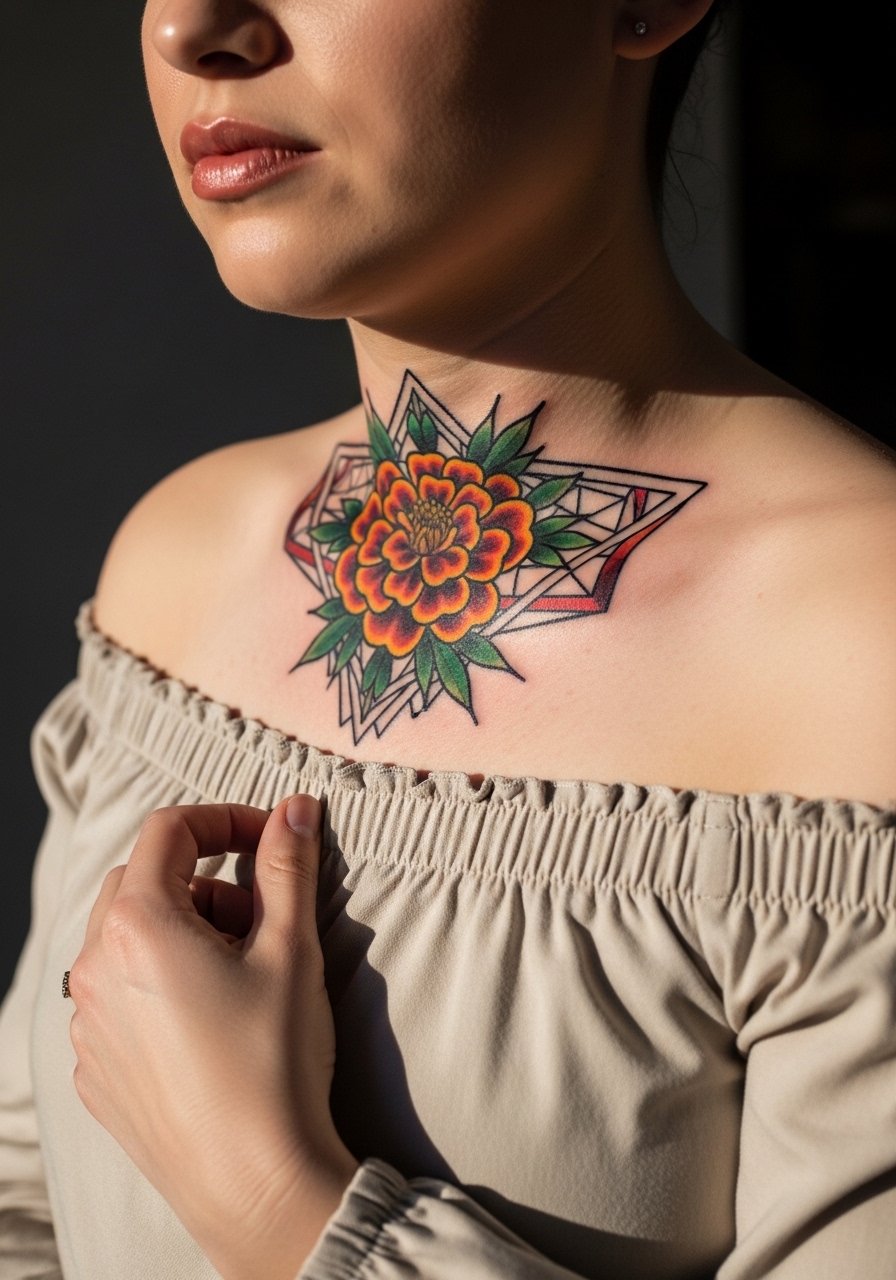
This style reads far from delicate in fresh photos and then settles into a bold, decorative piece. Collarbone skin can be fussy when sleeping, but the payoff is high visibility. During consultation, ask for a slightly thicker outer outline and spacing between border lines so the geometry does not merge over time. Expect moderate pain for collarbone work and one to two sessions depending on size. A common mistake is crowding the geometry too tight against the bloom, which makes the border look muddy when healed. This design looks great with an off shoulder blouse and layered delicate necklaces that drop just below the tattoo.
5. Blackwork marigold mandala on the upper thigh

Thigh placements are forgiving for size and detail because the skin there stretches less with daily motion. Blackwork mandalas age exceptionally well because saturation holds up under sun and friction. This is a two to three session commitment and the pain is moderate. When you meet your artist, mention you want stipple shading and solid fills rather than tiny filigree lines to reduce blowout risk. Some clients forget to consider wardrobe pairing, but this veins into show-off styles like high-waisted shorts or slit dresses that reveal the mandala for nights out. Keep in mind this pattern traces to meditative motifs, so be respectful about direct cultural replications.
6. Micro-realism marigold petal cluster on the ribcage
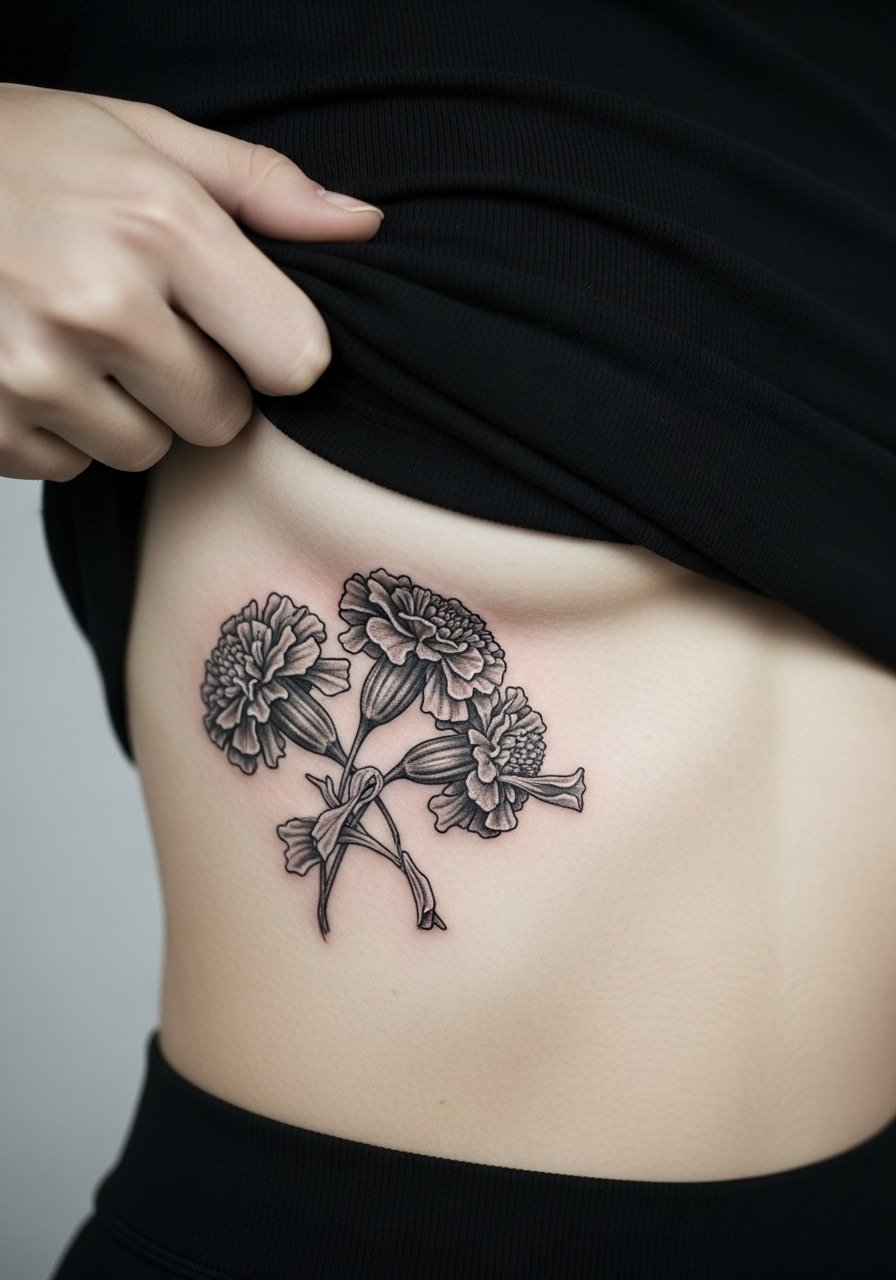
The ribcage is higher on the pain scale than arm placements, but the canvas suits micro-realism because it keeps delicate detail protected under clothing. Artists split on whether single-needle fine line holds on ribs. One camp says the skin stretch and movement blur the thinnest lines within two years. The other camp believes precise depth and spacing make single-needle work settle fine. Ask where your artist stands and request a slightly bolder petal edge if you want this to last. Common mistakes are requesting full photorealism at too-small a scale. Expect a one-session piece if you keep it tiny, and plan for touch-ups if your reference has heavy yellow tones that may fade in sun.
Studio Day Picks
The wrist, forearm, and shoulder pieces above need different prep than thigh or rib work, so a small kit tailored to those placements smooths the session and the first week.
-
Tea tree salve tattoo aftercare. A light anti-itch salve praised by forum users, useful for floral color pieces that start to scab and itch in the first few days on the arm.
-
Manuka ink aftercare gel. A thinner gel that users say keeps petal colors clearer during summer while avoiding heavy residue.
-
Rice bran balm tattoo aftercare. Popular among people who dry heal small floral pieces without the shine of petrolatum.
-
Vegan beeswax tattoo balm. A non-greasy option for those avoiding heavy butters on fine line work around the wrist and ankle.
-
Fragrance-free CeraVe healing ointment. Thin, non-scented ointment that many choose for the first two to three days to avoid clogging on color-heavy marigolds.
7. Ornamental marigold vine wrap around the ankle
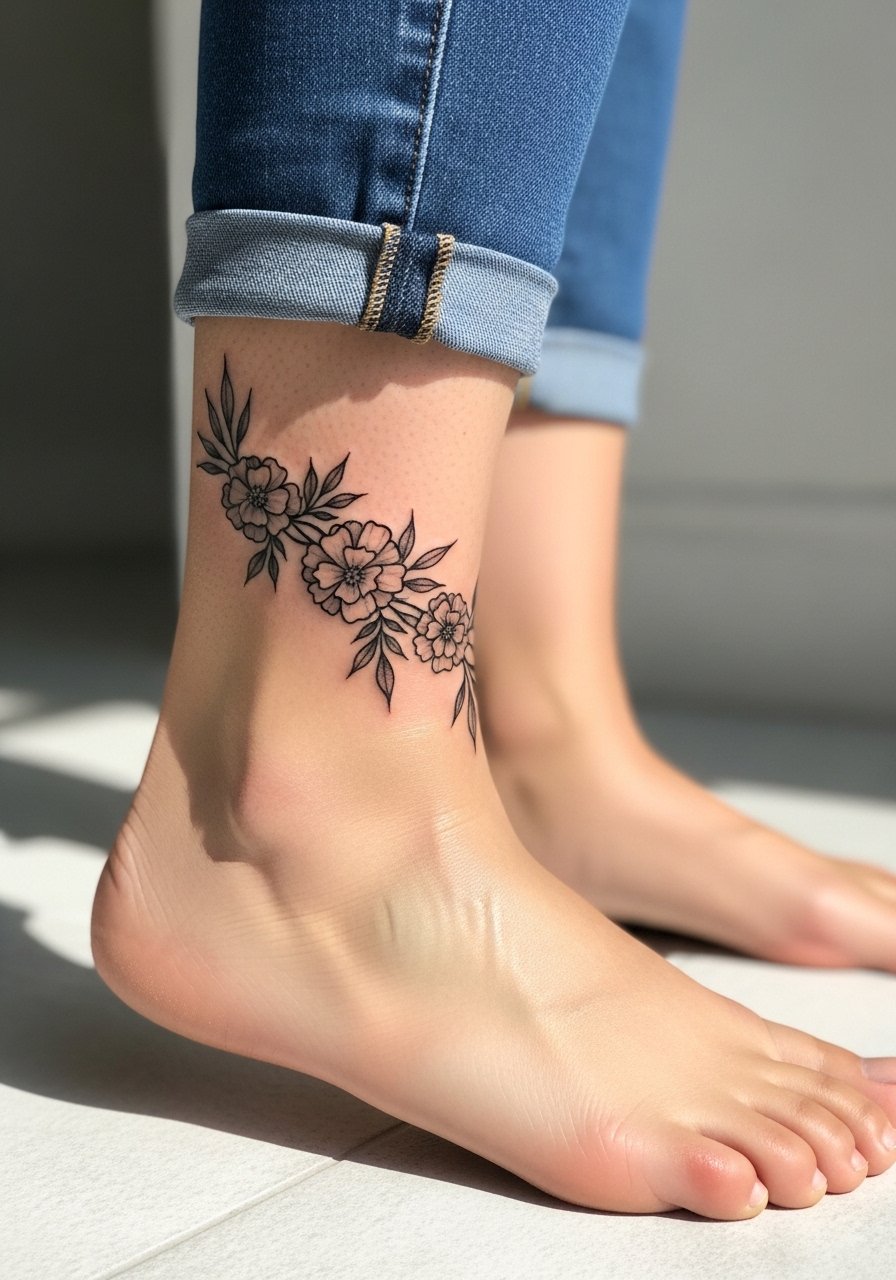
Ankle wraps are charming and versatile, but the area takes a beating from shoe straps and socks. If you want longevity, ask for slightly thicker connector lines in the vine so the linear flow stays readable. Sessions are short to medium in time and pain is usually low. A typical mistake is running the vine too close to the Achilles where constant friction will wear edges faster. For footwear pairing, strappy heeled sandals and cropped ankle jeans highlight the wrap, so consider a strappy heeled sandals option for summer reveals.
8. Ignorant style marigold doodle on the calf
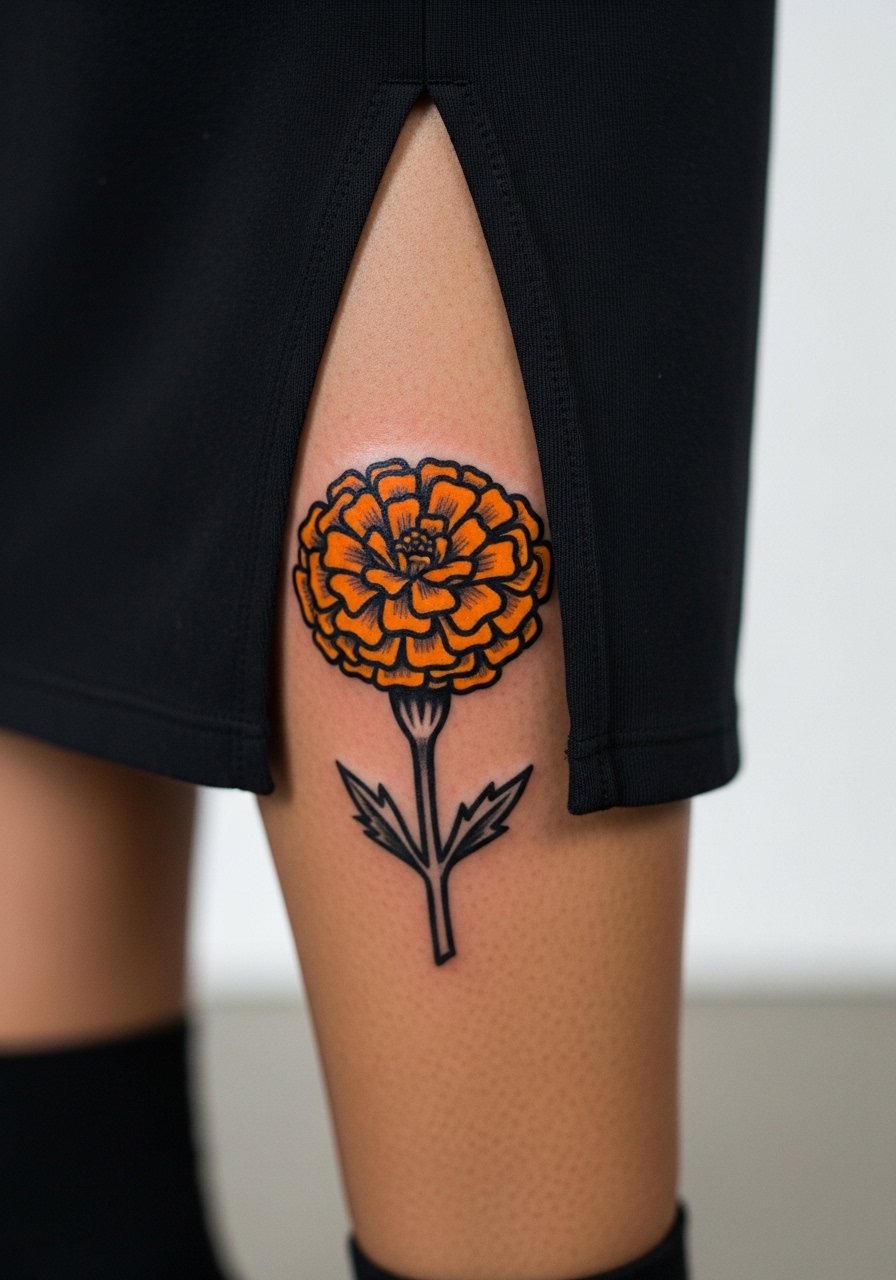
Ignorant style embraces imperfect lines and sketchy charm. It is forgiving in placement and often done quickly in one session. The calf is a good spot because it tolerates bold, imperfect strokes that still look intentional after healing. A common error is asking for too much micro detail within the doodle style, which defeats the point. For outfits, a midi skirt with a side slit or rolled joggers shows off the calf piece without compressing the tattoo during healing.
9. Traditional American marigold bouquet on the outer forearm
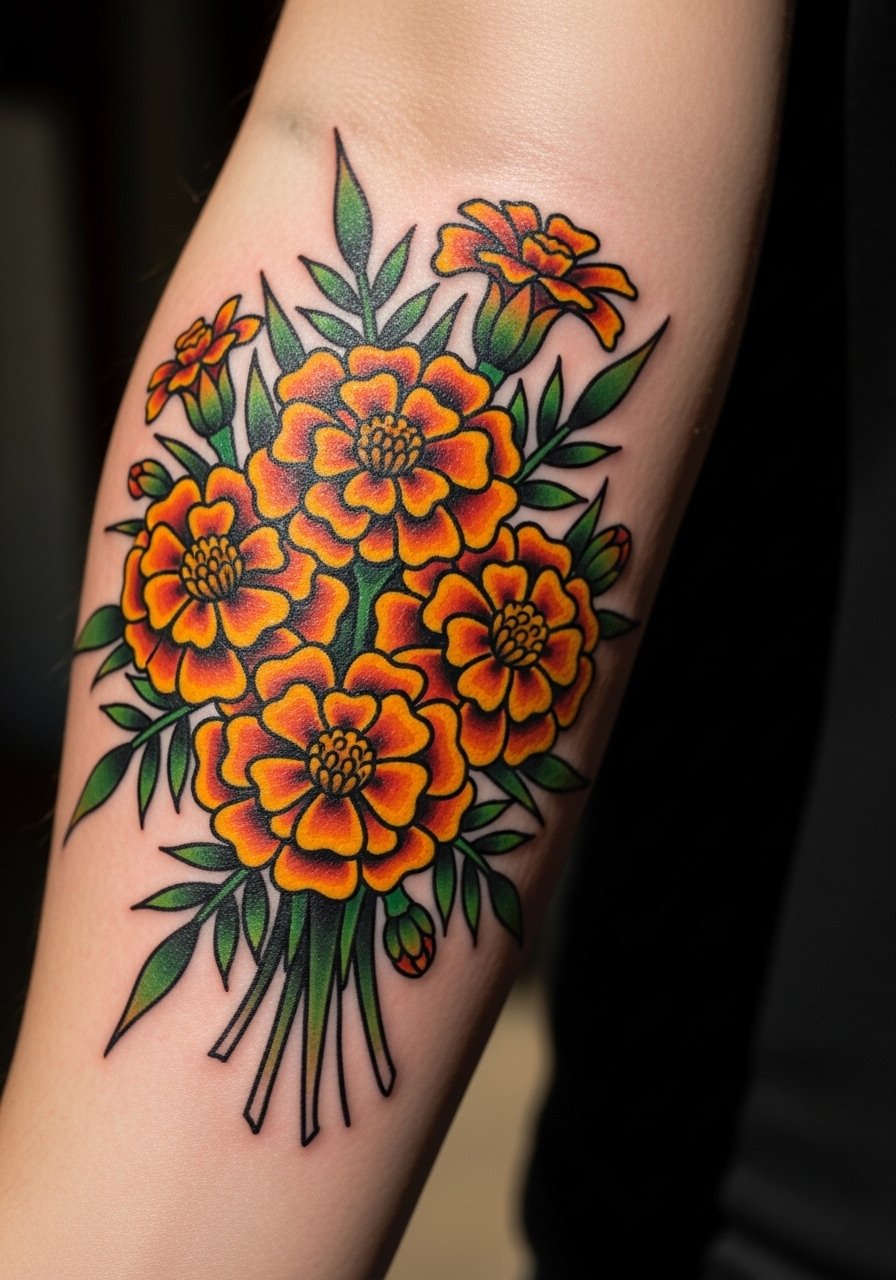
Traditional American work uses bold outlines and heavy saturation which helps marigolds last longer than delicate single-needle florals. The outer forearm is one of the more visible placements and tolerates larger bouquets. Sessions may take multiple passes for color saturation, and pain is low to moderate. People sometimes request tight clusters with too many overlapping petals, which can blur as colors age. For long-term wear, ask for open petal spacing and strong black anchors. Pair the design with rolled sleeves or a simple racerback tank for casual show-off days.
10. Fine line marigold with birth month ribbon on the neck side
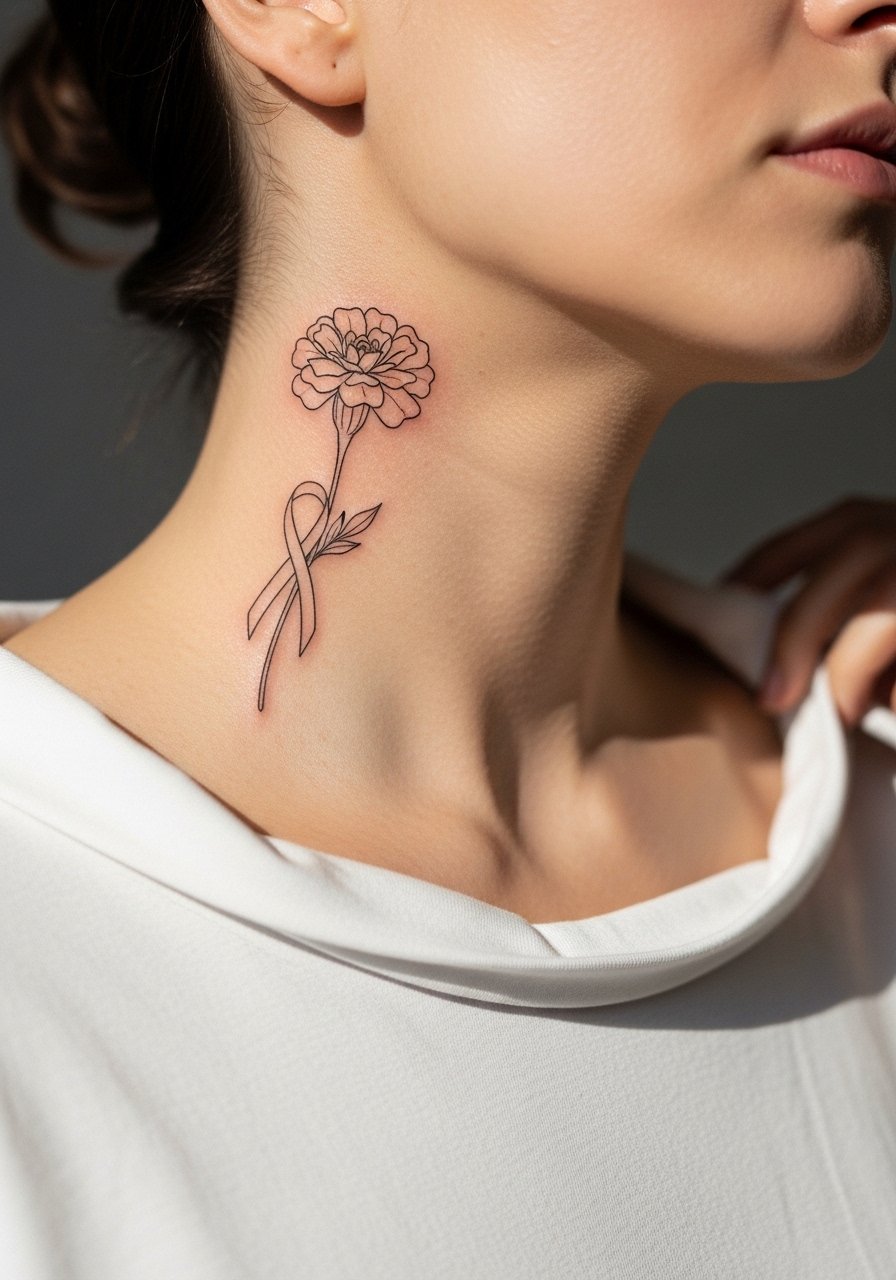
This small, sentimental option reads like jewelry on the neck. Neck-side skin can be sensitive and the thin ribbon will need precise depth to avoid feathering. Pain is moderate and sessions are brief. The biggest mistake is asking for the tiniest script ribbon without considering how the letters spread; request slightly bolder ribbon loops for readability in the long run. If you plan to show it seasonally, layer with a thin chain pendant necklace that sits just above the design.
11. Dotwork marigold sacred heart fusion on the back shoulder
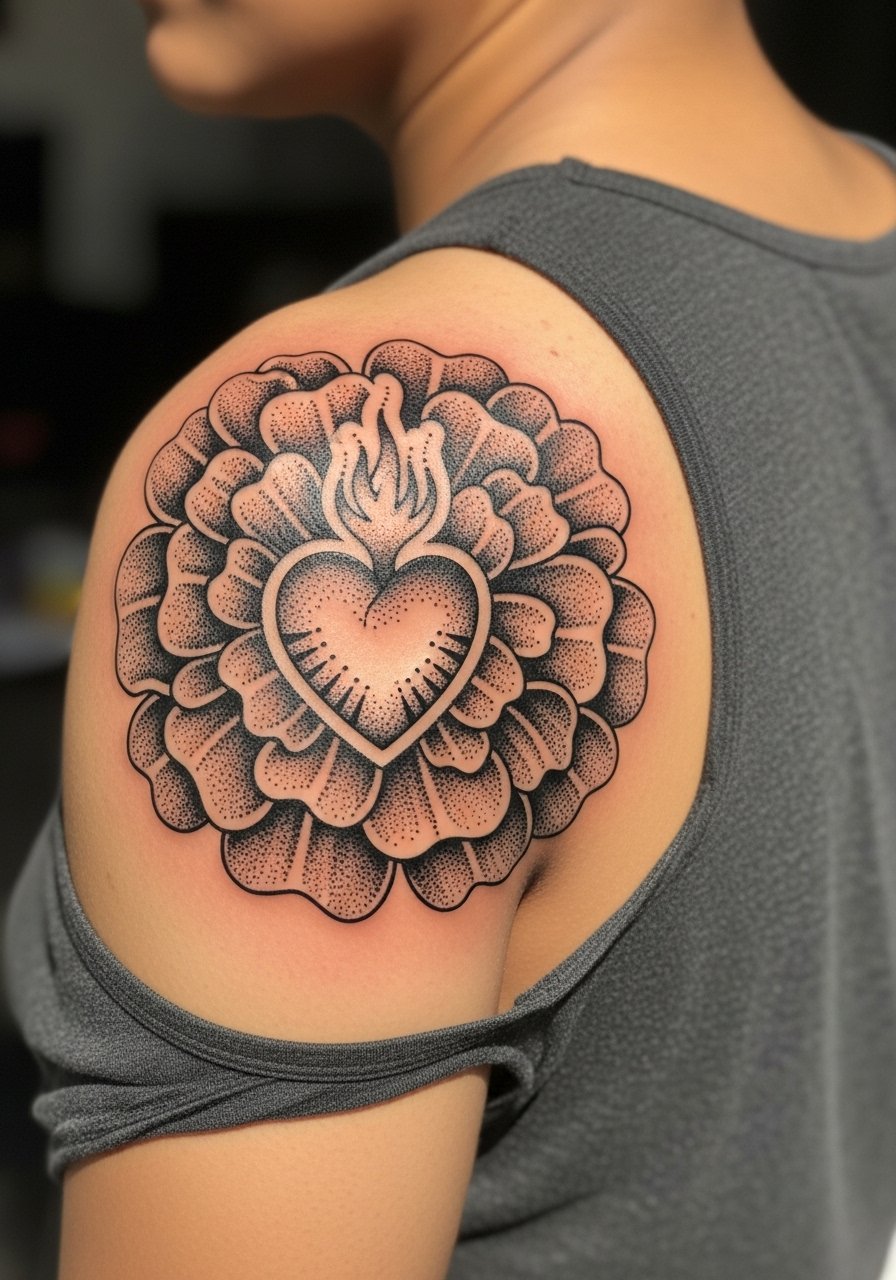
Dotwork allows intricate shading without heavy lines, which can be a blessing for spiritual fusion pieces. The back shoulder is a forgiving zone that hides well under clothing while still showing in warm weather. Expect two to four sessions depending on scale. A real mistake is compressing the dotwork into too small an area, which makes the stippling look muddy later. When discussing design, specify stipple gradient and spacing so the heart stays legible at distance.
12. Realistic marigold in full bloom on the thigh
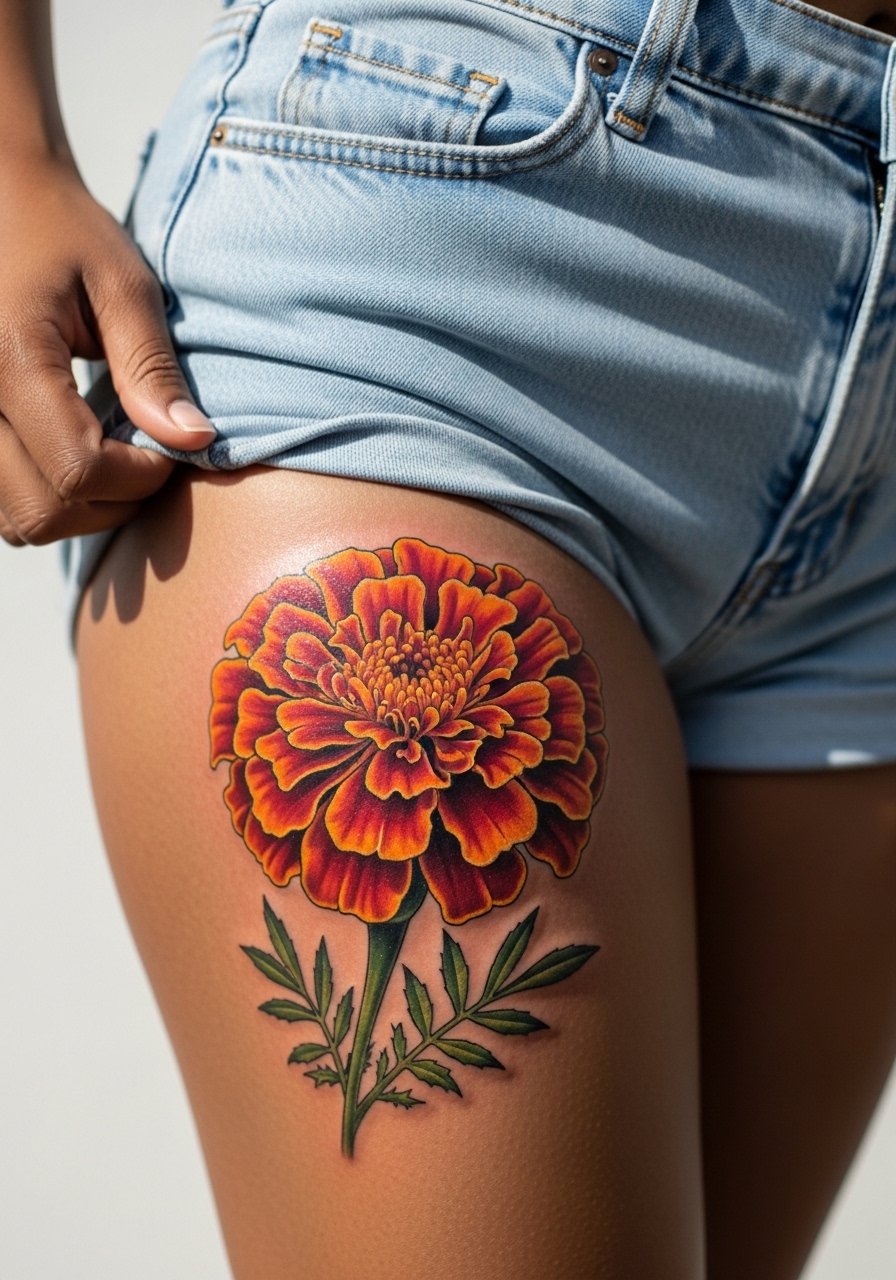
Realism requires a steady hand and patience. Thigh skin supports fine gradations and color layering, but large color realism pieces can shift visually after significant weight change. If weight fluctuation is a concern, ask for placement that avoids high-stretch zones and discuss scale increases to preserve petal proportions. Sessions will be longer and may be split into three sittings. Expect a richness at six months and gradual softening by year three, which a planned touch-up can correct.
13. Marigold vine paired with constellation dots on the ankle wrap
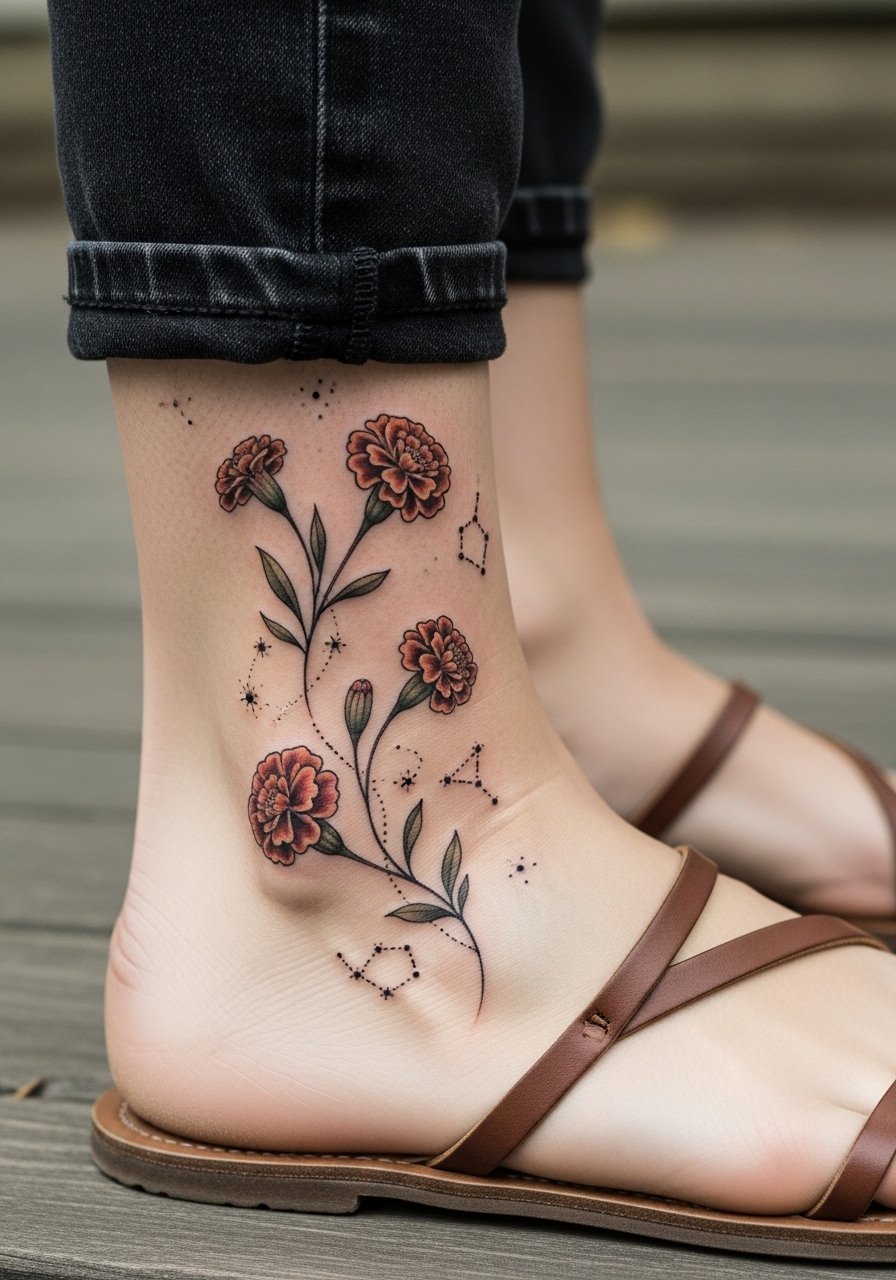
Pairing a vine with tiny constellation dots gives the piece both botanical flow and personal astronomy markers. The ankle is exposed to friction from socks and shoe straps, so place constellation dots on the outer side where they avoid constant rubbing. During consultation, specify dot spacing and request slightly larger dots than you think you need so they remain crisp past the first year. For showing it off, gold toe rings and strappy sandals are natural complements.
14. Dark skin optimized marigold with bold outline and negative space
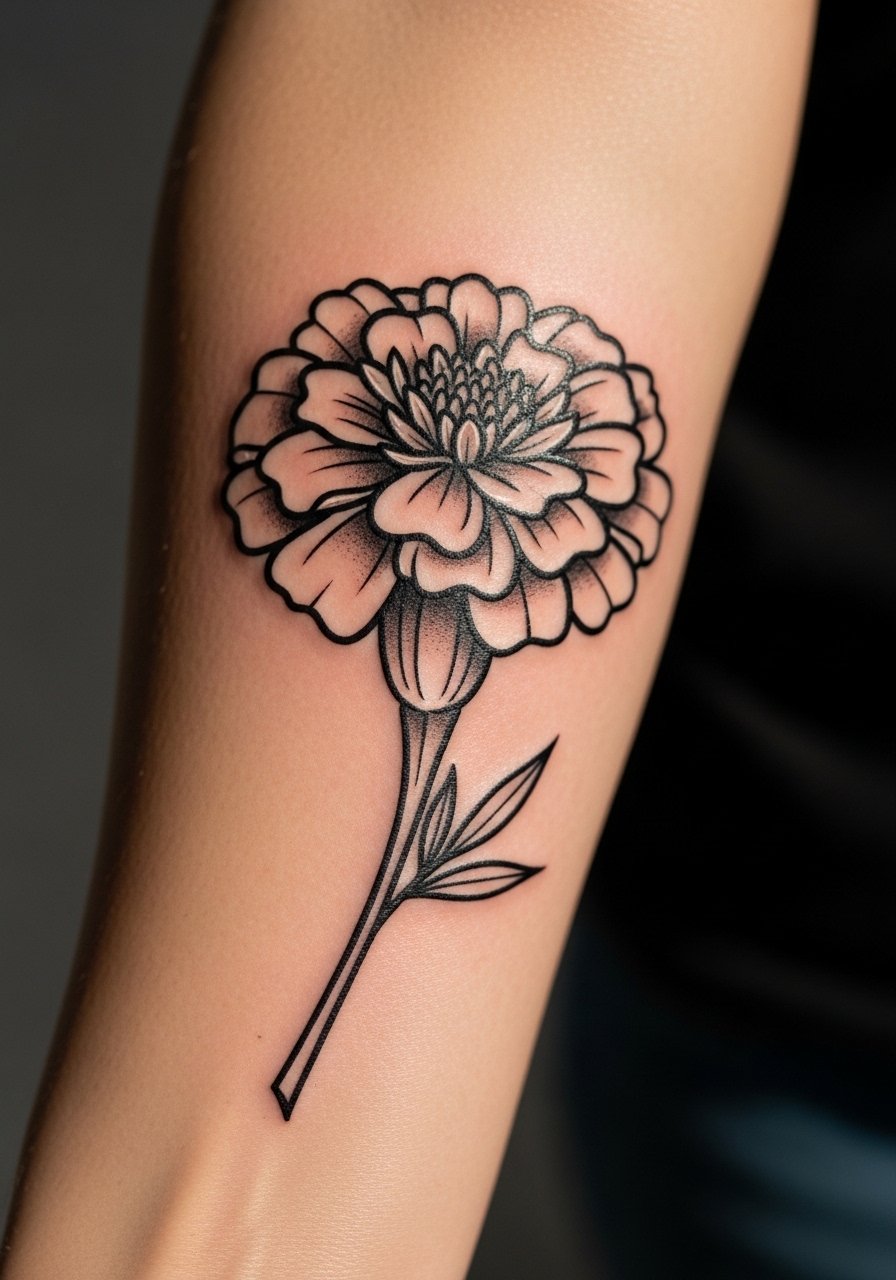
I see this gap in many galleries. Fine line yellows vanish on medium and dark tones, so choose a bold outline and rely on negative space for highlights. Ask your artist for high contrast and larger petal openings rather than pale fills. This version holds up much better than trying to replicate a pale-skin watercolor exactly. Touch-ups are typically every three to five years less often than ultra-thin work. When searching for portfolio examples, use in-app filters and community boards to see healed work on similar skin tones rather than only fresh photos.
15. Birth flower marigold cluster with zodiac dots on the inner forearm
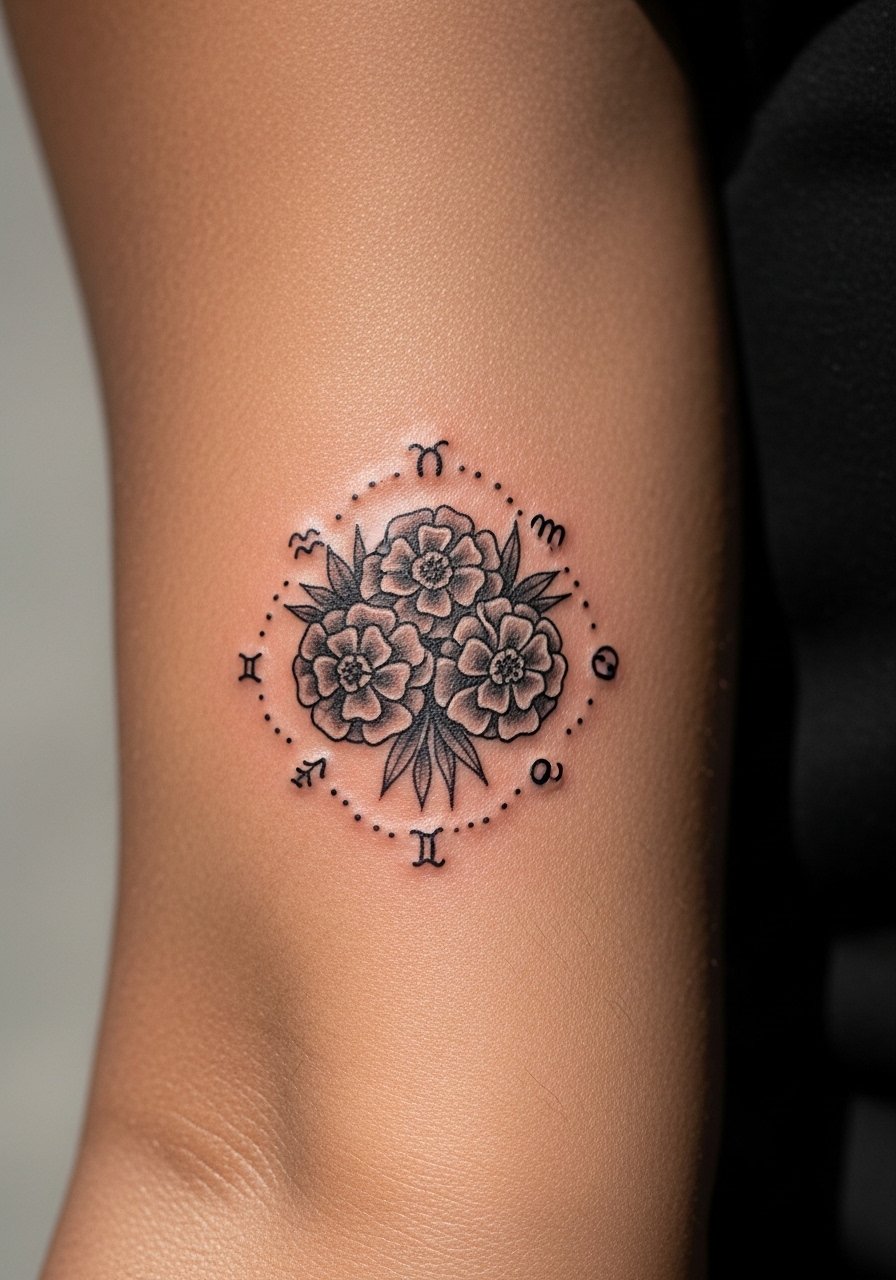
Combining birth flower blooms and zodiac dots creates a compact, story-rich piece that stays small. The inner forearm is forgiving and quick to heal. Tell your artist the exact spacing you want for the dots, and whether they should be raised slightly larger to remain visible on darker skin. Avoid asking for micro script next to the dots unless you plan for larger scale. For session wear, bring a sage green linen shirt you can roll up to expose the arm cleanly.
16. Tiny micro marigold for festival season behind the ear area

Micro marigolds are a staple for festival-goers because they heal quickly and are low commitment. Behind-ear and hairline spots need careful framing in the stencil phase so the bloom sits naturally under hair. This placement is sensitive so pain is mild to moderate. Note that behind-the-ear pieces should be placed on the skin below the hairline and not on the ear itself. For appointments, have your hair clipped back so artist visibility is clear.
17. Ornamental marigold chest cluster near the collarbone
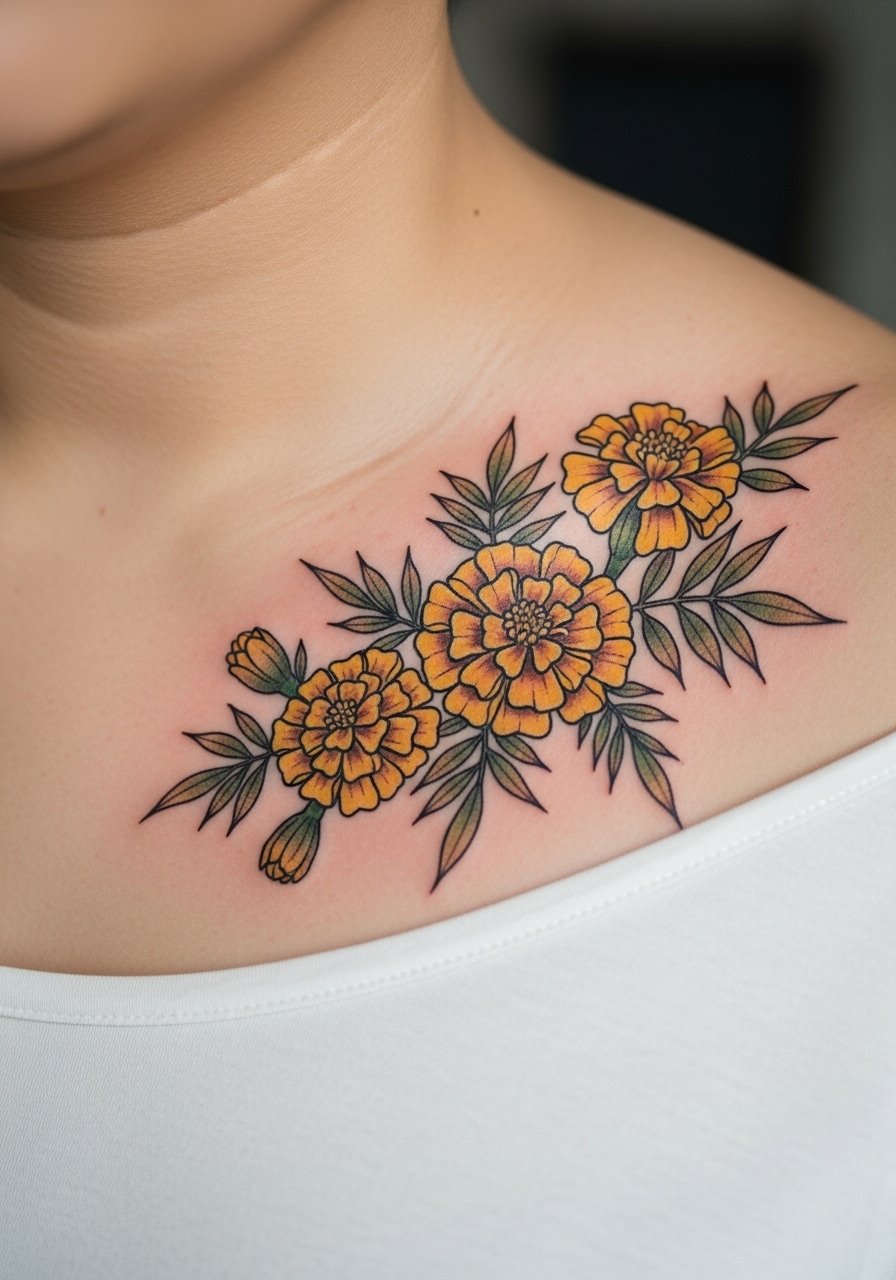
Upper chest work sits near the collarbone and shows in low necklines. When you want a piece that ages with a bit of drama, choose slightly thicker outlines and avoid too many tiny petal veins. There is a debate in aftercare circles about Saniderm versus dry healing. One camp praises second-skin products for protecting fine line work and keeping edges crisp. The other camp says dry healing lowers trapped-moisture risks and protects color. Ask the artist about their experience and follow their recommended protocol. For evening looks, a strapless or off-shoulder top frames the cluster perfectly.
18. Whip-shaded marigold wrist band with repeating blooms
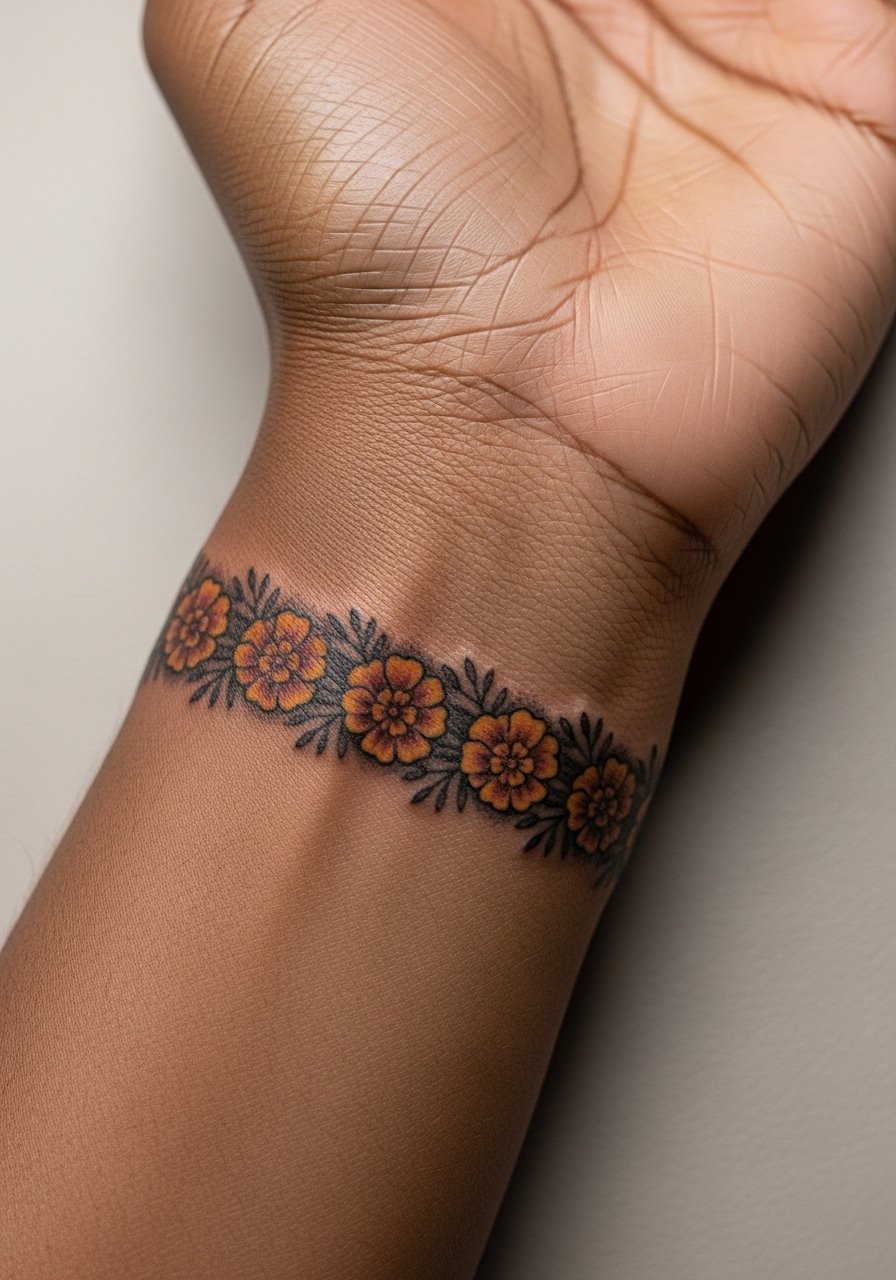
A wrist band composed of repeating marigolds gives a bracelet effect without jewelry. Whip shading yields soft petal transitions and reduces the need for vivid color that fades quickly. The worst mistake is making the band too narrow with heavy detail, which blurs under constant motion. Expect a low to moderate pain level and a single session for a thin band. Pair this design with stackable bracelets or a thin watch to echo the band aesthetic.
19. Marigold with subtle skull petal accents for a memorial Día de los Muertos nod on the upper arm
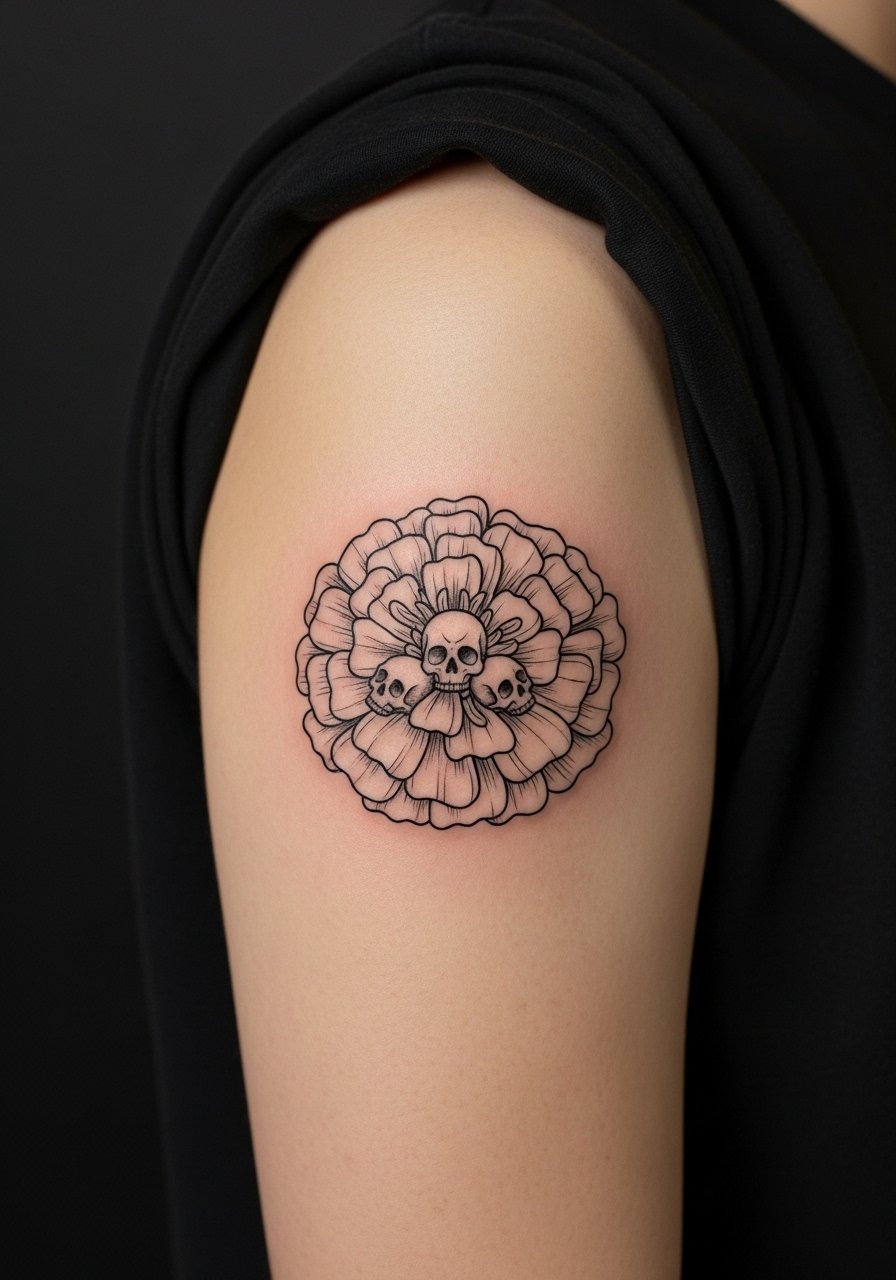
Using marigolds as remembrance flowers can be beautiful when handled with respect. For clients who want a nod to Día de los Muertos without direct cultural replication, ask for subtle skull-inspired petal shapes instead of literal skull imagery. The upper arm takes detail well and is easy to cover if needed. The right balance avoids appropriation while honoring the visual language. During the consultation, discuss symbolism preferences and keep the design's elements tasteful.
20. Marigold cluster that avoids stretch zones for those planning weight changes
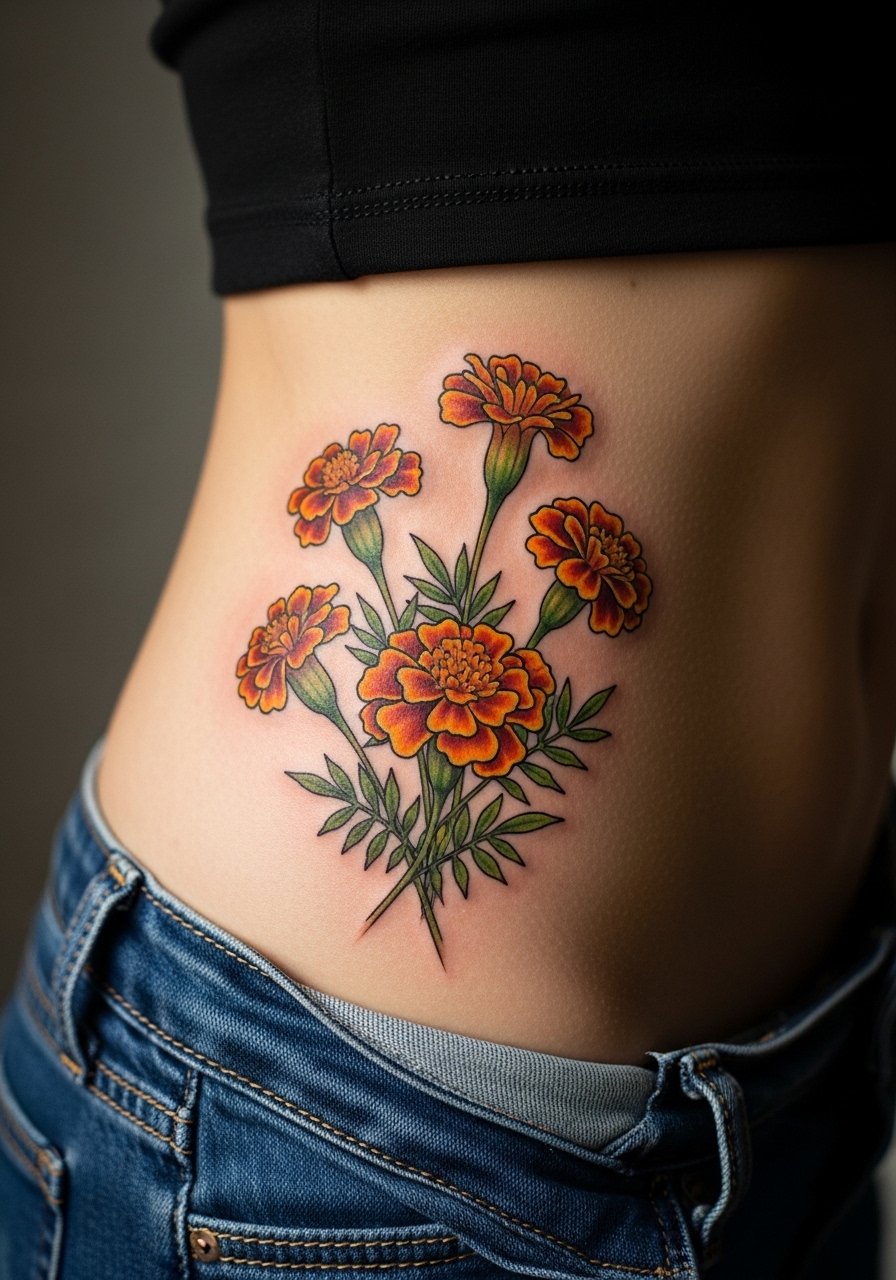
If you anticipate body changes, placement and scale matter more than style. I advise choosing outer hips or collarbones where the skin flexes less than the abdomen or full inner thigh. A common pitfall is centering petal detail where weight gain is likely, which distorts proportions later. When consulting, ask your artist to map out the bloom across areas that keep petal symmetry under movement. Session wear suggestions include high-waisted bottoms that you can adjust so the artist has clean access.
21. Constellation marigold sleeve starter piece for festival-to-everyday wear
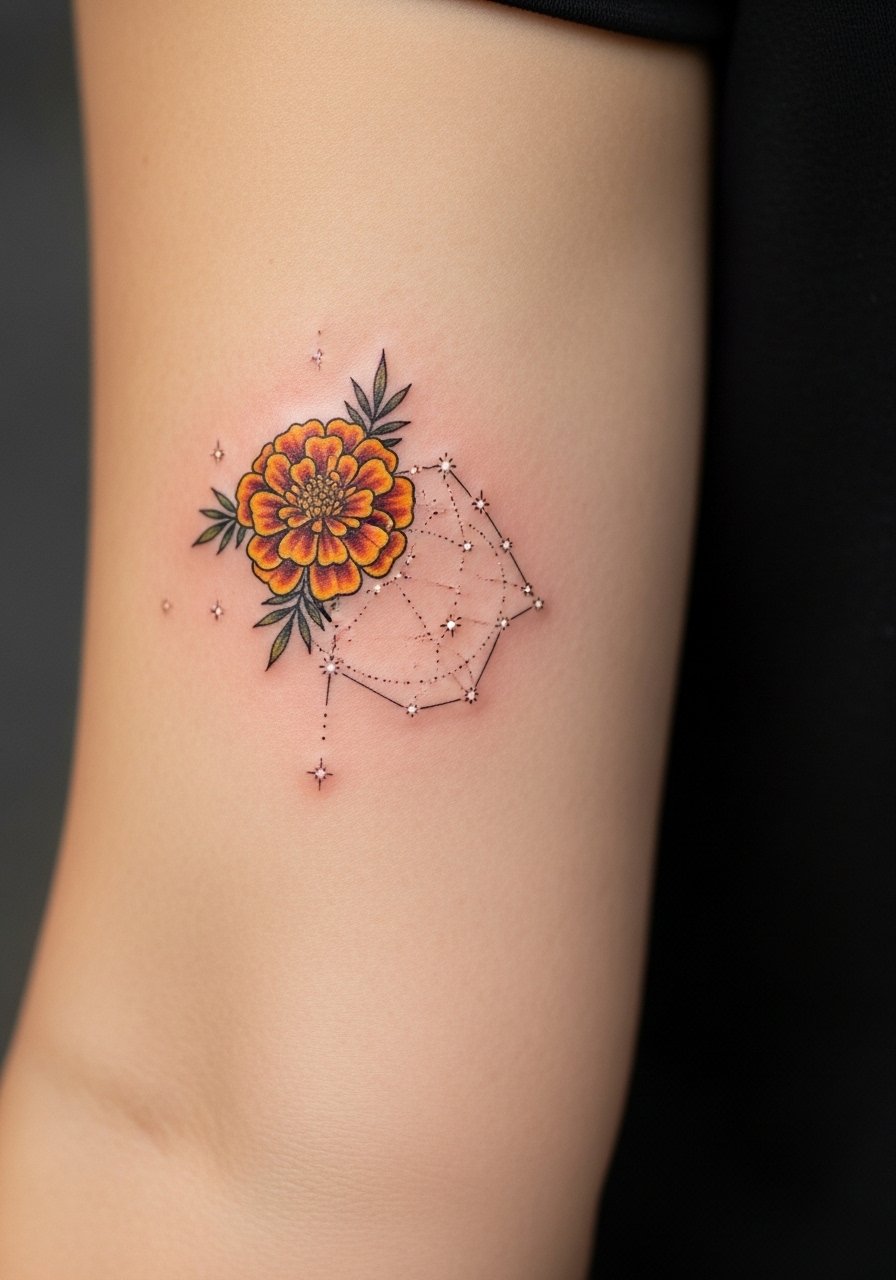
A modular sleeve approach lets you add marigolds and constellations over time. Start with medium-sized anchor blooms that have room for future additions and leave negative space between petals for future dot work. That planning prevents overcrowding and reduces the risk of merging lines after several sessions. The outer forearm is a forgiving place to begin and the pain is manageable. For inspiration hunting, use community boards and location filters on portfolio apps to find guest spots and artists who do incremental custom work.
Frequently Asked Questions
Q: Will fine line marigolds blur faster on wrists and hands than on thighs or collarbones?
A: In my experience, yes. Wrists and hands are high-friction and sun-exposed areas so ultra-fine linework tends to soften sooner than on thighs or collarbones. If you want fine detail on a wrist, ask for slightly bolder line weight and plan for touch-ups every two to four years.
Q: For a marigold watercolor on the shoulder, is Saniderm safe or should I dry heal?
A: Artists and clients split on this. One group likes Saniderm for protecting color and keeping edges crisp in the first week. The other group prefers dry healing to avoid trapped moisture, especially in humid climates. Ask your artist what they have tested with similar color work and follow their aftercare routine for the best result.
Q: How do I find healed examples of marigolds on medium to dark skin tones?
A: Look for healed-by-skin-tone examples through hashtag searches and portfolio filters on image apps, and check forums where people post updates. Search for "marigold healed on brown skin" and use location filters to find artists who show real healed portfolios rather than only fresh photos.
Q: Can a tiny marigold on the ribcage hold up if I want micro-realism?
A: The ribcage can support micro-realism but it is a sensitive area that moves and stretches. If you choose a tiny photoreal piece there, request slightly larger petal edges and ask about touch-up windows to maintain texture. Expect higher discomfort during the session than for arm placements.
Q: What should I wear to a collarbone or chest marigold appointment?
A: Wear a wide-neck shirt or a strapless bra and bring a loose button-front shirt you can pull aside. For post-session show-off, an off shoulder blouse frames collarbone pieces without rubbing them.
Q: If my first appointment gets canceled, how should I protect my deposit plans?
A: Get a clear deposit and cancellation policy in writing and ask about guest-spot calendars. Booking a backup consult with another specialist through booking apps reduces the risk of missing your healing season.
Q: How often do marigold tattoos with yellow tones need touch-ups compared with blackwork?
A: Yellow and orange pigments typically fade earlier under sun exposure, so plan for color refreshes sooner than blackwork. Blackwork mandalas and bold outlines often age into legible shapes longer and need fewer midterm touch-ups.