
Fine line memorial tattoos walk a narrow line between delicate tribute and fast-fading disappointment. Fine detail can read like a whispered memory or blur into an indistinct smudge if placement, spacing, and skin type are ignored. Artists split on whether ribs or hands can hold ultra-thin linework long term, with one camp warning about blur and the other saying precise depth and spacing solve the issue. The ideas below lean toward designs and placements that keep a cat's memory legible for years.
1. Delicate Cat Silhouette on Inner Forearm
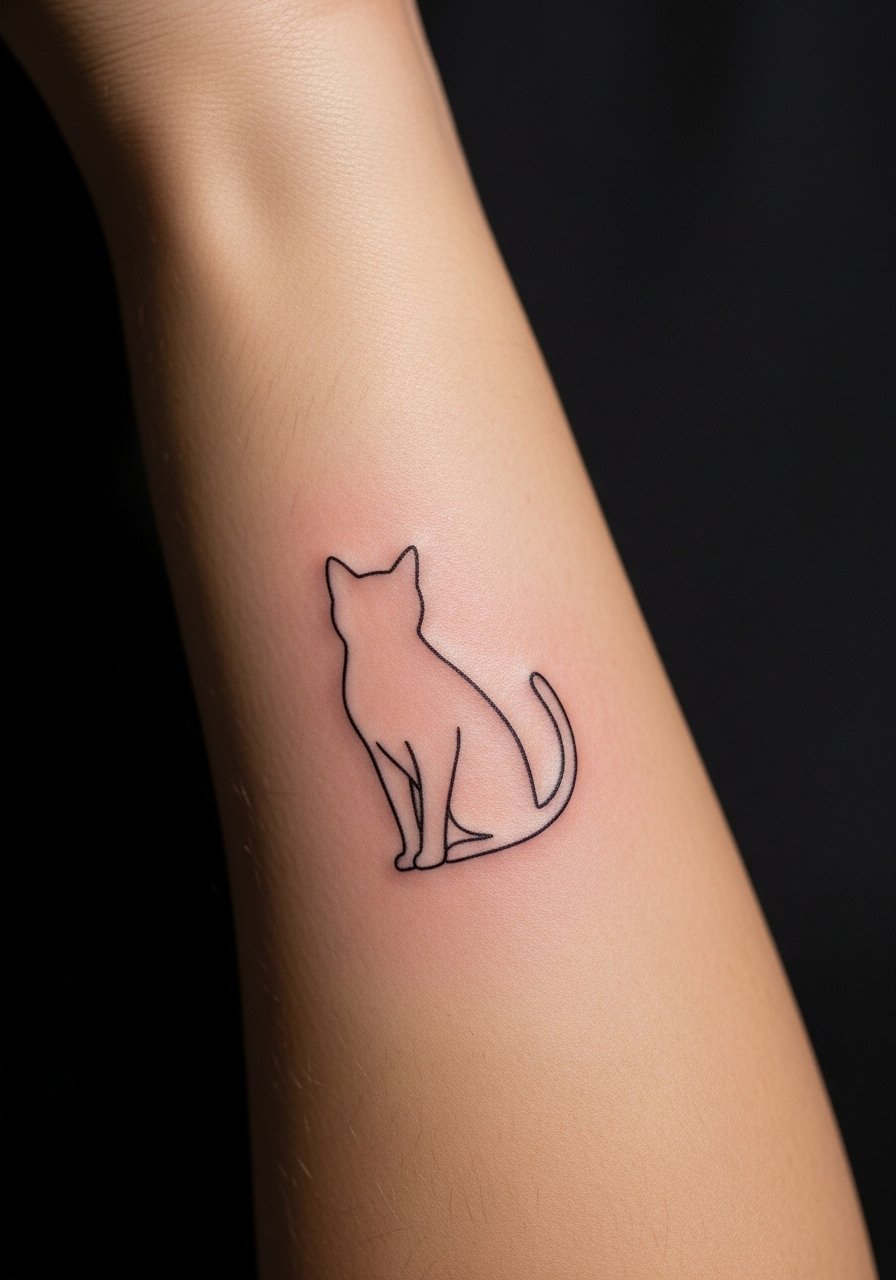
I recommend this when you want a clear, readable memorial that still feels private. Ask your artist for slightly heavier linework than the thinnest option so the silhouette keeps definition at year two and beyond. The inner forearm is a low-blowout zone and heals predictably, but plan for a touch-up around year three if you wear heavy sun exposure on that arm. During the consult, show a scale reference so the cat does not get shrunk into a cluster of lines. For the session, wear a loose button-down shirt that you can roll up without rubbing the fresh ink.
2. Micro-Realism Portrait on Upper Arm
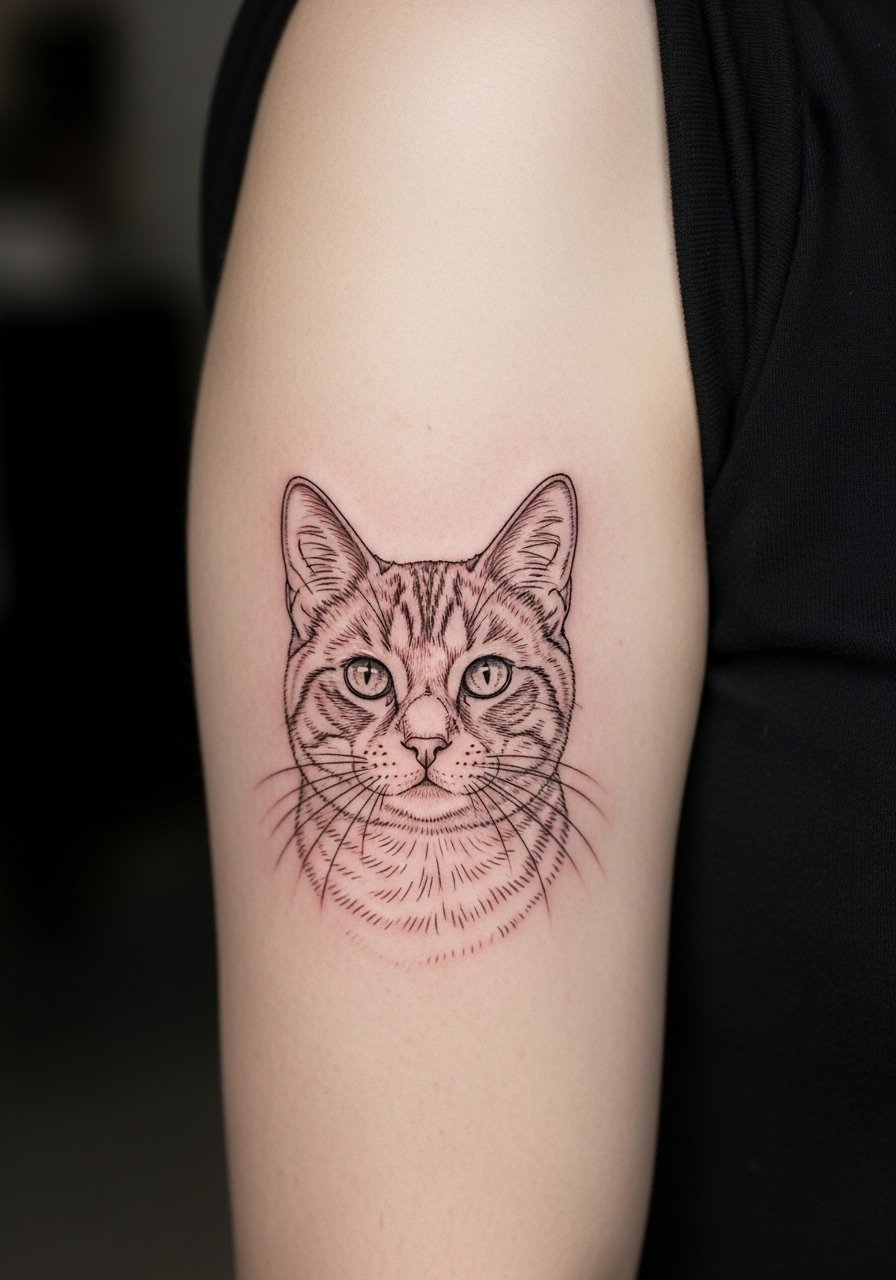
Choose micro-realism when you want a recognizably individual face rather than a symbolic mark. Make sure your reference photo has sharp contrast and clear eyes so the artist can translate features without overcrowding the linework. The upper arm tolerates saturation well and has lower blowout risk, but this style ages differently if tiny strokes are placed too close together. Expect a longer session and one realistic touch-up within two years to refresh fine whiskers and pupils. For the appointment, a sleeveless top that exposes the bicep makes access painless and keeps fabric from brushing the fresh piece.
3. Tiny Paw Print Behind the Ear, Neck Framed
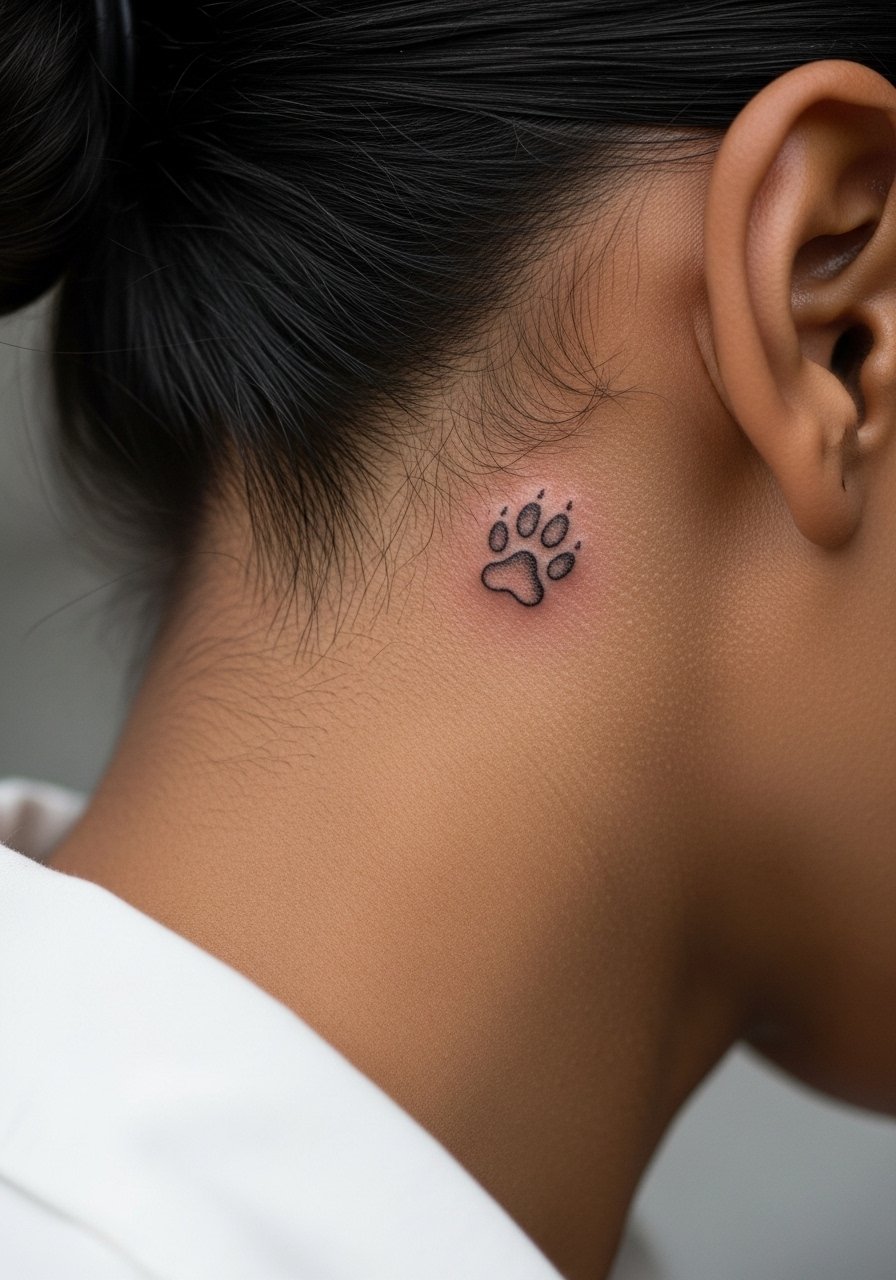
A paw print here reads intimate and private. The area requires careful stencil placement because hairline movement changes how a tiny mark sits. Artists disagree about neck linework, with one camp warning about rapid blurring and the other saying correct needle depth and spacing keep detail intact. If you choose this spot, go slightly larger than you think. The session feels quick but the skin is thin so expect sharper sensation. Wear a shirt that lets hair down and be ready to tuck it behind the ear for the session. Hand a reference that shows the paw at the exact size you want.
4. Minimal Script with Cat Name on Ribcage, Sports Bra Framed
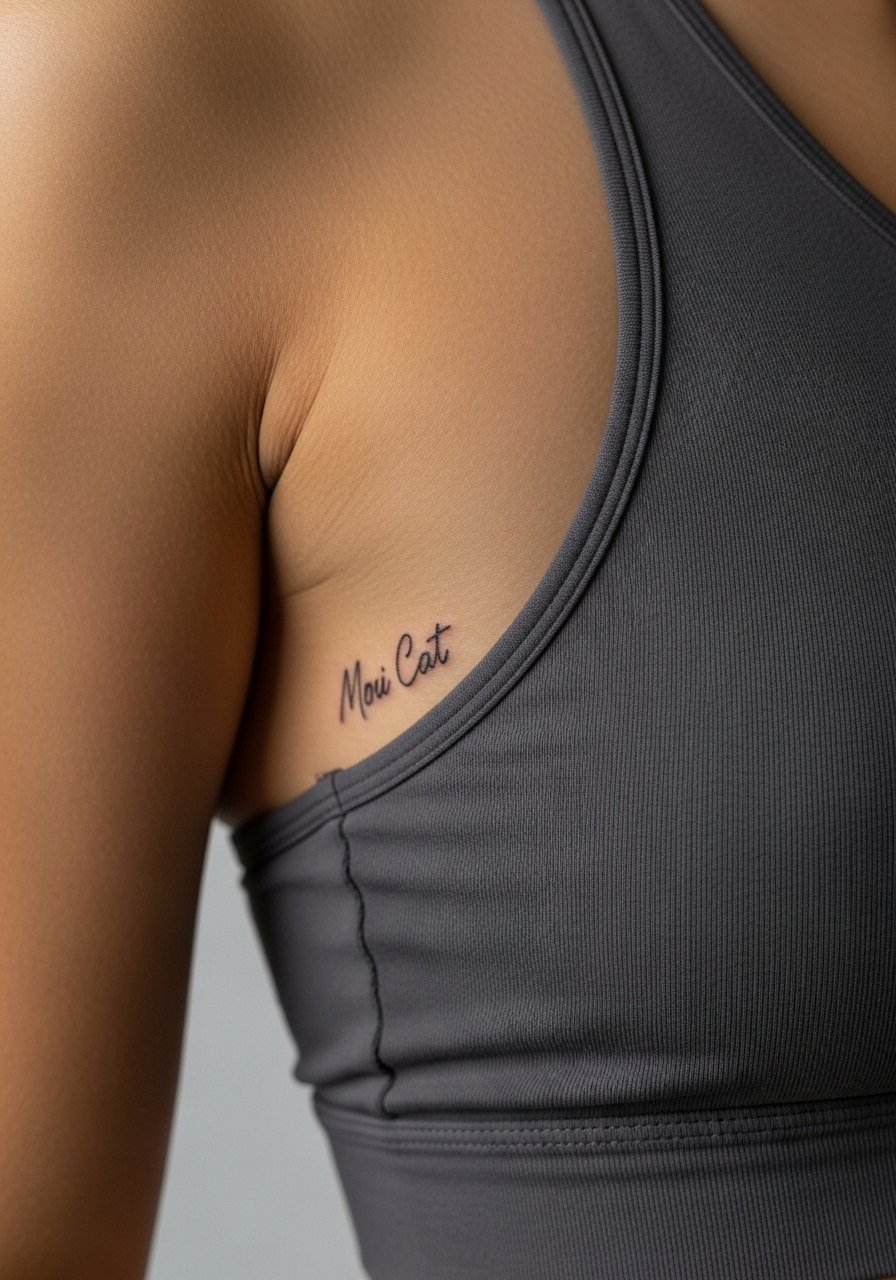
Fine script on the ribs can be gorgeous but it is a controversial pairing with fine line work. One group of artists says the skin stretch makes tiny script blur, and another says proper spacing and a slightly heavier stroke will hold. My recommendation is to add modest size and spacing and to confirm with the artist about touch-up likelihood. Rib sessions are high on the pain scale and often need two shorter passes rather than one marathon. For the studio visit, wear a fitted sports bra you can pull slightly to expose only the area and stay comfortable during breaks.
5. Single-Line Heart with Cat Silhouette on Ankle
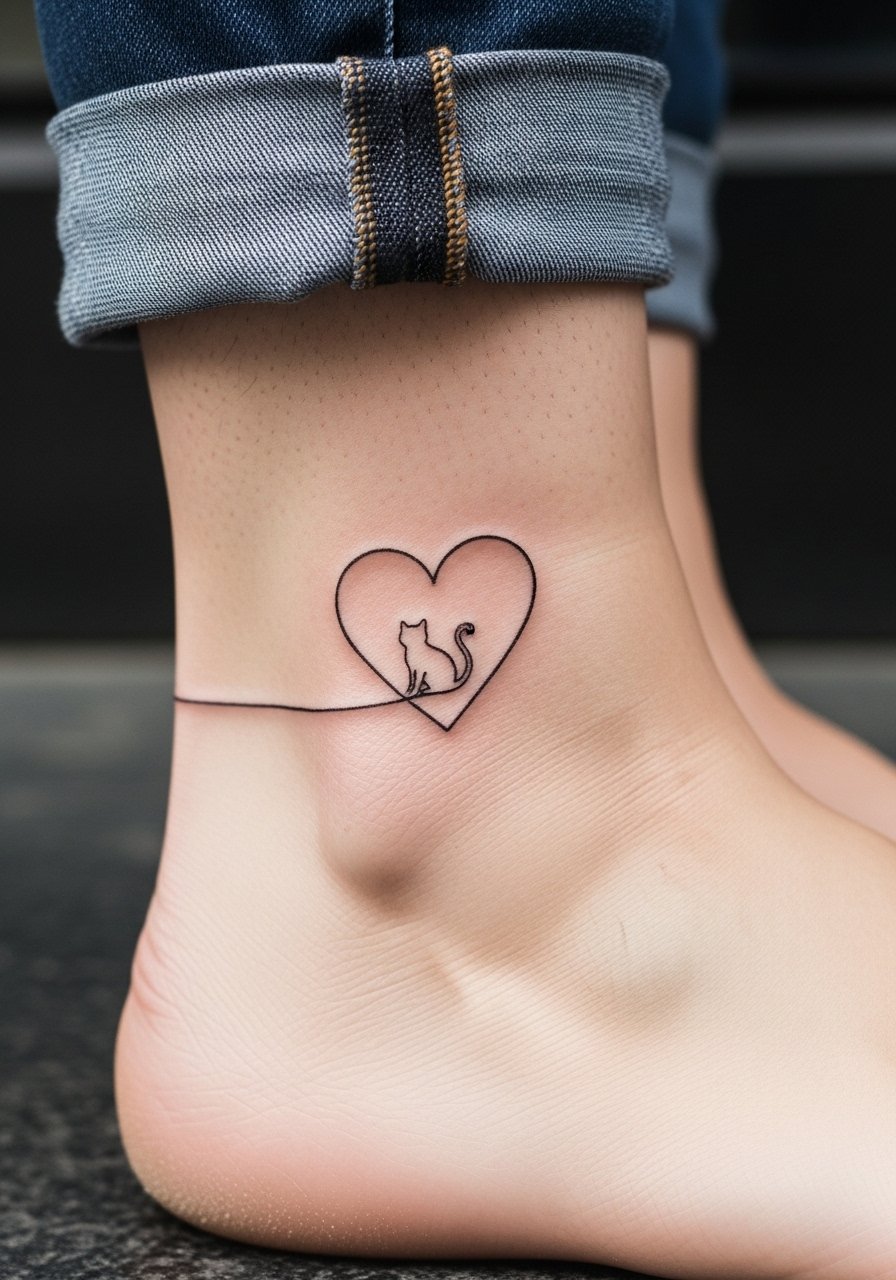
Ankle placements are charming but face friction from shoes and socks during healing. Ask your artist to avoid ultra-thin parallel lines close together, which can merge with daily rubbing. Expect a moderately sensitive session and plan for a brief touch-up at the six- to twelve-month mark if you wear snug footwear. During the appointment, roll up pants or wear sandals. For show-off styling later, stacked anklets work well to frame the piece without covering the linework.
6. Constellation of Tiny Cats Across the Shoulder Blade
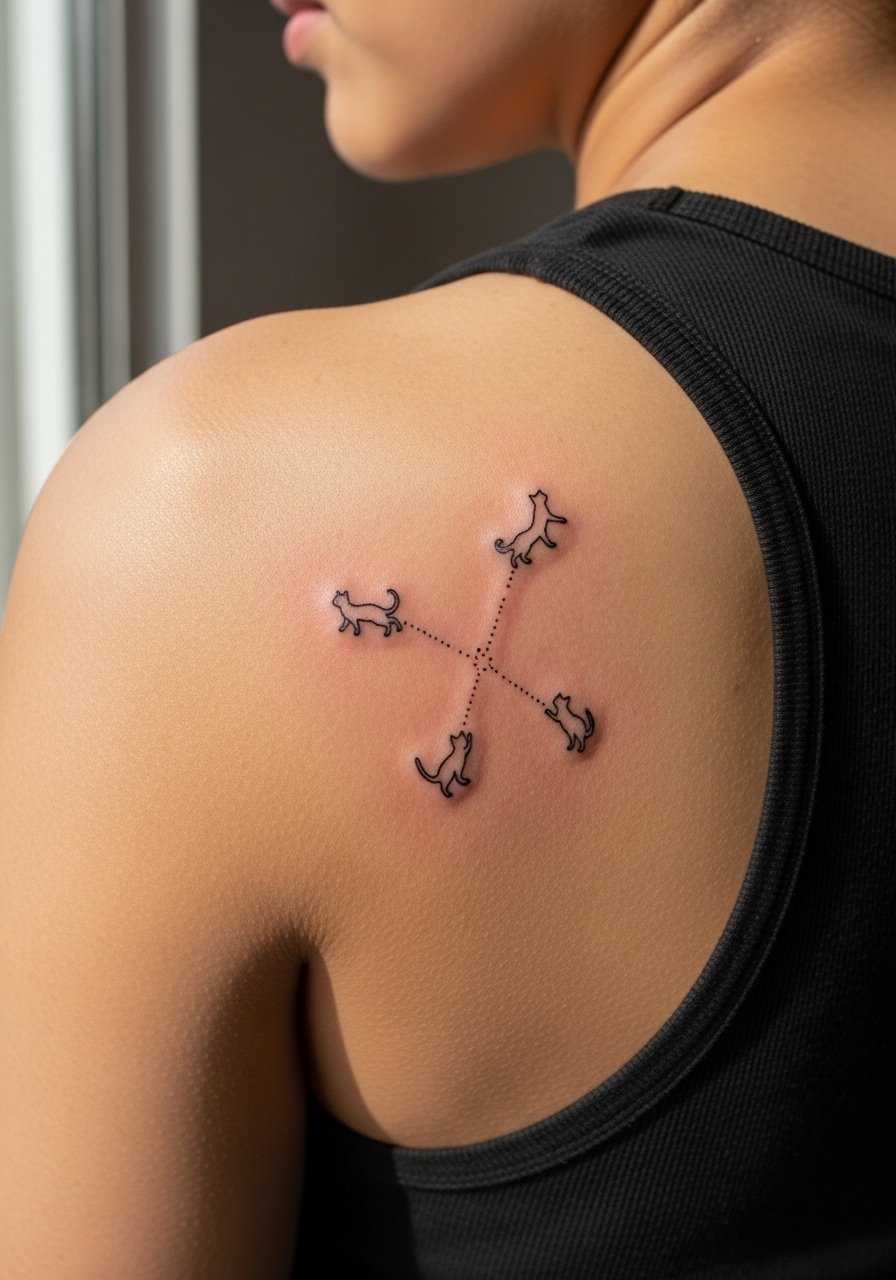
This cluster spreads detail across a low-movement area so each tiny cat has breathing room. Ask for slightly increased spacing between elements so the dots and micro-lines do not fuse as they heal. Shoulder blade sessions feel like a steady buzz but are generally lower pain than ribs. Expect a longer session split into two passes for optimal saturation and touch-up timing around year two. Pair it with open-back tops that show the grouping without crowding the skin with prints. Try an open-back midi dress to frame the piece.
Studio Day Picks
The inner forearm, shoulder blade, and ankle pieces above each have different access and healing needs, so a few targeted items smooth the session and the first week.
- Stencil transfer paper kit. Lets you preview exact scale on the skin before the needle touches the area, which matters for tiny portraits and scripts.
- Topical numbing cream. Applied per instructions before the appointment it can lessen sharp rib and inner bicep sensitivity without affecting the artist's work.
- Thin protective film roll. Ideal for ankle and finger placements where friction from clothing and shoes risks scabbing in the first 48 hours.
- Fragrance-free gentle body wash. Cleans healing areas without stripping moisture from delicate fine line channels.
- Aquaphor healing ointment. A thin layer in the initial days helps retain moisture in narrow needle tracks for fine line pieces.
7. Linear Portrait Along the Collarbone, Wide-Neck Framed
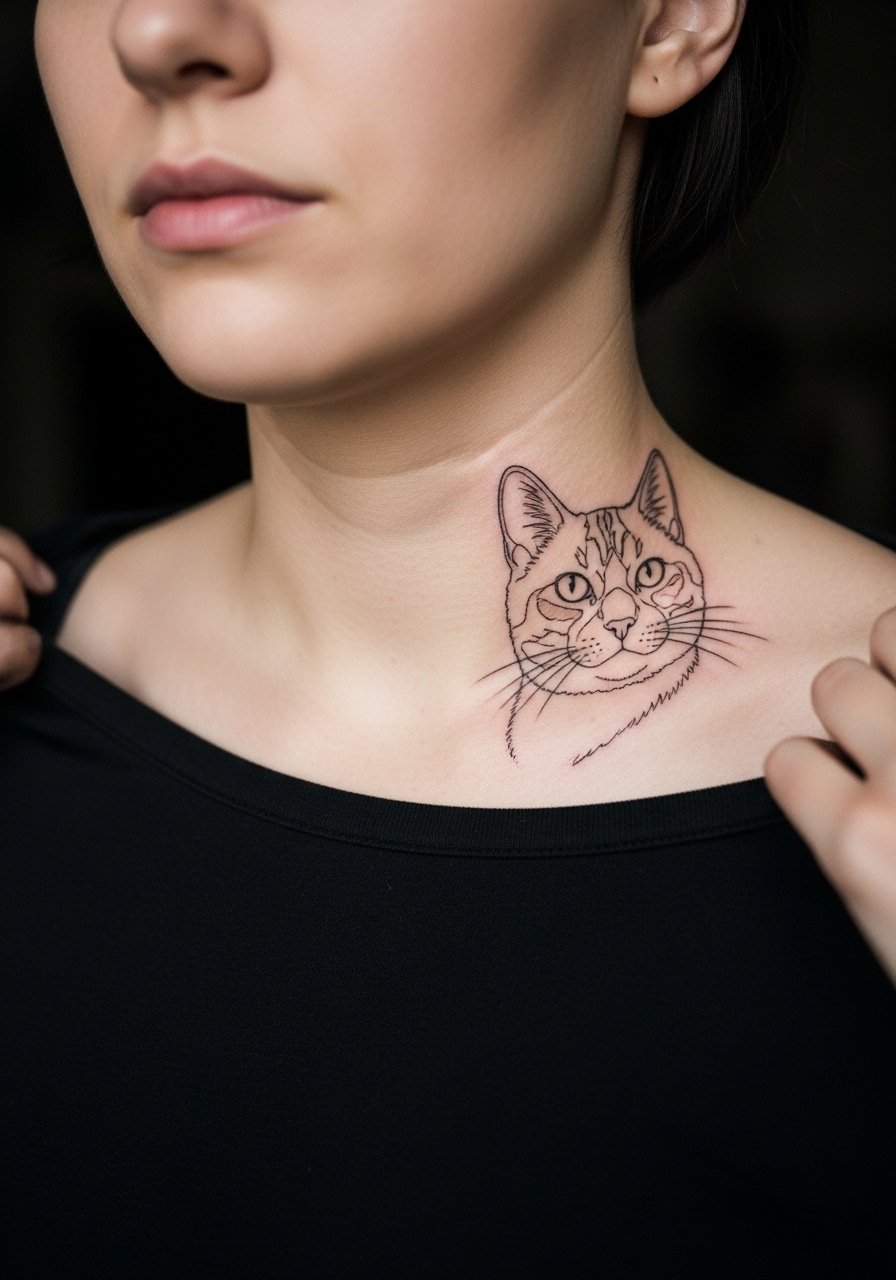
Collarbone linework sits where clothes and straps can brush during healing. For longevity, request slightly increased line weight for key portrait contours and ask the artist to map the piece to collarbone curvature so eyes and nose do not distort with movement. The area is sensitive; expect moderate pain and a short session. For showing the piece, a thin chain pendant necklace can hover above without covering the ink. Bring references with collarbone placement to the consult so the stencil sits where you expect.
8. Tiny Script Date on the Side of a Finger
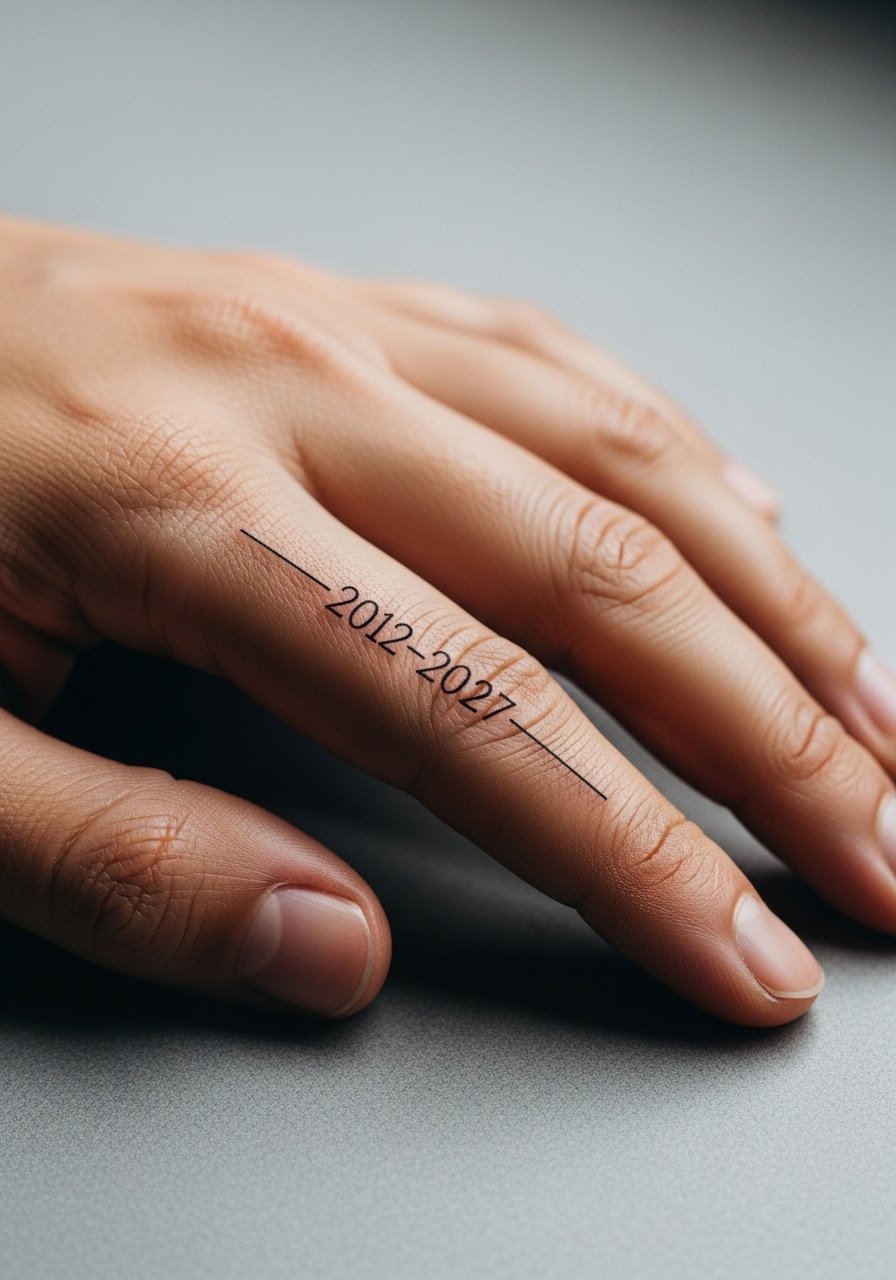
Finger side placements are sentimental but prone to fast fading and distortion. Artists are split here too, with one camp advising against super-fine script on fingers and another recommending bolder single-stroke letters that last longer. If you go ahead, enlarge the numerals slightly from your initial idea and prepare for a touch-up at year one or two. The session is quick and sharp. Avoid wearing rings that press against the heal zone for the first week and keep in mind workplace policies about visible hand ink.
9. Stipple Shaded Cat Silhouette on Inner Bicep, Tank Top Framed
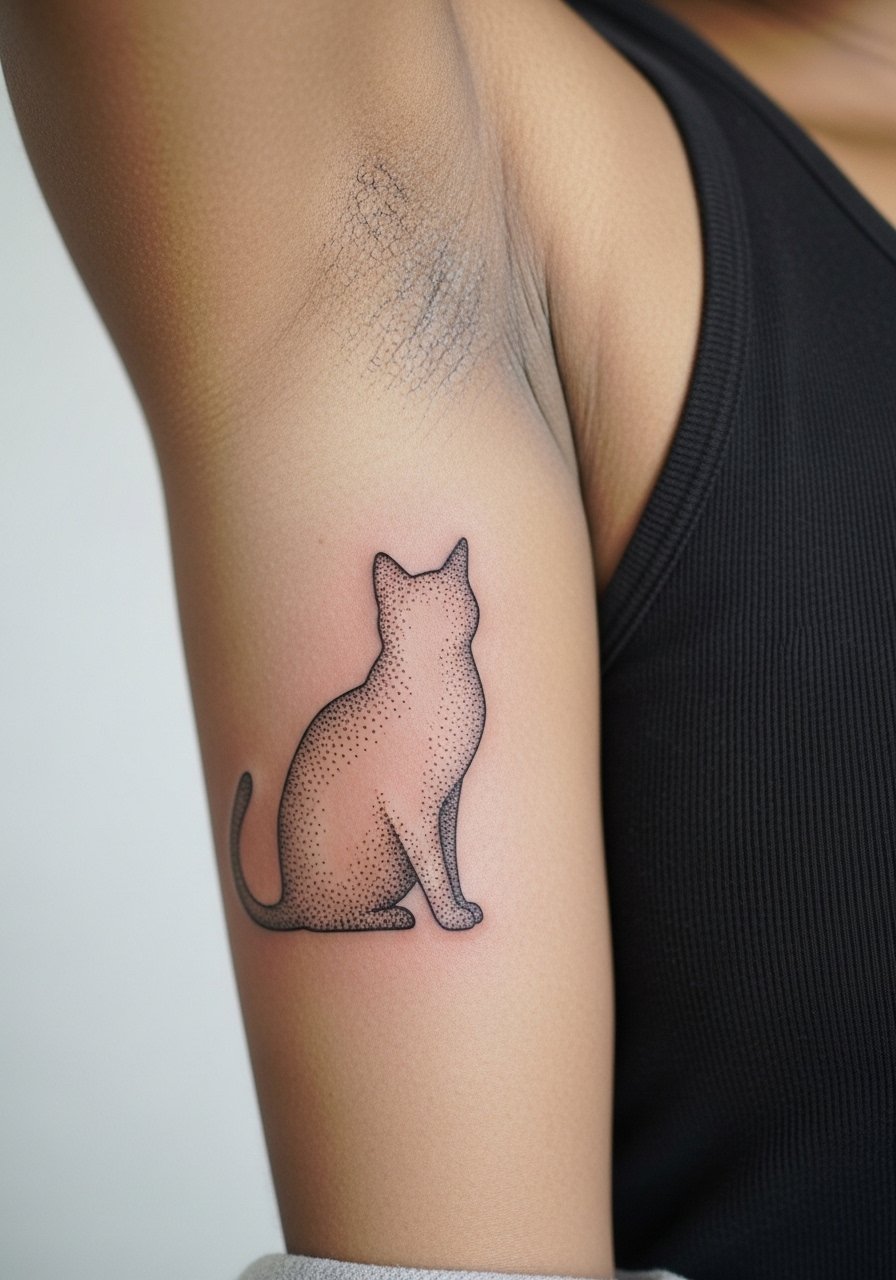
Inner bicep work lets you combine delicate linework with stipple shading because the skin sits relatively still. The area is more sensitive than the outer arm so expect sharper sensation and shorter bursts during the session. Ask for stippling rather than dense shading to preserve the fine contours of whiskers and ear lines over time. Blowout risk is moderate if the artist goes too deep. For the session wear a racerback tank so the artist can rotate your arm without fabric rubbing the tattoo.
10. Tiny Whisker Strokes Behind the Knee, Shorts-Framed
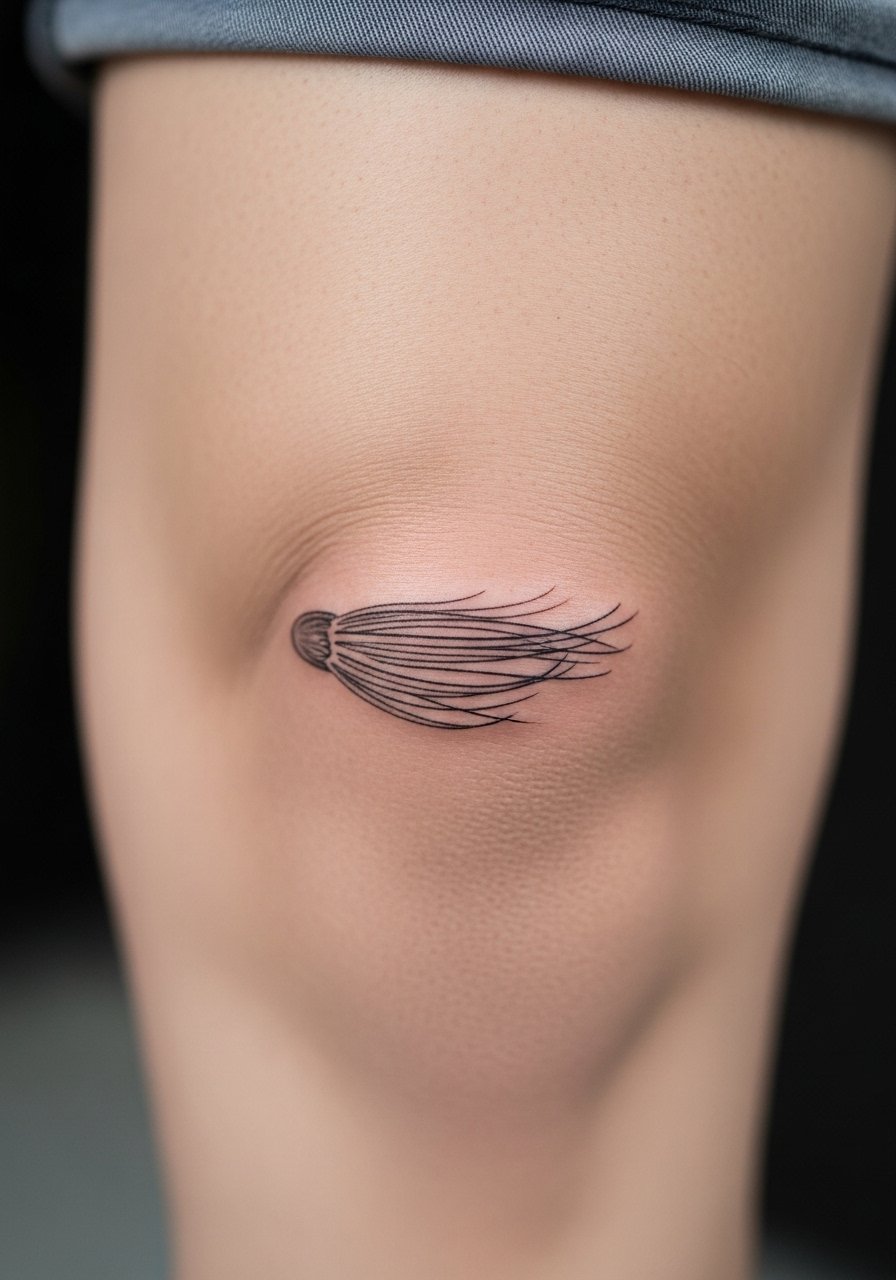
Placement behind the knee moves with every step making ultra-fine strokes prone to early softening. If you want this spot, ask the artist to space whisker strokes and use slightly heavier pullouts so the forms stay readable. Sessions are fiddly because the bend of the joint changes stencil placement. For comfort, wear loose shorts so the artist can access the area without tension. Expect a possible touch-up once the joint has settled into its healed texture.
11. Geometric Cat Outline on the Calf
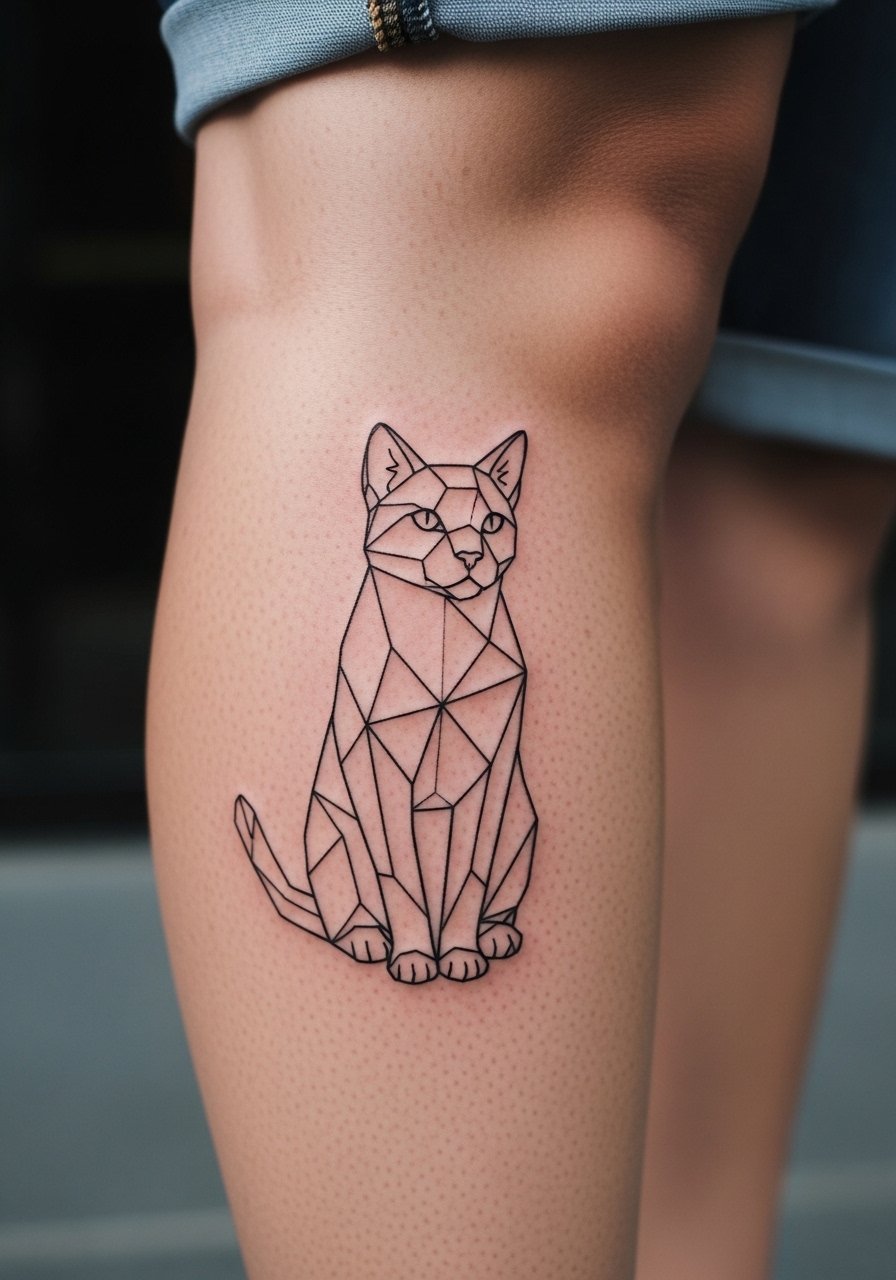
The calf is forgiving for linework because it sees less sun and friction. Geometric fragments that include empty space age better than dense nets of lines. Tell your artist to keep key angles crisp and avoid tiny parallel lines that run the risk of merging over years. Session feels like a firm buzz over a larger area and usually spreads into a single appointment. For showcasing, rolled shorts or midi skirts with a slit highlight the calf without covering the geometry.
12. Micro Dot-Work Cat on the Wrist with Bracelet Pairing
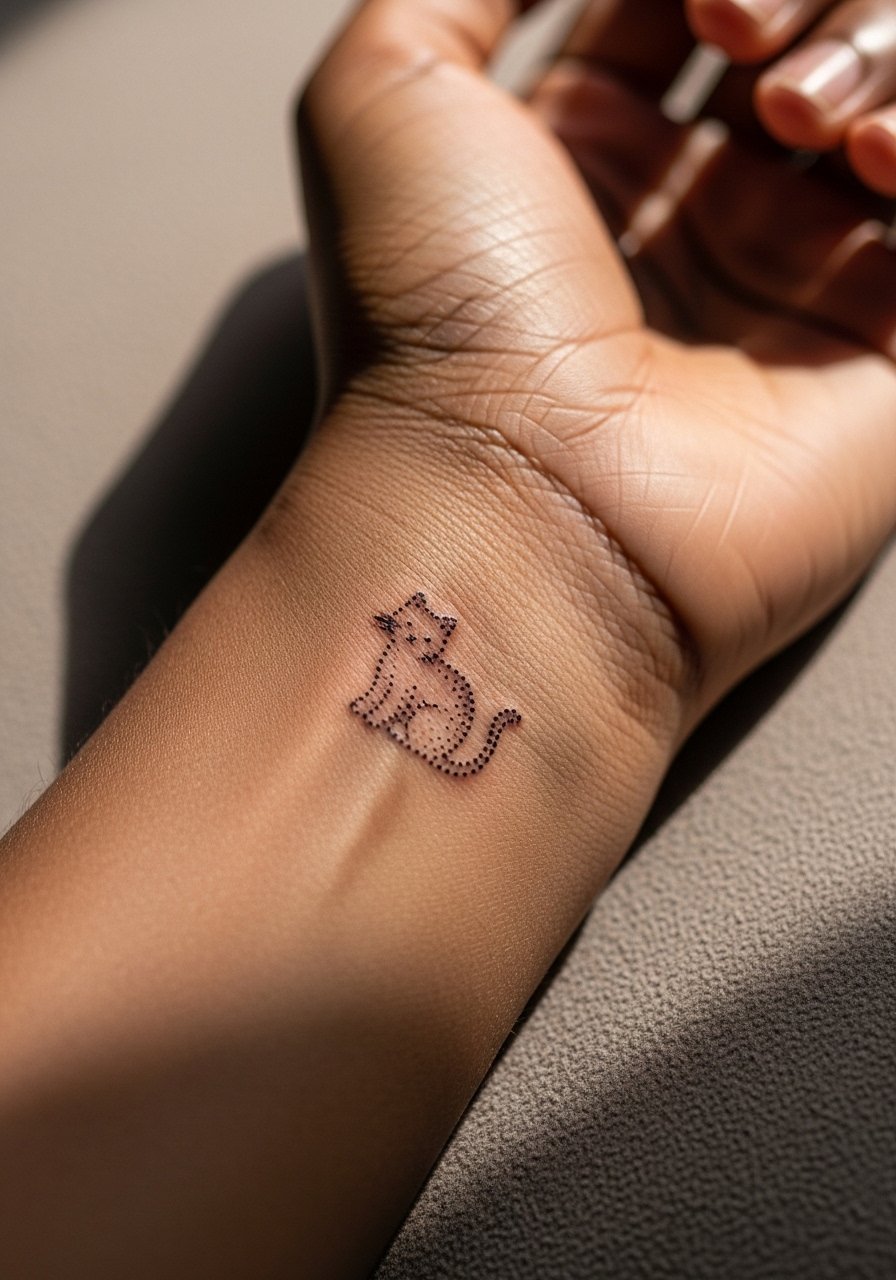
Wrist pieces are visible and need spacing so dot work reads after months and years. A common mistake is crowding dots too close, which compresses into a gray patch as the skin heals. Ask for spaced stippling and request a plan for a touch-up in the first year. The wrist heals fast but gets repeated washing so be cautious with friction in the first week. Pair the design with a minimalist watch or stack of thin bracelets that sit just above the piece to avoid rubbing the tattoo itself.
13. Small Line-Work Cat on the Back of the Neck, Collar Pulled Aside
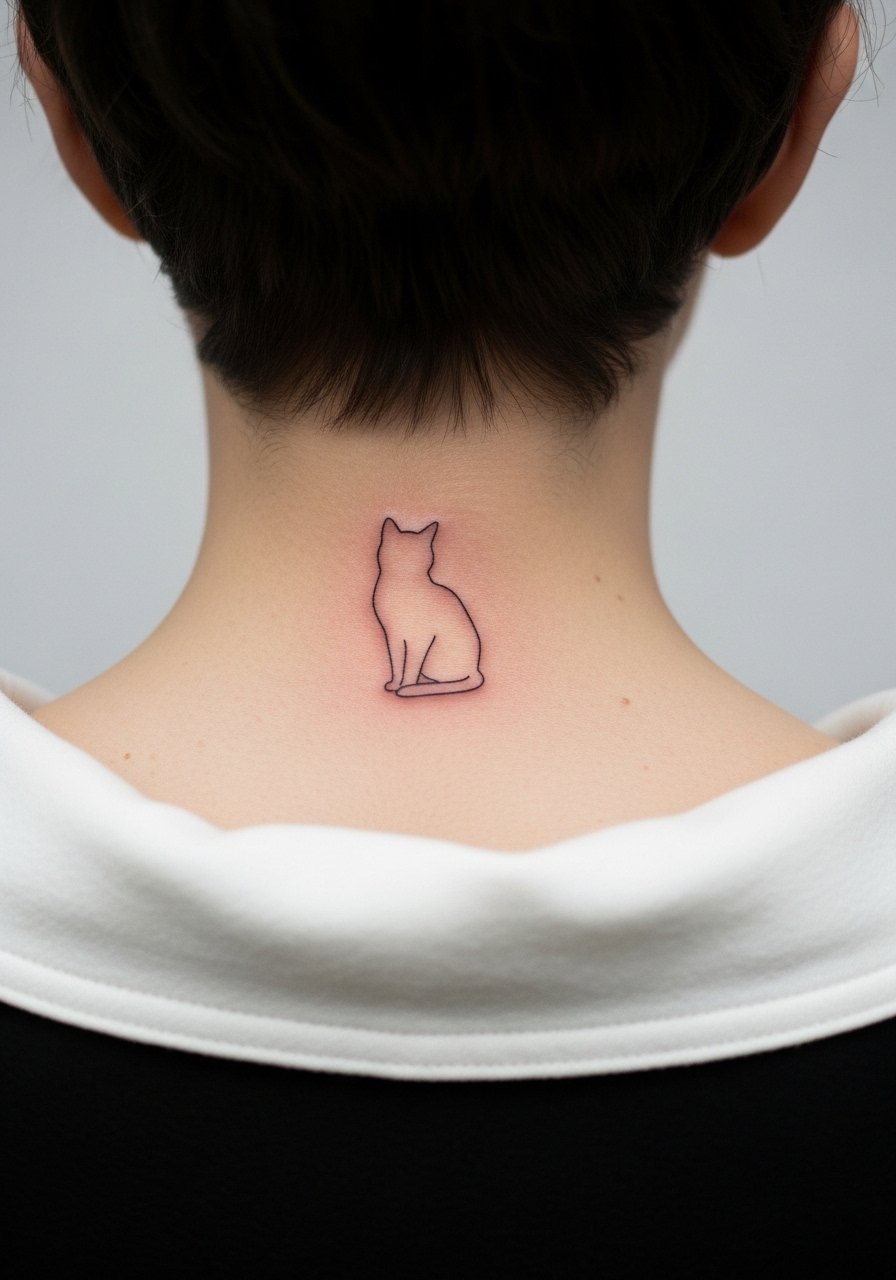
The back of the neck is a discrete spot that can be covered or revealed easily. Ink here is exposed to sun when hair is up so plan extra sunscreen in the healed months. It is a moderate pain area and some artists treat neck linework as a specialized skill because the skin moves with posture. Keep the piece simple and ask the artist how they handle stretch in the stencil. For the session wear a button-down or wide-neck top you can shift to expose only the spot.
14. Minimalist Tail Curve Along the Side Hip, High-Waisted Framed
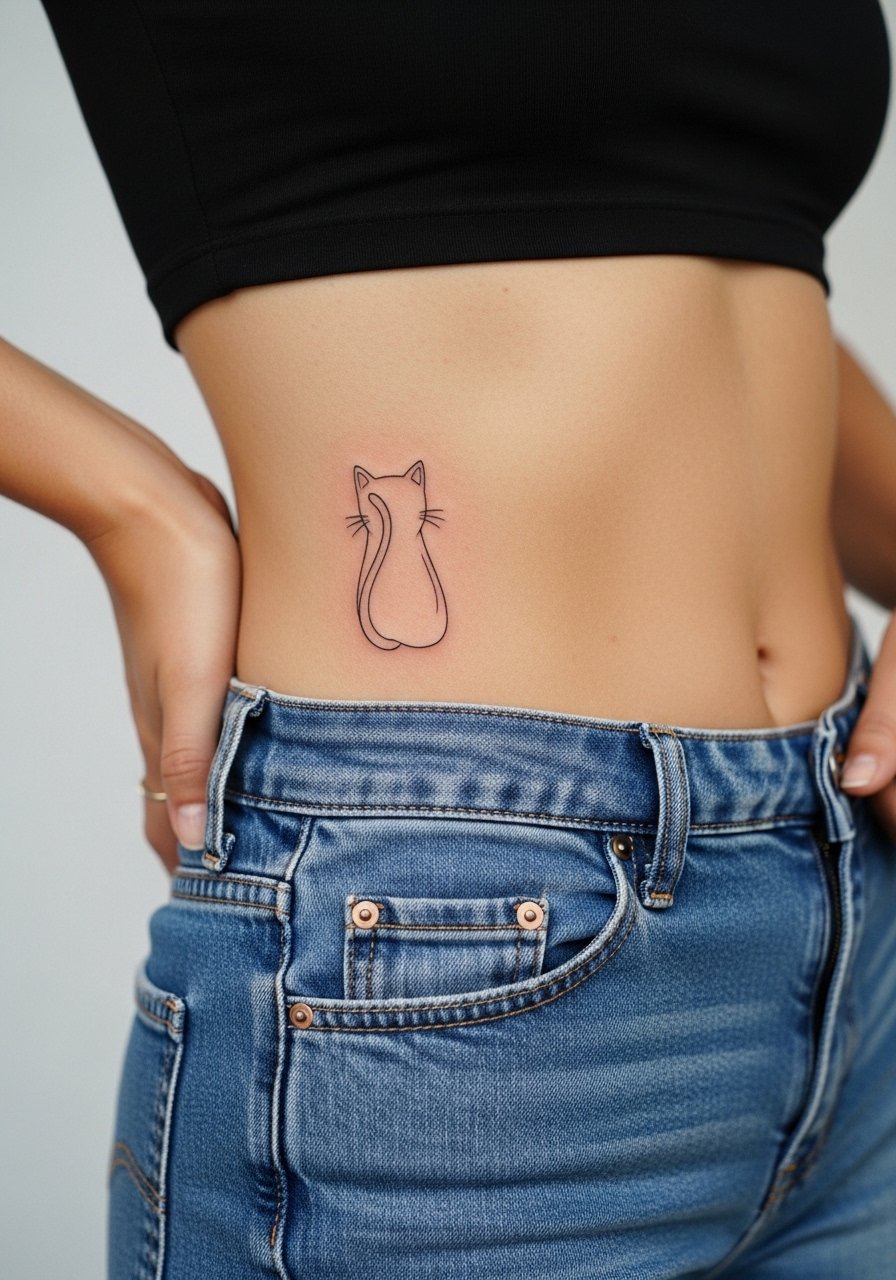
Hip tattoos can hide and be personal while still providing graceful curvature that flatters clothing lines. The skin at the hip moves with weight and sitting, so the biggest mistake is making the tail too thin and too close to the bikini line. Ask for a test stencil in the exact clothing you plan to wear so you see how it shows. Sessions are usually comfortable but can involve awkward positioning. For the appointment wear high-waisted bottoms that you can lower slightly without exposing the rest of the torso. For evenings out the tail pairs well with low-rise skirts or cropped tops that reveal the curve.
15. Fine Line Cat Paw Bracelet Around the Wrist
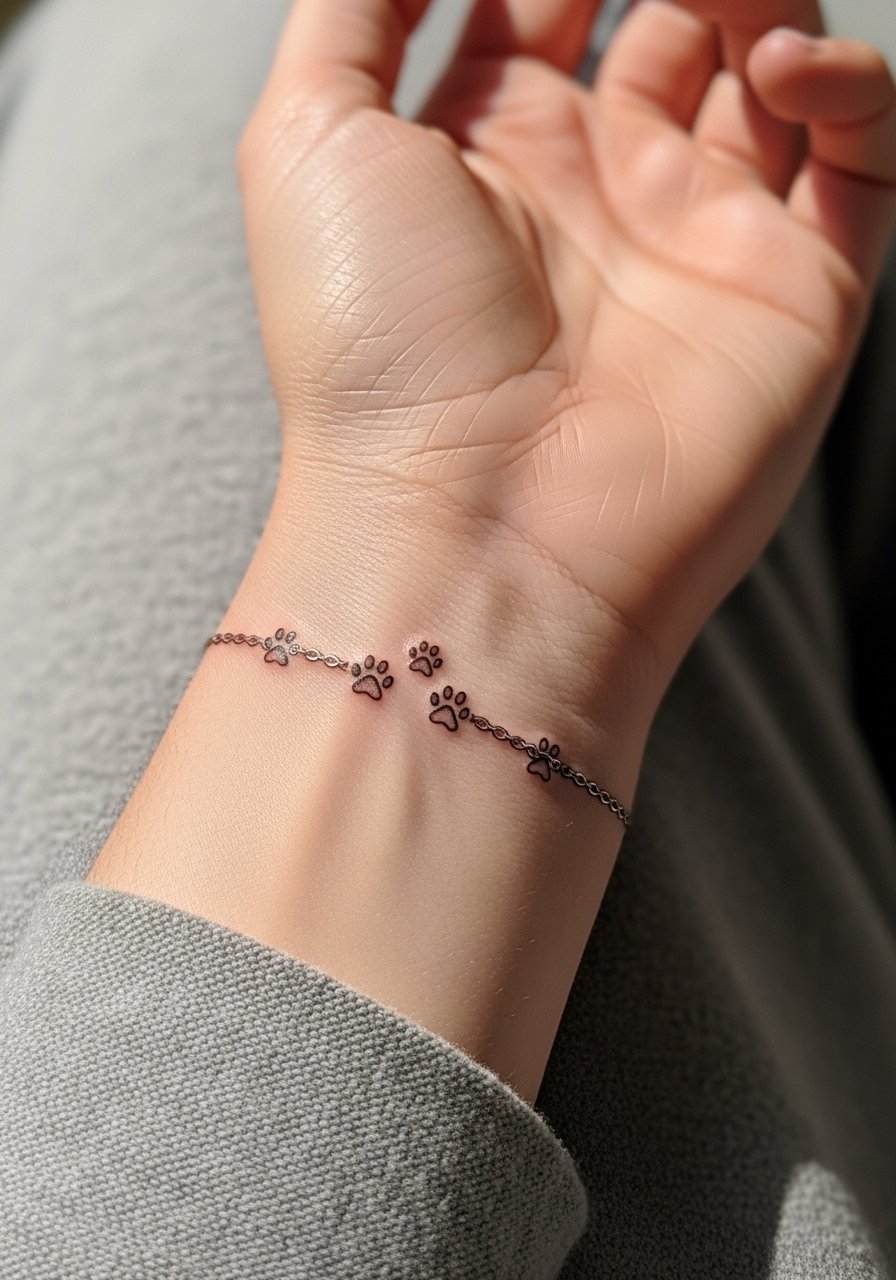
A wrist-wrap of tiny paws reads like jewelry and works well with thin negative space between marks. The common mistake is putting too many elements too close which leads to merging. Go for 3 to 5 prints with deliberate gaps so the bracelet looks intentional even as the ink softens. The session is quick and the pain is mild. Pair it with dainty bracelets or a band that sits just above the tattoo so you can show it off without covering it completely.
16. Fine Line Cat Orbiting a Small Floral on the Thigh, Shorts-Framed
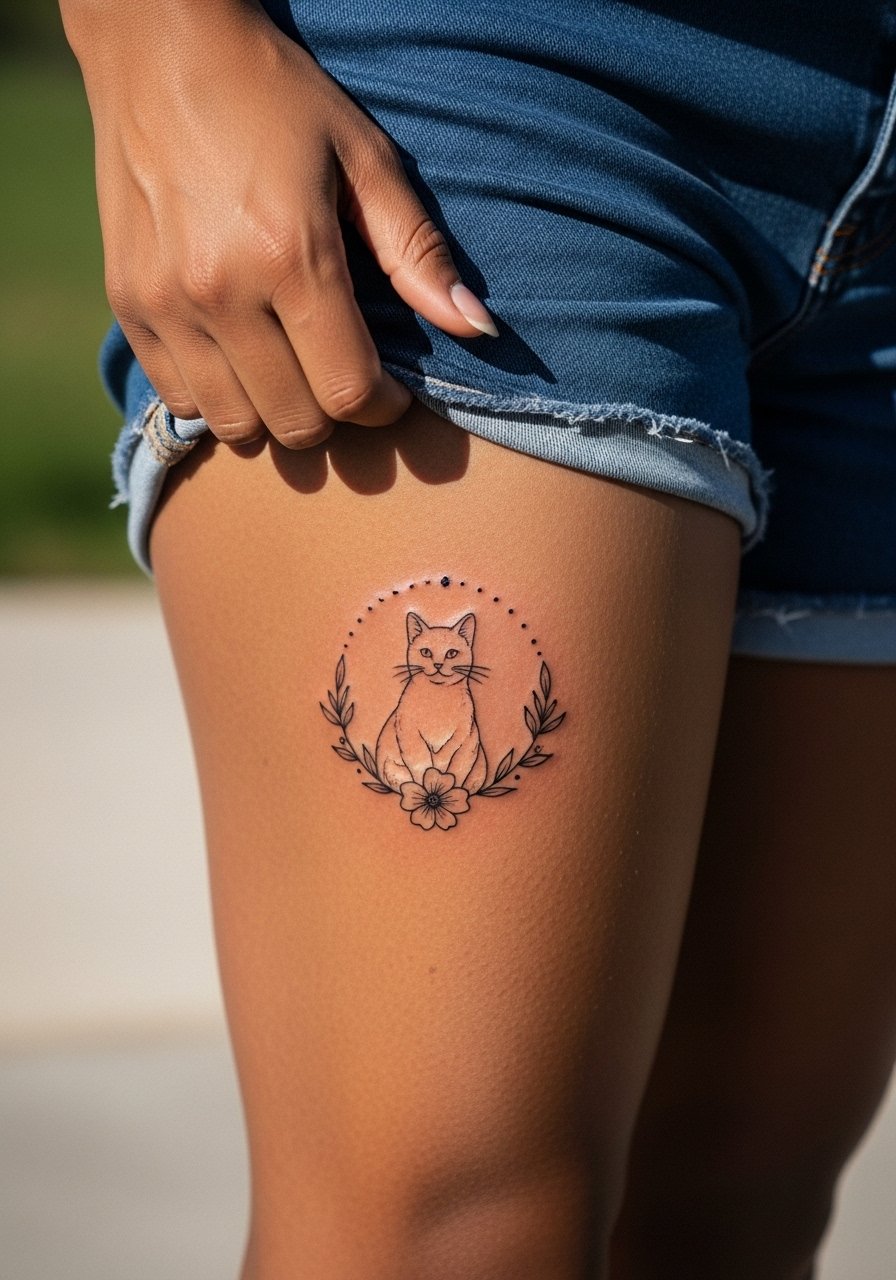
Thigh placements give room for slightly larger fine line compositions that age more gracefully than tiny clustered work. Ask your artist for open negative space between the cat and floral so the lines do not merge as the skin settles. The thigh is lower on the pain scale and sessions can be longer without excessive discomfort. Wear loose shorts for the appointment so the artist can access the area easily. For styling, a wrap skirt or high-slit dress frames the piece when you want to reveal it.
17. Micro Script "Always" with Tiny Cat Accent on Sternum, Sports Bra Framed
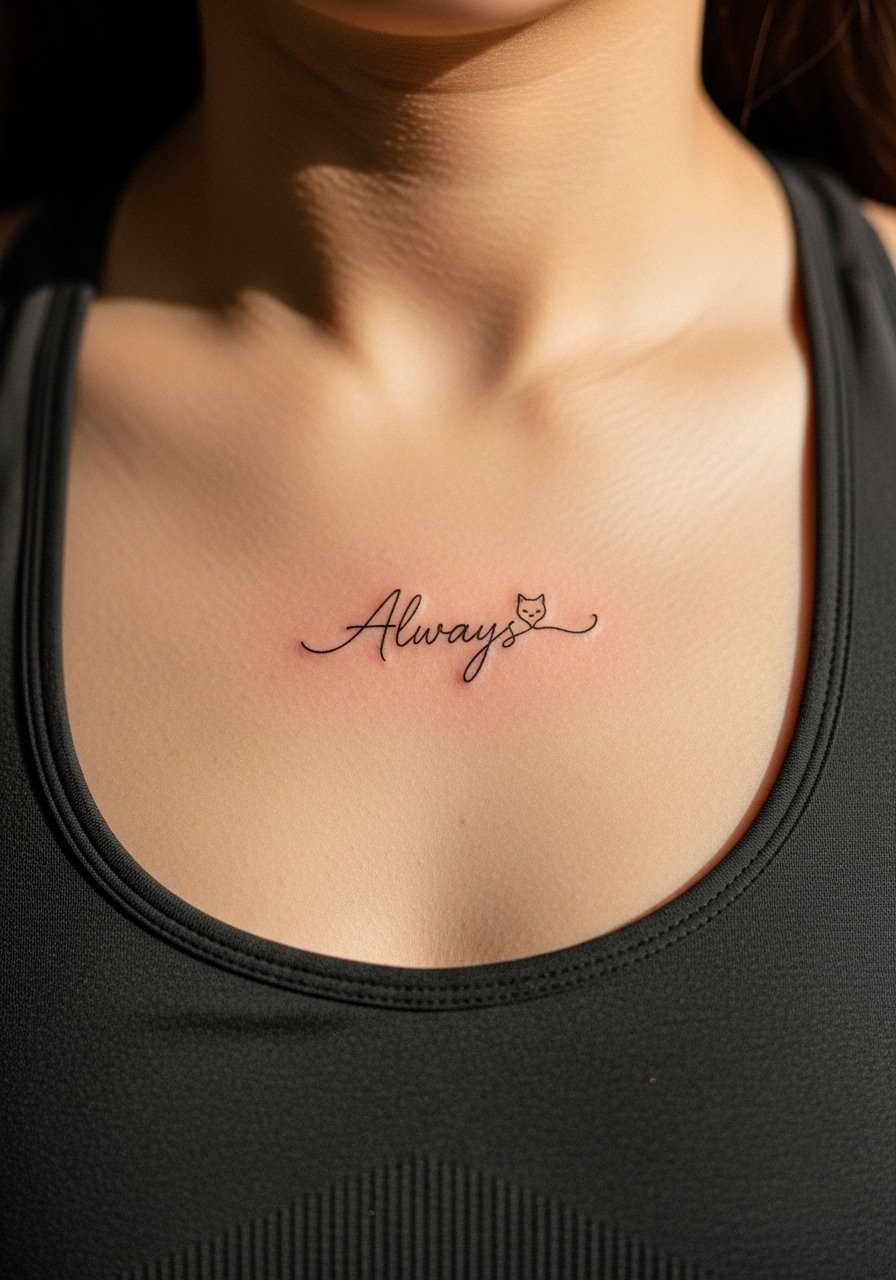
Sternum placements demand careful planning and artist experience. The skin is sensitive and the motion from breathing makes micro script tricky. One camp says fine script here blurs quickly and another says careful spacing saves it. If you go ahead, increase letter spacing and keep the script modestly larger than your first instinct. Sessions are more intense and shorter breaks can help. Wear a supportive sports bra to the appointment so you stay comfortable and the artist can work on a steady canvas.
18. Negative Space Cat Outline on the Back, Tank Top Framed
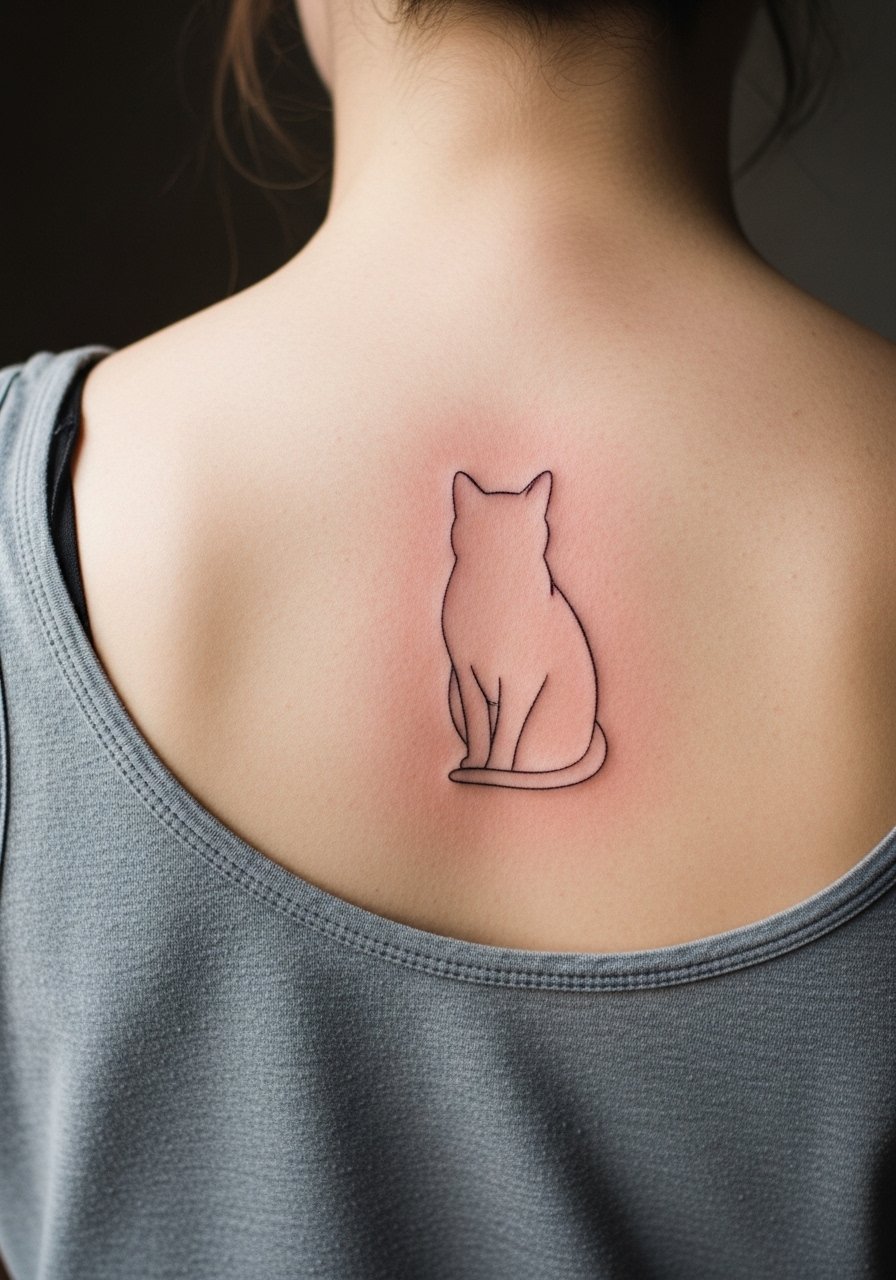
Negative space work places emphasis on skin between lines rather than filling, which can age well if the lines are given room. The main mistake is squeezing too many internal details into the negative zone which reduces contrast as pigment spreads. Back placements are low-friction and less sun-exposed when hair is down, so they can keep crispness longer. Sessions tend to be longer but tolerable. For show-off looks, open-back tops or halter necklines complement negative space designs without crowding the visual field.
19. Tiny Cats in a Row Along the Spine, Open-Back Framed
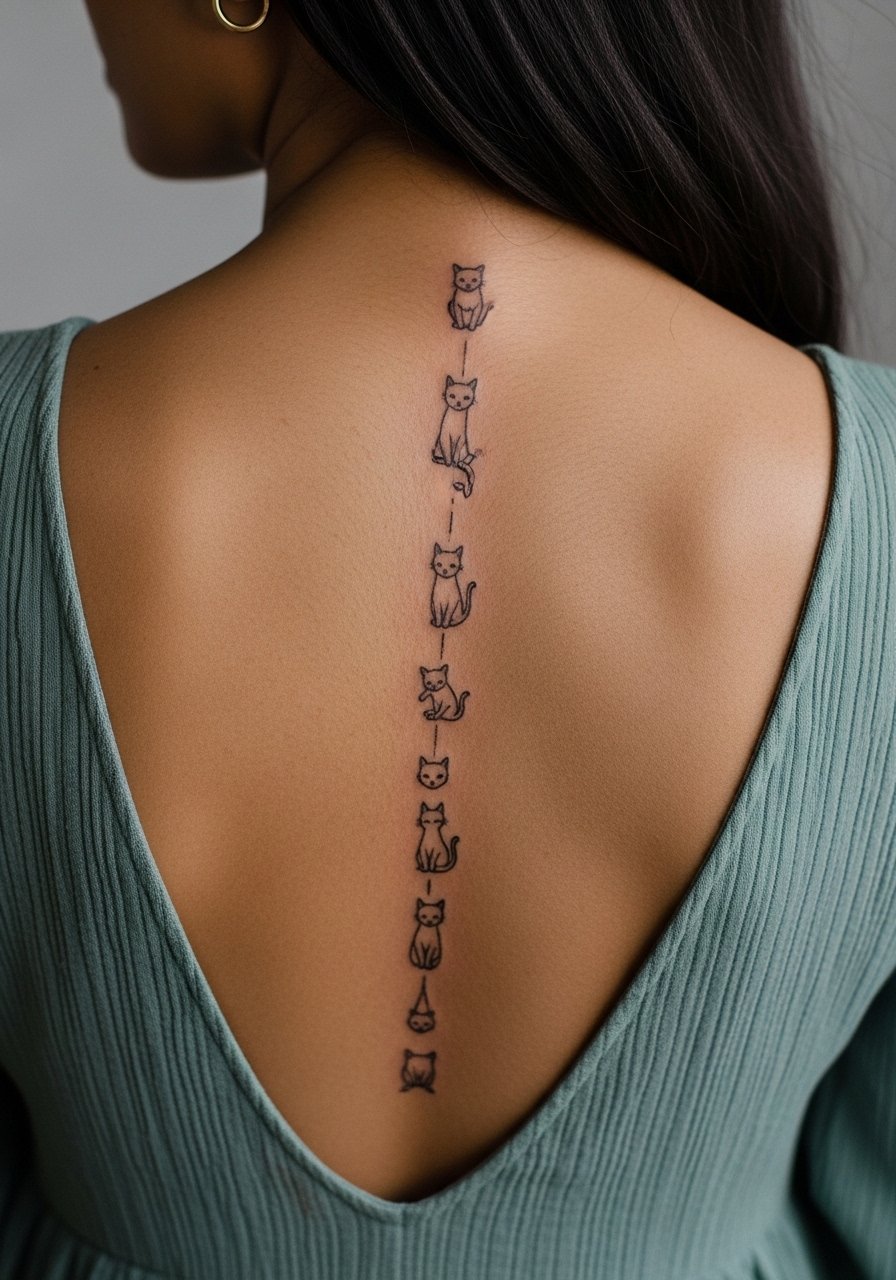
Spine placements are dramatic but require exact vertical alignment. The wrong stencil placement can make the whole row appear off center when you stand. The area tolerates fine lines well if spaced correctly, but it's not the place for extremely thin, parallel hatching. Sessions may be more uncomfortable near vertebrae. Bring clothing that gives the artist full access and consider slight enlargement of each cat so their silhouettes remain legible at year three.
20. Minimalist Cat Eye on the Inner Wrist with Bracelet Advice
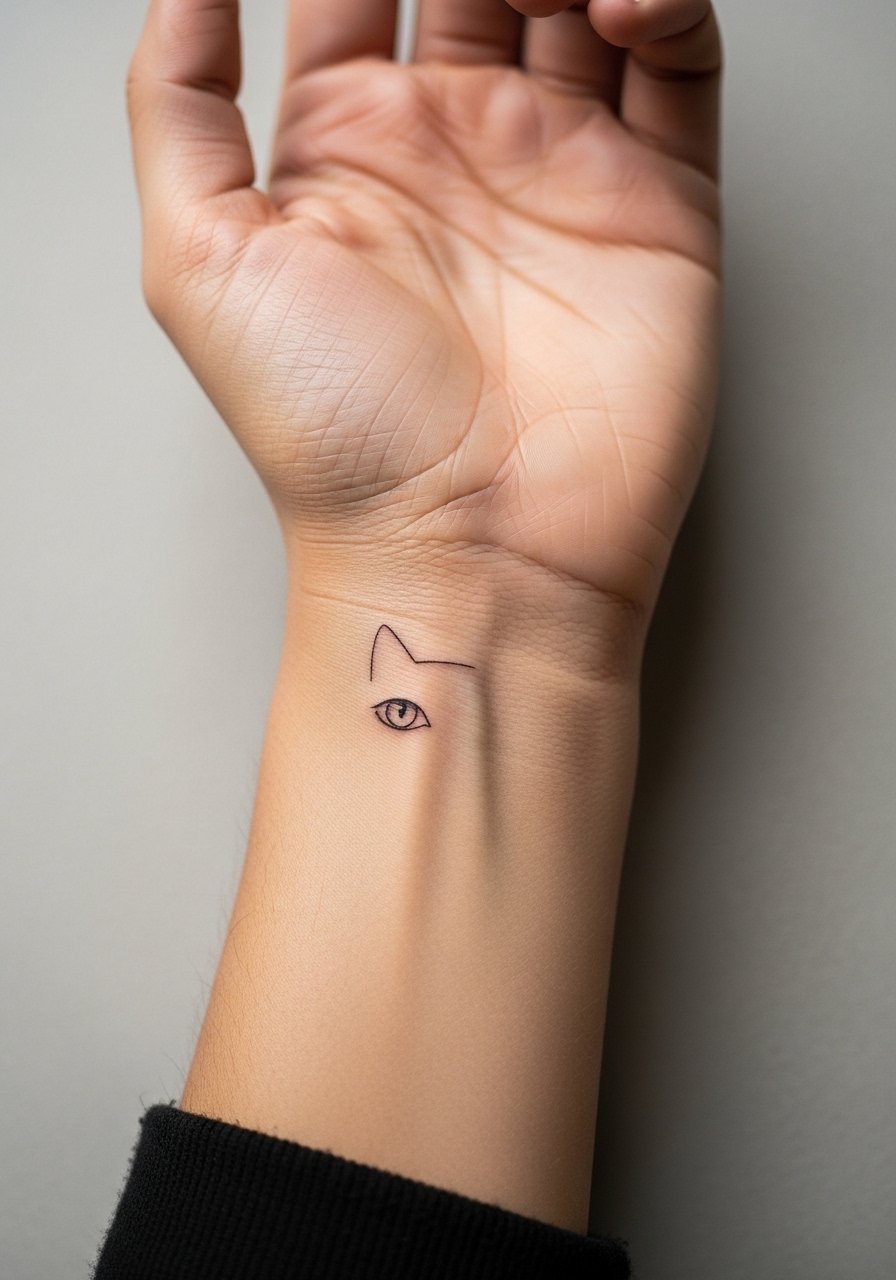
A single-eye motif is symbolic and simple, but the inner wrist sees constant washing and movement which can fade delicate curves. To avoid early loss of definition ask for a small, solid fill in the iris and slightly bolder lash lines. Expect faster fading than a forearm piece and plan for an annual touch-up if you wash often. For styling try a thin chain bracelet worn slightly above the piece to draw the eye without rubbing the fresh ink.
21. Micro-Realism Paw on the Toe, Sandal-Framed
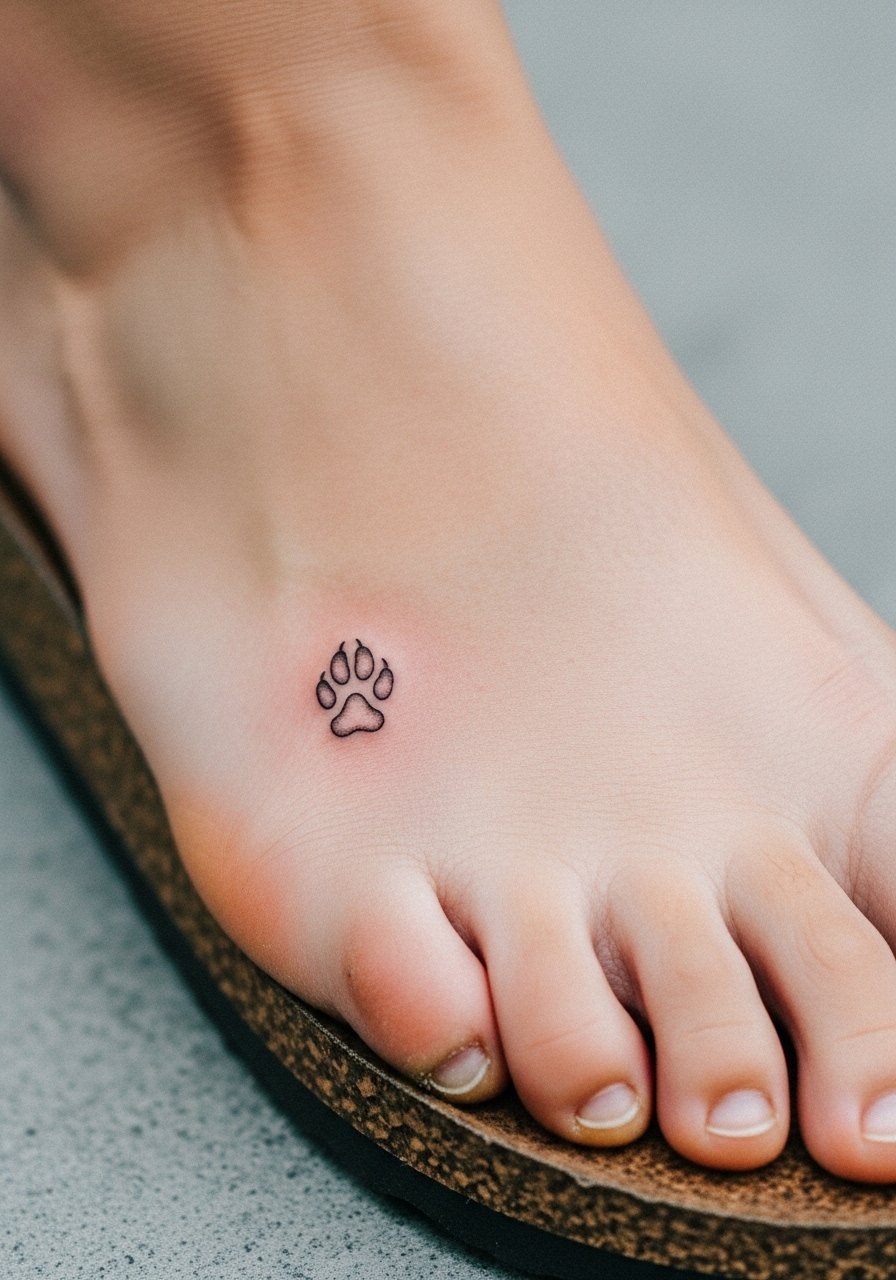
Toe tattoos are small and prone to fading because of constant friction and shoe pressure. If you pick this spot, go with a design simplified to clear contrasts and accept touch-up likelihood within the first year. Sessions are quick but can sting due to bone proximity. Wear open-toe sandals after the session to avoid pressure. For durability discuss slightly bolder outline with your artist to preserve the paw shape.
22. Folded Cat Outline on the Side Torso, Cropped Top Framed
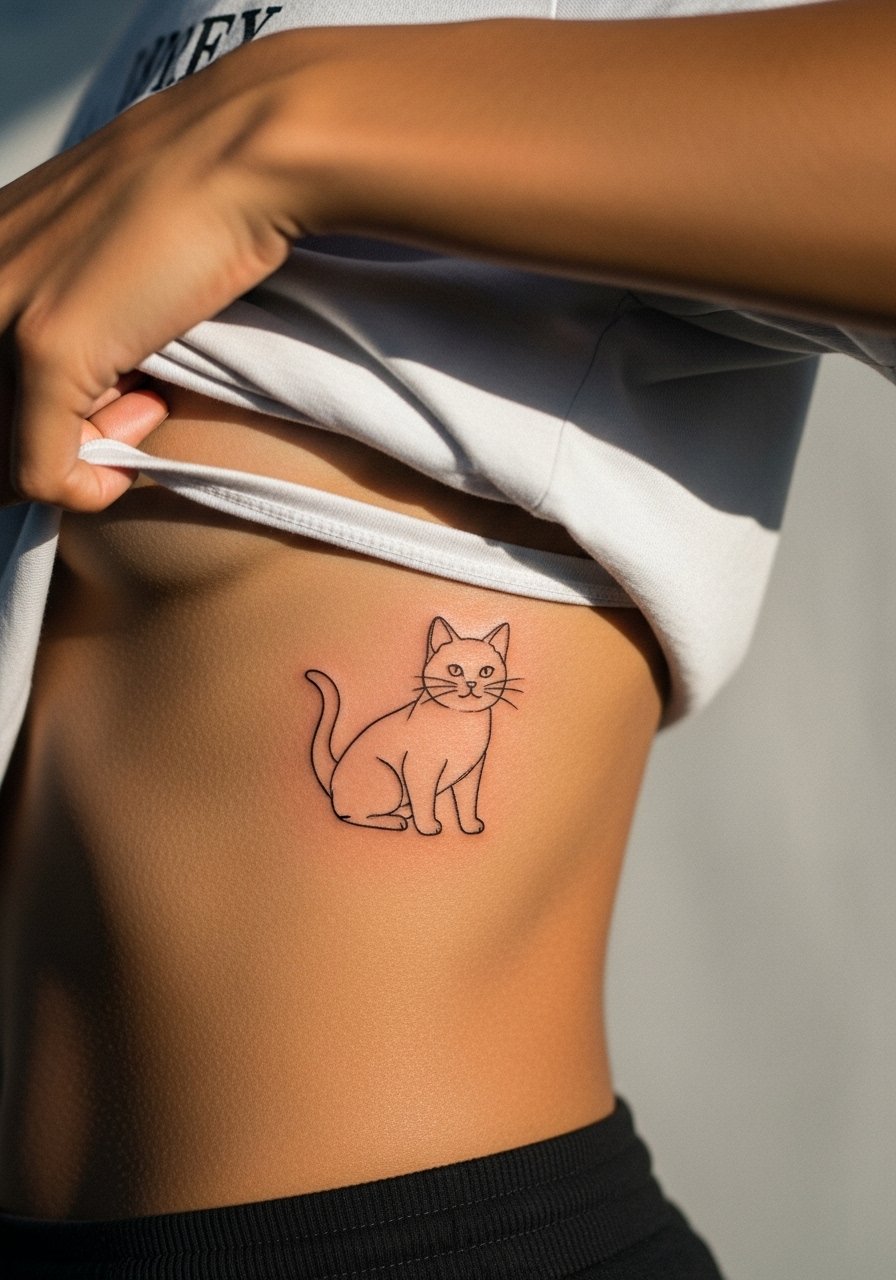
Side-torso placements move with every breath and bend so fine curves need added spacing and slightly firmer line weight. The most common mistake is aiming for ultra-delicate detail that vanishes as the skin settles. Sessions are moderate in discomfort and benefit from pauses. Wear a cropped top you can lift slightly for clean access. If the image has any cultural ties consider adjusting motifs to avoid direct replication without context.
23. Tiny Clustered Cats on the Shoulder Cap, Show-Off with Rolled Sleeves
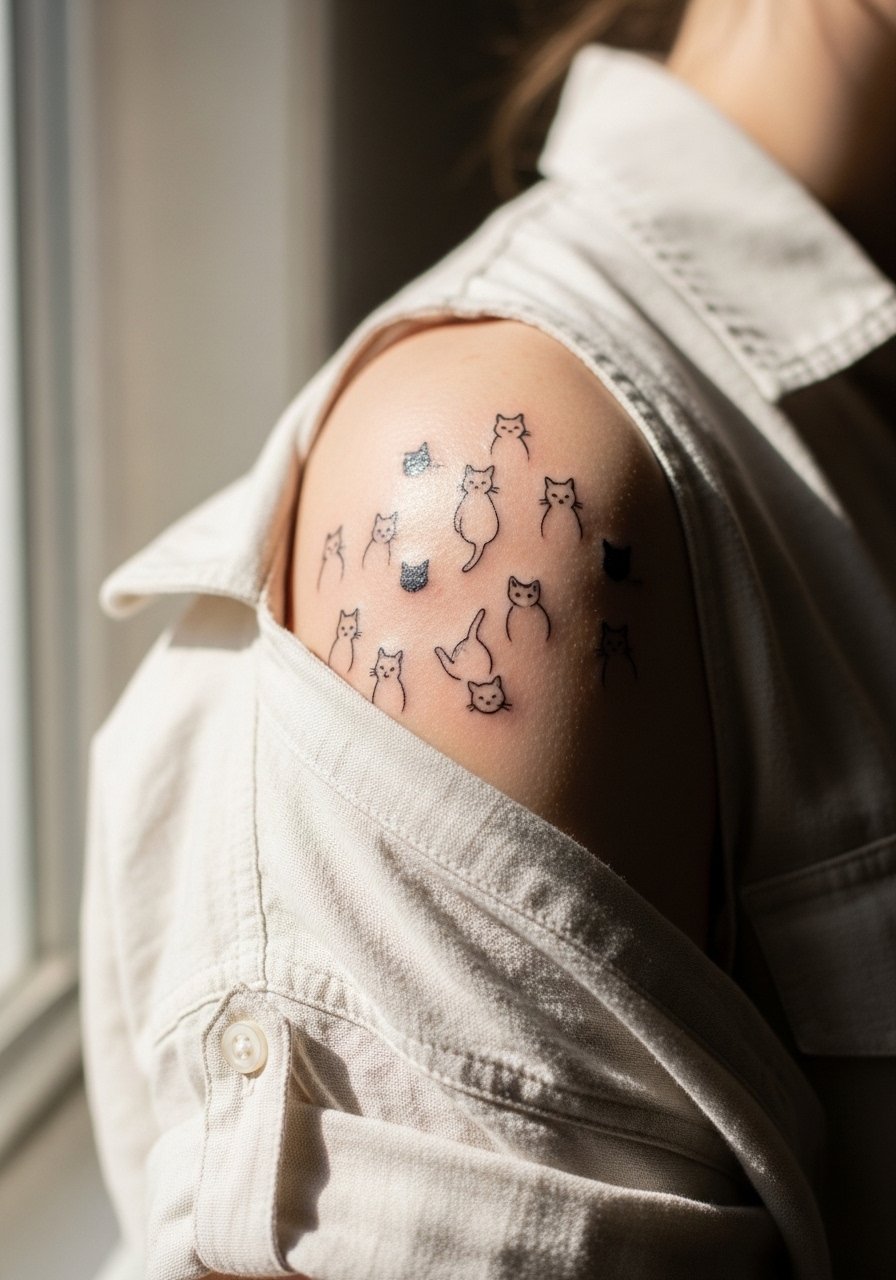
Shoulder cap designs have minimal blowout risk and show well in warm months. When artists crowd tiny figures close together the detail often softens into a blur within two to three years. Ask for intentional spacing and a plan for a light touch-up if you want dense storytelling elements. The session is short and steady. For showing off wear a rolled-sleeve linen shirt like rolled up linen shirt that frames the cap without covering the tattoos.
24. Fine Line Cat in Negative Space on the Lower Back, Tank Top Framed
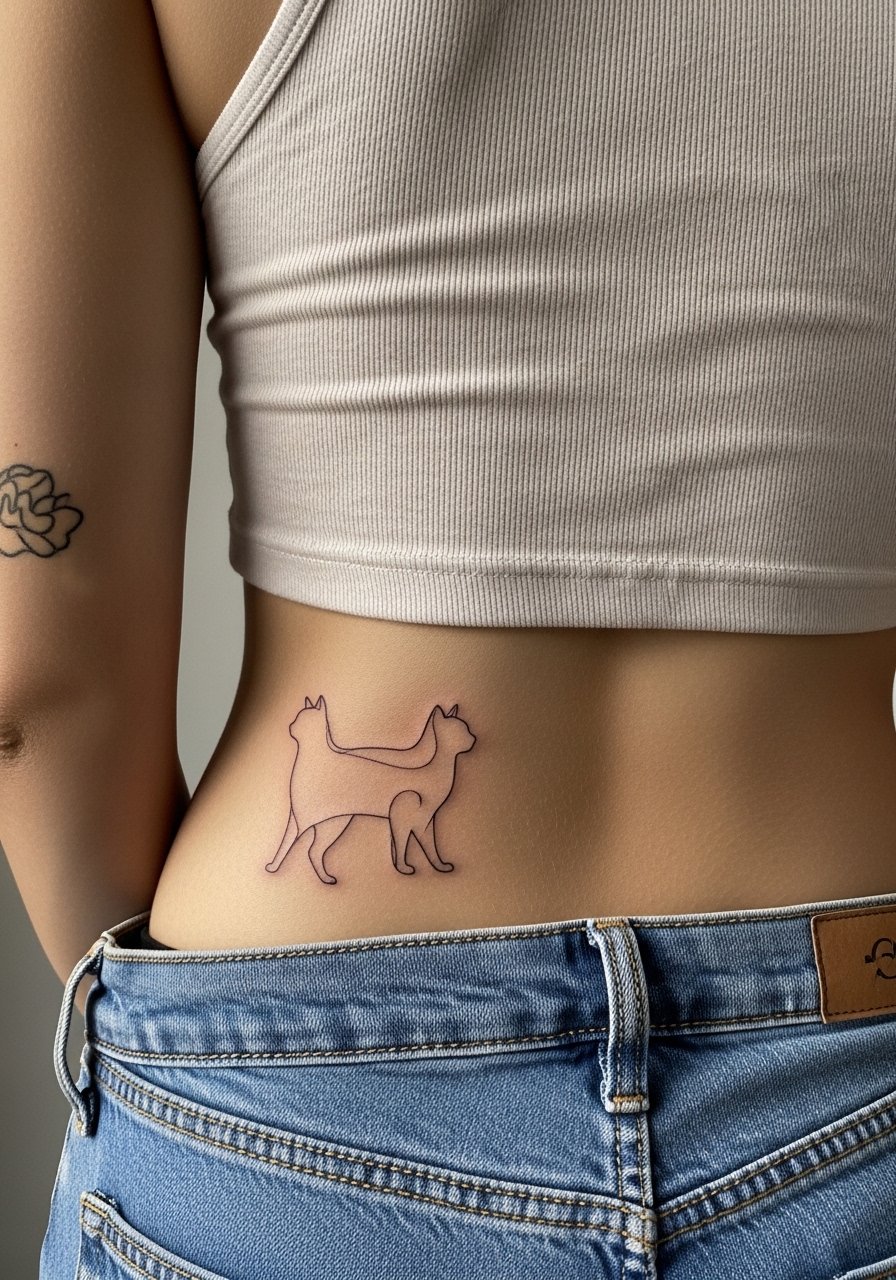
Lower back placements can be hidden and still hold clean linework if the design leaves negative buffers. Avoid cramming a detailed face into a small lower-back piece and ask for a slightly simplified silhouette instead. The area can be sensitive when lying on back during sessions so plan breaks. For reveal moments, low-rise jeans or a crop top pair nicely without forcing constant exposure during regular life.
25. Tiny Cat with Floral Accent on the Outer Thigh, Shorts-Framed
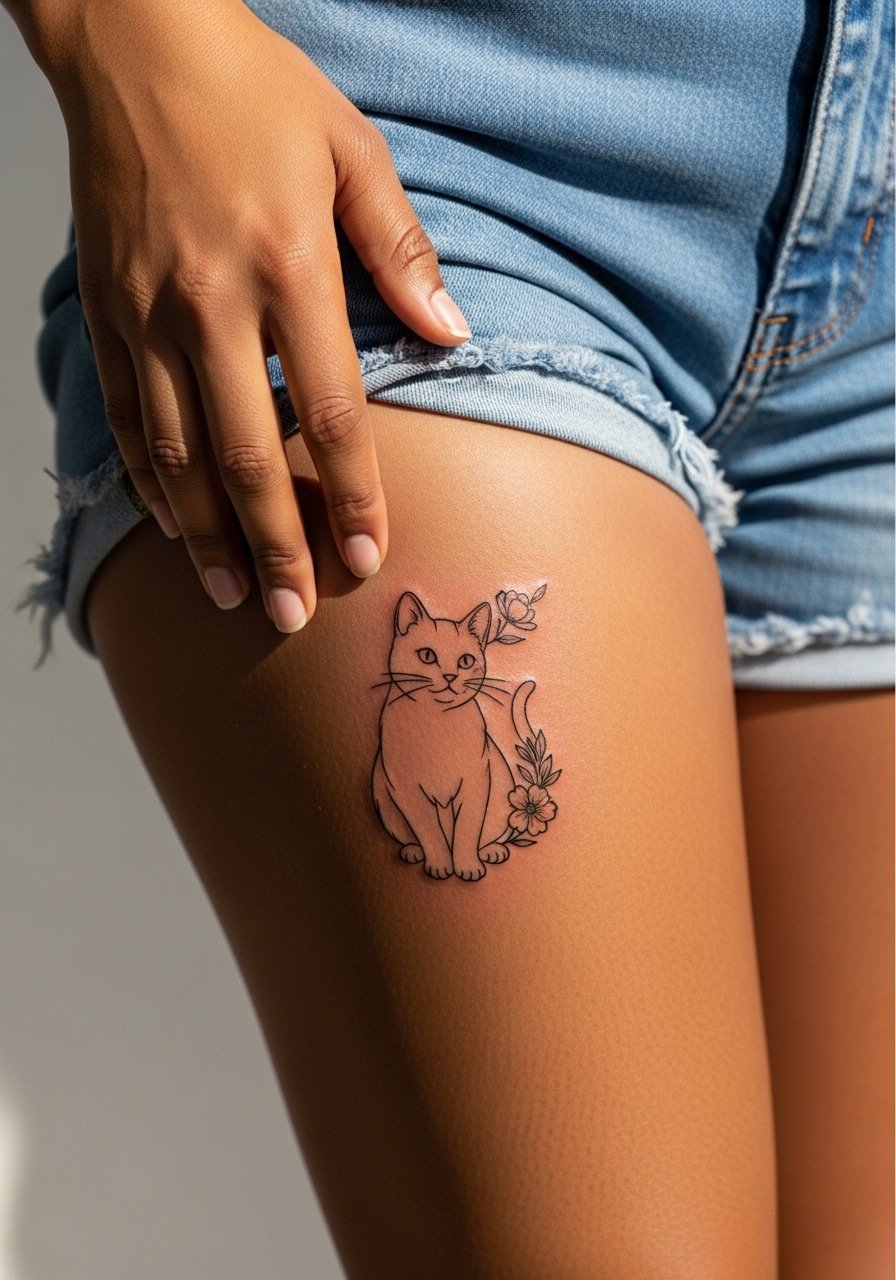
Outer thigh is forgiving for added floral accents and stands up to touch-ups less frequently because it sees less sun and friction. The common mistake is adding too many tiny petals around the cat which ages into a muddled mass. Request negative space and slightly larger petal outlines so the floral remains readable. Sessions are comfortable for most people. For appointments, wear loose shorts and for showing wear a skirt with a side slit to highlight the placement.
26. Microline Cat Face Near the Ear, Hair Tucked Framed
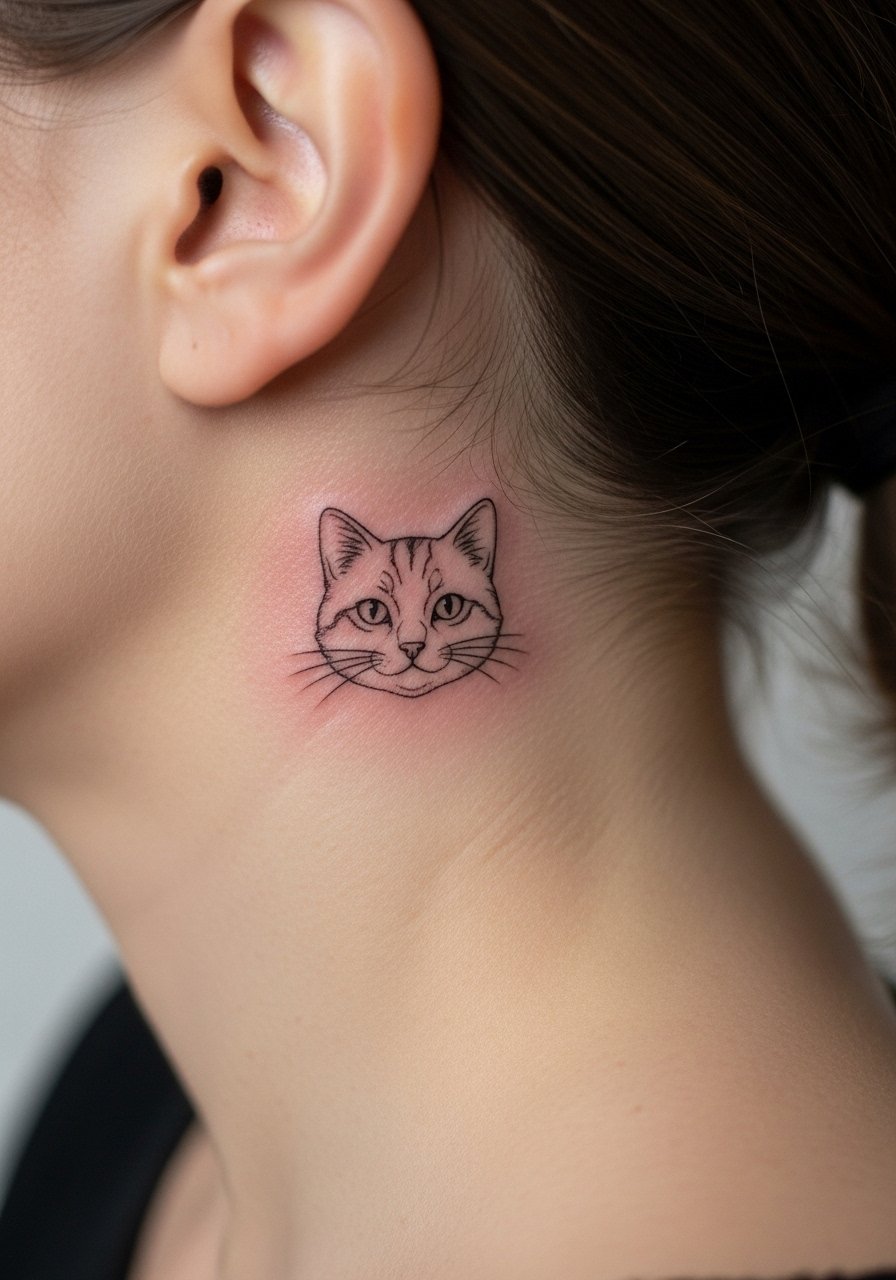
Behind-the-ear placements are private and delicate. The skin there is thin and the area moves when you talk or turn, so very fine strokes can blur faster than on the forearm. One professional viewpoint cautions against super-fine detail here while another says careful spacing and slightly bolder anchor lines work. Sessions are quick but sensitive. Tuck hair away for the appointment and consider a slightly raised outline so whisker strokes remain visible after healing.
27. Scripted Memorial with Tiny Cat Accent on the Chest, Wide-Neck Framed
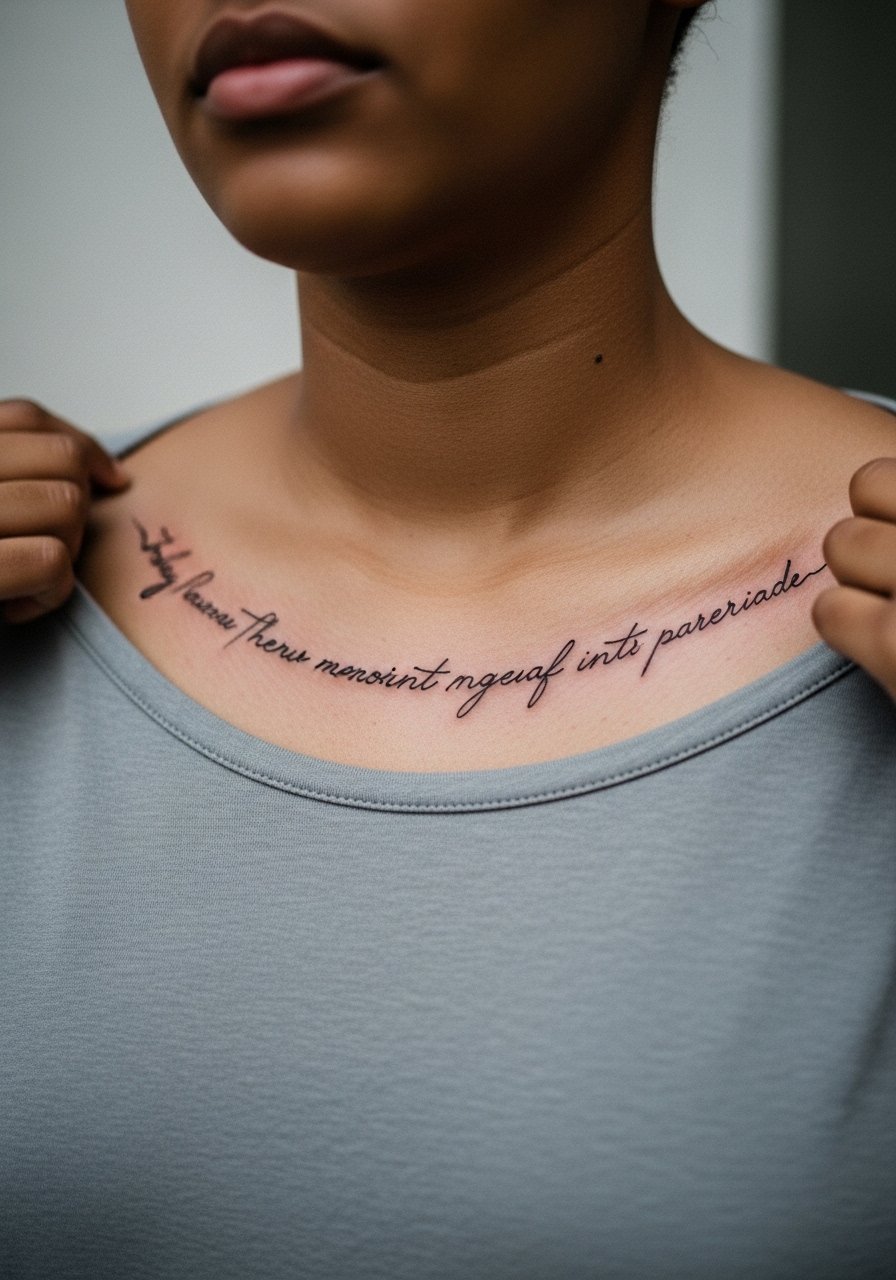
Chest scripts read as classic but are exposed to sun and neckline friction. Keep script size modestly larger than your first idea and space letters so the line does not collapse into a blur on movement. The sternum and upper chest can be painful and need steady breathing from the client for the artist. Wear a wide-neck shirt you can shift aside for the session and discuss how necklaces will sit after healing. For cultural motifs pick respectful adaptations rather than direct replicas.
Frequently Asked Questions
Q: How long do fine line cat memorial tattoos usually stay crisp before needing a touch-up?
A: It depends on placement and lifestyle. Low-friction areas like the outer calf and shoulder blade often keep crisp detail longer, sometimes three to five years before a light touch-up. High-motion or high-friction spots such as fingers, ribs, and ankles commonly need a refresh around year one to three.
Q: Can fine line work hold up on ribs and sternum without blurring?
A: Artists are split. One camp warns that thin lines on flexible torso skin can blur within two years. The other camp says correct needle depth, spacing, and slightly increased line weight prevent that. Ask your artist how they plan depth and spacing for torso pieces and consider upsizing the line slightly.
Q: What should I wear to the appointment for an inner thigh or ribcage tattoo?
A: For inner thigh wear loose shorts that you can shift without exposing more than needed. For ribcage wear a fitted sports bra or a cropped top you can lift slightly. These choices keep you comfortable and give the artist clean access without rubbing the fresh tattoo.
Q: Are there styling tips to help me show a collarbone or shoulder memorial without covering it?
A: Yes. Open-neck or wide-neck tops and thin chain necklaces frame collarbone work. For shoulders choose rolled sleeves or sleeveless tops so the piece sits clear. A thin chain pendant necklace can hover above a collarbone script without hiding it.
Q: How do I choose between a micro-realism portrait and a minimalist silhouette for a beloved cat?
A: Think about longevity, reference quality, and visibility. Portraits need sharp, high-contrast photos and may require touch-ups to keep tiny features. Silhouettes age more predictably and are forgiving in lower-exposure spots. Pick based on how often you want to show the piece and how much maintenance you expect.
Q: Are hand and finger tattoos risky for professional settings?
A: Hand and finger tattoos are still viewed differently across workplaces. They fade and distort faster than arm pieces so factor both career impact and maintenance. If visibility is a concern choose a fingernail-side or inner-finger spot that you can hide with a ring or glove when needed.