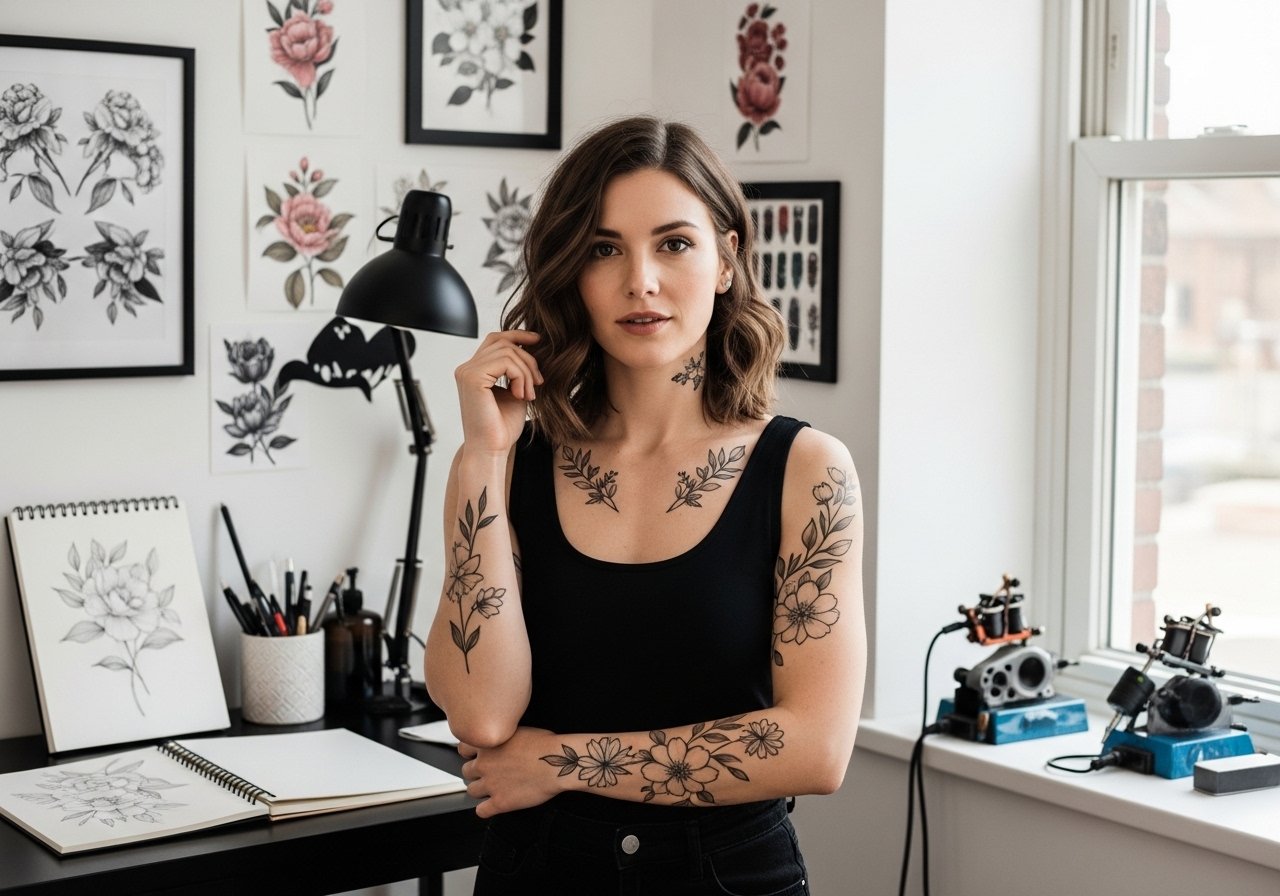
Fine line cowboy hat tattoos are everywhere on saved boards, and their appeal is clear. The challenge is that the very detail that makes them delicate also makes them fragile over time. Placement, spacing, and how you show them off matter more than a lot of people realize. Read on for twenty-one variations, where to put them, what to tell your artist, and how to dress them so they age with grace.
1. Inner Forearm Mini Cowboy Hat with Tiny Stars

I recommend this one when you want a visible piece that still reads delicate. Ask your artist for single-needle linework with a slightly heavier outer contour so the hat keeps definition as it softens at year two. Common mistake is asking for the hat too small and too close to the wrist. That invites blur and touch-ups earlier. Expect a one to two hour session and mild buzzing on the inner forearm. For showing it off, rolled cuffs and a loose button-down shirt frame the piece without hiding the lines. Touch-ups are typical at year three for tight single-needle work.
2. Wrist Micro Cowboy Hat with Rope Band

Fair warning: the wrist takes a beating from washing and bracelets. The rope detail looks charming but can clog into a blur if too fine. I tell clients to aim for modest spacing between rope lines and the hat rim. Session time is often under an hour but expect tender skin for a few days. For the appointment wear a racerback tank top or a short-sleeve shirt you can slide up easily. Pair the finished wrist piece with a thin chain bracelet so it reads intentional and not lost among chunky bangles.
3. Collarbone Cowboy Hat with Tiny Script

When you want a whisper of whimsy near the collarbone, this placement photographs well. Tell the artist the exact script you want and request slightly open spacing between letters so they do not merge as the skin moves. The collarbone is an easy session for most people but expect the skin to be sensitive during the stencil placement. For showing off, an open-back midi dress or a wide-neck top reveals the tattoo without forcing a reveal. If you plan career conservatism, remember collarbone work is easily concealed.
4. Tiny Cowboy Hat Behind the Ear, Neck Framing

This placement reads discreet and playful. Artists are split on whether ultra-fine work holds up here. One camp says the area is stable and keeps lines crisp. The other camp warns that hair rubbing and phone pressure can soften lines fast. Ask the artist how they manage depth and plan for a possible touch-up at year two. For the session wear hair up and a wide-neck shirt so the skin behind the ear is easy to access. Note the close contact with phone screens and collars, and expect to protect the zone while it heals.
5. Tiny Cowboy Hat on the Finger Pad

Finger tattoos are an honest trade-off. They look immediate and personal but fade faster due to skin turnover and constant washing. Ask for slightly bolder single lines and accept that touch-ups at year one or two are common. The session feels quick but stinging near the bone. For pairing, simple rings that do not sit over the tattoo keep it visible. Think about career visibility since hand tattoos still influence hiring in some fields. A careful stencil placement and planning for future touch-ups saves regret.
6. Ribcage Cowboy Hat with Floral Accent
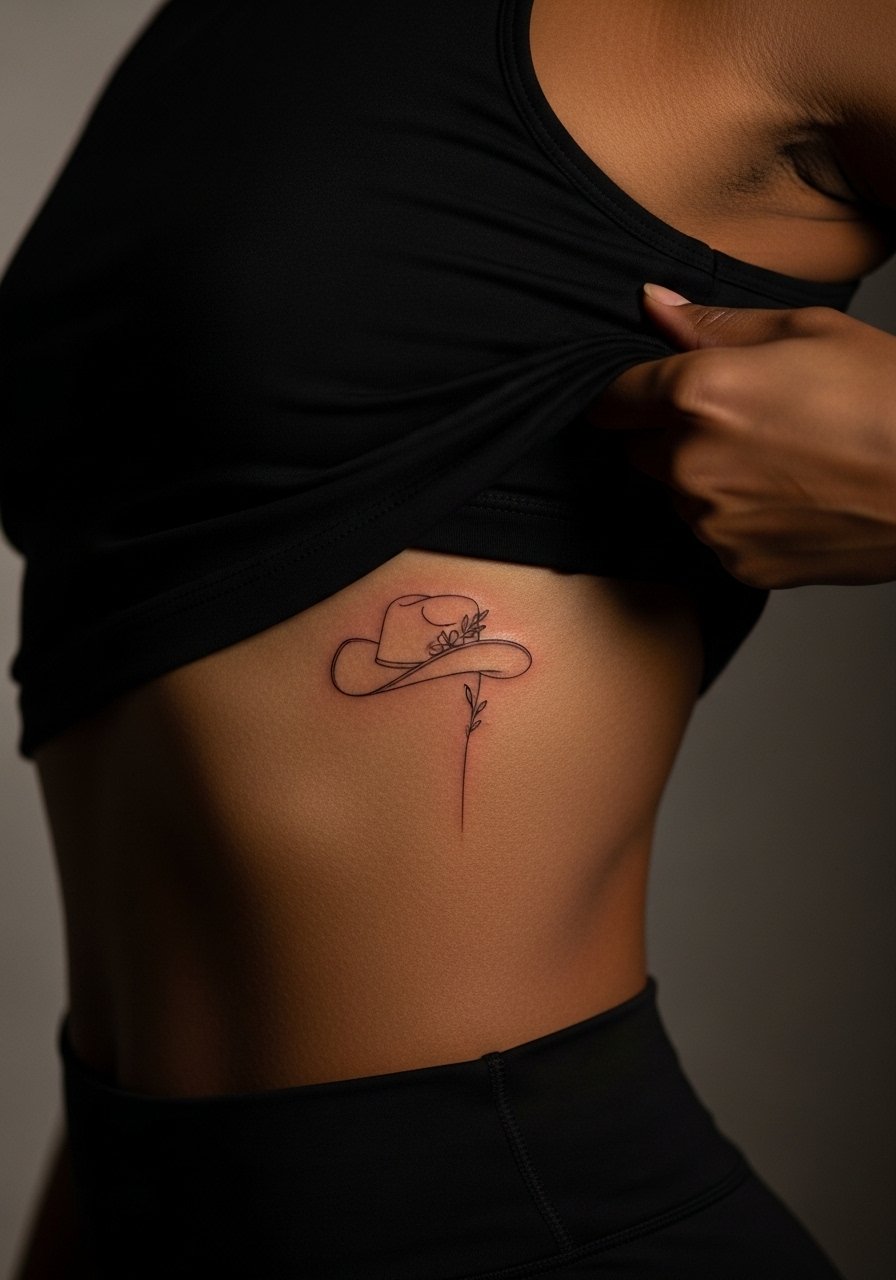
Artists split on fine line on ribs. One group says the skin stretch and breathing motion will blur tight work within a couple of years. The other group says with the right needle depth and spacing, fine line settles fine on ribs. My advice is to enlarge the negative space around the hat and keep the floral accent airy so lines have room to age. Expect a longer session and a higher pain score. For the appointment wear a cropped top you can lift easily and a pair of loose drawstring linen pants to stay comfortable during breaks. Touch-ups are not unusual for this area.
Pre-Session Essentials
The wrist and ribcage pieces above need different prep, and a few targeted items smooth the session and the first week.
-
Stencil transfer paper kit. Lets you preview exact placement and line spacing on the skin, which matters for tiny rope details and collarbone scripts.
-
Topical numbing cream. Applied before a ribcage or inner bicep session reduces surface pain so you can sit through longer outlines.
-
Thin protective film roll. Keeps wrist and finger pieces cleaner during the first week of constant hand washing and friction.
-
Fragrance-free body wash. Gentle cleansing helps delicate single-needle lines avoid irritation while healing.
-
Aquaphor healing ointment. A thin layer during the initial days preserves moisture in fine line channels without over-saturating the skin.
7. Calf Cowboy Hat with Lasso Detail

The calf is forgiving for linework and the lasso motion sits nicely on the muscle. Tell your artist you want the lasso to breathe away from the hat rim so the loop does not merge later. Sessions are comfortable and you can resume most activities quickly. For showing this off, rolled jeans or a midi skirt with a side slit keeps attention on the calf. Try pairing with sandals or low boots to show the piece in different seasons. Expect touch-up possibility at three to five years depending on sun exposure.
8. Upper Arm Cowboy Hat with Sunburst

Outer upper arm is classic for longevity and easy hiding. Ask for a slightly heavier outer line and delicate stipple shading for the sunburst so it keeps contrast after a few years. The session is often short and tolerable. For the appointment wear a loose button-down shirt you can pull aside without stretching the skin. If you plan a future sleeve, mention that in consultation so the artist can align scale and flow. Blowout risk here is low when lines are not placed too close to each other.
9. Tiny Cowboy Hat on the Sternum with Dotwork

Sensitive placement requires specialized experience. Sternum work can read stunning on a fitted neckline but expects a sharper pain curve. The dotwork anchor beneath the hat ages more predictably than ultra-tight lines on the sternum itself. Tell the artist you want breathing room between dots and hat edges. For session wear bring a strapless or a fitted sports bra so the area is exposed but modest. Consider how this sits with daily bras and straps during healing. Some artists will only take sternum work if they specialize in chest placements.
10. Tiny Cowboy Hat with Barbed Wire Band on the Ankle

Ankle tattoos get friction from shoes and socks, so linework needs room and slightly bolder arcs to survive. The barbed wire detail can read too busy if shrunk. Plan for a one-hour session and expect scabbing around laces if shoes touch the area. For showing off, roll your jeans or wear low trainers. A simple pair of flat leather sandals or cropped trousers keeps the tattoo visible without rubbing. Touch-ups are common at year two for ankle pieces that sit in shoe zones.
11. Tiny Cowboy Hat on the Back of the Neck
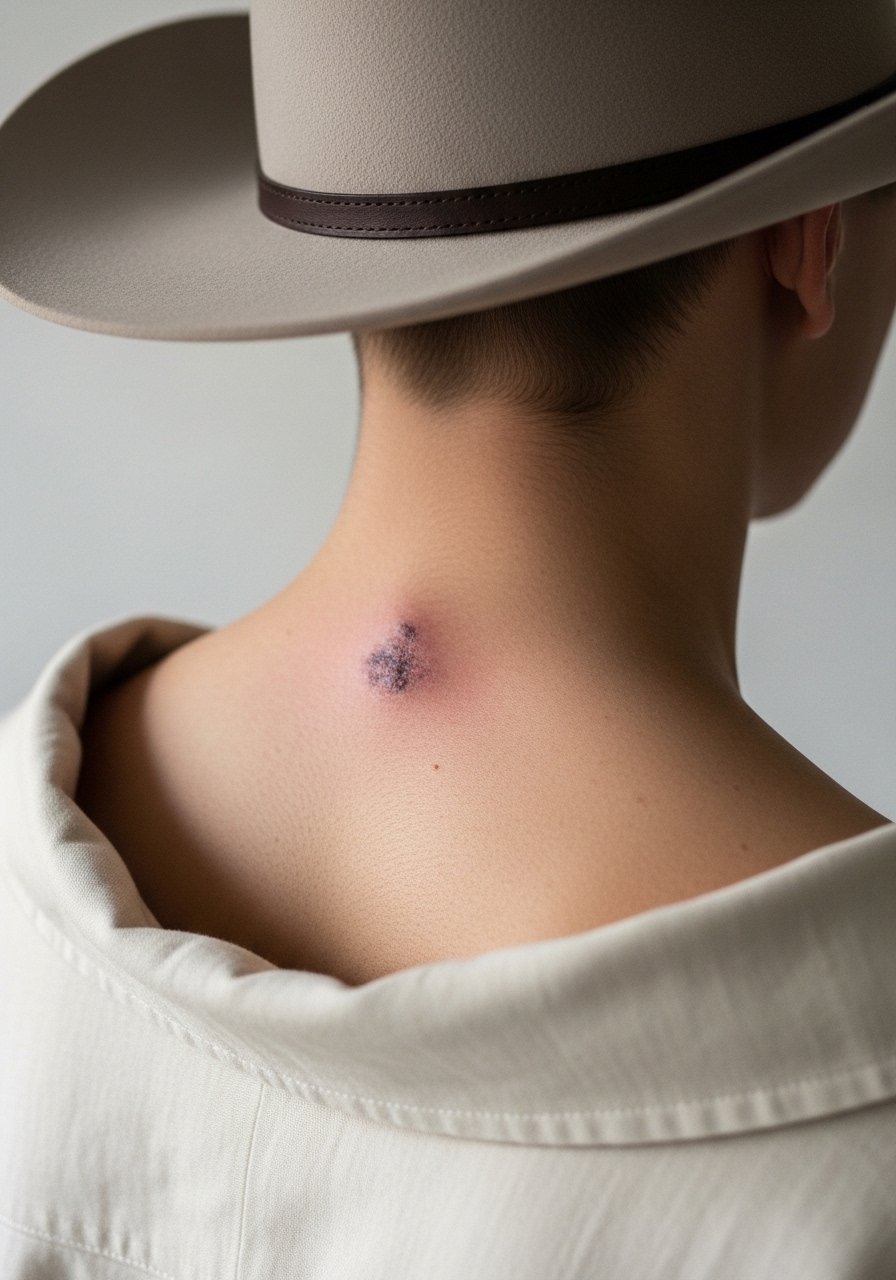
Back of neck pieces can be subtly rebellious. The area moves with collars and hair, and that can blur ultra-fine work. Ask for modest spacing and plan for a protective routine during the first month. For the session wear a wide-neck shirt you can pull aside. A thin chain necklace that sits above the tattoo frames it nicely without covering. Note that some workplaces react to visible nape tattoos, so weigh career impacts before booking. A small touch-up at year two is not unusual.
12. Micro Cowboy Hat on the Hip
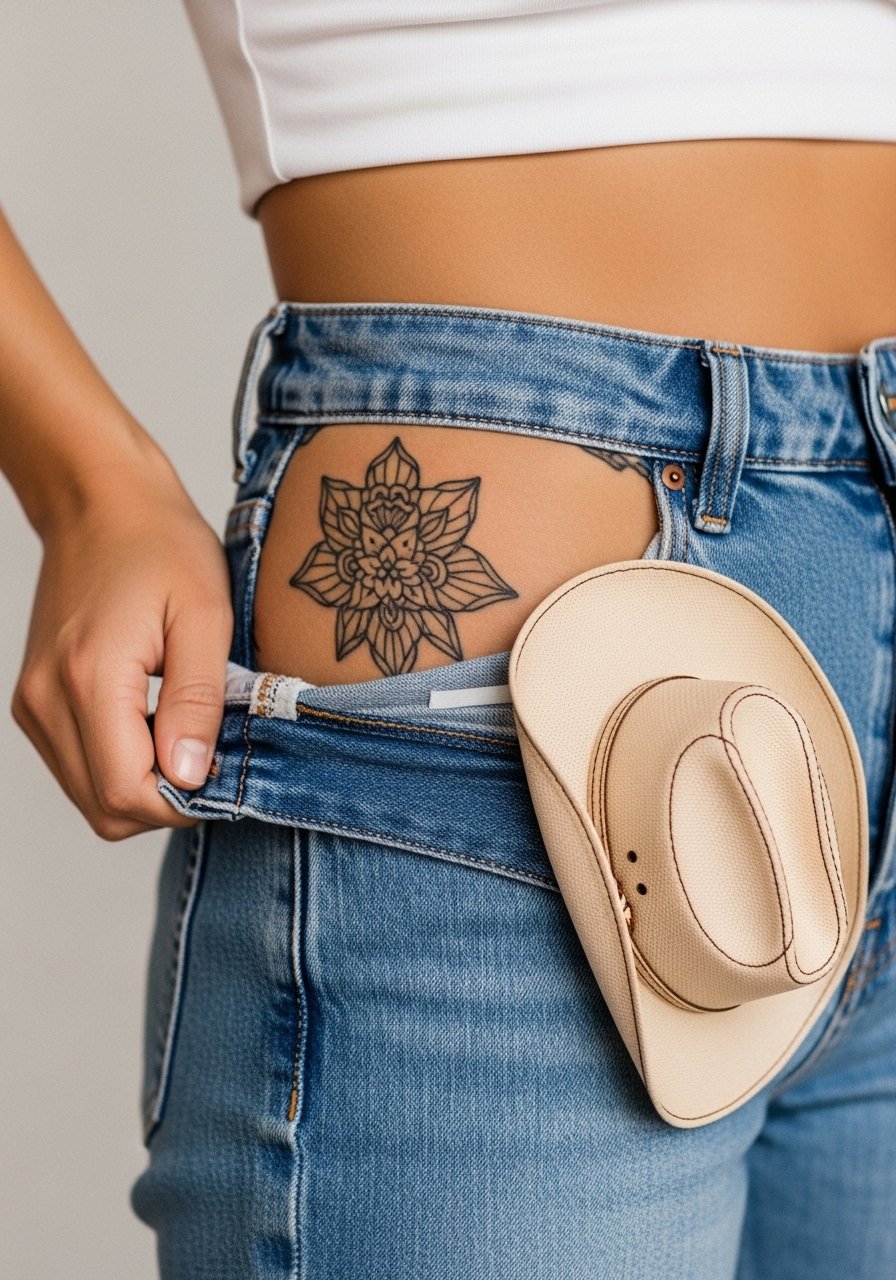
Hip tattoos live in a high-friction zone when wearing waistbands. Keep the design slightly higher on the hip to avoid constant rubbing. Tell your artist you prefer negative space around the brim so fabric does not catch the edges while healing. Session pain ranges from moderate to high depending on body composition. For the appointment wear high-waisted bottoms you can slide for access. During showing, low-rise or side-slit skirts show the tattoo without pressure. Touch-ups are common for hip placements because of movement and friction.
13. Petite Cowboy Hat on the Inner Bicep

Inner bicep skin is softer and can spread pigment more than outer arm skin. One common mistake is requesting ultra-thin parallel lines that later merge. Request slightly more spacing and stipple shading to keep contrast. The session can sting more due to sensitivity. For the appointment, a loose tank top keeps you comfortable and gives the artist clear access. Inner bicep designs sit well when paired visually with forearm pieces, so mention any existing tattoos during booking.
14. Tiny Cowboy Hat on the Side of the Foot
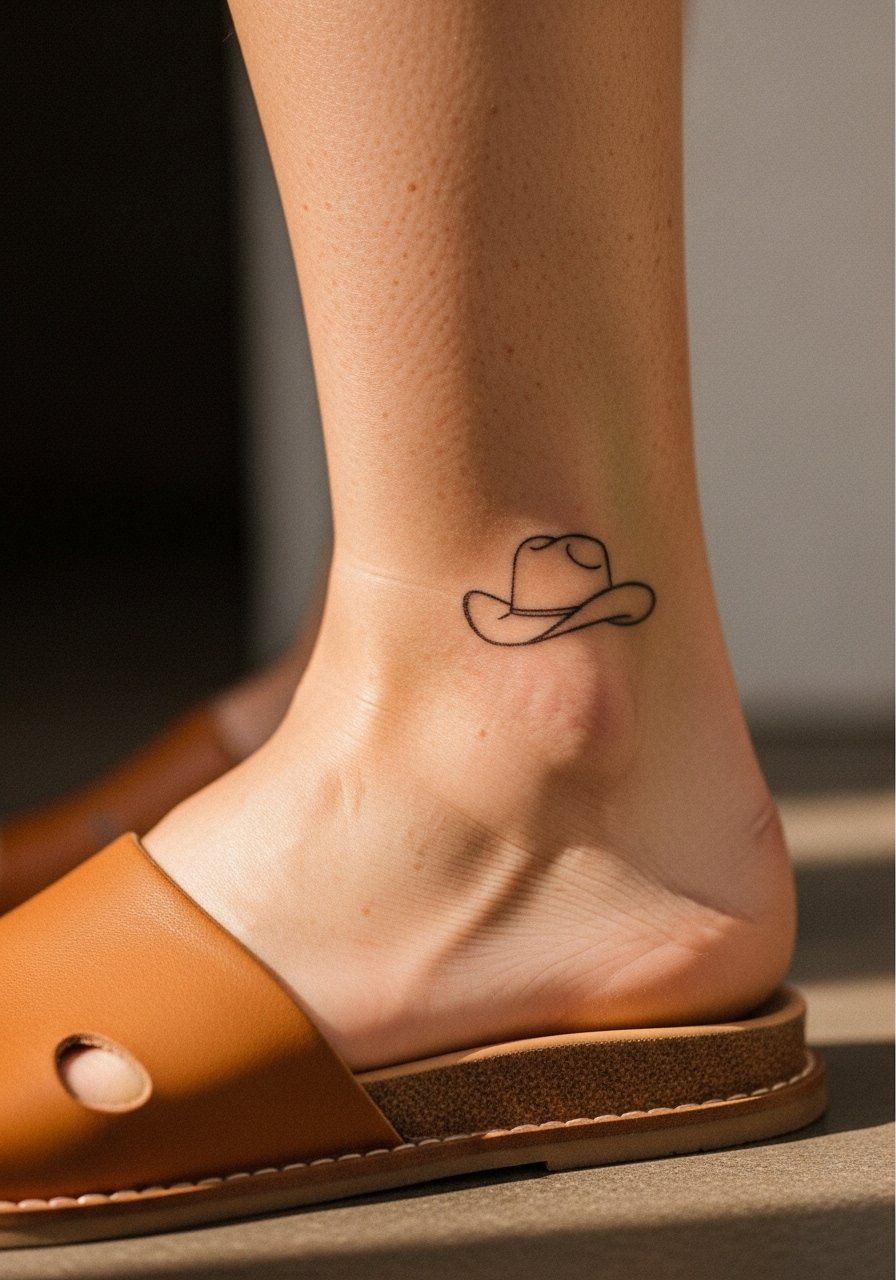
Foot tattoos fade quickly due to friction from shoes and ground. If you want a foot cowboy hat, ask for stronger outer lines and less interior detail. The session can be painful because of thin skin over bone. For showing off, sandals or cropped pants do well. Avoid tight sneakers for the first two weeks. Expect that the piece will need a touch-up within a year. If longevity is a top priority, choose a placement with less wear.
15. Tiny Cowboy Hat with Compass on the Shoulder Blade

Shoulder blade pieces sit flat and age predictably. The compass adds context and frames the hat without crowding it. A common mistake is compressing the compass too close to the hat. Leave breathing room so both elements read after movement. Session is comfortable and you can roll up your tank easily for access. For showing off, open-back tops or halter straps work well. Consider how sun exposure on the shoulders through summer clothing will affect saturation over time.
16. Tiny Cowboy Hat with Feather on the Upper Thigh

Upper thigh tattoos sit under clothing, so healing is generally private and low friction if you wear loose bottoms. Feather details can read light and airy if spaced correctly. The session feels moderate and you should plan loose bottoms for the first week. For the appointment wear a pair of loose drawstring shorts so the artist can access the area without fabric pressure. If you plan to show the piece off, high-slit skirts or swimwear reveal the design cleanly.
17. Tiny Cowboy Hat on the Lower Back

Lower back tattoos get debate for visibility and personal taste. The skin here is stable so lines tend to hold well if not placed too close to the waistband. A frequent mistake is positioning the hat where jeans sit, which causes constant rubbing during healing. For the session wear a tank top and high-waisted bottoms you can lower slightly. Consider how swimwear and waistbands will interact with the piece. Expect touch-ups at year three to keep crispness if exposed often.
18. Micro Cowboy Hat on the Thumb

Thumb tattoos face a high fade rate because of frequent washing and constant motion. If you want this tiny placement, accept that it will need touch-ups and possible re-inking. Keep the design simple and avoid interior rope details that can plug. The session is quick but sharp. For showing off, short sleeves and rings that do not cover the area work best. This placement has higher career visibility in some industries, so think through long-term wear.
19. Cowboy Hat with Tiny Band on the Chest Pocket Area
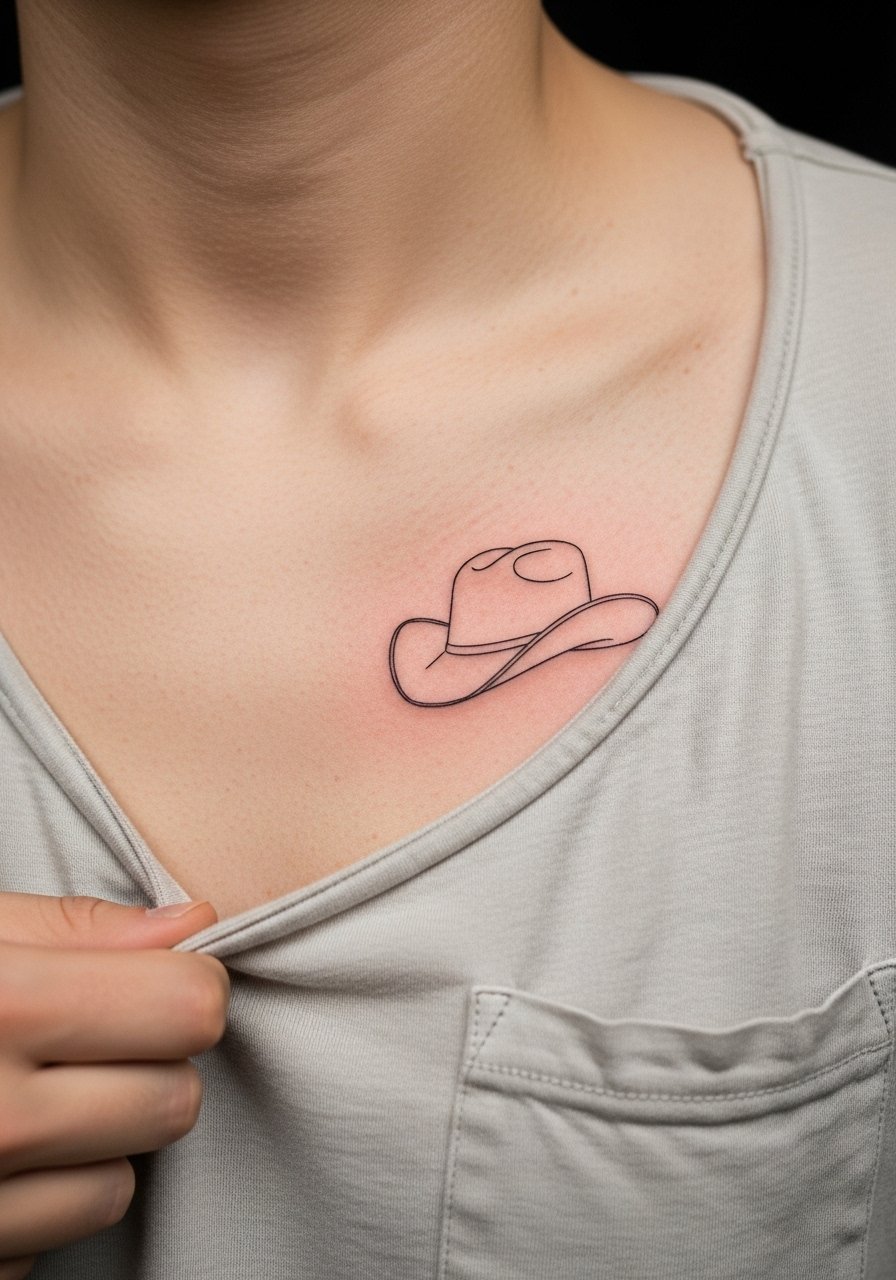
Pocket-area chest tattoos are classic and photograph well on button-downs. Ask the artist to place the hat so it sits above fabric lines and not under constant pressure from straps or collars. The session can be sensitive if the skin sits over bone. For the appointment wear a loose button-front shirt that can be opened slightly. A thin pendant necklace that sits above the hat frames the work without competing. The chest ages reasonably well if protected from heavy sun exposure.
20. Tiny Cowboy Hat with Crescent Moon on the Back of the Hand

Back-of-hand tattoos are bold and visible. Lines here are at high risk for early fading because of use and exposure. One camp of artists takes hands reluctantly, citing frequent touch-ups. The opposing camp will do them if you understand the maintenance schedule. If you proceed, choose slightly bolder contours and accept that refreshes will be part of the plan. Rings and bracelets should sit below the wrist to not rub the piece while it heals.
21. Tiny Cowboy Hat on the Hip Pocket Line
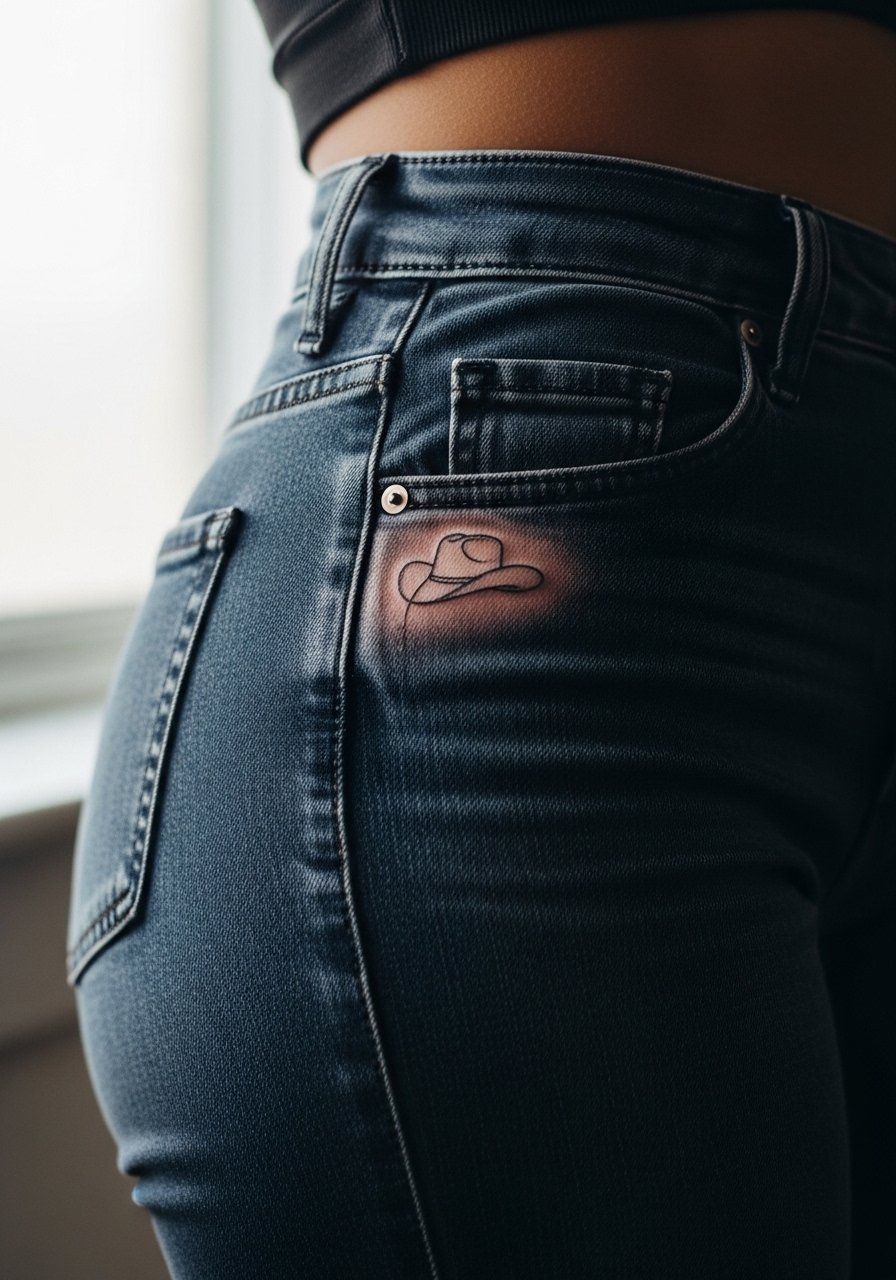
This is a playful, low-profile spot that peeks out from low rises or side slits. The big mistake is placing the hat directly under the pocket seam. That invites constant pressure and poor healing. Ask the artist to set the design slightly inward from the seam and to use softer interior shading so touch-ups blend if needed. For the appointment wear high-waisted jeans you can lower for access and a loose tank top for comfort. Hip areas do fine long term when not constantly rubbed by tight waistbands.
Frequently Asked Questions
Q: Will fine line cowboy hat tattoos blur faster than bolder cowboy hat designs?
A: From what I've seen, ultra-fine single-needle work tends to lose crispness sooner than slightly bolder linework. The difference comes down to placement and spacing. If you want longevity, ask for a modest outer contour and negative space around dense details so the hat keeps definition as the years pass.
Q: How do I choose between a ribcage or sternum placement for a delicate cowboy hat?
A: Both spots read intimate and can be painful during the session. Ribs move with breath and sometimes blur tighter lines, while the sternum is more about direct bone proximity and pressure from clothing. Talk to the artist about spacing and plan for potential touch-ups. Wear a fitted sports bra for sternum work and a cropped top for ribcage sessions so the artist has clear access.
Q: What should I wear to the appointment for a collarbone or shoulder blade cowboy hat?
A: For collarbone pieces wear a wide-neck shirt you can pull aside. For shoulder blade work bring a loose tank or a button-down you can slip off to one side. If you plan to show the piece, open-back tops or rolled sleeves photograph the design cleanly. Try an open-back midi dress for evenings when you want it visible.
Q: Are hand and finger cowboy hat tattoos safe for people in conservative workplaces?
A: Hand and finger placements are highly visible and still affect hiring in some fields. If your career could be impacted, consider more concealable spots like the inner forearm or shoulder blade. If you choose hands, plan for maintenance and be prepared to discuss visibility with prospective employers if needed.
Q: How often will I need touch-ups on tiny cowboy hat tattoos?
A: It depends on placement and sun exposure. High-friction zones like fingers, hands, and ankles often need touch-ups within one to three years. More sheltered spots such as the upper arm or shoulder blade can go longer before refreshes. Expect at least one touch-up over the first three years for fine line work.
Q: Can I get a tiny cowboy hat with additional symbolism like a lasso or moon without compromising longevity?
A: Yes, provided the extra elements have breathing room. Small elements that crowd the hat increase the chance of merging. Ask the artist to separate motifs slightly and to favor negative space. That keeps both the hat and the added symbol readable as the piece heals and ages.
Q: Where should I discover artists who specialize in fine line cowboy hat tattoos without relying on named handles?
A: Look through local shop portfolios on directory sites, browse tag threads on tattoo subforums, and sit in on consult days if the shop allows it. Keywords like "fine line cowboy hat" or "single needle cowboy hat" in search filters help narrow options. Meet the artist in person and review healed photos to confirm their linework consistency.