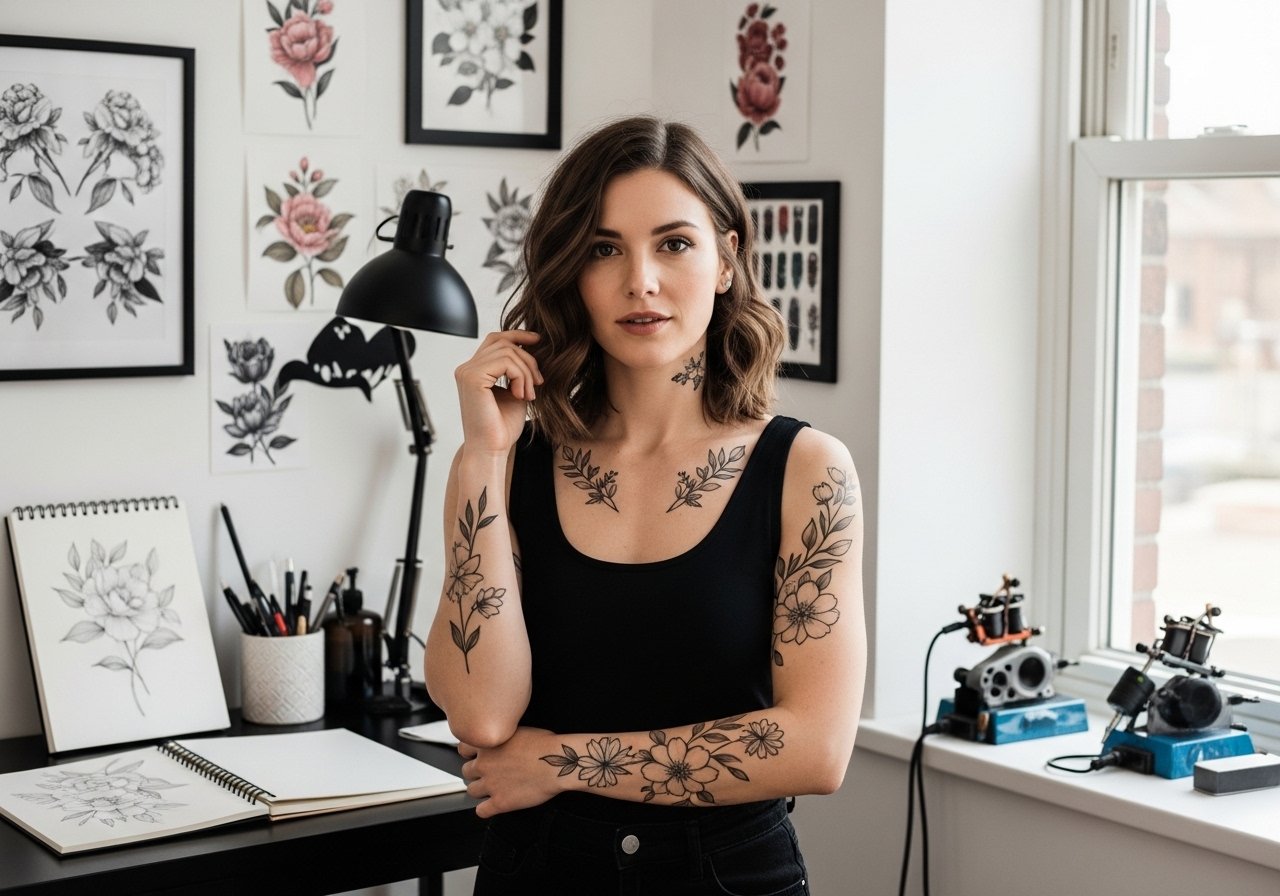
Sitting in the chair, the artist taped the stencil below the hairline and asked me to tilt my head. The small curve looked almost invisible until the light hit it. Tiny script behind the ear reads like a secret that only sometimes shows itself. Pick the right word, placement and wardrobe, and it becomes a subtle signature rather than a rushed impulse. The first option below explains how to make that happen.
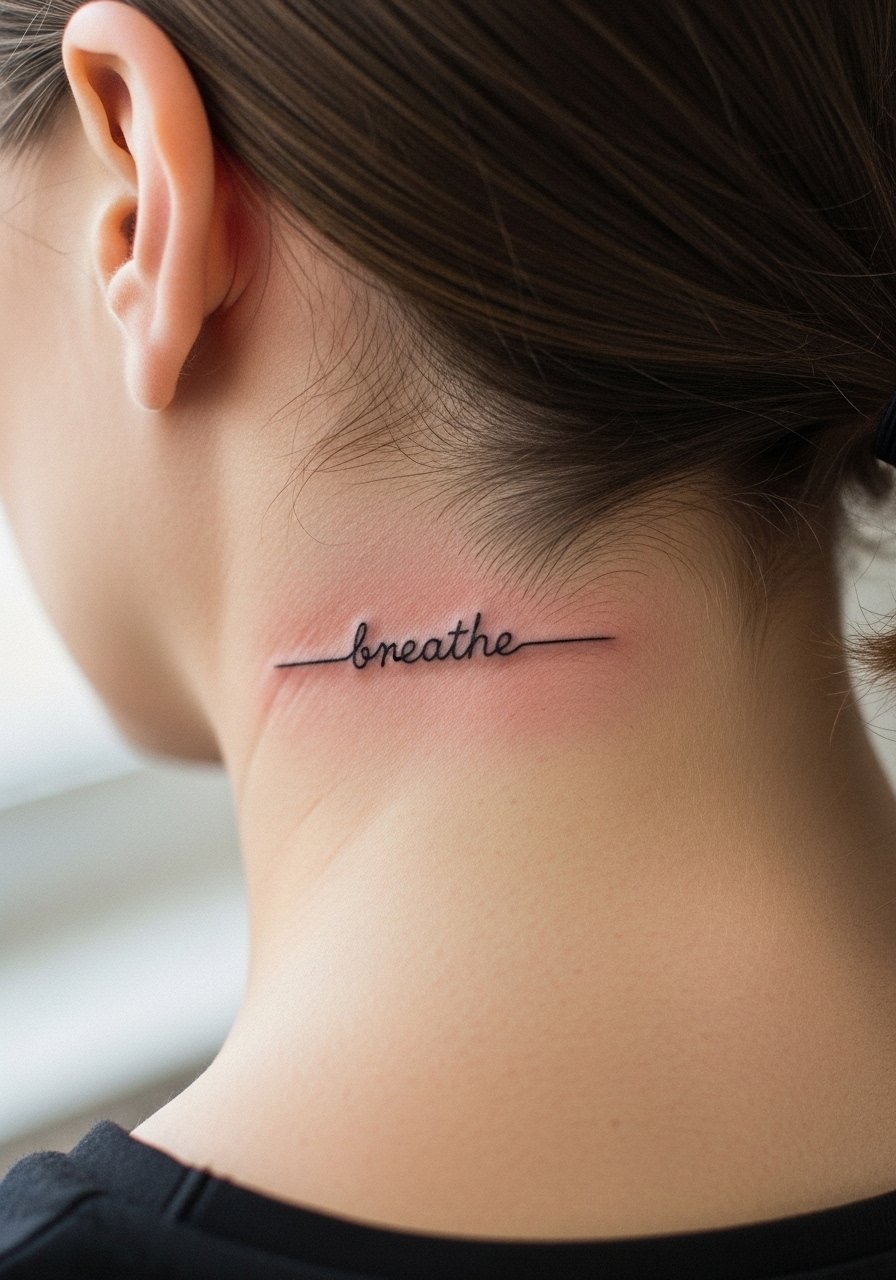
1. One-Word Lowercase Script on the Skin Just Behind the Ear
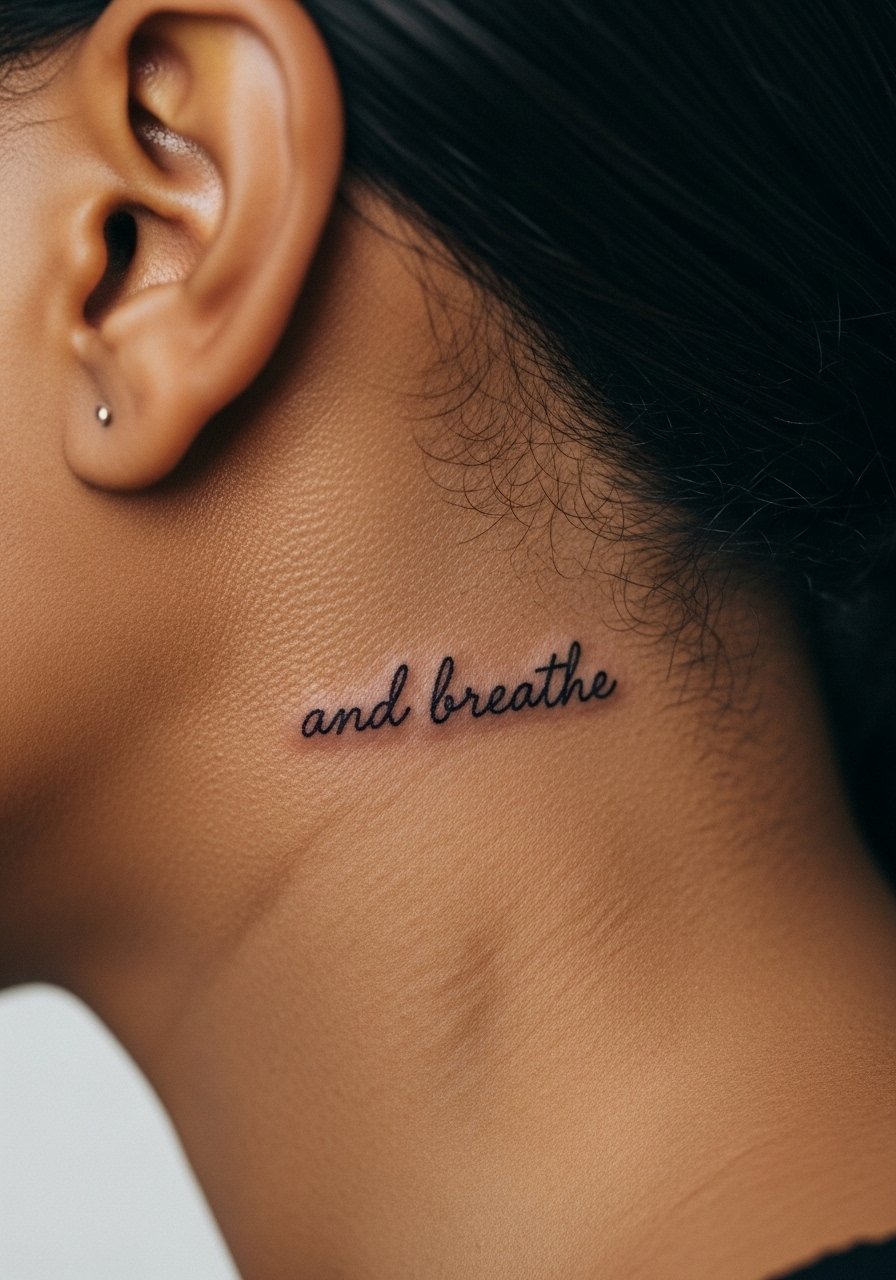
I've seen one-word pieces here age differently than wrist text. Tell your artist you want a single, thin-stroke lowercase word like "breathe" placed on the skin just behind the ear, below the hairline on the neck, with consistent spacing so the letters do not crowd as the ink settles. Pain is mild but the area is sensitive because of the thin skin, and touch-ups are common around year two if lines soften. A common mistake is asking for a hairline-thin weight and expecting it to stay that way. For the session, clip your hair up or wear a silk headscarf so the artist has clean access to the area.
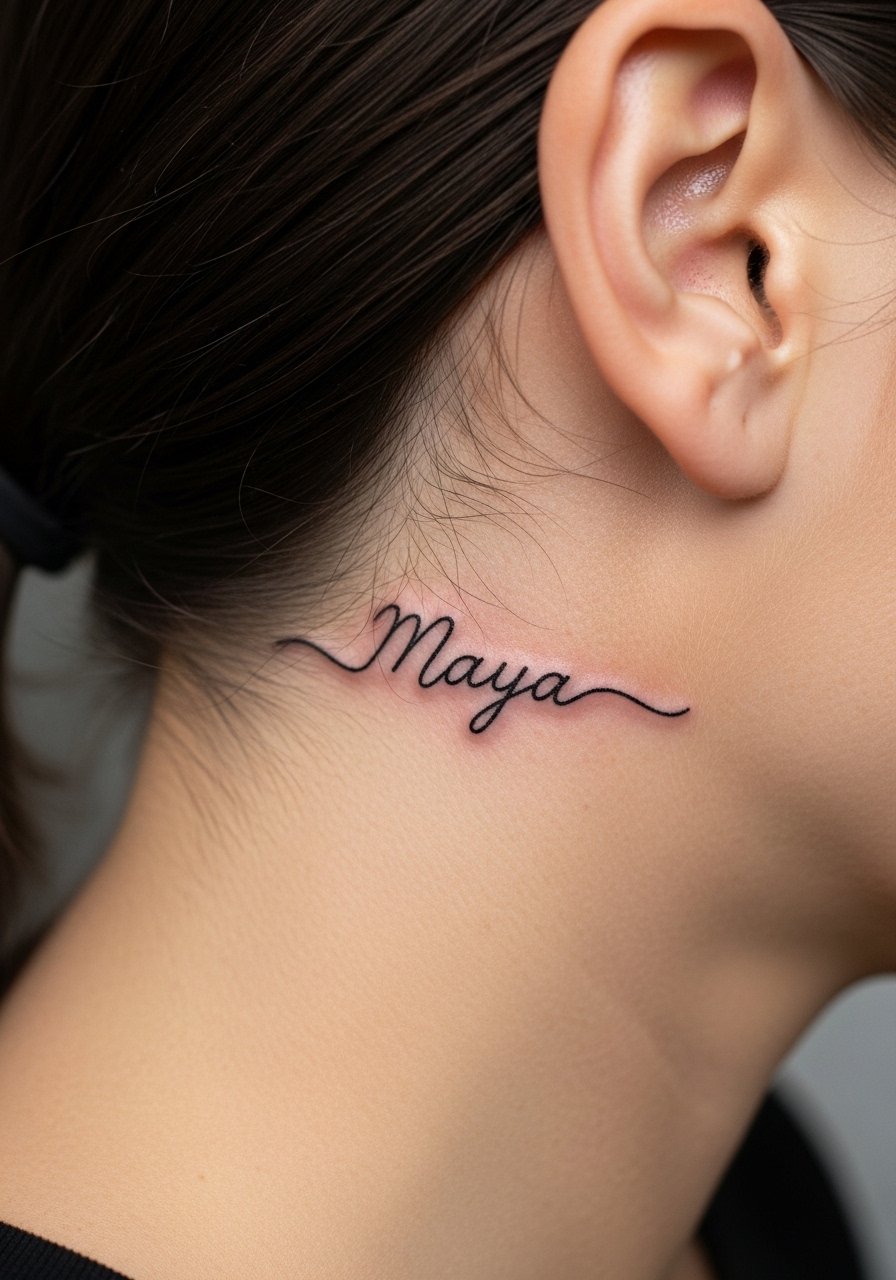
2. Tiny Name in Flowing Cursive
Personal names work well with flowing cursive when you want something intimate that shows with short hair or tucked hair. Lead with a consultation note that the letters need a little extra spacing between ascenders and descenders so the "g" or "y" does not merge into a blur over time. Expect a 20 to 30 minute session for a single short name and minor discomfort when the needle passes over the mastoid area. A styling trick for showing it off is a thin chain that sits above the hairline, or a pair of thin gold hoop earrings to frame the ear without covering the script.
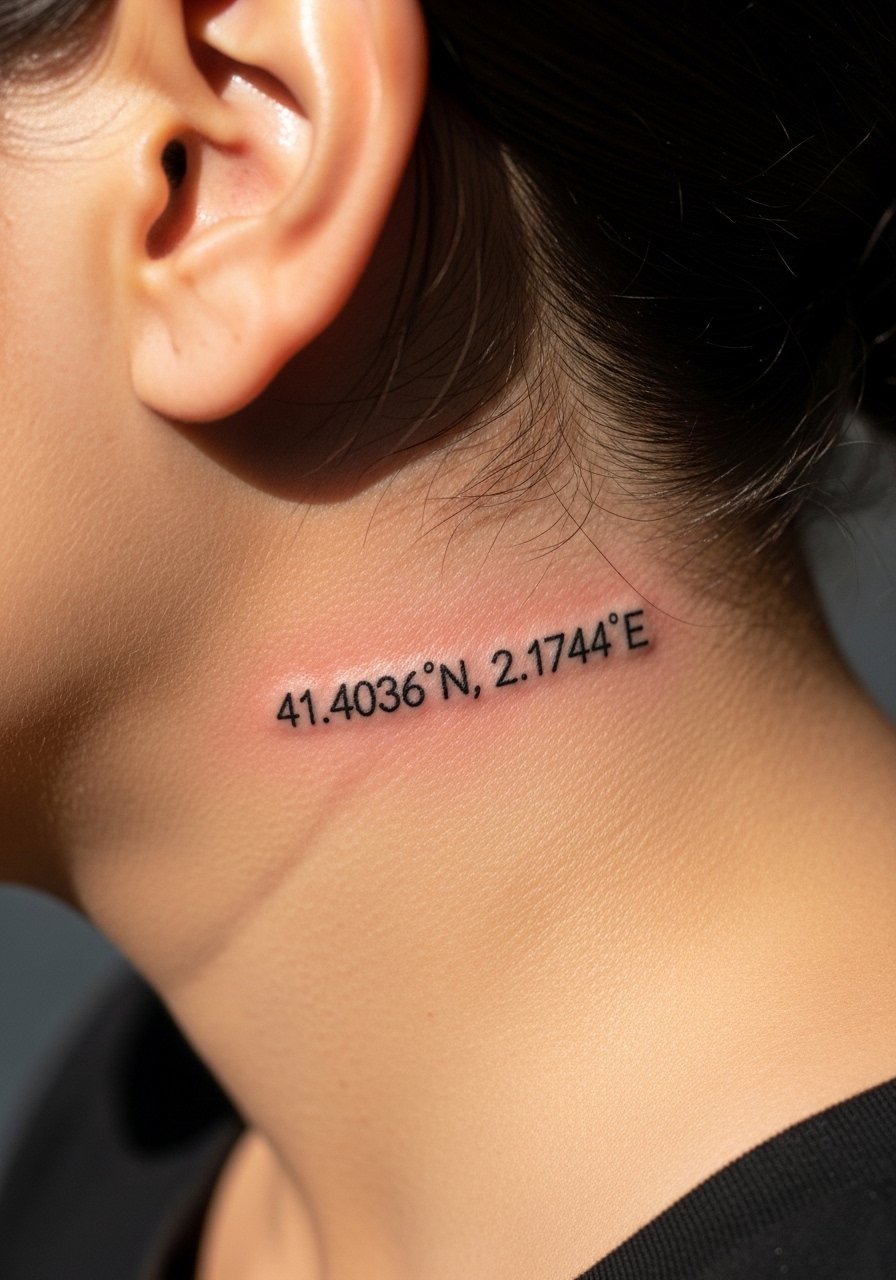
3. Micro Coordinates in Minimal Script
Coordinates are understated and translate well to the small canvas behind the ear. Ask for a compact, monospaced script so each number maintains equal width and spacing. Most artists will stencil the exact numerals like "41.4036 N, 2.1744 E" so the image generator keeps the text accurate. The main aging issue is ink migration into hair-bearing skin if placed too low. For sessions, expect a short appointment and light pinch pain. Avoid asking for a dense font because heavy saturation on these curves increases blowout risk.
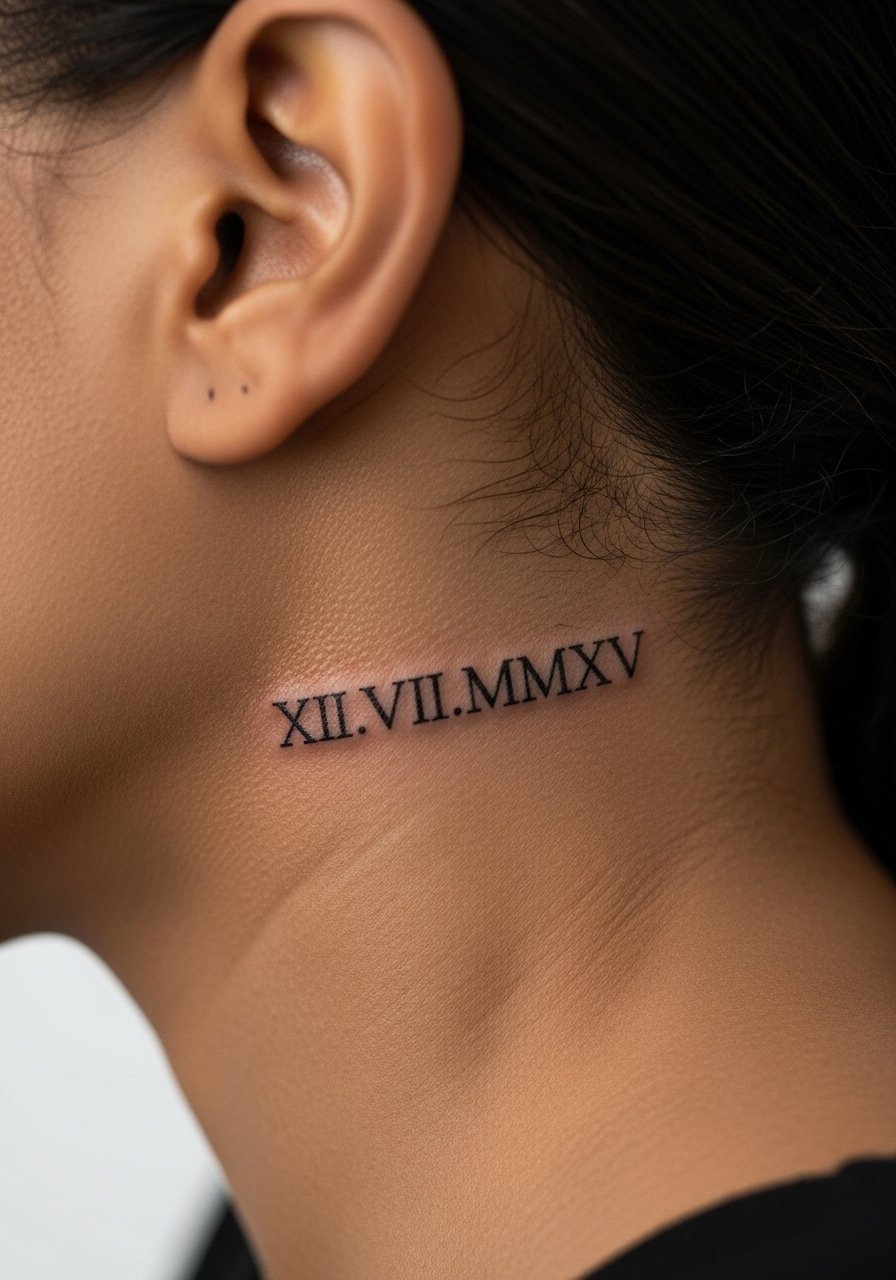
4. Small Date in Roman Numerals
Roman numerals sit neatly behind the ear and feel discreet. Request crisp spacing like "XII.VII.MMXV" and tell the artist you want thin but consistent stroke width so the dots and periods remain legible in a few years. There is a controversy among artists on micro-detail here. One camp says the skin is too thin and movement blurs small punctuation within two years. The other camp says with careful depth control and space between characters it can last much longer. Ask which camp your artist follows during consultation. Pair this piece with a minimalist thin chain pendant necklace that sits above the collar so the date remains a private detail.
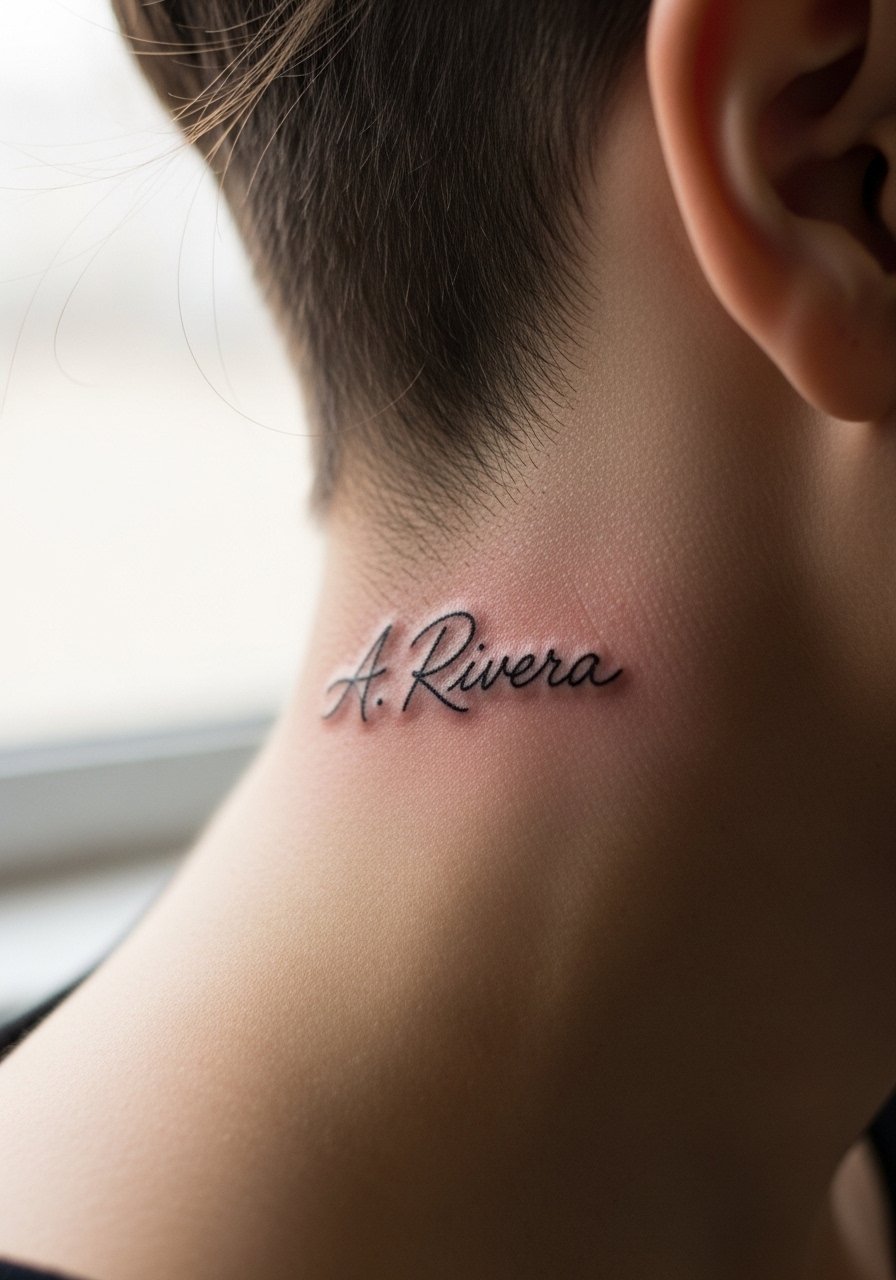
5. Personal Signature Replica
A signature behind the ear feels like a private autograph. Bring a clean scan or photo of the signature and ask for a size mockup on your skin during the consultation. The common mistake is scaling the signature too small, which loses the character of loops and connections. Expect a brief session and a mild, scratchy sensation where the skin is closest to bone. For career-sensitive people, remember this placement still shows with short hair and certain necklines. If you want to play it up, a tasteful set of ear cuff clips can draw attention without hiding the script.
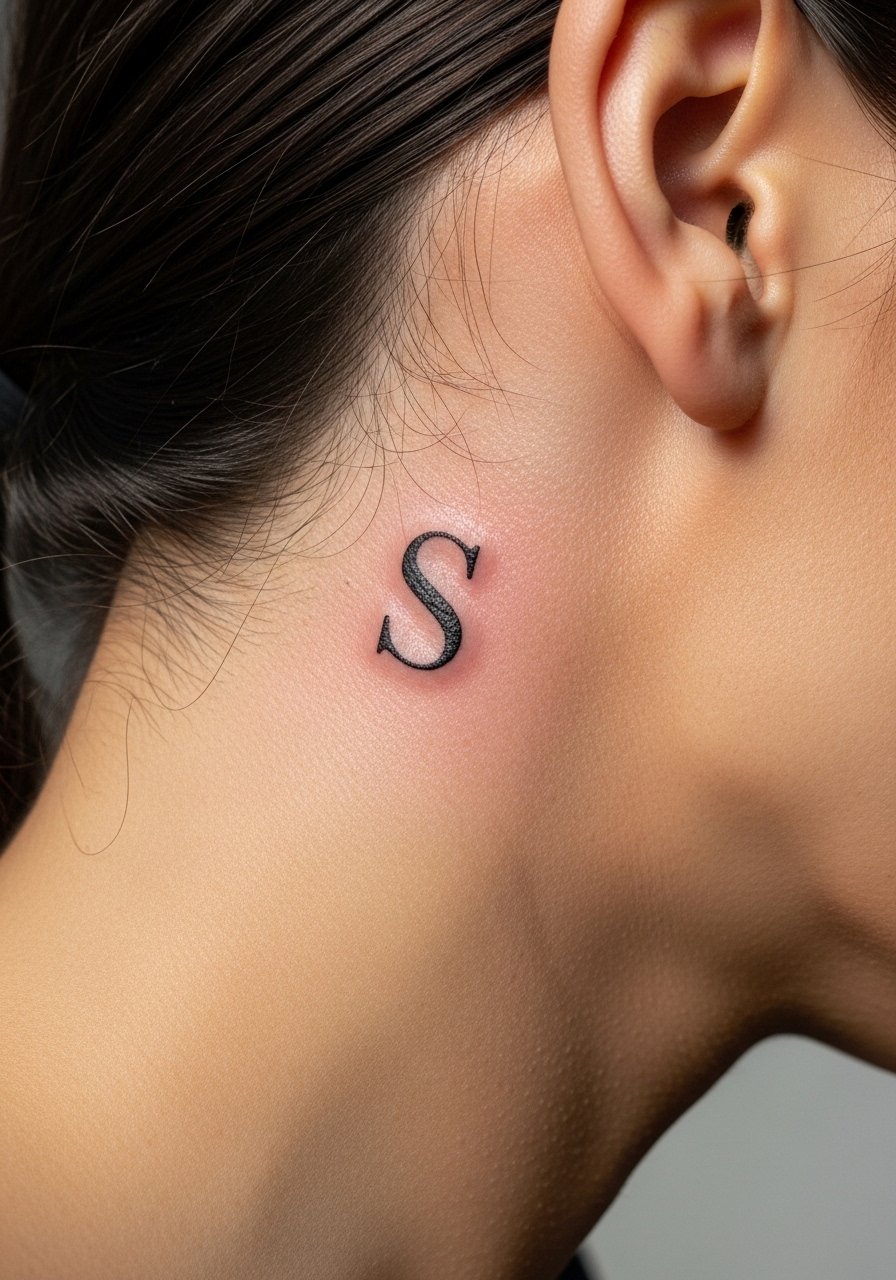
6. Single Initial in Minimal Serif
A single initial reads like a punctuation mark behind the ear and is quick to tattoo. Ask for a slightly thicker stroke than your usual fine line so the serif sits cleanly after healing. Most sessions are under 15 minutes and pain is low, but the proximity to hair follicles means tiny touch-ups can be needed where ink sits near the hairline. Avoid ultra-thin fonts because those are the first to soften. If you plan to show it off, a short haircut or a clipped-back style pairs well with a set of small metallic hair clips.
Studio Day Picks
The small surface and delicate linework behind the ear need a little forethought, so a few compact items make the session and first week easier.
-
Silicone-free stencil transfer paper. Lets you preview exact placement on the skin just behind the ear before the needle hits, which is crucial for asymmetrical scripts.
-
Topical numbing cream. Useful for especially sensitive clients who want brief relief during a short behind-ear session without affecting line quality.
-
Thin protective film roll. Protects the tiny script from friction with hair and pillowcases during the first night.
-
Fragrance-free gentle body wash. Cleans the area without stripping moisture, which helps thin strokes retain crisp edges.
-
Aquaphor healing ointment. A thin layer in the initial days keeps delicate linework from drying into flaky patches that pull on the ink.
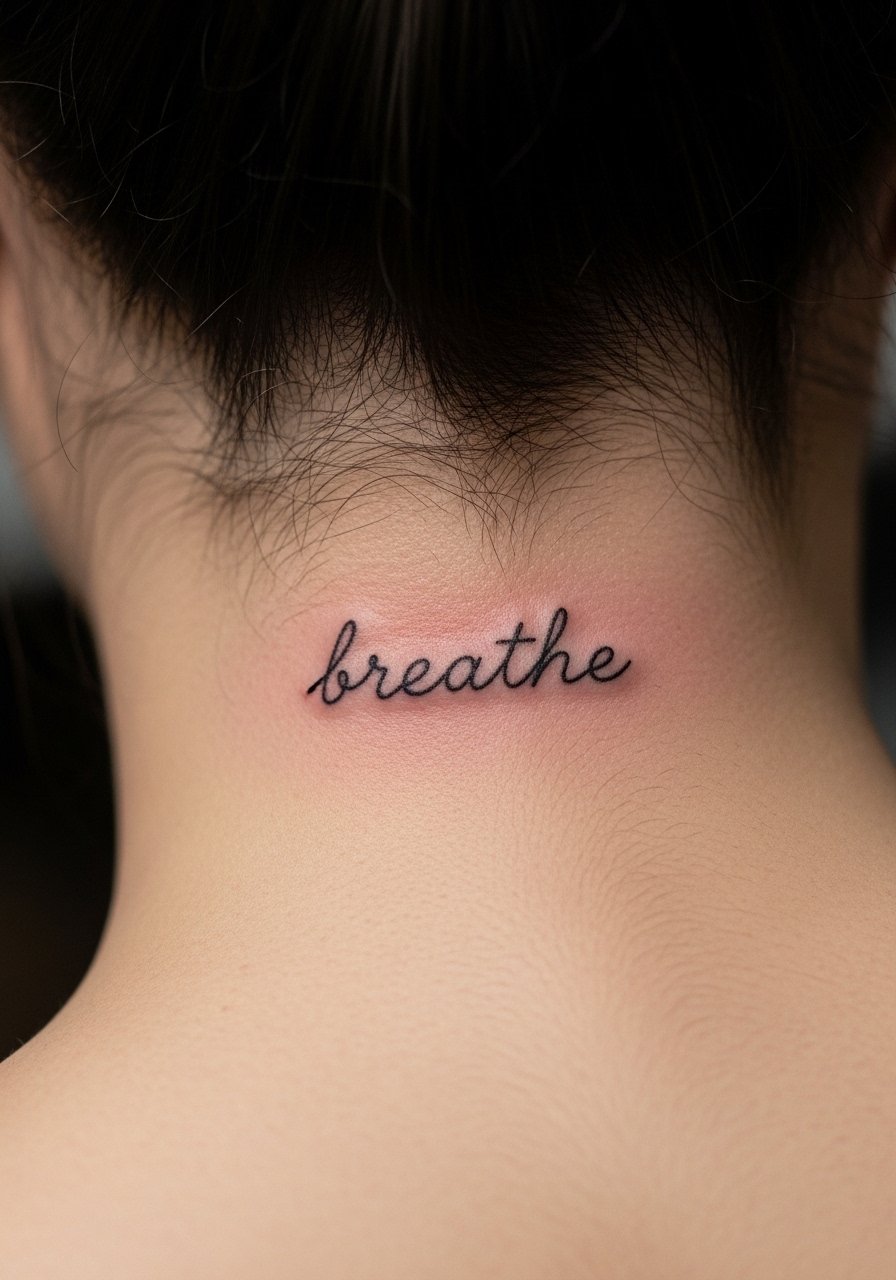
7. "Breathe" in Lowercase Cursive
This tiny, single-word choice is a classic for a reason because it reads like a private prompt. Ask for slightly more open letterforms so the loops do not close in as the piece heals. The pain is brief but uneven where the needle crosses small curves near the mastoid. A common aging issue is letters tightening up and losing the airy feel, so plan for a possible touch-up at year two. For wearing the day of the session, pin your hair up with a set of clear hair clips so the artist can access the area without tugging.
8. Vertical Tiny Script Strip
Vertical lettering stacked in a short column follows the natural curve behind the ear well. When you ask for this, say whether letters should read top-to-bottom or bottom-to-top when you tilt your head. The session takes a little longer than a single horizontal word because the artist must keep the vertical alignment exact. Vertical stacks can blur if letters are packed too tight, so request extra tracking space. Styling-wise, a short ponytail or a fabric hair tie keeps the area exposed during healing and displays the strip when you want it seen.
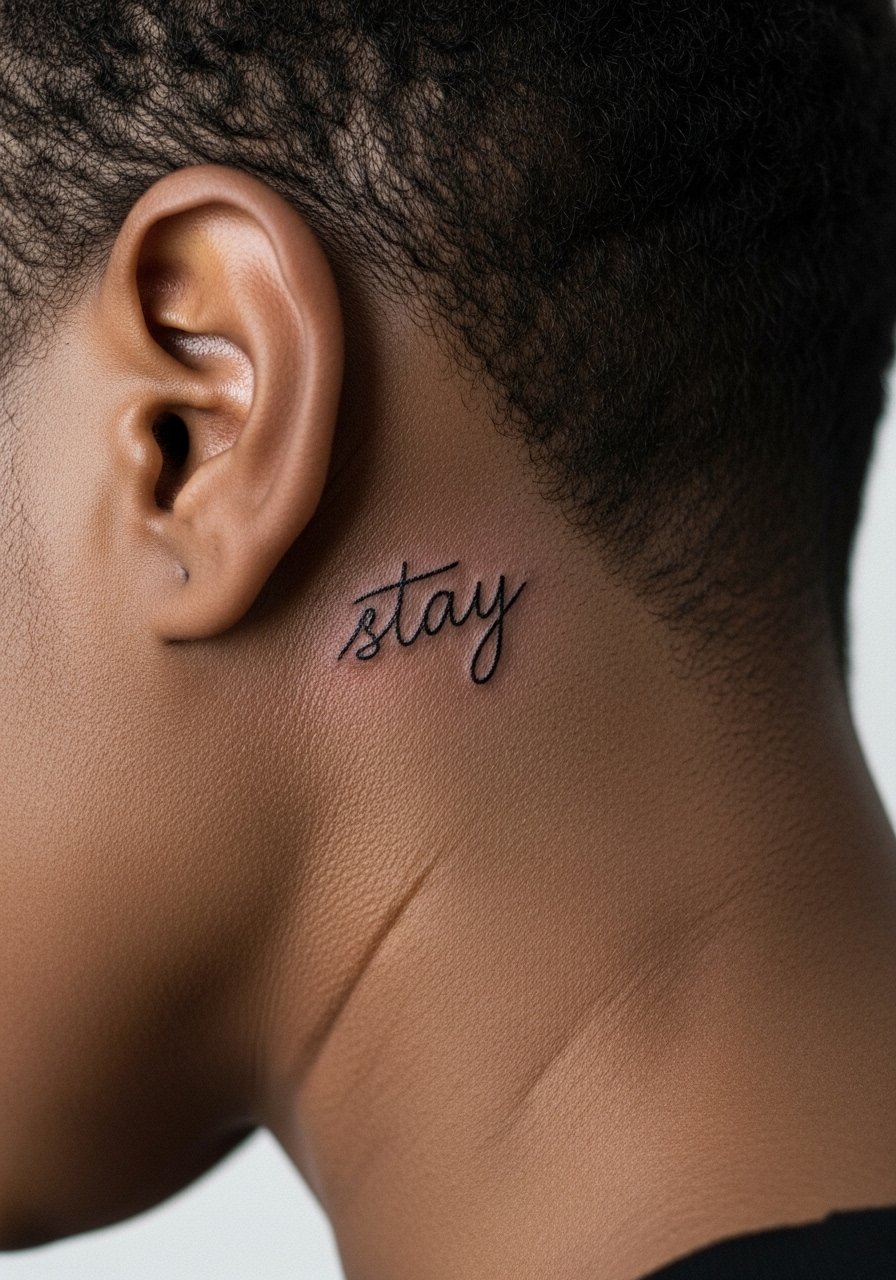
9. Phrase Along the Hairline
A two- or three-word phrase tucked along the hairline behind the ear reads like a margin note. Ask for light spacing and predictable ascent for letters so the phrase does not compress as it heals. The trade-off is that the lower the placement near the hairline the more likely small hair follicles will affect ink saturation. If you want to flash it for nights out, pair it with a low bun and a silk scrunchie to put the spot on display without pulling at the skin.
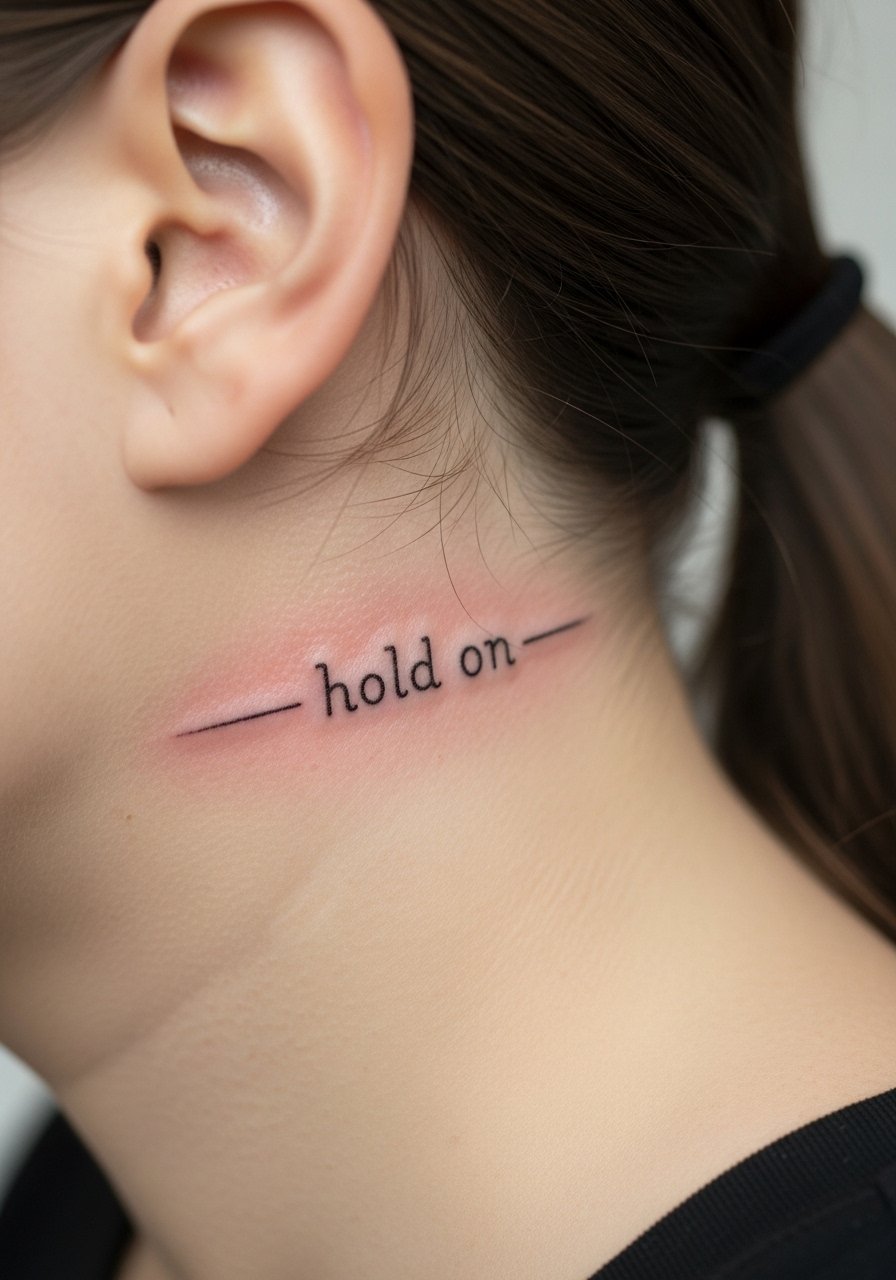
10. Script with Tiny Star Accent
Add a tiny star, dot or heart at the end of a micro script to anchor it visually. Tell the artist you want the accent separate from the last letter by a millimeter to avoid merging. Accents can help the eye read short script from a distance and age more gracefully than continuous flourishes. For showing it off, small stud earrings balance the accent without covering it. Try a pair of tiny cubic zirconia studs that sit close to the earlobe and complement the script.
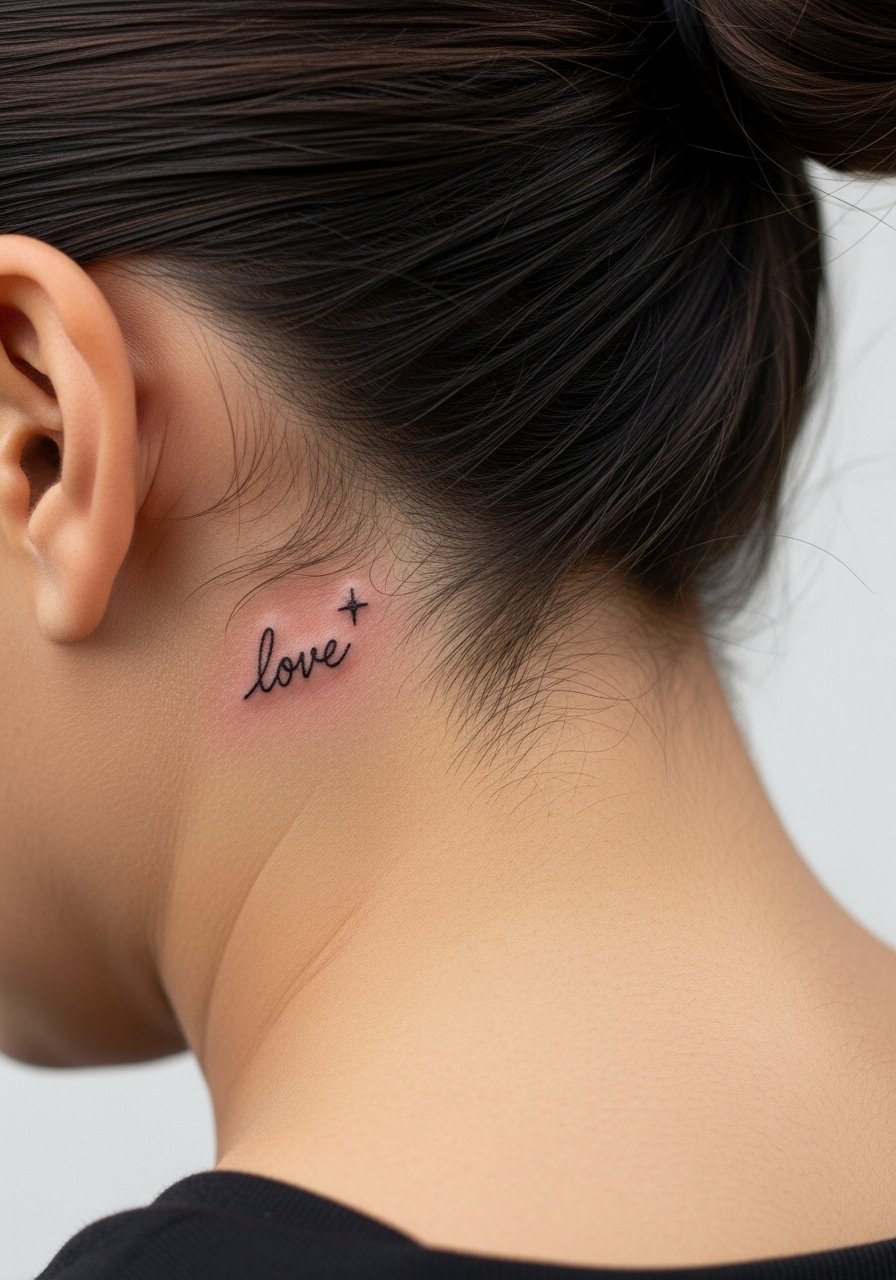
11. Curved Script Framing the Ear
A short curved word that follows the ear's ridge needs a stencil placed to the exact curve of your anatomy. During consultation, ask to see the curve on your skin before inking. Curved placement tends to look dynamic when viewed from the side but may require touch-up where the curve meets soft tissue. Pain varies but is usually mild. If you have very short hair, a minimalist ear cuff helps frame the curve without hiding the lettering.
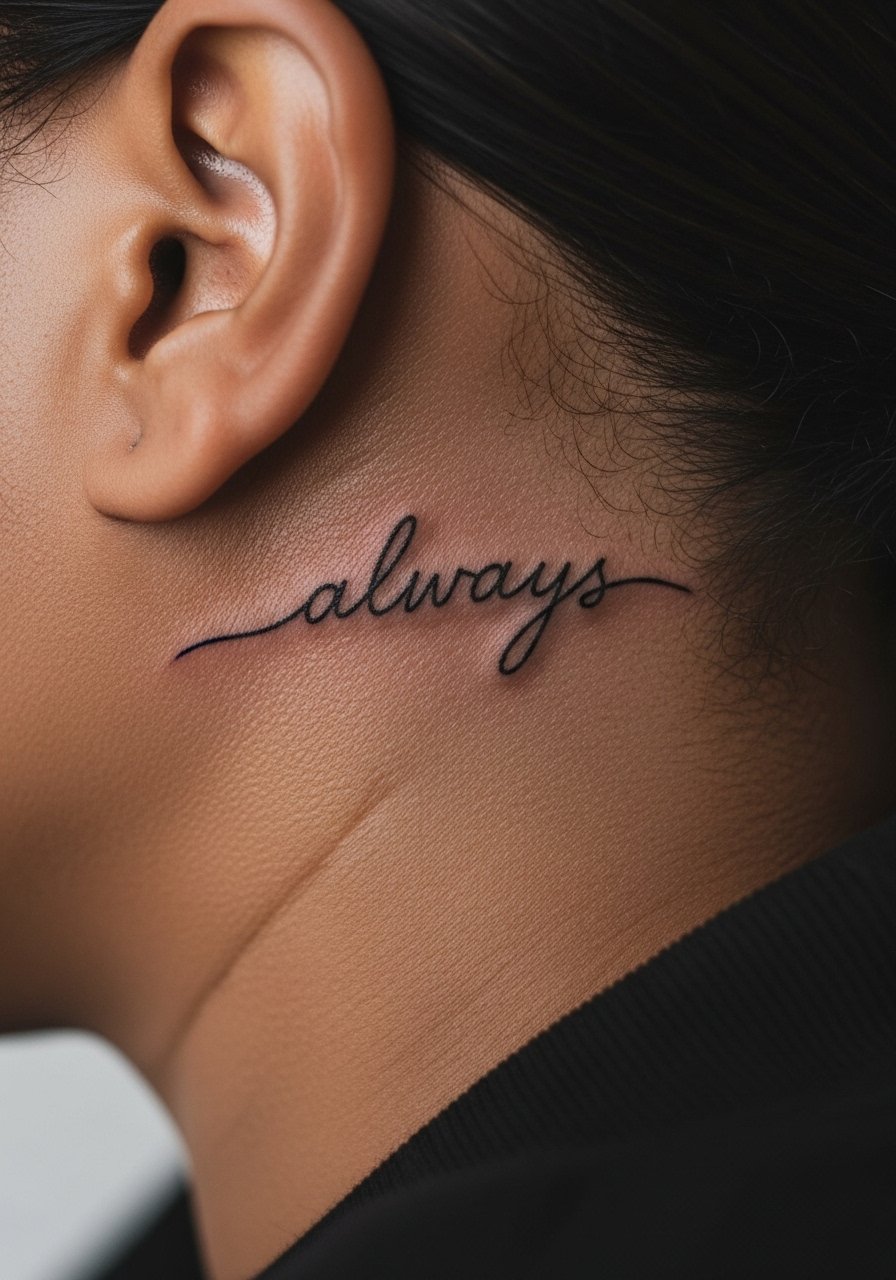
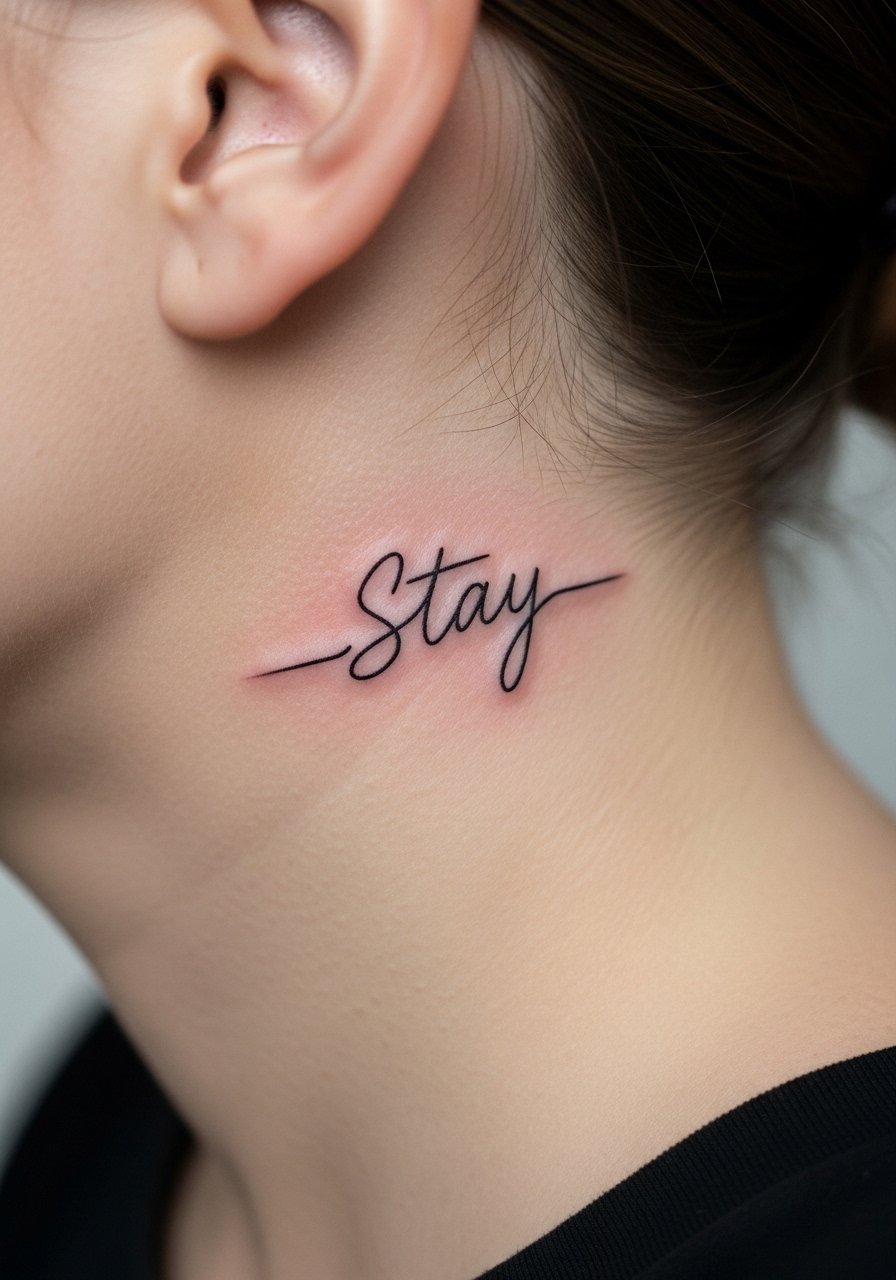
12. Underlined "Stay" Script
An underline can anchor a small word and give it a graphic finish, but thin underlines risk feathering if drawn too close to the letters. Request a tiny gap between the baseline and the underline so the two elements remain distinct after healing. The session is quick and the pain is mild. For session day comfort, wear a loose button-down shirt you can pull aside to expose the area without tugging at your hair or neck.
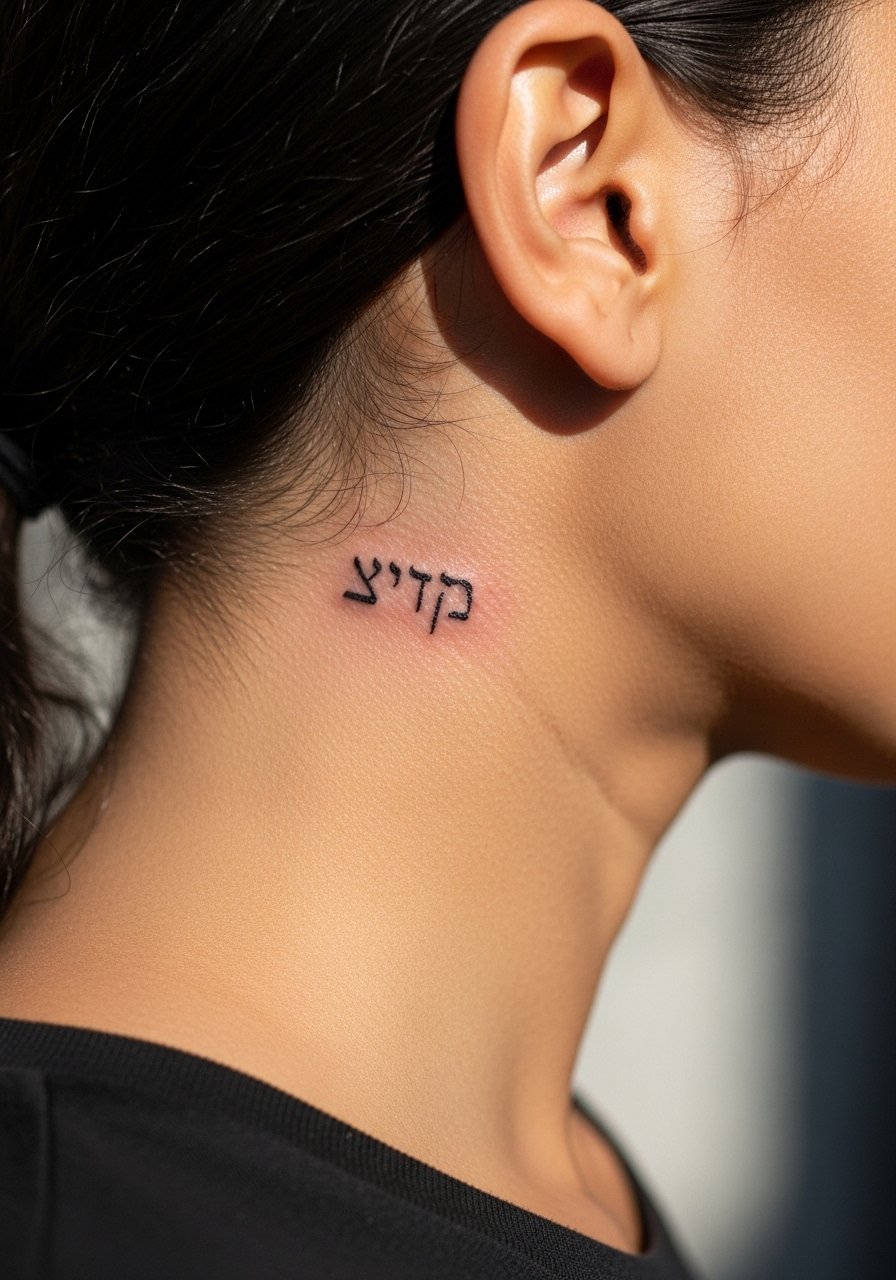
13. Foreign Word in Fine Script
A single foreign word can carry a lot of meaning and also raise cultural sensitivity questions. State the exact spelling and ask whether a slight adaptation would respect the original script better than a literal copy. The main mistake people make is picking a decorative font that strips the original of its context. Expect a short session and minor sensitivity. For discovery of appropriate lettering styles without naming artists, consult community directories and language-specific forums before you book.
14. Micro Lyric Line
A tiny fragment of a lyric works behind the ear when kept to three to five short characters. During consultation, show the exact line and ask the artist to test spacing so the rhythm reads naturally. Words tend to blur into one when too many letters are cramped into that small curve. For evenings out, a cropped hairstyle or a thin velvet headband keeps the tattoo visible without being loud.
15. Mirrored Paired Scripts Behind Both Ears
Matching micro scripts behind both ears create a symmetrical statement when your hair is up. Decide whether you want the words to read toward the face or away from it, and note that one approach reads more personal to you and the other appears balanced to an observer. Pain and session time double, but each piece is still small. Mirrored placements require precise stencil alignment so the pair sits evenly. If you plan to reveal both at once, try a short hairstyle with a low bun hair tie that keeps hair off the neck.
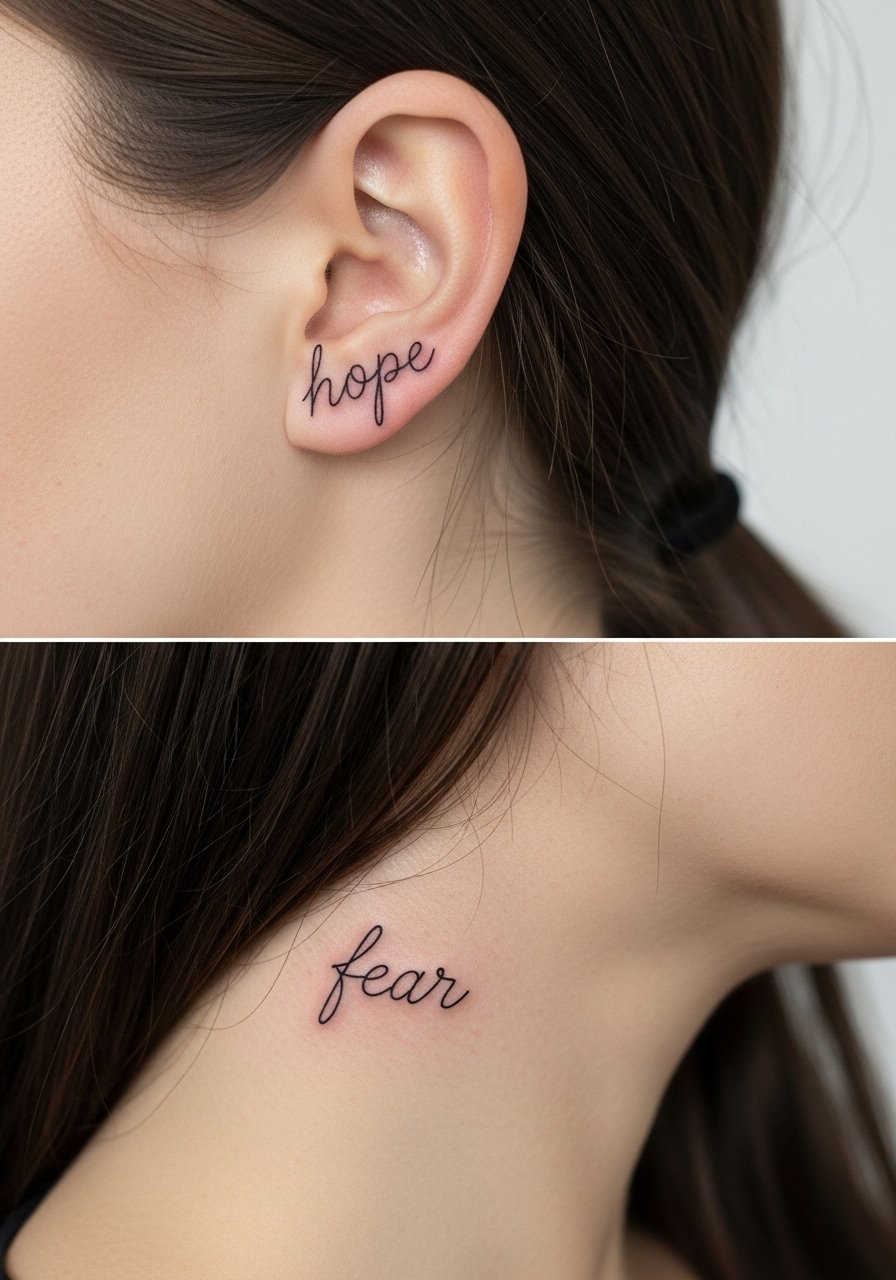
16. Dot-Joined Monoline Script
Monoline script connected by tiny dots creates a delicate rhythm and gives each letter breathing space. Tell your artist you want the dots separate from the stroke so they remain distinct after a year. The technique reduces continuous ink saturation which lowers blowout risk. Sessions are slightly longer than a single stroke but still short. For subtle show-off looks, a pair of ear-hugging studs keeps attention near the area without masking the script.
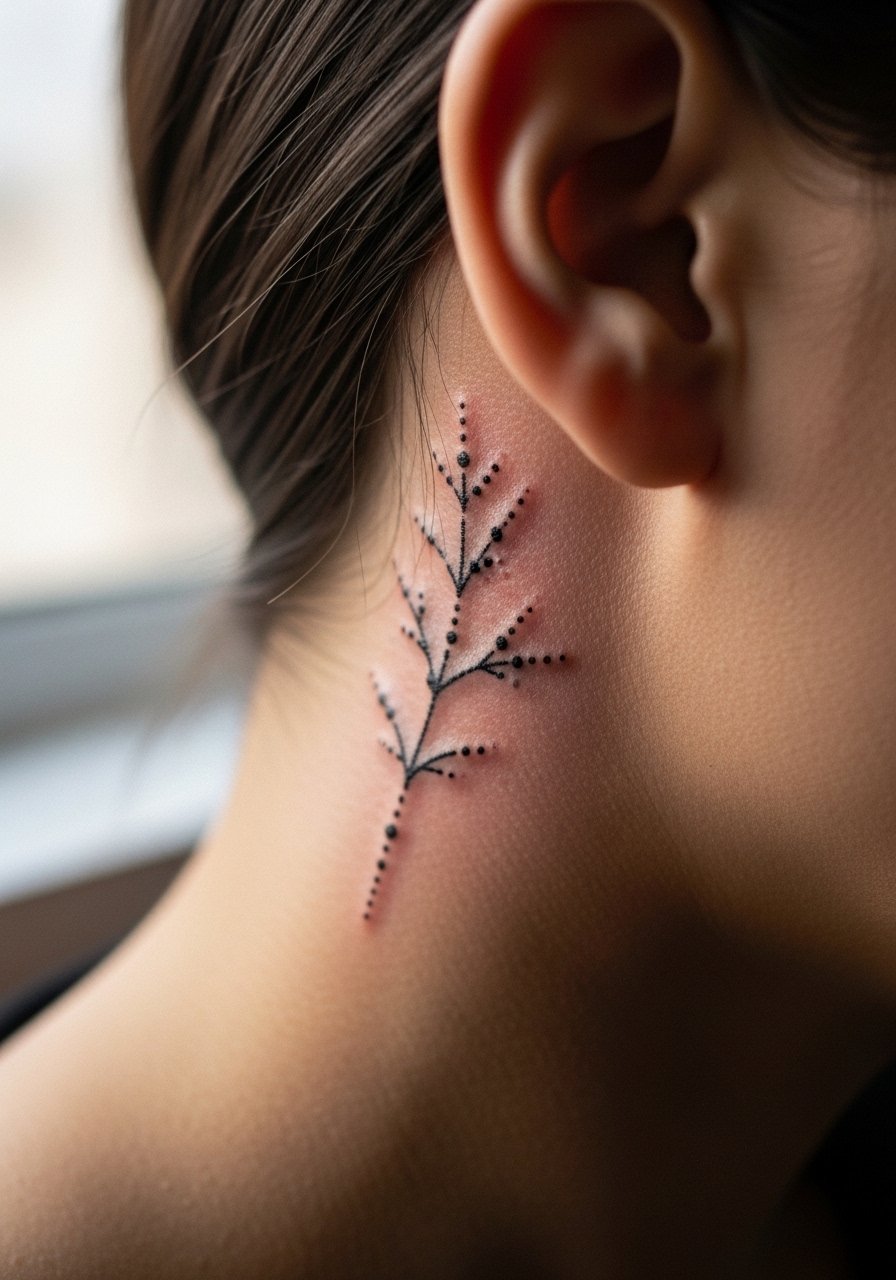
17. Thin Brushstroke Lettering
A thin brushstroke font offers a hand-painted feel but can be inconsistent if the strokes are too thin. Ask for simulated brush weight with slightly varied thickness instead of extreme contrast so the lines age more predictably. There is a debate in the community about whether brushstroke styles hold on mobile skin. One camp warns that highly variable strokes tend to blur into indistinct shapes over time. The other camp argues that modest contrast, placed carefully, offers a textured look that wears well. Decide which argument fits your tolerance for touch-ups. For session comfort, pin your hair up with a double prong hair clip.
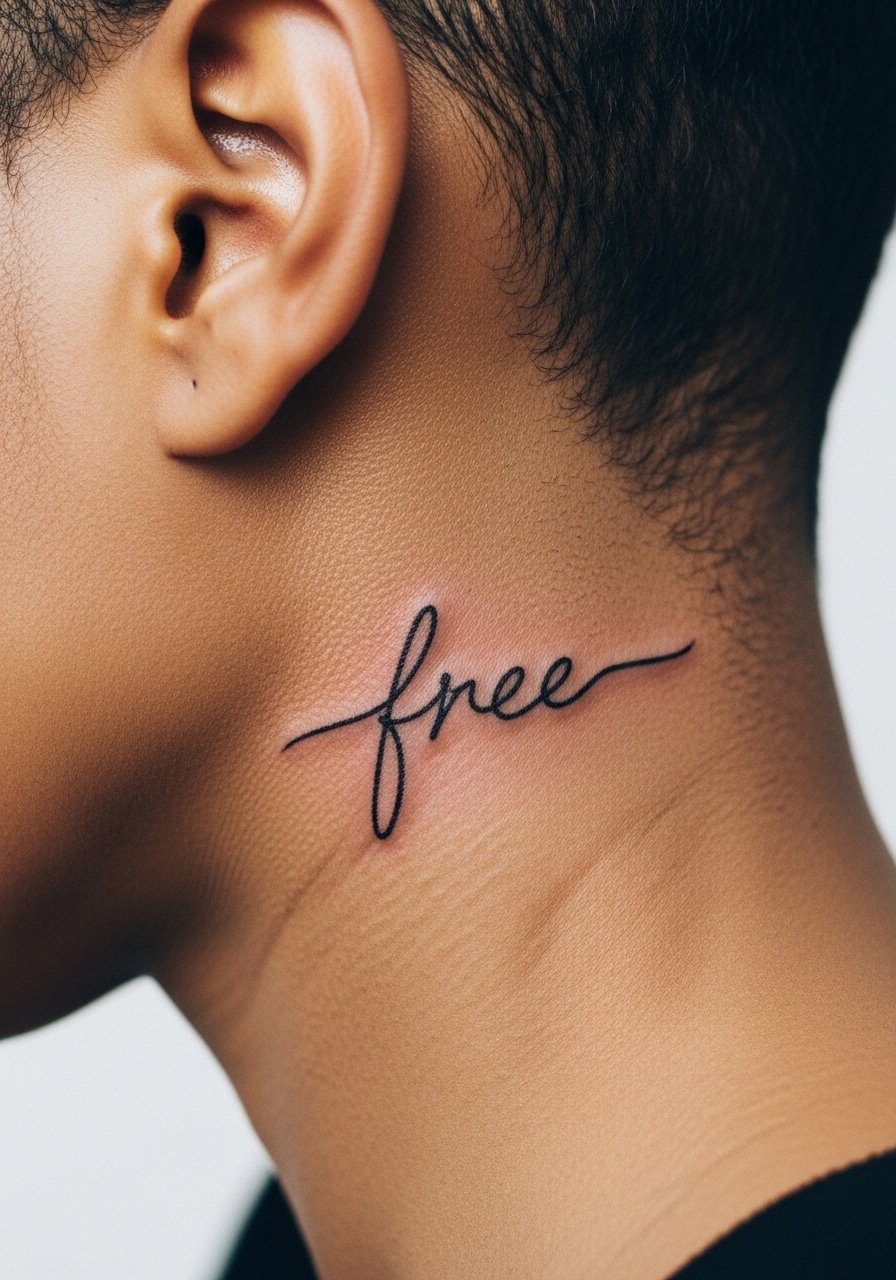
18. Zodiac Name in Compact Script
A zodiac name or sign spelled out in compact script reads like a quiet identifier. Keep the letters rounded and avoid excessive flourishes that can merge. The aging pattern shows small letters losing mid-stroke contrast first, so plan to revisit for a touch-up around year three. If you like how it looks with short hair, try pairing this with a minimalist barrette that holds hair back and frames the area without covering the script.
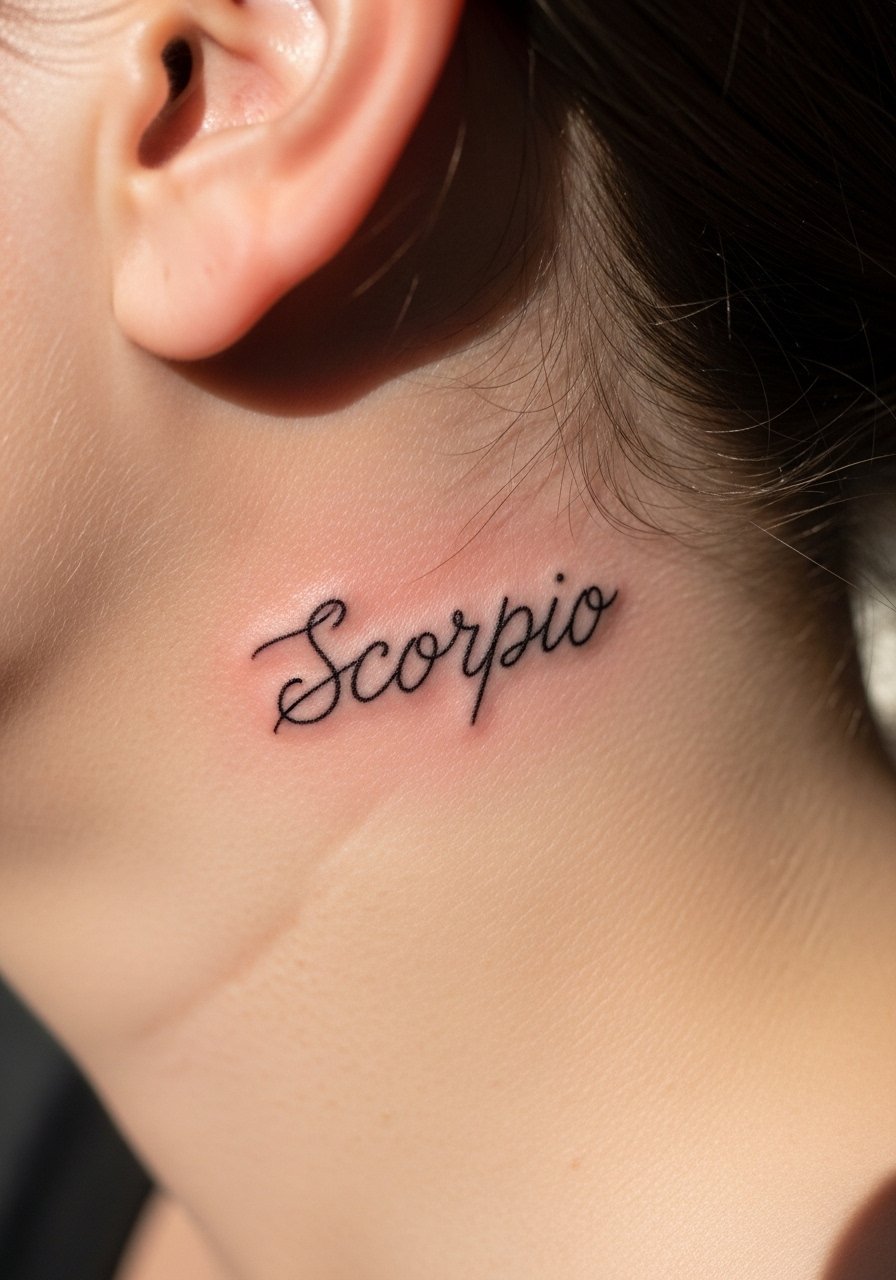
19. Family Nickname in Micro Script
Nicknames behind the ear carry intimacy and often sit closer to the hairline. Ask the artist to show a mockup with slightly increased kerning so letters do not collapse as the piece settles. The common mistake is choosing a highly ornate script which reads poorly at this scale. Sessions are short and healing is straightforward if you avoid hair oils that can irritate the area. To keep the spot visible when you want it seen, try a thin metallic headband that tucks hair back gently.
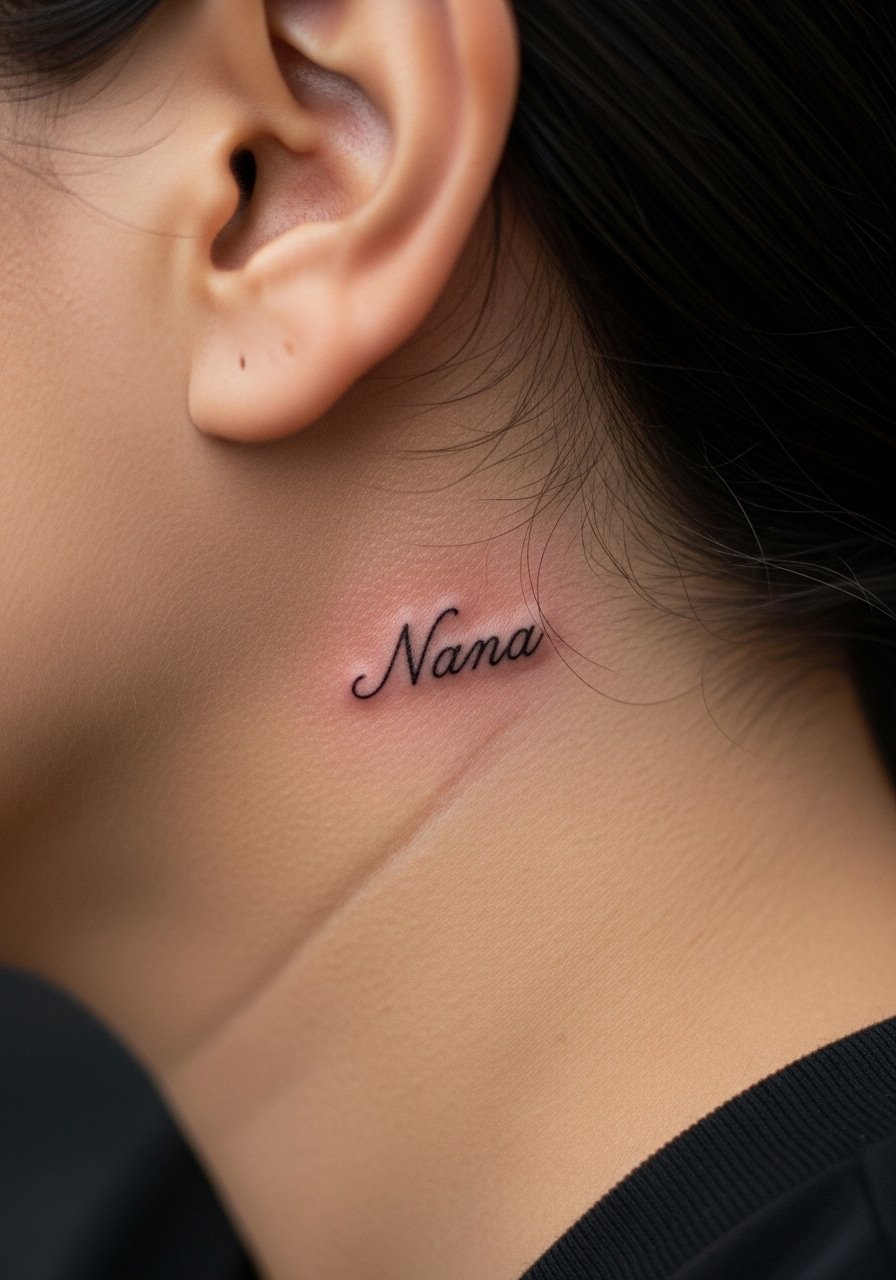
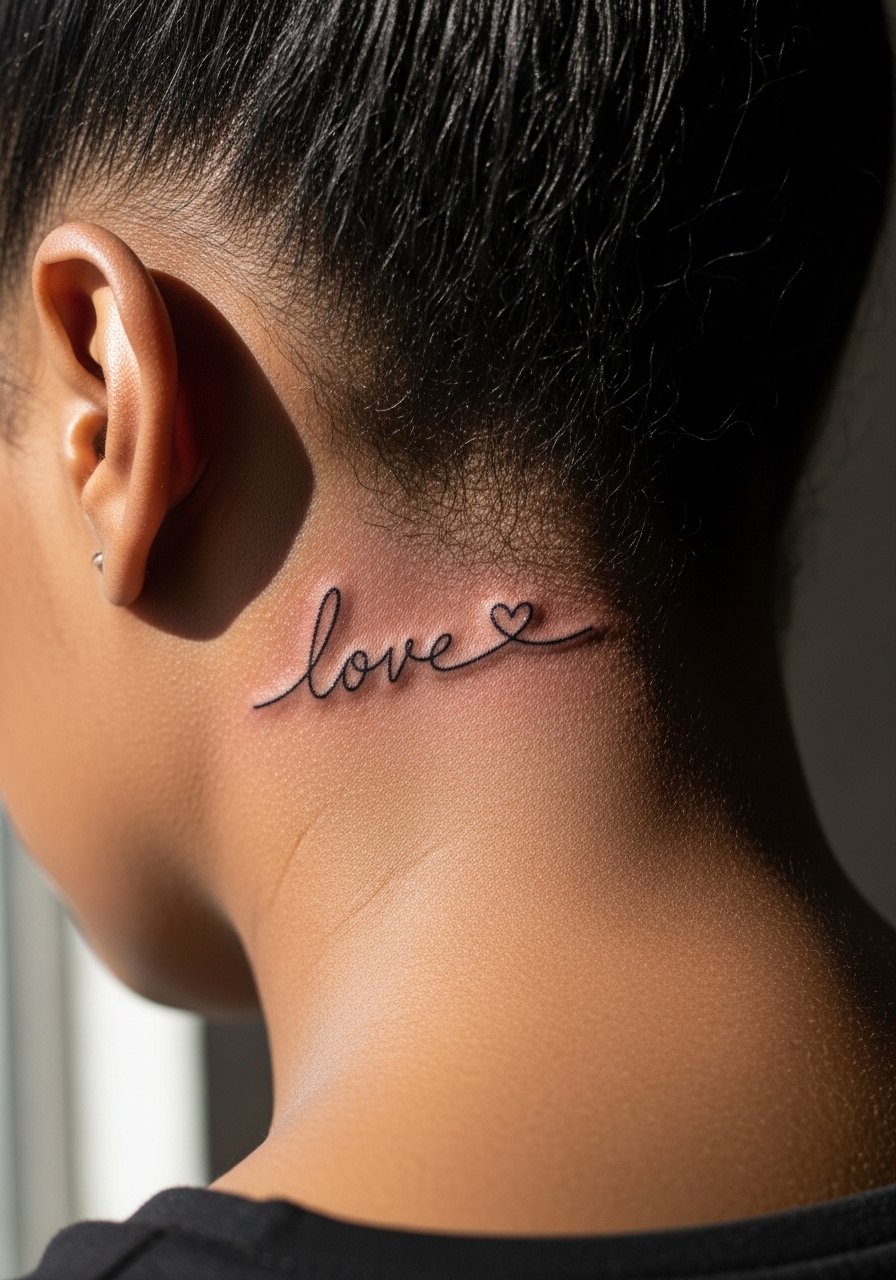
20. Tiny Script with Heart Accent
A small heart alongside a name or word softens the placement and gives it a punctuation-like finish. Request a heart sized to sit beside the script with a small gap to avoid merging during healing. Hearts can become vague if ink saturates too densely, so keep that accent minimal. For showing it off with a soft edge, a sheer scarf can be tied loosely to reveal the spot without heavy styling.
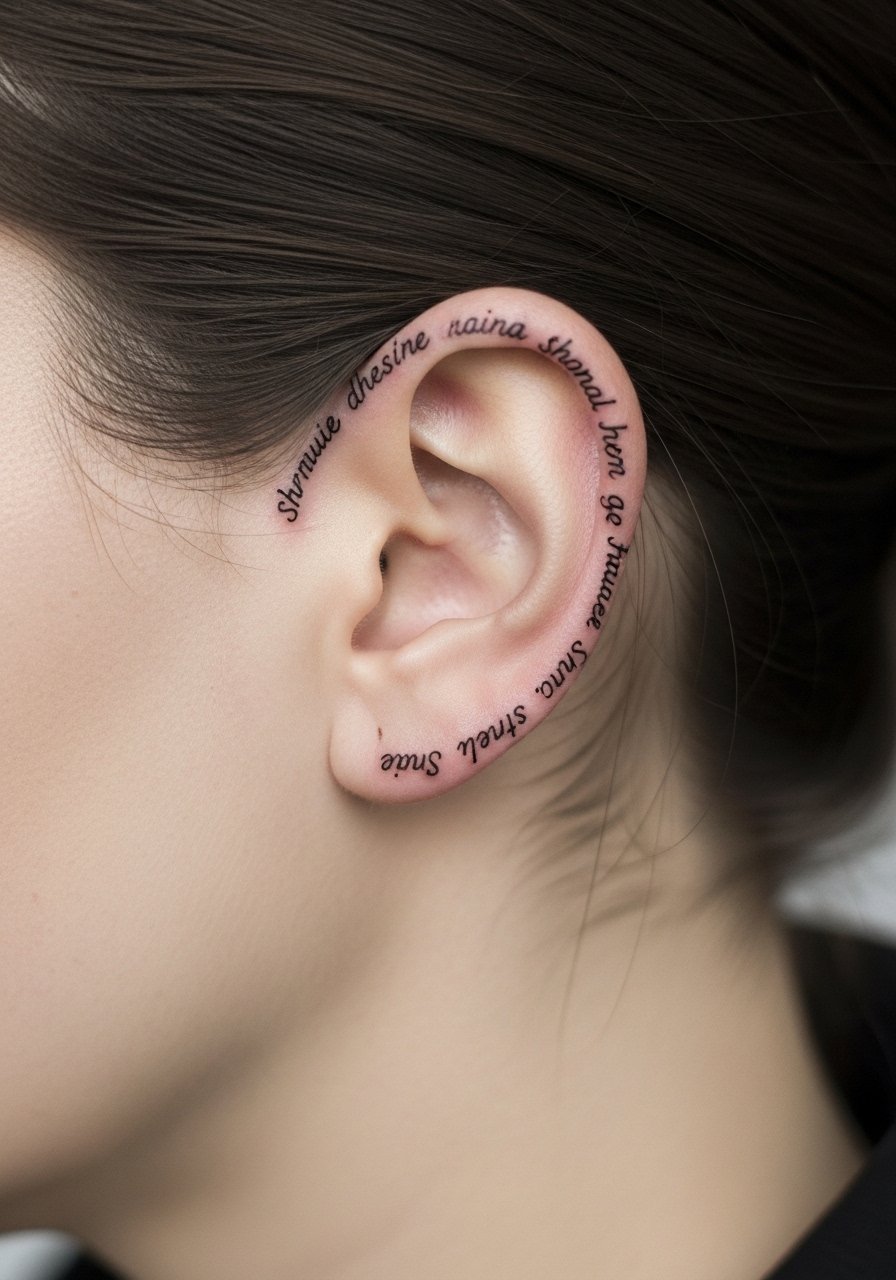
21. Tiny Script Halo Around the Ear
A short loop of tiny words that follow the upper curve of the ear creates a halo effect that peeks out when your hair moves. This needs precise stenciling and a steady hand to keep the curvature even. The risk is increased because more surface area meets hair-bearing skin, so ask about spacing and gentle depth. Sessions will take longer than a single word and you may notice more sensitivity. For a clean reveal, pair with a lightweight neck scarf worn loosely so the halo appears only when you want it to.
Frequently Asked Questions
Q: Will fine line script behind the ear blur faster than script on the forearm?
A: From what I have seen, behind-the-ear ink can blur sooner because the skin is thinner and there is more movement and hair follicle interference. Choosing slightly larger letterforms and allowing extra spacing reduces that risk, and expect a touch-up around year two to three for many micro pieces.
Q: How should I prepare on session day for a behind-ear script?
A: Wear something that gives the artist easy access to the area without tugging your hair, like a loose button-down shirt or pin your hair up with clips. Bring a photo for placement and ask to see the stencil before the needle starts so you can confirm the curve and size.
Q: Are there career implications for a tattoo behind the ear?
A: It depends on your workplace. This placement is discreet with longer hair and visible with short styles, so consider whether occasional visibility fits your professional environment. For more conservative settings, place the script slightly lower or choose a simpler, less ornamental font.
Q: How long does a typical touch-up cycle run for these tiny scripts?
A: Expect to revisit for touch-ups more often than you would for bold blackwork, typically around year two to three for small scripts. Longevity depends on sun exposure, skin type and how much friction the area gets from hair and clothing.
Q: How do I find an artist who knows how to handle micro script in this spot?
A: Use discovery pathways like local shop directories, hashtag searches for fine line work, Reddit threads for regional recommendations and convention lineups to see portfolios in person. Look for healed photos showing hairline placements and ask about their experience with touch-up rates for behind-ear work.