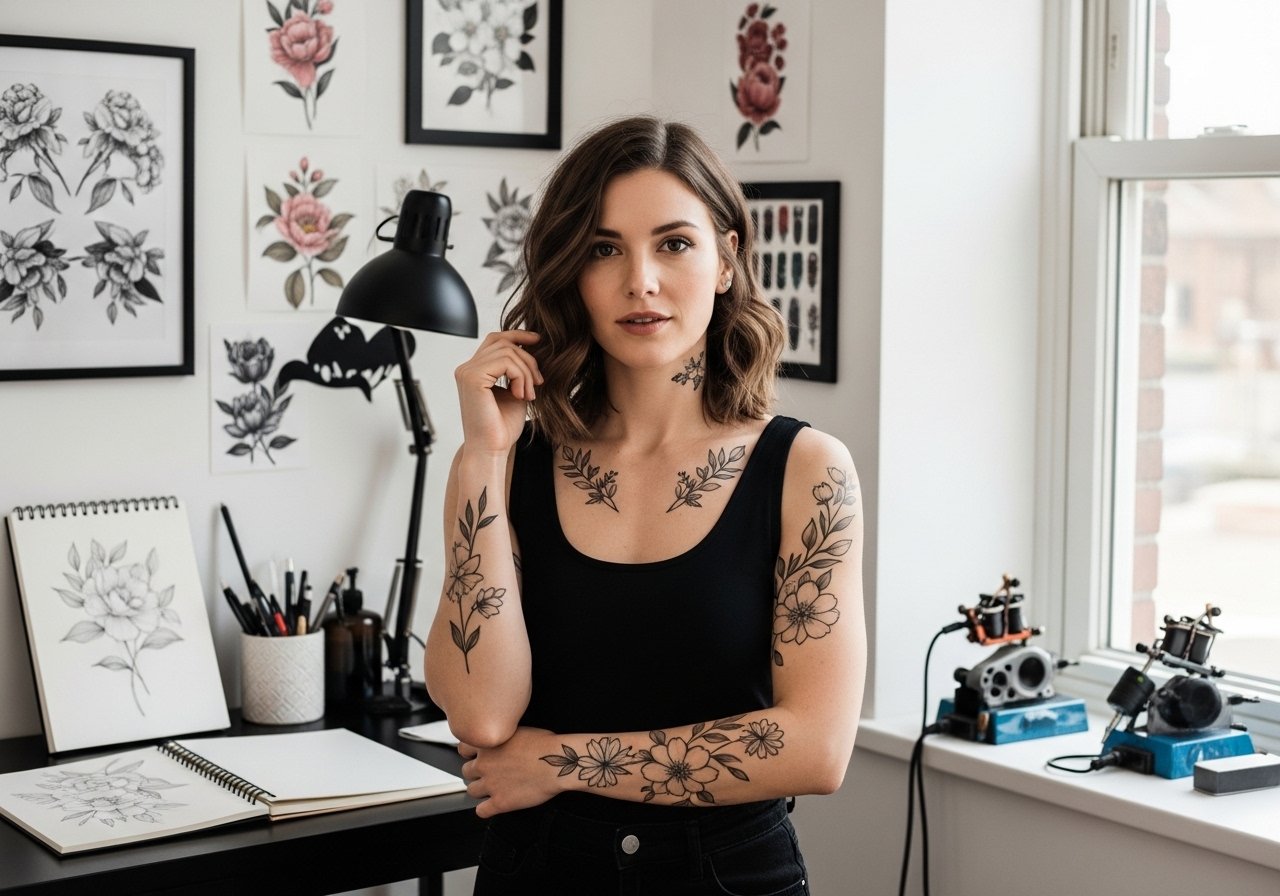
Fine line ink is everywhere online, but trends and reality often diverge. Pain shows up where you least expect it, small scripts blur faster than promised on certain skin tones, and last-minute artist cancellations force reschedules. This list walks through 27 front arm tattoo men ideas with practical notes on pain, aging, and what to ask your artist so the piece looks good at six months and at year three.
1. Forearm Mandala with Bold Outer Rings
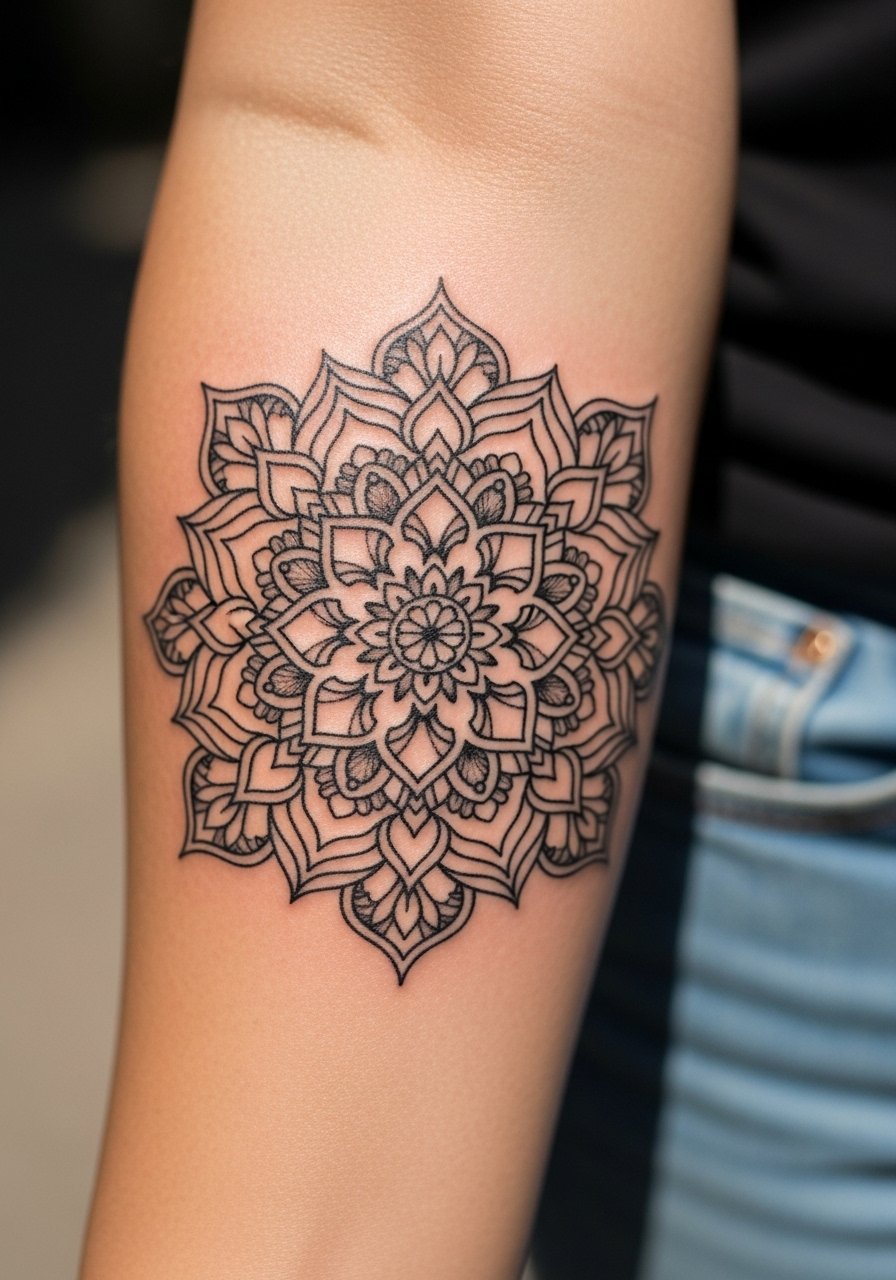
I recommend a mandala on the outer forearm when you want detail that lasts. Ask for larger spacing between concentric elements so the stipple shading does not merge after two years. The session feels steady rather than sharp since the meat of the forearm dulls needle vibration. Common mistake is shrinking the design to fit a wrist area, which creates crowding and early blur. For the session wear a fitted henley shirt you can roll up so the artist has full access without fabric bunching.
2. Fine Line Arrow on Inner Forearm
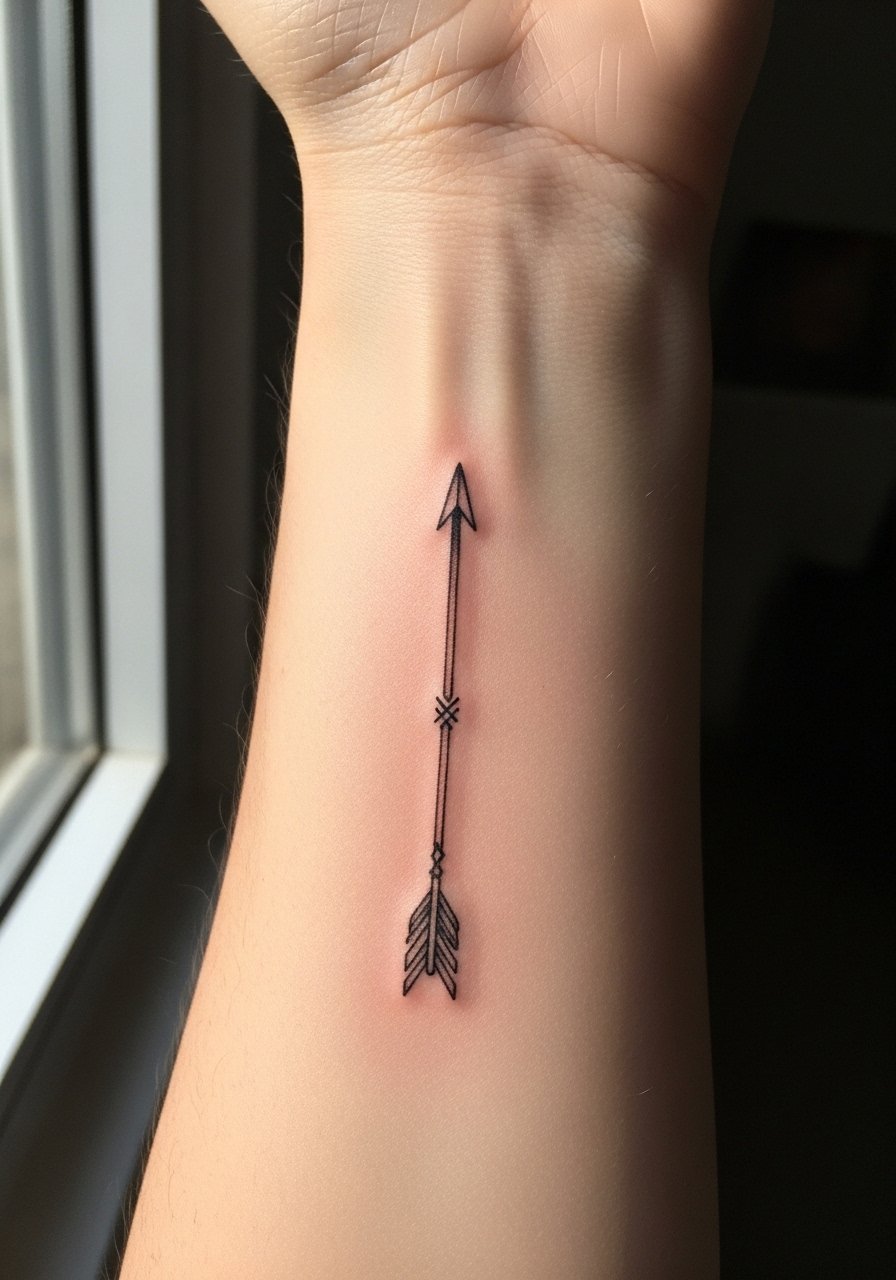
Fine arrow linework reads clean on the inner forearm at first, but the inner forearm moves and receives more sun exposure when sleeves ride up. One camp of artists warns fine line fades quickly there. The other camp says careful spacing and slightly heavier line weight settles better. Ask your artist which approach they use and expect a touch-up at year two if you go ultra-fine. Pain is moderate. For the appointment wear a short sleeve chambray shirt so the arm lies flat and the artist can work without fabric drag.
3. Script Quote Along the Front Arm

Script on the front arm can be a private reminder or a visible statement. The most common issue is choosing overly thin fonts that lose counters with time. When you consult your artist, bring exact font examples and ask them to thicken downstrokes slightly for longevity. Pain varies by proximity to the ulna near the wrist. Expect a one-session job for small quotes. For showing it off, pair the piece with a thin silver chain necklace and roll sleeves to mid-forearm so the script reads when you gesture in conversation.
4. Geometric Armband with Negative Space
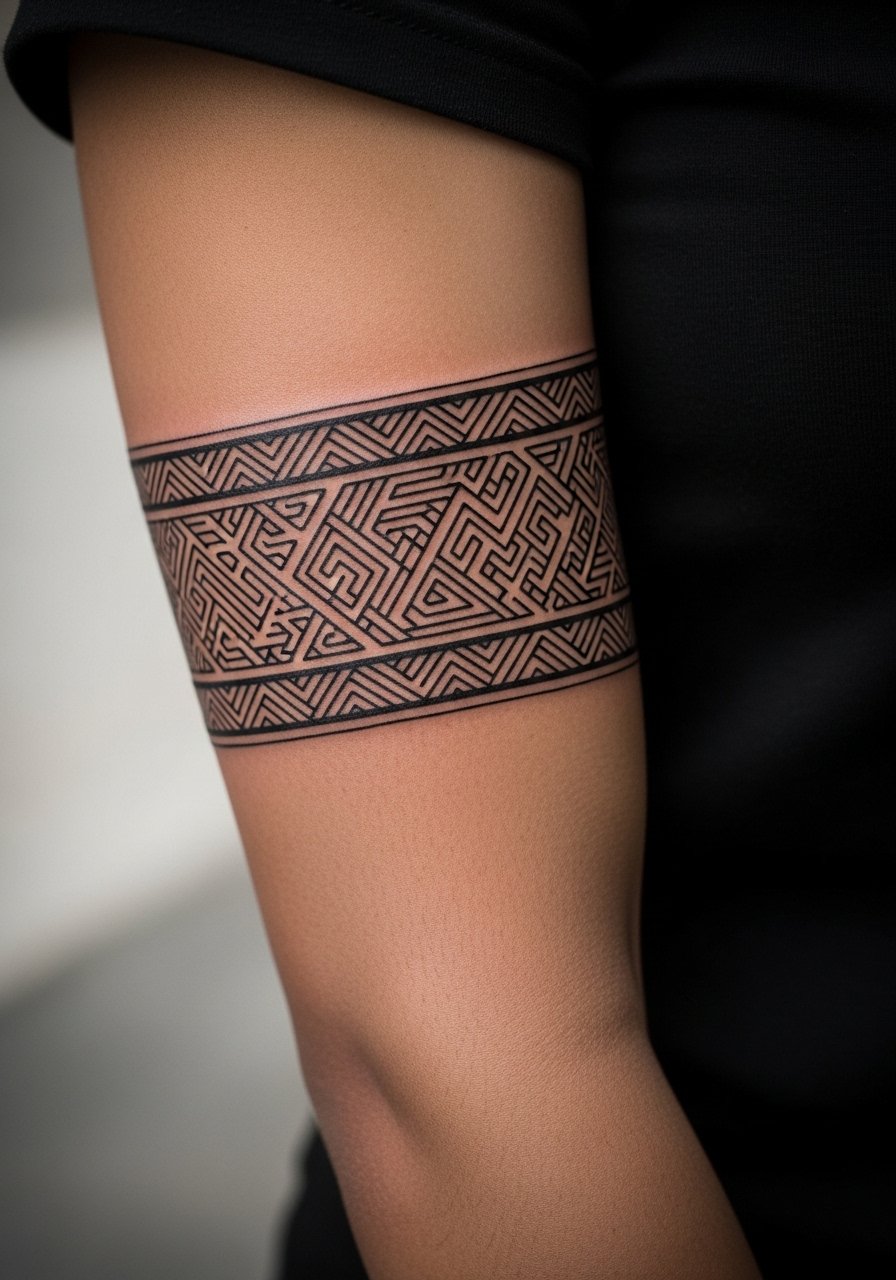
Armbands age well if the geometry has breathing room. The biggest mistake is trying to cram ornate detail into a narrow band. Make the lines wider and allow negative space to persist. For guys who lift, place the band slightly off peak bicep so muscle growth does not distort pattern symmetry. One session usually handles a clean armband. Wear a rolled sleeve athletic shirt to the appointment so cuffs do not smear the stencil during setup.
5. Tribal Armband Reimagined as Contemporary Blackwork
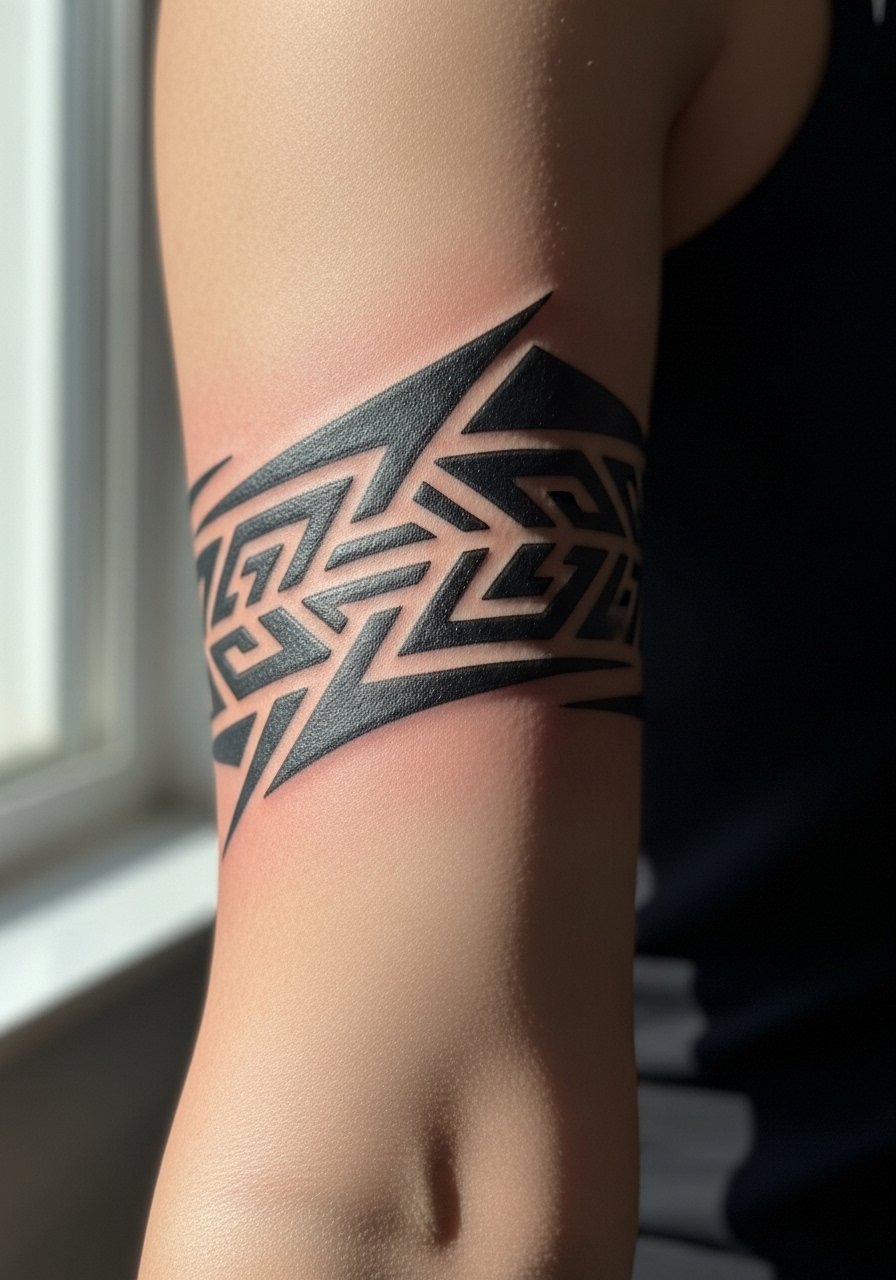
If you are drawn to tribal lines, consider a contemporary reinterpretation that respects origin and avoids copied sacred motifs. Ask for custom geometry that nods to heritage while staying unique. Tribal armbands are quick, low-pain sessions and they age predictably when the fill is solid. The common regret is choosing a dated flash pattern. For the session wear a tank top so the bicep sits relaxed and the artist can angle tools without shoulder tension.
6. Ocean Wave Forearm in Blue Gradients

Wave pieces move with the arm and give a natural flow that suits surfers and outdoors types. Watercolor-style gradients trend, but many artists now prefer fine line geometrics alongside color for longevity. If you want color, ask for selective saturation and contrast edges so the blues do not bleed into each other. Expect two sessions for layered color. For showing this off, pair the forearm with a leather cuff bracelet when sleeves are rolled for a surf-ready vibe.
Studio Day Picks
The small forearm and inner arm pieces above have different healing needs than full sleeves, so a few session-day and first-week items make the appointment and recovery smoother.
-
Stencil transfer paper kit. Lets you preview line placement on skin for pieces like the arrow and script before the needle starts.
-
Topical numbing cream. Applied 30 to 45 minutes before can ease wrist and inner-forearm sensitivity, useful when you have low pain tolerance.
-
Thin protective film roll. Helpful for forearm pieces exposed to friction from shirts in the first few days.
-
Fragrance-free body wash. Gentle cleansers reduce irritation on fresh blackwork and fine line forearm tattoos.
-
Aquaphor healing ointment. A thin layer in the first days keeps the skin supple for fine line work without heavy occlusion.
7. Traditional Lion Half Sleeve, Upper Arm Focus
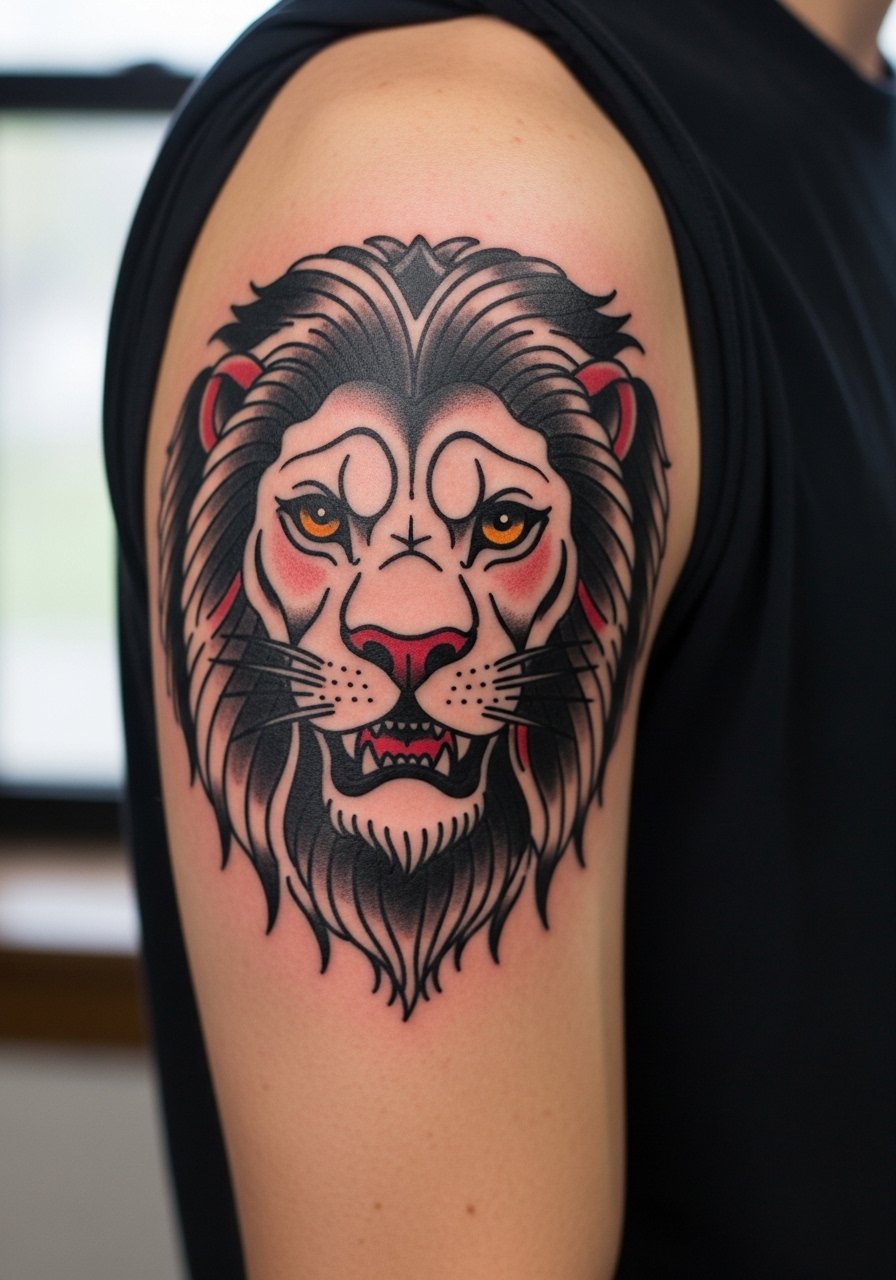
The lion half sleeve reads well on the outer upper arm where shirts can cover it for work. Traditional saturation ages into a dense, readable piece at year five. The common consultation mistake is shrinking the central motif too small. Tell the artist you want the lion to occupy the full bicep arc and to keep outlines confident. Sessions run multiple sittings across months. Wear a slim fit polo shirt you can pull down on one shoulder so the artist has clear access to the upper arm.
8. Japanese Dragon Full Arm Sleeve That Wraps the Forearm
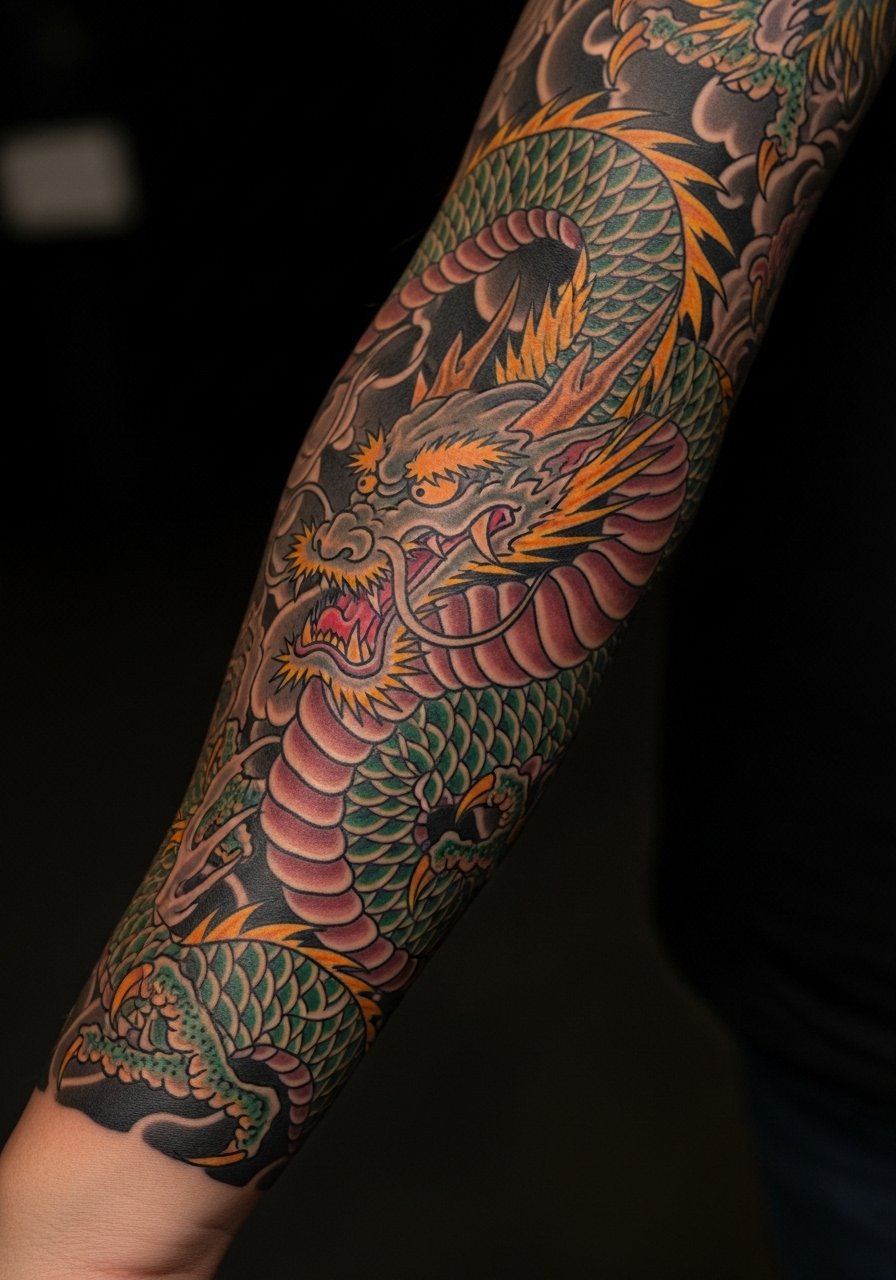
Dragon sleeves take commitment and time. The visual flow should wrap rather than stop at the elbow. Avoid tacking on unrelated flash that creates a patchwork feel. Expect many sessions and plan for cohesion by asking an artist how they will connect elements. For nightlife flair, some people add UV accents but that is a specialty and requires separate consultation. Long sessions mean loose clothing like tailored short sleeve shirts for travel home and comfort.
9. Phoenix Rising on Outer Upper Forearm

A phoenix reads best when the body follows the arm's length. Plan a medium-to-large size and ask for strong color transitions so the fiery sections do not muddy. The upper forearm handles color well and usually hides under shirts when you need coverage. Sessions are moderate in length depending on color layering. For session day wear a loose tank top so the shoulder and upper arm remain unrestricted.
10. Skull with Roses Half Sleeve Starting at the Elbow
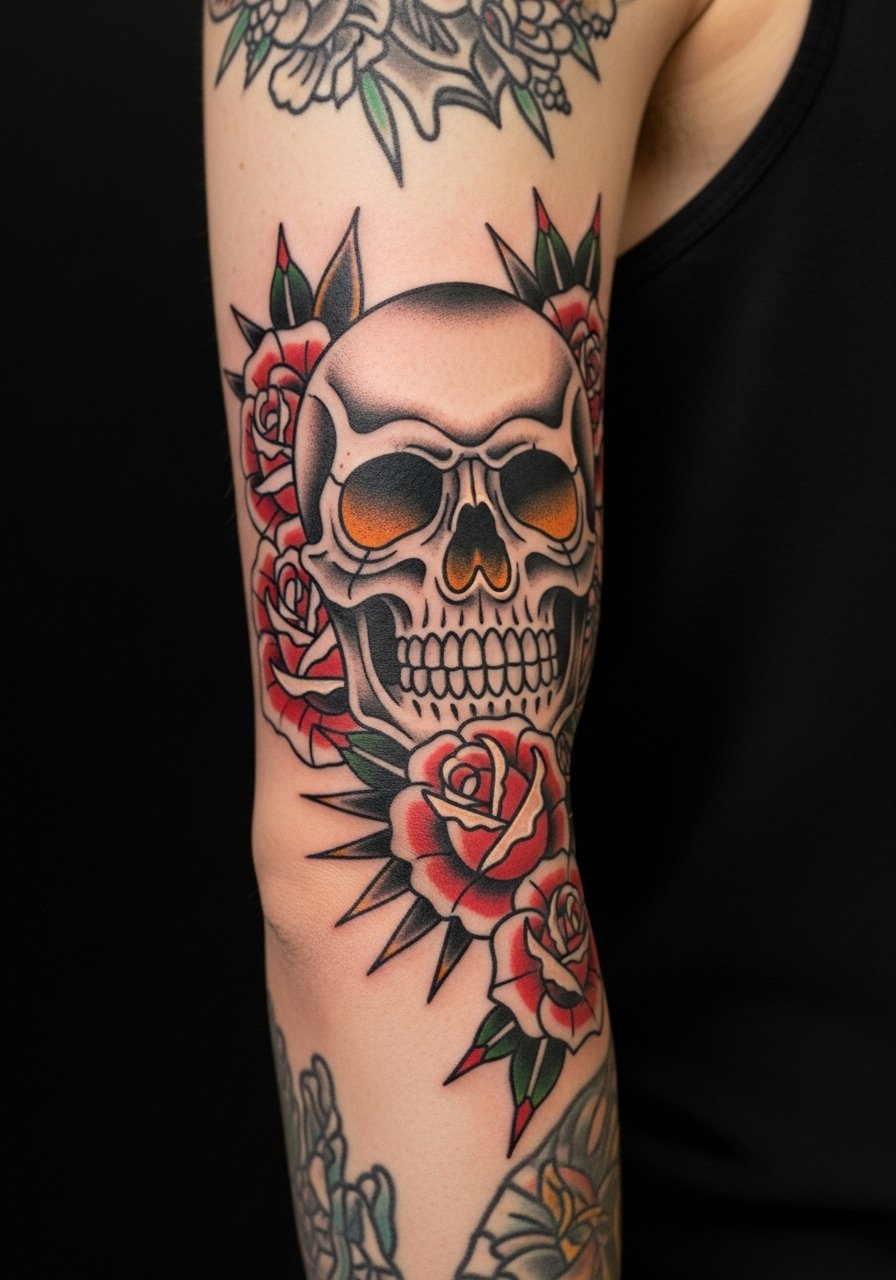
Skull and rose combos age gracefully when the roses are given room and color contrast. A common flaw is cramming tiny petals into dark shadow, which becomes muddled later. Elbow areas require careful stencil placement because the joint flexes. Expect a multi-session plan and ask how the artist handles elbow contouring. For showing it off, a three quarter sleeve shirt in olive tones frames the piece without too much exposure.
11. Biomechanical Forearm Sleeve for a Sci-Fi Look
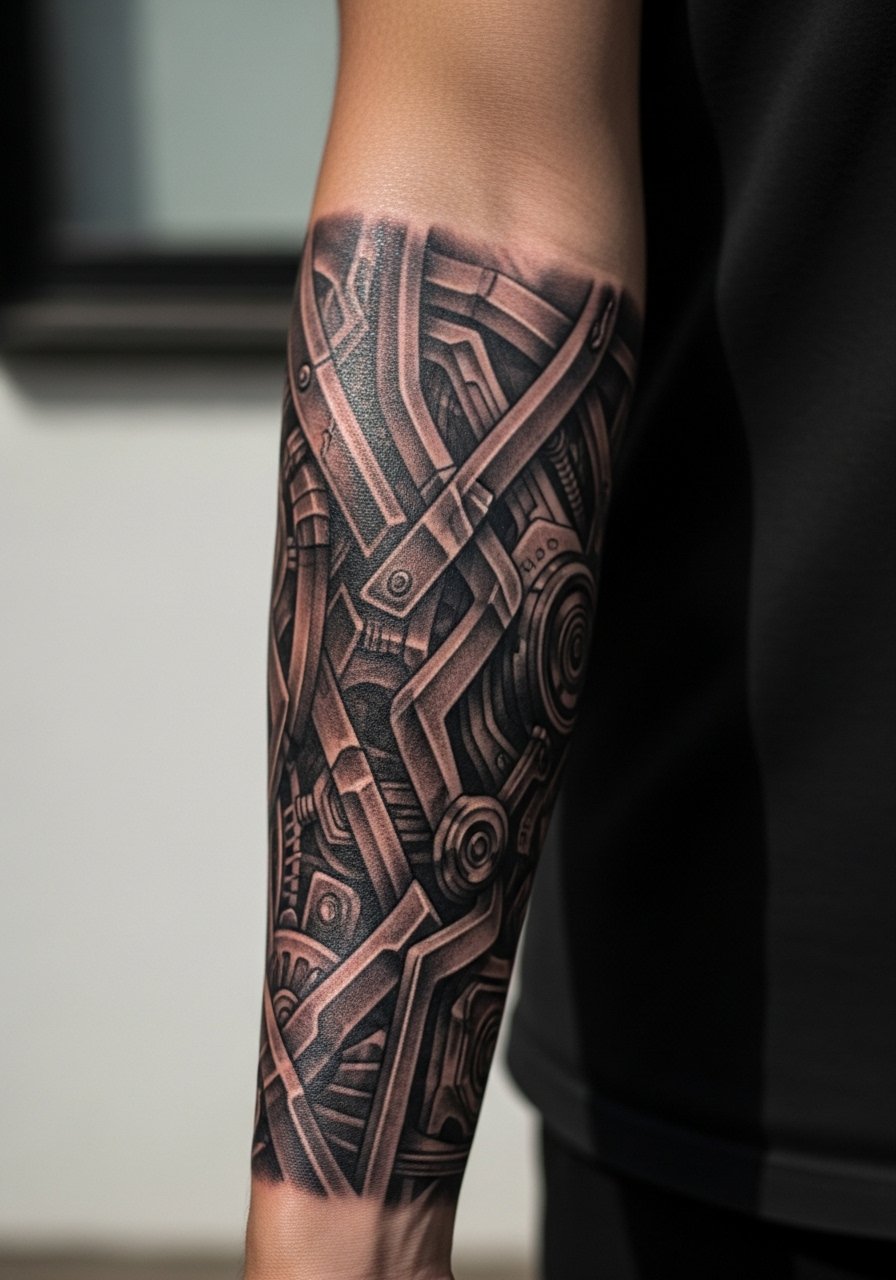
Biomechanical work relies on deep gray saturation and contrast to read like machinery under the skin. It is shading heavy and benefits from artists experienced in black-and-gray realism. Touch-ups may be needed around the elbow where motion causes micro-blowout risk. Sessions are long and often staged in 3 to 6 sittings. For the appointment wear a loose athletic tank so you can stay comfortable during long shading passes.
12. Wolf Pack Bicep Portrait in Black and Gray
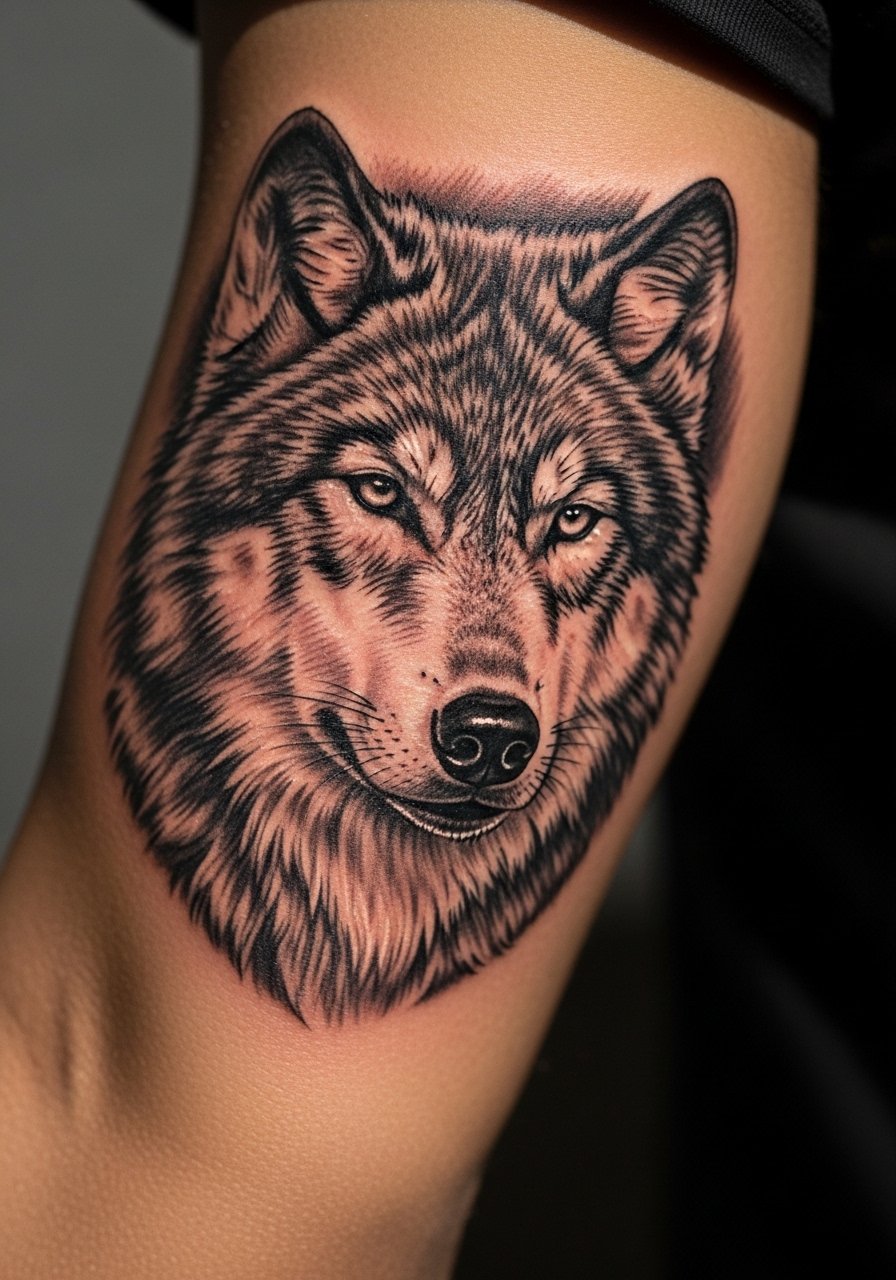
Realism on the bicep looks striking when placed to flex with muscle. The bicep's meatier tissue reduces blowout risk versus the forearm. A typical error is asking for a tiny portrait where detail will fail. Aim for medium to large size. Sessions usually take multiple hours across two sittings. For showing this off, wear a leather watch on the opposite wrist to balance the look when sleeves are short.
13. Clockwork Bicep with Ornamental Gears
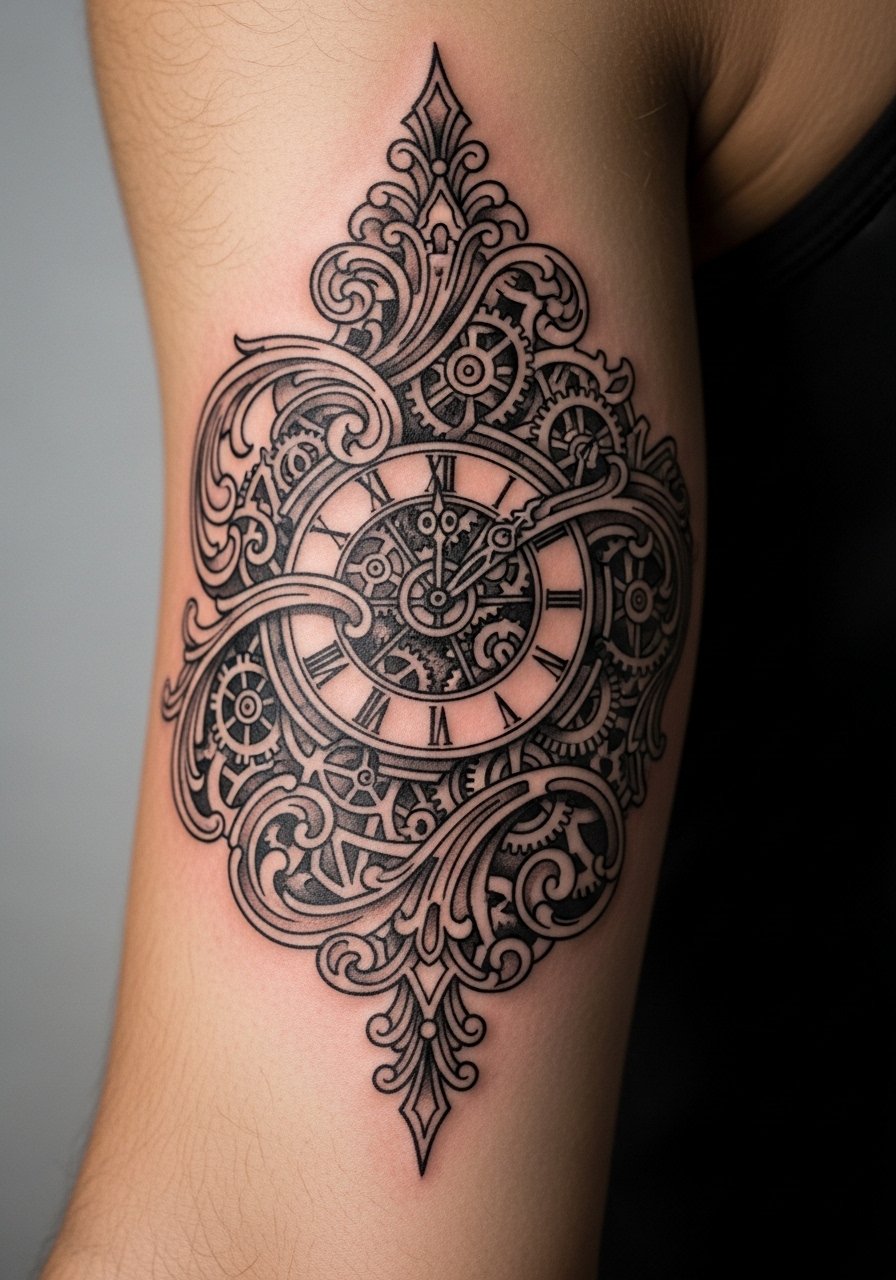
Inner bicep placements feel tender. Expect a higher pain rating compared to outer bicep spots. The design should balance solid black with open negative space so the gears read clearly over time. Ask for bold anchors and thinner teeth lines that still survive touch-ups. Session time is moderate and often broken into two shorter sittings. For the session wear a tank top or button-down open at the shoulder to keep the arm accessible and comfortable.
14. Star Constellation Sleeve in Dotwork
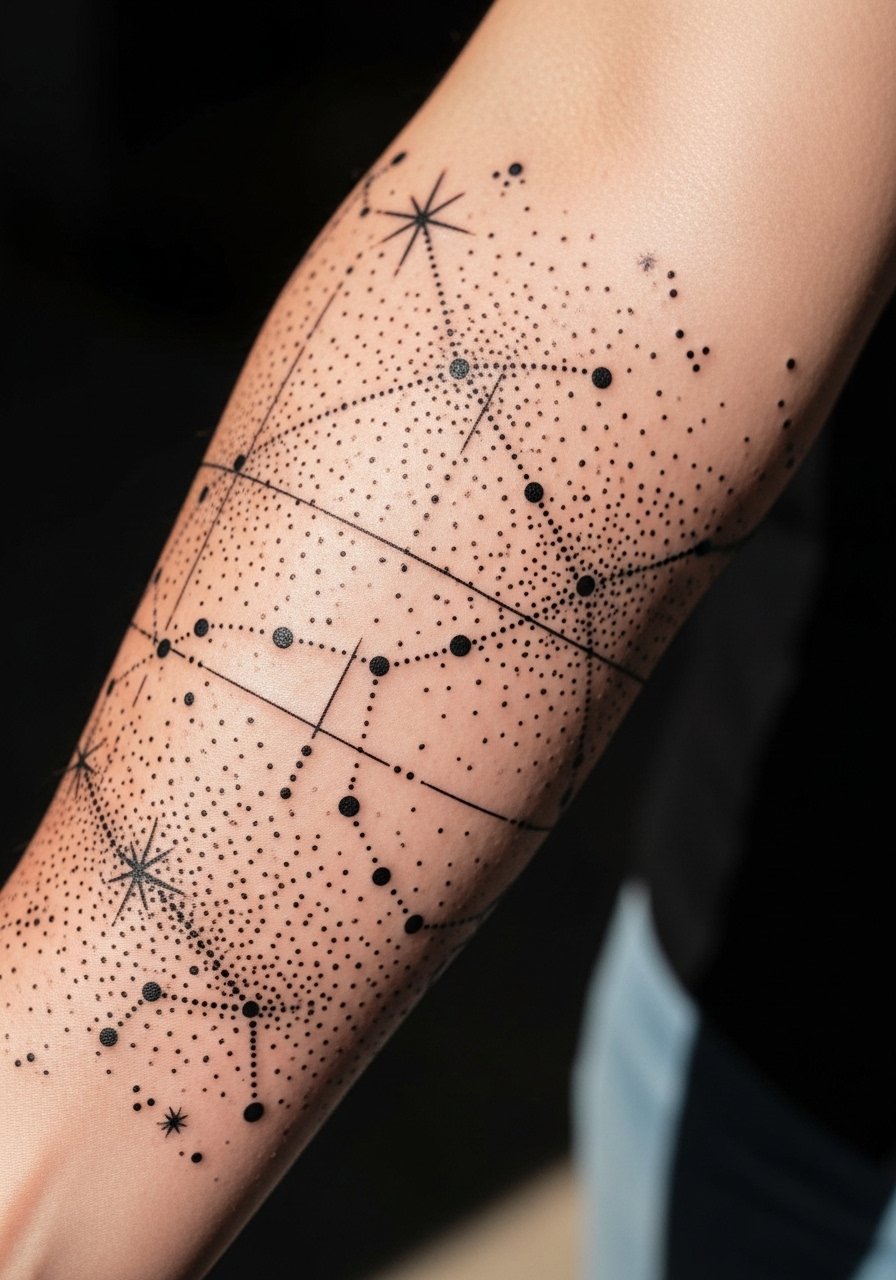
A constellation sleeve scales well from small clusters to a full wrap. Dotwork and fine line can look delicate at first and then soften over years. One artist camp prefers denser dots for longevity. The opposite camp argues sparse maps age more gracefully. Ask your artist how they space dots and expect touch-ups at year three for very fine pieces. For showing it off, a rolled cuff denim shirt makes the tiny stars readable in daylight.
15. Compass Rose with Selective Color on Outer Forearm

The compass near the outer forearm sits on a flatter surface and photographs well. Ask for softened shading inside the compass and bolder outer rings so it remains legible after sun exposure. A common regret is choosing a tiny compass with ornate internal flourishes that merge over time. Expect two sessions for color and linework. Pair this with a rolled sleeve henley when you want the compass to peek while you gesture.
16. Micro-Realism Portrait on the Inner Arm
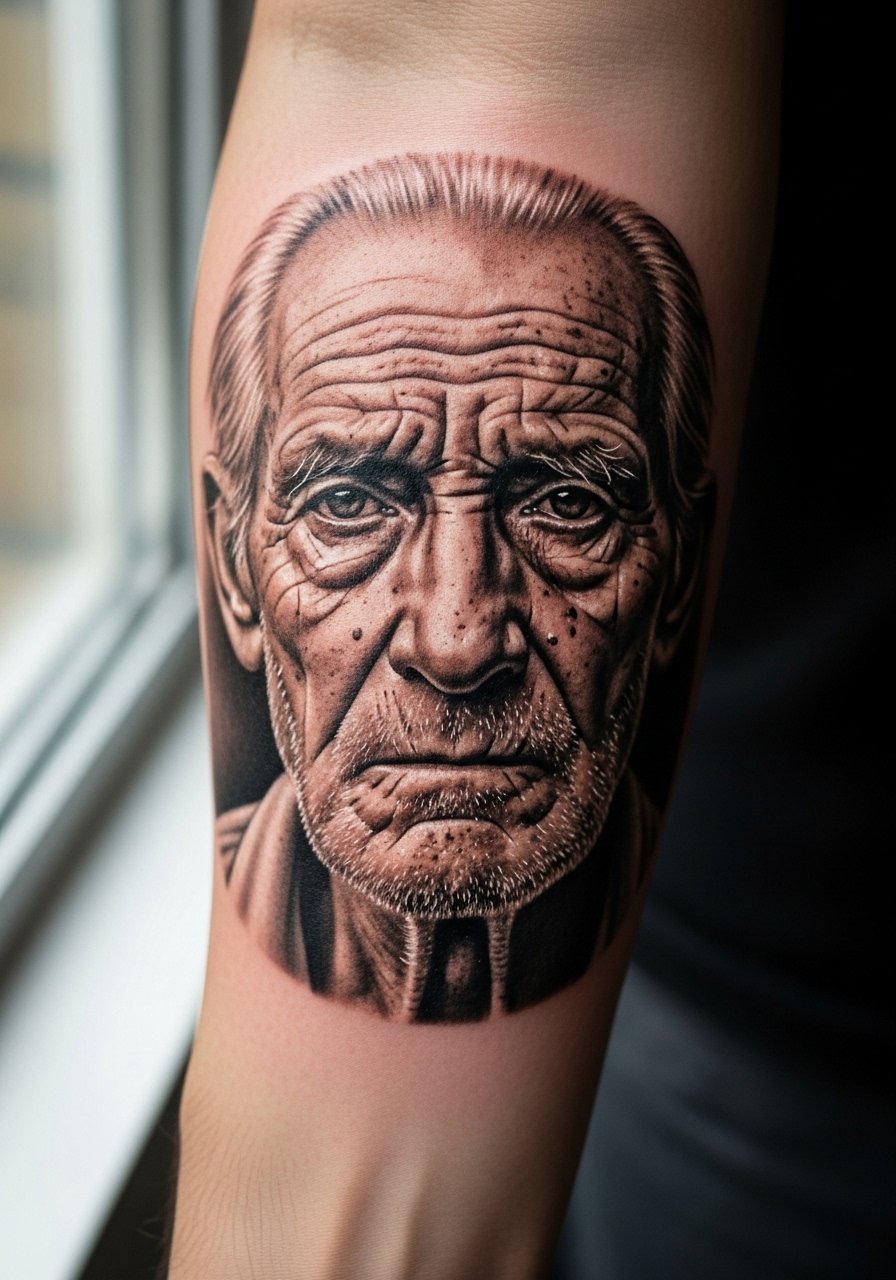
Micro-realism portraits are intimate and suit the inner arm where they stay somewhat private. The main mistake is picking an image with low contrast that loses facial detail when shrunk. Realism artists often ask for high-resolution references and may trial a larger study first. Pain is lower than ribcage but higher than outer forearm. For the appointment wear a short sleeve button-down you can pull aside so the artist can set the stencil without creases.
17. Minimalist Mountain Range That Ages Well
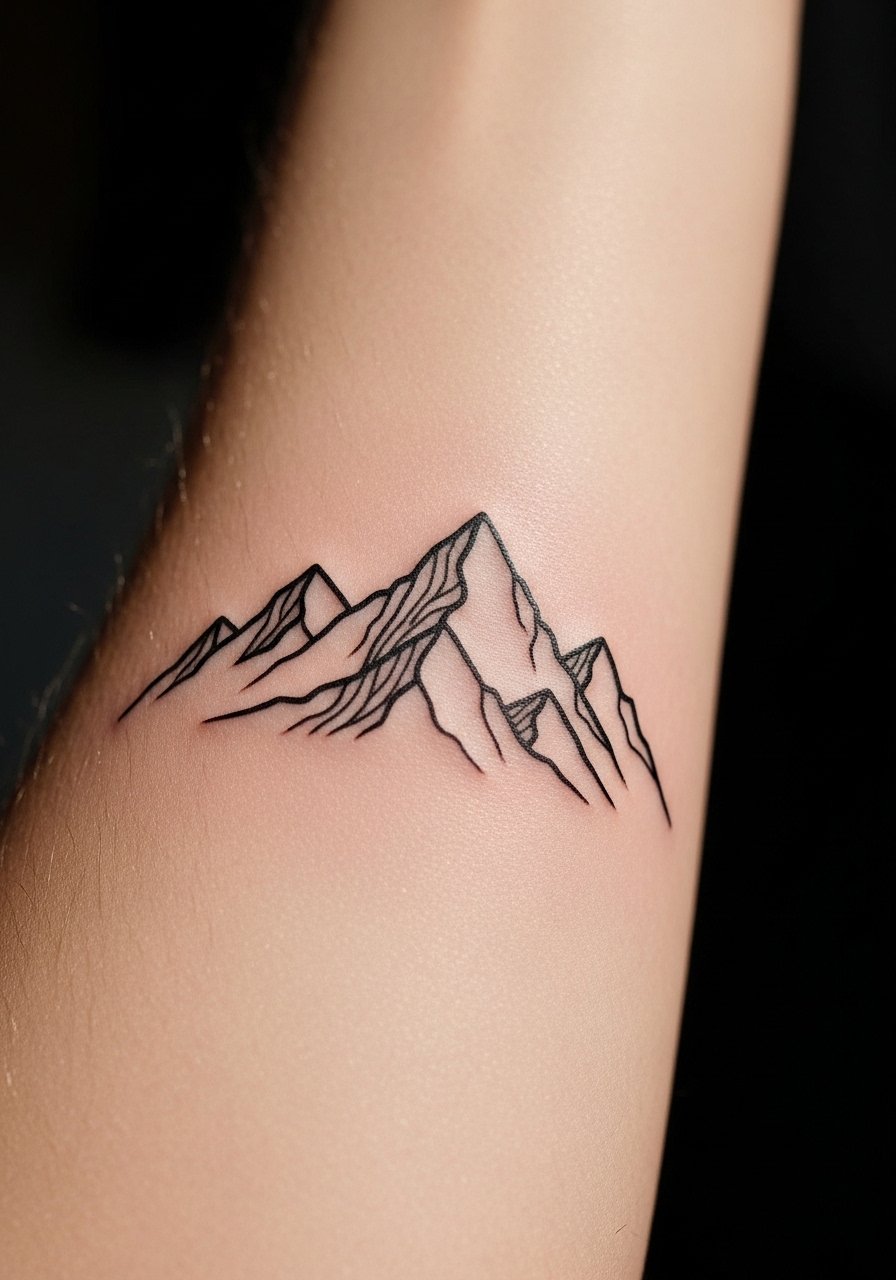
Minimal mountain lines work if given horizontal space and slightly heavier line weight than a hairline. The largest mistake is cramming peaks into a narrow band near the wrist. This style is low-pain and usually one session. It looks great with rolled sleeves or a casual chambray button-down half-rolled to show the range while keeping a low profile.
18. Botanical Vine Wrapping the Forearm
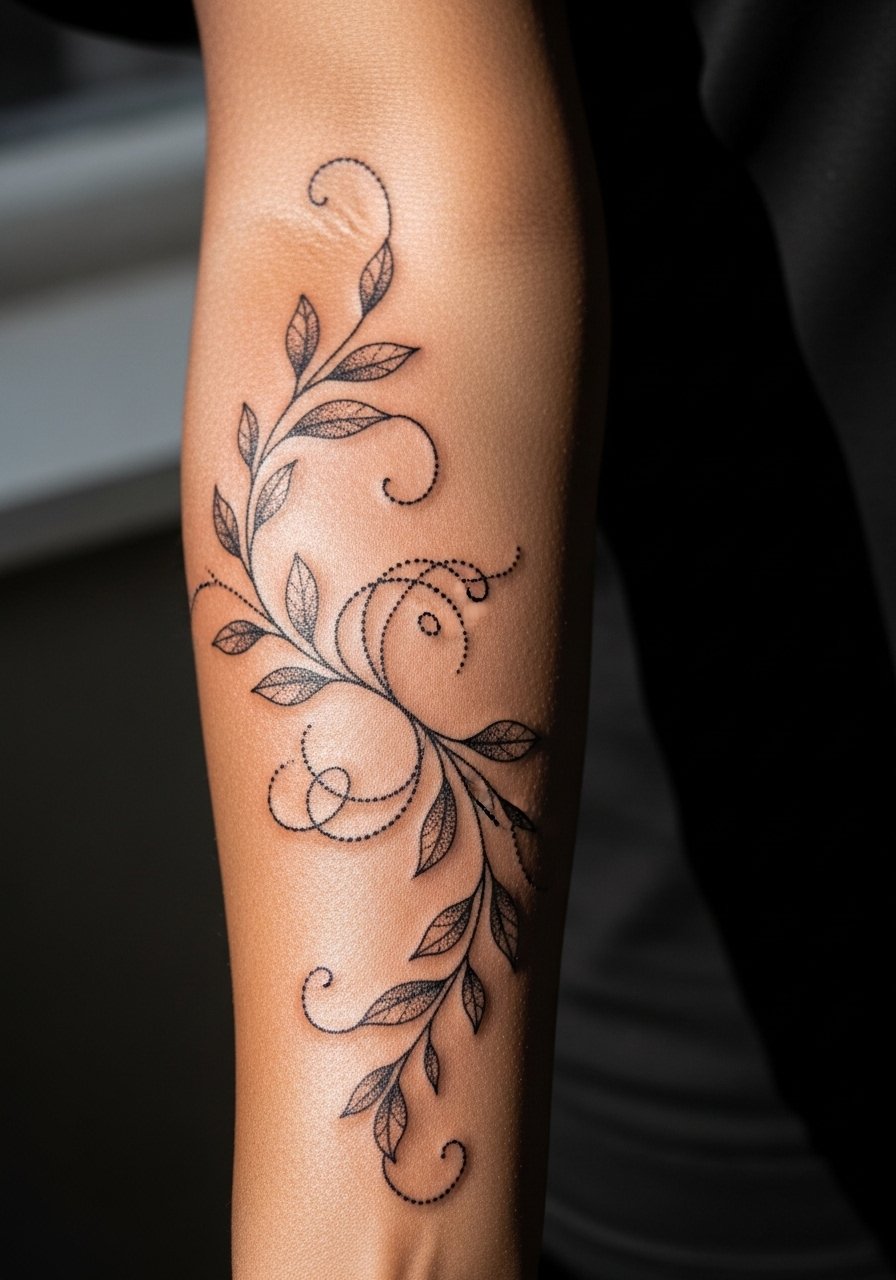
Vines connect naturally around the arm and make for excellent filler whether you plan a sleeve or a single piece. Tell the artist you want space between leaves to avoid dense scabbing zones that flatten detail. The inner wrist area may sting more as the vine approaches. Expect a two-hour session for a medium vine. For the session wear a sleeveless shirt to keep the entire forearm accessible.
19. Geometric + Realism Hybrid Armband

This hybrid hides realism inside geometric frames so the realism has breathing room and the geometry protects it from early blur. A common mistake is keeping the realism too detailed for the armband width. Tell your artist you want the photoreal element slightly simplified and the geometry bolder. One to two sessions covers a medium band. For showing it off, a leather cuff bracelet on the opposite wrist creates a balanced look.
20. Hand-Poked Minimal Armband for the Slow-Aesthetic
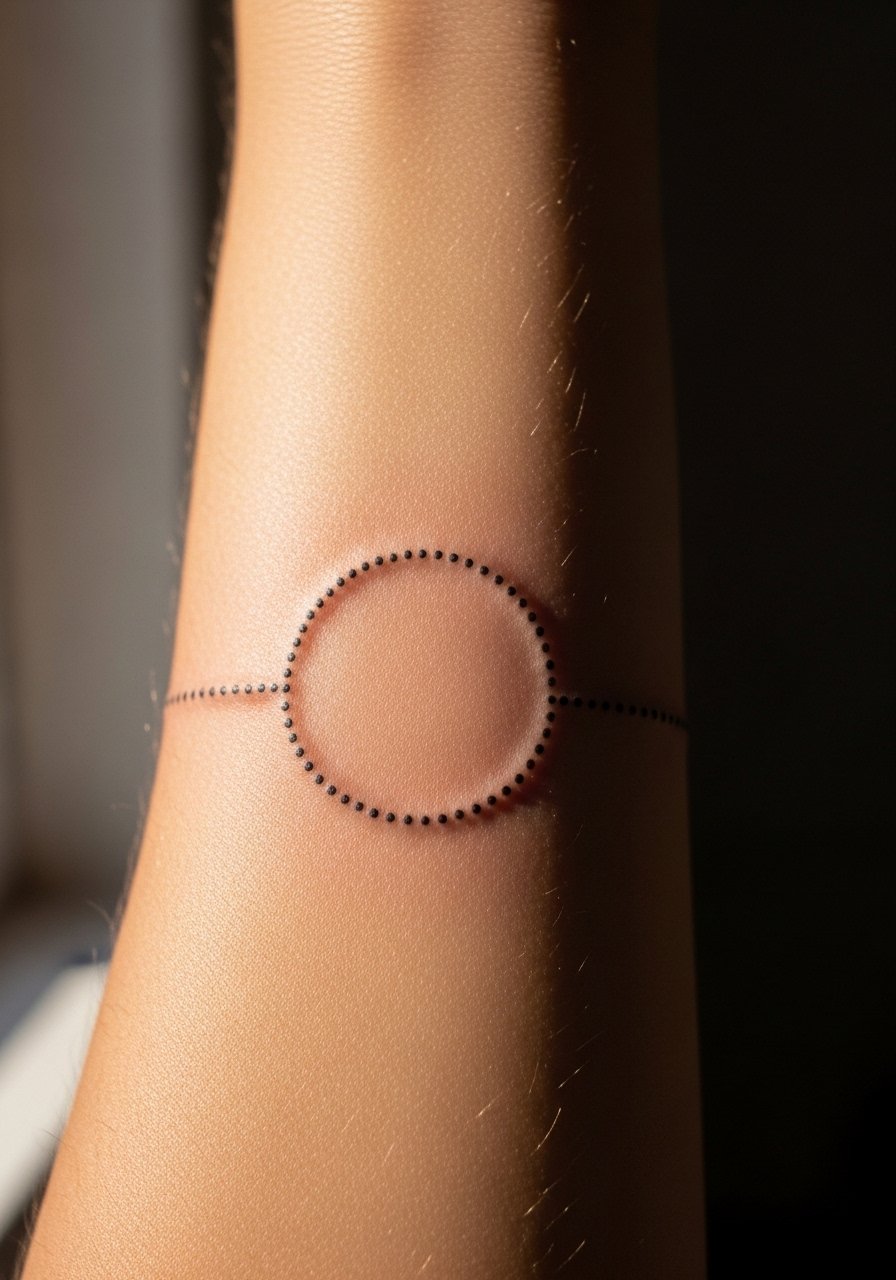
Stick-and-poke armbands have a distinct texture and slightly softer edges than machine work. One controversy around hand-poked work is sanitation and artist skill. Pick practitioners with clean portfolios and ask about sterile technique. Pain is usually lower per pass but sessions can be longer. Hand-poked dots may require more touch-ups than machine lines. For the appointment wear a sleeveless hoodie so the artist can work without a shirt in the way.
21. UV Blacklight Accents for Sleeve Nightlife
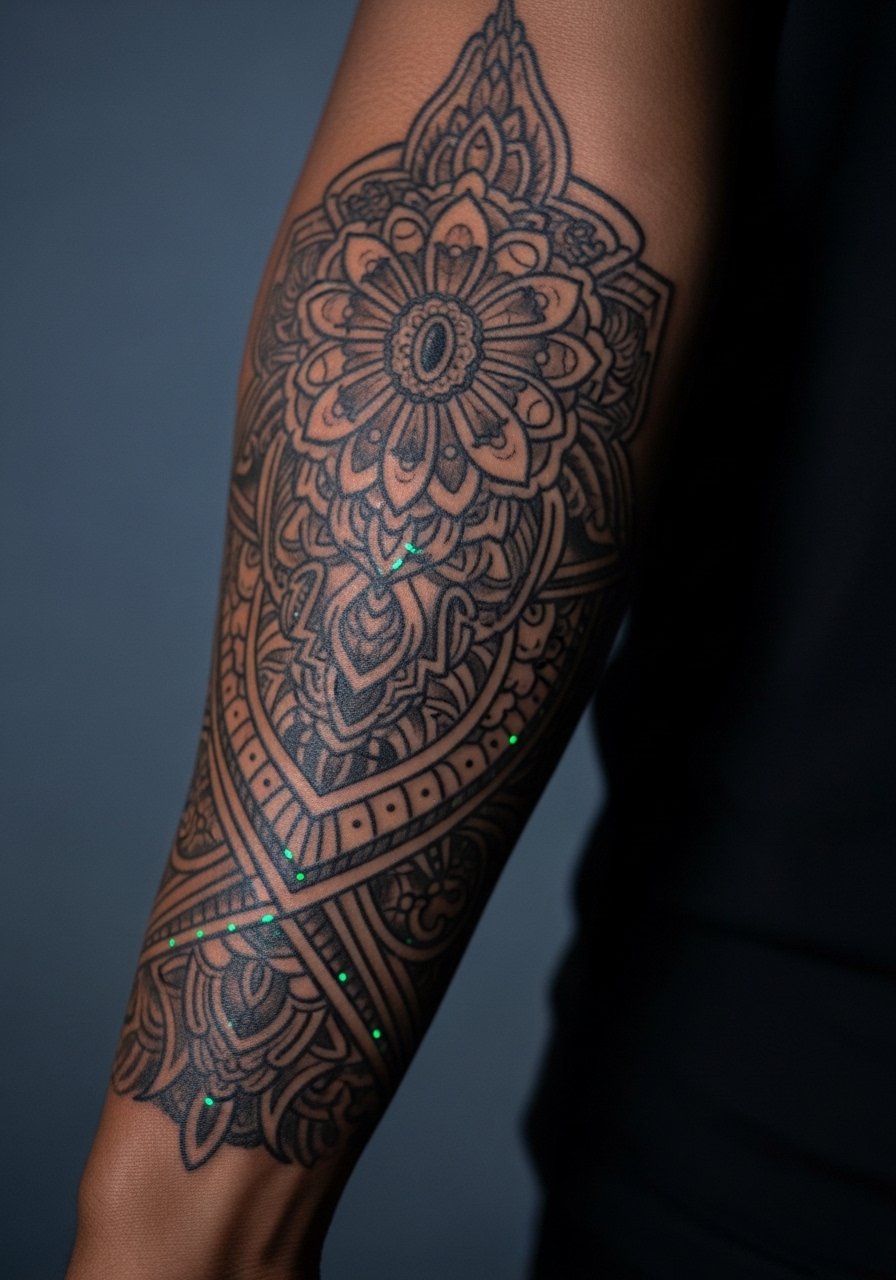
UV accents are a contemporary angle that looks subtle in daylight and pops under blacklight. This is a specialist technique and not all shops do it. One camp says UV holds poorly over time and requires regular rework. The other camp has seen it survive when applied densely and layered correctly. Ask if the studio tests UV pigments over similar skin tones. Sessions are add-on time after the main color work. For nightlife wear simple short sleeve button-ups so the hidden accents only reveal themselves under specific lighting.
22. Dotwork Mandala Band for the Outer Forearm
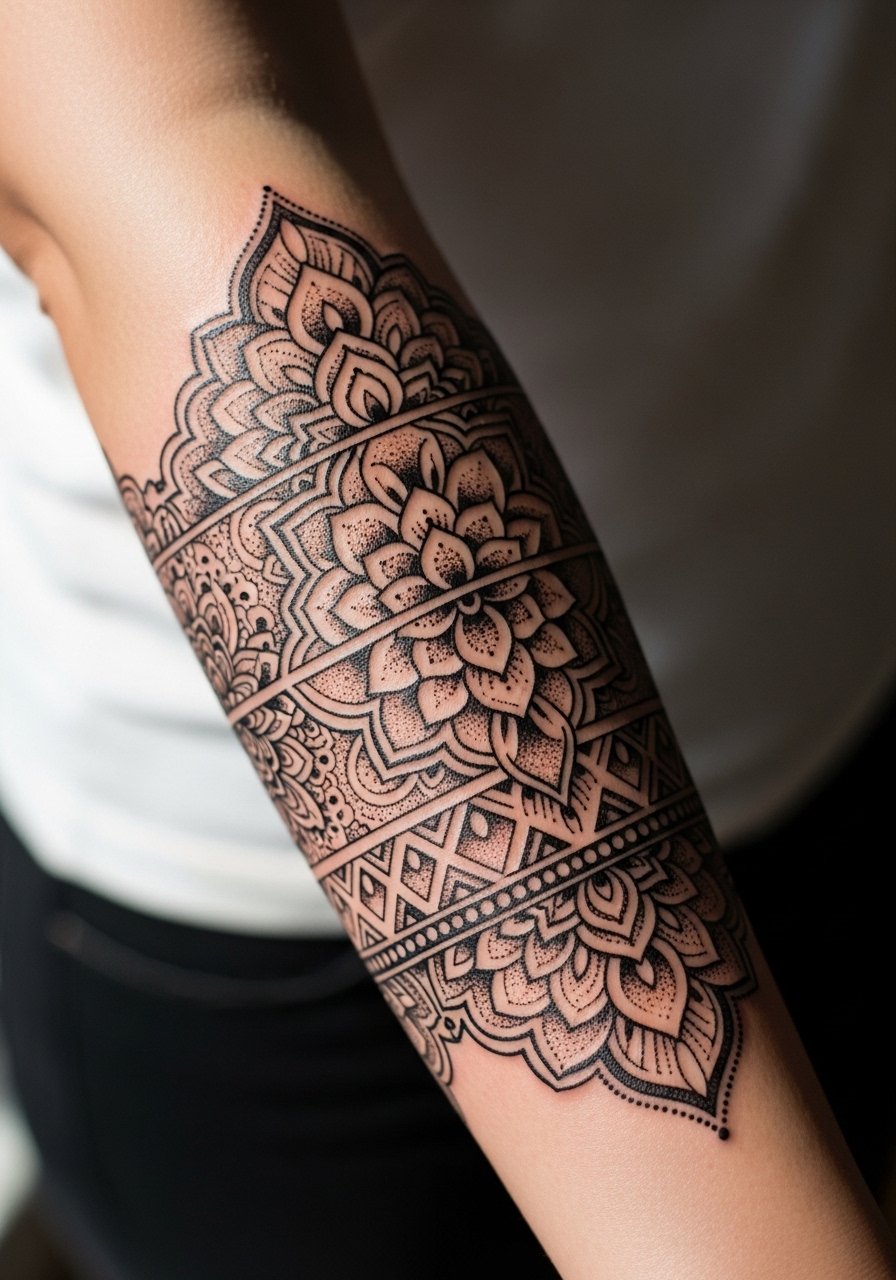
Dotwork mandalas need spacing that accounts for dot spread. The typical error is packing stipple too densely. Ask for slightly increased spacing between dot rings so the piece keeps its lace-like quality at year three. Pain is moderate but tolerable. Expect multiple passes for fine density. For showing it off, roll your sleeves and add a minimalist leather wrap bracelet opposite the band.
23. Coordinates or Date Script Along the Forearm

Coordinates are personal and withstand trend cycles. Exact text matters in image prompts and stencils, so bring the precise numbers. Choose a slightly heavier script than you would for a wrist piece so the numerals do not blur. Pain is low to moderate and one session often suffices. For the appointment wear a short sleeve tee so the arm can lie flat and steady.
24. Smoke-Connected Half Sleeve That Flows Into Forearm Work
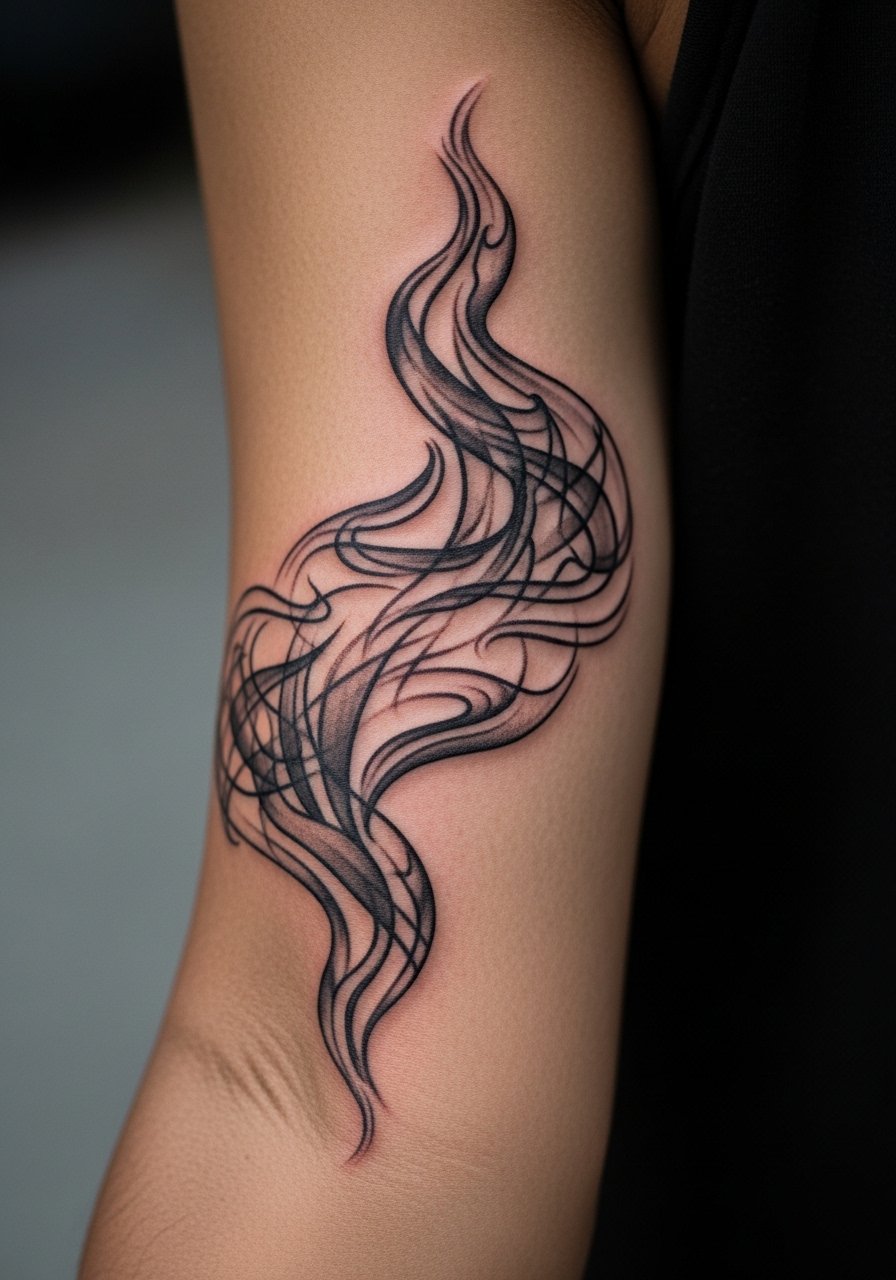
Using smoke or wisps to connect disparate pieces is a smart plan for future-proof sleeves. The smoke ties motifs without creating a busy center. The frequent mistake is overusing flecked dots that blend into dull grey. Ask for directional smoke that follows muscle flow. Technical sessions are moderate in length and usually part of a staged sleeve build. For long sessions wear comfortable loose shorts and a tank so movement is easy during breaks.
25. Celtic Knot Bicep Band with Interlaced Lines
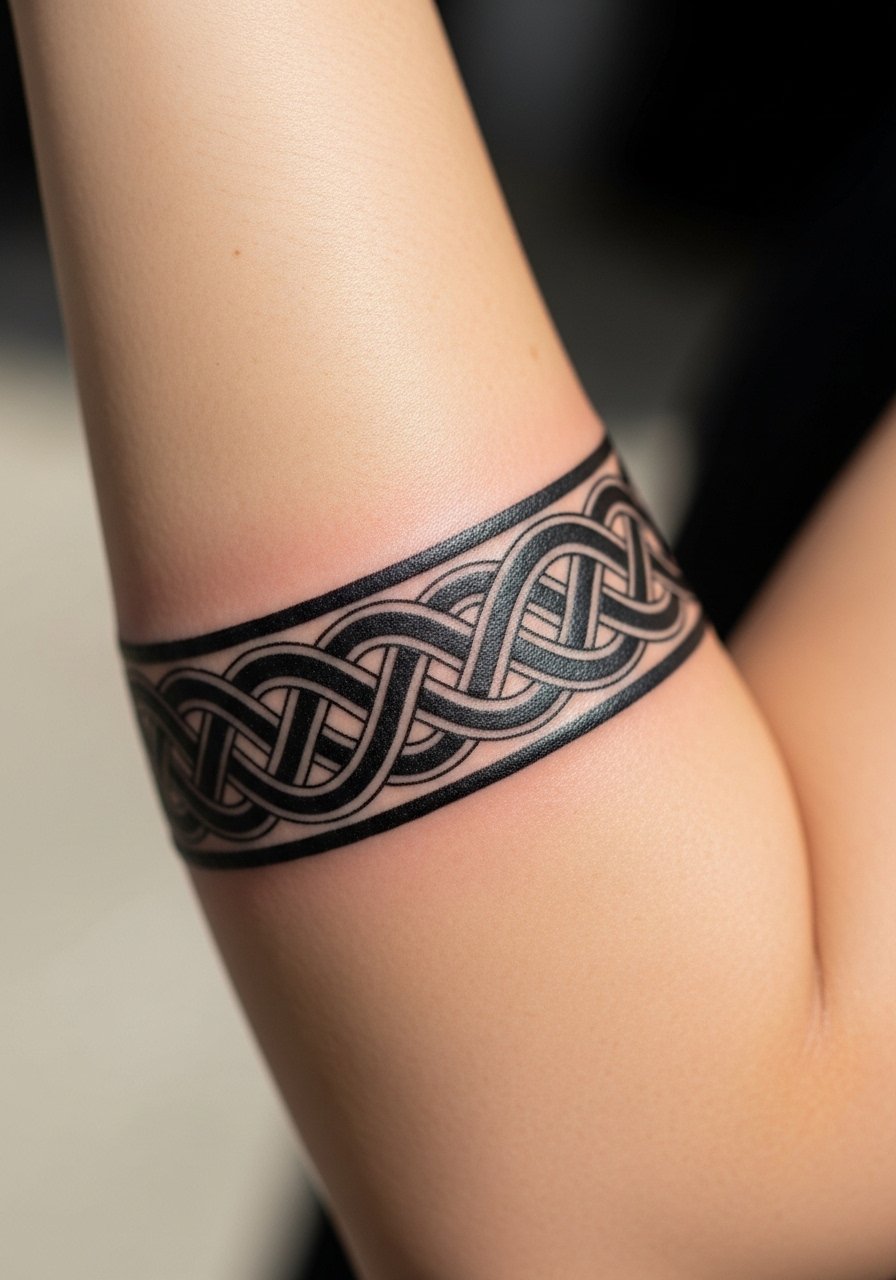
Celtic knots require symmetry and consistent line weight. The upper arm is forgiving for this style. A common error is too-small interlacing that fills in with age. Ask for slightly thicker cords and clear negative space inside loops. One to two sessions will deliver a clean band. For showing it off, wear a slim fit polo with a few buttons undone to reveal the top of the band when you lift your sleeve.
26. Geometric Wolf Forearm Hybrid
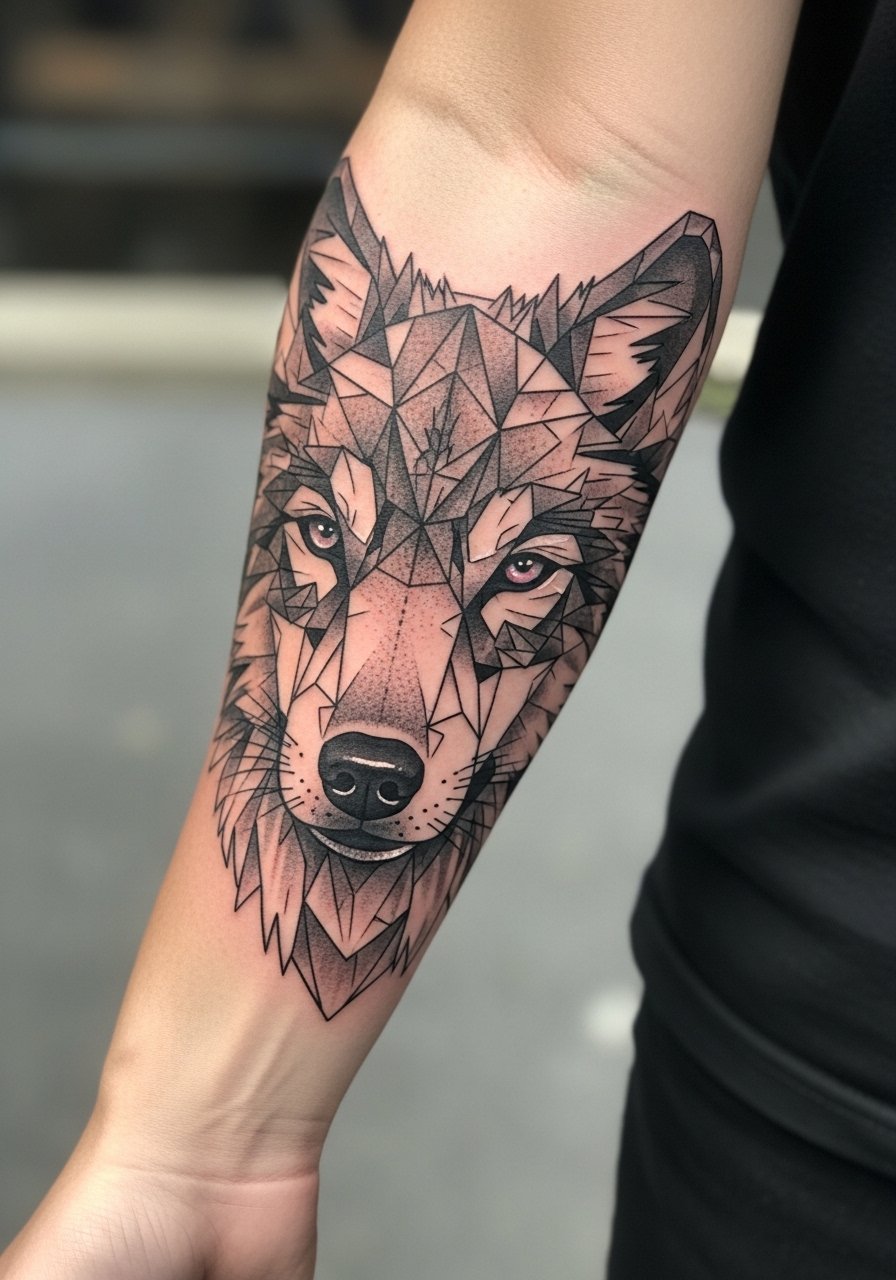
Pairing a realism focal point with geometric framing protects detail and breathes room into the composition. The typical mistake is putting full photorealism into too narrow a strip. Ask the artist for a simplified photoreal portion and bold geometry surrounding it. Sessions are split between linework and shaded intervals. For the session wear a loose button-down shirt you can roll to the elbow without creasing the stencil.
27. Patchwork Sleeve Build Plan for Front Arm Projects
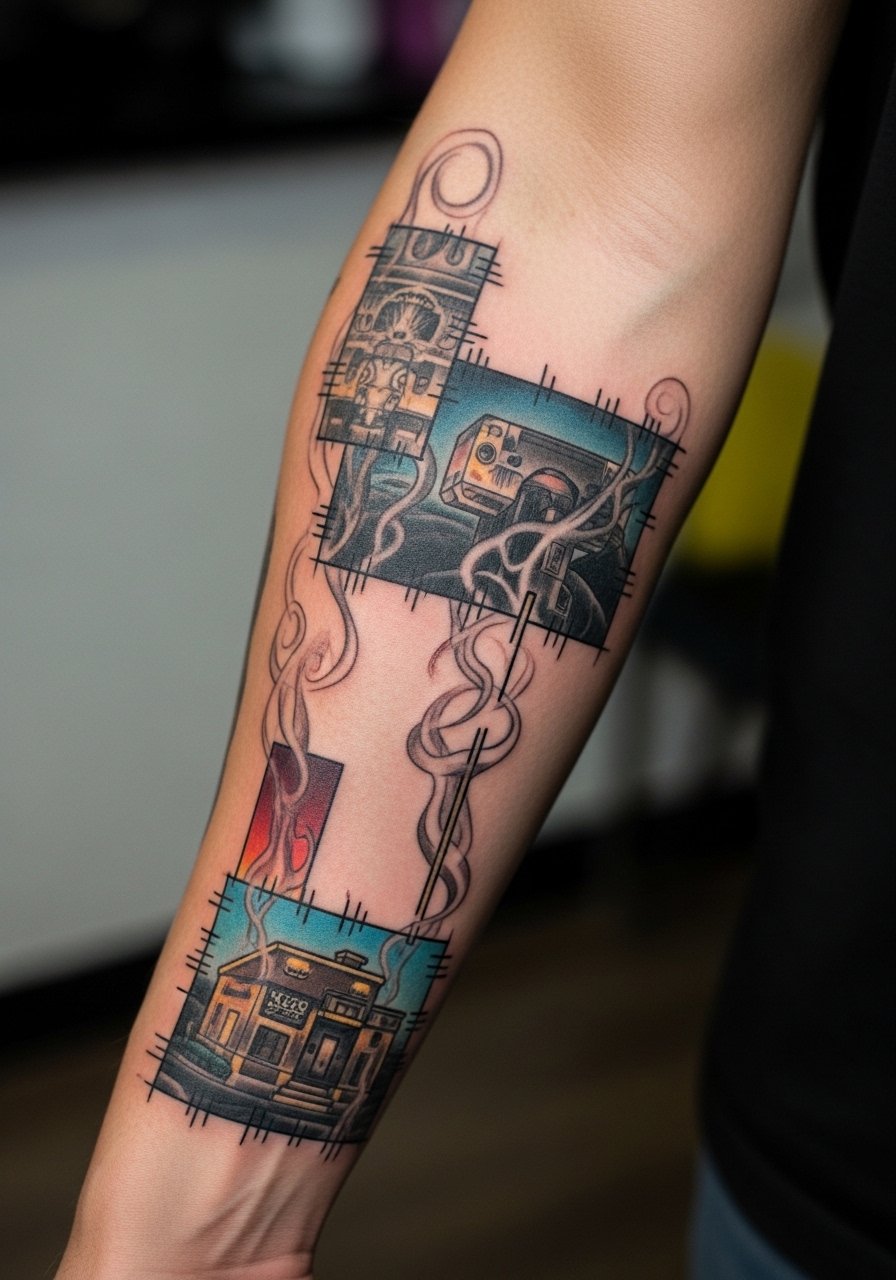
Patchwork sleeves are realistic if you plan connection points from the first piece. Start with anchor motifs on the outer forearm and reserve negative space for future fills. The big mistake is treating each session as a standalone flash without planning how elements will meet. Talk to artists about smoke, bands, or geometric panels as connectors and set a rough timeline for touch-ups. For long-term planning search hashtags like #ForearmTattooMen and use booking apps to track guest spots that fit your style.
Frequently Asked Questions
Q: Will fine line scripts on the inner forearm blur faster than on the outer forearm?
A: It depends on line weight and sun exposure. Inner forearm skin moves more and sees different friction than the outer forearm. Ask your artist to add a slightly heavier downstroke and plan a touch-up around year two if you prefer ultra-thin lettering.
Q: Can a mandala or dotwork piece be adapted for darker skin tones without losing detail?
A: Yes. Go with higher contrast, slightly larger dot spacing, and heavier anchors so the shapes read in photos and from a distance. Review the artist portfolio for healed work on similar skin tones before booking.
Q: How should I prep clothing-wise for a long full-arm session versus a small forearm piece?
A: For long sleeves wear loose short-sleeve button-ups or tailored short sleeve shirts you can sit in for hours. For small forearm work choose a fitted henley or short sleeve tee so the arm lies flat and the stencil stays put.
Q: Are UV blacklight accents worth the extra time and cost?
A: There are two camps. One says UV fades faster and needs touch-ups. The other says dense layering can hold when done by a specialist. If you want nightlife pop, ask to see healed UV examples on similar skin tones and expect occasional rework.
Q: Should I use Saniderm or dry heal on my forearm tattoo?
A: Artists are split. Some prefer Saniderm for a cleaner early week, others find dry healing reduces scabbing. Decide with your artist based on the piece size, placement, and how you react to occlusive dressings during previous healings.