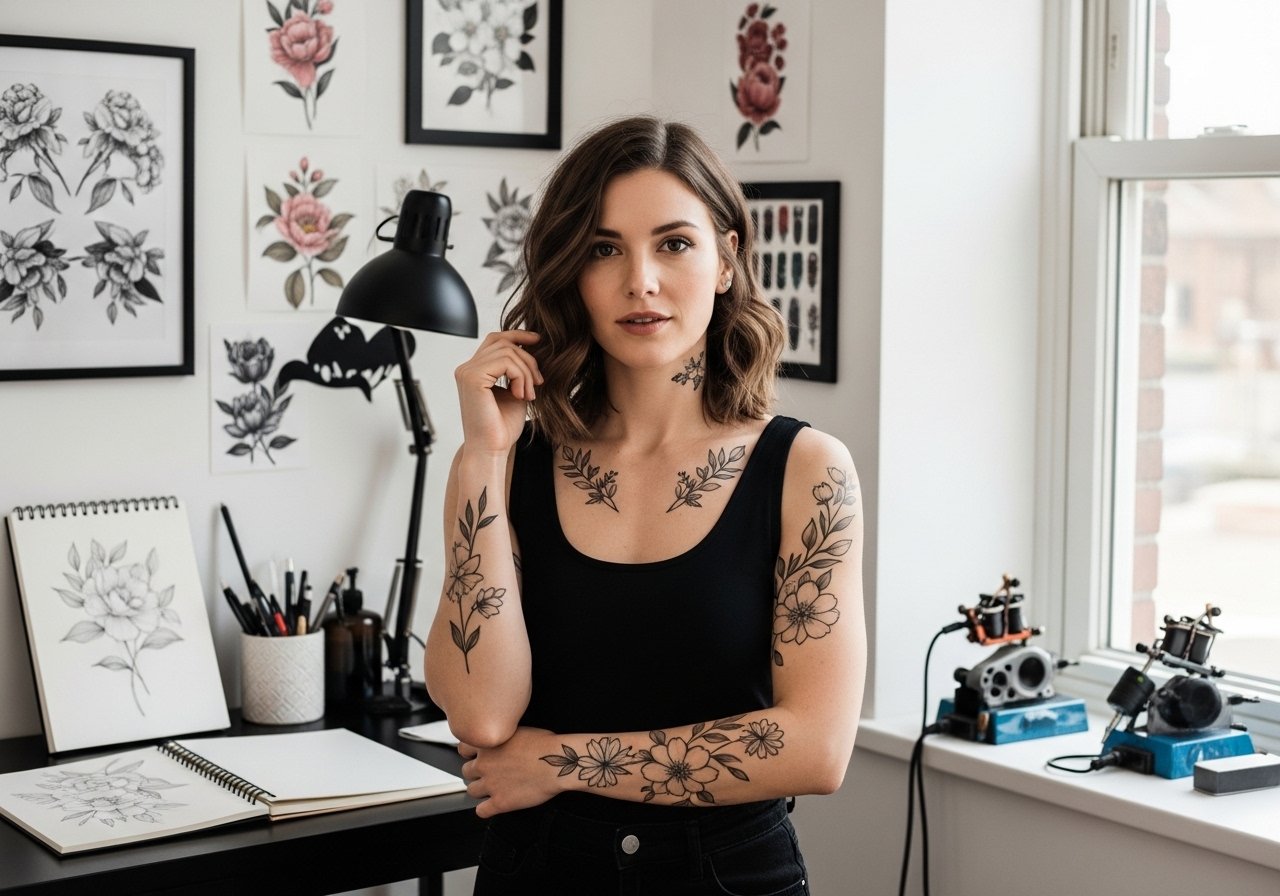
Fine line geometric takes and bold, blocky geometry both show up on Billie Eilish fans for the same reason. People want a recognizably Billie motif that reads well from a distance and still looks intentional up close. That gap between what trends on socials and what actually heals is where these 21 ideas live, with notes on how each one holds up, what to ask your artist, and how to wear it so the design looks deliberate in real life.
1. Minimal Billie Silhouette on Inner Forearm
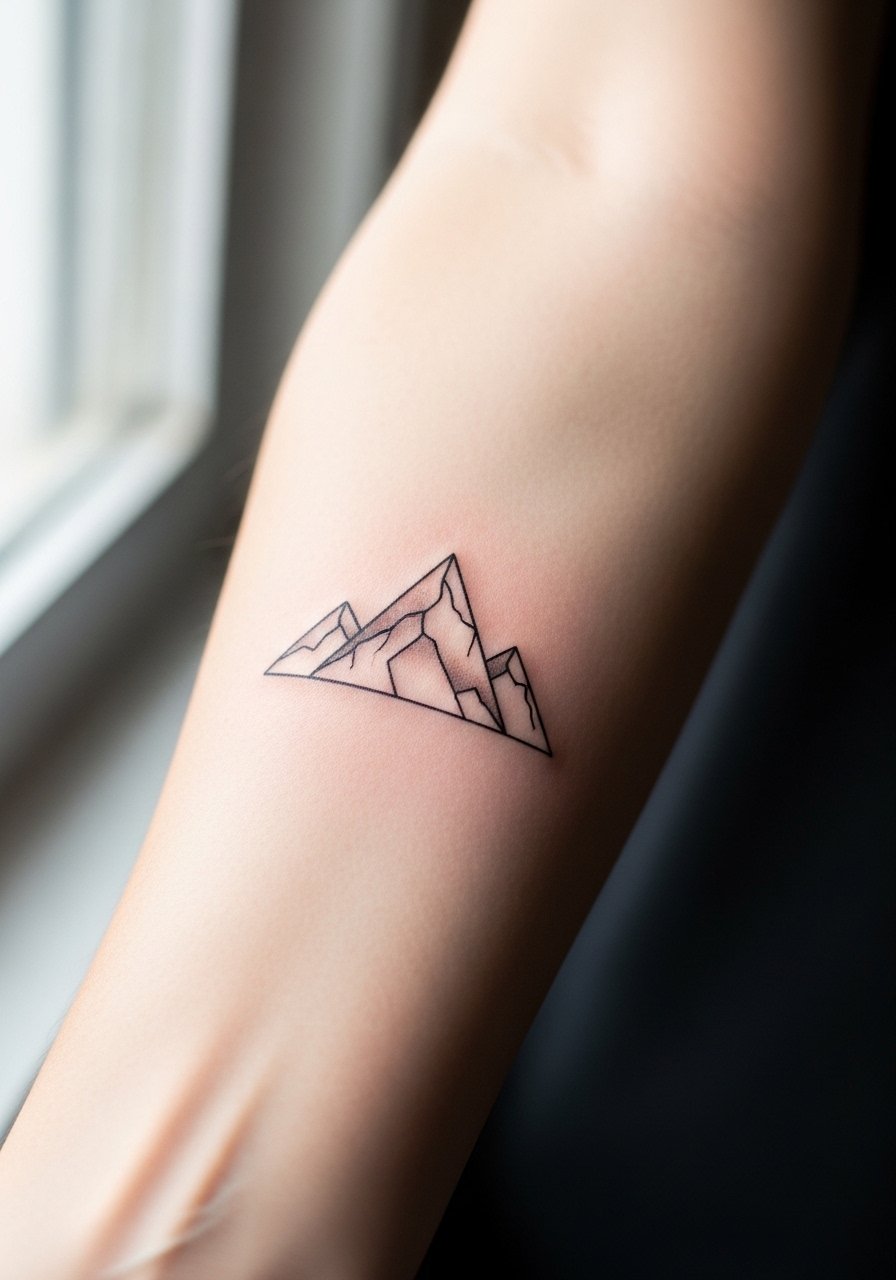
Start with a skinny geometric silhouette of Billie in profile, reduced to intersecting triangles and a neon-green accent dot. The inner forearm keeps linework visible and ages more predictably than fingers or hands. When you consult your artist, ask for slightly heavier linework than a pure fine-line piece so the thin triangles keep separation at year three. Common mistake is shrinking the negative space until the shapes bleed together. Expect a two-hour session for a small forearm piece and a possible touch-up at year two if you live in the sun. For the session wear a loose button-down shirt you can roll or pull aside so the forearm lays flat for clean linework.
2. Geometric Heart with Neon Accent on Wrist
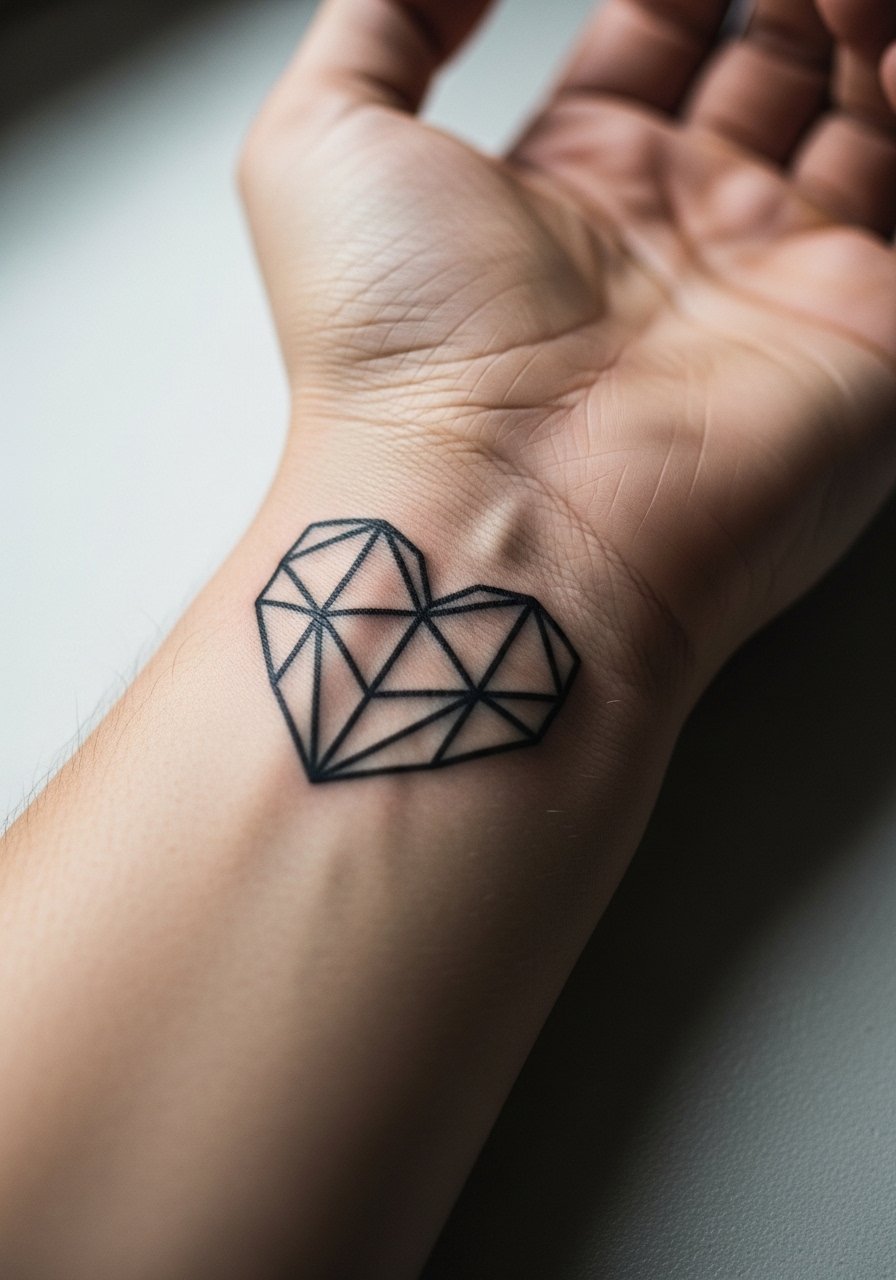
A small heart built from angular facets reads modern and nods to Billie’s emotional lyricism. Wrist placement is visually rewarding, but it faces daily friction from sleeves and watches. Ask the artist to space lines slightly and avoid ultra-thin weight inside dense areas. Pain is low to moderate and session time is around 45 minutes for a compact design. Expect the wrist to need a touch-up sooner than the forearm. For showing this off, pair the piece with a thin chain pendant necklace and keep bracelets minimal so the heart pops without clutter.
3. Symmetrical Band Across the Fingers
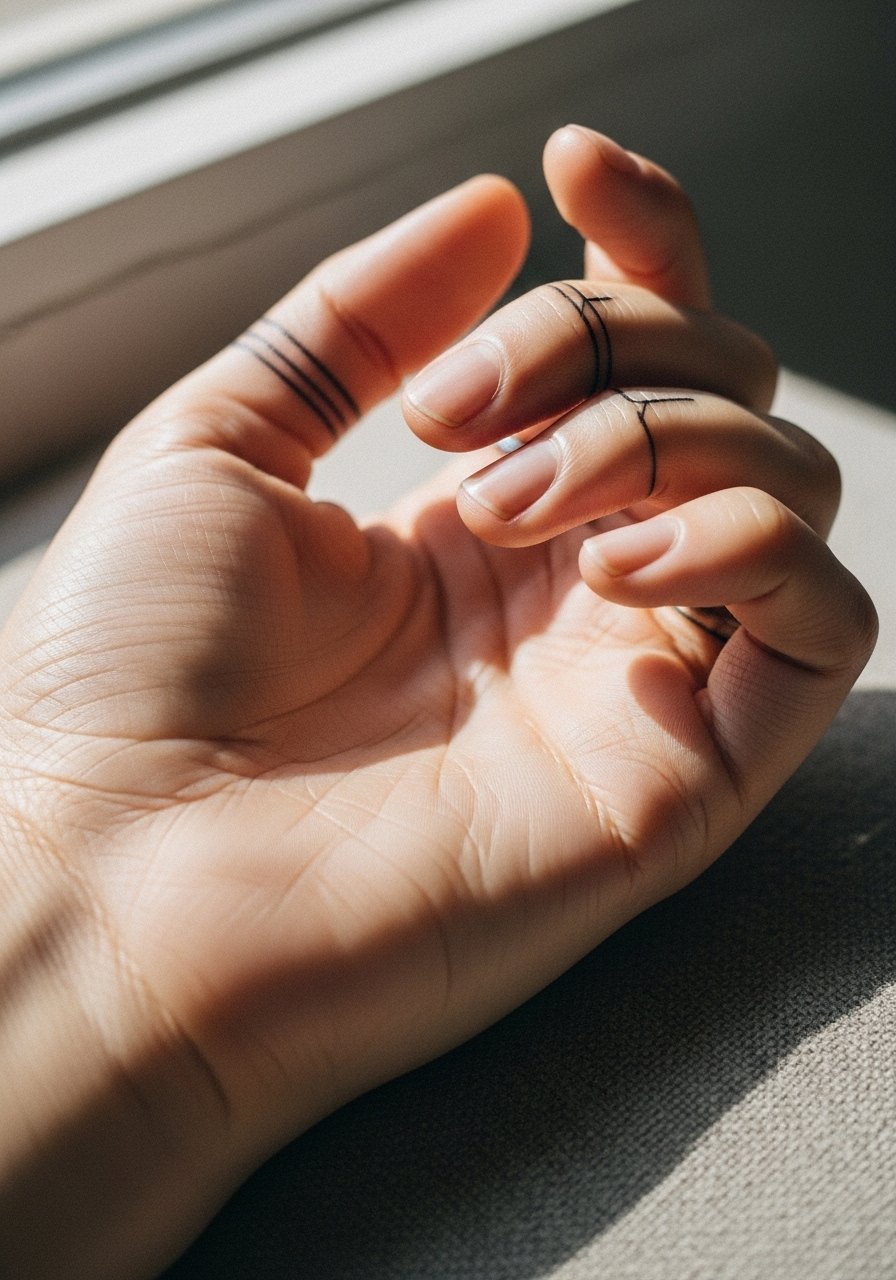
A low-profile band that uses simple triangles and parallel bars feels like a subtle Billie reference without copying art. Fingers are notorious for fading and blowout because of constant washing and thin skin. The artists who favor this placement often say it needs regular touch-ups. One camp argues finger pieces are fine if you accept upkeep. The other camp avoids them for long-term clarity. If you go ahead, keep the shapes open and spaced, and plan for touch-ups every 12 to 24 months. For the appointment wear hands-free gloves in your bag and keep activities light the day after. A minimalist watch won't compete with the design, so wear a minimalist watch with slim band when you want the band to feel intentional.
4. Geometric Eye Above the Ankle
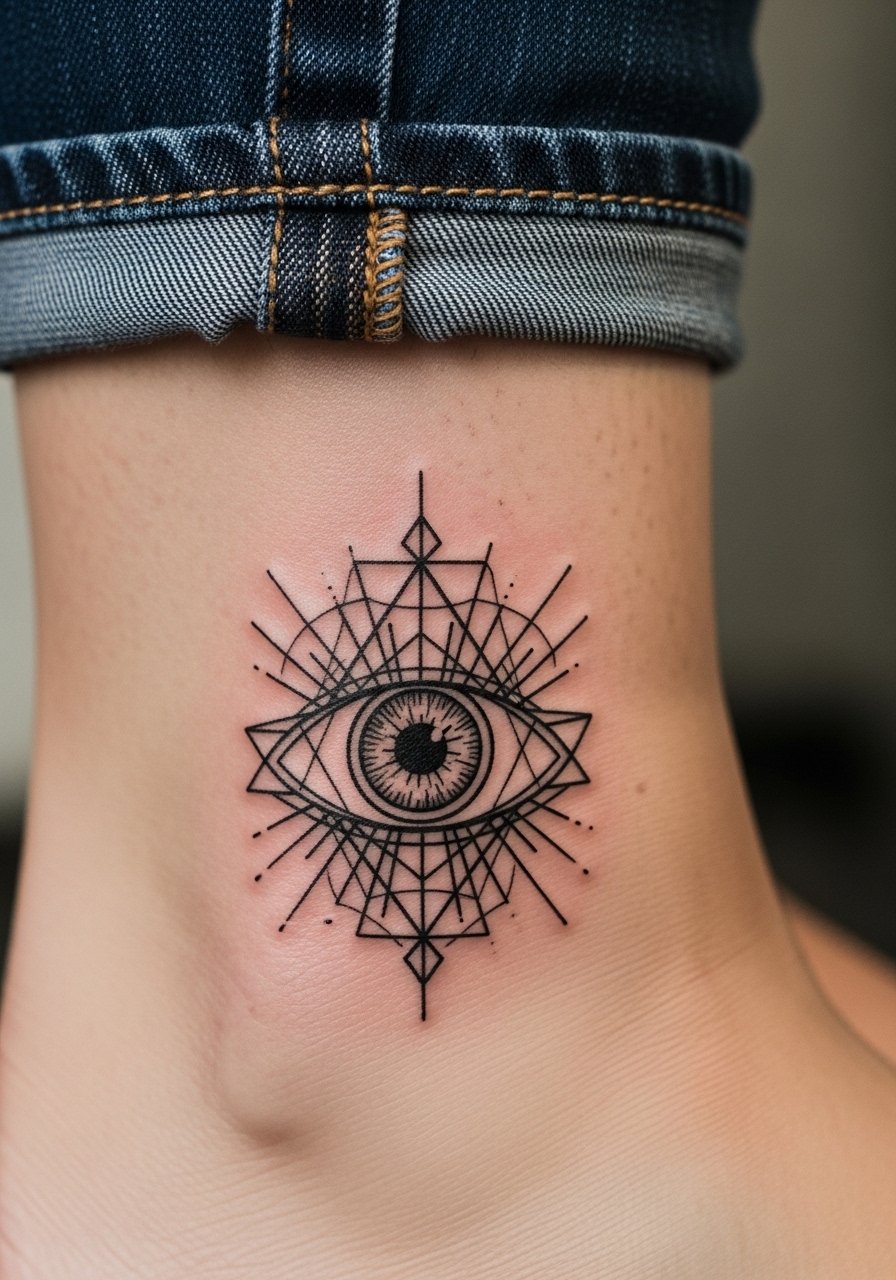
An eye made from concentric polygons translates Billie’s thematic gaze into geometry. The ankle is low on the pain scale but high on movement and rubbing from shoes. The design should sit slightly higher than the ankle bone so it avoids constant friction. Common mistake is placing the lowest point right where shoes hit the skin. Expect a one-hour session and a touch-up at year two if you wear low sneakers often. For showing it off, roll up a pair of jeans or slide into simple leather sandals that keep attention on the ankle without crowding the tattoo.
5. Interlocking Geometric Text on the Side Rib
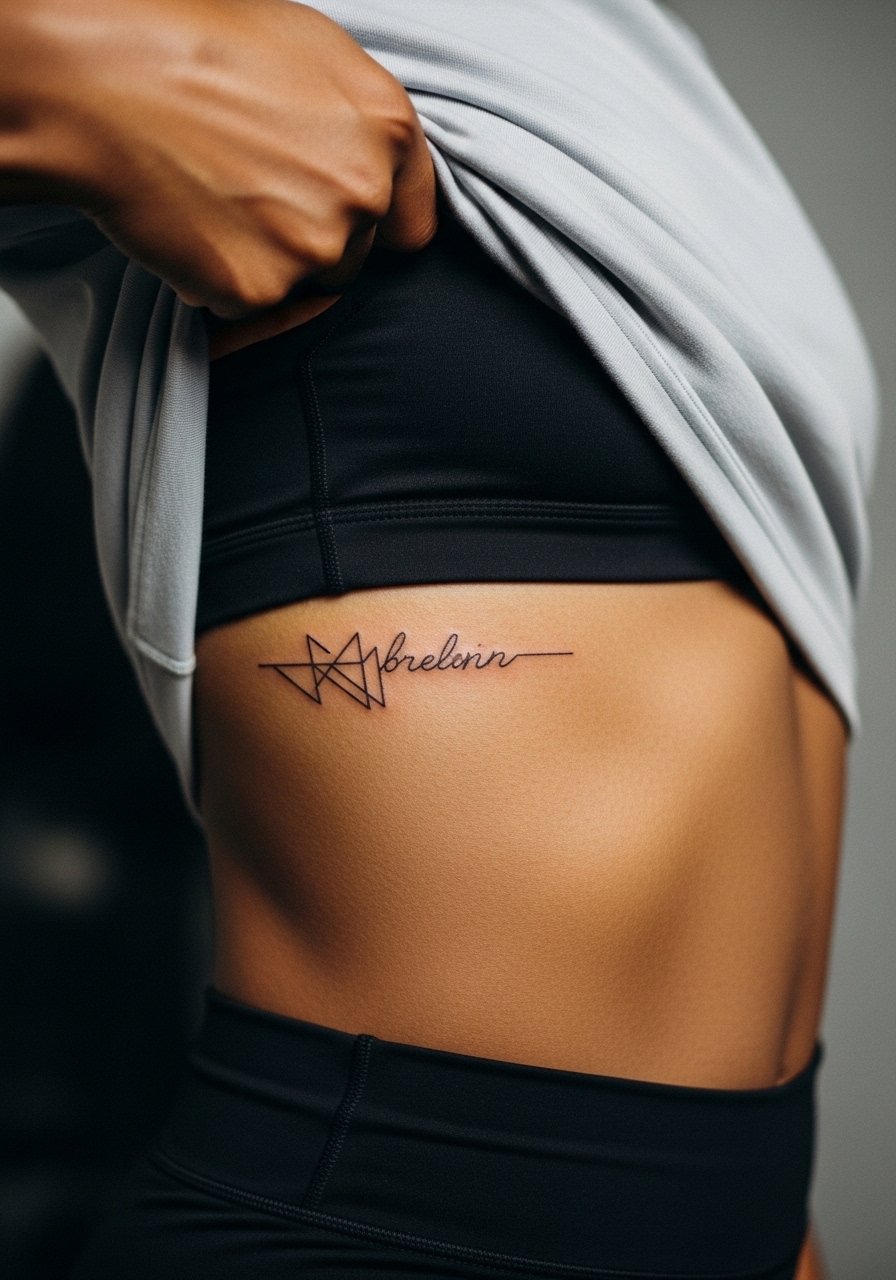
A strip of interlocking block letters and geometric fills reads like a lyric fragment when placed on the side of the ribs. The ribcage is painful and the skin shifts with breathing, so session comfort matters. This placement features a known debate. One camp says fine-line text on ribs blurs fast because of constant expansion and contraction. The other camp counters that larger letterforms with correct spacing settle fine. When you book, request test stencils while standing and lying down so the letters breathe with movement. Plan for longer sessions with breaks and expect a touch-up in two to four years depending on aftercare. For the appointment wear a cropped top that the artist can lift slightly and nothing restrictive so breathing is easy.
6. Geometric Mandala Behind the Ear Area
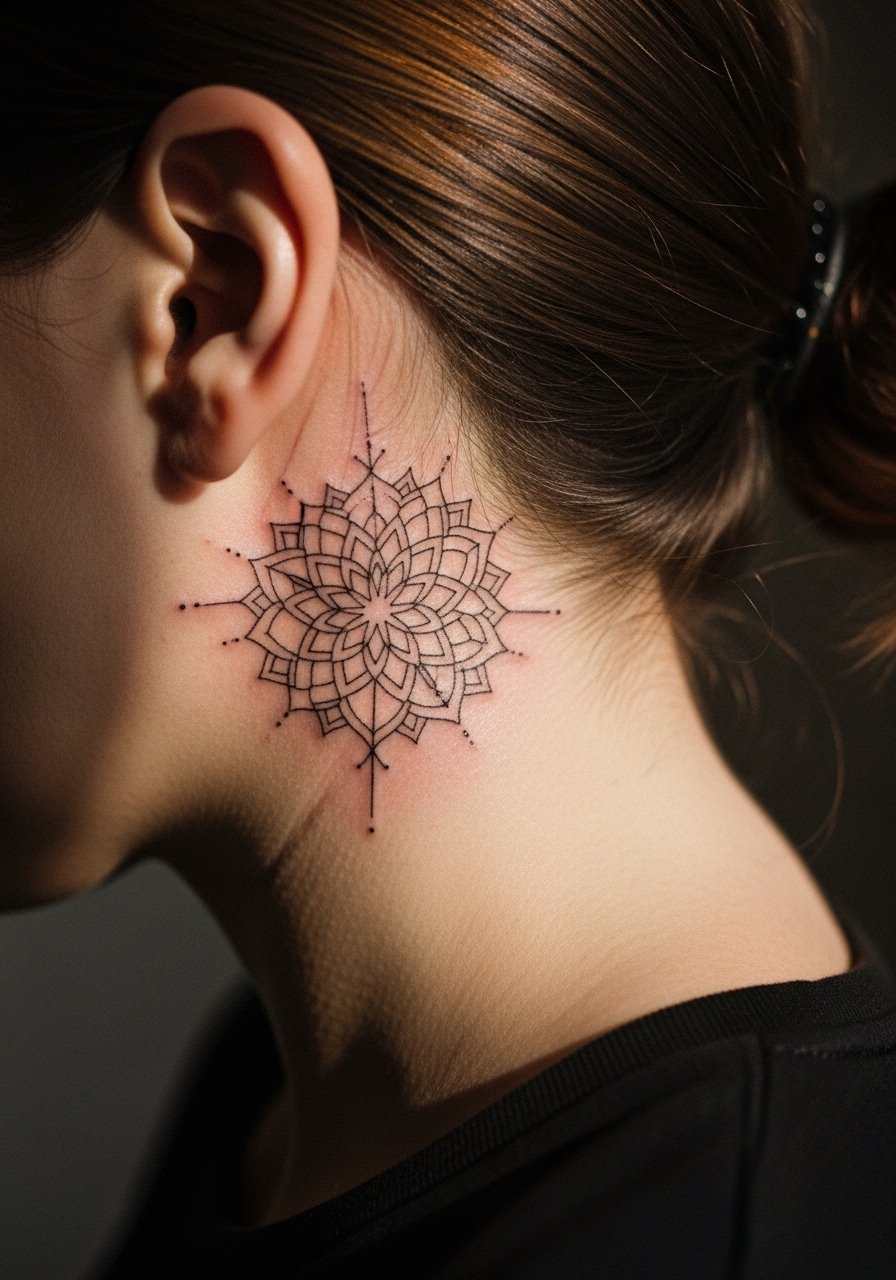
A compact mandala translated into crisply spaced triangles and dots sits nicely behind the ear where Billie-style hairlines accent it. The area below the hairline heals differently because hair oils and sweat can affect saturation. Keep the design small and let negative space define the petals so the detail does not collapse. Tell your artist you want slightly bolder outer lines to preserve shape. Session time is short but the aftercare window needs attention since hair touches the tattoo. For the session plan to wear hair clipped up and bring a soft scrunchie or clip to keep strands away.
Studio Day Picks
The forearm, wrist, and behind-the-ear placements above need different prep than large chest or rib pieces, and a few small items make booking and the first week easier.
-
Stencil transfer paper kit. Lets you preview exact placement on skin, which is handy for asymmetrical forearm and wrist pieces from above.
-
Topical numbing cream. Applied per directions about 45 minutes before can ease the sting on the rib and behind-the-ear sessions without changing linework.
-
Thin protective film roll. Useful for wrist and finger work where friction from clothing and washing starts immediately.
-
Fragrance-free gentle body wash. Gentle cleansers keep fine line areas like the forearm and behind-the-ear region from drying out or flaring.
-
Aquaphor healing ointment. A thin layer in the first few days locks moisture for detailed geometry without clogging the skin overly much.
7. Layered Geometry on the Upper Arm
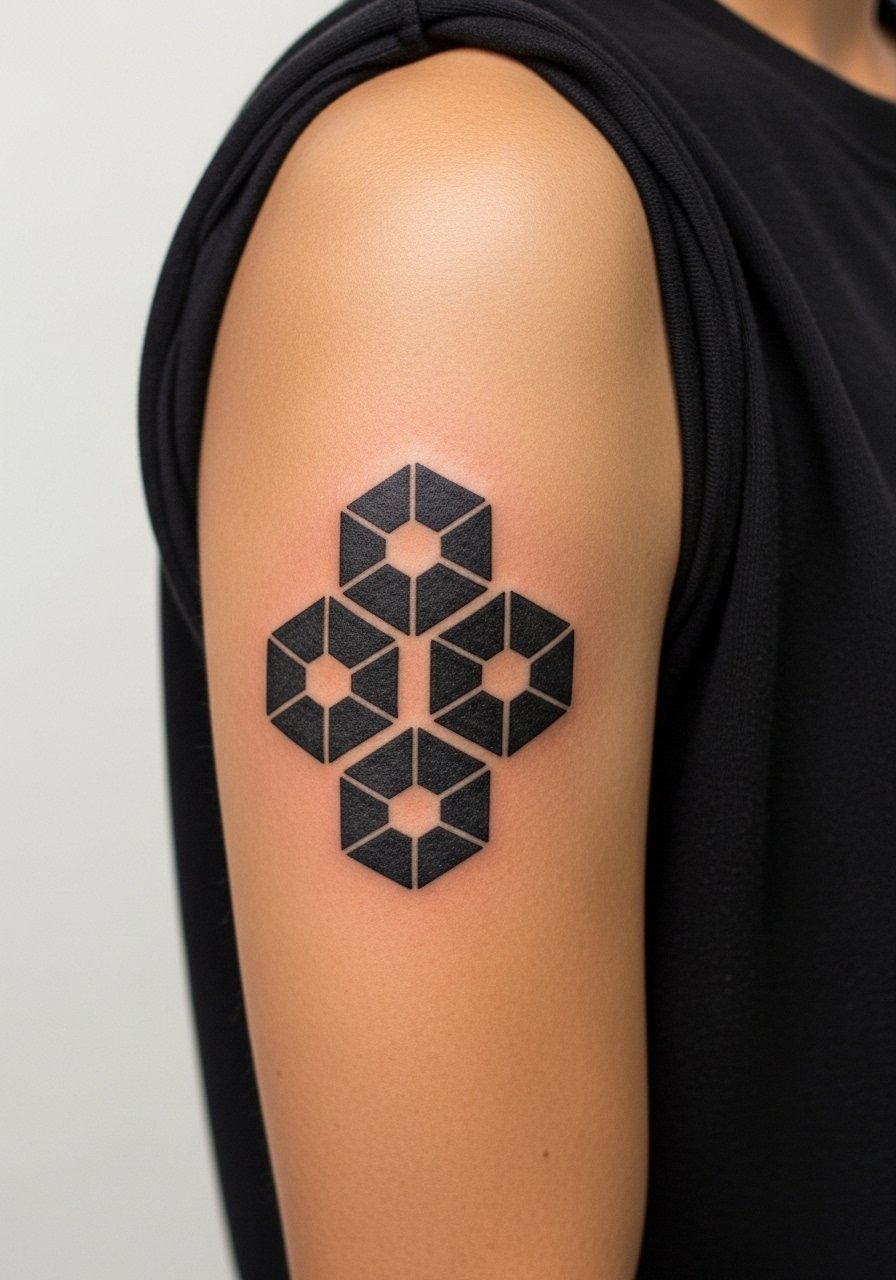
A stacked composition of hexagons and parallelograms wraps the outer upper arm and plays well under short sleeves. The upper arm tolerates heavier saturation and holds linework well. Tell your artist you want deliberate gaps between shapes so the piece keeps rhythm as skin ages. Sessions usually run two to three hours depending on size. A common mistake is overloading the area with tiny fills that merge after two years. For showing this off choose cropped sleeves or a loose drawstring linen pant and a sleeveless top so the arm reads as planned, not cluttered.
8. Neon-Green Accent Geo Over the Collarbone
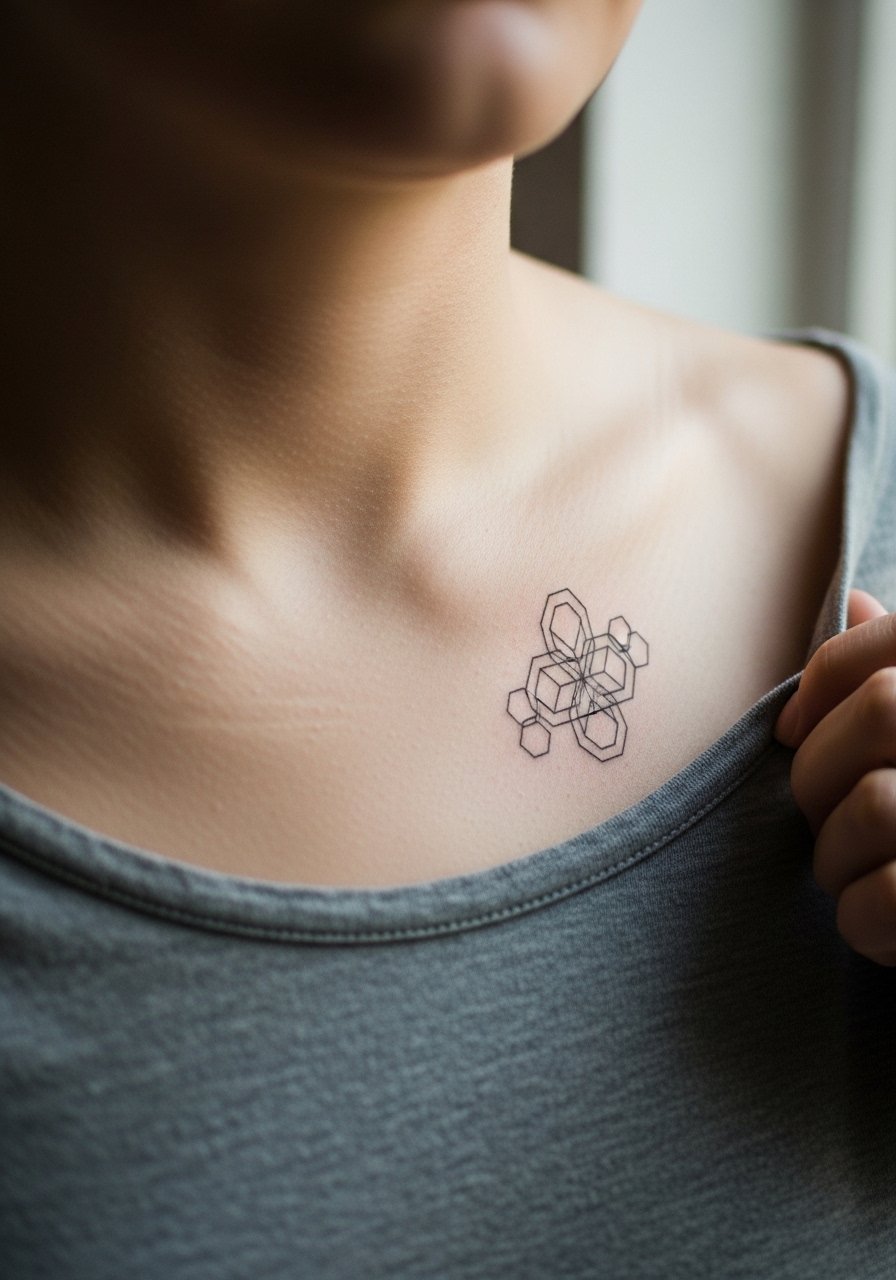
A triangular cluster with a thin neon-green line references Billie’s signature hue without full color saturation. Collarbone placement is visible and flat, but it rubs against straps. Ask for slightly heavier outlines and minimized fill areas near the bone. The session is brief and usually tolerable. The biggest error is placing dense shading directly on the bone which looks muddy as it heals. Pair this design with open-neck tops or an open-back midi dress so the geometry stands out in evening wear.
9. Constellation Grid on the Back of the Neck

A tidy grid of tiny geometric stars and dots gives a subtle nod to Billie’s moody motifs. Back-of-neck work is visible only with short hair or pulled-up styles. The area can be more prone to irritation from collars and hair products. Ask for dot work that sits slightly apart rather than clustered stippling. Sessions are quick but plan on protecting the area from friction in the first week. For visibility, wear hair up and try a racerback tank or a high ponytail to keep the design framed.
10. Geometric Portrait Fragment on the Bicep
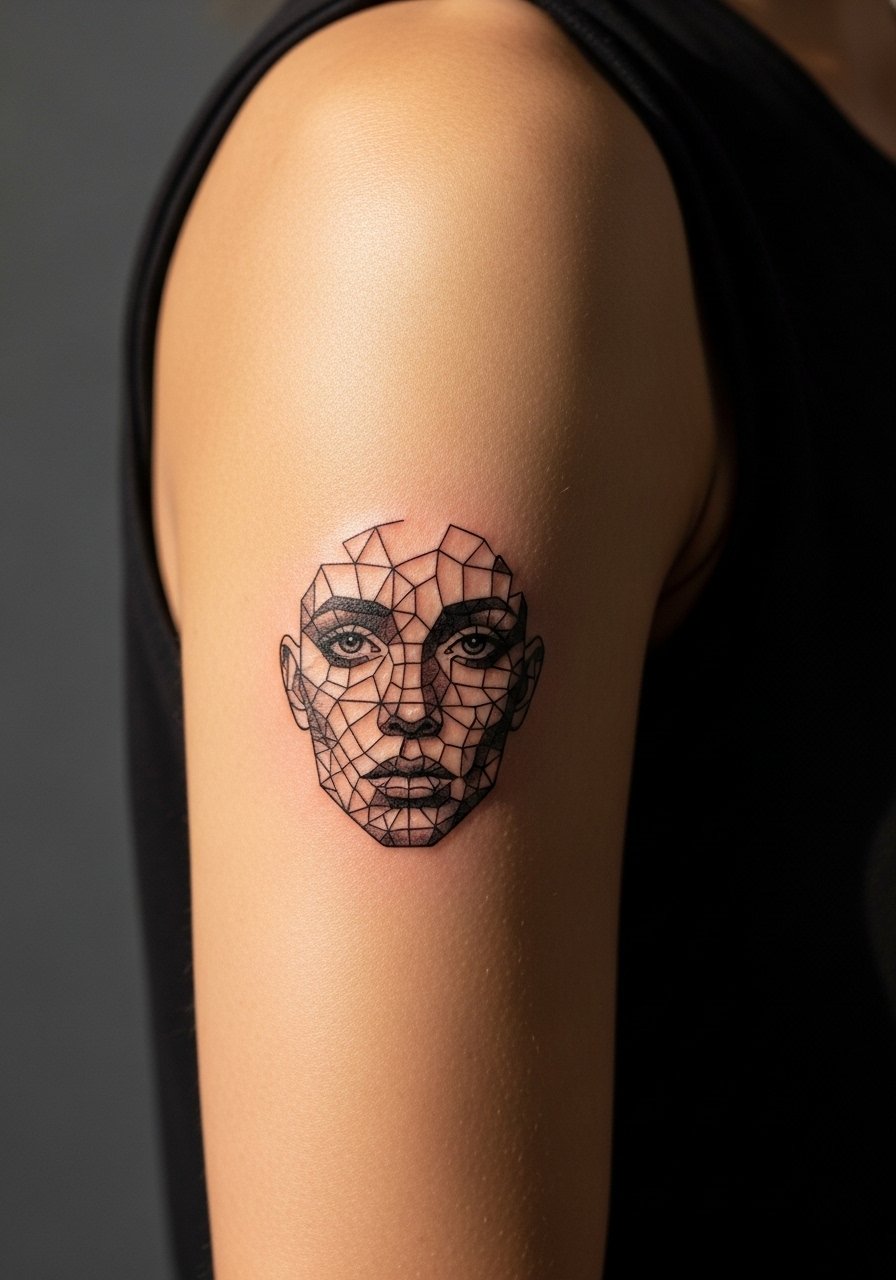
A fragmentary portrait built of polygons that hints at Billie’s silhouette works best on the bicep where there is enough canvas for detail. Biceps are forgiving and hold saturation well because of thicker skin. Tell your artist you want the portrait to read from arm length and not just close up. A common mistake is packing too much tiny detail that disappears after a year. Expect a multi-hour session if the fragment includes shading. For the session wear a loose button-down shirt you can slide off one shoulder so the artist has unobstructed access.
11. Sternum Chevron Geometry
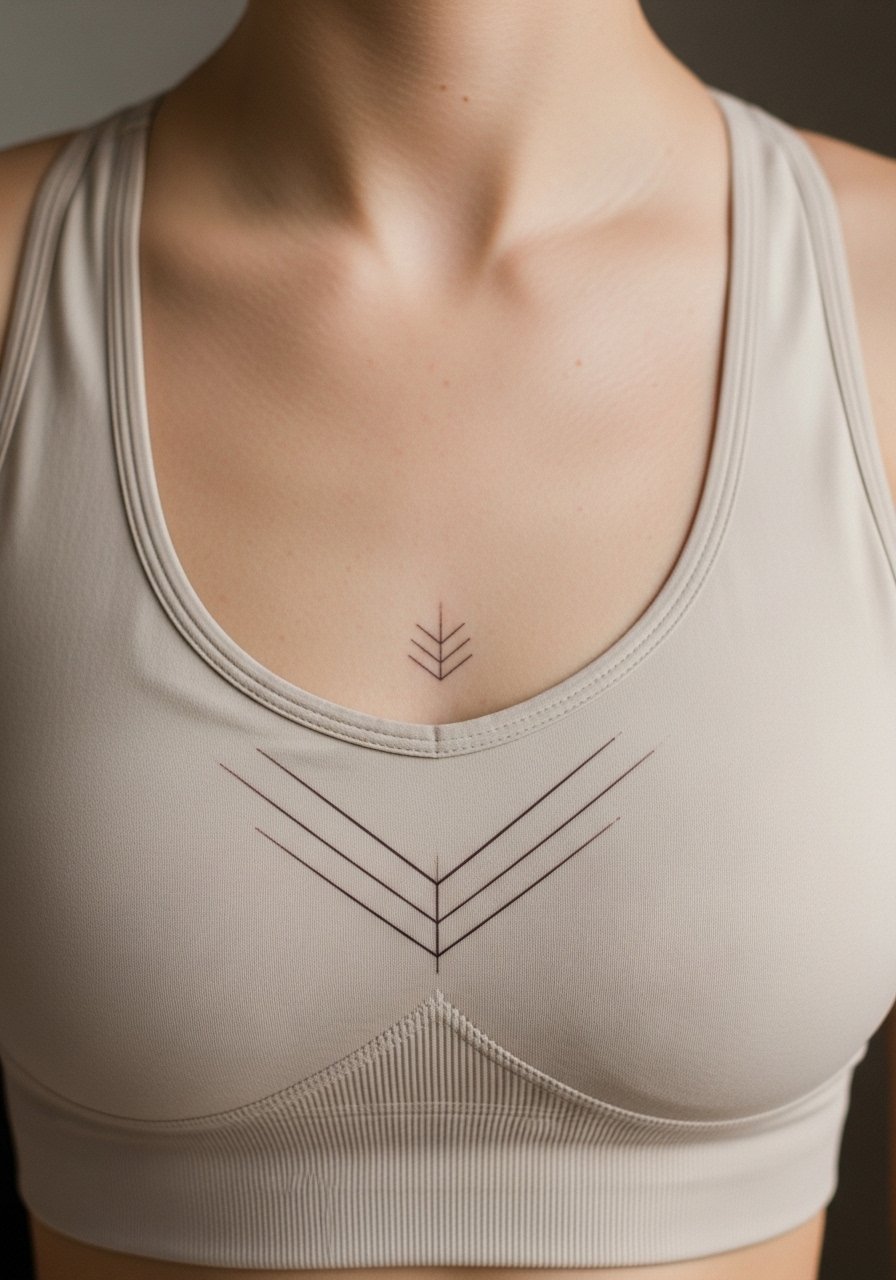
A central chevron formed from layered triangles reads dramatic when centered on the sternum. Sternum work carries two conversations in the community. One group says delicate geometry on the sternum blurs because the area sees constant movement and sweat. The other group says with correct depth and spacing, the forms hold. When getting this, request a mock stencil with the sports bra on so you can see how fabric lines interact. Pain is higher and sessions need breaks. Plan for a touch-up conversation in the consult. For the appointment choose a fitted sports bra or bandeau so the artist can work cleanly and you stay comfortable.
12. Asymmetric Shoulder Cluster

An asymmetric cluster that creeps slightly onto the collarbone and upper arm reads dynamic and pairs with Billie’s oversized tailoring. The shoulder cap tolerates bold linework and heavier saturation, so this is where geometric blackwork ages best. Avoid putting tiny repeating dots near the bone, which can soften into an indistinct mass over time. A two to three-hour session gives the artist room to balance spacing. For showing this off wear a loose button-down shirt you can pull aside or a tank to let the shoulder sit cleanly.
13. Micro Geometric Script Along the Rib
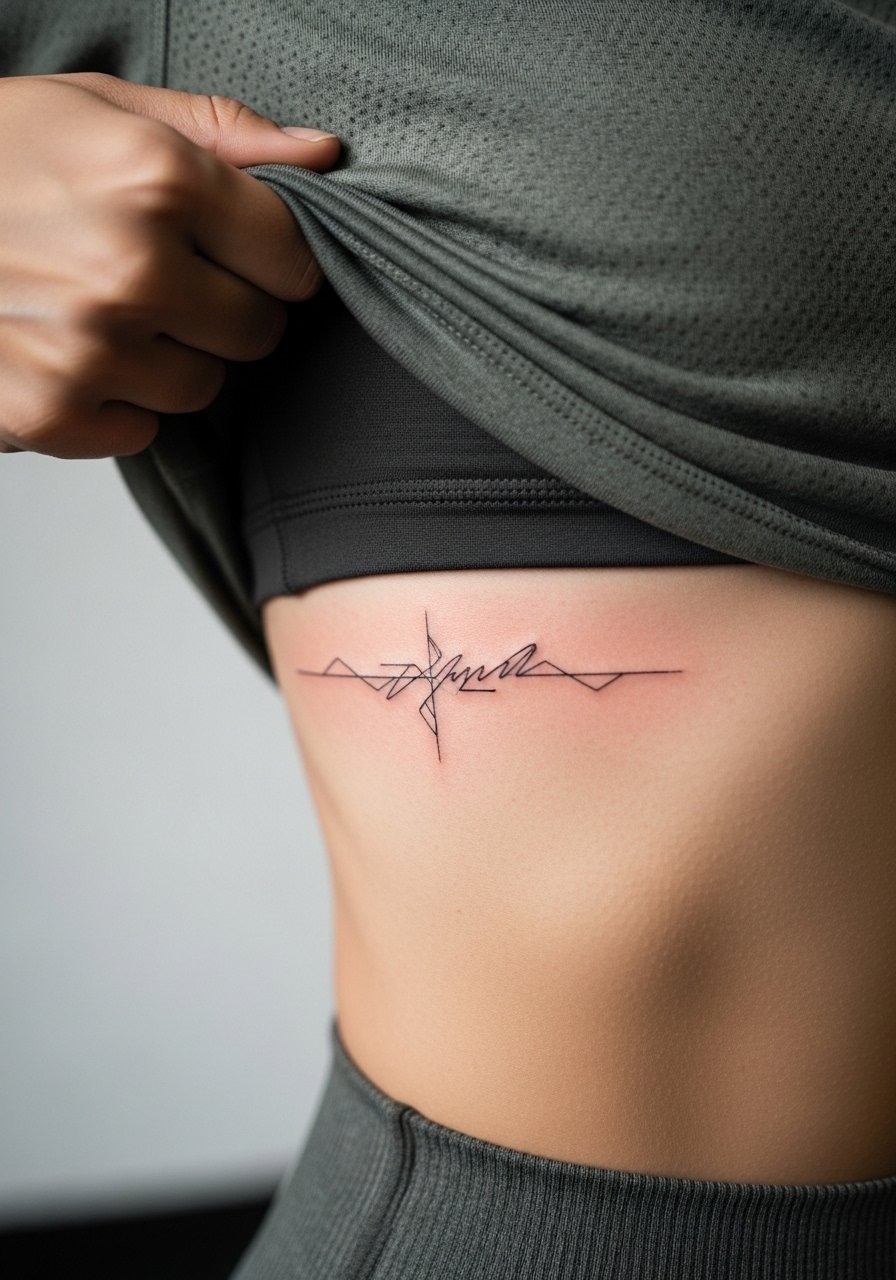
A micro script made of tiny geometric blocks that spells a short lyric sits on the ribs for private placement. Ribs move and expand, so keep letterforms larger than you think. The most common mistake is compressing letters into tight geometry that loses legibility as the skin shifts. Expect higher pain and shorter session windows with breaks. One practical tip is to rehearse breathing with the artist during the stencil placement so spacing is accurate while you are relaxed. For the appointment wear high-waisted bottoms and a cropped top so the artist has clear access.
14. Geometric Sleeve Starter Near the Elbow

Use a bold, modular motif near the elbow as the starter for a geometric sleeve. The elbow is a tough surface, but surrounding geometry can be placed to flow around the joint instead of across it. A big mistake is trying to place a detailed symmetric motif centered on the moving fold. Instead, ask for shapes that curve with motion. Sessions can be multiple short visits. For daily wear, roll sleeves intentionally or show the piece with a racerback tank when you want the elbow to peek through without overexposure.
15. Tiny Geometric Note Behind a Collarbone Tattoo

A tiny musical note or lyric glyph transformed into geometric planes sits just above the collarbone for a discreet Billie nod. The area near the collarbone is visible and flat but it can rub against strap lines. Keep the motif compact and give it breathing room from the bone. The session is brief and healing tends to be straightforward if you avoid tight straps on clothing. To show it off, pair with a thin chain pendant necklace worn slightly above the tattoo so the jewelry frames not covers the ink.
16. Repeating Geo Rows on the Calf

Stacked rows of geometric bars travel down the calf and read well under boots or long socks. Calves handle saturation and age well because they avoid constant friction. Tell your artist you want clear negative space between rows to prevent merging. Sessions vary by length but are usually comfortable. The main mistake is repeating identical thin lines without variation which can create an optical blur over time. For showing this design, roll up slouch socks or wear simple leather sandals so the rows read cleanly against skin.
17. Geo Barcode on the Side Hip

A barcode-inspired stack of thin geometric bars sits on the hip as a private, edgy placement. Hips move with clothing and body shape, so larger, spaced bars outlast very thin lines. Ask for a mockup on your preferred underwear or swimwear so you can see how fabric will interact with the piece. Sessions are tolerable and usually short. Expect the tattoo to remain crisp if you avoid placing bars exactly where tight waistbands hit. For the appointment wear high-waisted bottoms that you can lower slightly so the artist works on a flat surface without full exposure.
18. Negative Space Hoodie Silhouette on the Thigh

A negative space silhouette of a hoodie, formed by geometric outlines, references Billie’s aesthetic in a way that reads best on the thigh. The outer thigh is forgiving and holds detail well. The common error is doing extremely fine internal lines that get compressed by tissue movement. Ask for clean outer lines and a modest interior grid instead of heavy stippling. Sessions can be longer if the piece is large. For the session wear loose shorts you can shift easily and bring a pair you can sit in comfortably so pressure on the area is minimal.
19. Micro Geo Symbols Down the Spine

A vertical row of tiny geometric symbols running down the spine gives a directional, stage-ready look. Spine tattoos need careful spacing because the line can warp with posture. A two camp conversation applies here for very fine work. One group cautions that ultra-fine elements along the spine merge with movement. The other group says careful spacing and slight bolding solves the issue. Ask for a standing and seated stencil to see how the design shifts. For evening wear, show the line with an open-back midi dress so the tattoo becomes a deliberate focal point.
20. Geo Lightning Bolt on the Hand Edge
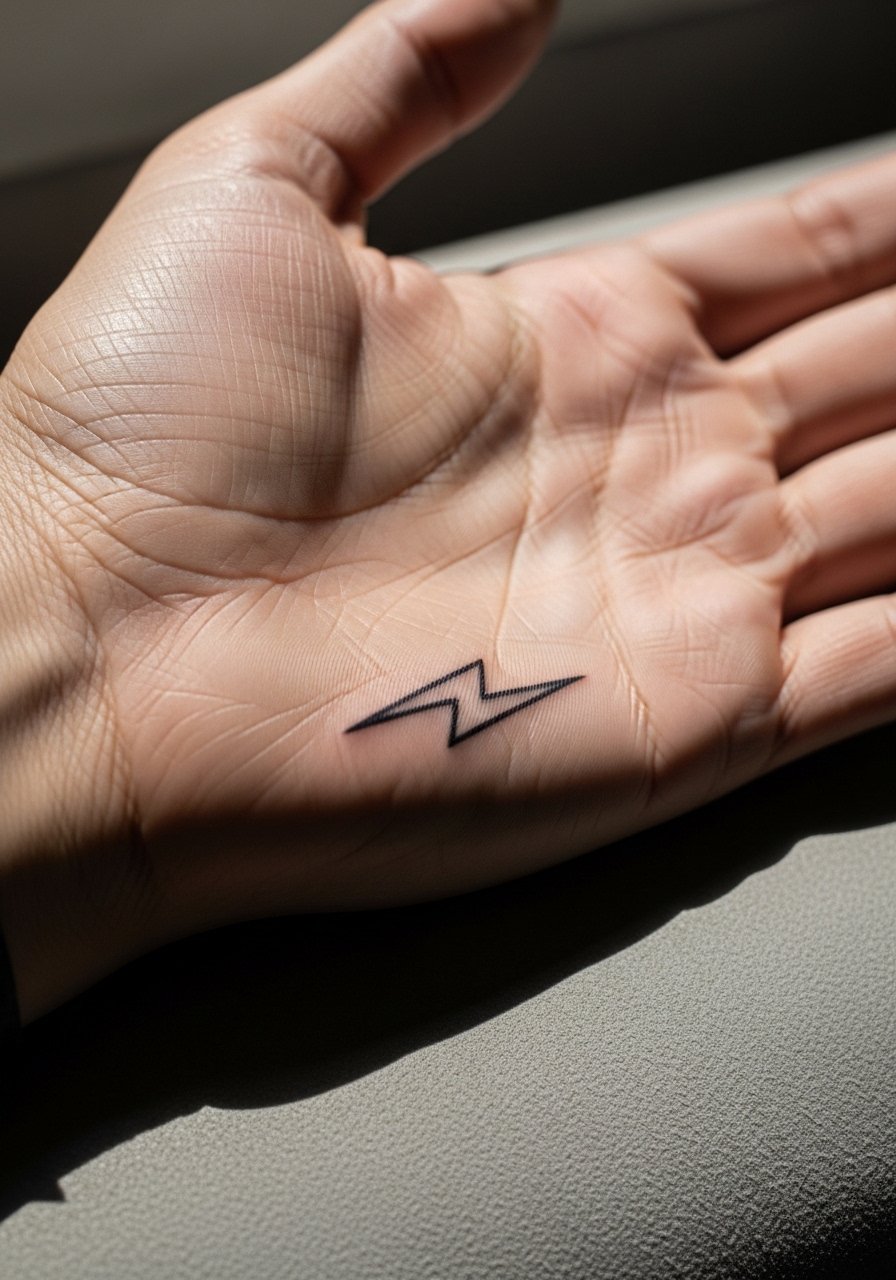
A compact bolt that sits on the hand edge is visually bold but high maintenance. Hand skin sees heavy washing, and oils speed fading. The main mistake is using tiny internal detail that disappears in months. Keep the bolt mostly outline with a tiny filled area and accept touch-ups will be part of ownership. Session time is short but healing needs care. Hand tattoos still affect some workplaces, so consider your career path before committing.
21. Full Geometric Chest Panel Near the Sternum
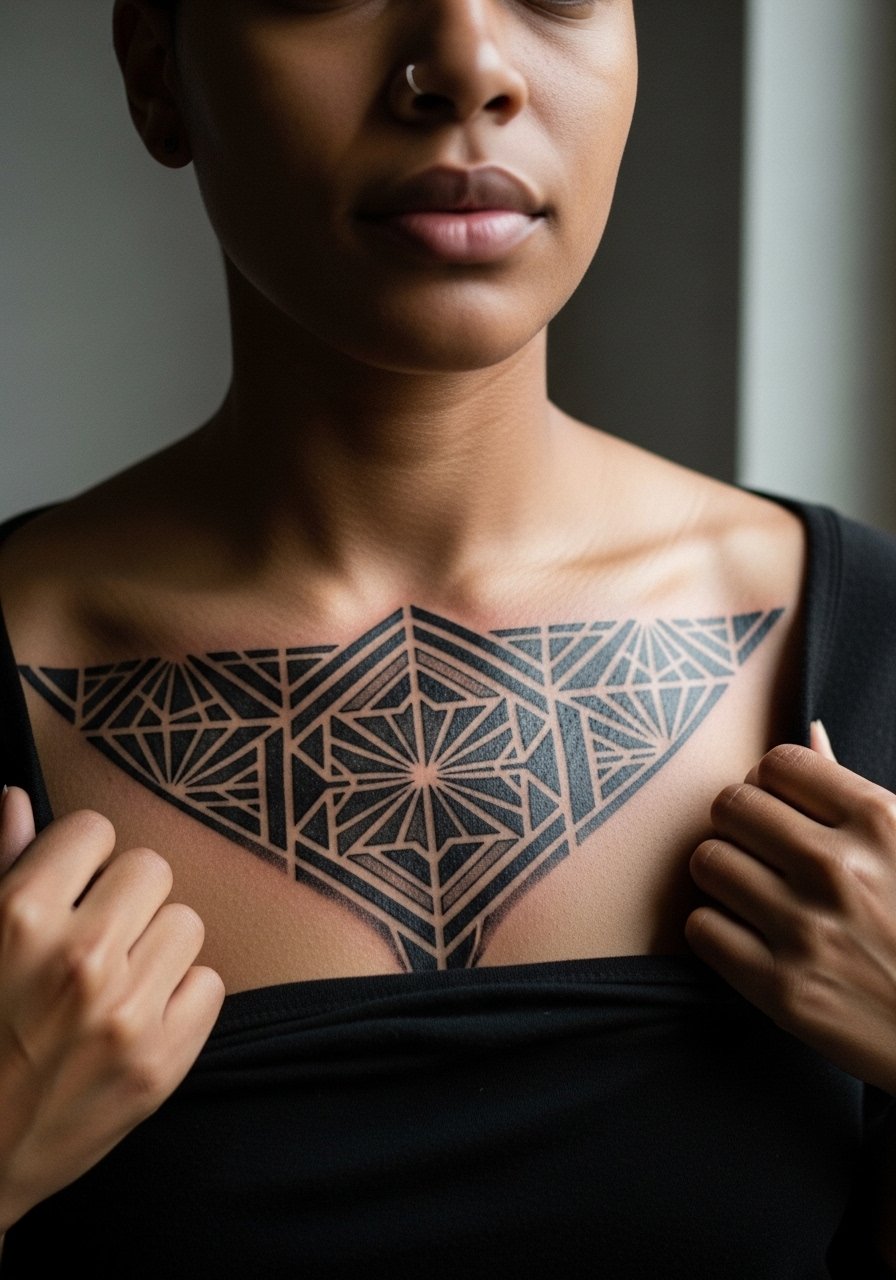
A balanced chest panel of layered geometry reads dramatic and pairs with Billie-inspired stage looks. Chest skin tolerates saturation but the sternum edge and collarbone need careful spacing to avoid early blur. Tell the artist you want clear bands of negative space in the densest zones so the pattern keeps its rhythm for years. Sessions are longer and may require multiple visits. For the appointment choose a wide-neck shirt or button-up you can pull aside so the artist has sensible access without full exposure.
Frequently Asked Questions
Q: Will geometric fine-line tattoos like these blur faster on ribs and sternum than on forearms?
A: It depends on spacing and line weight. Ribs and sternum move with breath and tend to need slightly bolder spacing than forearms. One group of artists will avoid ultra-fine work there. Another group will accept the challenge with a larger scale and say it holds up. Ask for mock stencils in different positions so you can see how the design responds to movement.
Q: How should I dress on the day of a behind-the-ear or collarbone tattoo appointment?
A: For behind-the-ear clip hair up and bring a soft scrunchie. For collarbone or upper chest wear a wide-neck shirt or a fitted sports bra you can pull down slightly so the artist can work without you getting chilled. A loose button-down shirt is a reliable choice because you can slide it off one shoulder.
Q: How often do geometric wrist and hand tattoos need touch-ups?
A: Wrist pieces often need touch-ups around year two to three depending on daily wear and sun exposure. Hands typically need more frequent maintenance because of washing and friction. Expect to discuss touch-up plans at the consult and budget for one every one to three years for those visible areas.
Q: Are there cultural issues with geometric mandalas or patterns that echo other traditions?
A: Yes. Some geometric motifs originate from specific cultural or religious practices. Many people choose to adapt shapes rather than replicate sacred patterns exactly. A respectful route is to discuss origins with your artist and consider subtle changes that honor aesthetics without copying meaningful symbols directly.
Q: Can I combine color accents like neon-green with black geometric work without compromising longevity?
A: Small color accents can work if they are minimal and not heavily shaded. Neon tones tend to fade faster than saturated black, so use them as tiny highlights rather than large fill areas. Place accents away from high-friction zones and expect color to need refreshing before the black linework does.