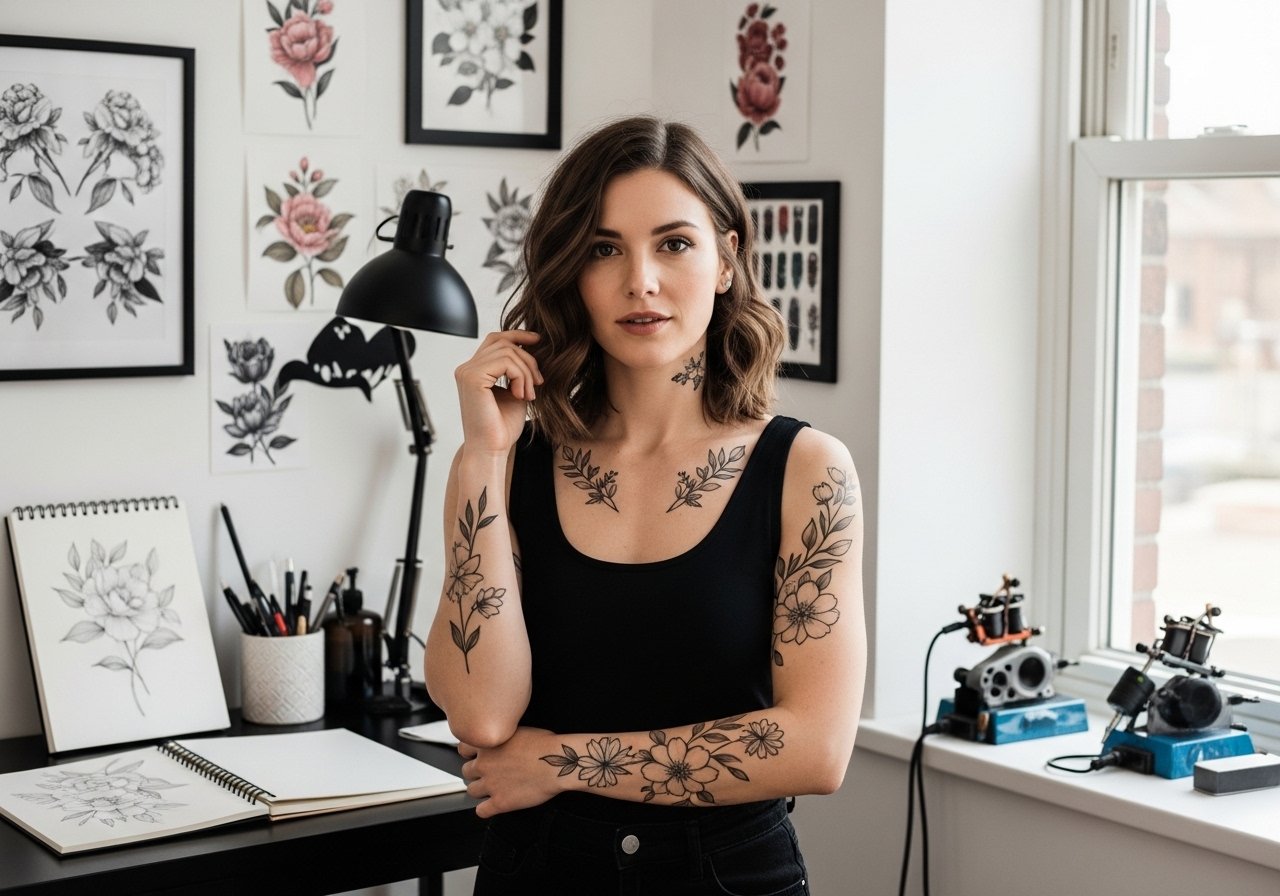
Fine line hearts and crisp geometric fills dominate feeds right now, but the gap between what trends and what ages is real. Small mono-line hearts look great for a few months and then ask for touch-ups. Bigger blackwork grids and negative space tricks often read clearer after three years. Read these 17 minimalist geometric heart tattoo designs and you will get practical notes on placement, what to ask your artist, and the wardrobe choices that actually show the ink off.
1. Single-Line Geometric Heart Outline on the Inner Wrist
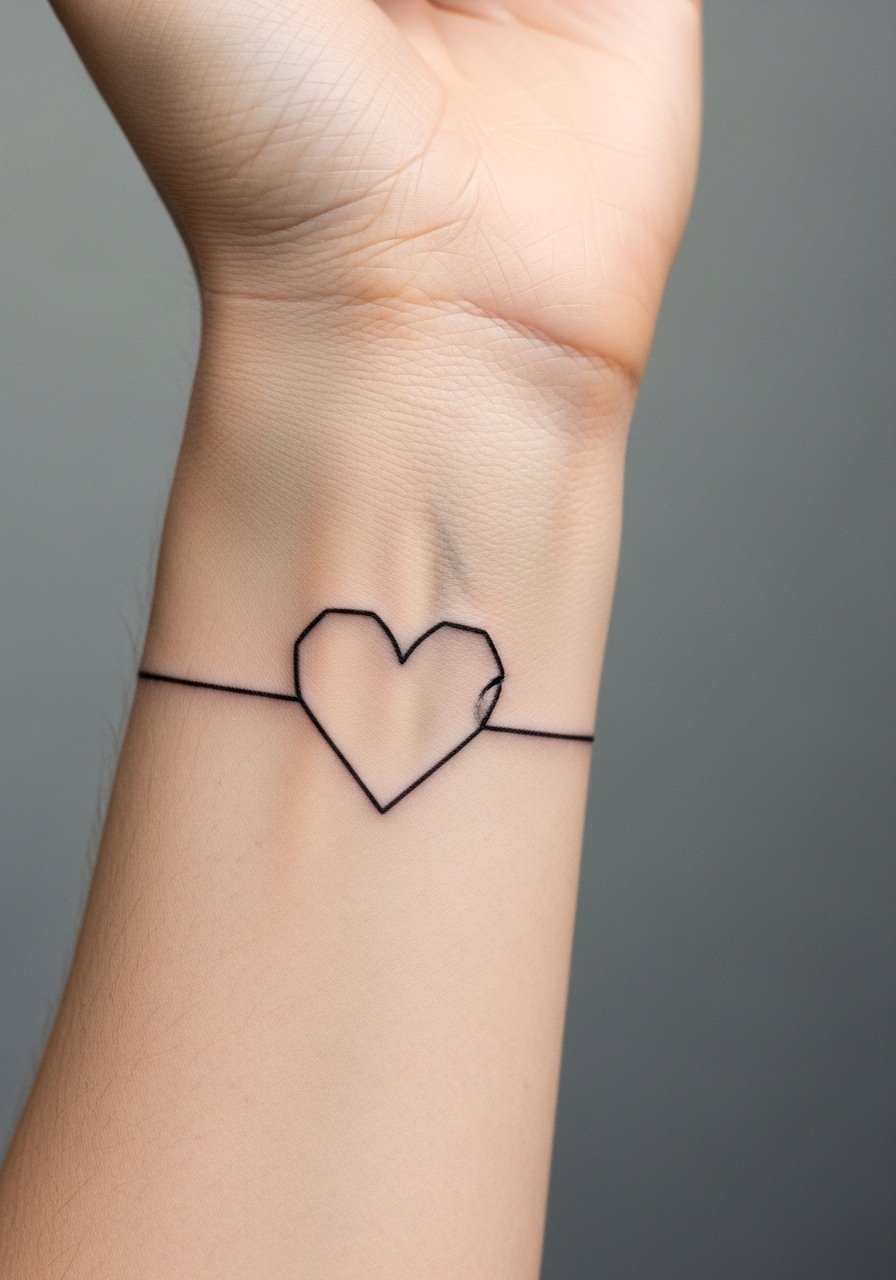
This is the archetype for first timers who want a clean symbol without heavy commitment. I recommend asking your artist for a slightly thicker single pass than a hairline so the outline holds on the inner wrist where movement and sun exposure speed fading. The common mistake is going so thin that the line softens into a gray smudge by year two. Expect a 30 to 45 minute session with low pain but daily rubbing from watches and sleeves. For showing it off, rolled sleeves frame the wrist well, so pair it with a rolled cuff chambray shirt for casual reveal.
2. Minimalist Dotwork Geometric Heart on the Finger

Finger pieces are fast and intimate, but they live in high-friction zones that eat detail. Dotwork reduces the blowout risk compared with tiny continuous lines, and a single-session micro-dot fill helps avoid early spreading. Tell your artist you want spaced dots rather than packed stippling so the design keeps definition after repeated washing. The fingertip area hurts more than the wrist, and you should expect a touch-up at year one or two. For session comfort wear sleeves you can roll up and bring gloves if you want to limit contact after the appointment.
3. Symmetrical Geometric Heart with Internal Grid on the Forearm
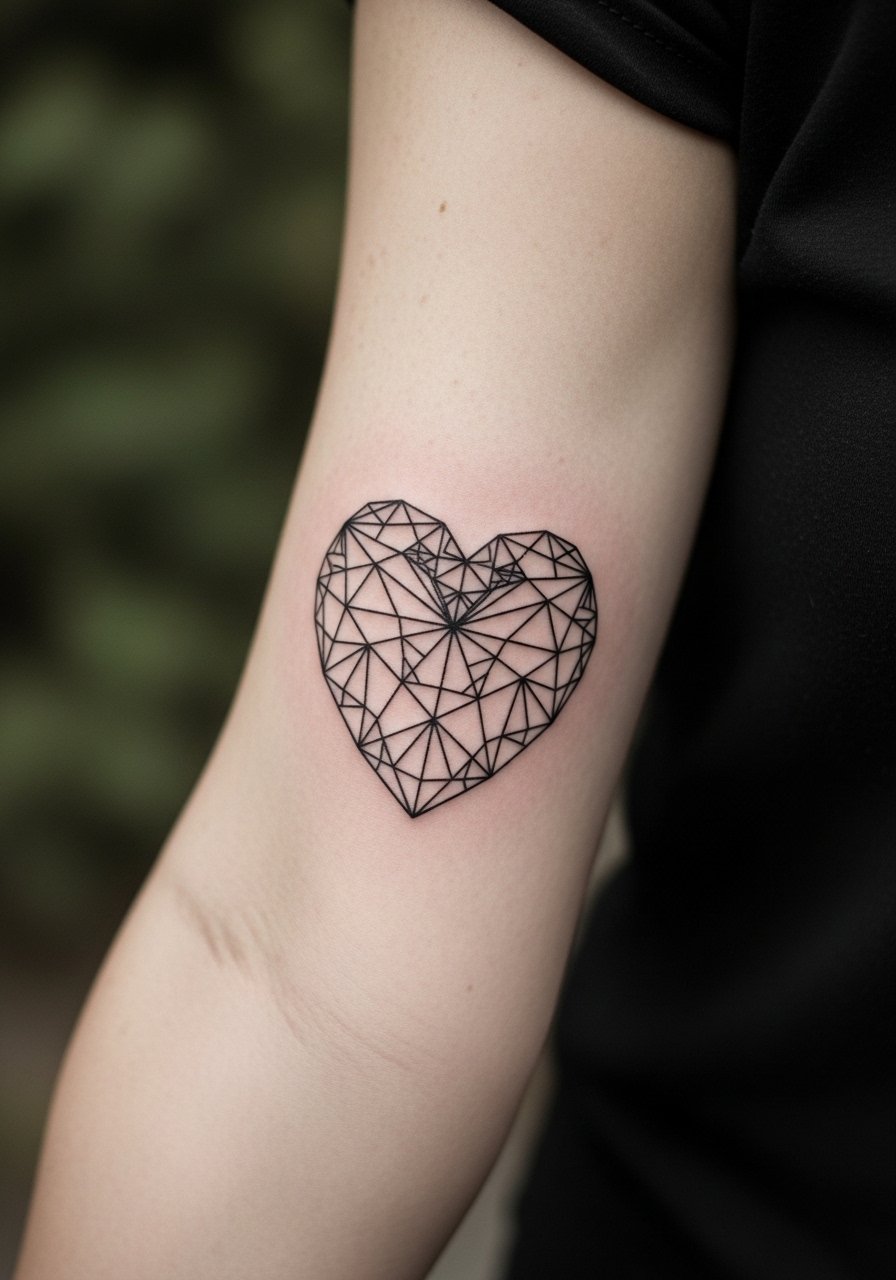
Forearm pieces photograph well and tolerate medium detail. The grid inside a heart shows the mathematical precision that geometric fans like, but grid cells need breathing room. Ask your artist to scale the grid so each square reads at arm's distance. The frequent error is pushing the grid too small which leads to merging after a few years. Expect one to two sessions depending on size, and plan for a single touch-up within three years. For easy access during the session, wear a loose fit tank top or a button-down you can pull to the elbow.
4. Framed Geometric Heart with Arrow Piercing on the Inner Bicep
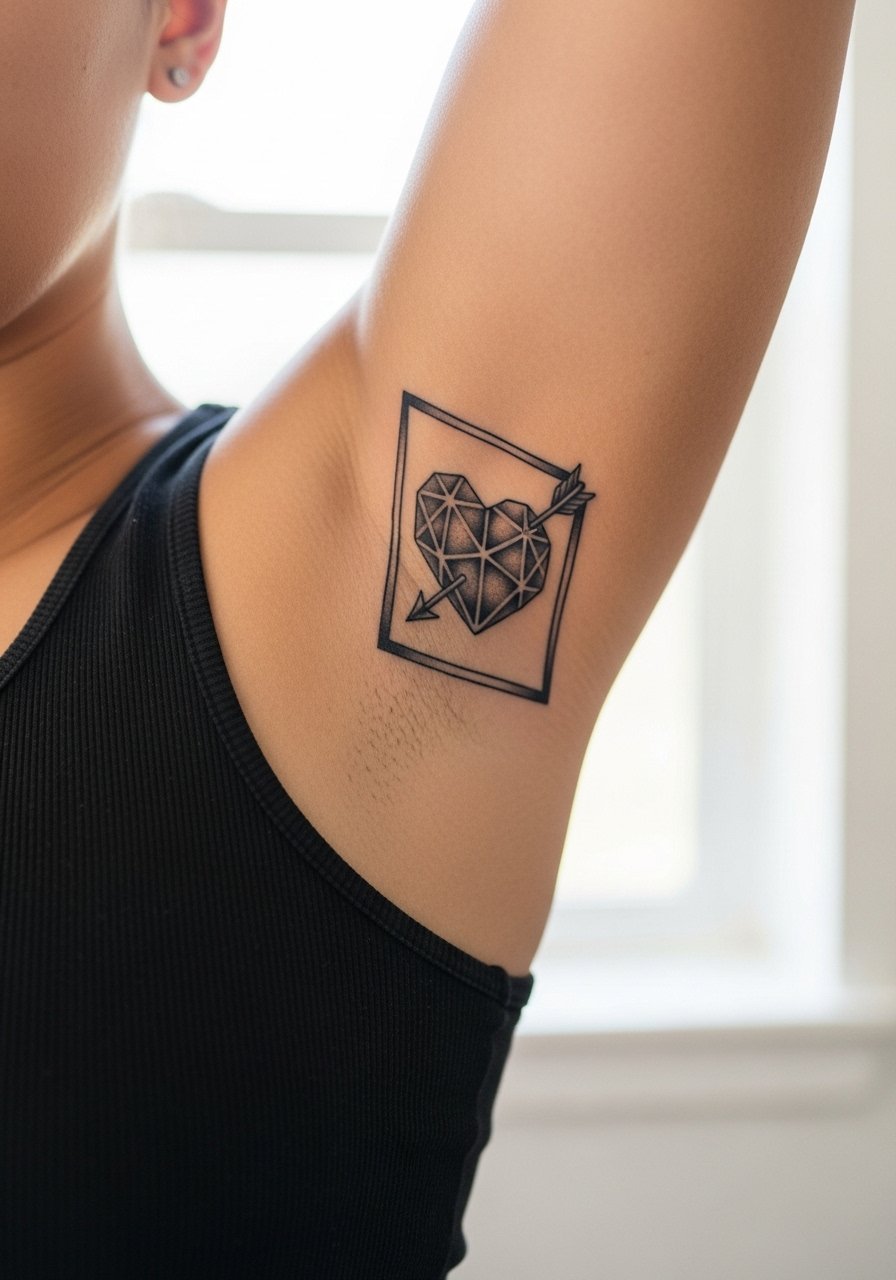
Fair warning, the inner bicep is a tender spot and the skin can be softer than the outer arm. The frame and arrow offer narrative without crowding the heart itself. During consultation specify line weight and whether you want a tiny red accent in the arrow shaft if you want a focal pop. One common mistake is over-detailing the frame which fights the curved surface and risks distortion when the arm moves. Sessions can be slightly longer because the artist may reposition you for comfort. Wear a tank top so the artist can access the area cleanly and keep the space relaxed.
5. Layered Geometric Heart with Moth Overlay on the Collarbone
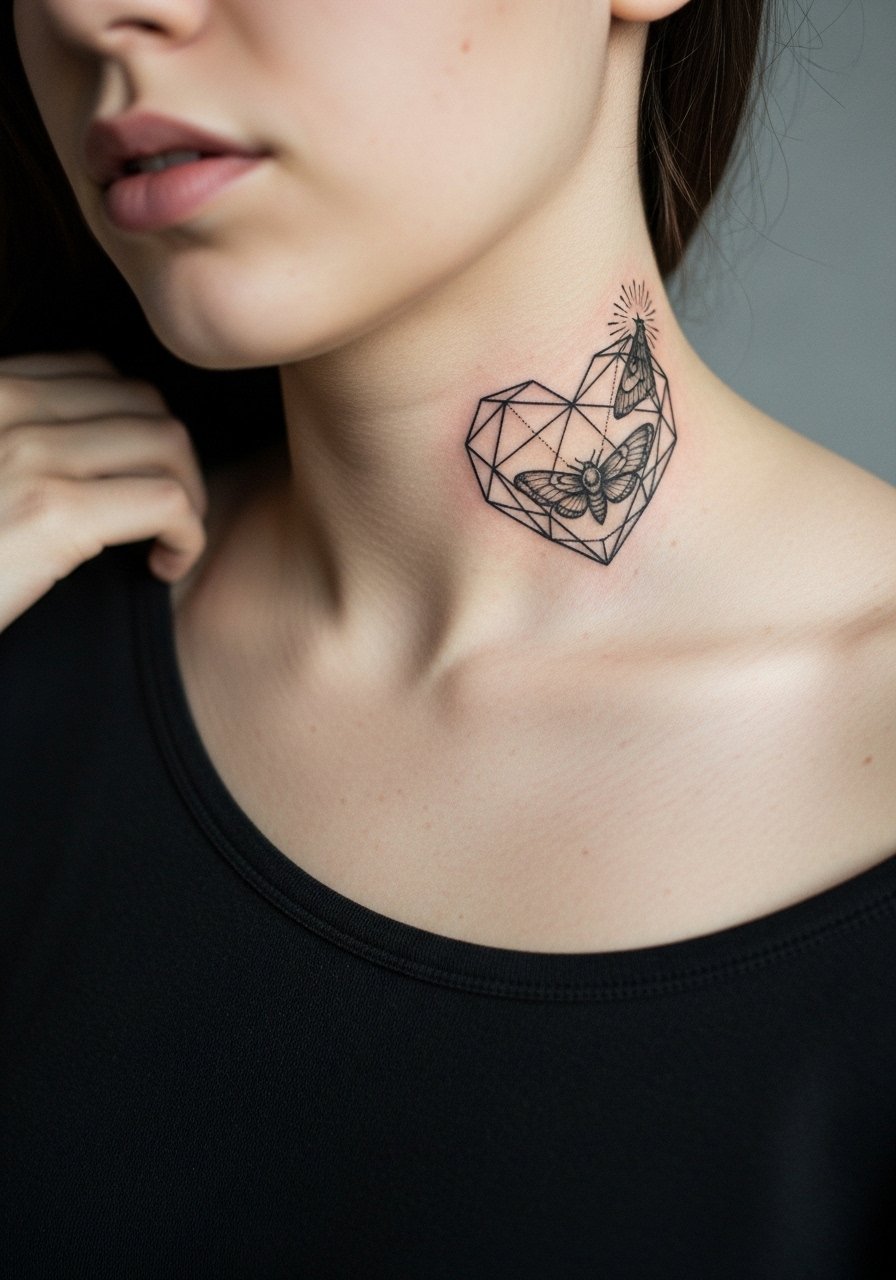
Collarbone work reads elegantly with negative space and overlays because the flat plane highlights symmetry. The moth adds a transformation motif without turning the piece overtly floral. Tell your artist you want spacing between the moth wings and the heart geometry so both elements remain legible long term. The collarbone can be bony and more painful than the forearm, and detailed layers may need two shorter sessions instead of one long one. For showing it off pair the piece with an off shoulder top black that leaves the upper chest visible and frames the moth gracefully.
6. Negative Space Geometric Heart on the Ribcage
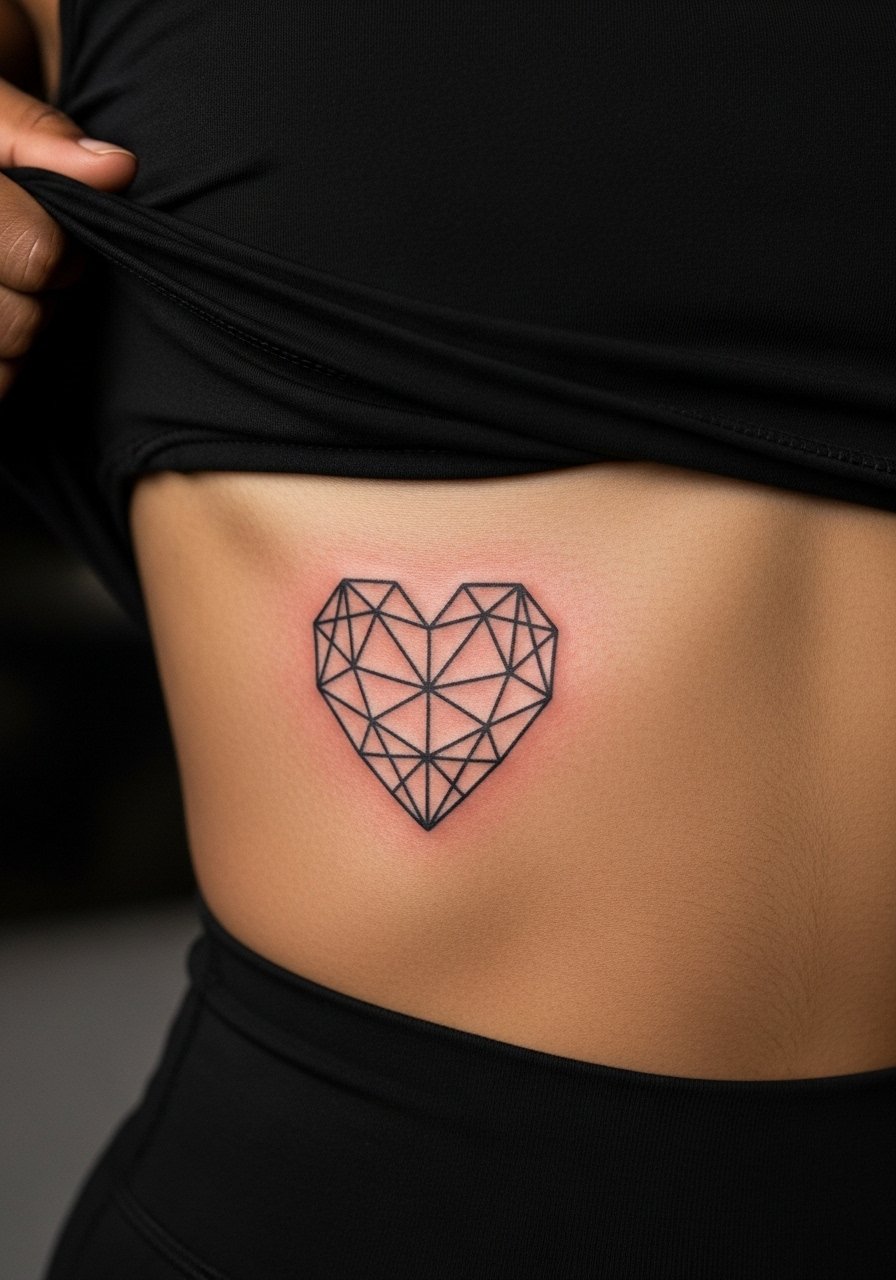
Fair warning, the ribcage rates high on pain scales. That said, negative space works beautifully here because the contrast plays off skin tone instead of relying on tiny lines that stretch. Artists split on fine line on ribs. One camp warns the skin there stretches with time and blurs details within two to three years. The other camp says with correct spacing and needle depth it settles fine. Ask where your artist stands before booking. Expect a single session for a moderate size piece and plan for touch-ups at year two if you notice softening. For the session wear a strapless bralette so only the area needed is revealed.
Studio Day Picks
The wrist, finger, inner bicep, collarbone, and ribcage work above all need different prep, so these items help smooth the session and the first few days of healing.
-
Stencil transfer paper kit. Lets you preview exactly where the linework will sit on skin before the needle hits, which matters for thumb-side wrists and small finger hearts.
-
Topical numbing cream. Use fifty minutes before a ribcage or inner bicep session to take the edge off without interfering with linework.
-
Thin protective film roll. Helpful for finger and wrist pieces that face constant washing and friction during the first week.
-
Fragrance-free gentle body wash. Cleanses healing areas like collarbone and ribs without irritating sensitive ink.
-
Aquaphor healing ointment. A thin layer in the first 48 hours keeps linework moist and reduces scabbing on small-scale fine line pieces.
7. Sacred Geometry Heart with Triangle Divisions on the Upper Arm
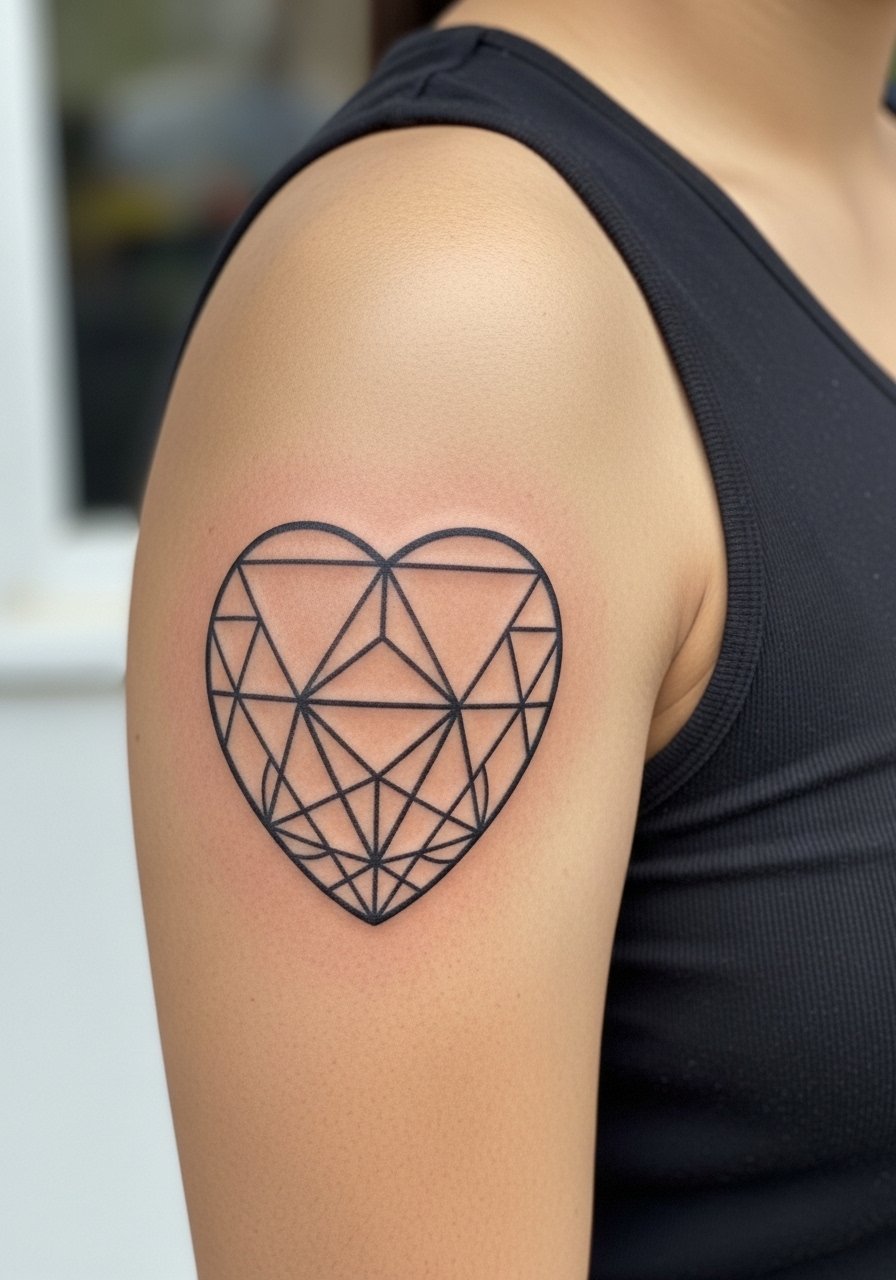
Sacred geometry scales well on the upper arm where there is space for large triangles and radiating patterns. This style leans into symmetry and requires a grid-based stencil for accuracy. Tell your artist you want clear negative buffers between triangles so the divisions do not merge as the piece ages. The upper arm tolerates bold blackwork and often needs fewer touch-ups than wrists or fingers. For show-off outfits, a fitted v neck tee gray keeps the arm visible while keeping the chest area neutral.
8. Geometric Heart Mandala Fusion on the Shoulder Blade
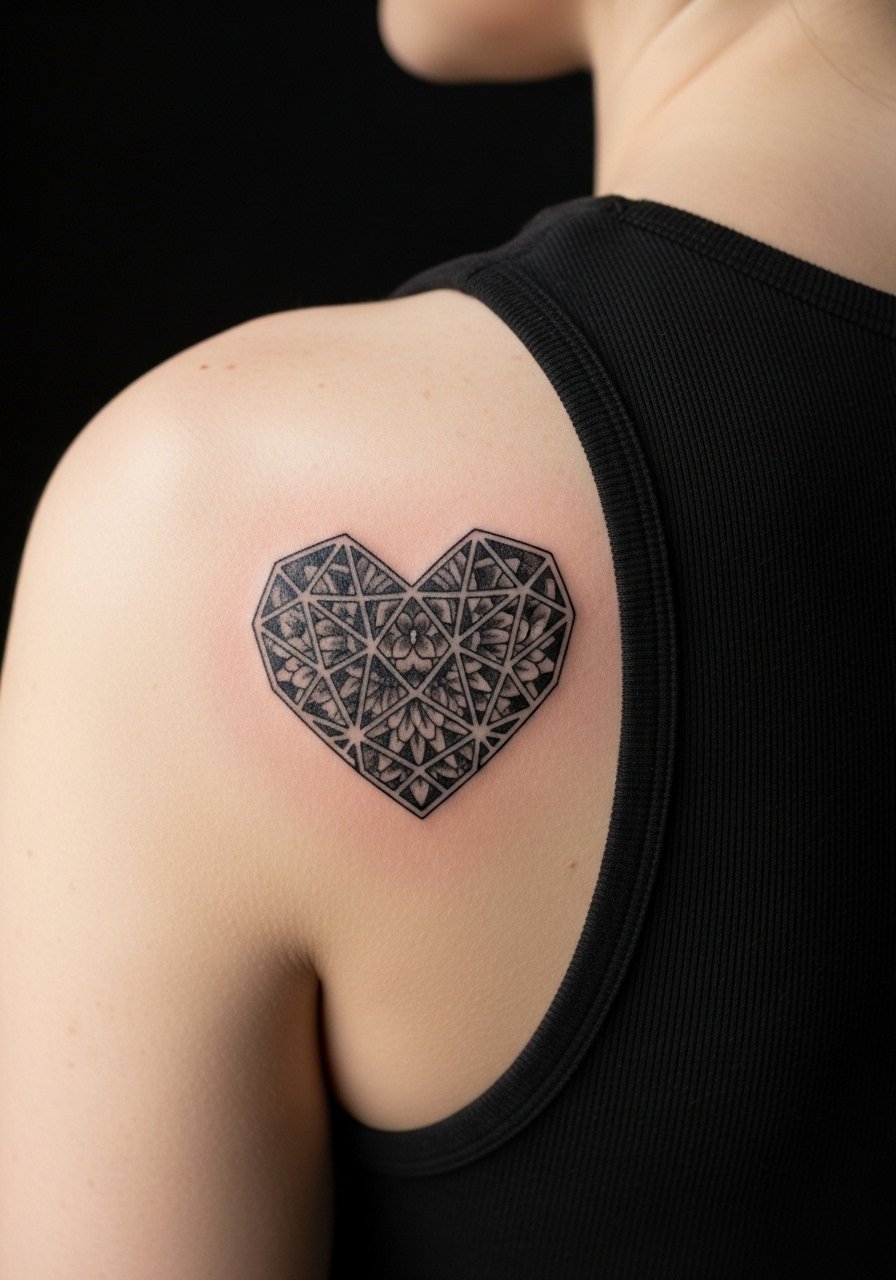
Shoulder blade pieces allow complex mandala geometry to breathe. The trick is to build the mandala around the heart core so the radial symmetry remains readable when you move. A common mistake is stacking too many concentric rings which can flatten into gray areas after a few years. This placement is moderate on pain and usually done over two or three sessions for larger pieces. For session ease, wear a loose button-down shirt you can pull aside without getting hair or fabric in the work area.
9. Bold Geometric Heart with Crystal Facets on the Calf
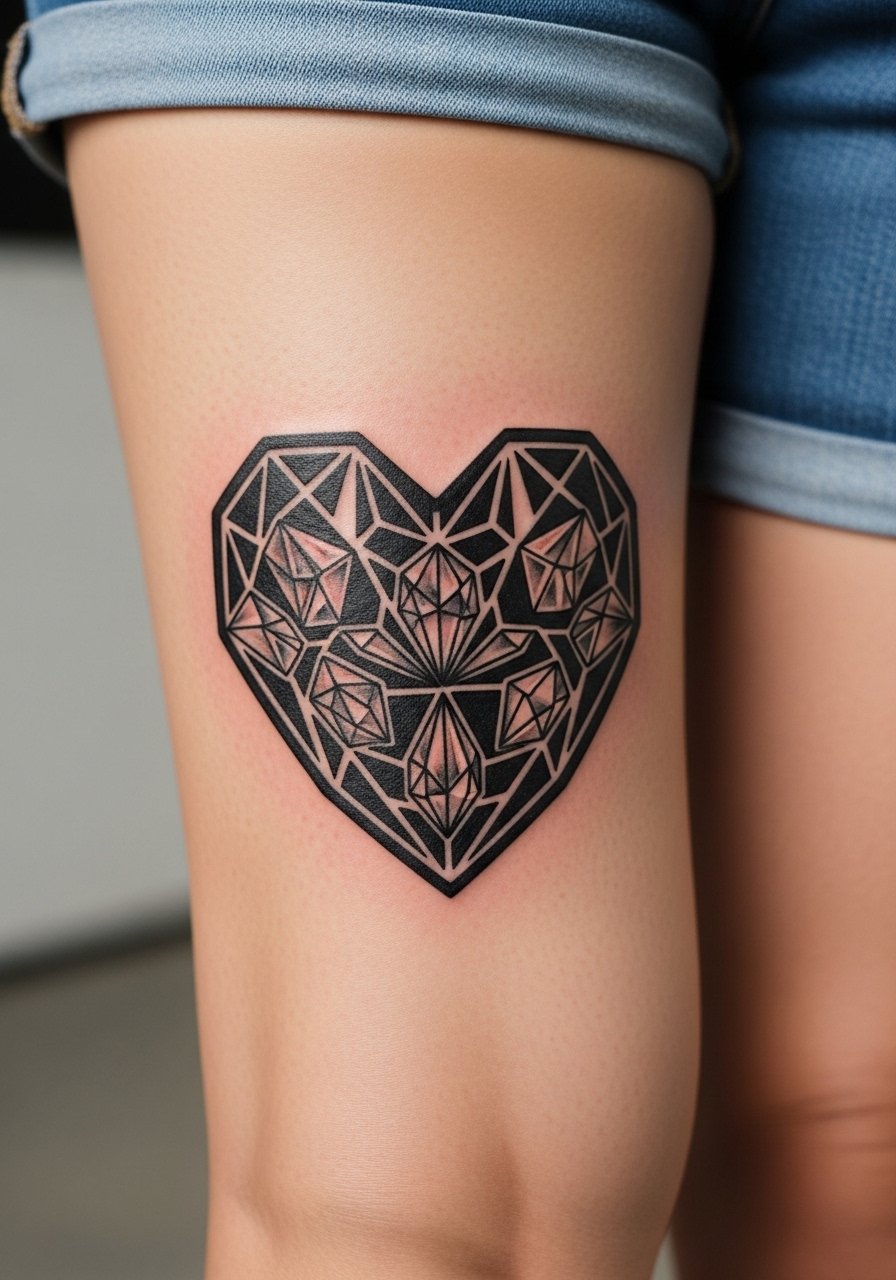
Calf work is forgiving and great for collectors who want statement geometry. The crystal facets use solid black fills and negative space to mimic reflection. The key is to balance heavy fills with uninterrupted skin lines so the faceted edges stay crisp. Expect two sessions for a 4 inch piece and moderate discomfort when sitting through the second pass. For showing this off, roll slim joggers or wear shorts and consider pairing with canvas low top sneakers for summer visibility.
10. Fine Line Geometric Heart with Pulse Line on the Inner Wrist

This small motif links heartbeat imagery with minimal geometry and suits advocates who want a discrete symbol. Keep in mind fine line on the wrist can fade faster than thicker work. One side of the debate favors fine line because the aesthetic softens tastefully over time. The opposing view recommends bolder line weight for longevity in high-movement areas. Ask your artist which approach they prefer and why. Sessions are short, about 30 minutes, and expect a touch-up at year two if you choose hairline strokes.
11. Hexagonal Tessellated Heart on the Outer Thigh
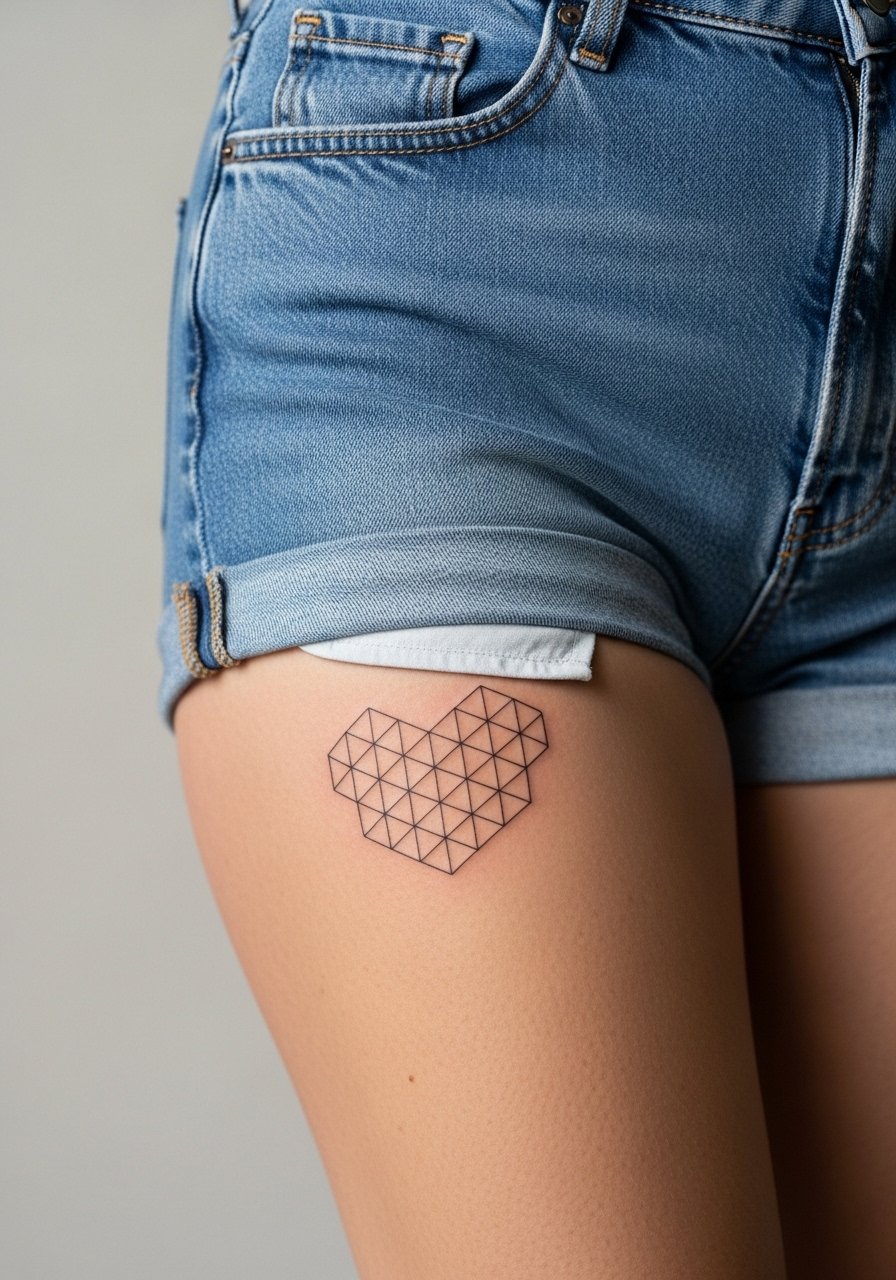
Thigh placements are forgiving for tessellation because there is room to expand the pattern into a larger composition. The common mistake is starting the hexes too small which makes future connecting pieces look cramped. For stretch-prone areas like the thigh, scale the tessellation so each hex stays crisp if your body changes. Sessions are longer and often split into two, and touch-ups every few years keep edges sharp. For night outs, high-waisted shorts in olive or similar shades frame the design well and play with texture if you layer over sheer tights.
12. Monochrome Geometric Heart with Infinity Loop at the Ankle
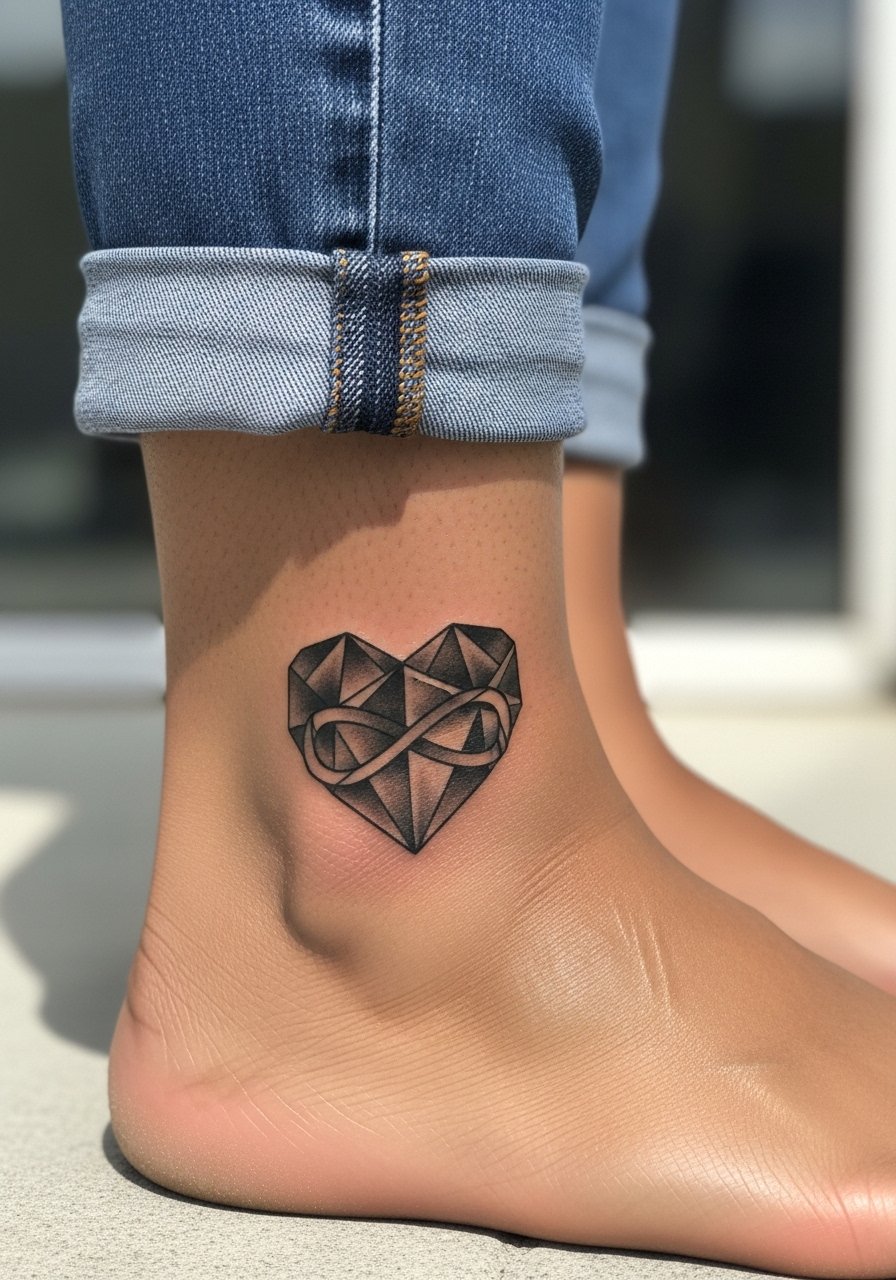
Ankle pieces are visible but face constant friction from socks and shoes, which affects healing. A monochrome heart that weaves an infinity motif into the geometry reads clearly if kept at moderate size and with simple shading. The usual error is packing too many gradient layers which scuff during early healing. One session typically handles a 3 inch ankle piece, but expect a small touch-up within a year. For wearing it out, cuffed chinos or boat shoes draw attention effectively, so consider a pair of cuffed chino pants to show the area.
13. Layered Heart with Moth and Subtle Dot Shading on the Collarbone Edge
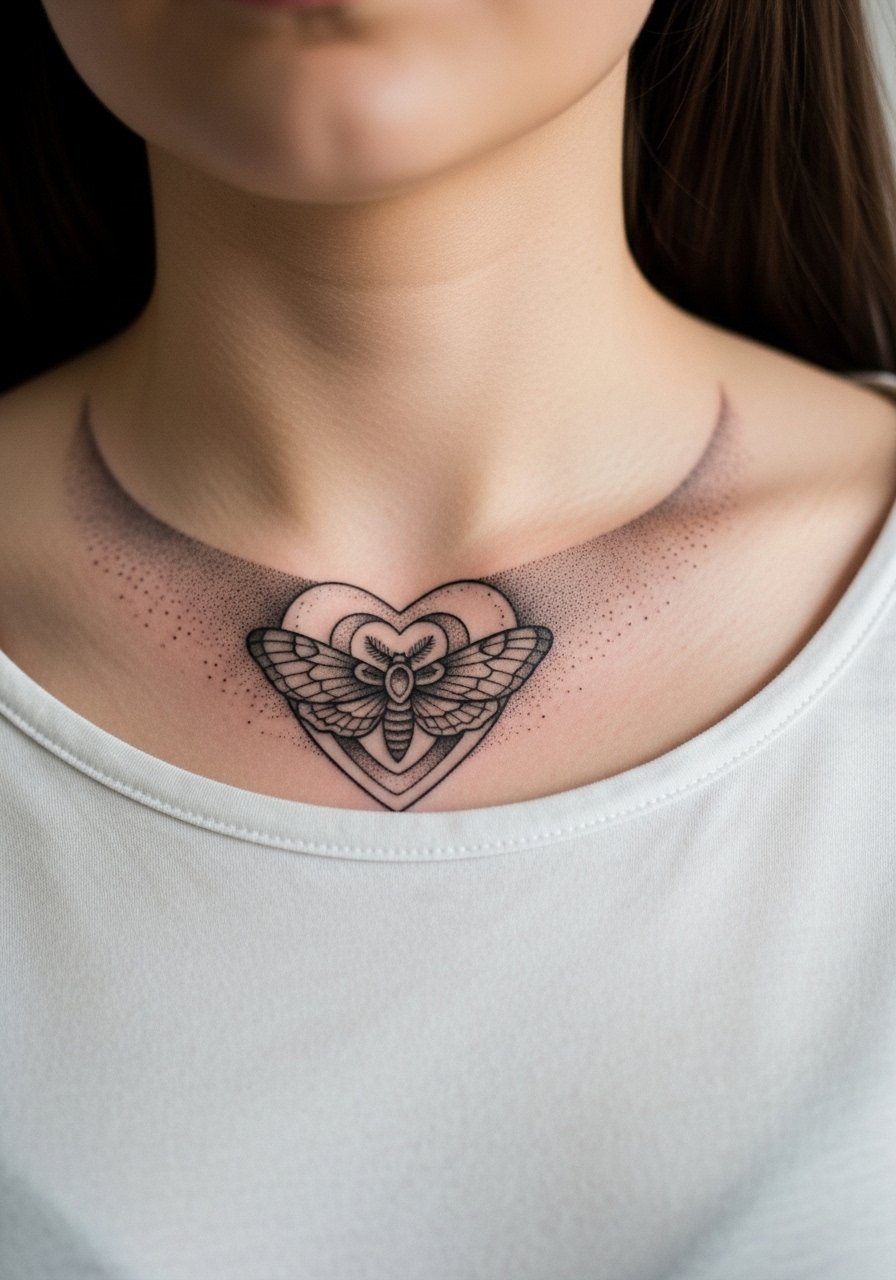
This variation leans ornamental while staying restrained. The collarbone edge is ideal for a mixed approach that uses dot shading for soft fills and crisp geometry for the heart frame. A common mistake is overdoing stipple near the bone which can look patchy after healing. Ask for spacing between dots and a slightly bolder frame line to help longevity. Session time can be 1 to 2 hours and pain is elevated near bone. Pair it with a long pendant necklace minimalist to guide the eye to the heart without covering the ink.
14. Negative Space Tessellated Heart Sleeve Starter on the Outer Forearm
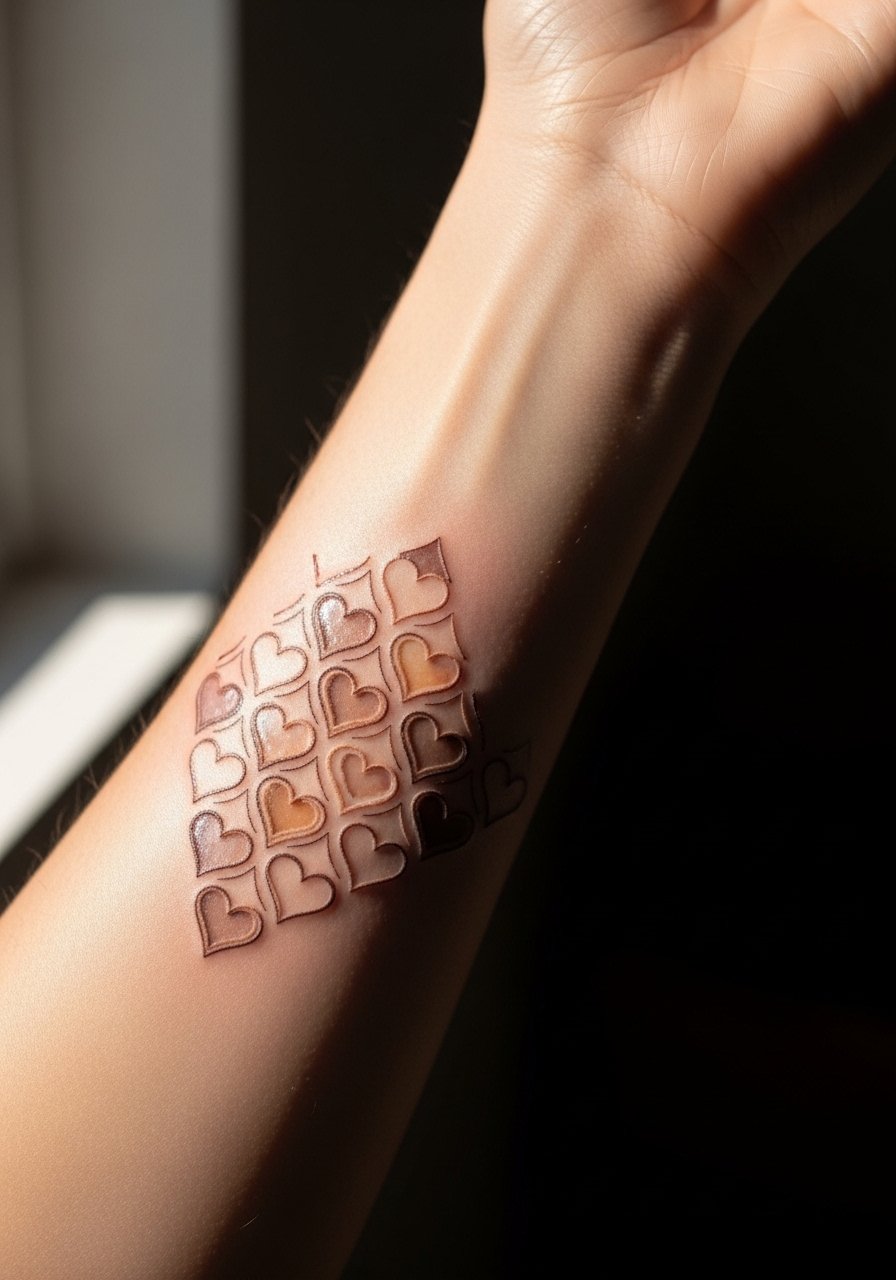
For people planning modular expansion, a tessellated heart starter piece on the forearm gives a clean architecture to build from. Negative space tiles keep the piece adaptable when you add adjoining modules. The error is committing to too many tiny elements early which limit future scaling. Artists often split work into two sessions for comfort and precision. For the appointment wear a rolled cuff chambray shirt or a loose tank so the forearm is easy to reach.
15. Geometric Heart Lock and Key on the Inner Wrist and Side Hand
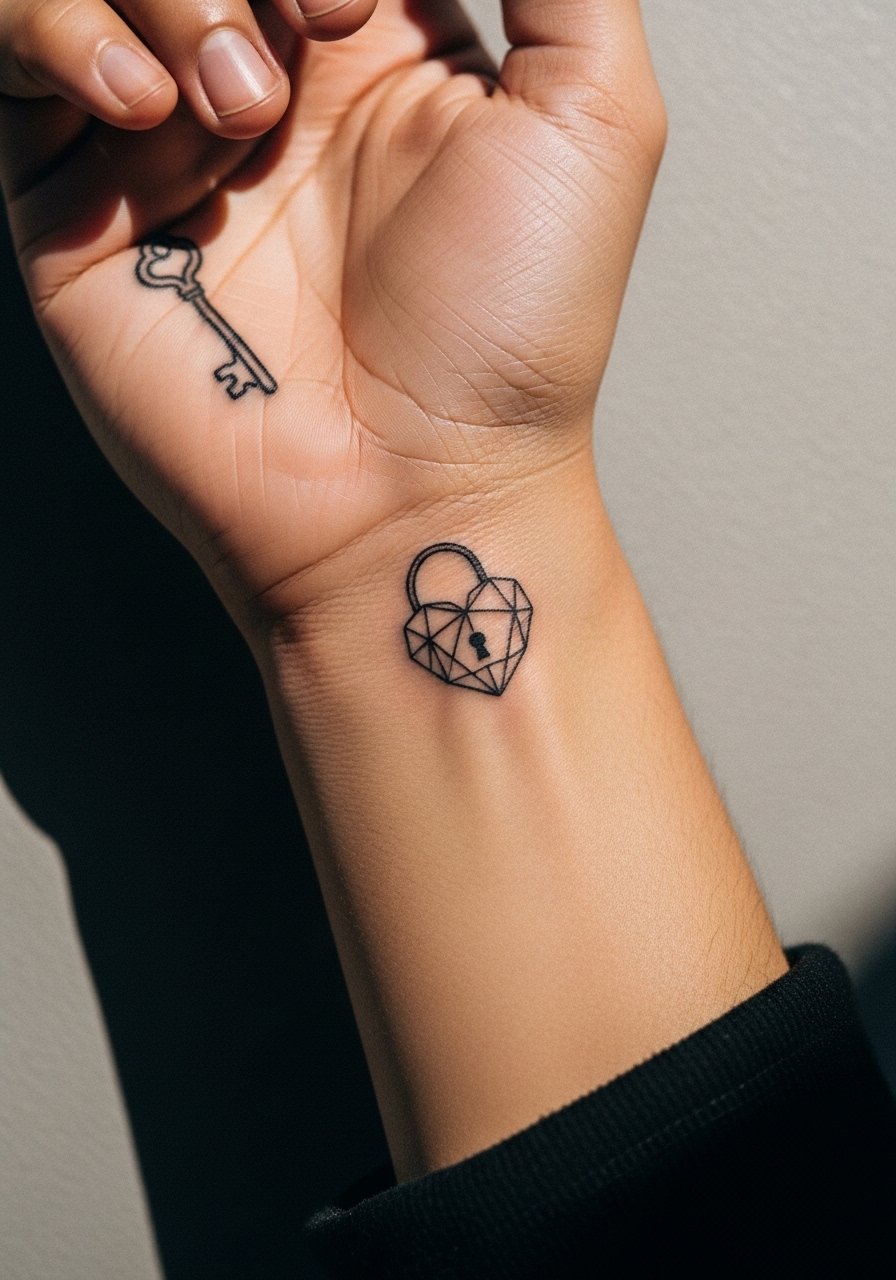
Composing paired pieces requires coordination in consultation. If you want a lock on the wrist and a key on the hand, request mirrored scale and line weight so the two pieces read as a set across different skin textures. Hands fade faster because of constant washing and sun. The practical move is to keep the key slightly more graphic with fewer tiny interior lines. Expect the wrist lock to need fewer touch-ups than the hand key. For sessions, bring someone to help with aftercare transport because hand swelling can make gripping uncomfortable.
16. Fine Line Heart with Subtle Pulse Wave on the Sternum
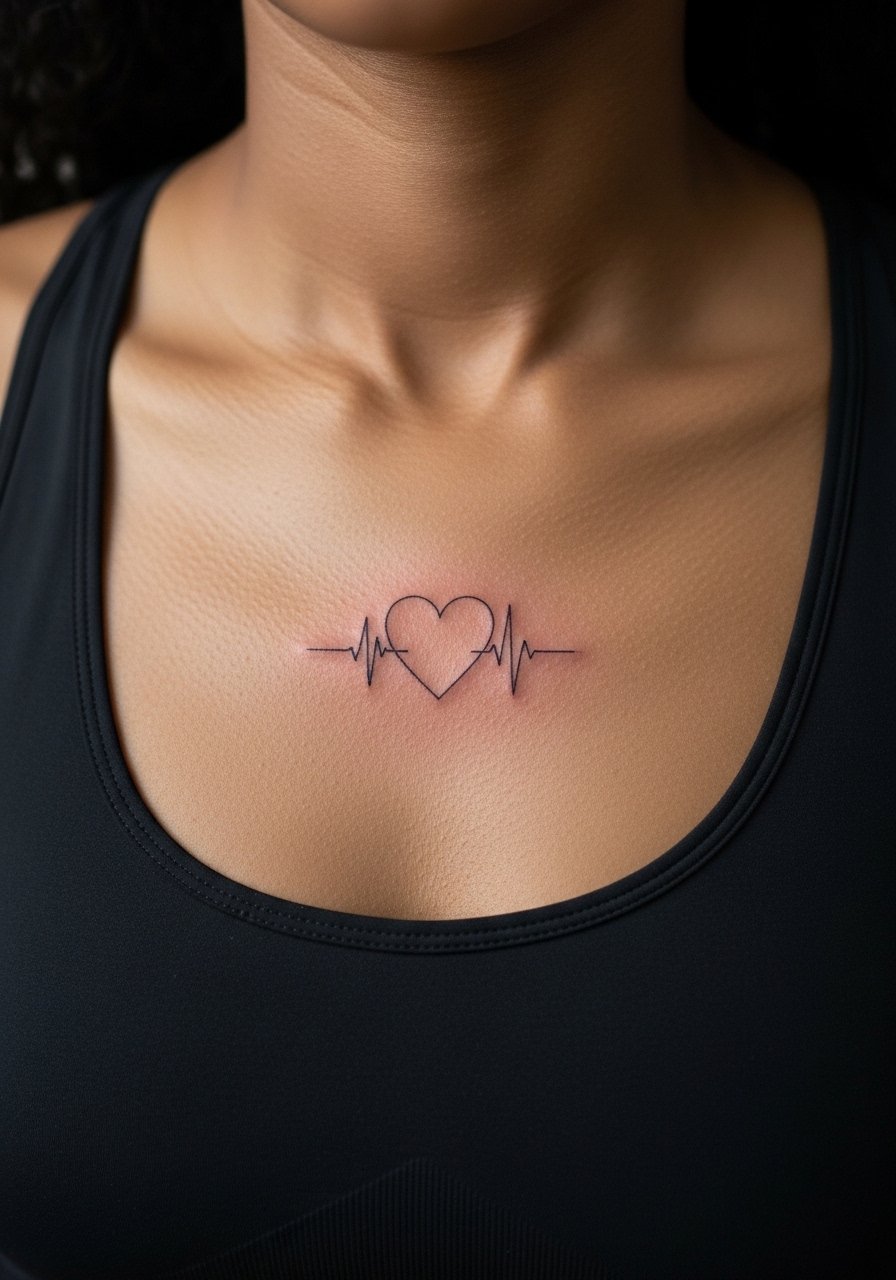
Sternum pieces are intimate and often reserved for people comfortable with visibility changes in clothing. The sternum sits over a curved area so keep the pulse wave short and the heart scale balanced to avoid distortion when the upper body moves. Artists differ on numbing cream over the sternum. One camp accepts it for long sessions. The other prefers no topical because of potential skin reaction. Ask during consultation and plan for a single longer session or two shorter ones. For the session wear a fitted sports bra that the artist can easily tuck or pull down to expose only the work area.
17. Modular Hex Heart Sleeve Extension on the Thigh
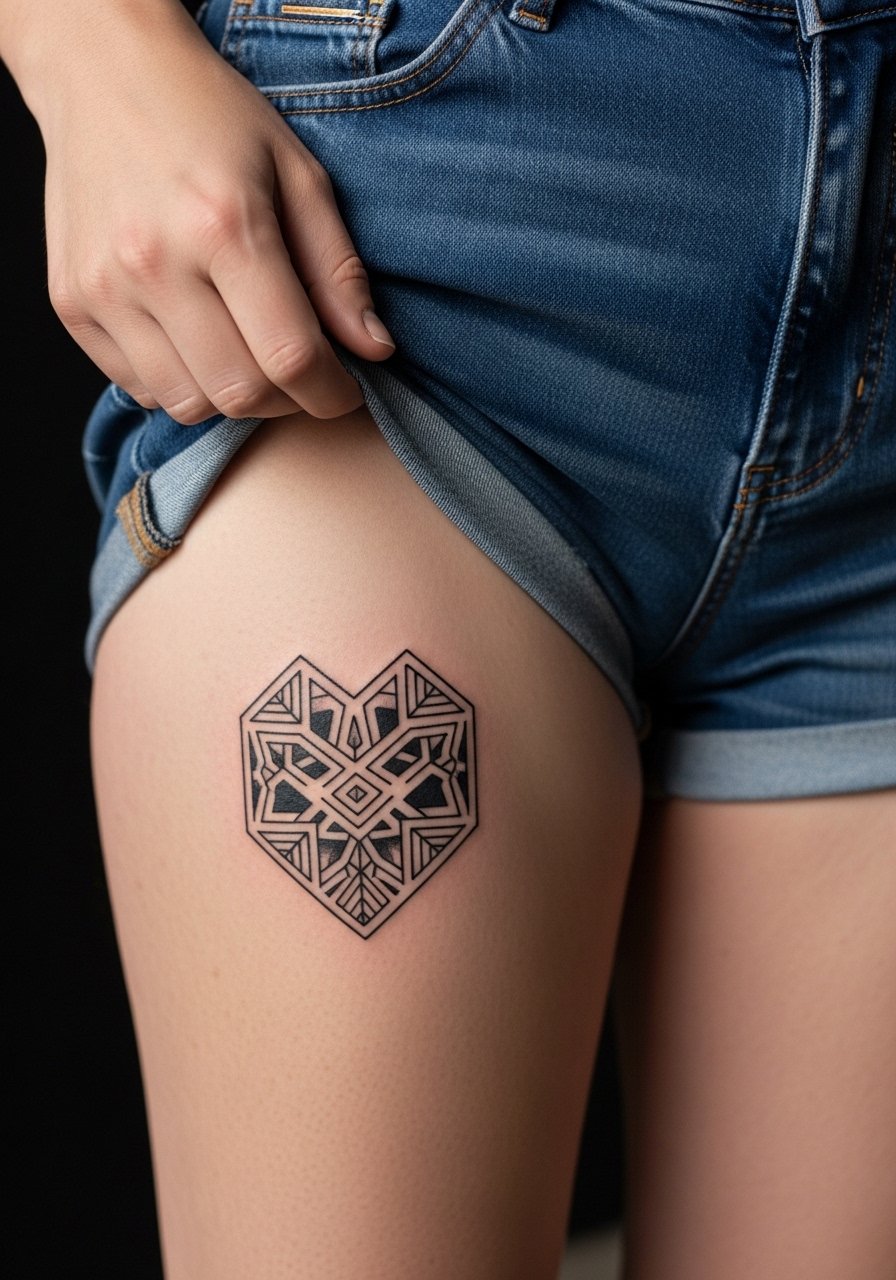
This is the long game option for people who want their geometric heart to become part of a larger composition. Begin with a scaled hex grid heart that leaves clear margins so future panels snap in without awkward overlaps. Thigh tissue handles density so you can plan larger fills later. The common misstep is locking into a color palette too early. Keep this starter piece monochrome to make later additions cohesive. Sessions will be longer but forgiving, and touch-ups depend on how much you extend the sleeve.
Frequently Asked Questions
Q: Will a fine line geometric heart blur faster than a blackwork version on the wrist?
A: Fine line tends to soften faster on high-movement, sun-exposed areas like the wrist. A bolder blackwork outline will usually keep a clearer edge for longer. If you love the fine look, ask your artist to slightly increase line weight or plan a touch-up at year two.
Q: Is negative space better for dark skin tones when it comes to geometric hearts?
A: Negative space often reads cleaner on darker skin because it relies on surrounding blackwork to define shapes rather than faint lines. I have seen negative space pieces maintain clarity where ultrafine lines washed out in photos. Discuss contrast levels with your artist and look at healed work on similar skin tones.
Q: How do I plan wardrobe for a collarbone heart that I want shown at events?
A: Off-shoulder tops and wide-neck shirts display collarbone pieces well. For evening looks try an off shoulder top black or a wide V neckline that leaves the area visible without crowding the design.
Q: Should I expect different touch-up schedules for finger, wrist, and thigh placements?
A: Yes. Fingers often need the most frequent touch-ups, sometimes within a year. Wrists are next and commonly benefit from a touch-up around year two or three. Thigh and upper arm work typically hold longer and may go several years before a touch-up is useful.
Q: Artists disagree about Saniderm versus dry healing. Which camp should I pick for a geometric heart?
A: Both camps make valid points. Saniderm users say it reduces infection risk and keeps the area clean. Dry healing supporters worry about trapped moisture. My practical advice is to ask your artist what they use in their day-to-day practice and follow their protocol, because consistency with their workflow usually gives the best healed result.
Q: Can small geometric hearts expand into larger pieces later without looking like a patchwork?
A: Yes, if planned from the start. Ask for margin space around the initial heart and a grid or modular plan that allows neat connections. Artists who do tessellation or modular pieces can sketch expansion pathways so additions look intentional rather than pasted on.