
Fine line geometry is everywhere on feeds right now, but the pieces that keep their shape are rarely the flashiest. The tattoos that age best give the lines room and use contrast where skin tone will soften detail later. Below are 27 small geometric ideas with placement notes, what to ask your artist in consult, and real styling tips to wear and show them off the way they were meant to settle.
1. Sacred Geometry Mandala on the Inner Wrist
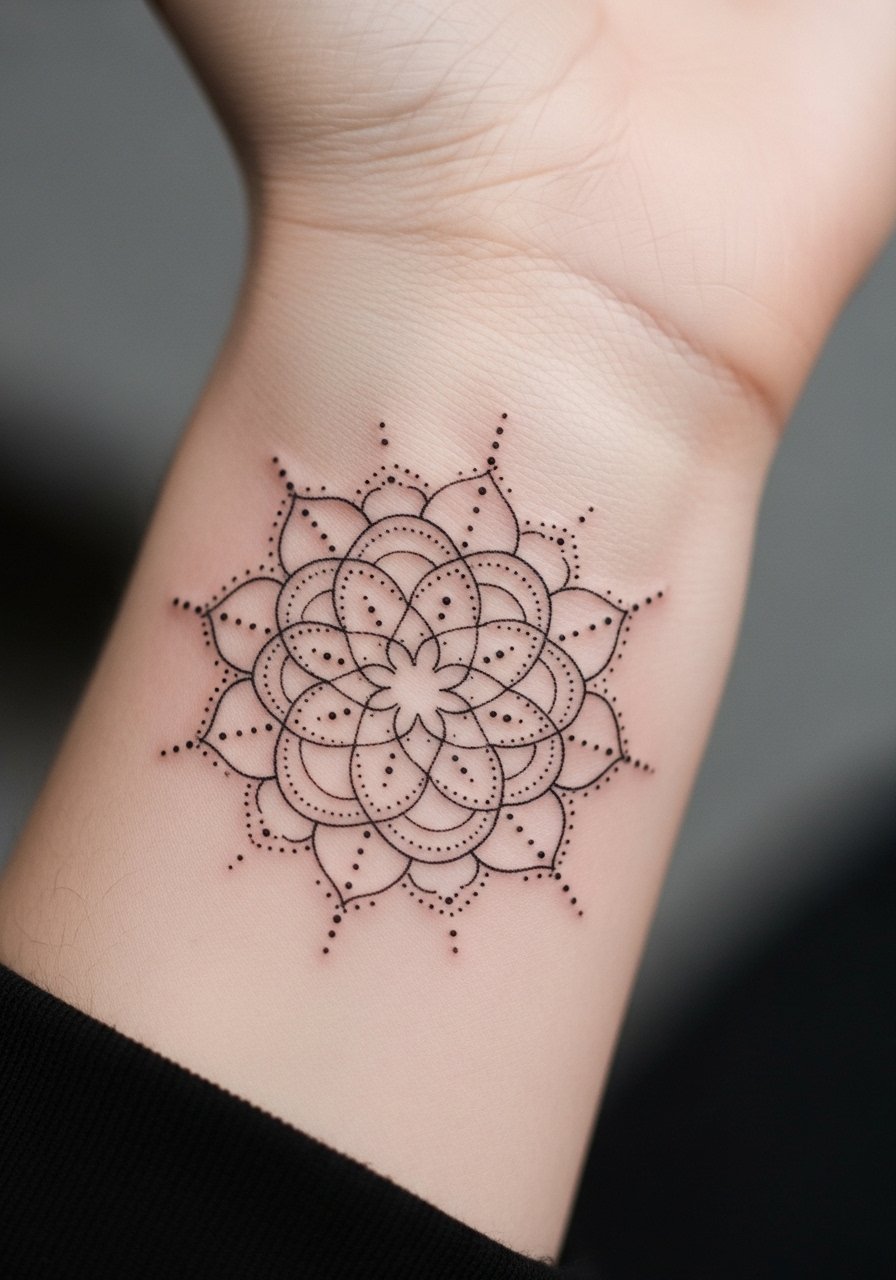
Most people choose a mandala for the symmetry and meaning, but small mandalas need spacing to breathe. Tell your artist you want outer rings simplified and dotwork for depth rather than dense concentric lines. The common mistake is packing too many petals into a thumbnail size, which blurs by year two. Expect the session to be short and the wrist to sting a little. Pair this with a thin chain pendant necklace when showing it off, the positive space sits just above a bracelet and the pendant keeps the eye moving.
2. Minimalist Single Triangle Behind the Ear
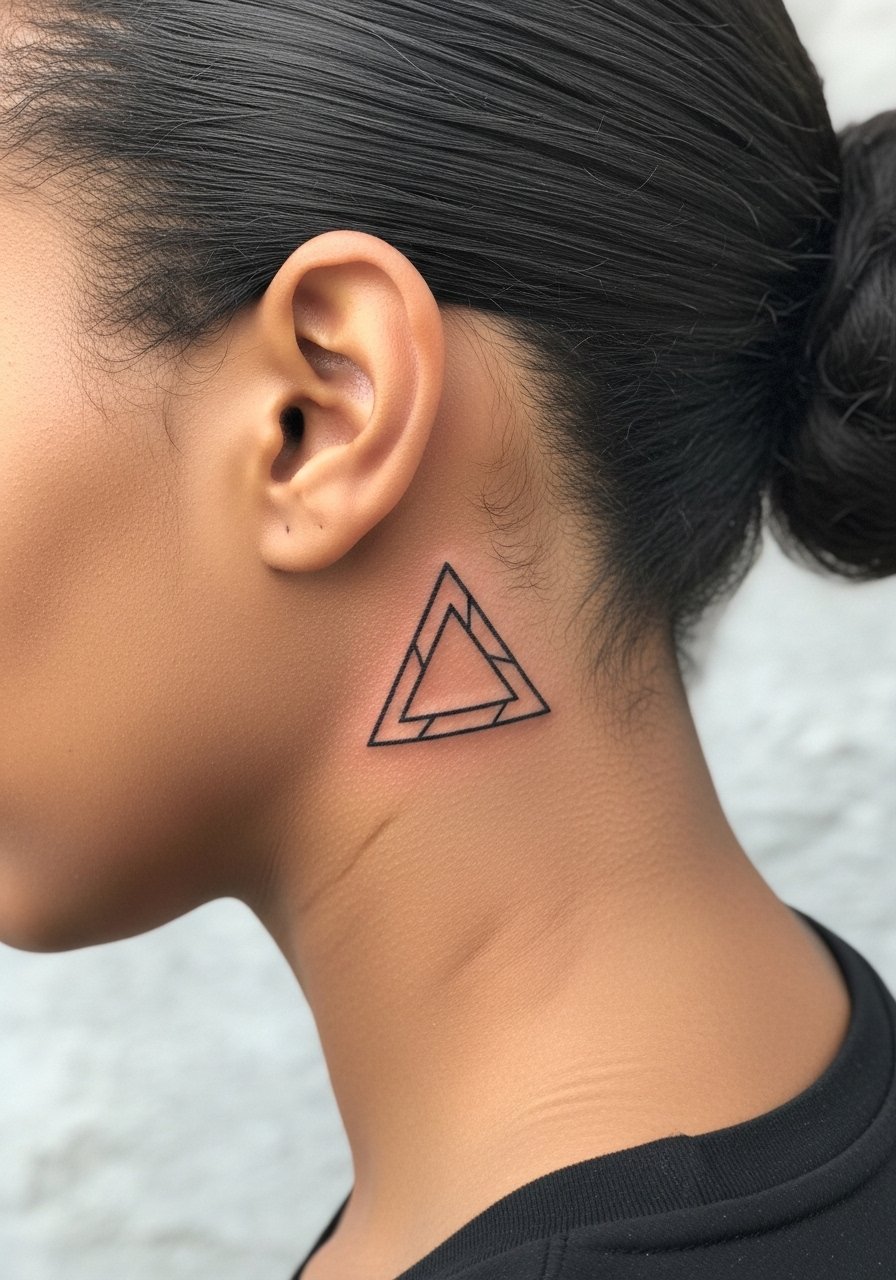
A single triangle reads clean and jewelry-like in that tucked-behind-ear spot. Ask for a slightly bolder line than you think you want because that area can soften quickly. The main mistake is requesting micro-fine lines without accounting for hairline movement and friction from collars. Healing can be fast but delicate, and some artists recommend a quick touch-up at year two. For the appointment, wear hair pulled back in a low ponytail clip so the artist can access the area without shifting stencils.
3. Geometric Wolf Outline on the Outer Forearm
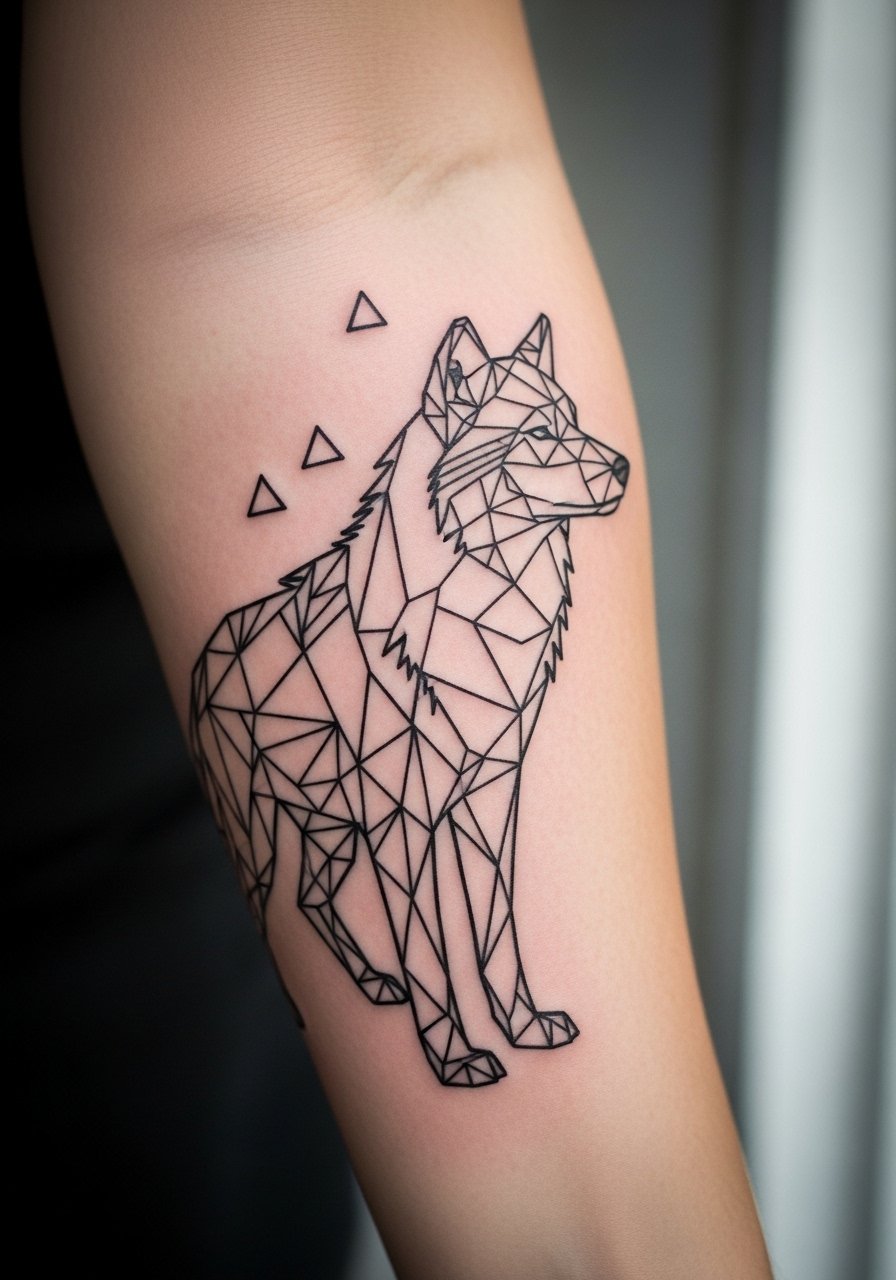
A geometric wolf gives the symbolism of the animal without relying on realism that needs larger scale. Tell your artist you want distinct polygon edges and some open negative shapes for breathing room. A frequent error is over-detailing the face at small scale, which muddles after a year. Forearm placement ages well with moderate sun protection and touch-ups are usually cosmetic after three to five years. Show it off with rolled sleeves and a light linen shirt during warm months so the composition reads from a distance.
4. Arrow Trio on the Side of the Index Finger
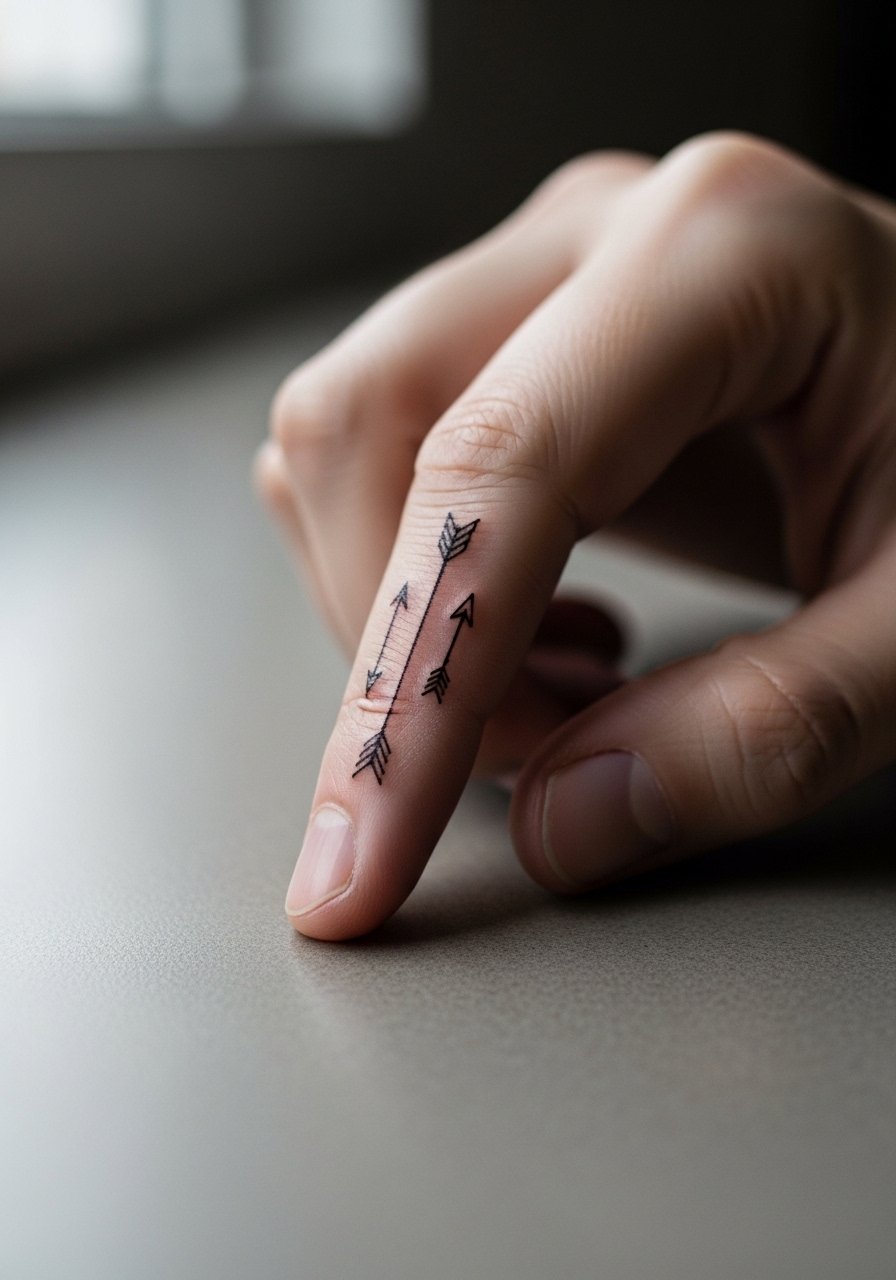
Finger placements are visible and prone to faster fading because of washing and friction. Ask your artist for slightly thicker shafts and to avoid tiny interior details that will disappear. The common mistake is making lines too thin. Expect the session to be quick but the touch-up timeline to be sooner than for an arm piece, often in the first 12 to 18 months. Pair with a minimalist ring set that frames the fingers without overcrowding the arrows.
5. Perfect Circle on the Side Ribcage
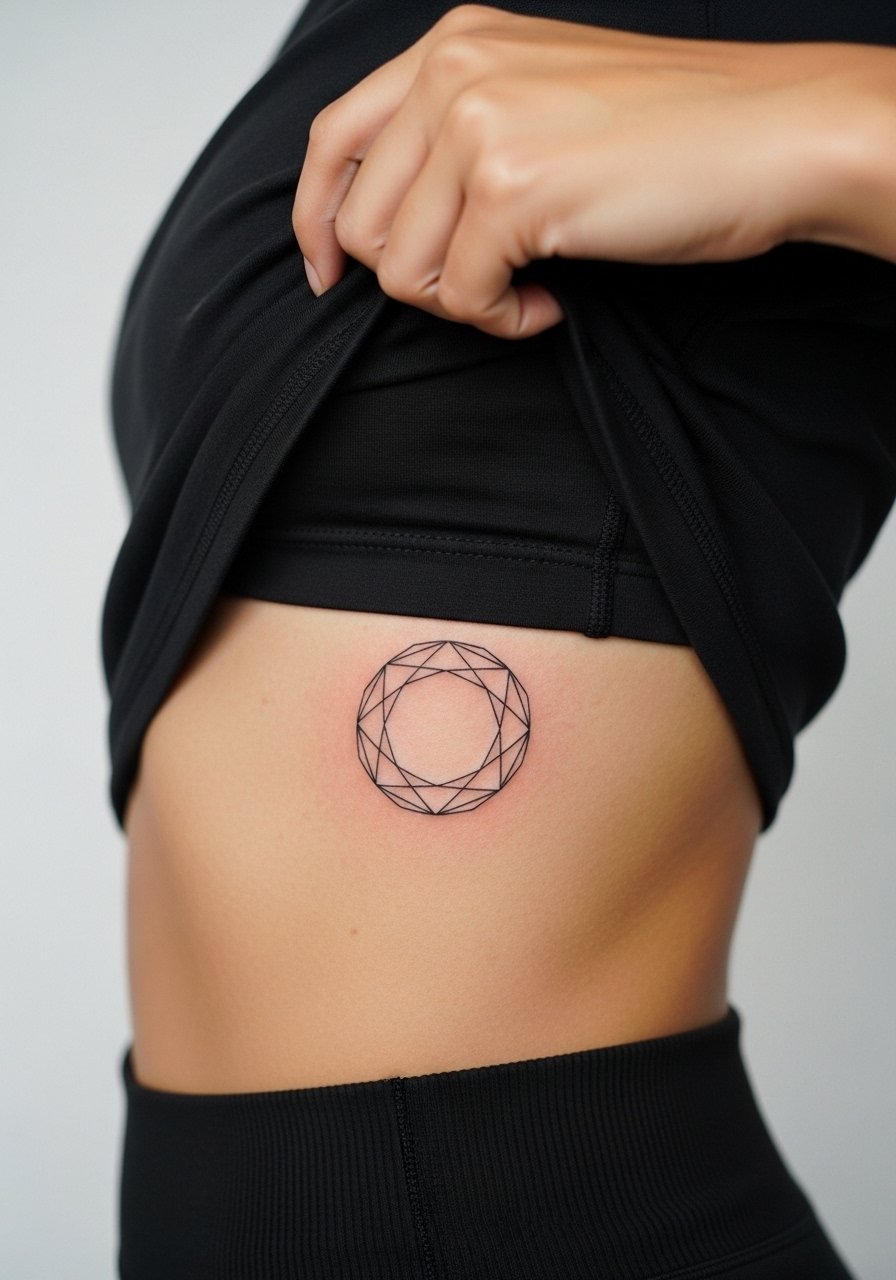
Ribcage is a sensitive area both for pain and for long-term line stability. The circle works there because the curvature of the torso supports a clean outline when sized properly. During consult, clarify the exact diameter you want and insist on a mock stencil to check wrap. One controversy to acknowledge is whether fine line holds on ribs. One camp says stretching blurs thin lines within a few years. The other camp says with correct depth and spacing it holds. Ask your artist where they stand before booking. Wear a cropped athletic top to the session so only the area is exposed.
6. Geometric Third Eye Above the Sternum
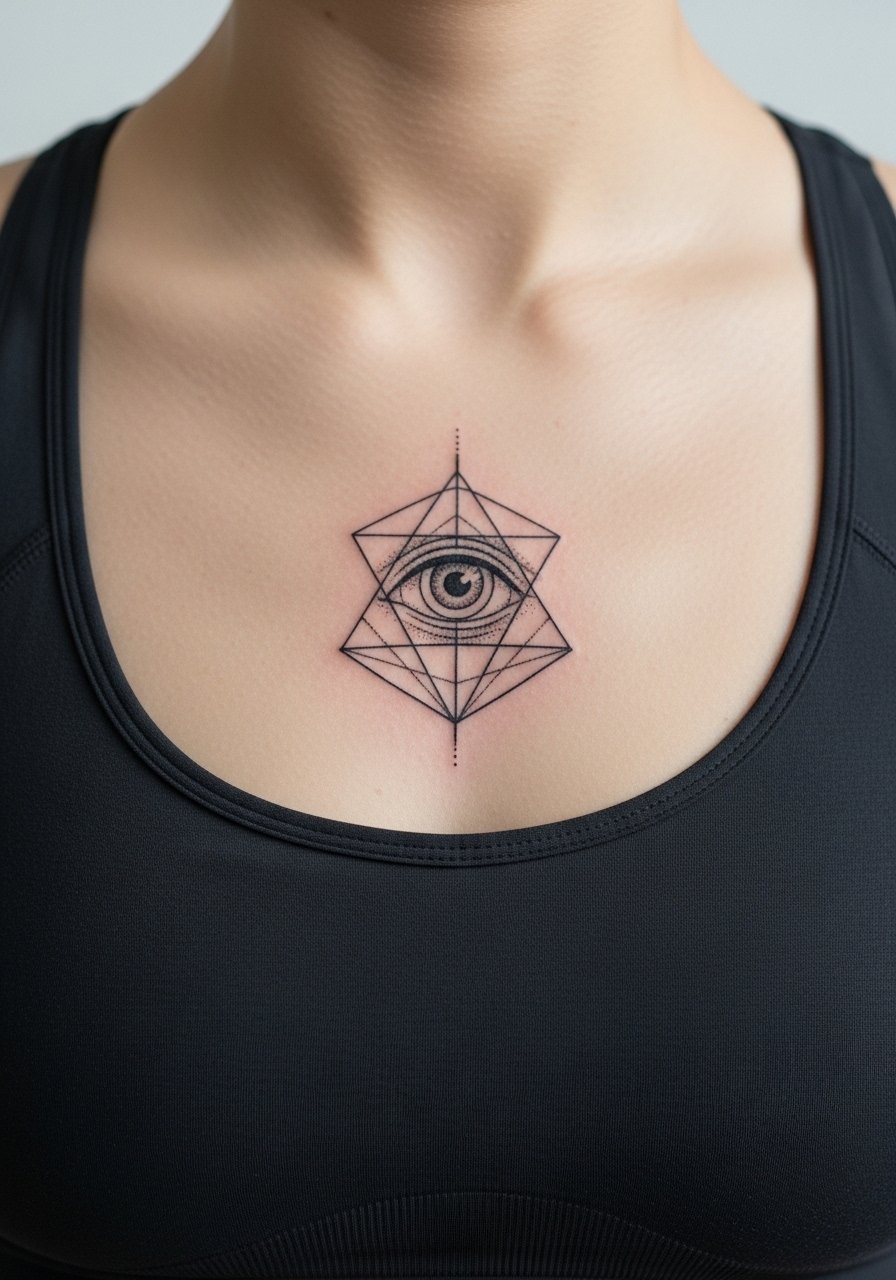
The third eye design reads spiritual and is compact enough to avoid overcrowding the chest when placed above the sternum. Tell your artist you want the pupil and surrounding triangles spaced for clarity. The mistake is compressing ornament into a tiny square, which looks messy after healing. Sternum placement stings more than forearm work and may need two short sessions for comfort. Pair with a thin chain necklace so the jewelry sits above the piece without rubbing it.
Studio Day Picks
Those small wrist, ribcage, and sternum pieces above have different prep needs. A few targeted items smooth the session and early healing without overloading your bag.
- Stencil transfer paper kit. Lets you preview exact placement and scale on skin before the needle touches down, which is helpful for mandalas and delicate eye designs.
- Topical numbing cream. Applied per directions before the session reduces early pain for ribcage and sternum work without changing the artist's linework.
- Thin protective film roll. Useful for wrist and finger tattoos that see a lot of friction in the first week while the skin is still sealing.
- Fragrance-free body wash. Gentle cleansers keep delicate fine line pieces from irritation during showering in the initial healing window.
- Aquaphor healing ointment. A thin layer can protect fresh ink on high-motion spots while you follow your artist's aftercare timeline.
7. Line-Only Abstract Geometry Across the Upper Arm
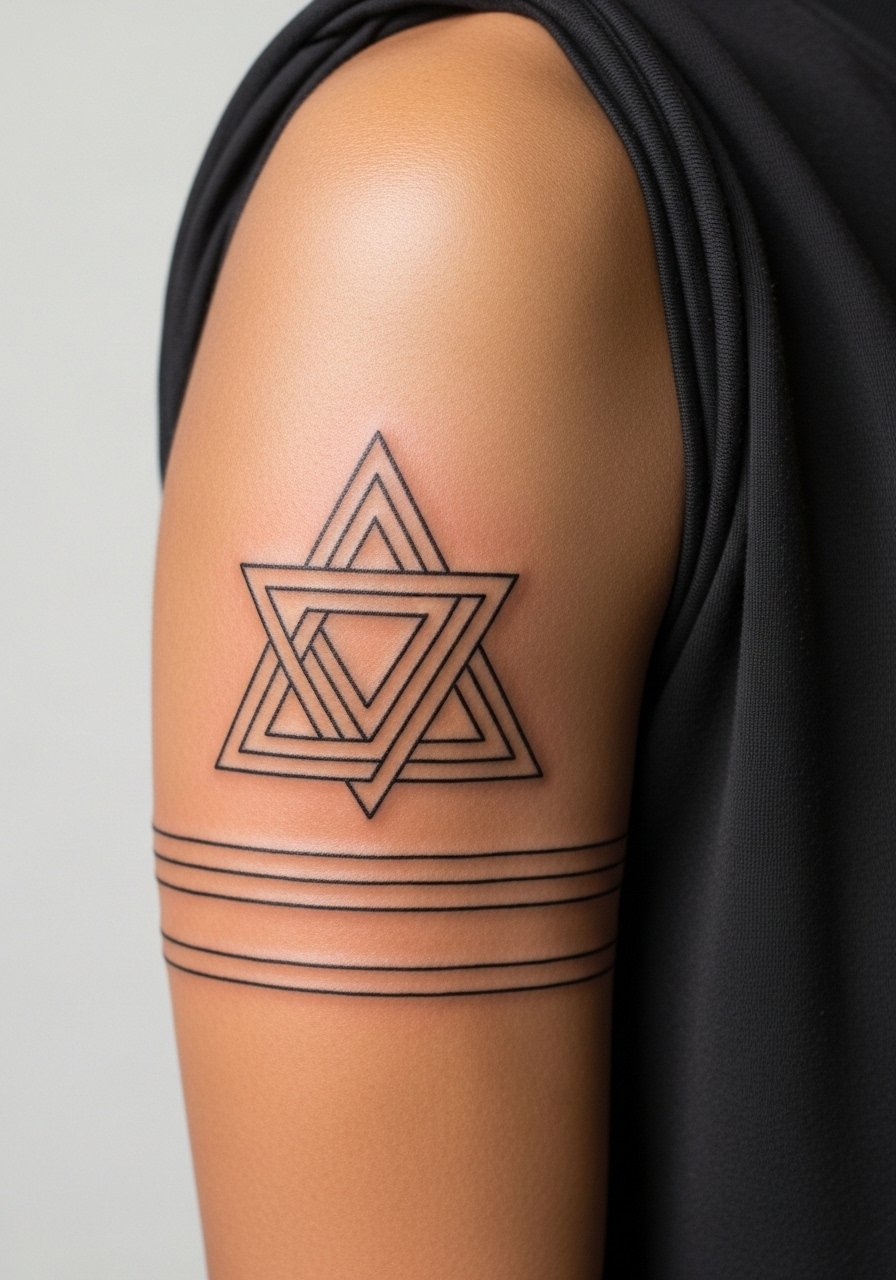
Upper arm skin tends to be stable, so abstract linework ages nicely there. In consult, show the exact negative spaces you want preserved and ask the artist to scale the pattern to the muscle. The mistake is requesting ultra-tight grids in a small patch. At six months the pattern will still read sharp, and at five years the bold spacing keeps the composition legible. This placement pairs with a sleeveless tee for casual show-off, the open arm keeps linework visible without forcing exposure.
8. Small Geometric Symbols on the Collarbone
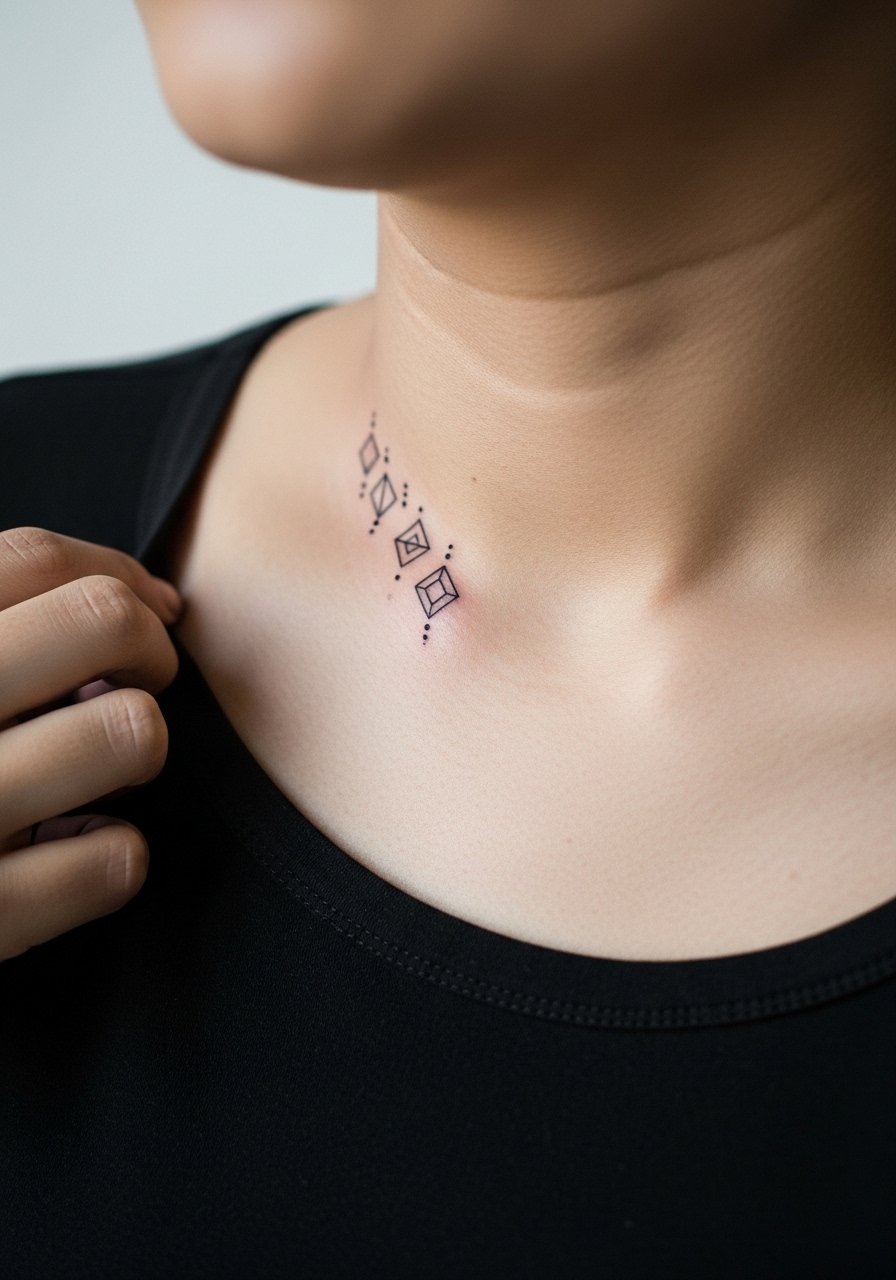
Collarbones are a great place for symbolic micro-geometry because clothing can frame or hide the area. Tell your artist to space symbols for breathing room and avoid tiny internal stipple on darker skin. The common error is packing symbols tight to fit a narrative, which can merge. Expect more sun exposure there, so plan for sunscreen later to protect contrast. For evenings out, an open-back top makes the cluster look intentional and jewelry-free.
9. Thin Geometric Band on the Lower Forearm
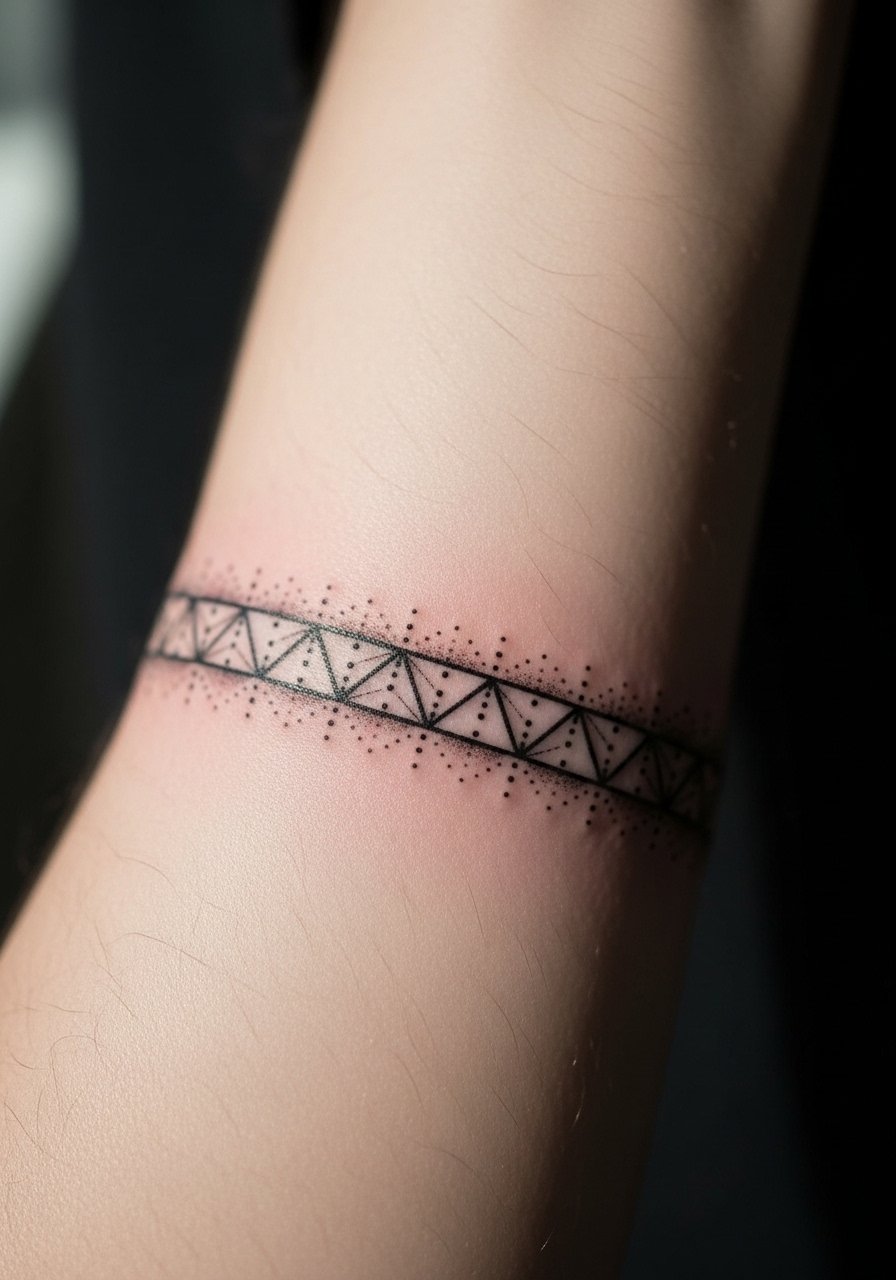
A band gives the sense of a sleeve without the commitment. Ask for a mock wrap to ensure pattern continuity across the arm. A common mistake is making the band too narrow, which causes the pattern to blur over time. Forearm bands tolerate touch-ups well and are often a single-session job if kept simple. Pair with a minimalist watch or stacked bracelets that sit outside the band so the tattoo keeps visual priority.
10. Dotwork Geometric Mandala on the Back of the Hand
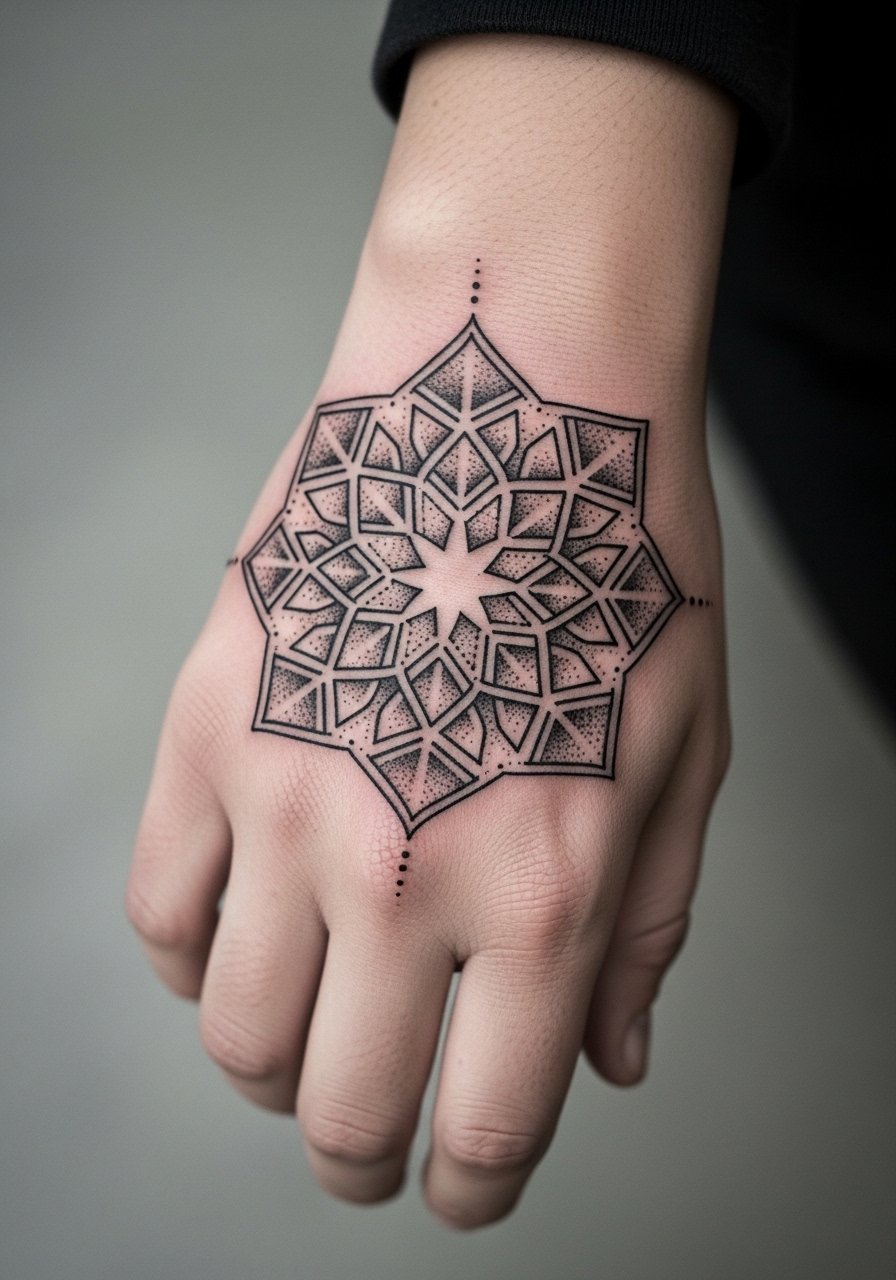
Hand tattoos are bold and demand realistic expectations. Ask your artist about their history with hand pieces and about likely touch-up frequency. One mistake is choosing dense dotwork too small, which can fade into uneven patches. Hands face more washing and friction, so expect touch-ups within two years. Consider pairing with simple rings and a skin-toned bandage-friendly glove for the first week to reduce scabbing during chores.
11. Polygonal Lion Silhouette on the Shoulder Blade
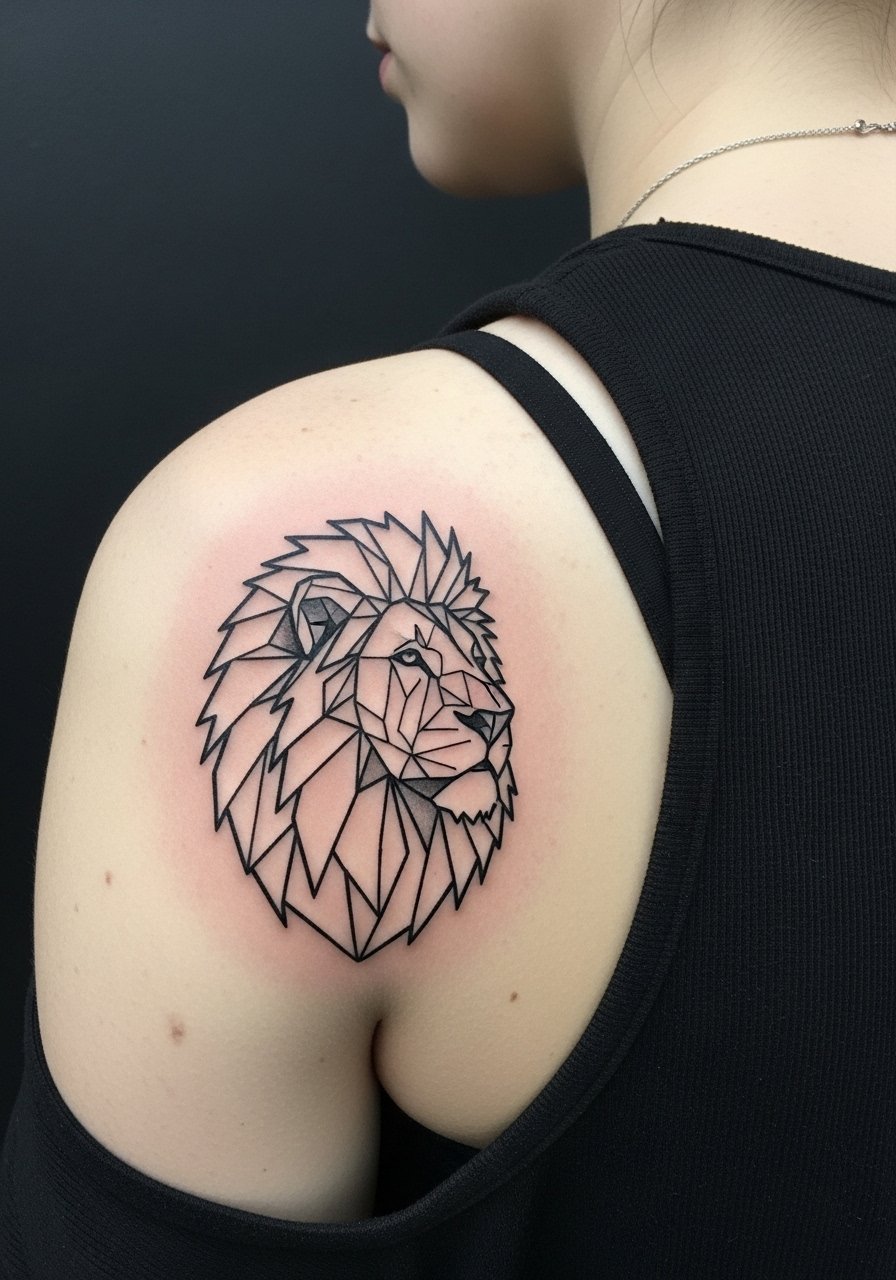
Shoulder blade skin is forgiving for small-to-medium silhouettes, and the surface allows polygons to breathe. During consult, ask for defined negative shapes so the face reads from a distance. A mistake is packing facial details into a silhouette scale meant for simplicity. Shoulder pieces typically heal steadily and do not need frequent touch-ups unless exposed constantly to sun. Show it off with a spaghetti strap tank that keeps the blades visible without forcing full back exposure.
12. Blackwork Geometric Triangle on the Calf
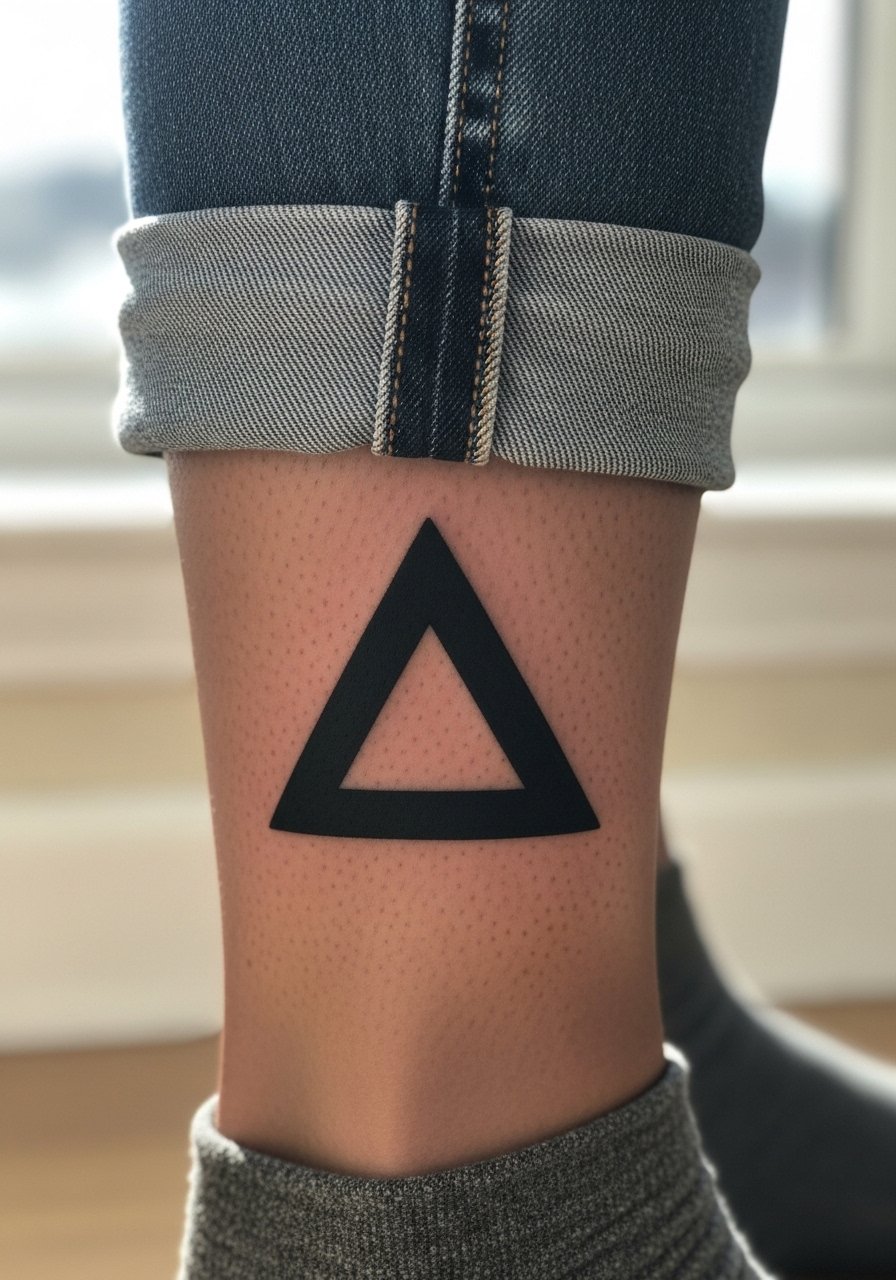
Blackwork fills hold contrast on darker skin when sized properly. Talk to your artist about saturation and edge crispness. The mistake is shrinking a black block too small, which can feel like a smudge later. Calf placement handles saturation and tends to age well because of less abrasion. For footwear season, rolled jeans and a minimalist sandal put the calf on display without overexposing the leg.
13. Tiny Geometric Date on the Side of the Finger
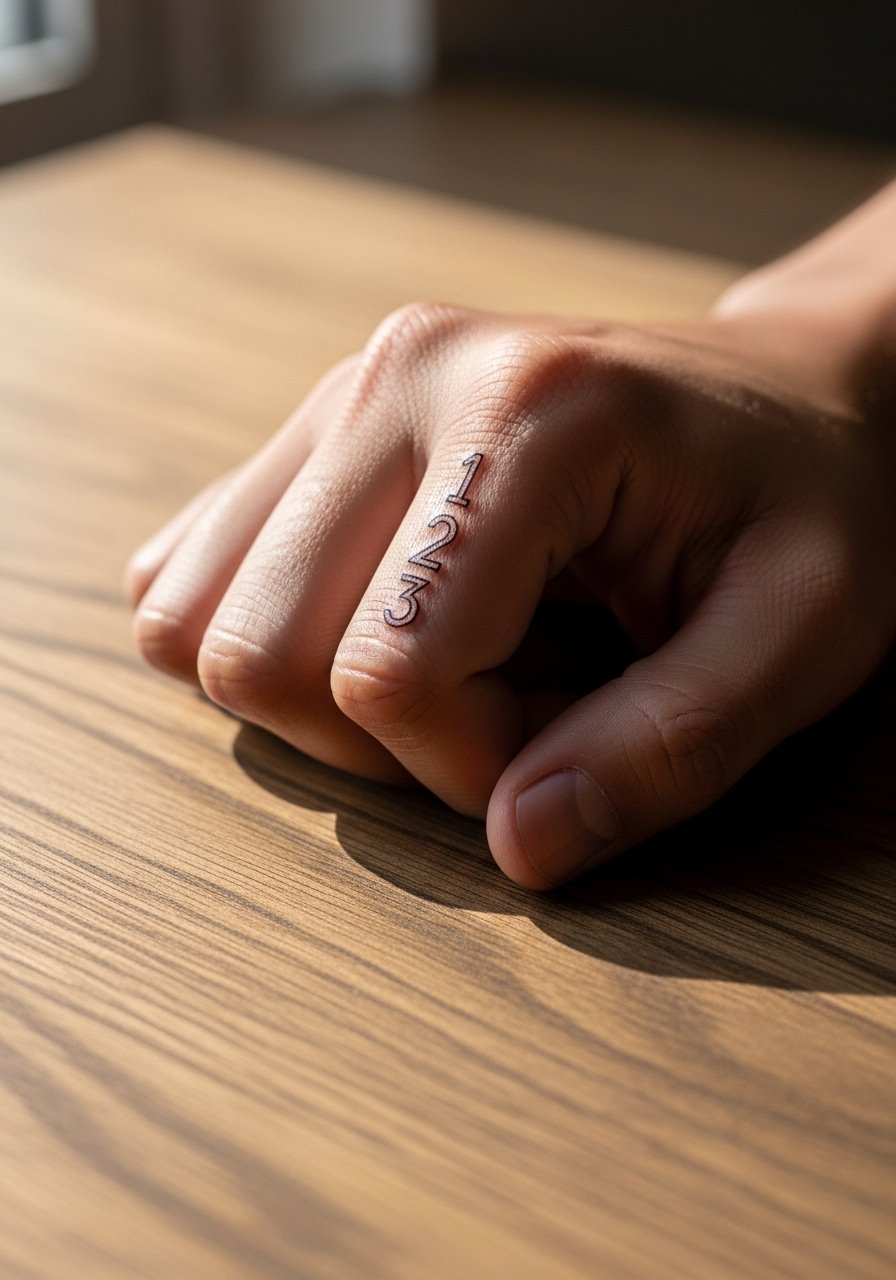
Micro script that reads as geometry is delicate on fingers. Request slightly larger spacing between numerals and a simple sans-serif style for legibility. A frequent error is crowding numbers into a tiny band. Fingers need more frequent touch-ups and can blur faster than wrist or forearm pieces. When wearing jewelry, choose thin stacking rings so the date remains visible and not jammed against metal during daily activity.
14. Simplified Geometric Lotus on the Inner Arm
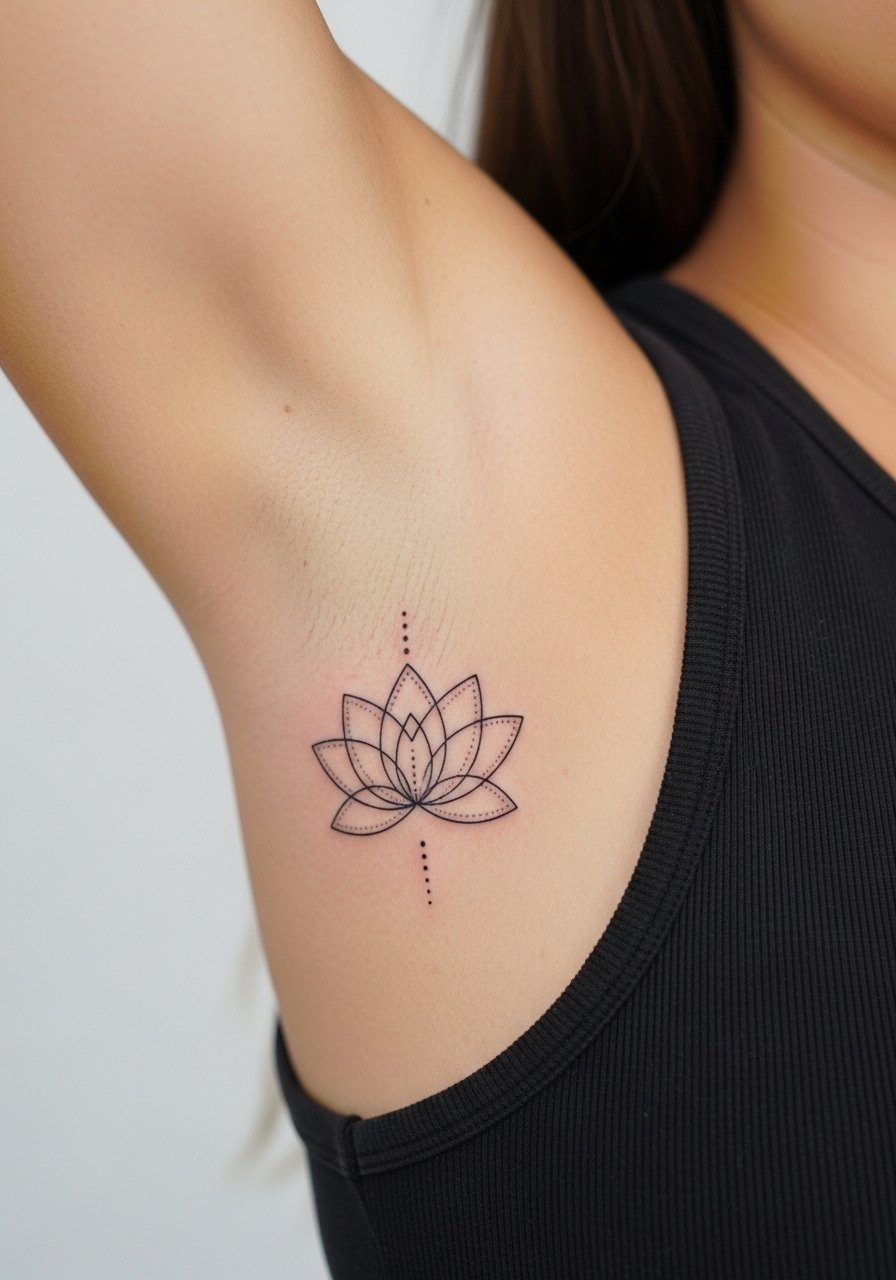
Inner arm skin can be an excellent canvas for ornamental florals. Ask for a lotus built from circles and triangles with open central negative space. The mistake is tiny petals that collapse into a blur. Inner arm placements often feel tender but heal well with minimal sun exposure. For showing it off in summer, pair with a sleeveless linen dress that keeps the design visible without crowding the shoulder.
15. Radiating Sunburst on the Outer Sternum Edge
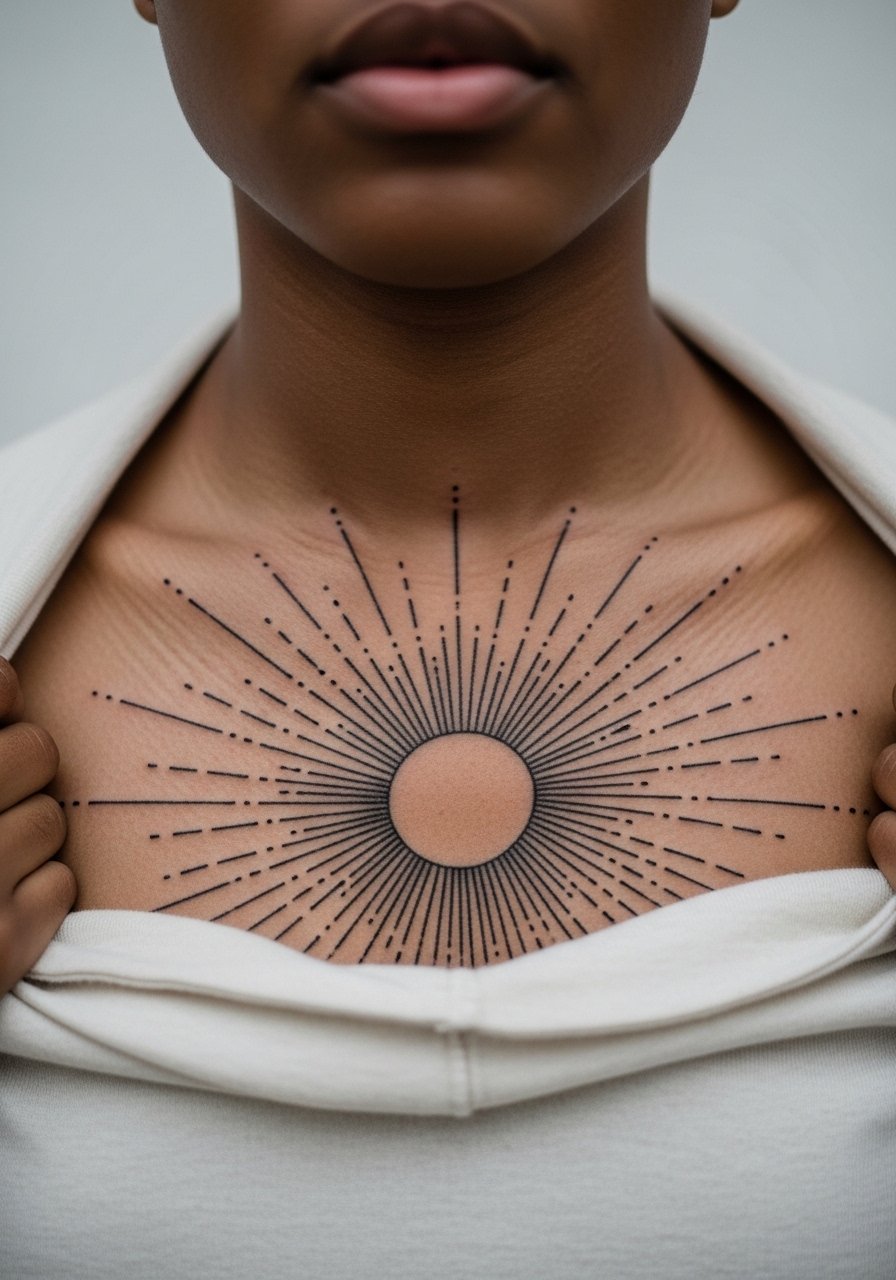
Sunburst designs work near the sternum when lines radiate with consistent spacing. During consult, request fewer rays but stronger spacing to avoid merging. One common mistake is too many thin rays that blur into a single band. Sternum-area sensitivity varies, and short sessions with breaks help. Wear a button-front top to the appointment so the artist can expose only the area needed.
16. Micro-Geometry Trio on the Ankles
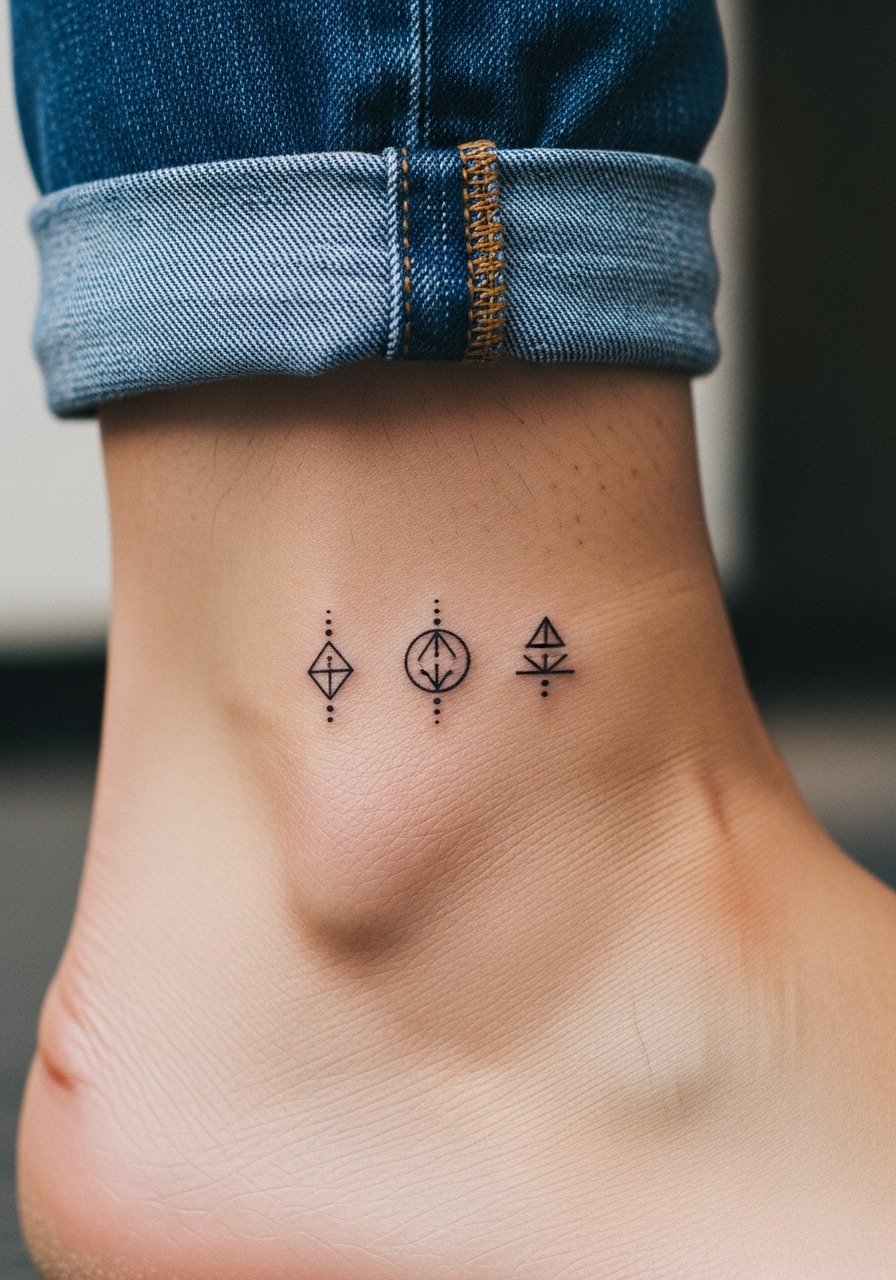
The curated trio idea lets you tell a short story across small placements. Ask your artist to space the symbols so each holds a moment. A common mistake is making them too similar in scale, which reads as repetition rather than narrative. Ankles see friction from shoes and socks, so expect an earlier touch-up. For display, wear cropped pants or a pair of slide sandals that frame the trio.
17. Geometric Compass Rose on the Side of the Foot
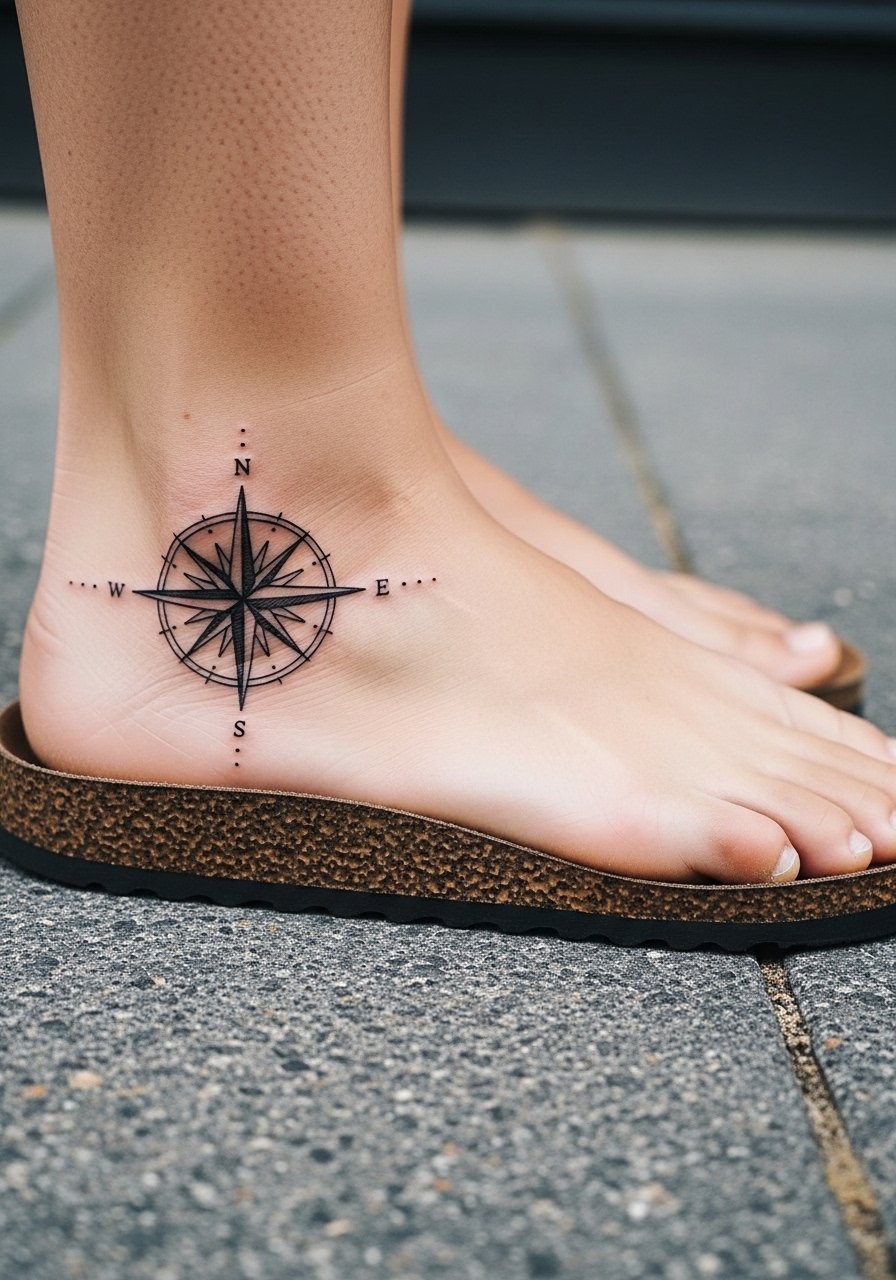
Foot tattoos can be charming but they fade faster due to friction and footwear. Ask for slightly heavier anchor lines and reduced interior detail. The mistake is expecting the same longevity as a forearm piece. Plan touch-ups and ask about aftercare that minimizes shoe rubbing. For the session, bring a pair of easy slip-on sandals to avoid pressure on the fresh ink.
18. Constellation Grid on the Inner Forearm
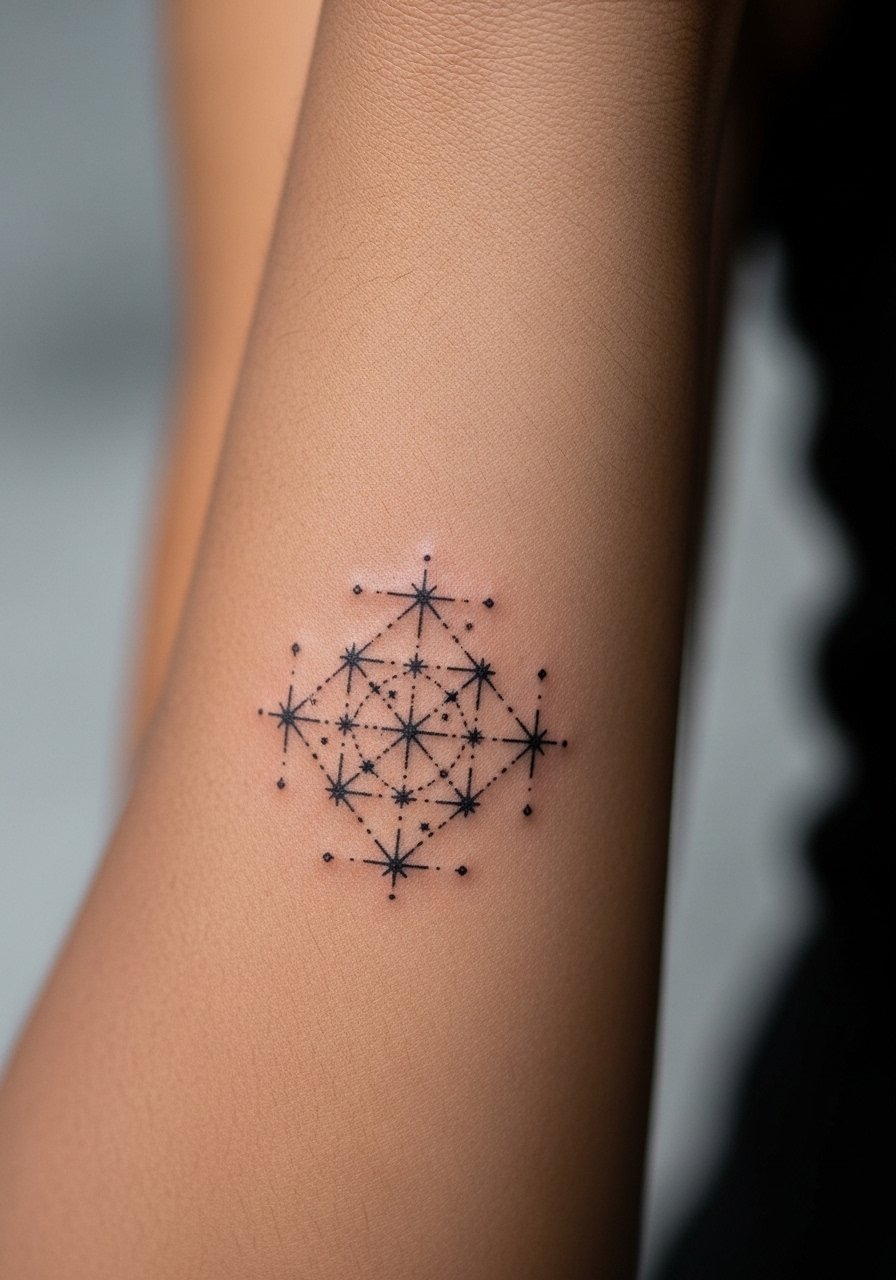
Inner forearm geometry benefits from clear negative space and slightly heavier star nodes on darker skin. Tell your artist to make nodes larger than the connecting lines so they read after healing. A mistake is using identical micro-dots for everything, which can merge. Expect even healing and reasonable longevity, and plan a touch-up if nodes soften. Pair with a classic denim jacket worn rolled up to keep the inner forearm on display.
19. Minimalist Mountain Range on the Collarbone Edge
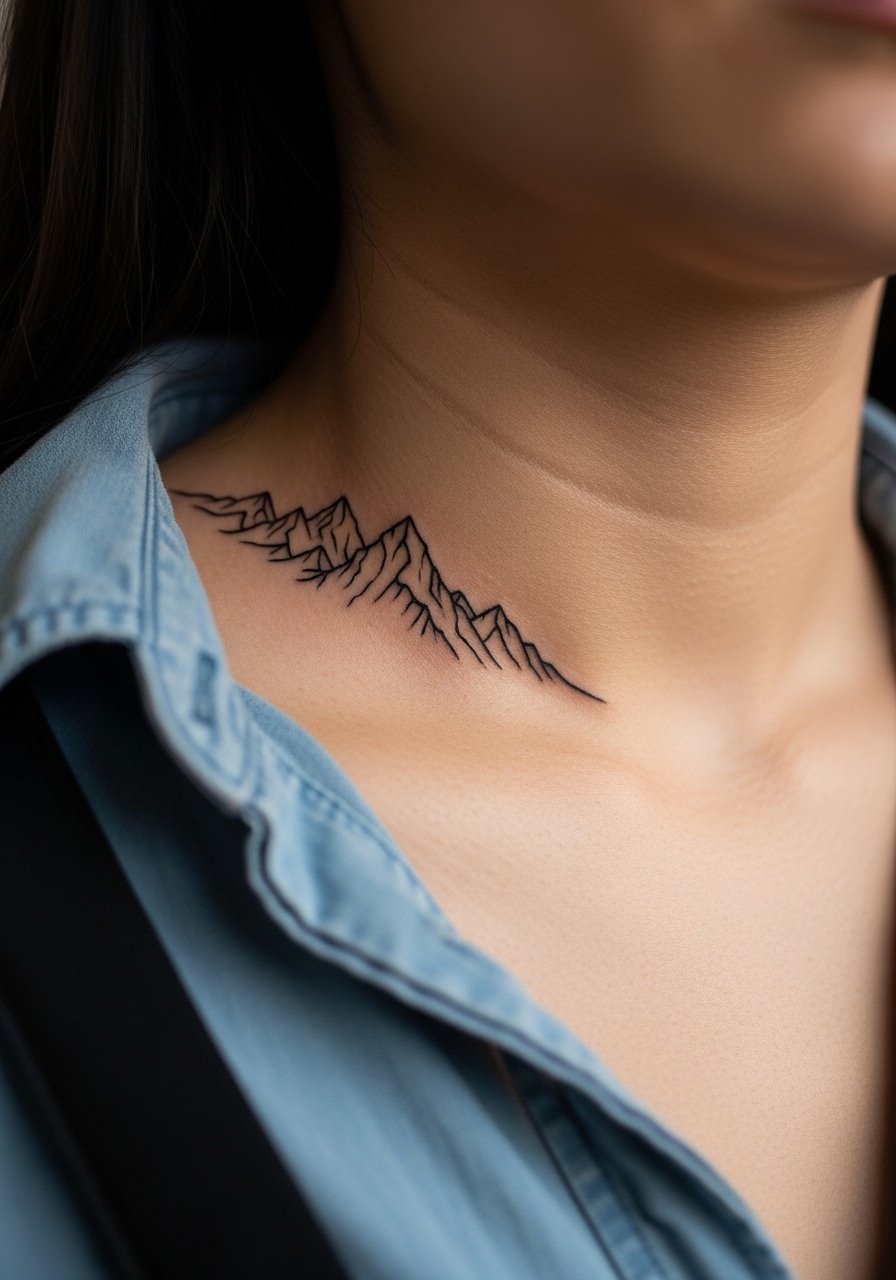
A mountain range translates well to the collarbone because it follows natural bone contours. In consult, confirm how the peaks align with the collarbone so the composition feels integrated. The mistake is placing peaks across the bone bump where lines can distort. Expect brief discomfort and steady healing. For wearing out, a light button-down shirt pulled slightly aside frames the range without overexposure.
20. Geometric Fox Head on the Thigh
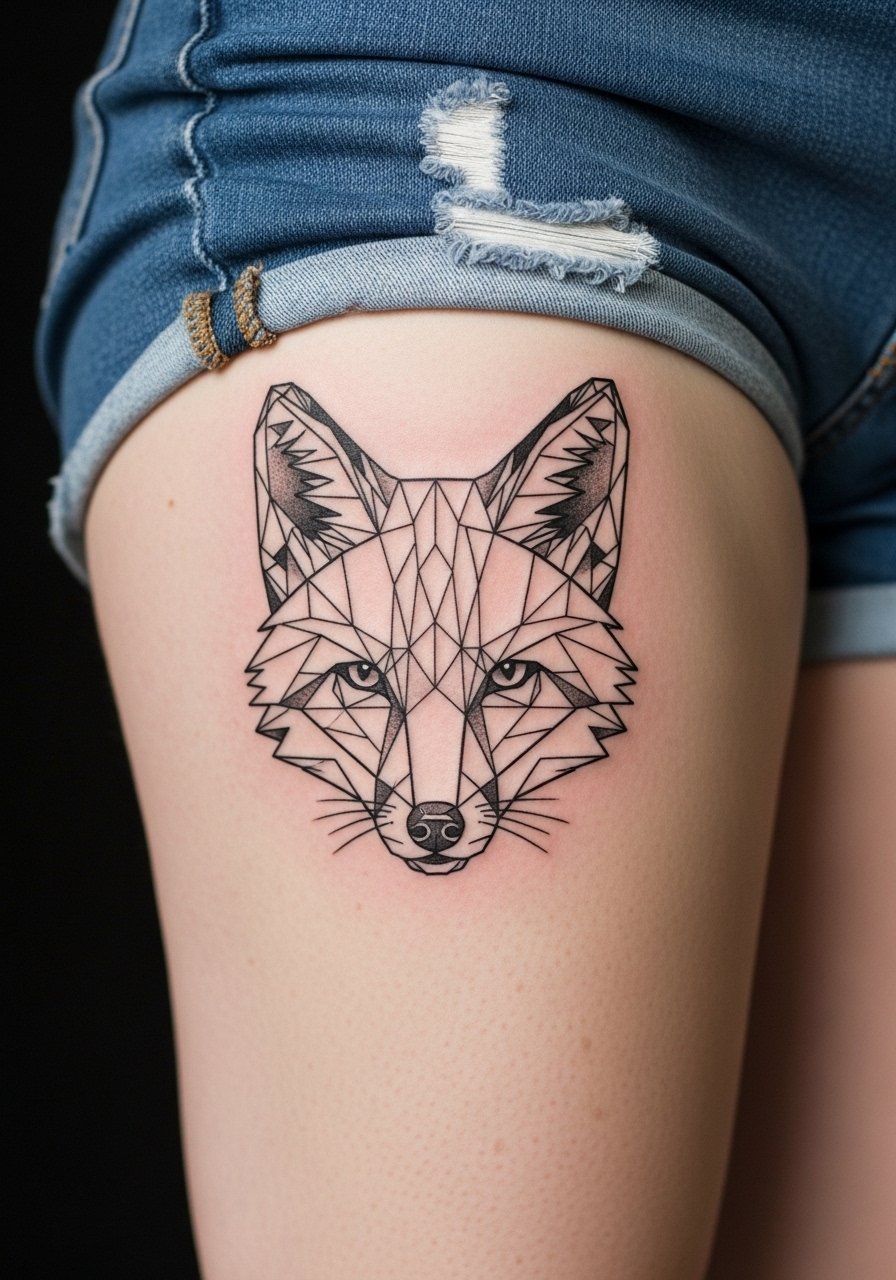
Thigh tattoos tolerate detail and age well because of less daily abrasion. Ask for clear polygon lines and some open negative space for definition. The mistake is shrinking facial features into a narrow patch. Sessions can be comfortable with breaks and sizing options. For after sessions, loose bottoms like high-waisted shorts avoid pressure on the area while it heals.
21. Black Geometric Key on the Inner Wrist
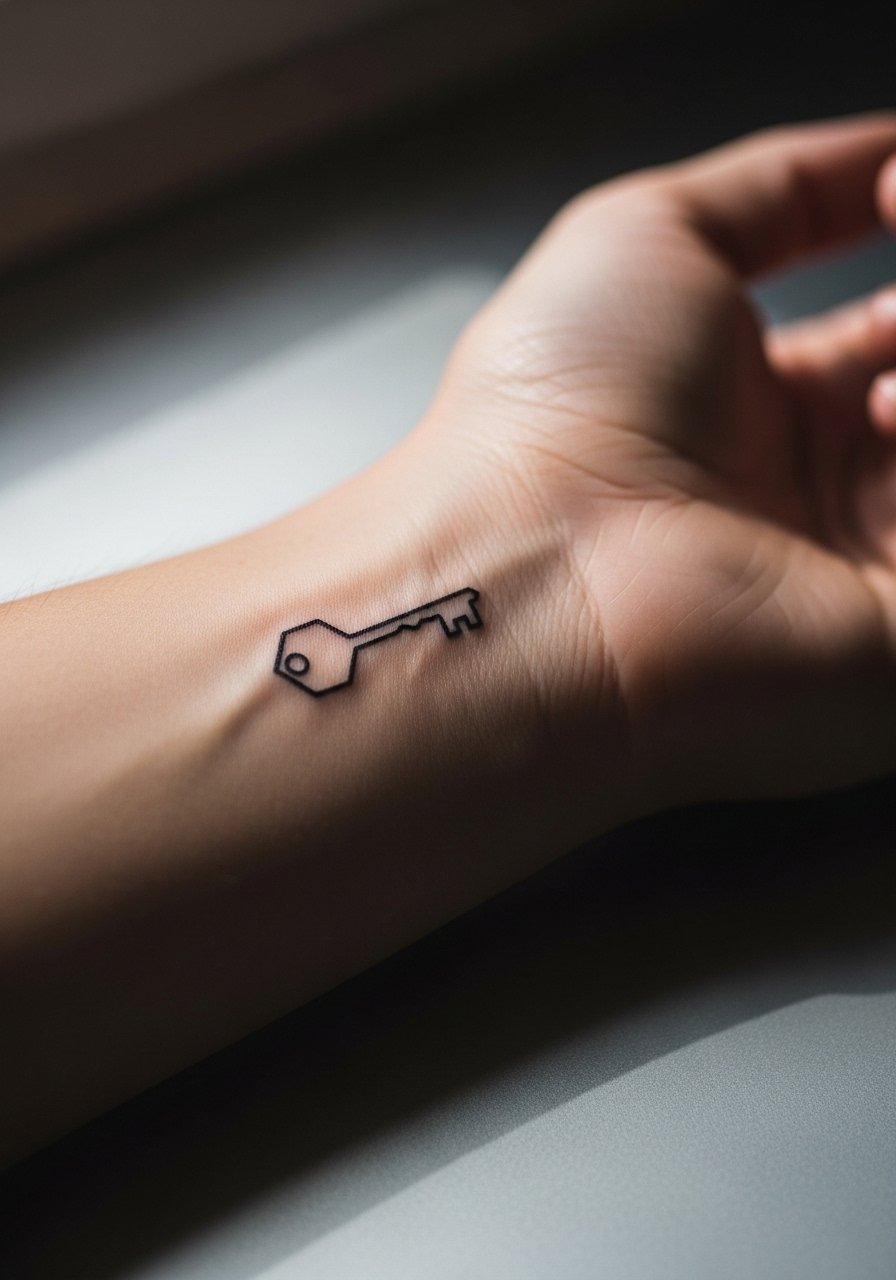
Inner wrist keys read like jewelry and are easy to hide if needed. Tell the artist to keep the shaft slightly thicker and to avoid micro-flourishes near the knuckle. The mistake is placing excessive fine detail in the bow area. Wrist pieces see more sun and washing so touch-ups are common after a couple years. Pair with a slim leather bracelet that sits beside but not over the tattoo.
22. Geometric Soundwave Along the Ribcage Side
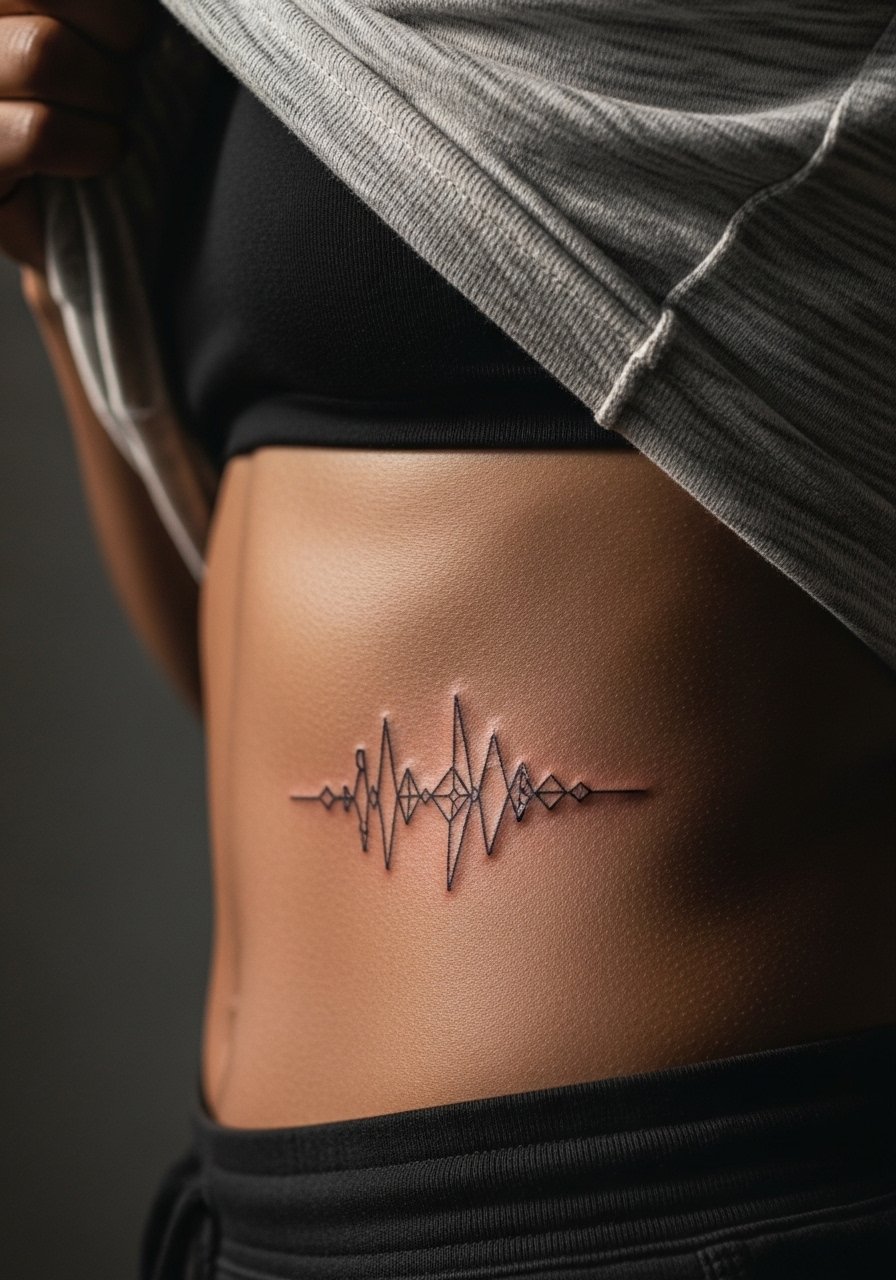
Soundwave tattoos on ribs are intimate and respond to body curvature. Ask for a simplified waveform with spacing that respects skin stretch. One controversy relates to fine lines in this area, with some artists warning of early blurring and others saying correct depth avoids it. Name both camps in your consult and ask which approach the artist uses. The session is more sensitive and short breaks help. For the appointment wear a cropped tee so the artist accesses the side cleanly.
23. Geometric Barcode on the Back of the Neck
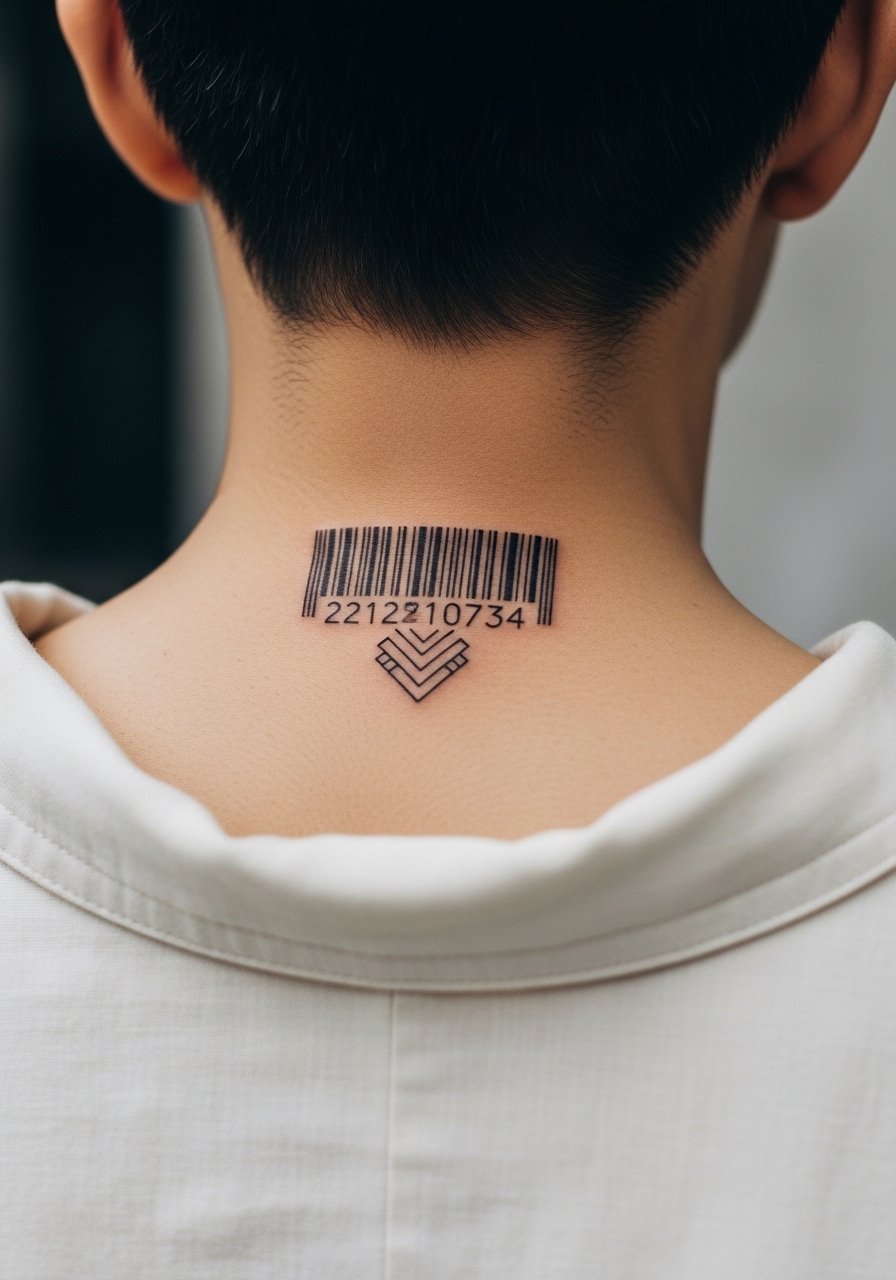
Neck tattoos require careful consideration for visibility and career impact. Ask for a small, high-contrast barcode with consistent spacing. The mistake is making the bars too thin, which fade and blur. Back-of-neck skin can heal well but touch-ups are common if exposed to sun. For the session, wear a wide-neck shirt you can shift without removing clothing.
24. Geometric Heart Made of Polygons on the Ankle
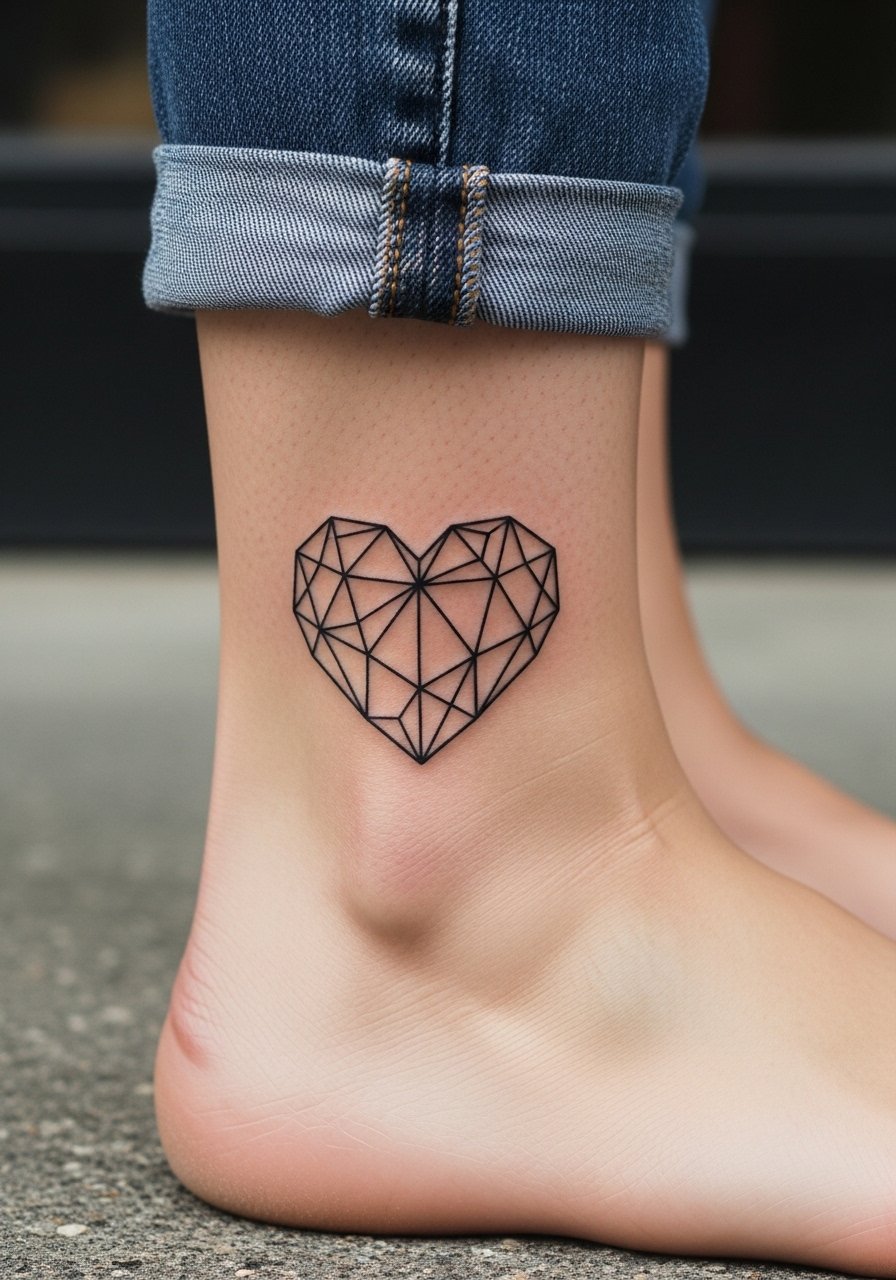
Ankle hearts are jewelry adjacent and read nicely with small facets. Ask for clean edges and a slightly wider outline to avoid early softening. A typical error is shrinking the heart too much so facets lose identity. Ankles need early protection from shoe friction. For display, pair with a delicate anklet that complements the geometric silhouette without rubbing the ink.
25. Micro-Polygon Owl on the Inner Bicep
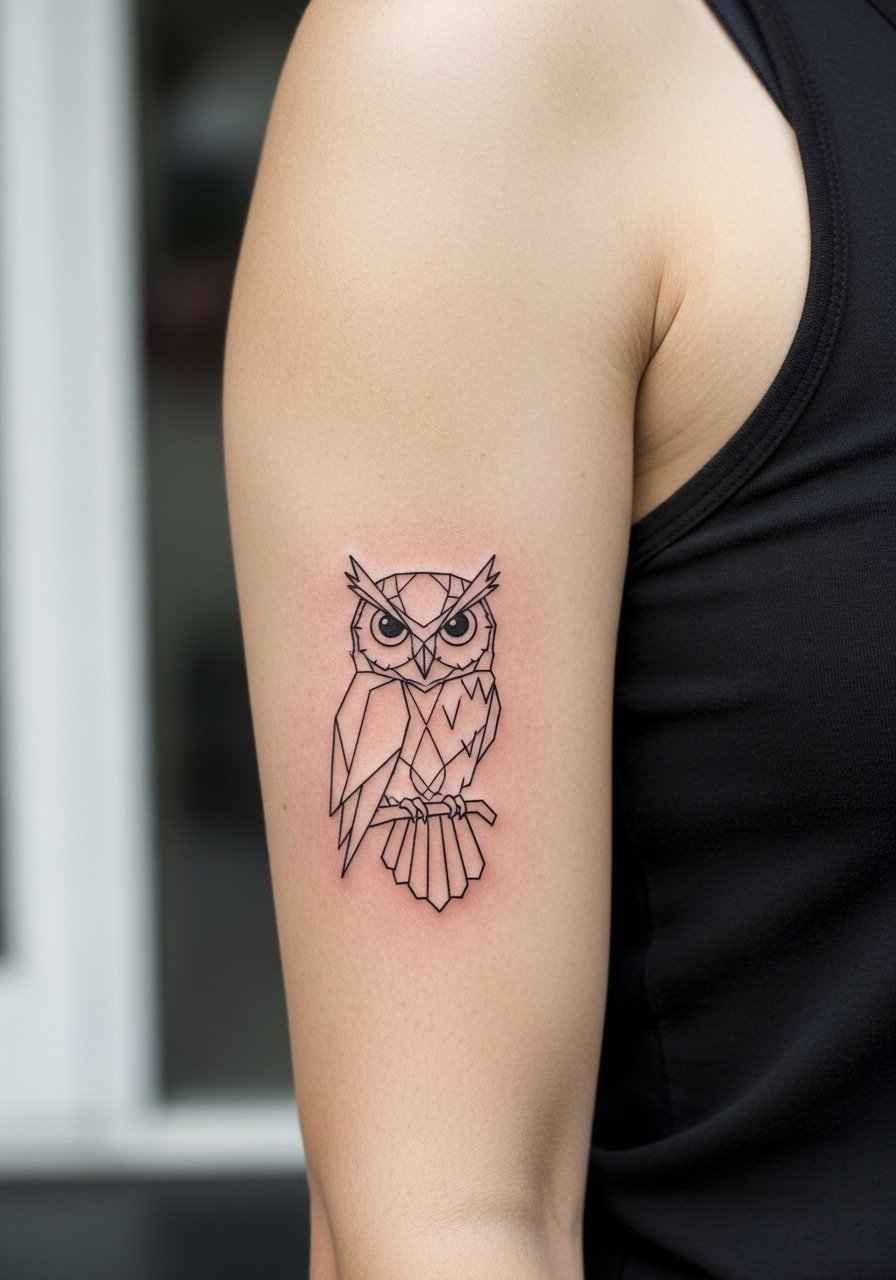
Inner bicep skin is forgiving but can be sensitive. Ask for simplified eye shapes and clearer polygons with breathing space. The mistake is over-detailing the face for such a compact scale. Expect tenderness during the session and low abrasion while healing. For the appointment wear a loose tank top so the artist has full access without the fabric tugging.
26. Minimal Geometric Moon Phases on the Spine
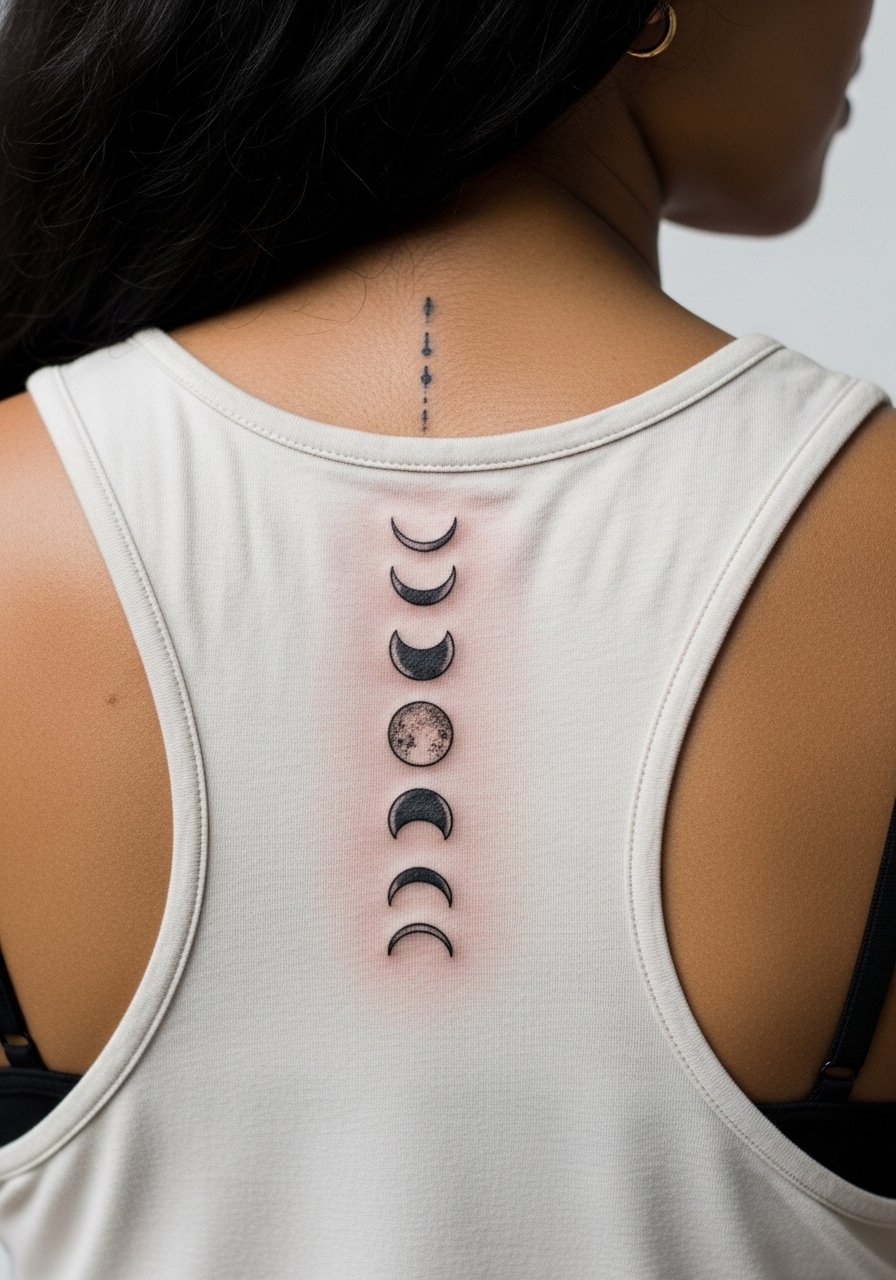
Spine placements demand careful vertical spacing so each moon phase reads as intended. Ask for clear negative space between crescents and a test stencil to confirm alignment. A common mistake is compressing phases so they merge. Sessions on the spine can be sensitive and short breaks are normal. For showing it off, a racerback tank keeps the line visible and flattering.
27. Tiny Geometric Coordinates on the Collarbone Shaft
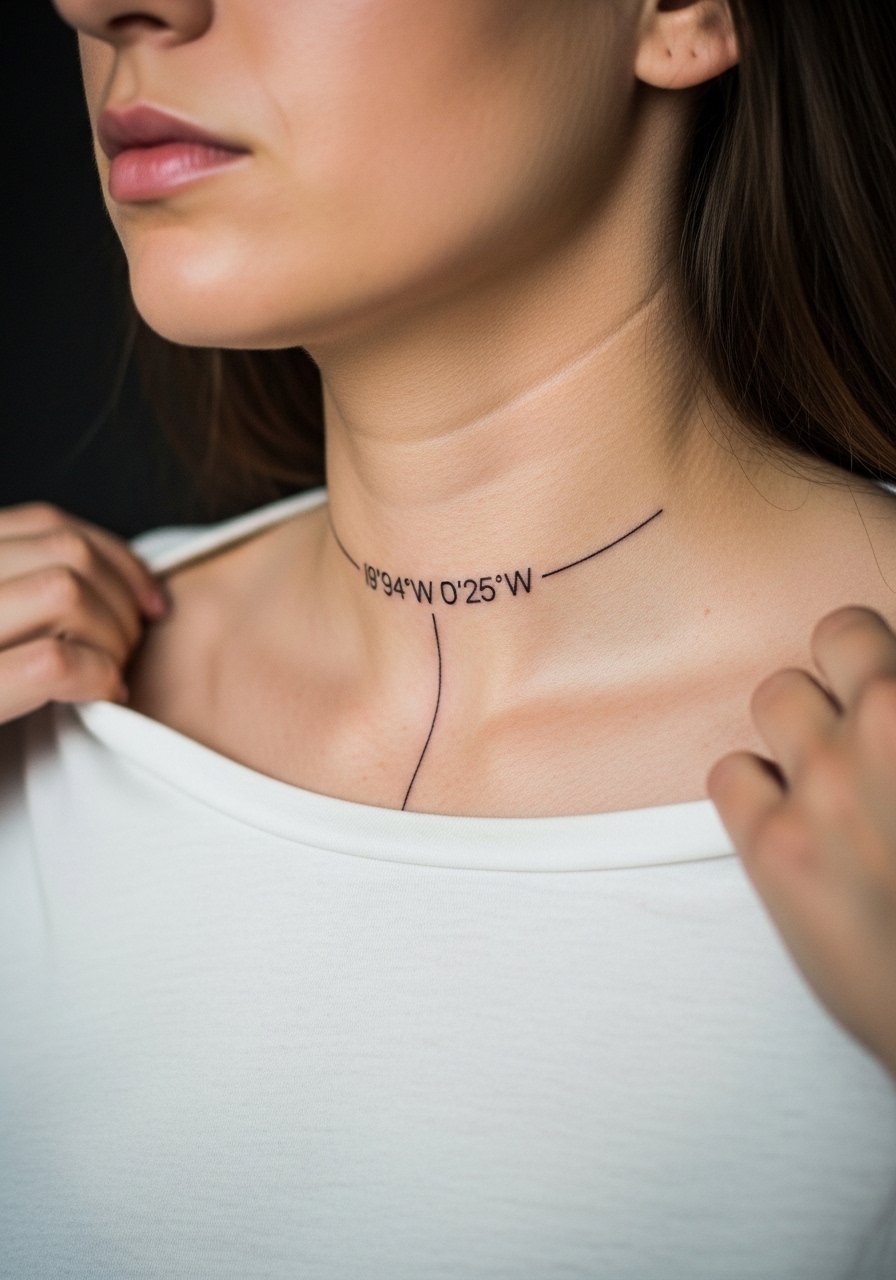
Coordinates read like a discreet secret and translate well to geometric styling. Ask your artist to use monospaced numerals or a thin geometric font with spacing that prevents smudging. The mistake is shrinking the numerals too small. Expect similar longevity to other collarbone pieces and plan sun protection for the area. Pair with a delicate pendant that sits above the text without crowding.
Frequently Asked Questions
Q: Do fine line geometric tattoos fade faster than blackwork for small pieces like these?
A: It depends on placement and line weight. Fine line tends to soften earlier on high-motion or high-wash areas like fingers and hands. Blackwork keeps contrast longer, but it can feel heavy at very small sizes. Ask for slightly thicker lines for high-motion spots and a realistic touch-up plan at the consult.
Q: Should I use second-skin products like Saniderm for tiny geometric pieces?
A: Artists split into two camps. One group says second-skin reduces scabbing and keeps crisp edges intact. The other group prefers breathable dry healing for joints and bony spots to avoid trapped moisture. Discuss with your artist and choose based on placement and how your skin reacts to occlusive dressings.
Q: How do I make geometric fine line read well on darker skin tones?
A: Larger negative spaces and slightly bolder lineweight help contrast without changing the design. Dotwork can add depth in lieu of thin internal lines. Bring reference photos of similar skin tones to your consult so the artist can match line weight and spacing.
Q: What should I wear to the studio for a ribcage or sternum geometric piece?
A: Choose clothing that exposes only the needed area and keeps you comfortable during breaks. For ribcage and sternum, a cropped top or a sports bra works well. Pick breathable fabrics and slip-on shoes so you can avoid shifting clothing over fresh ink.
Q: How often should I realistically expect to touch up small geometric tattoos?
A: Small, visible placements like fingers, hands, and feet often need touch-ups around year one to two. Forearm, thigh, and shoulder pieces can go longer, sometimes three to five years, before a cosmetic refresh is useful. Your artist can give a more precise timeline based on their technique and your skin.