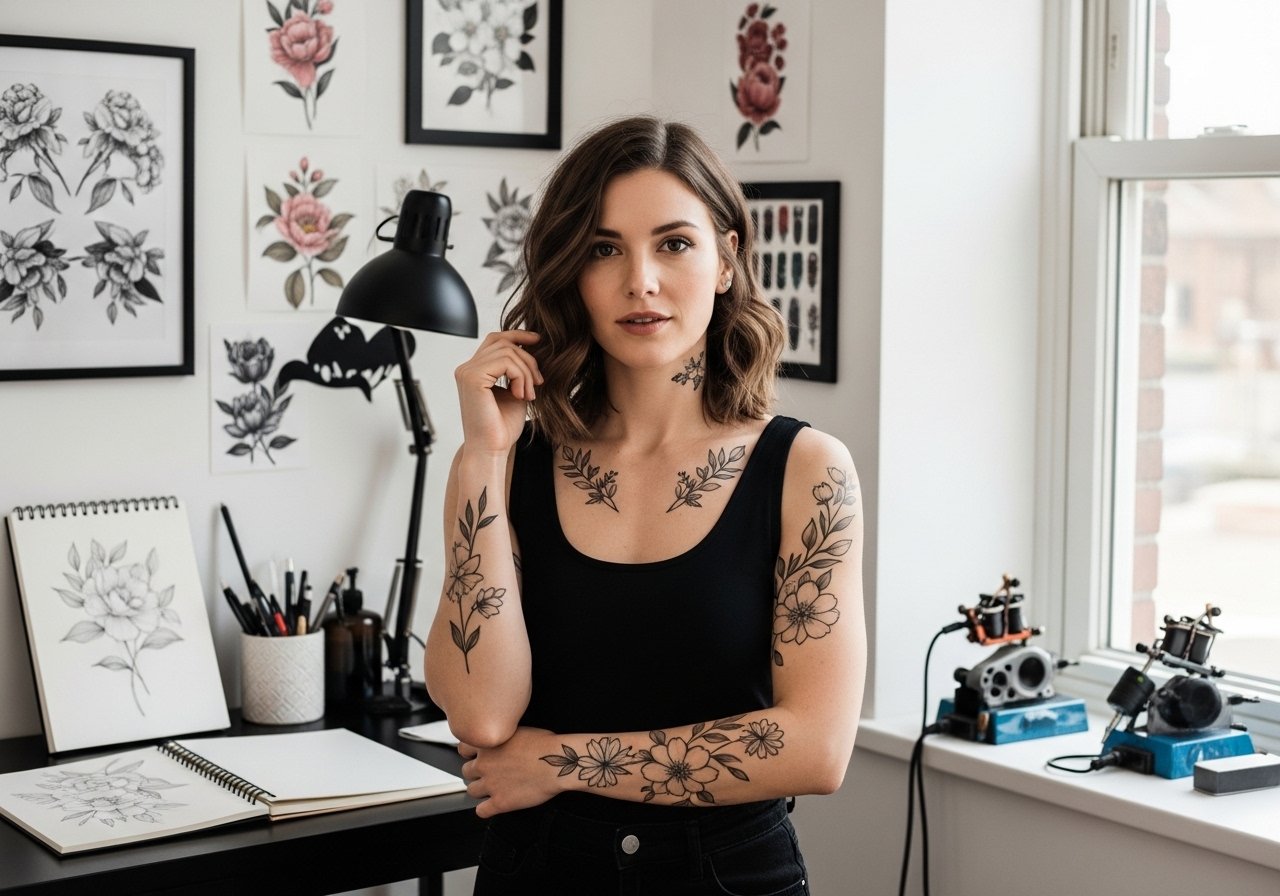
Fine line work and watercolor continue to trend, yet the tattoos that still read clean at year five are often the ones people hesitated to post on day one. Expect trade-offs between what looks ethereal fresh and what stays legible as skin moves. I pulled 21 different "Made in Heaven" directions that balance romance and longevity, with consultation tips, session notes, and wardrobe ideas to bring each design to life.
1. Neo-Traditional Angels on the Forearm

I see neo-traditional forearm pieces hold up because the bold outlines protect the saturation as the skin moves. Ask your artist for slightly heavier linework than an average fine line so the contour keeps definition without looking blocky. The session is usually one to two hours and feels like steady pressure with brief breaks. Common mistake is asking for ultra-small details on the forearm where they get lost at three years. For showing it off, roll a chambray shirt sleeve and let the saturated colors peek with a leather cuff on the opposite arm.
2. Realistic Celestial Scene on Upper Arm

Realism on the upper arm lets you go large and preserve detail across multiple sessions. Tell your artist you want subtle color accents only where they enhance contrast so the gray values read well on darker tones. Expect two to three sessions depending on size. The pain is moderate and the shoulder provides a forgiving canvas for stipple shading. A mistake is packing too many tiny stars in tight groups, which can blur over time. Touch-ups at year two are common for highlights and to keep the contrast crisp.
3. Watercolor Clouds with Heart on Shoulder

Watercolor shines on shoulders because the flatter surface preserves flows and pigment blending. Ask for a stronger anchor line under the wash to protect the motif as it fades. Single-session pieces tend to heal softer at six months and then need a gentle touch-up to refresh pastels at year two. The biggest error is placing watercolor on high-friction spots that rub while walking. For session comfort, wear a strapless tank or loose tank so the artist can access the full shoulder.
4. Minimalist Infinity Loop on the Wrist

Wrist micro work is a first-timer favorite because it reads as subtle and heals fast when placed away from constant friction. Fair warning, fine line on the wrist can blur quicker than on the forearm so ask the artist for slightly deeper linework and plan for a touch-up at year one to three. Session time is short and the discomfort is sharp but brief near bone. Avoid asking for ultra-fine script looping through the infinity or the letters will close together. Pair the finished piece with a thin gold bangle stack on the opposite wrist to keep the focus balanced.
5. Traditional Cherub Gates on the Thigh

Thigh placements are forgiving for saturation and size which suits traditional cherub gates well. One session often handles a medium piece because the skin compresses nicely for saturation. The main mistake is underestimating how a tucked skirt or tight denim will sit over the healed piece. Pain is moderate with long stretches that can tire you out during a multi-hour session. For casual reveal, high-waisted shorts or a midi dress with a side slit frames the piece without cutting across the artwork.
6. Fine Line Angel Silhouette on Inner Bicep

The inner bicep holds fine line work well when sized correctly. Artists differ on numbing for this spot and the debate is alive in forums. One camp says numbing helps manage the deeper discomfort, the other sees it as unnecessary for short stencils. The truth depends on your pain tolerance and the artist's comfort. Tell them you want even needle depth and a small footprint so the silhouette does not puddle. Expect a single session and a softer look at six months with a cleaner contour after a touch-up. For the appointment, wear a tank top so the arm can be positioned without fabric pulling.
Pre-Session Essentials
The small placements and larger pieces above ask for slightly different prep, and a compact kit smooths the day from arm work to thigh sessions.
-
Tattoo Goo balm. Thinner formula that many people prefer for preventing clogged pores on pastel watercolor areas without heavy residue.
-
InkSafe non-greasy spray. Lightweight spray that helps with humid climates and reduces excess moisture on watercolor washes during the first 48 hours.
-
Hustle Alternative butter substitute. A greaseless option some artists recommend for fine line work on dry winter skin.
-
RevItUp salve. Hydrates without shine so blackwork photos read truer on darker tones.
-
Aquaphor healing ointment. Thin initial layer for very dry skin that can help prevent scabbing on small detail pieces while you follow your artist's plan.
7. Blackwork Celestial Vines Along the Spine

Spine and lower-back blackwork demands bold saturation to avoid early fading on moving skin. For the spine, request clean negative-space planning so the vine structure reads from a distance. This is a medium-large piece that often requires two sessions and can sting more around vertebrae. Blowout risk increases if the linework is placed too closely over boney ridges. A common error is asking for tiny dot work without spacing, which blurs into dark patches later. For visibility, an open-back top or a tank top with high-waisted jeans pulled slightly low gives the right reveal.
8. Micro-Realism Heaven Portal on the Collarbone
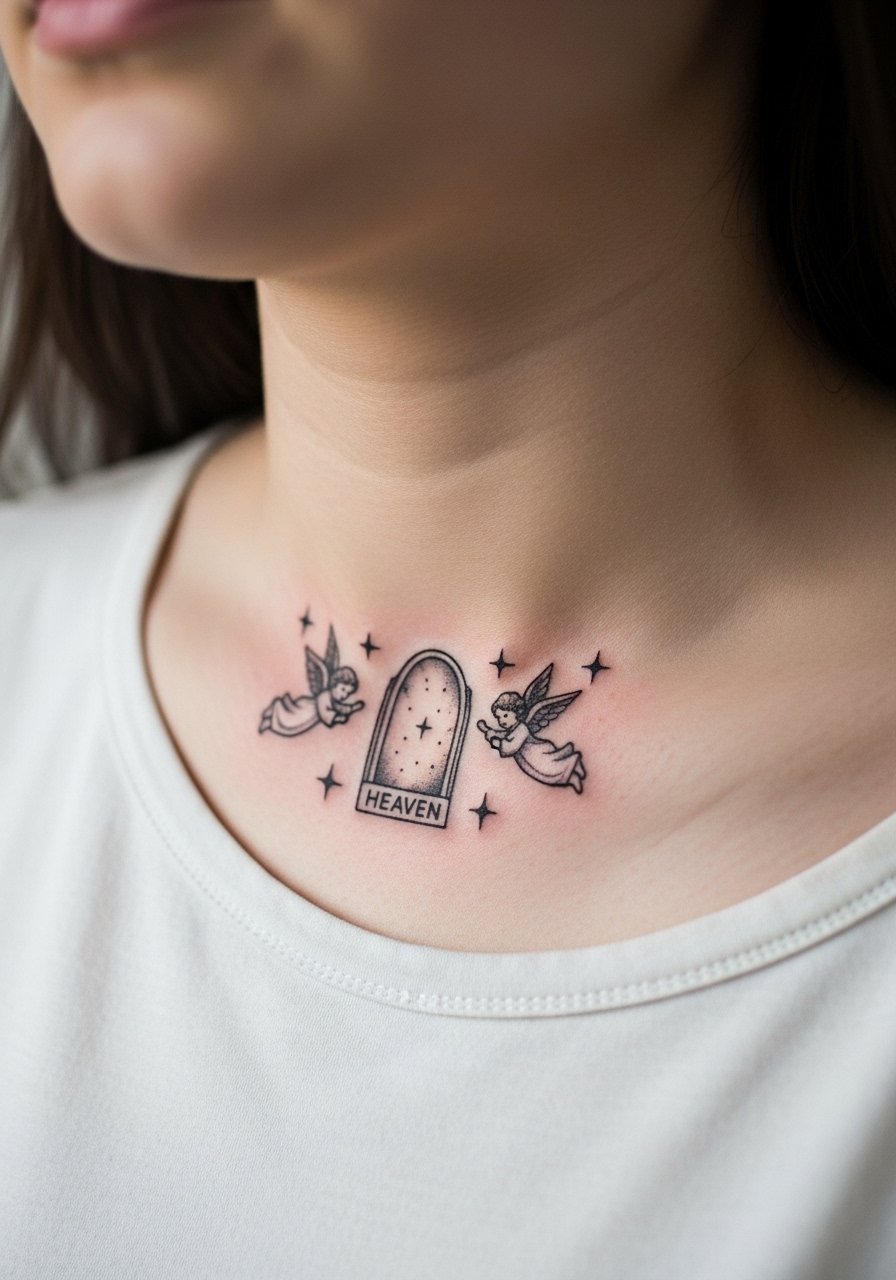
Micro-realism on the collarbone is intimate and reads well when kept small and simple. The collarbone is boney and can be a 7 out of 10 on a pain chart for many people, so plan for short breaks and maybe numbing if your artist allows. The pitfall is packing too many micro elements into a tiny space. Ask for a single focal portal and plan to add surrounding elements later if you want a sleeve. At six months the tiny stars will need gentle touch-ups to maintain crisp highlights. For sessions, bring a strapless or wide-neck top to allow full access.
9. Ornamental Mandala with Gate Motif on Shoulder Blade
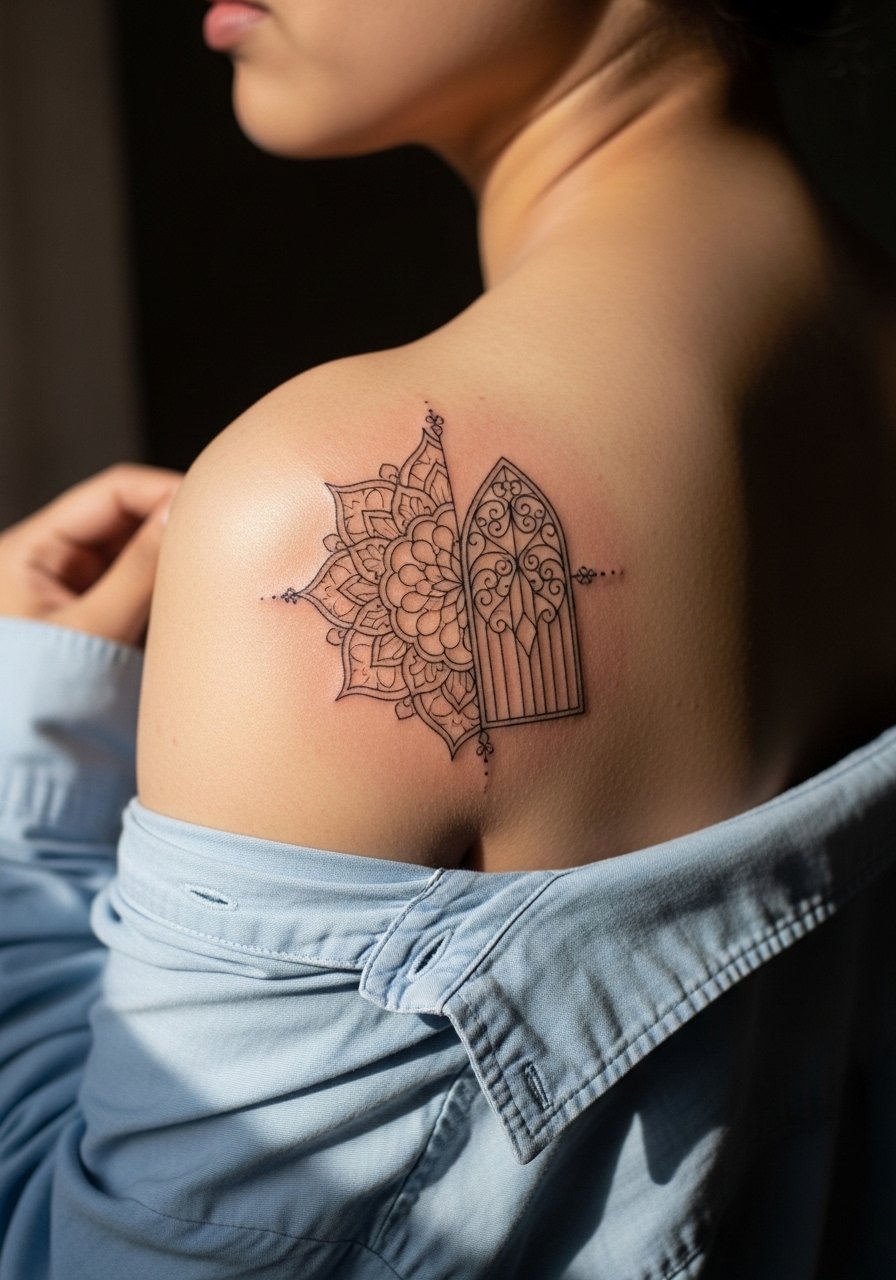
Shoulder blade placements let mandala work breathe and keep symmetry for years if scaled properly. Tell your artist you want the mandala to have open spacing in the center so tight dot work does not blend with time. This is usually a one to two session piece. A mistake is shrinking a mandala to fit a tiny area which loses the ornamental detail. For evenings out, a sleeveless fitted tank and simple hoops keep attention on the symmetry without crowding the neckline. Session wear should allow the artist to pivot the shoulder without fabric pulling.
10. Neo-Traditional Butterfly from Clouds on Ankle
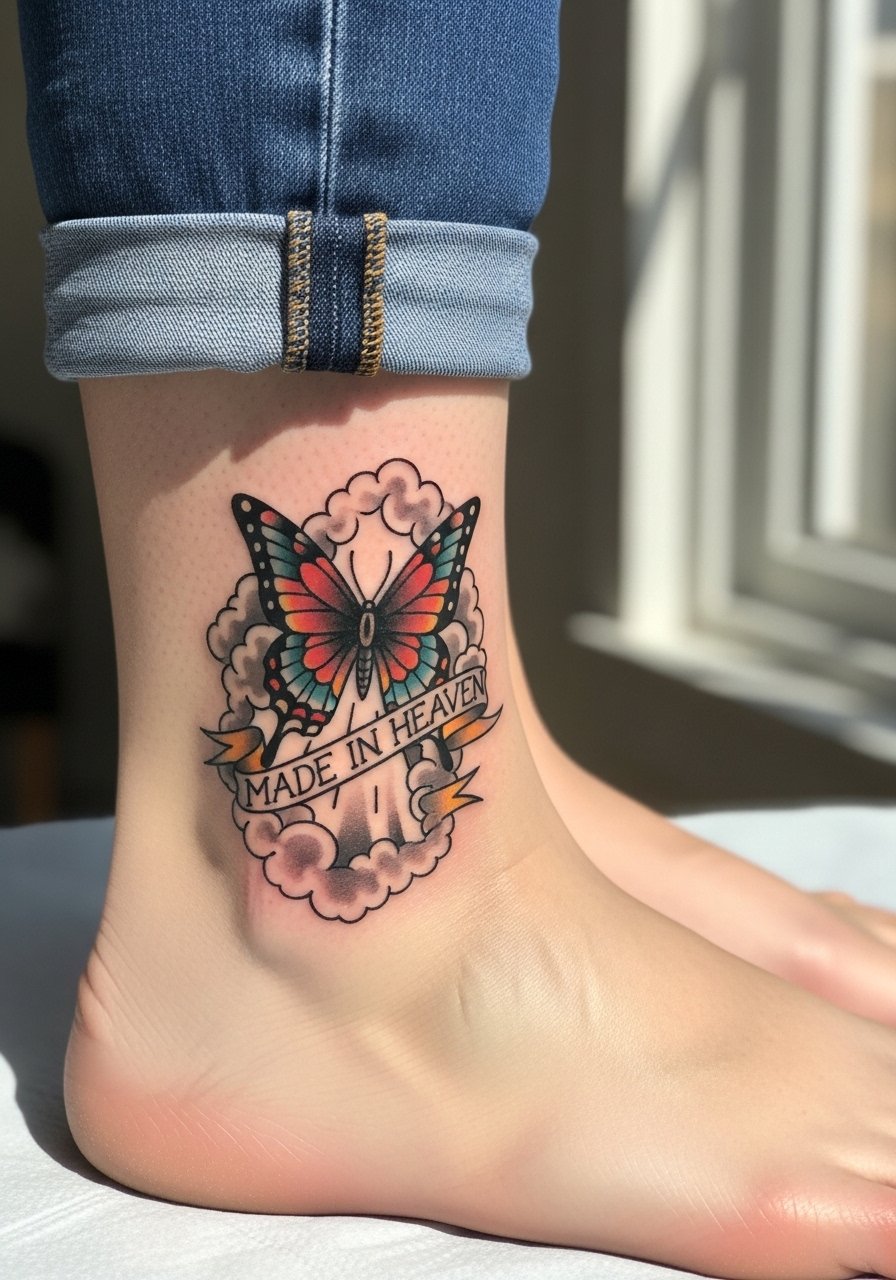
Ankle pieces are seasonal show-offs and work well for small neo-trad motifs that still need bold outlines to survive shoe straps or socks. The ankle gets a lot of friction so request denser black at the outline where fabric meets skin. Pain is sharper near bone and sessions are usually under two hours. The usual error is choosing a thin line weight for an ankle motif, which softens fast under shoe abrasion. For summer wear, try cuffed slim ankle pants or strappy flat sandals so the artwork reads clearly when you walk.
11. Watercolor Wings Wrapping an Infinity Heart on Upper Thigh

Thigh watercolor holds pigment better than ribs because the skin stretches less with weight fluctuations. Still, tell your artist you want slightly stronger color saturation where the wings overlap the heart, so the silhouette keeps shape as it fades. Sessions can be one to two hours and feel like long consistent pressure. The frequent mistake is a wash with no anchor line which turns into a soft bruise look after summer. For casual reveal, high-waisted shorts in linen frame the piece nicely and reduce drag on healing skin.
12. Minimalist Cloud with Hidden Heart Behind the Ear

Behind-the-ear micro work reads as a private nod and is perfect if you want something small to layer later. The spot is sensitive and needs precise needle depth to avoid blowout because the skin there is thin. Ask your artist for dot work instead of continuous lines to reduce spreading. Expect a short session and minimal scabbing that needs careful aftercare. Remember that the head and neck area heal differently so plan your schedule if you have important photos coming up. This area is also often covered by hair, so factor visibility into placement.
13. Blackwork Heart Lock with Rays on Calf

Calf placement is sturdy for traditional blackwork because muscle and skin tolerate saturation well. Ask for clean negative space around the rays so the lock's shape reads from a distance. Sessions are usually single and moderate in discomfort. A common misstep is crowding the rays too close to the lock which causes early merging. For wardrobe, cuffed shorts or midi skirts that let the calf show off the silhouette are ideal. Calf pieces age predictably and rarely need frequent touch-ups unless sun exposure is heavy.
14. Micro Ribbon Portal on the Neck Side

Side-neck micro work is visible and needs careful size planning to avoid early blur. The area moves with swallowing and turning so ask for a slightly larger scale than your phone mockup. Pain is higher and sessions are short. The mistake is porting a chest-sized design directly to the neck which loses clarity. Professionals often recommend discussing workplace visibility before booking. A wide-neck sweater or a dainty chain sits well above a smaller neck piece when you want subtlety.
15. Ornamental Shoulder Blade Mandala Extended Toward Spine

Extending a mandala toward the spine creates motion without crowding the center. For longevity ask for slightly wider spacing in stipple shading so the dot work does not merge over time. This work often takes one to two sessions. A mistake is keeping too tight a pattern near the spine where subtle swelling can affect the dots. For session wear, a loose button-down you can pull aside gives the artist access while keeping you covered. Touch-ups at year two can bring back center contrast if you want the original crispness.
16. Neo-Traditional Butterfly Banner on the Wrist

A wrist banner with neo-trad wings reads like a tiny statement. Because the wrist experiences so much motion, ask for compact shapes and stronger outlines at contact points. The session is brief and the pain is sharp close to bone. An error is requesting shaded gradients that sit too close to the wrist edge where rubbing from watches or bracelets wears them down. For showing it off, pair with a minimalist bangle or a thin gold bangle on the opposite wrist so the artwork keeps visual priority.
17. Watercolor Cloud Band Across the Ribcage

Ribcage watercolor is gorgeous but sensitive to weight changes and movement. If you plan on body fluctuations, ask your artist about how the design will flow when the skin stretches. The ribcage is high on the pain scale and sessions often need breaks. The common mistake is trusting delicate wash without any defined lines, which can become patchy after a year. Many people who pick ribs schedule a touch-up at year two to re-blend pastels. For session comfort wear a sports bra and loose pants so access is clear.
18. Minimalist Cloud Finger Dot Work

Finger micro pieces are visible but aggressive in aftercare because of constant washing and friction. Ask for a slightly bolder primary outline and prepare for quicker fading than other spots. Sessions are short and discomfort varies with knuckle proximity. A common regret is expecting the same longevity as forearm fine line. Plan on touch-ups every 1 to 2 years. For styling, thin rings or a delicate band on adjacent fingers complement the micro cloud without crowding the tiny motif.
19. Blackwork Celestial Chest Piece Near Sternum
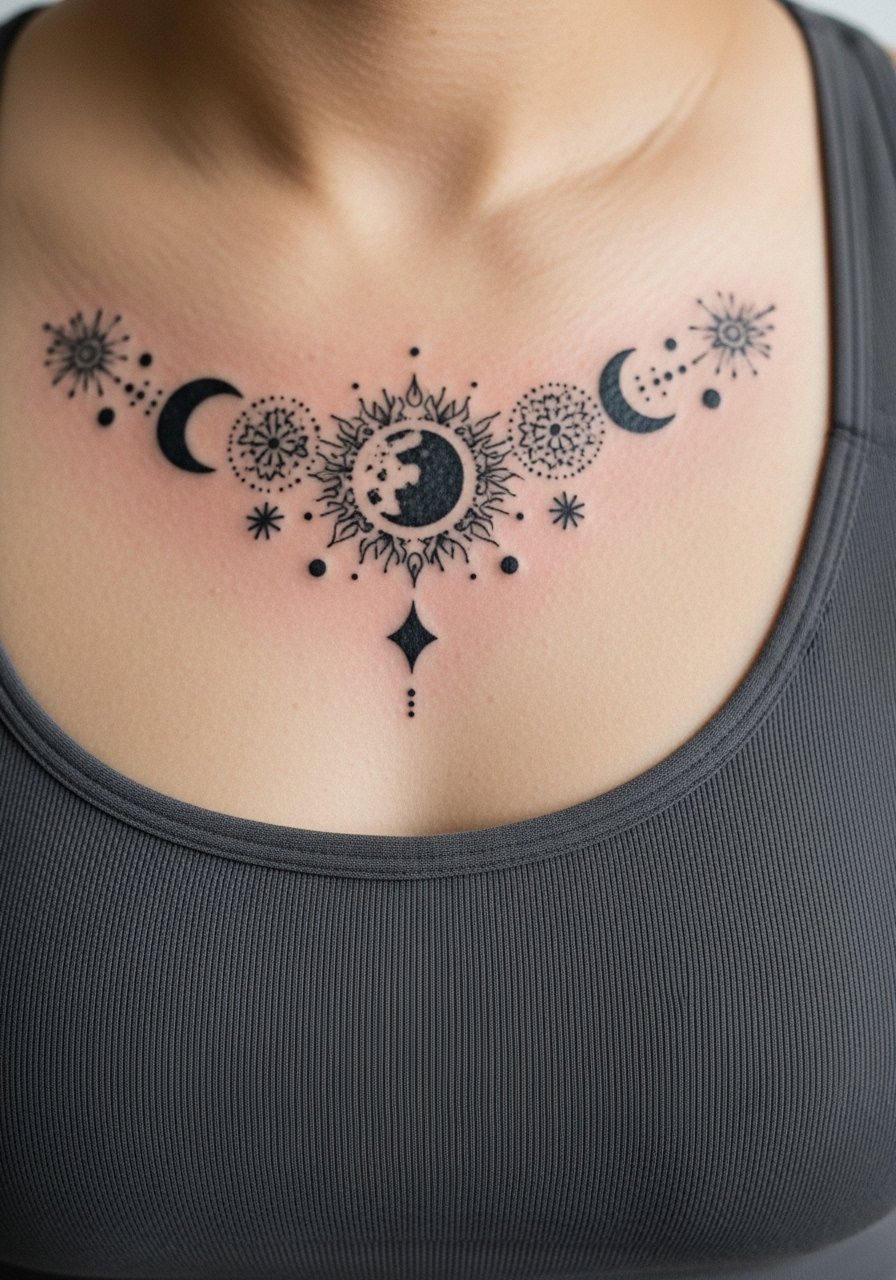
Sternum and upper chest work demand careful planning for symmetry and breathing room. This area can be sensitive and sessions may be split for comfort. One camp in forums favors protective film for this zone to speed healing, while another group prefers dry air exposure. Name both positions to your artist and ask which approach they use because each has trade-offs for scabbing and breathability. A frequent mistake is overcrowding the sternum with tiny linework that pulls when you move. For modest reveal, a wide-neck shirt or fitted sports bra showcases the piece safely.
20. Ornamental Hip Bloom with Subtle Gate

Hip work pairs well with small ornamental motifs and is discreet when you prefer privacy. The hip moves with clothing and sitting so ask the artist about placement relative to waistbands to avoid constant rubbing. Sessions are moderate and can be done in one sitting for a small piece. A common error is placing the design where a belt or waistband will sit, which increases friction during healing. High-waisted bottoms or a high waist linen short provide both comfort and a flattering reveal.
21. Micro-Realism Heaven Portal for Collectors on the Neck Nape

A nape micro-portal is subtle and excellent for collectors who want a small narrative anchor. The back of the neck heals differently because of hair and sweat so discuss hair coverage during the first week. Sessions are quick but tolerability depends on skin sensitivity. People often mistake collar-length placement for low-pain spots, but the nape can be sensitive. Keep the scale simple and plan to add complementary pieces later if you want a bigger statement. A wide-neck shirt that pulls down slightly is ideal for the session and protects the area during travel.
Frequently Asked Questions
Q: Will fine line tattoos like the wrist infinity blur faster than neo-traditional work?
A: Fine line pieces can lose crispness earlier, especially on high-friction spots like wrists and fingers. If you want finer work, ask for slightly heavier lineweight and expect touch-ups around year one to three depending on placement and sun exposure.
Q: Do watercolor-style pieces need different aftercare than traditional blackwork?
A: The care routine is similar, but watercolor relies more on preventing early scabbing and sun exposure to keep pastel tones. Follow your artist's plan, and if you live in a humid climate ask them whether a thin protective film or lighter topical is better for the first 48 hours.
Q: How should I prep for a collarbone or sternum realism piece to manage pain?
A: Bring a strapless or wide-neck top so the artist can adjust access without tugging. If you are worried about pain, ask whether they allow topical numbing and book shorter sessions so you can take breaks. Many people find a small numbing cream 30 to 45 minutes before works, but check with the studio first.
Q: For dark skin tones, which "Made in Heaven" styles hold up best?
A: Bold blackwork and neo-traditional saturation tend to read longer on darker tones because contrast is clearer in photos and daily life. If you want pastels, ask for denser color blocks and discuss how highlights will age on your skin. Also request phone mockups to preview visibility under different lighting.
Q: Where can I find guest spots or style-matched artists without naming specific people?
A: Search hashtags like #MadeInHeavenTattoo and #HeavenInk on Instagram, check Tattoodo filters by city, and use Booksy or the Inked app to find guest spot calendars. Also look for local Reddit threads asking for artist recs in your city to get peer feedback.