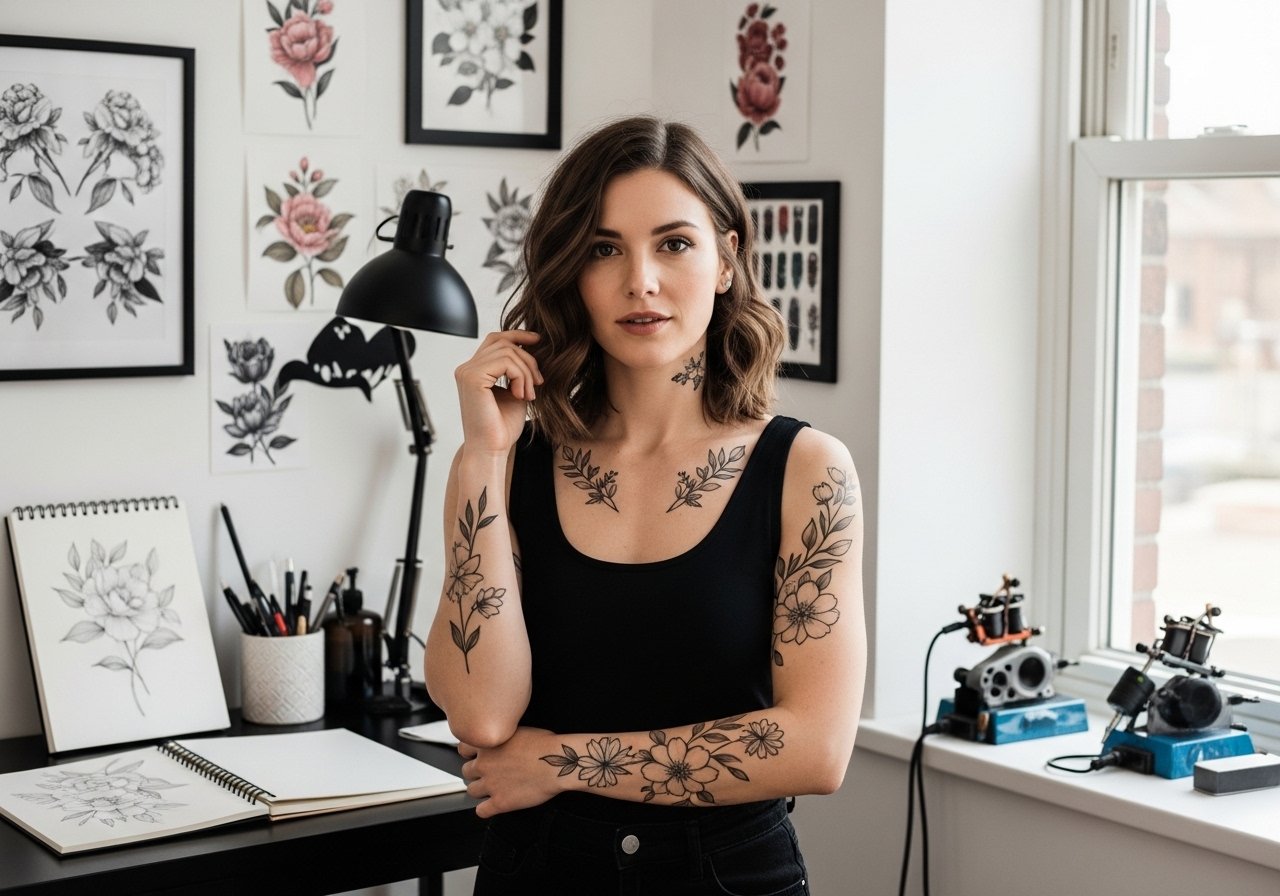
Fine line sun and moon minis are all over feeds right now, and the trend versus reality split shows up fast in healed photos. Fresh ink can look ethereal and detailed. Months later the same tiny strokes can soften or disappear unless placement, line weight, and aftercare were chosen with aging in mind. Below are 17 compact matching designs with practical notes on how they heal, what to ask your artist, and how to style them so the pair still reads like a set years from now.
1. Mini Fine Line Sun and Moon on Inner Wrists
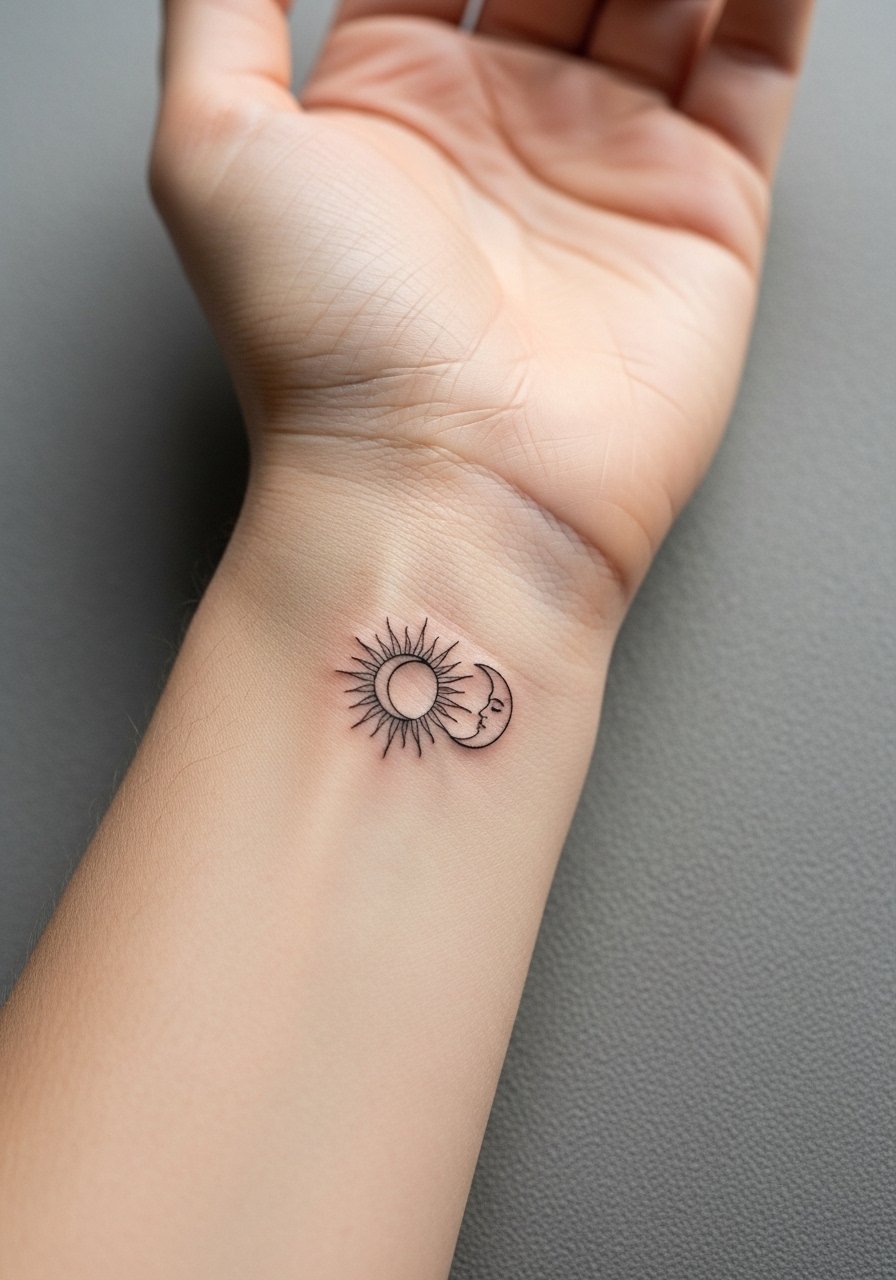
I recommend this when you want something visible but small and simple. Tell your artist you want slightly heavier anchor lines around the sun rays and the moon crescent so the tattoo survives daily friction. Fine line on the wrist is prone to fading faster than the same line weight on the forearm, so plan a touch-up at six to twelve months. Expect a quick session under 45 minutes and mild bone-side vibration pain. For the appointment wear a linen tank top so the artist can work with the forearm uncovered. A common mistake is asking for hair-thin lines across the entire design which vanish in a year, so ask for micro contrast instead.
2. Watercolor Galaxy Sun and Moon on Inner Forearm
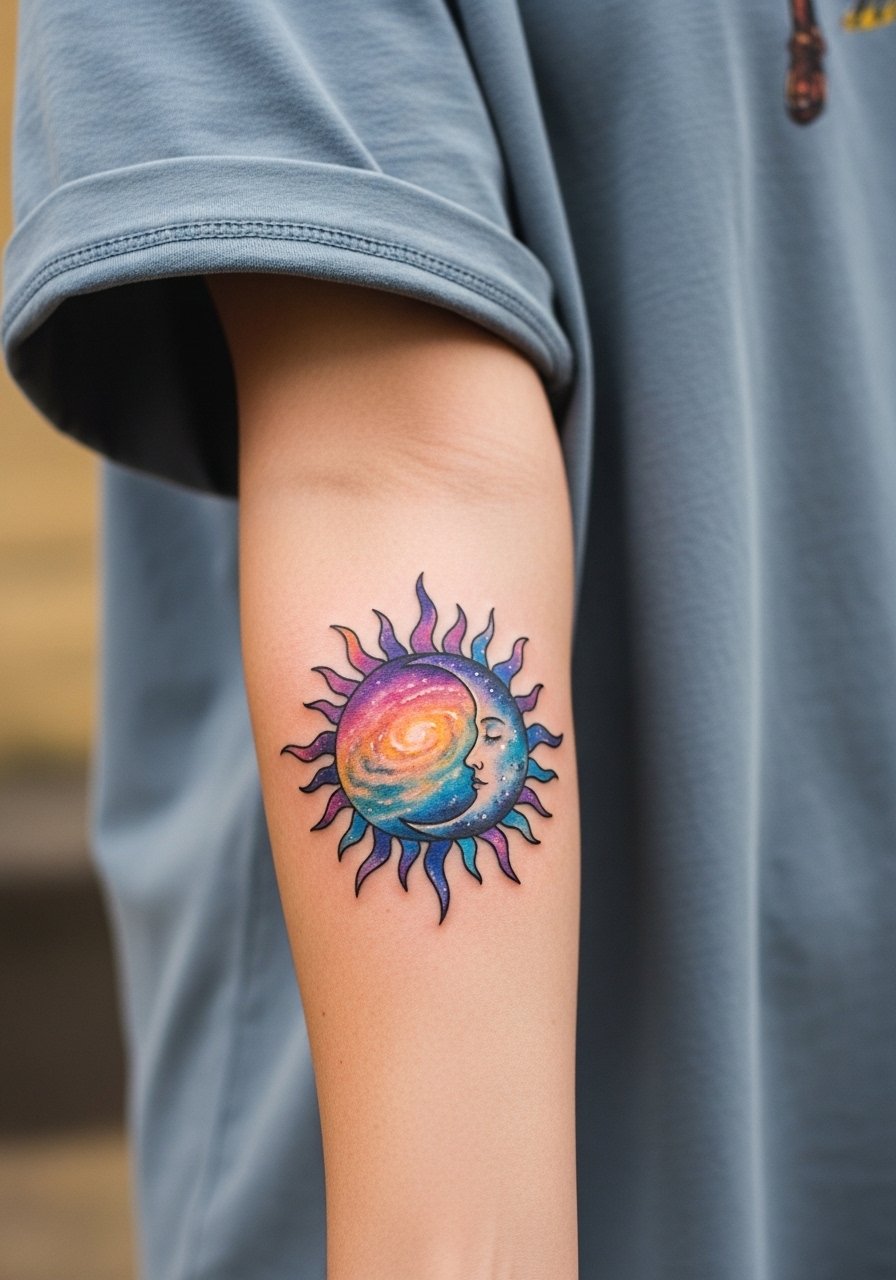
Watercolor attracts attention but it has a reputation for fading and bleeding if placed where it rubs. For a matching set pick bold anchor lines around the celestial shapes then ask for airy watercolor fills inside those borders. Expect two sessions for layering color and an appointment time of one to two hours per side. Artists are split on whether watercolor is a long-term choice. One camp says the pigments spread and soften; the other says careful saturation and touch-ups save the look. During the session wear a long sleeve fitted tee you can roll up without creasing the ink. A regular mistake is asking for full bleed color without outline, which often becomes a purple or green blur over time.
3. Blackwork Geometric Sun and Moon on Collarbone
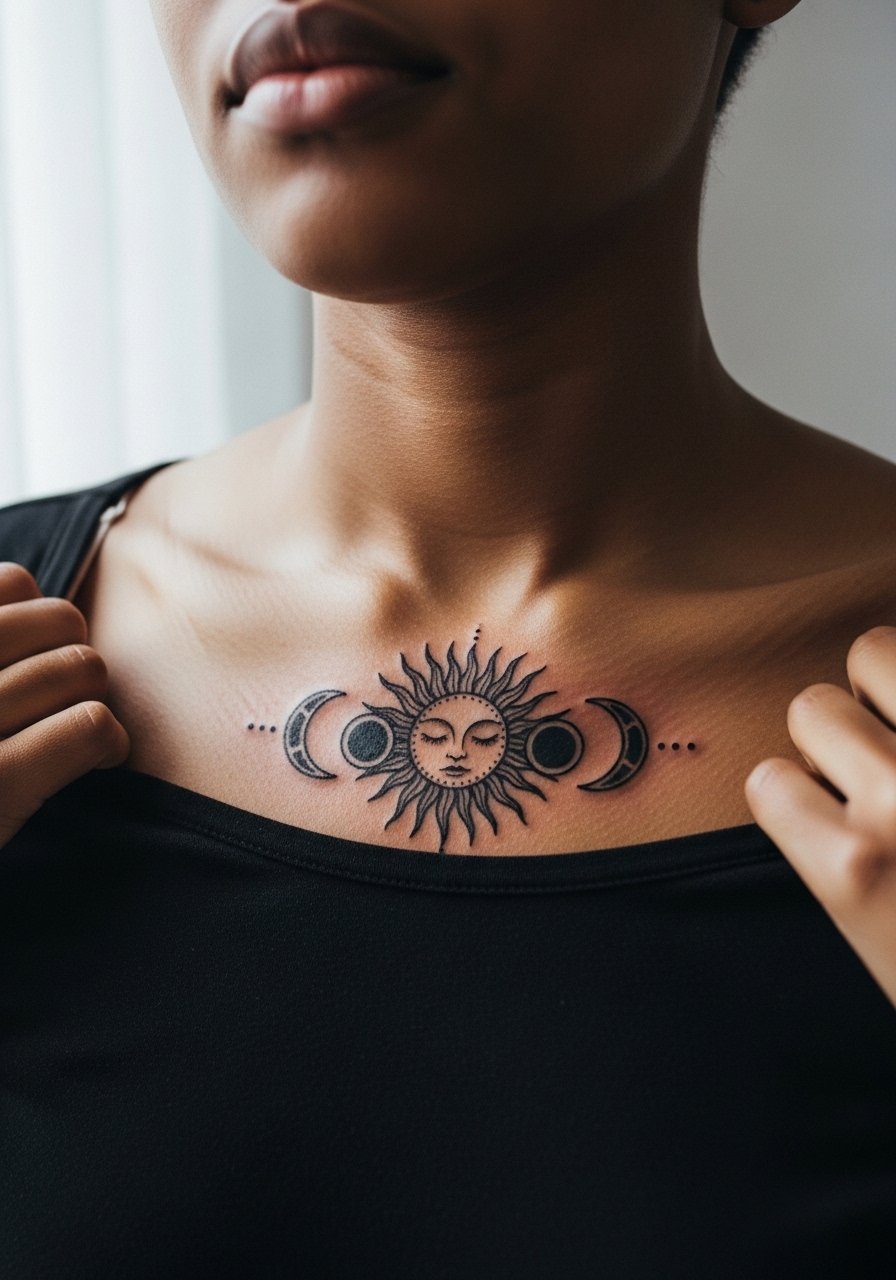
Solid black shapes read well on bony collarbones and age into strong graphic forms. Ask for slightly larger negative space in the rays and the moon to prevent dense fills from merging as the skin moves. Pain is low to moderate because of the bone proximity but the session is usually under an hour for minis. For showing it off pair the piece with an off shoulder sweater so the collarbone sits visible without competing jewelry. A frequent error is packing too many tiny geometric details into a 2-inch area which later blends into a solid mass.
4. Minimalist Dotwork Sun and Moon Behind the Ear
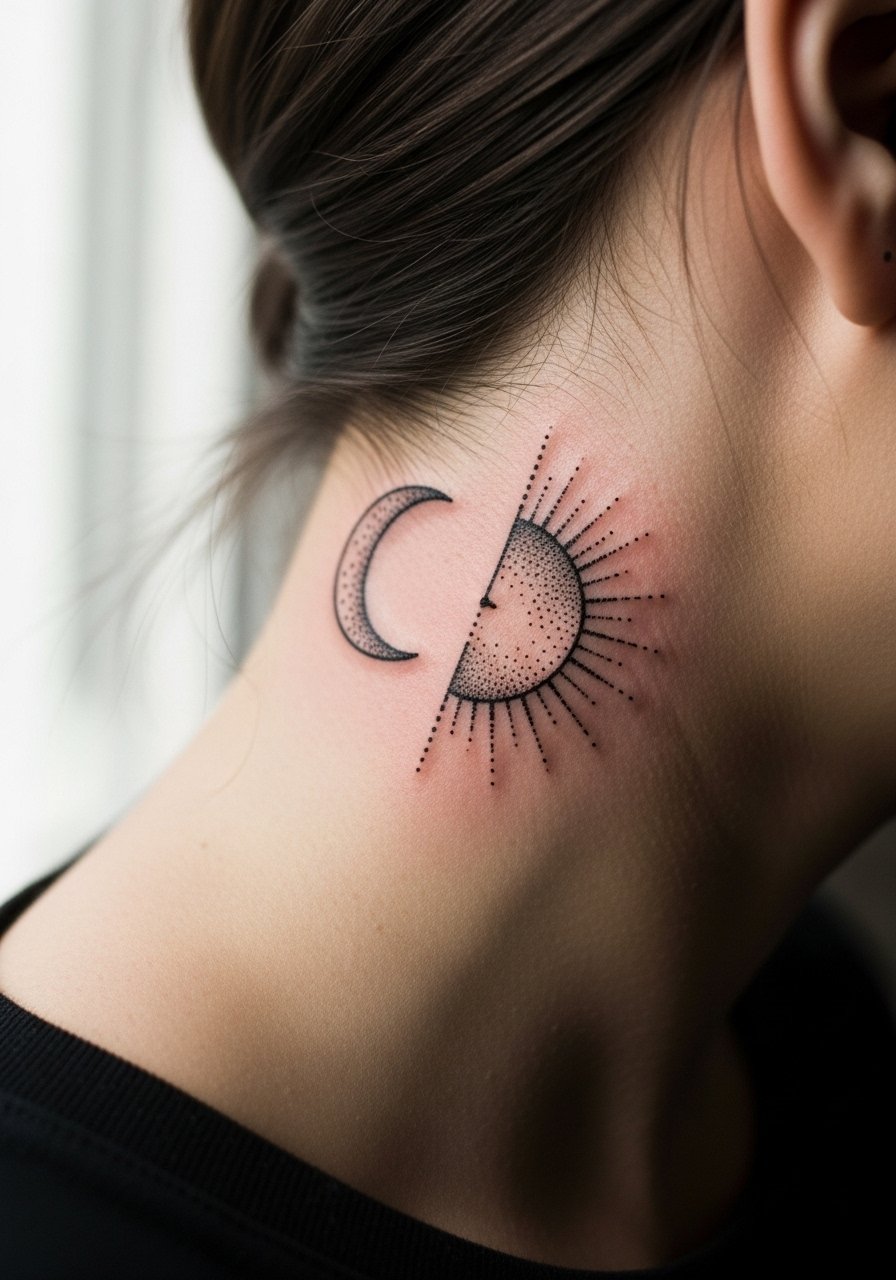
This discreet spot is subtle and perfect if you want matching tattoos that peek only in certain hairstyles. Dotwork relies on consistent stipple spacing, so tell your artist you want a visible grain rather than continuous shading. Sessions are quick and pain is mild to moderate. Behind-ear pieces risk hair rubbing during healing, so wear hair up for the first week and sleep on a clean pillowcase. Expect the design to soften at six months but still read if the dots were spaced correctly. A common misstep is asking for ultra-fine stipple density which can fill in as it heals.
5. Neo-Traditional Sun and Moon with Stars on Ankle
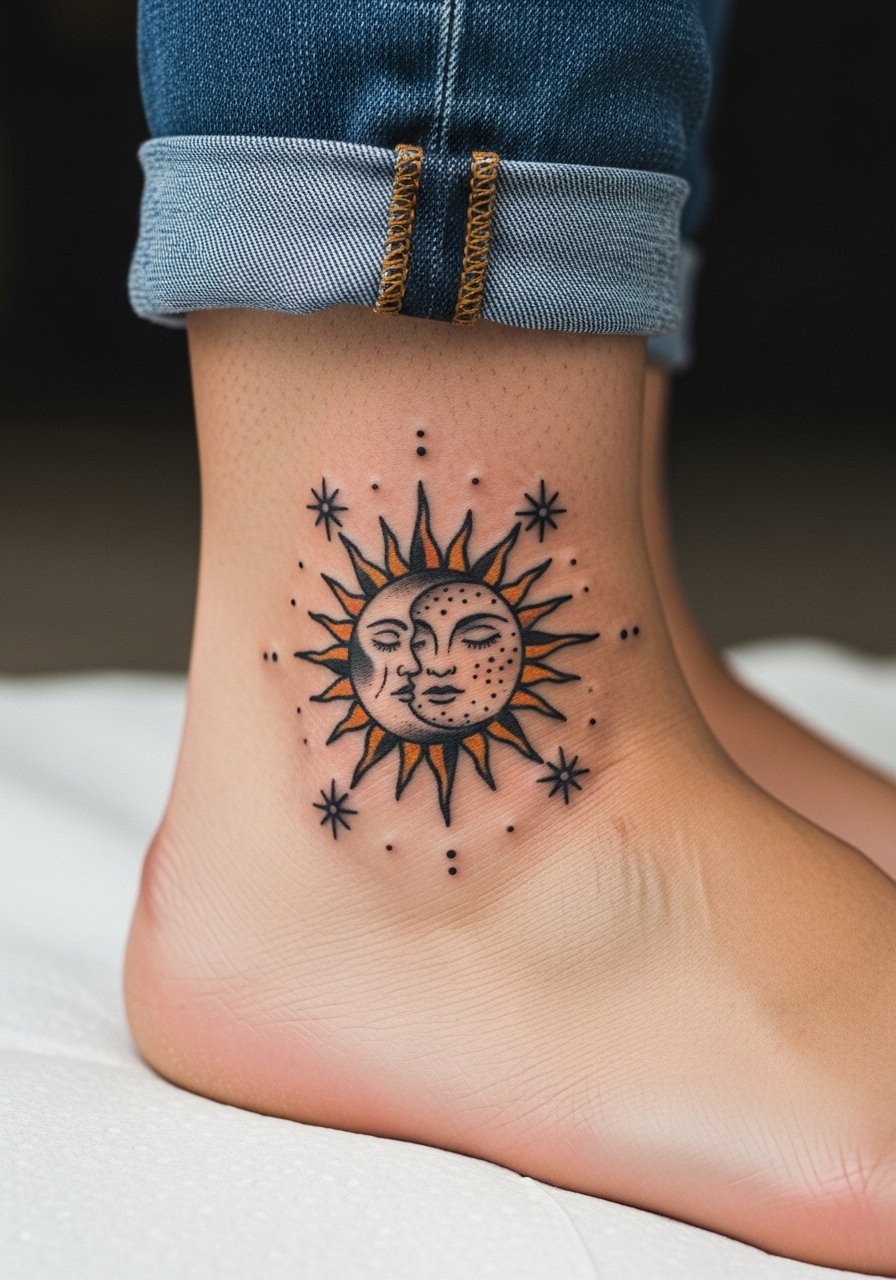
Ankle ink looks playful but it sees boots, socks, and friction that can distort small shapes. For matching sets pick bolder outlines and small color accents rather than full color washes. Pain is moderate because of low padding over bone, and session time is typically under 45 minutes. For summer reveal style this with cuffed boyfriend jeans or a midi skirt flowy so the ankle shows without rubbing. A common mistake is placing too-small details at the ankle which stretch with weight changes and look oval later.
6. Fine Line Celestial Sun and Moon with Clouds on Inner Thigh
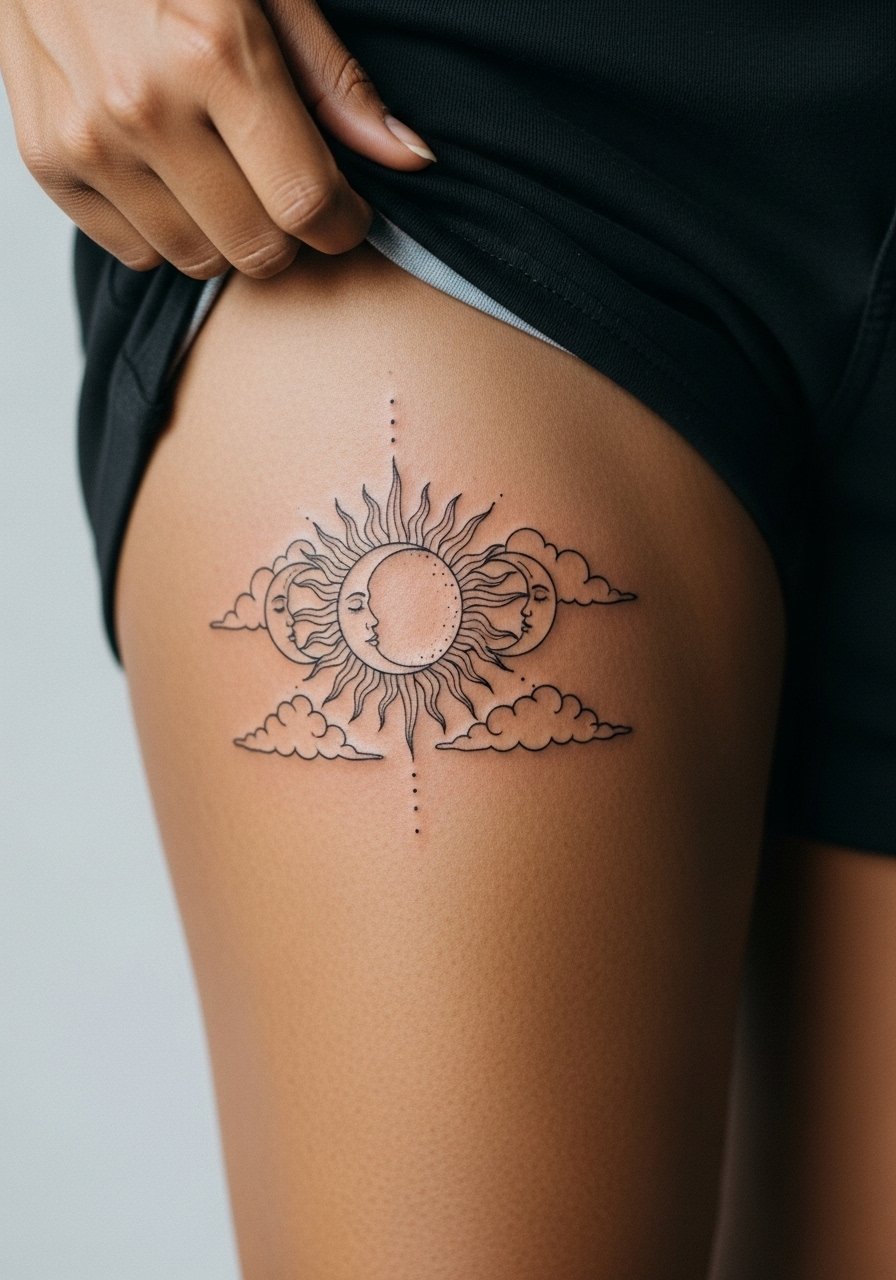
Inner thigh tattoos can stay crisp because the skin there moves less in daily life, but they are intimate and require careful session positioning. Pain is moderate to high depending on proximity to muscle and nerve, and sessions run under an hour for minis. For the appointment wear loose shorts or a skirt you can shift, and for showing off pick high-waisted shorts or an A-line skirt. A real advantage is longevity; fine line here fades less than a wrist equivalent. A common error is tight, crowded shading next to the lines which can create a muddy look as the piece heals.
7. Ornamental Mandala Sun and Moon on Shoulder Blade
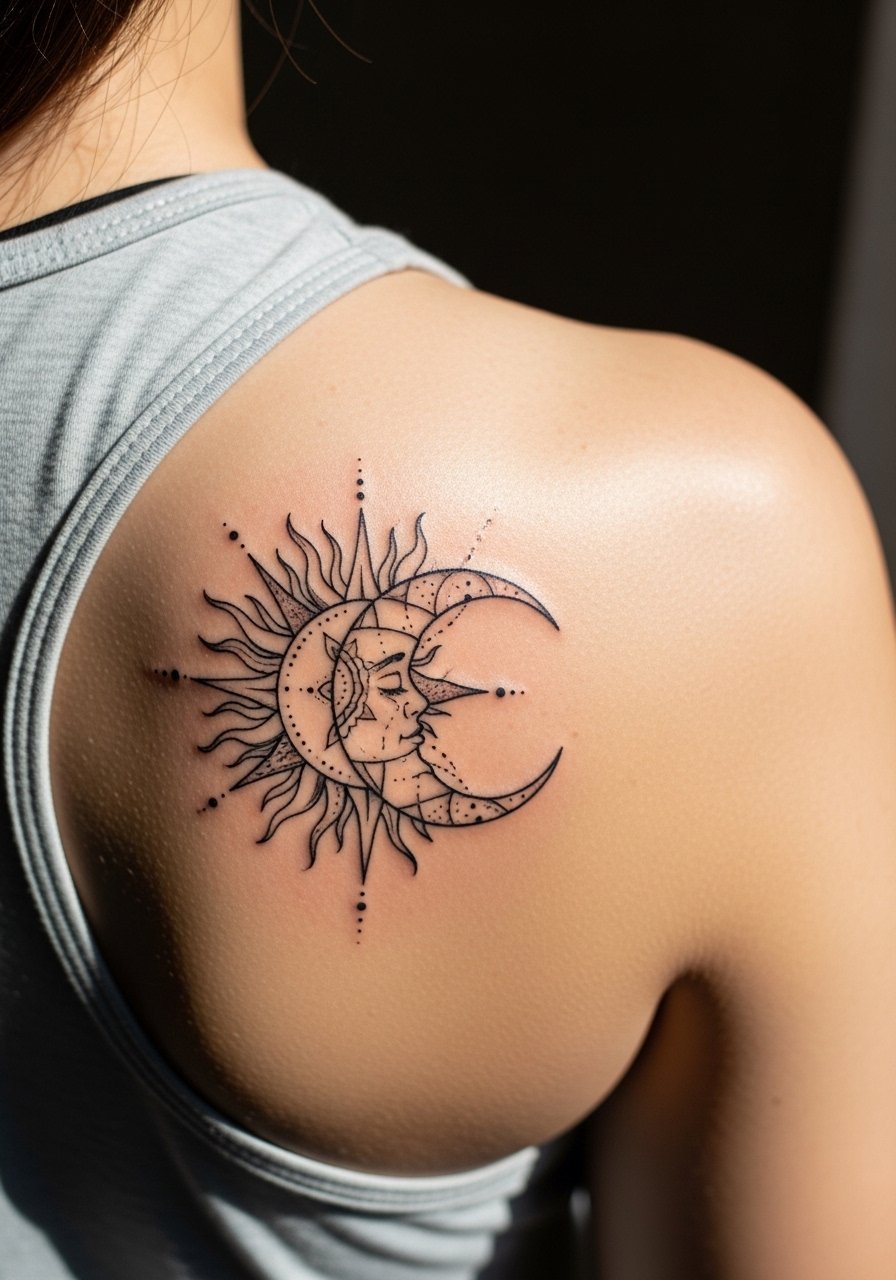
The shoulder blade handles symmetry well and the flat surface suits mandala patterns that need spacing. Pain is low and the session is comfortable while lying face down. Bring references that show negative space so the artist can plan for aging. For the session wear a racerback tank neutral that you can remove or shift without exposing more skin than necessary. A common mistake is over-detailing the center in a tiny format which clumps over time. If the pattern draws from a specific cultural origin consider a respectful variation rather than a direct replica.
8. Ignorant Style Bold Sun and Moon on Outer Forearm
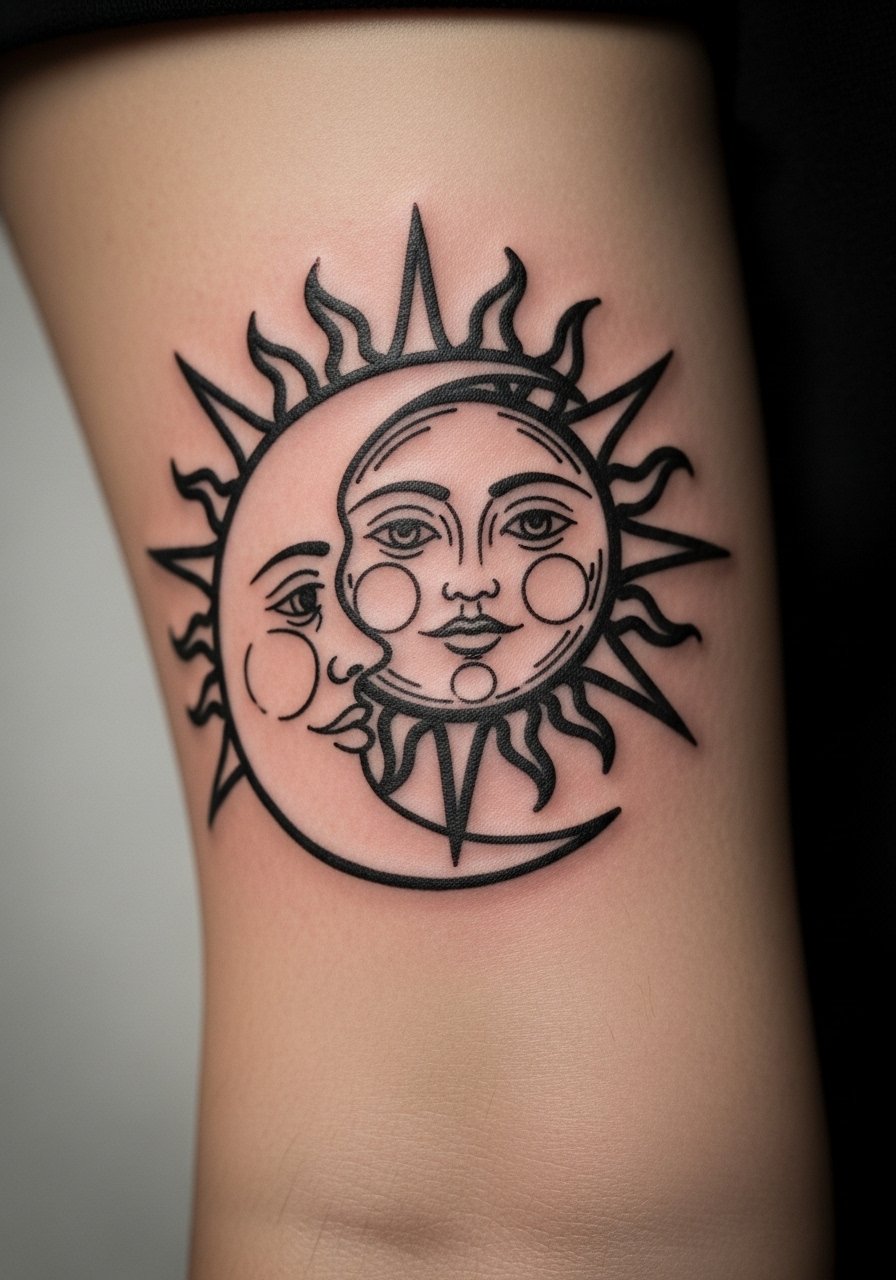
Ignorant style embraces bold, imperfect lines and raw energy. Because the approach tolerates rough edges, it ages into a deliberate, lived-in look rather than softening into an unrecognizable blur. The session is fast and tolerable, usually under an hour. Tell your artist you want confident, uneven strokes that avoid delicate single-needle work. For showing off, roll sleeves of a long sleeve fitted tee or wear short sleeves so the strong shapes read from a distance. The main mistake I see is asking for ignorant style then immediately requesting micro precision, which defeats the aesthetic.
9. Micro-Realism Phased Moon Set Along the Ribcage
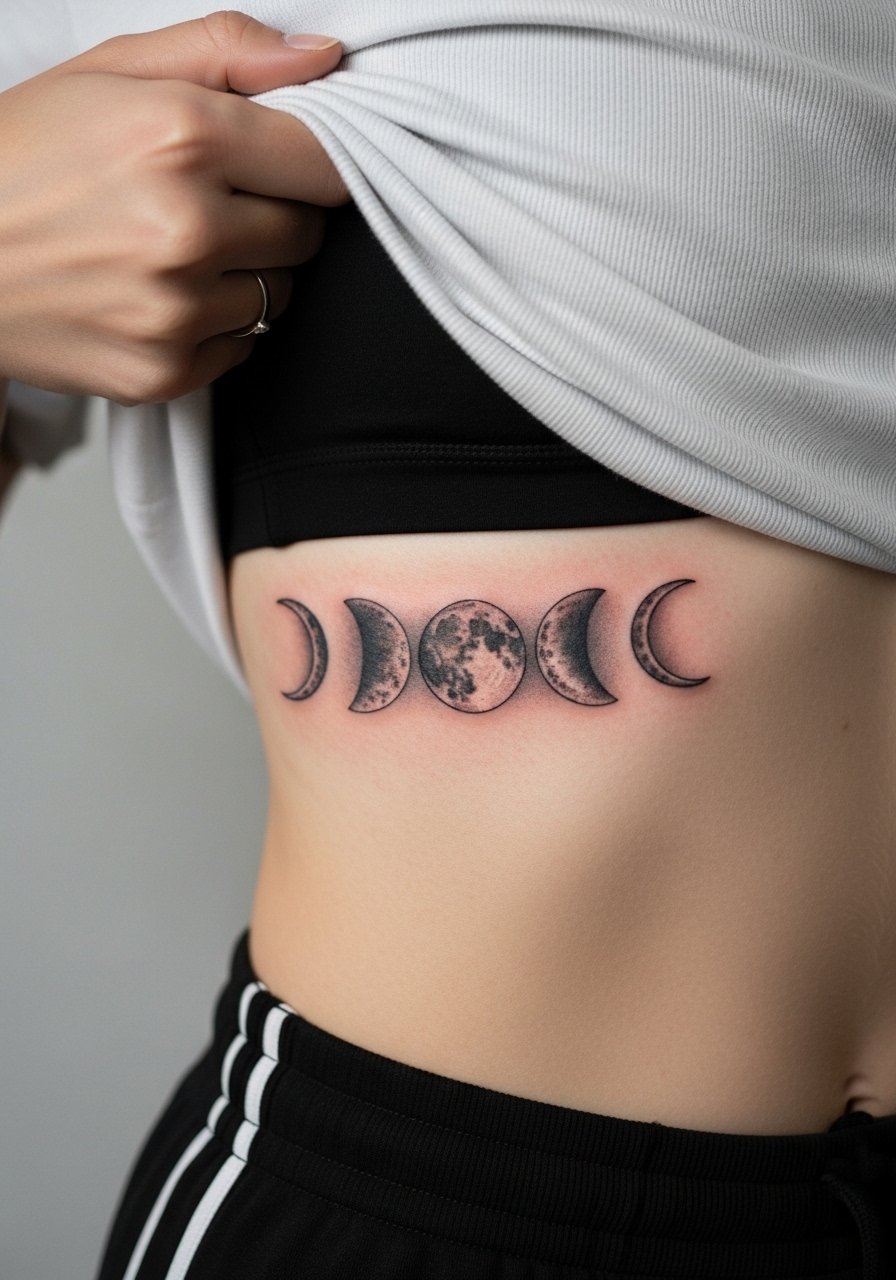
Ribcage pieces are high on the pain chart and require breath control during the session. If you want moon phases as a micro-realism set, expect two sessions for shading and depth. Fine details can blur on the ribs if placed too dense, so prioritize contrast and spacing at the consultation. Artists disagree on fine line here. One camp says the skin stretch and movement make delicate lines fail; the other says with correct depth and spacing the lines can hold. Ask where your artist stands. Sessions for this area are longer and require scheduling recovery time.
10. Traditional American Sun and Moon on Calf
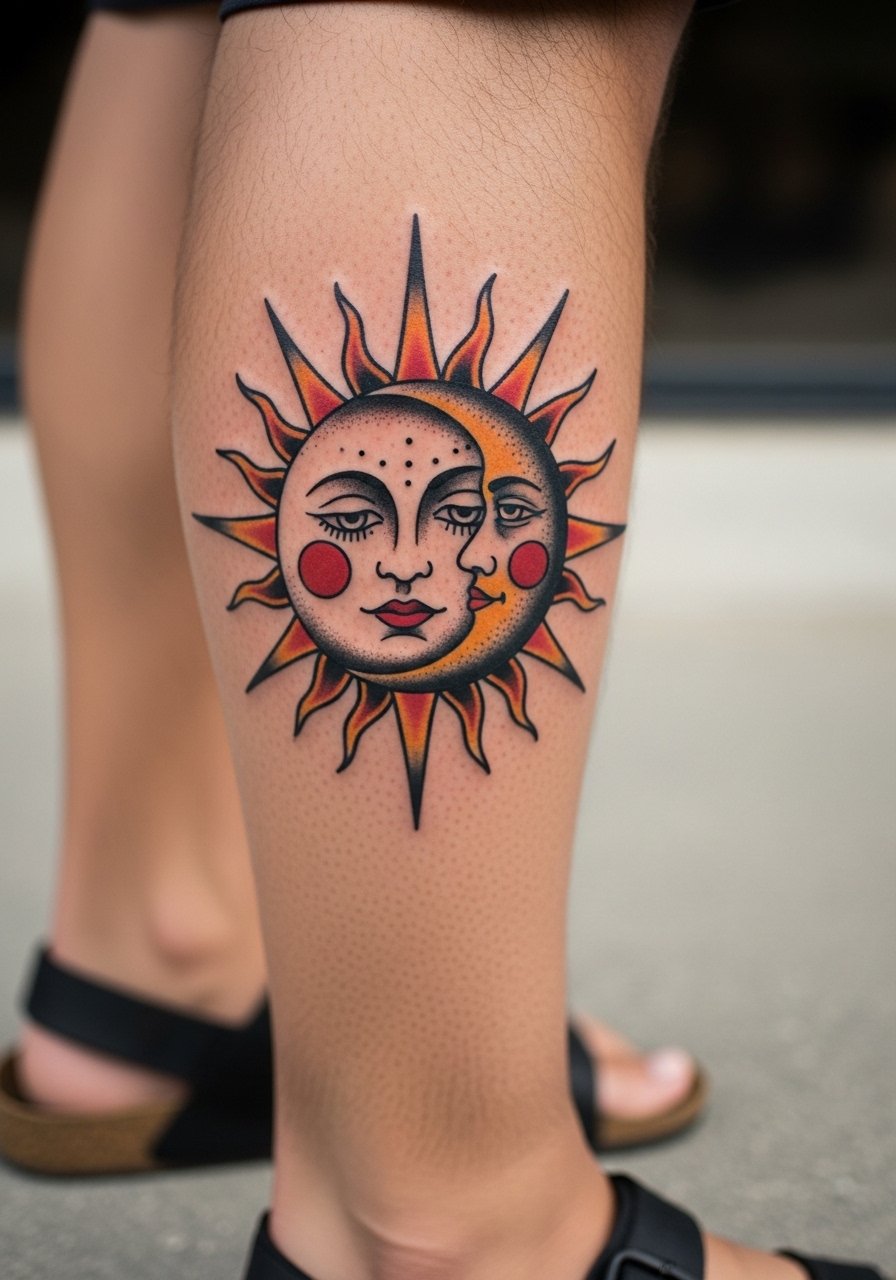
Calf pieces tolerate saturation and bold outlines which is why traditional styles last. The skin here has good muscle padding and the area heals predictably. Session pain is low to moderate and a single visit usually completes a mini. For summer showing pair with rolled bootcut jeans or shorts. A frequent mistake is overcomplicating the composition in a small calf tattoo; keep the shapes simple so color and outline settle cleanly.
11. Black and Gray Realism Sun Eclipse on Upper Arm
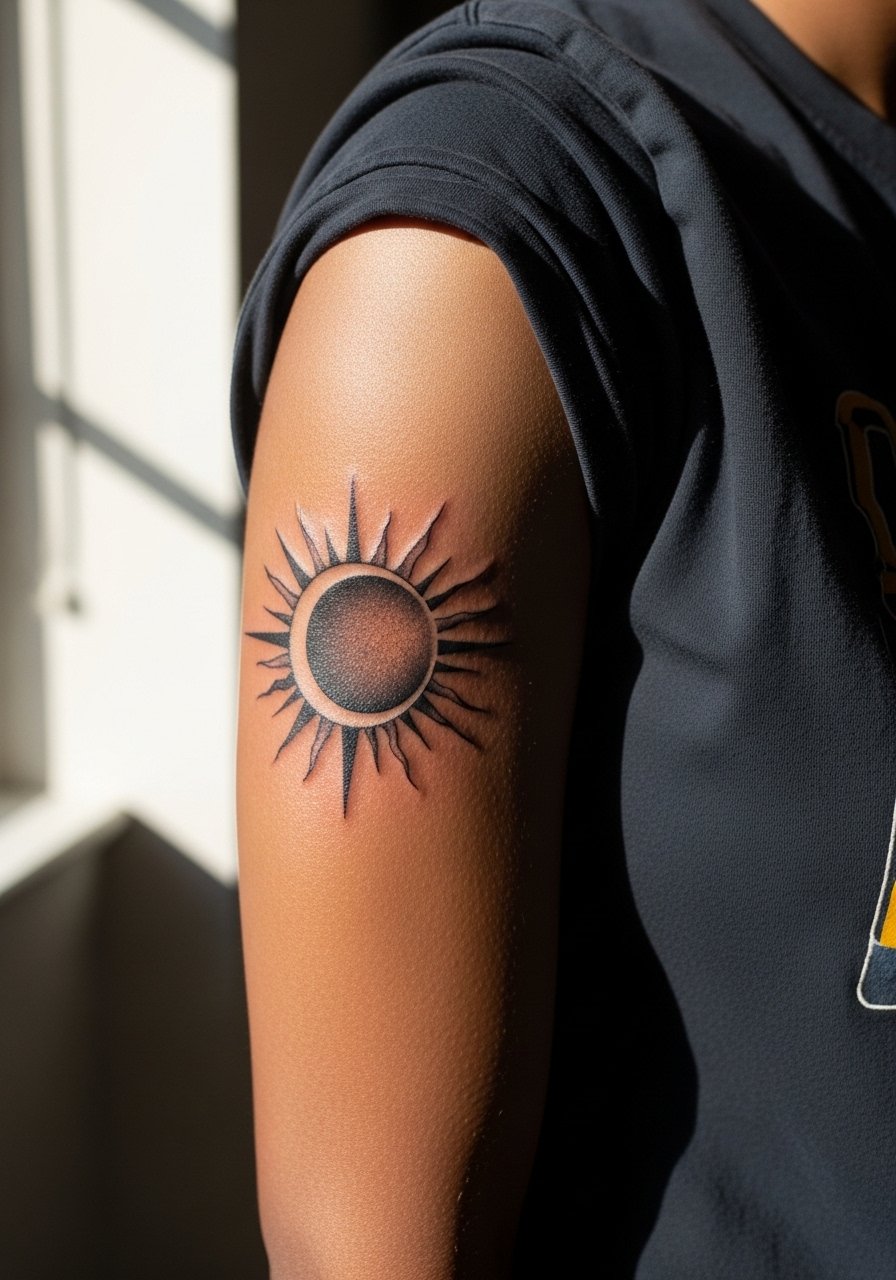
Realism with deep shading needs saturation to read on darker skin tones, and bold key lines help the contrast. The upper arm has forgiving skin for shading, so expect two sessions if you want depth. Discuss saturation expectations with the artist and request healed examples on similar skin tones. The session is moderate pain and can be comfortable with breaks. A common error is asking for tiny photoreal elements in a 2-inch piece which then lose detail as the ink settles.
12. Minimalist Outline Sun and Moon Yin-Style on Nape
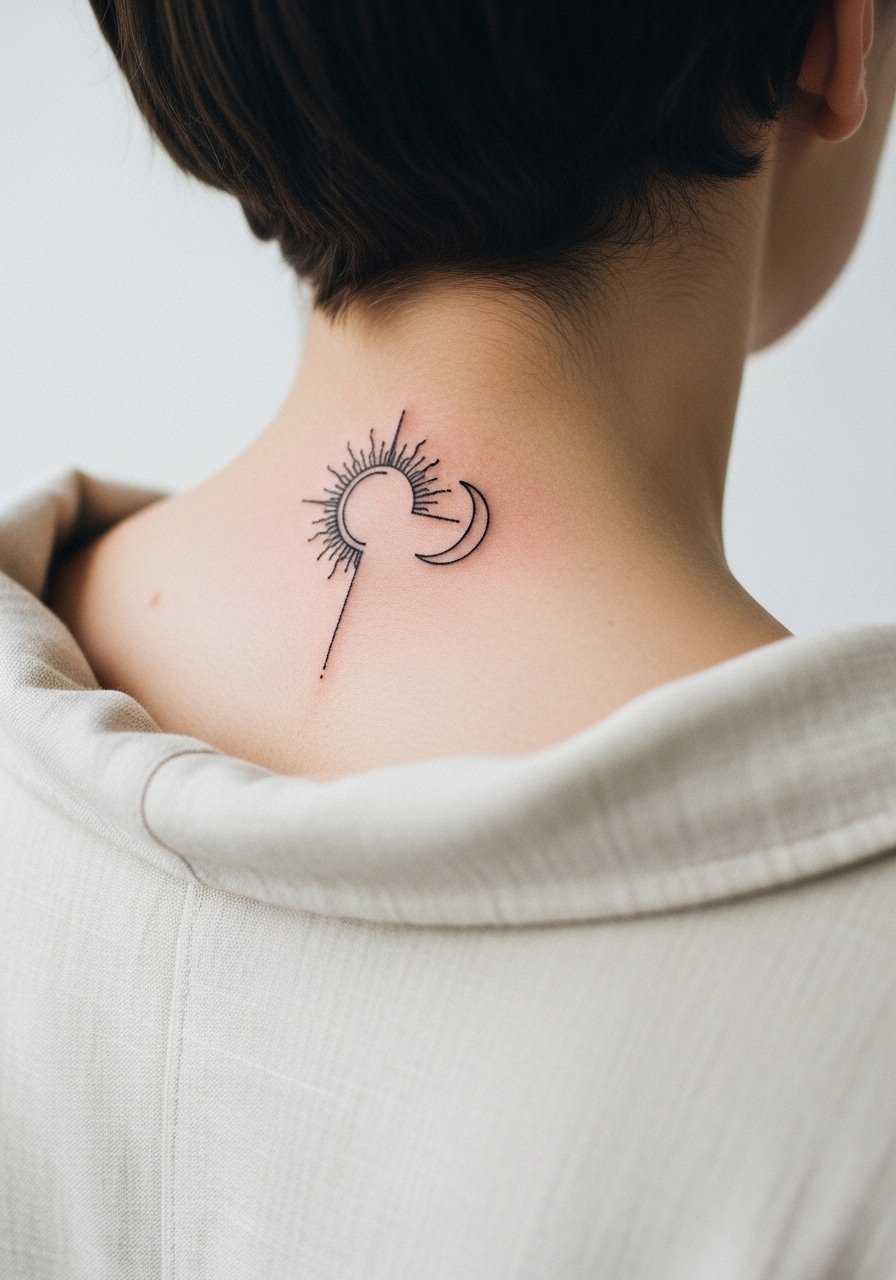
Nape pieces are visible when hair is up and can be hidden otherwise. The area can stretch with hair growth and movement, so ask for a slightly thicker outline than your online reference suggests. Sessions are short and pain is low to moderate. For the session have your hair up and wear a high ponytail holder so the artist has clean access. An error I see often is choosing a super fine single-line neck piece thinking it will stay crisp without considering touch-ups.
13. Watercolor Sun and Moon Matching on Hands
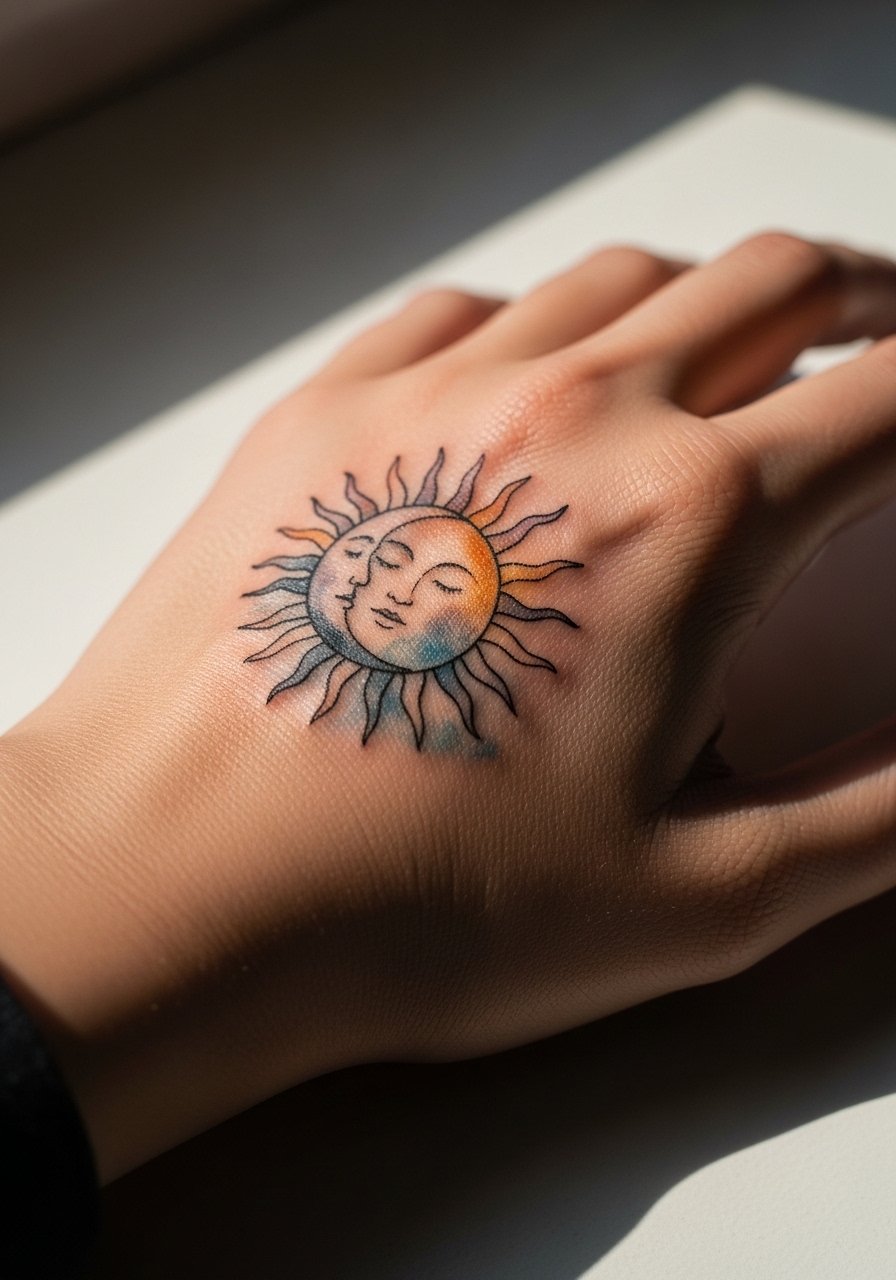
Hands are high-risk for fading and blur because of washing, friction, and sun exposure. Watercolor on hands looks great fresh but tends to need touch-ups more frequently than blackwork. If you choose watercolor, ask for protective bold outlines or a nearby anchor dot so the form remains recognizable. Sessions are short but expect mild to sharp pain. Consider how the pieces will interact with job requirements. A common regret is picking vibrant washes without planning touch-ups and sun protection.
14. Fine Line Celestial Chain on Finger Side
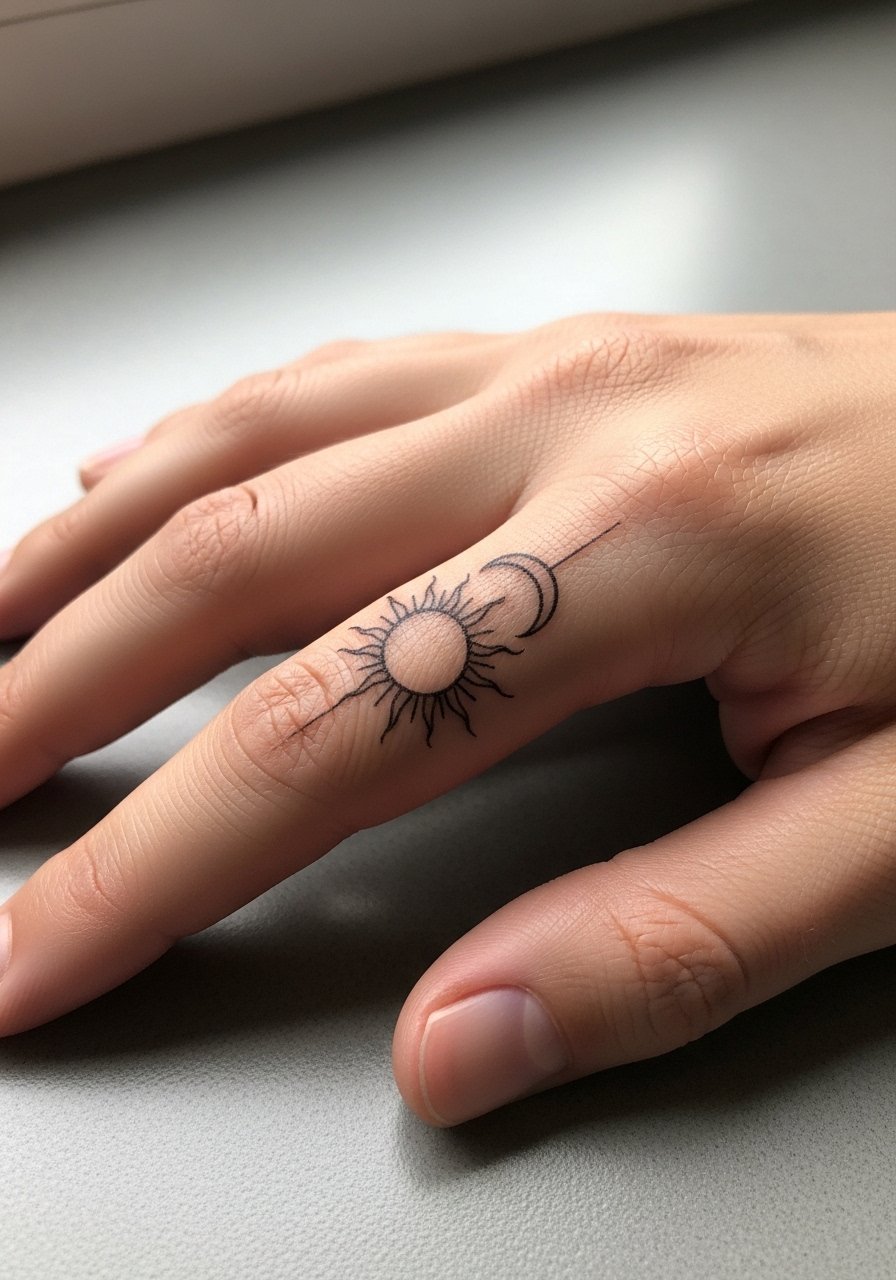
Finger placements read like ring alternatives but age differently because skin on the fingers moves and sheds. Expect rapid fading and the potential need for frequent touch-ups. Keep designs extremely simple, and ask the artist for a slightly bolder contour so the silhouette survives. The session is quick and the pain is surprisingly sharp for such a small area. A common mistake is requesting detailed shading on the finger which gets lost as the ink spreads.
15. Ornamental Sun and Moon on Shoulder Cap
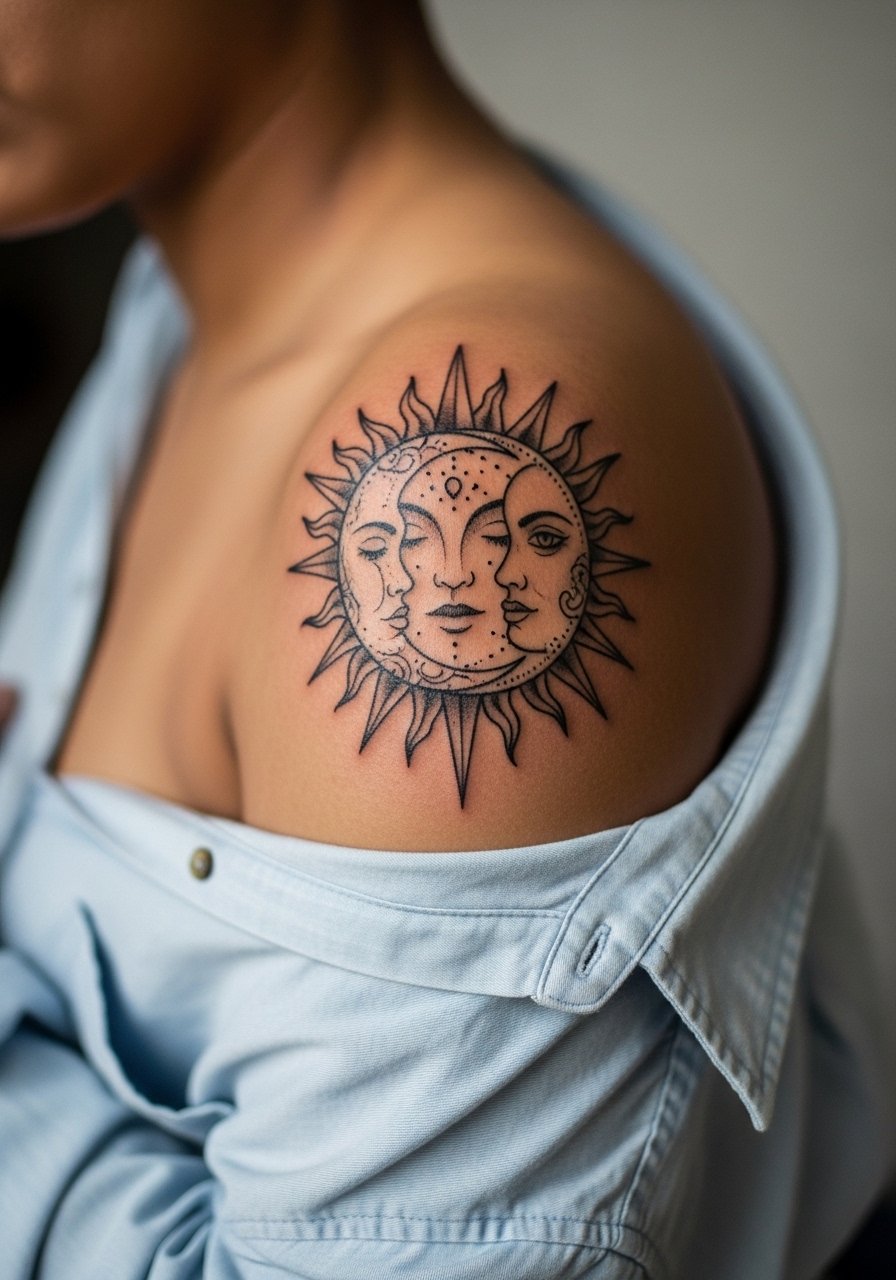
The shoulder cap is visible and holds detail but needs breathing room for dense ornamentation. For matching pieces across bodies, agree on scale so the symmetry reads. Sessions are comfortable and usually under an hour. For the appointment wear a loose button-down shirt you can shift without exposing more than necessary. Mistakes include cramming too many tiny flourishes into a compact area which blur over time.
16. Reverse Color Sun and Moon for Gender-Neutral Sets on Inner Bicep
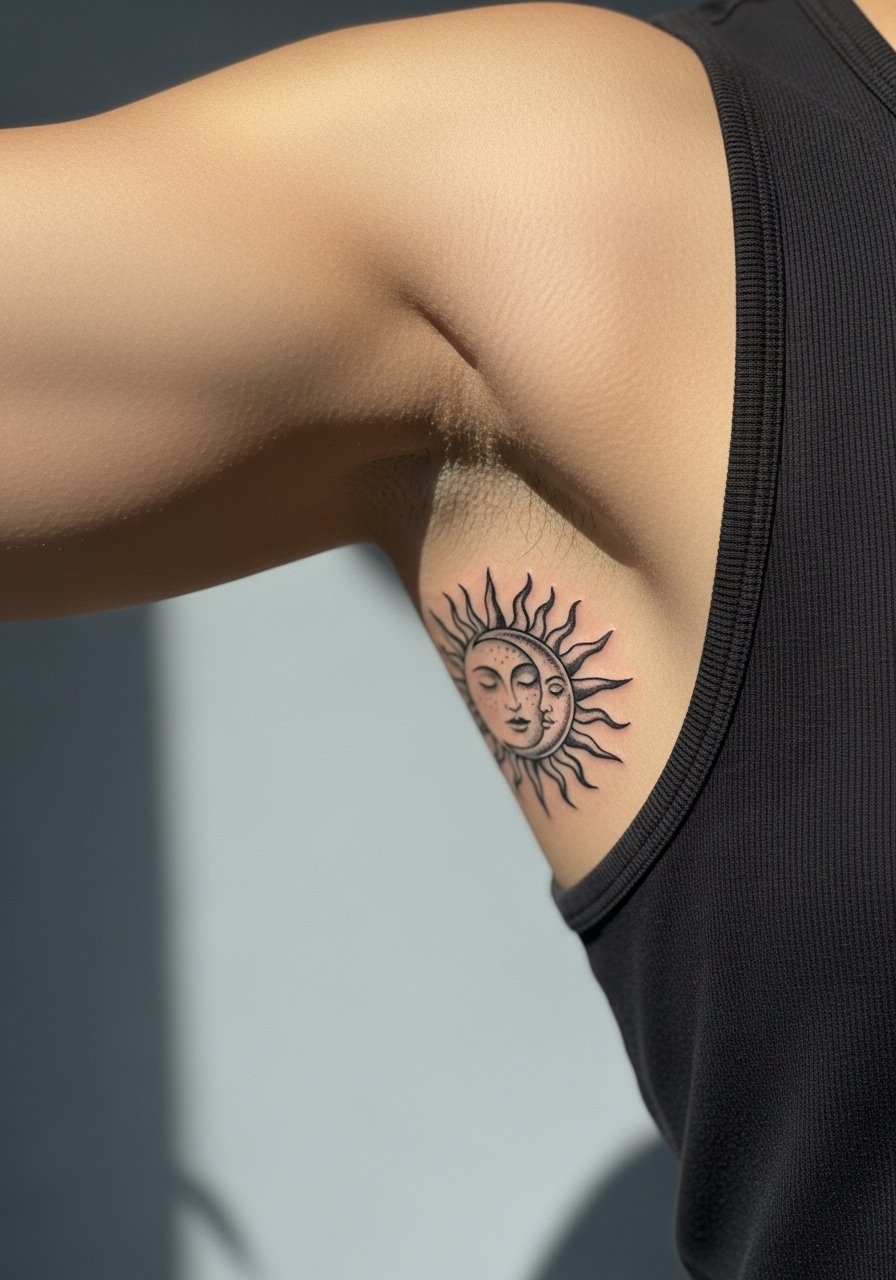
Flipping the traditional color relationship gives matching sets a gender-neutral feel. The inner bicep is gentle on fresh ink and keeps contrast longer than wrists. Sessions are moderate and the area tolerates dot work and stipple shading well. Ask for a mock-up showing the reverse color balance before booking. For the session wear a loose tank top so the artist can access the area. A practical error is reversing tones without checking how the colors read on each partner's skin tone.
17. Hidden Initials in Moon Shading for Close-Up Secrets on the Hip
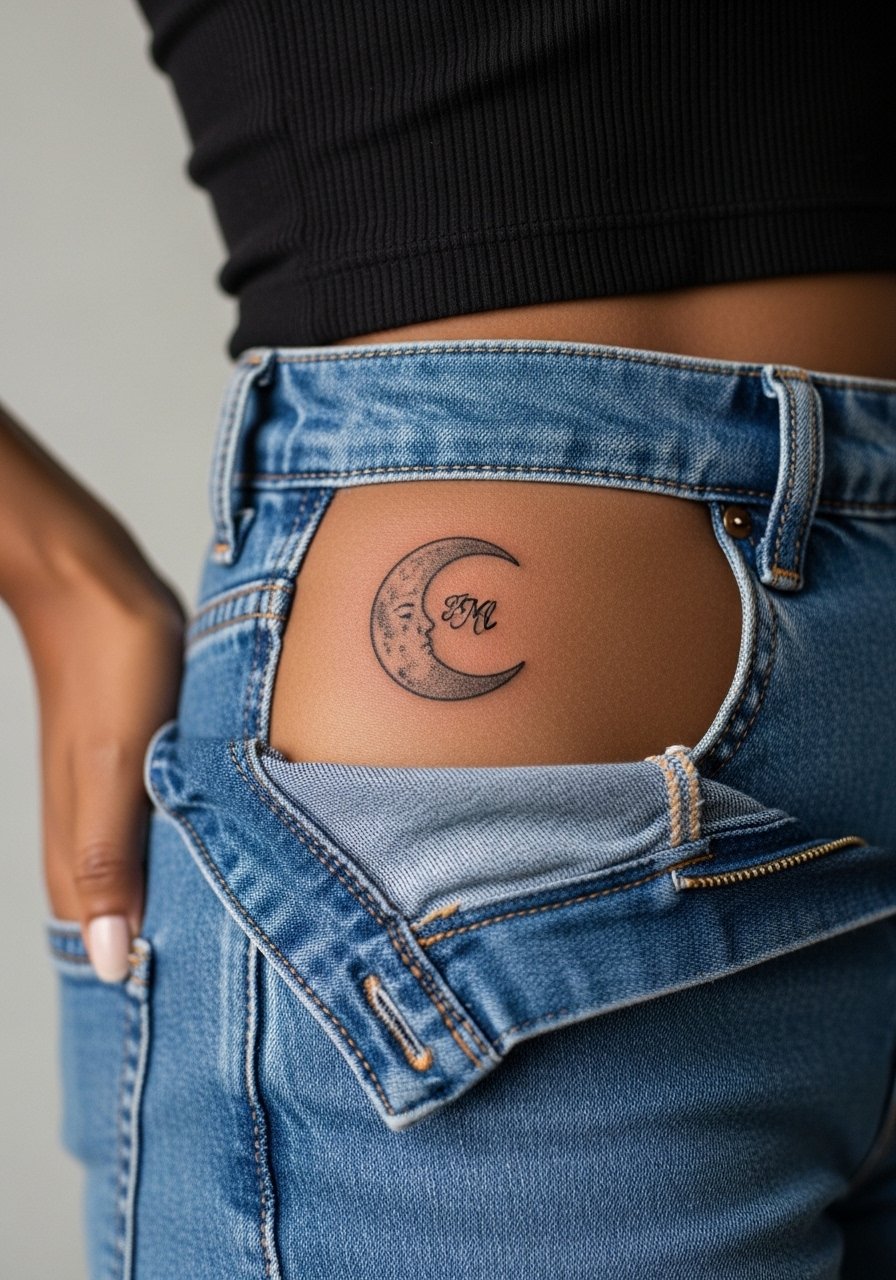
Embedding tiny initials into the moon's shading is a clever way to tuck private meaning into a matching set. The hip gives privacy and protection from daily abrasion but shifts with weight changes, so plan placement away from waistlines. Sessions are short and pain is low to moderate. For the appointment wear high-cut shorts or a swimsuit bottom that you can adjust without strain. A common mistake is hiding letters too small to read; make them legible at close range without crowding the moon's texture.
Studio Day Picks
Those first six ideas include wrists, forearms, collarbones, ears, ankles, and inner thigh, so these items smooth session prep and the first week of healing.
-
CeraVe Healing Ointment. A non-comedogenic option users on sensitive areas often switch to for face and neck placements, it helps keep small linework from looking shiny while reducing pore clogging.
-
Australian Gold SPF 30 Tattoo Balm. Lightweight sun protection that is handy for wrists and forearms during the first month of sun avoidance and for long-term color retention.
-
Green Sheep Balm. A natural ingredient balm that many choose for ankles and thighs in the initial three days because it soothes without heavy residue.
-
Hada Labo Lotion. A lightweight hydrating lotion that people use for fine line pieces to add moisture without occluding the needle channels.
-
Hustle Butter Deluxe. Thinner than heavier ointments and favored by some artists for fine line wrist work because it breathes while keeping the area supple during early healing.
Frequently Asked Questions
Q: Will a fine line sun and moon on my wrist need a touch-up faster than one on my forearm?
A: Yes, wrists tend to fade faster because of friction, frequent washing, and thin skin. I usually tell people to budget for a touch-up around six to twelve months for wrist minis, while forearm touch-ups often sit later at year two or beyond.
Q: If I want watercolor colors to stay, should I pick blackwork instead?
A: Color can look amazing but it requires commitment to touch-ups and sun protection. Many people choose bold outlines around watercolor fills or pick blackwork if they want lower maintenance. It depends on how often you want to manage aftercare and the placement you choose.
Q: Are there visible differences in how these designs heal on darker skin tones?
A: Yes, saturation and contrast matter more on darker skin tones. Request healed photos from the artist of similar skin so you can set realistic expectations. Bold outlines and higher contrast shading usually read better in photos and in person.
Q: Which placements are most likely to stretch or distort with weight change or pregnancy?
A: Areas like the ankle, hip, and lower abdomen can change with weight fluctuations. Inner thigh and ribcage also shift. If you expect body changes, opt for placements with less stretching or accept that touch-ups may be needed later.
Q: How do I find an artist who understands tiny script or hidden initials inside shading?
A: Search hashtags like #finelinesunmoon and local guest spot listings, and check healed work on bodies similar to yours. Use platforms that confirm bookings so you avoid deposit ghosting, and ask to see recent healed close-ups of micro work during consultation.