
Fine line ghost face motifs are everywhere on mood boards, and the challenge is the same every time. What looks razor-thin on a phone screen can blur into a fuzzy smudge if placement, spacing, and aftercare are not planned from the start. These ideas lean into minimalism that lasts, with concrete consultation notes and outfit-friendly ways to show them off.
1. Single-Line Ghost Face on the Inner Wrist

I often point people to the inner wrist when they want a tiny, personal ghost face that can peek out from sleeves. Tell your artist you want a confident single pass of linework and deliberate negative space around the eyes so the face does not read as a blot after a few years. The wrist is a low to moderate pain area and heals quickly, but avoid requesting the design too small. A common mistake is shrinking the face to a dot which invites blowout. Expect a touch-up at year two to keep the fine line crisp. Pair this with a thin chain bracelet when you want the tattoo to peek without competing with larger wrist accessories.
2. Mini Ghost Face Tucked Behind the Ear
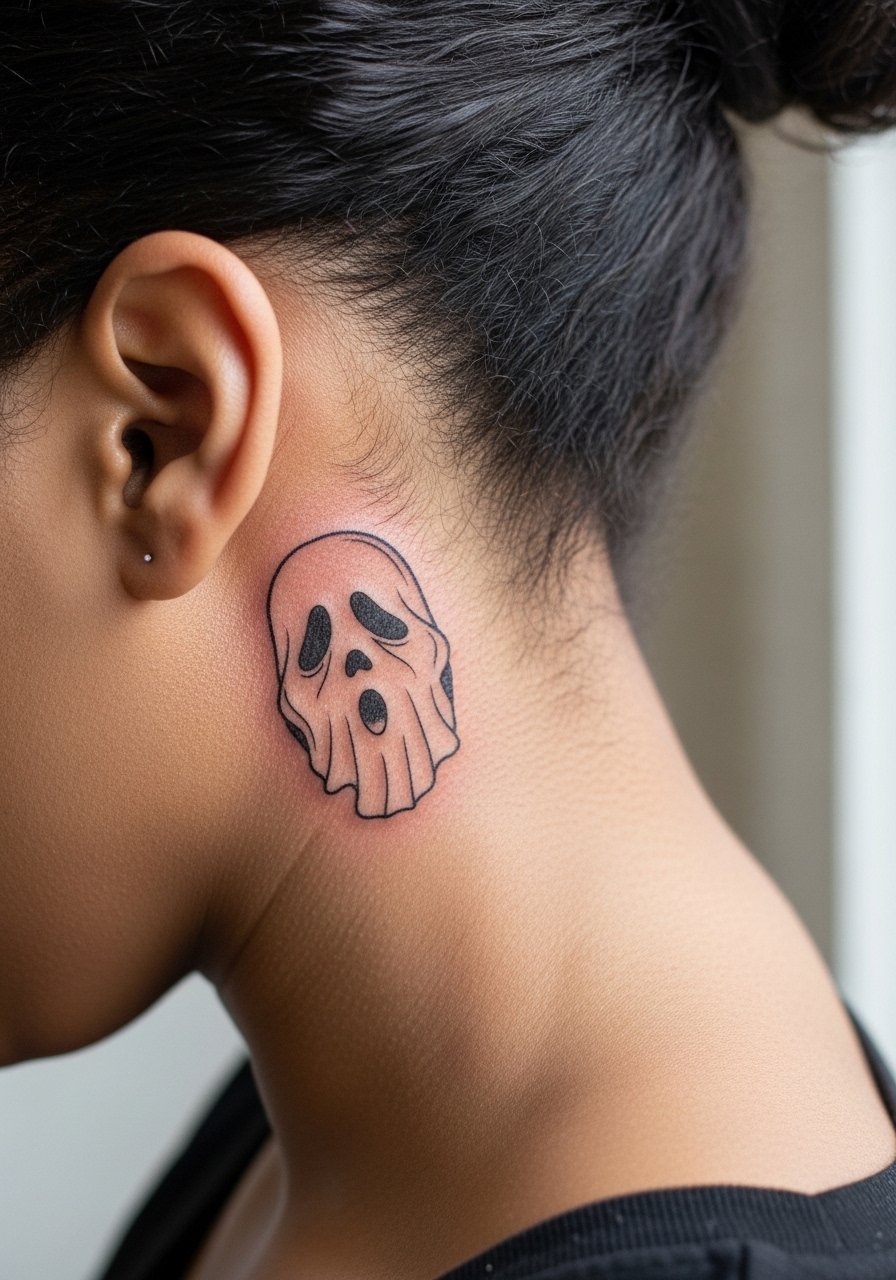
This placement suits someone who wants a private detail that shows up with an updo. The area is thin skinned, so tell your artist you prefer a shallow but steady needle depth and a slightly bolder single contour so the lines do not disappear. Sessions feel quick but sharp, and touch-ups are common because movement and hair oils affect healing. If you plan to wear hair down most days, this stays mostly private. For the appointment, bring a hair clip that keeps the section tidy, and consider a small metal hair claw to help the artist access the spot.
3. Ghost Face at the Collarbone, Minimal Curve
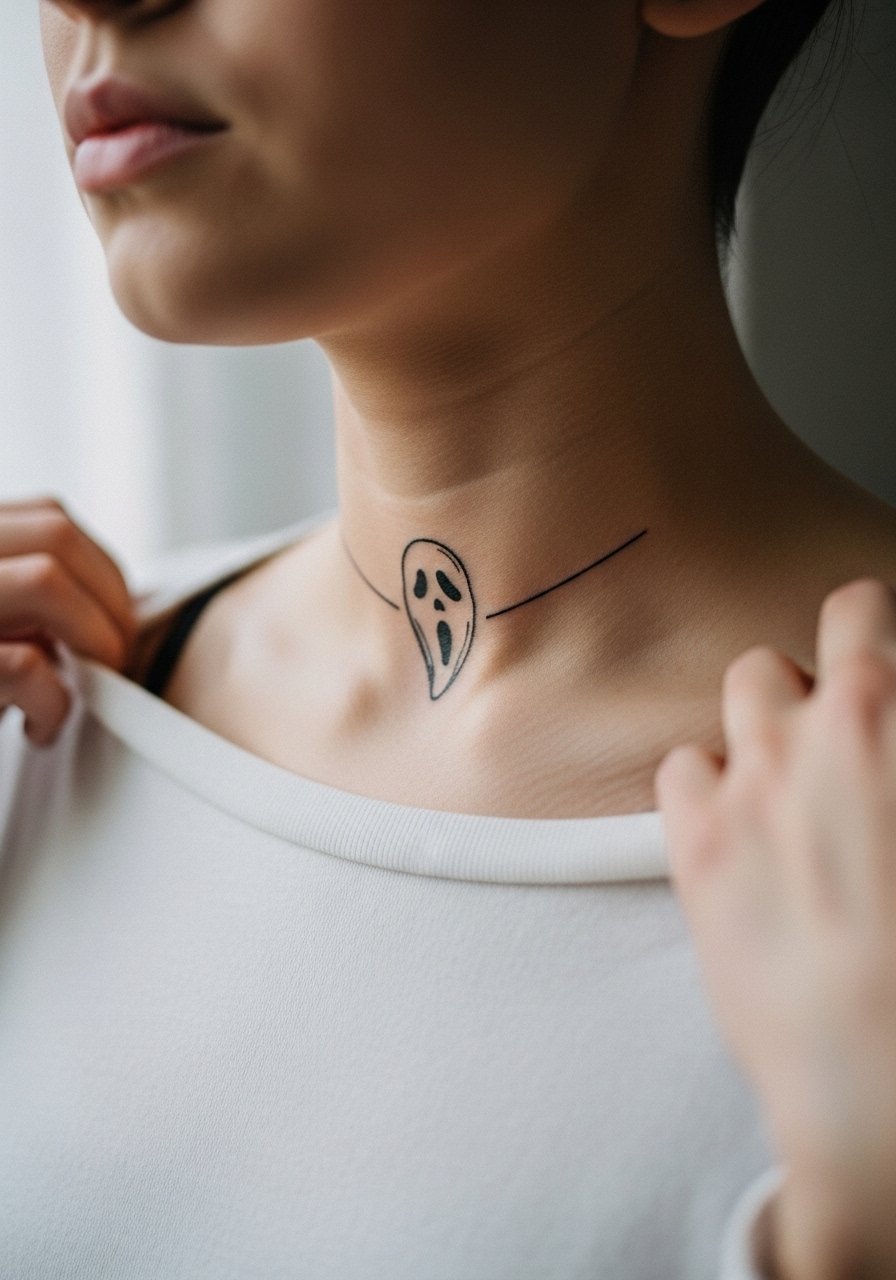
A collarbone ghost face reads elegant when placed to follow the bone line rather than sitting directly on it. In consultation, ask for a slight arc so the face tilts with shoulder movement. The area is sensitive and may sting, but the session is short. Aging on the collarbone is forgiving if the line weight is balanced; thin, hairlike lines tend to fade into faint gray sooner. Wear a thin chain pendant necklace to frame the piece without covering it. Mention during booking that you want upward breathing space around the eyes to avoid the "closed-in" look as the ink settles.
4. Continuous Flow Ghost Face Along the Inner Forearm
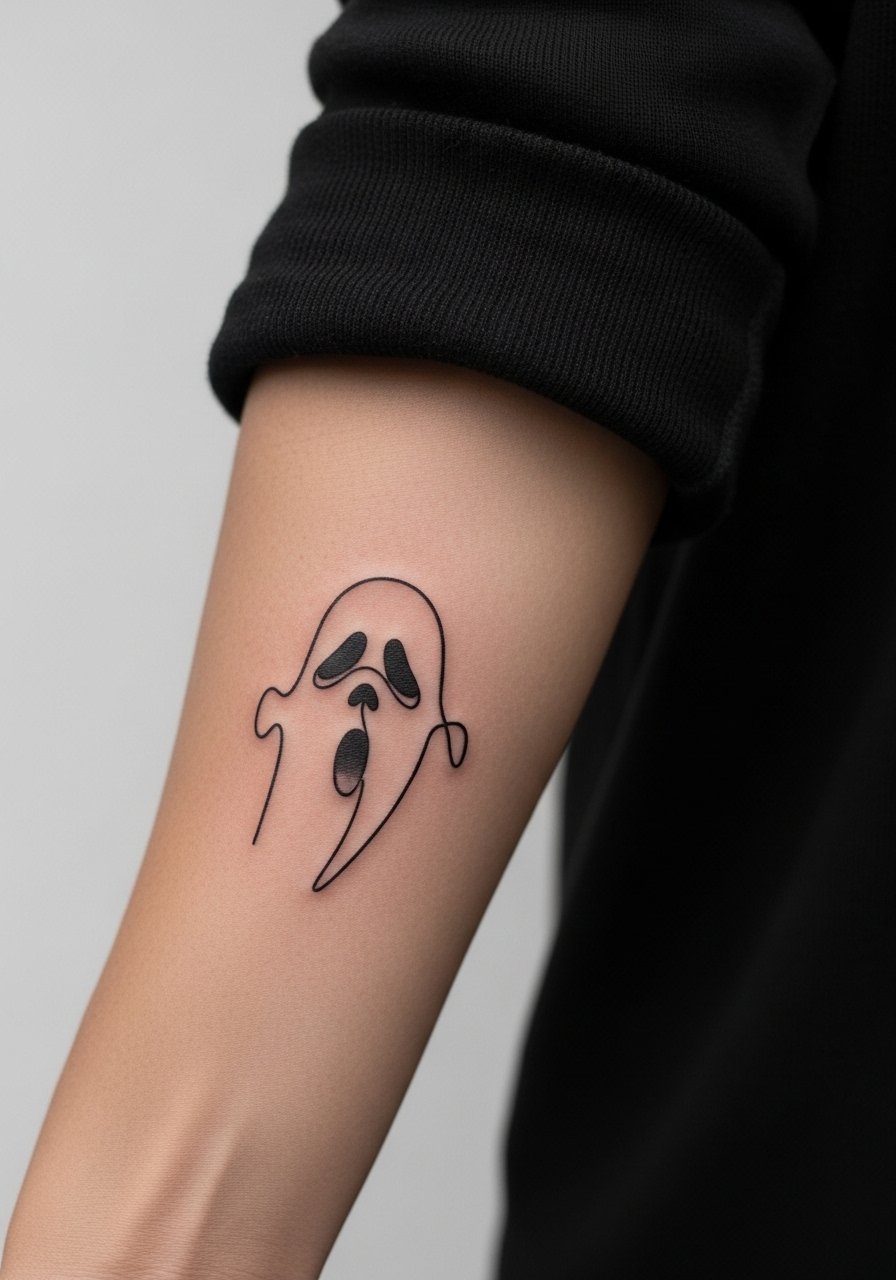
There is a satisfying visual rhythm when a ghost face is drawn as one flowing line along the inner forearm. I recommend this for people who like an obvious yet understated piece. Ask for the line to be bold enough to survive frequent sun exposure. The forearm tolerates finer work well, but expect a touch-up at year three in many cases. A common error is cramming too many facial details into a narrow band which ages poorly. For casual show-off, roll sleeves or wear a loose linen shirt with sleeves rolled so the tattoo sits cleanly on exposed skin without friction from cuffs.
5. Tiny Ghost Face on the Side of a Finger
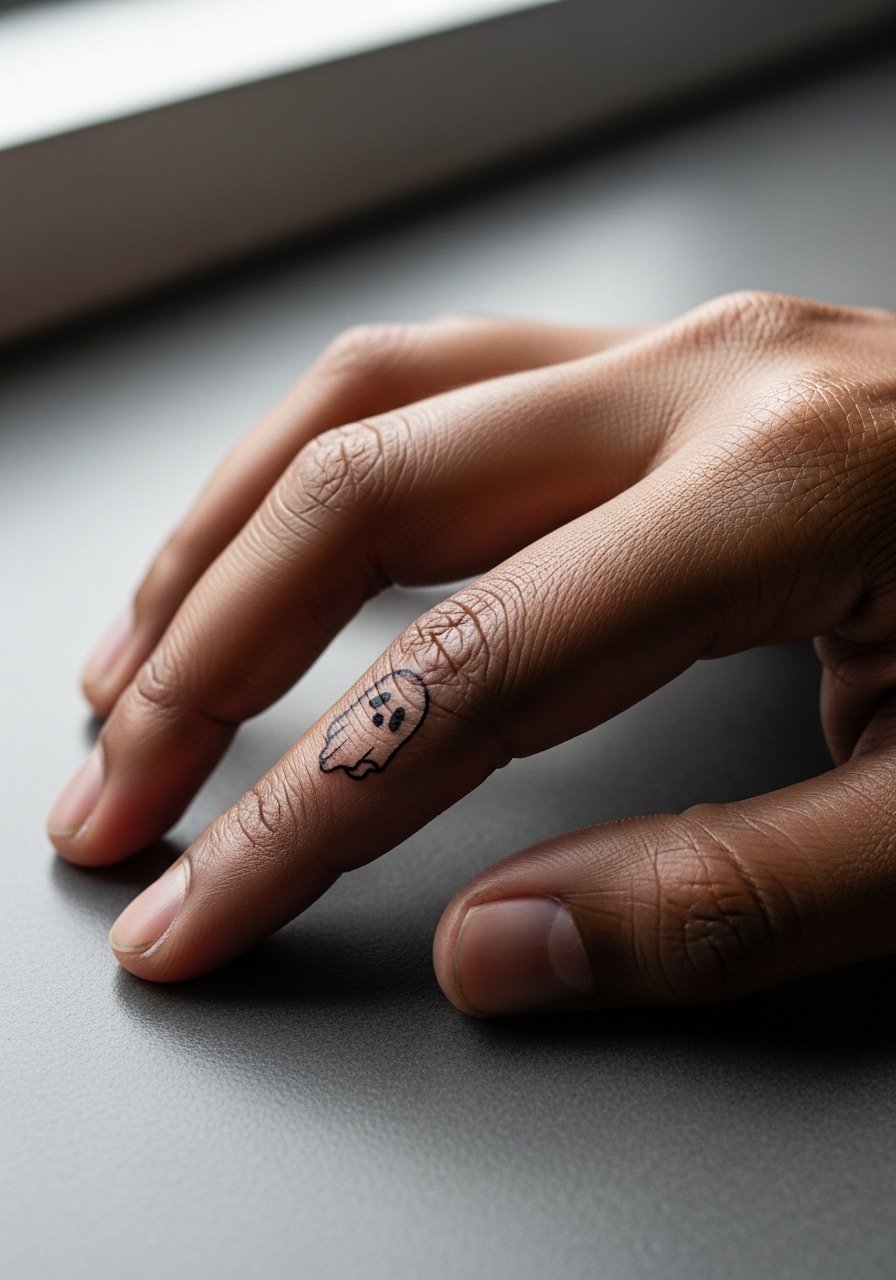
Finger tattoos are high-maintenance. The skin there regenerates quickly and sees constant friction, so plan for touch-ups more often than other placements. The mistake I see most is asking for intricate expression on a postage-stamp canvas. Instead pick a simplified face with one or two key lines. Expect the session to sting and the first week to feel tight. If you want it visible without being flashy, coordinate with slim rings and a dainty stacking ring set that complements the tiny linework. Also consider whether your job tolerates hand ink since visibility can matter in some workplaces.
6. Micro Ghost Face at the Nape of the Neck
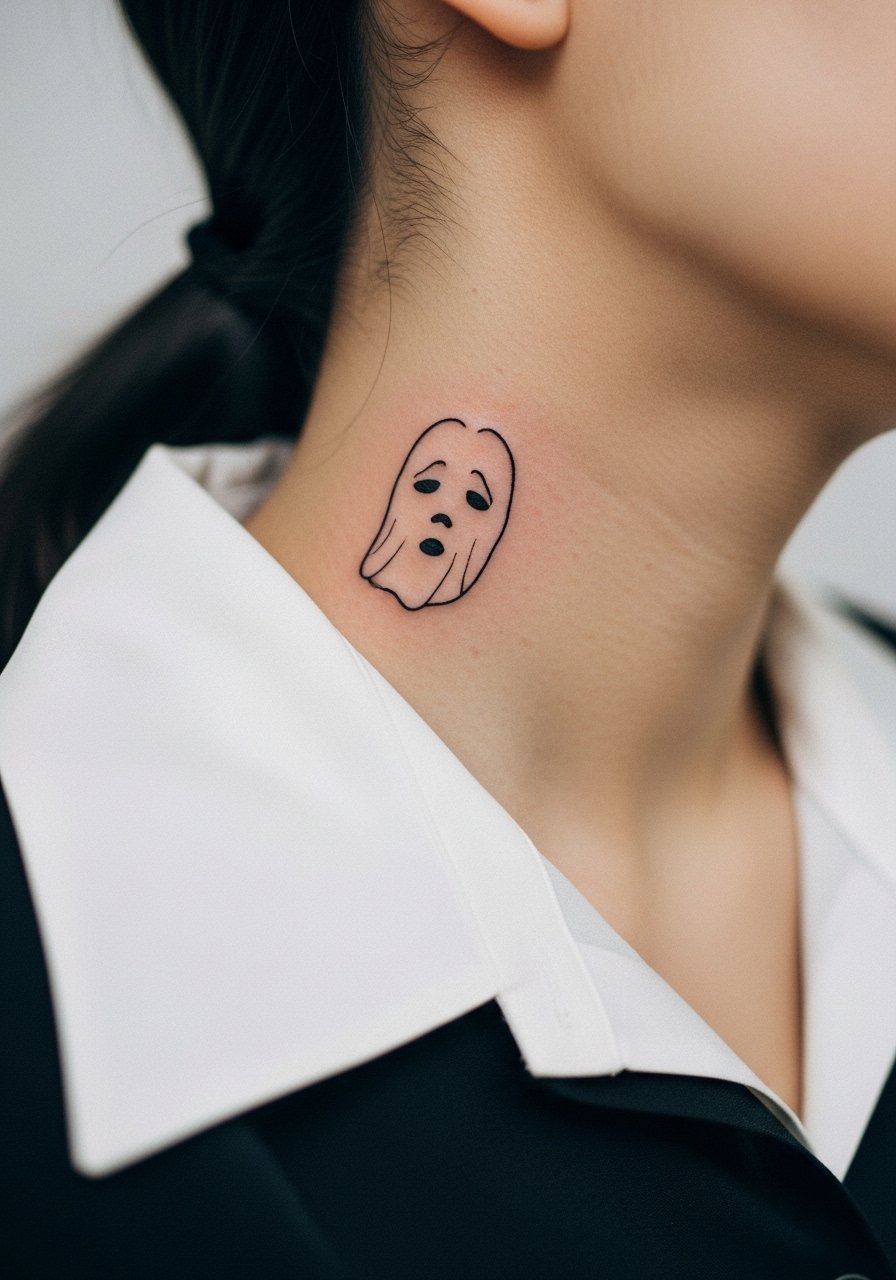
The nape gives a discrete spot that shows up with certain hairstyles. Tell your artist you want clean, short line runs and ask about their experience with low-movement neck skin. Sessions are brief but the area is sensitive and can throb for a couple of days. The biggest misstep is asking for ultra-thin lines with no breathing room, which leads to softening in the first two years. If you plan to expose it, a wide-neck top that can be shifted easily makes the session smoother. When booking, confirm the studio has experience on neck placements and discuss touch-up expectations.
Studio Day Picks
The designs above include several small zones that behave differently under stress, so a compact kit makes booking and the first week easier.
- Stencil transfer paper kit. Lets you preview placement on skin before the needle goes in, helpful for wrist and forearm pieces in ideas 1 through 4.
- Topical numbing cream. Apply per directions before sessions on sensitive spots like the ribcage and inner thigh to reduce sharpness without changing linework.
- Thin protective film roll. Useful for fingers and wrists where friction and washing are constant in the first week.
- Fragrance-free gentle body wash. Cleanses delicate fine line work without irritating the area, which helps lines heal clean.
- Aquaphor healing ointment. A thin layer in the earliest window locks in moisture for fine lines without suffocating the skin.
7. Ribcage Ghost Face in Minimal Lines
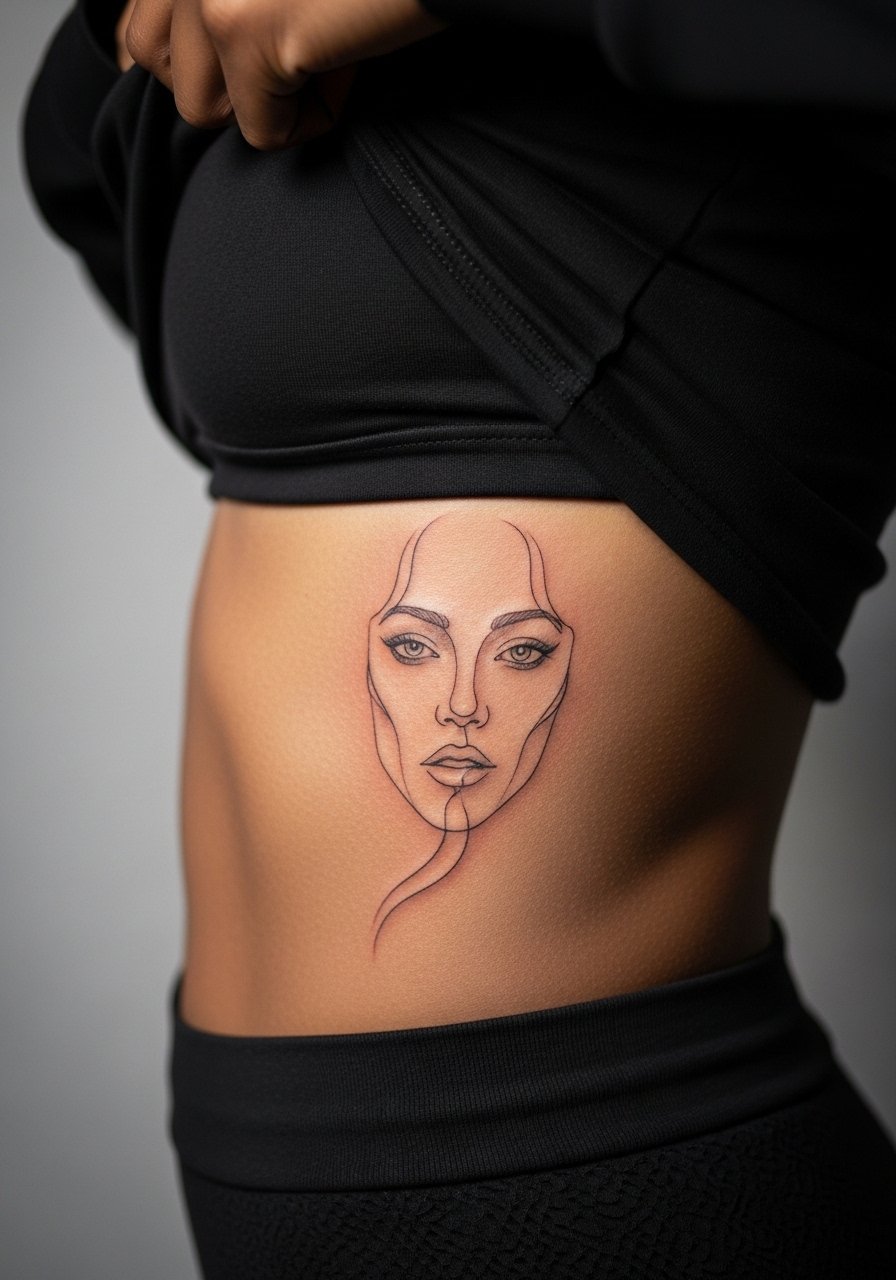
Fine line on the ribs splits artists into two camps. One camp says the stretch and constant motion blur delicate lines within two years. The other camp argues that with proper needle depth and extra spacing, fine line settles fine on ribs. Name both camps explicitly to your artist and ask which approach they take. The area hurts more than limbs and sessions can feel draining. For this placement, wear a cropped top you can easily adjust so the artist has full access. Expect a longer healing window and a likely touch-up at year two.
8. Symmetrical Sternum Ghost Face

Sternum pieces read bold even when the work is minimal. The area is sensitive because of thin skin over bone, so prepare for a tense session. Ask for a design that breathes horizontally so the lines do not crowd as the skin settles. The common mistake is compressing detail close to the center line which can create a smudge effect as swelling recedes. Healing takes a full few weeks where you will feel tightness when bending. For booking, make sure the studio has experience with sternum placements and discuss realistic touch-up expectations.
9. Ankle Loop Ghost Face

Ankle tattoos sit in a high-friction zone with shoes and socks rubbing daily. I recommend slightly thicker contour lines for longevity. During consultation, say you prefer a single confident outline rather than inner texture, because thin interior strokes vanish faster here. The session feels tolerable but expect soreness when walking for the first few days. For showing it off, pick shoes or sandals that leave the area visible and a simple strappy sandal that frames the tattoo without covering it. Plan on a touch-up in years two to four depending on wear.
10. Outer Bicep Ghost Face in Minimal Contour

The outer bicep is forgiving for fine line because the skin stretches less and sun exposure can be controlled. Ask for a balanced line weight that reads from a short distance. The session is low to moderate in discomfort and often finishes in a single short appointment. A common error is requesting extreme thinness that looks delicate at first but fades into uneven gray. Expect the piece to age better than wrist or finger placements. If you want an easy show-off, short sleeves keep the tattoo visible without daily exposure to abrasion.
11. Ghost Face Near the Shoulder Blade

Shoulder blade work gives a nice flat canvas that is relatively low pain and ages well for fine line. When you consult, point out how you want the face to sit in relation to the shoulder blade so it does not drift into the curvature. The area heals reliably with a normal touch-up timeline. For evenings out, an open-back dress frames the design, so consider a backless or open-back midi dress to make the tattoo the focal point. If you sleep on your back, ask your artist about dressing the area to avoid early irritation.
12. Calf Ghost Face with Vertical Flow
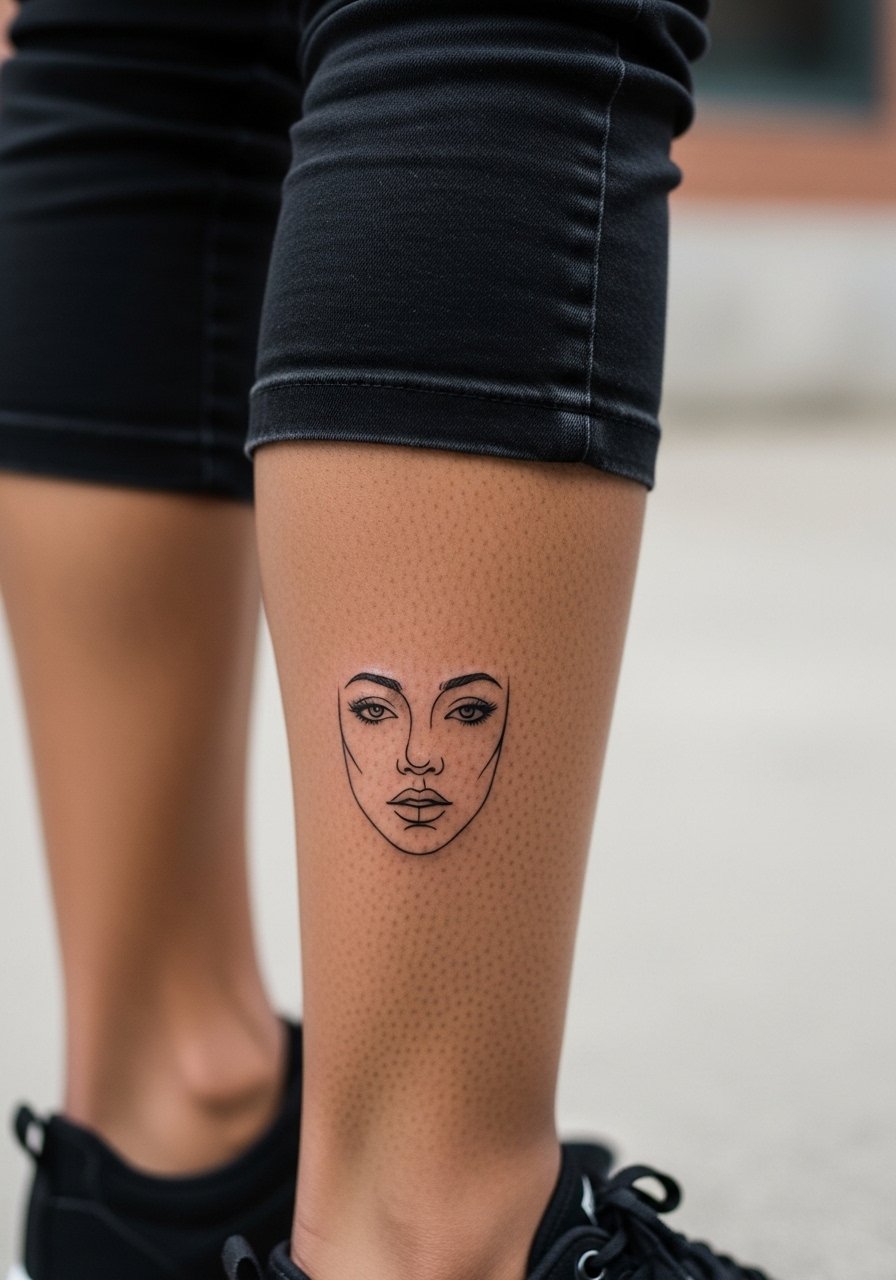
The calf is a surprisingly resilient spot for linework because swelling and friction are limited. Vertical placement that aligns with the muscle gives movement to the design as you walk. Tell your artist you want slightly heavier initial saturation to counter future fading from sun exposure on the lower leg. Sessions are moderately comfortable and usually completed in one visit. A common mistake is choosing a face that is too wide for the calf narrowness. Expect a touch-up window around three to five years, especially if you frequently run or cycle.
13. Inner Thigh Hidden Ghost Face

Inner thigh placements are intimate and demand a different approach. Tell your artist you want a simplified face since the skin here can be softer and lines may spread more over time. The session feels more tender than arm work and you will need to wear loose bottoms during healing. Many people pick this spot for private meaning or as a second piece that shows only in certain clothes. If mobility and friction are a concern, ask about spacing and plan workshops with a longer healing window. For consultation, seek artists who have consistent inner thigh before-and-after photos in their portfolio.
14. Top-of-Foot Ghost Face

Foot tattoos are exposed to constant movement and shoe friction which accelerates fading. I advise a single confident outline without interior detail. The session can be more uncomfortable because bone is close to the surface. Plan on limited shoe wear that presses on the area for the first two weeks. For show-off moments, flat sandals work best and keep the tattoo visible while limiting chafing. Consider a minimal leather sandal for the weeks after healing to avoid rubbing that could soften the linework. Touch-ups are common in the first three years.
15. Jawline Ghost Face, Subtle and Horizontal

Jawline and lower-face placements read intimate and bold at once. The area is sensitive and movement from talking or chewing can make healing feel odd. Ask your artist to keep the design small and slightly offset from the bone so facial expressions do not distort the linework while healing. The common mistake is over-detailing which rarely holds. If you work in conservative industries, note that visible facial pieces can affect perceptions, so weigh that before booking. Expect a realistic touch-up plan and ask to see healed photos from similar placements.
16. Hip Ghost Face Along the Bowl of the Hip

Hip tattoos are discreet and flirt with visibility depending on clothing. The area tolerates fine line well if you give it a bit of spacing. During consultation, ask for upward negative space so the face does not crowd the waistline as skin shifts. The session can feel like a medium sting and movement while walking will bother you for a few days. Show-off pairing works well with high-waisted cuts, so consider a high-waisted denim or swimsuit bottom that reveals the piece when you want it seen. Plan for a touch-up at year three depending on sun and friction.
17. Spine-Edge Ghost Face for Open-Back Looks

A ghost face along the spine edge is a slightly unexpected placement that pairs beautifully with open-back clothing. Tell your artist you want the design offset from the spine center so curvature in movements does not compress the lines. The session can be stingy and you may need to shift positions for comfort. The common error is centering too close to the spine which increases the chance of uneven healing. For evening wear, open-back dresses highlight the piece, and a lightweight open-back slip or dress lets the tattoo breathe while you show it off. Expect intermittent touch-ups where movement and fabric meet.
Frequently Asked Questions
Q: Will a minimal line ghost face on my ribs definitely blur faster than on my forearm?
A: It depends on spacing and needle depth. Ribs move more and have thinner skin, which makes very tight detail more likely to blur. If your artist recommends extra breathing room around features and a slightly bolder contour, that can extend clarity. Ask to see healed rib photos from their portfolio.
Q: How often should I expect touch-ups for finger and ankle ghost faces?
A: Fingers and ankles see the most wear. From what I have seen, plan on a touch-up around year one to two for fingers and year two to three for ankles. If you work in wet or abrasive conditions, expect earlier maintenance.
Q: I love the collarbone placement but worry about visibility at work. Any wardrobe guidance?
A: A wide-neck blouse or a thin pendant can balance visibility. For sessions, bring a wide-neck shirt you can pull aside so the artist has access without you feeling exposed. Keep touch-ups in mind because collarbone ink fades if frequently sun-exposed.
Q: Are there ghost face designs that avoid frequent touch-ups while staying minimalist?
A: Yes. Designs that emphasize single confident contours with open negative space age better than those with tight interior shading. Favor slightly thicker single-line outlines over ultra-fine sketchy strokes in high-friction zones.
Q: How should I find an artist who understands subtle fine line work for these placements?
A: Use shop directories, local hashtags, and community forums to find portfolios that show healed photos in similar spots. I recommend checking studio websites and asking for healed shots of the exact placement before booking.