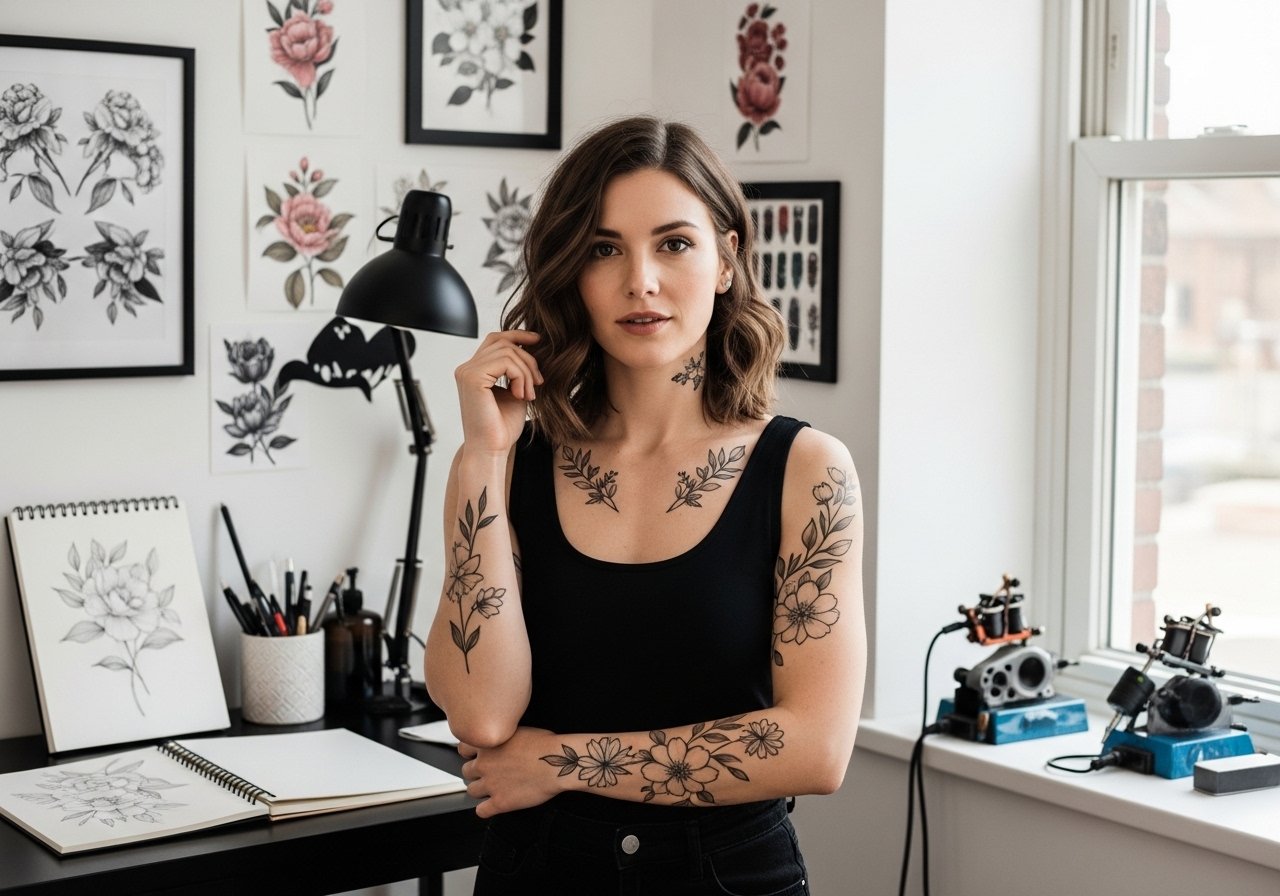
Fine line Harry Potter pieces look effortless in photos, and they often spark the same follow-up worry. The designs that look crisp at reveal can soften faster than people expect. Placement, needle spacing, and how you prep the skin decide whether a tiny symbol still reads in year three. Below are 17 minimalist line ideas and practical notes so your next ink actually behaves like the photos.
1. Tiny Golden Snitch on Inner Wrist
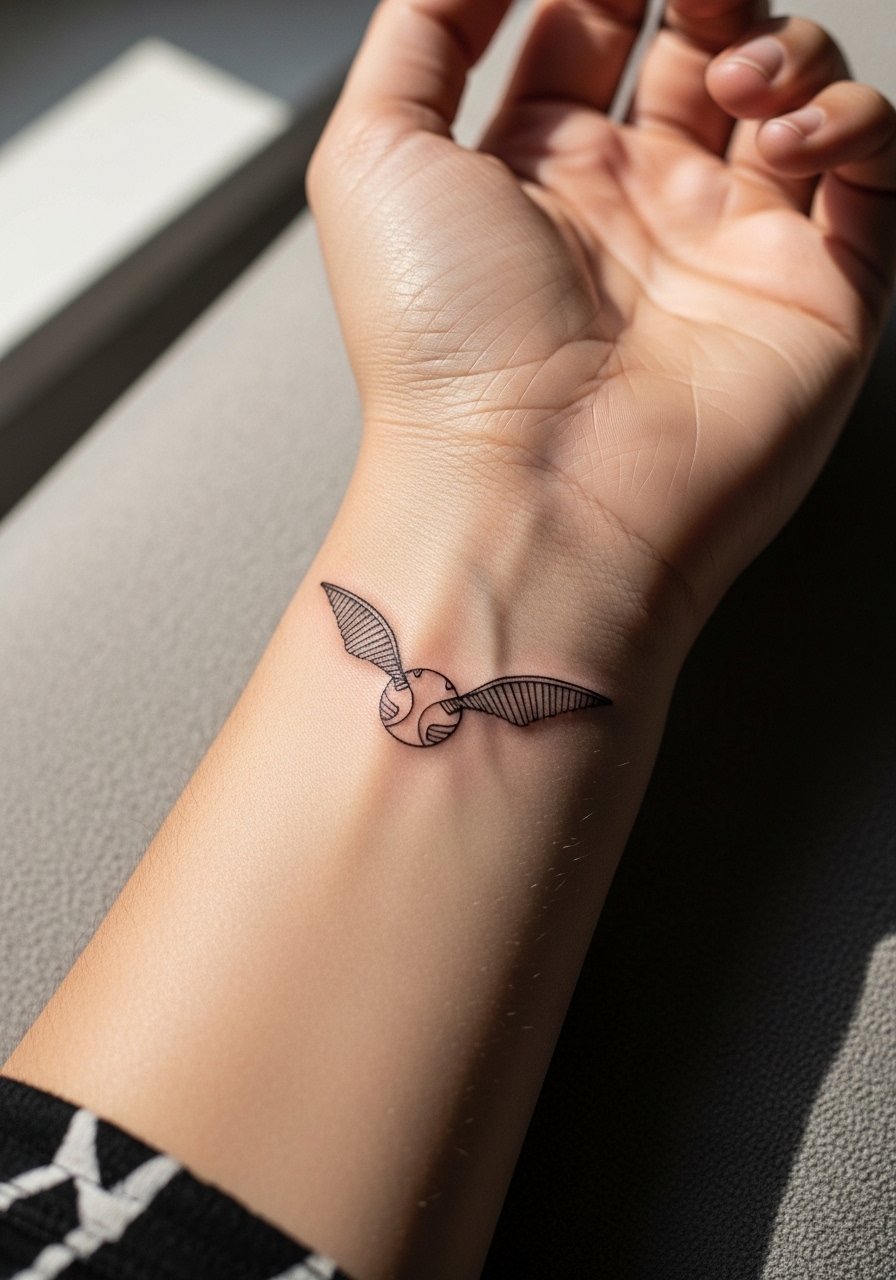
I've seen wrist Snitches keep their personality longer when the wings are given extra spacing. Ask your artist for slightly thinner wing stems and a touch more negative space between feather lines. Fair warning, the inner wrist is a higher sensitivity spot and the motion from typing can abrade early healing. For the appointment wear a racerback tank top so sleeves do not rub the area while you get worked on. Expect a short session and a touch-up at year two if you like ultra-crisp wing details.
2. Minimal Deathly Hallows Outline Behind the Ear

For behind-the-ear placement pick a slightly bolder line weight than you would for a wrist piece. Small lines can fade faster there because of constant friction from hair and collars. When you consult mention you want clear negative space inside the triangle so the circle and line do not visually merge over time. This placement needs precise stencil placement from the start. If you plan on showing it off, a thin chain pendant necklace sits just below the symbol without competing for attention.
3. Tiny Wand with Whip Shading on the Side Finger
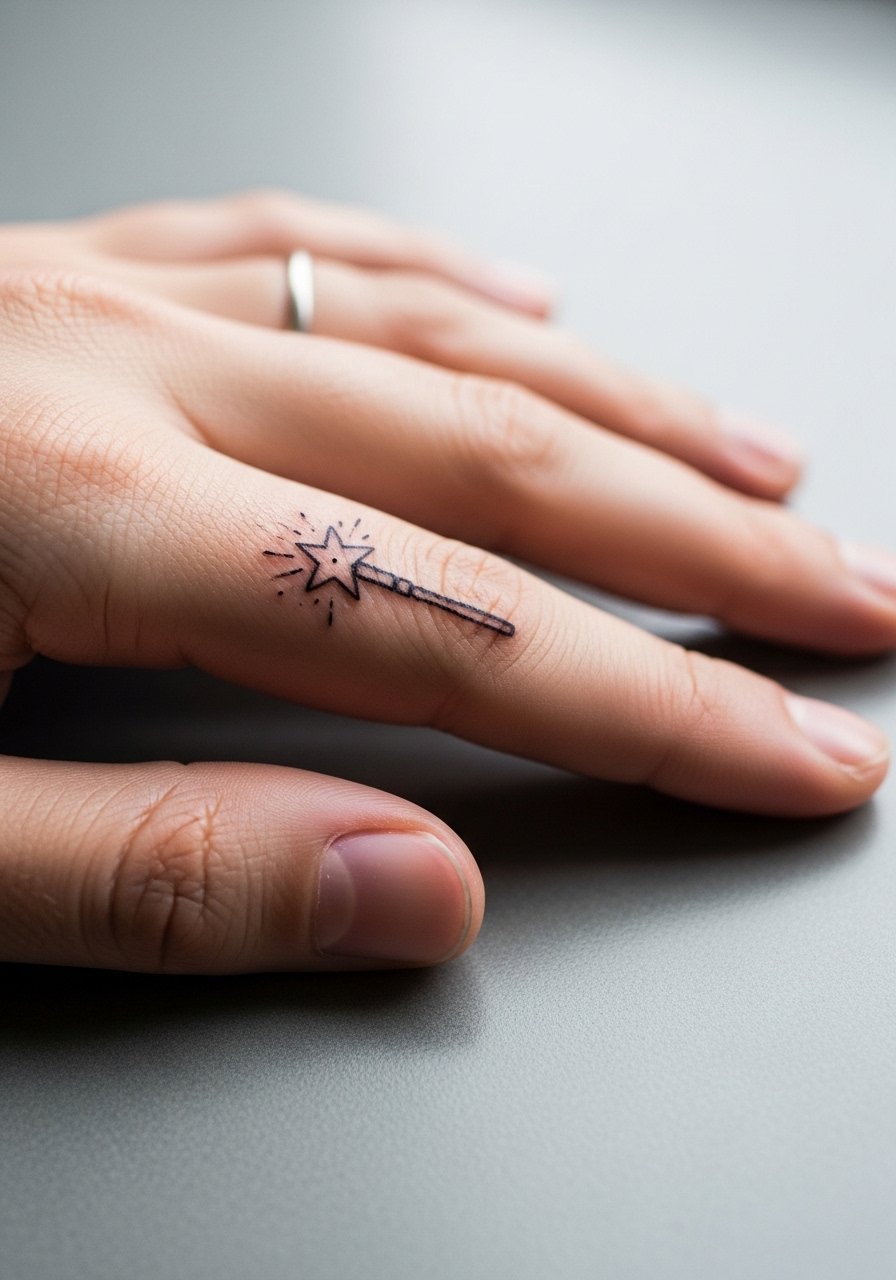
Finger skin is unforgiving for fine line work because of constant washing and friction. I recommend asking for a slightly thicker stem and minimal whip shading aimed outward rather than into the side of the finger. The session feels quick but stinging, and touch-ups are common after the first six months. A real mistake is requesting micro lettering or tiny dots next to the wand, those elements usually disappear first. For showing it off, stack a thin minimalist ring on the adjacent finger to frame the piece.
4. Tiny Platform Nine and Three-Quarters Coordinates on Inner Forearm

If you want a small coordinates piece use a clean monospaced or thin serif for longevity since decorative scripts smear into blur faster. The inner forearm is forgiving and the design is visible while still easy to protect during healing. Tell your artist you want stable spacing between digits so the numbers do not compress after a year. A common mistake is asking for the smallest possible font. For session comfort wear a loose button-down shirt you can pull aside to expose the forearm without tugging.
5. Minimal Lightning Bolt at the Base of the Neck
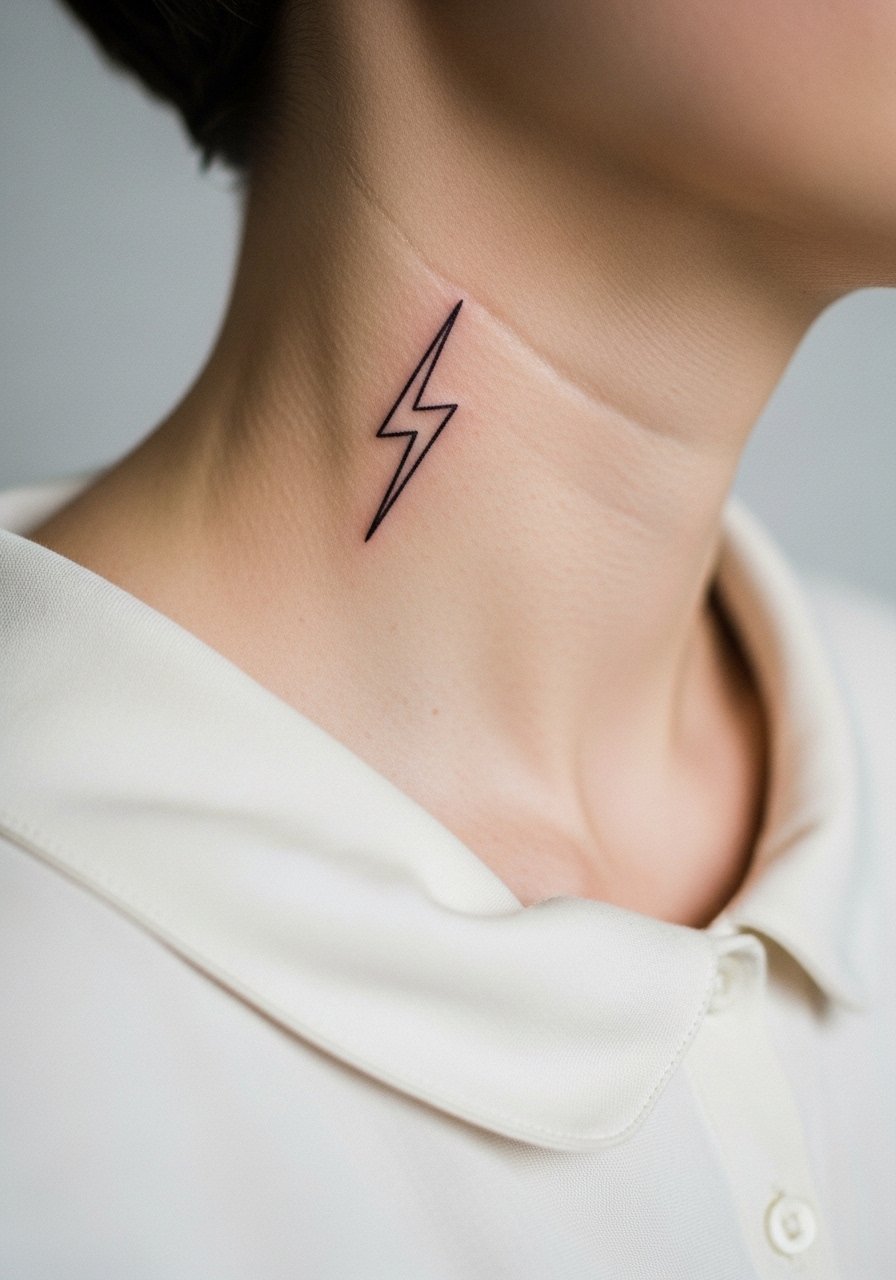
The side neck shows off minimal symbols well because it reads in motion. Pain is moderate here but the visual payoff is high. Ask the artist to map the bolt so it follows the natural slope of your sternocleidomastoid muscle which helps it age more gracefully as skin moves. A typical error is placing it too close to the hairline where friction from collars blurs the edges. For nights out pair it with an open-back midi dress or a wide-neck sweater that frames the area.
6. Tiny Sorting Hat Silhouette on the Ankle
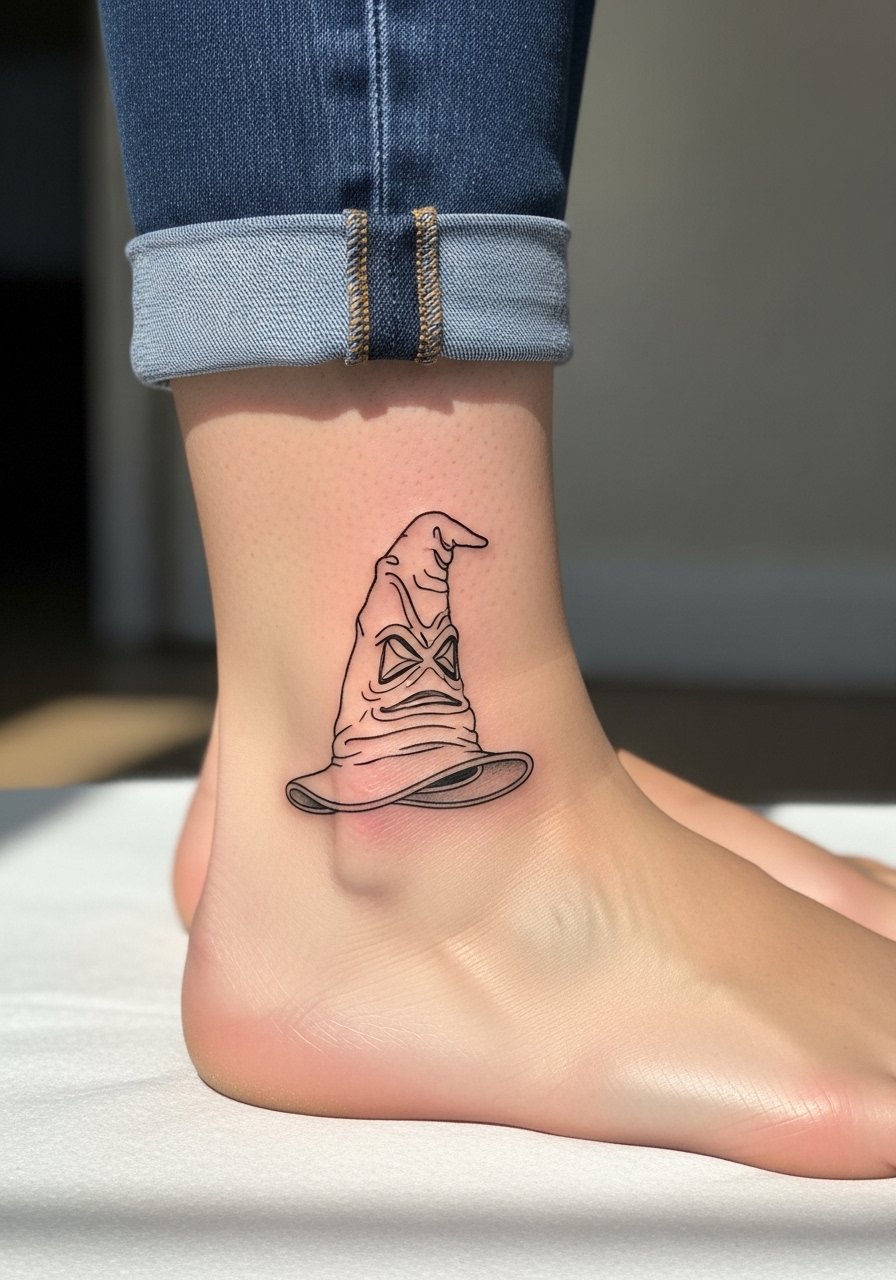
Ankle placements face rubbing from shoes and socks during the first two weeks. The trick is to keep the design compact but not microscopic. I advise a slightly denser outline around the brim so the hat reads well at a distance. Session time is short and pain is manageable. For the appointment pick slip-on shoes and cuffed jeans so the artist has clear access and your footwear does not press on fresh ink. Pair the finished piece with simple sandals that expose the ankle without rubbing.
Studio Day Picks
The wrist, neck, and ankle designs above each ask for different prep and first-week protection, so these small items smooth the session and early healing.
-
Tattoo stencil transfer paper kit. Lets you preview placement directly on skin, which is key for tiny symbols like the Snitch and Sorting Hat.
-
Topical numbing cream. Applied 30 to 45 minutes before can ease sensitivity on the neck and ankle without interfering with linework.
-
Thin protective film roll. Useful for wrist and ankle pieces that face frequent friction from clothing and daily movement.
-
Fragrance-free gentle body wash. Cleans the area without stripping the tiny channels the needles create, which helps fine line work set.
-
Aquaphor healing ointment. A thin layer over the first few days keeps the skin moist for delicate linework without clogging pores.
7. Micro Patronus Silhouette on the Inner Bicep
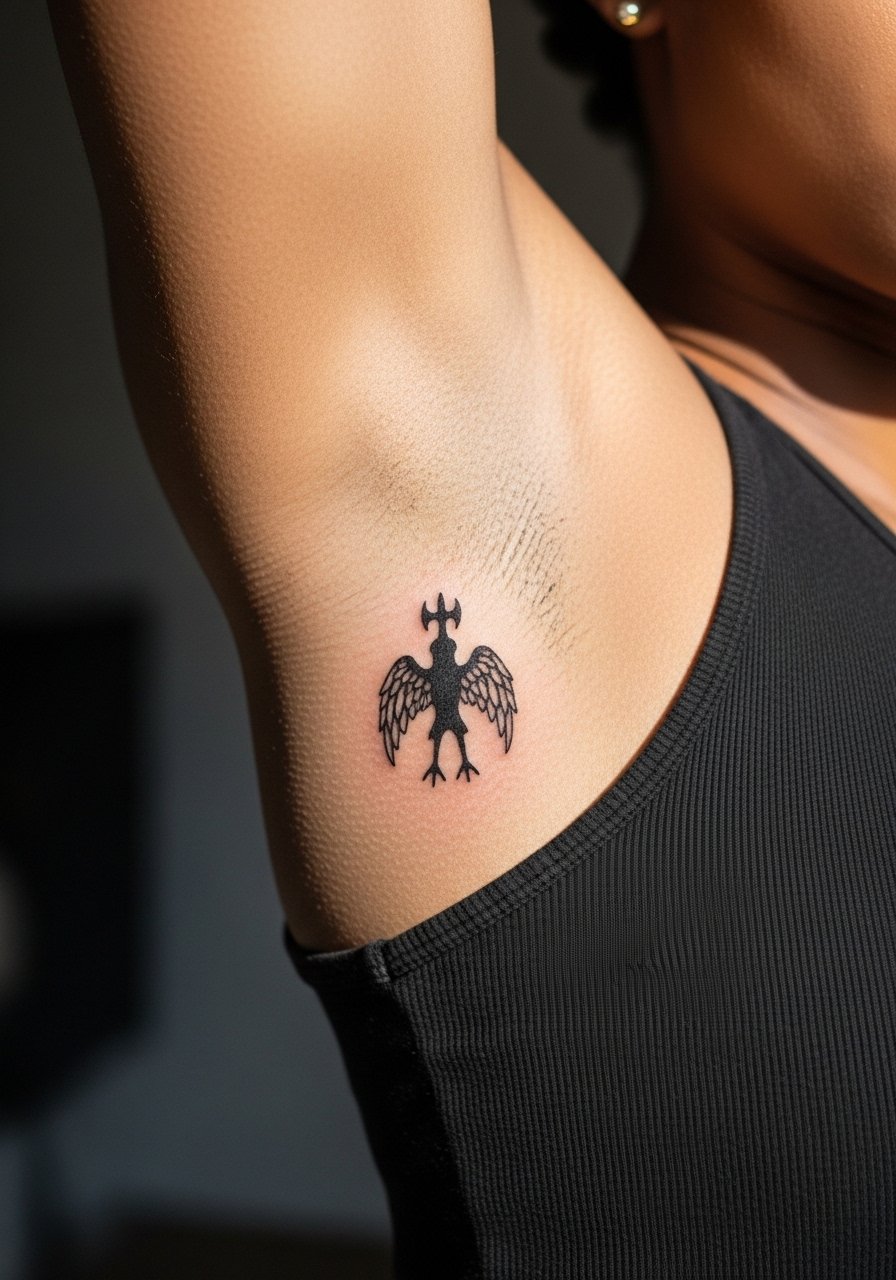
Fair warning, the inner bicep moves a lot with elbow flexion which can cause thin lines to separate unevenly as they heal. I usually recommend a slightly reinforced outer contour for small silhouettes so they read after a year. The session requires arm position adjustments that make it feel like longer work than the size suggests. For the appointment wear a loose tank top to keep the armpit area from getting irritated while you sit. If you plan to show it, short-sleeve shirts that expose the inner arm help the image hold visual focus.
8. Minimal Marauder’s Map Footstep Trail Along the Side Ribcage

Ribcage is one of those places that splits opinion. One camp says fine line on ribs blurs fast because the skin stretches and breathes in a way that moves ink. The other camp argues that with correct needle depth and spacing it can stay crisp for years. Name both camps to your artist and ask how they handle ribs before booking. Expect a more uncomfortable session compared with forearm pieces, and plan for longer aftercare. Wear a cropped top you can lift without exposing more than the tattoo zone during the appointment.
9. Tiny Hogwarts Silhouette at the Sternum Edge
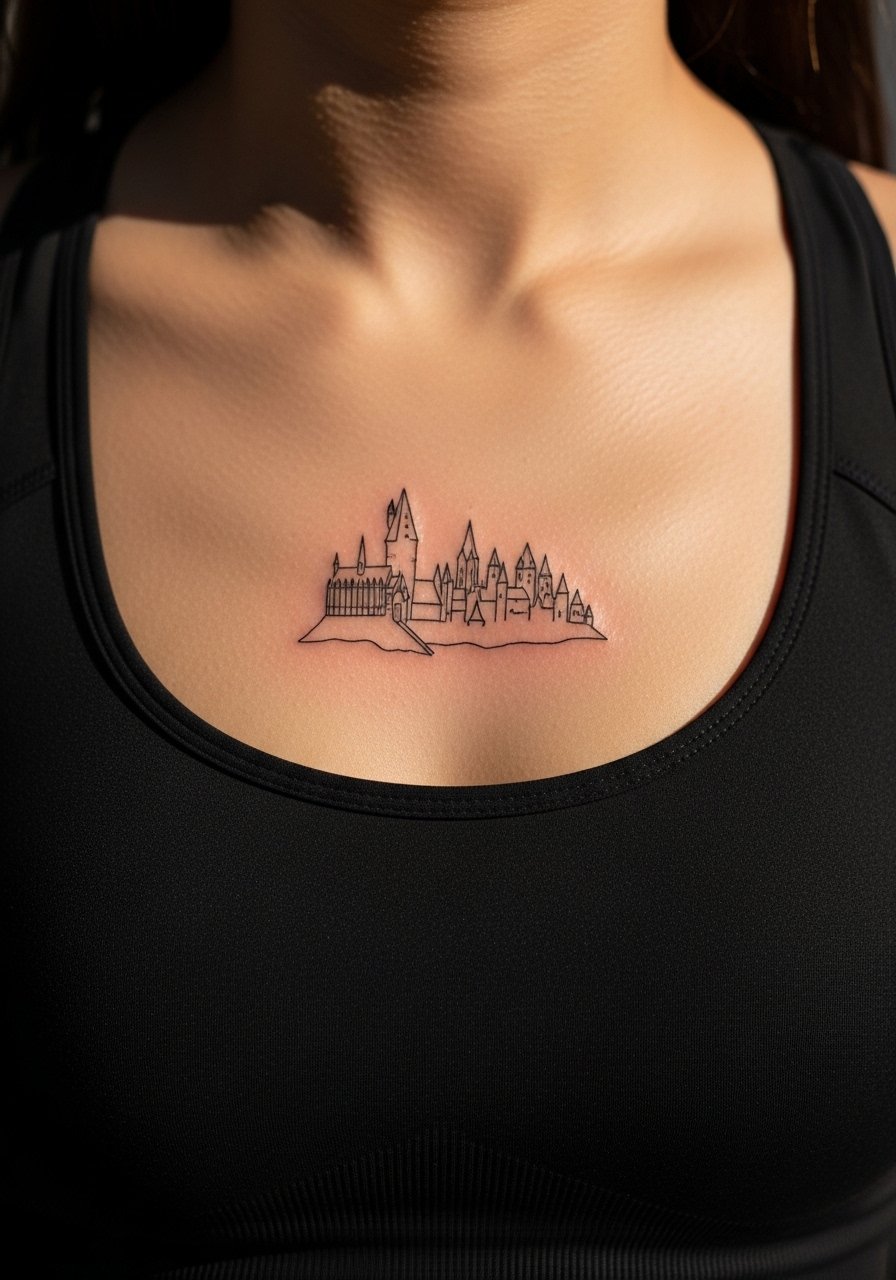
Sternum placements make delicate center-chest symbols dramatic. Keep the silhouette narrow so it does not blend into the clavicle shadows over time. The sit is more painful and the skin is thin so touch-ups are common at the one to two year mark. For the session I suggest a strapless or sports bra that exposes just the sternum so the artist can work without you being uncomfortable. Consider the visual when wearing low necklines, a minimal pendant complements this piece nicely.
10. Tiny Patronus Constellation on the Upper Back Near the Shoulder Blade

Upper back is forgiving and the flat surface helps tiny dots and star points hold. For constellations I ask for slightly larger dot sizes than typical micro dots so they do not vanish into the skin texture over time. Sessions here feel moderate because you can relax into the chair. Wear a button-down you can untie or a loose tank so the artist can reach the area without you getting cold. A common mistake is asking for ultra-fine dots clustered too tightly, that cluster becomes indistinct after a few years.
11. Minimal Script 'Lumos' in Thin Serif on the Collarbone
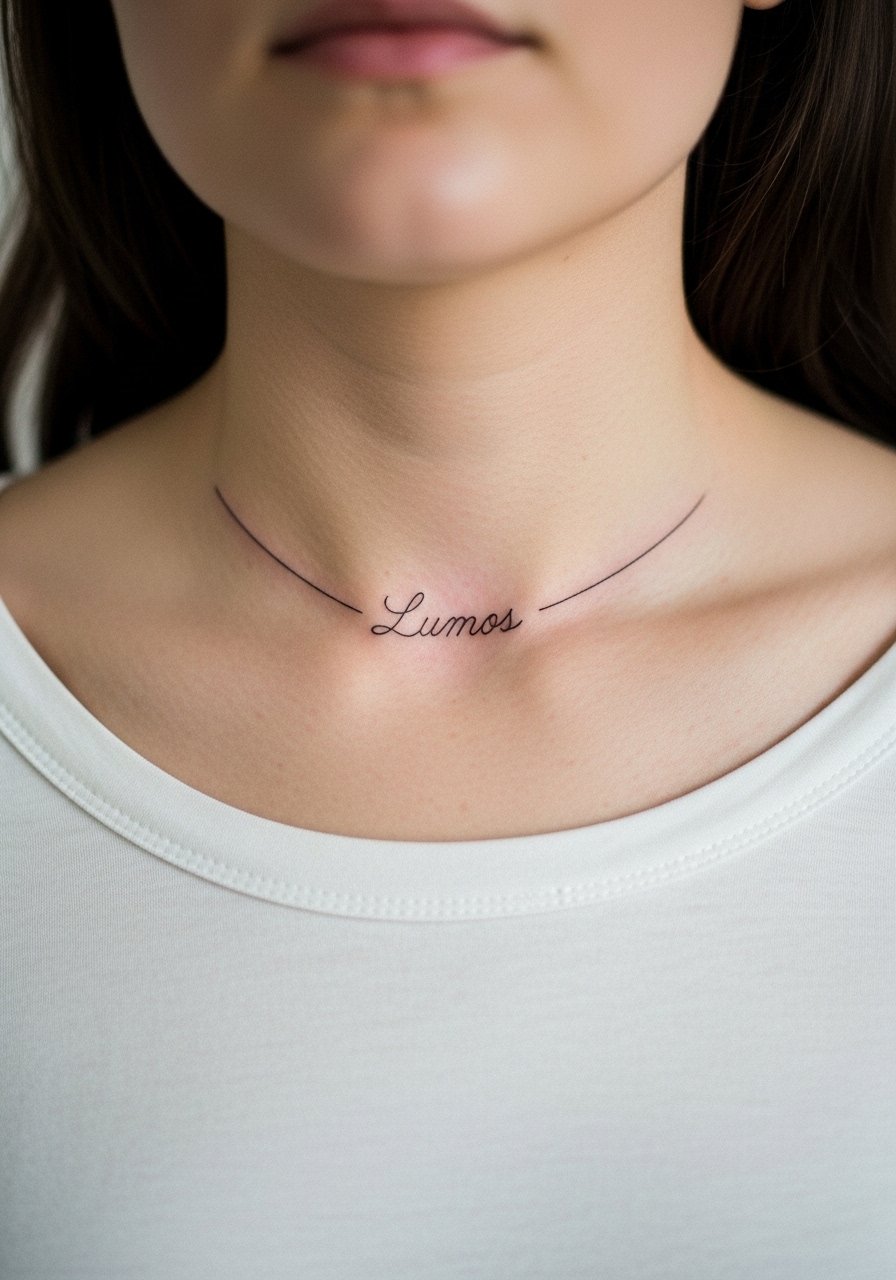
Collarbone script can be an elegant placement but it trades pain for visibility. Lettering too small loses counters and stops looking legible. Tell your artist you want slightly taller x-height in the letters so counters stay open as the piece ages. For showing it off pair the script with a thin chain pendant that sits above the word without competing. The session is quick, expect soreness around the bone for a day or two.
12. Minimal House Crest Outline on the Upper Thigh
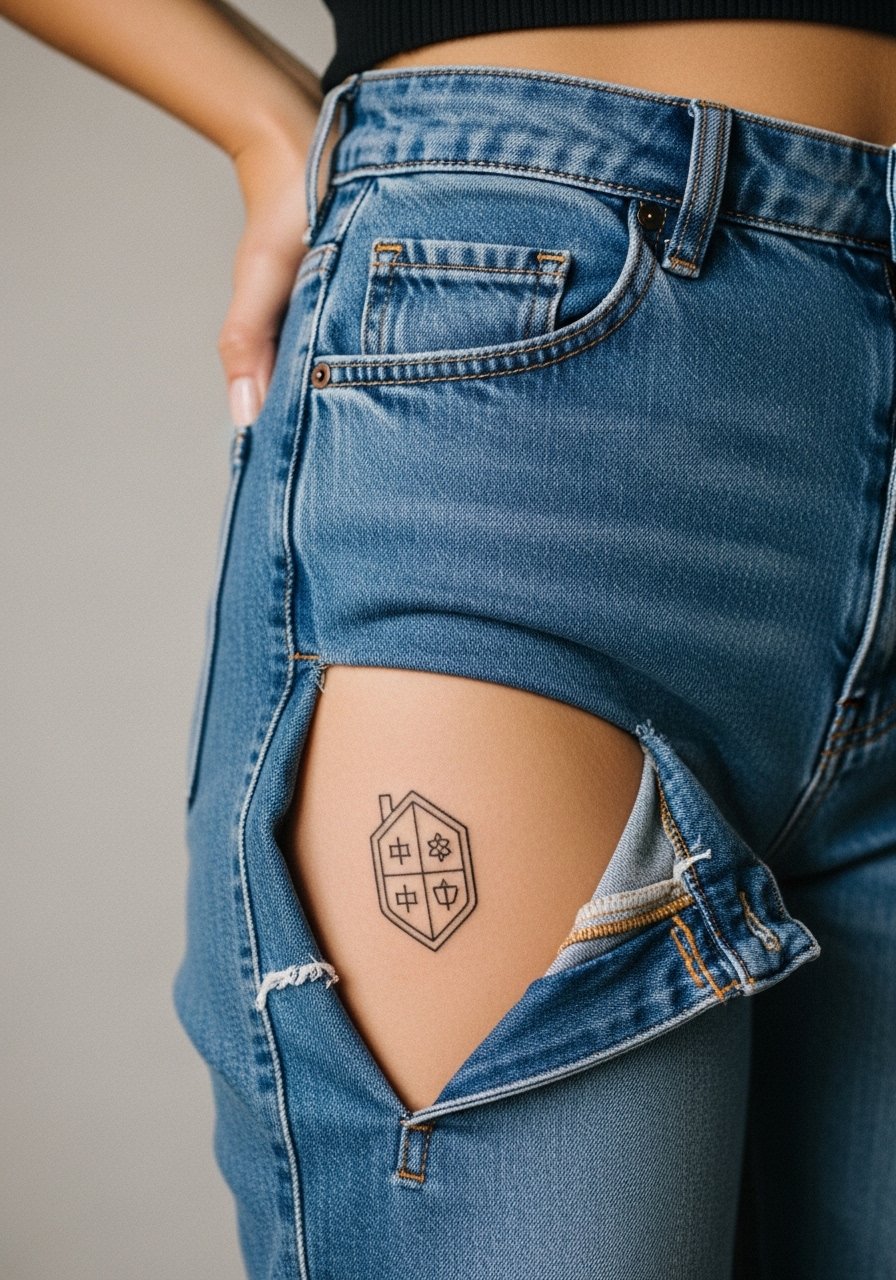
Thigh skin holds fine detail well and is low friction, which helps outline work last. For a crest outline choose clean negative space inside the shield so the tiny heraldic details do not fill in. Sessions are comfortable and can be longer because the area tolerates it. For the appointment wear high-waisted shorts you can pull down slightly without discomfort. A mistake is overloading the crest with micro-shading, those elements tend to grey out first on thicker designs.
13. Micro Spell Glyphs in a Row Along the Side Finger
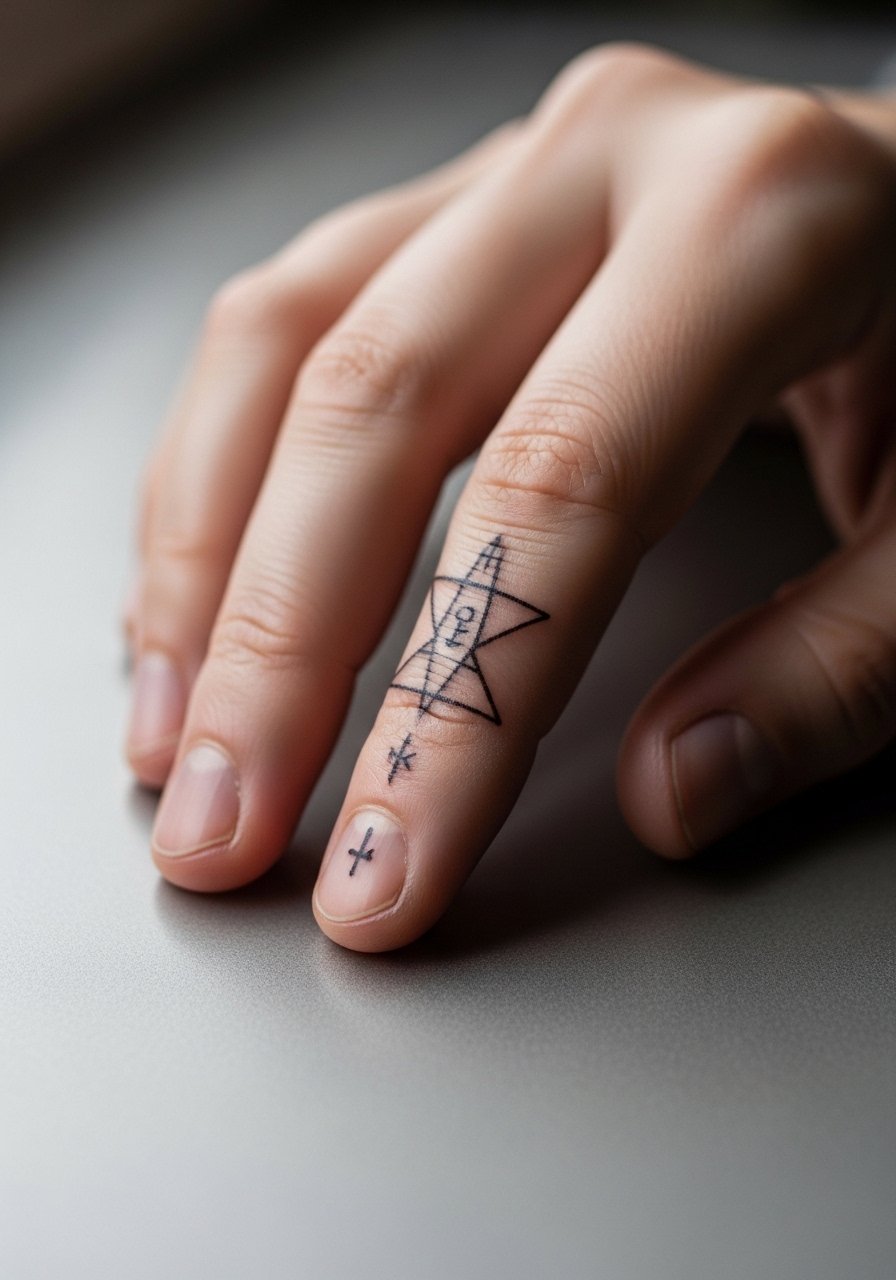
Edge-of-finger glyphs look crisp when scaled properly and spaced evenly. The skin there is thin and prone to scabbing, which makes consistency a challenge. I suggest asking for slightly bolder strokes than you would for a forearm script so the glyphs remain readable after the first touch-up. The session feels quick but sharp. For wearing, keep rings minimal during healing and consider a set of thin stacking rings after the area is fully healed.
14. Minimal Snape-Inspired Half-Moon on the Inner Wrist

Inner wrist moons read well but they suffer from constant exposure to sun and handwashing which fades thin shading fastest. The fix is denser linework with a tiny stipple interior rather than continuous grey wash. Tell your artist you want dot work inside the crescent so the texture softens evenly over time. Expect to see some softening by year three with most fine line wrist pieces. For shows, a minimalist watch pairs cleanly without covering the moon.
15. Tiny Quidditch Hoop Outline Behind the Ankle
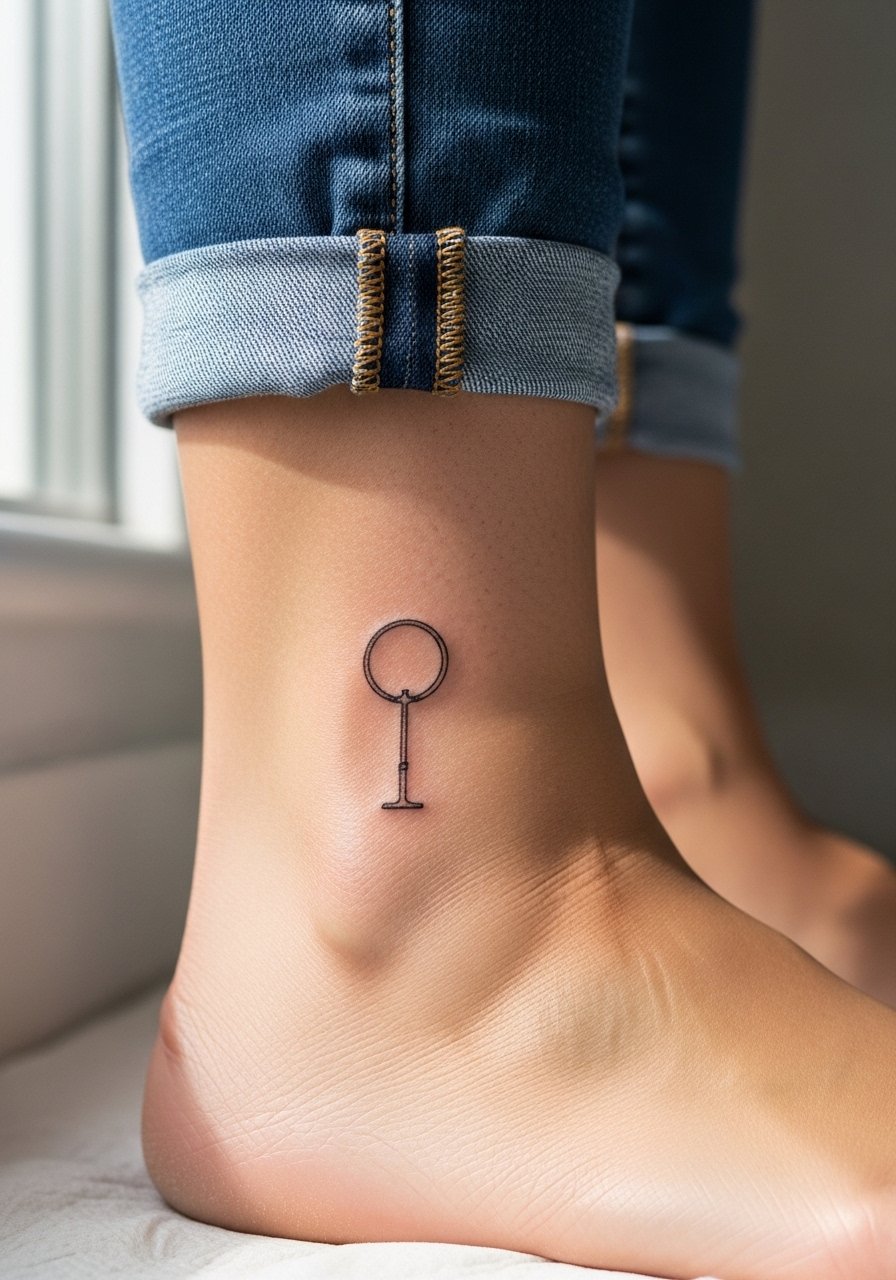
Outer ankle designs are cute and they tolerate a fair amount of detail if spaced right. The main risk is abrasion from high socks or boots during the first month. Ask for a slightly bolder rim on the hoop so it reads in darker clothing or tights. The session is brief and the pain level is moderate. Wear low-cut sneakers to your appointment to avoid pressure on the area while it seals. A simple pair of flat sandals is a good showing option.
16. Minimal Patronus Dot Work Along the Spine
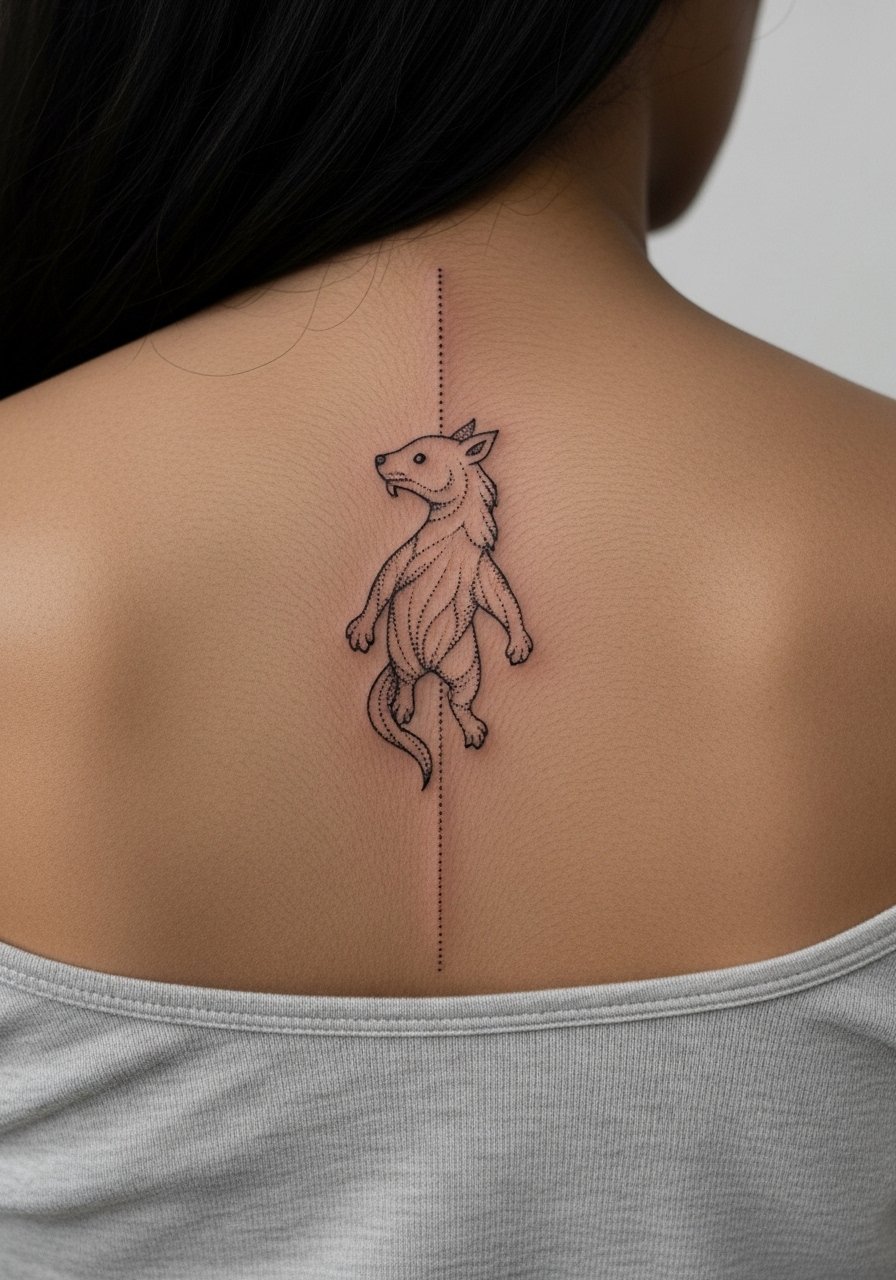
Spine linework and dot work look striking when the artist spaces points to follow curvature. The spine is sensitive and sessions can be interrupted for comfort. A common mistake is making the dots too dense which causes a muddy look as the skin settles. Discuss spacing and ask to see healed examples from the artist so you know how their dots age. For show-off pairing an open-back top keeps attention on the central axis without distraction.
17. Minimal Glasses and Scar Outline on the Forearm

A glasses-and-scar motif is low-profile and reads clearly on the forearm where the flat canvas preserves linework well. The safest version uses slightly thicker frames and a subtle hollow for the scar so it never fills in. Tell your artist you want clear separation between the two elements for visual longevity. Sessions are short and pain mild. Pairing this with rolled-up sleeves or a linen short sleeve shirt frames the forearm without crowding the design.
Frequently Asked Questions
Q: Will fine line Harry Potter symbols like the Snitch and small script need touch-ups more often than bold pieces?
A: In my experience fine line pieces usually need touch-ups sooner than bold blackwork because the ink sits in shallower channels. Placement, sun exposure, and daily friction matter more than the design itself. Plan for a possible touch-up around year two to three if you want the lines to remain razor sharp.
Q: Are ribs or sternum a bad idea for minimalist linework?
A: Both camps exist on this one. Some artists say ribs and sternum stretch and blur thin lines quickly. Others say with correct depth and spacing those areas can hold fine work. Ask your artist to show healed examples of that exact placement before committing, because individual technique varies.
Q: How should I dress for a ribcage or sternum session to make the appointment smoother?
A: Wear a cropped top or a fitted sports bra you can lift or pull aside without exposing more than the tattoo zone. That keeps the area accessible and modest during the sit. A fitted sports bra is an easy go-to for sternum work.
Q: Will hand or finger tattoos affect professional opportunities?
A: Hand and finger tattoos remain more visible and can impact perceptions in some workplaces. If your job climate is conservative think about placement on the side of a finger or inner wrist which can be concealed more easily. Also consider the higher touch-up rate and plan accordingly.
Q: Does fine line heal differently with Saniderm style protective film versus open air dry healing?
A: Artists split into two camps on this one as well. One camp likes protective film for the first 24 to 72 hours to reduce scabbing and contamination. The other camp prefers short film use followed by gentle air drying to encourage thin, even scabs. Ask your artist which method they use and why, and follow their timeline for the best result.
Q: How do I pick an artist for minimalist Harry Potter work if I want lines that last?
A: Look for portfolios showing healed fine line photos of the same placement you want, not just fresh ink images. Spend time in online directories and use local shop walk-ins to see healed examples in person. From what I have seen, healed photos reveal technique and spacing far better than a fresh portfolio image.