
Fine line looks like the obvious pick for neck tattoo women sketches right now, but the trend has a catch. Fine line pieces read delicate at first, then face collar friction, hair products, and sun exposure that speed fading. Visibility is another common worry, especially for throat placements during job searches. Read the first group of sketches to find subtle nape and side-neck options, then compare bolder throat designs if you want something that holds up longer.
1. Fine line floral vine, side neck
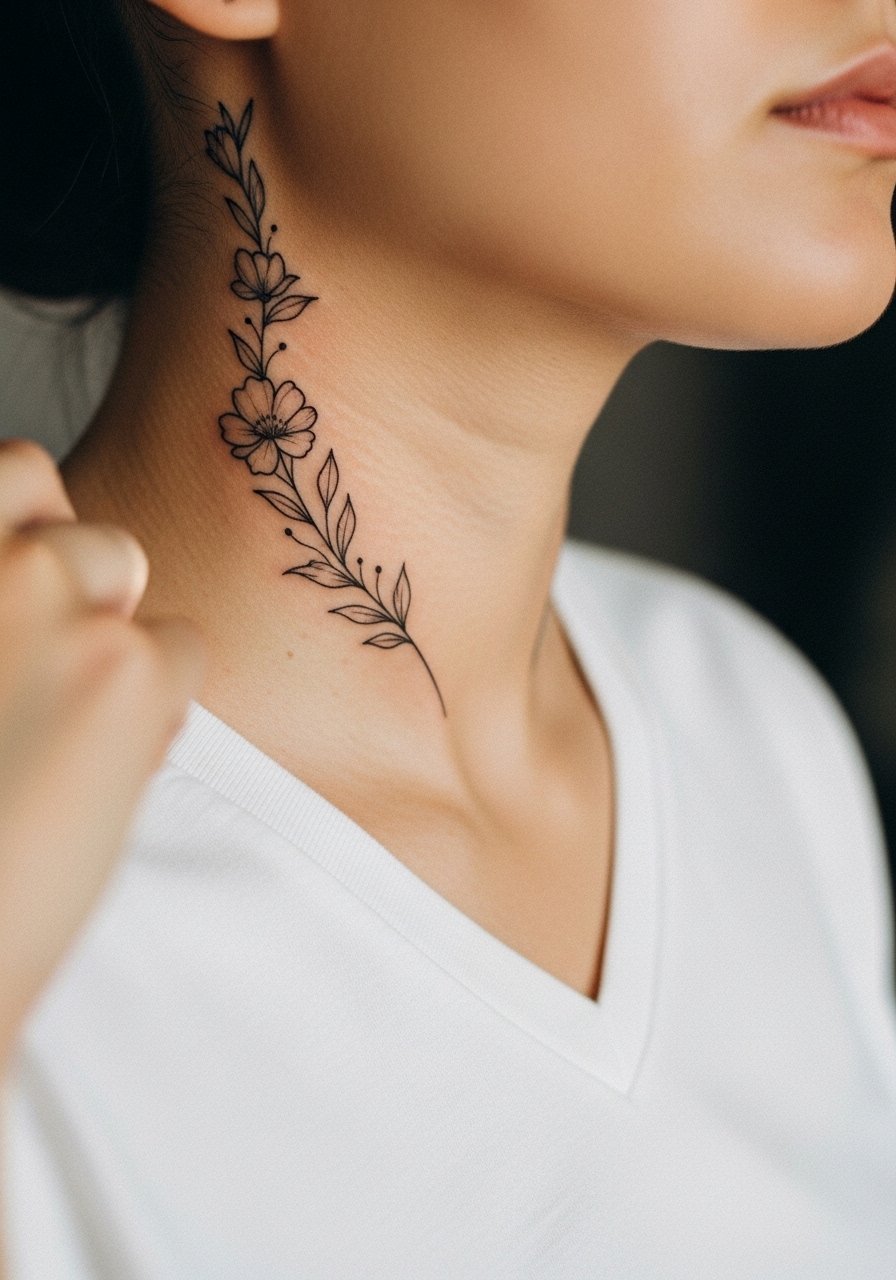
When you want elongation along the jawline, a fine line floral vine on the side neck does that without shouting. In consultation say you want two to three millimeter line weight and spacing between petals so the dots and stipple shading have room to age. Fair warning, collars rub this spot during the first two weeks and light linework can fade faster, so plan a touch-up at six to twelve months. For the session wear a loose v neck tee so the artist has clear access. Expect moderate pain near the sternocleidomastoid and a short single session for a 2 to 4 inch vine.
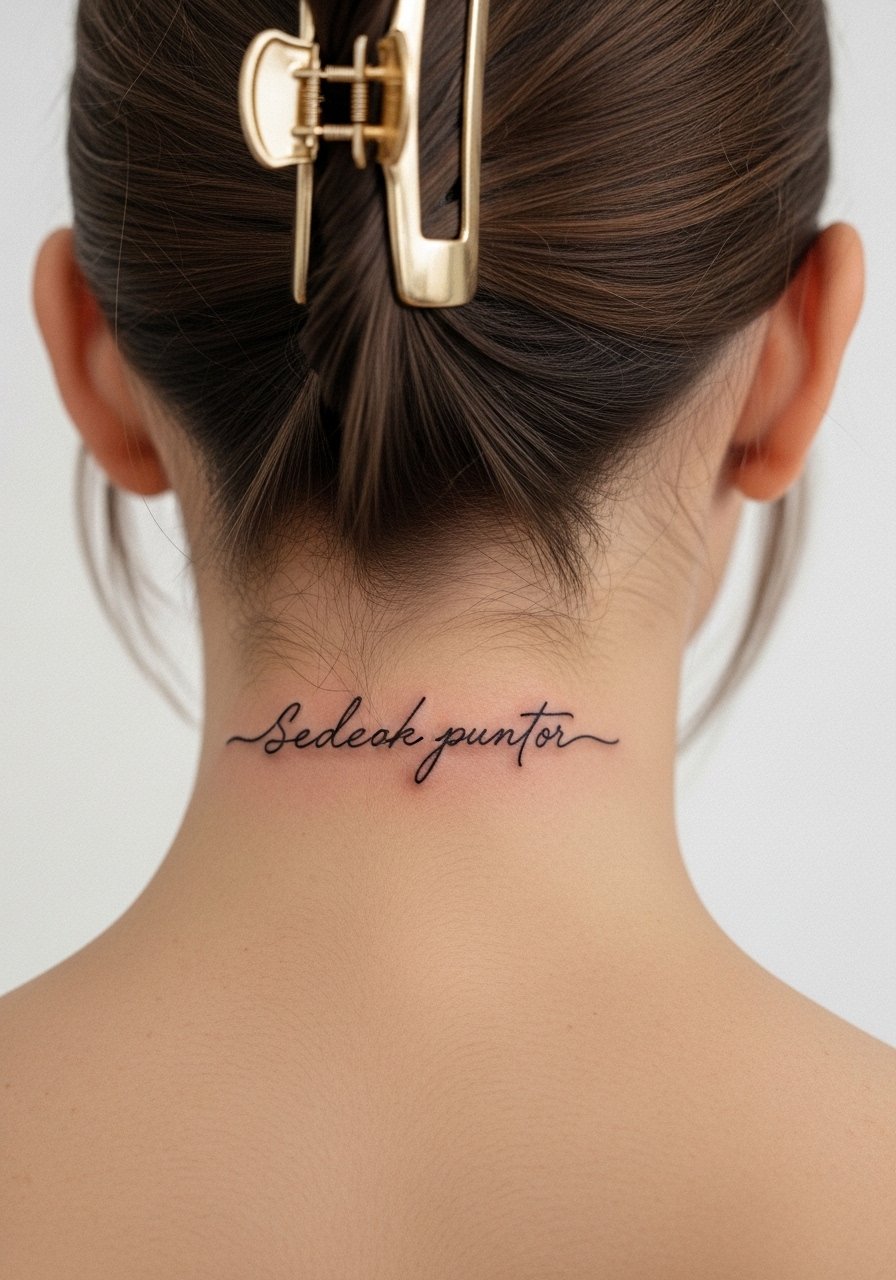
2. Minimalist script at the nape
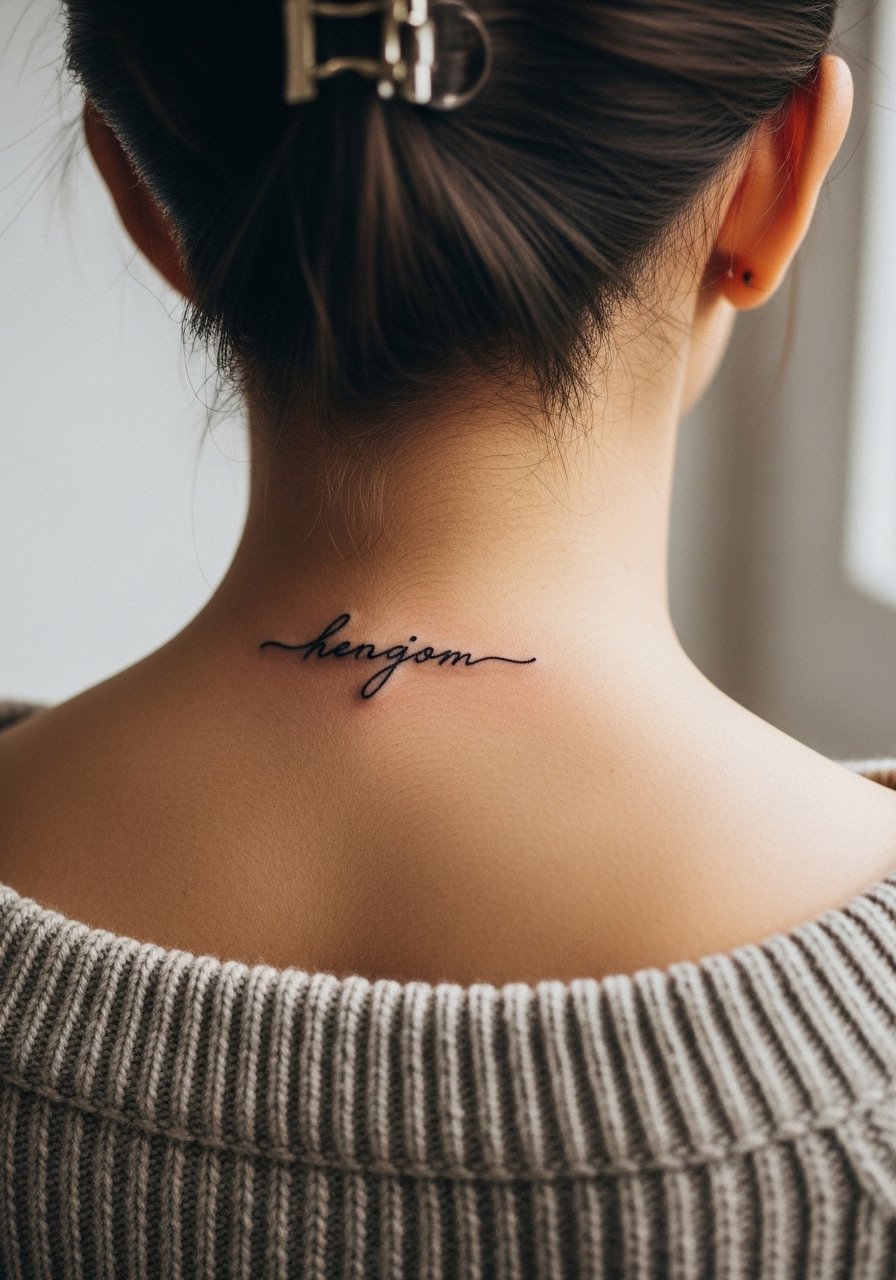
Most people choose nape script when they want a secret nod that the hair hides casually. Bring the exact font example to your consult and specify letter spacing and baseline curve so the script sits with the skull shape. This spot heals well under hair but scabs can get tangled by long layers, so use a soft hair clip for the first week. Session time is short, often under an hour, and pain is mild to moderate because the muscle cushions the needle. For show-off looks try an off shoulder sweater women style that reveals the nape when your hair is up. Expect a clean healed result at six months if you protect it from sun and rough collars.
3. Blackwork geometric throat piece that frames the voice box
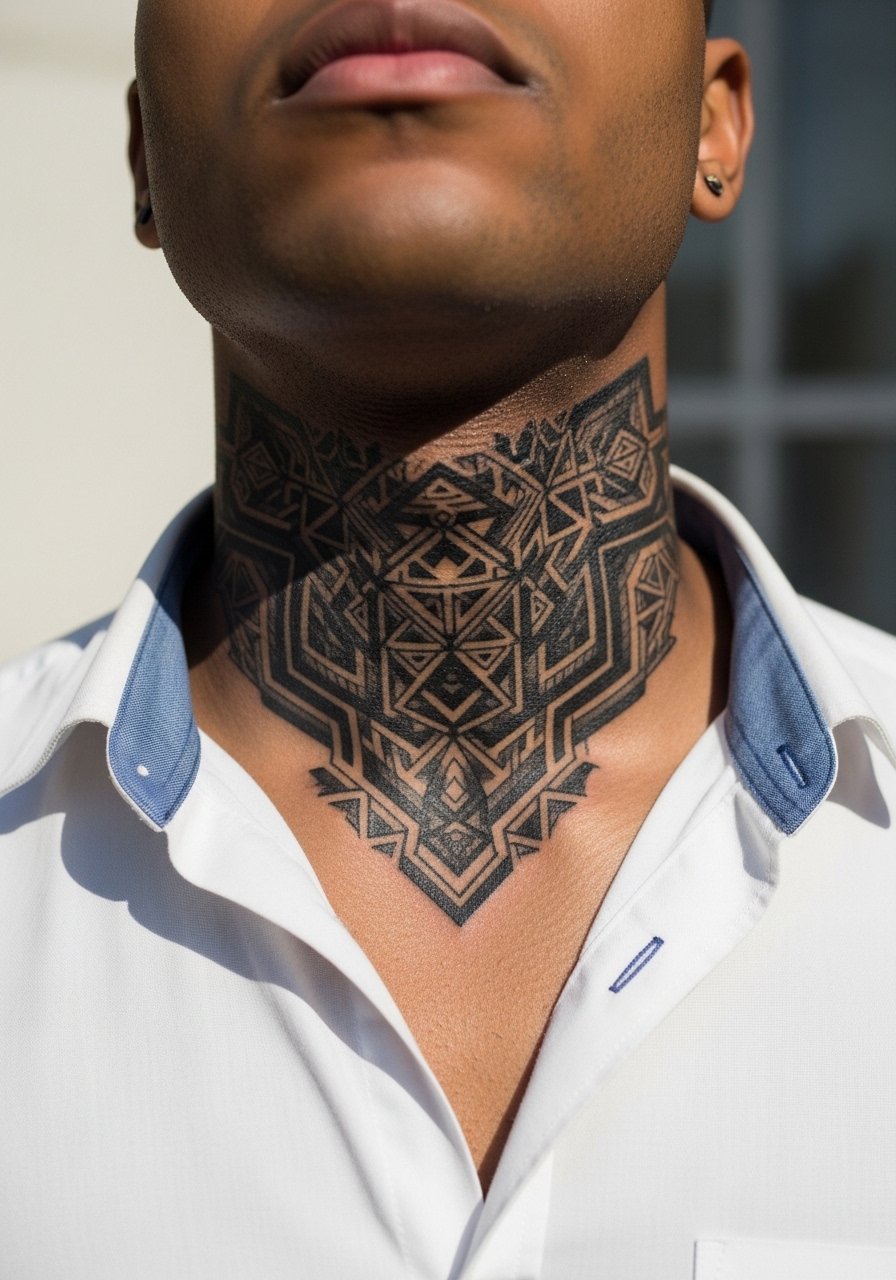
There is real presence in a blackwork geometric throat piece because solid saturation reads from a distance and anchors facial composition. Tell your artist you want bold fills and negative-space corridors so the design breathes with swallowing motion. Pain here is higher than the nape, so split sessions are common for larger 3 to 5 inch pieces. The controversy around throat work is visible in two camps. One group favors the bold blackwork for longevity and contrast. The other group worries about how collars and movement cause itch and accelerated wear. If you perform or sing, ask about scaling the design to your voice box contour. For the session, choose a button front shirt loose to make access easy.
4. Neo-traditional rose along the side neck
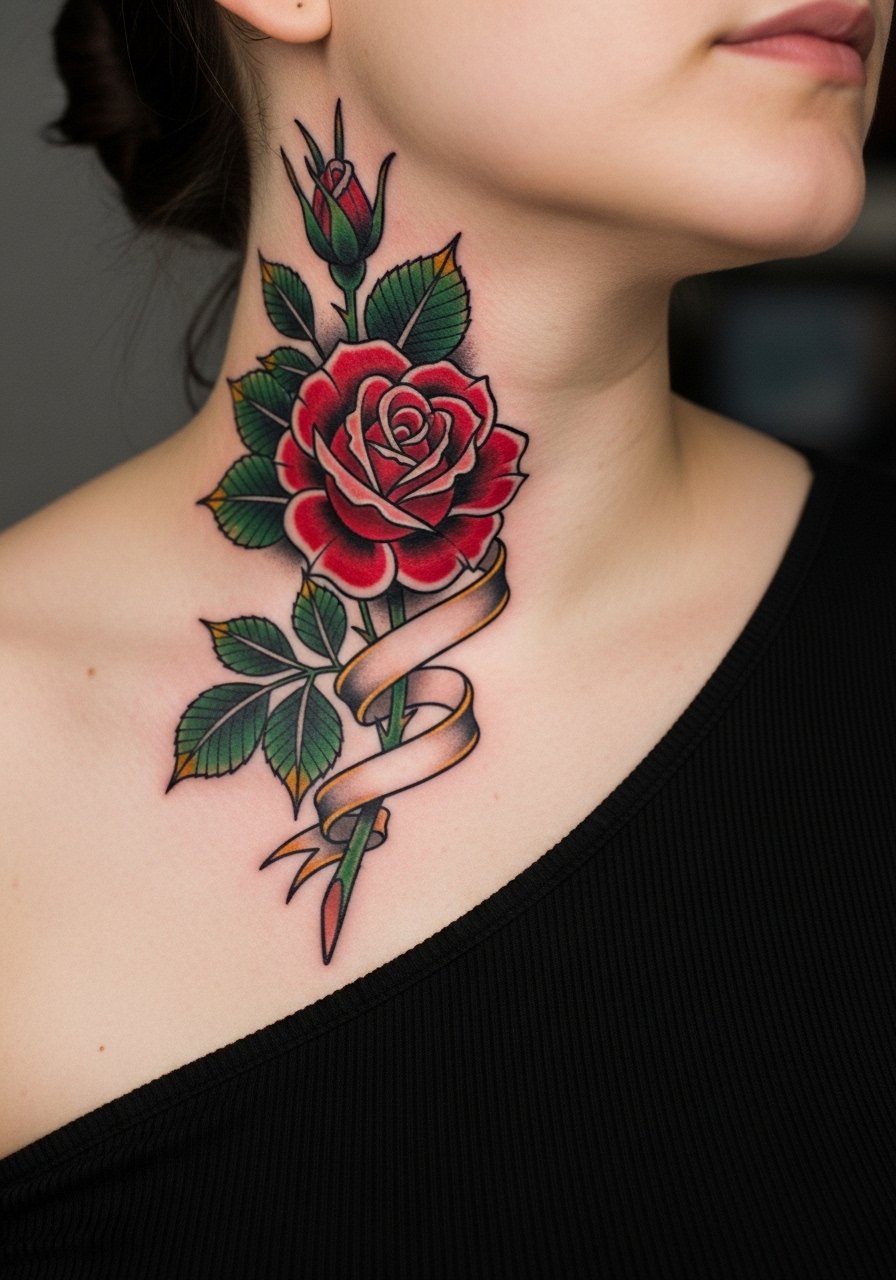
There is a reason roses keep returning to side-neck work. Neo-traditional lines with saturated accents age into an anchored statement that still reads at year five. Ask for slightly thicker outlines than studio flash to prevent early blur where hair or collars brush the stem. The common mistake is asking for micro petals at high saturation. That shrinks the negative space and invites blurring. Pain is moderate because you are tattooing soft tissue with occasional bony spots. For evening looks pair the bloom with an asymmetrical neckline top that exposes the design on one side while keeping the other side covered. Plan two sessions if you want color saturation that lasts.
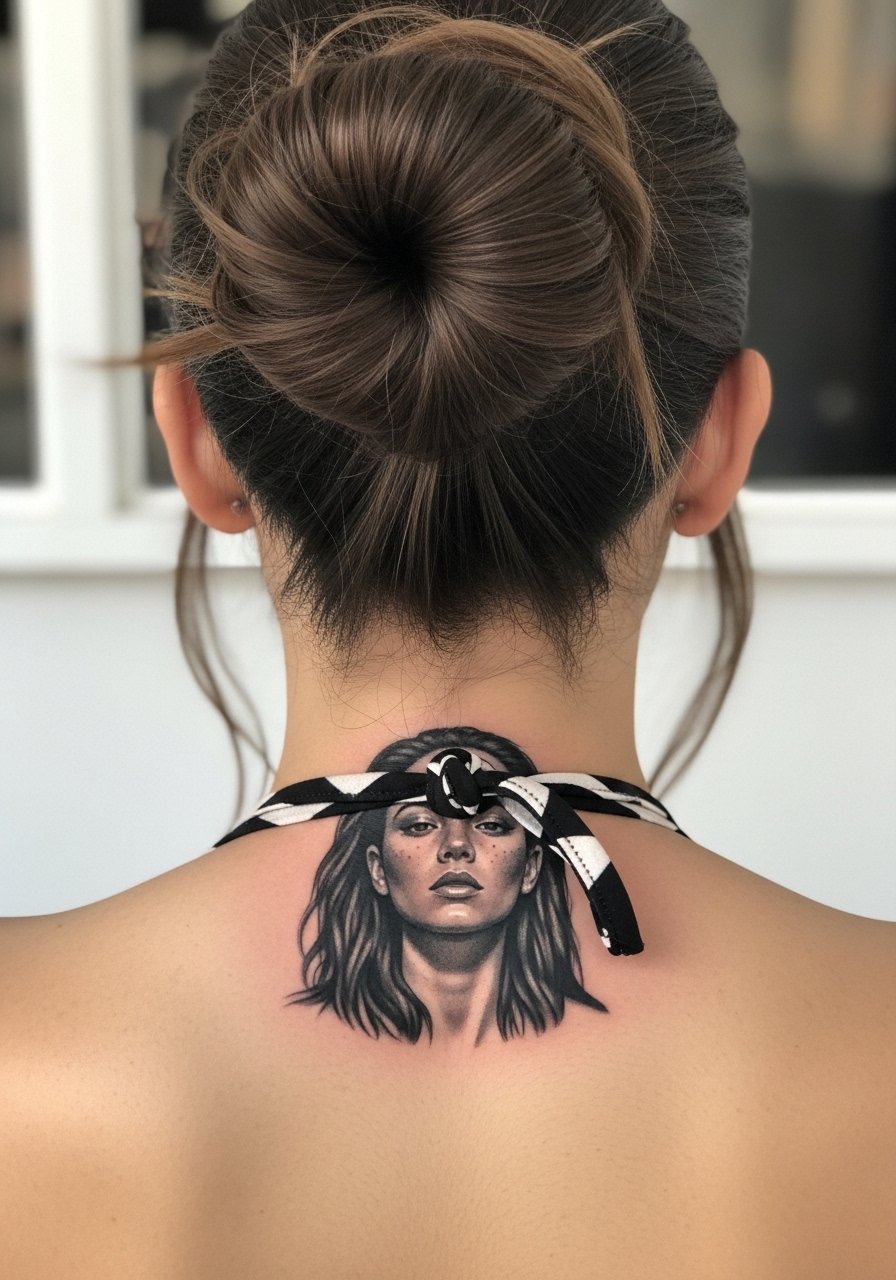
5. Micro-realism portrait tucked into the nape
Micro-realism portraits at the nape work as private memorials that are visible only when your hair is up. For accurate likeness tell the artist which cropped photo to reference and request subtle black and gray stipple shading rather than heavy contrast. The big mistake is trying to compress too much detail into a two-inch round. At nape depths a larger minimal crop preserves facial features and avoids muddying. Sessions can run long because artists build tiny planes with needles and touch-ups are normal at six to twelve months. For festival season show-off, a halter top women or messy bun keeps the portrait visible while protecting it most days.
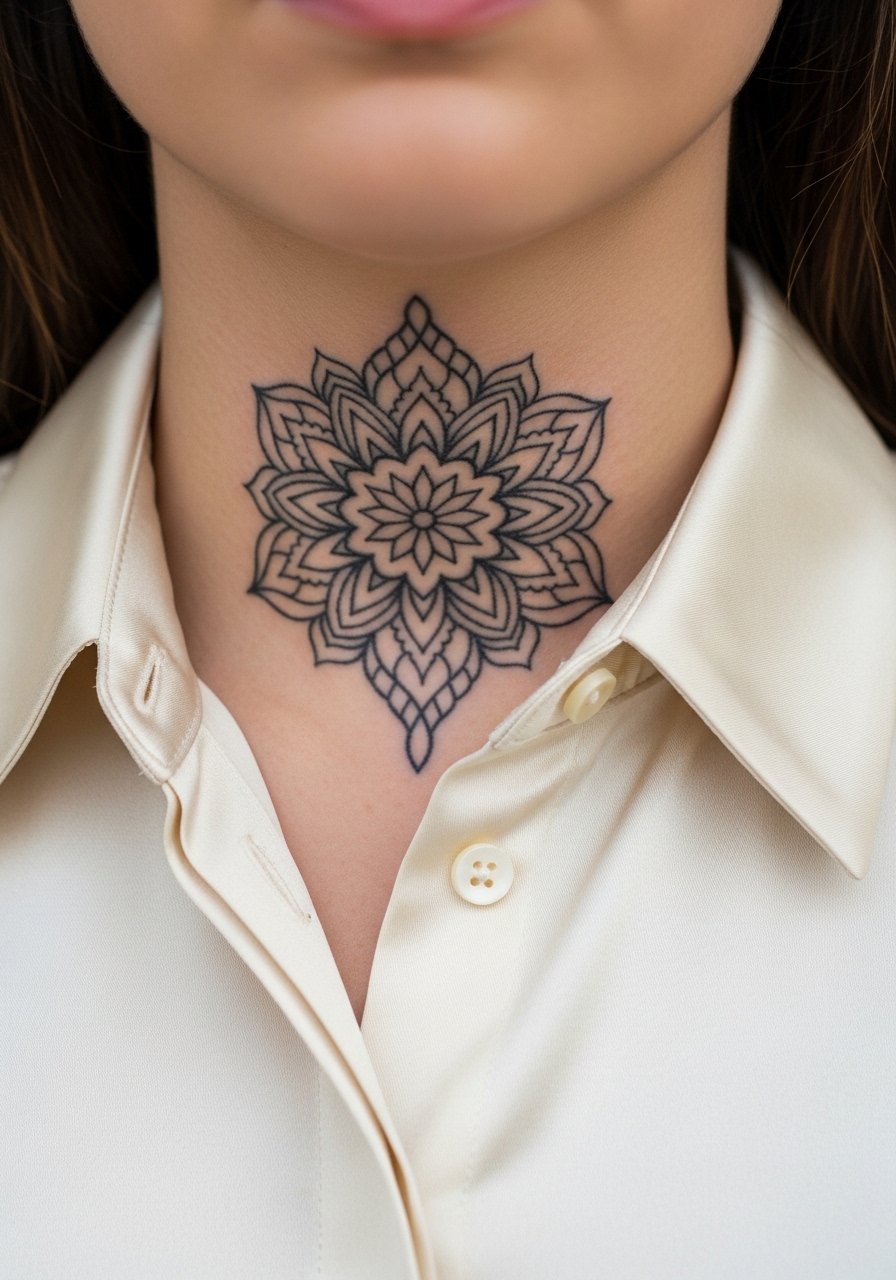
6. Ornamental mandala centered on the throat
An ornamental mandala on the throat creates symmetrical framing for the lower face and works well when scaled to the upper sternum. In consultation, ask for spacing in the dense petals so stipple and linework do not merge over time. This design has cultural echoes, so consider small variations rather than direct replicas of sacred motifs. Pain is significant around the front throat, and larger pieces usually require two sessions. For showing it off with a refined look, roll a roll neck turtleneck down slightly or wear a silk collar blouse. Expect the best longevity from black ink with controlled negative space.
Studio Day Picks
Those first six neck designs range from delicate vining to saturated blackwork, and the right small items smooth the session and the first week of healing.
-
Stencil transfer paper kit. Lets you preview the exact placement on skin before the needle starts, which matters for side-neck vines and script at the nape.
-
Topical numbing cream. Applied per instructions it eases the initial sting on throat and side-neck sessions without adding hours.
-
Thin protective film roll. Useful for keeping fine line work on the side neck clean during the first days when hair and collars are most disruptive.
-
Fragrance free gentle body wash. Cleans the area without irritating tender lines, especially for designs near the hairline and shoulders.
-
Aquaphor healing ointment. Thin application in the first days helps protect fine line pieces while they close, then switch to a lighter moisturizer as advised.
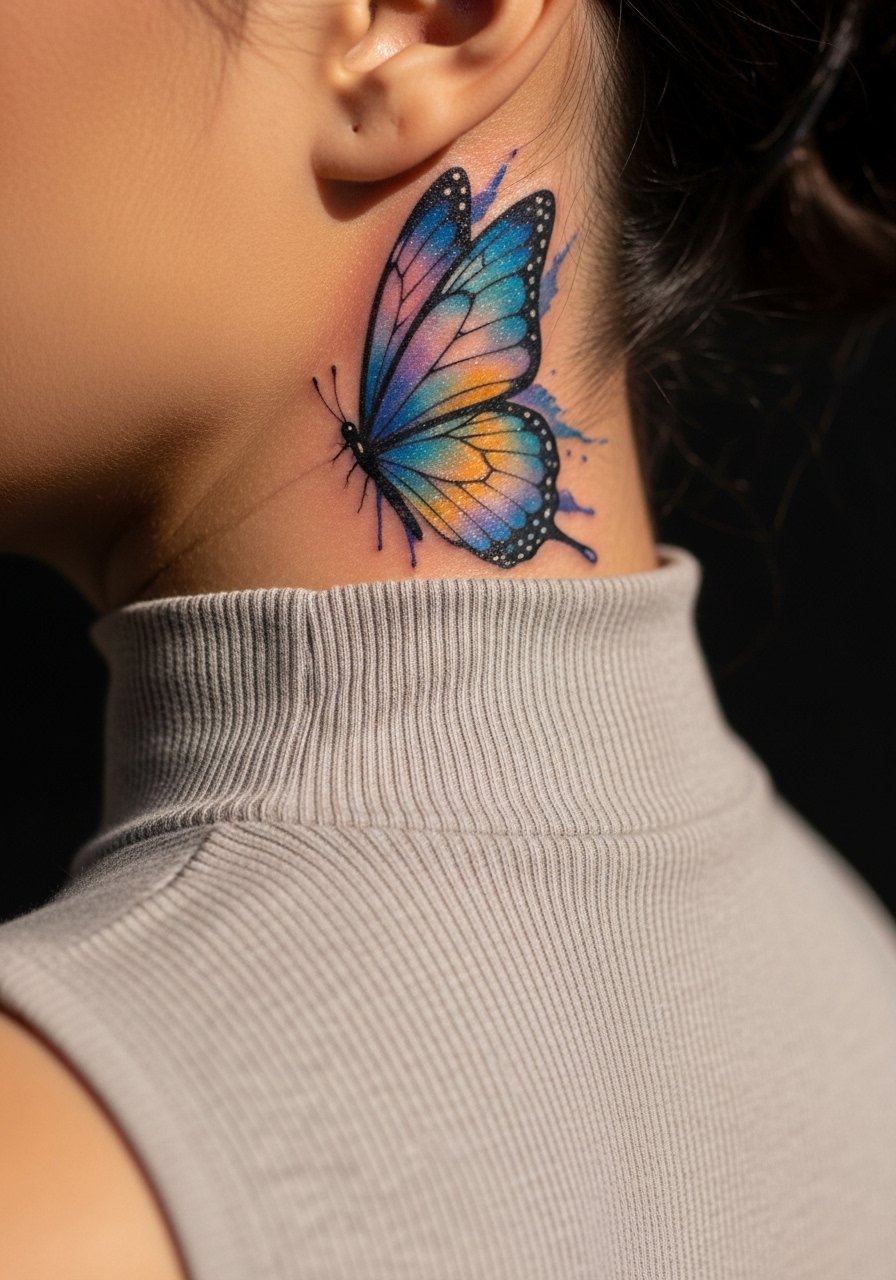
7. Watercolor butterfly on the side neck
Most watercolor neck tattoos need more space to breathe than people expect, because pigments can spread and soften on thin neck skin. For butterflies, ask for a painterly fade that respects negative space rather than an overloaded color patch. This style looks ethereal at six months, but color movement can make edges ambiguous by year two, so expect touch-ups for vibrant pigments. Pain is mild to moderate, and the session is usually quick for a 3-inch piece. If you like the idea of evening reveals, pair it with a high neck crop top women that draws fabric lines complementary to the wing shape. Keep hair products clear of the tattooed side during healing to avoid irritation.
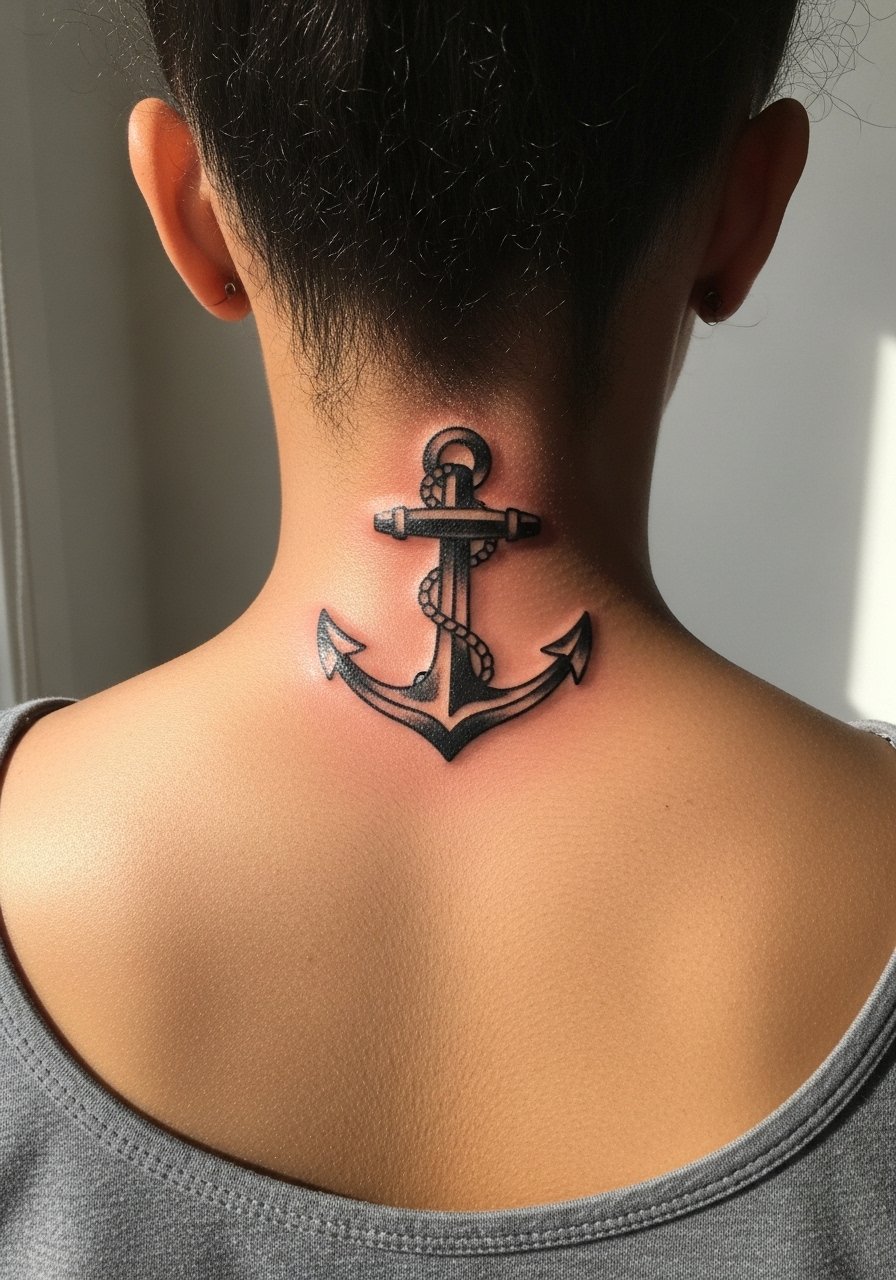
8. Traditional anchor tucked at the nape
The classical anchor is a smart pick when you want something that ages predictably. Bold outlines and solid fills are the difference maker here. Ask for thicker outer lines than you might on a forearm to avoid early feathering. The nape cushions the needle so pain is mild and sessions are short for a 2 to 3 inch anchor. A common mistake is asking for tiny decorative flourishes that compete with the anchor silhouette. For casual reveals wear a low back tank top and keep hair up when you want the nape visible. This style tends to hold up at year five better than washed-out watercolor alternatives.
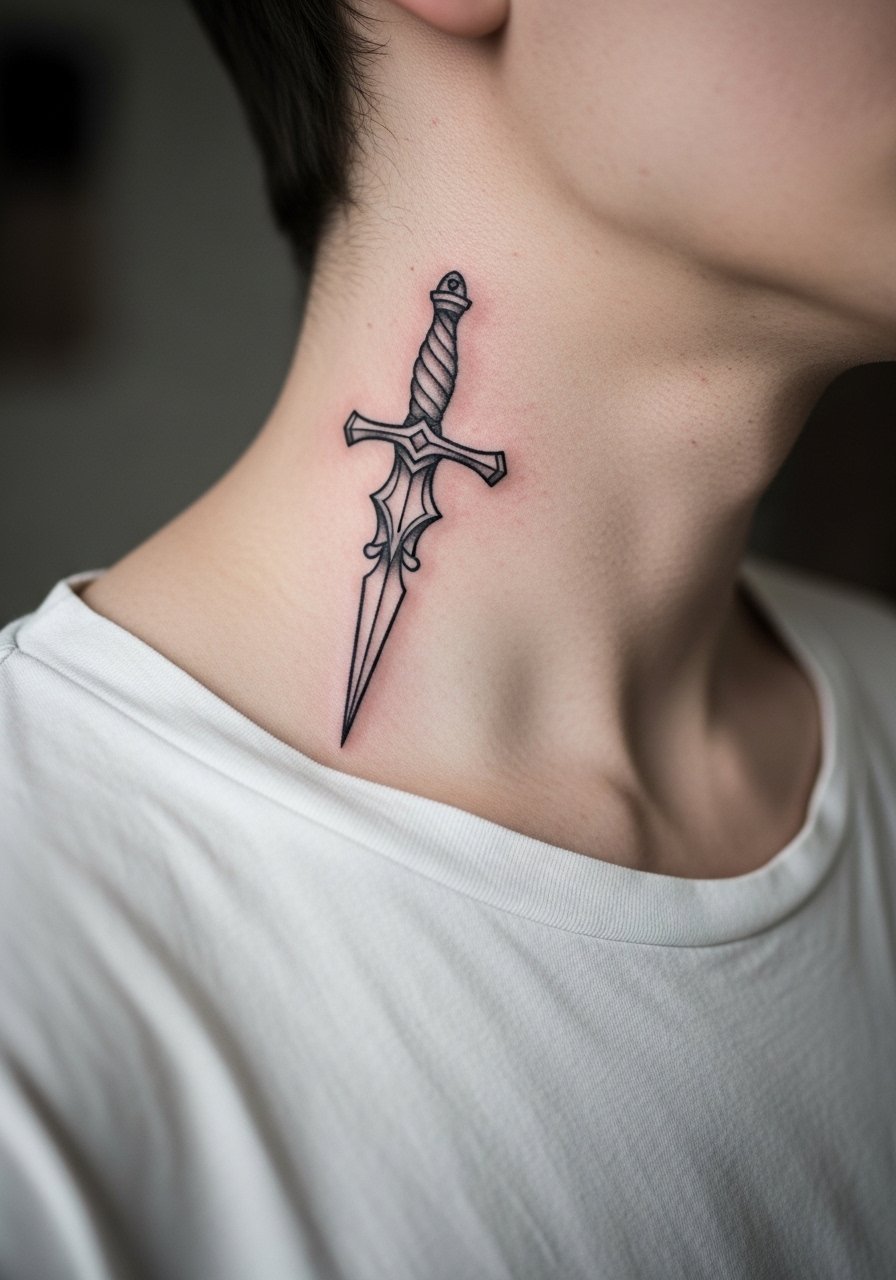
9. Ignorant style dagger on the side neck for raw edge
If you want immediate attitude, an ignorant style dagger reads aggressive in its line simplicity and bold placement. Tell the artist you prefer raw illustrative strokes and keep color minimal so the linework reads sharp as it ages. The main mistake is scaling the blade too thin. On the side neck the line needs room to hold. Expect a two-session layout if you add stippling or shadow. Pain ranges from moderate to high on the outer neck. For session comfort wear a wide neck tshirt so the artist has room to work without fabric pressure. This design is visible, so think through career visibility before booking.
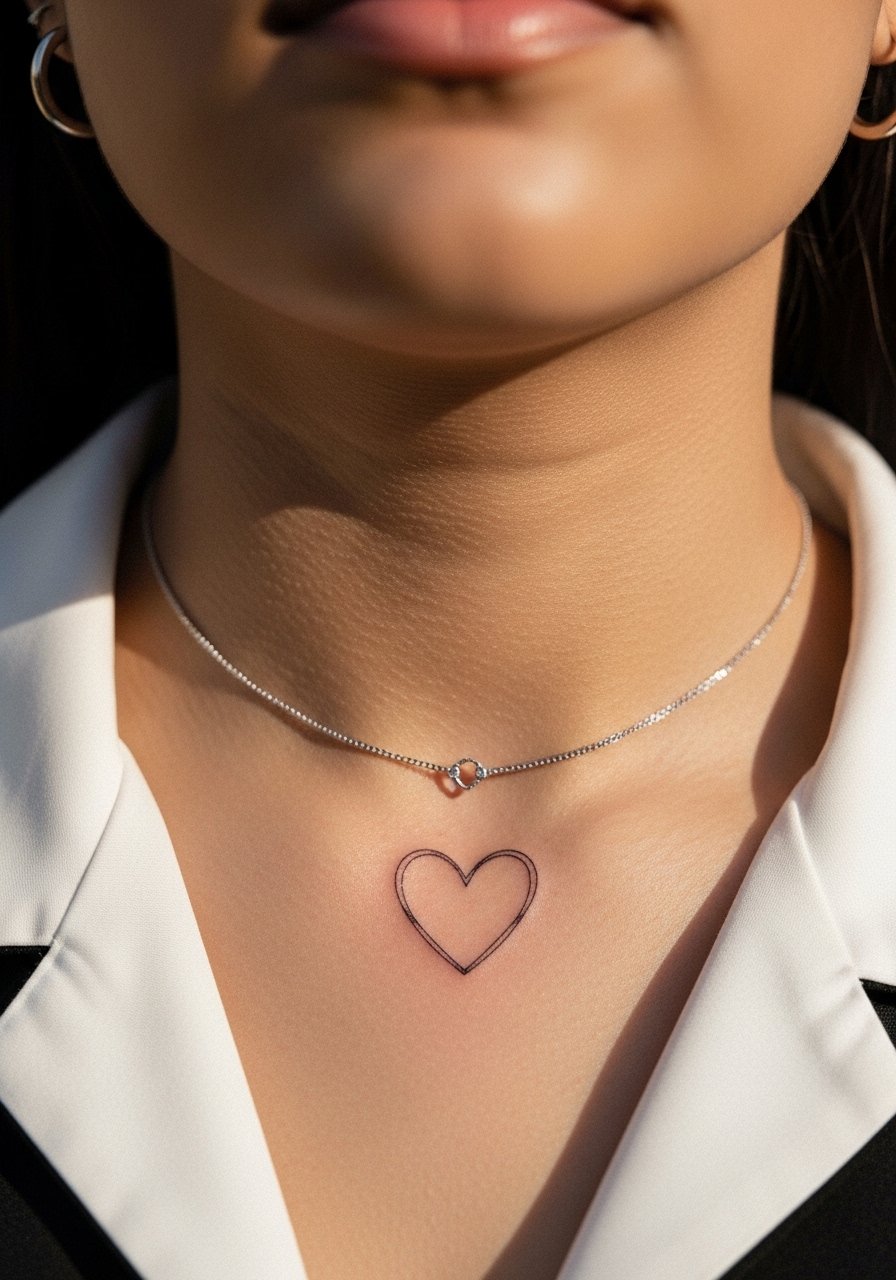
10. Fine line heart on the throat, micro and honest
A tiny fine line heart centered on the throat can read intimate and simple if scaled correctly. The key is to keep the heart at least 1.5 inches or use negative space around it so the two arcs do not merge as the skin moves. Pain is higher on the throat, but session time is short. People often request overly tight curls in the arc, which pushes ink into a blur within a year. For subtle everyday style a thin chain pendant sits above the heart, but avoid chokers during the first month. Expect a touch-up at six to twelve months for the crispest outline.
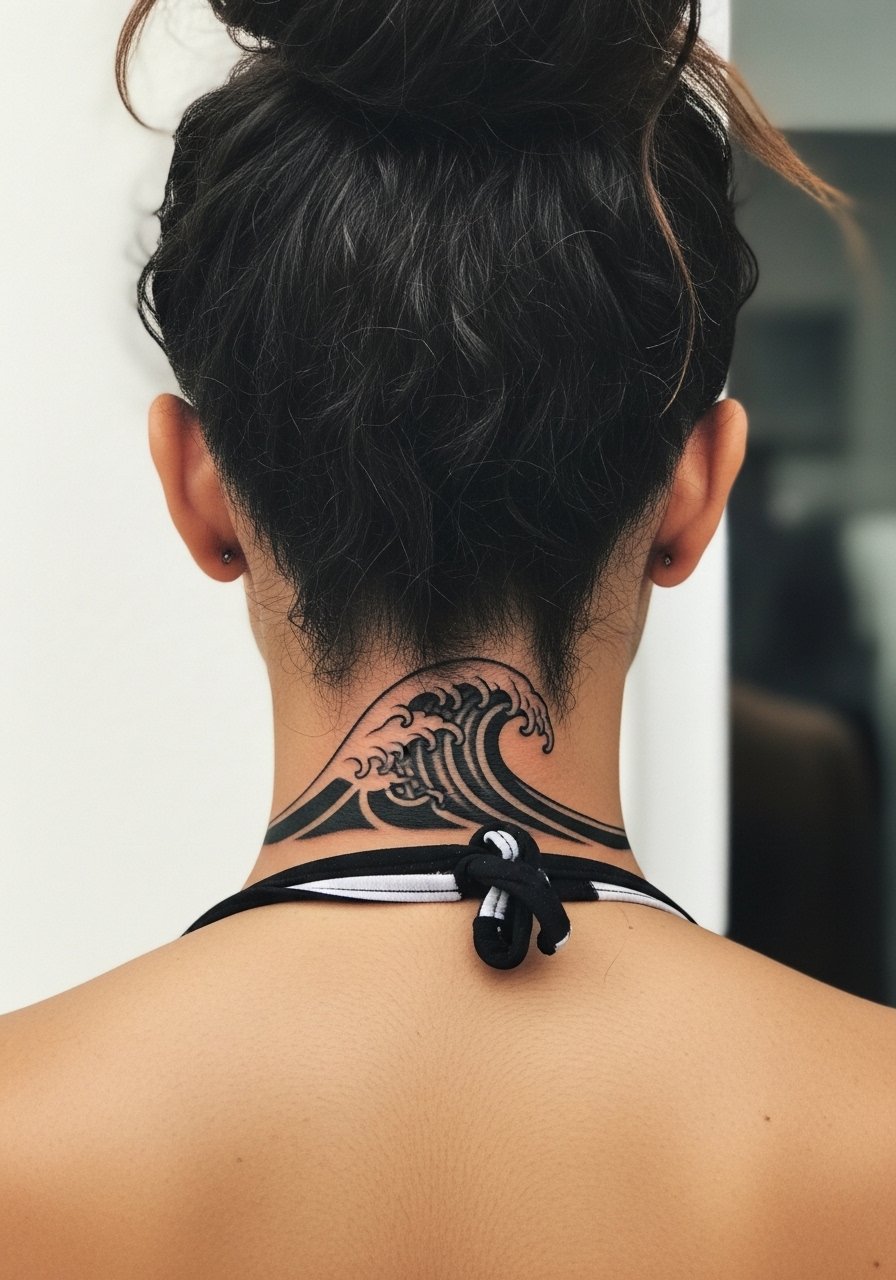
11. Blackwork wave at the nape that follows hair flow
A blackwork wave across the nape uses solid fills to mimic movement in the hair and collar. For longevity tell your artist you want clear negative space between crest and trough so saturation does not merge. This placement is forgiving because hair covers it most days, but beware of heavy shampoo rubbing in the first two weeks. Sessions are usually one or two visits depending on width and fill. The aesthetic pairs naturally with messy buns and halter dresses that reveal the back of the neck. Ask for a midline anchor so the wave reads the same from both sides when hair is swept up.
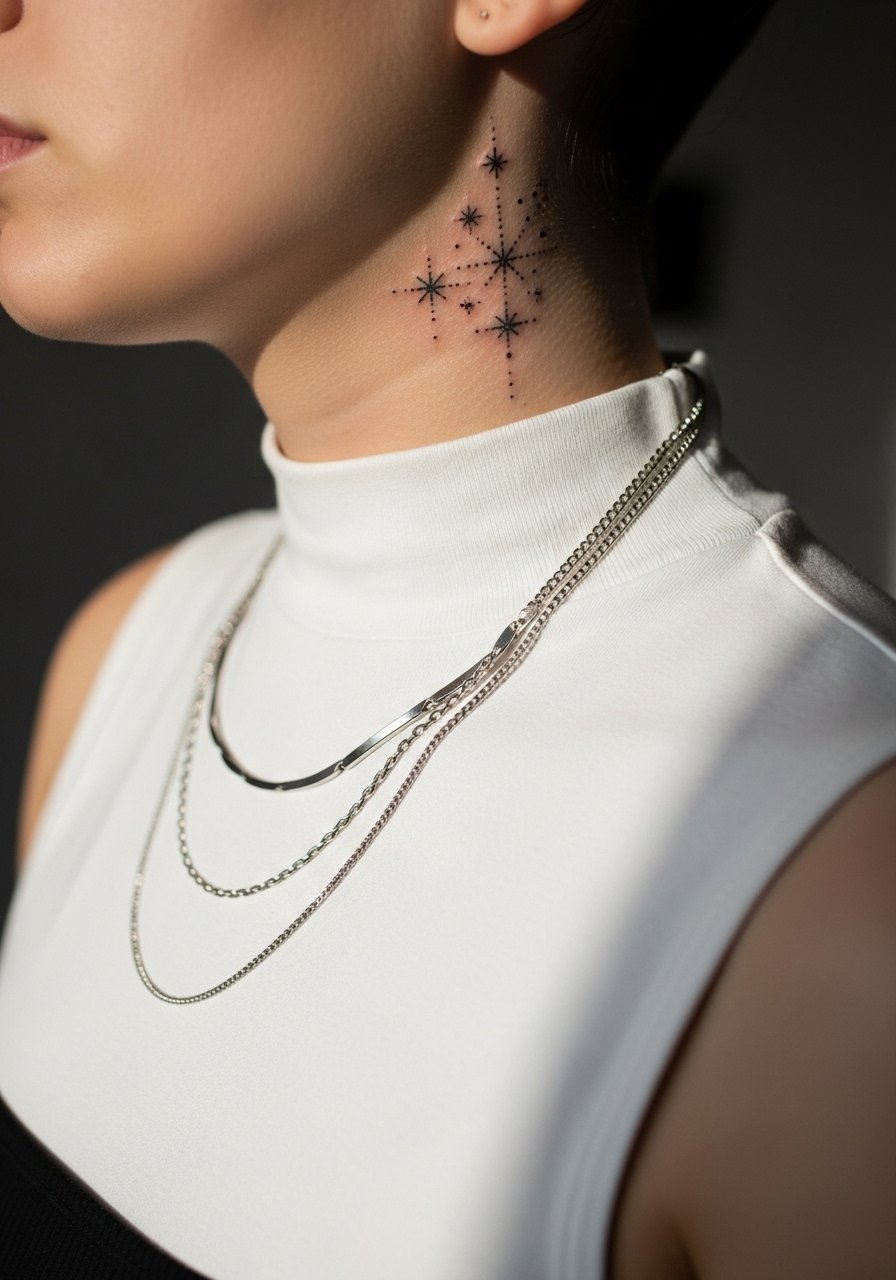
12. Minimalist star cluster on the side neck for subtle symbolism
Small clusters of black dot stars make for tiny points of interest along the side neck and they are low commitment. The common error is placing stars too close. Give line spacing so dots do not connect as the skin ages. This is a single-session piece and pain is mild, but keep in mind collars and necklaces cause extra friction during the first month. For evening looks a high neck crop top women or layered thin chains draws attention to the cluster without overwhelming it. Touch-ups once at six months will keep the dots crisp if you want longevity.
13. Behind-the-hairline script that reads like hair jewelry
This placement treats nape script as hair jewelry because the lines peek only when your hair is up. For best results ask for slightly thicker capitals and a shallow baseline curve so letters do not blur into a single string. The controversy about Saniderm versus dry healing shows up here. One camp recommends protective film to shield hair and fabric friction. The other camp argues that breathable dry healing avoids trapping sweat and bacteria. Decide with your artist based on your sweat and hair product habits. For session comfort use a hair clips large to hold hair up cleanly.
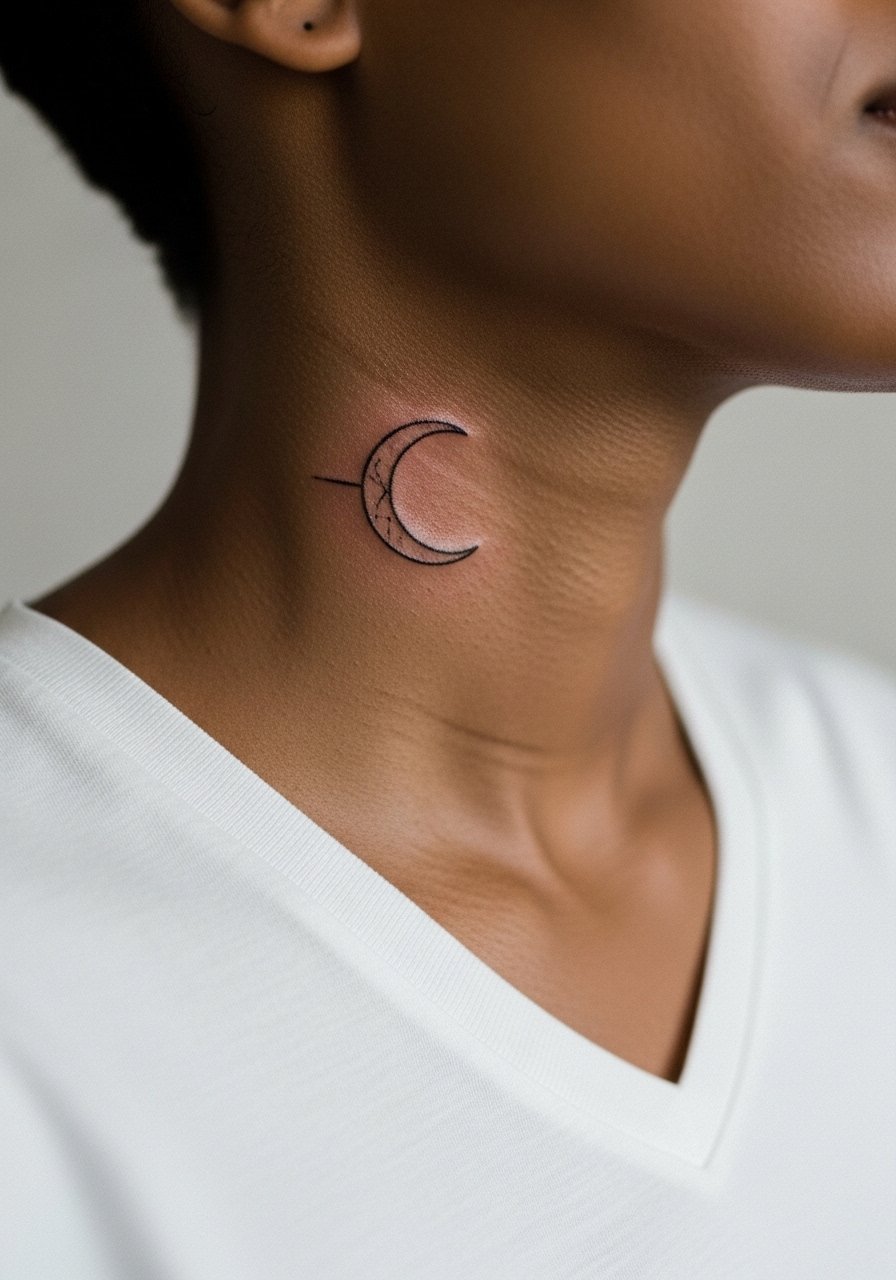
14. Small crescent moon tucked near the jawline
A crescent moon near the jawline reads like punctuation on the face when you turn. It is a low-bulk piece, so keep the arc open and avoid dense shading that will smooth into a blot by year three. The jawline is a bony zone with sharp flashes of discomfort during inking and a short session time. Wear a loose v neck tee to let the artist angle the stencil exactly where you want it. The common mistake is aiming too small when bold spacing is the real secret for longevity. Expect a single session and a touch-up if you notice any early softening.
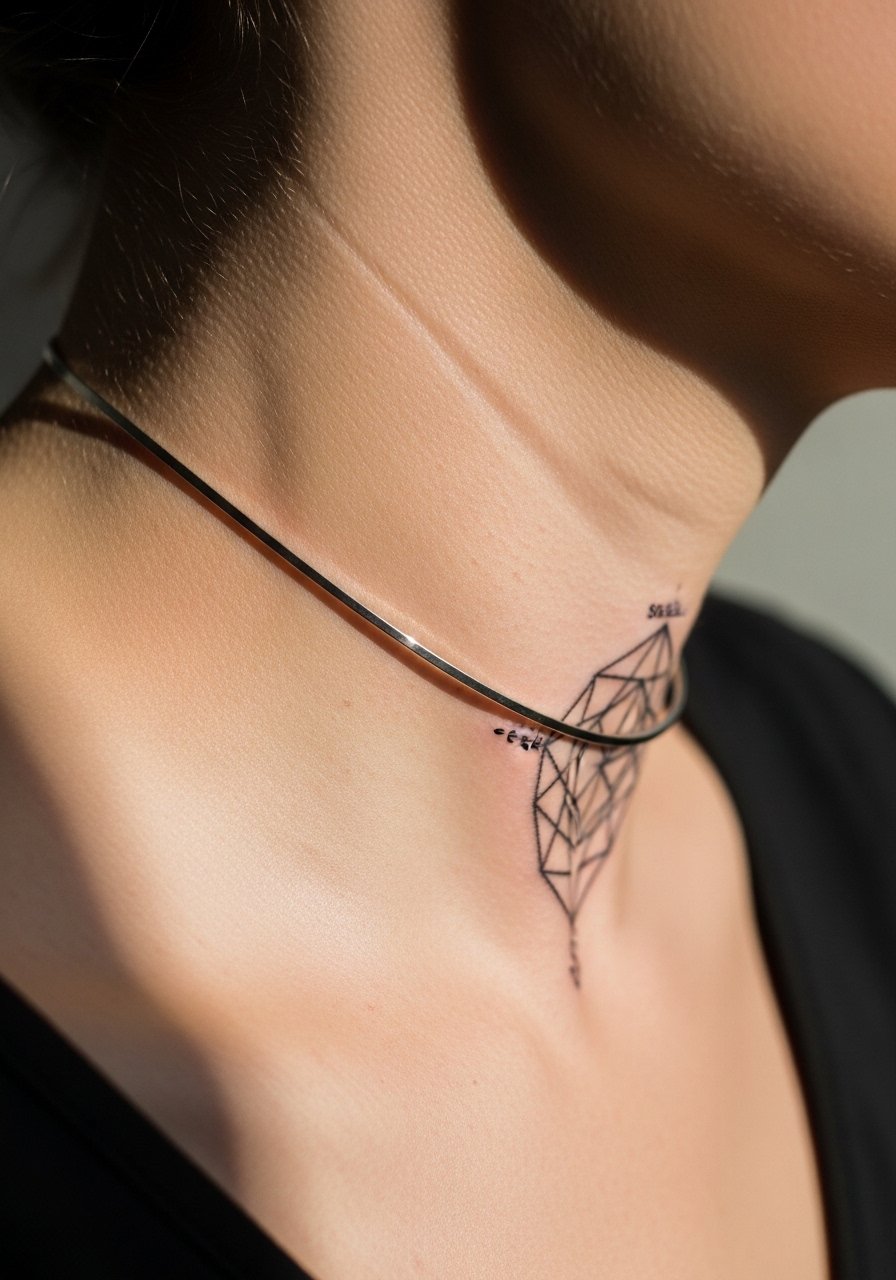
15. Pulse-point micro geometry along the side neck
Micro geometric shapes placed near the carotid pulse use tiny negative spaces to suggest rhythm and beat. For this kind of work ask for slightly thicker connecting lines and ask how the artist spaces the geometry to account for natural neck movement. The danger is packing too many shapes into a small area. Pain is moderate and sessions are short. For subtle show-off styling pair it with a minimal choker necklace that sits above the geometry when you want it visible. These pieces photograph well when the skin is settled and the negative space remains crisp at six months.
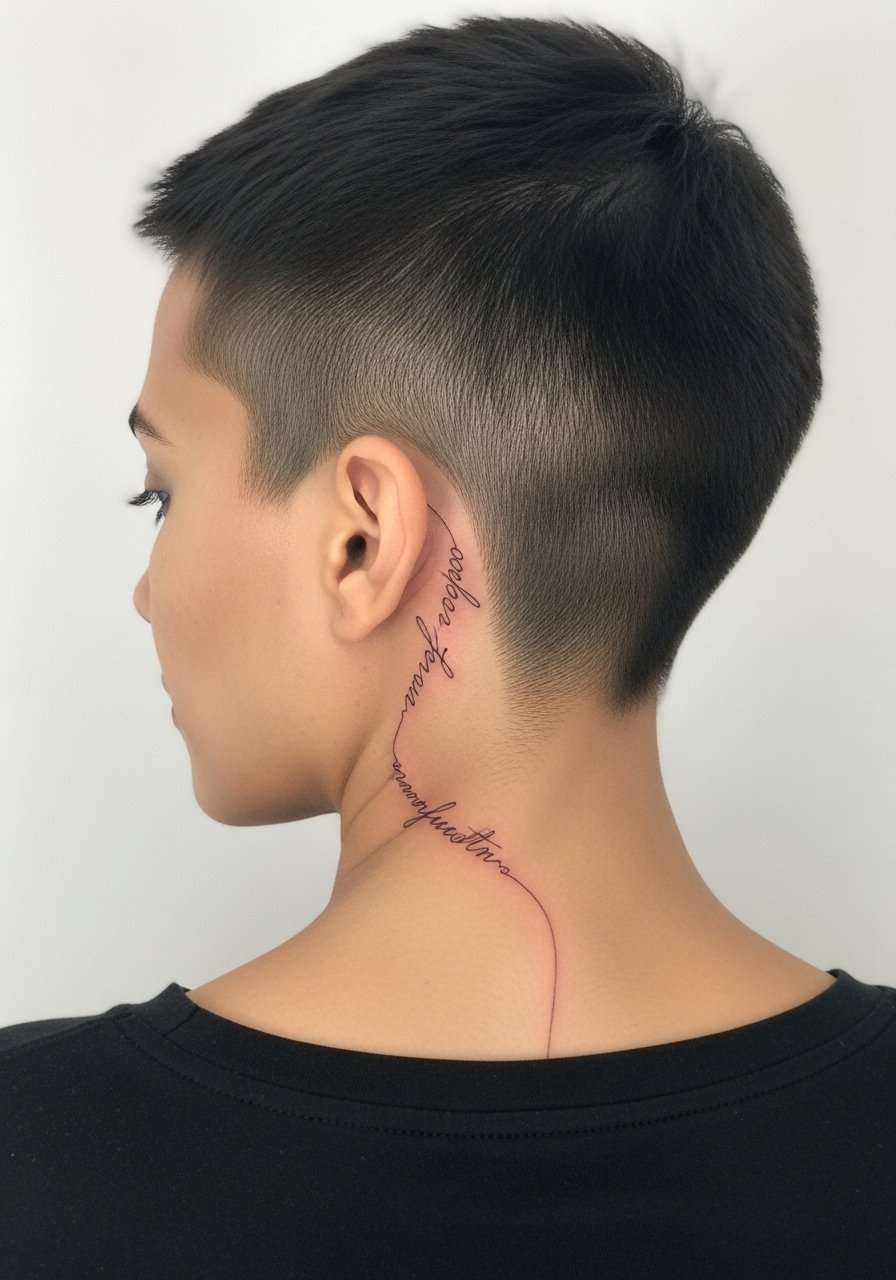
16. Script that wraps from behind the ear to the neck
A flowing script that starts just below the hairline behind the ear and curves to the neck reads like a whispered phrase. For clarity specify the exact text and font during booking so the artist plans letter size for healing. Text in image prompts must be exact, so bring your final word choice. This route is excellent if you want something private that can be shown or hidden with hair. Pain is varied because the area crosses soft and firm tissue. For session access a wide neck tshirt keeps the collar away from the working area. Expect a fast session and a possible six-month touch-up for crisp serifs.
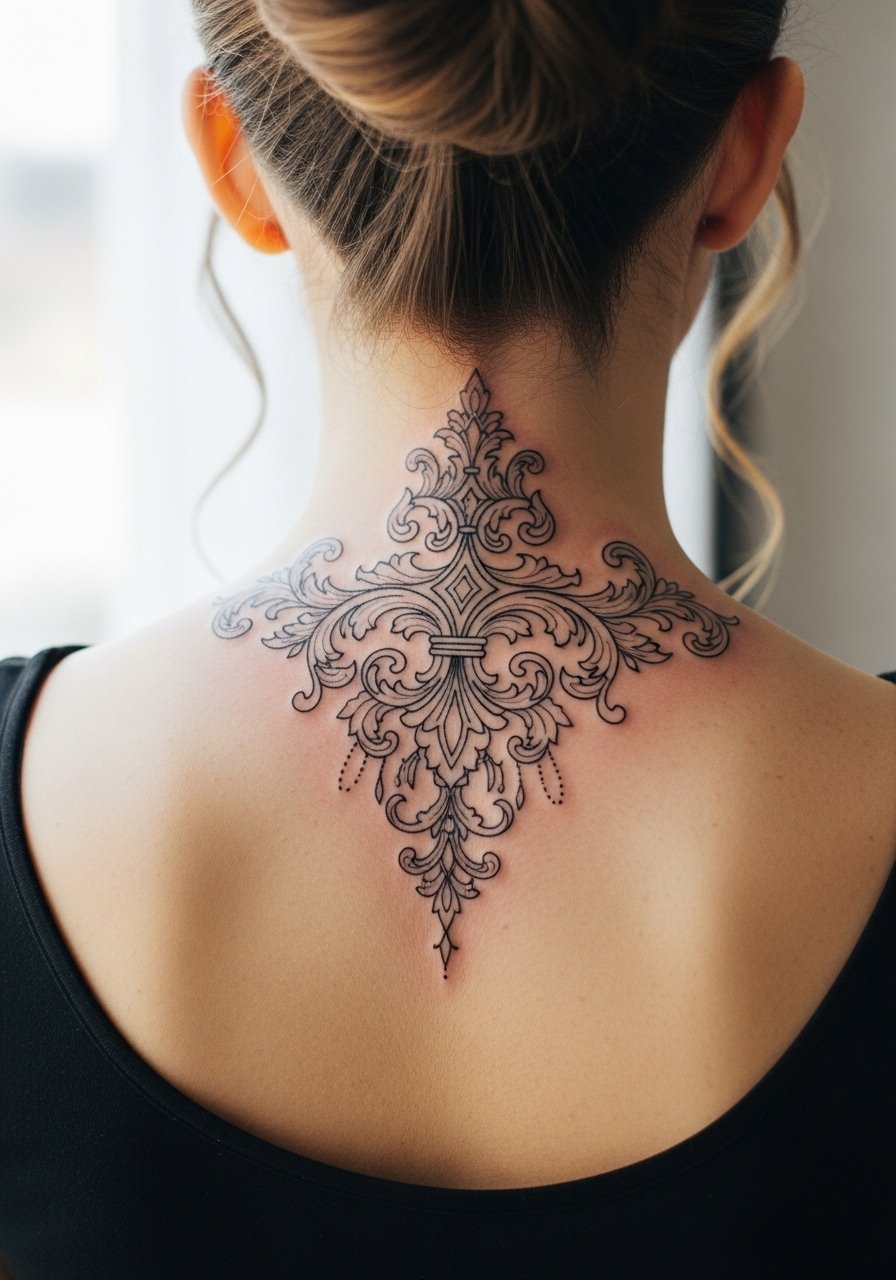
17. Baroque ornamental filigree pooled at the nape
Baroque ornamental filigree looks like built-in jewelry when placed at the nape and scaled to the hairline. Tell your artist you want open negative scrolls and avoid packed dot shading that fills in over time. The session may be multi-hour if you want symmetric wings that mirror each side. Pain is moderate and the area is forgiving because hair covers most days. For summer reveal wear a low back tank top so the filigree sits against skin without necklace interference. This ornamental route blends well with updo hairstyles and festival aesthetics.
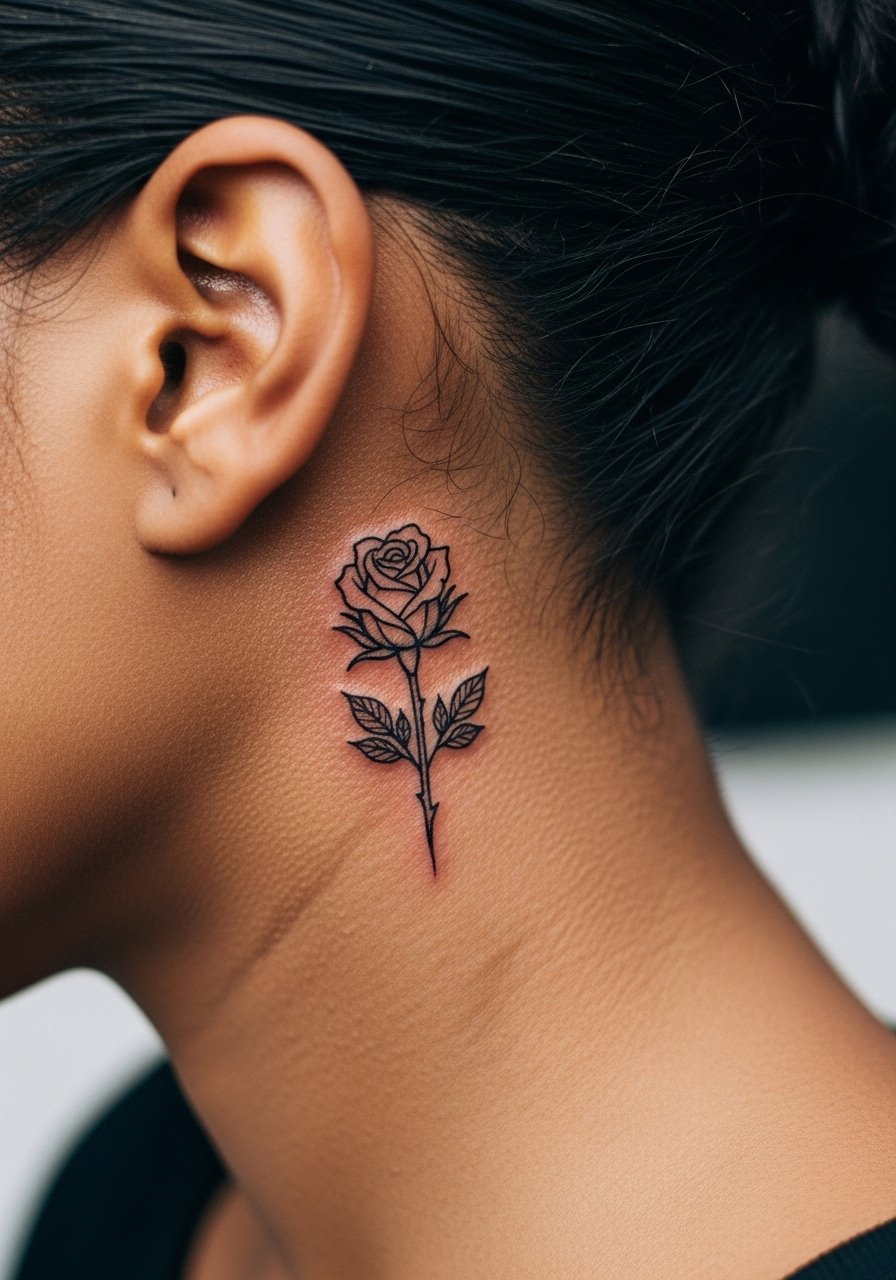
18. Tiny rosebud hidden behind the ear
A tiny rosebud tucked behind the ear is a discreet option when you want a floral without constant visibility. For safety in the image prompt describe it as on the skin behind the ear, below the hairline on the neck. Ask your artist to keep the bud open with slight stem negative space to avoid early merging. Pain here is quick but sharper because the skin is thin. For showing it off put hair up with a hair clips large and avoid heavy hair oils on the tattoo during healing. This placement is personal and low maintenance, though street-level friction from collars can still be a factor.
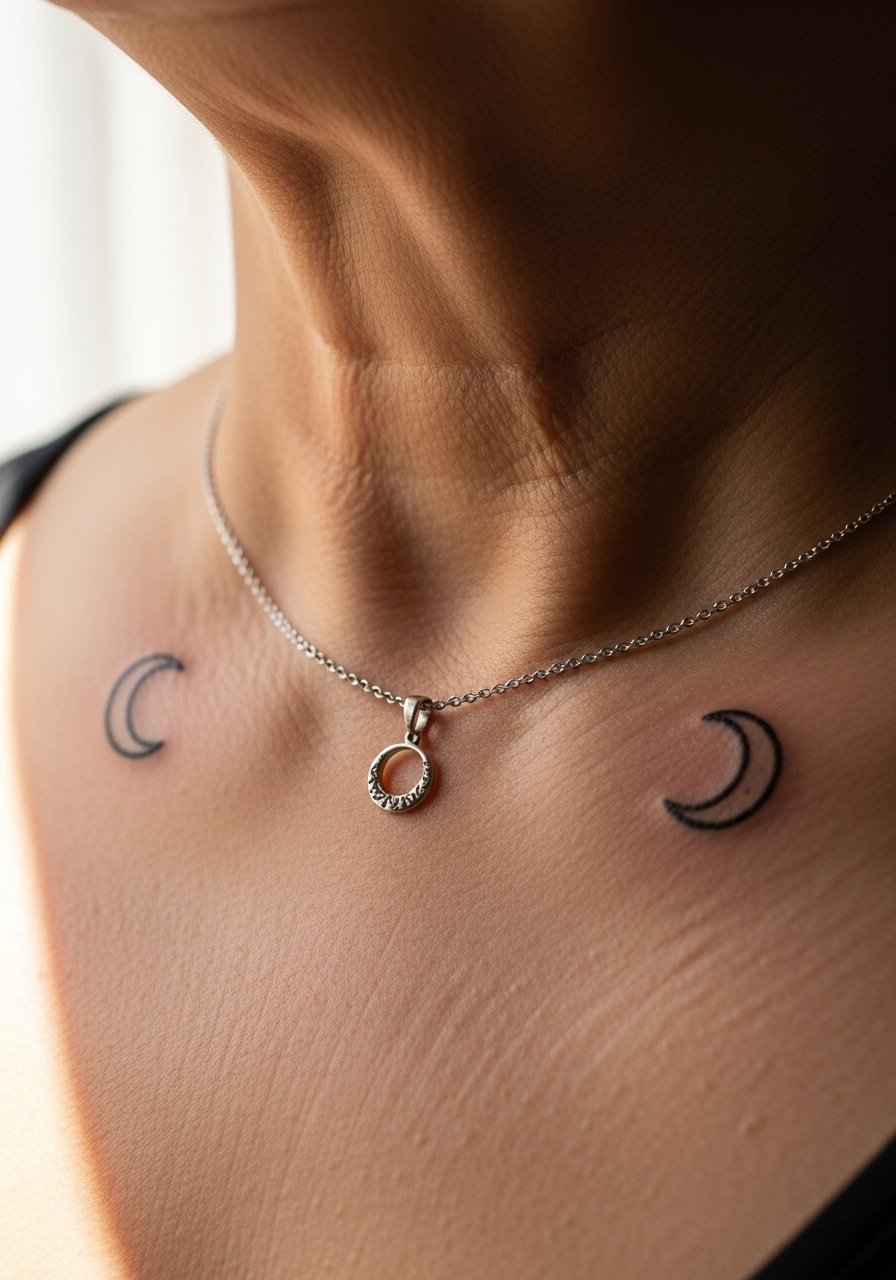
19. Symmetrical crescent pair framing the throat
Two small crescents mirrored on either side of the throat create a balanced look that reads editorial and intentional. Ask your artist for matched scale, and suggest a small gap between crescents and the Adam's apple to avoid movement distortion. Symmetry mistakes show up fast if placement is even a few millimeters off, so insist on final stencil checks seated and standing. Pain is moderate and session time is brief. For paired styling a thin chain pendant necklace sits between the crescents without crowding them. These hold up well with periodic touch-ups.
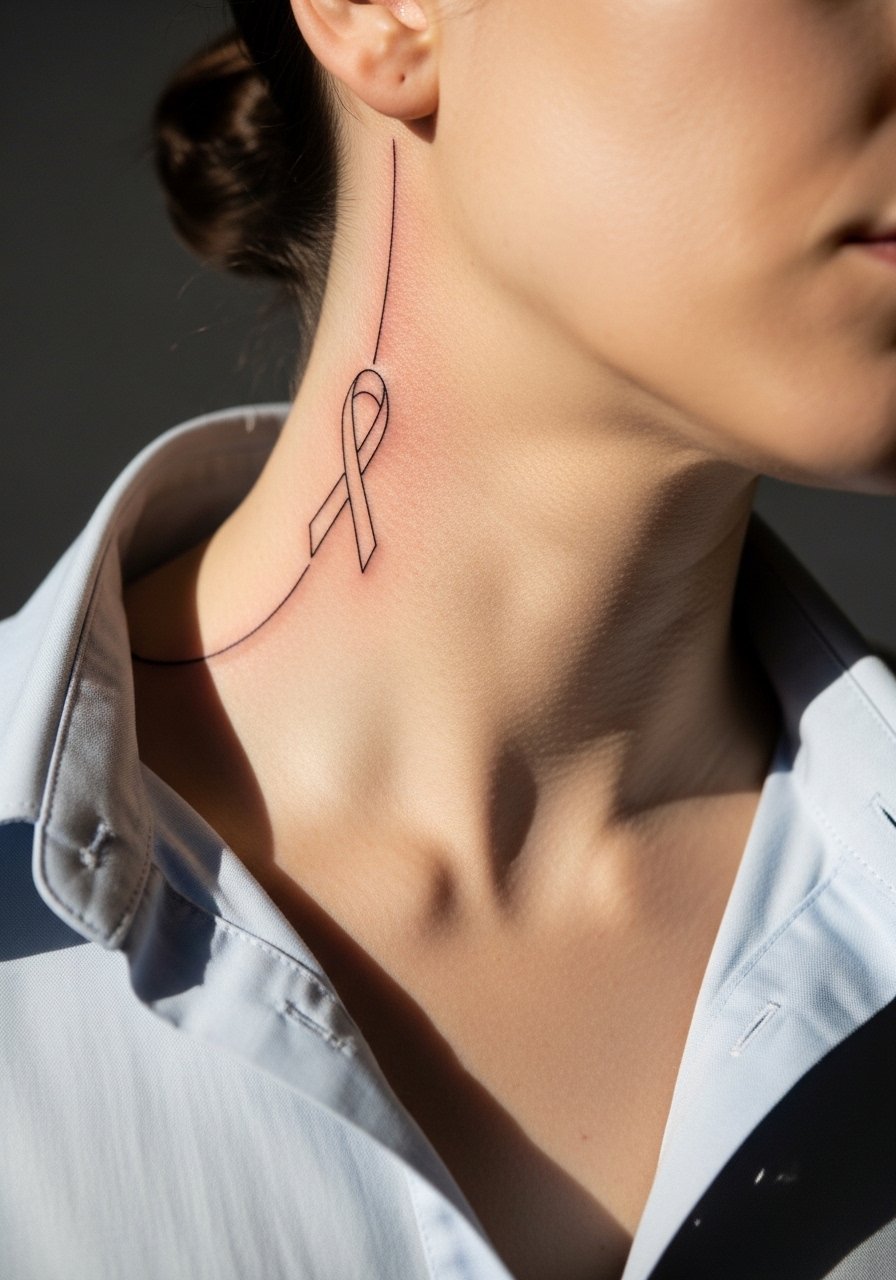
20. Continuous single-line ribbon from behind the ear to collarbone
A continuous single-line ribbon that trails from behind the ear down to the collarbone reads like a languid thread when done at proper scale. Ask for even line weight and a steady baseline so the ribbon rests naturally against muscle contours. The risk is over-compressing loops which fuzz over time. Pain varies as the line moves over different tissue. For showing off the collarbone end, wear an open collar shirt or a slightly rolled turtleneck worn low. Sessions are linear and often faster since artists can follow the flow without heavy shading.
21. Micro constellation that wraps to the collarbone
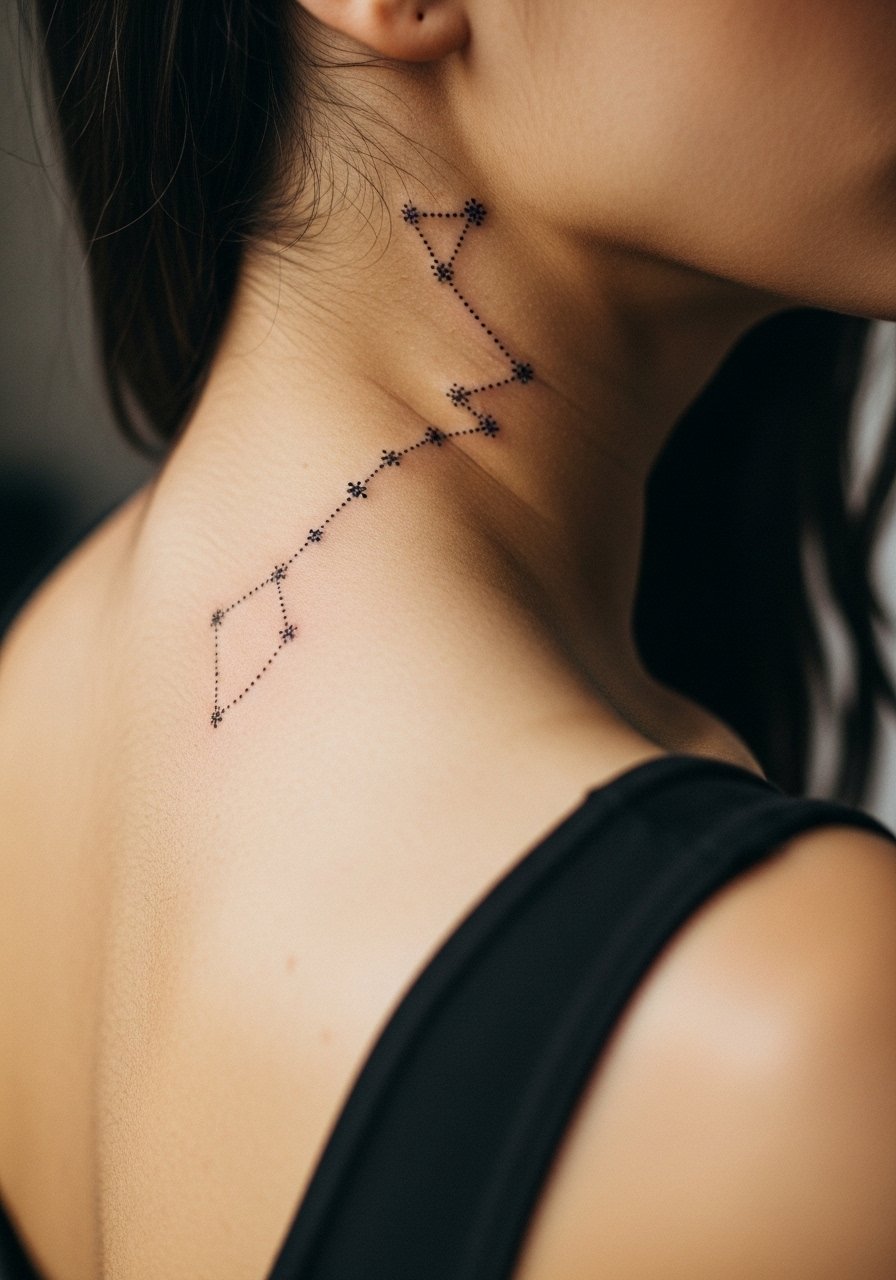
A small constellation map that starts on the side neck and gently wraps toward the collarbone provides a celestial motif with room to expand. Plan the cluster spacing and negative halos around each star to avoid dot merging as skin moves. This placement is visible in low-cut tops, so plan for career considerations if needed. Pain is mild along the collarbone area but can spike over bone. For wardrobe pair it with a low back tank top or a delicate open-back dress to let light catch the tiny dots. Expect a single session and occasional touch-ups if you want the dots pristine.
Frequently Asked Questions
Q: Do fine line side neck tattoos fade faster than blackwork throat pieces?
A: From what I have seen fine line pieces on the side neck do tend to lose crispness sooner because collars and hair rub delicate strokes. Blackwork throat pieces trade subtlety for longevity through saturation. If you like the fine line look ask for slightly thicker line weight and plan a touch-up at six to twelve months.
Q: Is Saniderm better than dry healing for neck placements under hair?
A: Artists split into two camps here. One camp prefers protective film to shield ink from shirt and hair friction. The other camp worries about sweat and trapped moisture and prefers careful dry healing. Talk this through with your artist and factor in how much you sweat and whether you can keep the area clean without covering all day.
Q: How much does throat pain differ from the nape or side neck?
A: The throat is usually more sensitive because the tissue is thinner and it sits over cartilage and muscle that move while you breathe and swallow. The nape tends to be more forgiving and the side neck is variable depending on how close you get to the clavicle or sternocleidomastoid. Consider splitting a large throat piece into two sessions if you are nervous.
Q: What should I wear to a side-neck or nape appointment?
A: Wear clothing that gives clear access without rubbing the area afterward. For side neck and floral vines a loose v neck tee works well. For nape and upper-back work choose a tank or a button-down you can unclip. This saves time and minimizes post-session friction.
Q: How do I find artists who can do small neck sketches without blowing them up?
A: Search discovery pathways like #SideNeckTattoo and #NapeTattoo on social platforms, and look for portfolios that show healed neck work rather than only fresh photos. I have seen artists in five shops across Brooklyn who specialize in compact neck pieces and they show healed follow-ups to prove line retention. Ask for healed shots in your consult.
Q: Are there cultural concerns with ornamental mandalas on the throat?
A: Yes. Mandala motifs can trace to spiritual traditions, so many collectors choose adaptations instead of direct replicas. Mention sensitivity in your consult and request respectful variation if you want the visual without literal cultural copying.