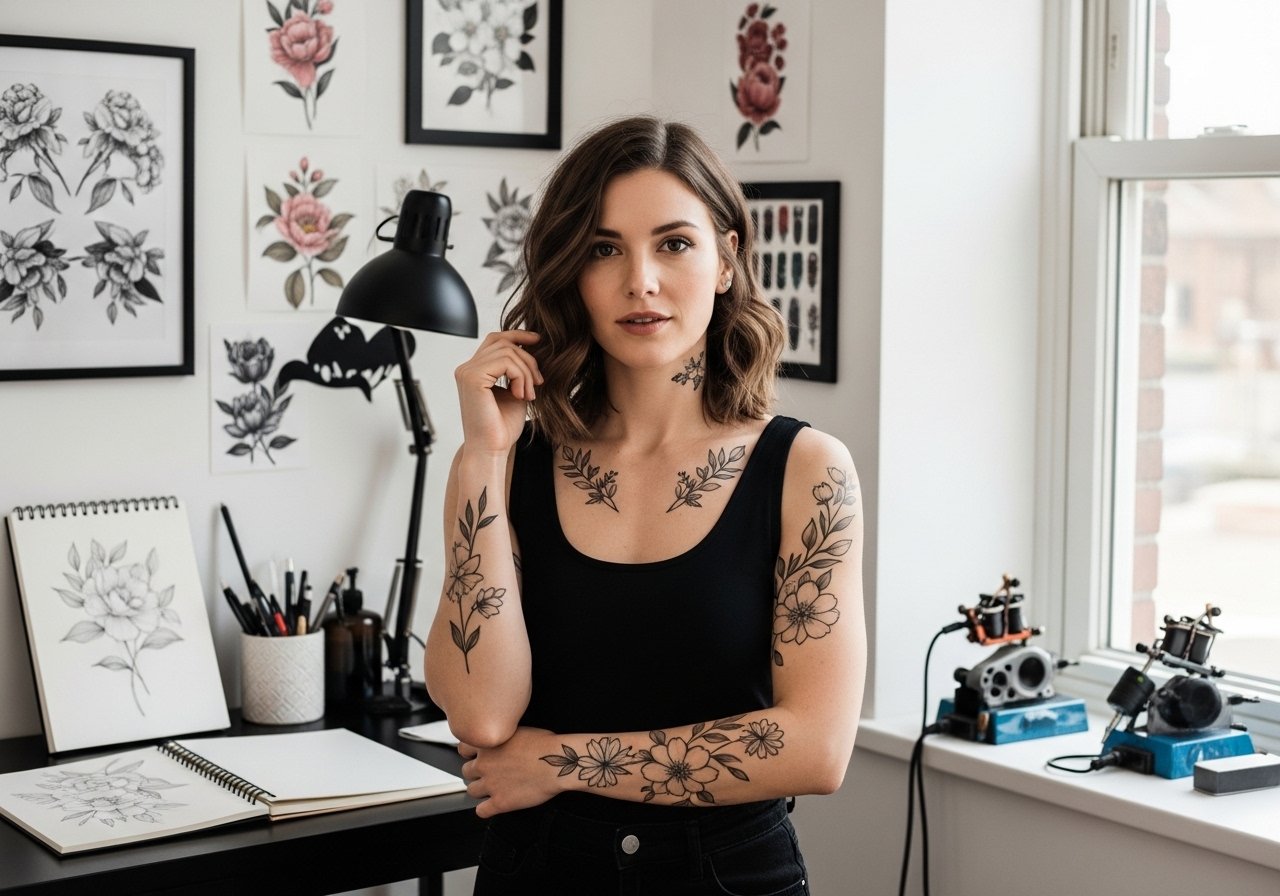
Fine line and saturated color trends push neo traditional work in two directions at once. Couples often want pieces that read as a pair on date night while aging differently under sunlight and friction. Decide now whether you want matching mirror images or complementary pieces that play off each other. The list that follows focuses on durable choices and what to say at the consult so both tattoos still look intentional after a few years.
1. Mirrored Botanical Inner Forearms
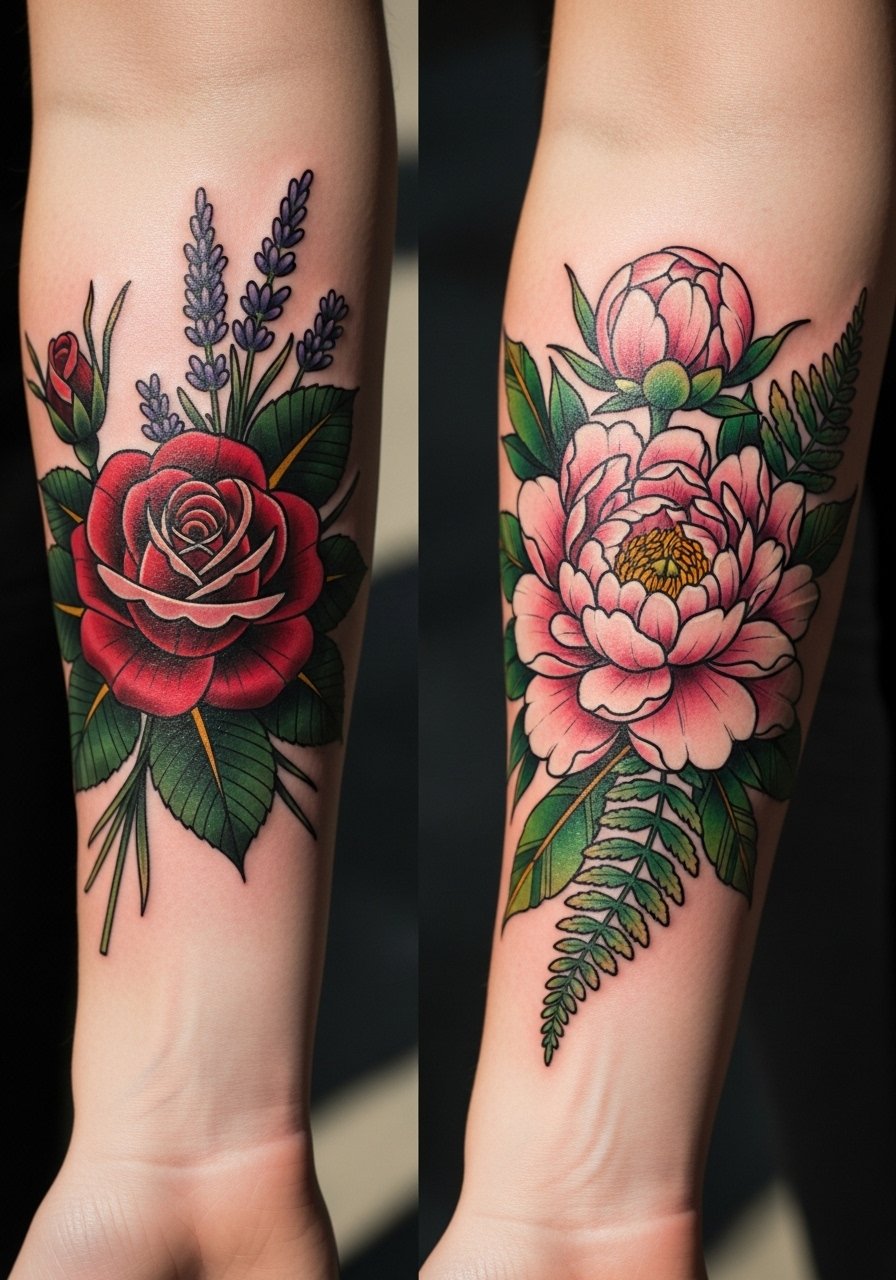
I’ve seen mirrored inner-forearm pieces hold up well when the linework is given breathing room. Ask your artist to scale the stems so the negative space reads when both arms are side by side. Common mistakes are cramming tiny details into a narrow panel, which merges into a blur by year three. Expect a moderate pain level and a single two- to three-hour session per arm if you want saturated color. For showing them off, rolled-up sleeves or a loose button-down shirt frames the forearm without competing for attention.
2. Color-Saturated Rose and Knife Pairing on the Shoulder Caps
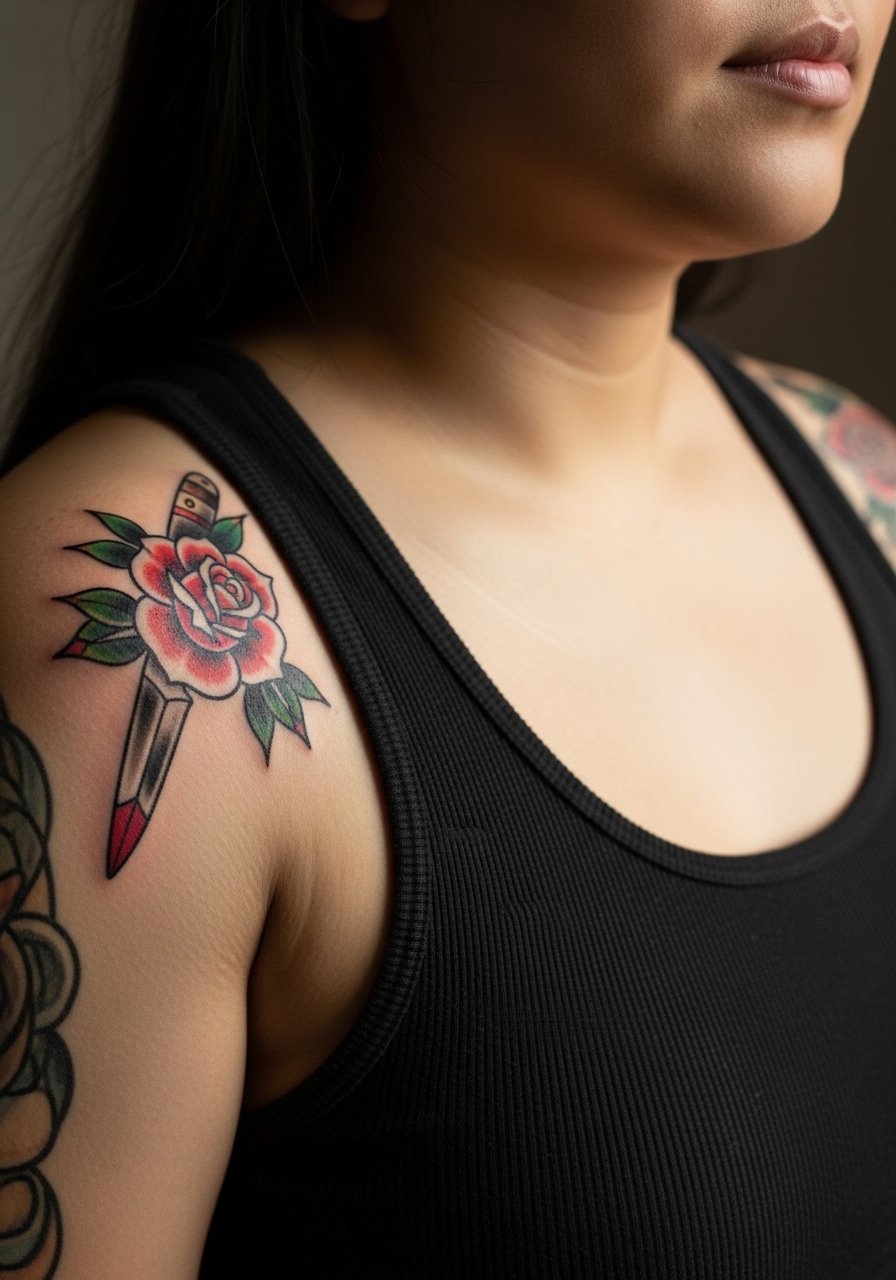
There is something about bold outlines with lush saturation that reads across a room for couple sets. Tell your artist you want heavy black outlines with punchy midtones, not watercolor blends. The shoulder cap tolerates saturation and ages predictably because it sees less friction than hands or wrists. A common aging issue is overworking the skin for too many passes, which causes blowout. Session feel is gentle compared to ribs, and most artists can finish both shoulders in two three-hour sessions. Pair with a tank top on date night to keep the shoulder line visible.
3. Small Script Coordinates on the Inner Wrist
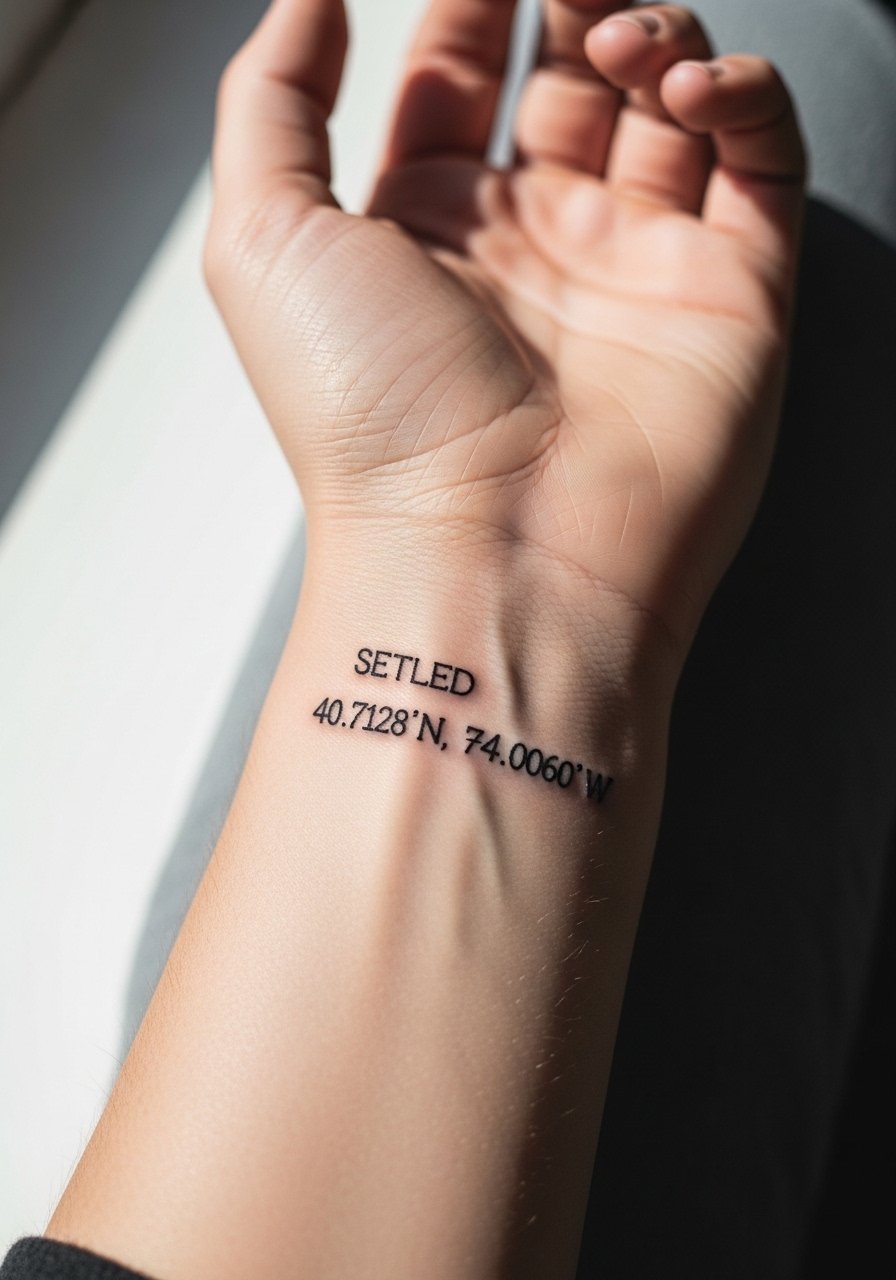
When you book a coordinate script, bring the exact text so the artist can size letters properly. The wrist is unforgiving for tiny lettering because the skin moves and rubs against daily wear. The biggest mistake is asking for lettering the size you see on a phone screenshot without asking how it scales to skin. Expect high visibility and higher touch-up likelihood around year two to three. For the session, wear a racerback tank so the artist can access the inner wrist without interference from sleeves.
4. Matching Miniature Hearts Behind the Ear
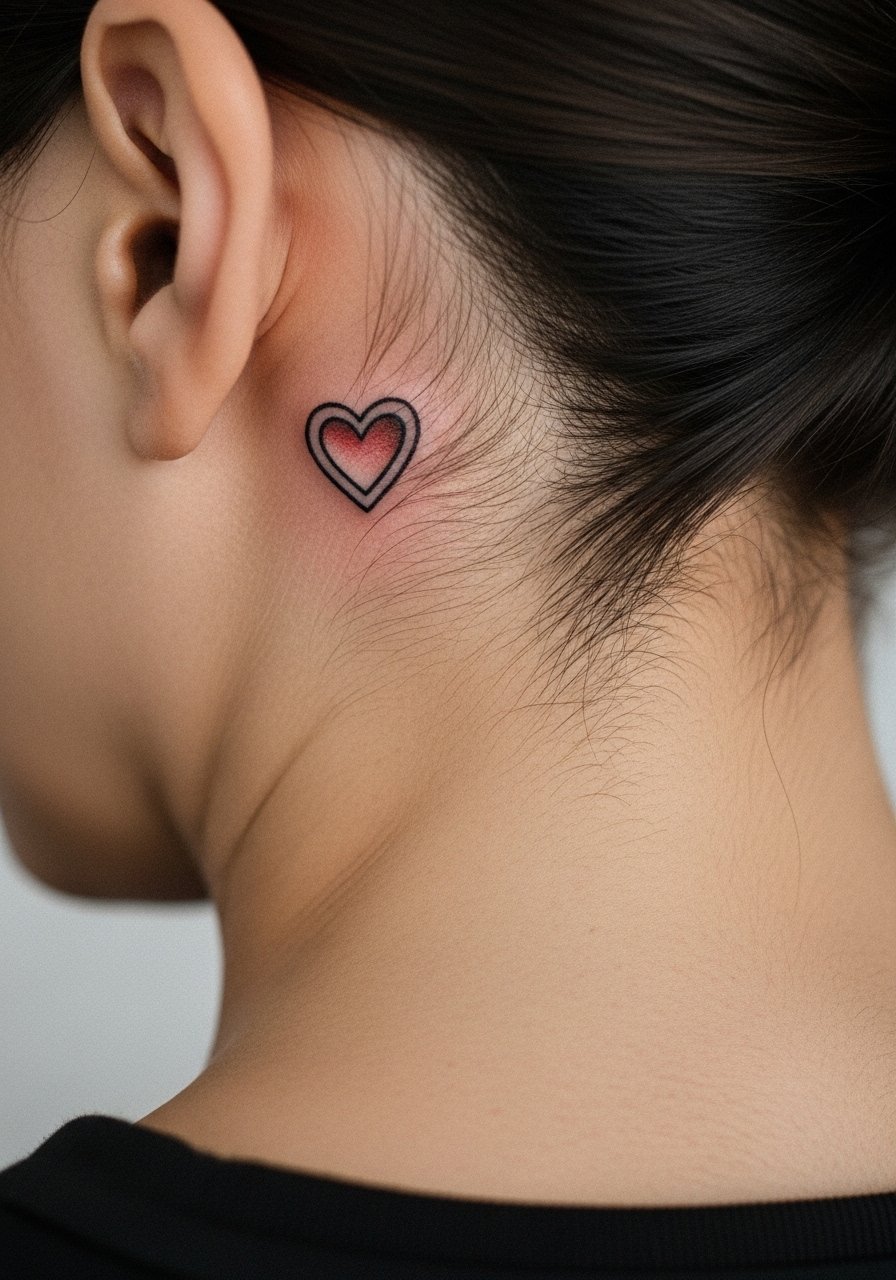
Fair warning, behind-ear placements need a precise conversation about longevity. One camp says tiny work here blurs fast because the skin is thin and moves with hair growth. The other camp argues careful needle depth and slightly larger scale can make a tiny piece last. If you pick behind the ear, ask for a slightly bolder outline than you think you need. Sessions are short but sensitive. For the appointment, pull hair back into a low bun and bring a wide-headband to keep hair off the area.
5. Complementary Sparrow and Key on the Chest
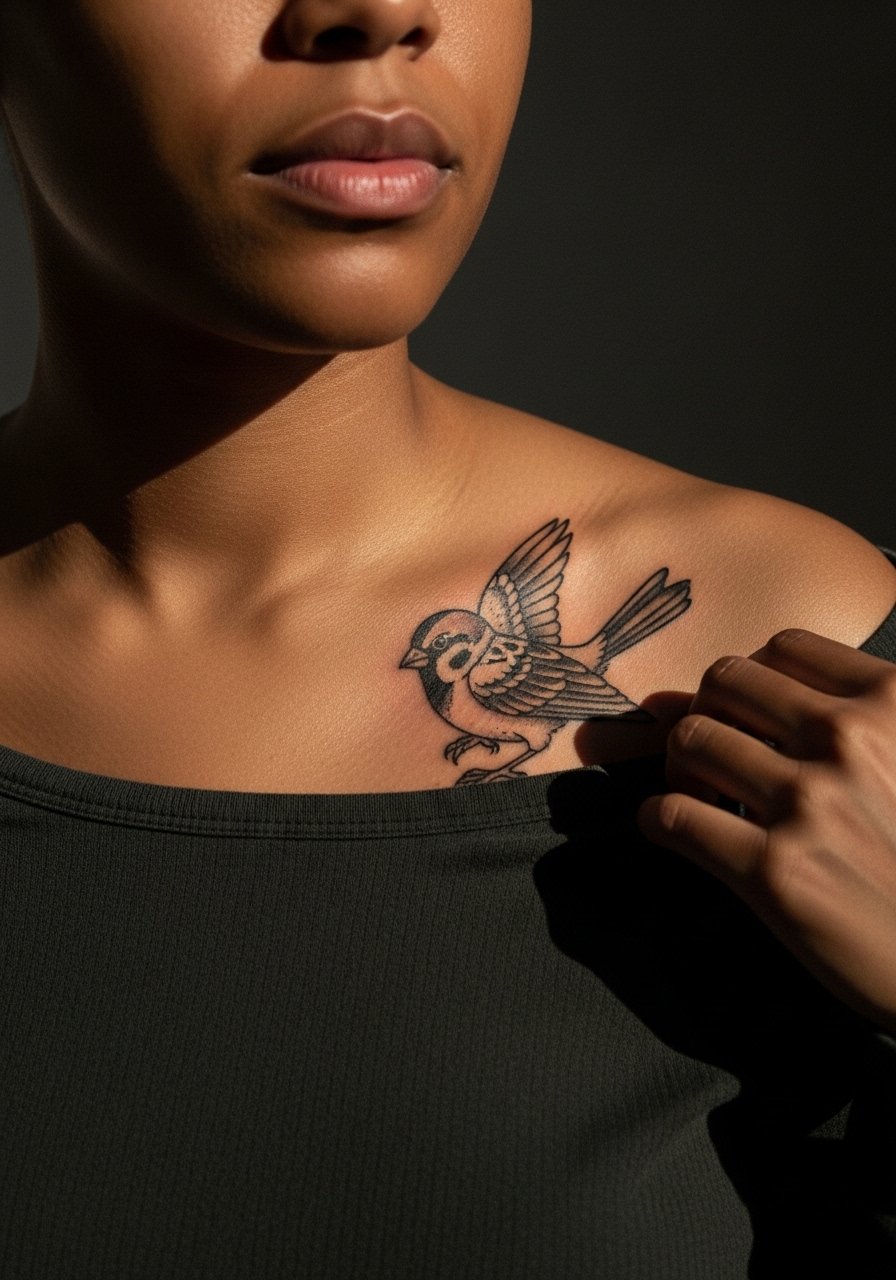
The chest wears neo traditional motifs well because it offers a flat canvas for strong silhouettes. The common version that ages poorly uses thin lines across the sternum. A better approach is a slightly larger silhouette with dense black anchors so the piece keeps shape as it softens. Pain here ranges from moderate to high depending on proximity to the sternum. If you are booking a chest piece with your partner, decide whether you want mirrored motifs or linked imagery for symmetry under shirts. Wear a wide-neck shirt you can pull aside for the session.
6. Matching Tiny Rings on the Fingers
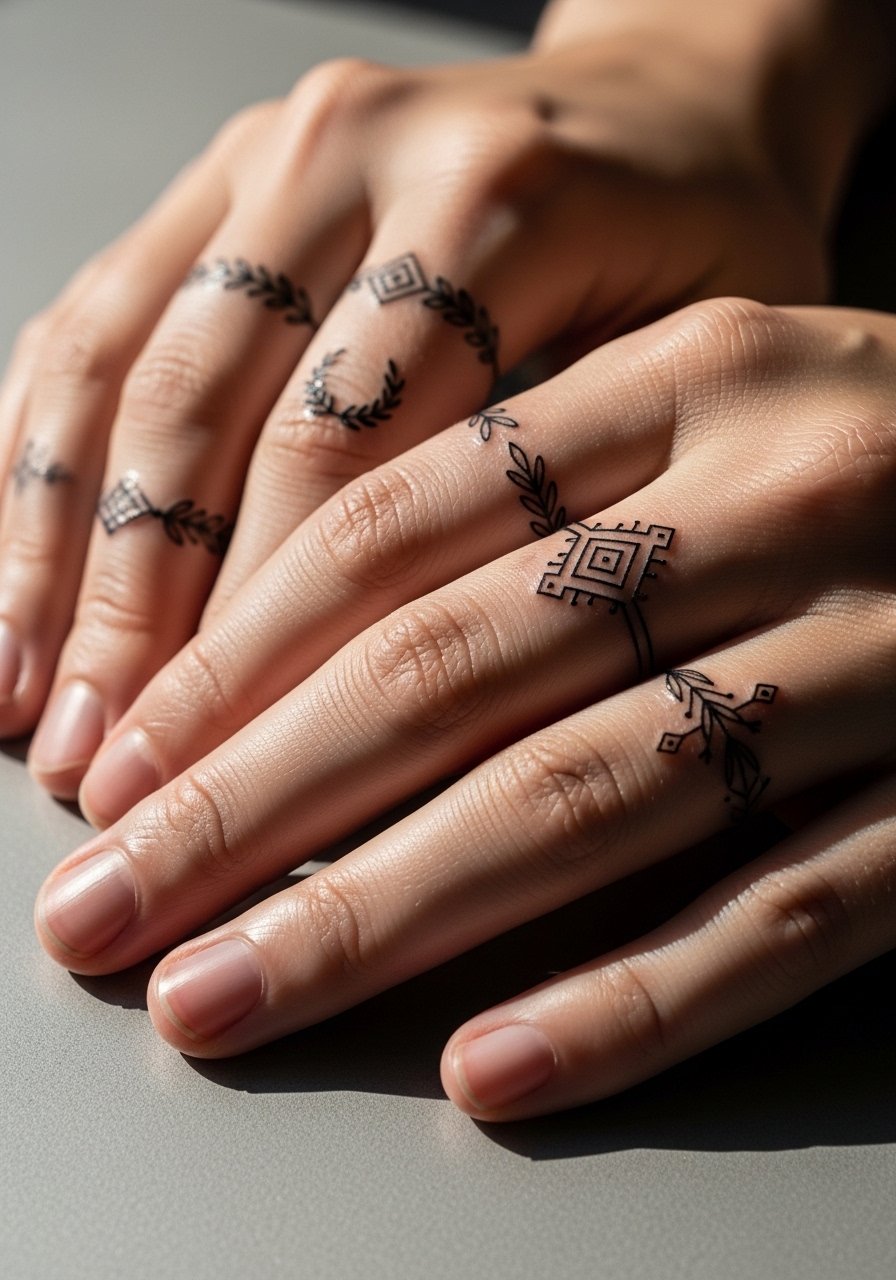
Most couples expect finger rings to be a permanent substitute for jewelry, but finger tattoos face constant washing and friction. The frequent mistake is choosing ultra-fine detail on the band. Ask for a slightly thicker band with simple motif breaks to reduce migration. Touch-ups are normal at year one to two. Sessions are quick but painful because the area is thin. For visibility, stack with a thin chain ring on the opposite hand rather than relying on the ink alone.
Studio Day Picks
The wrist and finger pieces above heal differently from larger work, so a few small things smooth out the session and the first week.
-
Stencil transfer paper kit. Lets you preview the linework on skin before committing, especially helpful for the wrist and finger designs in ideas above.
-
Topical numbing cream. Applied 45 minutes before takes the edge off sensitive spots like fingers and ribs without altering surface detail.
-
Thin protective film roll. Keeps small placements clean during the first week of washing and friction.
-
Fragrance-free body wash. Cleans healing areas without irritating the delicate linework that fine wrist pieces depend on.
-
Aquaphor healing ointment. Thin application in the first days locks in moisture for tight linework without clogging fragile needle channels.
7. Neo Traditional Anchor on the Ankle
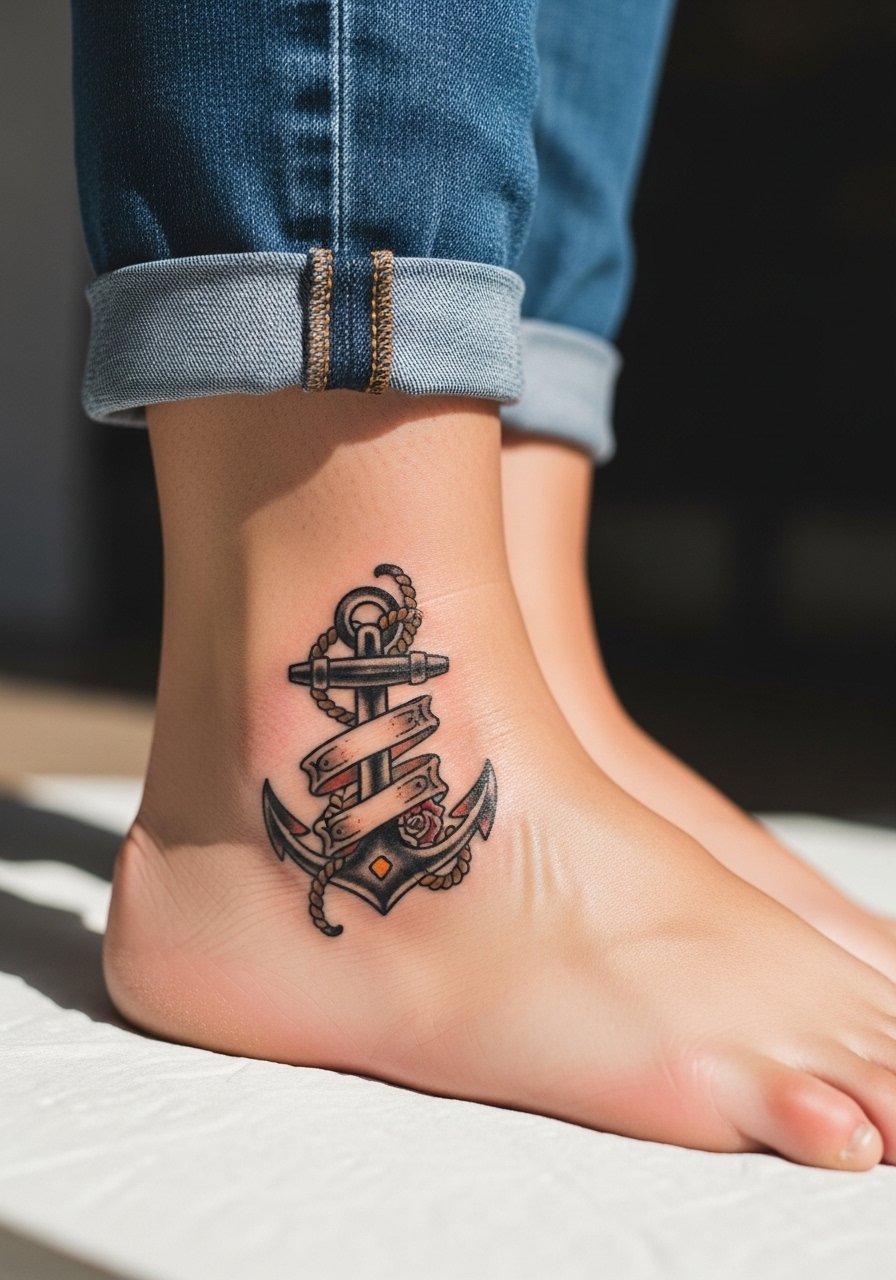
This placement reads well for couples who want something discreet that still shows at the right moment. In consultation, ask for a solid outline and restrained shading to avoid smudging under shoe straps. The ankle sees a lot of friction from shoes, so expect some color loss around the edges at year two. A two-hour session is typical and pain is mild to moderate. For showing it off, wear rolled-up jeans or sandals that keep attention on the ankle line without rubbing the fresh ink.
8. Controversial Full-Color Match on the Ribcage
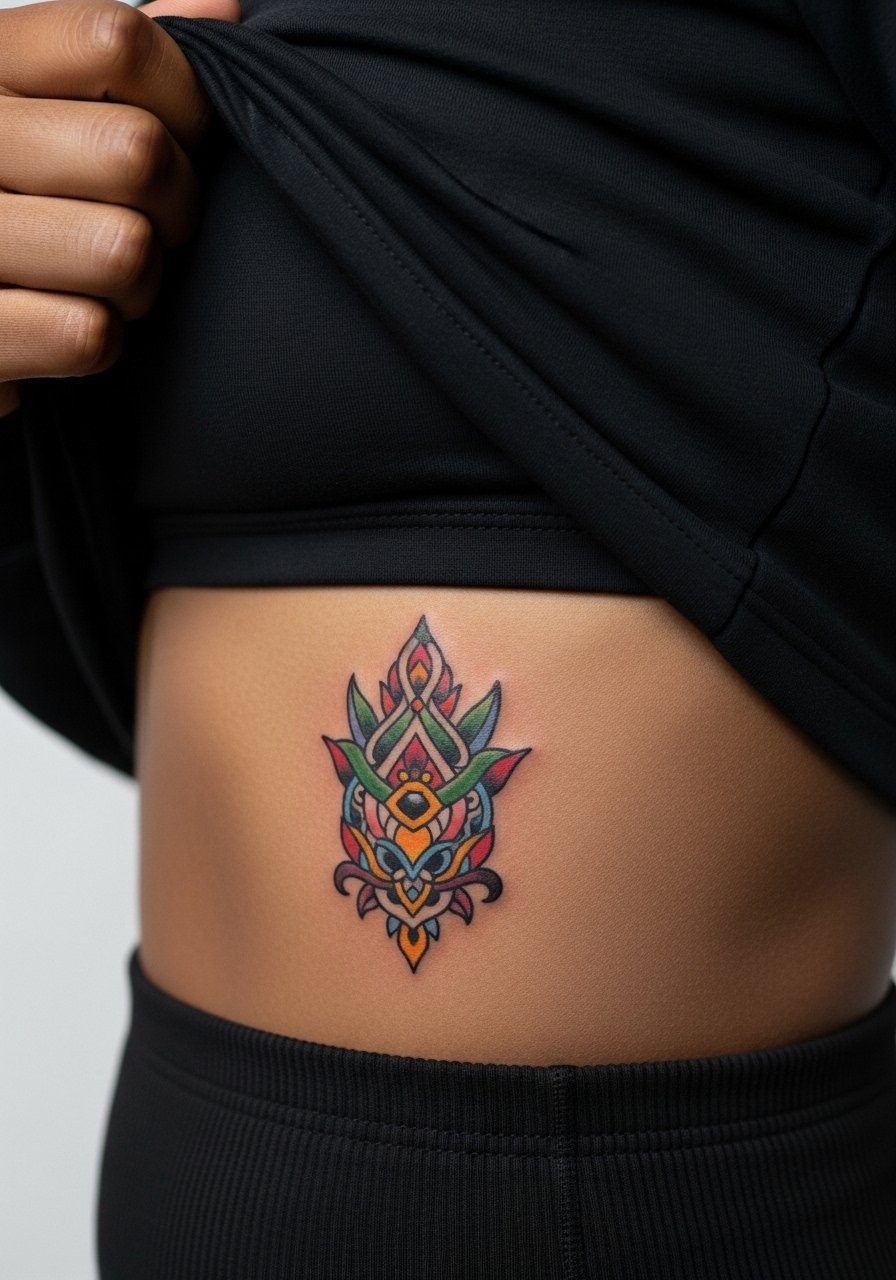
Artists split on ribcage work for matching couple tattoos. One camp says the skin stretch and movement make dense color and fine line blur within a few years. The other camp says with careful spacing, a neo traditional palette can last if you avoid tiny internal details. If you choose ribs, ask for simplified internal shapes and strong black anchors. Expect high pain and longer sessions. Plan for a touch-up at year two if you want the colors to stay bright.
9. Paired Back Pieces That Interlock on Movement
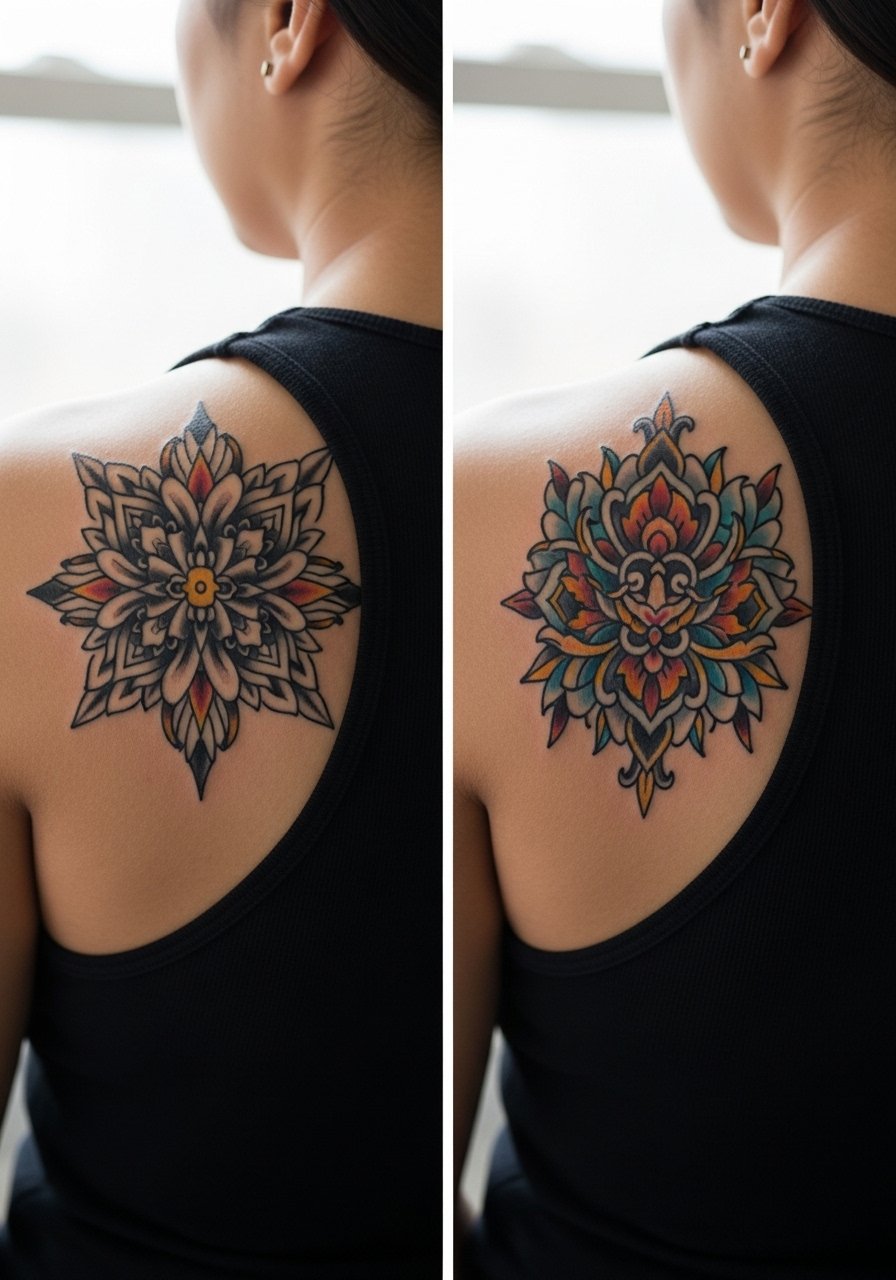
I’ve seen couple back pieces that subtly interlock when they stand side by side and they read like a single composition at events. Tell your artist you want the junction to hinge on posture so the halves feel connected without forcing mirrored detail. The common mistake is matching too many tiny flourishes that look cluttered when seen as separate pieces. Sessions are long for each half and touch-ups may be needed after heavy sun exposure. For the appointment, bring a loose button-down shirt you can slide aside for access.
10. Neo Traditional Script and Compass on the Collarbone
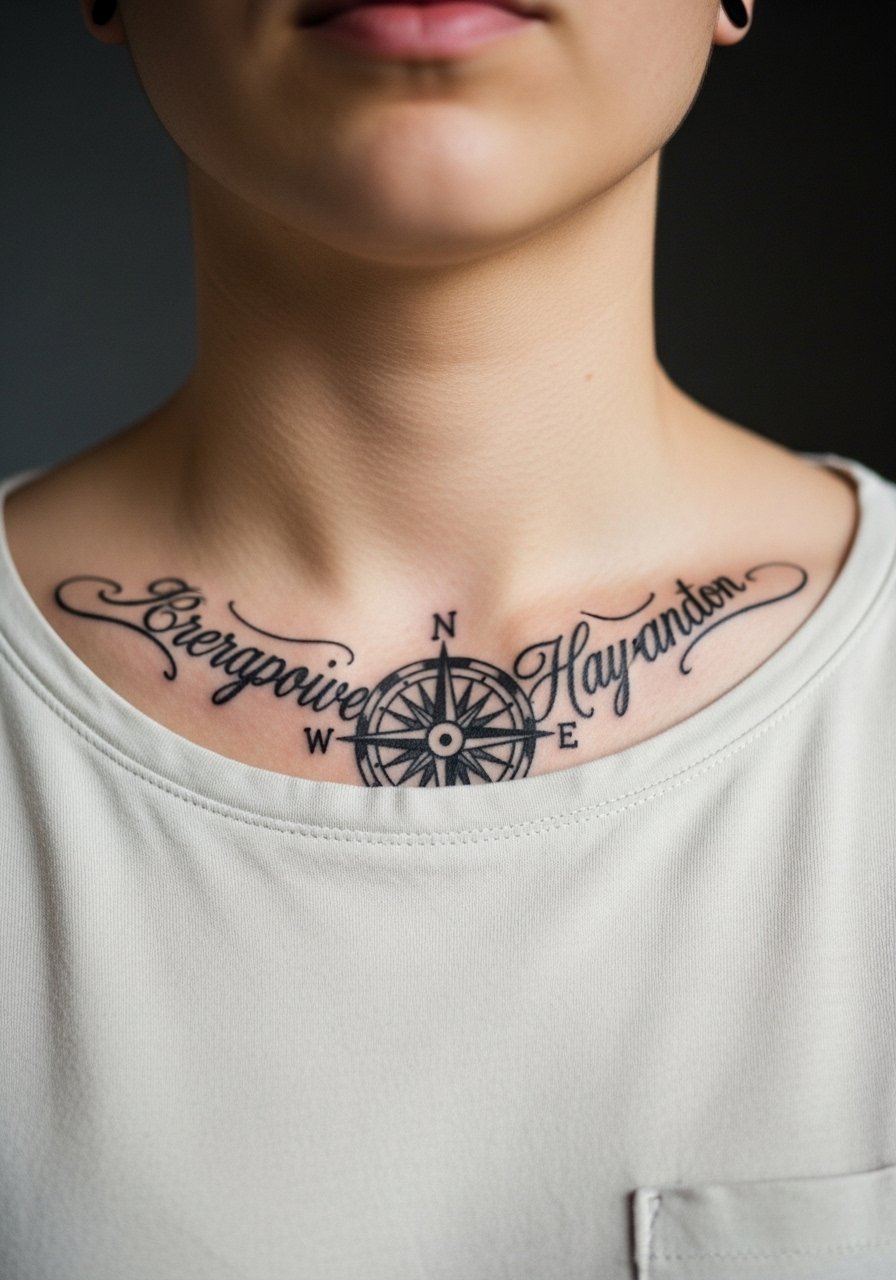
When you pick script with a small compass near the collarbone, clarity depends on spacing. Tell your artist the script should sit above the compass and not wrap into the needlework. Collarbone placements can be tender but photograph beautifully. The big mistake is letting the script sit too close to the bone where it bruises during healing. Sessions are typically under two hours. For reveal outfits, a delicate chain necklace can sit above the script without crowding the design.
11. Neo Traditional Swan and Crescent on the Calf
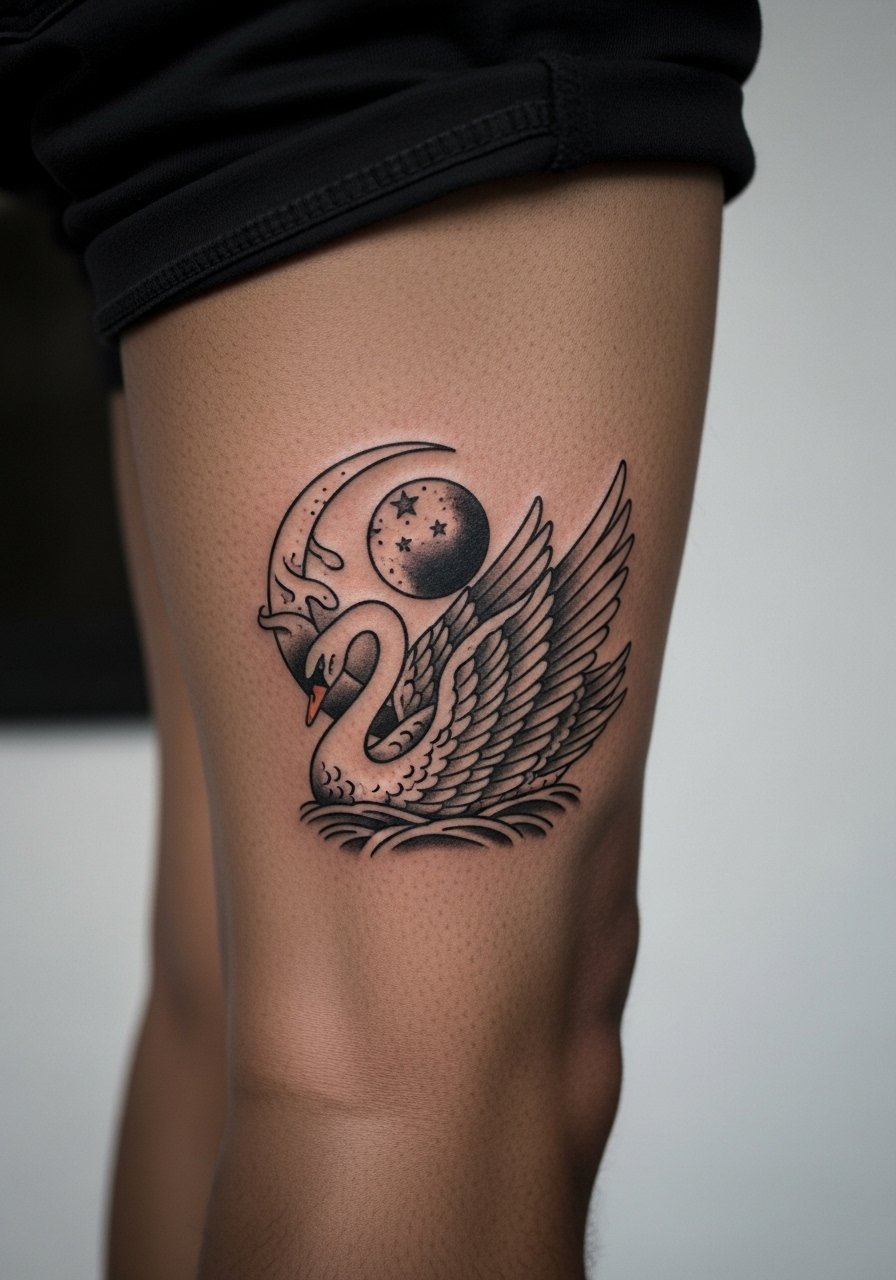
There is a visual impact to bold neo traditional motifs on the calf because the canvas allows for longer silhouettes. In consult, ask for dense blacks in the base and layered midtones so the swan keeps definition from multiple angles. The calf tolerates saturation well and ages gracefully if you avoid tiny stipple work that can soften over time. Sessions are moderate in pain and often done in a single sitting. For summer wear, pair with high-waisted shorts that put the calf on display.
12. Tiny Nautical Motifs on the Side of the Hand
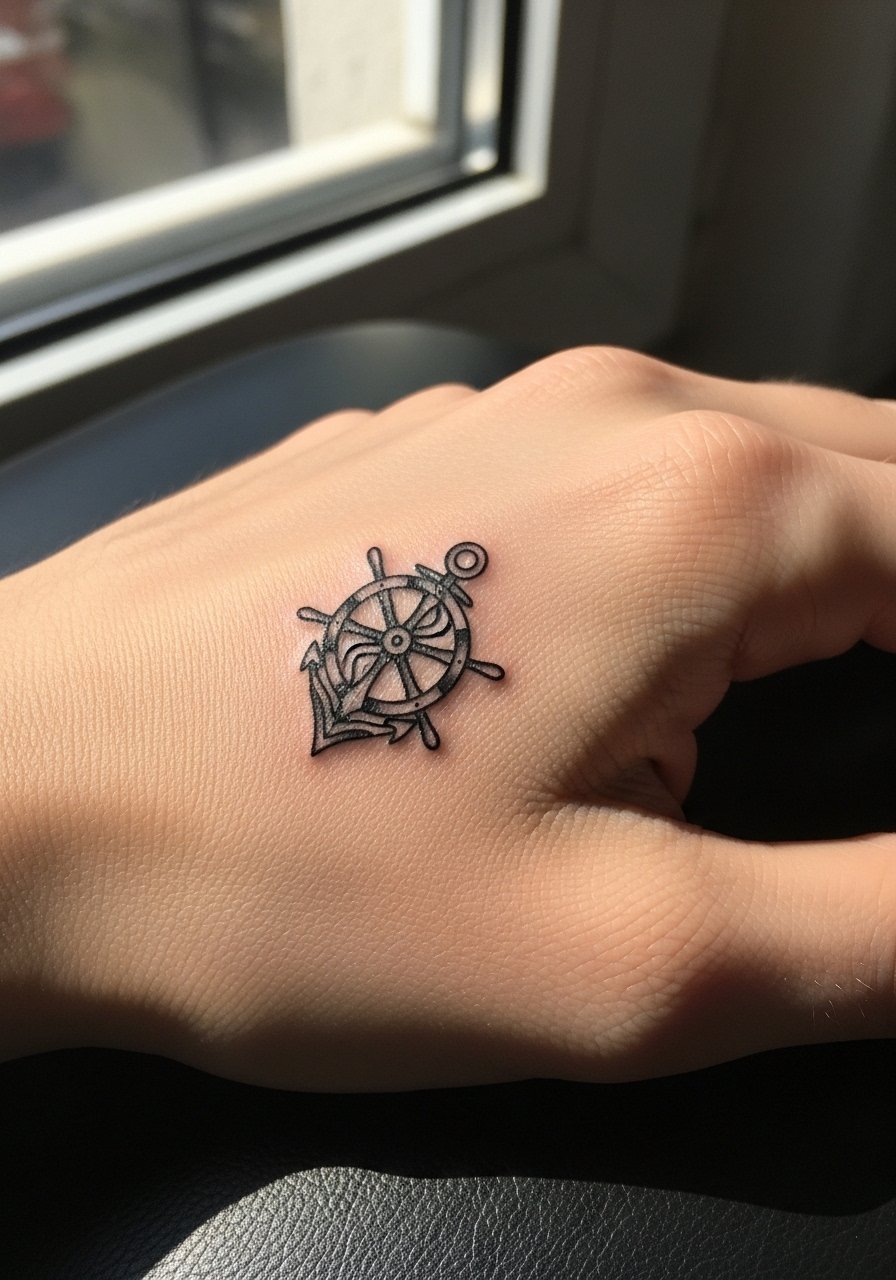
Fair warning, side-of-hand pieces face constant contact with surfaces and soap. The usual mistake is asking for too-small detail that disappears under daily wear. Ask the artist to favor bolder contours and durable placement just off the knuckle. Expect frequent fading and a touch-up at year one or two for sustain. Sessions are short but the area is sensitive. Consider pairing with a minimalist watch on the opposite wrist so the hand ink remains the focal point.
13. Matching Peacock Feathers Along the Spine
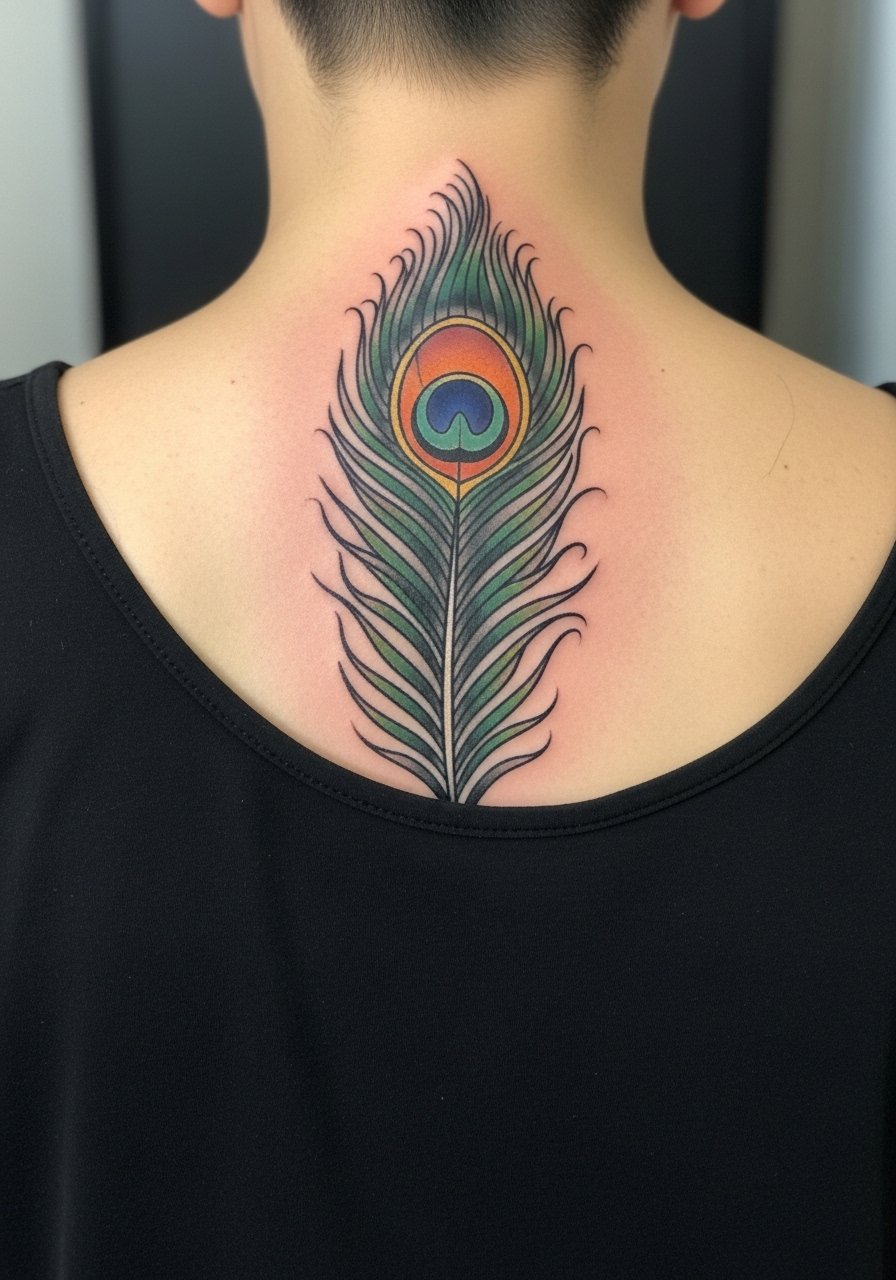
The spine gives a dramatic vertical line for complementary pieces that form a single flow when standing together. A frequent error is packing too many tiny eyes into the feather which blurs on lighter skin with thin layers of ink. Ask for bold stem lines with simplified eye motifs to retain shape long term. Pain can be higher near the vertebrae, so plan breaks. For sessions, wear a loose tank top you can pull down slightly so the artist has clean access without exposing other areas.
14. Neo Traditional Moon Phases on the Outer Thigh
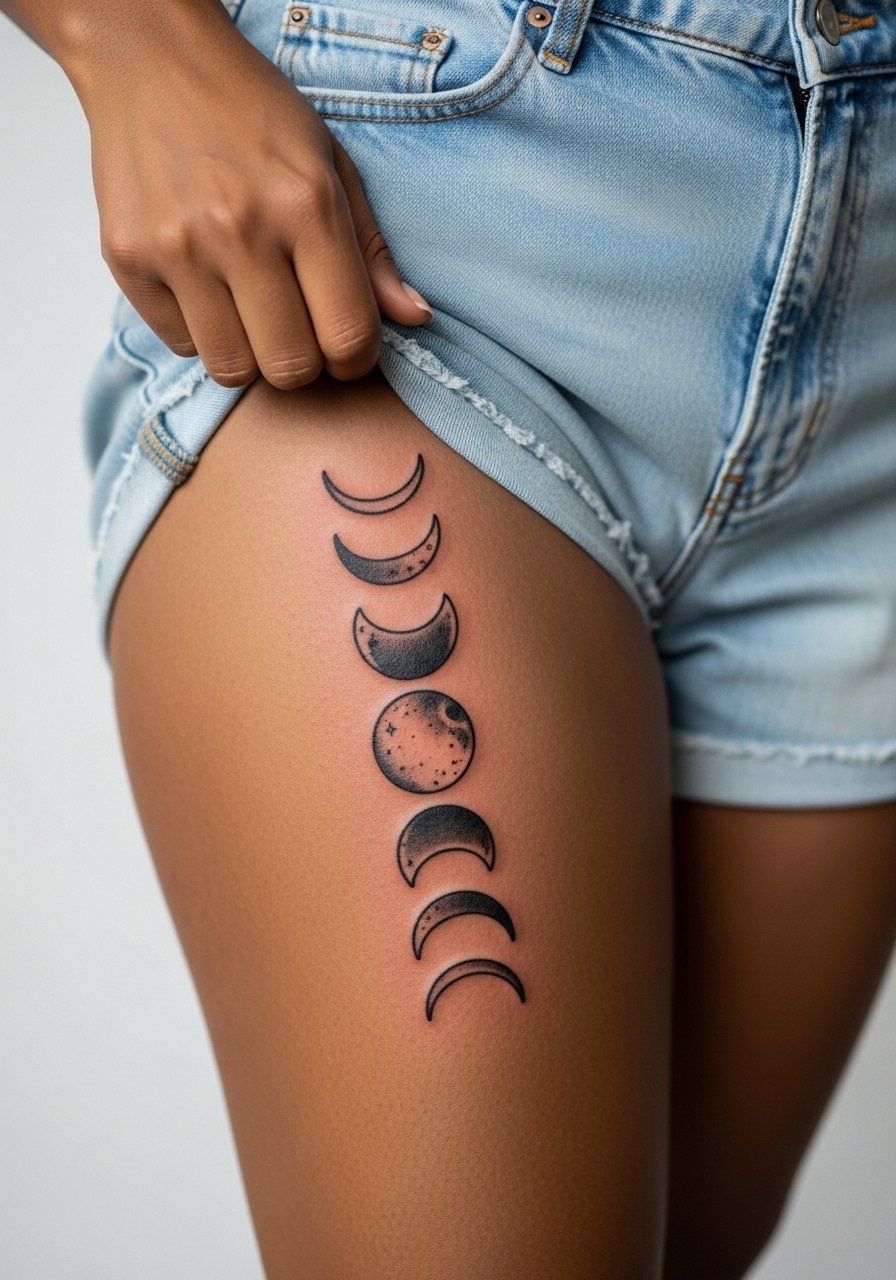
Aging reality for thigh work is favorable because the area sees less sun than arms. The mistake with neo traditional moon phases is cramming detailed faces into each phase. A stronger approach uses bold crescents and clean negative space between phases. Sessions feel moderate and can be done in one sitting depending on size. For the appointment, wear high-waisted shorts so the artist can access the outer thigh easily without discomfort.
15. Complementary Sugar Skull Motifs on the Shoulder Blades
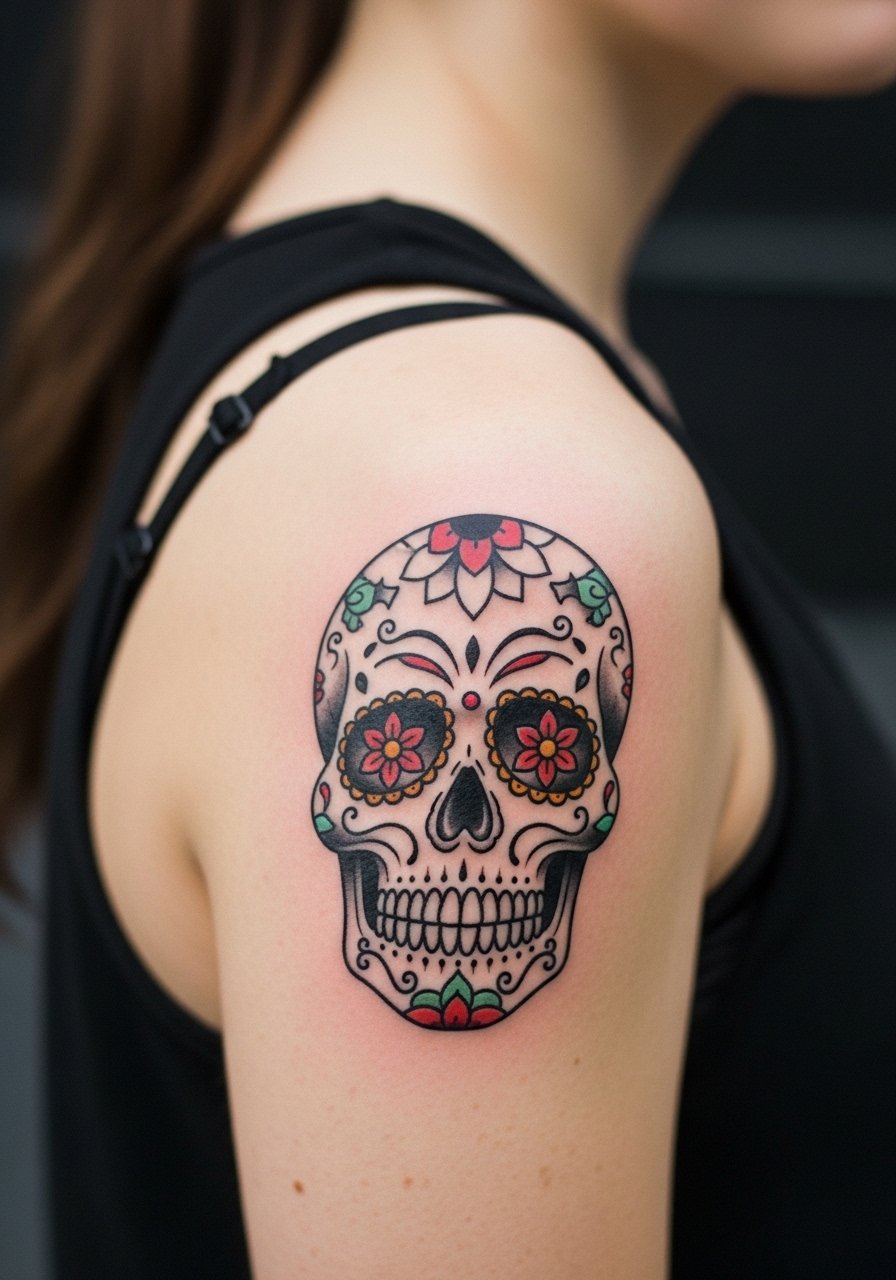
This placement pairs well for couples who want bold imagery that still tucks under clothing. When booking, ask for simplified filigree so the skulls read from a distance. The common aging mistake is excessive dot work which fills in over time. Shoulder blades are forgiving and hold saturation for years when protected from intense sun. Sessions can be split across two visits. For evenings out, an open-back dress reveals the area without forcing constant exposure.
16. Minimalist Compass Tattoo on the Side of the Neck
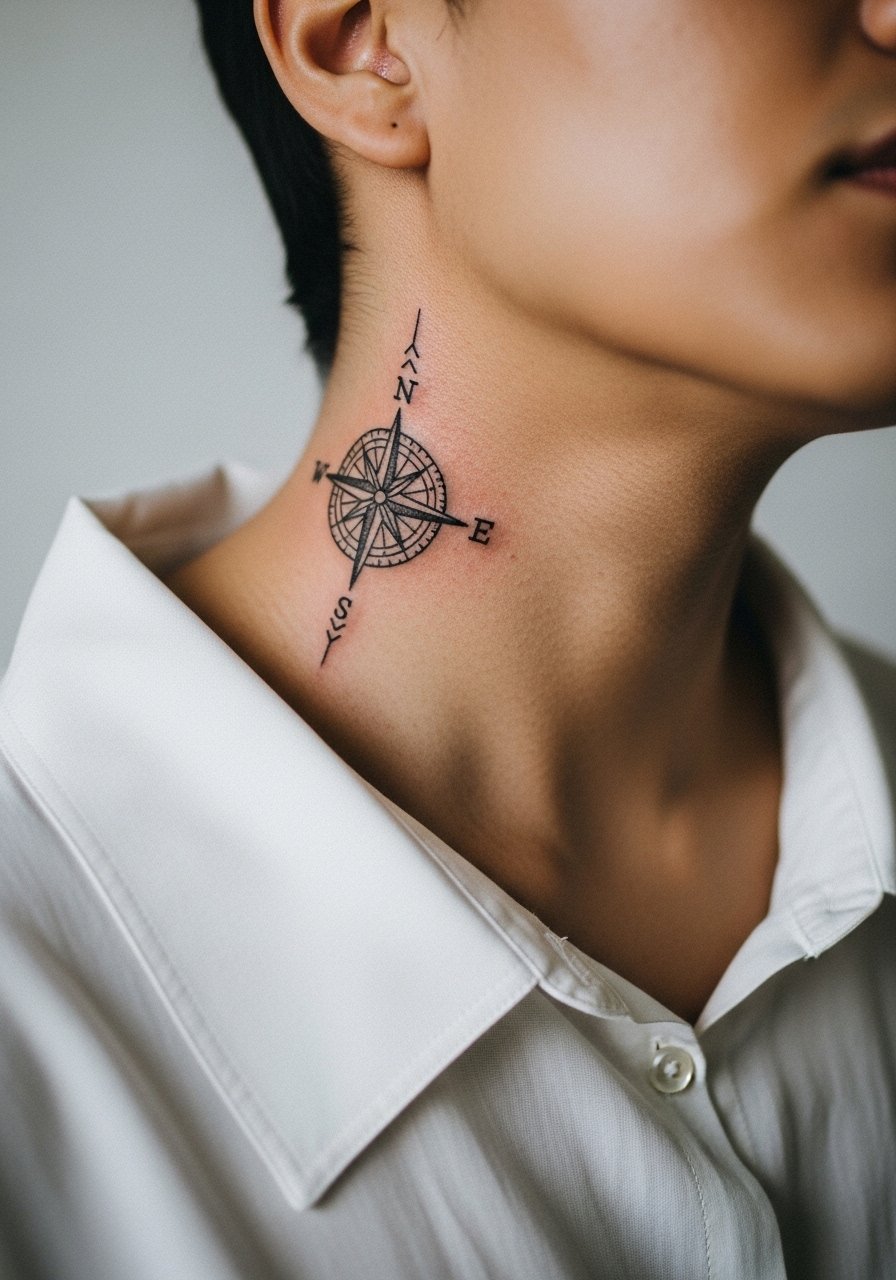
When you choose neck work as a couple, the discussion about visibility is important. During consult, tell the artist you want clean linework with no tiny internal shading that will soften. The neck moves a lot so expect a bit more migration than on the forearm. Sessions are quick but sensitive. For the appointment, wear a wide-neck shirt you can pull aside without revealing more than the tattooed strip.
17. Split Neo Traditional Landscape That Completes When Together
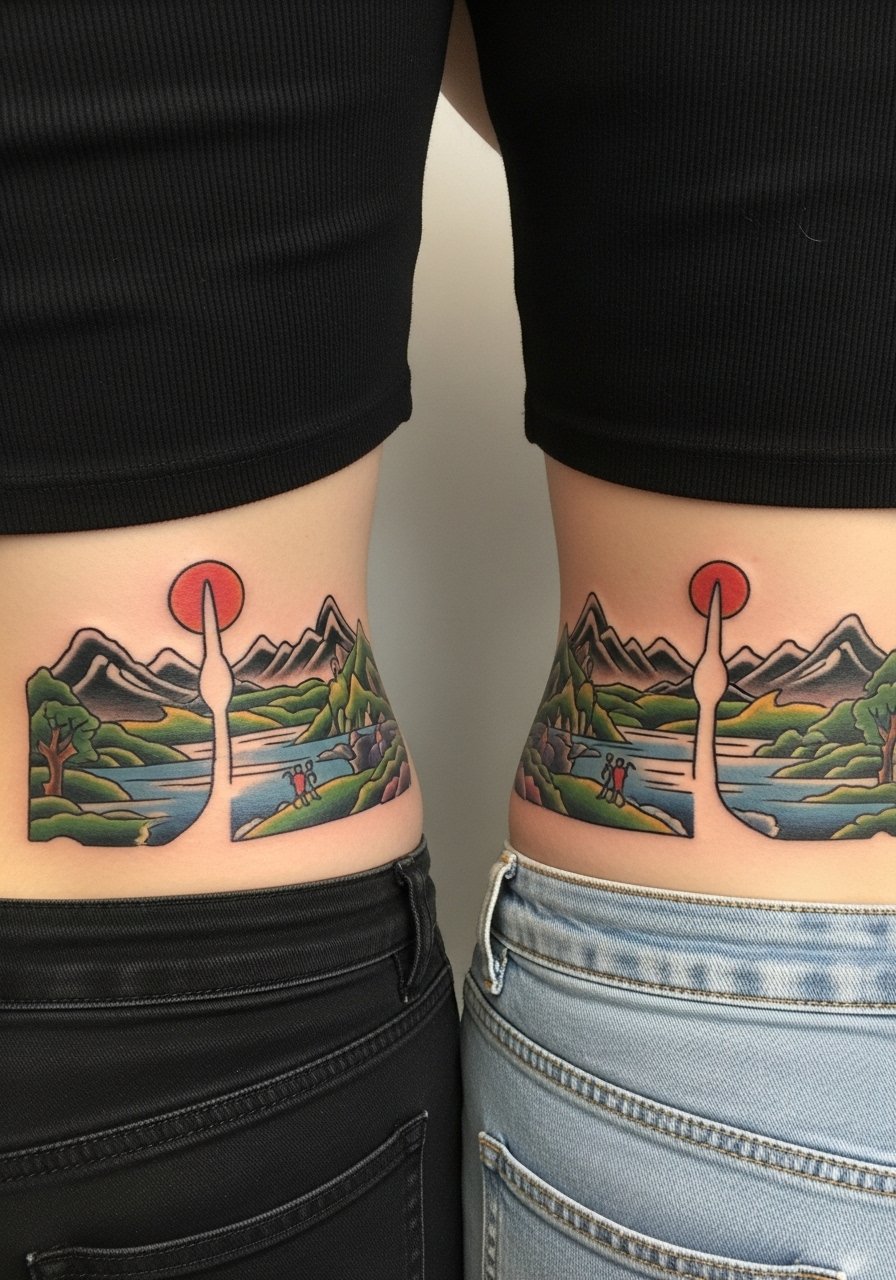
Artists and clients debate split pieces for couples. One camp loves the playful reveal and wants perfect alignment. The other camp cautions that bodies shift and small differences in height or posture make perfect lining rare. If you want a matching landscape, design each half to read on its own while still complementing the other. A common mistake is depending on exact symmetry, which ages poorly as weights and posture change. Expect multiple sessions and plan for touch-ups to keep the seam crisp.
Frequently Asked Questions
Q: How do neo traditional colors hold up on different skin tones over time?
A: From what I've seen, saturation reads differently across tones but the principle is the same. Strong black anchors and midtone contrast help preserve form on all skin tones. Lighter colors like pastel highlights may need touch-ups sooner. Ask your artist how they adapt pigment choices for longevity on the skin tone you have.
Q: Should couples get identical tattoos or complementary pieces for longevity and style?
A: It depends on how often you want the pieces visible together. Identical tattoos make sense if you share a wardrobe aesthetic and want symmetry. Complementary pieces age differently and let each person choose scale and placement for longevity. Discuss with your artist whether mirrored detail or shared motifs will hold through daily wear.
Q: Do neo traditional fine details blur faster on areas like ribs and hands?
A: Yes, ribs and hands demand simplified internal detail. One camp argues ribs stretch too much for fine line; the other camp says appropriate spacing and depth can make it work. For both areas, favor bolder anchors and larger internal shapes to avoid early merging.
Q: What should I wear to a session for a sternum or ribcage piece?
A: Wear clothing that exposes only the area the artist will work on. For ribs and sternum, a fitted sports bra or a cropped top you can lift slightly is perfect. A fitted sports bra gives access while keeping you comfortable and modest during long sessions.
Q: How often should couples expect touch-ups if they choose finger or wrist neo traditional work?
A: Expect a touch-up at year one to two for fingers and possibly wrist bands, especially if you wash hands often or wear rings. Keep sun exposure low and consider a thin protective barrier during heavy work weeks to delay color loss.