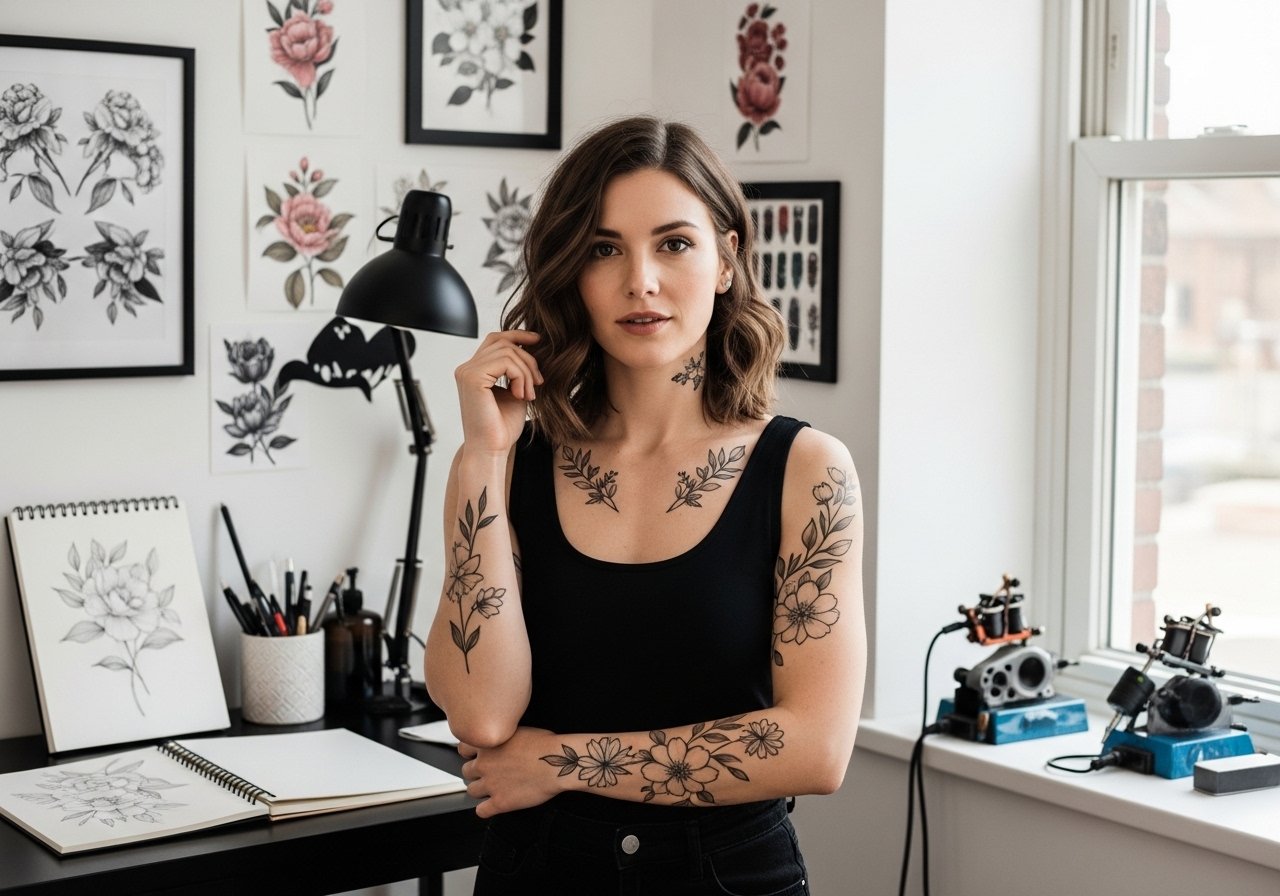
Fine line looks like the obvious choice on feeds right now, and people book it expecting the same look a year later. The reality is different. Line weight, placement, and skin tone determine how long a thin script keeps its edge, and last-minute cancellations or unclear touch-up policies change the whole experience. Below are 27 One Life One Chance designs with what to ask, what to wear to the session, and how each idea will actually age.
1. Minimalist Script with Hourglass on Inner Forearm
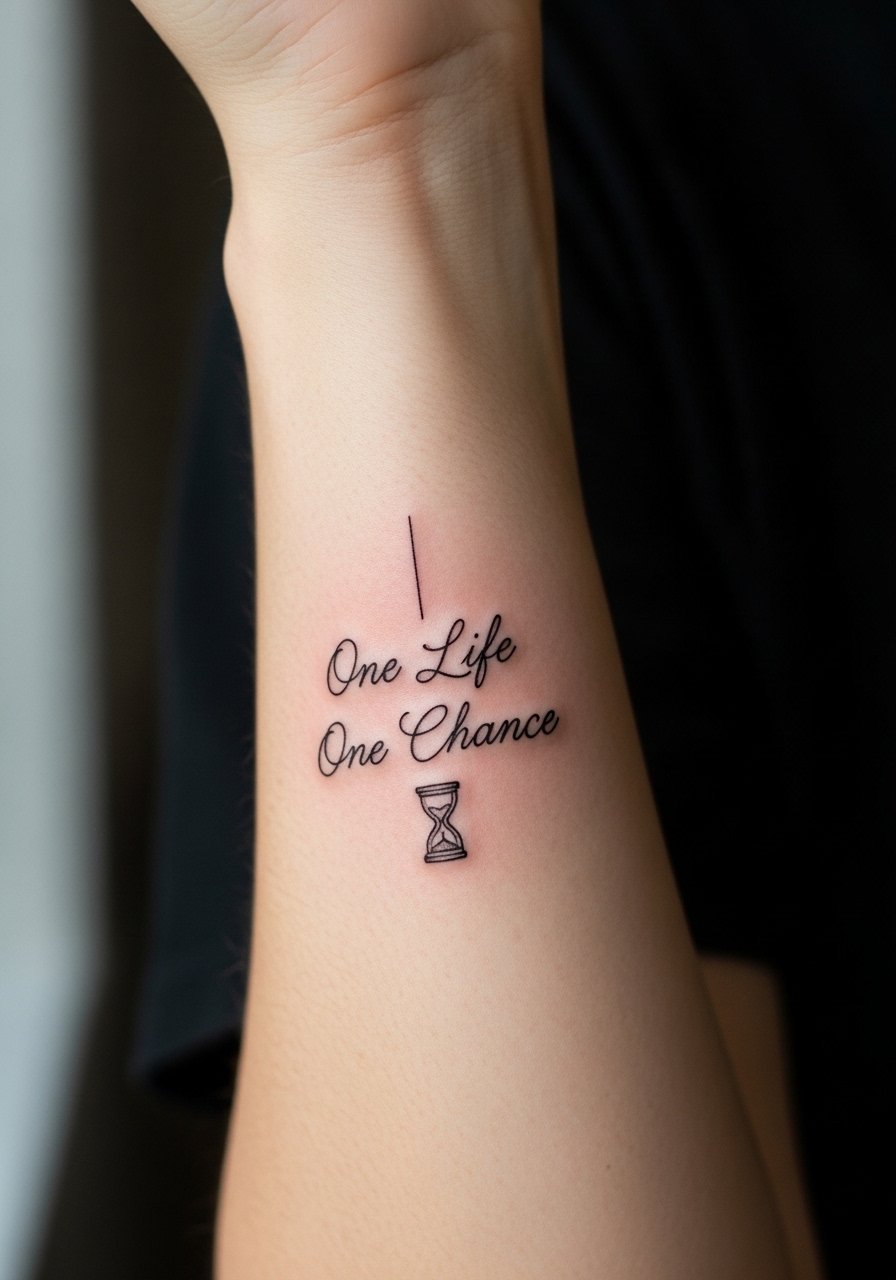
I've seen this exact pairing on five people across two conventions and it reads clean when the script is spaced at 2.5 to 3 mm per letter. Say to your artist that you want slightly bolder counters so the script keeps legibility after a year. Fair warning, the inner forearm gets sun and friction from watches, so expect a light touch-up at year two. For the session wear something easy to roll up, like a rolled sleeve chambray shirt and leave jewelry off the tattooed arm so the artist has space to work. The session usually runs 30 to 60 minutes and rates a 3 out of 10 on most pain charts.
2. Fine Line Soaring Bird Across the Collarbone
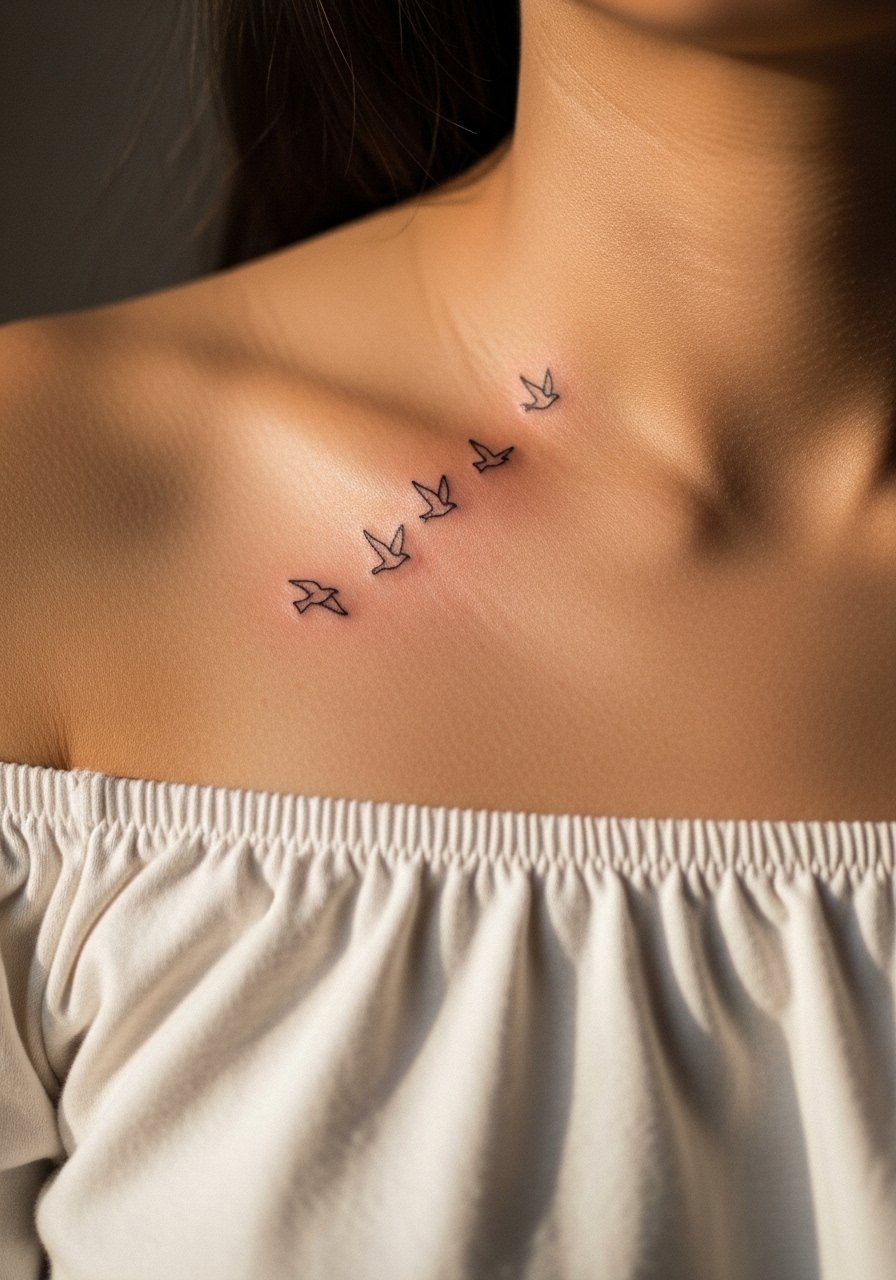
Chest and collarbone skin moves with breathing, so a lightweight bird with integrated tiny script reads better than a dense composition. Tell the artist you want the wings to follow the collarbone curve and to stop short of high-density shading. Expect the session to feel tingly when the needle approaches the bone, about a 5 out of 10. The most common mistake is packing too much micro-detail into that slim real estate. For showing it off, pair the piece with an off shoulder cotton top and a delicate chain necklace.
3. Blackwork Compass Encircled by a Banner on Outer Forearm
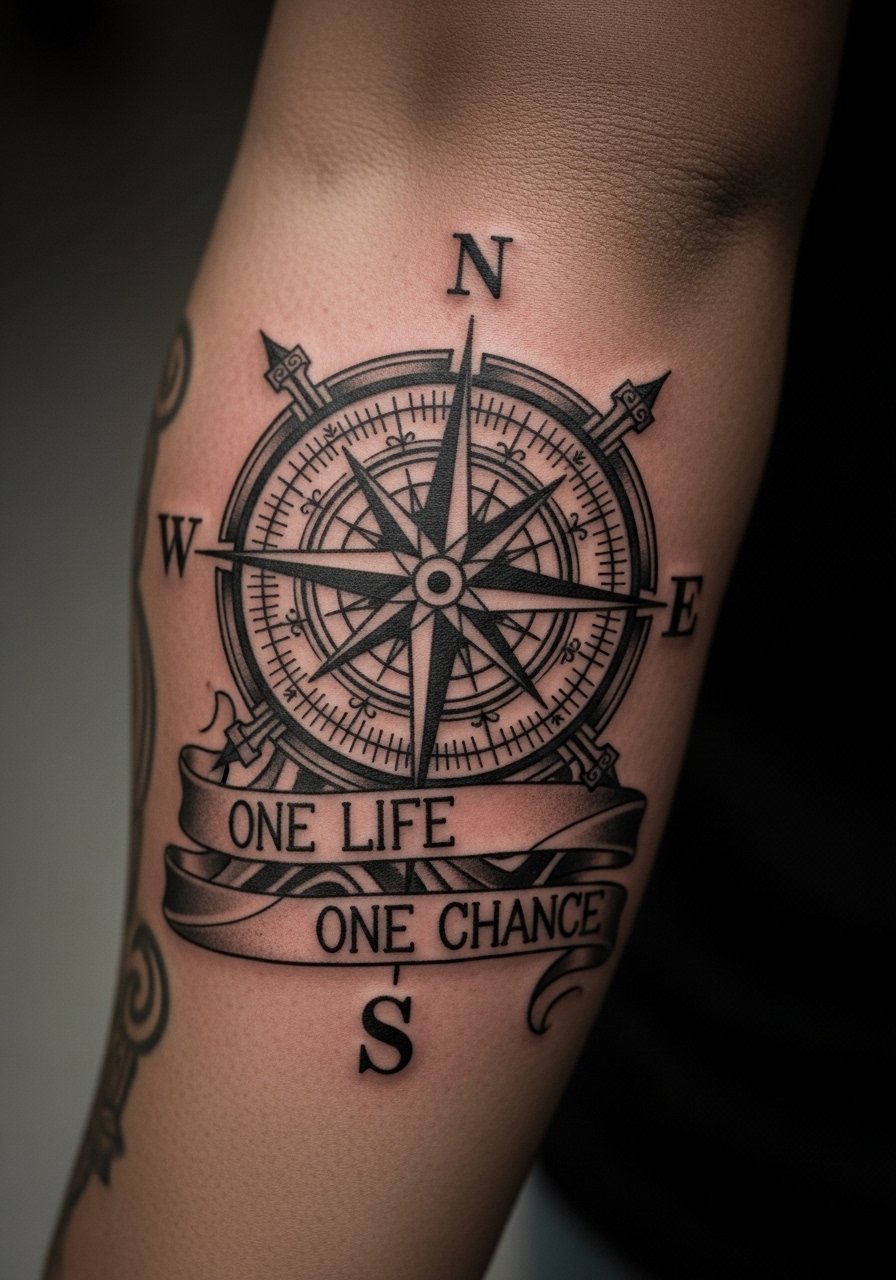
Bold blackwork is the safety net for visibility on darker tones. If you worry about fine line fading, this is the alternative that will hold its visual weight. During consultation, ask for clean negative space inside the compass points so the piece breathes and the banner does not crowd the center. Expect two sessions for full saturation and a touch-up window at year one if needed. For casual wear, rolled-up sleeves or a fitted black tank top frame this placement well.
4. Micro-Realism Melting Clock on Upper Arm
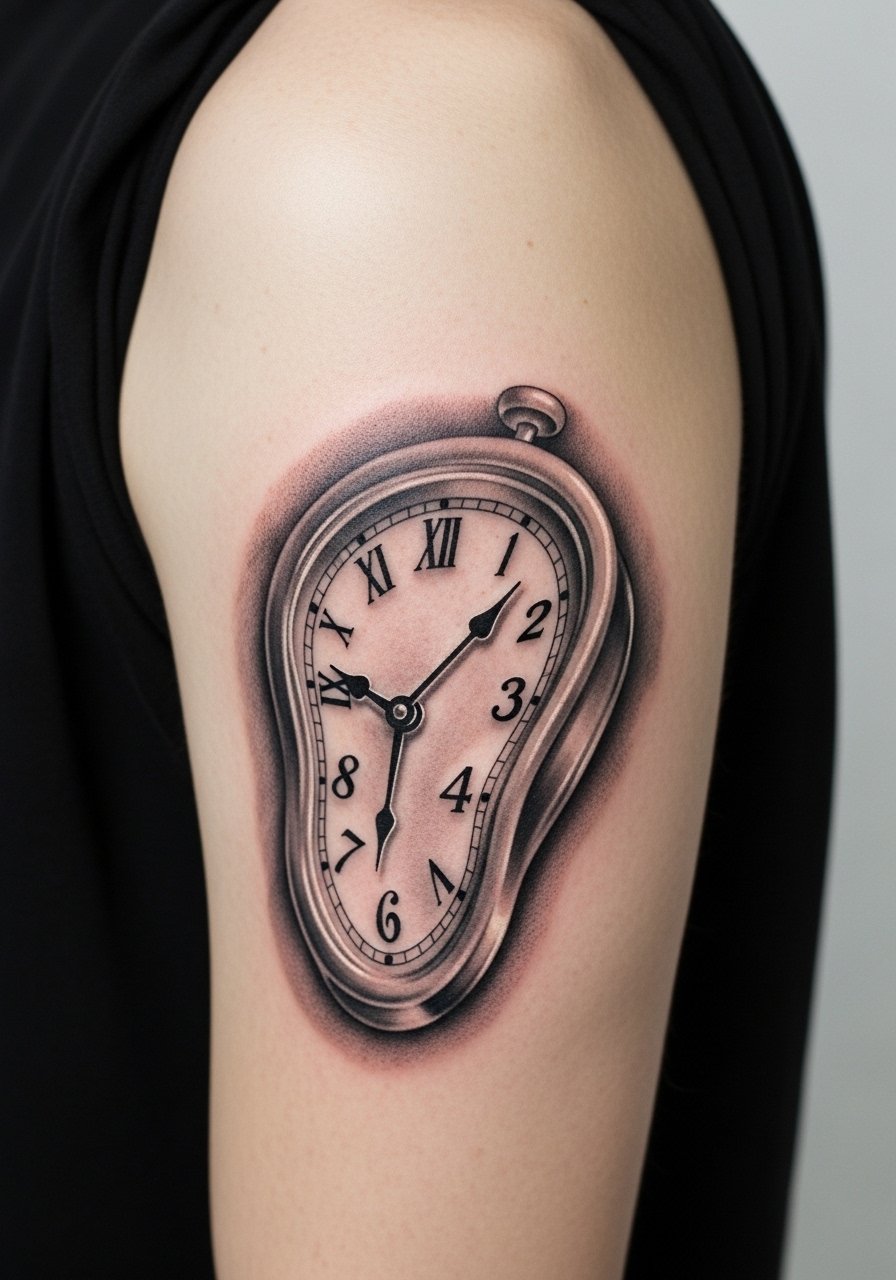
Realism needs scale to read over time. This melting clock looks great at 4 to 5 inches but shrinks into mush if scaled below 3 inches. Tell your artist you want strong contrast in the shadows so the face still reads after sun exposure. The upper arm tolerates longer sessions, so plan for a two to three hour block and a two-session build for complex shading. The common error is pushing tiny detail too close together. For session comfort wear a loose fit button shirt you can slide aside.
5. Watercolor Compass Rose with Overlay Text on Thigh
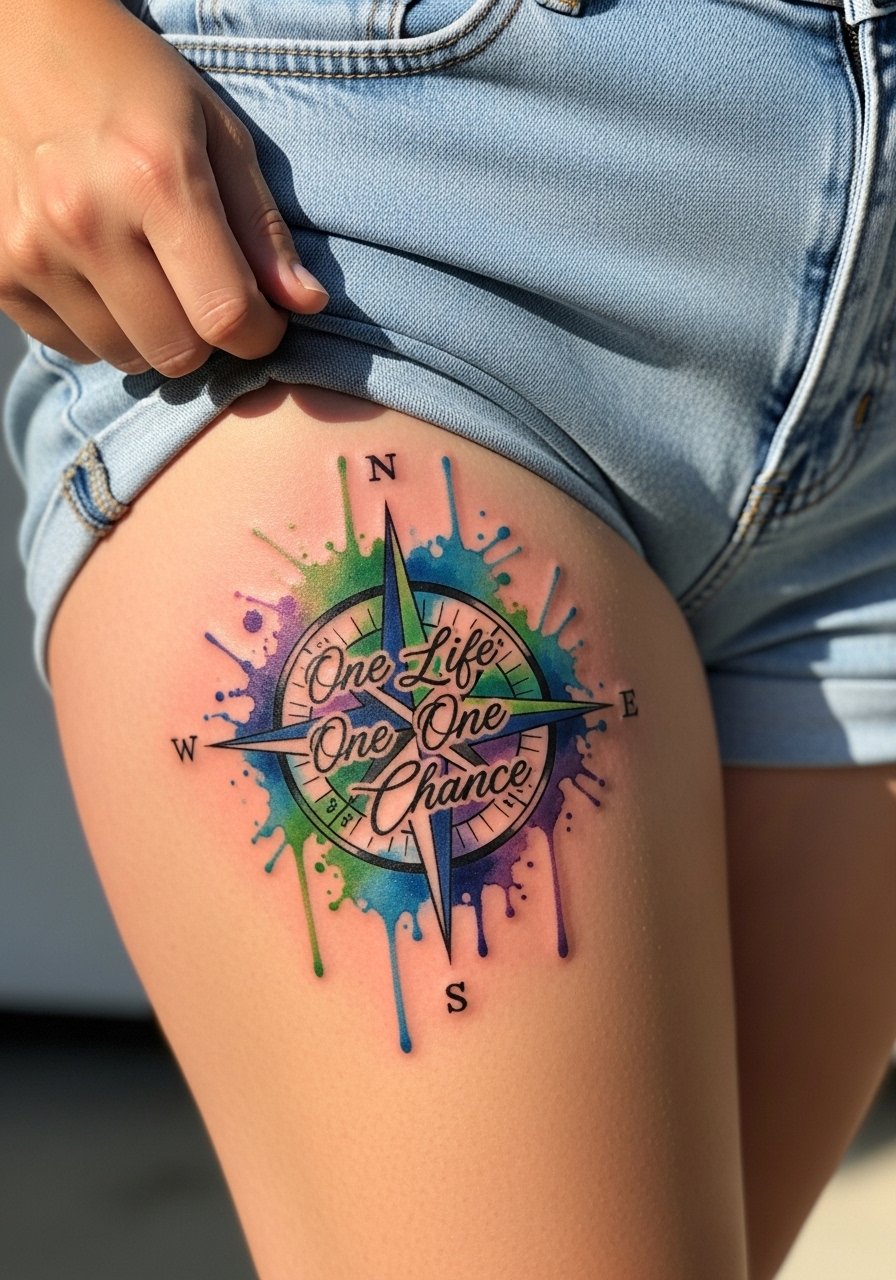
Watercolor offers vibrancy but it fades faster than saturated blackwork. If you want color, ask for anchor outlines in thin black to hold the composition as pigments soften. Thigh placement is forgiving with body changes, but heavier pigment migration can occur if you sit on the area often while healing. Plan for two sessions and a color refresh in two to three years. For showing off the thigh, high-waisted shorts are ideal, try high waist shorts.
6. Ornamental Hourglass Framed by Script on Ankle
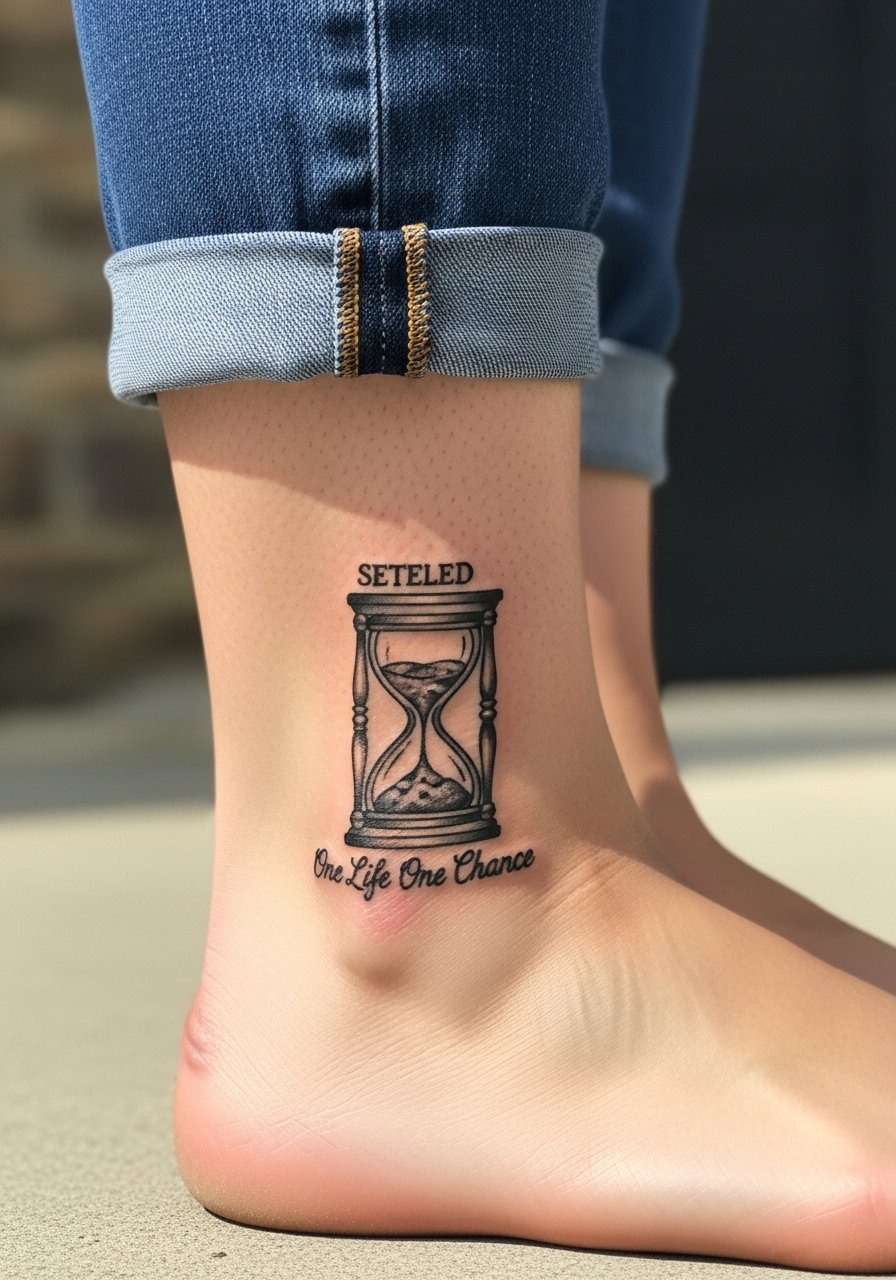
Ankle pieces are intimate and see a lot of friction from socks and shoes. Ask the artist to keep the bottom third slightly higher on the calf to avoid shoe rub during the first two weeks. Expect a 1 to 2 hour session and a higher chance of scab formation if you wear tight footwear. For session day, roll your jeans and wear low ankle socks so the area stays accessible and clean.
Studio Day Picks
The hourglass, ankle, and collarbone pieces above all need different prep than larger forearm work, so a few focused items smooth the session and the first week.
-
Stencil transfer paper kit. Lets you preview stencil placement on skin at home before the appointment so you avoid surprises with alignment.
-
Topical numbing cream. Use as directed about 45 minutes before a sensitive ankle or collarbone session to ease pain without affecting the artist's linework.
-
Thin protective film roll. Useful for ankle and wrist work where daily friction is high and you need a breathable barrier during early healing.
-
Fragrance-free gentle body wash. Keeps fresh tattoos clean without stripping delicate ink lines that micro-detail pieces depend on.
-
Aquaphor healing ointment. A thin layer in the first days retains moisture for fine line work while allowing the skin to breathe.
7. Minimalist Compass Outline with Tiny Text Below on Wrist
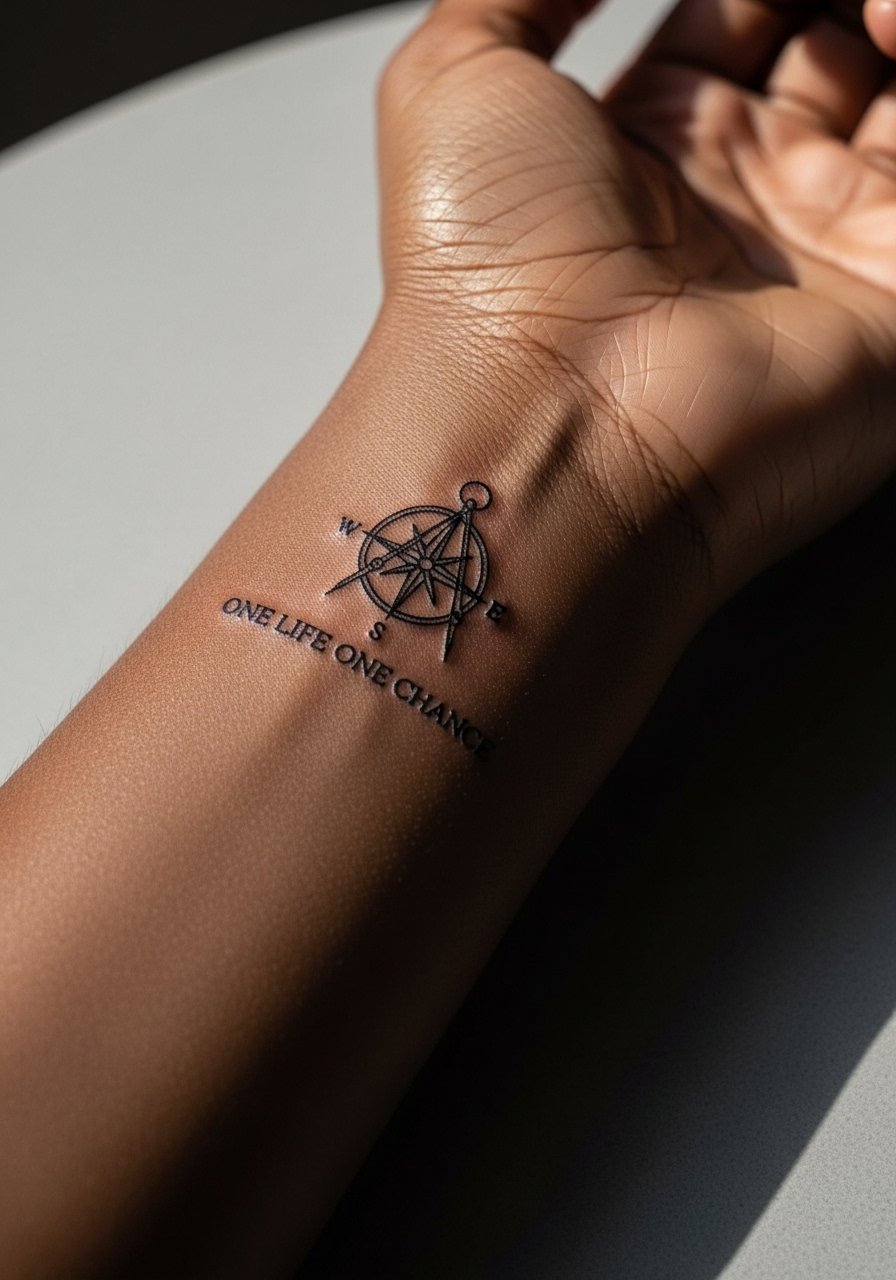
Wrist tattoos are a balance between intimacy and visibility. The micro compass outline is ideal if you want a small symbol that still reads at arm's length. Tell the artist to space the points slightly wider than usual to avoid blurring over time. The wrist sees a lot of washing and sun, so a light touch-up at year two is common. For daily wear a slim accessory works best, try a slim leather watch on the opposite wrist while the new ink heals.
8. Black and Gray Bird in Flight Clutching Banner on Inner Bicep
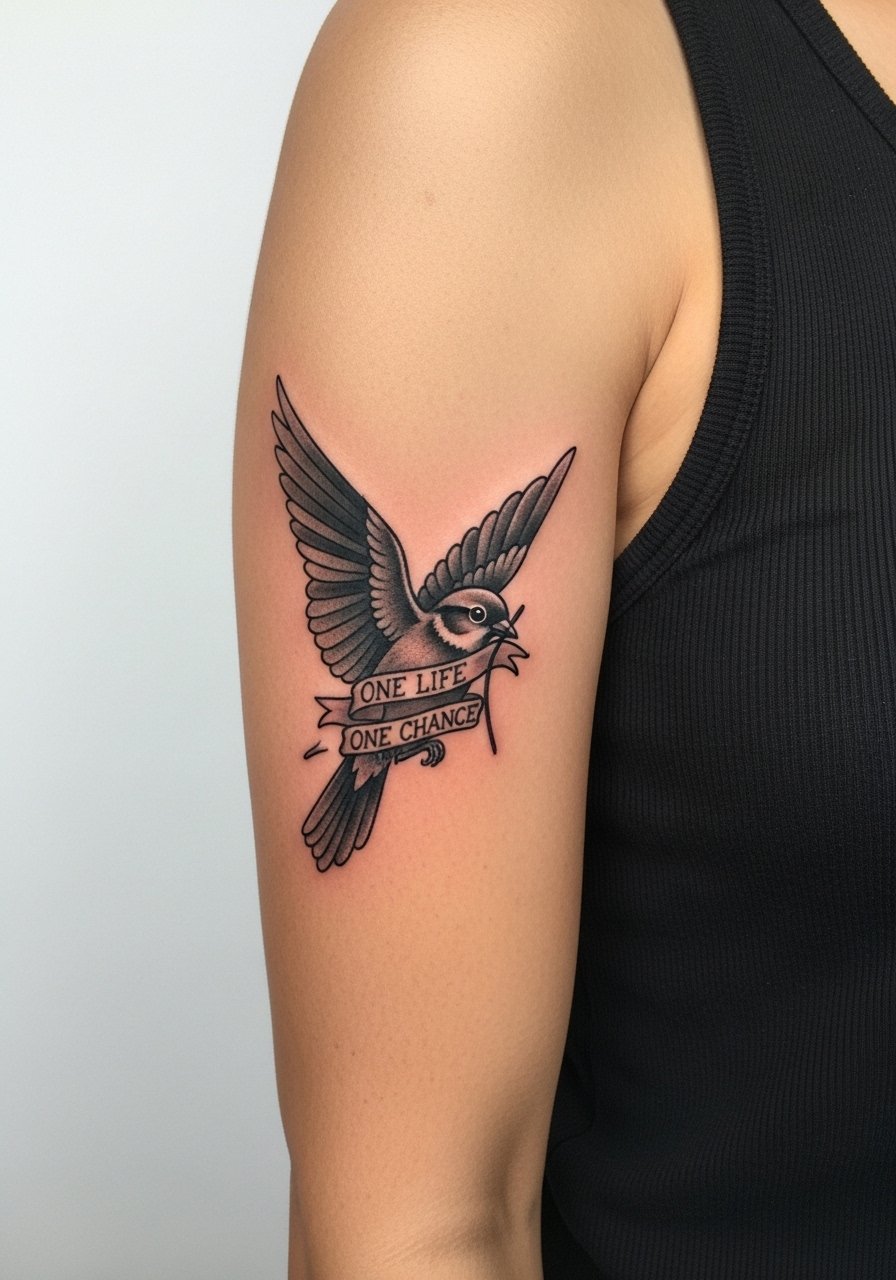
The inner bicep heals differently because it is a soft, mobile area. Some artists caution that movement can blur micro-detail, and they prefer stipple shading over smooth gray washes here. If you want the banner legible, ask for slightly bolder script and broad feather strokes on the bird. The session is a 2 to 3 hour window and the pain sits around a 6 for most people. Wear a tank top you can lift without rubbing the fresh ink.
9. Neo-Traditional Clock with Integrated Script on Shoulder Blade
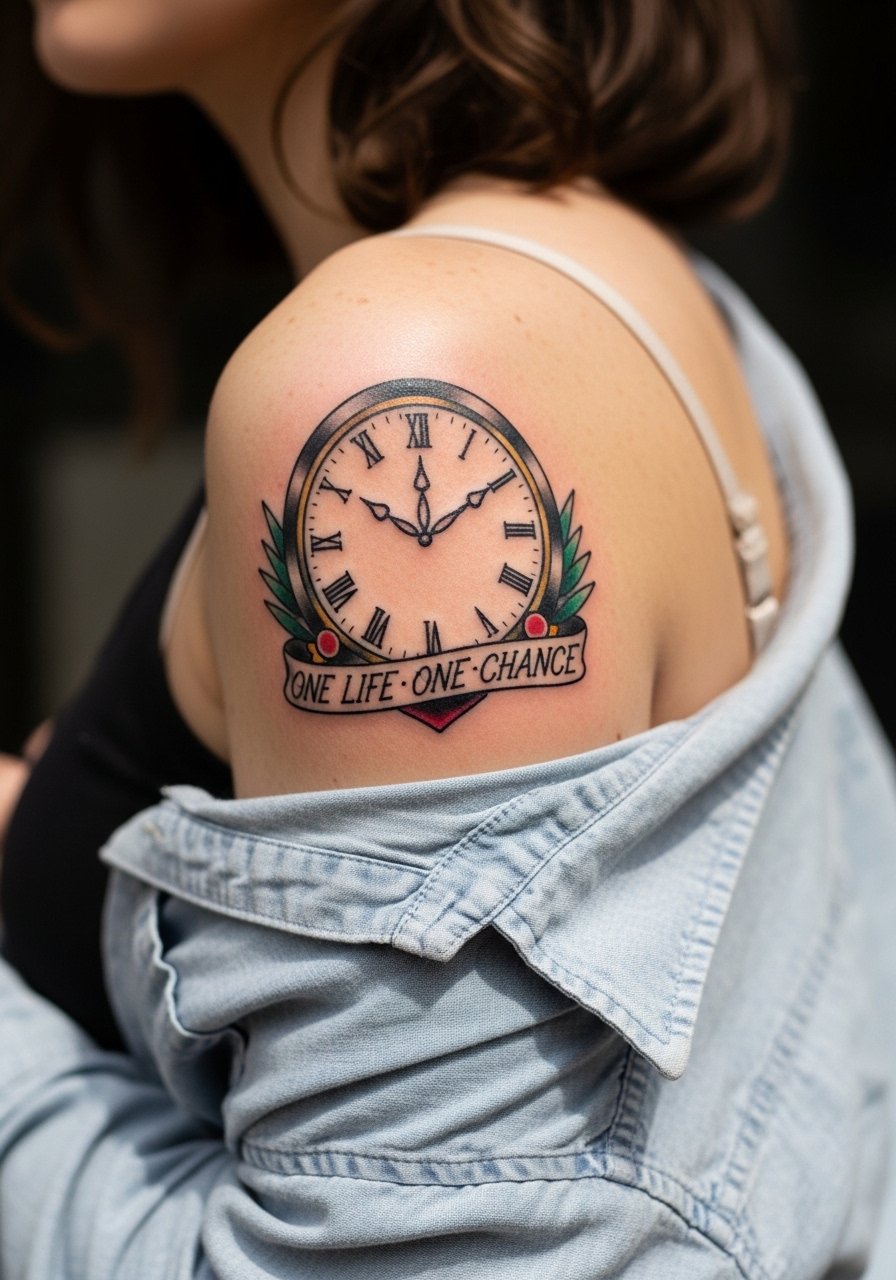
Shoulder blade pieces let you go larger and add bold color accents that age well. When mixing script, have the artist carve the letters into negative space or into a banner to avoid color wash. Expect multiple sessions for saturation and a touch-up window at year one for color settling. For the appointment wear a loose button-down shirt so the artist can expose the area without pulling fabric over tender skin.
10. Fine Line Phoenix Rising on Inner Forearm
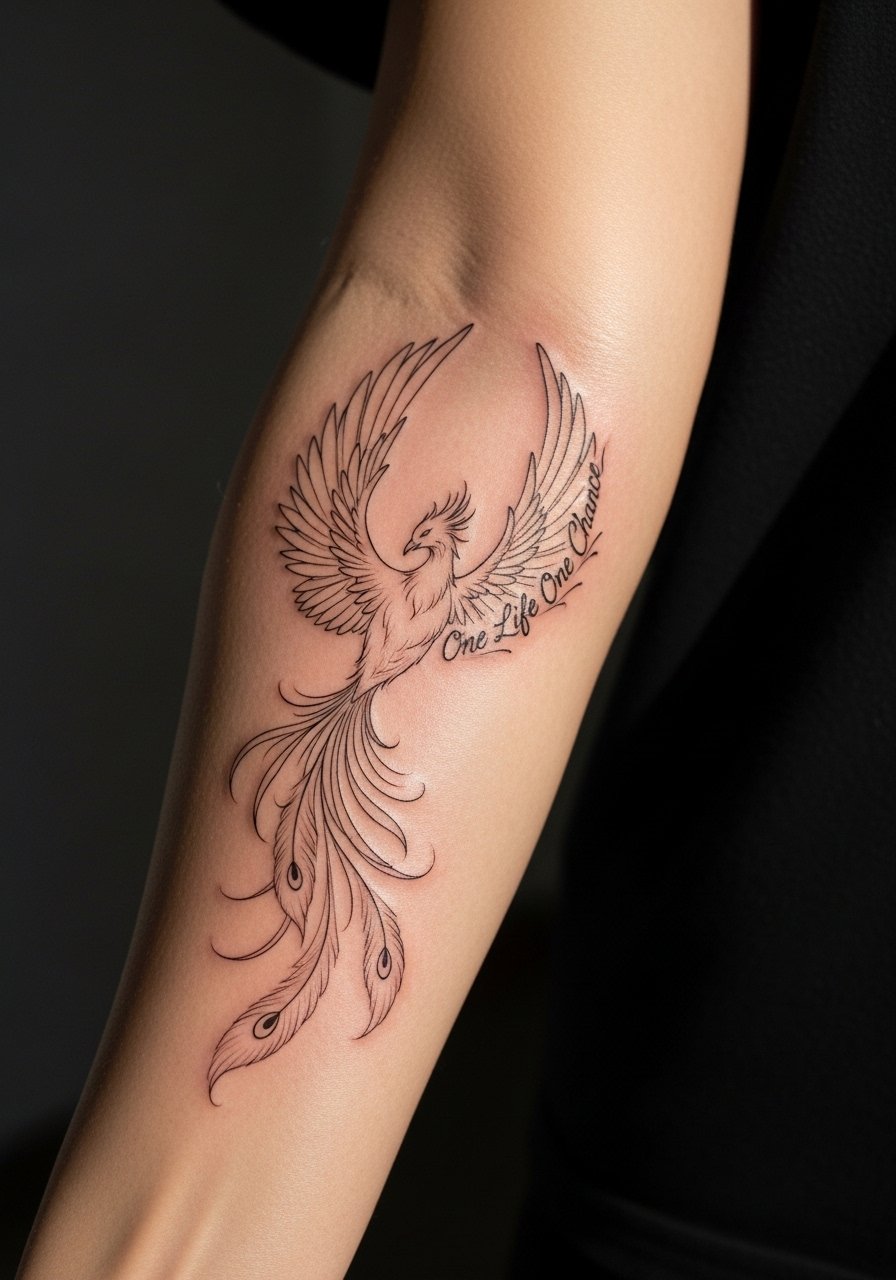
A phoenix in fine line reads elegant when spaced for the forearm's length. The aging trade-off is that feather detail can merge if lines sit too close. Ask for feather tips to be left as negative space with stipple shading behind them. Expect a 1 to 2 hour session and plan for a light touch-up at year two. For showing the piece pair with a rolled sleeve chambray shirt or a simple cuff on the opposite arm to balance the visual weight.
11. Realistic Compass Engraved Like Metal on Calf
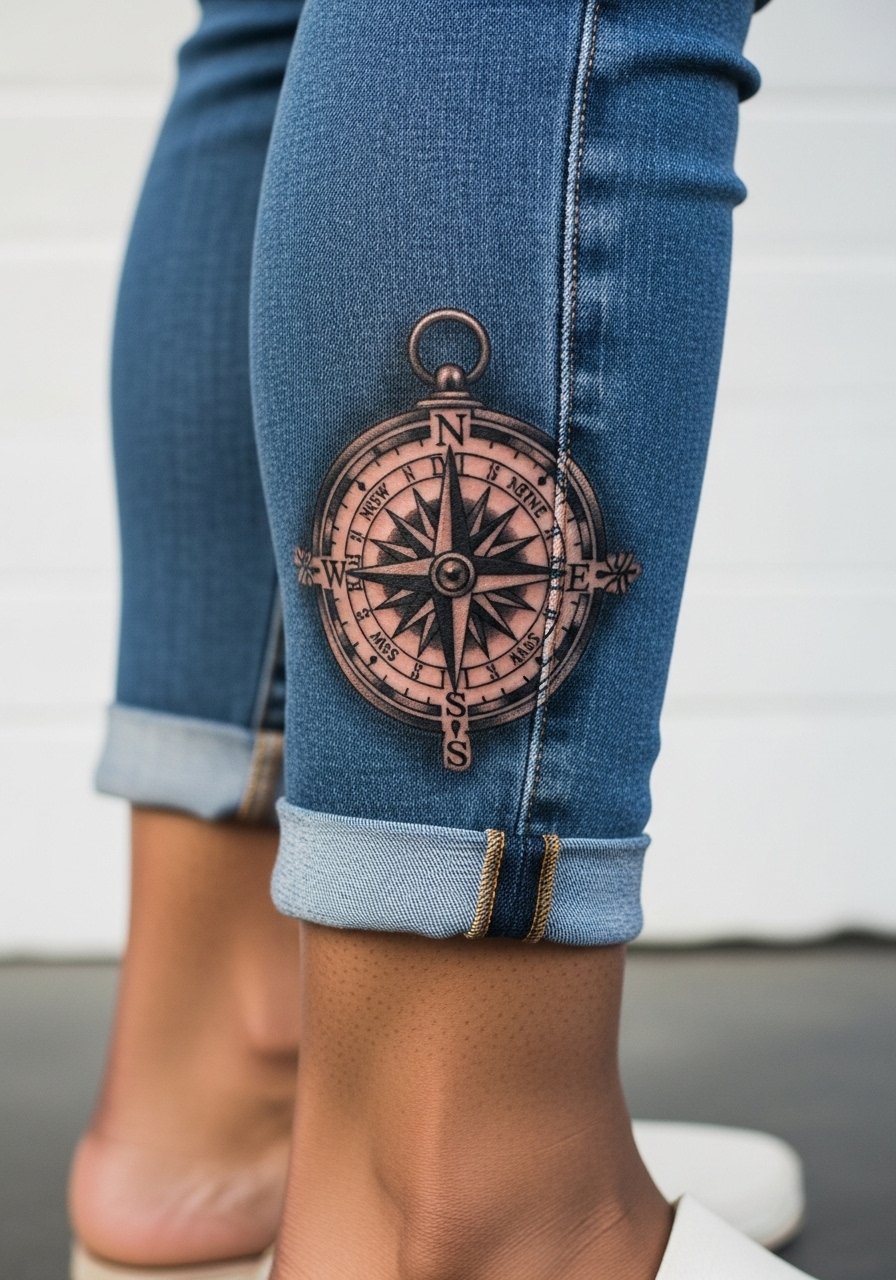
Large realism needs room. The calf gives enough canvas for engraved detail that holds over time if the artist builds contrast. Tell your artist you want deep darks and crisp highlights so the piece keeps its three-dimensional look. Sessions run longer for realism, often two to three hours per sitting. For the session wear cropped slim jeans or loose joggers so you can roll the pant leg without tugging at healing skin.
12. Blackwork Banner Script with Sand-Dripping Hourglass on Forearm
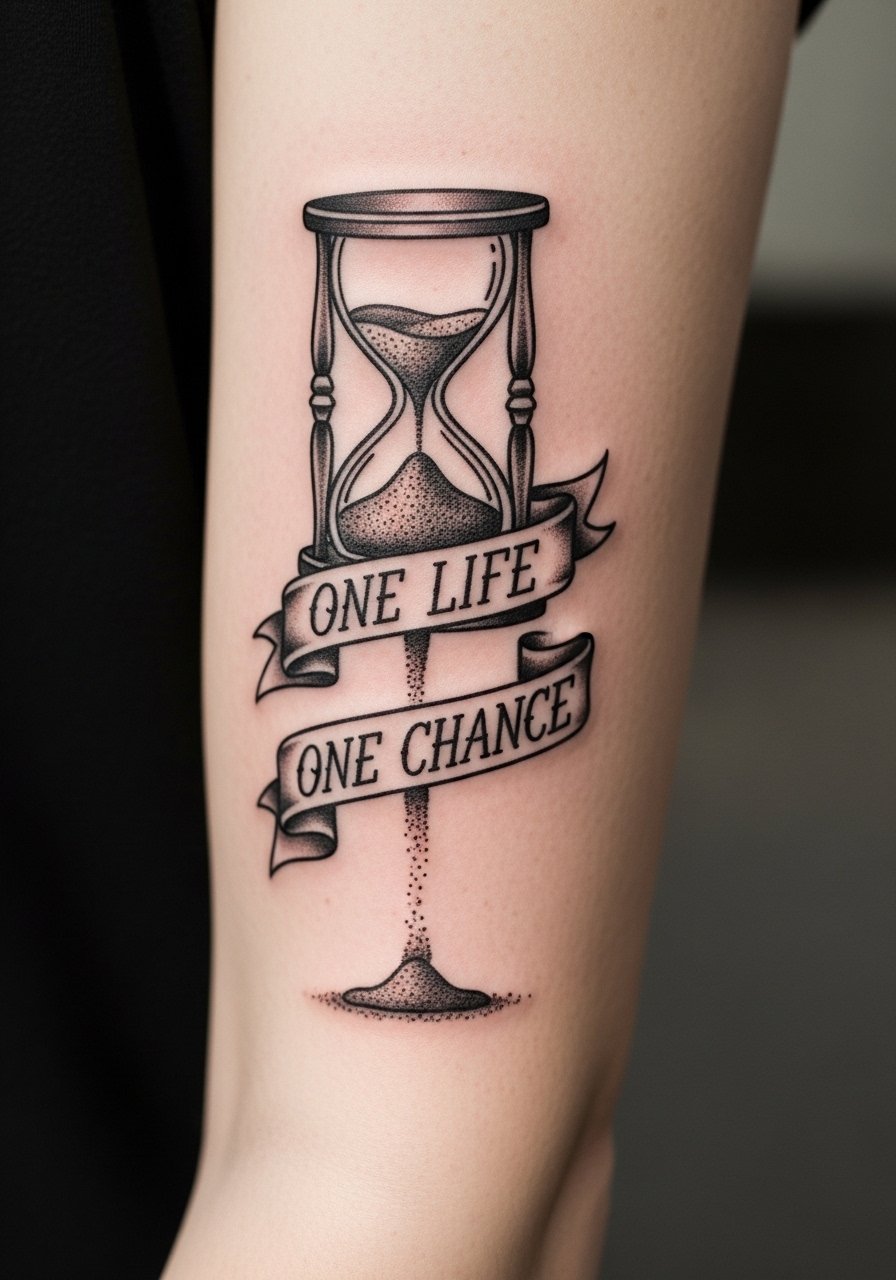
This design is a statement that favors saturation over subtlety. For longevity, ask the artist to keep the banner width consistent with the hourglass body so the fill does not feather into surrounding linework. Two sessions may be required to get solid black saturation that resists fading and touch-up rates drop after an initial year fix. Stylistically, rolled-up sleeves or a fitted black tank top makes the bold contrast read clean.
13. Minimalist Script Wrapped Around a Finger
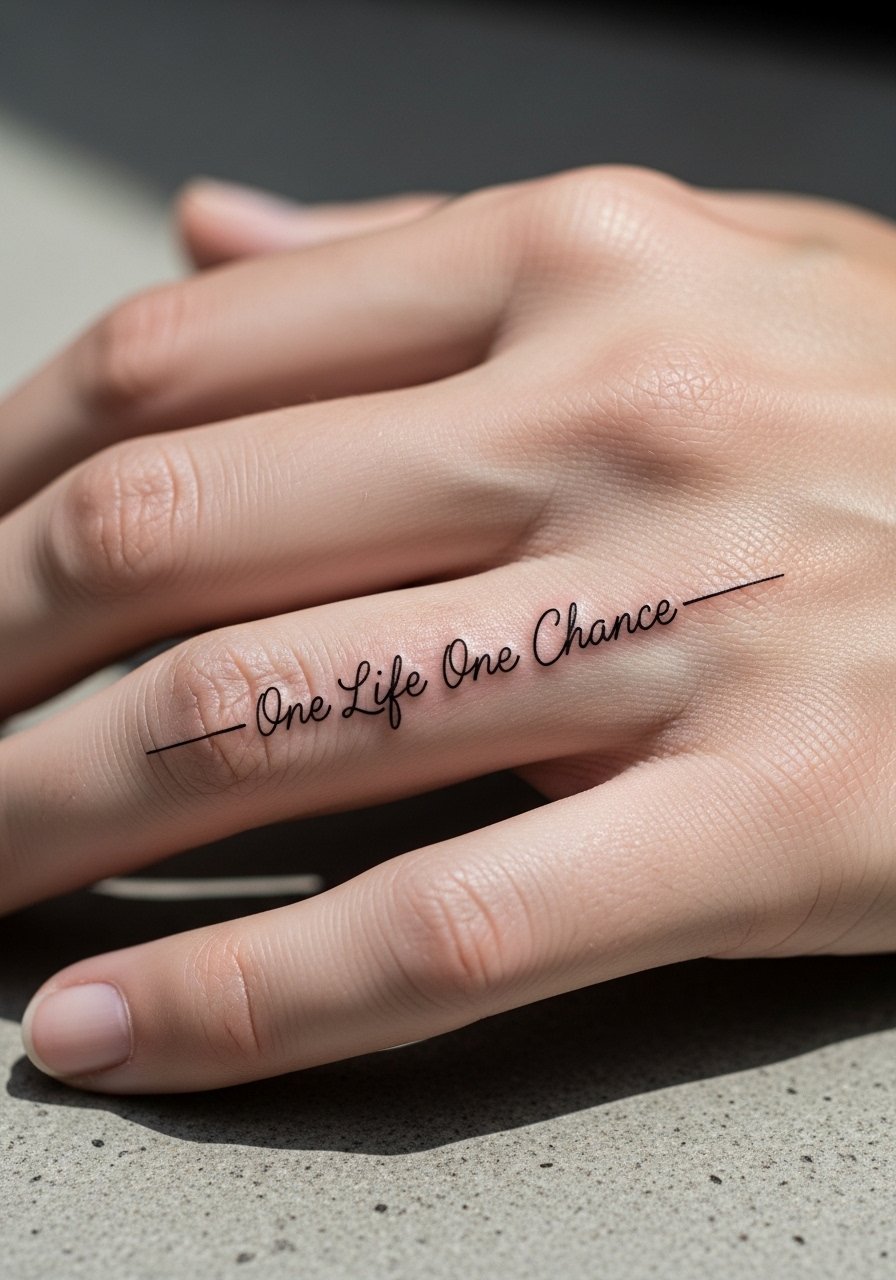
Finger tattoos have high exposure to washing and friction, so micro script often fades fastest here. If you still want it, request bold letter counters instead of ultra-thin strokes and accept that yearly touch-ups are common. The session is short but fairly intense for pain, usually a 6 to 7. For the session remove rings and wear a short-sleeve top so the artist can access the hand easily.
14. Ornamental Hourglass with Filigree on Ribcage
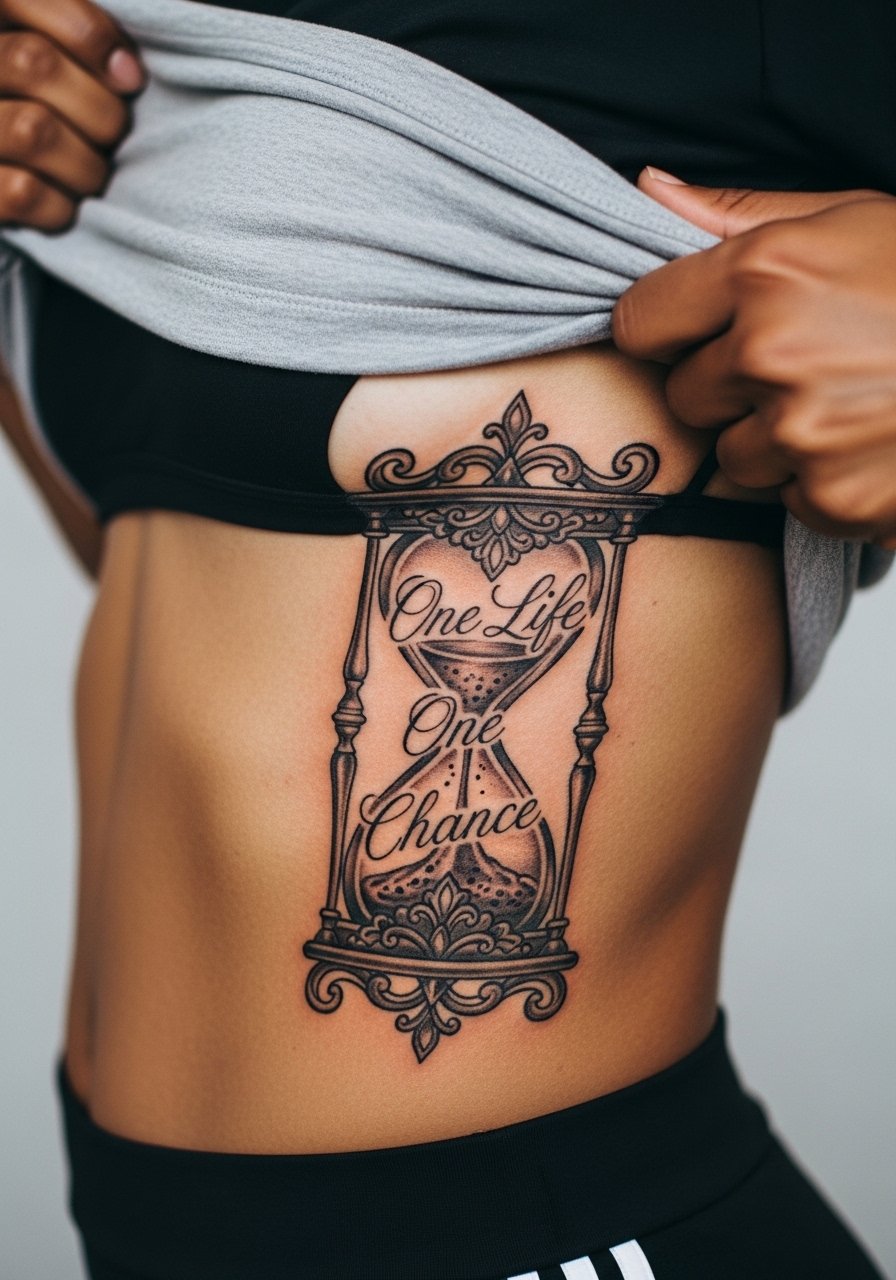
Ribcage work is high on the pain scale and high in impact. Artists disagree on fine line here. One camp says the stretch and movement blur micro-line within two years. The other camp argues that with proper depth and spacing, fine line settles fine on the ribs. Ask your artist where they stand and what spacing they recommend. Plan for one to two sessions and expect the healing process to be slower than for the forearm. Wear a strapless or cropped top that the artist can lift without rubbing the fresh ink.
15. Small One Line Script Along the Collar of a Shirt
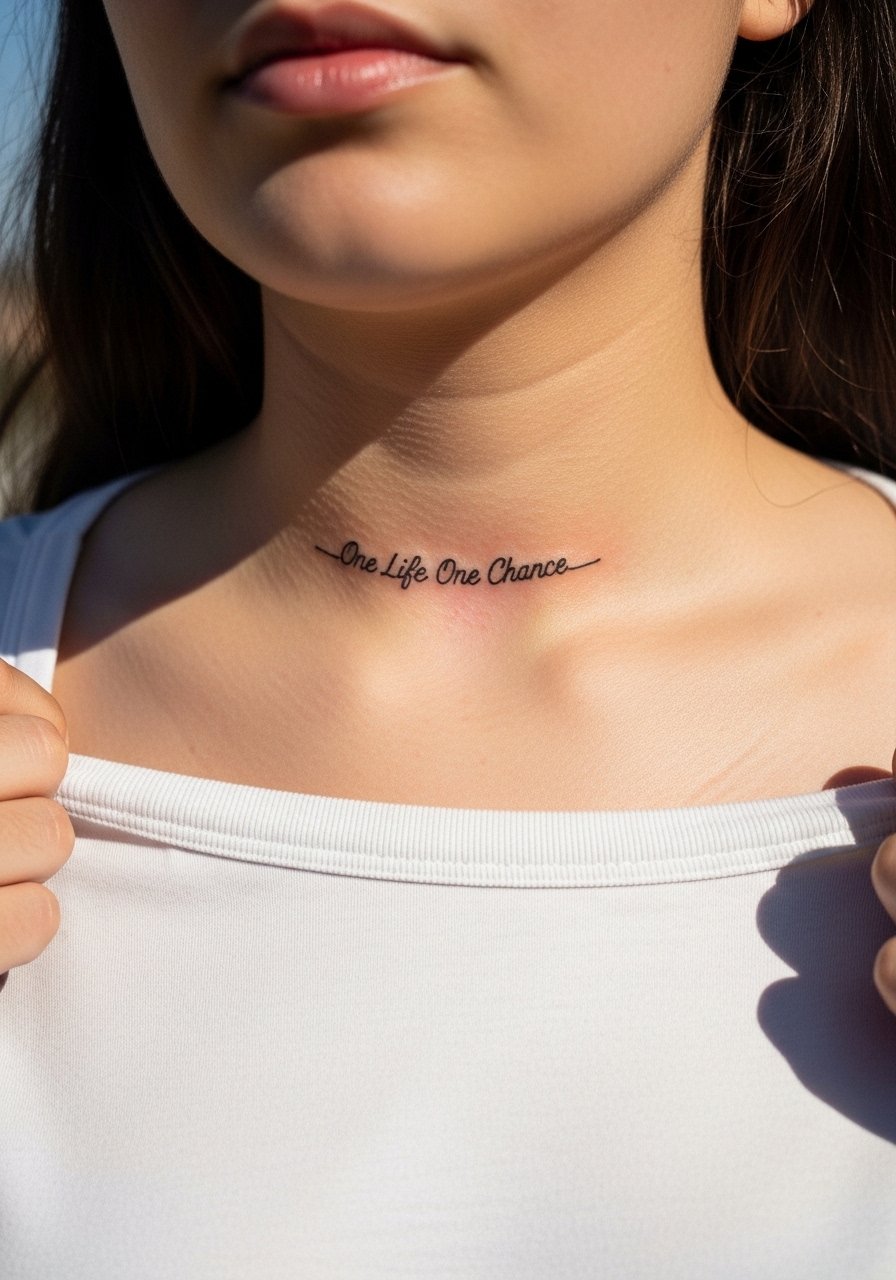
If you want micro script that peeks from clothing, scaling and negative space are everything. Ask for slightly larger letterforms than you think you need and for the artist to avoid ultra-fine needles. The collar area is moderate on pain and heals with less scabbing when you avoid tight fabrics. For showing off, keep it in view with an open collar shirt or a wide-neck top.
16. Fine Line Chain of Birds from Shoulder to Upper Arm
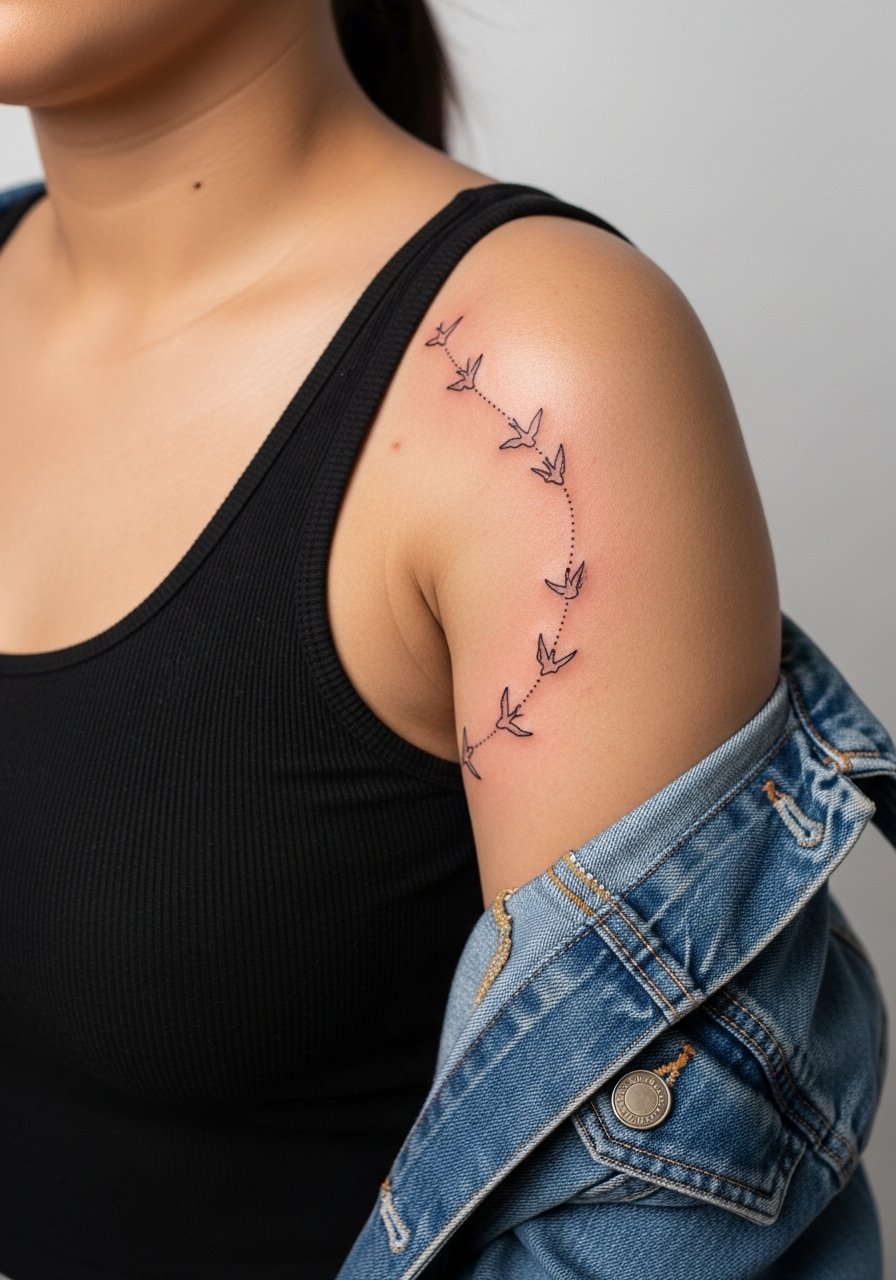
This is a great way to bridge from a collarbone piece to a sleeve over time. Ask for slightly thicker anchor lines on the first bird so the chain reads at a distance as the piece expands. The shoulder handles detail well and usually needs a single session for a short run. For showing it off, an open denim jacket frames the movement without covering the lines.
17. Black and Gray Swooping Banner on Inner Wrist
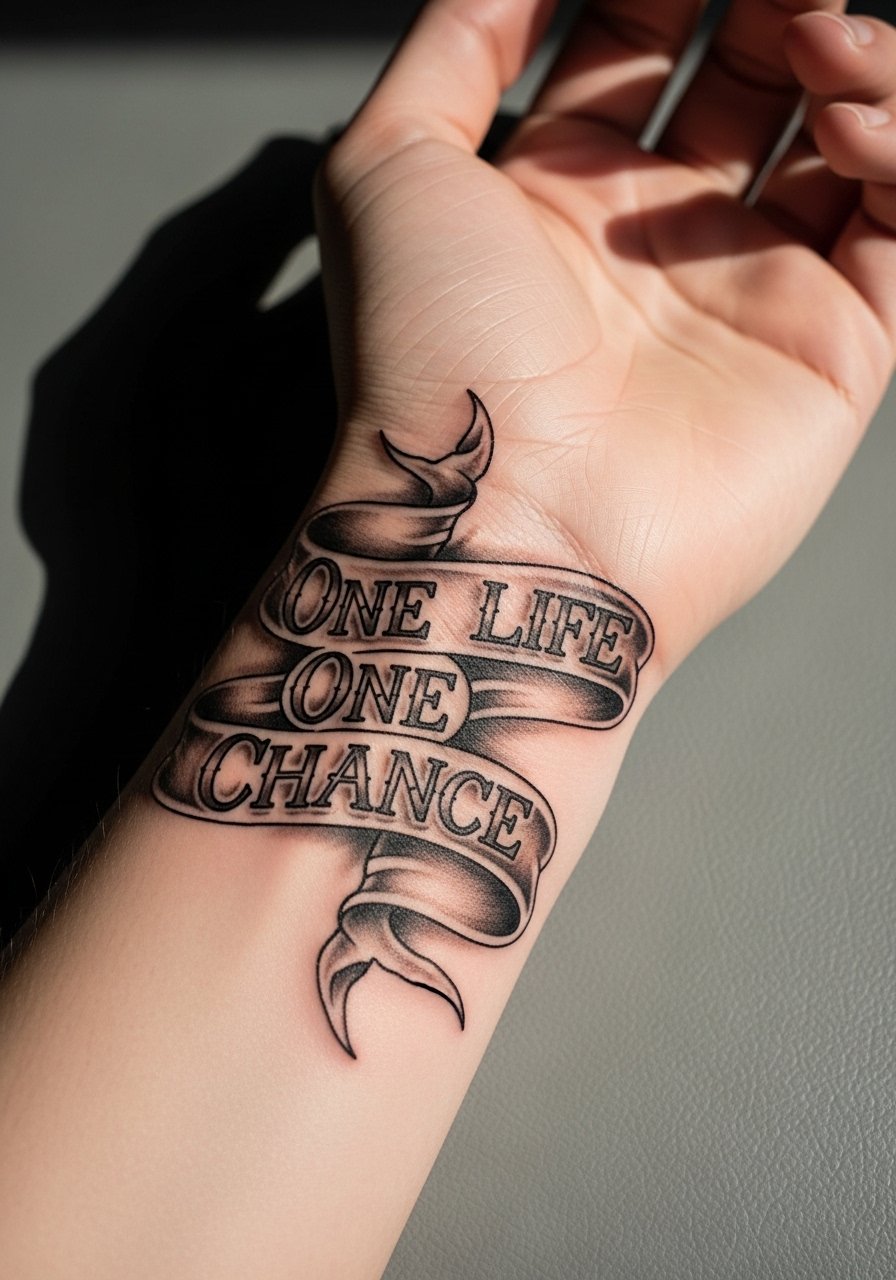
Inner wrist banners need to be wide enough that the script does not compress over time. Tell the artist you want slightly thicker lettering and a soft gray wash behind it to keep the banner distinct as lines soften. The session is brief and the wrist heals quickly, but it sees heavy washing. For the appointment avoid bracelets and opt for a minimalist wrist chain on the other hand after healing if you want an accessory.
18. Fine Line Mountain Range on Outer Forearm
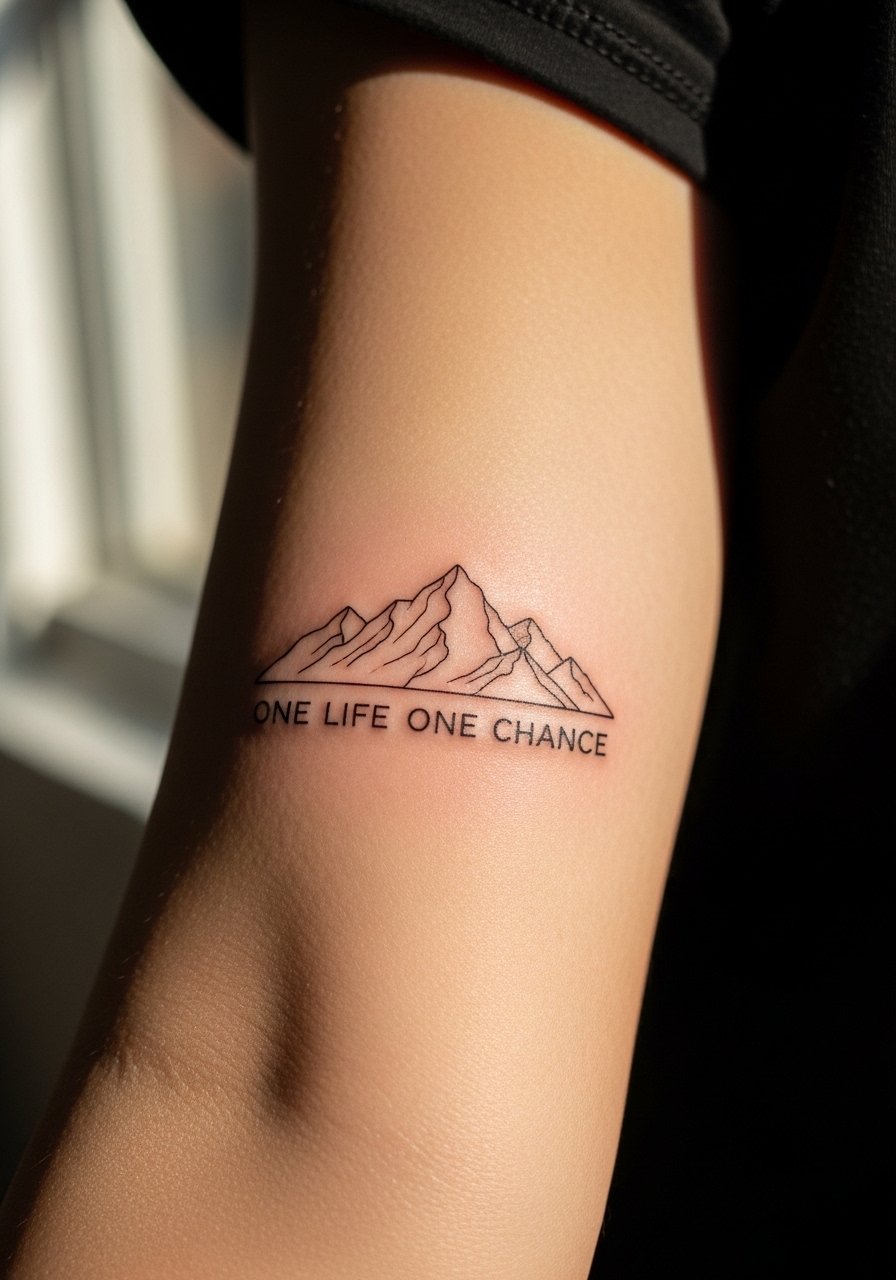
Outdoor motifs work well with clean spacing. The mistake is compressing contour lines so they merge as the skin ages. Ask your artist for slightly thicker linework on peaks and a tiny baseline for the script to prevent wandering over time. Forearm placement is forgiving and shows well with rolled sleeves or a thin leather cuff. Try a thin leather cuff bracelet on the opposite arm while the new ink settles.
19. Watercolor Compass Rose on Calf
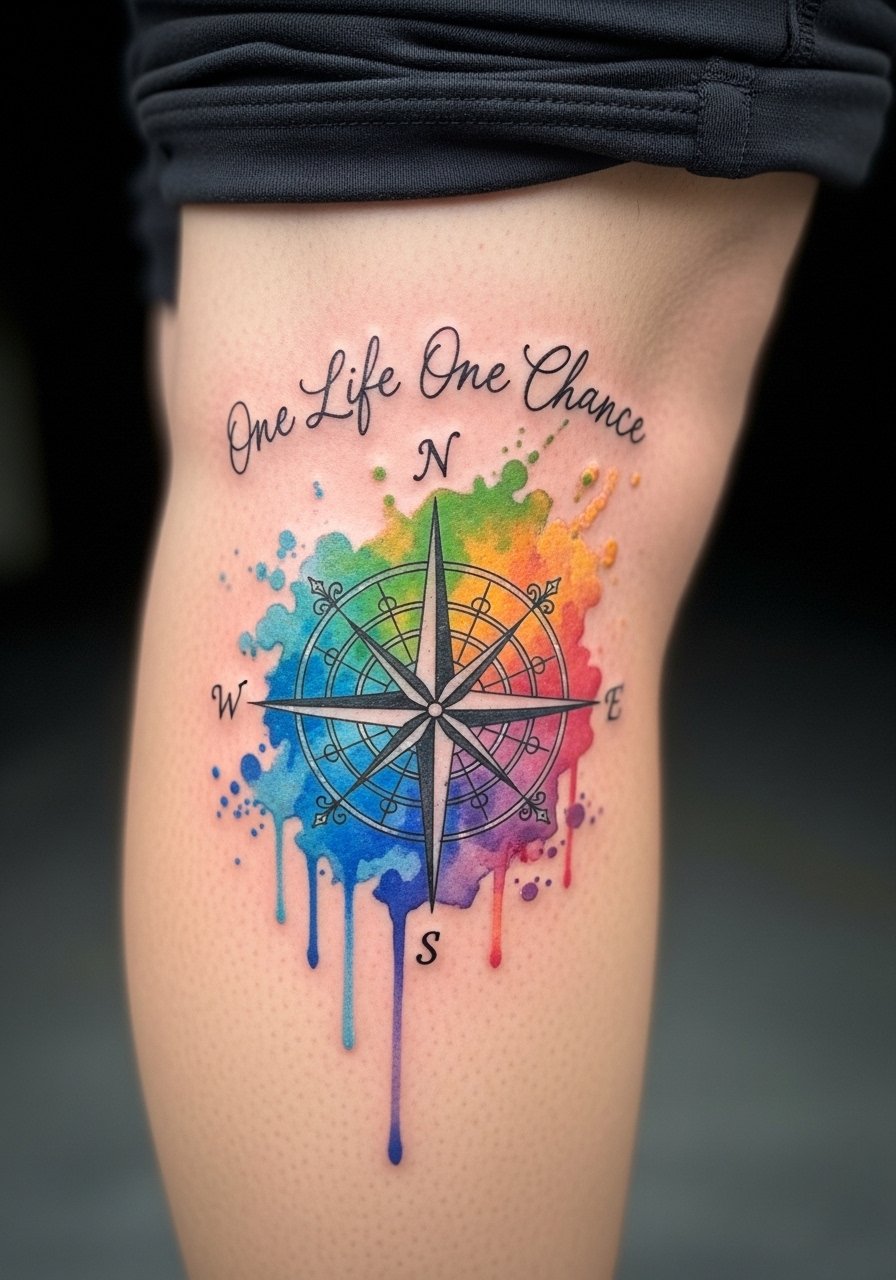
Color on the calf is easier to maintain because the area gets less sun than forearms. Still, watercolor needs anchor outlines to age cleanly. Ask for thin black outlines around key points and for the artist to avoid densely packed watercolor blobs. Two sessions are common for saturation. For show-off wear athletic shorts that keep the tattoo visible without rubbing.
20. Neo-Traditional Banner Over the Heart
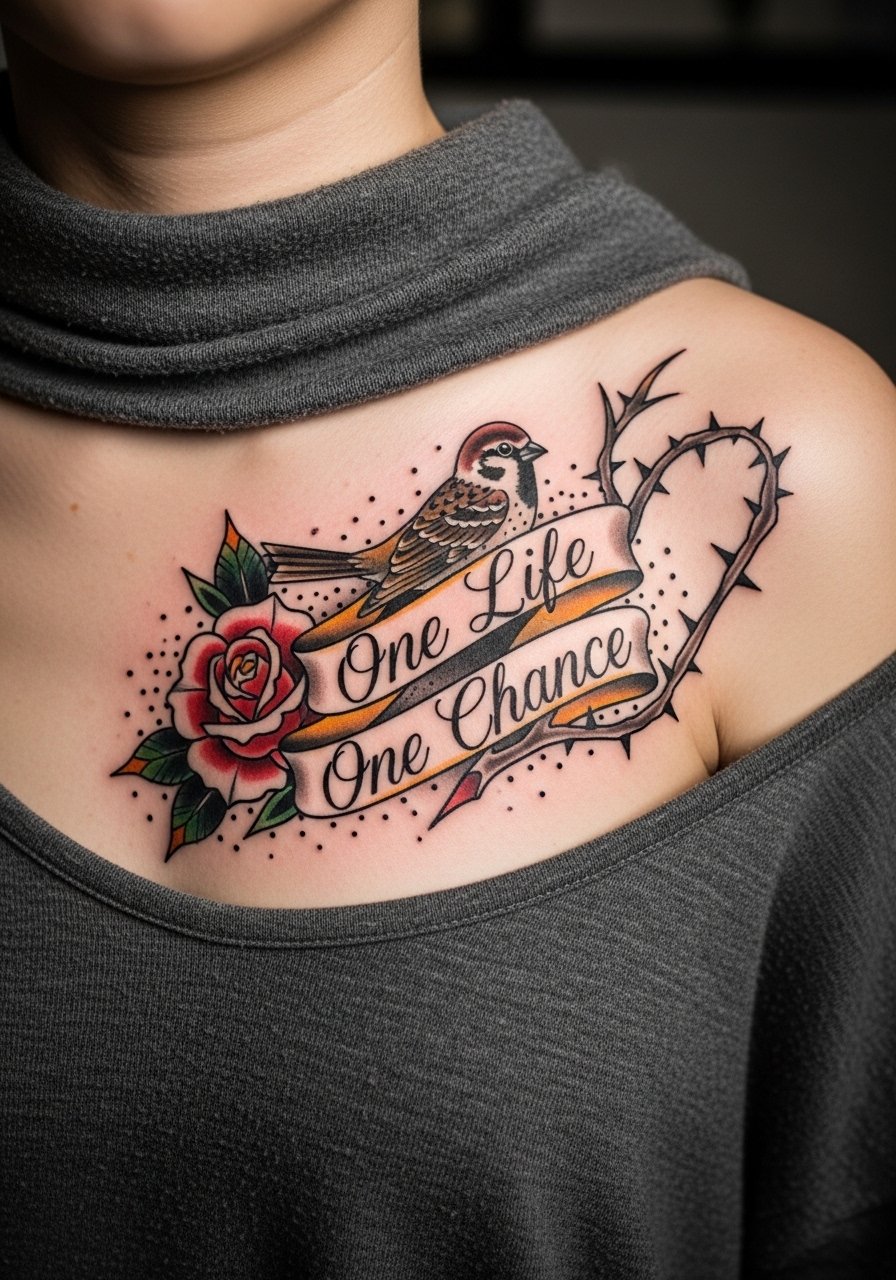
Chest pieces near the heart carry emotional weight and movement. Texture is important here, and neo-traditional bold lines help the banner stay readable. Ask the artist to anchor the script inside a ribbon element so color or shading does not overwhelm the letters. Sessions can be longer and the area is more sensitive than the outer arm. For the session choose a top you can lift without tightness on the new ink.
21. Micro-Realism Pocket Watch with Integrated Text on Upper Arm
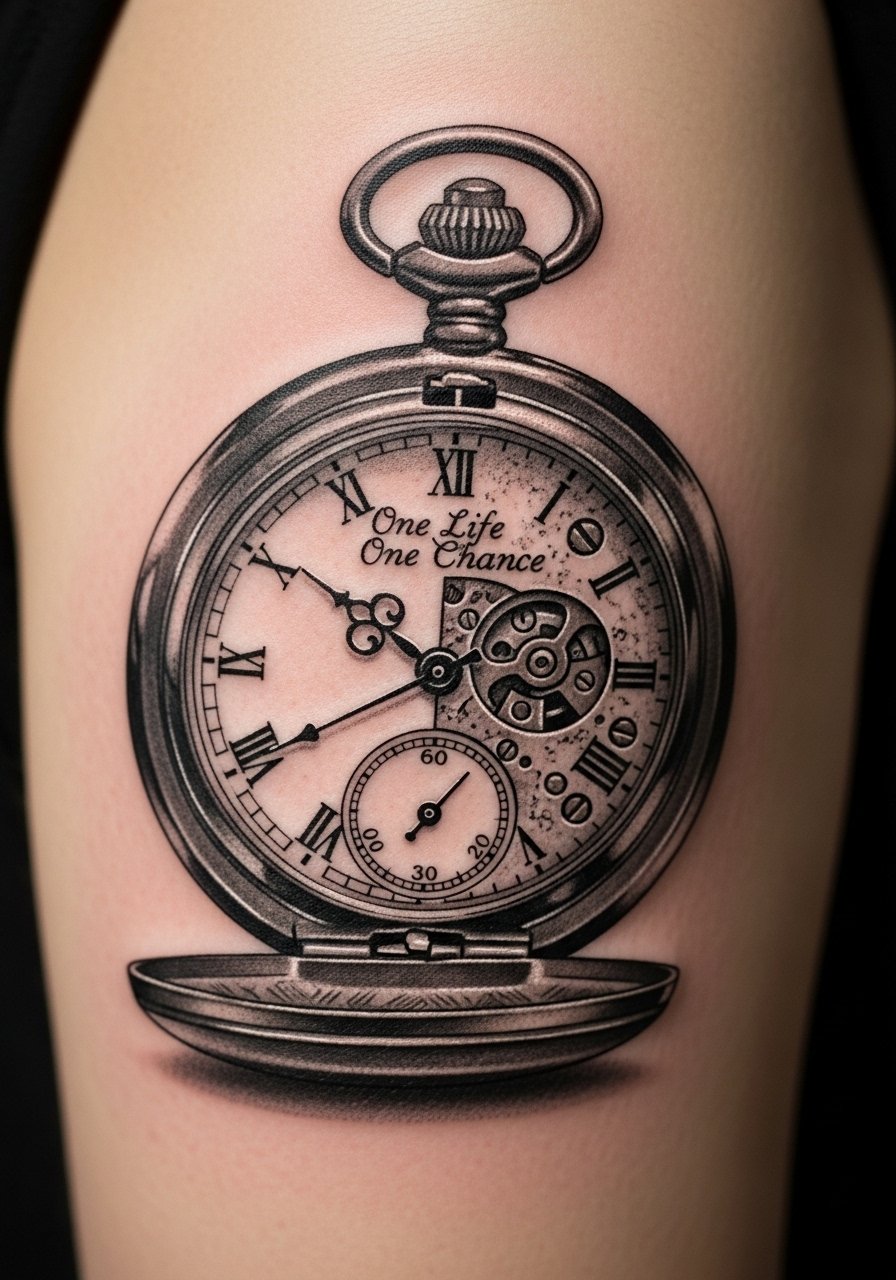
Micro-realism reads best when the watch face is at least three inches across. Tell the artist you want crisp highlights on the glass and deep core shadows so the piece keeps depth as it ages. Two to three sessions may be necessary depending on detail. Upper arm sessions are comfortable and have moderate pain. For the appointment wear a sleeveless shirt so the artist has easy access.
22. Fine Line Script Inside a Banner on Inner Forearm
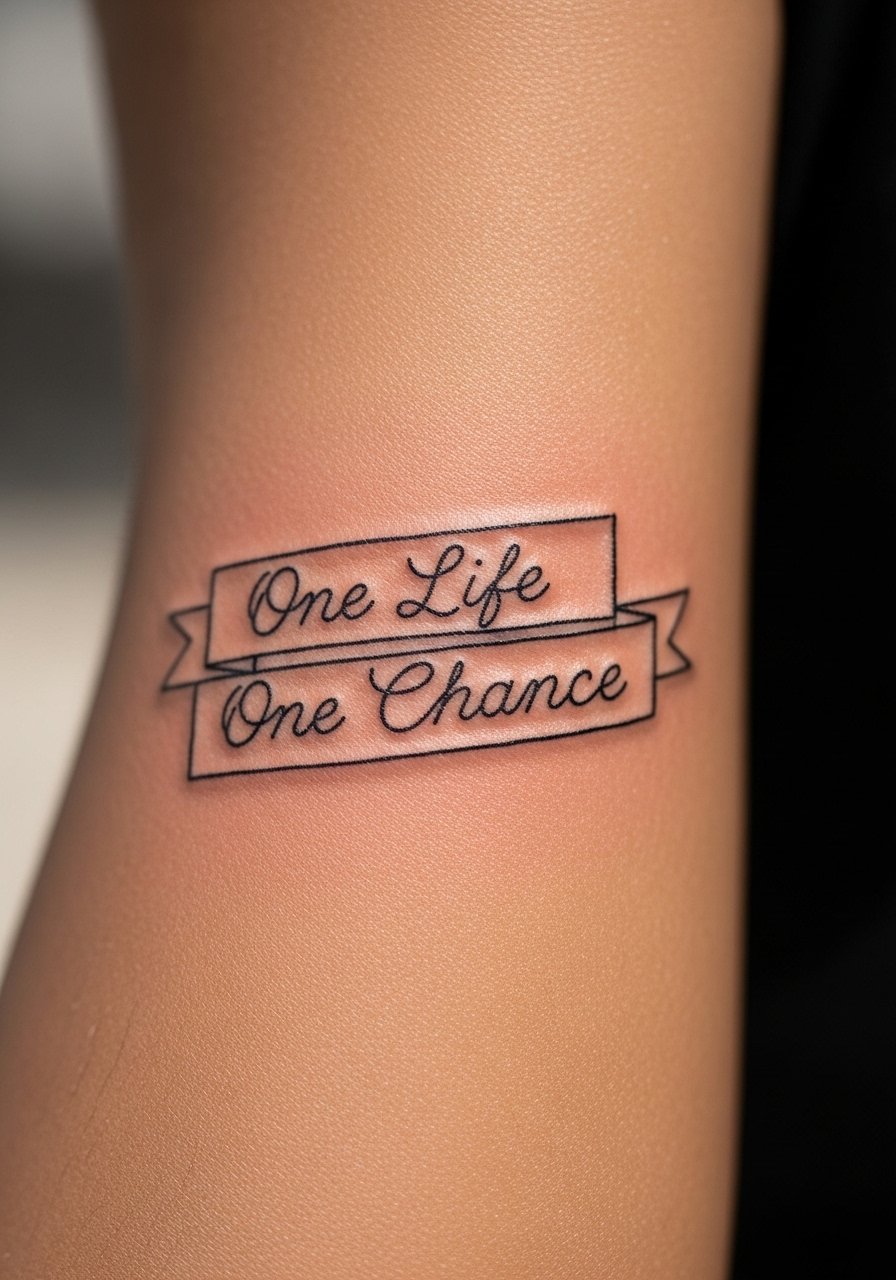
Text inside banners reduces edge wear because the outline protects the letters. Ask for slightly more spacing between letters and for the banner to be drawn with consistent width. The inner forearm tolerates this well and healing is straightforward. For showing it off, rolled sleeves and a thin chain on the neck keep the focus on the arm.
23. Phoenix Wing Fragment Along the Collarbone
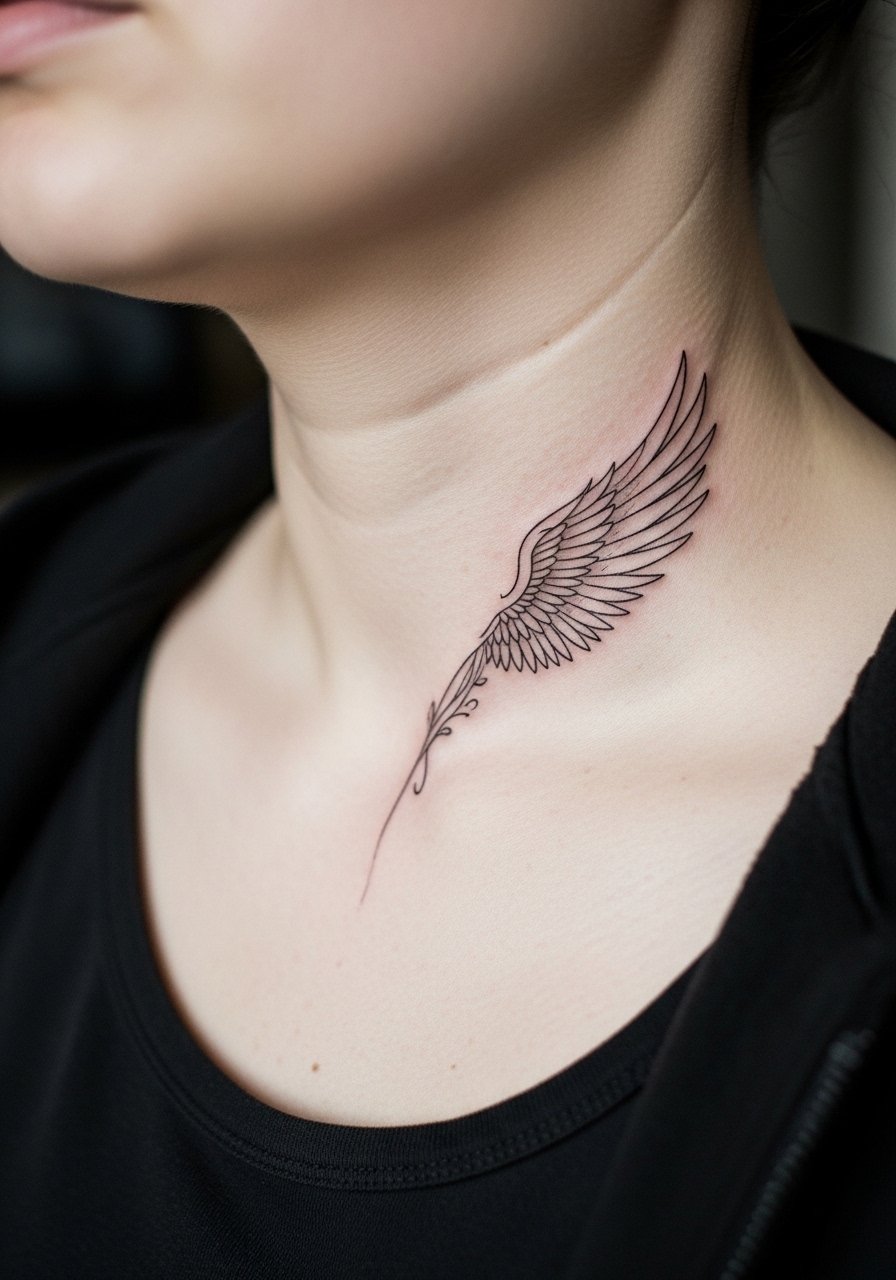
A fragment allows you to scale into a larger sleeve later without committing to a full piece now. Tell the artist you want the wing to flow with the clavicle line and to stop short of the sternum to avoid distortion with body changes. This placement is sensitive but heals cleanly if you avoid friction. Pair it with a delicate chain necklace when showing it off.
24. Blackwork North Star with Text on Shoulder
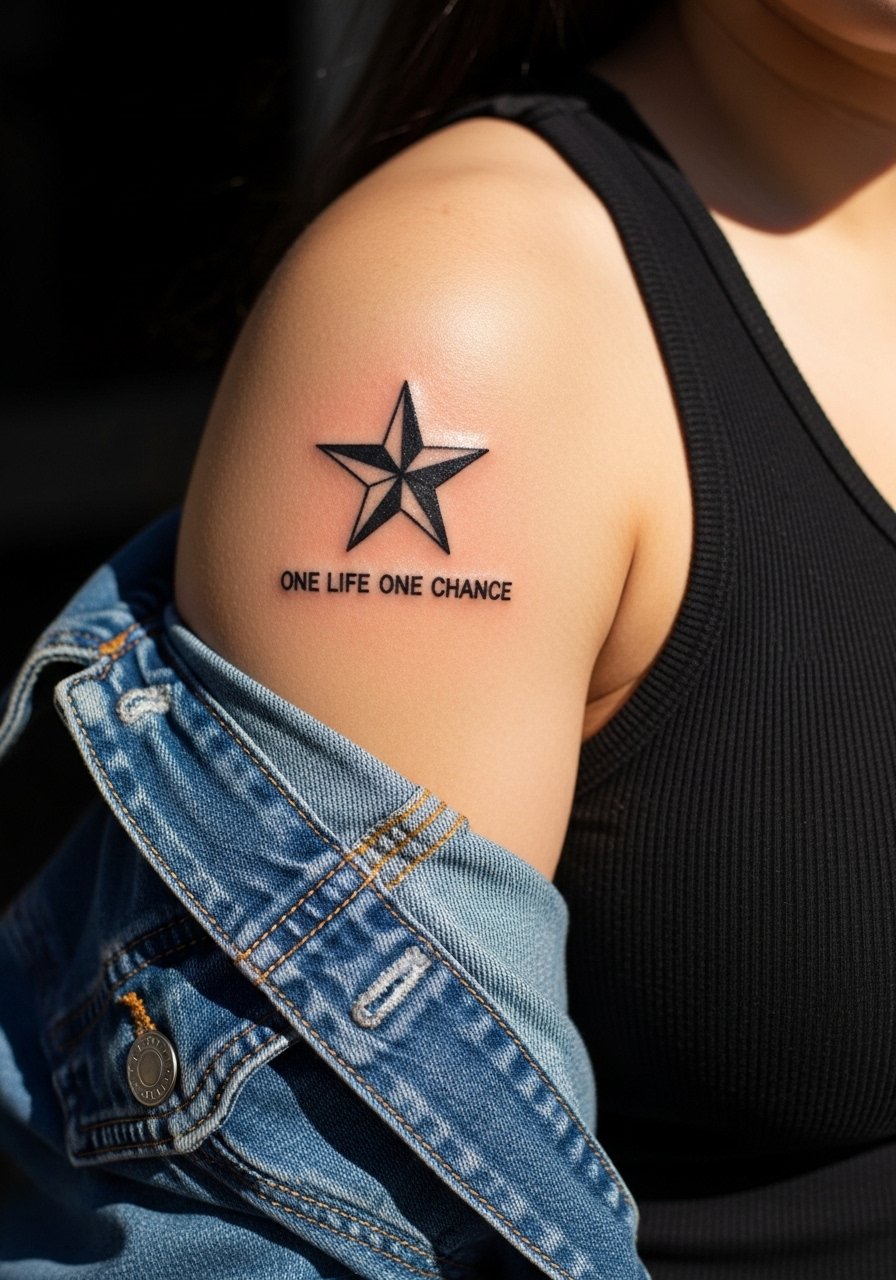
A heavy black north star is small but dramatic. On the shoulder it resists blowout and keeps contrast for years. Ask for crisp negative space between the star points to prevent feathering. Sessions are short and pain is usually low. For display pair with an open denim jacket or a fitted tank.
25. Watercolor Banner and Compass on Outer Thigh
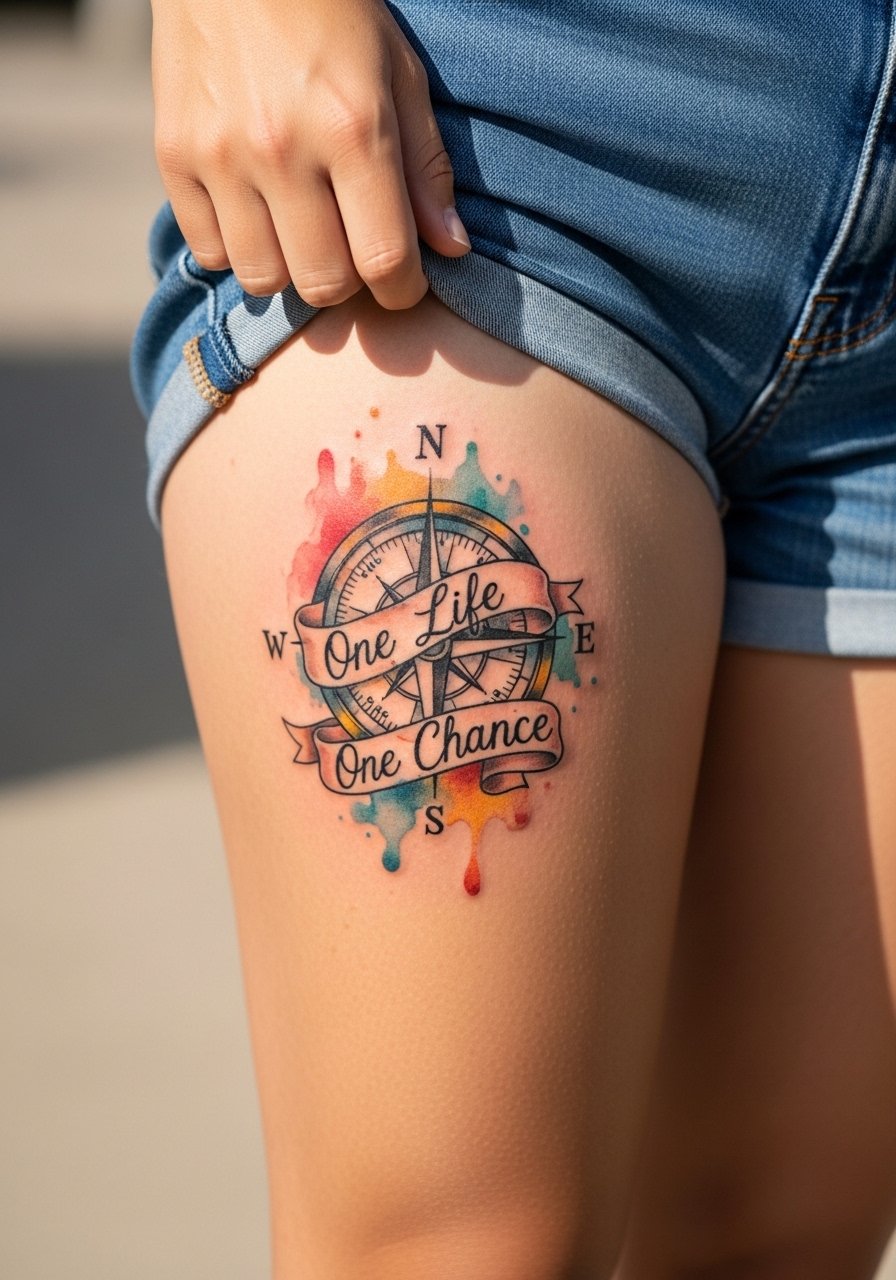
Thighs are forgiving for watercolor because they stay covered in cooler months and get sun in summer. Ask for crisp outlines around the compass so the color has structure as it fades. Two sessions are common for vibrancy and a color refresh may be needed at year three. For the tattoo appointment wear loose athletic shorts so the artist can access the outer thigh without tight seams.
26. Minimalist Hourglass Behind the Ear
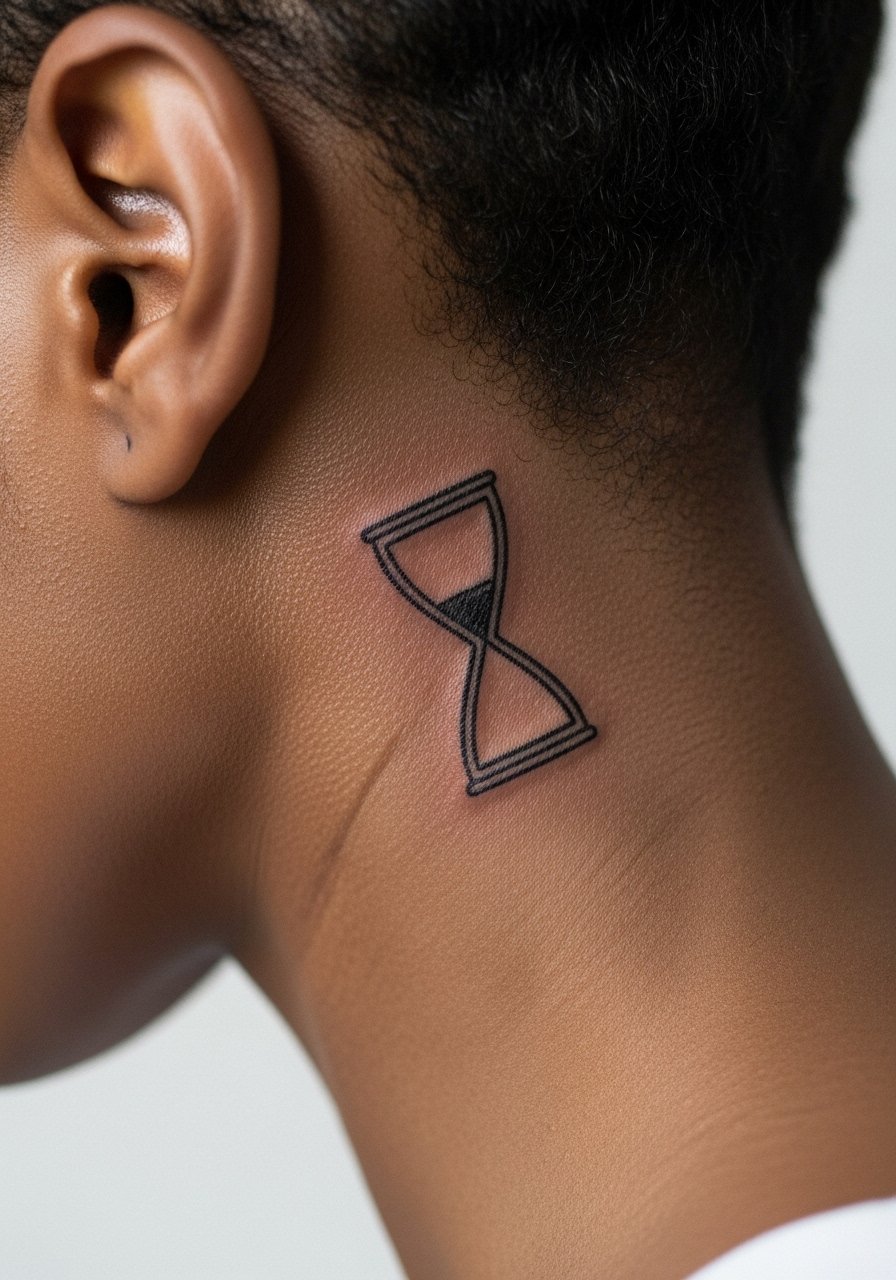
Behind the ear needs careful placement because the area is small and curved. Describe exactly where you want the base of the hourglass relative to the hairline. Sessions are short but can sting because of thin skin. Consider whether your job is sensitive to visible neck work. For appointment logistics, have hair tied up so the artist can work cleanly.
27. Patchwork Starter Piece for a Sleeve: Compass, Hourglass, and Script
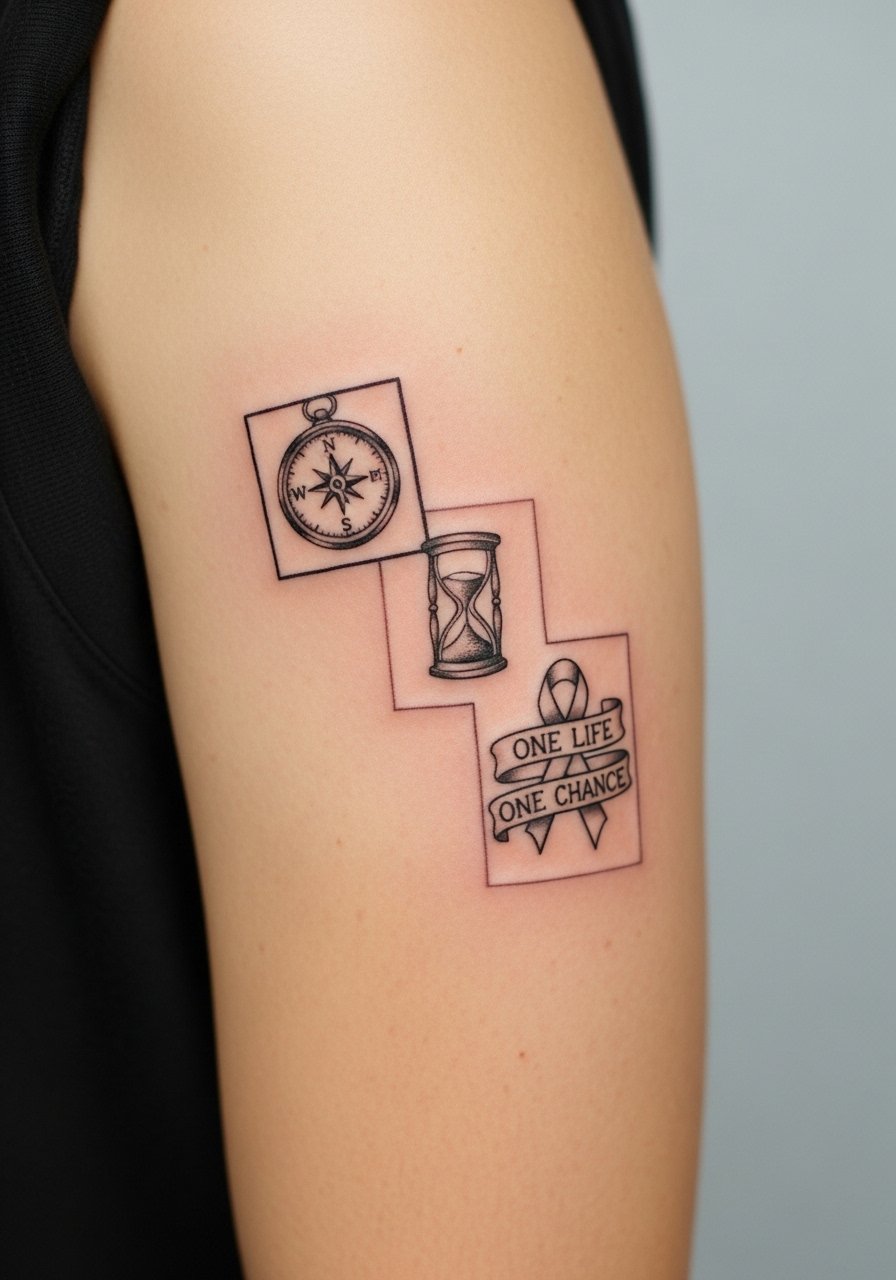
If you plan a sleeve someday, approach this as patchwork rather than a single busy piece. Lay out components with breathing room and ask the artist to orient each element so future connections are possible. A common mistake is requesting everything tight and then needing major rework to bind it into a sleeve. Sessions for each small piece vary from 30 minutes to two hours and spacing choices now determine whether the sleeve will read cohesive later. For the session wear a loose fit button shirt you can roll back without pressure on fresh ink.
Frequently Asked Questions
Q: Will a fine line "One Life One Chance" script blur faster on dark skin?
A: Fine line can be less visible on darker tones if the counters are too thin. The fix is to ask for modestly thicker line weight or to pick blackwork alternatives for longevity. Some artists prefer single-needle for elegance and accept a yearly touch-up. Others argue that slightly bolder lines do the best job at year three. Ask a few artists how their work performs on similar skin tones before booking.
Q: How should I handle deposits and cancellations to avoid being ghosted?
A: Use booking platforms that document deposits and cancellation policies, or ask for a written confirmation via email. If an artist has a clear rescheduling policy you feel comfortable with, that reduces the risk of lost deposits. In my experience, shops that use appointment systems are less likely to cancel without notice.
Q: Do waterproof films like Saniderm speed healing or trap bacteria?
A: Artists split into two camps here. One camp praises protective film for reducing scabbing and keeping bacteria out. The other camp worries about trapped moisture and prefers open air with recommended ointment. Try asking your artist which method they prefer and why, and follow their protocol for that specific shop and your skin type.
Q: How much should I budget for a fine line forearm piece or a small wrist script?
A: Expect entry-level minimalist pieces to start in the low to mid price range and larger realism or neo-traditional work to sit in a higher range. Pricing varies with artist experience and location. Plan for at least a moderate budget if you want clean linework that holds up, and factor in a possible touch-up down the line.
Q: If I plan weight loss or gain, which placements are safer for "One Life One Chance" designs?
A: Collarbone, shoulder blade, and upper arm are more stable as the body changes than the forearm or lower belly. Thighs also tolerate change well. If you anticipate body changes, discuss scalable compositions with your artist so the design can be adapted without distortion.
Q: Where should I look for artists who specialize in these styles without naming individuals?
A: Search social tags like #OneLifeOneChance and #FineLineTattoo on Instagram for portfolios, use Tattoodo filters for style and city, check TikTok with location tags for guest spots, and consult Booksy or local Reddit threads asking for "blackwork" or "fine line" recommendations. Look for portfolios with healed photos and examples on a range of skin tones.