Fine line forget-me-not tattoos are everywhere on saved boards right now, and the tricky part is choosing a version that still looks intentional after a few years. Pick something tiny and soft and it may need touch-ups sooner. Pick a slightly bolder line or a placement with less friction and you buy more longevity. Below are 27 well-worn and fresh takes, each with what to ask your artist and how to wear it while you heal.
1. Fine Line Single on the Inner Wrist

I’ve seen this version on dozens of first tattoos because it reads simple and personal. Fair warning: wrists face a lot of friction from bracelets and sleeves, so ask your artist for slightly bolder linework than your reference photo so the piece keeps its shape over time. Pain is low to moderate and most sessions finish under an hour. Expect a touch-up around year two or three if you get very thin lines. For the appointment, wear a rolled cuff blouse so the artist can roll the sleeve without tugging jewelry off.
2. Two-Flower Cluster with Stems by the Collarbone

The collarbone is a great canvas for a paired cluster because the flat area helps preserve linework. In consultation, ask for visible petiole lines on the stems so the composition breathes across the clavicle instead of bunching into a single blob. Expect a 45–75 minute session with moderate pain from proximity to bone. For show-off outfits, try an off shoulder sweater that frames the tattoo, and wear a strapless bra or button-up the day of the session so your artist can access the area cleanly.
3. Watercolor Bouquet on the Outer Forearm
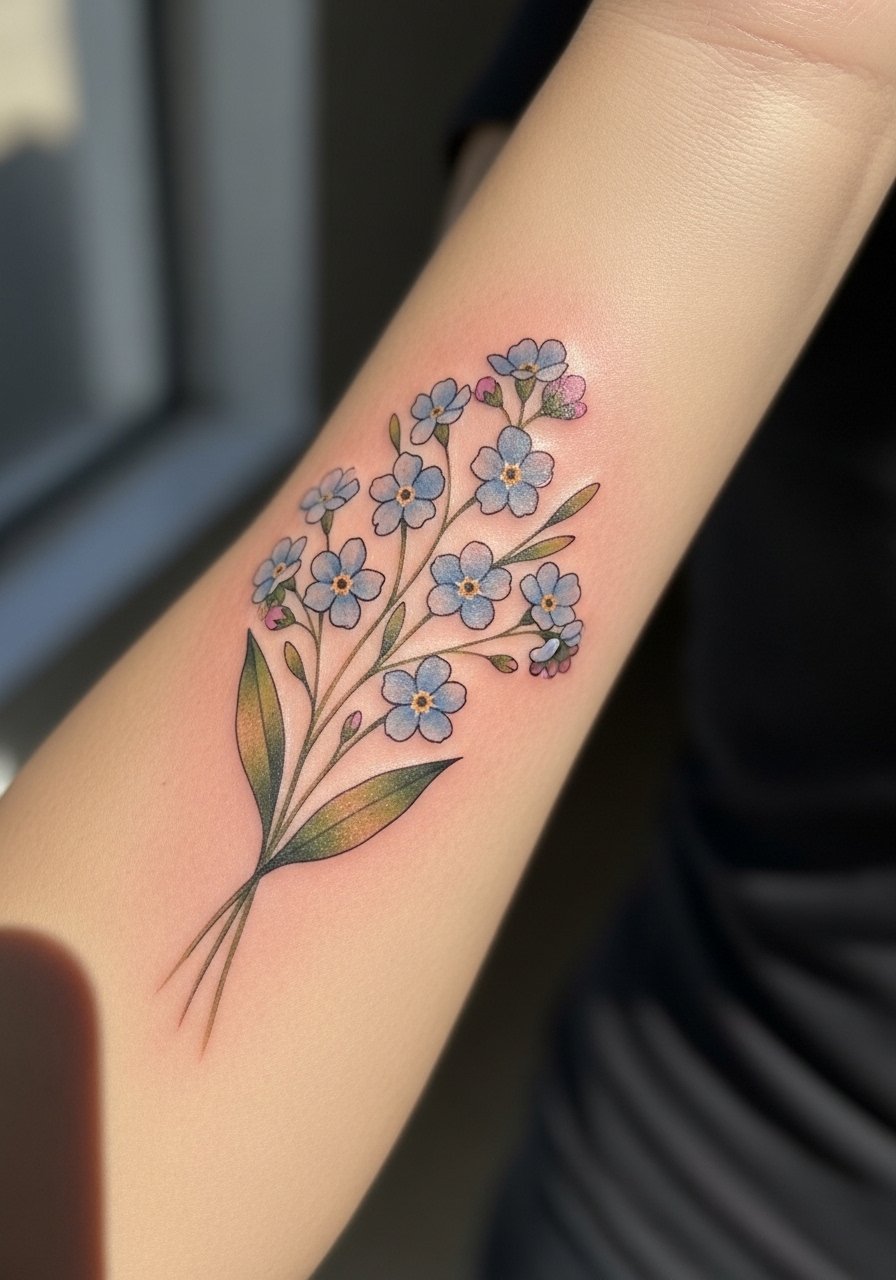
Watercolor styles look like a painting on skin but age differently than outlined pieces. Most fade in the first 12–24 months if placed over high-friction zones. For the forearm, ask the artist to retain faint anchor outlines under the wash so the silhouette survives fading. Session time usually runs one to two hours and pain is moderate. For everyday wear, rolled sleeves show off the wash without covering it. Throw on a linen rolled sleeve shirt for casual styling and to keep the skin cool during healing.
4. Micro-Realism Forget-Me-Not on the Inner Arm
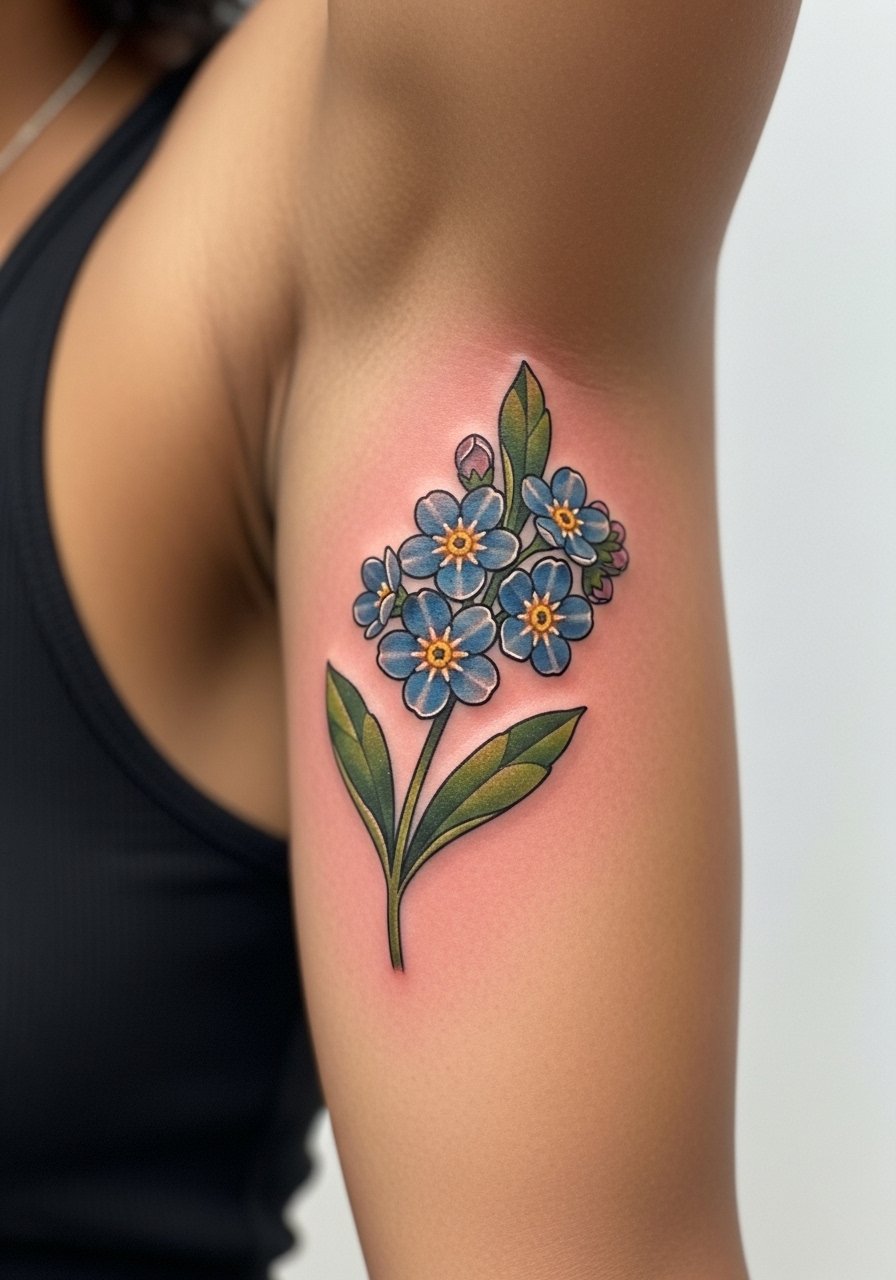
Micro-realism shows every petal edge but it asks for bigger scale and exact five-petal accuracy to read as the flower it is. If you want realism, plan for a two-session timeline for layering saturation and tiny highlights. Inner-arm skin can move and stretch, so artists vary on whether single-needle work holds here. One camp says it settles fine with careful depth. The other warns about diffusion and suggests slightly bolder spacing. Mention five-petal accuracy in your consultation and expect a touch-up at year two if you favor very fine dots.
5. Minimal Outline at the Ankle
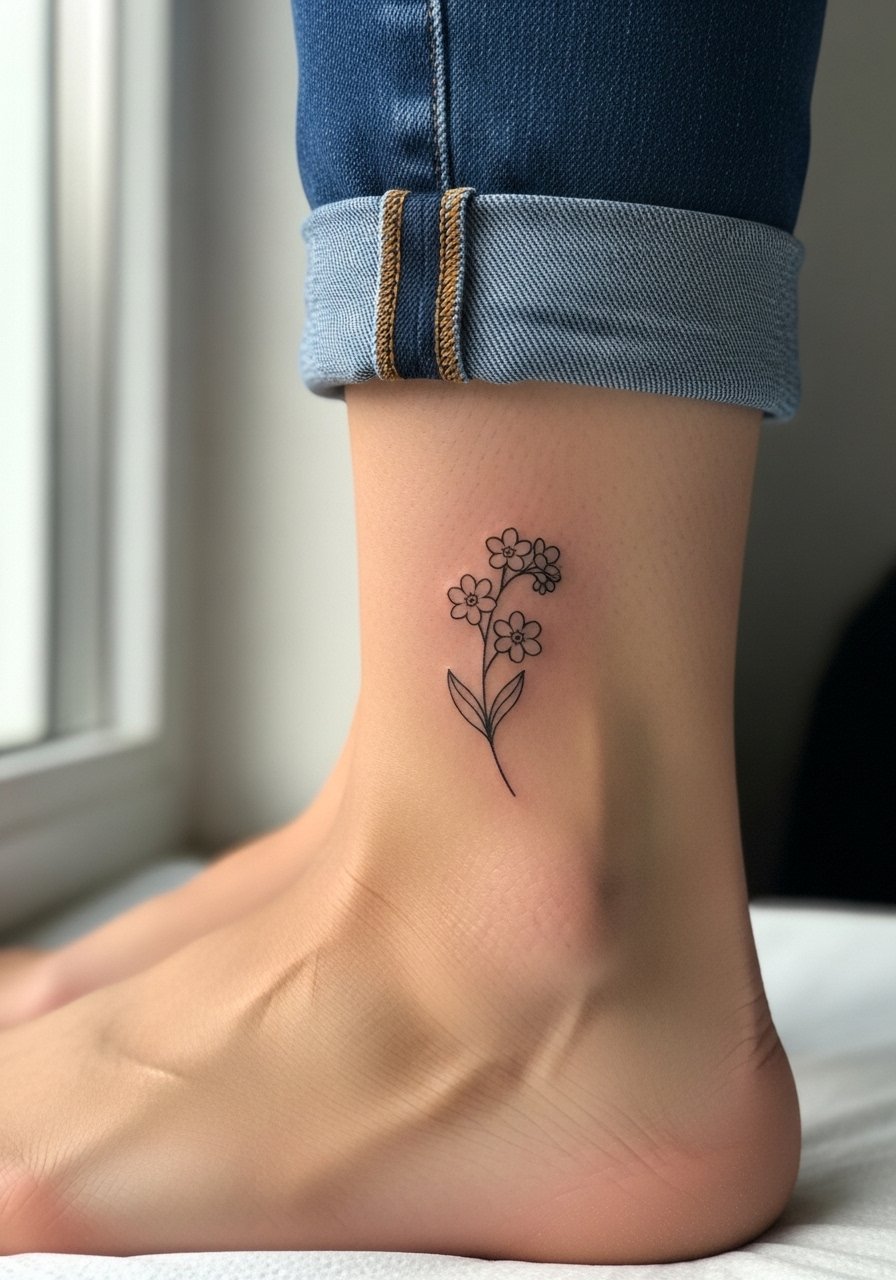
An ankle outline is simple and discrete, but small black lines can blur if placed where socks or shoes rub. Pick a slightly larger scale than you think you need so the petals remain distinct. Sessions run short, often under 45 minutes, with low to moderate pain. For showing it off, pair with strappy ankle sandals or cropped jeans. For the appointment, wear pants that roll easily so the artist can access the area without tugging.
6. Black and Gray Cluster on the Calf
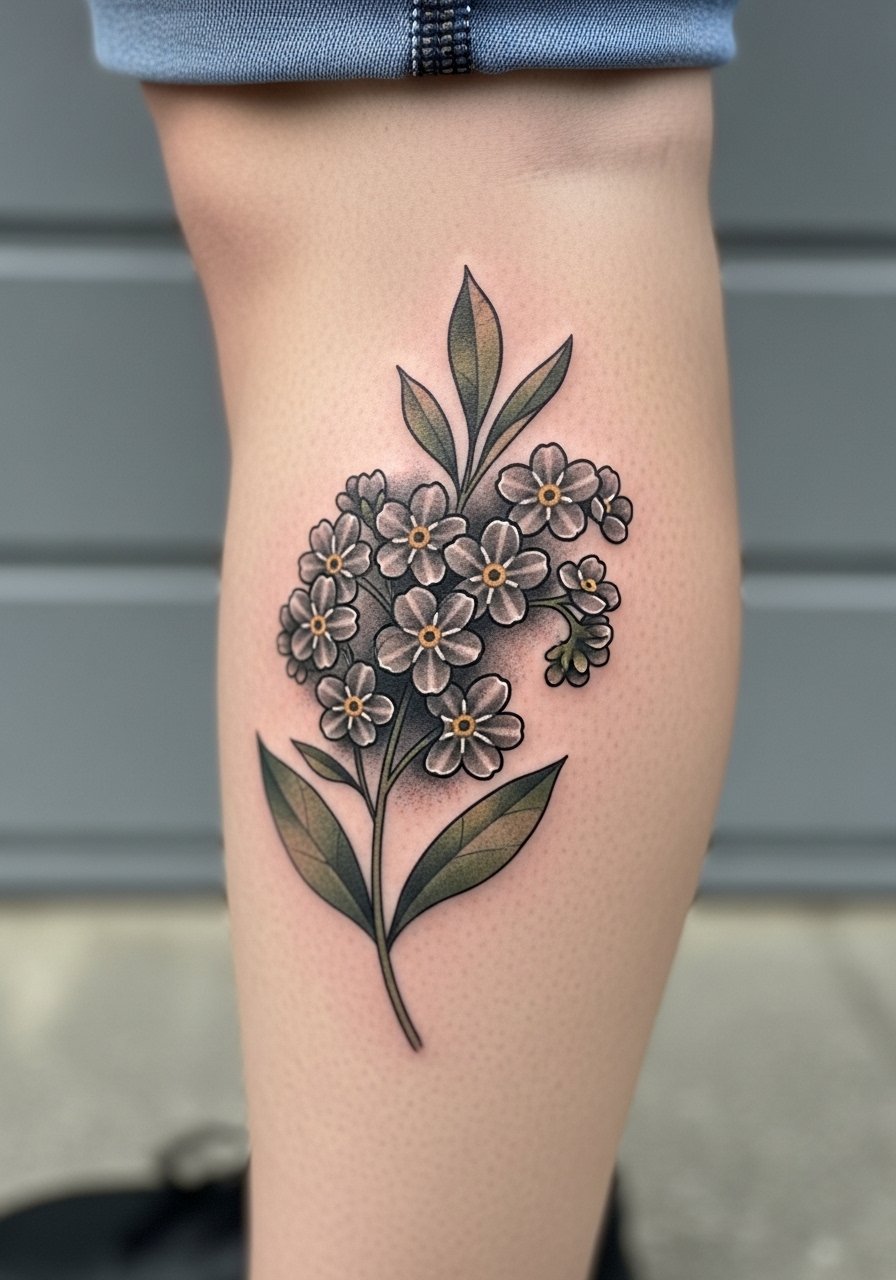
Black and gray realism keeps the forms readable without depending on bright blues. On the calf the flesh is forgiving, so shading stays crisp longer. The main mistake is over-detailing at too small a scale. Ask for mid-range contrast and leave room between shaded petals so the piece does not mud over time. Sessions are usually one to two hours and pain is low to moderate. For nights out, a pair of bootcut jeans or a side-slit midi dress shows the shading without competing.
Studio Day Picks
The wrist, ankle, and collarbone pieces above ask for different prep than larger shoulder or calf work, so a small kit smooths the session and the first week.
- Stencil transfer paper kit. Lets you preview placement and scale on skin before the needle goes down, which matters for tiny wrist and collarbone designs.
- Topical numbing cream. Useful for ankle or inner rib sensitivity when you want the session to feel more manageable.
- Thin protective film roll. Keeps friction-prone areas like the wrist and ankle cleaner during the first few days.
- Fragrance-free body wash. Gentle cleansing matters for fine line work that depends on crisp channels in healing skin.
- Aquaphor healing ointment. Thin layers help with early scabbing control for compact pieces that need even moisture.
7. Bold Blackwork Forearm Statement

Bold blackwork trades fine detail for long-term readability, which means you can scale the design down without losing definition. If you like a graphic look that lasts, ask for strong outlines and solid fills rather than hairline strokes. Expect one to two sessions depending on fill area, and low to moderate pain. A common mistake is asking an artist to combine extreme fineline detail inside a heavy blackwork outline. Keep the internal detail minimal so the piece ages into a solid silhouette that still reads from a distance.
8. Neo‑Traditional Mix with Cherry Blossom on the Shoulder

Fusing forget-me-nots with cherry blossoms leans into Japanese-inspired palettes while keeping both flowers recognizable. For shoulder placement, request clear petal separation and color layering so the blues do not muddle with pinks as they fade. Sessions often run two hours and pain is low. This pairing is undercovered in many lists, so use it if you want something slightly off the beaten path. For warm-weather outfits, a sleeveless sundress frames the shoulder without straps cutting across the design.
9. Single Needle Cluster on the Inner Wrist
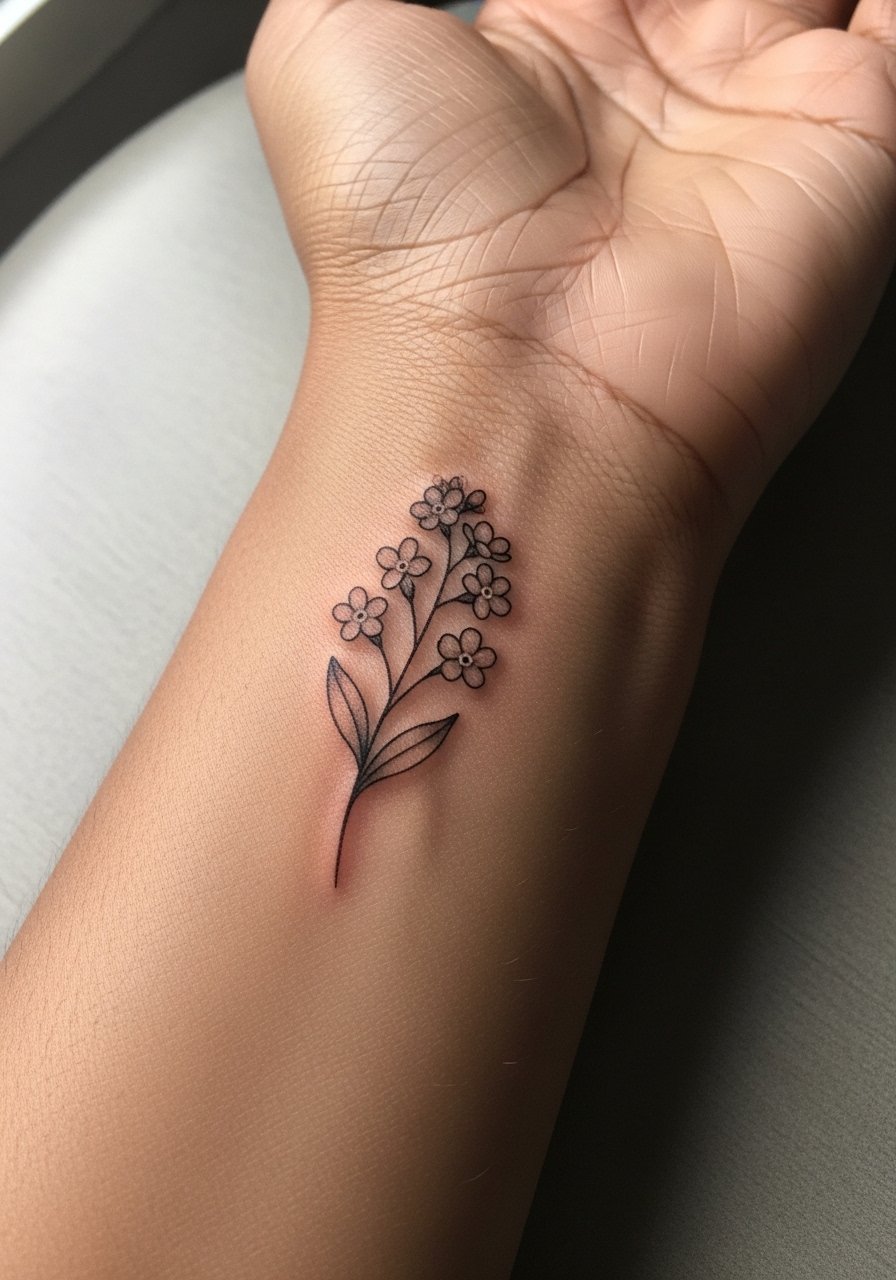
Single-needle work gives a lace-like result that looks superb on the inner wrist, but the lines are at higher risk of softening if the scale is too small. When booking, ask your artist for needle depth notes and bring reference photos showing the exact line weight you want. Expect a one-hour session and a likely touch-up at year two. For the appointment, choose a loose short sleeve top that slides up without tugging.
10. Vivid Color Cluster for the Thigh
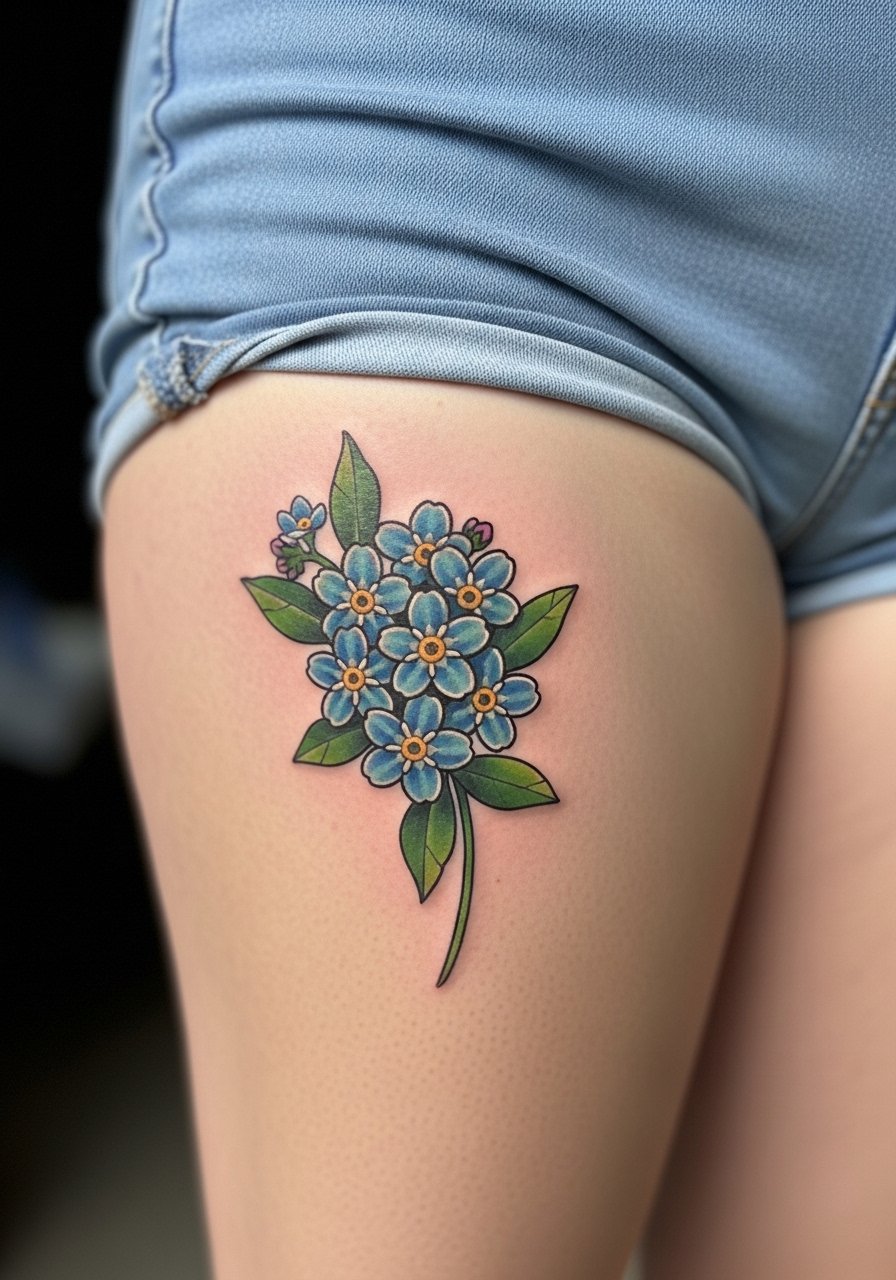
Thigh pieces allow size and saturation without worrying about constant abrasion. Vivid color holds longer on the thigh because it gets less daily UV and friction than hands or boots. The main downside is the session time and aftercare for larger color blocks. Plan a one to two hour session and wear loose shorts or a skirt on the day. For showing it off, try high-waisted shorts that frame the outer thigh without cutting the composition.
11. Five-Petal Accurate Micro-Realism

If realism is your priority, emphasize five-petal accuracy in the consultation. That small botanist note prevents an off-looking bloom. Micro-realism needs slightly more scale and lighter shading transitions for lifelike depth. Expect a one to two hour session and a realistic touch-up at year two to restore tiny highlights. On placement, upper arm or collarbone preserves detail better than high-friction spots, so discuss placement trade-offs with your artist during booking.
12. Script and Stem Combo on the Collarbone
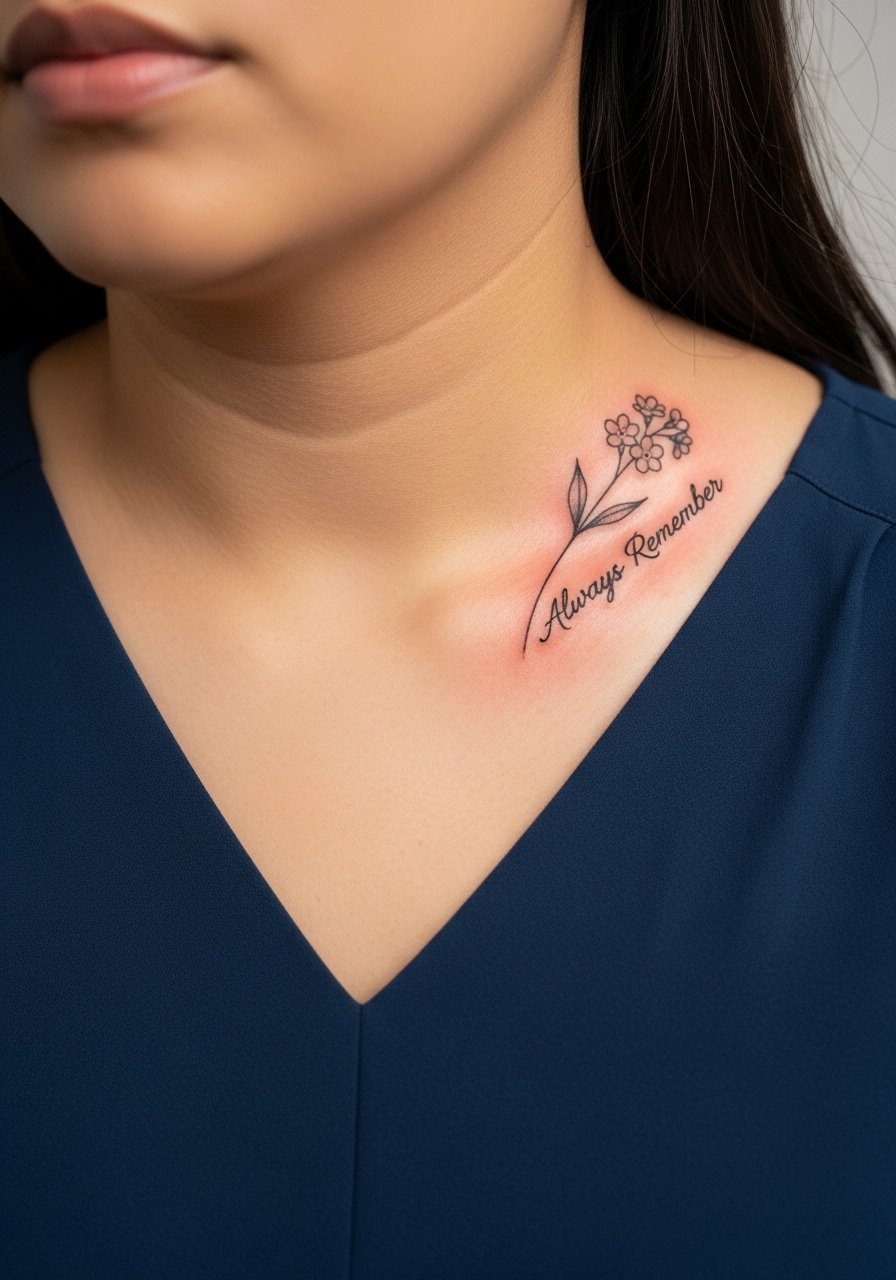
Pairing a single bloom with a small name or date along the stem reads intimate and memorial. Fonts matter here. Ask for a low-contrast script that sits low on the collarbone so the lettering doesn’t compete with the petals. Sessions are short and the area can be sensitive near bone. For the session, a V neck blouse gives clean access and frames the tattoo for photos the next day.
13. Tiny Finger Outline Ring Tattoo
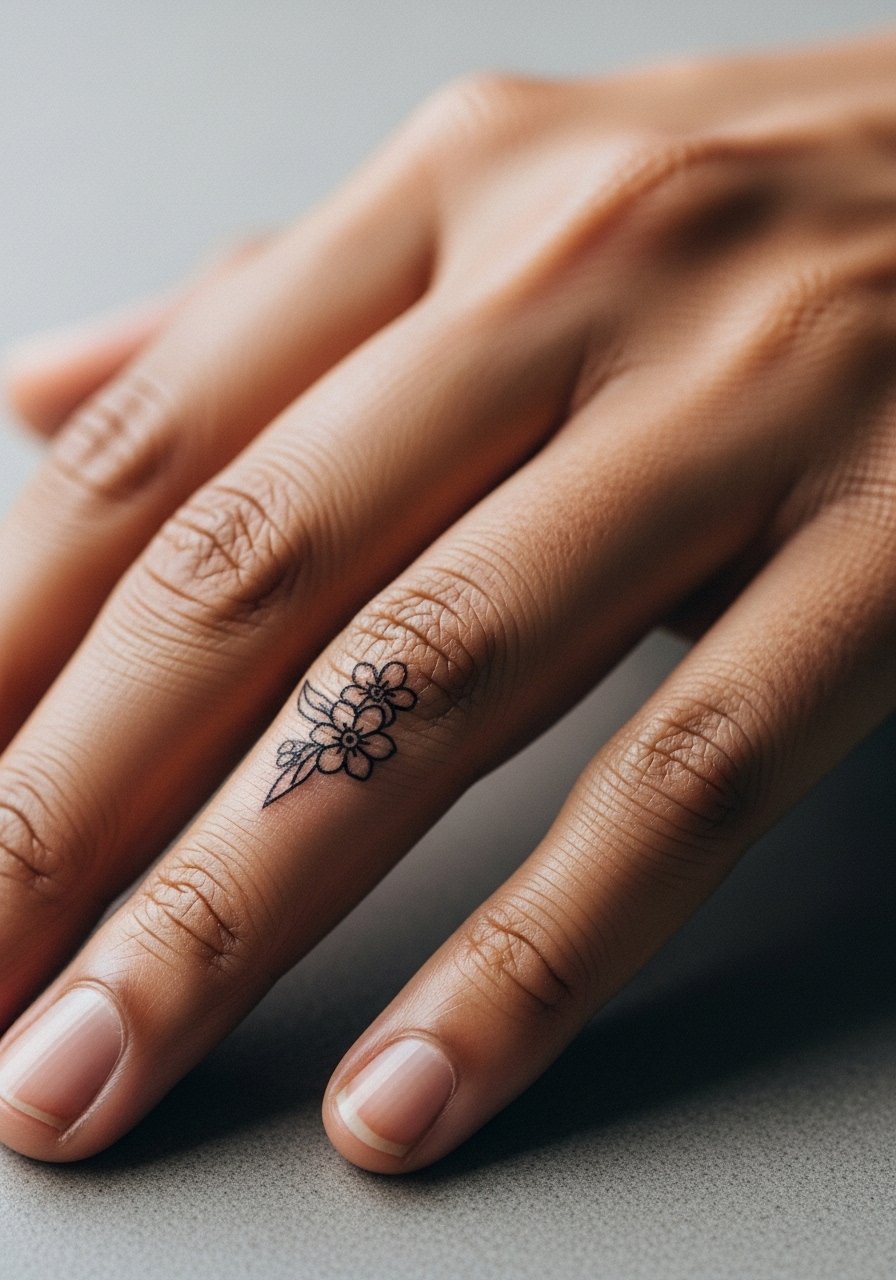
Finger placements age differently because of constant washing, temperature shifts, and skin cell turnover. If you want a floral ring, go slightly larger than the smallest reference and accept that yearly touch-ups are common. The pain is sharp and quick. Avoid delicate inside-finger detail and favor a small outline that can be re-inked without losing balance. For showing it off, minimal on-hand jewelry prevents rubbing while it heals.
14. Back Panel Bouquet Across the Shoulder Blade

A back panel gives room for composition and layering without size constraints. For longevity, space elements so shaded areas have breathing room, which prevents mid-term merging. Sessions vary from one long sit to multiple visits. The best mistake to avoid is cramming too much micro-detail into a spot that will eventually be seen at a distance. During the session, use a loose button-down shirt you can pull aside so the artist reaches the blade easily.
15. Ribcage Watercolor Garland
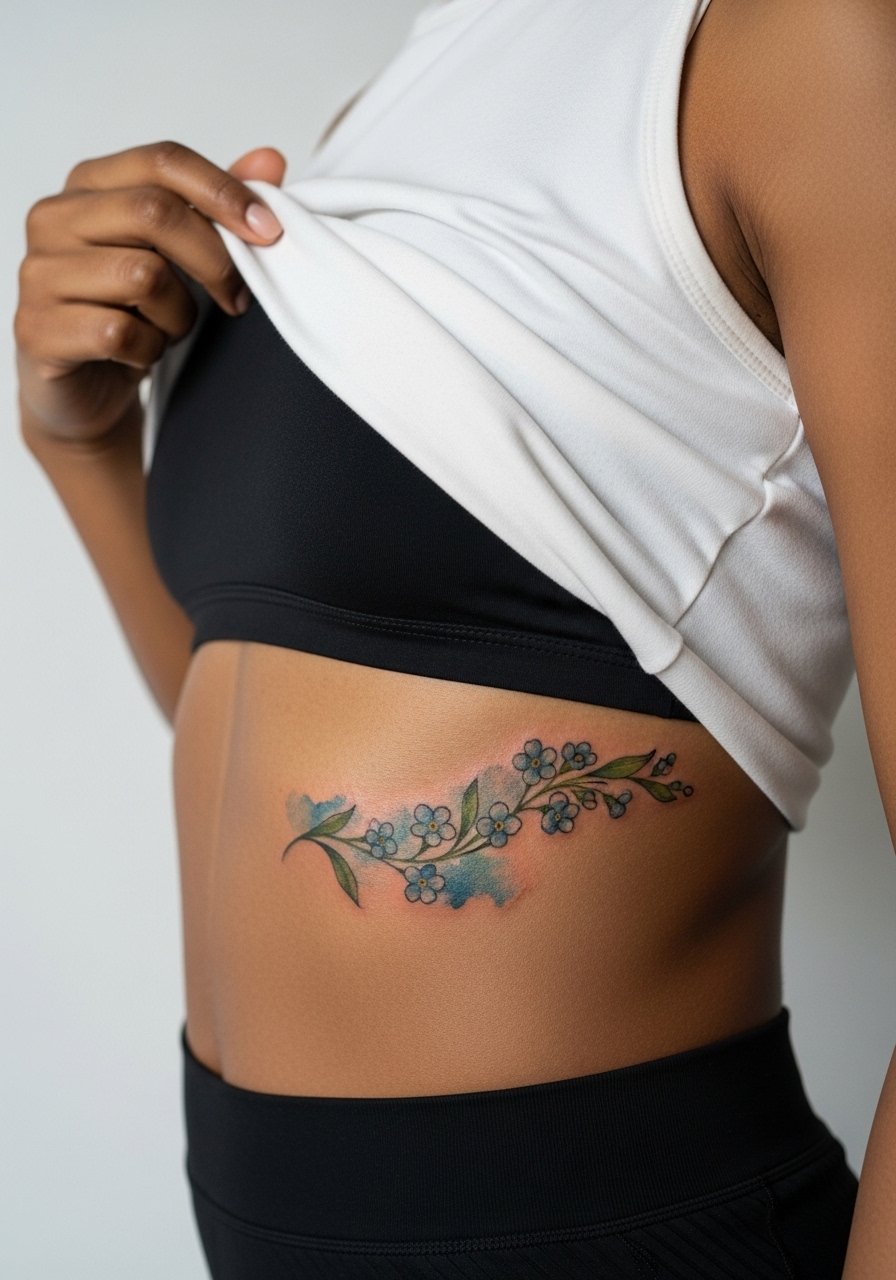
Ribcage sessions hurt more than many areas and heal with more stretch as the body moves. Artists split on whether fine line suits ribs. One group warns that thin lines blur with chest movement. The other says careful spacing and depth make it hold. If you pick watercolor here, ask for underlying anchors or faint outlines to keep the garland readable as the wash fades. Expect a relaxed two-hour session and detailed aftercare because of sweat and clothing friction in that zone.
16. Sternum Garland Under the Bust
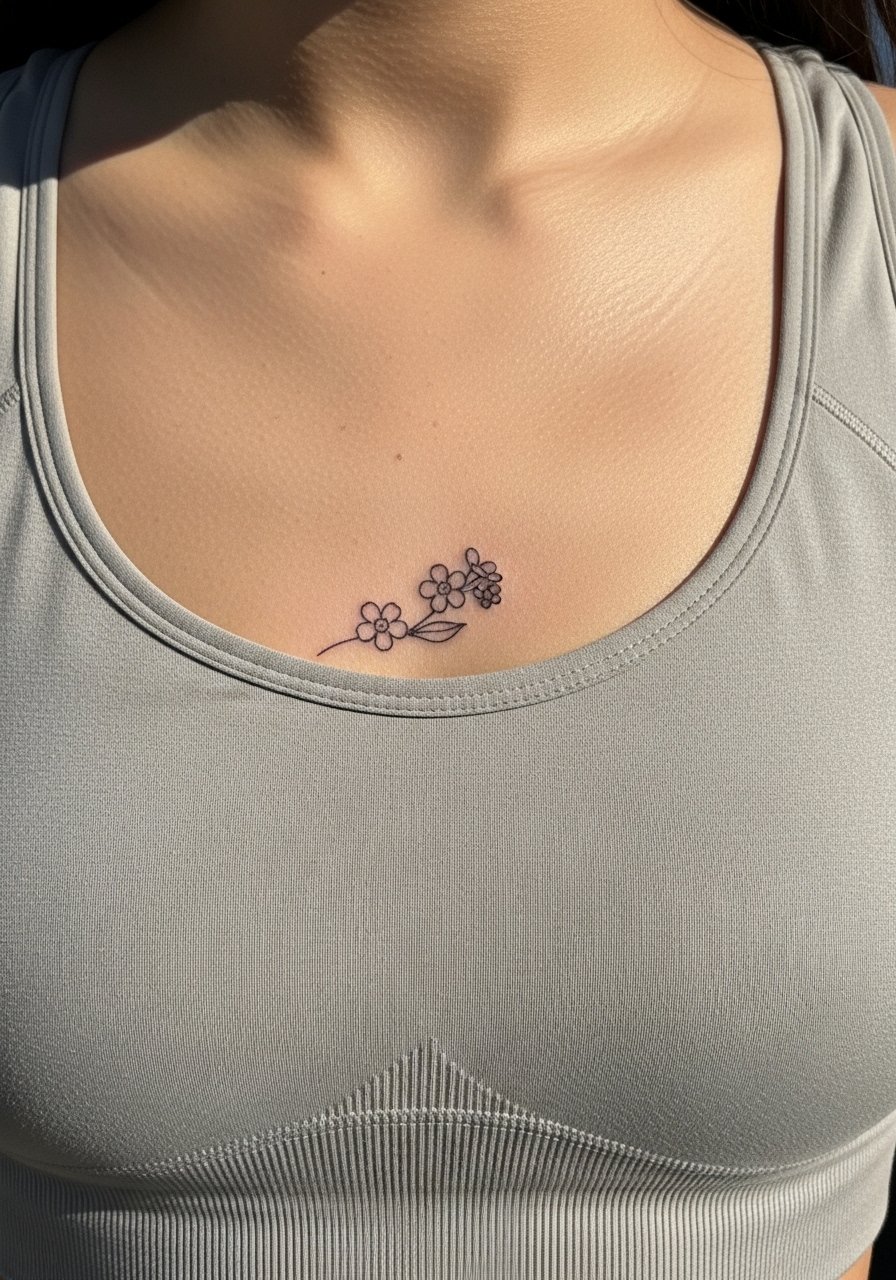
Sternum placements are intimate and can be sensitive to pain. For small garlands, request narrow spacing with shallow shading so the piece settles without heavy scabbing. Sessions are typically under two hours but may require breaks. Because of the location, wear a fitted sports bra or bandeau to the appointment to avoid fabric catching. Some people choose this as a private piece and factor in clothing choices for show-off moments.
17. Tiny Behind-the-Ear Accent
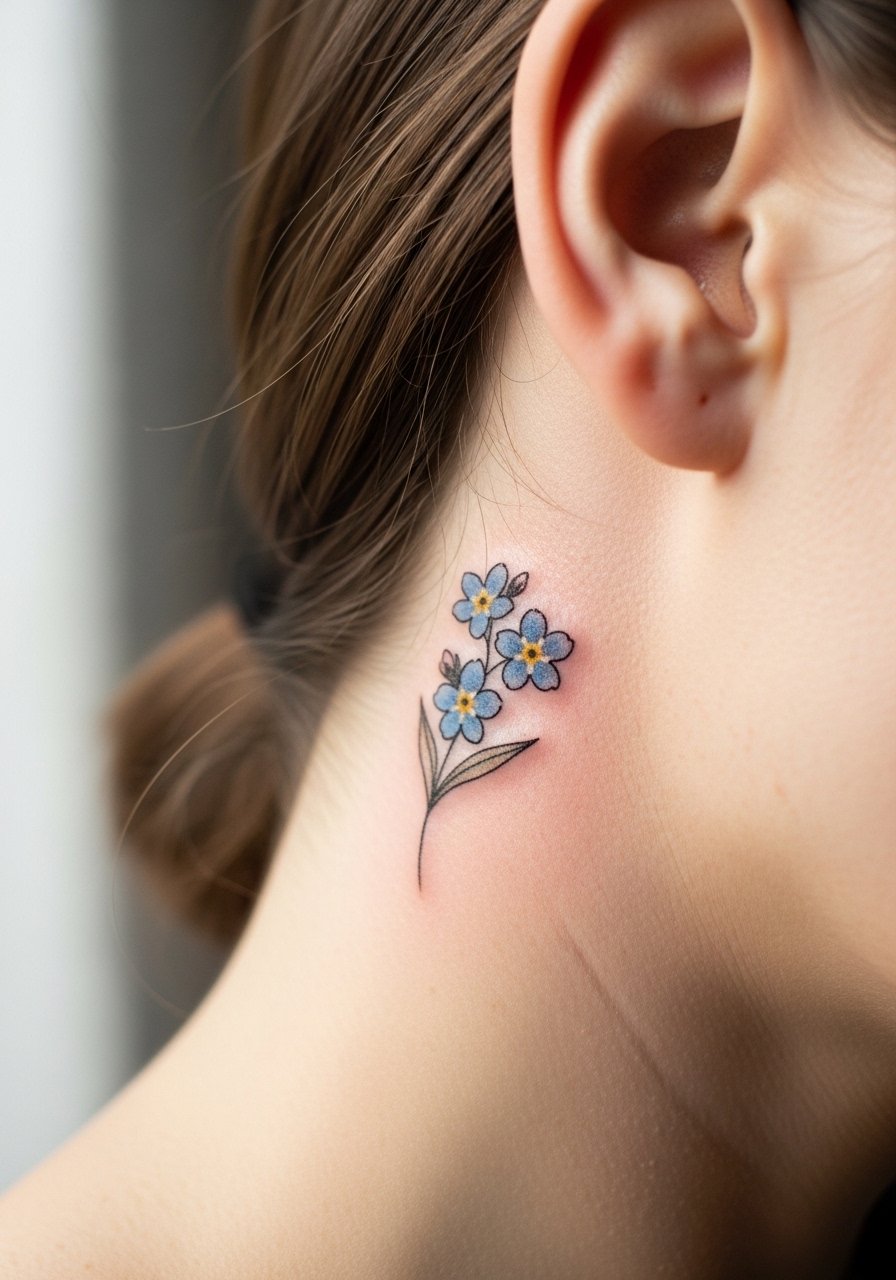
Small marks behind the ear work as discreet accents and age well since the area is protected from sun. The trick is to ensure the design sits on the skin below the hairline and not on the ear itself. Sessions are very short and pain is low. For booking, mention hair length so the artist knows how much of the area will be visible later. This placement may be ideal if you want a private piece that peeks out with pulled-back hair.
18. Lower Back Horizontal Sprig

Lower back tattoos offer a horizontal band that pairs well with waistlines. The main mistake is placing too low where belts and waistbands will rub during healing. Ask for placement mockups while standing to match your clothing shapes. Sessions tend to be short to mid-length with low pain. For styling, a flowy midi skirt or low-rise jeans can showcase the piece without constant sill.
19. Inner Thigh Hidden Bouquet
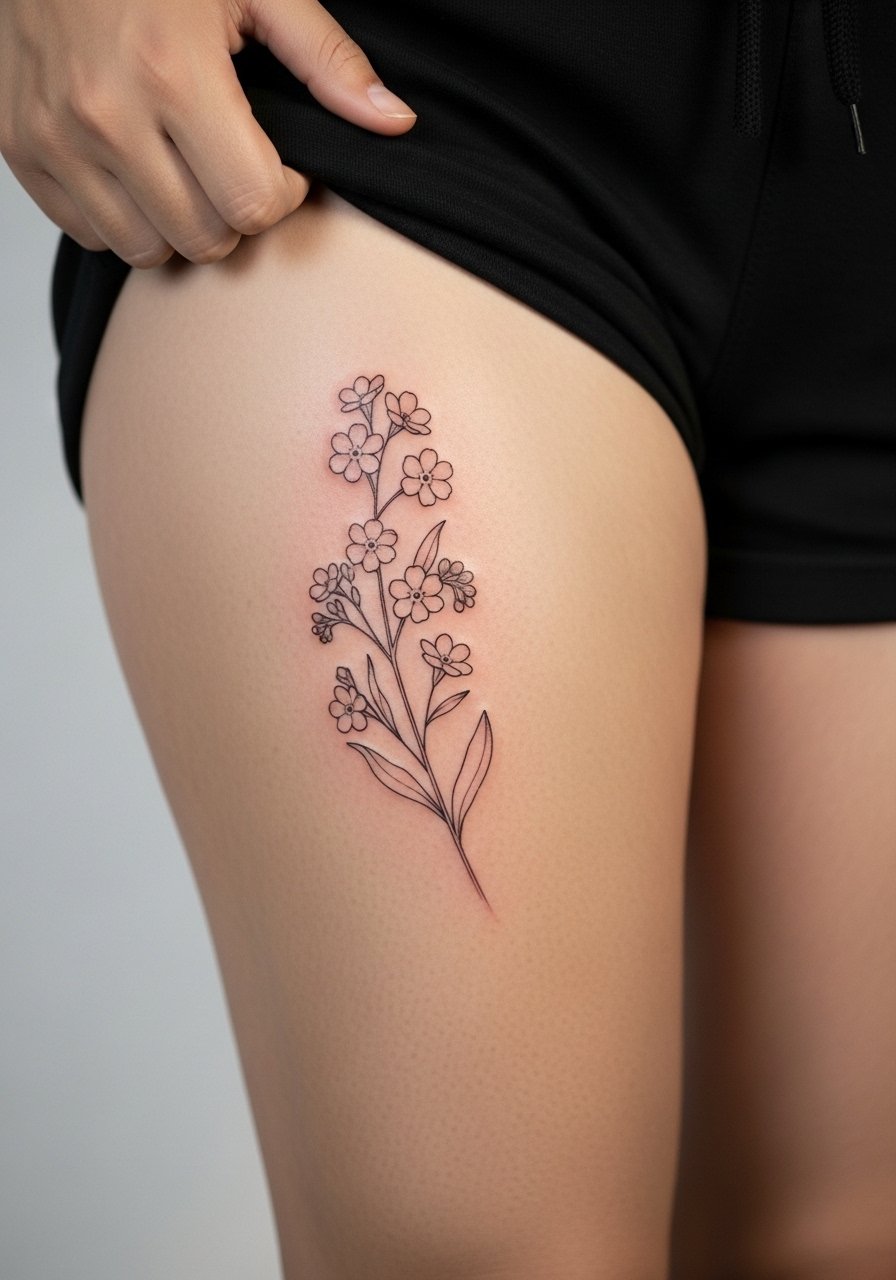
Inner thigh work is private and heals differently because of friction from clothing. For a bouquet here, plan on more conservative detail so the lines have room as the area naturally changes with movement. Sessions are moderate in pain and often done in private-room settings. Wear loose joggers or a skirt to the appointment so you can expose the area without discomfort. Some people like this spot for memorial pieces because it stays mostly covered.
20. Inner Bicep Single Needle Sprig

The inner bicep keeps delicate single-needle work protected from sun and daily wear, though the skin there can move with flexing. Ask for a slightly reinforced outline under the tiniest details so things do not soften into a wash. Sessions run about an hour and pain ranges moderate. For the session, a tank top gives access while keeping you comfortable in the chair.
21. Calf Wrap with Small Clusters

Calf wraps let you play with rhythm and negative space. Keep clusters spaced to preserve the silhouette at distance. The error I see is overfilling the curve so it reads muddled from behind. Sessions are one to two hours with low pain. For showing it off, try capri pants or skirts with side slits that let the clusters peek out.
22. Shoulder Blade Minimalist Trio
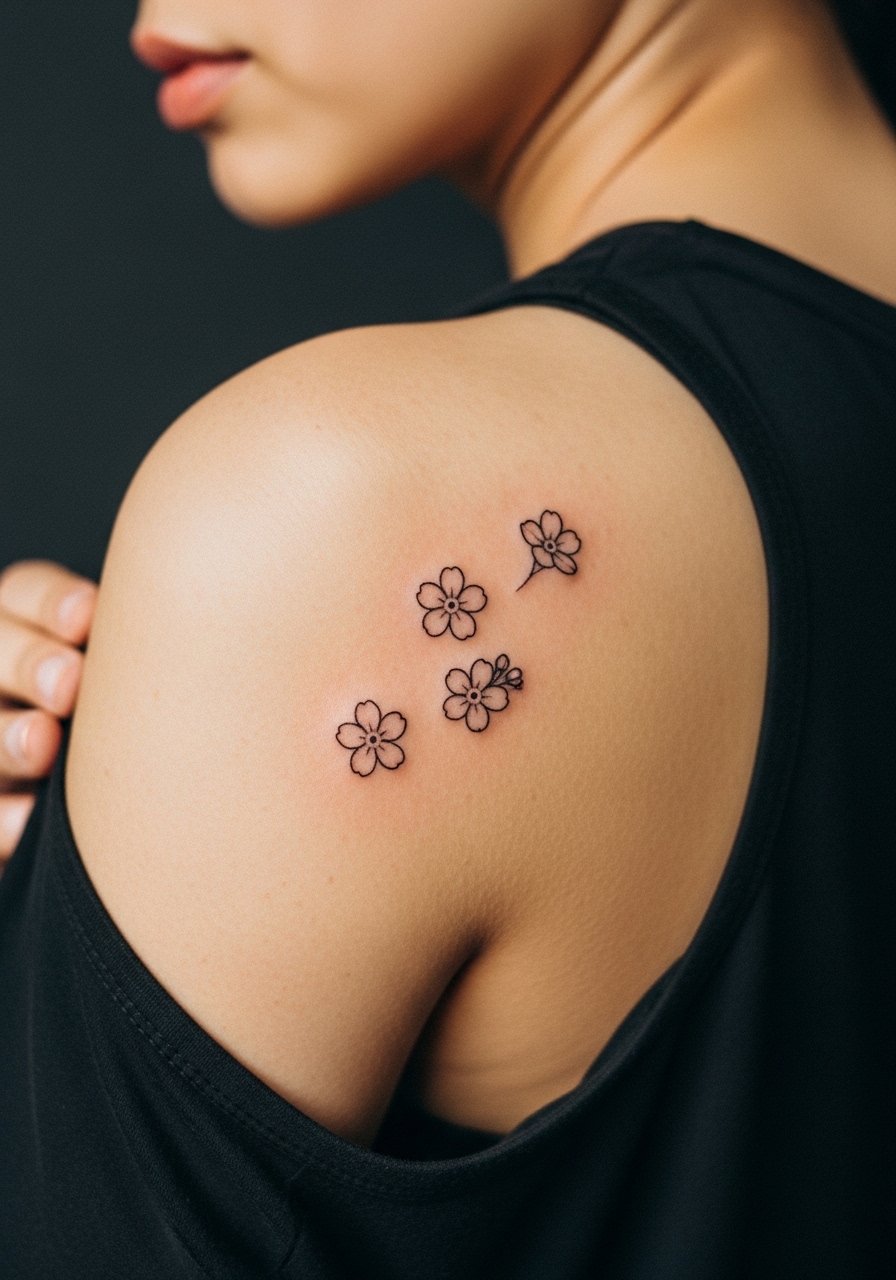
A trio on the shoulder blade is easy to expand into a larger back piece later. Key consultation notes are spacing and consistency in petal count so the group reads coherent. Pain is low and sessions are short. For casual daywear that shows this off, a racerback tank keeps straps out of the way while framing the cluster.
23. Ankle Tiny Ring Revisited
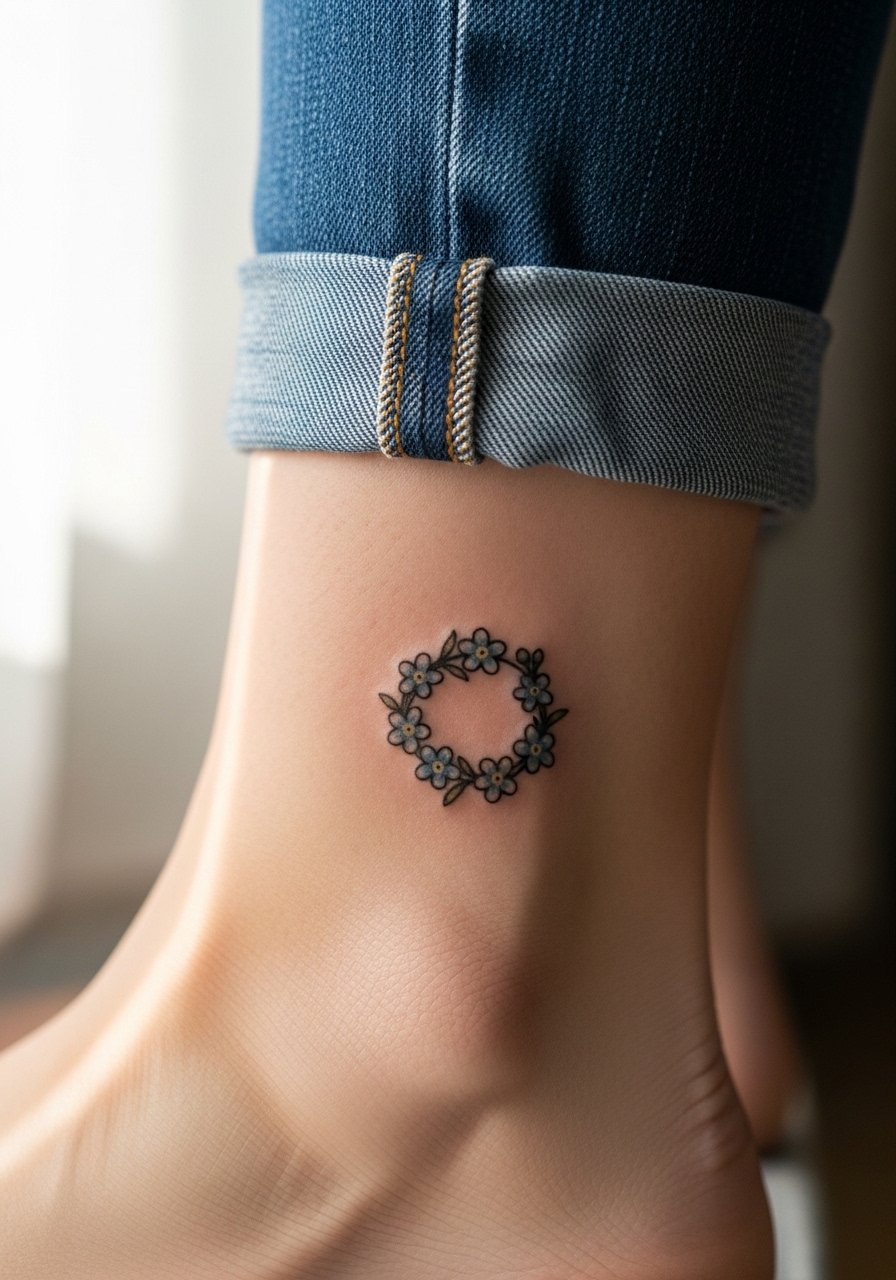
Ankle rings make a neat repeat of the flower motif but need even spacing to avoid looking lopsided. Expect quick touch-ups because the area rubs with socks and shoes. Session pain is low but the skin is thin. Keep the scale slightly larger than micro so petals remain distinct. For summer styling, slip on strappy sandals that complement the ring without rubbing the fresh ink.
24. Side Hand Accent near the Thumb
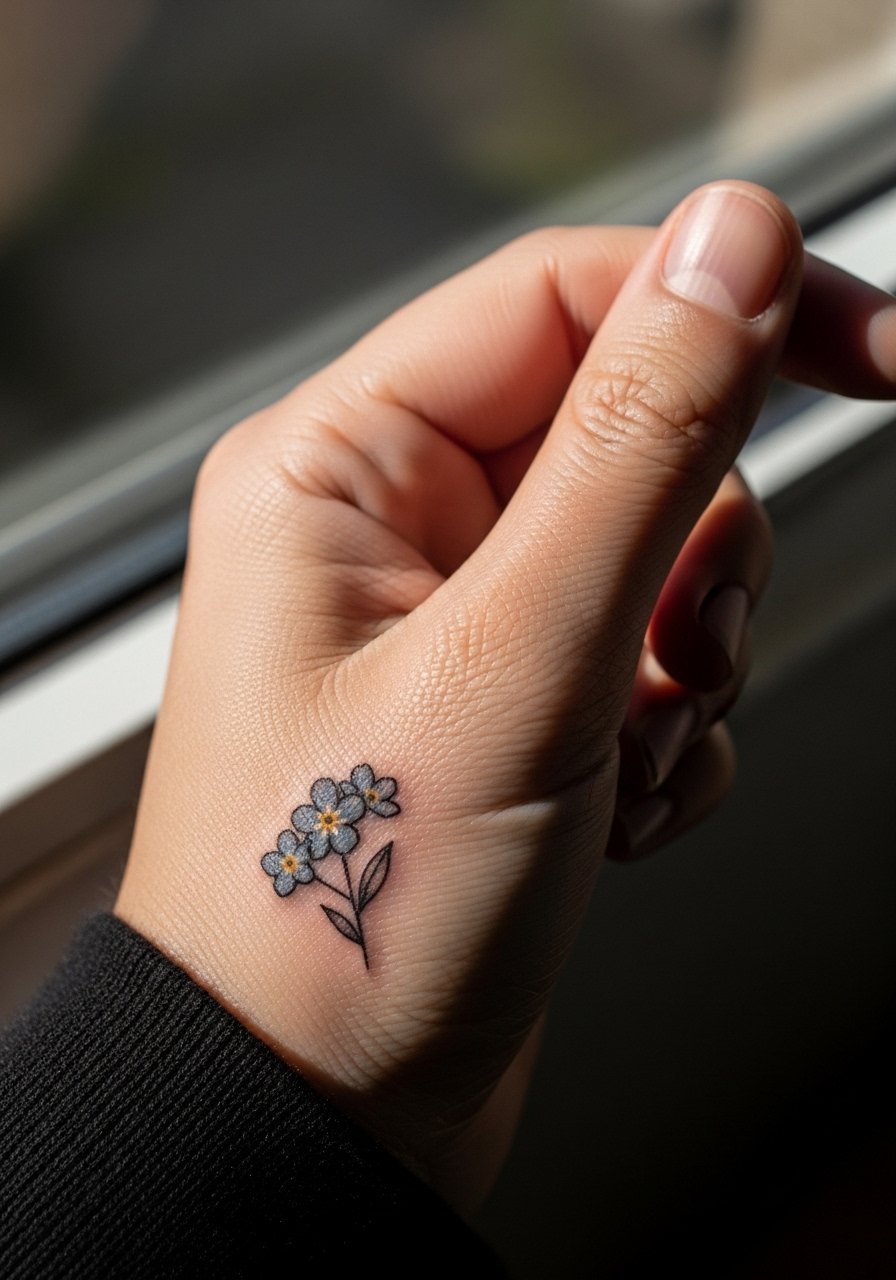
Hand placements are visible and subject to fading from washing and sun. If you choose the side of the hand, accept a higher touch-up timeline and plan minimal detail. Artists sometimes refuse very tiny hand lettering because of that reality, and the same caution applies to tiny flowers. Expect sharper pain during the session. For careers with conservative dress codes, consider placement implications before booking.
25. Hip Sprig Peeking from High-Waisted Bottoms
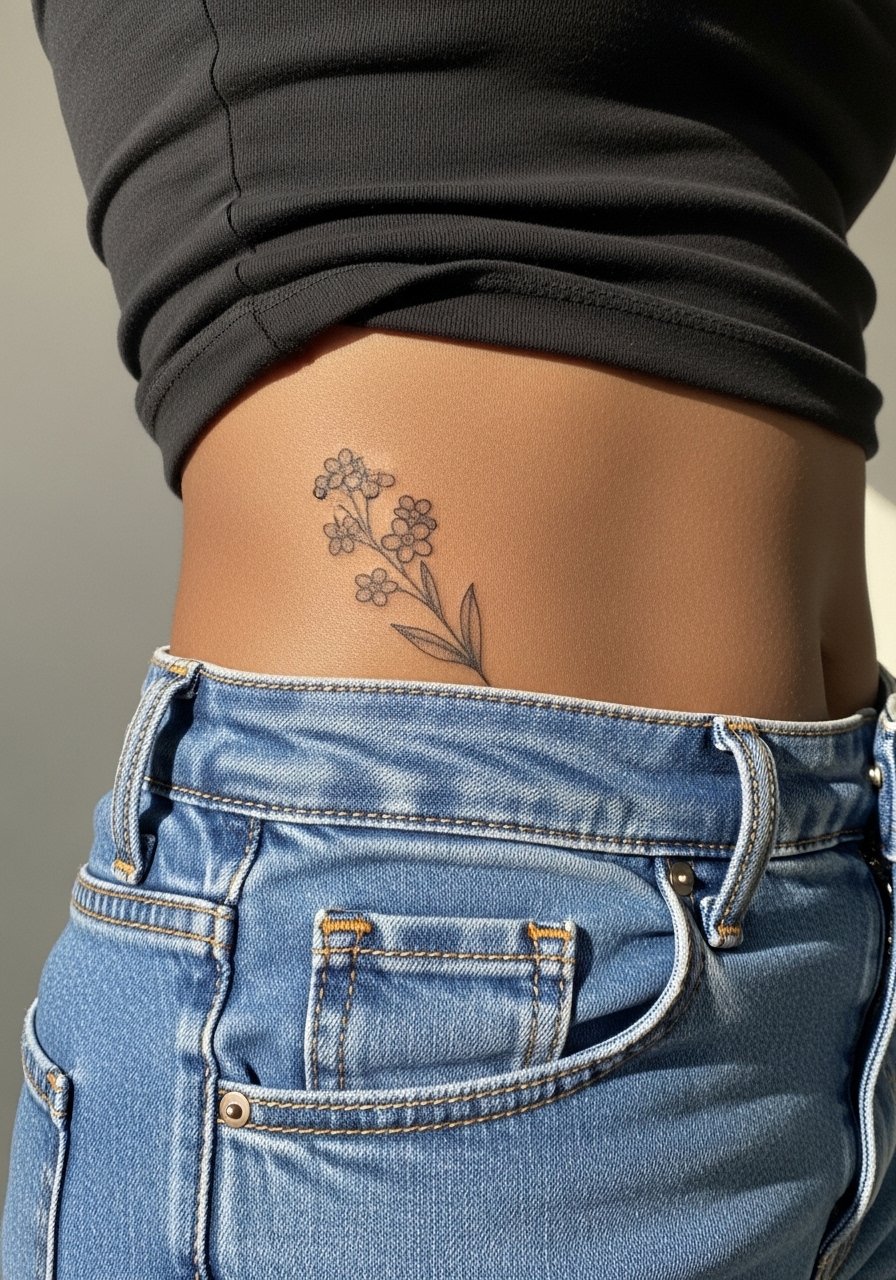
Hip placements are great for pieces that peek out with swimwear or low-rise styles. Placement mistakes happen when the tattoo is too low and rubs against waistbands. Ask your artist to mark placement while standing in your usual bottoms to avoid surprises. Sessions are short to moderate and pain varies per person. When showing it off, high-waisted shorts or a swimsuit with a higher cut work well.
26. Hidden Inner Thigh Memorial Sprig
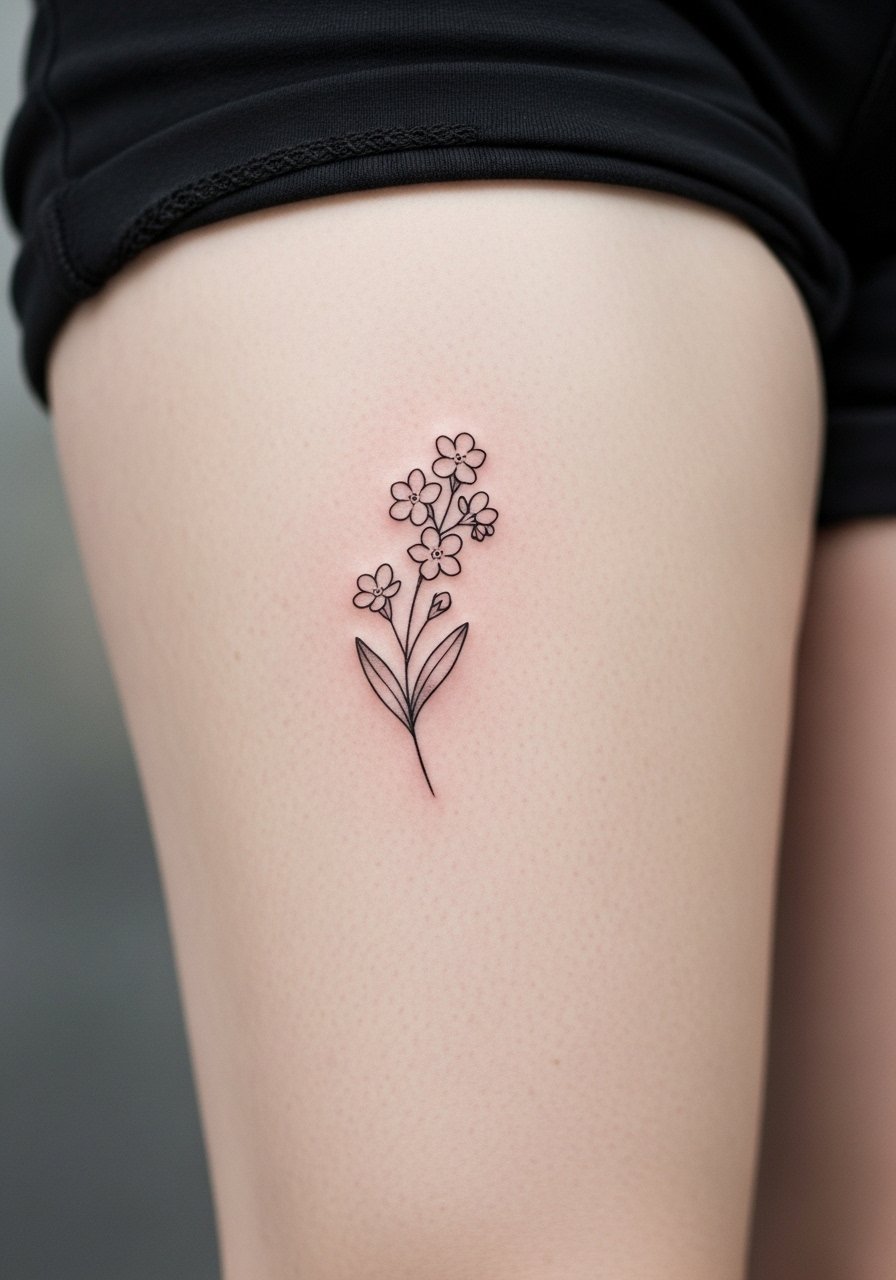
Hidden inner-thigh placements feel private and secure, which many choose for memorial designs. Because that skin area moves and rubs, avoid ultra-fine single-needle detail unless you accept early touch-ups. Plan on modest size and ask your artist about scar tissue risk if you have previous surgery there. Wear loose pants or a skirt to the session so the artist can access the area without pressure.
27. Matching Collarbone Pairs for Two People
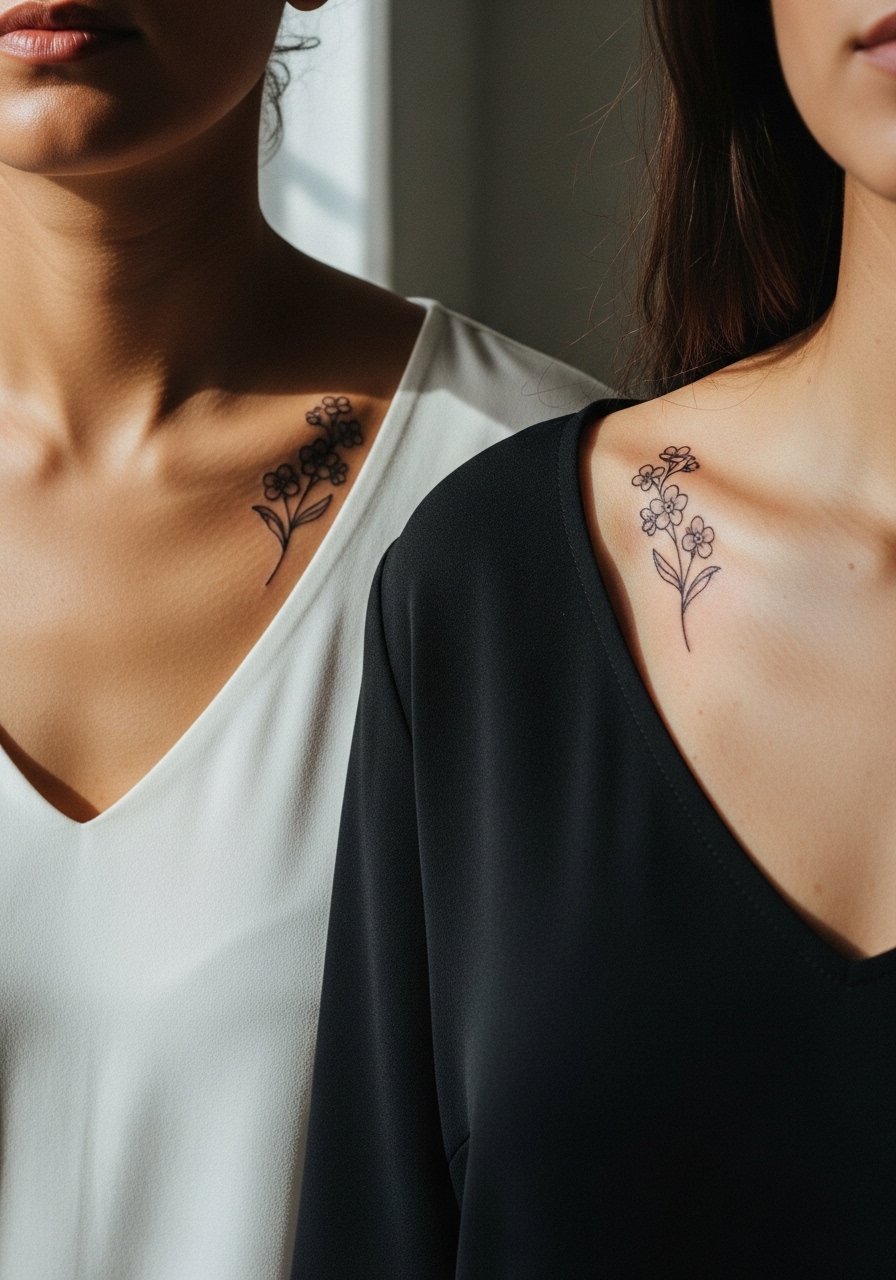
Matching pieces across collarbones read intentional for couples or friends but require exact placement symmetry. Bring positioning photos and stand together during the stencil step so both pieces sit at the same depth and angle. Sessions are short and pain is moderate because of bone proximity. For the session, wear easy-to-open tops like a button-up shirt so artists can place stencils without moving the body.
Frequently Asked Questions
Q: How much will a fine line forget-me-not on the wrist typically cost and how long does it take?
A: Prices vary by shop and region, but fine line wrist pieces usually fit into a lower price tier and often finish in a single short session under an hour. The key is scale. Very tiny pieces can cost almost as much as a larger one if the artist needs precise time and care. Ask about minimums and session estimates during your consult.
Q: Do watercolor forget-me-not tattoos need different aftercare than black and gray ones?
A: The core aftercare steps are the same, but watercolor pieces depend on preserved saturation, so avoiding sun exposure during the first year helps color longevity. Keep the healing area clean and out of direct sunlight. Use a loose, breathable cover if clothing will rub the area while it heals.
Q: Which placements are most likely to need touch-ups sooner: wrist, ankle, or collarbone?
A: Wrist and ankle face more daily friction and washing, so they often need touch-ups earlier than collarbone work. Collarbone sits on flatter skin and out of constant rubbing, which helps retention. Still, individual skin and lifestyle factors change timelines, so expect touch-ups within a few years for fine line pieces.
Q: If I like a tiny single-needle look, should I choose color or black ink for longevity?
A: Black retains contrast longer than color, but forget-me-nots are often defined by blue petals. If longevity matters most, consider black outlines with subtle blue fills or muted shading. Discuss color stability and touch-up plans with your artist so you balance look and lifespan.
Q: Are there discovery steps beyond searching portfolios to find someone who can do fine detail forget-me-not work well?
A: Search style-specific hashtags, check tattoo directories, and spend time on community boards to see healed photos, not just fresh work. Ask shops about healed portfolios or convention booths where you can see pieces after months, and mention five-petal accuracy and touch-up policy during the consult.