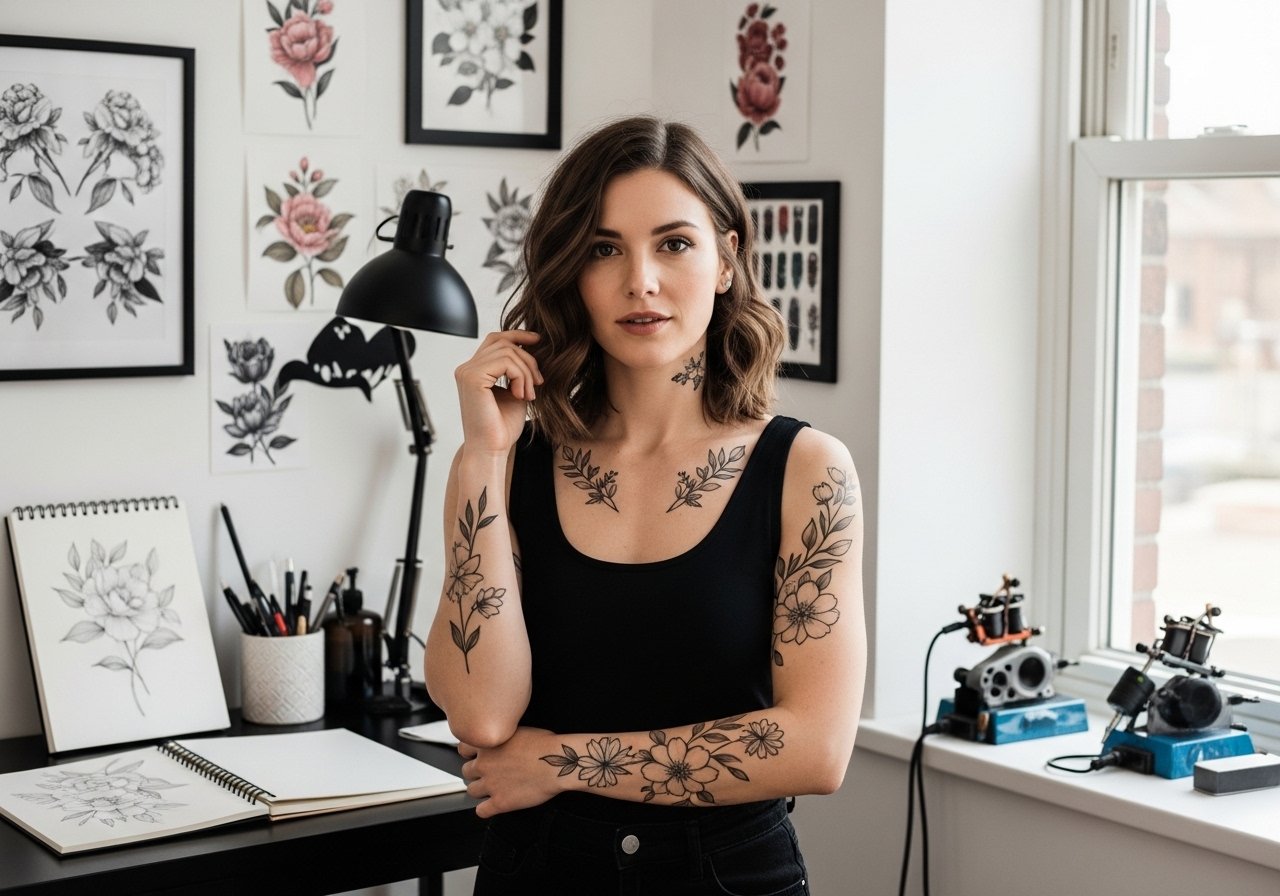
Fine line highland cow portraits are everywhere online, but the pieces that still look deliberate after five years usually make one choice differently. They pick a primary focal element, give it room, and let the rest whisper. That restraint keeps the character in the face and avoids crowded horns or heavy color that softens into blotches. Read on for 21 ways to make a pretty highland cow tattoo read clean, wearable, and distinctly yours.
1. Fine Line Highland Cow on Inner Forearm

I recommend this when you want a portrait that reads like a sketch on skin. The inner forearm gives a flat surface for delicate linework and softer stipple shading. Fair warning, the biggest mistake is cramming too much hair detail into a narrow band. Tell your artist to prioritize the eyes and outline the hair with suggestive strokes rather than full saturation. Expect a 2 to 3 hour session with moderate pain. At six months the lines will look crisp. At two years, lighter stippling may need a touch-up. For showing it off, roll sleeves back and wear a loose button-down shirt that frames the forearm without covering the piece.
2. Watercolor Highland Cow on Shoulder Cap
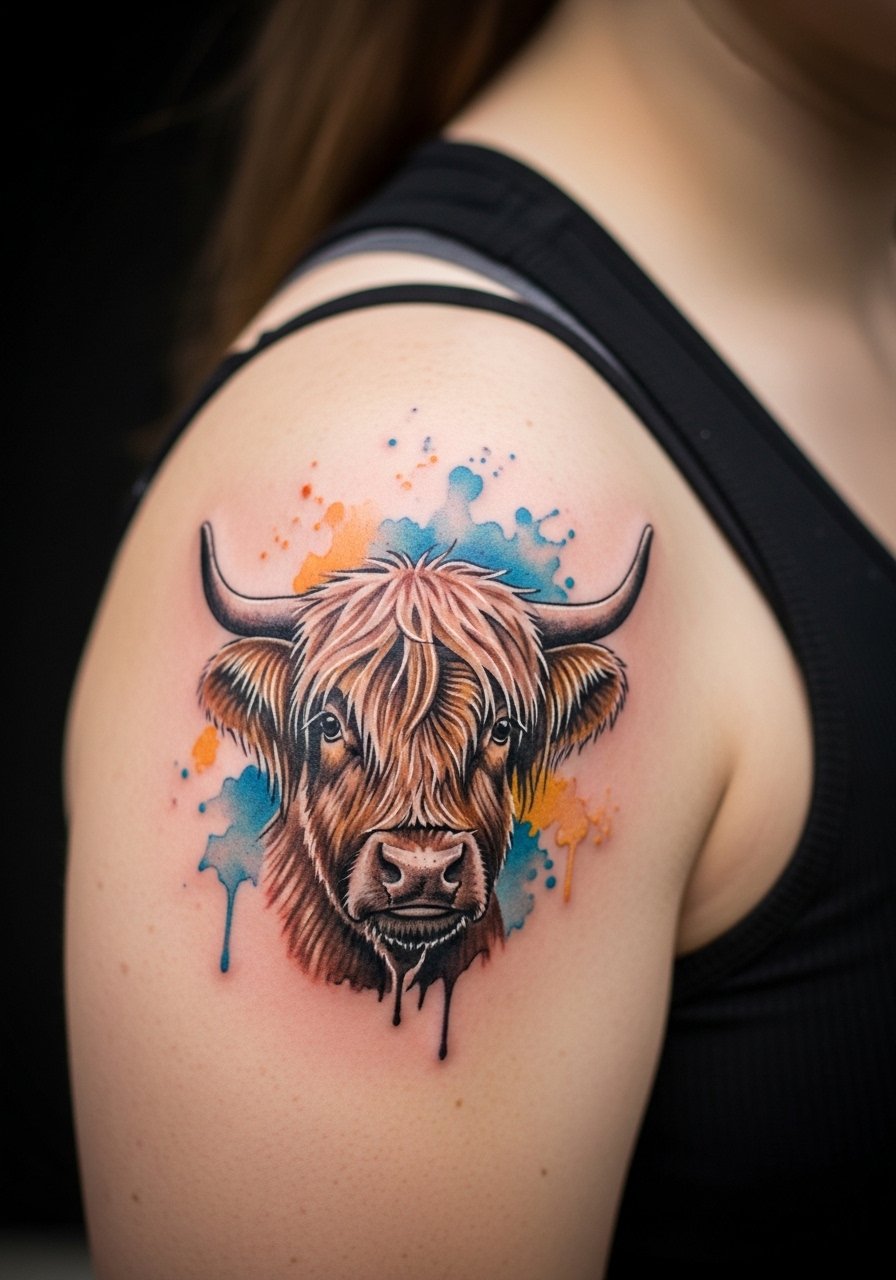
This version leans into painterly color around a central animal face. Shoulders take color well because the skin is thicker and moves less than the ribcage. The session feels like light tapping with occasional deeper passes for darker pigments, about 2 to 4 hours depending on size. The common mistake is using dense watercolor everywhere so the cow loses contrast. Ask your artist to keep a clear focal point and treat the surrounding wash as background. Over time the washes soften, so richer contrast up front helps longevity. For evenings out, an open-back midi dress shows just enough shoulder while keeping the rest polished.
3. Micro-Realism Highland Calf Portrait
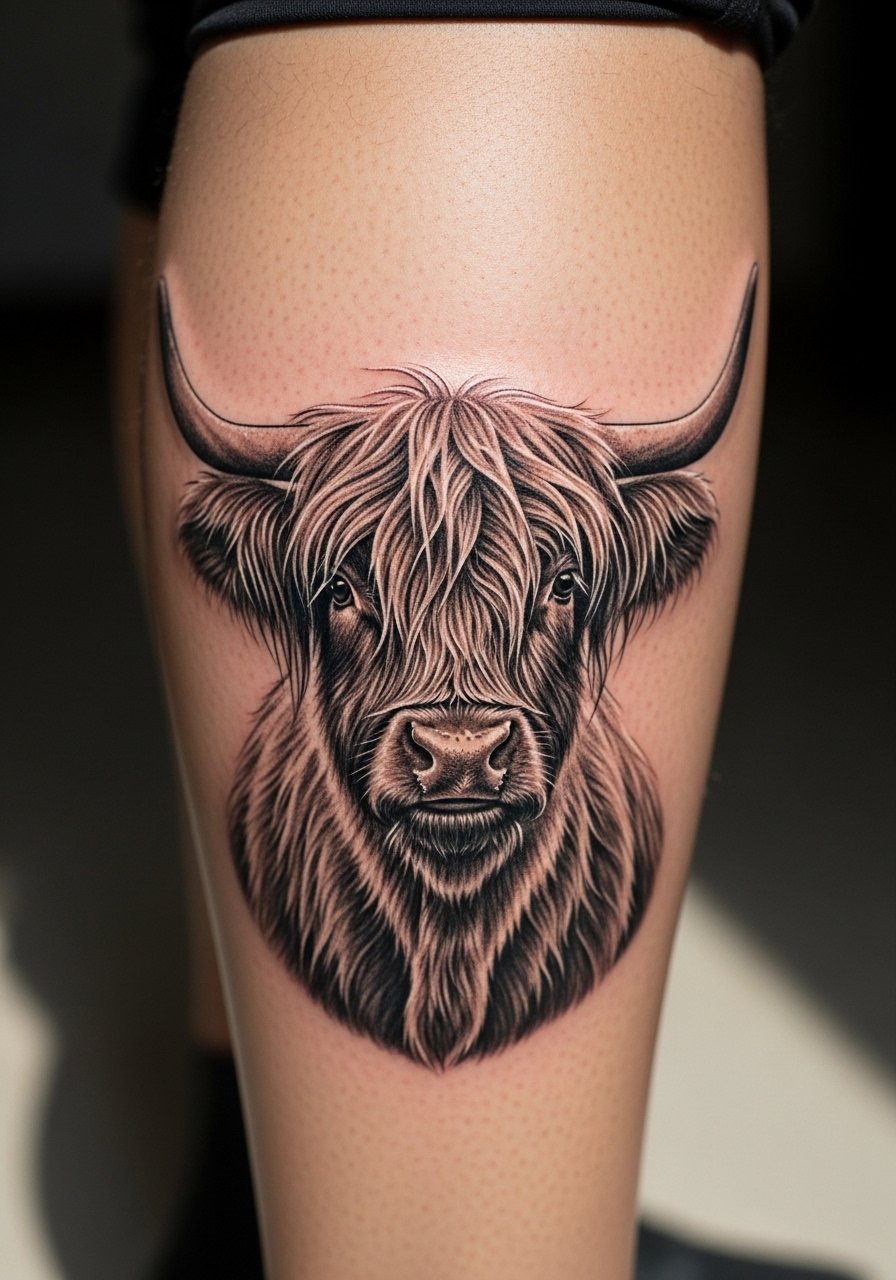
Choose micro-realism when you want a lifelike face in a compact space. The calf offers a good canvas for tight detail without the stretching that ribs bring. Real-time sessions can feel like long, steady passes and may require a 3 to 5 hour slot. A common error is asking for ultra-small textural detail without allowing for size, which causes blurring by year three. In consultation, say you want emphasis on eye expression more than every hair strand. Expect touch-ups earlier than bold blackwork. For the session, wear loose shorts or pants you can roll up, like loose drawstring linen pants that keep the area accessible.
4. Neo-Traditional Highland Cow with Floral Crown on Thigh
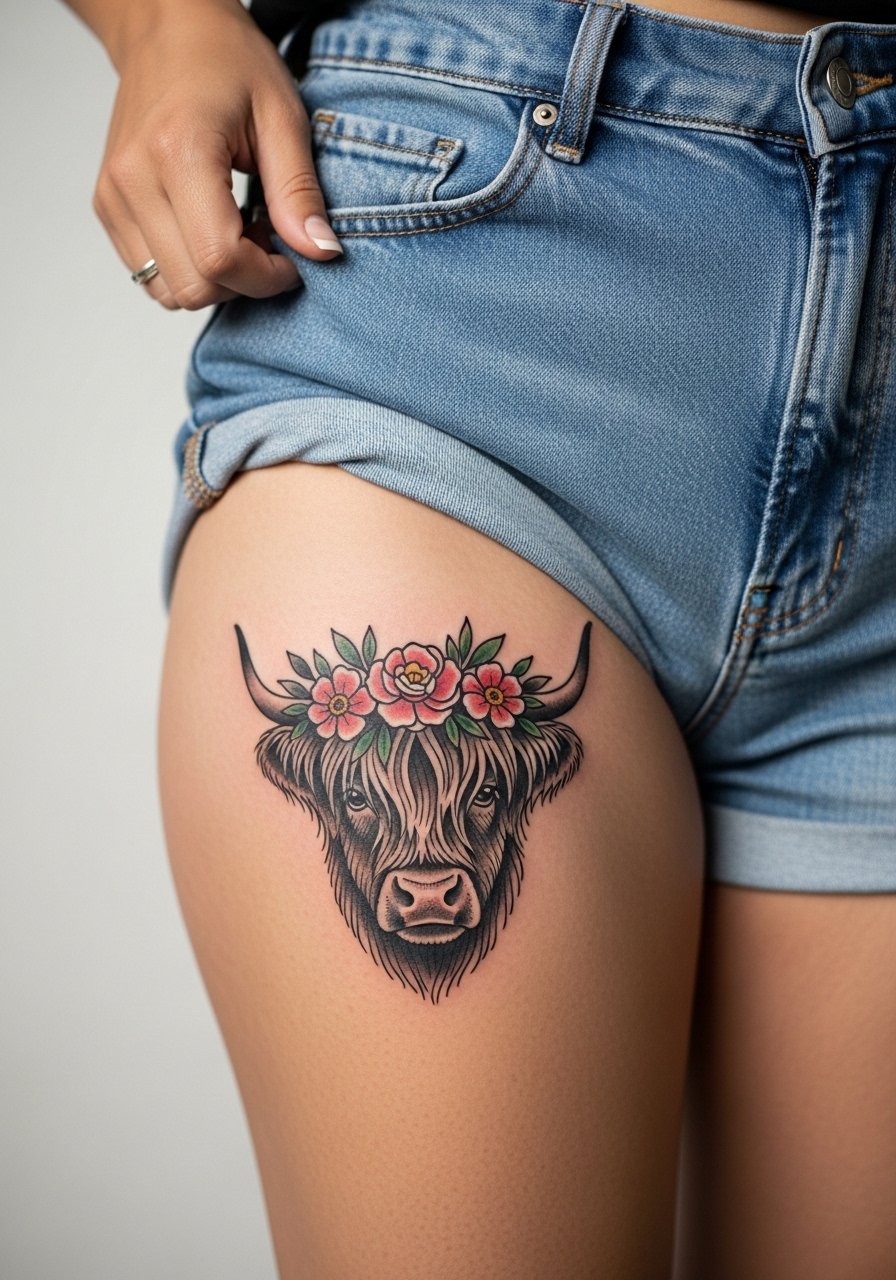
Neo-traditional brings bold outlines and saturated color to the classic cow motif. The thigh is forgiving for saturation and larger sessions so the colors stay vibrant. Pain is moderate and sessions can be split across two visits for a richer fill. Mistakes happen when colors are overloaded without line separation, causing muddiness in a year. Tell your artist to balance outline weight with saturated fills and to leave some negative space around the floral crown so each bloom reads. Thigh pieces pair well with high-waisted shorts and cropped tops. For travel to the chair, slip into high-waisted shorts so you can expose the upper thigh without fuss.
5. Stipple-Shaded Highland Cow on Upper Back

Stipple shading gives a soft texture that suits the cow's fur and lends a timeless feel. The upper back heals well and allows a larger composition. Most people find back sessions tolerable because the area stays still. Common mistakes include packing too many tiny dots into a dense area which can look like gray blocks once healed. Ask for a composition that uses stipple for midtones and reserved black for contour. Expect longer sessions with lower intensity pain. For showing this off, choose an open-back top or a button-down worn backward that frames the central portrait.
6. Minimalist Line Highland Cow on Ankle
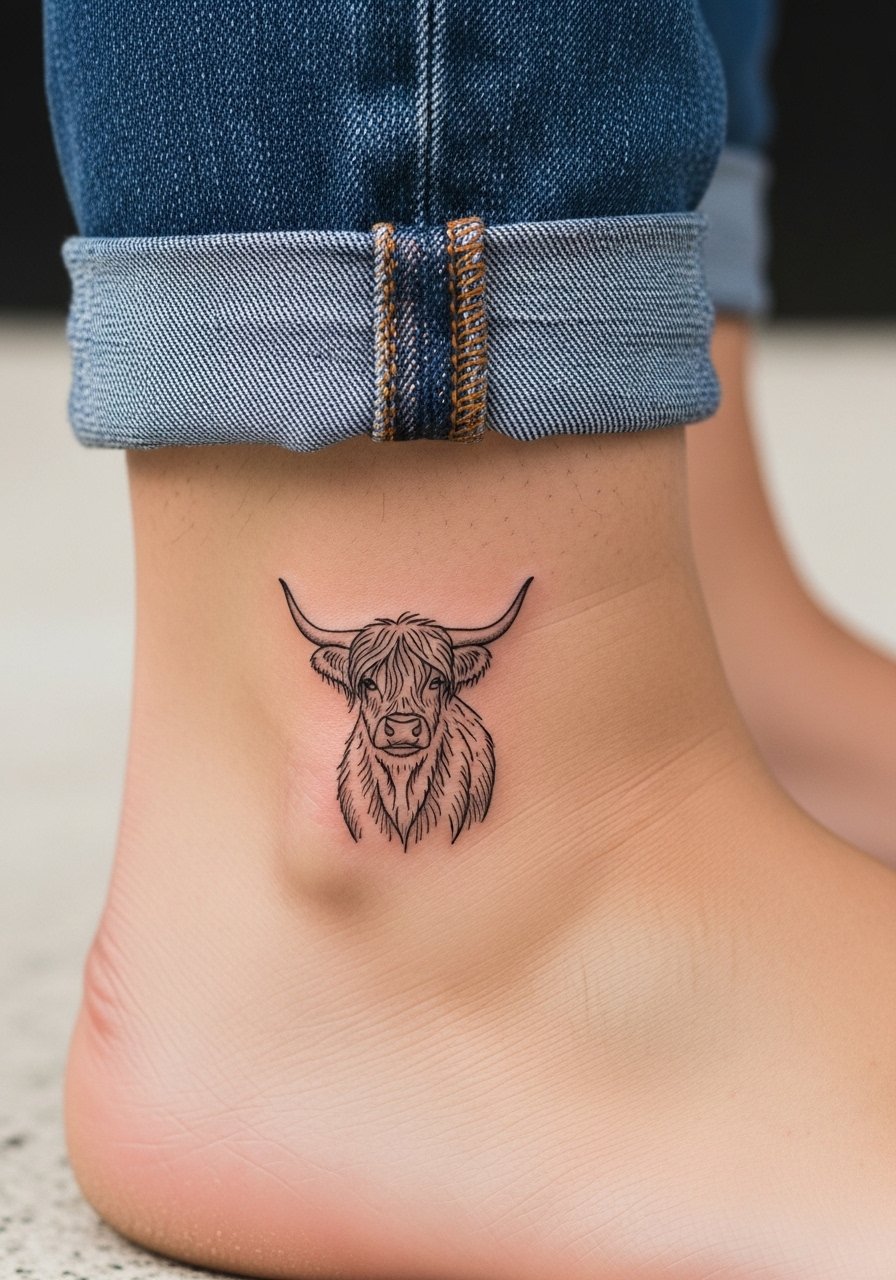
Tiny, minimalist designs read best when they are crisp and spacious. The ankle is a high-friction zone, so the main risk is line fading from shoe rubbing and constant movement. Sessions are short and the pain is sharp but brief. The usual mistake is demanding micro detail at ankle scale. Instead request a simplified silhouette with a strong eye and a few suggestive lines. Expect touch-ups sooner than forearm work. Pair this with low sneakers or sandals that keep the ankle visible. For the session, wear pants you can roll like a pair of jeans you can roll up.
Studio Day Picks
The cow pieces above cover ankles, forearms, shoulders, thighs, and back, so a few session items make the chair time more manageable and protect delicate linework in the first week.
- Stencil transfer paper kit. Lets you preview placement on skin and adjust before needles start, which is key for the inner forearm and collarbone layouts above.
- Topical numbing cream. Applied per instructions about 45 minutes before can ease sharp ankle and ribcage sensitivity for longer sessions.
- Thin protective film roll. Useful for wrists and ankles that face friction from clothing and shoes during the first days of healing.
- Fragrance-free gentle body wash. Cleanses without irritating fine line and stipple work on exposed placements.
- Aquaphor healing ointment. Thin layers help lock in moisture for the first few days and prevent scabbing that can dull delicate lines.
7. Blackwork Highland Cow Silhouette on Sternum
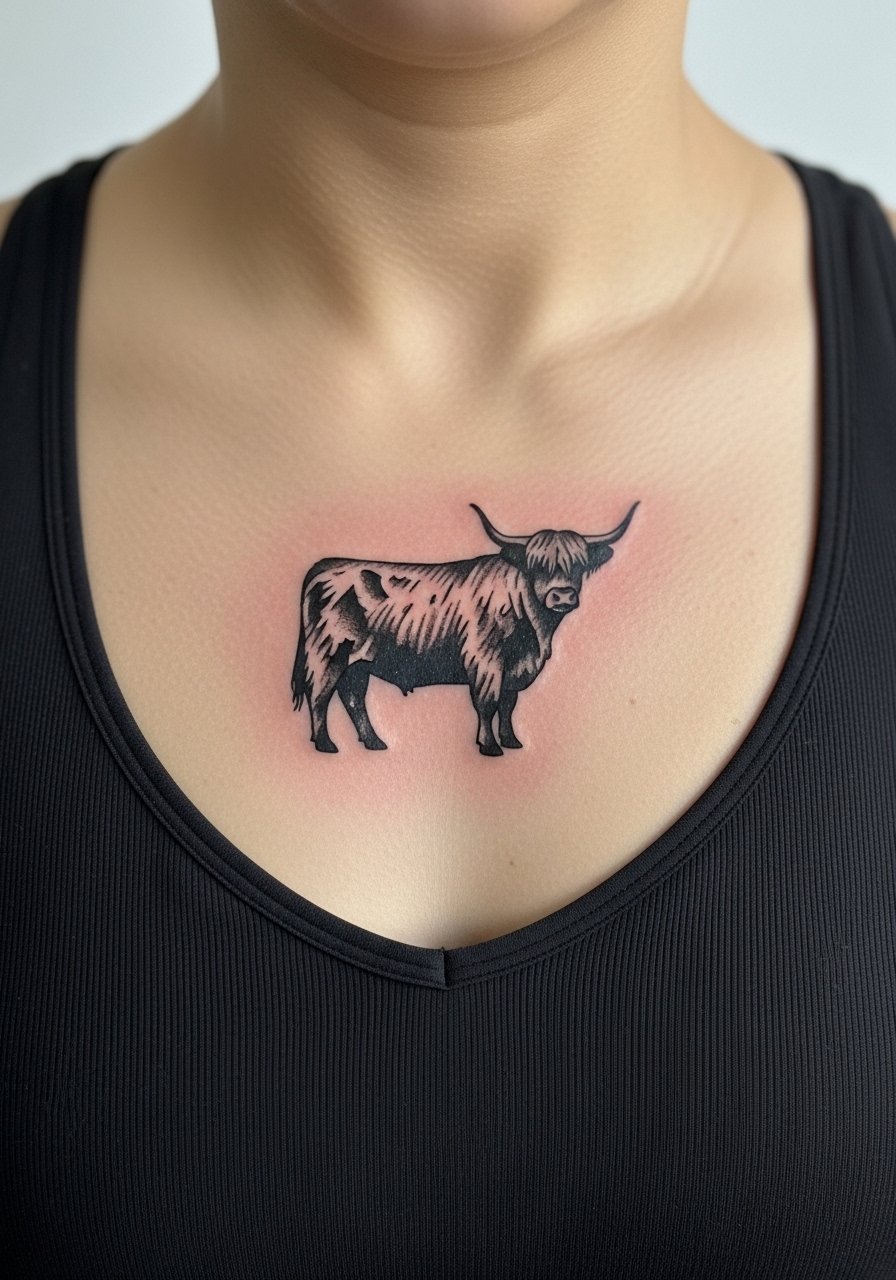
Sternum pieces feel intimate and bold. Black silhouettes simplify the design and reduce blowout risk compared with dense micro-detail in that area. Pain is higher on the sternum than on arm placements. Artists disagree on fine line there. One camp says the skin stretches and blurs lines quickly. The other camp says with proper needle depth and spacing it holds. Name both views when you consult and ask where your artist stands. Sessions are shorter for silhouette work, but healing needs patience because clothing touches the area. For sessions, wear a strapless or fitted sports top that lets the artist work without constant fabric shifting.
8. Neo-Minimal Highland Cow on Collarbone
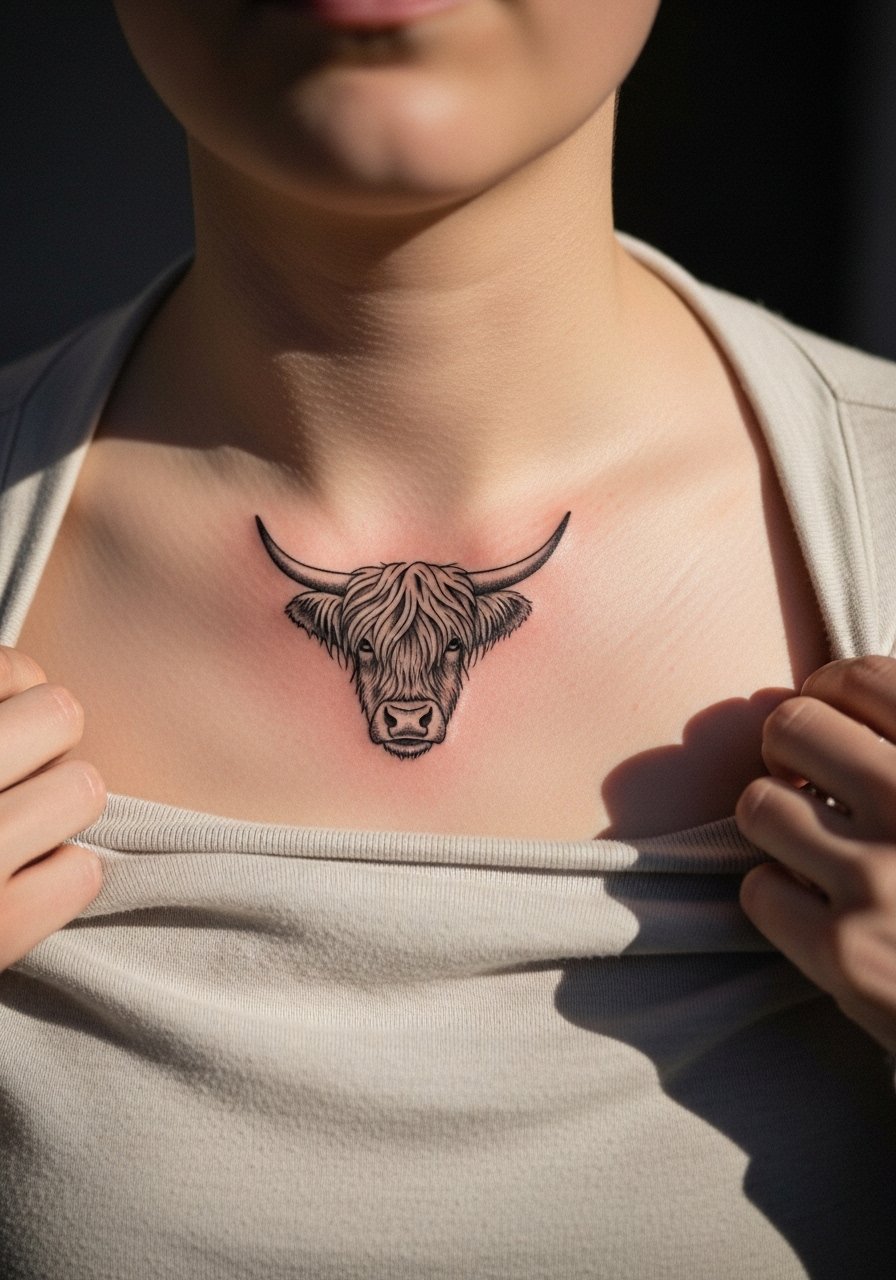
Collarbones show off small, elegant designs. They can look sculptural under the collarbone line when placed correctly. The pain ranges from moderate to high depending on bone proximity. A common mistake is placing the face too close to the bone which makes the piece read uneven as it ages. Tell the artist to set the eyes centered away from the sharpest bone edges and to favor slightly thicker linework for longevity. At two years, very thin lines here may soften. A thin pendant or a thin chain pendant necklace frames the collarbone without stealing attention from the portrait.
9. Watercolor Highland Cow with Floral Accent on Ribcage
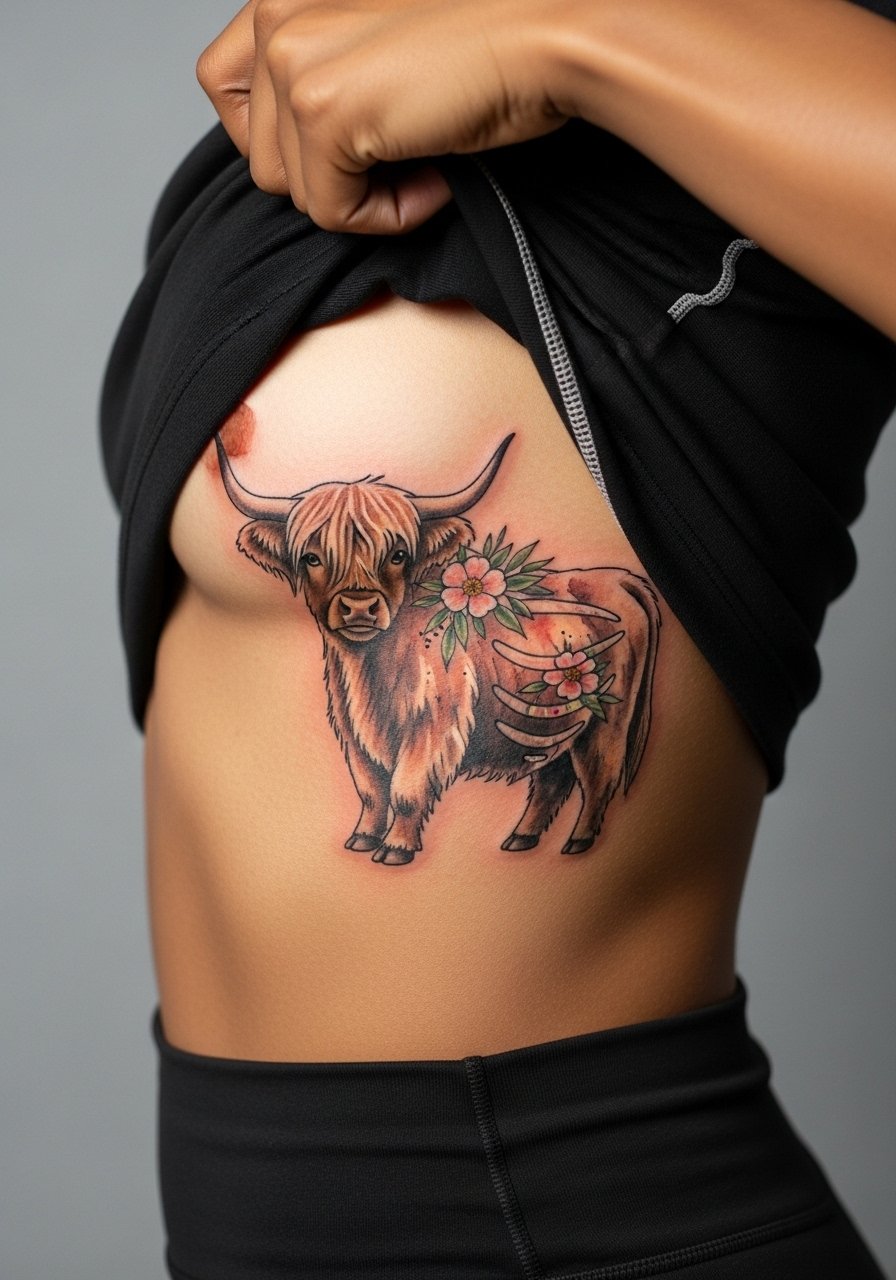
Ribcage watercolor is dramatic but demands planning. The ribs flex and breathe, which affects saturation and healing. The most frequent mistake is placing dense watercolor under the breast or across deep curves without accounting for skin movement. Expect higher pain and sessions split into two for larger color fields. Color washes soften faster on the ribs than on thicker areas, so stronger contrast up front helps. A session-day tip is to wear a zip-up hoodie you can open and remove easily. Consider a design that positions the cow face where the skin is flatter to keep key features stable.
10. Tiny Highland Cow Finger Outline
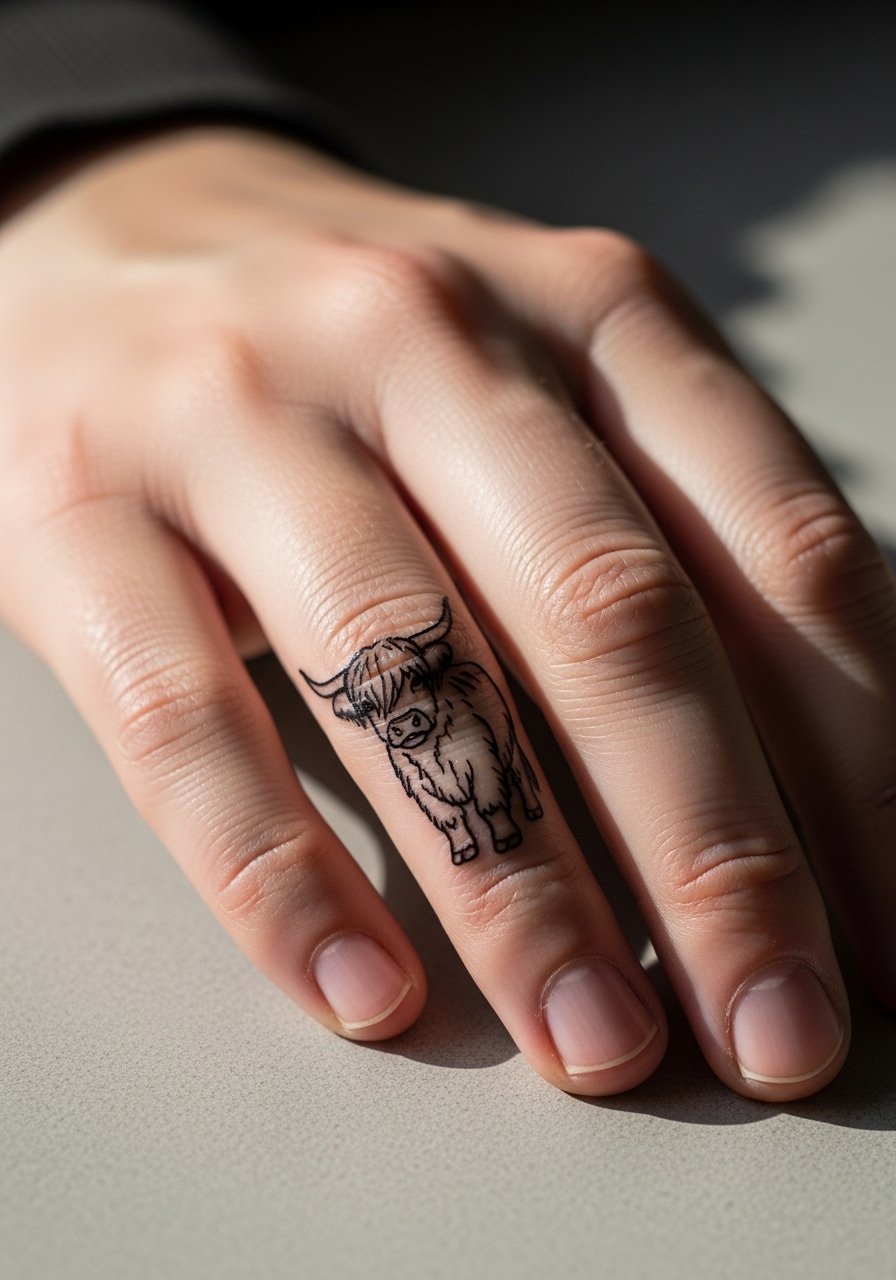
Finger tattoos age differently because the skin there regenerates fast and faces constant contact. The common mistake is asking for too much detail. A confident, single-line silhouette with a clear focal curve performs better than any attempt at realistic eye detail. Sessions are quick but sensitive. Expect touch-ups earlier and more frequent than arm work. If your job tolerates visible hands, a minimalist outline keeps the impact subtle. During the session, bring a sleeve you can roll back easily and consider finger rings only after full healing.
11. Realistic Highland Cow Half-Sleeve on Outer Bicep
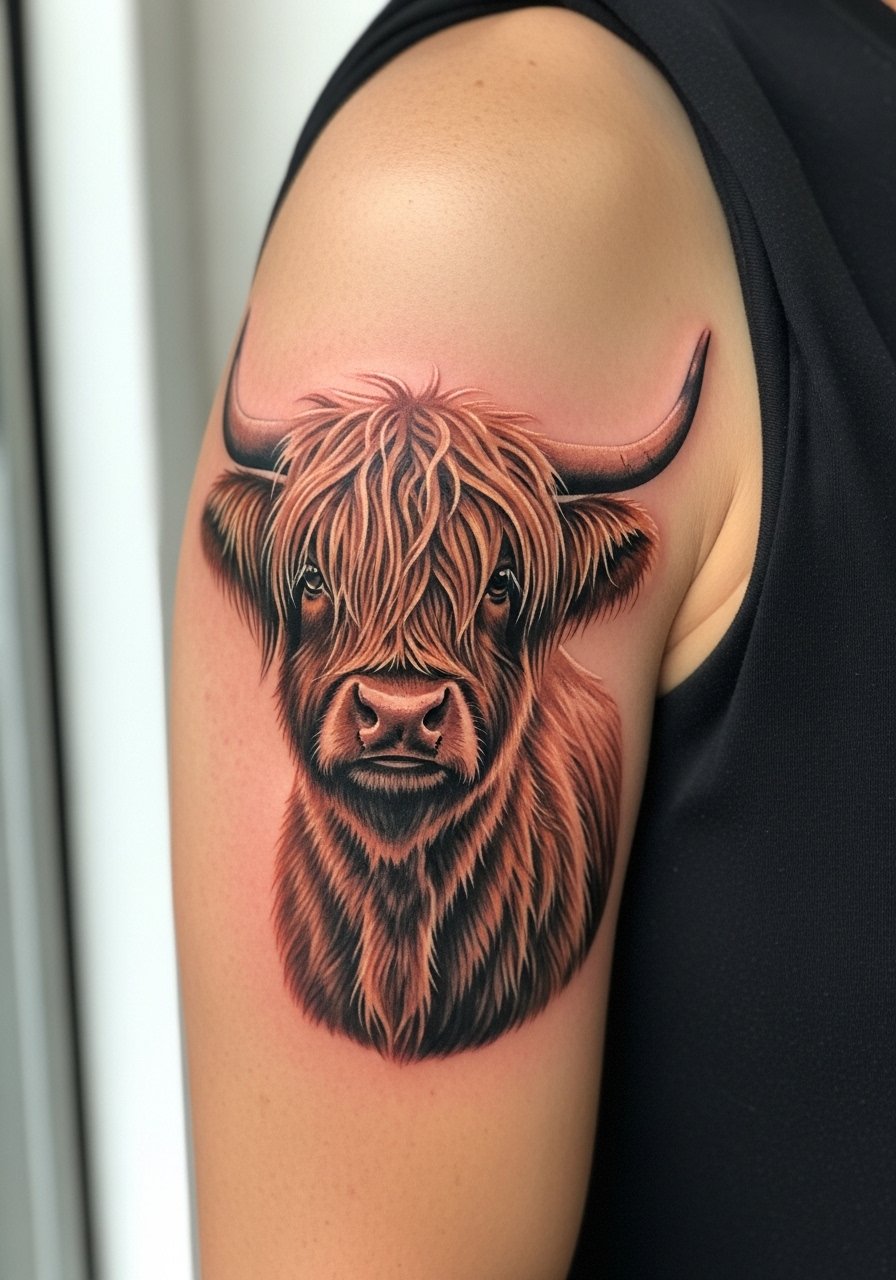
A half-sleeve lets you blend portraiture with landscape or floral elements for context. Outer biceps are one of the easier places to heal and they show color well. The session can be several hours or split across multiple visits depending on saturation. A mistake is overloading the negative space so the cow looks cramped against the sleeve. Ask for breathing room around the head and let the background be suggestive rather than fully detailed. At five years saturated blacks will hold best while subtle midtones may need refreshes. For showing it off, roll up short sleeves or wear a sleeveless tank.
12. Linework Highland Cow with Geometric Frame on Calf

Geometric framing gives a modern edge to an otherwise organic subject. Calf placements keep vertical geometry intact and allow the lines to breathe. The common error is pairing overly fine geometry with dense animal texture which creates optical noise after healing. Tell your artist to balance frame thickness with the linework inside. Sessions feel steady and longer than ankle work but easier than ribs. Expect dotwork or stipple midtones to soften gracefully. For casual outfits, wear cropped trousers or a skirt that lifts slightly to reveal the calf work.
13. Etching-Style Highland Cow on Inner Bicep
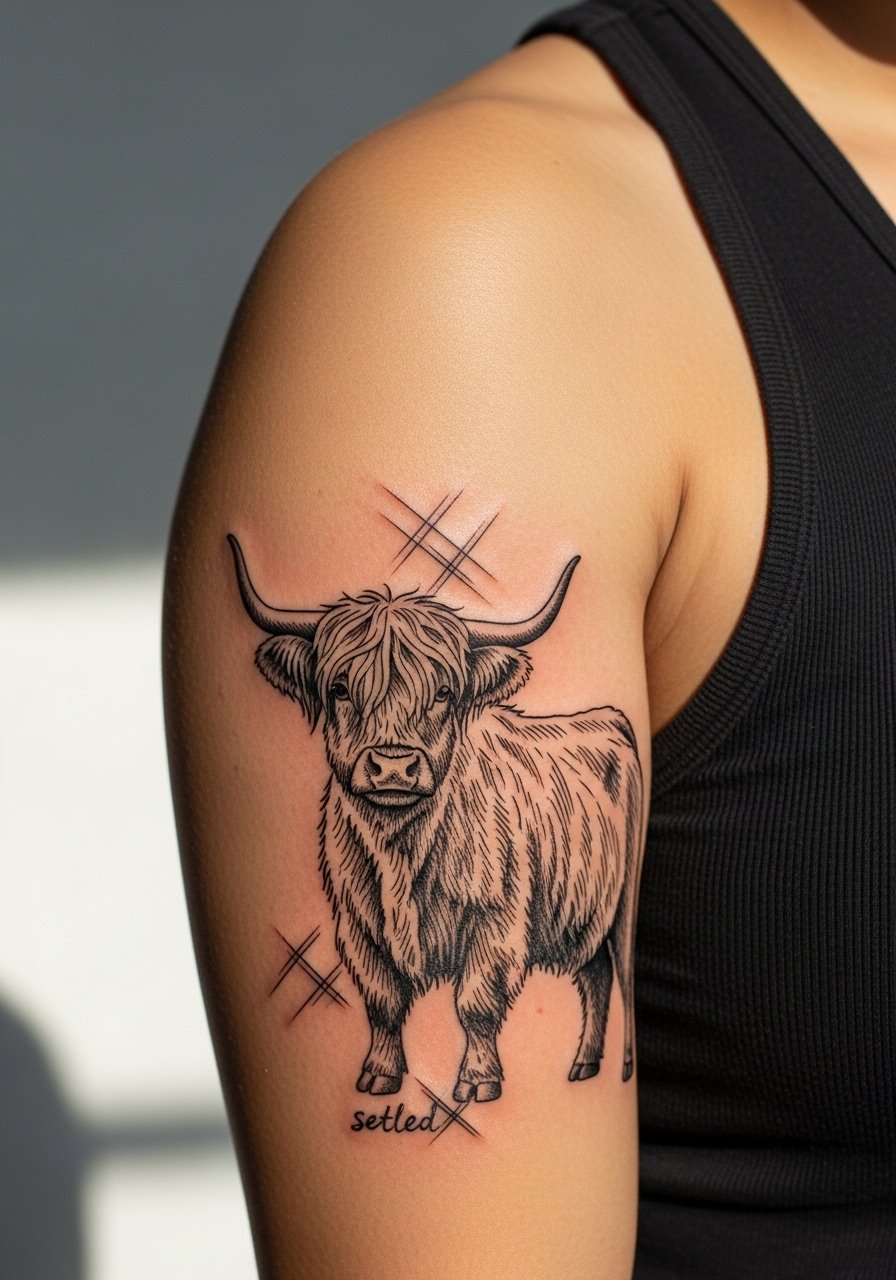
Inner biceps can be sensitive but they offer smooth, less exposed skin for detailed linework. Etching or cross-hatch shading suggests texture without heavy saturation. Some artists split on whether fine hatch holds on the inner arm. One view cautions that stretching and friction from movement blurs close cross-hatch. The other view trusts spacing and needle control to preserve it. Mention both perspectives during consultation and ask for spacing adjustments. Sessions are medium length and feel like alternating light and firm passes. For session comfort, wear a loose tank top that you can lift slightly without shifting fabric against the area.
14. Black and Gray Highland Cow on Throat Side

Neck pieces are visible and bold, and they require a candid talk about lifestyle and visibility. Black and gray portraits read clean here because heavy color can look like patches as it fades. Pain is higher and the skin takes ink differently given neck movement. The mistake is asking for tiny facial detail without scale which leads to muddied expression. Ask for slightly bolder lineweight for contours. For showing off, wide-neck shirts or off-shoulder tops let the portrait be framed without being overwhelming. Be aware of potential employment or social considerations before committing.
15. Color-Blocked Highland Cow Pop Art on Outer Thigh
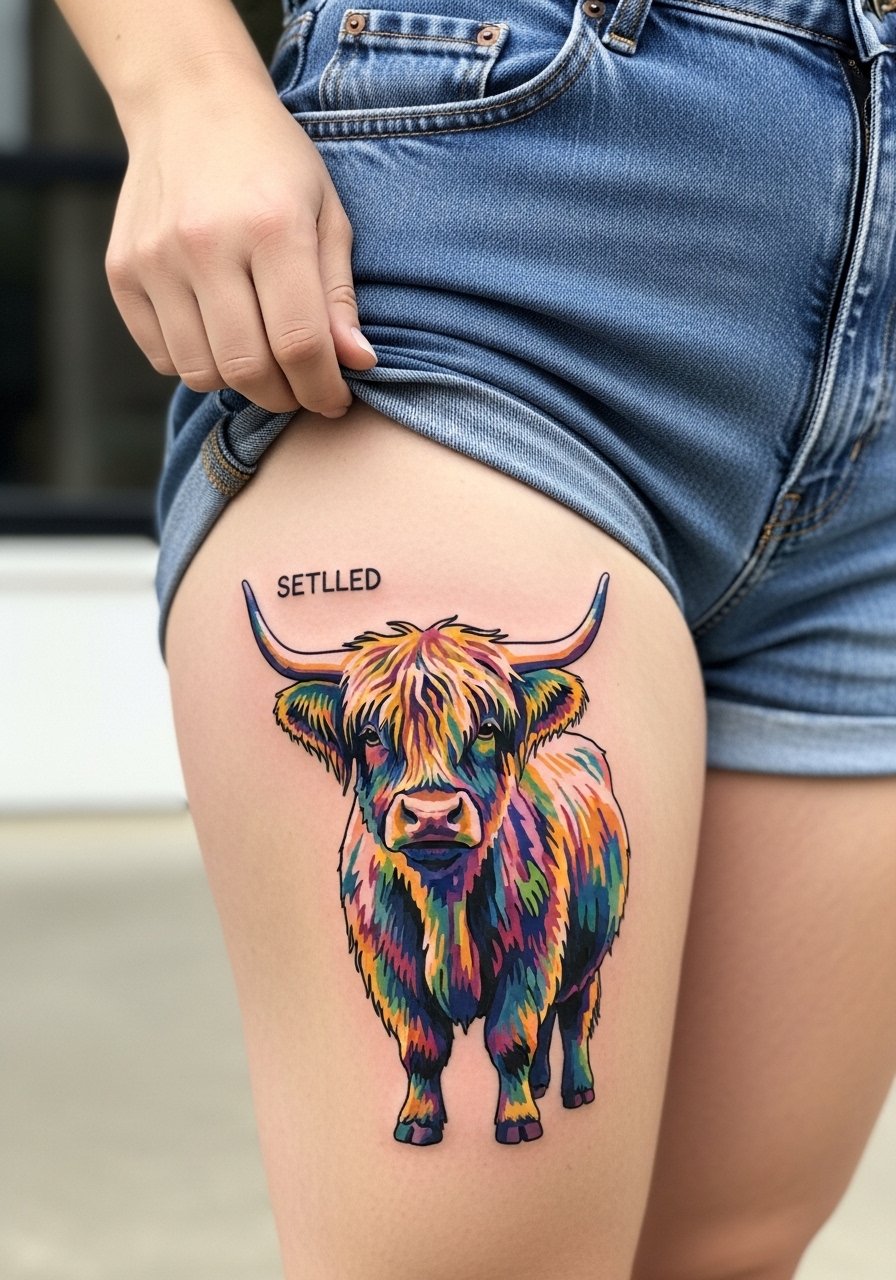
Outer thighs are forgiving for large color fields and playful compositions. Pop art blocks work well because the area tolerates saturation and contrast. The common problem is using too many tiny color transitions which can blur into one tone. Ask for clear color blocking and defined outlines. Sessions are comfortable and can be longer. For evenings or swim season, high-waisted bottoms or a skirt that lifts to show the side will highlight the piece. For the chair, pick bottoms you can shift without tight waistbands.
16. Stipple Mini Highland Cow on Behind-the-Ear Area
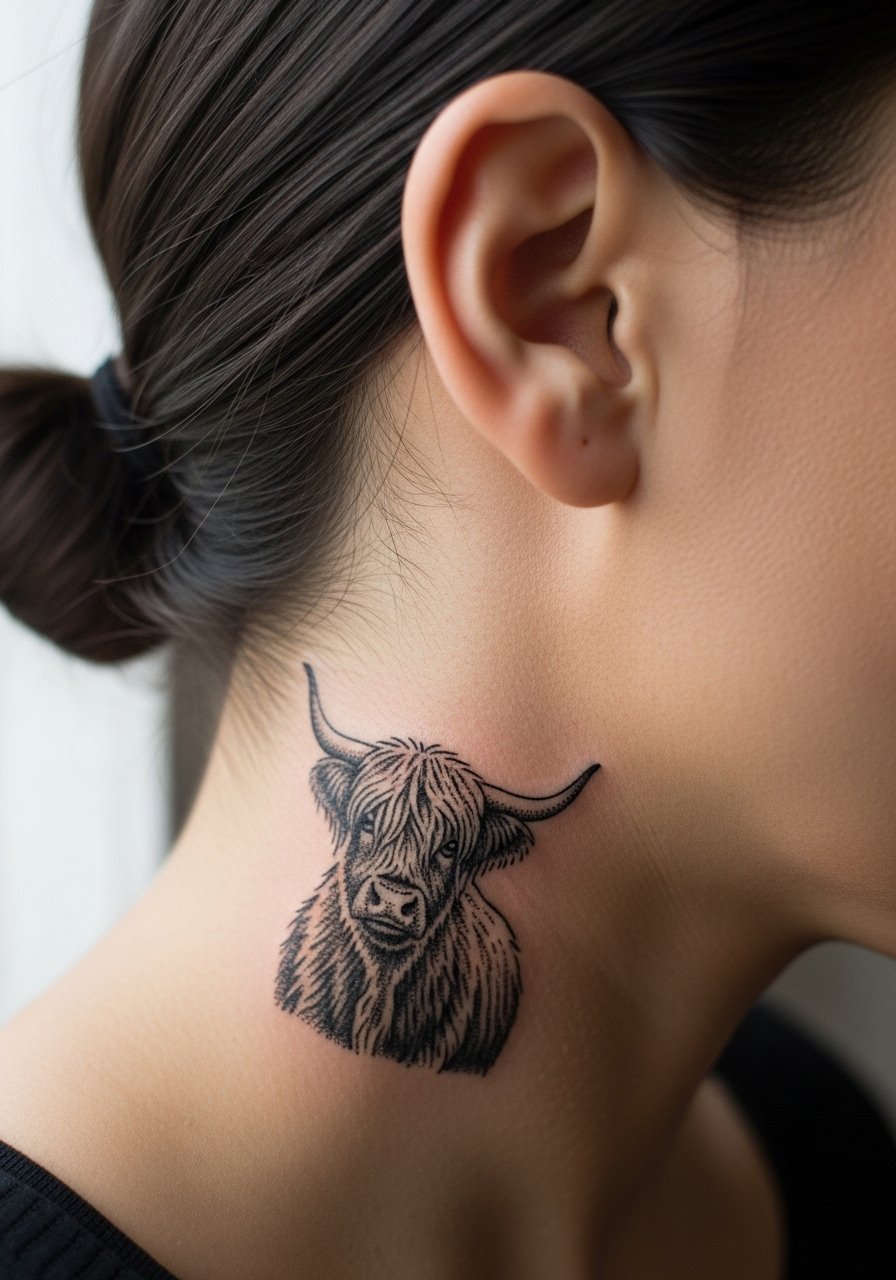
Behind-the-ear placements are small and intimate. The key is to present a simplified motif that reads when hair is tucked. The most frequent mistake is pushing scale too small, which causes dots to merge. Tell your artist you want stipple that suggests fur rather than every hair. Pain is low to moderate and sessions are short. Note that hair will often cover the area, so think about visibility. For session prep, consider a hairstyle that keeps hair away or bring hair ties for easy access.
17. Fine Line Highland Cow with Script Tag on Wrist
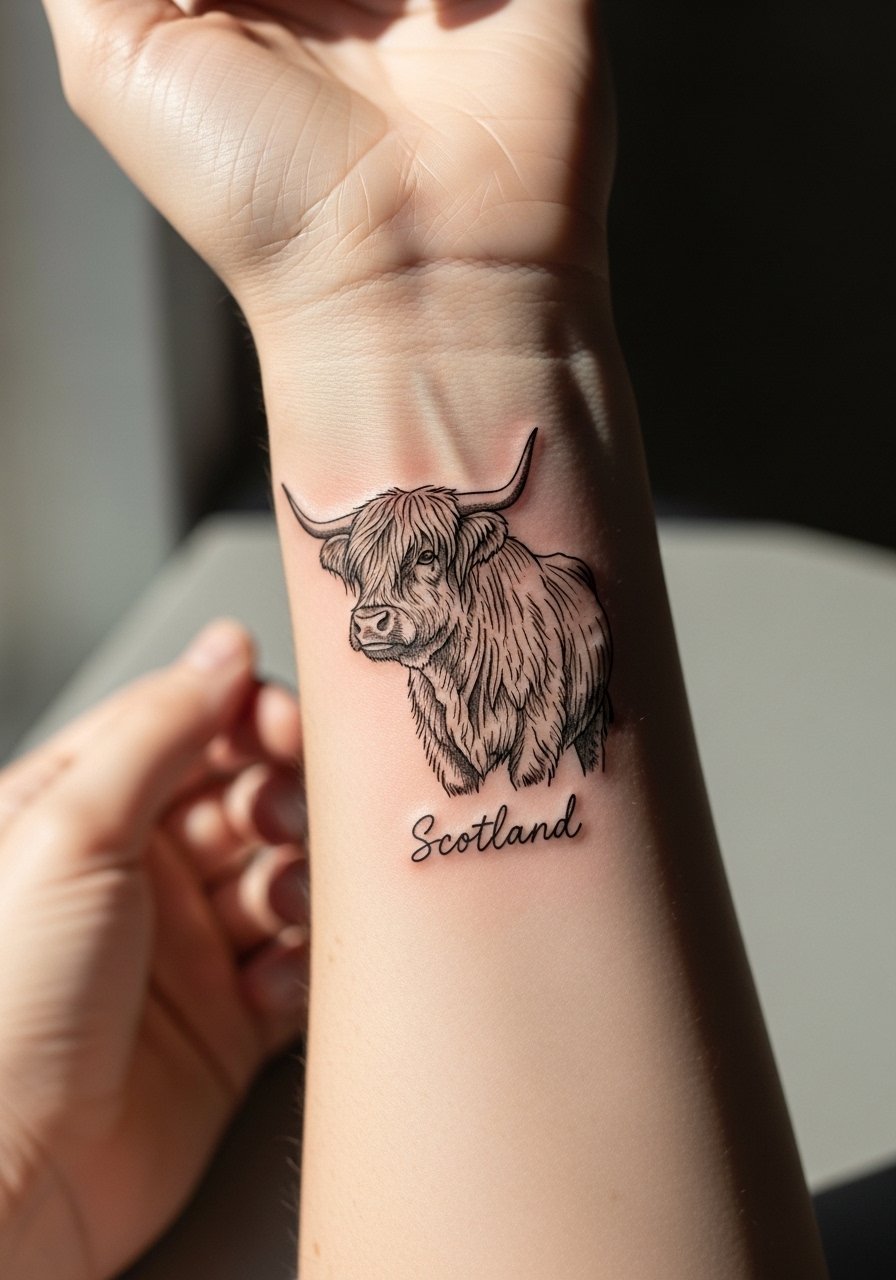
Wrist pieces will be seen daily so composition matters. Adding a small script tag beneath the cow gives context and scales the portrait. The risk is over-cluttering a narrow area. During consultation, show examples of spacing and font size. Wrist skin is thinner so line weight should be robust enough to endure two or three years without heavy blurring. Sessions are short but sensitive. For day-of comfort and later display, a minimalist watch or thin bracelets sit well without covering the art.
18. Geometric Dot-Work Highland Cow on Lower Back
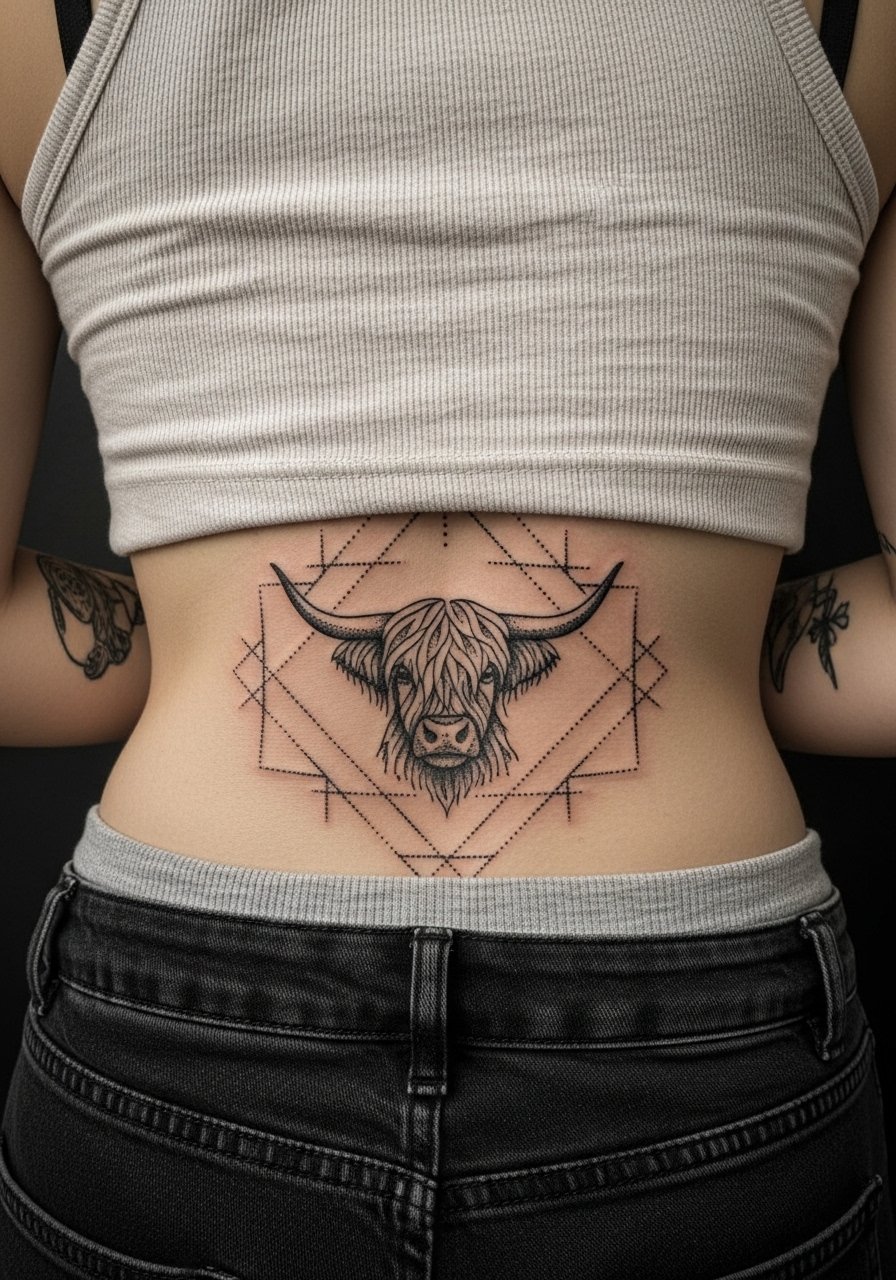
Lower back placements let you center a design with mirror symmetry. Dot-work pairs with geometry for a medallion feel. Mistakes arise when centerlines are off or when the geometric frame fights the portrait. Ask your artist for a balanced grid and to set the cow face into the exact center. Sessions can be lengthy but tolerable. For show-off outfits pick a low-back dress or a top with a lower hem. For travel to the shop, wear clothing you can shift without tugging the area.
19. Micro-Realism Highland Calf Portrait with Landscape Accent
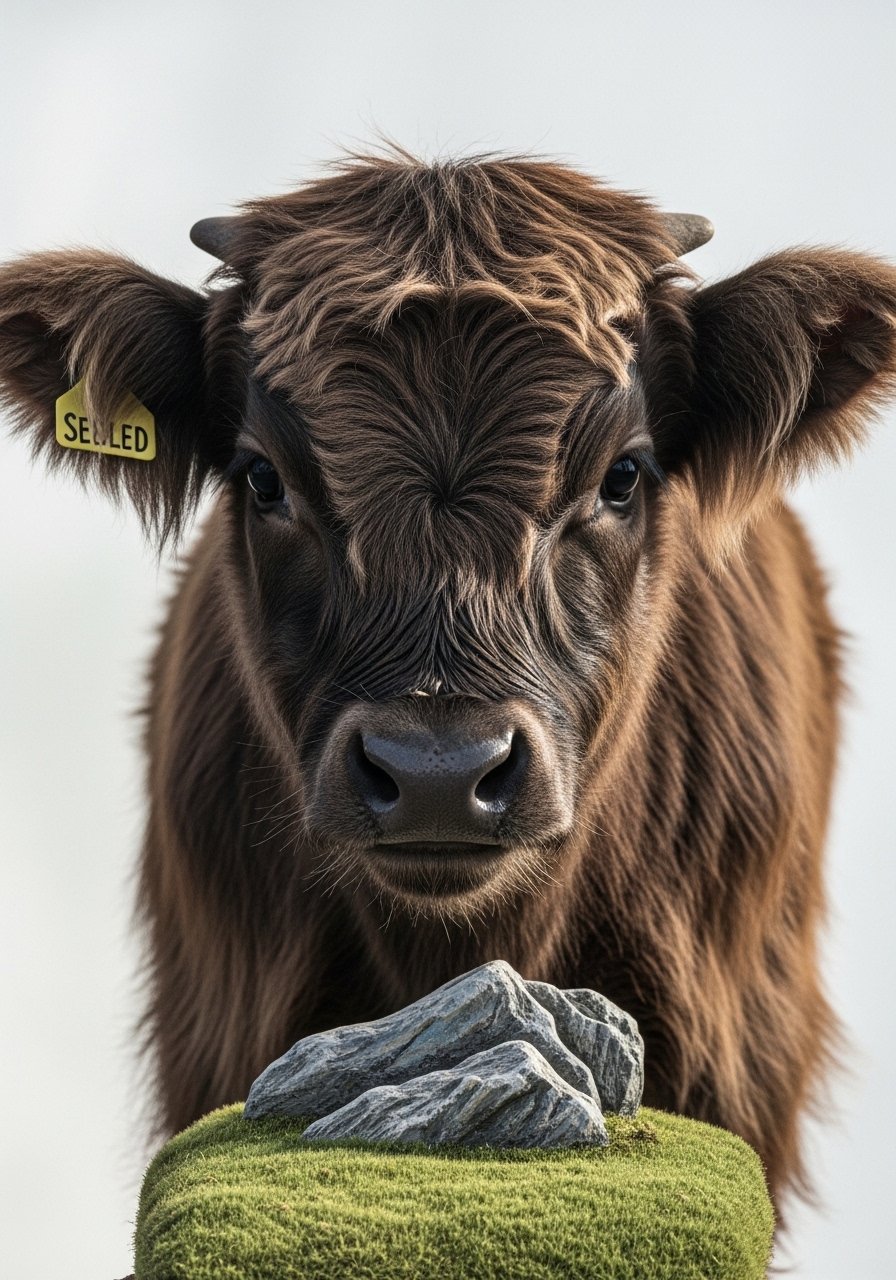
Combining portraiture with a small landscape anchor adds story to the piece. The calf holds detail well and allows the landscape to be legible. The error here is compressing both elements into too small a footprint. Allow the artist a little extra vertical space and prioritize the cow's eye and nose. Sessions feel steady and can be done in one longer block. Expect touch-ups to maintain micro tones. For casual looks, cropped trousers or skirts work best to reveal the calf when you want to.
20. Minimalist Highland Cow on Behind-the-Knee
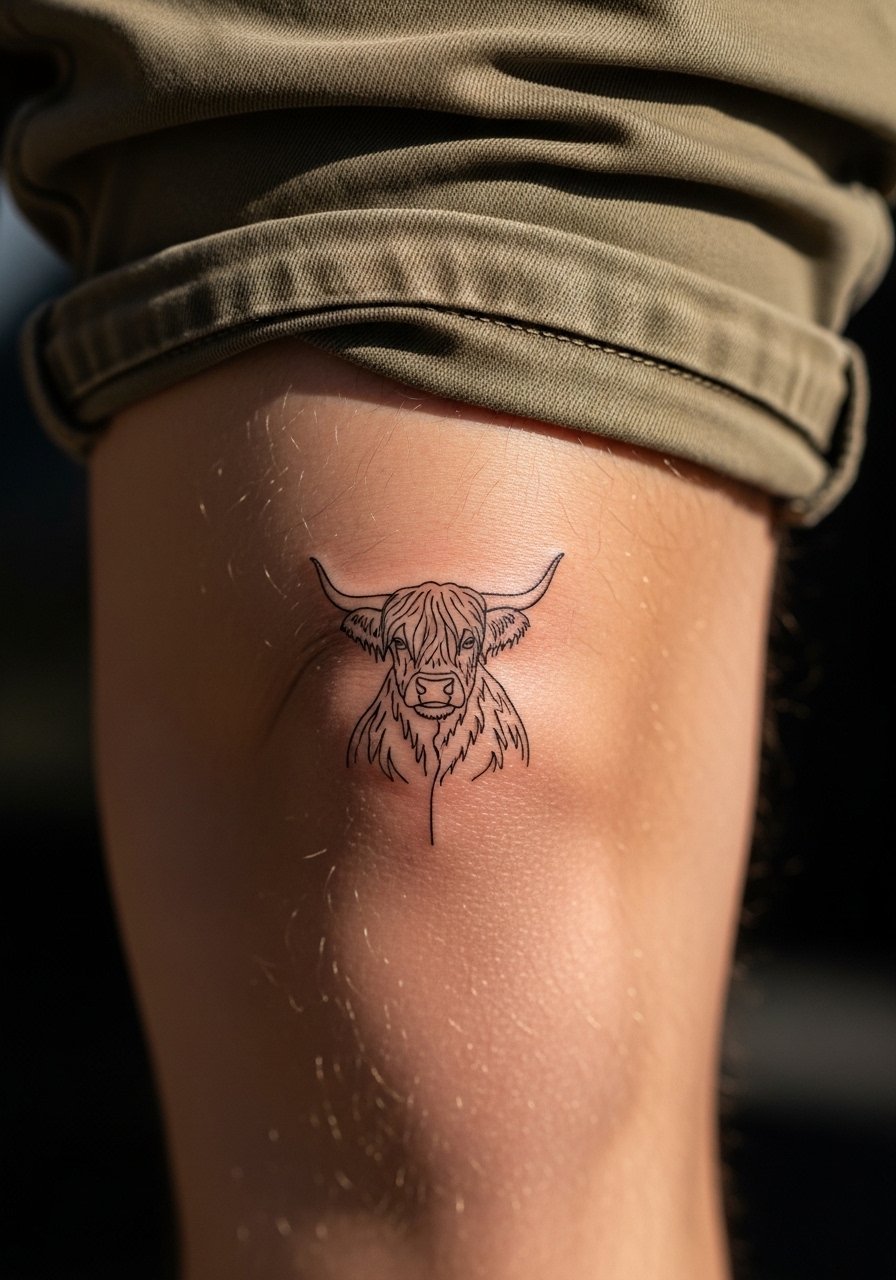
Behind-the-knee tattoos sit on a highly mobile canvas that creases with every step. The biggest mistake is expecting intricate detail to survive. Minimalist single-line forms adapt to movement and look intentional. Pain is variable and healing needs movement management. Ask for slightly bolder outlines to prevent early blurring. For session comfort, wear shorts or a skirt you can move without compressing the area. Plan on touch-ups if you want pristine lines in the long term.
21. Portrait-Scale Highland Cow Across the Chest
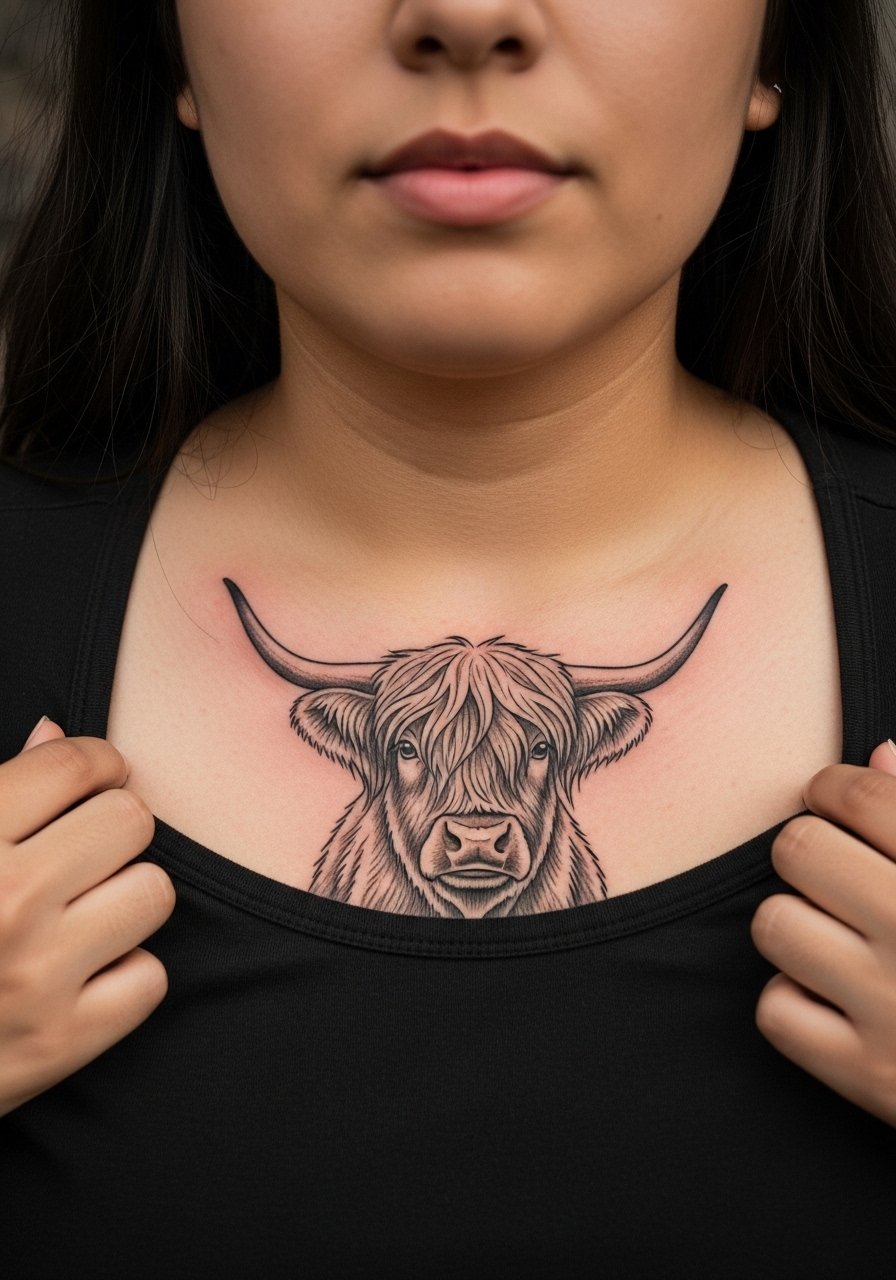
A chest portrait makes a statement and requires a clear center and symmetrical horns. The chest moves with breathing and body changes, so the main pitfall is placing key facial features over areas that stretch the most. Discuss exact placement with your artist and ask for mockup stencils across several positions. Sessions can be long and more painful than arm work. For showing, wide-neck shirts and open collars frame the piece. Trust your artist on placement, but if you feel unsure ask for a second stencil adjustment before needles touch skin.
Frequently Asked Questions
Q: Will a fine line pretty highland cow tattoo blur faster on the ribs than on the forearm?
A: It often does because the ribs move and the skin stretches more with breathing. Fine line can hold on the ribs if the artist spaces lines deliberately and uses slightly stronger initial line weight. Ask for a placement mockup and for the artist to point out where the skin is flattest before you commit.
Q: How should I prepare clothing for a shoulder or upper back session?
A: Choose a top that you can remove without pulling over your head, like a loose button-down shirt or a tank you can lift aside. That keeps fabric from brushing freshly tattooed skin and makes the artist's job smoother.
Q: Are hand and finger highland cow tattoos worth it if I want longevity?
A: They can be worth it if you accept earlier touch-ups and simplified designs. Fingers and hands face constant washing and friction which fades tiny details faster than arm or thigh work. For longevity, favor bold single-line silhouettes rather than micro realism.
Q: Do watercolor styles for a highland cow require different aftercare than black and gray pieces?
A: The aftercare steps are similar, but color washes often need stronger contrast up front because pigments can soften more noticeably. That means planning with your artist for saturation and considering touch-ups in the years ahead.
Q: How do I find an artist who understands both portrait realism and animal anatomy without naming anyone?
A: Look at local shop portfolios, search artist hashtags focused on animal portraiture, and use shop directories to filter for realism. Bring reference photos that emphasize the expression you want, and ask how many cow or animal portraits they have in their portfolio during the consultation.
Q: If I plan to get a chest or neck portrait, what visibility considerations should I keep in mind?
A: Neck and chest pieces are highly visible and may affect social or professional situations. Think about long-term visibility and placement before booking. If you want an option to conceal it sometimes, discuss slightly lower placement or clothing combinations that keep the piece private when needed.