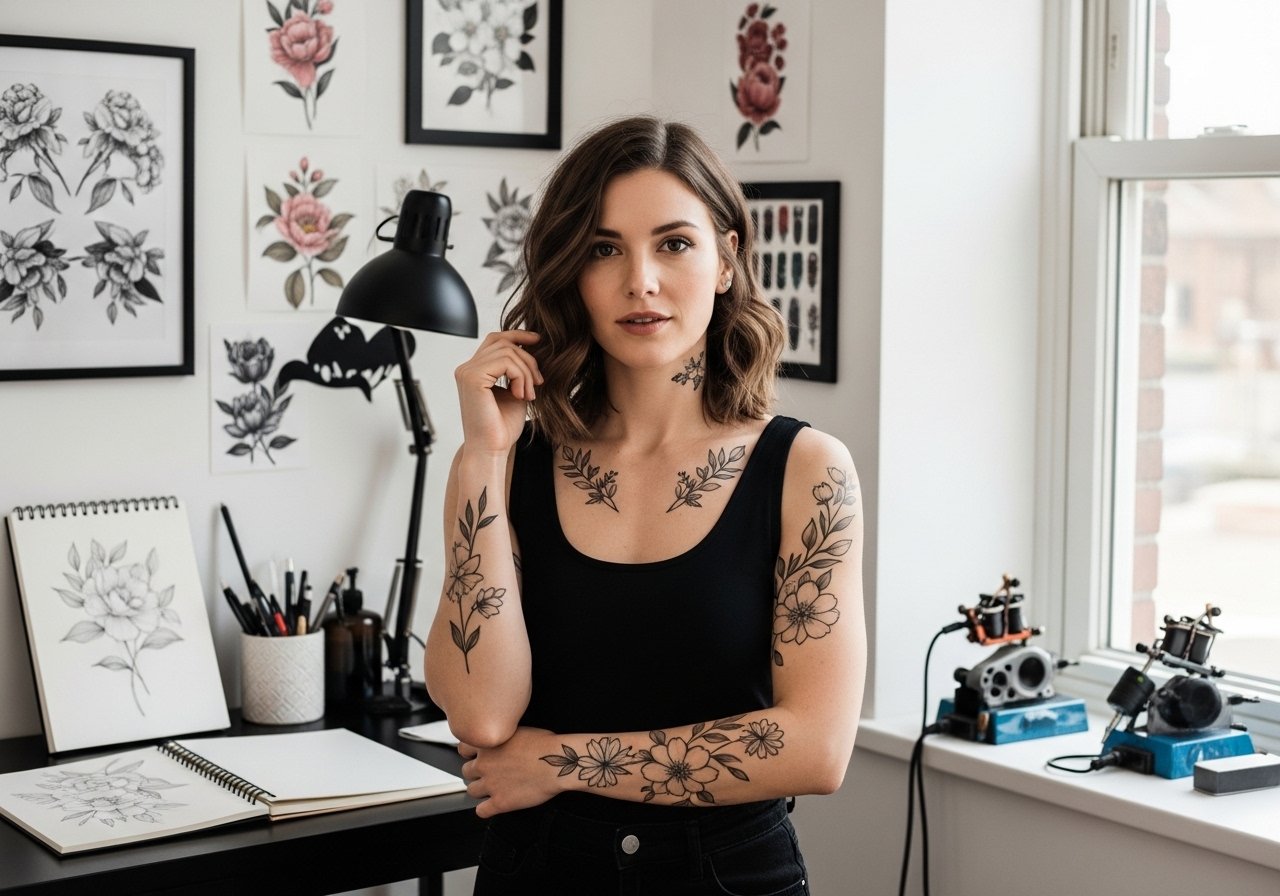
Fine line forget-me-not tattoos are everywhere on saved boards, but the ones that still look intentional after a few years are usually the ones that started with realistic placement, proper spacing, and honest expectations about aging. A realistic approach to these tiny blue blooms means thinking about skin texture, sun exposure, and how petals sit with muscle movement. Read on for 17 realistic forget-me-not options that balance fresh detail and long-term wear.
1. Micro-Realism Cluster on Inner Forearm
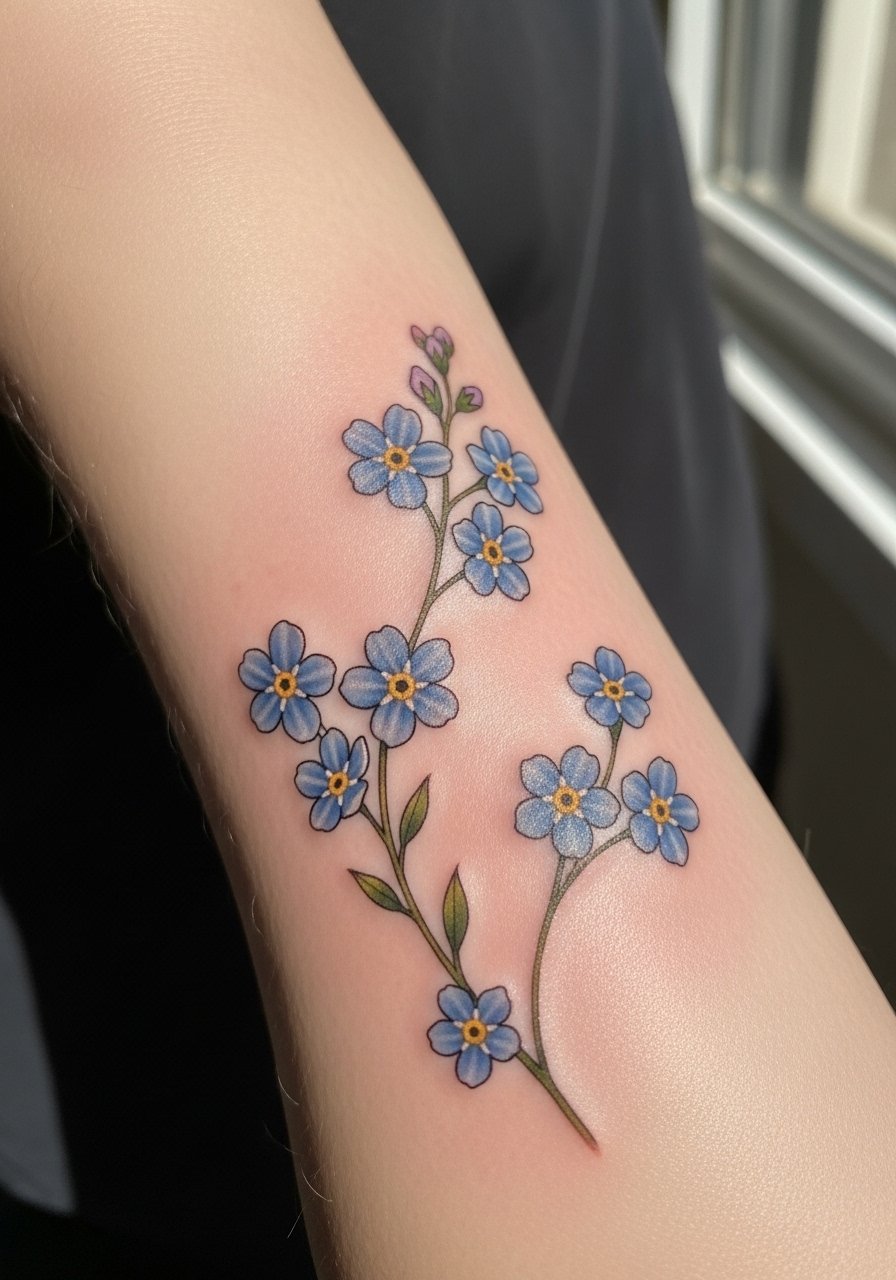
I recommend this for first realistic pieces because the forearm holds detail well and shows color saturation without harsh distortion. Tell your artist you want slightly separated petals and soft stipple shading around the stems so the negative space prevents crowding as the piece settles. Common mistake is compressing the cluster too small, which invites line merging and blowout over time. Pain is mild to moderate and a single session usually suffices. For showing it off, roll up a linen long sleeve to mid-forearm, or wear a delicate cuff bracelet that frames the flowers without overlapping the ink.
2. Tiny Wrist Sprig That Wraps the Radial Side
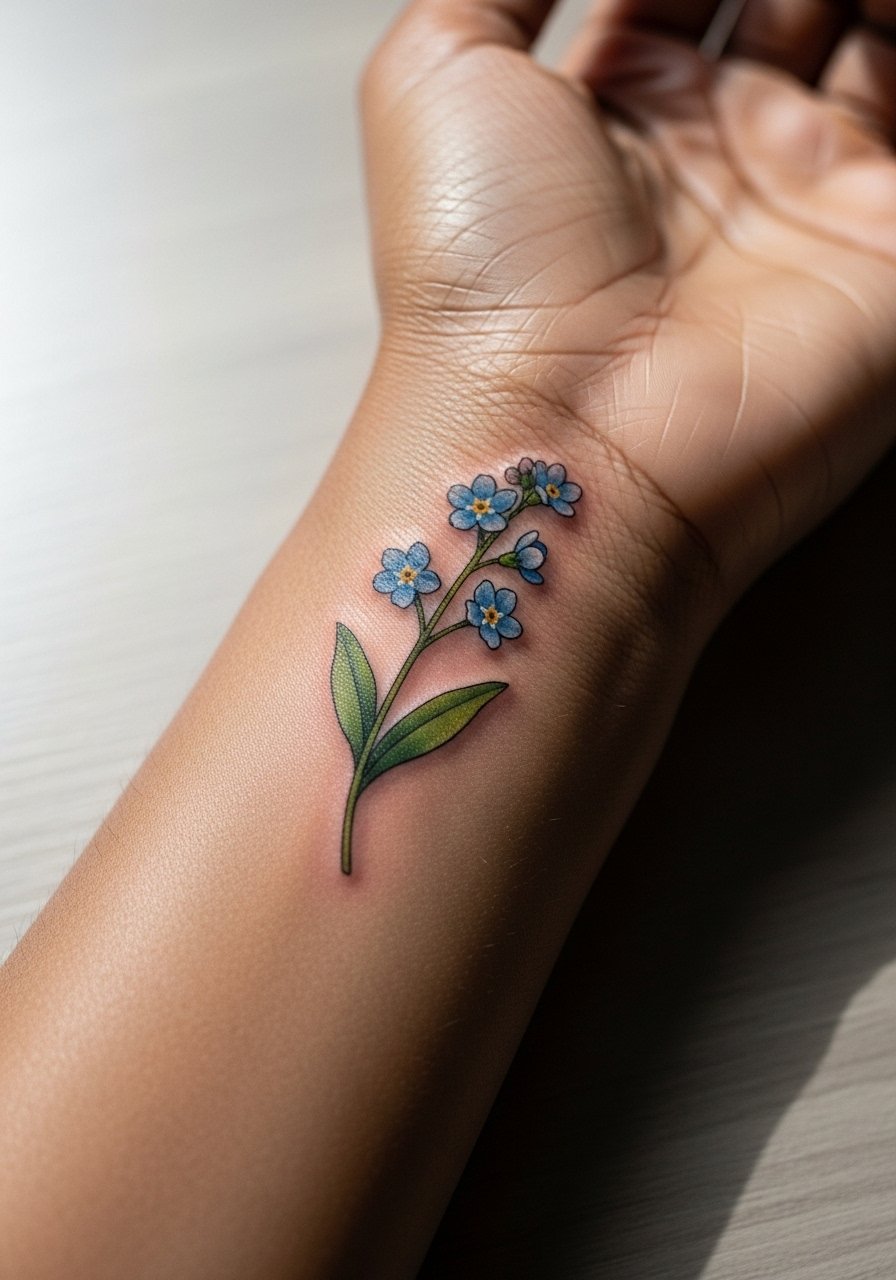
Fair warning, wrist skin sees a lot of movement and washing, so plan on a touch-up window around year two. Opt for slightly bolder linework at the stem and delicate petal shading to retain clarity as the piece ages. The common error is requesting ultra-fine petal edges that vanish with friction. Session feels quick, usually under an hour, but expect some sensitivity. Pair this with a thin chain bracelet for evenings out, and during the appointment wear a short-sleeve button shirt you can roll or pull aside without tugging at the wrist.
3. Realistic Single Bloom on the Shoulder Blade

This placement reads like a small statement that moves with shoulder rotation. Tell the artist to keep the center of the bloom slightly denser in saturation and feather the outer petals with stipple shading so it keeps depth without heavy outlines. Expect low to moderate pain and one session for color. A frequent mistake is oversaturating the background which competes with the bloom. For after-show style, an open-back tank complements the angle when you want the piece visible. If hiring an artist, search local portfolios with micro-realism tags and use discovery methods like convention listings rather than social handles.
4. Ankle Sprig Along the Lateral Malleolus

Ankle pieces face friction from shoes and socks, so plan clothing choices around healing. During the session wear slip-on shoes and low socks or sandals that do not rub the area. Ask the artist for slightly raised saturation near the petal centers to offset later fading. The main mistake is placing too close to the bone where blowout risk increases. Session time is short but healing requires patience. For evenings out try a strappy sandal to let the tattoo breathe while showing it off.
5. Ribcage Sprig Curving with the Oblique

Controversy surfaces with fine line on the ribs. One camp argues that the skin stretch and thin tissue blur fine line within two years. The other camp says that with correct needle depth and spacing, fine line can settle cleanly on the ribcage. Ask your artist where they land before booking. This placement is higher on the pain scale and typically needs a longer session. A common error is asking for a dense cluster that does not account for breathing movement. For consultation, bring full body reference photos so the artist can map the vine around your natural curves.
6. Sternum Cluster Framing the Breastbone

Sternum tattoos require an artist comfortable with symmetrical placement and mindful needle depth. Expect higher sensitivity and slower sessions. Tell your artist you want the blooms to sit slightly above the sternum line so fabric sits below the work. A typical mistake is centering too low where clothing pressure interferes with healing. If you have career concerns, remember this area is easy to hide with a high-neck shirt. For session wear bring a supportive but non-restrictive sports bra you can adjust without rubbing the fresh ink.
Studio Day Picks
The forearm, wrist, and shoulder pieces above need different prep than the chest and rib work. These five items smooth the session and the first week of healing.
-
Sterile stencil transfer paper kit. Lets you preview exact placement on skin, which matters for the forearm and shoulder blade pieces where contour changes are subtle.
-
Unscented barrier film roll. Useful for ankle and wrist tattoos to protect against shoe and clothing friction in the first days.
-
Gentle numbing gel packet. Helpful for sternum or rib sessions to reduce the initial sting during longer passes.
-
Soft, nonabrasive dressing strips. For small touch areas like the wrist and finger where standard bandaging can bunch and rub.
-
Aquaphor healing ointment. A thin layer in the first 48 hours helps retain moisture for fine petal shading without suffocating the skin.
7. Collarbone Spray with Three Mini Blooms

This placement reads well with graceful negative space and moves with the clavicle as you raise your arm. For longevity, request slightly heavier saturation at petal centers and light whip shading outward. The most common mistake is packing blooms too close to the bone which invites touch-ups. Pain is moderate and session time varies with color. Style-wise, an open-neck blouse or wide-neck sweater highlights the piece without overwhelming it. During the appointment wear a top that you can pull aside easily so the artist has clear access.
8. Miniature Behind-the-Ear Accent Bloom
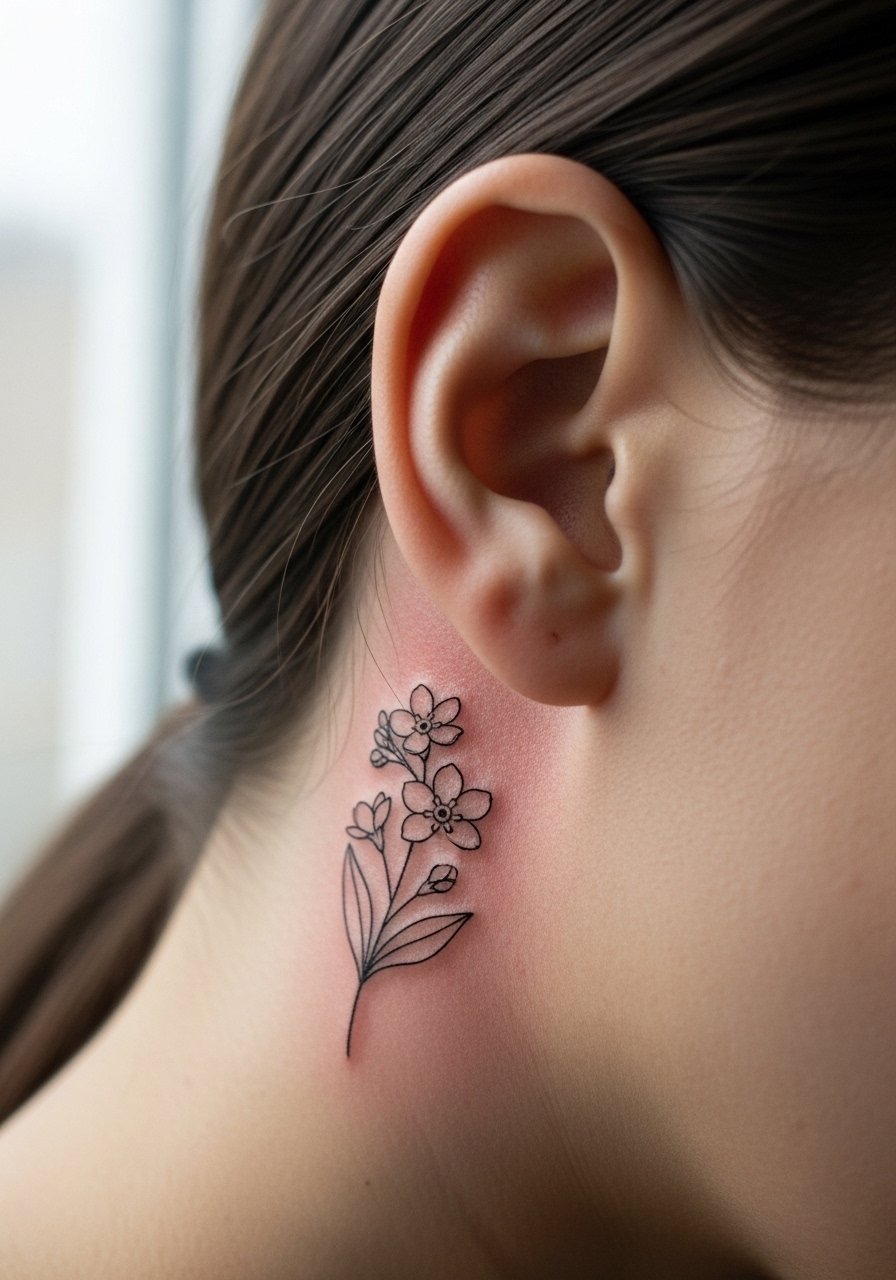
Behind-the-ear work needs precise placement and a light hand. The area is sensitive and sessions are short. A real mistake is expecting heavy color in such a small, mobile zone. Artists divide on whether this spot suits dense realism or a simplified motif. Tell them you want soft petal edges with tiny highlights so it reads at a glance. This location is discreet and easy to hide with hair for professional settings. Because the skin is thin, occasional touch-ups are more likely than on the forearm.
9. Tiny Finger Band of Linked Forget Me Nots

Finger tattoos are high wear zones because of washing and knuckle movement. Expect faster fading and a realistic touch-up timeline of one to two years. Ask for slightly thicker outer contours and flexible spacing so the petals survive daily abrasion. The usual error is requesting too much tiny detail inside the band which disappears. Session discomfort is moderate and healing needs careful avoidance of friction. Pair this look with a stackable ring set that sits beside the blooms but does not compress the skin after healing.
10. Calf-Length Sprig with Subtle Shadowing
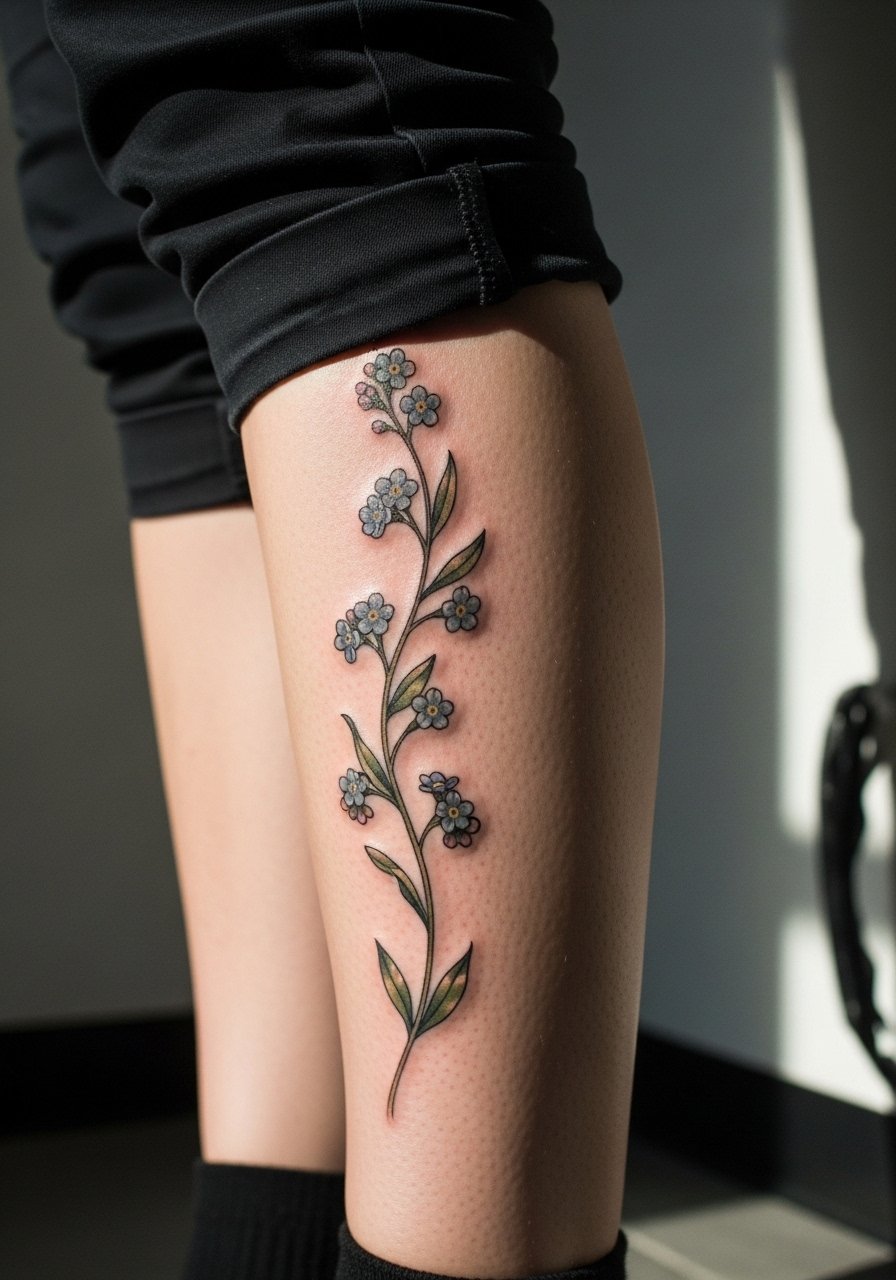
The calf is forgiving for bigger realistic work because the skin is thicker and movement is less dramatic. Request soft gradient shading around petal bases and avoid heavy outlines that age into blocks. A common mistake is turning the vine into a dense band which looks muddy from the side. Expect a moderate session with possible two passes for saturation. For session comfort wear loose drawstring pants you can roll up easily and remove without rubbing. The piece looks nice with midi skirts or boots when you want it visible.
11. Inner Bicep Cluster That Curves with Muscle

Inner bicep skin stretches and compresses with motion, so plan spacing and depth around muscle movement. I have seen inner bicep pieces that blurred because artists placed petals too close together. Tell your artist to map the bloom to the muscle belly and use dot work or stipple shading behind petals for long-term texture. Pain is higher than outer arm work and sessions can run mid-length. For the appointment, wear a tank top you can keep on or remove without tugging the area. When showing it off, rolled-up sleeves help, and a sleeveless denim jacket pairs well for a layered look.
12. Thigh Bouquet Sitting on the Outer Hip Crease

Outer thigh and hip placements are great for larger realistic clusters because there is room for detail and shading. Expect moderate pain and a session that could run long if you want color depth. A mistake is asking for tiny petals without adequate spacing across curved anatomy. For modesty and access, wear high-cut shorts to the appointment so the artist can reach the area without you being uncomfortable. This area is easy to conceal for work and flattering with high-waisted skirts when you want it visible.
13. Lower Back Single Spray with Motion Lines
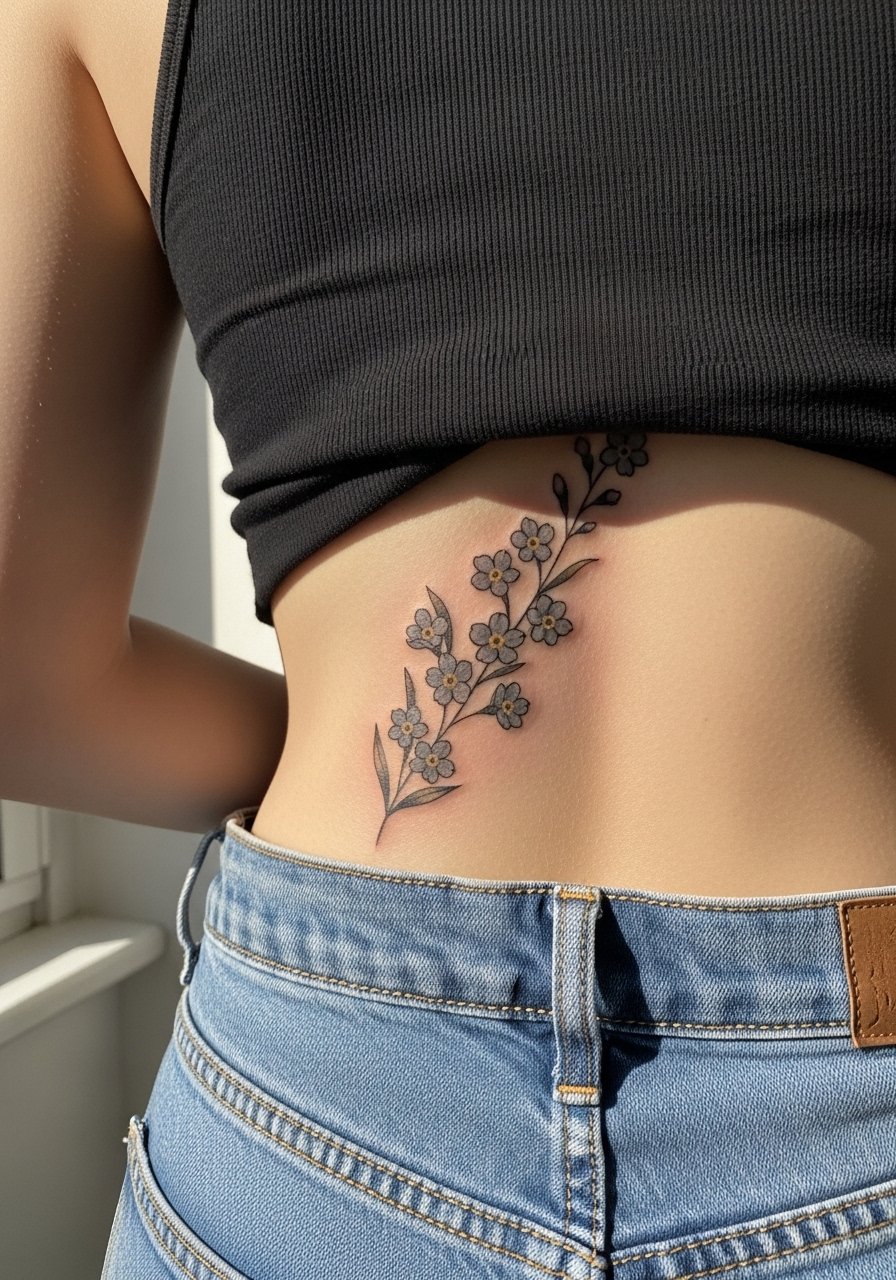
Lower back pieces age slowly due to lower sun exposure and less daily abrasion. For a realistic look, ask for subtle motion lines and layered petals to suggest depth without heavy outlining. A common error is placing too many blooms too close to the spine which complicates future touch-ups. Sessions can be medium length and pain is moderate. Keep in mind clothing choices while healing; pull-on low-waist pants can irritate the area. For evenings out, a low-back dress highlights the spray without competing with other jewelry.
14. Behind-Shoulder Miniature Spray Near the Scapula

This spot gives a peek of bloom when you turn, and it handles fine detail because the curvature is gentle. Tell the artist to use stipple shading behind the petals rather than heavy background colors so the flowers keep separation as they settle. The usual mistake is making the piece too large for the area which defeats the "peek" quality. Pain is low to moderate and sessions are brief. For the appointment, wear a tank top you can leave on or pull to the side like a stylist would, and for showing off reach for backless or cutout dresses.
15. Petite Calf Wrap with Two Blooms and Leaves

A wrap design uses negative space to suggest movement as you walk. For realism, ask for layered leaf veins and a touch of translucent color on petals. The wrong move is compressing the wrap so it looks glued to a single plane instead of curving around the calf. Expect a medium session with potential for a quick touch-up. Pair it with ankle boots or a cropped jogger pant that shows the wrap when you want attention without overexposure.
16. Tiny Nape Accent by the Hairline

Nape tattoos are subtle and can be hidden with hair, but placement needs precision relative to the hairline. Ask for small negative spaces between petals to reduce blur risk and keep the outline soft. The main mistake is asking for heavy contrast that reads too stark under hair growth. Pain is moderate. If you have a conservative workplace, this spot gives concealment. For the session, wear a shirt where the collar can be pulled aside without rough movement against the area.
17. Full Sleeve Accent with Scattered Forget Me Nots
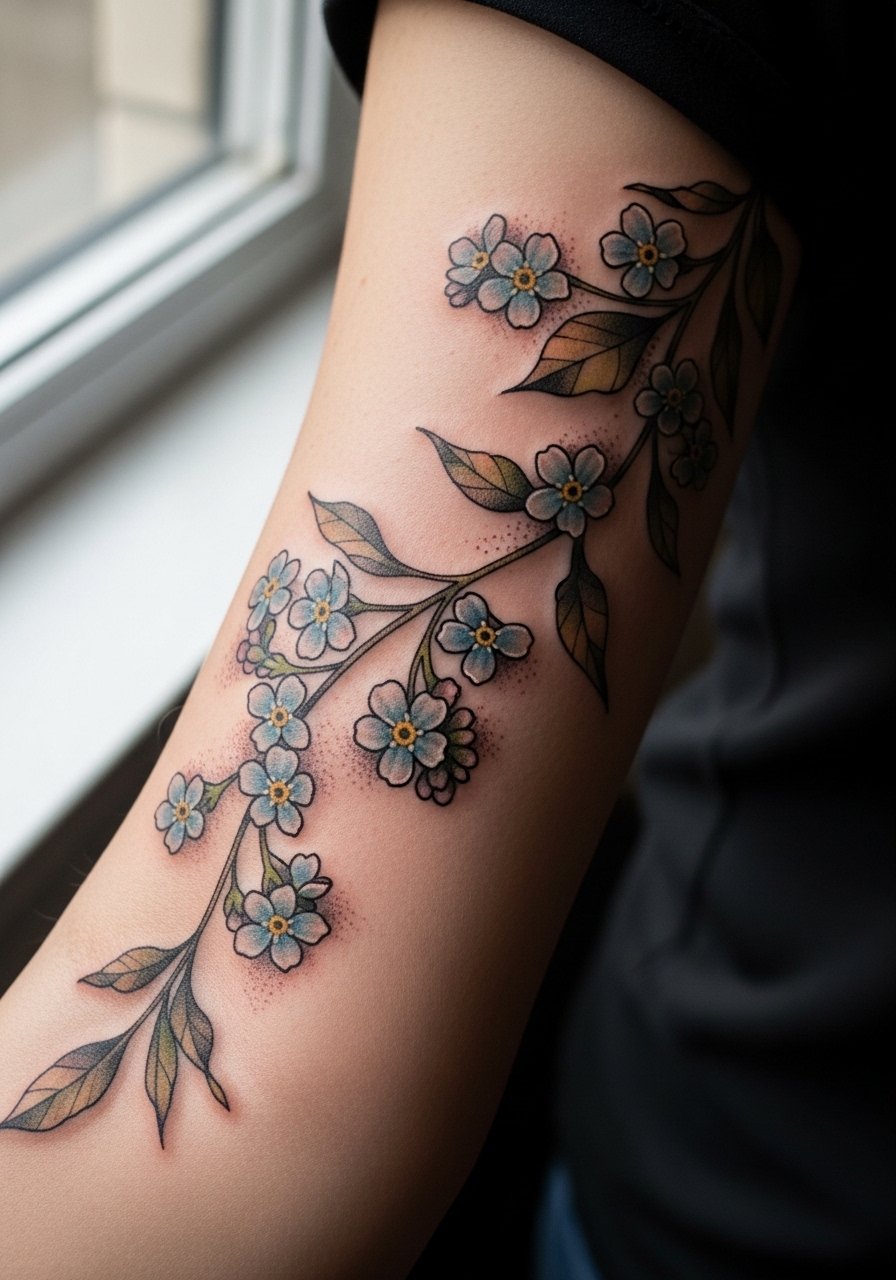
A sleeve gives room to combine realism with supportive textures like stipple and soft washes so the blooms do not compete with larger elements. During consultation, map where each bloom will live relative to muscle contours to avoid future distortion. A common mistake is squeezing micro details into a sleeve plan without allowing breathing room between motifs. Sessions will likely be multiple and touch-ups might be scheduled after the piece settles. For wear during sessions choose a loose button-down that you can remove or adjust easily and pair the finished sleeve with rolled linen shirts when you want the blooms on display.
Frequently Asked Questions
Q: How long will a realistic forget me not on the wrist stay crisp before a touch-up is needed?
A: Expect wrist pieces to need a touch-up sooner than forearm work, often around year two to three depending on sun exposure and hand washing. The trick is to ask for slightly bolder centers and leave breathing room between petals so the linework resists early merging.
Q: Is fine line safe on the ribs for a realistic bloom, or will it blur?
A: Artists split into two camps on ribs. One camp says the skin there stretches with breathing and blurs very fine lines within a couple of years. The other camp believes that with correct needle depth and spacing it can settle fine. It depends on the artist's technique and your skin tendencies, so discuss both outcomes in the consultation.
Q: What should I wear to the tattoo session if I am getting a sternum or lower chest cluster?
A: Wear a fitted sports bra or bandeau you can lift slightly without rubbing the area and that provides support after the session. A zip-up hoodie layered over a bandeau also works if you want easy coverage when leaving the studio.
Q: Are finger and hand forget me nots worth it if I want longevity?
A: Finger and hand ink show faster wear because of constant washing and friction. If longevity matters, consider placing a similar motif on the side of the hand or the inner forearm where touch-ups are less frequent. If you choose fingers, prepare for more maintenance and conservative detail.
Q: How should I find an artist for micro-realistic floral work if I do not want to rely on social handles?
A: Use discovery paths like local convention listings, portfolio directories, and in-shop portfolios. Search hashtags sparingly and favor in-person portfolio reviews so you can see healed work in photos and ask about touch-up policies.