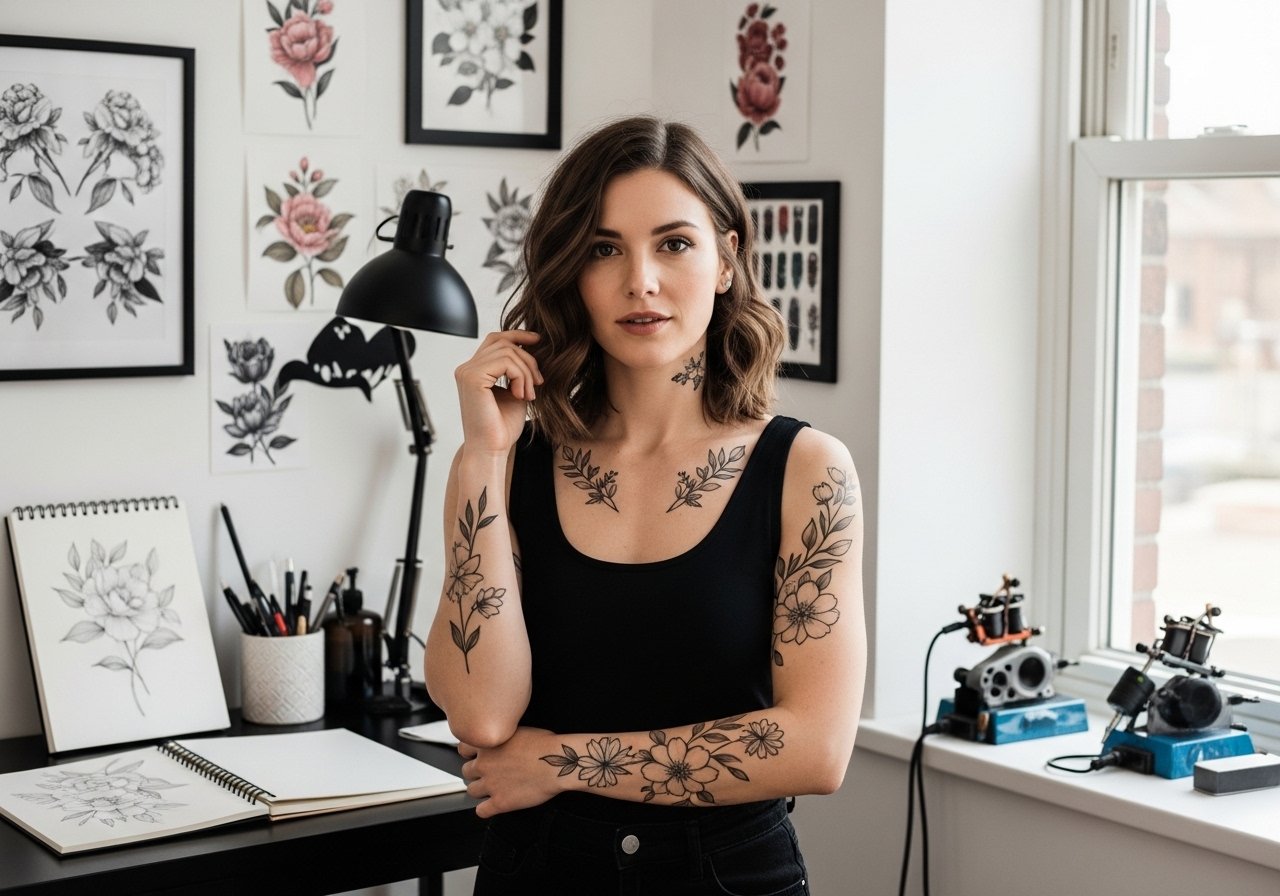
Fine line trends look incredible in photos, but they do not all age the same on the shoulder. Placement, needle spacing, and the shirt you wear the week after the session change the long term look more than most people expect. Below are realistic shoulder tattoo ideas that balance fresh impact with how the ink will settle over years, plus what to ask during your consultation to get lasting linework.
1. Micro-Realism Wildflower on the Shoulder Cap

This micro-realism cluster sits on the shoulder cap where the skin is relatively flat, which helps tiny petals hold their shape. I recommend asking your artist for slightly heavier linework than a typical micro piece so the fine veins in petals do not merge after two to three years. Expect a one to two hour session and low to medium pain. Common mistakes include going too small and packing too many blossoms. For the session wear, pull on a loose button-down shirt so the shoulder is easy to access without uncomfortable contortions for you or the artist. Healed at six months the edges look crisp, at two years minor softening appears, and a touch-up at year three is common.
2. Photorealistic Bird in Flight on Upper Shoulder

Photorealism on the shoulder can look striking because the curve adds motion to wings. Tell your artist you want contrast maintained between feather edges and background negative space so stipple shading is used sparingly. This approach lowers blowout risk on the softer shoulder skin. Sessions run two to three hours and the pain level is moderate. A frequent error is asking for ultra-fine feathers without allowance for skin migration. Expect the piece to read true at six months, with saturation softening by year five, and a touch-up possible at year four. For showing it off, short-sleeve shirts or a cap-sleeve blouse frame the silhouette without covering the wings.
3. Blackwork Geometric Shoulder Panel

A dense blackwork panel uses solid saturation to age predictably, which makes it a reliable choice if longevity matters more than minute detail. Expect two to four hours depending on size and medium pain during solid fill sections. The main mistake is leaving no breathing room between shapes, which causes merging as skin stretches. In consultation, specify larger negative areas and discuss stipple shading for texture instead of continuous saturation. Solid blackwork often needs fewer touch-ups than fine line work. For session comfort, wear a loose tank top you can pull aside while keeping the rest of your torso covered.
4. Small Portrait Fragment on the Outer Shoulder

Portrait fragments that sit square on the outer shoulder let artists work with flat planes and predictable skin texture. Tell your artist to plan for a slightly larger scale than the image on your phone so facial features retain clarity over time. The session is detail-heavy and may be split into two shorter visits. Pain is moderate and sitting still is important. A common mistake is wanting a tiny face with full realism; the result blurs faster than expected. For showing it off, a wide-neck sweater or off-shoulder top highlights the piece without forcing a low neckline.
5. Botanical Sleeve Cap That Wraps to the Shoulder Blade
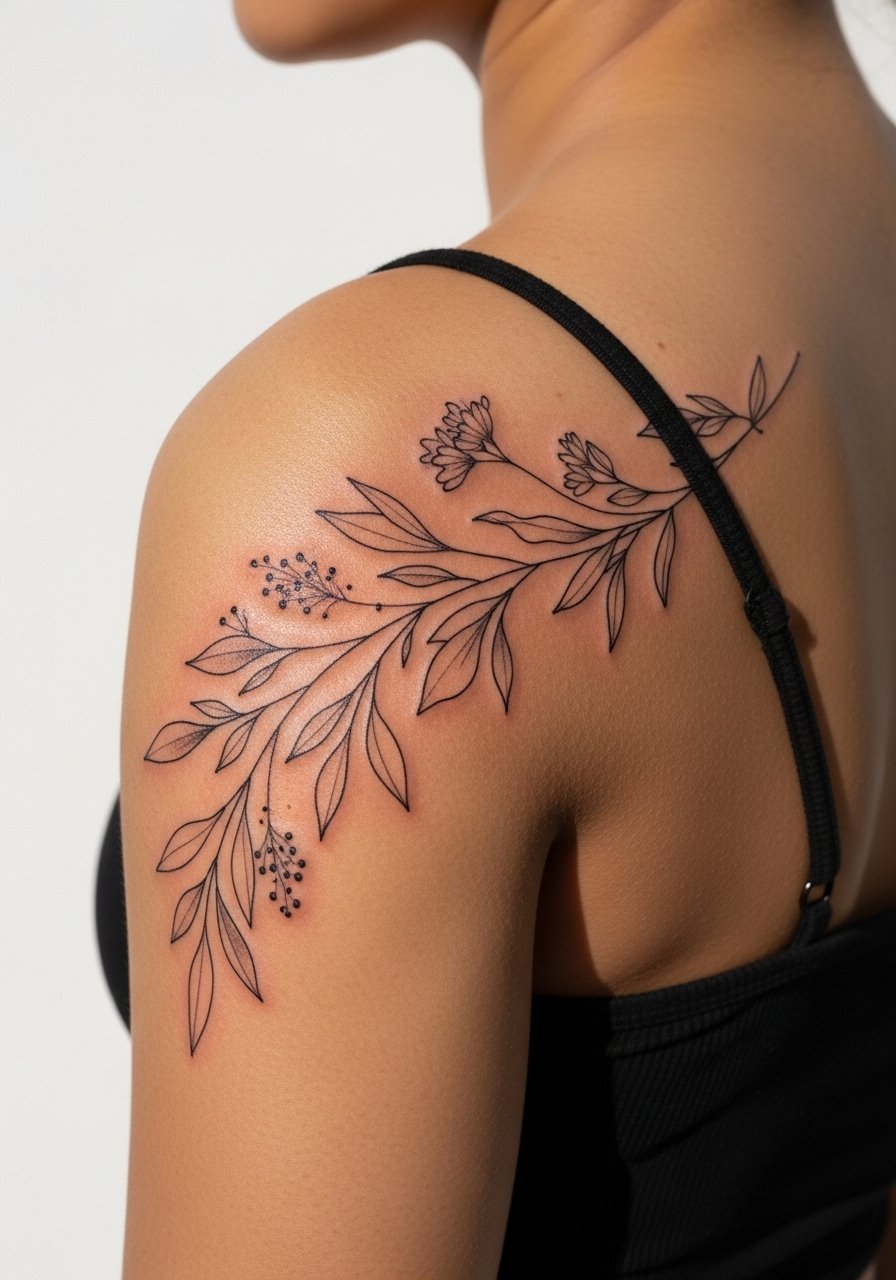
This design bridges sleeve and shoulder and works best when the linework is given room. A mistake I see often is packing too many tiny leaves into the transition zone between arm and shoulder. Ask for varied line weights and a few larger leaves to anchor the composition. Sessions will be multiple and touch-ups at year three are normal for the smallest leafwork. For the appointment, wear a button-up shirt you can slide off one arm so the artist can access both arm and shoulder without you getting cold.
6. Hyper-Textured Seashell on the Deltoid
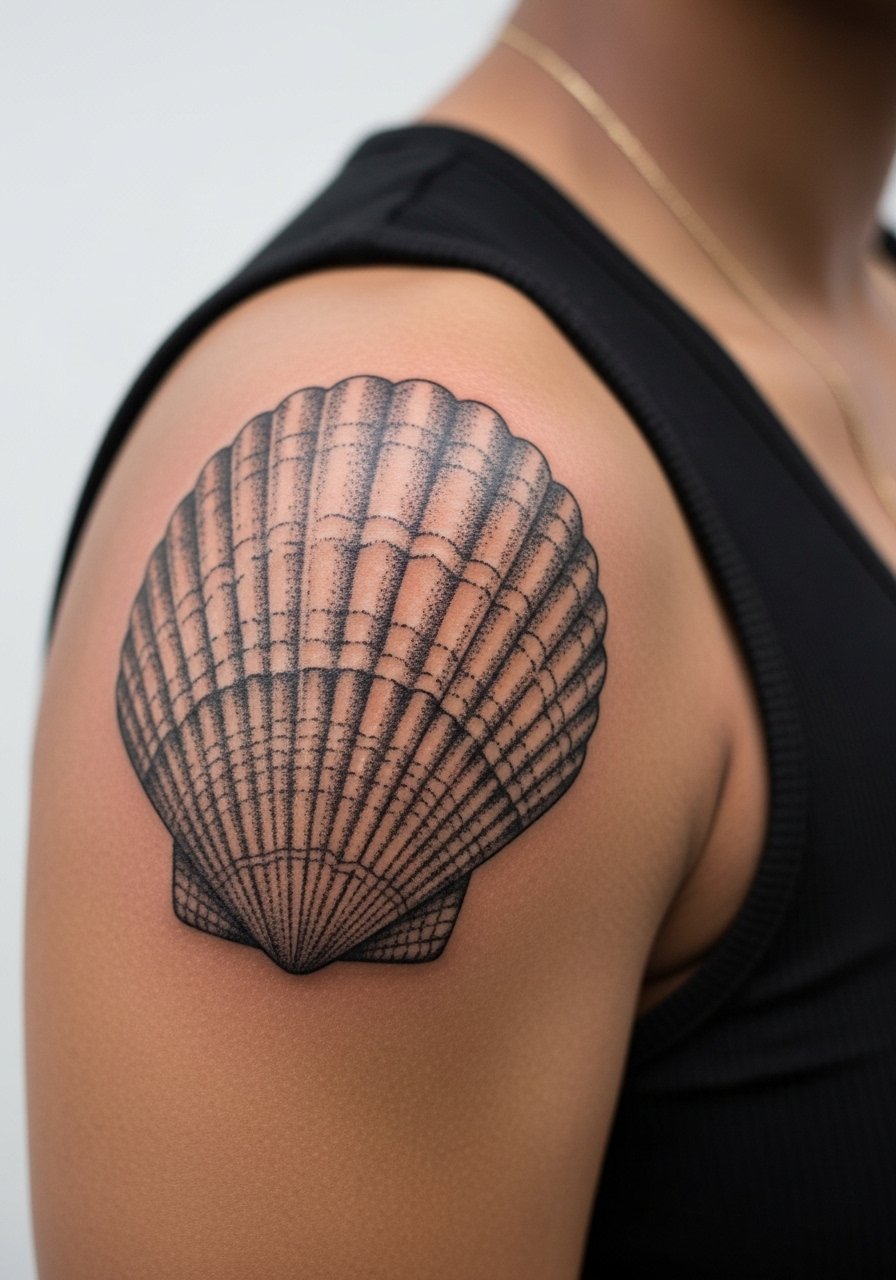
A shell with stipple and whip shading reads tactile on the rounded deltoid. The texture approach spreads tone without relying on heavy lines, which reduces blowout risk. Plan a two hour session for a mid-sized shell and expect low to moderate pain. The frequent error is asking for full photorealism at a tiny size. In consultation, specify the stipple density and where you want negative skin left for highlights. For showing it off, a simple racerback tank makes the shell visible without pulling fabric against the ink.
Studio Day Picks
The pieces above mix close linework and solid saturation, so a few session-day and first-week items make those appointments and early healing smoother.
- Stencil transfer sheets. Useful to preview how the design sits on your shoulder curve before the needle touches skin.
- Topical numbing cream. Helps with longer shading sections and keeps movement from pain to a minimum during dense fill work.
- Thin protective film roll. Protects shoulder pieces from friction with straps and seatbelts in the first few days.
- Fragrance free gentle body wash. Cleans the area during showers without stripping delicate ink channels from fine line work.
- Aquaphor healing ointment. A thin layer in the first 48 hours keeps tight linework hydrated without smothering the skin.
7. Realistic Rose with Soft Background on the Shoulder Cap

A classic rose in realistic style benefits from subtle background shading that lets the petals pop without heavy outlines. Ask for mid-range needle groupings for petal texture and reserve saturated blacks for the deepest shadows. Sessions run around two hours and pain is moderate. The most common mistake is requesting black outlines mimicking traditional roses; those outlines can date the piece and interfere with the realism. At six months the petals keep crisp edges, at two to three years the background tones may need a touch-up. Pair this with a linen button-down for evenings out so the shoulder remains a focal point.
8. Minimalist Line Wave Across the Top of the Shoulder

Minimalist single-line pieces rely on consistent linework and good placement. The obvious pitfall is making the wave too thin across mobile skin. Tell your artist you want consistent depth and a slightly thicker line than a wrist piece. Session time is short, usually under an hour, and pain is low. Expect more visible softening at the two to three year mark compared with bolder work. For the session, a sleeveless tee keeps access simple. This style sparks the fine line debate. One group argues that thin lines on shoulders fade quickly. The other group says with proper depth and slight thickness, they settle well. Ask your artist which approach they favor before booking.
9. Half-Moon Sun and Moon Scene on Shoulder Cap

A celestial half-moon design uses tonal shading to maintain contrast over time. Specify that you want negative skin used as highlights rather than white ink, which can age unpredictably. Sessions vary from one to three hours depending on detail and the pain is moderate. The common mistake is asking for dense white highlights that yellow or fade. At six months the contrast is clear, by year four softening occurs in shaded areas and a touch-up preserves depth. For showing it off at night, pair with a boat-neck top that leaves the shoulder exposed without a plunging neckline.
10. Small Animal Silhouette on the Rear Shoulder

Silhouettes age well because they favor solid shapes over thin details. The trade-off is less internal texture. Tell your artist you prefer crisp edges and steady saturation so the silhouette remains legible as the skin shifts. Sessions are short and pain is low to moderate. A regular error is adding tiny internal lines that blur over time. Expect consistent appearance for several years with occasional touch-ups if you wear sun-exposing clothing often. Wear a zip-up hoodie you can slide off for the session to keep warm before and after.
11. Script Quote Curving Over the Shoulder
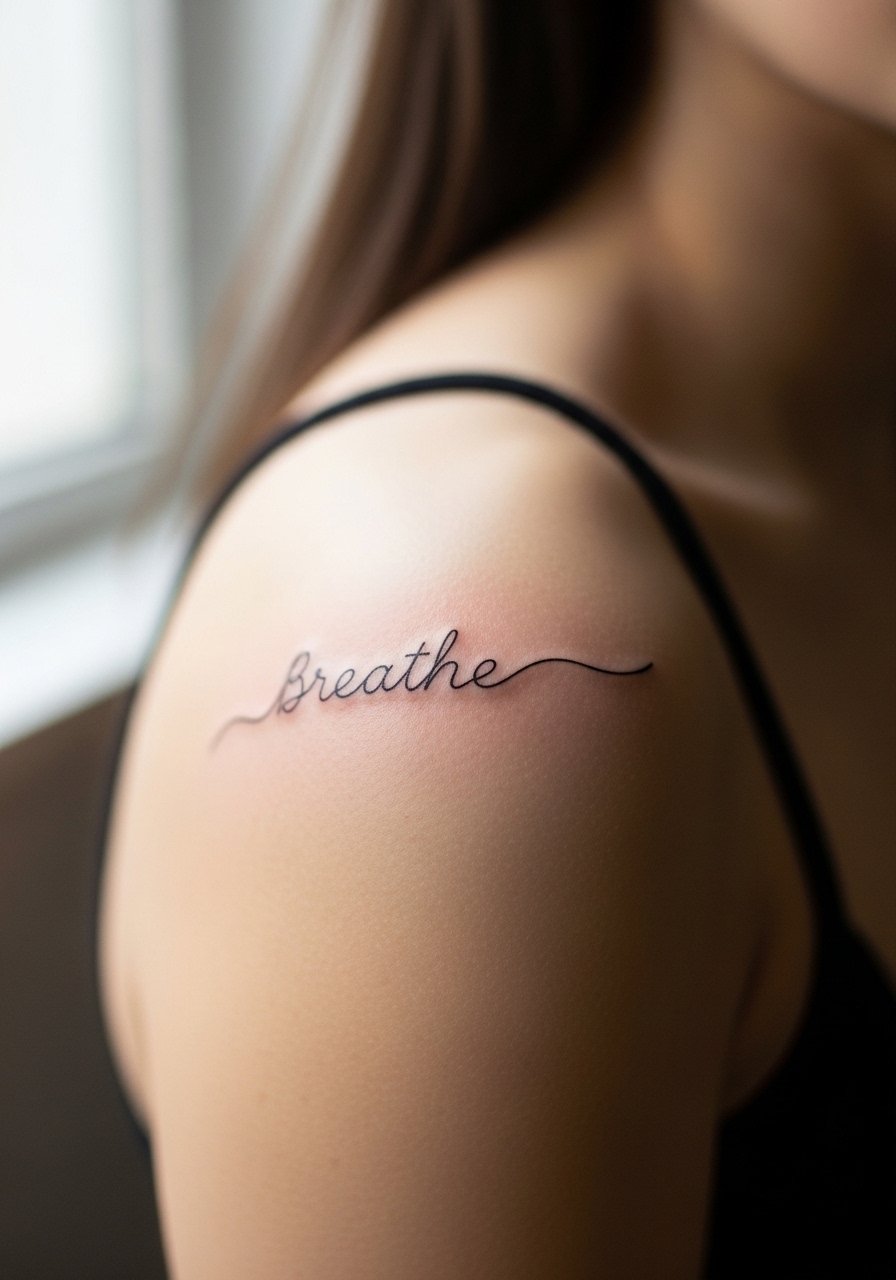
Script across the shoulder can read elegantly if letter spacing has room. Provide the exact wording and font reference so the artist can scale letters to avoid crowding. Sessions are generally under an hour and pain is low. A common mistake is choosing tiny lettering in dense fonts; the letters will blur together as skin ages. For appointment comfort, wear a wide-neck shirt you can pull aside without exposing more than the area being worked on. Consider a touch-up at year three for the sharpest read.
12. Surrealist Eye with Minute Dot Work

A detailed eye uses dot work for texture and tiny lines for lashes. Dot work spreads tones in a way that reduces large areas of saturation, which helps longevity. Expect multiple short sessions and moderate pain during concentrated shading. Mistakes include asking for too many micro dots at high density without spacing, which flattens with age. In consultation, ask for a map of where dot clusters will sit so the artist can balance light and shadow for the shoulder curve. For showing it off, a slightly off-shoulder top frames the detail without crowding it.
13. Fine Line Compass on the Shoulder Cap

Compasses require symmetric linework that respects the roundness of the shoulder. Ask for bolder primary points and finer inner details so the main compass reads well even as the tiny inner marks soften. Sessions are about one to two hours and pain is low to moderate. The typical error is over-detailing the inner compass rose. For the session, wear an easy-to-shift button-front top to give the artist access while keeping you comfortable. Plan a touch-up at year three if you want crisp inner lines.
14. Watercolor Horizon Across the Shoulder

Watercolor-style pieces can be striking, but they age differently than saturated blackwork. The controversy is clear. One camp says watercolor on shoulders fades into muddy patches within a few years. The other camp says with strategic anchoring lines and careful saturation it can hold. If you favor watercolor, ask for anchored outlines and slightly stronger color saturation in focal areas. Sessions are color and time intensive with moderate pain. Wear a loose drawstring linen pant if you want easy access and comfort after the session. Expect yearly fading touch-ups if you wear sun exposure regularly.
15. Tiny Constellation Cluster Near the Shoulder Point

Constellations are low commitment visually but need planning for spacing. Prefer slightly larger dots and fewer connecting lines to reduce merging. Sessions are quick and pain is low. A common mistake is asking for extremely tiny stars linked tightly together. For appointment ease, a racerback sports bra gives access while keeping you supported. At two years small dots may dull and a touch-up keeps the geometry crisp.
16. Ornamental Filigree That Extends to the Collarbone

Filigree that reaches the collarbone must transition onto chest skin that moves differently than the shoulder. Ask your artist to treat the collarbone edge as a separate plane and avoid tiny filigree turns there. Sessions vary by size and the pain increases as work moves closer to bony collarbone. Mistakes include continuous thin curls across both zones without space. For the session wear a wide-neck shirt you can slide down slightly so the artist can access both shoulder and collarbone safely.
17. Layered Feather That Follows the Shoulder Curve

Feathers that follow the shoulder curve read like movement. Recommend varying line weight from quill to barbs and asking the artist to leave narrow negative bands for highlight. Sessions are moderate in time and pain can spike during dense shading. The mistake is requesting ultra-fine barring across the whole feather. For showing it off, a tank dress with thin straps displays the curve without crowding the neckline. Plan a touch-up at year three for areas exposed to frequent sun.
18. Mythical Creature Head Over the Shoulder Blade

Complex creature heads sit well on the upper shoulder blade where there is room for depth. In consultation, request contrast between foreground detail and a softer background to avoid flattening into a single plane. Sessions can be long and you should expect medium pain during dense shading. A common error is trying to cram too many small horns and scales into a compact space. For session ease, wear a loose button-down shirt so the area can be accessed without disruption.
19. Negative Space Floral Crescent on the Shoulder Cap

Negative space work uses the skin as the highlight and so relies on even healing. Ask the artist for a mock stencil to see how skin tones will read as negative petals. Sessions are moderate in length and pain is low to moderate. The mistake is over-shading around tiny negative shapes which later fill in visually. For showing this piece, try an off-shoulder top that reveals the crescent while keeping lines clean.
20. Small Mandala Dot Work at the Shoulder Apex
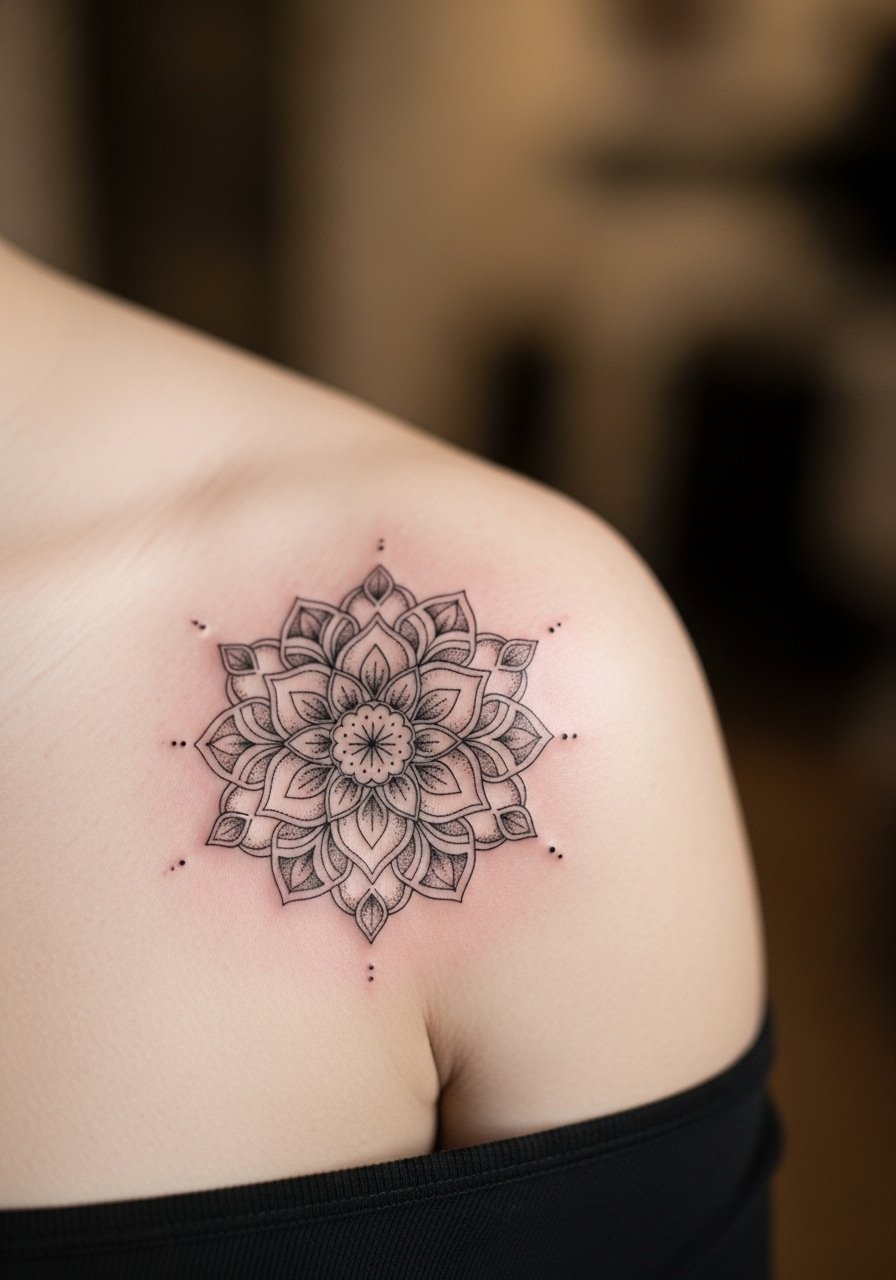
Mandala dot work plays with symmetry on a rounded site. Tell your artist you want larger inner rings and sparser outer dots so the pattern keeps form as the skin shifts. Sessions can be a couple of hours depending on size and the pain is low to moderate. A common error is choosing a highly intricate mandala too small for the shoulder apex. Wear a sleeveless blouse to keep the area accessible and comfortable during the session.
21. Bold Heraldic Crest Sitting High on the Shoulder
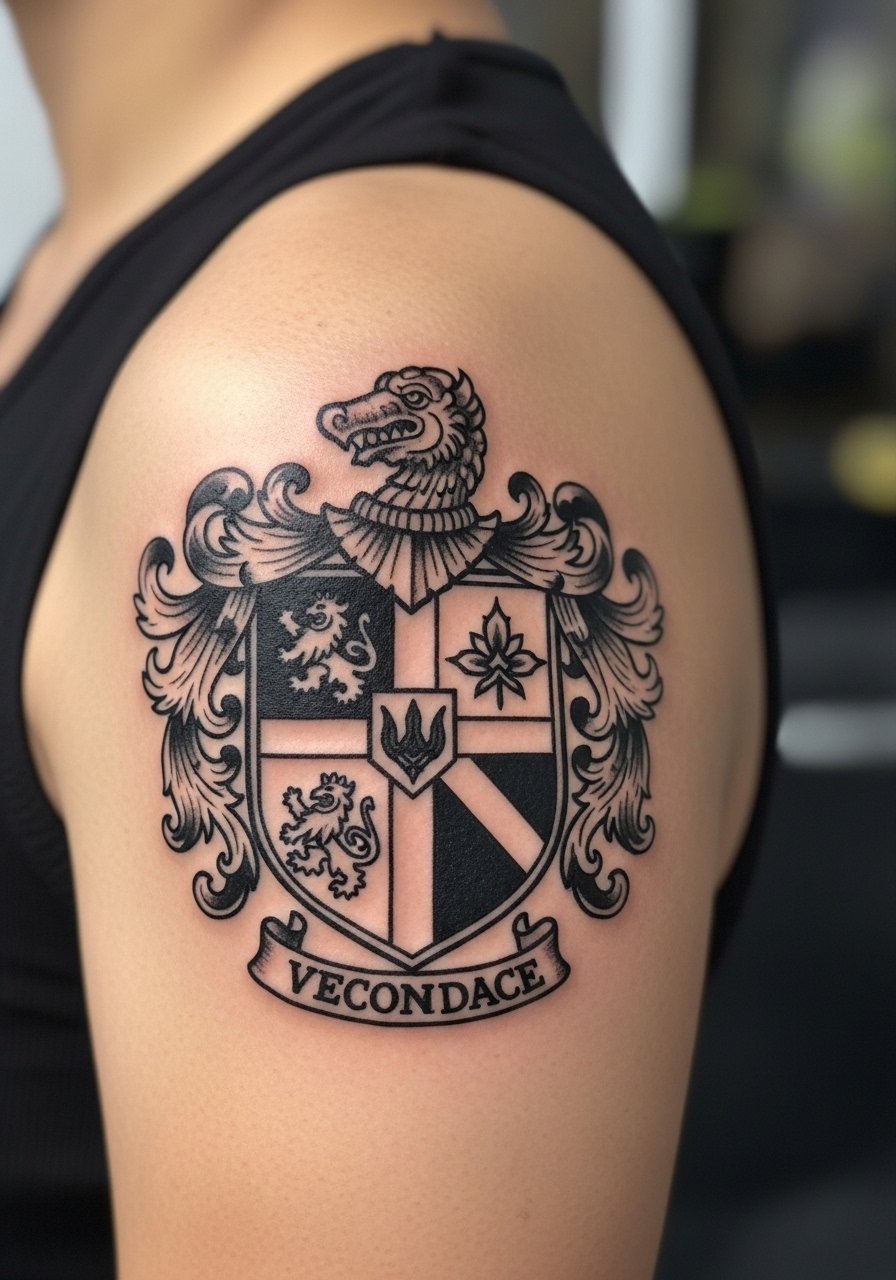
A crest benefits from strong outlines and saturated blacks so it reads from distance and ages with defined edges. Discuss with your artist which elements should be bold and which can be simplified to avoid future muddle. Sessions vary and medium pain is likely during heavy black fill. The typical mistake is including too many tiny iconographic elements. For the appointment, a tank top with thin straps keeps the area reachable while avoiding chafing on fresh ink. Expect minimal touch-ups if you protect the area from sun.
Frequently Asked Questions
Q: Will fine line shoulder tattoos blur faster than solid blackwork on the same person?
A: From what I have seen, yes. Fine line pieces often need touch-ups sooner because tiny lines have less room to migrate before they meet. Solid black shapes tend to hold their presence longer. Placement and sun exposure matter more than the style alone.
Q: How should I prepare the day of a shoulder tattoo session to avoid rubbing and friction afterward?
A: Bring loose, breathable clothing and plan outfits that do not have tight straps over the tattoo. A loose button-down shirt or a zip-up hoodie makes changing and resting easier. Avoid new backpacks or crossbody bags for the first week.
Q: Are there shoulder designs that professional environments still might view as problematic?
A: Visible shoulder tattoos can be covered by sleeves in most jobs. Hand or neck tattoos remain more likely to affect hiring in conservative fields. If you have doubts, choose a shoulder placement that is easy to hide under a shirt sleeve until you know how your workplace responds.
Q: How often do shoulder tattoos need touch-ups compared with forearm pieces?
A: It depends on exposure. Shoulders see a lot of sun if you wear tank tops, which speeds fading. Forearms may get more regular friction. Expect a possible touch-up around year three for fine line work and later for bolder blackwork, depending on lifestyle.
Q: Where should I look to find artists who specialize in realistic shoulder tattoos without naming specific studios?
A: Use local directories, convention listings, community forum threads, and hashtag searches to find portfolios. Look for healed photos of shoulder placements in their work and ask about touch-up policies during consultation.