
Fine line pieces have dominated saved boards for years, but what holds together for siblings over time is less about matching exact images and more about shared intent and placement choices that survive daily life. The best three-piece setups balance visibility with longevity, let each person keep individuality, and make touch-ups predictable. Start with a practical placement, then let the design tie you together.
1. Interlocking Triangles on Inner Forearm
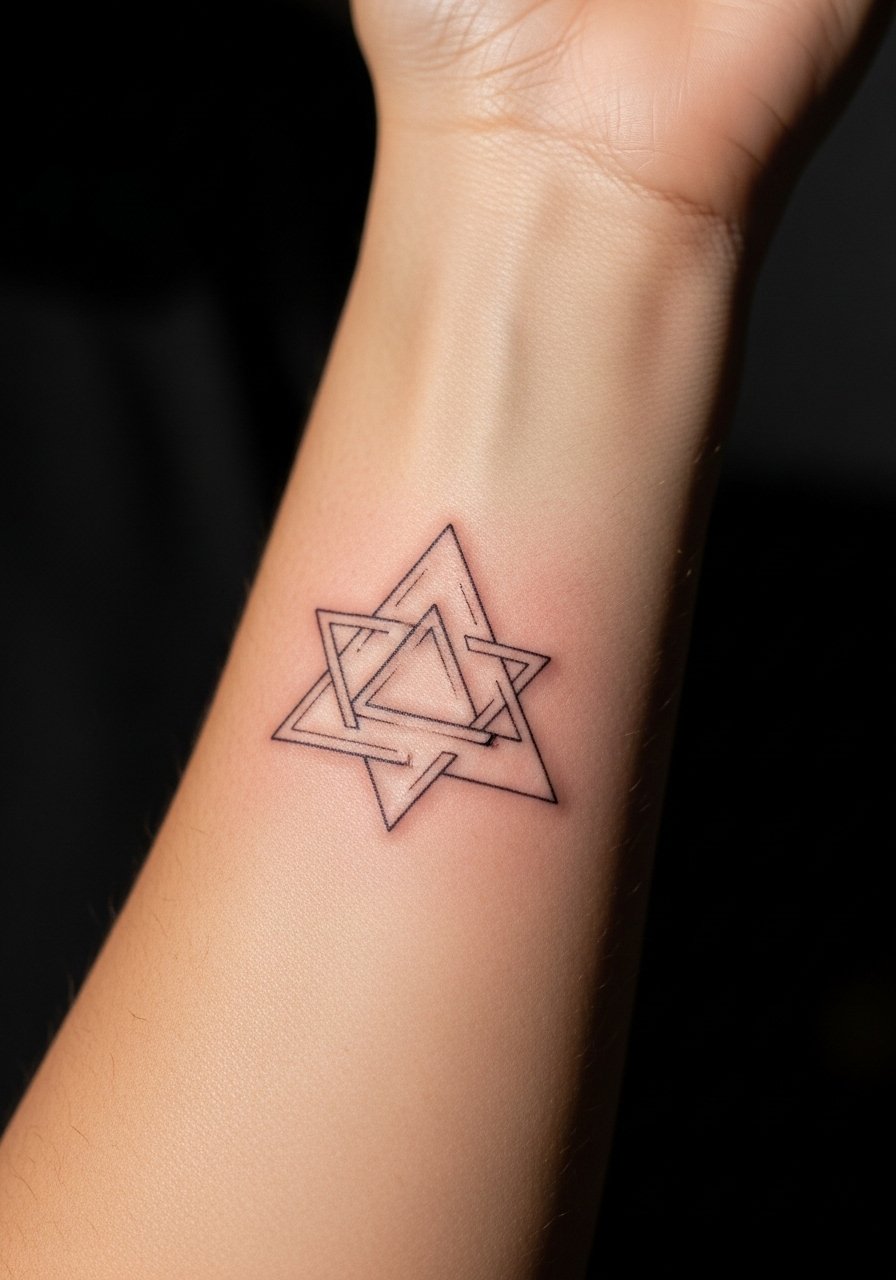
An interlocking triangle set reads like three parts of a single emblem and works well when each sibling modifies one angle. I recommend keeping linework bold enough to avoid early blur but still delicate to feel personal. Tell your artist you want slightly heavier lineweight at junction points so the motif keeps shape as it heals. Expect low to moderate pain and a single-session piece for most artists. Common mistake is asking for ultra-thin lines that merge after two years. For showing it off, rolled-up sleeves or a loose button-down shirt frames the forearm without distracting from the geometry.
2. Three Constellation Marks on Wrists

Tiny constellation dots or a small set of connected stars act as subtle markers that read private but show when wrists are turned. Forearm and wrist skin move differently, so tell the artist to space dots with breathing room to prevent merging. The wrist faces friction from watches and washing, so expect touch-ups earlier than forearm pieces. The session is quick but can sting more than expected. Pair with a thin chain bracelet to highlight the marks without covering them.
3. Shared Coordinates on the Collarbone
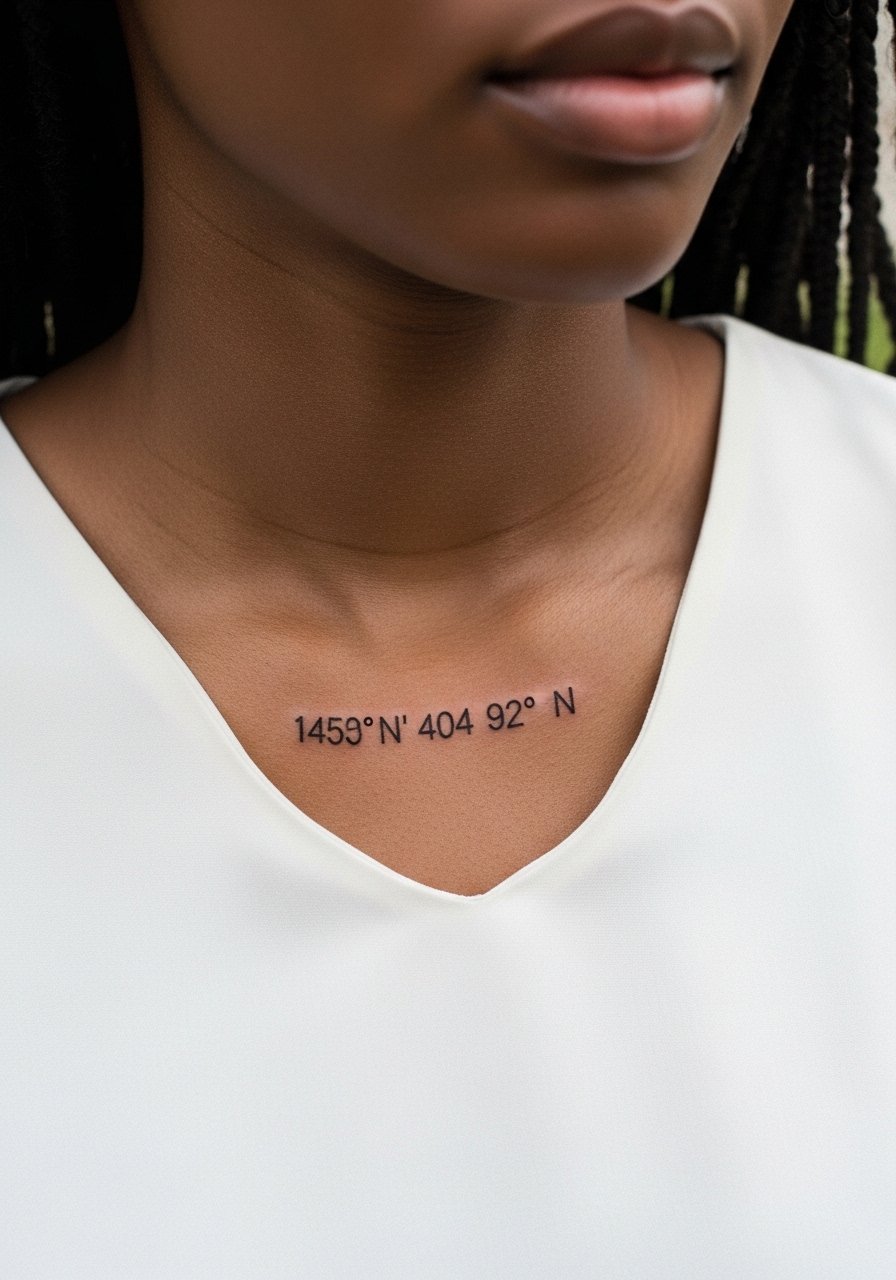
Coordinates make a literal statement about a shared origin. On the collarbone, keep letters small but spaced so numbers do not blur into a bar over time. Ask for slightly taller numerals rather than compressed type. Collarbone sessions feel bony and can take multiple short passes if the skin moves. A common miss is asking for tiny, dense numerals that look perfect fresh and then lose legibility. For evenings out, an open-back midi dress or a thin chain pendant necklace sits above the script and keeps attention on the collarbone.
4. Puzzle Pieces Behind the Hairline
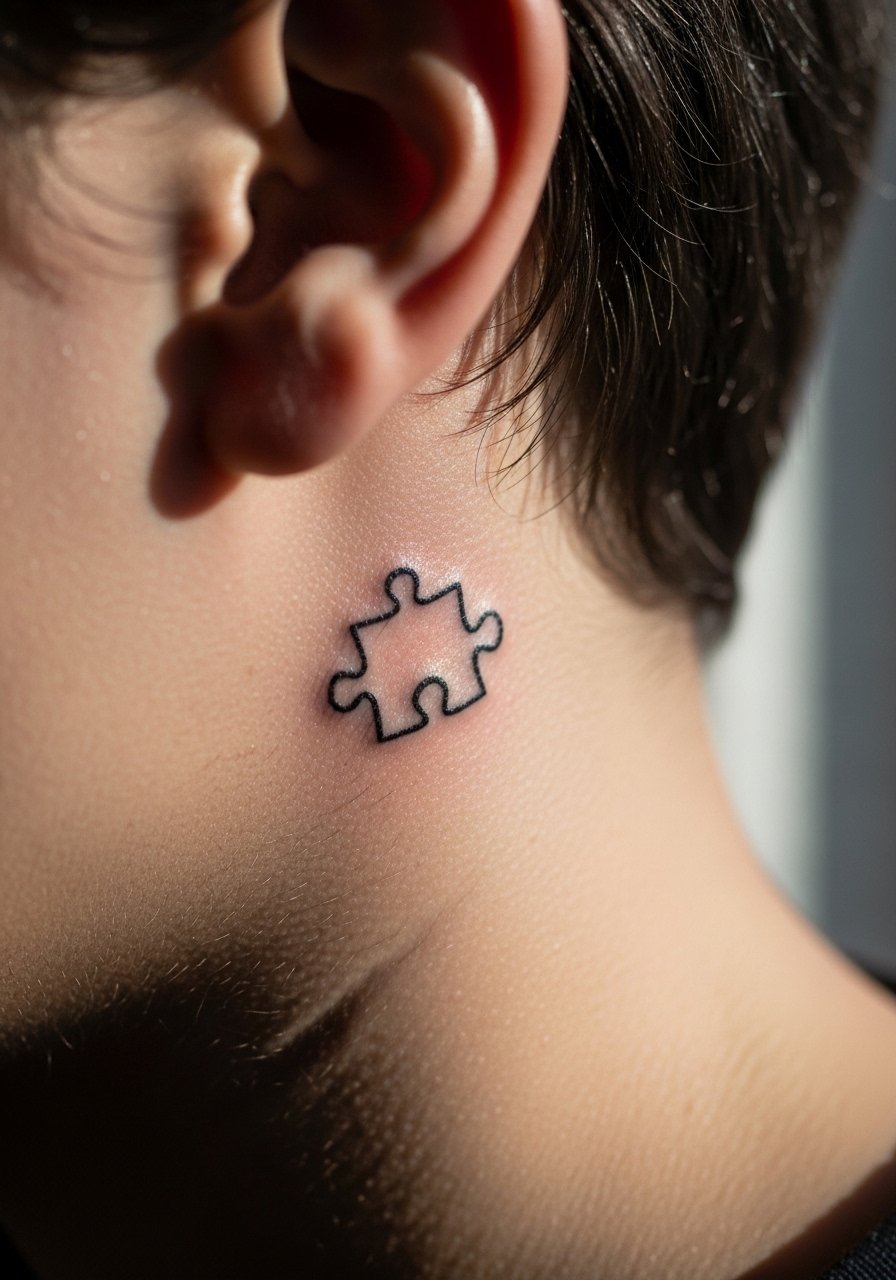
Puzzle pieces that fit together are an obvious visual for three siblings and look discreet tucked just behind the hairline. This area needs the artist to work around hair and curvature. During consult, ask for clean outlines with slightly thicker borders to avoid early feathering. Because the spot is close to hair and shampoo, describe how you wash your hair so the artist can advise sealing for the first week. Hand this placement to someone comfortable with small, precise work. If career visibility is a concern, the location can be covered by hair when needed.
5. Trio of Animal Silhouettes on the Calf
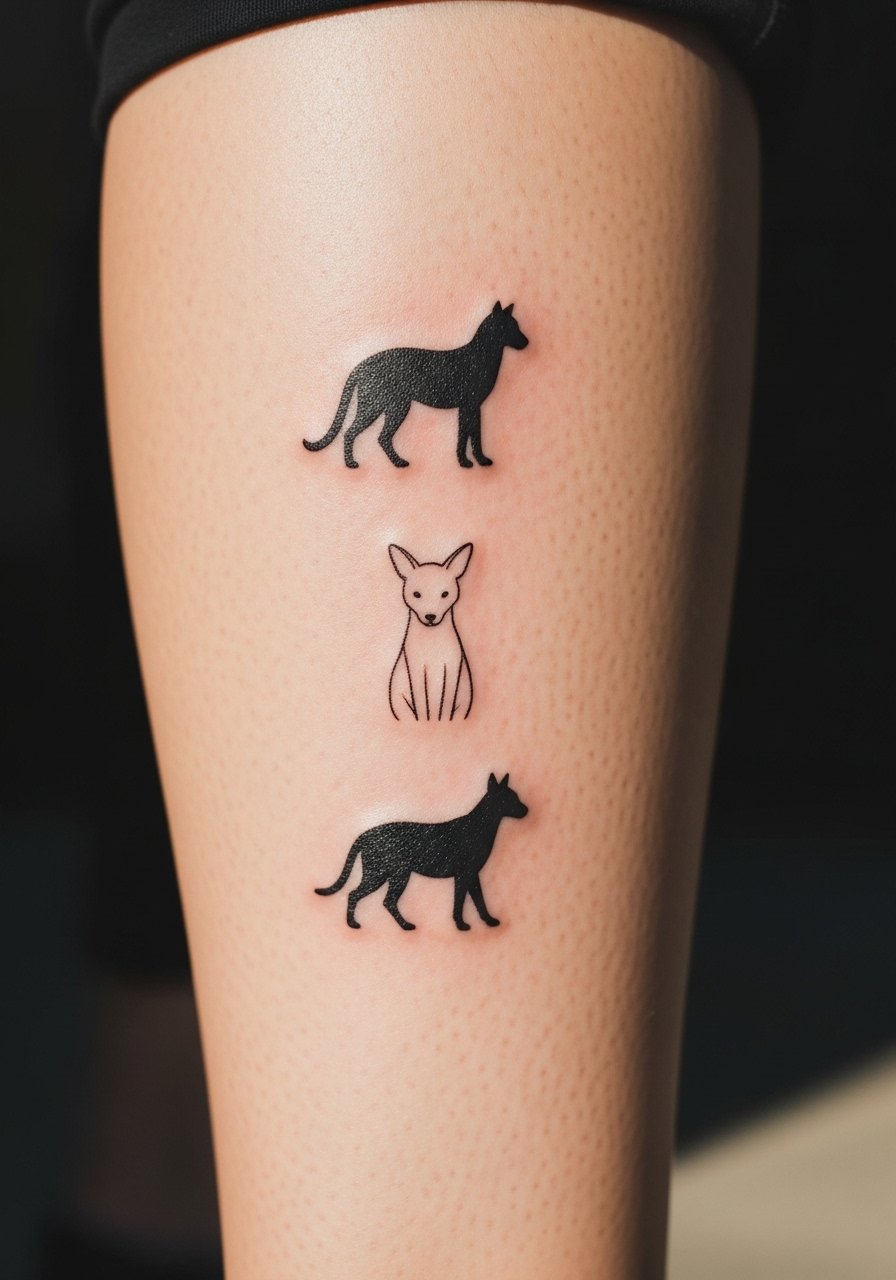
Matching animal silhouettes let each sibling pick a creature that still reads as a set. The calf is forgiving on linework and holds saturation well. For consults, bring clear silhouette references and ask the artist to keep negative space between animals consistent. Calf sessions are moderate in pain and often finish in one to two hours. A typical error is compressing all silhouettes into a tiny space which makes each animal indistinct over time. Show them off with rolled-up trousers or a loose drawstring linen pant so the vertical arrangement reads clearly.
6. Roman Numeral Birthdates Along the Ribcage
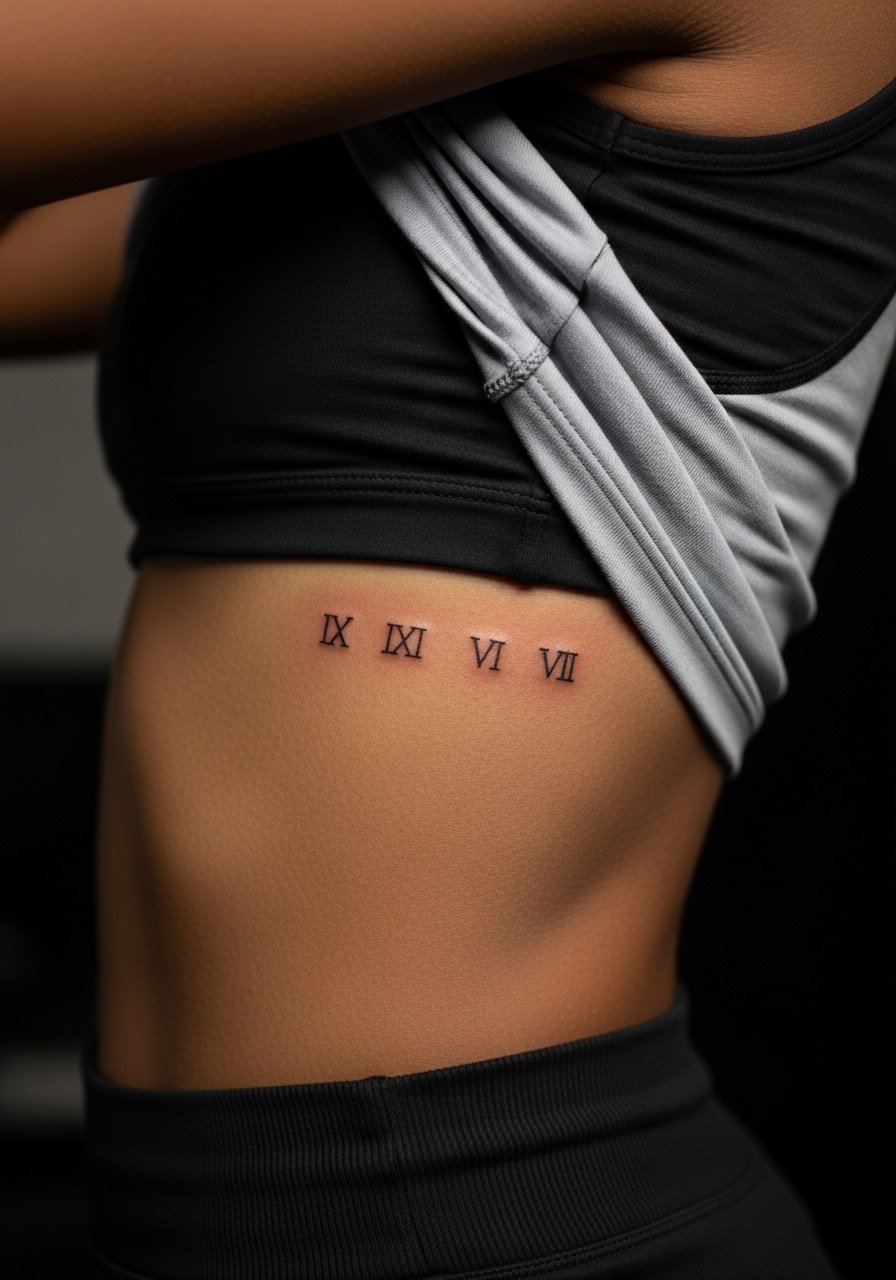
Ribcage placement has a dramatic look but a higher pain cost. Roman numerals for birthdates read classic and tie the three of you together without being obvious. In consultation, ask for spacing between characters rather than compact blocks so your numerals do not blur into a shaded strip. Expect a heavier session with breaks and the need for a careful touch-up at year two for small numerals. One camp of artists argues fine line on ribs blurs quickly because the skin stretches. The other camp says proper depth and spacing prevent that. Ask your artist where they stand before booking.
Studio Day Picks
The wrist, calf, and rib pieces above all benefit from thoughtful prep and a few small supplies so the session and the first week go smoothly.
-
Stencil transfer paper kit. Lets you preview placement on wrist and forearm designs so the grid and spacing for ideas 1 and 2 feel right before the needle hits skin.
-
Topical numbing cream. Applied 30 to 45 minutes before ribcage work reduces surface sting for idea 6 without obscuring linework.
-
Thin protective film roll. Useful for keeping calf and wrist tattoos clean from friction during the first few days, especially for ideas 2 and 5.
-
Fragrance-free gentle body wash. Cleanses tender areas around ribs and collarbone without stripping the inked skin for ideas 3 and 6.
-
Aquaphor healing ointment. Thin application on small linework keeps moisture balanced during the initial healing window for fine placements above.
7. Watercolor Paper Boats on the Shoulder Blade

Watercolor pieces feel expressive and let each sibling vary color washes while keeping the shared motif. Shoulder blade placement sits under clothing often, so plan for sessions that avoid heavy friction during healing. Tell your artist you want color washes that sit behind a defined outline so the colors age into the shape rather than bleed at the edges. Watercolor can look faded at six months if saturation is too thin, and touch-ups at year 2 are common. For showing it off at summer gatherings, an open-back midi dress or a racerback tank frames the shoulder blade without covering the wash.
8. Linked Chain on the Finger
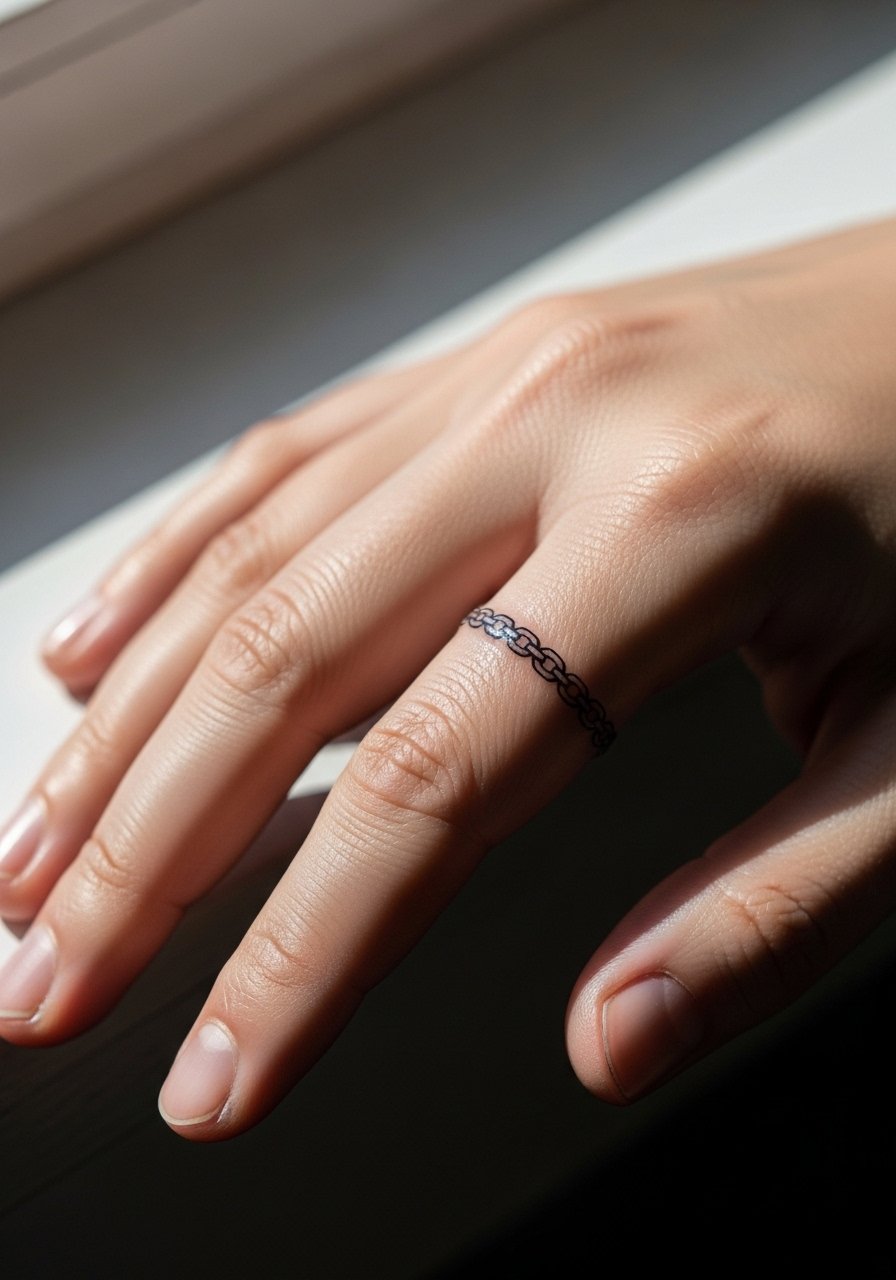
Finger tattoos make a visible promise, but skin on the fingers moves and exfoliates fast. A linked chain for three will need solid outlines and likely a touch-up at one year. Ask for slightly thicker outer lines and expect more frequent touch-ups than ankle or calf work. The session is short and sharp. Be honest about daily hand washing and jobs with friction so the artist can advise on placement orientation. If you need something discreet, shift to the inner side of the finger where possible.
9. Three Blooms Along the Inner Bicep
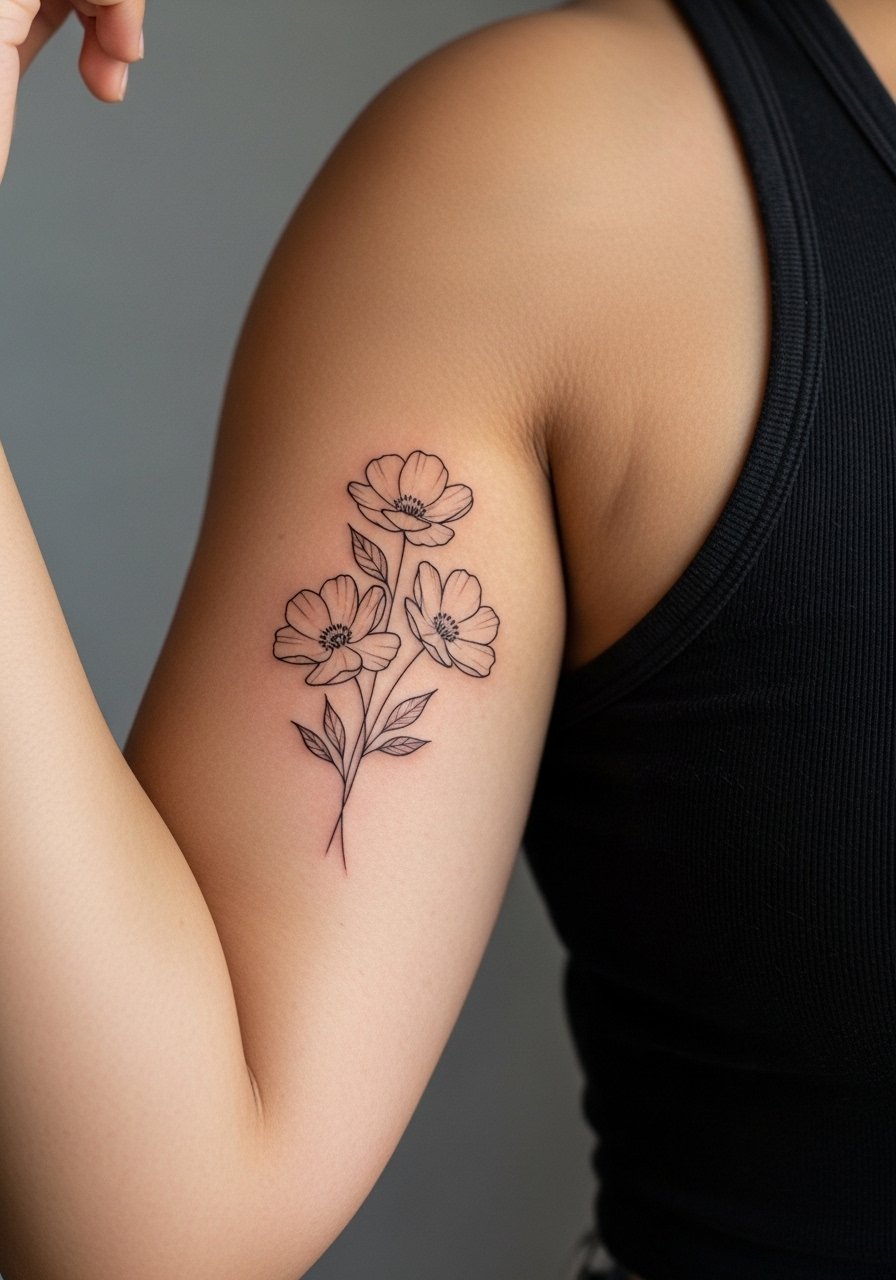
Inner bicep pieces read intimate and can be larger than wrist marks without becoming overpowering. For florals, ask for varied petal spacing and a touch of stipple shading to keep detail readable at five years. The area is tender but holds detail well. A common mistake is asking for very dense shading in a small area which can become muddy. For session wear, pull on a loose tank top or a shirt you can slide aside so the artist has clear access without rubbing.
10. Minimal Silhouette Portraits on the Nape
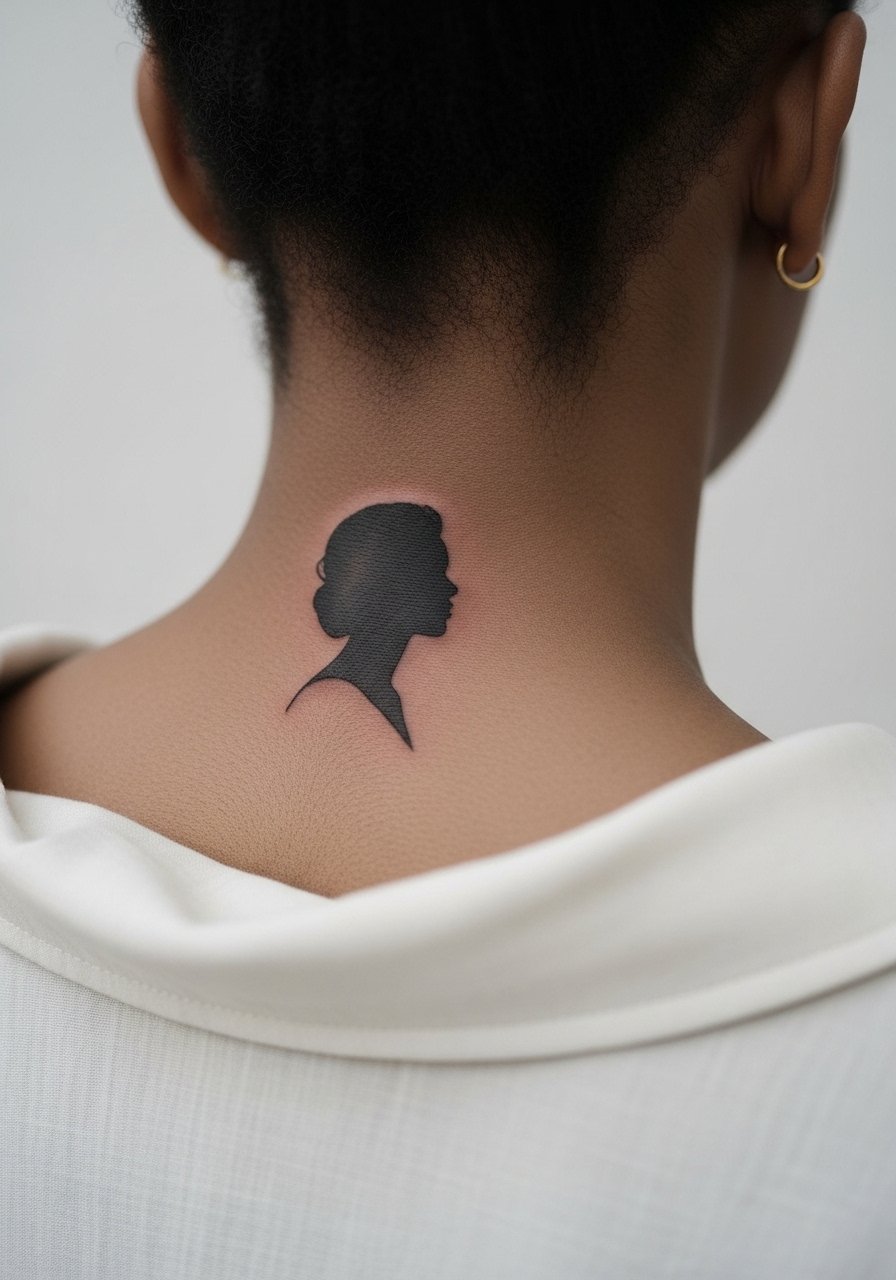
Tiny silhouette portraits on the nape feel private but are easy to reveal when you pull hair up. For this placement, ask the artist to vector the reference into a simplified silhouette that still reads at small scale. The nape moves with neck motion, so place the piece low enough to avoid constant friction from collars. Sessions are short but the area can be ticklish. If you want longevity, avoid extreme tiny faces and keep the silhouette bold enough to remain legible as skin changes.
11. Shared Mountain Range Wrapped Across Three Wrists
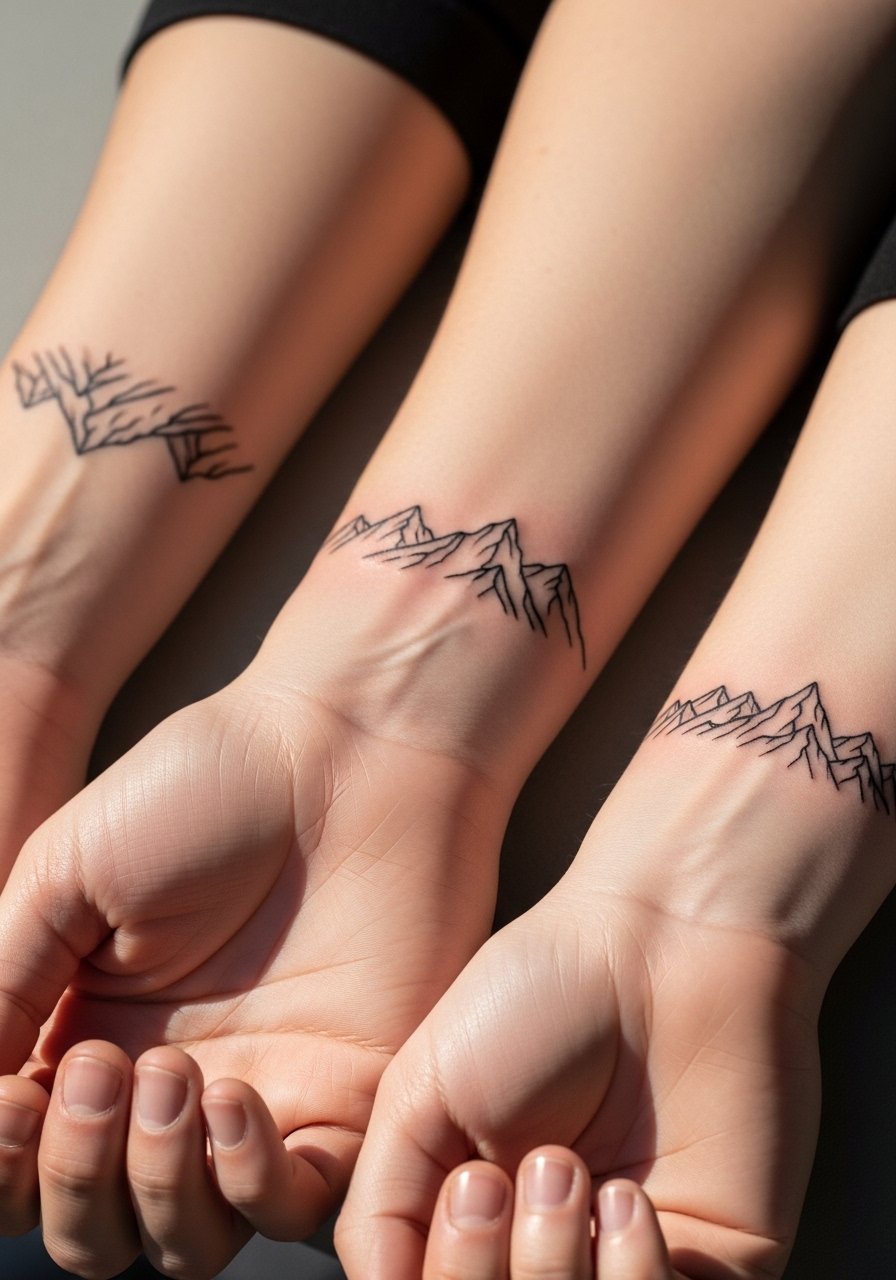
A continuous mountain motif split across three wrists reads like a single panorama when you stand together. Make sure the line flows naturally across each wrist instead of forcing an exact match that looks awkward on different wrist widths. During consult, bring a single panoramic reference and let the artist break it into proportional segments for each person. Wrist skin and washing mean these pieces require periodic touch-ups, especially at junctions. Pair with a thin chain bracelet to accentuate the horizon without obstructing the line.
12. Sun, Moon, Star Triptych on the Sternum
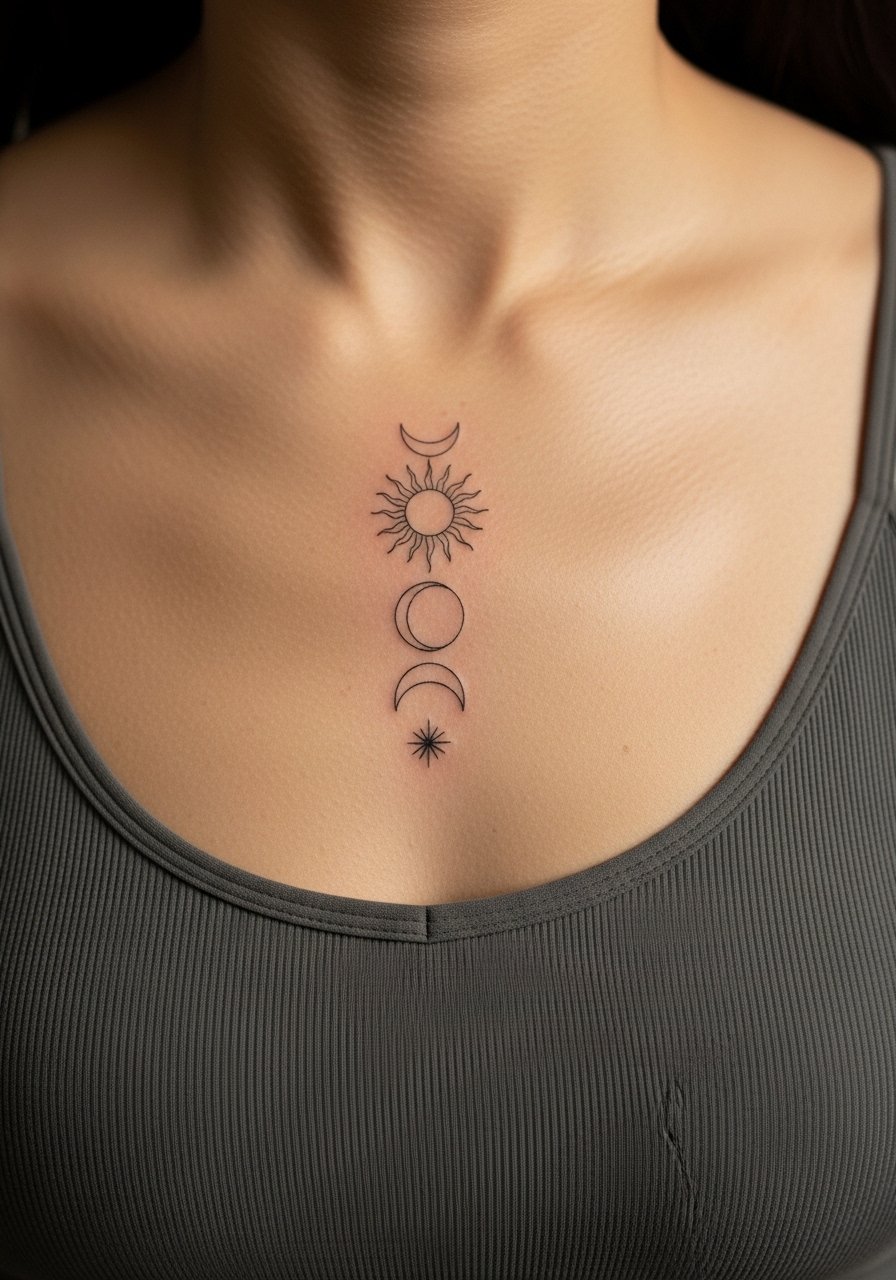
Sternum work reads central and symbolic, but it needs an artist used to curved surfaces. Place elements slightly above or below the fabric line so clothing does not rub during healing. Expect a more intense session with breaks and possible swelling. The piece holds well when contrast is preserved, so ask for slightly stronger outlines than you might on a forearm. Some artists warn that symmetrical designs can look off if the chest shifts during healing. Choose symmetry carefully.
13. Small Arrows on the Outer Ankle
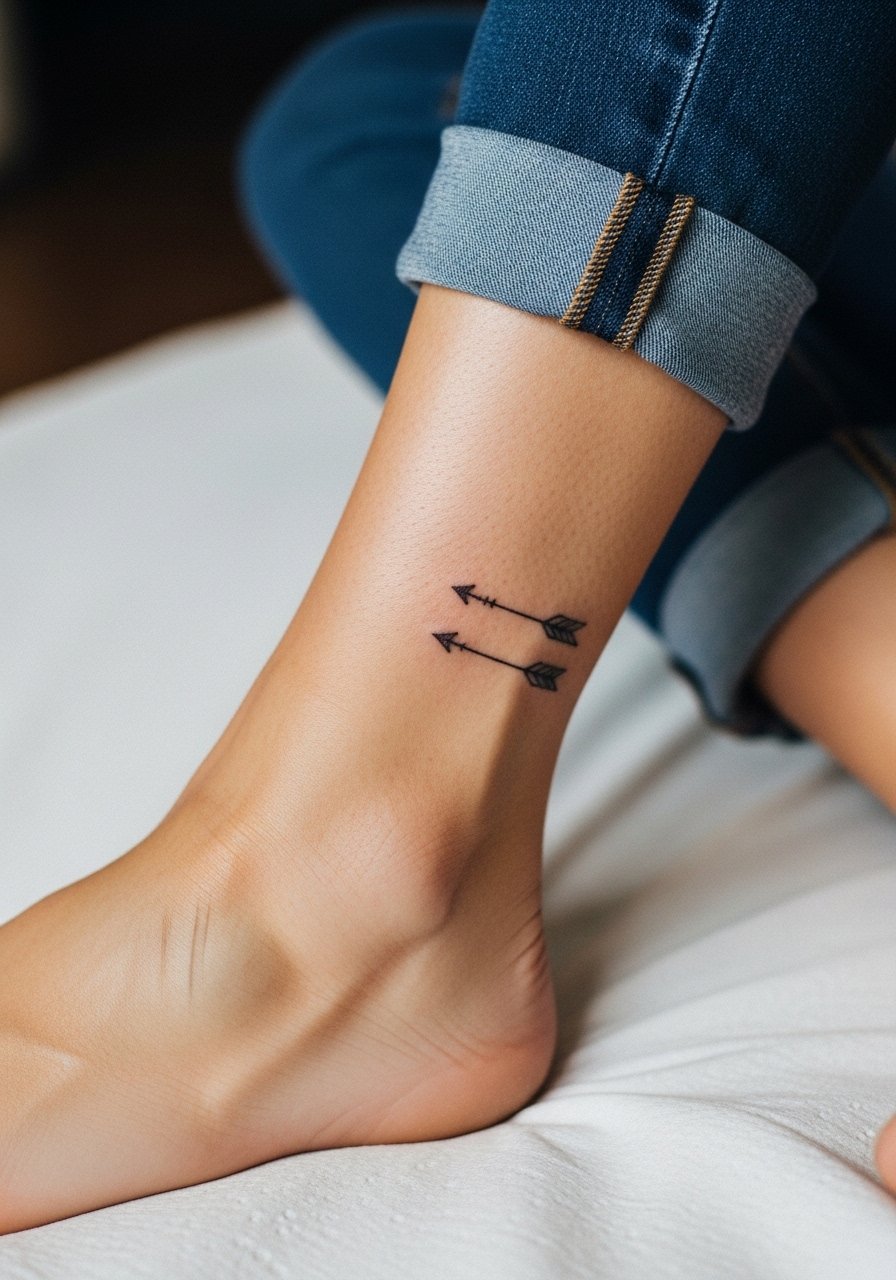
Ankle arrows are classic for groups because they are small, portable, and visible with summer footwear. The ankle takes ink well but sees friction from socks and shoes. During consult, ask for the arrow point to align with natural foot movement so it reads when standing. Pain is brief and sharp. A frequent mistake is placing too close to bone which increases soreness and risks blowout. Show them off with sandals or rolled jeans and consider an open shoe for the first week to reduce rubbing.
14. Geometric Mandala Segments on the Thigh
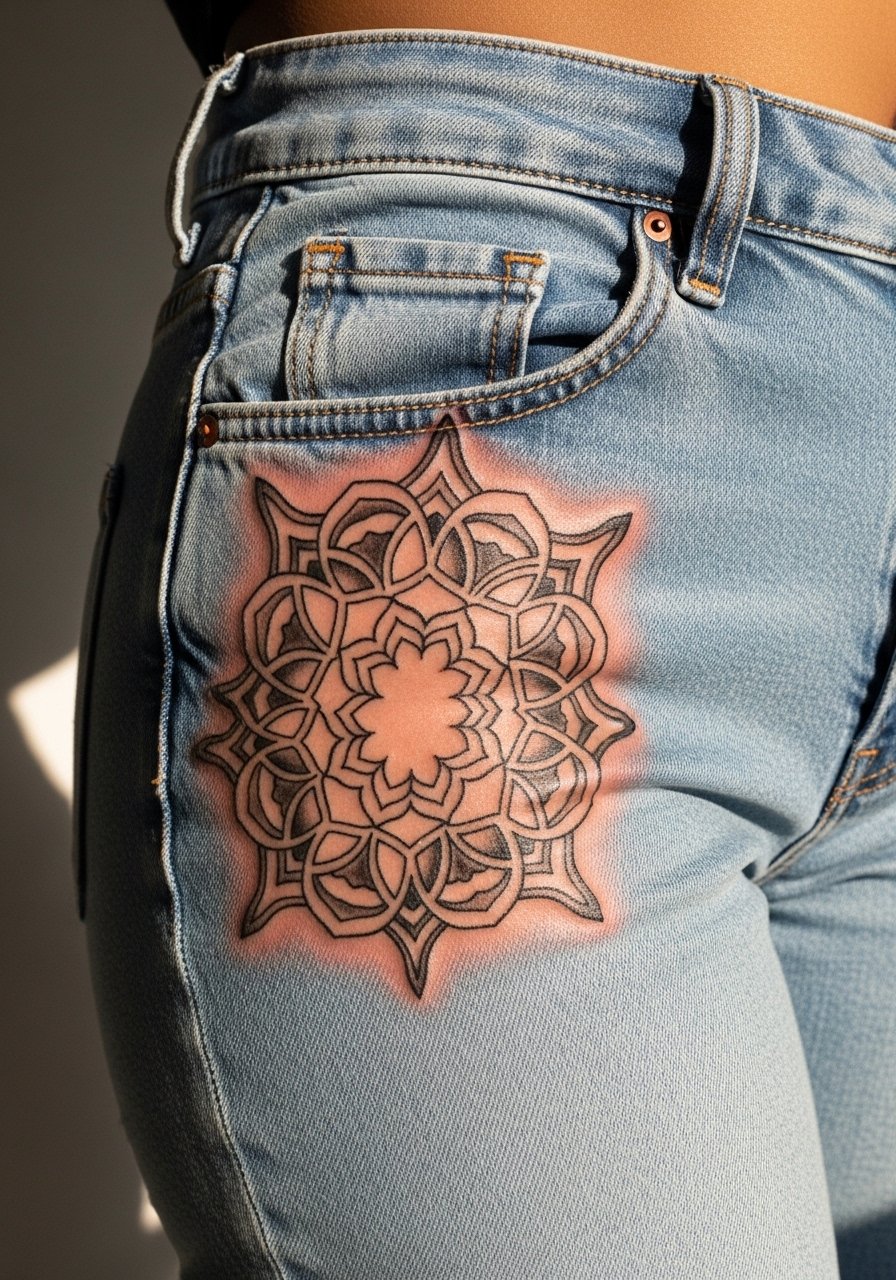
Splitting a mandala into three complementary segments gives each sibling a piece of the whole. This design touches cultural territory for some viewers. One camp feels original mandala patterns demand cultural context and permission, while another camp sees adapted geometry as a personal nod that can be respectful when credited. If you use a pattern with clear cultural origin, consider adapting elements rather than copying verbatim. Thigh skin is forgiving and holds detail, but bring references that show the exact density and ask for room between radial lines so the pattern breathes.
15. Split Phrase Script Across Collarbone Trio
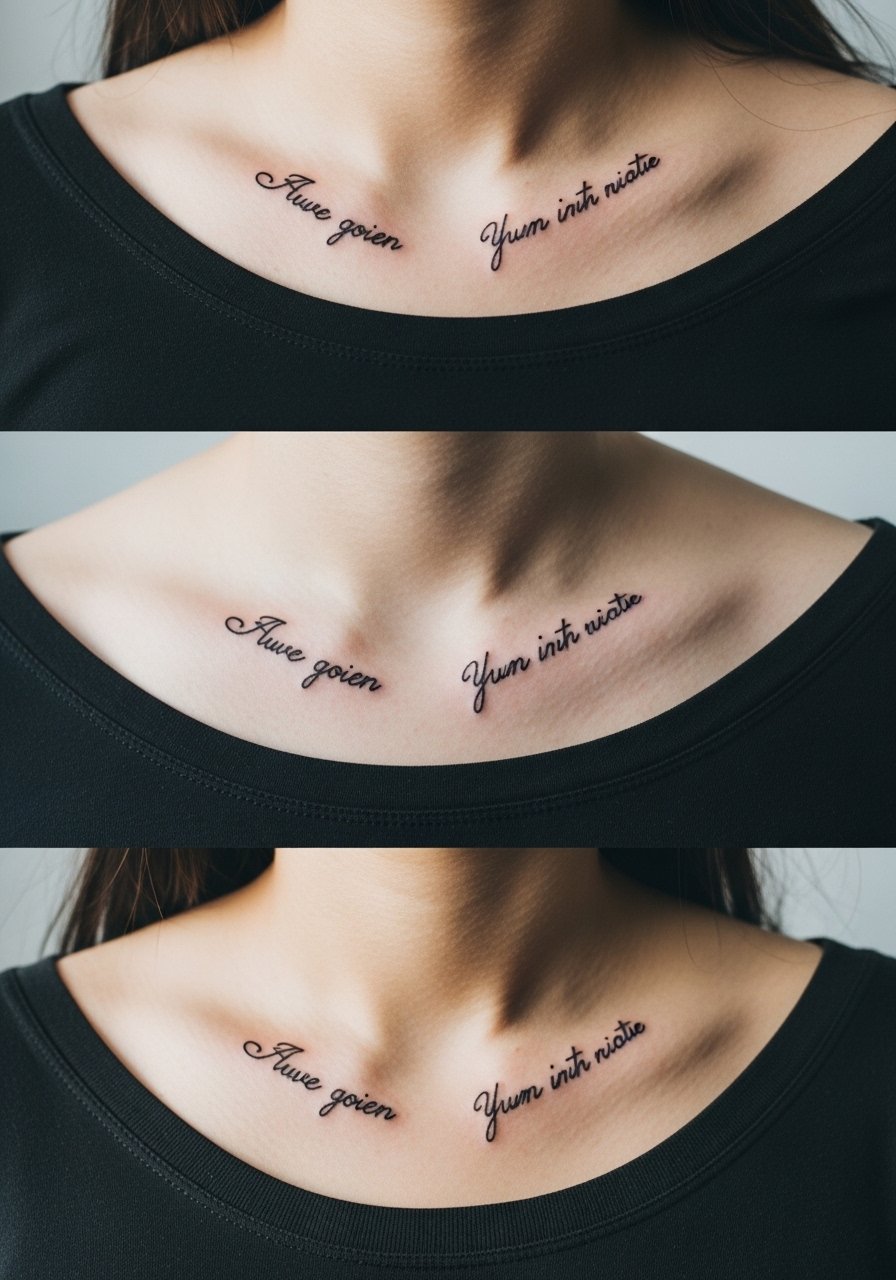
A phrase split into three parts lets each sibling carry a word that only makes full sense together. Choose a font with tall x-height so letters do not compress. During consult, ask the artist to space letters for readability at small scale and to preview the stencils together to ensure rhythm. Collarbone skin can be sensitive so sessions might be shorter with brief breaks. A common mistake is selecting overly ornate script that looks perfect fresh and then becomes illegible as the thin strokes fade. For outings, a thin chain pendant necklace sits above the words without crowding them.
16. Three-Point Celtic Knot on the Upper Back

A three-way knot references connection and lineage, but Celtic knots have cultural history. One perspective values honoring origin and using traditional motifs with permission. Another perspective allows contemporary reinterpretation so long as it is done respectfully. When choosing a knot, research its meaning and ask the artist to make a slight personal adjustment to avoid direct replication of sacred or cultural symbols. Upper back skin tolerates detail well and sits hidden under many shirts when needed. Sessions are moderate and often finish in one go.
17. Tiny House Silhouettes on the Inner Wrist
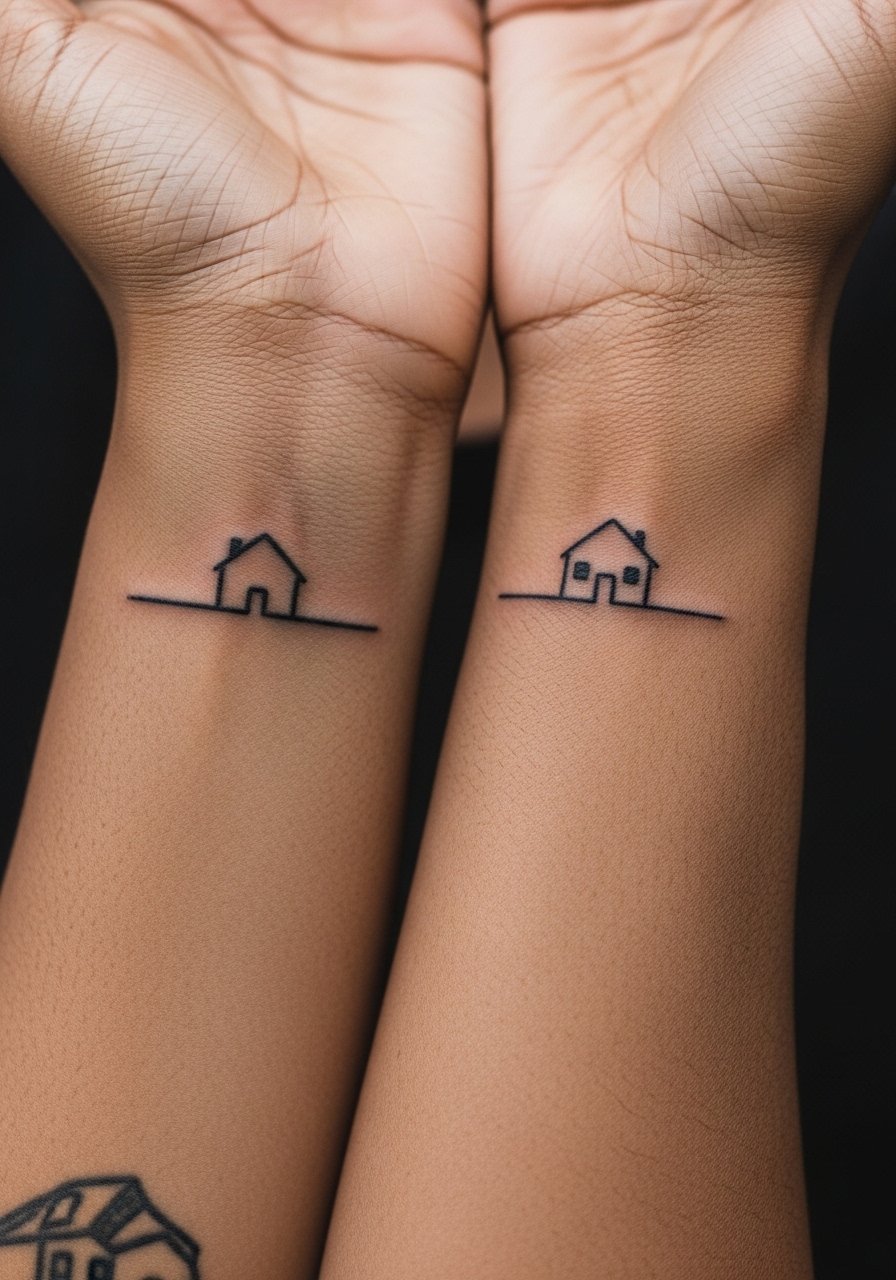
House icons read like roots and feel especially apt for siblings who share a childhood home. Inner wrist placement is visible and personal. Ask for the silhouette to be simplified so windows or rooflines do not become clutter at small scale. Expect quicker fading from sun exposure and frequent touch-ups if you work outdoors. A mistake is over-detailing these tiny shapes which collapses into a blob with time. During the session, wear a loose button-down shirt you can roll up to expose the inner wrist comfortably.
18. Shared Soundwave Sliver on the Side Neck
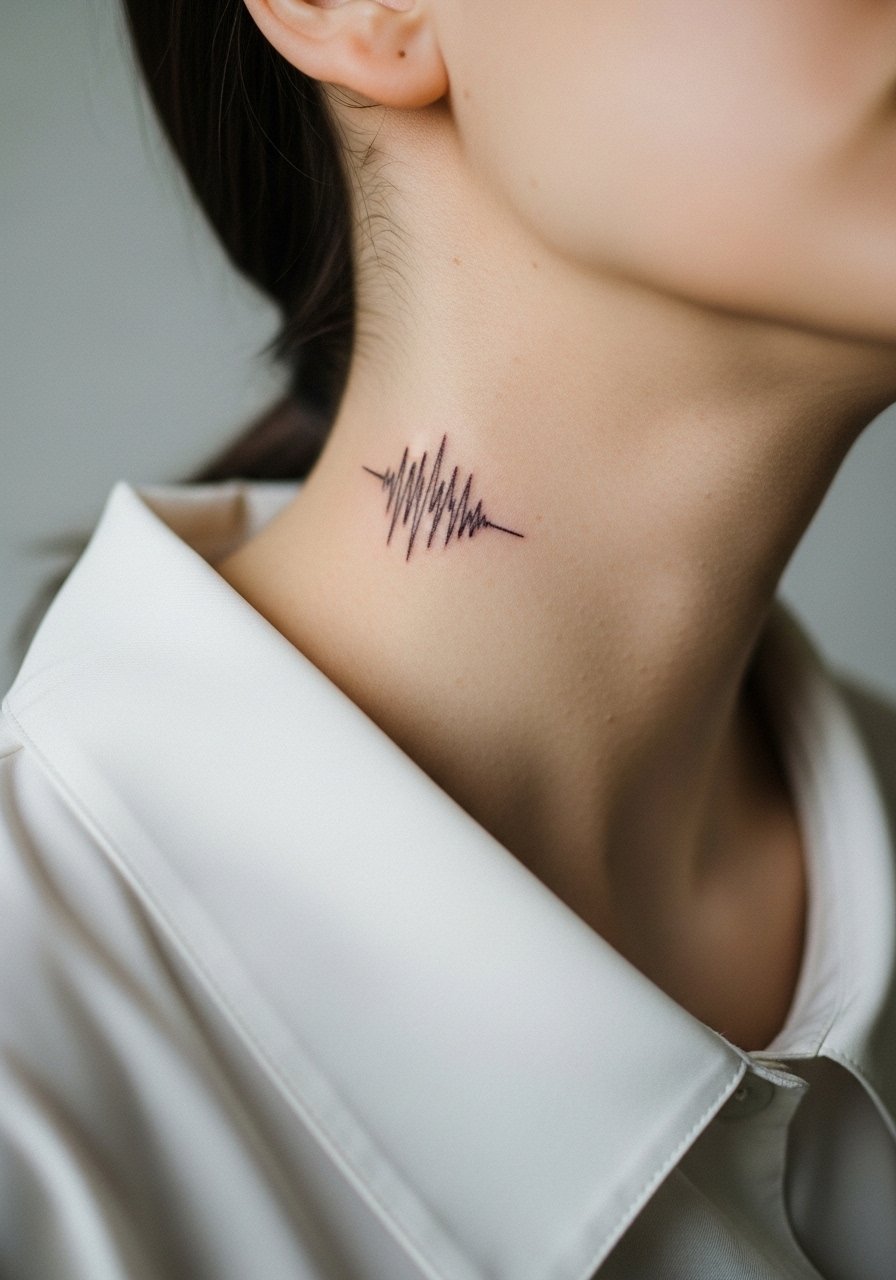
Recording a shared laugh or a single spoken word and converting it into a soundwave makes a private audio memory visible. Neck placement is visible and offers strong symbolism. For safety and longevity, request a simplified waveform that emphasizes peaks rather than tiny gaps. The side neck can be sensitive and may need shorter passes. Employers may view neck tattoos differently, so consider career implications before committing. For showing off, a wide-neck shirt that pulls to one side frames the wave without overt exposure.
19. Paw Print Trail Across the Foot
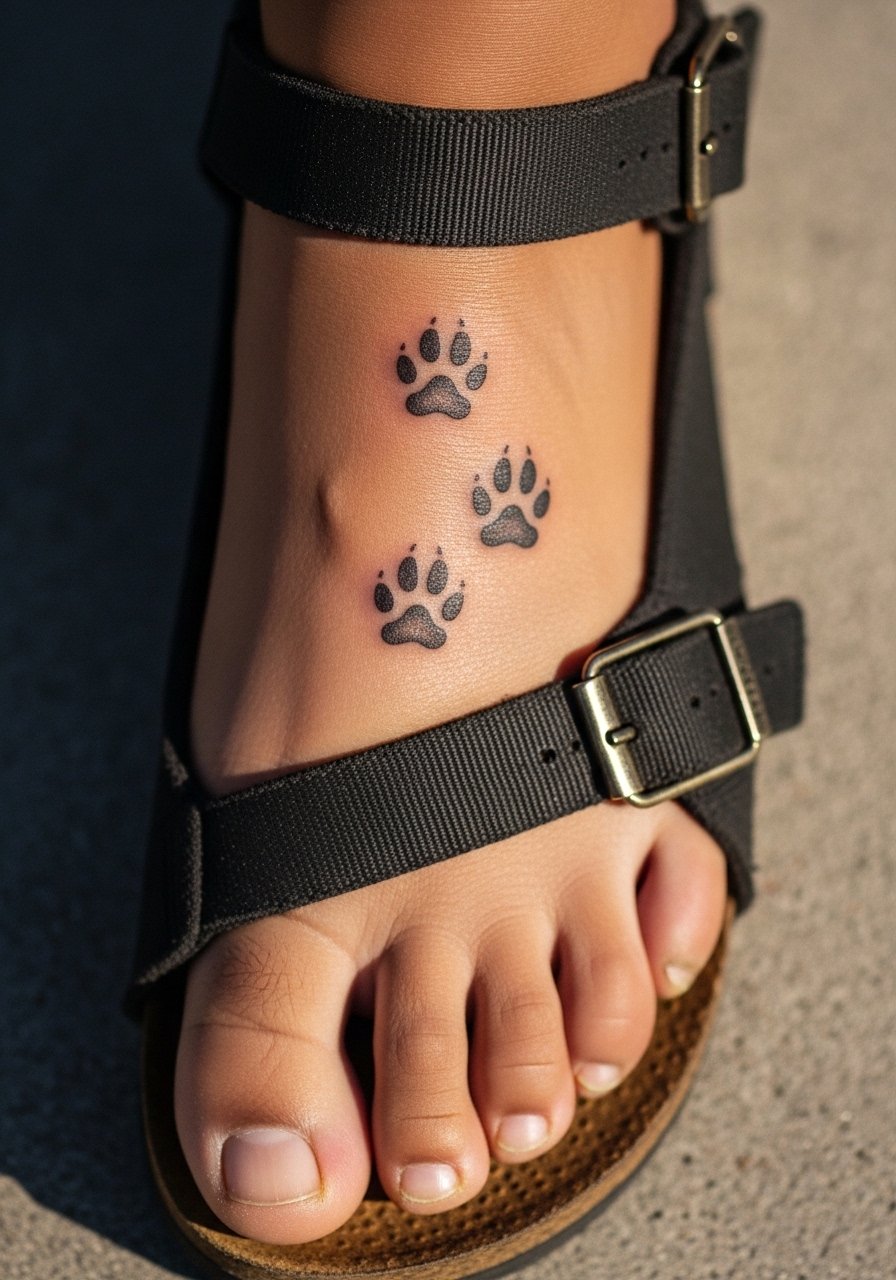
If a pet holds shared meaning, three small paw prints on the foot make a quietly sentimental trio. Foot skin is thin and sees constant contact with shoes. Ask the artist about placing prints away from bone and choose slightly bolder outer contours. Sessions are brief but aftercare must avoid tight shoes during initial healing. Many people forget how much their footwear affects foot tattoos. For the first week, sandals or open shoes reduce rubbing and help the piece heal cleanly.
20. Birth Flower Trio on the Shoulder Cap
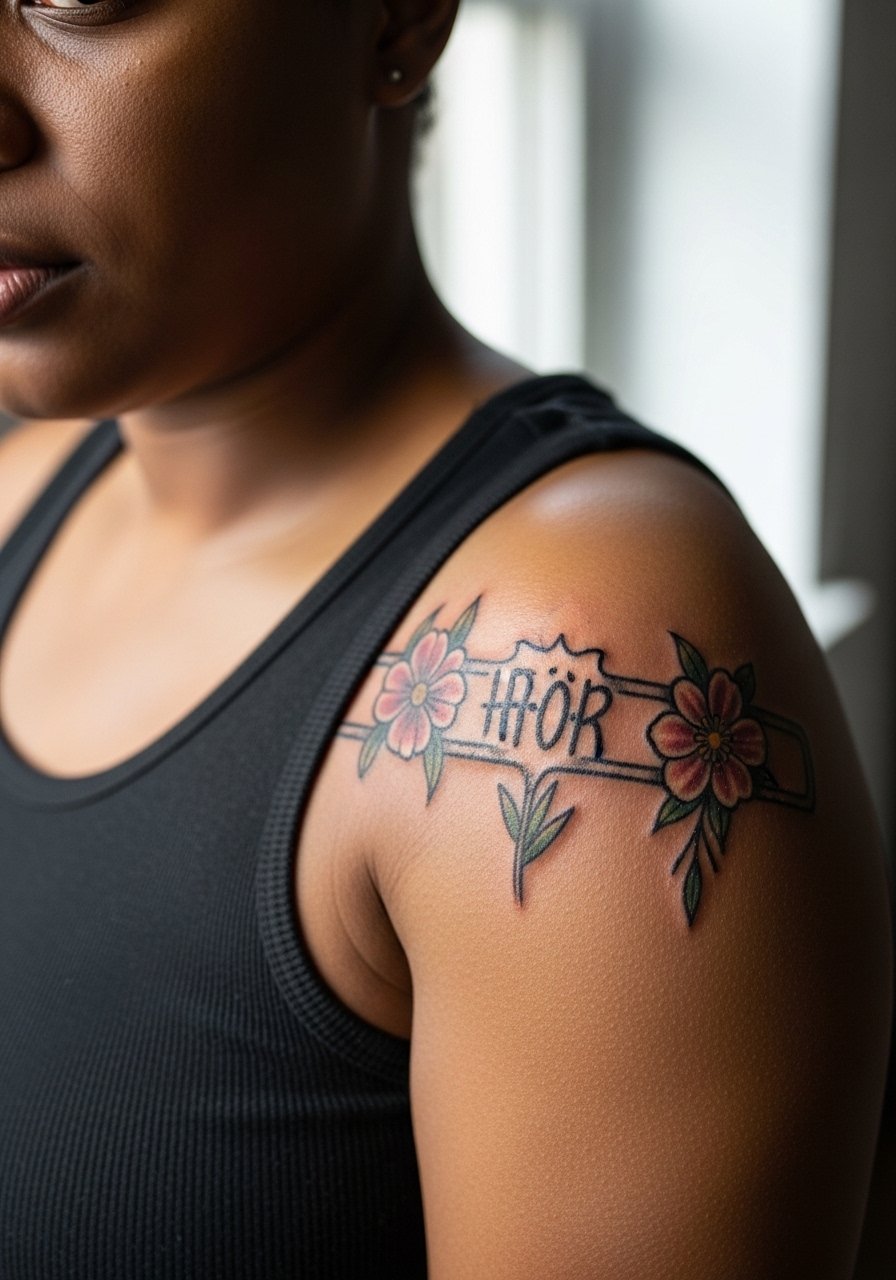
Birth flowers let each sibling carry a personal symbol while the group reads as a bouquet. Shoulder cap placement is visible in summer and easy to protect under shirts. Ask for slightly varied petal shapes so each flower keeps identity while sharing a unified palette. Shoulders tolerate shading and color saturation well, but expect touch-ups at the two to three year mark for lighter tones. For showing off, a racerback tank frames the arrangement and keeps the shoulder cap open for photos.
21. Sun-Moon-Star Triptych on Forearms
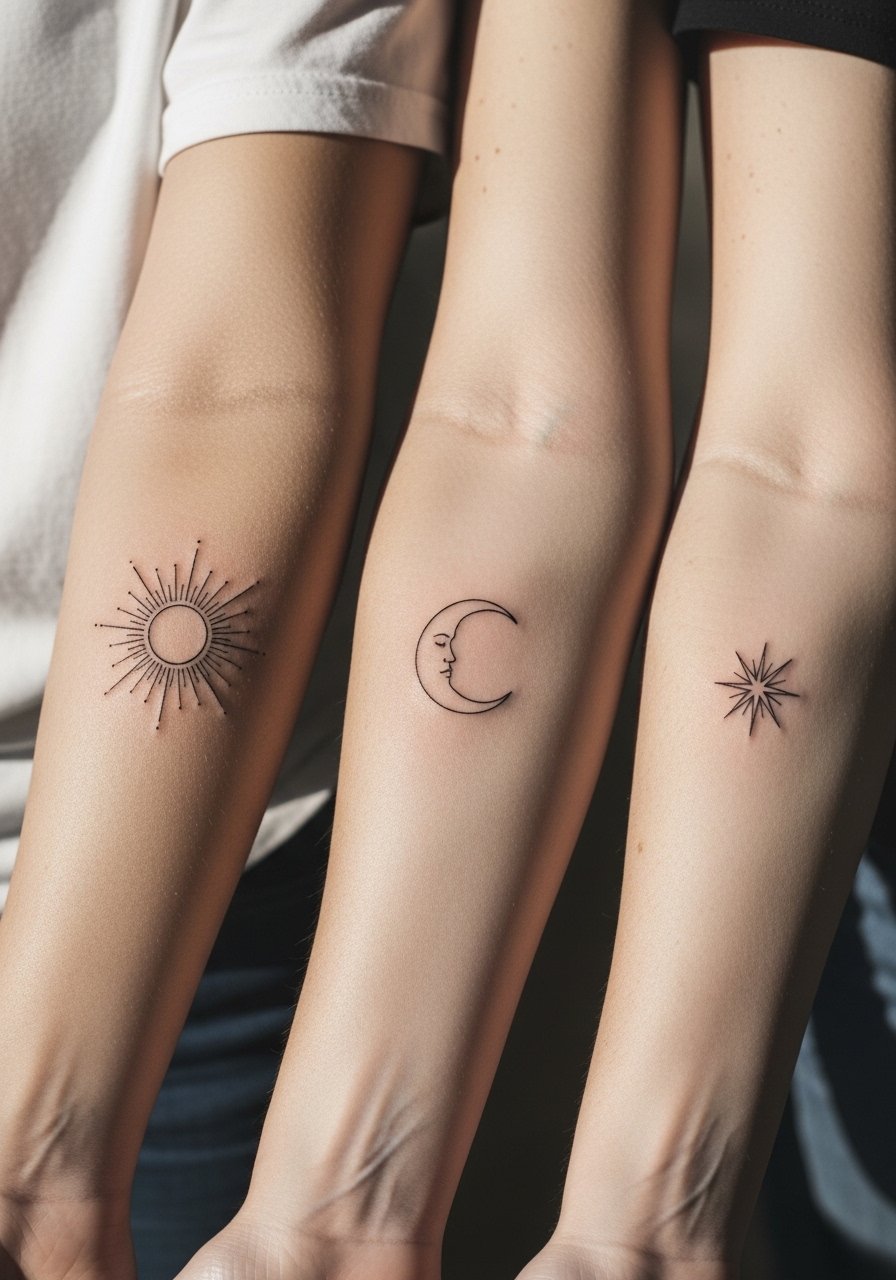
A celestial triptych is timeless in symbolism and easy to adapt across different hands and skin tones. On the forearm, ask for modest lineweight and small areas of stipple shading to keep the sun, moon, and star distinct for years. Forearms see good longevity for linework but remember sun exposure is the main enemy. Discuss touch-up timing with your artist since small negative spaces can close up over time. For the session, expect mild to moderate discomfort and plan for a one-to-two-hour appointment depending on detail.
Frequently Asked Questions
Q: Will matching fine line pieces for three siblings blur faster than bolder work?
A: Fine line does tend to need touch-ups sooner than bolder blackwork because thin lines sit closer to the epidermis. Placement matters more than style. Wrists and fingers fade faster from friction. If you want the fine look with better longevity, ask for slightly stronger lineweight at junctions and plan for a touch-up around year two or three.
Q: How should we handle cultural motifs like mandalas if we want respectful sibling tattoos?
A: There are two honest positions. One says use traditional motifs only with clear understanding and respect. The other allows personal reinterpretation if you credit origins and avoid sacred symbols. A practical step is to adapt elements rather than copy exact ritual imagery and to discuss meaning with the artist before inking.
Q: Can three small tattoos be designed so they look good both together and apart?
A: Yes. Design them as complementary pieces with shared geometry or negative space so each reads on its own. During consult, preview stencils individually and together. Rotation of scale and slight variation in spacing helps each hold up when worn separately.
Q: Do sternum and ribcage placements need different session wear than wrists or ankles?
A: Yes. For sternum and ribs wear a fitted sports bra or crop top you can lift slightly without causing excess rubbing. For wrists and ankles choose clothing you can easily roll up or sandals that leave the site exposed. Planning clothing cuts down on awkward repositioning during the session.
Q: How often should we plan touch-ups for small sibling pieces like constellations or tiny scripts?
A: Small linework often needs attention at year one to two depending on sun exposure and friction. Constellations and scripts on wrists or fingers may require touch-ups sooner. Expect touch-ups as part of ownership rather than as a failure.
Q: Is it a problem if only two siblings get tattooed now and the third waits?
A: Not at all. Designs that visually connect can be planned so a third piece slots in later. Bring all three references to the initial consult so the artist can design with future continuity in mind. Trust your artist on spacing and scale, and ask for a plan for the later addition.